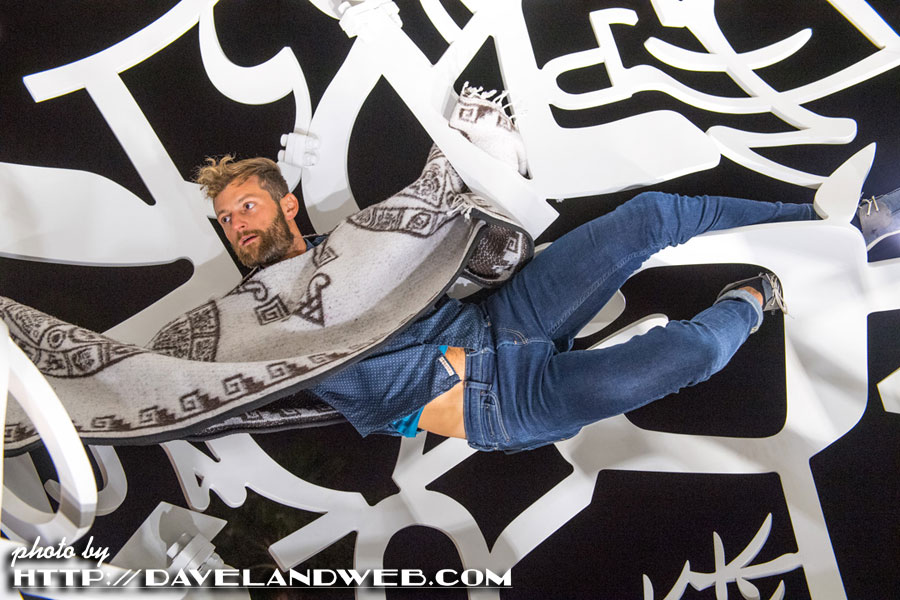
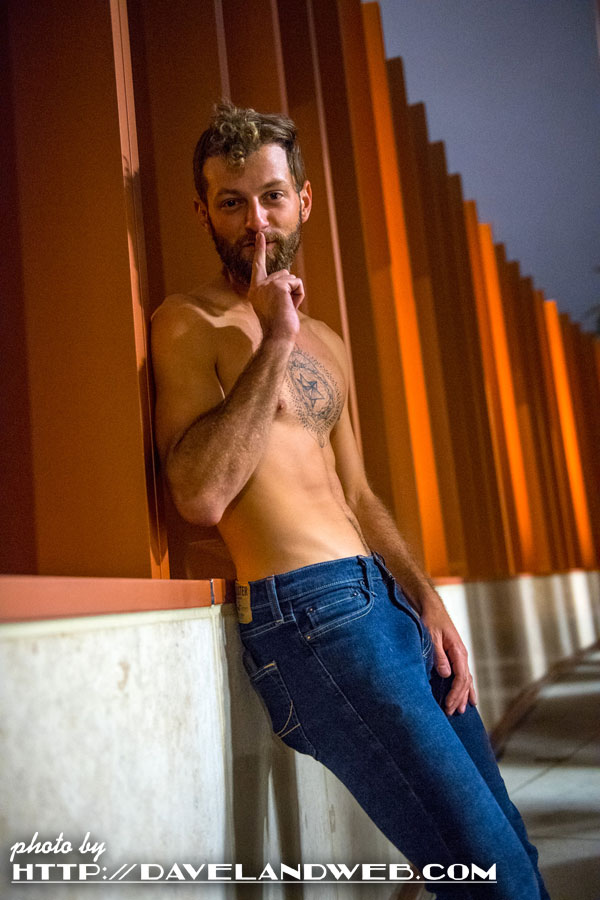
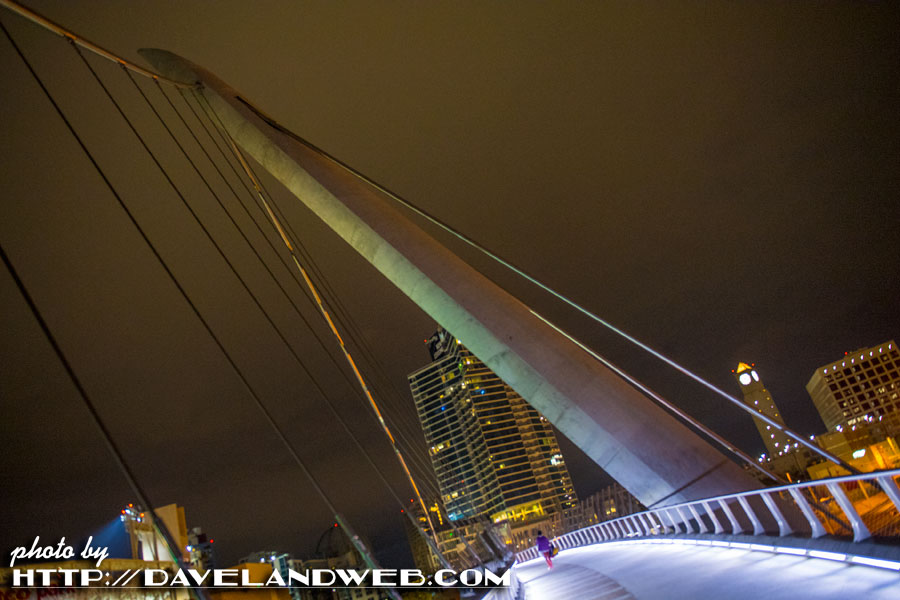
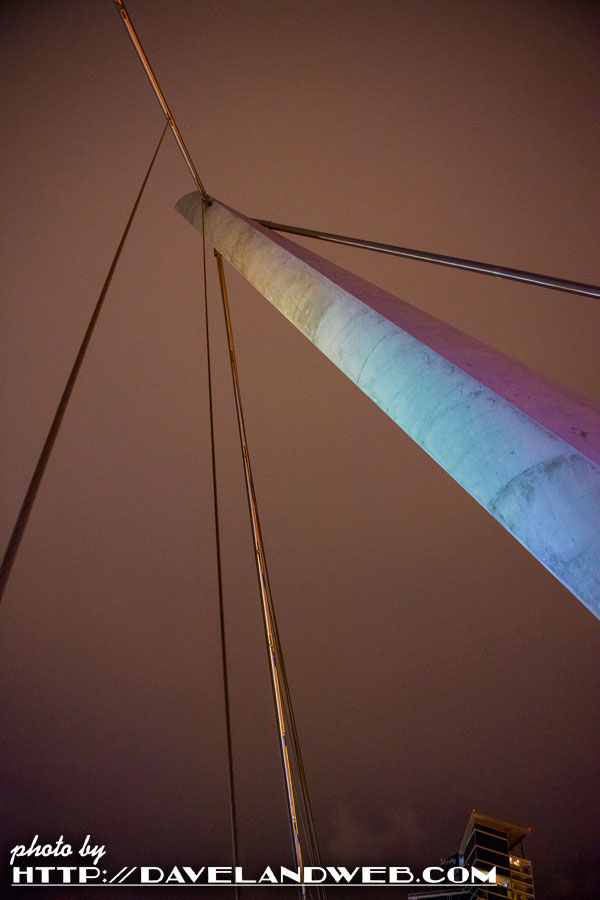
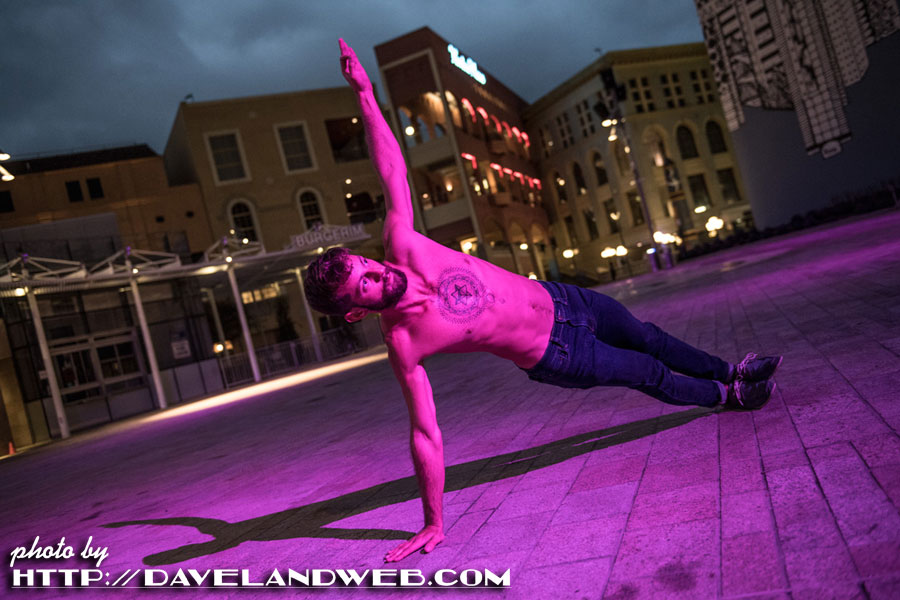
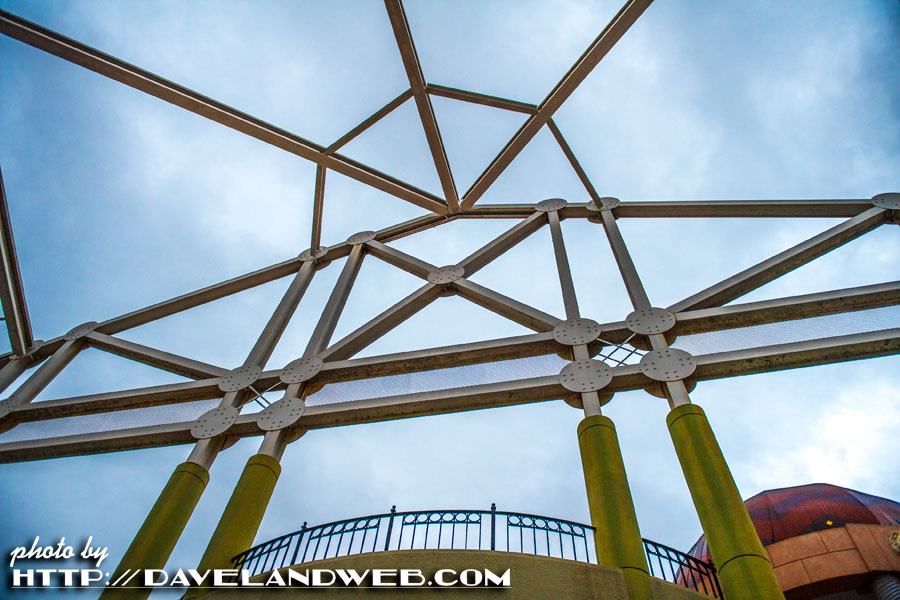
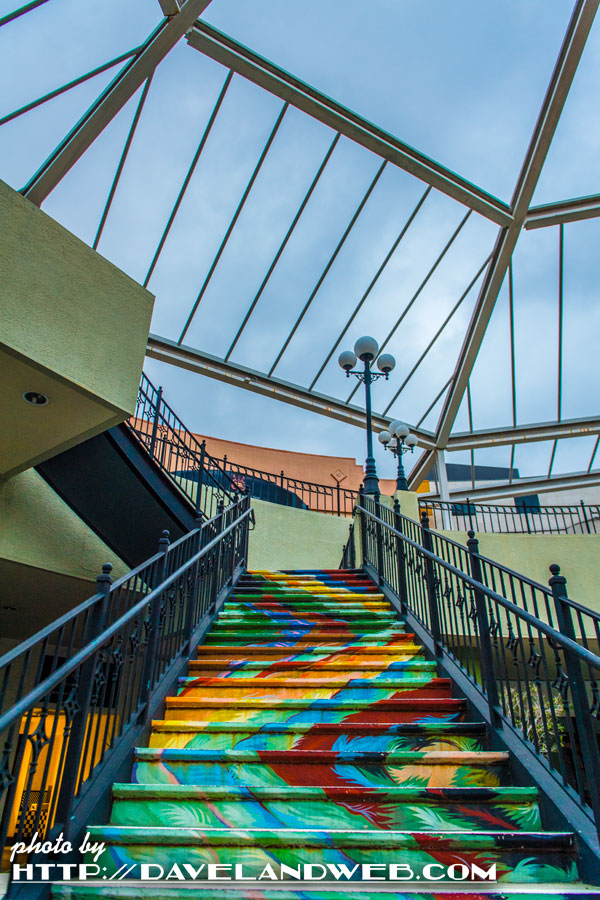
One of my favorite times to shoot is early in the morning, just before the sun comes out. Maybe it sounds crazy, but you get the city ALLLLLL to yourself. Hardly any people, plenty of parking, and while the silence can be a bit eerie, it’s also super relaxing and allows the brain to think better. Ah...creativity! It also helps when you have a friend to shoot with who can climb and has a sense of adventure!
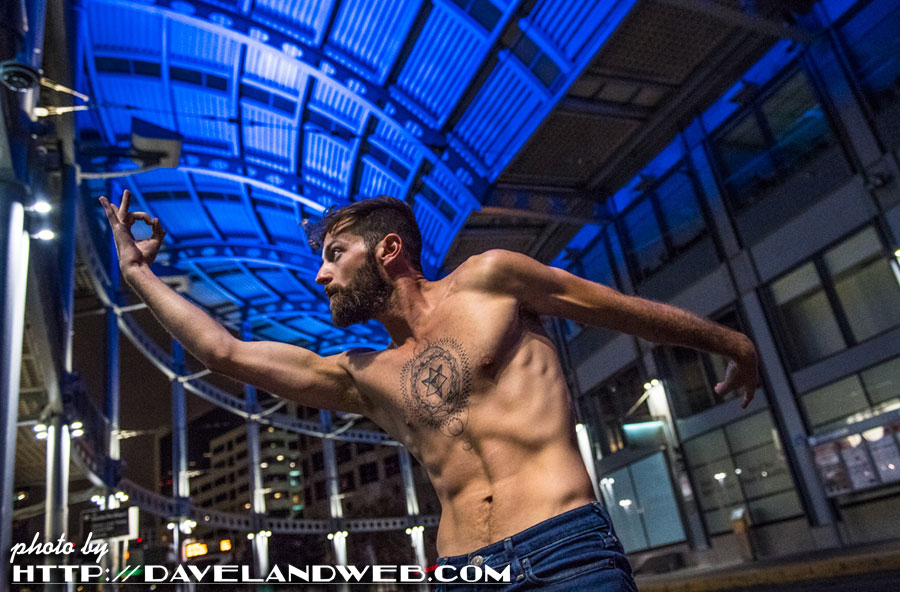
The trolley station is a favorite location of mine to shoot, with its ever-changing rainbow of colored lights.
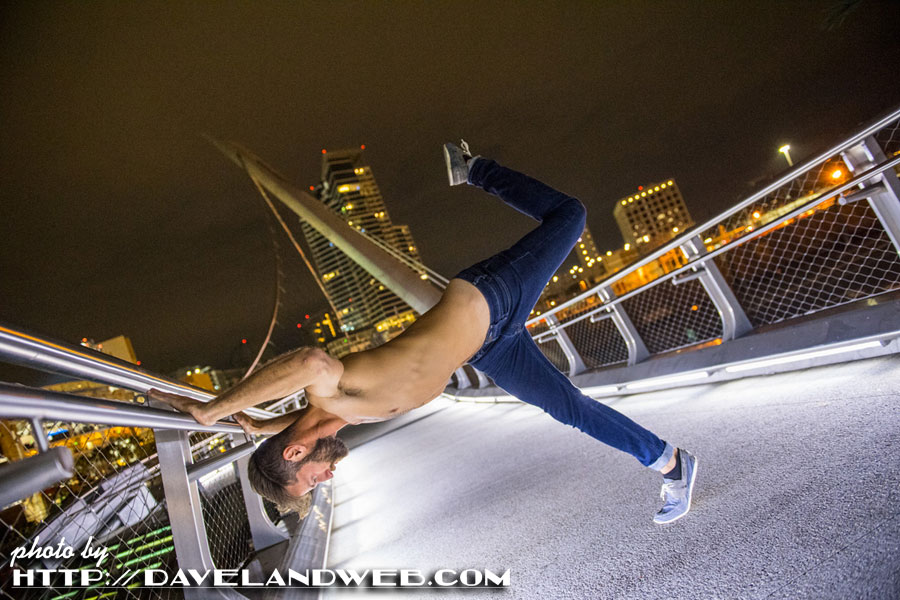
This bridge near the Convention provided some amazing views of downtown all lit up.
Colors are different this time of day, too. The sky has no sunshine at this time of day, but there’s plenty fo “light pollution” from all the streetlights and signage that have yet to be extinguished.
Horton Plaza was completely empty, save for a security guard or too. The perfect place to get your morning stretch going.
The once vibrant mall there has been completely abandoned, awaiting its next concept. You almost expect a zombie or two to appear.
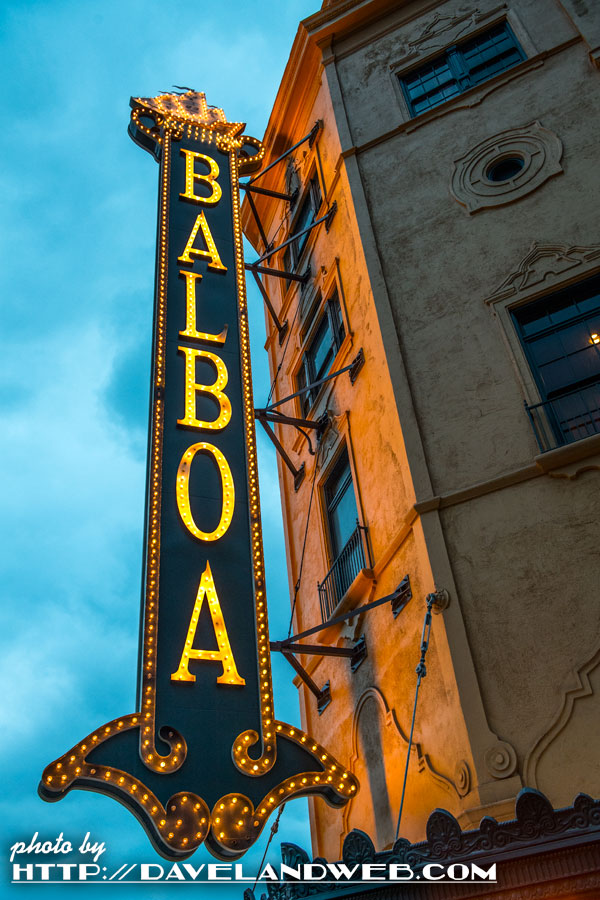
The final shot of the morning was the marquee for the Balboa Theatre, one of the historic gems of downtown San Diego.
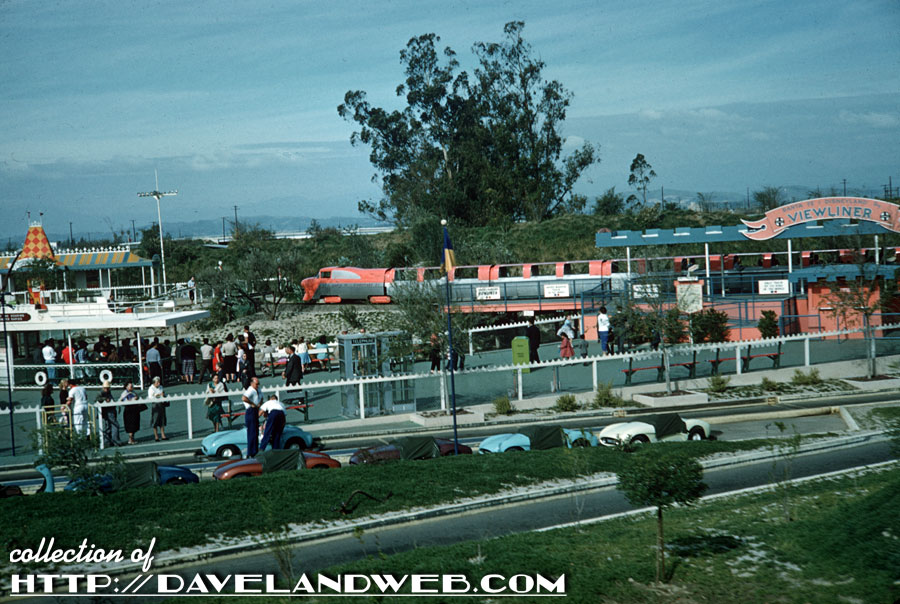
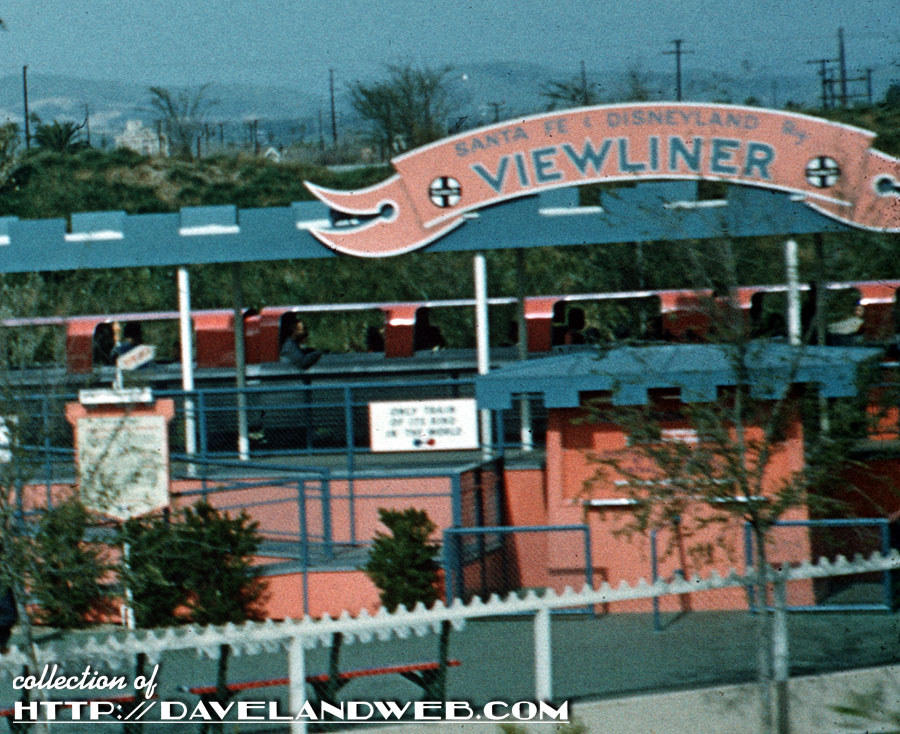
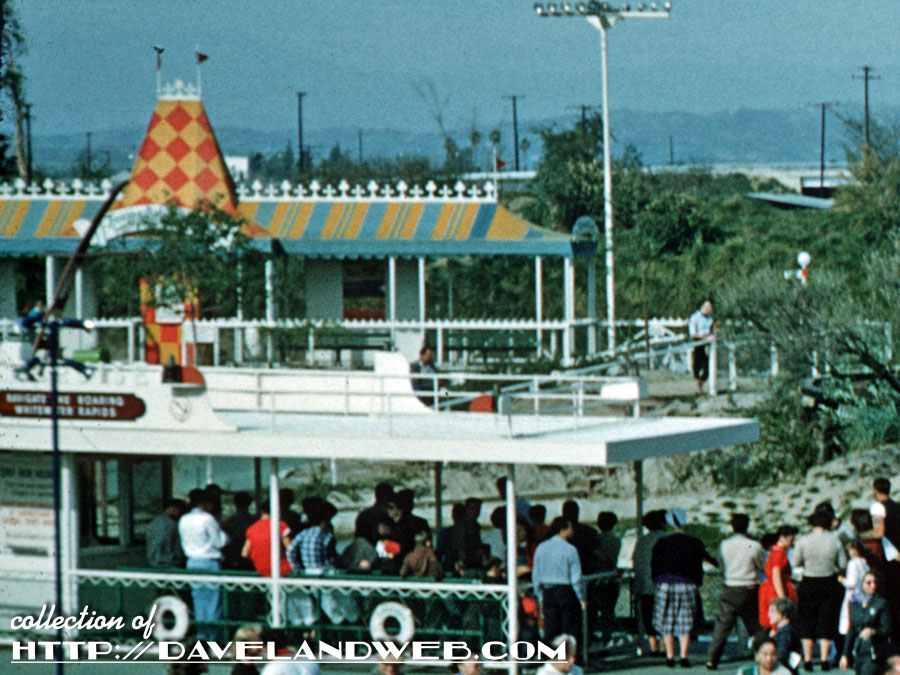
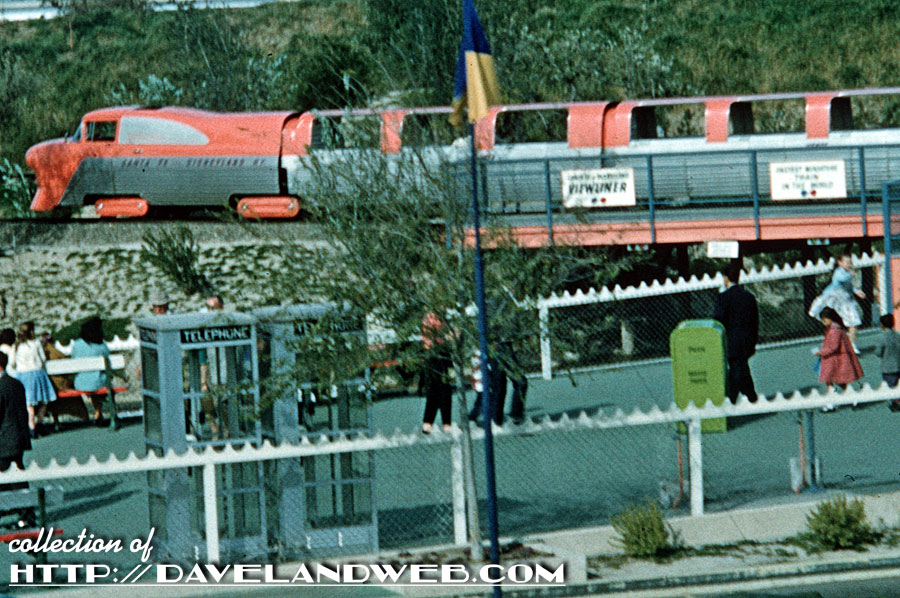
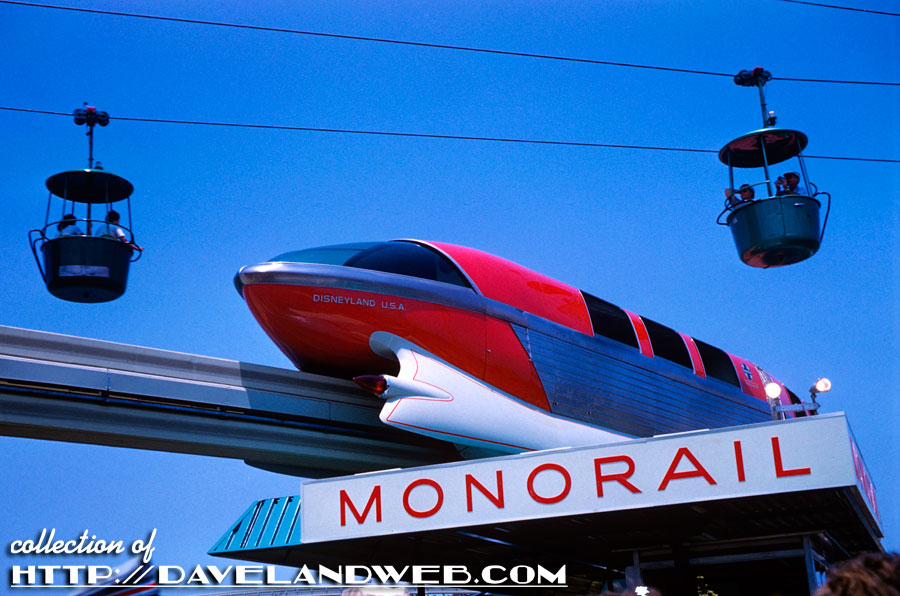
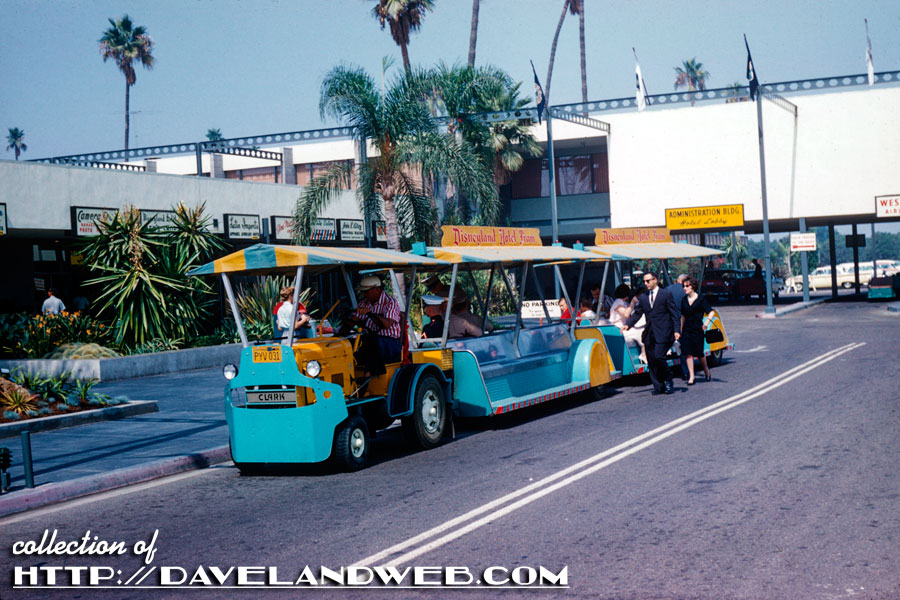
How can one image yield three additional images? When it’s of the Disneyland Viewliner, the “only train of its kind in the world!” That may not necessarily be a good thing, especially since the Viewliner lasted barely a year at Disneyland (June 26, 1957–Sept. 15, 1958).
Nearby you can see the Disneyland Railroad Fantasyland Depot (background) and the entrance to the Motor Boat Cruise (foreground):
And of course a closeup of the Viewliner itself. It looks so tiny when you see people next to it. It does not look very comfortable! One can easily see why Walt scrapped it in favor of the Monorail!
For you youngsters, the two boxes in the foreground are called phone booths. That’s where people used to go when they had to make a phone call and they were away from home.
See more Disneyland Viewliner photos at my main website.
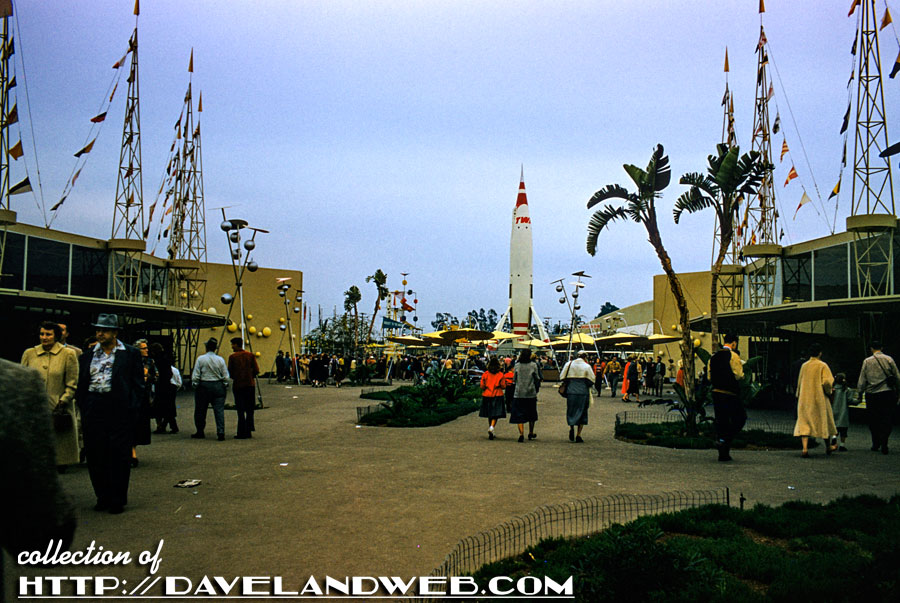
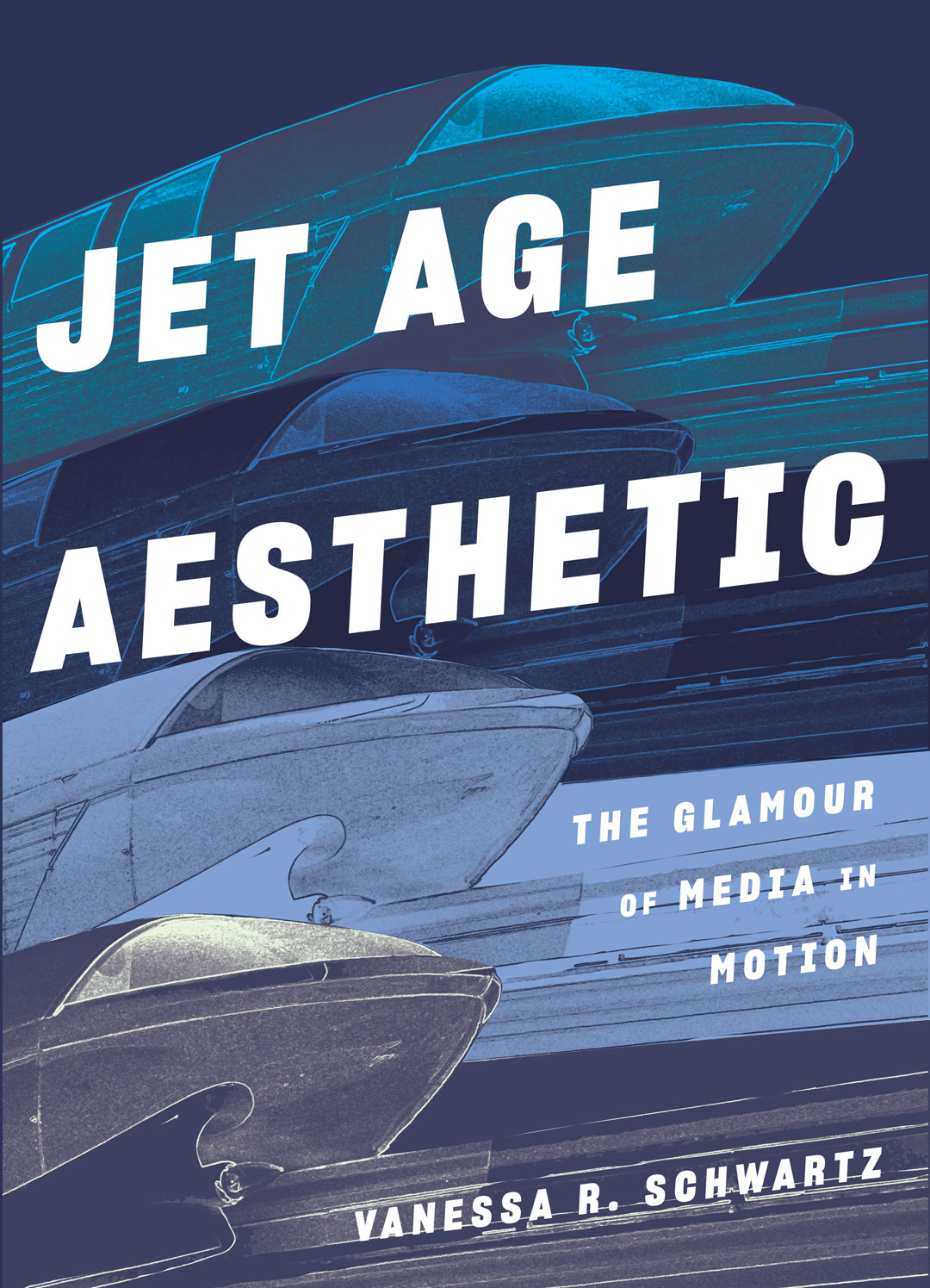
Vanessa Schwartz, a Professor of Art History, History and Film at USC, contacted me about using some of the vintage photos from my collection in an upcoming book titled “Jet Age Aesthetic.” I was thrilled and honored...until the sphincter police at Disney pulled the plug and told her she couldn’t use the photos. Now YOU can see the images she hand-picked in this post and learn more about this very cool book. The teaser line:
A stunning look at the profound impact of the jet plane on the mid-century aesthetic, from Disneyland to Life magazine
Vanessa R. Schwartz engagingly presents the jet plane’s power to define a new age at a critical moment in the mid-20th century, arguing that the craft’s speed and smooth ride allowed people to imagine themselves living in the future. Exploring realms as diverse as airport architecture, theme park design, film, and photography, Schwartz argues that the jet created an aesthetic that circulated on the ground below.
Visual and media culture, including Eero Saarinen’s airports, David Bailey’s photographs of the "jet set," and Ernst Haas’s experiments in color photojournalism glamorized the imagery of motion. Drawing on unprecedented access to the archives of The Walt Disney Studios, Schwartz also examines the period’s most successful example of fluid motion meeting media culture: Disneyland.
The park’s dedication to “people-moving” defined Walt Disney’s vision, shaping the very identity of the place. The jet age aesthetic laid the groundwork for our contemporary media culture, in which motion is so fluid that we can surf the internet while going nowhere at all.
I asked Vanessa to share with me her inspiration for the book, which she very graciously did.
I have always been a historian of modern visual culture and especially what we might think of as “infotainment” and have looked at the deep links between France and America on this subject. More specifically, I have wanted to understand on the one hand how and why a place such as Disneyland is so compelling even today but also why in a sense it had to be invented when and where it was: Southern California, 1955.
But I didn’t want to isolate that answer to either explanations about Walt’s biography or genius (although they matter) or to questions of regional development or even the movie industry. I had just finished a book in which I tried to look at how films were being shot on location around the world and realized this had been possible because of the advent of the jet. This led to me ask, how did the jet change things? Most people have answered that question in predictable ways: looking at the rise of mass tourism, the way the world seems to shrink, the global economy etc.. In a sense, I was more interested in how the actual experience of flying in a jet (as opposed to early piston planes) may have changes people’s perceptions of time and space) and whether that made a difference to everyday life on the ground.
I started to see the claims being made about the jet’s ride, its fluid motion, being made for everything: the airport’s architecture, the ride of the boat in It’s A Small World, the way magazines circulated, the way journalists used blurry color photography to communicate the news. So, it seemed to me the jet mattered because it allowed people to bring transport culture into media forms and I believe that prepared the way for people to begin “surfing the internet” as much the computer codes and infrastructures required to build it. Media forms need ready users. Actual jet culture’s fluid motion isn’t as associated with air travel anymore — it is on the internet now. But in the meantime, we still enjoy jets and Disneyland and magazines.
And the reviews are in! Here’s one from Britt Salvesen of the Los Angeles County Museum of Art (aka LACMA):
“Jet Age Aesthetic is an exhilarating, timely call for new ways of thinking about media and mass culture. From airport design and Disneyland to movies and newsmagazines, Schwartz traces throughlines of aspiration and experience in the visual culture of the jet age.”
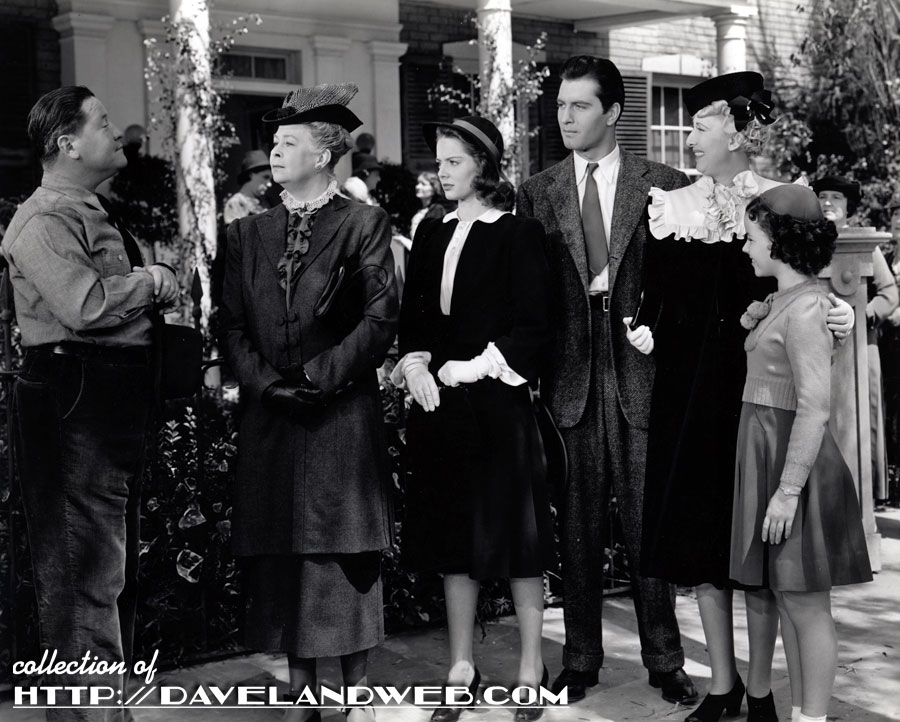
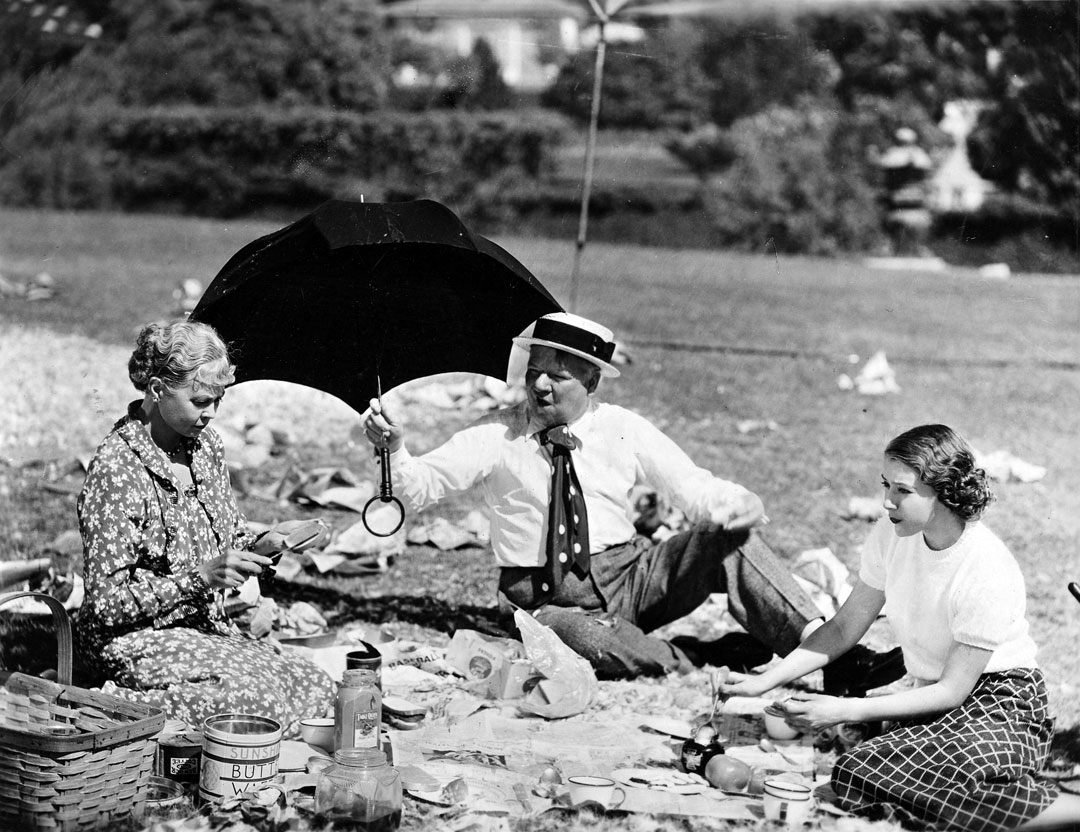
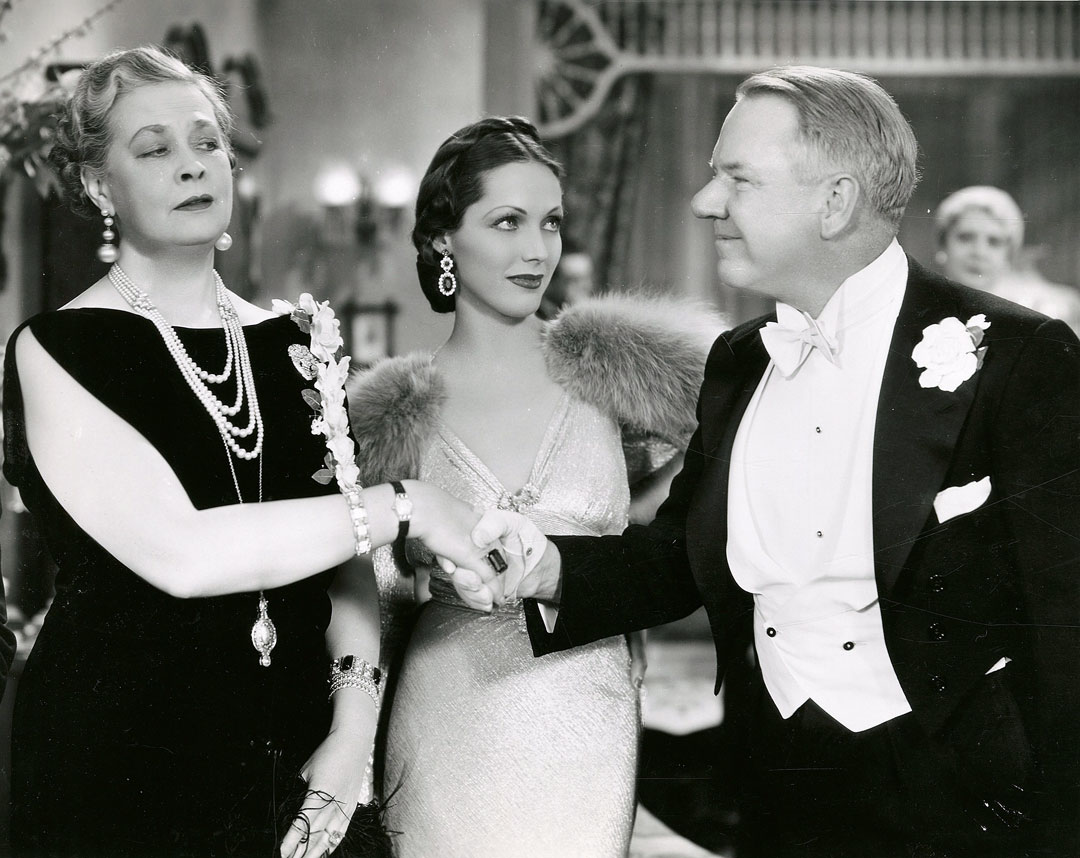
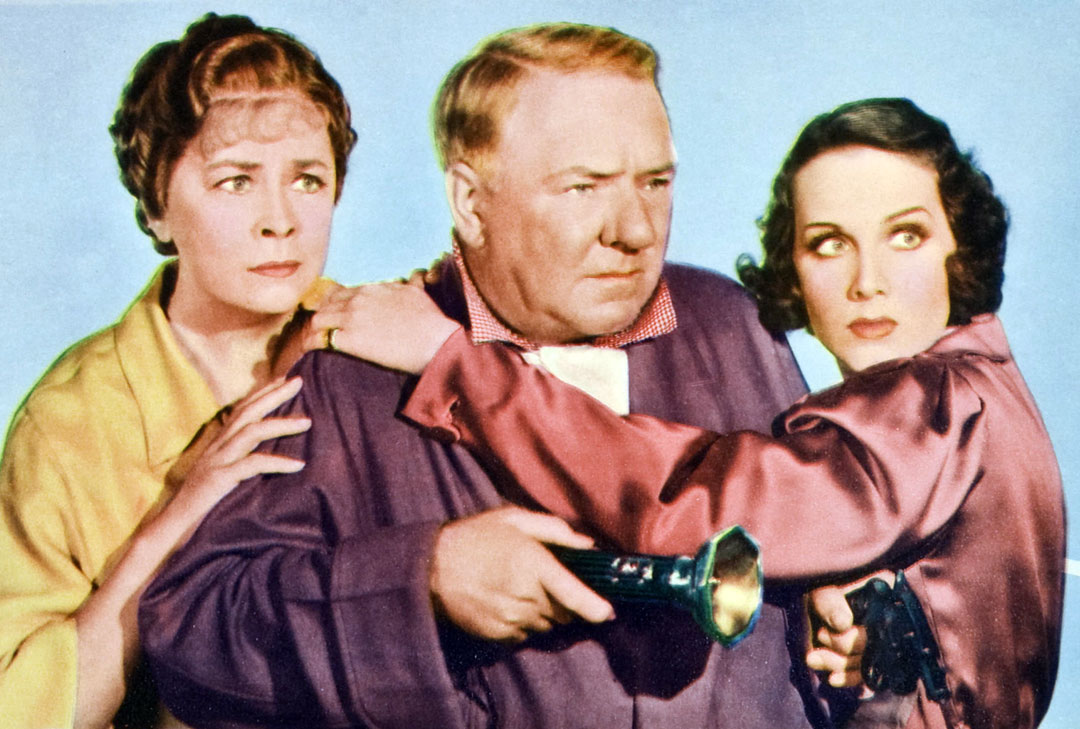
While I was home sick last week, I binged on W.C. Fields movies which I hadn’t watched in years. One of the things I noticed was that he and Shirley dipped into the same pool for supporting casts, which is surprising considering Fields was mainly at Paramount and Universal, and Shirley was at Fox. Even though they didn’t make a film together, W.C. and Shirley were closely linked by the character actors in their movies. Today’s post focuses on Kathleen Howard, who excelled at playing nagging wives, snooty society matrons, and even a villainess or two.
Kathleen Howard was born in Ontario, Canada on July 27, 1884 beginning her career as an opera singer in 1906 in Germany. She arrived in America in 1913, joining the Metropolitan Opera three years later. Want to hear what she sounded like? Here is a recording of her singing “Card Game” from Bizet’s Carmen:
She left the Metropolitan company in 1928 to become the fashion editor of Harper's Bazaar magazine. When she got bored doing that, she decided to become a film actress. The Evening Independent in St. Petersburg reported on February 23, 1934: FASHION MAGAZINE EDITOR TURNS TO MOTION PICTURES
Kathleen Howard Tries Out New Work After Having Engaged Successfully in Several Different Lines of Endeavor.
Hollywood, Cal., Feb. 23.—(Special)—“If a person has succeeded in one profession, it takes nothing more than courage and a bit of common sense to succeed in any other calling; and it makes no difference how remotely related the two lines of endeavor may be.”
Kathleen Howard, opera diva, magazine editor, lecturer, writer and motion picture actress, is author of that remark.
“My livelihood is to me a great adventure, and I change my line of work whenever it shows signs of growing dull,” she said today on the set of Paramount’s “Death Takes a Holiday,” in which she is making her motion picture debut.
Last week Miss Howard resigned from the editorship of Harper’s Bazaar fashion department, a position she has held for the past four years.
“I firmly believe that necessity isn’t always the mother of accomplishment,” she said. “True that I have had to work all my life, but I have chosen my own fields and made changes whenever the notion moved me.”
Howard co-starred with W.C. Fields in three of his films. First was “It’s a Gift” (1934) as Amelia, his nagging, shrewish wife.
Next was “You're Telling Me!” (1934) as a wealthy snob who does not want her son marrying Fields’ daughter because of class differences.
In “Man on the Flying Trapeze” (1935) she once again played Fields’ henpecking wife.
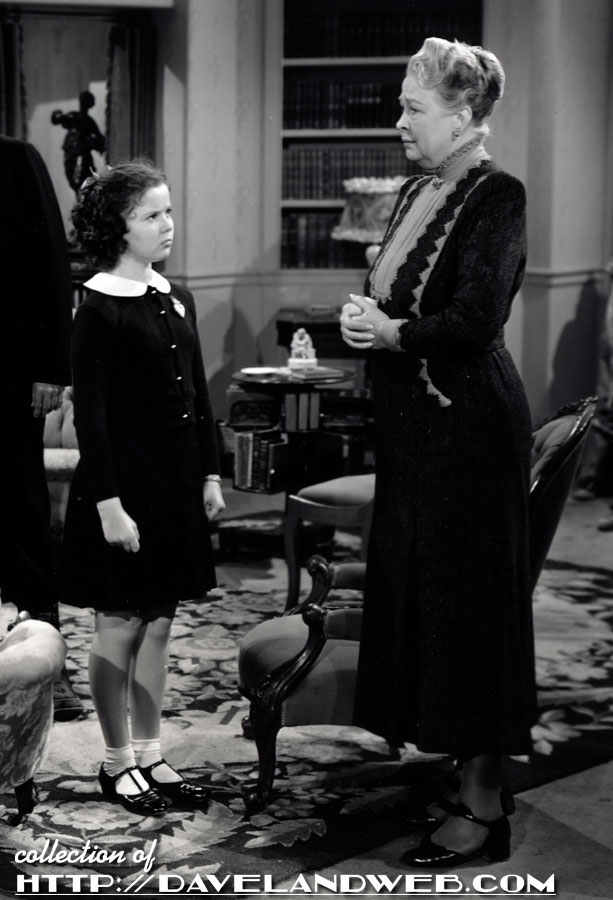
Once done with Fields, she costarred as the old-fashioned Hester Appleby in Shirley’s “Young People” (1940). Thwarting Shirley’s family at every turn, Hester was supposed to be a true villainess all the way through the picture. According to publicity stories of the time, Howard talked Director Allan Dwan into rewriting the ending of the film so that "Wendy" (played by Shirley) wins over "Hester," thus making her less of a heavy.
Howard also had an uncredited bit part as a cook in “Laura,” with Gene Tierney. The last movie she made was 1950’s “Born to Be Bad,” directed by Nicholas Ray, starring Joan Fontaine and Robert Ryan. The torrid tagline for the film was: “Baby-faced Savage in a jungle of intrigue!”
Her August 17, 1956 New York Times obit:
MISS HOWARD, 77, SINGER, ACTRESS; Former Contralto at 'Met' Dies--Film Player Was Fashion Editor Here
Miss Kathleen Howard, former Metropolitan Opera contralto, motion-picture actress and magazine editor, died Wednesday evening in Hollywood, Calif., after a long illness. She had been an invalid for seven years. Her age was 77.
More Fields/Temple costars to come!
See more Shirley Temple photos at my main website.
If you’re an old-timer like me, you know this song is bull:
Seems it never rains in southern California
Seems I've often heard that kind of talk before
It never rains in California, but girl, don't they warn ya?
It pours, man, it pours
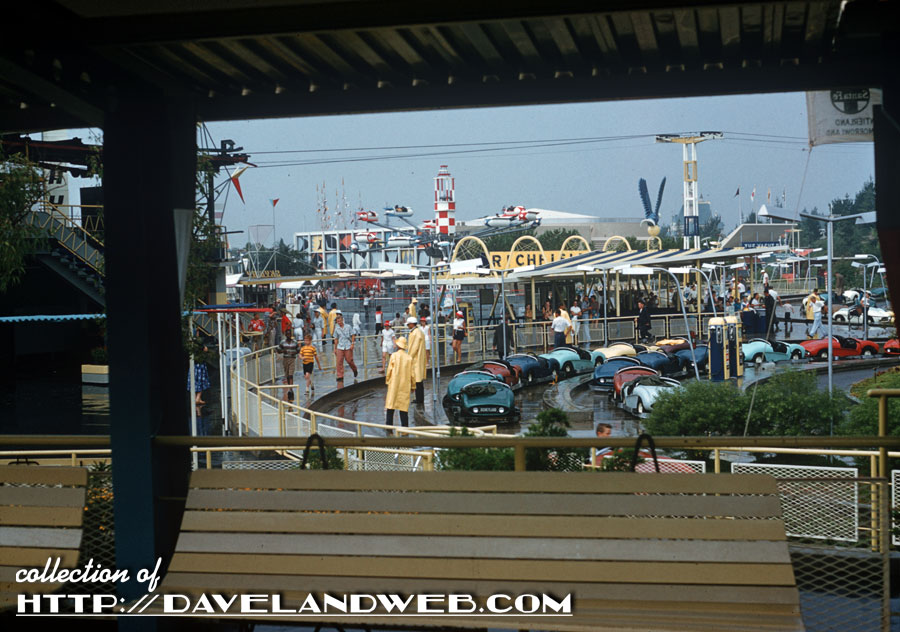
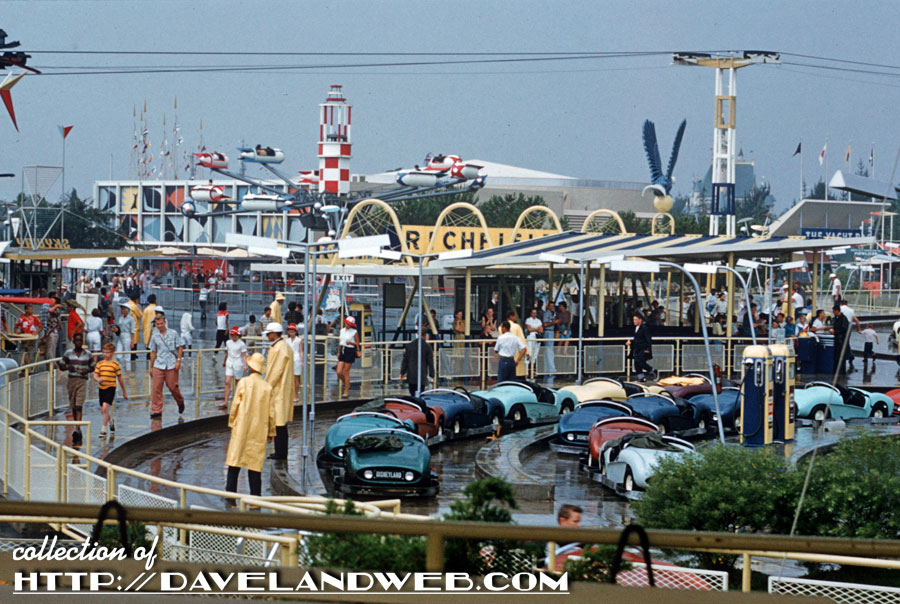
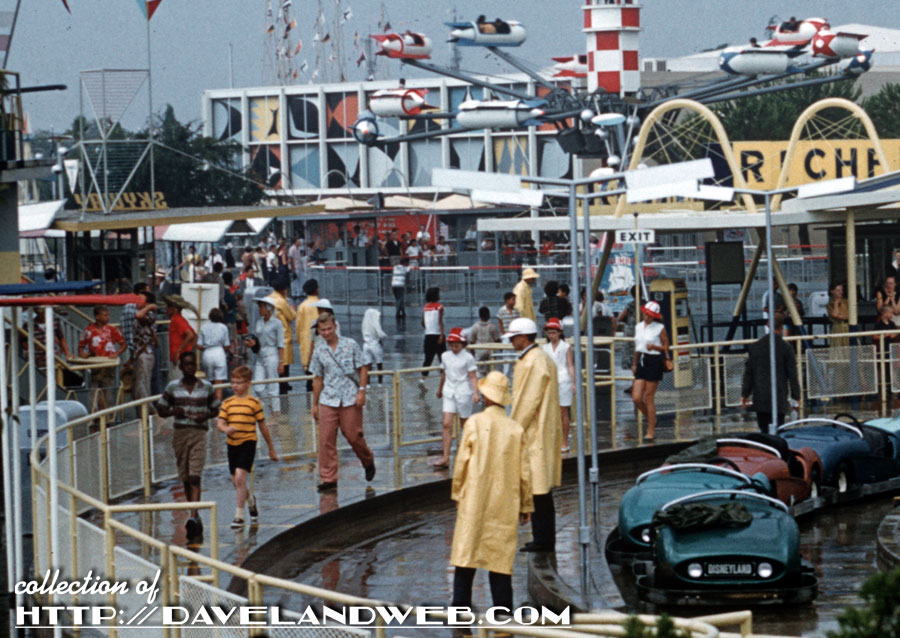
This August 1958 image of the Tomorrowland Depot at Disneyland is all the proof you need!
Just look at those yellow slickers the cast members are wearing! Despite the rain, it must have still been pretty warm, judging by the shorts most of the guests are wearing.
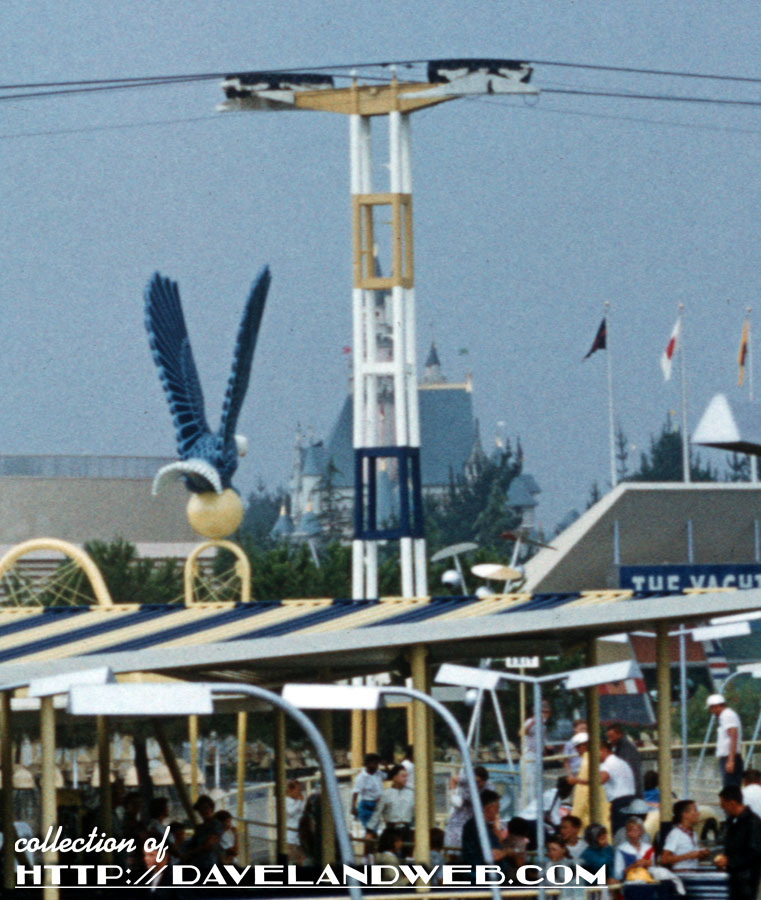
Note the Autopia Richfield Eagle and the Skyway pylon; both long gone.
In case that song is stuck in your head, might as well watch it on youtube!
See more Disneyland DLRR Tomorrowland Depot photos at my main website.
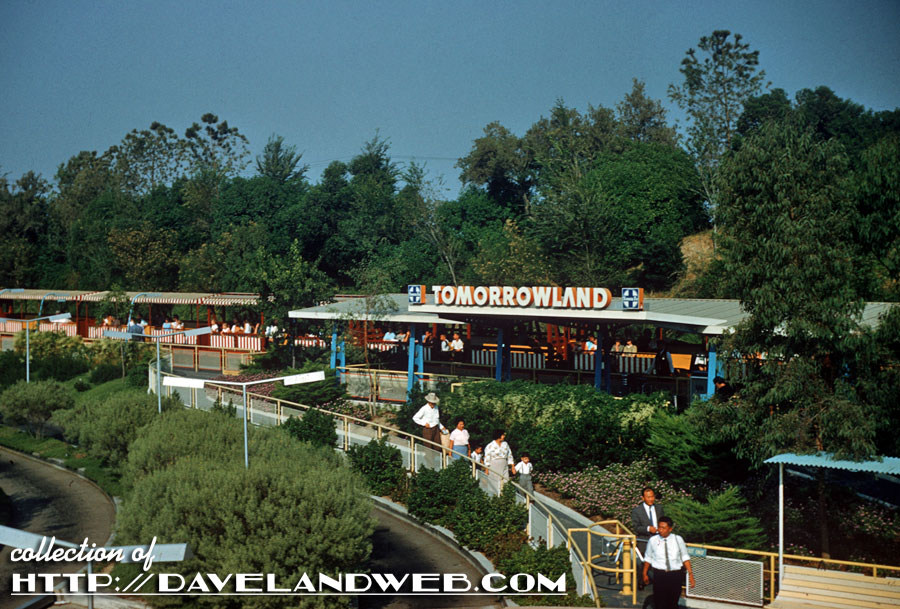
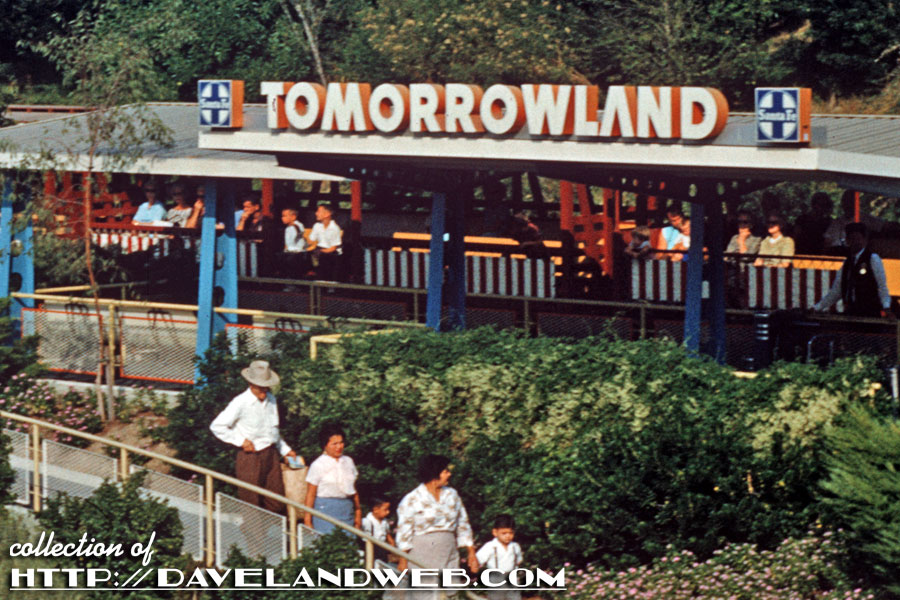
The Tomorrowland Train Station at Disneyland is a Googie-styled depot built in 1958. The nearby Viewliner train attraction (1957-1958) had a similar station with the same type of beams with round holes.
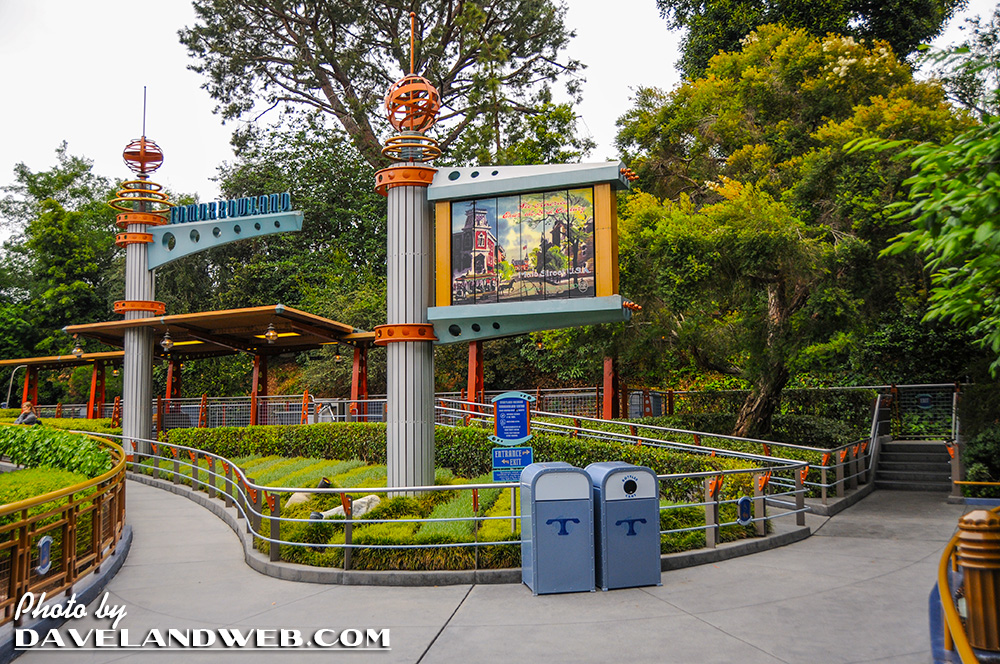
How this area looked in my photo from May 2011:
Still Googie-looking, but with a touch of Jules Verne.
See more Disneyland Railroad Tomorrowland station photos at my main website.
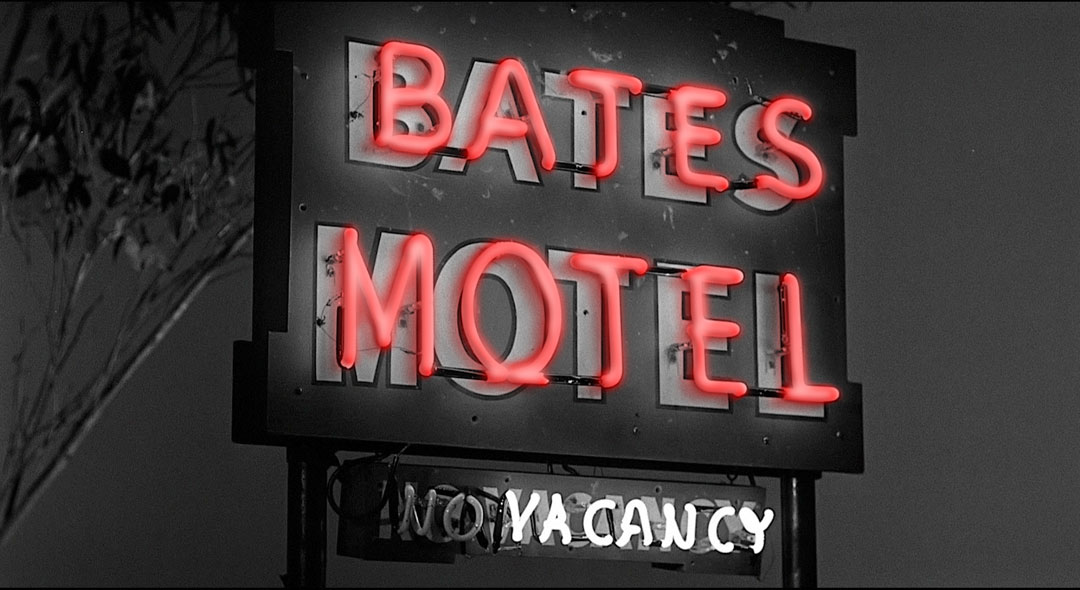
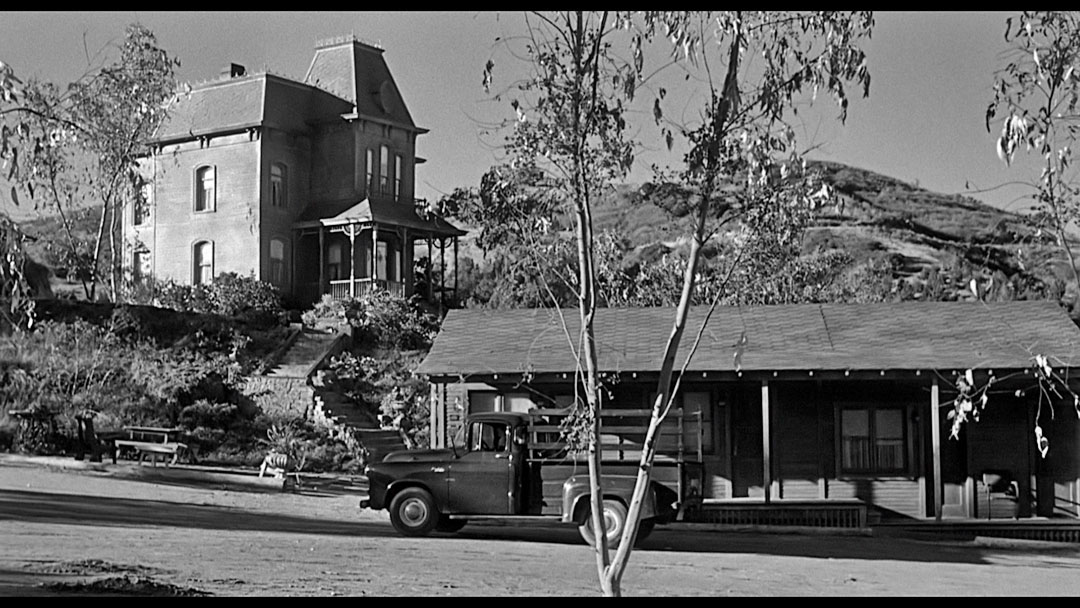
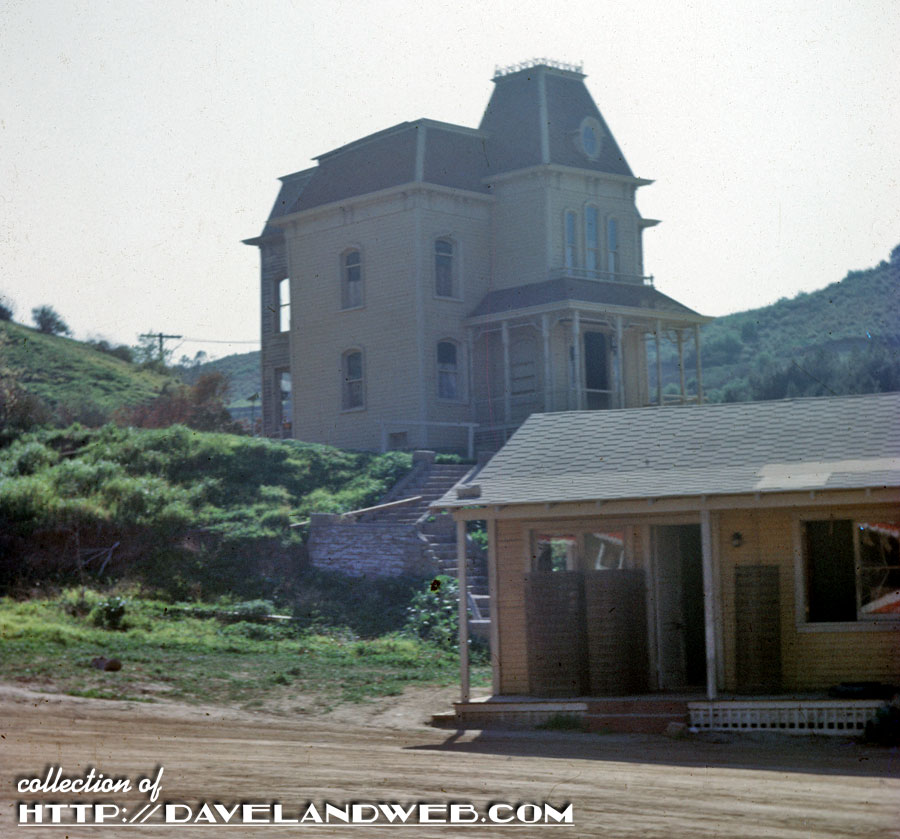
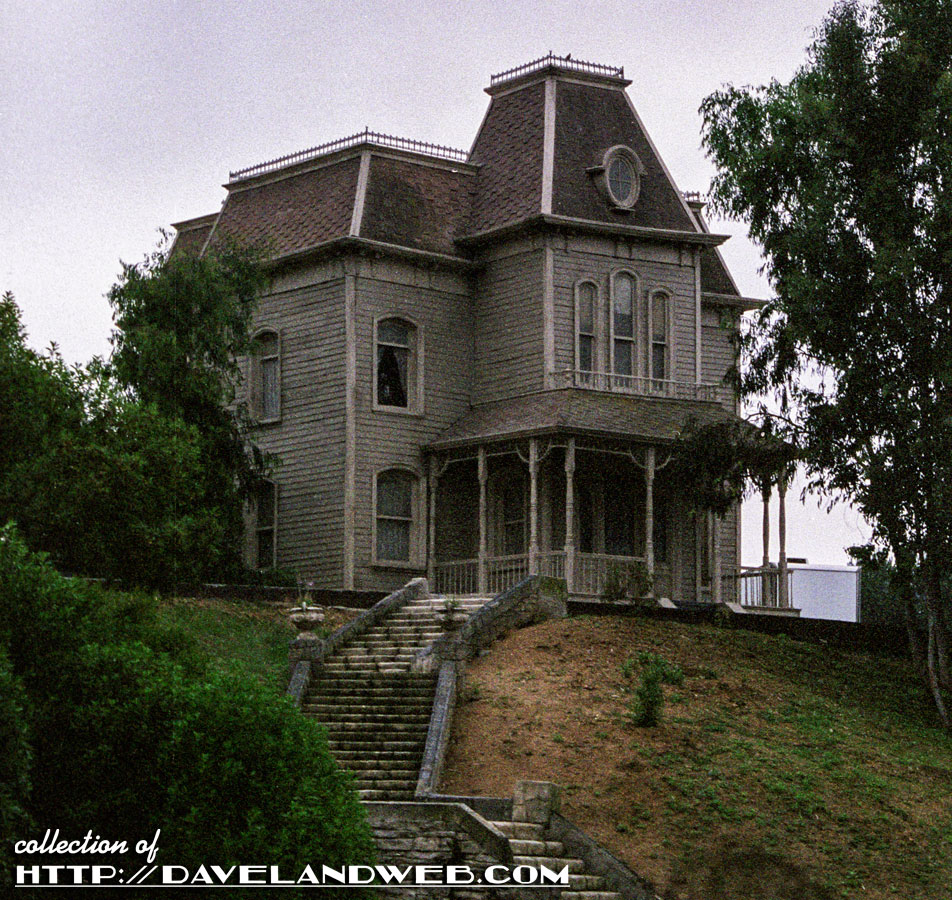
The Bates home and Motel complex from Alfred Hitchcock’s “Psycho” (1960) is one of the most popular spots on the Universal Studios tour.
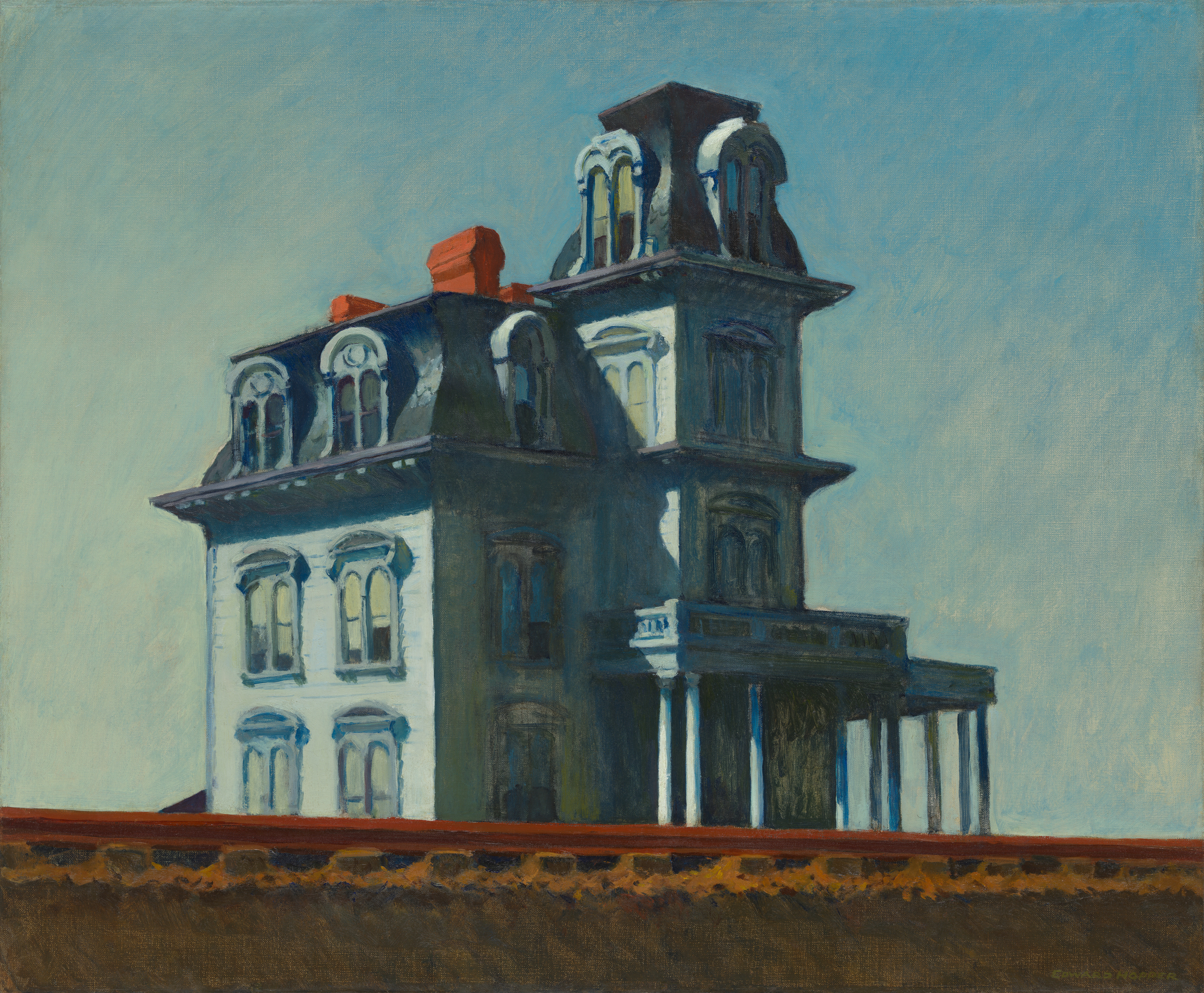
Want to see what inspired the look of the home? It was Edward Hopper’s 1925 painting, House by the Railroad.
Here’s what the outdoor set looked like in May 1965:
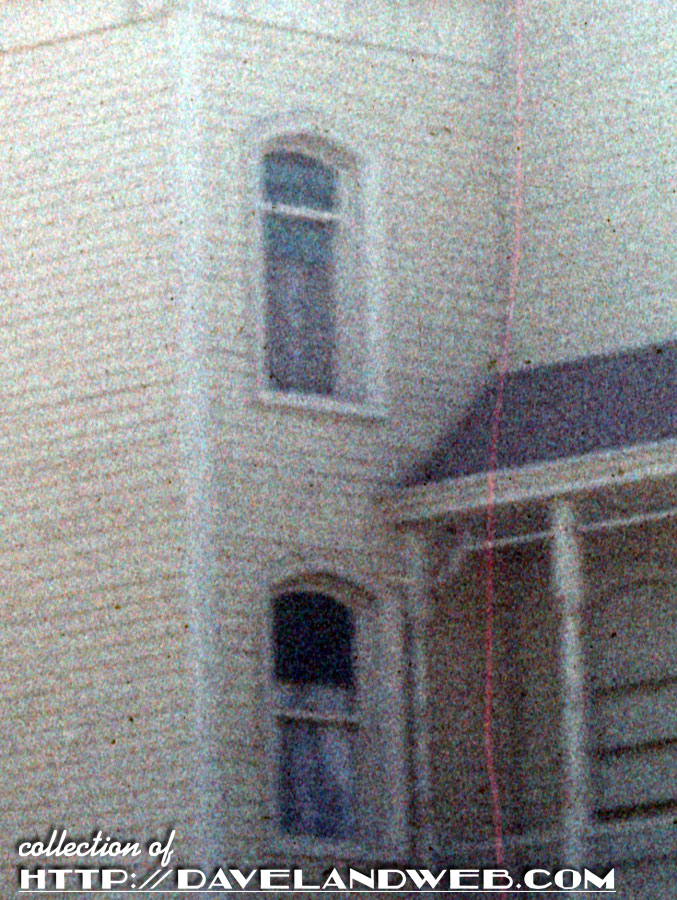
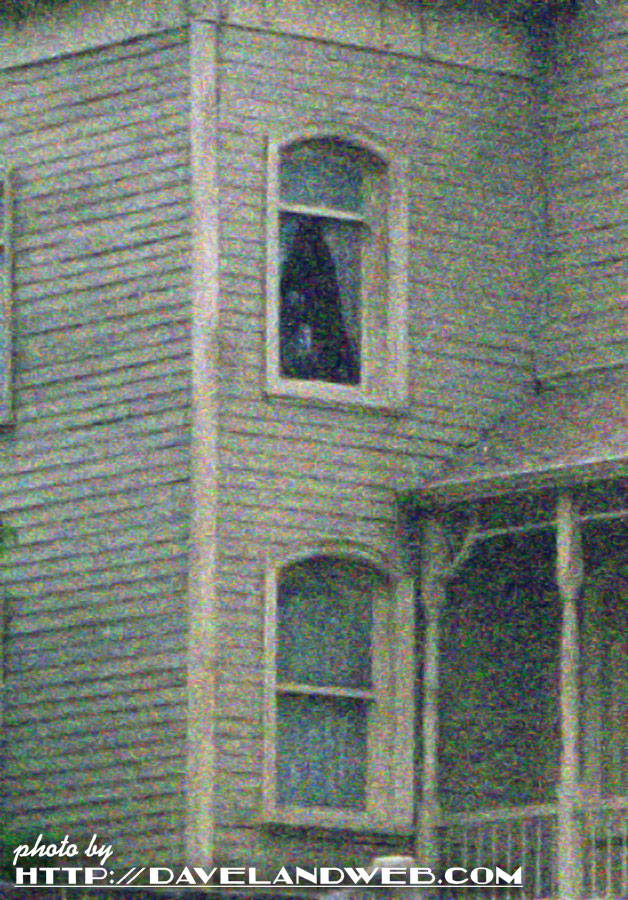
I don’t see Mrs. Bates in the window, though.
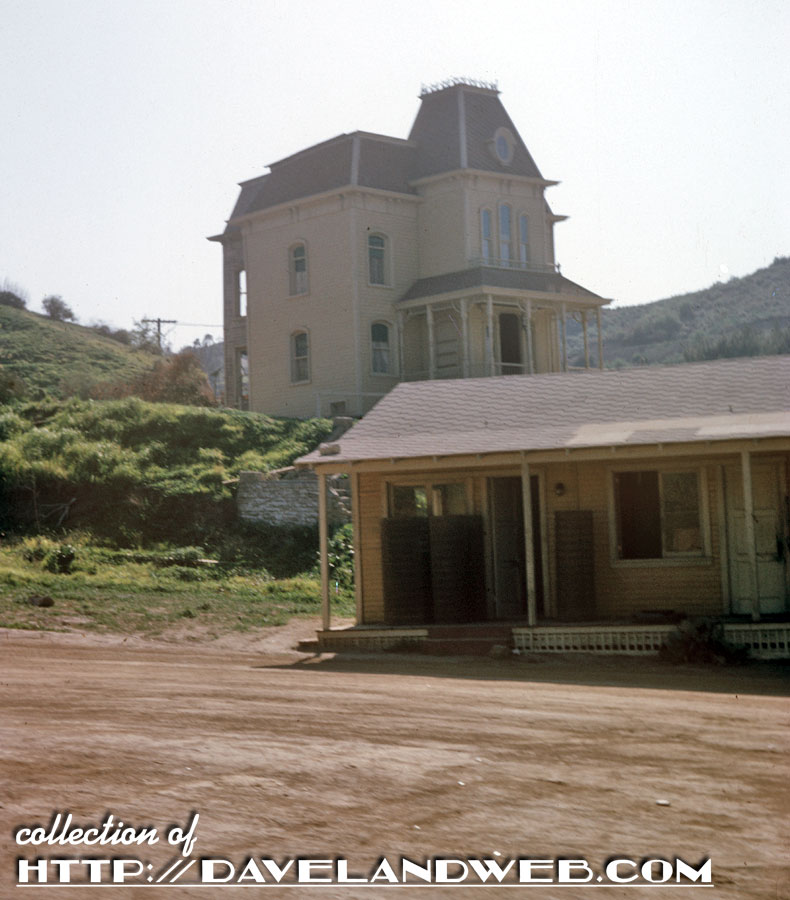
The 1965 visitor took this second shot; I guess one wasn’t enough. I have read that the buildings have been moved over the years. Not sure if that’s true or not, but it would appear that in 1965 they were still in their original location.
How it looked during my last visit in 2004:
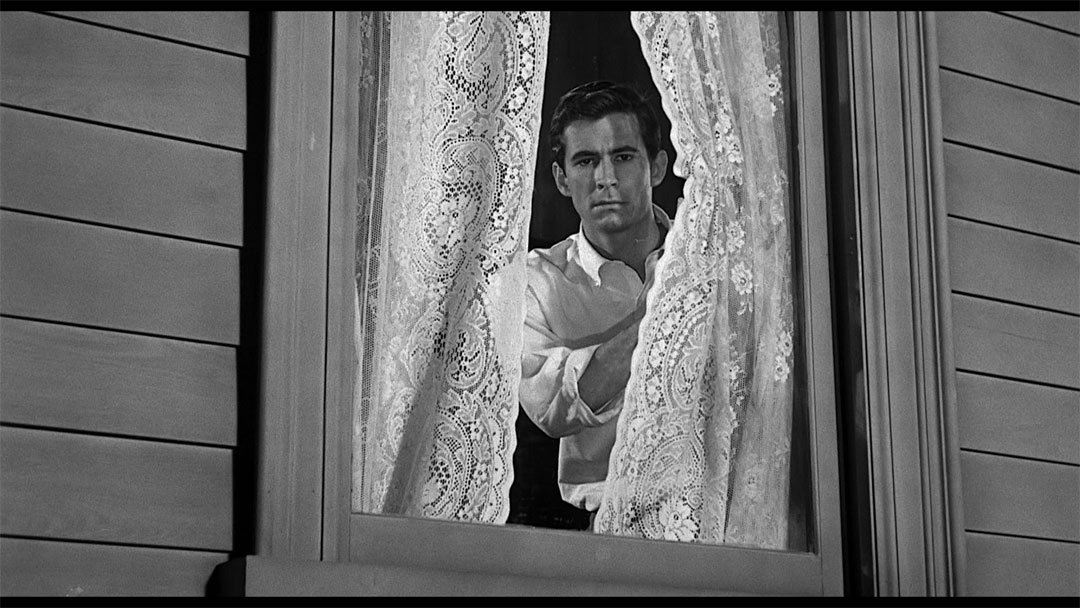
I seem to recall that Mrs. Bates WAS in the window at the time. You can at least see the curtains are open for that reveal.
Or was it just Norman up there?
See more Universal Studios photos at my main website.
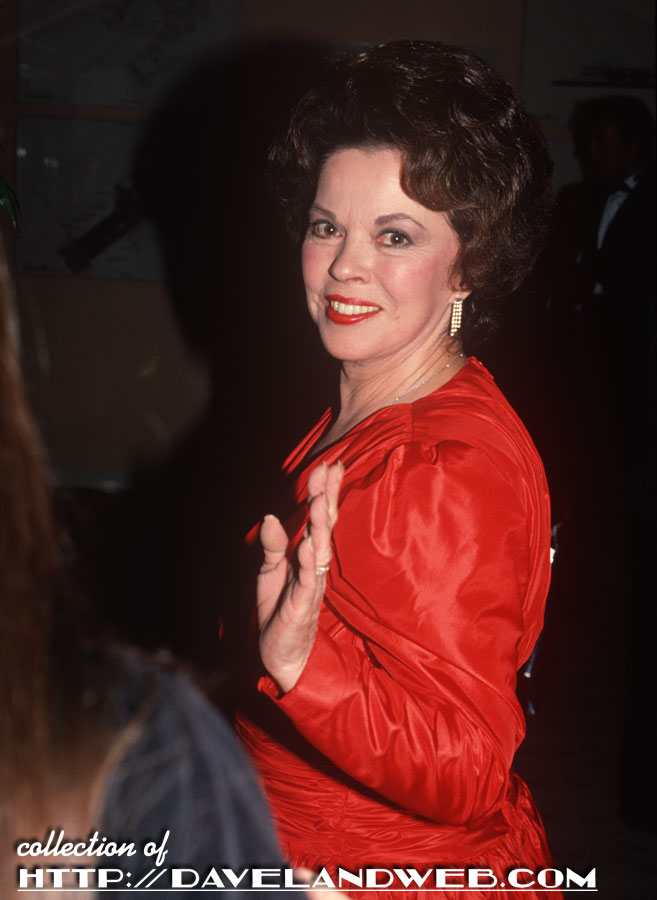
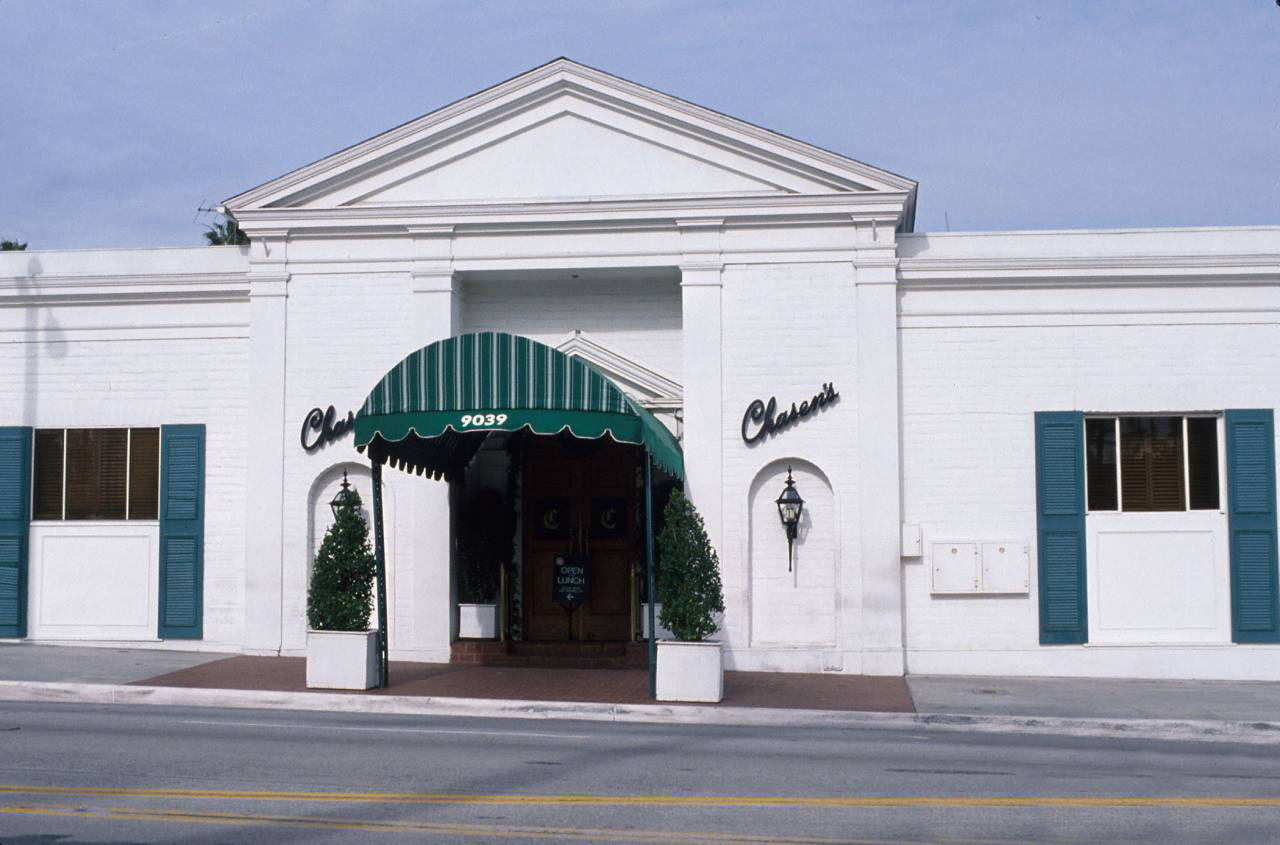
As a child, I loved Shirley Temple the actress AND Shirley Temple the drink! Sure, little boys could order a Roy Rogers and sound a little more manly, but I didn’t give a crap. I ALWAYS requested a Shirley Temple. The origins of this non-alcoholic “cocktail” are unknown, but a variety of stories have circulated. One attributes it to Hollywood’s famous Chasen’s restaurant, which created it for Shirley’s tenth birthday party.
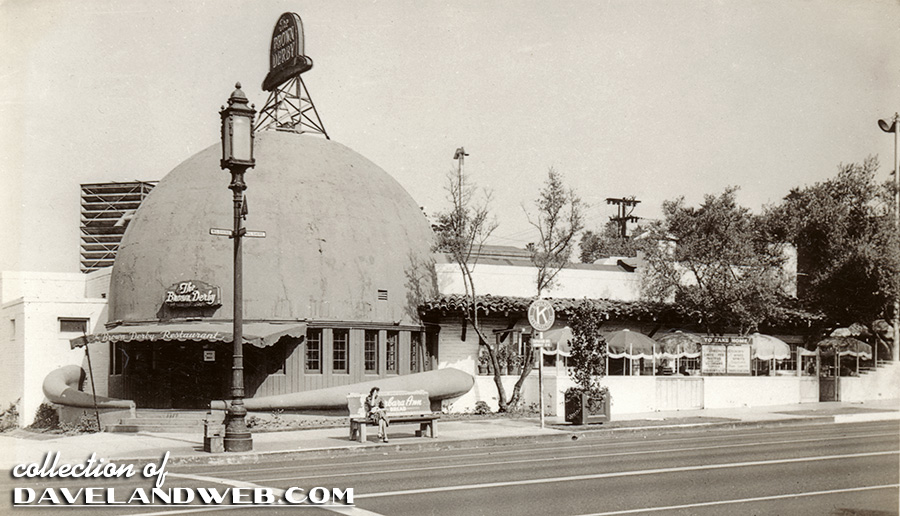
Story #2 credits the Brown Derby restaurant who whipped it up to take care of Shirley’s displeasure that everyone else got to have a special drink at the table except for her.
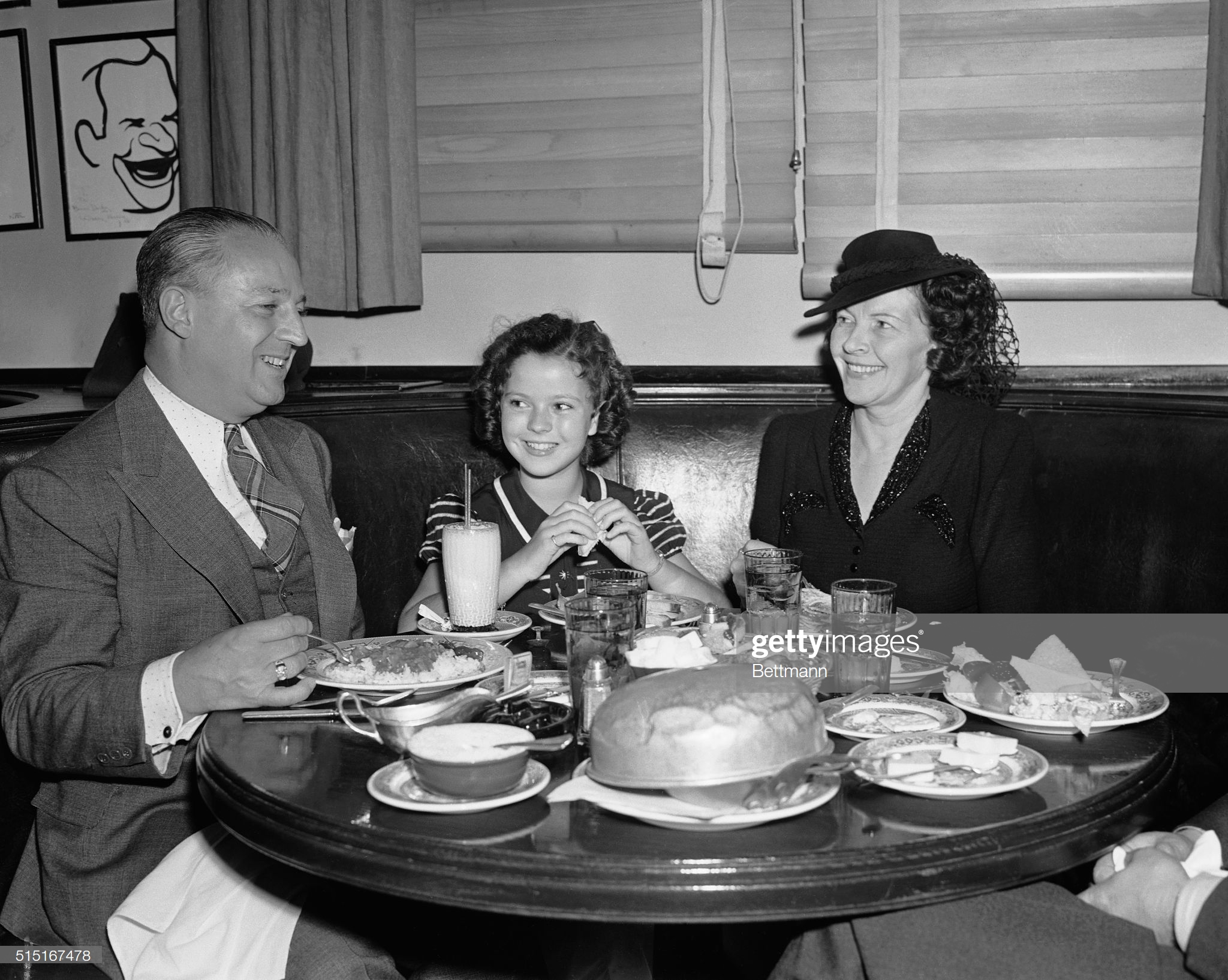
From getty images comes this shot of Shirley dining with her family at the Derby, May 1940. Looks like a malt to me!
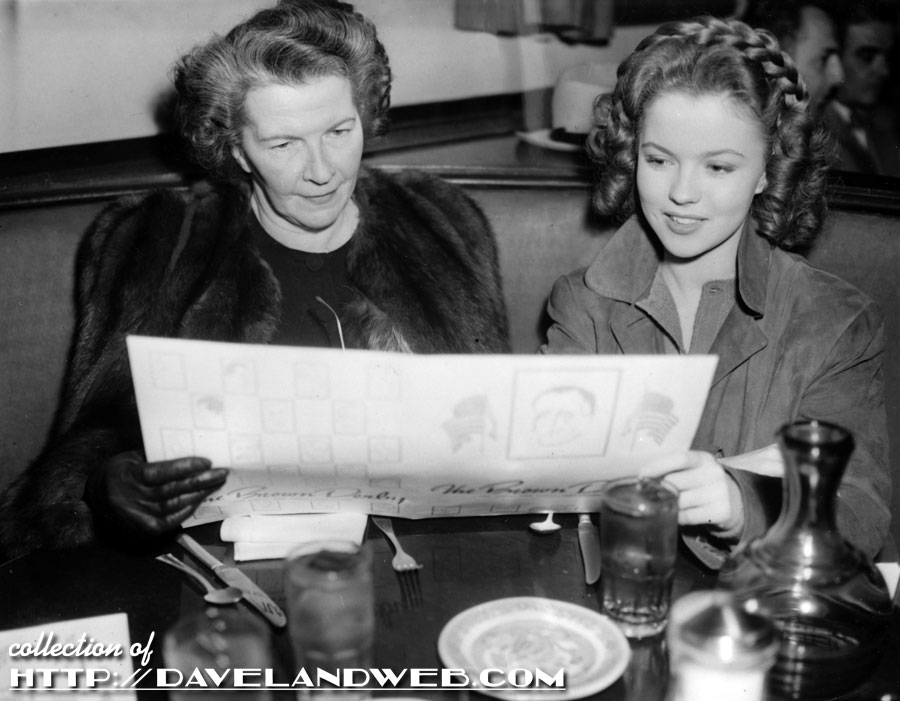
Here’s teenage Shirley with her mom at the Derby in 1945:
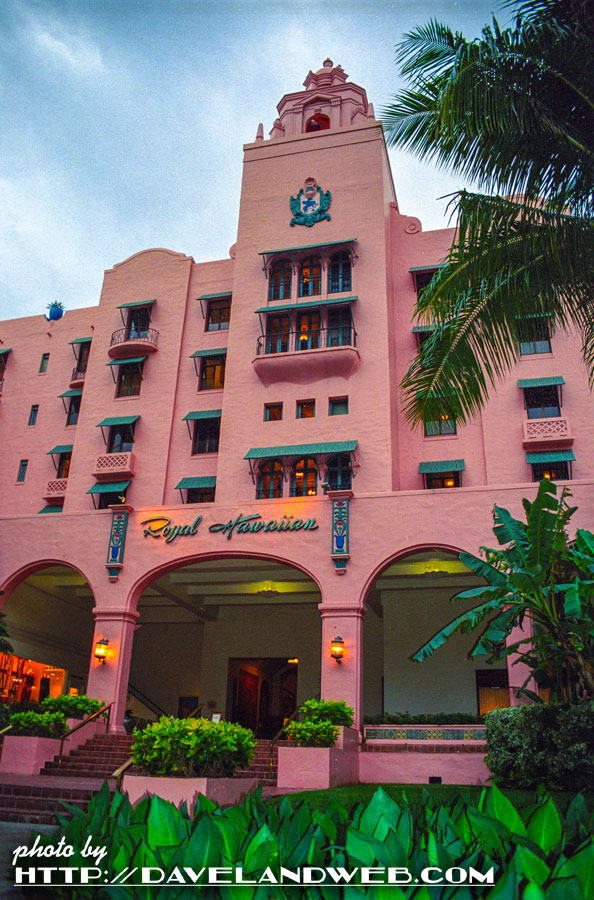
Story #3 has The Royal Hawaiian Hotel in Honolulu coming up with the drink.
Shirley herself told Scott Simon in an NPR interview in 1986:
"The saccharine sweet, icky drink? Yes, well... those were created in the probably middle 1930s by the Brown Derby Restaurant in Hollywood and I had nothing to do with it. But, all over the world, I am served that. People think it's funny. I hate them. Too sweet!"
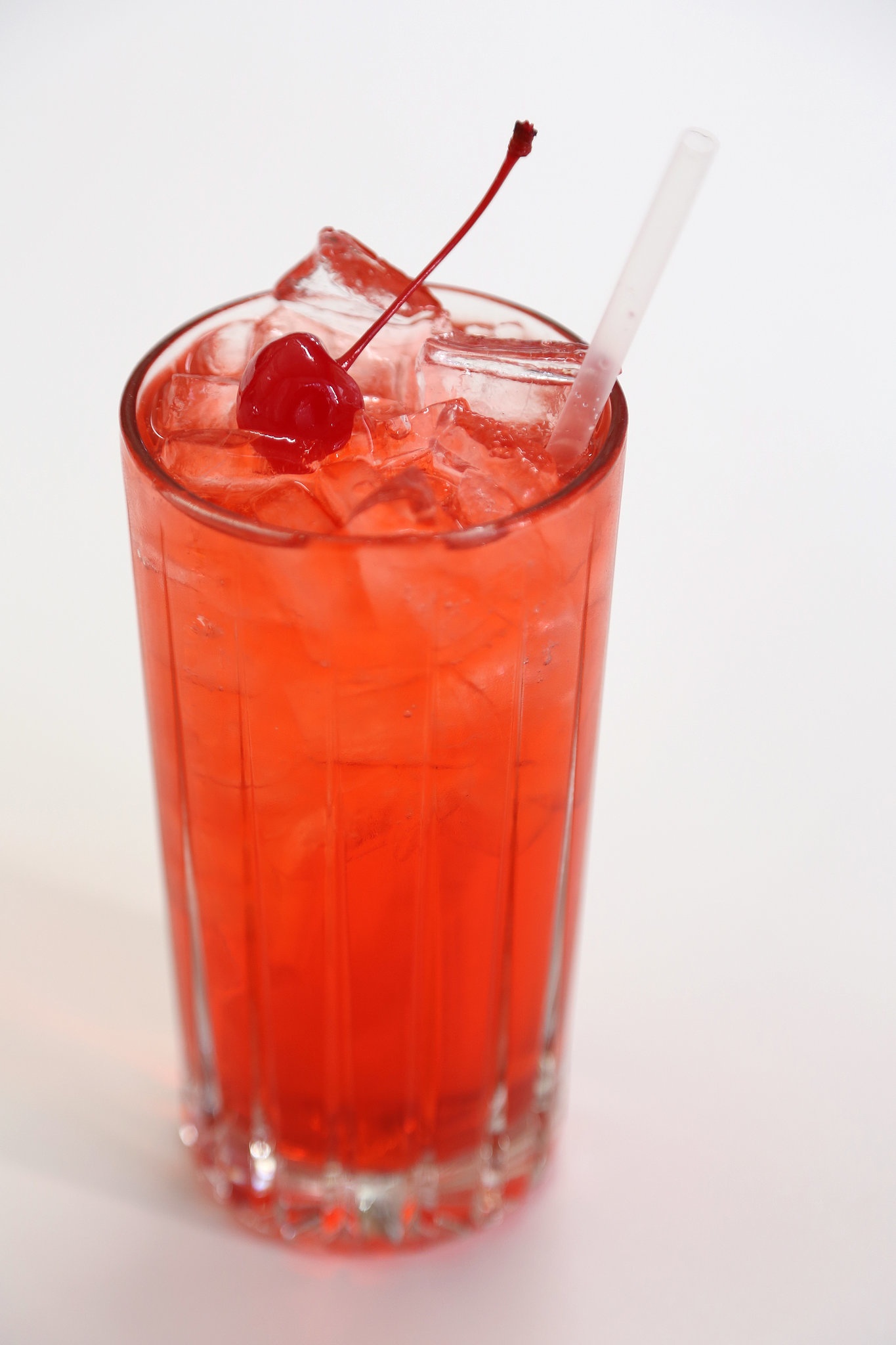
THAT’S why I loved them! First, I gobbled up those radioactive red maraschino cherries. Often, there was one hiding in the bottom of the glass under the ice. Second, my straw went right to the bottom of the glass to soak up that thick grenadine syrup. You can buy the drink in a bottle today, but those kinda’ suck; everything is mixed together and they don’t come with the maraschino cherries, either.
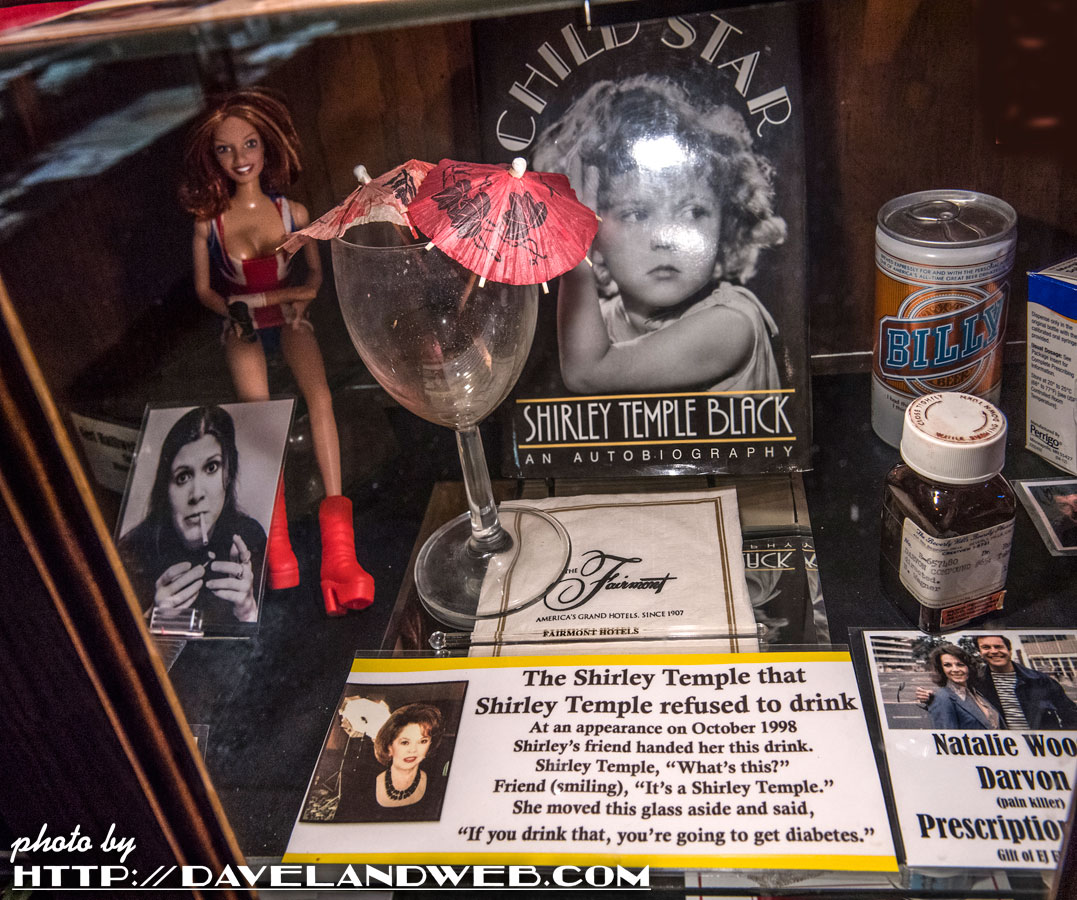
The above quote lends credence to the exhibit that is on display at the Dearly Departed Museum on Hollywood Boulevard:
As the display card reads:
At an appearance in October 1998 Shirley’s friend handed her this drink (see glass with umbrella in the pic!). Shirley Temple, “What’s this?” Friend (smiling), “It’s a Shirley Temple.” She moved this glass aside and said, “If you drink that, you’re going to get diabetes.”
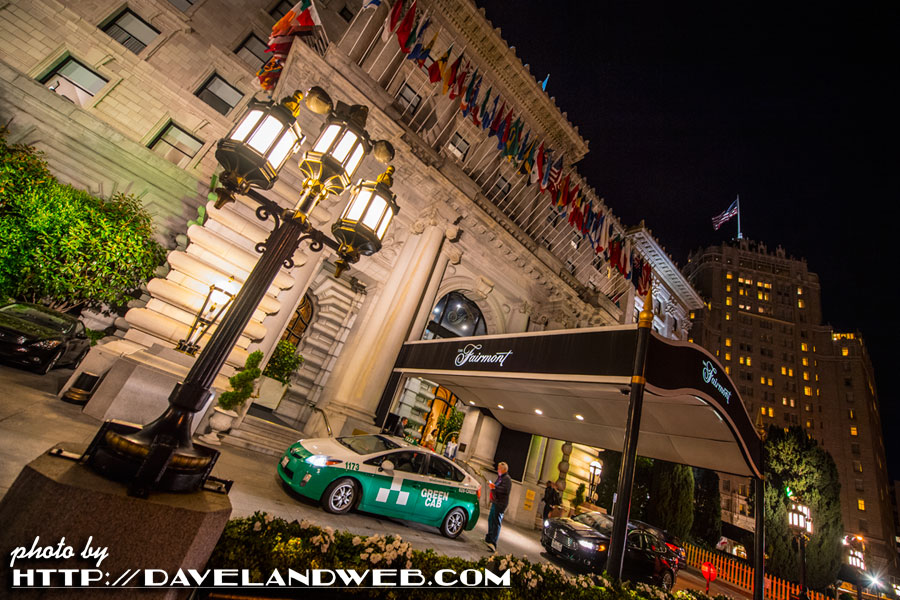
This all occurred at the famous Fairmont Hotel in San Francisco:
Wanna’ learn how to make a Shirley Temple and recapture your childhood?
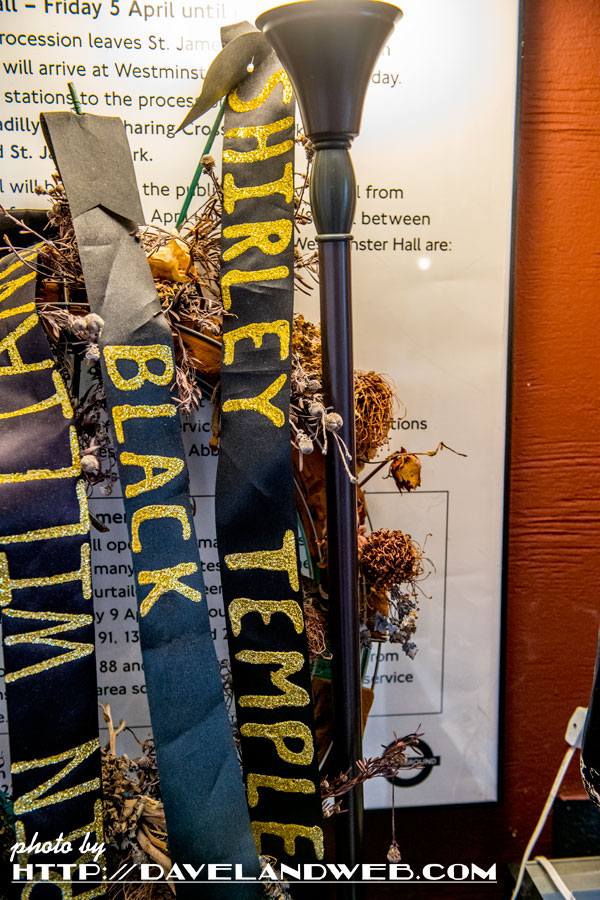
Also on display at the Museum is this funeral wreath from Hollywood Boulevard at the ceremony when Shirley died in 2014.
Want to see more Dearly Departed Stuff? Better hurry, as the museum is closing and its contents are headed to storage later this month. Instead, you can visit their youtube channel.
See more Shirley Temple Black photos at my main website.
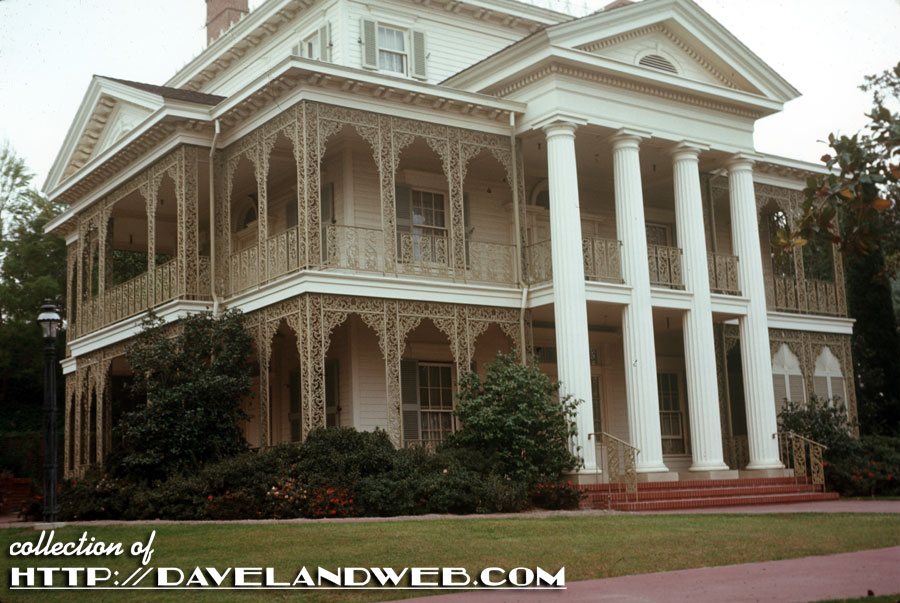
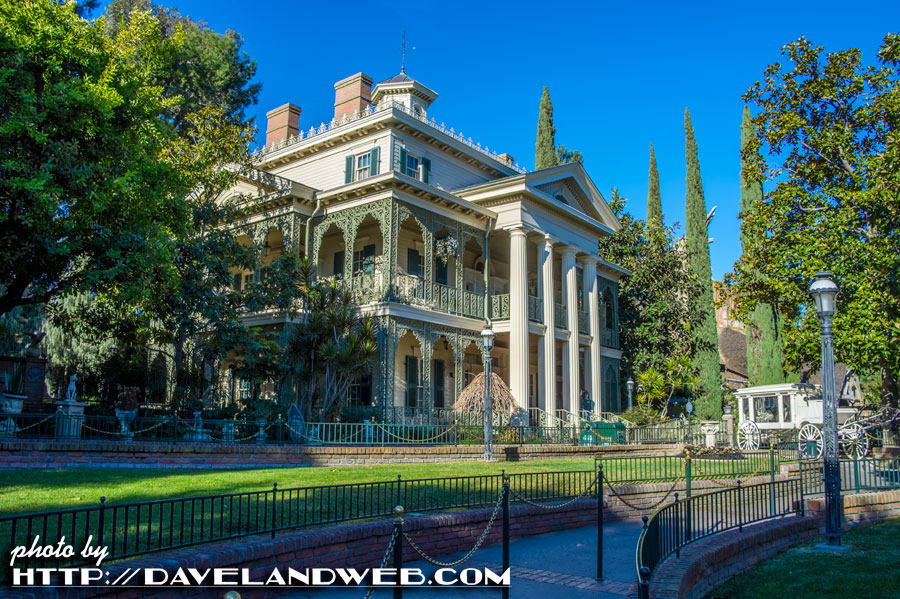
If this November 1967 shot of Disneyland’s Haunted Mansion looks empty, that’s because it is! Another year and a half would have to elapse before guests could get a sample of this classic Disneyland attraction. I’m going to assume a guest shot this through the exterior fence.
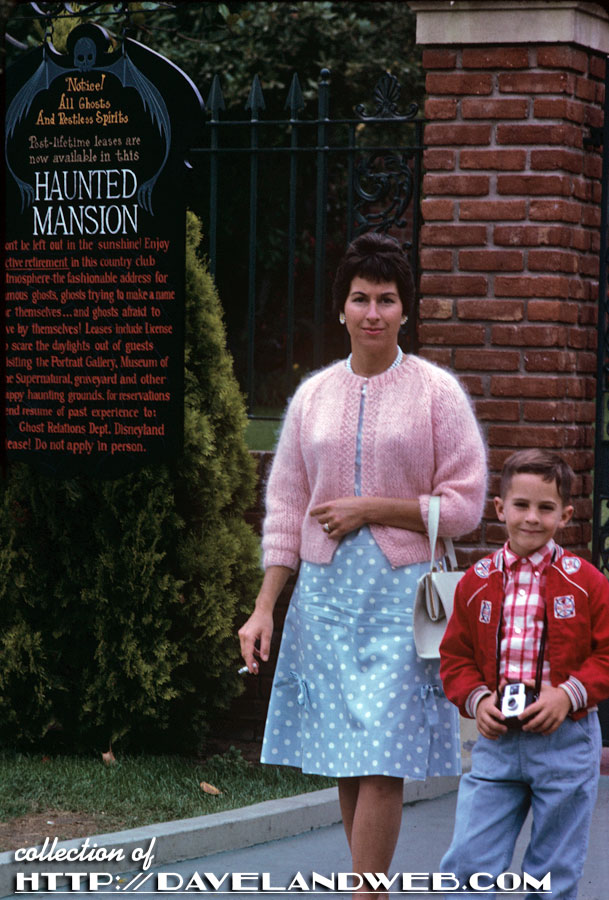
Until August 1969, this sign is what guests had to make do with until the attraction opened.
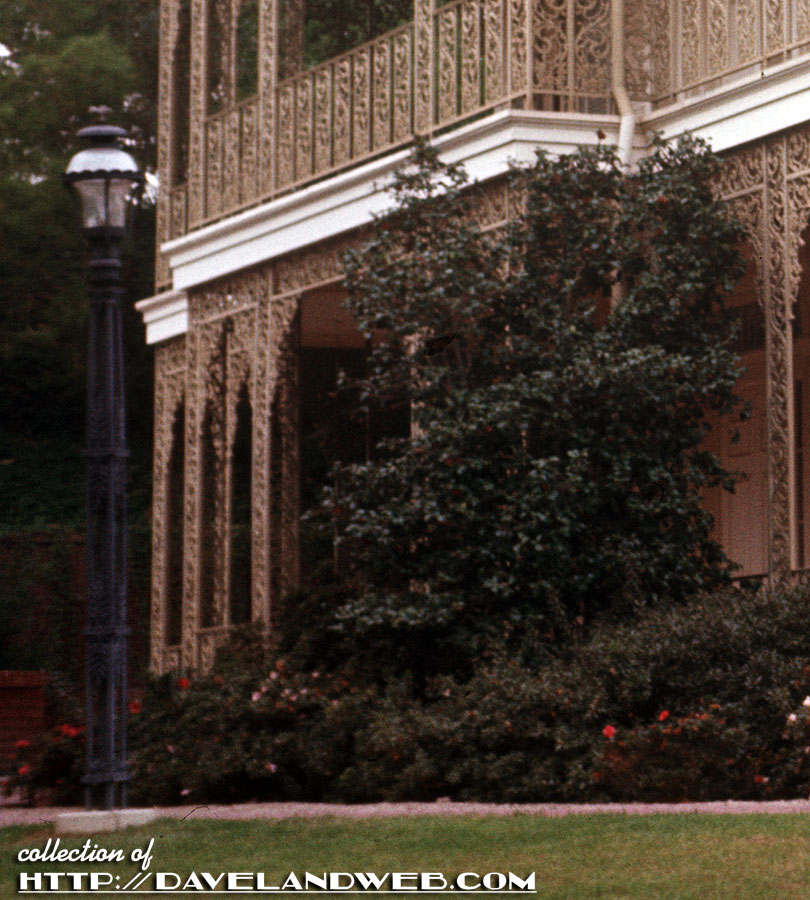
As of 2013, it would appear that the same lamppost was still doing its duty at the Mansion!
See more Disneyland Haunted Mansion photos at my main website.