Showing posts with label frank morgan. Show all posts

Tuesday, June 11, 2024

Temple Tuesday: A Lot of Bull


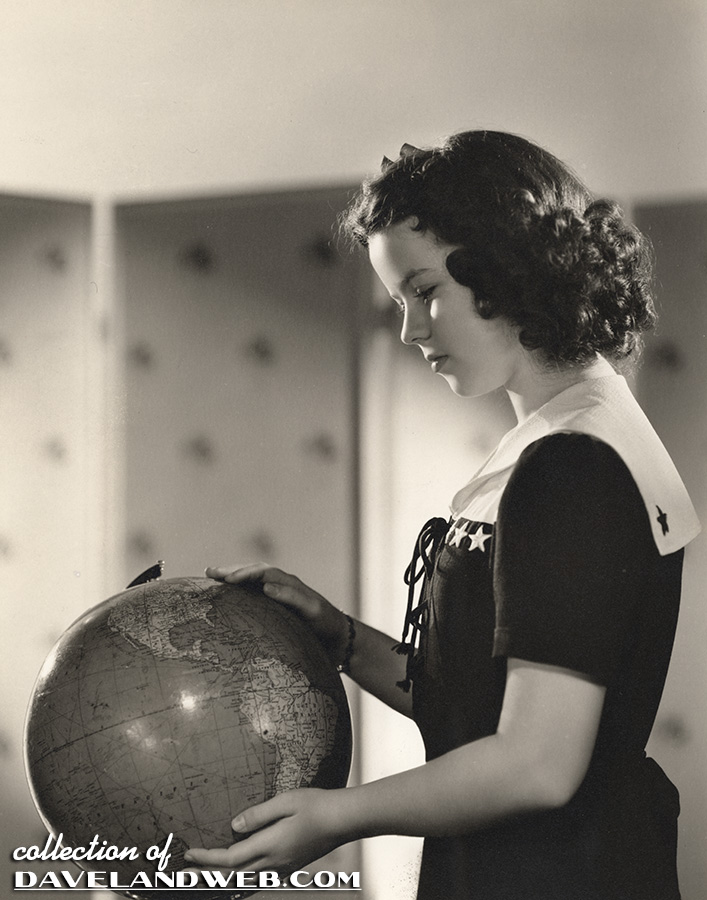
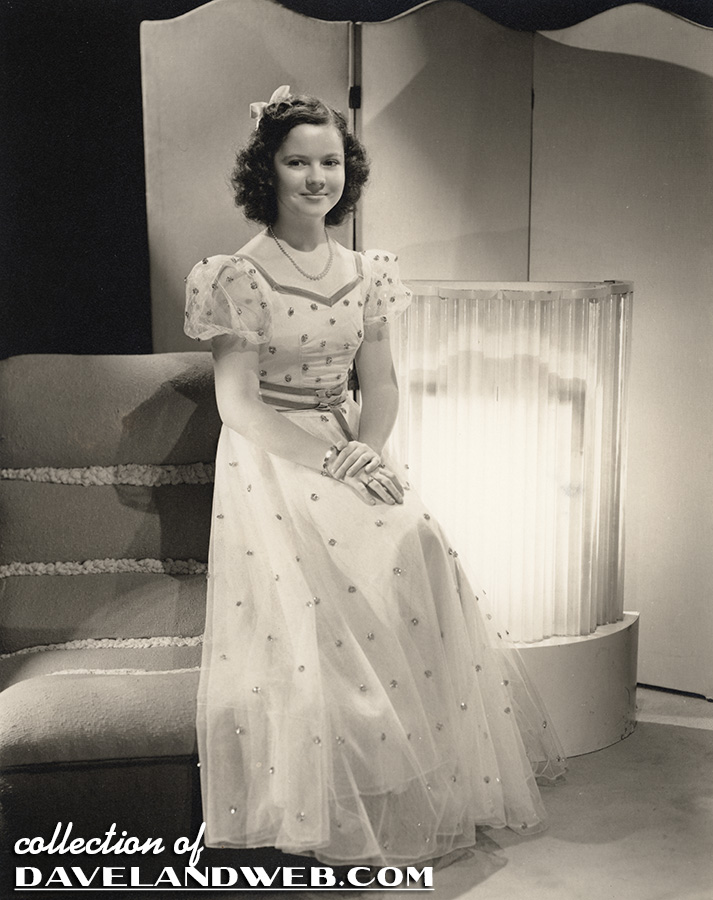
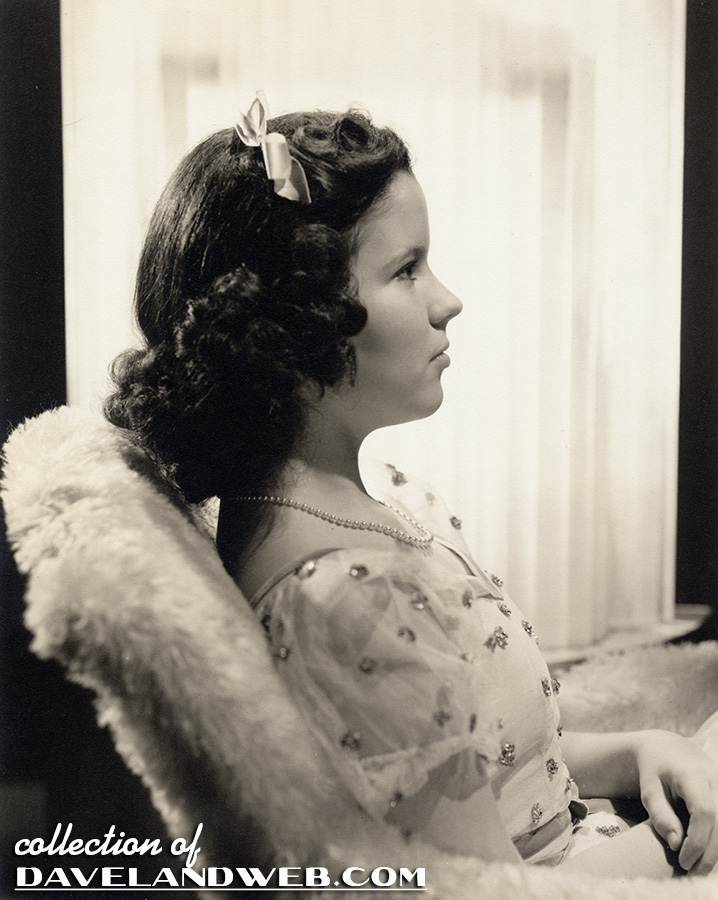
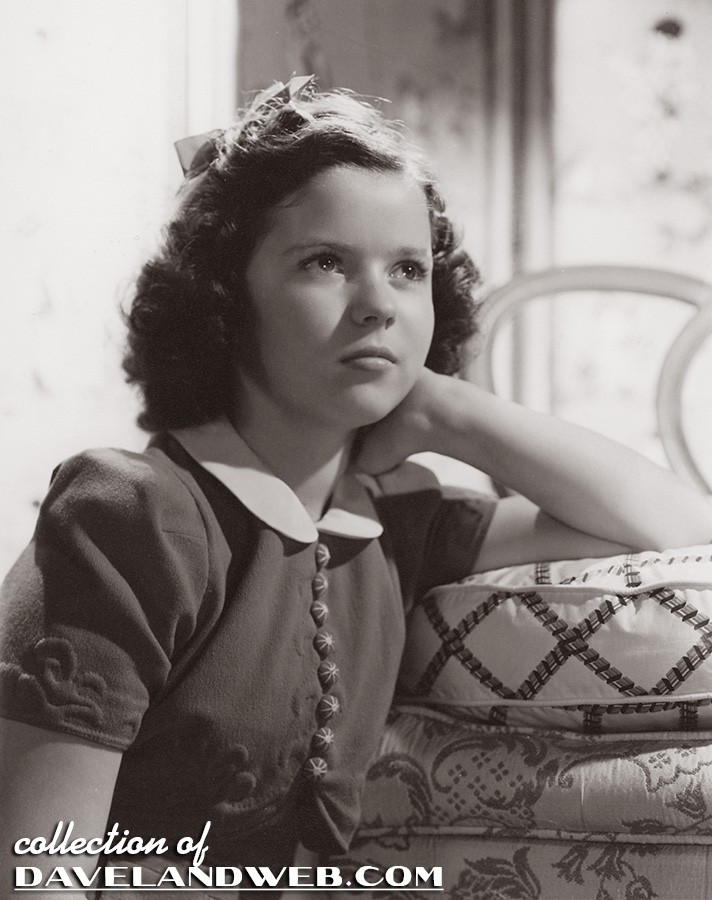
When Shirley Temple signed on at MGM in January 1941, the publicity machine wasted little time in promoting its newest star. None other than Clarence Bull was enlisted to give Shirley the glamour treatment, as seen by the portraits shown here. For a bit more about Bull, here’s an excerpt from the 2008 book Glamour of the Gods by Robert Dance and John Russell Taylor:

Clarence Sinclair Bull’s long association as a photographer with the studio that would become Metro-Goldwyn-Mayer began when producer Samuel Goldwyn hired him in 1919. Managing to survive the commotion of the consolidation of Hollywood in the early and mid-1920s, Bull found himself at the helm of MGM’s stills department when the studio was formed in 1924, and stayed there until retiring in 1961. The enormity of MGM’s output of films in the 1920s—they advertised a new feature every week—saw Bull’s domain grow. He was responsible for managing MGM’s staff of photographers and the large support crew of technicians needed to develop, re-touch, print and collate the hundreds of thousands of prints distributed annually by MGM’s publicity department. At least one photograph from the 1920s shows Bull with twelve stillsmen who juggled the task of shooting photos on as many as a dozen films that might be concurrently in production. At MGM, like the other studios, these men—and it was an almost exclusively male profession—worked six days a week and often long hours each day. Generally one photographer was assigned to a production and, as filming was underway, he would document each scene using an 8 x 10 view camera. These cameras not only had lenses with sharp resolution, but contact prints could be made from the negatives quickly and in enormous quantities. The stills made for each film were numbered sequentially and gathered together for a book. Stills photographers also created the images used for poster art, lobby cards and other forms of advertising conceived by imaginative publicity chiefs and their staffs.

The first photo was numbered 5241; the one below 5245:


5257:


5266:


For SJR, I knew you’d want to see this detail:


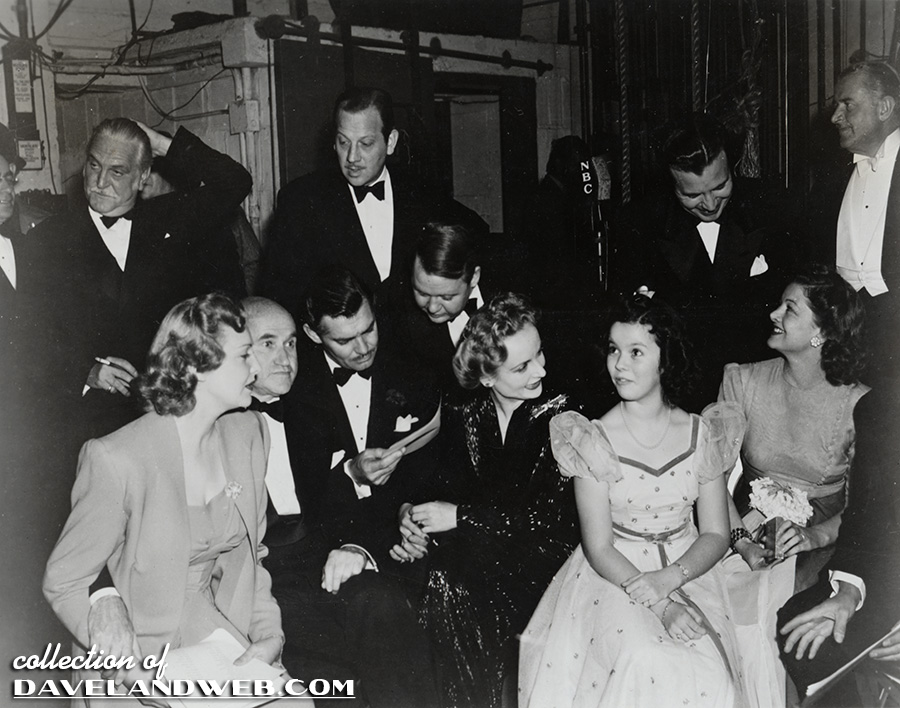
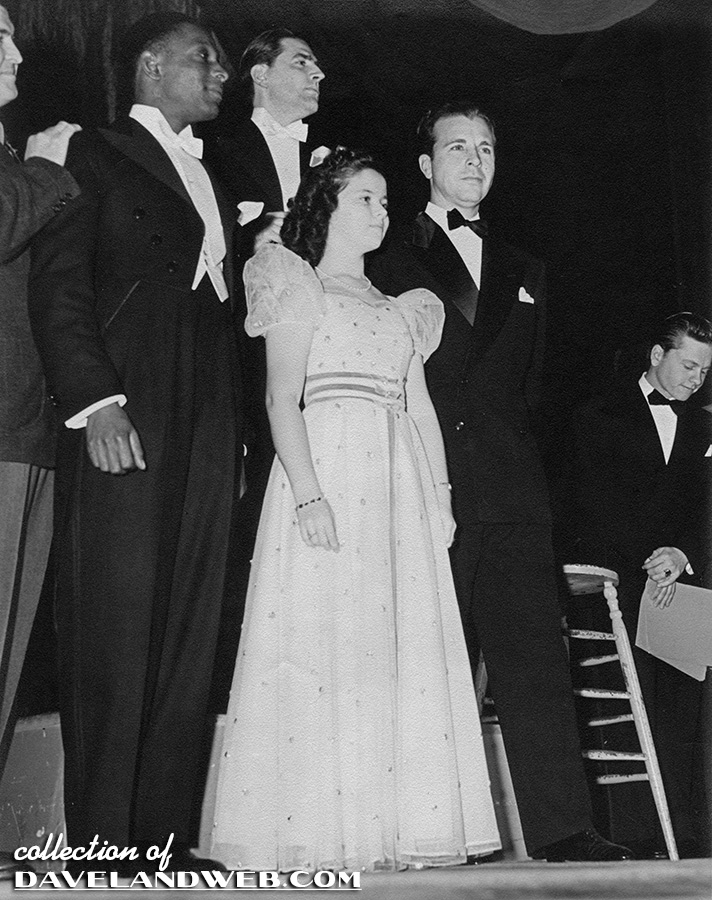
Often, movie studios would allow their stars to wear gowns provided by the costume department when they were to be seen in public at events. This would ensure that the stars looked their best for the paparazzi! Shirley wore the gown seen above to the February 8, 1941 Greek War Relief Benefit at Grauman’s Chinese Theatre. Back row: Frank Morgan, Melvyn Douglas, Charles Laughton, Dick Powell, and Reginald Owen. Seated: Madeleine Carroll, Samuel Goldwyn, Clark Gable, Carole Lombard, Shirley Temple, and Myrna Loy. , 


Back to Bull…the photo below was stamped #5267:


The accompanying caption is extremely interesting:

SHIRLEY TEMPLE…Young veteran of the screen, poses for her first portrait sitting after signing her contract with Metro-Goldwyn-Mayer. The youngster will start work on two pictures for the studio “Barnacle Bill,” with Wallace Beery, and “Babes on Broadway,” with Mickey Rooney and Judy Garland. Here the tiny star wears a many-pleated skirt with a pique-collared jacket.

By the time the photo was released, the plans had been changed! Shirley was removed from both films, most likely because the Temples did not feel Shirley should be relegated to supporting roles. Instead, Shirley was made the lead in a low-budget picture (or at least as low budget as MGM could do!) titled, “Kathleen.” MGM’s frustration can be seen on the back of the photo. The portion of the above caption about her two projects AND the description of the outfit were crossed out; in pencil the following simple replacement was written:

The young star is now working in “Kathleen.”

Despite all the initial excitement and publicity about working at Hollywood’s most elite film studio, Shirley’s contract was canceled after the one movie.
   
See more teenage Shirley Temple photos at my main website.

Tuesday, April 04, 2023

Temple Tuesday: Shirley & Seiter


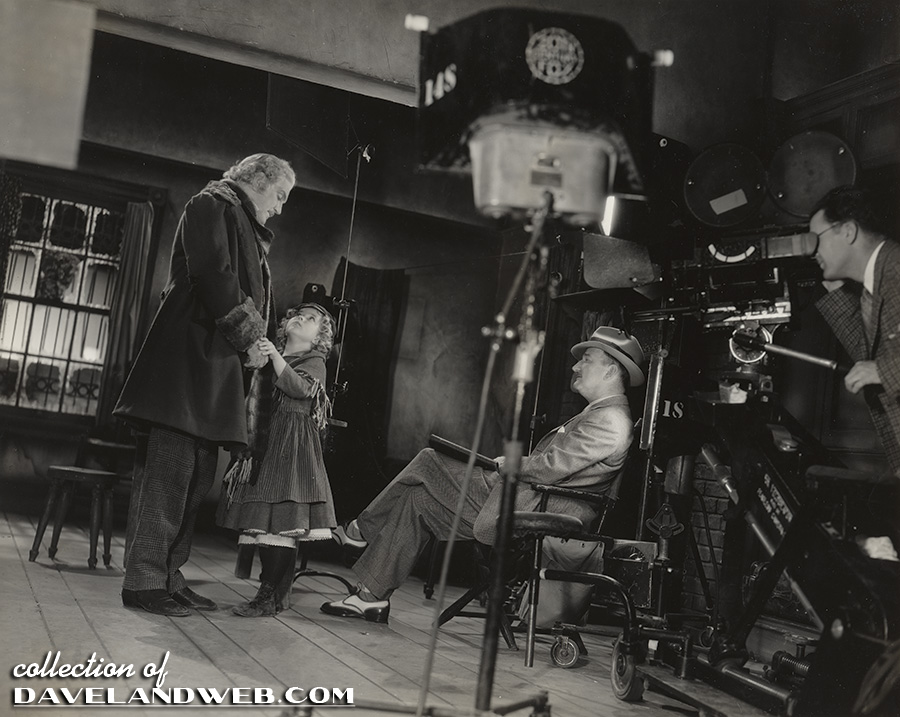
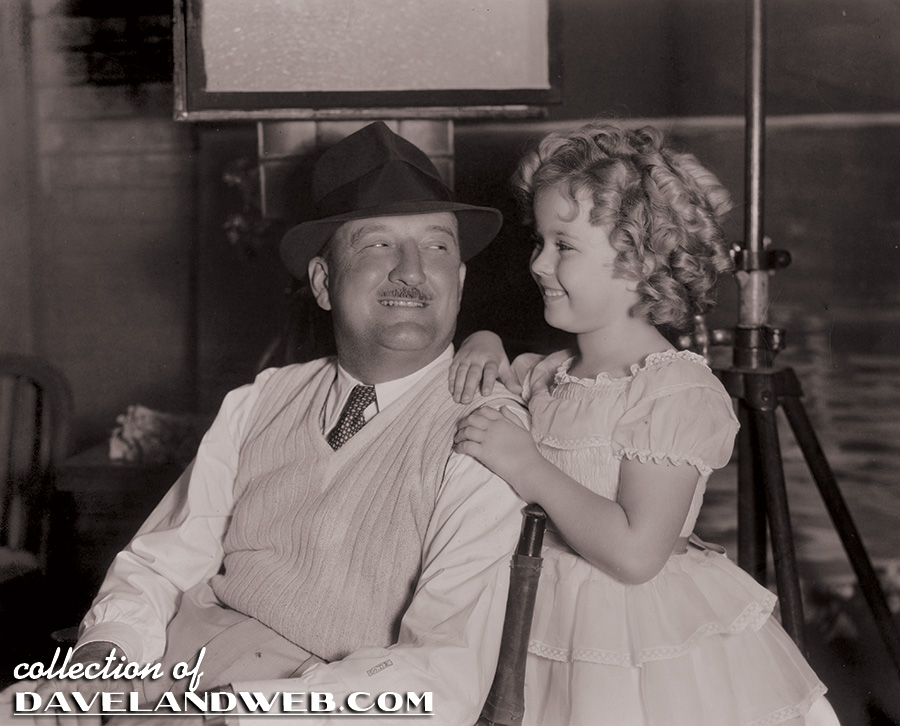
Today’s post starts with Shirley and then goes off into some very interesting tangents, thanks to the generosity of one of my readers. Director William Seiter is credited with being at the helm of three Shirley Temple movies, starting with “Dimples” (1936). Costar Frank Morgan is on the left, and Seiter is on the right, watching the proceedings from the comfort of his chair.
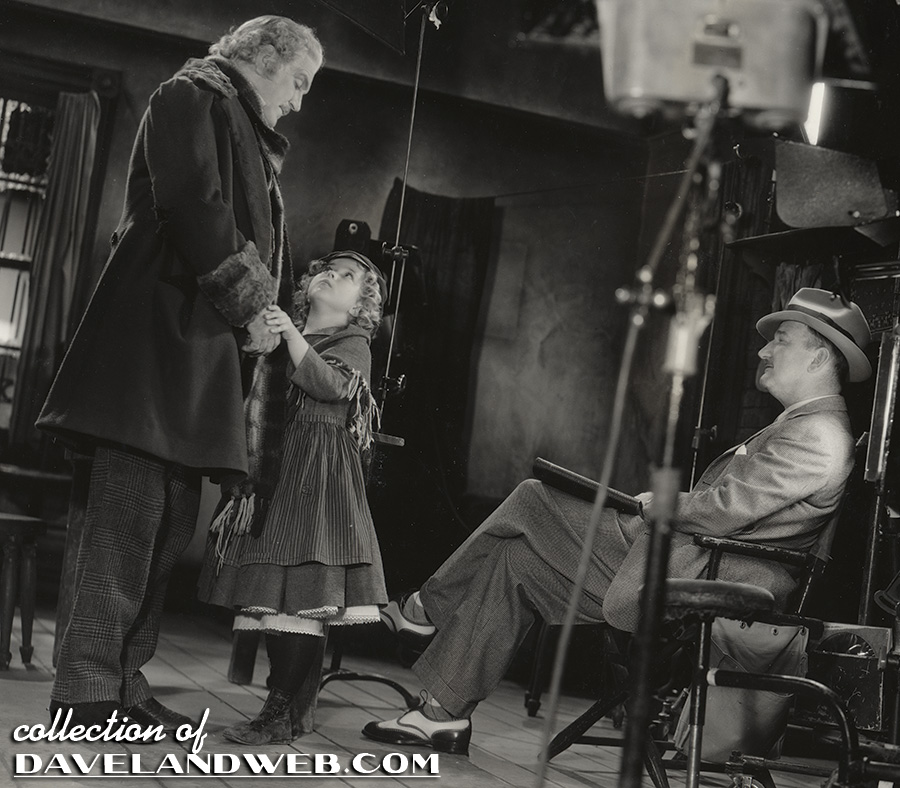


In her autobiography Child Star, Shirley tells how Seiter prevented Morgan from taking the attention away from her during a sad ballad:

William Seiter posed me to sing over Morgan’s shoulder. Anchoring Morgan in a chair with the back of his head to the camera was the only way to thwart that wizard. He couldn’t wiggle his ears.

Still, the sight of Morgan’s thick white wavy hair does cause a bit of an odd distraction as Shirley emotes and sings “Picture Me Without You.”
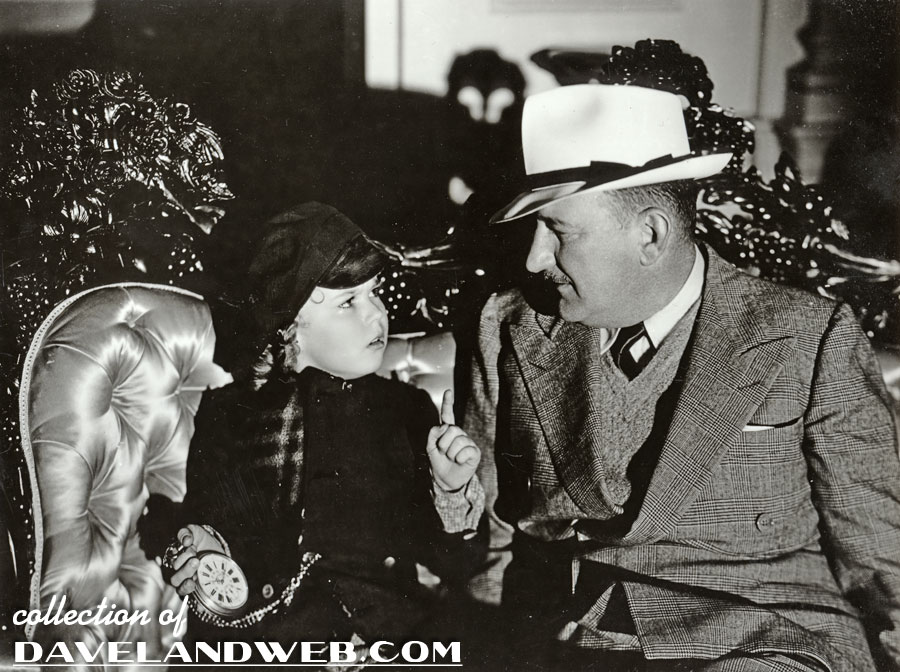


The publicity caption for this “Dimples” shot reads:

SHIRLEY TEMPLE CONQUERS ANOTHER TASK MASTER — like all directors who have preceded him, William Seiter, assigned by Darryl F. Zanuck to direct “Dimples” and “Stowaway” for 20th Century-Fox, has fallen in love with “Shirley Temple the artist” and “Shirley Temple, the unspoiled seven year old kid who gets so much fun out of her work.”


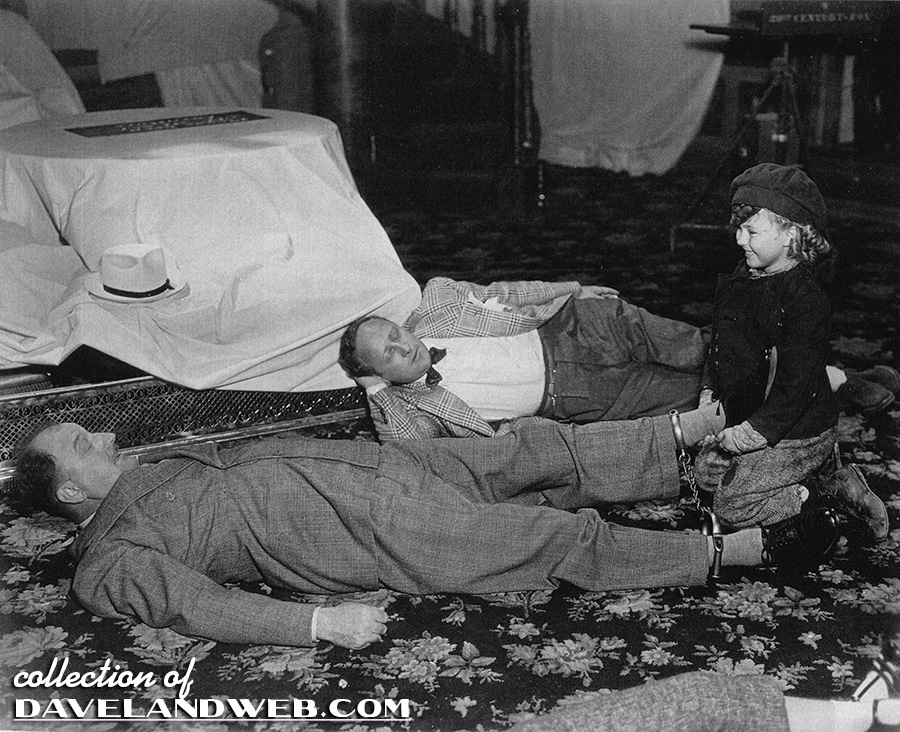
Fun is right. This shot captures the little prankster putting cuffs around Seiter’s ankles while songwriter Ted Koehler pretends to nap. Seiter must have been a good sport.


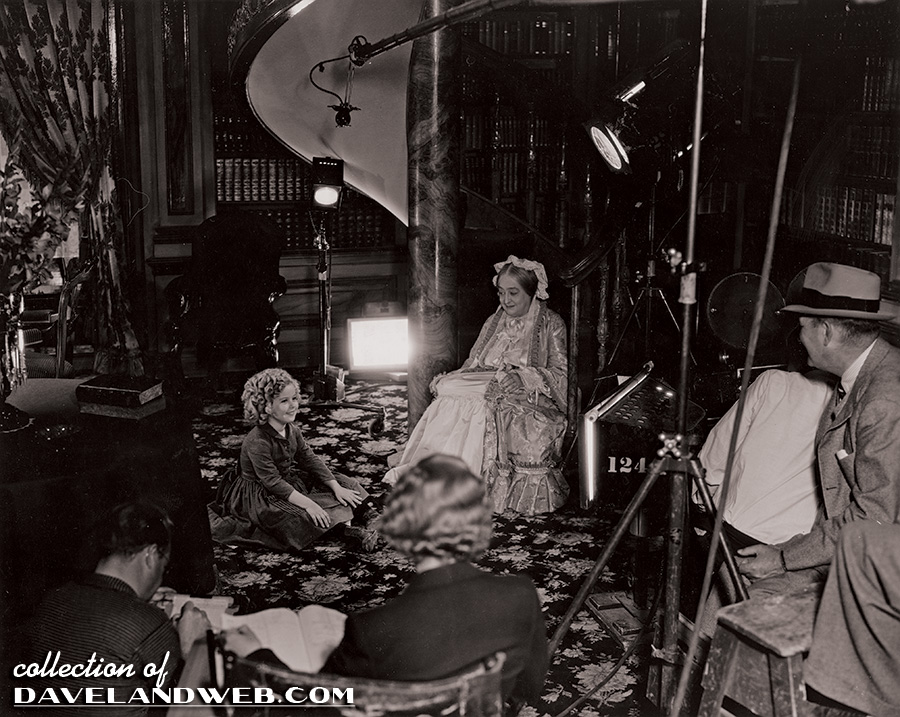
Below, Seiter gives direction for a scene between Shirley and Helen Westley.


Seiter directed Shirley’s very next film, “Stowaway.”
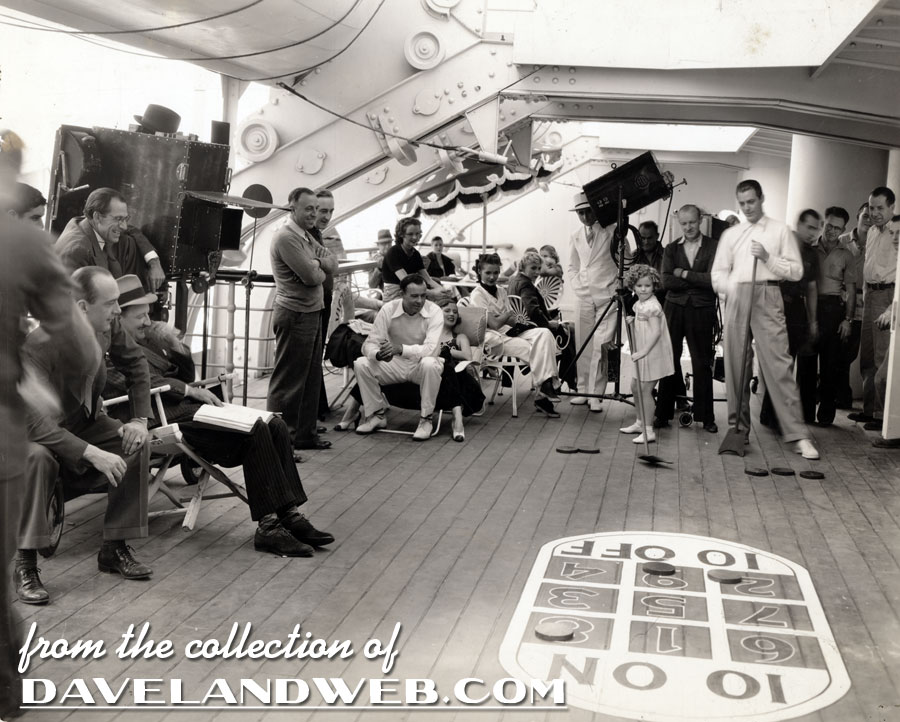


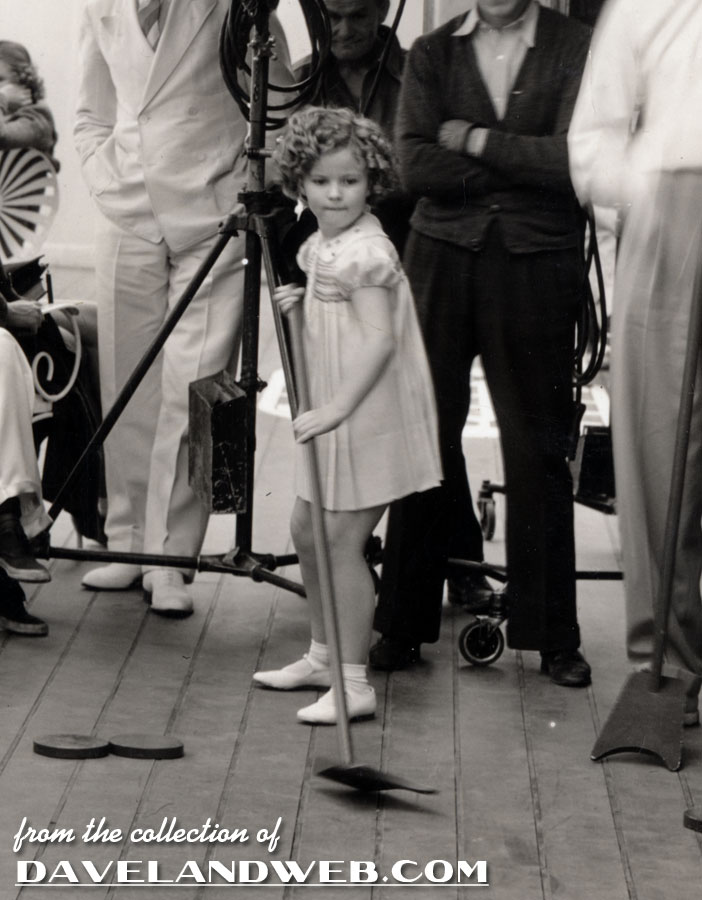
Shirley gets ready for the shuffleboard scene:


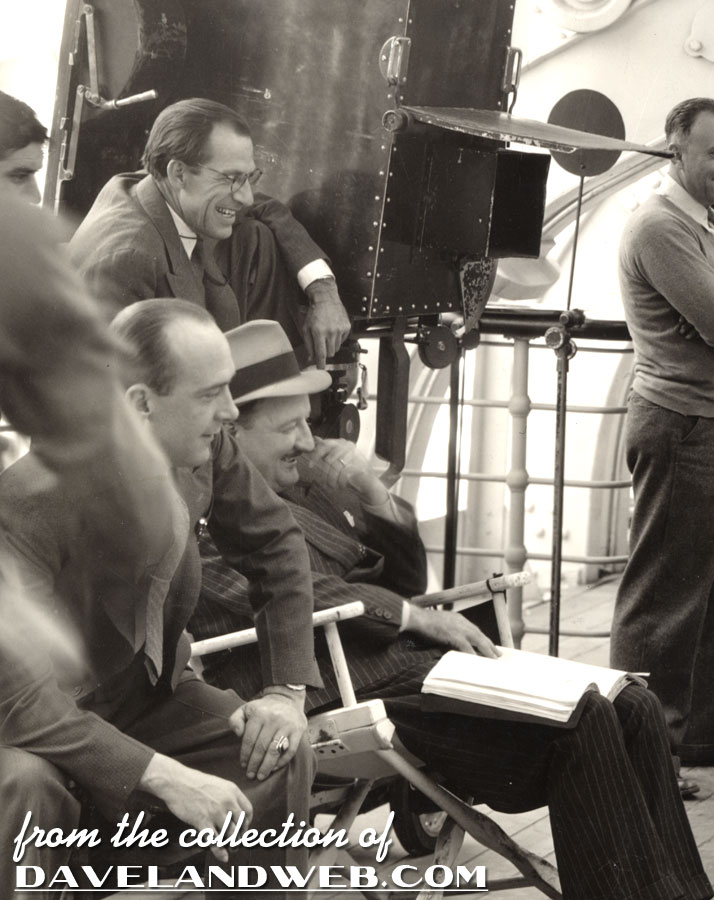
Seiter is once again wearing his customary fedora.


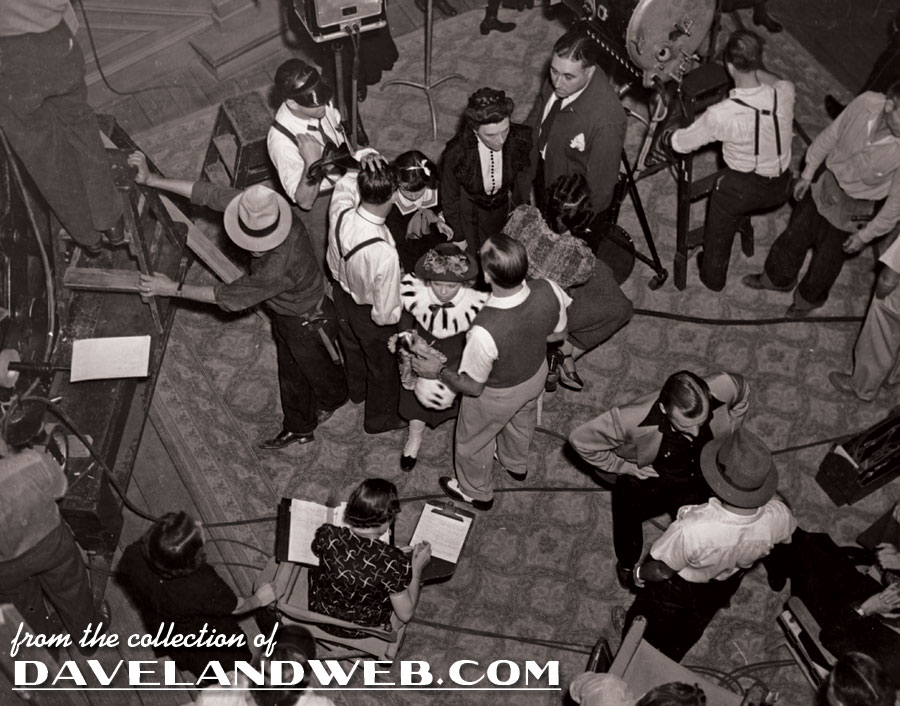
When Walter Lang had to leave for a “medical furlough,” it was Seiter who took over directorial duties on “The Little Princess” (1939), but was uncredited for his troubles. From Shirley’s autobiography Child Star:

For several days cameraman Artie Miller complained in graphic detail about the pain he suffered from a cyst in his cheek.  “There must be a lot of trouble in the world,” I remarked to Mother. “Everyone else has problems. When do I get to have some?”


Seen from the back in this publicity still for “Susannah of the Mounties” (1939), Seiter turned out to be an unfortunate choice for this uninspiring movie that only served to speed up Shirley’s departure from Fox.
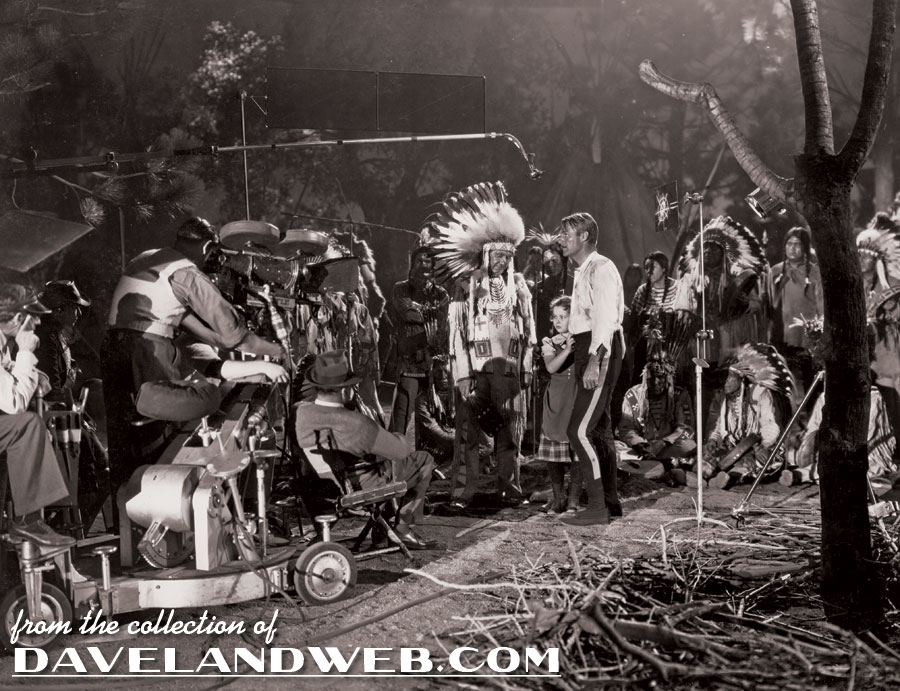


In a typical twist of serendipity, it turns out that one of my faithful Temple Tuesday readers has a Seiter connection. As Jackie M. informed me:

My cousin’s name was Jill Woodward, and she has a small entry on imdb.com. She was in a number of silent movies (imdb lists only 4, which is better than TCM, which only lists 2!) and married Bill Seiter in 1919.


From the imdb bio:

Jill Woodward was born on January 18, 1897 in Illinois, USA. She was an actress, known for My Country First (1916), Lightning Bryce (1919) and The Kentucky Colonel (1920). She was previously married to Paul Lill and William A. Seiter. She died on June 17, 1985 in Glendale, Los Angeles County, California, USA.

Jackie was kind enough to share some photos from the family scrapbook. Other than a few captions written on the back, these great photos don’t have a lot of corresponding information. Here’s Bill with a golf club, circa 1919. He was quite the dashing man in his younger days, beginning as a bit player for Mack Sennett, doubling a cowboy.
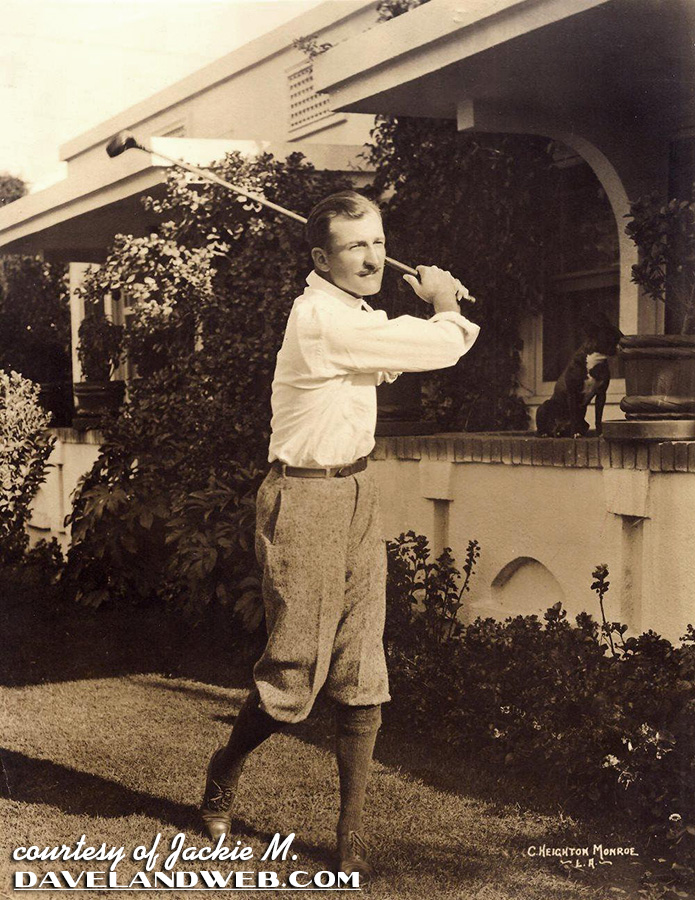


Here comes a bit of a mystery; according to Wikipedia (I know, I know…not always the most factual!), Seiter was married to Laura La Planted from 1926 to 1934 (ending in divorce). She is “credited” as being his first wife, followed by Marian Nixon from 1934 to 1964, when he died. According to Variety, March 1915, Jill was married to Paul Lill in 1915 with an annulment following only two days later. From the June 12, 1920 issue of Moving Picture World under the “Clip and Paste” column:

Jill Woodward, wife of Director Wiliam A. Seiter, of the National Film Corporation, will be assistant director to her husband in his next production for National.


That’s as much as I could find out about that relationship.

Here are Jill and Bill accompanied by the caption, “Cherokee Court, about 1918.” There is a Cherokee Avenue in Hollywood; whether this building still stands or not is another mystery.
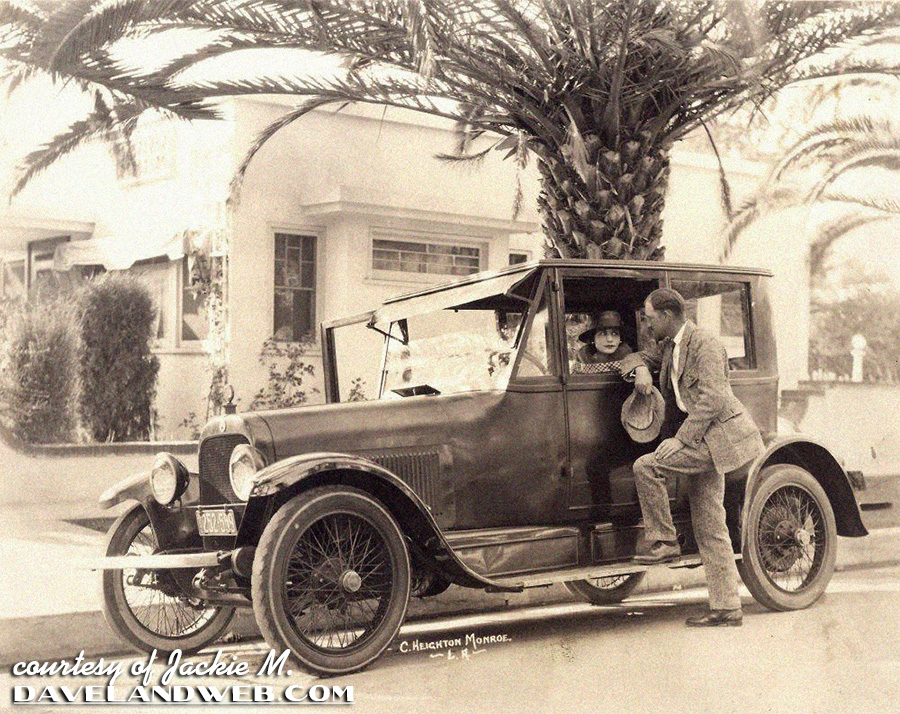


A lovely shot of the two, captioned: “Jill and Bill, ‘Hollywood.’” If you noticed the common credit on these photos for the photographer, it reads C. Heighton Monroe. I assume he had a decent biz in Hollywood, as I found some photos online that he shot of contemporary movie stars of the day, such as Louise Fazenda, and studio head Sam Warner.
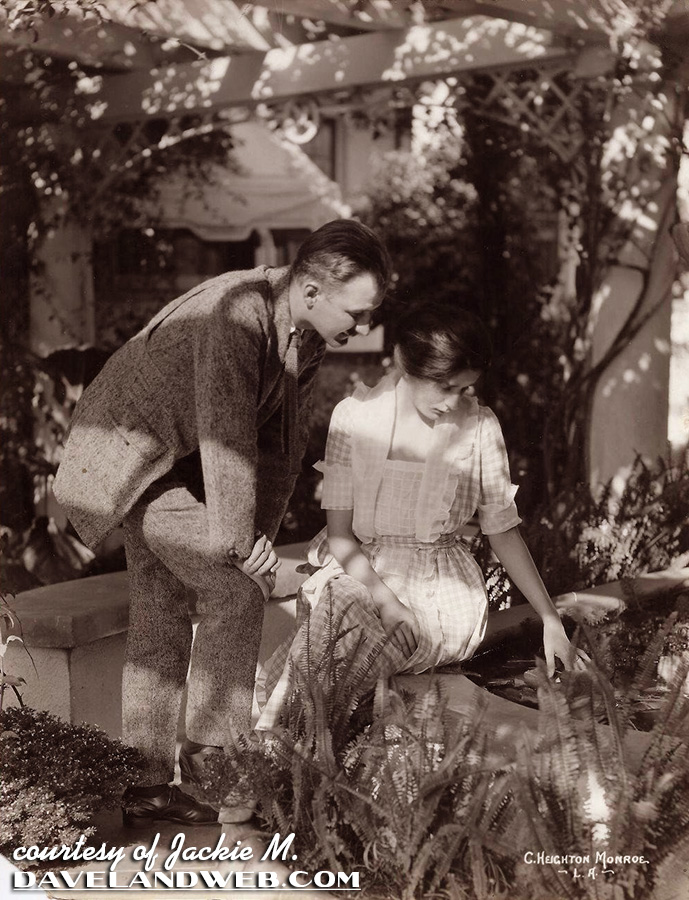


Below the couple pose with Douglas MacLean (1890-1967), a stage and film actor who later became a producer and screenwriter, working with W.C. Fields (“Tillie and Gus”) and Cary Grant (“Ladies Should Listen”).
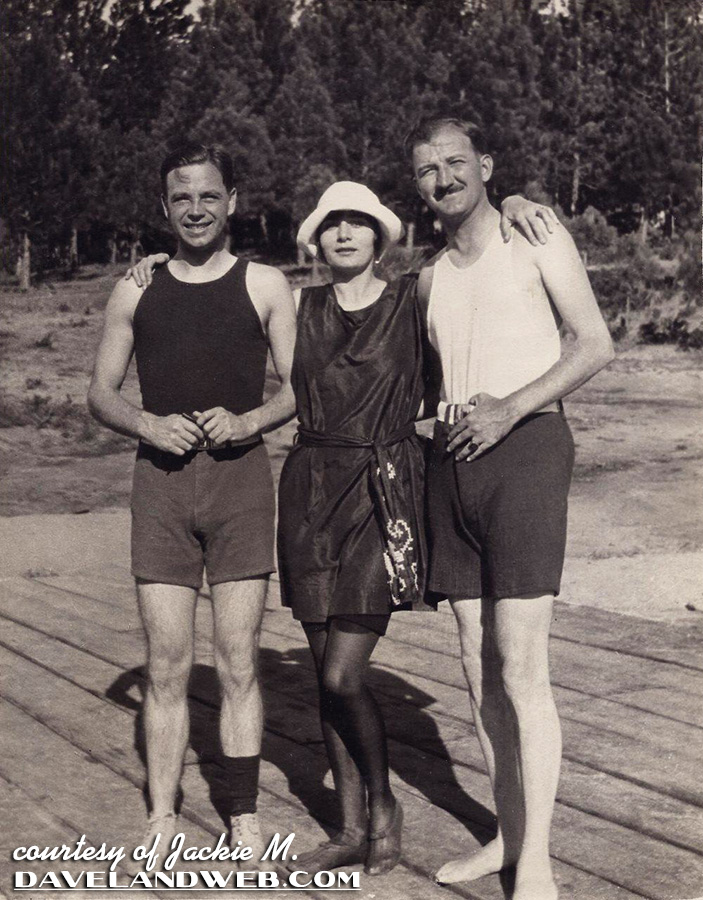


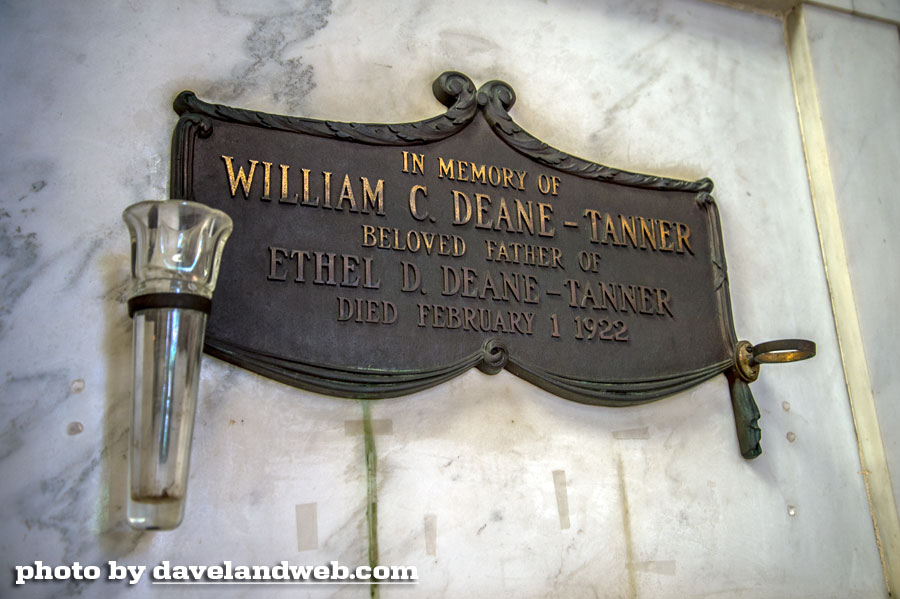
MacLean lived in a bungalow in the Alvarado Court complex next to the famous movie director, William Desmond Taylor (born William Cunningham Deane-Tanner). On February 2, 1922, Taylor was found dead, murdered inside his bungalow. MacLean’s then wife, Faith, was a key witness in the still unsolved murder, as she had witnessed an unknown person leaving Taylor’s apartment the night of the murder. Below is Taylor’s crypt at Hollywood Forever Cemetery:


The caption for the photo below reads, “Jill at the Oxford Street home, L.A., 1922.”
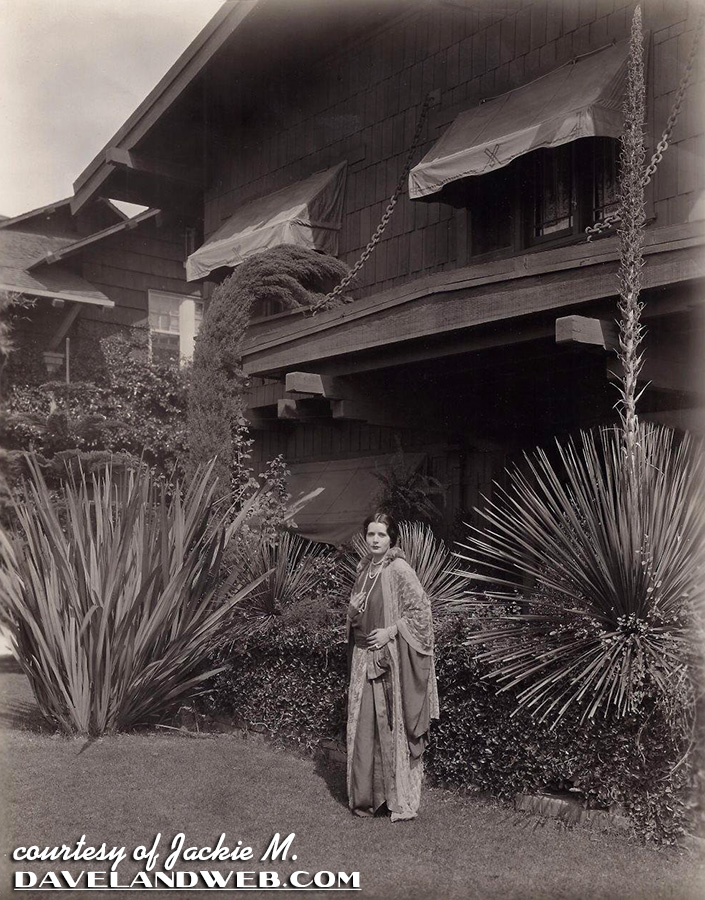


Hollywood does indeed have an Oxford AVENUE. I sure would love to see this beautiful home if it still exists!
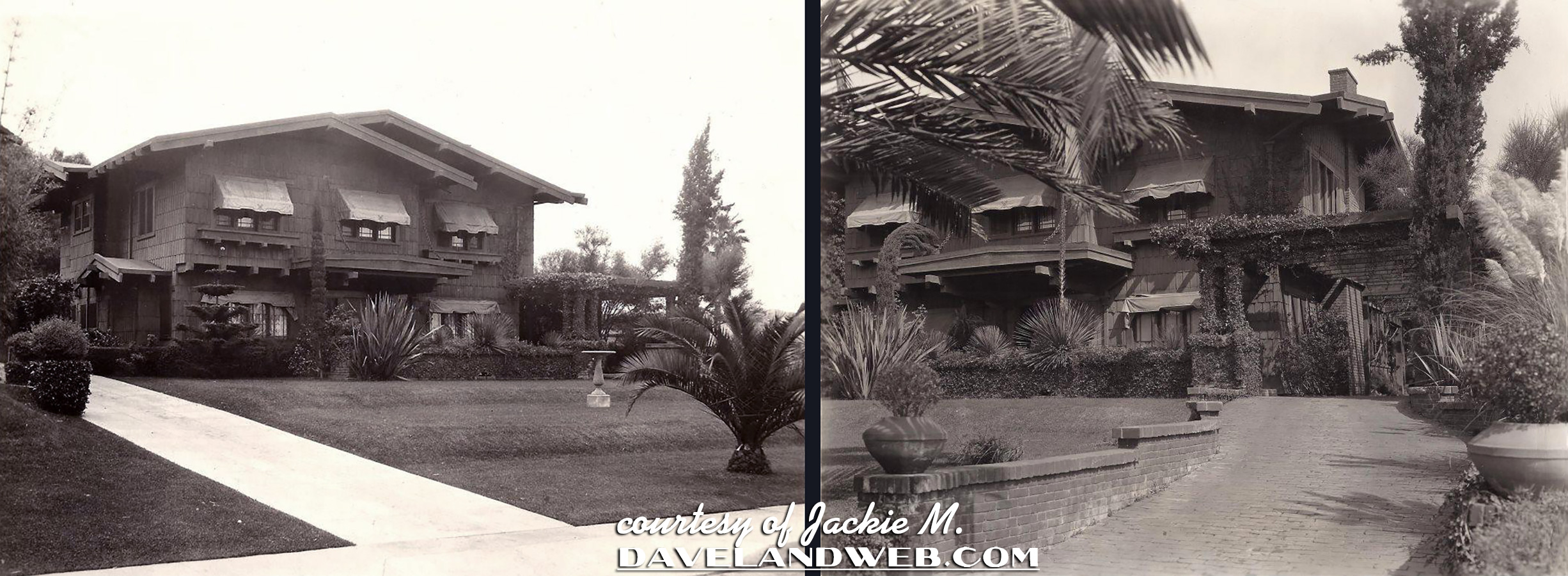


Below is an interior view of the property, labeled “Oxford Street. Jill & Bill Seiter rented furnished, 1922.”
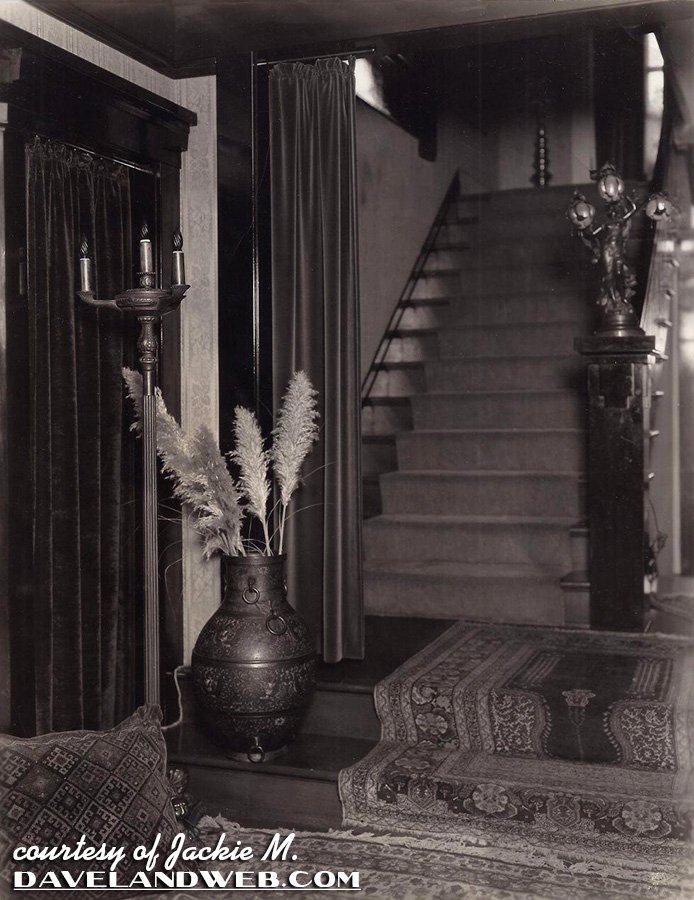


You just never know where the topic of Shirley Temple will lead. If anyone has any additional info on the Jill Woodward/William Seiter relationship or the historic properties listed here, please let me know!

THANKS, JACKIE!!
 
UPDATE!

Thanks to Melissa (aka “The Colonel”) and her newspapers.com subscription, a few questions about Jill and her husbands can be answered!

On the two-day marriage, the Oakland Tribune reported this on March 7, 1915:

One day of wedded bliss, following a whirlwind wooing of a brief two weeks, was the lot of Paul R. Lill, aged 20, son of a wealthy Pasadena family, who married Miss Verness Woodward, motion picture actress. Their shattered romance became known yesterday when Mrs. George H. Lill, mother of the youth, declared Paul was not legally married to Miss Woodward. So far as the public records go the couple are legally married, but Paul Lill says he falsified when he swore he was 22 years old. He added that he was led to give a wrong age because Miss Woodward wanted him to marry her and he thought they would be happy together. How the romance turned out is best explained by the youthful bridegroom in an interview he gave out last night at Santa Barbara, where he and his bride went on their honeymoon. He said: “We were married in Los Angeles February 18 by the Rev. James I. Myers of the Broadway Christian church. The following day we came to Santa Barbara and on the 20th my wife left me without giving any explanation. We have both come to the conclusion that it was best for us to part and remain apart forever. We are convinced our marriage was a most unwise move. I have heard from my folks and they are going to have our marriage annulled.” Lill then told of meeting his wife just two weeks before they were wed, and he asserted that it was she who proposed that they get married. “It’s true that I am not of age and that I gave a wrong age when securing a marriage license,” he continued. “We both regret it exceedingly. My wife never made the slightest explanation for leaving me. She simply disappeared. I ran across her later, but she would not say why she left me. Verness declared we had made a botch of our lives and said we’d better quit.” The young woman has not given the slightest inkling to any of her relatives here regarding the break that has come between her and young Lill. Her brother, Frank Woodward, of 1705 Burlington Street, had not heard of the separation. Mrs. Frank Woodward said yesterday. “We have had several messages from Verness since she went on her honeymoon. She said she had been engaged by a motion picture company at Santa Barbara and the manager had made her leading woman. So far as we know she and her husband were happy. We were greatly surprised to learn of the wedding. Verness brought her husband to our home the day they were married and she seemed very happy.” Mr. and Mrs. Lill, parents of the young bridegroom, live at 180 South Lake street, Pasadena. Mr. Lill has an office on Colorado street there. Before the interview was had with her son Mrs. Lill was positive in her statement that the marriage ceremony had not been performed. “I knew of the affair,” she said, “but after the license was taken out my son and the young woman decided they did not care for each other and that ended it. My son is only 20 years old, so he could not get married without our consent.” Rev. James I. Myers said last night he remembered marrying Lill and Miss Woodward. They came to his home in Rose Lawn drive with a young man to act as witness, he said, and he performed the ceremony.

Sounds like the two youngsters were hot and heavy for each other and the groom’s mother stepped in, attempting to whitewash the little affair. Want to see what Frank’s place on 1705 Burlington looks like today? Of course you do. Built in 1919, it still looks to be in great shape!



As for the Pasadena address, it appears that only a 180 South Lake Avenue exists, and a modern office building resides there. Moving onto wedding #2, the L.A. Times from June 12, 1924 reported this:

Bill and Jill Seiter are both in pictures now, which is by way of being a family quorum. Williams is the well-known director and Jill is his wife. Mrs. Seiter is playing the role of the Princess Sonia Zaiskine in “His Hour,” the production which King Vidor is directing, and Elinor Glyn is supervising for Metro-Goldwyn-Mayer. Mrs. Seiter is using the name Jill Reties, which is Seiter spelled backward, and indeed one name sounds just as reasonable as the other. Before marrying William Seiter Mrs. Seiter was known to picturedom as Jill Woodward, leading woman. She retired from professional life when she married, more than seven years ago, and is only just now returning to the screen.

Take that, Wikipedia! Yes, William and Jill were married. As for the Paul and Jill wedding, I’d believe the Reverend, not the mother-in-law! I am still hoping to find out more about Cherokee Court and the house on Oxford Street. Anyone?

See more Shirley Temple photos at my main website.

Tuesday, September 13, 2022

Temple Tuesday: Greek War Relief


Look at this star-studded photo from 1941! In the back row: Frank Morgan, Melvyn Douglas, Dick Powell, and Reginald Owen. Front row: Madeleine Carroll, Sam Goldwyn, Clark Gable, Charles Laughton, Carole Lombard, Shirley, and Myrna Loy. What was the occasion that brought them all together? From pappaspost.com:

As a result of the Nazi occupation and subsequent naval blockade, famine and despair would overcome Greece both in Athens and throughout the countryside. In response to the turmoil in Greece, Americans began countrywide efforts to provide humanitarian relief for the Greek people. Railroad magnate Harold Vanderbilt and film industry executive Spyros Skouras launched an effort called the Greek War Relief Association no less than 10 days after the October 1940 Italian invasion of Greece to provide food and other forms of aid to Greece.… In Hollywood, countless stars, celebrities, studio heads and industry heavyweights got behind the Greek War Relief movement, making it the single largest humanitarian fundraising campaign in American entertainment industry history, including a single organized fundraising campaign by the Motion Picture Association of America involving 8,000 cinemas. Films like Walt Disney’s “Fantasia” and “Gone With the Wind” held gala premieres and opening nights in cities across the nation with ticket proceeds benefiting the Greek War Relief campaign.… At Grauman’s Chinese Theater in Los Angeles on February 8, 1941…a massive radio telethon, “America Calling,” was broadcast on CBS, NBC, numerous independent stations, and throughout Europe. Jack Benny and Bob Hope were the “co-masters of ceremonies” of the variety show that featured some the biggest names of the time including Shirley Temple,  Groucho Marx, and Clark Gable. The Greek War Relief Association raised $30 million — approximately $500 million today — to provide massive shipments of grain, equipment, livestock and other forms of material support for the Greek people.


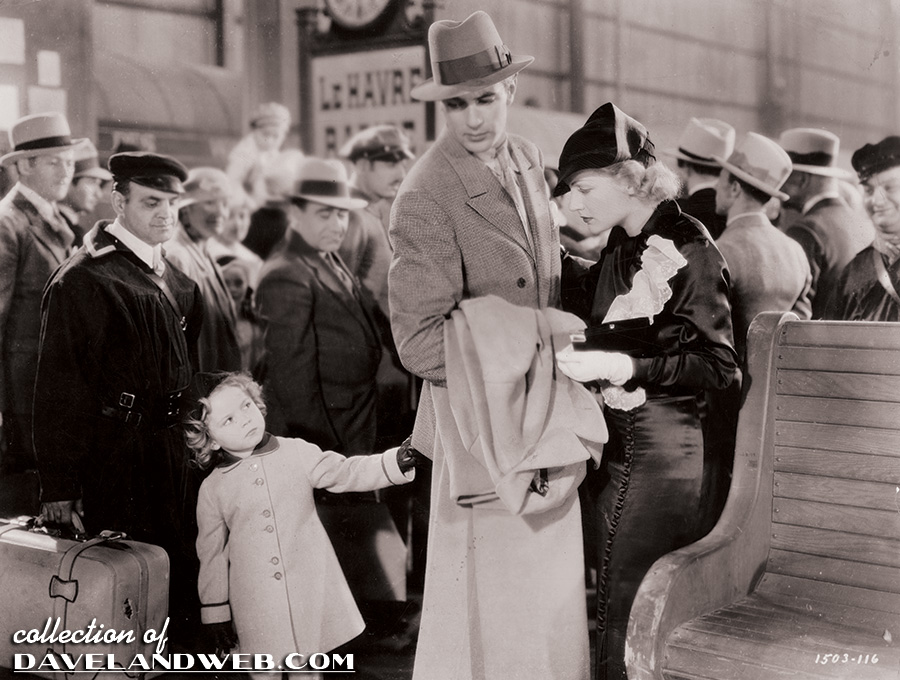
Shirley worked with many of the people who were on the broadcast. Carole Lombard (and Gary Cooper) in “Now and Forever” (1934):


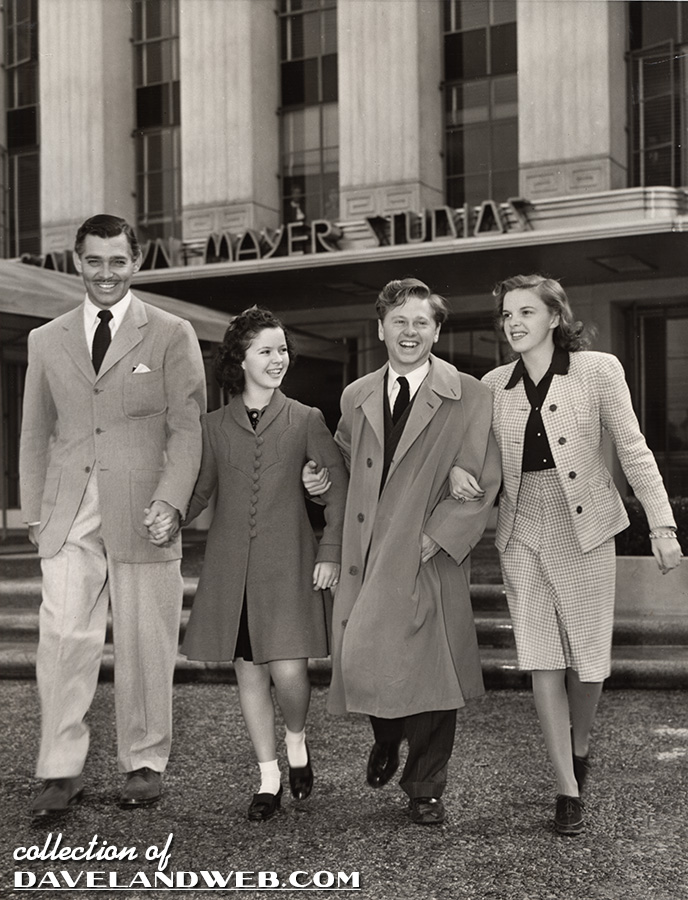
Publicity photos with Clark Gable (and Mickey Rooney and Judy Garland) heralded Shirley signing on with MGM, also in 1941:


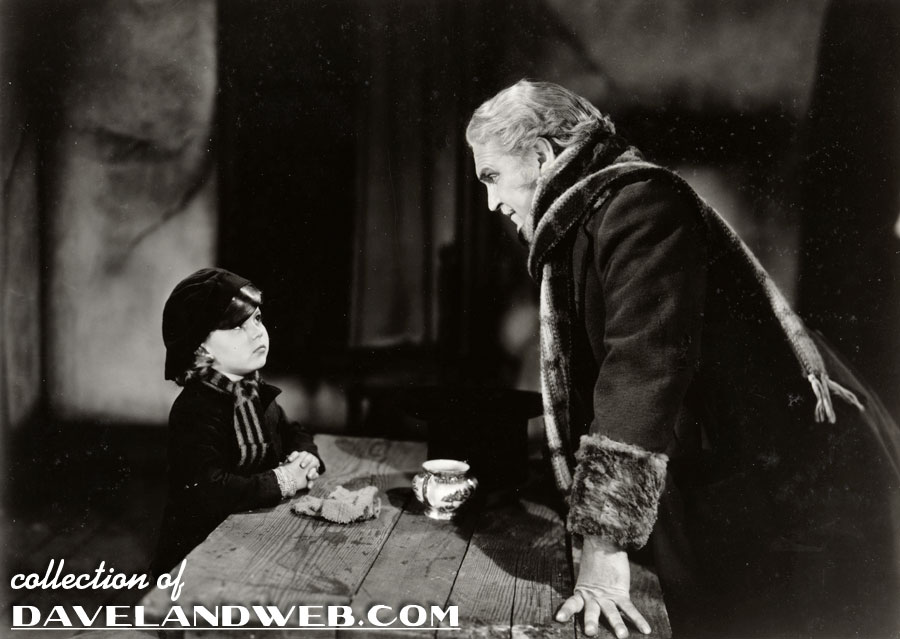
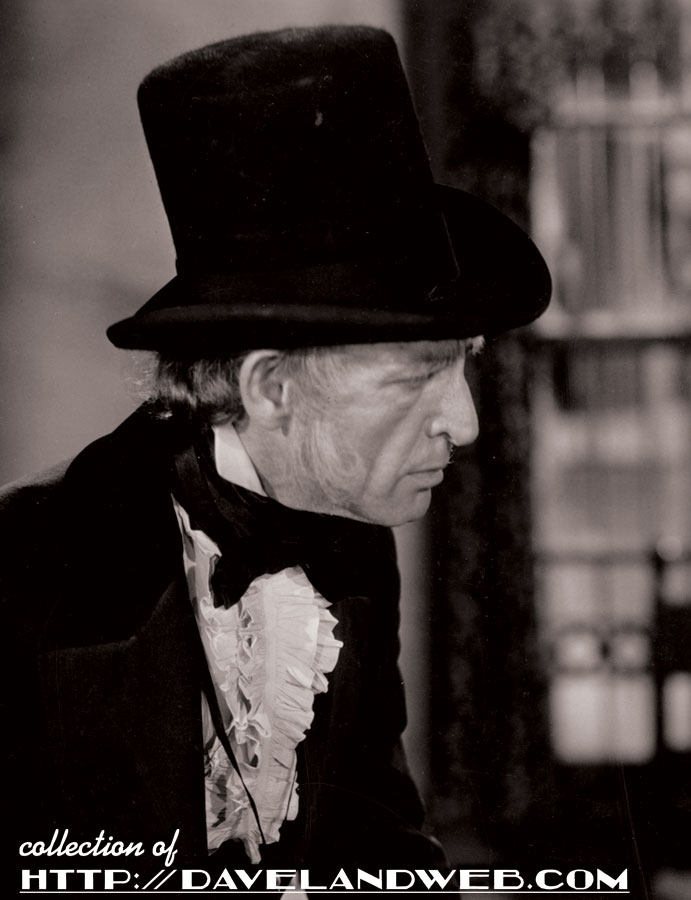
Shirley competed with Frank Morgan for scene-stealer of the year in “Dimples” (1936):


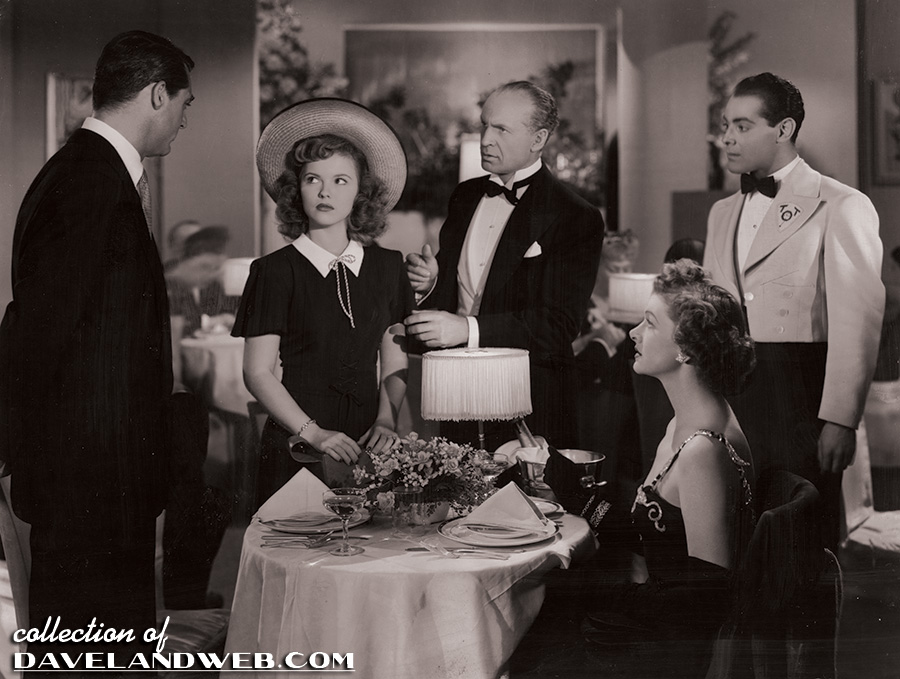
Myrna Loy worked with Shirley six years later in “The Bachelor and the Bobby-Soxer” (1947):


Get a huge dose of 1940’s patriotism and hear the original broadcast on thisdaybenny. Shirley appears at 30:59, introduced as “the new and lovely Shirley Temple.” She participates in some comic banter with Jack Benny and Bob Hope. Not surprisingly, Shirley holds her own with the two hams, and then goes on to give a short plea to the audience to donate to the fund.

See more Shirley Temple photos at my main website.
Tuesday, June 07, 2022

Temple Tuesday: W.C. and Shirley


It would appear that Shirley Temple and W.C. Fields ALMOST starred together three times, but sadly, nothing of those attempts came to fruition. Today’s post gives what information I could dig up on the subject.

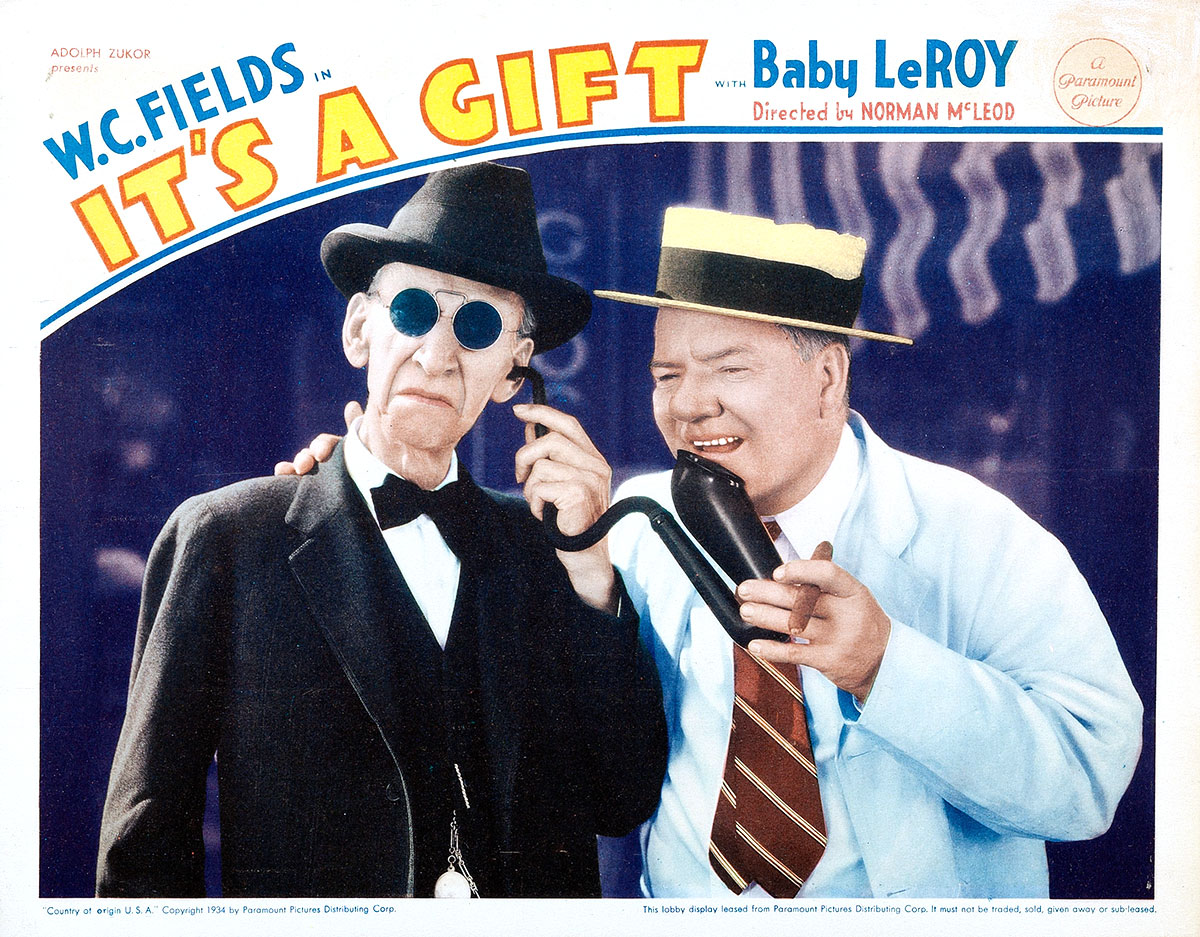
1. It’s A Gift (1934) appears to be the first opportunity for Shirley and Fields. Released by Paramount on November 30, 1934, the production for the film occurred between September 4 and October 12, 1934; production on Paramount’s “Now and Forever” with Shirley wrapped up on August 29, so the timing would have been about right. The way I first heard about this was by listening to the commentary on the recently released Kino Lorber blu-ray for “It’s A Gift,” by film historian James L. Neibaur where he reveals this:

Fields originally wanted two daughters, and he even suggested Shirley Temple for the younger child’s role, but they eventually decided on a son, played by Tommy Bupp.


Above, Kathleen Howard is shown playing Field’s wife in “It’s A Gift,” alongside Tommy Bupp and Jean Rouverol as their kids. I bought Neibaur’s book on Fields to see if he cited a source or gave any more information about the potential casting of Shirley, but nada, zip, zilcho. In the excellent James Curtis biography on Fields, the author describes that “It’s A Gift” was based on a silent film called “The Comic Supplement.”

Fields went to work massaging “The Supplement” into a new eleven-page story outline to which he affixed the title “Back Porch.” “The opening scene is in a grocery store,” he began, laying the groundwork. “I own the store. I have a wife and a young daughter, about 17 years of age (Joan Marsh type) and a younger daughter (about the age of Shirley Temple). A little boy is never so funny with me as a little girl. I can’t explain very well why. The little girl is annoying the father all the way through, and the wife is the type that is bullying me all the time.”…Next came the “Back Porch” scene, which he thought “really was awful” in the first film. “This is where a baby works. I feel Shirley Temple wouldn’t hit me over the head. She’s a little too old, but a baby would. So have Baby LeRoy in this sequence.”

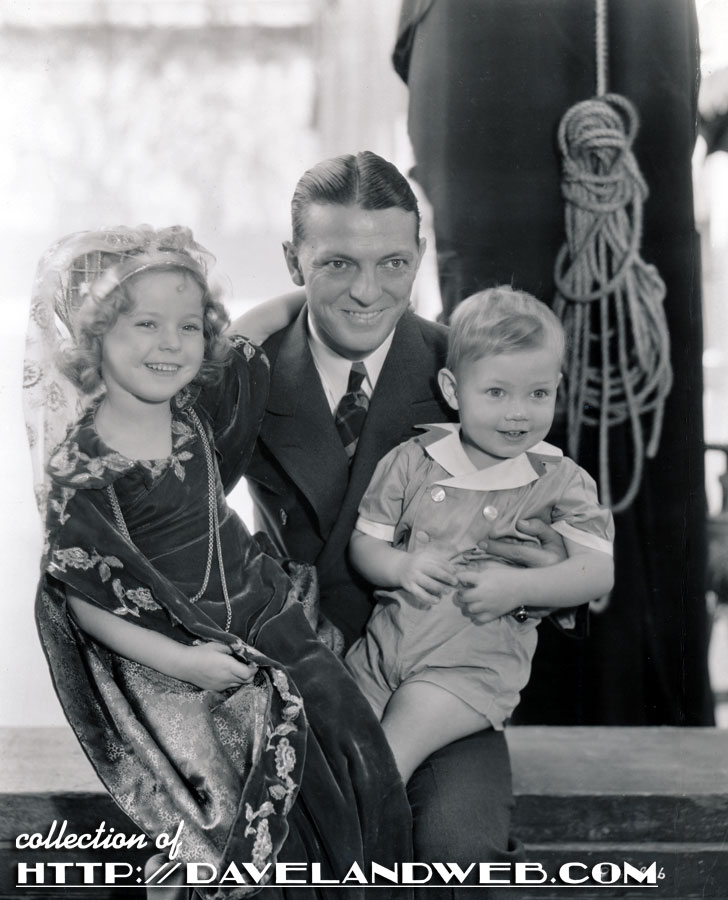
Curtis’ book also never mentions how far the casting of Shirley got or why the character was changed. While at Paramount, Shirley did a number of promotional shots with Baby LeRoy, perhaps in anticipation of her being featured with him in a Fields movie. Here she is in costume for her first Paramount feature, “Little Miss Marker” with Baby LeRoy and director Alexander Hall:


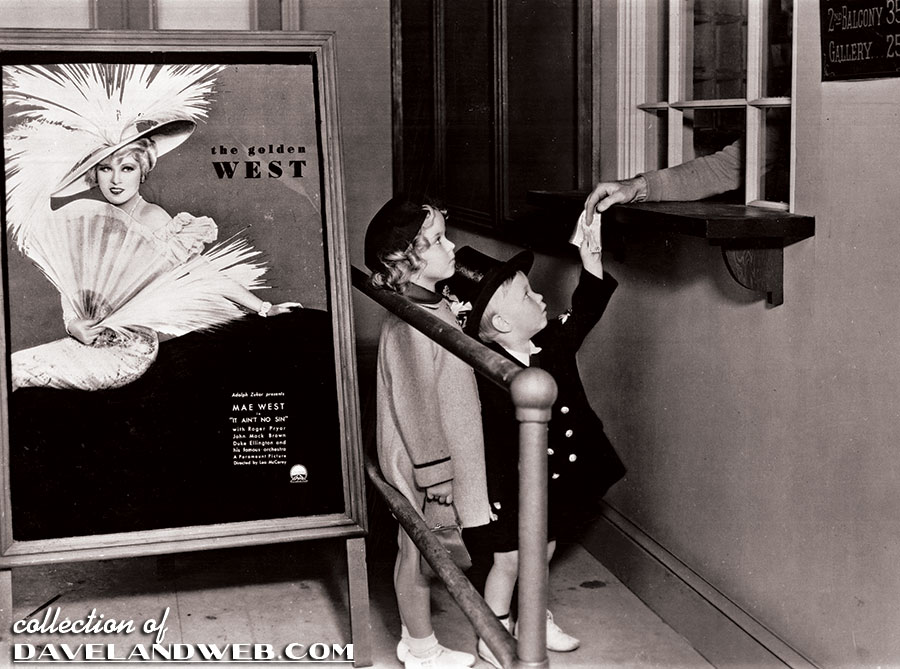
In a staged publicity shot for a story about the two kids going on a “date,” the studio naturally promoted another one of their stars, Mae West, by using an a-frame for her film “It Ain’t No Sin” in the photo.


2. Dimples (1936) The American Film Institute website tells us that Fields and Temple ALMOST teamed up for this 20th Century-Fox production. The following cast suggestions were listed in material in the Fox Produced Scripts Collection: W. C. Fields as “Professor Eustace Appleby”; Edna May Oliver as “Mrs. Caroline Drew”; Michael Whalen as “Allen Drew”; Claude Gillingwater as “Colonel Loring”; Warren Hymer as “Patrolman”; and Borrah Minevitch and His Gang. A December 1935 Hollywood Reporter news item states Fox was negotiating with Paramount to borrow Fields. What happened to those negotiations is unknown.


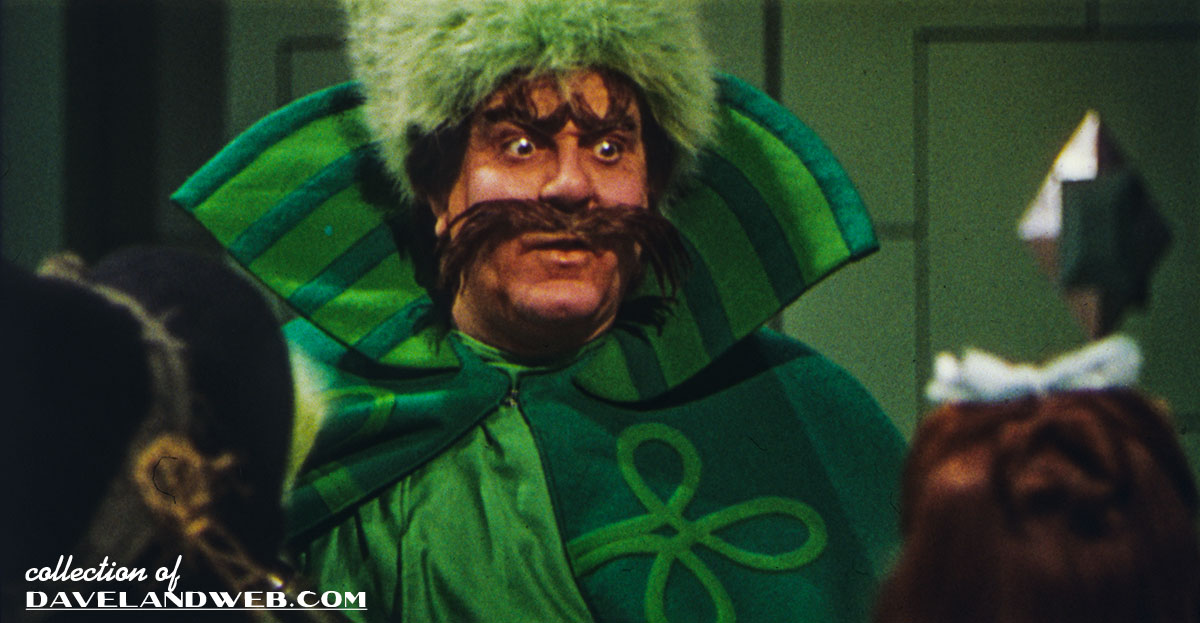
Frank Morgan ended up with the role, just as he did with…

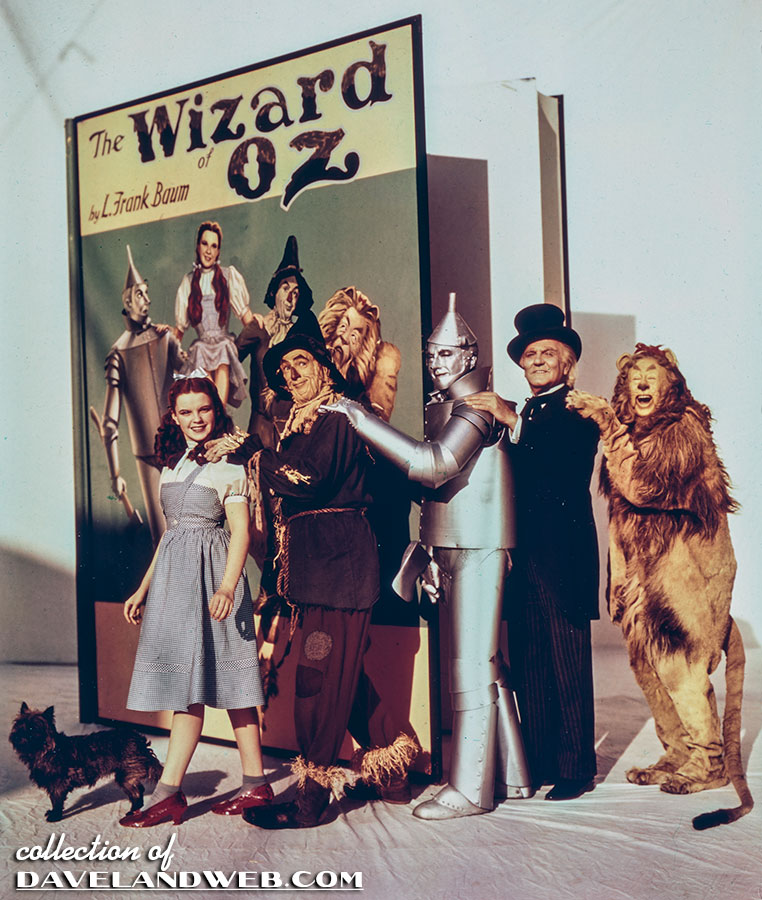
3. The Wizard of Oz (1939) There are many famous stories about how Shirley Temple almost got the part of Dorothy in this classic children’s tale. “Almost” is stretching it. 20th Century-Fox’s Darryl Zanuck never approved a trade of his studio’s biggest moneymaker, and the creative team behind “The Wizard of Oz” always favored Judy Garland, so Shirley’s casting in the film never really amounted to much. On the other hand, Fields came very close to playing the parts of Professor Marvel and The Wizard. Curtis’ book gives us this information:

Across town, just two days prior to Fields’ calamitous Chase & Sanborn broadcast [June 5, 1938], the purchase of “The Wizard of Oz” was finalized by M.G.M.…plans were to shoot the film with Judy Garland as Dorothy and Ed Wynn in the title role. Wynn was the choice of producer Mervyn LeRoy, who was making his first picture for MGM, but Arthur Freed, LeRoy’s assistant, and E.Y. “Yip” Harburg, the lyricist, both wanted Fields for the part.…With the abrogation of his Paramount contract, it was a job Fields was perfectly amenable to doing.…The screenwriting team of Florence Ryerson and Edgar Allen Woolf had already expanded the role for a player of Fields’ stature, creating a real-world counterpart for the Wizard in the person of Professor Marvel. Actor Frank Morgan was on their minds when they first broached the idea of adding the Professor, an old medicine man, tot he film, but by the time their first revision of the script was delivered, on June 13, 1938, Marvel had taken on a dwarf assistant and the Professor spoke with a distinctly Fieldsian bravado. Fields began making notes on how he would play the character—brief scribbles on random bits of paper, carefully tethered together and typed by Magda Michael. He envisioned Marvel as an old con man working “the fortune telling racket like they do in Chicago” and sleeping on park benches. Among the ideas: Oiling the Tin Man’s joints • When F. sees the lion—“My gosh, that’s wonderful, he even smells like a lion.” • Someone says, “I want to light a cigarette—put the cyclone machine in reverse.” • Re cyclone: Tell about the big wind in Ireland. It blew a cow up against the side of a barn and he stick there and starved to death. • When Prof. Marvel is telling Dorothy’s fortune (aside): “Yes, your aunt wants you back. She wants to put you in moving pictures like Shirley Temple.”


In the meantime, Fields signed a contract with Universal, allowing him to do an original story (“You Can’t Cheat an Honest Man”).

At first, Fields thought he could work “The Wizard of Oz” into his schedule—Yip Harburg had written the Wizard’s climactic speech with him in mind—but now he was, apart from Deanna Durbin, the biggest star on the Universal lot, and no time would be lost in announcing his engagement. After pained exchanges over conflicting dates—both pictures were set to start in October—Fields reluctantly withdrew from “The Wizard of Oz,” relinquishing the part to Frank Morgan.

In hindsight, Morgan was a much better choice. He made his characters memorable, but they didn’t overshadow Garland’s performance. In addition, there is a tenderness to Morgan’s performance that would have been lacking if Fields had played the role instead.


In that wonderful alternate universe, it would have been interesting to see Temple and Fields together in a film. I have a feeling that the chemistry would have been off the charts!

See more Classic Movie and TV photos at my main website.

Tuesday, October 27, 2020

Temple Tuesday: A TALKING Picture!


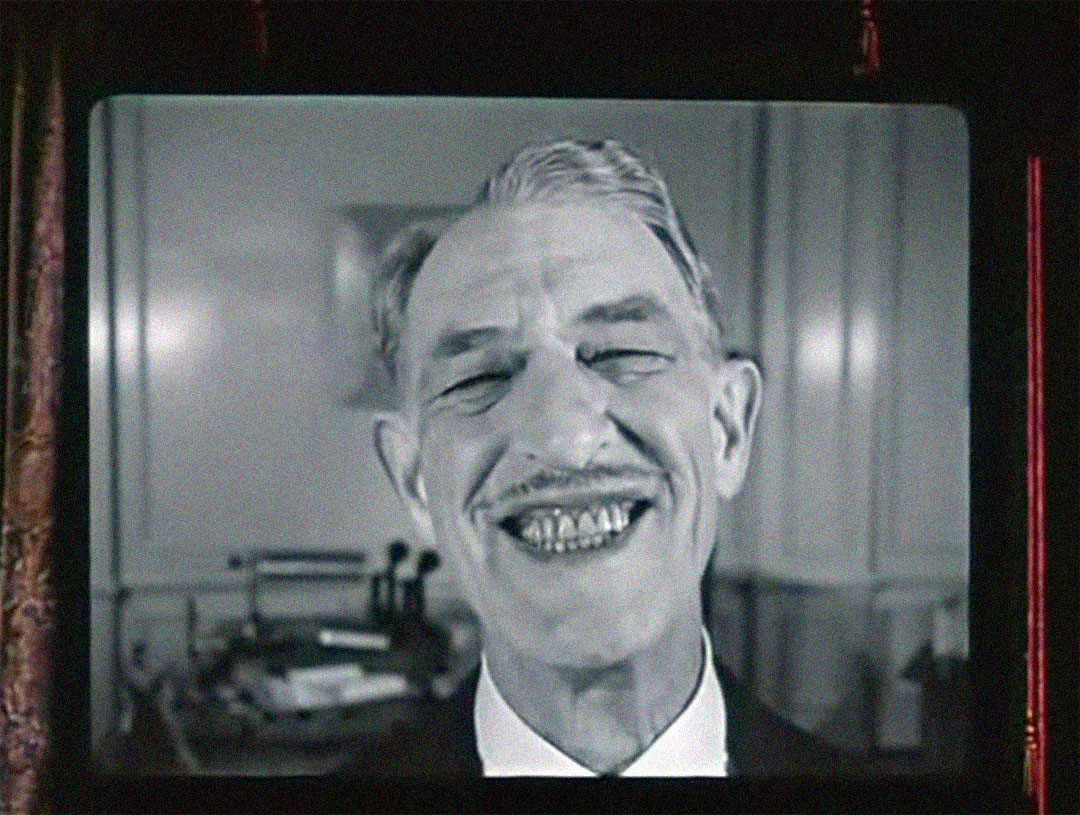
Fans of the classic 1952 MGM musical “Singin’ in the Rain” will remember the cameo by actor Julius Tannen. He is the rather toothy man who startles the 1920s partygoers as the speaker in a promotional talking picture. In his slow and perfectly annunciated dialogue he states: “Note how my lips and the sound issuing from them are synchronized together in perfect u-ni-son!…My voice has been recorded on a record. A TALKING picture! Thank you! Goodbye!”

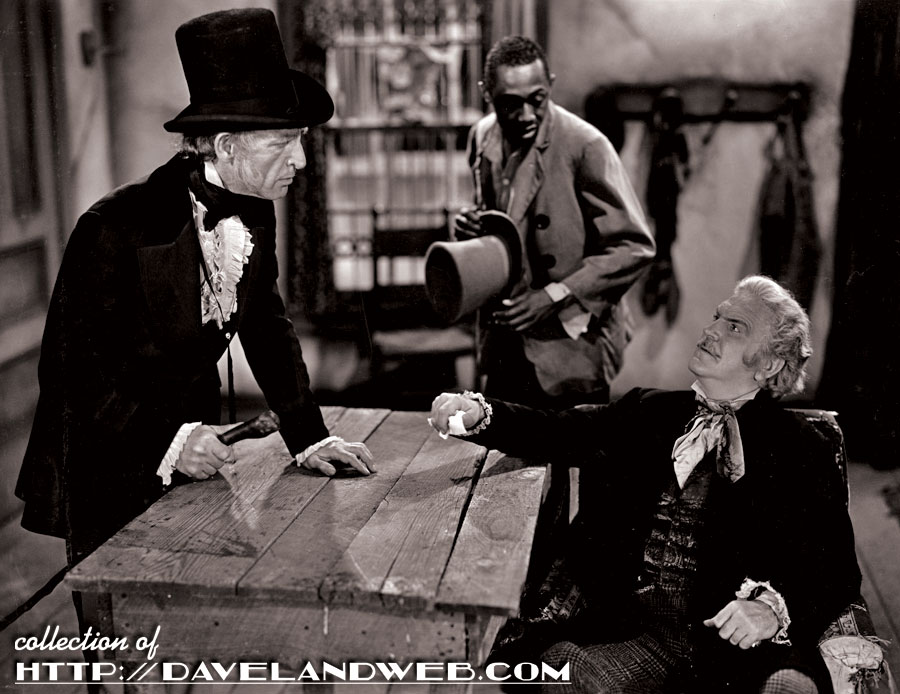
Tannen is the same actor who portrayed Emory T. Hawkins sixteen years earlier in Shirley’s film, “Dimples.” He played one of the creditors who was swindled by Shirley’s grandfather (Frank Morgan).


“If you don’t pay me now, I’ll have you in jail by tonight,” the actor roared.


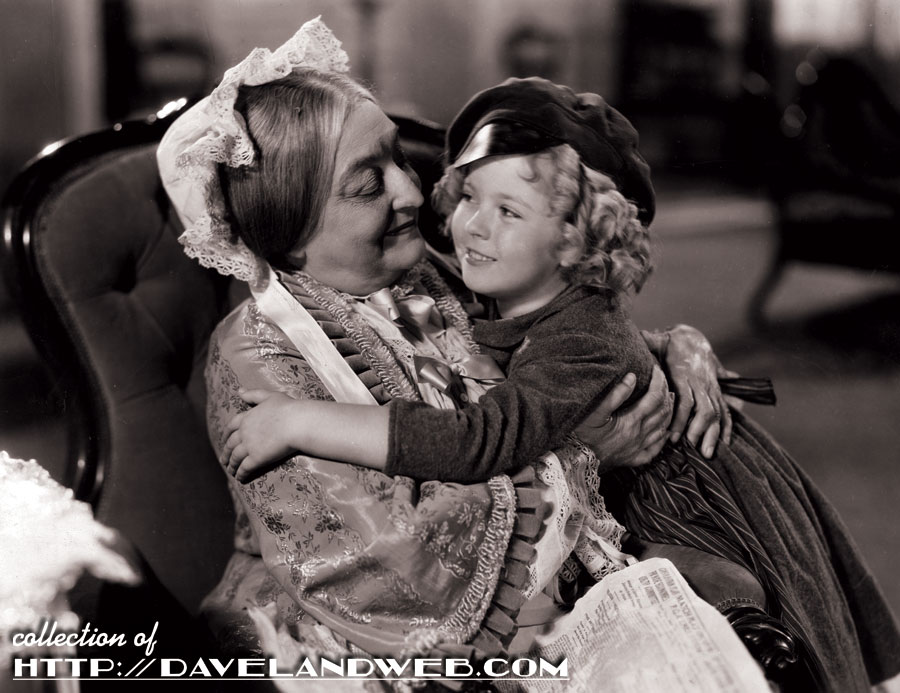
Where does Morgan get the money to pay his debt? By selling his granddaughter to a lonely but very rich woman (Helen Westley). “Dimples” has a happy ending, but plenty of icky moments throughout; it is not one of my favorite Shirley films.


See more Shirley Temple photos at my main website.
Wednesday, June 10, 2015

Shirley For Sale Pt. 2


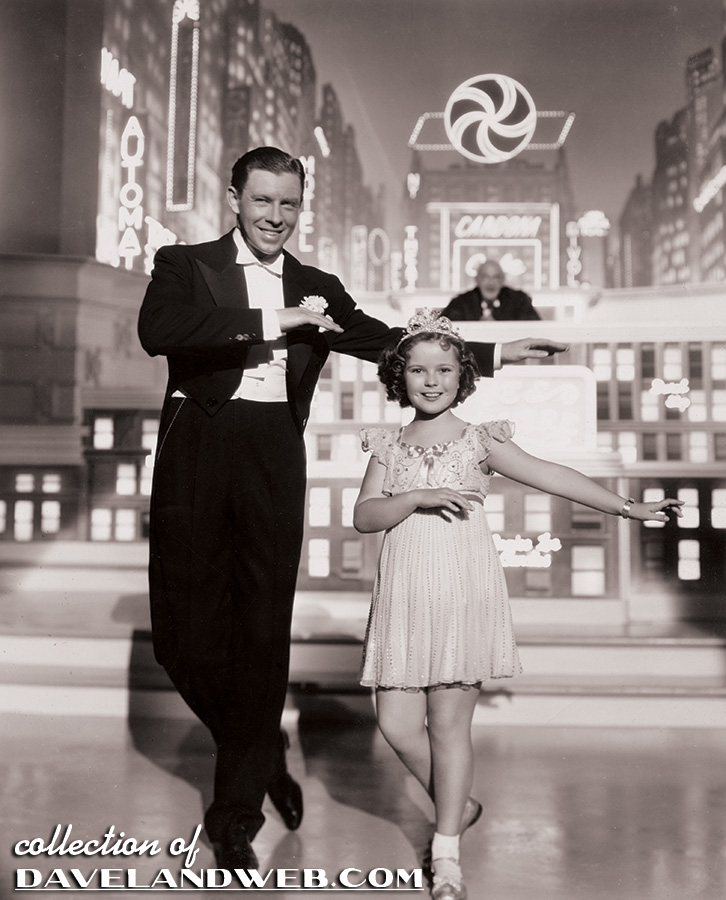
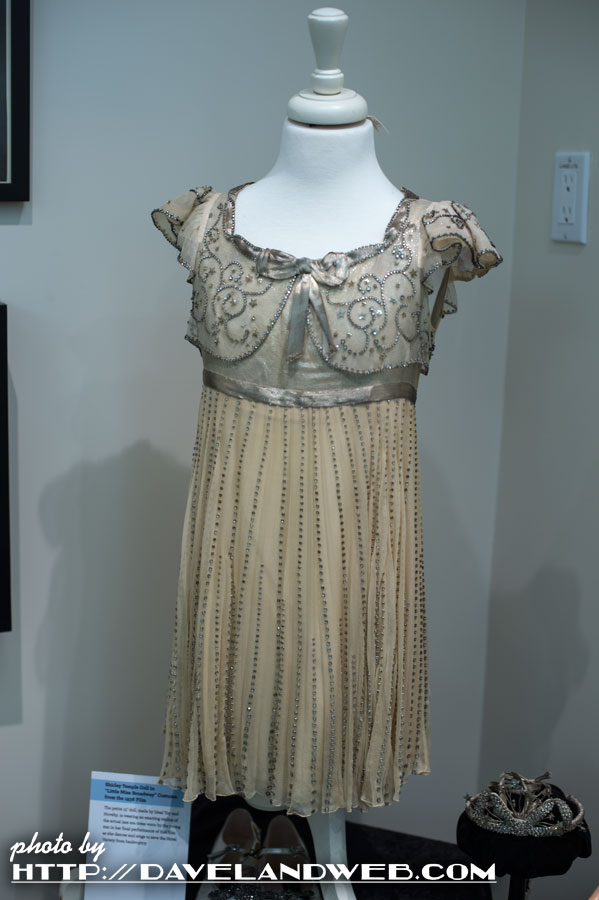
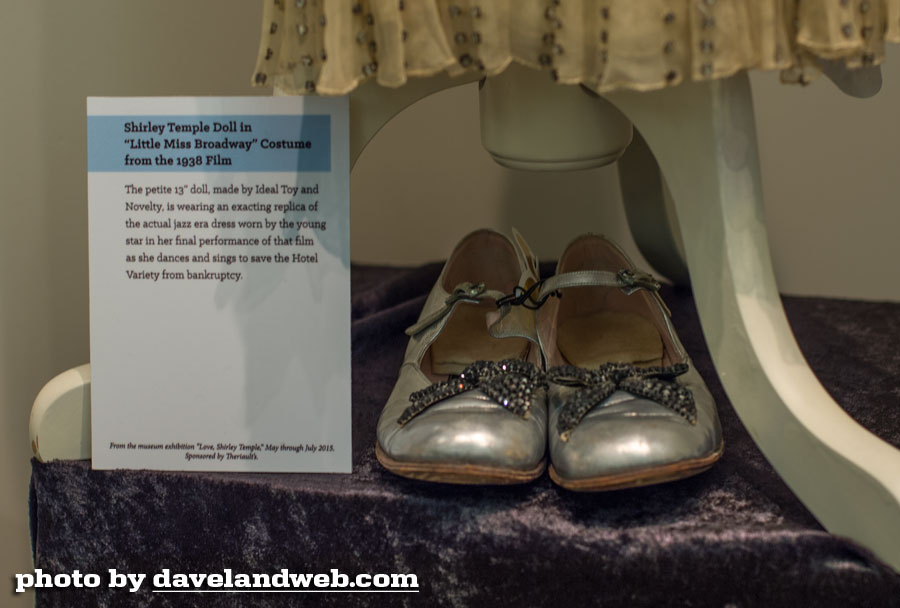
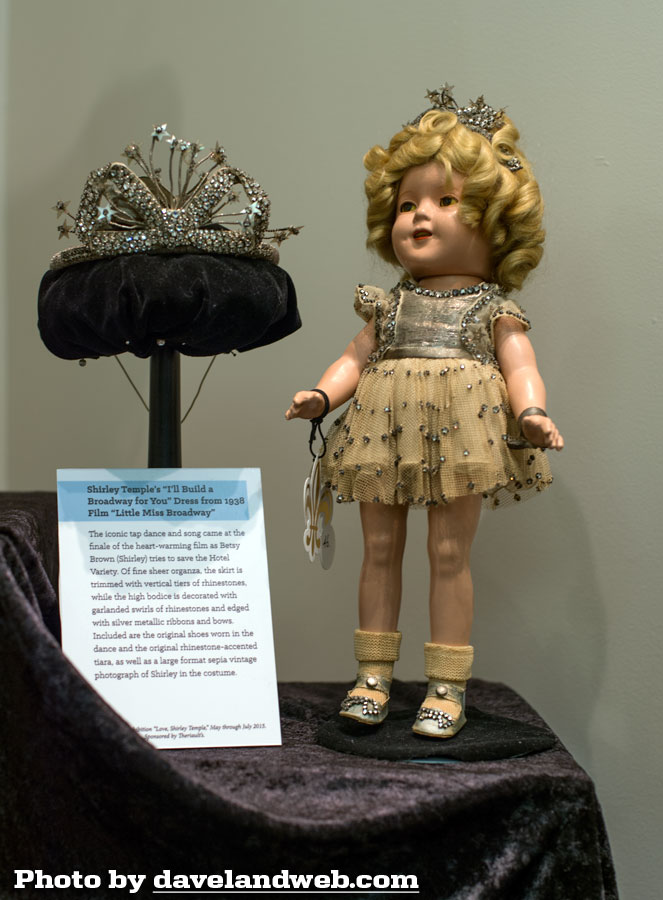
Today we begin with a shot of Shirley Temple & George Murphy from "Little Miss Broadway," 1938, from the movie's splashy courtroom finale. 77 years later Shirley's outfit sees the light of day at the Santa Monica History Museum's Love, Shirley Temple Exhibit (which ends today).


The shoes:


Her tiara, alongside a matching custom-made doll just for Shirley:


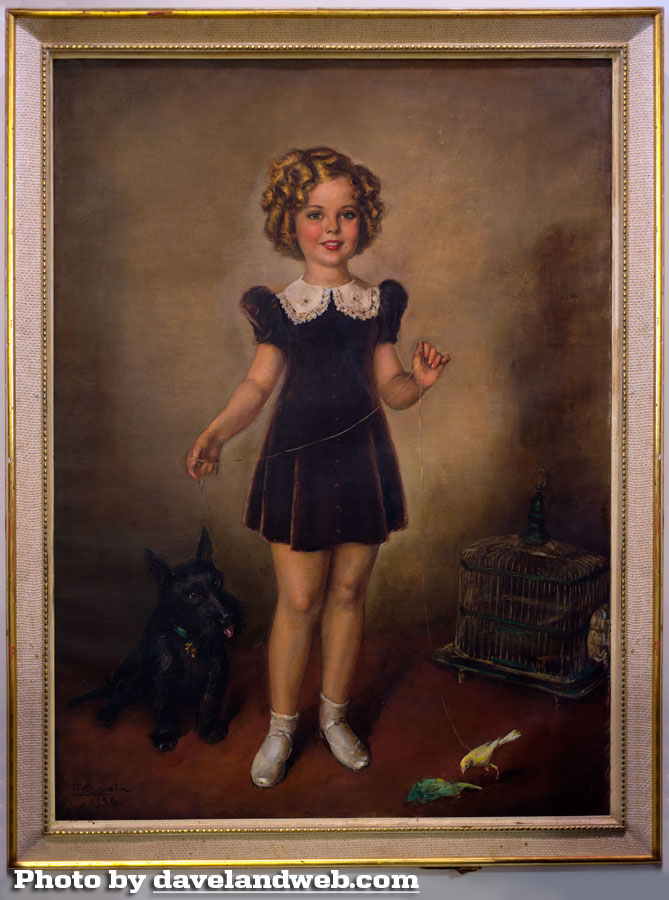
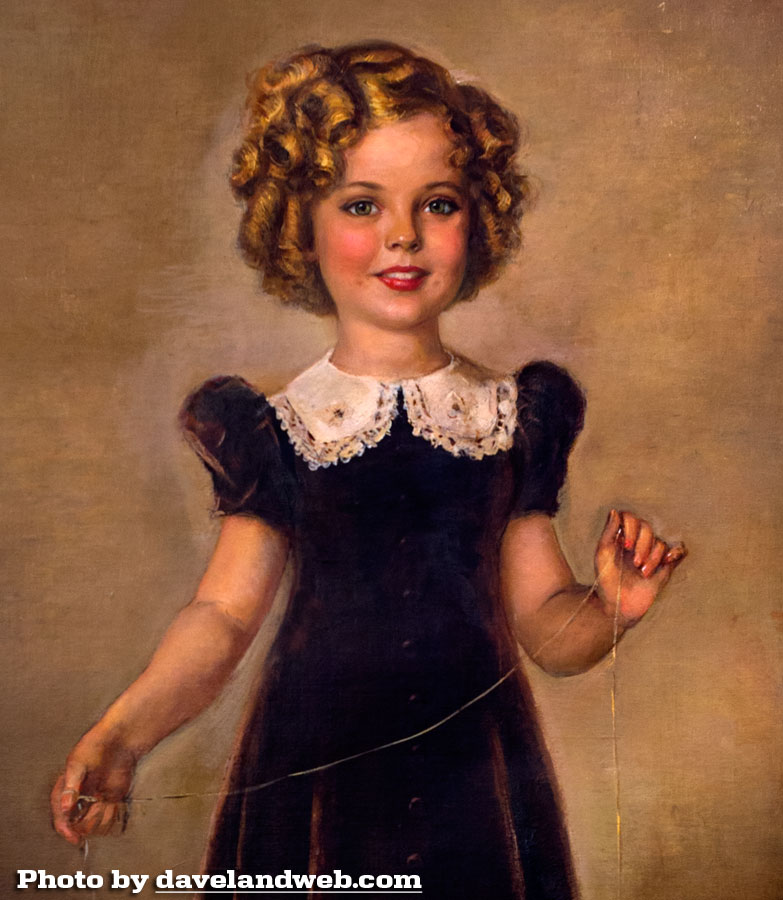
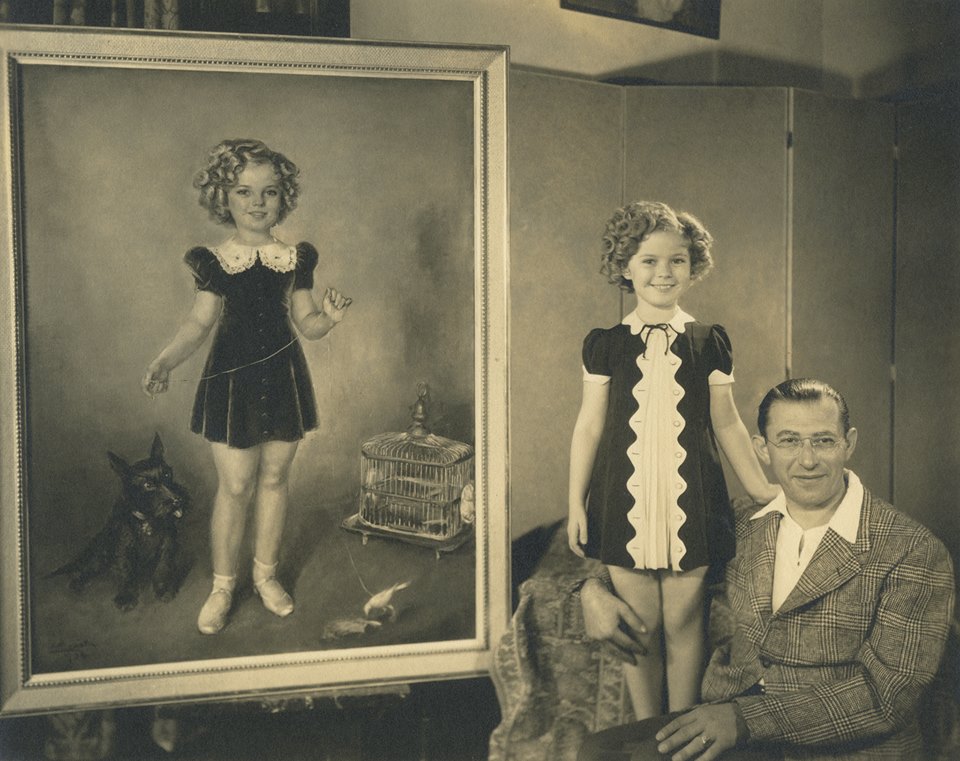
One of the many highlights of this exhibit includes a large painting from 1936 by Tino Costa (known as "The Painter of Kings and Presidents").


This painting hung over the piano in Shirley's childhood home and can be seen in a number of publicity stills.


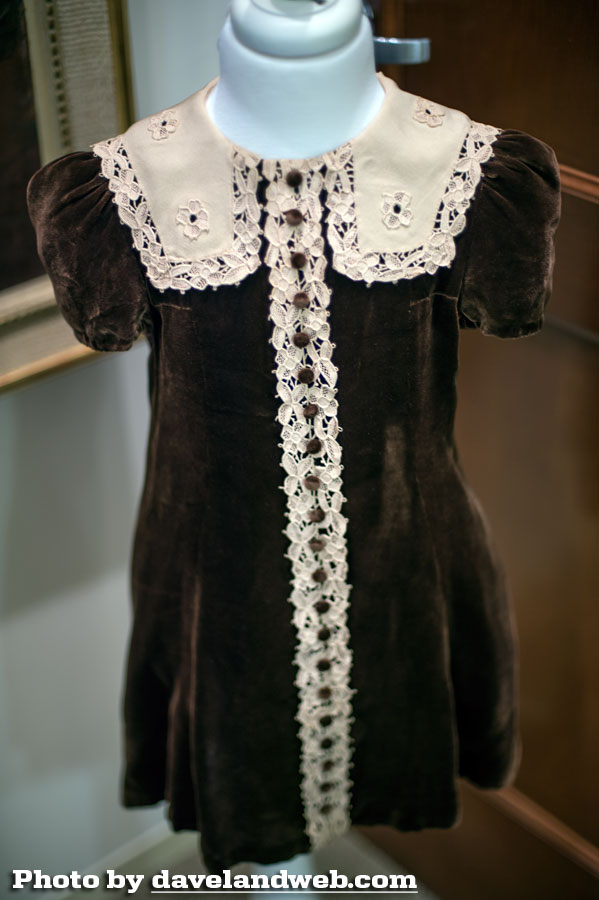
Here's the dress that the painting was based on:


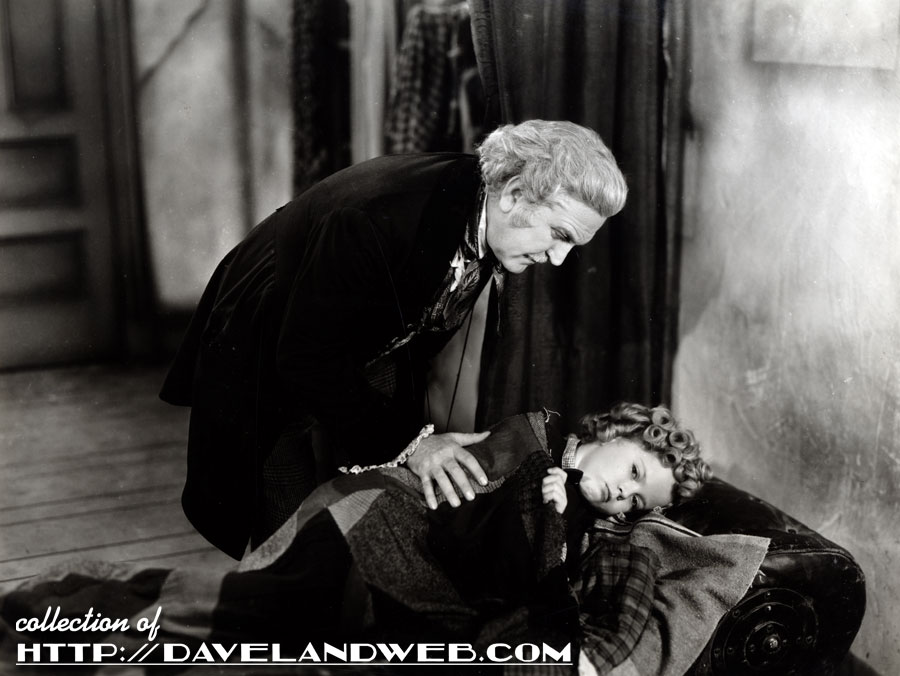
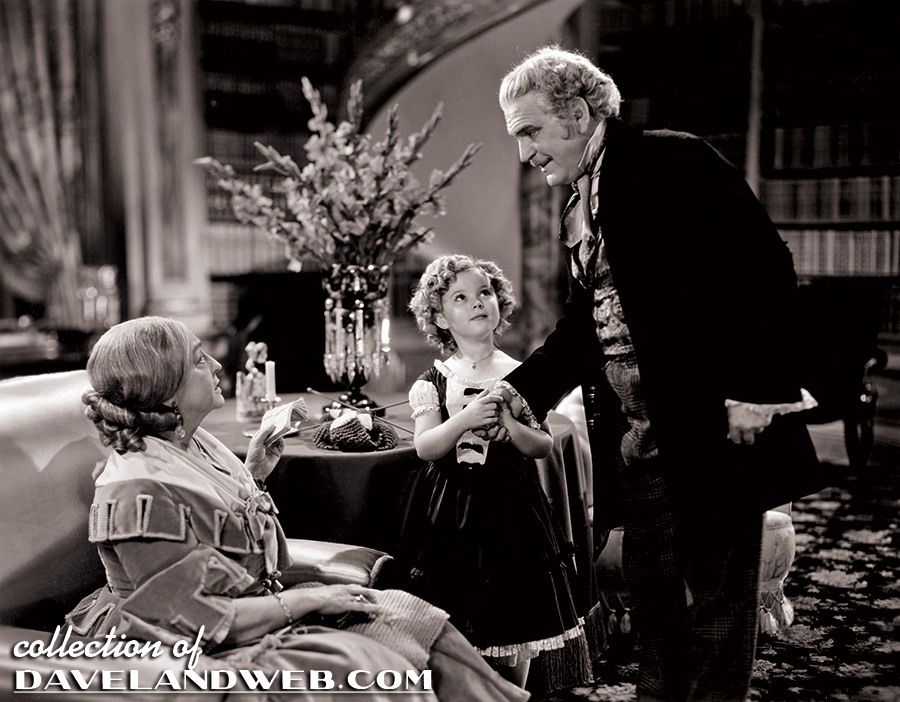
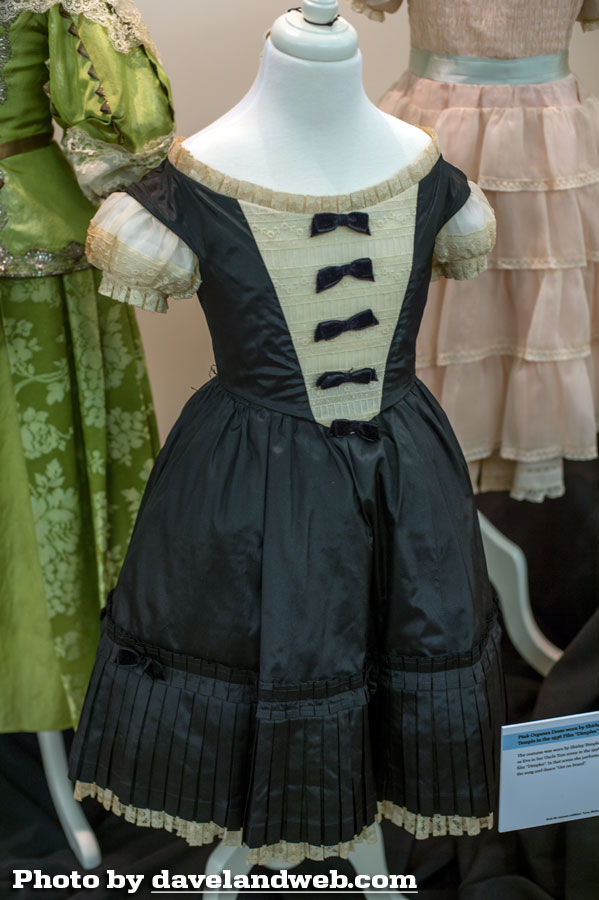
In 1936, the unthinkable happened; another actor actually stole the picture from Shirley. Frank Morgan (best known as The Wizard in "The Wizard of Oz") was one of the few actors to upstage her in "Dimples."


And here's the same taffeta outfit on display:


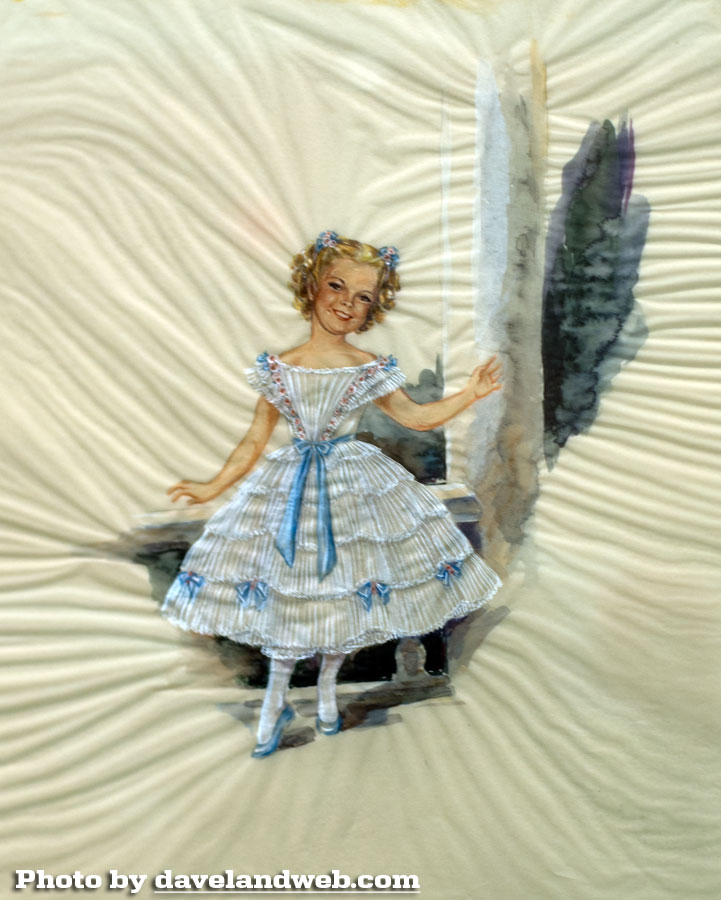
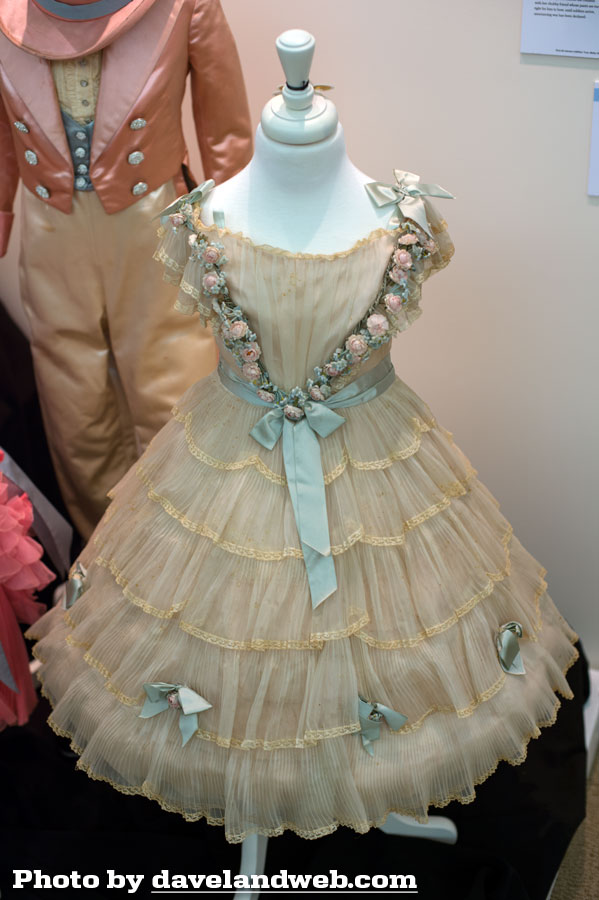
A watercolor for a party frock Shirley wore in 1935's "The Littlest Rebel":


and the dress itself:


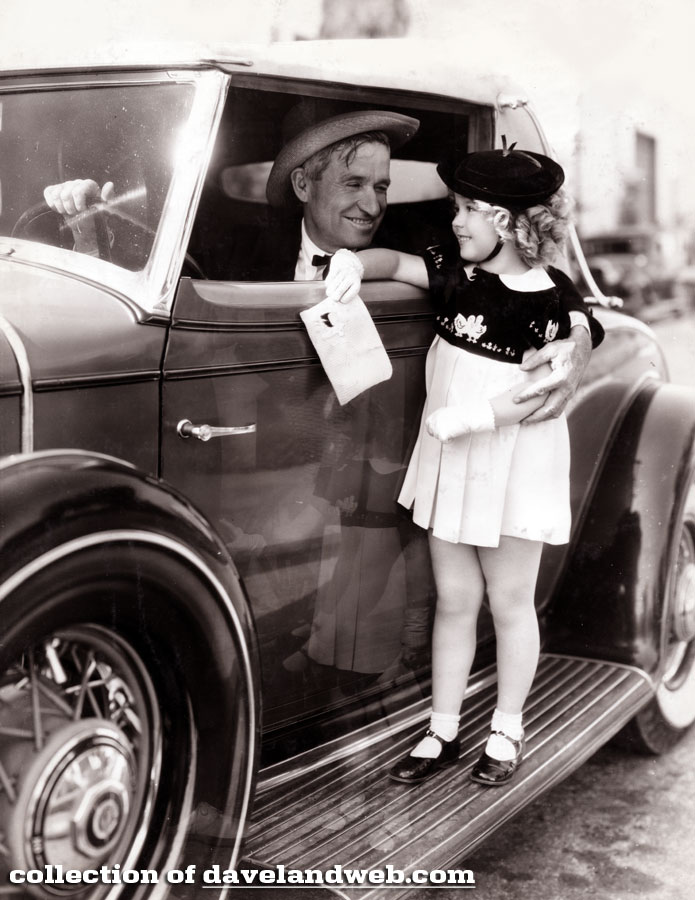
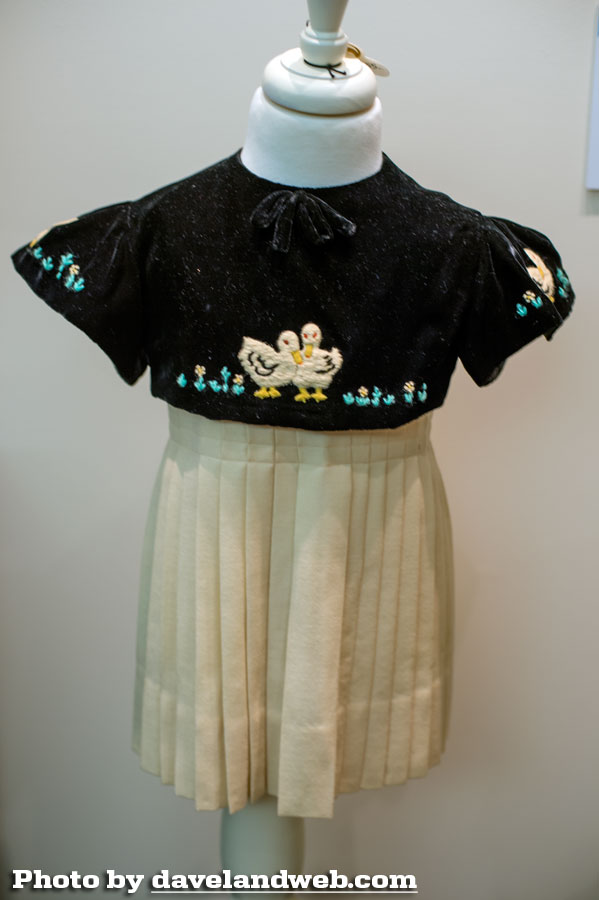
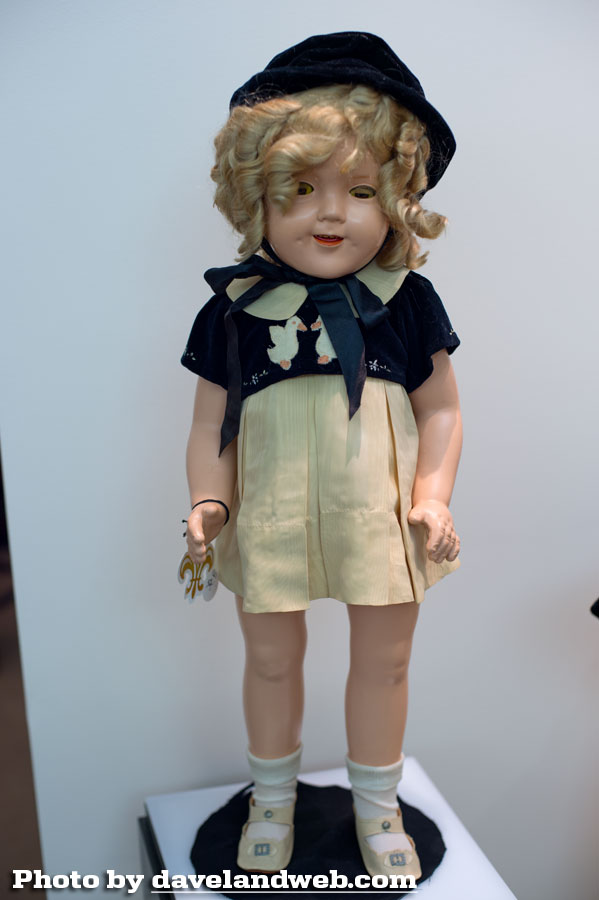
In 1935, Shirley filmed one of her most memorable classics, "Curly Top." Here she is between scenes posing with humorist Will Rogers, wearing a costume known as "The Duck Outfit."


"Live" and in person:


and the matching doll:


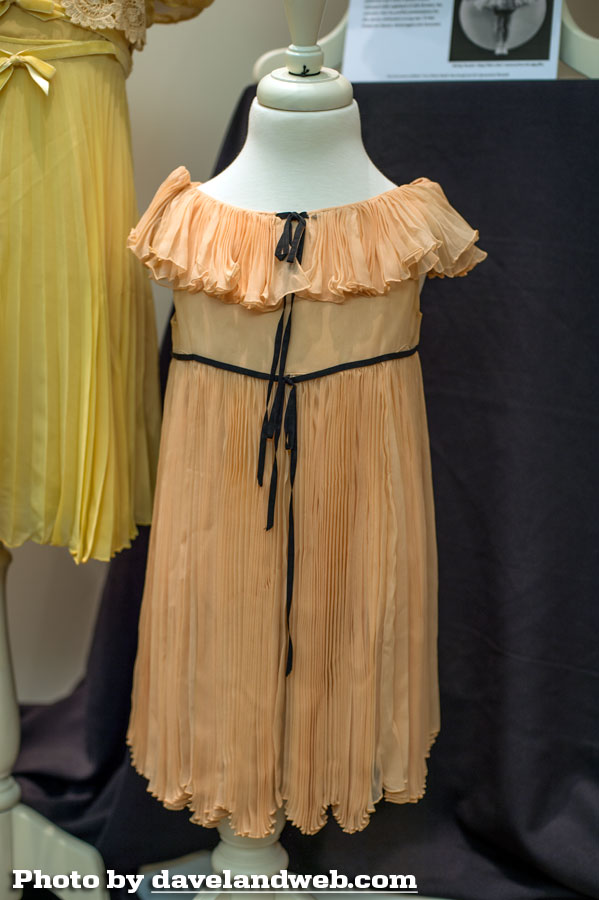
A pink chiffon dress that Shirley wore as she danced on top of a piano to the title song:


I'll close out this post with a clip of that song; apologies for the colorization!


For details on the exhibit, visit the Santa Monica History Museum webiste.

View additional Santa Monica photos at my main website.