Showing posts with label the wizard of oz. Show all posts

Friday, June 10, 2022

Judy Garland 100th Birthday Blowout!


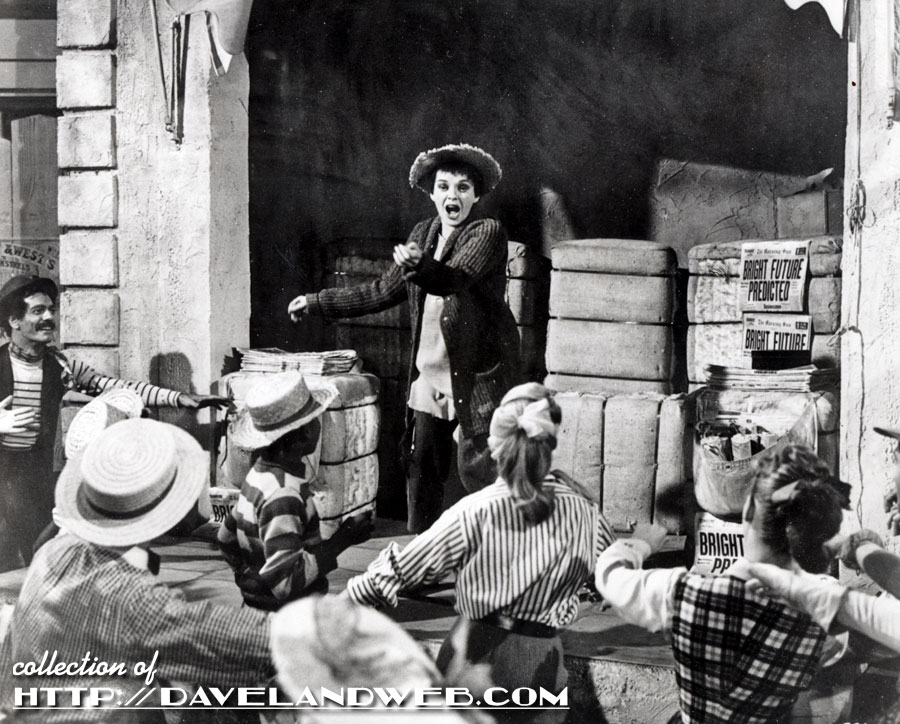
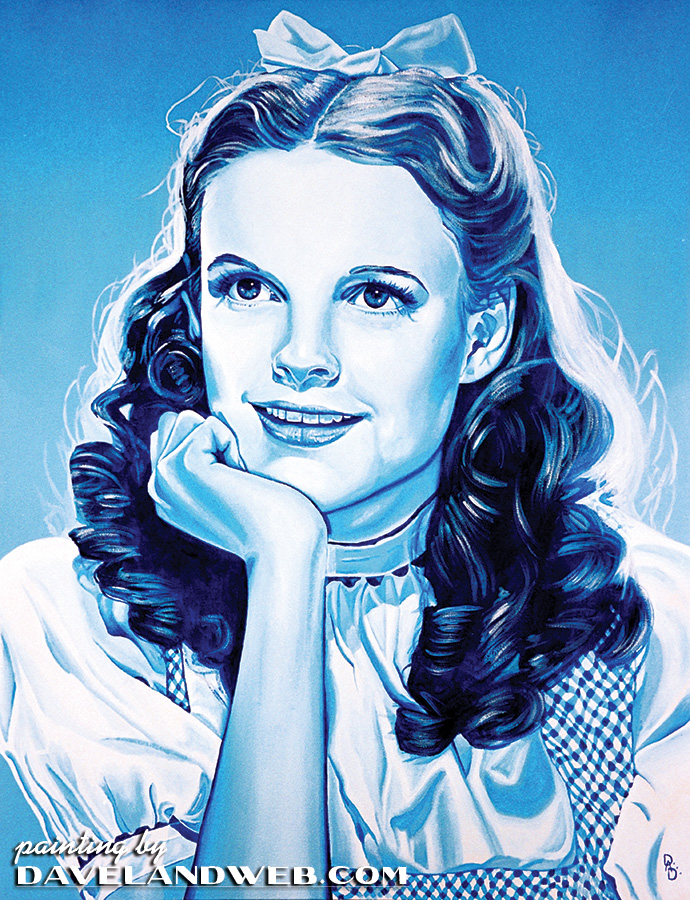
Today would have been the 100th birthday of singer/actress Judy Garland. It is hard to fathom that she only lived to see 47, due to the incredible volume of memorable work that she left behind. Most will remember Judy for her portrayal of Dorothy in “The Wizard of Oz” (1939). The first photo in this post is a painting I did of Judy, where I attempted to capture the youthful zest and hope that were her hallmark. The rest of this post will serve as a chronological tribute of photos from my collection that document her career.
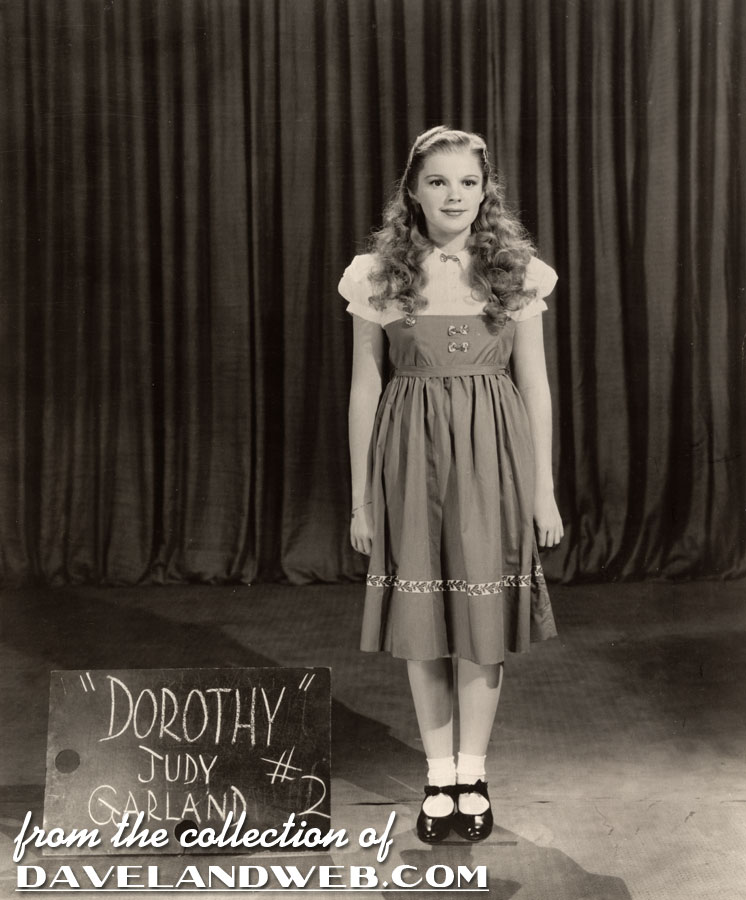


These three shots show M.G.M.’s original vision of Dorothy; unable to secure the more bankable Shirley Temple, the powers-that-be attempted to transform Judy into what she would later refer to as “a male version of Mary Pickford.”
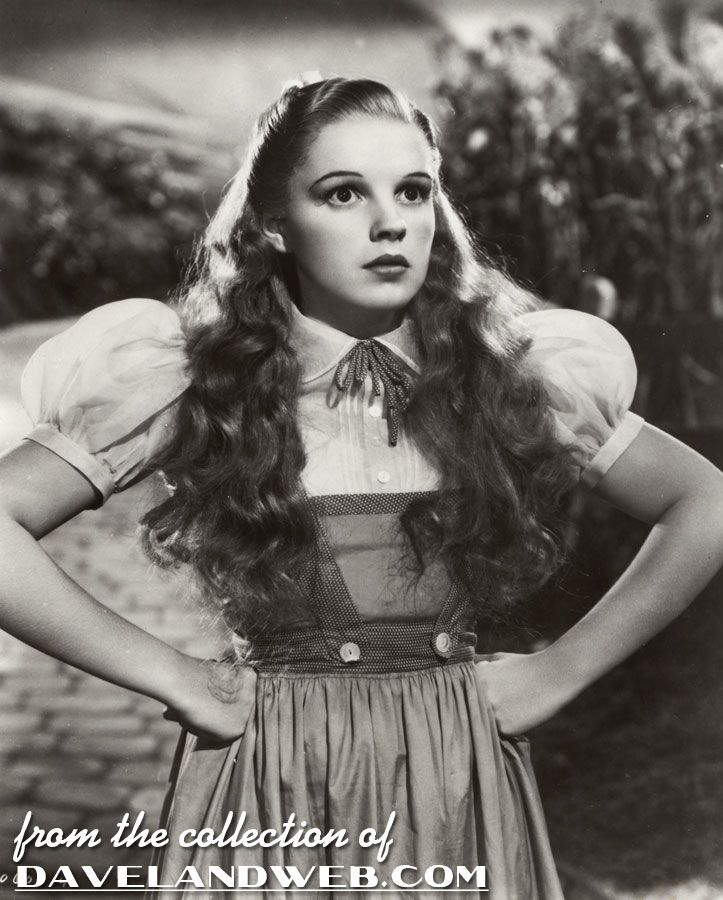


Before the initial director (Richard Thorpe) was fired, quite a bit of footage was shot with Judy in her blonde wig.
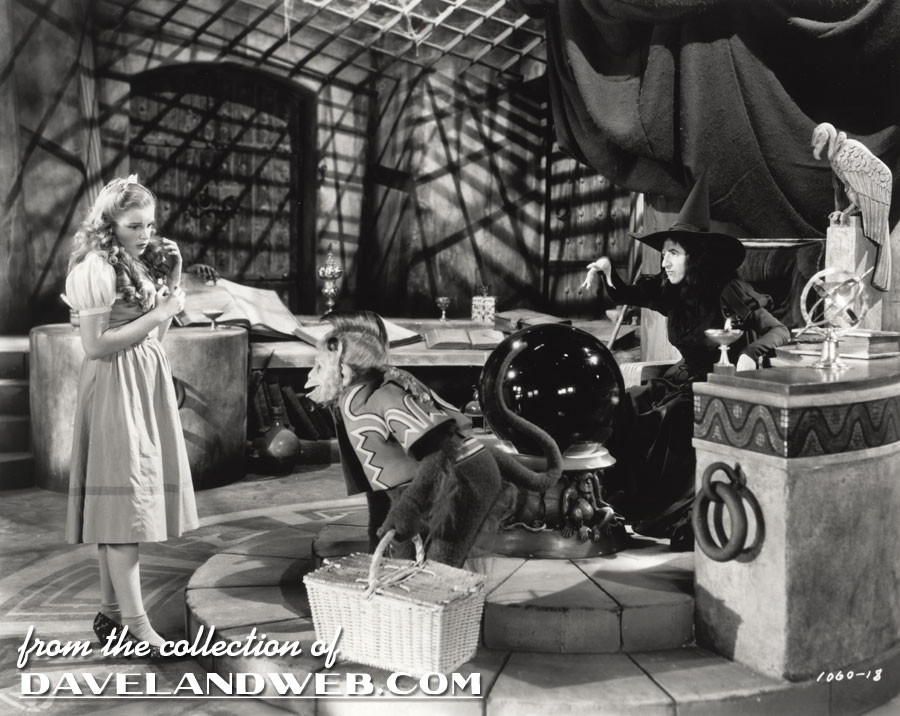


George Cukor stepped in temporarily before Victor Fleming was hired. He had the artifice removed from Judy’s makeup and allowed the real girl to shine through.
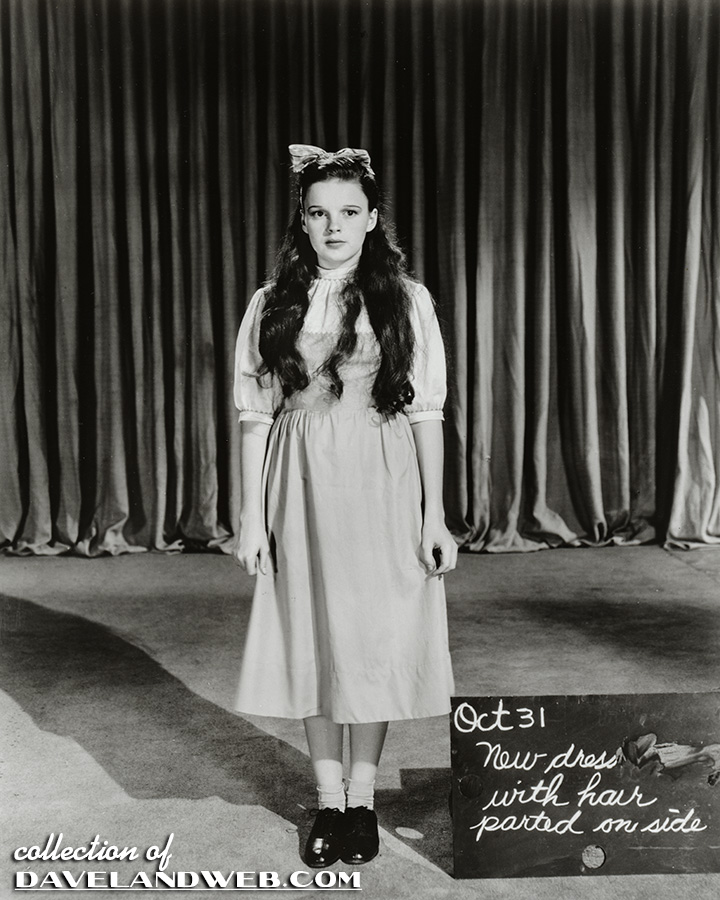


This was the brilliance of casting Judy; in a land of fantasy, her emotionally charged performance grounded the film and made you believe that this young girl wanted to get home more than anything else in the world. Ruby slippers be damned!
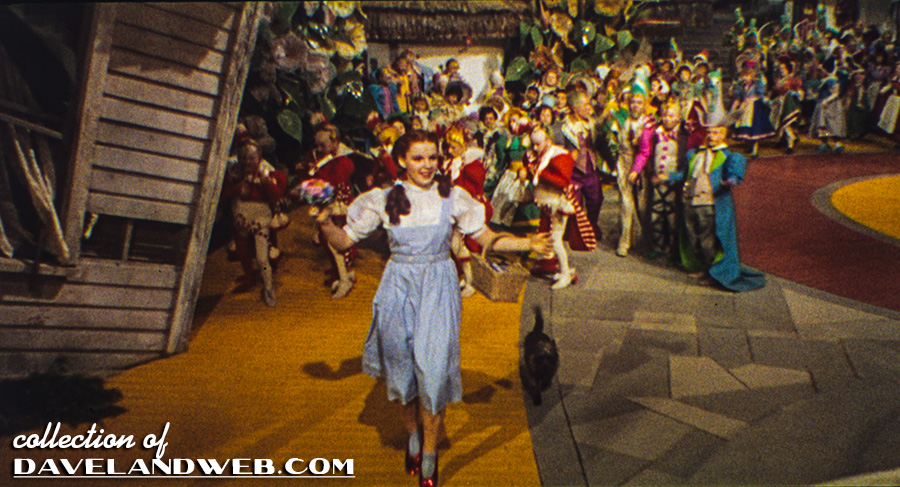


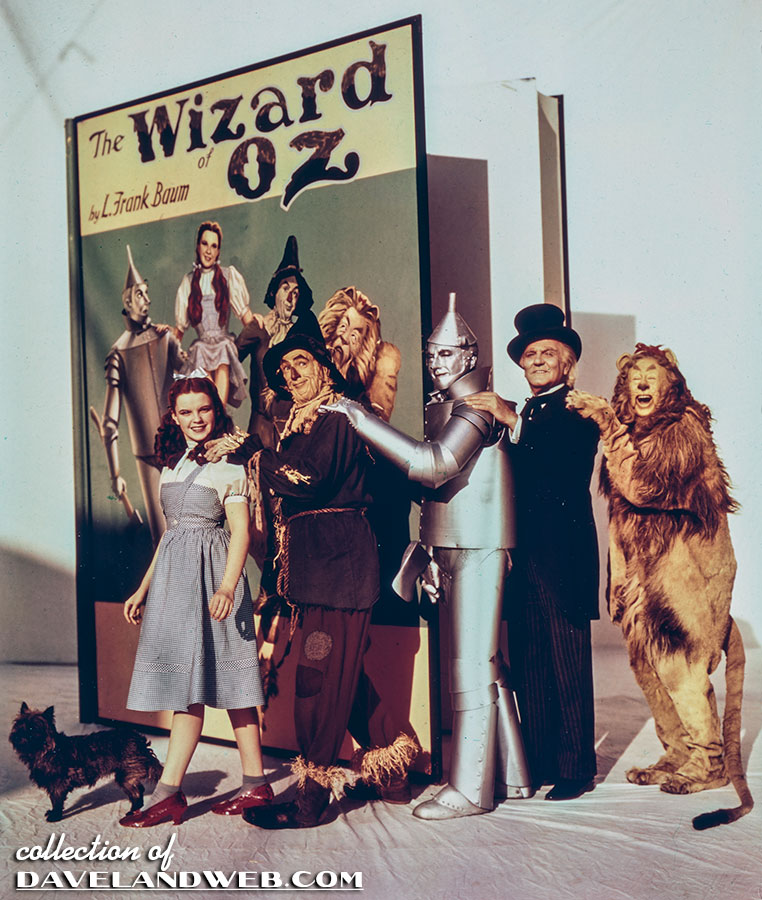
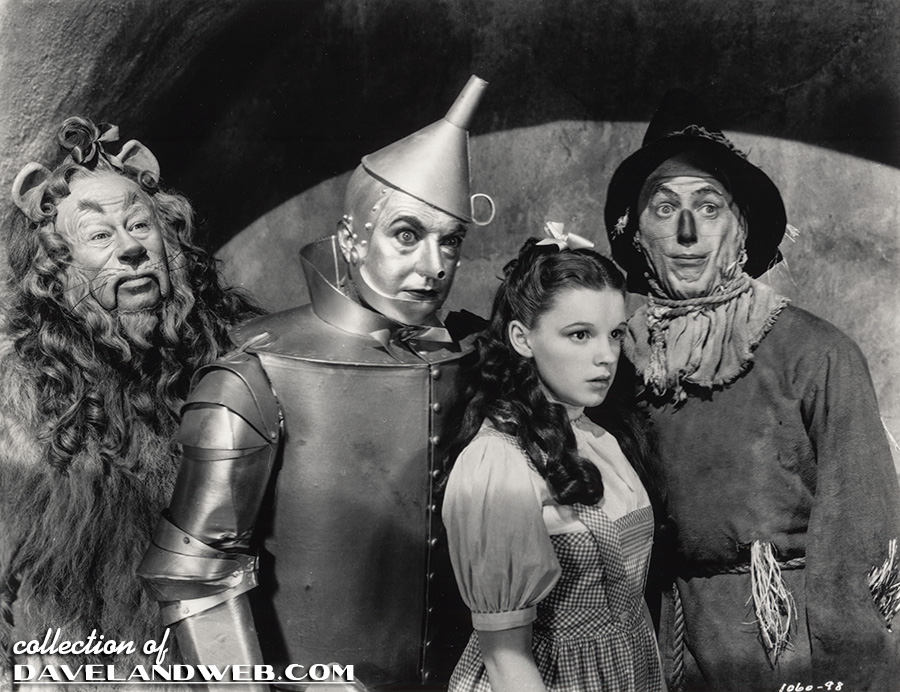
One of the best quartets in film history:


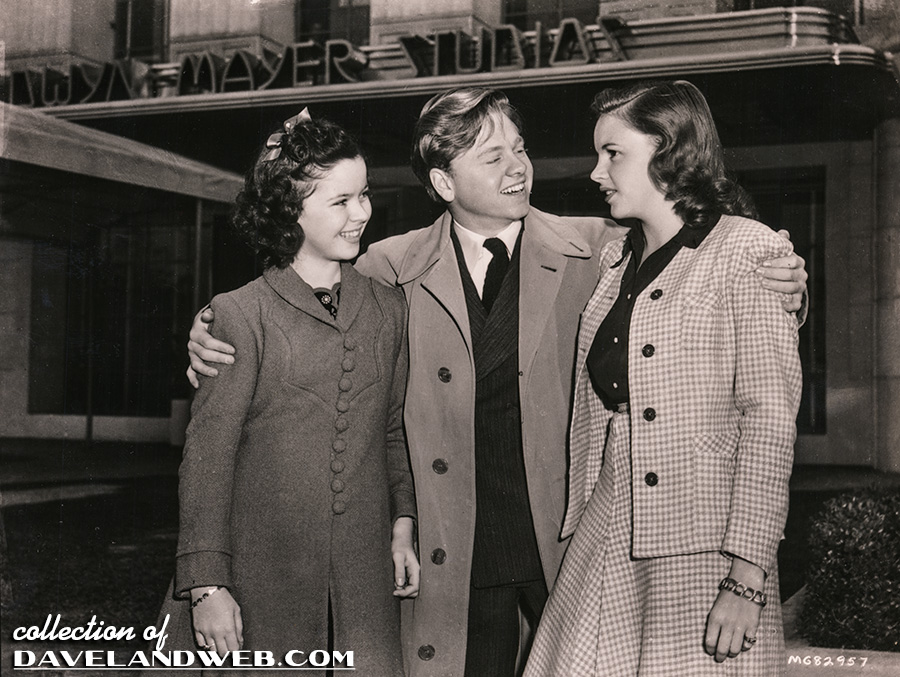
When M.G.M. finally acquired Shirley Temple into their stable of stars, Mickey Rooney and Judy Garland were on hand to welcome her. For the publicity cameras at least!


Judy’s next big break after a string of films with Mickey was “Meet Me In St. Louis” (1944). Once again, she carries a film that would have been extremely forgettable starring anyone else.


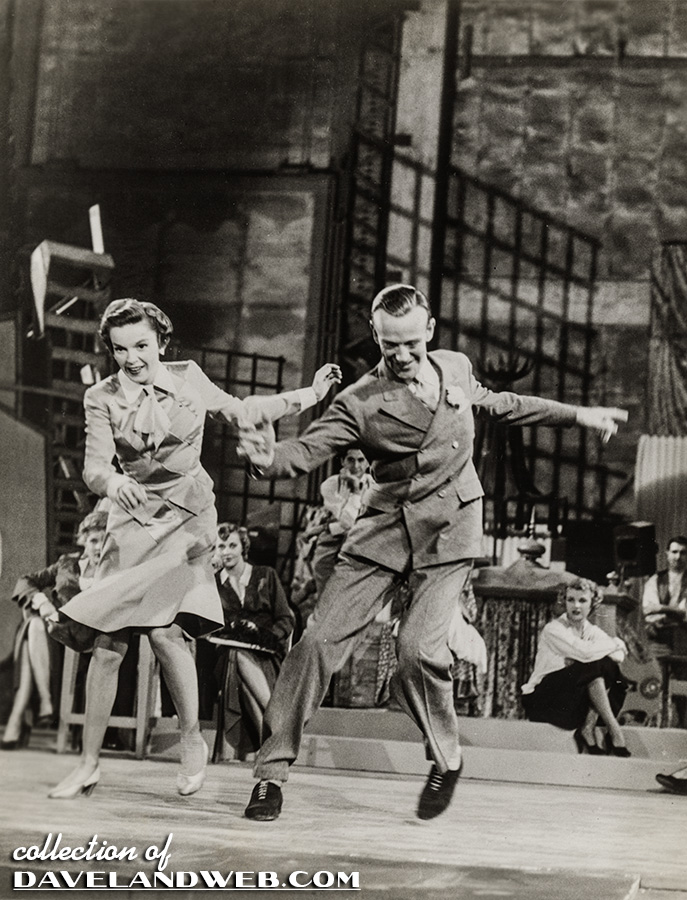
One of my very favorite Garland numbers is “Alabam” from “Easter Parade” (1948). You barely notice Fred Astaire dancing with her; instead, your eyes are on Garland the entire time.


While not her most memorable film, Judy gives a charming performance in “In the Good Old Summertime” (1949). Her musical number “I Don’t Care” is worth the price of admission all by itself.


Working at breakneck speed to meet the demand of more Garland pictures, it’s not surprising that eventually her body would fight back. Lack of sleep, strenuous dieting, and the abuse of medication to keep her peppy for the cameras all contributed to her breakdown. M.G.M. didn’t want to give their biggest star a much deserved vacation; instead, they shoved her into “Annie Get Your Gun” and chose her mortal enemy (Busy Berkeley) to direct it. The look on her face in this wardrobe test says it all. Judy ended up getting fired from the film and replaced by Betty Hutton.
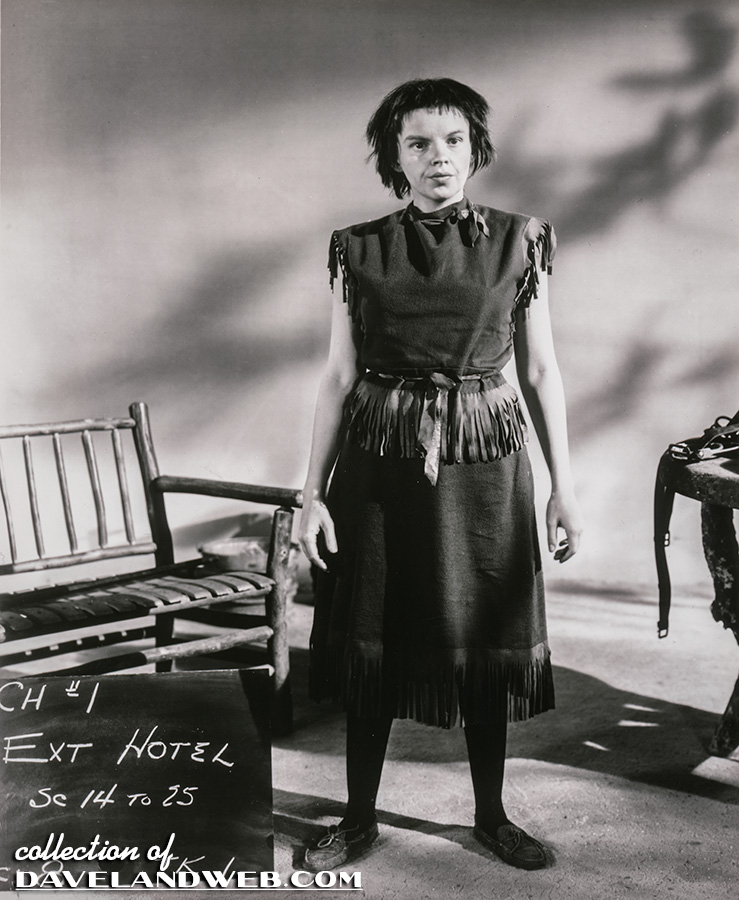


While “Summer Stock” (1950) was not the prestige film that “Annie Get Your Gun” was, Garland managed to transcend the predictable story and turn this musical into a memorable swan song for her M.G.M. years. “Friendly Star” is probably one of the most beautiful Garland songs on film. Judy didn’t just sing…she lived those songs and made you feel every emotional nuance that the notes and lyrics conveyed.
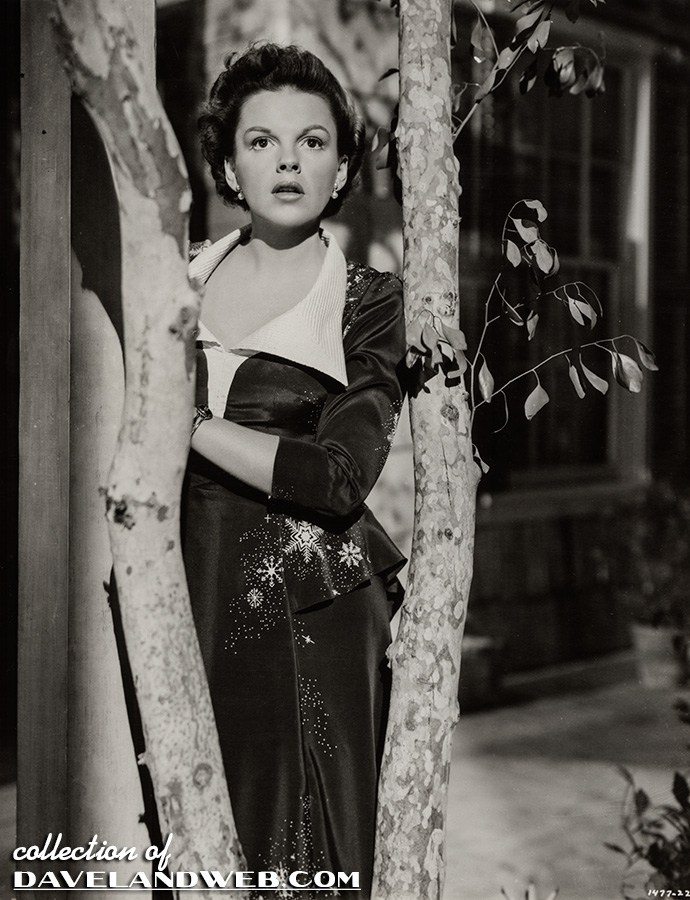


Judy bounced back in 1954 with “A Star is Born.” These next six shots show Judy in some of the scenes that were deleted after the premiere in an attempt to get more audiences able to see it per day. 
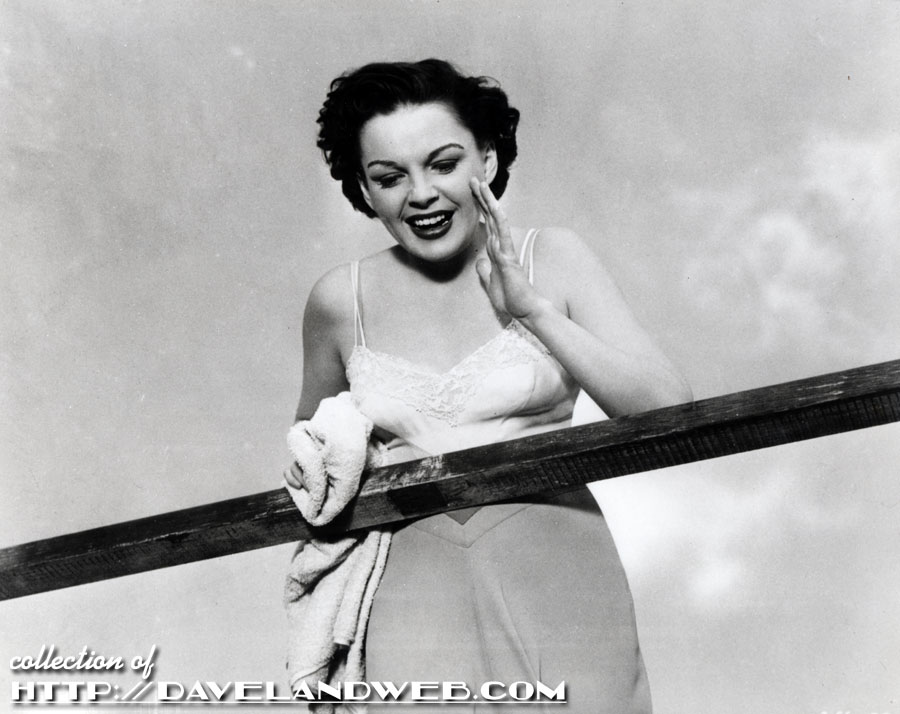


Much of the footage has been recovered and reinstated; but regardless of which version you watch, Garland is in full control of her powers throughout the film.
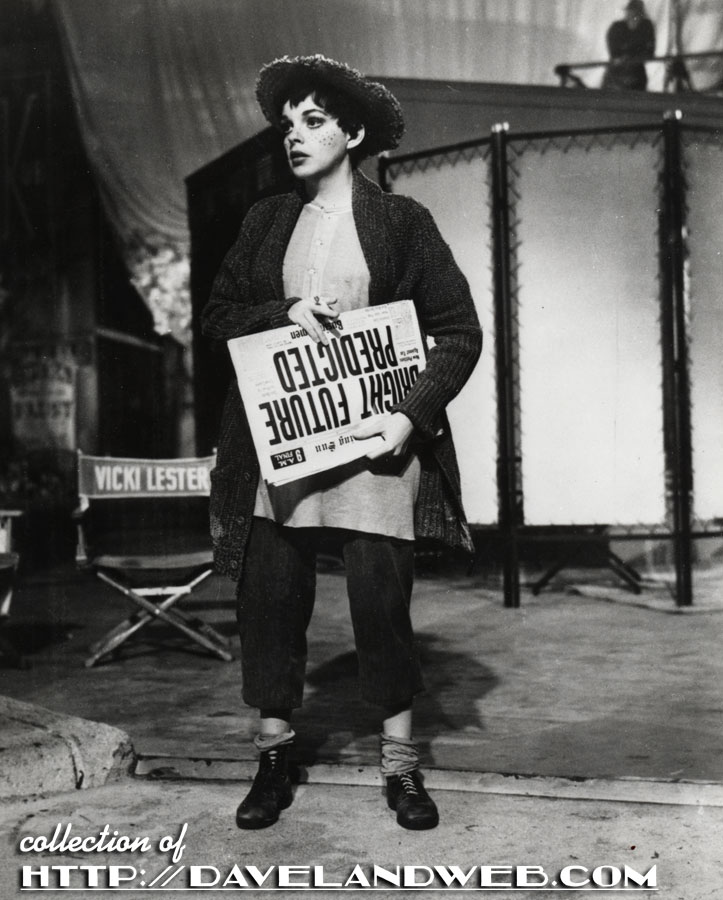


In the four years since she left M.G.M., the voice took on a new maturity. What she lost in restraint (taught to her by mentor Roger Edens) she replaced with raw emotion. 
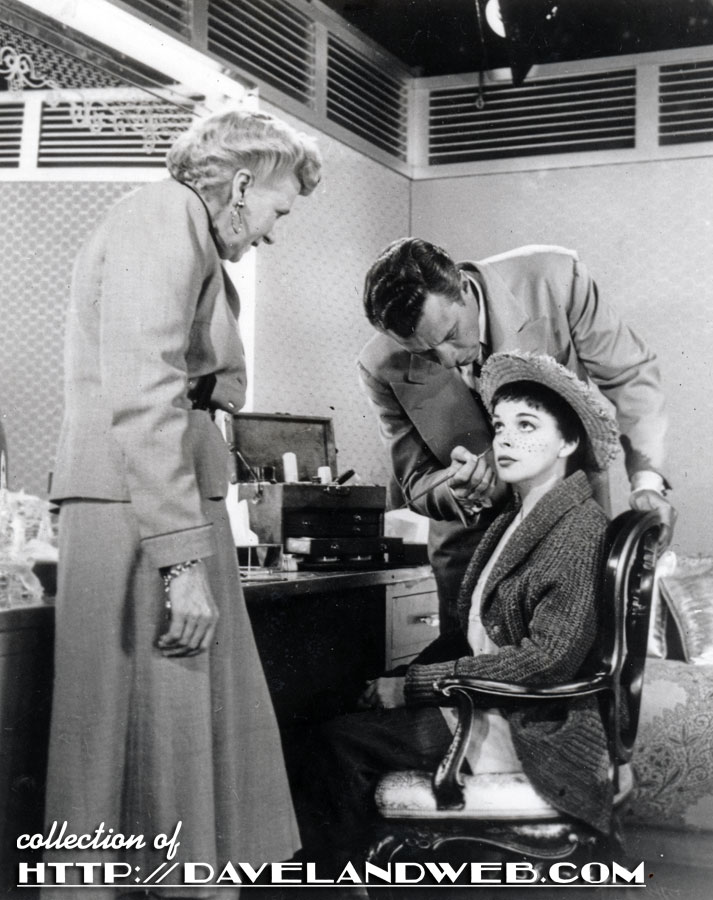


Speaking of Roger Edens, here’s a shot of him with Judy out on the town:
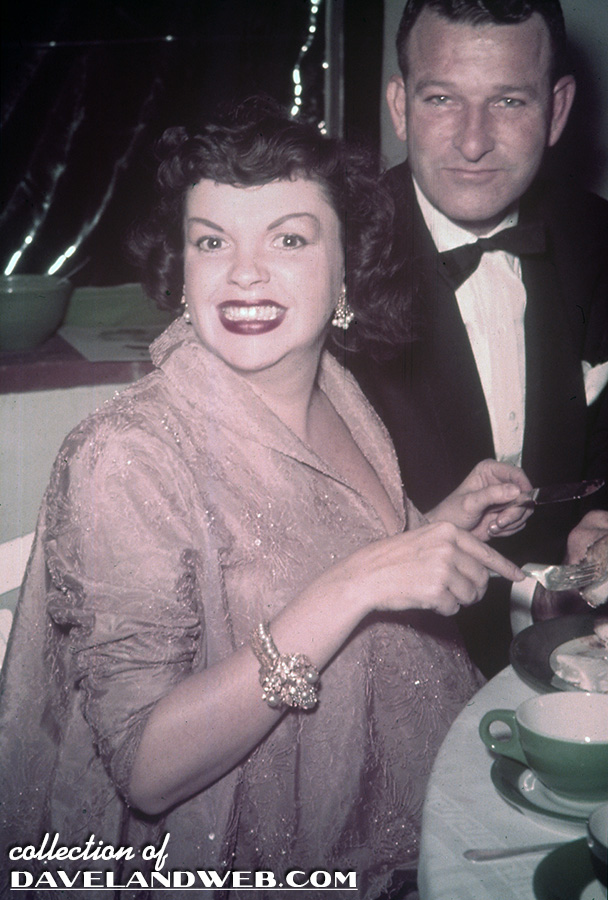


Back to “Star”:
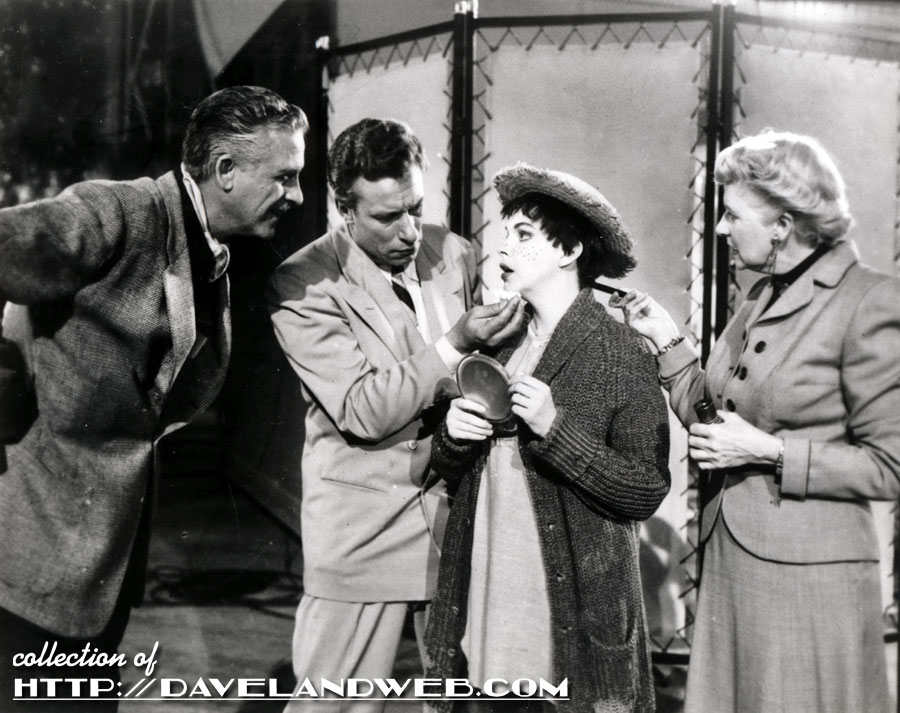


The musical number shown below (“When My Sugar Walks Down the Street”) was deleted before the premiere, and rightly so. Cute by itself, it only lengthened an already bloated production number, “Born in a Trunk.”


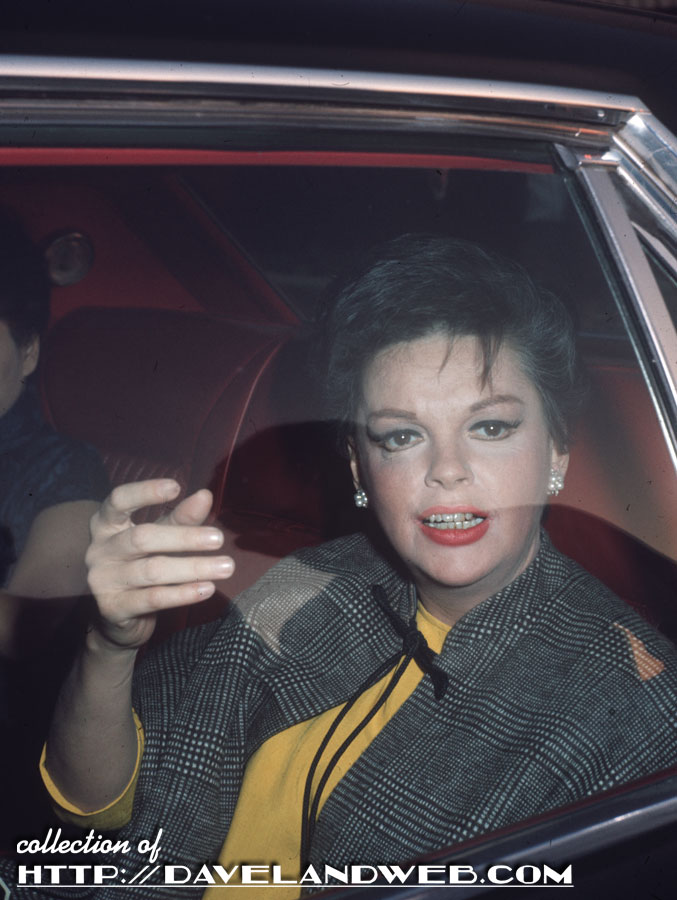
The financial loss of “Star” didn’t keep Garland down. She bounced back on the concert circuit, most notably with her triumph at Carnegie Hall. “The Judy Garland Show” is an excellent record of Judy and what she gave to audiences whenever she performed “live.” This Judy is not my favorite; the mannerisms and tics that were most likely a result of her pill abuse are a bit disturbing. The voice was also beginning to sound ravaged from the cigarettes, medication, and lack of rest. Regardless, Judy was still able to work magic with what she had; even at her worst, Garland sang circles around the rest.
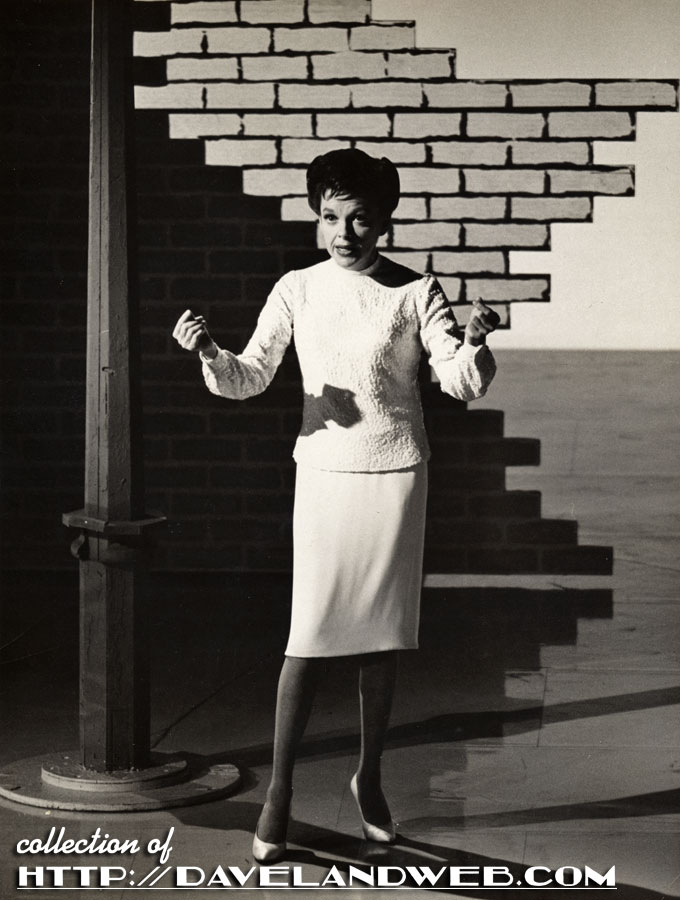


A shot taken of Judy by an adoring fan, circa 1965:


The final photo shows her singing her signature song, “Over the Rainbow.”
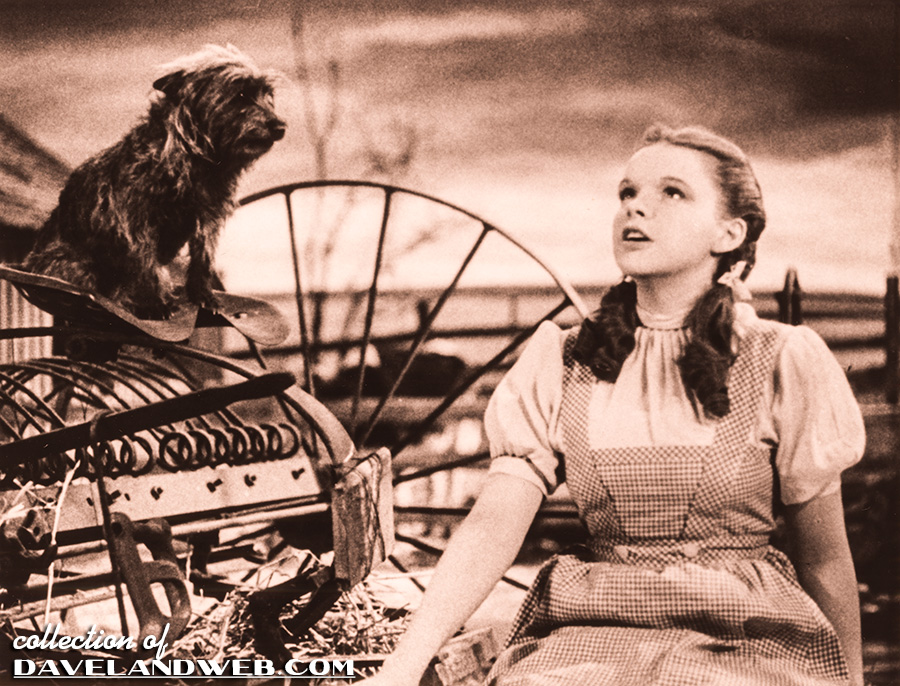


This musical sequence is arguably the most memorable piece of film in the history of motion pictures. Through her performance, Garland communicated to the audience in only a few minutes a longing that resonates with all of us. Happy 100th, Judy!!

See more Judy Garland photos at my main website.

Tuesday, June 07, 2022

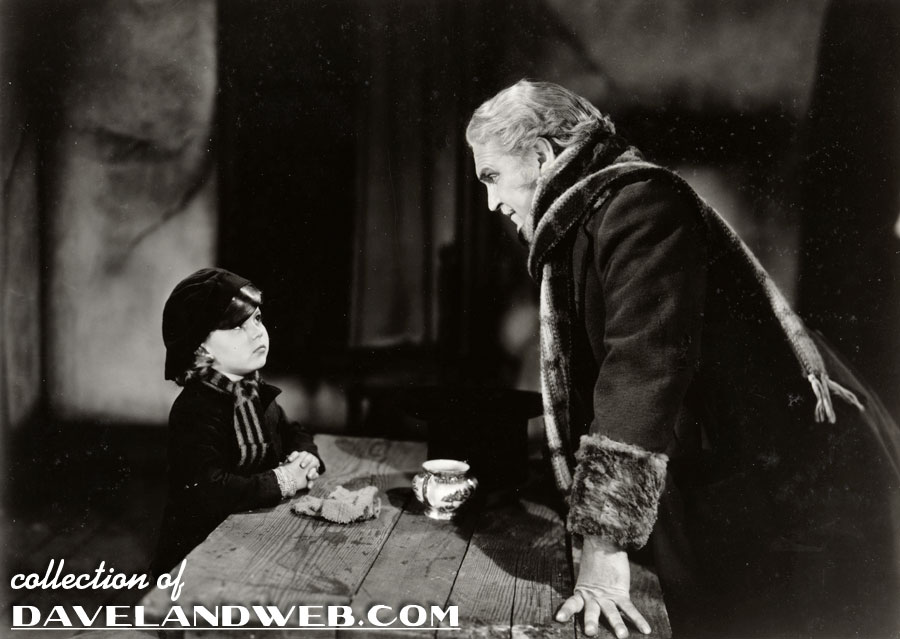
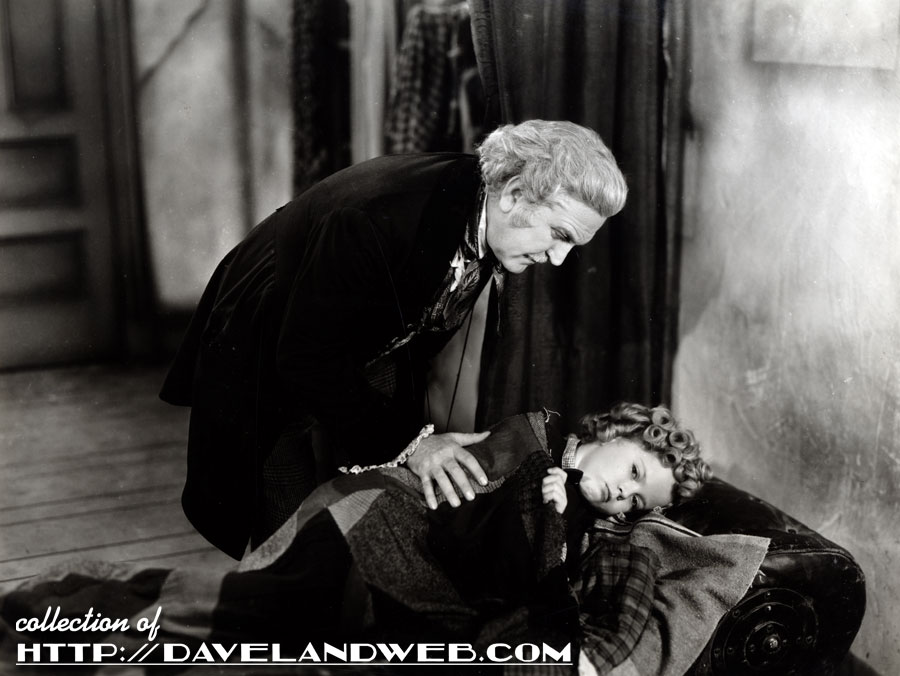
Temple Tuesday: W.C. and Shirley


It would appear that Shirley Temple and W.C. Fields ALMOST starred together three times, but sadly, nothing of those attempts came to fruition. Today’s post gives what information I could dig up on the subject.

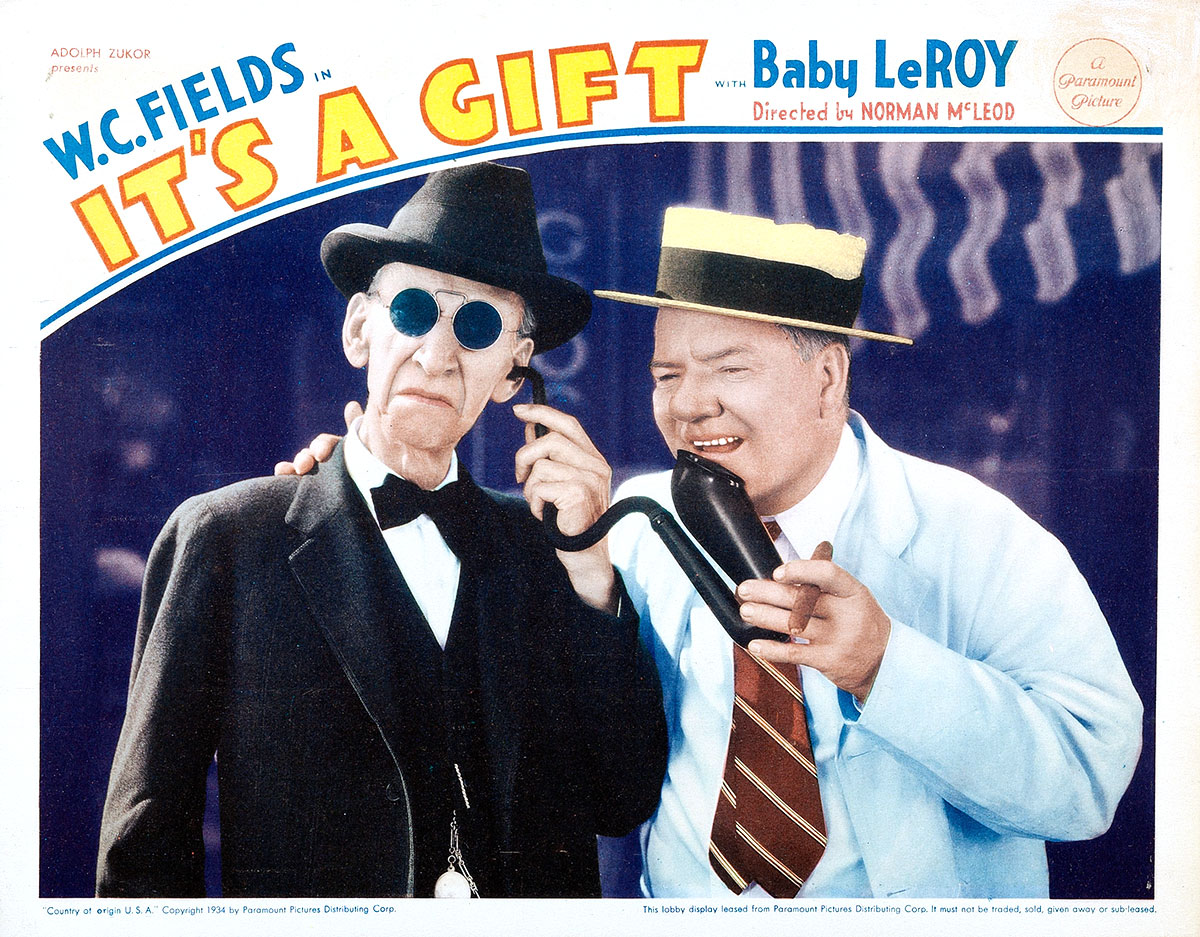
1. It’s A Gift (1934) appears to be the first opportunity for Shirley and Fields. Released by Paramount on November 30, 1934, the production for the film occurred between September 4 and October 12, 1934; production on Paramount’s “Now and Forever” with Shirley wrapped up on August 29, so the timing would have been about right. The way I first heard about this was by listening to the commentary on the recently released Kino Lorber blu-ray for “It’s A Gift,” by film historian James L. Neibaur where he reveals this:

Fields originally wanted two daughters, and he even suggested Shirley Temple for the younger child’s role, but they eventually decided on a son, played by Tommy Bupp.


Above, Kathleen Howard is shown playing Field’s wife in “It’s A Gift,” alongside Tommy Bupp and Jean Rouverol as their kids. I bought Neibaur’s book on Fields to see if he cited a source or gave any more information about the potential casting of Shirley, but nada, zip, zilcho. In the excellent James Curtis biography on Fields, the author describes that “It’s A Gift” was based on a silent film called “The Comic Supplement.”

Fields went to work massaging “The Supplement” into a new eleven-page story outline to which he affixed the title “Back Porch.” “The opening scene is in a grocery store,” he began, laying the groundwork. “I own the store. I have a wife and a young daughter, about 17 years of age (Joan Marsh type) and a younger daughter (about the age of Shirley Temple). A little boy is never so funny with me as a little girl. I can’t explain very well why. The little girl is annoying the father all the way through, and the wife is the type that is bullying me all the time.”…Next came the “Back Porch” scene, which he thought “really was awful” in the first film. “This is where a baby works. I feel Shirley Temple wouldn’t hit me over the head. She’s a little too old, but a baby would. So have Baby LeRoy in this sequence.”

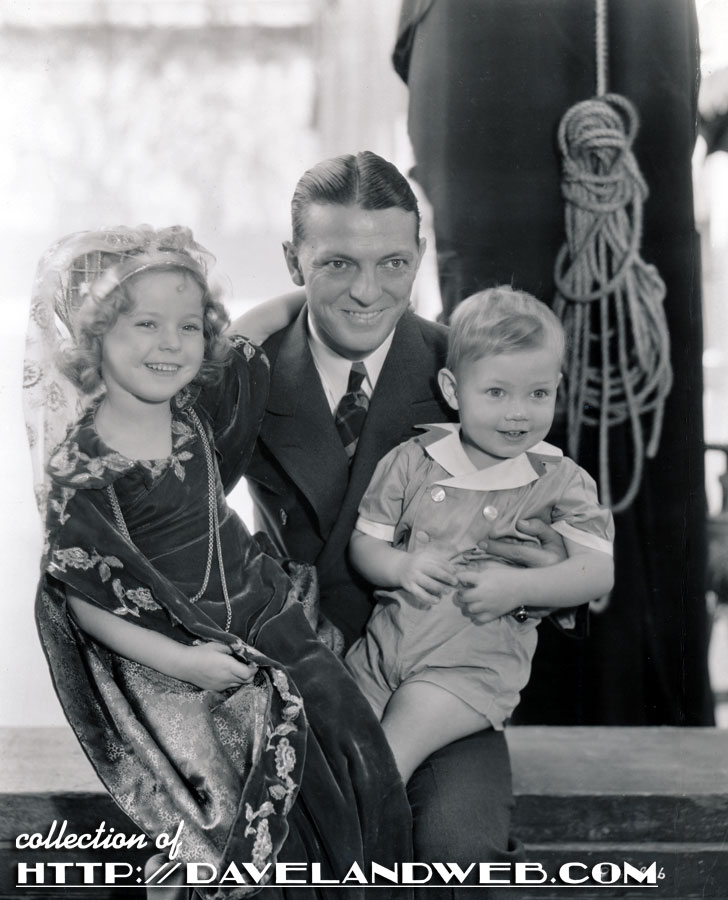
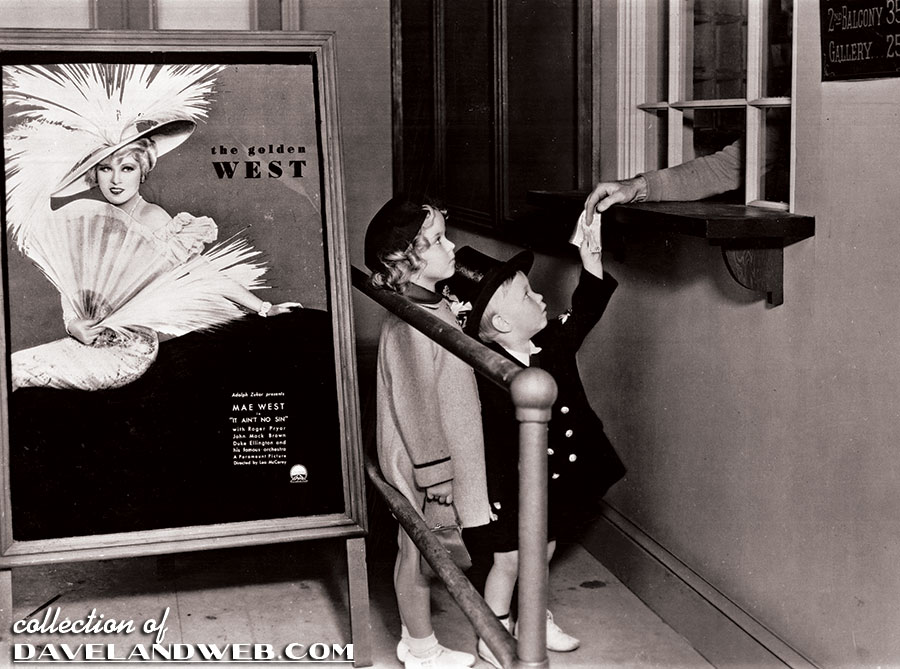
Curtis’ book also never mentions how far the casting of Shirley got or why the character was changed. While at Paramount, Shirley did a number of promotional shots with Baby LeRoy, perhaps in anticipation of her being featured with him in a Fields movie. Here she is in costume for her first Paramount feature, “Little Miss Marker” with Baby LeRoy and director Alexander Hall:


In a staged publicity shot for a story about the two kids going on a “date,” the studio naturally promoted another one of their stars, Mae West, by using an a-frame for her film “It Ain’t No Sin” in the photo.


2. Dimples (1936) The American Film Institute website tells us that Fields and Temple ALMOST teamed up for this 20th Century-Fox production. The following cast suggestions were listed in material in the Fox Produced Scripts Collection: W. C. Fields as “Professor Eustace Appleby”; Edna May Oliver as “Mrs. Caroline Drew”; Michael Whalen as “Allen Drew”; Claude Gillingwater as “Colonel Loring”; Warren Hymer as “Patrolman”; and Borrah Minevitch and His Gang. A December 1935 Hollywood Reporter news item states Fox was negotiating with Paramount to borrow Fields. What happened to those negotiations is unknown.


Frank Morgan ended up with the role, just as he did with…

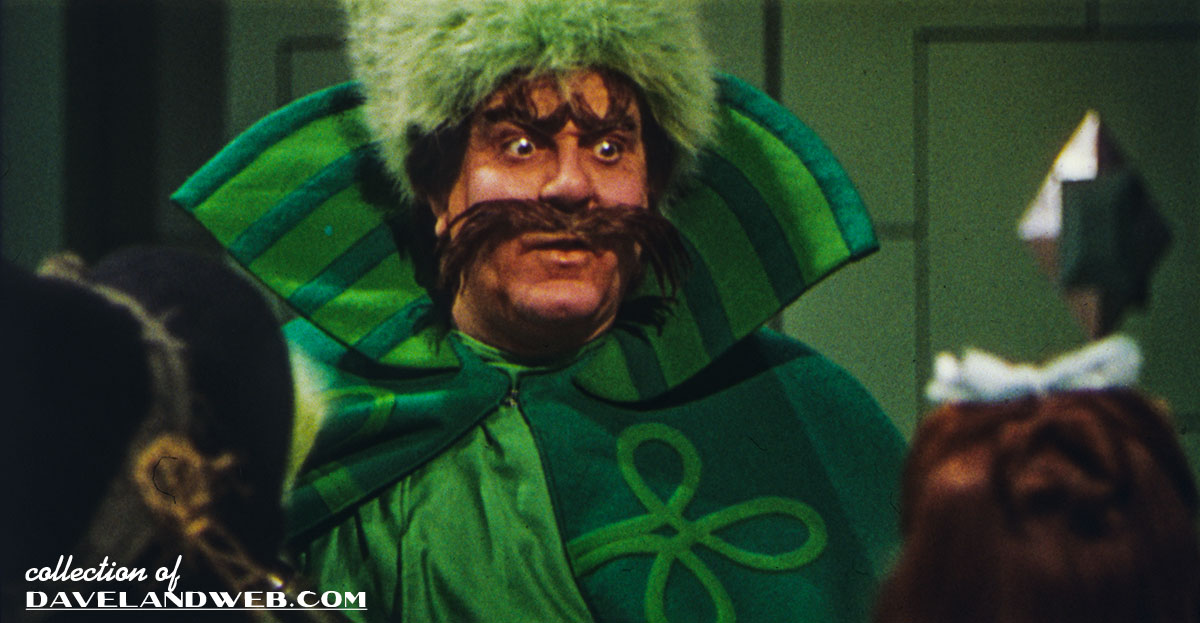
3. The Wizard of Oz (1939) There are many famous stories about how Shirley Temple almost got the part of Dorothy in this classic children’s tale. “Almost” is stretching it. 20th Century-Fox’s Darryl Zanuck never approved a trade of his studio’s biggest moneymaker, and the creative team behind “The Wizard of Oz” always favored Judy Garland, so Shirley’s casting in the film never really amounted to much. On the other hand, Fields came very close to playing the parts of Professor Marvel and The Wizard. Curtis’ book gives us this information:

Across town, just two days prior to Fields’ calamitous Chase & Sanborn broadcast [June 5, 1938], the purchase of “The Wizard of Oz” was finalized by M.G.M.…plans were to shoot the film with Judy Garland as Dorothy and Ed Wynn in the title role. Wynn was the choice of producer Mervyn LeRoy, who was making his first picture for MGM, but Arthur Freed, LeRoy’s assistant, and E.Y. “Yip” Harburg, the lyricist, both wanted Fields for the part.…With the abrogation of his Paramount contract, it was a job Fields was perfectly amenable to doing.…The screenwriting team of Florence Ryerson and Edgar Allen Woolf had already expanded the role for a player of Fields’ stature, creating a real-world counterpart for the Wizard in the person of Professor Marvel. Actor Frank Morgan was on their minds when they first broached the idea of adding the Professor, an old medicine man, tot he film, but by the time their first revision of the script was delivered, on June 13, 1938, Marvel had taken on a dwarf assistant and the Professor spoke with a distinctly Fieldsian bravado. Fields began making notes on how he would play the character—brief scribbles on random bits of paper, carefully tethered together and typed by Magda Michael. He envisioned Marvel as an old con man working “the fortune telling racket like they do in Chicago” and sleeping on park benches. Among the ideas: Oiling the Tin Man’s joints • When F. sees the lion—“My gosh, that’s wonderful, he even smells like a lion.” • Someone says, “I want to light a cigarette—put the cyclone machine in reverse.” • Re cyclone: Tell about the big wind in Ireland. It blew a cow up against the side of a barn and he stick there and starved to death. • When Prof. Marvel is telling Dorothy’s fortune (aside): “Yes, your aunt wants you back. She wants to put you in moving pictures like Shirley Temple.”


In the meantime, Fields signed a contract with Universal, allowing him to do an original story (“You Can’t Cheat an Honest Man”).

At first, Fields thought he could work “The Wizard of Oz” into his schedule—Yip Harburg had written the Wizard’s climactic speech with him in mind—but now he was, apart from Deanna Durbin, the biggest star on the Universal lot, and no time would be lost in announcing his engagement. After pained exchanges over conflicting dates—both pictures were set to start in October—Fields reluctantly withdrew from “The Wizard of Oz,” relinquishing the part to Frank Morgan.

In hindsight, Morgan was a much better choice. He made his characters memorable, but they didn’t overshadow Garland’s performance. In addition, there is a tenderness to Morgan’s performance that would have been lacking if Fields had played the role instead.


In that wonderful alternate universe, it would have been interesting to see Temple and Fields together in a film. I have a feeling that the chemistry would have been off the charts!

See more Classic Movie and TV photos at my main website.

Thursday, May 12, 2022

Not So Welcome at The Academy


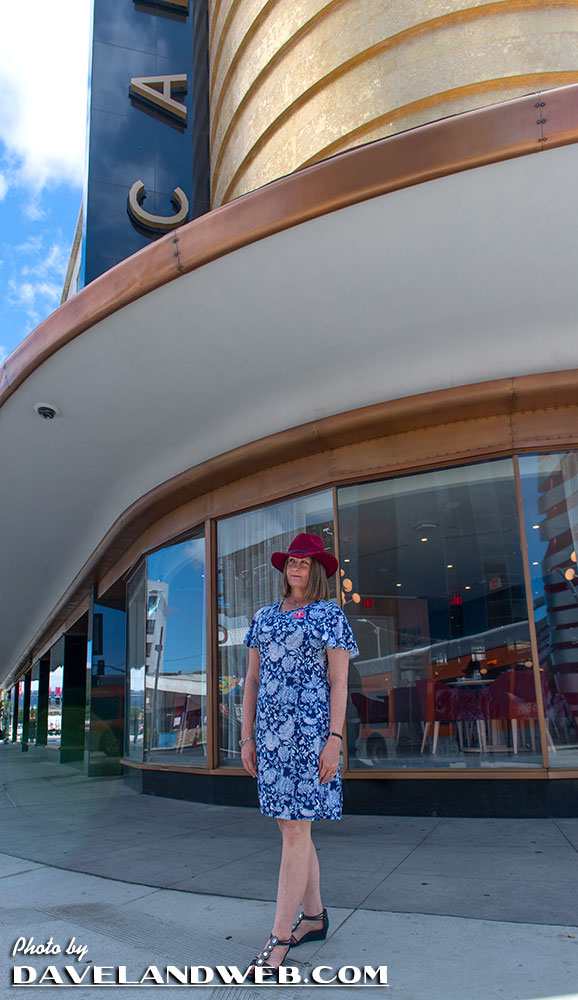
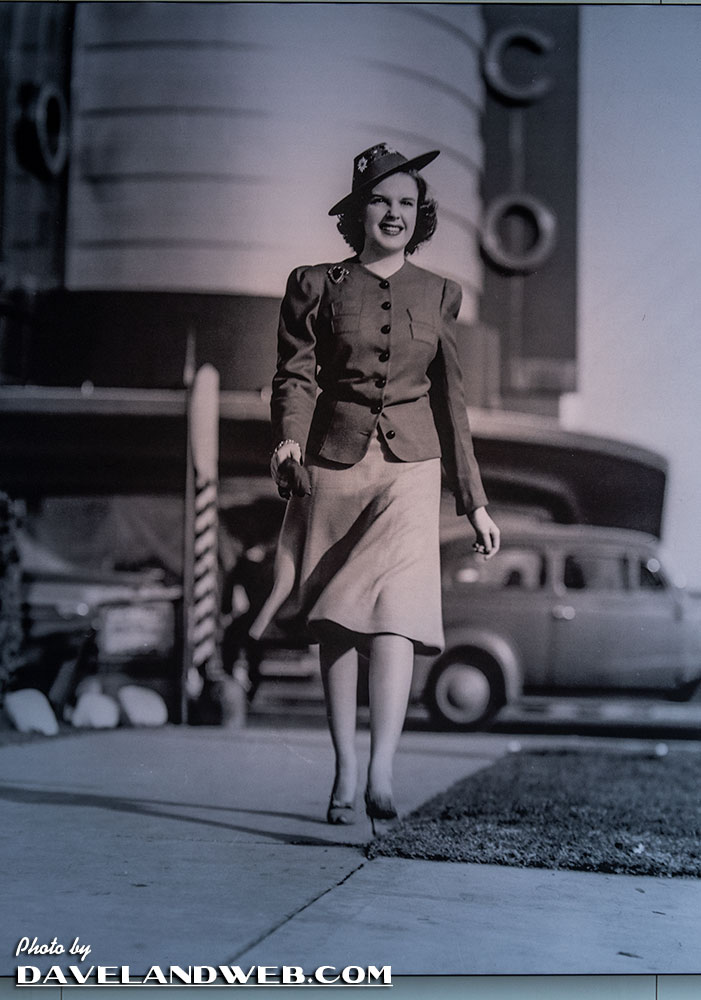
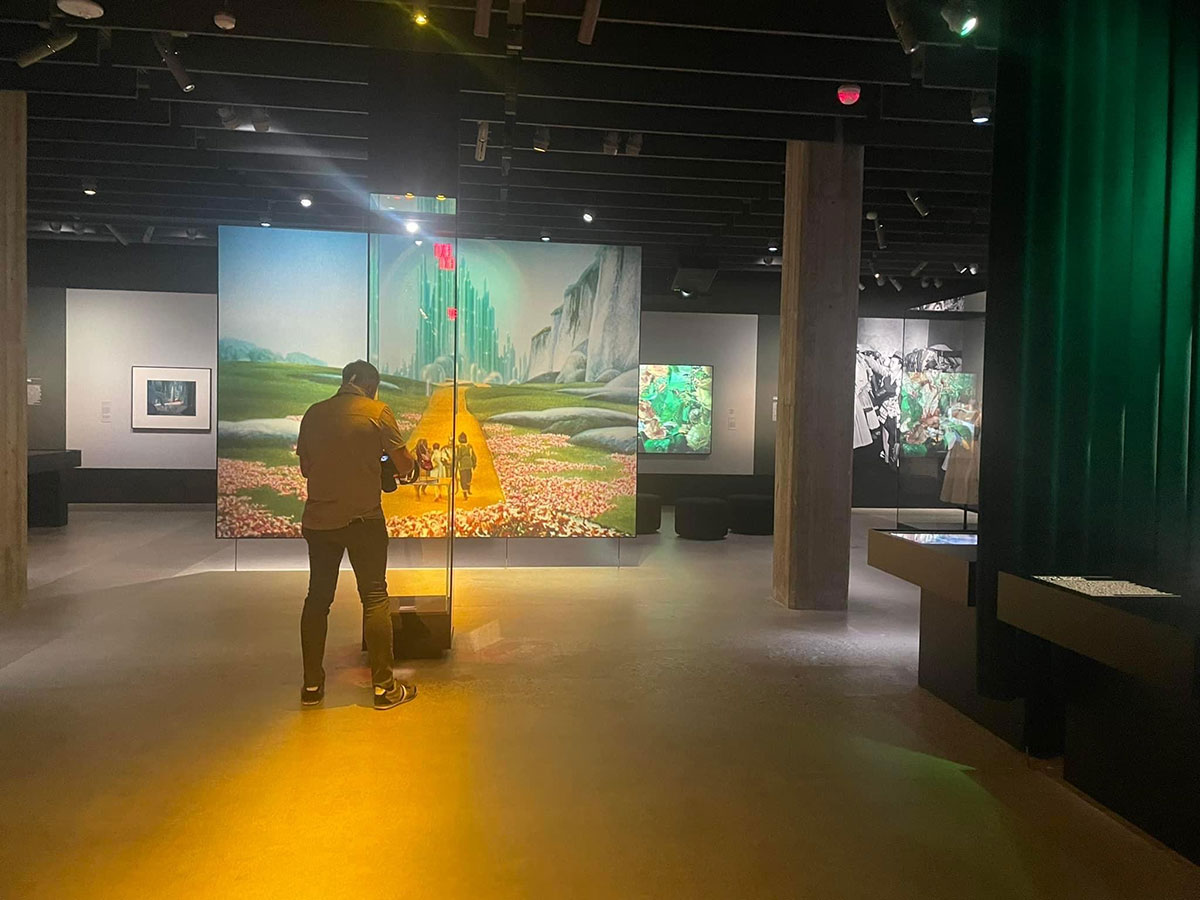
Part of Melissa’s (aka The Colonel) visit to LA included a trip to the recently opened Academy Museum in Los Angeles on Wilshire Boulevard, housed in what was originally the May Company building. Melissa channels Judy Garland back in the day as she walked in front of the (former) department store:


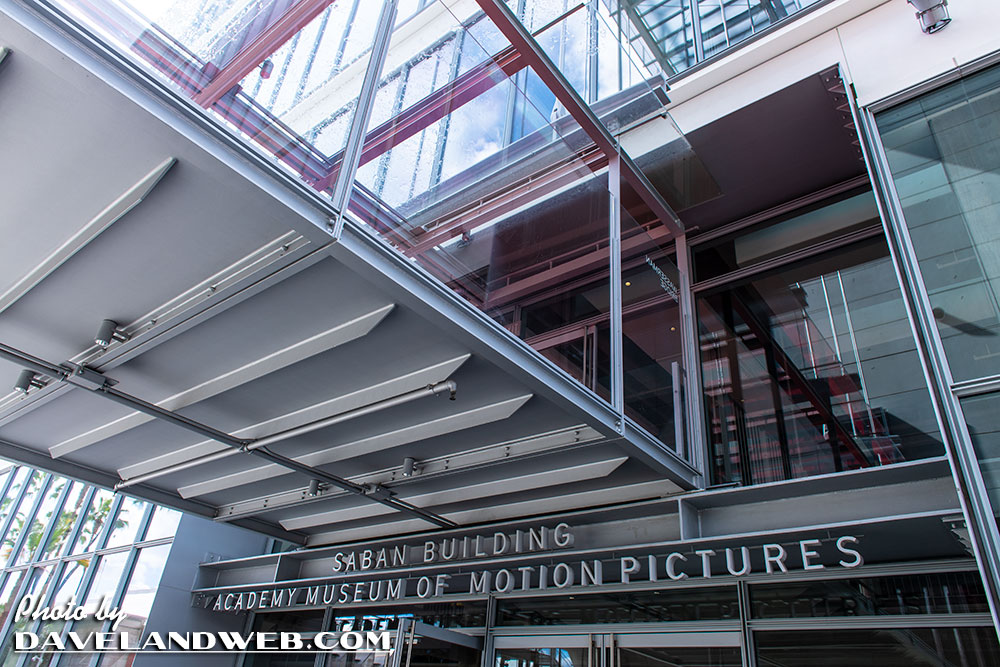
The addition to the historic building has the boring but currently trendy industrial chic look:


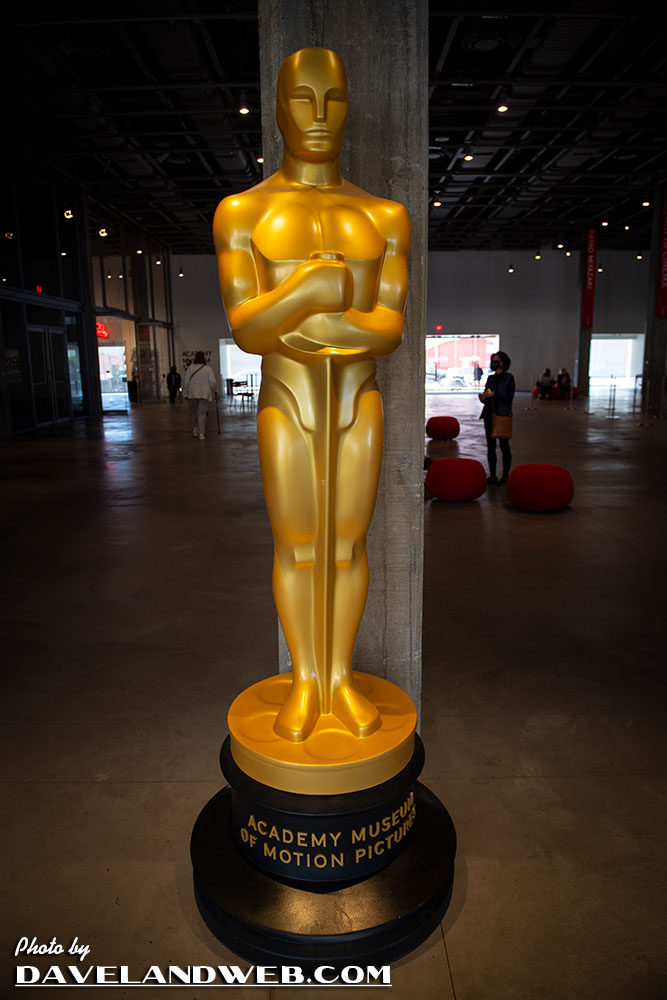
The inside of the building is just as cold and off-putting, which really makes the life-sized Uncle Oscar statue stand out like a sore thumb. I’m waiting for the day when somebody gets offended by the sculpt and it has to change.


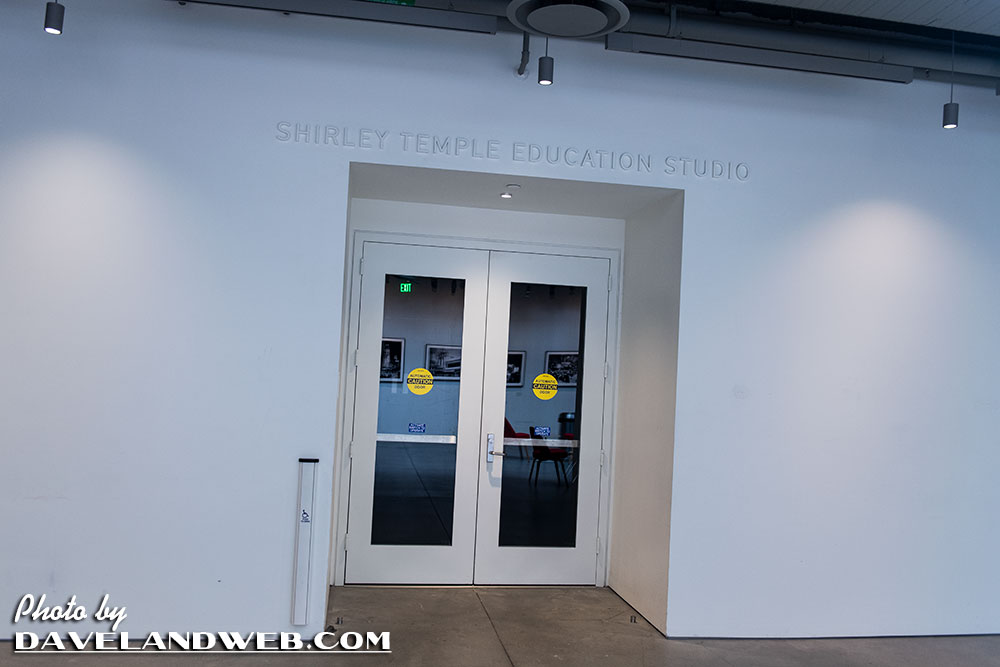
The first order of business was to get to the Shirley Temple Education Studio, which just so happened to be closed.


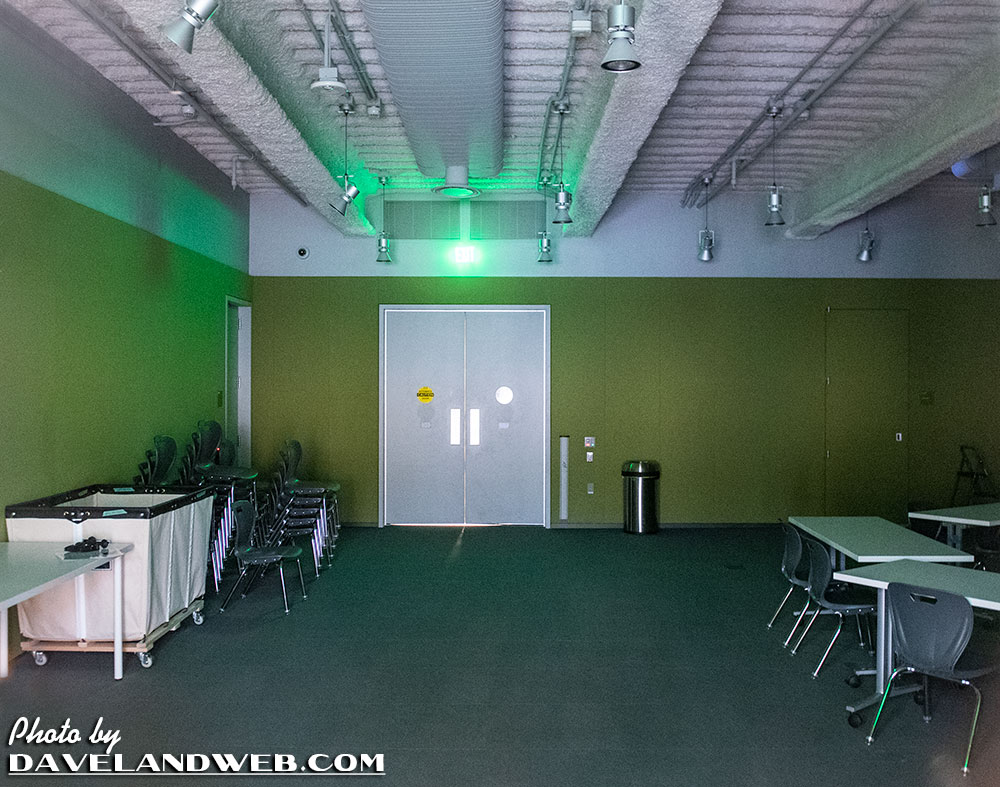
In case you’re wondering what $5 million dollars from Shirley’s family purchased, here’s an inside peek:


The Museum has a treasure trove of some of Shirley’s most iconic costumes, the desk used in her Fox Studio Bungalow, and memorabilia related to her close friendship/working relationship with dancer/choreographer Bill Robinson. And therein lies the real reason why Shirley is kept on the down-low. Because Robinson portrayed a servant to a plantation family in two of Shirley’s movies (both set in the Civil War), inside sources have revealed that the Museum is afraid of backlash if they put too much of Shirley’s history on display. More on that in another post. Moving on to the other main reason for the visit: the Ruby Slippers.


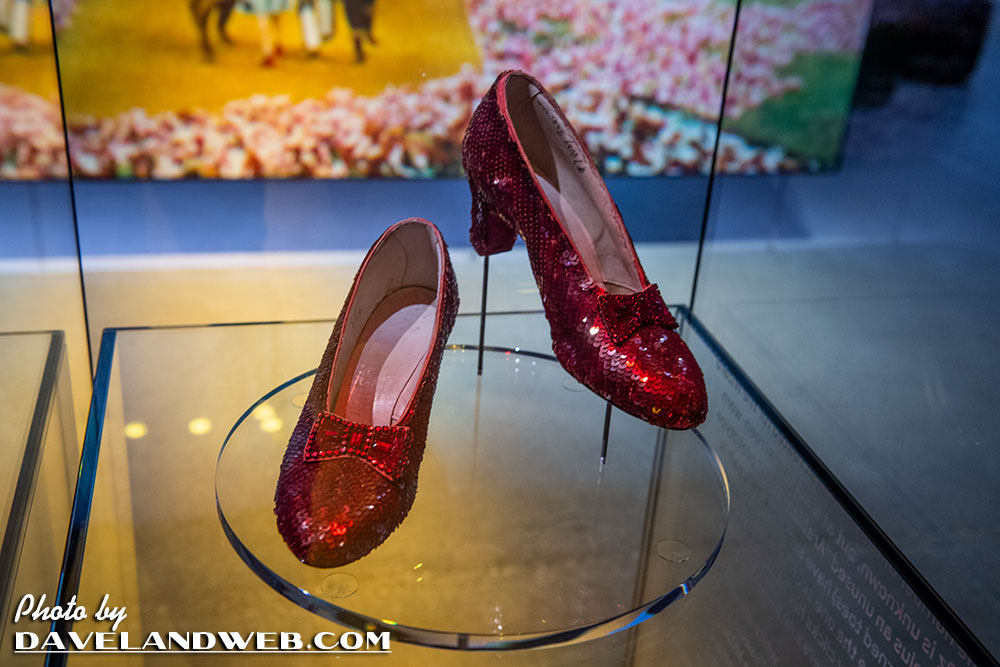
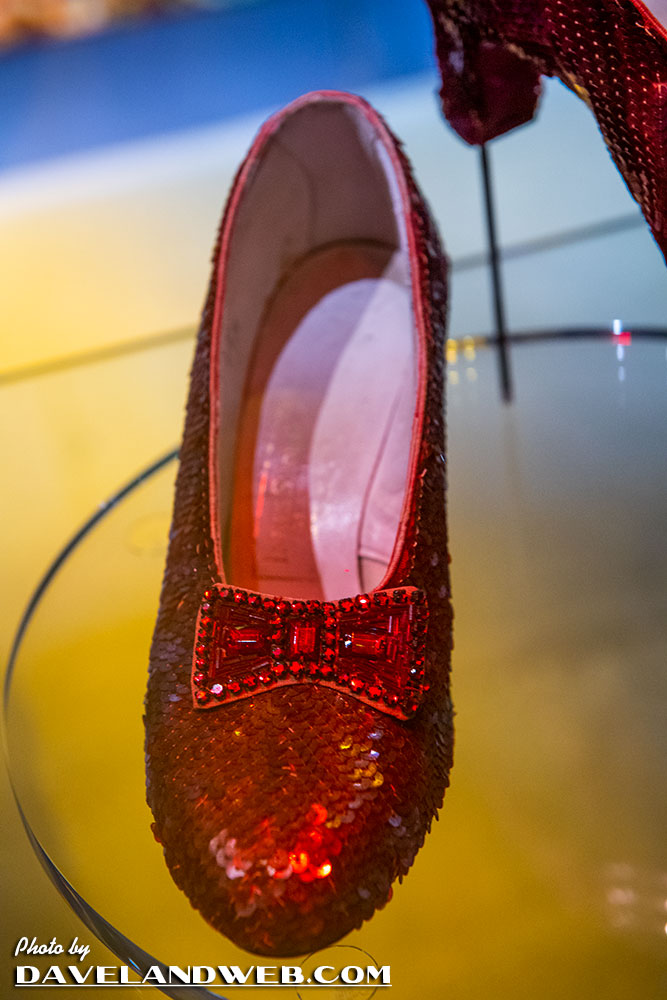
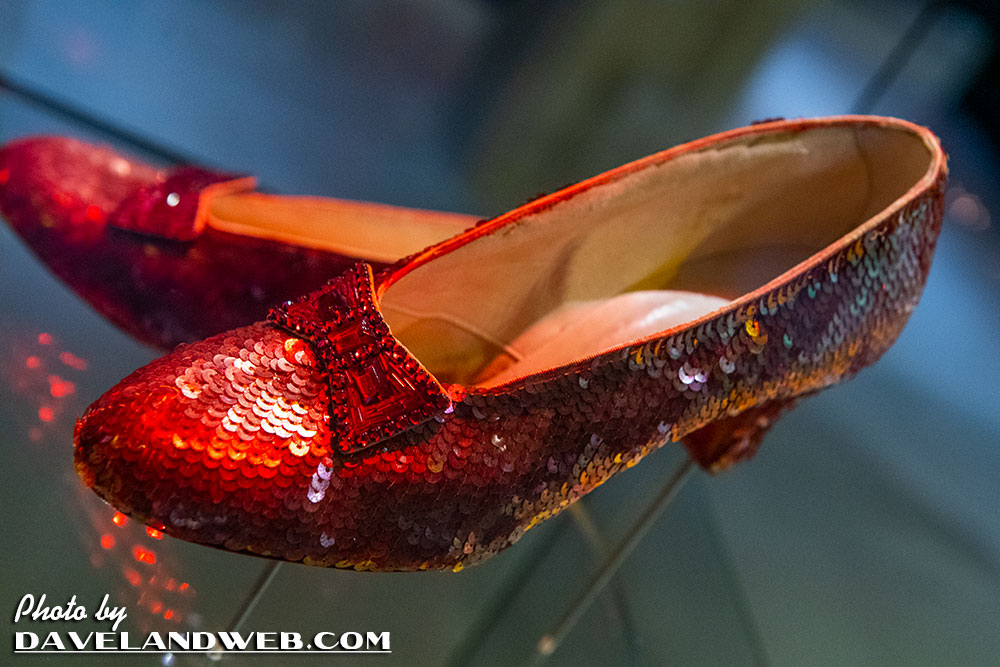
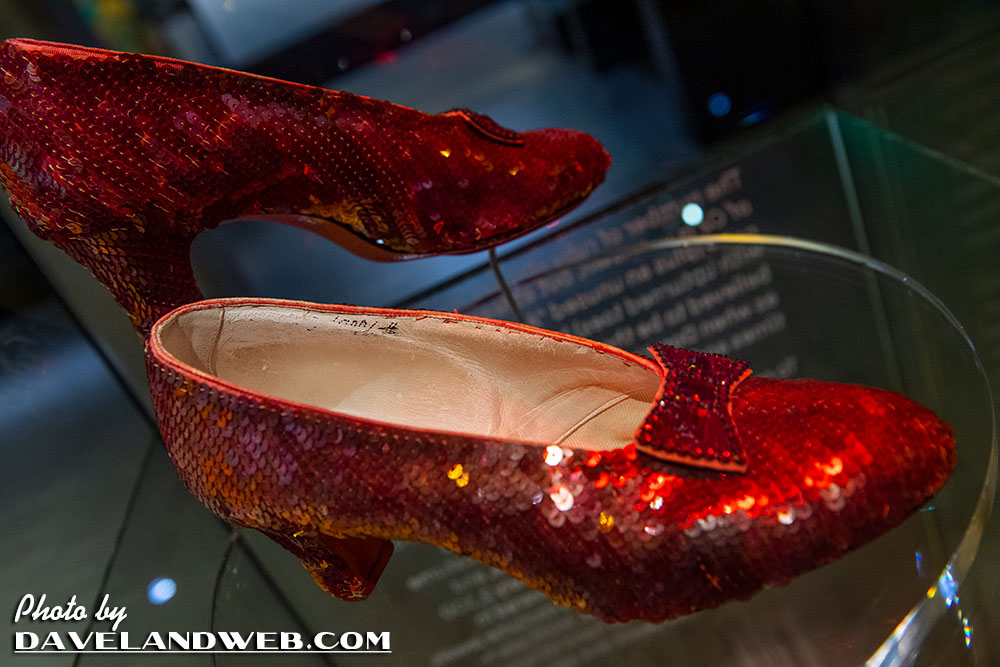
These are the Ruby Slippers that belonged to Kent Warner, the man who discovered all of the pairs created for “The Wizard of Oz” when MGM was selling off its historic props and costumes in their 1970 auction. Warner picked the best pair to keep for himself. From the display text:

This pair is believed to be the one seen in all close-up shots, as when Dorothy clicks her heels together three times and says, “There’s no place like home.”


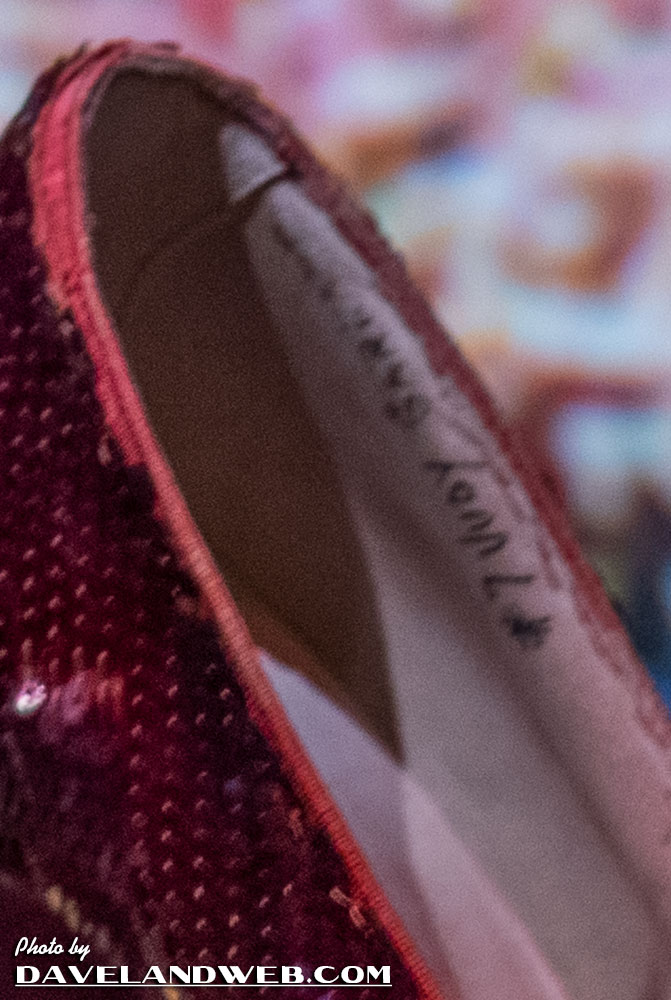
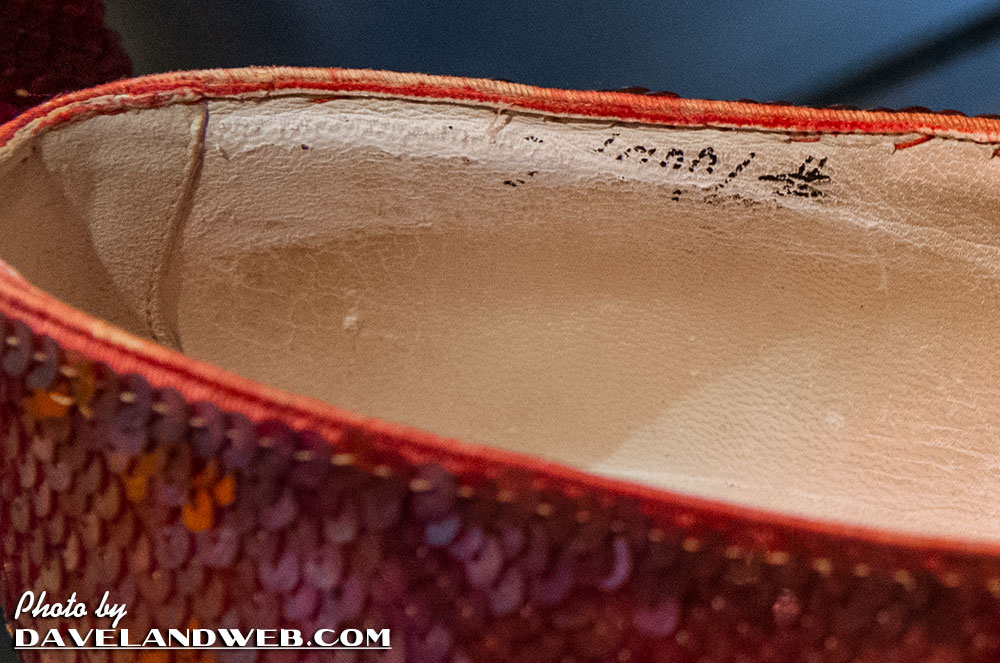
You can see #7 Judy Garland handwritten inside the shoe:


They are just incredible to see in person.


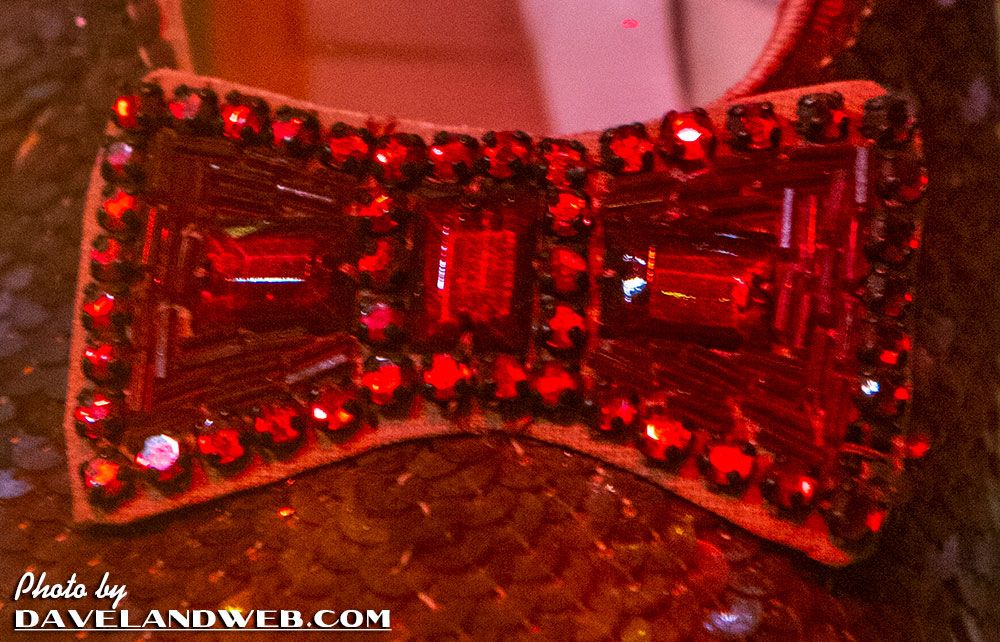
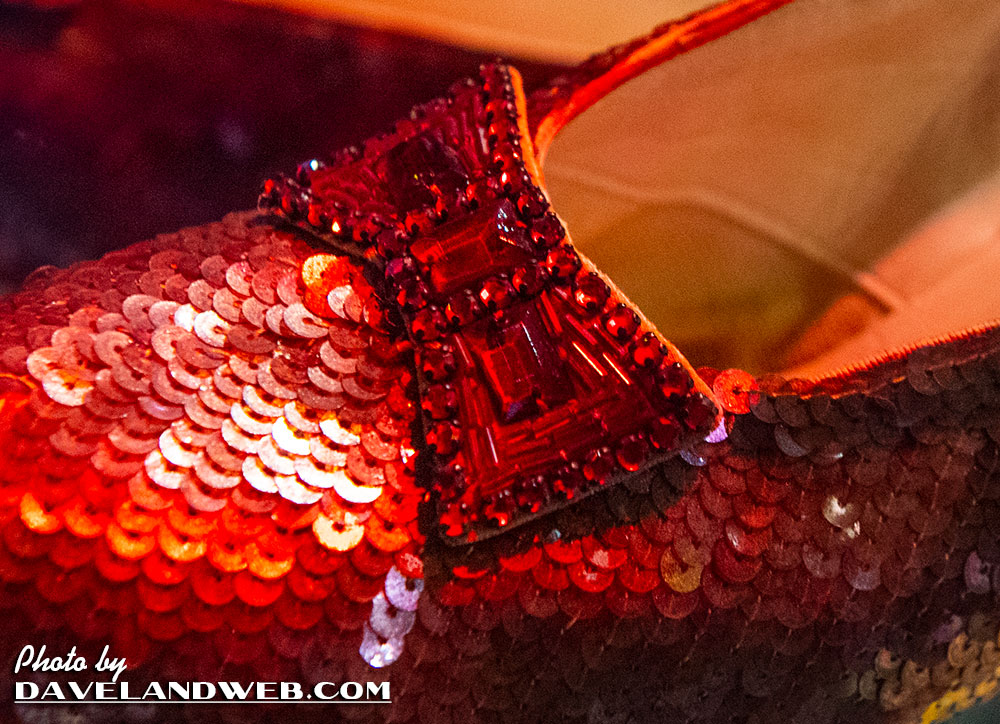
[W]hite silk pumps from the Innes Shoe Company of Pasadena and Hollywood were dyed red by the MGM costume department, covered in silk georgette, and hand-embellished with approximately 2,300 sequins each. A red leather bow covered in red rhinestones, bugle beads, and costume jewels was then affixed to each slipper. MGM seamstress Aurora DueƱas was on hand throughout filming to restore loose beads and sequins.


In the detailed shot, it would appear that rather than leather the beads for the bow were affixed to a cloth backing, as you can see the pattern of the fabric below the crystals and bugle beads.


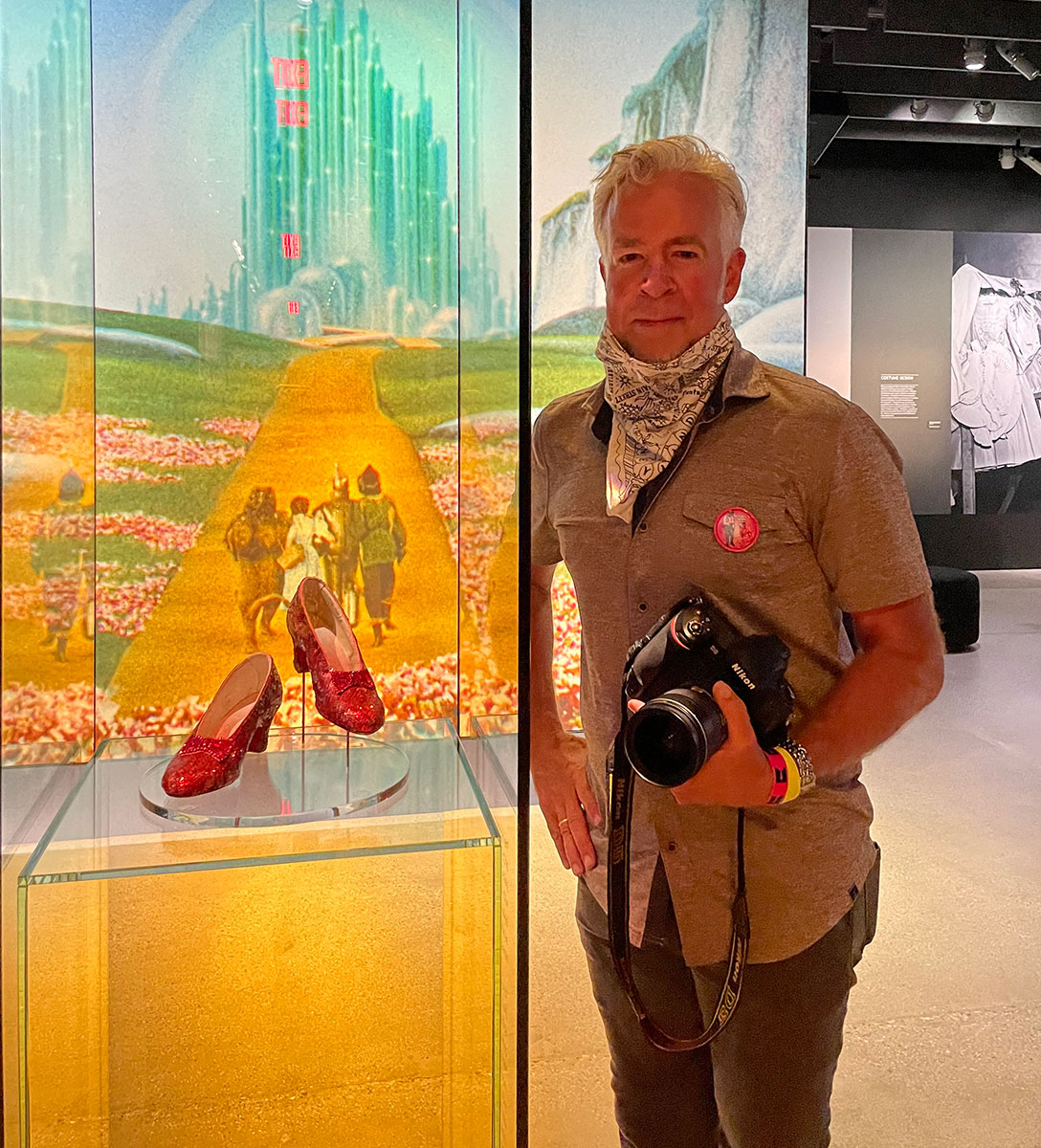
Melissa captured me attempting to shoot the famed slippers without catching the reflection of the glass display. Not an easy task.


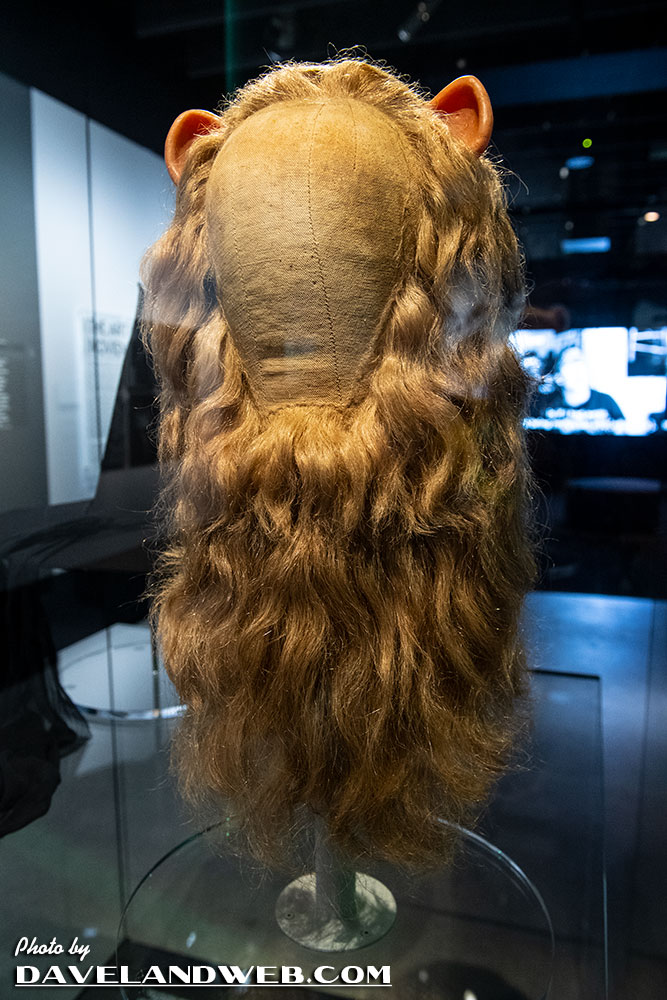
The Cowardly Lion’s mane was also on display:


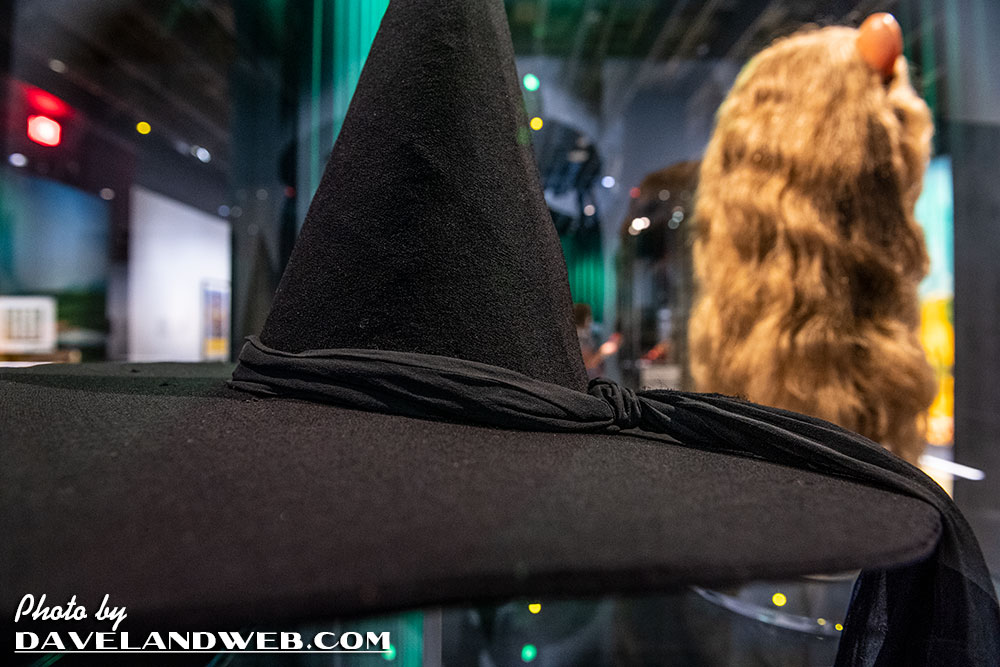
…and the Wicked Witch of the West’s hat. Extra lights were necessary to make Margaret Hamilton’s Witch’s costume register on Technicolor film. Adrian also designed this costume, made of black wool surrounded by a flowing silk scarf:


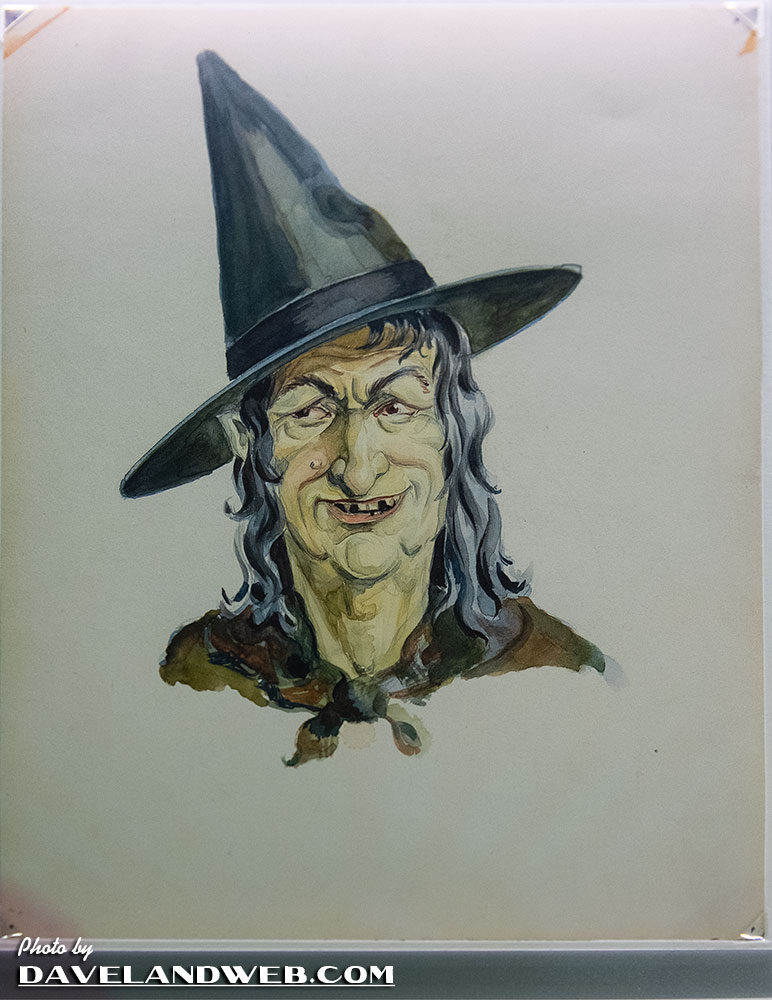
Here is the concept art by William Tuttle for the Wicked Witch, based on Jack Dawn’s makeup design:


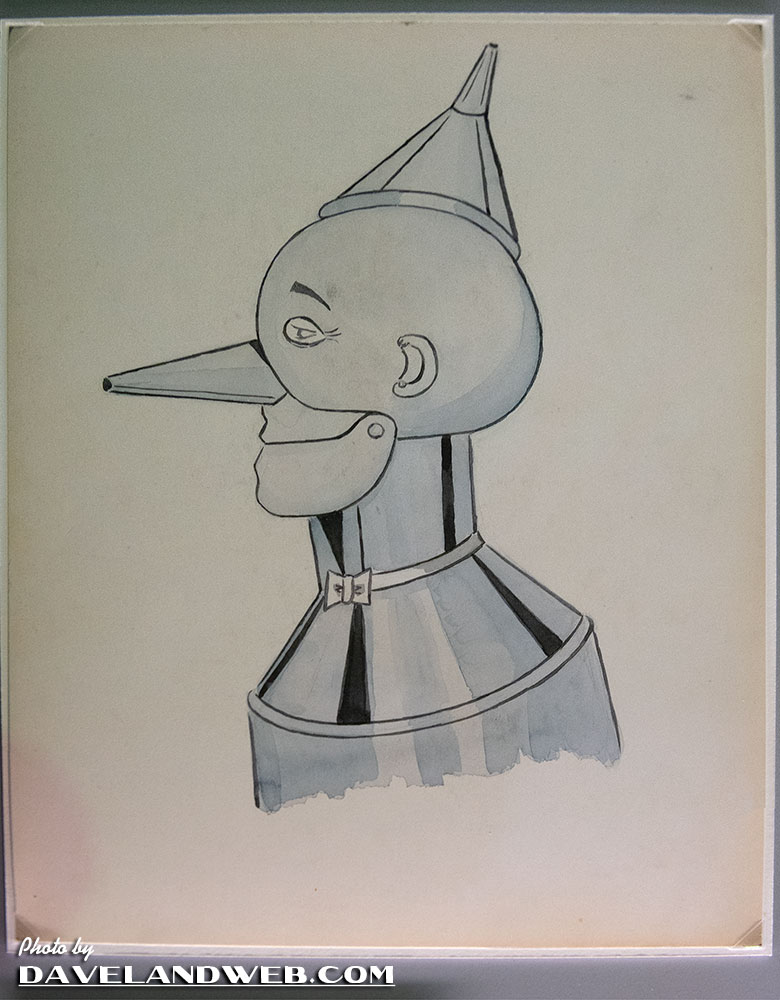
…and the Tin Man. For this one, Dawn and Tuttle stayed faithful to the original book illustrations by W.W. Denslow.


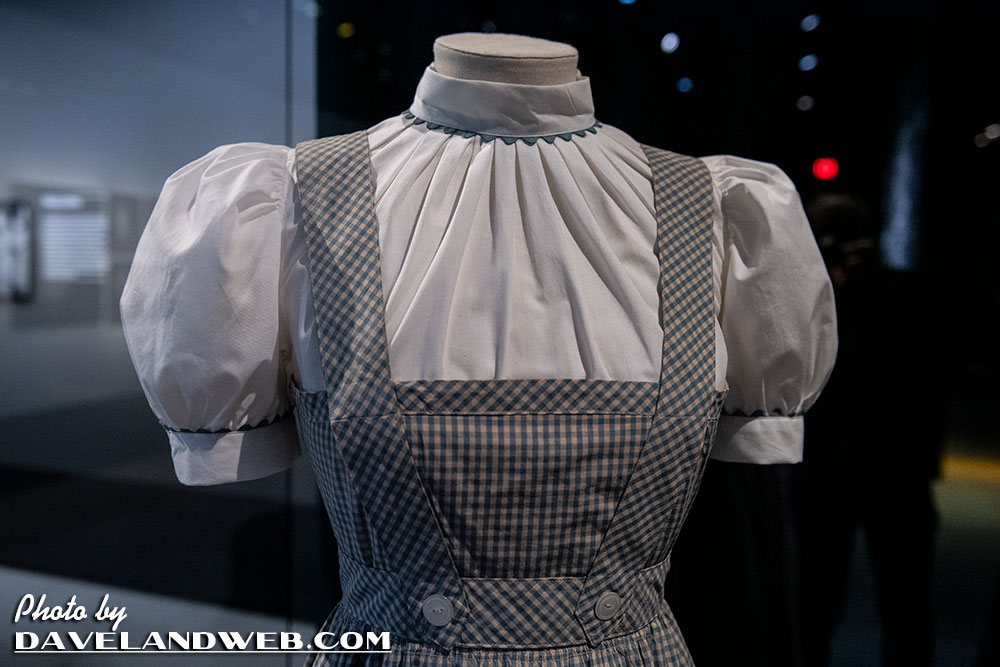
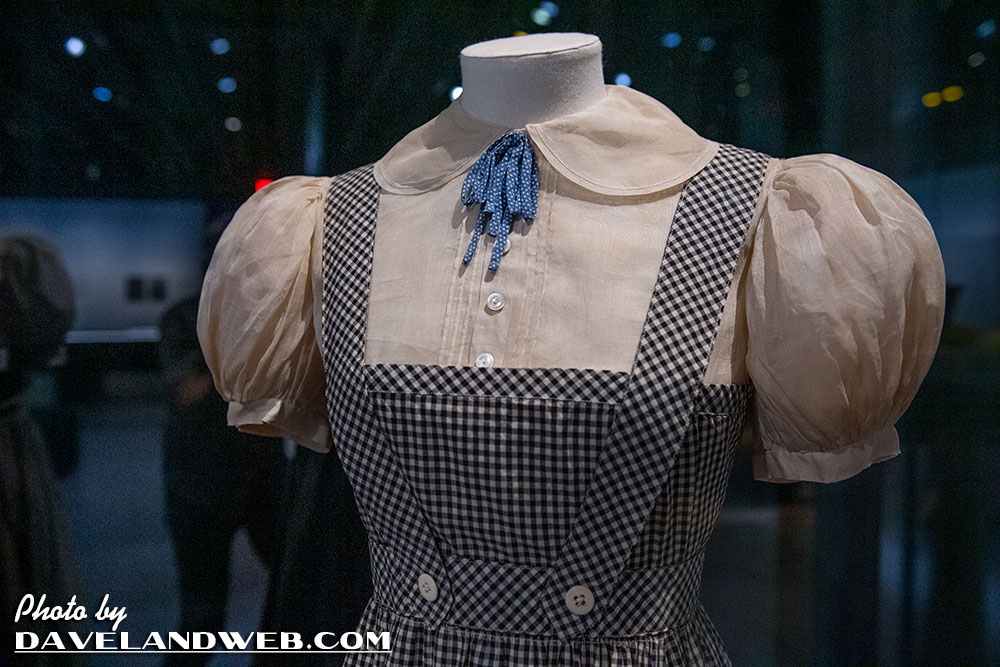
One of the pinafores worn by Judy Garland as Dorothy, designed by Adrian, with a non-original blouse:


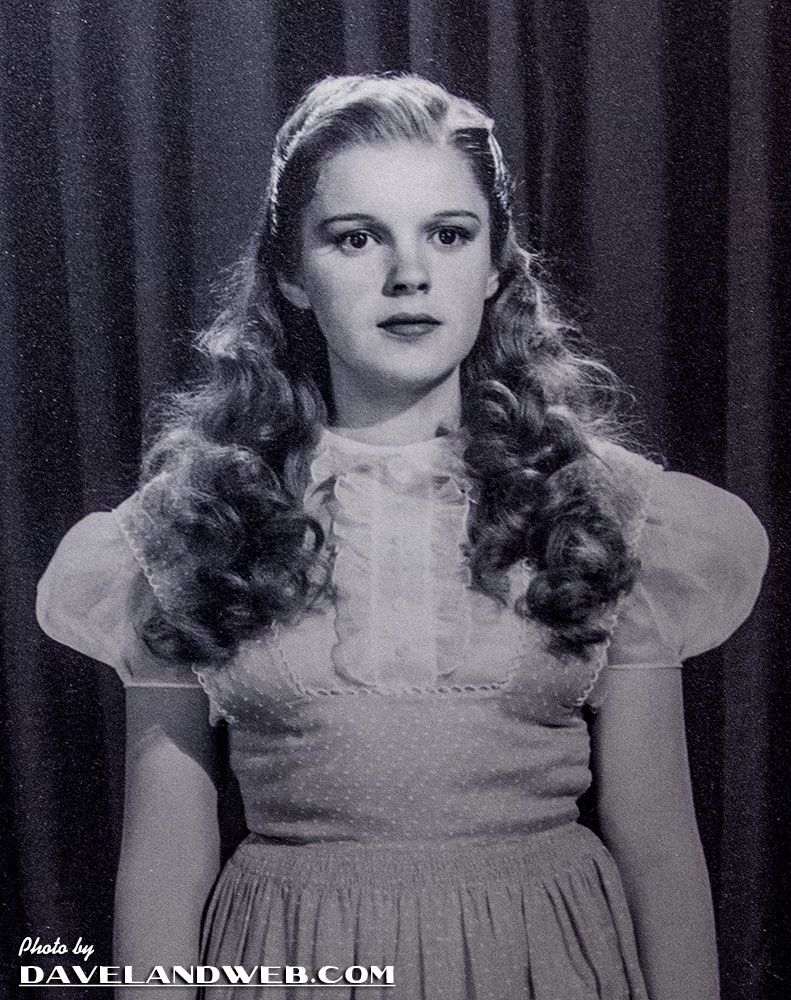
This is labeled as the sepia pinafore worn by Garland’s stand-in, Bobbie Koshay, paired with a blouse worn by Garland in unused footage directed by Richard Thorpe:


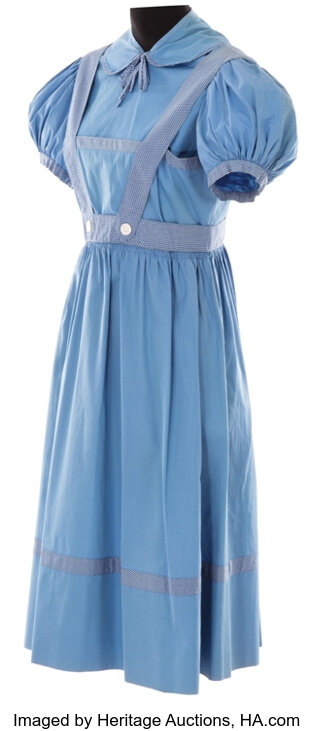
I recall the first time I saw a Judy Garland Dorothy costume was on the Freedom Train which toured the country in 1975-1976, with a cargo of precious treasures that spanned 200 years. Based on the Freedom Train website, I would have seen the dress somewhere between September 12-15, 1976. I remember my disappointment when it turned out to be a dress not used in the footage from the final film, but rather from the scenes under the direction of Richard Thorpe who was quickly fired. Here’s a shot of the Freedom Train dress from when it was sold by Heritage Auctions in 2013:


Back to the Academy. An early wardrobe test for “Oz,” with Garland wearing a blond wig and an unused version of the pinafore/blouse:


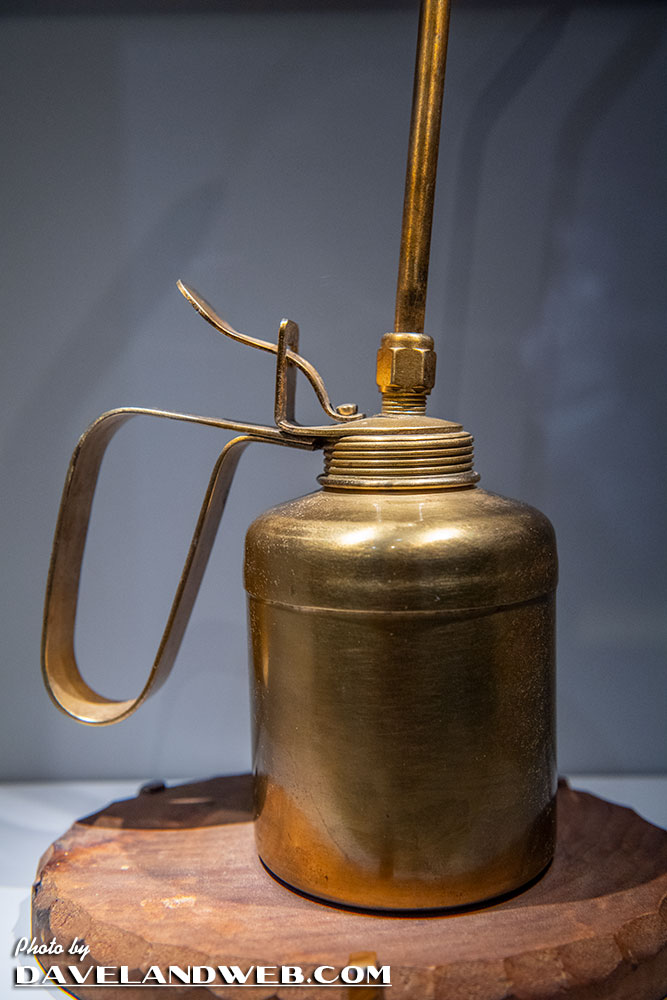
This oil can, used by the Tin Man, was presented to Jack Haley at the completion of filming:


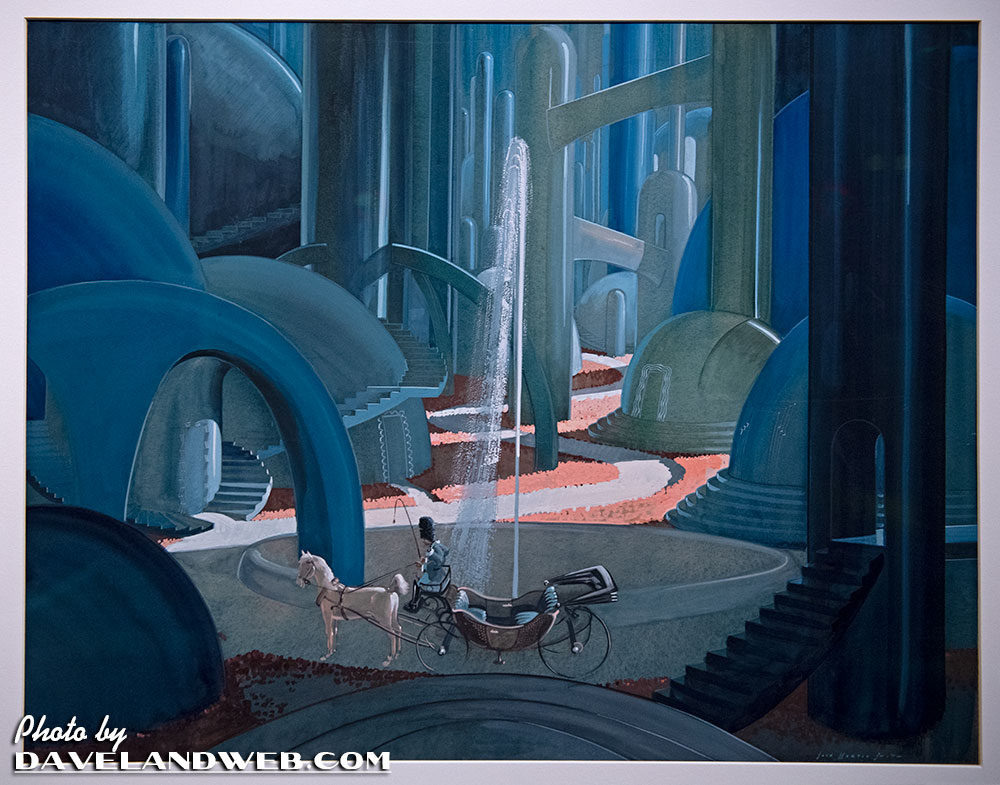
Jack Martin Smith’s concept art for the Emerald City, as envisioned by art director Cedric Gibbons:


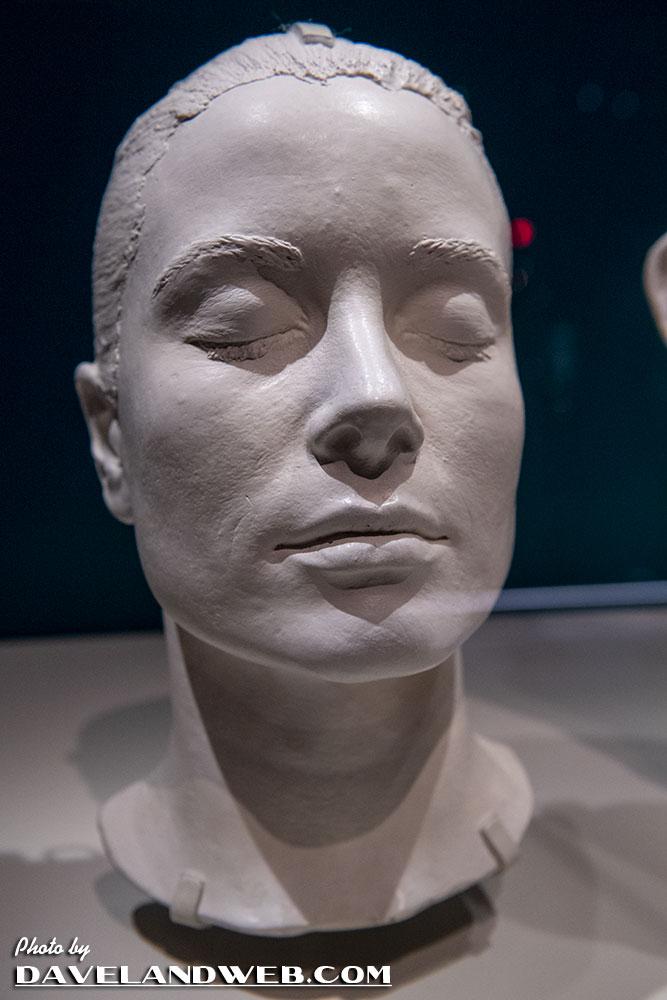
A life mask of actress Grace Kelly:


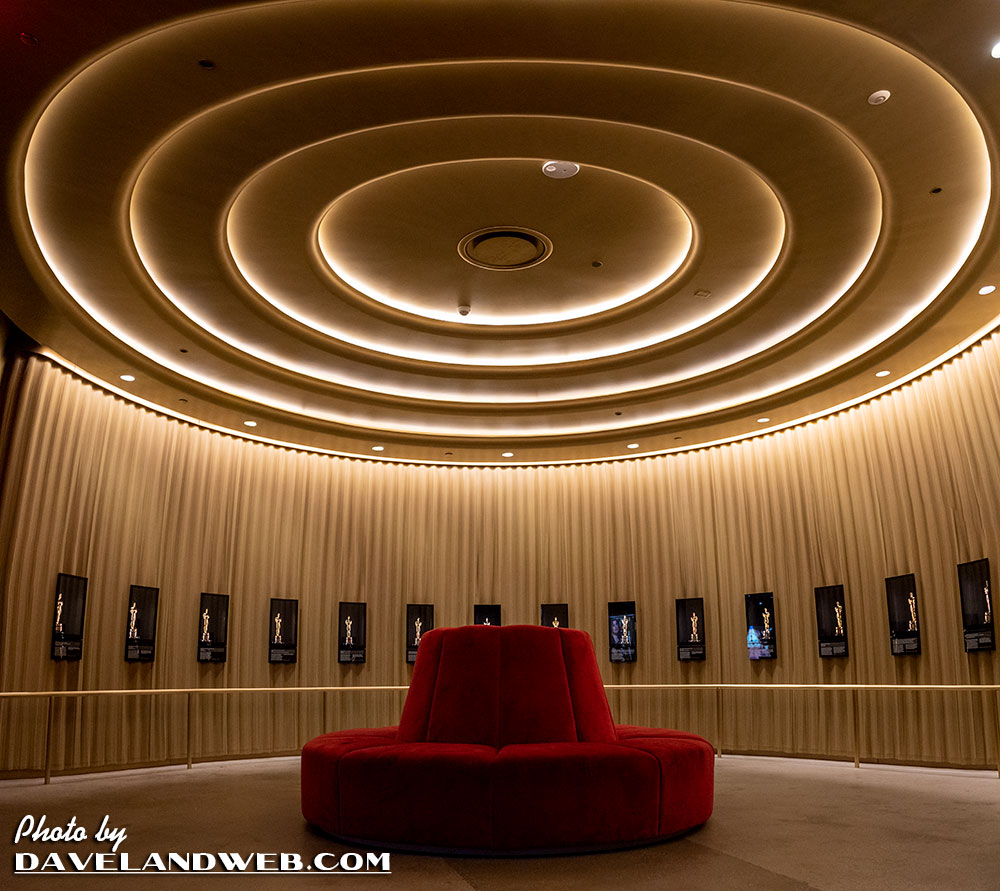
Oscars on display:


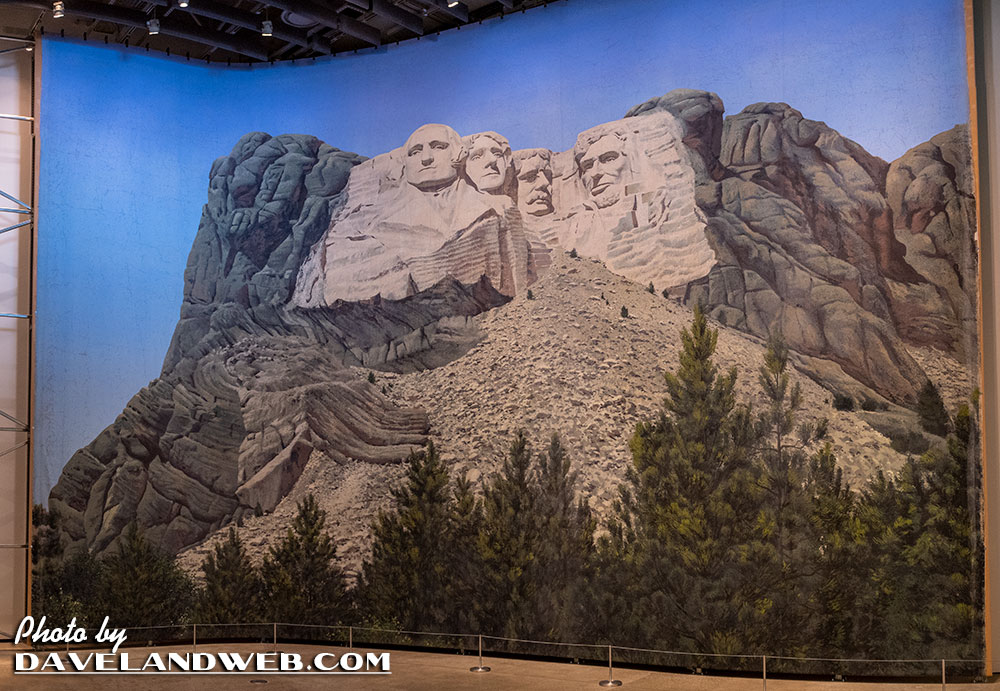
This one is a wow; the original backdrop painting of Mount Rushmore for the Alfred Hitchcock film “North by Northwest.” Even though it has been trimmed down over the years, the size (approximately two stories high) is still impressive.


Melissa had arranged for a special Oscars Experience program that requires an additional charge; it was not working when we showed up at our designated time so she was refunded. Below is the restaurant/cafe inside the museum:


Overall, I would say this museum is a huge disappointment. So much space, so little to see. Because of the treatment of Shirley Temple’s legacy, I will not be in a hurry to return.

See more Academy Museum photos at my main website.