Showing posts with label a star is born. Show all posts

Monday, January 13, 2025

Vintage Sunset Boulevard: At the Drive-In


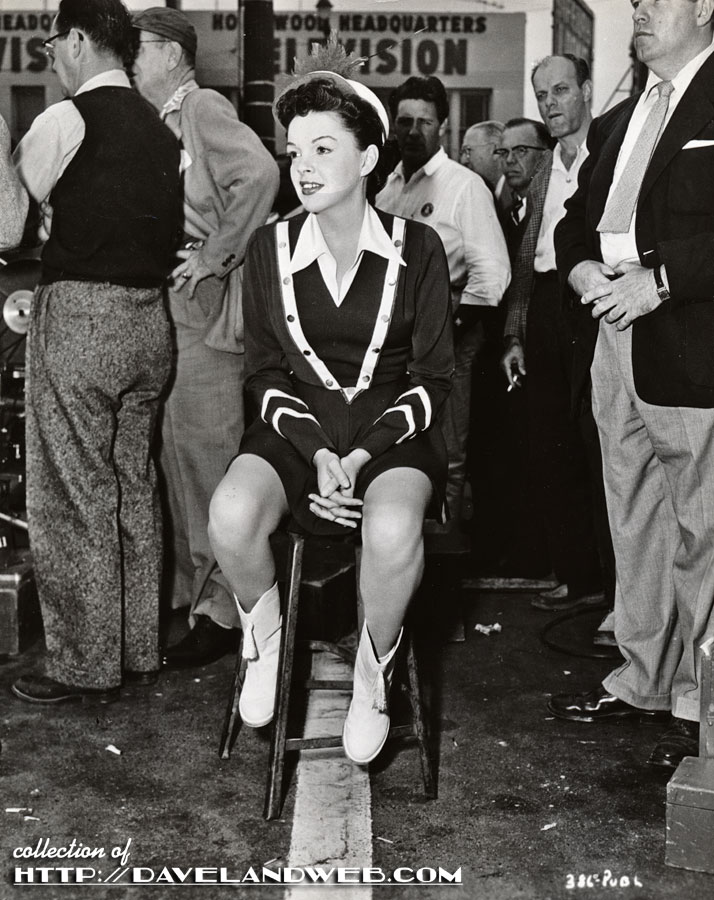
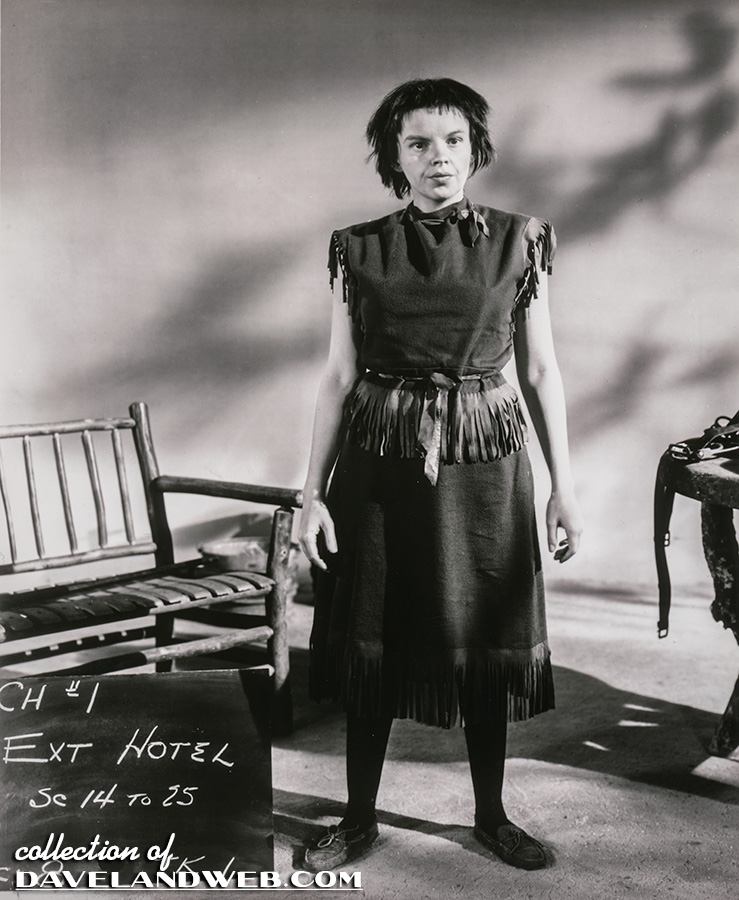
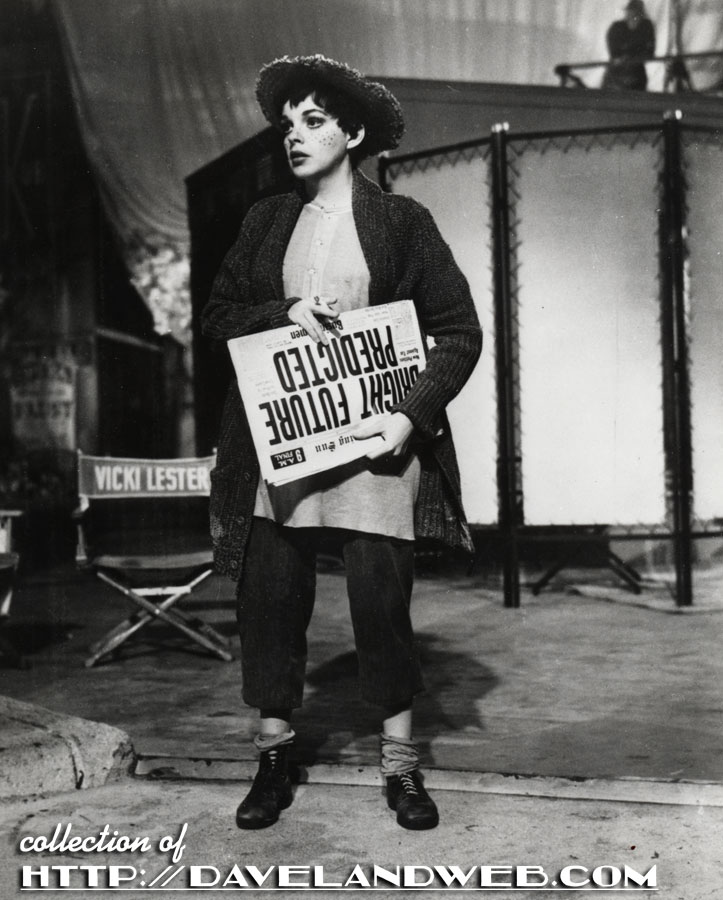
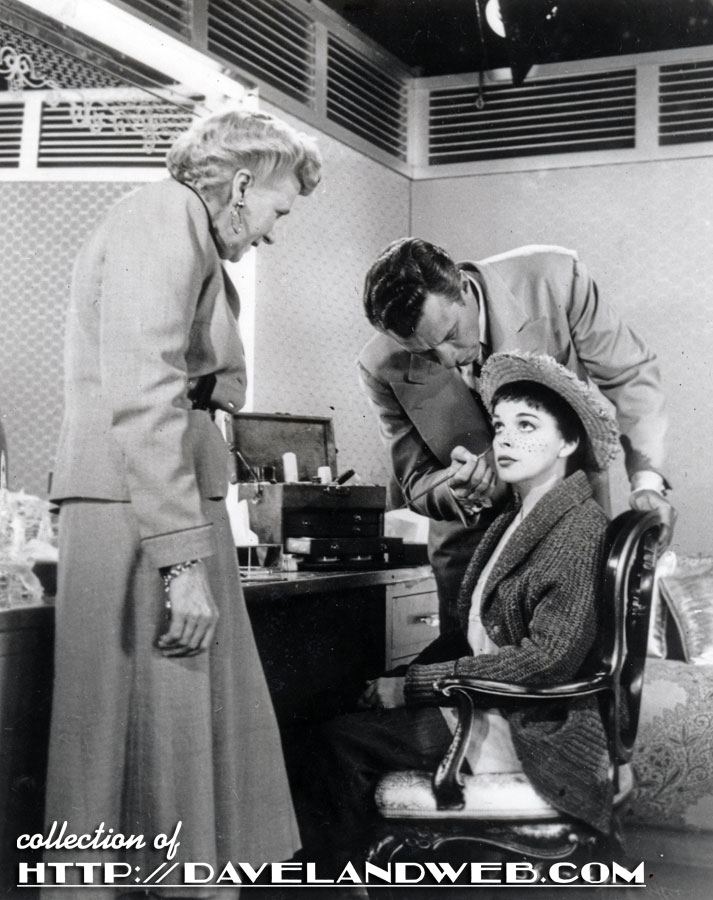
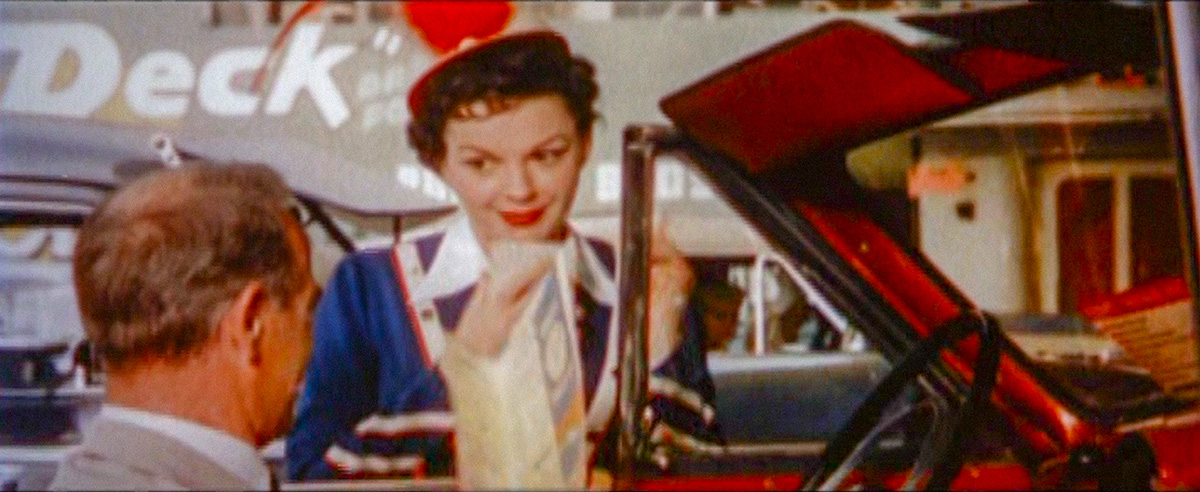
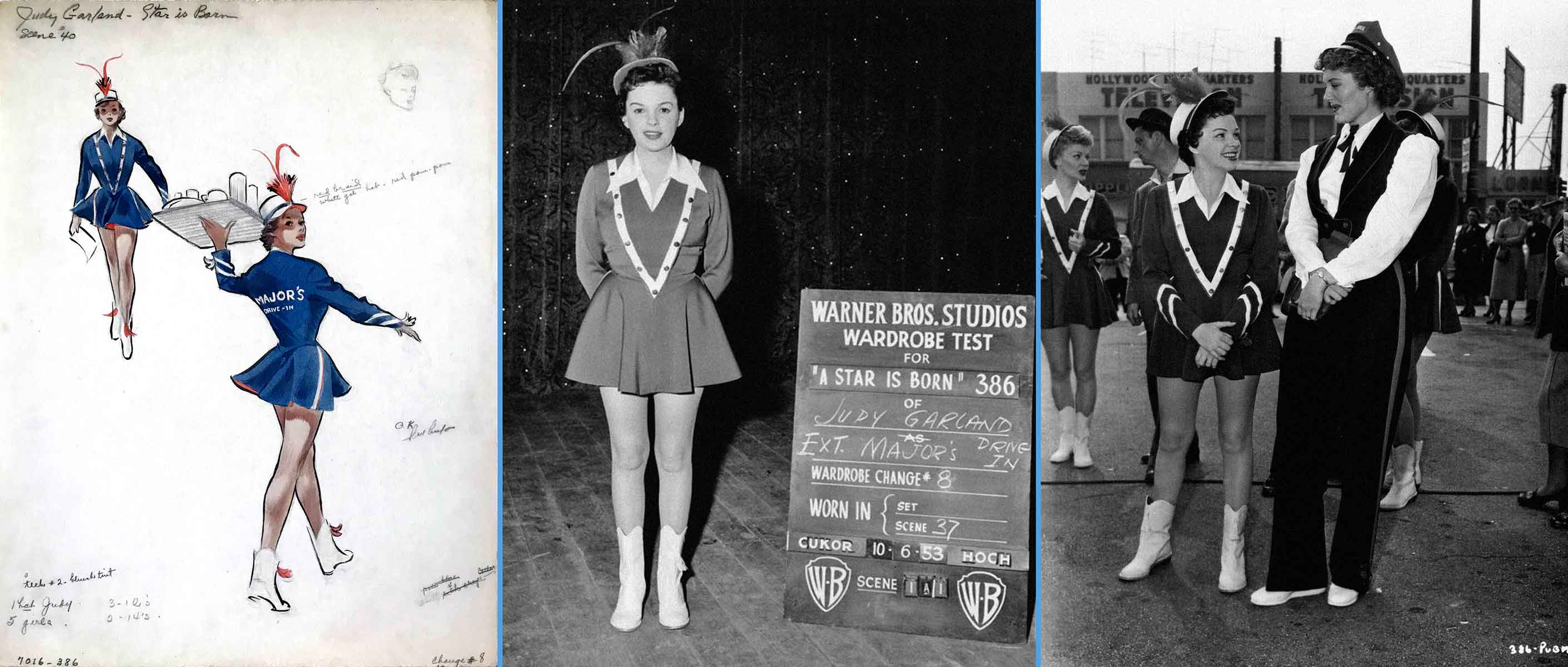
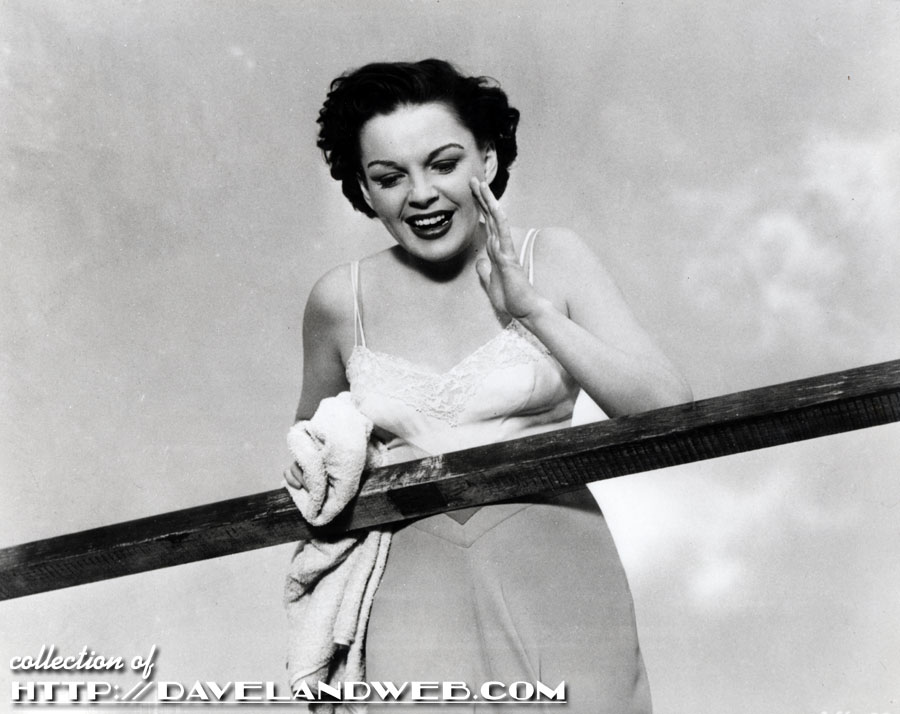
In the 1954 Judy Garland movie, “A Star is Born,” there was a scene where Judy’s character, financially struggling singer Esther, has to take a job as a carhop to make ends meet. The scene was cut after the premiere, and then re-instated when the film was restored (for the most part) in 1983. Below are the costume sketch, wardrobe test shot, and a publicity still taken between takes.


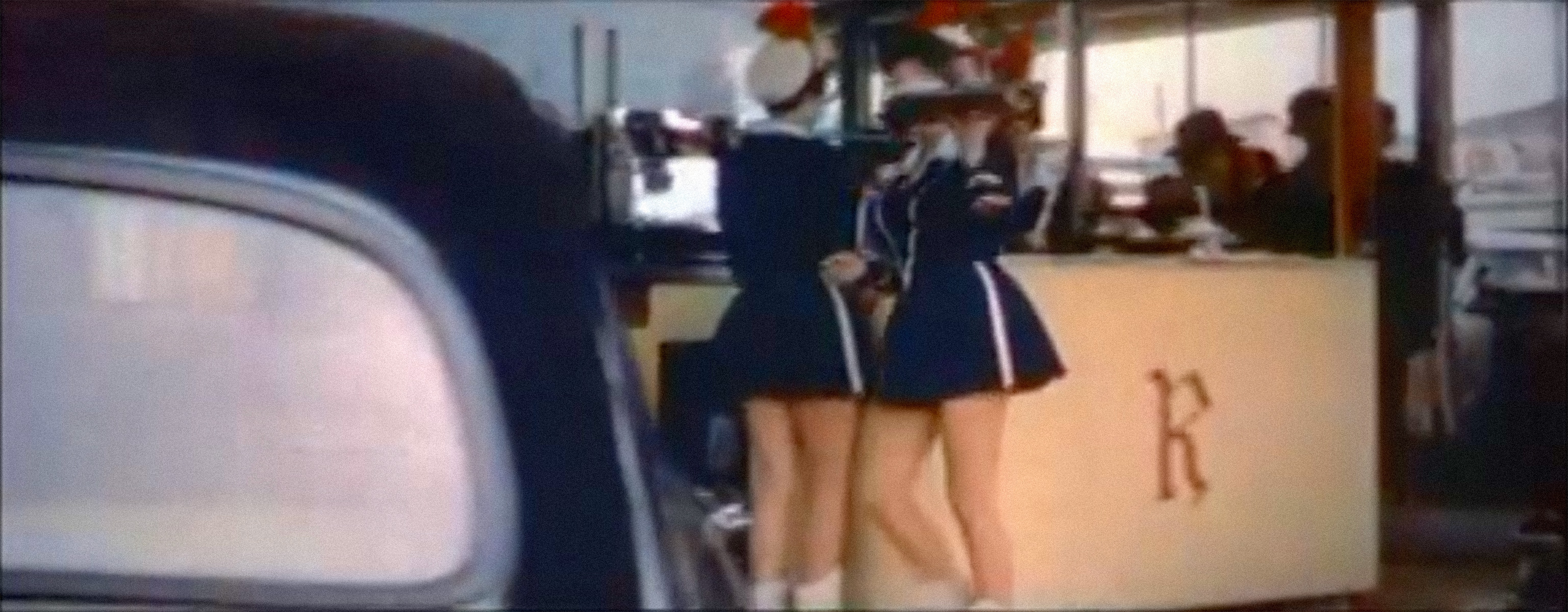
The scene was filmed at Robert’s Drive-In at 6407 Sunset Boulevard (corner of Sunset and Cahuenga). Note the “R” on the side of the building in this frame from the scene:


If you don’t know what a Drive-In restaurant is, it was a place where you parked your car in a space in front, a carhop (aka waiter) came out to take your order, and then the food was brought out to you shortly after that. You never had to leave your car.

From The Judy Garland News:

October 14, 1953: Photos from the third day of filming on A Star Is Born and the first day of location shooting. The production descended on Robert’s Drive-In at the corner of Sunset Boulevard and Cahuenga Street in Hollywood to film the carhop scenes. The scene was filmed in the morning, requiring eight takes for the set-up shots and fourteen takes of Judy – medium shot – telling the customer the types of hamburgers they had that day. The numerous takes were required due to the excessive background noises.

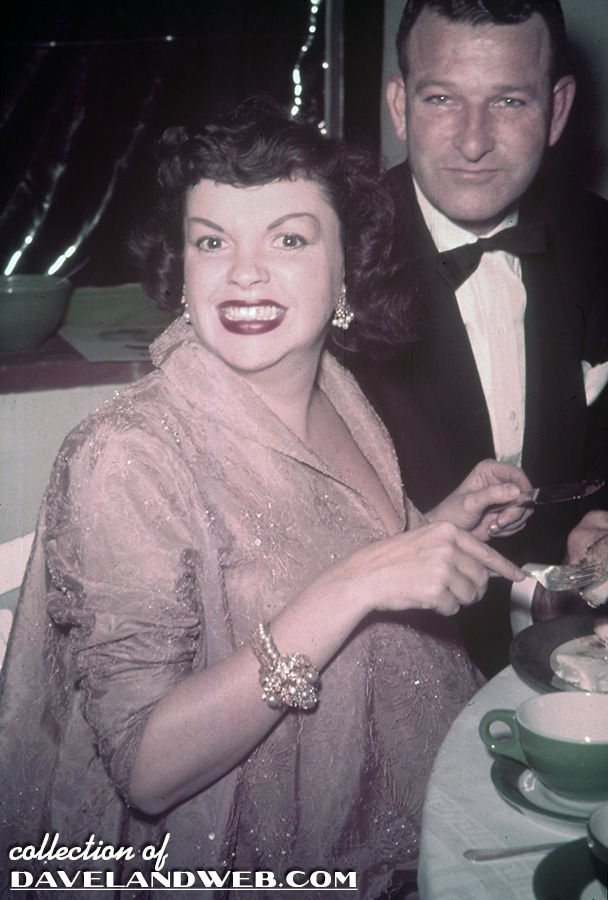
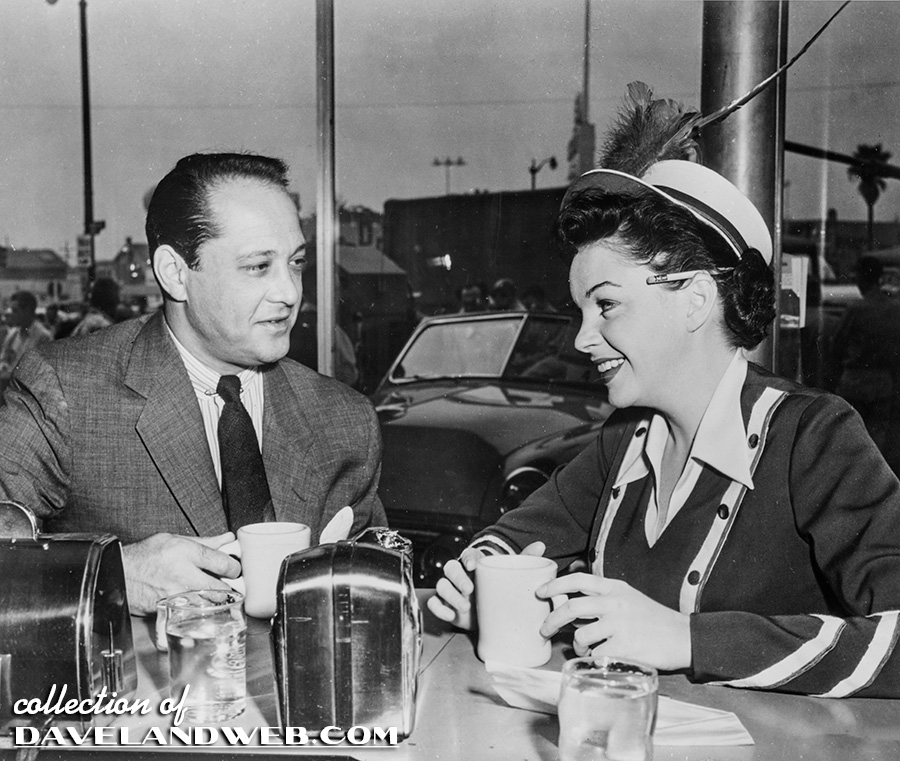
Below, Judy enjoys a cup of coffee with husband Sid Luft.


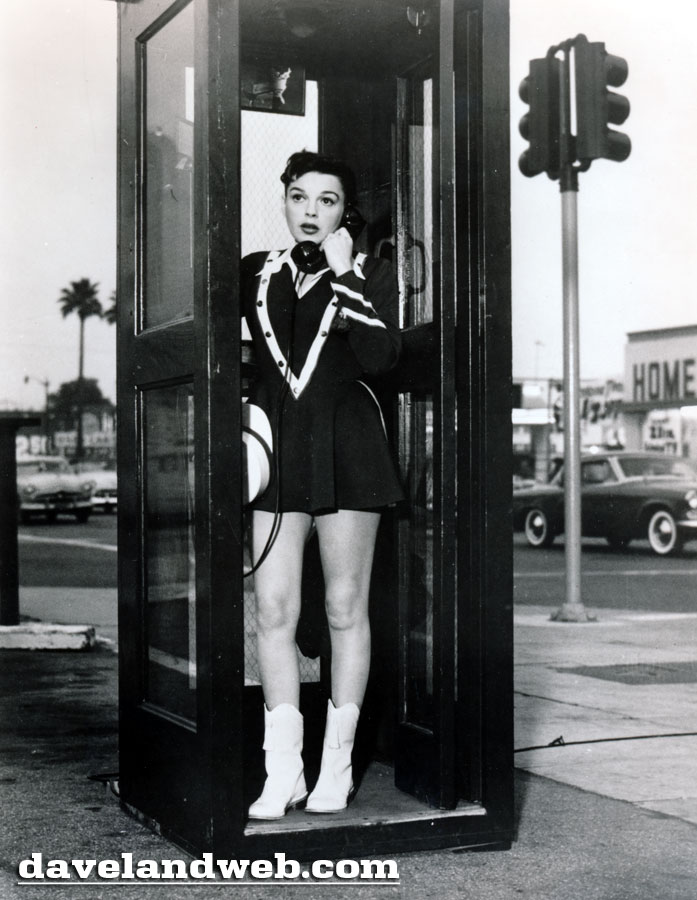
Part of the scene shows Judy calling one of her friends from the band she used to sing for; she attempts to paint a rosy picture of her situation.


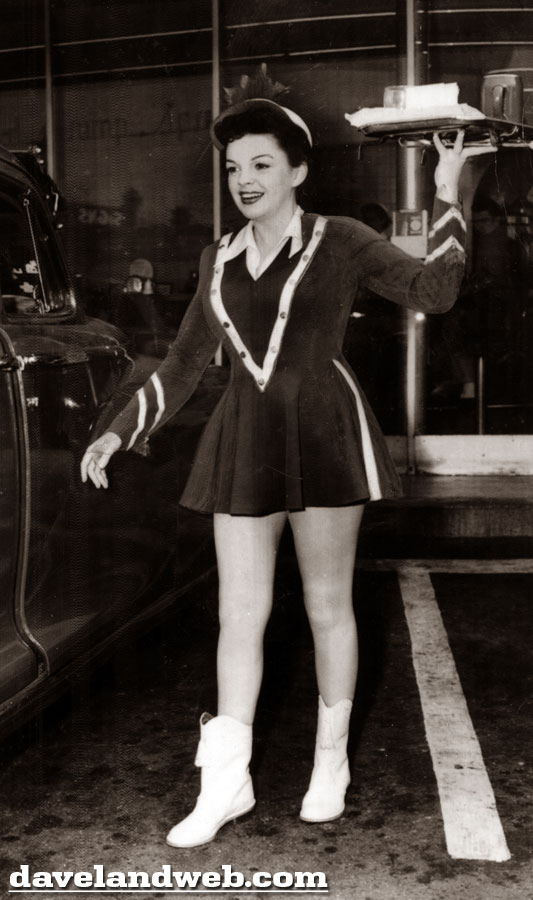
This publicity blurb accompanied the photo below:

HOLLYWOOD, Oct. 19 — JUDY GARLAND BACK IN MOVIES — AS A CAR-HOP — Judy Garland, facing movie cameras for the first time in three years, whirls a tray of food up to a car at a Sunset Boulevard drive-in. She was practicing on a few cars just before cameras began to role on her car-hop scenes for the film “A Star is Born.” The star left her studio in 1950 after disagreements and turned to stage appearances.


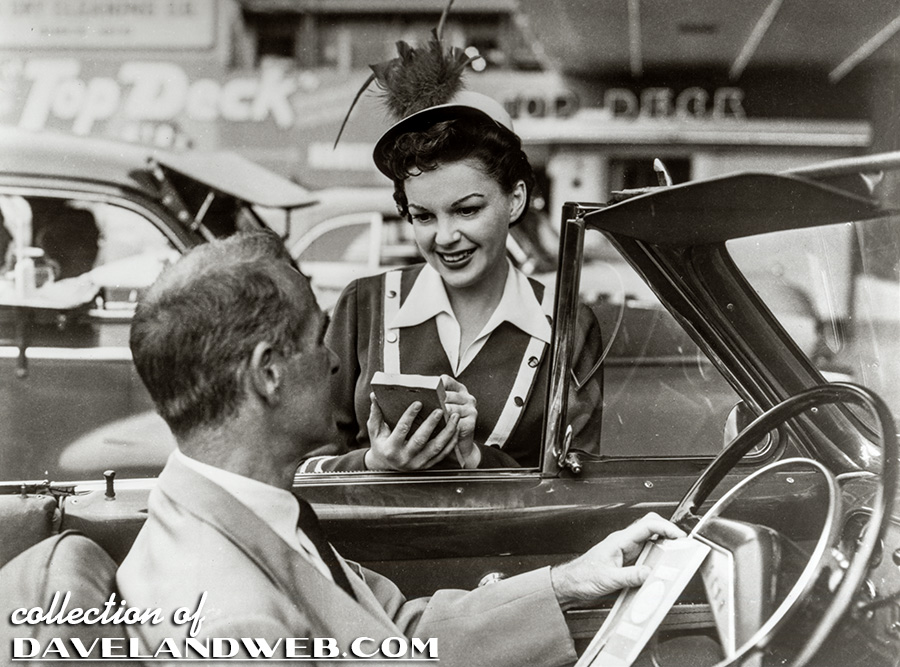
A publicity still from the movie showing Judy taking the man’s order:


By 1956 Robert’s had changed ownership and was called Scrivner’s; today, there is a Jack in the Box restaurant at that location (the original building was torn down).

Robert’s wasn’t the only Drive-In on Sunset Boulevard; there was also the Dolores Drive-In, at 8801 Sunset Boulevard. Below are actor Bob Hutton and Arlene Dahl, circa 1947.
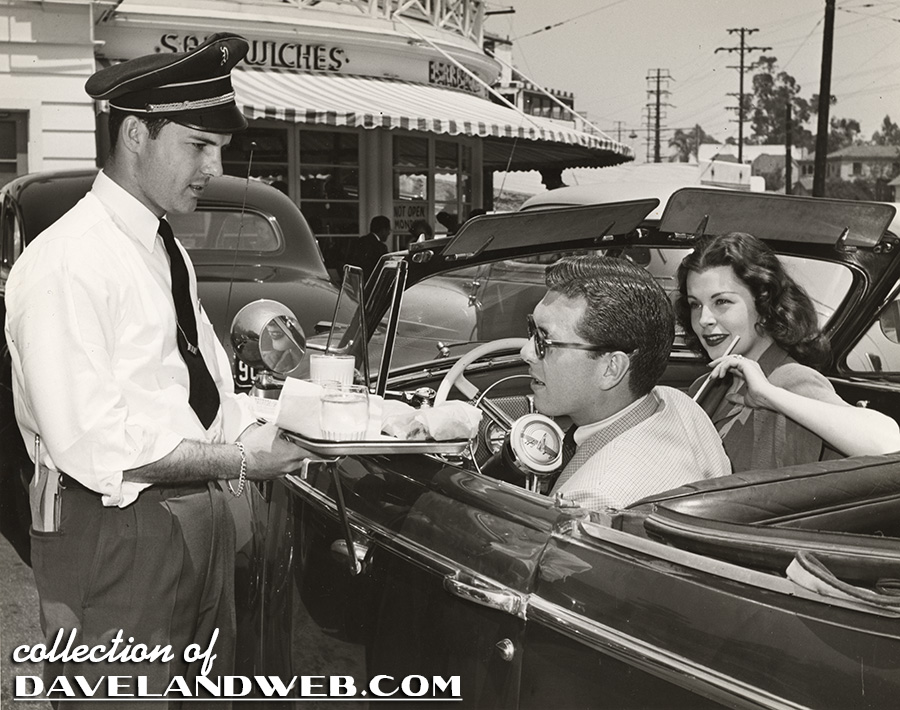


Note the “D” on the carhop’s hat, and Arlene’s luscious lips in the side view mirror:
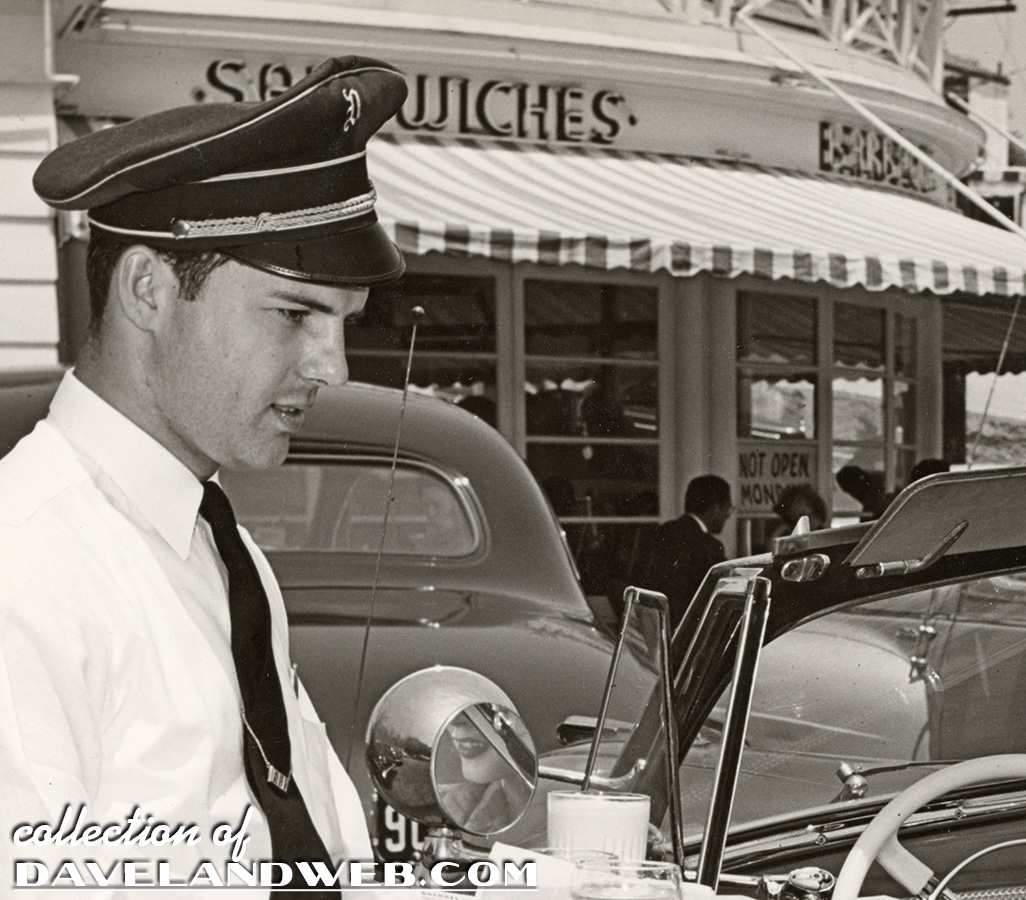


The building was naturally torn down (as interesting buildings in LA usually are) and is now a bland box of a building that houses Supreme Clothing, a store that sells streetwear.

Stan’s Drive-In was located at the corner of Sunset Boulevard and Vine, across from NBC. Eddie Fisher and Mala Powers are shown in front, March 1954, in a photo credited to Bert Parry and Bob Beerman for Modern Screen Magazine.
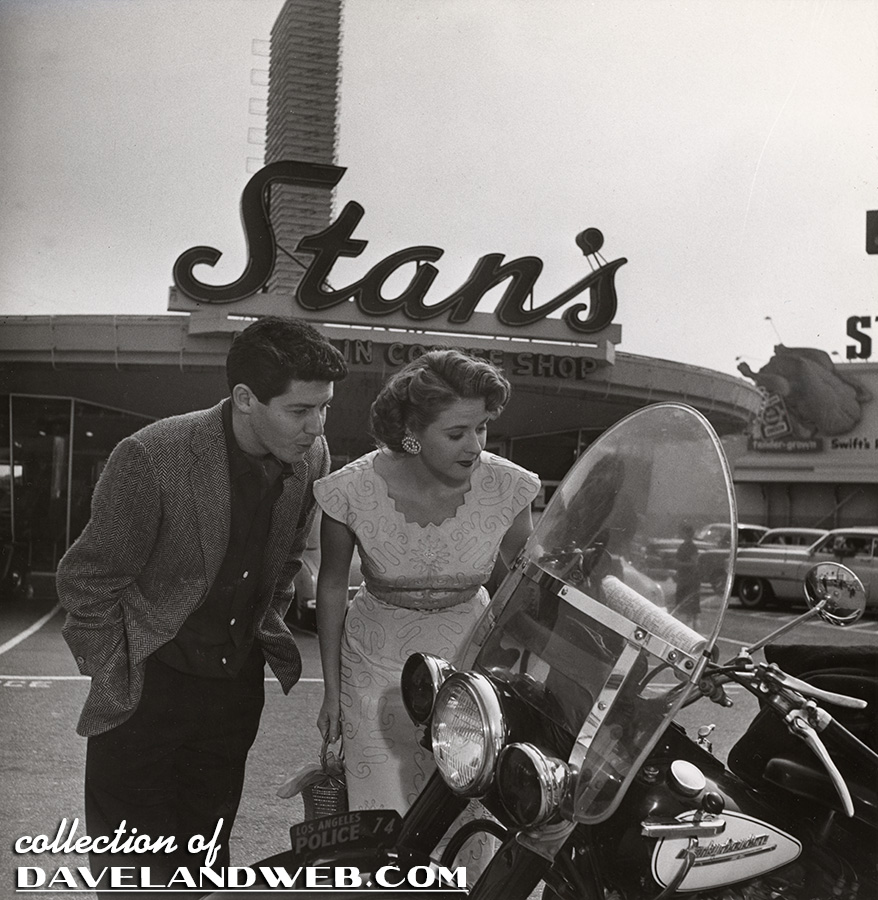


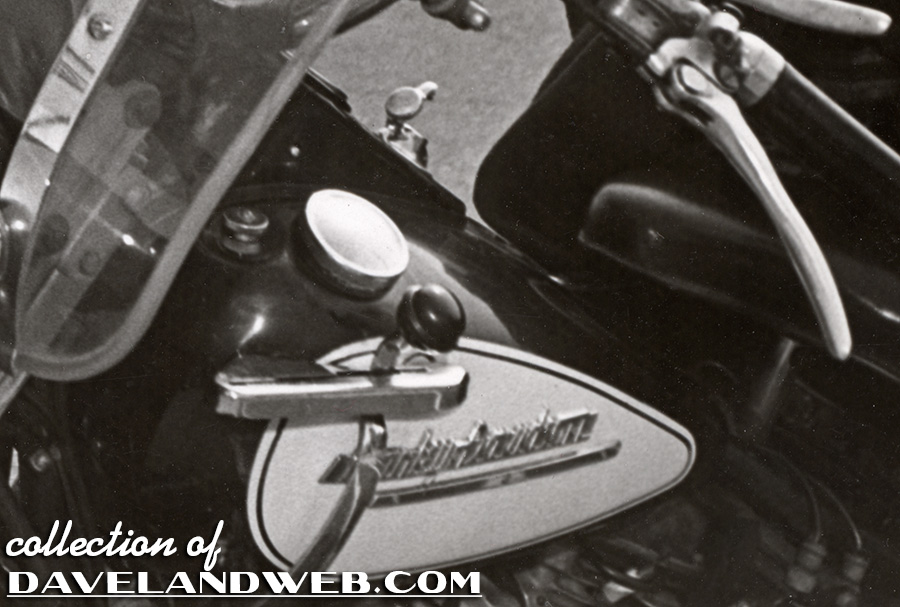
Apparently policemen drove Harley-Davidsons at the time:


Anyone miss the old Drive-In restaurants where you could pull your carhop, order your meal, and not leave the comfort of your automobile?
 
See more photos at my main website.

Thursday, July 28, 2022

Judy Garland: We Saw Your Face!


In the 1954 Garland film, “A Star is Born,” there are many moments of self-deprecating humor. NOBODY did that better than Judy! In this particular scene, her character (Esther Blodgett) is on set at the Oliver Niles Studio. Serving as a stand-in for the star, Esther is dressed in a luxurious mink coat, pampered over by wardrobe and makeup as she prepares for her first scene. The director coaches her just before the cameras roll: “Alright, now you know what I want, Esther. Put your arm out the window like this and you say ‘goodbye.’ It’s farewell, Esther, so give it all that you got!” Things start out well enough as Esther follows the directions to the letter:


In her excitement, Esther forgets that only the hand and arm should be visible to the camera. Her face peeks out the window and one of the crew shouts, “We saw her face!” causing filming to halt.


The director angrily admonishes her after she ruins the first take, “Just the arm and the hand; I don't want to see your face!” In the following takes, Esther cowers back in the seat to avoid being seen. Even through just the waving hand gesture, Garland conveys the despondency of her character who knows full well that this bit part will do nothing in propelling her to stardom.


In this publicity still, we see that gorgeous face that still brings joy to millions.


See more Judy Garland photos at my main website.
Friday, June 10, 2022

Judy Garland 100th Birthday Blowout!


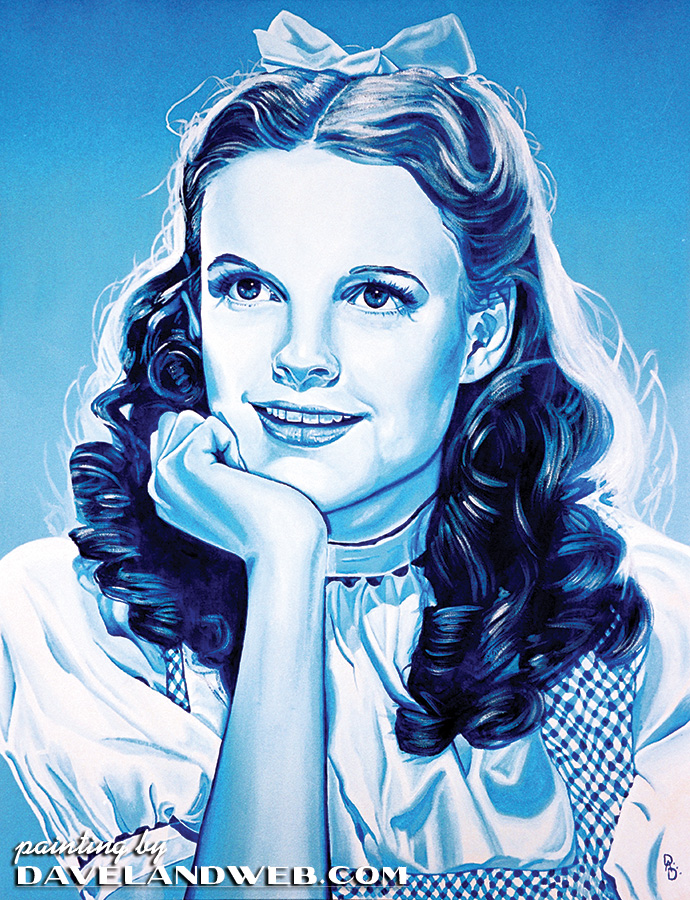
Today would have been the 100th birthday of singer/actress Judy Garland. It is hard to fathom that she only lived to see 47, due to the incredible volume of memorable work that she left behind. Most will remember Judy for her portrayal of Dorothy in “The Wizard of Oz” (1939). The first photo in this post is a painting I did of Judy, where I attempted to capture the youthful zest and hope that were her hallmark. The rest of this post will serve as a chronological tribute of photos from my collection that document her career.


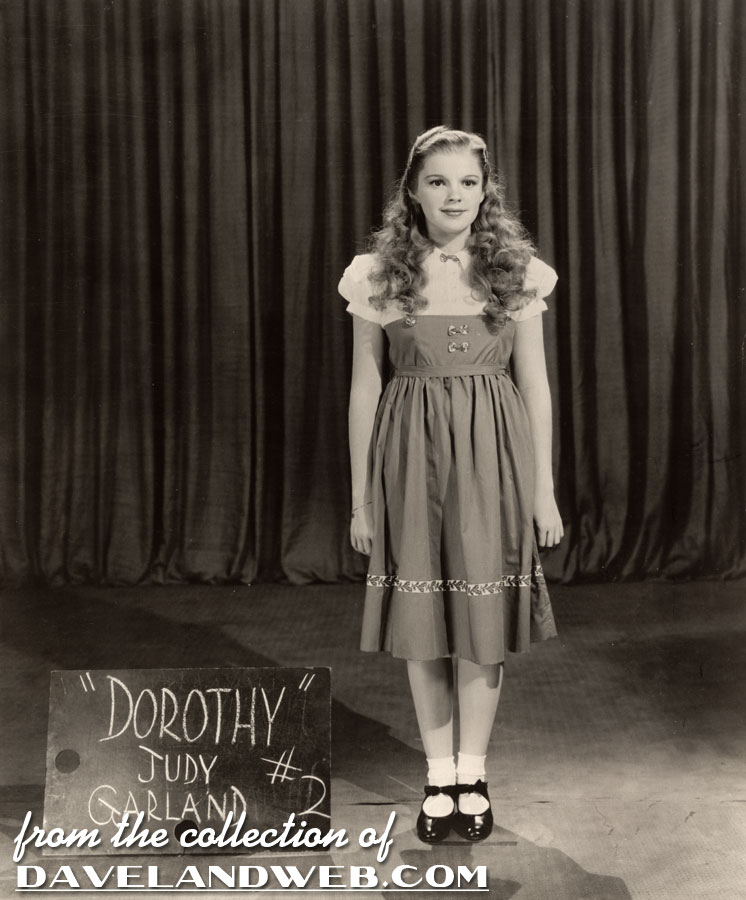
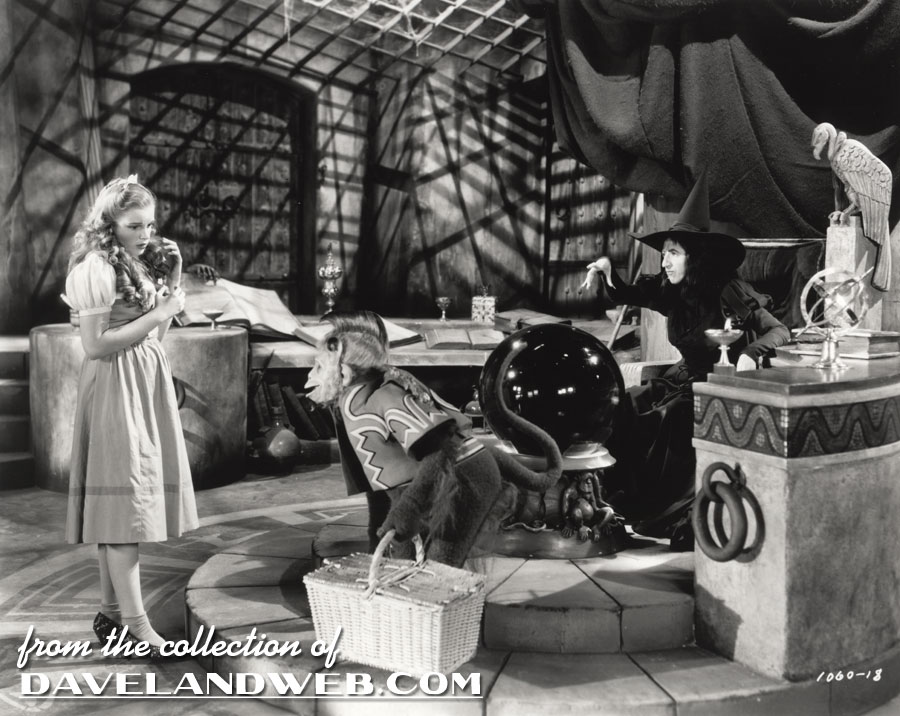
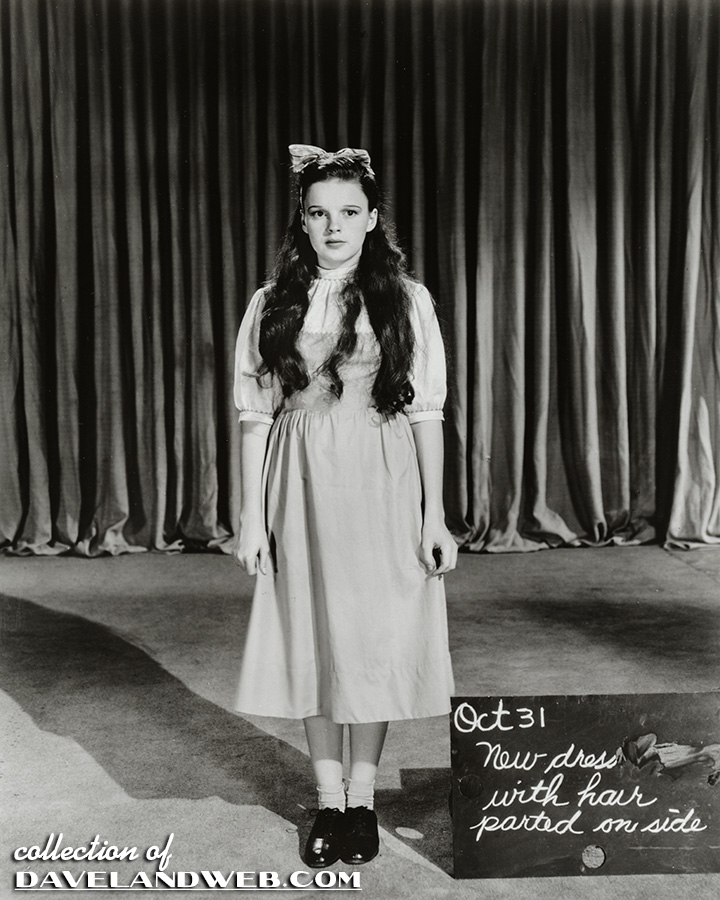
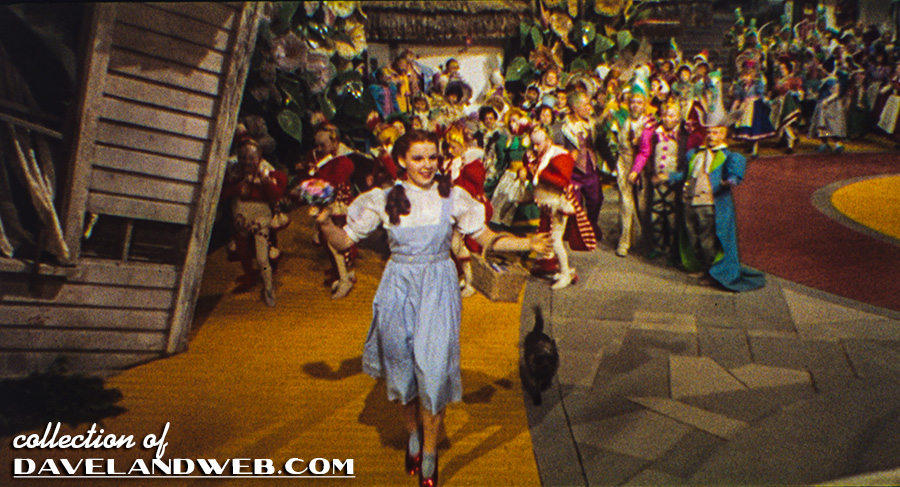
These three shots show M.G.M.’s original vision of Dorothy; unable to secure the more bankable Shirley Temple, the powers-that-be attempted to transform Judy into what she would later refer to as “a male version of Mary Pickford.”


Before the initial director (Richard Thorpe) was fired, quite a bit of footage was shot with Judy in her blonde wig.


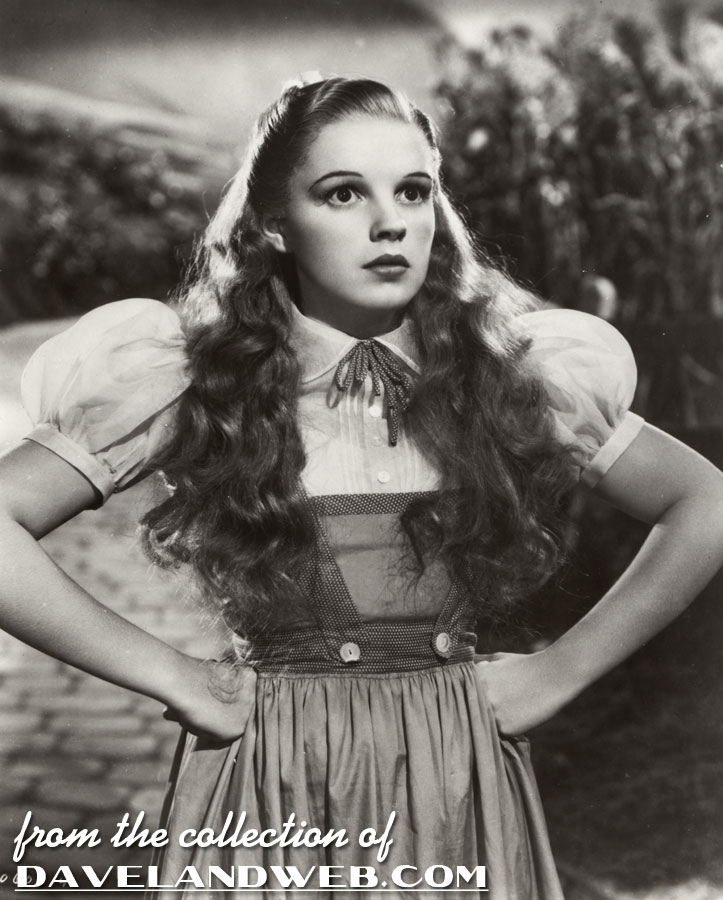
George Cukor stepped in temporarily before Victor Fleming was hired. He had the artifice removed from Judy’s makeup and allowed the real girl to shine through.


This was the brilliance of casting Judy; in a land of fantasy, her emotionally charged performance grounded the film and made you believe that this young girl wanted to get home more than anything else in the world. Ruby slippers be damned!


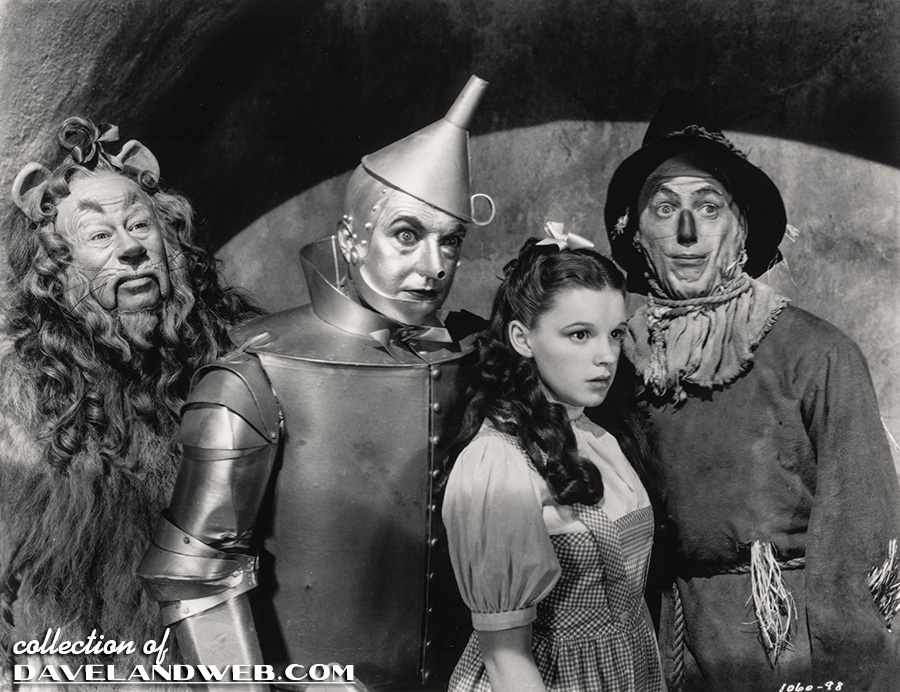
One of the best quartets in film history:


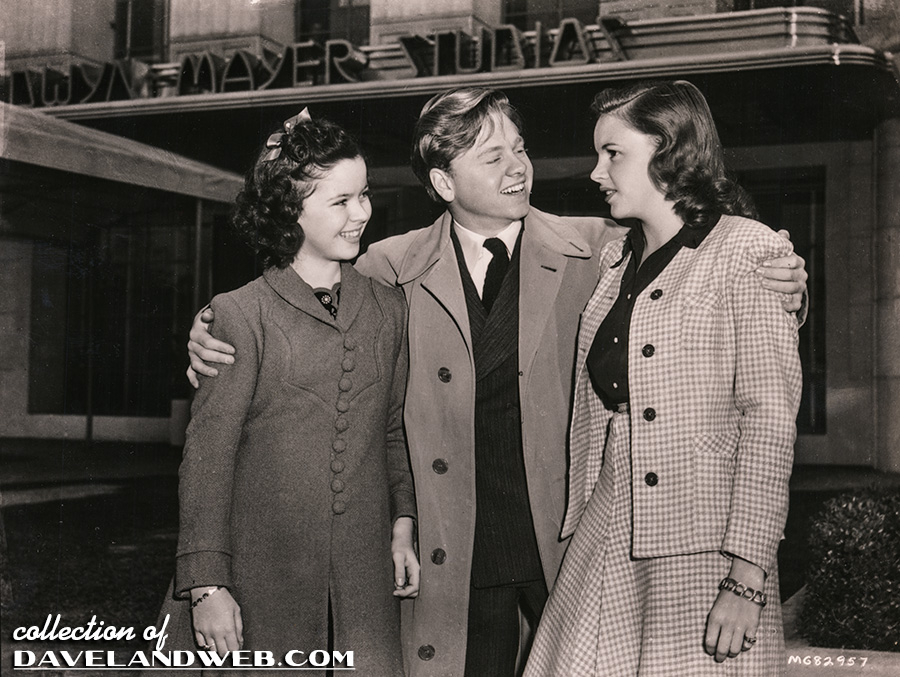
When M.G.M. finally acquired Shirley Temple into their stable of stars, Mickey Rooney and Judy Garland were on hand to welcome her. For the publicity cameras at least!


Judy’s next big break after a string of films with Mickey was “Meet Me In St. Louis” (1944). Once again, she carries a film that would have been extremely forgettable starring anyone else.


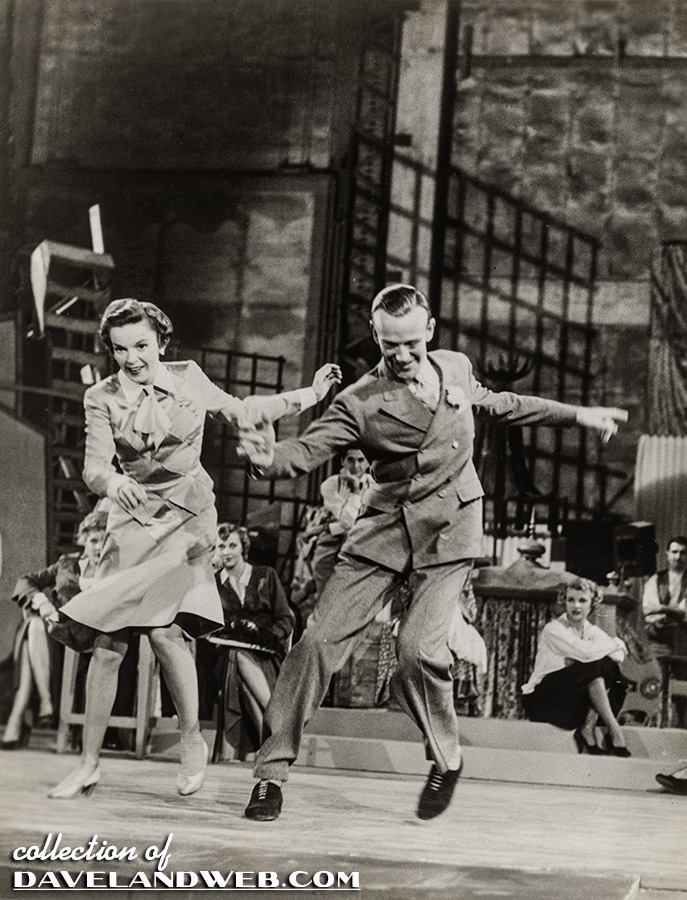
One of my very favorite Garland numbers is “Alabam” from “Easter Parade” (1948). You barely notice Fred Astaire dancing with her; instead, your eyes are on Garland the entire time.


While not her most memorable film, Judy gives a charming performance in “In the Good Old Summertime” (1949). Her musical number “I Don’t Care” is worth the price of admission all by itself.


Working at breakneck speed to meet the demand of more Garland pictures, it’s not surprising that eventually her body would fight back. Lack of sleep, strenuous dieting, and the abuse of medication to keep her peppy for the cameras all contributed to her breakdown. M.G.M. didn’t want to give their biggest star a much deserved vacation; instead, they shoved her into “Annie Get Your Gun” and chose her mortal enemy (Busy Berkeley) to direct it. The look on her face in this wardrobe test says it all. Judy ended up getting fired from the film and replaced by Betty Hutton.


While “Summer Stock” (1950) was not the prestige film that “Annie Get Your Gun” was, Garland managed to transcend the predictable story and turn this musical into a memorable swan song for her M.G.M. years. “Friendly Star” is probably one of the most beautiful Garland songs on film. Judy didn’t just sing…she lived those songs and made you feel every emotional nuance that the notes and lyrics conveyed.


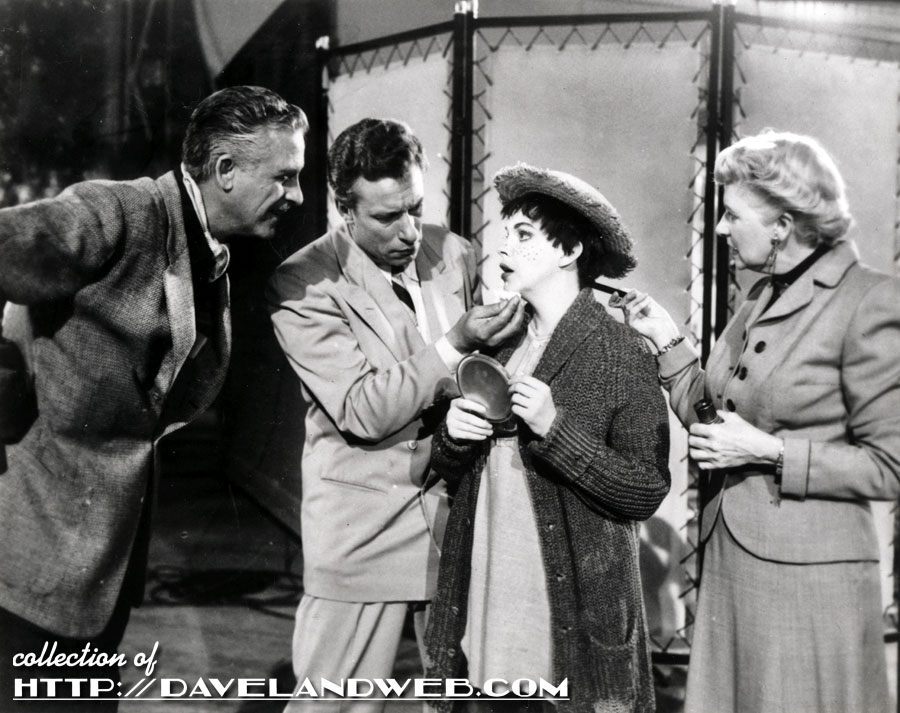
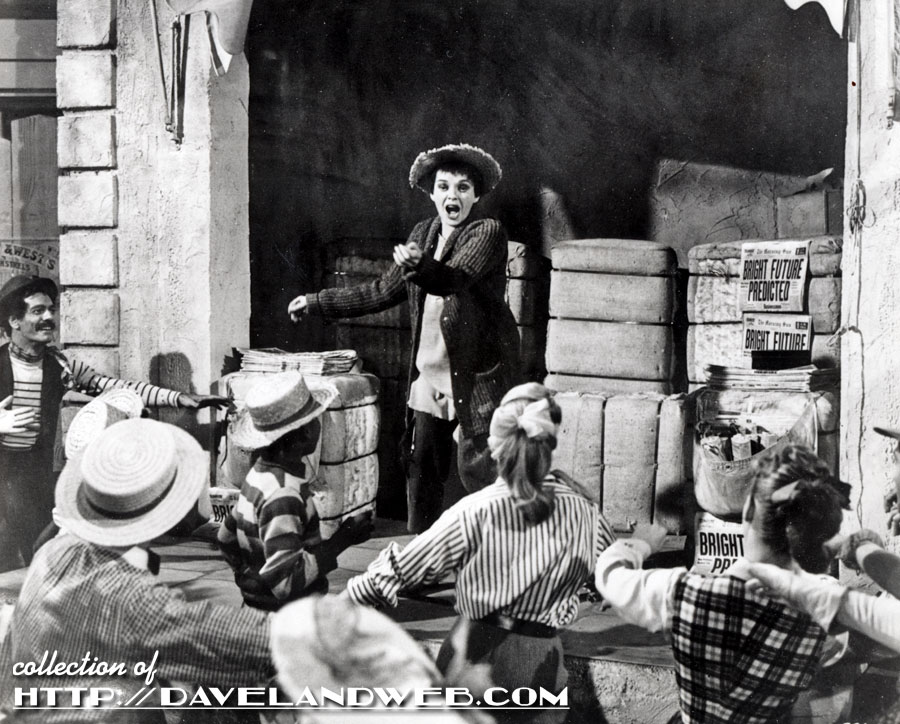
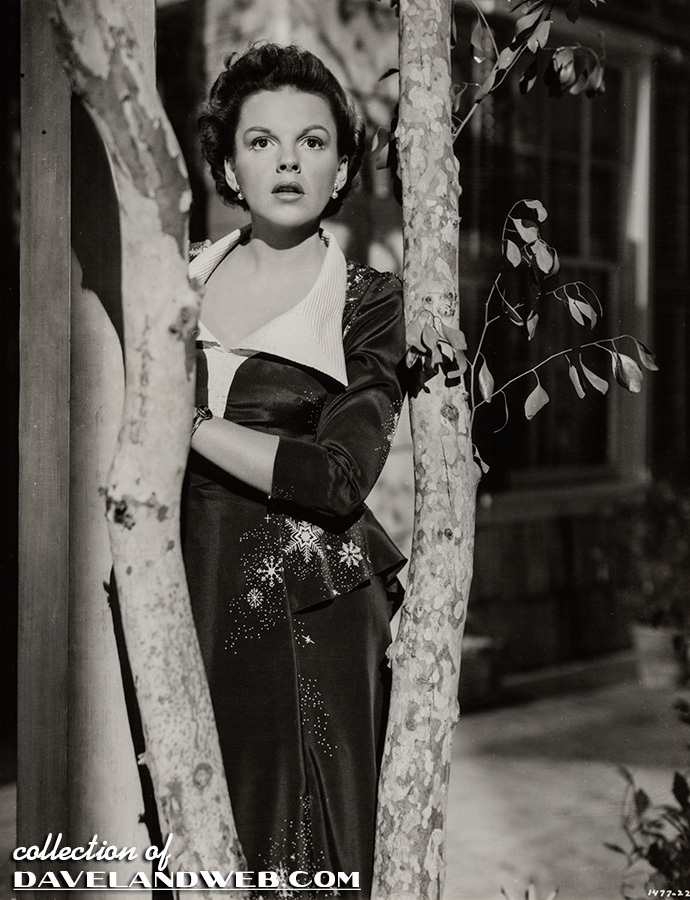
Judy bounced back in 1954 with “A Star is Born.” These next six shots show Judy in some of the scenes that were deleted after the premiere in an attempt to get more audiences able to see it per day. 


Much of the footage has been recovered and reinstated; but regardless of which version you watch, Garland is in full control of her powers throughout the film.


In the four years since she left M.G.M., the voice took on a new maturity. What she lost in restraint (taught to her by mentor Roger Edens) she replaced with raw emotion. 


Speaking of Roger Edens, here’s a shot of him with Judy out on the town:


Back to “Star”:


The musical number shown below (“When My Sugar Walks Down the Street”) was deleted before the premiere, and rightly so. Cute by itself, it only lengthened an already bloated production number, “Born in a Trunk.”


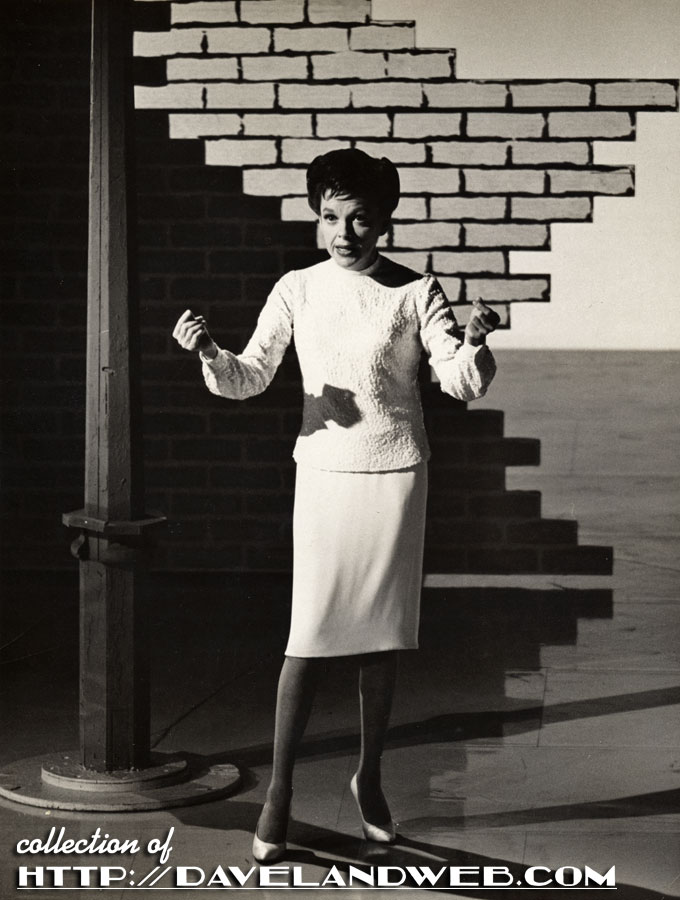
The financial loss of “Star” didn’t keep Garland down. She bounced back on the concert circuit, most notably with her triumph at Carnegie Hall. “The Judy Garland Show” is an excellent record of Judy and what she gave to audiences whenever she performed “live.” This Judy is not my favorite; the mannerisms and tics that were most likely a result of her pill abuse are a bit disturbing. The voice was also beginning to sound ravaged from the cigarettes, medication, and lack of rest. Regardless, Judy was still able to work magic with what she had; even at her worst, Garland sang circles around the rest.


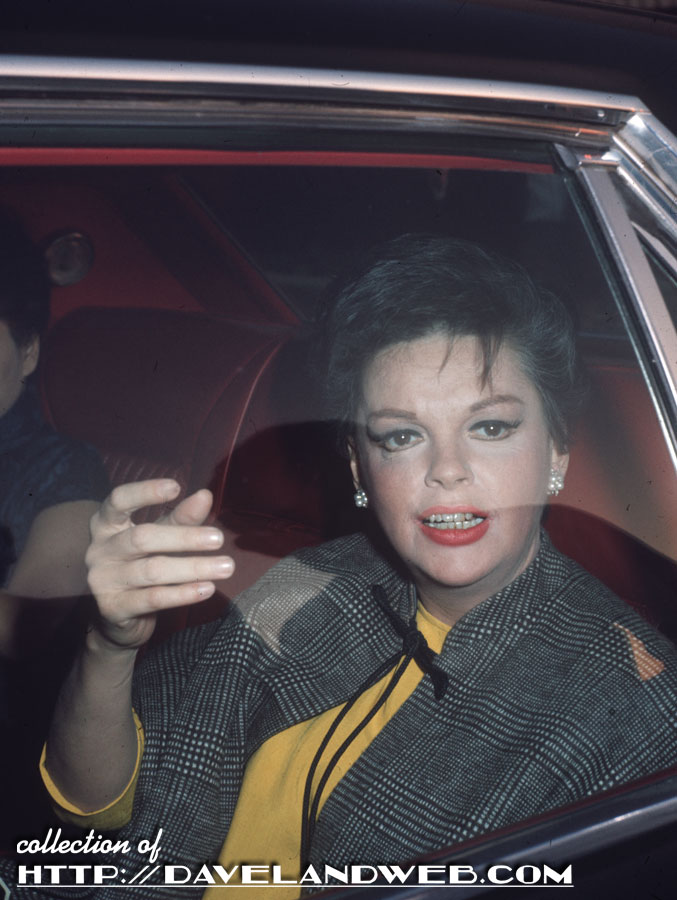
A shot taken of Judy by an adoring fan, circa 1965:


The final photo shows her singing her signature song, “Over the Rainbow.”


This musical sequence is arguably the most memorable piece of film in the history of motion pictures. Through her performance, Garland communicated to the audience in only a few minutes a longing that resonates with all of us. Happy 100th, Judy!!

See more Judy Garland photos at my main website.
Monday, August 01, 2016

When My Sugar Walks Down The Street


Judy Garland's 1954 "A Star is Born" is almost as famous for the uproar caused by the roughly 30 minutes that were trimmed from it AFTER the movie had debuted across the country. Warner Brother executives felt that the greater amount of times the movie could be shown (thanks to the deletions) would mean higher profits. Their strategy backfired, and the sales of the movie trailed off when the public wasn't as enamored with the less compelling film that resulted. Here is a still from one of the musical segments removed after the first preview, "When My Sugar Walks Down The Street." During the "Born in a Trunk" sequence, Garland's character learns that her mother has passed away and she must fill mama's shoes on the stage, singing and dancing this joyous tune while silently mourning her loss. That's showbiz folks.


Judy Judy Judy and more Judy at my main website.
Friday, August 14, 2015

Judy at the Grove


For Judy Garland's big comeback film, "A Star is Born," the Cocoanut Grove served as the location for the scene where Judy's character wins an Oscar. This wasn't much of a creative stretch since the Grove had actually hosted the Oscars in 1930 and 1940. Apparently what you see in the movie is a soundstage recreation of the actual club. They did a damn good job!


Here's a closeup of Vicki Lester (Judy) standing up to the thunderous applause as she is about to take her walk to the stage to receive her statuette. Standing next to Judy is actor Charles Bickford. Front right of this detailed view is an actress whose name escapes me. She made a living playing extras; rarely any dialogue, but her face is recognizable from a number of Three Stooges comedies. I am sure one of my readers can fill in the blanks.


After Judy gets her Oscar, drunken husband Norman Maine (James Mason) interrupts her happy moment and accidentally backhands her as he asks for a job from his peers in the audience.


Here's a 1950s image of the Ambassador Hotel, where the Cocoanut Grove Club was located.


A nighttime shot of the statue in front. Love the colors on this one!


See more Judy at my main website.
Tuesday, January 06, 2015

The Shrine Auditorium


I was first introduced to Los Angeles' Shrine Auditorium in the 1954 Judy Garland movie "A Star Is Born." The star-studded benefit seen at the beginning of the movie uses the real Shrine Auditorium and the stage is used by Garland in her first musical number, "Gotta' Have Me Go With You."

This vintage 1950s image shows the Shrine Auditorium in daylight; still impressive!


Opened in 1926, the Moorish-style building was designed by San Francisco-based theater architect G. Albert Lansburgh, along with local L.A. architects John C. Austin and A. M. Edelman. I checked it out in person on my last visit to L.A., excited to get some shots of the exterior and (possibly) the interior if the building was opened. After snapping this photo, I was promptly halted by a 20-something gent who was involved in setting up some tables for an event that was being hosted there much later in the evening.


Acting as if he'd crap his diapers if I took another shot, I decided to move on and snap shots of the other sides of the building.


The Oscars were hosted at the Shrine Auditorium from 1947-1948 and then again from 1988-2001.


Besides "A Star is Born," the original "King Kong" (1933) used the Auditorium for the final scene where Kong is displayed onstage to the world.


It is also the location of the infamous 1984 Pepsi commercial where Michael Jackson's hair (and scalp) caught on fire.


It should come as no surprise that the building was designated a Los Angeles Historic-Cultural Monument in 1975.


Are you wanting more? What a dumb question. Click on over to my main website and see more cool Daveland Los Angeles photography.