Showing posts with label vintage hollywood photos. Show all posts

Monday, January 26, 2026

Chateau Marmont, 1938


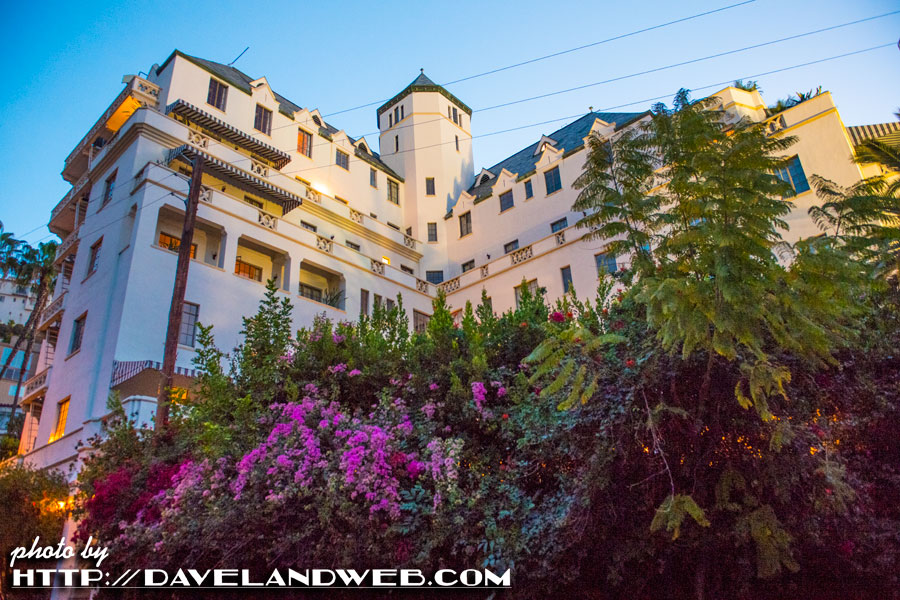
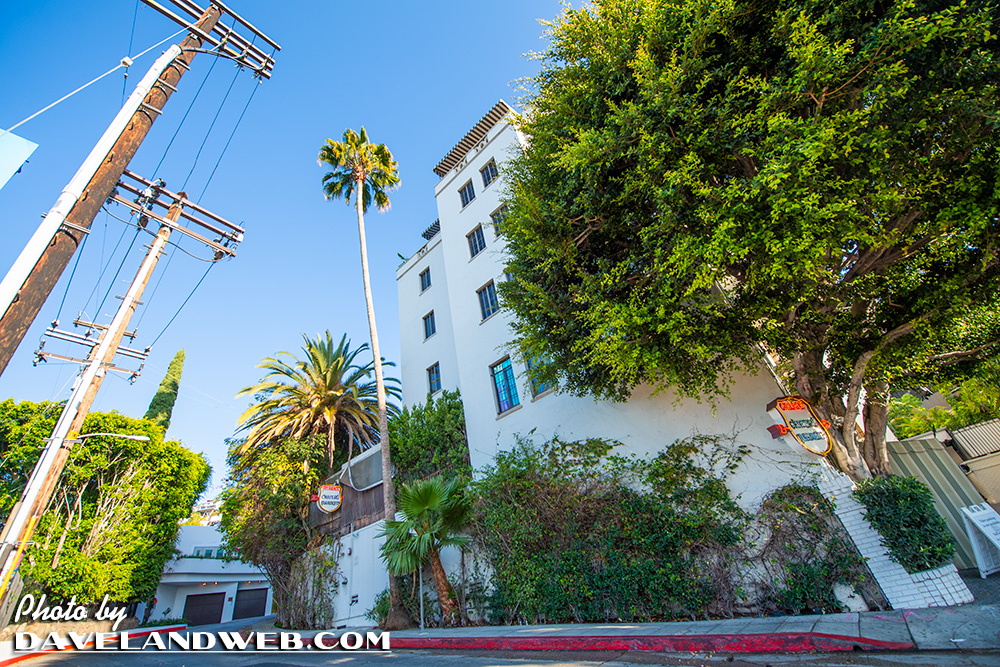
This July 1938 image of the Chateau Marmont was taken from the residence across the street. Below is a contemporary view of the hotel for comparison’s sake, shot from the street.


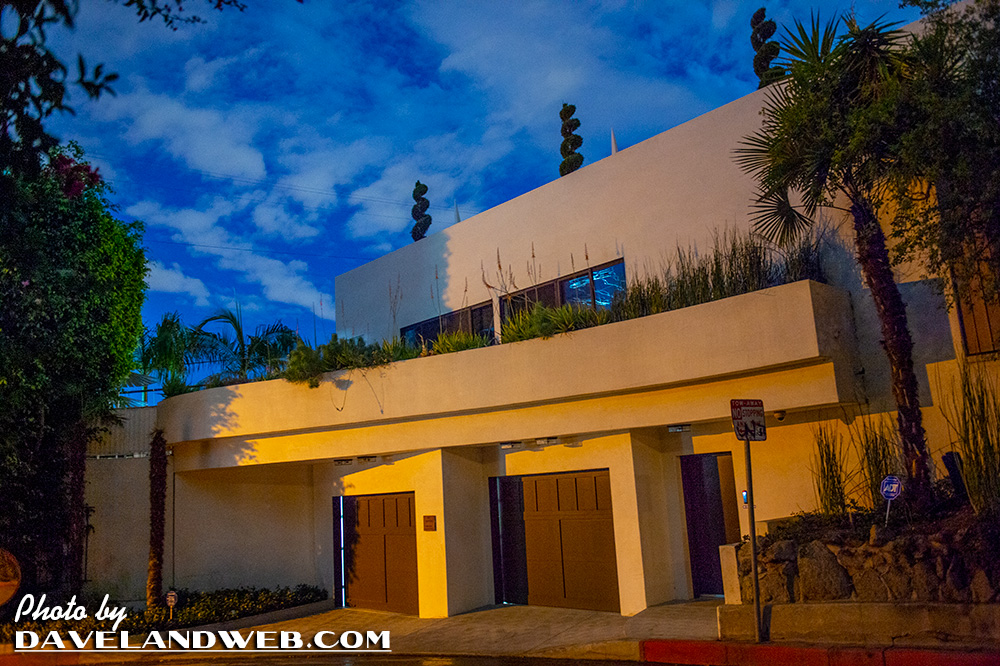
On the left, you can see the residence with two garages where the photo was taken. Because of the contemporary look of the home from the exterior, I always “assumed” the original had been torn down and replaced. We all know what happens when you “assume.”


How the home looks at street level:


I decided to go on Zillow and see if there were any photos posted that might match my 1938 image. I was surprised to see that the original 1923 home still exists; what is visible from the street was a later addition.


A Google street view from May 2009 shows what the property looked like before the expansion:


This MLS Listing image taken from farther back on the property shows the Chateau in the background as well as the original portion of the home:


I am guessing that the 1938 photographer was standing on the lawn towards the left of this detailed MLS listing image, facing the Chateau when he took the picture, where I artistically added the red stick figure! 


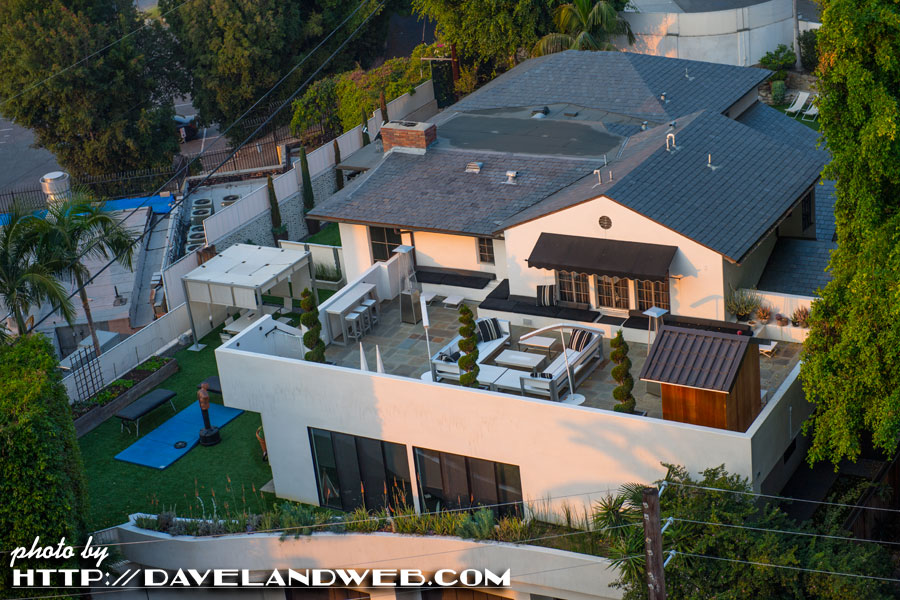
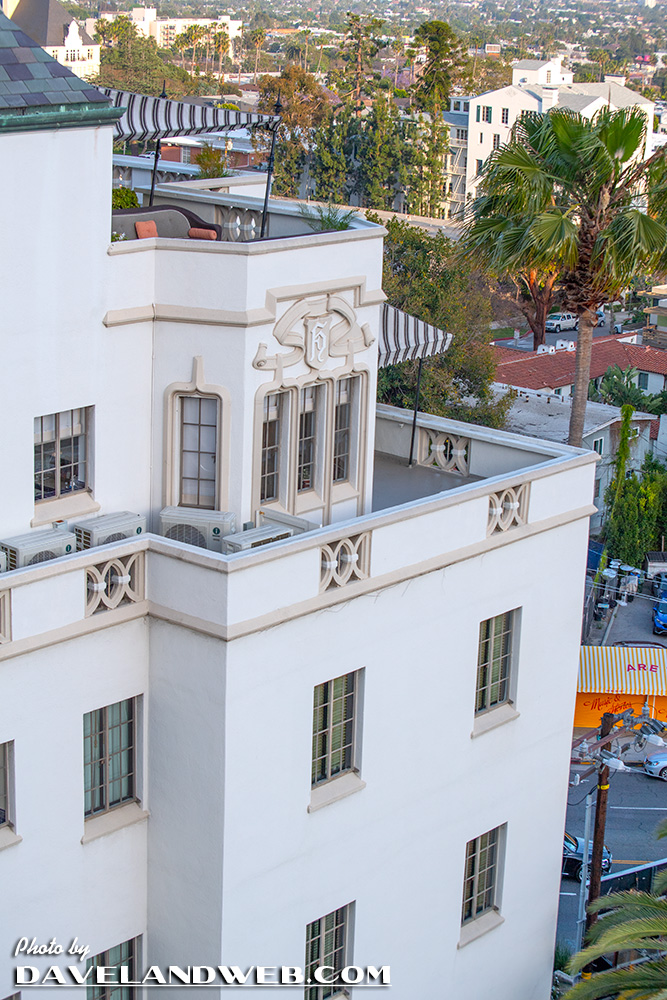
In November 2018, I snapped this overhead shot from Room 71 of the Chateau. You can clearly see the original structure and the addition:


Back to the original photo, I am guessing that the gent in the photo was either visiting or one of the people living at 8222 Marmont Lane in 1938.


The penthouse balcony was very lush in 1938 with lots of potted plants:


How it looks today:


See more vintage and contemporary Chateau Marmont photos at my main website.

Friday, September 12, 2025

The Starlight Bowl, 1955


The Hollywood Bowl is a familiar venue, with its distinctive Art Deco concentric circle design. Above is an image from 1954, showing the design iteration from Allied Architects Association, which was a colation of LA-based talent who designed public buildings. This design lasted until 2003. Below is a 1955 shot of the Starlight Bowl, located in San Diego’s Balboa Park. While the design is obviously more angular, one can’t help but come to the conclusion that it was inspired by its northern Hollywood neighbor.


Here’s the Starlight Bowl’s history from the Save Starlight website, which does prove a connection for its acoustic design with the Hollywood Bowl:

The Starlight Bowl was built in 1935 for the 1935-36 California International Pacific Exposition in Balboa Park. Designed by architect Richard S. Requa, who was the lead architect of the 1935 Expo. The bowl’s acoustical engineering was by Vern D. Knudsen, who also helped design Hollywood Bowl.


Originally called The Ford Bowl the amphitheater was built in tandem with the Ford Building (now the San Diego Air & Space Museum) as a showcase for Ford vehicles. Symphony concerts were held out of the bowl, and broadcast live from coast to cost. This was considered the artistic peak of the exposition.


After the expo closed, the symphony continued to perform regularly in the Ford Bowl along with various other events and vaudeville performances. In the late 1940’s after the Navy had taken over the park during World War II, the city renamed the facility the “Balboa Bowl” In 1946, a group of local operetta fans incorporated as the San Diego Civic Light Opera and using the title “Star-Light” they had begun performing light opera and musical comedy. The Bowl was always very popular during this time in the 40’s and 50’s, as the place to be and be seen in San Diego.


In 1955, the shows presented at the Balboa Bowl were The Mikado, Wonderful Town, Brigadoon, Kiss Me Kate, Song of Norway, and South Pacific (sorry, couldn't find a program for that one!).


Back to Save Starlight:

In 1984 “Starlight Bowl” became the official name of the facility and, the following year a major addition was designed by architect Gerald Garapich for $2 million including a stage house for proper handling of scenery (“the green box”). Soon thereafter, though, the company began a long slide away from prosperity and into deficit. Productions were cancelled and entire seasons followed. Occasional revivals faded away until September 2010, when the last scheduled show was presented. Therefore the bowl fell into neglect. 

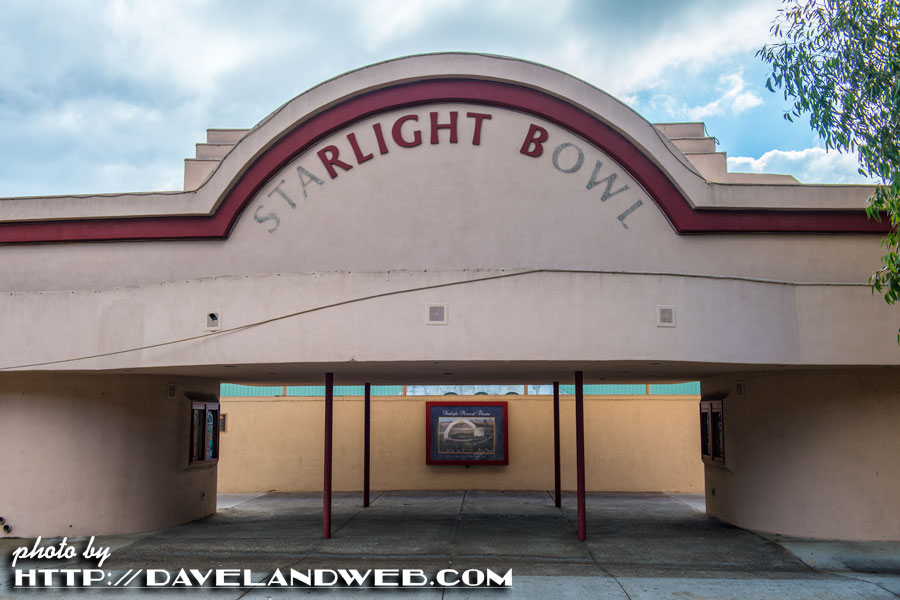
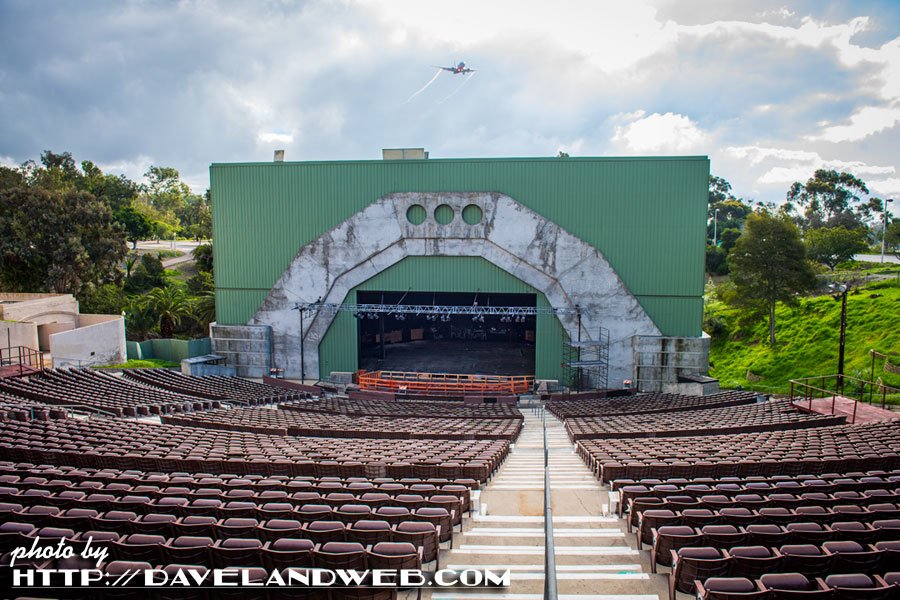
The neglect can be seen in the below photos I shot back in 2017:


That 1984 Green Box really spoiled the architectural beauty of the Bowl:


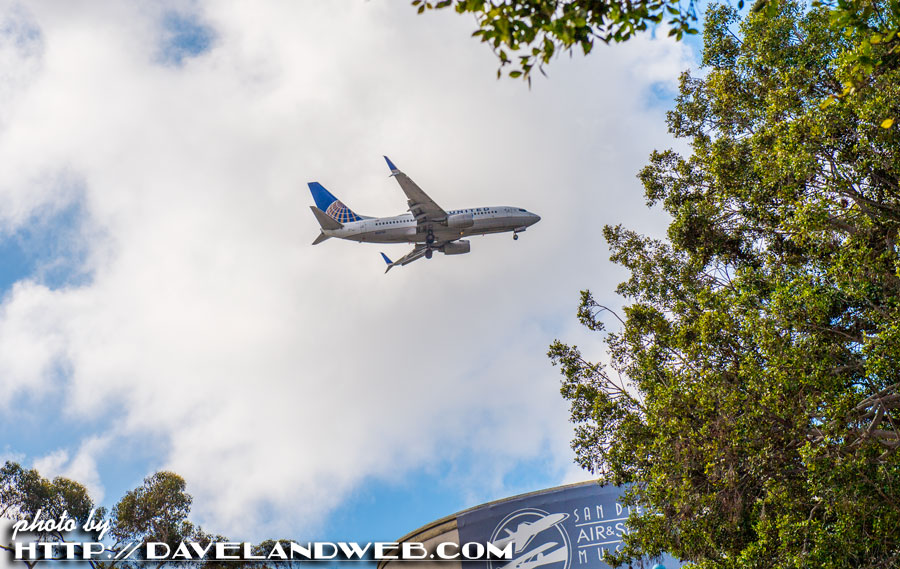
One of the main reasons the Bowl lost popularity were the loud planes that flew directly overhead, either forcing pauses in plays or drowning out whatever was going on at the time.


The commemorative sign that was placed outside the Bowl:


Recently, Save Starlight had some good news to report:

Save Starlight now holds exclusive negotiating rights with the City of San Diego to secure a long-term lease for the Starlight Bowl. This is a monumental milestone that brings us significantly closer to making renovations and full-scale programming a reality. That said, the process of securing the lease and starting physical renovations will still take several more months. In the meantime, we continue to incur operating expenses—everything from planning and legal fees to outreach, grant writing, and administrative costs.

Can it be saved? Will the already financially strapped City invest money in a venue that is located directly in the flight path of the airport? All will be revealed, as the saying goes.

In the video below, you can see a clip of the Rolling Stones playing at the Starlight in 1964. Edited from the description:

This News 8 archive footage unearthed in 2021 features the Rolling Stones arriving in San Diego for their first show in America's Finest City. The concert was part of the Stones' second tour in the United States and they played at the Starlight Bowl in Balboa Park on Nov. 1, 1964. At the time, it was called the Balboa Park Bowl. This pristine vintage video is mostly silent but captures the enthusiasm of the crowds gathered to greet Mick Jagger, Keith Richards, Brian Jones, Bill Wyman and Charlie Watts. We do get to hear the screams of the adoring fans at the show around 00:40 and even catch a few notes of their performance of the blues cover, “Walking the Dog” starting at 00:45. At the time, drummer Charlie Watts was age 23. Mick Jagger was age 21.


See more San Diego Balboa Park photos at my main website.

Tuesday, March 18, 2025

Temple Tuesday: Shirley at Shugie's


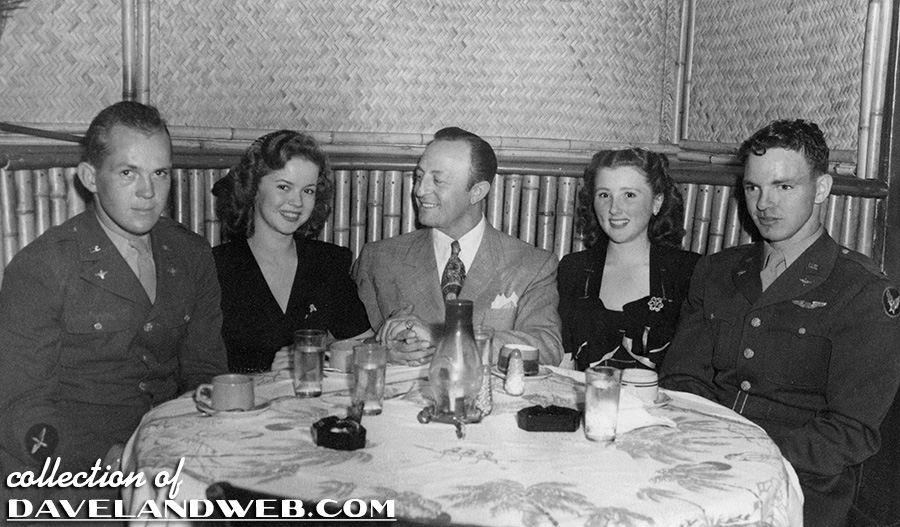
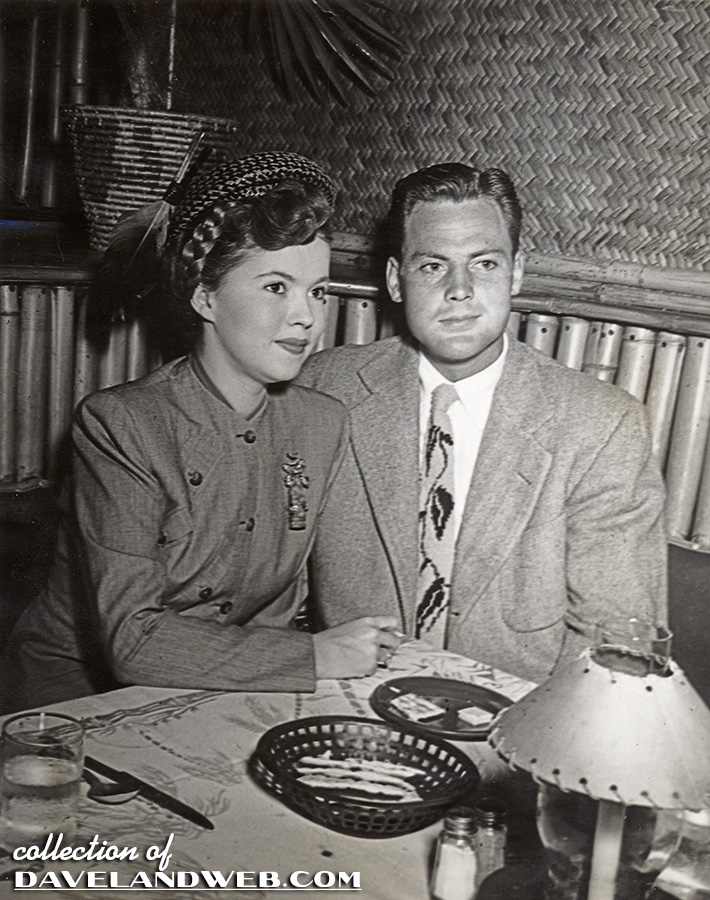
This November 1944 image shows Shirley Temple at Sugie’s Tropics in Beverly Hills, with owner Harry Sugarman in the center, sitting next to her good friend, Betty Jean Lail. The soldiers on the ends of the booth are their dates, Bob and Brown (no last names!). Betty Jean’s copy of the photo had this written on the back:

This date was all on the spur of the moment. I had been out with Gertrude [Shirley’s mother] all day long and while I was out Shirley called mother and they made the date. It was fun to go with them, but I couldn’t stand the Lt. I was with. We went to the Pladium [sp] and it was awful. It certainly isn’t my idea of a place to dance. Besides he couldn’t dance.

Shirley and Betty Jean met at the Westlake School for Girls. The photo below shows them circa 1940; Shirley is in the first row, third from right; Betty Jean is next to her, center of the row.


Their meeting was detailed in Shirley’s autobiography, Child Star, where Betty Jean was referred to as “Plump Girl”:

Struggling under an armload of seventh-grade texts, I was assigned an unoccupied seat at a broad wooden desk in the rear row, one already shared by a plump girl with red. hair. Smiling briefly, she slid sideways along our common bench to ake room, then stared fixedly into her book.…Any alien celebrity suddenly plopped into a class of eleven ordinary girls could hardly expect effusive greetings.…It was difficult to see where I fitted, let alone worm my way in.…Sole exception in this isolation was my seatmate, Plump Girl. Enforced proximity probably evoked common ground, a jolly, extroverted view of things. From the outset her companionship saved me from being a complete loner.

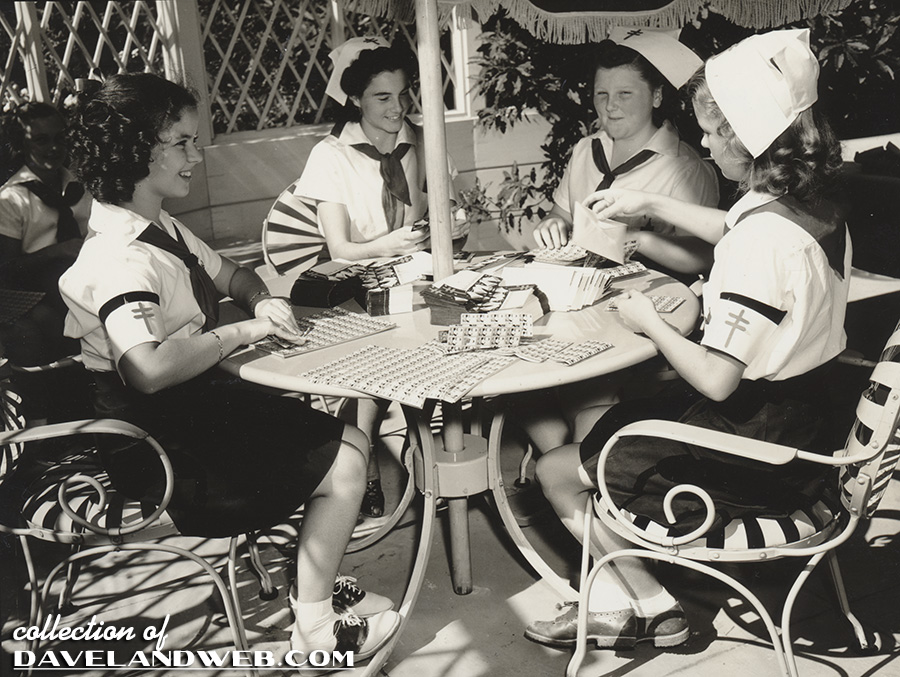
Shirley became President of the Camp-Fire Girls and is shown at home in this October 1940 image folding Christmas Seals which would be mailed as part of an annual appeal for funds to fight tuberculosis. Betty Jean is the smiling girl second from right:


The 1942 photo below shows Betty Jean standing above Shirley:


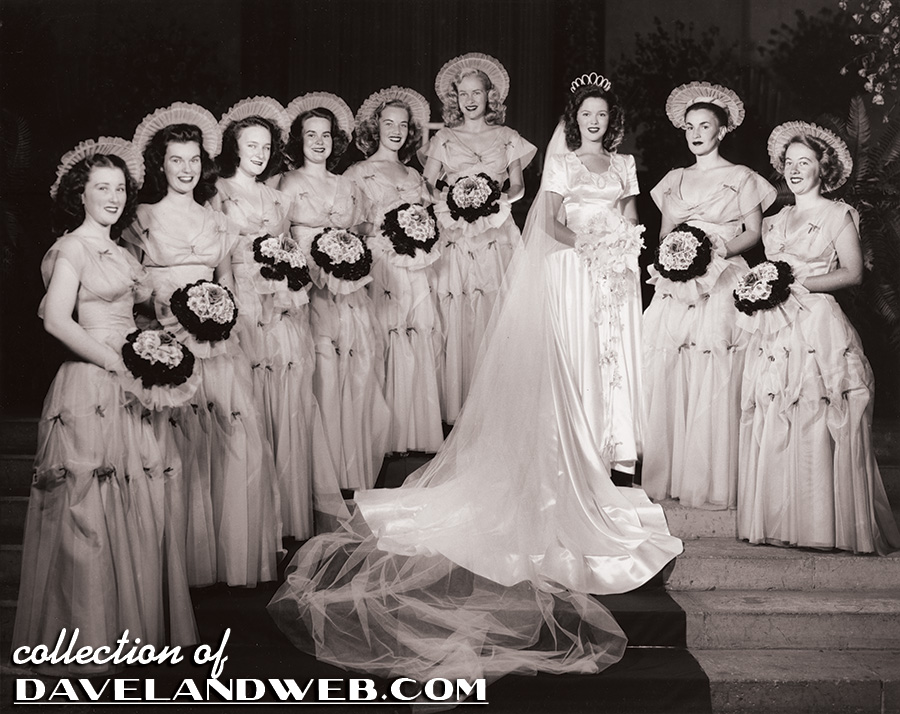
Betty Jean was one of Shirley’s bridesmaids in her 1945 wedding to John Agar. By this time, Betty Jean (far left) had dropped the excess pounds.


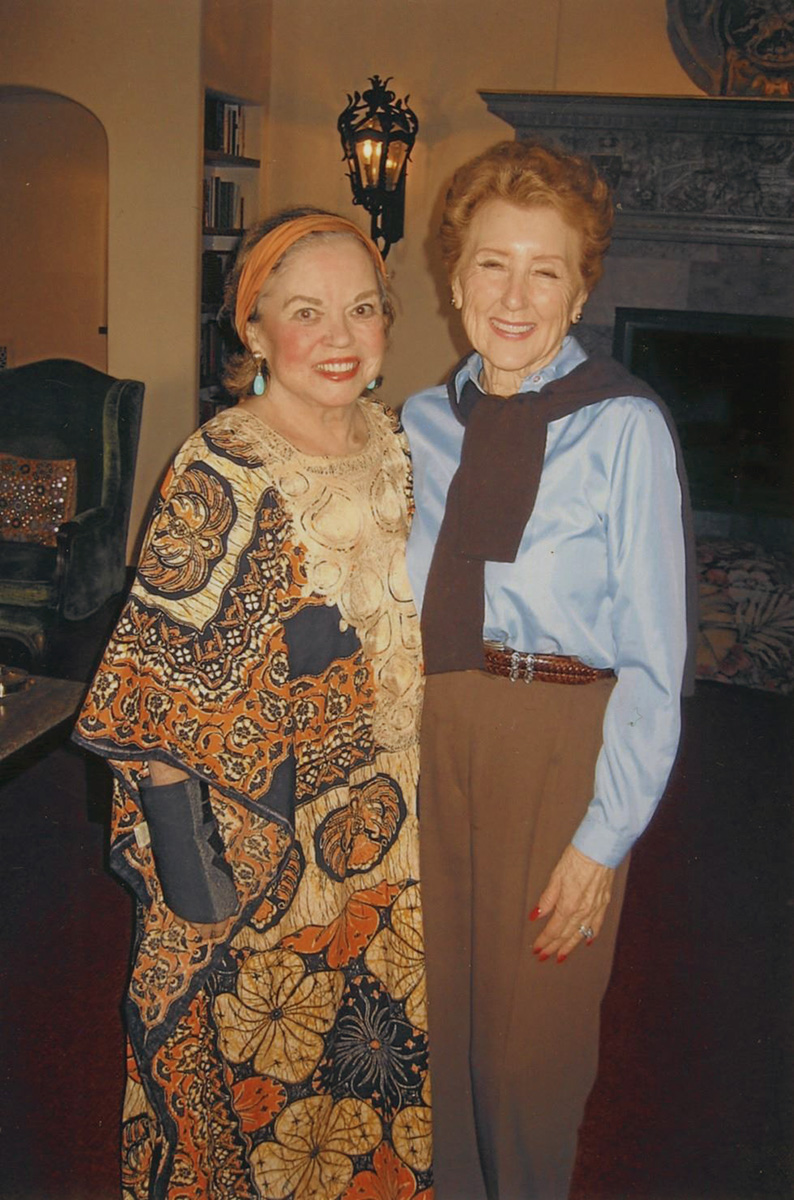
The two remained life-long friends, as can be seen in the photo below:


Back to Sugie’s…a little more than three years later after the first photo in this post was taken, Shirley and then husband John Agar were back at Sugie’s “celebrating” their third wedding anniversary, September 1948. 


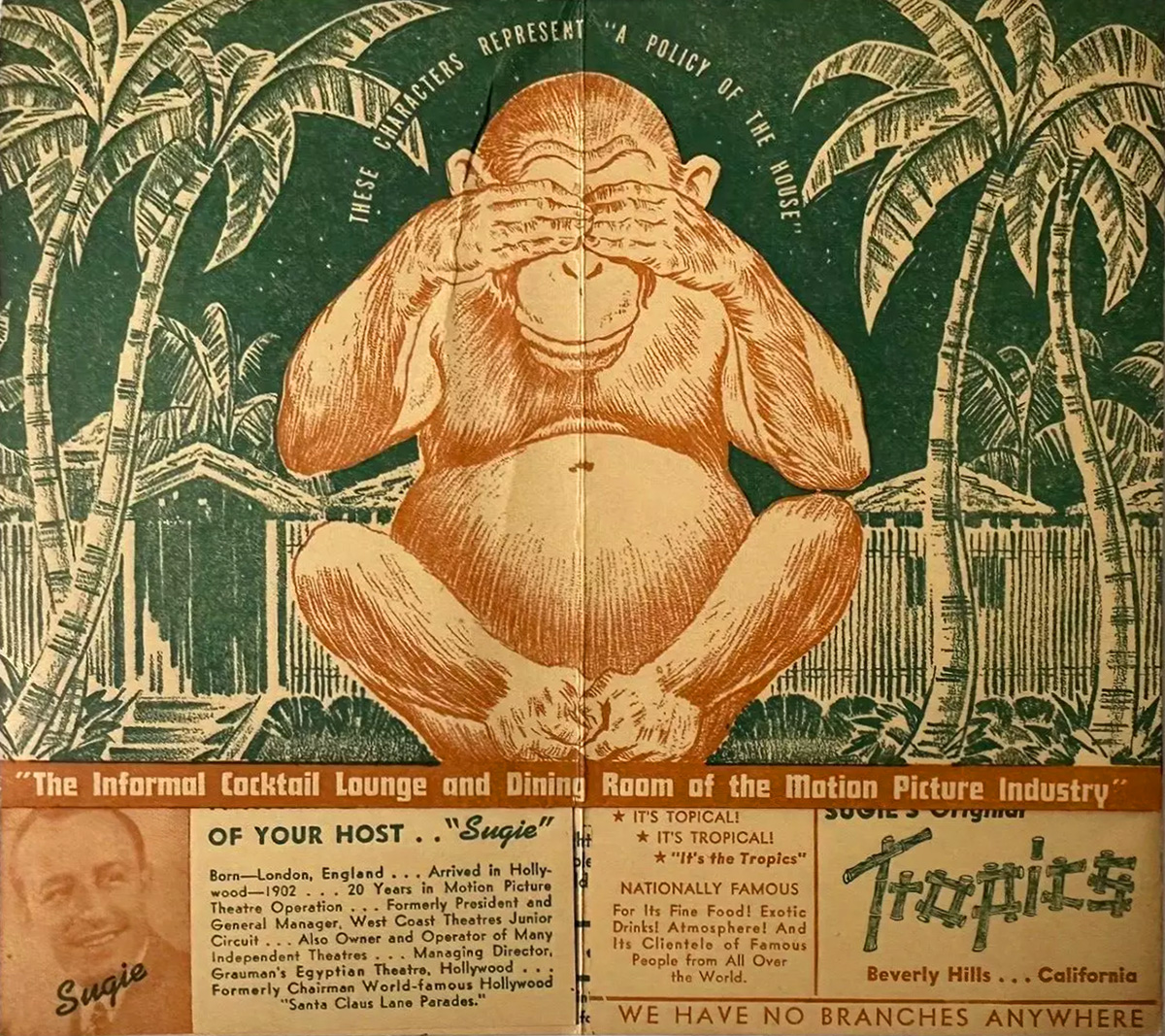
A vintage Sugie’s menu:


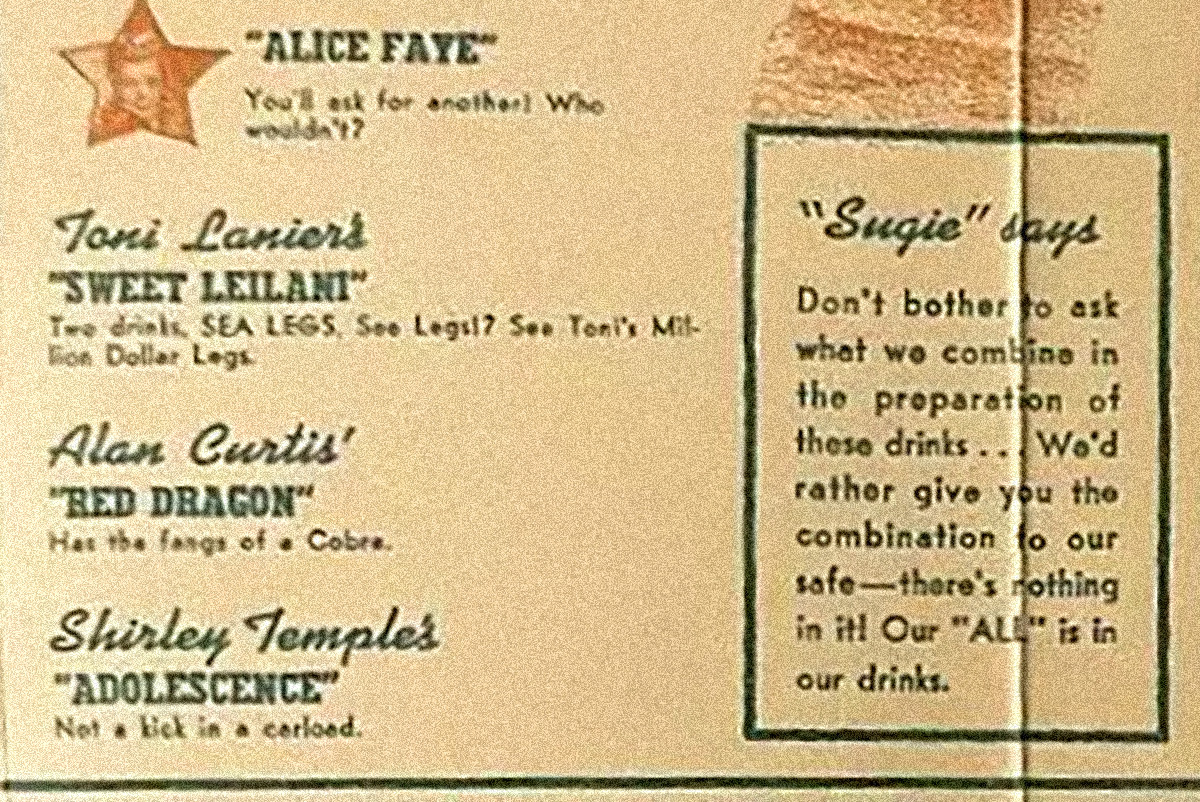
Shirley even had a drink named after her: “Adolescence,” which was described as “Not a kick in a carload.”


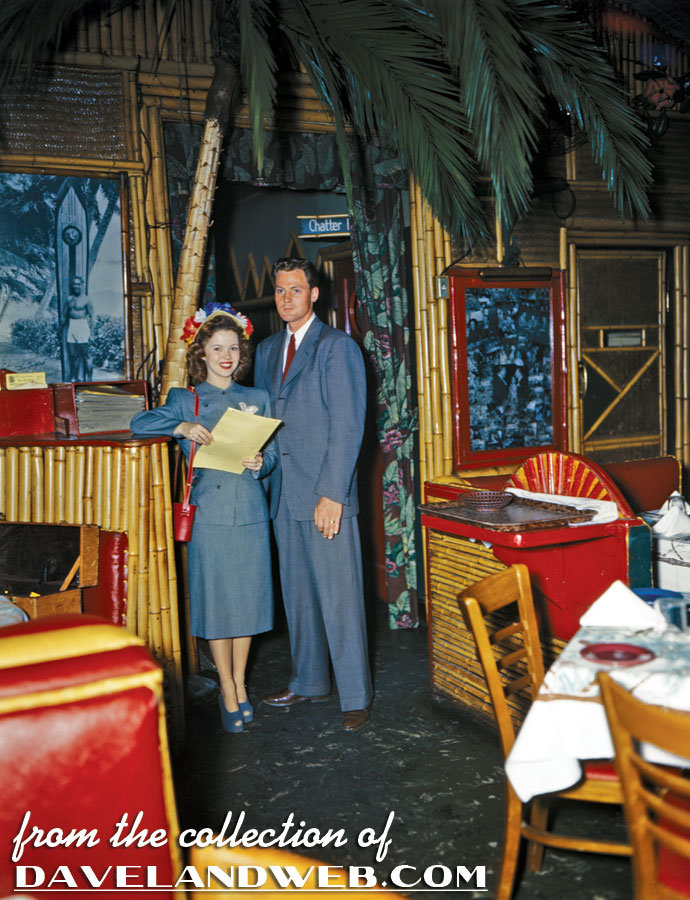
The previously posted image below shows the couple a year later, inside the Vine Street location of Sugie’s. At least Shirley is smiling this time, on the occasion of their fourth anniversary!


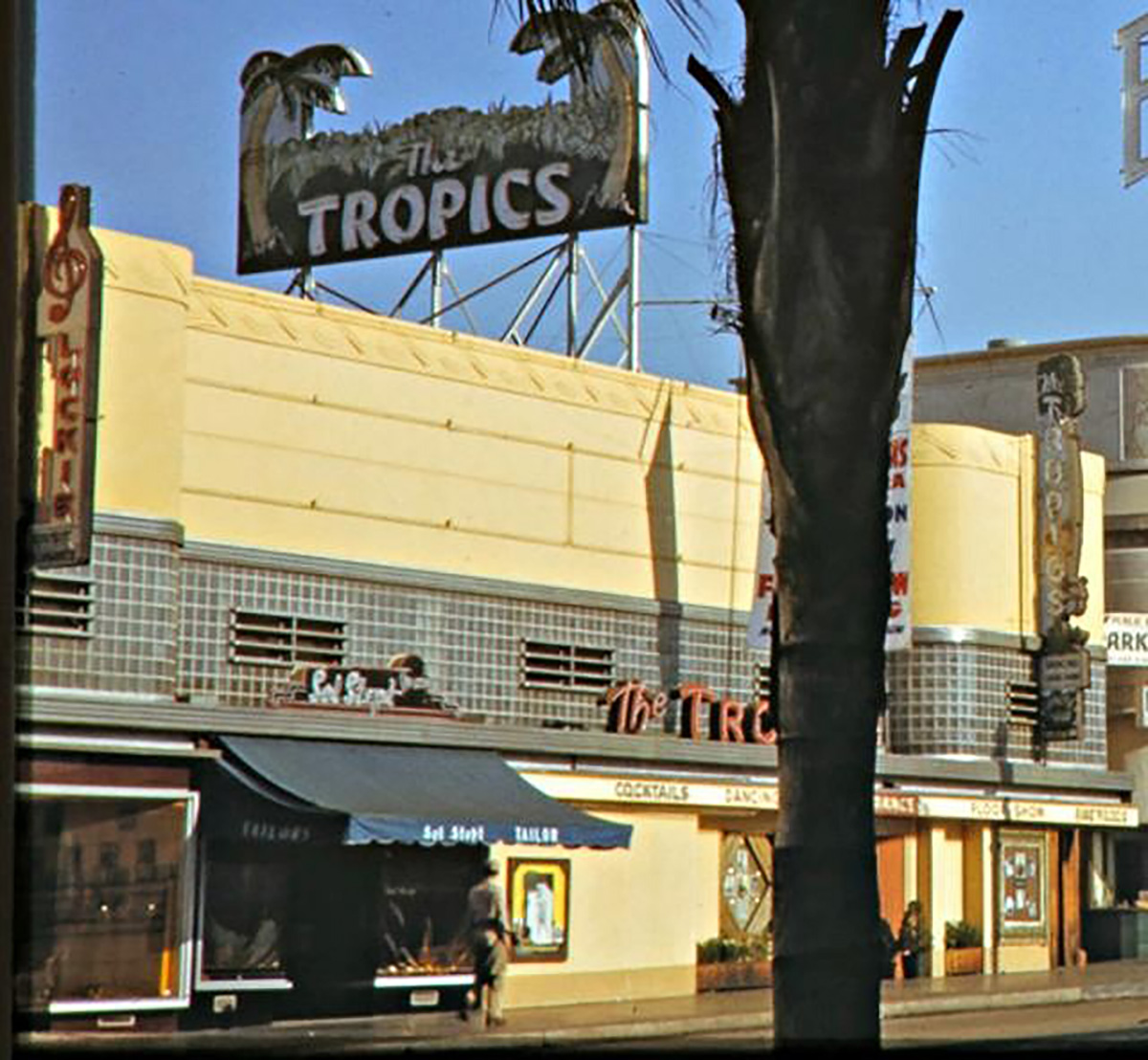
Over at Tiki Central, I found this image of the exterior of the Vine Street Tropics:


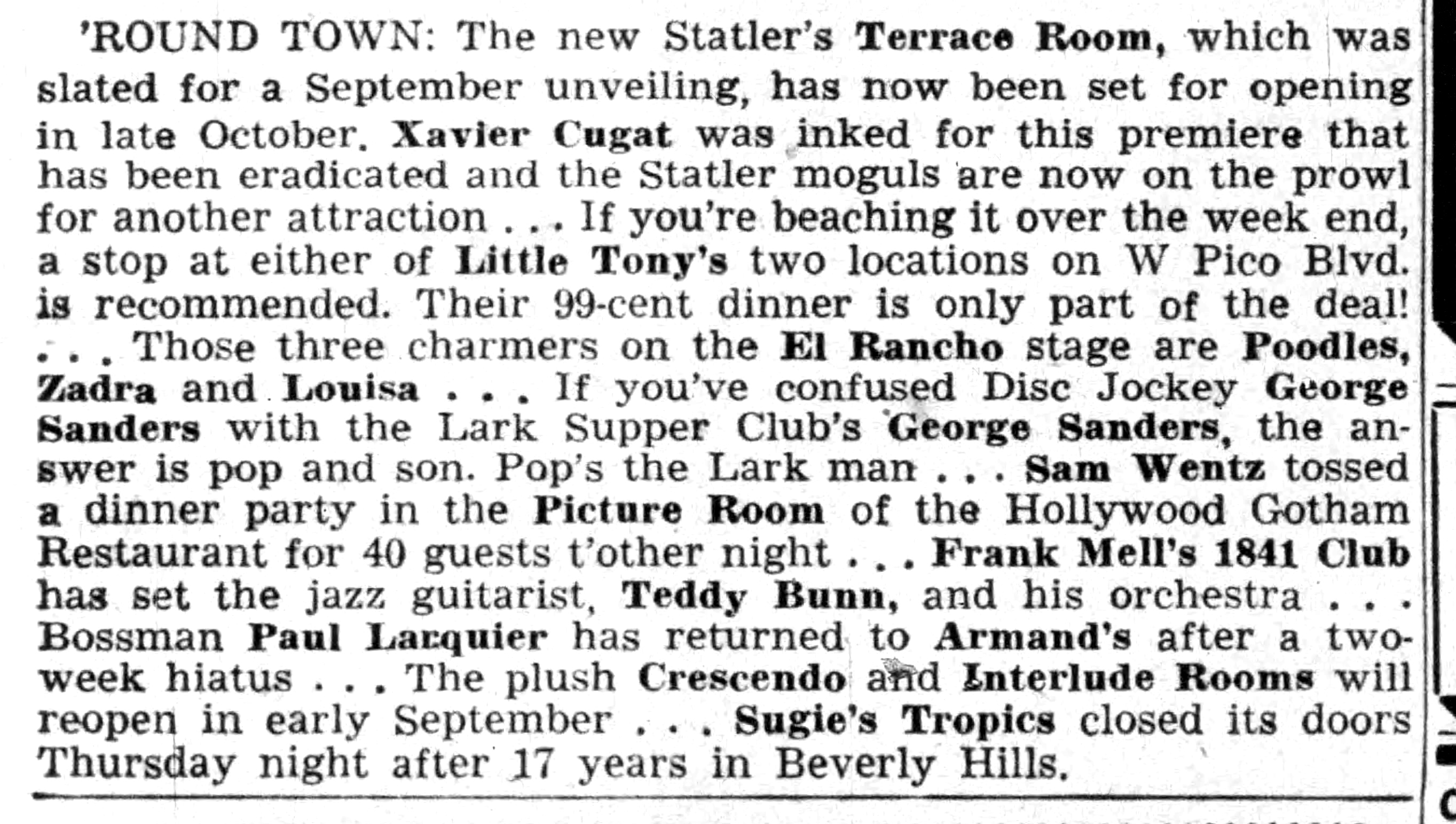
The Beverly Hills location closed on August 21, 1953, as seen in this clipping from The Los Angeles Mirror:


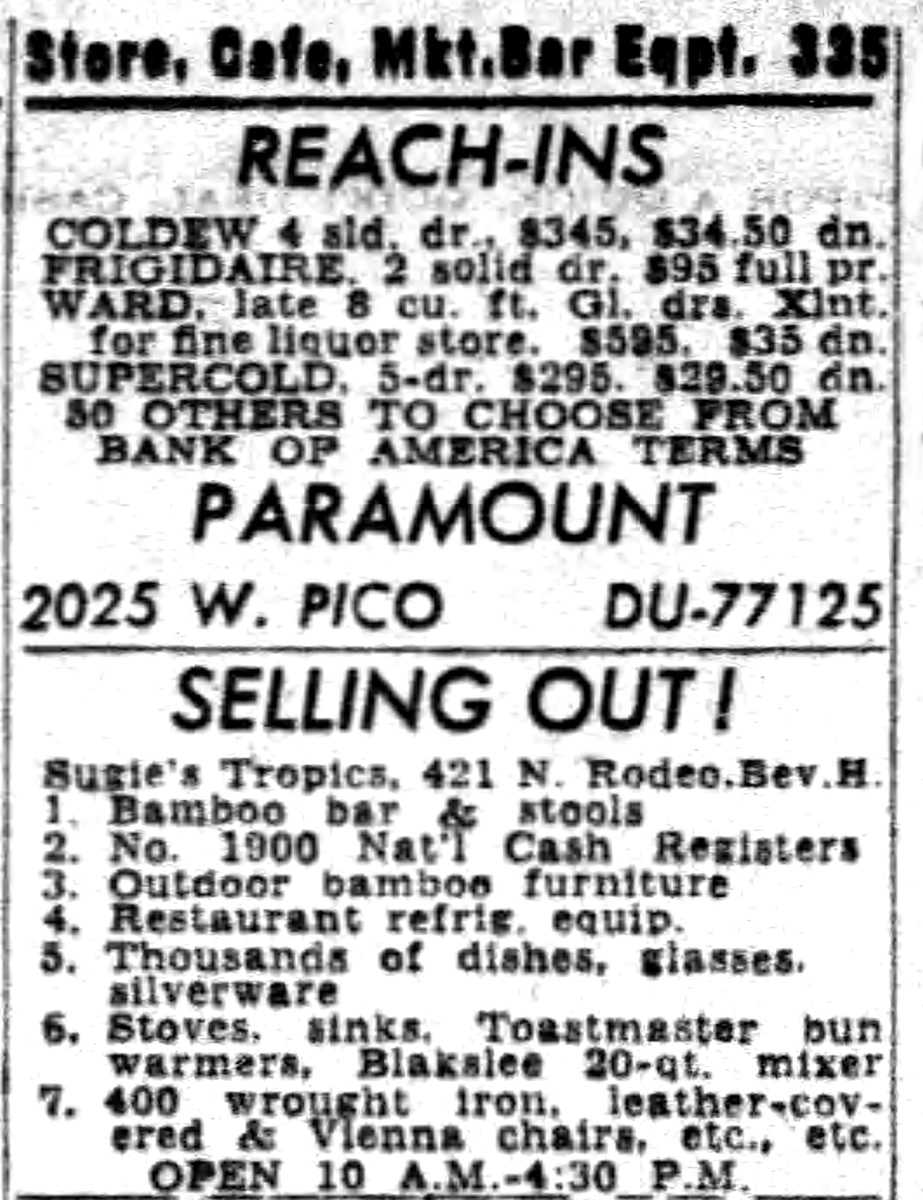
Oh, to have been able to go to this sale, advertised in December of 1952!


See more Shirley Temple photos at my main website.

Thursday, March 13, 2025

Hollywood & Vine and The Brown Derby


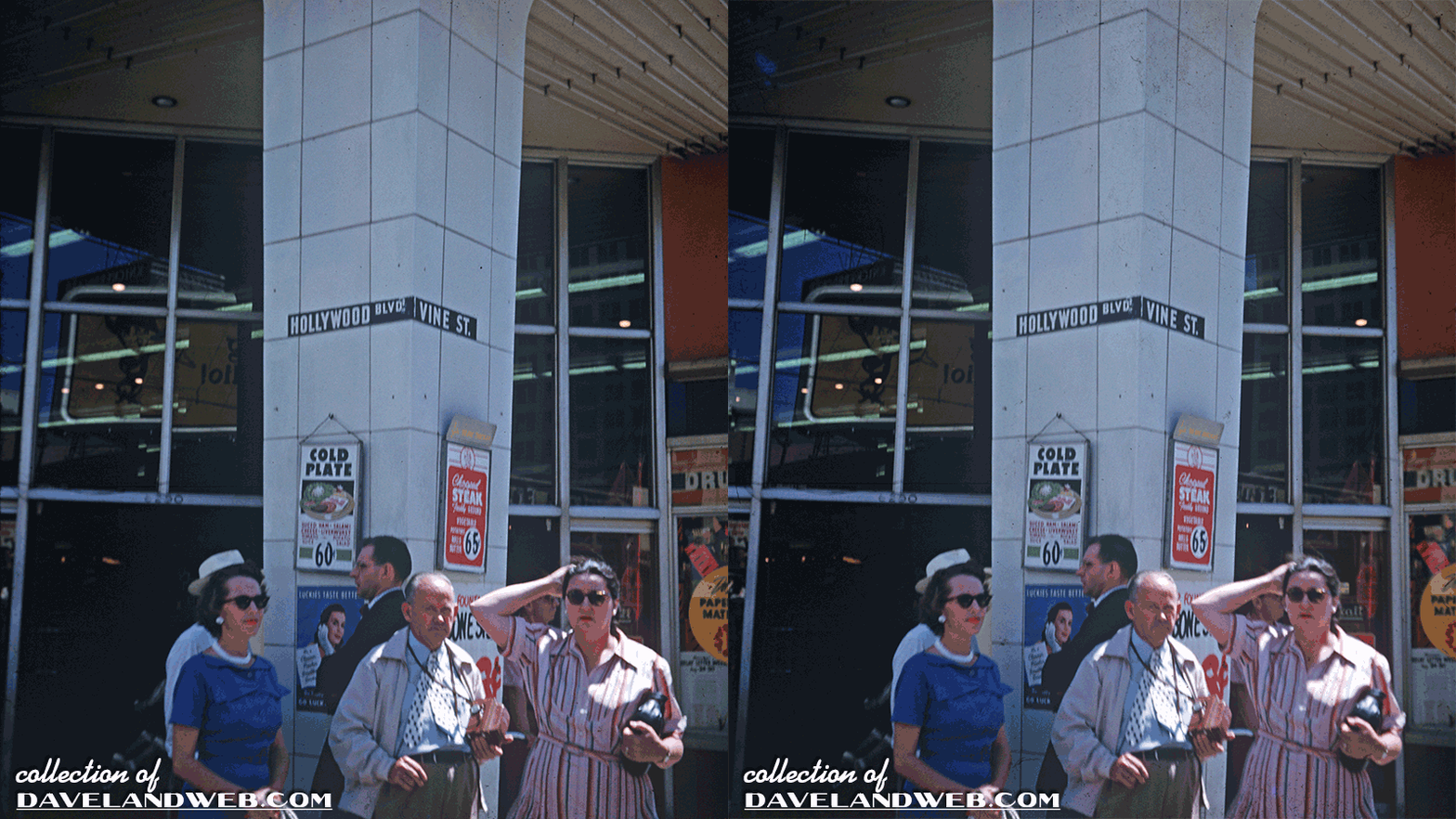
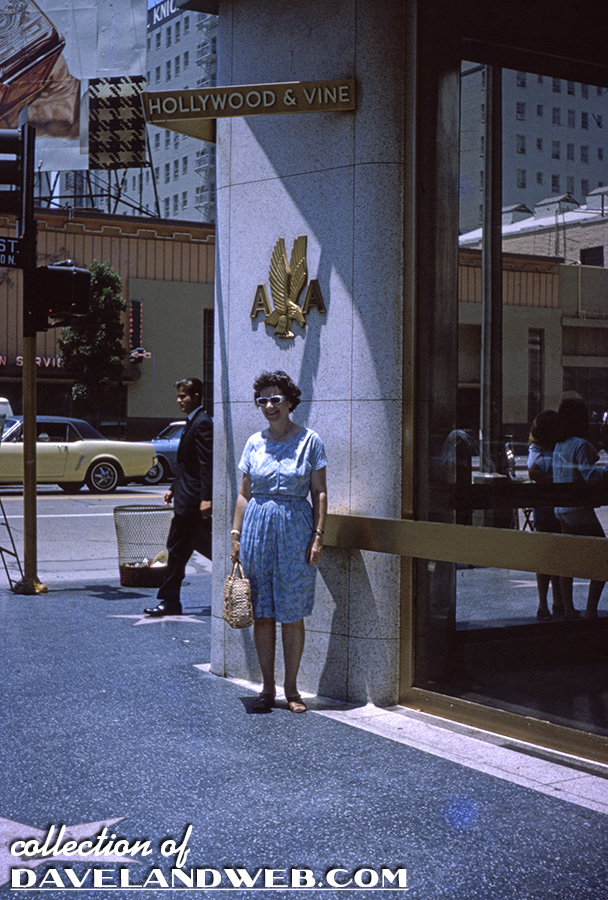
The corner of Hollywood and Vine gained fame during Hollywood’s Golden Age of the 1930s as the most popular columnists of the day would broadcast “live” from radio station KFWB. It also became the crossing point of the newly installed Hollywood Walk of Fame in 1958. Above is a genuine FauxD© shot from August 1952, followed by a static one below, circa July 7, 1966. Everyone wanted their photo taken underneath the street sign there.


Also shot on July 7, 1966 is this image taken in front of the Brown Derby restaurant, located at 1628 N. Vine Street. By this time, its original façade had been “modernized.” Yuck.


How it looked back in its heyday:


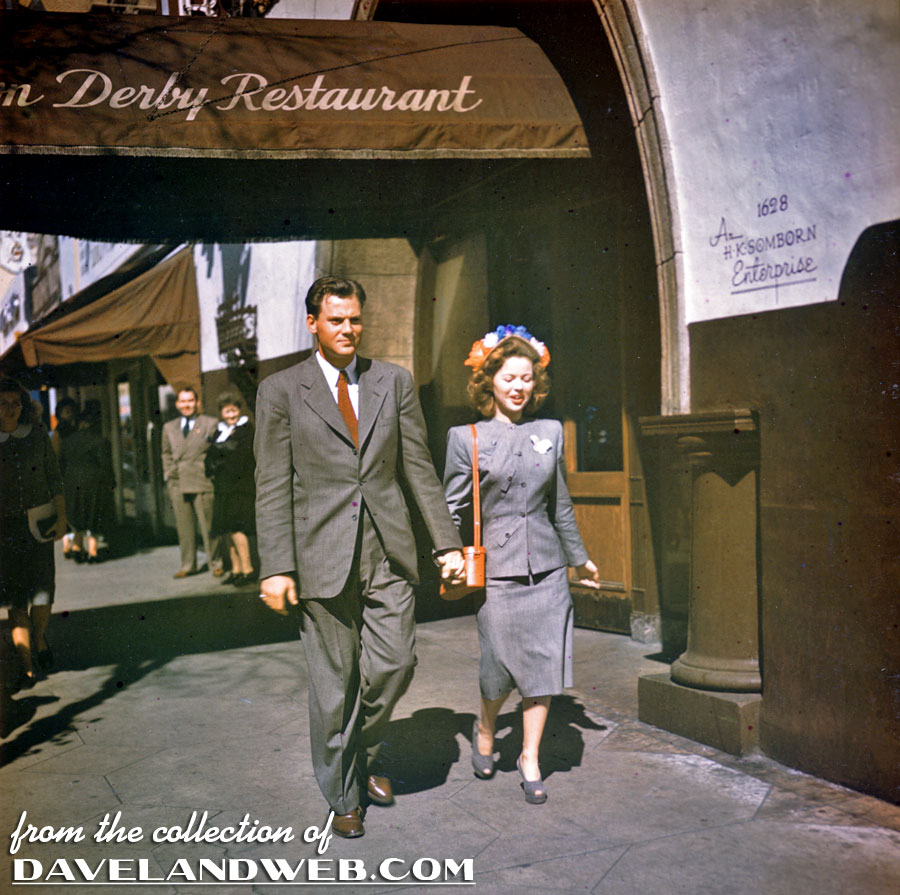
John Agar and his then wife Shirley Temple often dined there:


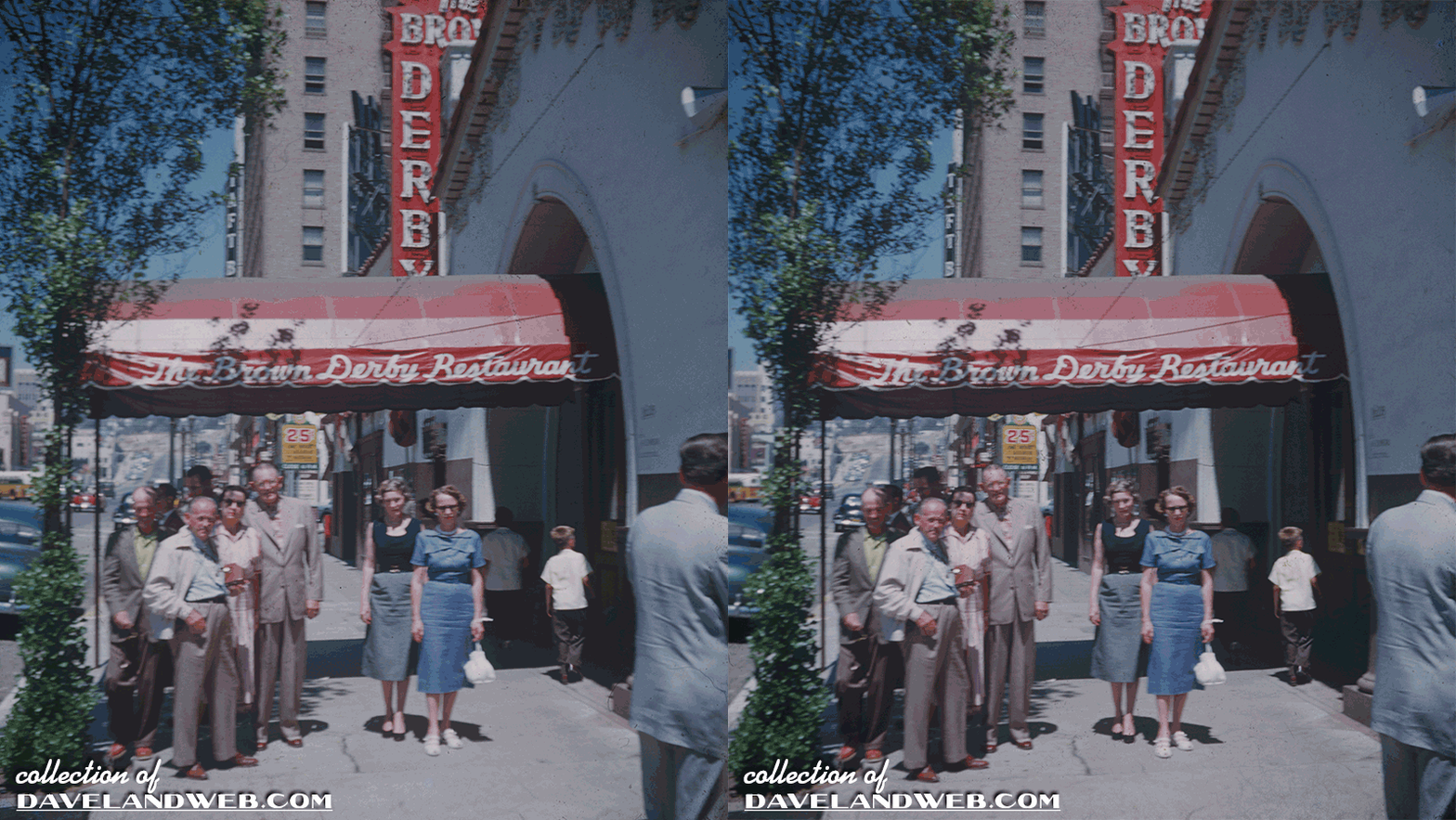
Final one for today is another FauxD© image from August 1952 taken in front of the restaurant:


See more Hollywood photos at my main website.

Wednesday, March 12, 2025

Another One Bites the Dust: Hollywood Center Motel


I recently learned that the Hollywood Center Motel on Sunset Boulevard was about to face demolition. While I had breezed by it countless times on the way to the Chateau Marmont, I had never bothered to get out and explore. With timing running out, I figured I’d better do so.
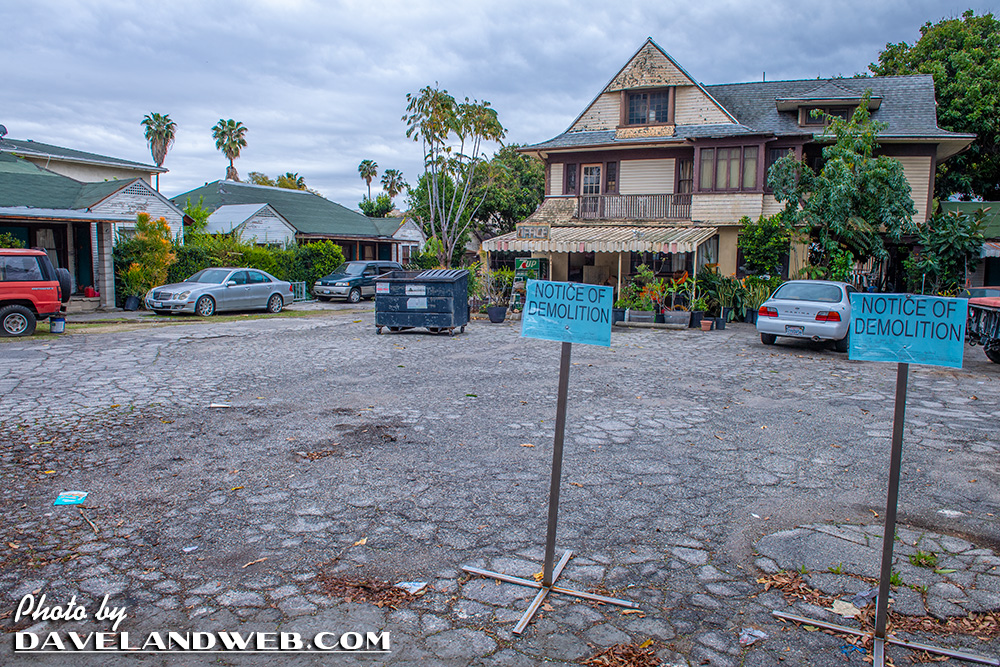


The 101 History of the motel is as follows, edited from the J.H. Graham website:

Built as a private home [around 1905], 6720 Sunset Boulevard became a bungalow court in 1922. It had been purchased by Edmund L. and Blanche Schultz. E. L Schultz had owned a drugstore chain in Denver. The couple and their daughter Jane came to Hollywood in 1920 after his retirement. In early 1922, Blanche commissioned contractor F.W. Hicks to build cottages on the parcel to create a bungalow court. The bungalows were rented as homes, not for transient guests. 6700 itself continued as the Shultz’ private residence into 1924. Edmund died in 1941, Blanche in 1945. Their daughter, Jane Sewell, became owner of the property and retained ownership into 1951 at least. Owners after 1950 made further alterations, such as converting some cottages into commercial spaces and changing duplexes to single-family use. In Fall 1951, Ernest Forssgren, owner of 6700 next door, split his parcel in half north to south and demolished the front of the building that occupied it. The back half of the building remained in place and was readdressed as 1447 Las Palmas. By 1952, Forssgren was also owner of the bungalow court. The two properties formed an L-shaped parcel with frontage on Las Parmas and Sunset. In January 1954, the property, which now included 6720 and 1447 North Las Palmas, was sold at auction. Alterations were fairly minimal. A low wall was erected along the Sunset frontage, which was later replaced by a tall breeze-block wall. In 1958, a swimming pool was installed near the west rear corner of the parcel. It became the Hollywood Center Motel around that time, addressed as 6620 Sunset.

In 1986, the Motel was the scene of a murder. From the San Francisco Examiner:

The Hollywood murder was discovered October 18, 1986, at the Hollywood Center Motel on Sunset Boulevard after an anonymous tip to L.A. police. The victim, Richard Keith Mayer, 20, a male hustler, known cocaine user and sometime rock band roadie, was found nude, wrapped in plastic bags and in an advanced state of decomposition. He had been strangled.

The suspect? Dean Karny, who was second-in-command of the infamous Billionaire Boys Club member. He had been granted immunity in two other murder cases in exchange for his testimony against the others. From the Peninsula Times Tribune:

Karny received his grant of immunity after he went to the Attorney General’s Officer in November 1984, four months after Hedayat Eslaminia’s abduction.

…but before Mayer’s dead body was found. Karny was protected under the federal witness program and went onto a new life. Not a bad deal.

It appears that the Motel was in operation as recently as 2014, maybe even as late as 2022 if you go by Yelp reviews. During the ensuing years, it continued to just sit and rot.
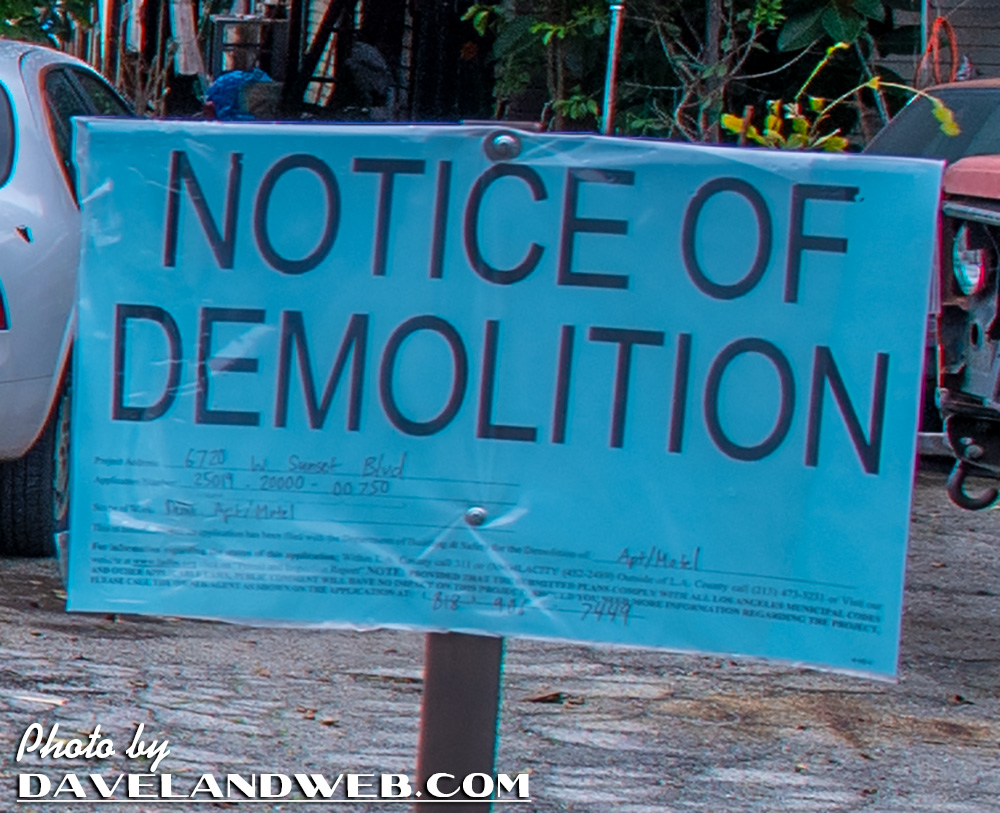


Would you rent a room here?
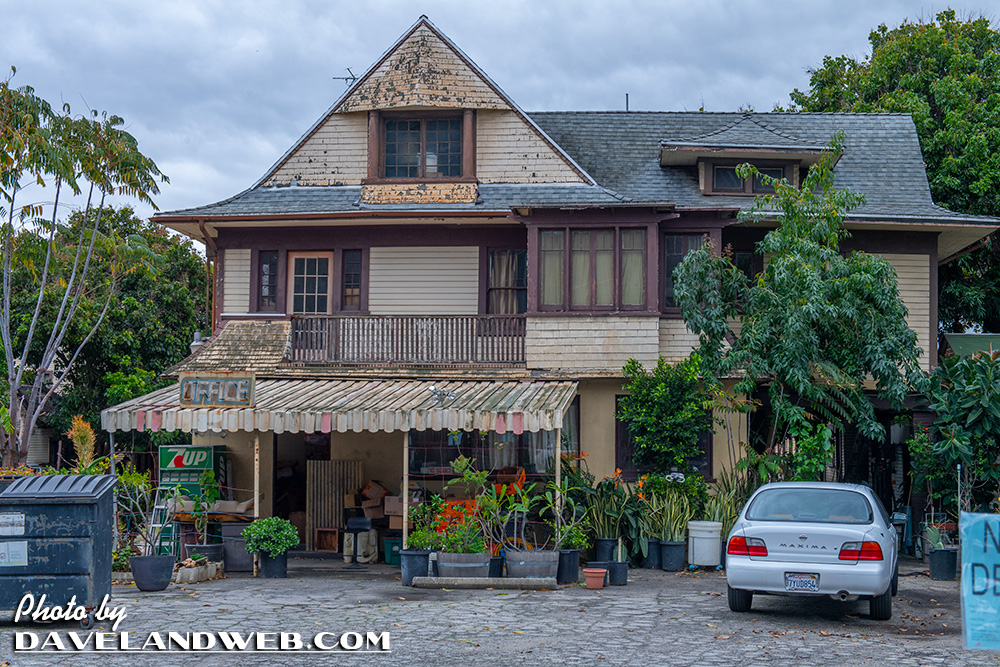


This is an episode of “Hoarders” waiting to happen. Think there’s any 7-Up left in that machine?
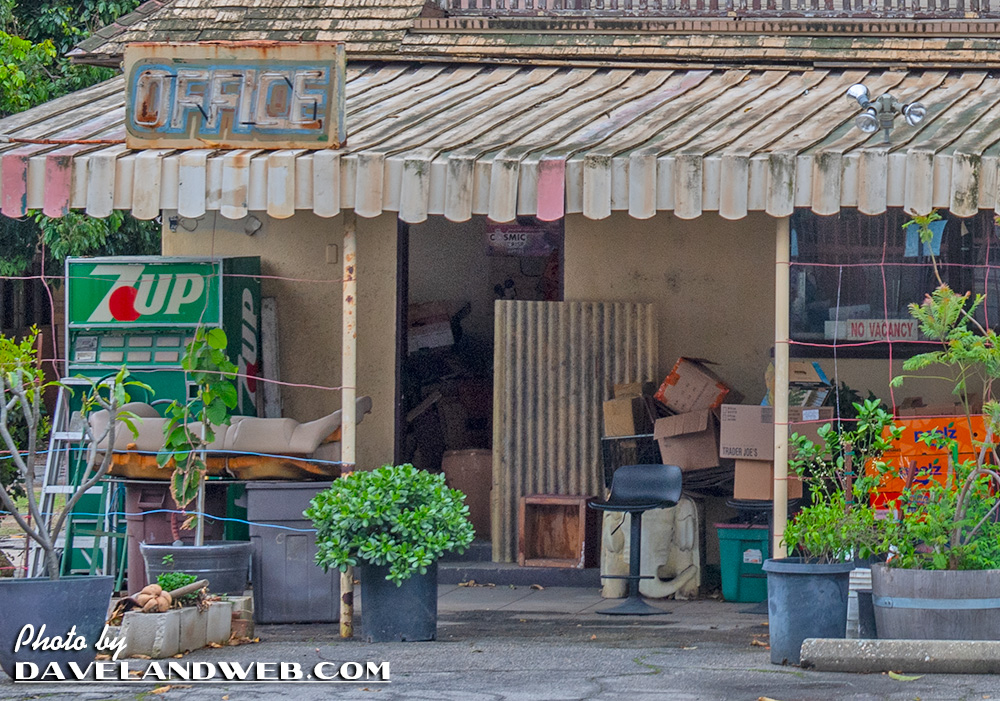


The Mercedes Benz fits in very well, don’t you think?
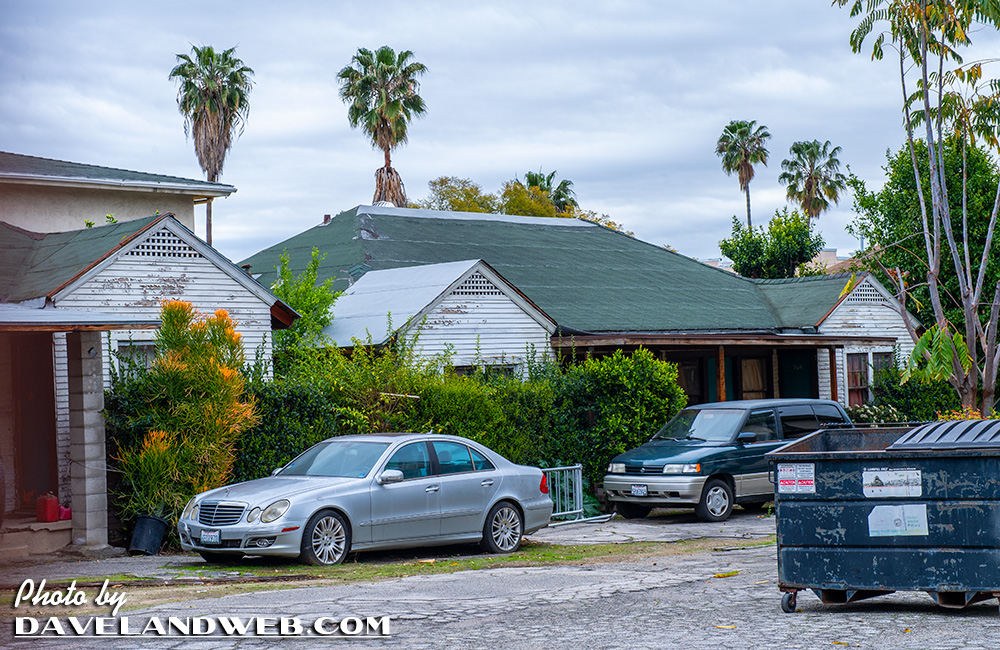


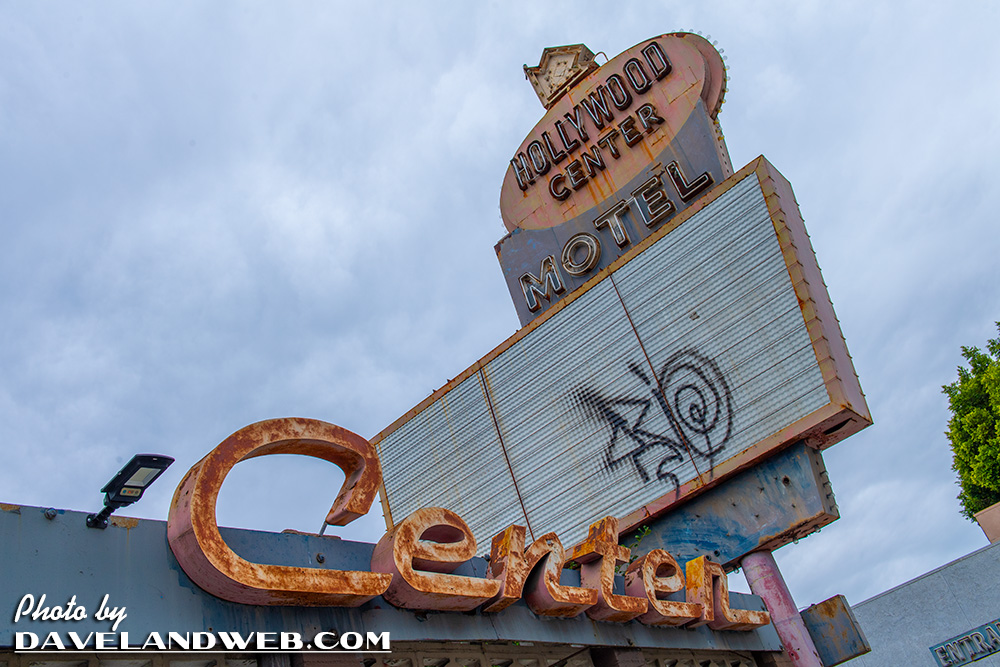
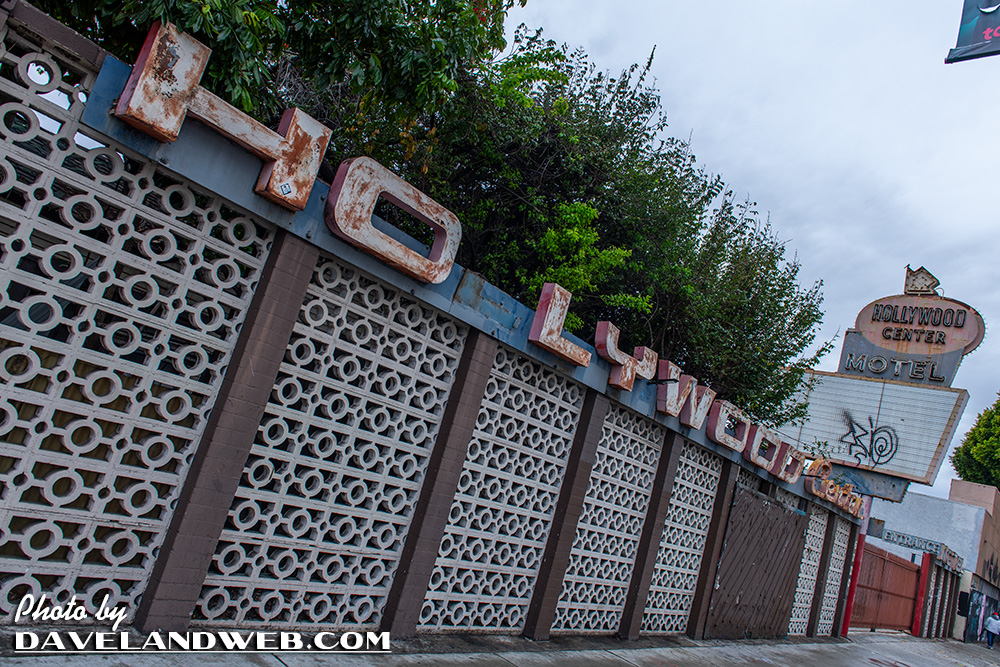
How ironic is it that the missing “L” now makes the sign read “Holywood.” Nothing holy going on here.


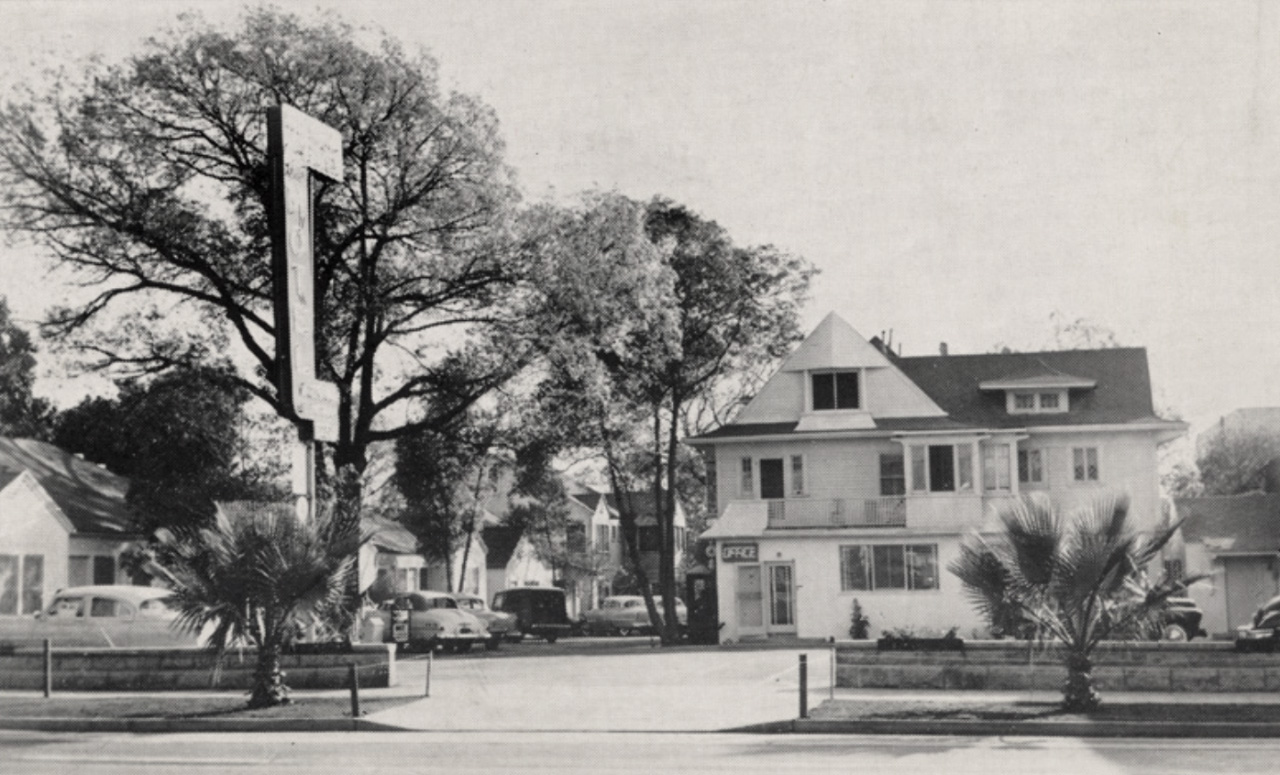
The photo below from the deadmotelsusa website shows the motel back when it was still in biz. The first shot is from the 1940s, when it actually looked respectable:


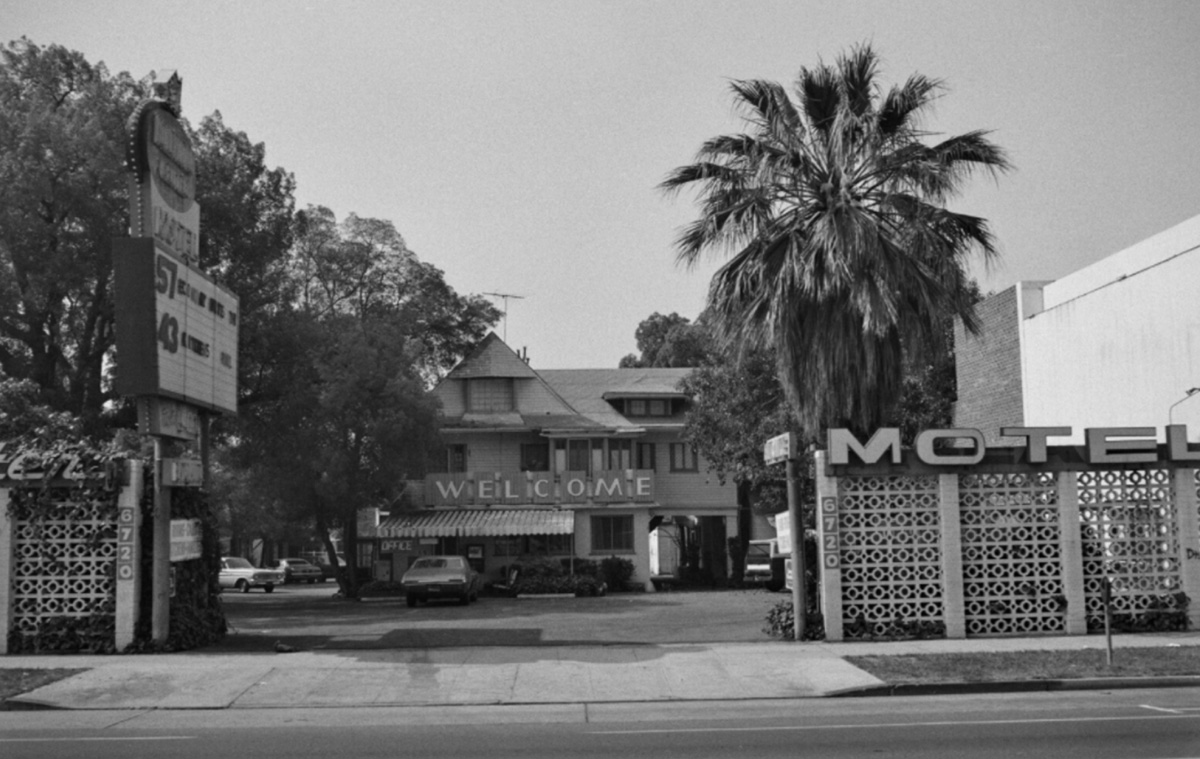
By the time of the shot below, midcentury modern elements had been added to the front while the hotel itself had become fairly worn-looking.


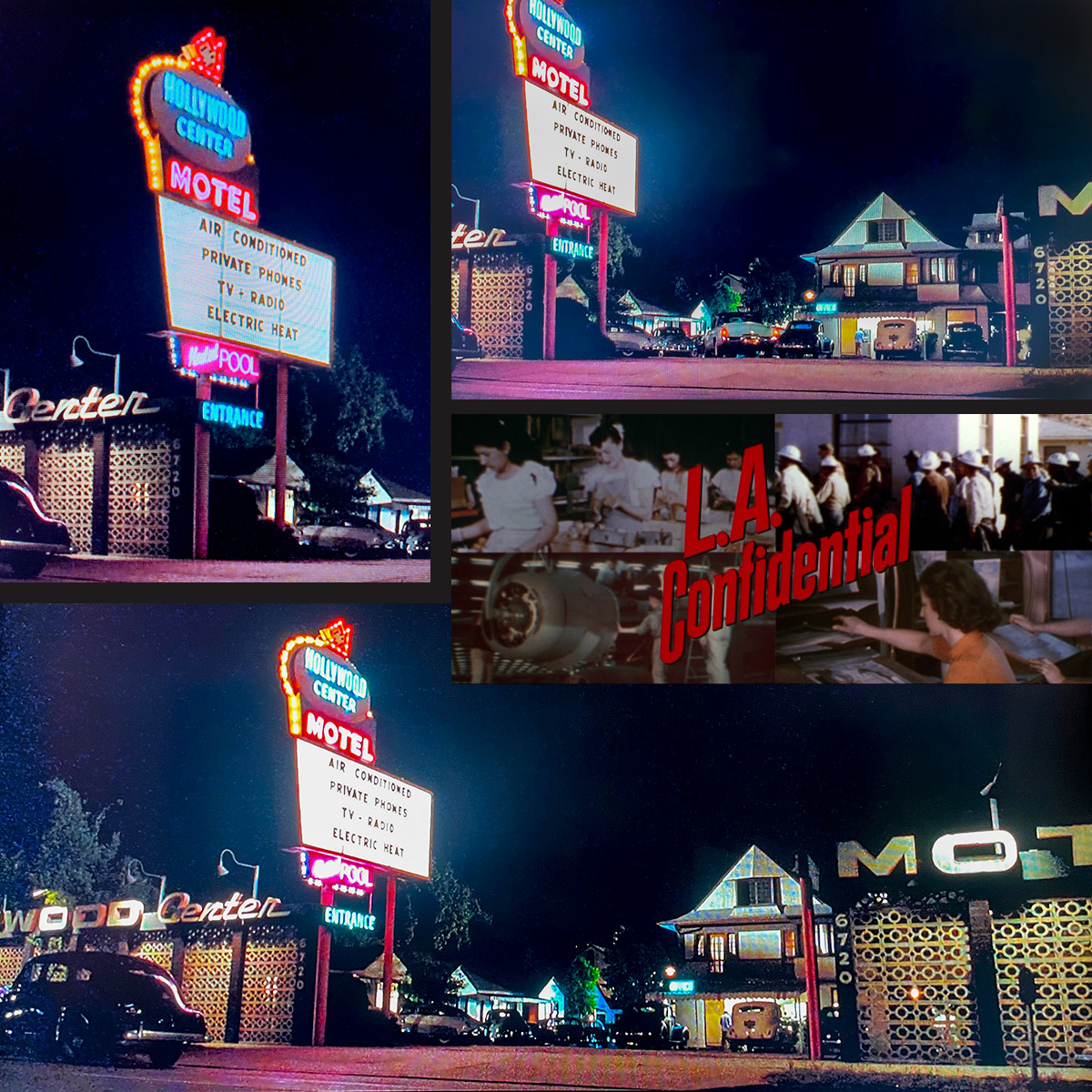
The Hollywood Center Motel was also featured in the 1997 film, “L.A. Confidential.” In a definite case of type-casting, it was used in a scene depicting a seedy tryst and murder.


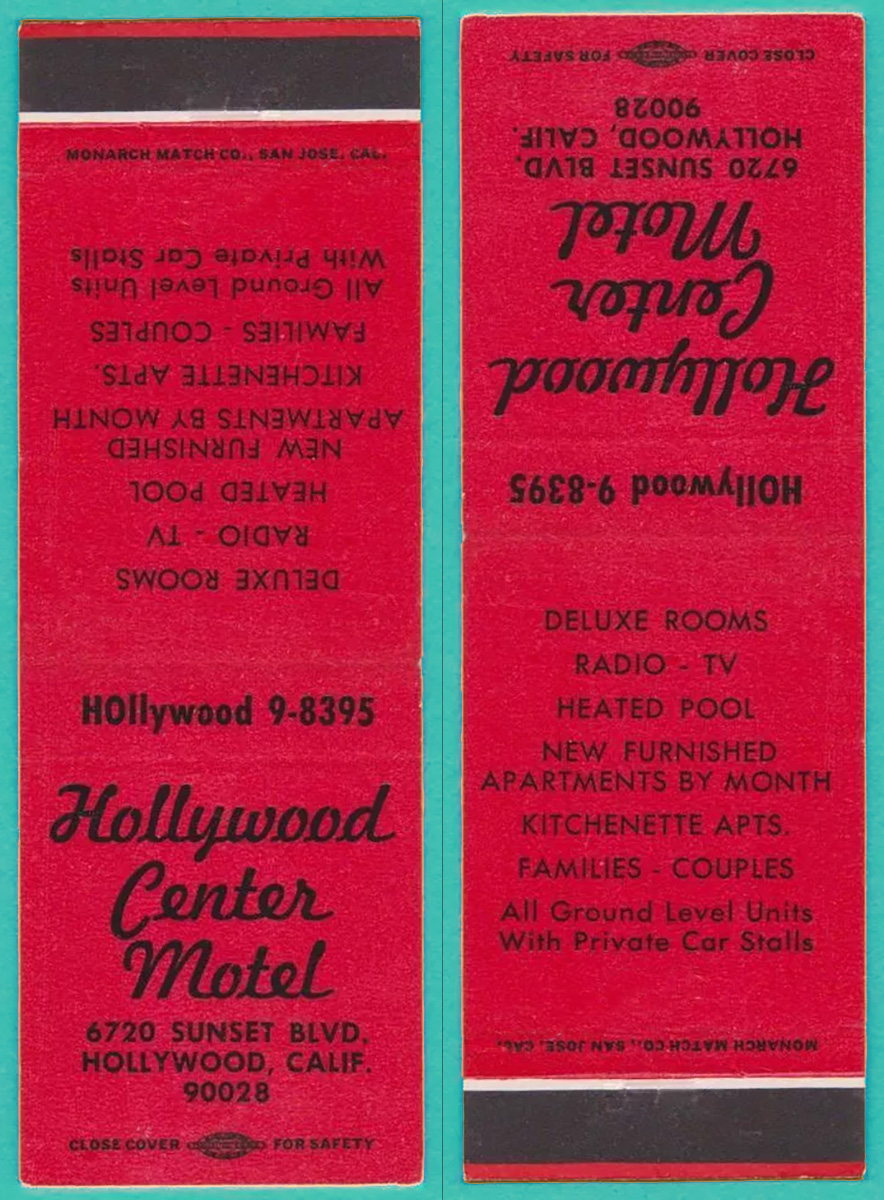
I found this matchbook on ebay; I wonder what constituted “deluxe”?


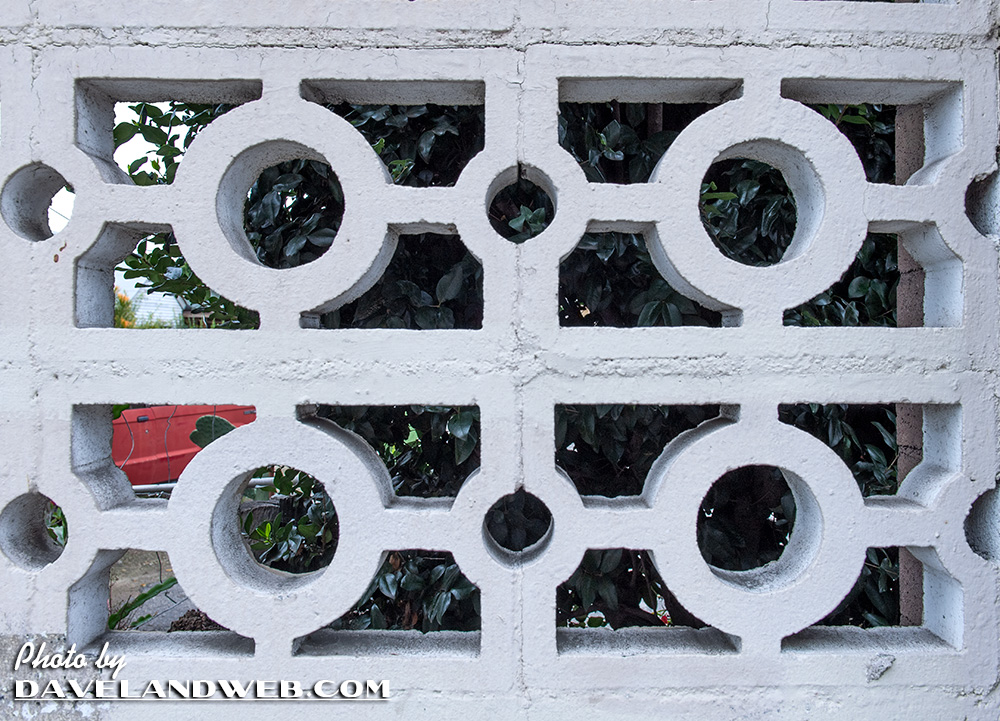
While it’s always sad for me to see history demolished, in this case (as in so many), the current property is so dilapidated, it is probably even beyond an adaptive reuse situation…unless everything is completely rebuilt, and then where’s the history? At the very least, this cool retro concrete block wall should be saved.


No date of demolition has been announced, and there are no plans as to what the property would become, either.

See more Sunset Boulevard in Hollywood photos at my main website.