Showing posts with label charles laughton. Show all posts

Tuesday, June 11, 2024

Temple Tuesday: A Lot of Bull


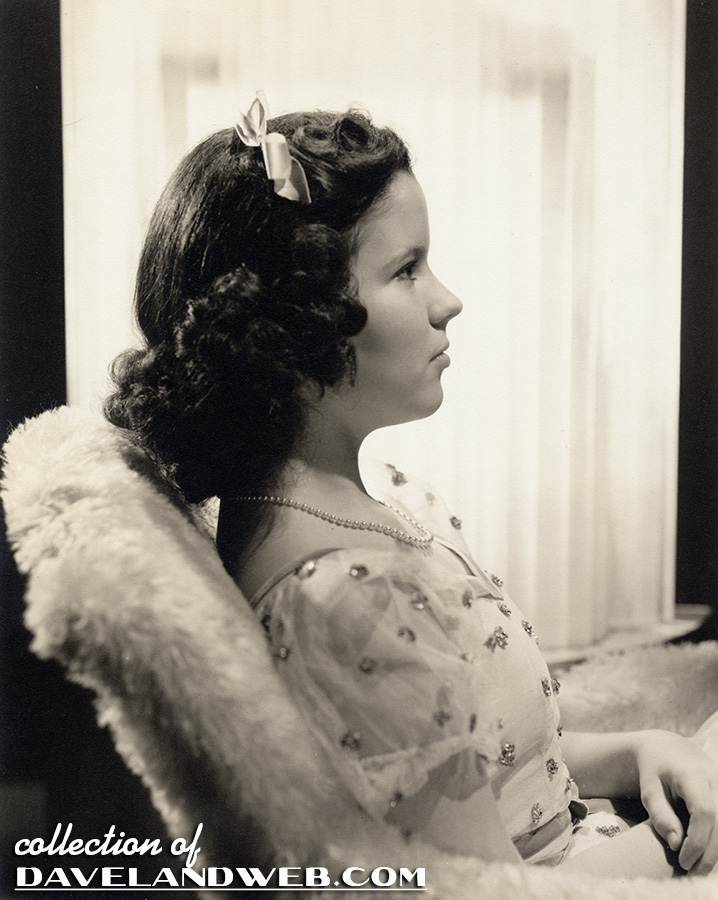
When Shirley Temple signed on at MGM in January 1941, the publicity machine wasted little time in promoting its newest star. None other than Clarence Bull was enlisted to give Shirley the glamour treatment, as seen by the portraits shown here. For a bit more about Bull, here’s an excerpt from the 2008 book Glamour of the Gods by Robert Dance and John Russell Taylor:

Clarence Sinclair Bull’s long association as a photographer with the studio that would become Metro-Goldwyn-Mayer began when producer Samuel Goldwyn hired him in 1919. Managing to survive the commotion of the consolidation of Hollywood in the early and mid-1920s, Bull found himself at the helm of MGM’s stills department when the studio was formed in 1924, and stayed there until retiring in 1961. The enormity of MGM’s output of films in the 1920s—they advertised a new feature every week—saw Bull’s domain grow. He was responsible for managing MGM’s staff of photographers and the large support crew of technicians needed to develop, re-touch, print and collate the hundreds of thousands of prints distributed annually by MGM’s publicity department. At least one photograph from the 1920s shows Bull with twelve stillsmen who juggled the task of shooting photos on as many as a dozen films that might be concurrently in production. At MGM, like the other studios, these men—and it was an almost exclusively male profession—worked six days a week and often long hours each day. Generally one photographer was assigned to a production and, as filming was underway, he would document each scene using an 8 x 10 view camera. These cameras not only had lenses with sharp resolution, but contact prints could be made from the negatives quickly and in enormous quantities. The stills made for each film were numbered sequentially and gathered together for a book. Stills photographers also created the images used for poster art, lobby cards and other forms of advertising conceived by imaginative publicity chiefs and their staffs.

The first photo was numbered 5241; the one below 5245:
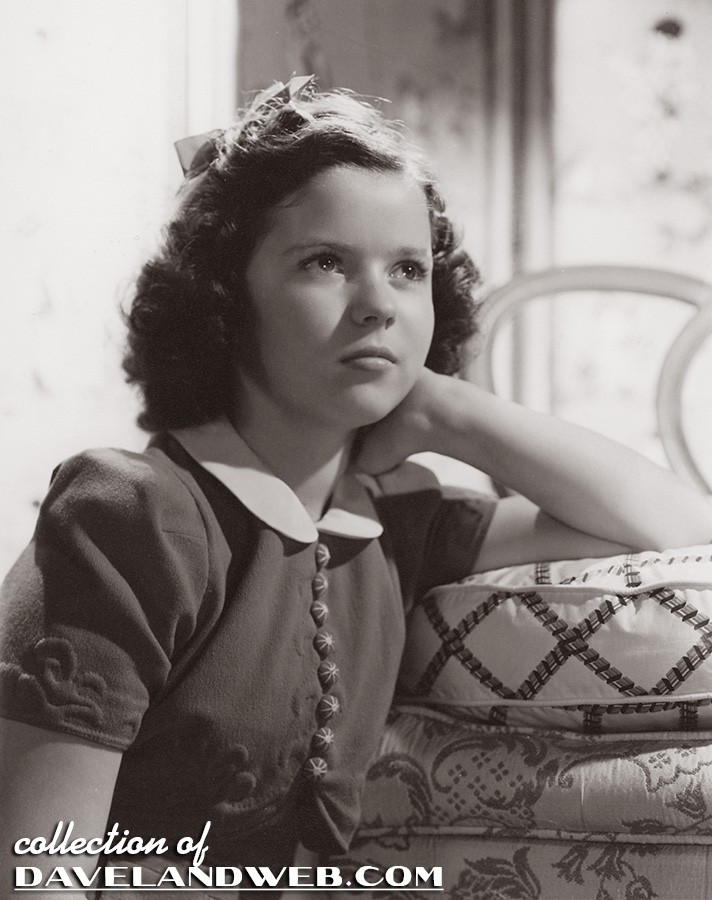


5257:
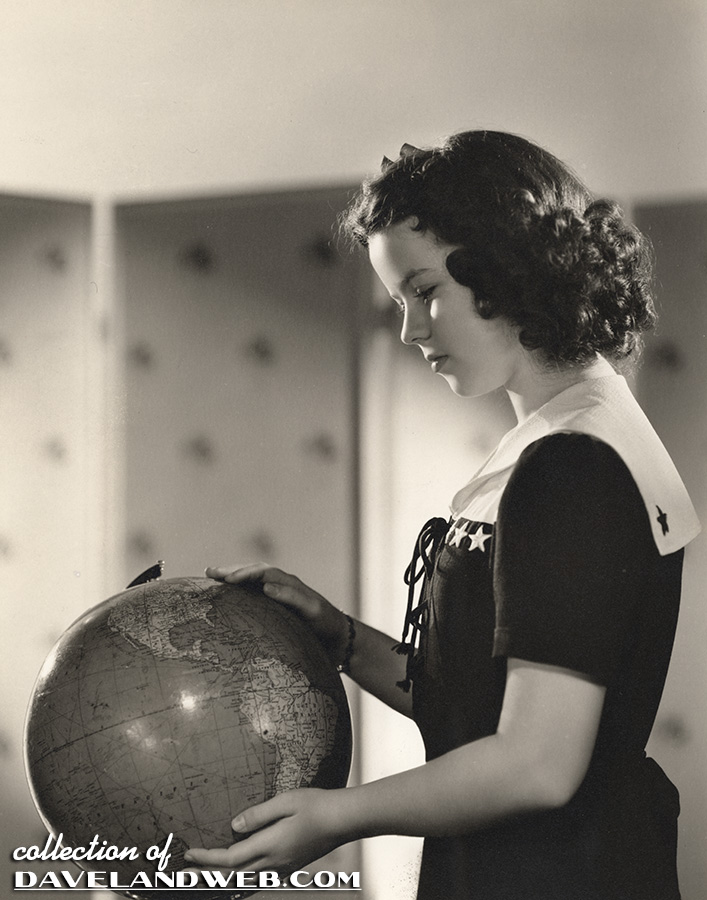


5266:
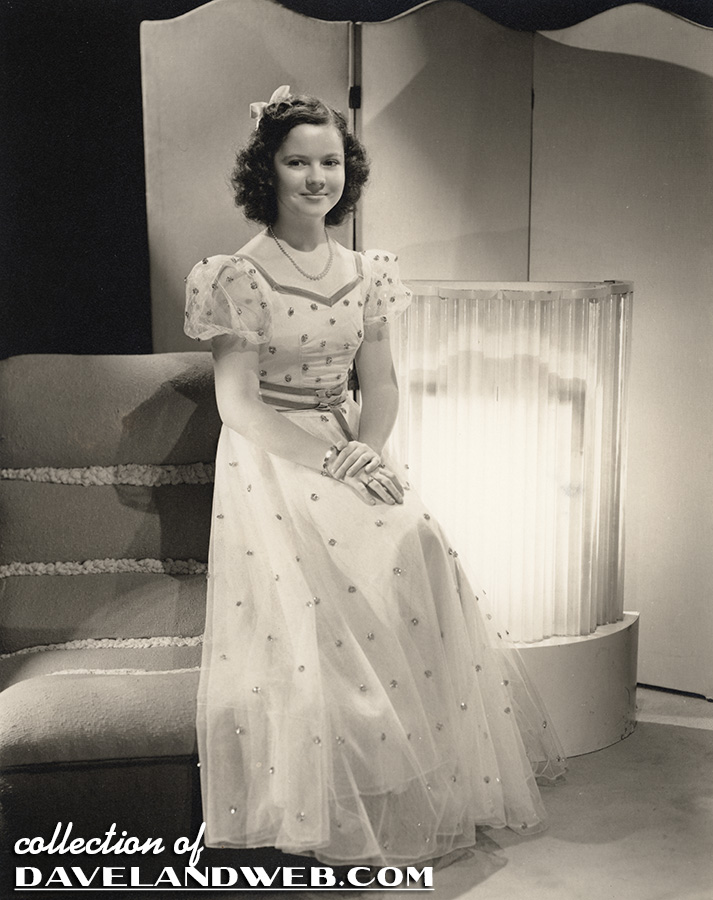


For SJR, I knew you’d want to see this detail:
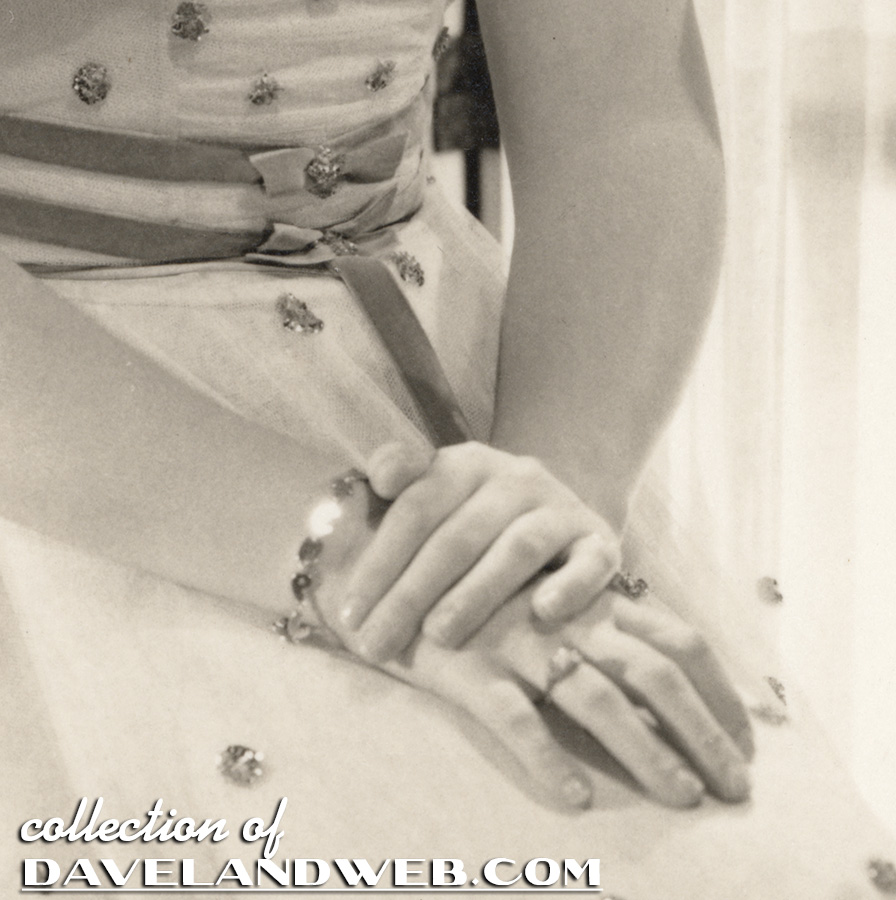


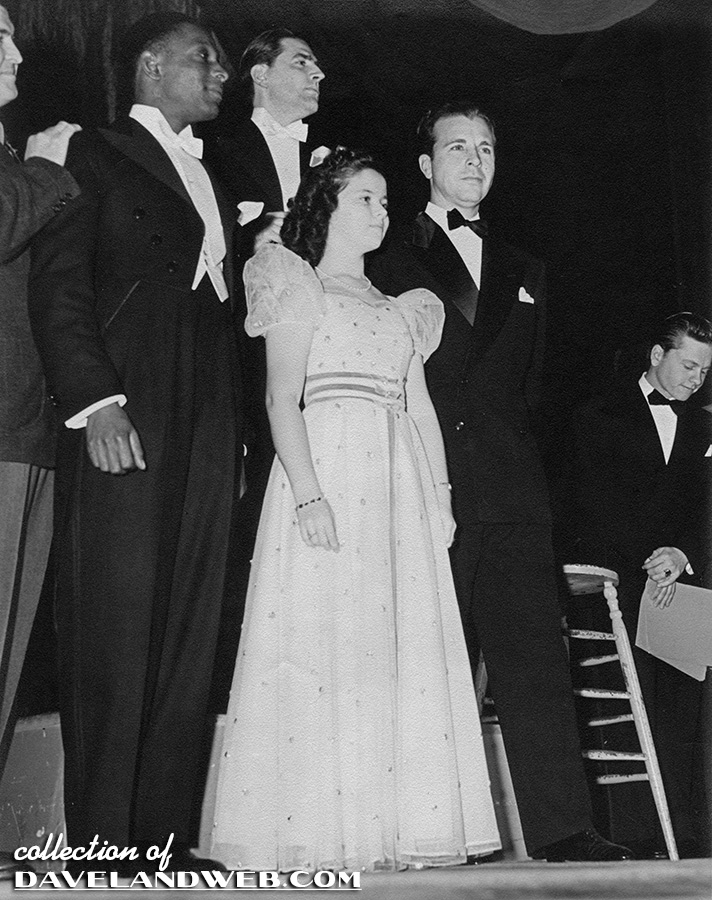
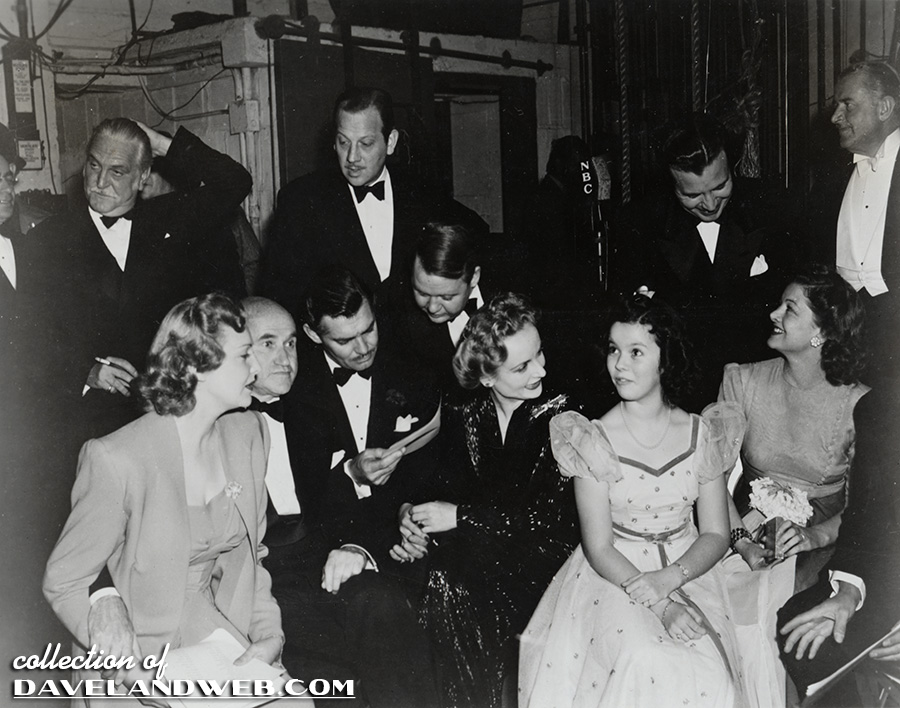
Often, movie studios would allow their stars to wear gowns provided by the costume department when they were to be seen in public at events. This would ensure that the stars looked their best for the paparazzi! Shirley wore the gown seen above to the February 8, 1941 Greek War Relief Benefit at Grauman’s Chinese Theatre. Back row: Frank Morgan, Melvyn Douglas, Charles Laughton, Dick Powell, and Reginald Owen. Seated: Madeleine Carroll, Samuel Goldwyn, Clark Gable, Carole Lombard, Shirley Temple, and Myrna Loy. , 


Back to Bull…the photo below was stamped #5267:


The accompanying caption is extremely interesting:

SHIRLEY TEMPLE…Young veteran of the screen, poses for her first portrait sitting after signing her contract with Metro-Goldwyn-Mayer. The youngster will start work on two pictures for the studio “Barnacle Bill,” with Wallace Beery, and “Babes on Broadway,” with Mickey Rooney and Judy Garland. Here the tiny star wears a many-pleated skirt with a pique-collared jacket.

By the time the photo was released, the plans had been changed! Shirley was removed from both films, most likely because the Temples did not feel Shirley should be relegated to supporting roles. Instead, Shirley was made the lead in a low-budget picture (or at least as low budget as MGM could do!) titled, “Kathleen.” MGM’s frustration can be seen on the back of the photo. The portion of the above caption about her two projects AND the description of the outfit were crossed out; in pencil the following simple replacement was written:

The young star is now working in “Kathleen.”

Despite all the initial excitement and publicity about working at Hollywood’s most elite film studio, Shirley’s contract was canceled after the one movie.
   
See more teenage Shirley Temple photos at my main website.

Tuesday, January 24, 2023

Temple Tuesday: Shirley and the Red Cross


Shirley manages to give me an education every week! Recently, as the result of a graphic design project I was working on, I was informed of something I’d never heard of before regarding the American Red Cross. I didn’t believe the tale at first, until I consulted with good ol’ Google! Here’s the story, direct from NPR:

During World War II, the Red Cross had comfort stations for soldiers overseas, with free coffee and free doughnuts. Then, in 1942, the Red Cross started charging for the doughnuts. Soldiers have held a grudge ever since. The organization started charging only because the U.S. Secretary of War asked it to. British soldiers had to pay for their snacks, and the free doughnuts for Americans were causing tensions. So the Red Cross complied, after protesting to no avail. It didn't last long — for most of the last 70 years, Red Cross doughnuts have remained free — but veterans haven't forgotten. Chalk it up to something called categorical change, says Uri Simonsohn, a University of Pennsylvania business professor. Price changes, people can adjust to. But this was different. “Imagine, for Thanksgiving, you go to your parents' for dinner and after a nice dinner they say, ‘That's going to be $10 per person,’” Simonsohn says. “You would be upset.”

Eighty years later, my online friend still tells the tale she was told from the previous generation and the American Red Cross bears the brunt of a government issued edict. This is a cautionary tale about transitioning from a “free” business model to a paid subscription based model. Remember the uproar when there was talk about being charged for the internet? Same durn thing. Back to Shirley and the American Red Cross.

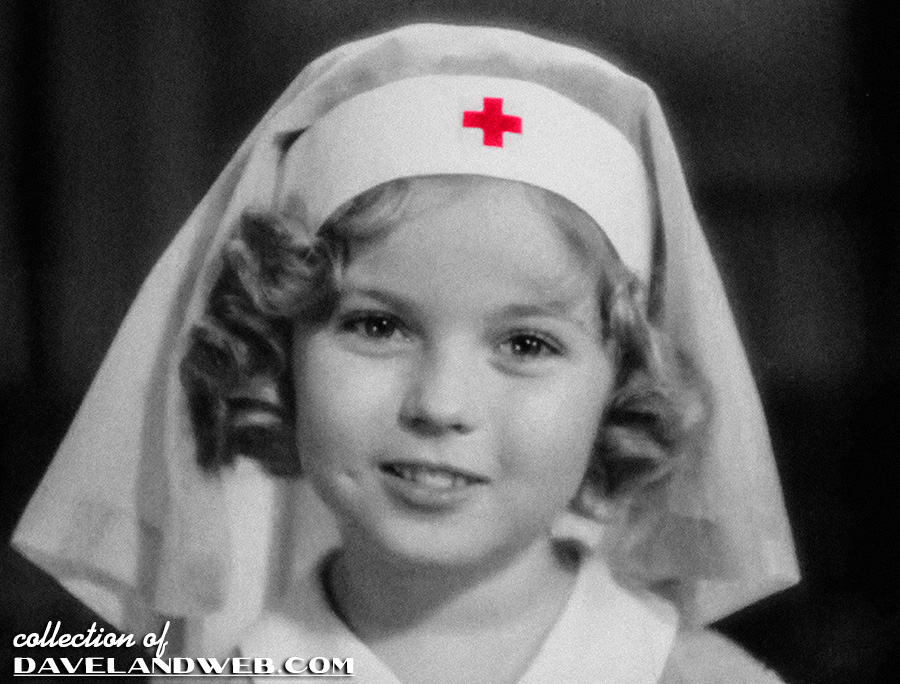
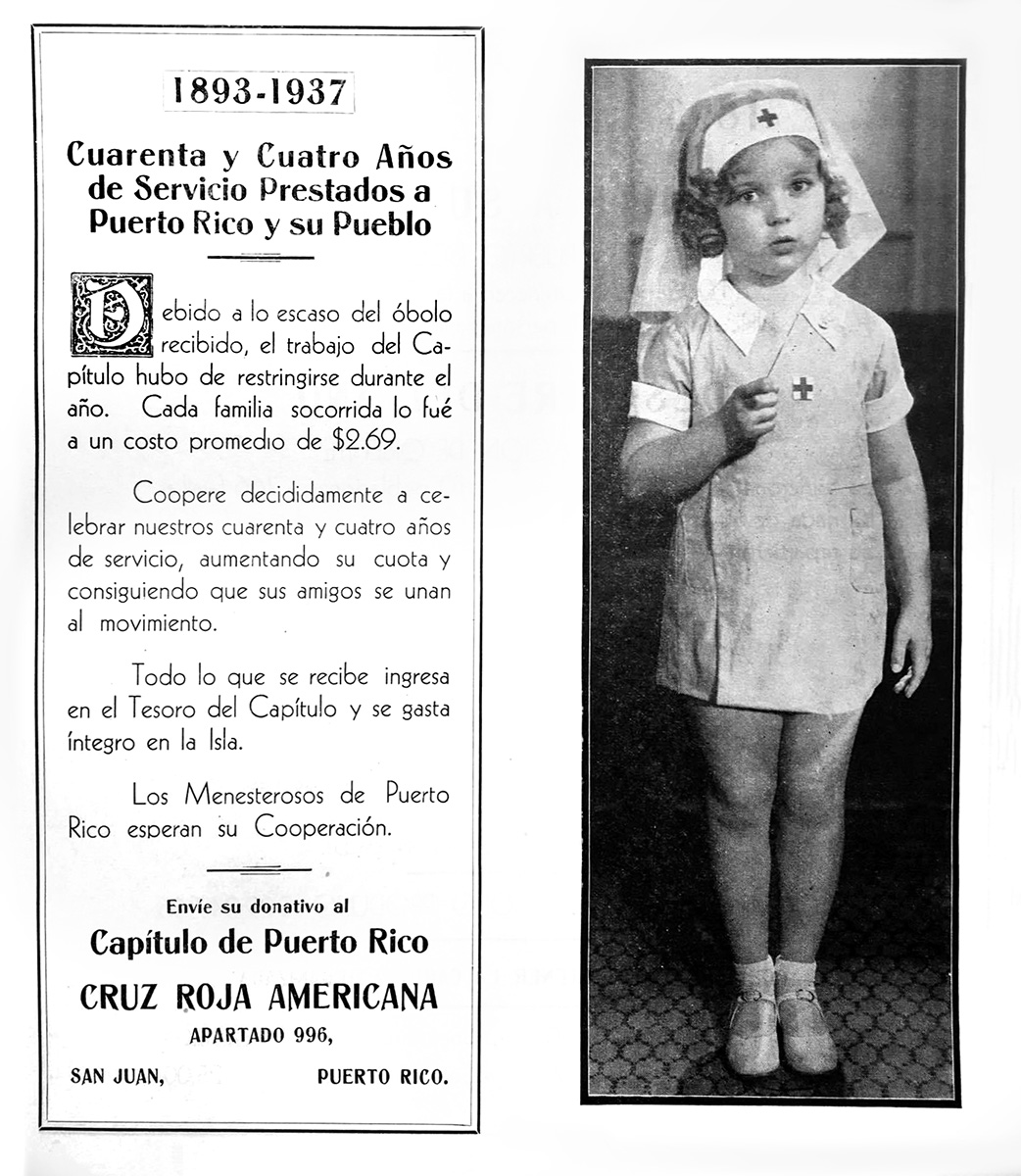
In 1936, Shirley filmed an adorable public service announcement encouraging all to donate to this organization. The American Red Cross was founded by Clara Barton (an American nurse) in 1881 after a trip she made to Geneva, Switzerland. She worked tirelessly for almost thirteen years (and a few Presidents!) to get the U.S. Government to finally acknowledge the need for such an organization. Here’s a Spanish version of a leaflet with Shirley for the Red Cross. Here photo was a powerful tool even outside of America.


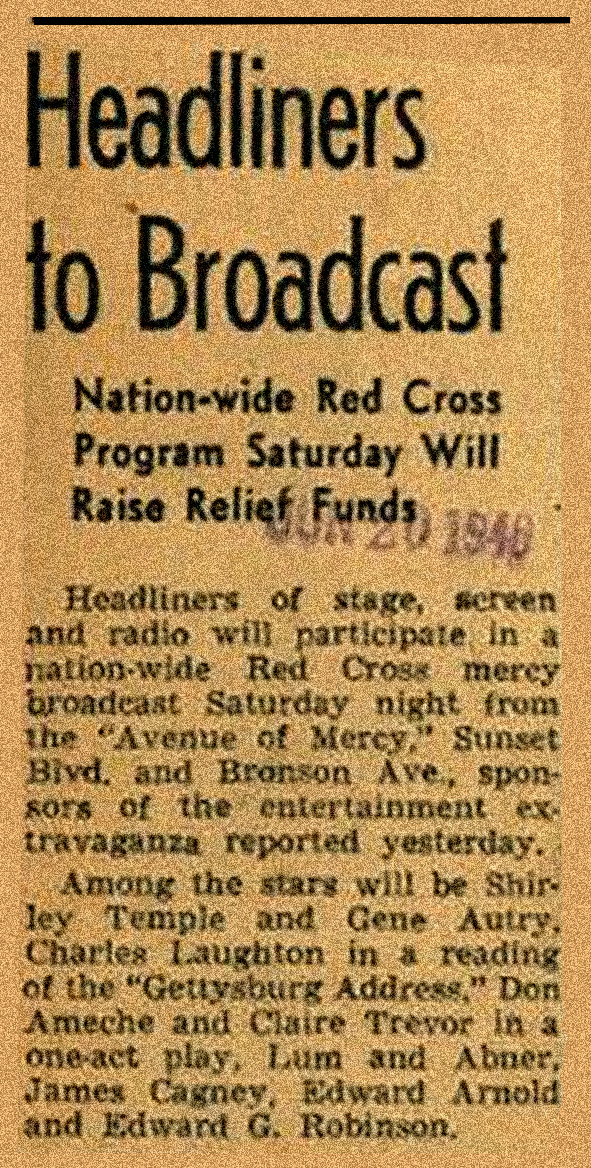
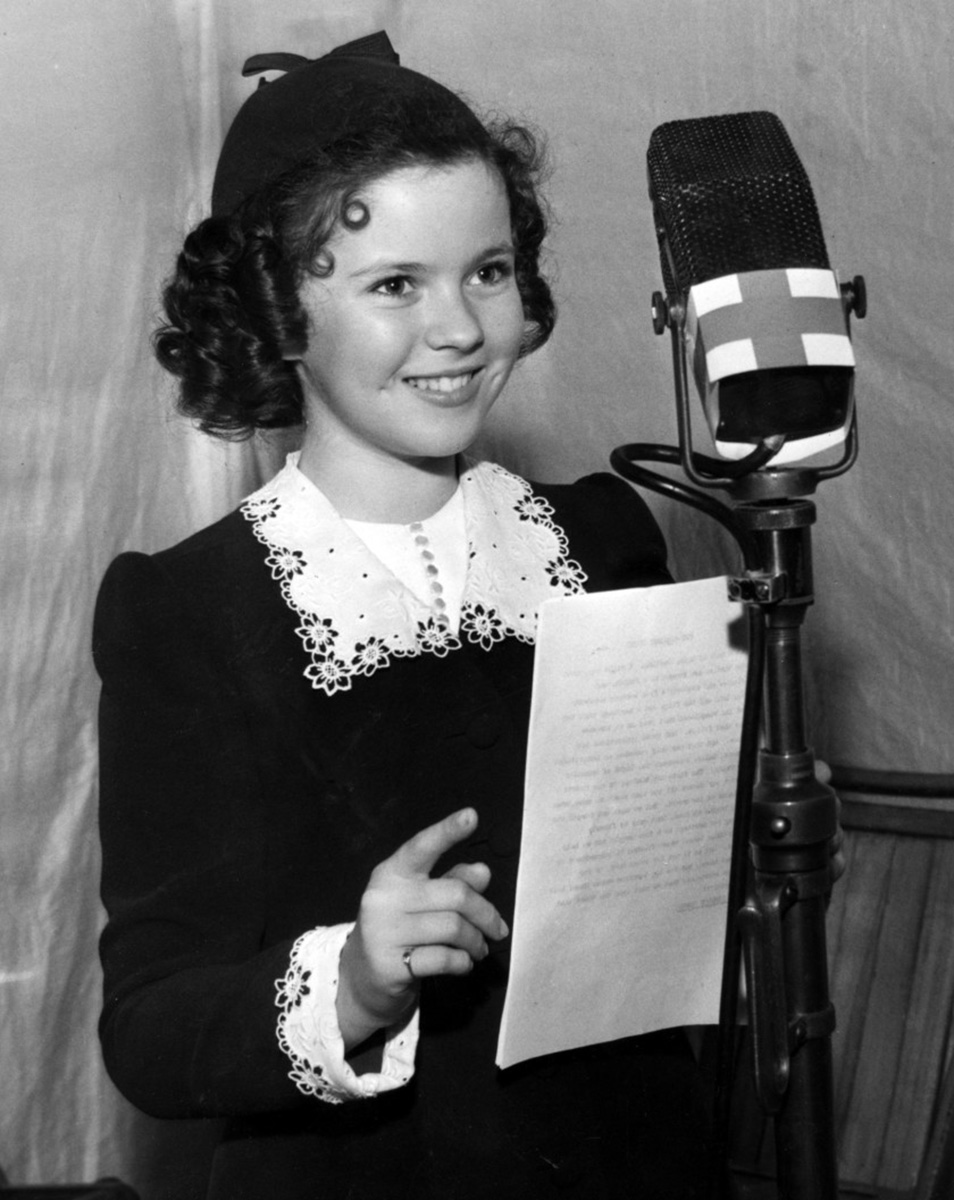
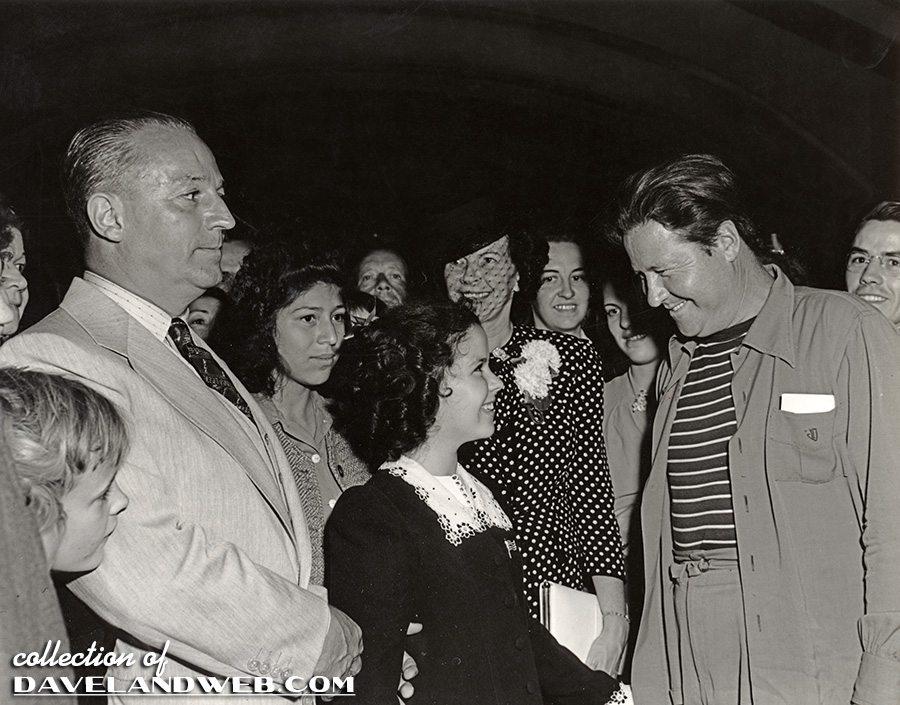
On June 22, 1940, Shirley was involved with an American Red Cross nationwide radio broadcast held at the Westwood Village Theatre that would help raise war relief funds.


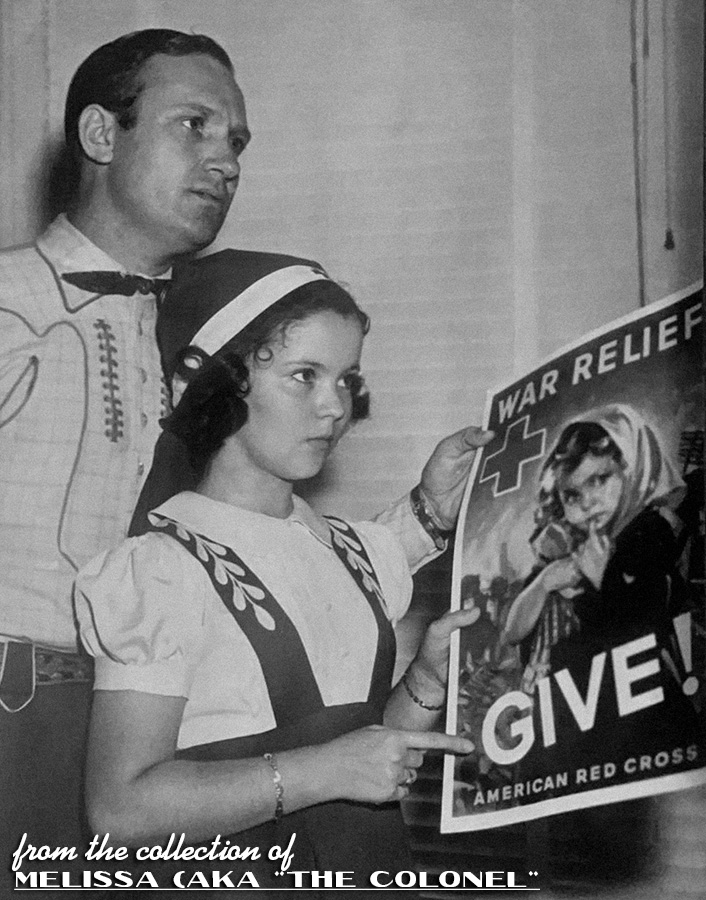
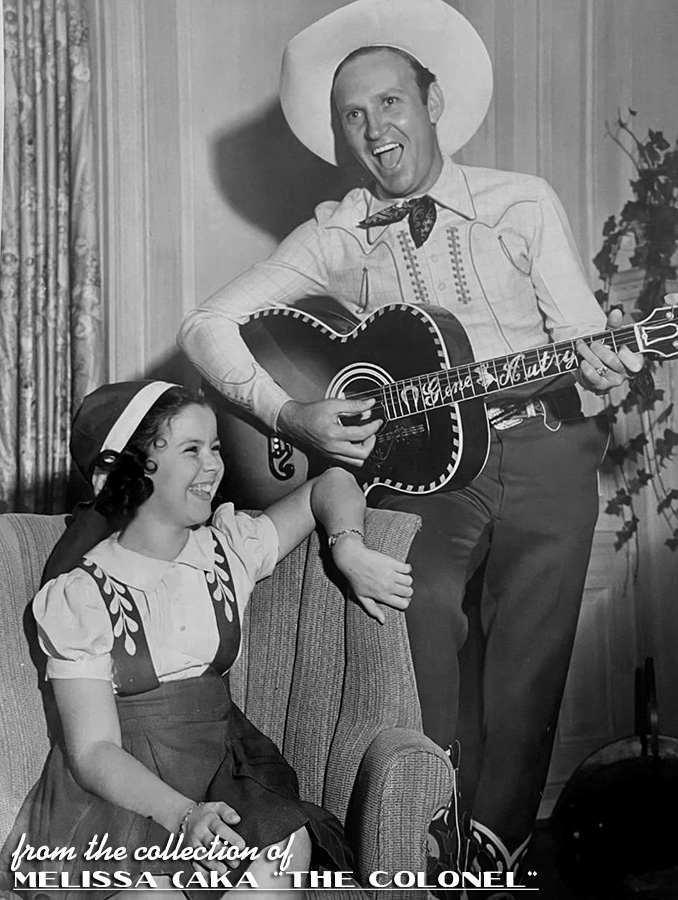
A photo shoot was held at Shirley’s Brentwood home with the young star and singing cowboy Gene Autry, who had a long association with the American Red Cross. Gene Autry and Shirley Temple were photographed at Shirley's home in Brentwood California, to promote the “Radio Benefit for War Relief” event.


Wearing a dress from her final childhood 20th Century-Fox movie, “Young People” (1940), Shirley seems to be having a good time with Gene, who is playing his Gibson J-200 guitar (part of the Gene Autry Museum collection).


A promo photo of Shirley on the day of the broadcast:


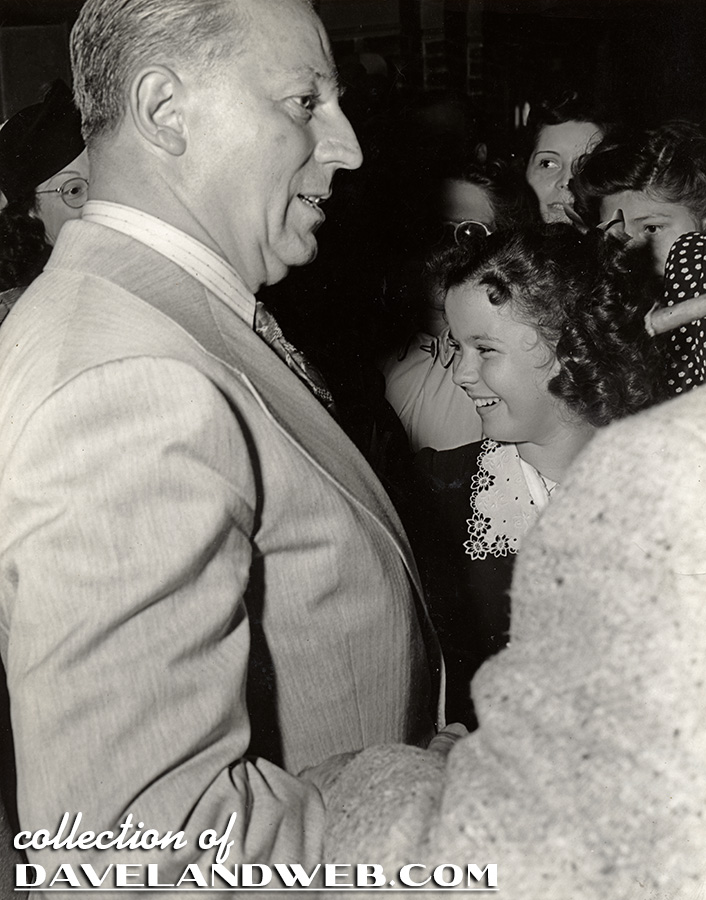
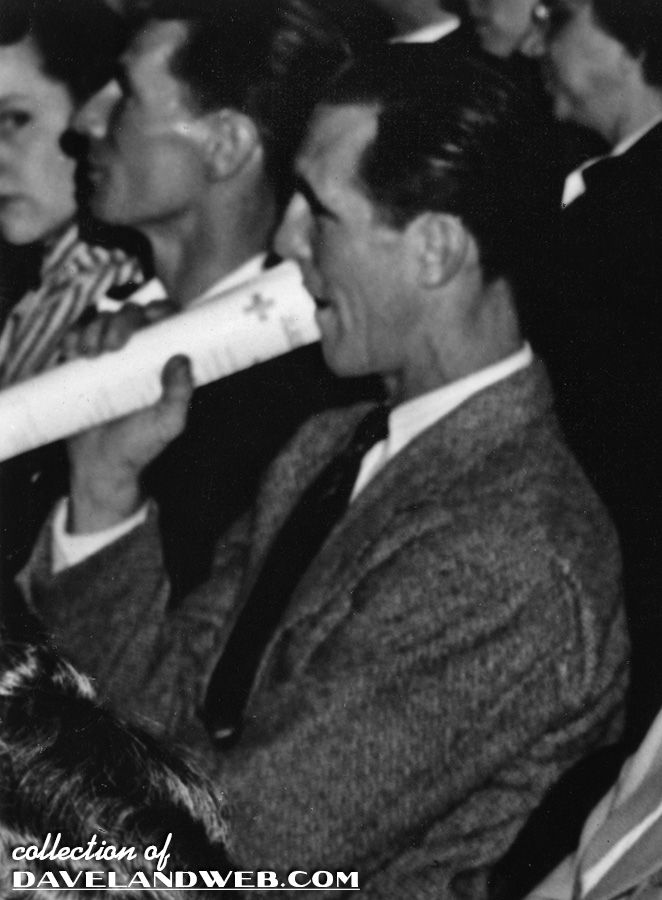
Shirley’s father is in the foreground of this shot:


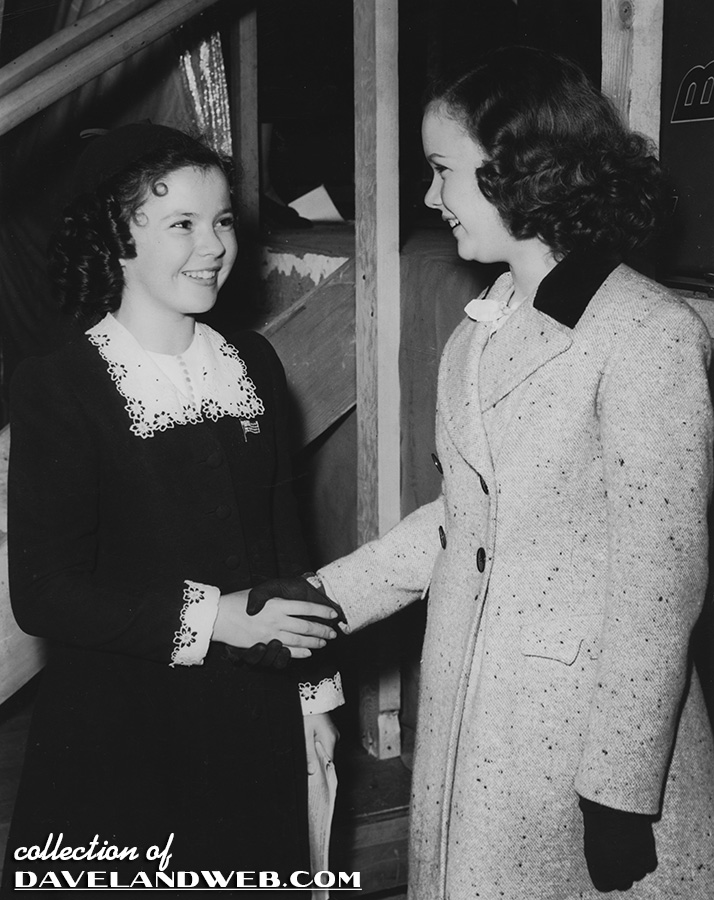
From the back of this shot, written in pencil: “Shirley Temple & Gloria Jean meet for first time at Red Cross broadcast. They chatted for a few minutes and said s’long.” Is that the 1940s equivalent of “buh-bye”?


Here, Shirley shakes hands with her “Young People” costar, Jack Oakie. Her father, George, does not seem amused, as mother Gertrude gives George a “Smile honey, the cameras are on you!” look through gritted teeth.


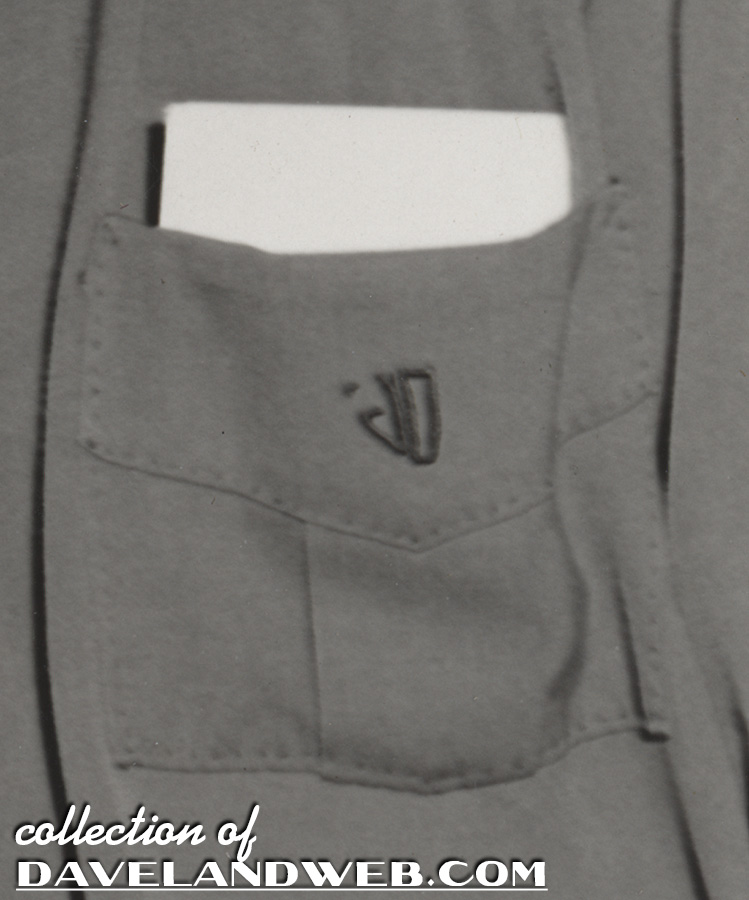
Notice Oakie’s monogrammed shirt? Fancy!


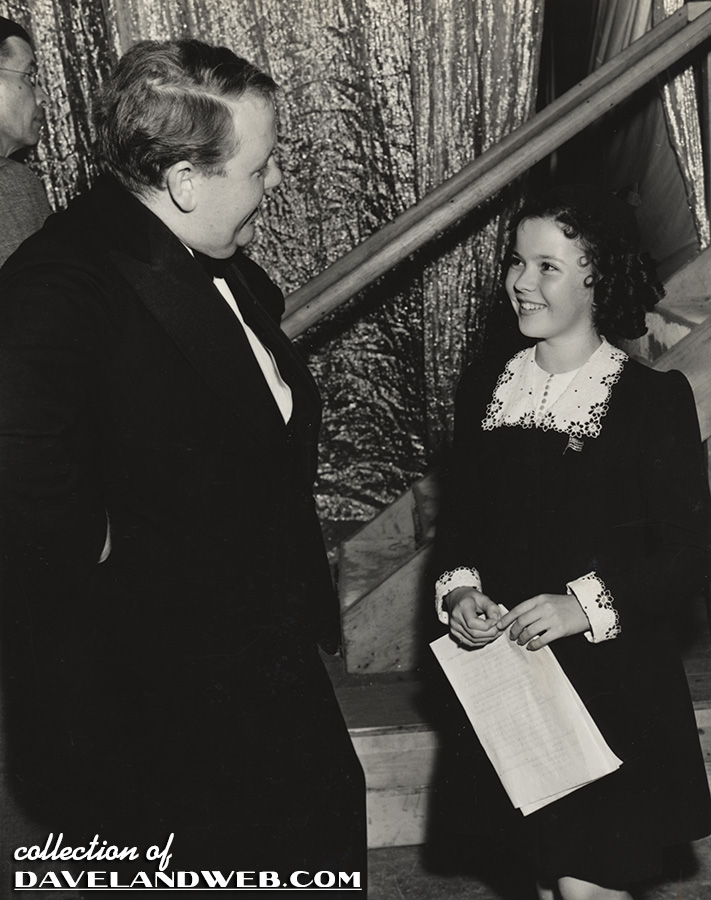
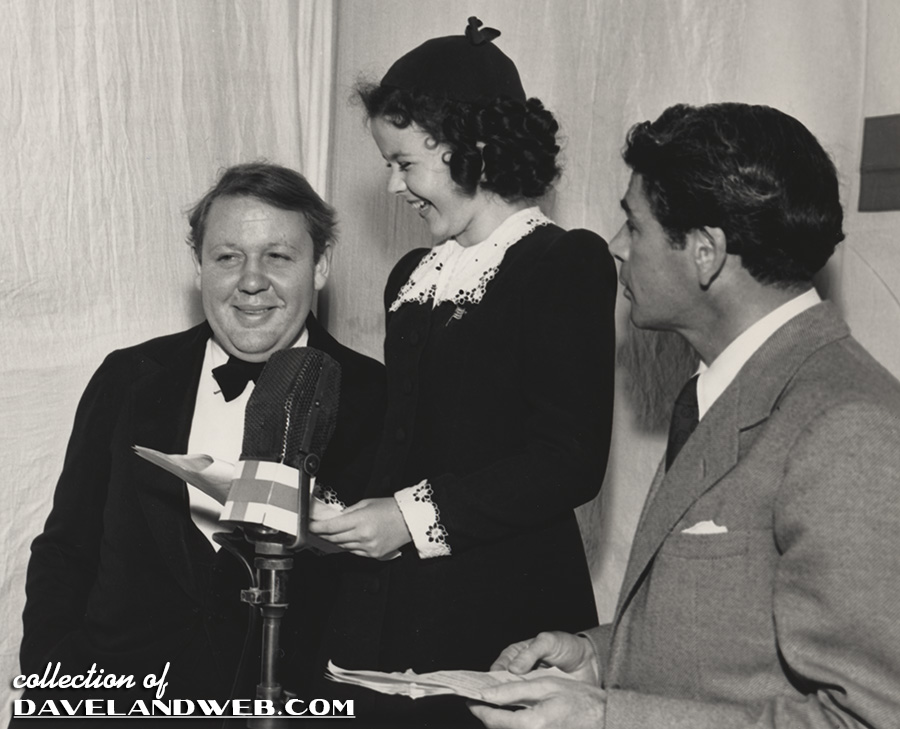
Shirley chats with Charles Laughton, her costar for the broadcast:


Shirley and Laughton are amused; Paul Muni (at right) appears to be left out of the joke.


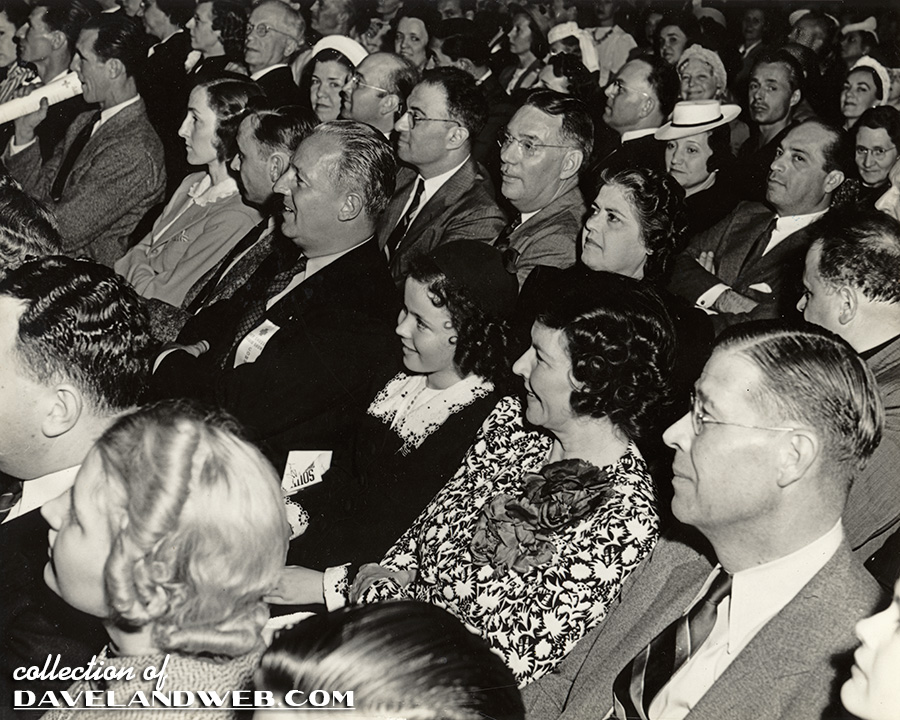
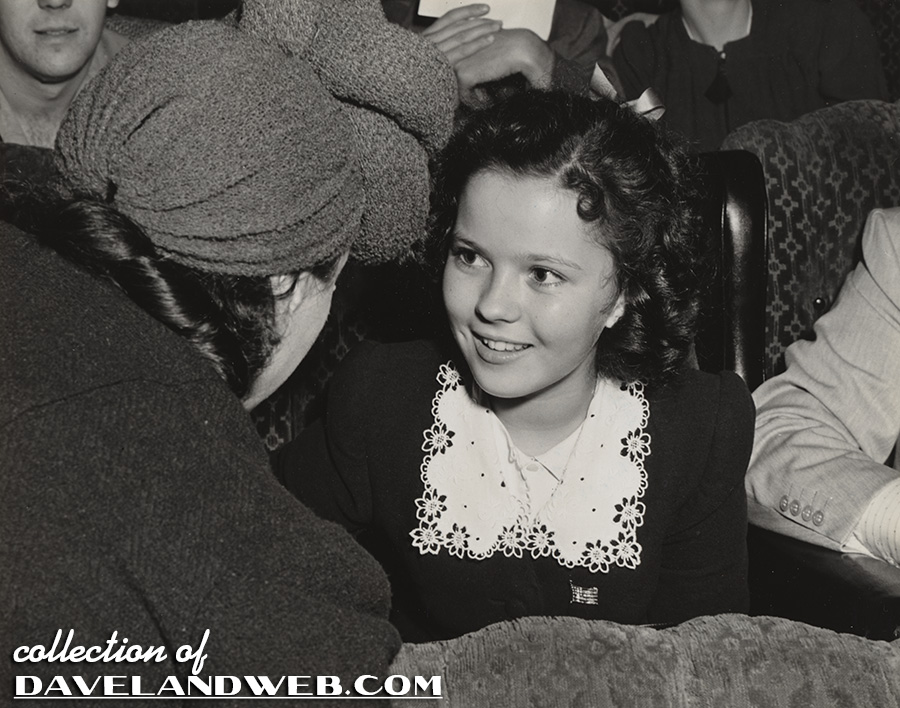
When her part in the broadcast was finished, Shirley apparently had time to sit in the audience and enjoy the rest of the event.


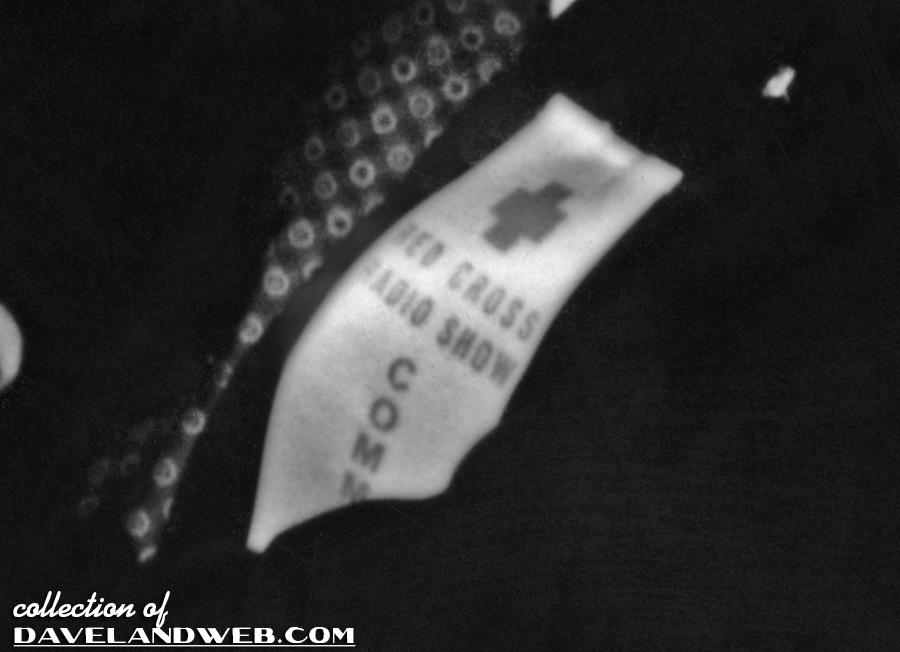
George’s Red Cross Radio Show Committee ribbon:


A heckler? How rude!


Shirley yucks it up with a fan:


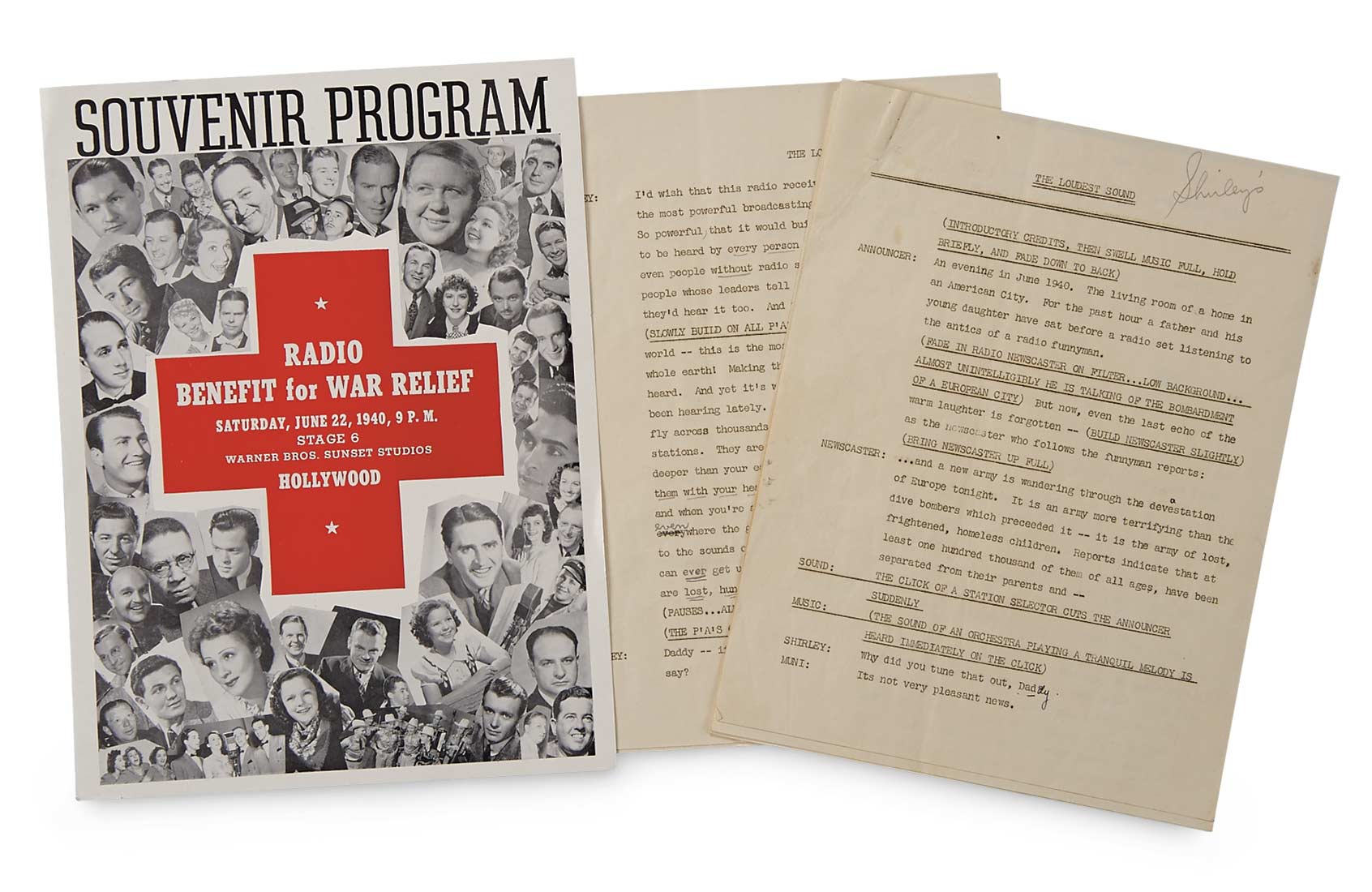
Want to see Shirley’s program from that evening? Why do I bother asking?


Auctioned off by Theriault’s, here is the catalog description:

SOUVENIR PROGRAM FOR 1940 RED CROSS BENEFIT FOR WAR RELIEF, WITH PERSONAL SCRIPT Lot Number: 66 12" x 9". The program describes the events of the June 22, 1940 performance at Stage 6 of the Warner Bros. Sunset Studios, designed to raise funds for the Red Cross’ war relief efforts. The performance was broadcast across America, Europe and South America, with performers ranging from Orson Welles to Burns and Allen, Bing Crosby to Gene Autry and dozens more. Heading the second half of the program was a dialogue “The Loudest Voice” performed by Shirley Temple and Paul Muni. Included is Shirley's typewritten script with pencil additions in which she pleads that people remember the lost children of the wars, as “nobody can ever get used to the sound of children crying, who are lost, hungry and looking for one friendly face (pauses...almost crying). Please don't tune out your hearts.”  Realized Price: $500 Presale Estimate: 300+

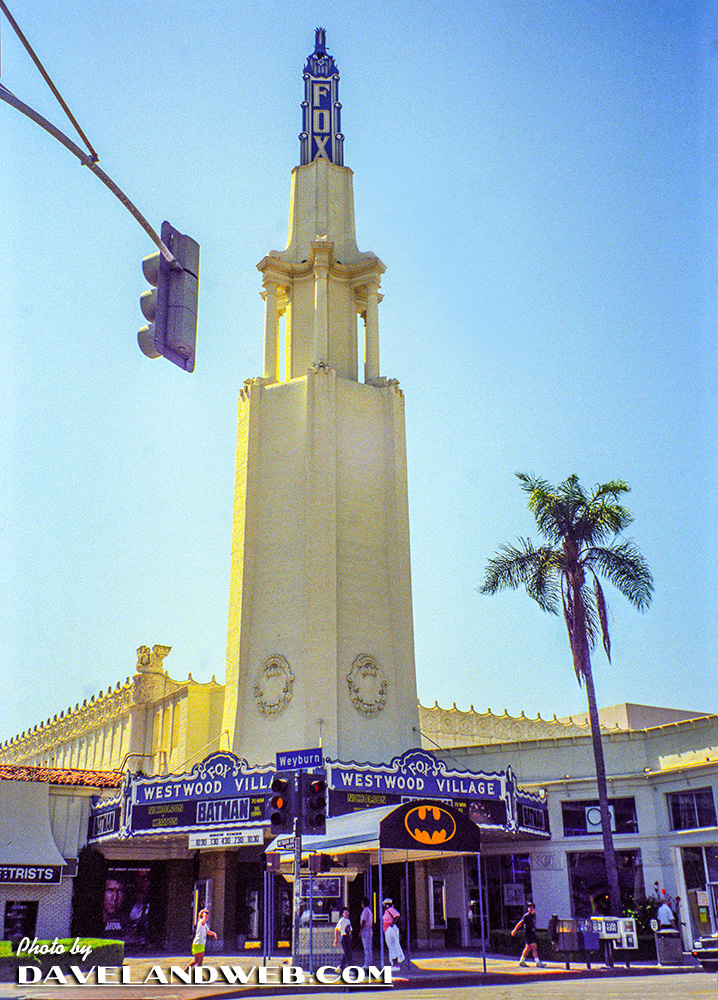
The program has the event being held at Warner Brothers studio; my vintage publicity stills all have “Westwood Village Theatre” marked on the back in pencil as the location. Here’s how that theatre looked when I photographed back in 1989:


Were there two events on that day? Or are the photos marked incorrectly? Always a mystery to solve…

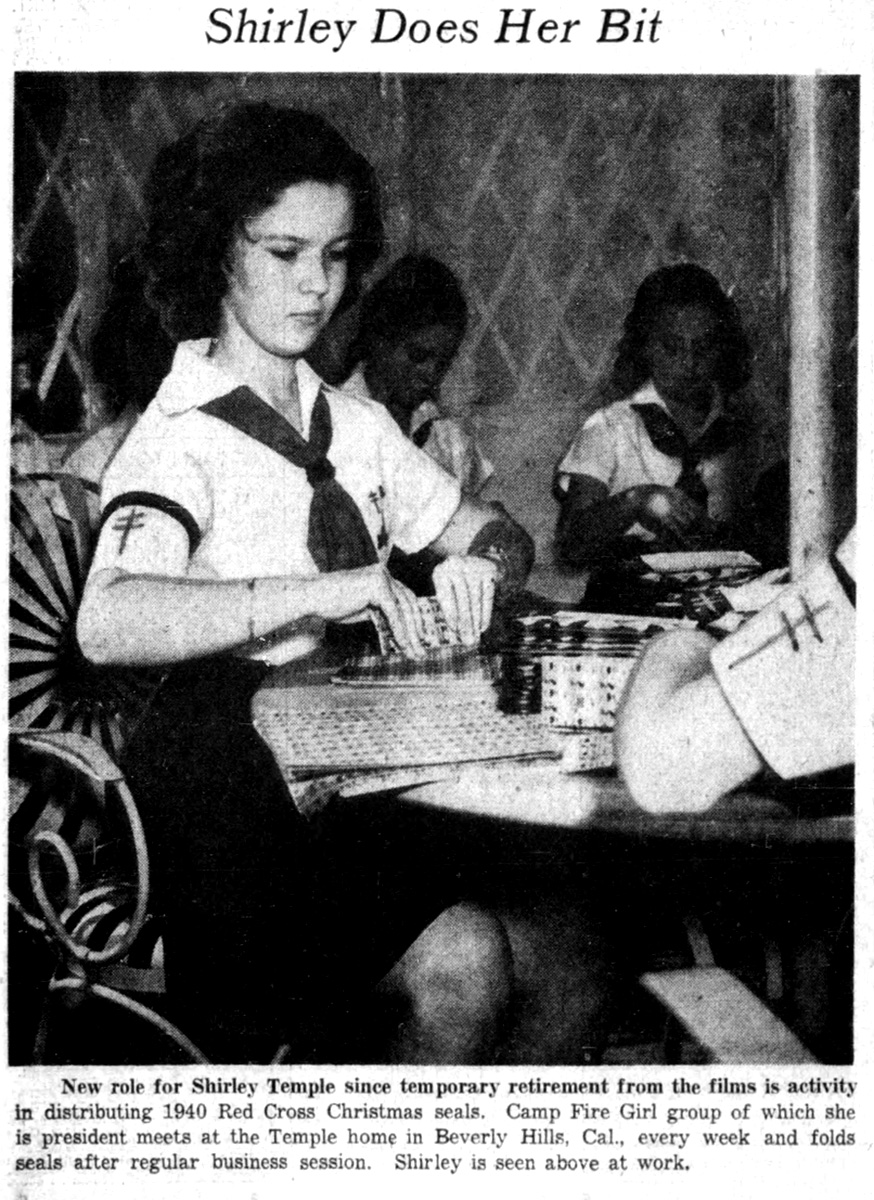
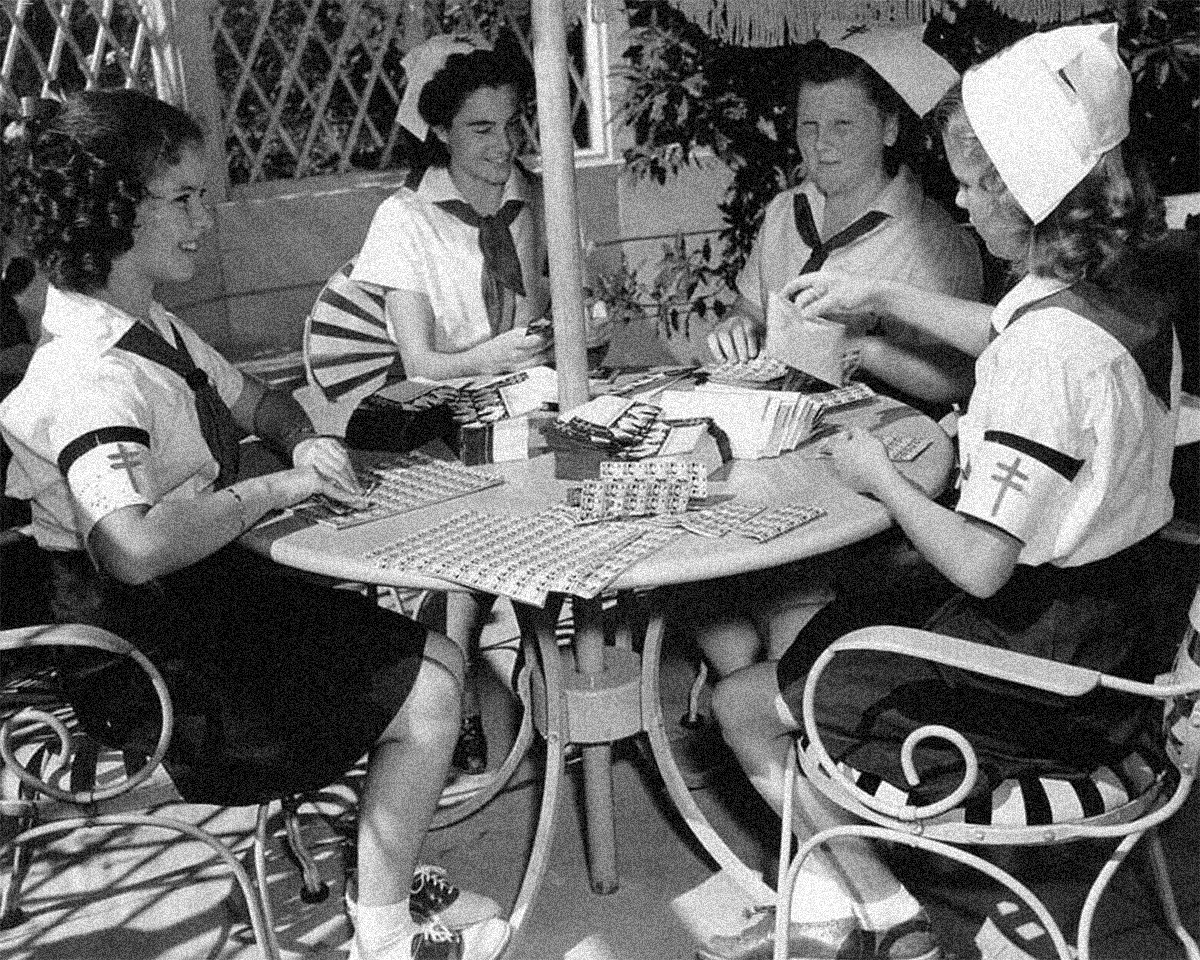
Even after “retiring” from the movies (for a brief period), Shirley continued her work for the Red Cross, as you can see from this 1940 publicity tidbit.


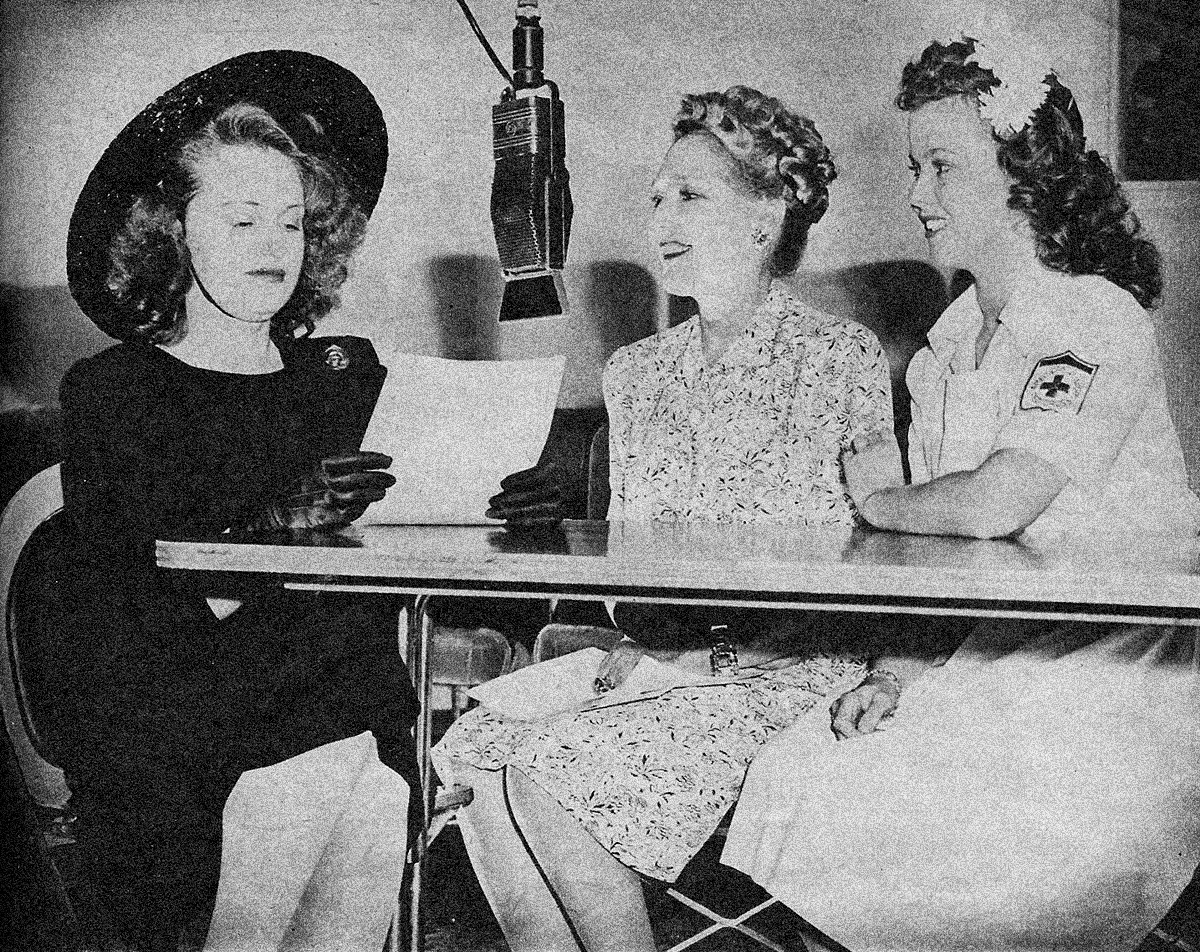
At a later Red Cross fundraiser broadcast, Shirley (right) is shown with actresses Alice Scott and Mary Pickford.


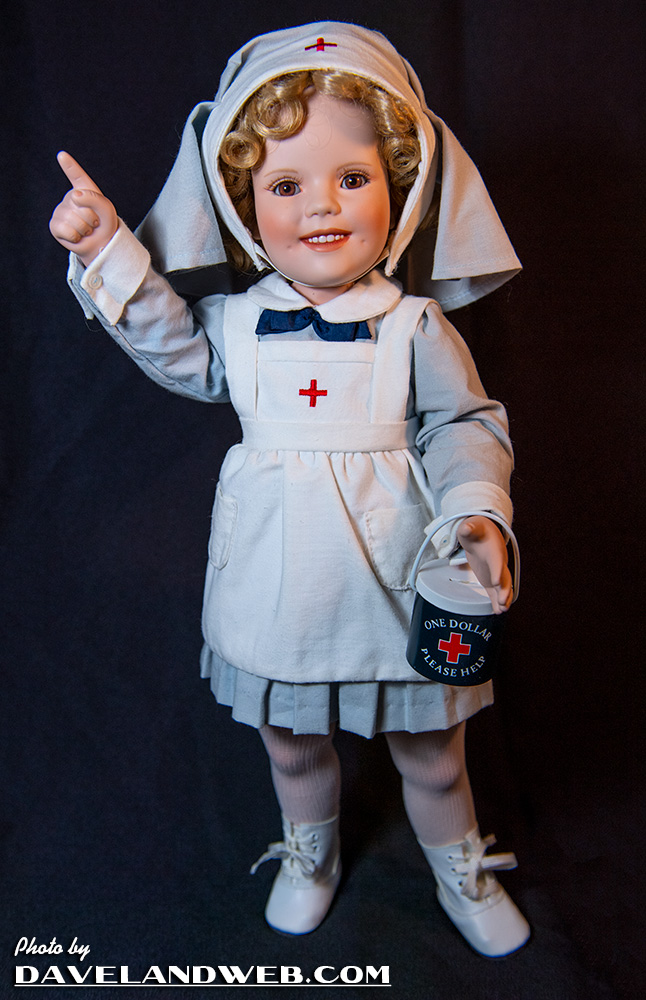
The Danbury Mint released a porcelain doll commemorating Shirley’s 1936 PSA:


Want to see that PSA for yourself? Here you go!


And please…forgive the Red Cross for something they had no control over from over eighty years ago. I’m sure our WWII veterans would understand if they heard the background!

See more photos at my main website.
Tuesday, September 13, 2022

Temple Tuesday: Greek War Relief


Look at this star-studded photo from 1941! In the back row: Frank Morgan, Melvyn Douglas, Dick Powell, and Reginald Owen. Front row: Madeleine Carroll, Sam Goldwyn, Clark Gable, Charles Laughton, Carole Lombard, Shirley, and Myrna Loy. What was the occasion that brought them all together? From pappaspost.com:

As a result of the Nazi occupation and subsequent naval blockade, famine and despair would overcome Greece both in Athens and throughout the countryside. In response to the turmoil in Greece, Americans began countrywide efforts to provide humanitarian relief for the Greek people. Railroad magnate Harold Vanderbilt and film industry executive Spyros Skouras launched an effort called the Greek War Relief Association no less than 10 days after the October 1940 Italian invasion of Greece to provide food and other forms of aid to Greece.… In Hollywood, countless stars, celebrities, studio heads and industry heavyweights got behind the Greek War Relief movement, making it the single largest humanitarian fundraising campaign in American entertainment industry history, including a single organized fundraising campaign by the Motion Picture Association of America involving 8,000 cinemas. Films like Walt Disney’s “Fantasia” and “Gone With the Wind” held gala premieres and opening nights in cities across the nation with ticket proceeds benefiting the Greek War Relief campaign.… At Grauman’s Chinese Theater in Los Angeles on February 8, 1941…a massive radio telethon, “America Calling,” was broadcast on CBS, NBC, numerous independent stations, and throughout Europe. Jack Benny and Bob Hope were the “co-masters of ceremonies” of the variety show that featured some the biggest names of the time including Shirley Temple,  Groucho Marx, and Clark Gable. The Greek War Relief Association raised $30 million — approximately $500 million today — to provide massive shipments of grain, equipment, livestock and other forms of material support for the Greek people.


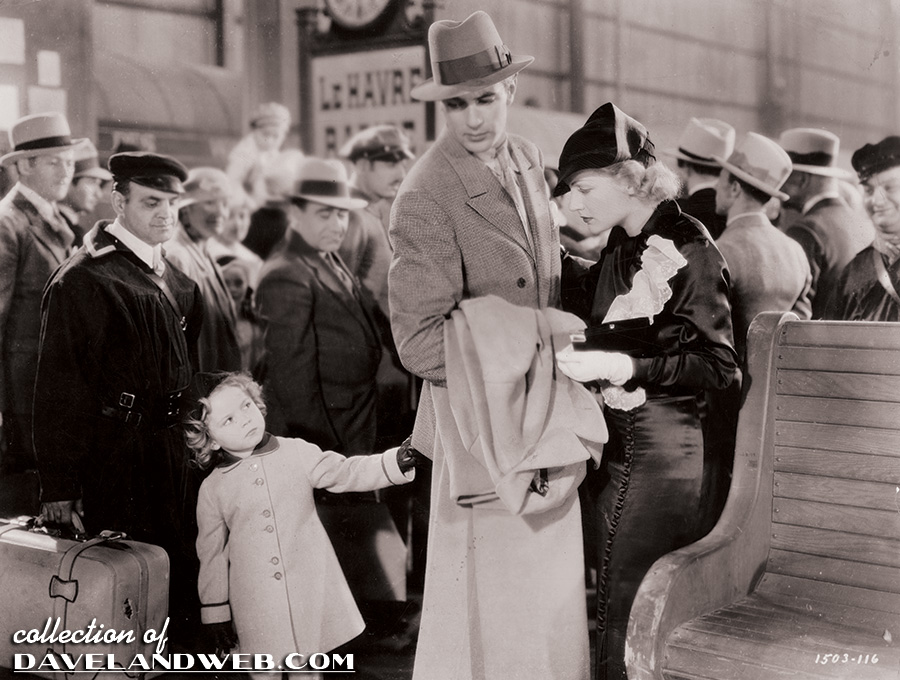
Shirley worked with many of the people who were on the broadcast. Carole Lombard (and Gary Cooper) in “Now and Forever” (1934):


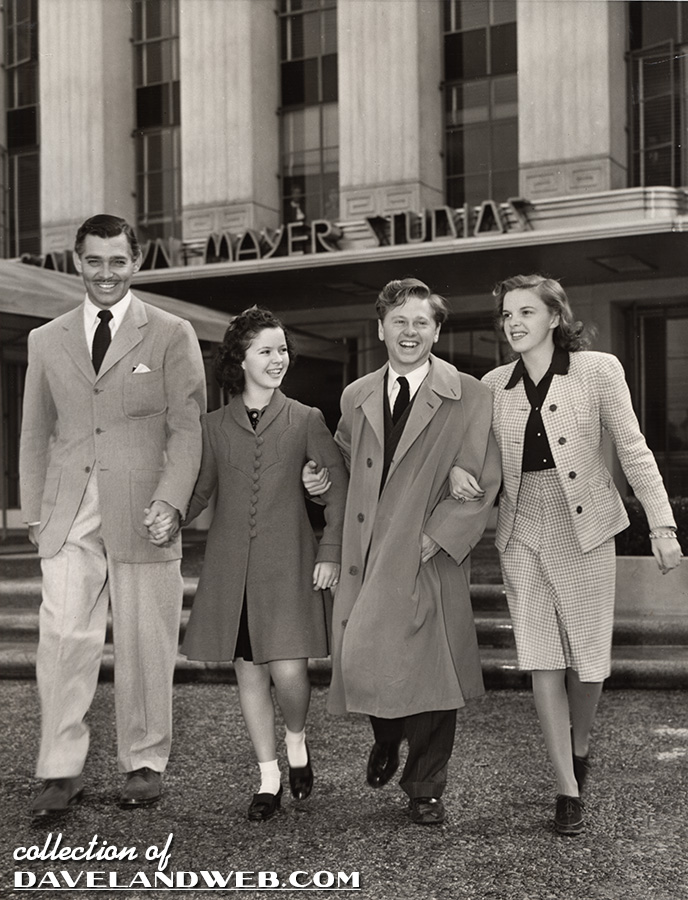
Publicity photos with Clark Gable (and Mickey Rooney and Judy Garland) heralded Shirley signing on with MGM, also in 1941:


Shirley competed with Frank Morgan for scene-stealer of the year in “Dimples” (1936):


Myrna Loy worked with Shirley six years later in “The Bachelor and the Bobby-Soxer” (1947):


Get a huge dose of 1940’s patriotism and hear the original broadcast on thisdaybenny. Shirley appears at 30:59, introduced as “the new and lovely Shirley Temple.” She participates in some comic banter with Jack Benny and Bob Hope. Not surprisingly, Shirley holds her own with the two hams, and then goes on to give a short plea to the audience to donate to the fund.

See more Shirley Temple photos at my main website.