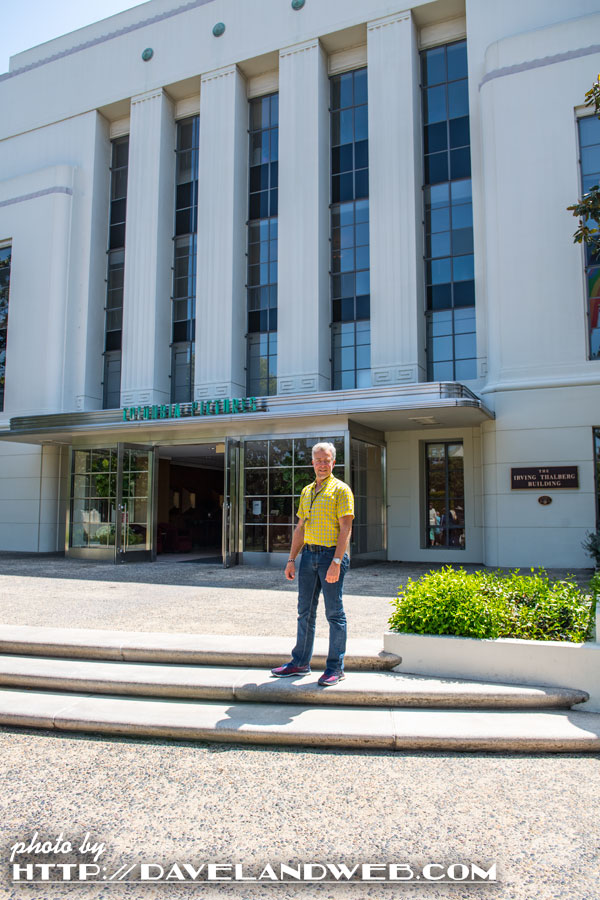
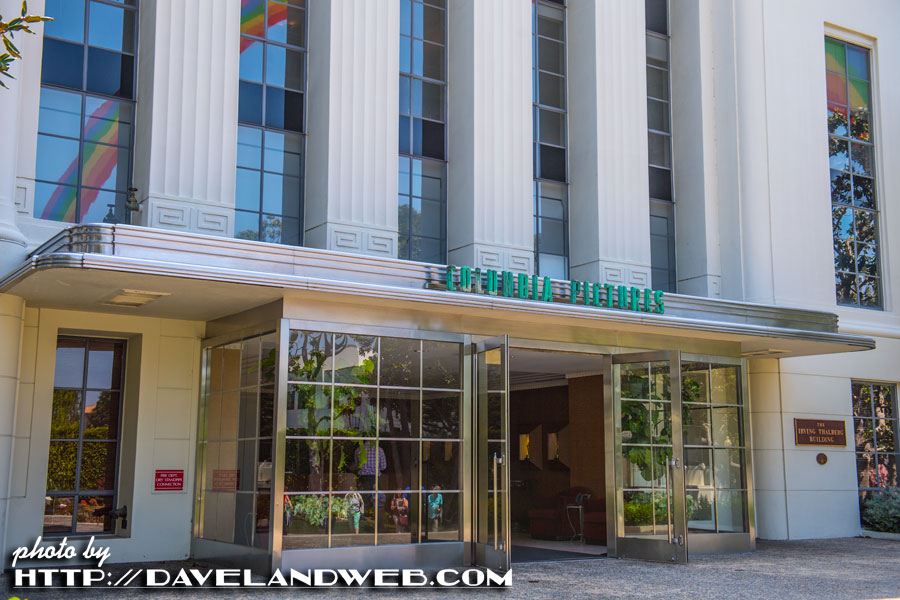
Zooming in, you can see the MGM lettering and Thalberg name on the right:
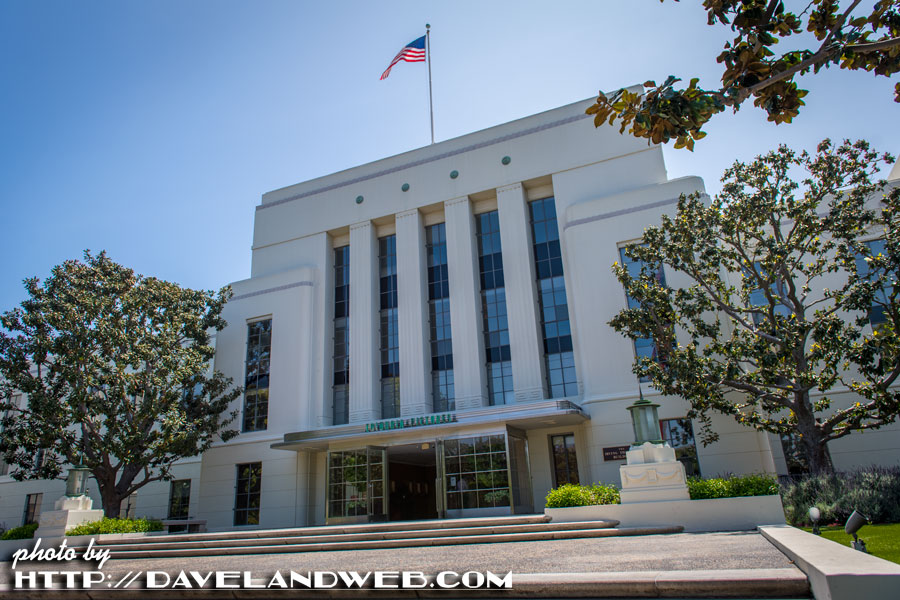
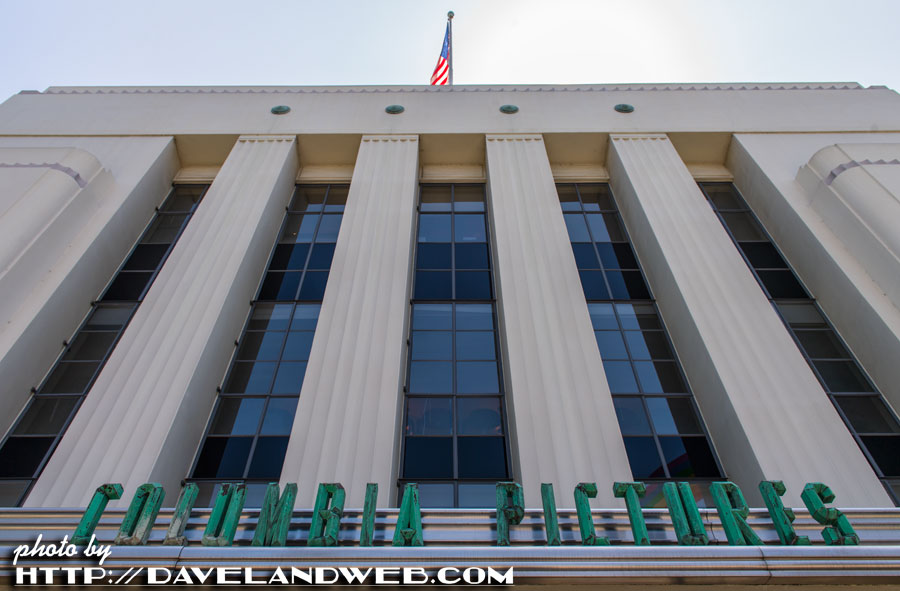
By the time I visited in 2018, MGM was gone and Columbia Pictures/Sony had moved in.
A rainbow was installed in the courtyard to acknowledge the filming of “The Wizard of Oz” (1939) on this very lot.
The building still looks like MGM in all its art deco glory…
but it now bears the name of Columbia.
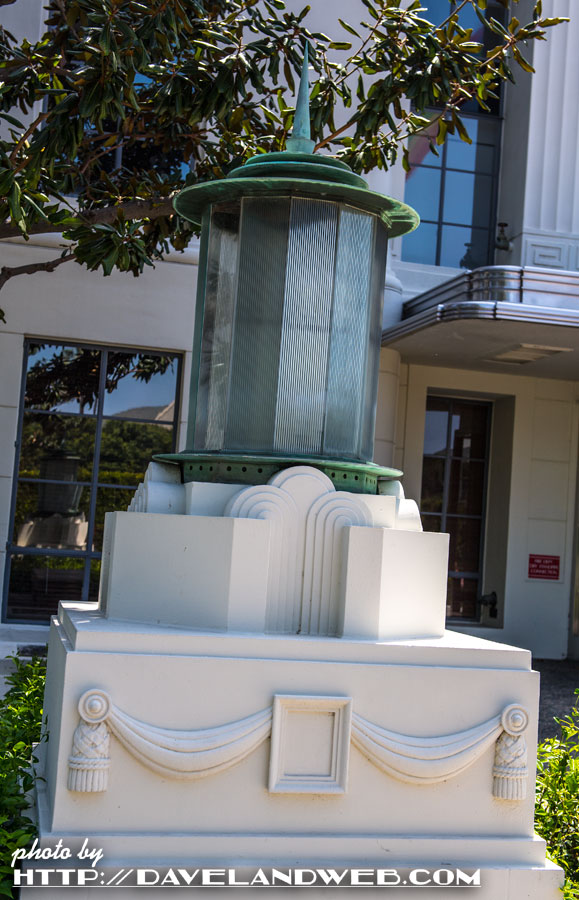
I should be grateful that they kept the light fixtures in front. And I am.
Surprisingly, they also kept the Thalberg name, visible on the nameplate at right:
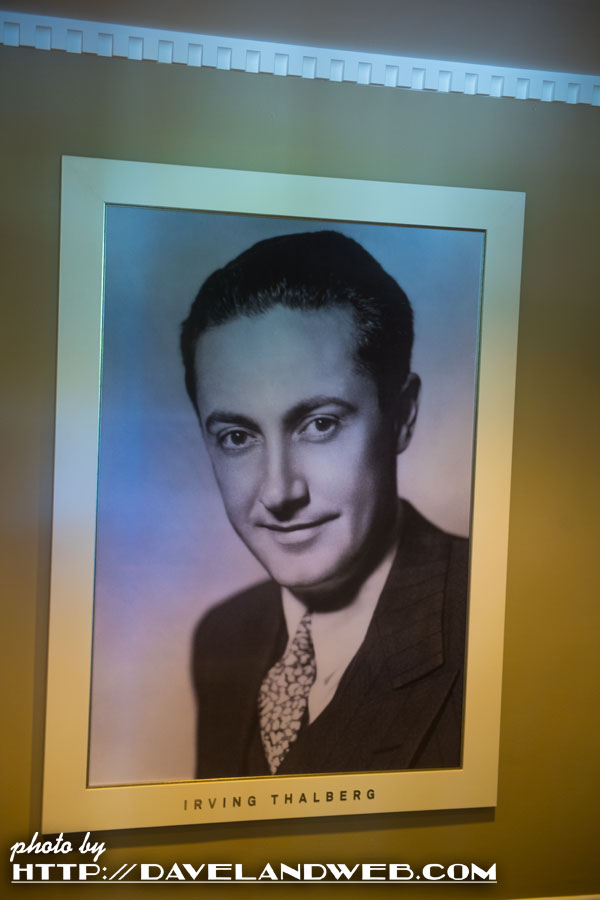
Thalberg, Vice President of Production, was known as the “Boy Genius” of the lot. Studio head Louis B. Mayer liked glamour; Thalberg preferred more cerebral material for his films. Inside the Thalberg, his portait is on display.
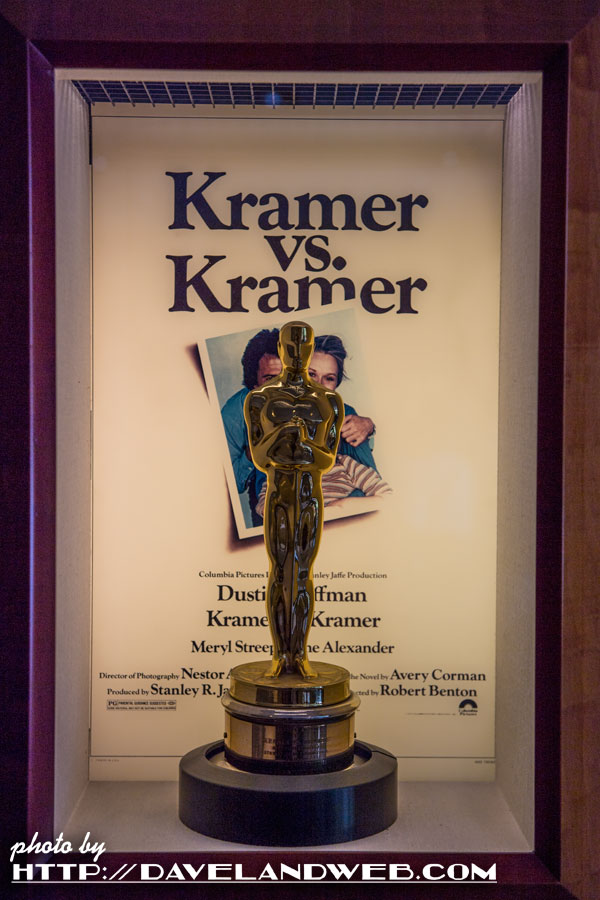
The Oscars on display are all for Columbia films.
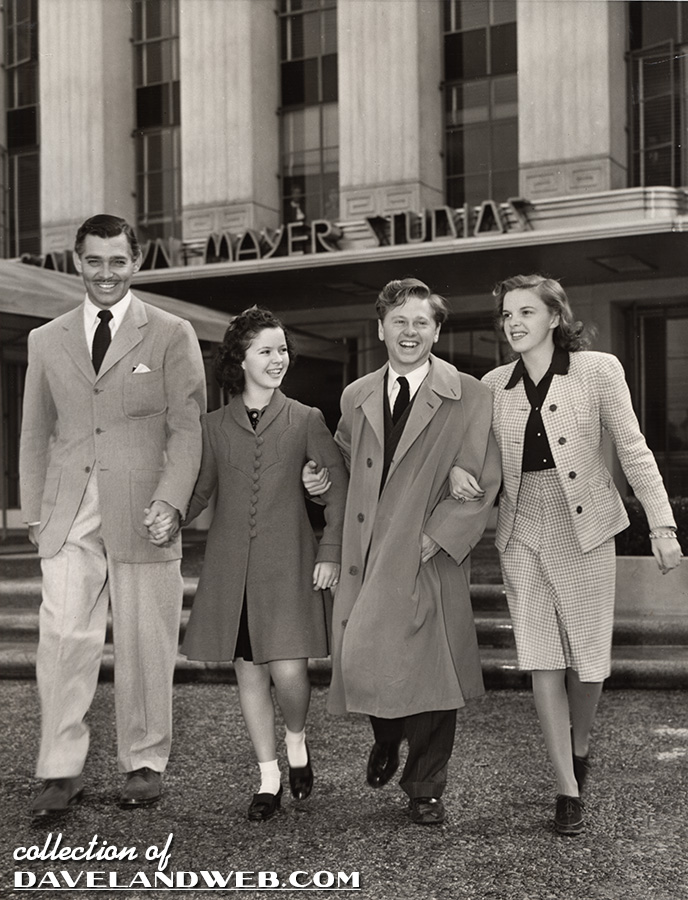
Back in 1941, Shirley Temple joined the MGM stable of stars. She was welcomed to the lot by Gable, Rooney, and Garland. What a powerhouse quartet! Here they are in front of the Thalberg building.
For years, I have been obsessed by the art of Jacques Kapralik. Who? Yes, sadly, this genius is virtually unknown by name, but any film buff of the Golden Age of Hollywood has seen his brilliant work. At top is the promo art he did for “Girl Crazy” (1943), featuring stars Judy Garland and Mickey Rooney. His caricatures are brilliant, and perfectly capture the subject with the most simple of lines. On top of that, he made brilliant use of mixed media to create 3D sculptures of sorts that added an extra dimension to the flat art used on posters, flyers, and even on-screen in title credits. Below is the back of the flyer that MGM sent out to promote the Garland-Rooney musical:
Kapralik was a commercial artist and caricaturist whose art was used in the promotion of motion pictures throughout Hollywood’s Golden Era of the 1930s-1950s. Born in Romania in 1906, Kapralik first worked for various European newspapers, drawing cartoons and caricatures of famous Europeans and important events. In 1936, Kapralik immigrated to the United States. He first provided celebrity caricatures for various newspaper columns focusing on Hollywood gossip and events. Kapralik was fortunate to work during a time considered the Golden Age of Hollywood and a zenith for celebrity caricatures. Movie studios were putting increased focus and publicity on their stars, attempting to make them household names. Kapralik’s output of celebrity caricatures increased as he left the newspaper world and began working for movie studios such as RKO, Paramount, 20th Century Fox, Universal, and MGM, creating likenesses of Cary Grant, Greta Garbo, and Lucille Ball, among many others. He developed a distinctive and highly recognizable style for his studio publicity work, much of which was shown primarily in press kits and trade magazines such MGM’s Lion’s Roar Magazine, as well as the weekly Pictorial Review newspaper insert.
While heralded as a master of Hollywood caricature by industry insiders of the time, due to the nature of his work, today he remains relatively unknown to the general public. The caricature style Kapralik became most well-known for involved the creation of miniature models from paper and balsa wood. The models were then photographed and used as promotional posters for motion pictures, predominantly MGM films. These 3-D caricature scenes were incredibly elaborate and detailed, taking up to six weeks complete. Kapralik also created title sequences for films in the 1930s-1950s, an early innovator at a time when title sequences were just starting to evolve from simple text. His title sequence work included 20th Century Fox’s The Three Musketeers (1939) with the Ritz Brothers and MGM’S Presenting Lily Mars (1943) with Judy Garland. Aside from movie publicity, Kapralik also did advertising work for companies such as Nutrilite, S&W, and Squirt.
Below is Kapralik at work:
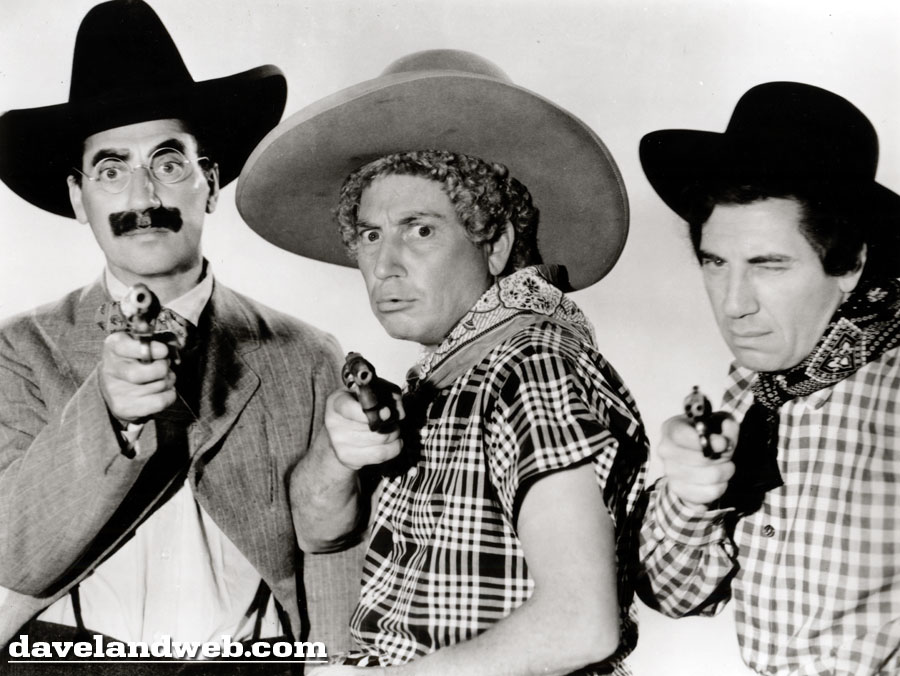
The 1940 MGM film “Go West” starred the zany Marx Brothers.
Kapralik’s innovative style matched perfectly with the Marx Trio:
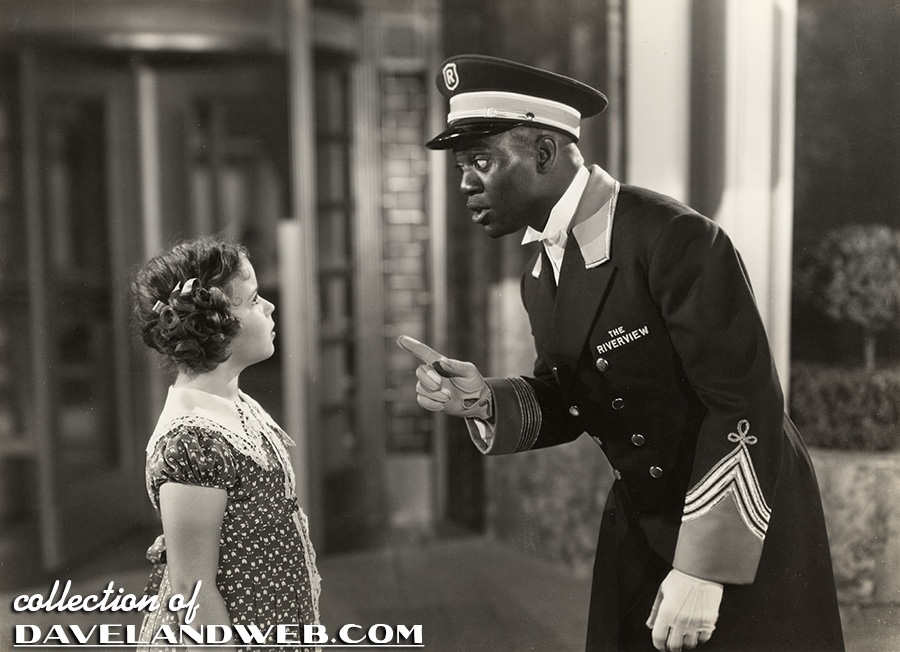
Thanks to Shirley Temple expert supreme, Rita Dubas, I learned that the cute caricature of Shirley Temple in the title sequence of “Just Around the Corner” (1938) was done by Kapralik:
I did my best to recreate it in color digitally. Yes. I was obsessed with his work.
His work in the title sequence was significant because it captured Shirley’s new hairdo, with her curls pulled to the side of her head.
A few more pieces of Kapralik’s work, including the 1942 Hepburn-Tracy vehicle, “Woman of the Year”, which captures Hepburn’s haughty profile perfectly:
…and 1941’s “Honky Tonk” with Clark Gable and Lana Turner. This is one of the few misses for Kapralik, as this caricature looks nothing like Turner.
Below is a collage of four Judy Garland movies that Kapralik did the art for. Going clockwise from top left: “Andy Hardy Meets Debutante,” “Babes on Broadway,” “Little Nellie Kelly,” and “Presenting Lily Mars.”
Below is a screenshot of the title sequence from “Presenting Lily Mars” side by side with the original art, which I found at the Raphael Geroni website.
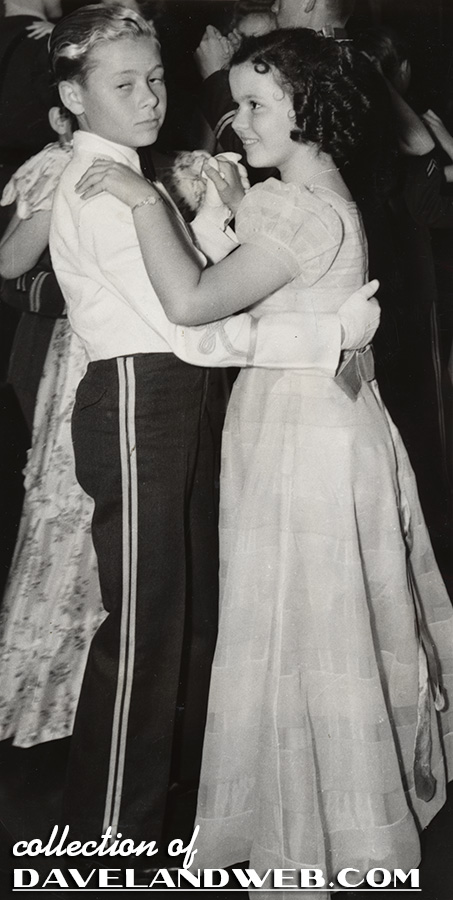
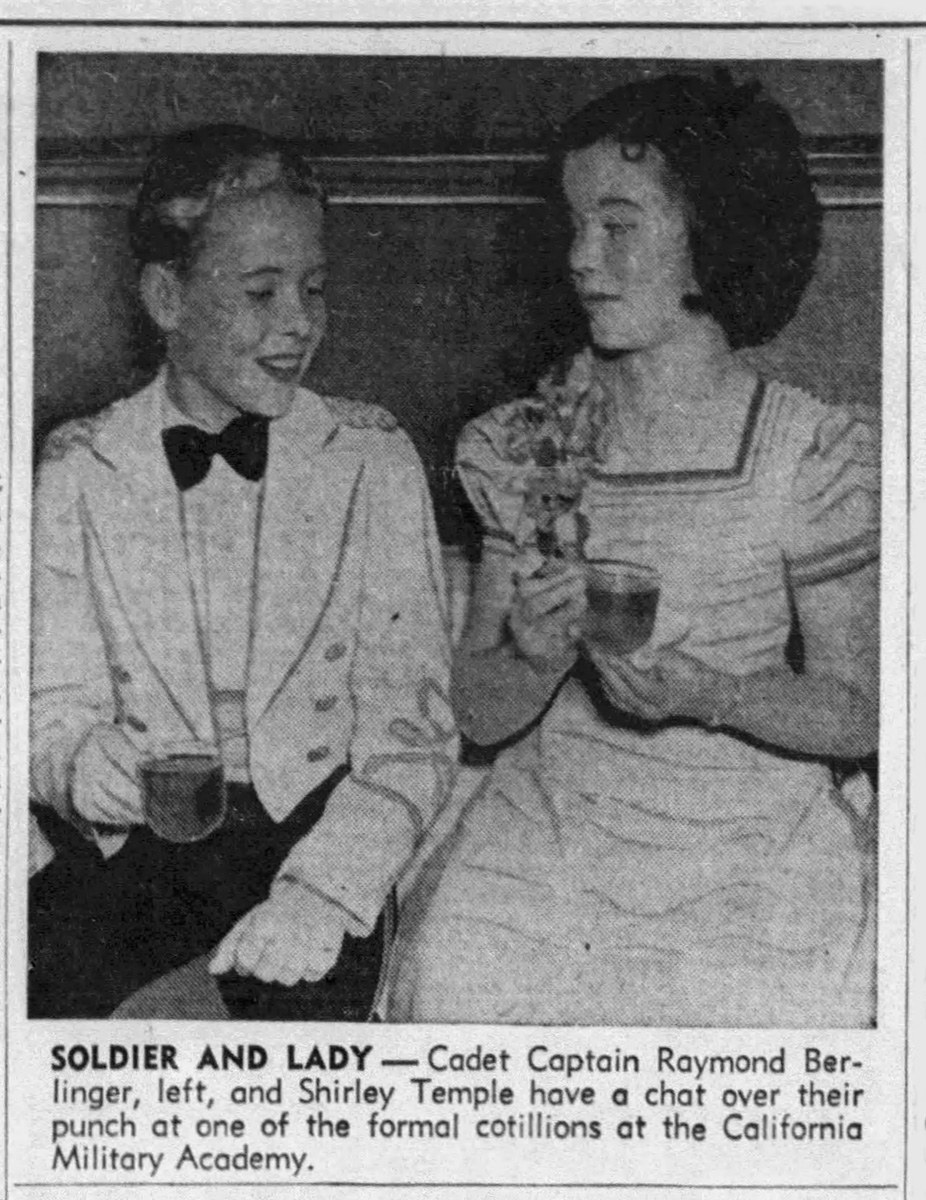
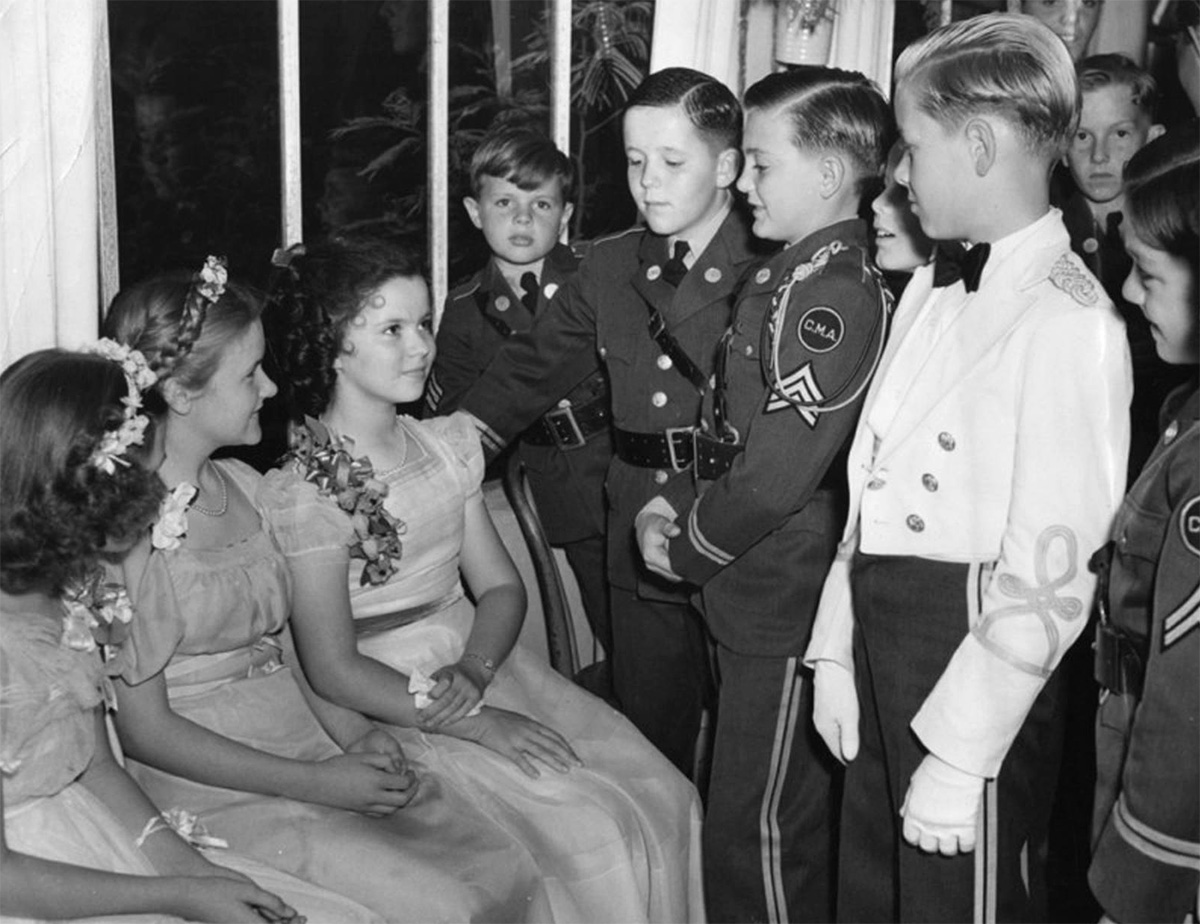
When Shirley Temple temporarily “retired” from the movies at the ripe old age of twelve in 1940, she still managed to appear in the press. One such occasion was at the California Military Academy Formal Commencement Ball, shown in the photo above. The accompanying caption:
IN PRIVATE LIFE…
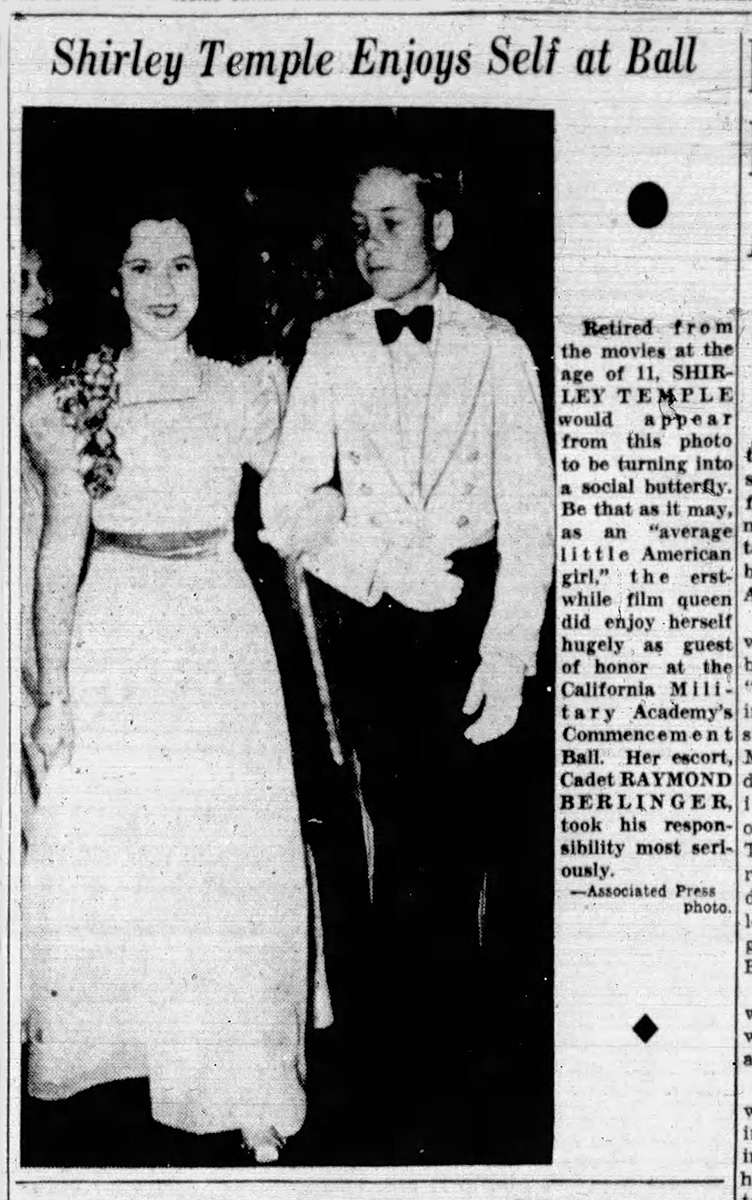
Now that Shirley Temple has retired from the screen, she is finding time for real fun. Here she is dancing with Cadet Captain Raymond Berlinger at the formal commencement ball of the California Military Academy. Miss Temple was the honored guest at this affair. The clipping below is from the Los Angeles Evening Citizen News, June 13, 1940:
Shirley Temple Enjoys Self at Ball
Retired from the movies at the age of 11, SHIRLEY TEMPLE would appear from this photo to be turning into a social butterfly. Be that as it may, as an “average little American girl,” the erstwhile film queen did enjoy herself hugely as as guest of honor at the California Military Academy’s Commencement Ball. Her escort, Cadet RAYMOND BERLINGER, took his responsibility most seriously.
This event was still being covered as late as Sunday August 25, in The Los Angeles Times:
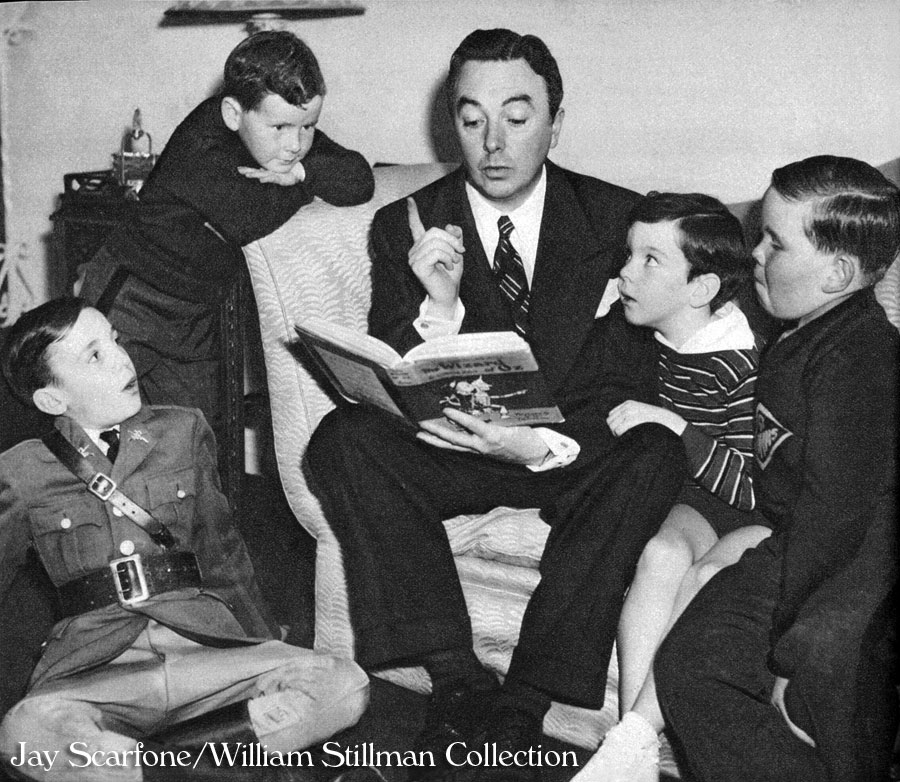
Below is another shot from the same evening, which also provides a rare view of the (alleged briefly) adopted son of Jack Haley, the Tin Man from “The Wizard of Oz” (1939):
I say “alleged” because nowhere on the world wide web am I able to find any information about Haley having adopted and then given up a child. When I interviewed William Stillman, author of The Road to Oz: The Evolution, Creation, and Legacy of a Motion Picture Masterpiece, he was kind enough to provide this uneditedd version of a shot of Haley reading The Wizard of Oz to his other son, Jack Haley Jr. Typically when you see this photo, it is tightly cropped around Haley and Haley Jr., eliminating the other children from the California Military Academy.
From the interview:
Q: You mention Jack Haley's adopted/unadopted child who is pictured above, wearing his uniform from the Black-Foxe Military Institute while Haley reads “The Wizard of Oz.” Looks like there is no information about what happened to him after he left Haley’s guardianship. Seems baffling as to why the adoption occurred in the first place...as if some other piece of information is missing. Any thoughts?
A: Jay Scarfone and I did our darndest to trace the whereabouts of Haley’s adopted son but to no avail. As we intimate in “The Road to Oz,” outside of any insider information between Haley and his wife, it’s possible that the adoption was arranged because it was the trendy, philanthropic thing to do in Hollywood at that time. It doesn’t make sense, though, that Haley would’ve added an historically “unplaceable” child to his brood on top of his taxing professional commitments and, as it happened, the adoption was short-lived.
Did Haley actually briefly adopt another child or was the photo above just a publicity shot with a few children from the school? Back to Shirley…
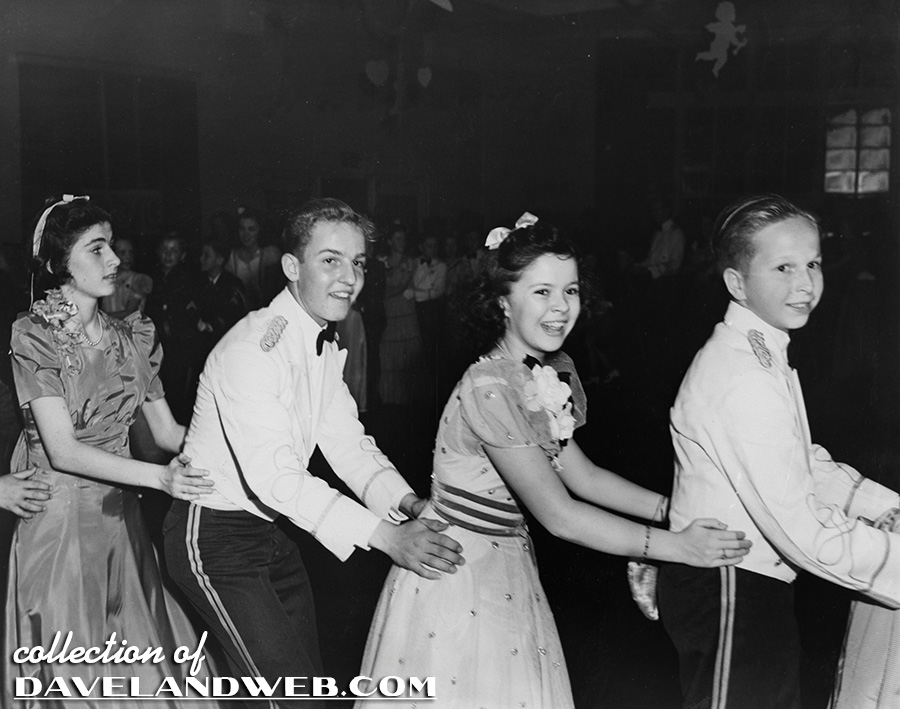
She returned to the Academy almost a year later, at what appears to have been a Valentine’s Day themed dance (note the Cupid and heart decorations on the back wall).
The accompanying blurb:
SHIRLEY THE BELLE OF MILITARY ACADEMY BALL
Shirley Temple, guest of honor at the formal cotillion of the California Military Academy, does the La Conga on the dance floor. The young film star, who recently came out of “retirement” to sign a new contract with MGM, acted like any other girl of her age during the exciting evening. 2/19/41
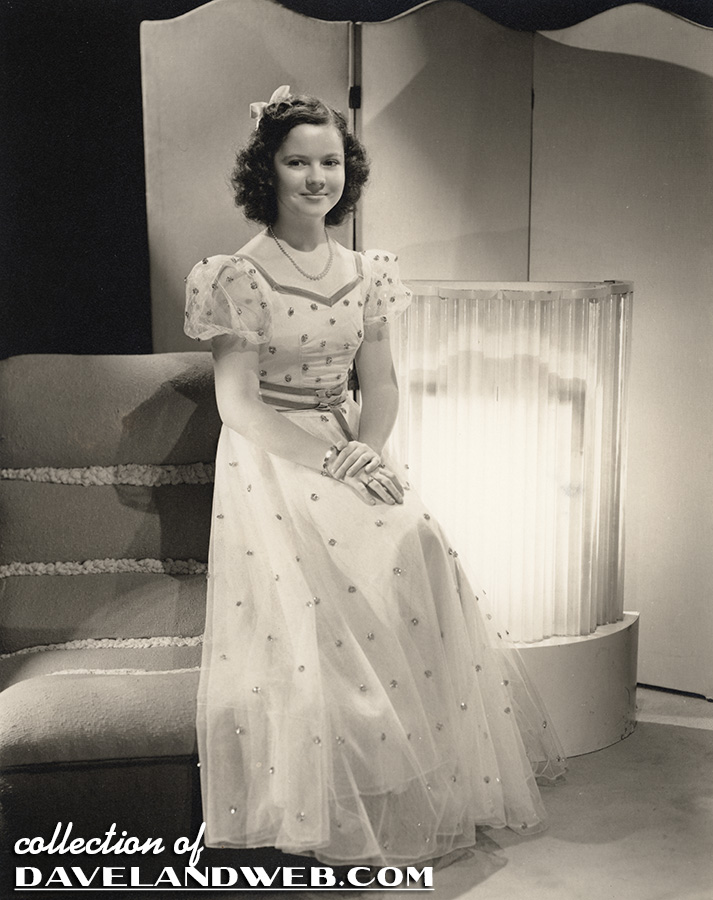
Sharp-eyed Temple fans will recognize the dress Shirley wore to the cotillion, as it was featured in this MGM publicity session by the famed photographer, Clarence Bull:
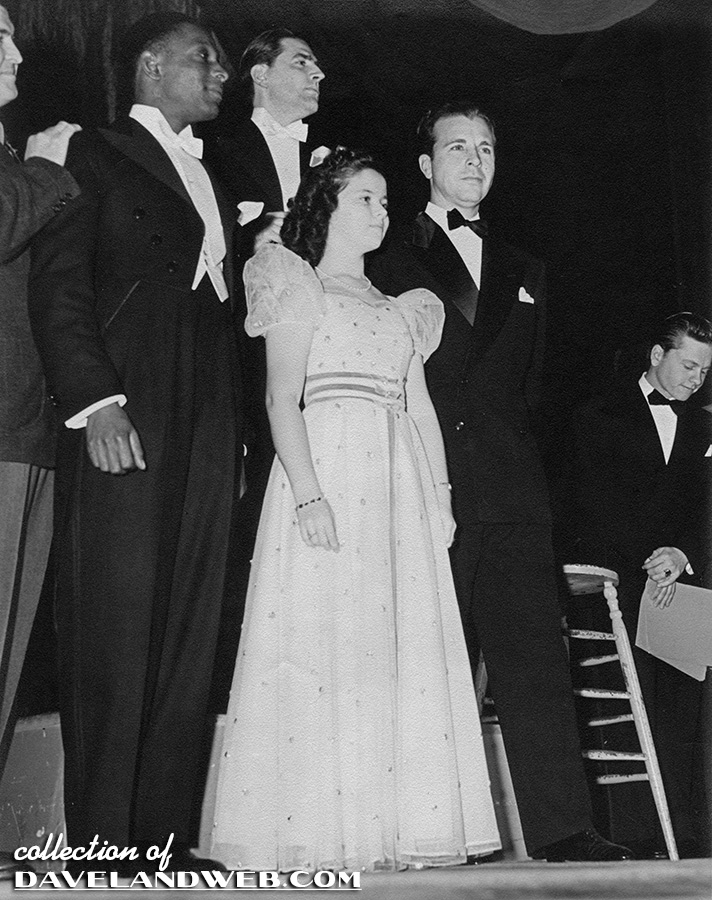
…and at the Greek War Relief benefit held at Grauman’s Chinese Theatre, February 8, 1941. MGM sure knew how to get the most mileage out of their costume department!
If you’re wondering why Shirley would attend two dances at the school, it was most likely because her brother George (aka “Sonny”) attended the nearby Black-Foxe Military Institute, graduating in 1939.
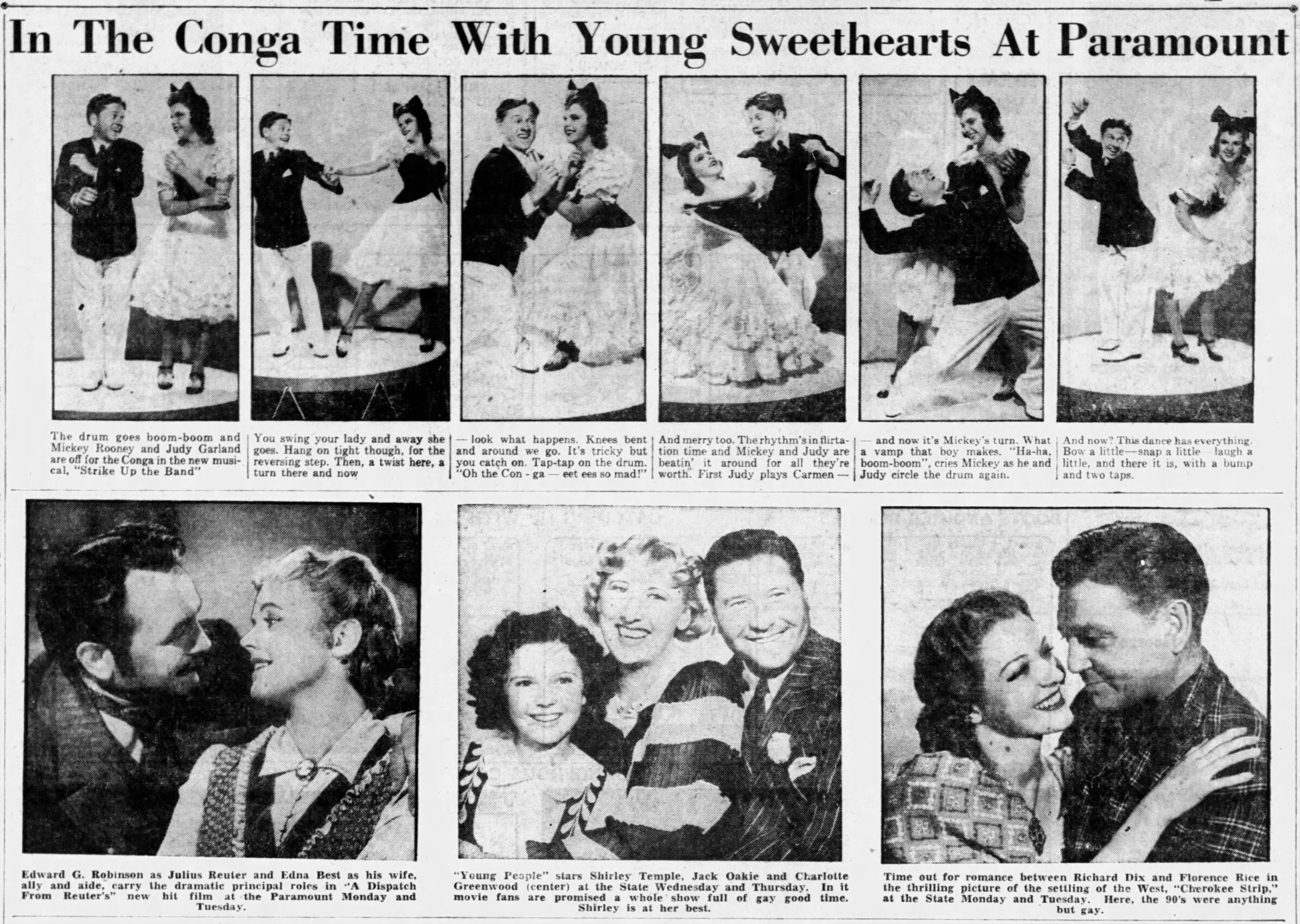
The “La Conga” was a popular dance, thanks to being featured in the MGM Judy Garland and Mickey Rooney musical, “Strike Up The Band,” released September 27, 1940. Once again, MGM rarely missed an opportunity to cross-promote their stars. Below are instructions of how to do the dance, courtesy of the The Jackson Sun in Jackson, Tennessee, Sunday, October 27, 1940. In a touch of irony, Shirley’s last film at 20th Century-Fox, “Young People,” is also featured in this section:
As a bonus, here’s clip of Garland and Rooney exuberantly performing the aforementioned “La Conga” number:
See more teenage Shirley Temple photos at my main website.
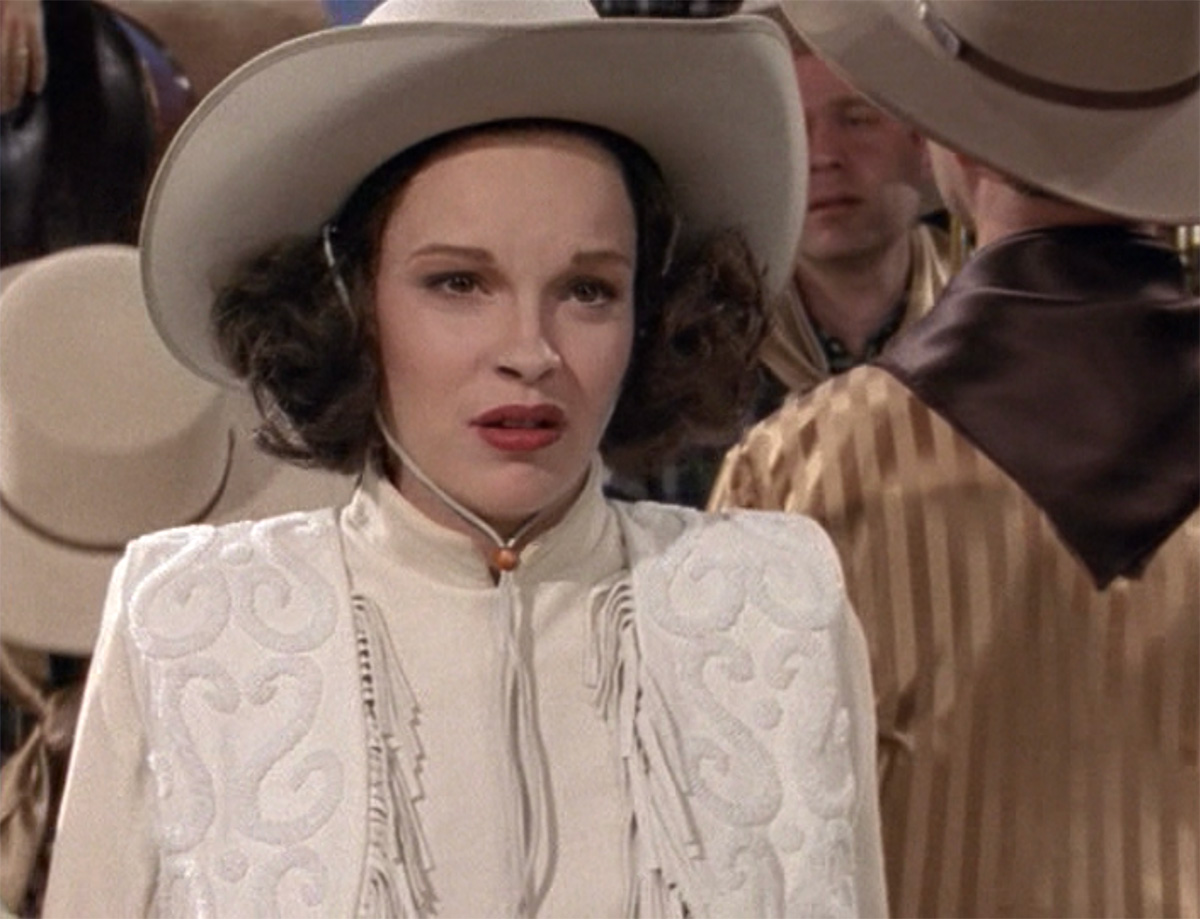
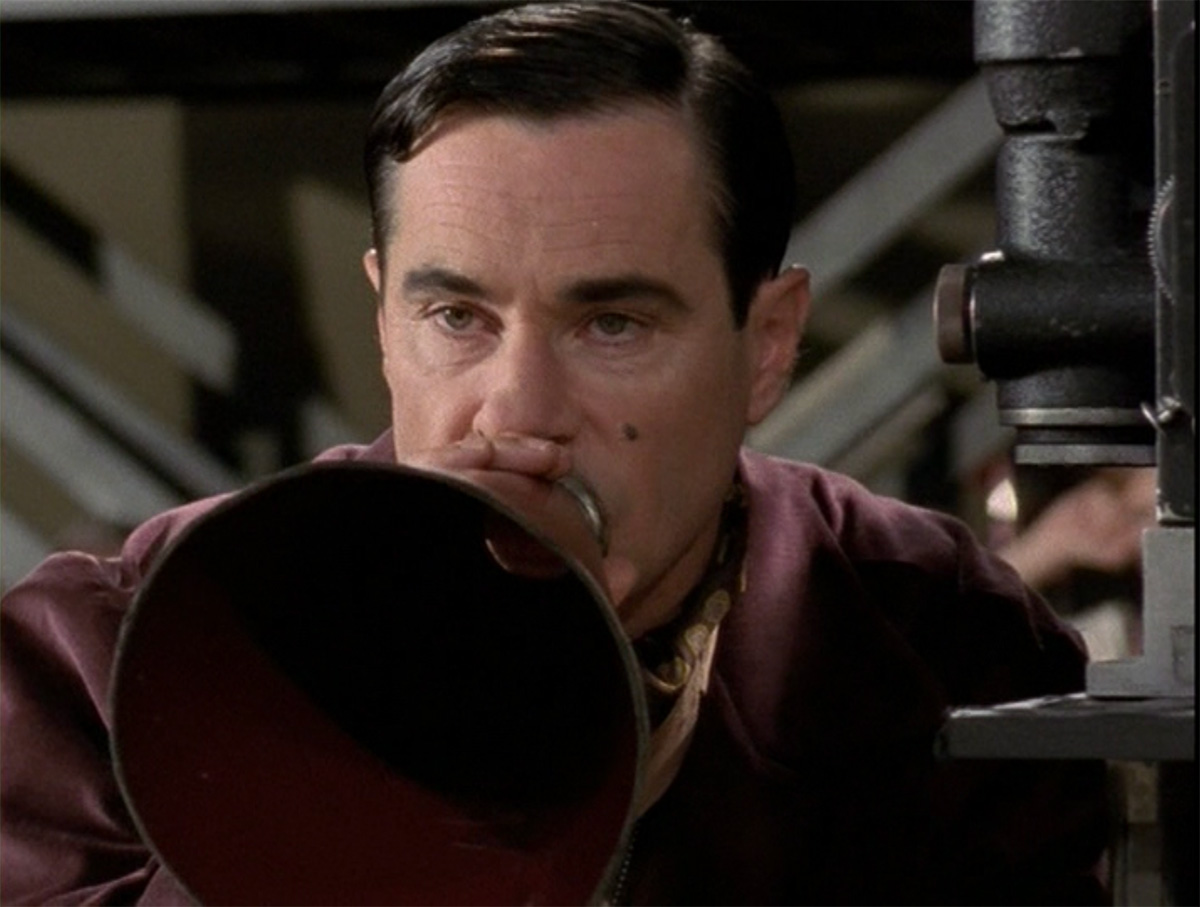
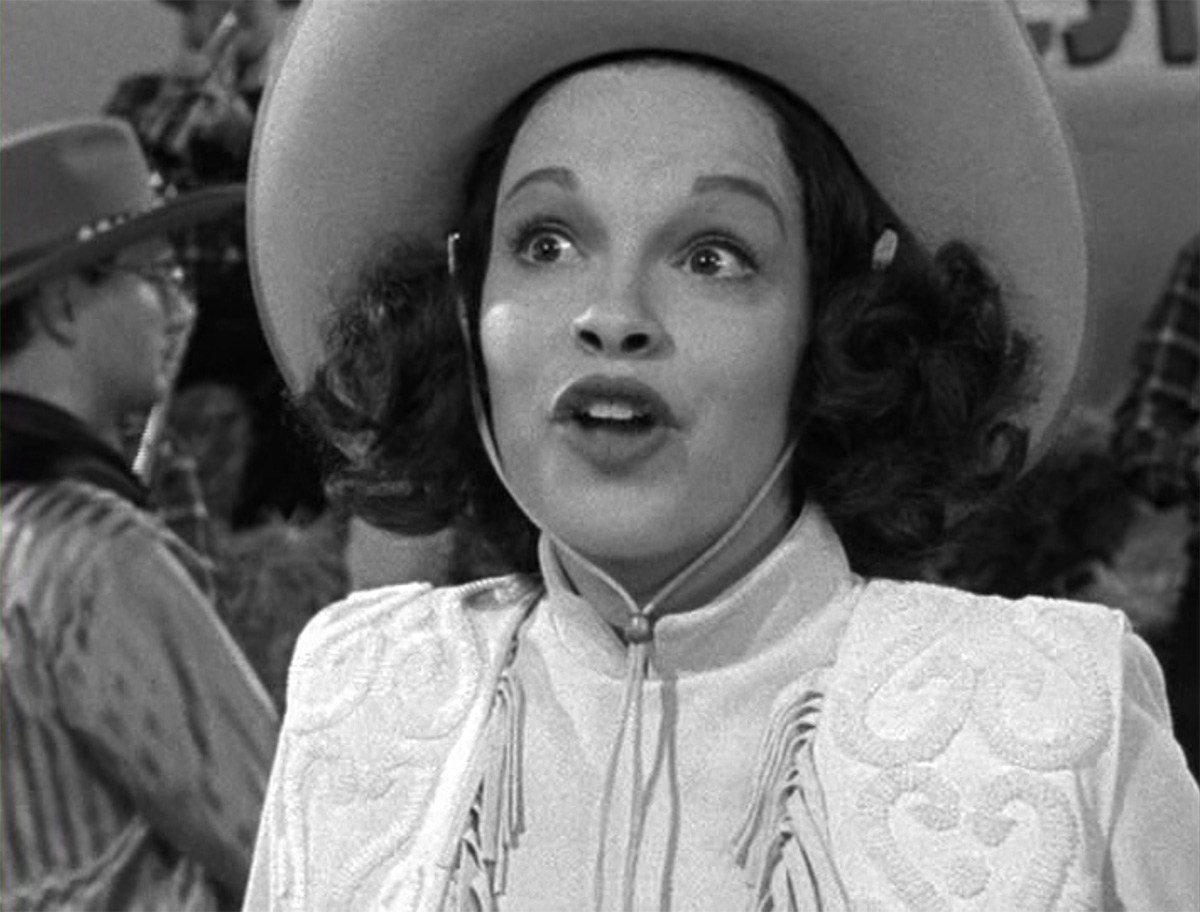
In the 2001 TV movie, “Life with Judy Garland: Me and My Shadows,” the production of the show stopping “I’ve Got Rhythm” number from “Girl Crazy” (1943) is used to demonstrate how hard Garland (Tammy Blanchard, who earned an Emmy for her expert portrayal) had to work and the rough treatment she experienced at the hands of director Busby Berkeley (Michael Rhoades).
“Eyes! Give me eyes!” the director yells at her, over and over again.
Is that what the real life Garland experienced while making the movie?
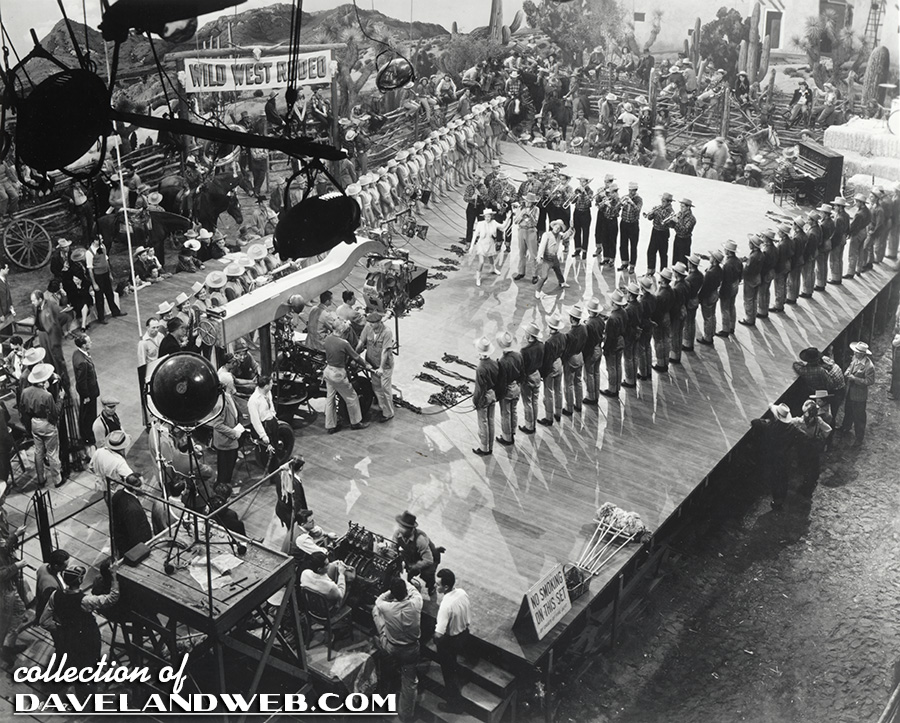
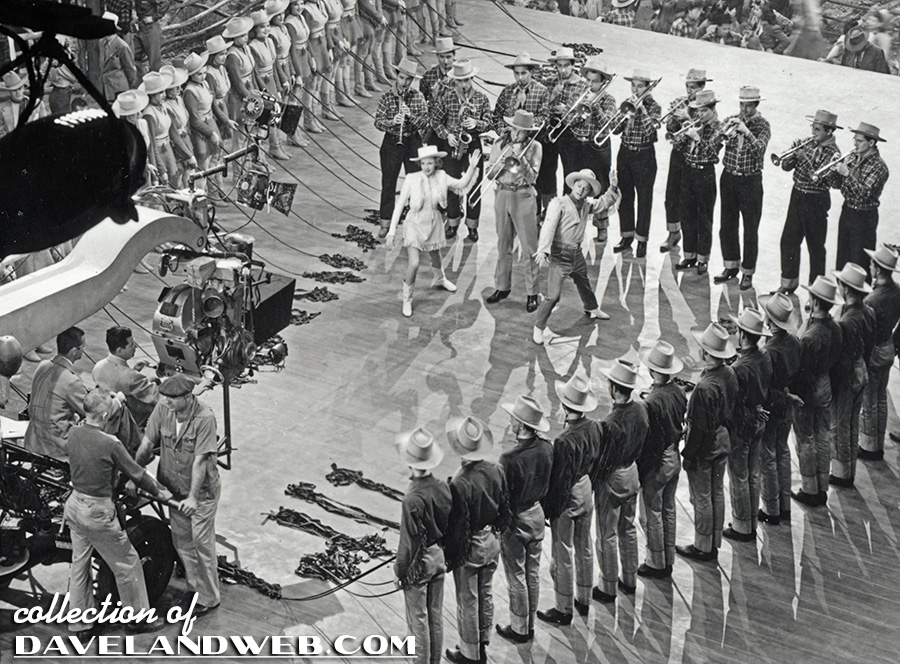
In this behind the scenes shot, you can see Garland, Tommy Dorsey, and Mickey Rooney filming the number that took nine days to film (four more than were scheduled) and immediately put the production $60k over budget. Oops. I was unable to spot Busby in the photo.
From January 4-14, this scene was shot with take after take after take. Berkeley continued to make the number more elaborate and drove the star to exhaustion. On January 29, her physician ordered her not to dance for the next three weeks and confined her to bed rest. From the book Chuck Walters: The Director Who Made Hollywood Dance by Brent Phillips:
[Berkeley] possessed a restless talent, a caustic tongue, and an alchoholic’s short temper. Accusations and inter-office memos were flying. Garland, in particular, was upset by his callousness. “[Judy] was a very sensitive girl,” Walters explained, “and Buzz treated his actors like a piece of scenery or a piece of furniture. He’d shove ’em around, move ’em around. Time meant nothing, lines meant nothing. It was just where his camera was, and where you had to be when he wanted to swoop around and slide in for a close-up. ‘God dammit!’ he’d say, ‘I told you to turn on that line so I could come in!’ And he’d push Judy and place her and made her feel very awkward.
As a result of his treatment of Judy, Berkeley was fired and replaced by Norman Taurog. Chuck Walters took over the staging of the rest of the songs.
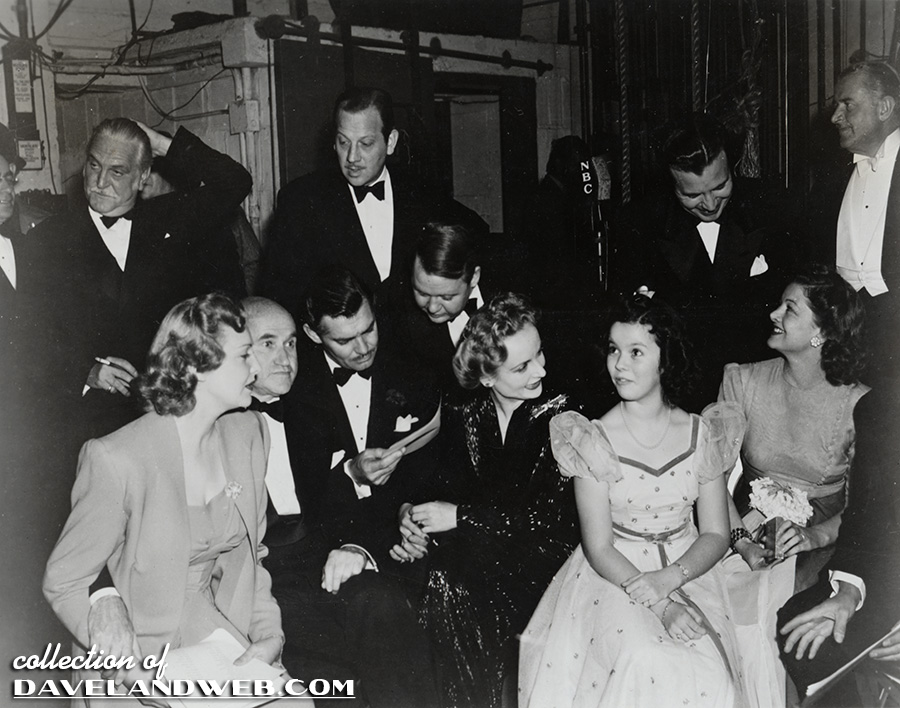
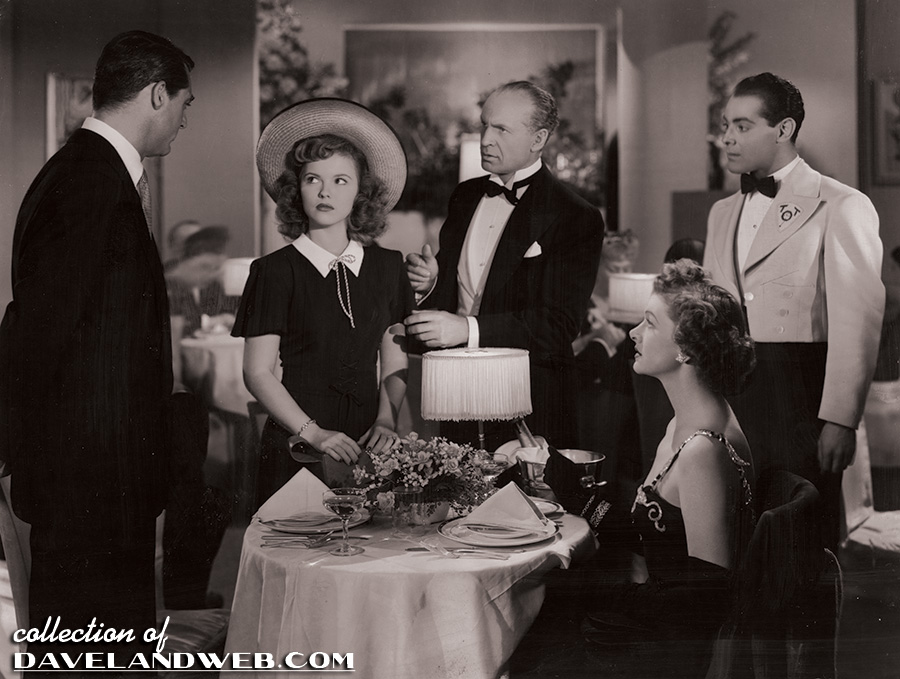
Look at this star-studded photo from 1941! In the back row: Frank Morgan, Melvyn Douglas, Dick Powell, and Reginald Owen. Front row: Madeleine Carroll, Sam Goldwyn, Clark Gable, Charles Laughton, Carole Lombard, Shirley, and Myrna Loy. What was the occasion that brought them all together? From pappaspost.com:
As a result of the Nazi occupation and subsequent naval blockade, famine and despair would overcome Greece both in Athens and throughout the countryside. In response to the turmoil in Greece, Americans began countrywide efforts to provide humanitarian relief for the Greek people. Railroad magnate Harold Vanderbilt and film industry executive Spyros Skouras launched an effort called the Greek War Relief Association no less than 10 days after the October 1940 Italian invasion of Greece to provide food and other forms of aid to Greece.…
In Hollywood, countless stars, celebrities, studio heads and industry heavyweights got behind the Greek War Relief movement, making it the single largest humanitarian fundraising campaign in American entertainment industry history, including a single organized fundraising campaign by the Motion Picture Association of America involving 8,000 cinemas.
Films like Walt Disney’s “Fantasia” and “Gone With the Wind” held gala premieres and opening nights in cities across the nation with ticket proceeds benefiting the Greek War Relief campaign.…
At Grauman’s Chinese Theater in Los Angeles on February 8, 1941…a massive radio telethon, “America Calling,” was broadcast on CBS, NBC, numerous independent stations, and throughout Europe. Jack Benny and Bob Hope were the “co-masters of ceremonies” of the variety show that featured some the biggest names of the time including Shirley Temple, Groucho Marx, and Clark Gable. The Greek War Relief Association raised $30 million — approximately $500 million today — to provide massive shipments of grain, equipment, livestock and other forms of material support for the Greek people.
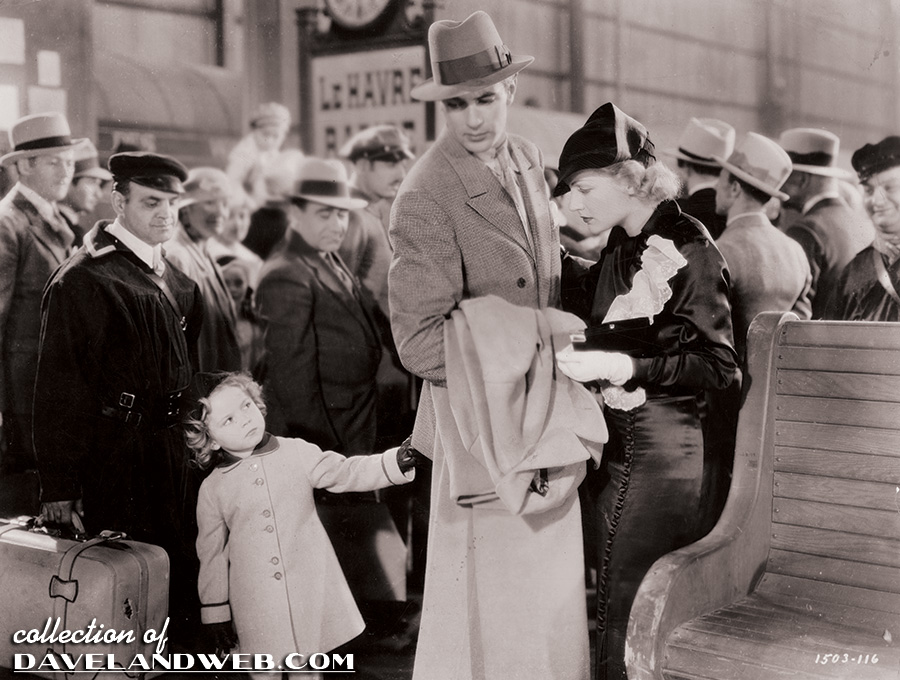
Shirley worked with many of the people who were on the broadcast. Carole Lombard (and Gary Cooper) in “Now and Forever” (1934):
Publicity photos with Clark Gable (and Mickey Rooney and Judy Garland) heralded Shirley signing on with MGM, also in 1941:
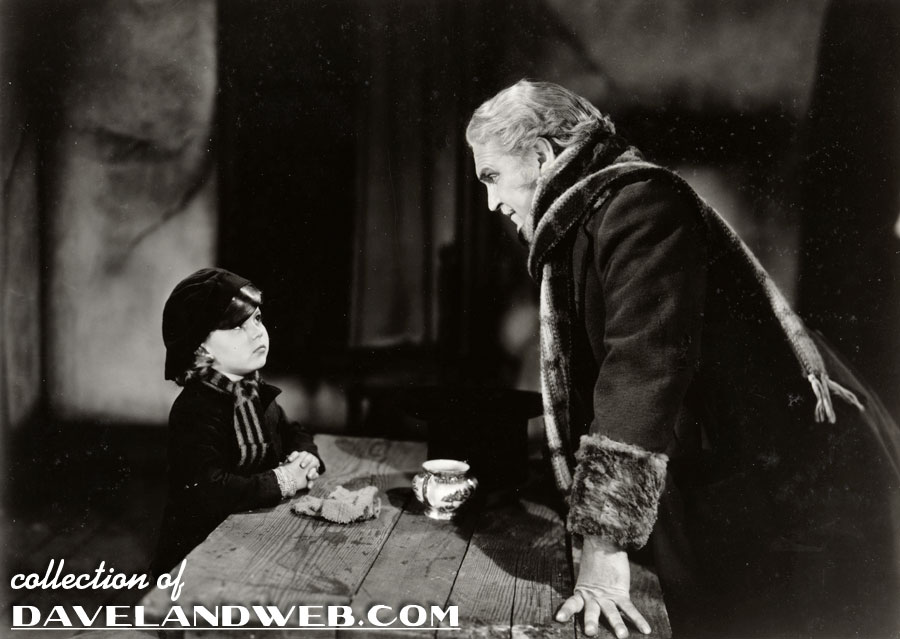
Shirley competed with Frank Morgan for scene-stealer of the year in “Dimples” (1936):
Myrna Loy worked with Shirley six years later in “The Bachelor and the Bobby-Soxer” (1947):
Get a huge dose of 1940’s patriotism and hear the original broadcast on thisdaybenny. Shirley appears at 30:59, introduced as “the new and lovely Shirley Temple.” She participates in some comic banter with Jack Benny and Bob Hope. Not surprisingly, Shirley holds her own with the two hams, and then goes on to give a short plea to the audience to donate to the fund.
See more Shirley Temple photos at my main website.
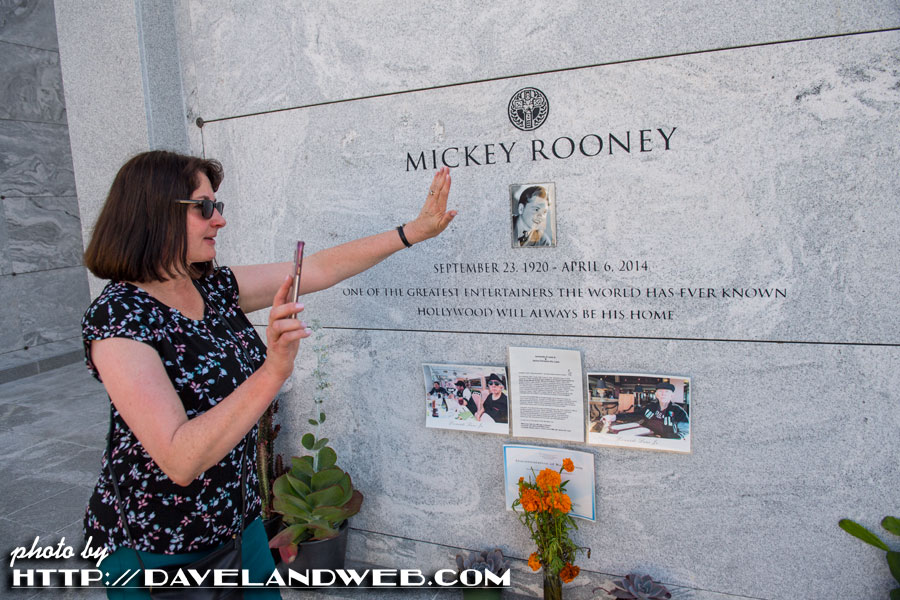
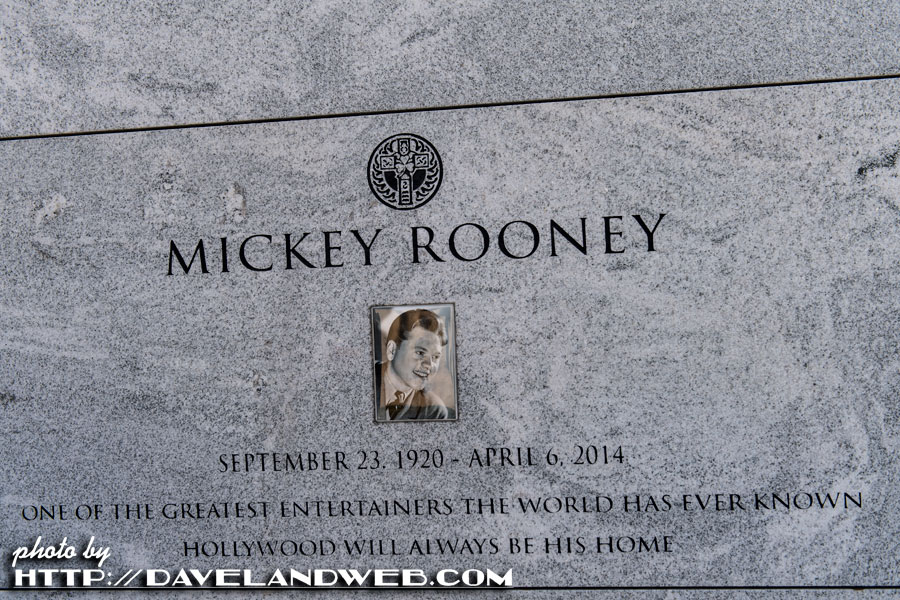
My adventures with Jersey Girl Melissa, aka “The Colonel,” weren't just limited to Shirley. We also paid a visit to the Hollywood Forever Cemetery to see the relatively recent “reburial” site of Judy Garland. But first, let's pay our respects to Mickey Rooney, Judy’s on-screen partner.
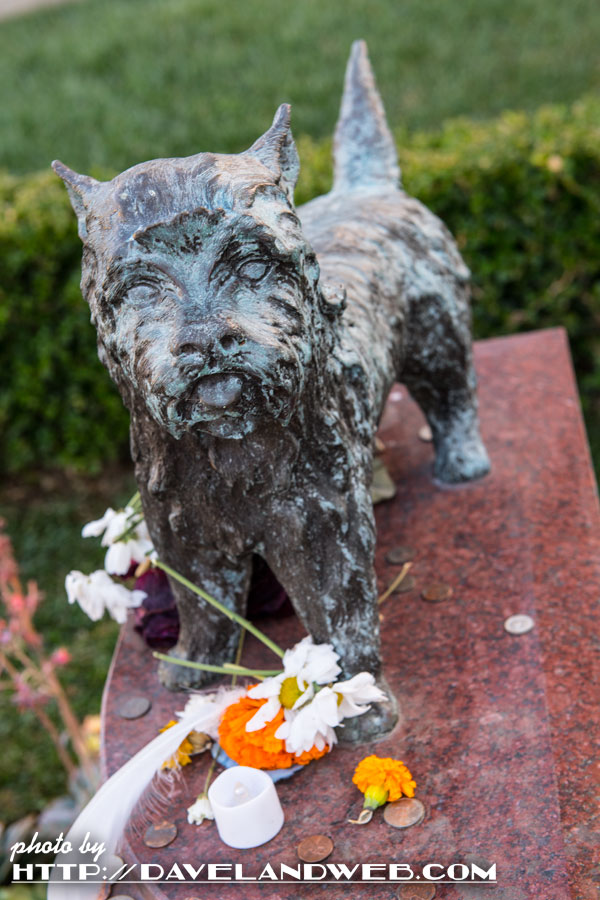
Right near by was the final replacing of Toto. Or was it? Here's the inscription:
This monument is dedicated to the memory of the beloved Toto from the 1939 film, “The Wizard of Oz.” Owner and Trainer Carl Spitz buried the Cairn Terrier on his ranch in Studio City. The 1958 construction of the Ventura Freeway destroyed her resting place.
Damn freeways! They ruin everything.
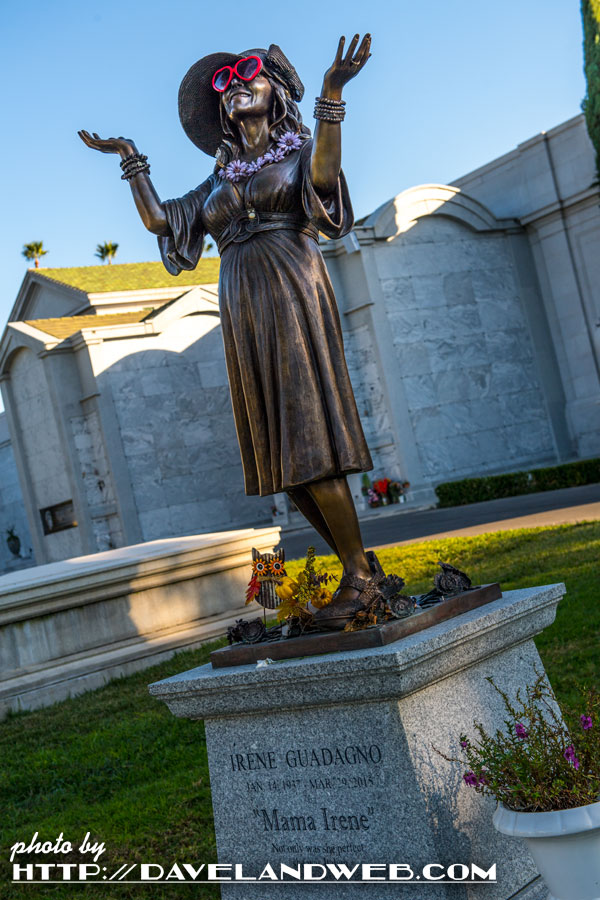
Here lies Irene Guadagno, aka “Mama Irene”: Not only was she perfect, she was Italian.
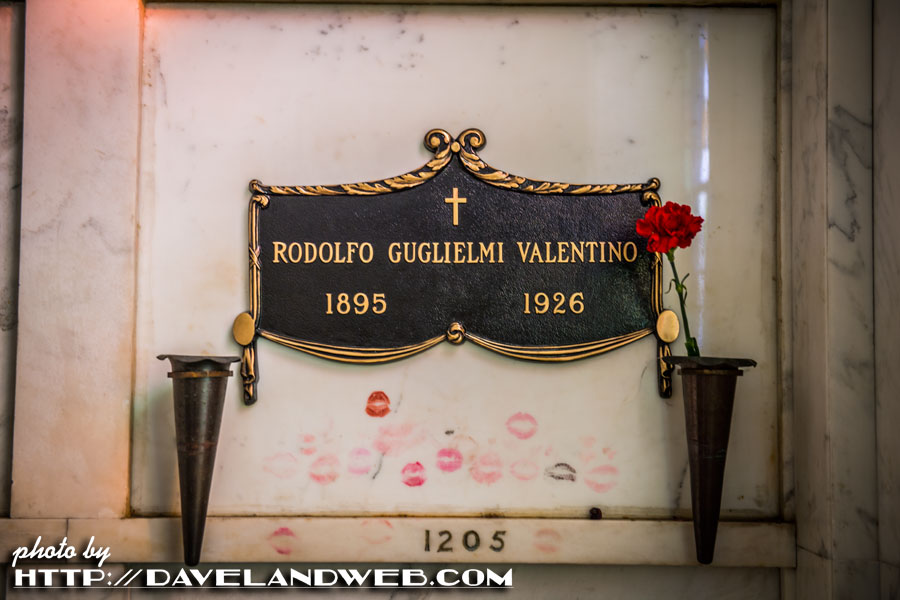
The crypt of Silent Screen idol Rudolph Valentino in the Cathedral Mausoleum:
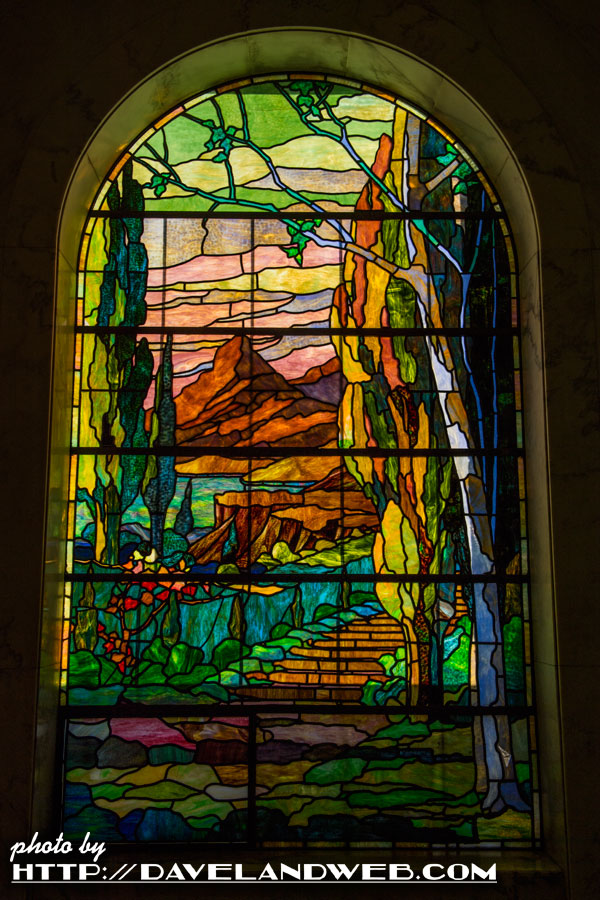
One of the many beautiful stained glass windows that brightens up this otherwise dreary building.
And then we arrived at our main destination…
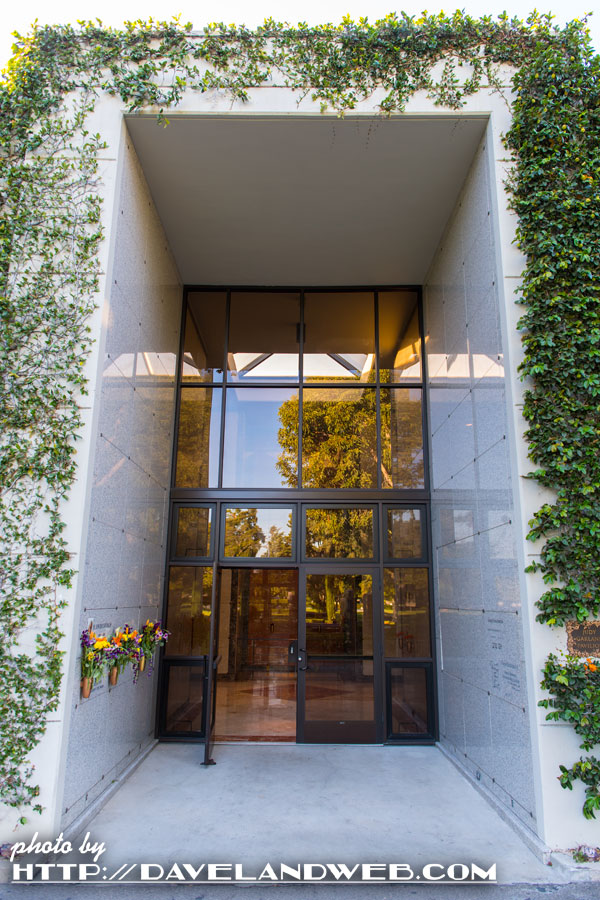
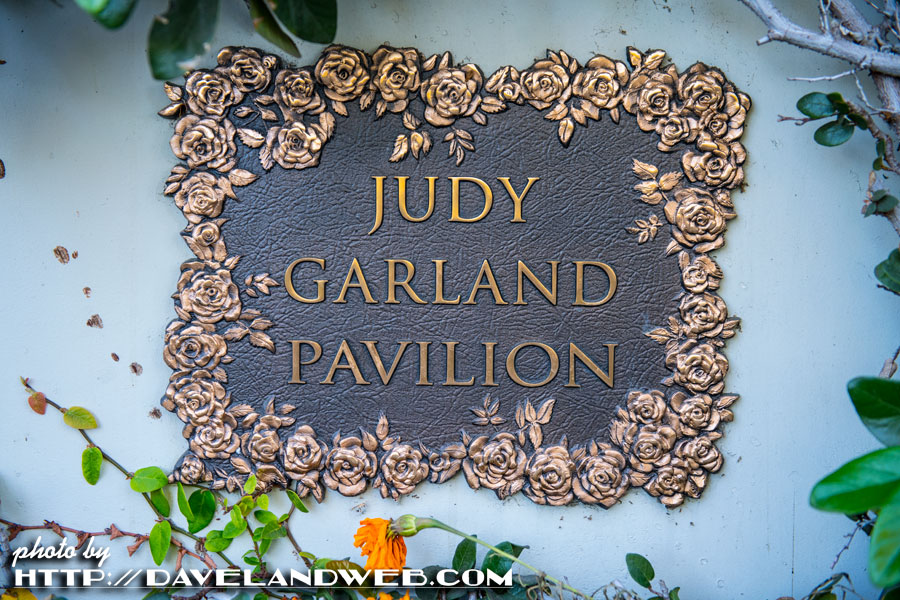
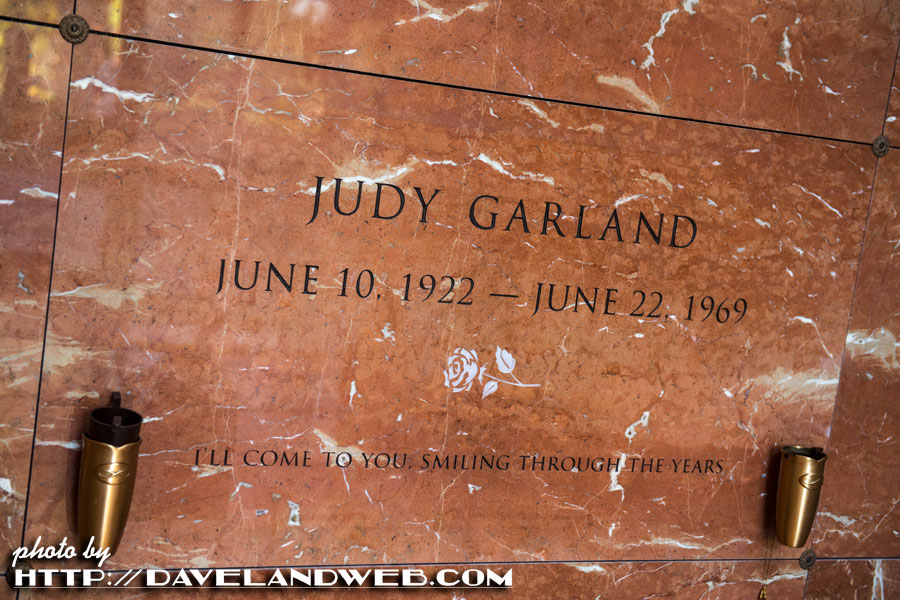
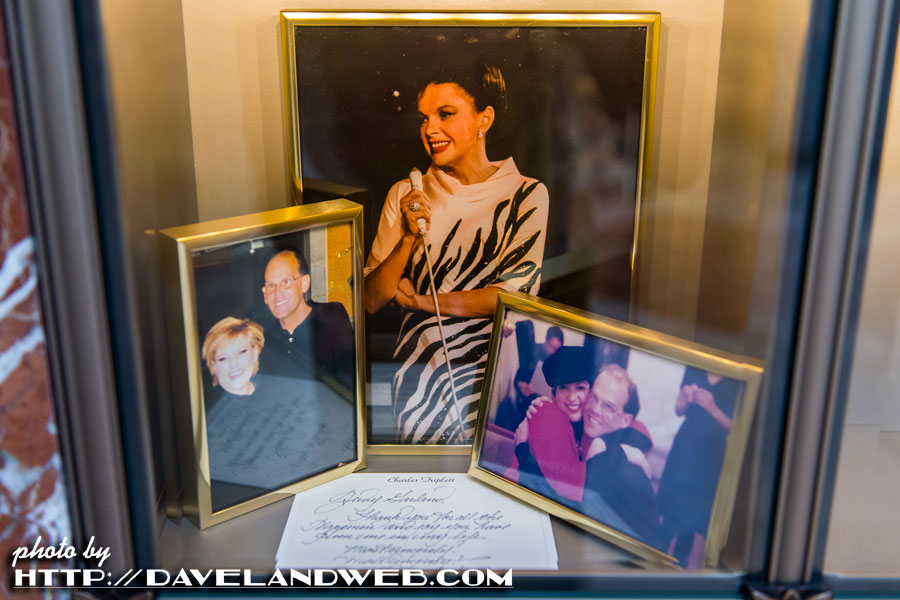
The Judy Garland Pavilion:
Judy’s family had her moved from New York to Hollywood so that the entire family could "rest" together.
Apparently Judy’s financial woes continue to plague her in the after-life; her fans just want to help.
For somewhere around $25k, you can buy a shelf with a view of Judy.
I wonder if Judy's kids get any of that money?
See more Hollywood Forever photos at my main website.