Showing posts with label shirley temple doll. Show all posts

Tuesday, September 15, 2026

Temple Tuesday: Shirley the Tomboy


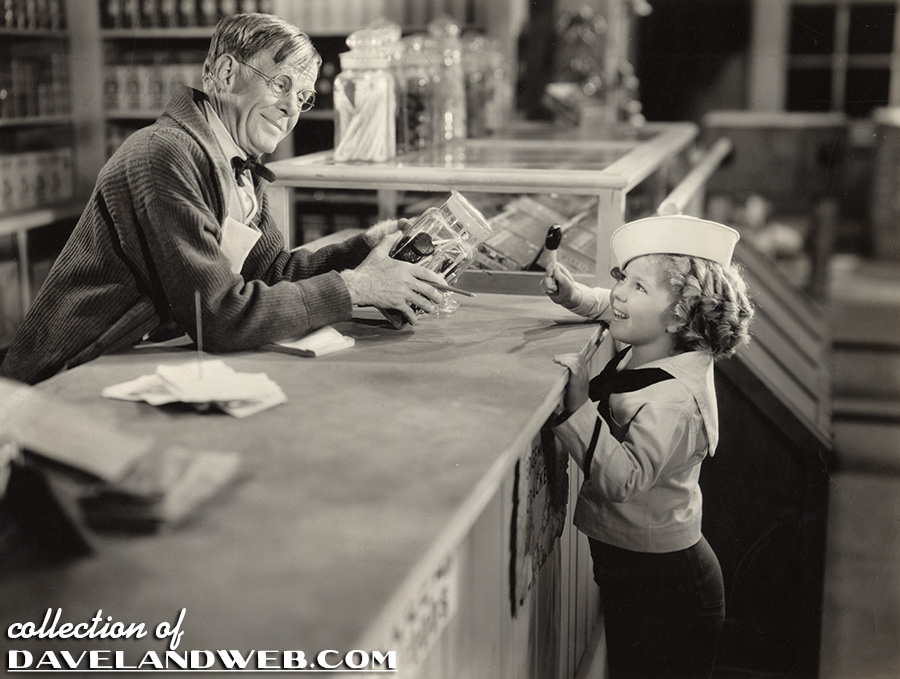
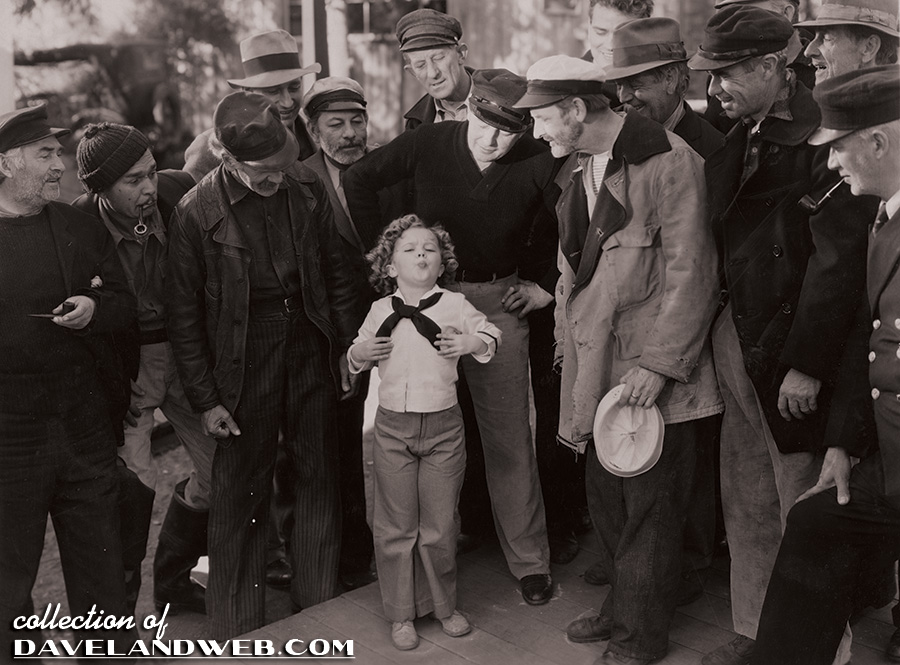
Shirley Temple was the most popular movie star of the 1930s, but that didn’t keep 20th Century-Fox mogul Darryl Zanuck from worrying about retaining those audiences. In order to appeal to little boys,  her innate tomboy characteristics were brought out in “Captain January” (1936). Set at a seaside lighthouse, Shirley gets to wear boyish naval attire through most of the movie, and is even taught how to properly spit!


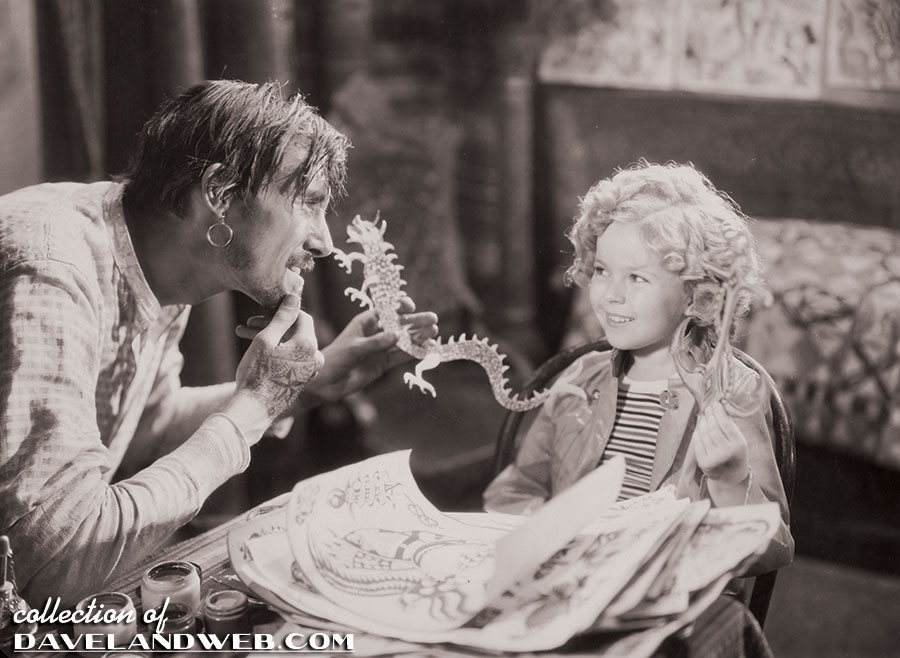
In this still from a deleted scene, Shirley almost gets a tattoo from John Carradine. Spitting is fine, but no tattoos for Shirley!


The dance sequences focused on athletic and daring routines, including a memorable one staged on this spiral staircase. This closeup of Shirley and costar Guy Kibbee is also from a deleted scene:


Shirley later recalled the scene where she learned her multiplication tables while doing a tap dance routine down the lighthouse spiral staircase. From her autobiography Child Star:

Learning my solo tap dance descending a forty-five-foot-high spiral staircase in a lonely lighthouse taught me not only the routine, but also how to multiply. It was all tight steps, like a ballet, a devilishly complicated task. There were three things to do at once: the taps, move down the spiral staircase a step at a time, and synchronize multiplication tables with both taps and movements.

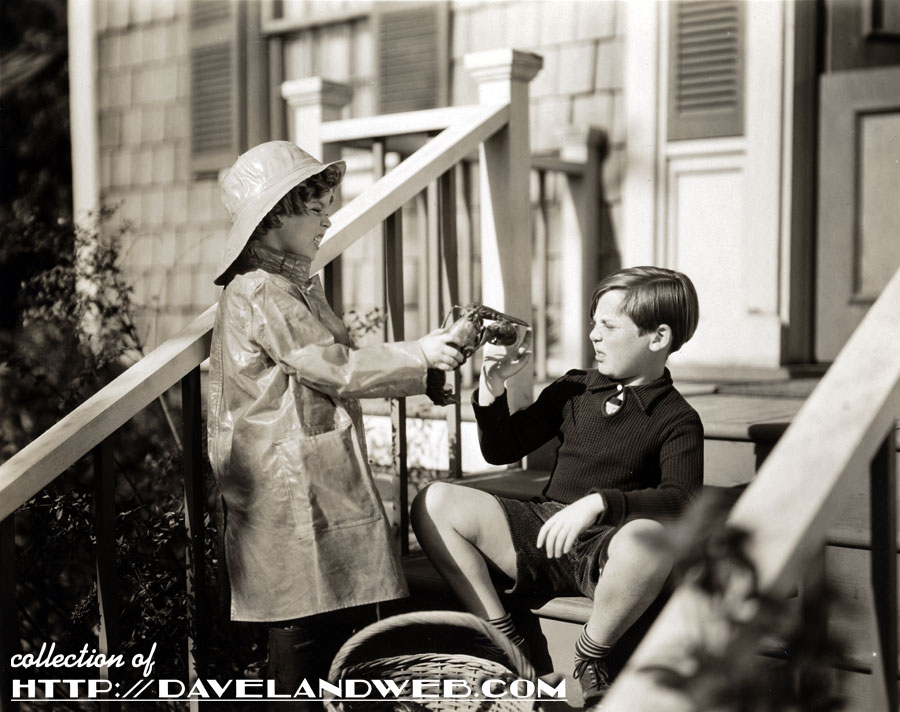
Shirley’s character was still a bit of a helpful Hannah, but thanks to pairing her with a thoroughly unlikeable counterpart, ably played by Jerry Tucker, the audience naturally roots for Shirley! In a deleted sequence, Shirley is shown below with Tucker, selling lobsters. The prissy little brat is obviously appalled!


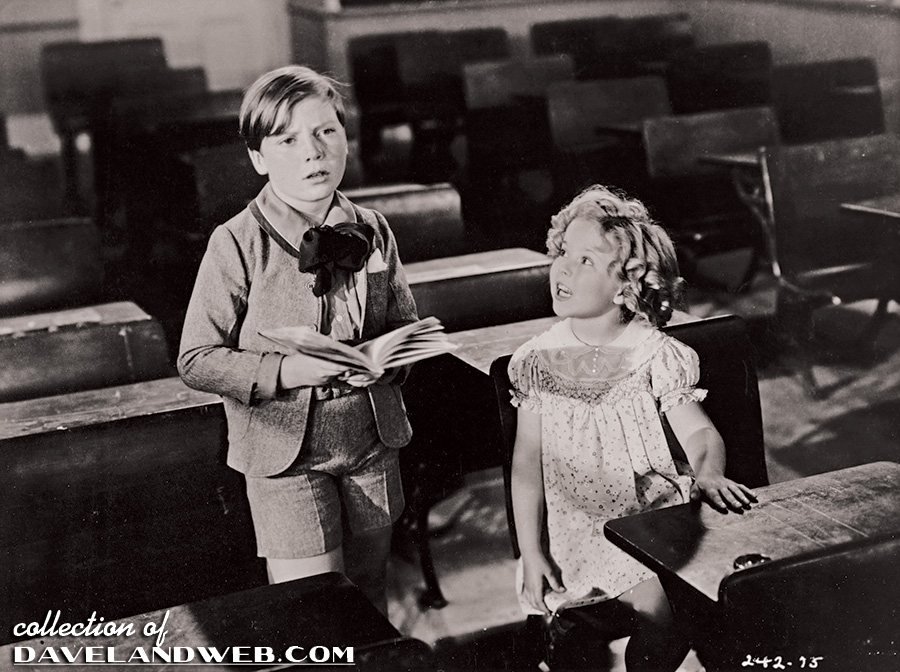
In one of my favorite scenes, Tucker and Temple’s characters are tested together for their scholastic aptitude. You can see the tension building between the two before the test begins:


Motion Picture magazine reported professional jealousy on Shirley’s part:

Jerry Tucker, ten-year old ‘Captain January’ juvenile, had her attention for almost a day. That was because his line-remembering agility was a slight thorn in Shirley’s side. She learned her two pages of dialogue and leapt into it like a gazelle, not permitting Director David Butler to break it into smaller scenes and thus lessen the tax upon her memory. She’d show that Jerry Tucker (who had done his scene in only two takes) that women had good memories, too!


Below, June Lang is at right, playing the part of the pretty schoolteacher:


A detailed view of Tucker and Temple. Tucker was born Jerome Harold Schatz, and garnered his first taste of fame with the “Our Gang” comedies. His movie career ended in 1941, and he went on to serve in the U.S. Navy during World War II and the Korean War. Tucker followed his years of service with a successful career as an RCA electrical engineer, living on to the ripe old age of 91.


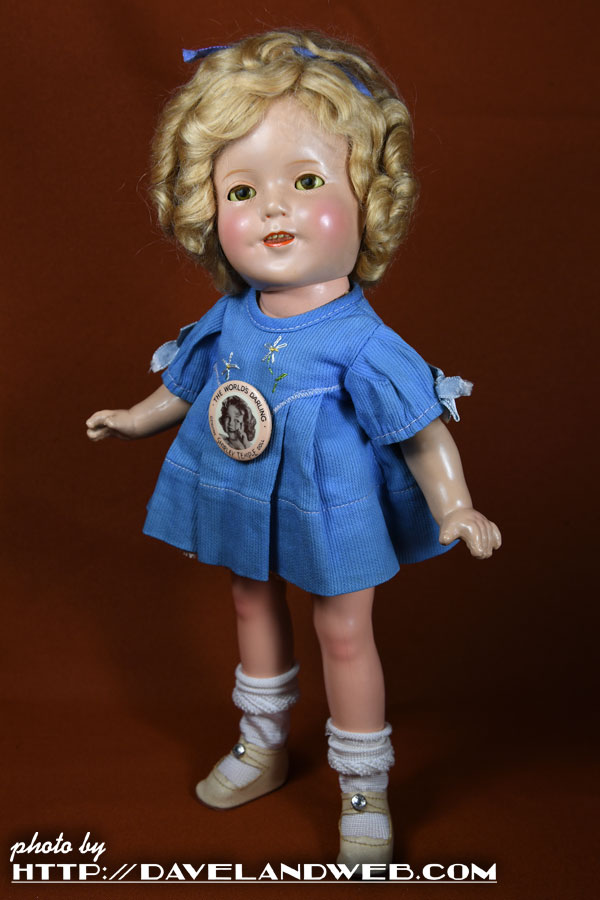
So as to continue the appeal for little girls, Shirley gets a cute little frock for her aptitude test, which was also sold as an outfit for the popular Ideal Toy Company Shirley Temple doll of the 1930s:
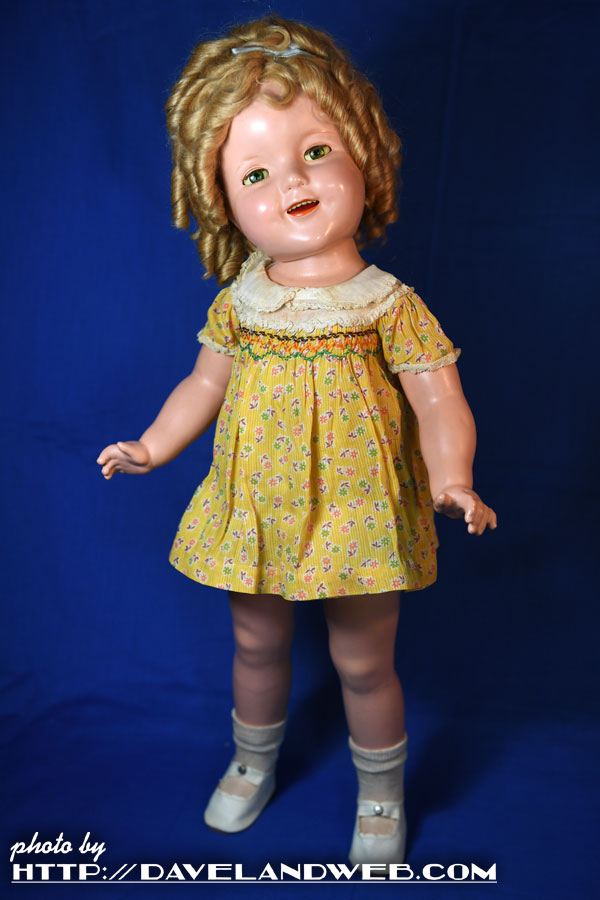


The movie also used the “Captain January” sets and costars Slim Summerville and Buddy Ebsen to promote the RCA Victor Magic Brain. Maybe this is what inspired Tucker’s later career?


From the publicity blurb on back:

Slim Summerville and Buddy Ebsen, featured players in 20th Century-Fox “Captain January” starring Shirley Temple, are seen discussing the qualities of the RCA Magic Brain Radio. Summerville and Ebsen are seafaring men in this great picture and they depend upon R.C.A. Victor Radio for their news and entertainment.

Magic Brain…sounds a bit like a pre-cursor to AI!


What a 1936 RCA Victor Magic Brain radio looks like, as seen in this photo from Facebook:


Here’s a view of what the Cunningham Radio Tubes, shown in the window, look like in color, from the Tube World Express website:


In other Shirley news, Shirley Temple expert supreme, Rita Dubas, has just released another thoroughly detailed video with EVERYTHING you could possibly want to know about the famous Shirley Temple soft drink, of which Shirley herself could not stand!


See more Shirley Temple photos at my main website.

Tuesday, October 07, 2025

Temple Tuesday: Parties, Dolls, Furs, and Art Deco


On November 10, 1935, the Los Angeles Times carried a story in their “Beau Peep Whispers” column:

Mayfair’s youngest generation doesn’t get a break very often in the social scheme of things. Most of the year little Peter and Sister Diane are seen and not heard when mother and father have grown-up company in the new black and white playroom. But once a year to every well-behaved little Blue-booker comes the chance to go to a real party and have fun. That’s why all the wee ones from the age of 2 to 12 are anxious about Saturday afternoon, November 30, when the Children’s Hospital Doll Fair is held at the spacious home of Mrs. Lee Allen Phillips at 4 Berkeley Square.…A new Mickey Mouse will be a Yuletide present for the children from the Junior League, according to Eve (Mrs. Bradner Wells, Sr.) Lee. And, of course, there will be scores of shining new toys and mysterious grab-bag presents, as well as lines of beautifully dressed dolls for all the sub-deb debutantes.…Mrs. Sterry wants everybody to come to the Doll Fair party November 30, too, and reminds you that no special invitations are being sent out. It’s given for the Children’s Hospital Convalescent Home at Hermosa Beach, which is not supported by the Community Chest.

The original Children’s Hospital was opened in 1928 at 445 Monterey Avenue in Hermosa Beach. For 13 years, it provided a school teacher, physiotherapy pool, and nursing care to more than 1,200 recuperating youngsters. Facilities were moved to Los Angeles in 1942. Want to see the swanky mansion where the Doll Fair party was held?


Found on the pastvu website, here is the accompanying text for this 1962 image of the former Lee A. Phillips mansion:

Located at 4 Berkeley Square in the West Adams District, this Tudor Revival mansion was designed by Myron Hunt and Silas Burns and built in 1913. The residence stood until around 1970, when a group of doctors paid $1 million for the property on which to build West Adams Community Hospital, later Los Angeles Metropolitan Medical Center.

Closer to the event, on November 25, the Daily News gave more details about the social event of the season:

When the doors of the beautiful Lee Allen Phillips home, 4 Berkeley Square, are opened 10 a. m., Saturday, a group of eager kiddies will be waiting to purchase the exquisitely dressed dolls, bean bags and marbles, and all shorts of shiny new toys with which the spacious home will be filled. The occasion for this wonderful children’s party is the annual Children’s Hospital Doll Fair, and not only the little ones, but the “grown-ups,” as well, have been anticipating this Christmas social event. Every one is asked to keep the date in a conspicuous place on their social calendar, for Mayfair is sure to be present “en masse.”…In a cozy little room, all by themselves, the children will be served with ice cream and dainty cakes, under the direction of Mrs. Clarence H. Crawford. This room will be gayly decorated in Yuletide colors. For the older members of the family, Mrs. George Griffith Jr. has provided a table of beautiful and useful gifts, which will successfully solve the Christmas problem, and bring joy to the recipients, while linens of the finest texture and design, and selected by Mrs. Donald Shelby, will intrigue the most discriminating.

It is now time to tie Shirley into the story, as she told it years later in her autobiography, Child Star:

Mother had donated a Shirley Temple doll and matching trunk outfitted with special clothes to be raffled off…. As an added attraction, she donated me to draw the winning number. Reaching deep into the boxful of ticket stubs I pulled out my own number. Delighted to have won, I jumped up and down, but out in the audience someone murmured “Hoax,” followed by a gabble of protest and polite boos. “Take another number,” whispered Mother. “I won’t,” I said. I had helped beat the drums for that auction. The prize itself was of little interest, although the clothes were beautifully made. It was the principle. To win was exciting. I had played fair and square. Why must I surrender what was fairly won? “You’ve got to!” Mother insisted, shoving the box toward me. “Take another number!” “I will not.” I remained at the podium, holding my ticket stub tightly. “I won it.”

It was one of the rare times Shirley went against her mother! Below is Shirley in her 20th Century-Fox trailer, showing off her prize between takes of “Captain January” (1936).


The doll remained in Shirley’s possession for the rest of her life, and was sold off in 2015 at the Theriault’s Love, Shirley Temple auction.


From the Theriault’s Catalog:

American Composition Doll of Shirley in Exclusive Ensemble Inspired by Film "Bright Eyes" All-composition doll with socket head, hazel sleep and "flirting" eyes, human hair lashes, open mouth, row of teeth, impressed cheek dimples, blonde mohair ringlet curls, jointing at shoulders and hips. The doll is wearing a pink silk pleated dress over factory-original undergarment, socks and shoes, and has white fur coat with extended cape collar and foxtail trim, muff, and velvet hat with more foxtail trim. Generally excellent condition. The doll is marked Shirley Temple Cop Ideal N & T and the coat is labeled "Willard H. George Los Angeles". The costume was a unique creation, a symbol of her costume in the final scene of the 1934 film "Bright Eyes". Created for a charity raffle, the 1935 Children's Hospital Doll Fair; at the raffle Shirley actually pulled her own name from the hat, a story she wrote about in her autobiography Child Star.

Now in a private collection, I had the privilege of seeing the doll recently and can assure you it is well taken care of!


For some background on the doll’s custom made fur coat, it came from the shop of Willard Hampton George, a furrier based in Los Angeles. He designed, created, and supplied furs to the Hollywood movie studios from the 1920s until his death in 1956. George designed and created furs for Hollywood actresses including Lucille Ball, Greta Garbo, and Rita Hayworth. His showroom was located at 3300 Wilshire Boulevard in the Morgan Adams building, seen below:


Vacant since 2010, there were plans to demolish it. LA Curbed reported in 2017:

It’s not as grand as the turquoise terra-cotta clad Wiltern theater, but there’s another spectacular example of Art Deco architecture on Wilshire Boulevard in Koreatown. That building, at Wilshire and Catalina, was home from 1929 until the 1950s to a glamorous showroom owned by furrier Willard H. George, known as “the Chinchilla Industry’s Greatest Friend,” according to the Los Angeles Conservancy. Now—after sitting dormant and nearly meeting the wrecking ball—the beautiful old building is about to emerge from a careful restoration. The work is helmed Los Angeles-based architect Jingbo Lou, who intends to reopen the former showroom as a restaurant, possibly a swanky steakhouse, that, in a nod to its past, will incorporate some type of fashion element. He’ll put a bar on the second floor, and he’s almost done carving out sleek, airy apartments on the third, where the furrier used to sew garments.…In the past decade, plans for the Willard H. George building, which, after the furrier closed, was the longtime home of piano retailer Sherman Clay and Co., included demolishing the building to make way for a mixed-use tower. The city’s now defunct community redevelopment agency had also eyed it for affordable housing. Neither of those panned out, and the building has been vacant since at least 2010. Lou says when the owners approached him about taking on shares, he looked up old photos of the building and saw its potential. The original 1920s facade was covered up by a false wall, but “I could recognize most of the openings—the doors and windows—were in the right place. I had a pretty good idea what was behind it,” he says. When his team took that wall down, “we were shocked,” he says.


They found the original handsome exterior still intact: a concrete facade punctuated by bright orange tiles and geometric and classical reliefs. Many of the tiles were missing, and he since replaced them with replicas. He also replicated a large ornamental pyramid that originally sat above the front entry. Inside, the building’s centerpiece is a wide sweeping staircase, once used as a runway for models draped in expensive furs.


The Willard H. George showroom was devoid of racks, so customers would select from what the models wore. The elegant showroom was once described in an ad as the “most modern and beautiful in the country.” “The interior space, the showroom, is so gorgeous,” Lou says. False walls had also been tacked onto the interior, and Lou’s team had to tear those and a drop-ceiling out to expose the original surfaces and moldings. Lou expects work on the interior will be done in the next few months, but the restaurant could be a ways out, as he’ll need proper permits and an operator. In the meantime, next time you’re in Koreatown, make a point of checking out the Art Deco facade—unlike furs in LA, the architecture is timeless.

Flash forward to present day at the J. Lou website:

Morgan Adams Building was first built in 1929 by Richard D King. It was originally built to complement the high retail standards in the immediate vicinity such as The Ambassador Hotel, The Gaylord's HMS Bounty, Wilshire Galleria, and The Chapman Market. The Morgan Adams Building ware rooms were once recognized as one of the most beautiful and elite stores in the country. It set the standards for high end commercial and retail spaces for its neighbors alike and future retail. 1929: Morgan Adams building opened and housed the elegant Willard George fur shop on its ground floor. 1960: Fire burns down the eastern portion of the original Morgan Adams Building, Penny Owsley built a mid century concrete building in its place at 3324 Wilshire Blvd. Late 1960s: Sharman Clay Pianos take overs over Original Morgan Adams Building, Later undergoes many alterations and becomes abandoned for years. Present Day: JLD steps in and renovates it into a modern mixed-use building


Surprisingly, Intercrew, the event venue that currently inhabits the building mentions ZIP about its history. 

Unforgettable Experiences Trusted by Global Brands Global brands host with confidence at Intercrew — a premier 30,000 sq. ft. venue in the heart of Los Angeles. Chosen by world-class companies for elevated corporate events, product launches, and private celebrations, Intercrew offers cutting-edge AV, VIP lounges, and full-service culinary capabilities to deliver seamless, high-impact experiences.

Sounds like another place for my bucket list of things to photograph! And so ends another Temple Tuesday rabbit hole. I wonder if George used rabbit in his furs?

See more Shirley Temple photos at my main website.

Tuesday, July 29, 2025

Temple Tuesday: When I Grow Up


In what can only be called a musical tour de force, Shirley Temple performs “When I Grow Up” in 1935’s “Curly Top.” Ray Henderson, Ted Koehler, Edward Heyman, and Irving Caesar created the song specifically for the little star. Yes…four people collaborated on this number for Shirley! In the film, Elizabeth (Shirley) has been adopted by a wealthy gentleman; as a result of her good fortune, she decides to hold a benefit for her former orphanage.


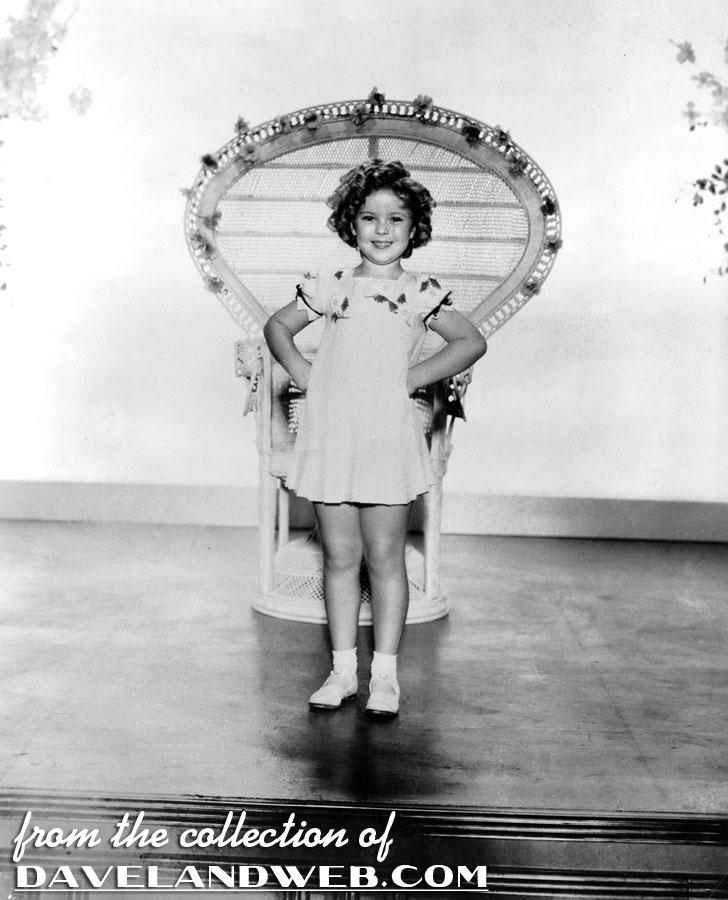
Shirley arrives on stage wearing a yellow dress with daisies, designed by René Hubert. How do I know it was yellow when the film was shot in black and white?


Because it still survives today and is in the hands of a private collector. From the Theriault's auction catalog:

Of delicately textured fine silk in pale daffodil-yellow color, the dress features wide pleats falling from the fitted yoke with V-shaped edging that is repeated on the short puffed sleeves. The dress is trimmed with applique white velvet daisies and leaves. The studio label "4982" is inside the dress.


The dress was also part of a paper doll set from the 1930s printed by the Saalfield Publishing Company.


The Ideal Toy Company produced dolls wearing a modified version of the dress in multiple colors. Shirley was a merchandising bonanza during the Great Depression!


The next stage represented by Shirley in this number is Sweet Sixteen. Cute close-ups abound!


I was able to view this dress in person when it was on display at the Santa Monica History museum in 2015, just before it was auctioned off:


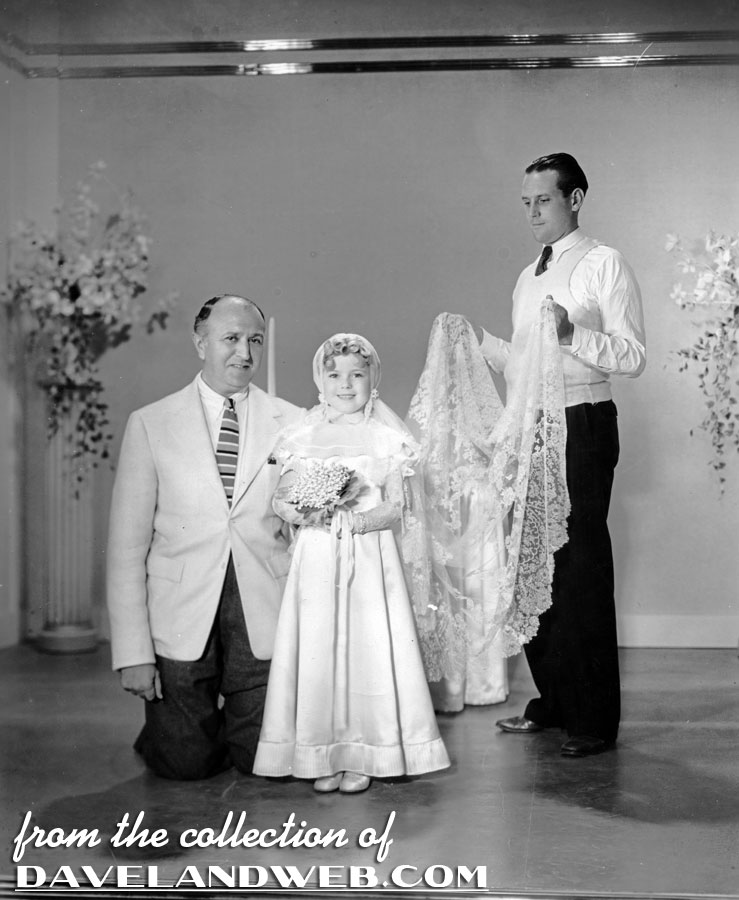
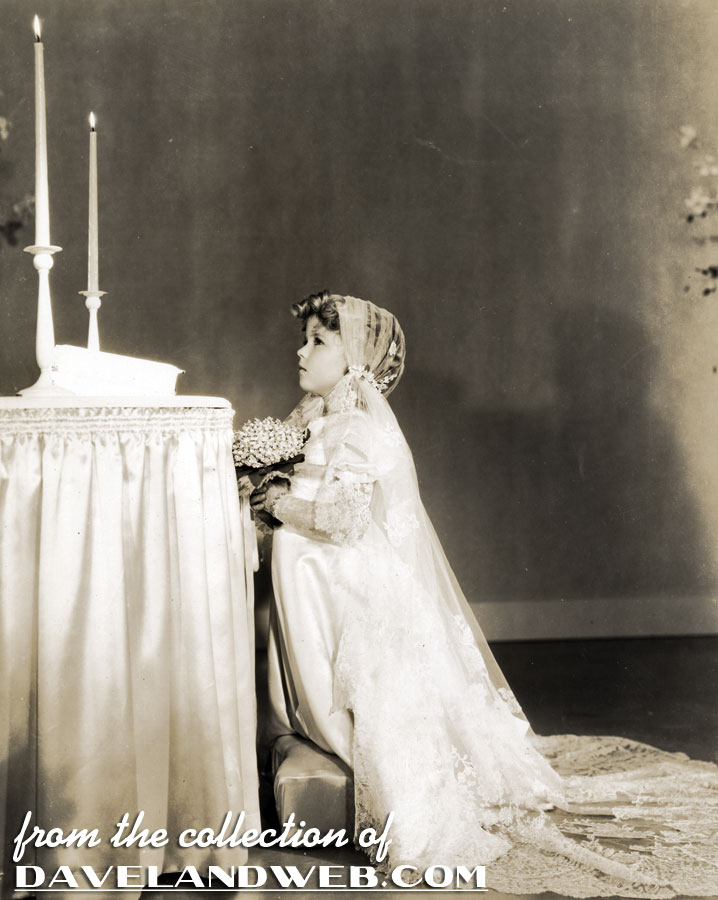
At the tender age of seven, Shirley made a very charming bride! Here she is with director Irving Cummings and some poor sap who had nothing else to do but hold up Shirley’s train!


This outfit also survived and was auctioned off. From Theriault’s:

The ivory satin gown has padded bodice, very wide collar with pleated ruffle at the edge, full short sleeves with pleated edging, flared bias cut full-length skirt with pleated ruffle at the hem. Included is the original wedding veil with elaborate embroidery, designed to fit the head in cap-like manner, and a pair of fingerless lace gloves. The gown and gloves are in excellent condition, the veil is extremely frail. The gown has studio label of "4993".


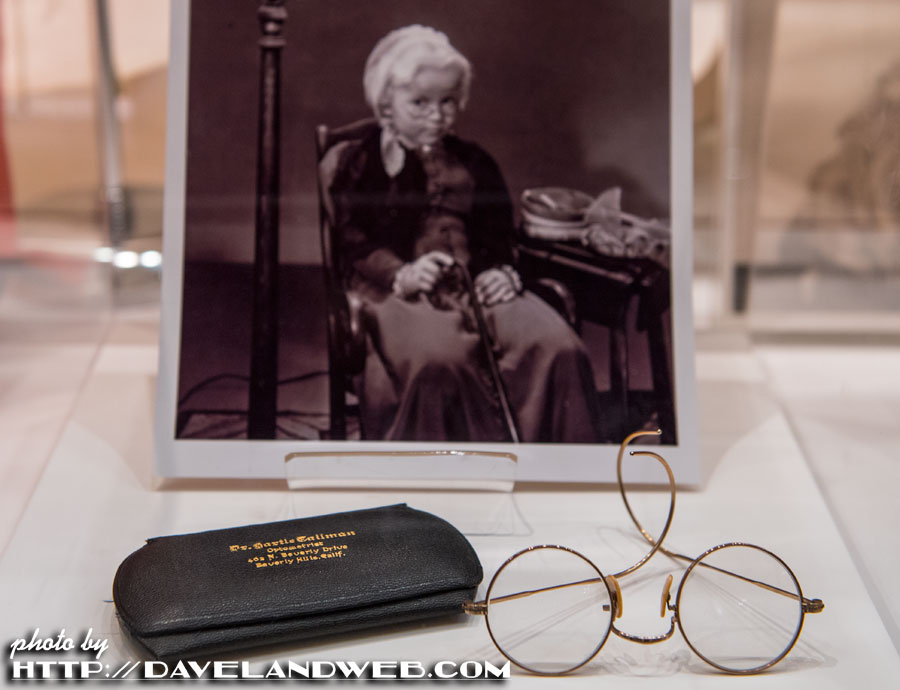
Shirley’s final incarnation is an old grandmother. Her performance in this segment is incredible; the subtle nuances of both her movements and voice show that she had a gift for mimicry.


The makeup crew aged both her forehead and hands, visible in this detailed view:


While the outfit didn’t surface, the spectacles did! From Theriault’s:

The owl-eyed gold rim spectacles are presented in their original black leather case bearing the label of Dr. Bartle Tallman, Optometrist, Beverly Hills, along with a handwritten note "Shirley's specs worn in Curly Top".


Just when you think the number is winding down, Shirley bounces out of the chair, lifts her skirt, and does a lively tap number for the ages, choreographed by Jack Donohue.


Granny exits, and Shirley returns in the daisy dress again, doing more taps WHILE she jumps rope! If it sounds like it’s over the top, well…it completely is, but Shirley manages to pull it off.


Here’s the number in case you haven’t seen it for yourself. Unfortunately, it’s a colorized version!


See more Shirley Temple photos at my main website.

Tuesday, November 19, 2024

Temple Tuesday: Shirley and Leroy rabbit holes


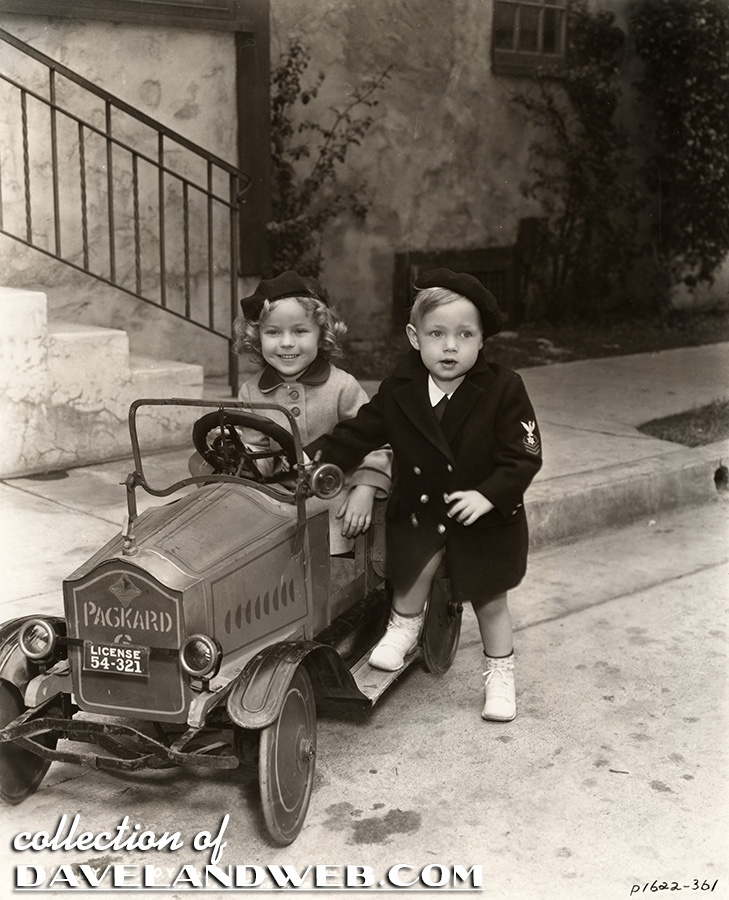
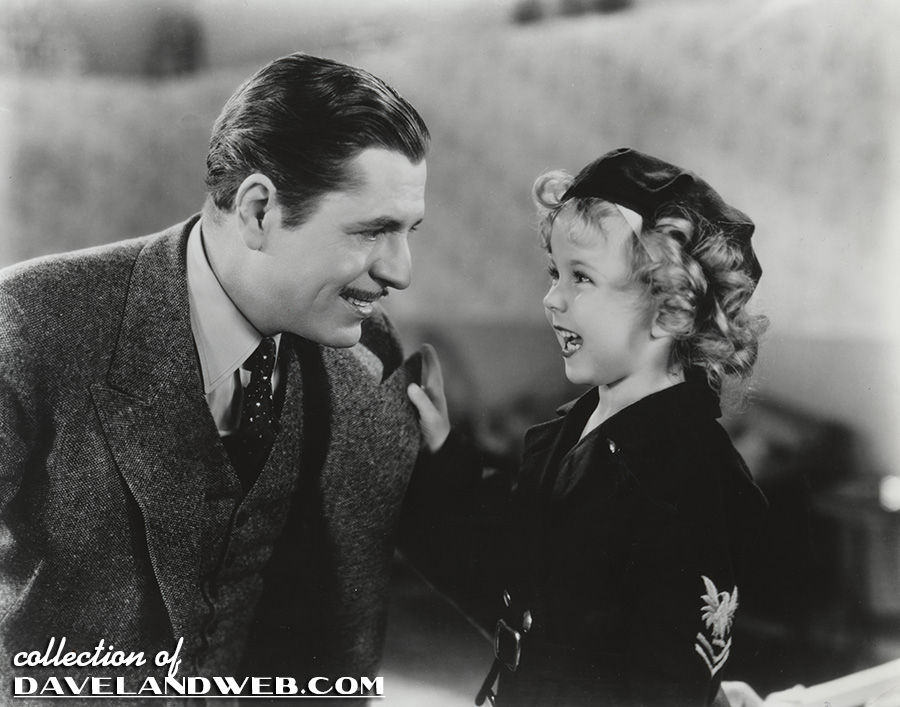
A few “new” recent acquisitions of Shirley and Baby Leroy have initiated today’s rabbit hole post, tying together a few odds and ends in my collection. Although I have other shots from this series of the two toddlers in a toy car on the Paramount lot, I’d never noticed that Leroy appears to be wearing one of Shirley’s coats! In the photo below from “Stand Up and Cheer” (1934) with Warner Baxter, you can see Temple wearing the coat in one of her opening scenes.


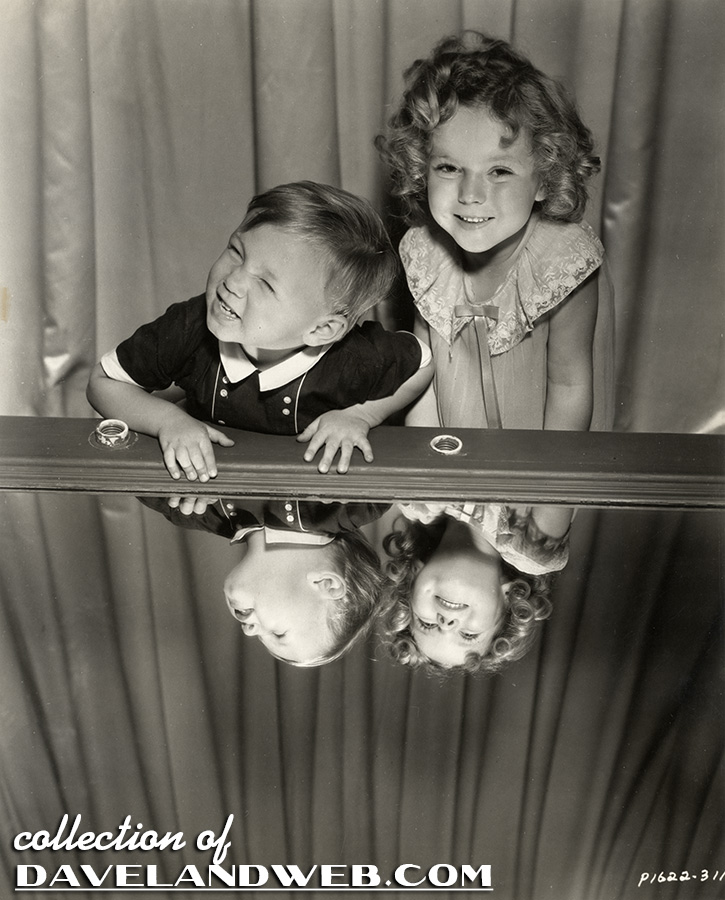
I adore these photos of the two peering into the mirror:


Leroy seems more excited about this shoot than Shirley, which is not surprising since he is a bit younger than her.


In this publicity still, Leroy is offering Shirley a cold beverage. She is wearing what is known as the Sailboat Dress:


A better shot of the same dress in this Otto Dyer portrait from Shirley’s days at Fox Studio:


I don’t know the occasion for this 1934 Fox publicity shot, but Shirley is again wearing the Sailboat Dress. The gal in the gray suit/dress in the front row at left is Toby Wing; on the right in the white dress is June Knight:


A rare shot of Shirley with a less than photogenic expression, most likely because the sun was in her eyes. I love how it candidly captures her!


Claire Trevor is also in this image with the Naval Officers:


The Sailboat dress was recreated by the Ideal Toy Company for their popular 1930s composition Shirley Temple doll, available in a variety of colors:


In the 1990s, the Danbury Mint did a series of Shirley Temple dolls holding a miniature version of the Ideal doll, mimicking the publicity stills from the 1930s that Shirley posed for:


At least the miniature doll is adorable! I’ll leave it at that…


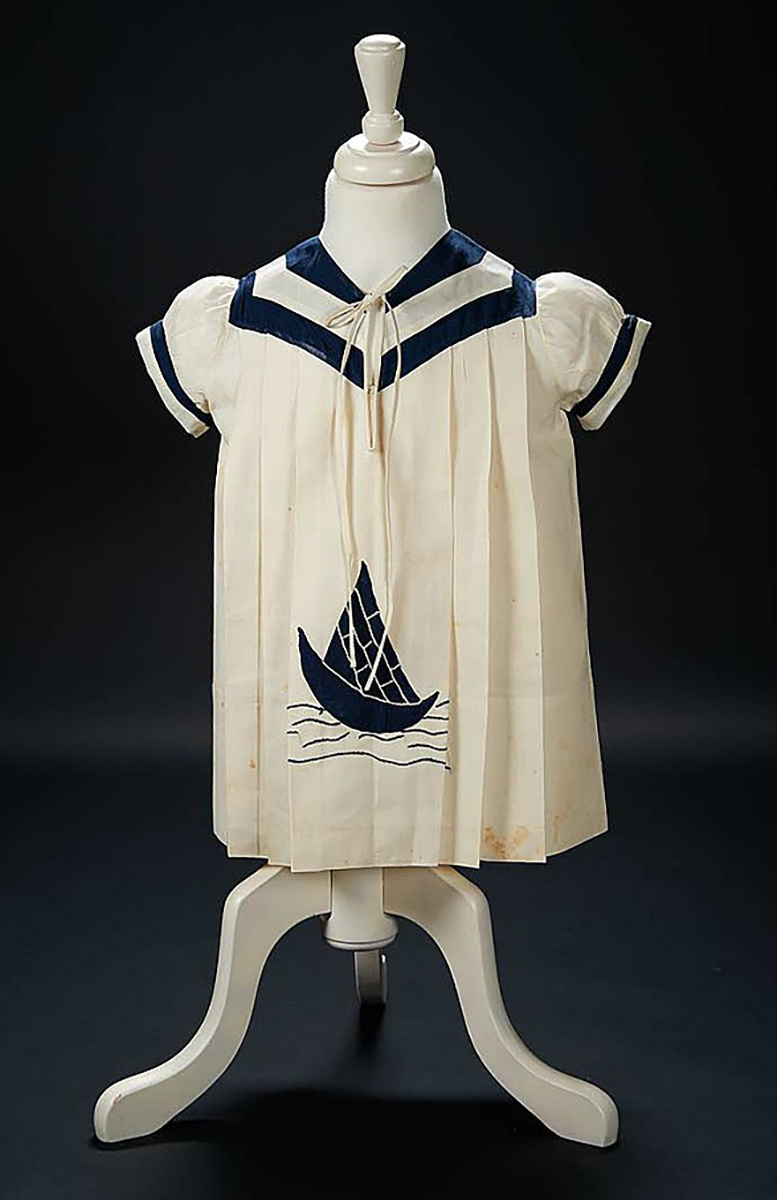
Shirley’s Sailboat Dress came up for sale in 2015 at the Theriault’s Love, Shirley Temple auction. From the catalog description:

Of crisp white cotton poplin, the middy-style dress has inset bands of navy blue, short puffed sleeves with navy blue banding, and an applique blue sailboat on the front enhanced with embroidered blue "waves". The dress has the cloth label of "De Betty Alden Shoppe Los Angeles". Generally excellent condition. Included is a studio photograph of Shirley Temple wearing this dress and holding a Shirley Temple prototype doll wearing a similar dress. Shirley Temple appeared in various publicity photographs wearing the dress, including one with Spencer Tracy, indicating a connection with the 1934 film "Now I'll Tell" in which both Temple and Tracy appeared. The dress was also used in doll costuming with variations of construction, but always with the same sailboat theme.


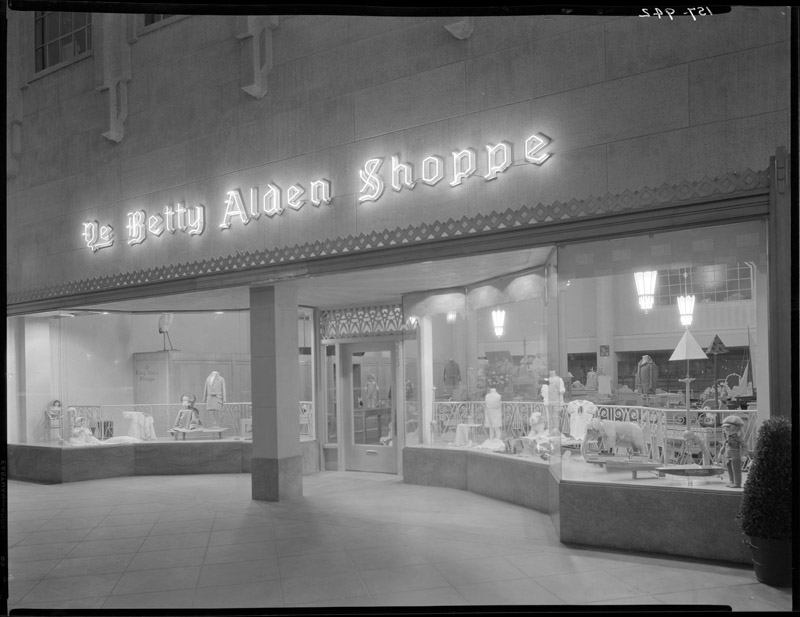
This outfit that Shirley wore in the final scene for “Bright Eyes” (1934) also came from “Ye Betty Alden Shoppe” (a typo on Theriault’s part) as did the coat worn by Baby Leroy in the first image from this post:


From the Miracle Mile LA website I found this image of Betty’s store, located in the Wilshire Tower, which is still located at 5514 Wilshire Boulevard:


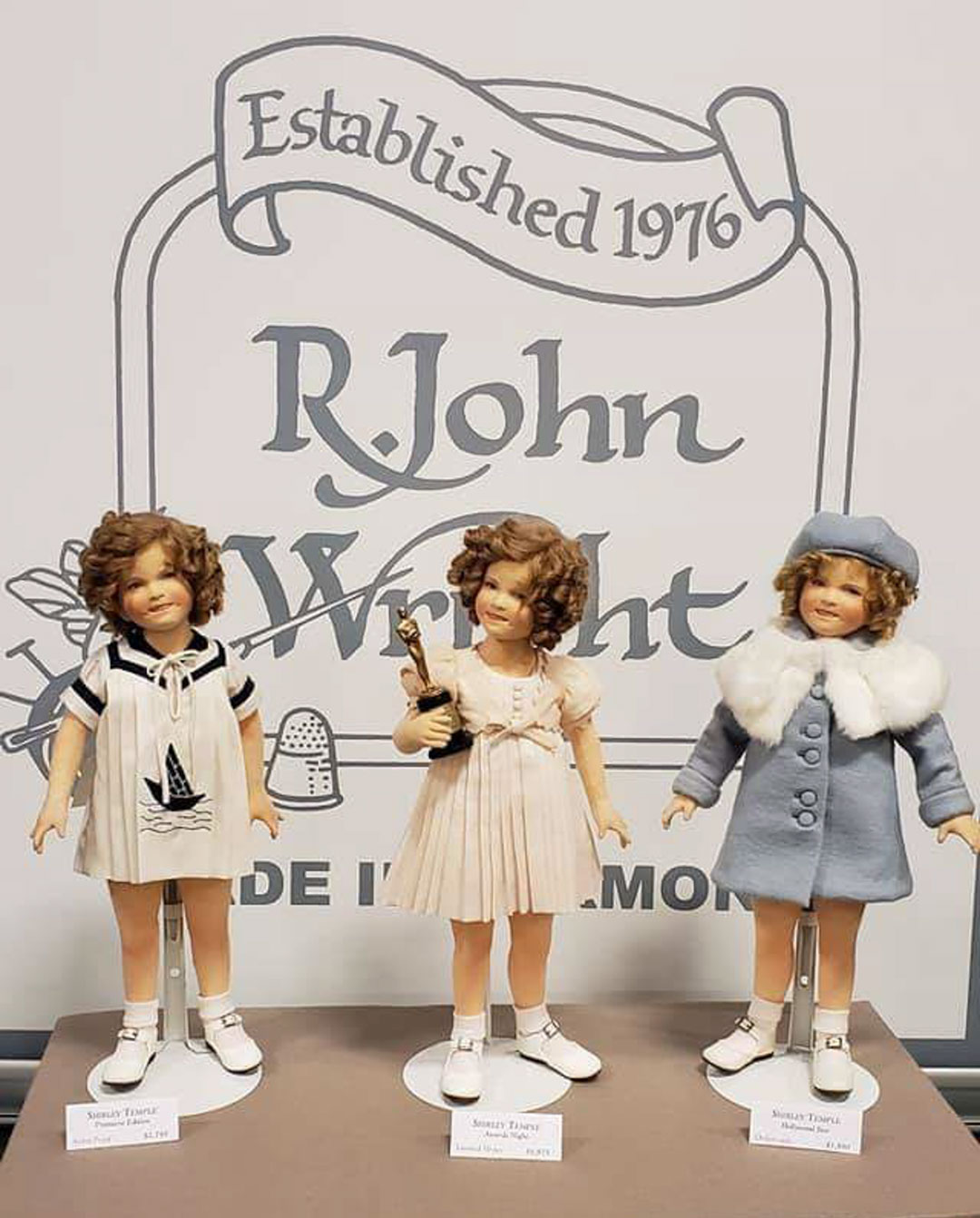
The R. John Wright Company released a felt version of the Shirley doll wearing the Sailboat dress (shown below at left) in 2018:


Phew! That’s it for today’s rabbit hole - I need a nap!

See more Shirley Temple photos at my main website.