Showing posts with label helen westley. Show all posts

Tuesday, May 28, 2024

Temple Tuesday: Shirley and the Sour Grapes


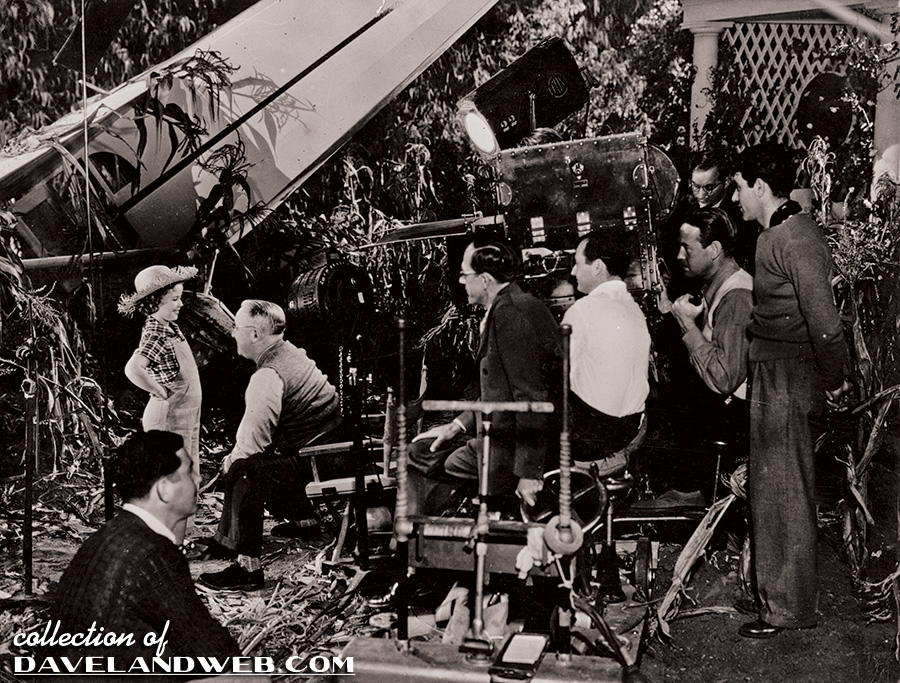
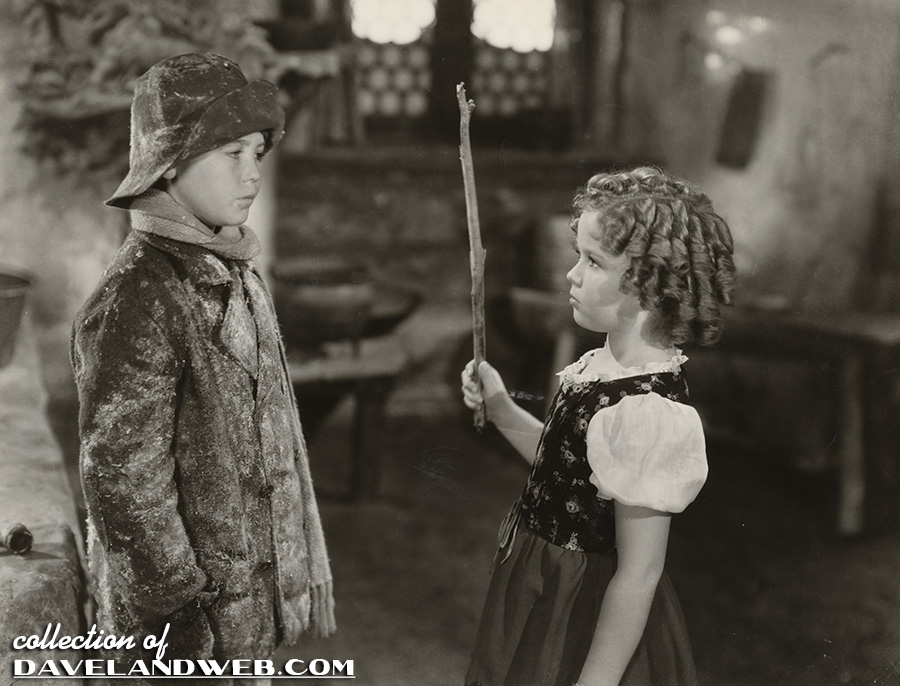
Today is a tale of three of Shirley Temple’s contemporary actors and how they chose to retell their experiences of working with the talented moppet. When actress Gloria Stuart was told by Fox studio head Darryl Zanuck that she was to be put in a Shirley Temple movie, the actress was crestfallen at having to compete with the little dynamo. Zanuck reframed it for her this way: “Gloria, you could be in film for the next ten years or on the stage and nobody would ever see you or hear about you, but if you’re in a Shirley Temple film, millions of people will see you.” The actress realized the wisdom of his words and would later recall, “She was really a getaway girl. You watched her and she was so completely composed and happy and talented and up, up, up. She was a real tonic…a miracle. Indescribable. It’s impossible that one child was all those wonderful things, but she was!” The power of positive thinking was not something little Delmar Watson practiced. In “Heidi” (1937), he played Peter, the goatherd, a fairly substantial role. Here are his recollections about the experience:

I was never given my lines to study in advance. My dad asked Allan Dwan about this, and he said they wanted Peter to be kind of dumb, but it was the only time I was in a picture of that length where they would not give me my lines until the night before I was supposed to do a scene.
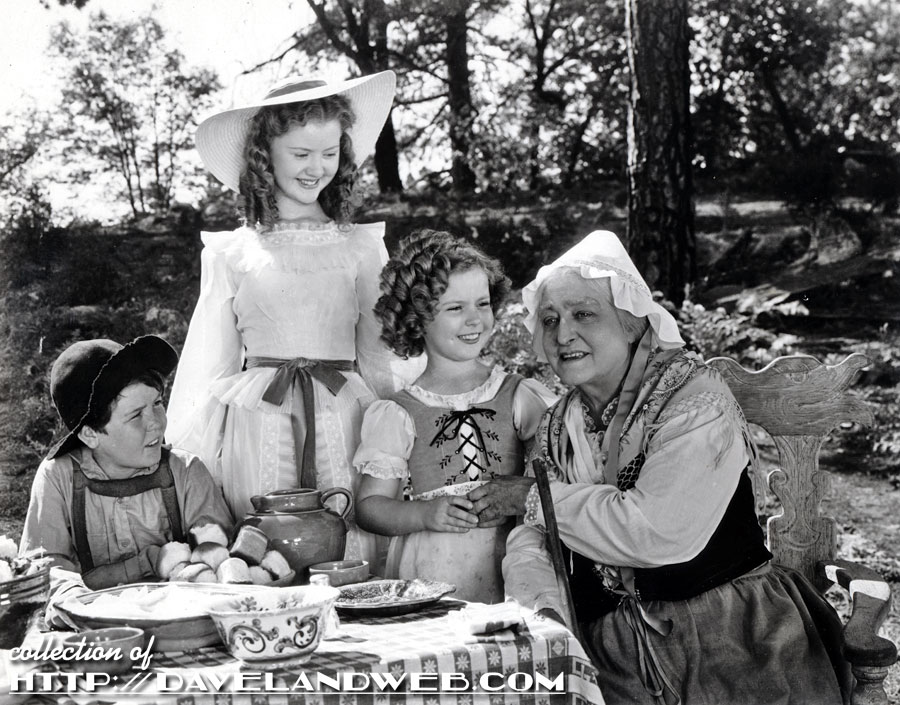


I guess Delmar did not understand method acting. Shirley was given her own trailer for the location shoots according to Watson:

[It was] parked on the side of a hill. She was there all the time with Grif and, of course, her mother. Only a few studio people were allowed up there. She had a stand-in [Mary Lou Isleib] for the sound and lights. Then, when everything was set, she’d come down at the last minute, we’d do our scene together, and when it was finished, she would be escorted back up the hill and disappear into her trailer. Once, I was playing horseshoes right after lunch with the lighting guys, and she came out of her trailer. I said, ‘Hi,’ and she greeted me and asked if she could play. Sure, we told her. She picked up a horseshoe and tossed it. I think she missed. She played with us for exactly two minutes, and then her bodyguard came down and took her away, back up the hill into the trailer. I heard him tell her she wasn’t supposed to be there. As she left, I said to her, ‘Bye. Maybe you could do it later.’ Shirley didn’t say anything, but obediently returned to the trailer.

When you have a film riding on your shoulders and a limited amount of work time due to being a minor, it’s easy to understand that Shirley wouldn’t have a lot of time to play. A stray horseshoe that might have injured the star could have shut down the entire production. Obviously, Watson was too young at the time to understand and when he later told the story, too old to remember what the circumstances were.

Case #2: Sybil Jason. If it weren’t for “The Little Princess” (1939), Jason would be all but forgotten today (and for the most part, still is). While an appealing child, the South African born girl just never caught on in the U.S.
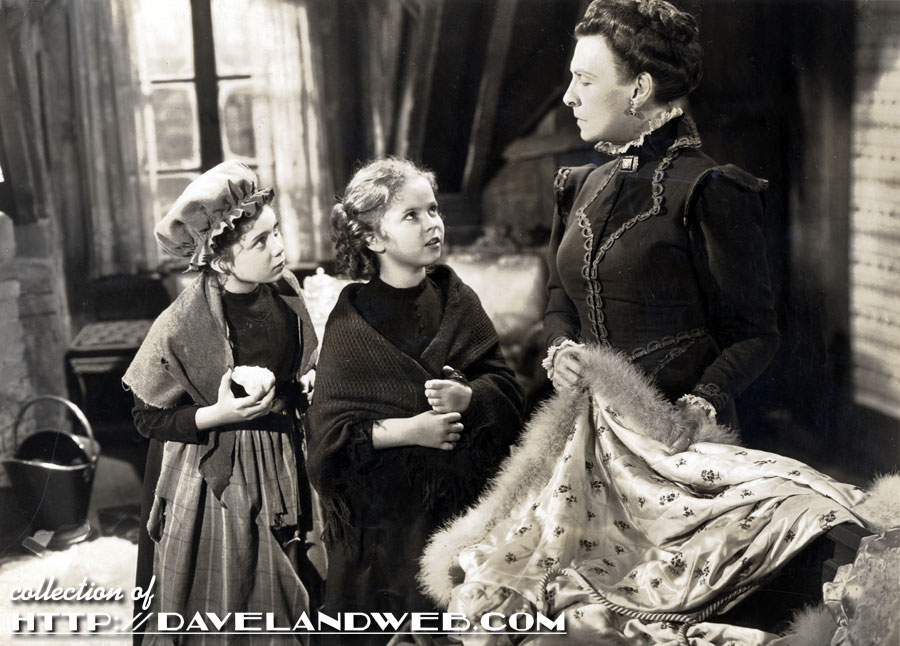


Here’s how Jason chose to recall working on “The Blue Bird” (1940), her second Temple film:

Usually when one received a finalized script of a movie, you are apprised of the shooting date. We were quite puzzled when a good two weeks before that date I was told to report to the studio early one morning. When we arrived, we were directed to go to a specific soundstage, and when we got inside all we saw was a small lit set with a plain backdrop and two chairs facing each other. One of the chairs faced the camera and the other one was placed behind it. I was greeted and handed a few pages from the…script. It contained only Shirley’s lines and those of the various characters that would appear in the movie. It didn’t take a rocket scientist to figure out that this was going to be the ultimate humiliation for me. I was expected to read Shirley’s lines so that actors could screen test for the various roles like the Father, the character Light and the “deceased” grandparents. As young as I was, I knew I wasn’t being treated right and I could see from the hurt look in my sister’s eyes that she too felt that way but, considering the position I was now placed in, there wasn’t much we could do about it.
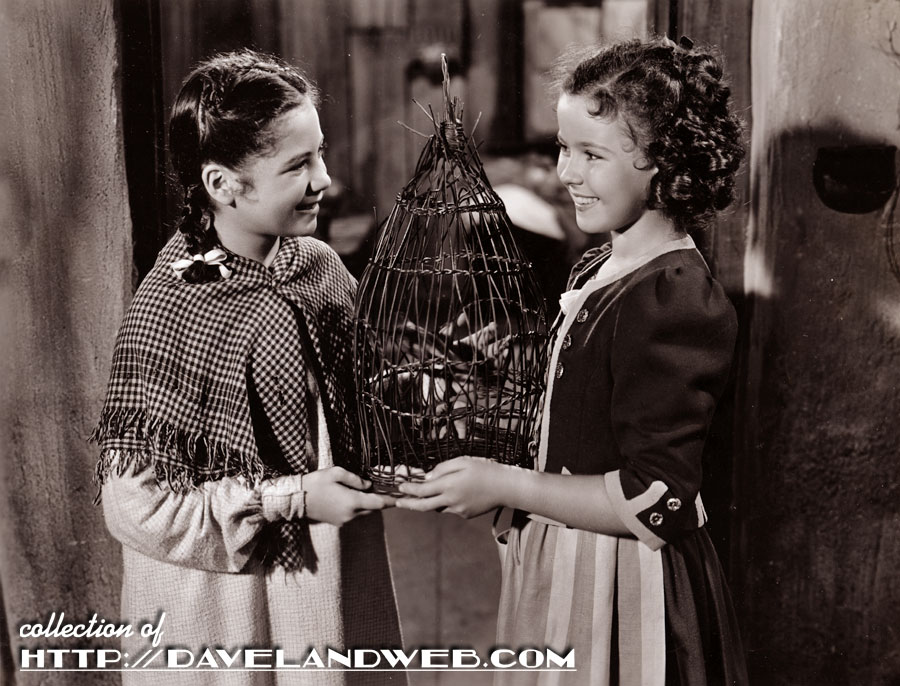


After a couple of days of reading for the tests, I could now concentrate and prepare for my role as Angela Berlingot, the little crippled girl who yearns for the bird that Mytyl (Shirley) and Tytyl (Johnny Russell) had captured in the woods. My part in The Blue Bird was, to put it politely, minuscule. It consisted of a scene in the beginning of the movie and another at the end.

Sybil’s remarks have always been puzzling. Were these her memories or ones fed to her by the older sister? While it is made clear that Angela is sick, never at any time does the viewer hear the word “cripple” used to describe her. Sybil may have been thought of by Warners (her former studio) as a rival to Shirley, but the public never viewed her that way. Finally, if the Jason sisters thought reading the star’s lines in a screen test was the ultimate humiliation, then they obviously were not aware of how things worked in Hollywood. As stated before, Shirley’s work time was limited; why would it be wasted on screen tests?
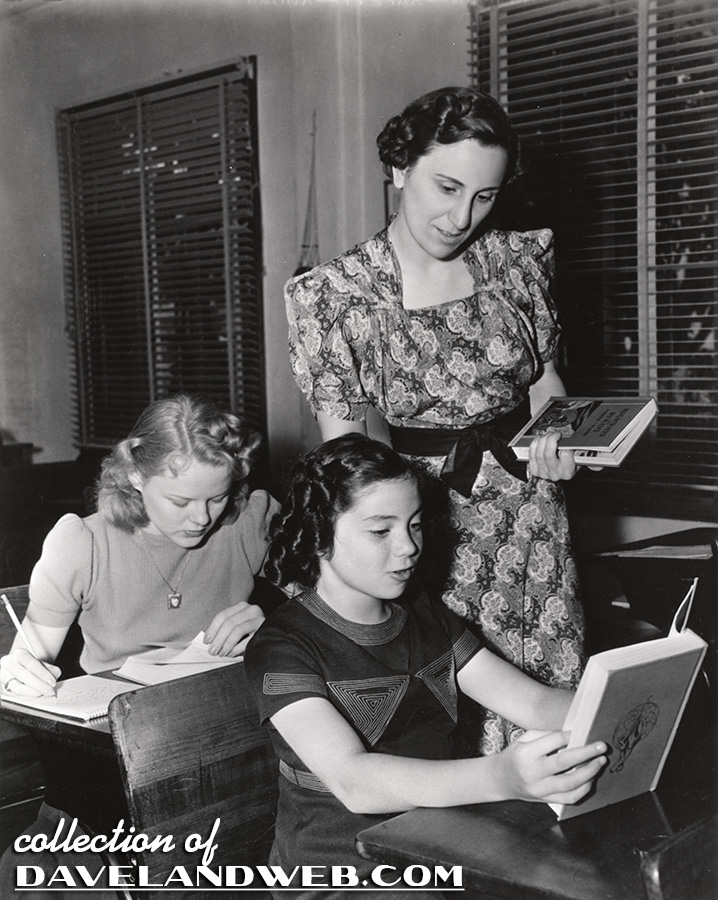


In this publicity still and the caption below, we can see that it was co-starring in a Temple film that helped pave the way for Sybil’s Hollywood career. How the public did/didn’t accept her was out of Shirley’s hands.

Since her portrayal in “The Little Princess” won her a long-term contract at 20th Century-Fox, 9-year-old Sybil Jason (foreground) goes to the studio’s school. Seated back of her is June Carlson of 20th Century-Fox’ Jones Family series, while Teacher (standing) is Miss Catherine Hagan.
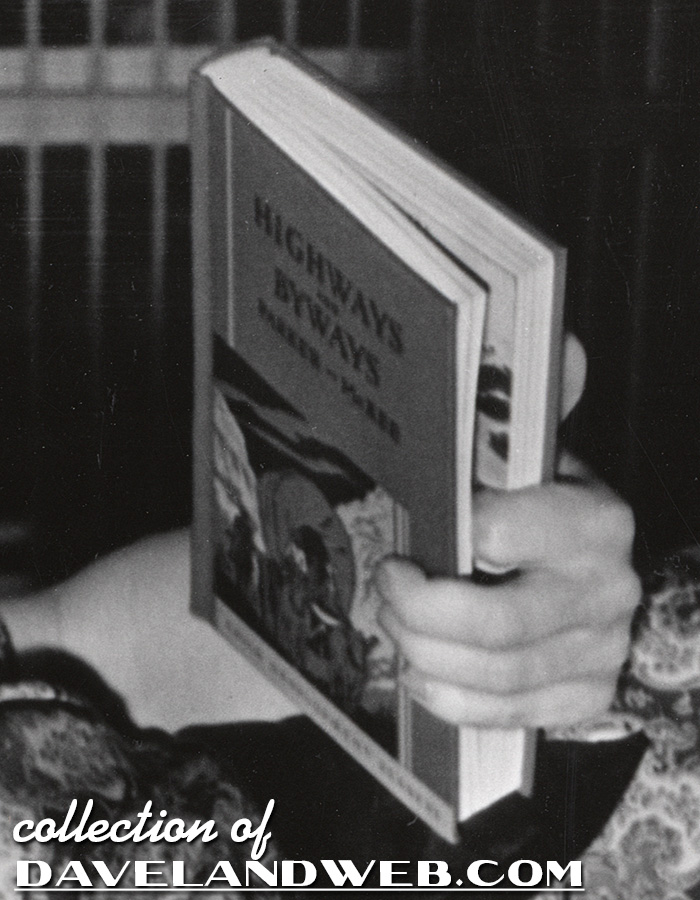


Here’s the cover of the book Miss Hagan is holding, Highways and Byways. It was copyright 1938 by authors Paul McKee, Director, Teachers College Elementary School, and Professor of Elementary Education, Colorado State Teachers College, Greeley, Colorodo, and Beryl Parker, Associate Professor of Education, New York University. 
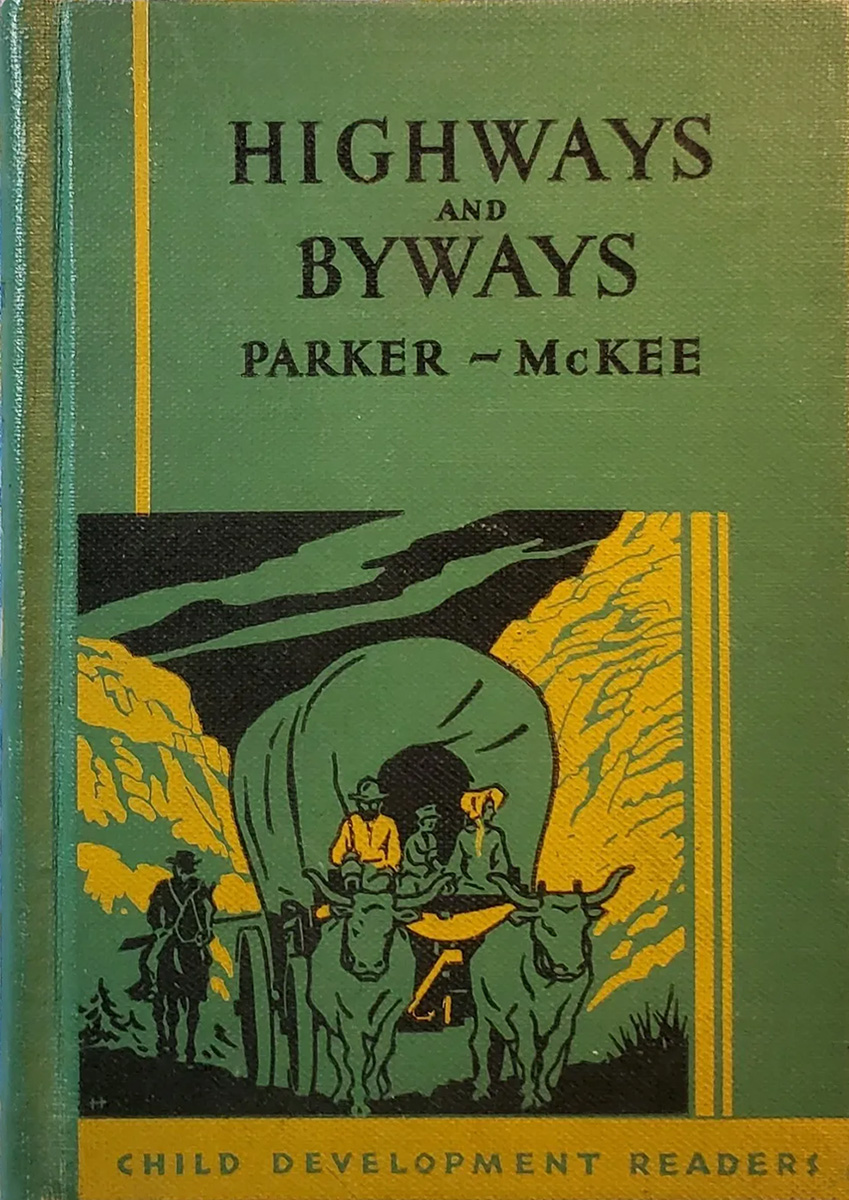


This is not the same book Sybil is reading.
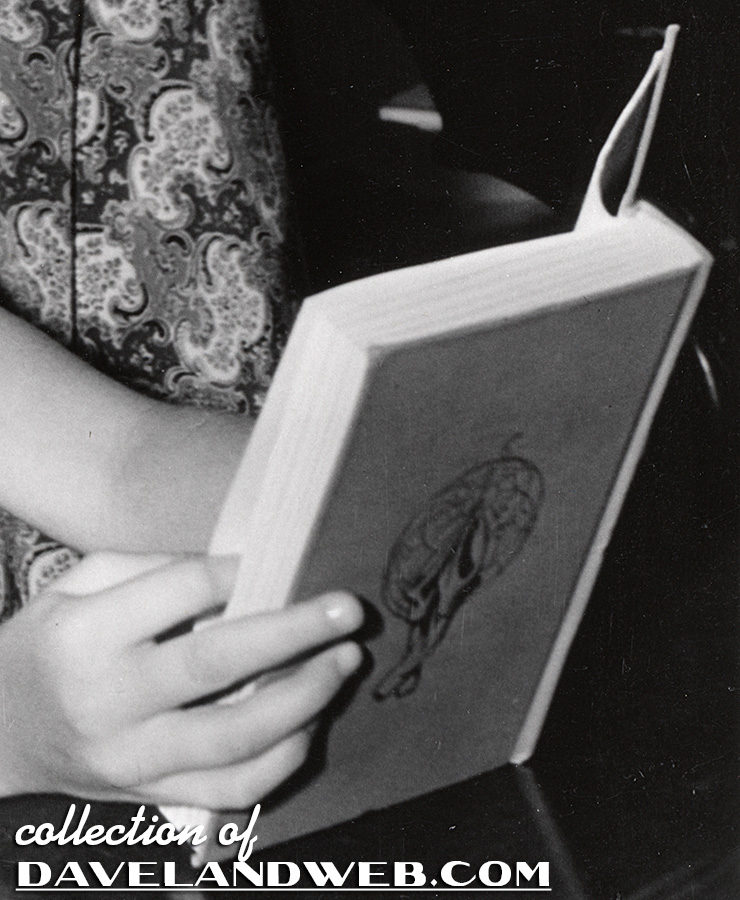


Houston, we do not have a match.



Case #3: Marcia Mae Jones, who played Klara, a true cripple, in “Heidi” (1937).


Marcia Mae Jones recalled her casting in the film:

There was talk that I got as much fan mail because I played a crippled girl in ‘Heidi,’ and probably that Mrs. Temple would never use me again, but Mrs. Temple requested me for ‘The Little Princess,’ so you see, there’s a lot of talk that’s not so.

Mic drop. Thank you. Below is a shot I took in 2002 of Margaret O’Brien and the sour grapes, Delmar Watson and Sybil Jason. They were making an appearance at the Silent Movie Theatre in Hollywood for a Tippi Hedren fundraiser for her animal shelter.


See more photos at my main website.

Tuesday, April 04, 2023

Temple Tuesday: Shirley & Seiter


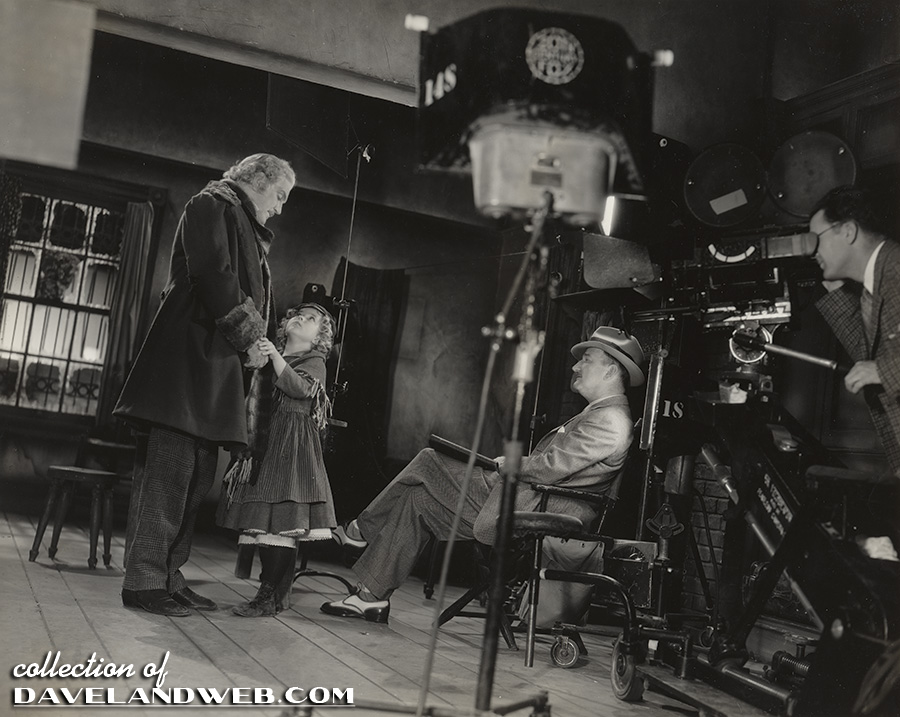
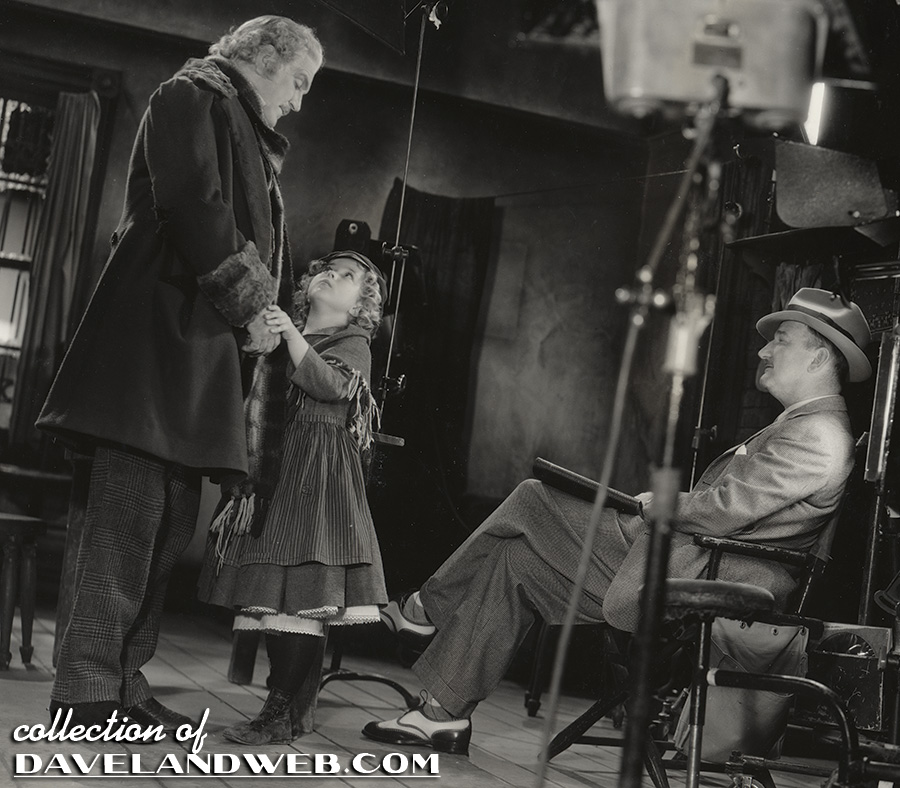
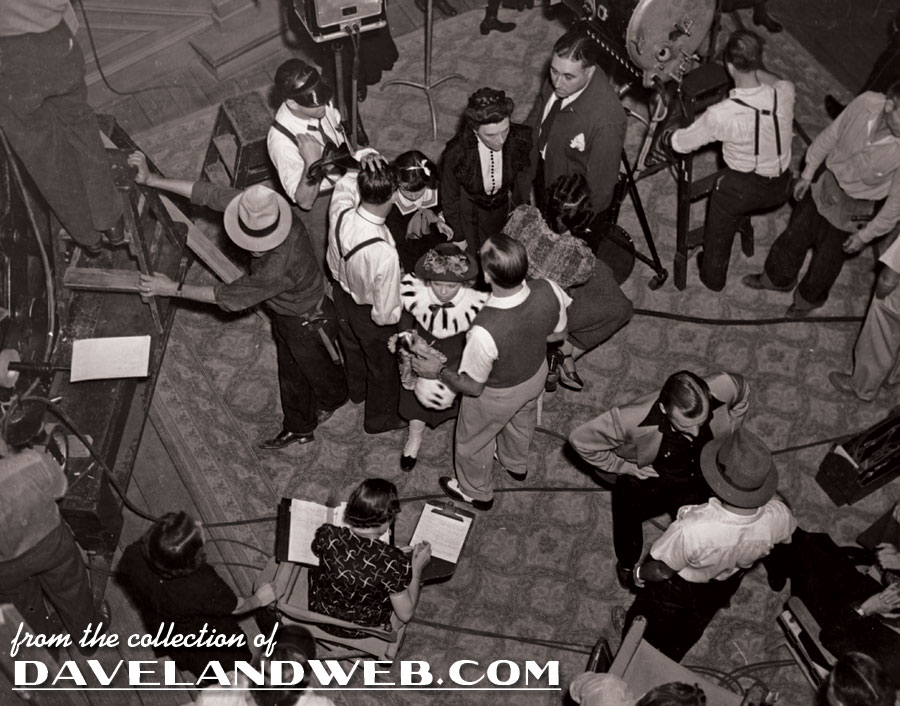
Today’s post starts with Shirley and then goes off into some very interesting tangents, thanks to the generosity of one of my readers. Director William Seiter is credited with being at the helm of three Shirley Temple movies, starting with “Dimples” (1936). Costar Frank Morgan is on the left, and Seiter is on the right, watching the proceedings from the comfort of his chair.


In her autobiography Child Star, Shirley tells how Seiter prevented Morgan from taking the attention away from her during a sad ballad:

William Seiter posed me to sing over Morgan’s shoulder. Anchoring Morgan in a chair with the back of his head to the camera was the only way to thwart that wizard. He couldn’t wiggle his ears.

Still, the sight of Morgan’s thick white wavy hair does cause a bit of an odd distraction as Shirley emotes and sings “Picture Me Without You.”


The publicity caption for this “Dimples” shot reads:

SHIRLEY TEMPLE CONQUERS ANOTHER TASK MASTER — like all directors who have preceded him, William Seiter, assigned by Darryl F. Zanuck to direct “Dimples” and “Stowaway” for 20th Century-Fox, has fallen in love with “Shirley Temple the artist” and “Shirley Temple, the unspoiled seven year old kid who gets so much fun out of her work.”


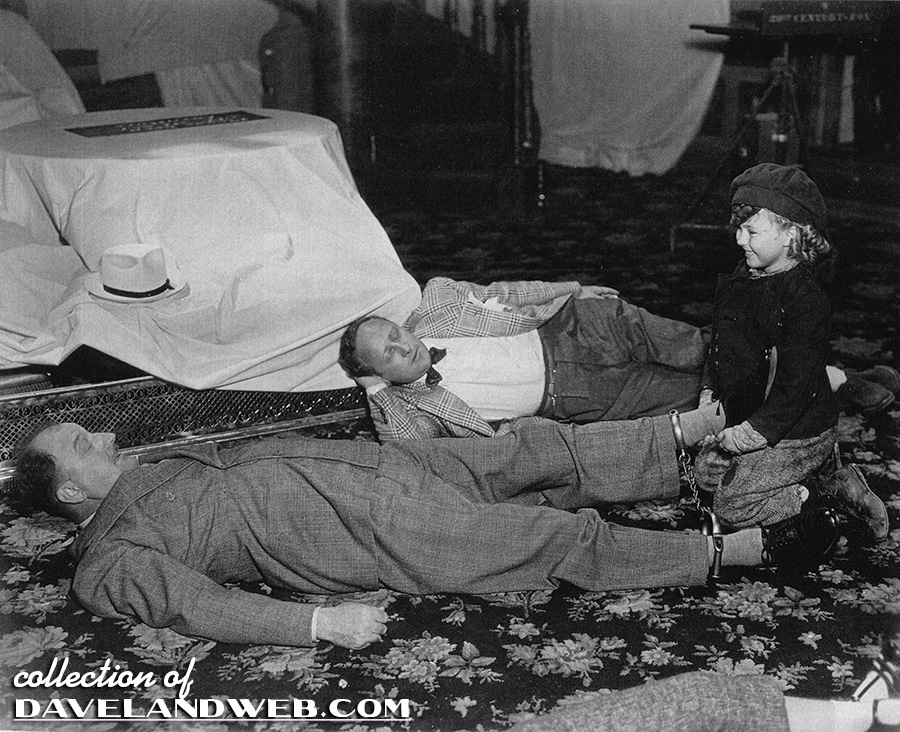
Fun is right. This shot captures the little prankster putting cuffs around Seiter’s ankles while songwriter Ted Koehler pretends to nap. Seiter must have been a good sport.


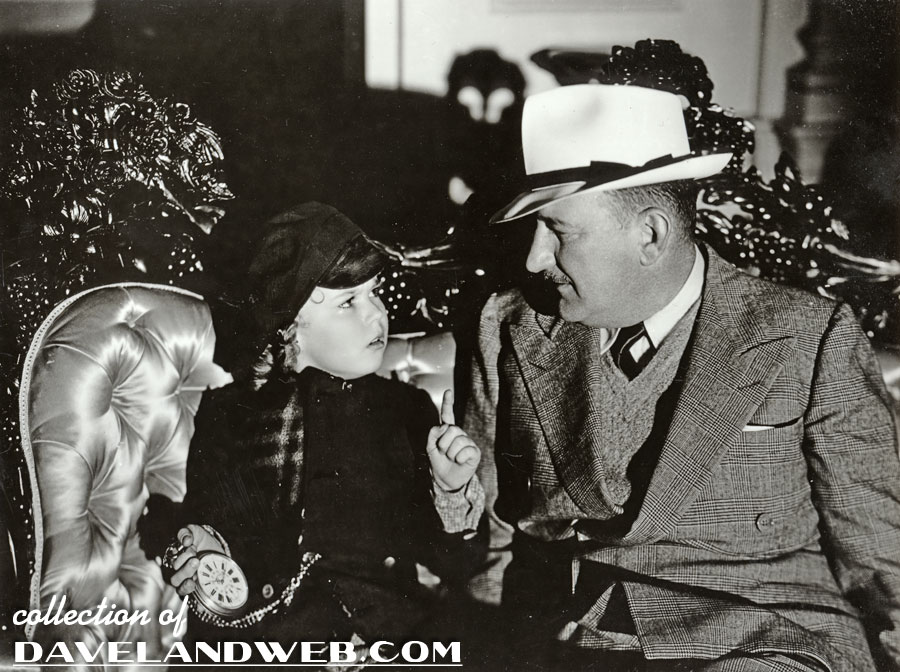
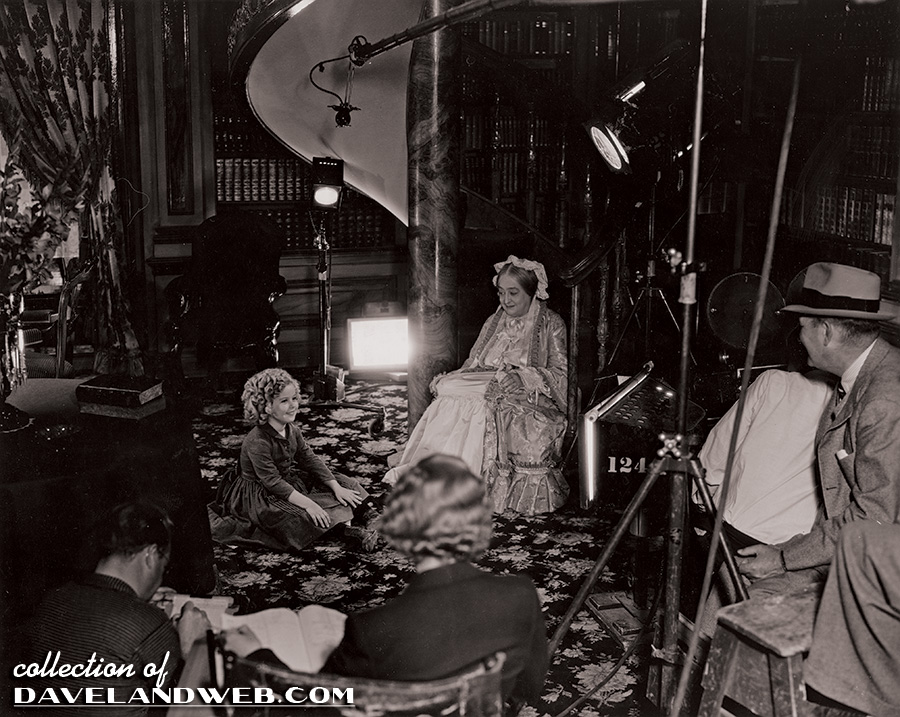
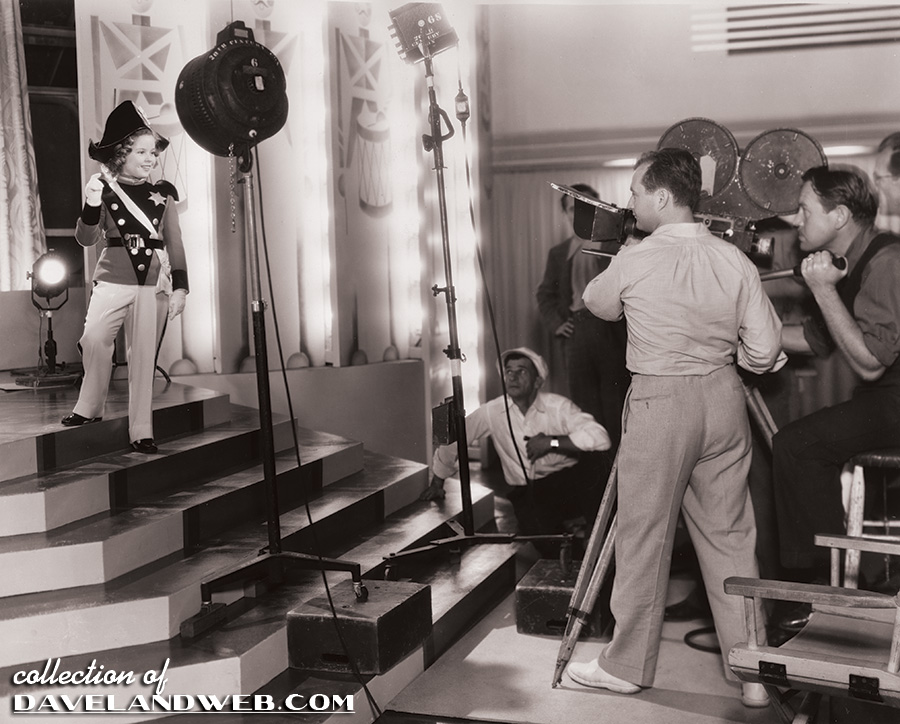
Below, Seiter gives direction for a scene between Shirley and Helen Westley.


Seiter directed Shirley’s very next film, “Stowaway.”


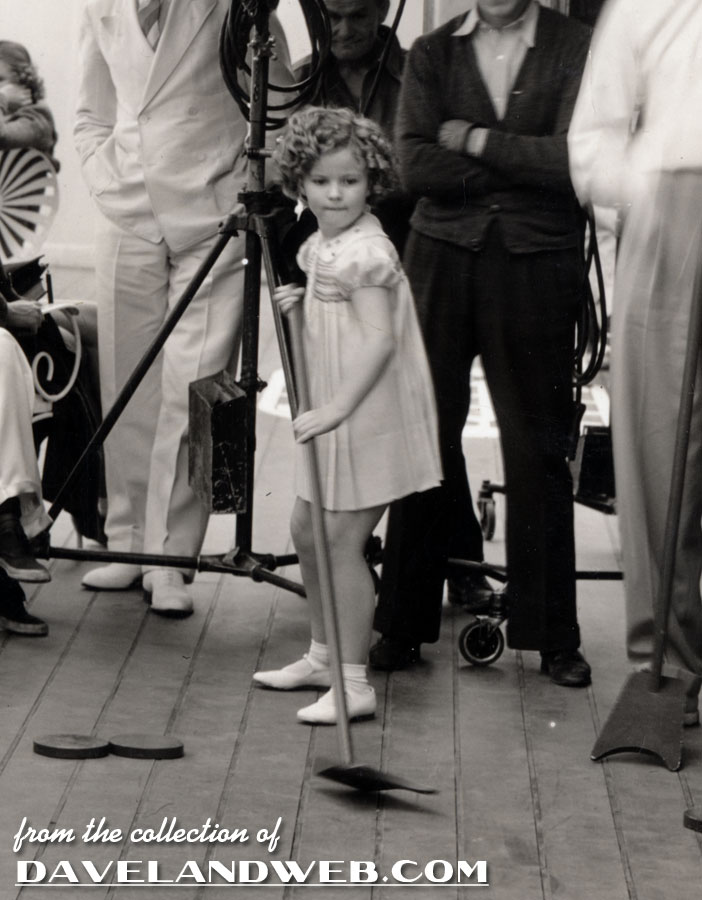
Shirley gets ready for the shuffleboard scene:


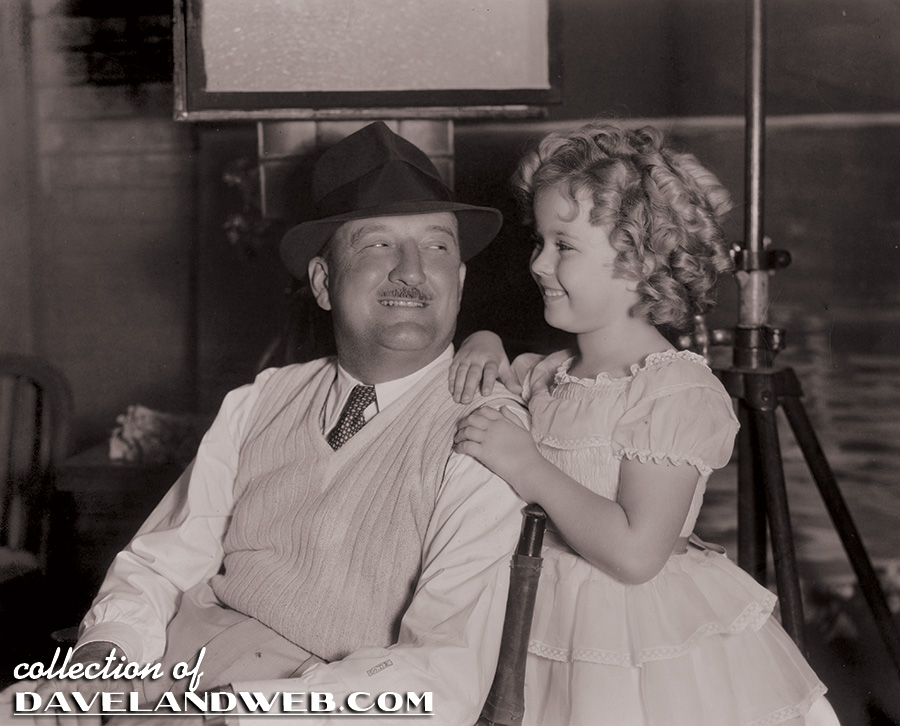
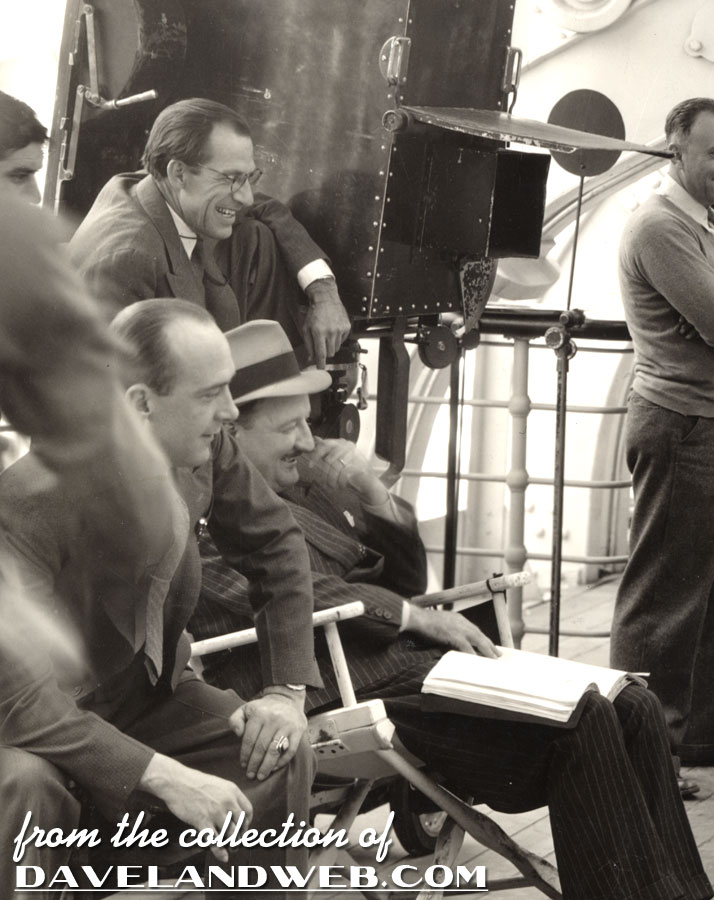
Seiter is once again wearing his customary fedora.


When Walter Lang had to leave for a “medical furlough,” it was Seiter who took over directorial duties on “The Little Princess” (1939), but was uncredited for his troubles. From Shirley’s autobiography Child Star:

For several days cameraman Artie Miller complained in graphic detail about the pain he suffered from a cyst in his cheek.  “There must be a lot of trouble in the world,” I remarked to Mother. “Everyone else has problems. When do I get to have some?”


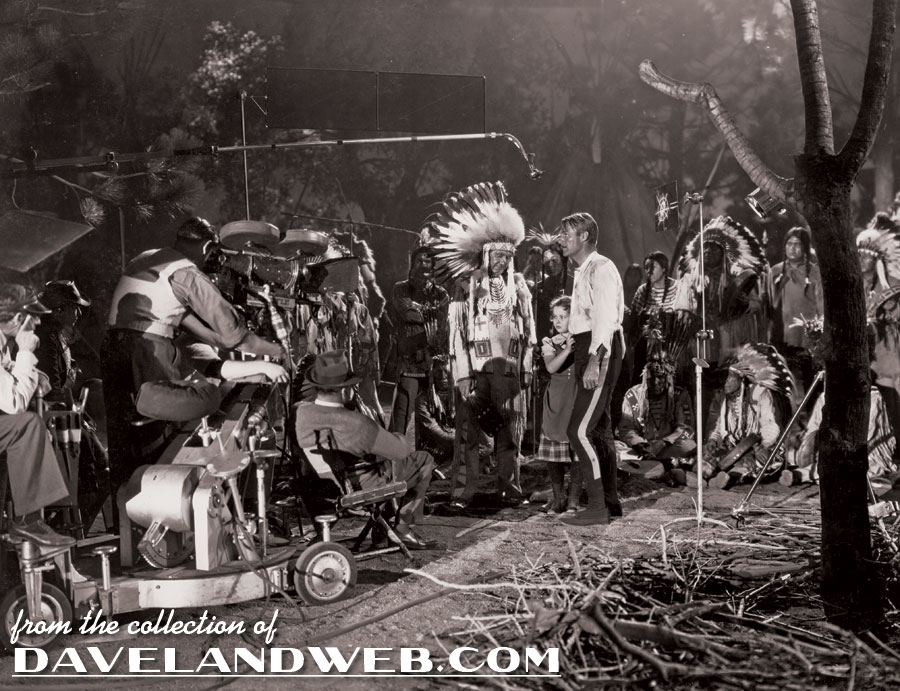
Seen from the back in this publicity still for “Susannah of the Mounties” (1939), Seiter turned out to be an unfortunate choice for this uninspiring movie that only served to speed up Shirley’s departure from Fox.


In a typical twist of serendipity, it turns out that one of my faithful Temple Tuesday readers has a Seiter connection. As Jackie M. informed me:

My cousin’s name was Jill Woodward, and she has a small entry on imdb.com. She was in a number of silent movies (imdb lists only 4, which is better than TCM, which only lists 2!) and married Bill Seiter in 1919.


From the imdb bio:

Jill Woodward was born on January 18, 1897 in Illinois, USA. She was an actress, known for My Country First (1916), Lightning Bryce (1919) and The Kentucky Colonel (1920). She was previously married to Paul Lill and William A. Seiter. She died on June 17, 1985 in Glendale, Los Angeles County, California, USA.

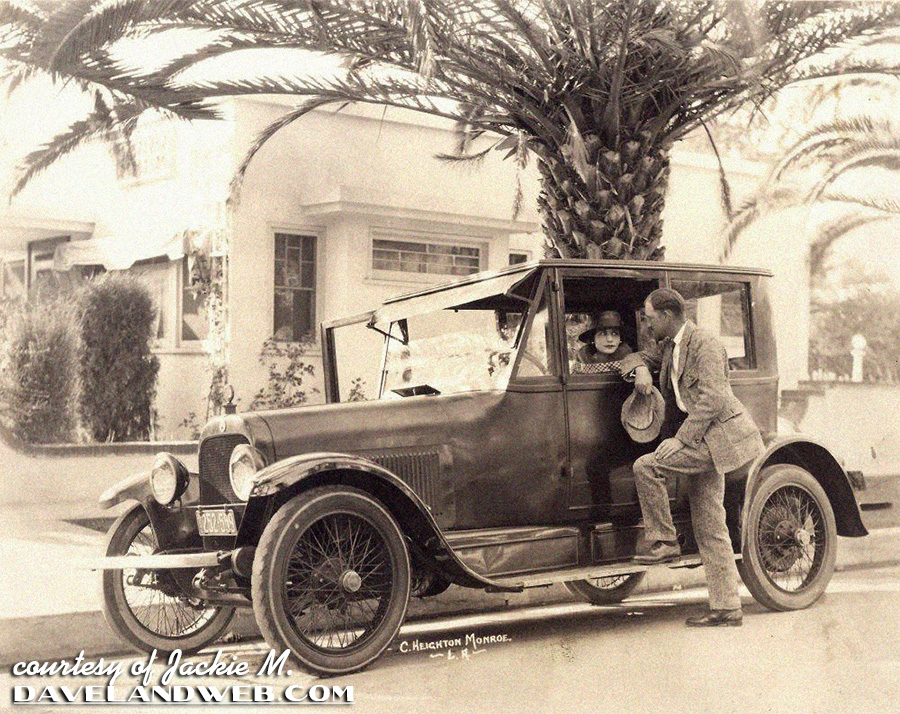
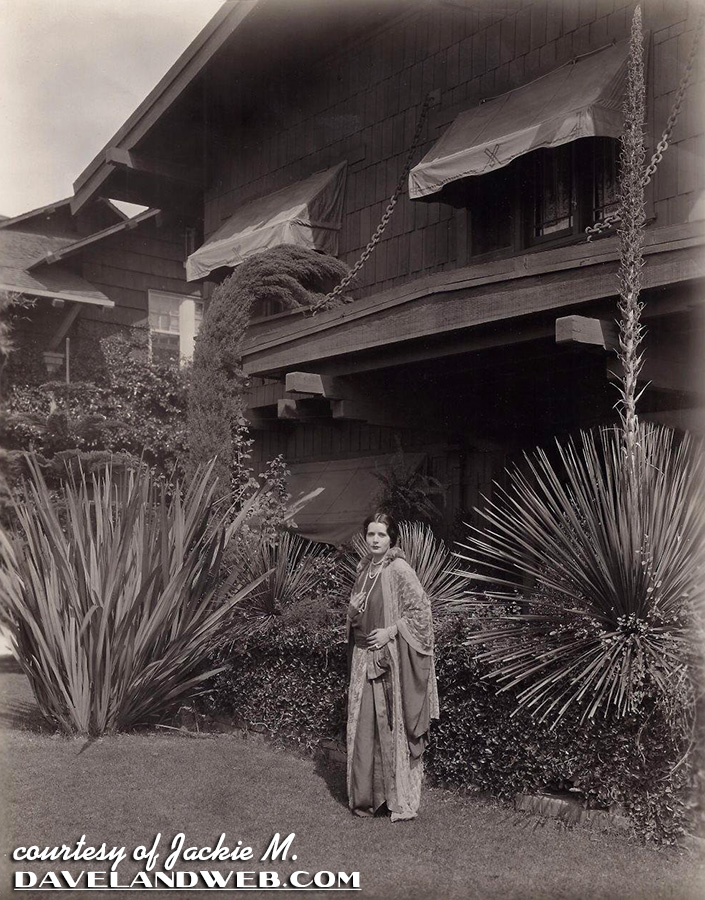
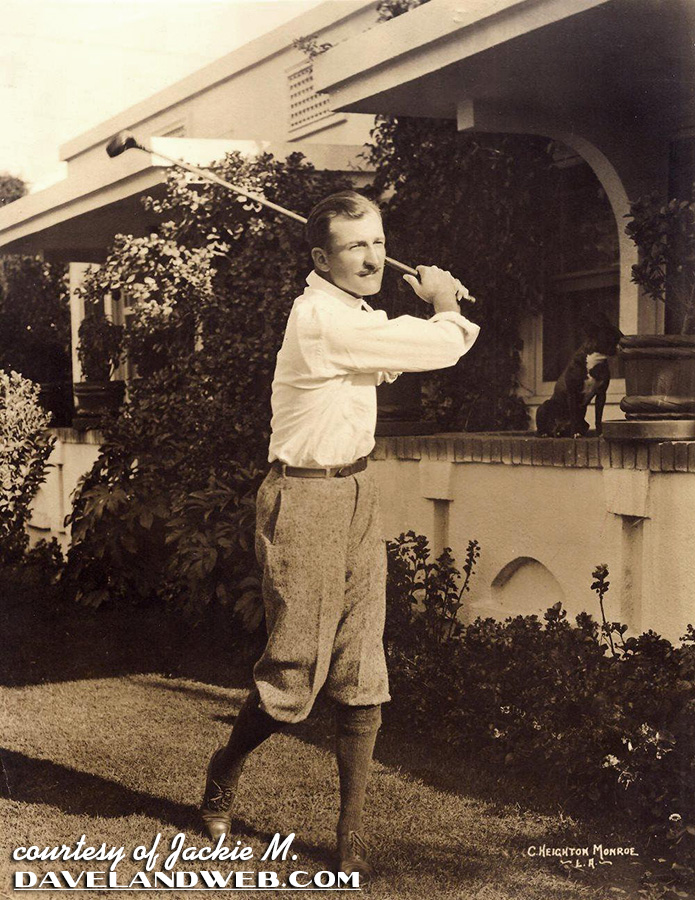
Jackie was kind enough to share some photos from the family scrapbook. Other than a few captions written on the back, these great photos don’t have a lot of corresponding information. Here’s Bill with a golf club, circa 1919. He was quite the dashing man in his younger days, beginning as a bit player for Mack Sennett, doubling a cowboy.


Here comes a bit of a mystery; according to Wikipedia (I know, I know…not always the most factual!), Seiter was married to Laura La Planted from 1926 to 1934 (ending in divorce). She is “credited” as being his first wife, followed by Marian Nixon from 1934 to 1964, when he died. According to Variety, March 1915, Jill was married to Paul Lill in 1915 with an annulment following only two days later. From the June 12, 1920 issue of Moving Picture World under the “Clip and Paste” column:

Jill Woodward, wife of Director Wiliam A. Seiter, of the National Film Corporation, will be assistant director to her husband in his next production for National.


That’s as much as I could find out about that relationship.

Here are Jill and Bill accompanied by the caption, “Cherokee Court, about 1918.” There is a Cherokee Avenue in Hollywood; whether this building still stands or not is another mystery.


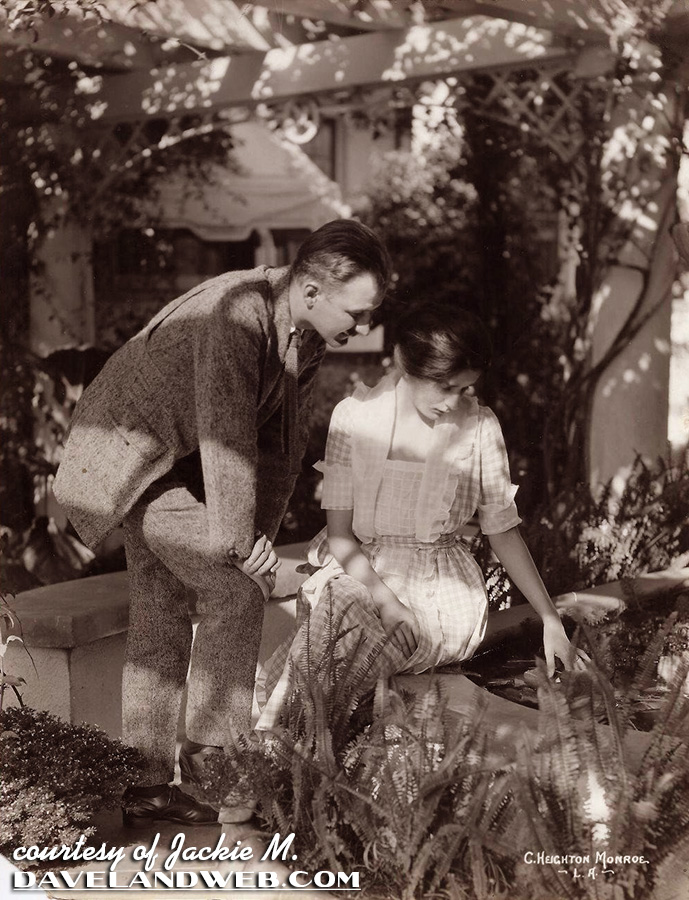
A lovely shot of the two, captioned: “Jill and Bill, ‘Hollywood.’” If you noticed the common credit on these photos for the photographer, it reads C. Heighton Monroe. I assume he had a decent biz in Hollywood, as I found some photos online that he shot of contemporary movie stars of the day, such as Louise Fazenda, and studio head Sam Warner.


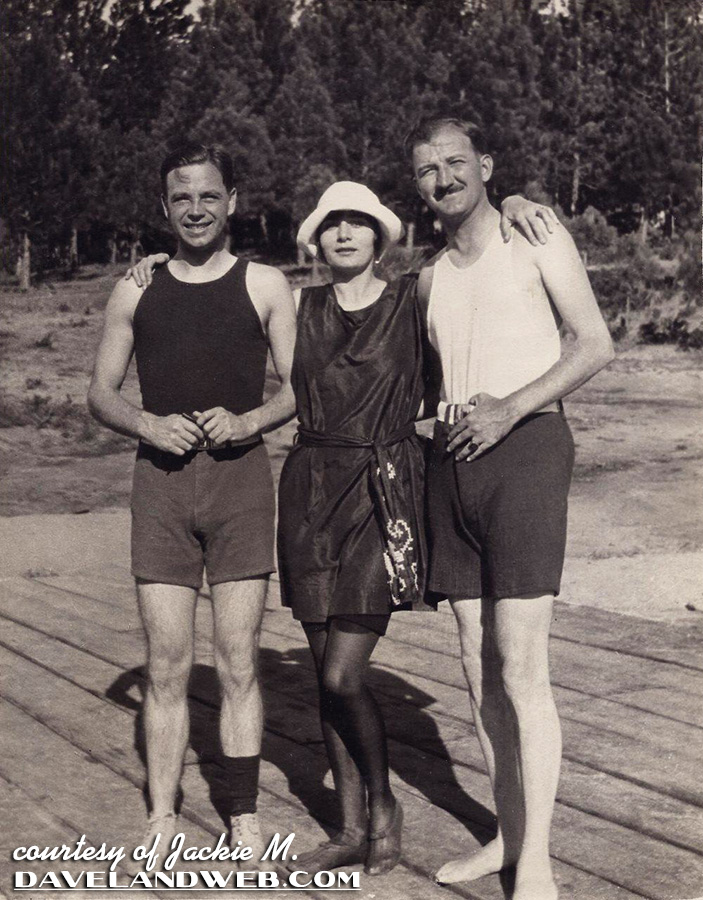
Below the couple pose with Douglas MacLean (1890-1967), a stage and film actor who later became a producer and screenwriter, working with W.C. Fields (“Tillie and Gus”) and Cary Grant (“Ladies Should Listen”).


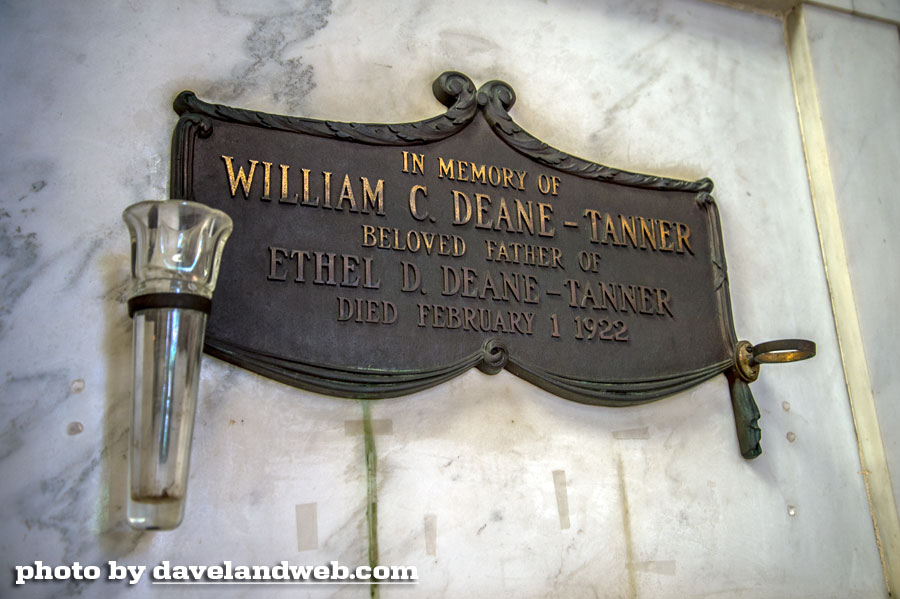
MacLean lived in a bungalow in the Alvarado Court complex next to the famous movie director, William Desmond Taylor (born William Cunningham Deane-Tanner). On February 2, 1922, Taylor was found dead, murdered inside his bungalow. MacLean’s then wife, Faith, was a key witness in the still unsolved murder, as she had witnessed an unknown person leaving Taylor’s apartment the night of the murder. Below is Taylor’s crypt at Hollywood Forever Cemetery:


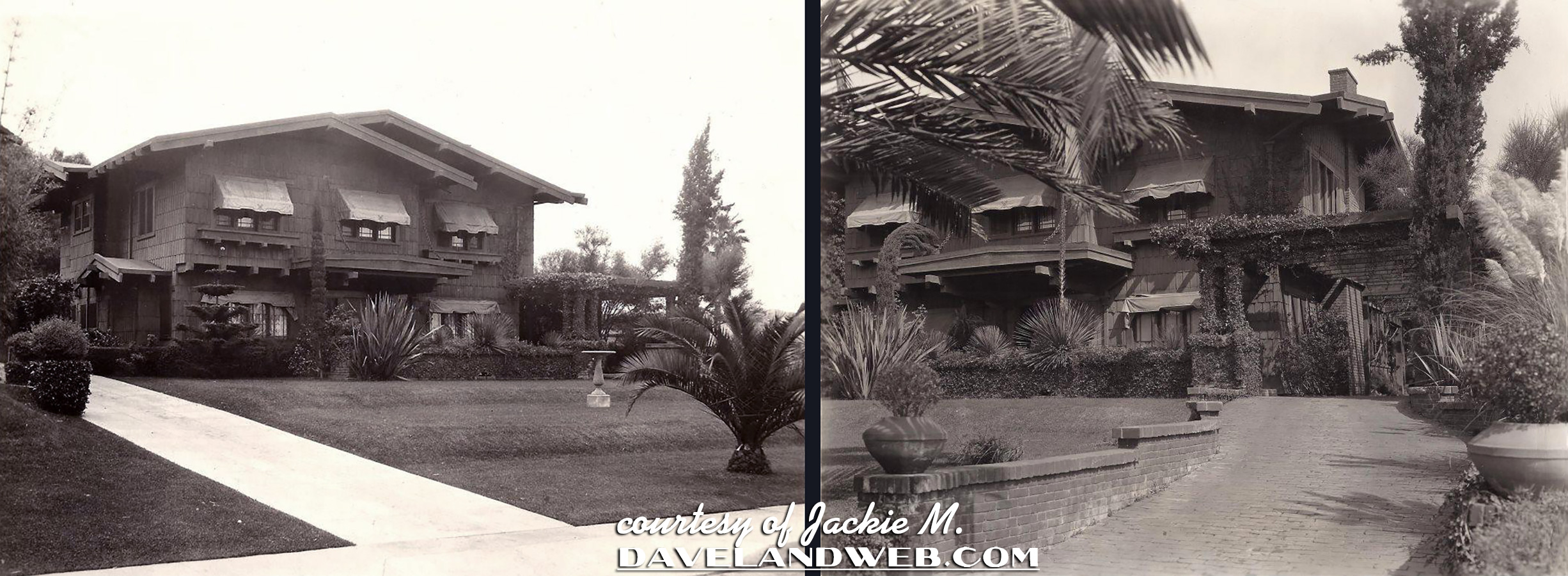
The caption for the photo below reads, “Jill at the Oxford Street home, L.A., 1922.”


Hollywood does indeed have an Oxford AVENUE. I sure would love to see this beautiful home if it still exists!


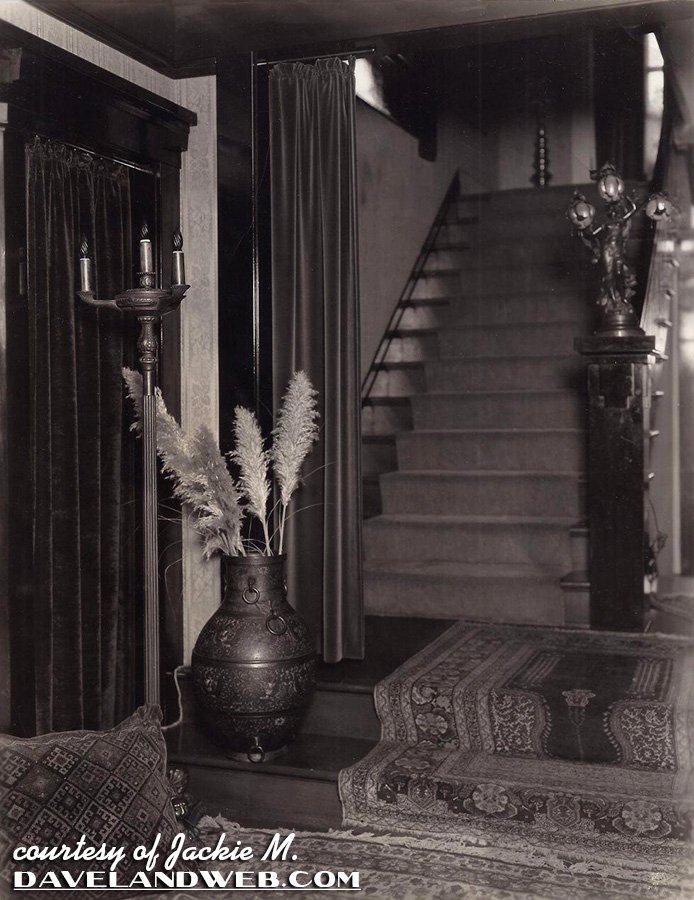
Below is an interior view of the property, labeled “Oxford Street. Jill & Bill Seiter rented furnished, 1922.”


You just never know where the topic of Shirley Temple will lead. If anyone has any additional info on the Jill Woodward/William Seiter relationship or the historic properties listed here, please let me know!

THANKS, JACKIE!!
 
UPDATE!

Thanks to Melissa (aka “The Colonel”) and her newspapers.com subscription, a few questions about Jill and her husbands can be answered!

On the two-day marriage, the Oakland Tribune reported this on March 7, 1915:

One day of wedded bliss, following a whirlwind wooing of a brief two weeks, was the lot of Paul R. Lill, aged 20, son of a wealthy Pasadena family, who married Miss Verness Woodward, motion picture actress. Their shattered romance became known yesterday when Mrs. George H. Lill, mother of the youth, declared Paul was not legally married to Miss Woodward. So far as the public records go the couple are legally married, but Paul Lill says he falsified when he swore he was 22 years old. He added that he was led to give a wrong age because Miss Woodward wanted him to marry her and he thought they would be happy together. How the romance turned out is best explained by the youthful bridegroom in an interview he gave out last night at Santa Barbara, where he and his bride went on their honeymoon. He said: “We were married in Los Angeles February 18 by the Rev. James I. Myers of the Broadway Christian church. The following day we came to Santa Barbara and on the 20th my wife left me without giving any explanation. We have both come to the conclusion that it was best for us to part and remain apart forever. We are convinced our marriage was a most unwise move. I have heard from my folks and they are going to have our marriage annulled.” Lill then told of meeting his wife just two weeks before they were wed, and he asserted that it was she who proposed that they get married. “It’s true that I am not of age and that I gave a wrong age when securing a marriage license,” he continued. “We both regret it exceedingly. My wife never made the slightest explanation for leaving me. She simply disappeared. I ran across her later, but she would not say why she left me. Verness declared we had made a botch of our lives and said we’d better quit.” The young woman has not given the slightest inkling to any of her relatives here regarding the break that has come between her and young Lill. Her brother, Frank Woodward, of 1705 Burlington Street, had not heard of the separation. Mrs. Frank Woodward said yesterday. “We have had several messages from Verness since she went on her honeymoon. She said she had been engaged by a motion picture company at Santa Barbara and the manager had made her leading woman. So far as we know she and her husband were happy. We were greatly surprised to learn of the wedding. Verness brought her husband to our home the day they were married and she seemed very happy.” Mr. and Mrs. Lill, parents of the young bridegroom, live at 180 South Lake street, Pasadena. Mr. Lill has an office on Colorado street there. Before the interview was had with her son Mrs. Lill was positive in her statement that the marriage ceremony had not been performed. “I knew of the affair,” she said, “but after the license was taken out my son and the young woman decided they did not care for each other and that ended it. My son is only 20 years old, so he could not get married without our consent.” Rev. James I. Myers said last night he remembered marrying Lill and Miss Woodward. They came to his home in Rose Lawn drive with a young man to act as witness, he said, and he performed the ceremony.

Sounds like the two youngsters were hot and heavy for each other and the groom’s mother stepped in, attempting to whitewash the little affair. Want to see what Frank’s place on 1705 Burlington looks like today? Of course you do. Built in 1919, it still looks to be in great shape!


As for the Pasadena address, it appears that only a 180 South Lake Avenue exists, and a modern office building resides there. Moving onto wedding #2, the L.A. Times from June 12, 1924 reported this:

Bill and Jill Seiter are both in pictures now, which is by way of being a family quorum. Williams is the well-known director and Jill is his wife. Mrs. Seiter is playing the role of the Princess Sonia Zaiskine in “His Hour,” the production which King Vidor is directing, and Elinor Glyn is supervising for Metro-Goldwyn-Mayer. Mrs. Seiter is using the name Jill Reties, which is Seiter spelled backward, and indeed one name sounds just as reasonable as the other. Before marrying William Seiter Mrs. Seiter was known to picturedom as Jill Woodward, leading woman. She retired from professional life when she married, more than seven years ago, and is only just now returning to the screen.

Take that, Wikipedia! Yes, William and Jill were married. As for the Paul and Jill wedding, I’d believe the Reverend, not the mother-in-law! I am still hoping to find out more about Cherokee Court and the house on Oxford Street. Anyone?

See more Shirley Temple photos at my main website.
Tuesday, November 08, 2022

Temple Tuesday: Tales from Rebecca


I am a behind-the-scenes info nut, as it adds an extra dimension of fun when re-watching my favorite movies (which I tend to do). Here are a few fun tidbits from the set of Shirley’s 1938 film, “Rebecca of Sunnybrook Farm.”

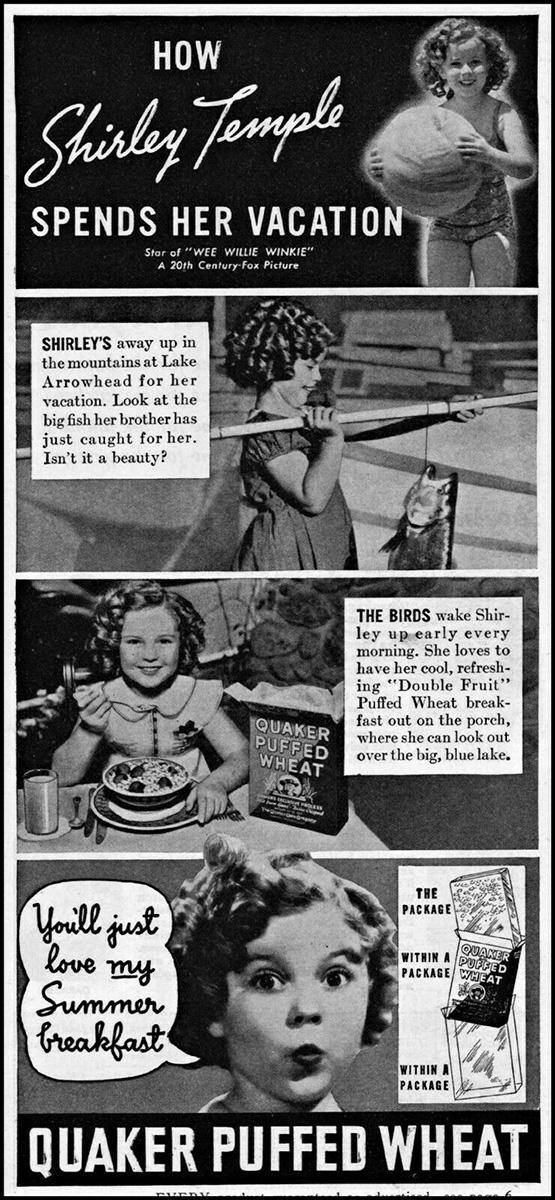
Apparently, the Quaker Oats Company objected when they learned that there was to be a song in the film about “crackly corn flakes” since Shirley was under contract to them to advertise their product, Quaker’s Puffed Wheat.


The company felt that if the song were included, they would look ridiculous, as Temple would seem to be promoting the competition, Kellogg’s Corn Flakes. Because of this, Producer Darryl Zanuck ordered the title changed to “Crackly Grain Flakes.”


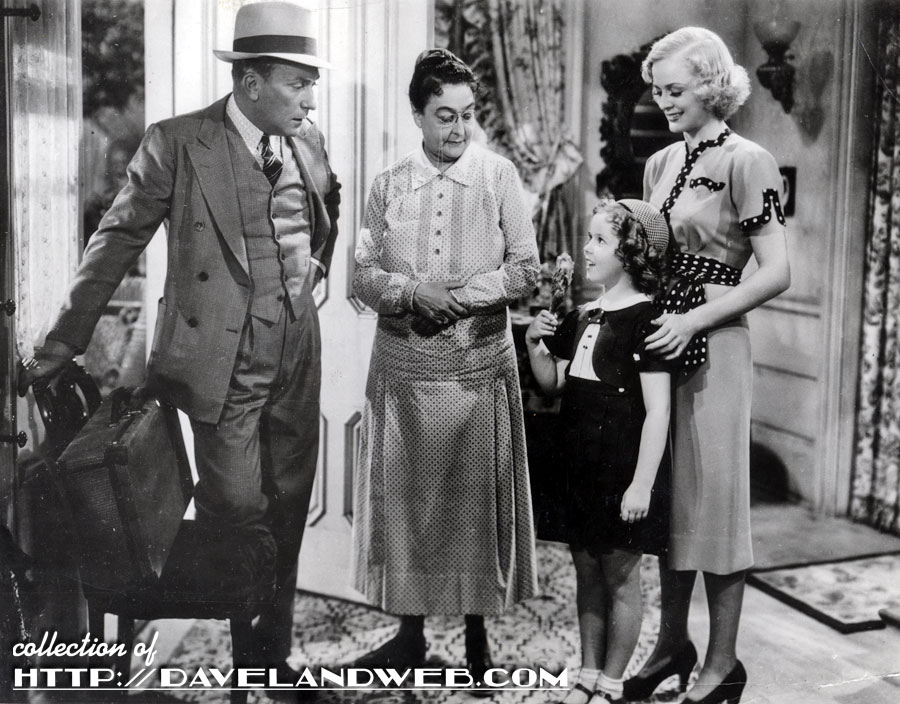
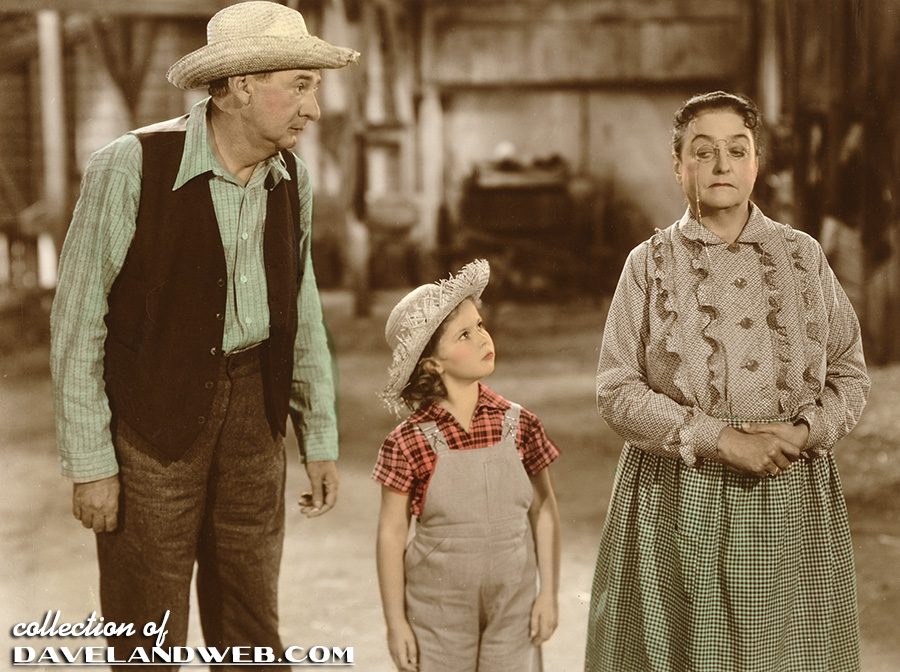
In another scene, Aunt Miranda (Helen Westley) asks Rebecca (Shirley) if she has had anything to eat. The girl says that her uncle bought her a candy bar, to which Aunt Miranda replies, “Candy bar! Gwen, take the child into the kitchen and get her something decent to eat.” The National Confectioners’ Association filed a $500,000 libel suit against 20th Century-Fox, claiming this scene did members of the association irreparable damage, and that it “libels a bar of candy and holds up the candy profession to ridicule and shame.” The suit was eventually dropped.


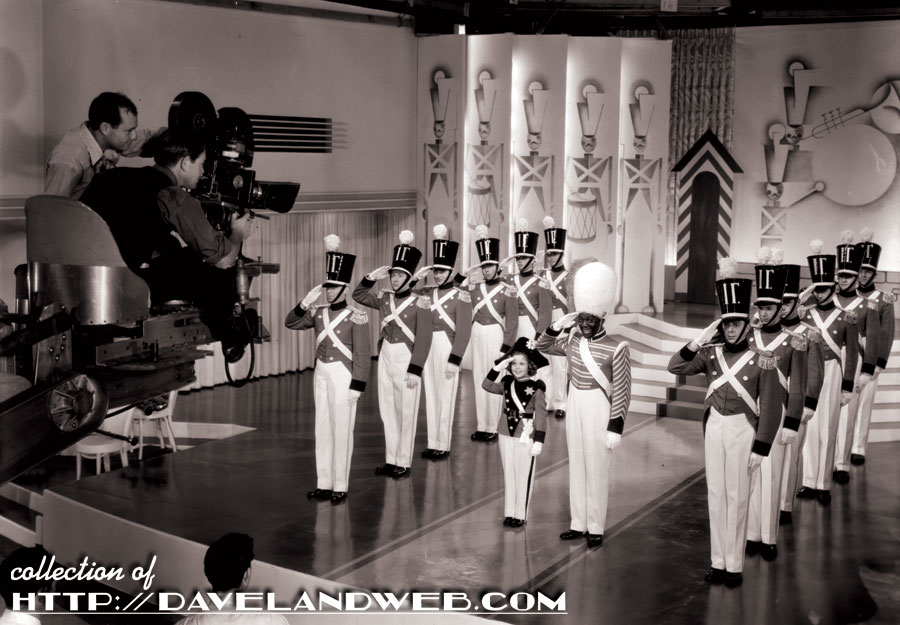
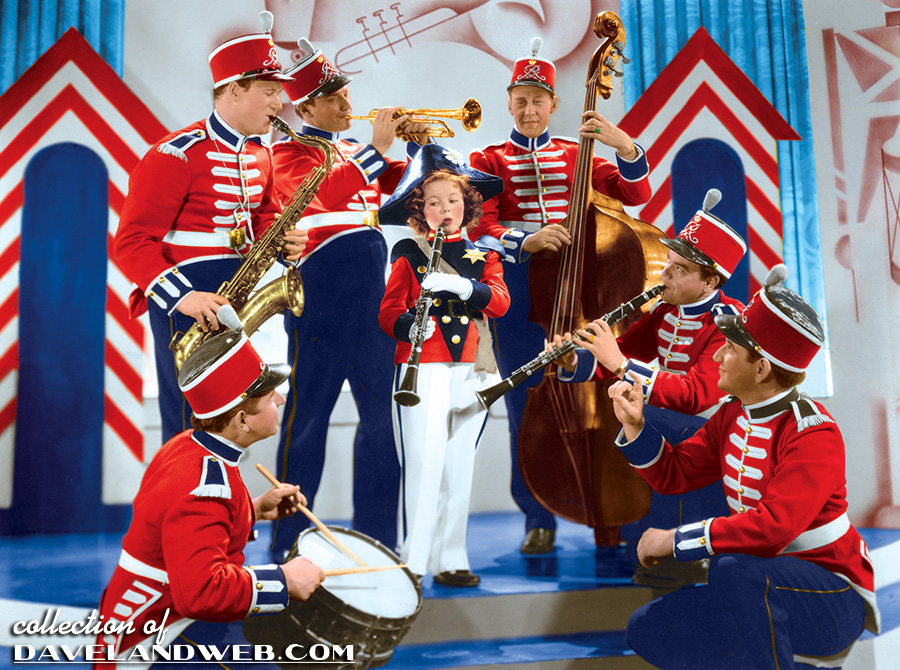
For the “Toy Trumpet” grand finale, Bill Robinson joined Shirley and her mother Gertrude at the Palm Springs Desert Inn to rehearse the number.


Temple was first made aware of racism when she learned Robinson was forced to sleep in the chauffeurs’ quarters. “But you’re not a chauffeur,” Shirley said to him when she found out. “I was unknowledgeable of the reality that racial prejudice was part of a complicated and powerful social system that enshrined such inequity,” she later wrote in her autobiography, Child Star.


A drum sequence was also to be included where Shirley would play along with the musicians on the set. She befriended studio drummer Johnny Williams, who taught her how to play. Dwan noticed her aptitude and ordered another drum set for her. However, Gertrude was against it, believing Shirley sitting with legs apart was unladylike. As Shirley recalled, “The film sequence was scrubbed, and drumsticks and traps disappeared, a donation to the local boys’ club.”


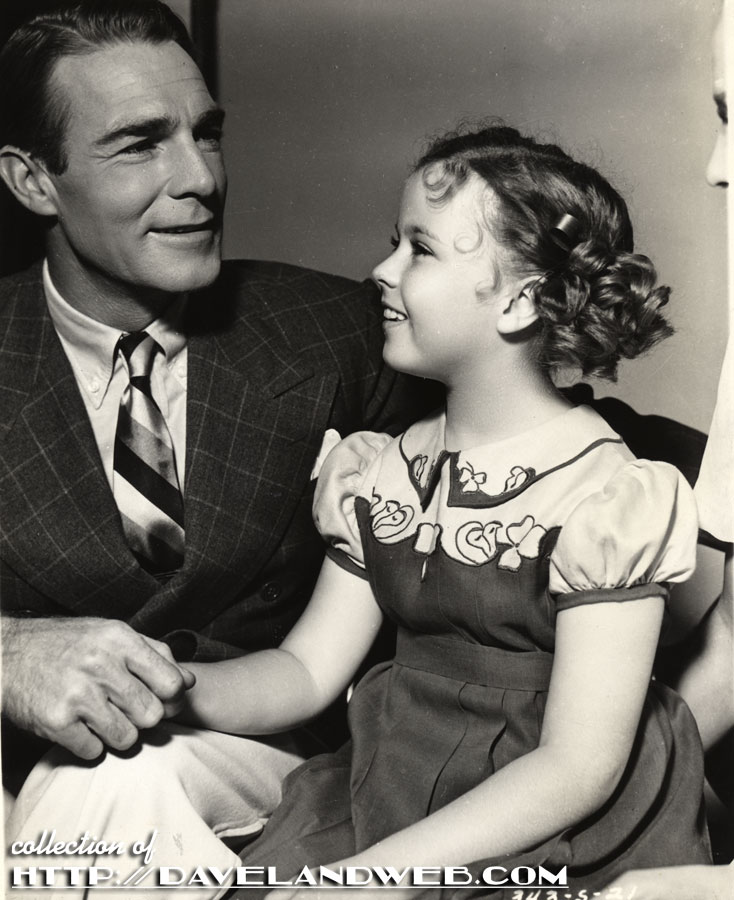
Shirley’s brother Jack was hired as third assistant director, to which she would later say, he “spent time thinking up things to take care of, one of which was me.” Dwan fired him after a dispute over a roasted turkey prop, used in a scene where Rebecca joins Tony (Randolph Scott) for lunch.


The turkey had been sprayed with insecticide and Jack loudly ordered her not to eat it, which she had no intention of doing. Out of spite, she popped the turkey in her mouth, prompting her brother to shake her to dislodge it. “Despite a slightly bitter taste, it was good turkey and my disobedience was immensely satsisfying.”

Are you ready to watch “Rebecca” again? See more Shirley Temple photos at my main website.
Tuesday, June 28, 2022

Temple Tuesday: Anatomy of a Deleted Scene


Since the advent of home media, the ability to watch deleted scenes from contemporary movies has become commonplace. Most DVDs/Blu Rays have a few deleted scenes as extras, often with director commentary explaining why it was decided to remove that particular scene before the film’s release. Classic Hollywood enthusiasts classify deleted scenes as some of the most coveted pieces of “lost film,” turning the search for them into something akin to the Holy Grail. While the actual scenes may never be found again (due to the film studios literally trashing them or because of the flammability of nitrate film), it is often easy to find little remnants of these never before seen gems. Today’s post presents an example from Shirley Temple’s 1938 film, “Rebecca of Sunnybrook Farm.” As always, The Colonel (aka Melissa) has done the majority of the legwork in piecing together what this deleted scene may have included. 

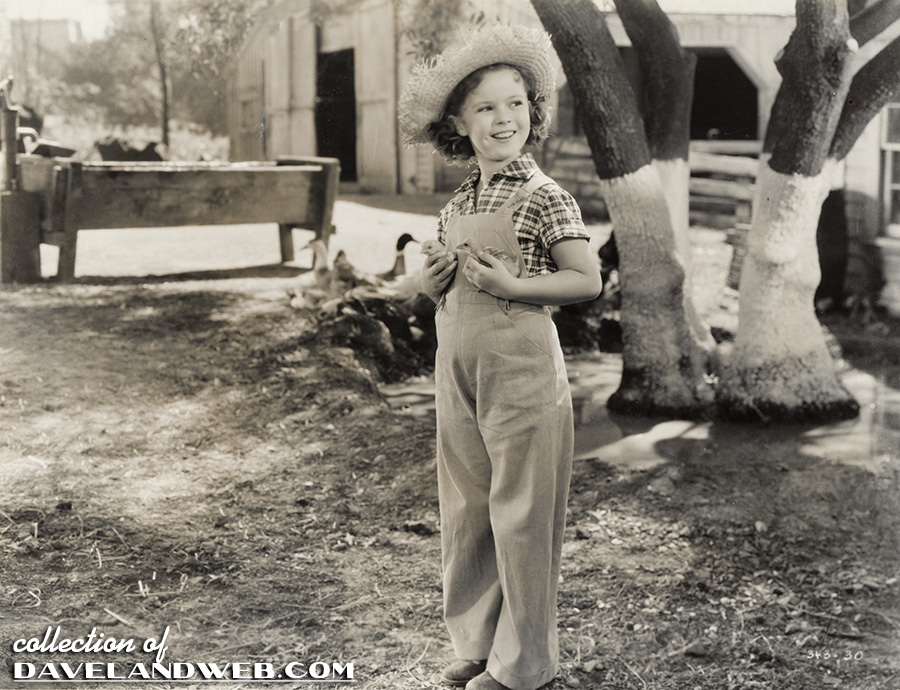
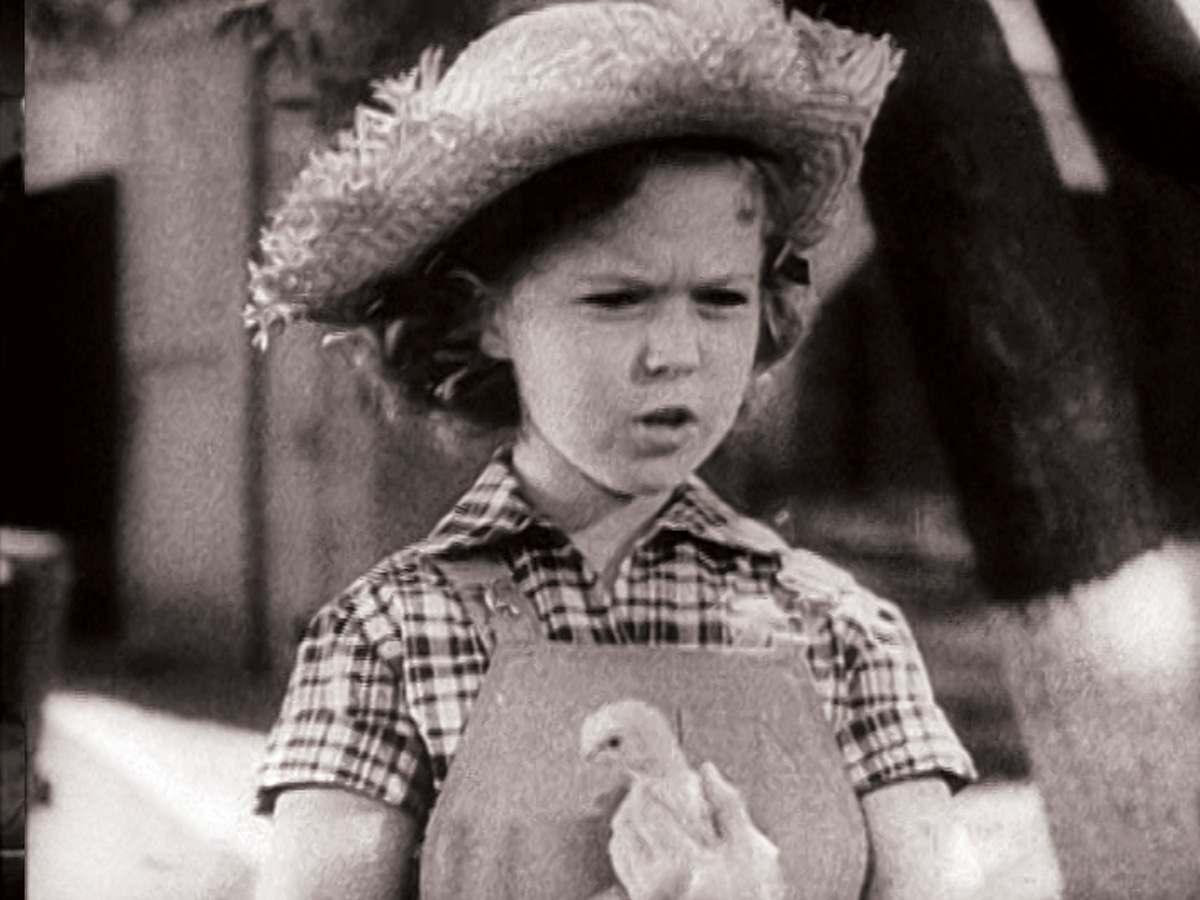
According to the script dated October 2, 1937, the day after she arrives at the farm, Rebecca wanders into the farmyard to explore and spies a hen with her brood. Delighted, she picks up two of the chicks and turns to the mother hen, who is protesting violently. “Don’t worry, Mrs. Hen, I won’t hurt your babies.” She rubs the chicks against her cheek before setting them down on the ground. At that point, she hears a squeal and the script continues with the pig-caught-in-the-fence scene. 

Often, promotional photos taken during the filming of a movie are used even if the scene that they represent was removed before release. The still shown above goes along with the scene Melissa has described. The photo below was taken from the trailer for “Rebecca.” Back in the day, it was commonplace to find little snippets of deleted footage used in those promotional trailers.


Based on the studio numbering of their stills, this shot of Shirley with costar Gloria Stuart would have been next.


Back to the script:

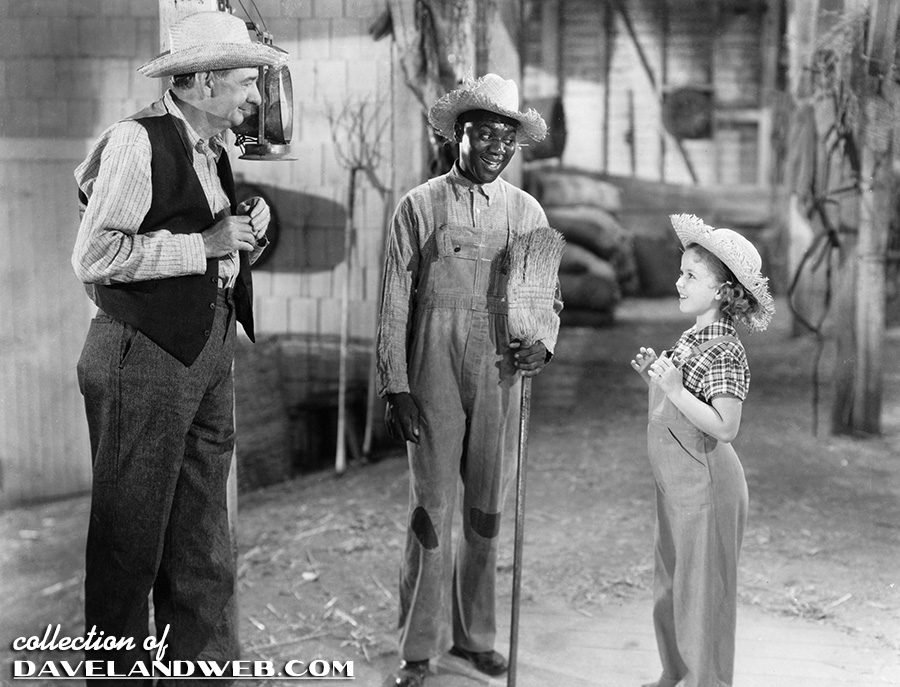
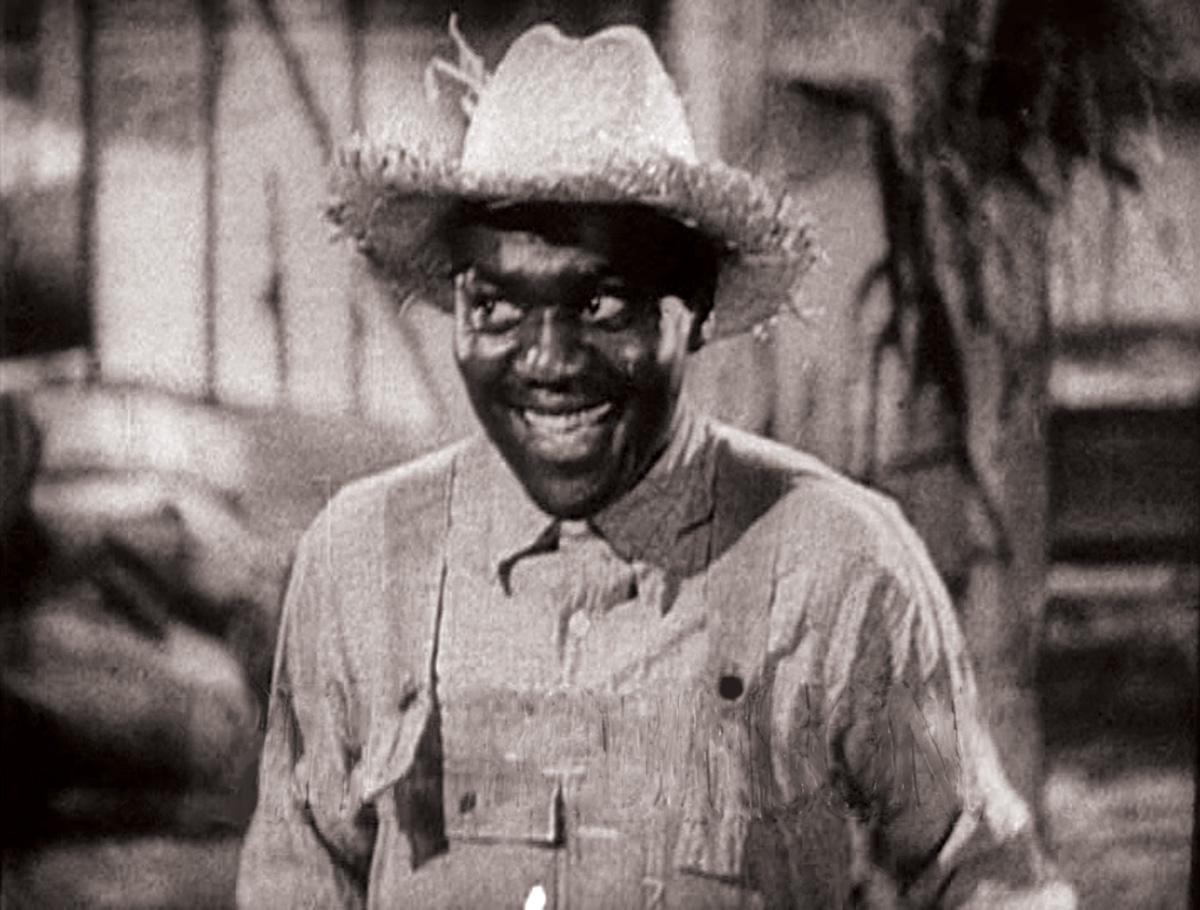
When Rebecca chases after the pig, she encounters Homer and Aloysius dancing together and introduces herself. Homer describes himself as a caretaker and Rebecca isn’t sure what that is. He says he’s practically the boss but he can do a week’s worth of work in one day and then spend the other six resting and playing his kazoo. She asks Aloysius if he’s a caretaker and he says he’s a hired hand but he can dance too. Homer starts playing “Old Straw Hat” on the kazoo and Aloysius starts to dance. 


Here is another frame of film from the trailer showing Bill Robinson from this deleted sequence:


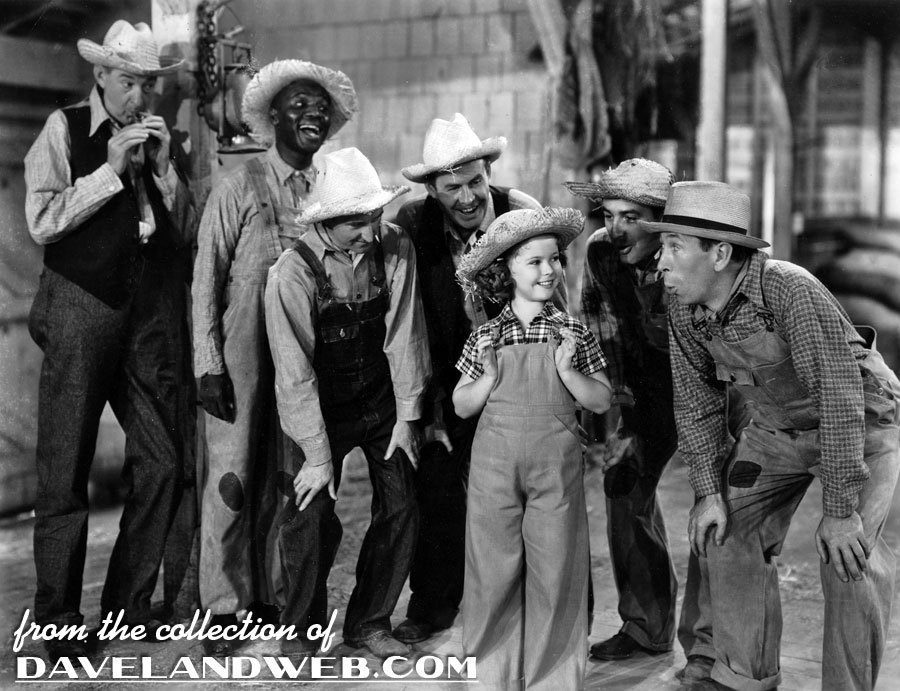
This leads to a production number with twelve scarecrows. They disappear by the end of the number and the three are left to dance alone.

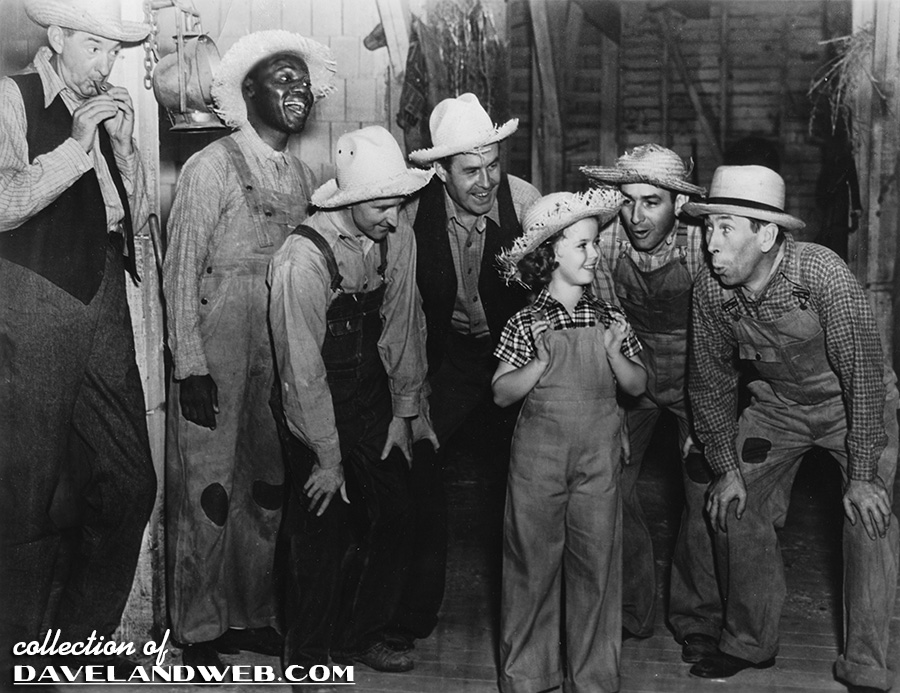
This is a bit of a mystery. For the actual deleted sequence, perhaps the twelve scarecrows were replaced with four farmhands, as seen in the publicity stills shown below:


Aunt Miranda comes out and tells Rebecca she should be ashamed of singing “trashy songs.” Homer tells Aunt Miranda that it wasn’t Rebecca’s fault that they were singing. 


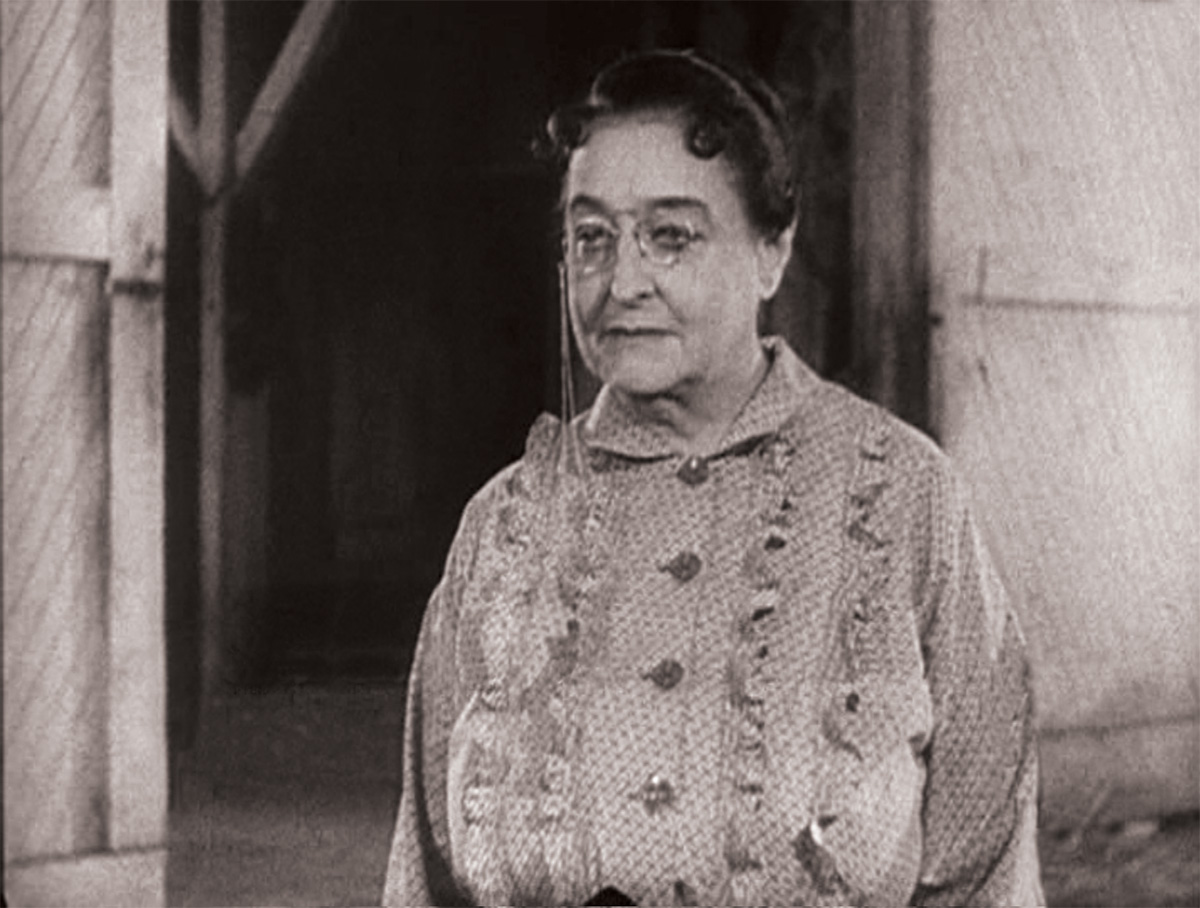
Below is another frame from the trailer, illustrating Aunt Miranda’s arrival on the scene:


Fingers crossed that some of these classic gems will reappear one day!

See more Shirley Temple photos at my main website.
Tuesday, May 11, 2021

Temple Tuesday: Changing the Curls and Red Skelton


In the 1930’s, Shirley Temple reigned supreme. Everything she did was reported in the papers for a public that just could not get enough of Shirley. The blonde curls that adorned her crown were her signature, as seen in this adorable photo from “Bright Eyes,” 1934. By 1937, Shirley was growing up, and it was time for a (gasp) change. “Rebecca of Sunnybrook Farm” was the first film to debut this new look for Shirley, and just to make sure the public wouldn’t throw a riot, the film showed both hairdos. 

From an October 30, 1937 publicity blurb:

SHIRLEY TEMPLE GETS NEW COIFFURE

The golden curls of Shirley Temple will go rural for “Rebecca of Sunnybrook Farm,” her new picture. The famous locks will be brushed back and tied with ribbons behind her ears for the farmyard scenes of the picture. It will be the first time in her career that her famous coiffure will be altered—and it will only be for less than a quarter of the picture. Here you see the screen’s little darling and her new hair-comb.

At the beginning of the film, Shirley wears her signature hairdo, hidden under her hat:


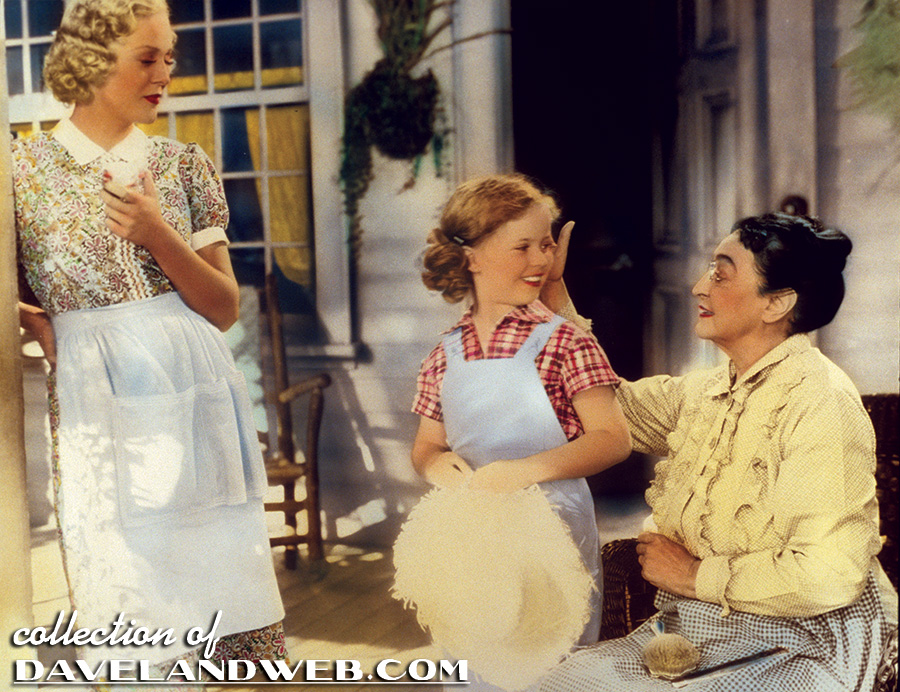
Once Shirley’s unpacked, the first thing that goes is the old hairdo. Helen Westley (as Aunt Miranda) attempts to appease the public’s wrath with this line: “As long as you live here, you’ll wear your hair this way.” “I like it!” Shirley cheerfully replies. “It’s so nice and cool!”


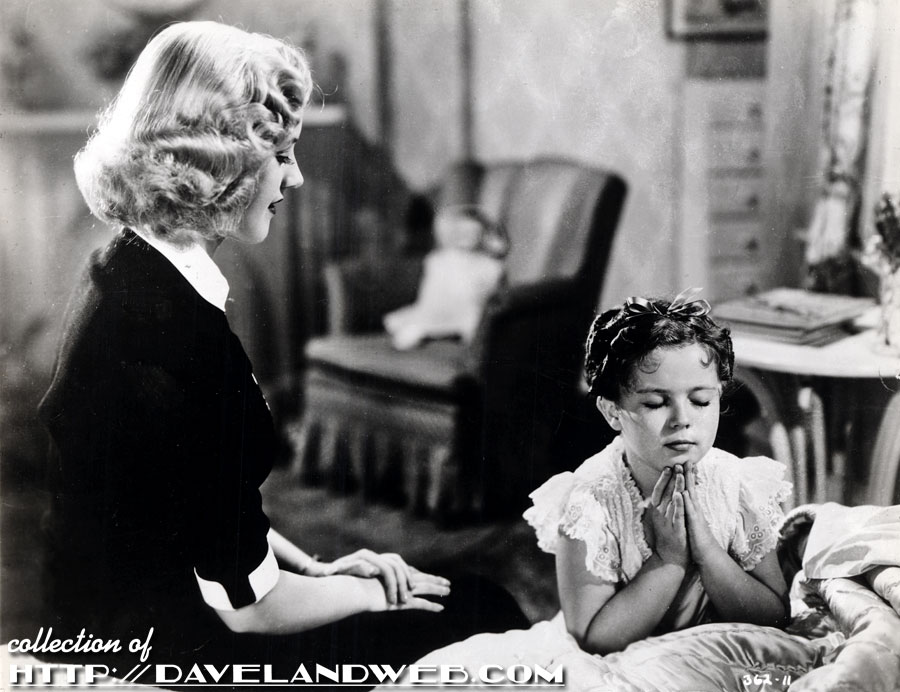
It truly was a lot about nothing; regardless of what the public thought, Shirley wasn’t changing back. Just to make that fact clear, in her next film, “Little Miss Broadway,” there is a scene early in the movie where Shirley’s character is getting ready for bed, assisted by the daughter (Phyllis Brooks) of the man who just adopted her. “I used to have curls all over my head, once,” Shirley tells her. “That must have been lovely,” replies Brooks. “Yes,” sighs Shirley, “but they were lots of trouble!” And that was that!


In the book “The Westmores of Hollywood,” by Frank Westmore and Muriel Davidson, they state that Shirley’s curls came from their family’s makeup dynasty. Bullcrap. True, father George Westmore created the long sausage curls that 20-something Mary Pickford wore that helped her look much younger, but Shirley’s hair and hairstyle owed everything to her mother Gertrude. Although George had six children involved in the movie business, the only one with a movie credit in common with Shirley was Perc, who worked on “The Story of Seabiscuit” (1949).

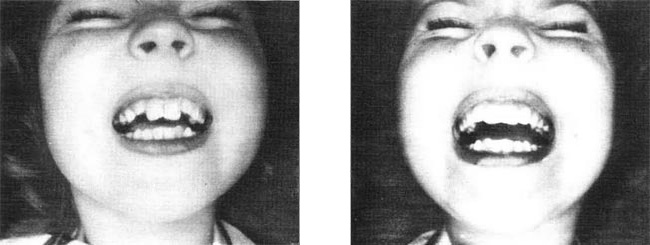
While working on this post, I stumbled upon a website that showed photos of little Shirley with her teeth...and with her veneers:


The photos show Shirley in 1936. She lost her baby teeth, just like any child, but was never photographed with any teeth missing. Dr. Charles Pincus, who graduated from USC, was responsible for inventing the “Hollywood Veneer,” a removable snap-on cap that covered just the front of unsightly teeth or spaces. The caps were worn by Shirley for filming and public appearances, but they were only temporary, and had to be removed daily when eating, chewing, or sleeping. 


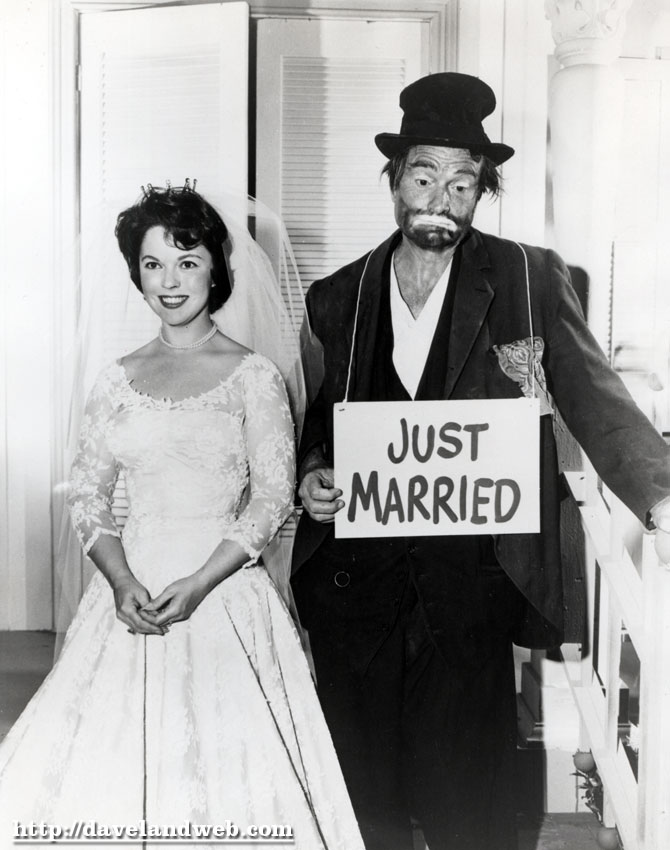
In other Shirley news, I stumbled upon this YouTube video that the Red Skelton Museum uploaded last month, which shows the September 24, 1963 episode with Shirley. So much fun! Shirley has a hard time not cracking up at Skelton’s antics, yet her charm and star power had not diminished one bit. In the one comedy sketch where she plays a snooty debutante, she is loads of fun. She also has a musical number set in 1863 by the seashore, “By The Sea.” Her voice is pleasant and not surprisingly, she doesn’t miss a step in the dance routine.


See more Shirley photos at my main website.