Showing posts with label mary nash. Show all posts

Tuesday, April 01, 2025

Temple Tuesday: Shirley and the Fools


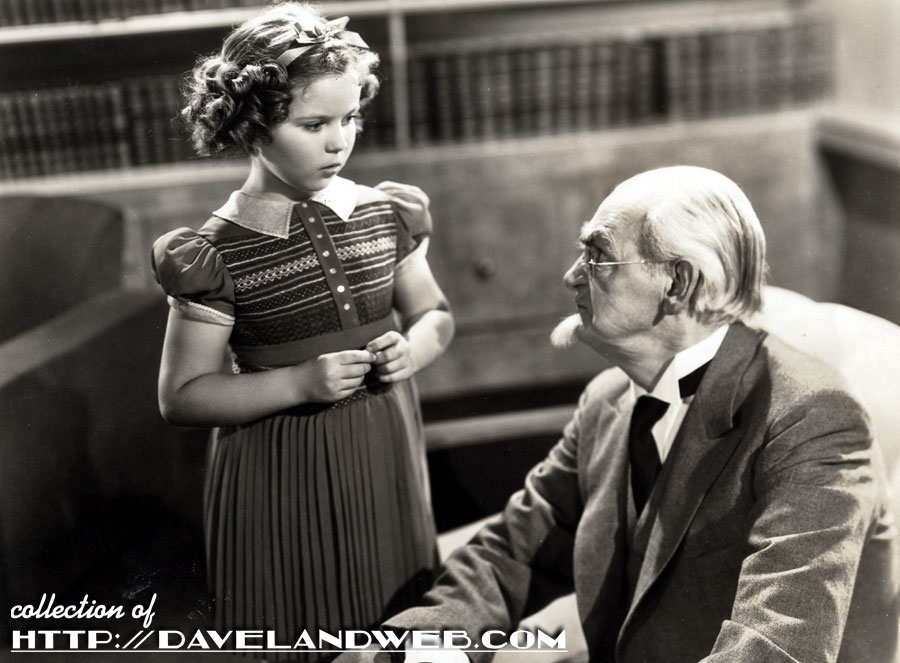
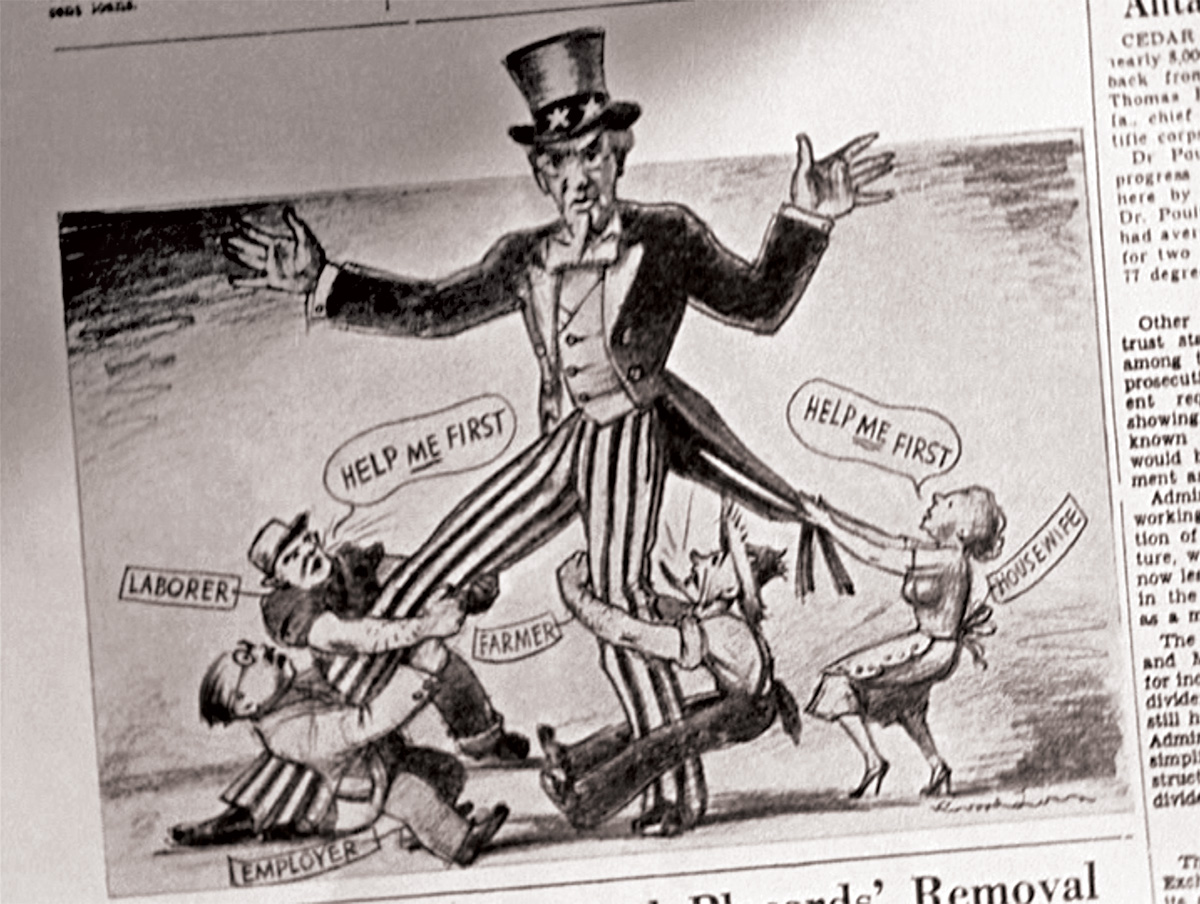
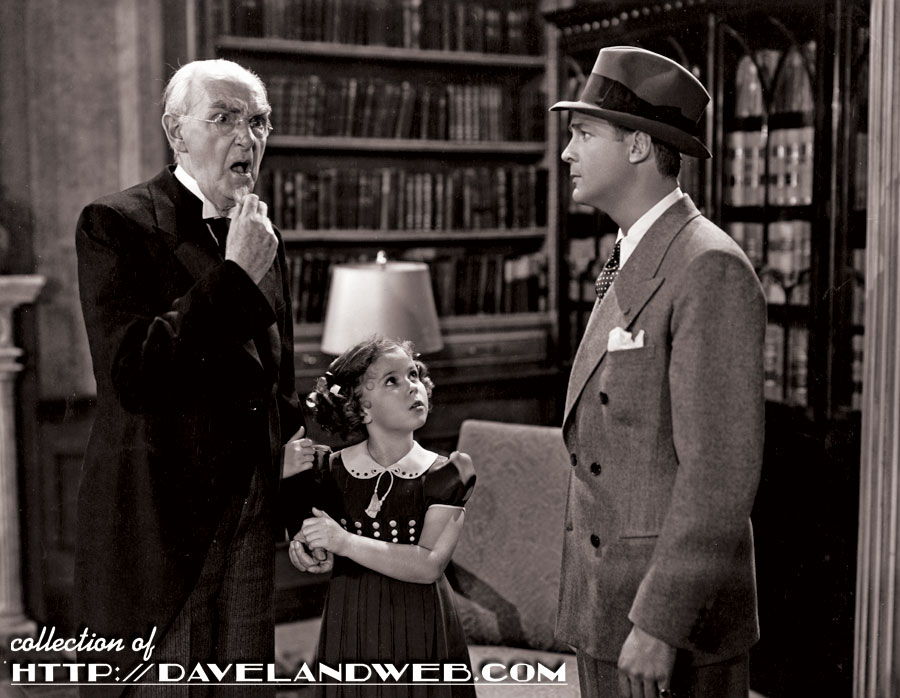
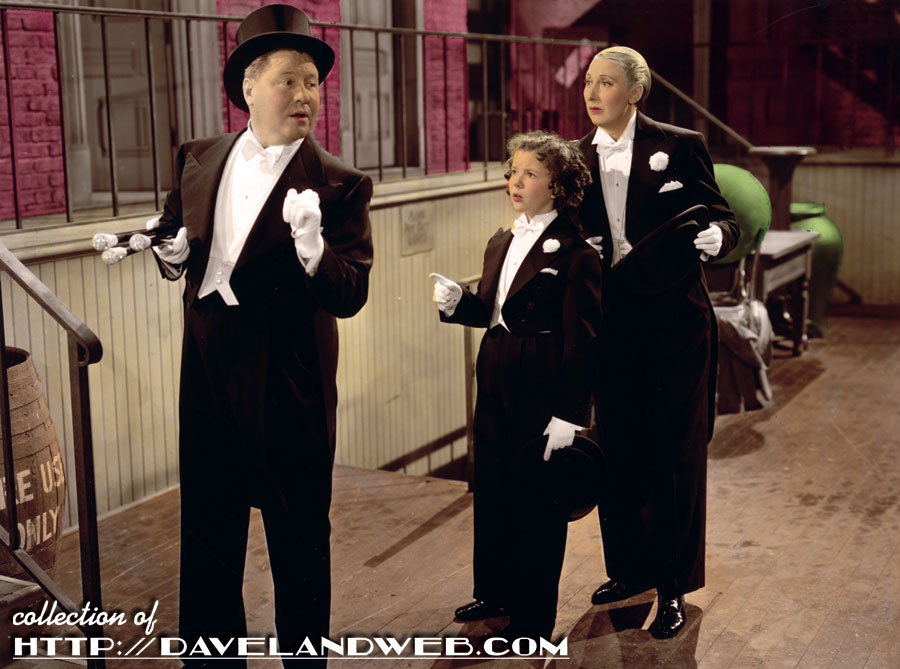
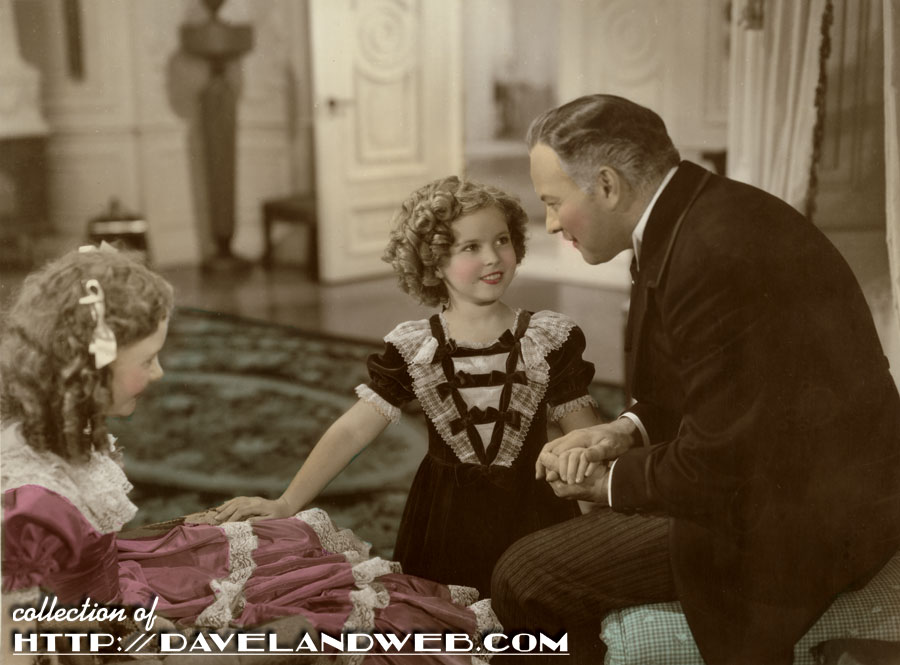
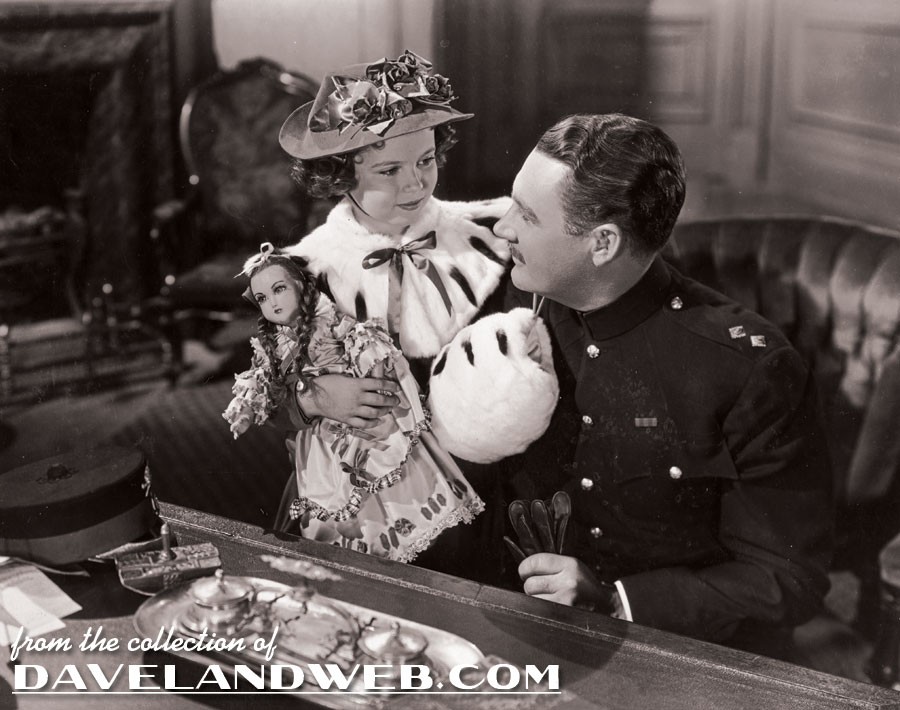
In honor of April Fools’ Day, today’s post shows Shirley getting fooled or her costars portraying a fool, beginning with “Just Around the Corner” (1938). In the plot of this musical comedy, Shirley mistakes wealthy businessman Samuel G. Henshaw (Claude Gillingwater) for the beleagured Depression-weary Uncle Sam.


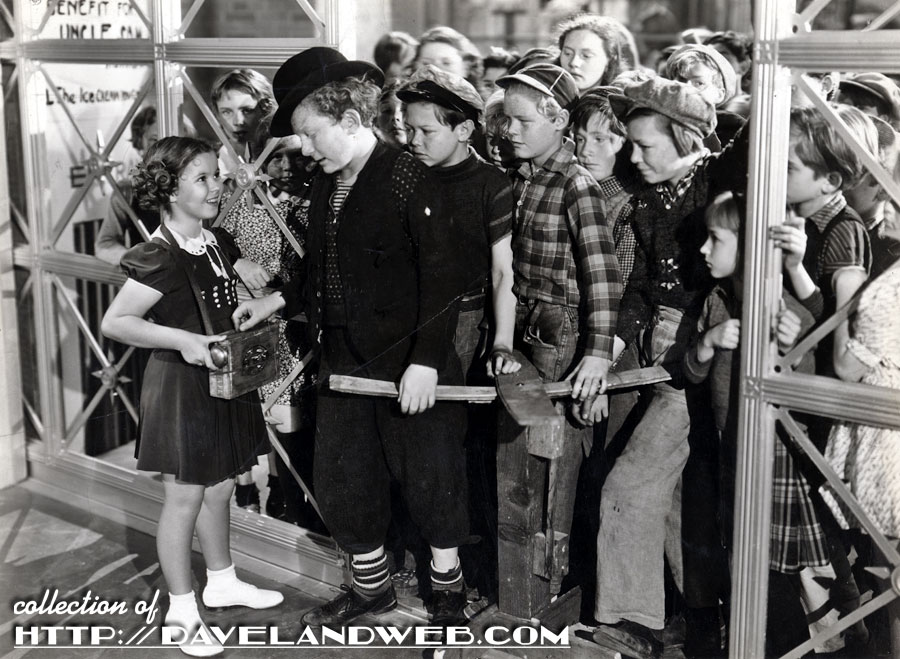
In order to help poor old “Uncle Sam,” Shirley stages a benefit in his honor, making him the laughing stock of New York City.


When all is figured out, the benefit goes on as planned and Henshaw single-handedly saves the world from the Depression. Sound far-fetched and stretched? It sure is, but somehow Shirley makes it all work out. She may have been fooled, but she was definitely no fool!


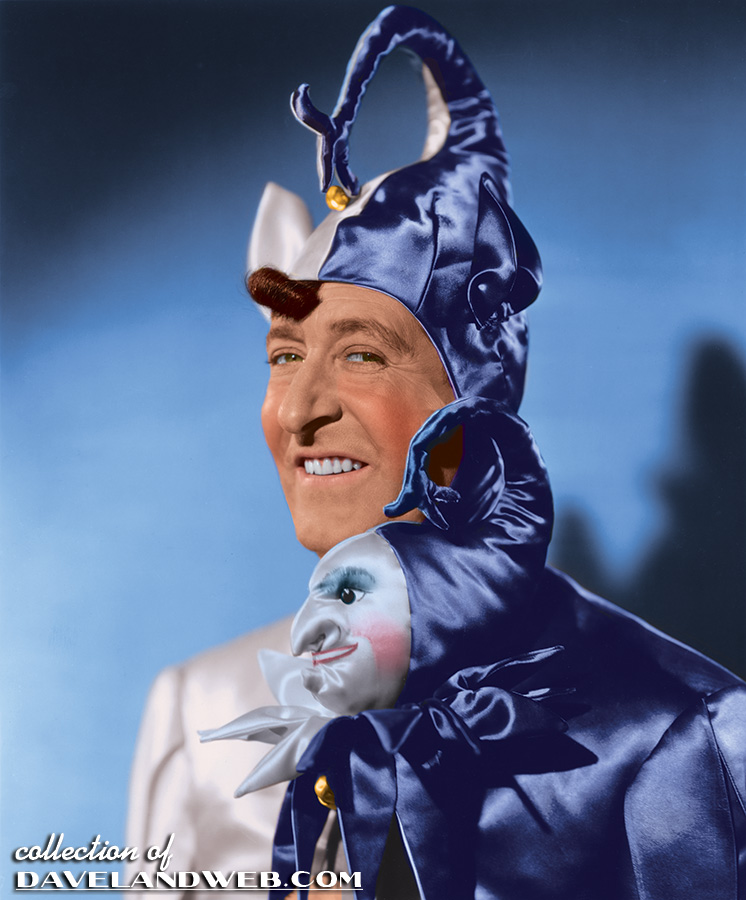
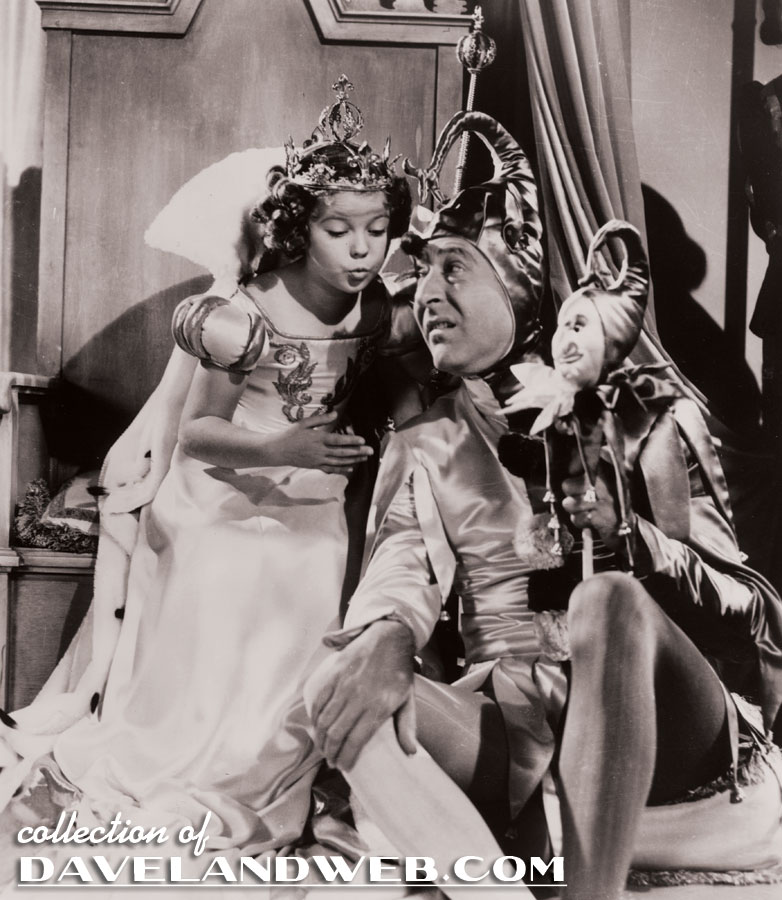
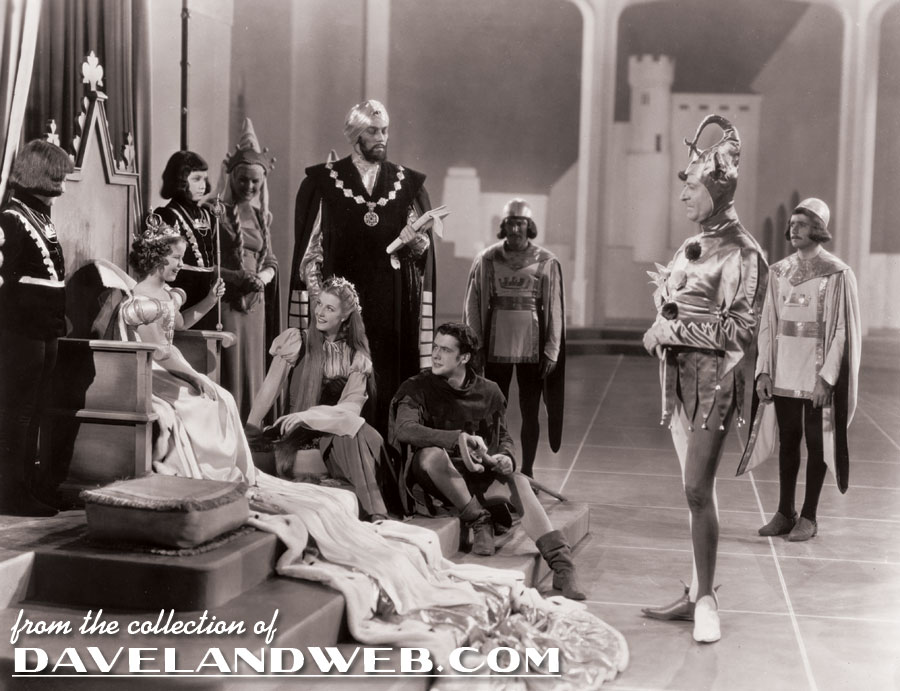
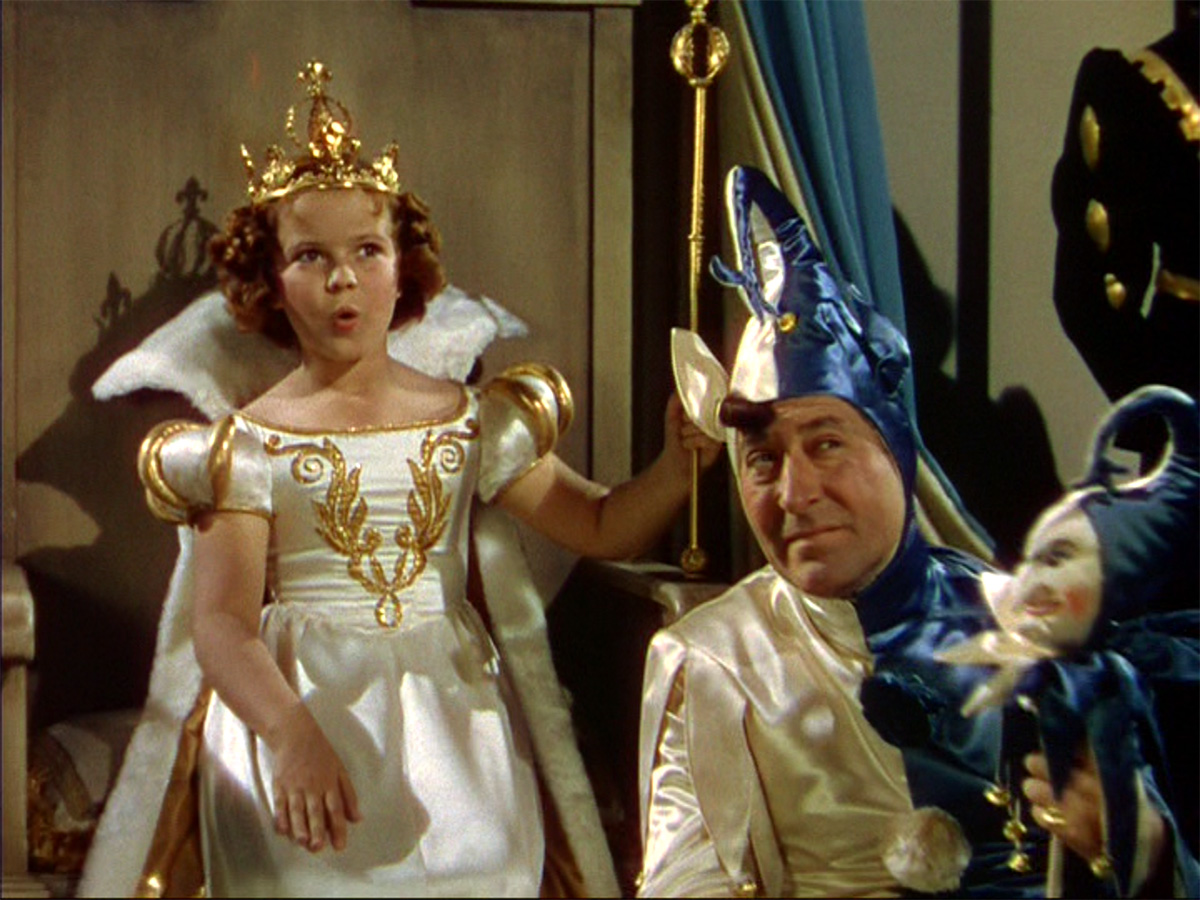
In “The Little Princess” (1939), Shirley Temple’s costar, Arthur Treacher, portrays the Court Jester/Fool in a dream sequence.


It is fairly hilarious to see the typically dignifed-butler-portraying Teacher in satin and tights, prancing around with his jester puppet.


He may have portrayed stiffs, but Treacher knew how to do a good turnout, as seen by his pose below!


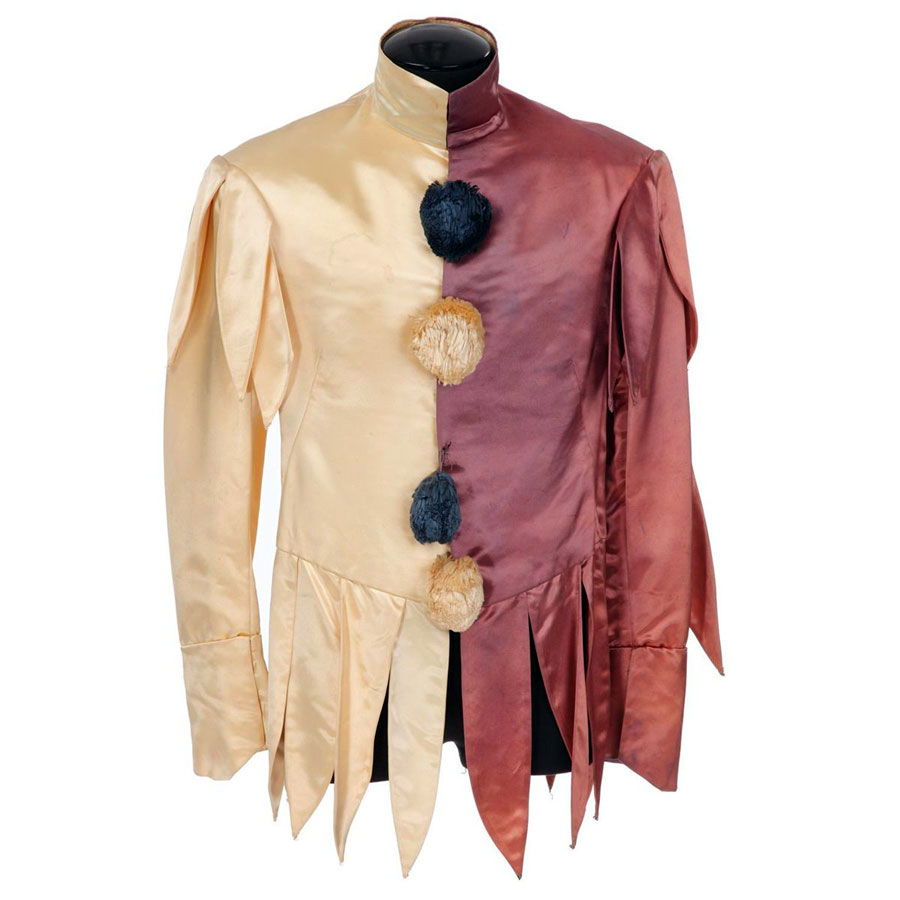
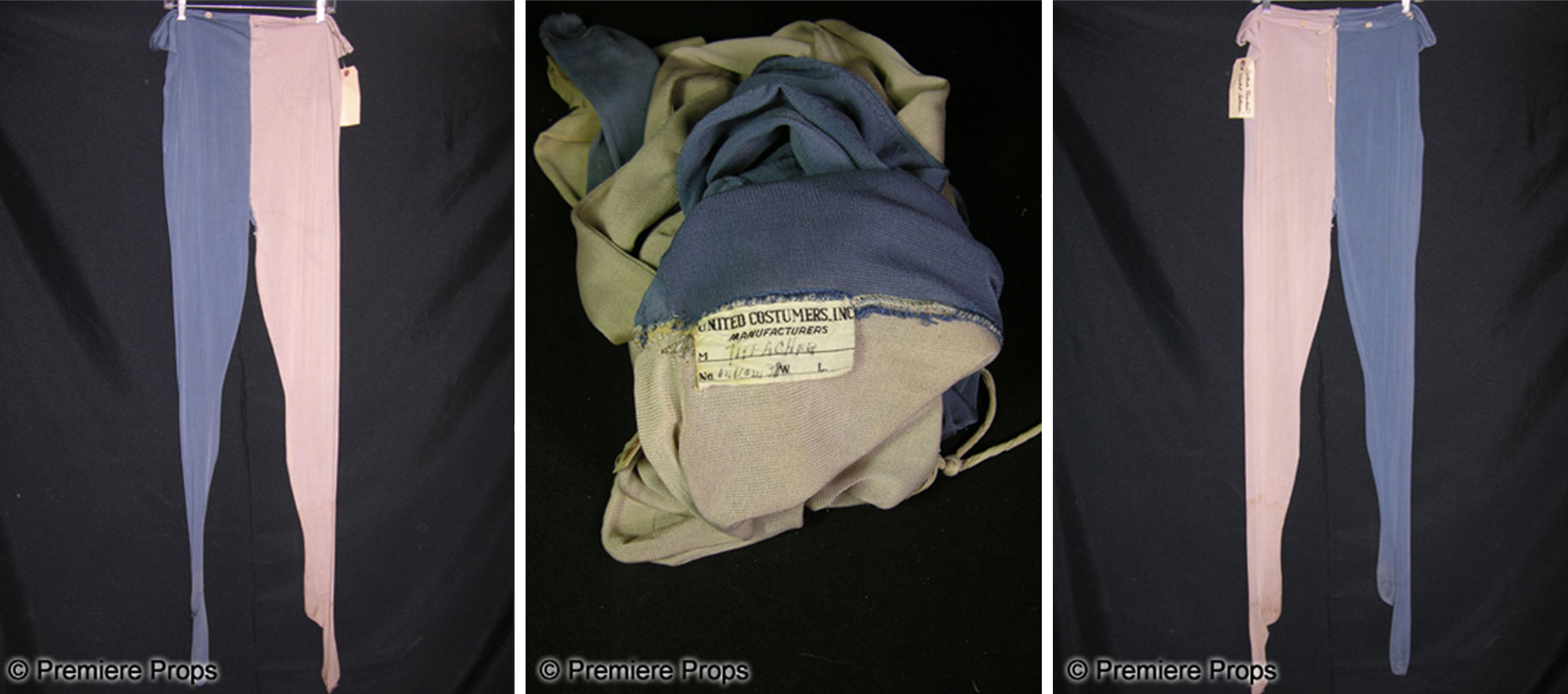
Treacher’s faded tunic came up for sale in the Debbie Reynolds auction:

Arthur Treacher court-jester tunic designed by Gwen Wakeling from the Shirley Temple movie, "The Little Princess," 1939. SOLD FOR $650. Veteran British character actor Arthur Treacher plays a frustrated ex-vaudevillian forced into subservience to his cruel sister running the girls boarding school which Shirley Temple attends. This humorous split-color satin jester’s outfit by Gwen Wakeling is worn by Treacher to great effect in Shirley’s dream fantasy number in The Little Princess. United Costumers label inside reads, “ARTHUR TREACHER B931”. The special blue dye for costumes in 3-strip Technicolor films is one of the most fragile, and has here faded to aubergine; else, with minor handling and aging, Very Good overall.


His tights appeared at a later date. Hard to believe they survived all this time!


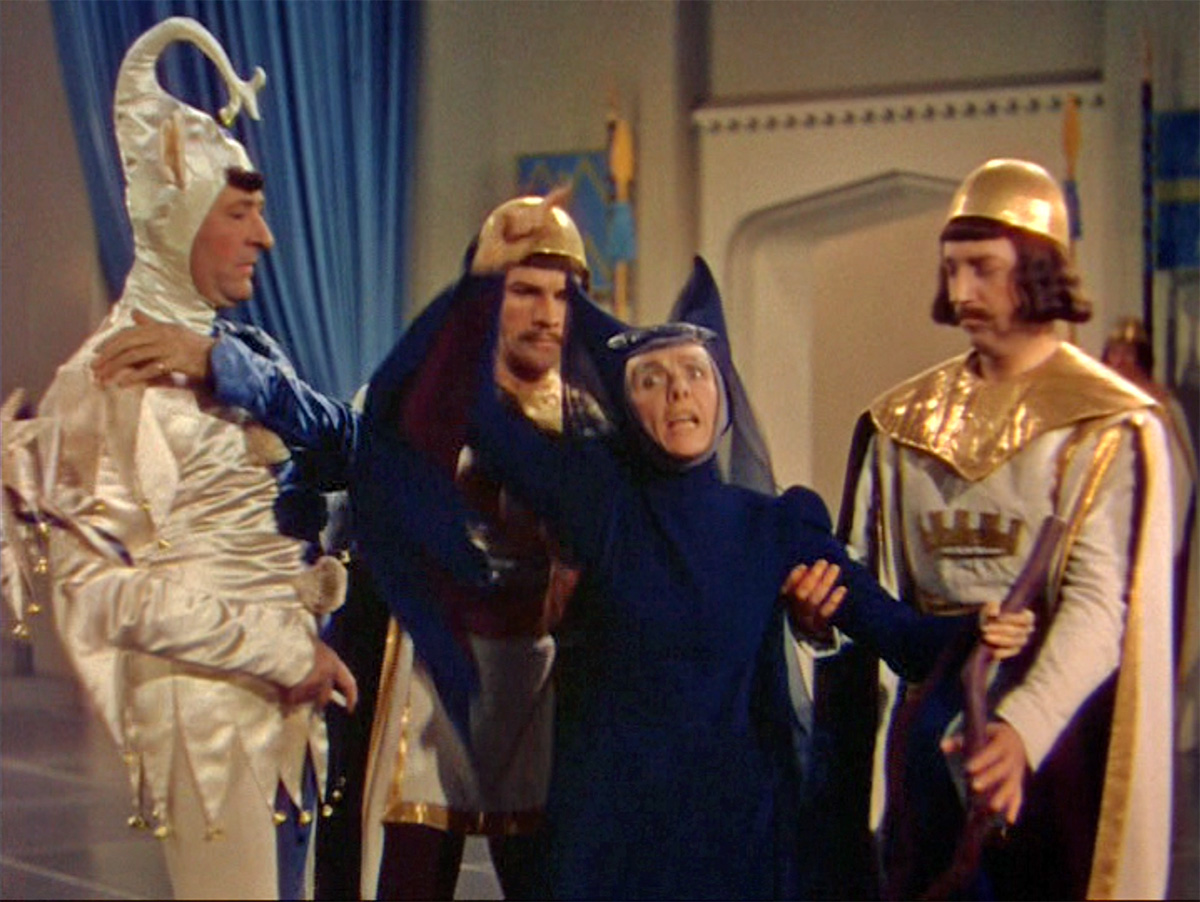
A few screenshots from the lavish Technicolor© production:


My favorite Treacher line from this dream sequence referring to Mary Nash’s evil character:

Listen to the old grand-mommy,
You’re a nasty peeping tommy!


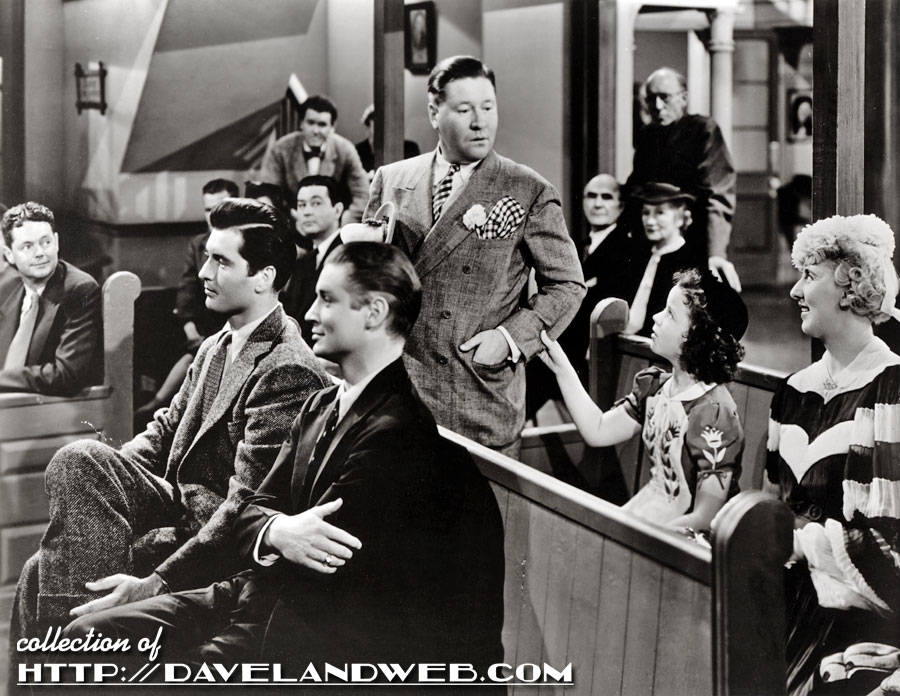
In “Young People” (1940), as Shirley’s father, Jack Oakie portrays the biggest fool of them all.


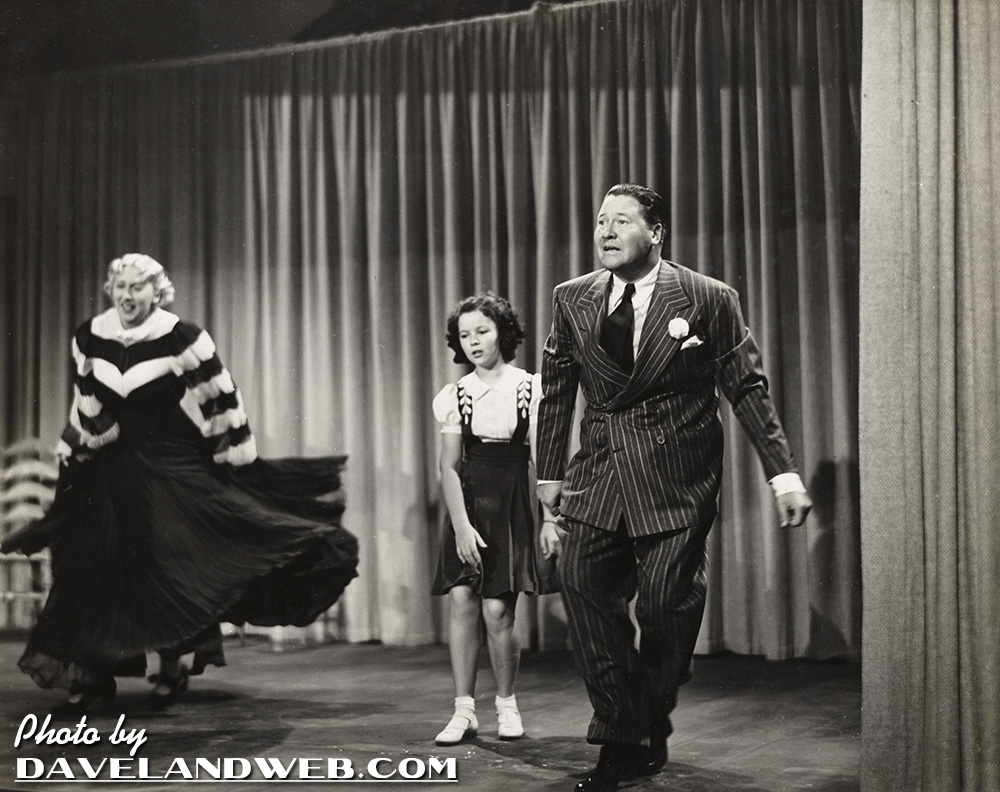
Blustery and a bit full of himself, he is the butt of every joke. Below, daughter (Shirley) and wife (Charlotte Greenwood) have to remind him that their dressing room is in the opposite direction of where he is heading.


When the family retires from showbiz to settle down in a hick farming community, they are not readily accepted by the conservative townfolk, who appoint Oakie is a one-man-chamber-of-commerce as a joke. The problem is, Oakie thinks it’s for real.


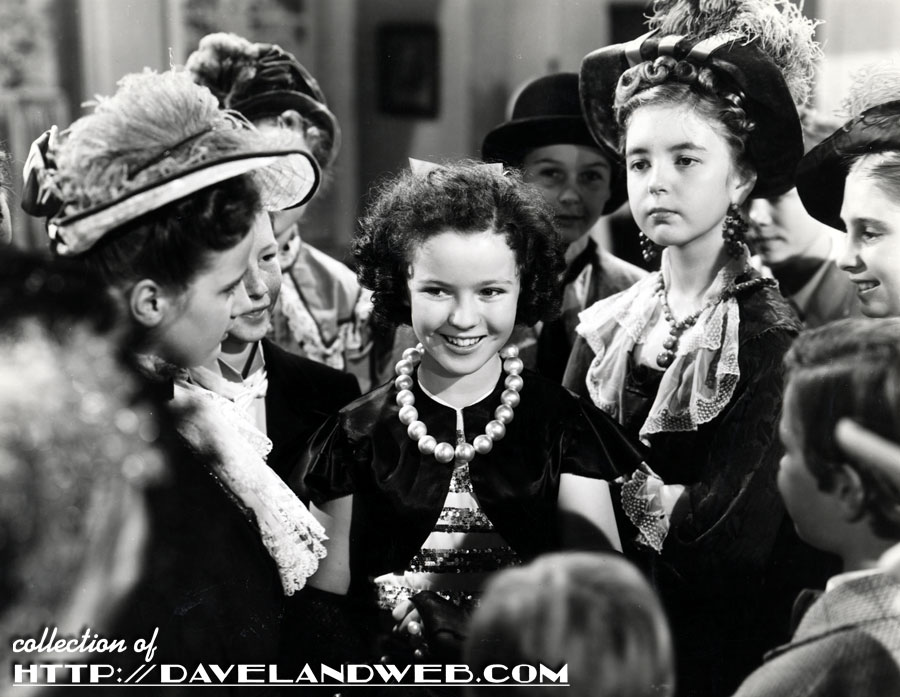
When Oakie’s character helps the kids stage a somewhat raunchy musical number for the townsfolk, the joke is revealed and the town spinster reveals to him exactly what everyone thinks of him.


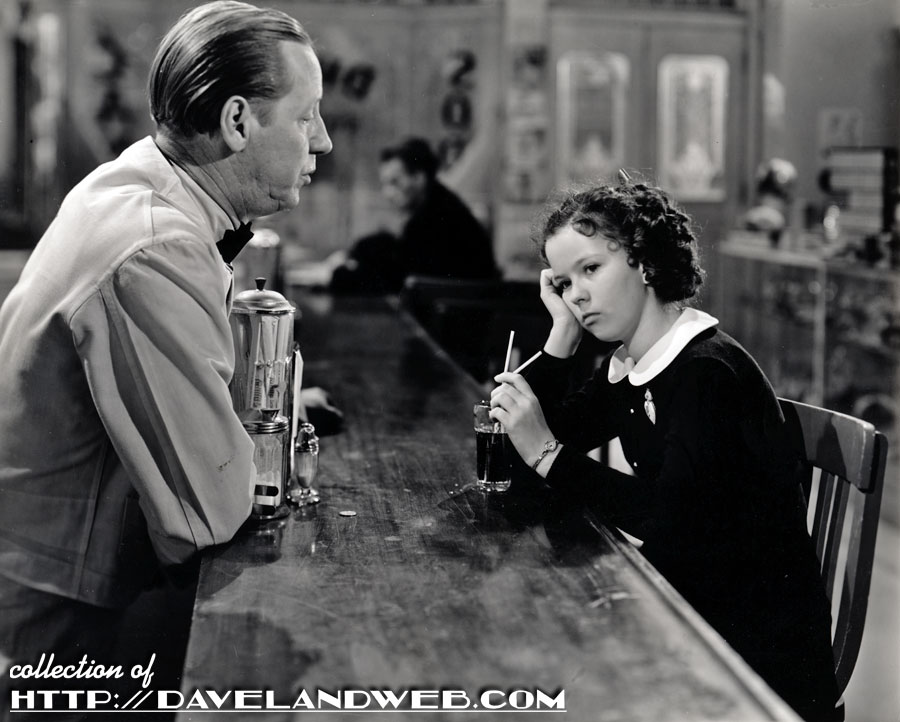
Sad to find out that her dad has been made out to be a fool, Shirley drowns her sorrows in multiple sodas. 


Fear not, as Shirley never stays down for long. Dad saves the kids from certain death during a hurricane and is hailed a hero. The family ends the film on a high note by entertaining a more receptive community with a musical number.


Remember any other fools from Shirley’s films?

See more Shirley Temple photos at my main website.

Tuesday, September 03, 2024

Temple Tuesday: From Riches to Rags and Back Again!


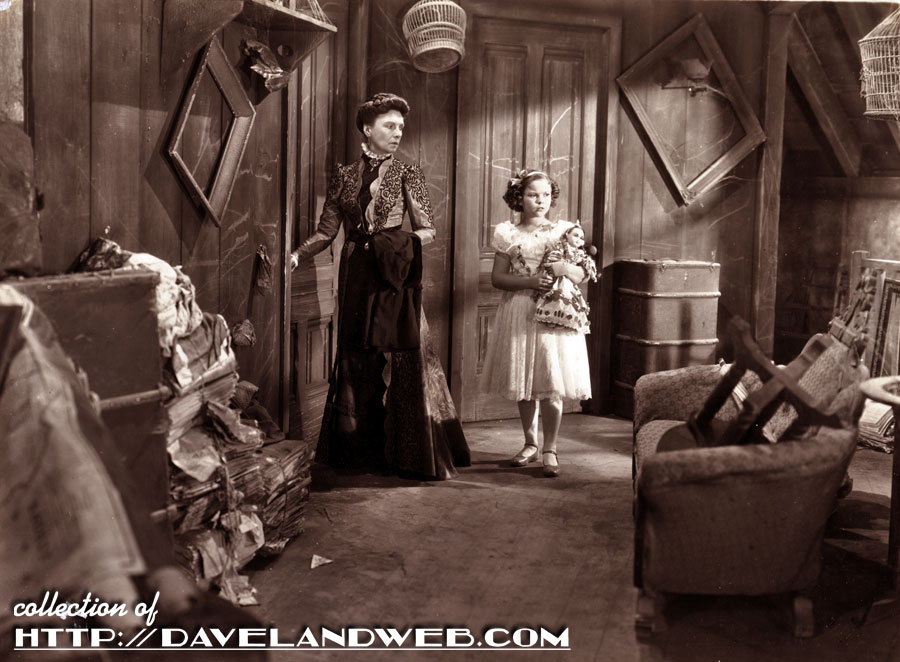
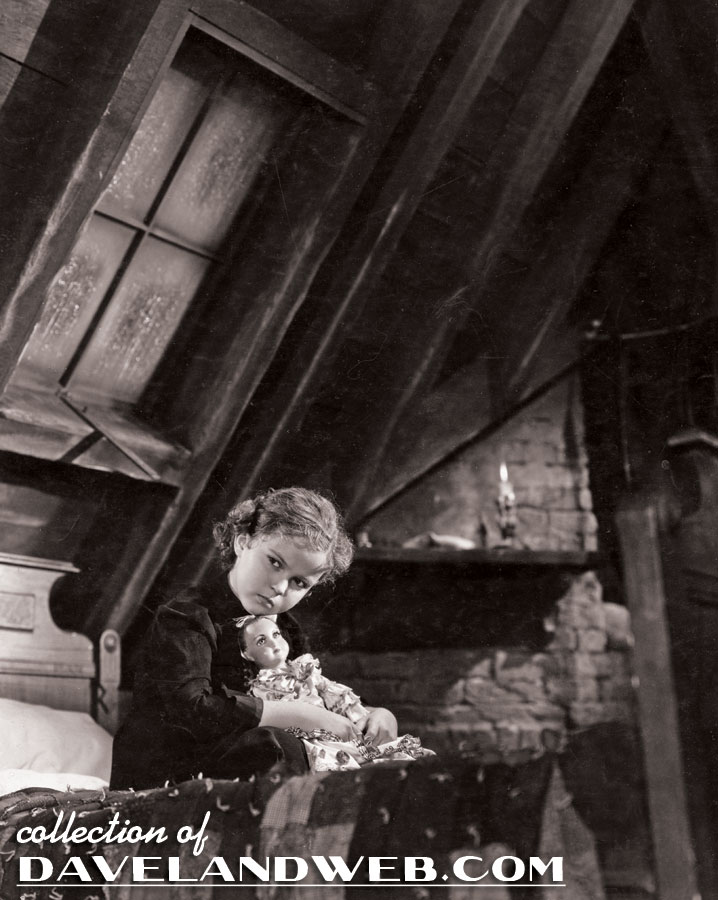
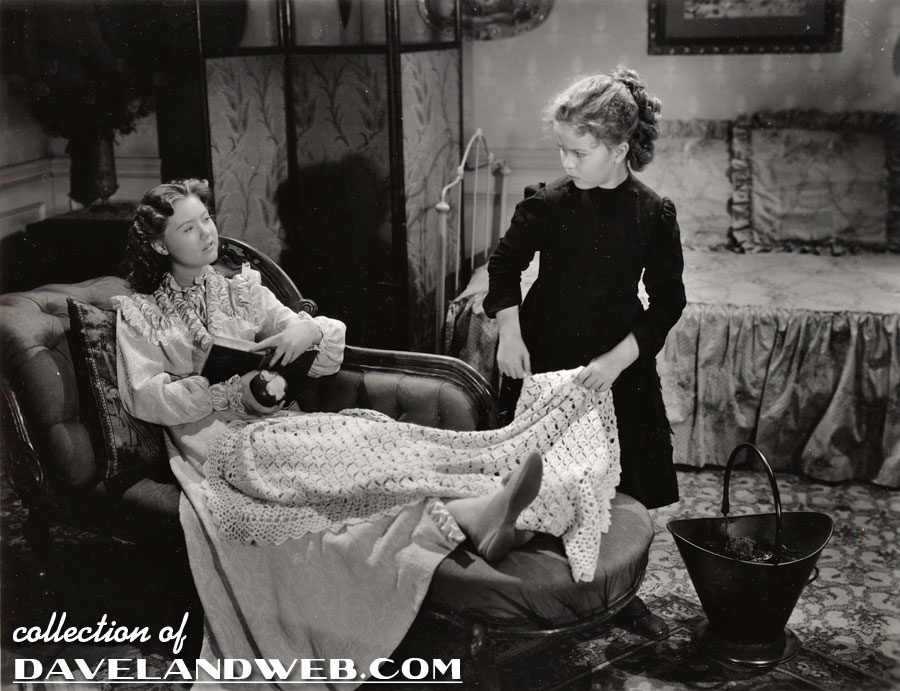
In the 1939 Shirley Temple Technicolor classic, “The Little Princess,” when Sara Crewe’s father (and fortune) is lost during the Boer War, evil schoolmistress Miss Minchin (Mary Nash) removes the child from her luxurious suite of rooms and sends her up to the attic. Besides dust, dirt, and cobwebs, the little girl only has her doll, Emily, to keep her company.


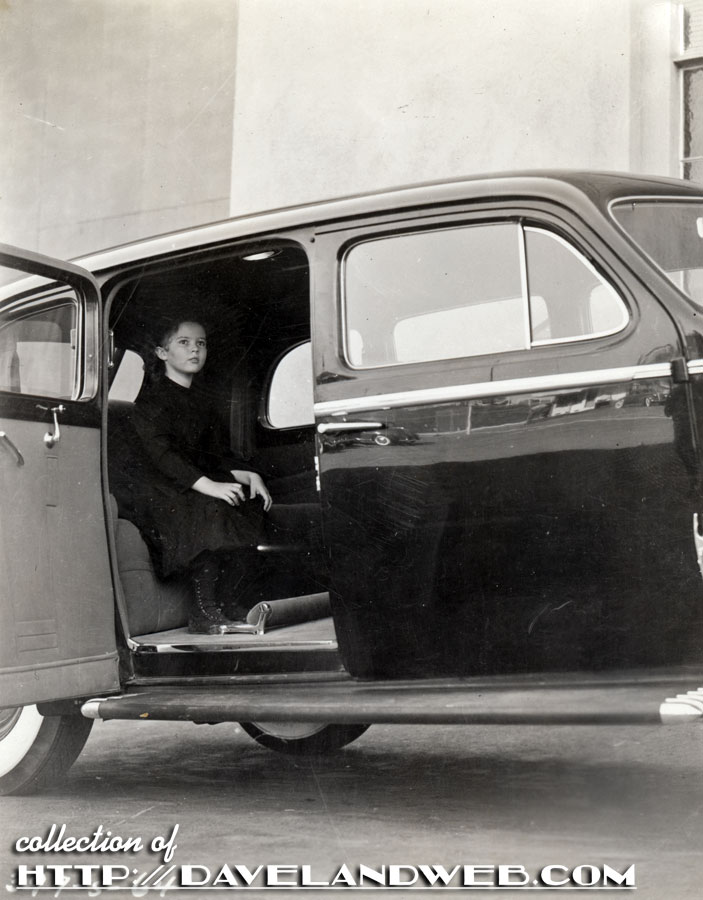
Don’t feel bad for Shirley; she still had the use of a plush limo to take her to the set every day!


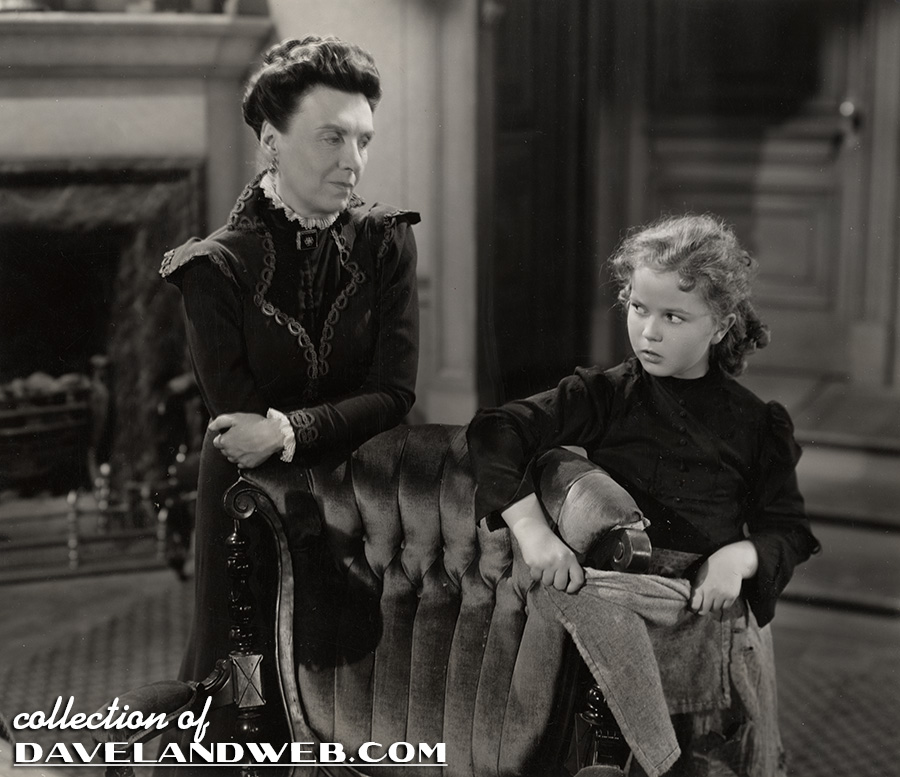
Below is a still from a deleted scene, showing Sara cleaning Miss Minchin’s office while the old bag watches.


Once jealous of Sara’s former coveted position with Miss Minchin, rich bitch Lavinia (Marcia Mae Jones) delights in bossing around the poor little girl who is now forced to work off her debt as a scullery maid.


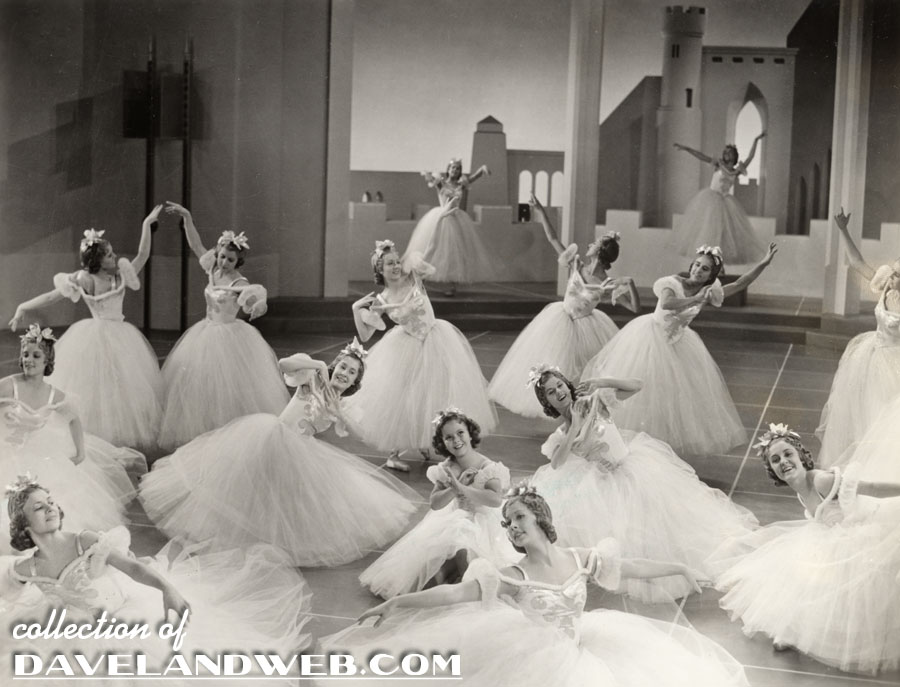
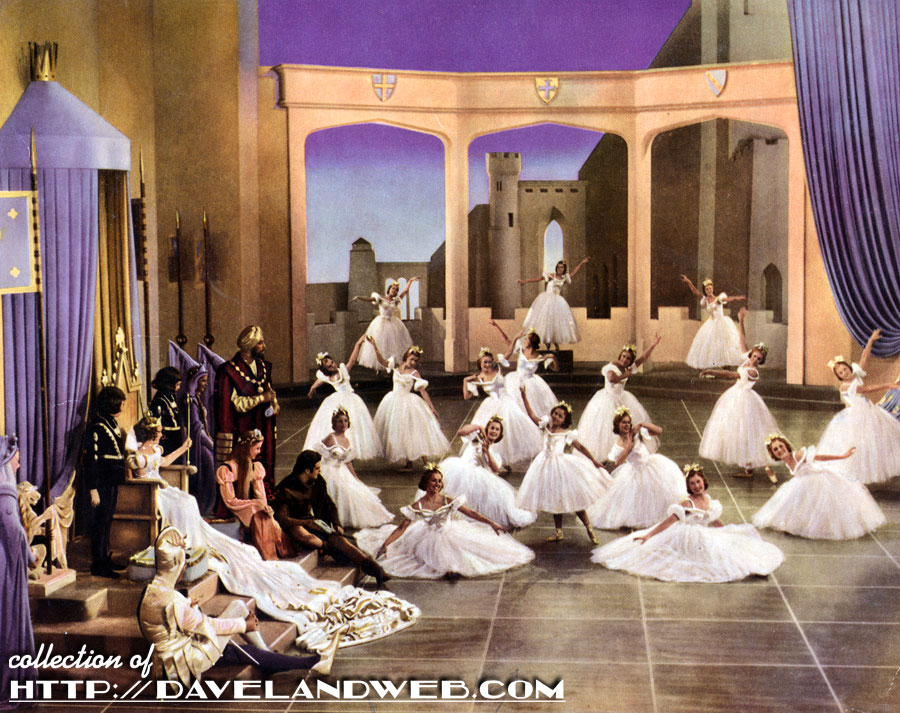
After one of her many failed hospital searches and a fight with the old bag, Sara goes to sleep in tears. We are treated to a dream sequence where she becomes a princess.


AND a ballerina!


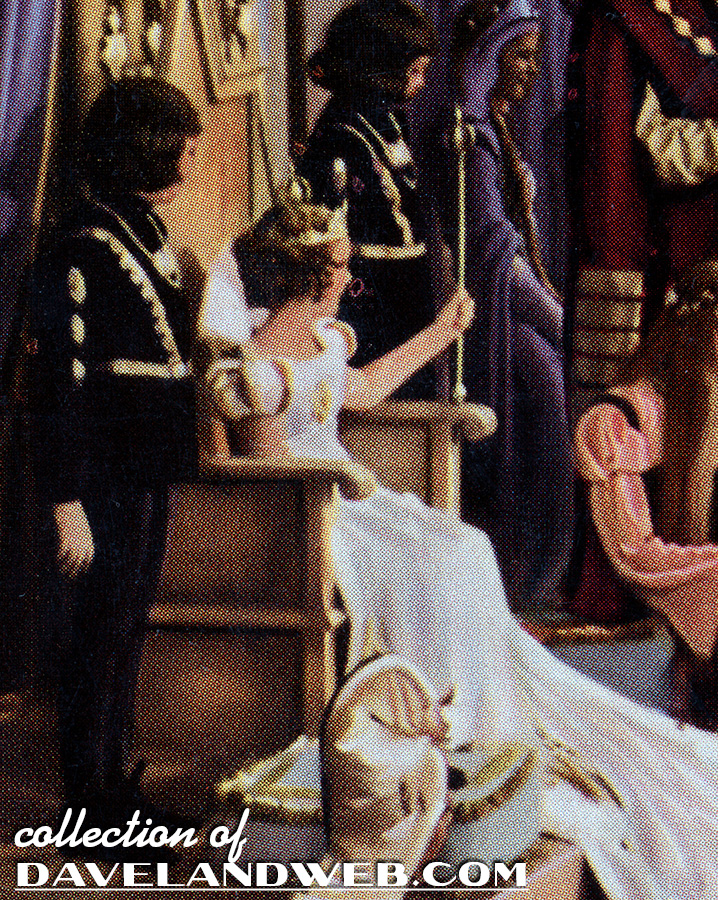
In this still, we see both Shirley as the princess AND Shirley as the ballerina. How can this be?


If you look closer, you can see that it’s Mary Lou Isleib, Shirley’s stand-in, on the throne.


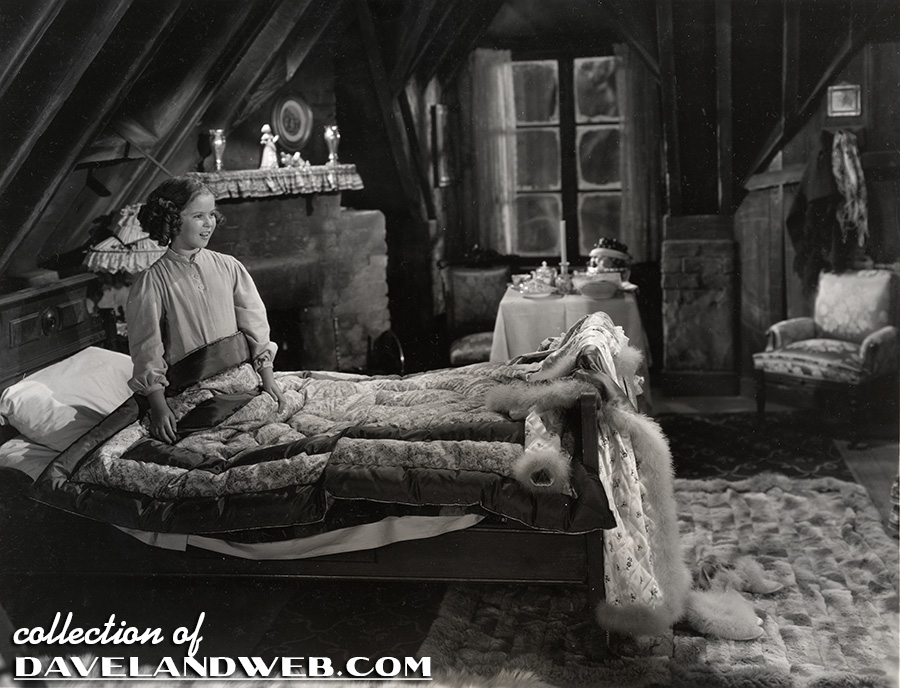
When Sara wakes up from her fantasy, her room has become a den of luxury! Since it’s a Shirley movie, there is no explanation of how her benefactor was able to lift the bed, put a fur rug, change the linens, and redecorate the entire room without little Sara waking up. Don’t be a curmudgeon, it’s a Shirley Temple movie!


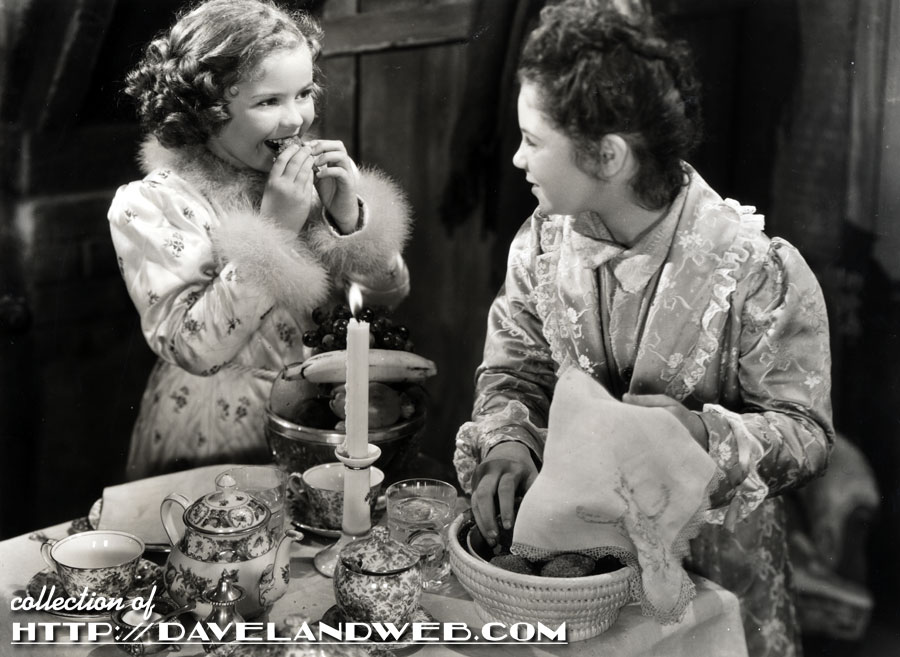
Once she rubs the surprise from her eyes, little Sara invites her friend and next door neighbor Becky (Sybil Jason) to enjoy a delicious breakfast.


Renewed and refreshed, Sara delivers some much needed revenge in the form of an ash bucket dumped on Lavinia.


One take was enough for Marcia Mae Jones!

See more Shirley Temple “Little Princess” photos at my main website.

Tuesday, May 28, 2024

Temple Tuesday: Shirley and the Sour Grapes


Today is a tale of three of Shirley Temple’s contemporary actors and how they chose to retell their experiences of working with the talented moppet. When actress Gloria Stuart was told by Fox studio head Darryl Zanuck that she was to be put in a Shirley Temple movie, the actress was crestfallen at having to compete with the little dynamo. Zanuck reframed it for her this way: “Gloria, you could be in film for the next ten years or on the stage and nobody would ever see you or hear about you, but if you’re in a Shirley Temple film, millions of people will see you.” The actress realized the wisdom of his words and would later recall, “She was really a getaway girl. You watched her and she was so completely composed and happy and talented and up, up, up. She was a real tonic…a miracle. Indescribable. It’s impossible that one child was all those wonderful things, but she was!” The power of positive thinking was not something little Delmar Watson practiced. In “Heidi” (1937), he played Peter, the goatherd, a fairly substantial role. Here are his recollections about the experience:

I was never given my lines to study in advance. My dad asked Allan Dwan about this, and he said they wanted Peter to be kind of dumb, but it was the only time I was in a picture of that length where they would not give me my lines until the night before I was supposed to do a scene.
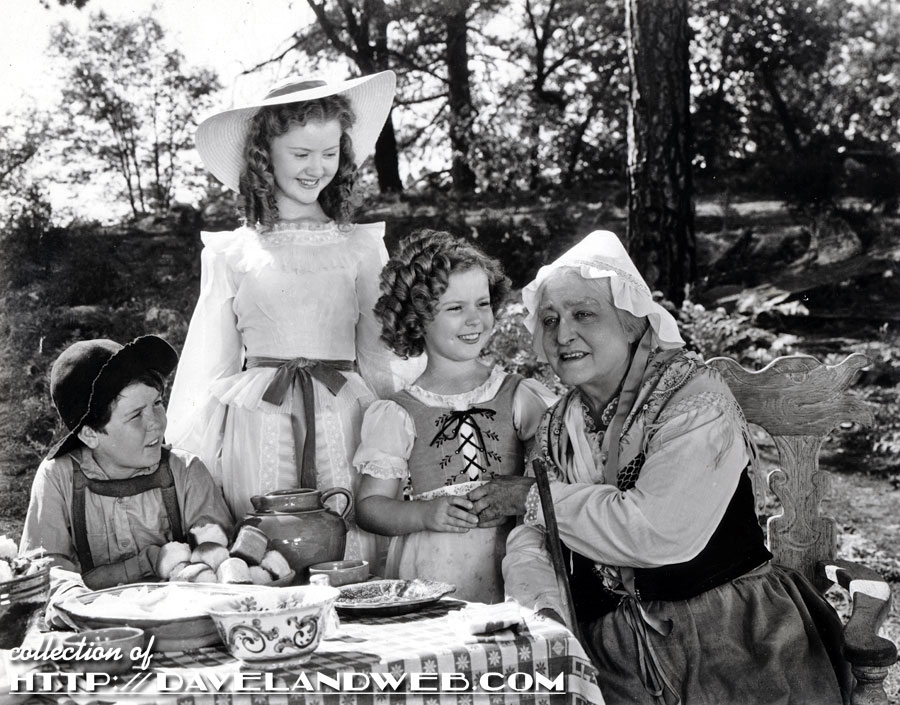


I guess Delmar did not understand method acting. Shirley was given her own trailer for the location shoots according to Watson:

[It was] parked on the side of a hill. She was there all the time with Grif and, of course, her mother. Only a few studio people were allowed up there. She had a stand-in [Mary Lou Isleib] for the sound and lights. Then, when everything was set, she’d come down at the last minute, we’d do our scene together, and when it was finished, she would be escorted back up the hill and disappear into her trailer. Once, I was playing horseshoes right after lunch with the lighting guys, and she came out of her trailer. I said, ‘Hi,’ and she greeted me and asked if she could play. Sure, we told her. She picked up a horseshoe and tossed it. I think she missed. She played with us for exactly two minutes, and then her bodyguard came down and took her away, back up the hill into the trailer. I heard him tell her she wasn’t supposed to be there. As she left, I said to her, ‘Bye. Maybe you could do it later.’ Shirley didn’t say anything, but obediently returned to the trailer.

When you have a film riding on your shoulders and a limited amount of work time due to being a minor, it’s easy to understand that Shirley wouldn’t have a lot of time to play. A stray horseshoe that might have injured the star could have shut down the entire production. Obviously, Watson was too young at the time to understand and when he later told the story, too old to remember what the circumstances were.

Case #2: Sybil Jason. If it weren’t for “The Little Princess” (1939), Jason would be all but forgotten today (and for the most part, still is). While an appealing child, the South African born girl just never caught on in the U.S.
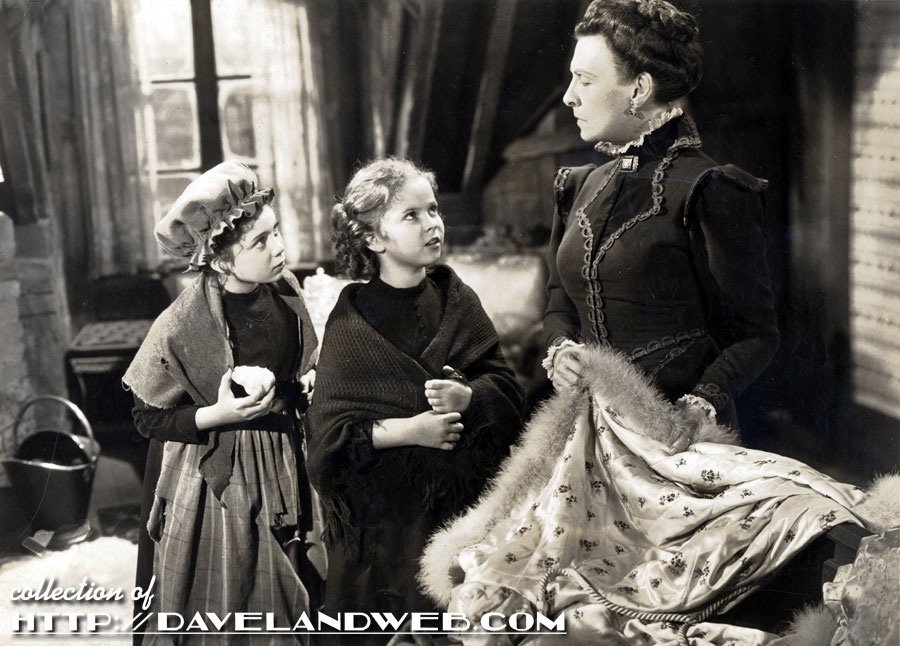


Here’s how Jason chose to recall working on “The Blue Bird” (1940), her second Temple film:

Usually when one received a finalized script of a movie, you are apprised of the shooting date. We were quite puzzled when a good two weeks before that date I was told to report to the studio early one morning. When we arrived, we were directed to go to a specific soundstage, and when we got inside all we saw was a small lit set with a plain backdrop and two chairs facing each other. One of the chairs faced the camera and the other one was placed behind it. I was greeted and handed a few pages from the…script. It contained only Shirley’s lines and those of the various characters that would appear in the movie. It didn’t take a rocket scientist to figure out that this was going to be the ultimate humiliation for me. I was expected to read Shirley’s lines so that actors could screen test for the various roles like the Father, the character Light and the “deceased” grandparents. As young as I was, I knew I wasn’t being treated right and I could see from the hurt look in my sister’s eyes that she too felt that way but, considering the position I was now placed in, there wasn’t much we could do about it.
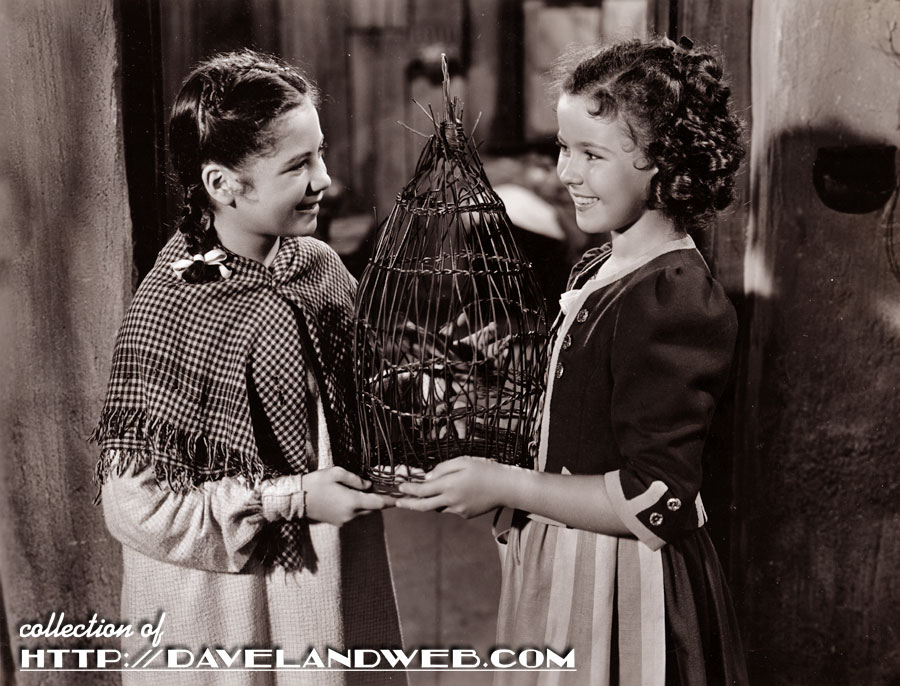


After a couple of days of reading for the tests, I could now concentrate and prepare for my role as Angela Berlingot, the little crippled girl who yearns for the bird that Mytyl (Shirley) and Tytyl (Johnny Russell) had captured in the woods. My part in The Blue Bird was, to put it politely, minuscule. It consisted of a scene in the beginning of the movie and another at the end.

Sybil’s remarks have always been puzzling. Were these her memories or ones fed to her by the older sister? While it is made clear that Angela is sick, never at any time does the viewer hear the word “cripple” used to describe her. Sybil may have been thought of by Warners (her former studio) as a rival to Shirley, but the public never viewed her that way. Finally, if the Jason sisters thought reading the star’s lines in a screen test was the ultimate humiliation, then they obviously were not aware of how things worked in Hollywood. As stated before, Shirley’s work time was limited; why would it be wasted on screen tests?
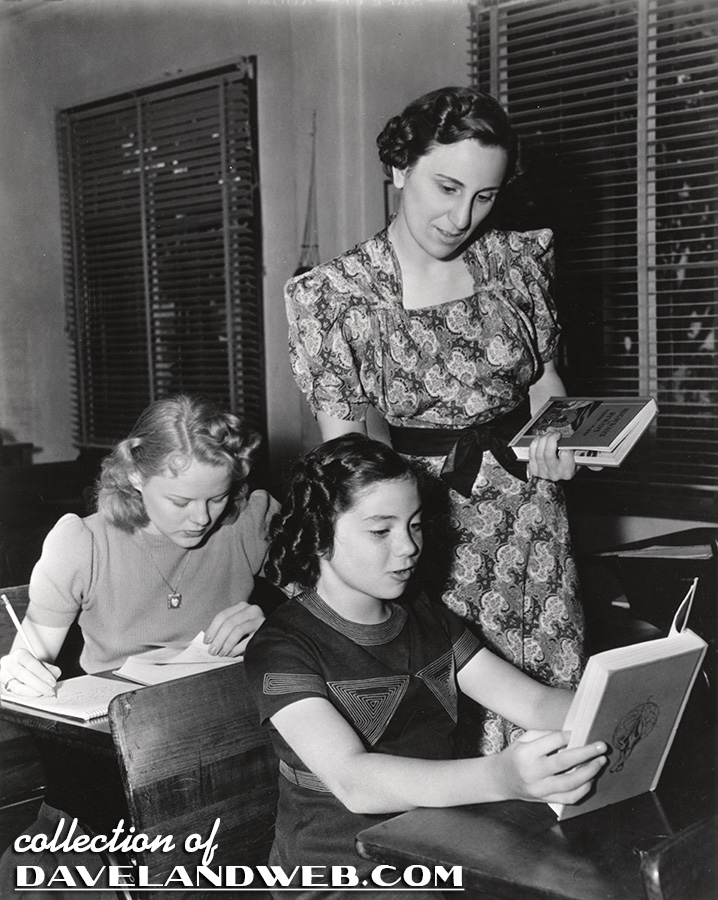


In this publicity still and the caption below, we can see that it was co-starring in a Temple film that helped pave the way for Sybil’s Hollywood career. How the public did/didn’t accept her was out of Shirley’s hands.

Since her portrayal in “The Little Princess” won her a long-term contract at 20th Century-Fox, 9-year-old Sybil Jason (foreground) goes to the studio’s school. Seated back of her is June Carlson of 20th Century-Fox’ Jones Family series, while Teacher (standing) is Miss Catherine Hagan.
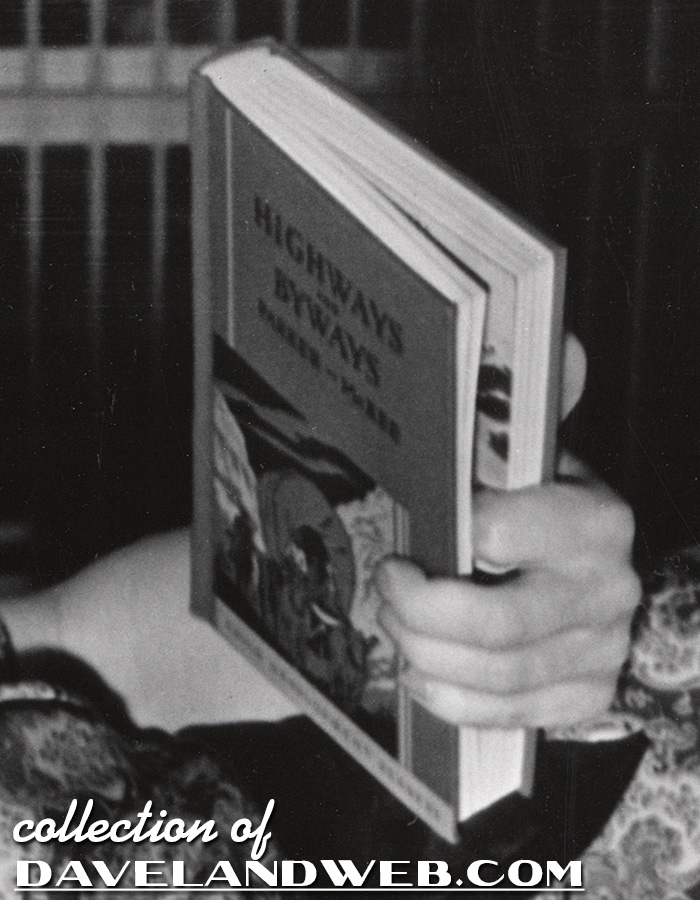


Here’s the cover of the book Miss Hagan is holding, Highways and Byways. It was copyright 1938 by authors Paul McKee, Director, Teachers College Elementary School, and Professor of Elementary Education, Colorado State Teachers College, Greeley, Colorodo, and Beryl Parker, Associate Professor of Education, New York University. 
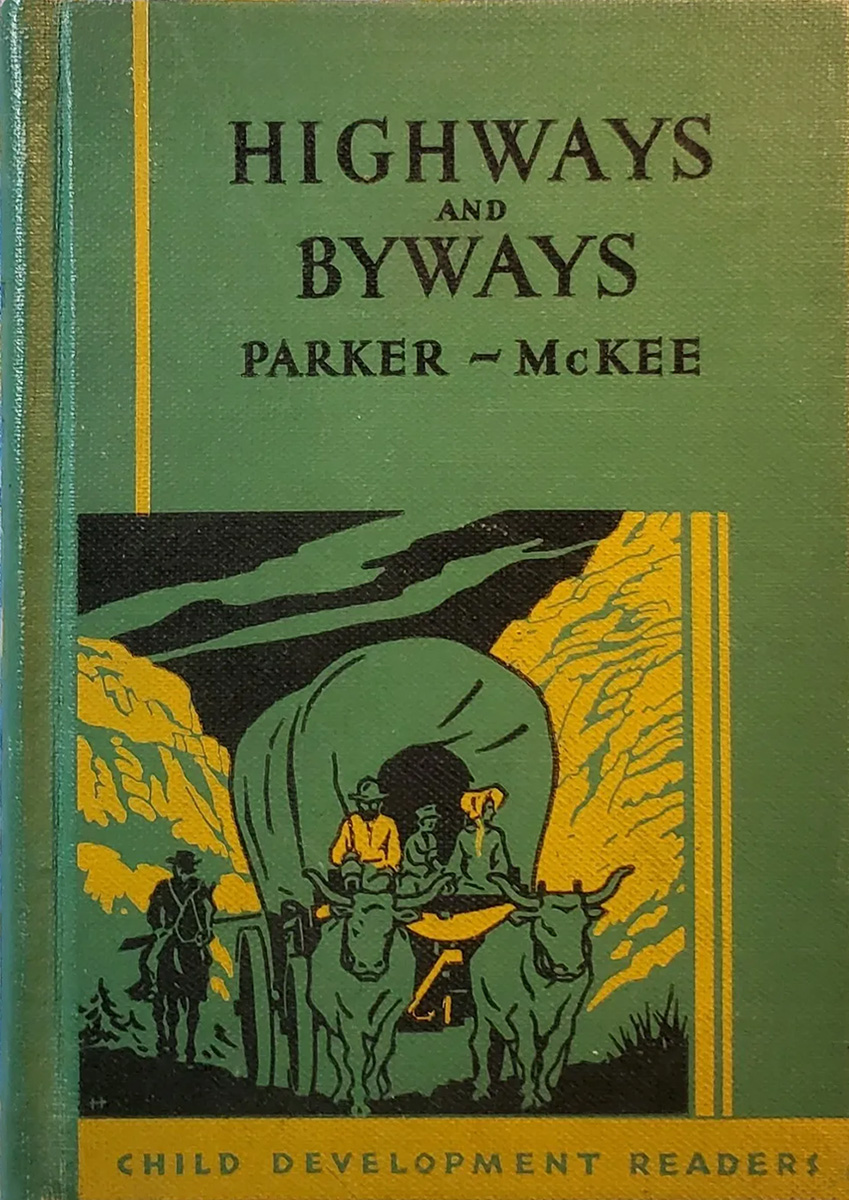


This is not the same book Sybil is reading.
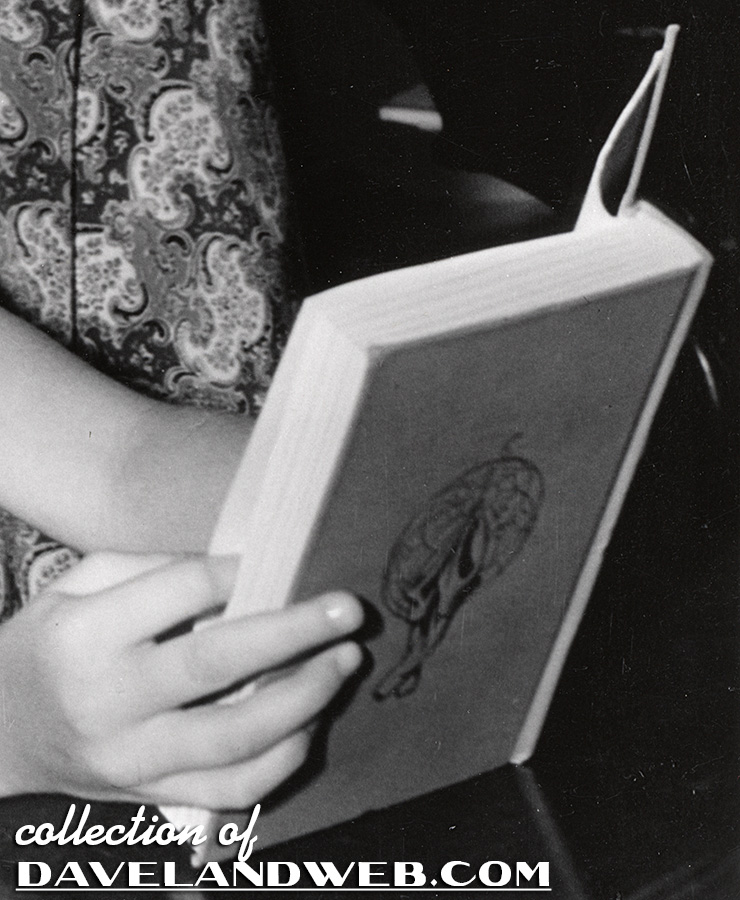


Houston, we do not have a match.



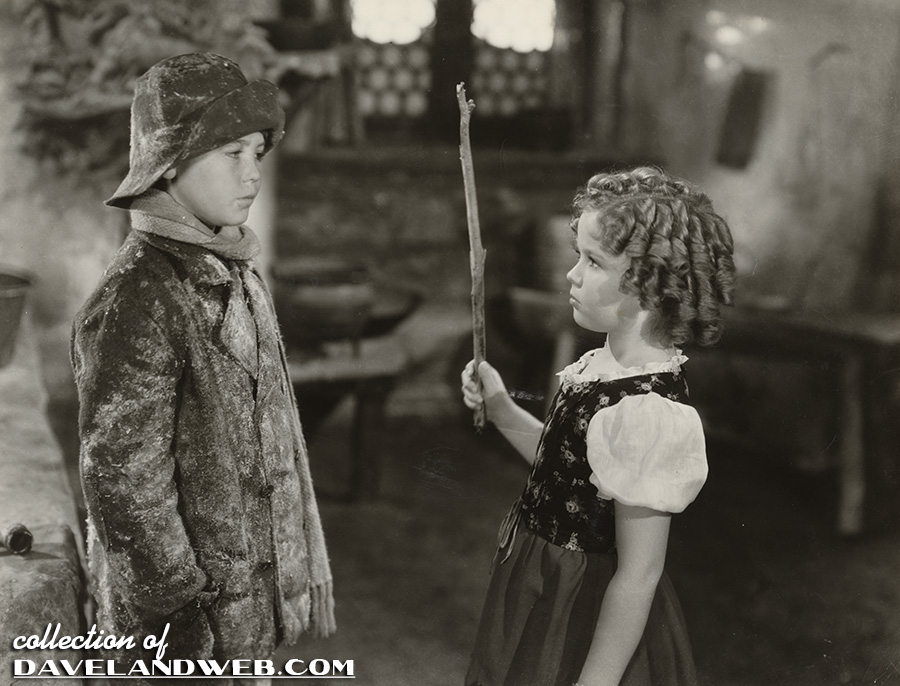
Case #3: Marcia Mae Jones, who played Klara, a true cripple, in “Heidi” (1937).


Marcia Mae Jones recalled her casting in the film:

There was talk that I got as much fan mail because I played a crippled girl in ‘Heidi,’ and probably that Mrs. Temple would never use me again, but Mrs. Temple requested me for ‘The Little Princess,’ so you see, there’s a lot of talk that’s not so.

Mic drop. Thank you. Below is a shot I took in 2002 of Margaret O’Brien and the sour grapes, Delmar Watson and Sybil Jason. They were making an appearance at the Silent Movie Theatre in Hollywood for a Tippi Hedren fundraiser for her animal shelter.


See more photos at my main website.

Tuesday, November 22, 2022

Temple Tuesday: “Heidi” Memories


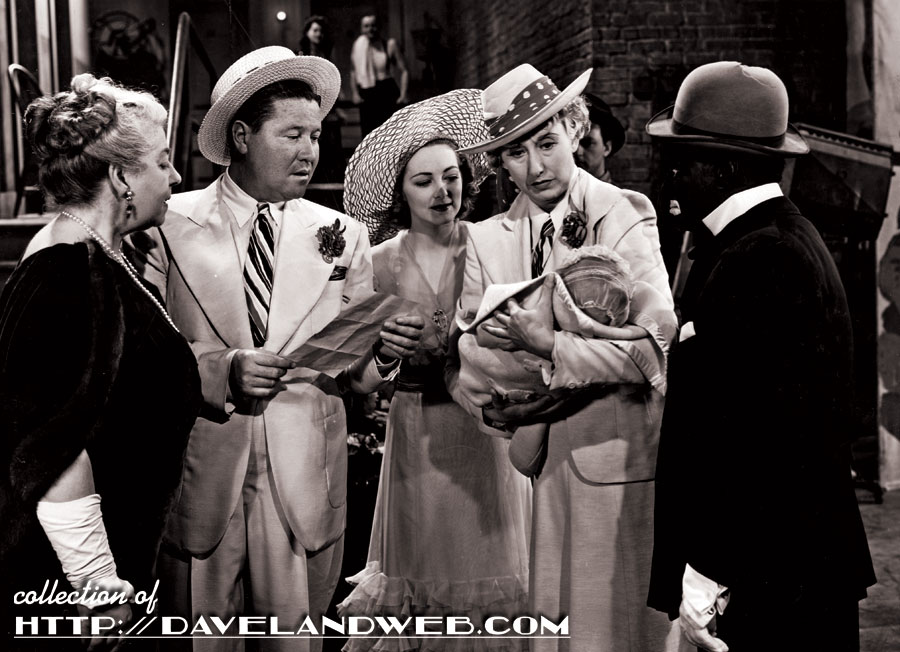
Marcia Mae Jones, the actress who played Klara (above left) in Shirley’s 1937 film “Heidi,” had fond memories of working on this movie:

I was thrilled that I was going to be with Shirley Temple. I hadn’t even met her yet, but I was very excited. The movie was made during the summer and an enormous tent had been set up on the back lot and inside there was a complete street scene with the Sesseman house and so forth. They used a great big machine to create the snow, and it was very, very hot in there. It wasn’t the best conditions at that time [no air conditioning], and the artificial snow sometimes got in your eyes and your mouth.


I loved the clothes…I wore a royal-blue princess coat with an ermine collar and shoes to match with ermine on the boots—and, oh, my dear, I cried when I had to leave that [at the studio]. I had my own dressing room…but I used to love to eat in the commissary, because at that time I was madly in love with Tyrone Power, and it’s my understanding that they told him, and he would smile and wave at me and my heart would just go pitter-patter.

Allan Dwan—well, he didn’t seem to give any direction. I remember my mother talking to me when I had to get up and pretend like I was trying to walk, and I was told just to get up and do it. I was really quite frightened, because not being crippled I didn’t know how to do it, so I imagined—on my own—what it would be like—which is the key to acting. I was only thirteen when I made “Heidi,” but I had my full height then—I was extremely tall for my age—I was five feet six inches and Shirley was very tiny and very petite. She had to help me out of my wheelchair…my God, if I had really leaned on Shirley, I would have crushed her to the floor. When I saw the film years later as a mature woman, I just seemed to get bigger and bigger as I rose from the chair, and my husband, who was with me, said, ‘My God, it’s a giraffe!’


Poor Jean Hersholt was extremely uncomfortable throughout the film. As I said, the tent was stifling, and he had to wear tremendous padding to make him heavier, and a beard and longish hair to make him look older. Unfortunately, he had a lot of [action scenes] and one day he collapsed from heat exhaustion.


One Saturday, Shirley tripped over an electric wire and fell head first on the ground, which resulted in a cut over her eyebrow. Not wanting to go over budget (the film was already two days behind schedule at that point), the makeup artist covered the bruise and Shirley continued with filming. Shirley’s throat also closed up as a result of the artificial snow; in that case, the crew had to film around her.


On the flip side, Delmar Watson (below left), who played Peter the goatherd, sometimes gave less than flattering interviews about working on the film, blaming Shirley’s mother Gertrude for some of his best (in his own opinion) scenes being deleted. He also felt that Gertrude and the studio were attempting to thwart his performance in order to make Shirley shine more:

I was never given my lines to study in advance. My dad asked Allan Dwan about this, and he said they wanted Peter to be kind of dumb, but it was the only time I was in a picture of that length where they would not give me my lines until the night before I was supposed to do a scene.


Delmar’s father, Coy, would blame the studio and complain to his family about it every night:

They’re not being fair to the boy. They’re changing his dialogue right on the set. It’s almost like they’re making him stumble over his lines to make Shirley look better. ’

Marcia Mae Jones gave a very different (and more professional) viewpoint of Gertrude:

I do remember that Mrs. Temple always had on a hat, gloves and a purse…and that she was always on a stool sitting next to the camera. Mrs. Temple was always lovely to me—she would invite me in the afternoon to come into the dressing room with Shirley, where she would give each of us a piece of Hershey [chocolate] at four o’clock. It was instead of having tea…My mother was on the set at the same time as Mrs. Temple, and they seemed to get along well. But my mother never intruded on anyone—she spoke to Mrs. Temple when Mrs. Temple spoke to her—and I guess they had some conversations together. 

The Swiss Alpine scenes were shot at Lake Arrowhead, east of Hollywood in San Bernardino County, in an area that is now called Switzer Park off Highway 18 in Skyforest. The crew either stayed in Arrowhead Village’s single hotel or had rooms in private chalets. Shirley was given her own trailer home according to Delmar Watson:

[It was] parked on the side of a hill. She was there all the time with Grif [Shirley’s bodyguard and chauffeur] and, of course, her mother. Only a few studio people were allowed up there. She had a stand-in [Mary Lou Isleib, shown below] for the sound and lights. Then, when everything was set, she’d come down at the last minute, we’d do our scene together, and when it was finished, she would be escorted back up the hill and disappear into her trailer.


Once, I was playing horseshoes right after lunch with the lighting guys, and she came out of her trailer. I said, ‘Hi,’ and she greeted me and asked if she could play. Sure, we told her. She picked up a horseshoe and tossed it. I think she missed. She played with us for exactly two minutes, and then her bodyguard came down and took her away, back up the hill into the trailer. I heard him tell her she wasn’t supposed to be there. As she left, I said to her, ‘Bye. Maybe you could do it later.’ Shirley didn’t say anything, but obediently returned to the trailer.

When you have a film riding on your shoulders and a limited amount of work time due to being a minor, it’s easy to understand that Shirley wouldn’t have a lot of time to play. A stray horseshoe that might have injured the star could have shut down the entire production. Obviously, Watson was too young at the time to understand and when he later told the story, too old to remember what the circumstances were. Once again, Marcia Mae Jones’ recollections were a bit different from Watson’s:

[Shirley and I] talked and we laughed…I think most of us children were a little in awe of her because Shirley was always bubbling…I remember that at Lake Arrowhead there was a miniature golf course, and Shirley and I were playing and I think we had about seven or eight bodyguards watching us—and I know that I was uncomfortable and I just wanted them to go away and leave us alone and let us play, but it didn’t seem to bother Shirley.

Director Allan Dwan, who worked frequently with Shirley, remembered filming the “Wooden Shoes” musical number and the original Shirley Police Badge:


We had a lot of kids dressed as little Dutch girls doing a folk dance. One of the steps, a fairly intricate one, called for them to place on leg over the other. Many of them became confused and got it all wrong and would even fall down trying to do it. Shirley would bawl them out and say, ‘Look, you do it this way.’ They would argue back and forth. She was stubborn and would say, ‘No, it’s this way,’ and show them again. Well, the dancing master finally got them all together and straightened them out. Since she obviously wanted to take charge…I had a bunch of little badges made with SHIRLEY TEMPLE POLICE stamped on them. Every kid who came on the set had to wear a badge and join the force and swear allegiance to Shirley, guaranteeing to obey her. Pretty soon, we had almost everyone on the set wearing a badge, with Shirley sporting one labeled CHIEF…She was a little big shot and loved it. If I had to leave the set, I’d tell her, ‘Shirley, now you take charge of things,’ and she did. She strutted around giving orders, like ‘I want you to take that set down and put up a castle.’ The grip would pretend to carry out her instructions, satisfying her, going along with the game.

In an October 1988 interview, Leonard Maltin discussed the making of “Heidi” with Shirley. “I remember hearing you say that the thing you remembered most about Jean Hersholt from “Heidi” was…” “Glue!” Shirley quickly interjected with a laugh. “Well, he had this big beard glued on every morning and I thought it was kind of an interesting smell. I guess I was an early glue sniffer!”


See more Shirley Temple in “Heidi” photos at my main website.
Tuesday, August 24, 2021

Temple Tuesday: The Art of Storytelling


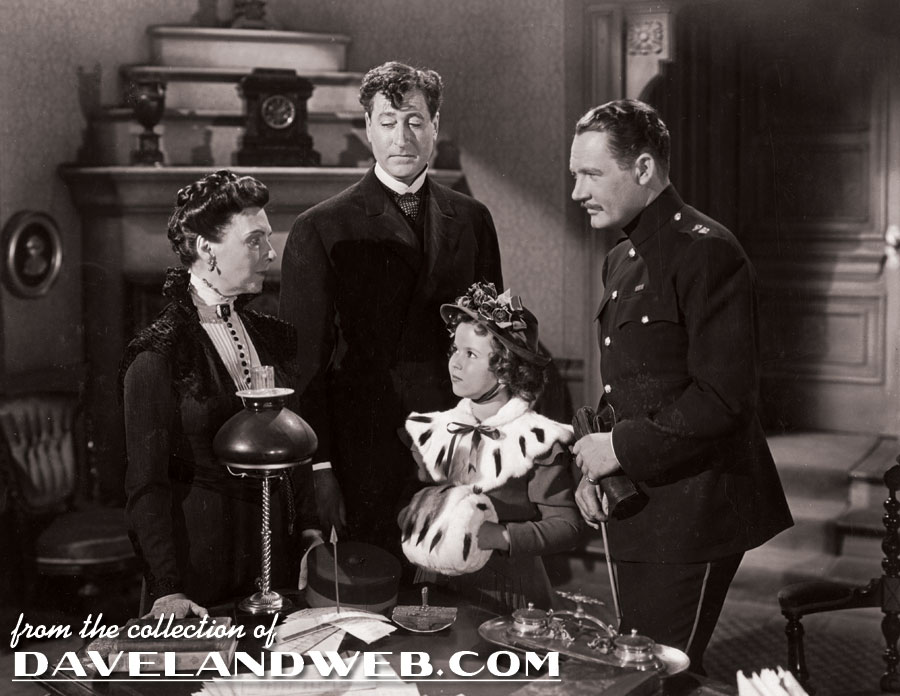
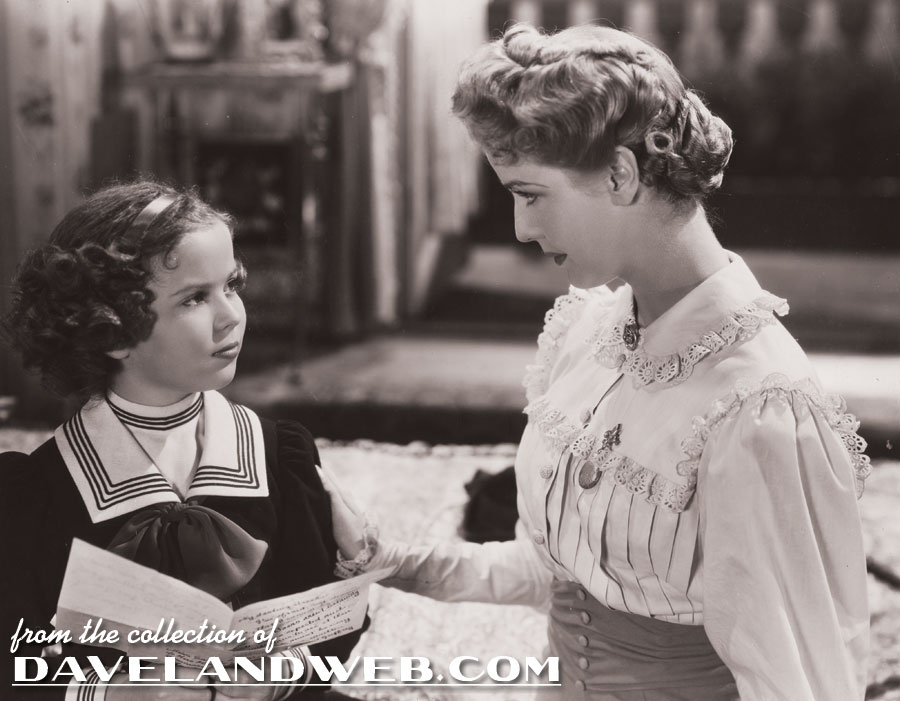
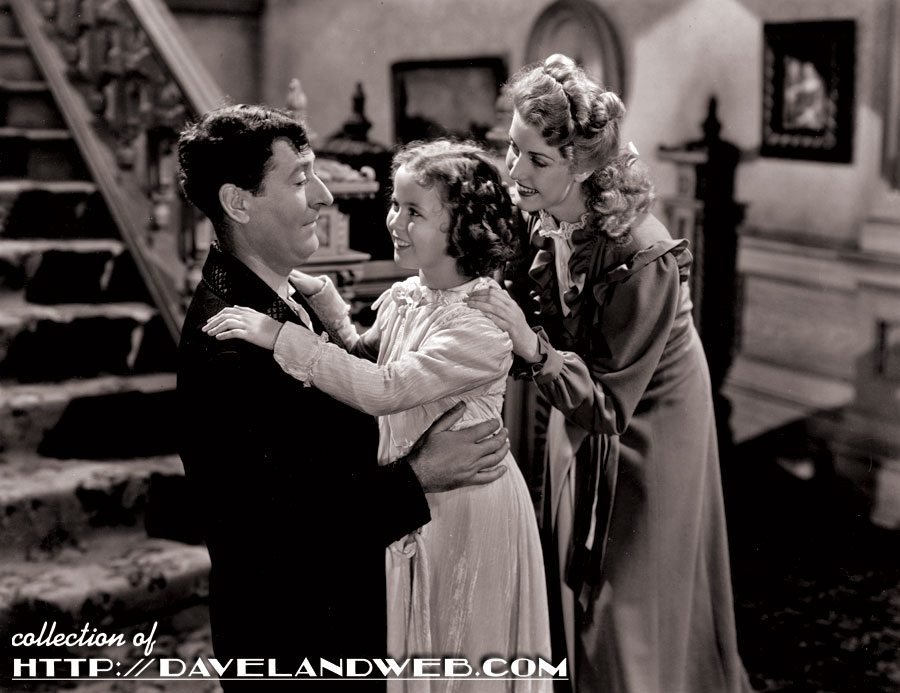
Depending upon how it is told, a story can be riveting when delivered artfully or an absolute snoozer if presented as a series of dry facts. Darryl Zanuck realized due to box office returns that the public was getting tired of the standard Shirley Temple film, and if the aging child was to continue her career on a positive trajectory, more care would have to be taken with future films. “The Little Princess” is still one of Shirley’s most beloved films, thanks to its lavish (and well-spent) budget and the extra care that was taken in telling the story. Within the first ten minutes, all of the important plot points have been introduced. The main driver of the story is that little Sara Crewe (Shirley Temple) and her father have a very close bond and have rarely spent time apart, yet are about to be separated because of the Boer War. We are also introduced to the villainess, Miss Minchin (Mary Nash), who immediately shows herself to be two-faced, with an unhealthy regard for financial gain and social status. Her brother (Arthur Treacher) proves to be a jovial sort who is bullied by his snobbish sister.


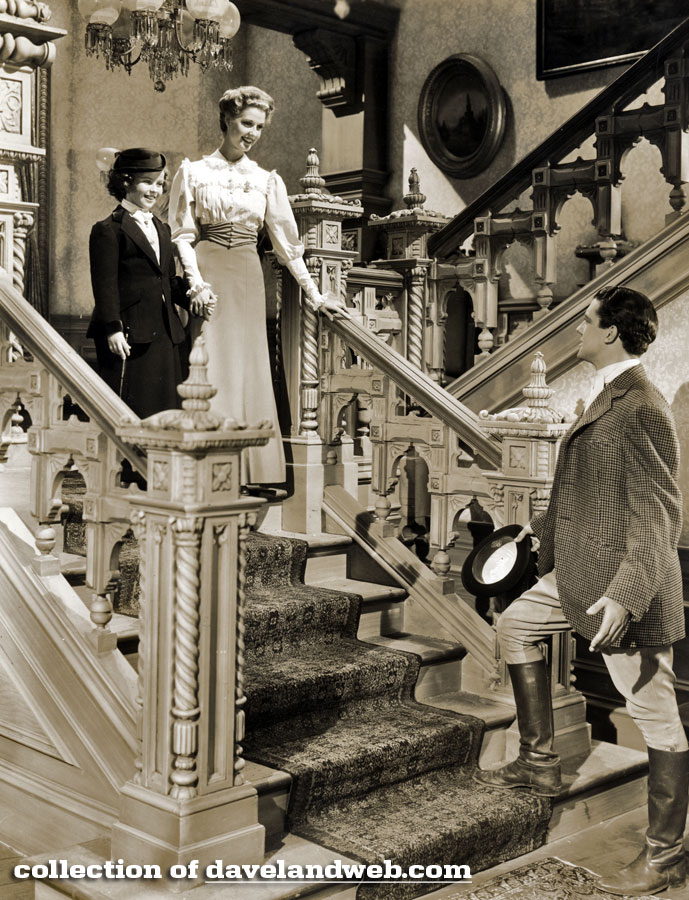
Within the next few minutes, the romantic subplot between Miss Rose (Anita Louise) and the dashing Mr. Geoffrey (Richard Greene) appears, along with the knowledge that Miss Minchin does not approve of their alliance.


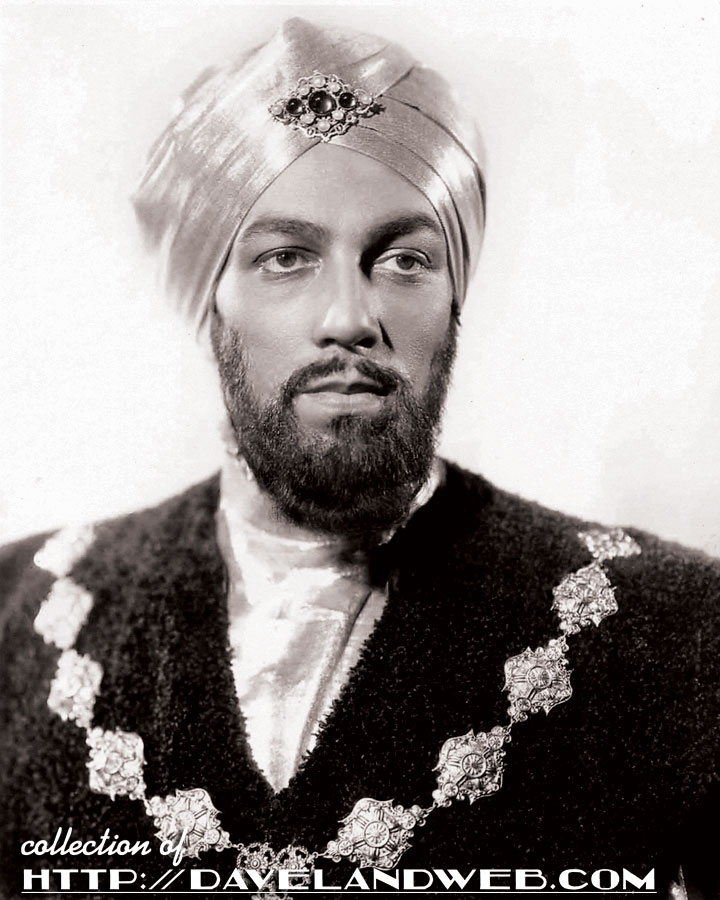
Additional supporting characters who will assist Sara in her journey include Ram Dass (Cesar Romero), the kindly servant of Mr. Geoffrey’s grandfather who keeps tabs on the little girl:


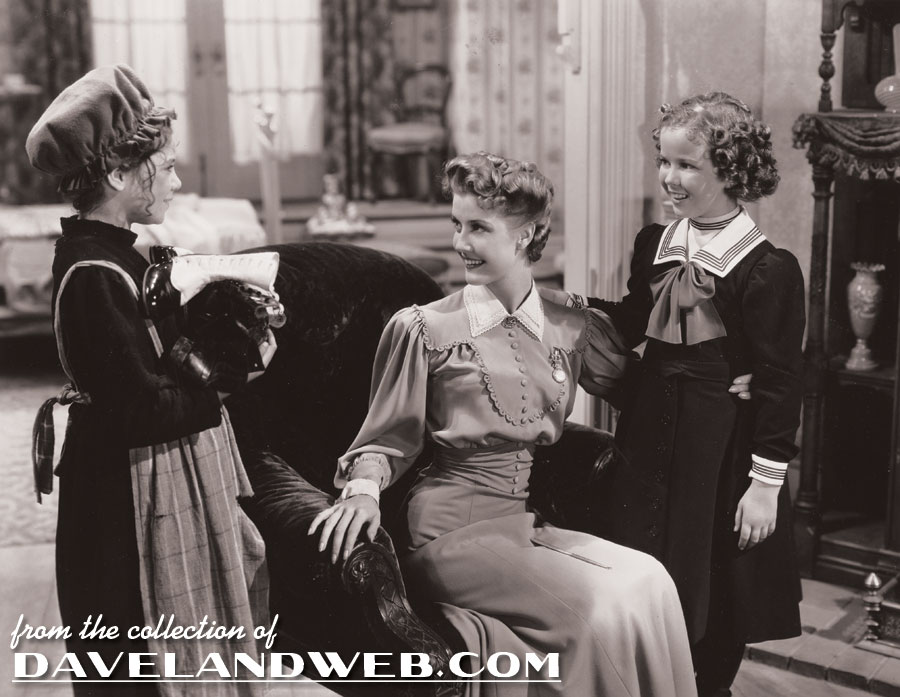
and Becky (Sybil Jason), the young scullery maid, who is Sara’s closest confidante:


Zanuck was known for moving his stories along quickly, removing any scenes that would be extraneous to the plot, thus holding the interest of the audience. Everything that occurs after the first portion of the film relates back to these characters and plot points.

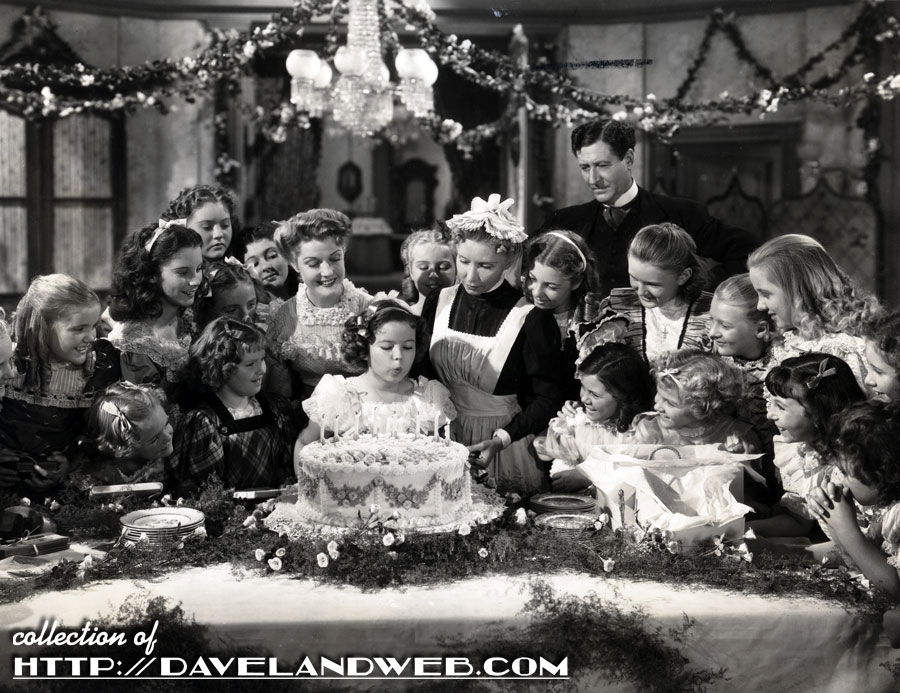
All of these initial scenes build up the emotions of the audience to the first jolt of the film: Sarah’s father is in danger because of the war and won’t be able to make it back for her birthday party. This heightens our anxiety, brings up a number of questions (will Captain Crewe survive the war?), and also sets up future complications (he tells her to spend as much as she wants on her birthday party).


Just as we are teetering on the brink of sadness for Sara’s uncertain future, we breathe a sigh of relief when it is announced that the soldiers at Mafeking have been relieved:


…and the joyous birthday celebration is able to unfold exactly as planned, albeit without Sara’s father.


Don’t let your guard down too quickly, though. As it is with most riveting films, a moment of intense happiness is followed by one of utter despair.


It would be easy to make a chart of the peaks and valleys of emotions that this well-told story provides, slowly building to the exciting final crescendo. To see the fate of little Sarah you’ll have to watch “The Little Princess” for yourself.

See more Shirley Temple photos at my main website.