Showing posts with label allan dwan. Show all posts

Tuesday, July 16, 2024

Temple Tuesday: Behind the Scenes of Rebecca


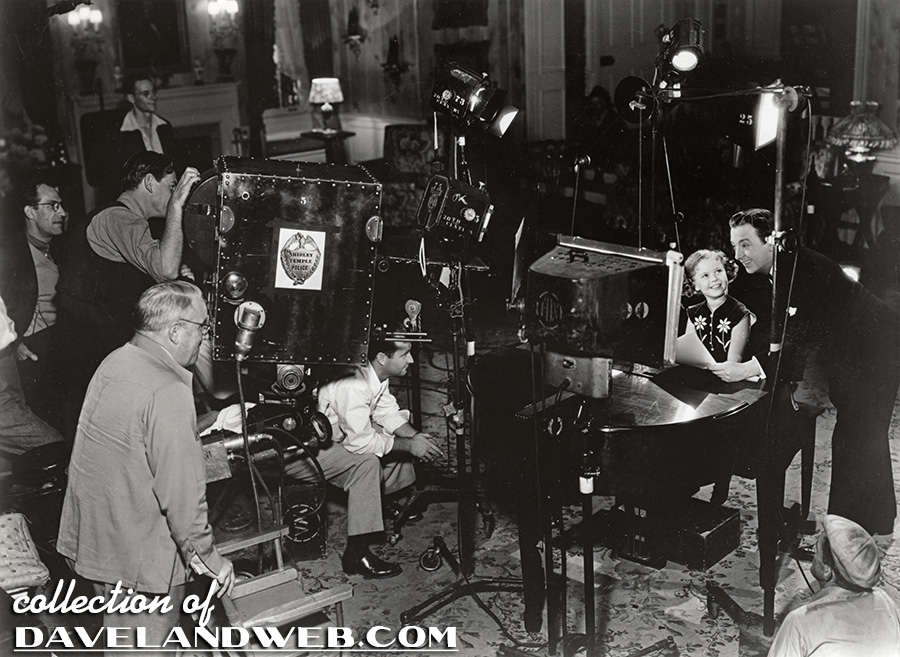
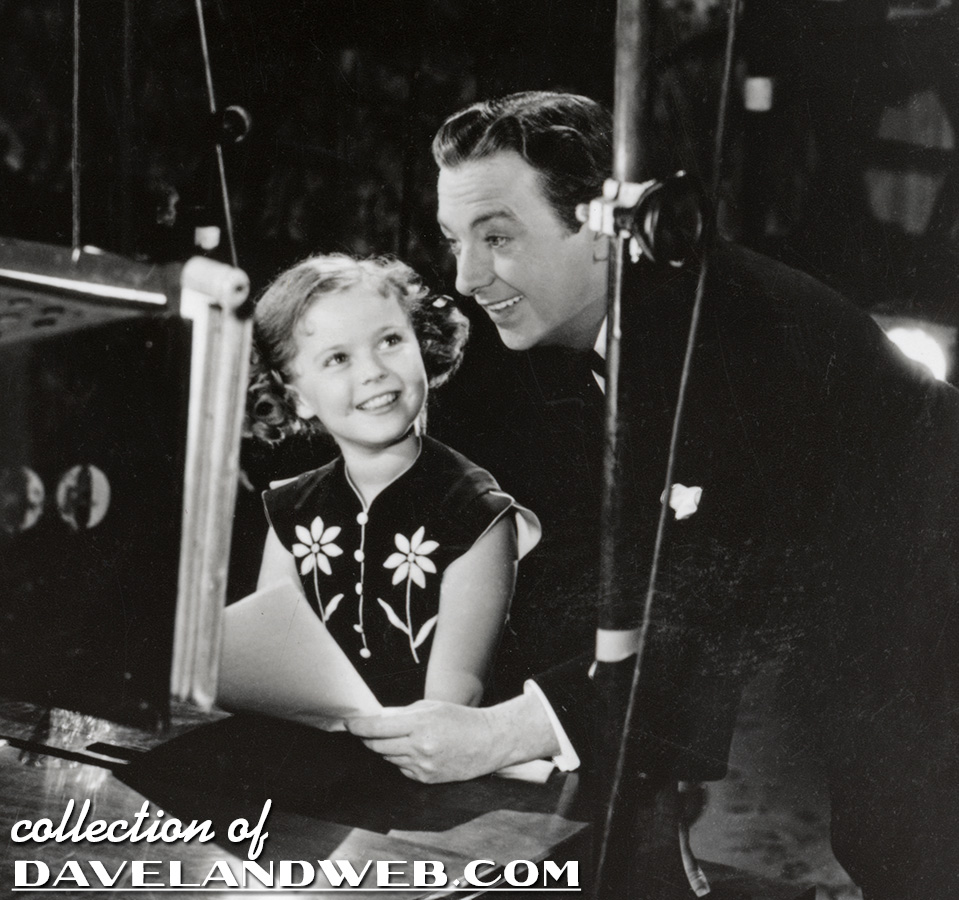
This behind-the-scenes image from Shirley Temple’s “Rebecca of Sunnybrook Farm” (1938) shows the child star at the piano with Jack Haley leaning in over her shoulder. A detailed view of Shirley and Jack, best known as the Tinman from “The Wizard of Oz” (1939):


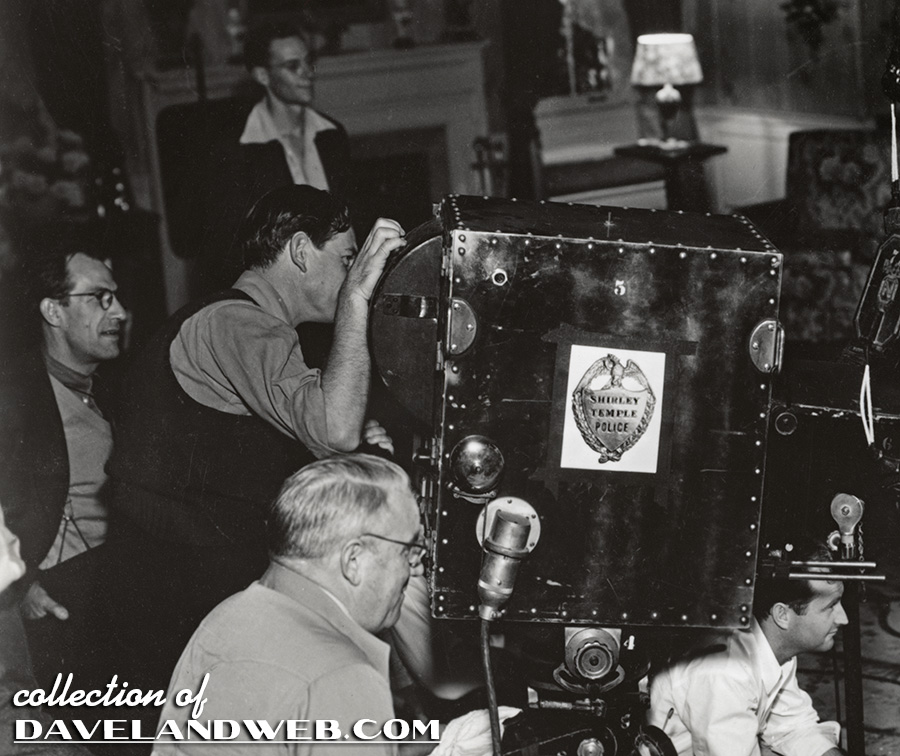
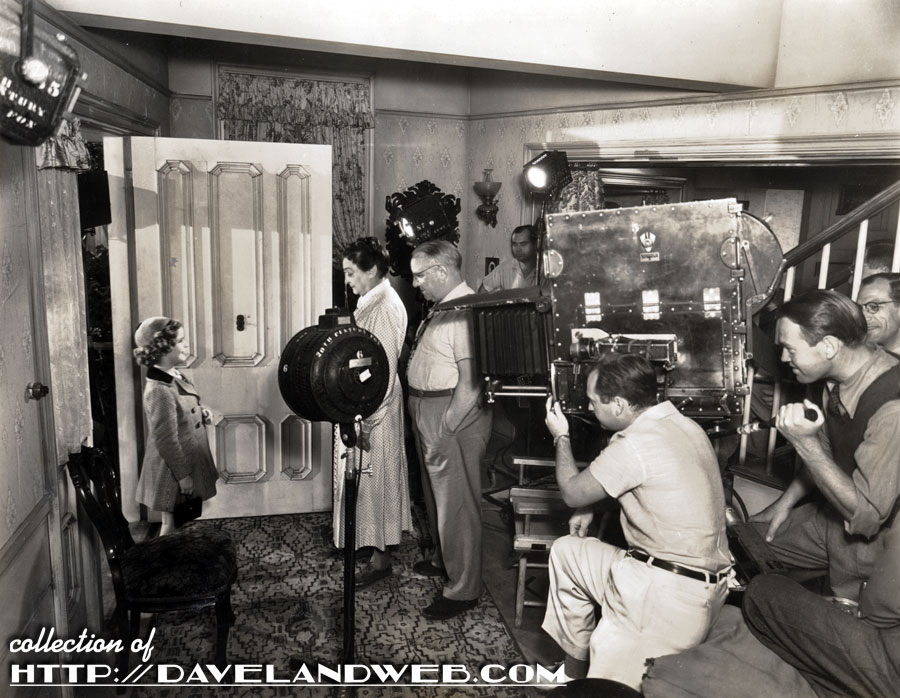
Below in the detailed view you can see the crew, which includes Cinematographer/Photographer Arthur C. Miller at far left in glasses, Joseph LaShelle (uncredited second cameraman) behind the camera, and director Allan Dwan in front. Shirley’s brother Jack (uncredited second assistant director) is sitting in the background near the fireplace. Apparently this scene was filmed before he was removed from the picture by Director Dwan for an altercation he had with his famous sister over a prop turkey (you can read more about it here). Note the label on the camera for the Shirley Temple Police. The badges began on Shirley’s previous film, “Heidi” (1937).


One of the most coveted (and personal) pieces of Shirley memorabilia is an authentic Shirley Temple Police Force badge. The idea began when Shirley put a paper clip on still photographer Anthony Ugrin’s coat one day. She wrote about its origin in her 1945 autobiography My Young Life:

I told him that wearing the clip made him a policeman and I was chief of police. One of the prop men asked to join the force, so I put a paper clip in his lapel too, and pretty soon everybody on the set was going around ornamented with paper clips. Then I decided that the director (Allan Dwan, on the set of “Heidi”) should be chief of police and offered to abdicate, but the director wanted me to retain my high position and joined the ranks instead. Finally, the director presented me with a box of little tin badges with the inscription ‘Shirley Temple Police Force,’ painted on in black lettering. First thing every morning I’d line up the Shirley Temple Police Force for inspection and look at their badges. There was a 5-cent fine for people who had forgotten their badges, and a 1-cent fine for not having it polished, and thumping $5.00 fine for anyone who had lost a badge or given it away.…I made scads of money on fines, but I didn’t keep it. Part of it furnished a Girl Scout room in Santa Monica, another part helped to build a recreation room for boys in a Santa Monica school and the rest went to the Babies Milk Fund.

Members each signed the declaration that “I wish to join this police station for $10,000,000 per week. This will not be paid if I leave within 10 years.” The badge shown below was auctioned off in 2015 for $3,600.


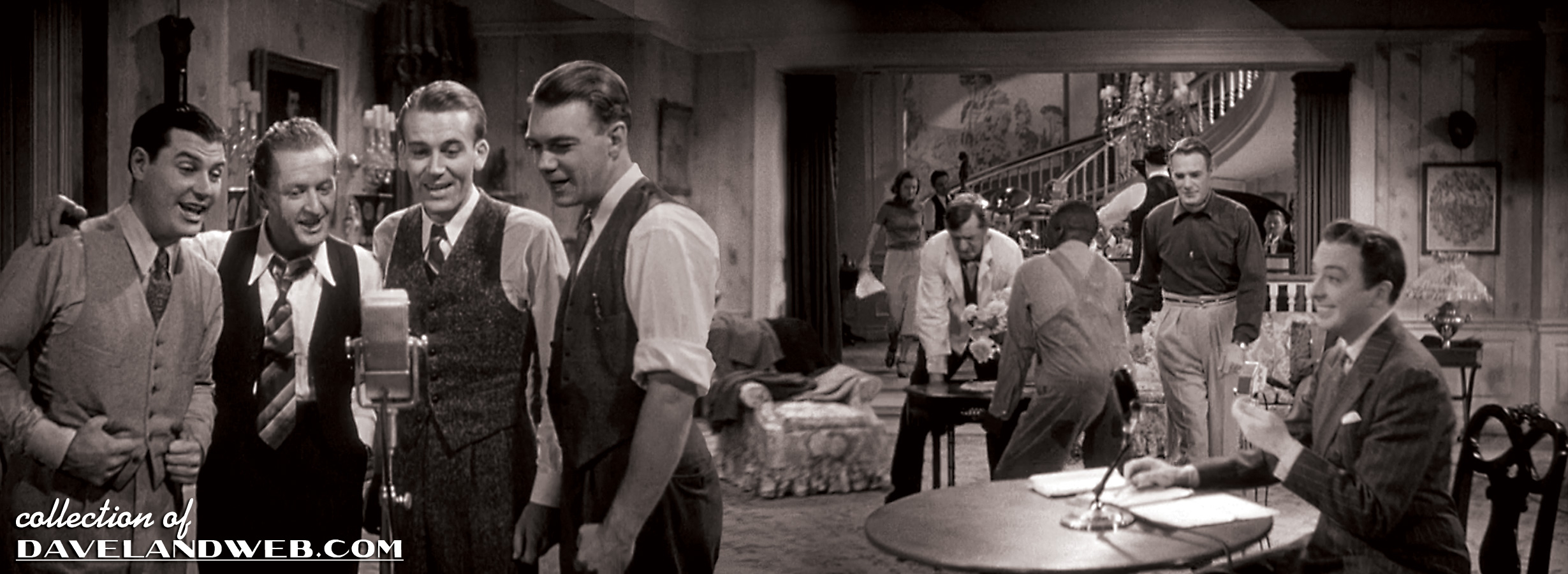
Another behind the scenes shot from the musical number, “Come and Get Your Happiness.” Once again, LaShelle is behind the camera, Dwan in front of it, and Photographer Arthur C. Miller in the back leaning against the table:
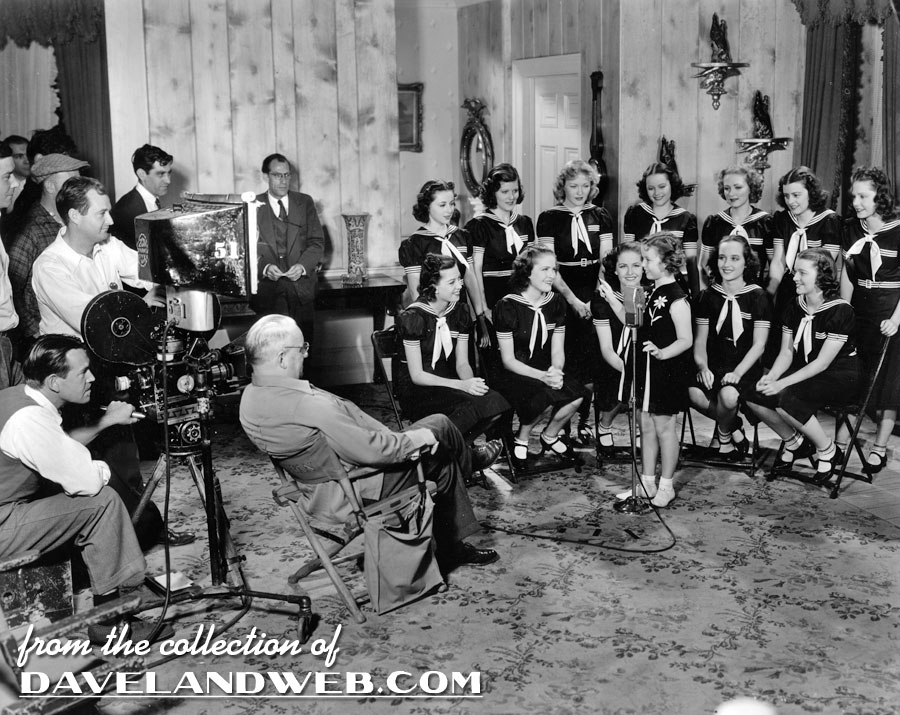


Shirley is directing two pretty singing twins, who also appeared in “Just Around the Corner” (1938).


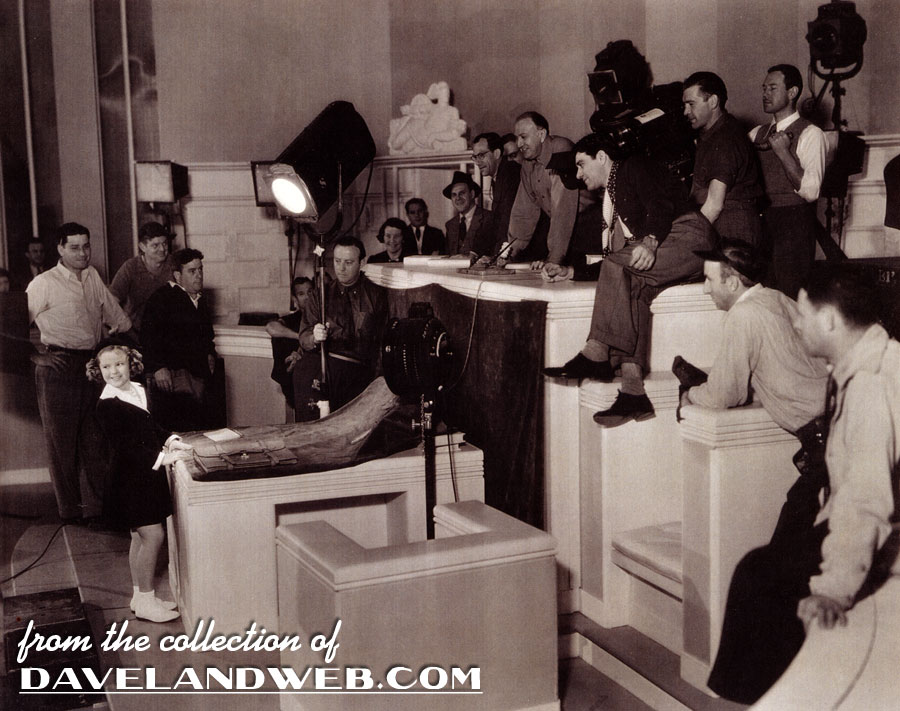
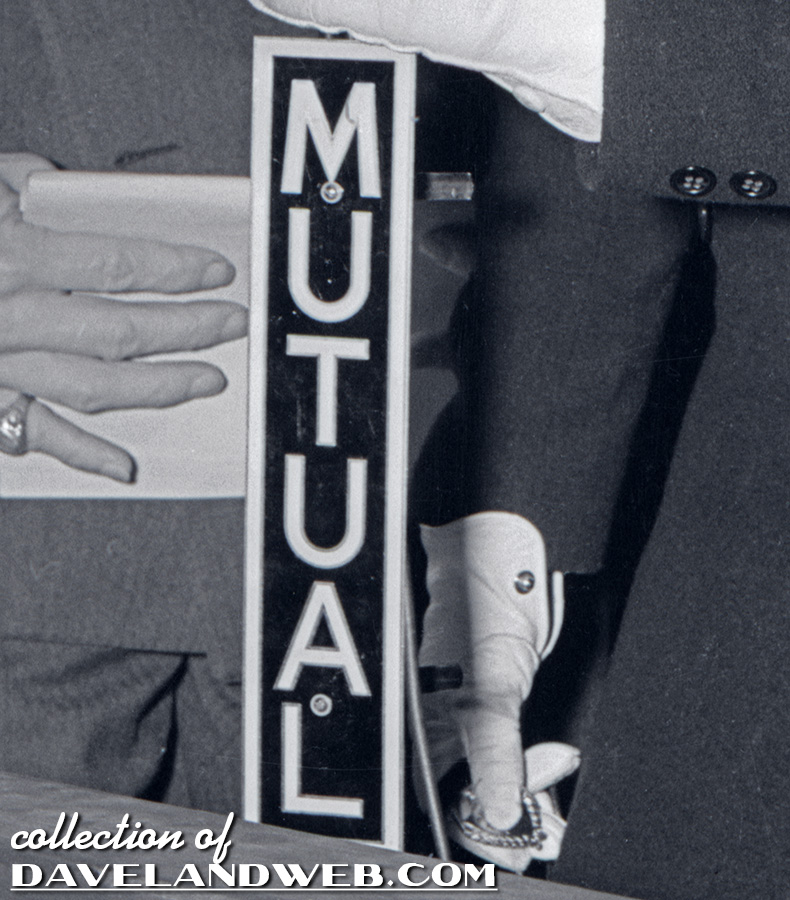
Below are announcer George Fisher and Shirley Temple at the Press Preview of Rebecca of Sunnybrook Farm, at Grauman’s Chinese Theatre on March 4, 1938. Shirley had the opportunity to speak over the radio airwaves of the Mutual Broadcasting Network at 8:30pm Pacific Time.
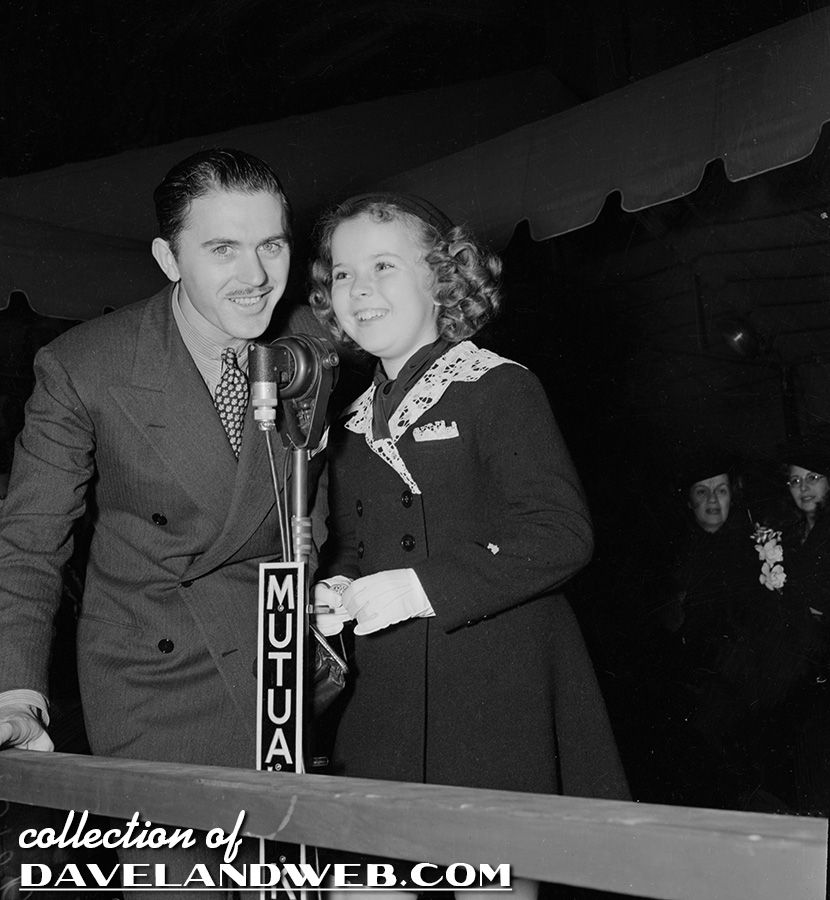


The great Rita Dubas, Shirley expert supreme, identified the object in Shirley’s gloved hand as one of the coveted Police Force Badges. Not quite sure though…
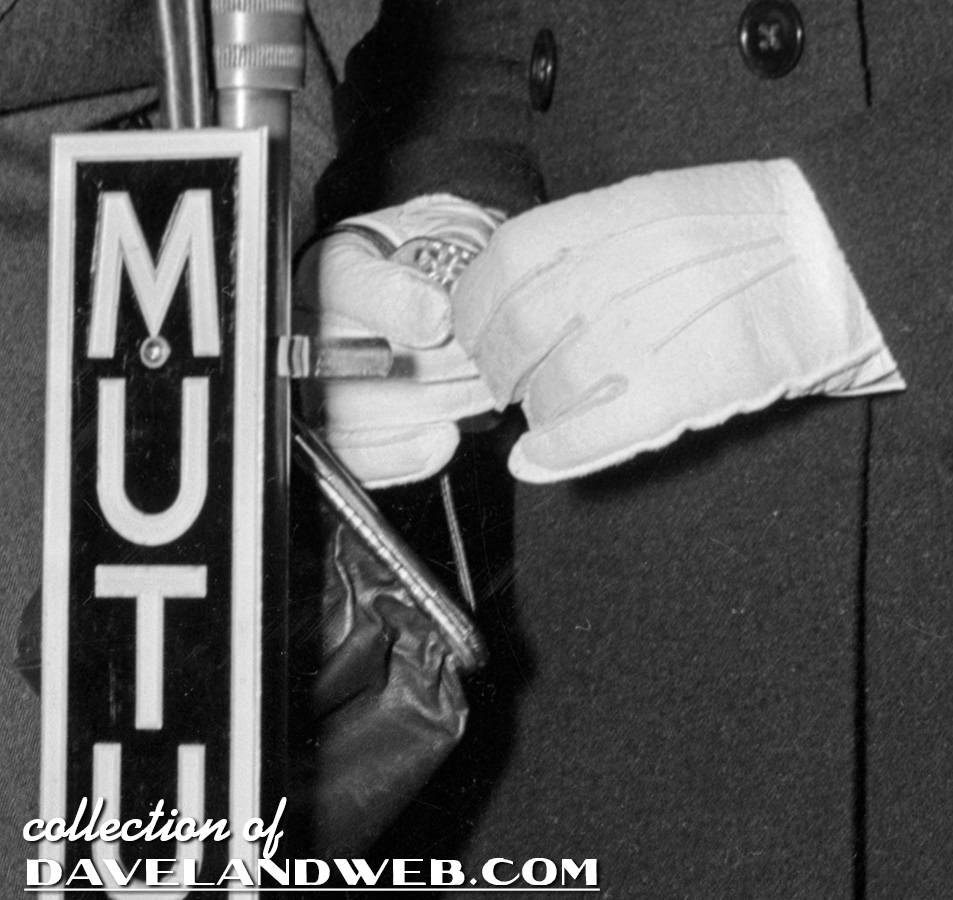


Maybe this alternate shot from the evening will reveal what’s in Shirley’s gloved hands.
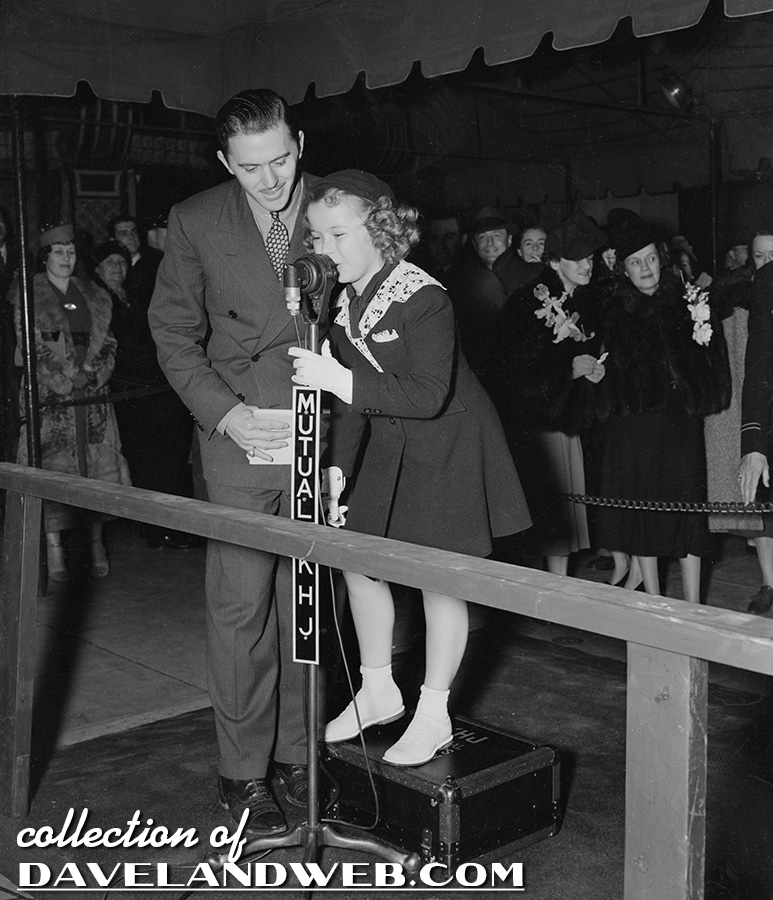


Bingo! It’s a Shirley Temple Police Badge. Of course Rita was right!


Rita also put together this incredible video with clips and other goodies from the preview:


See more “Rebecca of Sunnybrook Farm” photos at my main website.

Tuesday, November 08, 2022

Temple Tuesday: Tales from Rebecca


I am a behind-the-scenes info nut, as it adds an extra dimension of fun when re-watching my favorite movies (which I tend to do). Here are a few fun tidbits from the set of Shirley’s 1938 film, “Rebecca of Sunnybrook Farm.”

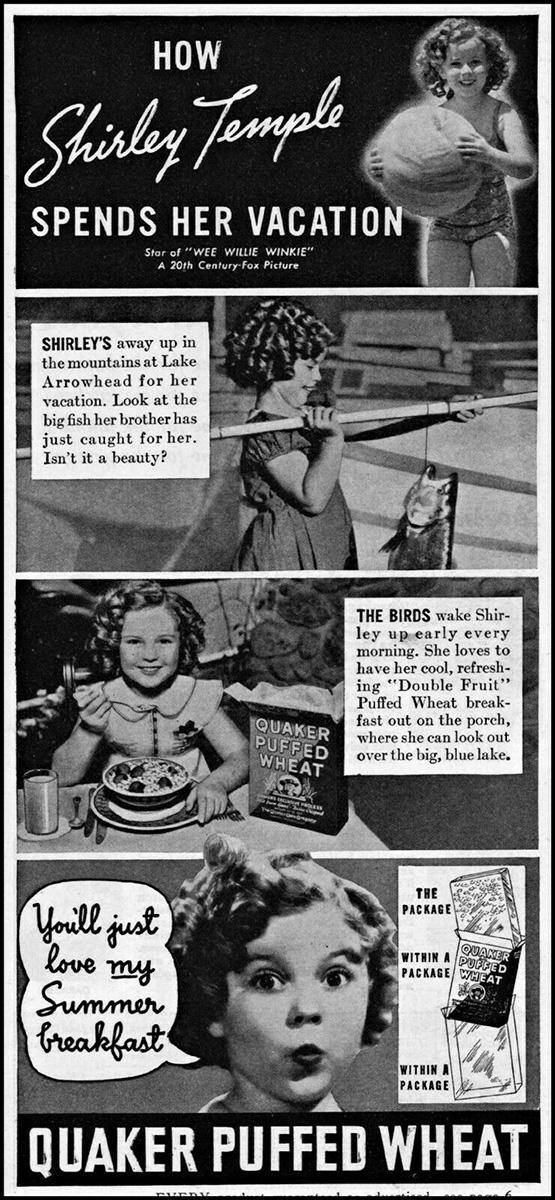
Apparently, the Quaker Oats Company objected when they learned that there was to be a song in the film about “crackly corn flakes” since Shirley was under contract to them to advertise their product, Quaker’s Puffed Wheat.


The company felt that if the song were included, they would look ridiculous, as Temple would seem to be promoting the competition, Kellogg’s Corn Flakes. Because of this, Producer Darryl Zanuck ordered the title changed to “Crackly Grain Flakes.”


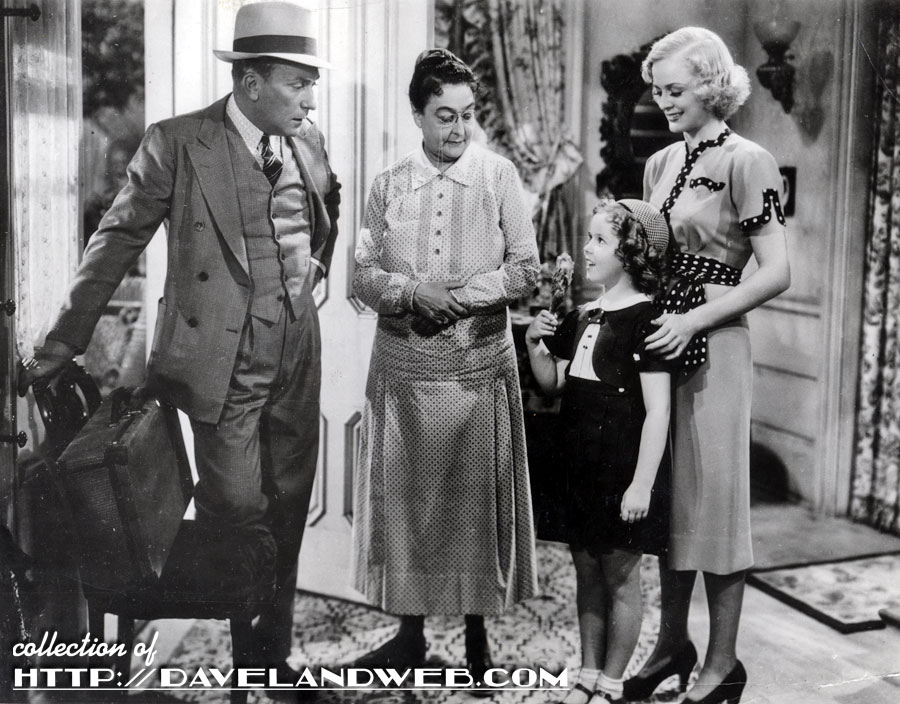
In another scene, Aunt Miranda (Helen Westley) asks Rebecca (Shirley) if she has had anything to eat. The girl says that her uncle bought her a candy bar, to which Aunt Miranda replies, “Candy bar! Gwen, take the child into the kitchen and get her something decent to eat.” The National Confectioners’ Association filed a $500,000 libel suit against 20th Century-Fox, claiming this scene did members of the association irreparable damage, and that it “libels a bar of candy and holds up the candy profession to ridicule and shame.” The suit was eventually dropped.


For the “Toy Trumpet” grand finale, Bill Robinson joined Shirley and her mother Gertrude at the Palm Springs Desert Inn to rehearse the number.


Temple was first made aware of racism when she learned Robinson was forced to sleep in the chauffeurs’ quarters. “But you’re not a chauffeur,” Shirley said to him when she found out. “I was unknowledgeable of the reality that racial prejudice was part of a complicated and powerful social system that enshrined such inequity,” she later wrote in her autobiography, Child Star.


A drum sequence was also to be included where Shirley would play along with the musicians on the set. She befriended studio drummer Johnny Williams, who taught her how to play. Dwan noticed her aptitude and ordered another drum set for her. However, Gertrude was against it, believing Shirley sitting with legs apart was unladylike. As Shirley recalled, “The film sequence was scrubbed, and drumsticks and traps disappeared, a donation to the local boys’ club.”


Shirley’s brother Jack was hired as third assistant director, to which she would later say, he “spent time thinking up things to take care of, one of which was me.” Dwan fired him after a dispute over a roasted turkey prop, used in a scene where Rebecca joins Tony (Randolph Scott) for lunch.


The turkey had been sprayed with insecticide and Jack loudly ordered her not to eat it, which she had no intention of doing. Out of spite, she popped the turkey in her mouth, prompting her brother to shake her to dislodge it. “Despite a slightly bitter taste, it was good turkey and my disobedience was immensely satsisfying.”

Are you ready to watch “Rebecca” again? See more Shirley Temple photos at my main website.
Tuesday, August 30, 2022

Temple Tuesday: Shirley, John, John, Allan, Lucy, and Sid


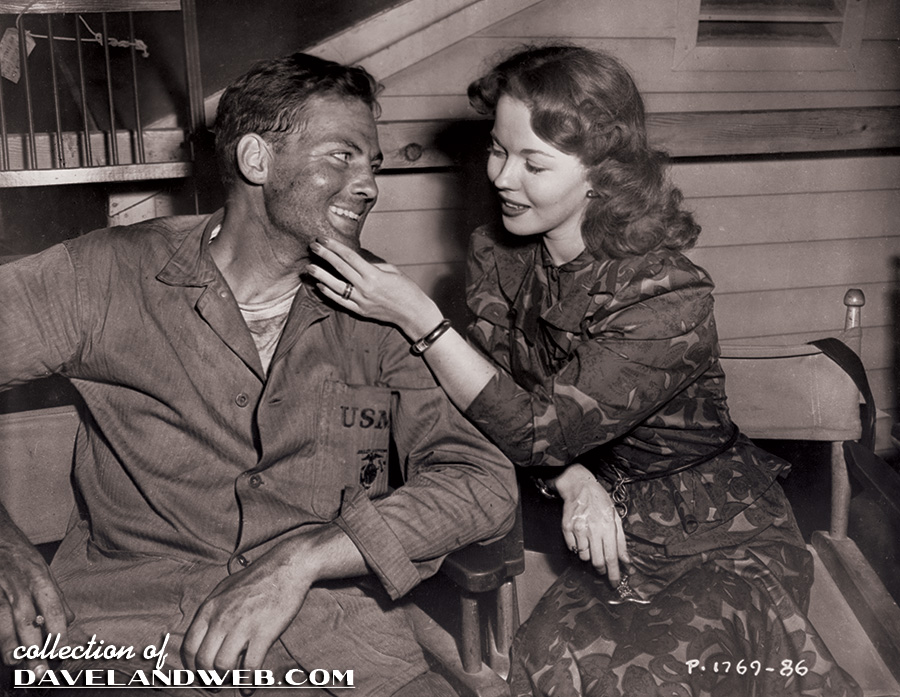
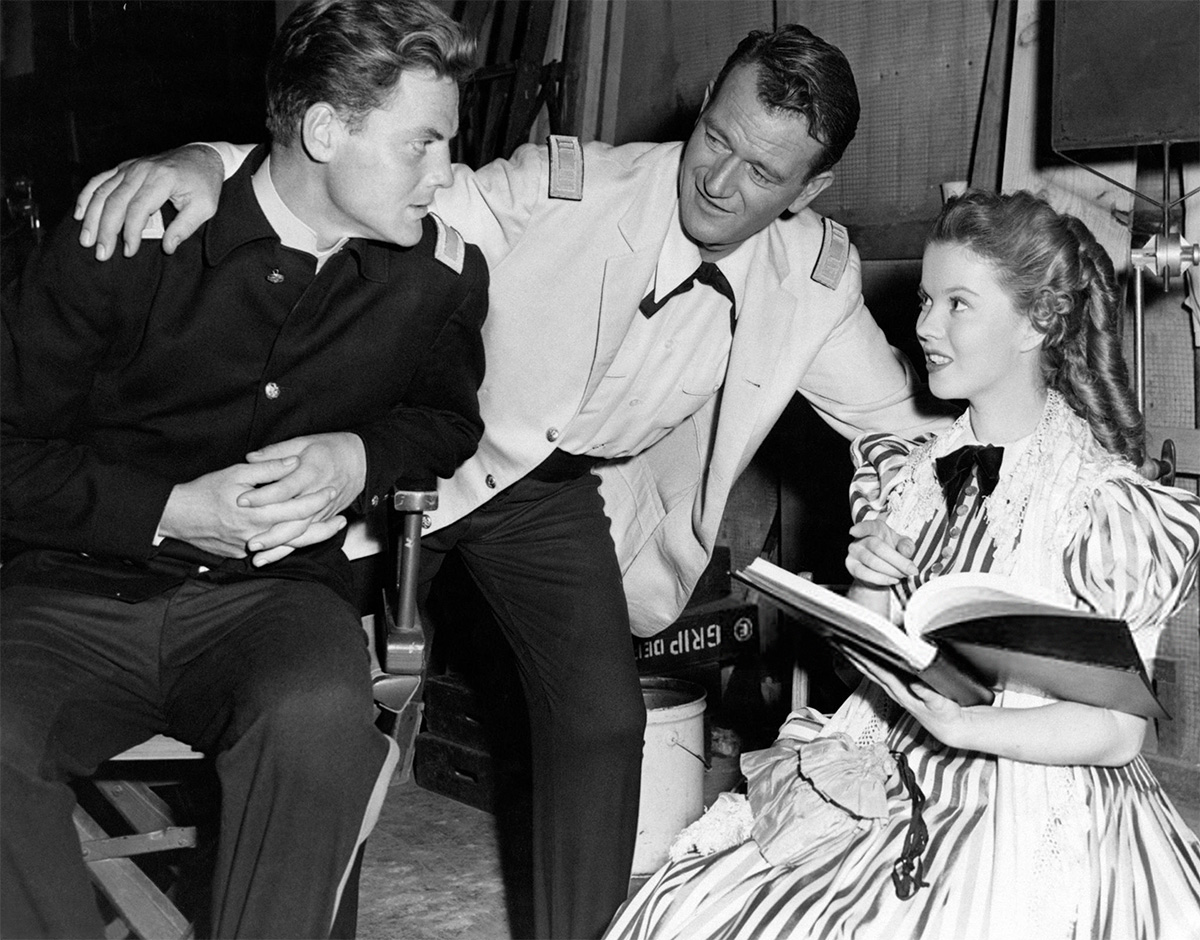
Shirley gently caresses the chin of her then-husband, John Agar, in this 1949 image taken on the set of “The Sands of Iwo Jima,” released by Republic Pictures on December 14, 1949. John Wayne was the star of the film. He had previously costarred with both John and Shirley in “Fort Apache” (1948):


“Iwo Jima” was directed by Allan Dwan, who also directed Shirley in “Heidi” (1937), “Rebecca of Sunnybrook Farm” (1938), and “Young People” (1940). Dwan is seen standing behind actress Helen Westley during the filming of “Rebecca” just out of the view of the camera:


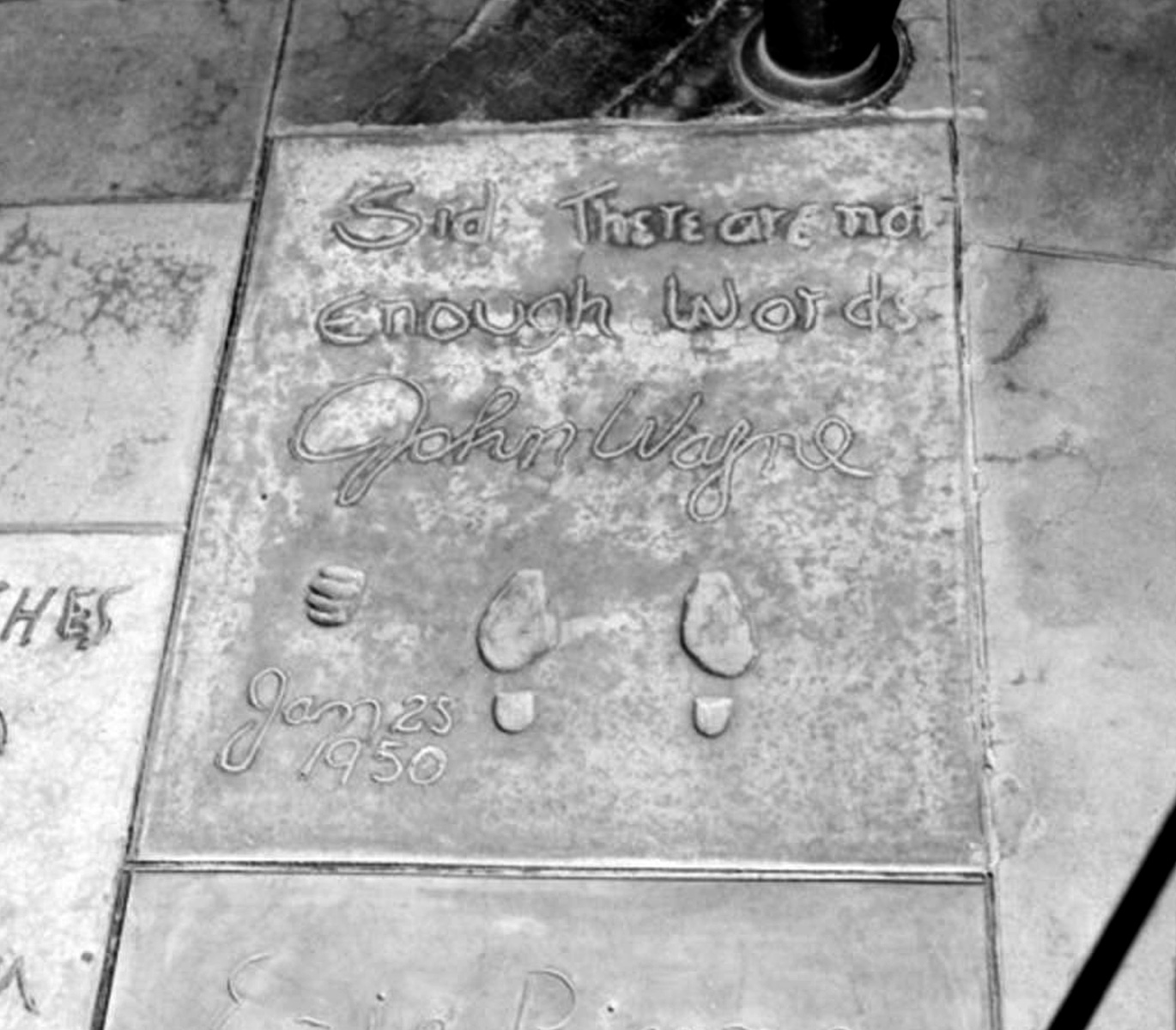
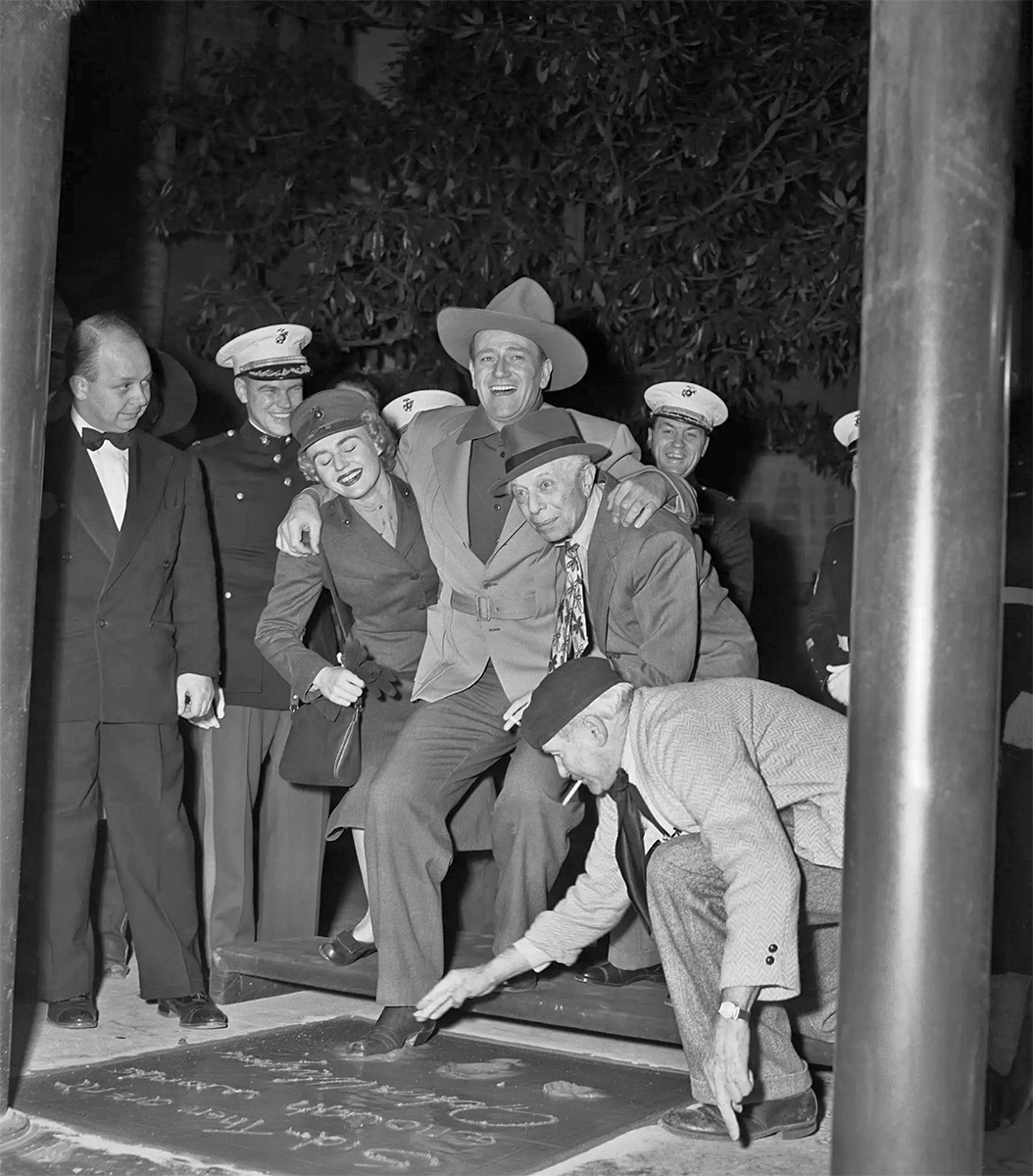
John Wayne received his first Academy Award nomination for Best Actor for “The Sands of Iwo Jima.” Although he lost to Broderick Crawford (“All The King’s Men”), he DID get his footprints and handprints placed at Grauman’s Chinese Theatre in conjunction with the opening of the film there. 


From the John Wayne Facebook page I found the above shot along with this info:

Duke is hoisted up by a Marine to his right and Sid Grauman, owner of TCL Chinese Theatres​ ( Grauman’s Chinese Theatre) as he imprints his foot in the courtyard of the Hollywood landmark #onthisday in 1950 [January 25]. Duke’s performance in Sands of Iwo Jima (1949) earned him this piece of immortality, and the role remains a favorite of fans and critics alike. The cement was mixed with sand from the beaches of Iwo Jima.

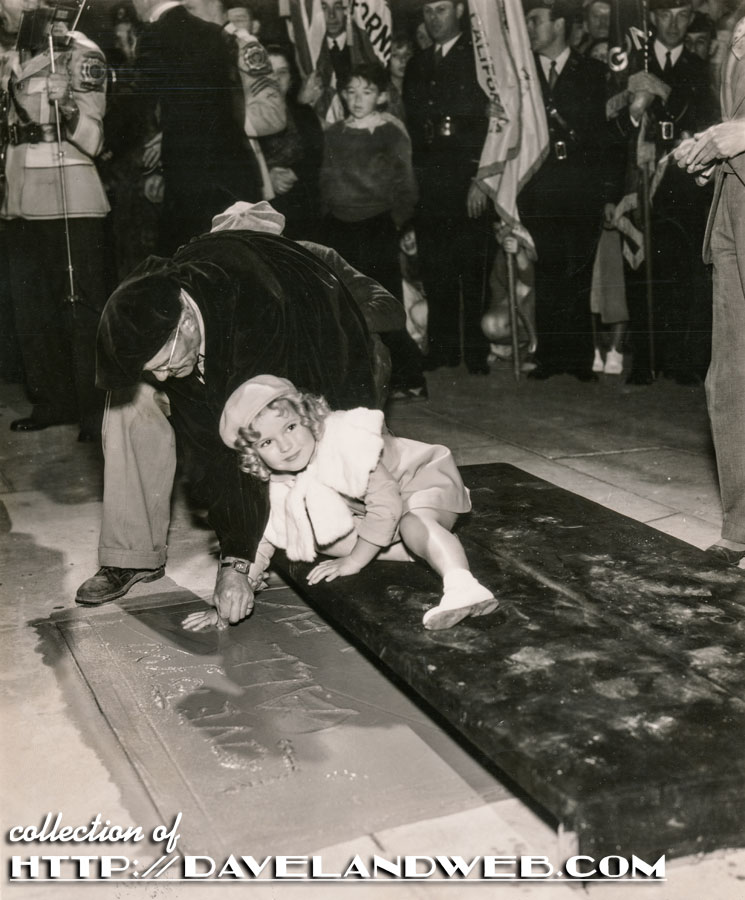
Here’s Shirley getting her own piece of immortality at Grauman’s fifteen years before Wayne:


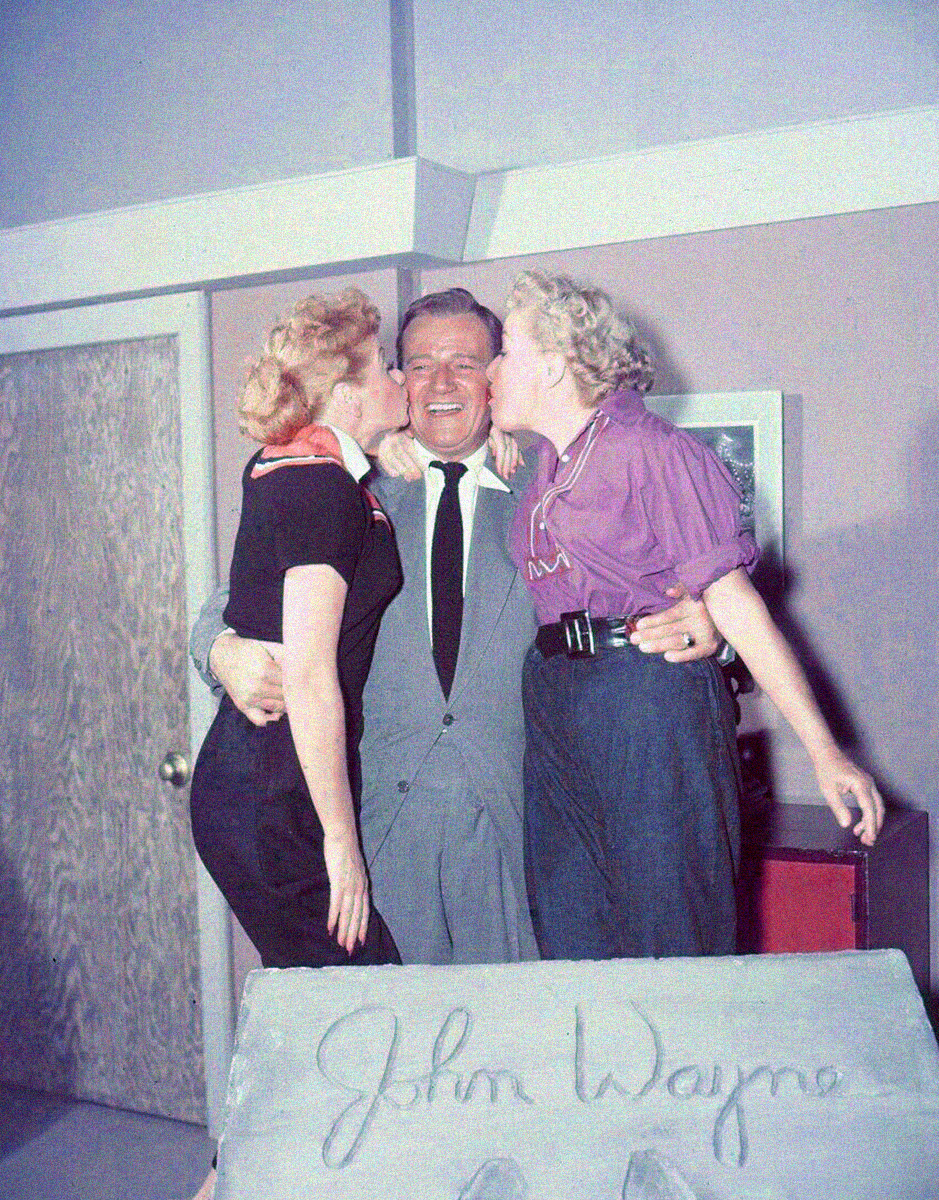
One of the most famous episodes of “I Love Lucy” dealt with Lucy stealing Wayne’s cement slab from Grauman’s so that she could take it home as a souvenir. In a two-episode arc, it originally aired on October 3, 1955 (“Lucy Visits Grauman’s”) and October 10 (“Lucy & John Wayne”).


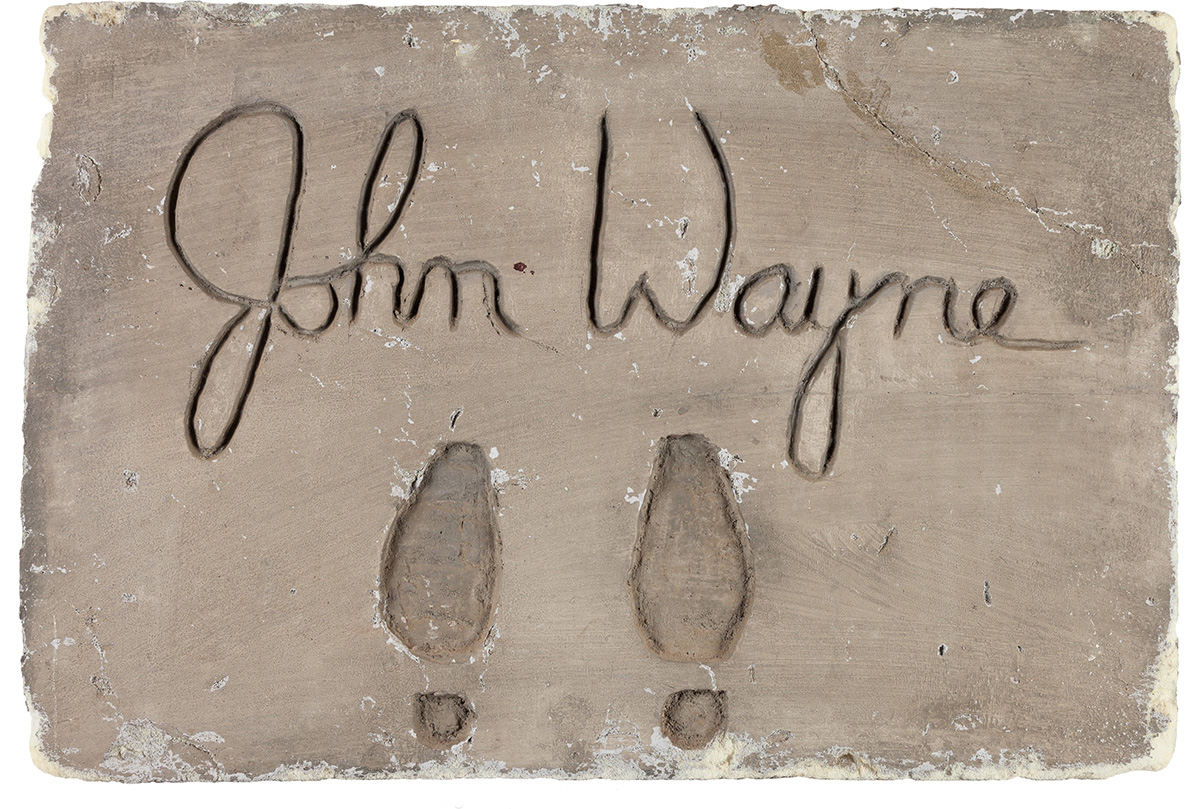
Watching the episode, you can tell that a soundstage set stood in for the real Grauman’s, and that a prop was created in place of using the actual cement slab. The prop came up for sale at Heritage Auctions in 2016.


From the auction listing:

A John Wayne Prop 'Grauman's Chinese Theatre' Signature/Footprint Slab from "I Love Lucy." CBS Television, 1951-1957. Made of Styrofoam and fiberglass, painted gray to simulate concrete, with text reading "John Wayne" (though funnily enough, not the star's real signature) above boot footprints, with purposeful distressing on the surface and around all edges, with a cracked upper right corner; used in the hysterical 1st and 2nd Episodes of Season 5 -- titled 'Lucy Visits Grauman's' and 'Lucy & John Wayne,' original air dates October 3 and 10, 1955 -- when the Red Head steals the Duke's footprints from Grauman's only to have wackiness ensue; a number of these props were made for the two-parter, four of which are actually seen at the end of Episode 2 when Wayne walks in to the "Ricardo's" hotel room carrying what appears to be this exact one! (Please note this piece is dirtied and somewhat stained due to age.) 24" x 36".  PROVENANCE: The current owner, Ardis Lichtgarn, obtained this piece directly from Wayne's publicist, Beverly Barnett, who gave it to her at the 1955 wrap party for this two-part episode which took place at Desilu Studios. Barnett had invited Lichtgarn to the party specifically so she could meet Wayne, but the star left early so she missed him. As a consolation, Barnett gave her this prop which he said was meant for Wayne, but because he was gone, she got it instead! Included is a signed letter from Lichtgarn outlining how she obtained this piece 61 years ago. 

The prop sold for $22,500. That’s an expensive piece of styrofoam! Here’s a vintage closeup of the actual cement slab at Grauman’s from the Calisphere site:


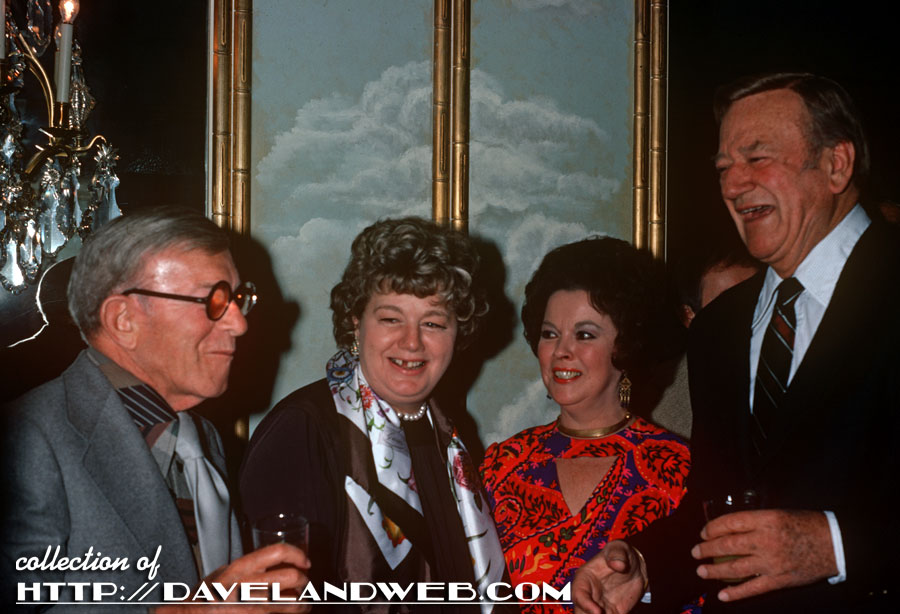
In this previously posted shot, Wayne has a chuckle during this reunion with Shirley in 1976. George Burns and a dentally-challenged Shelley Winters are on the left.


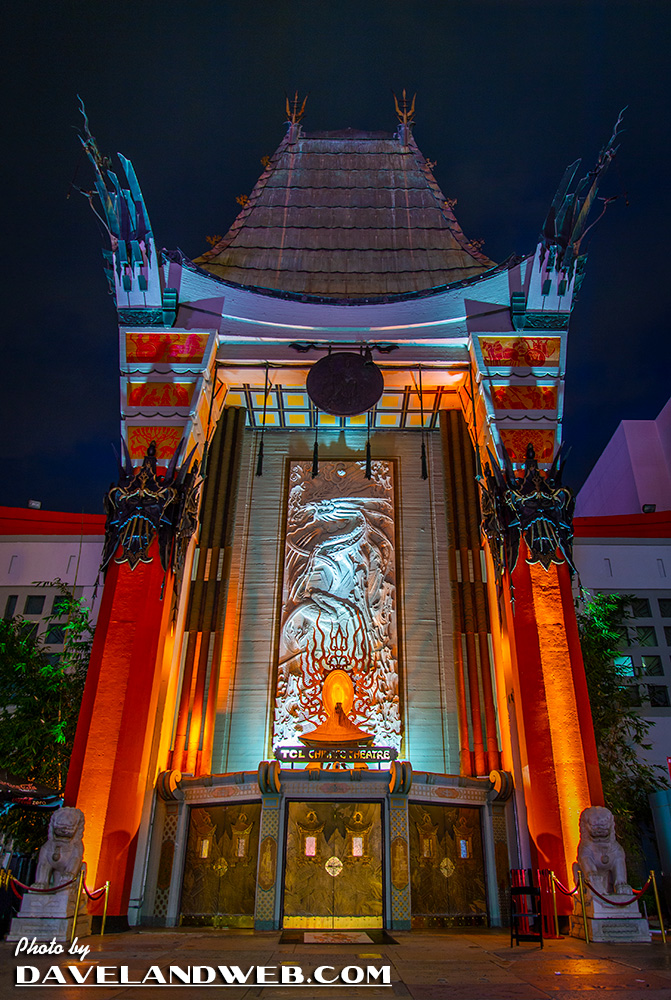
Here’s an image of the Grauman’s entrance that I snapped in 2014:


See more Shirley Temple photos at my main website.
Tuesday, June 22, 2021

Temple Tuesday: Shirley and Arthur Miller Play Shuffleboard


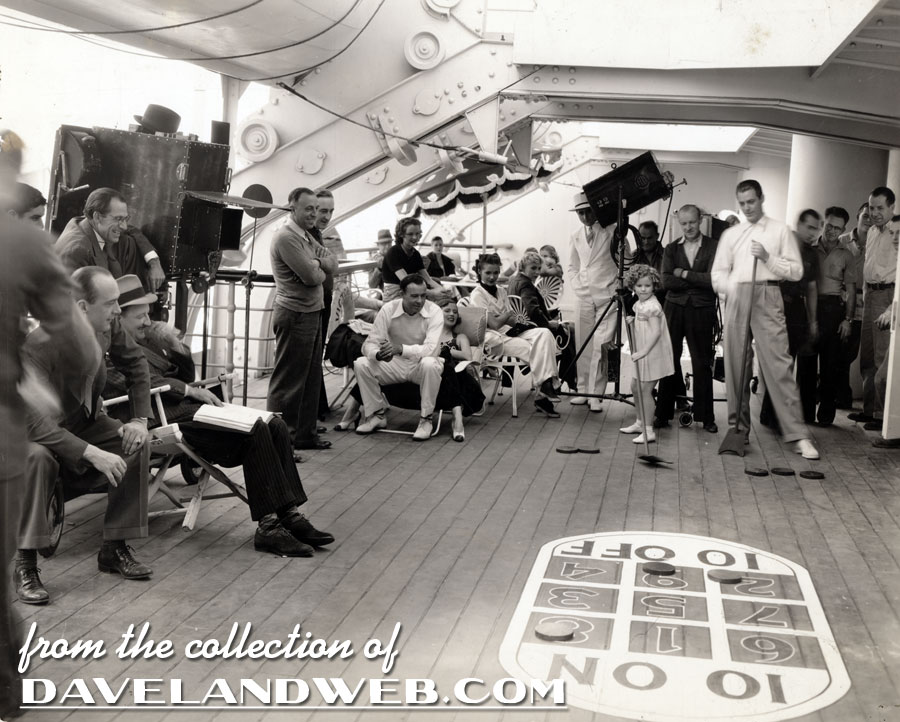
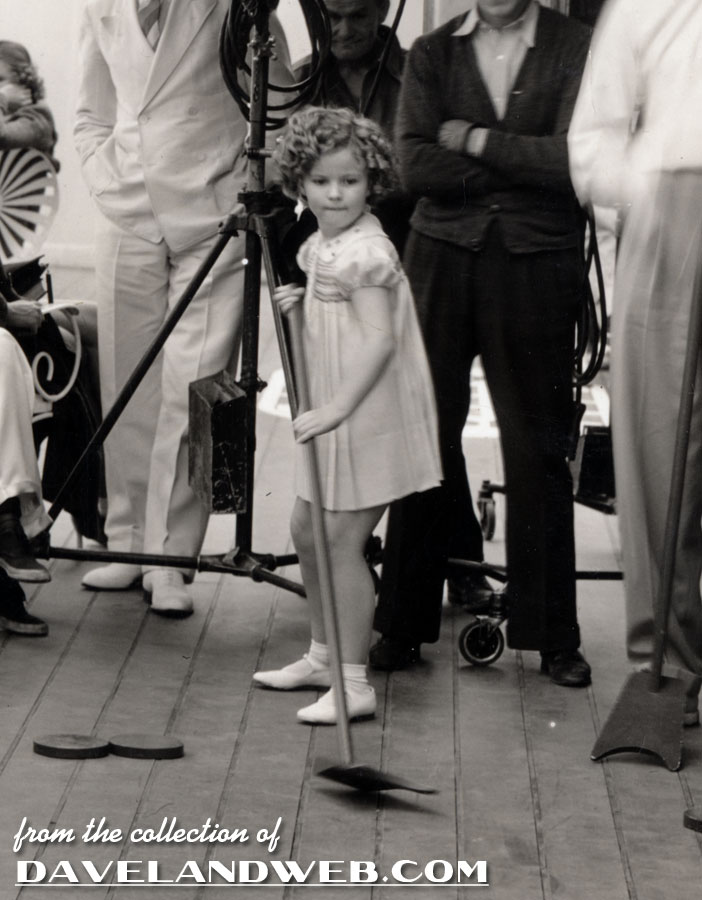
This behind-the-scenes shot from Shirley’s 1936 “Stowaway” has the young star practicing shuffleboard aboard the ocean liner set. Standing next to her is costar Richard Allan.


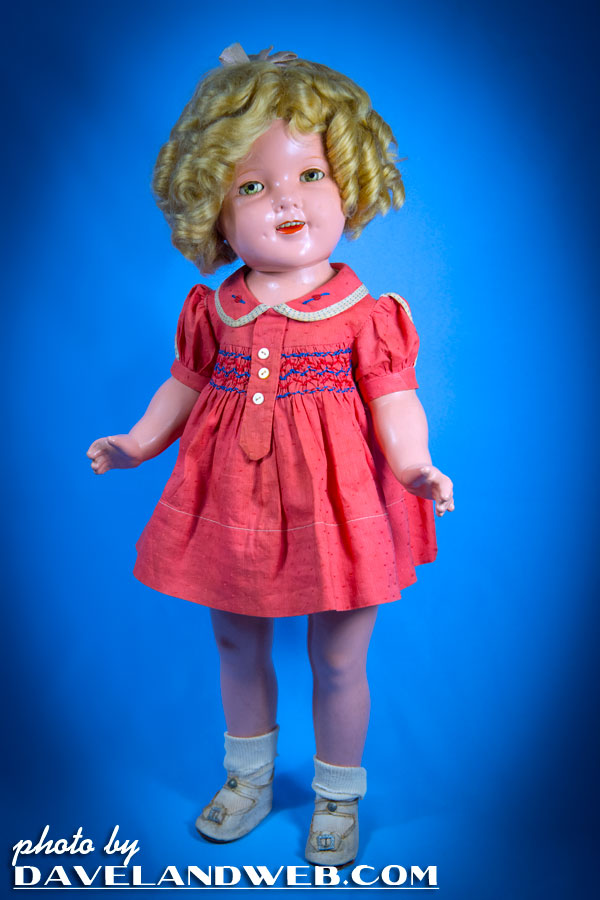
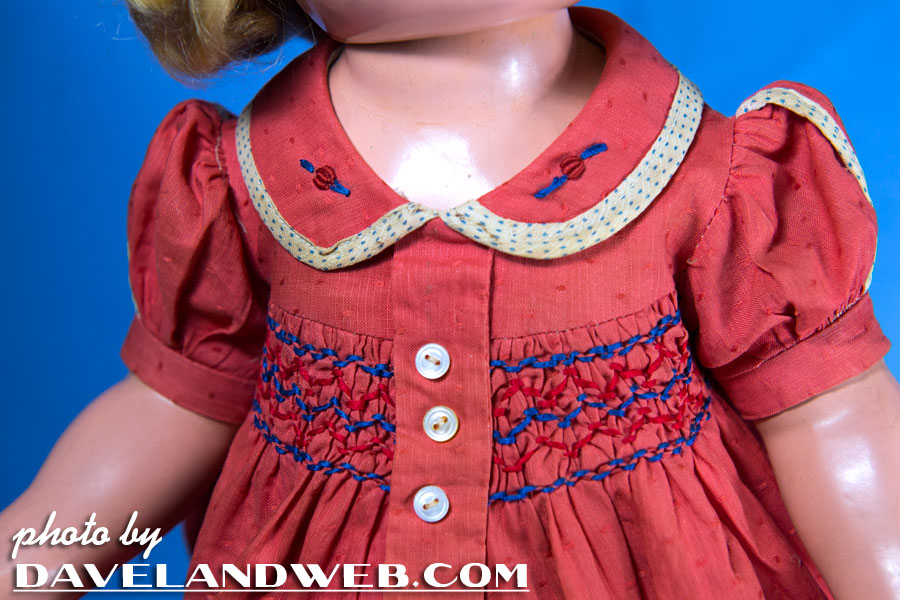
The dress Shirley is wearing would be made in doll-size for the popular Ideal composition toy that parents spent their hard-earned Depression era dollars on. Here’s the 20" version of that dress:


Check out the embroidery details! For a mass-market toy, this is true craftsmanship.


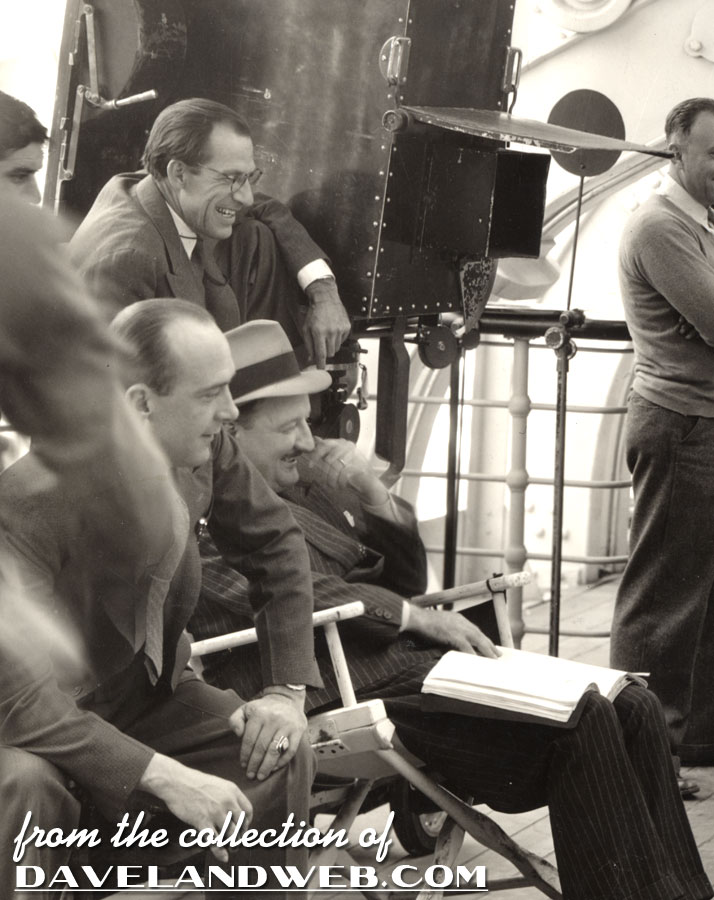
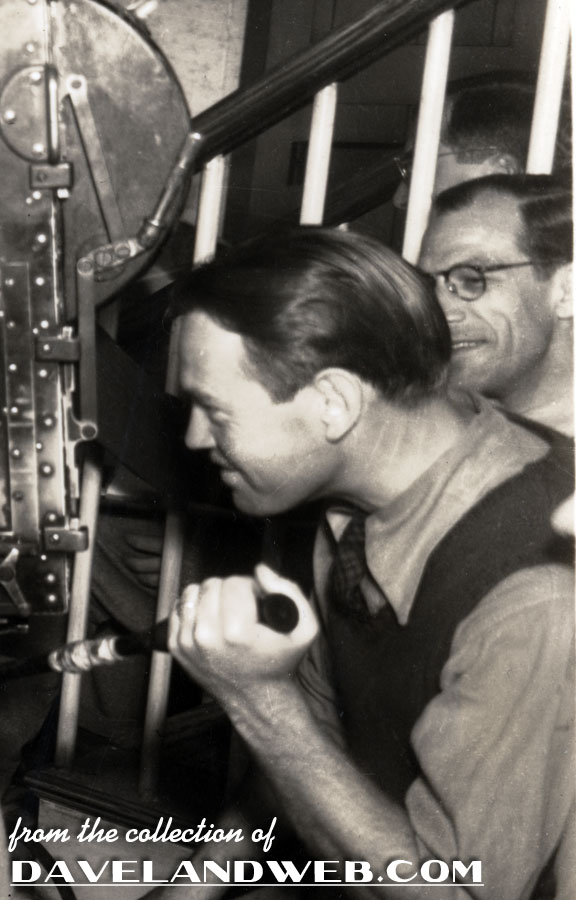
Back to the initial photo…in this detailed view, you can see cameraman Arthur C. Miller smiling on the left. No, not the one that married Marilyn Monroe.


This Arthur Miller was born July 8, 1895 in Roslyn, New York, and was known as one of Hollywood's most accomplished lighting cameramen. He began his career at 13, serving as an assistant to cinematographer Fred J. Balshofer. Miller photographed the serial "The Perils of Pauline" in 1914, and then worked with legendary director Cecil B. DeMille. In 1932, Miller shot “Me and My Gal” for director Raoul Walsh, his first picture under a long-term contract he had signed with Fox Films. It was at Fox that he became associated with the two people with whom he would establish his lasting reputation: Shirley Temple and John Ford. Miller became Shirley's personal cameraman for each of her films, with “Bright Eyes” (1934) being the first. Miller created an aura around the tot's blonde locks by back-lighting her head, often lighting her in high key and the actor with whom she was playing in low key to heighten her allure. Miller would use a similar lighting scheme in 1943 to create a mystical effect with Jennifer Jones in “The Song of Bernadette,” which earned him the second of his two Academy Awards for black and white cinematography. Miller first worked together with John Ford in 1937 on Temple’s “Wee Willie Winkie.”  Ford gave Miller the freedom to light and photograph a picture the way he desired Their collaboration reached its height when Miller shot “How Green Was My Valley” (1941) for Ford. The typical camerawork at the time tended to emphasis a soft style, which was felt to be more artistic and painterly. Miller, who was a hyper-realist, preferred to create hard images, with deep shadows and brilliant highlights. A master of black-and-white photography, Miller gave his images a high glossiness and intense coloration. Both Miller and Ford won Oscars in 1942 for “Valley”; Miller for his cinematography and Ford for his direction. Miller's deep-focus cinematography on the picture beat out Gregg Toland's work for “Citizen Kane” (1941). Miller was very well-respected among his peers, being nominated for an Oscar for cinematography each year from 1940 through 1947, except for 1945. Though his mastery was in black and white, his second Oscar nomination was for the color cinematography of Shirley’s 1940 flop, “The Blue Bird.” Arthur Miller retired in 1951, later serving as president of the American Society of Cinematographers. In the 1960s he set up an extensive exhibit of vintage camera equipment for the ASC. Shoftly before his death, he finished making the documentary “The Moving Picture Camera.” He died on July 13, 1970, in Hollywood, California, from tuberculosis, eight days after his 75th birthday.

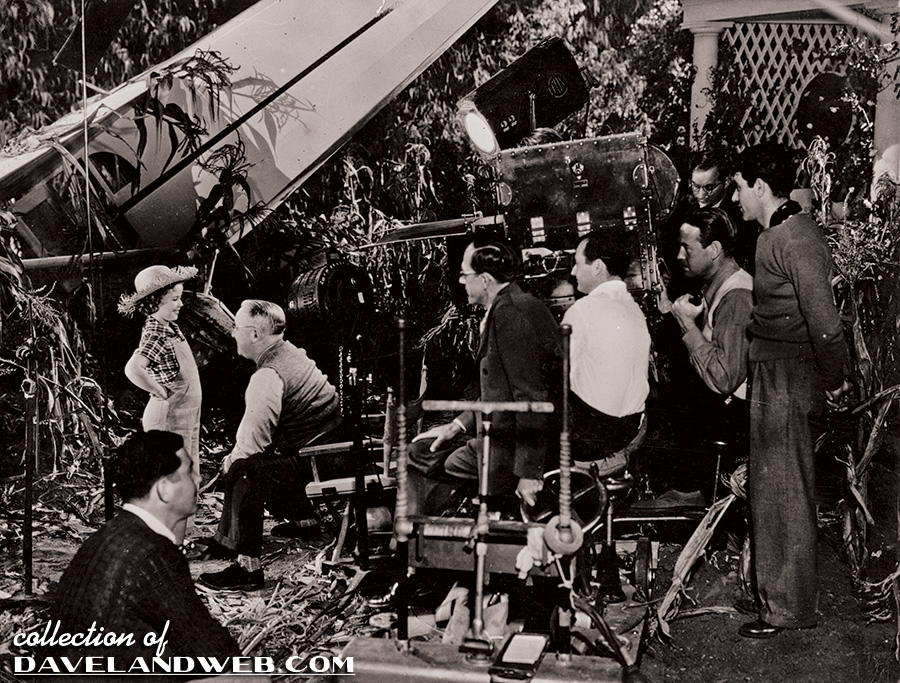
Here he is on the set of “Rebecca of Sunnybrook Farm” (1938):


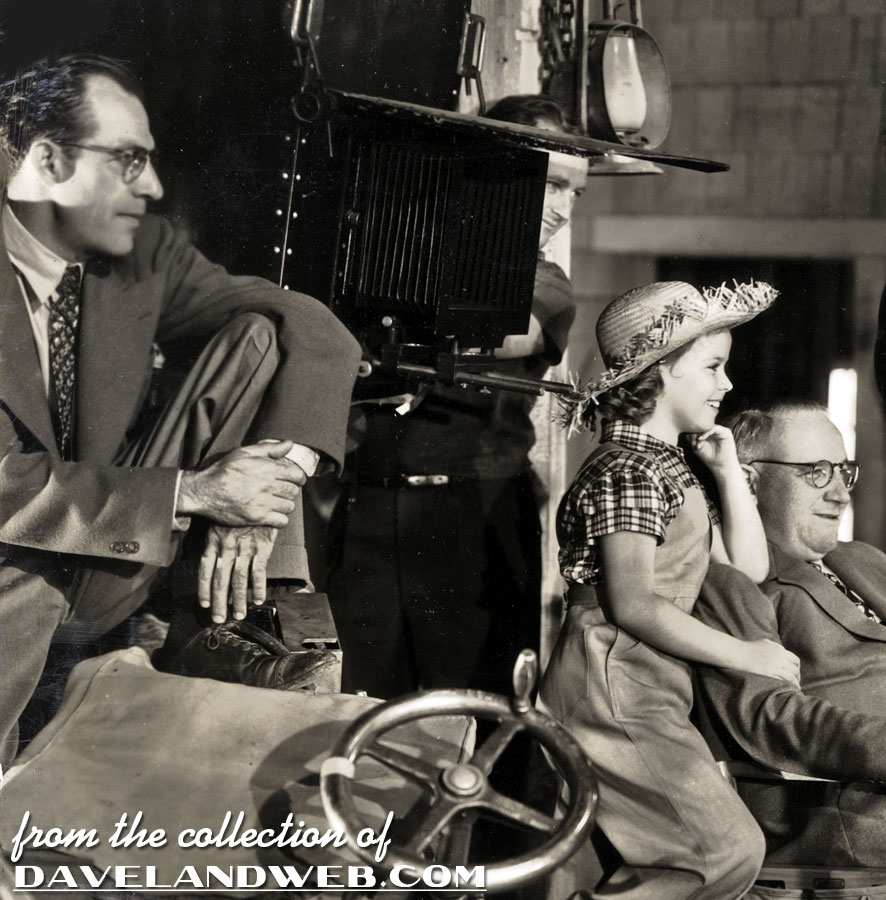
Another one from the same film with Miller, Shirley, and director Allan Dwan:


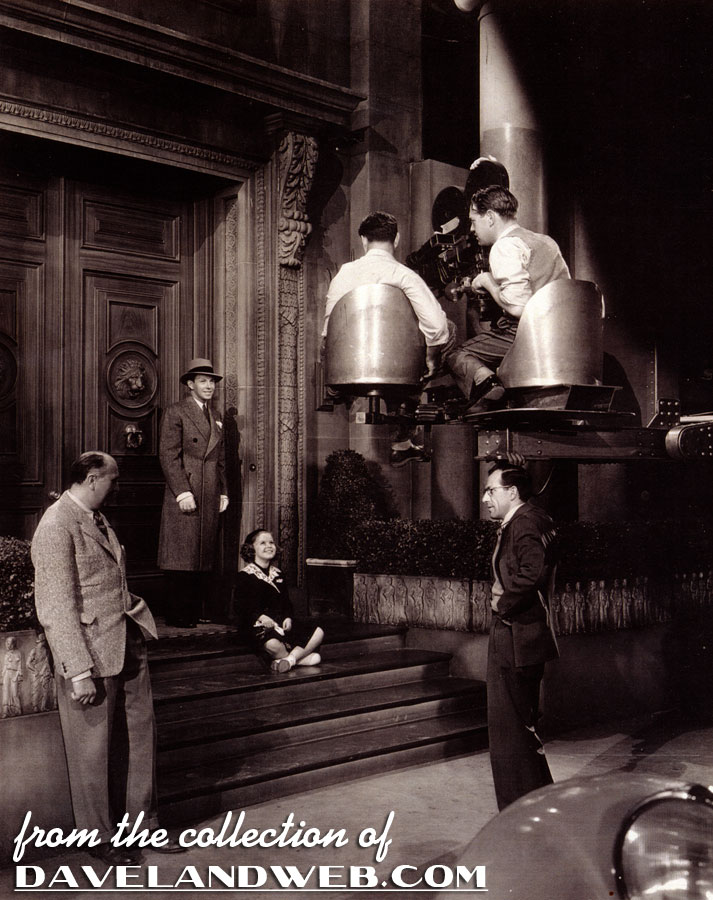
And in “Little Miss Broadway” with director Irving Cummings (born Irving Caminsky), George Murphy, Shirley, and Miller:


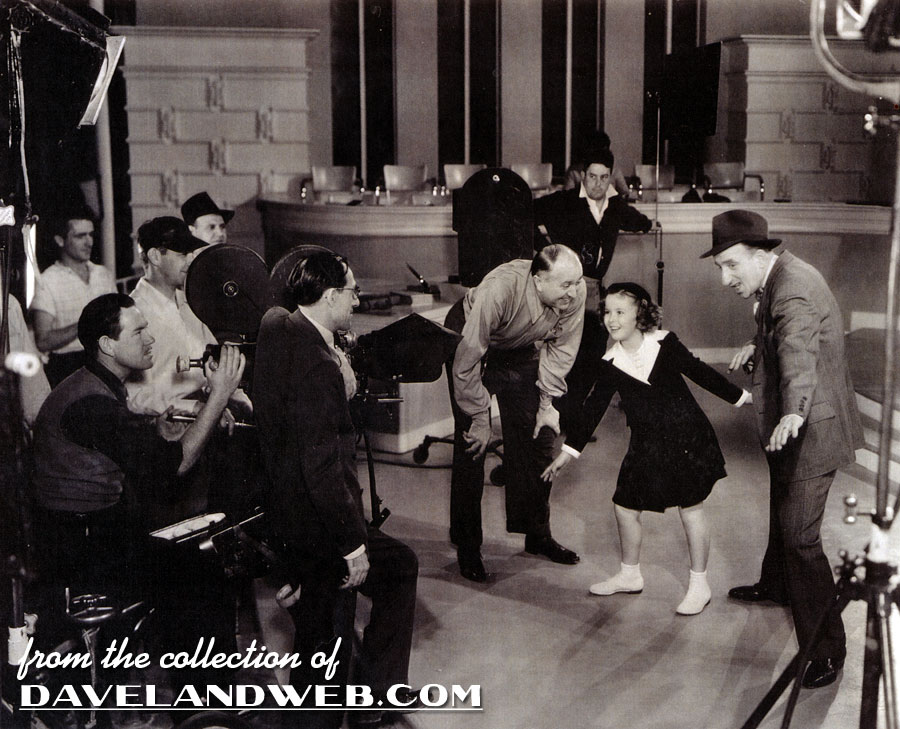
Miller at center, Cummings, Shirley, and Jimmy Durante on the right from “Little Miss Broadway”:


And one more from “Little Miss Broadway,” also from the courtroom scene at the end of the film:


See more Shirley Temple photos at my main website.
Tuesday, July 30, 2019

Temple Tuesday: Heidi Set Design


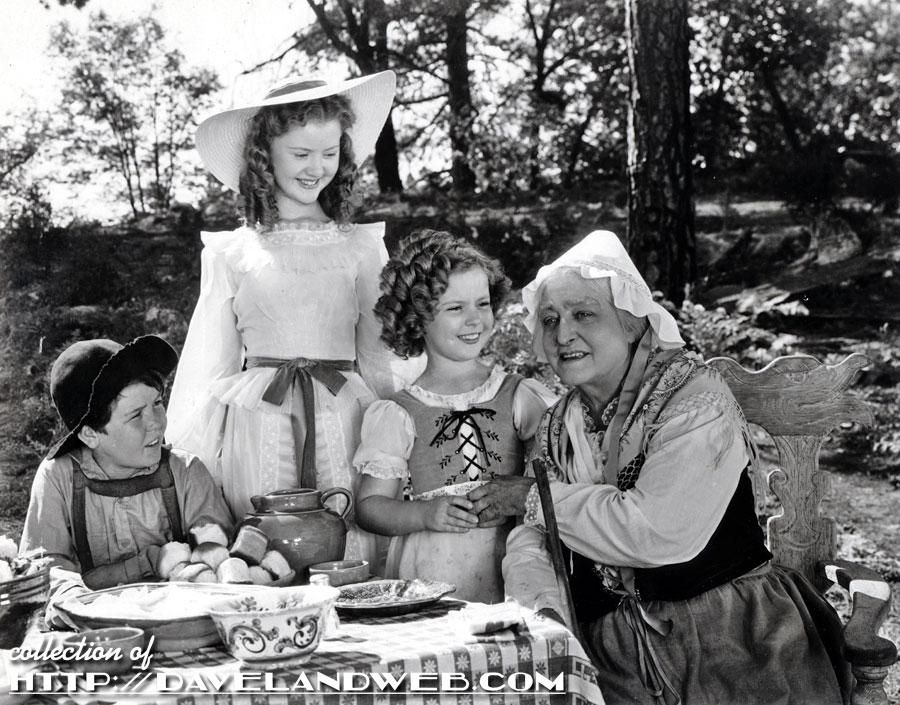
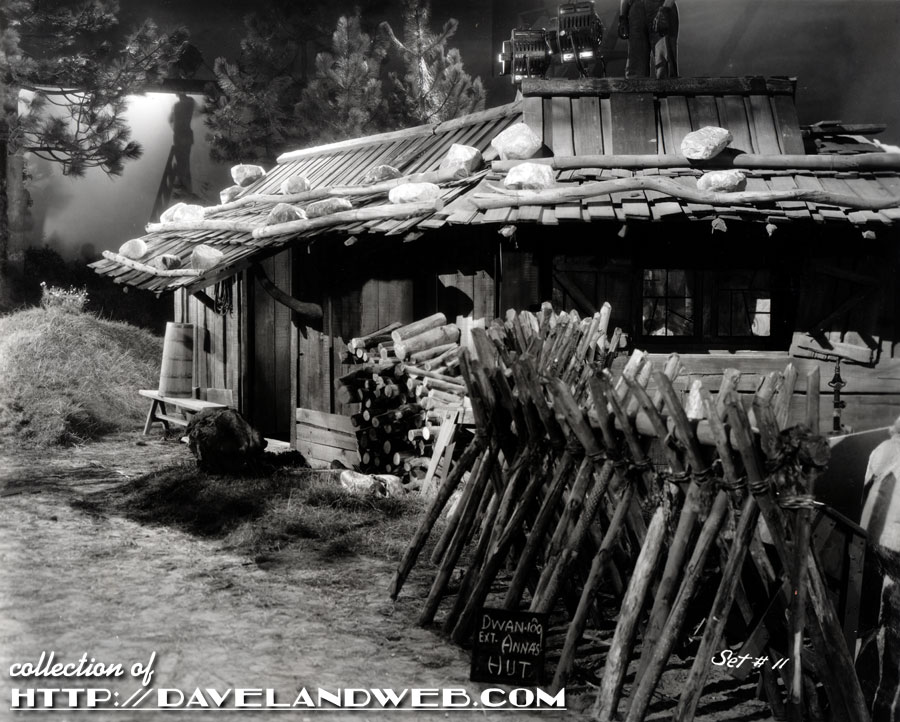
In my collection I have a number of photos documenting the sets for Shirley Temple’s 1937 classic film, “Heidi.” Directed by Allan Dwan, the art direction was by Hans Peters and set decorations were by Thomas Little. The first photo shows Delmar Watson, Marcia Mae Jones, Shirley, and frequent Temple co-star Helen Westley. In this movie her role was Blinda Anna. Set #11 was her home:


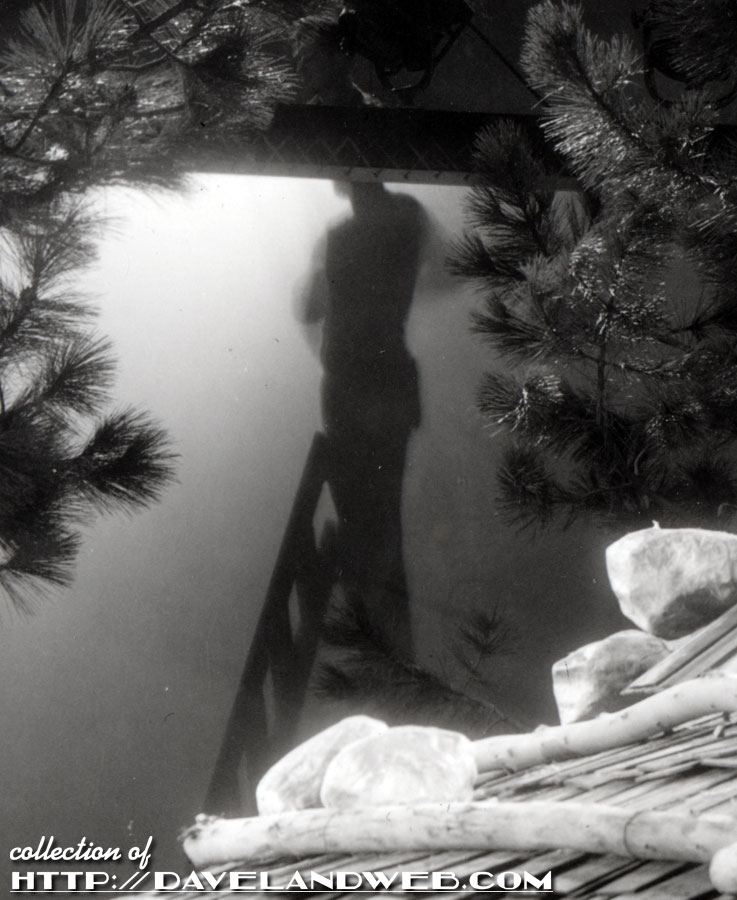
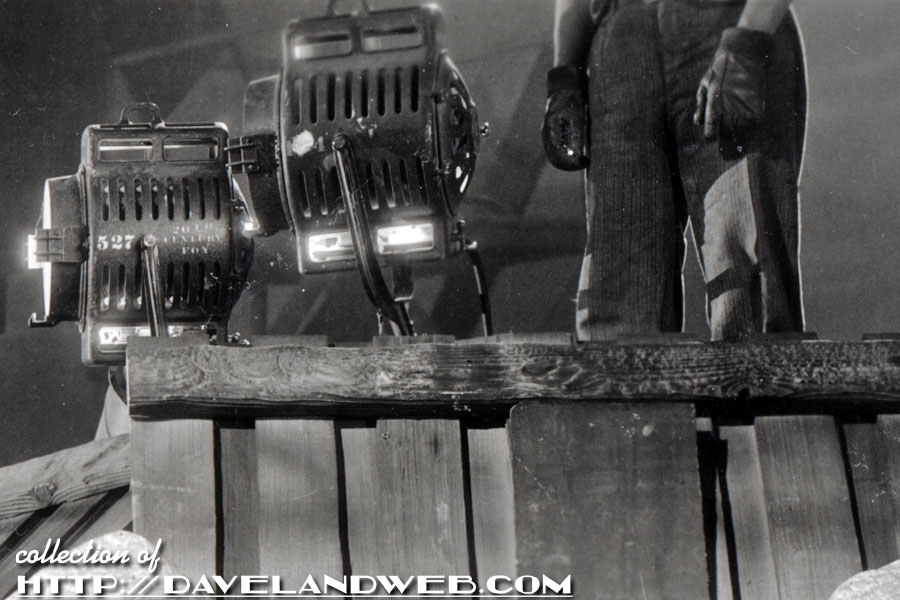
Zooming in you can see the shadow of a worker:


…and the set lights:


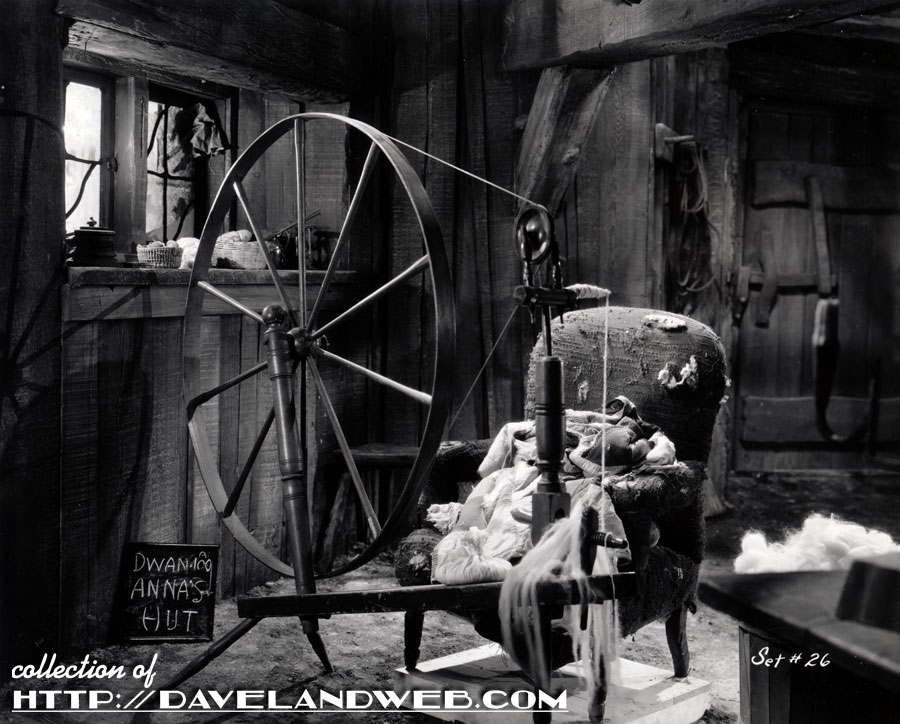
Set #26 was the interior of Anna’s home:


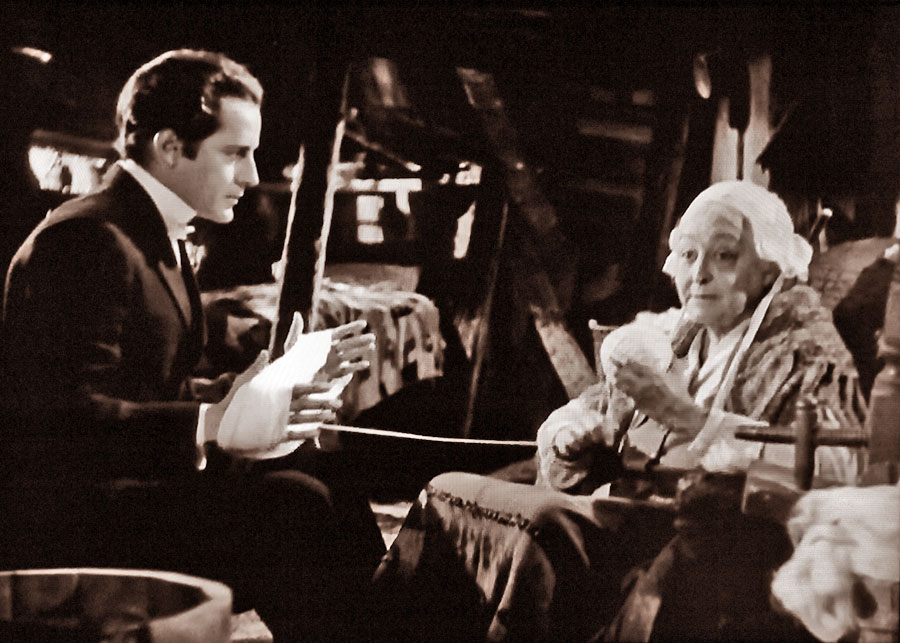
Only one scene made it into the final film showing this interior. Here, Blind Anna explains to the new Pastor (Thomas Beck) why Heidi’s Grandfather became a recluse.


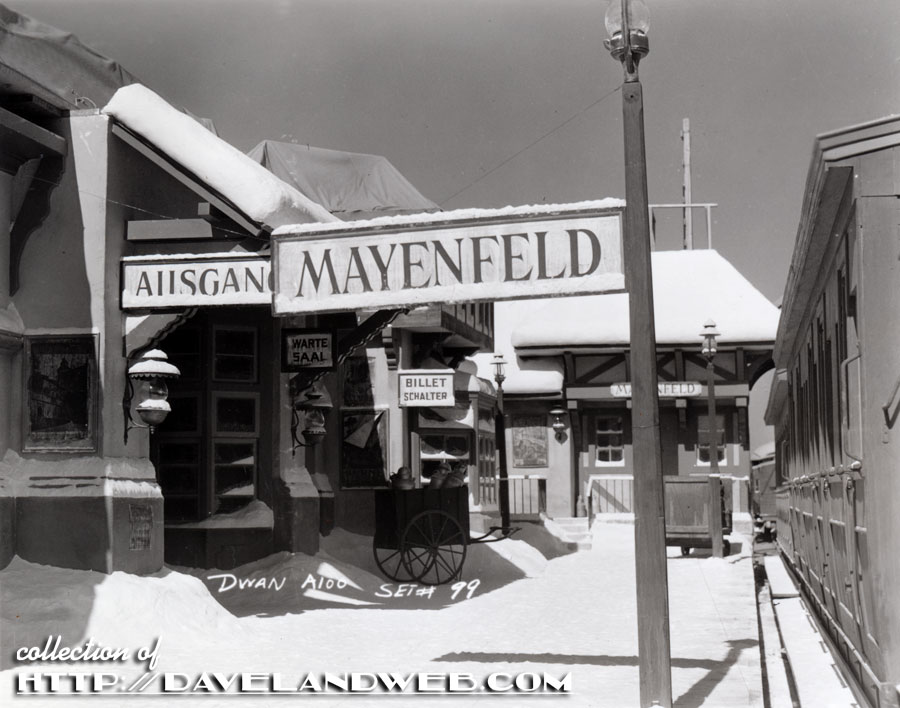
Set #99 shows the train station at Mayenfeld:


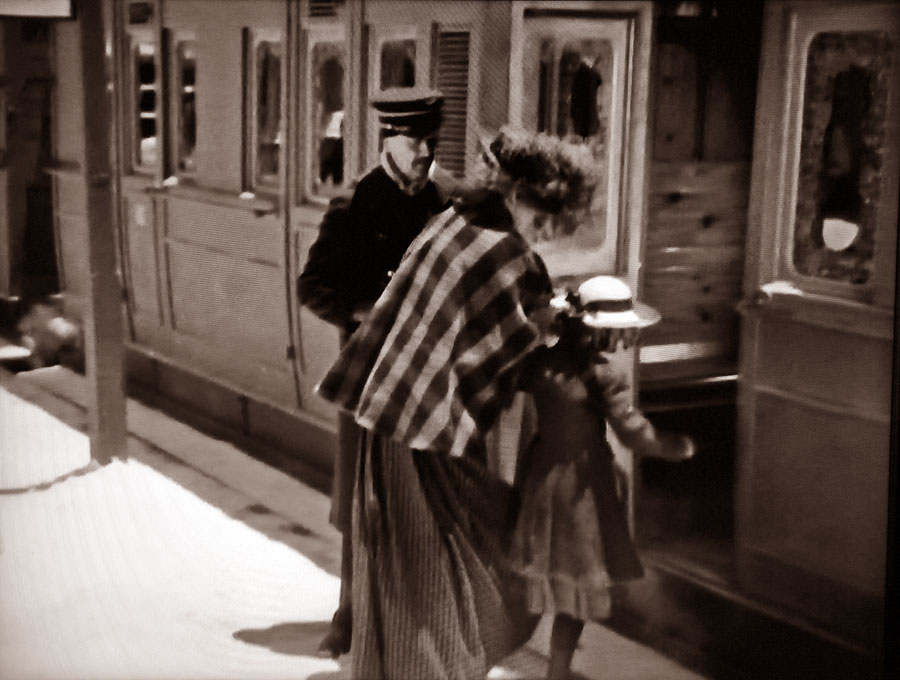
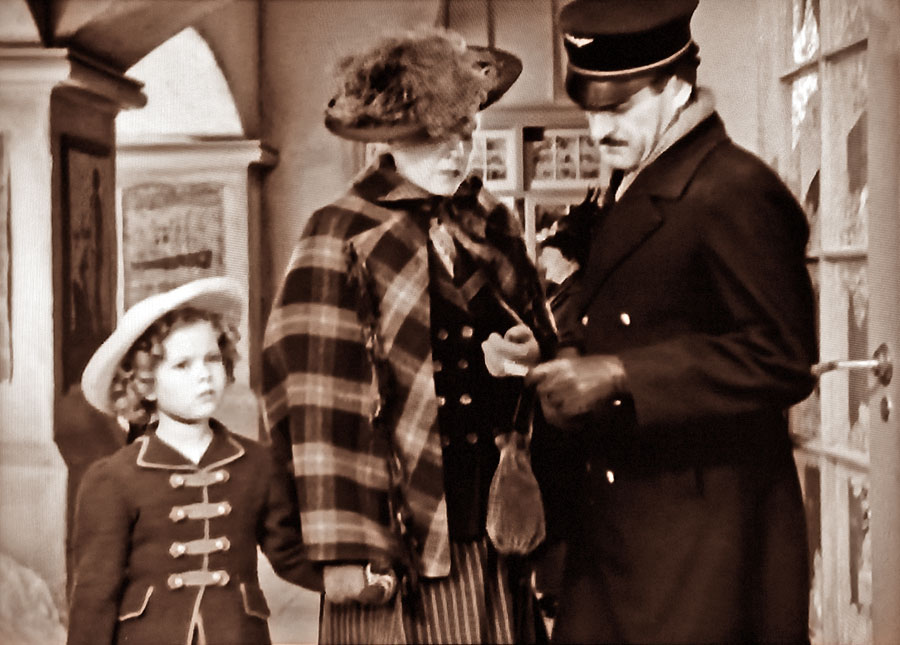
A lot of time and money went into the planning and creation of these sets, and yet many were only viewed for a few seconds. This is about all that we see of the station as Heidi’s wicked Aunt hustles her off to Frankfurt:


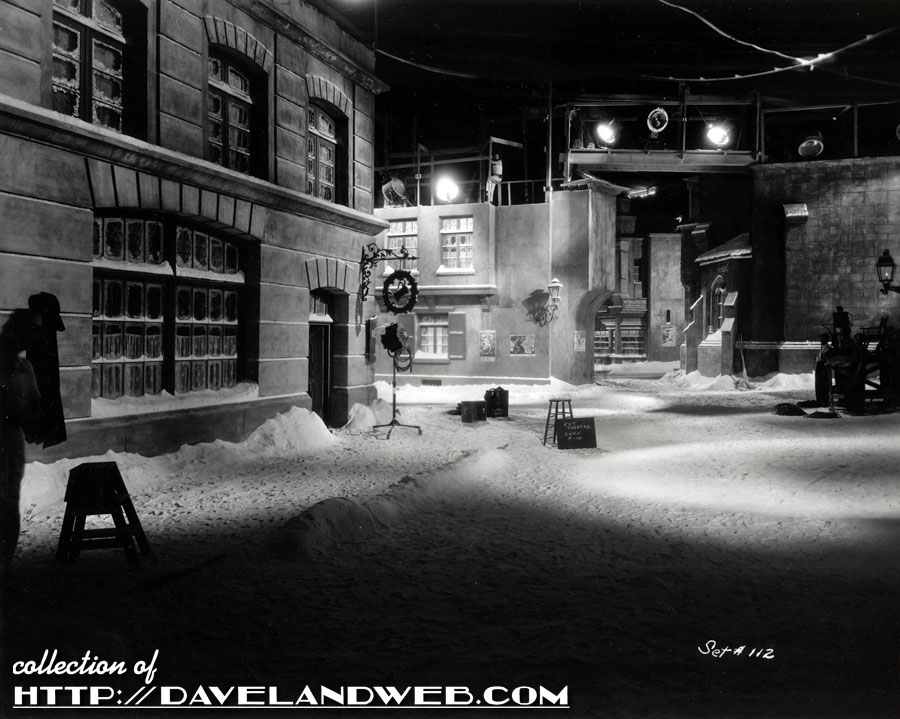
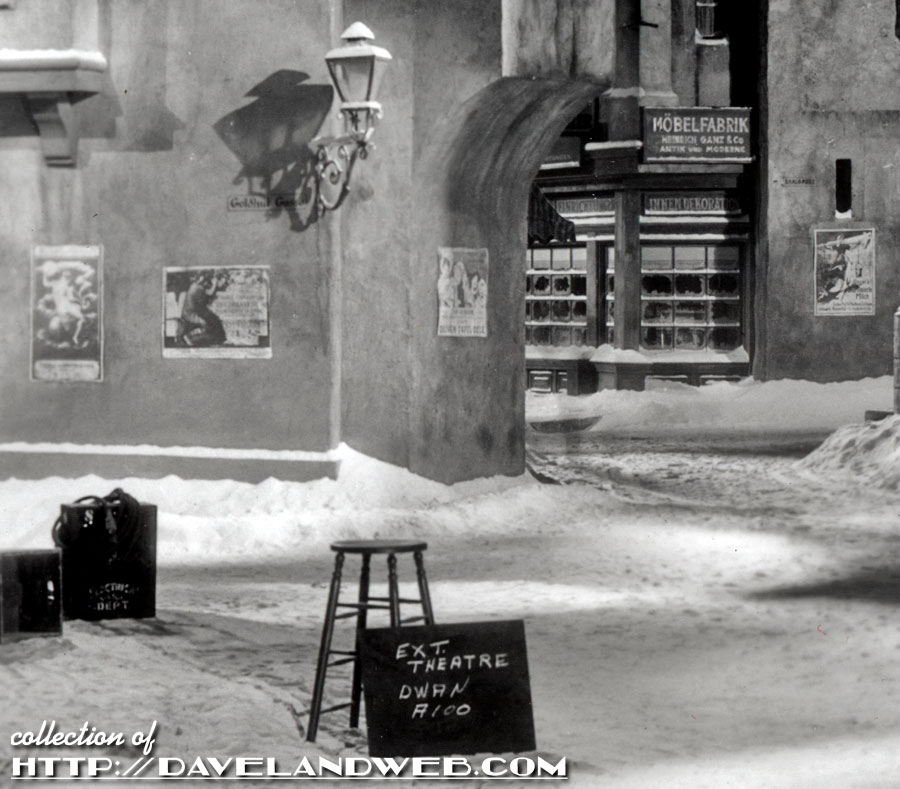
Set #112 shows the village of Frankfurt:


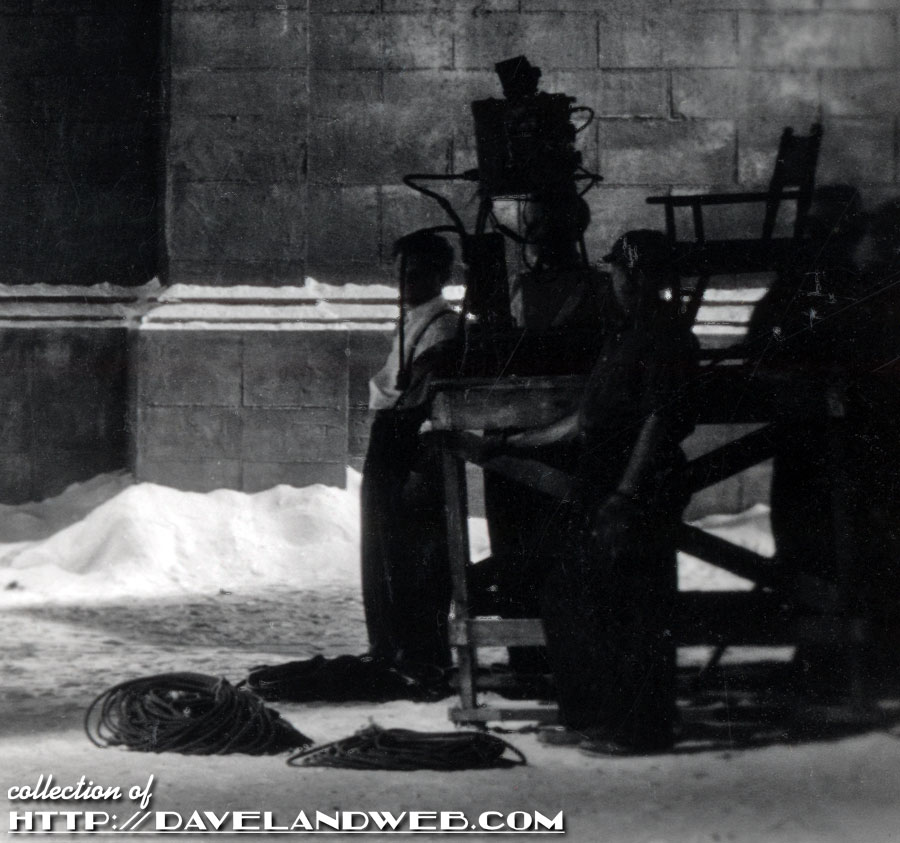
Two detail shots:


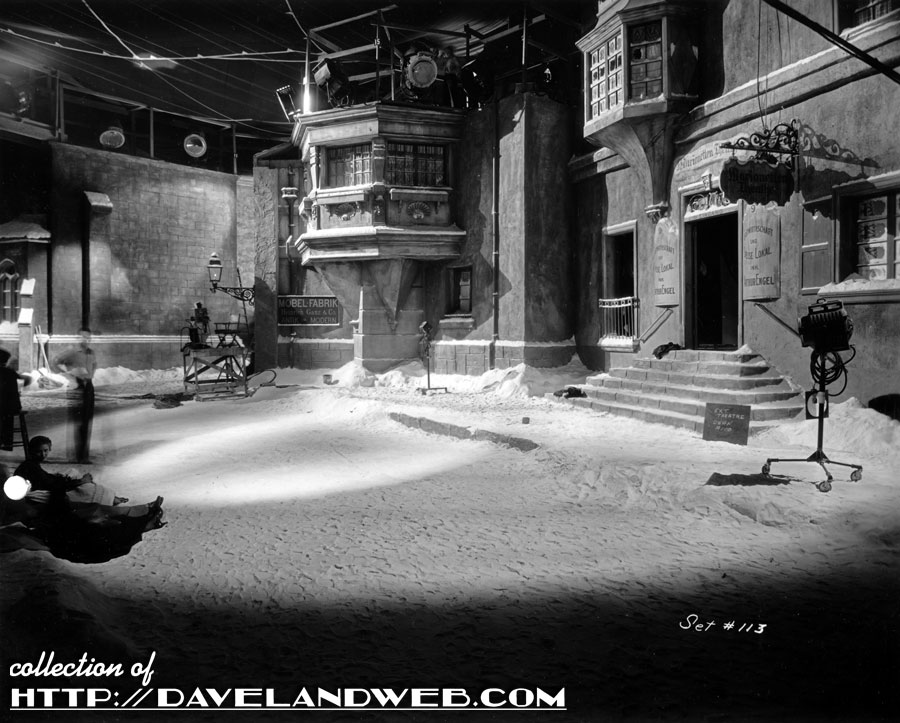
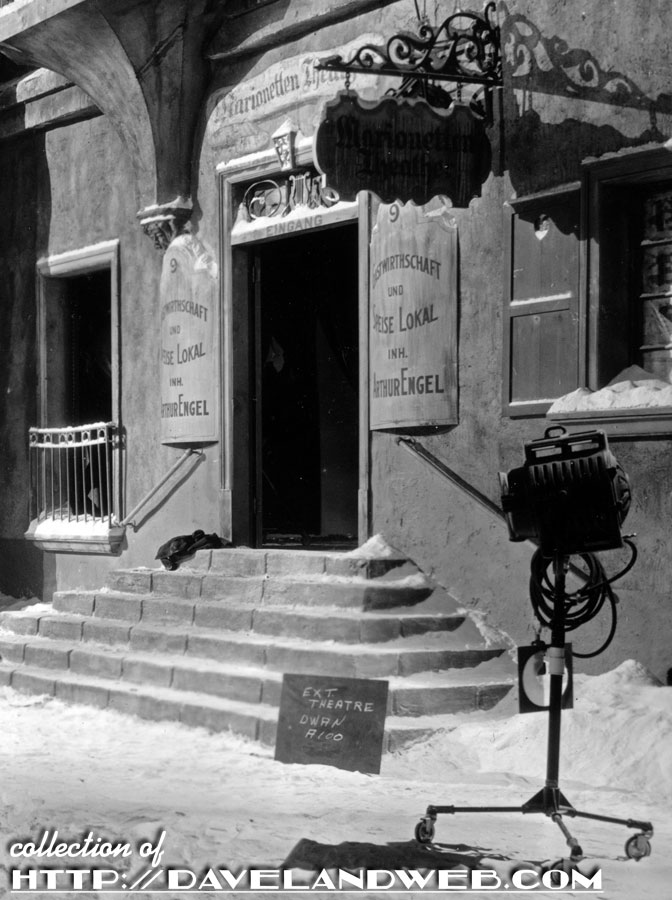
Set #113 also shows Frankfurt, but mainly the Marionette Theater that Heidi and Klara attend on Christmas evening:


A closeup of the entrance:


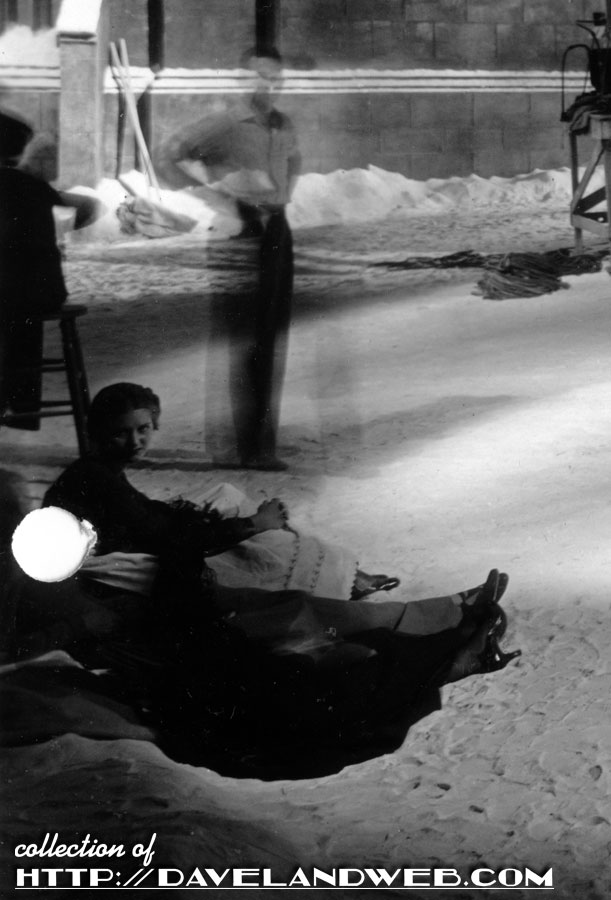
Because of the long exposure we have a blurred worker in this detailed view. Note the unidentified woman and what appears to be at least two other pairs of legs adorned in stylish shoes.


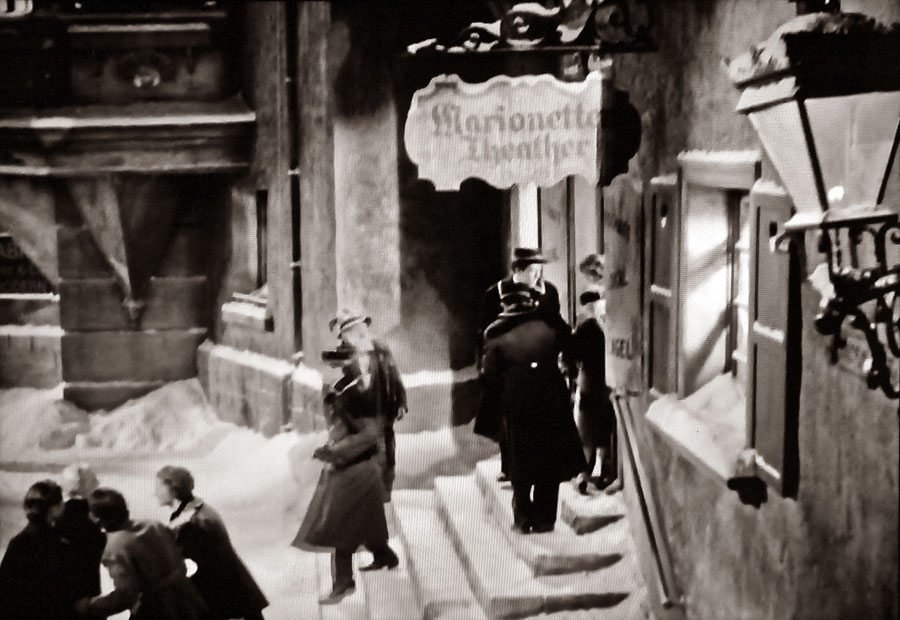
Heidi’s Grandfather (Jean Hersholt) waits outside the theater for her to exit after the show:


Unfortunately, she is too short to see him.


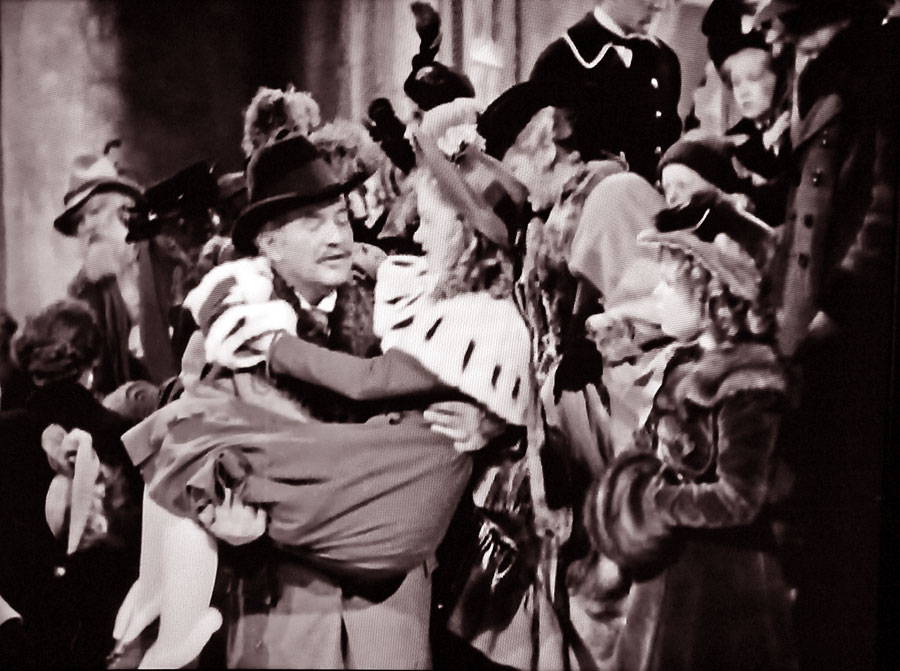
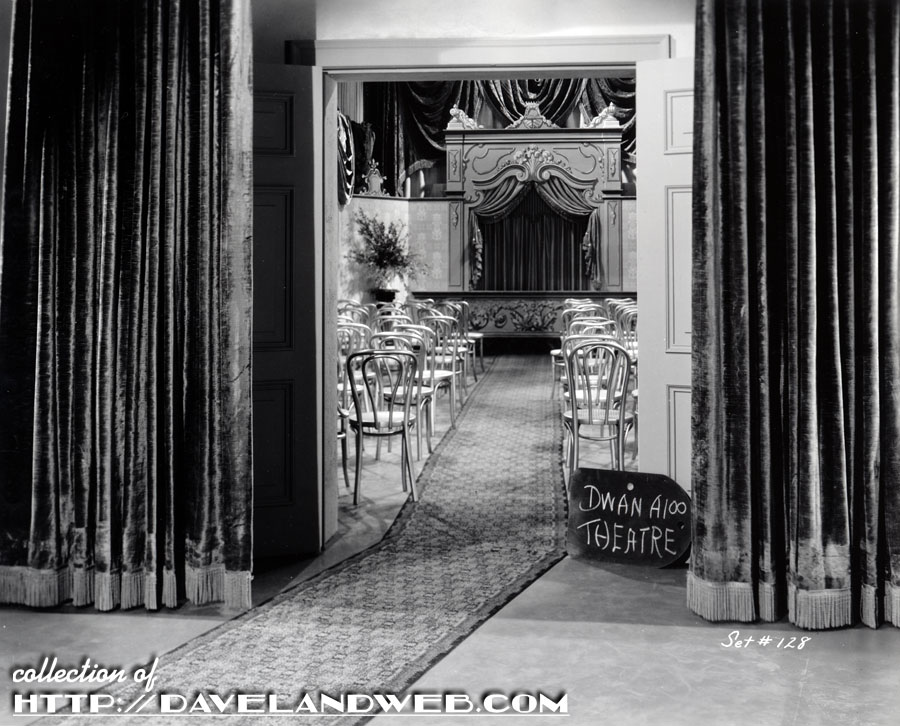
Set #128 is the interior of the theater; MANY thanks to Melissa (aka “The Colonel”) for sharing this still with me!


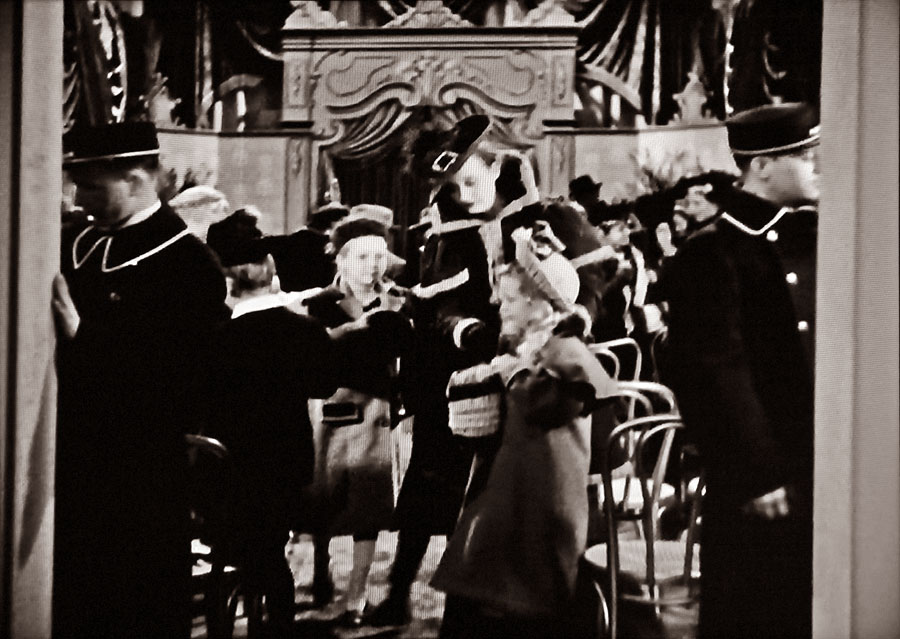
...which is only visible for a few seconds as the children are leaving the show.


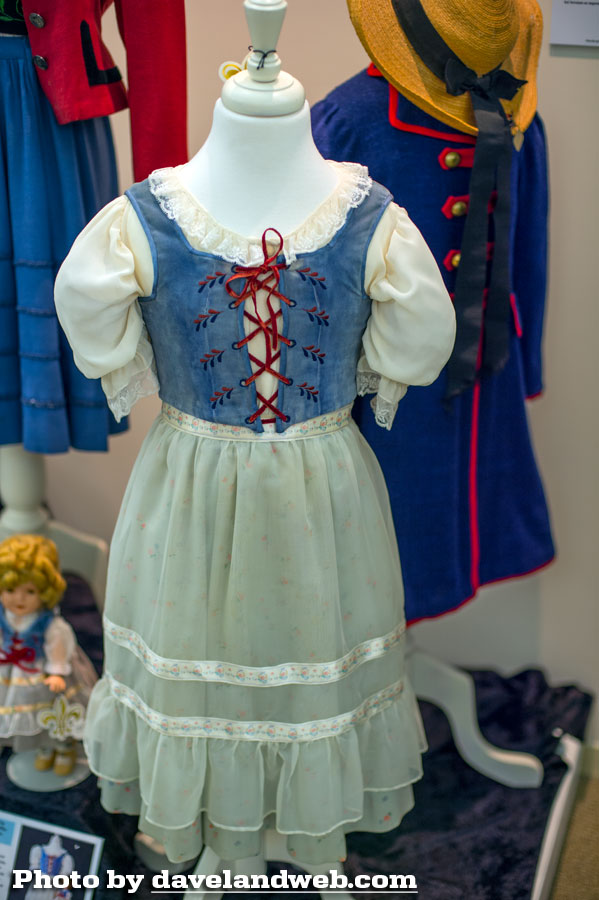
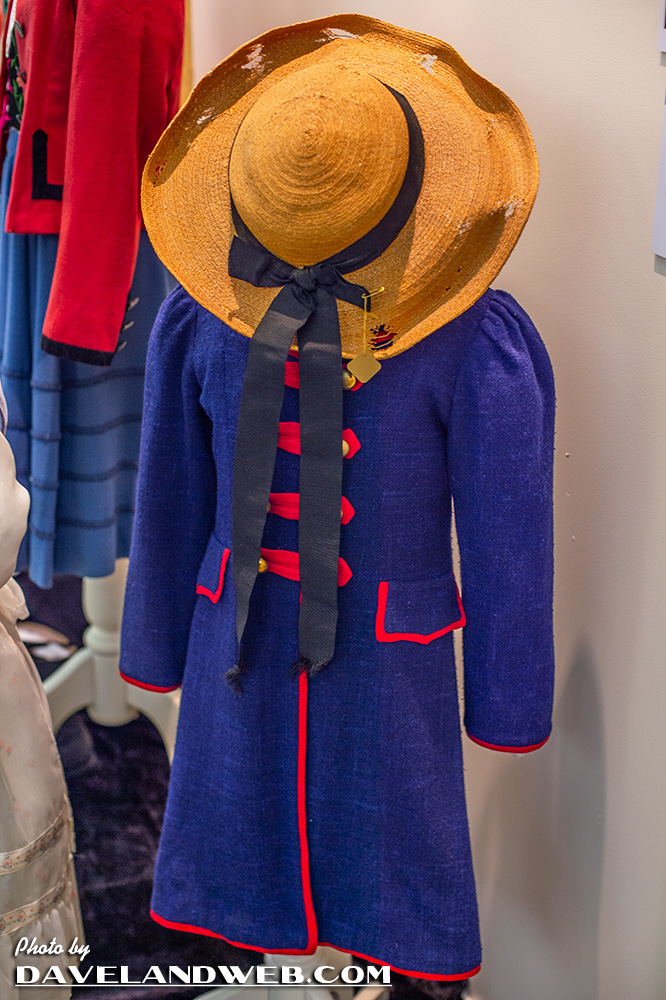
On a side-note; all three of the costumes Shirley wears that are shown here still exist!


I hope you enjoyed this brief behind-the-scenes post!

See more Shirley Temple photos at my main website.