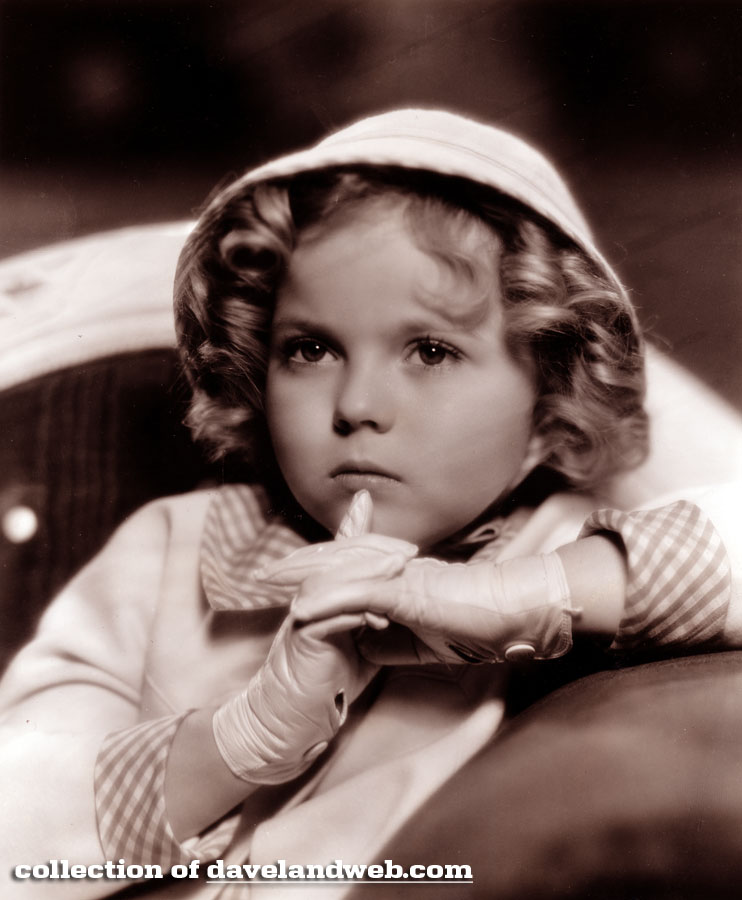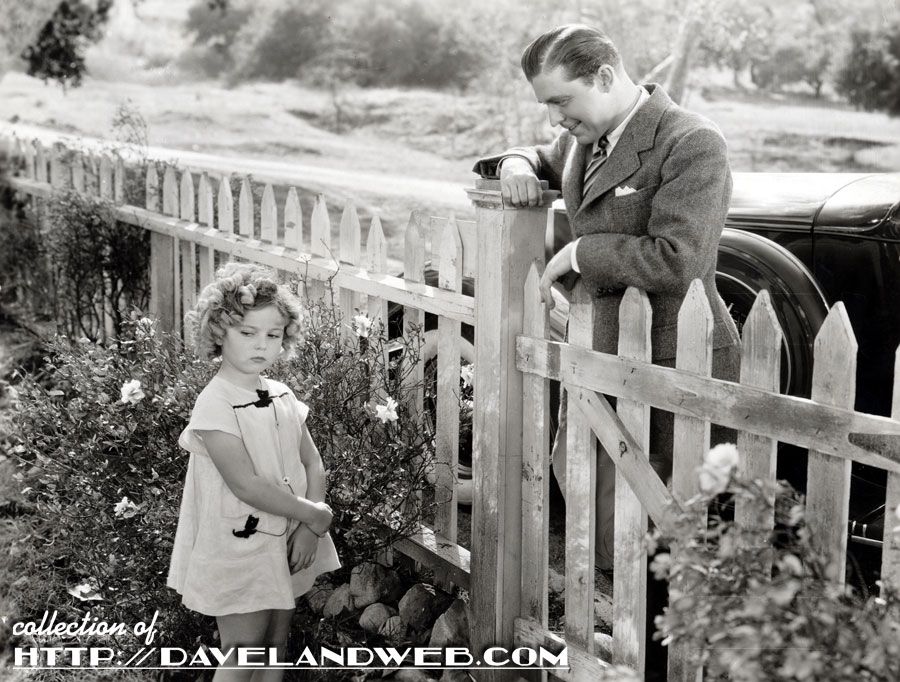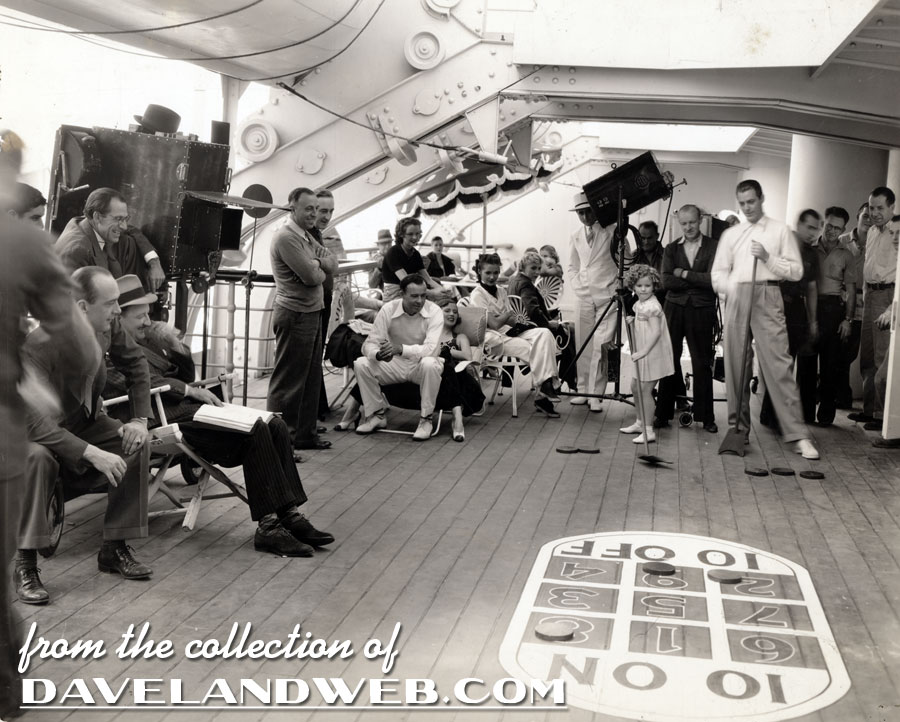
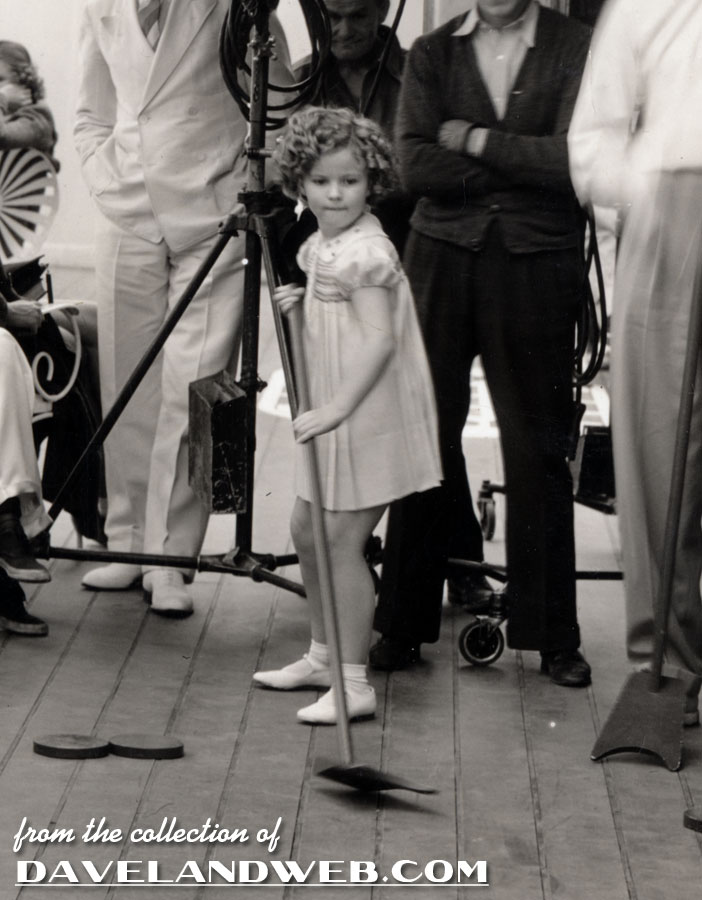
This behind-the-scenes shot from Shirley’s 1936 “Stowaway” has the young star practicing shuffleboard aboard the ocean liner set. Standing next to her is costar Richard Allan.
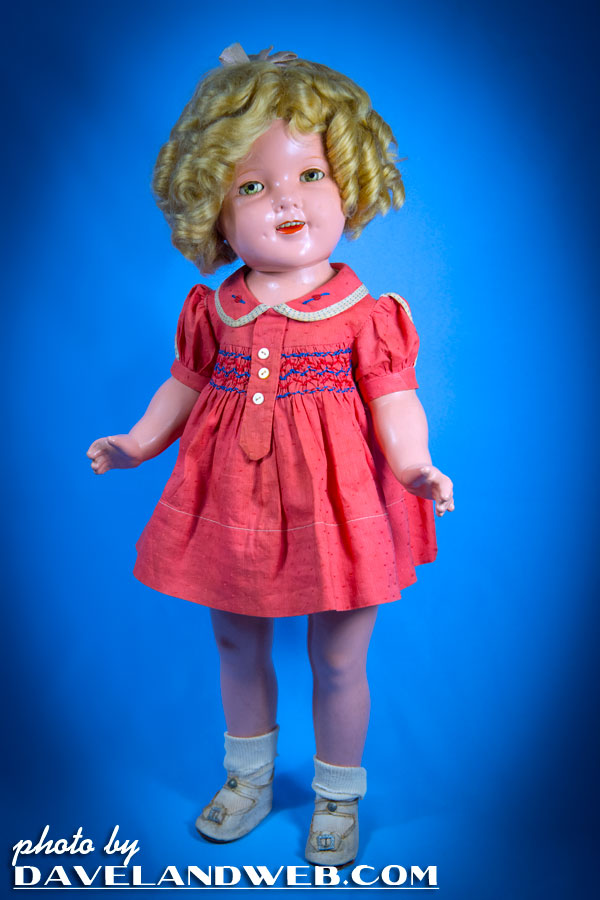
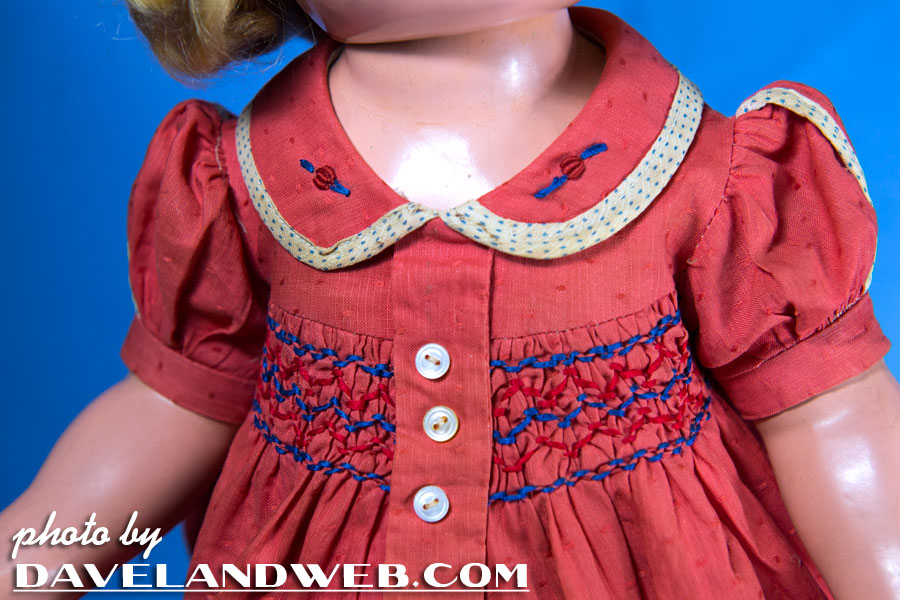
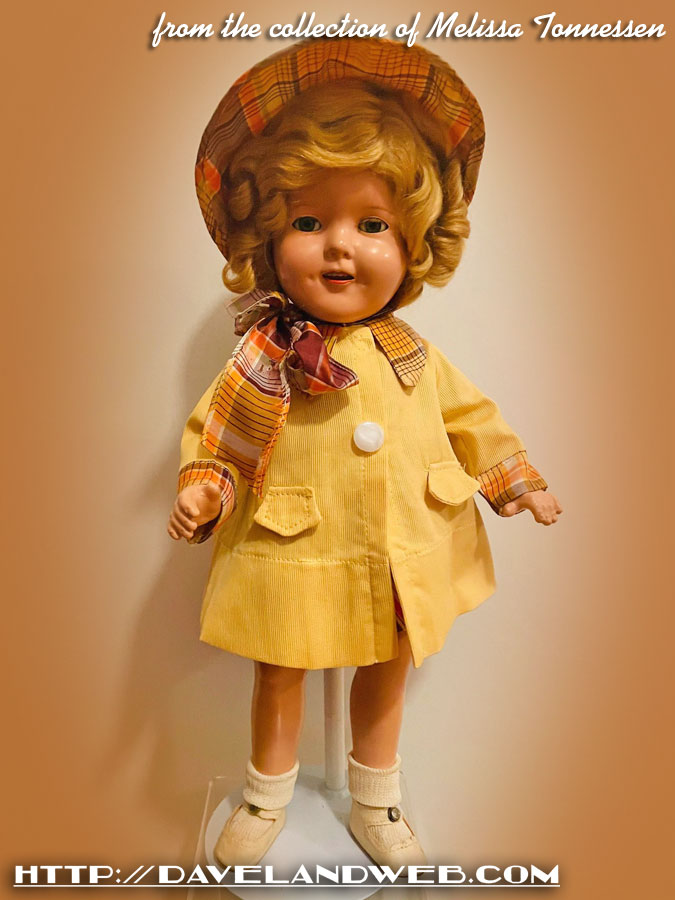
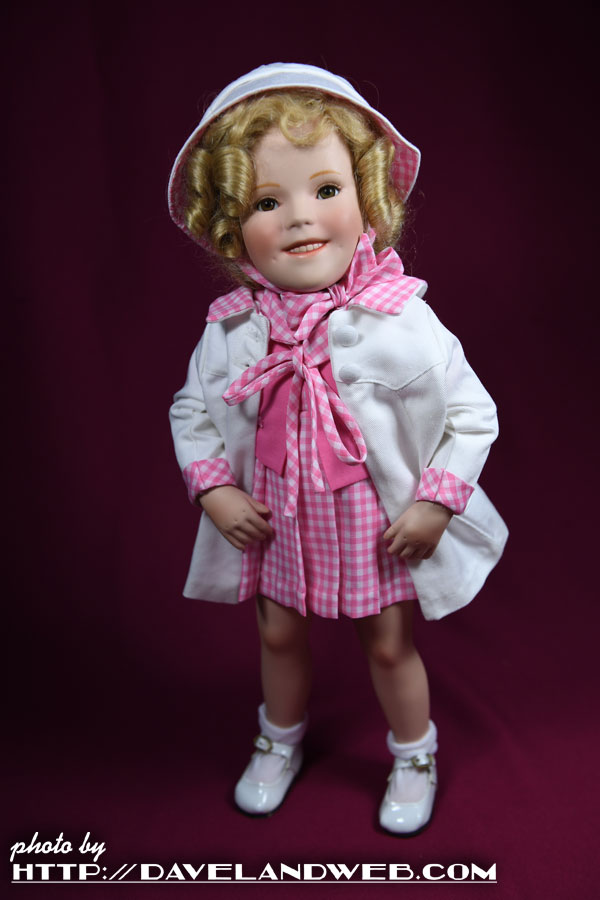
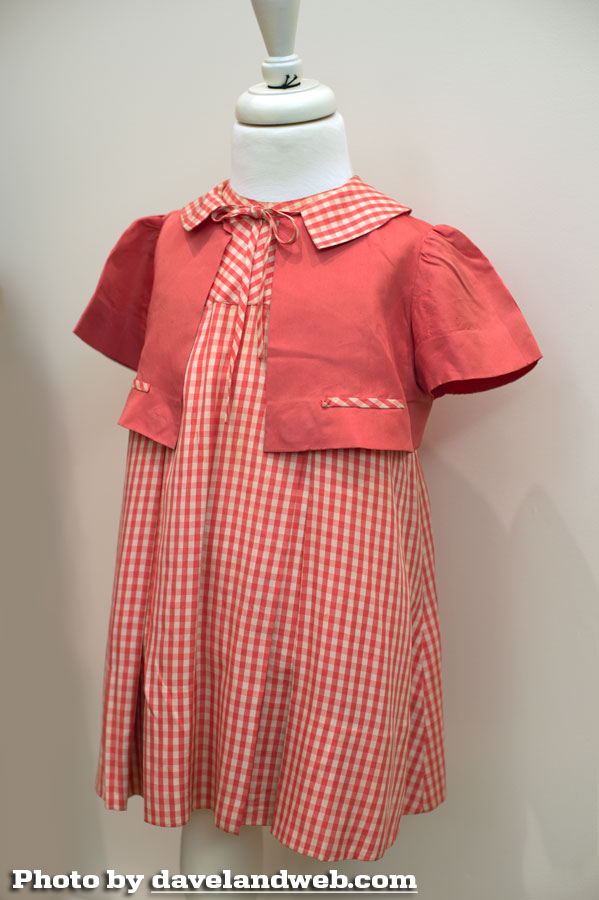
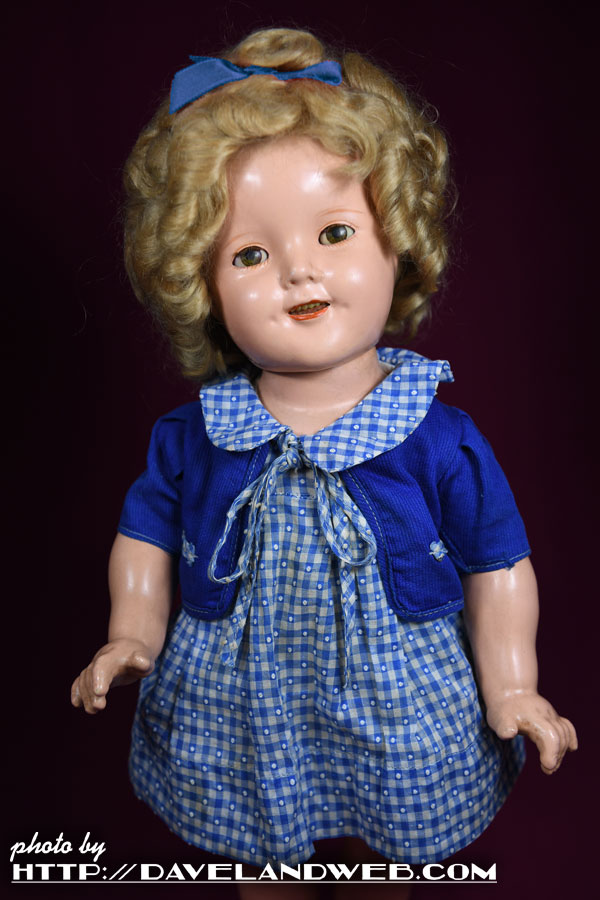
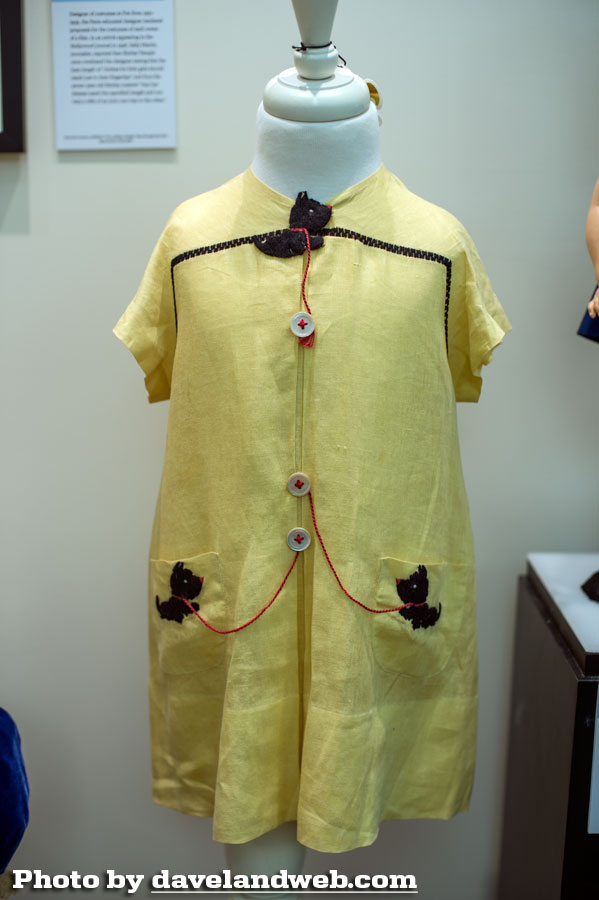
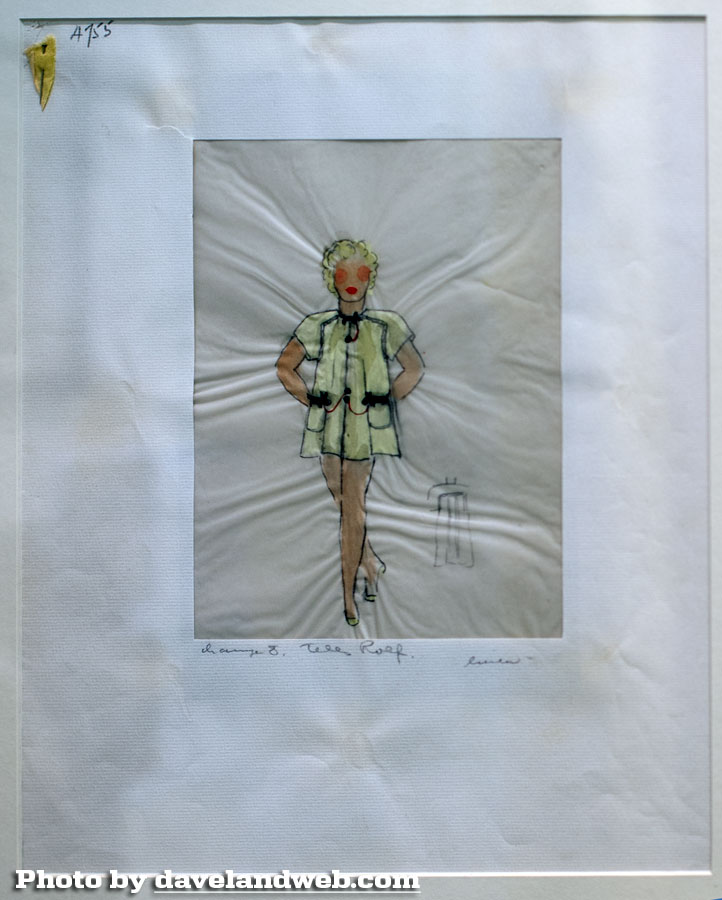
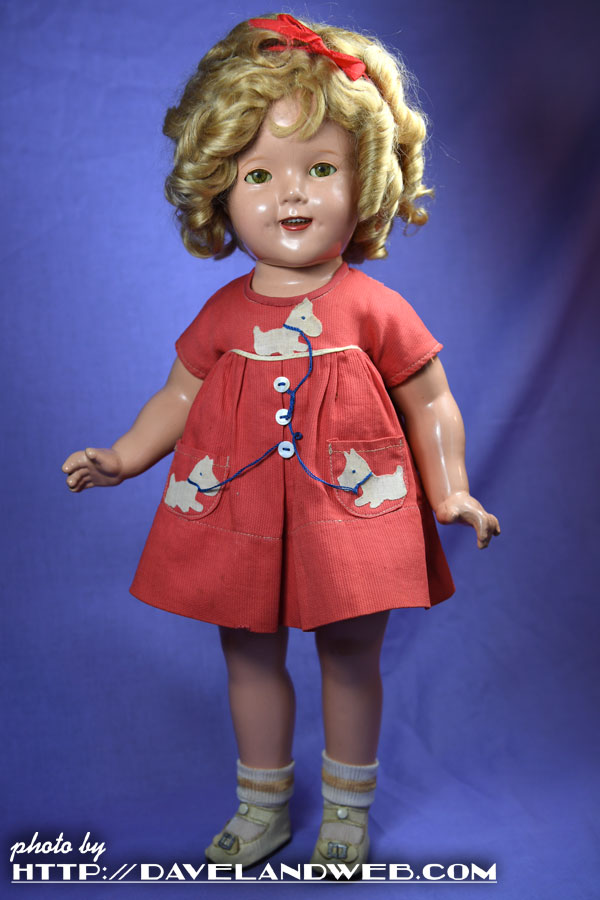
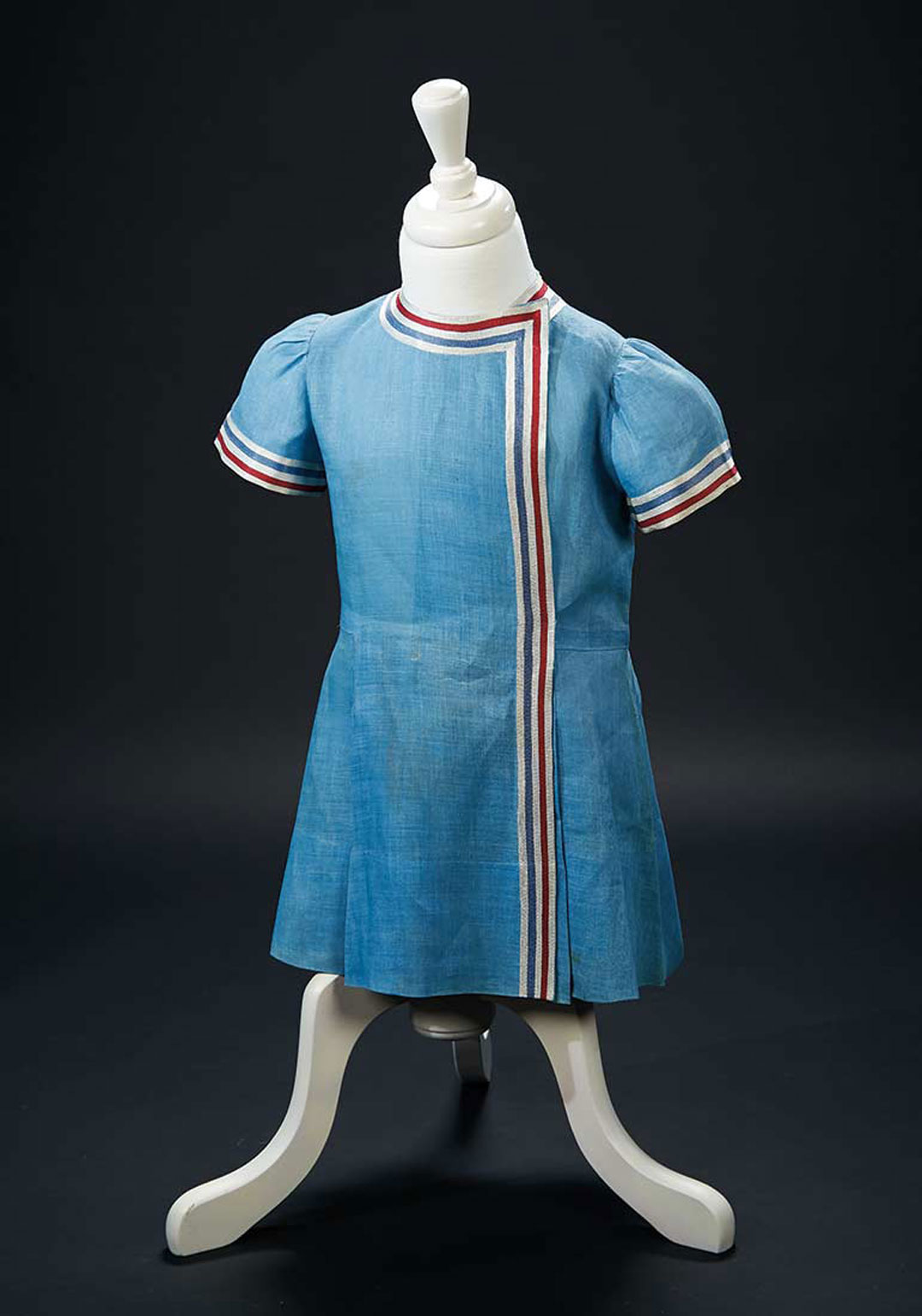
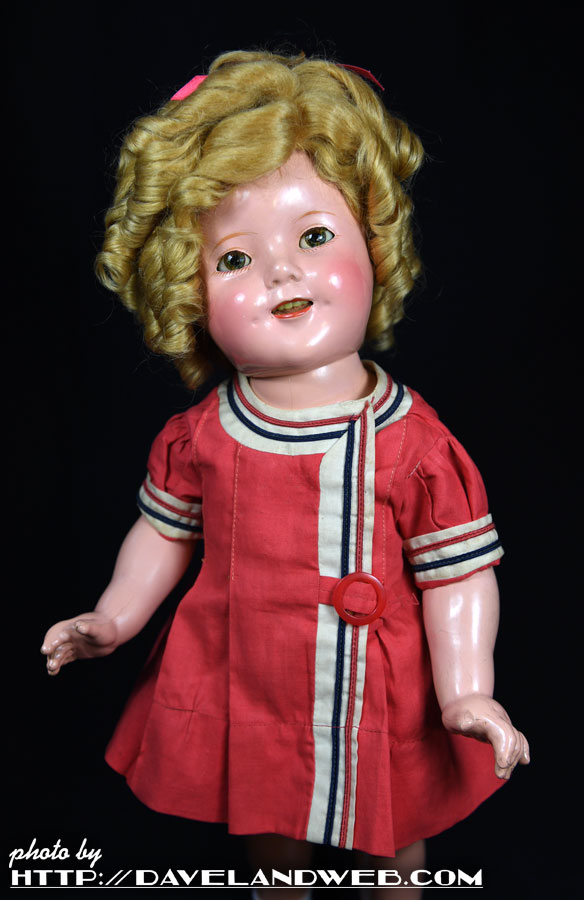
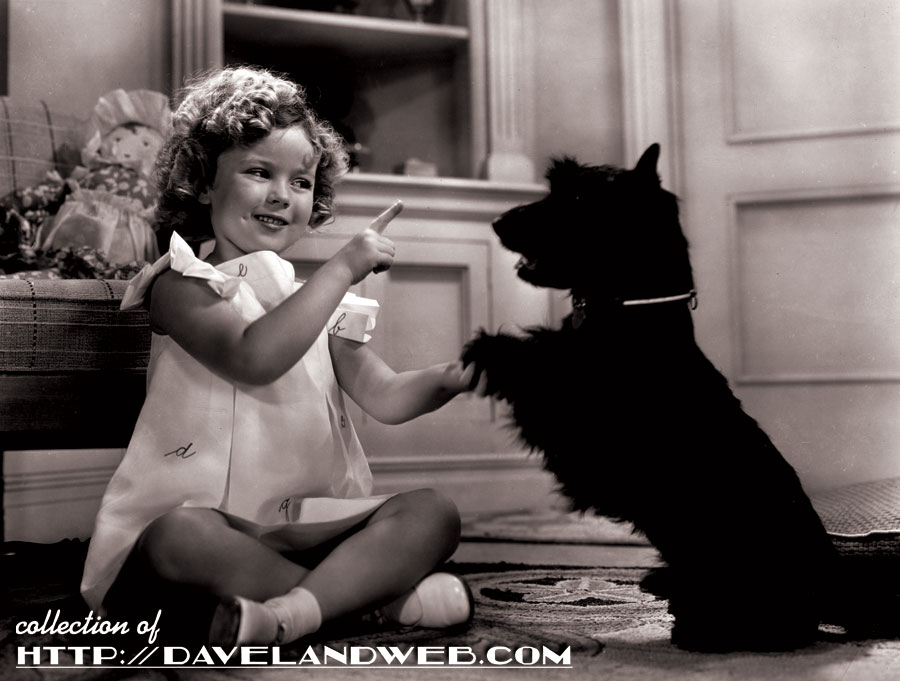
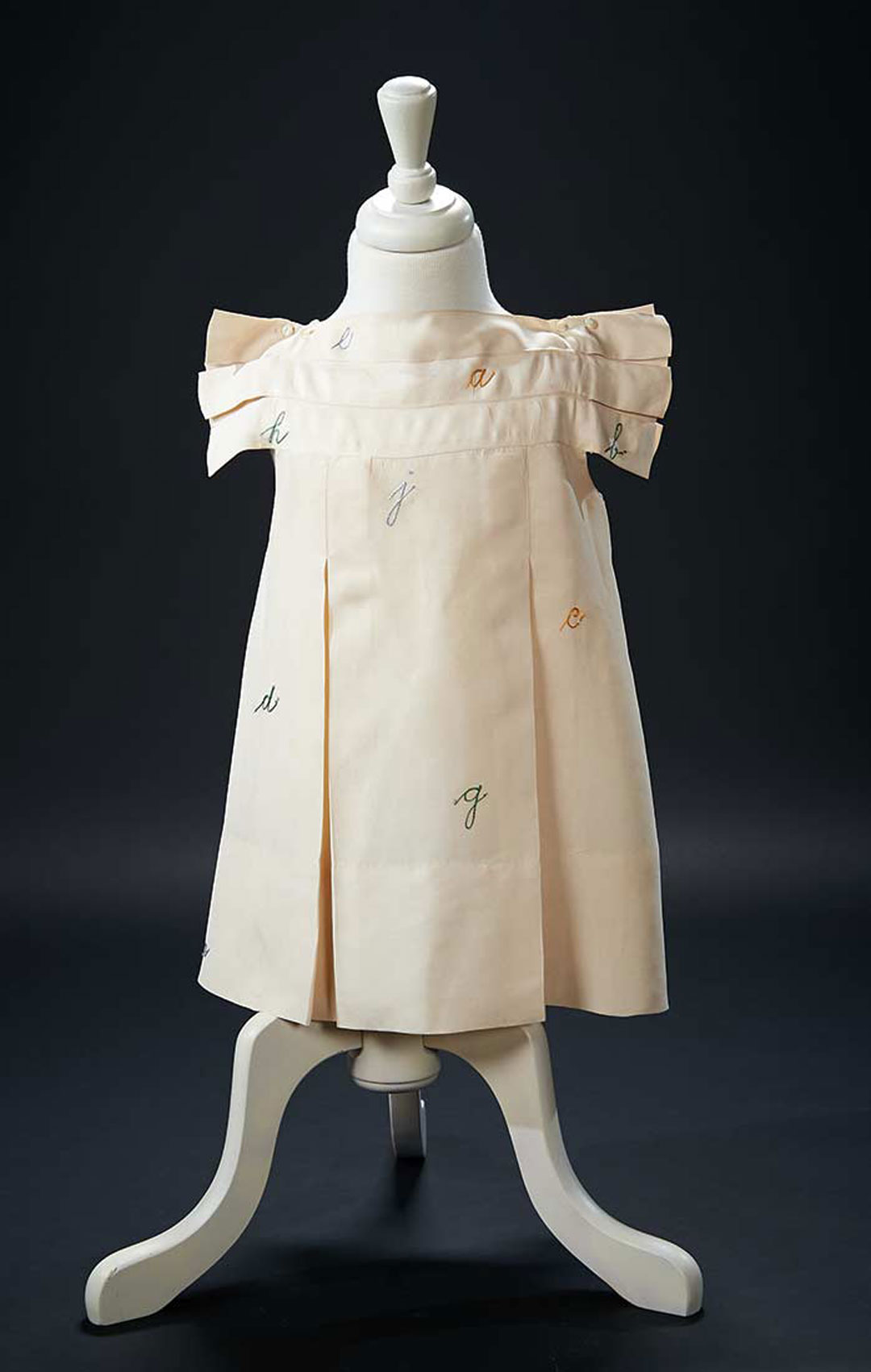
The dress Shirley is wearing would be made in doll-size for the popular Ideal composition toy that parents spent their hard-earned Depression era dollars on. Here’s the 20" version of that dress:
Check out the embroidery details! For a mass-market toy, this is true craftsmanship.
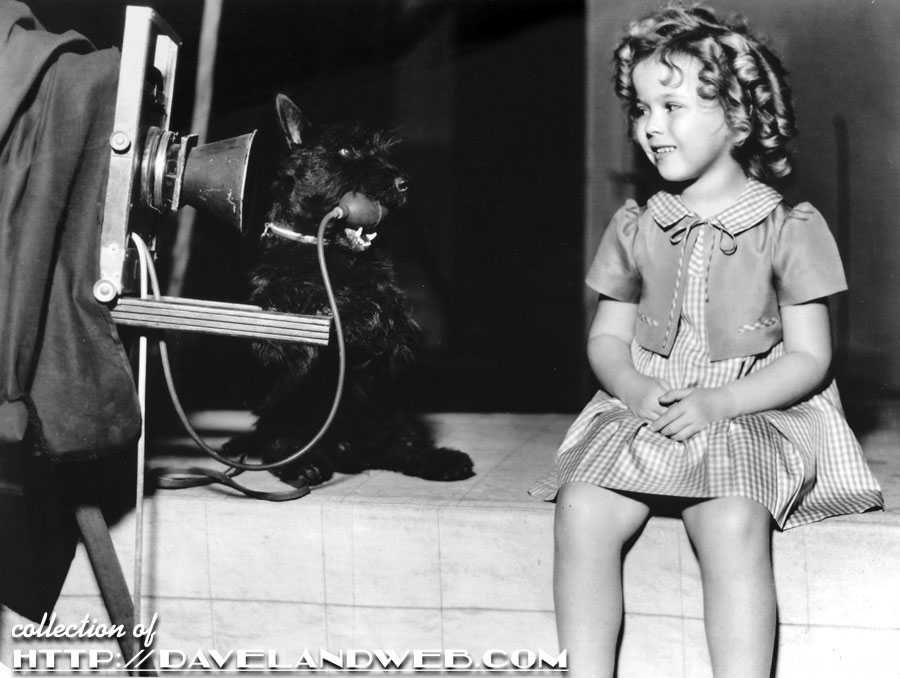
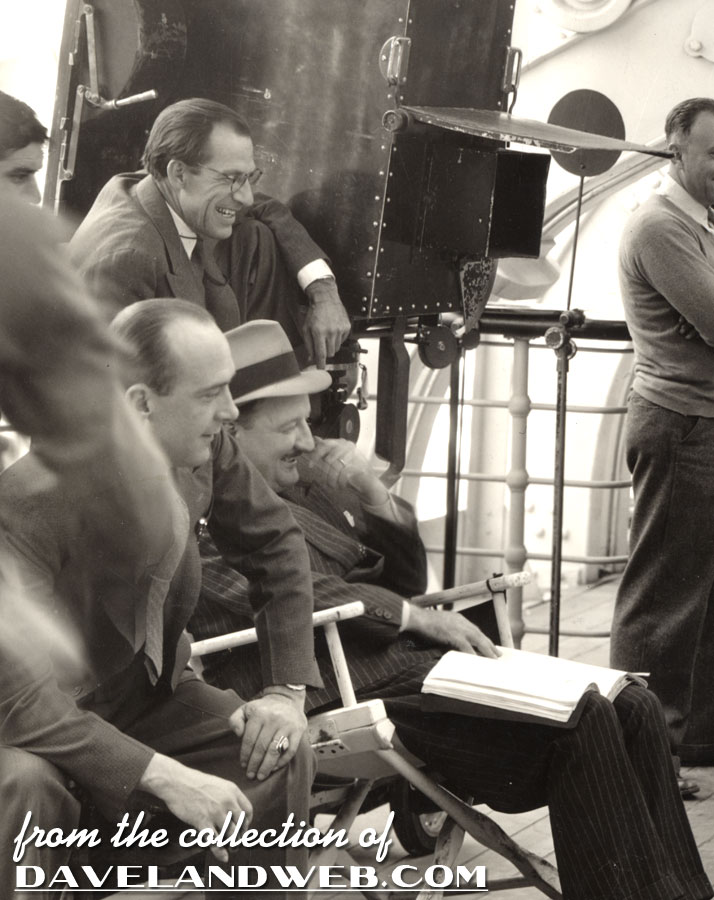
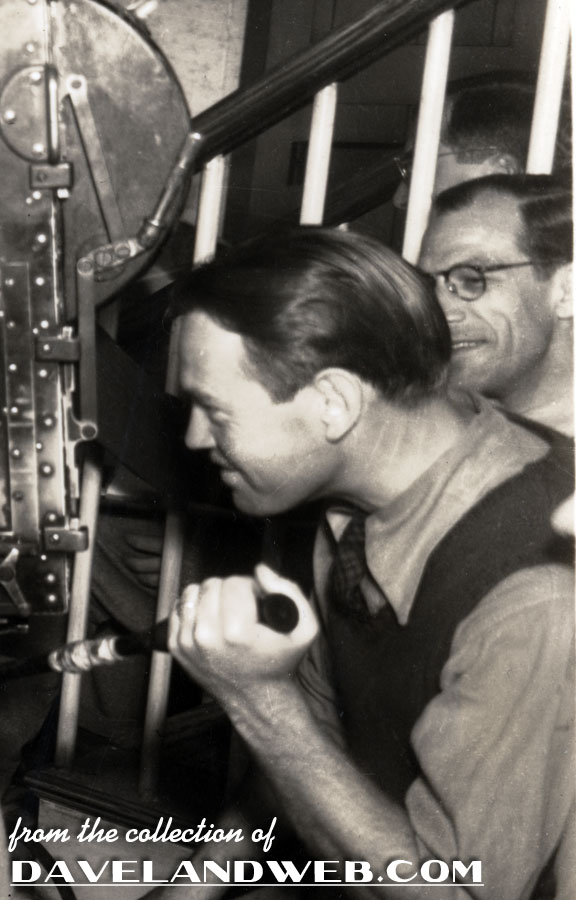
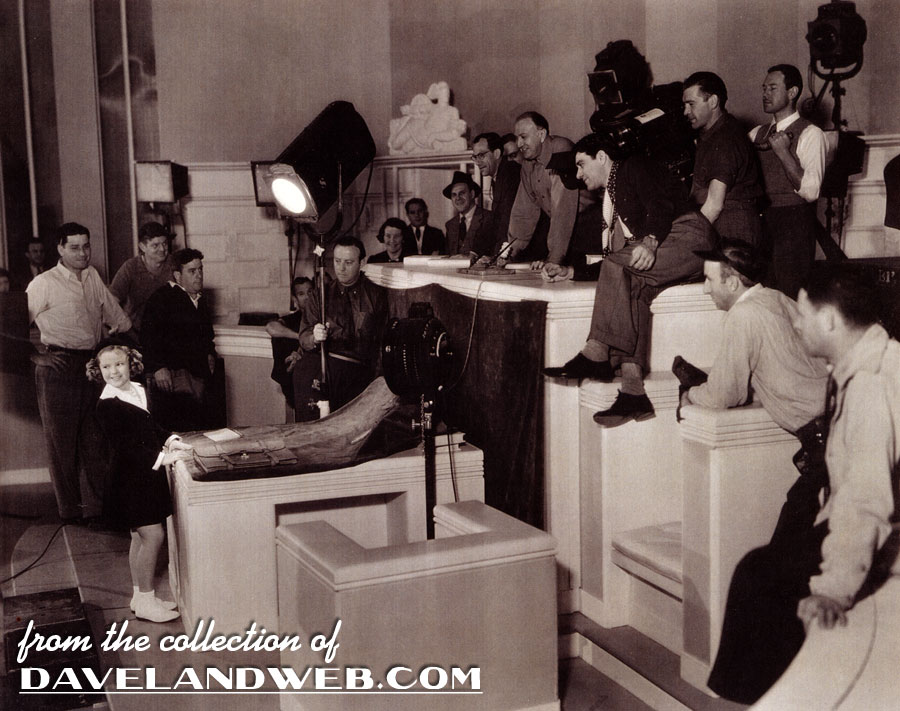
Back to the initial photo…in this detailed view, you can see cameraman Arthur C. Miller smiling on the left. No, not the one that married Marilyn Monroe.
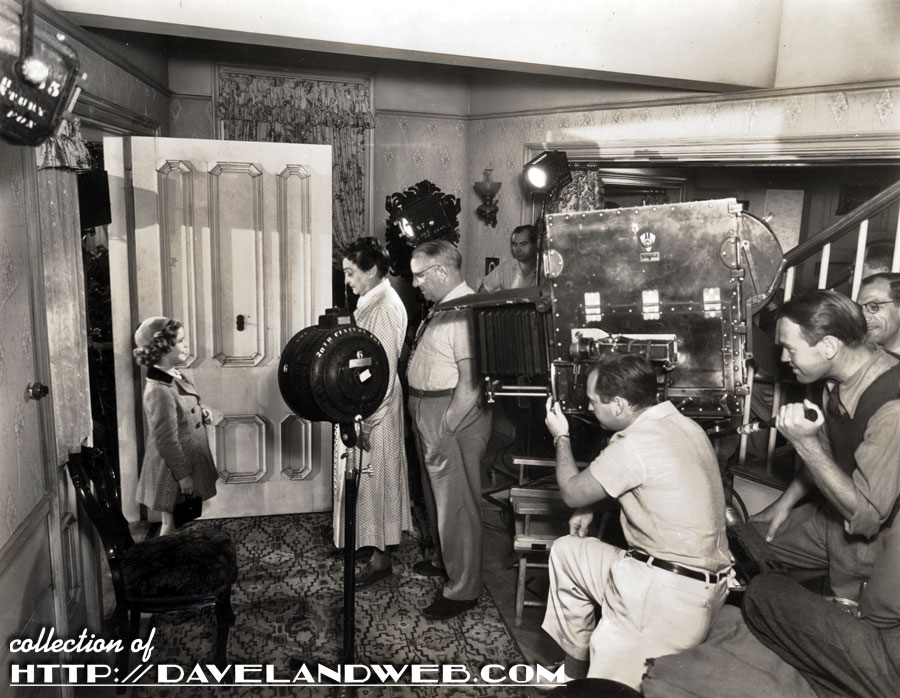
This Arthur Miller was born July 8, 1895 in Roslyn, New York, and was known as one of Hollywood's most accomplished lighting cameramen. He began his career at 13, serving as an assistant to cinematographer Fred J. Balshofer. Miller photographed the serial "The Perils of Pauline" in 1914, and then worked with legendary director Cecil B. DeMille. In 1932, Miller shot “Me and My Gal” for director Raoul Walsh, his first picture under a long-term contract he had signed with Fox Films. It was at Fox that he became associated with the two people with whom he would establish his lasting reputation: Shirley Temple and John Ford. Miller became Shirley's personal cameraman for each of her films, with “Bright Eyes” (1934) being the first. Miller created an aura around the tot's blonde locks by back-lighting her head, often lighting her in high key and the actor with whom she was playing in low key to heighten her allure. Miller would use a similar lighting scheme in 1943 to create a mystical effect with Jennifer Jones in “The Song of Bernadette,” which earned him the second of his two Academy Awards for black and white cinematography. Miller first worked together with John Ford in 1937 on Temple’s “Wee Willie Winkie.” Ford gave Miller the freedom to light and photograph a picture the way he desired Their collaboration reached its height when Miller shot “How Green Was My Valley” (1941) for Ford. The typical camerawork at the time tended to emphasis a soft style, which was felt to be more artistic and painterly. Miller, who was a hyper-realist, preferred to create hard images, with deep shadows and brilliant highlights. A master of black-and-white photography, Miller gave his images a high glossiness and intense coloration. Both Miller and Ford won Oscars in 1942 for “Valley”; Miller for his cinematography and Ford for his direction. Miller's deep-focus cinematography on the picture beat out Gregg Toland's work for “Citizen Kane” (1941). Miller was very well-respected among his peers, being nominated for an Oscar for cinematography each year from 1940 through 1947, except for 1945. Though his mastery was in black and white, his second Oscar nomination was for the color cinematography of Shirley’s 1940 flop, “The Blue Bird.” Arthur Miller retired in 1951, later serving as president of the American Society of Cinematographers. In the 1960s he set up an extensive exhibit of vintage camera equipment for the ASC. Shoftly before his death, he finished making the documentary “The Moving Picture Camera.” He died on July 13, 1970, in Hollywood, California, from tuberculosis, eight days after his 75th birthday.
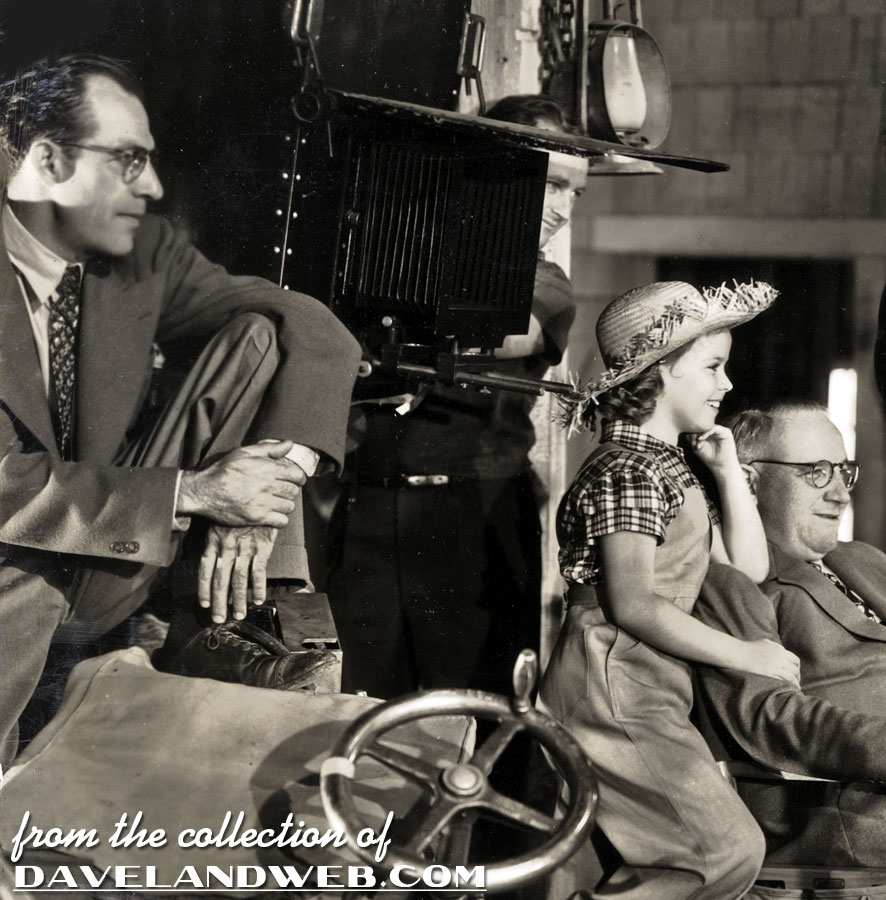
Here he is on the set of “Rebecca of Sunnybrook Farm” (1938):
Another one from the same film with Miller, Shirley, and director Allan Dwan:
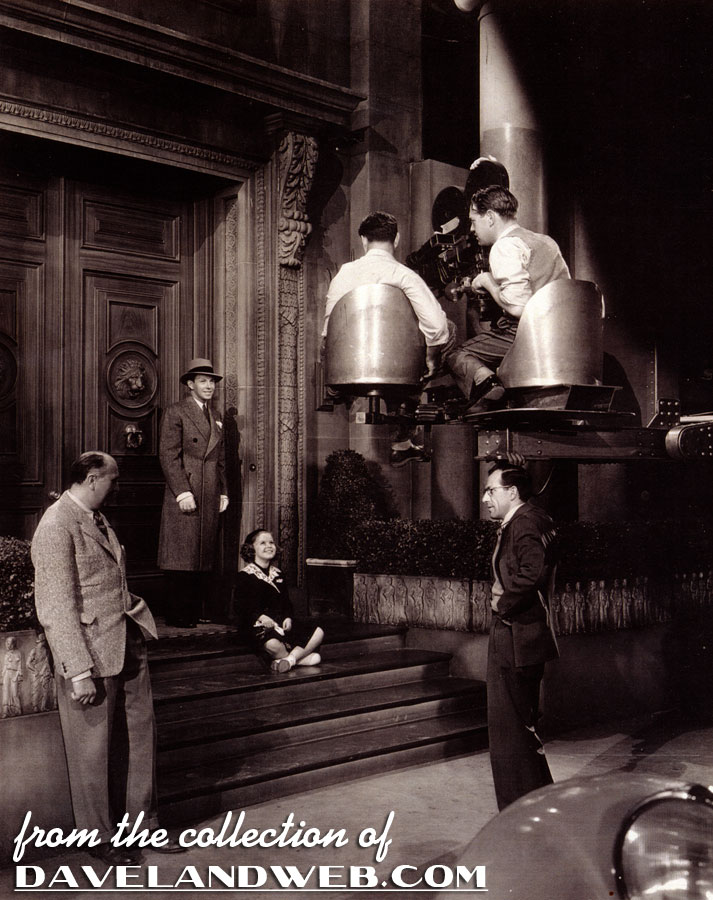
And in “Little Miss Broadway” with director Irving Cummings (born Irving Caminsky), George Murphy, Shirley, and Miller:
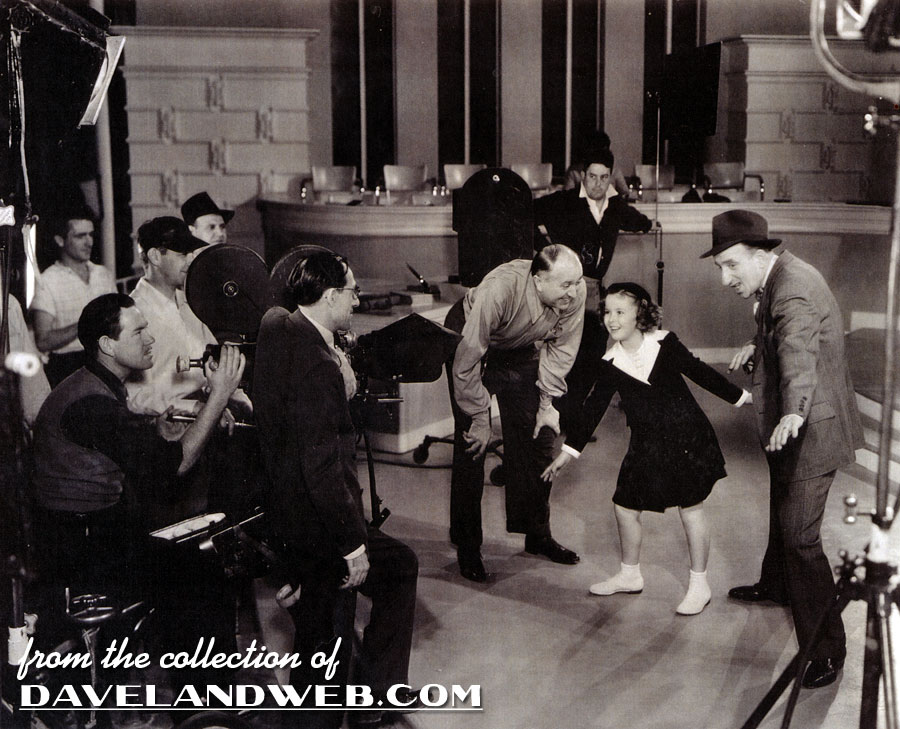
Miller at center, Cummings, Shirley, and Jimmy Durante on the right from “Little Miss Broadway”:
And one more from “Little Miss Broadway,” also from the courtroom scene at the end of the film:
See more Shirley Temple photos at my main website.