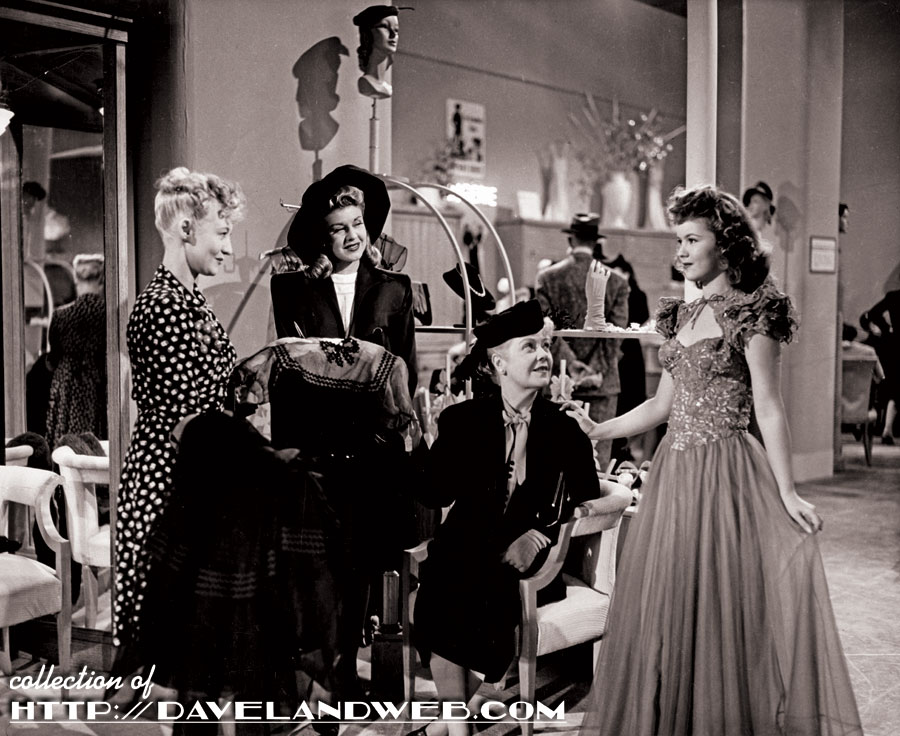
Inspired by a comment from my most devoted reader, Fifthrider, today’s post takes a look at what was said:
Any time I see a pic of Shirley on a date, she's always smiling and the guys always look like someone off camera has a gun pointed at them. I've no idea what the backstory on any of those are, only that no one seems to be willing to smile at a camera for being out on the town with Shirley.
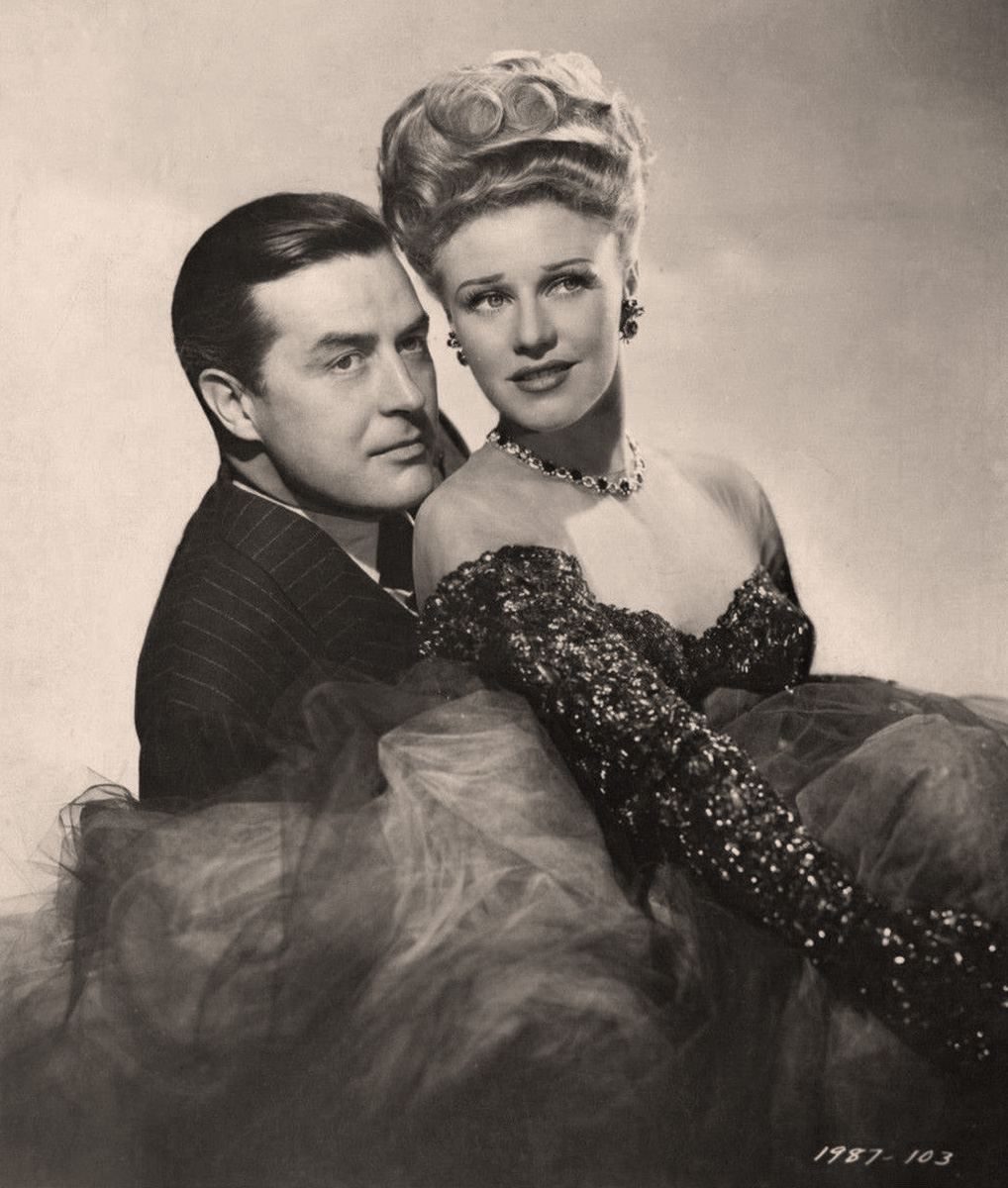
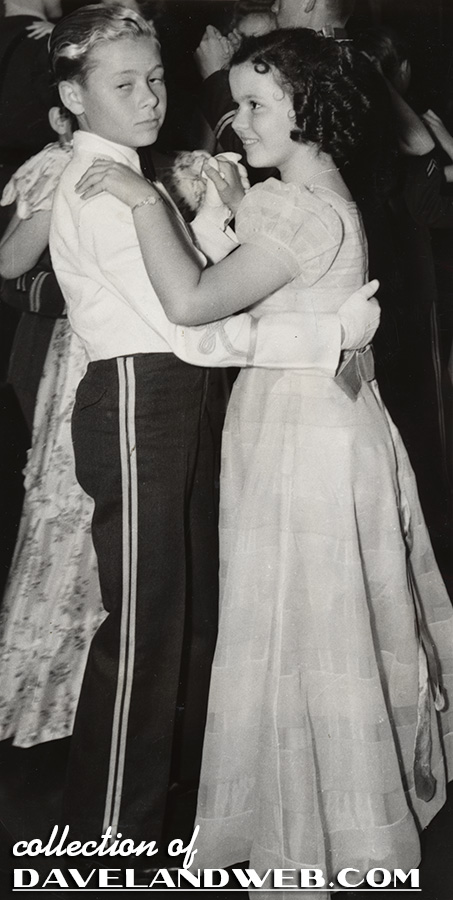
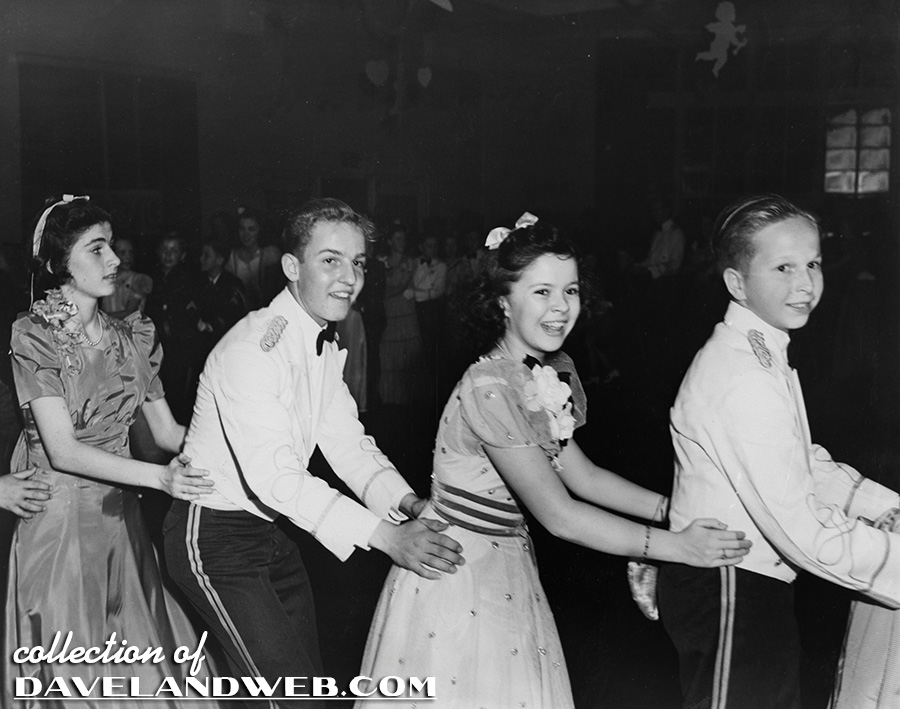
Let’s take a look at the photographic evidence from the Daveland archives, shall we? Exhibit A, the first photo above, with Cadet Captain Raymond Berlinger and Shirley at the California Military Academy formal commencement ball, November 1940. One point for Fifthrider. Below is Exhibit B, with Shirley and date at the California Military Academy Formal Cotillion, February 1941. Both boys are smiling; they realize the perq of being out with Shirley! Sorry, Fifthrider!
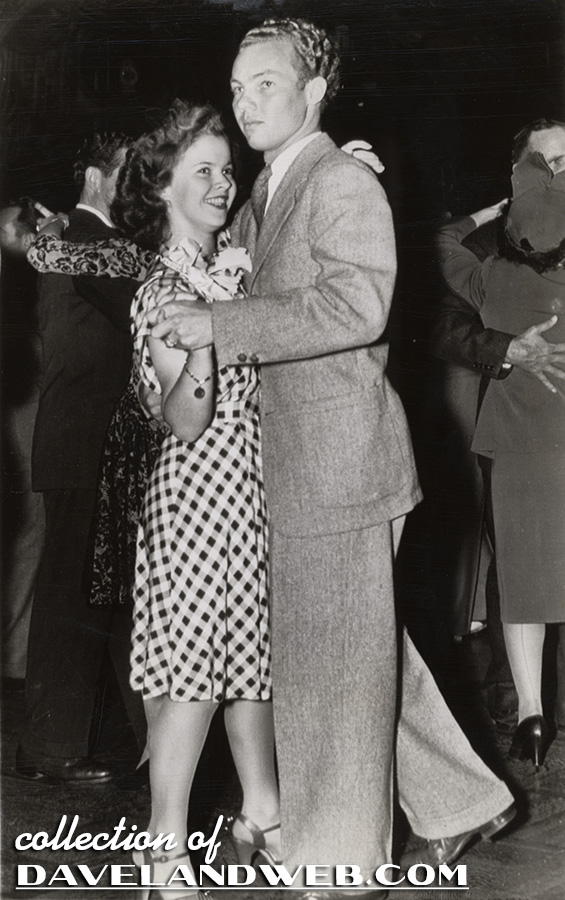
Uh oh…Fifthrider goes into the lead again with Exhibit C, a 1942 shot of Shirley and Earl Miller at the Alpha Sigma pledge dance at Santa Monica junior college. This guy looks like he’s mentally preparing his tax returns.
Back to ground zero with Exhibit D, a February 1944 image of Craig Flanagan and Shirley at the premiere of “Lady in the Dark” starring Ginger Rogers. At least Craig manages to muster a bit of a smile. This one counts in Shirley’s favor!
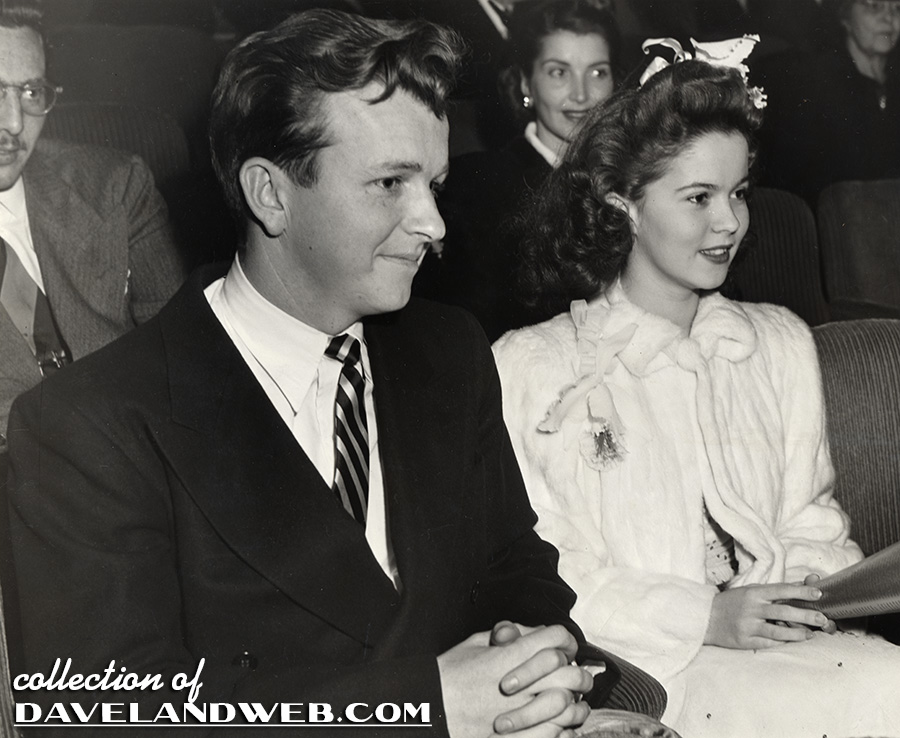
Exhibit E shows Shirley at the “Since You Went Away” premier on July 18, 1944, with her favorite beau at the time, Private Andy Hotchkiss. He appears to be saying, “Let’s ditch your parents and have a REALLY good time!”
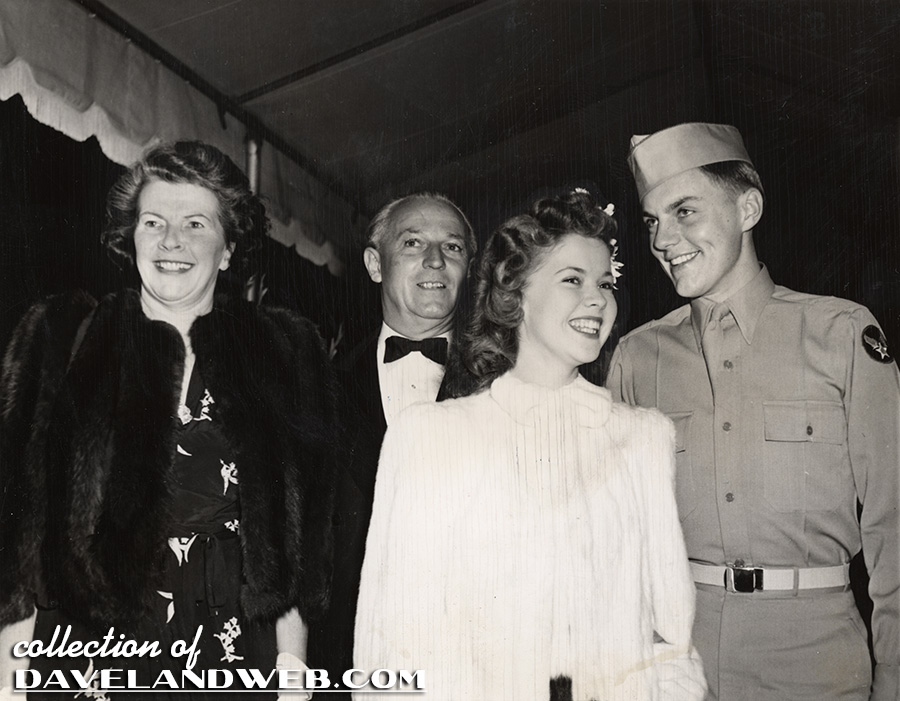
In her autobiography, Child Star, Shirley refers to him in the index as Andrew D. “Hotch” Hotchkin, and in the text solely as “Hotch.” The publicity blurb on the above photo lists him as Hotchkiss. According to various other news items of the time, his name was Hotchkiss. From Ed Sullivan’s column in the Los Angeles Evening Citizen News on August 16, 1944:
Shirley Temple and Air Cadet Andrew Hotchkiss are an item.
Maybe Shirley was attempting to “protect the innocent.” Here’s what Shirley had to say about Hotch on page 335:
At one of those punch-and-cookies school exchanges with Harvard Military Academy, a tall, uniformed senior with straw-blond hair and blue eyes cut in on the dance floor. “I’m Hotch,” he said, leading me in a series of swooping turns, which immediately gained covetous attention from my schoolmates. Not only a superb dancer, he was the most handsome boy I had encountered, someone whose conversation revealed a personality of high energy and bright humor. The austere veneer I had been cultivating was dropped flat and I invited him somewhere at the first opportunity, which happened to be Smart Girl’s Thanksgiving barn dance, complete with blue jeans, checked shirts, and a punch bowl secretly laced with gin, rum, and whiskey. Having no experience with alcohol, let alone such a weird concoction, I sipped away and flirted with Hotch. Suddenly I needed fresh air. Fleeing unsteadily outside into the night, I skidded on something mushy, lurched, and slid sideways into a shallow depression, landing on my hands and knees. Even in the darkness I recognized the odor of richly decomposed manure, a perfectly good place to vomit. Having followed me in perhaps romantic anticipation, Hotch witnessed my performance from the bank above. When I had finished he reached down and hauled me up from the gluey clutch of the pit. Using a nearby hose, he washed me off, spread newspapers on his car seat, and drove me home. A charming date, for sure, and an unusual start to enduring love.
By page 369, Shirley had grown weary of Hotch:
Hotch showed up at our hotel on a twenty-four-hour pass from his Madison, Wisconsin, air base. Either from pining away or eating serviceman’s chow, he had grown lean and hollow-eyed. Although older on the calendar, he seemed younger in fact. From a playful, resourceful partner in puppy love, he now seemed to plead for repeated affirmation that he still rated number one. Perhaps what I saw was a junior airman trained to being bossed. However, the more subservient he seemed, the more I lost interest. The more obsequious, the less my affection. Obviously, we were two young people growing up in a different directions at different rates. It was our first reunion, but I realized absence had helped snuff out the love light.
I don’t quite know how to count Exhibit F below; is the guy smiling? Is he high?
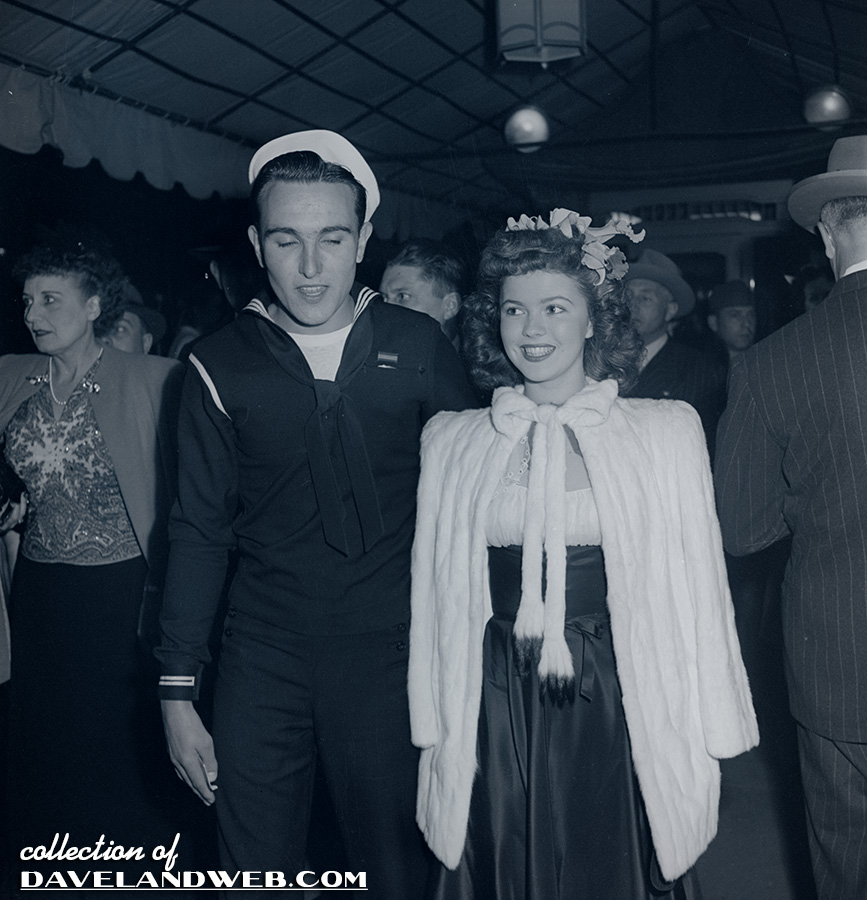
Exhibit G is from August 1944. Shirley is with opera singer/auto nut James Melton. He had romantic intentions for Shirley, but her mother blocked them. From Child Star:
Thirty-year old James Melton, houseguest at ZaSu Pitts’ next door, occupied a room facing my bathroom window. My first clue to his presence came on morning while brushing my teeth. Suddenly a love song came belting across from his open window. Looking up from my basin I saw both his arms extended in a romantic finale. In addition to boasting a magnificent outdoor singing voice, he was an antique car buff. Inviting me to accompany him on a ride in one of his heirlooms, he managed, between gearshift, rubber squeeze horn, and ratchet brake, to suggestively cling to my hand. Mother soon saw he was hanging around too much for someone twice my age and sweetly suggested that henceforth I would probably be too busy with rehearsals to see him.
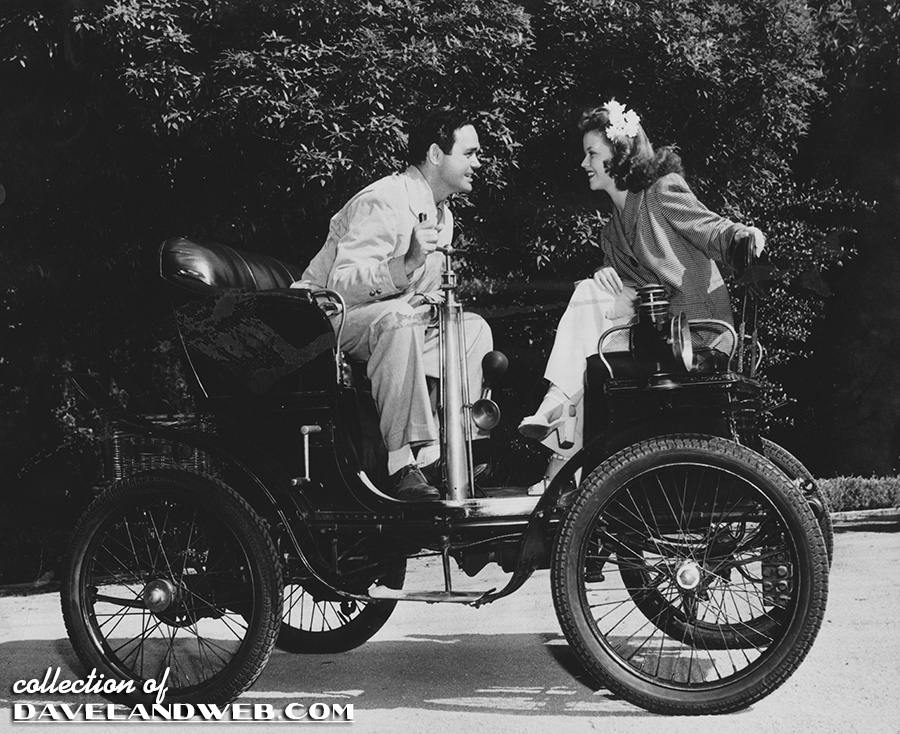
While the relationship was torpedoed, this guy is clearly smiling! Exhibit H is the photo that inspired today’s post. Shirley’s date is modeling the expression one would wear once the ex-lax starts kicking in. Circa 1944.
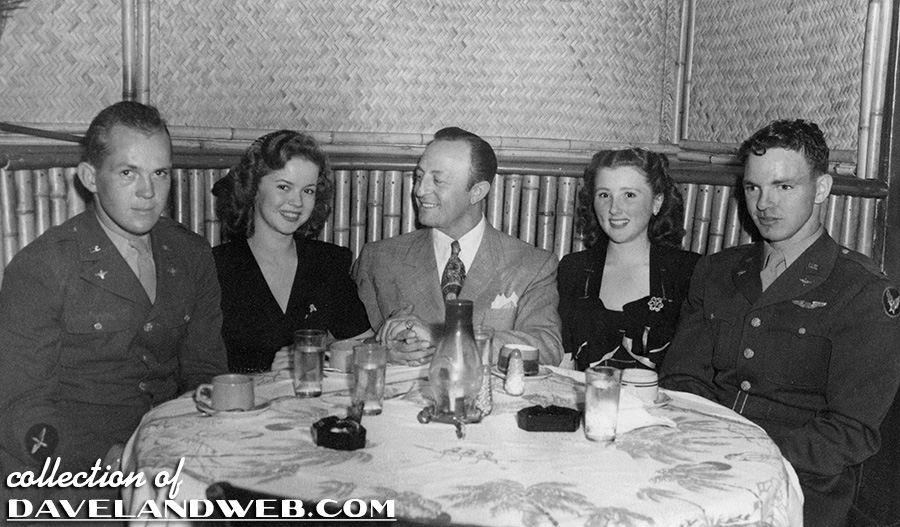
In 1945, Shirley’s dating career as a teen ended when she said “yes” to Sergeant John Agar after he popped the question. In Exhibit I, both are all smiles.
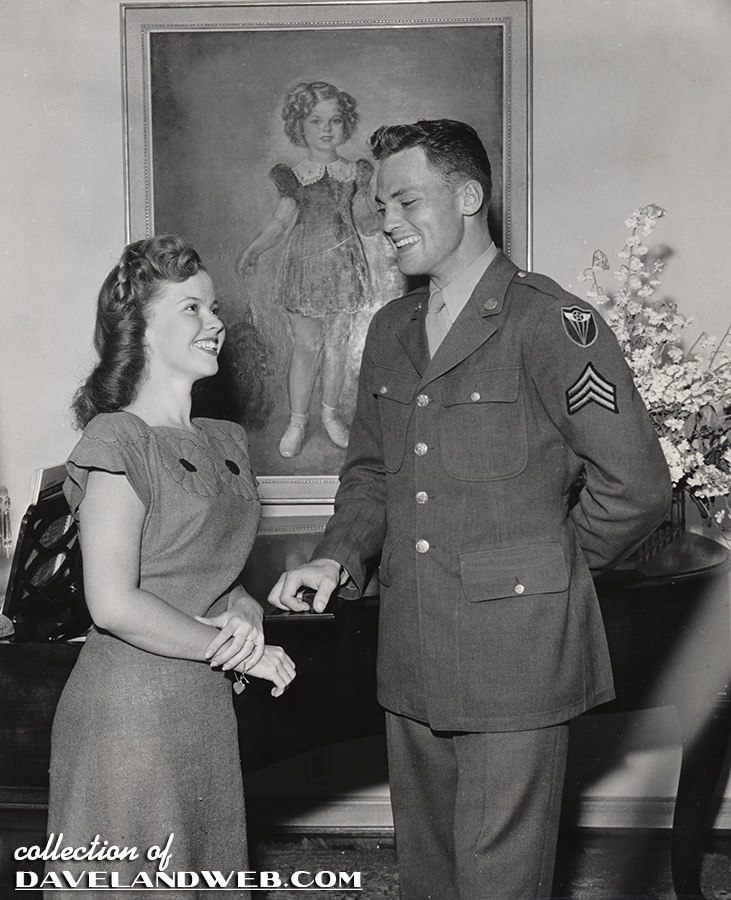
Based solely on the Daveland collection (including the engagement photo above), it appears Shirley is the winner in the make-your-date-smile department. In all seriousness, most of the guys at the time were probably in awe of being out on the town with Shirley Temple. Considering the majority of them were military, they were not trained on how to relax for the cameras. Anybody out there have photographic proof to tip the scales one way or the other?
See more Shirley Temple photos at my main website.