Showing posts with label ginger rogers. Show all posts

Thursday, July 09, 2026

Fred & Ginger: Together Forever


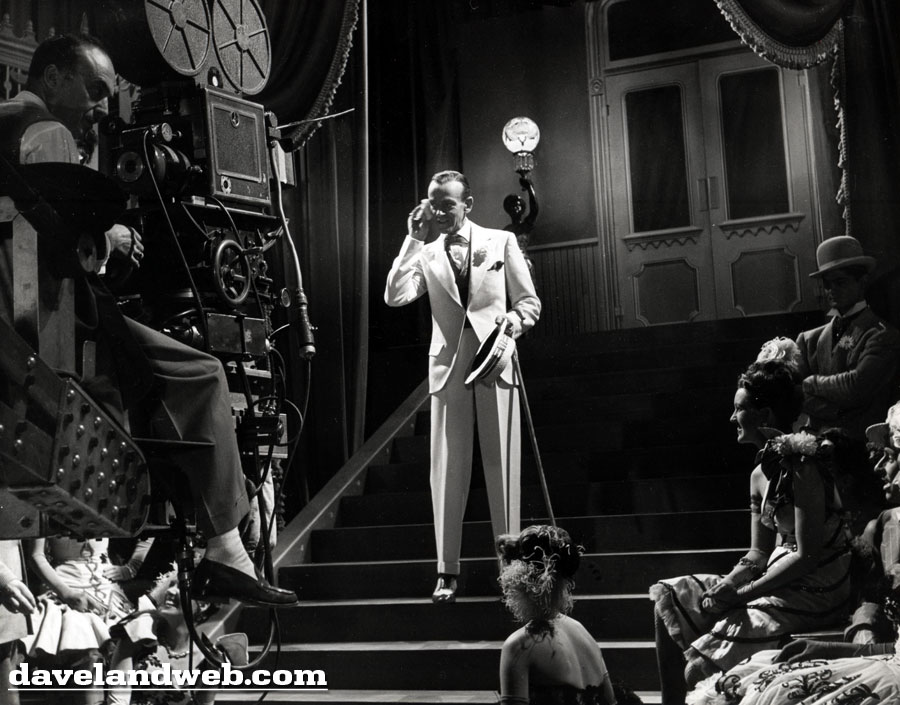
In my quest to visit historic cemeteries, Oakwood Memorial Park was low on the totem pole. Located in Chatsworth, it’s just far enough away from LA/Hollywood to make it an inconvenient trip. Last month though, I finally rectified that situation! The area surrounding the cemetery which opened in 1924 is plagued by 1990s faux adobe architectural style, and the entrance to Oakwood is not much better, littered with mismatched signs. How could this be the final resting place of a classy guy like dancer/actor Fred Astaire, seen below in a behind-the-scenes shot from “Easter Parade” (1948):


And yet, here’s where he lies for all of eternity. The cemetery is pretty much all markers vs. headstones. Unlike most of the cemeteries I have visited, this one just feels a bit sterile without much character. Even Fred’s marker is a bit curious; I “assume” his last wife, Robyn Smith, is the “I” in the inscription. No birth/death dates listed, either. I wonder how his kids feel about this, as the “I” definitely leaves them out of the picture. Wouldn’t “we” have been a bit more inclusive? Ah, the things one could infer from a single sentence.


Fred’s sister and initial dancing partner, Adele, has a more traditional inscription:


Fred and Adele’s mother:


Fred’s first wife, Phyllis, who died of lung cancer in 1954, leaving him devastated:


Although they were just about the most famous dancing pair from Old Hollywood, Fred Astaire and Ginger Rogers were never married to each other or even linked romantically. Just work buddies.


Below is the marker for Ginger and her mother, Lela. I’m not sure how it happened, but yes, Fred & Ginger are buried at the same cemetery.


You might remember Oscar winning actress Gloria Graham from “It’s a Wonderful Life” (pictured below), “The Bad and the Beautiful,” or “Oklahoma.”
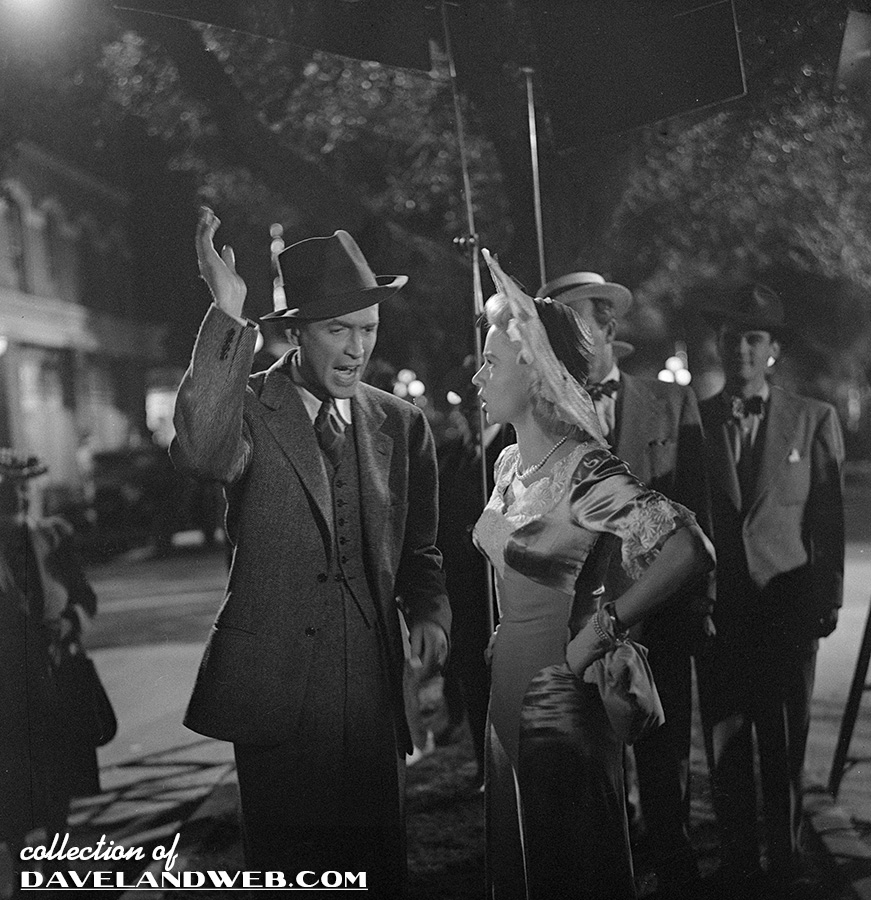


She is buried here at Oakwood, too. She was married four times; #2 was director Nicholas Ray and #4 was her stepson, Anthony Ray. Talk about all in the family…


Nearby is the historic Pioneer Church, which was built in another location in 1903 and originally called the Chatsworth Community Church. A lot of great info about this place on the Chatsworth History website.


In 1962, the building was set to be demolished, but instead ended up being moved to its present location in 1965.


The fundraising to move the building was begun by a $1000 donation from the famed Dale and Roy Rogers. The two also held an “Appreciation Reception” at their ranch, attended by over 200 people. Any of my readers in attendance? Interestingly enough, Dale and Roy are buried elsewhere (in Apple Valley), not here in Chatsworth.


When the foundation of the church was removed, the Church Cornerstone revealed several items including a bible, a Sunday School attendance roster dated January 8, 1903 and a membership list of the church’s ladies aid society. The items were saved, but exposure to the air after being stored in the stone, with no protective container, caused them to crumble within the week. Oops.


Inside the entrance to Oakwood is the Chapel of the Oaks, built in 1933. At least this building has a bit of authentic character.


Wikipedia lists actor Earl Holliman (shown below with Cloris Leachman) as a “resident” of Oakwood, yet he was nowhere to be found. Upon further investigation, the Find A Grave website lists him as being buried at Valhalla Memorial Park in North Hollywood. AI says that Holliman’s ashes were scattered at sea, but that he has a memorial cenotaph at Valhalla.


With inhabitants Bea Benadaret and Oliver Hardy, I guess I need to add Valhalla to my list of places to visit!

See more cemetery photos at my main website.

Tuesday, March 17, 2026

The Oscars: Shirley On Location


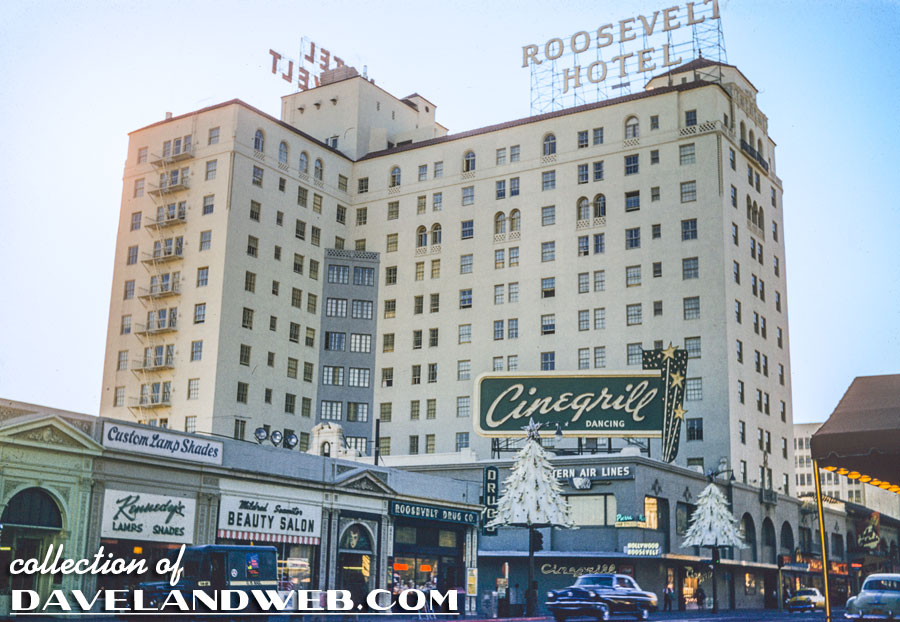
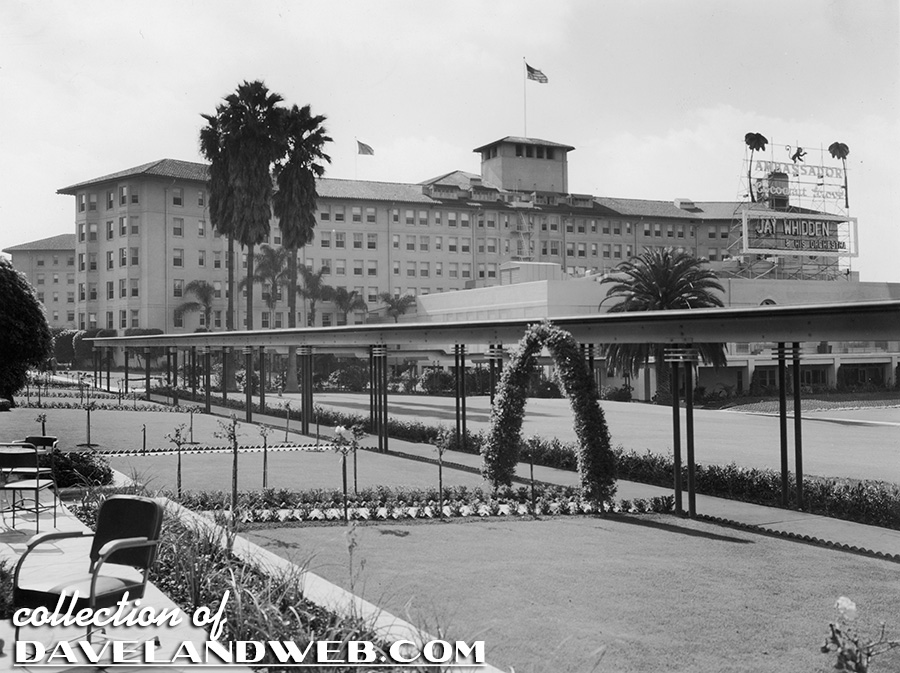
Over the years, The Oscars have bounced around from location to location. The very first one was held at the Hollywood Roosevelt Hotel in the Blossom Room on May 16, 1929. The Roosevelt still operates today; above is a 1950s image of the Hollywood Boulevard hotel. The Ambassador Hotel held the dinner for the second Academy Awards event on April 3, 1930, as well as in 1932, 1934, 1940, and 1943.


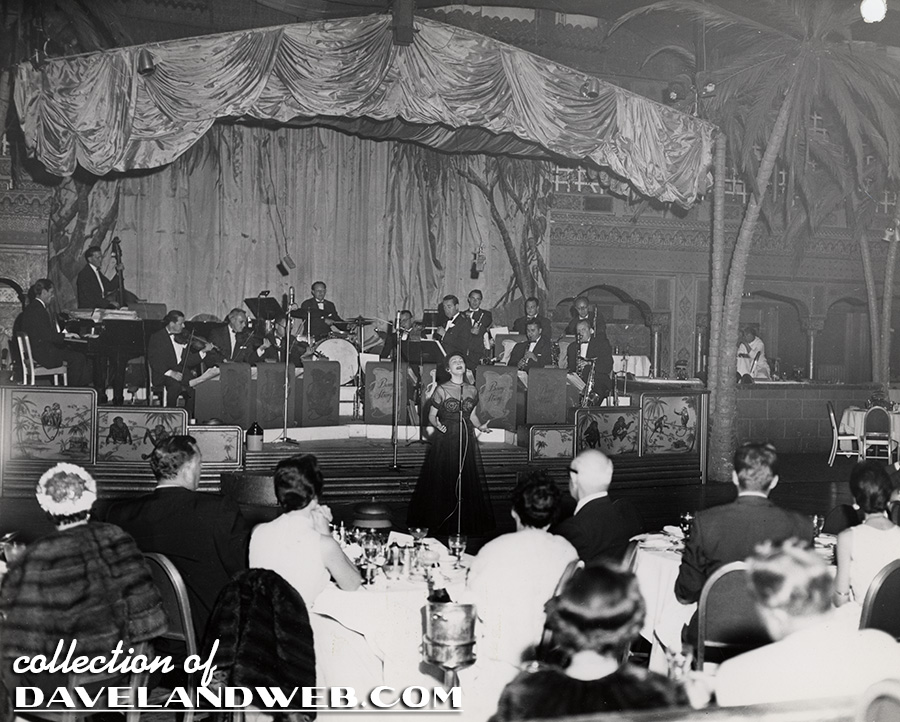
All were in the Cocoanut Grove nightclub (below) except for 1932, which was in The Fiesta Room.


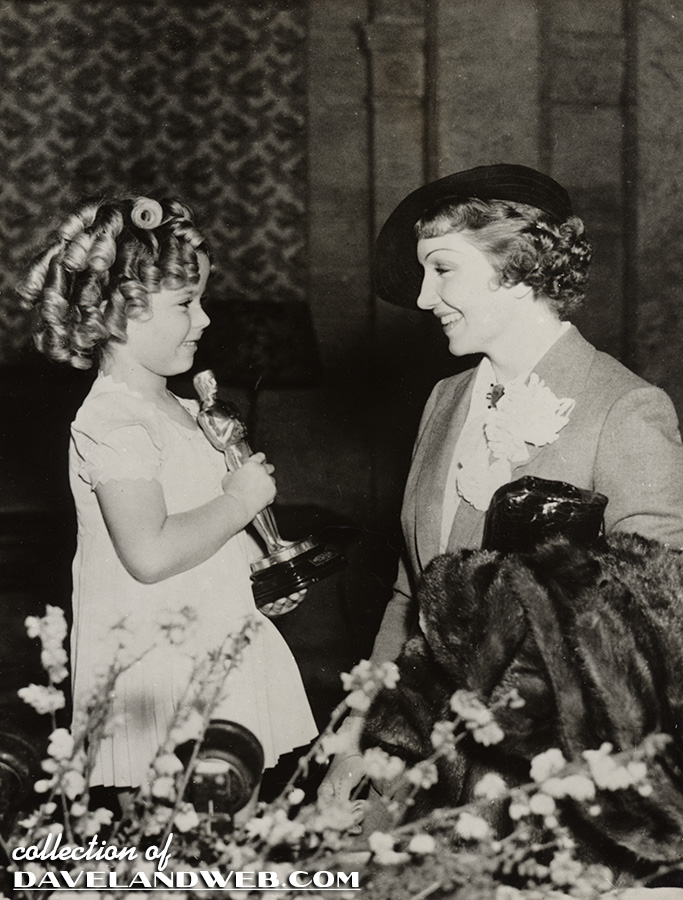
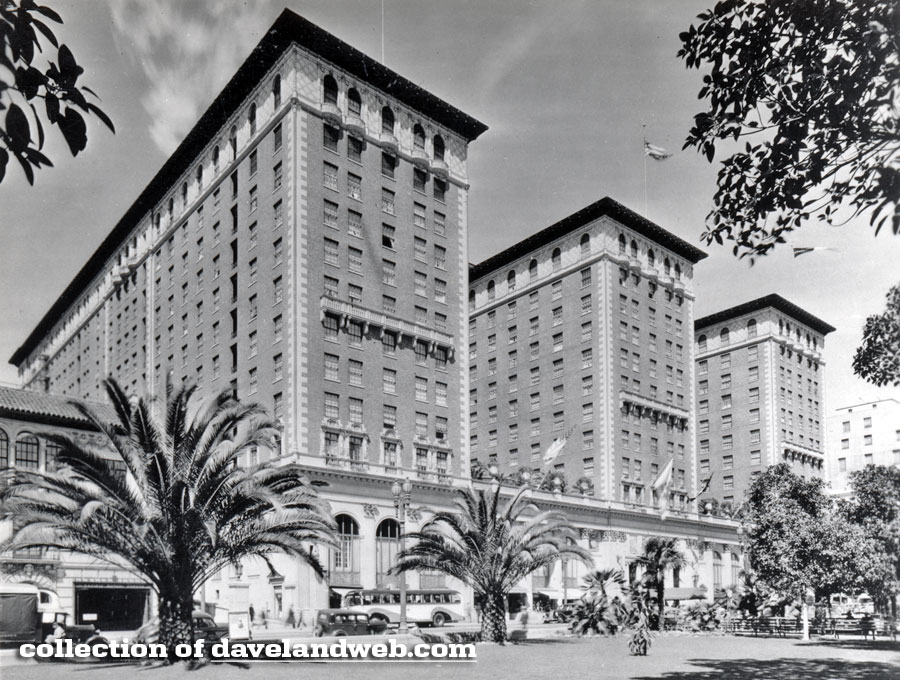
The Oscars were held in downtown Los Angeles at the Biltmore Hotel in 1931 and then 1935 through 1939. Below, Shirley Temple gives Claudette Colbert her Best Actress award for “It Happened One Night” (1934):


On February 23, 1939, Shirley famously presented Walt Disney with his specially designed Oscar for “Snow White and the Seven Dwarfs” (1937):


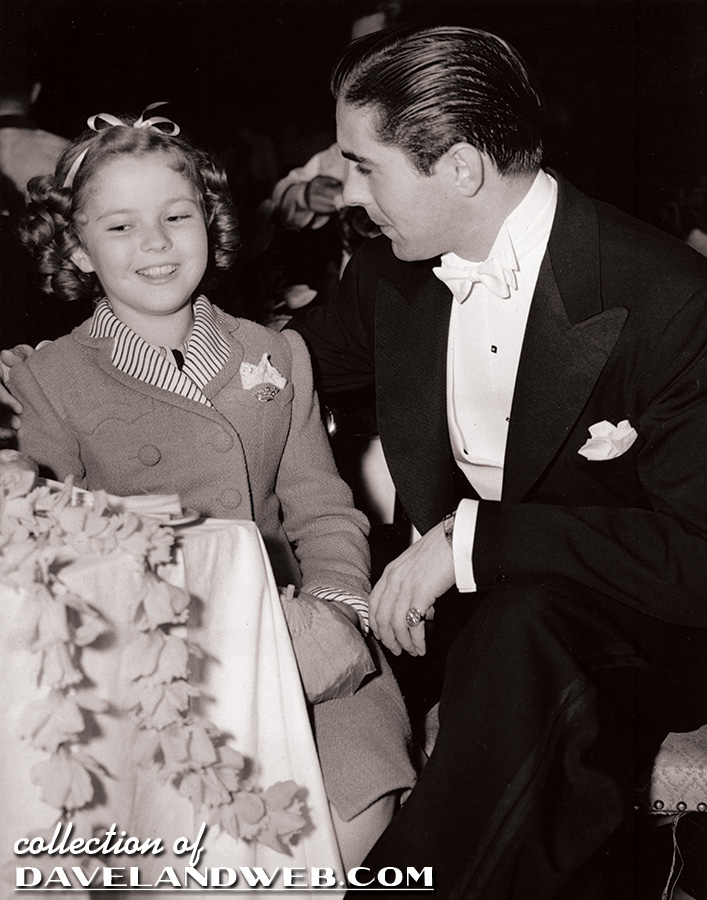
Shirley also hobnobbed with Tyrone Power:


Douglas Fairbanks:


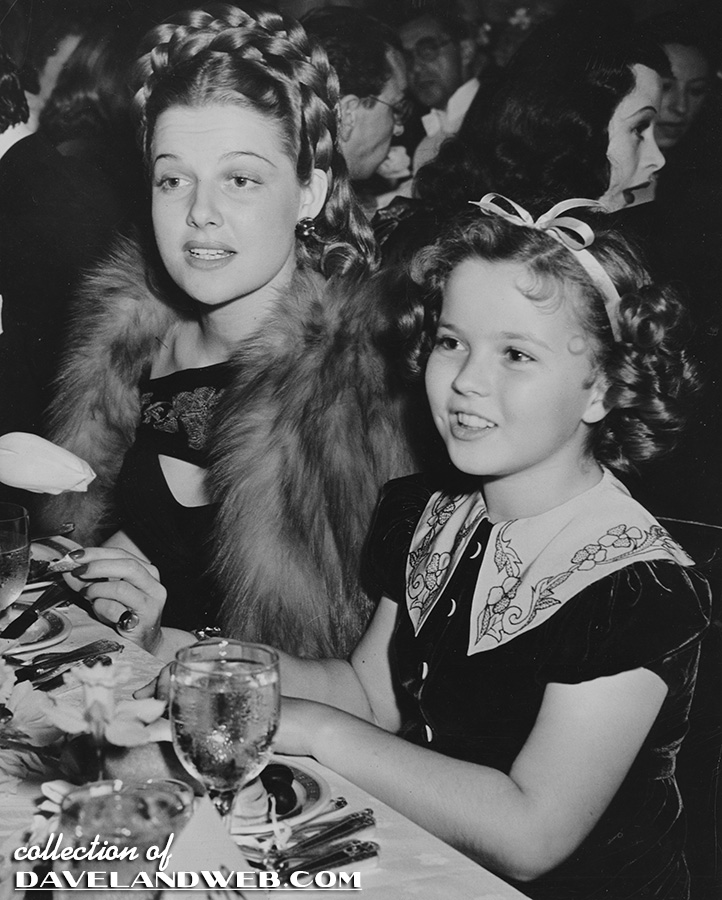
…and Ann Sheridan (Hedy Lamarr is behind Shirley):


An outside vintage view of the Biltmore:


The Biltmore Bowl ballroom where the Oscars were held at the Biltmore:


Increased attendance and World War II made banquets impractical, so the ceremony moved to Grauman’s Chinese Theatre from 1944-1946.


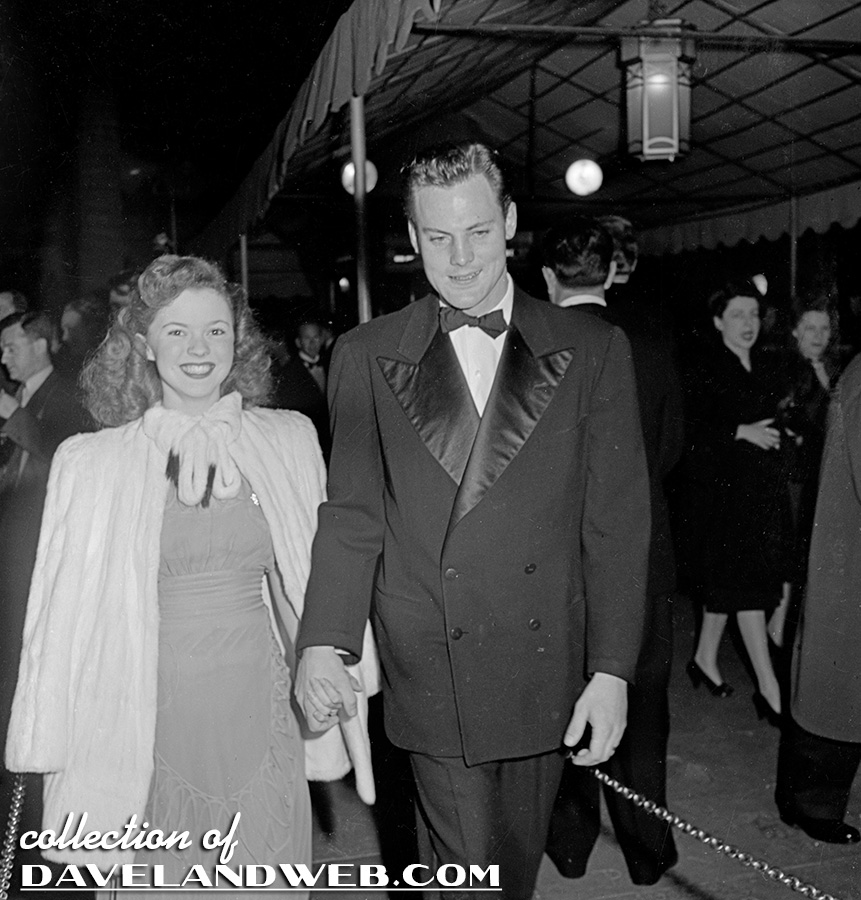
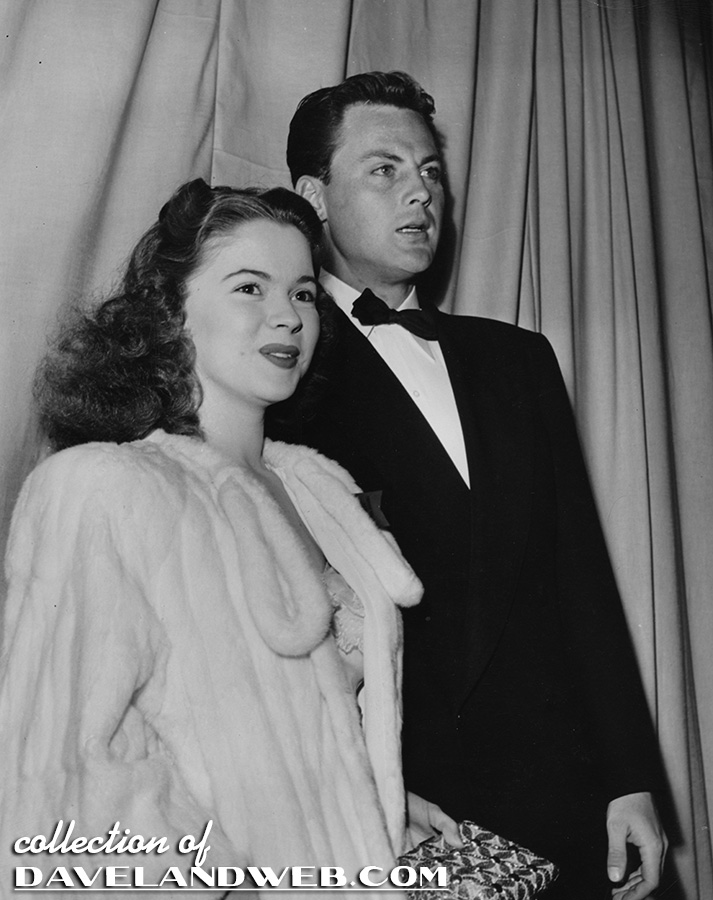
John Derek (of Bo Derek fame!) and Shirley were at Grauman’s for the March 2, 1944 event:


On March 7, 1946, she walked down the red carpet with then-husband John Agar:


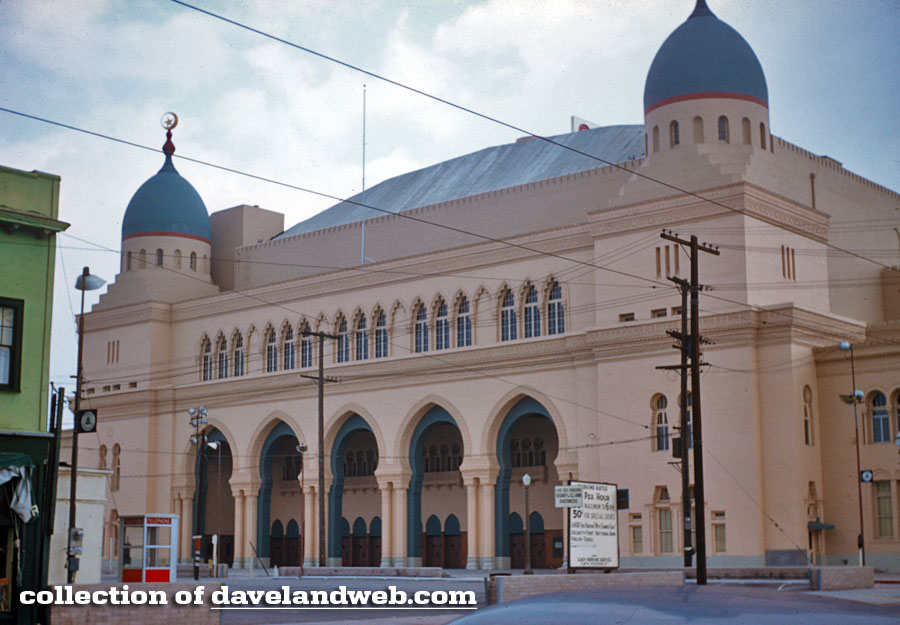
The Shrine Auditorium was the location of choice from 1947-1948:


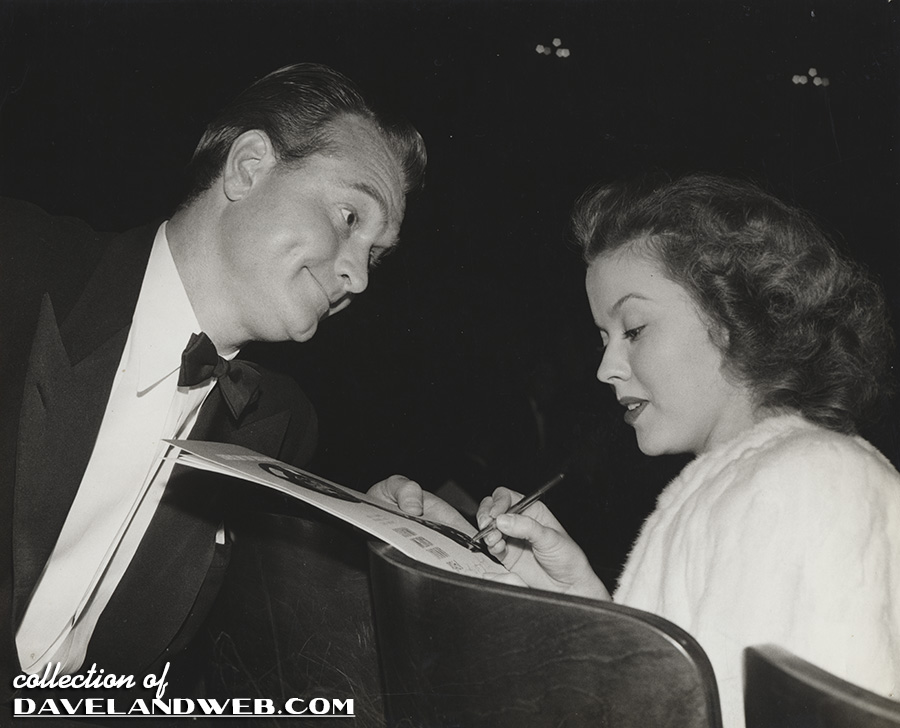
Red Skelton and Shirley, circa 1947:


1948 with John Agar again:


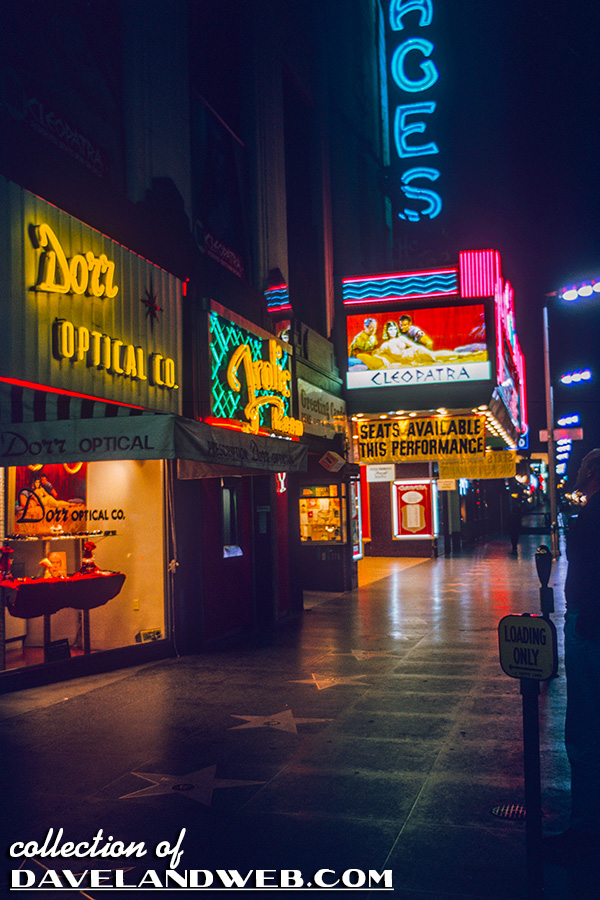
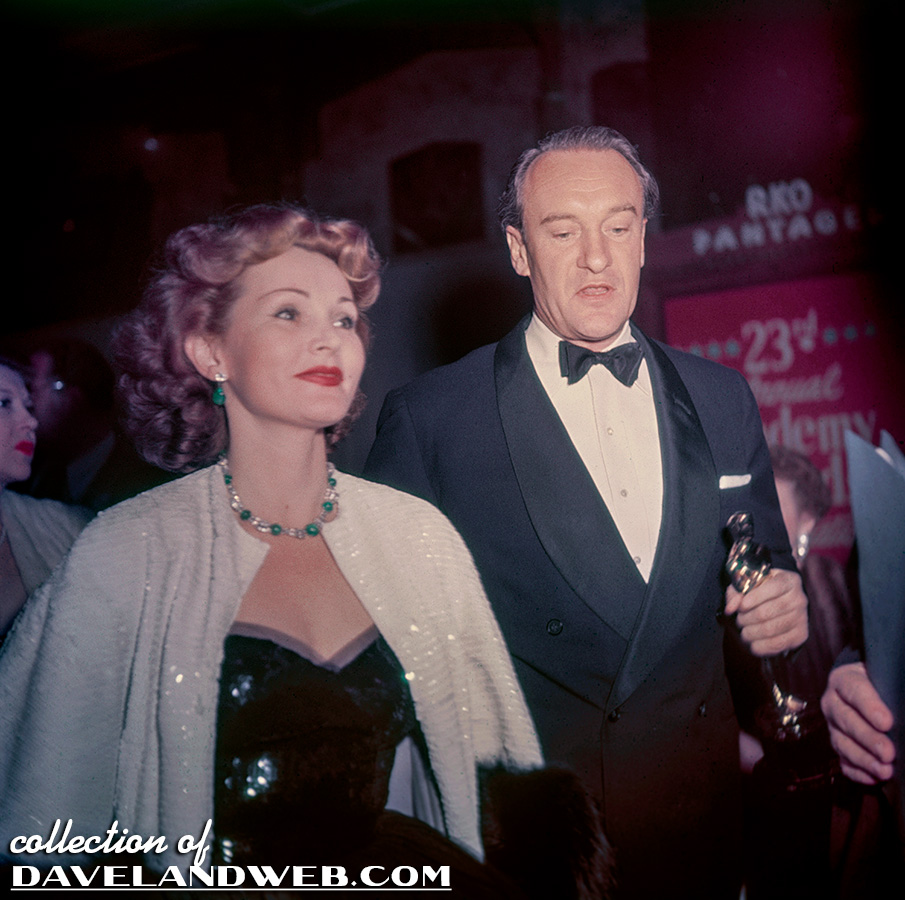
The 1949 Academy Award Theater on Melrose Avene in West Hollywood hosted the 21st Academy Awards on March 24, 1949 (since demolished). The RKO Pantages Theatre on Sunset Boulevard followed in 1950 and remained on the event roster until April 4, 1960.


Zsa Zsa Gabor and George Sanders at the Oscars in 1951:


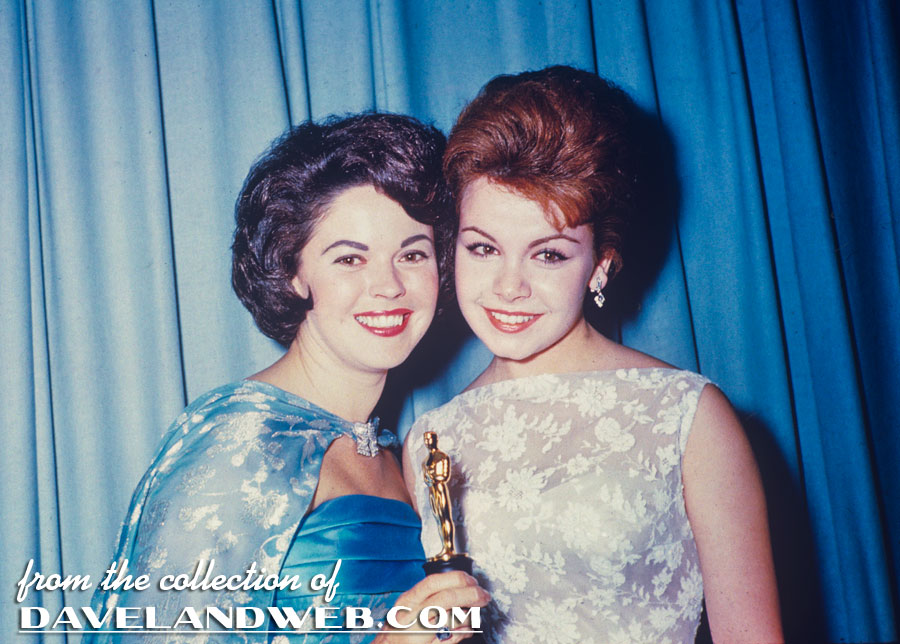
In 1961, the Awards moved to the Santa Monica Civic Auditorium. Shirley posed with Annette Funicello that evening:


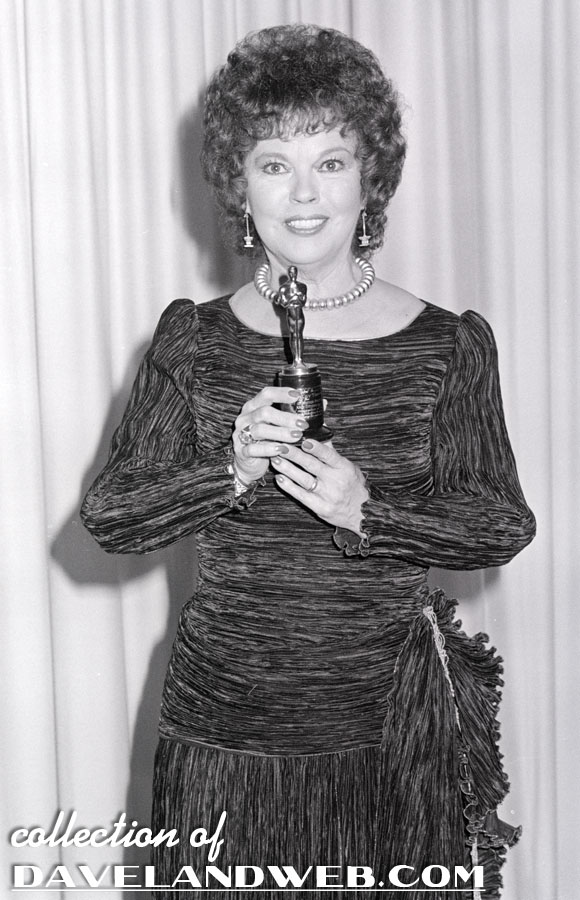
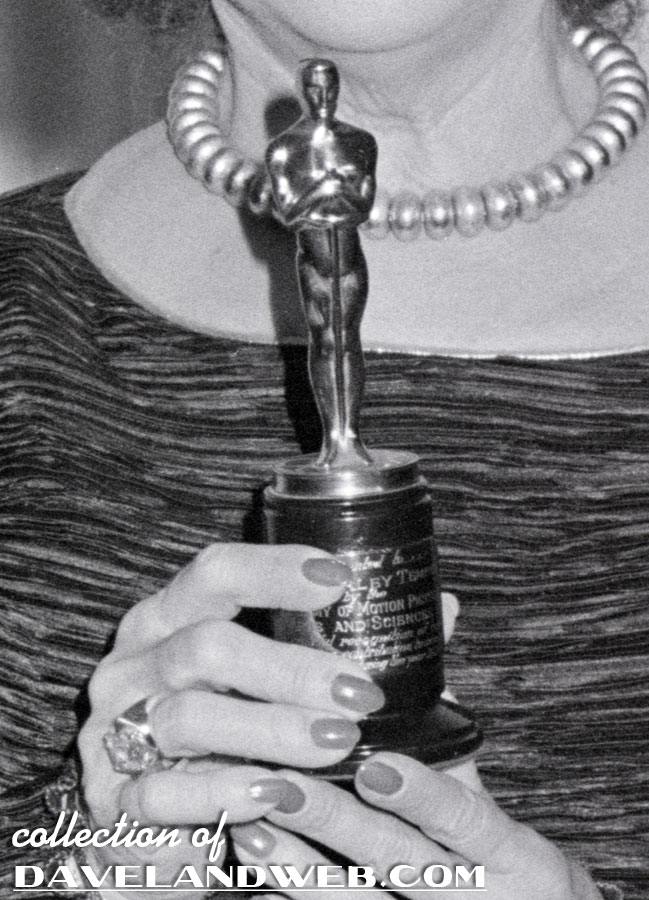
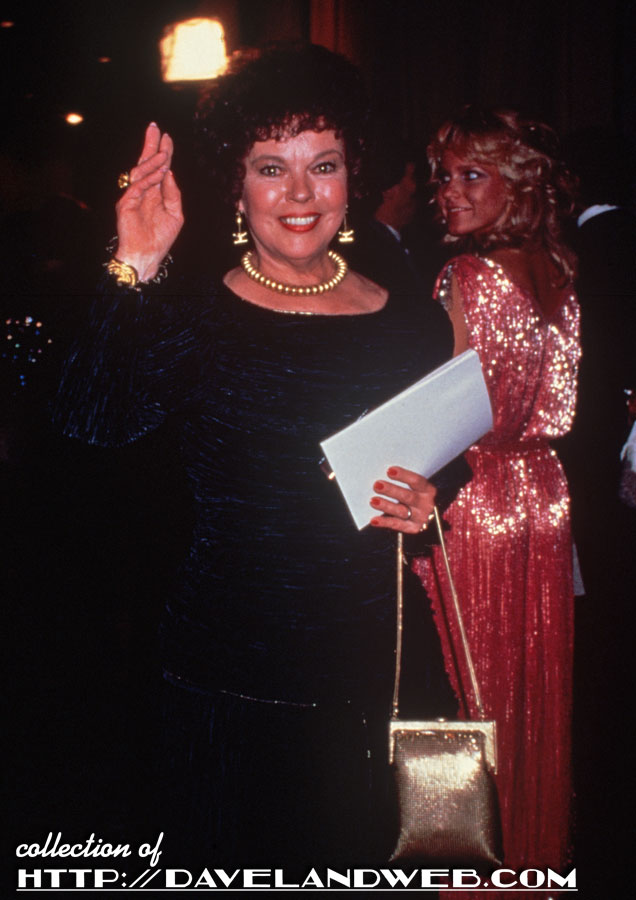
On April 14, 1969, the 41st Academy Awards ceremonies moved to the brand new Dorothy Chandler Pavilion of the Music Center of Los Angeles County. Shirley appeared there on April 9, 1984. Below she is shown holding her miniature Oscar from 1935:


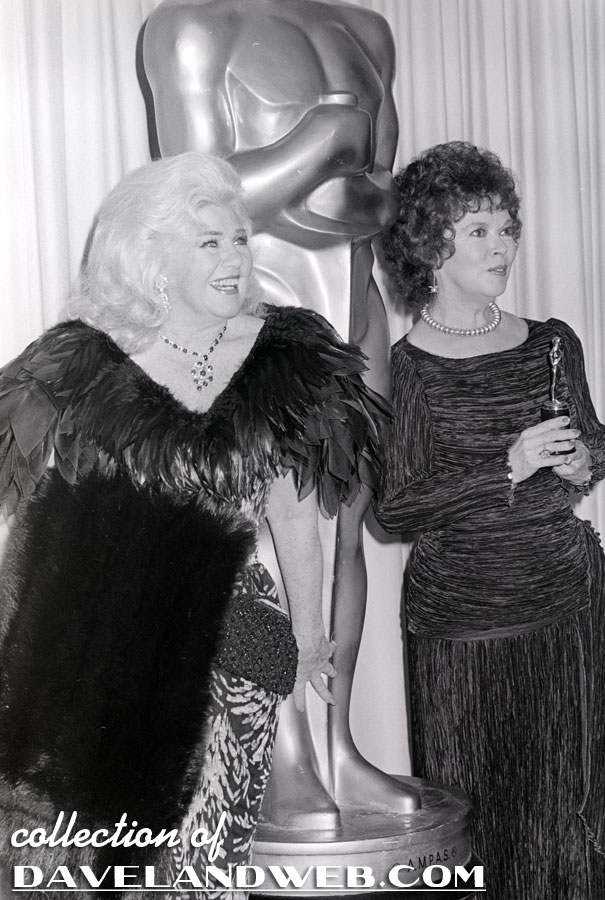
Below, Shirley poses with Ginger Rogers, who she worked with on “I’ll Be Seeing You” (1944):


That’s it for my Oscar photo collection!

See more contemporary and vintage photos at my main website.

Tuesday, September 26, 2023

Temple Tuesday: Lady in the Dark


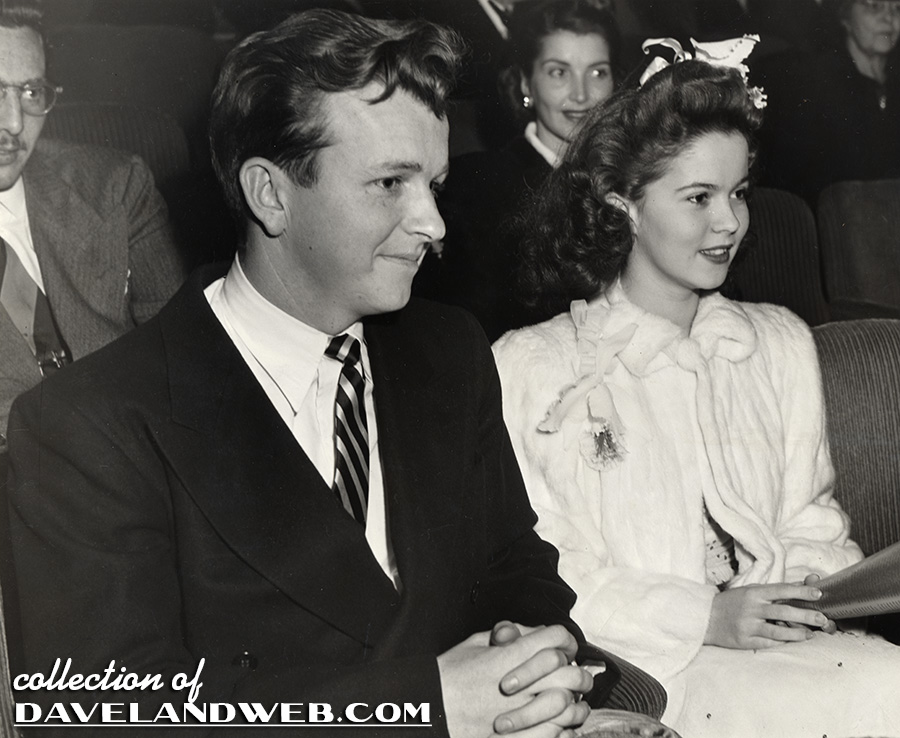
Going to movie premieres was all in a day’s work for a Hollywood star, and Shirley Temple was no exception. From the vintage publicity blurb below:

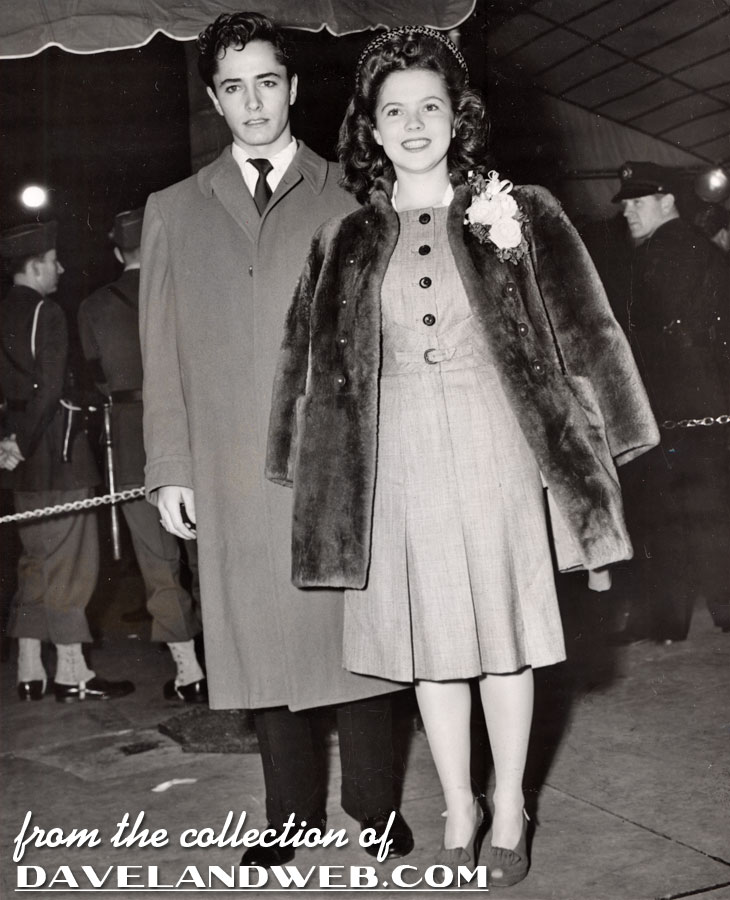
2/12/44 — Younger crowd in the audience at the “Lady in the Dark” premiere was well represented by Shirley Temple and her escort, Craig Flanagan. Shirley looked lovely in a short ermine jacket over a white net gown sprinkled with sequins. She wore an orchid in her hair and a similar corsage on her shoulder. “Since You Went Away” is her current picture, a Selznick production for United Artists release.

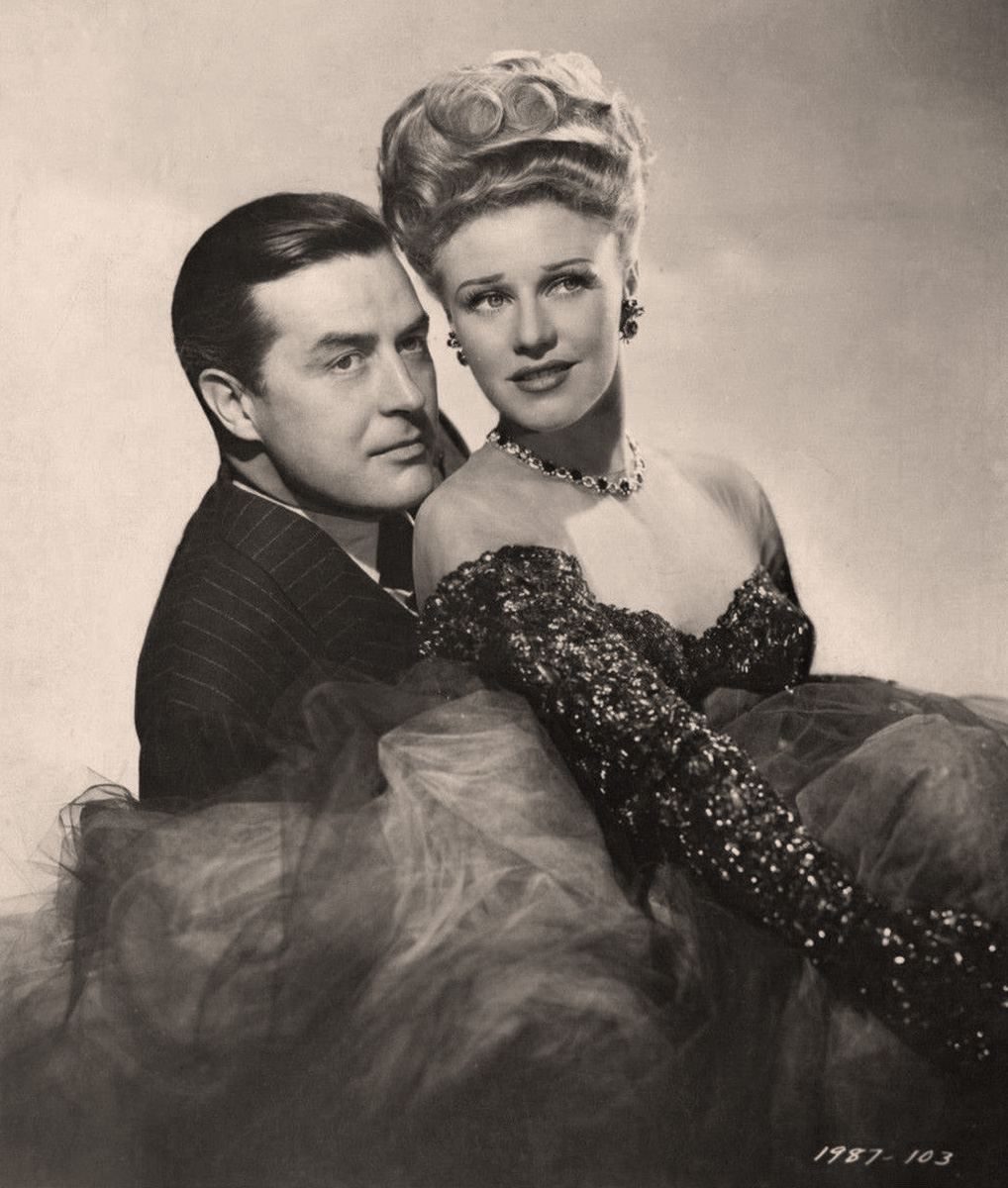
While Shirley looked beautiful in her ermine coat, her outfit did not begin to compare to Ginger Rogers’ onscreen wardrobe from “Lady in the Dark.”


“Lady in the Dark” was based on the 1941 Broadway musical of the same name (book by Moss Hart, words and music by Ira Gershwin and Kurt Weill) about psychoanalysis and career women. Paramount purchased the screen rights in February 1941 for Rogers and Fred Astaire, but negotiations with Rogers’ former dance partner failed, and Ray Milland was cast instead. Released on February 10, 1944, the film was a critical and commercial success, nominated for three Oscars (Best Cinematography, Best Music, and Best Art Direction).


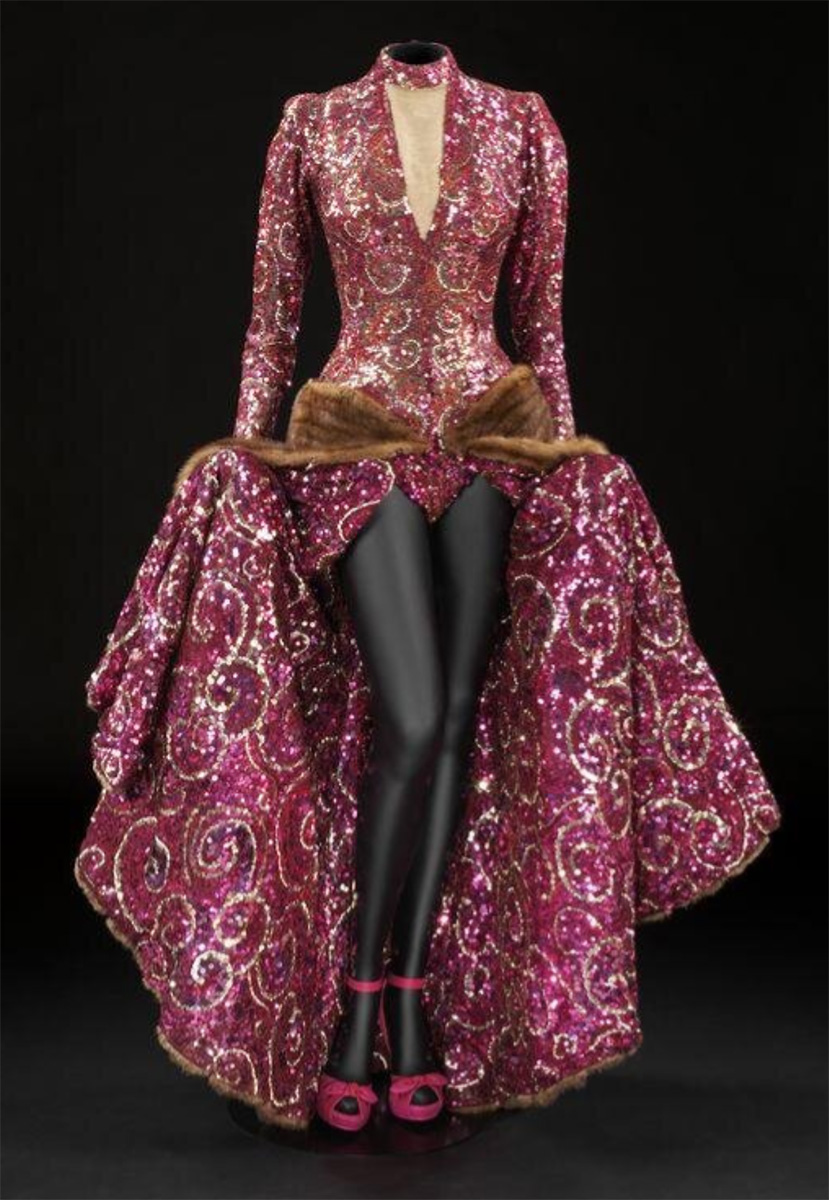
Now about the film’s most infamous costume (shown above). From the Victoria and Albert Museum website:

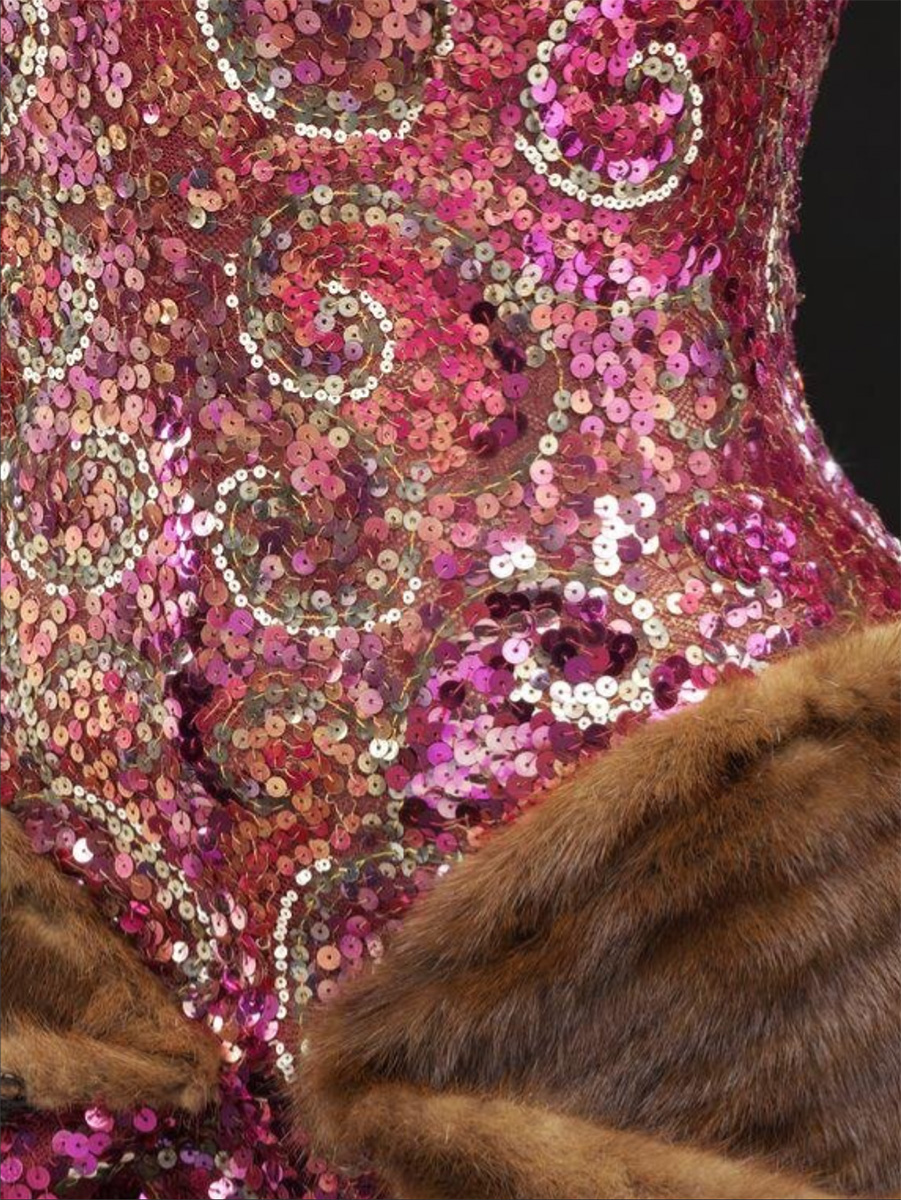
Rogers wore this costume for the ‘The Saga of Jenny’ sequence in the musical, which was staged in a circus. In 1944, this single costume was the most expensive ever produced in Hollywood. Legendary designer Edith Head is credited as the designer, with strong influence and a design concept from Mitchell Leisen, a former costume designer turned film director. Rogers wore two versions of the dress, one for singing and static close-ups and a lighter version for dancing [shown below, the one in the V&A collection].


According to Edith Head in Edith Head’s Hollywood, ‘as Liza Elliott in Lady in the Dark, Ginger was the fashion-editor of the world’s greatest fashion magazine. Her costumes were superlative. She was constantly having daydreams that she was a glamorous sexpot instead of a tailored-editor type and the dreams created a perfect plot excuse for fabulous gowns. It has come to be known as the mink dress, but actually it was a mink over-skirt that was lined with sequins, worn over a matching sequined bodysuit. It cost about thirty-five thousand dollars to make in those days and couldn’t be made today without a limitless wardrobe budget’.


Recently, I acquired Jay Jorgensen’s 2010 Edith Head: The Fifty-Year Career of Hollywood's Greatest Costume Designer coffee table book. There is some interesting information about the original costume that the V&A Museum left out:

Initially, Edith wasn’t even supposed to be working on the project, and Rogers’ clothes were to be designed by the New York couturier Valentina. When Ginger rejected Valentina’s designs, Edith was asked to step in because of her good working relationship with the actress. There is almost no doubt that left to only her own devices, the budget-conscious and conservative Edith would have never come up with the dress that is considered by many to be the most expensive costume ever designed for a film. But Leisen was always asking Edith to push herself creatively, and under his supervision, a gown was designed that was encrusted entirely of faux rubies and emeralds in a paisley design, lined in mink, with a matching jacket, also lined in mink. At the time, it was estimated to cost around $35,000, with $15,000 being spent on the mink alone. When building the dress, Edith covered the floor of her salon with mink skins and she and Leisen selected the most photogenic ones. When Rogers tried the gown on, the faux stones proved to be too heavy for her to dance the routine that had been choreographed…A second gown was created with sequins in the same paisley pattern. Both gowns are seen on screen. The dress with the stones is seen in close-up as Ginger unpacks it and wears it to the nightclub, and the sequined version is seen in the dance number. The gown with the faux stones was later donated to the Smithsonian Institution and kept on display for several years; Edith used the sequined version in her fashion shows that would be developed later.

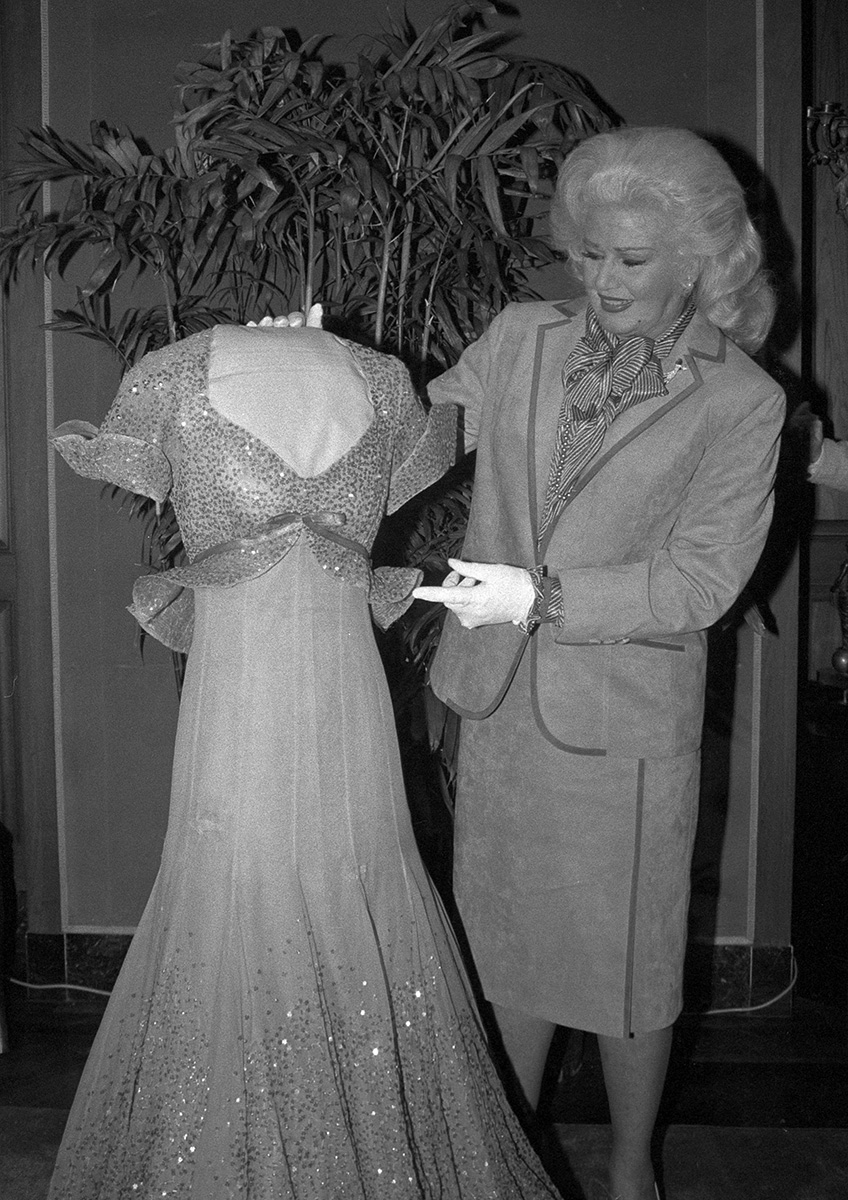
The 1984 photo below shows Ginger Rogers presenting her 'Piccolino' dress from "Top Hat" (1935) with Fred Astaire to the Smithsonian. Whether or not they still have the “Lady in the Dark” mink dress in their possession is unknown.


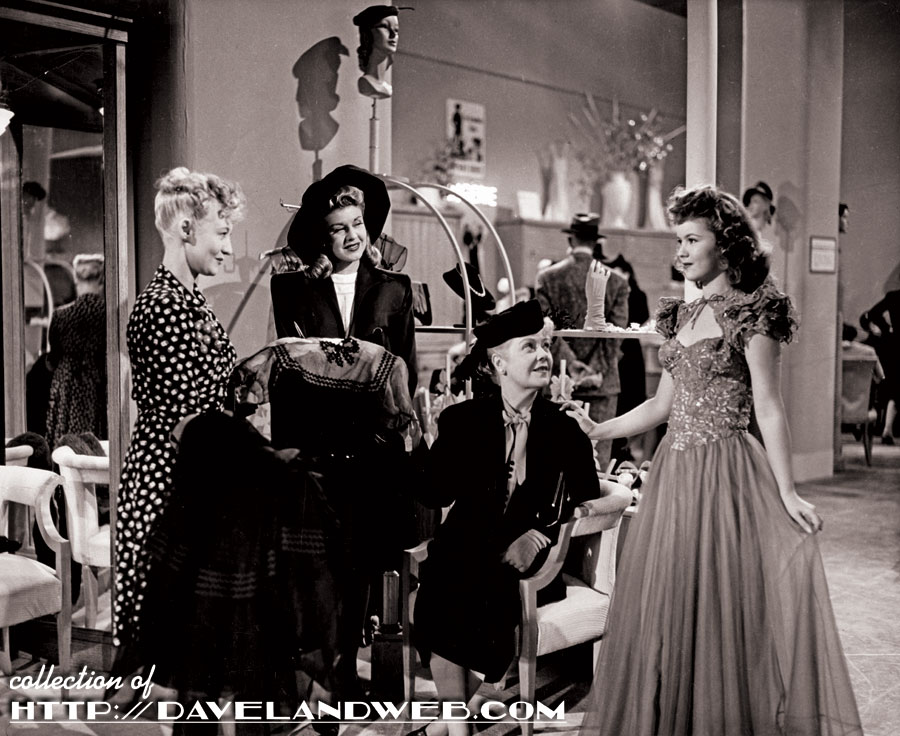
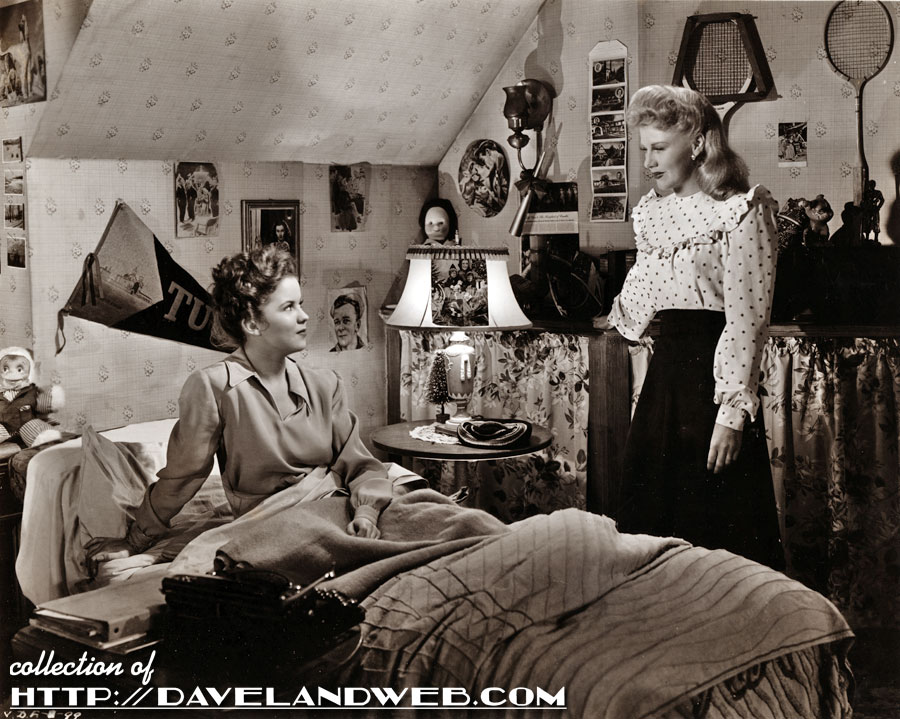
Shirley and Ginger starred together in “I’ll Be Seeing You,” which was her next film assignment after “Lady in the Dark.” This time, since Rogers portrayed a woman on parole, Shirley had the flashier wardrobe!


See more Shirley Temple photos at my main website.
Tuesday, September 14, 2021

Temple Tuesday: I'll Be Seeing You…Again


In 1944, Shirley Temple and Ginger Rogers costarred in the war-time drama “I’ll Be Seeing You.” Apparently, according to Shirley’s autobiography Child Star, Rogers was not a fan:

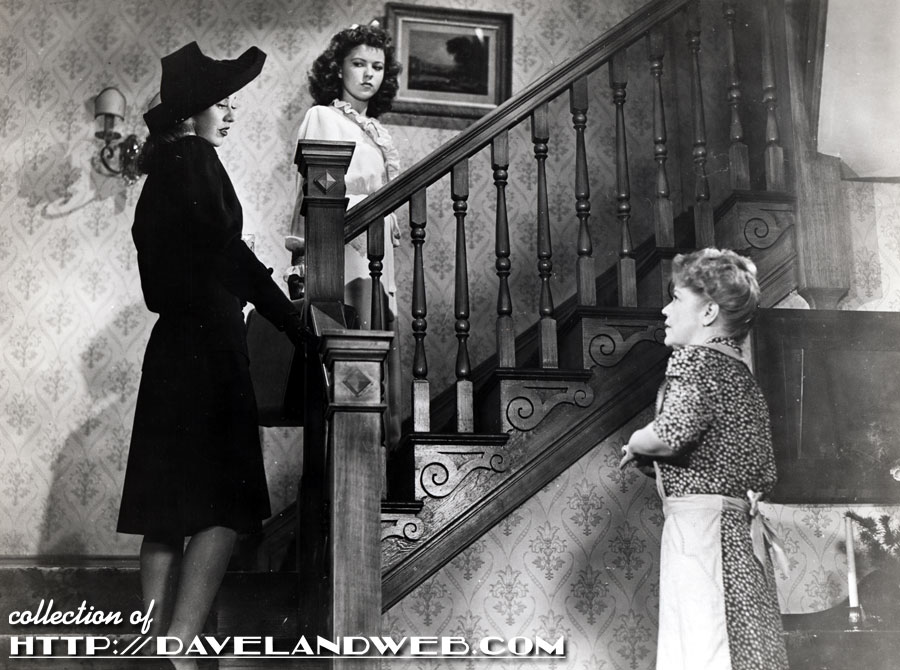
Very early I gained an impression that she had wheedled some sort of cast-approval from [Producer Dore] Schary, for I was told she flatly demanded I be taken off the film. Apparently irritated by all this, [studio chief David] Selznick sent me off to vacation at Palm Springs, presumably to resolve the impasse with me absent. Hardly unpacked, I was summoned back the next workday, a Monday. Rogers was absent.…I brooded a bit, but the propitious moment came and went without her appearance. Down a long staircase I came dressed in a good-looking negligee and speaking dialogue that set the theme for the whole film story. Selznick had shrewdly resolved the controversy before it became a fight.…the film was locked in, and so was I.


It was Wednesday before Rogers returned to the set, noticed me with what I sensed as surprise, and left immediately in search of Selznick. Later I was told she had protested my presence. Too late. Our filming momentum was irreversible. From that point Rogers and I regarded each other cautiously. Although several times I attempted to establish some offstage rapport, at every point she seemed to resist intimacy. Usually she regarded me silently, if at all, with her eyes narrowed, and occasionally she needled me before others. “Why, little Shirley,” she scoffed one day, pointing at my bosom, “you’ve grown up.” What could I say but, “Yep, couldn’t stop myself.” “And those false eyelashes. They do NOTHING for you.”

Over a ritual sixteenth birthday cake on the set, some cast members gave me little remembrances of perfume or flowers. Roger’s gift was a hat, elegantly boxed—a straw Chinese coolie affair surmounted by a tepee of multicolored rooster tail feathers. “There,” she said, plopping it down on my head, “it does wonders!” Unlikely, I thought, peering out from beneath the feathery brim like some jungle animal. Although Rogers and I later became friends, the reason for her antipathy eluded me.

Forty years later, they were reunited at the April 9, 1984 Oscar Ceremony. I wonder how many birds went into Ginger’s outfit? Perhaps it was an homage to the hat she gave Shirley forty years before.


That night at the Oscars, Shirley was given a lovely tribute that was introduced by Sammy Davis, Jr. Here’s Shirley holding her miniature Oscar from 1934:


…and a closeup of the smaller-sized statue, which she quipped if she only had one more, the two would make a lovely pair of earrings:


A color shot of Shirley from that evening. Did that gold bag have her Oscar inside?


…and a clip of the tribute from YouTube:


See more Shirley Temple Black photos at my main website.