Showing posts with label spring byington. Show all posts

Tuesday, September 23, 2025

Temple Tuesday: Orchids to You


The 1935 Fox Film “Orchids to You” isn’t funny enough to be considered a comedy nor is it dramatic enough to be a tearjerker. The plot just hovers at mediocre. The story in a nutshell: a flower seller (Jean Muir) falls for a married attorney (John Boles) whose wife is having an affair. The acting is fairly decent, especially the performances of Muir and Charles Butterworth in the comic role of a wealthy admirer of Muir’s character. What does this film have to do with Shirley Temple, you ask? Plenty. To begin with, it was made at Shirley’s home studio, Fox (which was yet to be merged into 20th Century-Fox), with a short production date of April 27 — May 25, 1935 and released on July 12. In “Orchids to You,” there is a sequence set at a Flower Show, with a jazzy version of Tchaikovsky’s “Waltz of the Flowers” playing in the background.


The exhibit with Muir’s character is centered around a charming little storybook cottage, seen below.


The first place prize that Muir receives is displayed at her flower shop the next day next to a miniature version of the cottage. No explanation is given as to where the miniature came from, and it is only seen onscreen for less than a minute.


“Curly Top” features a seaside cottage where Shirley spends the summer with her wealthy benefactor, played by John Boles, who barely had time to breathe between films! Production began on May 25 (the same day “Orchids” ended), wrapping up on July 10, 1935. “Curly Top” was released two weeks after “Orchids.” 
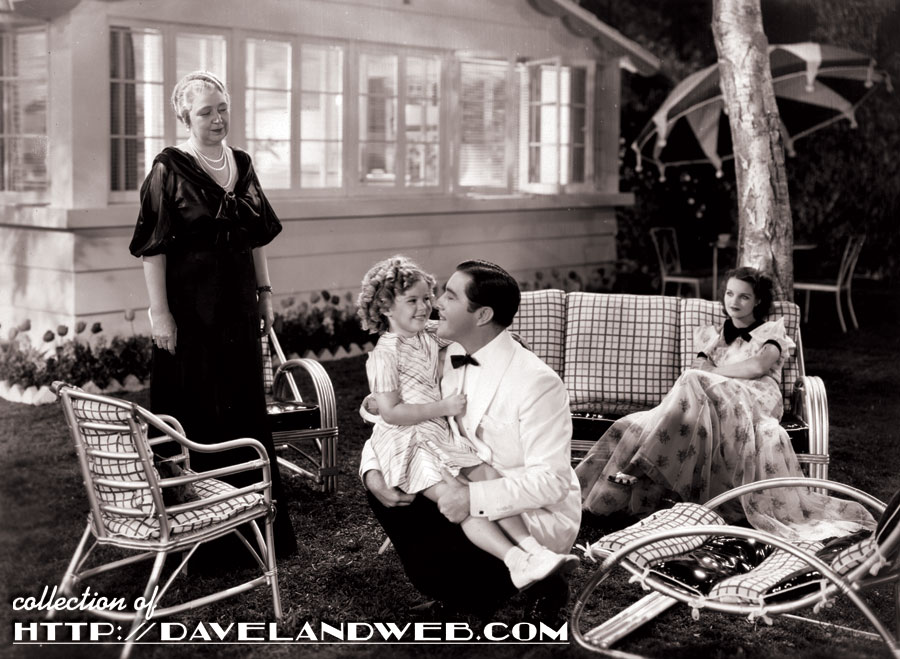


Daily Variety reported that the eight-room cottage from “Curly Top,” built on a Fox sound stage (seen in the screenshot below), interested director Irving Cummings enough to offer the studio $25,000 for it. Instead, according to DV, Fox moved it to the lot to be used as a play room, dressing room, and school room for Shirley.


Below is a shot of Shirley’s Fox bungalow. Author and Hollywood historian Michael Troyan (20th Century Fox: A Century of Entertainment) disputed the Variety claim on social media, where he says it was built in 1930. Lilian Harvey used it in 1933 for the four Fox Films that she made, followed by Gloria Swanson. In her autobiography,  Swanson on Swanson, the actress wrote about the operetta she was making, “Music in the Air,” and that she took over:

…a sumptuous star bungalow on the Fox lot for the duration of the picture.…they commissioned René Hubert to design fabulous clothes for me.…We all felt fairly certain of success during the shooting, but the picture flopped. Hollywood producers learned once again that the taste of New York and Broadway was no barometer for the taste of the nation at large. The nation at large ignored “Music in the Air” and rushed instead to see “Stand Up and Cheer,” a musical starring a six-year-old, Shirley Temple.

The film was in production from July 24 —September 15, 1934. John Boles also starred in this film; a truly busy performer!


At best, furnishings from the “Curly Top” set were used inside Shirley’s bungalow, but not the structure itself. The bungalow when Harvey inhabited it:


Lloyd Pantages reported this in July 1934:

Lilian Harvey’s bungalow, which was once decorated in twenty-five cents a-piece ermine tails, is now yawning for an occupant, so why not re-do it in animal crackers and alphabet soup for little Shirley Temple?

How it looked when Shirley lived there:


There’s a semi-decent chance that the look of the bungalow inspired the design of the storybook cottage and the model, not vice versa. Below is Harvey at the entrance gate to her Fox bungalow:


Lilian Harvey was a famous British-German actress who made four films for Fox in 1933, returning to Germany two years later. More images of Harvey inside the Fox bungalow when it was hers:


The following publicity caption accompanied the photo below:

In the living room of Lilian Harvey’s bungalow dressing-room at Fox Movietone City. The rug is a deep peach shade. The wallpaper is white and the figure is in peach shade. The couch upon which Miss Harvey is sitting is an off-shade of white corduroy, trimmed with peach colored brush cording. The pillows are of coca brown chiffon velvet with frayed taffeta ruffles in flesh color. The drapes in this room are of peach satin. The mirror above the couch is framed in antique gold. Designed by Richard Lewis Smith, Fox Film interior decorator.


A November 1933 blurb about Harvey and the bungalow:


The model from “Orchids to You” ended up in Shirley’s possession. Perhaps John Boles played a part in the gift; or maybe costume designer René Hubert (he worked on both films, too). Arthur Treacher played a butler in both, but I doubt he would have been associated with the gift. My money would go on Jack Otterson, who was the art director for both films and would have had a closer association to the physical model itself. There is even a possibility that the model was created with the idea of giving it to Shirley, rather than it being an after-thought, which is why it was designed to resemble her bungalow. Publicity shots were released of the model/dollhouse once it was given to Shirley and placed inside her bungalow. The following caption accompanied these shots:


Shirley Temple’s prize possession - a doll house and garden that takes up most of one room in the Fox Film star’s bungalow at the studio, and where she spends most of her time between scenes.


The building and grounds were turned over to the youthful star after they had been used in a scene for “Orchids To You,” and Shirley promptly set about peopling the model house with dolls of appropriate size.


The detailing is incredible!


In September 1937, actress Helen Hayes and daughter Mary MacArthur paid a visit to Shirley in her bungalow:


Shirley described the visit in her autobiography Child Star:

A standard stop on tours for children my age was a souvenir doll’s house from “Curly Top,” now installed in our cottage bedroom. Piece by piece I demonstrated all its miniature equipment to Mary—the diminutive hooked rugs which lay on the parquet floors, the sheets covering each bed, and the bathroom commode with a lid that worked. Each door swung, every drawer slid open. Chintz curtains were tied back at each window, bric-a-brac cluttered the tiny tabletops, books lined the shelves, and fake food was in the refrigerator. We examined everything, preoccupied with the housekeeping details, as little girls would. Ghosts of vamp Lillian Harvey and sultry Gloria Swanson must have shuddered to witness what now transpired in their historic “Maison des Rêves” bedroom.


When Shirley left Fox, the dollhouse followed her and was on display in her home with the rest of her doll collection, as seen in this 1944 image:


After Shirley passed, the dollhouse was sold in the “Love, Shirley Temple” 2015 auction.


Shirley Temple's Wooden Bungalow Dollhouse with Tynietoy Furnishings Description 43" l. x 26" d. x 26" h. A wooden bungalow style home with clapboard siding and shingles, decorative cupola, blue shutters with fleur-de-lis design, multi-pane windows, and wide front door, has two interior rooms that are furnished with signed pieces of Tynietoy furnishings (fold-downable, faux marble top table, dining table, chest of drawers, buffet, red wing chair, six various chairs, and sofa), and with various carpets and curtains.


Also included are original picket fence sections on bases for arrangement as desired, a vintage photograph of the dollhouse, and a pencil sketch labeled "Shirley's Doll House". The dollhouse originally was made for the 1935 Fox film "Orchids to You" starring John Boles; in that film the doll-house appeared in a display that won first prize at the Annual Spring Flower Show. After the film was completed, the dollhouse was gifted to Shirley Temple who treasured it, placing the house in the center of her doll room.


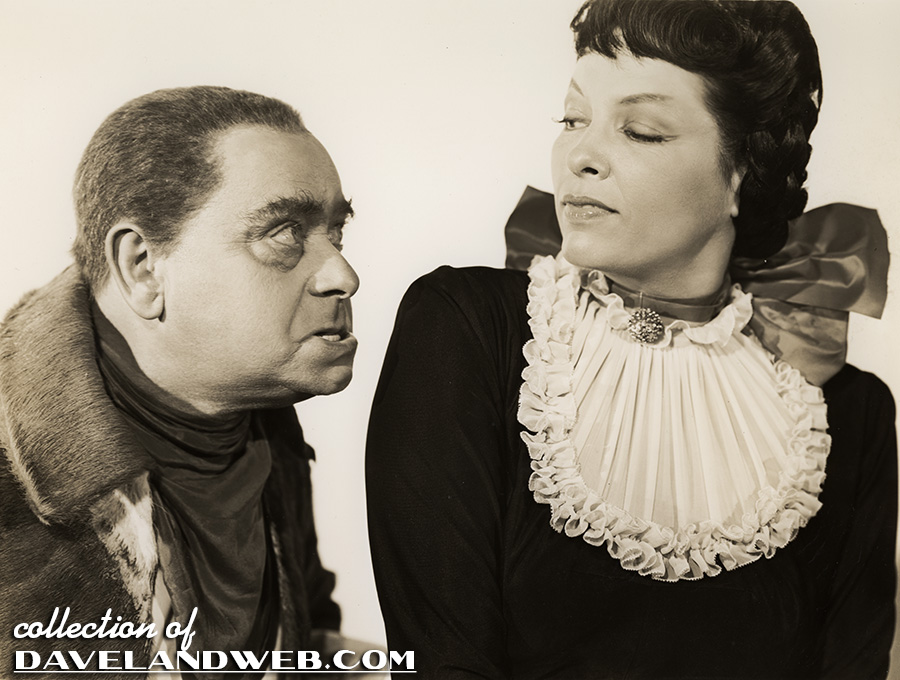
Spring Byington has a bit part as the wronged wife in “Orchids”:


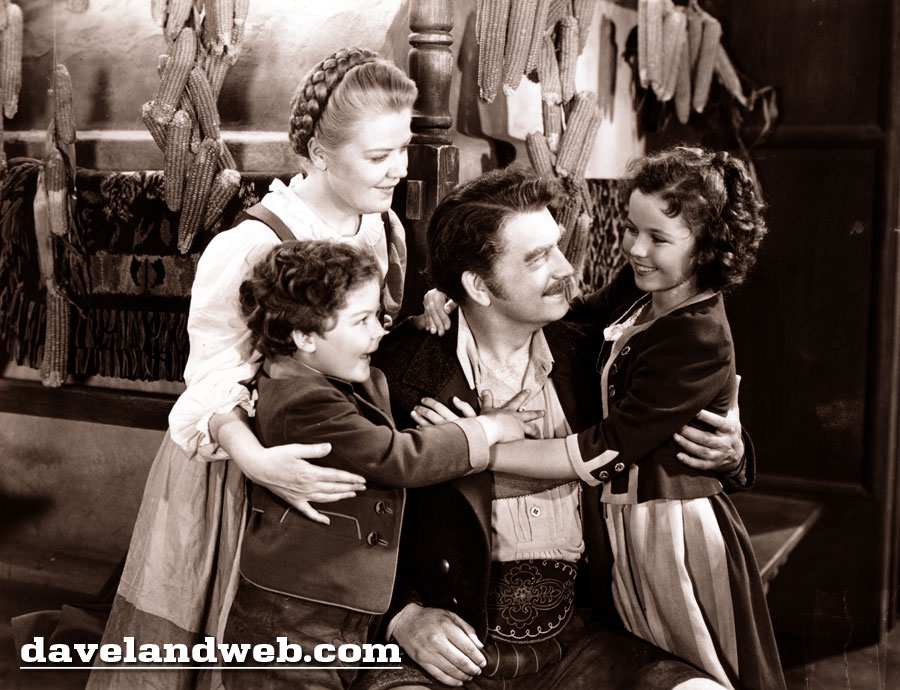
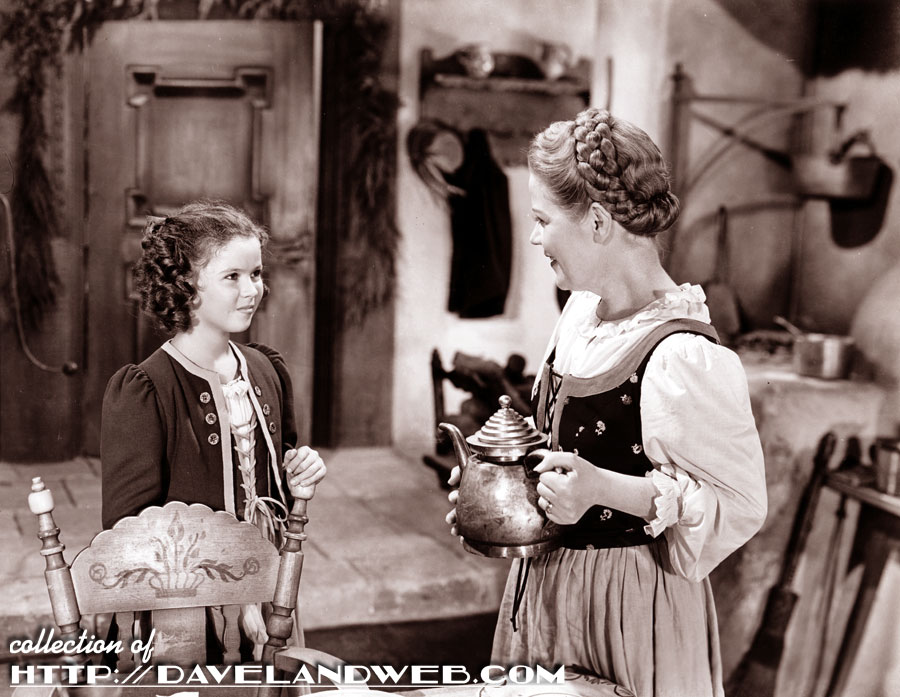
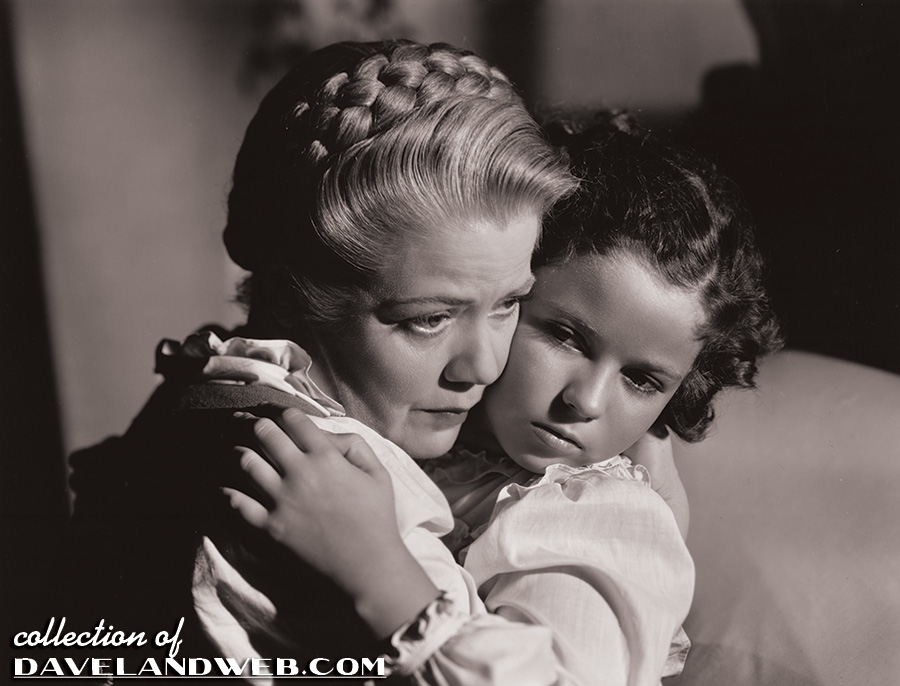
In 1940, she would play Shirley’s mother in “The Blue Bird”:


A final connection between Shirley and “Orchids” is this Spanish ad for both “Curly Top” and “Orchids to You.” While the photo on the left is definitely John Boles, Shirley, and Rochelle Hudson, the photo on display for “Orchids” is definitely not Boles and Muir!


Who moved into Shirley’s bungalow when she left Fox? It appears that it could be none other than John Barrymore! Shirley’s contract was closed on May 9, 1940 and she moved out of the bungalow on May 27th. Barrymore was said to have inhabited the bungalow at some point, and it seems that his one 20th Century-Fox film during the appropriate period was “The Great Profile,” which had a production schedule of late May through July 1940. According to the AFI website, Barrymore did not memorize any of his lines for the film, but instead read them from a blackboard. George French is listed as his blackboard toter. Because Barrymore never missed a cue or muffled a speech, the use of blackboards was credited with bringing the picture five days under schedule and saving the studio an estimated $25,000. What a difference from Shirley, who rarely flubbed a line!


Another trip down the rabbit hole has ended.

See more photos at my main website.

Tuesday, December 31, 2024

Temple Tuesday: Blue Bird Blowout!


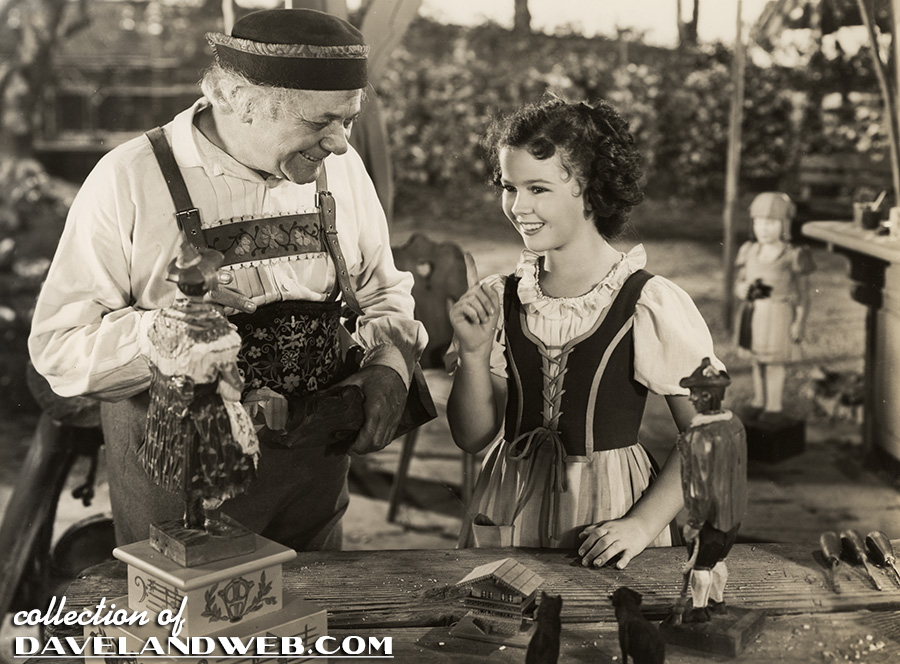
Faithful readers of this blog know that I am somewhat obsessed with the 1940 Shirley Temple film, “The Blue Bird.” While many consider it a poor stepchild to “The Wizard of Oz” (1939), I believe it stands on its own as an artistic triumph that gave Shirley an opportunity to play against type as a brat. In the above publicity still, Shirley is shown with Al Shean, who played her grandfather in the film. Shean was also the uncle to the famous Marx Brothers.

To avoid competition with “Gone with the Wind” which was released on December 15, 1939, 20th Century-Fox studio chief Darryl Zanuck decided to delay the premiere of “The Blue Bird” for another month.


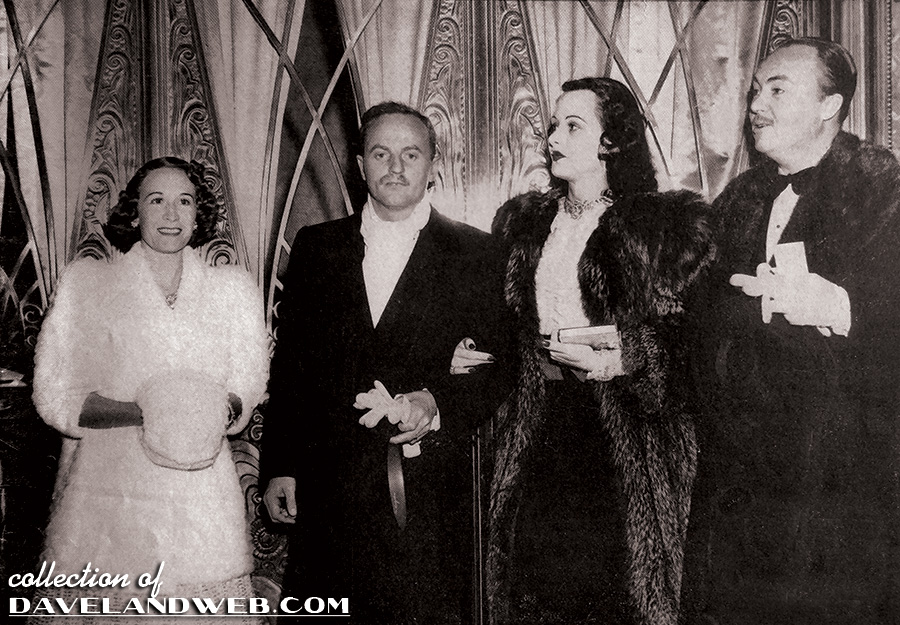
The above photo shows Gene Markey (producer for the movie), Virginia Zanuck (Darryl’s wife), Joseph M. Schenck (Fox chairman of the board), Darryl Zanuck, and Hedy Lamarr (MGM actress and wife of Markey) as they arrived at Grand Central Terminal in New York City, December 19, 1940 for the film’s New York.

From The Motion Picture Herald, December 30, 1939:

The premiere of “The Blue Bird,” starring Shirley Temple, has been advanced to January 19th from January 17th to permit a Friday night opening. “Swanee River” opens December 29th at the Roxy theatre. Darryl F. Zanuck, vice-president in charge of production, will attend the premiere of “The Blue Bird” at the Hollywood theatre and remain in New York for the opening of “The Grapes of Wrath” at the Rivoli January 24th. Al Jolson and Don Ameche will appear in a broadcast of “Swanee River” on December 29th. Charles E. McCarthy, director of advertising and publicity for Twentieth Century-Fox, has put John Goring in charge of the roadshow of “The Blue Bird.”

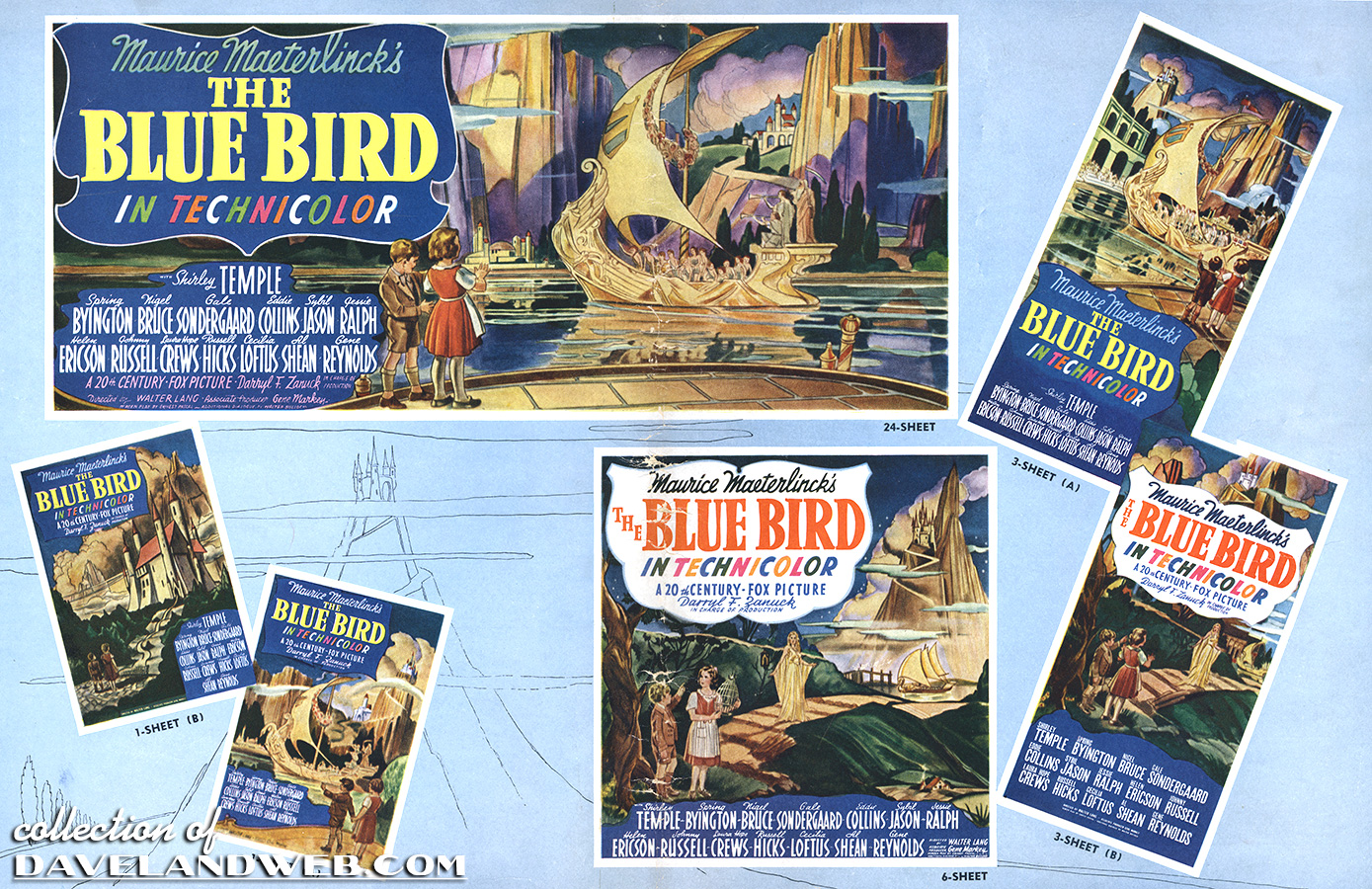
Below is a page from the movie’s pressbook, featuring a variety of posters that theatres could choose from for promotion:


Motion Picture Daily gave their account of the premiere:

‘Blue Bird’ Lures Industry’s Top Executives to Premiere

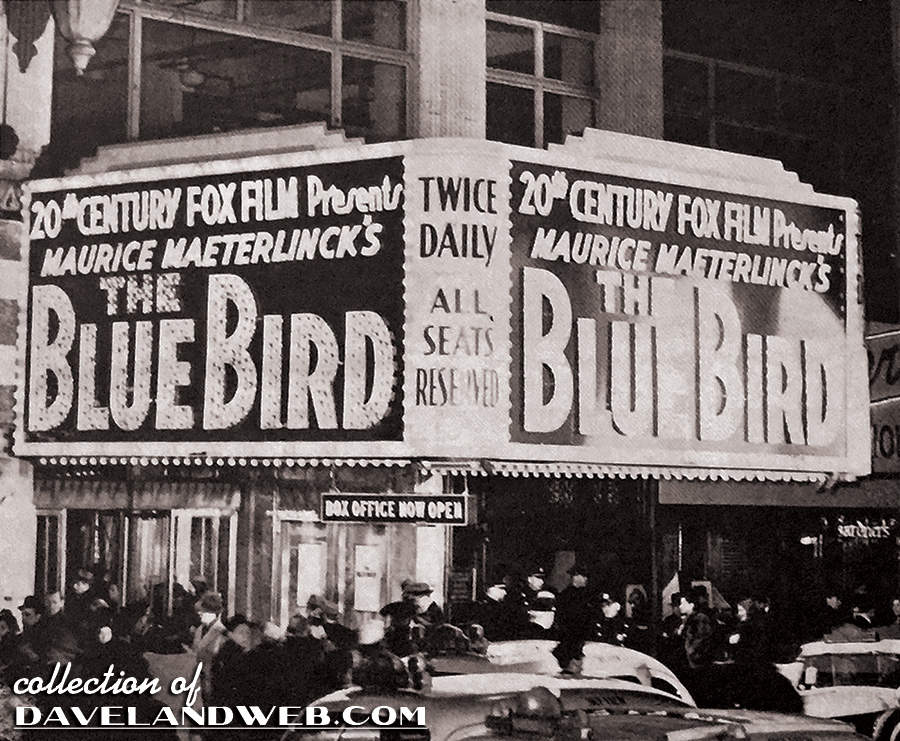
Undaunted by the severity of the weather last night, 1,500 persons jammed the Hollywood Theatre to capacity to see the world premiere of “The Blue Bird,” 20th Century-Fox color feature. When the 80-minute show ended, the audience, with ovations and exclamatory words of approval, acclaimed the cinematic version of Maurice Maeterlinck’s famous fantasy. Included in the audience were practically all of the leading officials of 20th-Fox, besides executives from other motion picture companies. Notable among those present were the following: Darryl Zanuck, 20th-Fox studio chief; S.R. Kent, president; Joseph M. Schenck, chairman of the board; Will Hays, Jesse Lasky, Ernst Lubitsch, Barney Balaban, Herman Wobber, Spyros Skouras, Charles Skouras, Edwin L. Weisl, Gene Markey, associate producer of “The Blue Bird,” and scores of other industry officials. Other celebrities noticed among the “First Nighters,” most of whom were accompanied by their wives and formally dressed, were William Paley, CBS president; Postmaster General James A. Farley, Conde Nast, Irving Berlin, Jack Cohn, Andre Kostelanetz, Sidney Lanfield and many others. Crowds congregated early in front of the Hollywood where arc lights illuminated the front. Autograph seekers and others eager to see celebrities composed a large portion of the throng. When glamorous Hedy Lamarr arrived, scores struggled to catch a glimpse of her and husband, Markey.


From The New Dynamo, the in-house publication of 20th Century-Fox:

‘THE BLUE BIRD’ FLIES IN TRIUMPH OVER BROADWAY CELEBRITIES BRAVE SUB-ZERO WEATHER TO HAIL ‘BLUE BIRD’

Mr. Zanuck came 3,000 miles to get, first-hand, the reaction of this premiere audience. For more than a year he planned “The Blue Bird.” For months he supervised its production and cutting. And as Philadelphia’s Showman Al Boyd put it: “If its exploitation and presentation is given only one-half the thought this completed picture indicates went into its planning and production, ‘The Blue Bird’ will do the SRO business it certainly deserves to and can do.” And Mr. Boyd is not one of those gentlemen given to making hasty conclusions. He has been too long in the business to speak merely for the sake of being heard.

Schenck is missing from this newspaper photo showing Zanuck and entourage at the premiere:


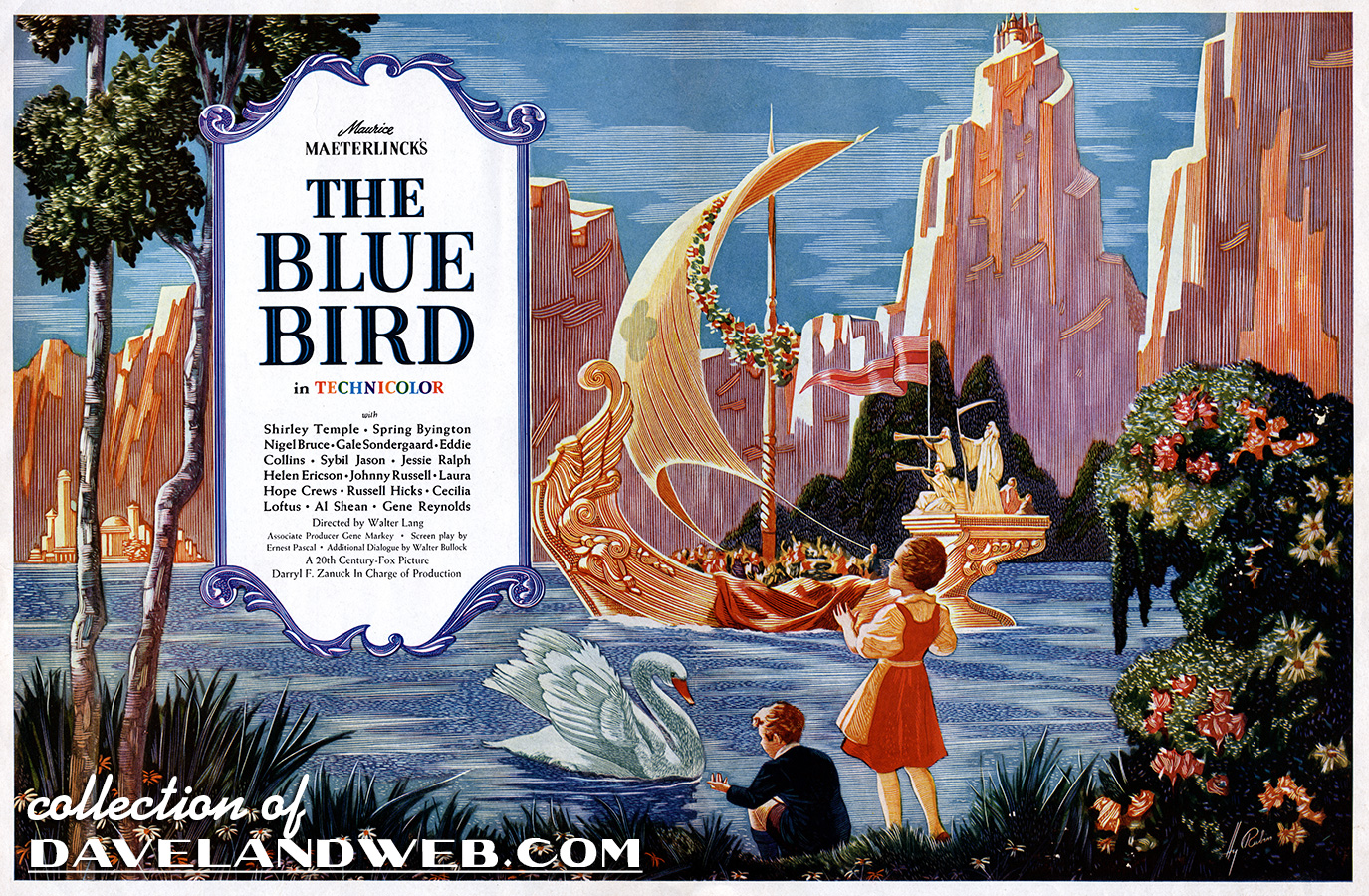
Much of the beautiful and moody expressionistic art for the film was created by Hy Rubin, an American illustrator (1905–1960). His work was published in the Saturday Evening Post and Good Housekeeping magazines. His last studio was located behind the T in the Times Square building in New York City. 


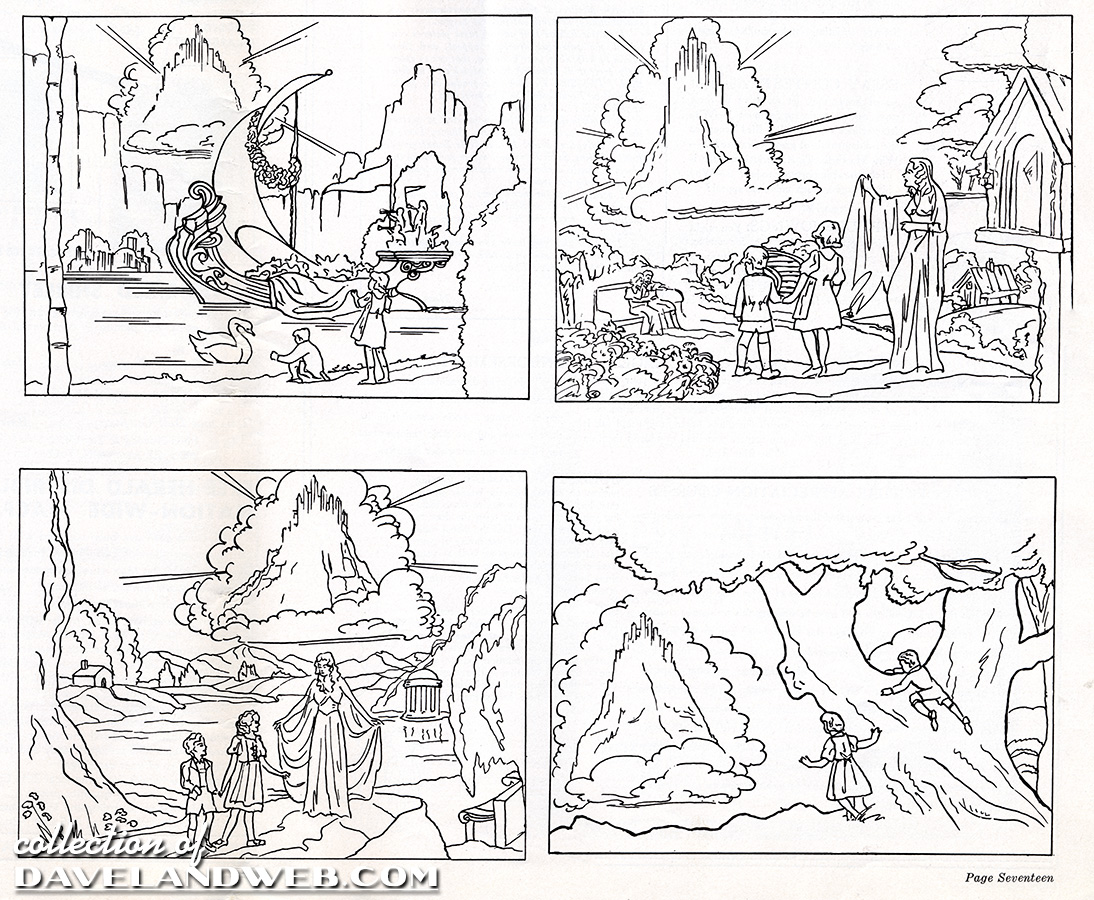
For the artistic, black and white cartoon panels were available to moviegoers for coloring:


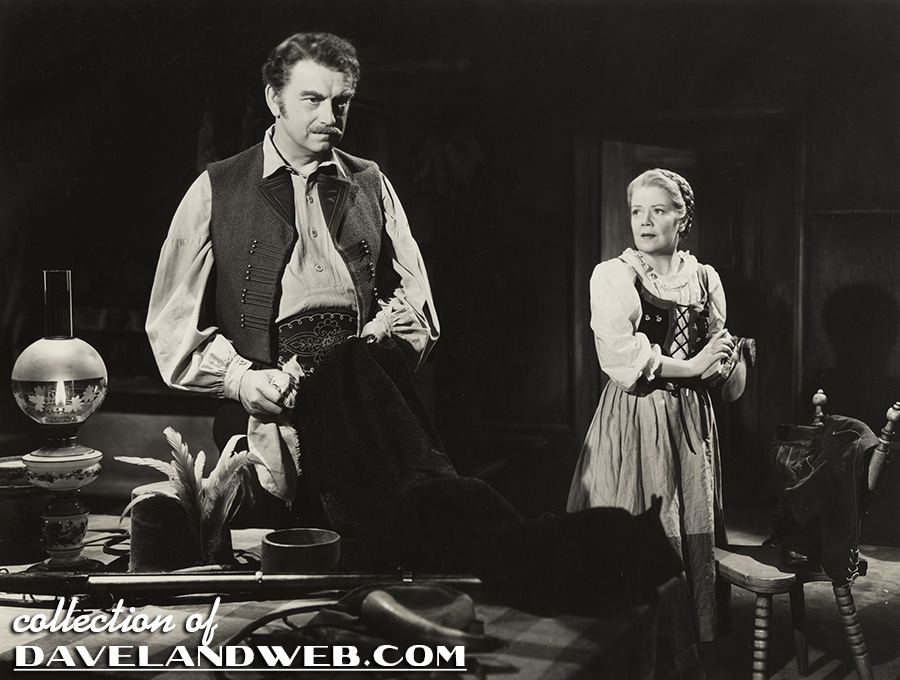
Below is a still from a deleted scene that occurred at the beginning of the movie when Shirley’s character’s father is about to go to war. Russell Hicks played the father and Spring Byington the mother.


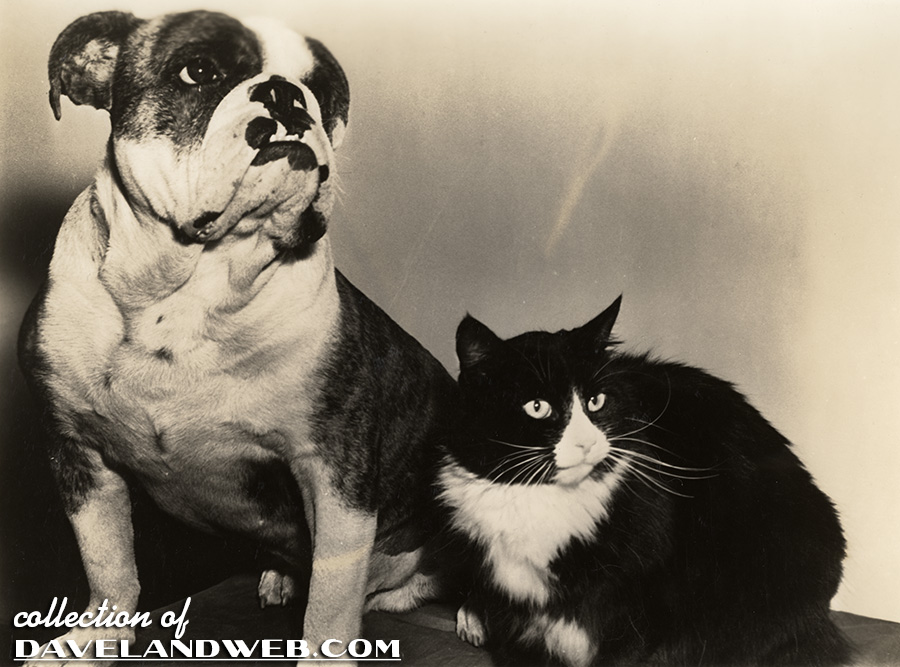
Below are Tylo the dog and Tylette the cat:


…and Eddie Collins and Gale Sondergaard who played their human counterparts in the movie.


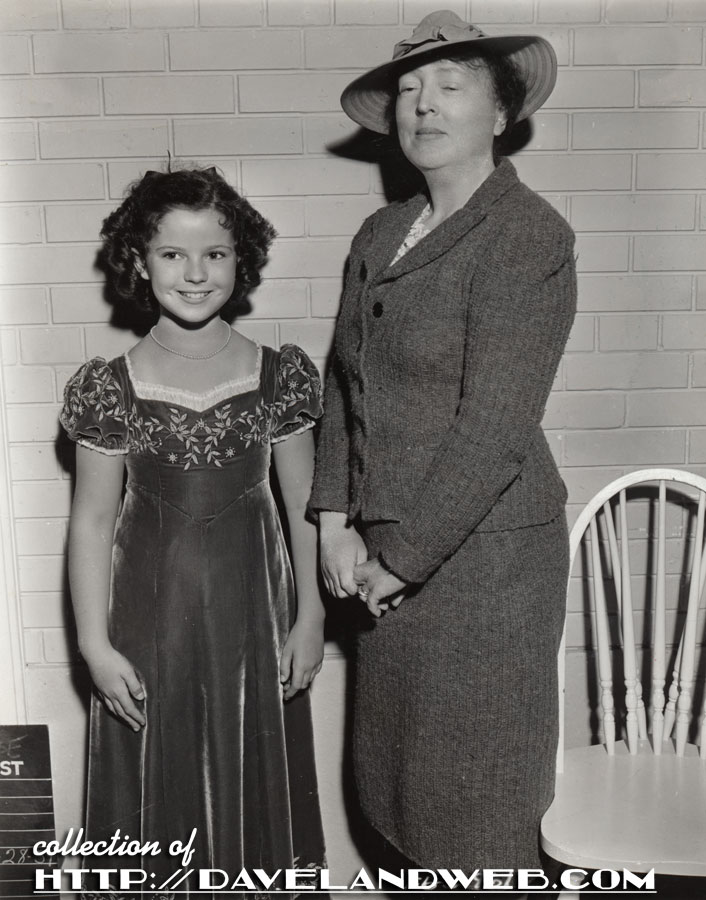
Whenever Shirley made a film, the studio was typically littered with visitors who wanted to meet the famous young actress. “The Blue Bird” was no exception. Note the costume/wardrobe board at the bottom left of the photo.


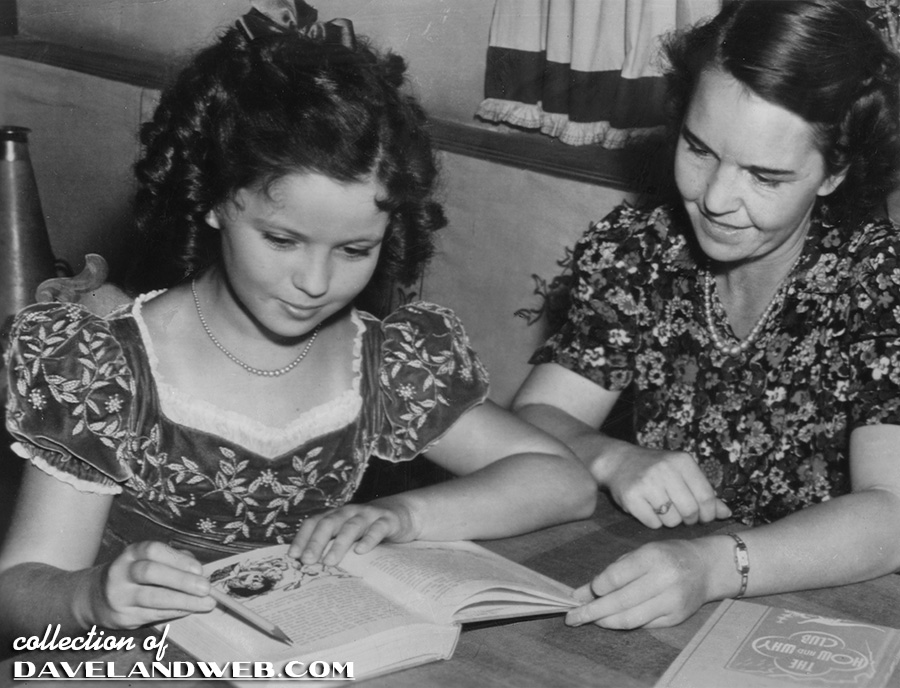
In between takes, Shirley did her schoolwork with studio teacher Frances Klamt.


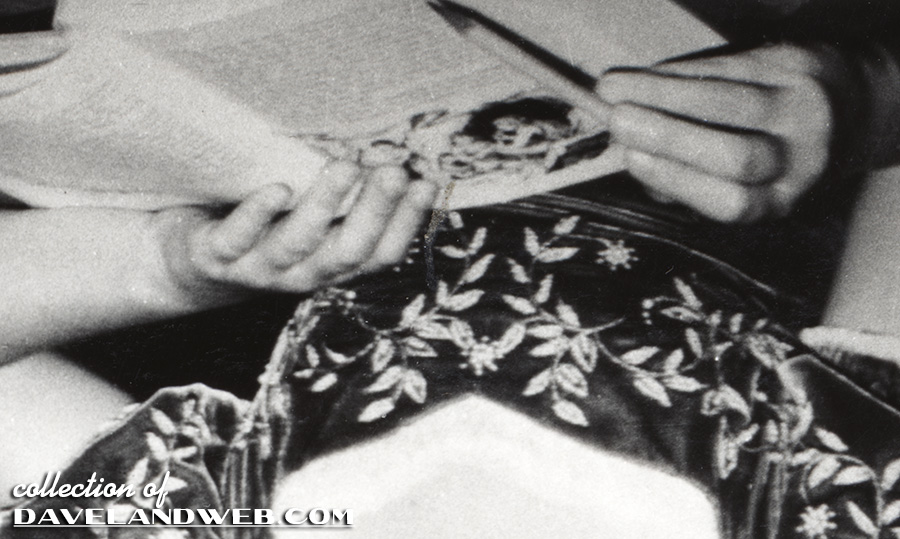
In case you want a glance at the book Shirley is working from:


I hope all of you have a very fun New Year’s Eve - see you in 2025!

See more “The Blue Bird” photos at my main website.
Tuesday, December 19, 2023

Temple Tuesday: Shirley’s Christmas Quintet


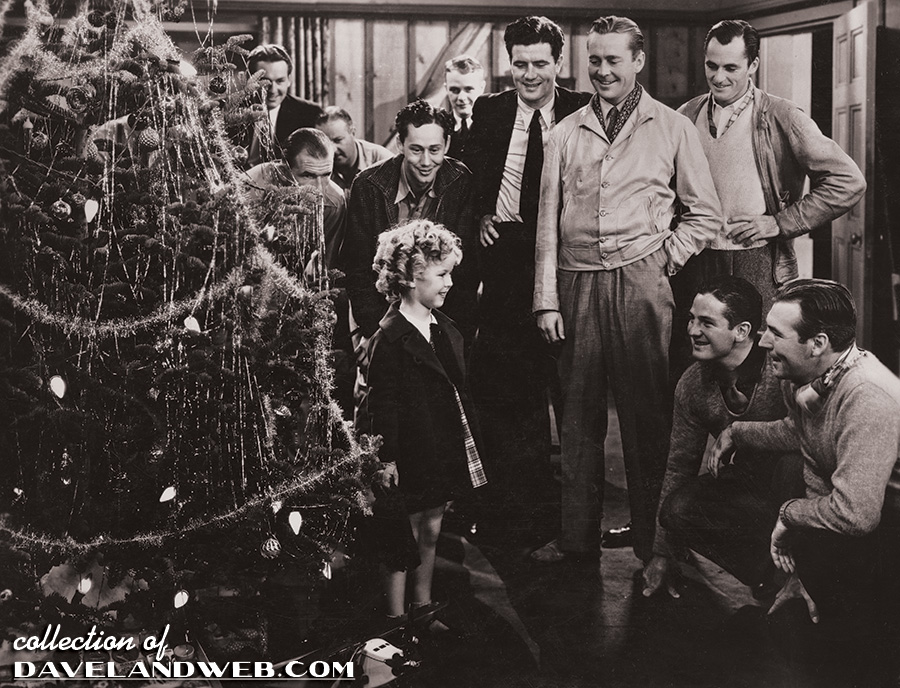
Today for Temple Tuesday we celebrate a quintet of Shirley movies that take place during the Christmas holiday. First up is “Bright Eyes” (1934), one of my favorite Shirley films. There is a very touching Christmas Eve scene where Shirley’s widowed mother (Lois Wilson) confides in her daughter that she misses her husband. The next morning, little Shirley is celebrated by all her aviator friends who used to work with her father before he “cracked up.” She is showered with gifts and love.


Yes, that’s mistletoe in the pilot’s hand. When I attempted to look up the meaning of the branch and berries on Google, this is what it said:

Historically, mistletoe represents romance, fertility, and vitality. Because nothing says love like bird feces and poison. But seriously, the Celtic Druids valued mistletoe for its healing properties and likely were among the first to decorate with it.


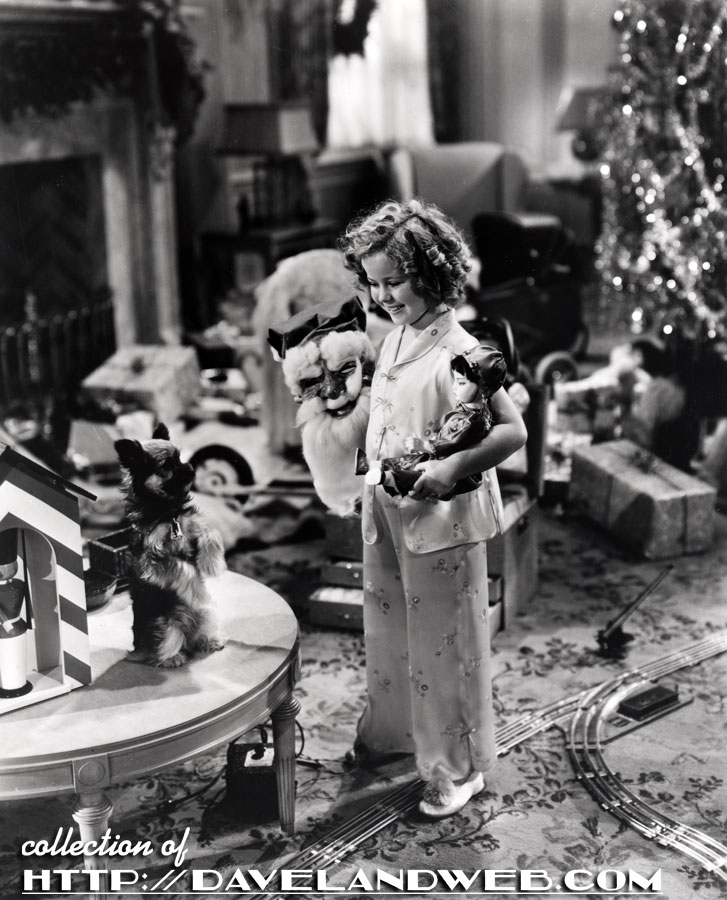
Who knew Google has a sense of humor? In “Stowaway” (1936), Shirley is a little girl who must flee her home to avoid being killed, then gets robbed, stows away on a ship, befriends a rich playboy (Robert Young), runs afoul of Alice Faye’s character’s mother-in-law (Helen Westley), almost gets put in an orphanage, and then has to plea to a judge to keep her “new” parents (Young and Faye) from getting a divorce. Doesn’t sound very Christmas-y, does it? Well, that’s what happy endings are for! The final scene has Shirley singing, “That’s What I Want For Christmas,” and judging by all the toys, dolls, and trains surrounding her, she gets everything on her list.


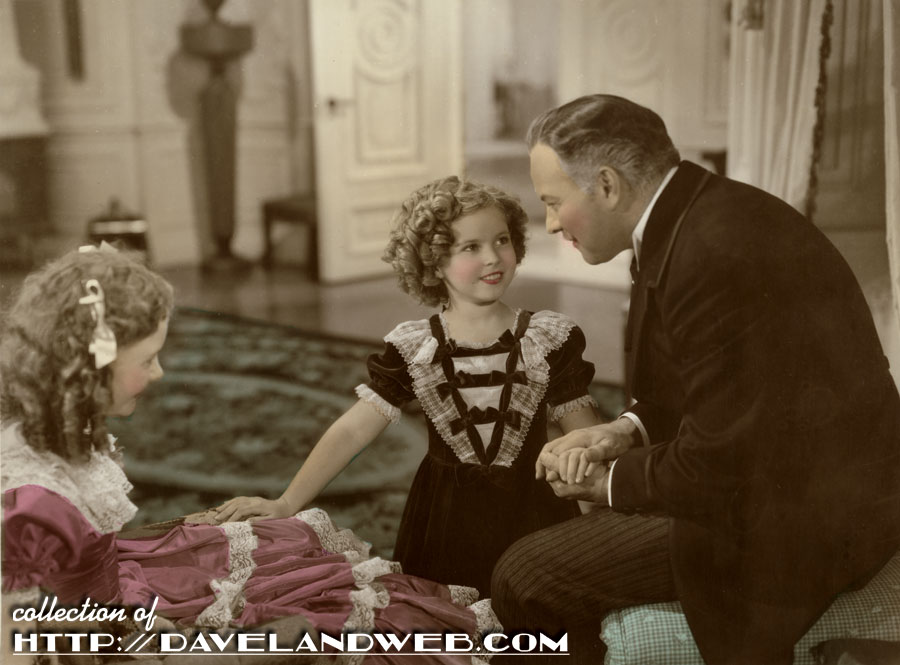
In “Heidi” (1937), Shirley sings “Silent Night” at the Sesemann household with crippled Klara (Marcia Mae Jones), wicked governess Fräulein Rottenmeier (Mary Nash), Herr Sesemann (Sidney Blackmer), and all the household servants.


It is a touching scene as the little girl gazes in wonderment upon the tree, ornaments, and abundance of gifts in the house, followed by a cut to the townspeople, nuns, and law enforcement singing the Christmas carol as well. Pardon the colorization; it was the best clip I could find!


A vintage hand-tinted photo from the same scene in “Heidi”:


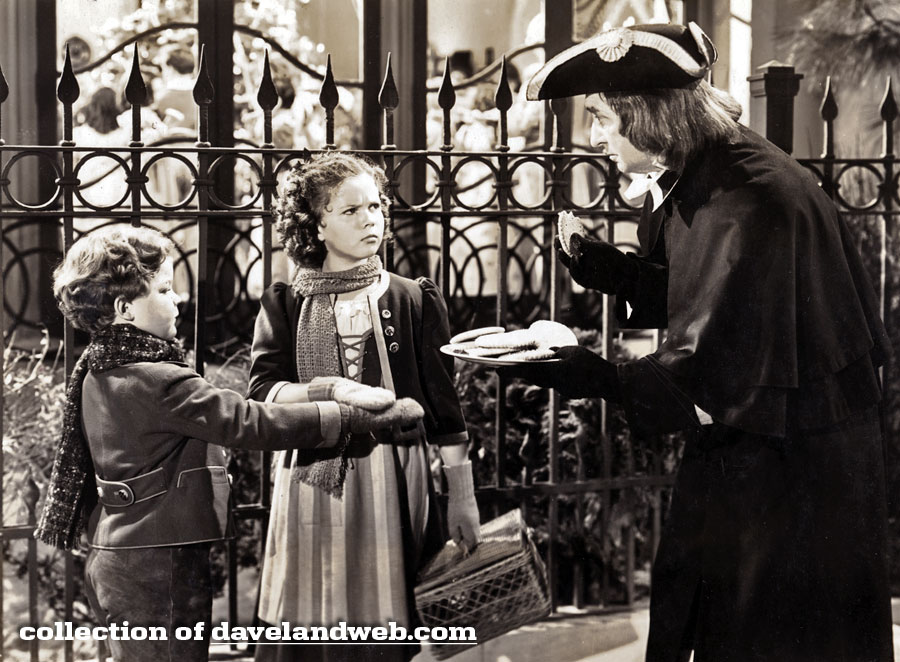
“The Blue Bird” (1940) begins on Christmas Eve, as Mytyl (Shirley) and her little brother (Johnny Russell) rush home for dinner after an afternoon of bird hunting. The merriment inside a mansion causes the poor little girl to stop and gawk, wishing she had all the riches that the people inside did. Regardless, she is too proud to accept cookies from the kind gentlemen who works there.


After a long journey in a dream sequence (or was it?), the children awake on Christmas morning to discover that the war has been called off and they can celebrate the holiday with their parents.


Note the festive garland around the door?


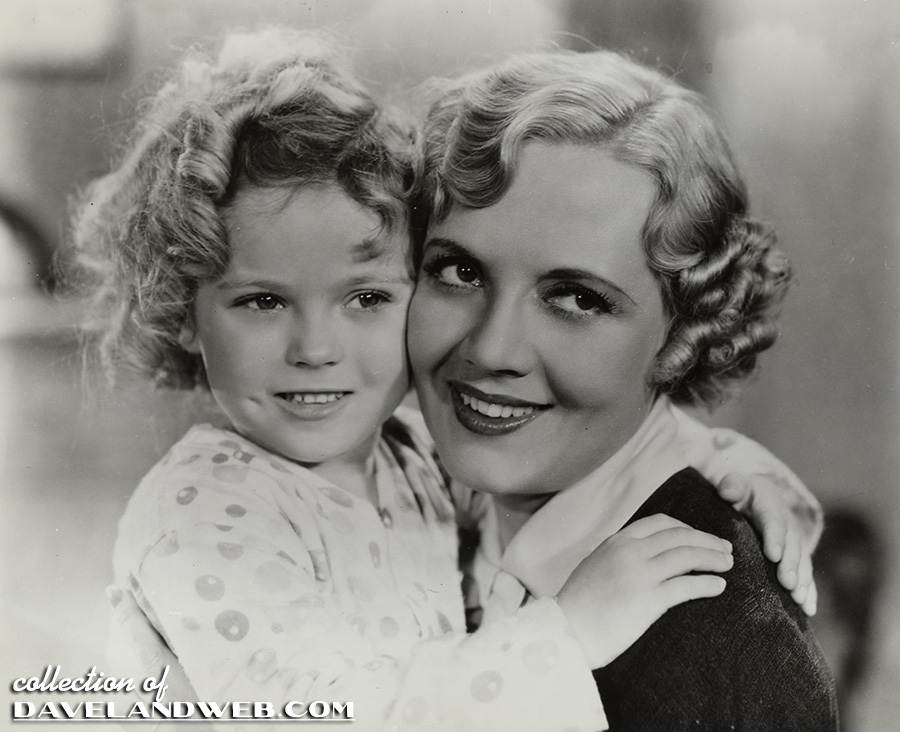
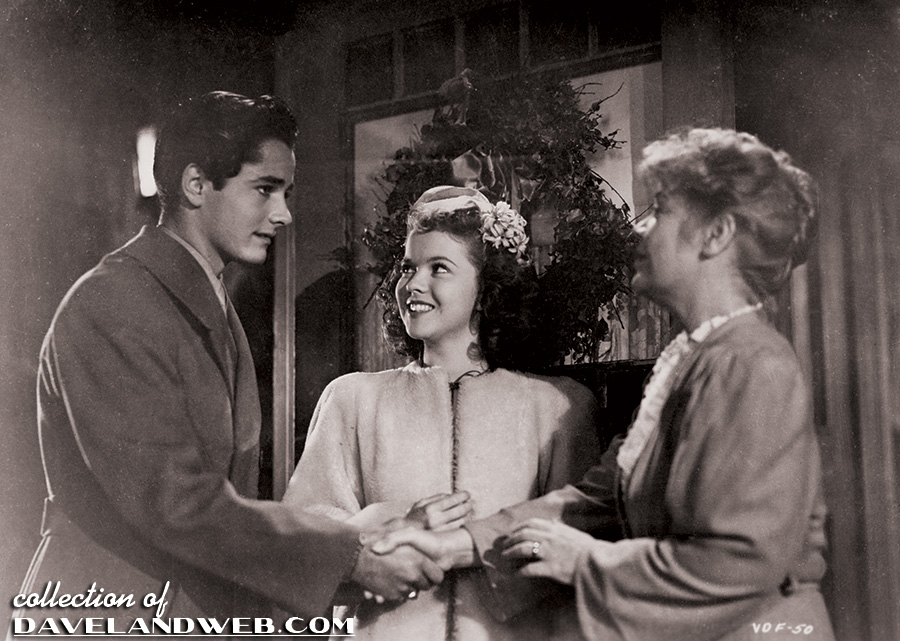
In “I’ll Be Seeing You” (1944), the Morgan family celebrates the Christmas holiday by welcoming their niece Mary (Ginger Rogers) for a visit. Mary meets a handsome Sergeant (Joseph Cotten) on the train there. Sounds like the beginning of a beautiful romance, right? Not so fast, folks. Mary is on parole (for accidentally killing the man who tried to rape her) and Zach is on leave from a military hospital, attempting to adjust to his PTSD. Are they honest with each other? Of course not! However, Barbara Morgan (Shirley) inadvertently spills the beans to Zach about Barbara and…well, you’ll just have to watch it yourself. In this scene from the movie, Barbara is about to go on a date with Lieutenant Bruce, played by John Derek, who put the “Derek” in Bo Derek! You’ll note that in both “The Blue Bird” and “IBSY” Shirley’s mother is played by Spring Byington, who would eventually play Major Nelson’s mother in “I Dream of Jeannie.”


“I’ll Be Seeing You” may not be the happiest of holiday movies, but it is still worth a watch and guaranteed to draw a tear from the driest of ducts! 

Which Christmas Shirley movie will you watch this season?

See more Shirley Temple photos at my main website.