Saturday, March 11, 2023

The Schindler House


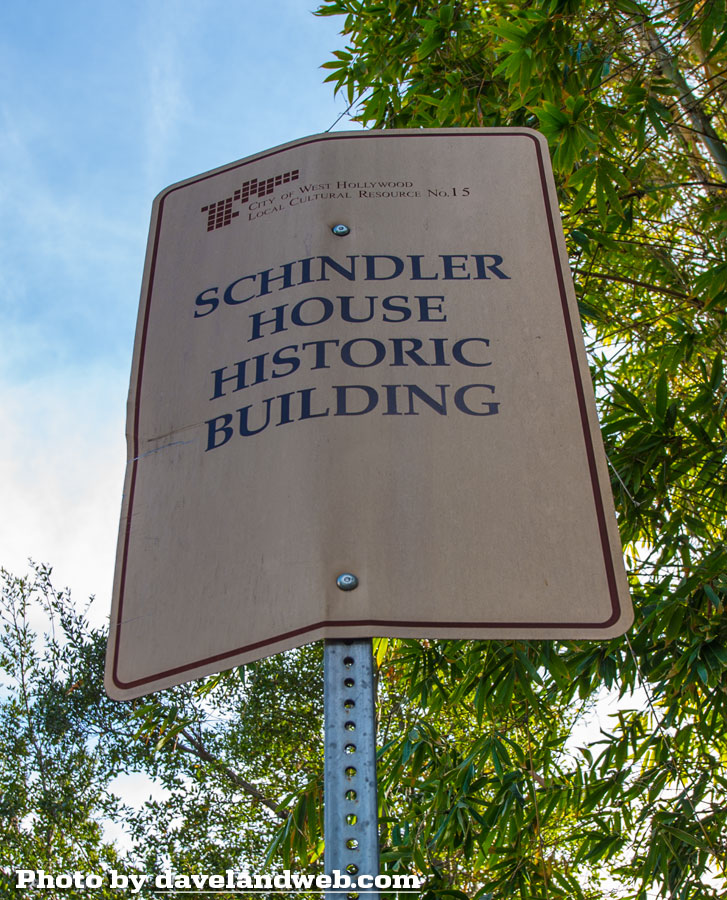
While on a Frank Lloyd Wright tour a number of years ago, we were also treated to the Schindler House (1921) in West Hollywood. As our bus parked in the residential neighborhood, I was not really impressed by the exterior of this “home” which was barely visible from the street behind the bamboo that shields it from passersby. The designer, Rudolph Michael Schindler, left Vienna in 1914 to study his craft under Wright. The die was cast when Schindler and his bride, music teacher Pauline Gibling, paid their first visit to Wright’s home in Wisconsin, Taliesen. As arch daily described it:

The experience had a significant impact on both Rudolf and Sophie–the manner in which the house and its rural surroundings coexisted in harmony appealed to them, and they began to dream of building a new studio home for themselves.


The recently married couple settled in Los Angeles, where they met Irving Gill, known as pioneer in the Modern Movement of architecture. Tired of the abundance of Spanish Colonial homes that were so popular in Southern California, Gill strove to build structures in pure as form as possible, rather than laden with ornamentation. From Gill himself:

It would be greatly for our aesthetic good if we should refrain entirely from the use of ornament for a period of years, in order that our thought might concentrate acutely upon the production of buildings well formed and comely in the nude.


Schindler embraced Gill’s tilt-slab construction, in which concrete walls are poured into molds and tilted into place on location after curing. For his own home, Schindler wanted a communal-type residence that would be shared with another couple. The plan for the house can be given a great deal of credit to his wife, Pauline Gibling, who met Schindler in Chicago in 1918. A wonderful New Yorker article gives the background:

Gibling studied music at Smith College before branching out into writing, criticism, education, and activism, had imagined a place like the Schindler House as early as 1916, writing of “a little joy of a bungalow, on the edge of woods and mountains and near a crowded city, which shall be open just as some people’s hearts are open, to friends of all classes and types.” Gibling set the tone for life at 835 Kings Road, fostering a bohemia that rivalled any in Greenwich Village.
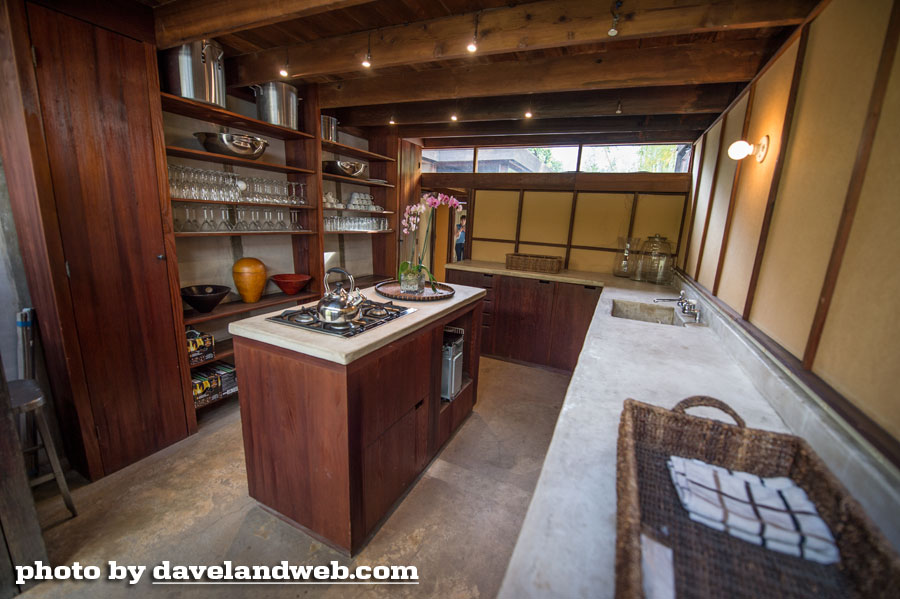


The house was conceived as a “cooperative dwelling for two young couples.” Schindler would serve as the architect and Clyde Chace (who with his wife Marian was the other young couple) acted as builder. The house was conceived as (according to MAK Center):

…an experiment in communal living to be shared with another couple, Clyde and Marian Chace. There were four rooms, one for each person to “express his or her individuality.” The communal gathering areas were patios in the garden, one for each family. There was a shared kitchen and outdoor sleeping porches were provided on the roof. A guest apartment with its own kitchen and bath extended from the rear of the house.
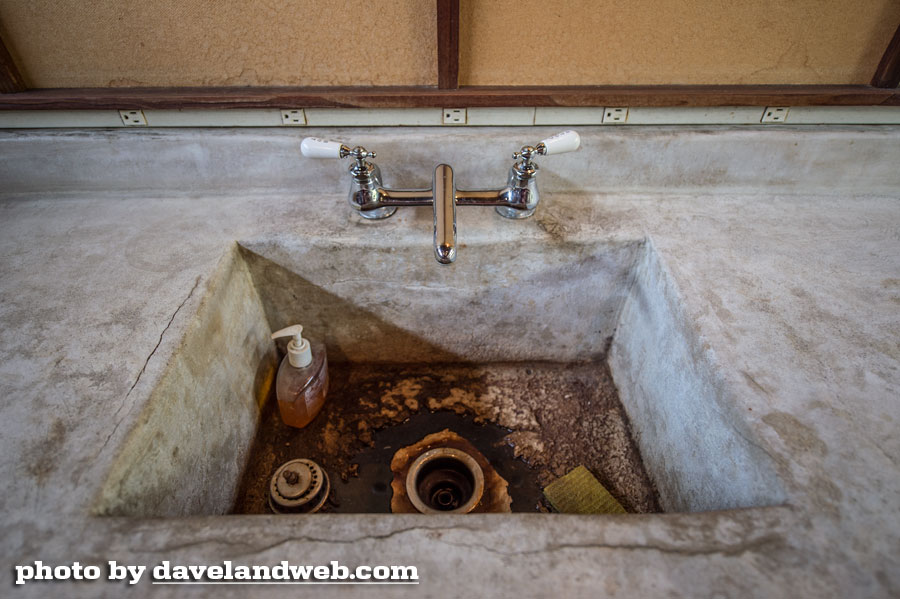


The wives took part in the construction process, too, which improved upon Gill’s tilt-slab system by pouring smaller units of concrete which could be put in place without a crane; the seams between the concrete were glass, which had the added benefit of allowing more light inside. While that was the original intention, one thing I noticed while inside was that it seemed perpetually dark. It was probably not this way when first constructed and the landscaping was non-existent. The plethora of multi-level apartments that cropped up around it over the years also shield out the sun.


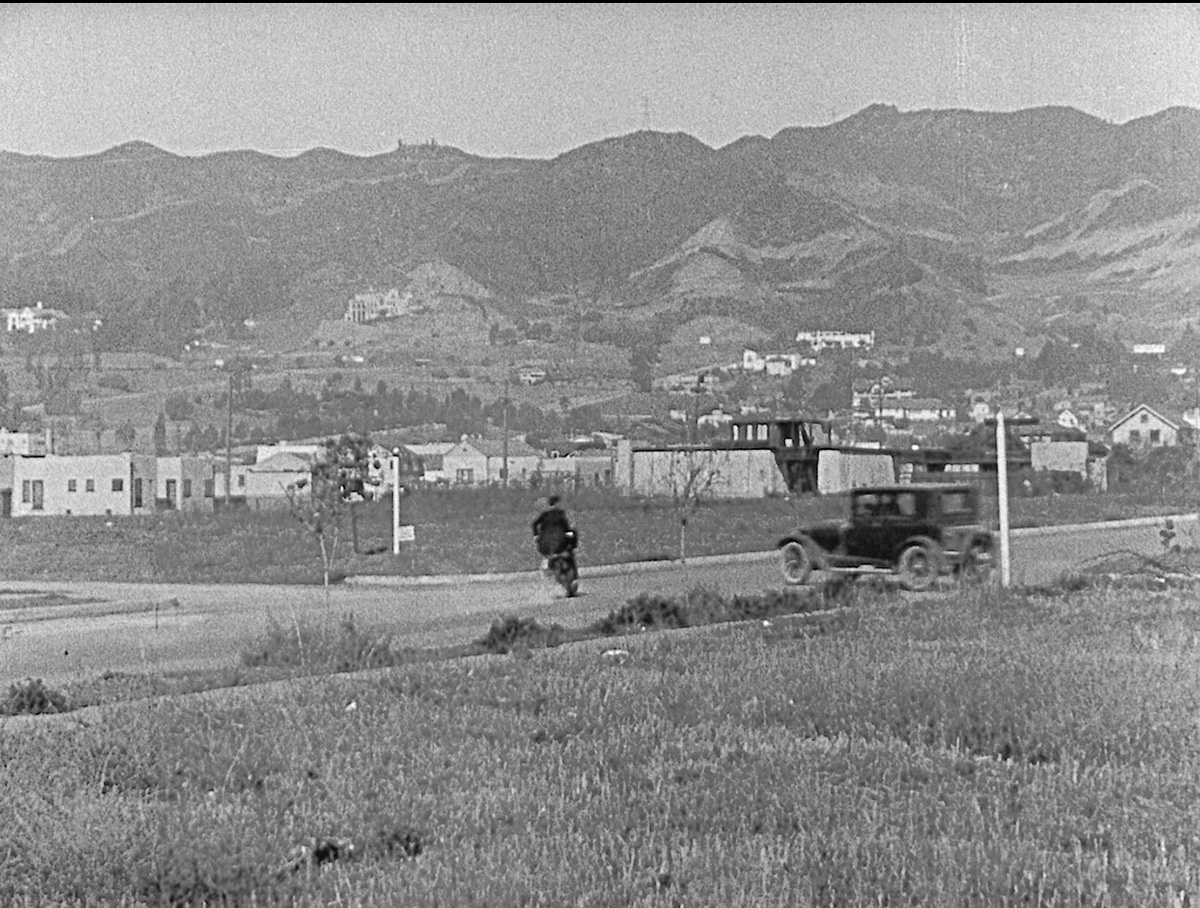
Completed June 1922, the two couples only lived here for two years. The Chaces moved to Florida after the birth of their second child, right about the same time that theatergoers were able to catch a glimpse of the house in the Buster Keaton film, “Sherlock Jr.” (1924):


Schindler and his wife split in 1927 with Pauline moving out. Austrian-American architect Richard Neutra moved into the Chace’s portion for a few years, and when he departed, Pauline moved back in and resided in separate quarters from her ex-husband until Schindler’s death in 1953.

The home is also known as the incubator for a number of other architectural masterpieces, such as the Lovell house (Neutra, 1929, Los Angeles), Pueblo Ribera Court (Schindler, 1925, La Jolla), the Jardinette Apartments (Neutra, 1928, Hollywood), and The Charles H. and Ethel Wolfe house (Schindler, 1931, Catalina Island).


Three years before her 1977 death, Pauline created a nonprofit organization, the Friends of the Schindler House, to help ensure the house’s preservation. The organization acquired the house in 1980 and began a program to restore the house, using its original 1922 comopletion date as the reference point. In 1994, the home turned into the headquarters of MAK Center for Art and Architecture, an independent satellite of the MAK – Austrian Museum of Applied Arts, Vienna, in cooperation with the Federal Chancellery of Austria/Art Division and the Friends of the Schindler House (FOSH). The list of guests/residents that passed through the Schindler house is just as impressive, and included Upton Sinclair, Aldous Huxley, photographer Edward Weston, Frank Lloyd Wright (and his son, Lloyd), and composer John Cage.
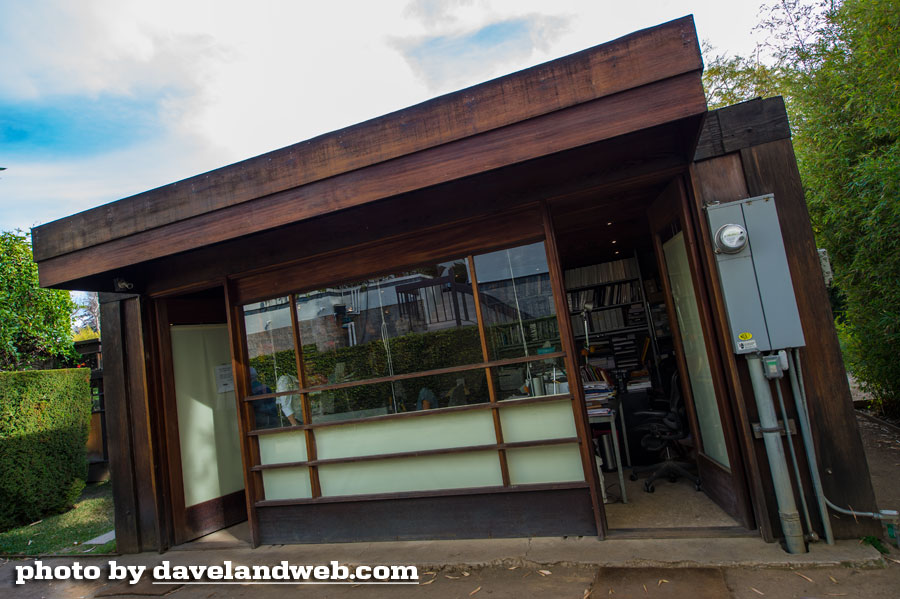


It was a truly interesting idea, and the structure itself is very innovative; just not sure it would be for me.

See more Schindler House photos at my main website.

Tuesday, March 07, 2023

Temple Tuesday: Blue Bird Deletion


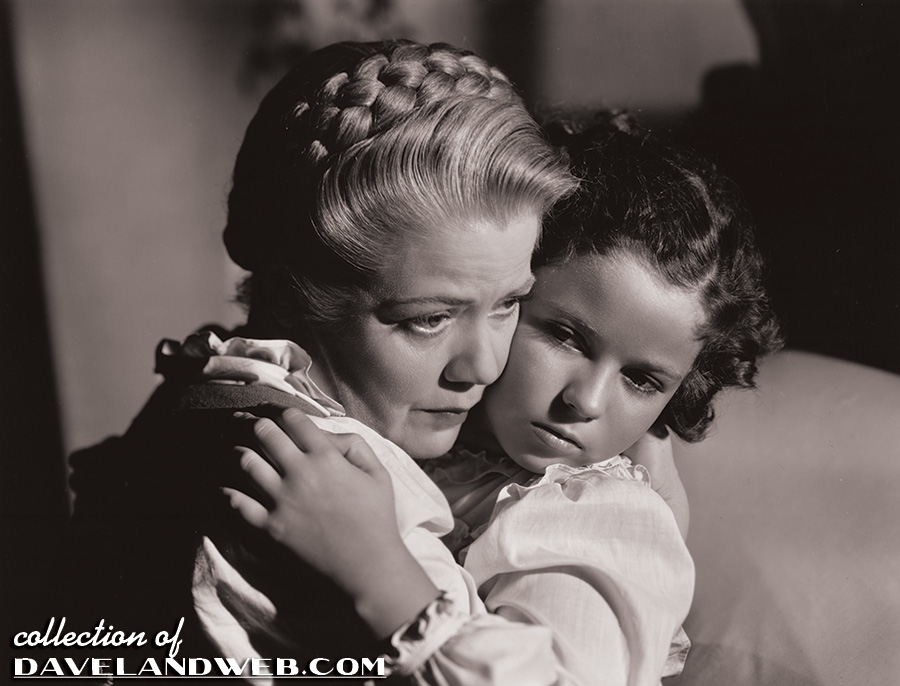
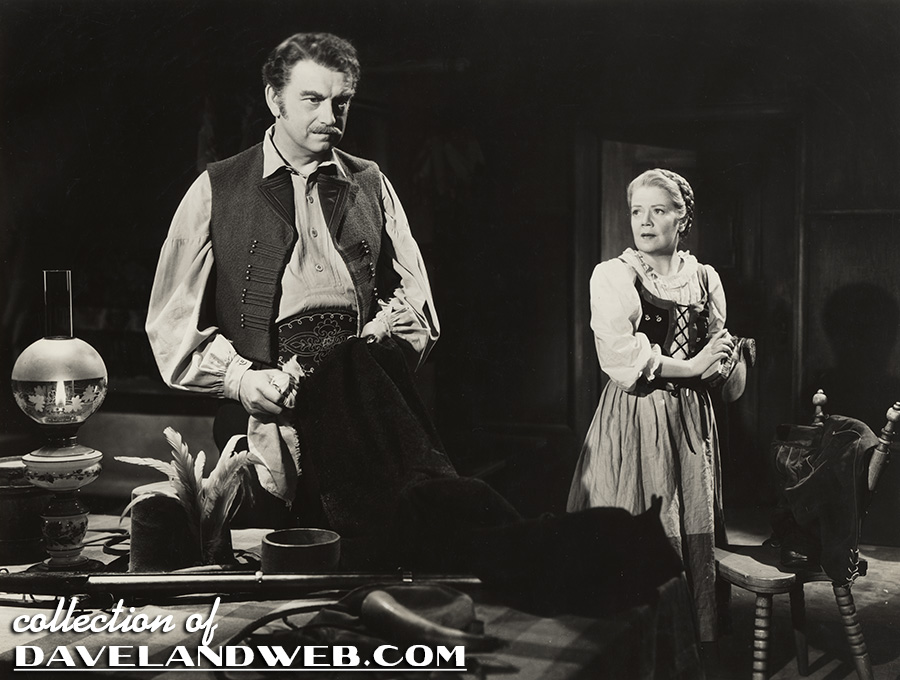
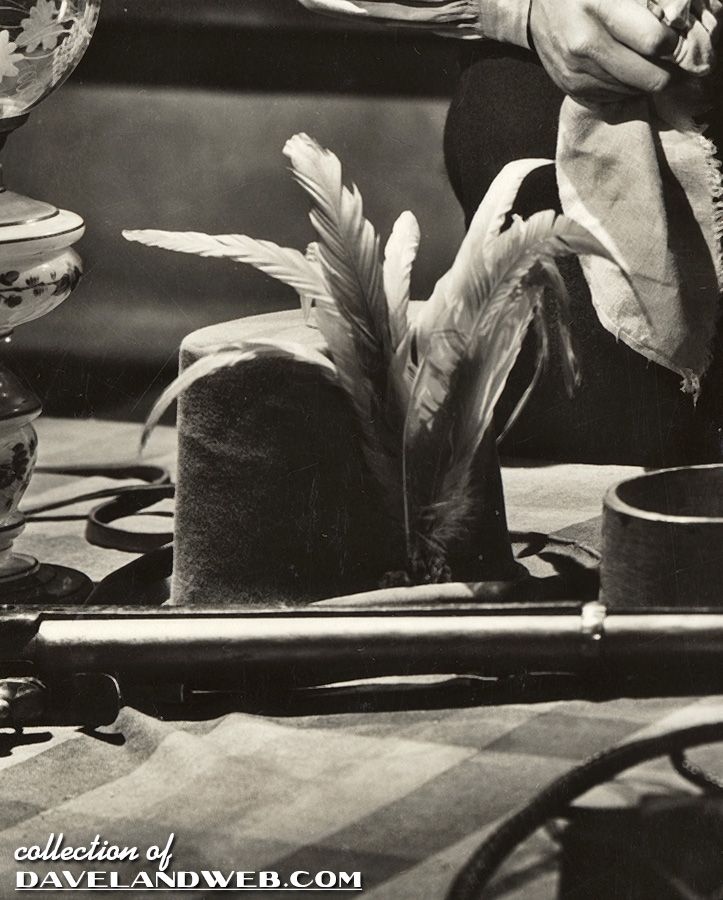
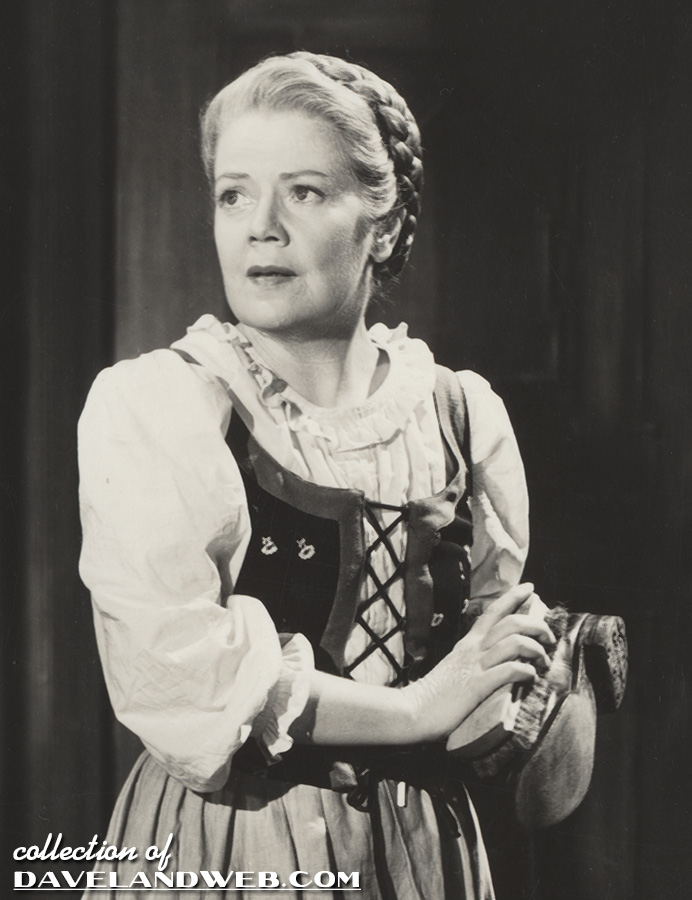
Deleted scenes from vintage classics rarely survive, yet there are often little bread crumbs that still exist, showing what might have been. Shirley Temple’s 1940 film “The Blue Bird” begins with some depressing sepia-toned scenes about the impending war that cause the father (Russell Hicks) to leave the family at Christmas time. Mother (Spring Byington) and daughter (Shirley) comfort each other after they learn of this news. In the finished film, the two children go to sleep and we next see them being awakened to a Technicolor world of talking animals, fairies, and children from the future. Originally, there was to be another scene before the film transitioned into color. I recently acquired this vintage photograph which illustrates the deleted footage. Melissa (aka “The Colonel”) immediately dug up her copy of the script to provide the accompanying text:


INT. KITCHEN

Daddy Tyl is fixing up his military accoutrement.About him on table and chair are his boots, his cap, his uniform. He is polishing the brass buttons on his tunic.


After a moment Mummy enters. She drops to her knees and picks up a boot, starting to polish it.

DADDY
(noticing this and forcing a smile)
I’ve almost finished. Good serviceable stuff - these uniforms - (with a dry laugh) - as though they were made to last a lifetime!

Suddenly, overwhelmed with grief, Mummy drops the boot and lets the brush clatter to the floor. She covers her eyes with her hands.

MUMMY
(anguished)
I can’t let you go…I can’t!

Daddy looks at her startled, then tenderly helps her to her feet.


DADDY
(tenderly)
There, there…I’ll be all right, Mummy.

ANOTHER ANGLE - FAVORING MUMMY

With an effort she regains control of herself, brushes the tears from her eyes.

MUMMY
I’m sorry. I didn’t mean to be a coward.

DADDY
(tender and comforting)
You couldn’t be that - ever.
(he puts an arm about her shoulder)
You must be tired - and we’ve got quite a day ahead of us tomorrow. Come along, now.

He moves toward the lamp on the table.


INT. MYTYL’S ROOM - CLOSEUP MYTYL

Her head on the pillow - she turns her head restlessly

EXT. COTTAGE - LONG SHOT - TECHNICOLOR

After a moment the light in the window goes out. TECHNICOLOR STARTS ON THIS SCENE AND CONTINUES TO THE END OF THE PICTURE.

FADE OUT


It isn’t too difficult to understand the deletion of this scene; Mummy Tyl already has had a minor breakdown while serving her husband his stew and he bolsters her up. The deleted scene is repetitive and only serves to bring down an already depressing film.

However, the transition from sepia to Technicolor would have been less jarring if the transition had occurred as originally written. In the final film, Shirley and mother hug and the scene fades out. Suddenly, we hear the obnoxious knocking on the front door and the cat waking up, all in vivid Technicolor. It was not surprising to discover that something had been snipped here.

“The Blue Bird” truly was a noble effort on the part of Producer Darryl Zanuck. He intended to have a beloved classic come to life in glorious Technicolor, full of spectacle, beauty, and not so subtle messages about the problems caused by greed and war.


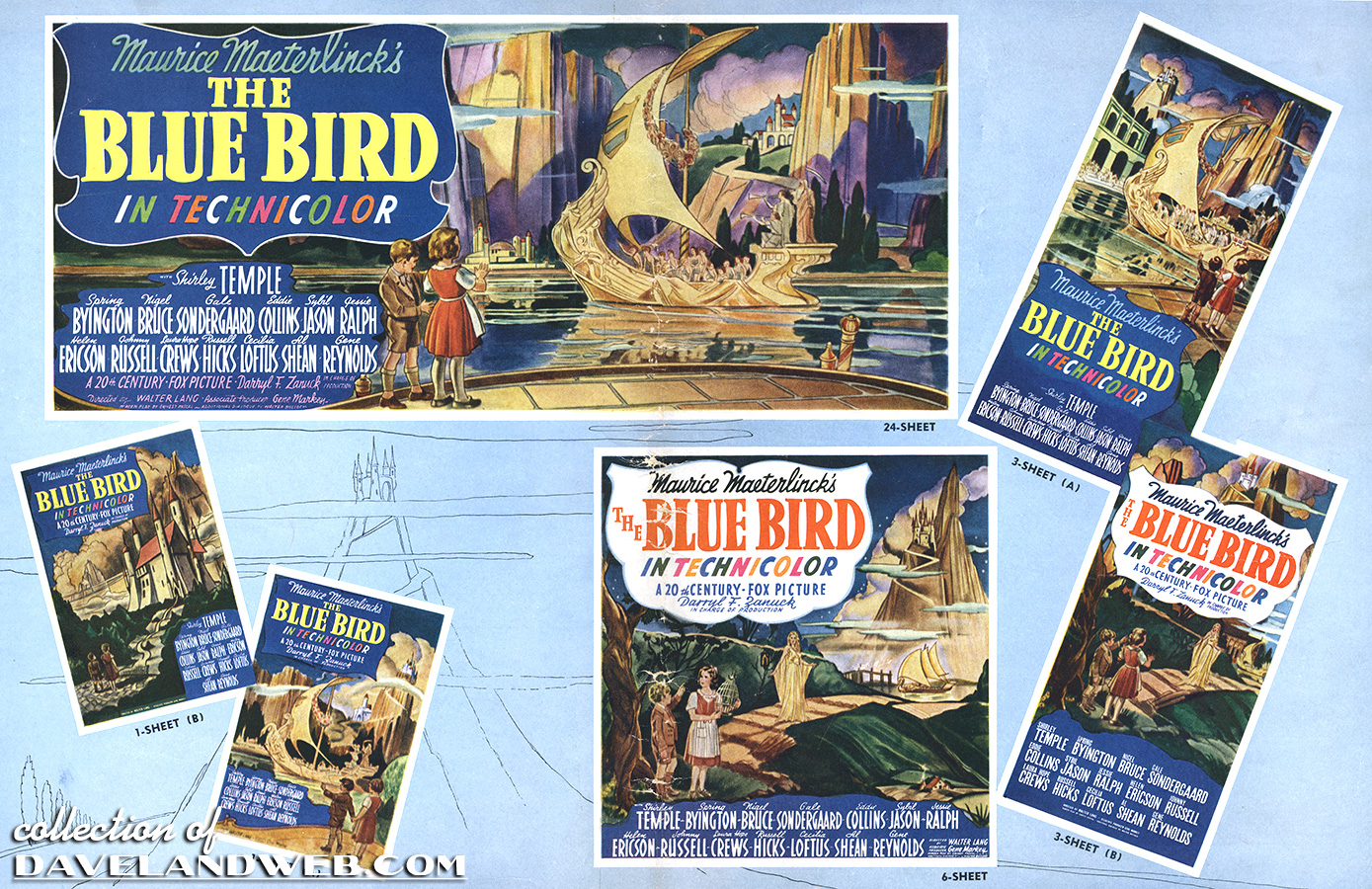
As you can see by this page from the original press book, Shirley is barely a part of the publicity campaign. Instead, the posters and lobby card art focus on Maeterlinck, Technicolor, expressionistic art, and the overall cast. This was intentional, as Zanuck felt the movie would have greater appeal if it wasn’t marketed as yet another formula Shirley Temple film aimed at the junior generation.

See more Shirley Temple “Blue Bird” photos at my main website.
Monday, March 06, 2023

Marmont Monday: By the Numbers


A recent Architectural Digest article spilled the beans about my favorite hotel ever, the Chateau Marmont on Sunset Boulevard in West Hollywood. The first paragraph says it all:

Since it opened in 1929, the Chateau Marmont has been a beloved retreat of actors, writers, musicians, and directors craving a temporary (or sometimes not so temporary) home away from the prying eyes of the public and the press. As the Old Hollywood adage goes: “If you want to be seen, go to the Beverly Hills Hotel. If you don’t want to be seen, go to Chateau Marmont.”

The story mentions many of the hotel’s famous guests and the rooms that they stayed in. The article uses a number of stock photos that weren’t even shot at the Chateau; I will attempt to rectify that. You know already that I’m a visual kind of guy.


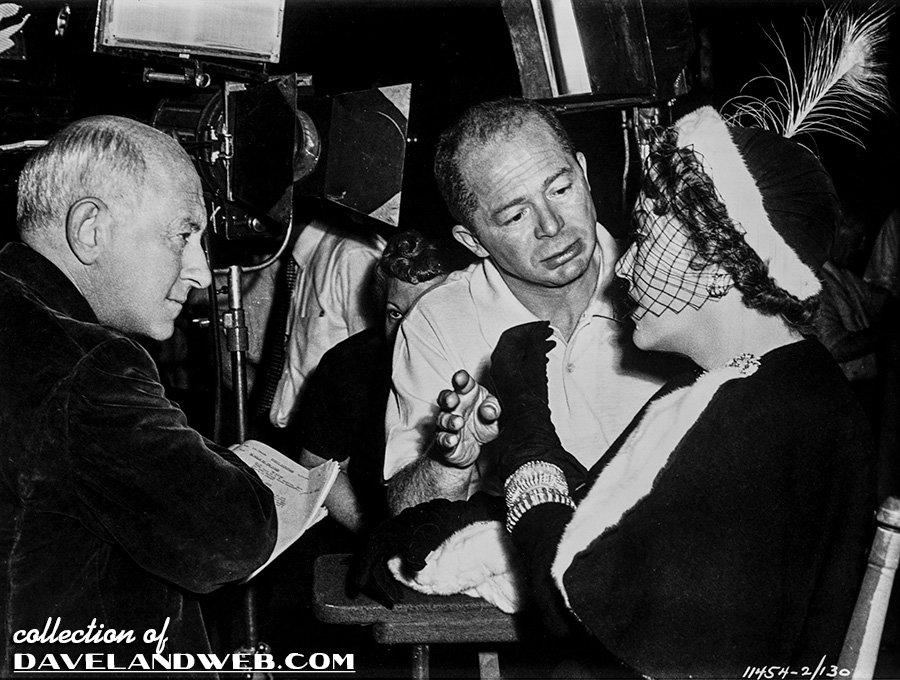
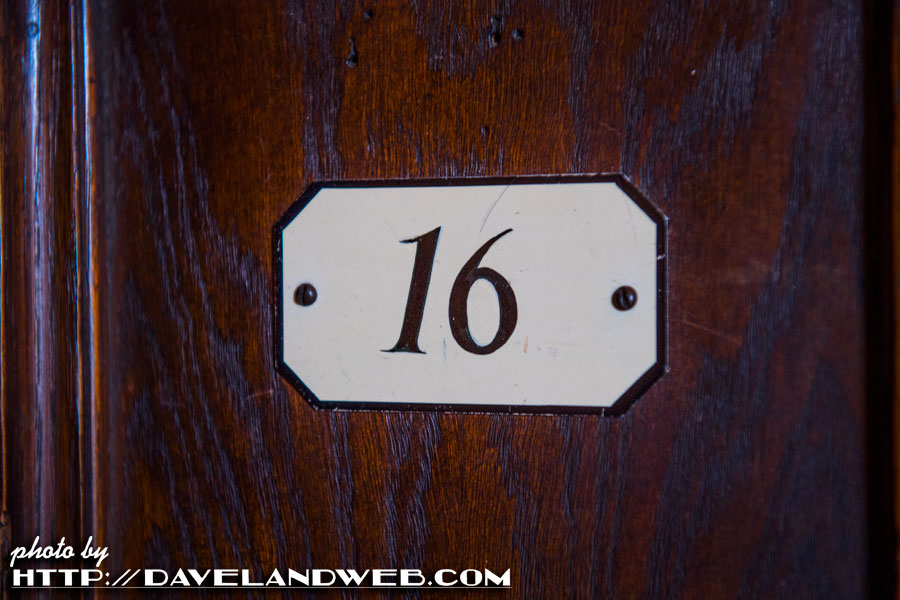
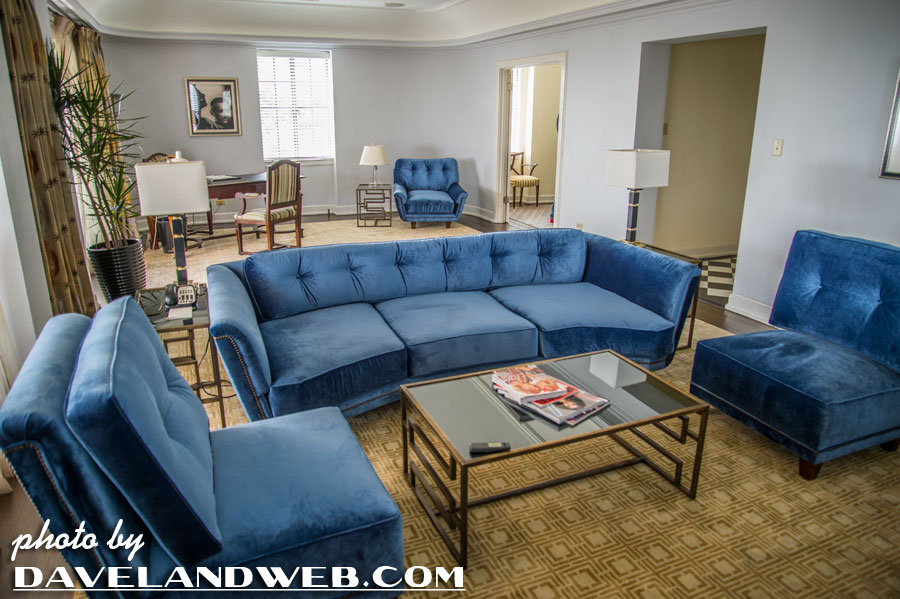
In discussing famed director Billy Wilder (“Sunset Boulevard” and “Some Like it Hot”), the description of his room sounds a lot like Room 16, which also happens to be the very first room I checked into during my first few stays there.

Rather than go to another hotel, he stayed in an antechamber beside the women’s restroom for several days until a room opened up.


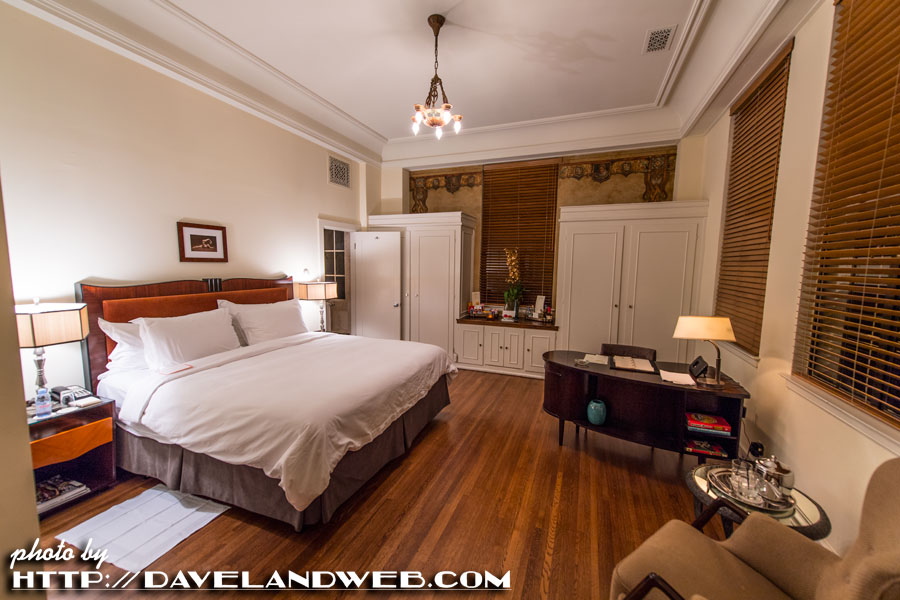
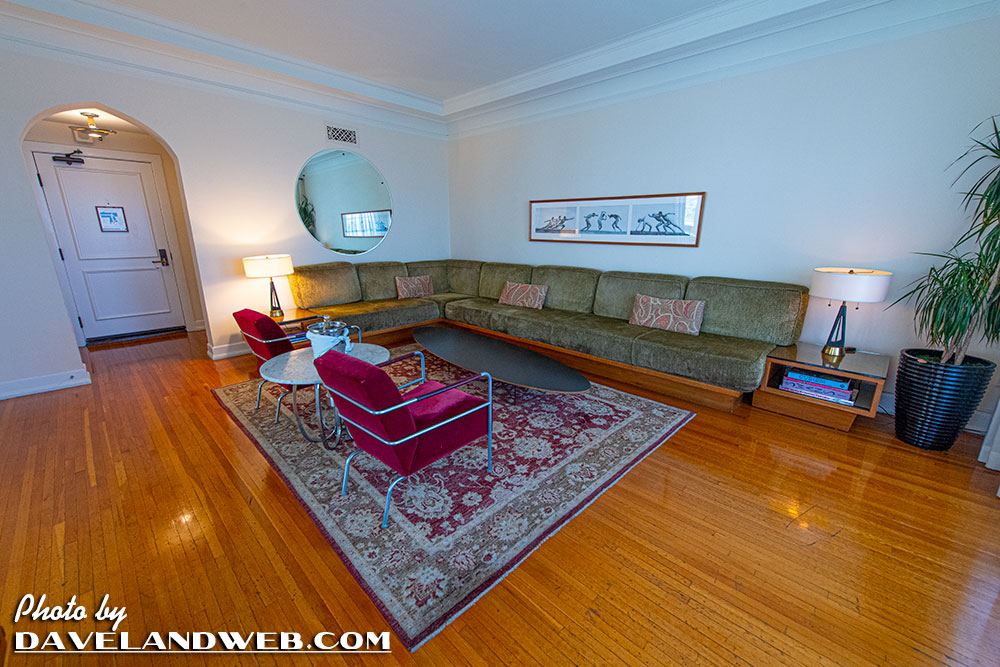
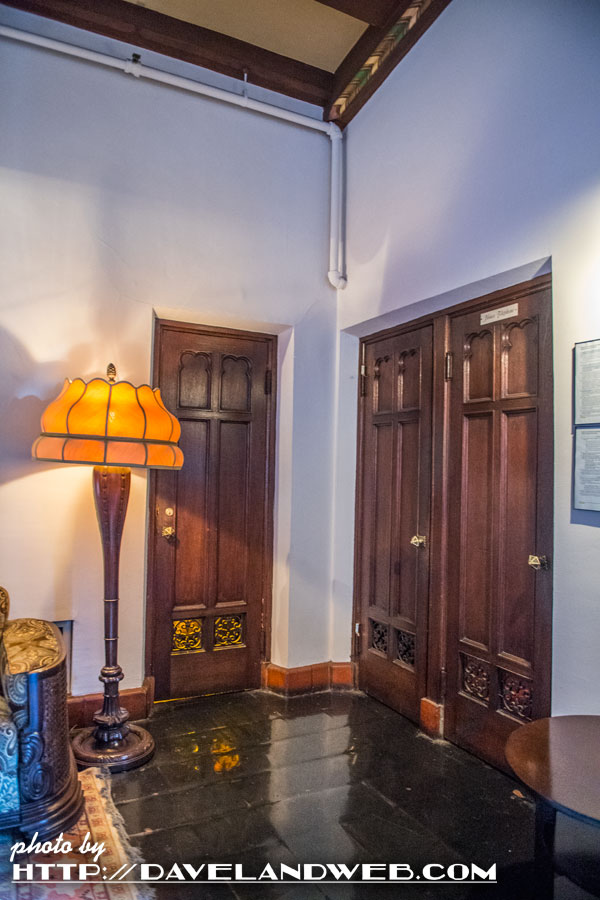
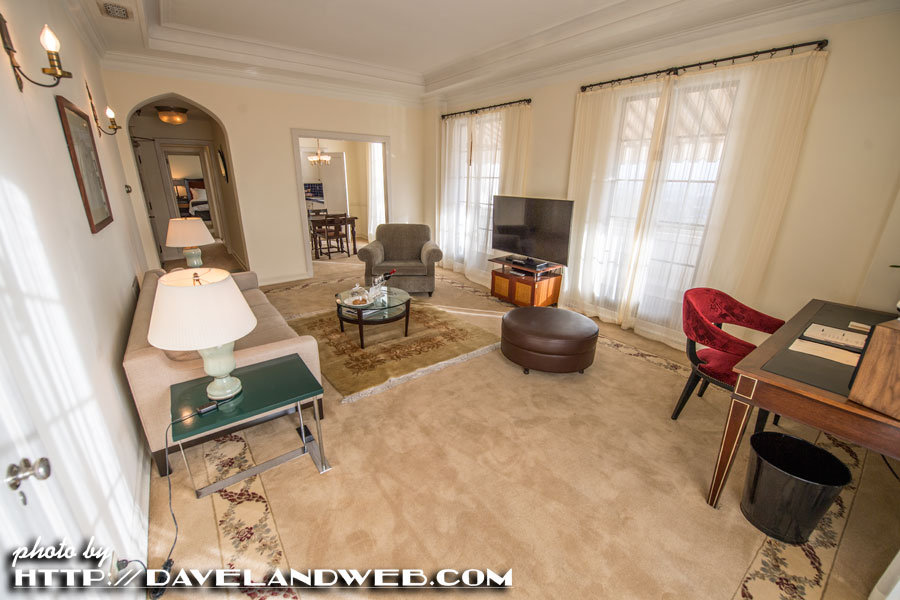
If I have the room correct, what was then the women’s room near the lobby is now a men’s room…but it’s still located next to 16 (shown above, looking larger than it is, thanks to my wide angle lens). The women’s room moved to a hallway off the bar located next to the lobby (which was once a formal dining room). 16 can also count Barbra Streisand, Buddy Hackett, and Warren Beatty as former guests.

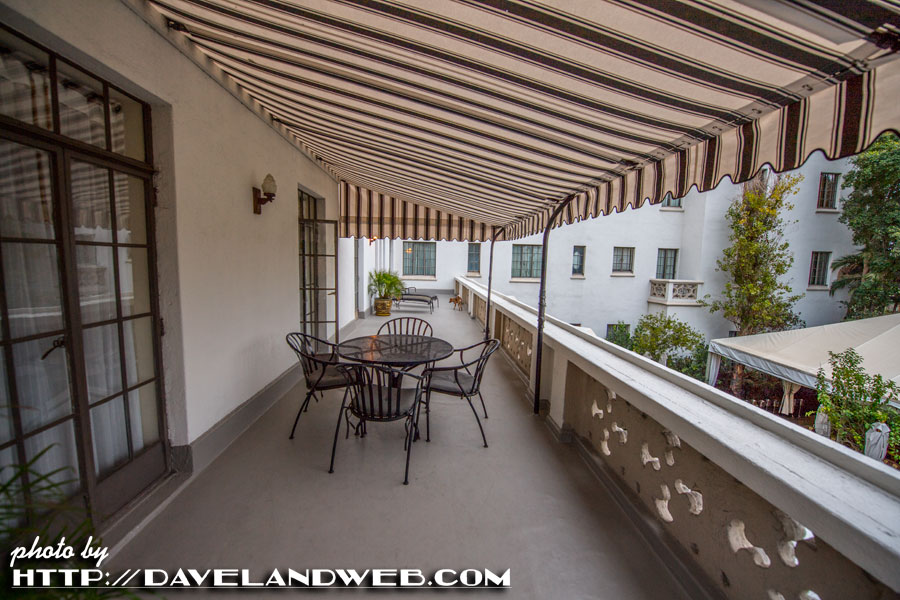
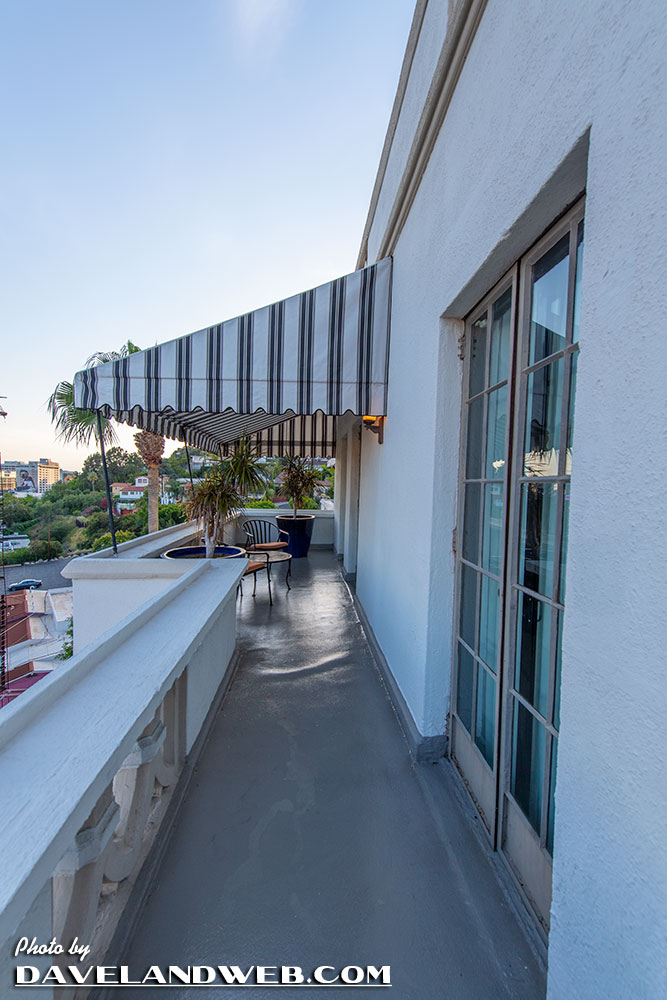
29 is where Myrna Loy lived for a number of years (once again, according to Vanity Fair). What a great balcony!


One of the most infamous rooms is 54 (below), for which the phrase, “If you must get into trouble, go to the Marmont” was coined. 


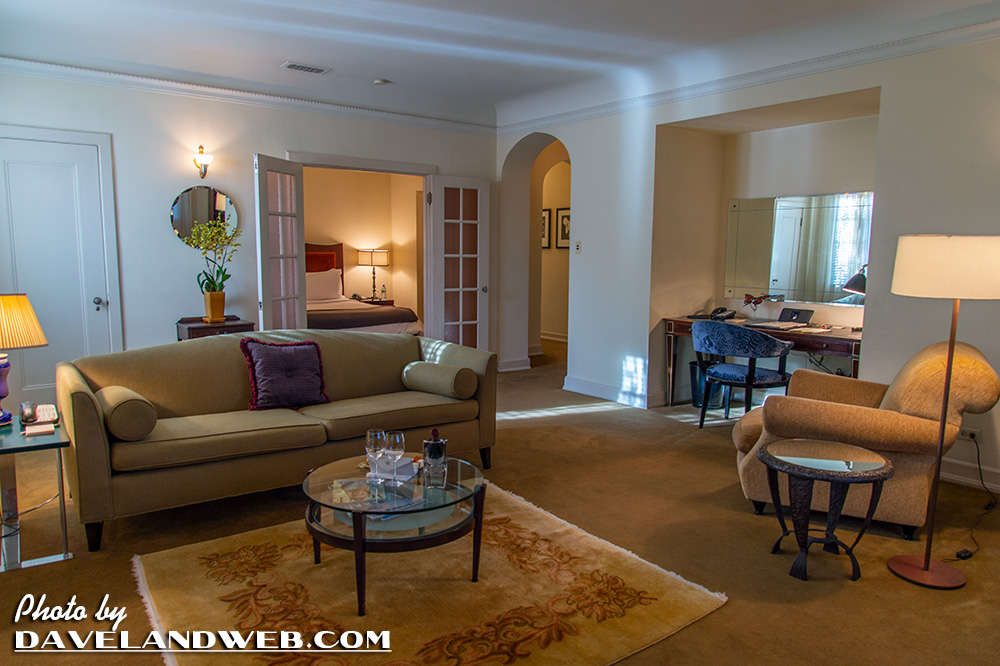
To keep two of his biggest male stars out of the tabloids, Columbia Pictures head Harry Cohn rented suite 54 for William Holden and Glenn Ford so that they could carry on with their affairs in private. According to Vanity Fair, David Niven ended up tagging onto their little deal with Cohn. I’m sure that kind of stuff doesn’t happen anymore.

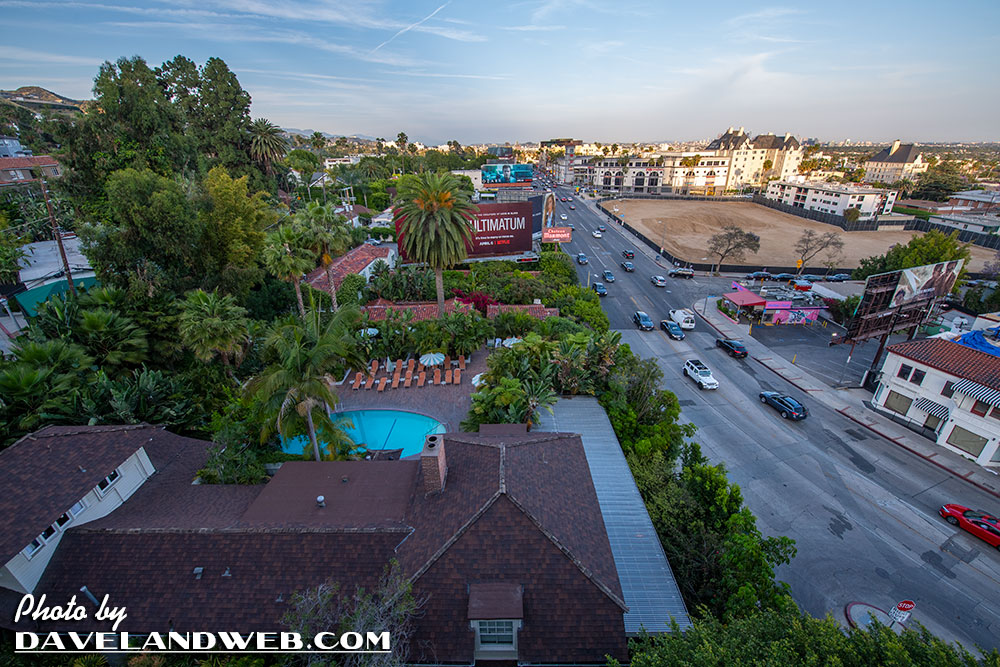
Both Howard Hughes and director Lloyd Bacon stayed in the penthouse (room 64, below).


Director Lloyd Bacon’s weekly penthouse parties attracted a who’s who of Hollywood in the mid 1930s.…Howard Hughes rented the penthouse off and on for years and used binoculars to spy on women at the pool below.

Howard’s view from 64:


Vanity Fair “allegedly” stated that Greta Garbo stayed in 64, signing the guest register under her alias, Harriet Brown.

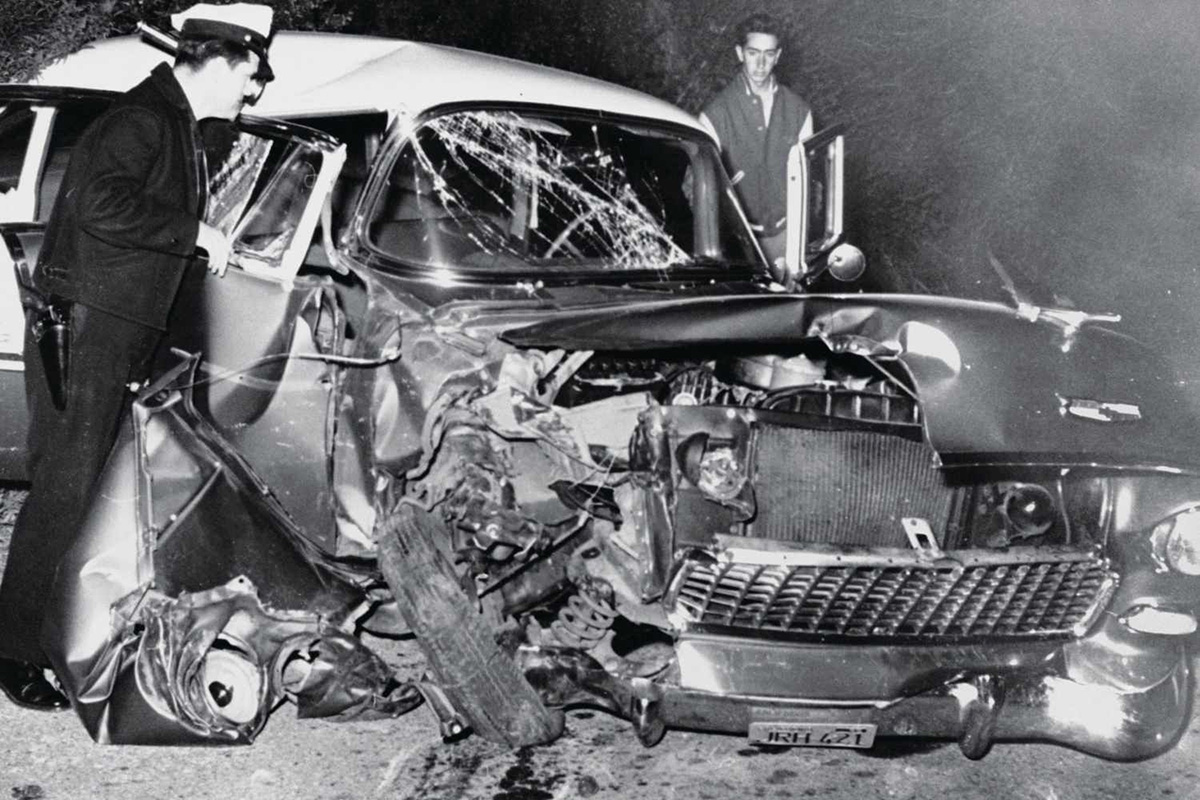
Montgomery Clift recuperated at the Chateau in 1956 after getting in a horrific car accident (below) leaving Elizabeth Taylor’s home. He stayed in a two-bedroom suite on the sixth floor during his residency.


To my knowledge, 64 is the only two-bedroom suite on the sixth floor. Add Clift to that fabulous roster of guests who have slept there.…unless you read Vanity Fair, which states that 36 is where Clift stayed after his accident, which says the star emerged…

onto the terrace from time to time to scream obscenities in the nude.

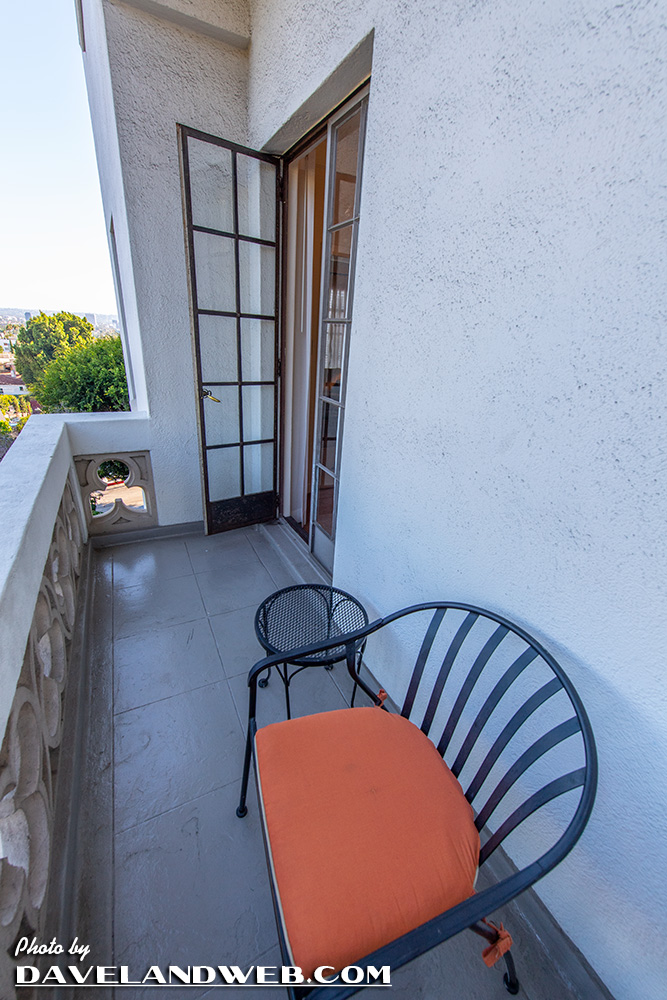
The terrace of 36. You be the judge.


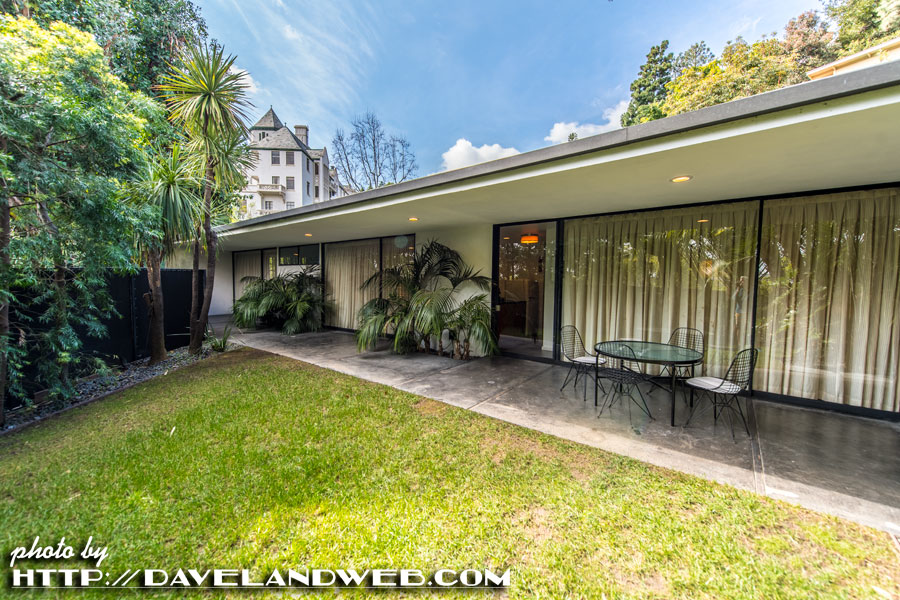
Director Nicholas Ray rented a bungalow for eight years, beginning in 1952. While living there, he made “Rebel Without a Cause” and carried on an affair with one of the film’s stars, Natalie Wood.


Today, it is numbered as bungalow 1.


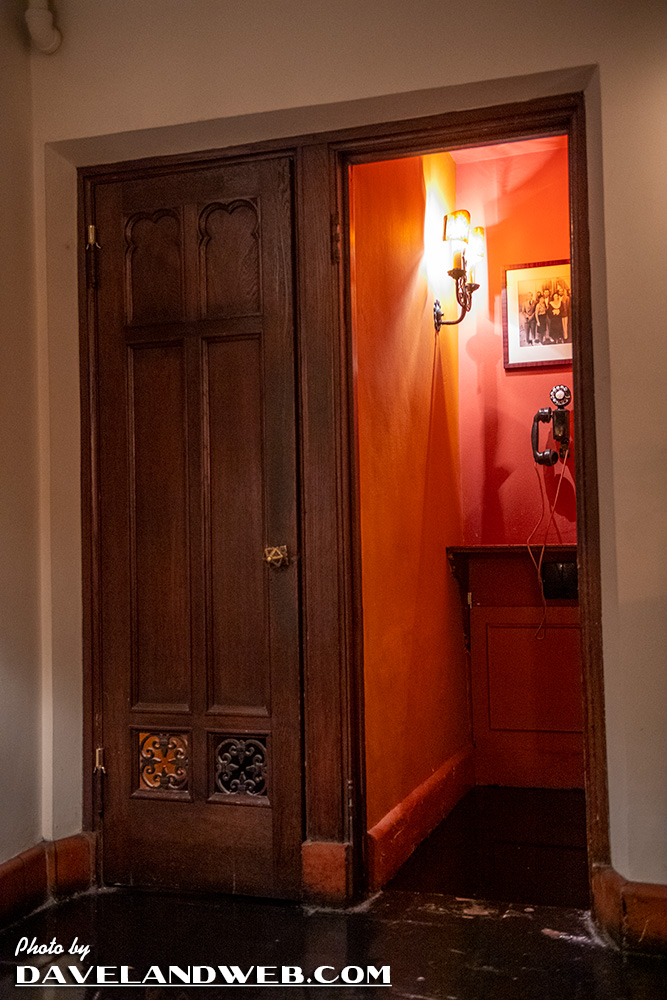
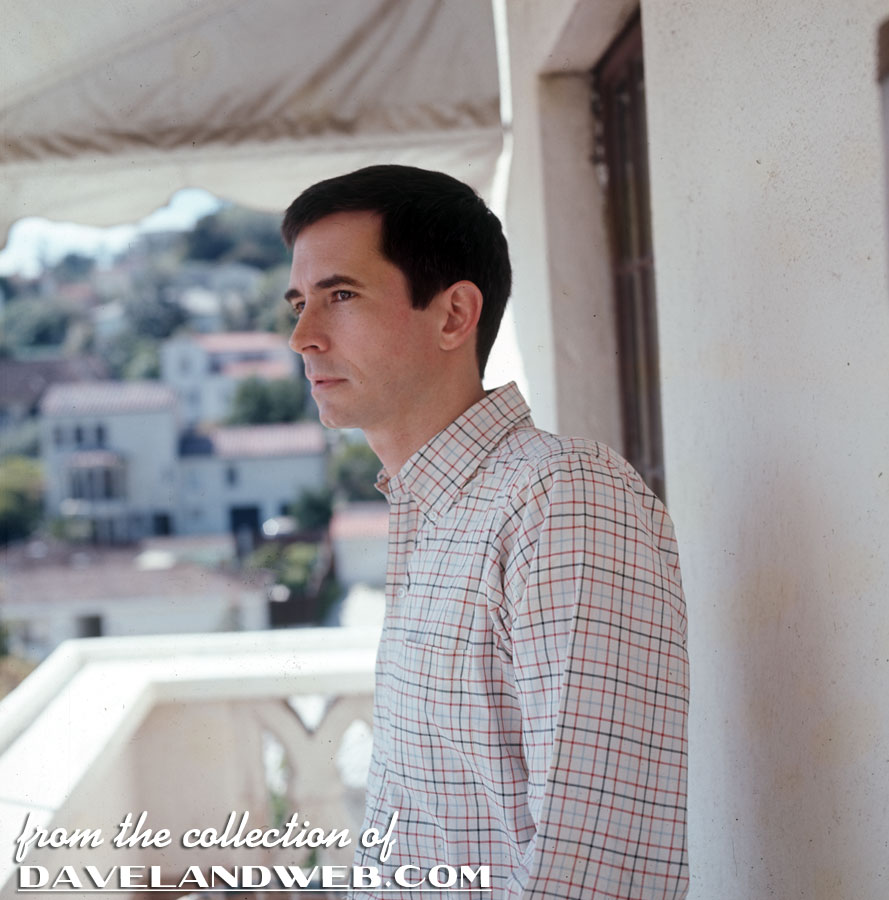
While actor Anthony Perkins lived at Chateau Marmont, he would use the payphone in the lobby to avoid the listening ears of the switchboard operators.

While the phone itself may have changed, one of these three doors is probably the one Perkins hid behind.


Based on this photo, you can also add Perkins to the guest roster for 54.


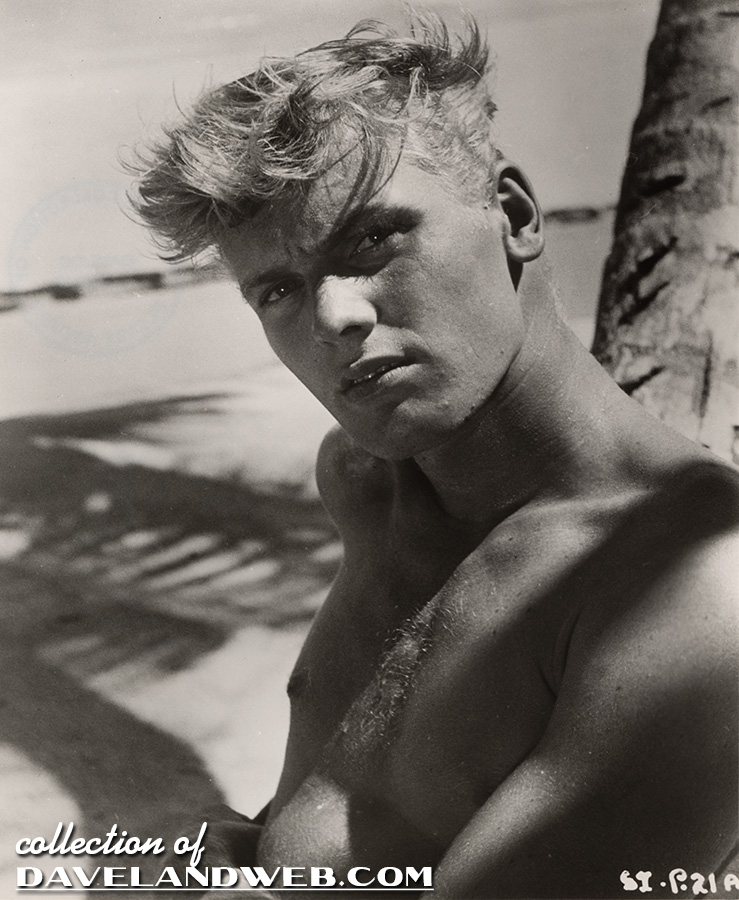
In 1955 he [Anthony Perkins] met Tab Hunter by the pool, and they quickly began a relationship.


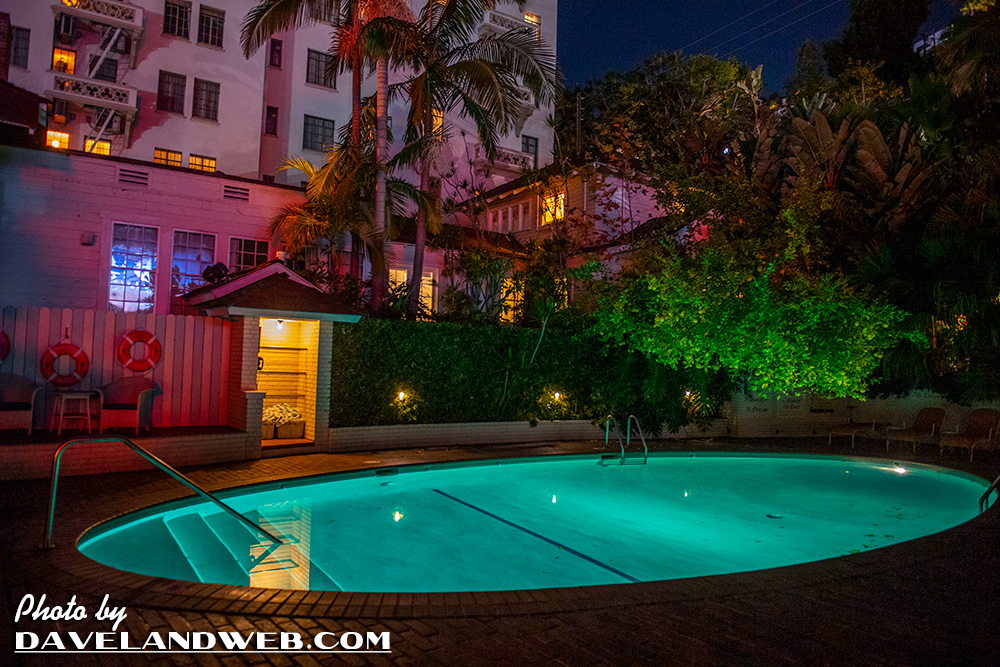
The diminutive pool still seems magical, all these years later. Another instance where size just doesn’t matter.


Bette Davis frequently caused a stir at the Chateau. In 1958, her bungalow caught fire when she fell asleep with a lit cigarette.

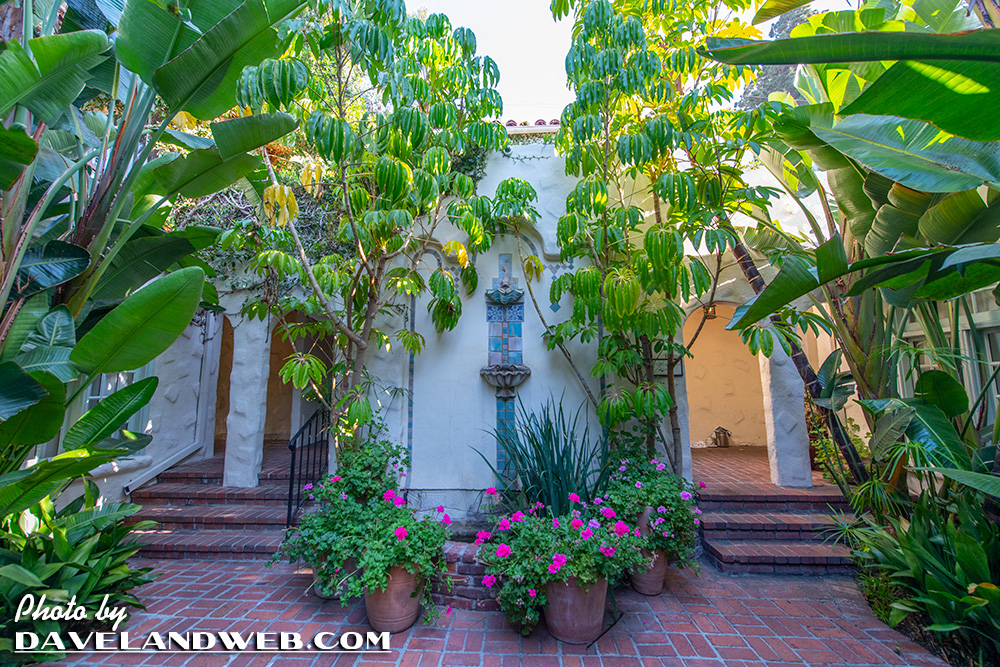
Shown here is the courtyard to the poolside bungalows, most likely where Bette was staying.


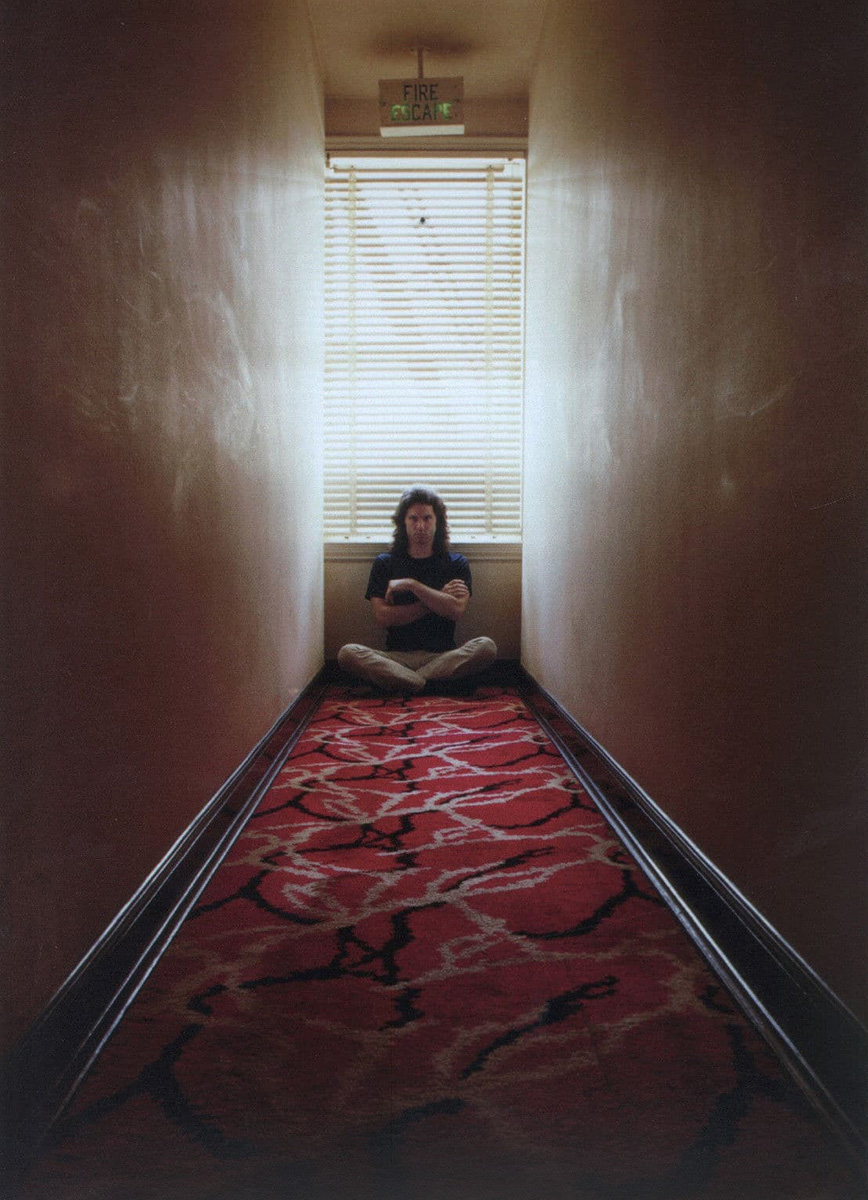
The Doors frontman Jim Morrison lived in a poolside bungalow in 1970 and was known for swinging between windows and balconies, once falling two stories.

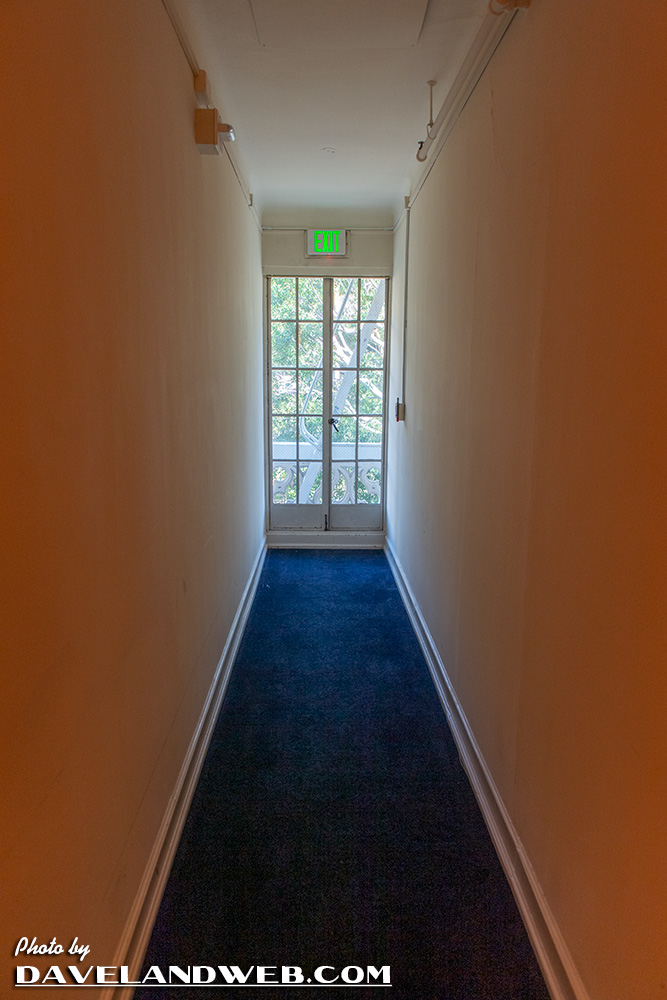
Although Morrison may have stayed in the bungalow, this shot was definitely taken inside the main hotel.


I am off by at least one floor from where Morrison posed; the fire escape stairwell behind him angles to the left; the one I shot (below) angles to the right.


Roman Polanski and Sharon Tate lived at Chateau Marmont as newlyweds. They gave up their apartment when Tate got pregnant.

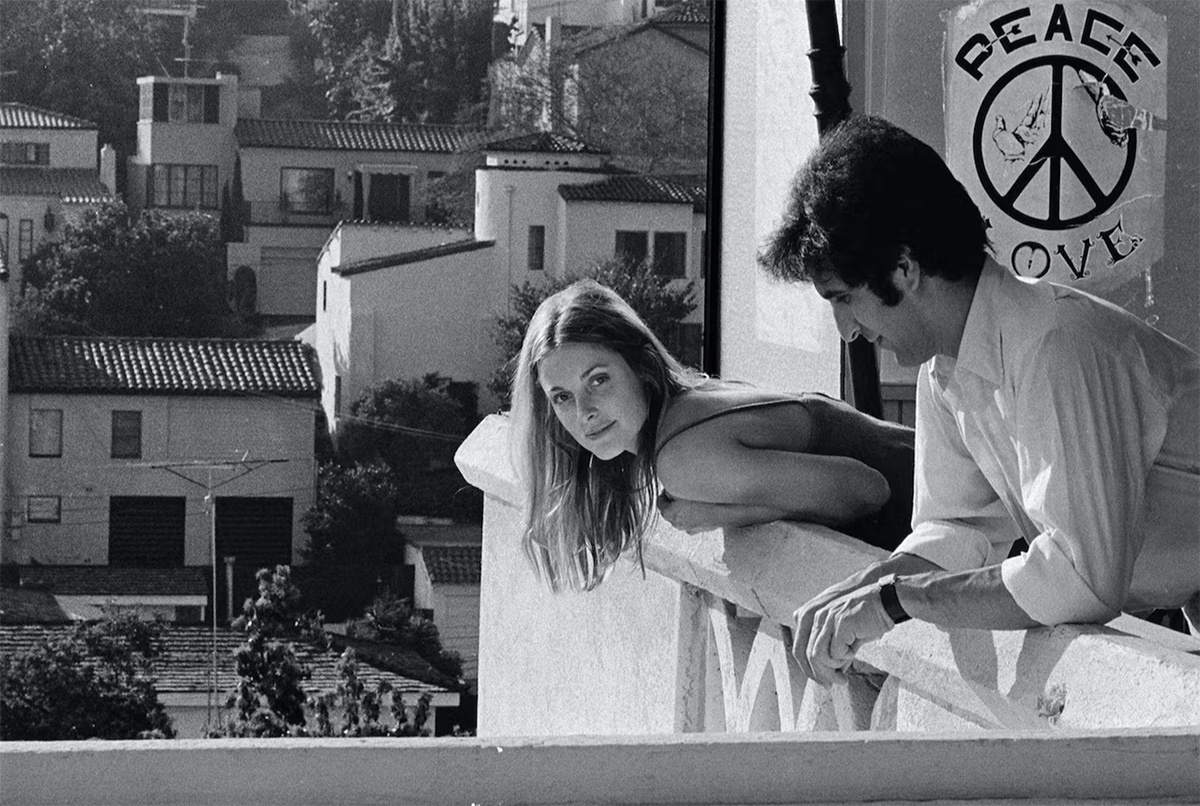
I was told that the two stayed in room 54; however, in Polanski’s autobiography he states that they stayed on the fourth floor. This shot of Sharon shows her hanging over the balcony of 54. According to an article in Vanity Fair:

The McGraths hosted a brunch salon every Sunday, drawing the likes of Sharon Tate and Roman Polanski (who lived below, in 54, before moving to Cielo Drive in early 1969).


Since I’ve stayed in 54 and been on that balcony, too, I’ll side with Vanity Fair over Polanski’s memory.


Back to A.D.:

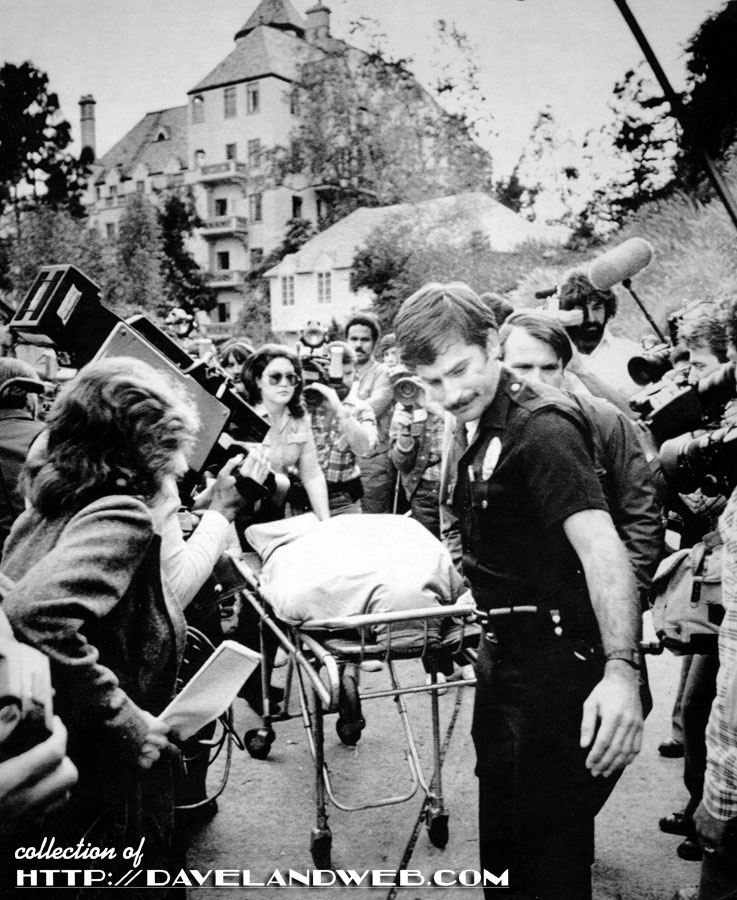
The hotel’s most famous resident may be John Belushi, who died of an overdose in bungalow three in 1982. Pictured here is the scene outside the hotel after his death. Several celebrities, including Jean-Michel Basquiat and Rick James, specifically requested to stay in bungalow three after Belushi died there.


Vanity Fair credits Errol Flynn with a drunken rampage in bungalow 3 back in 1959. There must have been something in the air. How it looked when I stayed there a few years ago:


Johnny Depp was a frequent visitor to the hotel and once claimed that he and his ex-girlfriend Kate Moss had sex in all 63 rooms.


Probably good that I don’t bring a black light when I stay there. Some things are best unknown.


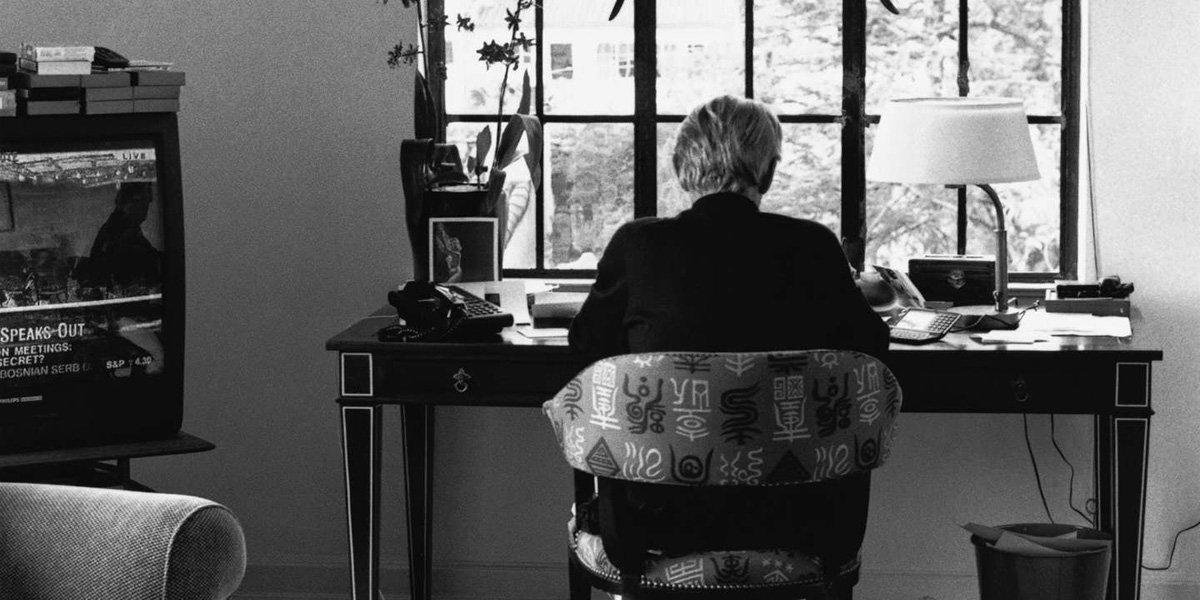
Photographer Helmut Newton (above) was a regular guest. He and his wife, June, would arrive the week of Christmas and stay until March each year.

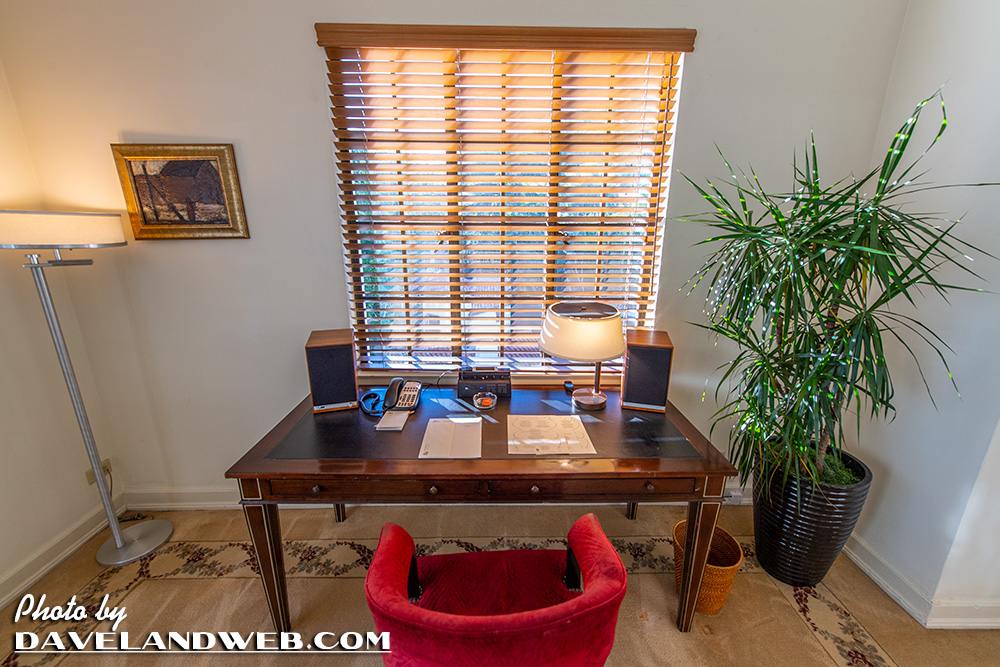
Newton stayed in room 49. Here’s how the desk/window looked last December:


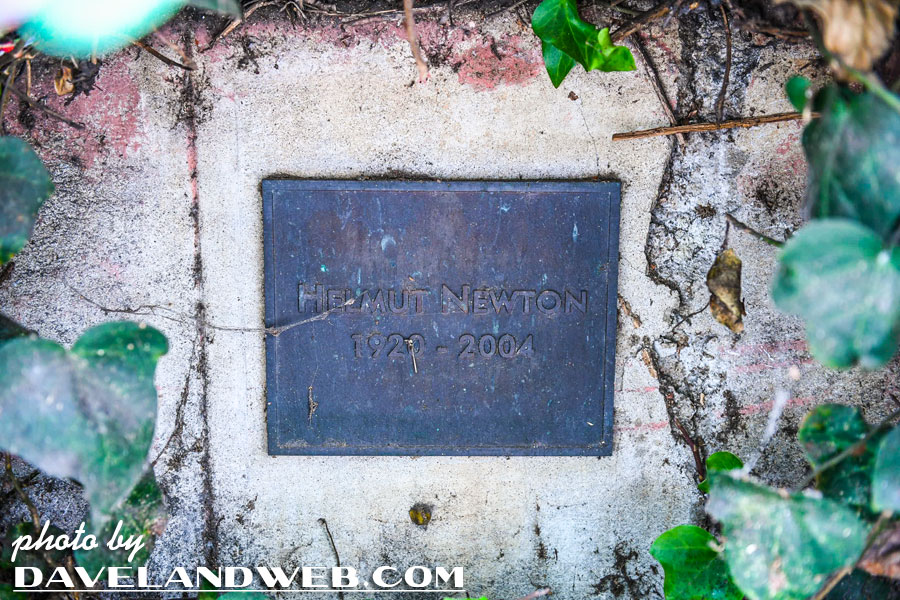
In 2004, he died after having a heart attack and crashing his car outside the hotel.

The plaque outside the hotel that commemorates the spot where it happened.


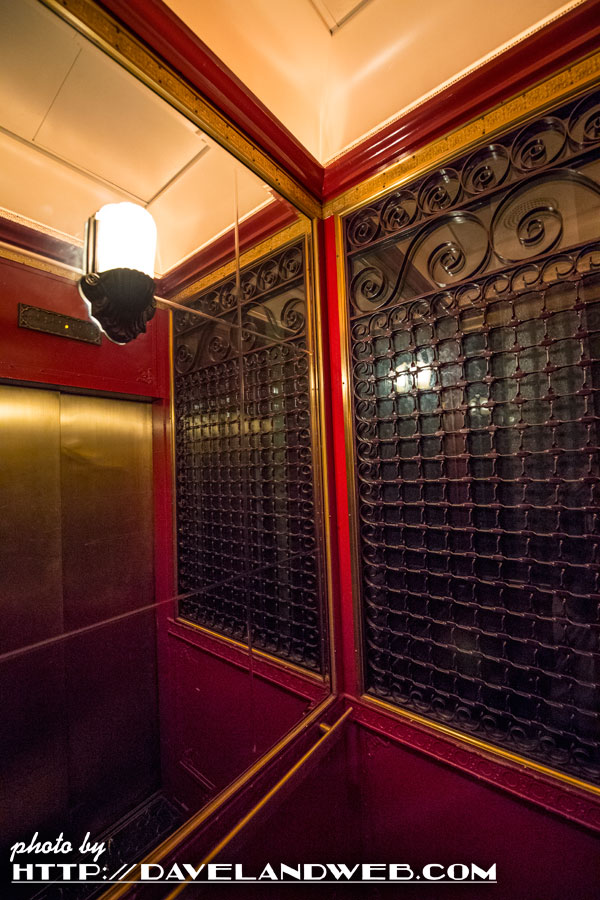
Scarlett Johansson lived in the hotel in 2004 and was famously rumored to have had a dalliance with Benicio Del Toro in the elevator after the Oscars. In 2022, she set the record straight on a podcast, saying, “That was a story that followed me for a long time. But I always thought that was outrageous.”

That sounds like she neither confirmed/denied.


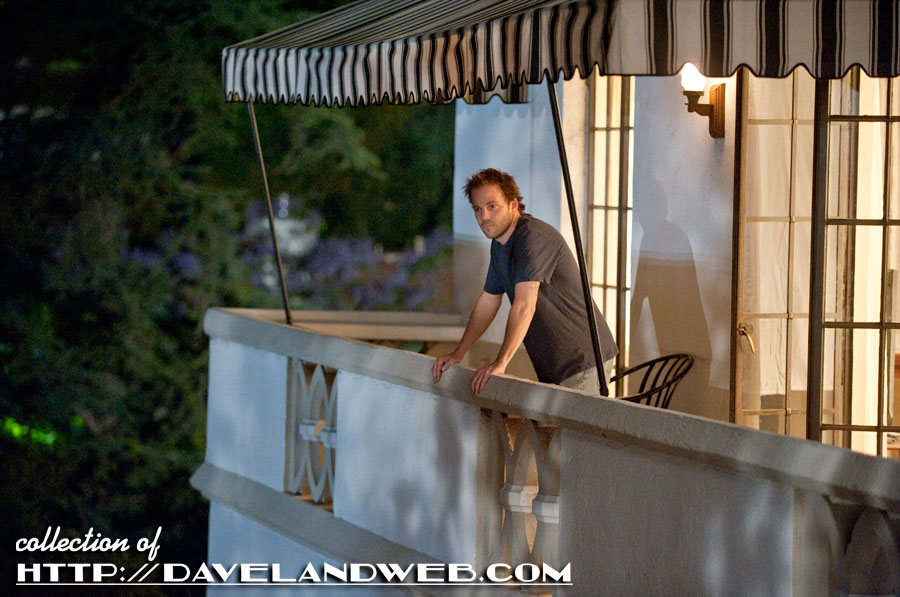
Stephen Dorff lived in the hotel in his 20s and returned to live in suite 69 while filming “Somewhere,” in which he played an actor living at the Chateau Marmont.

Room 59 was used for the film, as seen by this balcony shot of Dorff:


A shot of room 69, where Dorff resided during filming:


Vanity Fair names room 33 (below) as the one where Lindsay Lohan stayed in 2012. It’s also the one she was booted from for accumulating $46,350.04 in unpaid bills. Yikes. VF names 33 as the honeymoon suite for Jean Harlow and third husband, Harold Rosson.


The most famous guest of the Chateau refused to be interviewed for this post. He just wants to be left alone.


See more Chateau Marmont photos at my main website.
Friday, March 03, 2023

Dumbo and Carnation


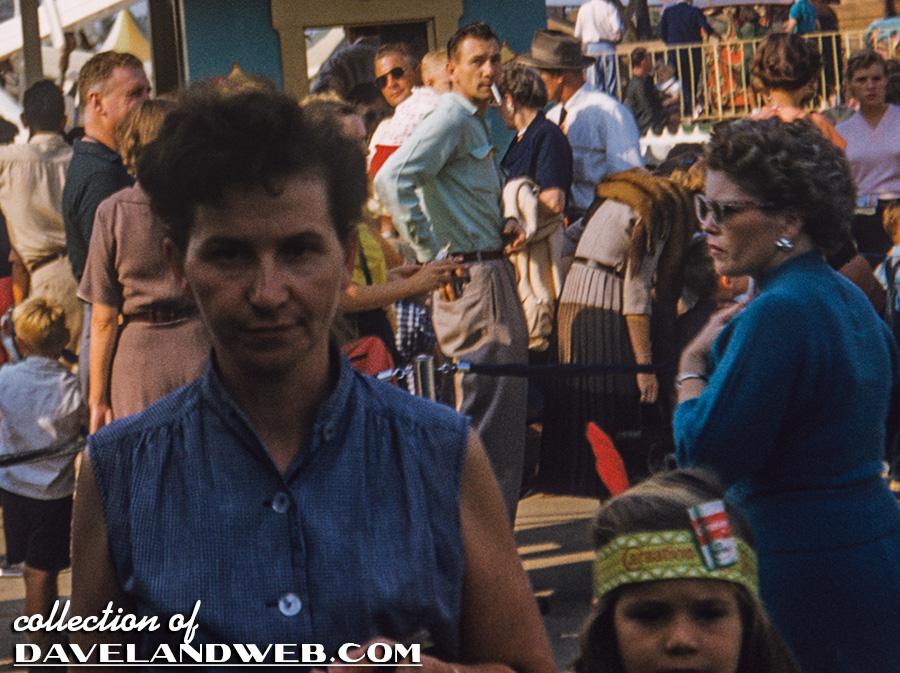
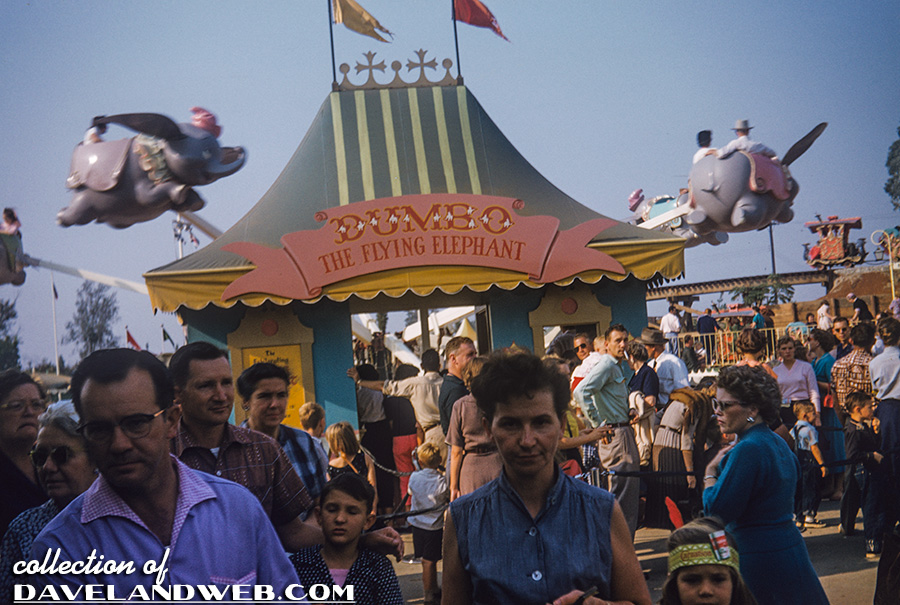
It’s not TGIF(riday), but TGIF(eather) today. This previously unpublished shot shows the Dumbo Flying Elephants attraction at Disneyland. Although undated, the lack of landscaping at the Casey Jr. attraction in the background tells us it’s most likely 1955/1956. Even more interesting is the hat/headband of the little girl on the lower right, which appears to be a feathered Indian headdress from Carnation. It must have been a bonus from one of the sponsored restaurants at the park that served Carnation products.


See more Disneyland Dumbo Flying Elephant attraction photos at my main website.
Wednesday, March 01, 2023

Robert Conrad Heavenly Birthday Tribute


On what would have been his 88th birthday, Daveland is celebrating actor Robert Conrad. Devastatingly handsome, the Chicago born actor charmed the ladies, despite his diminutive height of 5'8". Who says size matters?

According to Conrad in an interview, his resemblance to the late James Dean kickstarted his career:

I did a show after the filming of “Giant” and because of my resemblance they wanted publicity to publicize the show. They didn’t think that it would draw an audience because of the death of the young star, so they wanted some hype. They had a man on the street interview. I had seen the show and I raved about how good the show was and then they did the resemblance thing and I was on the show every night for a week.

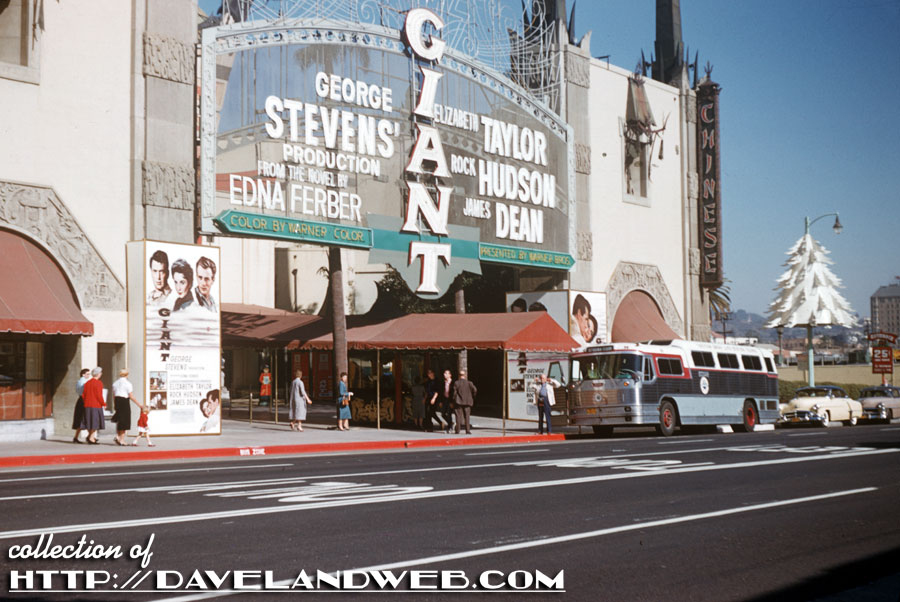
A vintage shot of Grauman’s in Hollywood stands-in for the theater in Chicago that Conrad worked at.


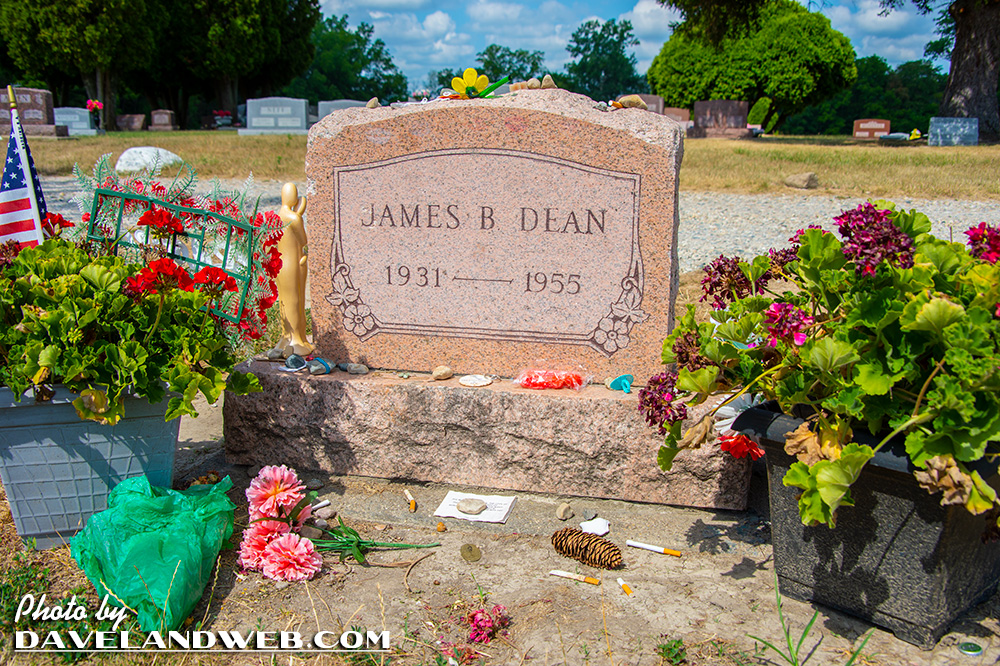
Dean played a part again when Conrad visited his grave:

People in Indiana saw [the show in Chicago] and they wanted to do “The James Dean Story” and they contacted me and invited me down to Fairmont, Indiana. Nick Adams was touring with some kind of Nick Adams film; I forget the name of it now. He was in Fairmont Indiana, so we met at the James Dean gravesite.


We were two young guys. He was looking at me and I was looking at him. He invited me to his room at his hotel and we had a couple of drinks together and he told me if I ever came to Hollywood that I was to look him up. He gave me his exchange. I didn’t know what the hell that was, back in the day. But he wrote it out for me and I kept it and went to New York to get a break in acting. When that didn’t work out I went back to Hollywood and called Nick and we hooked up the day I arrived in Hollywood, August 17, 1957. We were friends for the 13 years until his death.

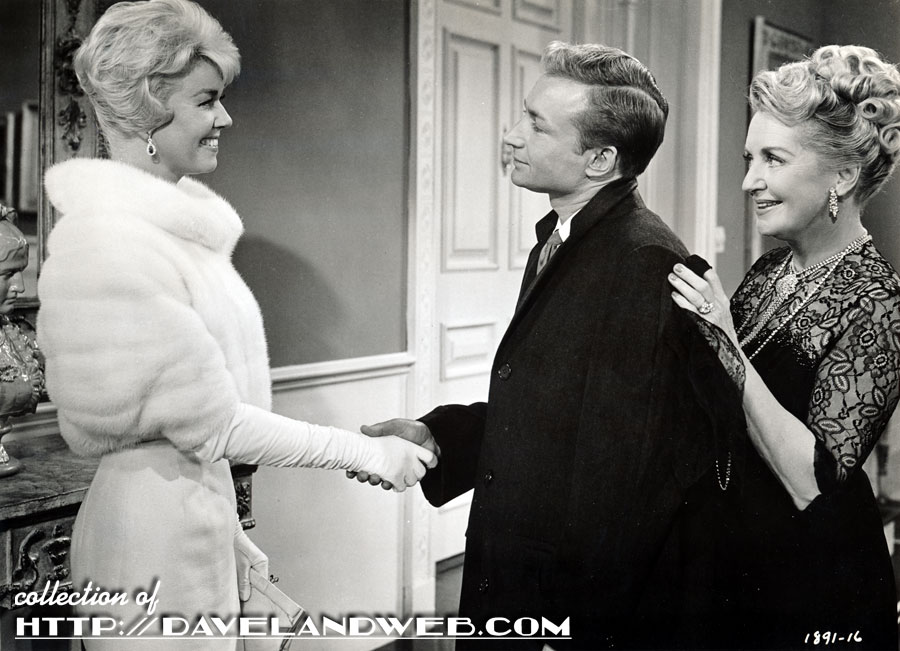
Here’s Adams with Doris Day and Lee Patrick in “Pillow Talk” (1959). 


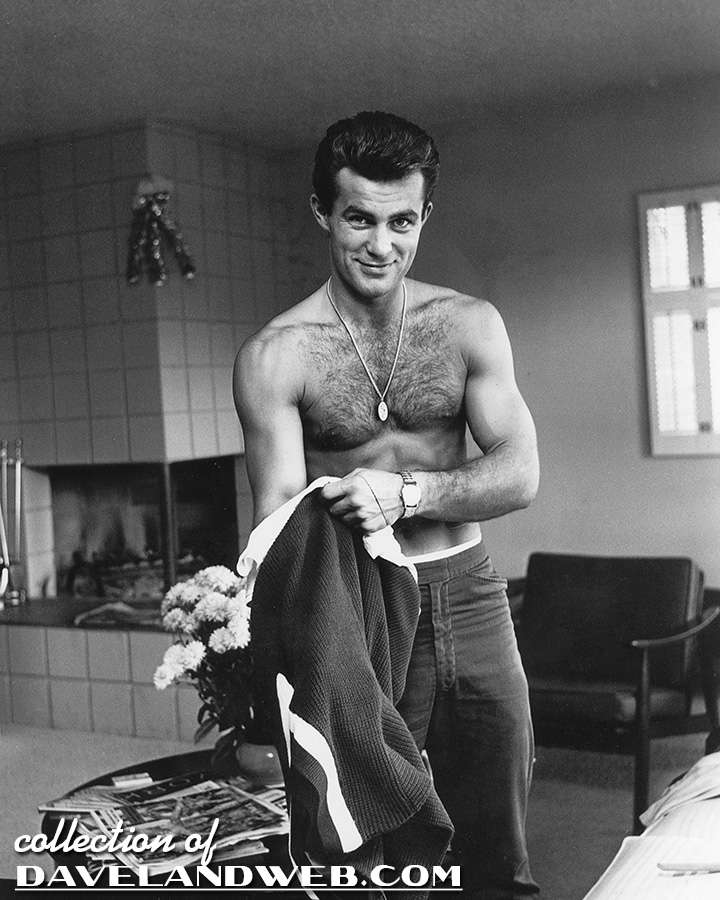
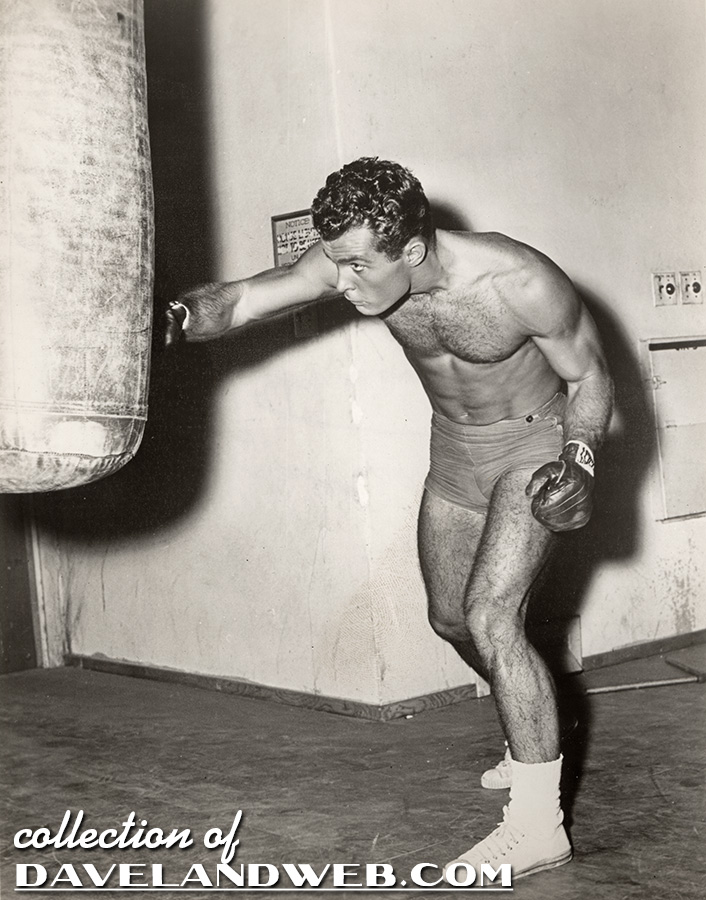
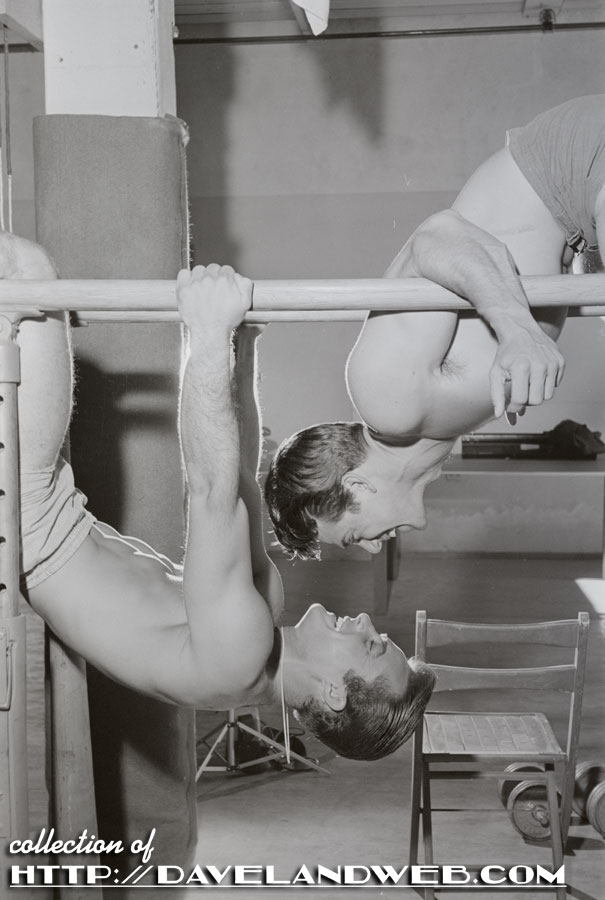
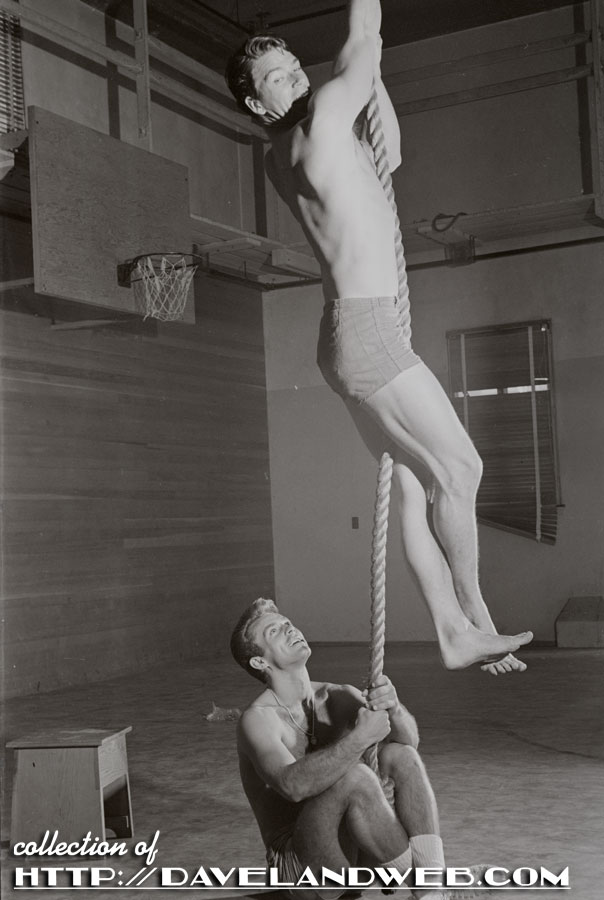
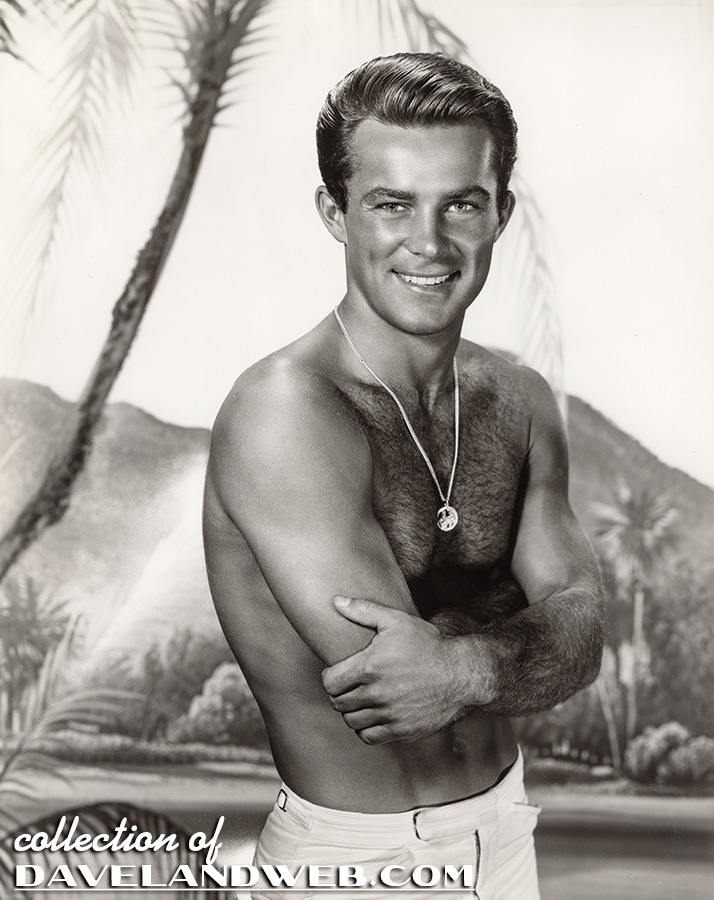
As his film career began Conrad posed for the typical beefcake shots:


Feel free to write your own caption for these shots with Van Williams (“The Green Hornet”):


Conrad’s first real bout with fame came with the Warner Bros. TV show “Hawaiian Eye” (1959-1963).


This gave the hunky star plenty of reasons to be shirtless for the audience. Here he is on the Warner lot:


After “Hawaiian Eye,” Conrad moved onto even greater success with his role of James West in “The Wild Wild West” (1965-1969), a wacky combination of western, science fiction, and espionage. Michael Garrison, the creator of the show, called it “James Bond on horseback.” Conrad was the perfect fit for the lead, and did almost all of his own stunts.

Conrad died in 2004 at the age of 84. See more Robert Conrad photos at my main website.