Wednesday, May 08, 2013

Vintage Town Square Tribute


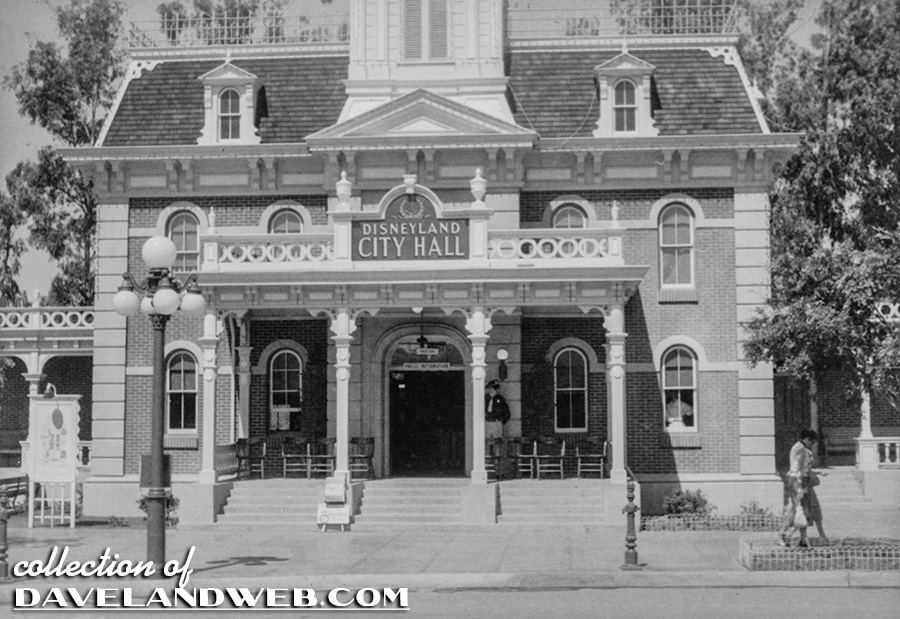
Because of its location, Town Square often gets the shaft at Disneyland. Guests are in such a hurry to get to their favorite attraction that they run through this area, missing many of the memorable features located here. To correct this, I am doing an entire post dedicated to Town Square...from a vintage perspective, of course. The first photo for today is from May 1956, when the park wasn't even a year old yet. Looks a bit empty from a guest and landscaping perspective, doesn't it?

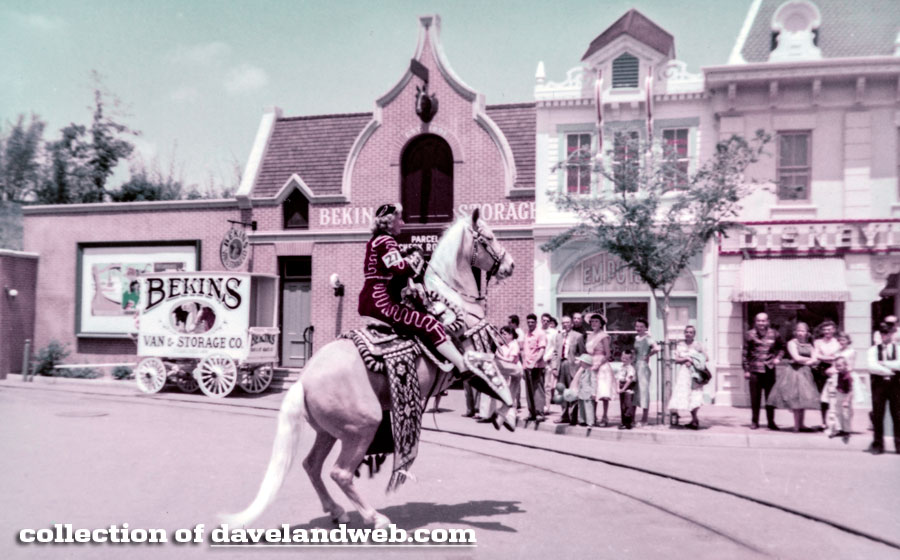
From April 1958 comes this faded print, showing a festively costumed lady on a horse; I don't know any details about what's going on here, but it would appear that she is participating in some sort of contest or parade.


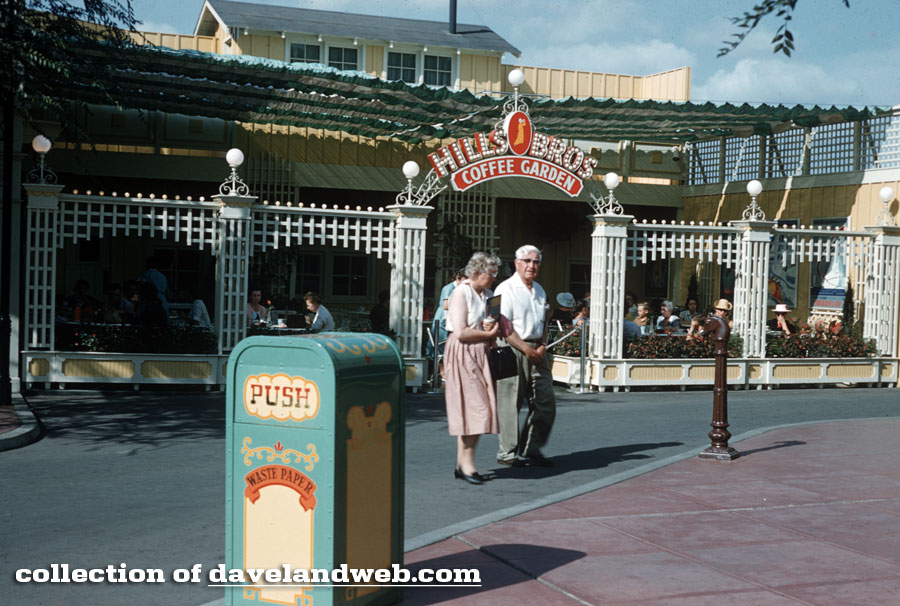
This elderly couple from September 1959 is walking by the Hills Brothers Coffee Garden, which is now used as a character meet and greet area.


The sky may look ominous, but I still love the color and composition of this May 1962 shot:
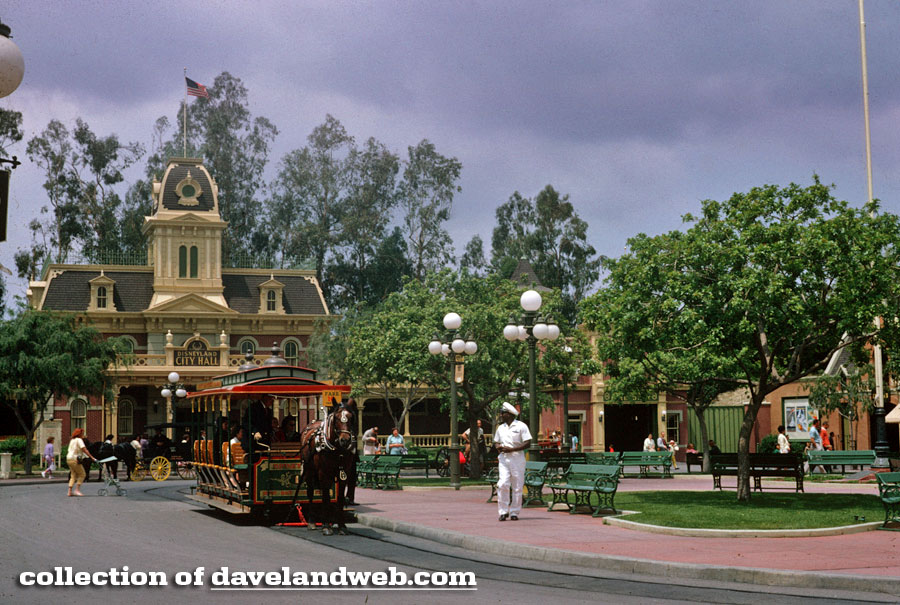


Town Square is also where guests board the Disneyland Railroad and get to see the inside (and outside) of my favorite Disneyland Train Station.
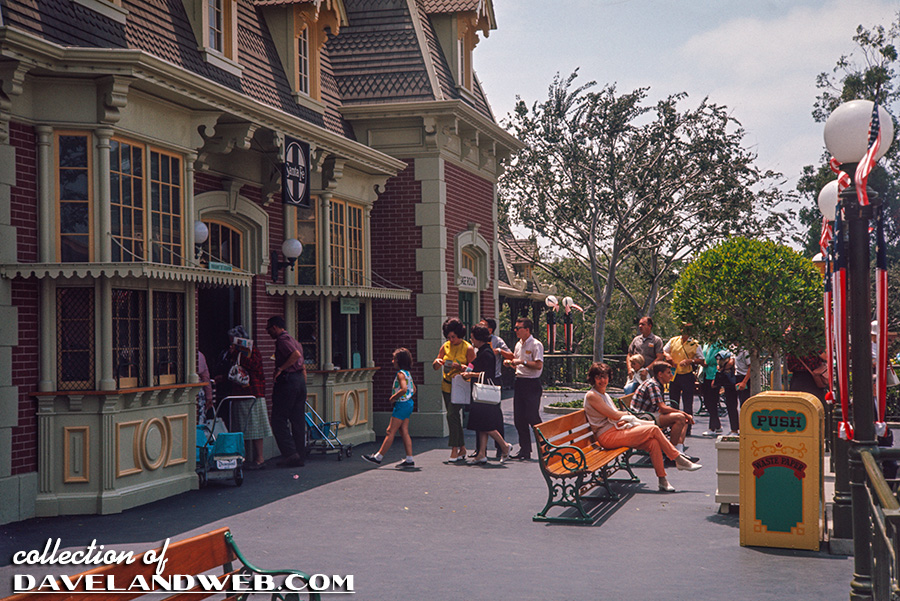


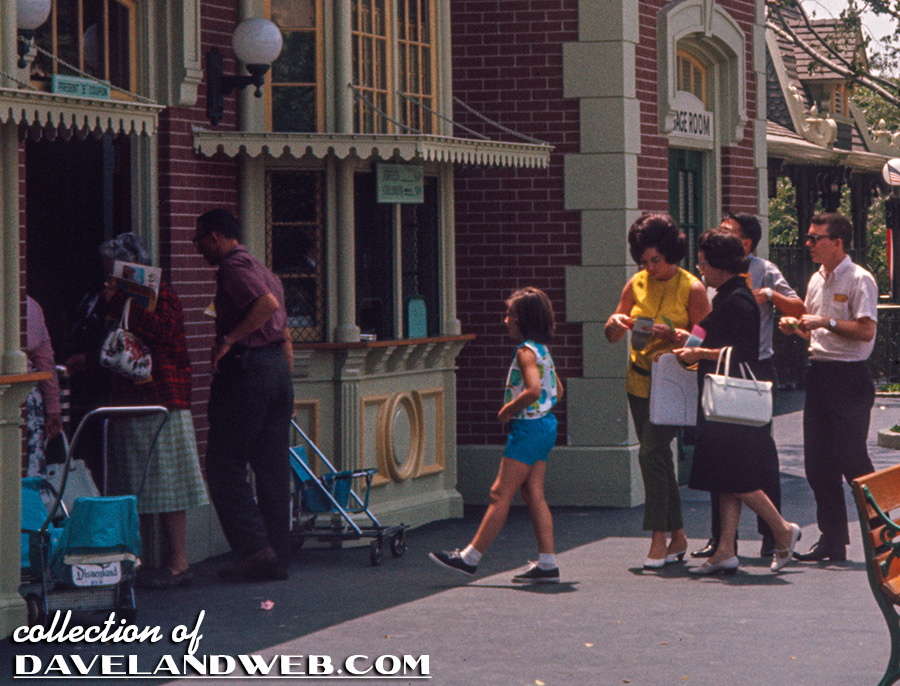
Had to zoom in for the details of this one, especially the oh-so-simple strollers.


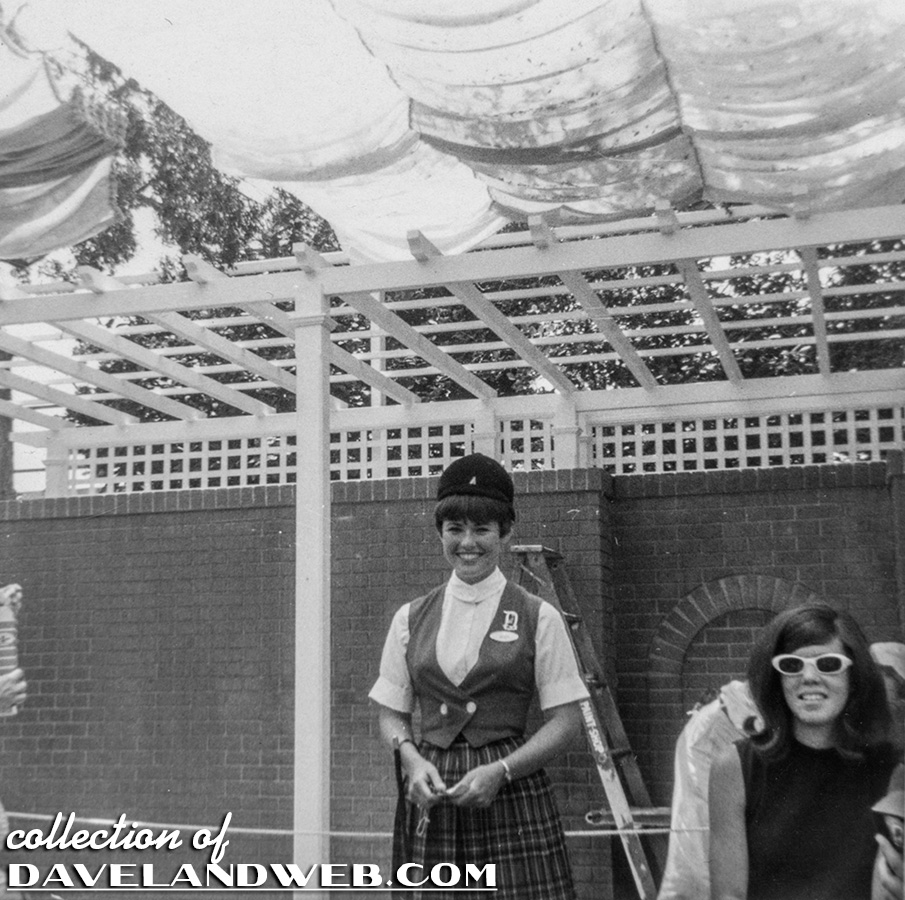
This lovely Tour Guide photo is from 1967:


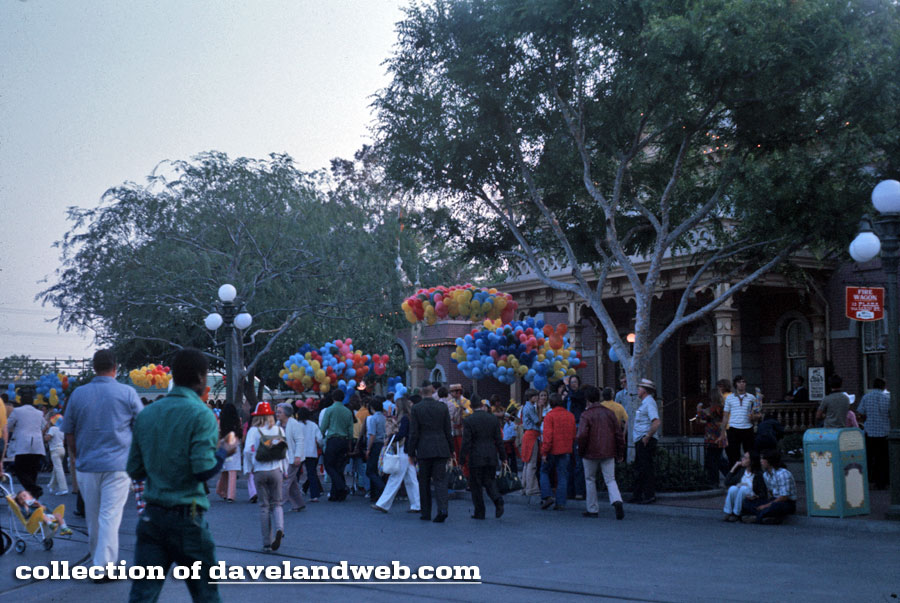
Last photo for today is from May 1974, and Town Square is crowded with both guests and balloons:


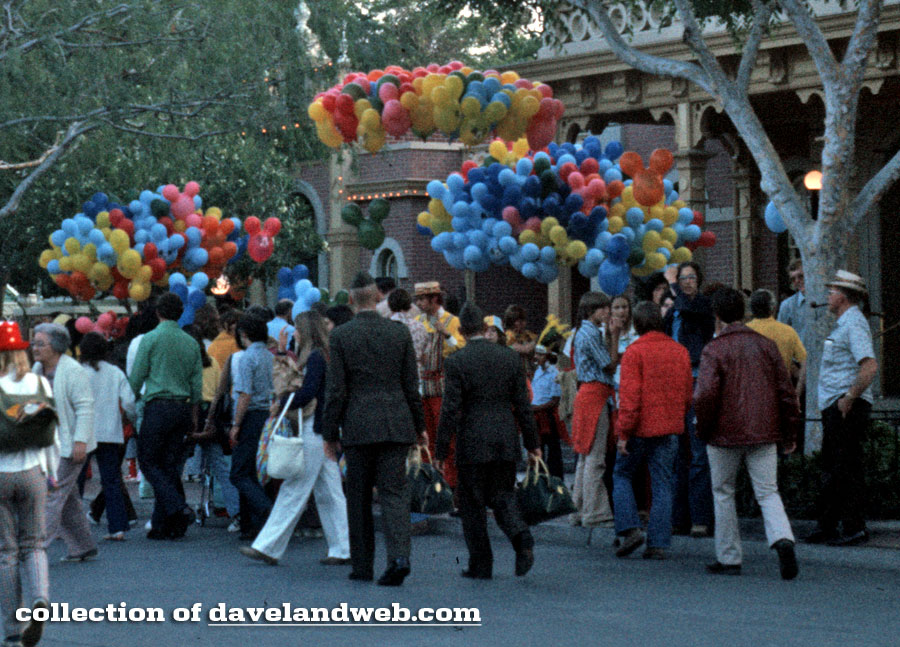
Zooming in to see the center of the commotion:


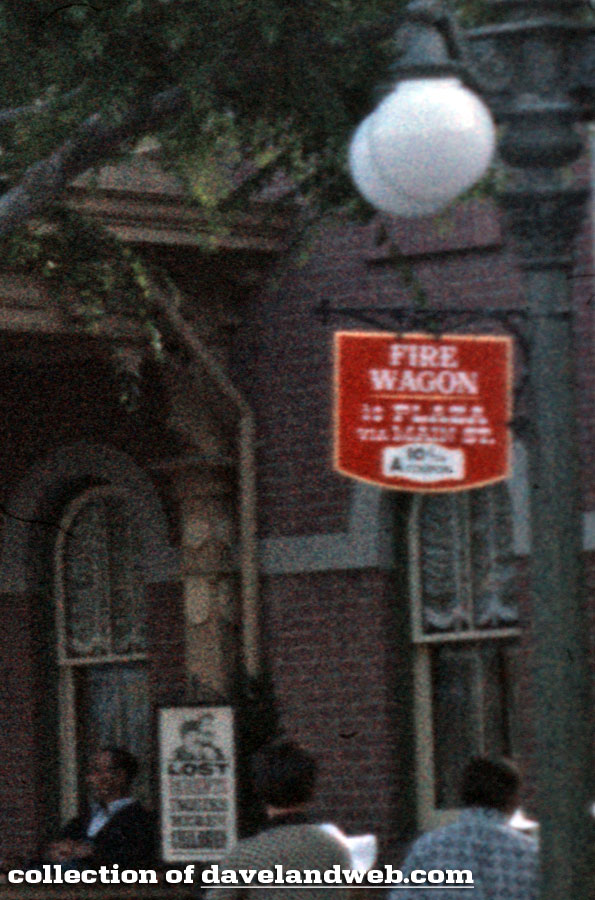
and to see the signage for the Fire Wagon:


Next time you're at the Park, make sure you spend some time in Town Square - you'll be glad you did!

See more vintage and contemporary Disneyland Town Square photos on my Town Square web page.

Tuesday, May 07, 2013

The Saucers Are Coming!


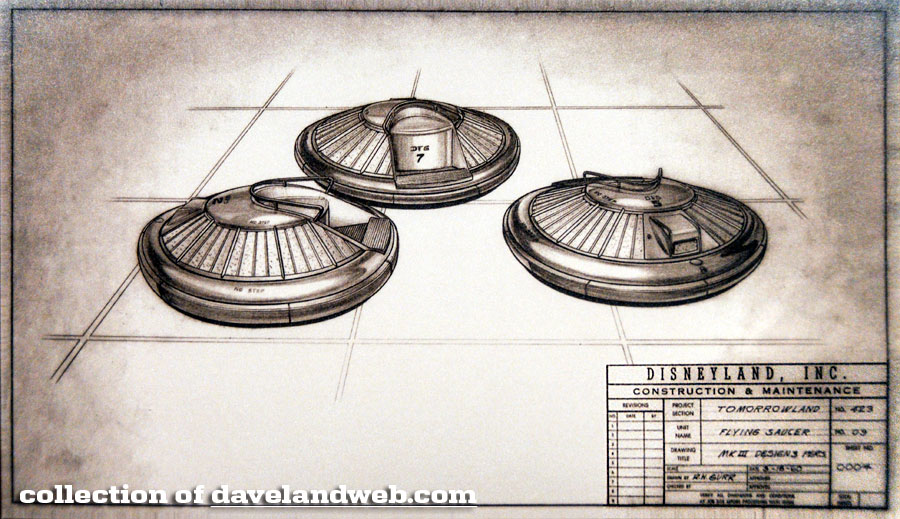
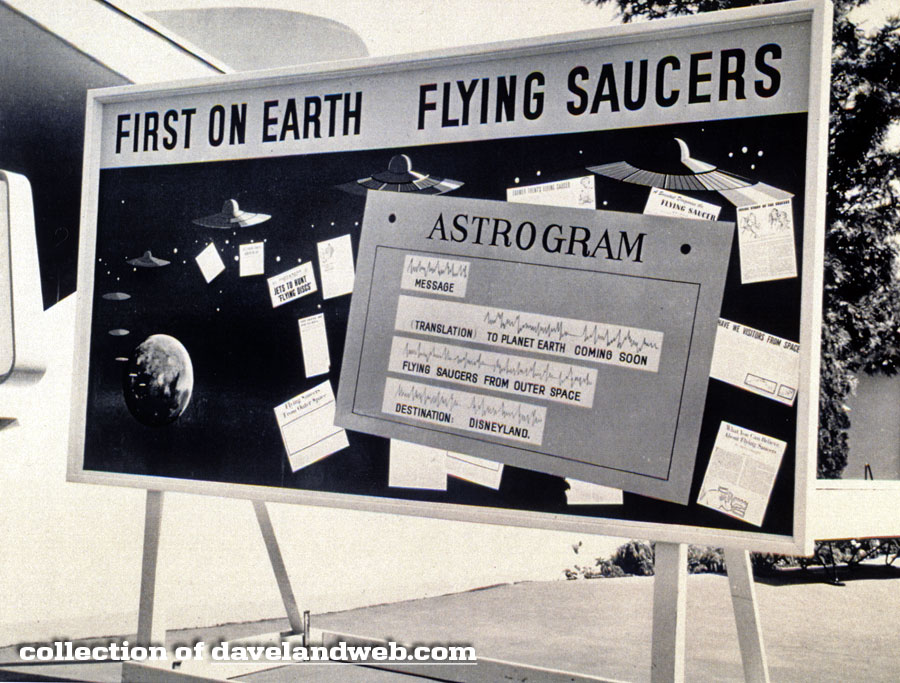
Before the August 1961 arrival of the Tomorrowland Flying Saucers, a technical drawing was needed. To build excitement about this new attraction, the Disney publicity machine created this sign to stir up the emotions of guests"


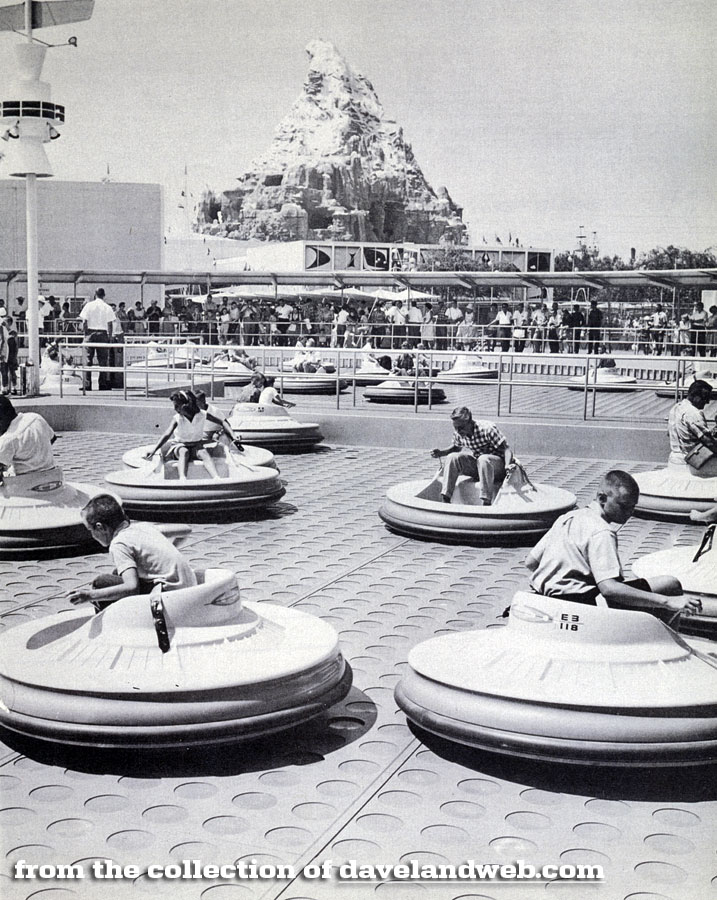
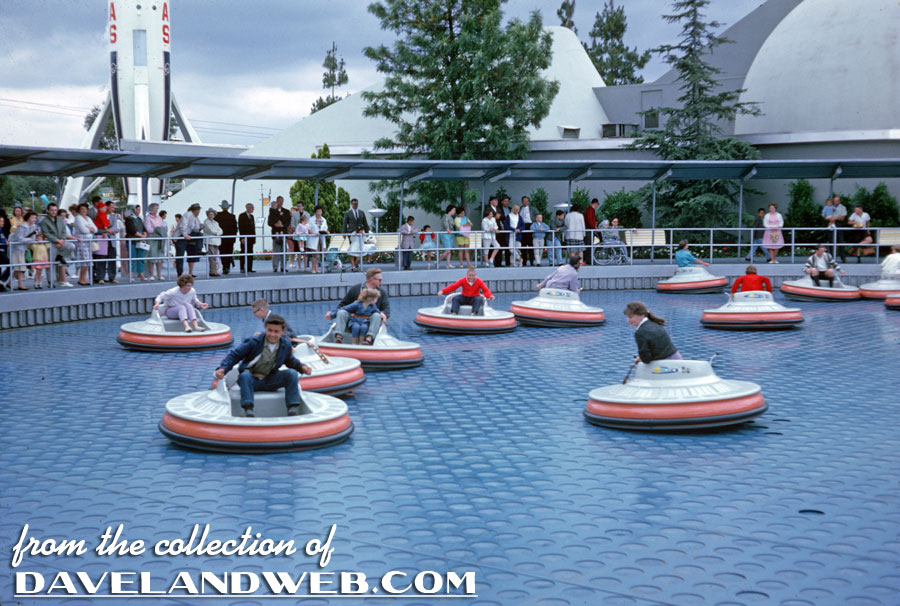
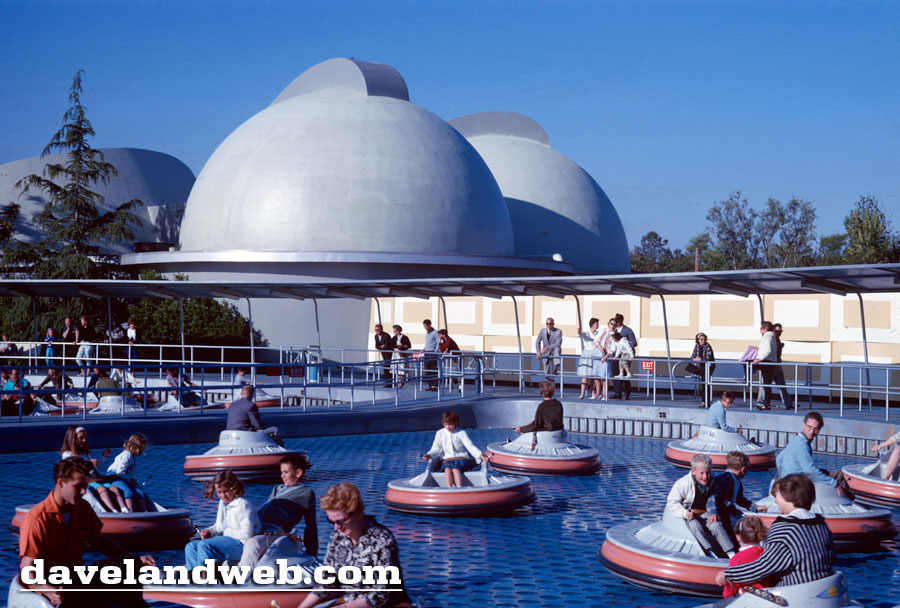
Thank goodness they were able to translate the Astrogram for us mere earthlings! Once it was available for guests to enjoy, it appeared to be a lot of fun...when it was working.


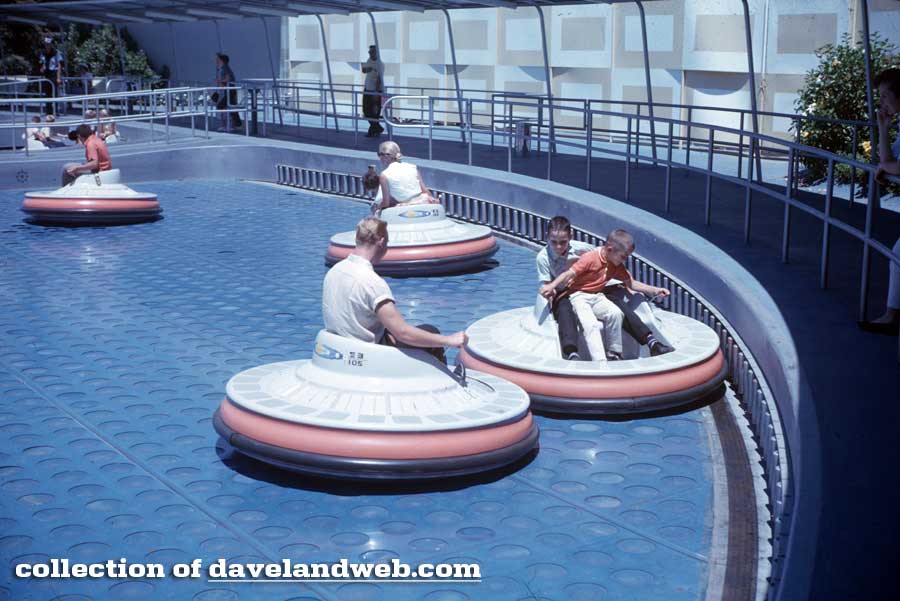
Apparently a nightmare because of their technical difficulties, more often than not guests found themselves stuck in a corner or unable to get the durn things to work the way they should.


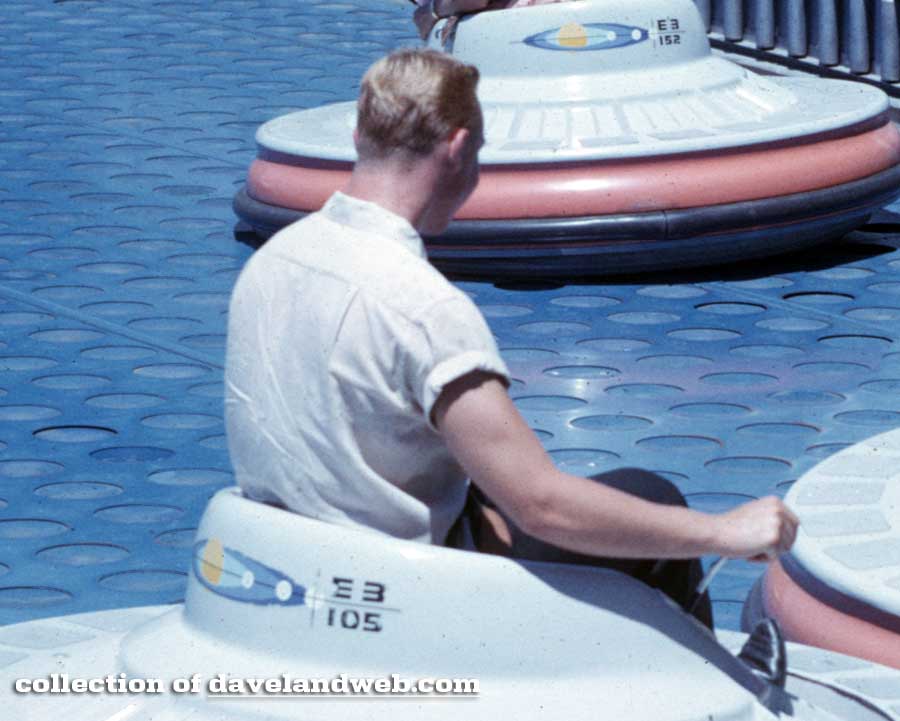
Have to zoom-in to get a better view of the decal on the saucer:


From the Disneylander Employee Newsletter, September 1961:

FLYING SAUCERS AT DISNEYLAND

It took a little longer than anticipated by the Disneyland Flying Saucers finally went to work the middle of last month and started to tak in some "E" coupons

After a period of testing with many Disneylanders having the opportunity of playing like an Astronaut, the latest Magic Kingdom attraction opened with the proper ceremonies. On hand to celebrate the occasion were the Disneyland Band playing "Come Josephine in My Flying Saucer" and other appropriate tunes, the Space Man and the Space Girl and, of course, Pluto in the person of Tony Barksdale. (Honest)

Without taking anything away from the other celebrities who were on hand, it must be admitted that Pluto was the hit of the show. Jack Lindquist, Eddie Meck, Marty Sklar and Bud Nagle gave him constant insturctions as to which way he looked best for the flock of photographers who were on hand and he took it in stride, never missing a flash bulb.

Donna Fox, the Space Girl who landed in Tomorrowland after a short flight from Coke Corner recently, never looked more raidant or charming with her long blonde hair cascading majestically over the seltzer bottles she wears on her back. The Space Man costume was ably filled by handsome Gordon McClymont and both he and Donna ran a good second to Pluto to see who could use up the most Kodak negative.


Also on hand for the first official Flying Saucer flight were children of some of the nation's finest jet pilots who are stationed at El Toro Marine Base and Los Alamitos Naval Air Station. Two of the pilots also came along for the ride. They were Lt. Comdr. Larry Hauser and Lt. Col. Jay Willcox. The wives of the flyers also came but declined Pluto's invitiation to take one of the first rides. Either they couldn't understand what he was saying or they were wearing full skirts.

Disneyland guestrs practically ringed the entire Saucer area while the edication was going on. They thoroughly enjoyed the thrilled expressions on the children's faces as well as the puzzled looks on the faces of the two jet flyers who were both overheard to say to themselves, "Now how do you suppose they make this thing work?"


As an added attracition for the guests as well as the participants was the few minutes that the Band rode the Saucers and played one of their famous tunes at the same time. Jim Whitsett, who was directing because of Vesey Walker's absence, had no trouble leading the Band as they turned and skimmed in their Flying Saucers. After all, he's had years of experience on the Fantasyland Tea Cups.

It was a great dedication, according to all the spectators, and the Flying Saucers were successfully on their way.


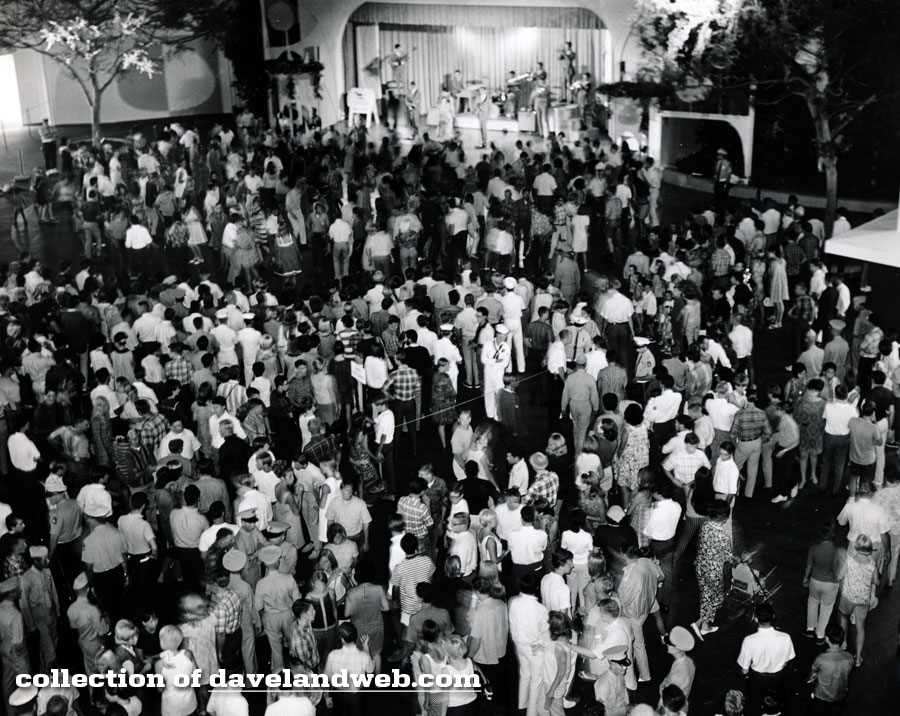
The Saucers didn't survive the New Tomorrowland makeover and were replaced by the Tomorrowland Stage:


See more vintage Disneyland Flying Saucer photos on my Flying Saucer web page.
Monday, May 06, 2013

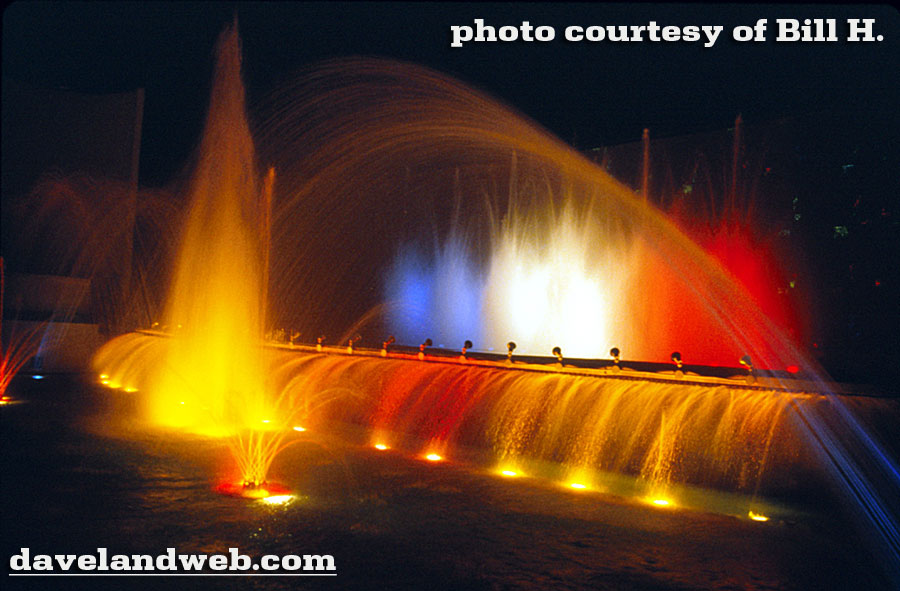
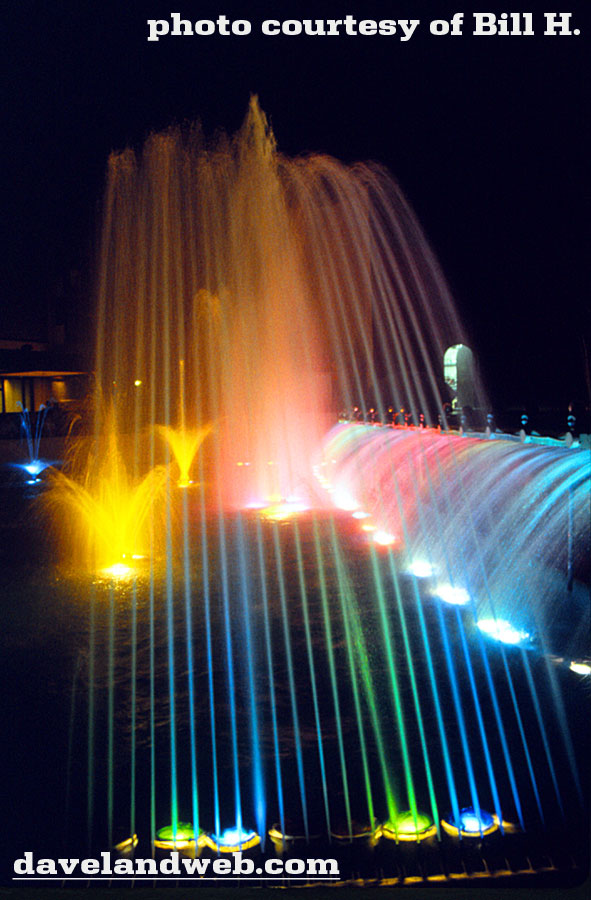
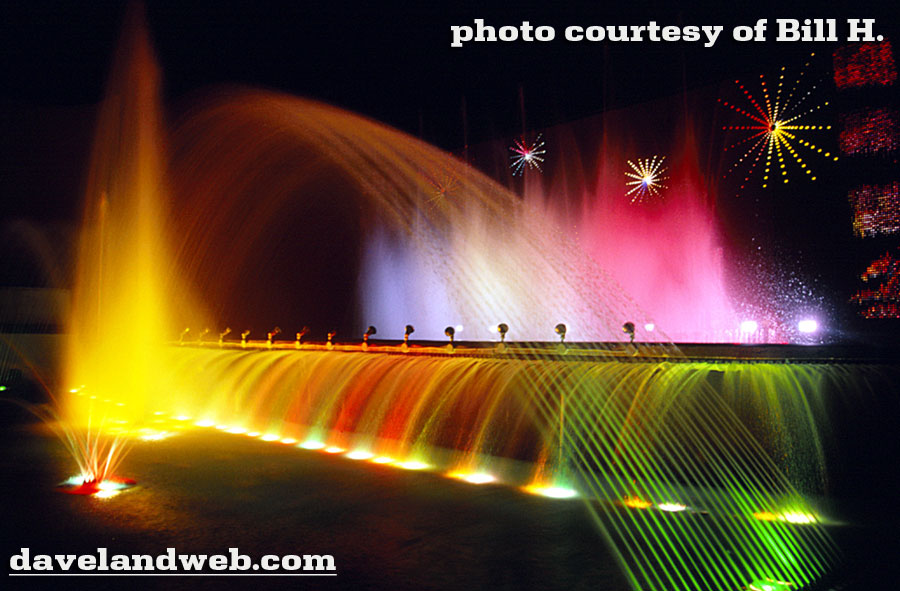
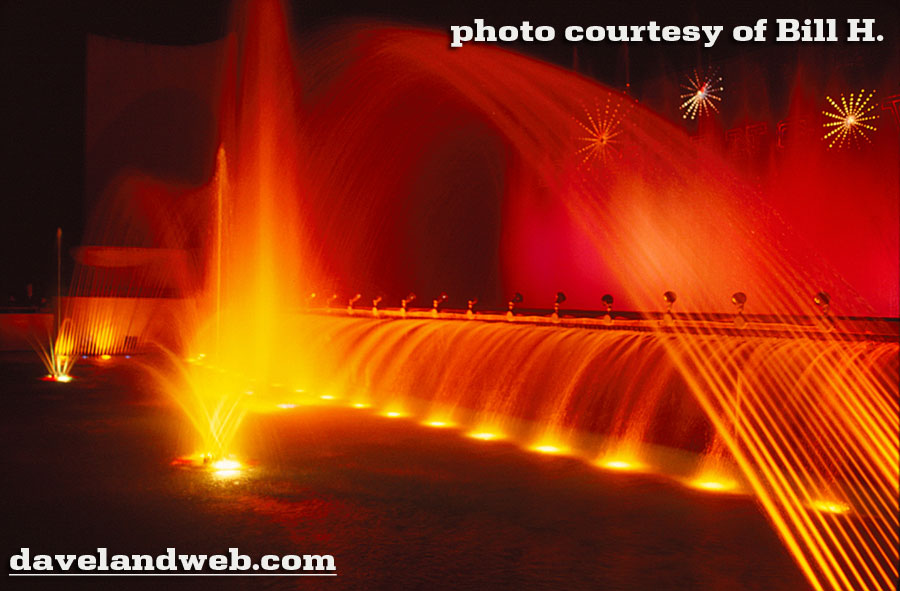
Dancing Waters at the Disneyland Hotel


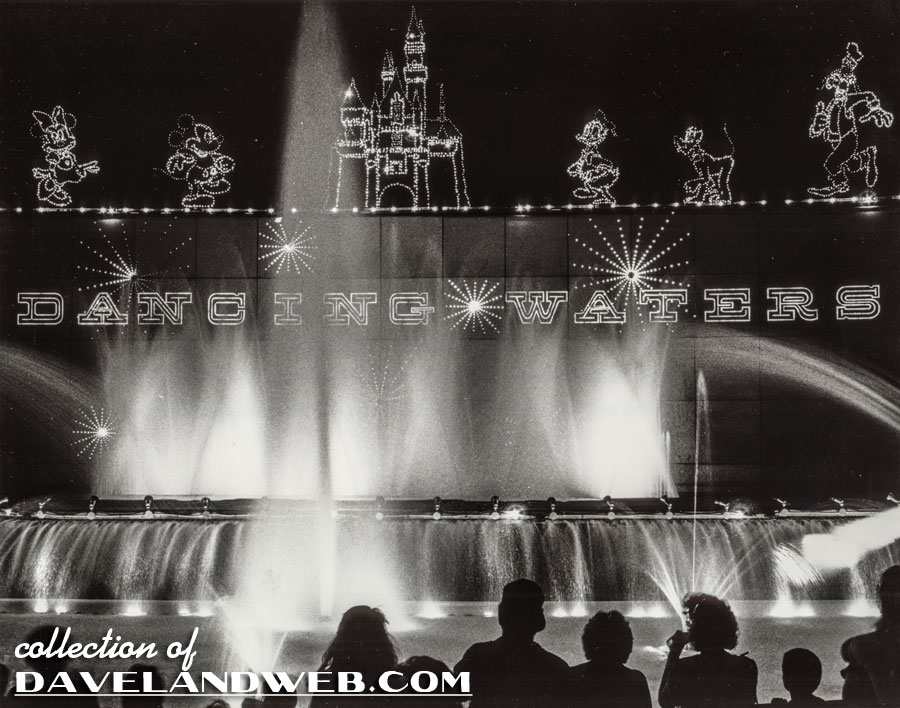
What could these photos be of? World of Color? Since they are from the 1980's, that would be impossible, as DCA wasn't even a vapor of an idea when these were shot. Thanks to Daveland reader Bill H., we can see these beautiful color photos of the Dancing Waters show featured at the Disneyland Hotel for many years. The first three photos are from September 1983. For an excellent history of this show, check out Chris Jepsen's OC History Roundup Blog.


From June 1985:


In 1992, a few years after Disney purchased the Disneyland Hotel from the Wrather Corporation, the show was altered by a company called "Waltzing Waters"(run by Michael Przystawik, grandson of the inventor of the first musical fountain) and was retitled The Fantasy Waters Show. The new program included not only colored lights, water and music, but also fiberoptic displays, light panels, and other elements. Naturally, the musical score took on a Disney theme.

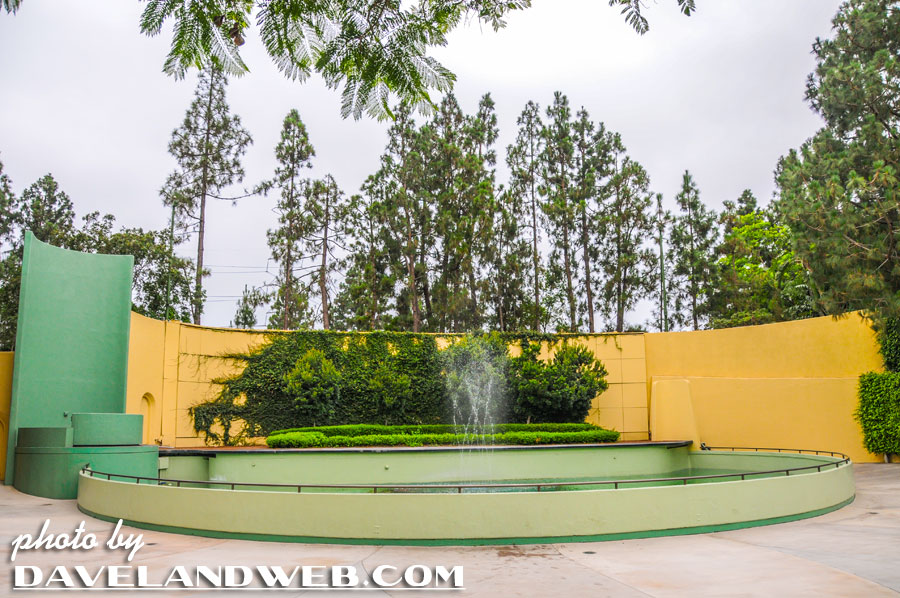
The Fantasy Waters Show ended around 2007, and the area was greatly changed during the 2010 Disneyland Hotel makeover.


Today, landscaping blocks out what remains of the backdrop. At below is a photo from September 2011.


Many many thanks to Bill H. for the spectacular vintage shots shown here on today's post.

See more vintage & current Disneyland Hotel photos on my Disneyland Hotel web page.
Sunday, May 05, 2013

New Era Chips and Cinco de Mayo


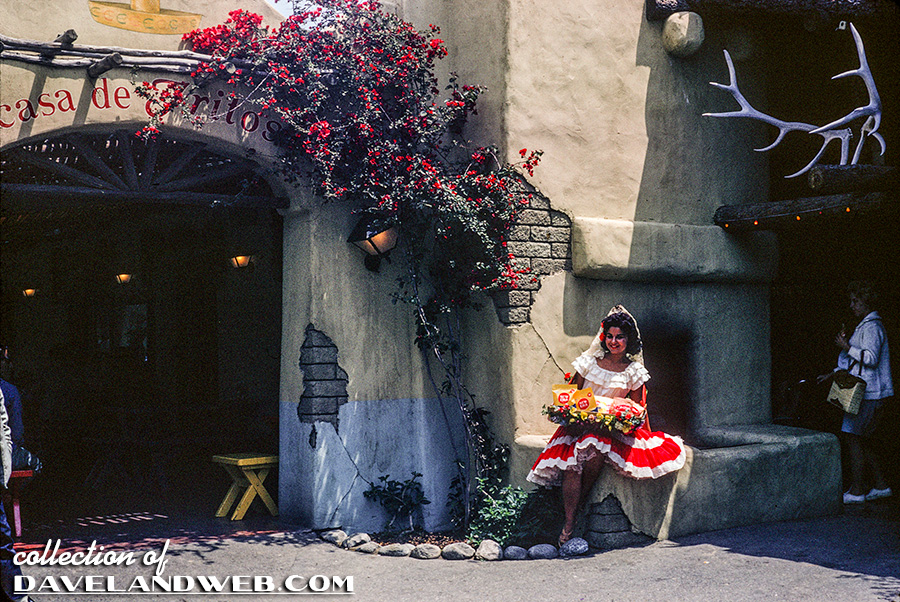
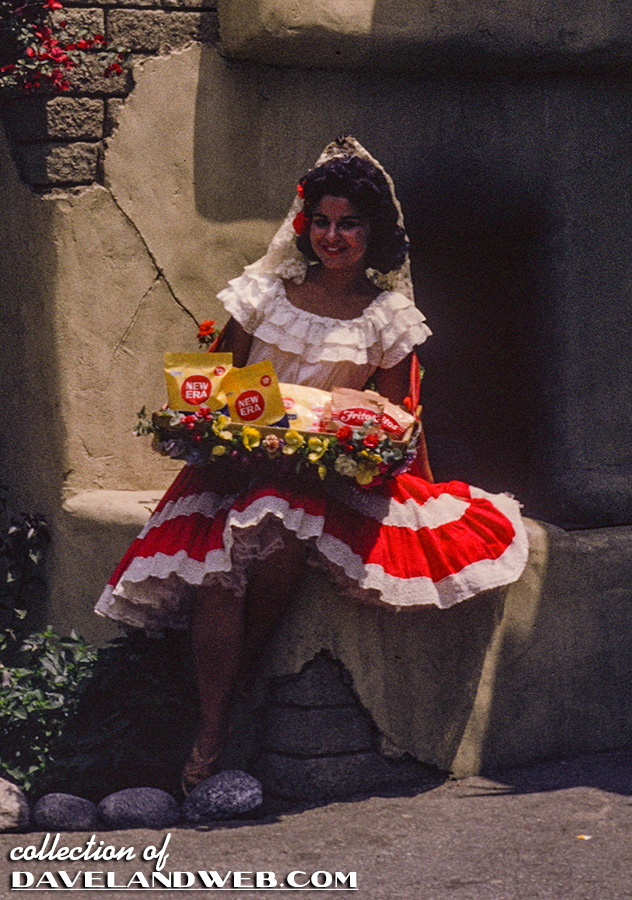
Just a few May 1962 photos to kick off your Cinco de Mayo (or "Drink-o de Mayo," as some of my more festive friends like to call it). Over at the Casa de Fritos, this lovely lass is giving away more than just Fritos Corn Chips; she has something called "New Era." I had never heard of these before, but apparently they came out in 1951 and were marketed as a healthy snack. Here's the marketing spin that was found on the packaging:

"SCIENCE SAYS…'THE ALKALINE SIDE IS THE HEALTHY SIDE.' New Era Potato Chips are partially starch dextrinized and therefore more readily digested…Chemical analysis have proven New Era Potato Chips to be a highly concentrated, energy-producing food, 95% digestible, and of greater alkalinity than even fresh, raw potatoes. Feast without fear!"

Just ignore the fact that they were processed in hydrogenated vegetable shortening. Made by the Nicolay Dancey Co., New Era became the largest selling Potato Chip in the country, outselling the others 3 to 1. In 1959 they merged with the Frito Company, which merged with Herman Lay in 1961 to become Frito-Lay, Inc., and then were bought out by Pepsi in 1965. Not sure what happened to New Era.


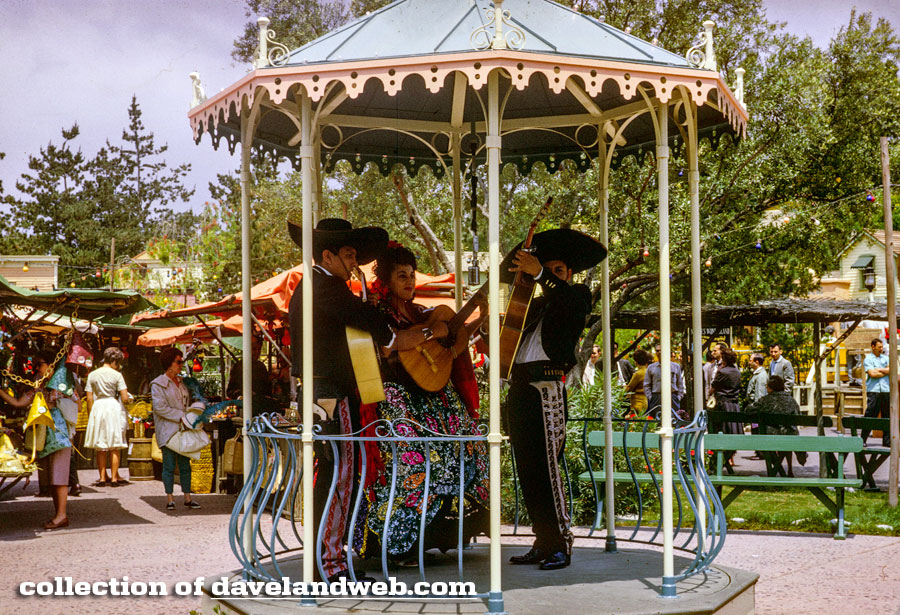
Last one for today is of the Gonzalez Trio in Frontierland:


It just wouldn't be Cinco de Mayo without the music of the Gonzalez family.

See more vintage Disneyland Casa de Fritos photos on my Casa de Fritos web page.
Saturday, May 04, 2013

Vintage Tour Through WDW's Haunted Mansion


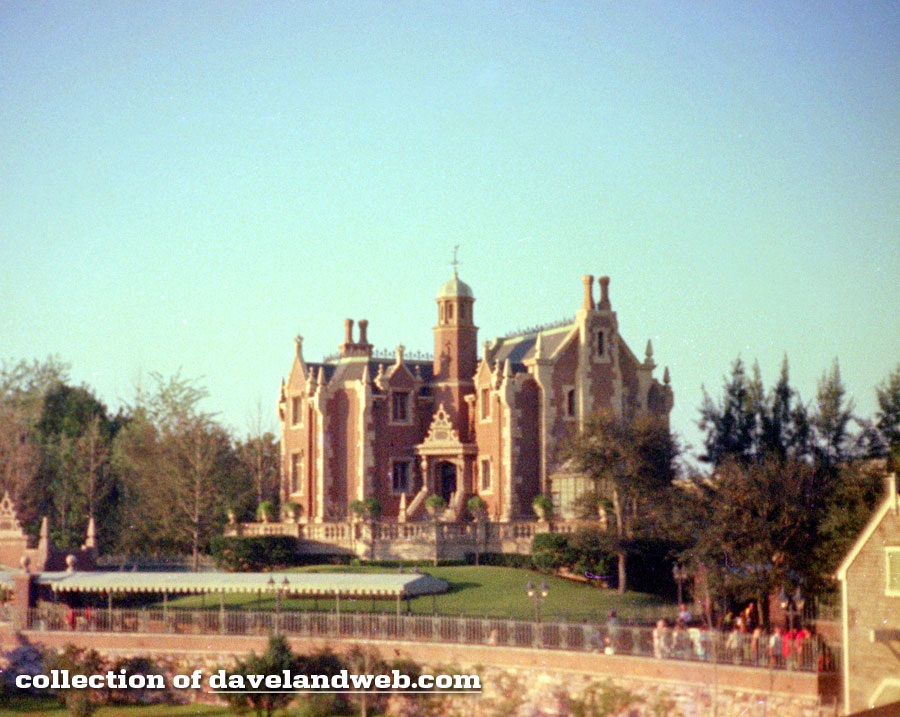
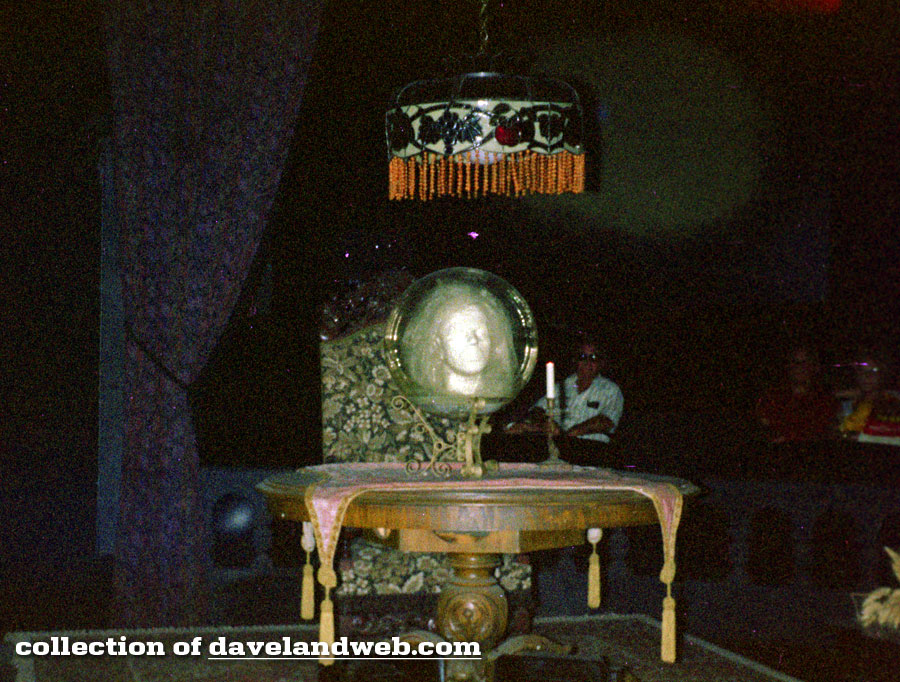
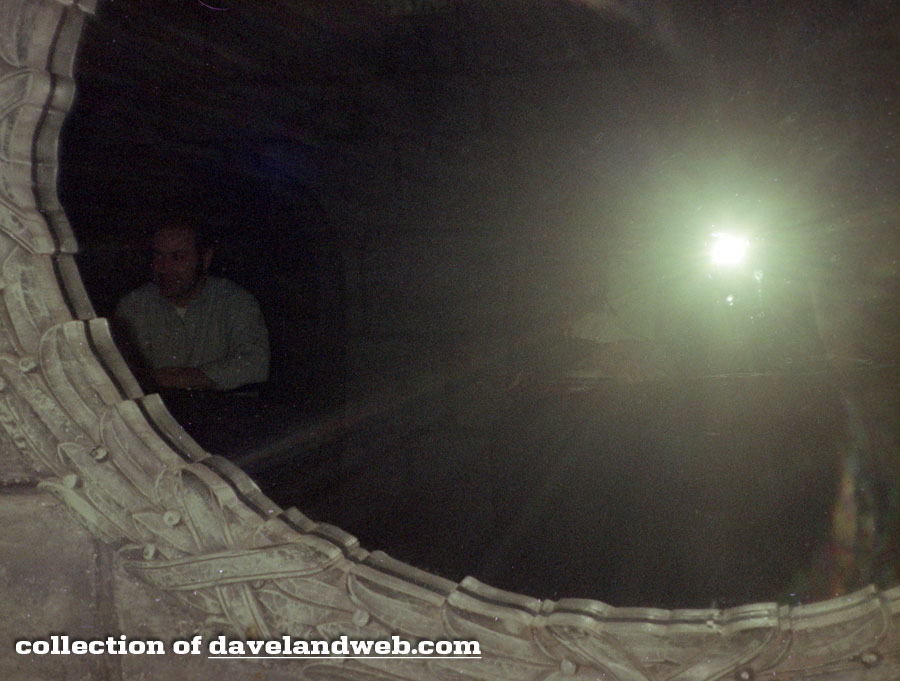
The quality may not be spectacular, but these 1970's images from Orlando's Haunted Mansion in Liberty Square may still appeal to some, as vintage interior dark ride shots are rare. Shall we board our Doombuggy Time Machine?

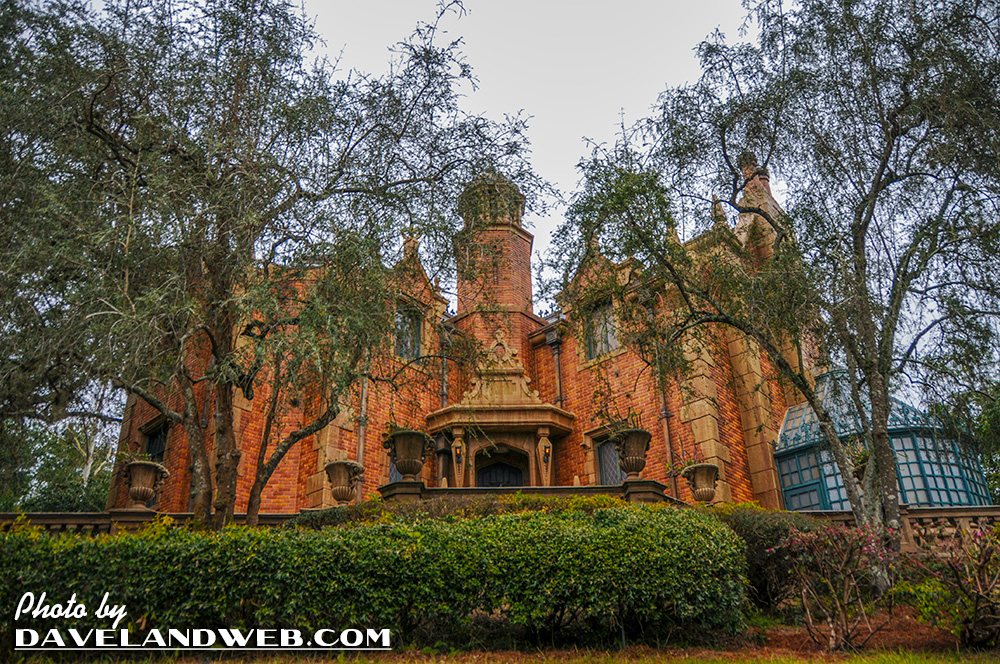
As you can see by this photo from my most recent trip to WDW, the landscaping has seen a bit of growth in the last forty years!


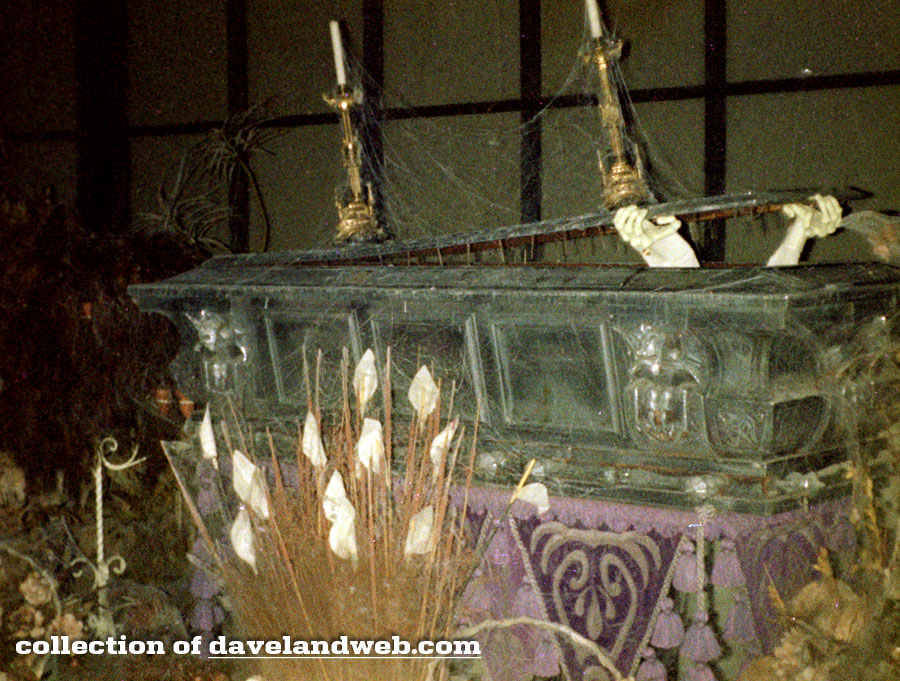
Our vintage photographer obviously did not heed the "no flash" warning by the ghost host, as most of these shots suffer from high contrast. Still, this is one of my favorite scenes, as the glimpse of the hands emerging from the coffin give an "eerie sense of foreboding."


Madame Leota loses her face with flash photography; the projection effect gets obliterated.


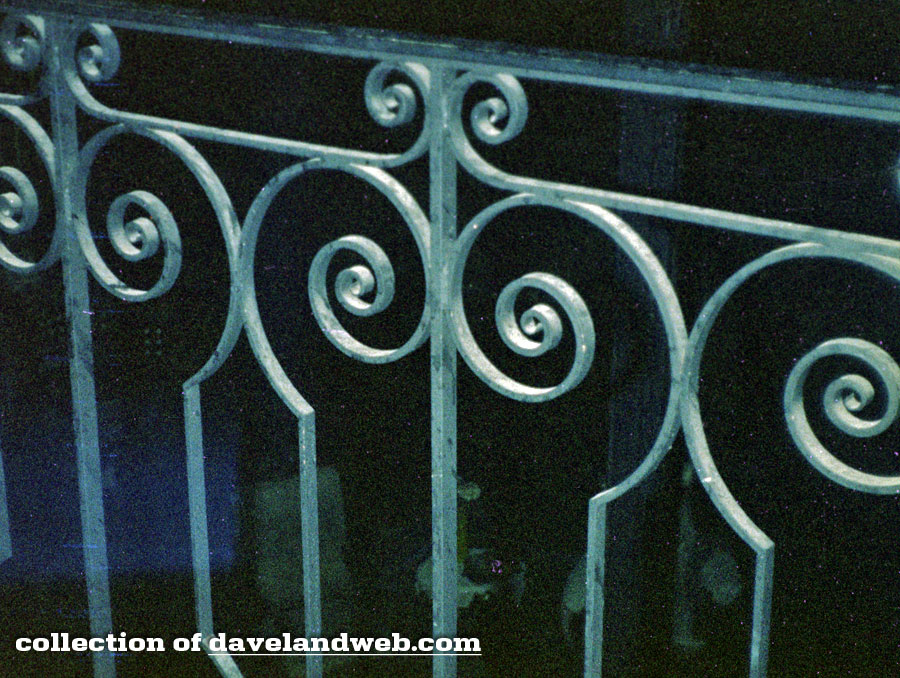
That #$%^ railing got in the way of the two ballroom shots! Maybe there are some Haunted Mansion railing nuts out there?!?


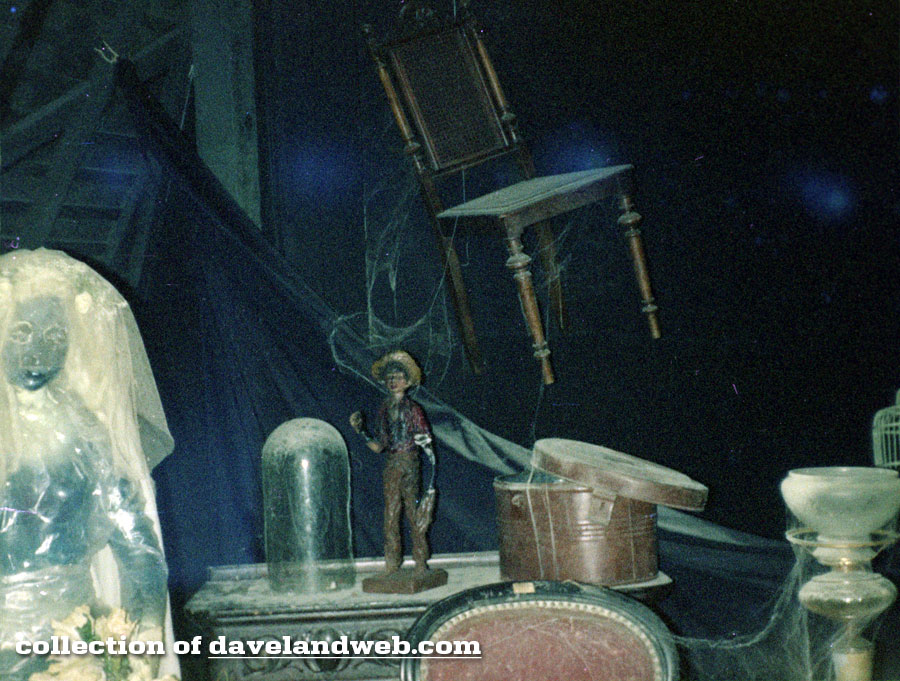
The best shot of the bunch is this one from the attic, showing a corner glimpse of the original bride:


The flash not only blocked the hitchhiking ghost effect, but kept our photographer's identity anonymous.


It was probably to prevent the ghost host from punishing him for using a flash.

See more vintage & current Walt Disney World Haunted Mansion photos on my WDW Haunted Mansion web page.
Friday, May 03, 2013

R.I.P., Deanna Durbin


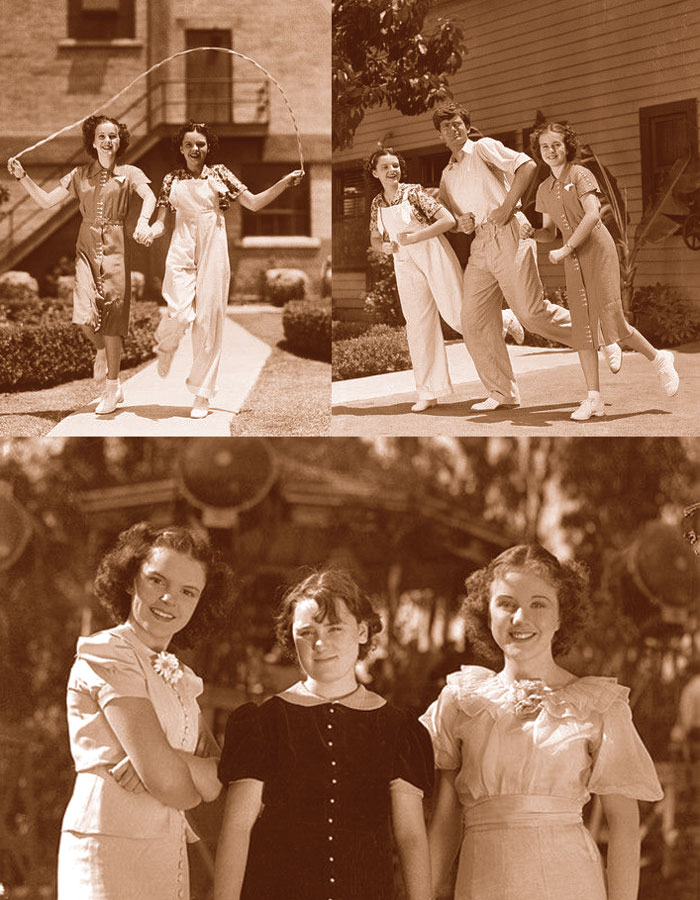
Although the exact date seems to be unknown, it was announced recently that legendary singer/actress Deanna Durbin has passed away at the age of 91. Her popularity rivaled that of Shirley Temple and Judy Garland, and was credited with saving the film studio Universal from bankruptcy. Although it would probably be more accurate to say that her box office receipts "contributed" to Universal's success, there is no denying that her operatic voice, legendary beauty, and wholesome personality are what made audiences adore her during the 1930's and 1940's. Saddled with a number of crappy movies and trapped in the goody-goody image that her fans refused to let her shake, she left the silver screen in 1948 and moved to France to live in a charming old farmhouse with third husband Charles David. Somewhat bitter about the restrictive studio system and her inability to get good scripts, Durbin was rarely seen in public and refused to talk about "the good old days." When hounded for an interview, she once told The Associated Press:

"I've gained weight, I do my own shopping, bring up my two children and sing an hour every day."

While scouring the web for information on Durbin's life, I stumbled upon this fantastic 1983 interview by author David Shipman. It is her last known interview, retrieved from The Judy Garland Message Board and then reposted on the Java's Journey Blog:

PARIS. She was once one of the most famous women in the world, which didn’t exactly fit in with her conception of the life she wanted to lead. She is now Deanna Durbin David, but recent showings of her films on British and American television and reissues of six LP records have persuaded her to become Deanna Durbin again—for just one evening.

She became famous overnight in "Three Smart Girls," a run-of-the-mill feature whose budget was doubled after studio executives had screened the result of her first few days work. Her first screen kiss received more press coverage than any of Elizabeth Taylor’s marriages, and the transition to adult roles was so successful that, as she left her teens, British cinema managers voted her the biggest draw for three years running. She is finally breaking her silence because she is deeply touched by the reaction of old and new fans.

“I knew that sooner or later I would give an interview and decided that I would do it with you. I liked your two books on the stars and such statements you made as, “the system was firmly rigged against the individual in favor of the machine”. I admire you as one admires a scientist who, with a few bones, manages to reconstruct an entire dinosaur. So I am curious to see what you’ll make with the bits and pieces I offer you today…”Why did I give up my career? For one thing, just take a look at my last four films and you’ll appreciate that the stories I had to defend were mediocre, near impossible. Whenever I complained or asked for story or director approval, the studio refused. I was the highest paid star with the poorest material-today I consider my salary as damages for having to cope with such complete lack of quality.”
“I did not hate show business. I loved to sing. I was happy on the set. I liked the people with whom I worked and after the nervousness of the first day, I felt completely at ease in front of the camera. I also enjoyed the company of my fellow actors, the leading men who were so much older, like Herbert Marshall, Melvyn Douglas, Franchot Tone, Walter Pidgeon, Joseph Cotten, Vincent Price and Robert Cummings. I did two films with my special friend, Charles Laughton. Working with these talented men helped me so very much and I grew up much faster than the average teenager. What I did find difficult was that this acquired maturity had to be hidden under the childlike personality my films and publicity projected on me.”

I asked whether it was true that her father had handled her investments. “Yes, he did before my first marriage, but he was not a broker or a businessman as the publicity department always made him out to be. My father-Lancashire born and raised-had taken his family to Winnipeg, where he worked as a blacksmith for the Canadian Pacific railway. As the cold Canadian winters ate up all the summer savings, he took us all to California where he worked as a welder and held a variety of manual jobs. His clever hands, combined with my mother’s intelligent housekeeping got us all through the Depression. But my father started having trouble with his health. I remember when he came to pick up mother and me from the studio where I had gone for an audition. Dad looked pale and sick. He had fainted twice and the doctor had told him that he had to stop working for quite a while. He was desperate. “Would it help Dad, I asked, if I brought home a hundred dollars a week? The studio wants you to come back tomorrow and sign a contract for me. I’ll never forget the look on his face, the happy tears in his eyes.”

“I had been singing since the age of goodness-knows. Some neighbors knew an agent, not one of the important ones, and he got a try out for me at the Disney studios for the voice of Snow White, which I didn’t get for they said I didn’t sing like a child. Then he took me to MGM and I sang for one executive who went out and got another executive and I sang again, and I sang again. Each time I sang there was a lot of whispered consultation and someone else was sent for. I must have sung about ten times in all.”

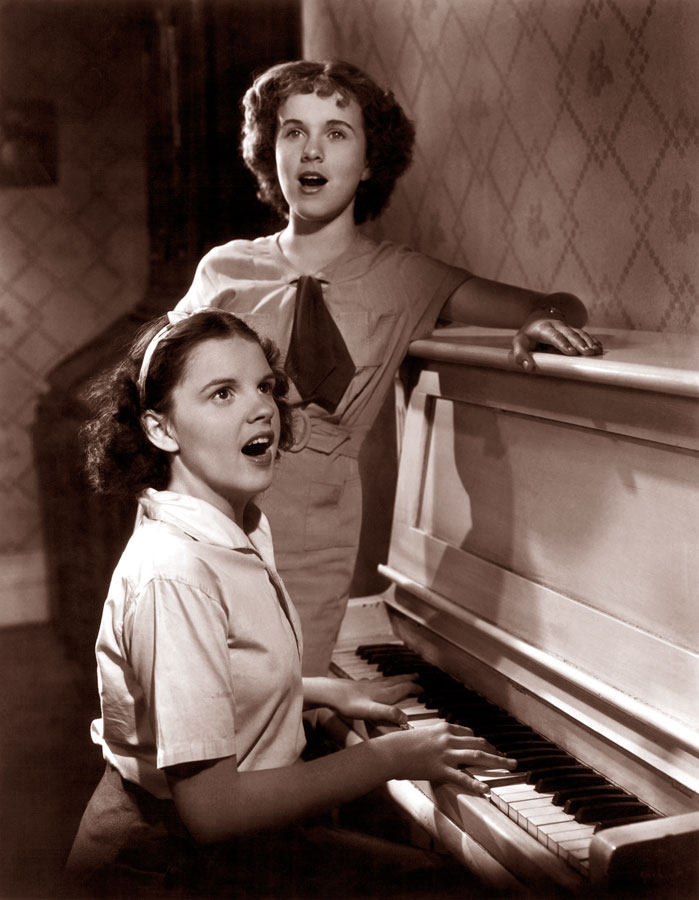
MGM put her into a short with Judy Garland, "Every Sunday," and this particular Hollywood legend is true, that when Louis B. Mayer said “drop the fat one” he meant Garland, not Durbin.


“For me this was the end. My dog Tippy and I went for a long walk. I was crying bitterly and decided that I’d kill myself-I couldn’t go back to school a failure. Not many months later, returning from my first publicity trip for 'Three Smart Girls' in New York, I saw huge posters of me all over Hollywood. I had become a star. I was tired, but happy and alive!”

“Judy soon entered her own period of triumph. Right from the start Judy had an immense talent. She was a professional and had been on the stage since she was two. Her later story is tragic, but I’m certain she could never have given up. She needed an audience as she needed to breathe.”

“I understood Judy, though. I did some vaudeville with Eddie Cantor when I was beginning in pictures and between our weekly radio show. Eight shows a day! It was very exciting. Contact with a live audience is heady stuff, like the evening I walked in to sing at the Mormon Tabernacle in Salt Lake City when the entire audience rose to its feet. She laughs. I should have done more live shows.” I point out she did sing extensively for the troops during the War, but that, she says, was a very different emotional experience, remembering one evening when she was lifted on the back of a truck and sang without accompaniment to soldiers about to embark for overseas.

“I hated being in a goldfish bowl. If I went to New York, I had to stay in my hotel room or go everywhere under guard, whisked away in a big black limousine, terrified that the fans running alongside would get hurt in the traffic. My mother and I were once mobbed in Texas: the police lost control of the crowd and my mother suffered two broken ribs from people trying to reach me. I have never been so frightened. They put me in the town jail for safety and to avoid the mob still waiting at the station, they flagged the train down in the middle of nowhere, where I got on safely.”

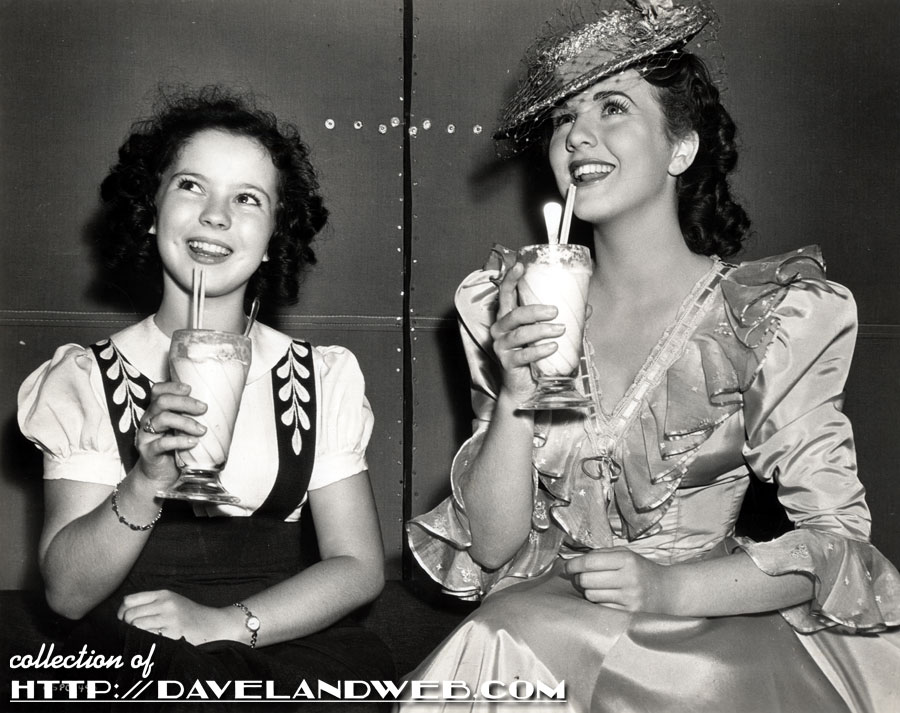
Here's Shirley Temple visiting Deanna at Universal Studio on the set of "Spring Parade," 1940


“My upbringing was very ‘proper’. It was drummed into me that I must never have sex with a man before I was married, and then the next day I was off to the studio where a very different set of rules prevailed. I must admit that it was lovely to be asked and even lovelier to be able to say no…or yes. Part of the fun of being asked meant that I wasn’t a little girl anymore…and that is why I wanted to look glamourous. I couldn’t wait to wear low cut dresses and look sultry. I remember the day when Philippe Halsman from LIFE magazine came to my home. He said he was going to photograph me ‘looking like an angel’. I answered that I may not know how I did want to be photographed, but if there was one way I certainly did not want to be photographed it was looking like an angel! He laughed and the picture he took more than satisfied me. I'll admit that for some of my public all of this must have been hard to understand.”


“My two broken marriages were not an asset either. When my first marriage failed everyone said that I could never divorce. It would ruin the ‘image’. How could anyone really think I was going to spend the rest of my life with a man I didn’t love, just for the sake ‘of an image’?!”

“The second divorce was traumatic, for there was a child involved. Being the child of a movie star can mean a life even more unreal than that of the parent, and at that point I knew that I didn’t want my daughter to grow up in Hollywood.”

“Donald O’Connor once said that I was a professional, which, coming from him, pleased me, but that at the time we worked together I was unapproachable…’in a funk’ as he put it. With my second marriage breaking up at that time, I’m sure he was right.”

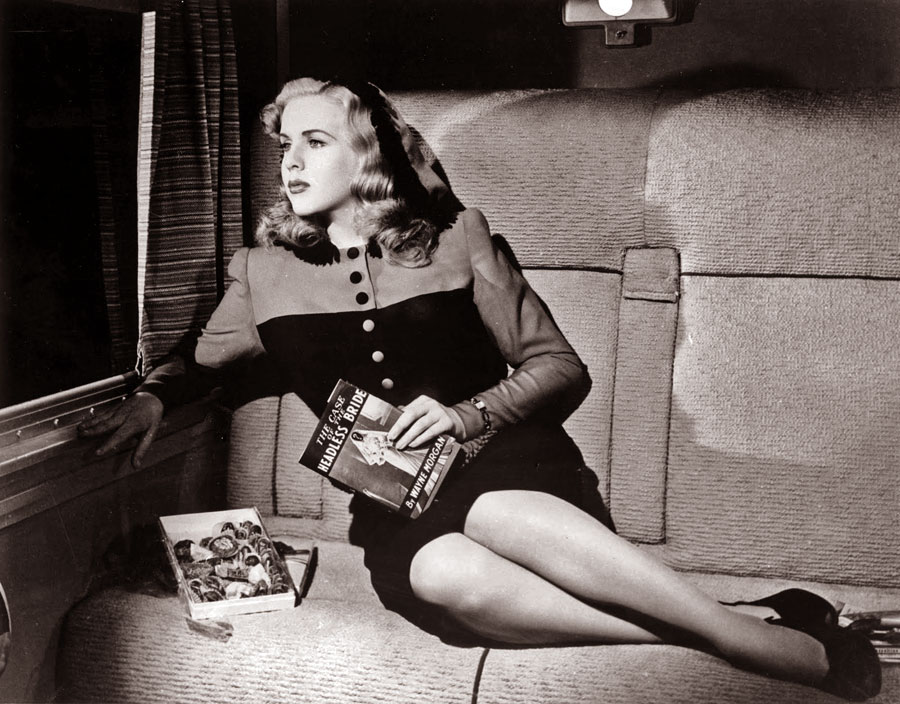
In 1950 she left for France where she married Charles David who had directed her in "Lady On A Train." Since then she has resisted some tempting scripts: “I would have had to go through all the paraphernalia…the pre-recording of songs, wardrobe fittings, publicity and so on, not to mention the time this would have taken me away from my family.”

Joe Pasternak, who produced her early movies, used to telephone whenever he was in Paris. “Are you still happy?,” he would ask, and when she answered “yes”, he would say, “damn, well I’ll try again next time” and hang up.

“Just once was I seriously tempted, by the prospect of "My Fair Lady" on Broadway. It was still in an embryonic state just a few songs completed when Alan Jay Lerner came to my home to play them for me. I loved them…but I had my ticket to Paris in my pocket and anyway, Julie Andrews was great and so was Audrey Hepburn in the film.”

So she brought up her children: Jessica returned to America to marry while Peter, her son by Charles David, is working there in medical research. I sense rather than see her pride in them and the reason I don’t see it is because her radiance is absolutely undimmed by the years. She speaks with the directness and vitality of the young Deanna, but again I sense an extra enthusiasm when she says that bringing up the children and seeing them happy represents no sacrifice. Now she and her husband indulge their passions for music and travel, combining both with regular visits to the United States, Salzburg, Florence, Prague, Vienna, Glyndebourne and London.

Deanna herself still sings. She is grateful to her second film, "One Hundred Men and a Girl," for introducing her to Mozart. At the age of fifteen she sang Mozart’s Alleluia with the Philadelphia Orchestra, Leopold Stokowski conducting.- It is impossible not to say that I would like to hear her sing, which receives a crisp “thank you”. She did not want to continue making films when she left films because the required publicity would have destroyed the privacy she longed for. I wonder, without asking her, whether she might be tempted now. She does turn down all requests to appear on TV shows and does not want a biography done. I did not suggest that any other form of comeback could be considered, even with the children grown up, for I could not imagine her ever being more contented than she now is – and we were talking, one or the other of us, for more than five hours. The waste of her talent is in the past, even if, at a cheerfully admitted sixty-one she looks a mere thirty-five, slim and so attractive that it is a relief when she puts on glasses and looks maybe forty. Because of this youthful appearance, and because I doubt whether she has even glimpsed a beautician since she left Hollywood – she is not only like the young Deanna but uncannily like: candid, sensible, completely without affectation, concerned and captivating company. Like all great stars, and despite her particular qualities, she is mysterious. She is Deanna Durbin – one of the best-loved of all stars. It is to return that love that she has given her first interview in so many years.

I assure her that many people who asked me to convey messages of affection were not even born when she quit movies. She smiles, too much of a realist to be surprised.


* * *

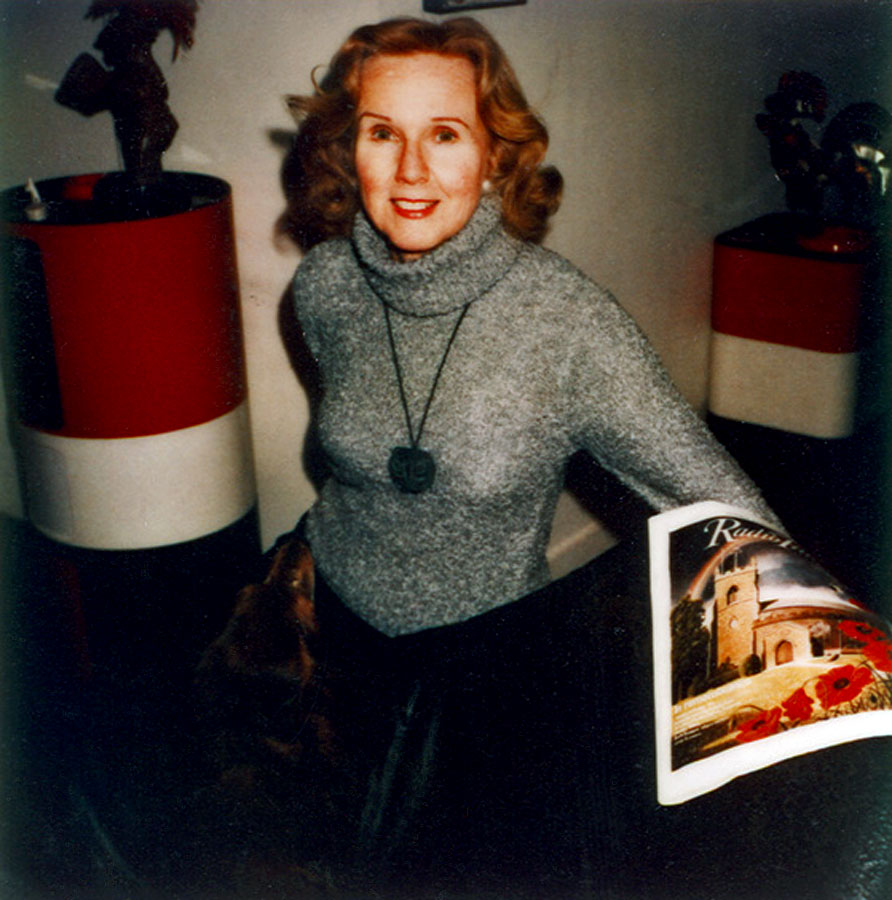
This photo of Deanna Durbin, taken by her husband, Charles David, is from 1981, making it hard to believe that she had put on any weight, let alone aged at all. Image Copyright: NYC Cinema Studies.


I hope you enjoyed today's tribute to a Hollywood legend.

See more Classic Movie & TV photos on my main website.

Thursday, May 02, 2013

The Lawman goes to Disneyland


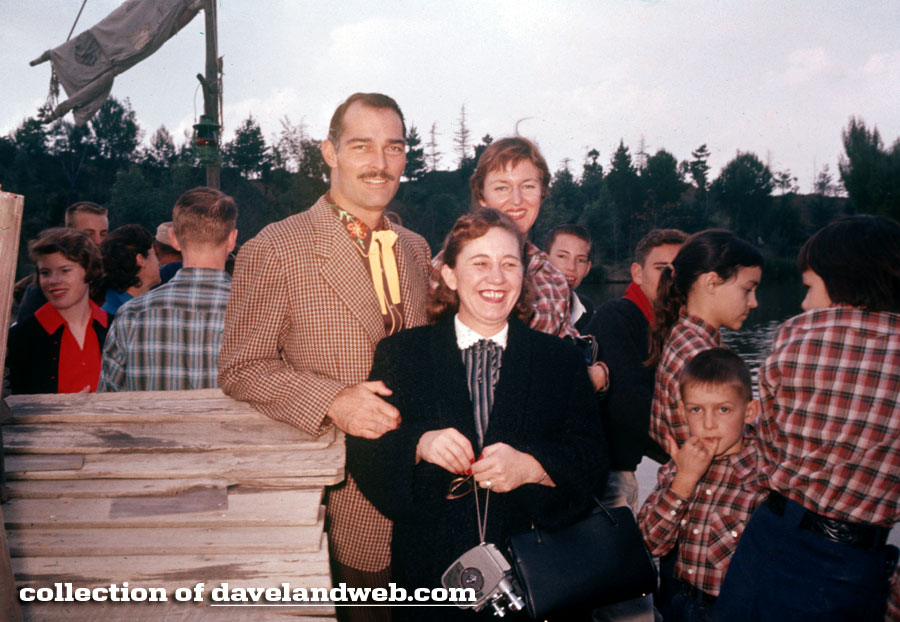
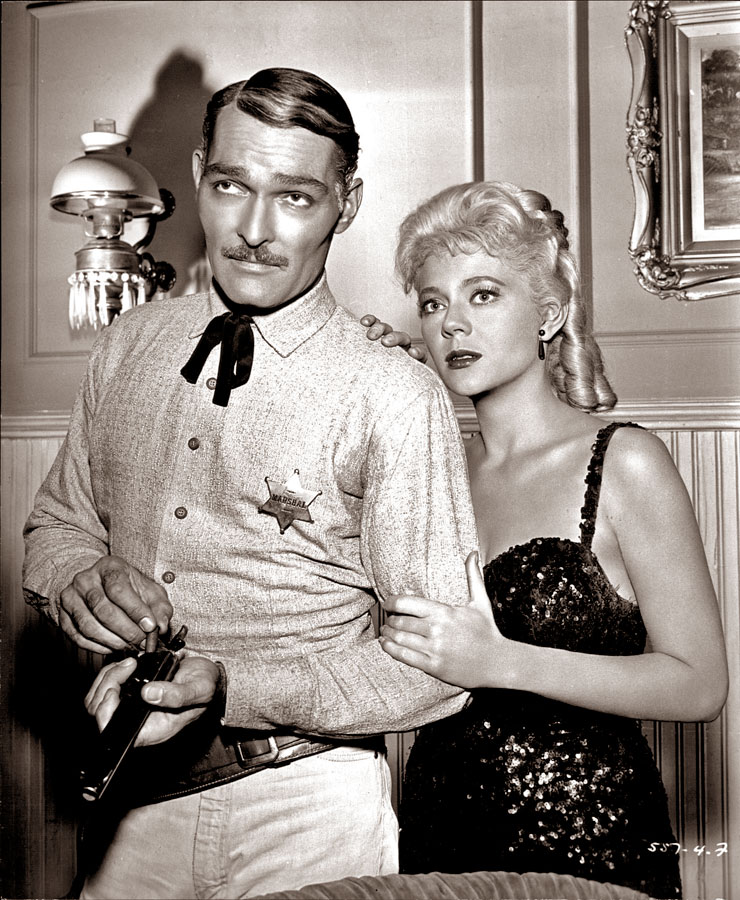
Today, if you see a celebrity at Disneyland, chances are they have an entourage of security and a tour guide with them, briskly ushering them through the attractions and keeping them away from guests. Can't say I blame 'em! Back in the day (which in this case is February 15, 1959), celebrities mixed with us real folks, and even allowed their photos to be taken! Definitely a different time. Here is John Russell aboard a raft on the Rivers of America, enjoying a day with his wife Renata Titus and three kids (yes, the matching plaid!). If you don't know who John Russell is (I know that I didn't!), he was the star of the ABC western television series "Lawman," from 1958—1962. The lucky fan who got her picture taken with him seems beside herself at her good fortune!


See more vintage & current Disneyland photos on my Disneyland web pages.

Wednesday, May 01, 2013

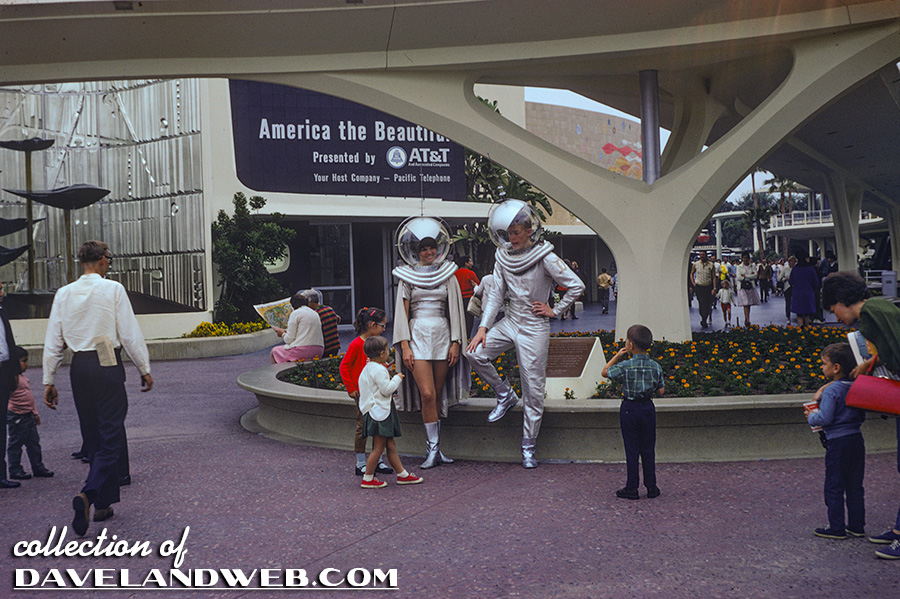
Sexy Space Travelers


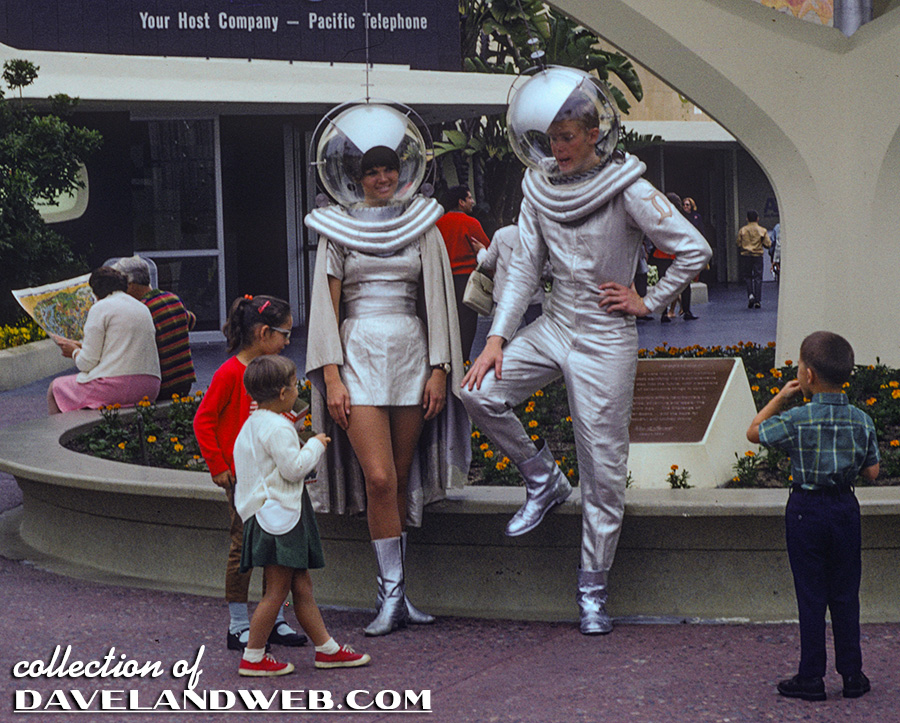
The sexy space couple survived the transition to "New" Tomorrowland, but disappeared shortly thereafter. Here's a front view from 1967:


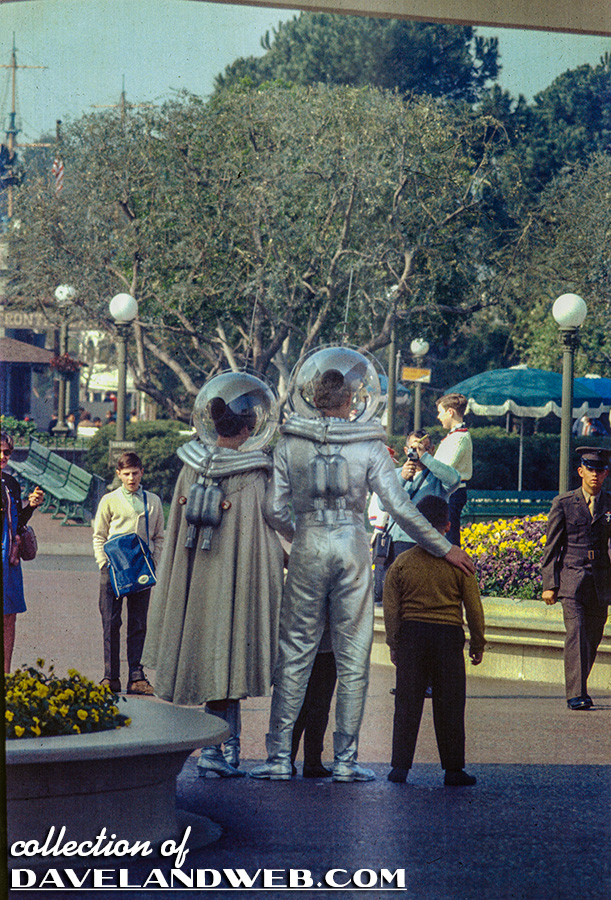
...and a back view of the same couple.


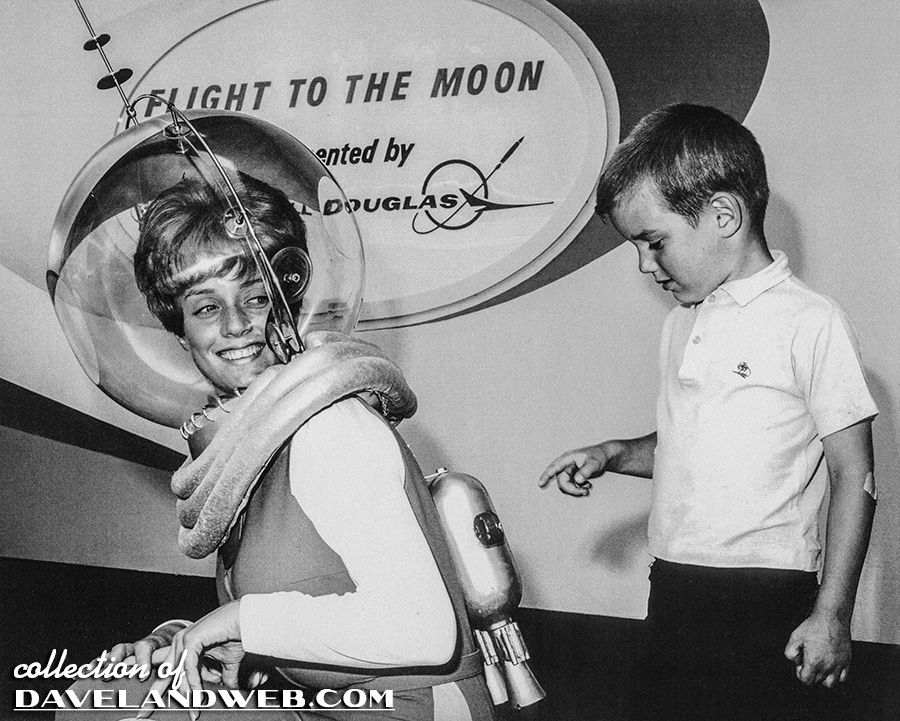
"Baby got back" would be a good caption for this shot, as the young boy with a band-aid on his elbow questions the apparatus on this Space Girl's (id'ed by a reader as 1966 Disneyland Ambassador Connie Swanson) back:


See more vintage Disneyland Spaceman/Spacegirl photos on my Spaceman/girl web page.