Monday, November 16, 2020

Disneyland Entrance, January 1960


Standing outside the entrance gate, we have guests on the left yucking it up and guests on the right standing near the Ken-L-Ration Ken-L-Land. It’s January 1960, and based on the sign atop the structure, your pet will be licking his/her chops to be dumped off here. Don’t believe it for a second.


In shot #2 from the same batch, our photographer has passed through the turnstiles and is busy snapping away at the Mickey Floral, the Disneyland Railroad, the attraction posters, and…


a young guidebook salesman.


Unfortunately, it didn’t turn out to be Steve Martin. I hate when that happens.


See more vintage and contemporary Disneyland entrance photos at my main website.

Friday, November 13, 2020

Flamingo Friday


Ignoring this superstitious day I am throwing all caution to the wind by celebrating the Flamingo; the Flamingo Hotel, that is. The original was opened by mobster Bugsy Siegel on December 26, 1946 with Jimmy Durante and Xavier Cugat on the bill and a number of Hollywood’s glittering stars in attendance. Siegel named the hotel after his girlfriend Virginia Hill, whose nickname was “The Flamingo” because of her red hair and long legs. Despite the hotel’s eventual success, Siegel honked off the wrong people and was allegedly bumped off on June 20, 1947 at Virginia Hill’s Beverly Hills home.

The last of the hotel’s original structures was torn down in 1993; the building you see today is from later additions and renovations, with the most recent revamp dating to 2018.


Overall, it’s a cute little hotel with an excellent location. Views from the room showcase the Strip. Didja’ know that the name “The Strip” came about because the intent was to model Las Vegas after the famous Sunset (Boulevard) Strip in Hollywood.


While the decor still seems fairly fresh, the condition of some of the common areas seems a bit worn. Carpet in the guest hallways is stretched beyond belief, to the point that the hotel could find themselves with a few little trip and fall lawsuits on their hands if they don’t get it fixed.


The room was good sized, simple, and clean:


Naturally, there is a flamingo garden courtyard on site:


Sadly, the RuPaul shop was closed for COVID; most of the hotel’s restaurants were, too.


Would I stay there again? Possibly. But the chances of me returning to Vegas anytime soon (especially during the pandemic) are slim to none. People with cigarettes AND face masks? Count me out.

See more Flamingo Hotel photos at my main website.

Wednesday, November 11, 2020

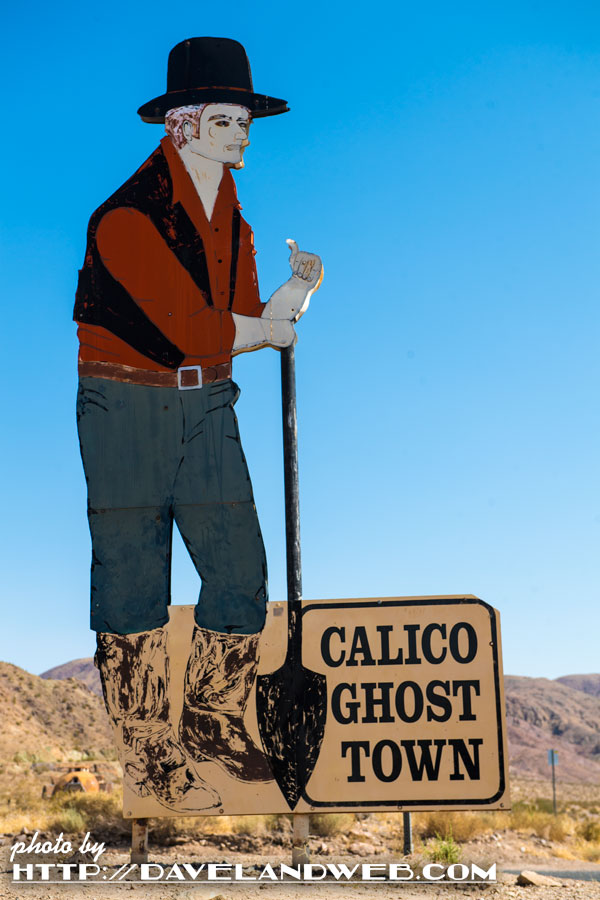
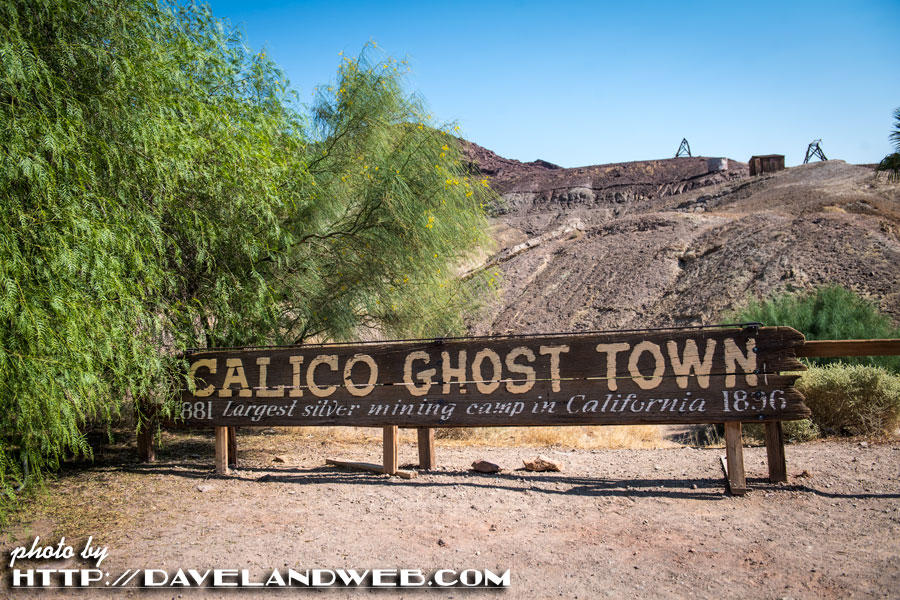
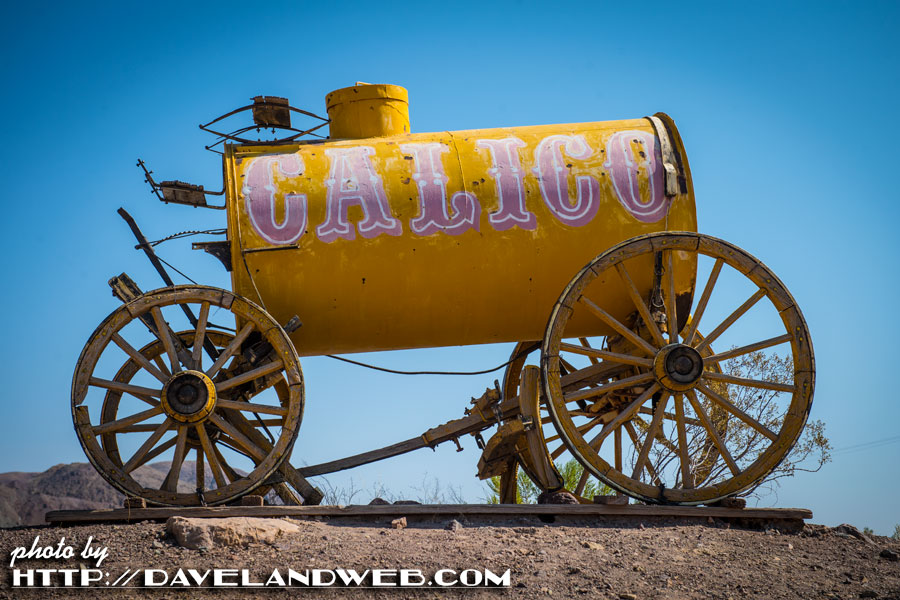
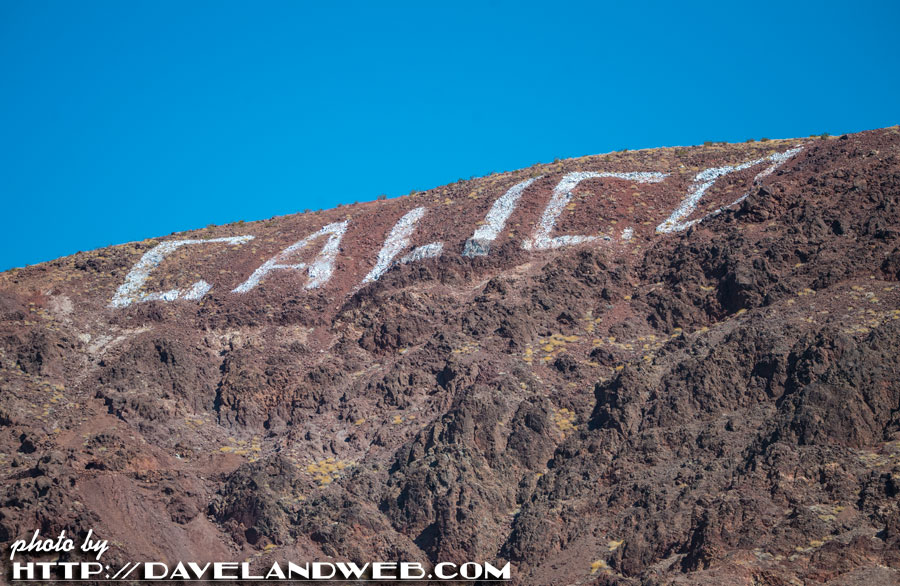
Welcome to Calico, Pt. 1


I’ve already taken you to the cemetery; now it’s time to visit the Ghost Town itself. I arrived shortly after it had opened that morning and the parking lot was practically empty. Even Ghost Towns are subject to the ramifications of COVID.


On the plus side, fewer people meant better photos for me. The big negative was that the place literally was like a ghost town, with many of the shops/restaurants closed during the week. Still, I was glad to finally make it here and see what it was all about.


If you don’t know the history behind it, here’s the down and dirty: Calico is an old West mining town dating back to 1881 that produced over $20 million in silver ore until 1896, when silver began to lose its value. Walter Knott (of Knott’s Berry Farm fame) purchased the abandoned town in 1951 and restored all but five original buildings to look as they did in the 1880's. Calico received State Historical Landmark 782 and in 2005 was proclaimed by Governor Arnold Schwarzenegger to be California's Silver Rush Ghost Town.


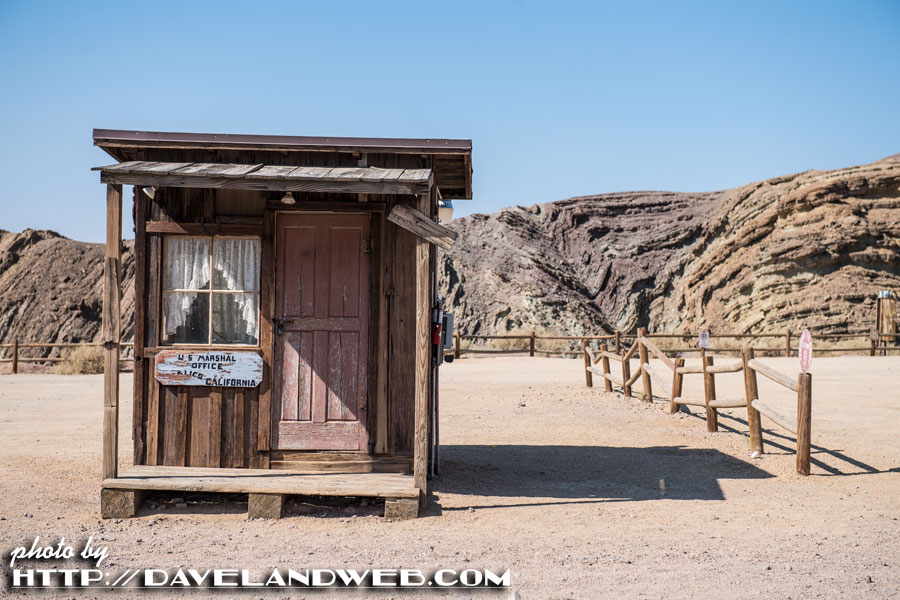
Many of the buildings were instantly recognizable to me, as it appeared that they hadn’t changed much from the vintage images I had collected over the years.


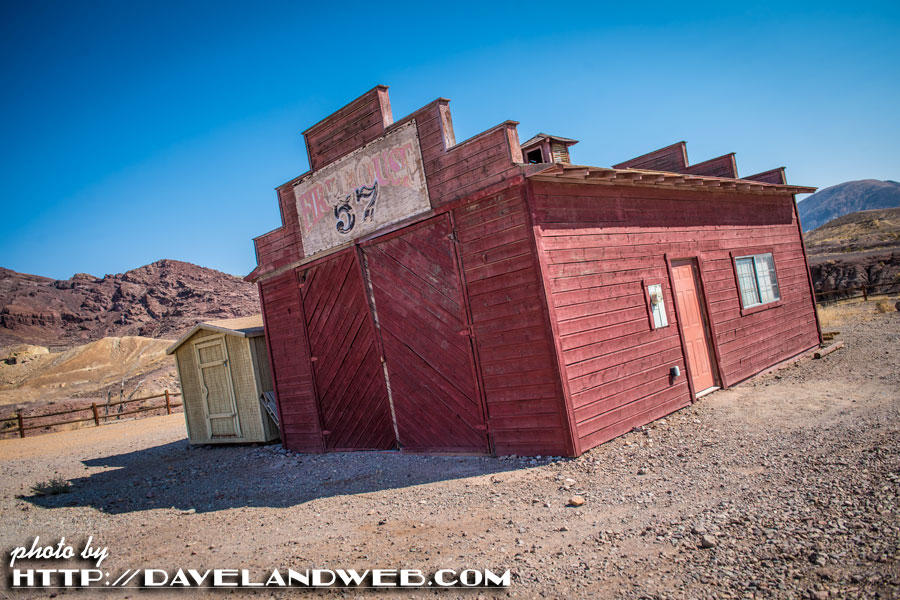
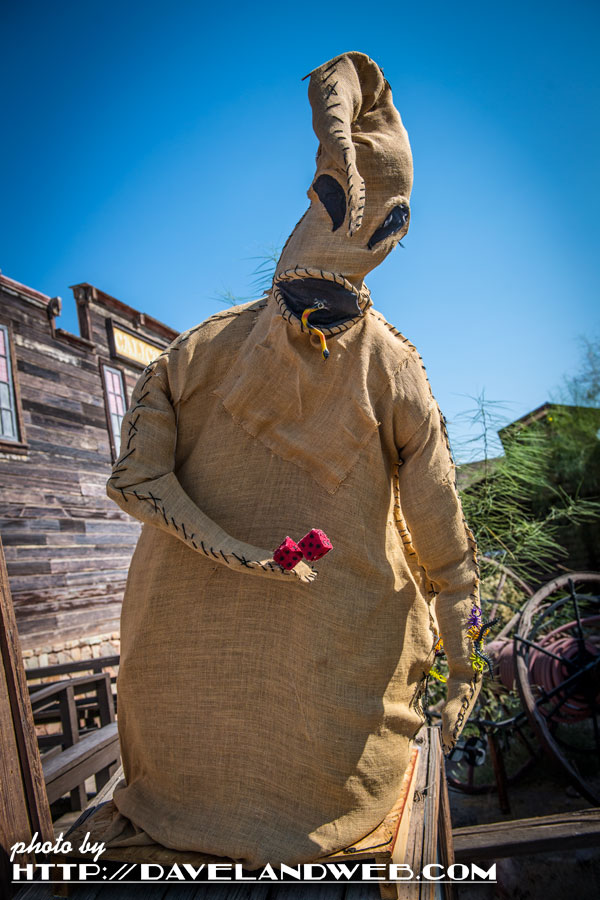
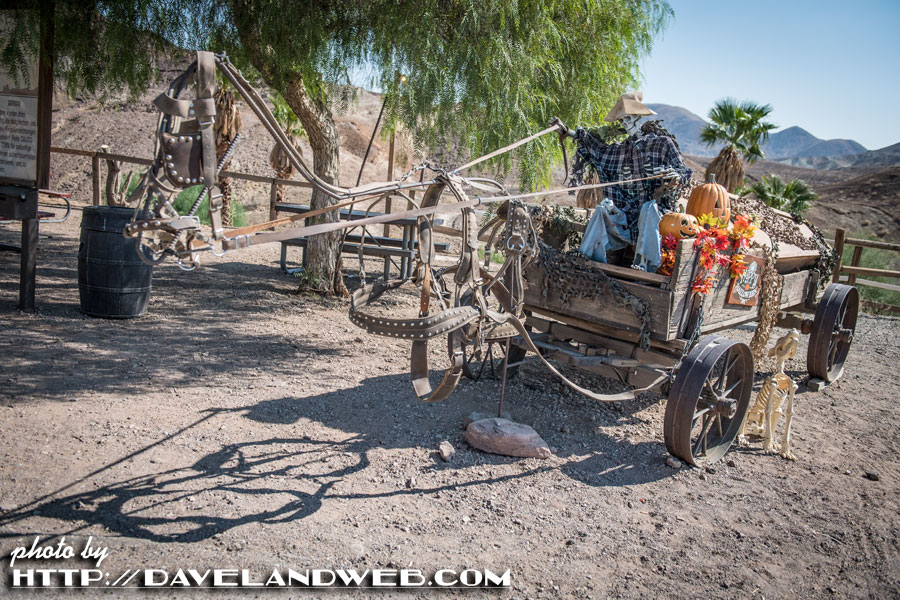
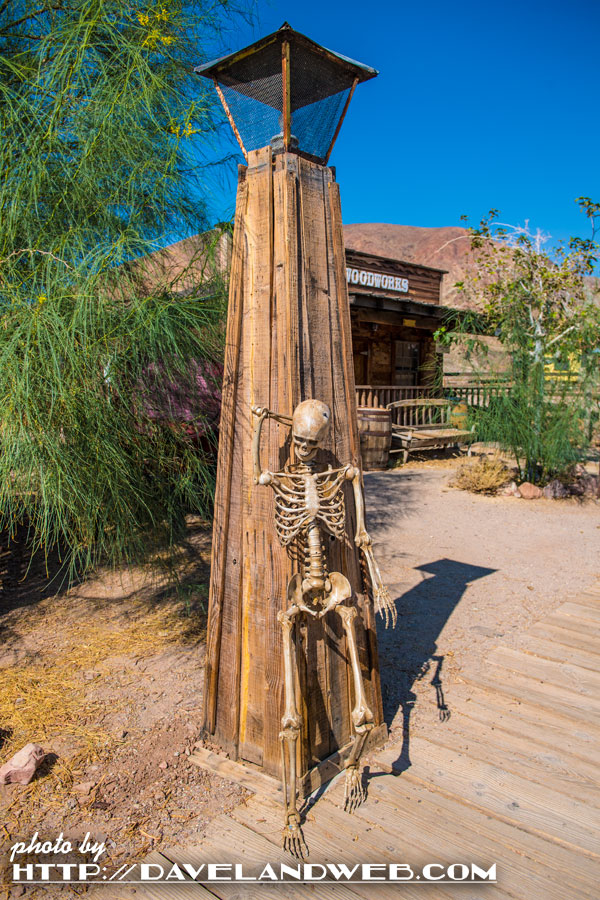
The town was festively decorated for Halloween, with plenty of elements from “The Nightmare Before Christmas.”


More to come, as right now I want to enjoy my day off. Happy Veterans Day! Many thanks to those who served this country over the years to protect our freedoms. Let’s hope we can continue to enjoy them.

See more Calico Ghost Town photos at my main website.

Tuesday, November 10, 2020

Temple Tuesday: Bachelors, Bobby-Soxers, and Buttons


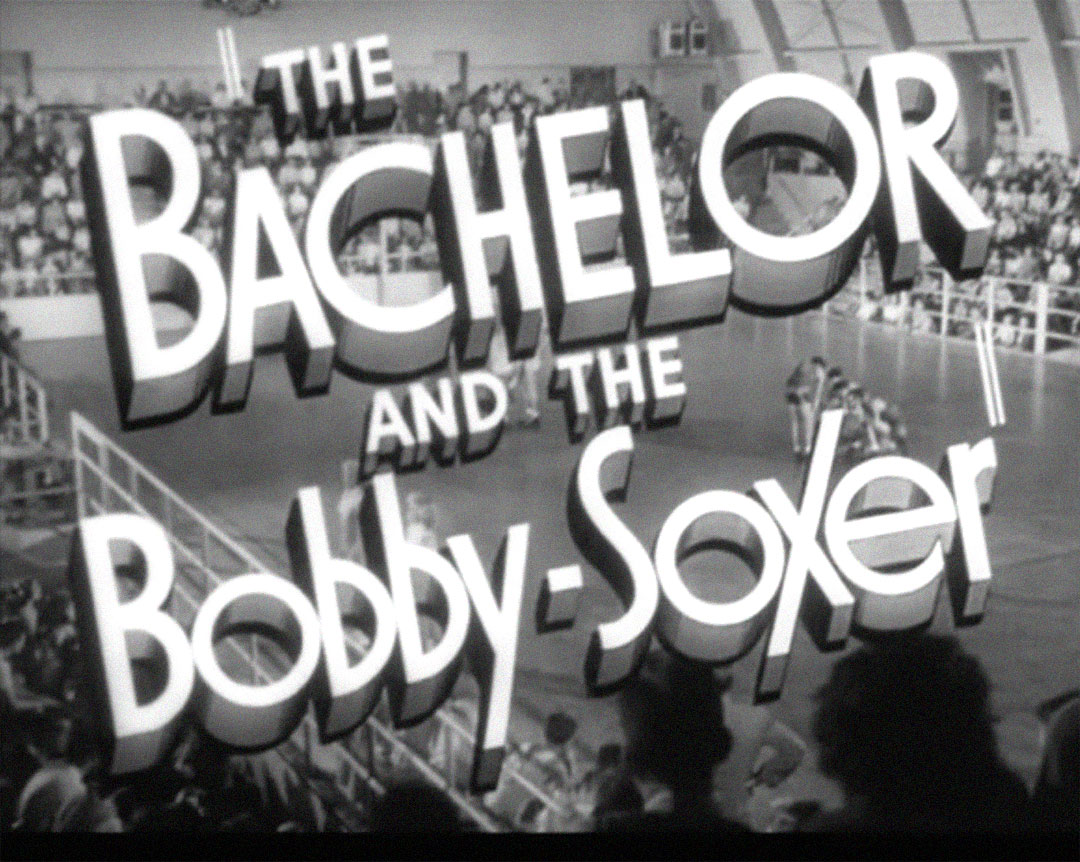
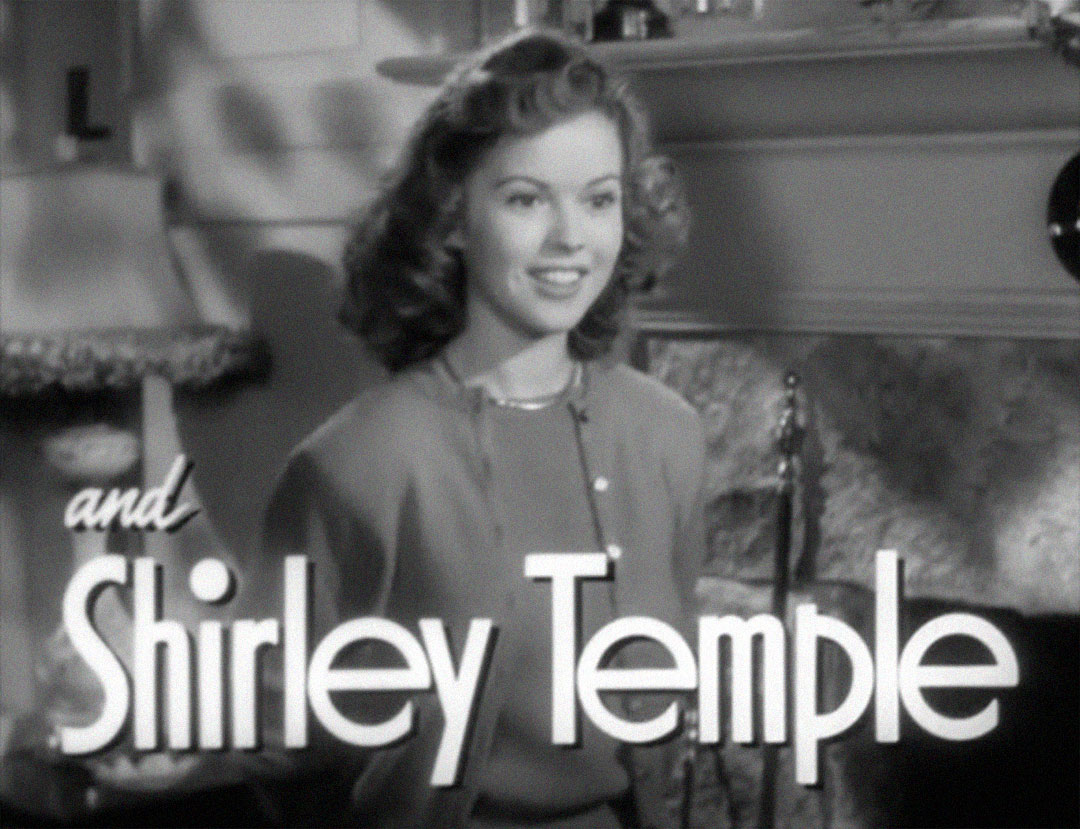
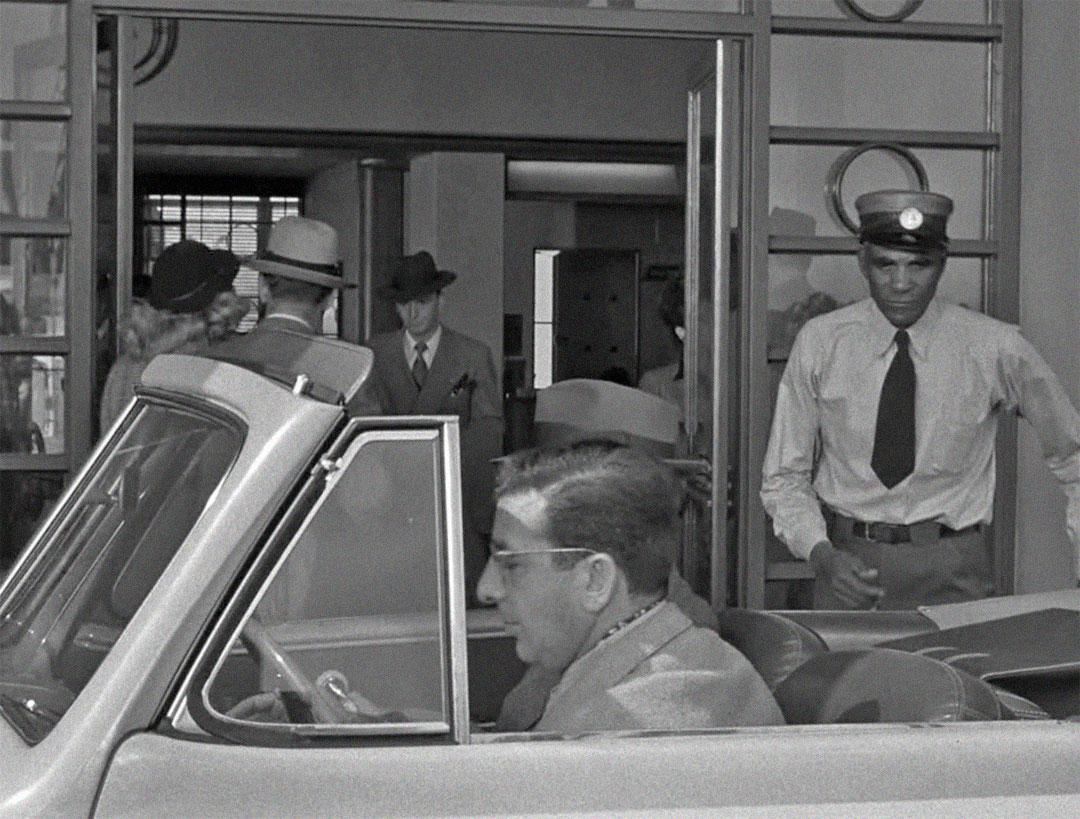
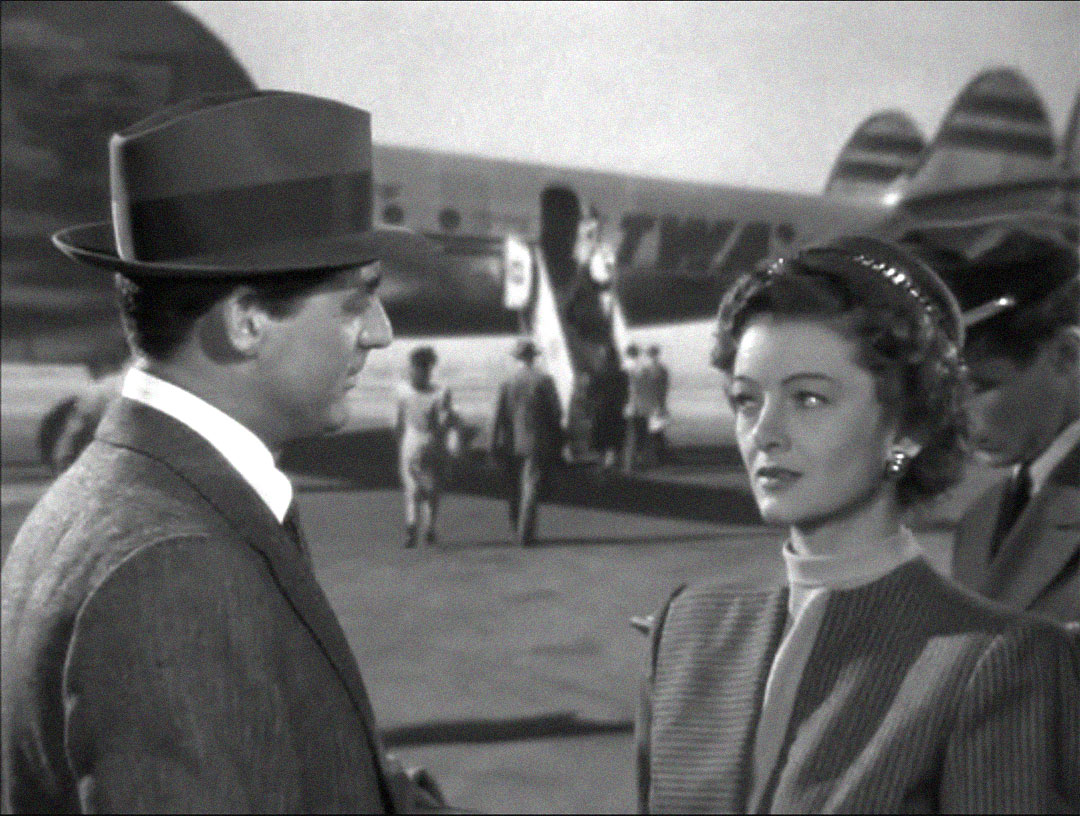
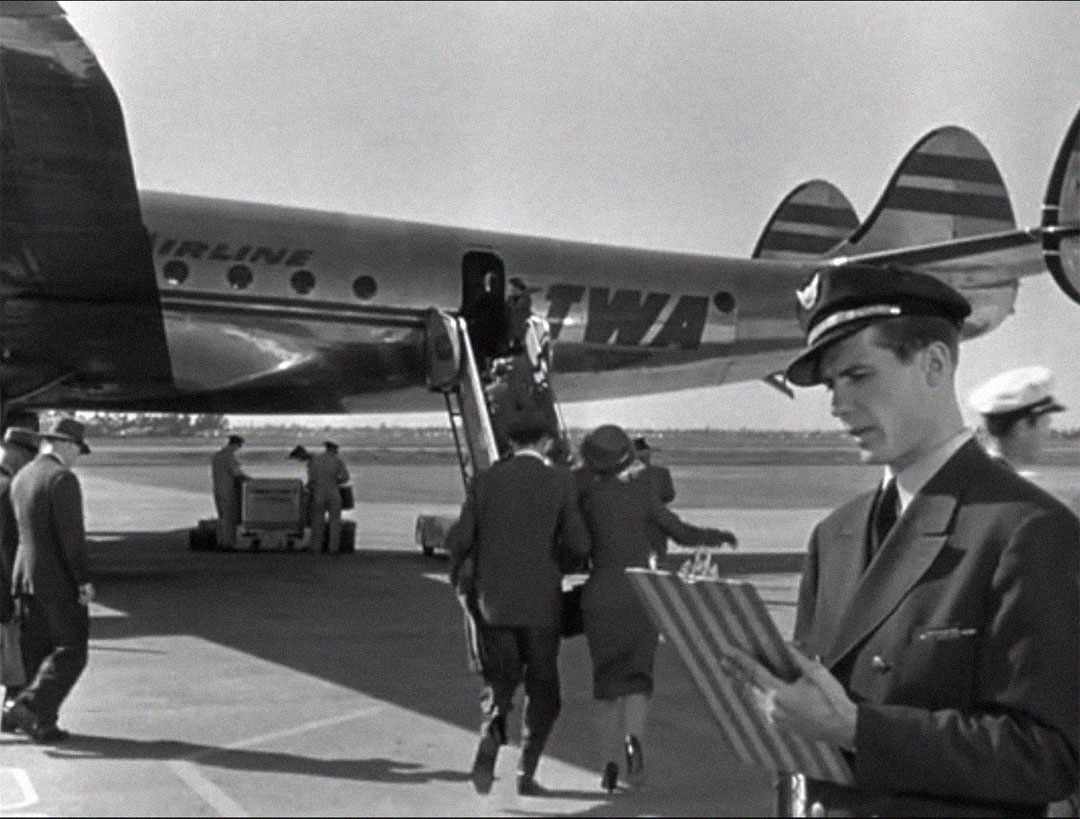
Today we take a step back in time to visit the Long Beach airport which was featured prominently at the climax of Shirley Temple’s 1947 comedy, “The Bachelor and the Bobby-Soxer.”


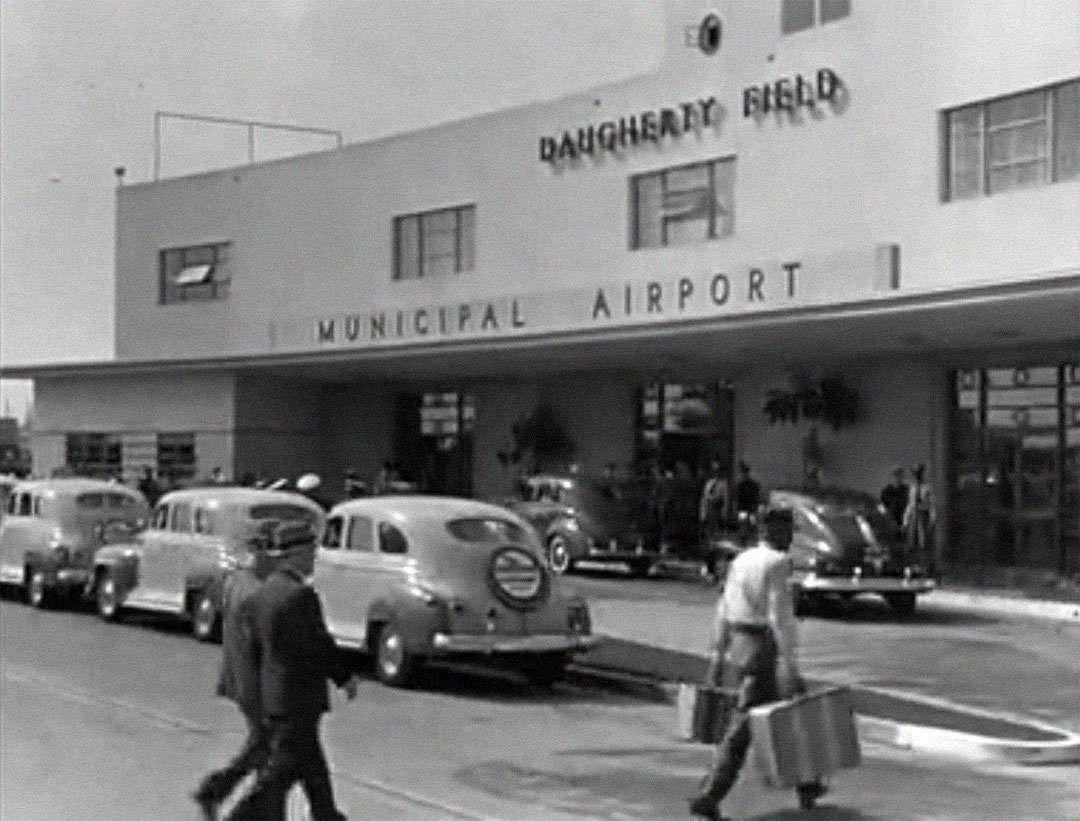
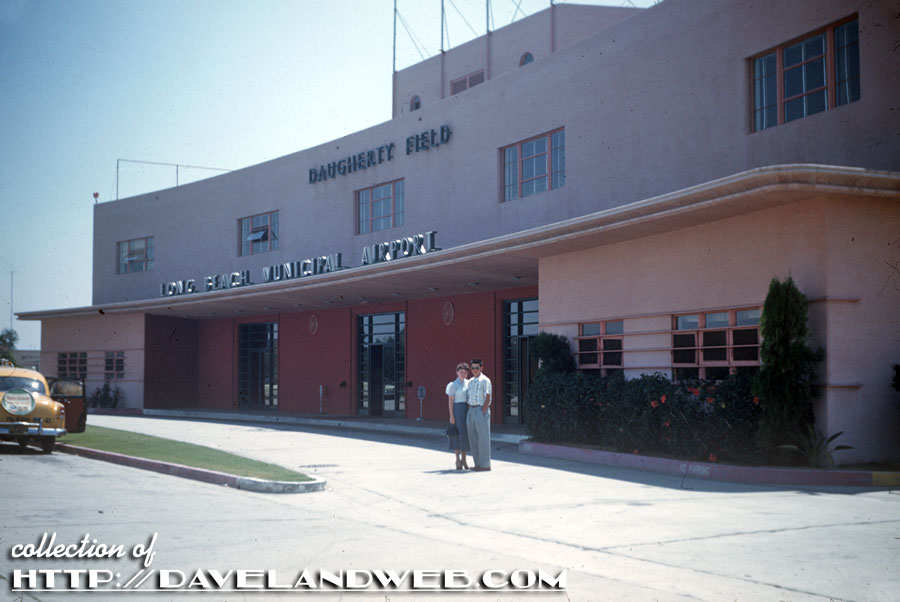
Aviator Earl Daugherty opened a 20 acre field for his flight training school in Long Beach, California on June 6, 1919. A year later, the city contacted Daugherty about developing a 60 acre municipal flying field; the “new” Long Beach Airport (named after Daugherty) was dedicated on December 20, 1924. An additional 255 acres was purchased in 1939 for a new administrative building with the dedication held on June 8, 1941. Architects W. Horace Austin and Kenneth S. Wing. Sr. designed the Streamline Moderne structure which can be seen at the end of the film as Cary Grant’s character pulls up to the airport on his way to Chicago.
 

His driver is none other than Dore Schary, the producer of the film:


Here, Cary Grant and Myrna Loy exchange a bit of banter before they board the plane and depart to their “happily every after” romantic conclusion:


I love the way the two dash off to the entry stairs:


Here’s a vintage shot from the 1950’s showing the airport in color:


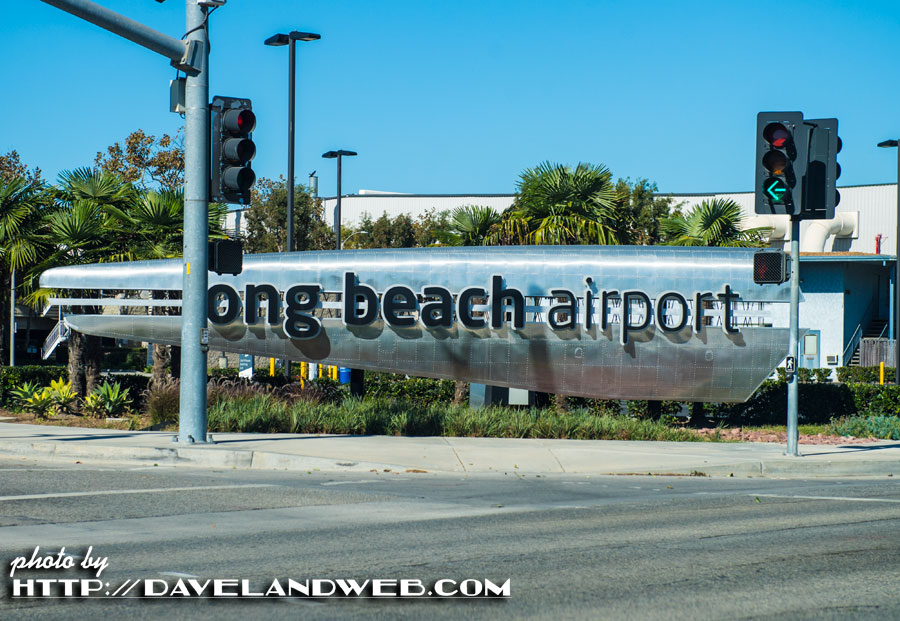
The building was named a City of Long Beach Cultural Heritage Landmark in 1990. At some point, the Daugherty Field name was ditched; I couldn’t find out why during my quick search on the www. Here’s the airport looks now. The sign as you approach the terminal (who put that cotton-picking traffic light in front of the sign?!?):


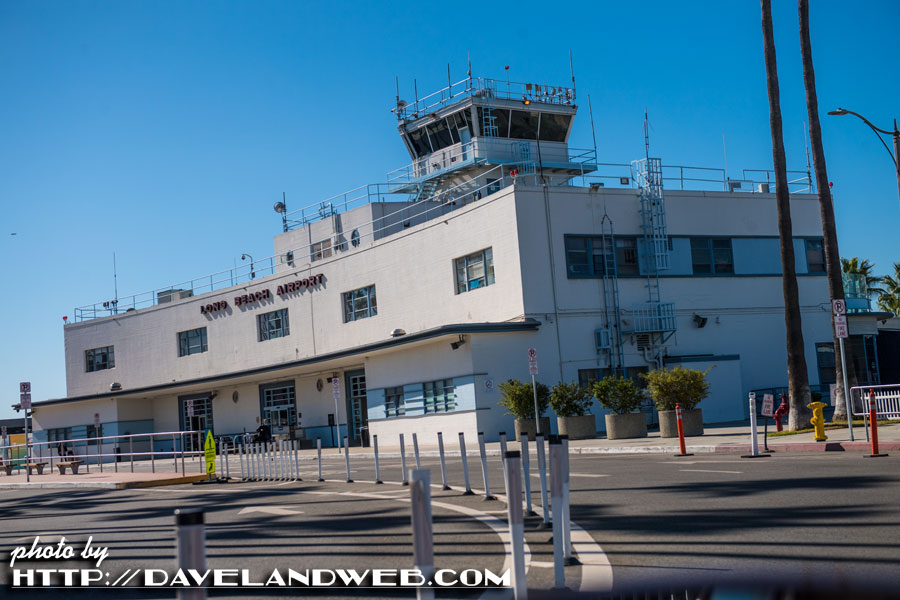
And the terminal building in all its streamline moderne glory:


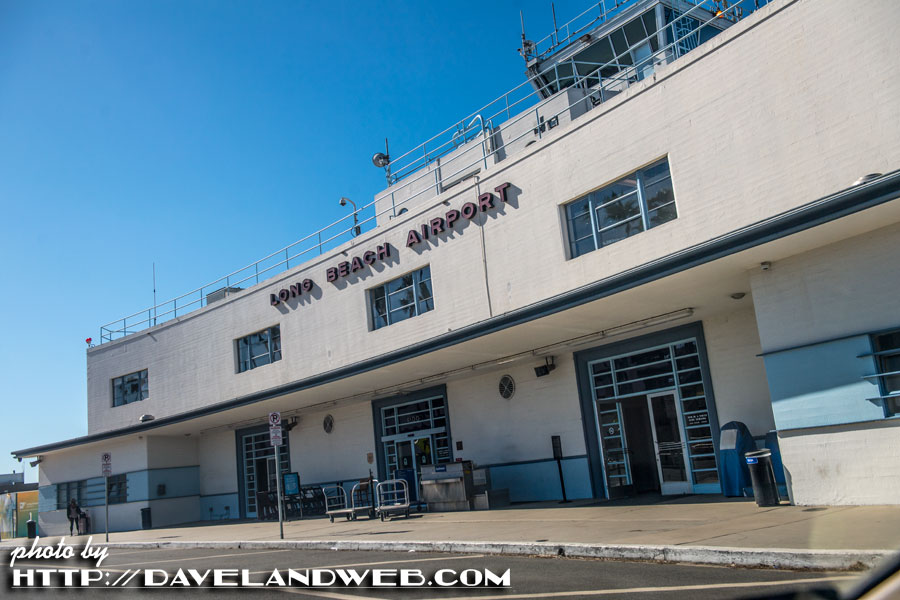
You almost expect to see Cary and Dory pulling up to the curb:


I’ve never been inside so I don’t know if any of the original WPA tile murals still exist. That will have to be another trip (and post).

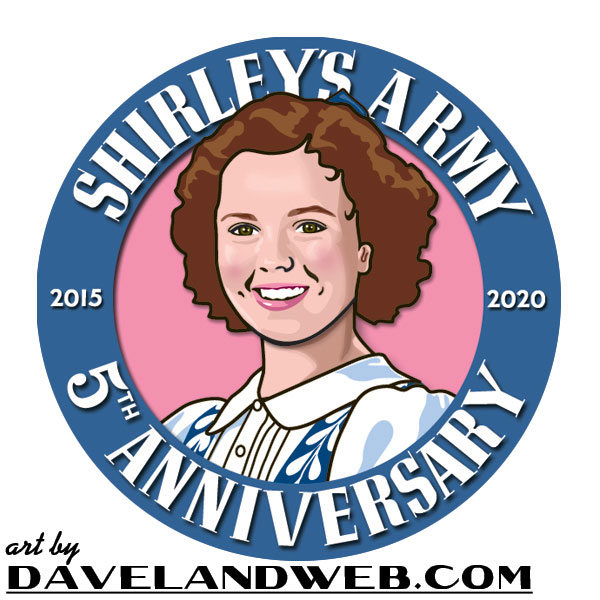
In other Shirley news, Melissa (aka “The Colonel”) gave me the opportunity to do the design for the annual Shirley’s Army pin. For the fifth anniversary, I decided to use a portrait of Shirley from her last film at 20th-Century Fox, “Young People” (1940). Here’s the final design:

See more Long Beach, California photos at my main website.

Monday, November 09, 2020

Marmont Monday, 1957


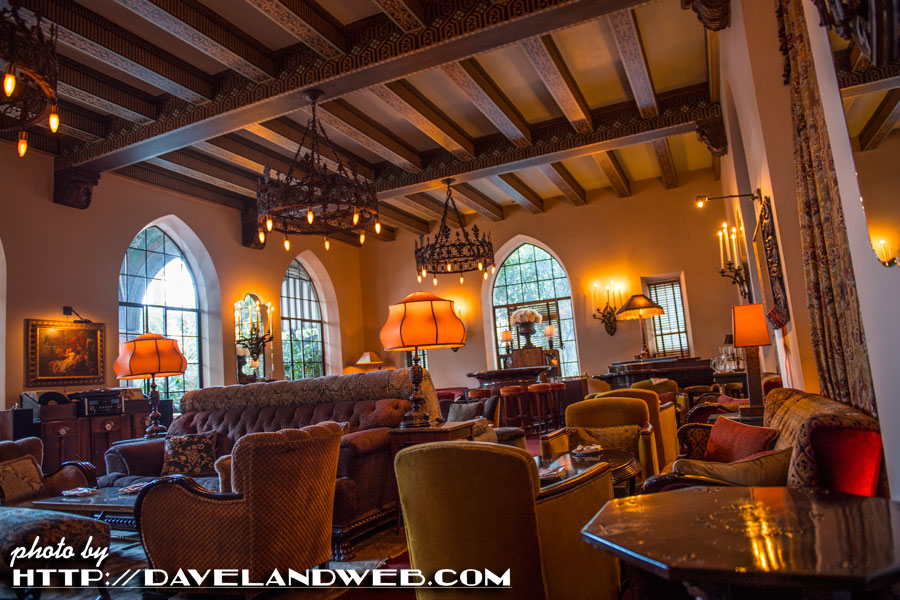
In this interesting article from TV Guide, you get a peak into the lobby of the Chateau Marmont hotel in Hollywood and an idea of the type of people were drawn to its unique atmosphere. Left to right in the photo above: Theodore Bikel, Mildred Dunnock, Brandon de Wilde, Tony Charmoli, Rebecca Welles, and Judith Braun. From the article:

When a New York actor gets the summons to work in Hollywood, either in television or films, chances are nine out of 10 that he will check into the Chateau Marmont, a sedate, 25-year-old apartment-hotel which looks down on Los Angeles from a hill above the Sunset Strip.

To Manhattanites (Susan Strasberg, Mildred Dunnock, Boris Karloff, Jonathan Winters, Nancy Kelly and Carol Channing are some who’ve headquartered there recently), the 52-suite Marmont is a place where New York thespians, like lonely voyagers meeting on foreign soil, feel free to gather and decry the bitter fate which has brought them to the barren wastes of Hollywood.

Not long ago, one of these informal meetings occurred in the Oriental-rugged lobby. Character-actor Theodore Bikel (he played the title role in the “Climax!” production of “The Mad Bomber”) told TV GUIDE’s reporters: “Hollywood is not a town to wait around in. When you’re out of work you become a fourth-rate citizen. In New York, you only become a second-rate citizen. In New York, people smile at you less. Here they cease to smile.”

Judith Braun, whose credits read like a TV log, said: “I’ve met many nice people here—mostly New Yorkers, of course.”

Paul Ford (Col. Hall on “The Phil Silver Show”) confided, “In New York the weather is filthy, the heat is oppressive, everything is overcrowded. I can hardly wait to get back.”

Young Brandon de Wilde scratched his head before going on record: “The thing I don’t like about Hollywood is that people are too lazy. The weather is monotonous and the kids dress too sloppily.”

Rebecca Welles (who’s appeared on “Studio One,” “Lux,” and dozens of other shows) admitted that she’s becoming a Southern Californian because it’s a wonderful place to raise children. “Besides, Hollywood producers are so appreciative of actors trained in New York.”

Tony Charmoli, dance director for “The Dinah Shore Show” said: “It’s a pity that Hollywood didn’t have the sense to get started in San Francisco.”

Just why did they consent to come to Hollywood if their feelings are so antipathetic to the western end of the entertainment axis? Bikel spoke for the group: “We are actors! We go where the demands of the profession call us.”

All were agreed on one thing — that when in Hollywood their home is the Chateau Marmont. “Living here,” said Bikel, “gives you the impression—even if you’re not”that you’re leaving for New York tomorrow.”

A photo of the lobby as it looks today:


See more Chateau Marmont photos at my main website.

Friday, November 06, 2020

Bekins Friday


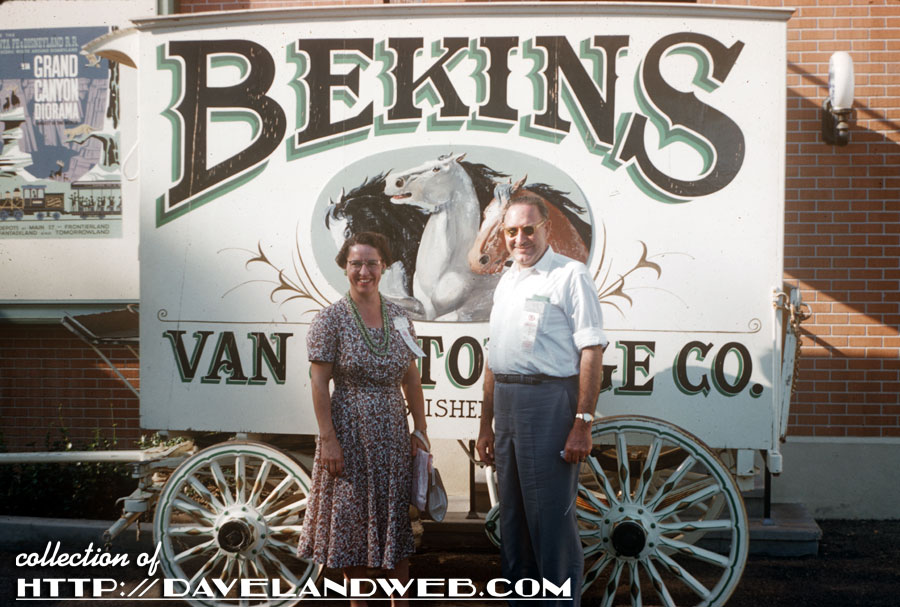
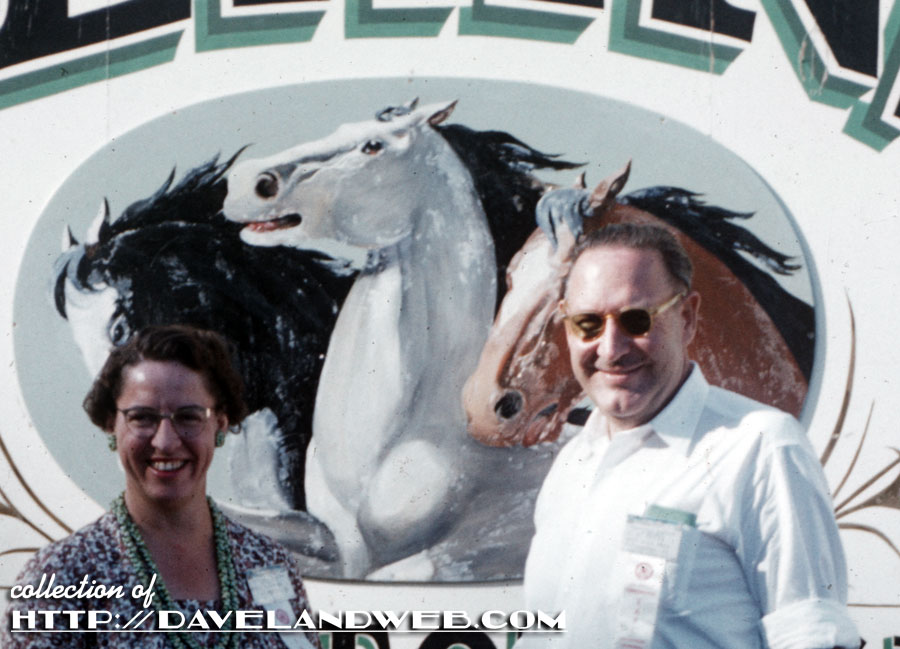
I was really happy to obtain this October 1958 vintage image from Disneyland’s Town Square. It’s the first really decent view in my collection of the Bekins moving truck that guests could pose next to. My first zoom was to get a closer look at the artwork; in doing so, I noticed that both guests had some kind of ribbon attached to their outfits.


Could this be part of the The Magic Kingdom Club that started back in 1957? The MKC was an early Annual Passport program that offered memberships free of charge both for companies and their employees, encouraging families to visit the parks by giving them discounts.


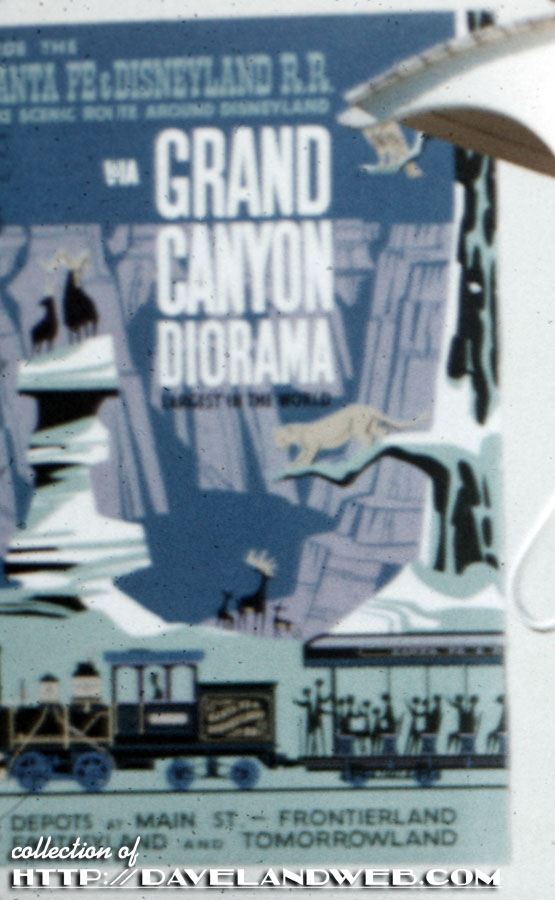
Last closeup is of the Grand Canyon Diorama attraction poster which had just been unveiled:


See more Disneyland Town Square photos at my main website.

Thursday, November 05, 2020

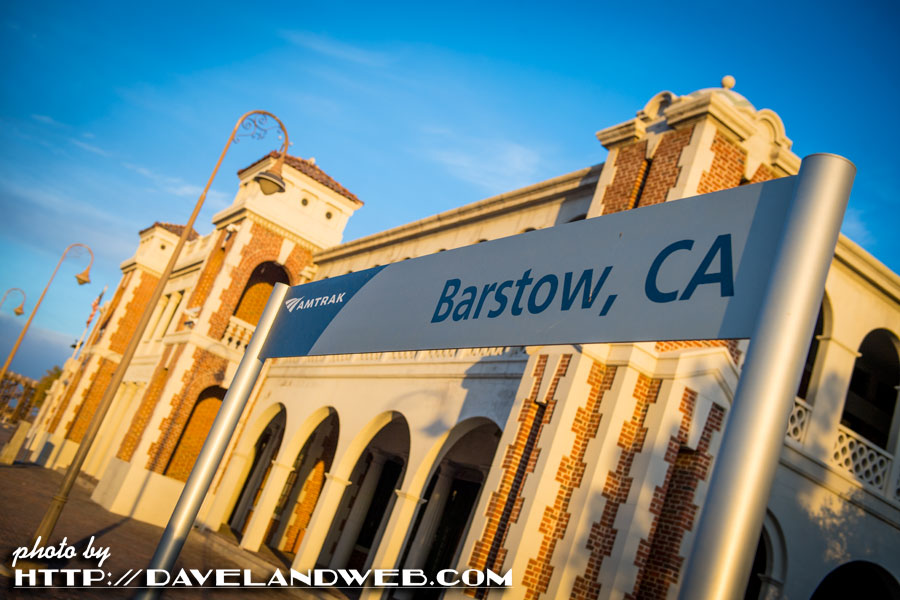
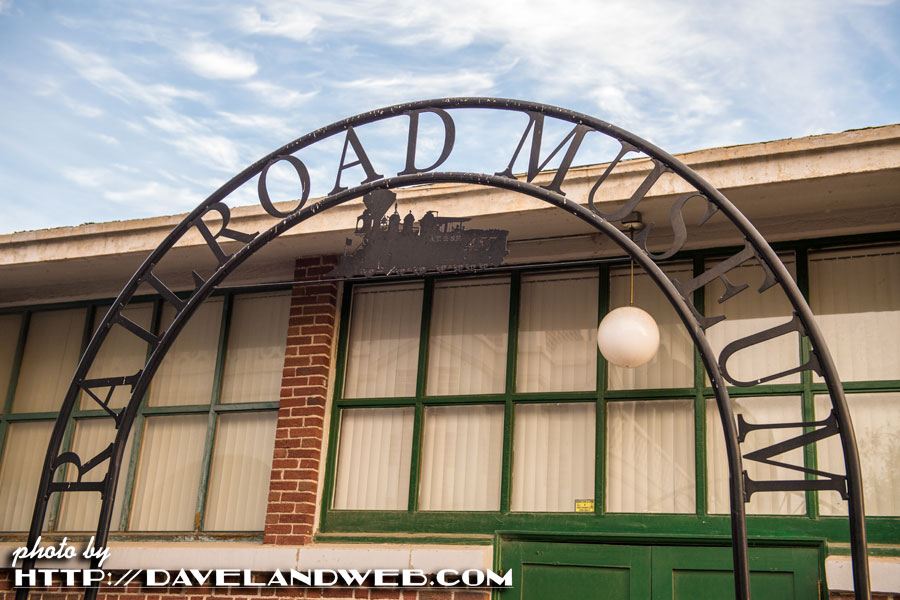
The Barstow Harvey House


On the way to Vegas, I saw a sign along the highway for the Harvey House in Barstow. What?!? Having grown up watching Judy Garland in “The Harvey Girls” and playing my mom’s original sheet music for “On The Atchison, Topeka, and the Santa Fe” on the piano, it was a no-brainer that I would need to pull over!

Originally built in 1911 as Casa del Desierto, a Harvey House hotel, and Santa Fe Railroad depot, the architect credited with the design is Francis W. Wilson of Santa Barbara. He also designed the Fray Marcos hotel in Williams, Arizona, and the El Garces Harvey House in Needles.

Wilson’s station replaced the previous structure that had been damaged by fire in 1908. The front of the building that faces the street seems a bit standard; I wonder if it was a later addition?


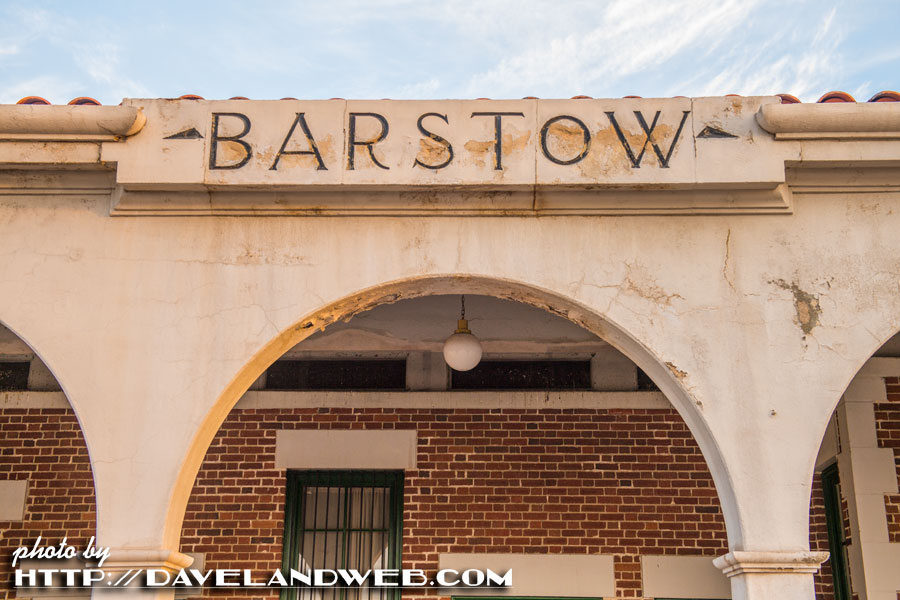
Although it looks a bit weathered, I love the Barstow engraved into the stone on the back of the building:


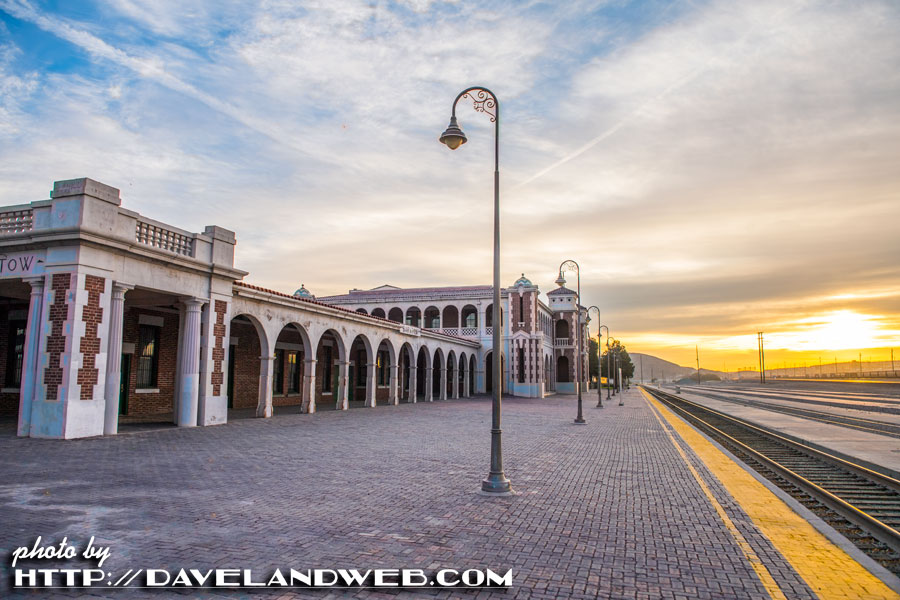
Sunrise looked beautiful as it gave a golden glow to the tracks:


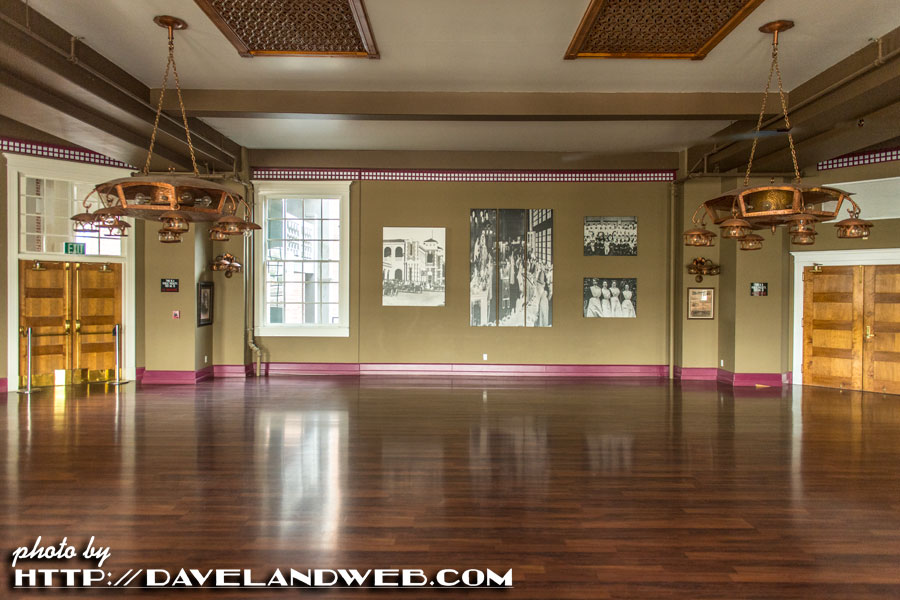
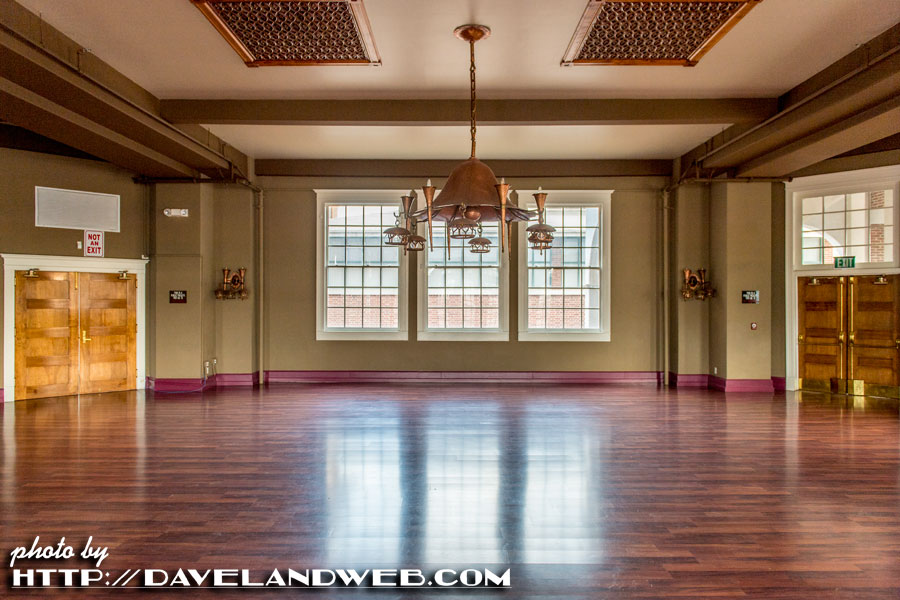
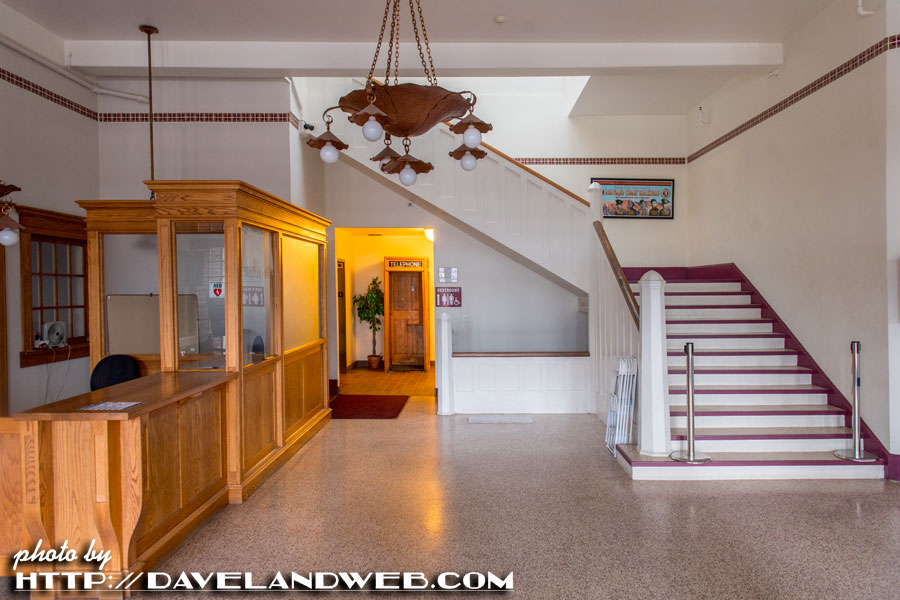
The building was closed when I arrived (it was EARLY!), but I still managed to get a few interior shots through the windows:


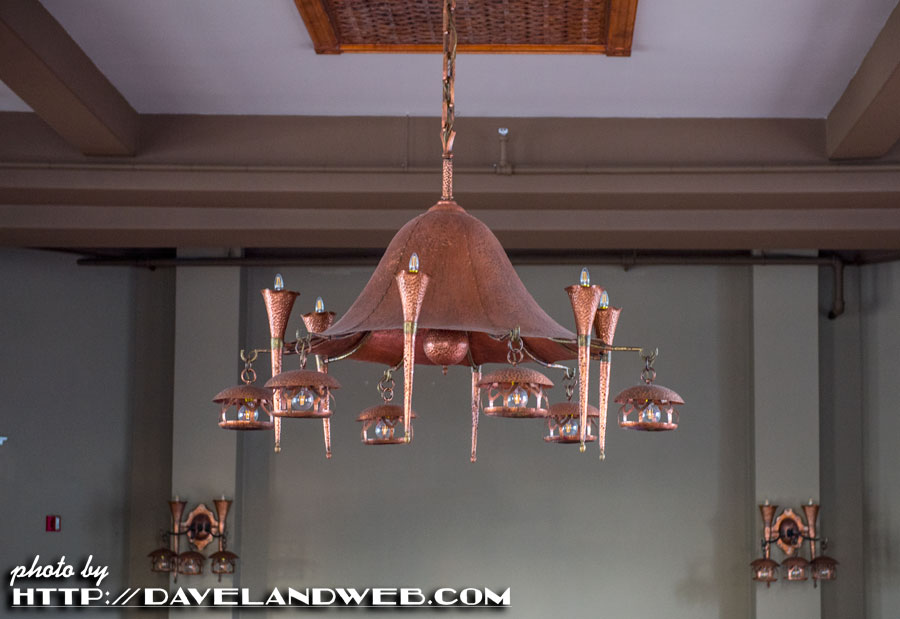
An ornate yet somewhat funky copper light fixture; could it be original?!?


The Santa Fe closed the station in 1973 and it went to ruin over the years as you would expect an unoccupied building to do. Casa del Desierto was added to the National Register of Historic Places in 1975 and designated as a California Historical Landmark one year later. The City of Barstow obtained the station in 1990 and spent more than $8 million rebuilding/repairing/restoring it following the heavy damage it sustained from a 1992 earthquake. The historic structure is considered the finest remaining depot-hotel in California.

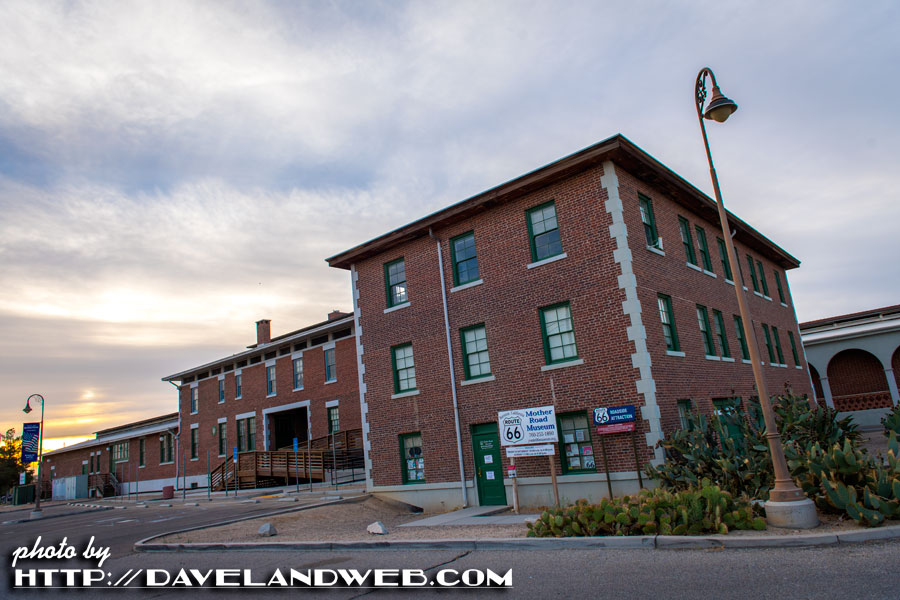
Besides functioning as the Amtrak Station, the building also contains The Barstow Area Chamber of Commerce & Visitor Center, the Western America Railroad Museum (on the east side), and the Route 66 “Mother Road” Museum (on the north).


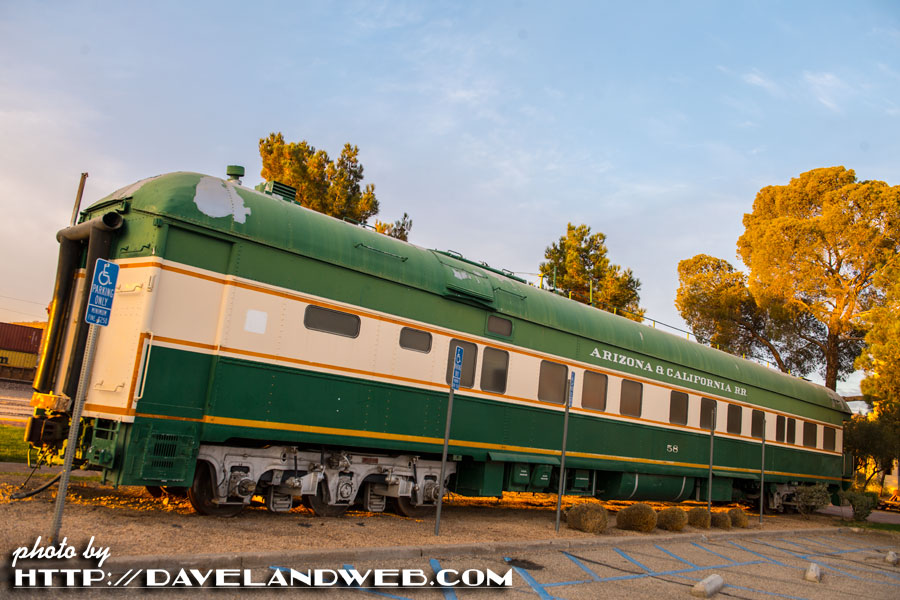
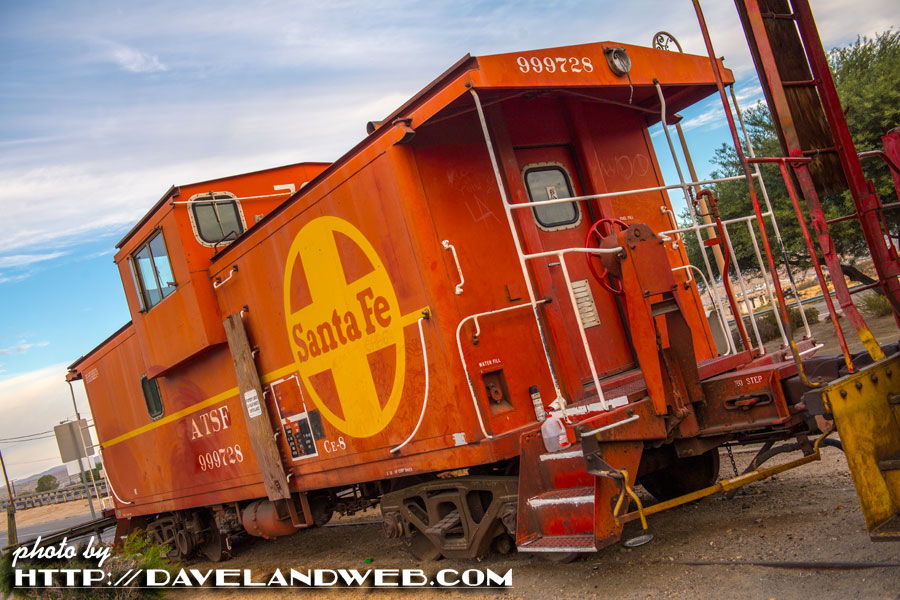
It was fun to wander around the historic trains that surround the exterior:


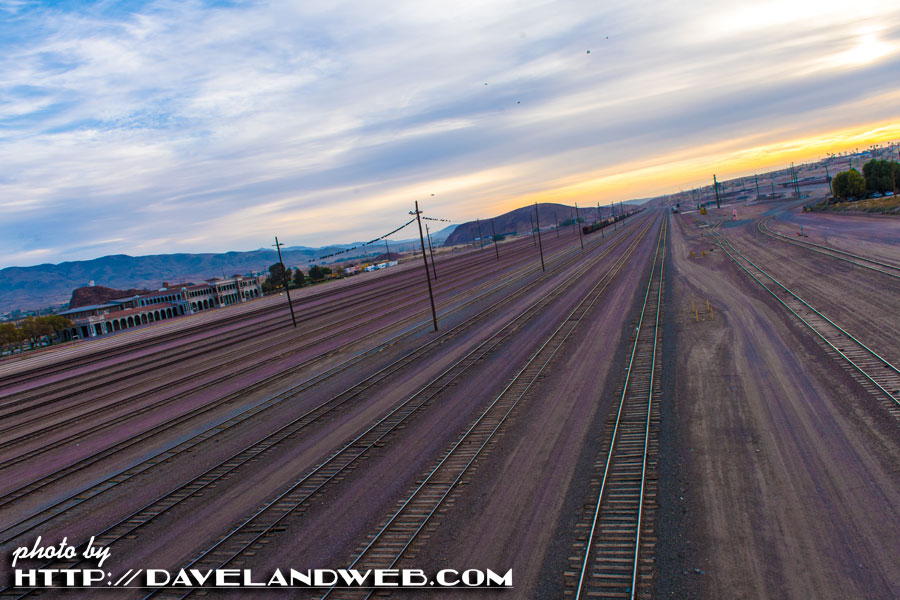
A final shot from a bridge that spans over the tracks:


I’ll wrap up today’s post with a clip of Judy Garland singing the hit song from 1946’s “The Harvey Girls.”


See more Barstow, California photos at my main website.