Tuesday, June 04, 2024

Temple Tuesday: Trailers and Tutors


The September 1938 issue of Better Homes & Gardens ran a feature story on Shirley titled, “Mrs. Shultz visits Shirley Temple.”


Gladys Denny Shultz was part of the magazine’s Child Care & Training Department, and was sent to Hollywood to interview Shirley on the set of “Just Around the Corner” (1938) which was still being referred to as “Lucky Penny” at the time this article was written.

How do you bring up a child to have a million-dollar personality? That’s what I went to Hollywood to discover, if I could, and I came away with a brand new appreciation of a happy, healthy little girl and her mother—of Shirley Temple and Mrs. Temple.…I had an excellent chance to watch Shirley—at the studio, doing scenes for “Lucky Penny,” rehearsing and discussing the next “take,” studying her lessons in snatches in the little dream trailer which is her schoolroom during pictures, with her mother, her teacher, her director, other children in the cast, and with several dozen more people all engaged in making the important Temple pictures. I saw her in action thru a long grueling afternoon as she made and remade a difficult sequence that had the adults on pins and needles long before it was over.…Shirley off the screen is perhaps even more remarkable than the Shirley in pictures. To me, she’s most attractive in real life. The camera makes her seem plumper than she is—her 68 pounds is just a good, sturdy, 9-year-old weight for her 50-inch height. Neither can a camera really show her healthy, glowing complexion. Shirley never wears make-up. To prepare her for a scene, Mrs. Temple merely sees to it that her curls are in order.…In the scene they were shooting…Shirley was supposed to snip off the long red ringlets of Bennie Bartlett with electric clippers, in the dog lounge in the basement of a luxurious apartment house. It was Shirley’s first experience at barbering, and she wasn’t quite sure about the clippers. She attached the job gingerly, afraid alike of cutting her fingers and shearing Bennie of his real curls. For those Shirley clips in the picture are false ones, artfully interpolated in the glowing mass of Bennie’s own crowning glory. The children rehearsed the scene and then were ready with lines and action. But things went all wrong. Every time Shirley took hold of an artificial curl, it would come off in her hand before she could touch the clippers to it, and it was necessary to start over again. As the afternoon wore on, Shirley got more and more intrigued with those clippers. Between attempts, her eyes darted about the set, seeking whom she might pretend to clip, and discussing the possibilities with delight. Then, as will happen, and as would have happened much sooner with another child, the fun began to get a little hysterical. At once Mrs. Temple leaned forward on her stool and said, not sharply, but as tho she meant it, “That’s enough now, Shirley. Let’s attend to business.” Instantly Shirley snapped into character again. Before they stopped, the scene was in the bag, Shirley operating the clippers in the final take with impish abandon.…There’s a very beautiful bond of love and understanding between mother and daughter. Mrs. Temple is simply quietly determined that what Shirley does shall be done right.
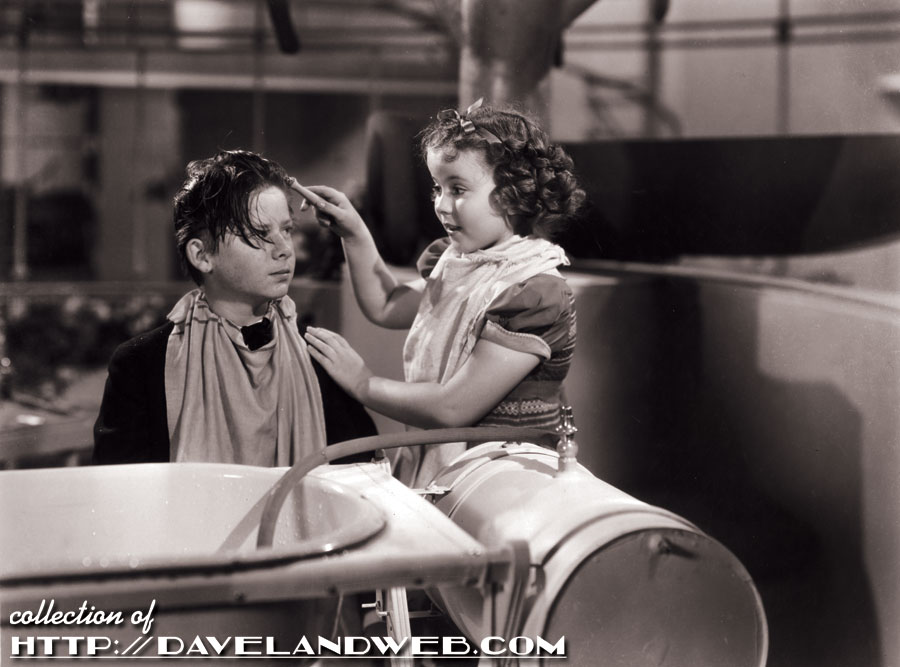


The photo below is courtesy of Melissa (aka “The Colonel”) who was recently gifted a copy of it by fellow Shirley’s Army member, Lori. It was Shirley expert supreme, the great Rita D, who let us know what the occasion was for this photo shoot, and then I hunted down a copy of the magazine itself. Yes, it takes an Army! Now you can see Shirley’s Fox studio trailer which was cropped out of the magazine article.


This photo from my collection also shows Mrs. Shultz, along with Shirley’s beloved studio tutor, Frances Klamt, inside the trailer.


Here’s what Mrs. Shultz had to say about Frances Klampt:

Miss Frances Klammt, Shirley’s teacher, is an M.A. who taught five years in the Los Angeles public schools before taking over Shirley’s education two years ago. She represents both the Los Angeles Board of Education and the Child Labor Board and has authority to halt production if anything occurs on the set which she considers harmful to Shirley, or if they’re not getting in the three hours’ schooling daily which the law requires for movie children. Even when the Temples vacation between pictures, Miss Klammt goes wherever they go, for Shirley must have her three hours of schooling every day that other children are in school. It’s often piecemeal study, but, as Miss Klammt pointed out, “Shirley possesses marvelous powers of concentration. She throws herself into a scene for al she’s worth, then instantly centers upon her studies the moment she sits down at her table.”


Another interior view of Shirley’s trailer taken during the filming of “Just Around the Corner”:


Shirley had to catch a snack between takes in her trailer during the filming of “Little Miss Broadway” (1938). Gotta’ keep that energy up!


A series of three shots taken during filming of “The Little Princess” (1939) with Miss Klamt:


Time for the cameras!


Shirley’s cute little trailer was the perfect place to keep up on her correspondence:


SPELLING COUNTS! A note about the spelling of Shirley’s tutor’s name. In the BH&G article, it is written as “Klammt.” In a vintage 1935 drawing Shirley created to give to her tutor, she wrote “Miss Klamt.”


When Shirley was welcomed back to the Fox lot in 1948 with a gala party, the publicity blurbs used the “Klamt” spelling.


By the time Shirley wrote her autobiography Child Star in 1988, Shirley referred to her as “Miss Klampt.” Shirley expert supreme Rita D also used “Klampt” in her book, as did author Gavin Lambert in his Natalie Wood bio, as did former pupils (and “Sound of Music” stars) Charmian Carr, Nicholas Hammond, Angela Cartwright, and Kym Karath.


The Palo Verde Valley Times referred to her as “Frances M. (Klamt) Willis” in her May 23, 2008 obituary as does imdb. In the A&E Shirley Temple documentary, she was interviewed and the onscreen credit reads, “Klamt.” I would hope they got it right for that one at least!


But that’s not all in the questionable spelling department for this post! The author of the BH&G article, Gladys Denny Shultz, was written up this way by the New York Times for her June 22, 1984 obituary:

Gladys Denny Schultz, a writer and editor, died of cancer Tuesday in Allentown, Pa., where she was staying with the family of her son, Peter. She was 88 years old and had retired to San Diego, Calif., in 1972. Mrs. Schultz was a writer and correspondent for The Ladies Home Journal from 1946 to 1961. Earlier she had been a child care writer for Better Homes and Gardens from 1927 to 1945. Mrs. Schultz was the author of several books. Among them, she wrote or edited ''It's Time You Knew,'' a discussion of sex problems of younger girls, (1955), “Lady from Savannah: The Life of Juliette Low,” a biography of the founder of the Girl Scout movement, (1958 - see cover below), ''Letters to Jane,'' a revised edition of a book published in 1947, (1960), and ''Jenny Lind, the Swedish Nightingale,'' (1962). In addition to her son, she is survived by a daughter, Eleanor Dale, of East Lansing Mich., six grandchildren and six great-grandchildren.


So much for the NYT’s spellchecker! Thanks to Mrs. Shultz for her vintage insights into Shirley’s world!

See more Shirley Temple photos at my main website.

Monday, June 03, 2024

Mark Twain and the Helicopter


Back in the day, you could take a helicopter from LAX to Disneyland (and back), as seen in this vintage April 19, 1965 image.


In “40 Pounds of Trouble” (1962), little Claire Wilcox, Suzanne Pleshette, and Tony Curtis boarded such a vehicle in a memorable sequence (from the otherwise forgettable film) where their characters visit Disneyland.


For vintage Disneyland fans, this footage inspires rapid heartbeats because of its time capsule value. See the helicopter circling over the Mark Twain below?


This recently acquired 1965 slide did not inspire much in me when I first saw it.


When I began cleaning it up though, I let out a whoop! Did you hear it? Just above, you can see one of those helicopters above the Twain. I wonder if it was the one with Curtis and Pleshette?


To round out the post, here are a few other vintage Twain images that have not yet been posted. From September 1963, I can’t look away from the interesting art on this woman’s dress:


Pirates of the Caribbean had only been open a few months when this July 1967 image taken aboard the Twain was snapped:


That’s a respectable line of guests waiting to see the treasures within the show building:


From the same batch, a panorama view of the Twain on the Rivers of America:


In this September 1969 evening shot, guests were serenaded aboard the Twain by the Disneyland Strawhatters:


You have seen this September 1969 trio in a previous post.


If you didn’t know how to take a proper photo, the Kodak Picture Spot was a good guide.


Today, nobody needs any advice on where to take a selfie; that would just be any place that other guests could be inconvenienced!

See more Mark Twain at Disneyland photos at my main website.

Thursday, May 30, 2024

Thursday on Telfair Square


The Telfair Academy in Savannah, Georgia (shown above in a vintage 1940s/50s image), is one of my favorite museums, even though it may not boast the largest or most prestigious collection. What I love about it is the building that houses these art treasures. Walking in, you feel like you are stepping back in time, and halfway expect a few of the masters to be popping out from one of the galleries. From the Telfair website:

Telfair Museums is the oldest public art museum in the South. The legacy of one visionary Savannahian, it was founded in 1883 through the bequest of prominent local philanthropist Mary Telfair, who left her home and its furnishings to the Georgia Historical Society to be opened as a museum. Designed by British architectural prodigy William Jay in the neoclassical Regency style, the Telfair Academy is a former mansion built from 1818-1819 for Alexander Telfair, son of Revolutionary War patriot and Georgia governor Edward Telfair. In 1875, Alexander’s sister Mary – heir to the family fortune and last to bear the Telfair name – bequeathed the house and its furnishings to the Georgia Historical Society to be opened as a museum. After significant renovation by German-born architect Detlef Lienau, whose adaptations included the addition of the Sculpture Gallery and the Rotunda, the building opened to the public in 1886 as the Telfair Academy of Arts and Sciences.

The shot below is from February 24, 1955, when admission was free from 10am-5pm:


Flash forward to April 1979:


Any interest in seeing the Victorian Dress exhibit?


My first shot of the Academy is from March 2005:


…and my most recent, which just happened to hit the Golden Hour, circa November 2016:


Not sure why, but this is one of my favorite paintings at the Academy:


It is called “Calme Blanc,” by Raoul du Gardier, circa 1900-1909. Below is an interior shot of the Academy:


Nearby, also in Telfair Square, is the Trinity Methodist Church, built in 1848. This image is from April 1979:


How it looked during my June 2013 visit:


…and an interior shot from November 2016:


It’s been over five years since I last visited Savannah. I think I’m about due for a return trip.

See more Savannah, Georgia, photos at my main website.

Tuesday, May 28, 2024

Temple Tuesday: Shirley and the Sour Grapes


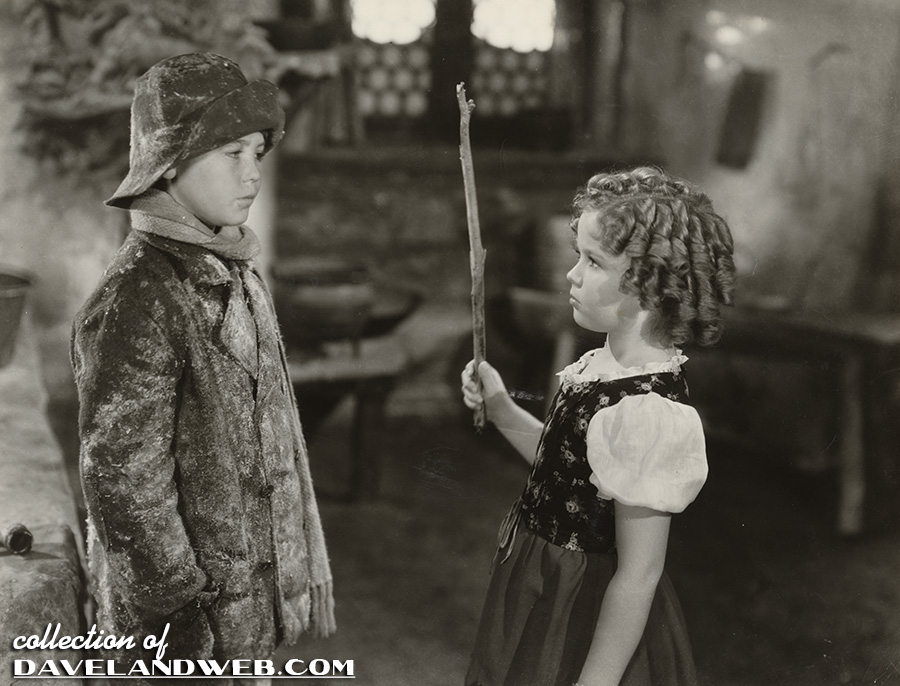
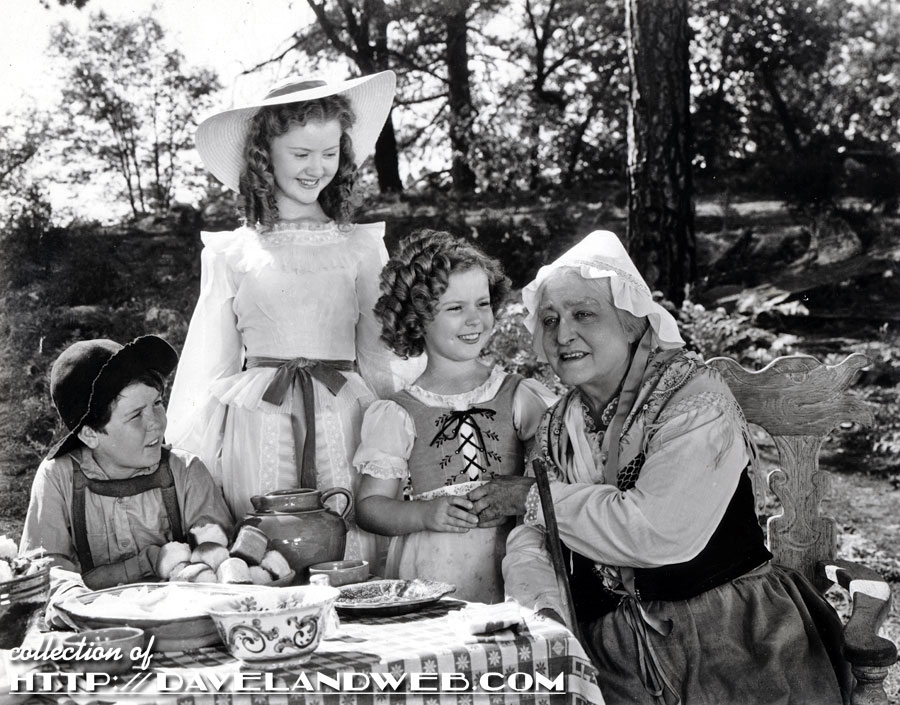
Today is a tale of three of Shirley Temple’s contemporary actors and how they chose to retell their experiences of working with the talented moppet. When actress Gloria Stuart was told by Fox studio head Darryl Zanuck that she was to be put in a Shirley Temple movie, the actress was crestfallen at having to compete with the little dynamo. Zanuck reframed it for her this way: “Gloria, you could be in film for the next ten years or on the stage and nobody would ever see you or hear about you, but if you’re in a Shirley Temple film, millions of people will see you.” The actress realized the wisdom of his words and would later recall, “She was really a getaway girl. You watched her and she was so completely composed and happy and talented and up, up, up. She was a real tonic…a miracle. Indescribable. It’s impossible that one child was all those wonderful things, but she was!” The power of positive thinking was not something little Delmar Watson practiced. In “Heidi” (1937), he played Peter, the goatherd, a fairly substantial role. Here are his recollections about the experience:

I was never given my lines to study in advance. My dad asked Allan Dwan about this, and he said they wanted Peter to be kind of dumb, but it was the only time I was in a picture of that length where they would not give me my lines until the night before I was supposed to do a scene.


I guess Delmar did not understand method acting. Shirley was given her own trailer for the location shoots according to Watson:

[It was] parked on the side of a hill. She was there all the time with Grif and, of course, her mother. Only a few studio people were allowed up there. She had a stand-in [Mary Lou Isleib] for the sound and lights. Then, when everything was set, she’d come down at the last minute, we’d do our scene together, and when it was finished, she would be escorted back up the hill and disappear into her trailer. Once, I was playing horseshoes right after lunch with the lighting guys, and she came out of her trailer. I said, ‘Hi,’ and she greeted me and asked if she could play. Sure, we told her. She picked up a horseshoe and tossed it. I think she missed. She played with us for exactly two minutes, and then her bodyguard came down and took her away, back up the hill into the trailer. I heard him tell her she wasn’t supposed to be there. As she left, I said to her, ‘Bye. Maybe you could do it later.’ Shirley didn’t say anything, but obediently returned to the trailer.

When you have a film riding on your shoulders and a limited amount of work time due to being a minor, it’s easy to understand that Shirley wouldn’t have a lot of time to play. A stray horseshoe that might have injured the star could have shut down the entire production. Obviously, Watson was too young at the time to understand and when he later told the story, too old to remember what the circumstances were.

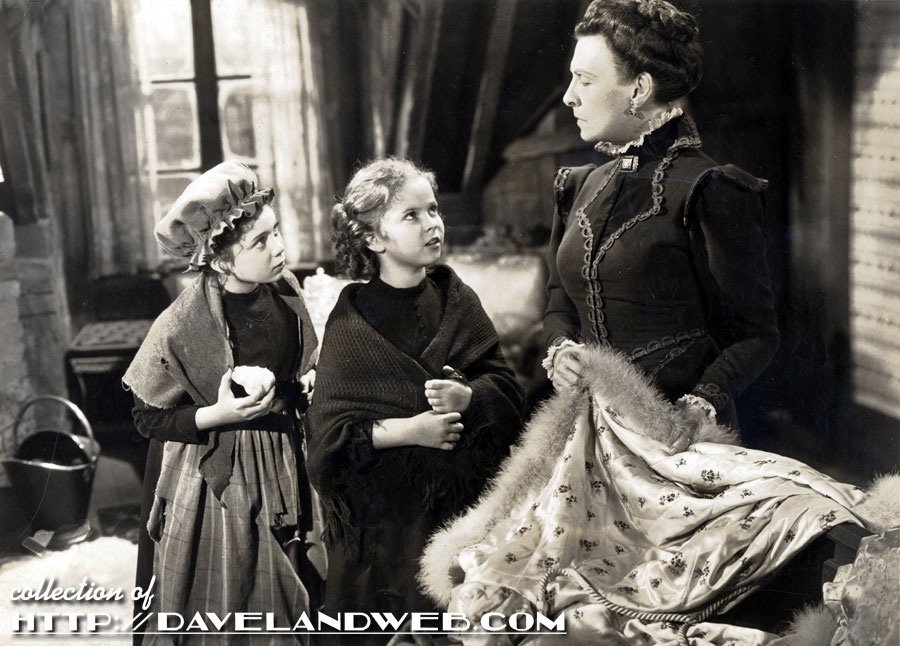
Case #2: Sybil Jason. If it weren’t for “The Little Princess” (1939), Jason would be all but forgotten today (and for the most part, still is). While an appealing child, the South African born girl just never caught on in the U.S.


Here’s how Jason chose to recall working on “The Blue Bird” (1940), her second Temple film:

Usually when one received a finalized script of a movie, you are apprised of the shooting date. We were quite puzzled when a good two weeks before that date I was told to report to the studio early one morning. When we arrived, we were directed to go to a specific soundstage, and when we got inside all we saw was a small lit set with a plain backdrop and two chairs facing each other. One of the chairs faced the camera and the other one was placed behind it. I was greeted and handed a few pages from the…script. It contained only Shirley’s lines and those of the various characters that would appear in the movie. It didn’t take a rocket scientist to figure out that this was going to be the ultimate humiliation for me. I was expected to read Shirley’s lines so that actors could screen test for the various roles like the Father, the character Light and the “deceased” grandparents. As young as I was, I knew I wasn’t being treated right and I could see from the hurt look in my sister’s eyes that she too felt that way but, considering the position I was now placed in, there wasn’t much we could do about it.


After a couple of days of reading for the tests, I could now concentrate and prepare for my role as Angela Berlingot, the little crippled girl who yearns for the bird that Mytyl (Shirley) and Tytyl (Johnny Russell) had captured in the woods. My part in The Blue Bird was, to put it politely, minuscule. It consisted of a scene in the beginning of the movie and another at the end.

Sybil’s remarks have always been puzzling. Were these her memories or ones fed to her by the older sister? While it is made clear that Angela is sick, never at any time does the viewer hear the word “cripple” used to describe her. Sybil may have been thought of by Warners (her former studio) as a rival to Shirley, but the public never viewed her that way. Finally, if the Jason sisters thought reading the star’s lines in a screen test was the ultimate humiliation, then they obviously were not aware of how things worked in Hollywood. As stated before, Shirley’s work time was limited; why would it be wasted on screen tests?


In this publicity still and the caption below, we can see that it was co-starring in a Temple film that helped pave the way for Sybil’s Hollywood career. How the public did/didn’t accept her was out of Shirley’s hands.

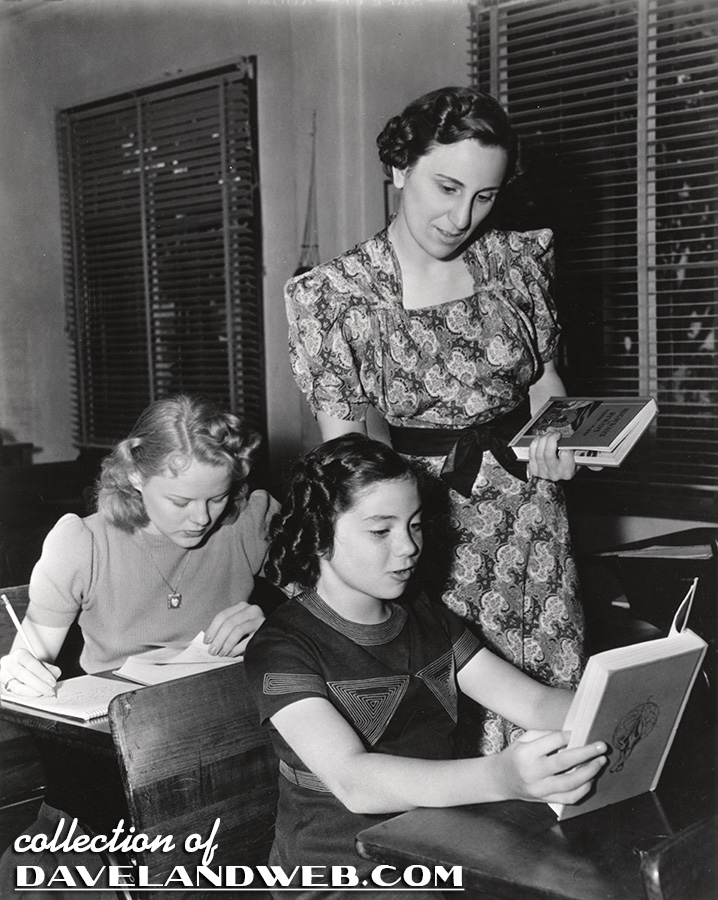
Since her portrayal in “The Little Princess” won her a long-term contract at 20th Century-Fox, 9-year-old Sybil Jason (foreground) goes to the studio’s school. Seated back of her is June Carlson of 20th Century-Fox’ Jones Family series, while Teacher (standing) is Miss Catherine Hagan.


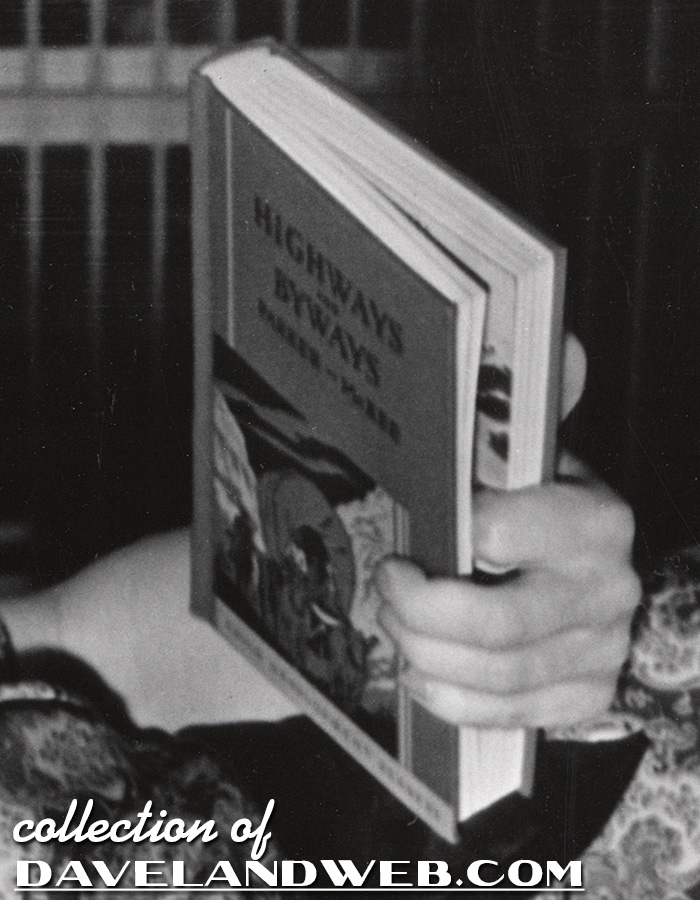
Here’s the cover of the book Miss Hagan is holding, Highways and Byways. It was copyright 1938 by authors Paul McKee, Director, Teachers College Elementary School, and Professor of Elementary Education, Colorado State Teachers College, Greeley, Colorodo, and Beryl Parker, Associate Professor of Education, New York University. 


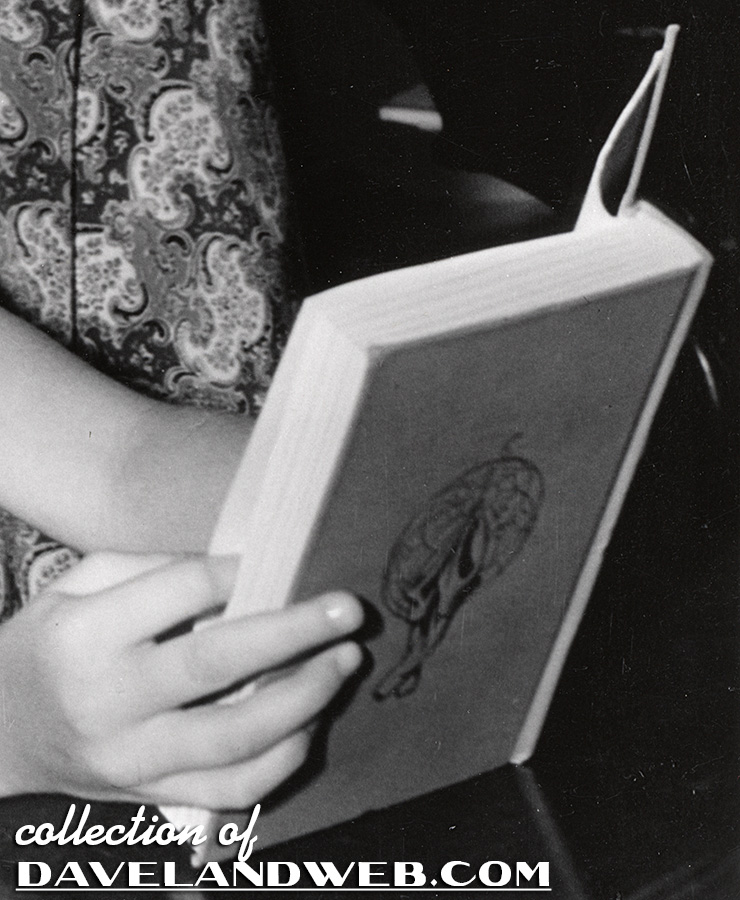
This is not the same book Sybil is reading.


Houston, we do not have a match.


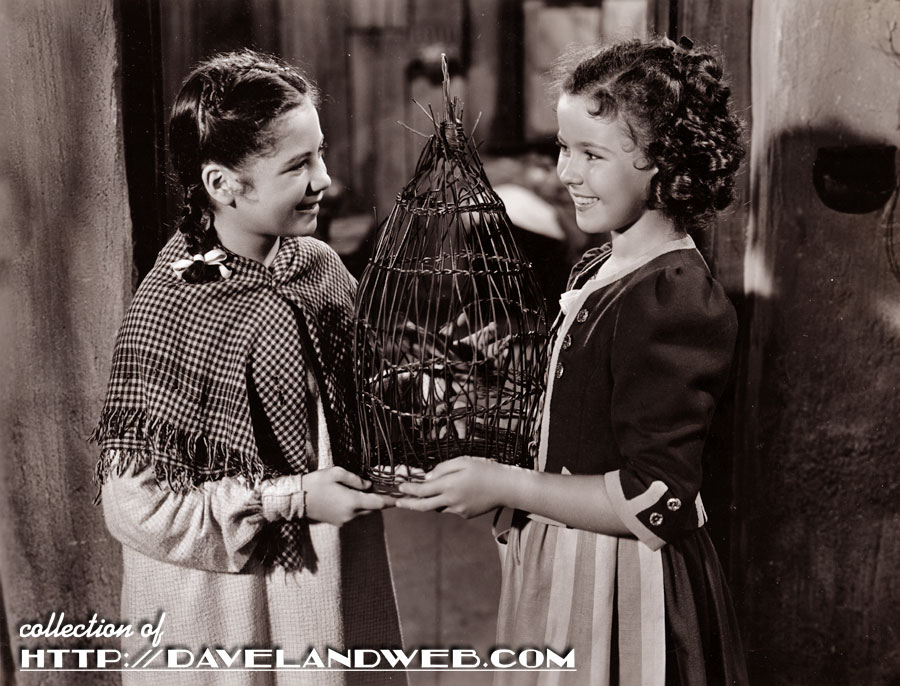
Case #3: Marcia Mae Jones, who played Klara, a true cripple, in “Heidi” (1937).


Marcia Mae Jones recalled her casting in the film:

There was talk that I got as much fan mail because I played a crippled girl in ‘Heidi,’ and probably that Mrs. Temple would never use me again, but Mrs. Temple requested me for ‘The Little Princess,’ so you see, there’s a lot of talk that’s not so.

Mic drop. Thank you. Below is a shot I took in 2002 of Margaret O’Brien and the sour grapes, Delmar Watson and Sybil Jason. They were making an appearance at the Silent Movie Theatre in Hollywood for a Tippi Hedren fundraiser for her animal shelter.


See more photos at my main website.