Showing posts with label barbara stanwyck. Show all posts

Tuesday, January 21, 2025

Temple Tuesday: Shirley & Rita


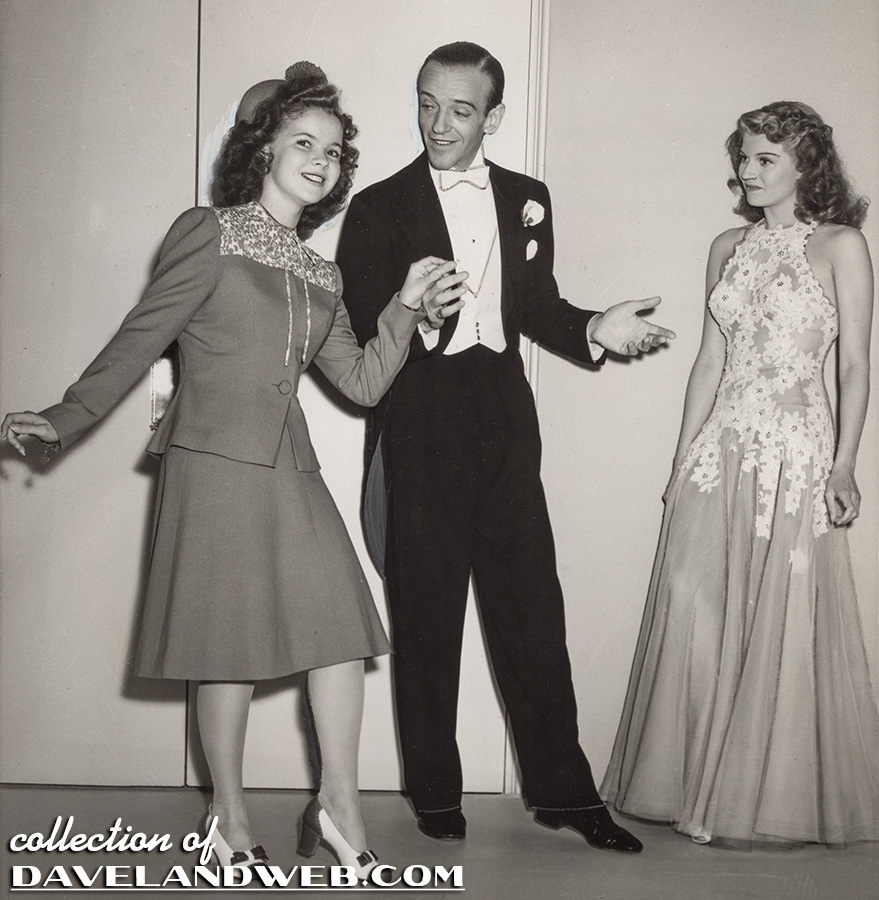
In June 1942, Shirley Temple was between film gigs and paid a visit to Columbia Studios. One of her stops was for a few publicity shots with Fred Astaire and Rita Hayworth, who does not seem very pleased that her dancing partner is being borrowed by Shirley. The shot below was accompanied by the following caption:

BUSMAN’S HOLIDAY — Shirley Temple, on a recent day off, visited Fred Astaire and Rita Hayworth on Columbia’s “You Were Never Lovelier,” set. Standing is Xavier Cugat, the rhumba king, who plays himself in the musical.


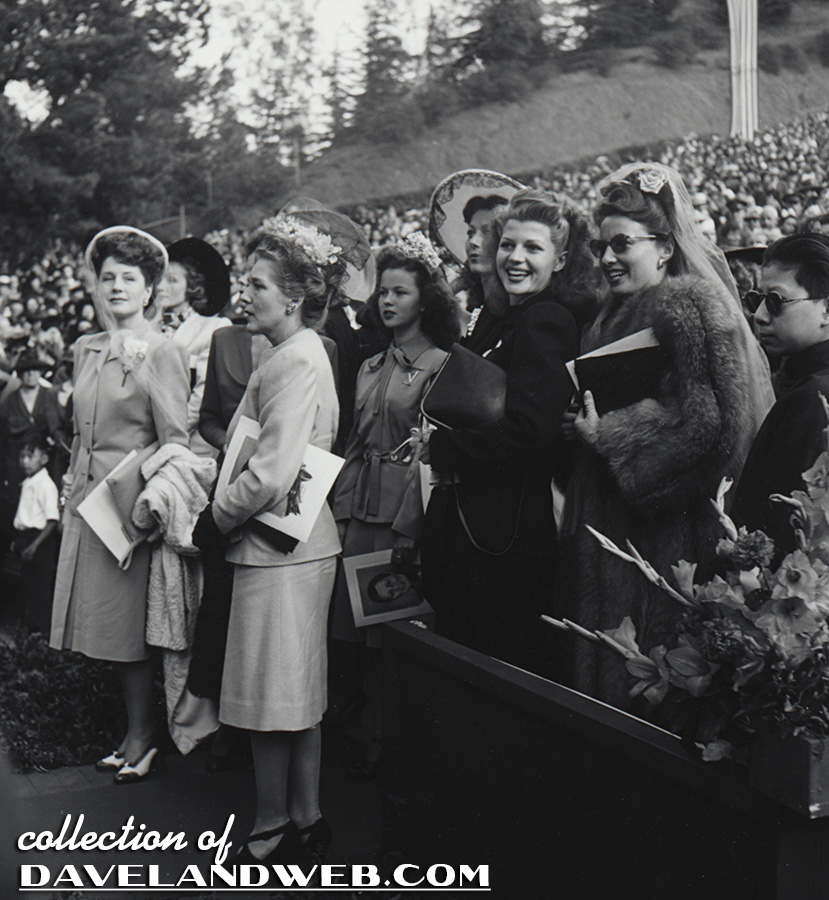
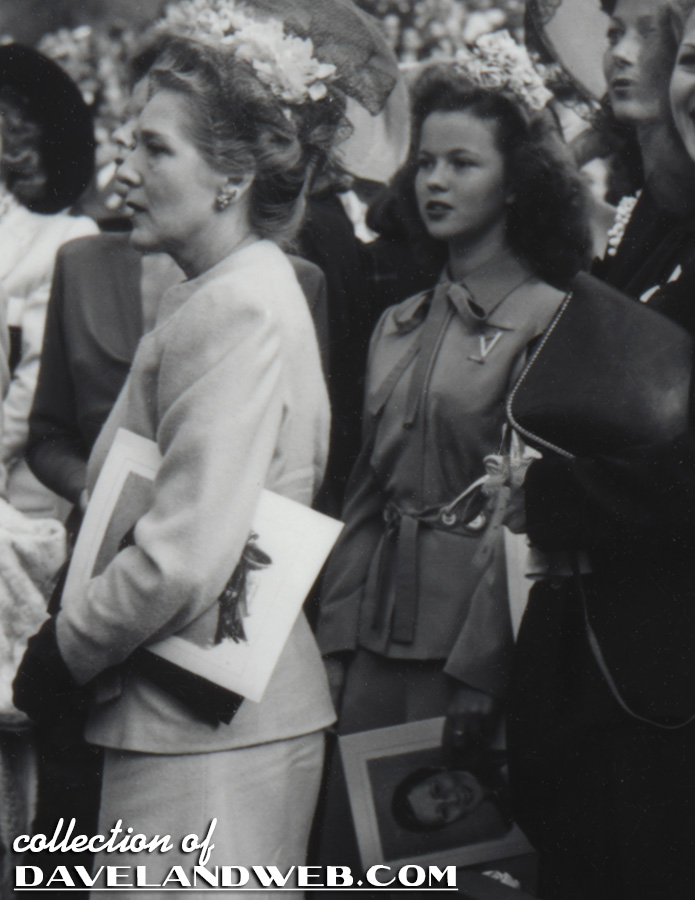
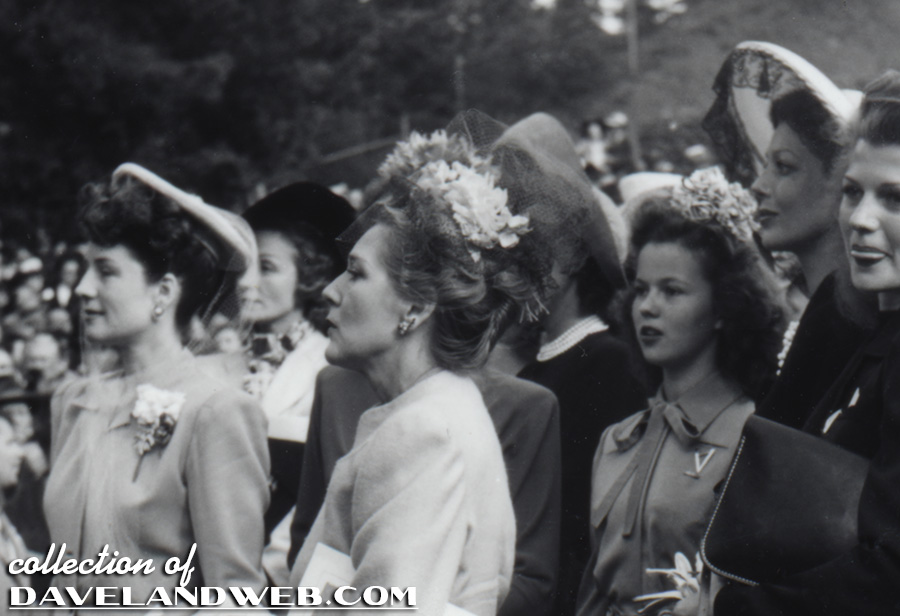
The next photo opp I have in my collection showing Shirley and Rita together is from April 1943 when the two  welcomed Madame Chiang Kai-shek to the Hollywood Bowl. Left to right are Norma Shearer, Marlene Dietrich, Mary Pickford, Shirley, Loretta Young, Rita, and Barbara Stanwyck.


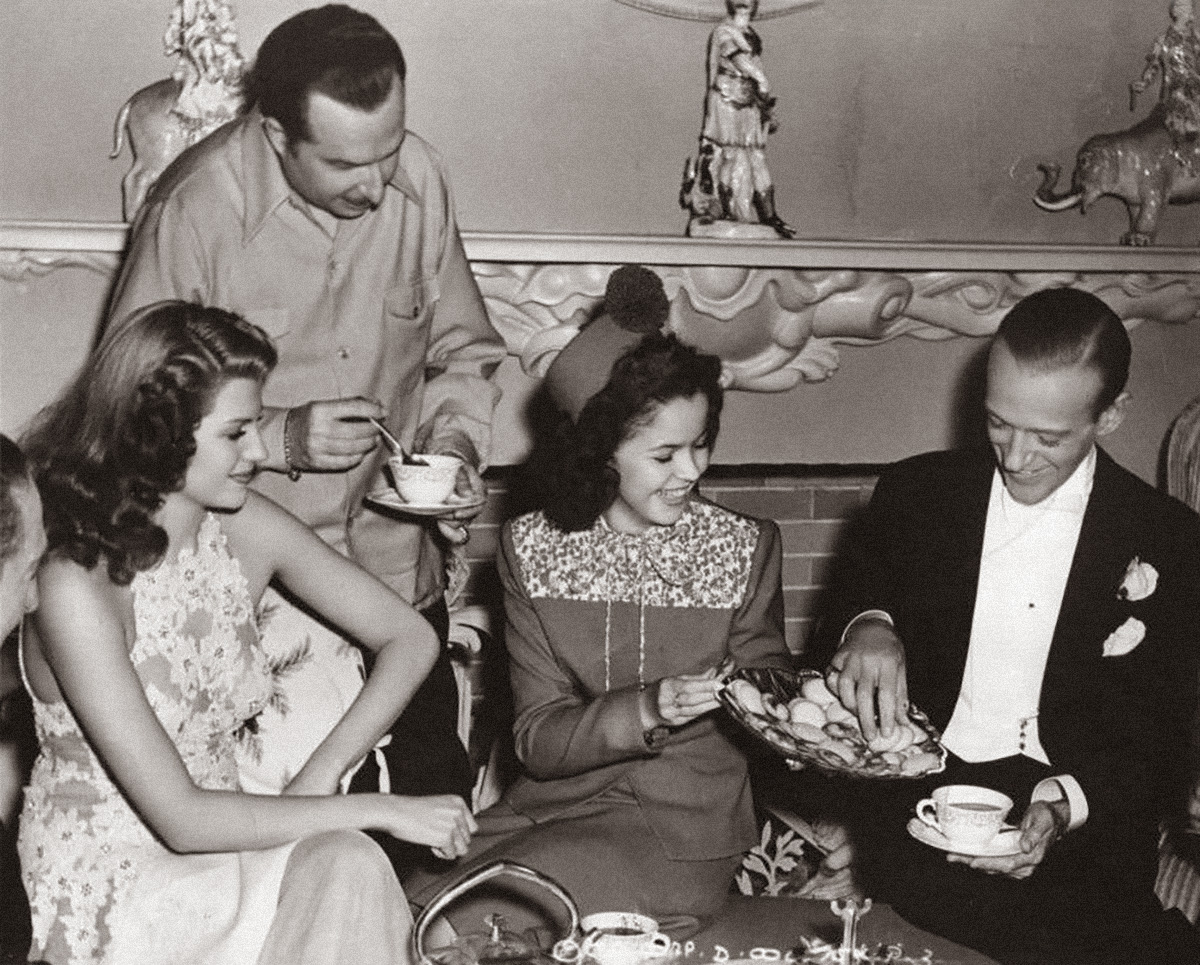
In the fall of 1945, Shirley found herself back at Columbia Studios. From the accompanying caption:

WELCOME HOME — Director Charles Vidor, Rita Hayworth and Glenn Ford welcome Shirley Temple back to the Columbia lot on the “Gilda” set. Shirley recently starred in “Kiss and Tell” at the same studio.

“Kiss and Tell” had a $1.2 million budget while “Gilda” came in at $2 million.


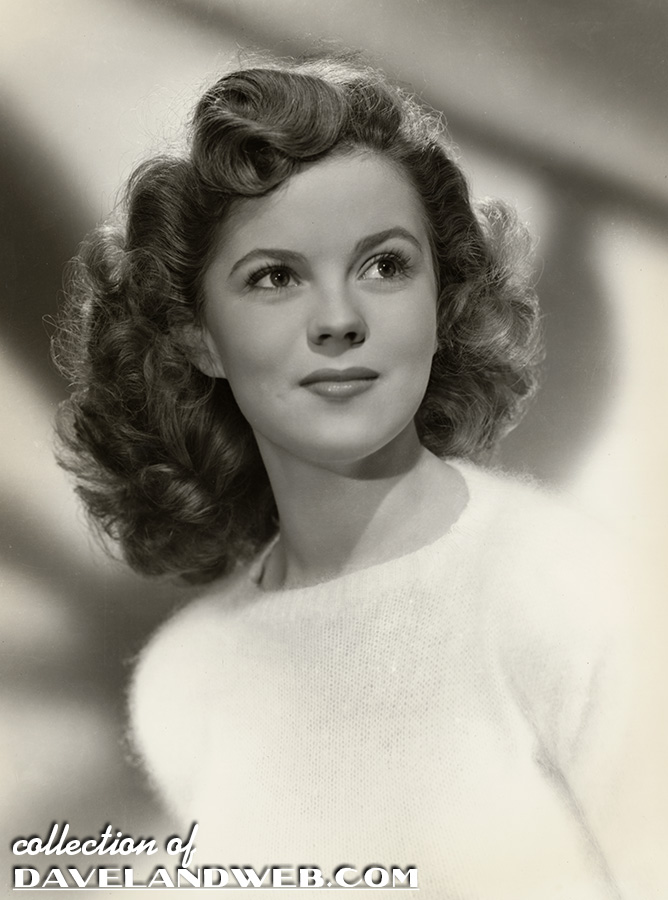
“Kiss and Tell” was released October 18, 1945, and “Gilda” had its New York City premiere on March 14 1946. A lovely portrait of Shirley in angora to publicize “Kiss and Tell” below:


The American Film Institute website states that Rita Hayworth was the original choice for “Kiss and Tell”:

According to pre-production news items in Hollywood Reporter and Daily Variety, Columbia spent two years negotiating for the screen rights to the F. Hugh Herbert play. The studio initially conceived the play as a vehicle for Rita Hayworth and assigned Al Hill to direct.…According to Columbia publicity material, Herbert based the character of "Corliss Archer" on his teenage daughter. A New York Times article notes that David O. Selznick, who loaned Shirley Temple to Columbia for the production, initially demanded approval of the screenplay and daily rushes because he was concerned that the subject matter was too "sexy" for former child star Temple.

Herbert’s play of the same name debuted on Broadway at the Biltmore Theatre on March 17, 1943 and ran until June 23, 1945, with a total of 956 performances.

That last tidbit I could find about the two actresses was this none-too-flattering remembrance from Shirley’s autobiography, Child Star:

As the New Year [1949] rang in the Hollywood Women’s Press Club nominated me, after Rita Hayworth, the second least cooperative star in the industry. The vote came to me as a thunderbolt. My lifelong conviction held that a critical aspect of professionalism was popularity, including popularity with the working press, upon whose opinion the public relied…At my request, on January 5, 1949, I met with the entire club. The reception was sincerely unfriendly. Epithets like “stinker” and “always totally unavailable” were delivered, albeit with a smile. One writer claimed to have tried unsuccessfully for an interview for three years. Only columnist Hedda Hopper rose to shift the blame, saying officious underlings of the Selznick studio had rejected press inquiries without consulting me. In rebuttal another woman snarled things would never change; I was simply terrified to speak candidly with the press. “How about now, this afternoon?” I called back from the podium. Far too late to rescind my award, the group apologized as individuals, and lined up to schedule exclusives. Far from an egotistic exercise, my appearance recognized the pervasive power that the Women’s Press Club exercises, its opinion echoing in unexpected Hollywood crannies, as I soon found.

Shortly after, Shirley and then husband John Agar attended a party at Errol Flynn’s home. When she declined his invitation to join him in his steam room, he replied, “So that’s why the press voted you most uncooperative, eh?”

And that’s all I have for the Rita/Shirley connection!
 
See more Shirley Temple photos at my main website.

Monday, February 26, 2024

Preston Sturges: The Players


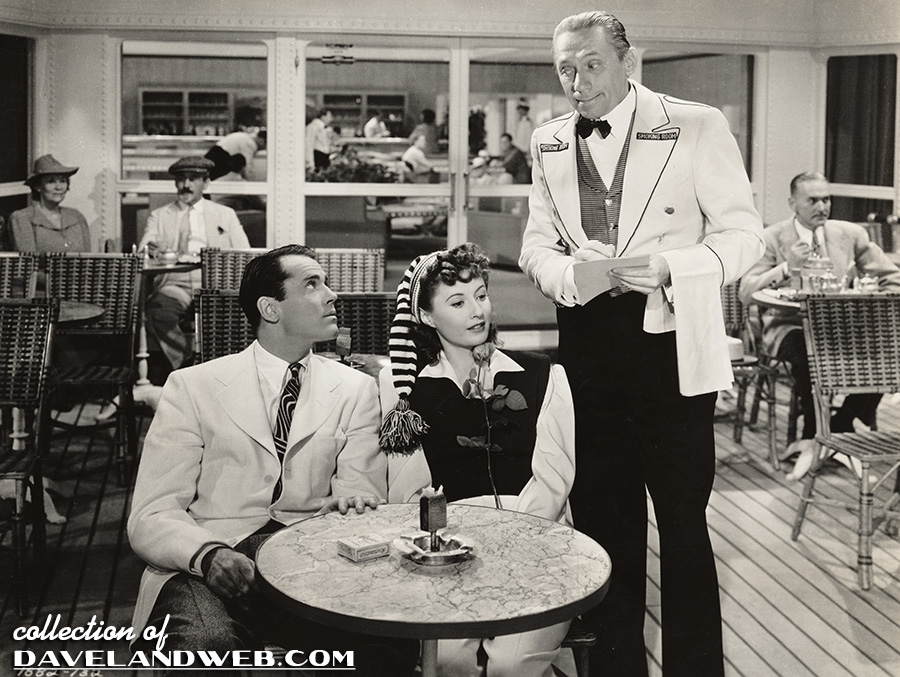
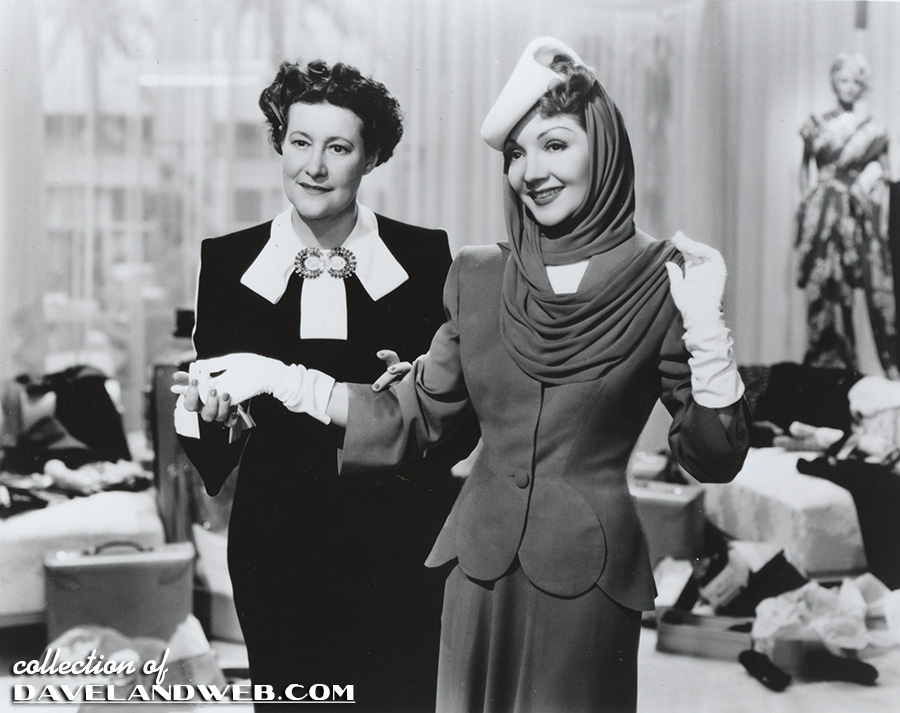
Playwright, screenwriter, and film director Preston Sturges is best known for his screwball comedies, including “The Lady Eve” (1941) with Henry Fonda and Barbara Stanwyck (above), “Sullivan’s Travels” (1941) with Joel McCrea and Veronica Lake, and “The Palm Beach Story” (1942) with Claudette Colbert (below).


Below is a shot of Sturges himself between Stanwyck and Fonda during the shooting of “The Lady Eve.”
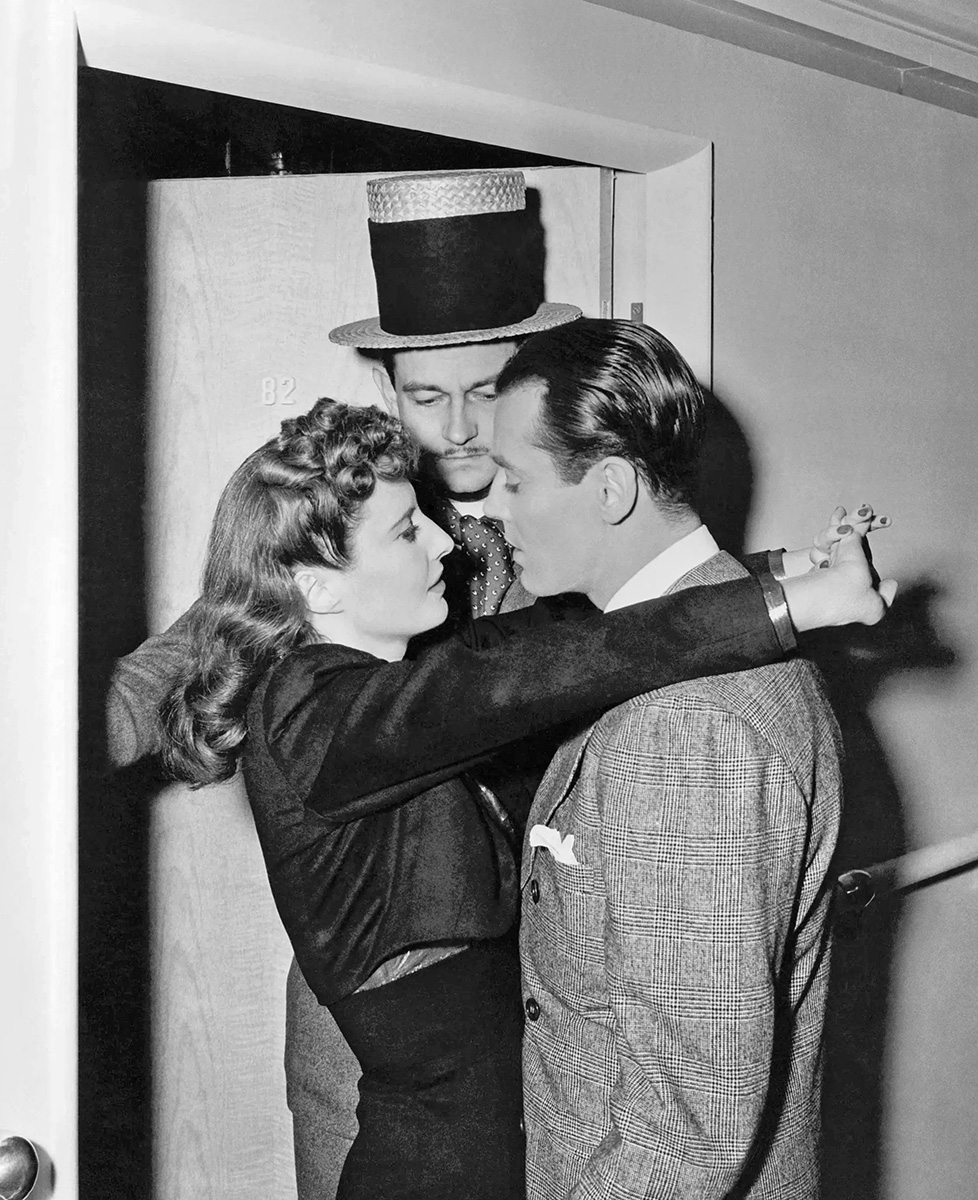


I recently finished James Curtis’ biography of Preston Sturges, Between Flops. The book was quite a downer, painting a sad picture of how this creative genius was tortured by the constraints of the studio system and his need for total control over every facet of his productions. While he was one of the highest paid people in the biz, he rarely had a dime to his name. By the end of his life, he was a battered man, accepting whatever crumbs he could get from the industry that now hails his brilliance. The reason I purchased this bio was because of Sturges’ ownership of a club located next door to the Chateau Marmont in Hollywood on Sunset Boulevard. Known as The Players, the building still exists today.
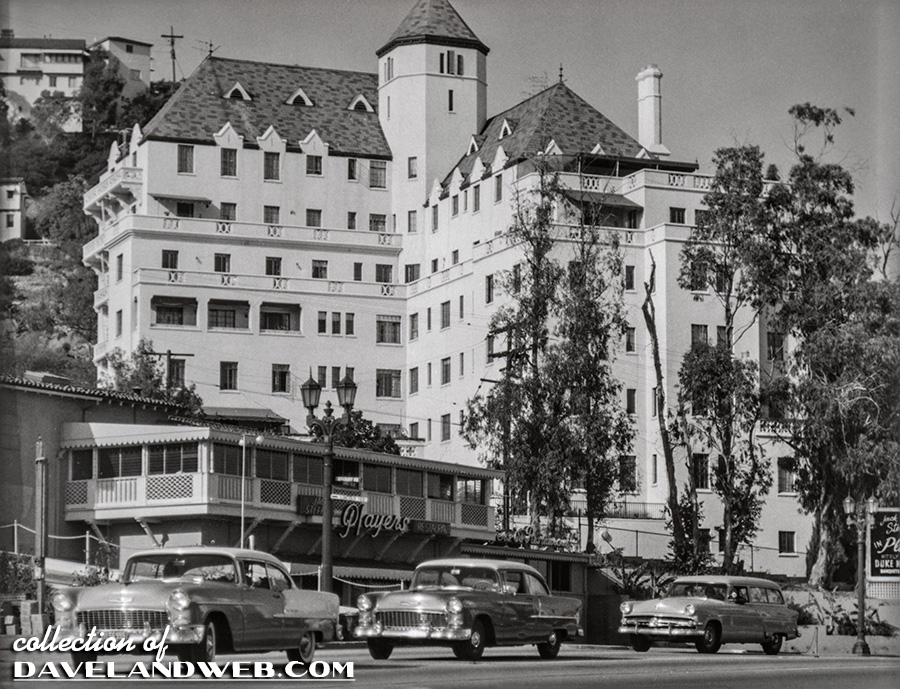


Sturges purchased a residence on Sunset Boulevard next door to the Chateau Marmont hotel. The home belonged to the father of actor Chester Morris and was functioning as a wedding chapel when Sturges bought it. His idea was to have a multi-concept facility with three levels: street level for a drive-in with counter service, second level an informal restaurant for table service, and the top (the house itself) would be formal with a dress code. Sturges wanted to bring the establishments he missed from his days on Broadway to the west coast. That was his inspiration for the name The Players, after the private social club in Gramercy Park, founded by 19th century Shakespearean actor Edwin Booth (brother of the infamous John Wilkes Booth) in 1888. This is also where Edwin died. But I digress.

Sturges decided to leave the old Morris house where it was. Instead of building on top of it, he directed that the hill be dug from underneath and that The Players be built from the top down. It was more expensive than demolishing the old house and building from scratch, but Sturges couldn’t be budged. This was typical of his downfall on so many endeavors. He enjoyed going against the grain and doing it his way, regardless of the cost. “It was just the way Preston wanted to do it,” said producer David Lewis. “He didn’t need a reason.” Sturges was the original micro-manager. “They couldn’t drive a nail without Preston’s OK,” said Dominick Maggie, who later became head bartender. “I really think he was having fun with it.” To run The Players, Sturges imported the proprietor of his old 45th Street hangout, Pirolle’s. Monsieur Pillet had spent years propping up his losing venture. When he wrote to Preston for help in the fall of 1939, Sturges urged him to come West and pilot The Players. The fact that Pillet was not an especially good businessman failed to bother Sturges. Pillet had helped him when he was down many years ago, and now Preston wanted to return the favor.
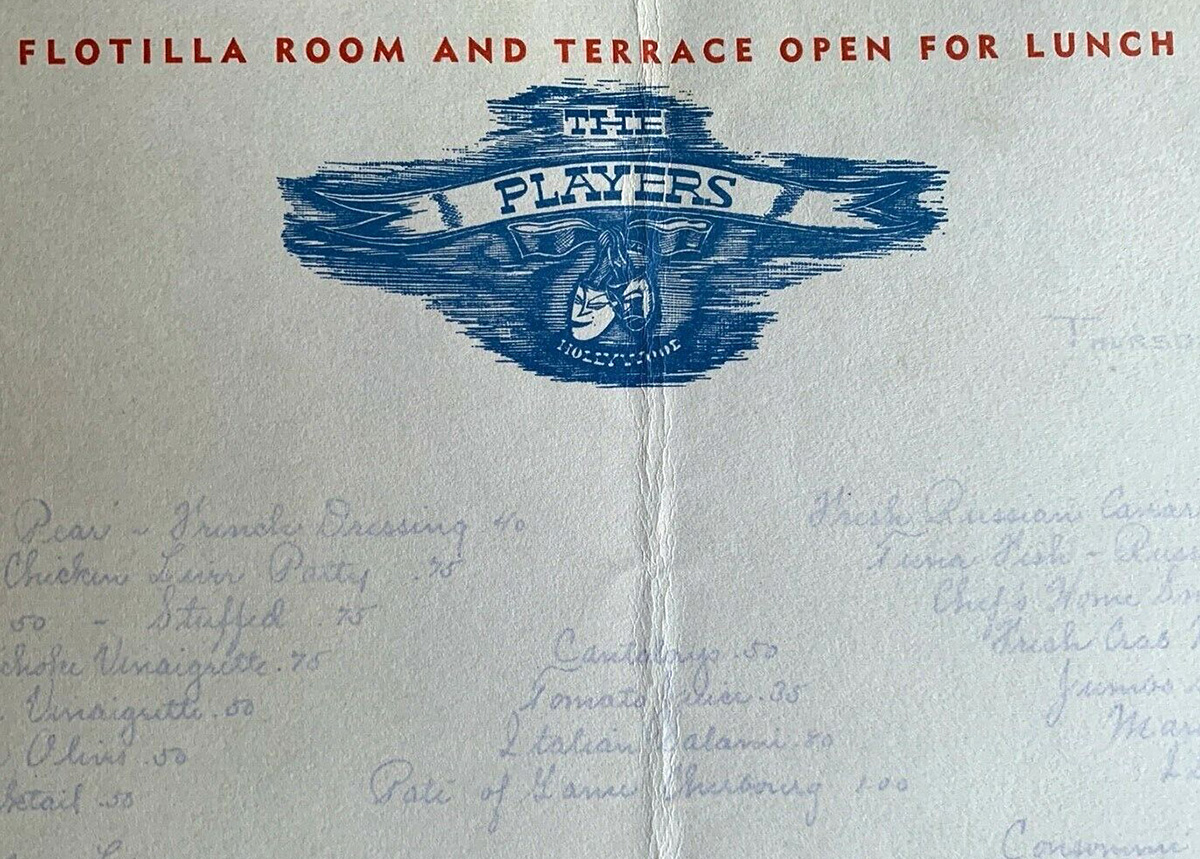


The L.A. Times reported that Sturges personally interviewed over 150 applicants, choosing as his first hire the only lad who had the decency to push in his chair once the interview was over. The menu was strictly American. Dishes, like “food for the gods steak,” were served in the formal dining room, known as “the blue room.” The Players opened quietly in the summer of 1940. According to his wife, Louise, the lure of The Players for Sturges was that it allowed him to “be Grand Pasha after hours - that was the main attraction...” He relished the role of genial supper club proprietor and being at the center of a convivial crowd, dining, drinking and carrying on into the wee hours. Along with the Chateau Marmont and the Garden of Allah Hotel, the three formed a kind of “Golden Age of Hollywood Triangle” into which many film colony luminaries frequently disappeared, including Orson Welles, Humphrey Bogart, Howard Hughes, F. Scott Fitzgerald, William Faulkner, William Wyler, Ernst Lubitsch, Barbara Stanwyck, Joel McCrea, and Lana Turner (who came with Howard Hughes to celebrate her birthday).

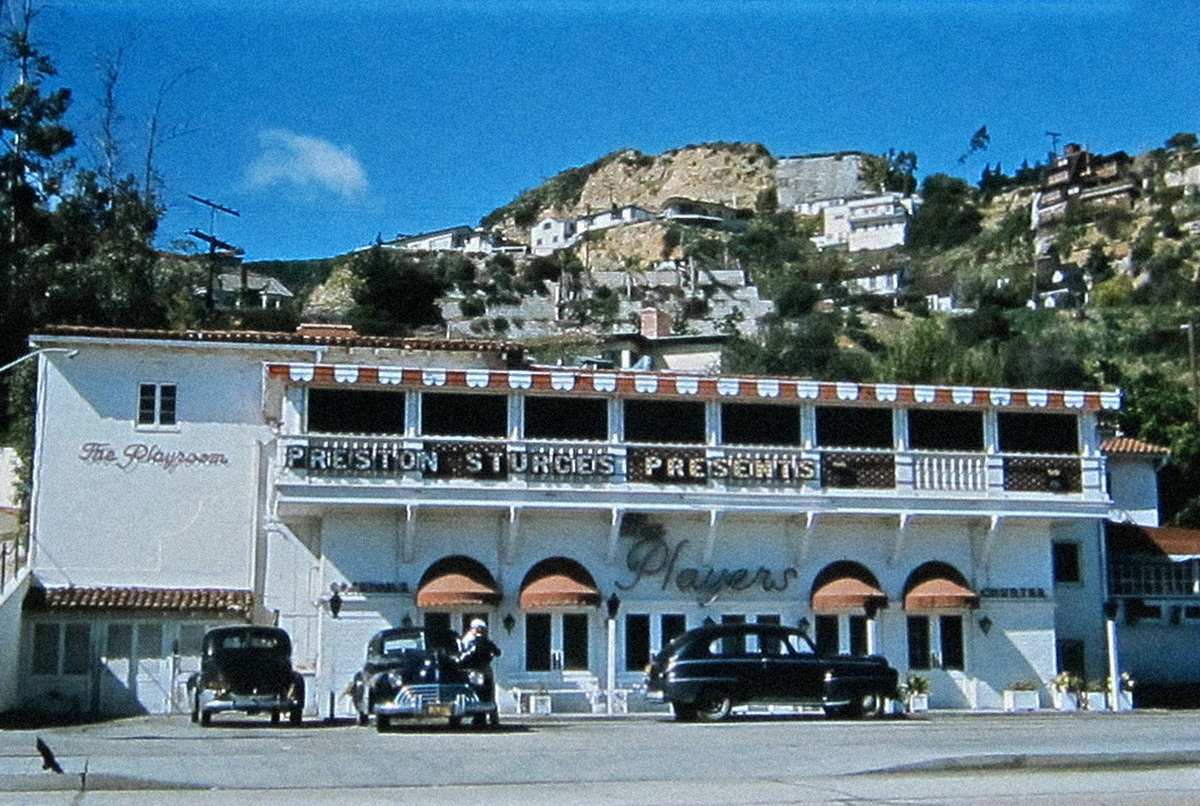
A vintage color shot:


A visiting tourist sent a postcard home on which she gushed about dining at “the glamour spot of Hollywood” and sighting both Miriam Hopkins and Boris Karloff while eating “the best raspberry shortcake I ever had.” A good part of the enormous income Sturges earned at Paramount was funneled into The Players. Sturges was pleased with the early popularity of his restaurant, but not the first-season loss of over $250,000. The original redesign and reconstruction of the building had been expensive; out-of-control operating costs along with constant renovations and additions prevented The Players from  breaking even. He’d been warned that the multilevel idea was a bad one “because nobody wants to be second-class, especially in a place like Hollywood.” Barbara Stanwyck even admonished Sturges, “That goddamned greasy spoon is ruining you!”
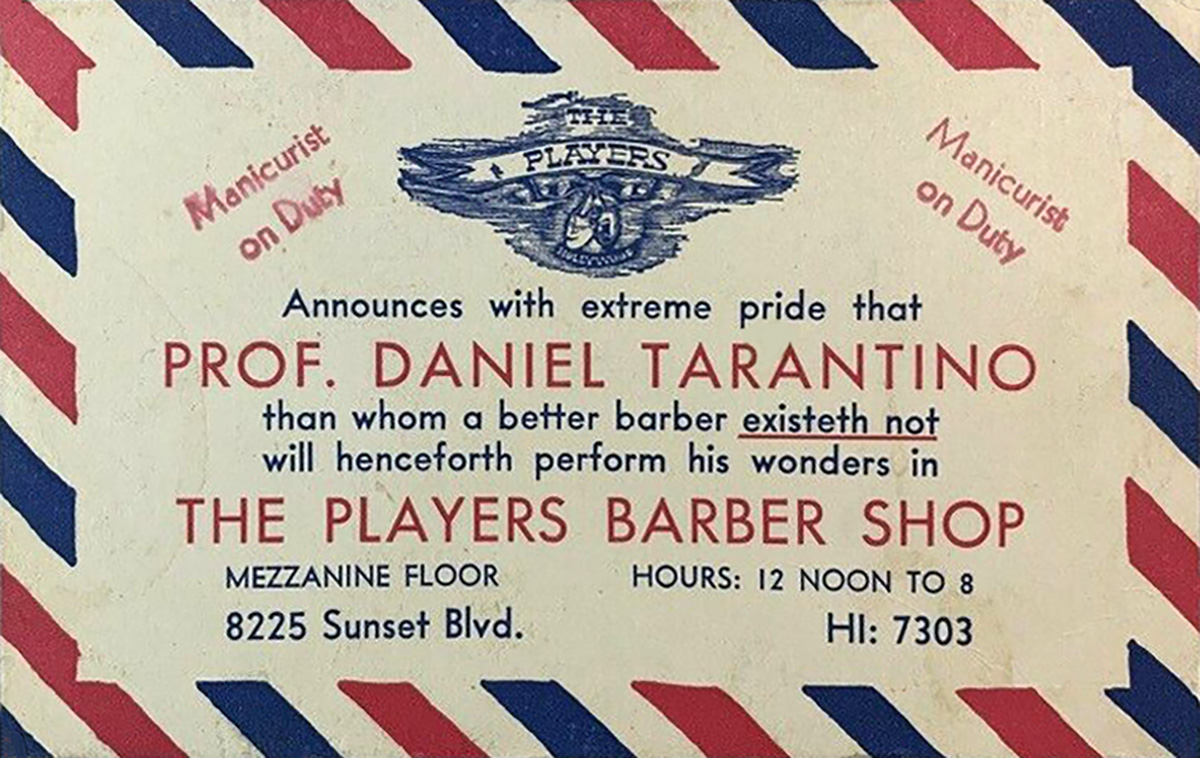


To make The Players a truly all-purpose night spot Sturges enlarged the top floor for dancing and created a new area called The Playroom. He designed a hydraulic revolving bandstand for a group of house musicians. When renovations were about to begin Sturges closed The Players, announcing its reopening sometime in the fall—after an extensive program of rethinking and remodeling. He then set to work on “Sullivan’s Travels.” 
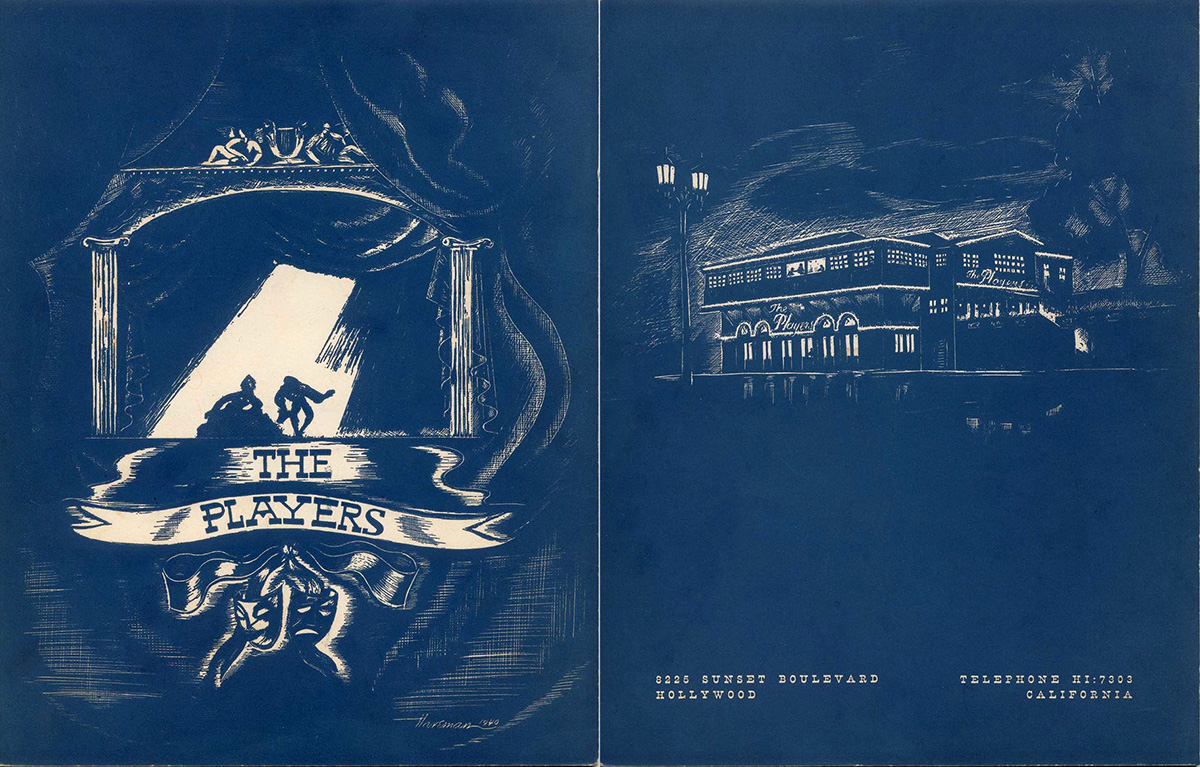


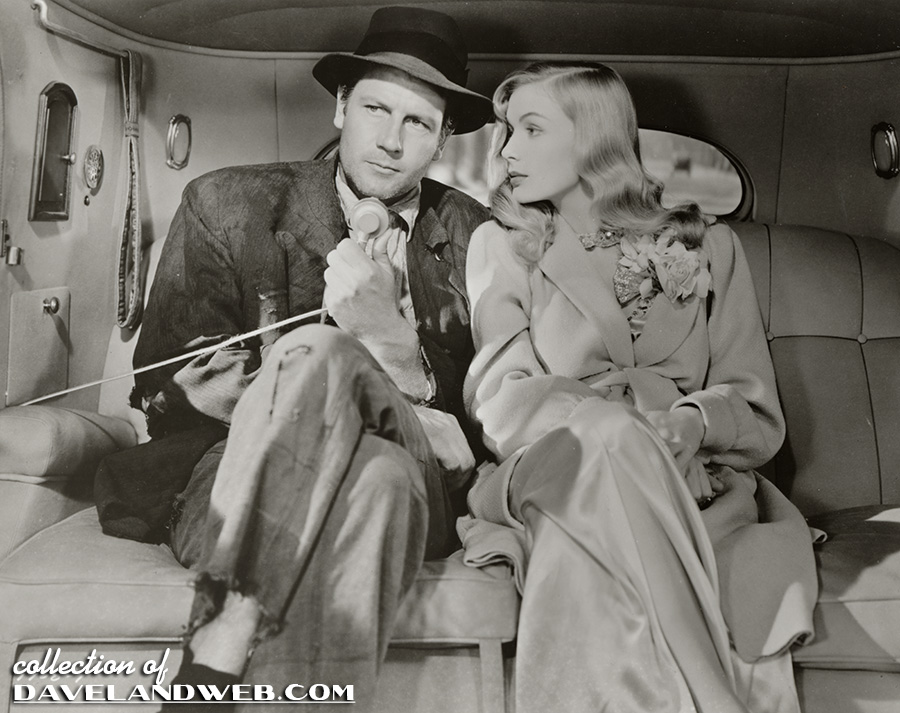
Construction on The Playroom was not finished by Christmas of 1941 but plans were under way for its gala opening just after the first of the year. It wasn’t long before The Players became one of the most popular night spots on the West Coast. “It was the TOP place,” said Dominick Maggie, Sturges’ head bartender. “There was nothing like it in the West—nothing like it in the world, for that matter. Anybody of consequence at that time frequented The Players. There were movie moguls; superstars, like Bogart and Barbara Stanwyck, Charlie Chaplin…all the stars of that era; writers of all sorts.” Though exceedingly busy with movies, Preston was typically onsite, greeting guests, table-hopping, and enjoying having the most powerful figures in the industry under his roof. Sturges considered the restaurant his own private domain, expecting the same deference accorded a visit to one’s home. “It was some place,” wrote screenwriter Earl Felton, “absolutely a marvel, matchless food, service, decor, etc., but with the serious drawback of Preston usually present, turning baleful eyes on any patron he did not know personally.” Sturges often retired to The Players after a day of shooting, arriving between nine and ten o’clock, just as the dinner crowd was thinning and the atmosphere became more relaxed. “Whenever we’d work too late to get home to dinner,” recalled Joel McCrea (shown below with Veronica Lake in “Sullivan’s Travels), “he would invite us to dinner at The Players. You could never pick up a check with Preston, either at the commissary or at his restaurant. He always managed to get the check and you couldn’t even tell what it was.” To Preston, allowing his guests to pay the check at his restaurant would have been tantamount to presenting them with a bill for a meal at his house.


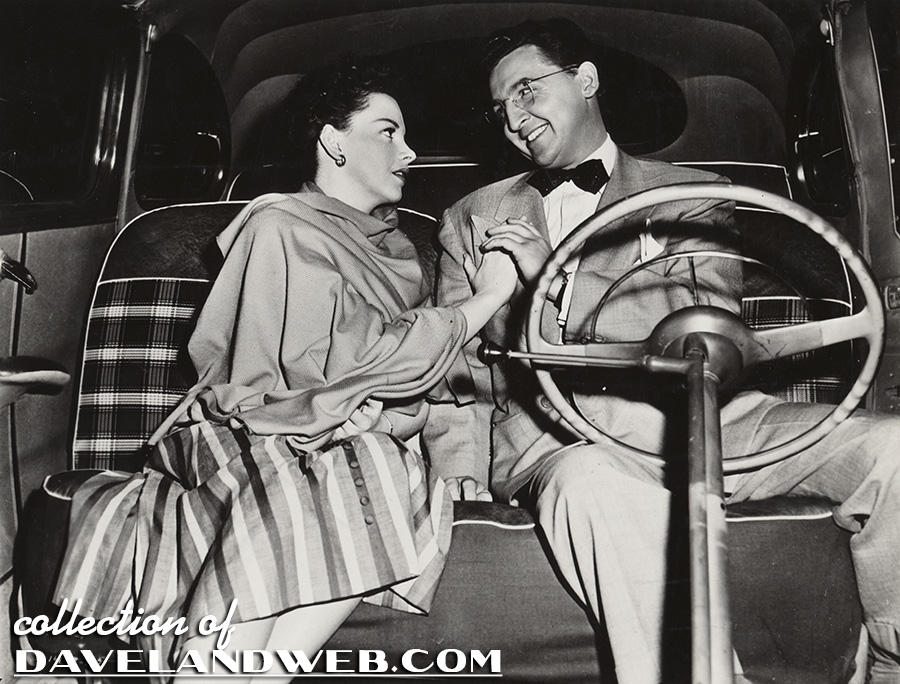
The Playroom re-opened on January 14, 1942. It had restaurants operating on all three levels, a barbershop on the mezzanine, a drive-in burger stand, and a 350 seat “ultra-modern intimate restaurant theater.” The theater featured one-act plays directed by Sturges and performed by his many loyal friends. Actor Eddie Bracken (shown below with Judy Garland in “Summer Stock”), who had starred in Sturges’ “The Miracle of Morgan's Creek” (1943), recalled: “We played it for eighteen weeks and I didn’t take any salary at all. Sturges was in trouble and I wanted to help him. For eighteen weeks I worked there for nothing and he was doing six thousand dollars a night. Packed. You couldn’t get in. And at the end of the eighteenth week, he was further in debt than when we had started. That’s when I quit.”


There was the long-standing rumor that Sturges had gone to the trouble of building a tunnel beneath Marmont Lane connecting The Players to the Chateau so celebrities could slip away discreetly - for clandestine affairs or to avoid the press and/or the police.
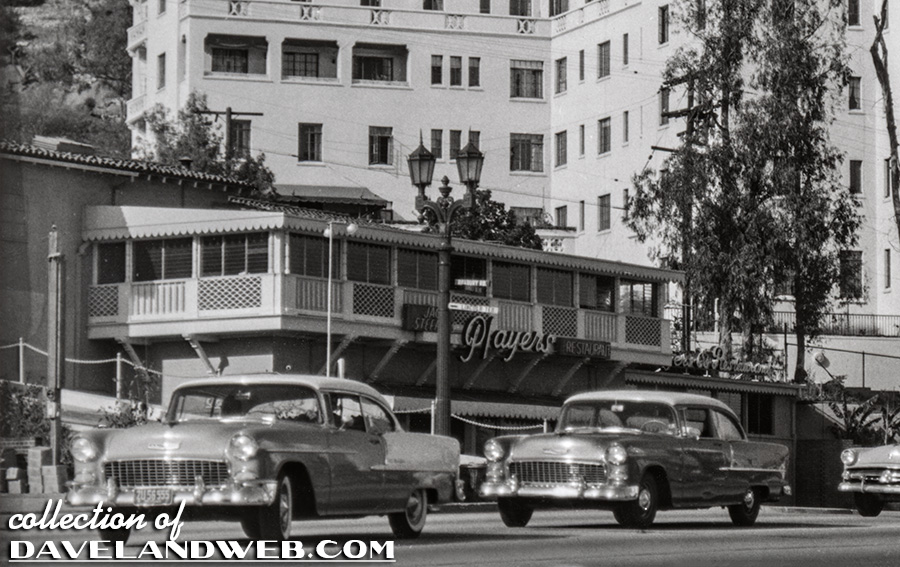


Such a bummer that the photographer cut off the sign on the right side of this vintage postcard!
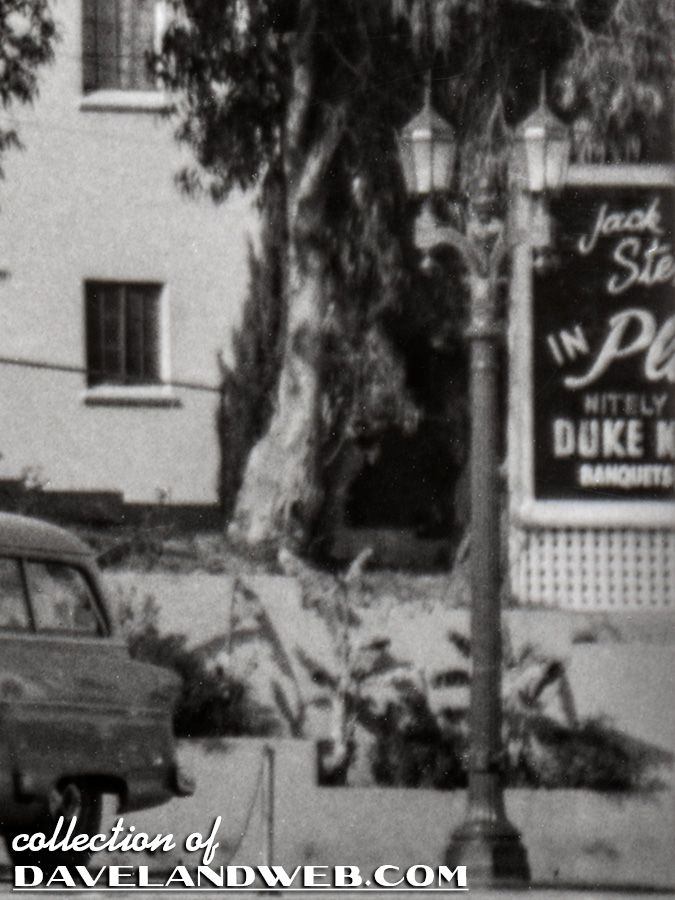


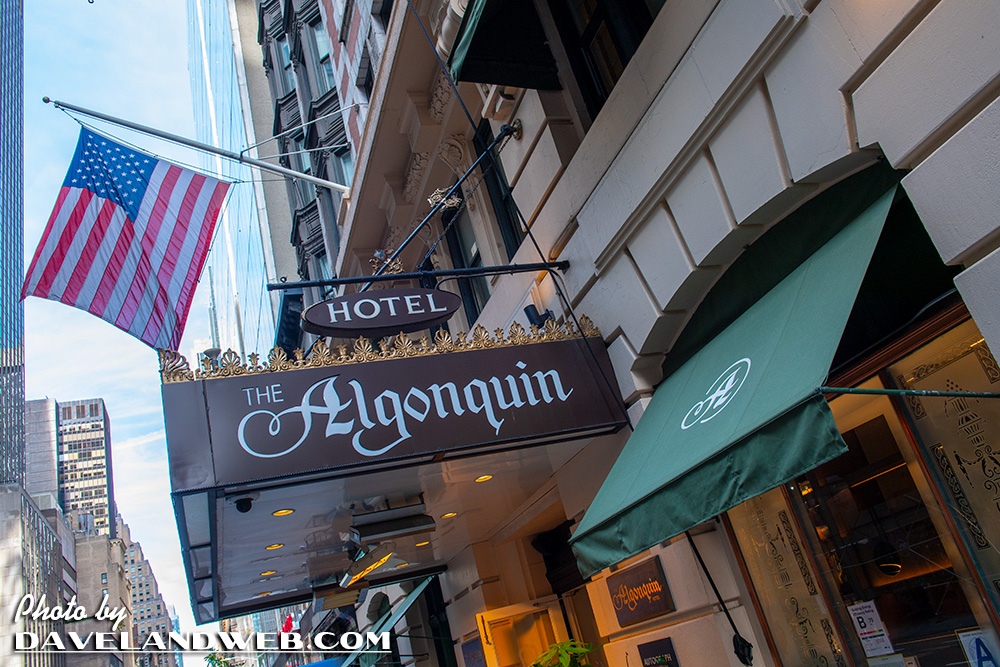
As his subsequent pictures continued to lose money and his relationship with Paramount tanked, he ended up losing control of his beloved club. Creditors forced the sale of The Players in December of 1953, when the government put a lien on its income. The contents were auctioned off and the property sold to cover taxes and debts. Sturges spent much of the last years of his life aimlessly floating around Europe, depressed about the situation he had left behind in the States. A friend recalled meeting with him in Paris in a café on the Champs Elysee, months before Sturges died. “He talked grandly of his plans of a comeback both as a writer and director. When the check came he pulled in his sails (but only a little) and in a lower voice addressed me ‘I hope you have a large expense account. I’m broke you know.’” In 1959 Preston Sturges died penniless in a comped room at the Algonquin Hotel in New York City. He was 60 years old and had been working there on his memoirs.


Coincidentally, two months earlier The Garden of Allah (seen below) had been demolished.
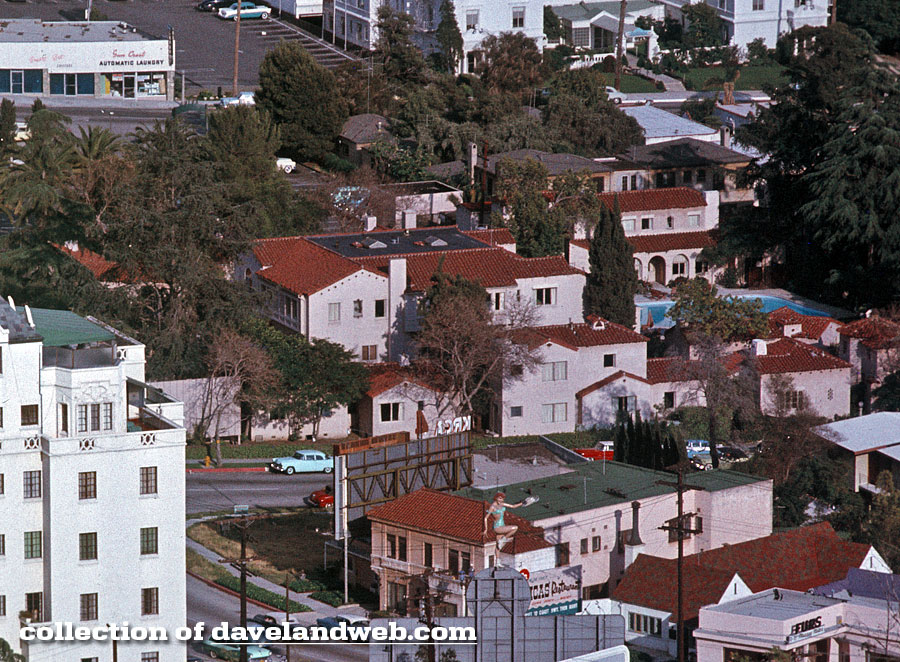


The Players lived on though, going through several incarnations in the decades to come.


Beginning in 1953 it was Imperial Gardens (above), a huge Japanese restaurant with reflecting pools on the upper floors, popular with musicians and actors. Next, in 1989, it re-emerged as The Roxbury, a trendy and notorious nightclub where A-list patrons included Tom Cruise, Prince and Eddie Murphy.



In 1997 it changed hands again and became Miyagi (above), a restaurant/nightclub with 7 sushi bars, 5 regular bars, a Zen garden, a waterfall, a dance floor, pool tables and more. In April 2012, it opened as Pink Taco (below), the second location for this Mexican restaurant chain owned by 30-year-old Harry Morton, oil-slick heir of Hard Rock Café founder Peter Morgan and grandson of Arnie Morton, founder of the Morton’s restaurant chain.
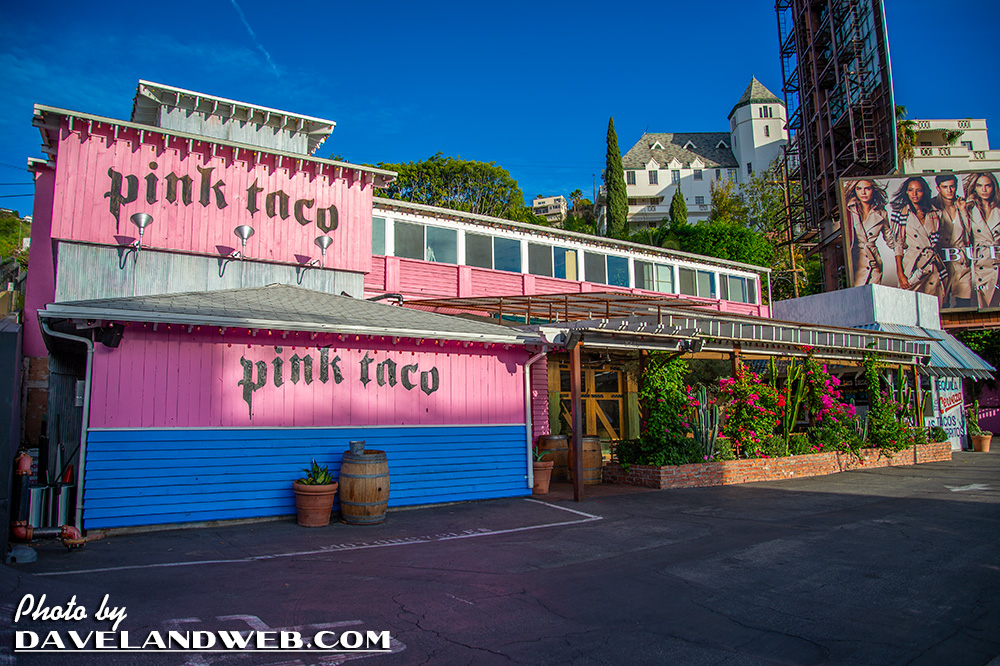


During the renovation of the property, Morton had the site excavated deeply enough that not only was the revolving stage beneath Sturges’ dance floor found, but also the entrance to The Players’ “legendary VIP tryst tunnel” to Chateau Marmont - apparently sealed off by the city long ago. According to Harry Morton, he dug through layer upon layer of debris, “But when I stripped it all down, incredible things came to light.”

I really need to explore more inside the Pink Taco — which probably means I need to eat there again. Sigh.

This post was edited from Lady Eve’s Reel LifeBetween Flops, and PBS SoCal. See more Classic Movie & TV photos at my main website.

Tuesday, February 07, 2023

Temple Tuesday: Shirley at the Bowl, 1943


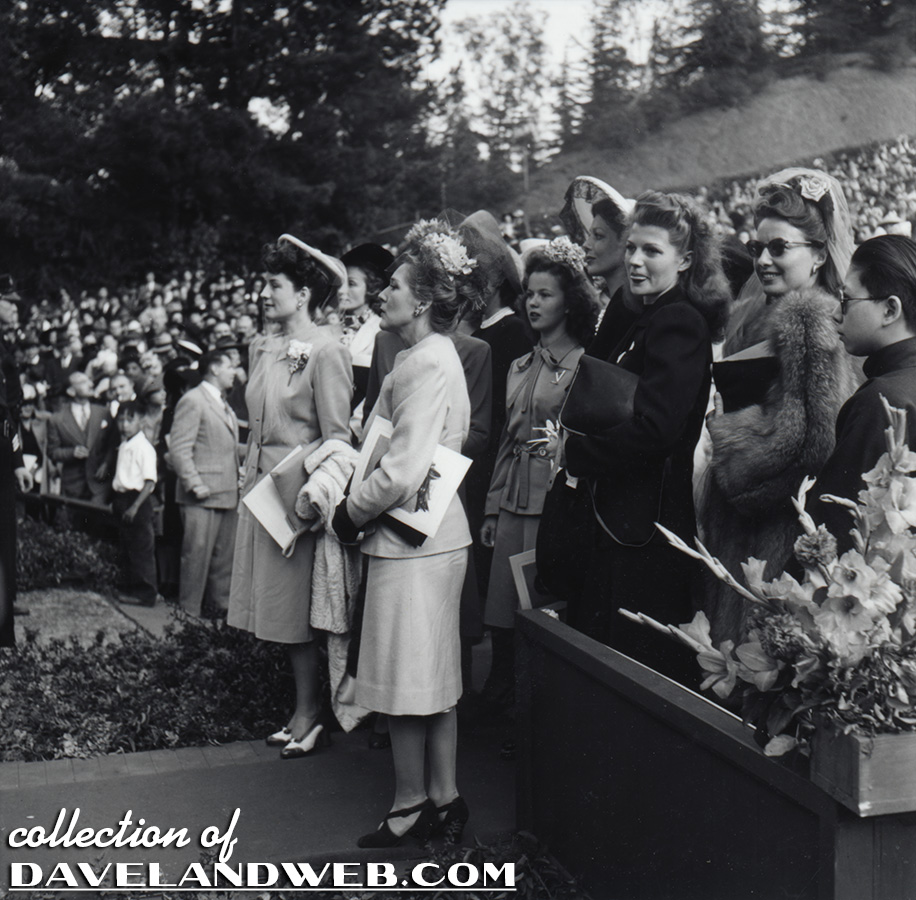
In April 1943, Shirley Temple and a slew of other celebrities (including left to right Norma Shearer, Marlene Dietrich, Mary Pickford, Loretta Young, Rita Hayworth, and Barbara Stanwyck) welcomed Madame Chiang Kai-shek to the Hollywood Bowl. The pictures accompanying this post were shot by John Florea, LIFE staff photographer. There was plenty of coverage for the event, including a story in the April 19, 1943 issue of LIFE magazine:

MADAME CHIANG IN HOLLYWOOD
She finishes nationwide tour with stirring speech to 30,000 at Bowl

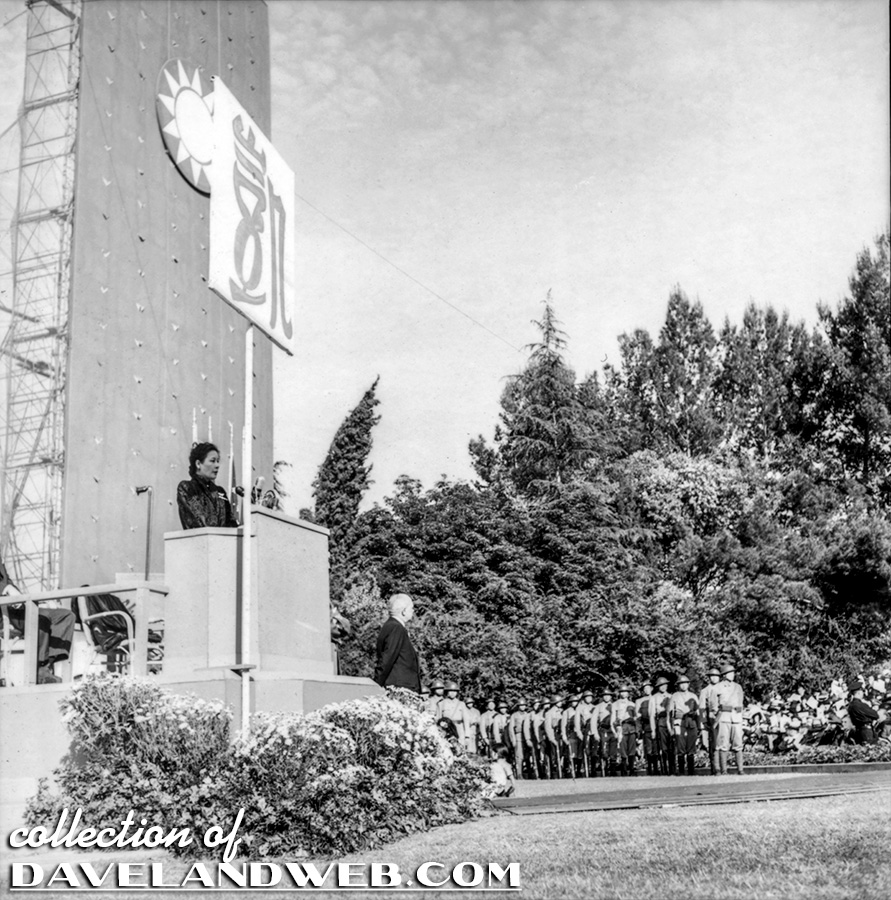
To the tinseled home of make-believe last week went a realistic star of the first magnitude. Under the serene blue California skies Madame Chiang Kai-shek concluded her nationwide tour at a spectacular mass meeting held in the Hollywood Bowl. All Hollywood had contributed talent toward making this event a triumph of showmanship. But it was Madame Chiang’s gracious charm, her indomitable spirit and her deeply stirring account of China’s six-year war against Japanese aggression which made the dramatic climax of the afternoon. Her fists clenched, emotion welling in her voice, China’s First Lady reviewed the unforgettable, “ghastly memories” which have been burned into her mind and heart. She began her historical summary by picturing the insuperable obstacles which confronted her as secretary-general of the Chinese Air Force at the war’s start in 1937.…As Madame Chiang spoke, her sympathetic audience listened in grave silence, tears springing to many eyes. No Hollywood-conceived pageant could match the awesome “nightmares” which Madame Chiang recreated with the magic of her words.…Madame Chiang closed her speech with the pledge that China and the other United Nations would not permit “aggression to raise its satanic head and threaten man’s greatest heritage: life, liberty and the pursuit of happiness for all peoples.”


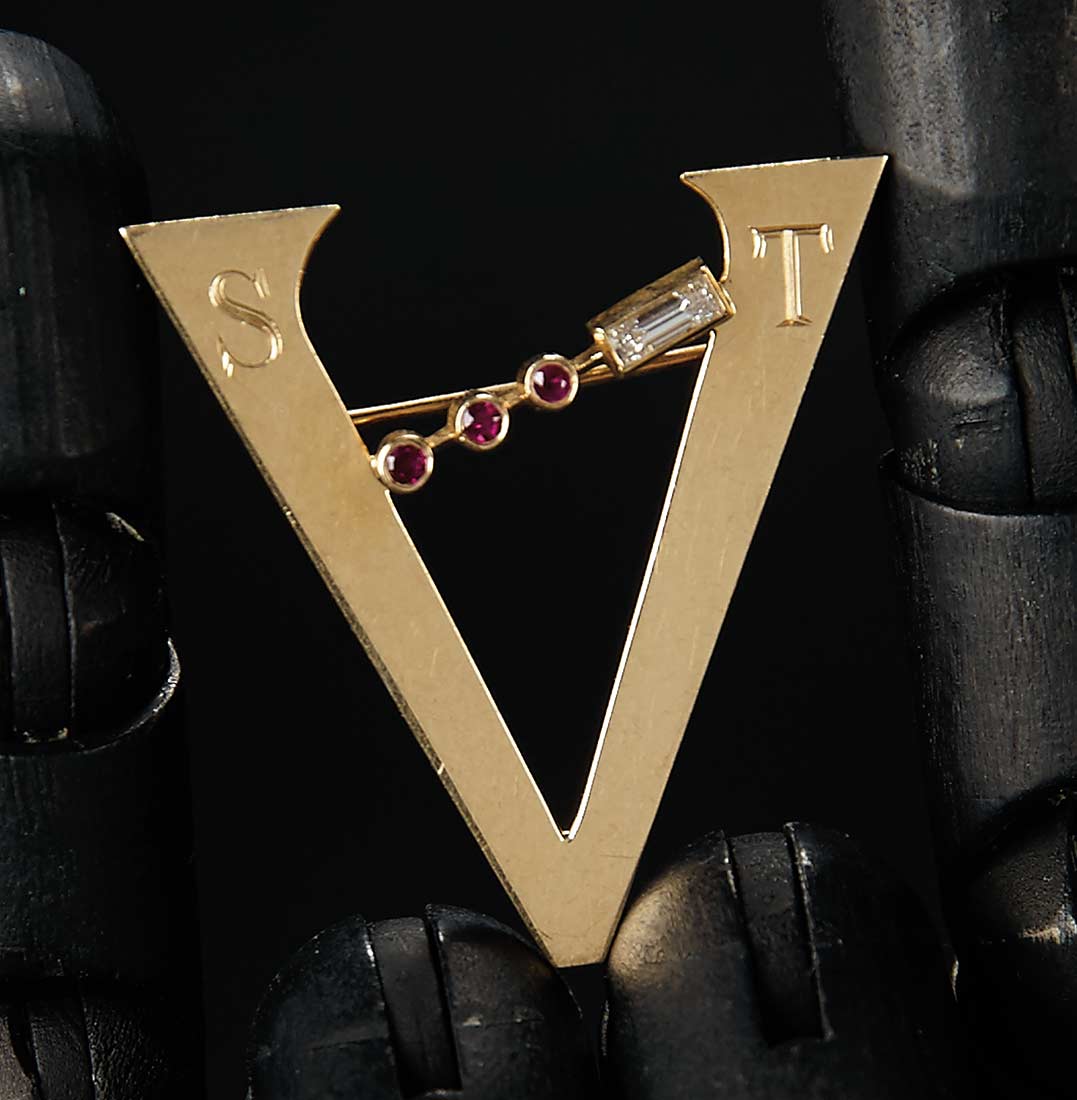
Note the pin that Shirley is wearing; it came up for sale at the “Love, Shirley Temple, Take Two: From Schoolgirl to Storybook” auction in 2015. From the Theriault’s catalog description:

SHIRLEY TEMPLE’S DIAMOND AND RUBY VICTORY PIN FROM WWII

Formed as the letter "V" for Victory, the famous symbol of the Allied Forces during WWII, the 1.5" 14Kt pin has incised initials of S T, and a crossbar decorated with three round-cut rubies and a 0.10 diamond baguette which are the letter "v" in morse code. A favorite pin of Shirley Temple during the early 1940s. Presale Estimate: $600+; Realized Price: $1,700


Melissa (aka “The Colonel”) tracked down a number of other vintage articles that gave more information about the program at the Bowl:

With the audience requested to be seated by 2:45 p.m. promptly, the program will be opened by Spencer Tracy presenting Henry Fonda, actor, who is now a seaman in the U.S. Navy, and Dr. C M. Wassell, Commander, Medical Corps, U.S.N.R., and hero of the evacuation of Java.…A committee of 19 actresses will receive Madame Chiang. Mary Pickford will present her with roses. Others serving on the committee will be Joan Bennett, Ingrid Bergman, Marlene Dietrich, Irene Dunne, Deanna Durbin, Kay Francis, Judy Garland, Janet Gaynor, Rita Hayworth, Dorothy Lamour, Ida Lupino, Ginger Rogers, Rosalind Russell, Norma Shearer, Barbara Stanwyck, Shirley Temple, Lana Turner, and Loretta Young.

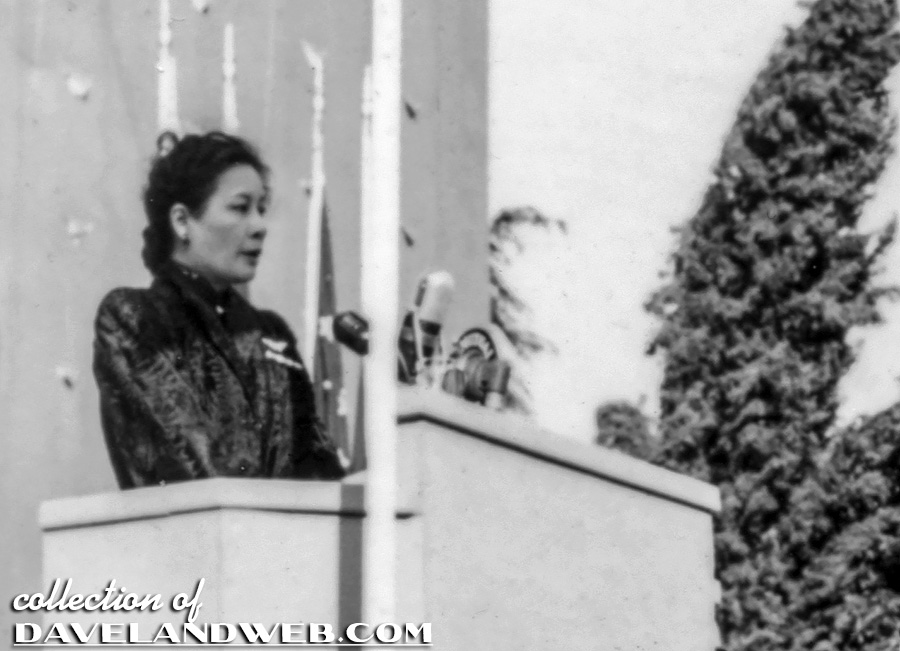
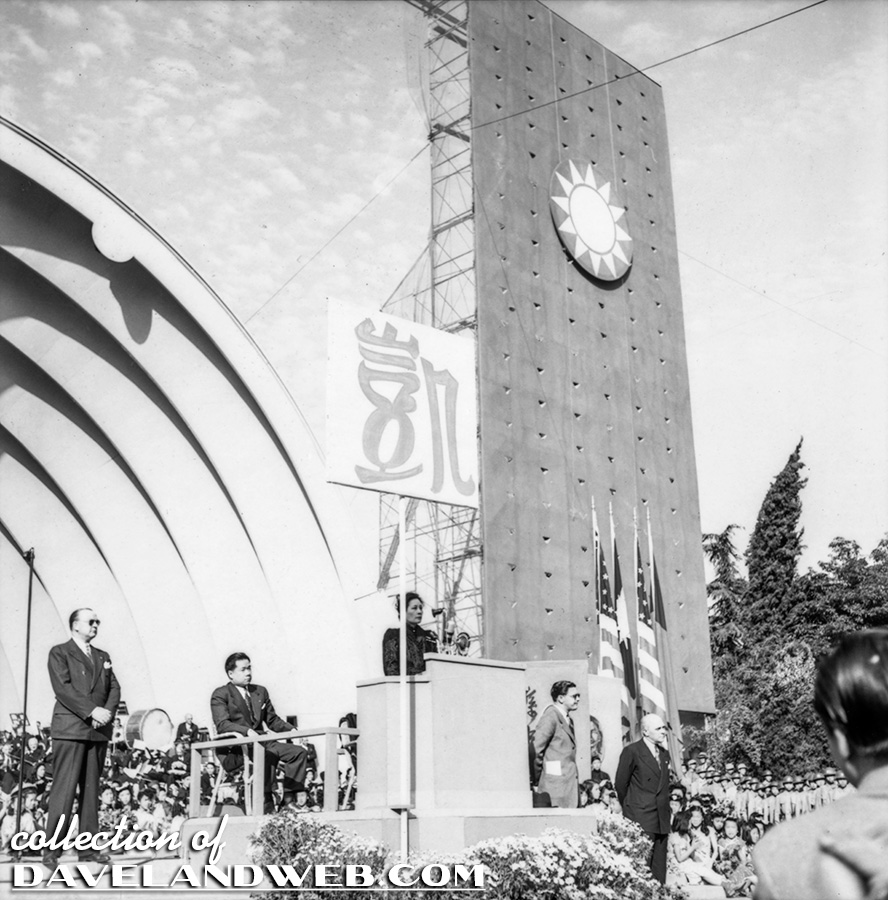
Not too shabby; that is DEFINITELY an “A” List of stars! Below is Madame Chiang addressing the audience at the Bowl, between red (left side of the shell) and blue panels (right side) decorated with the official seals of the United States and China. This event was the first time since Pearl Harbor that the Hollywood Bowl had been filled to capacity.


Madame Chiang, in a black silk gown decorated with the silver wings of the Chinese air force, received a bouquet of pink roses from Mary Pickford and a guard of honor comprising almost every top feminine movie star in Hollywood. She sat quietly through the pageant that the picture industry conceived and then delivered her 45-minute address.


Another shot of Shirley and friends:


David O. Selznick (“Gone with the Wind”) staged and produced the pageant. Shirley was under contract to Selznick and filming “Since You Went Away” at the time, which is most likely why she was in attendance.


See more Shirley Temple photos at my main website.
Wednesday, December 29, 2021

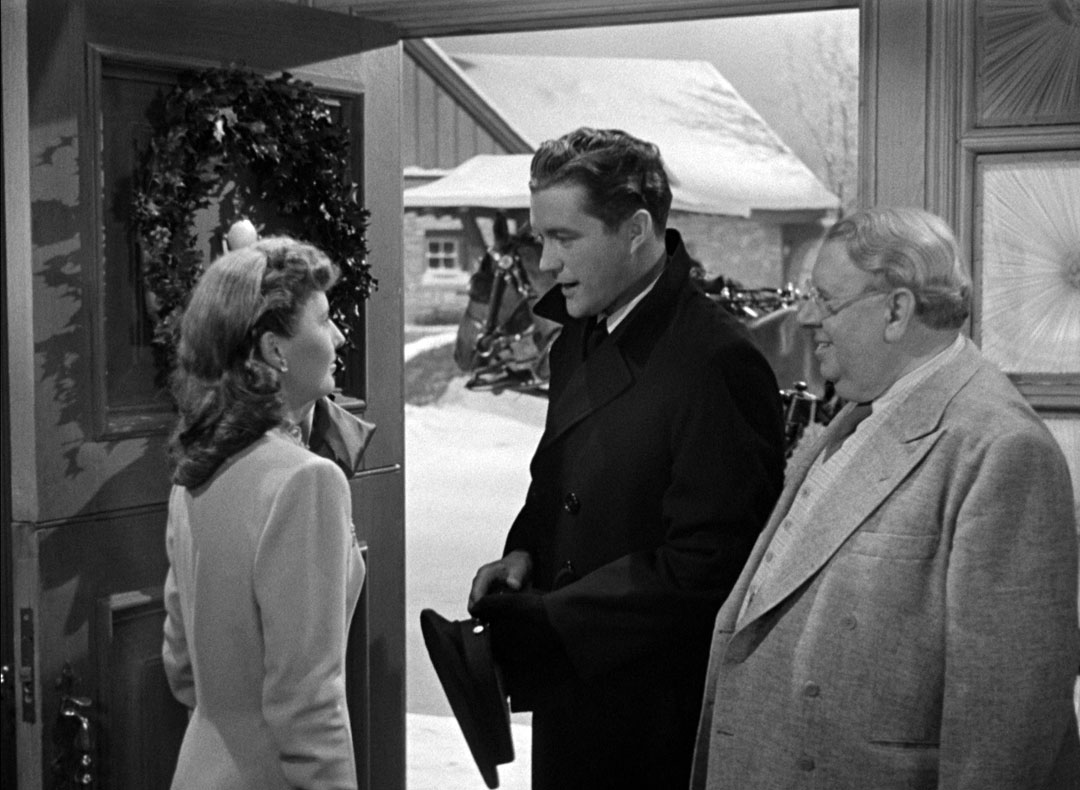
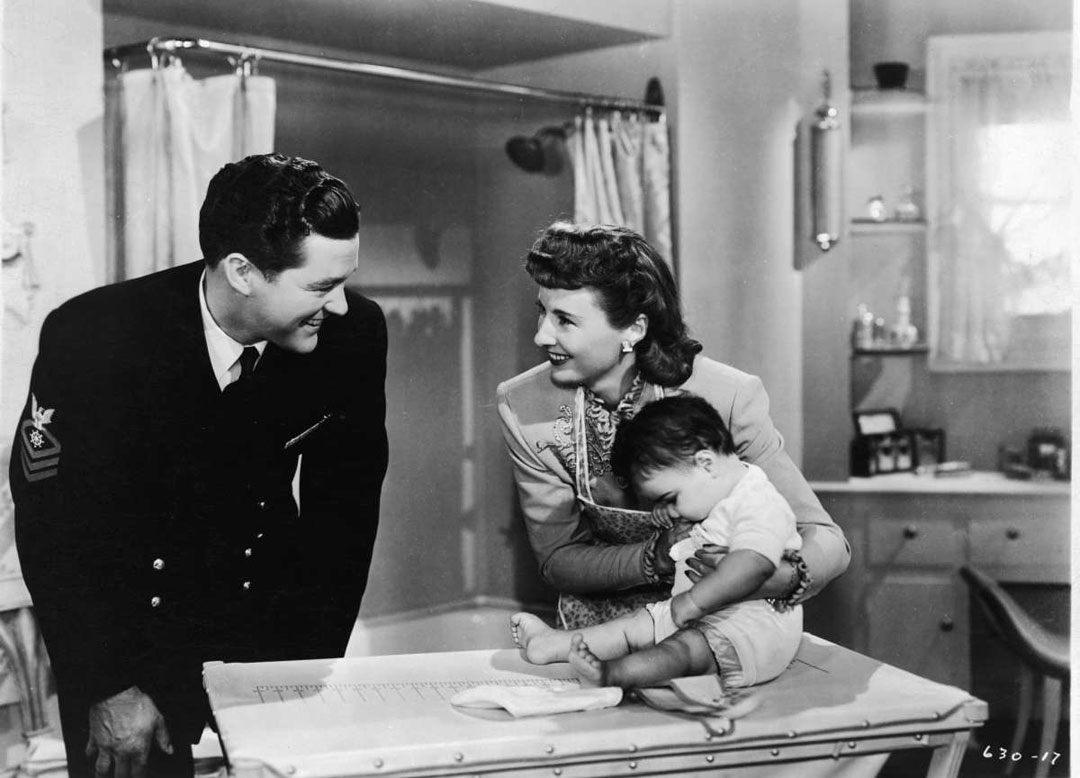
Christmas In Connecticut


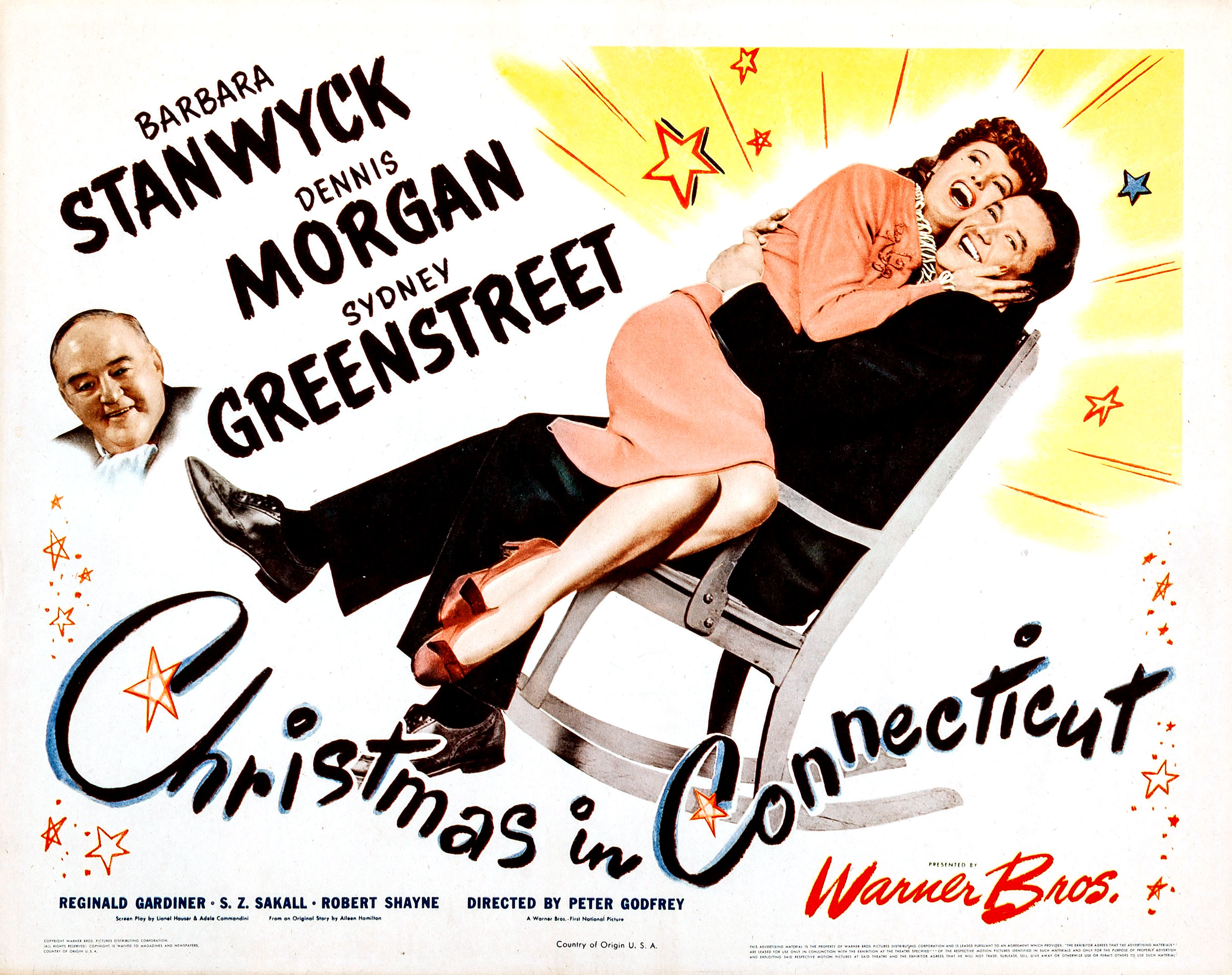
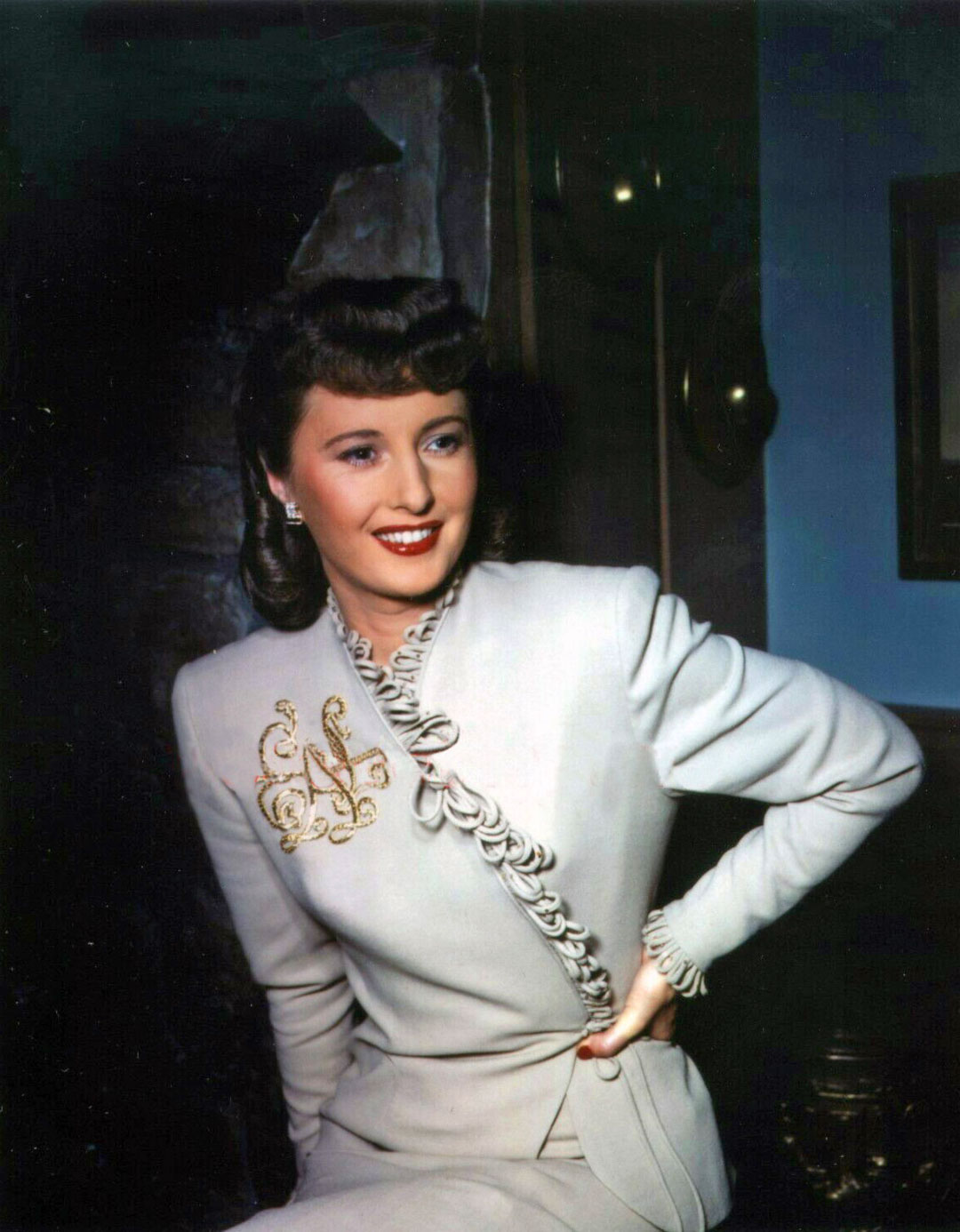
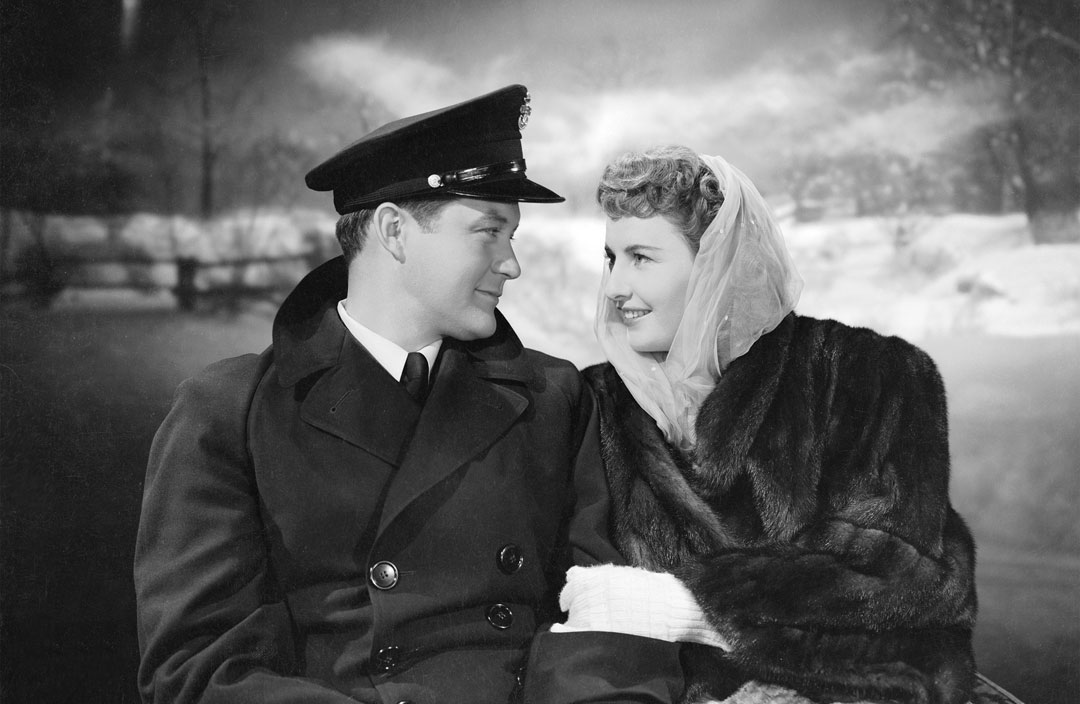
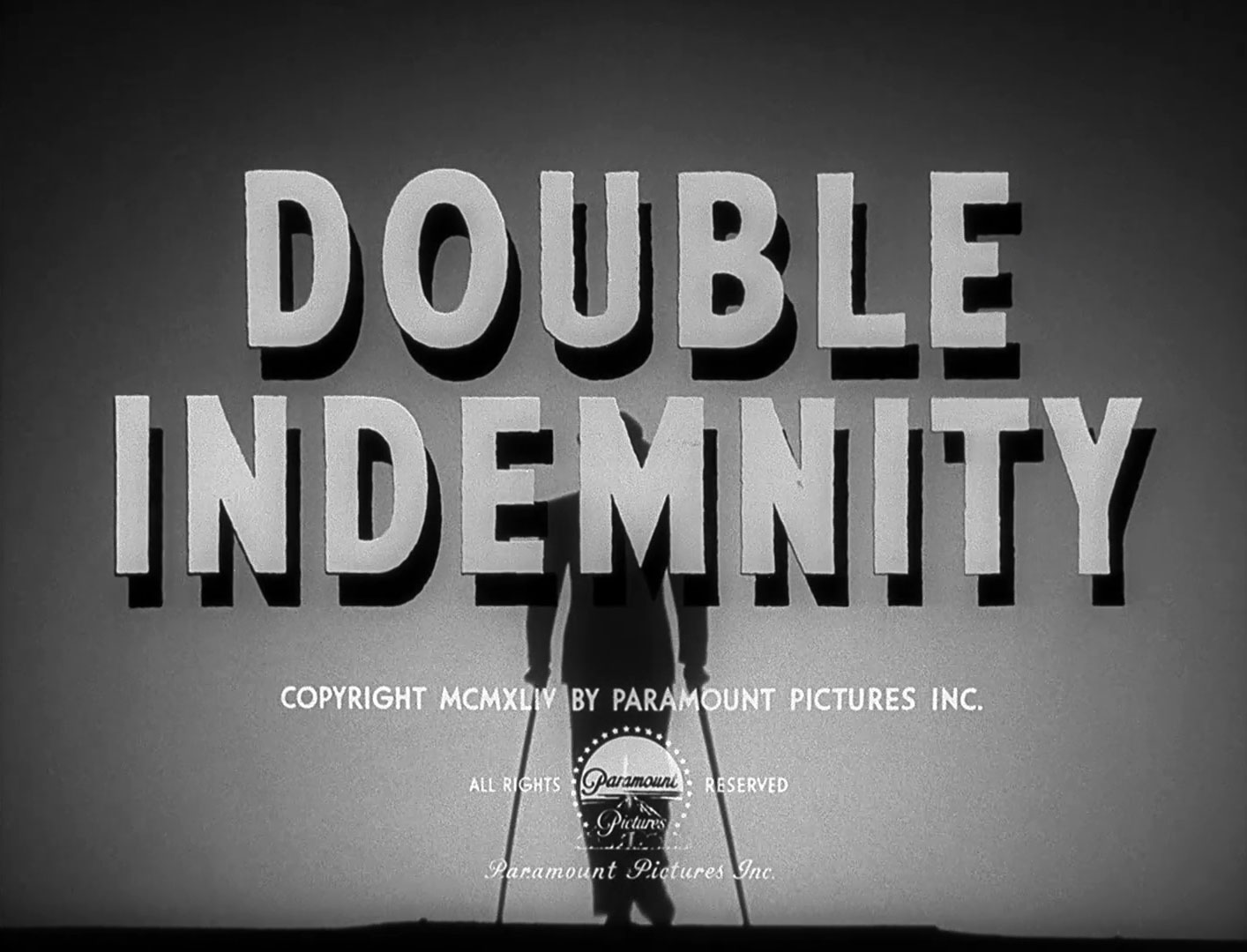
Last year when I did a post about the movies I watched on Christmas Day, faithful Daveland readers Lou and Sue suggested “Christmas in Connecticut.” It wasn’t long before I put this one in my Amazon shopping cart for purchase. With Barbara Stanwyck as the lead, how can you go wrong? In a case of fate steps in, Barbara Stanwyck replaced Bette Davis, who had been originally announced as the lead. Good move, Warner Brothers! Previously, Stanwyck had starred in “Double Indemnity” (remember the cheap wig?). Edith Head’s wardrobe impressed the star so much that she insisted Warners hire Head to design her gowns for this film as well. Another good move!


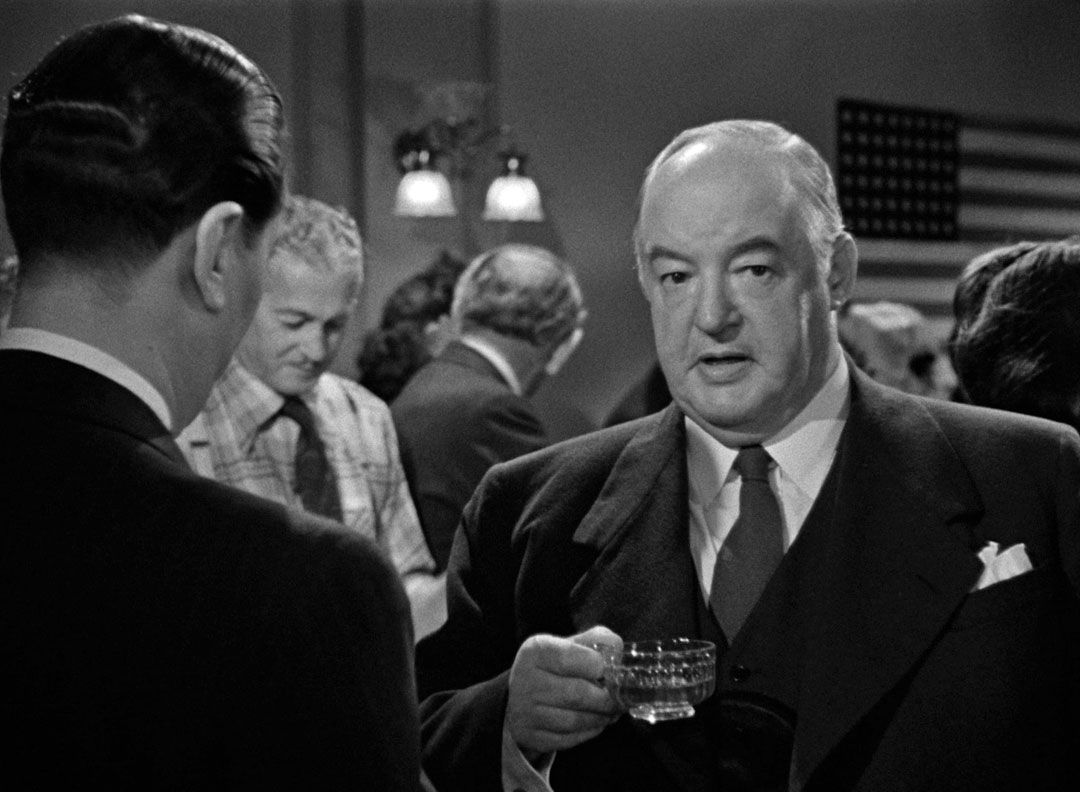
Released in the Summer of 1945, here’s the boiled down plot: Stanwyck’s character, Elizabeth Lane, is the writer of a homemaking column that makes it appear as if she is married with a baby and living the high life on a Connecticut farm. In order to keep her job, she must make all of this come true to fool her publisher (Sydney Greenstreet), who has invited himself and a war hero (Dennis Morgan) over for Christmas dinner.


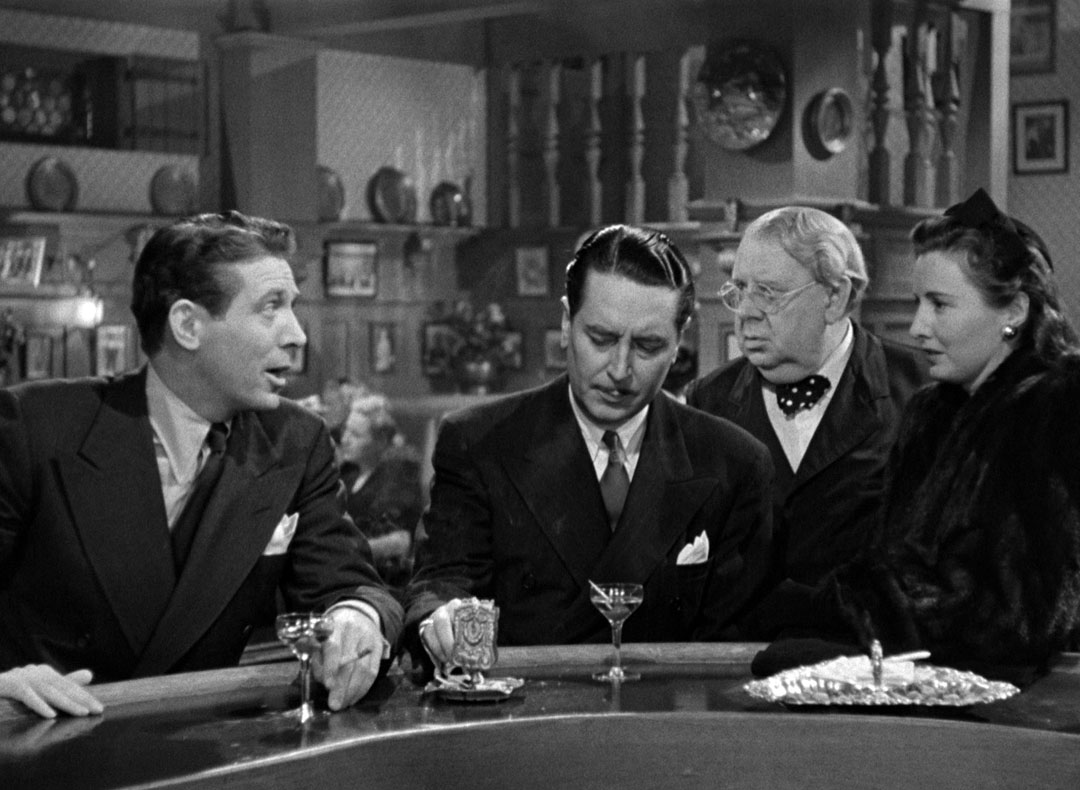
Directed by Peter Godfrey (“That Hagen Girl”) the supporting cast includes Reginald Gardner and S. Z. “Cuddles” Sakall (“In the Good Old Summertime”). The chemistry between Stanwyck and Morgan is perfection.


Sakall’s character is the lovable chef who makes sure that Elizabeth (Stanwyck) gets the man she wants.


In order to keep picture costs down, the mink coat Elizabeth Lane has rewarded herself with is the same coat Joan Crawford wore in “Mildred Pierce” (1945).


I’m guessing Barbara didn’t get to take it home when the movie was completed!


Greenstreet takes a break from his usual villainous role in this comedy of errors. It is still not a huge deviation for him though, as the bossy nature of the Publisher who won’t shut up long enough to listen to his employees is extremely annoying!


Any suggestions for next year? See more classic movie photos at my main website.
Friday, August 21, 2020

Double Indemnity at the Chateau Marmont


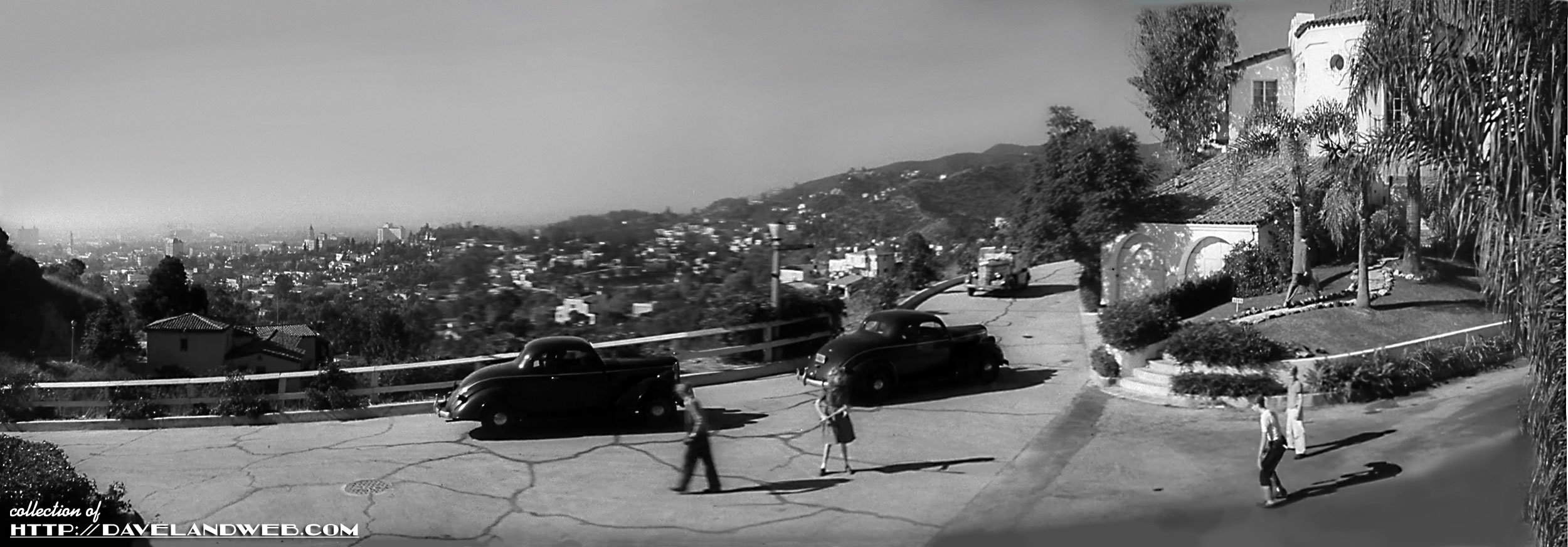
In my ritual of watching classic movies while eating dinner, I put “Double Indemnity” into the player. I’m one of those geeks that will watch the movie and listen to the commentary...and then obsess over the extra features on the disc. Longtime readers know I also obsess over figuring out where these vintage movies were shot. While most were shot on a soundstage, they still used actual building exteriors and outdoor locations for establishing shots. “Double Indemnity” used this home in the Hollywood Hills for the exterior shots of femme fatale Phyllis Dietrichson’s (Barbara Stanwyck) residence:


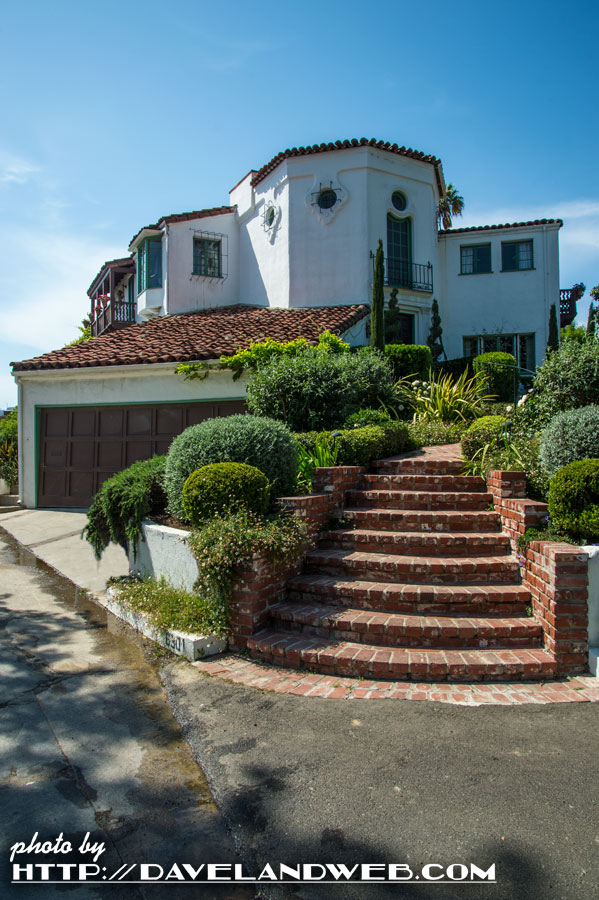
How that same home looks today:


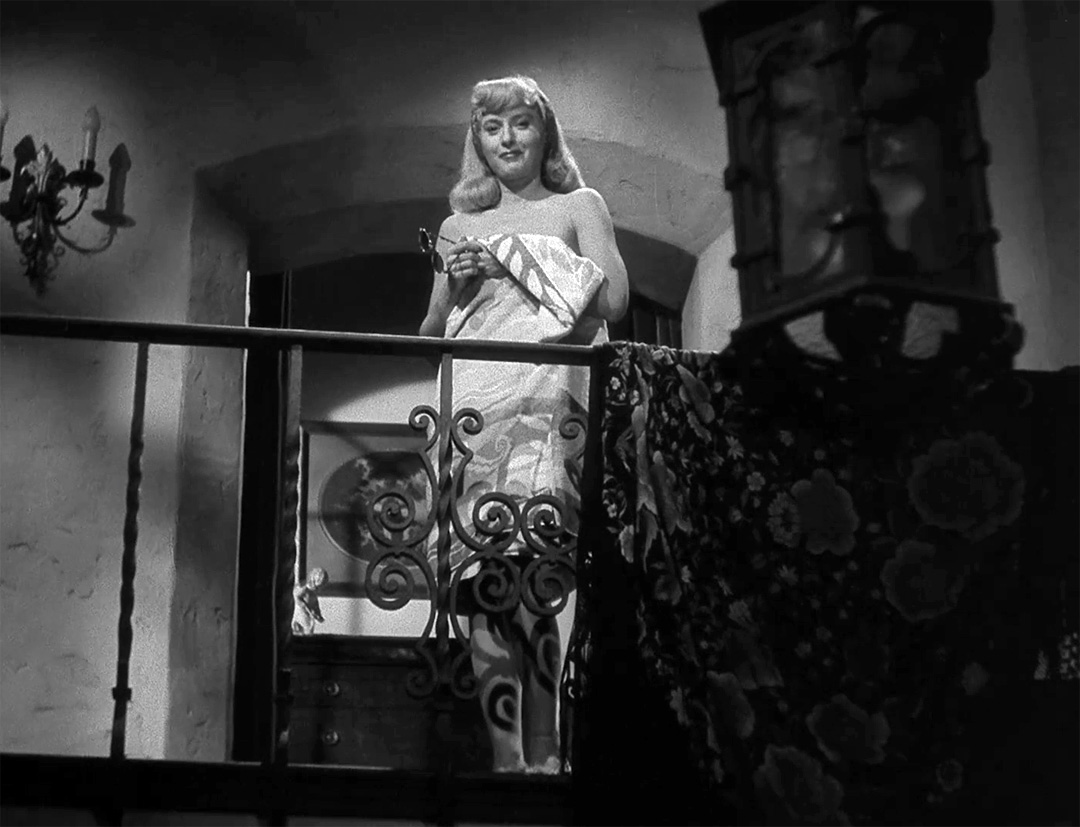
From the moment she appears at the top of the stairs clad in a towel…


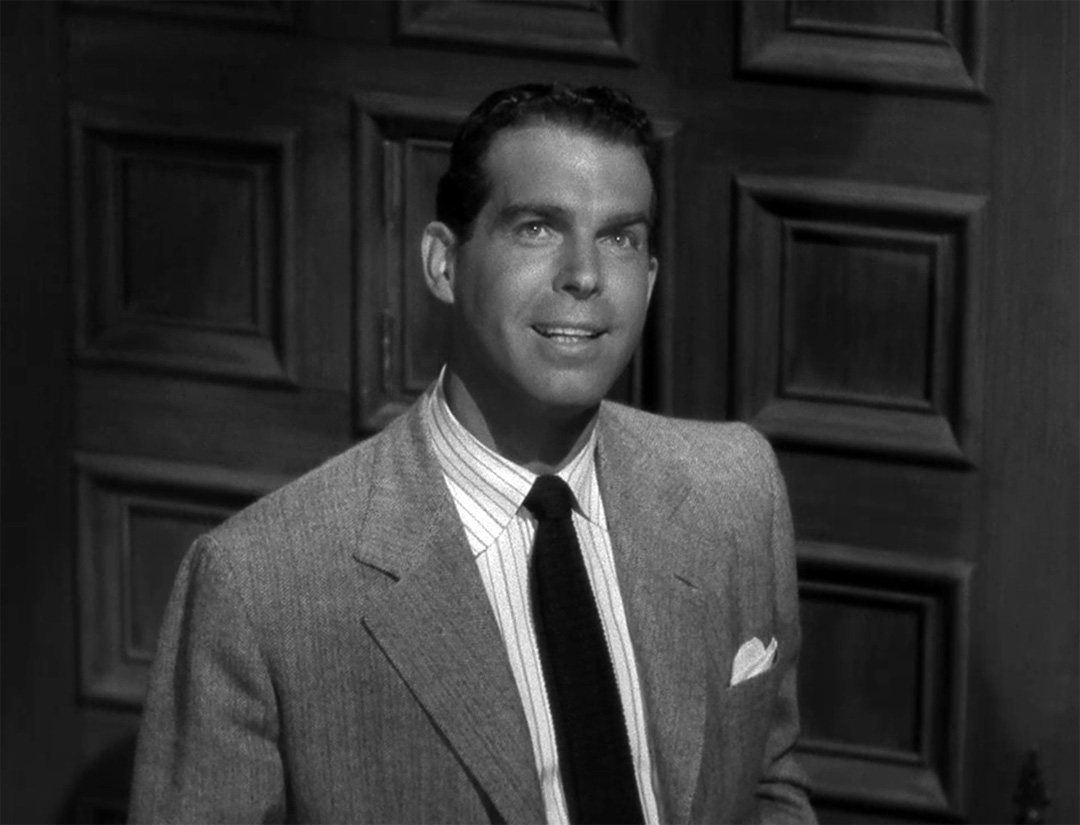
Insurance salesman Walter Neff (Fred MacMurray) is a goner.


And let's just get this over with…yes, I know Stanwyck’s wig is awful. That was a conscious decision on Billy Wilder’s part to make her look cheap. How about that curl on top?!?


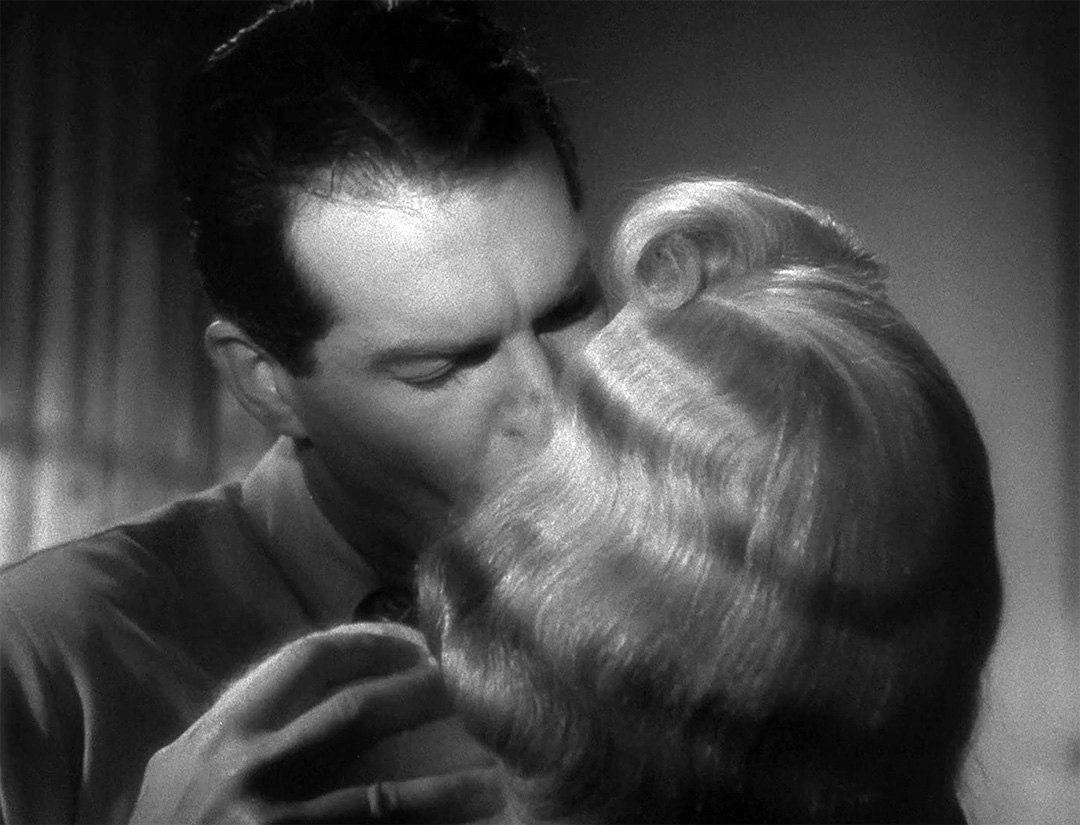
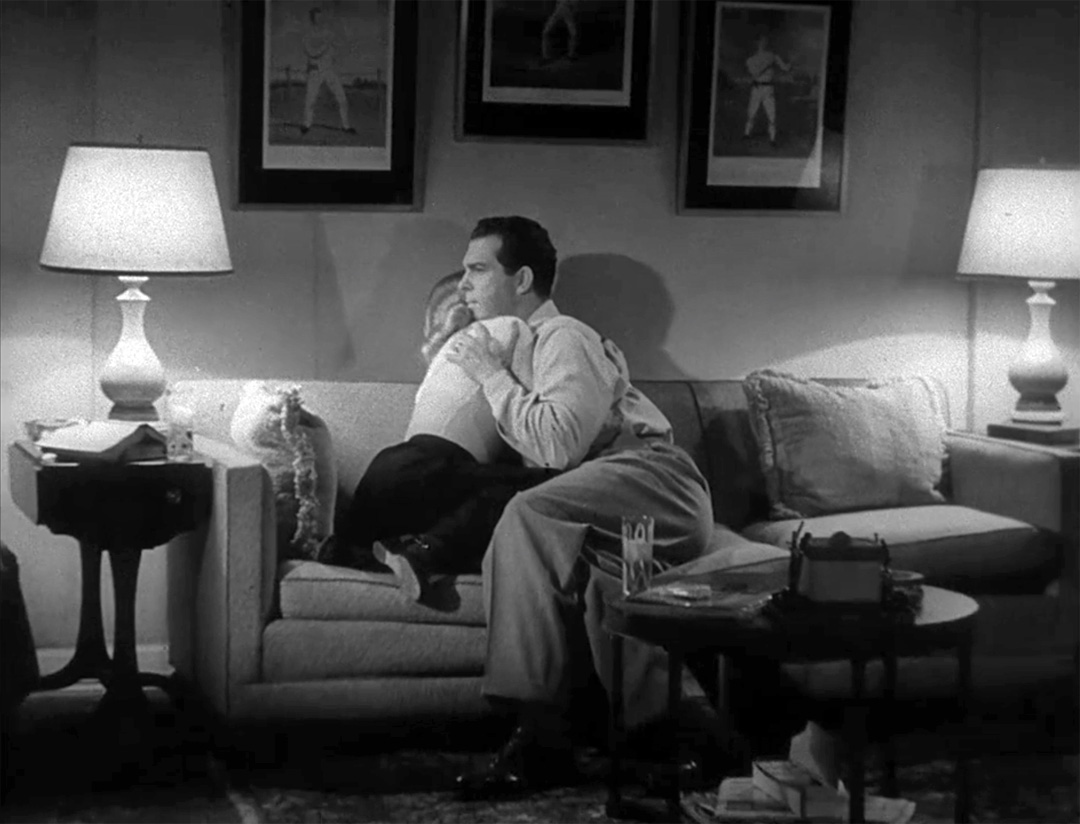
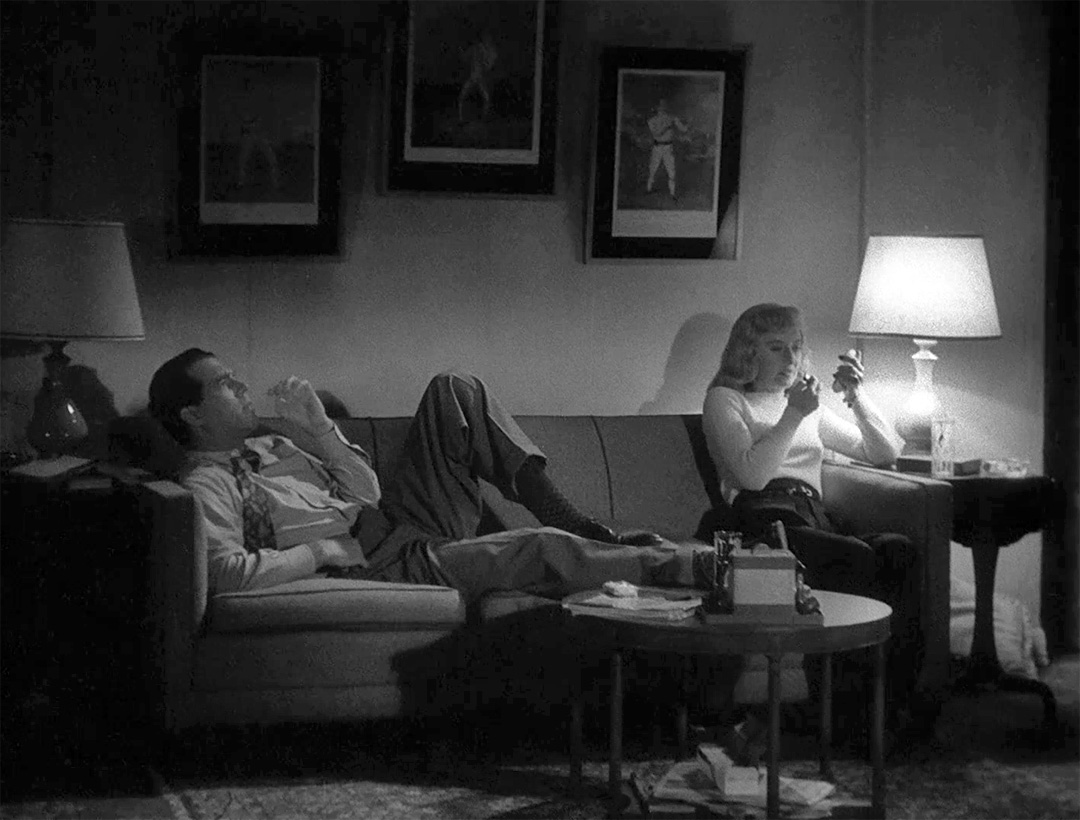
It is amazing how much was conveyed at a time when censorship was at its peak. Although there was no nudity, you knew that from this shot of the two on the couch…


which then cuts back to Neff doing his narration…


and then cuts back to the two on the couch again...there was more than just hugging that went on during that cut. They have not only changed positions on the couch, but Neff is dreamily smoking the “after” cigarette and Phyllis is reapplying her lipstick. Wow.


Finally, to the point of this post. During one of the documentaries, it was mentioned that Wilder had the interior of Neff’s apartment modeled after a Chateau Marmont interior (recreated on soundstages 8 and 9 on the Paramount lot). Wilder had roomed with Peter Lorre at the Chateau Marmont in the 1930’s and it remained a favorite haunt of his. His quote about the hotel is often repeated in histories about the fabled landmark:

“I would rather sleep in a bathroom than in another hotel.”

Apparently during the 1935 holiday season the hotel was booked; he persuaded the staff to put him up in the vestibule outside the lobby ladies’ room.

“It was a small room, but it had six toilets.” 

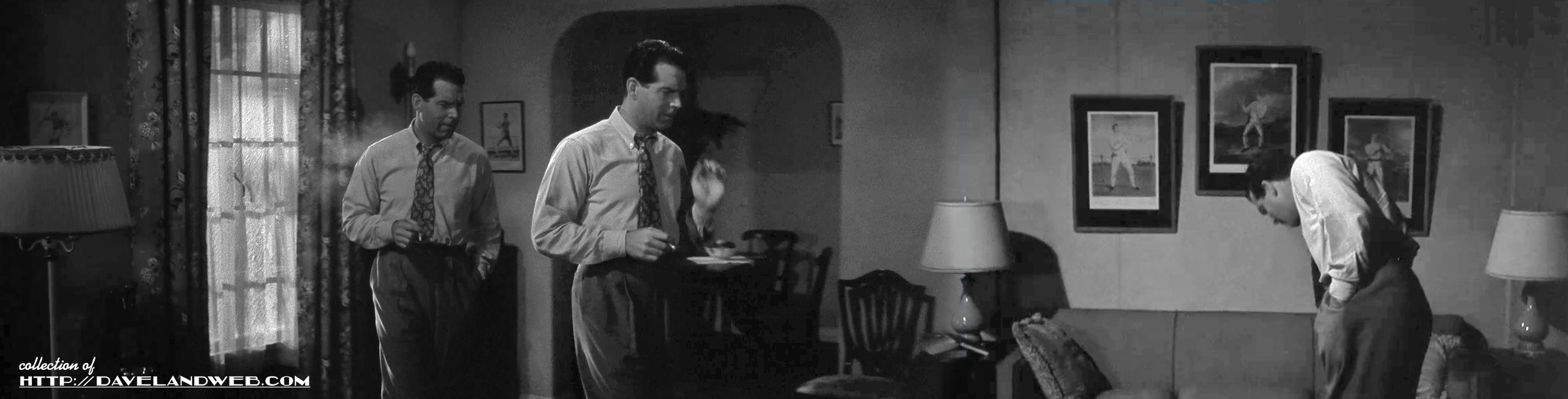
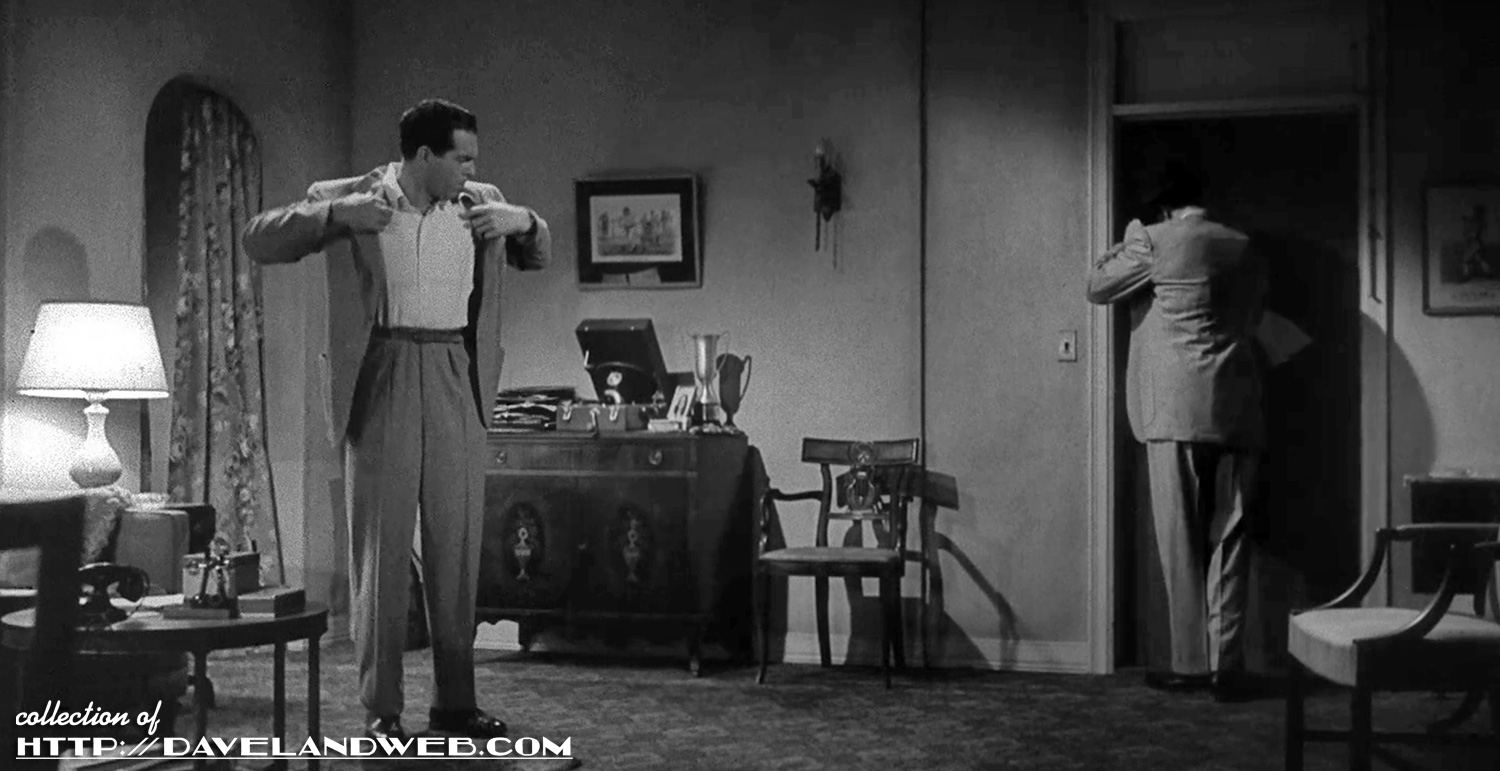
I immediately watched the film again, fast forwarding to the scenes that occurred in Neff’s apartment. Sure enough, the layout looked familiar. Set design by Bertram Granger:


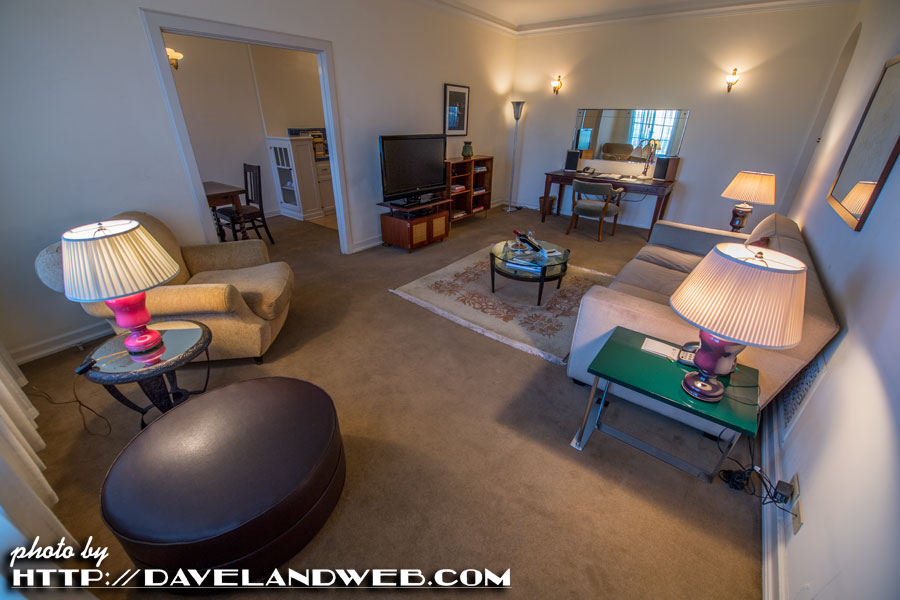
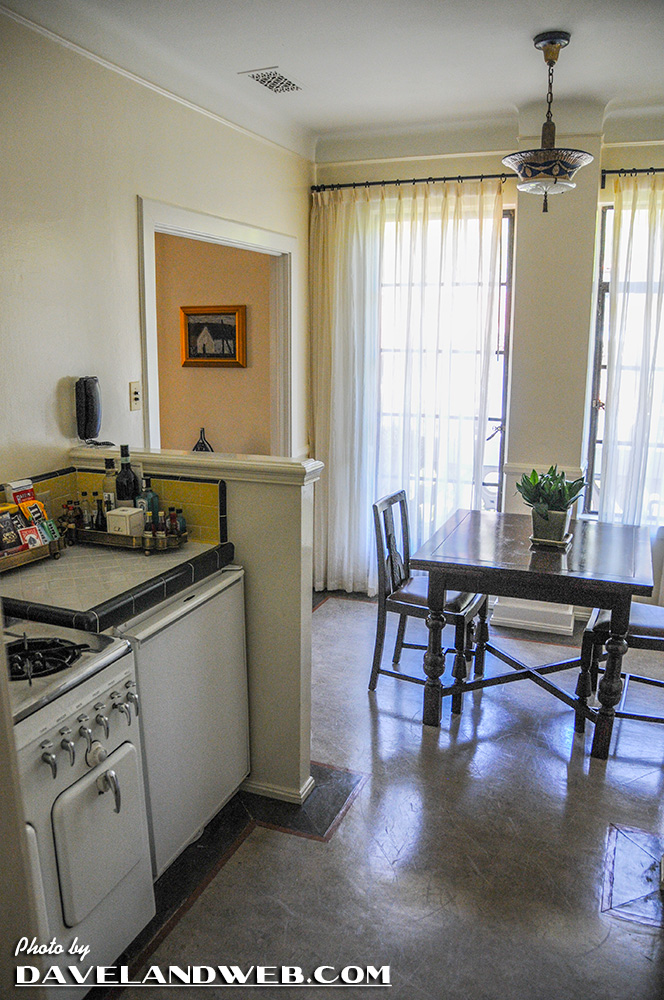
The room that seemed the closest at the actual hotel was room 25; other than the position of the entry door, it is very similar as far as the size of the living room, location of the windows, and where the dining room/kitchen are situated. Neff’s bedroom is never seen in the movie.

The view from a Chateau kitchen into the dining room:


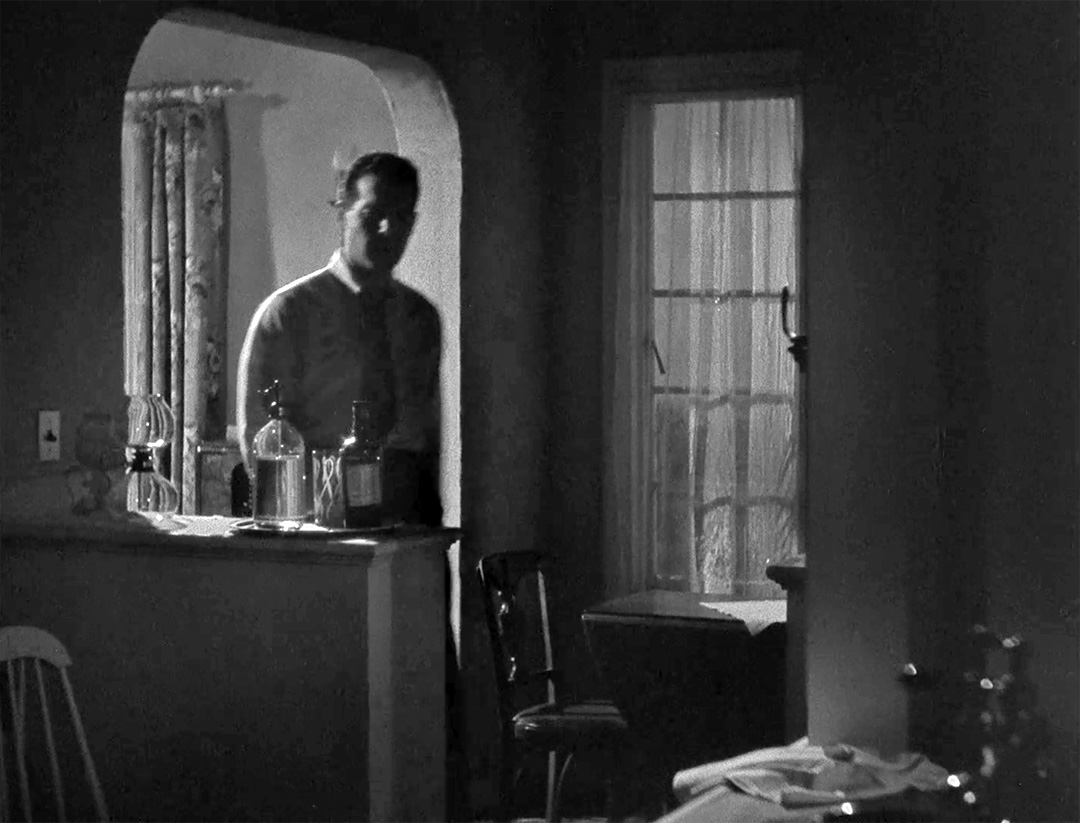
How it looked in the movie:


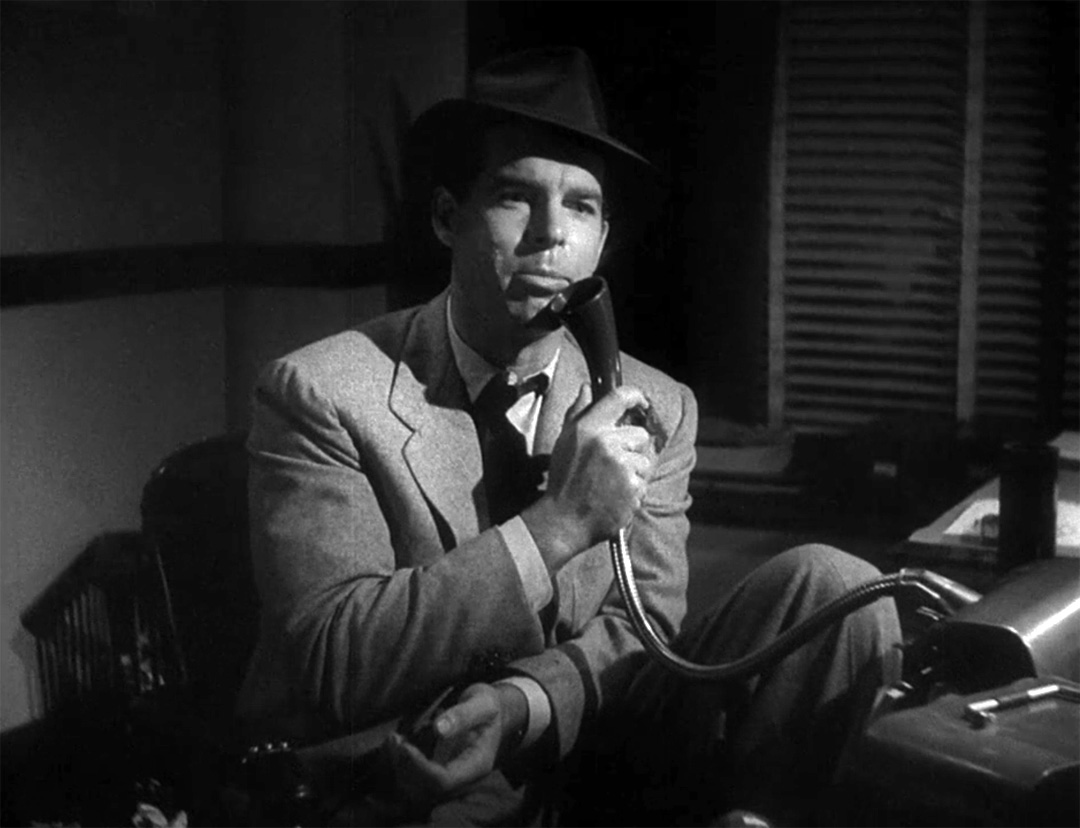
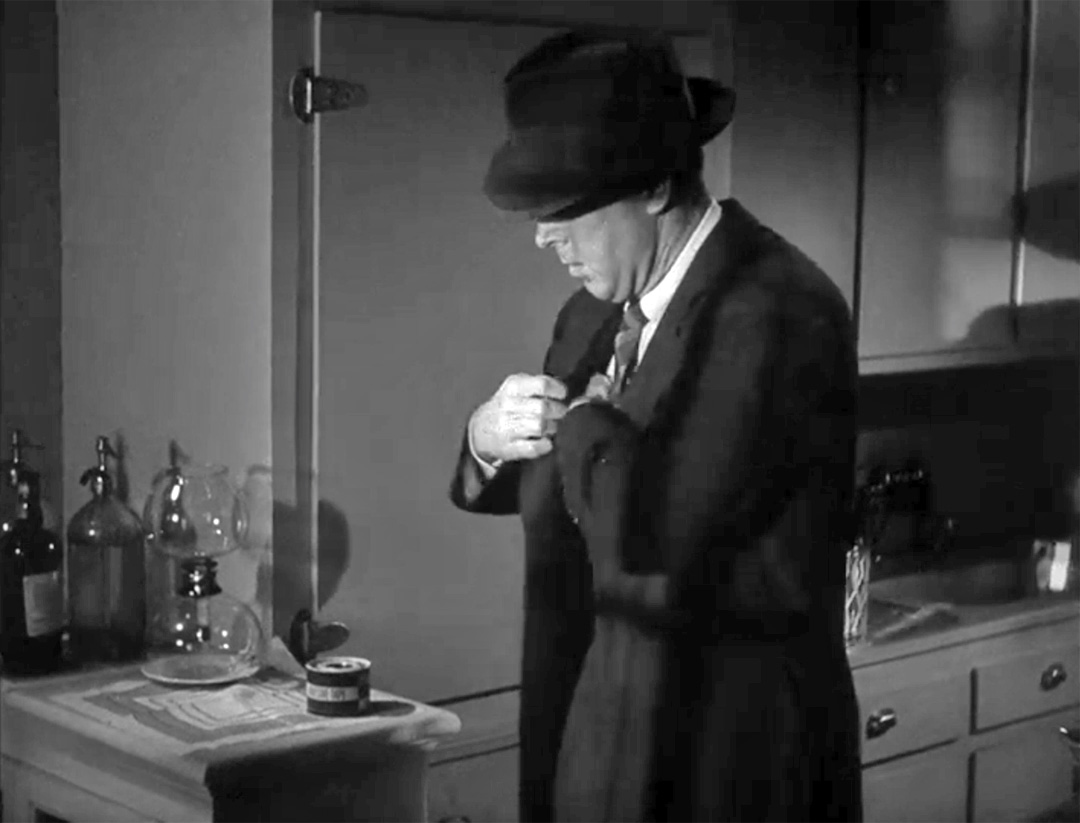
Neff in the kitchen:


I would even go so far as to venture that whoever owner André Balazs hired to redecorate the guest rooms when he first bought the hotel looked closely at “Double Indemnity” for inspiration. Compare the furnishings, pillow, and lamps in this shot with the previous ones showing Neff and Phyllis making out on the couch:
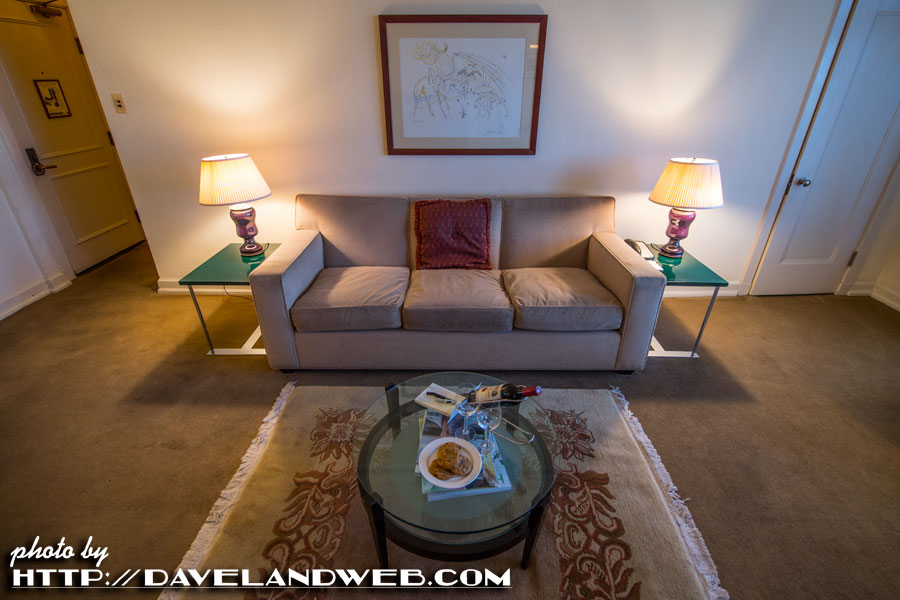

Just one more reason that I like (and will miss) the Chateau Marmont hotel.

See more Chateau Marmont photos at my main website.