Showing posts with label rochelle hudson. Show all posts

Tuesday, April 21, 2026

Temple Tuesday: Curly Top In-depth


When it comes to Shirley Temple, you’re either a fan or you’re not, and if you fall into the latter category, you should avoid “Curly Top” (1935). Fox realized her box office power and put her front and center in this unashamed showcase of the little girl’s many charms and talents. In case you couldn’t figure out where the title came from, look no further than the opening frames of the credits which focus on Shirley’s signature curls. Although the story is loosely based on the novel Daddy Long-Legs by Jean Webster, there is no question that the title was meant to capitalize on Shirley’s skyrocketing fame with her adoring public. How adoring? No photos were too trivial for Shirley’s fans, including a series of shots that showed her hands and feet. No face.


As a gag, director Irving Cummings poses with Shirley and the other orphans looking through a rain-soaked window. Shirley’s stand-in, Marilyn Granas, is standing next to Shirley in the left corner of this shot:


Great care went into the production of “Curly Top,” including these architectural renderings for the beachside cottage that was owned by Shirley’s character’s ardent benefactor, played by John Boles. From the publicity caption on the back:

This is the front, or beach elevation, of the John Boles’ home used in the Winfield Sheehan production, “Curly Top,” starring Shirley Temple. A modern and simple treatment was designed by Jack Otterson, Fox Film art director, by accentuating horizontal lines in the wide banks of windows and a wide lap siding makes this a truly beautiful home. Great sliding doors open on the hallway toward the ocean.


The set was built on a soundstage; the scenic backdrop was a matte painting.


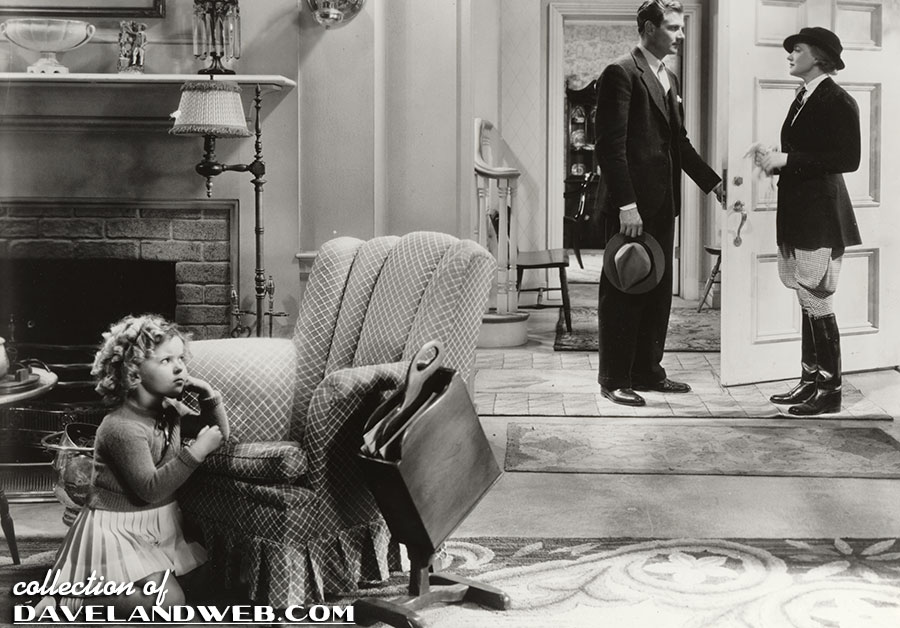
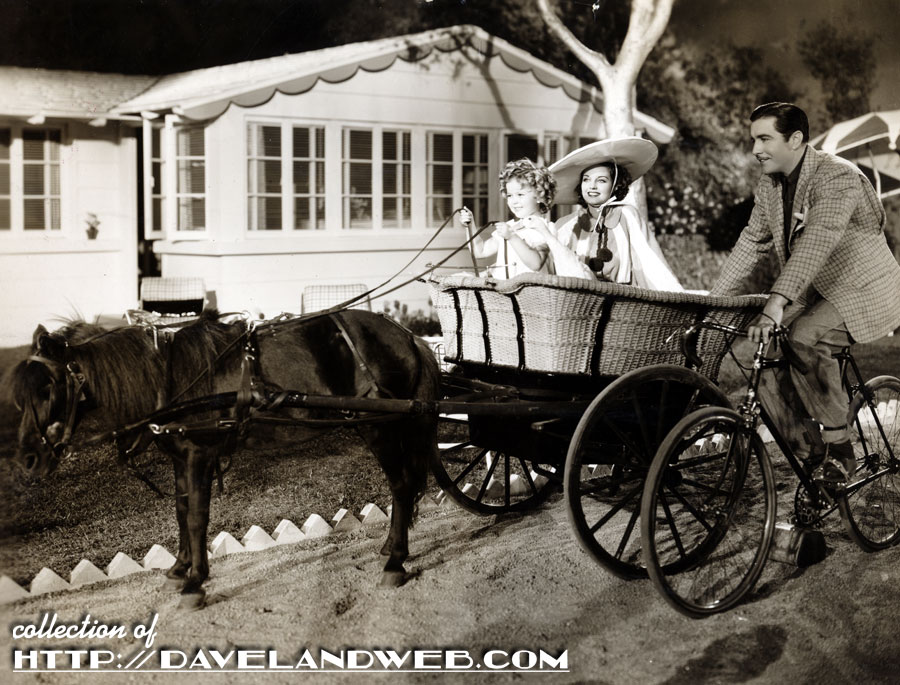
A closeup of the cottage from a deleted scene with Shirley, Rochelle Hudson (who played her sister),  John Boles, and a newly purchased pony/pony cart.


Interior sets were just as elaborate, like this art deco styled conservatory where Shirley puts on a benefit for the orphanage she used to reside in with her sister.


A publicity still showing Shirley taking a bow after performing her one girl tour de force, “When I Grow Up.”


Zooming in so you can see Shirley’s curtsy.


Below, Cummings poses with Shirley, wearing a bridal gown for one of the segments from that musical number. “Curly Top” is a great film, but at times the emphasis is too Shirley-heavy. Early in the movie, she recites poetry while sitting in Boles’ lap and the camera quickly cuts to a closeup of her face. It’s a bit jarring and somewhat cloying/cutesy. The “When I Grow Up” number is truly over the top,  featuring Shirley singing, reciting poetry, dancing, jumping rope, and aging from childhood to old age. OK, we get it, Shirley is talented, however the best Temple films are the ones that are a bit more balanced.
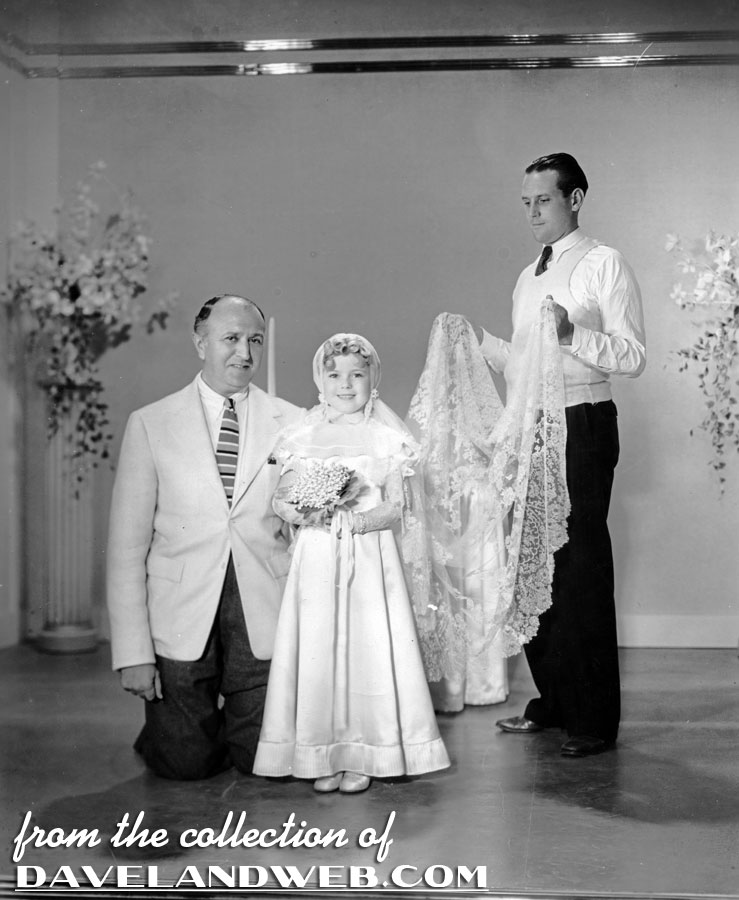


The above photo was also seen in the Spanish magazine Cinegraf, which showed a number of the set interiors from the movie.


The jaw-dropping bedroom set for the sisters:
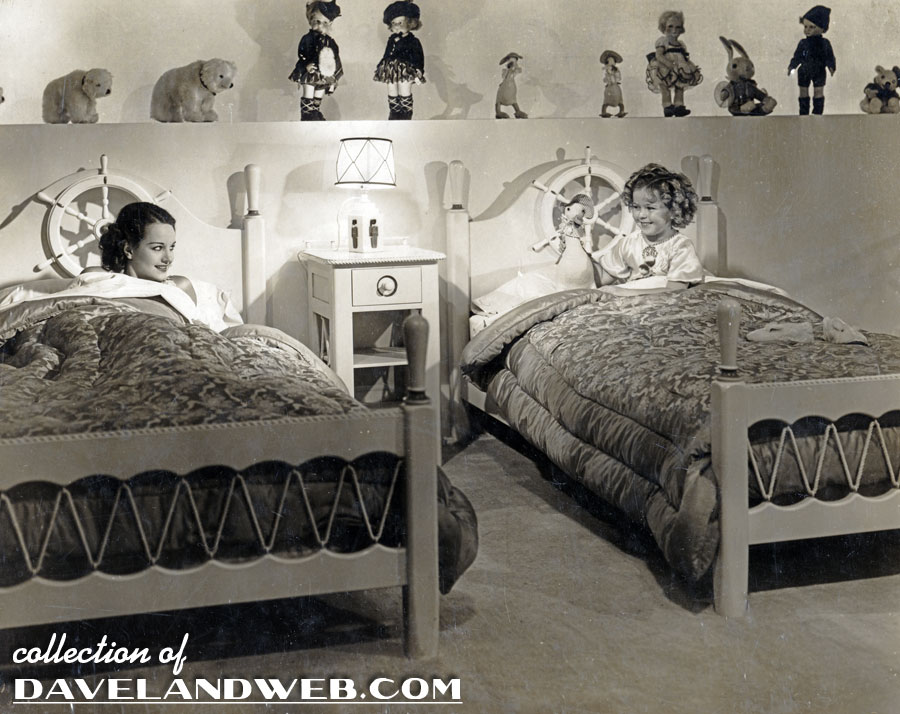


Set stills below of the entire set, which is only seen briefly in the film. Imagine what it must have cost to construct this childhood fantasy bedroom on a soundstage! Depression era children would have LOVED to have a fraction of the toys that Shirley’s character possessed.


From the publicity materials that accompanied the plans for this bedroom/playhouse:

This Jack Otterson neo-classic design embraces a new idea of making a playhouse part of the architecture of the bedroom. This playhouse makes an excellent toy closet and assures a neat and attractive nursery day and night.


Although I do not believe you see it in the finished film, the set had an original Charlotte Clark Mickey Mouse stuffed doll, complete with tag:


In 2015, when Shirley’s childhood costumes and possessions were auctioned off by Theriault’s, two Mickey Mouse dolls were part of the proceedings, selling for $6,000. While the listing stated that “according to family oral tradition, the Mickey Mouse dolls…had been gifted by Walt Disney,” the taller doll shown below has an uncanny resemblance to the one featured in the film.


Back to the set stills, note the alphabet blocks that spell out the title of the film:


Another view of the bedroom/playhouse:


Shirley herself poses on the set, wearing the pink silk pajamas designed by René Hubert:


Look at the bunny detail on the sliding doors. Incredible that little touches like that are completely missed when watching the film. Now THAT’S craftsmanship!


The original costume design and pajamas were auctioned off in 2015:


From the catalog description for the sketch, which sold for $1,100:

20" (51 cm.) x 17" framed. Watercolored sketch on parchment depicts the proposed costume design for the pink pajamas with bunny appliques from the 1935 film "Curly Top". The sketch also indicates that bunny themed slippers were proposed as well. It is hand-lettered at the bottom "bed sequence" and was proposed by Rene Hubert who was the credited costume designer for this film.

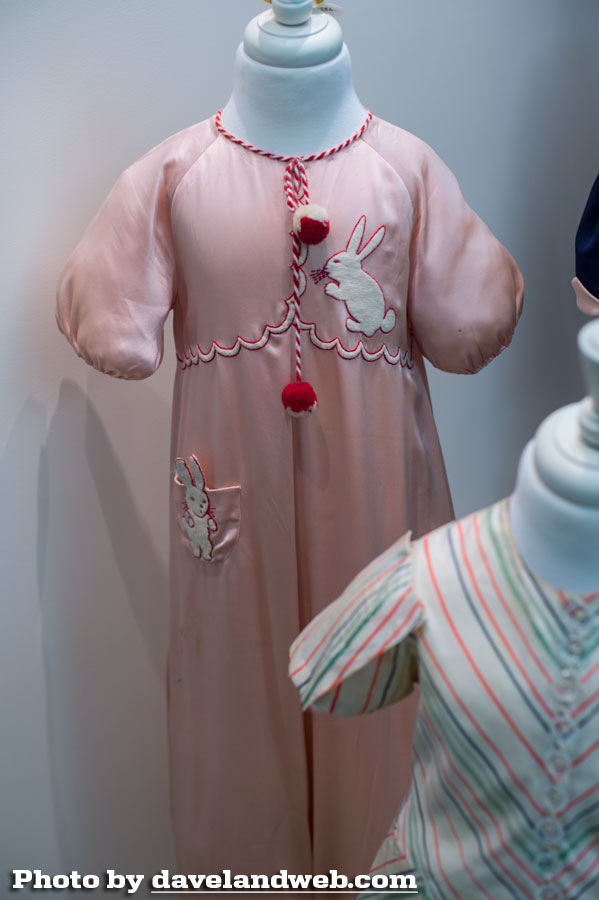
…and the pajamas, which sold for $5,750:

Of soft pink silk satin, the one-piece pajama playsuit is accented with two applique fuzzy bunnies, a scalloped border edged in red, and with red and white braids at neckline and red and white pom-poms. The costume has the studio label of "4994".

I was able to see them in person at the Santa Monica History Museum:


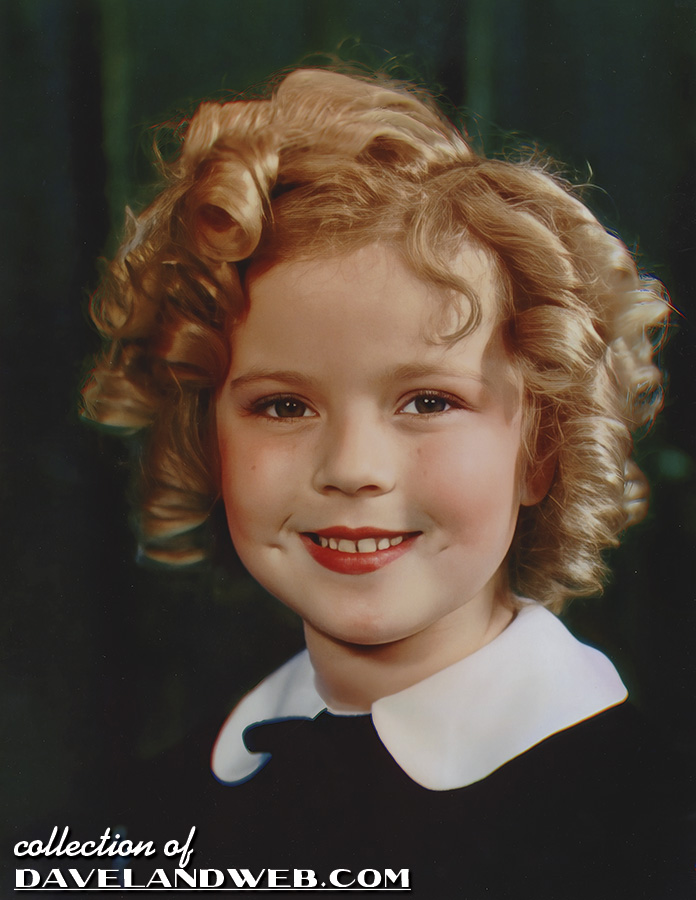
To wrap up this lengthy post, a color image of Shirley wearing the duck dress outfit from the film:


See more Shirley Temple “Curly Top” photos at my main website.

Tuesday, June 03, 2025

Temple Tuesday: Shirley and the Duck Dress


In the 1935 film, “Curly Top,” Shirley Temple has a brief sequence where her character exits the orphanage and is whisked away to a seaside cottage where she will lead a life of luxury with her sister, played by Rochelle Hudson. Costume designer René Hubert created the outfit known as “The Duck Dress” (because of the embroidery detail on the velvet bolero top) for Shirley and the chic outfit that Hudson models. As with anything Shirley did, photographers were on the spot to capture every detail. In the shot below, according to the blurb that accompanied it…

Shirley Temple and her pet pony, “Spunk,” are shown in an affectionate pose. Shirley is being starred in the Winfield Sheehan production, “Curly Top,” at Fox Film studio.


In the film, she refers to the pony as “Spunky.”


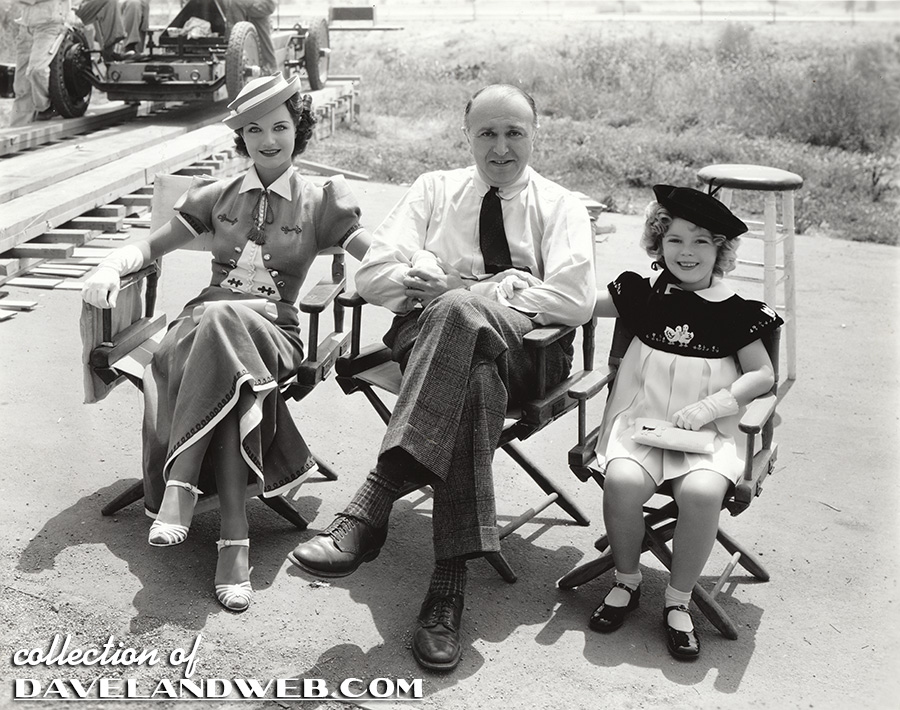
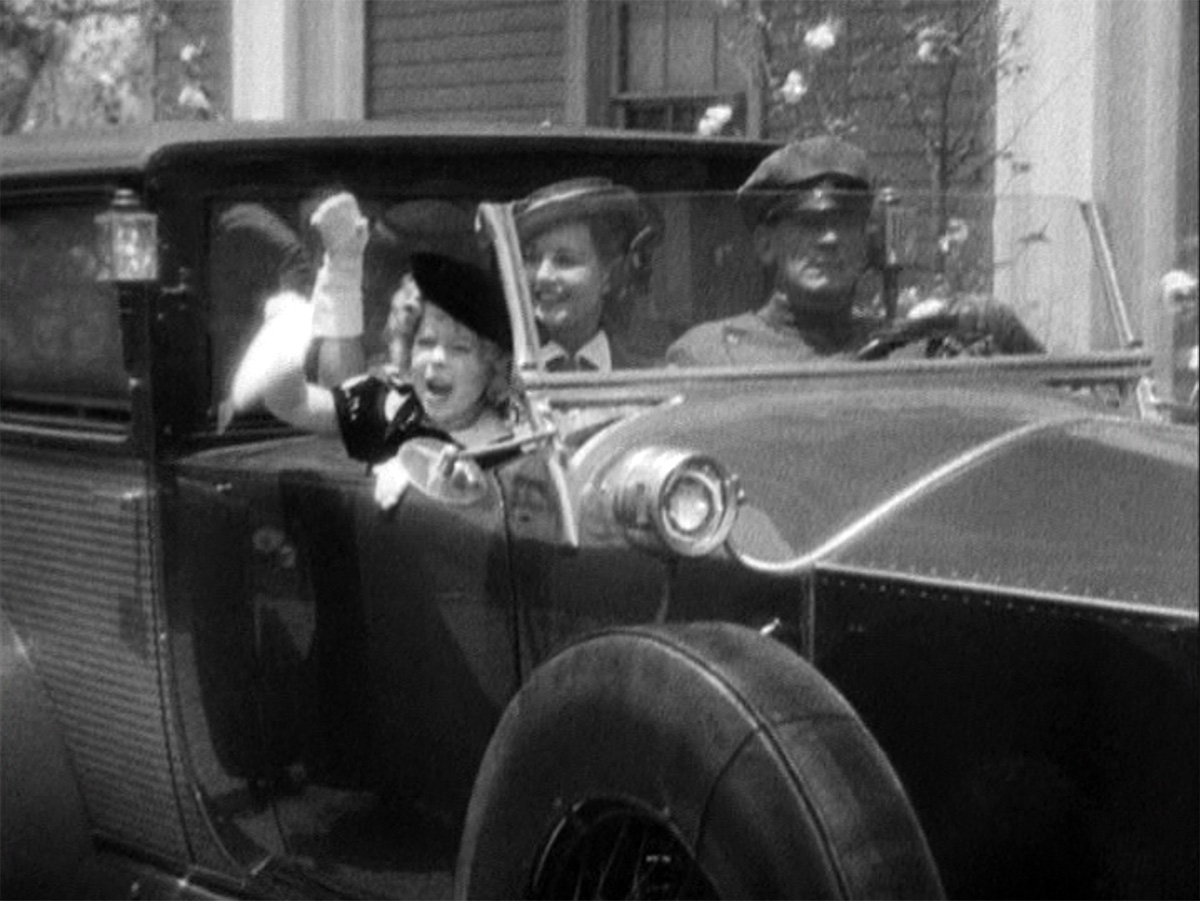
In between takes, Shirley and Hudson take a breather with director Irving Cummings. Note the track for a dolly shot at left, and the shot as it appears in the final film (below). The orphanage they are leaving was located on the backlot at Fox.


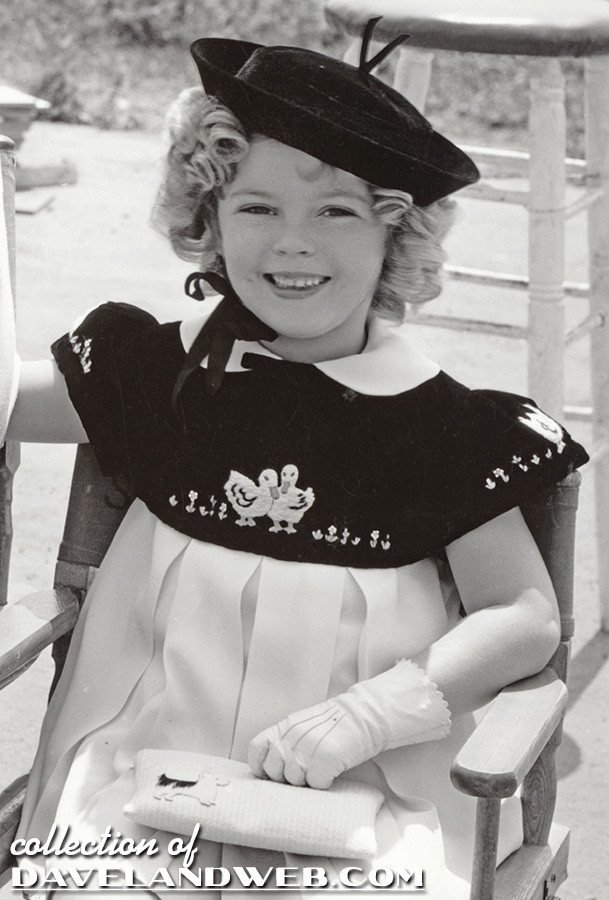
Zooming in, we can see all the details of Shirley’s adorable outfit, including the purse that appears to be made out of corduroy with a felt and fur Scottie dog attached.


The highlight of the sequence is when Shirley arrives at the cottage, she sashays up to the front door with her hand on her hip, demonstrating that she is now part of high society!


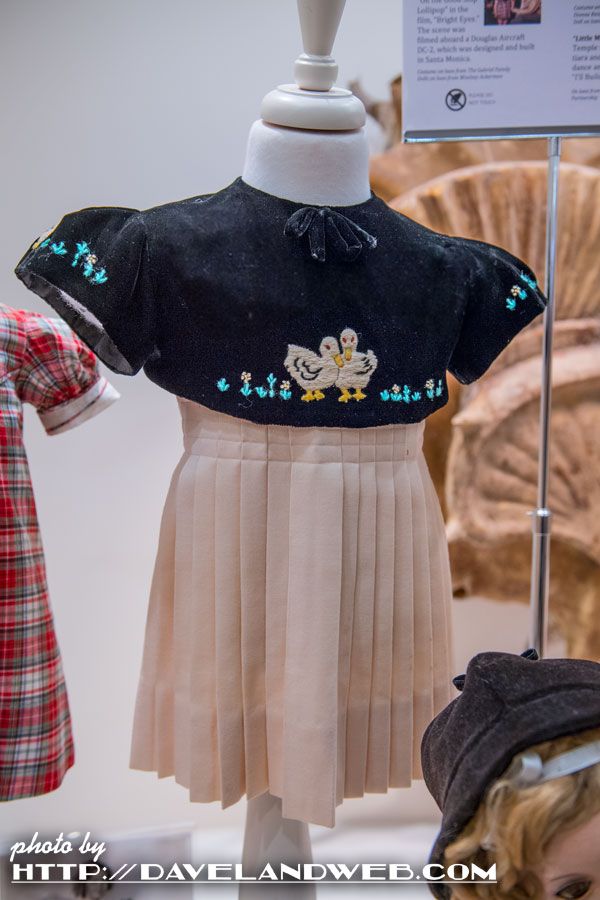
The outfit came up for auction, but the only original part that survived was the velvet bolero top. The skirt belonged to Shirley, but the pleating is different from the one used in the film. The tam hat and purse do not appear to have survived.


From the Theriault’s Catalog:

A short black velvet bolero top is embroidered with yellow ducklings on the bodice and sleeves, with a border of green leaves and flowers, and has a black silk lining. The bolero is worn over a sleeveless dress with pleated skirt. The bolero has studio tag 5943 and the dress has studio tag 4759. The costume was worn by Shirley Temple in the 1935 film "Curly Top" upon leaving the orphanage and arriving at her new home. In various studio promotional photographs of the film, the under-dress appears to have a collar and different pleats, suggesting that this dress was likely an alternate.


In fact, the dress was one used in “Our Little Girl” (1935, pictured above) which also had costumes designed by René Hubert. A detail of the embroidered ducks:


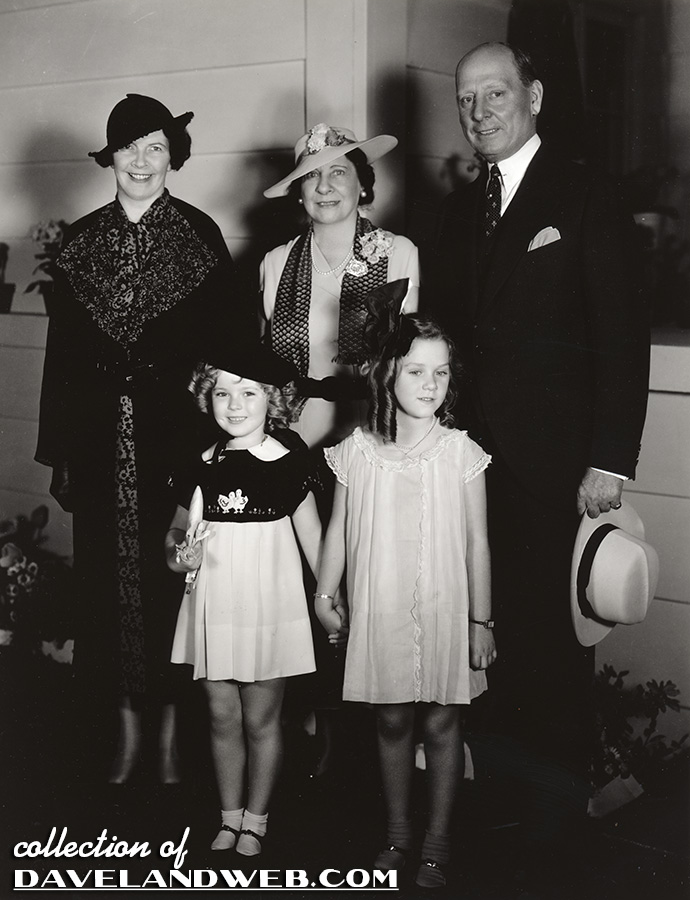
Shirley typically had visitors to the sets of her film. For any dignitaries visiting Hollywood, Shirley was at the top of the “must see” list. From the caption:

Mayor Frank Hague, of Jersey City, N.J., and prominent in Democratic party councils, with Mrs. Hague and Peggy Ann Hague visit with Shirley Temple and Mrs. Temple at Fox Film Movietone City, where “Curly Top,” Shirley’s latest picture, is now in production.


Hague supported F.D.R., who in turn not only supported the Mayor, but helped keep him out of scandal for many years. It was amazing at his lowly salary how he was able to amass quite a bit of wealth during his political career! At his funeral, one lady held a sign that read, “God have mercy on his sinful, greedy soul.” From his January 1956 obituary:

The blustery master-politician, whose temper often was as quick as his speech was ungrammatical, was called by his intimates an efficient executive and a friend of the poor. Some referred to him as a benevolent despot. But others termed him a “machine boss,” an “absolute monarch,” and a dictator.…During his reign, Boss Hague did a lot for the 300,000-population city at New York’s back door. He gave the poor a magnificent medical center and modernized the police and fire departments. He also gave them the highest tax rate in the nation and made a fortune for himself.…Trouble followed him…into his big mansion on his estate at Deal and his place at Miami Beach. Twin final blows were a $15,000,000 suit to make him repay alleged kickbacks from city employees and the death of his nephew and heir-apparent, Frank Hague Eggers, both in 1954.

Back to Shirley, with this color image of her in the duck outfit:


Shirley has a quick chat with beloved humorist Will Rogers, also working on the Fox lot:


Another close-up of Shirley’s purse:


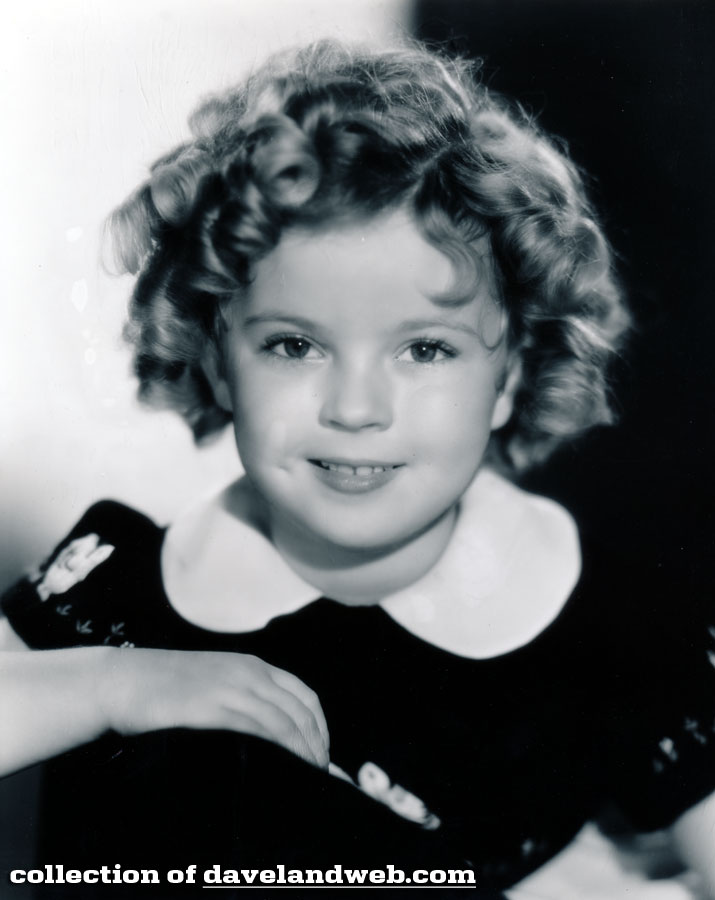
A publicity shot of Shirley in the duck dress, sans hat:


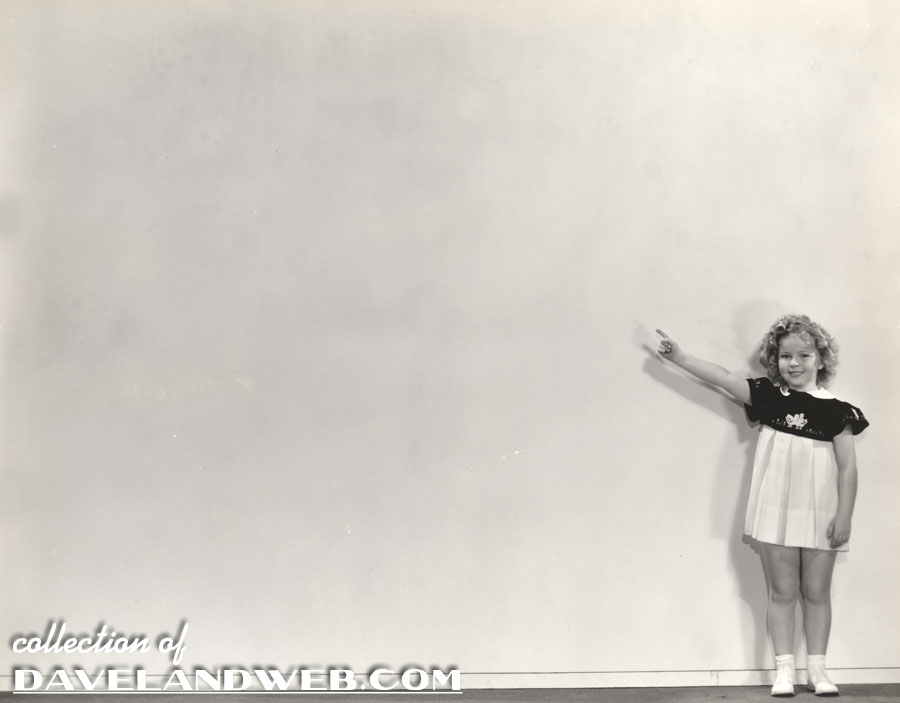
This image served many purposes; anything could be added to the blank wall behind her:


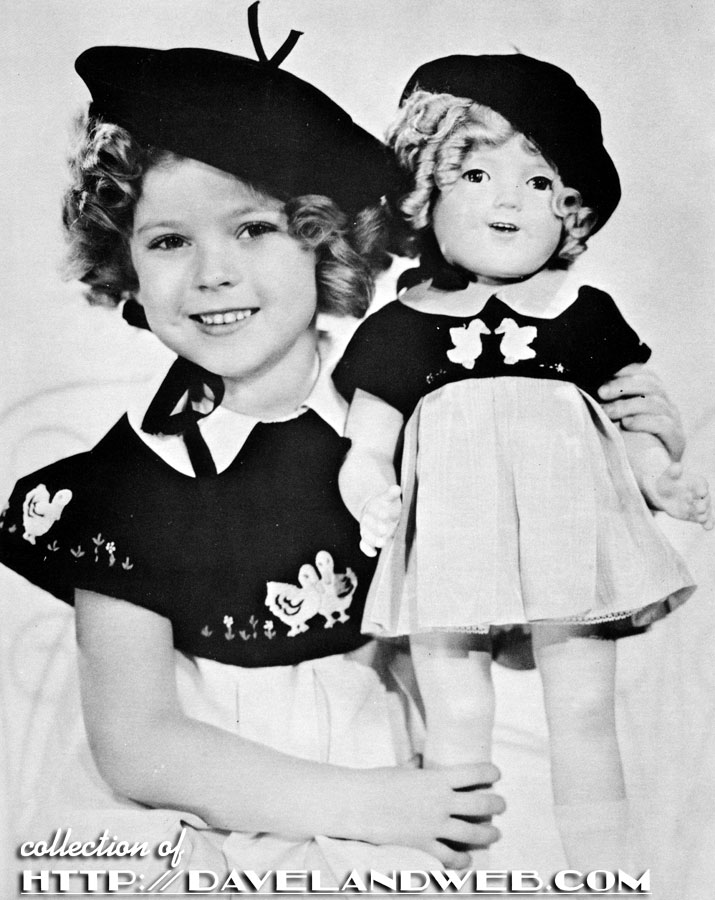
Ideal produced a composition doll wearing a matching outfit; here Shirley poses with a 27" high version:


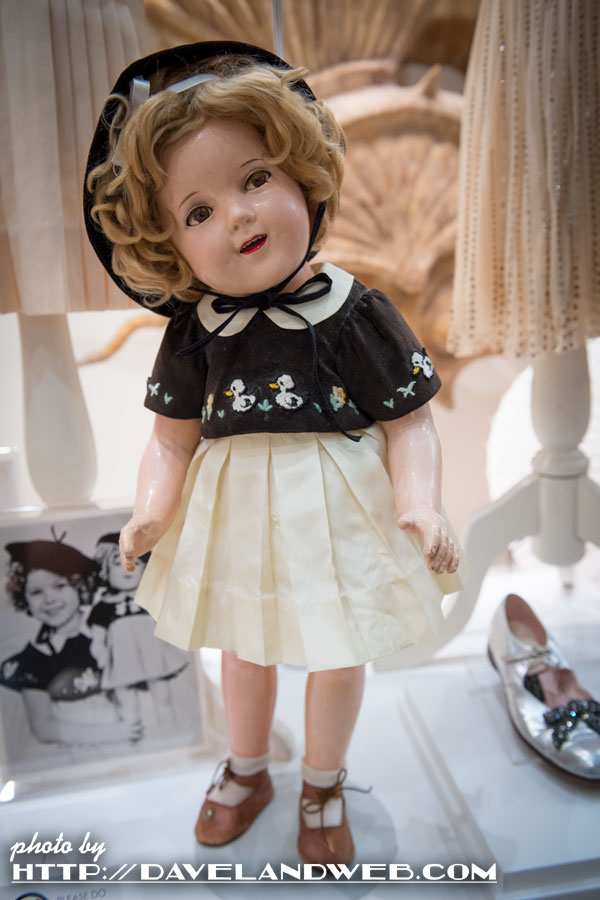
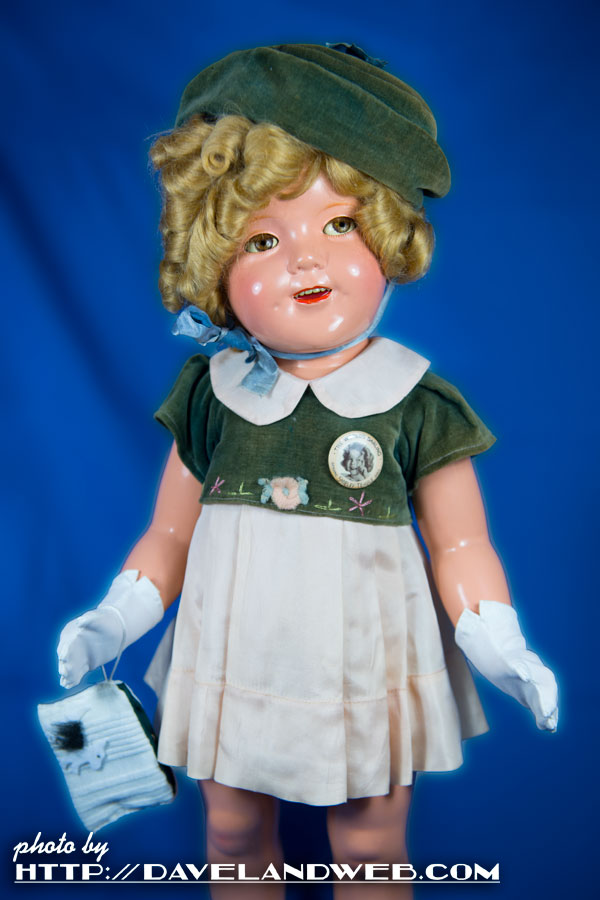
The designs on the bolero for the dolls varied, as seen here:


Some of them had flowers instead of ducks (the purse and gloves were additions; the rest is all original):


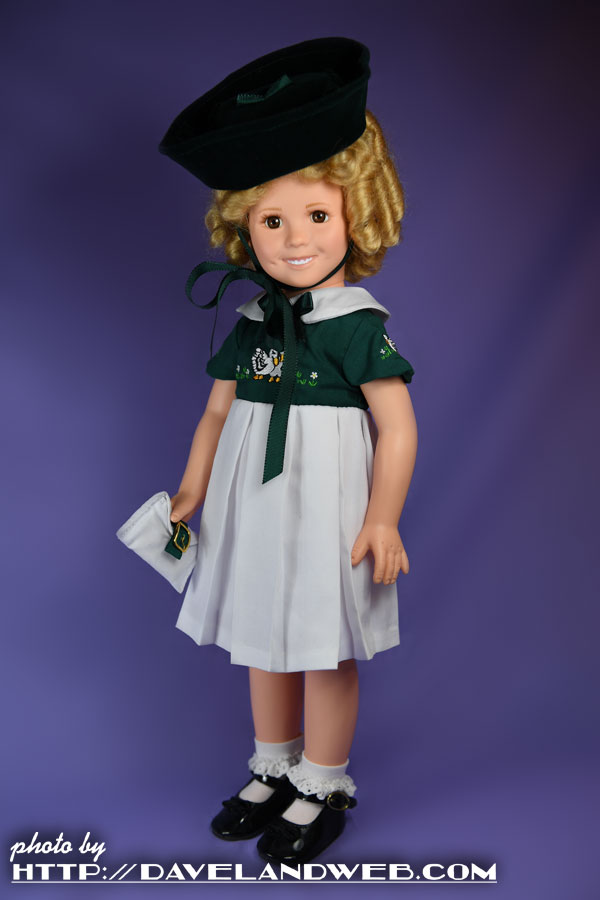
The Danbury Mint put out its own version for a vinyl doll:


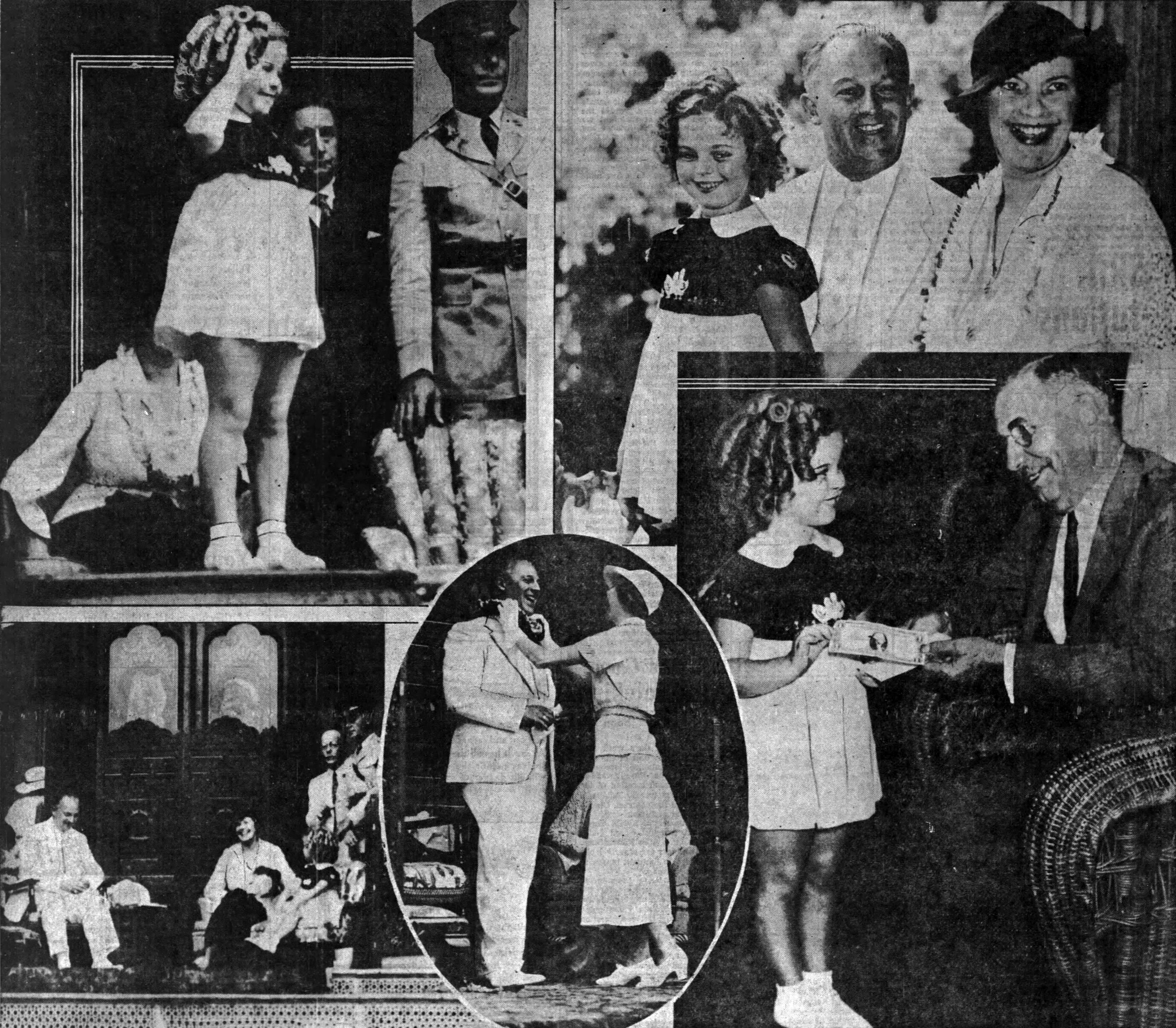
It would appear that Shirley (or at least her parents) truly liked this outfit, as she wore it in public on her first visit to Hawaii in 1935, specifically at the Royal Iolani Palace on Saturday, August 10. Below, she sings “On The Good Ship Lollipop” to her throng of fans, which numbered more than 15,000! The dress she wore here matched the one in “Curly Top;” it had not been paired up with the “Our Little Girl” skirt just yet.


In the montage below, you can see middle left, Shirley makes her first salute to the throng. At right she is shown with her parents, Mr. and Mrs. George Temple. Bottom left, a view of mauka steps of the palace where Shirley held “court.” Center, Miss Helen Poindexter places a lei on Shirley’s father while at lower right Shirley is shown selling a ticket to Governor Poindexter, after her public appearance, for the army benefit ball game for war veterans.


By May 1945, the bolero had been mismatched with the “Our Little Girl” dress, as seen in this LIFE magazine photo when Shirley was sorting through her collection to see what she was going to give away for a clothing drive.


And that’s it today for the duck dress!

See more Shirley Temple “Curly Top” photos at my main website.

Tuesday, December 08, 2020

Temple Tuesday: My Little Pony


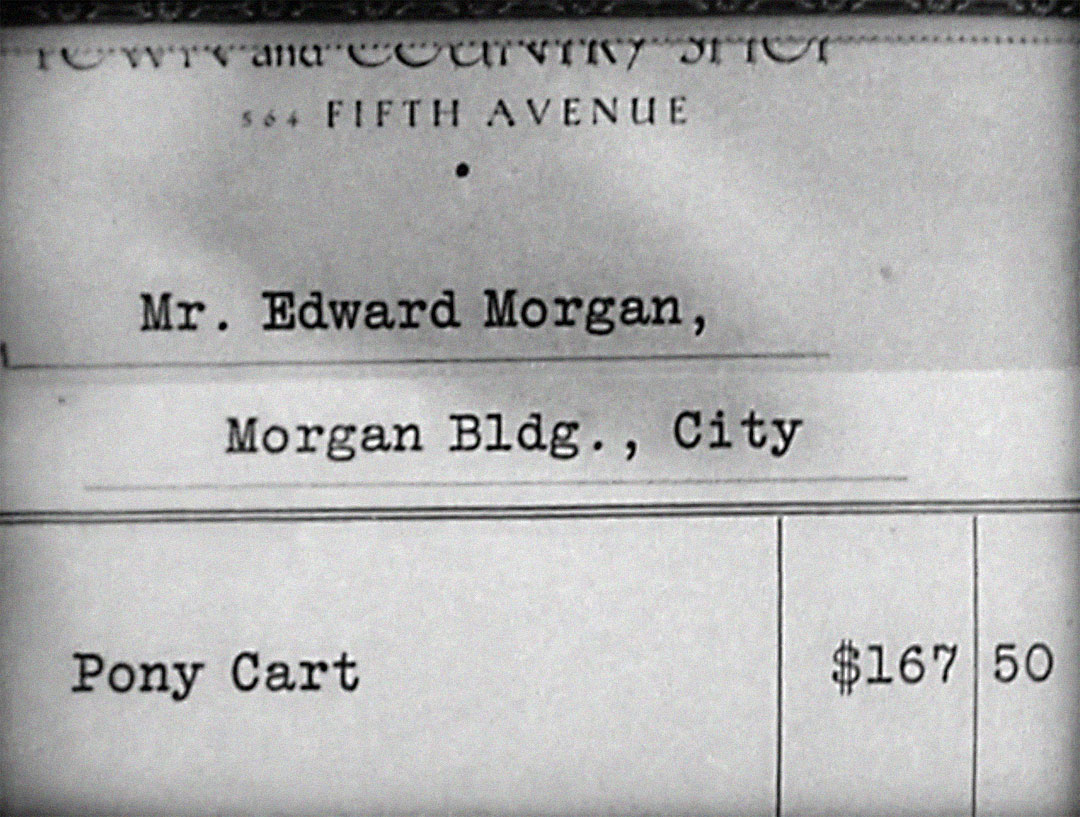
In the 1935 Shirley Temple film “Curly Top,” our curly-haired girl leaves the orphanage and strikes it rich with her adopted father...who ends up marrying her sister (that’s an entirely separate post topic, folks!). One of the many items he buys for her is a Pony Cart. The above still shows Shirley, her sister (played by Rochelle Hudson), and her ultra-rich adopted father, Edward (John Boles) cavorting around the beach house in the $167.50 Pony Cart. Of course the film shows the bill of sale; how else would the Depression-era audiences know that a fortune was being spent?!?


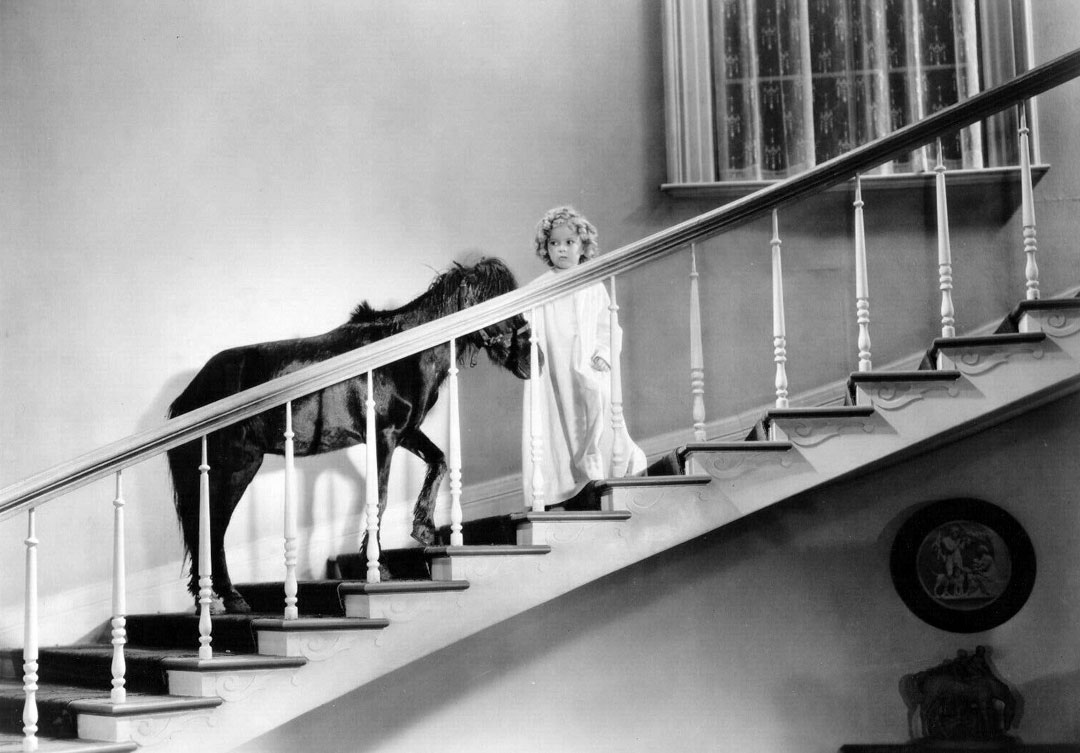
And to think Shirley started the film rescuing her poor little pony from the rain, sneaking him into the dormitory to dry off.


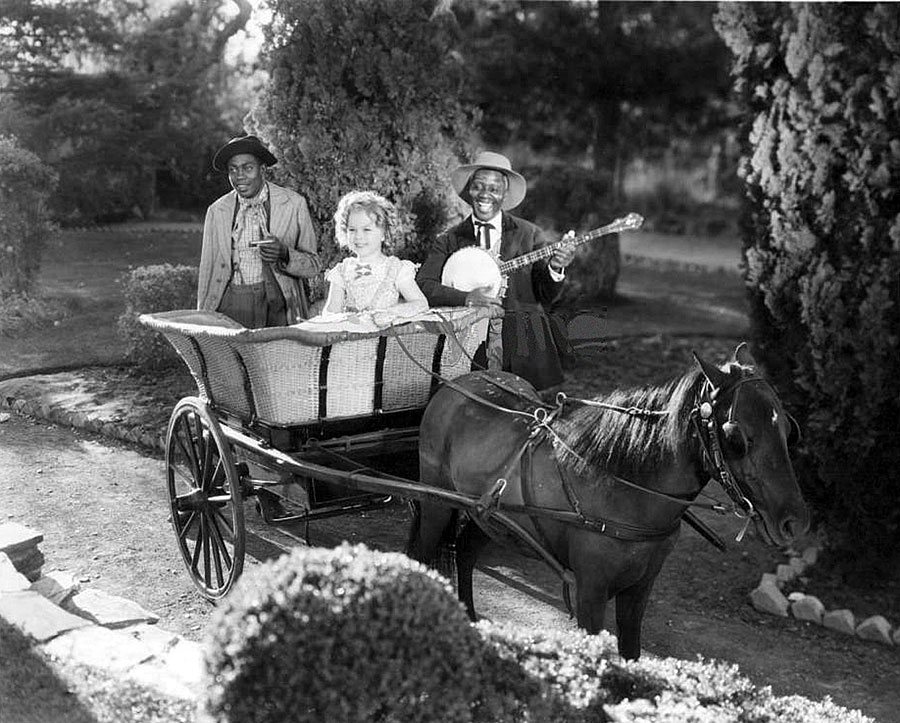
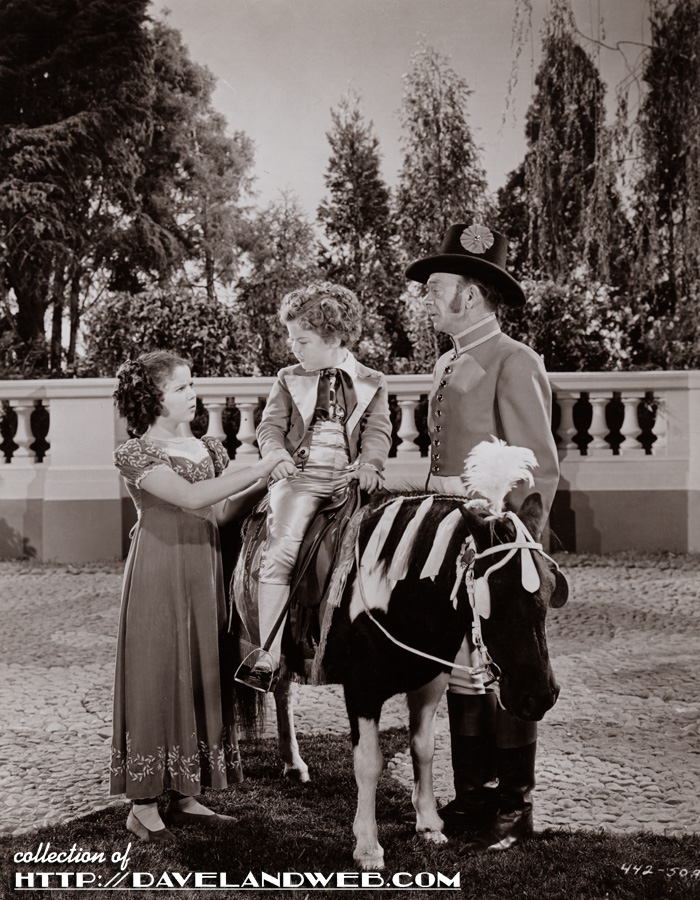
20th Century-Fox attempted to show some economy in Shirley’s 1935 film, “The Littlest Rebel.” The very same pony cart was featured in an alternate ending scene that wound up on the cutting room floor. The photo below shows Shirley on her way to celebrate the release of her father from the Yankee jail, thanks to President Lincoln. In the finished film, the pony cart is not seen; so much for economy.


Five years later, Shirley and Johnny Russell were arguing over who would get the better pony in “The Blue Bird”:


I’m surprised the Cart wasn’t brought out of the mothballs for another appearance!

See more Shirley Temple photos at my main website.