Showing posts with label theriault's auction. Show all posts

Tuesday, September 22, 2026

Temple Tuesday: Heidi Hijinks


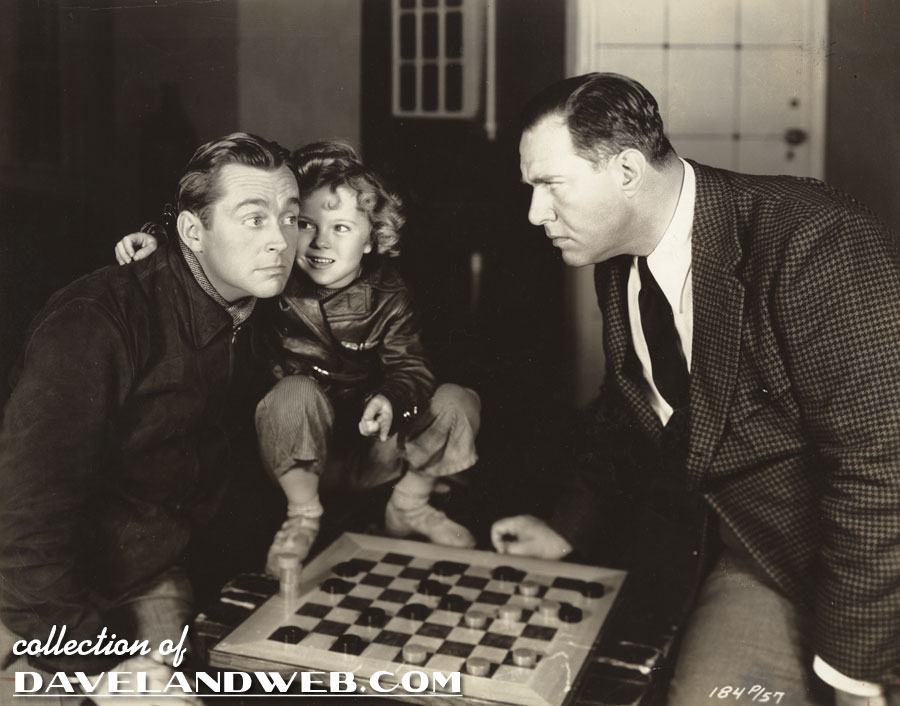
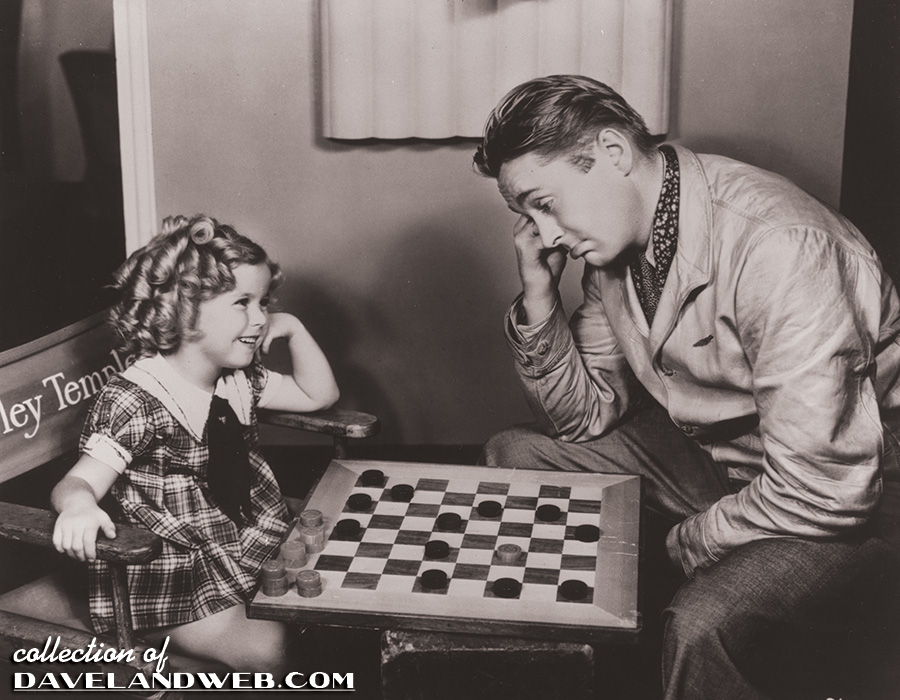
David Butler first directed Shirley in 1934’s “Bright Eyes,” where she launched a taxiing airplane with “On The Good Ship Lollipop.” No…it wasn’t a boat. In the first photo of today’s post, he visited Shirley on the set of “Heidi” (1937) and the two seemed to be having a bit of fun. It was important that the studio gave little Shirley directors who knew how to relate to children, as it made the work day for her more like play. The result yielded a more natural performance out of the talented tot, and Butler was smart enough to realize that. In 1937, Butler directed two films on the Fox lot: “Ali Baba Goes to Town” and “You’re a Sweetheart.” Based on production dates from the AFI website,  “Heidi” was from May 17 to mid-July 1937;  “Ali Baba” was from late July 1937 to early September 1937. “Sweetheart” was September 7 - late October 1937. If one was to guess, Butler was around for pre-production on “Ali Baba” when he visited Shirley. Below, Butler interrupts a game of checkers between Shirley and “Bright Eyes” costar James Dunn:


Apparently checkers was a favorite game for Shirley between takes; below it’s a different day during “Bright Eyes” filming, but the same activity!


Back to “Heidi”…it just wouldn’t be a Daveland post without a few rabbit holes! Another day, another visitor to “Heidi.” Not sure who the semi-goofy looking guy is, but Shirley was caught mid-blink.


Zooming in to show her costume:


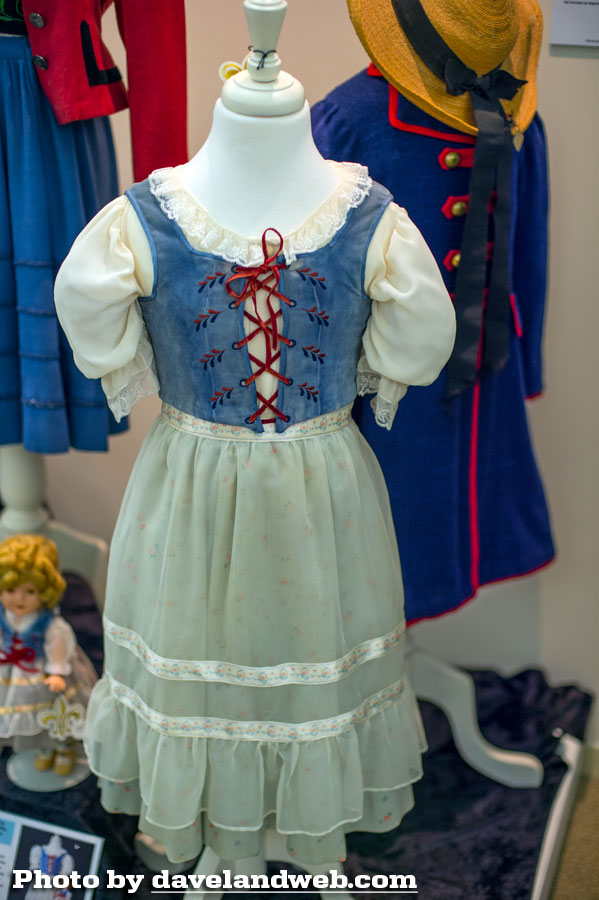
I was able to see it in person at the Santa Monica History Museum before Theriault’s auctioned it off in 2015:


The obligatory detail shot:


As they often did, the studio gifted Shirley a custom-made doll using the same fabrics as her actual costume.


Another “no idea” on this set visitor with the overbite:


…or the significance of the blurry coin in her hand. At least I think it’s a coin.


This particular costume was sold off by Theriault’s, but wasn’t on display at Santa Monica. Sigh. The Theriault’s auction photo will have to do.


If you zoom into the small photo downloaded from the web, as so many shamelessly do and pass off as their own, you get bupkis on the details, and instead a fair amount of blur.


When applying AI, you get a much crisper photo, but the accuracy for the fabric and the techniques used in construction go down the toilet. AI has its uses, but can only do so much when it “guesses” about information for an existing photo. Just a cautionary tale when using this new tool!


 See more Shirley Temple photos at my main website.

Tuesday, June 23, 2026

Temple Tuesday: Heidi and the Tycoon


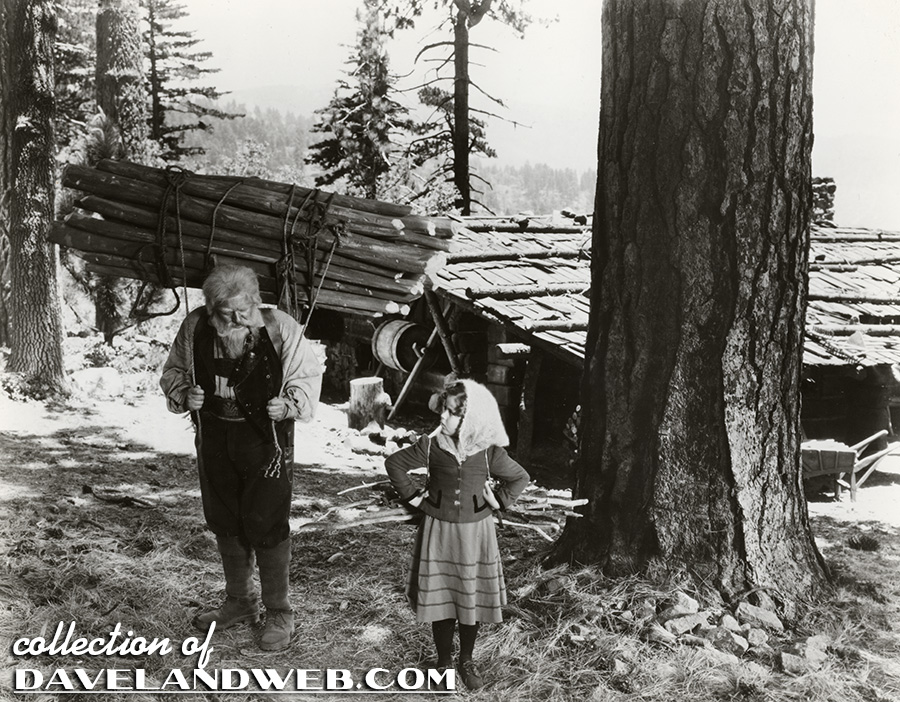
While this vintage shot of Shirley Temple during the filming of “Heidi” (1937) had a date stamp on the back (June 16, 1937), there was no corresponding info about who the visitors to the Fox lot were. As I usually do when I reach an impasse, I contact the great Rita D, storehouse of all Shirley Temple facts. IMMEDIATELY I had a response along with a newspaper clipping from her scrapbook which she dated as June 21, 1937:

SHIRLEY TEMPLE yesterday won two new residents for Southern California—Seth G. C. Motwane, India electrical tycoon, and his 17-year-old daughter, Savitribai Motwane, heiress to one of the largest personal fortunes in the world. Motwane and his daughter traveled 8000 miles from Bombay, India, just to see Shirley. They were so charmed by this country that they decided to buy a winter home here at Bel-Air. Motwane is considered the “General Electric of India.” He began his career with a borrowed $100 and now has a fortune estimated at 19 million dollars. Savitribai, his daughter, wore native robes and the distinguished caste mark of the upper-class Indian lady when she visited Shirley at the Twentieth Century-Fox lot. “That dress is just like the costumes of ‘Wee Willie Winkie,’” said Shirley. “We’ve just finished a picture laid in India and it had lots of ladies in it dressed like that.” “Wee Willie Winkie,” which costars Shirley and Victor McLaglen, has its world premiere Friday evening at Carthay Circle Theater.

The stylishly dressed woman on the left is unidentified; I assumed it was G. C.’s wife, but all accounts only mention him traveling with his daughter. I did find a newspaper blurb from June 21 that stated, “Savitri’s mother died a year ago and this world trip is to help her to forget her grief. When her father asked her where she would like to go best of any place in the world, she replied: ‘To see them make American movies.’” Rita surmised the lady on the left could have been a Hollywood scribe. From the Motwane website I learned that Gianchand Motwane (pictured below) founded the Motwane Manufacturing Company in 1909 in Mumbai.


Ghandi (pictured below with G. C.’s son, Nanik) was quoted in 1931 as saying: “The cheers that punctuated my remarks on some of the most important amendments showed that the listeners were following my exposition  with the utmost attention. All this was possible because of the perfect Chicago Radio loudspeaker arrangements that were made for the Subjects Committee as well as for the Open Sessions.” G. C. died on June 16, 1943 in Mumbai at age 65, “leaving behind a remarkable legacy for his sons to carry forward.”


Spurred on by the info and clippings supplied by Rita, I went to Newspapers.com (a great resource!) and found some more info on the pair’s visit to the U.S.


Edited from the accompanying article:

Representative of the new order of society in the teeming land of the Ganges is G. C. Motwane, Bombay industrialist and Indian business tycoon, who is in Hollywood on his first visit to the United States. Here to study the filim and radio equipment market, he pointed out that Indian motion pictures were progressing from the era of mythological tales and rudimentary methods to portrayals of real people and social problems done with modern production technique. He is accompanied by his 17 year old daughter, Savitri, who was presented in flowing native dress and sandals, but who has the 1937 girl’s interest in Robert Taylor.…Under the guidance of Bill Deming, executive producer for General Productions, who has made pictures in India, Motwane and his daughter are inspecting Hollywood’s film plants. After Hollywood he plans to see New York. “Then I may buy an automobile, tour across America and come back to your Hollywood to stay for six months or so,” Business Man Motwane smiled.

Another article from September 26, 1937 featured this information:

…one of the most interesting visitors in this city during the last week was eighteen-year-old Savitri “Kiki” Motwane, who is taking movies and snapshots of us and writing a diary that will refresh her memory when she tells friends back in Bombay, India, about those amusingly queer Americans.…Because she cannot write in Sindhi, the province language of her household, this visitor from Bombay keeps her diary in English. Many pages are already filled, for she has been touring with her father for the last seven months, having been in China and in Japan, before coming to the United States. Of course the diary includes accounts of Hollywood experiences. There an excited Kiki met, and was photographed with Shirley Temple, screen idol of her younger sisters. There she was also offered a film contract. “Father wouldn’t let me go into pictures,” she said. “But I danced in India once for a picture made by one of our producers.”

The only other info I could find about Savitri was an obituary from the South Floria Sun Sentinel, October 5, 2003, listing her death as October 2. I “assume” it was the same person, but don’t quote me on that!

Back to Shirley, who has been seriously hijacked on this post! A detailed view of her, wearing one of her “Heidi” costumes.


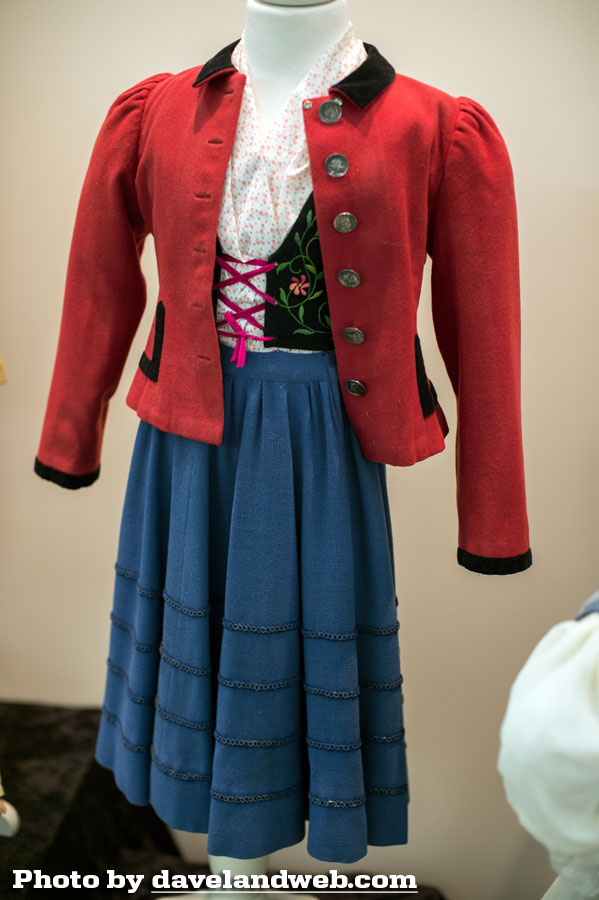
I saw this jacket on display at the Theriault’s exhibit in Santa Monica, back in 2015, along with Shirley’s other carefully preserved film costumes and memorabilia.


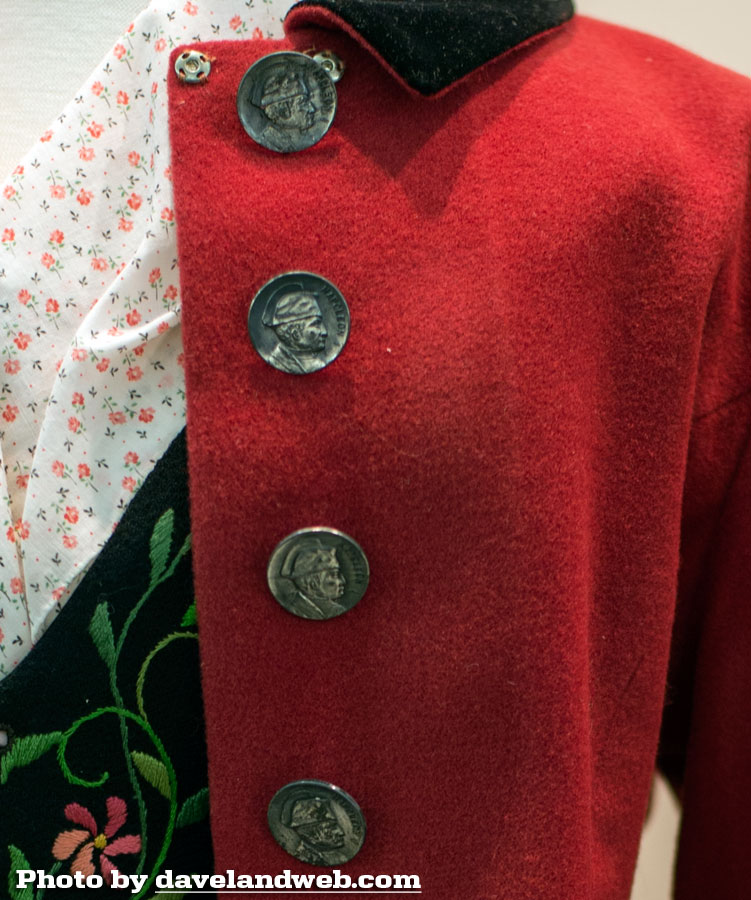
Look at the detailed buttons!


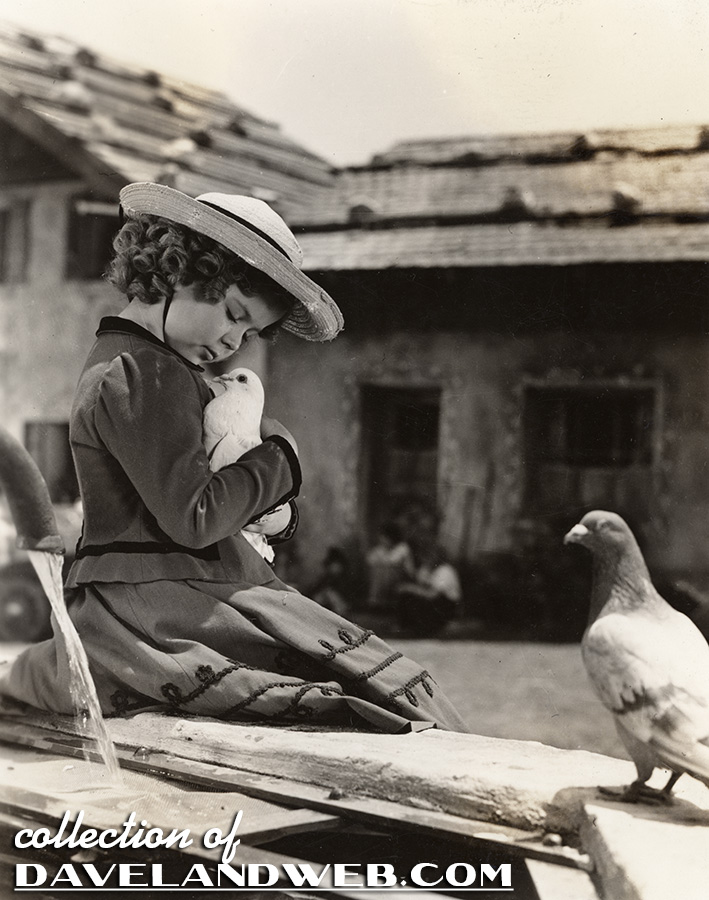
The shoes and jacket can be seen in the vintage black and white costume…


but the skirt that we see is different from the ensemble Theriault’s chose to put together. Note on auction item #160 (“Country Costume”) that the trim has the little curlicues missing from the ensemble I saw in Santa Monica:


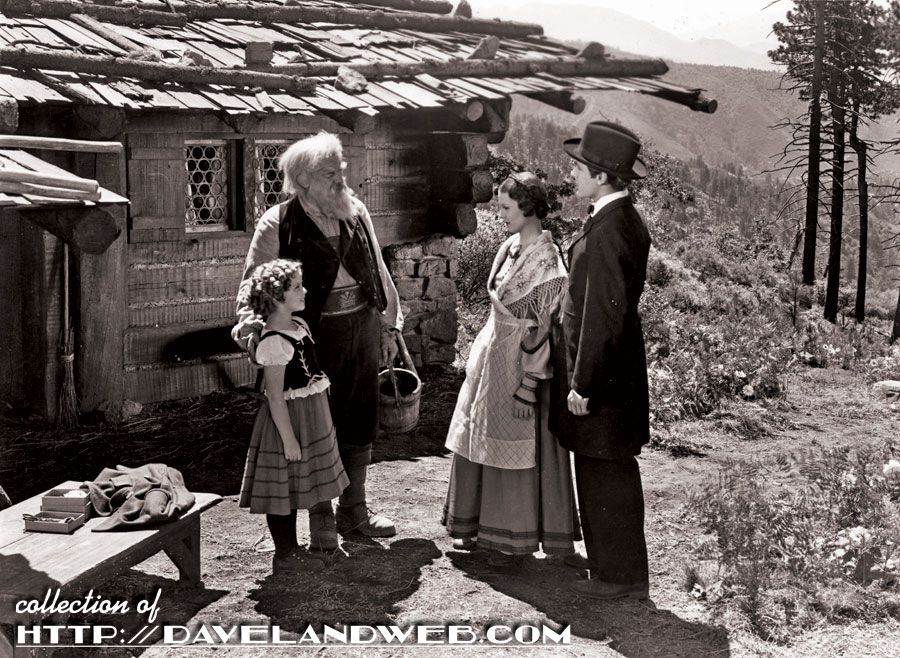
The costume comprises a white blouse, black vest with floral pattern and green velvet lacing, dark blue skirt with braid trim, and a striped cotton apron. Generally excellent. The vest and skirt have original studio label "10004". Heidi (Shirley Temple), wears the costume in the opening scenes of the 1937 film as she arrives in the village where she will be left in the care of her grandfather, and then again as she arrives at grandfather's cottage in the mountains and proceeds to win his heart despite his crusty manner, and during the famous milking the goat scene.


Note the jacket paired with the curlicued skirt in the previously mentioned opening scene above and in the still below:


Auction item #164 (the one I saw in Santa Monica) pairs the jacket with the plain horizontal trim (no curlicues!):


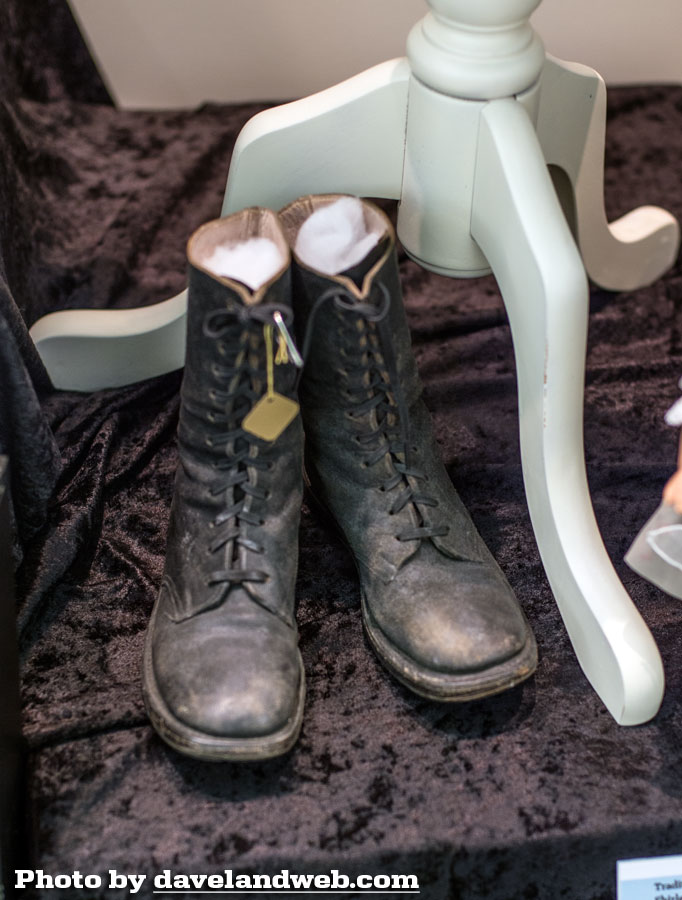
The classic Tyrolean-style costume includes a woolen laced vest embroidered with Edelweiss, a blue wool serge skirt with soutache braid banding, a cotton blouse and a red woolen jacket with patterned floral lining, black velvet collar, and trim, and with silver buttons with raised profile design of Napoleon. The skirt and blouse have original studio labels "Shirley Temple 10006" and the jacket "10003". Included are heavy laced boots. Shirley Temple, in her lead role in the 1937 film "Heidi", wore this costume in numerous scenes of her life in the Alps and nearby village.

The still below shows Shirley wearing #164, but paired with a different vest.


THAT vest was part of #165 (shown in the catalog photo below):

Comprising a white cotton puffed sleeve blouse under a black velvet vest with double lacing, brown woolen skirt, red apron with cross-stitch embroidery, along with an extra apron of linen-like brown cotton with brown ribbon banding, and with very worn heavy leather shoes designed for mountain climbing. The blouse, skirt and vest have original studio label "10005 Shirley Temple", and the shoes have the original label of Emidio Spezza, shoemaker to the stars. The costume was worn by Shirley Temple (Heidi) as she greeted the minister and teacher who were coming to inspect the grandfather's home, and again in the "prodigal son" scene of the 1937 film "Heidi".


From Shirley Temple to business tycoons from India to mismatched costumes, this blog covers it all!


See more Shirley Temple photos at my main website.

Tuesday, April 21, 2026

Temple Tuesday: Curly Top In-depth


When it comes to Shirley Temple, you’re either a fan or you’re not, and if you fall into the latter category, you should avoid “Curly Top” (1935). Fox realized her box office power and put her front and center in this unashamed showcase of the little girl’s many charms and talents. In case you couldn’t figure out where the title came from, look no further than the opening frames of the credits which focus on Shirley’s signature curls. Although the story is loosely based on the novel Daddy Long-Legs by Jean Webster, there is no question that the title was meant to capitalize on Shirley’s skyrocketing fame with her adoring public. How adoring? No photos were too trivial for Shirley’s fans, including a series of shots that showed her hands and feet. No face.


As a gag, director Irving Cummings poses with Shirley and the other orphans looking through a rain-soaked window. Shirley’s stand-in, Marilyn Granas, is standing next to Shirley in the left corner of this shot:


Great care went into the production of “Curly Top,” including these architectural renderings for the beachside cottage that was owned by Shirley’s character’s ardent benefactor, played by John Boles. From the publicity caption on the back:

This is the front, or beach elevation, of the John Boles’ home used in the Winfield Sheehan production, “Curly Top,” starring Shirley Temple. A modern and simple treatment was designed by Jack Otterson, Fox Film art director, by accentuating horizontal lines in the wide banks of windows and a wide lap siding makes this a truly beautiful home. Great sliding doors open on the hallway toward the ocean.


The set was built on a soundstage; the scenic backdrop was a matte painting.


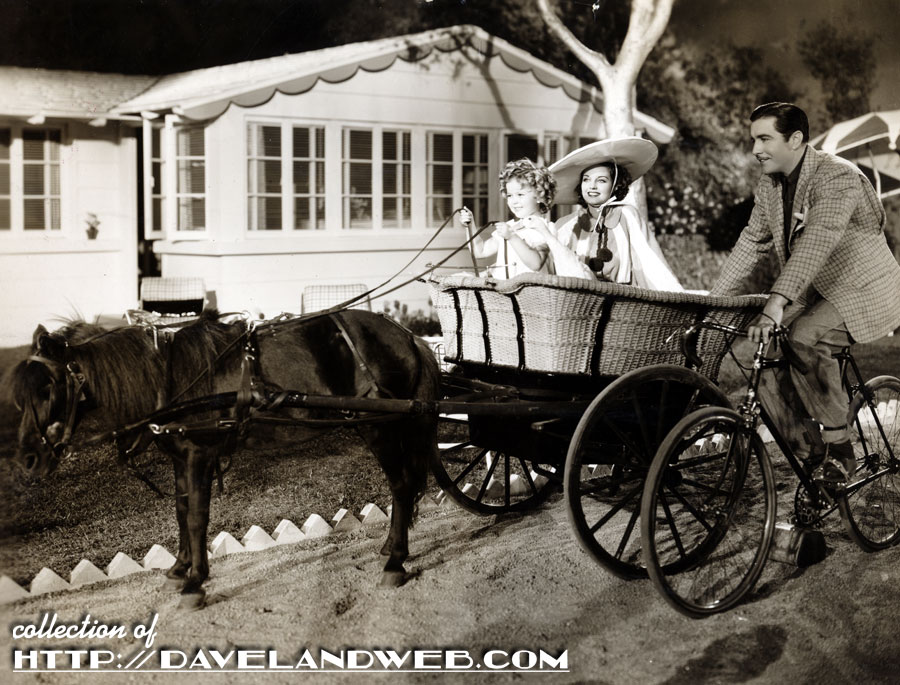
A closeup of the cottage from a deleted scene with Shirley, Rochelle Hudson (who played her sister),  John Boles, and a newly purchased pony/pony cart.


Interior sets were just as elaborate, like this art deco styled conservatory where Shirley puts on a benefit for the orphanage she used to reside in with her sister.


A publicity still showing Shirley taking a bow after performing her one girl tour de force, “When I Grow Up.”


Zooming in so you can see Shirley’s curtsy.


Below, Cummings poses with Shirley, wearing a bridal gown for one of the segments from that musical number. “Curly Top” is a great film, but at times the emphasis is too Shirley-heavy. Early in the movie, she recites poetry while sitting in Boles’ lap and the camera quickly cuts to a closeup of her face. It’s a bit jarring and somewhat cloying/cutesy. The “When I Grow Up” number is truly over the top,  featuring Shirley singing, reciting poetry, dancing, jumping rope, and aging from childhood to old age. OK, we get it, Shirley is talented, however the best Temple films are the ones that are a bit more balanced.
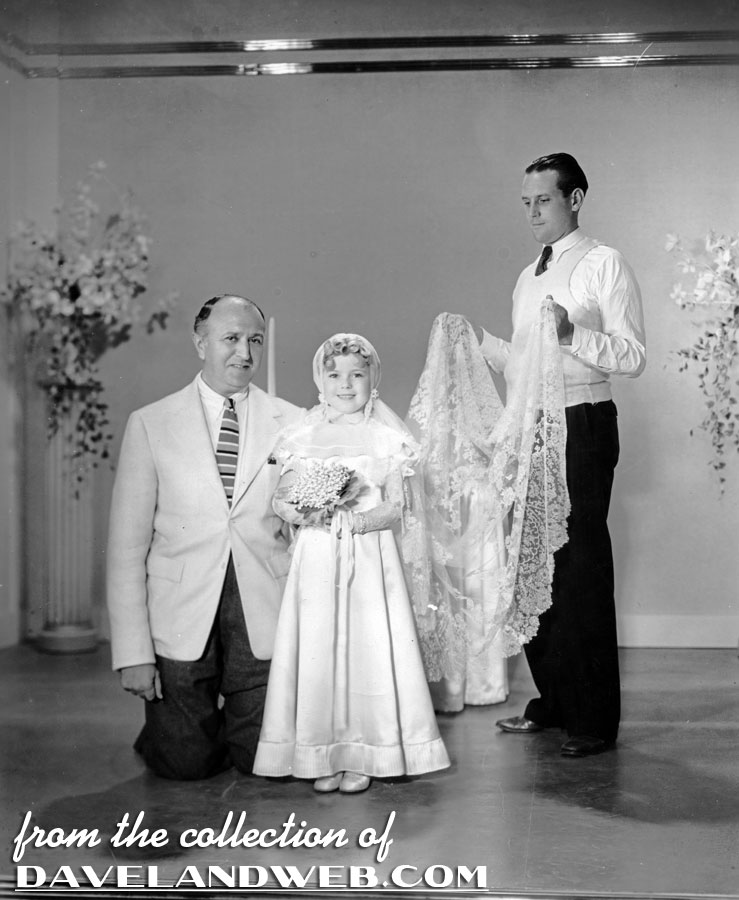


The above photo was also seen in the Spanish magazine Cinegraf, which showed a number of the set interiors from the movie.


The jaw-dropping bedroom set for the sisters:
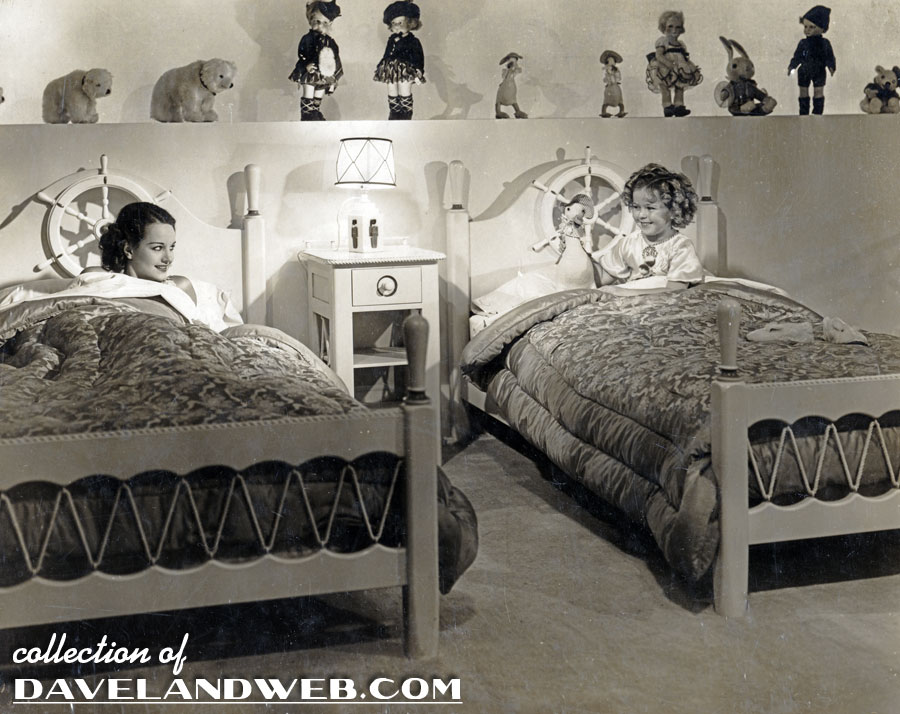


Set stills below of the entire set, which is only seen briefly in the film. Imagine what it must have cost to construct this childhood fantasy bedroom on a soundstage! Depression era children would have LOVED to have a fraction of the toys that Shirley’s character possessed.


From the publicity materials that accompanied the plans for this bedroom/playhouse:

This Jack Otterson neo-classic design embraces a new idea of making a playhouse part of the architecture of the bedroom. This playhouse makes an excellent toy closet and assures a neat and attractive nursery day and night.


Although I do not believe you see it in the finished film, the set had an original Charlotte Clark Mickey Mouse stuffed doll, complete with tag:


In 2015, when Shirley’s childhood costumes and possessions were auctioned off by Theriault’s, two Mickey Mouse dolls were part of the proceedings, selling for $6,000. While the listing stated that “according to family oral tradition, the Mickey Mouse dolls…had been gifted by Walt Disney,” the taller doll shown below has an uncanny resemblance to the one featured in the film.


Back to the set stills, note the alphabet blocks that spell out the title of the film:


Another view of the bedroom/playhouse:


Shirley herself poses on the set, wearing the pink silk pajamas designed by René Hubert:


Look at the bunny detail on the sliding doors. Incredible that little touches like that are completely missed when watching the film. Now THAT’S craftsmanship!


The original costume design and pajamas were auctioned off in 2015:


From the catalog description for the sketch, which sold for $1,100:

20" (51 cm.) x 17" framed. Watercolored sketch on parchment depicts the proposed costume design for the pink pajamas with bunny appliques from the 1935 film "Curly Top". The sketch also indicates that bunny themed slippers were proposed as well. It is hand-lettered at the bottom "bed sequence" and was proposed by Rene Hubert who was the credited costume designer for this film.

…and the pajamas, which sold for $5,750:

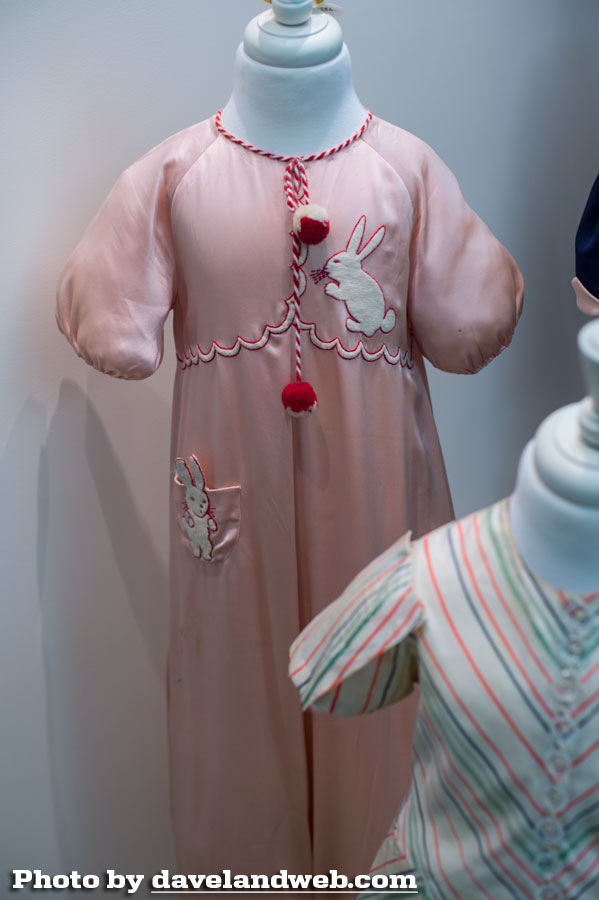
Of soft pink silk satin, the one-piece pajama playsuit is accented with two applique fuzzy bunnies, a scalloped border edged in red, and with red and white braids at neckline and red and white pom-poms. The costume has the studio label of "4994".

I was able to see them in person at the Santa Monica History Museum:


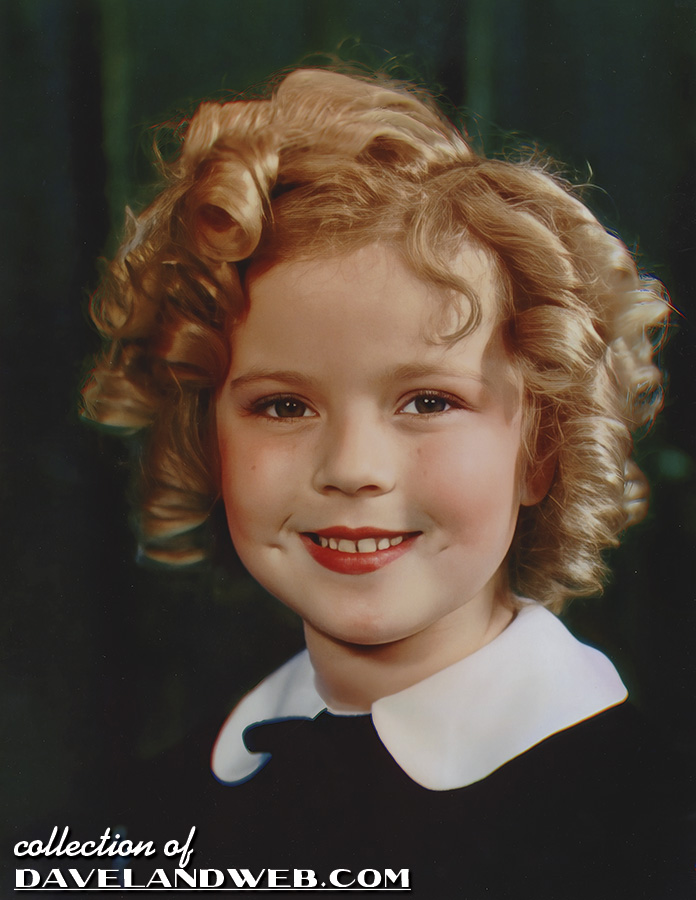
To wrap up this lengthy post, a color image of Shirley wearing the duck dress outfit from the film:


See more Shirley Temple “Curly Top” photos at my main website.