Showing posts with label Cemetery. Show all posts

Friday, May 24, 2024

Forever Friday at Greenwood


Many of my family members are buried at the nearby Greenwood Memorial Park Cemetery in San Diego, both outdoors in a regular grave as well as some inside the mausoleums. Edited from the Cultural Landscape Foundation website:

Established in 1907, this 125-acre burial ground was underwritten by a consortium of civic leaders, including George Marston [of Marston Department store fame] and William Kettner, who were concerned that city-run burial grounds were falling into disrepair. Located adjacent to the earlier, larger Mount Hope Cemetery some five miles east of downtown San Diego, the cemetery contains several large mausolea, including the Cathedral Mausoleum, which opened in 1919, and the four-story, two-acre Bible Mausoleum, constructed in 1970. Smaller, private mausolea, built as the cemetery developed, dot the landscape. Opened in 2017, the densely planted Mirror Lake cremation garden surrounds the southernmost of three constructed ponds. Inlaid with memorial plaques, the garden’s stone wall descends an escarpment to a rustic bridge that spans a cascading, stone-lined stream. Designed by George Cooke, the cemetery was intended to look and function like a picturesque park, with palm-lined paths and vast, undulating lawns interspersed with Australian willows, strawberry trees, sweet bays, and coast live oaks. In the cemetery’s southwest corner, two adjacent, circular plots called Arbor Vitae and Elks’ Rest contain concentric rings of graves that radiate from central monuments. Burial plots are set aside for firefighters, fraternal and military organizations, and various cultures and faiths.

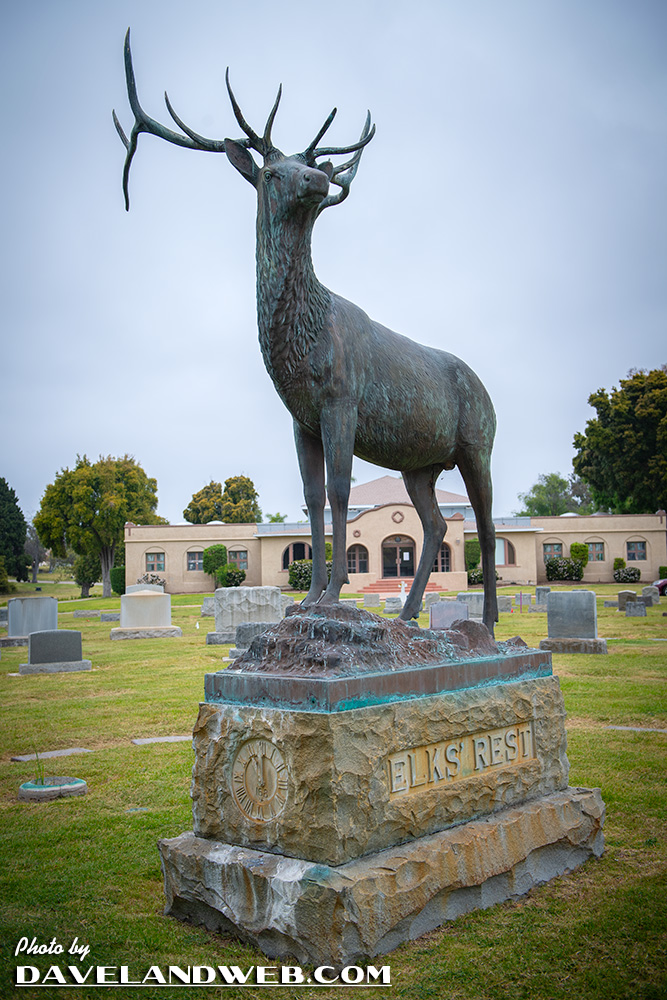
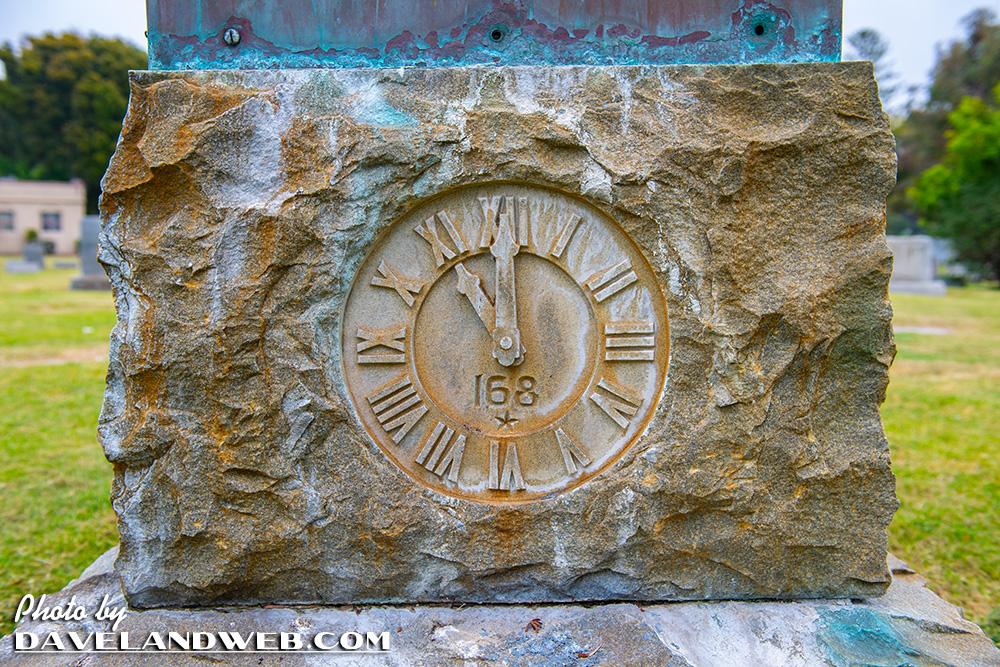
Above is a photo of the Elks’ Rest area, where my maternal Great Grandparents are buried. I’m not sure of the meaning of the stone clock forever set at 11pm, but it’s still kind of cool!


The cemetery hosts several chapels, a mortuary, crematory, and various statuary, including a veterans memorial and religious figures. Fourteen acres in the eastern section of the property are reserved for future development.

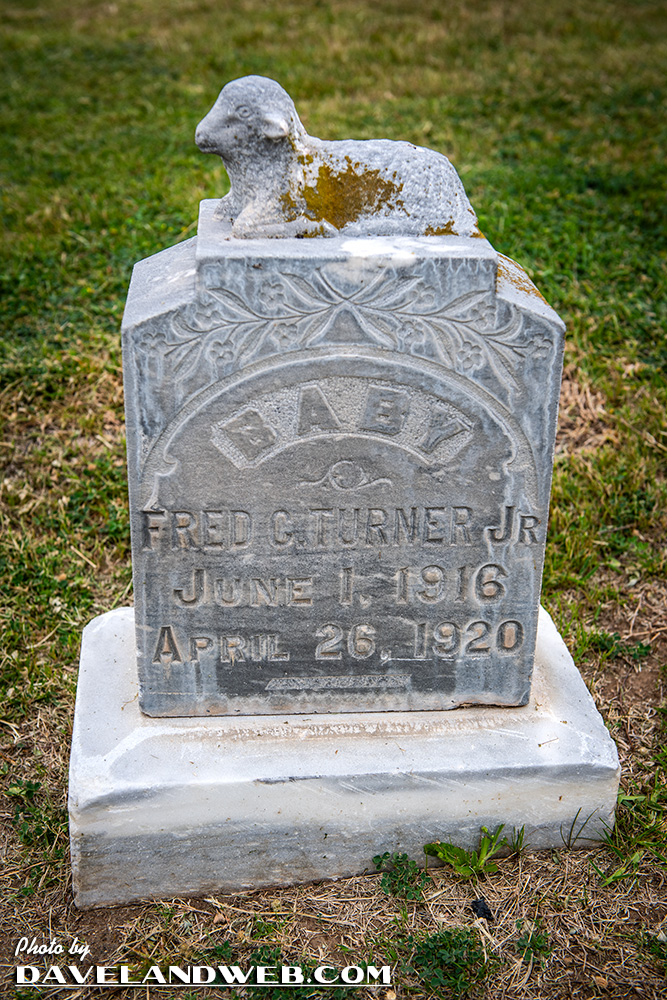
I do like strolling through old cemeteries and seeing the skill and craftsmanship that went into creating the older tombstones. Seeing the graves of the little ones are so sad, though. You can only imagine the grief of the parents who lost their offspring at such a young age.


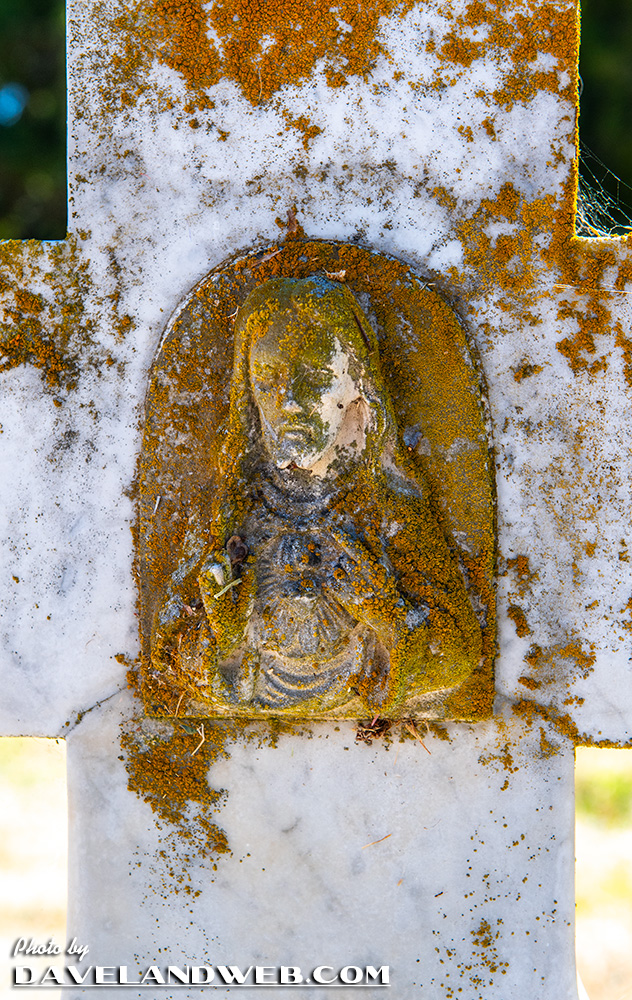
Jesus has gotten a little moss-covered over the years.


Overall, the grounds are fairly well kept. The mausoleums are a different story. Because of looting and the homeless, they remain locked now, and family members must seek assistance in the chapel to have a groundskeeper unlock them. Inside, there are leaks, broken windows, and other signs of deferred maintenance.

One of the more famous residents of the Catholic Mausoleum is Ernestine Schumann-Heink (June 15, 1861 – November 17, 1936), an operatic dramatic contralto of German Bohemian descent. She was noted for the flexibility and wide range of her voice. Heink and Schumann were her two husbands’ surnames. In January 1910, she moved to a farm located just outside San Diego, where she would live until her death of leukemia November 17, 1936 at age 75. Her funeral was conducted by the American Legion at the Hollywood Post Auditorium, and she was interred here at Greenwood Memorial Park in San Diego. On Memorial Day, May 30, 1938, a bronze tablet honouring Schumann-Heink was unveiled by her granddaughter, Barbara Heink, at the Organ Pavilion in Balboa Park, San Diego. I have yet to photograph that; yep, another bucket list item!
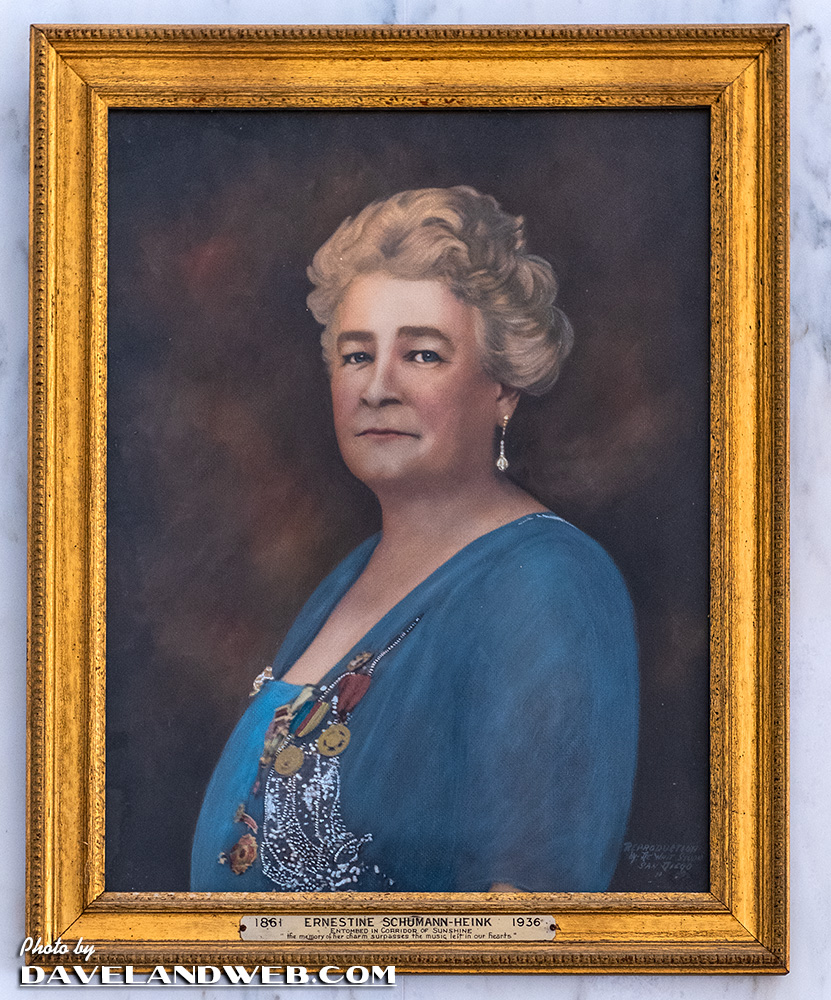


Here’s what is believed to be the only footage of her singing, captured when she was 65:


The stained glass inside the Catholic Mausoleum is beautiful, especially when the sun hits it just right.
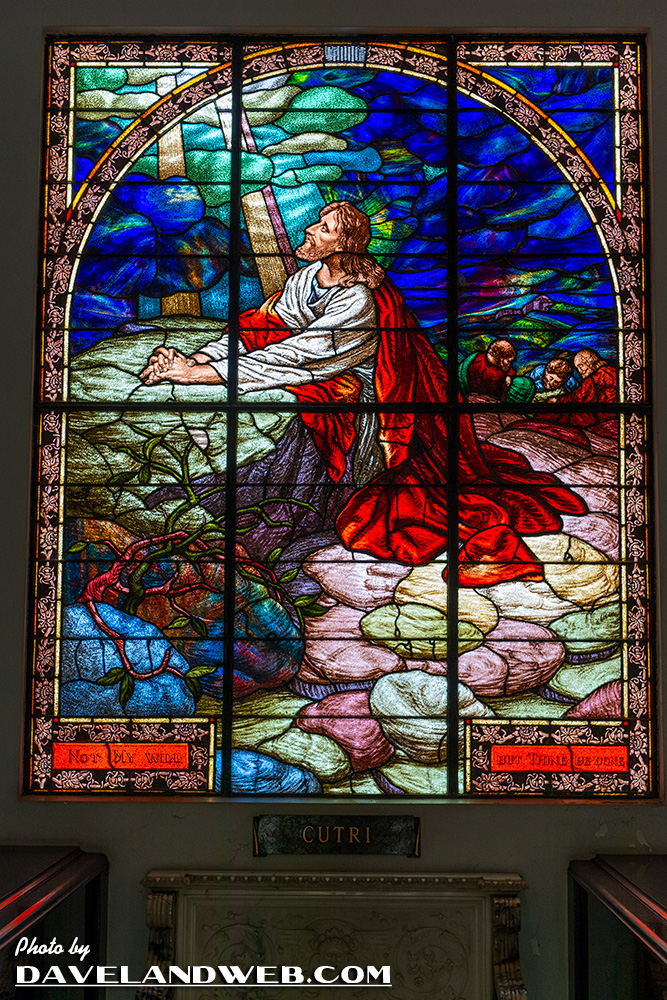
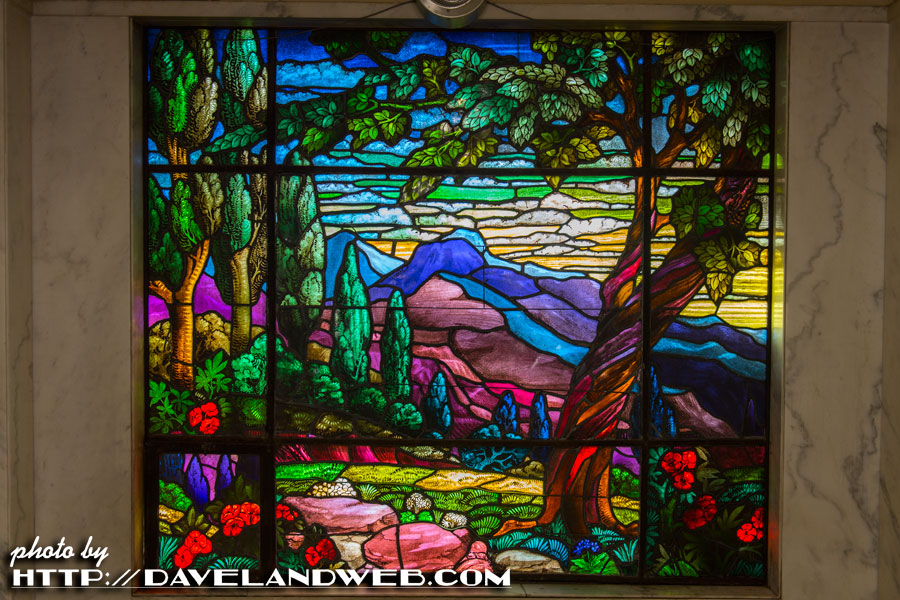


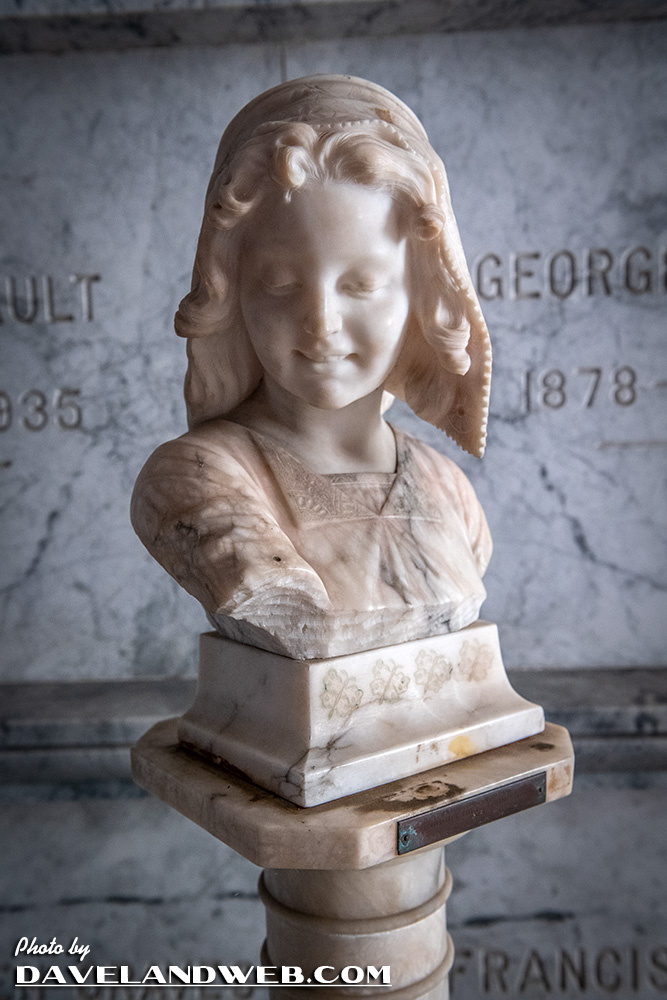
A number of statuary and busts are spread throughout the mausoleum:
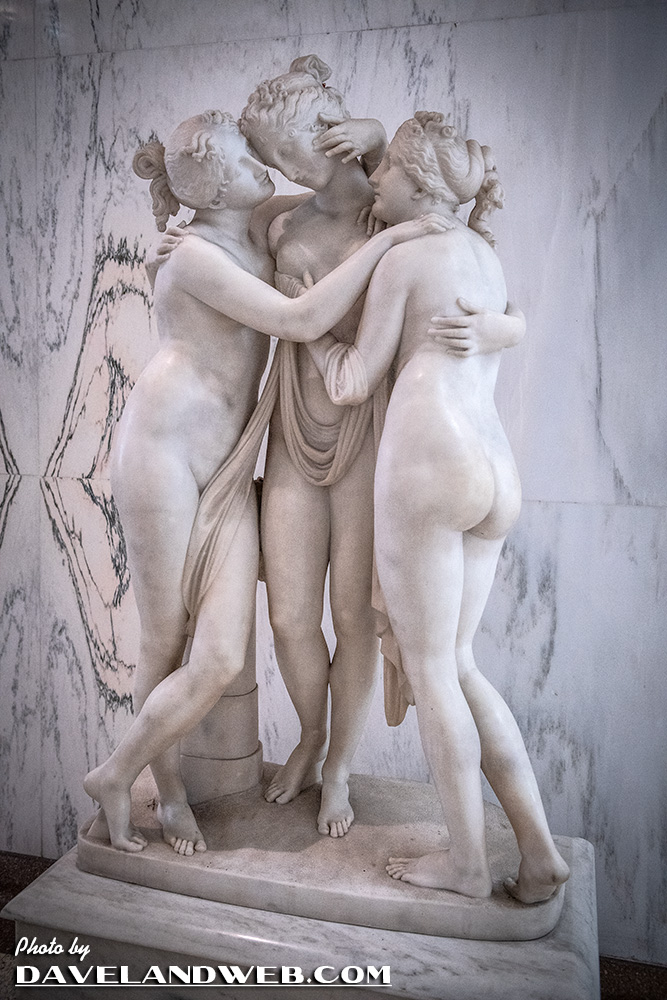


Looks like Huck Finn or Tom Sawyer!
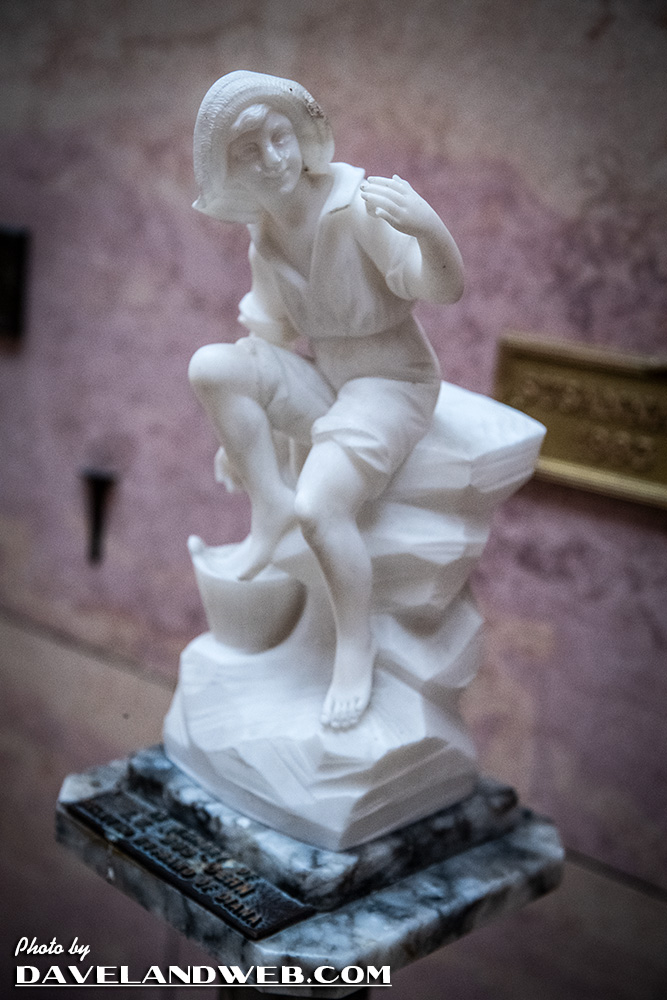


The face on this one is so expressive:


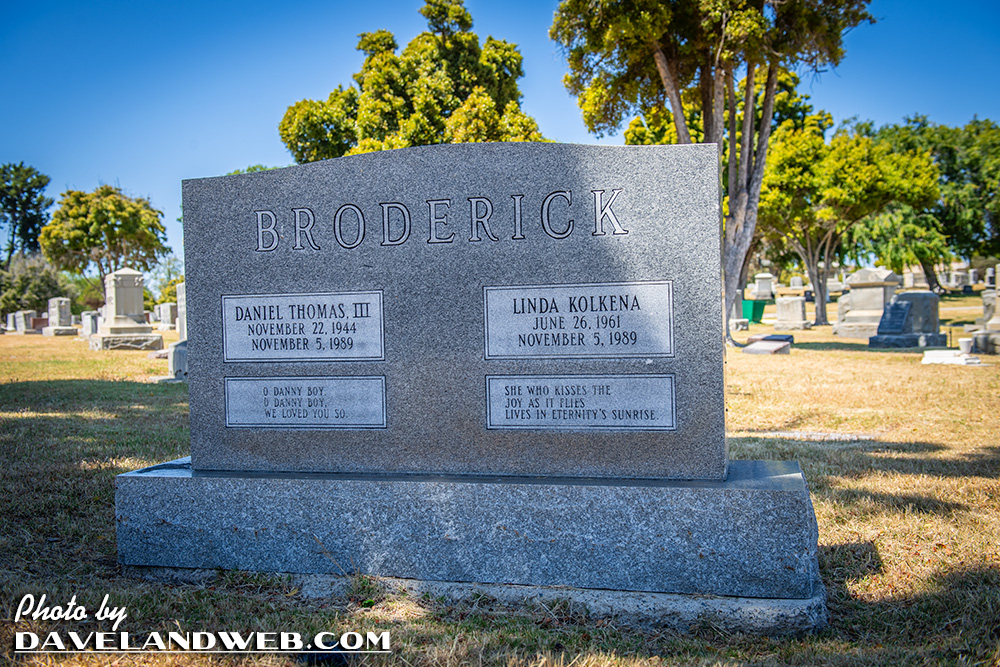
Another (in)famous resident is Dan Broderick and his second wife, Linda. He is best known as being the murder victim of his first wife, Betty, who is still incarcerated in Chino, California.


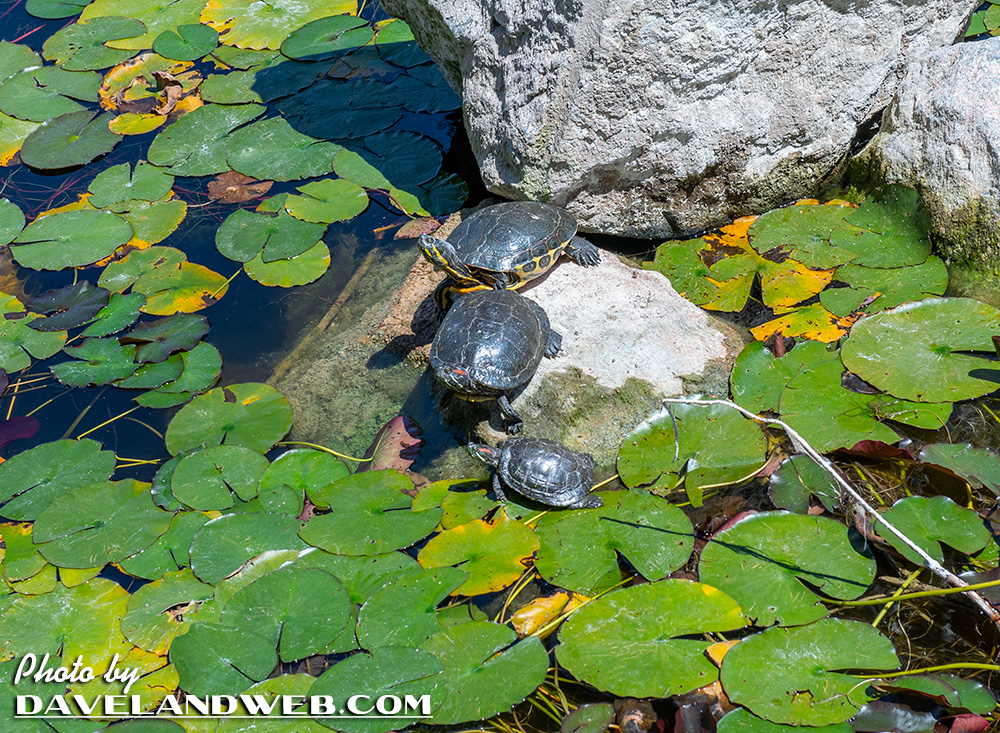
Nearby is the Lily Lake, which could use a little bit of maintenance. These turtles didn’t seem to mind.


Victor Buono is inside this crypt with his mother, Myrtle. Interestingly enough, his name is left off the marble facing.
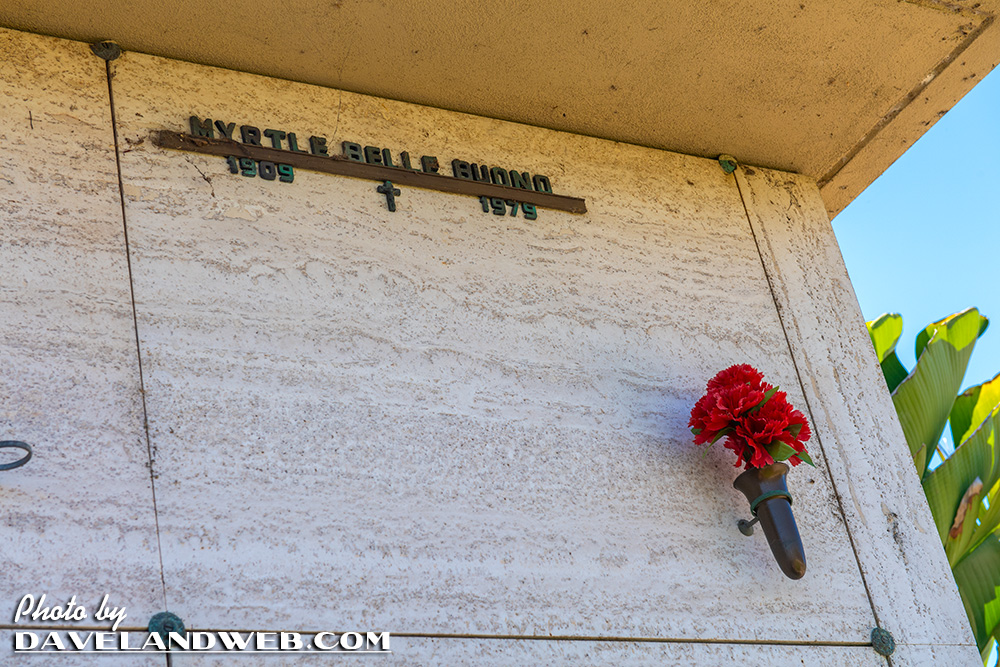


Buono is best known for his roles of Edwin Flagg and “Whatever Happened to Baby Jane?” (1962) and as King Tut in the “Batman” TV series (1966).


See more cemetery photos at my main website.

Monday, October 26, 2020

Calico Cemetery


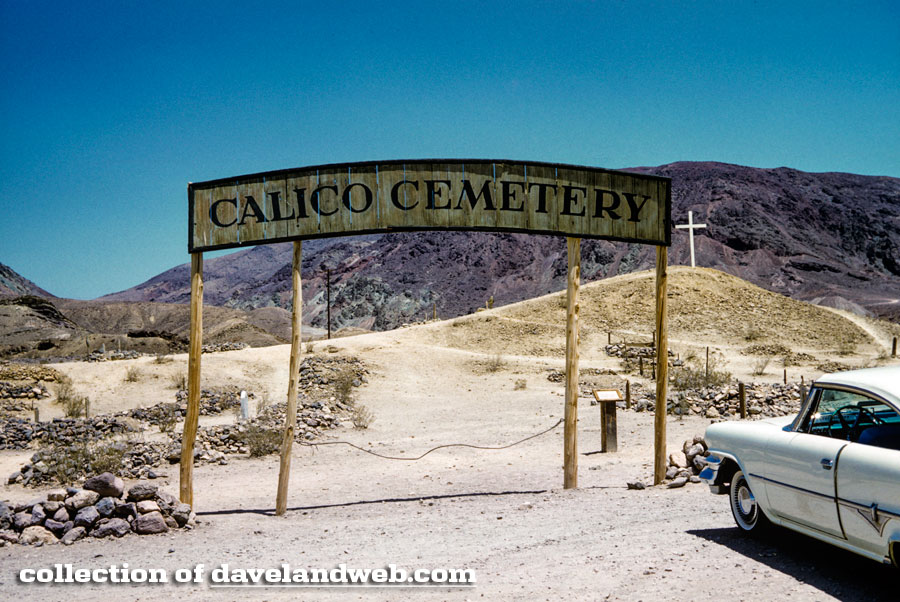
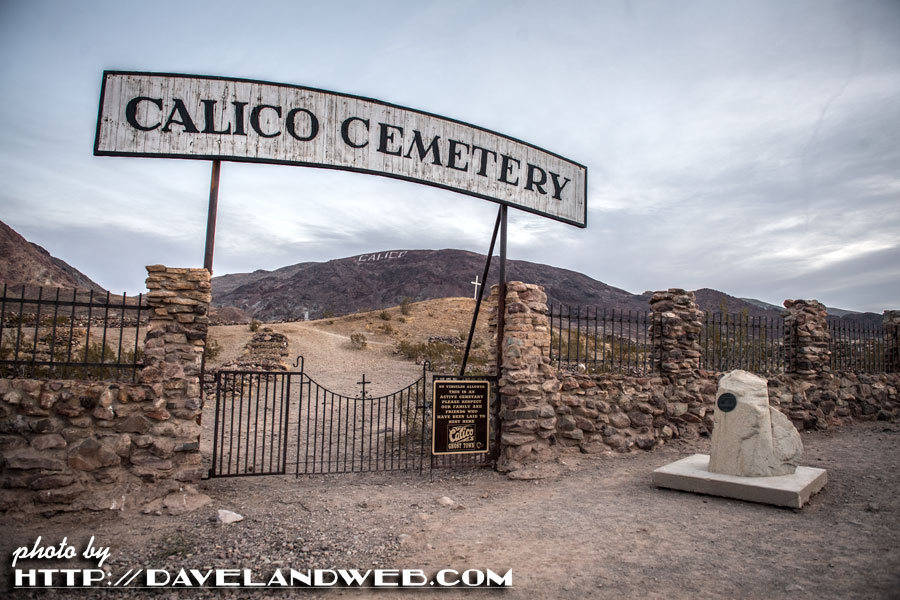
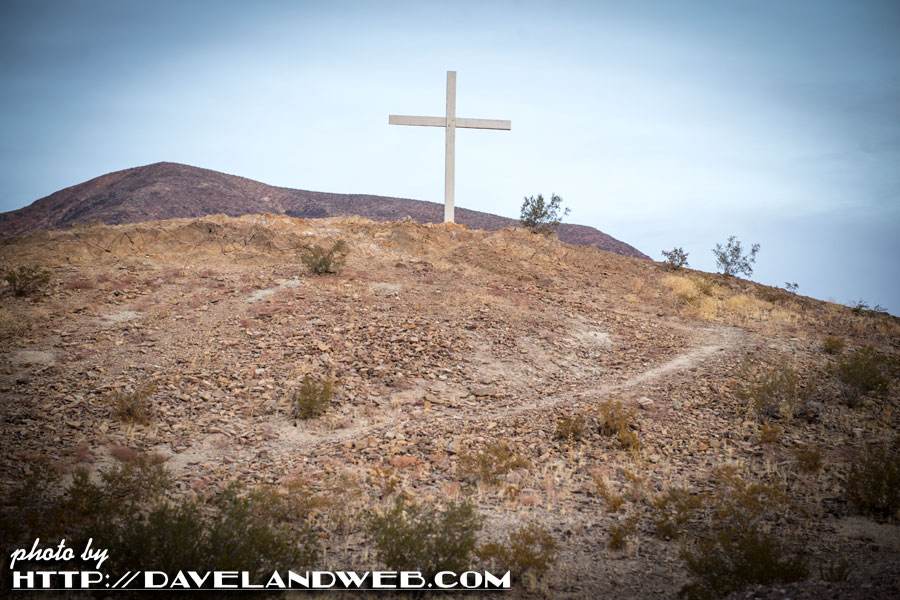
\ I crossed another one off the bucket list by finally making the trek to Calico Ghost Town in Yermo, California. Today’s post focuses solely on the town’s cemetery, shown in this July 1961 image, followed by the contemporary shot that I captured one morning at sunrise.


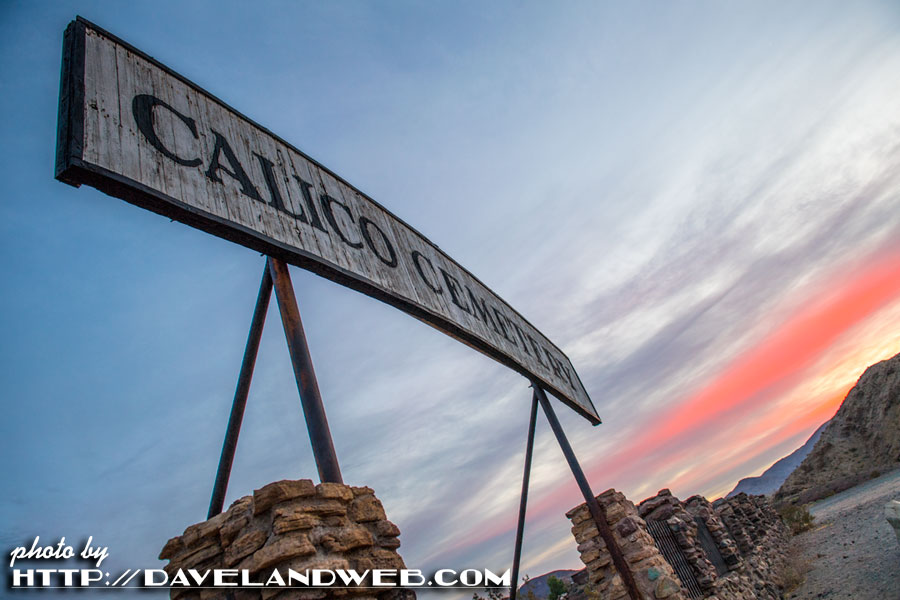
Sunrise at Calico…sounds like a tasty beverage or maybe a Lifetime TV movie.


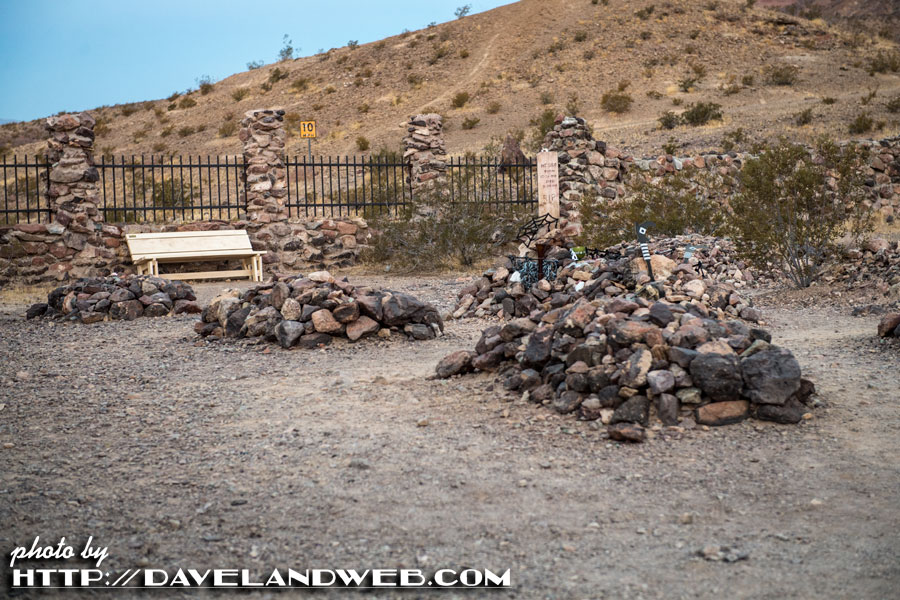
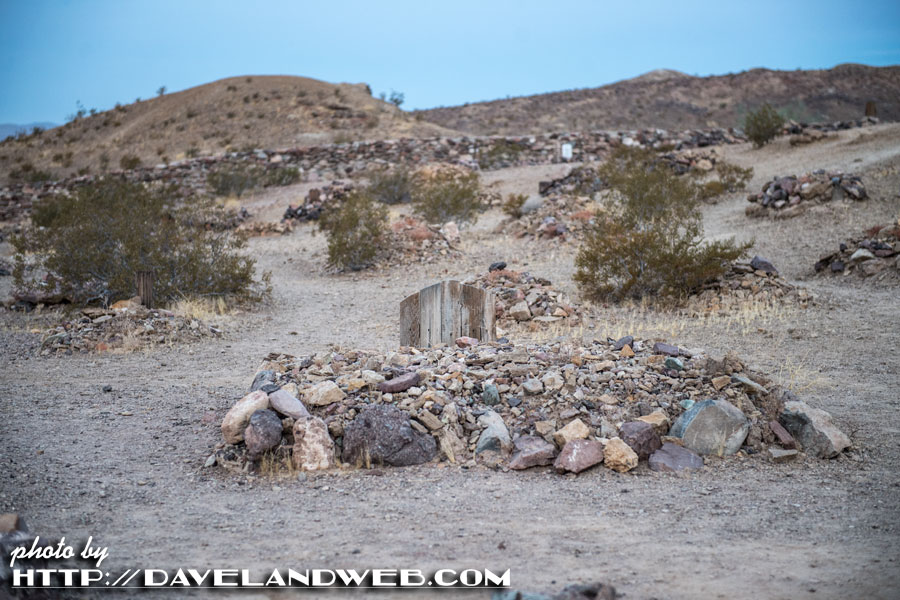
Sometimes called Boot Hill Cemetery, this burial ground is about as rustic as they come, with very few decorative flourishes.


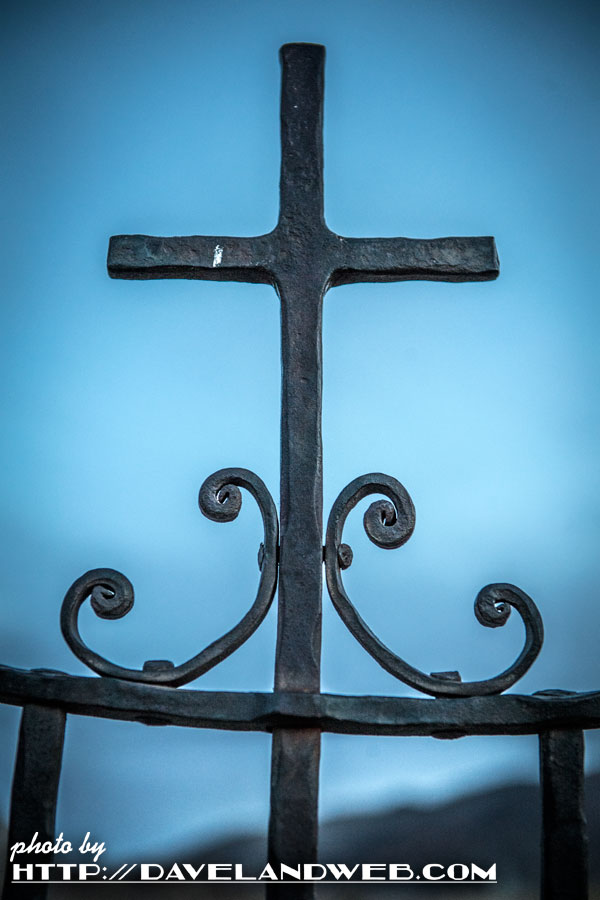
The cross on the hill offered little protection, as over the years, the original headstones were pilfered.


In the 1960’s, the great mystery of how many people were actually buried here began to be discovered.


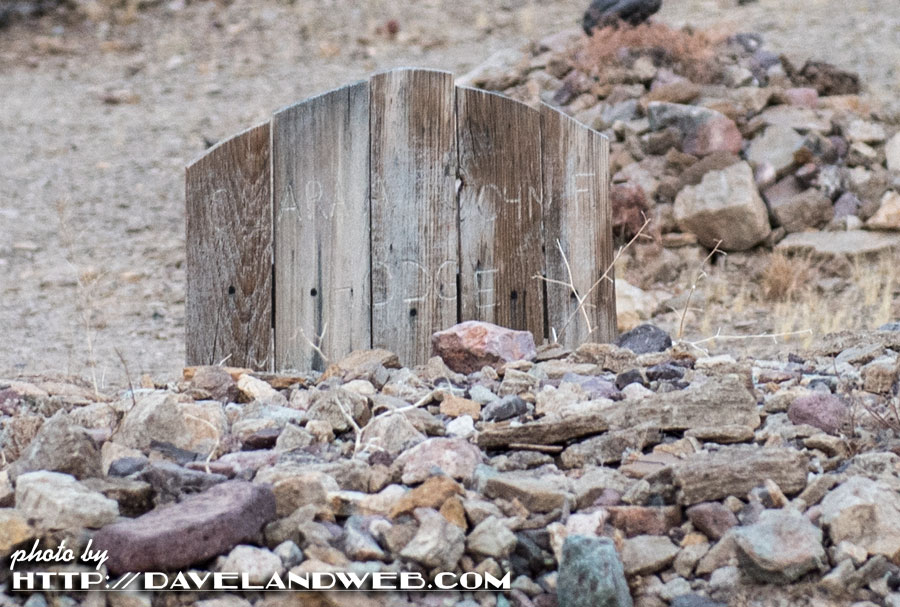
Some of the headstones that remained were discovered to be fakes, such as the one claiming Wyatt Earp to have been buried here. All in the name of tourism.


Thanks to the research that was done, it appears that approximately 160 people were buried here, with only about 49 of those able to be identified.


One day I hope to return again to be able to walk around this historic graveyard when the gate is actually open.

See more Calico Ghost Town photos at my main website.
Wednesday, December 11, 2019

Fort Wilderness Cemetery


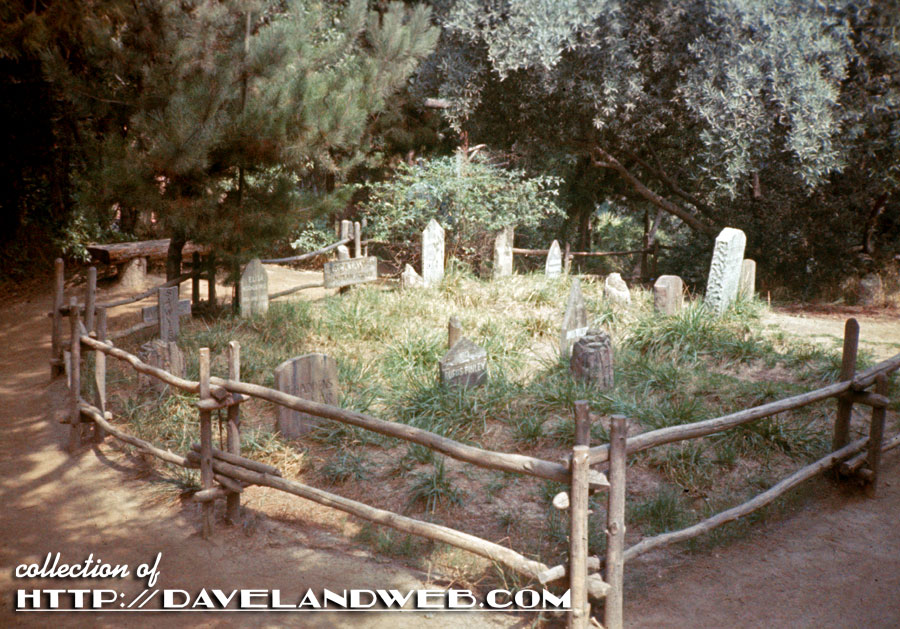
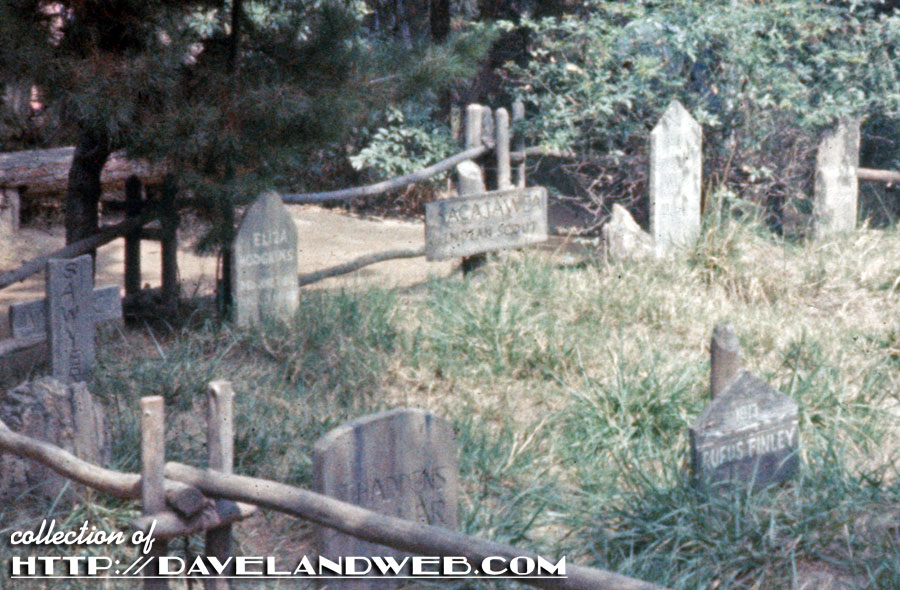
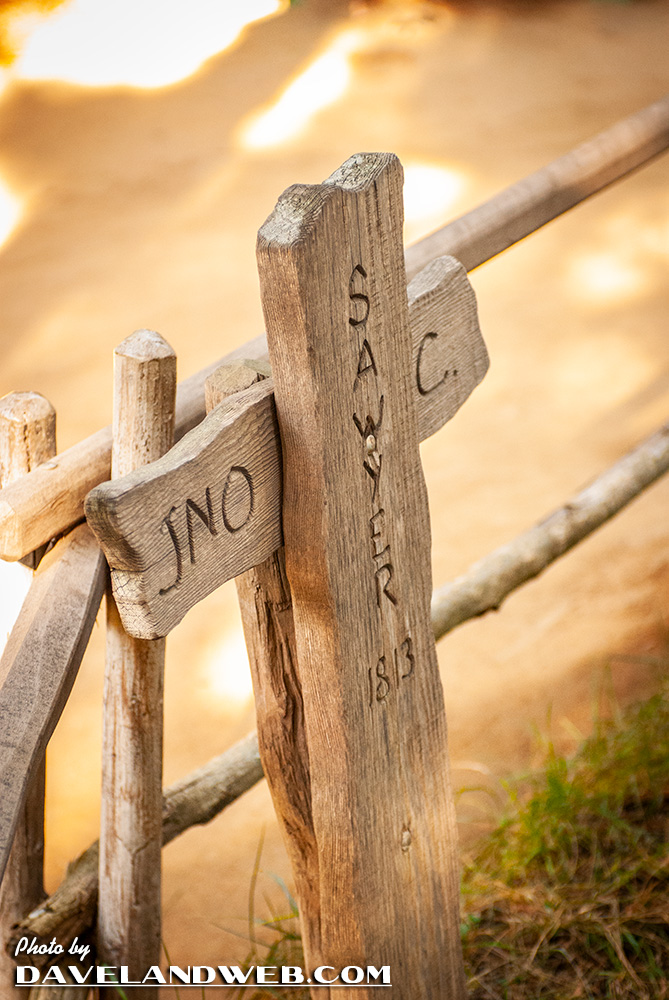
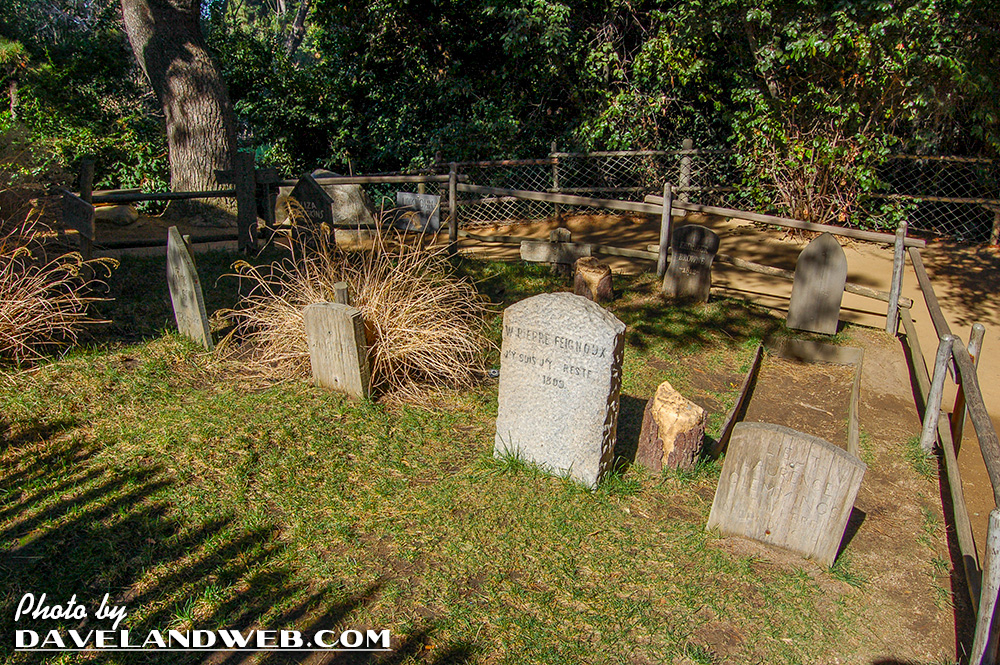
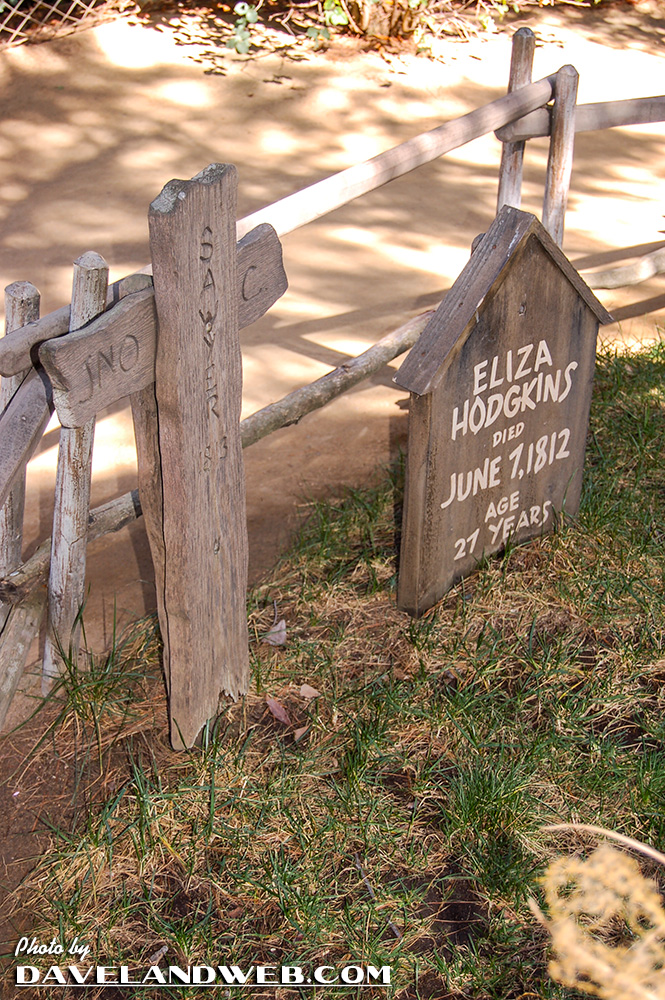
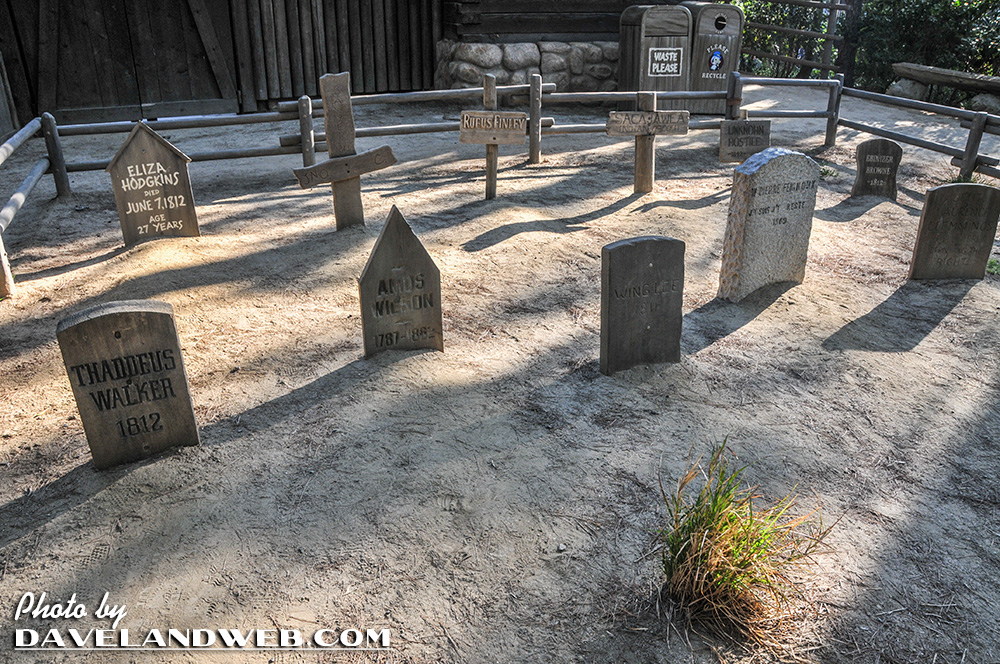
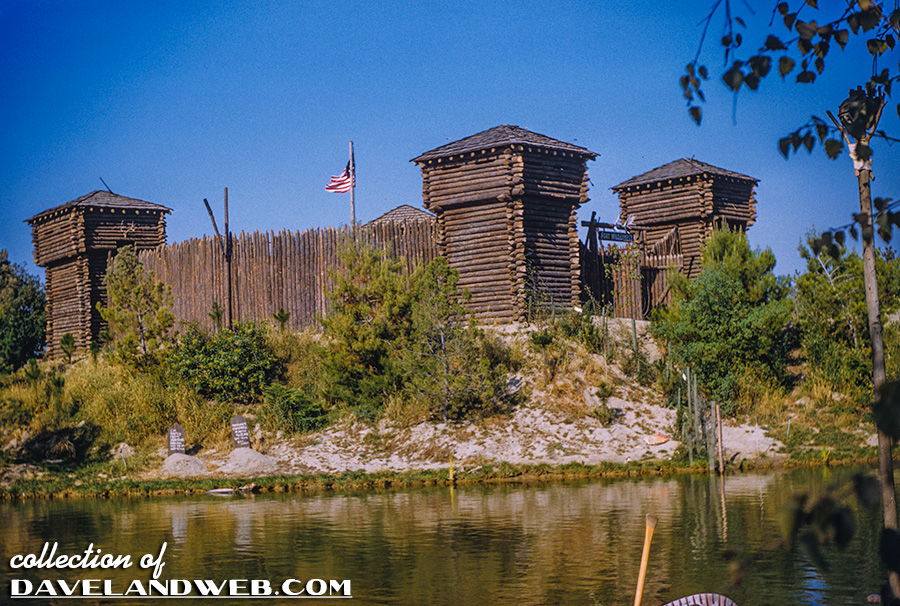
Other than at the Haunted Mansion, one rarely associates cemeteries with Disneyland. However, Fort Wilderness used to be LOADED with tombstones! This 1960s image shows the cemetery that was once located behind Fort Wilderness on Tom Sawyer Island. Since it’s been over three years since my last visit, other Disneyland guests will need to confirm/deny whether or not the cemetery is still there.


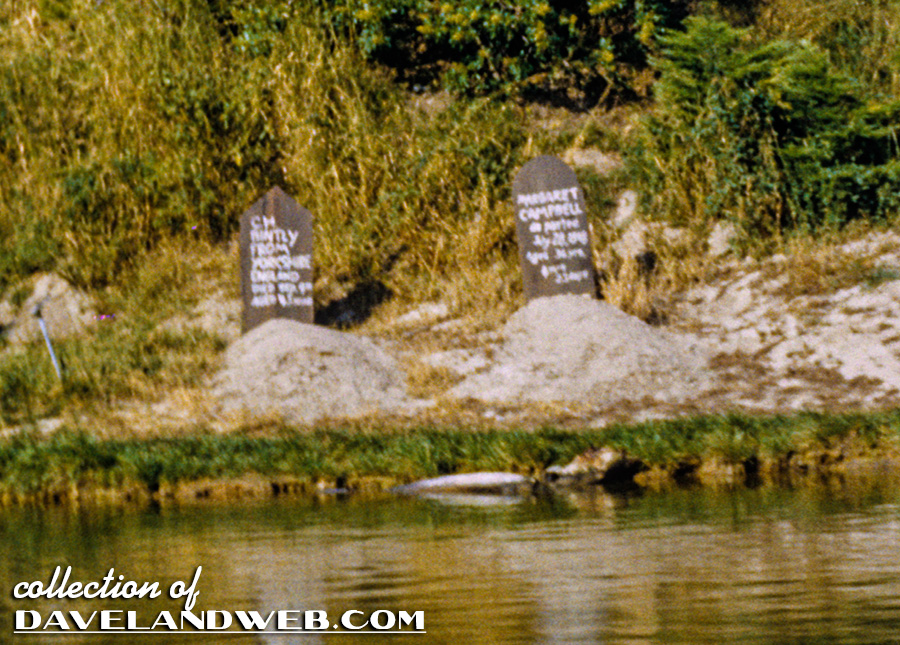
This previously posted August 1956 shot shows a few tombstones that were located on the edge of the Island:


Slightly odd...a little creepy...but I’m okay with that!


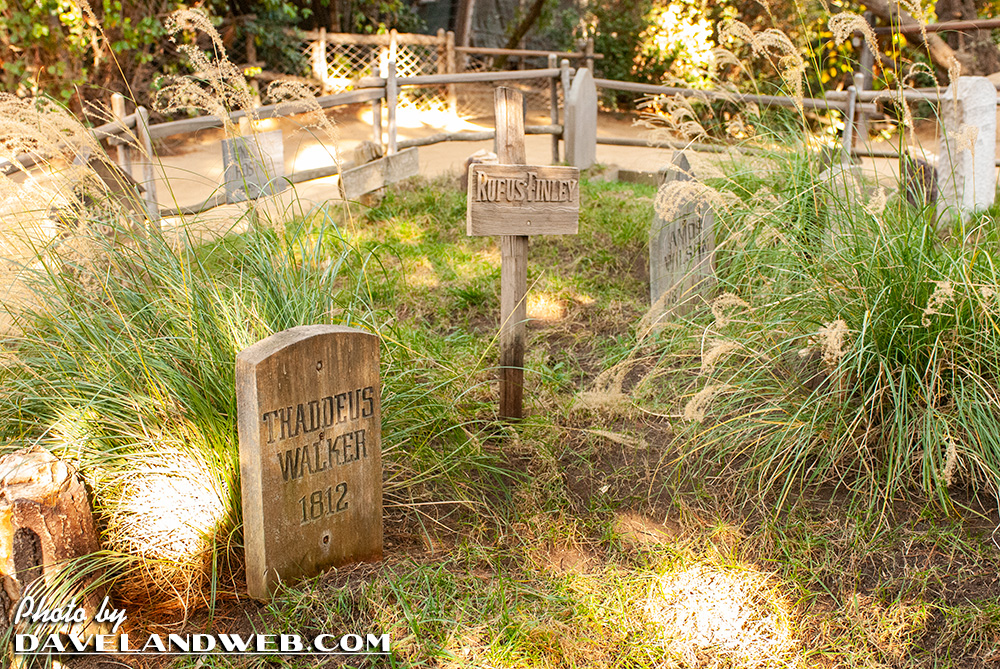
Skipping ahead to December 2006 you can see the concept survived, even if some of the tombstones were changed/replaced:


From February 2007:


...and my last trip to the Island in October 2011:


See more Disneyland Fort Wilderness photos at my main website.
Monday, November 27, 2017

Bewitched in Salem


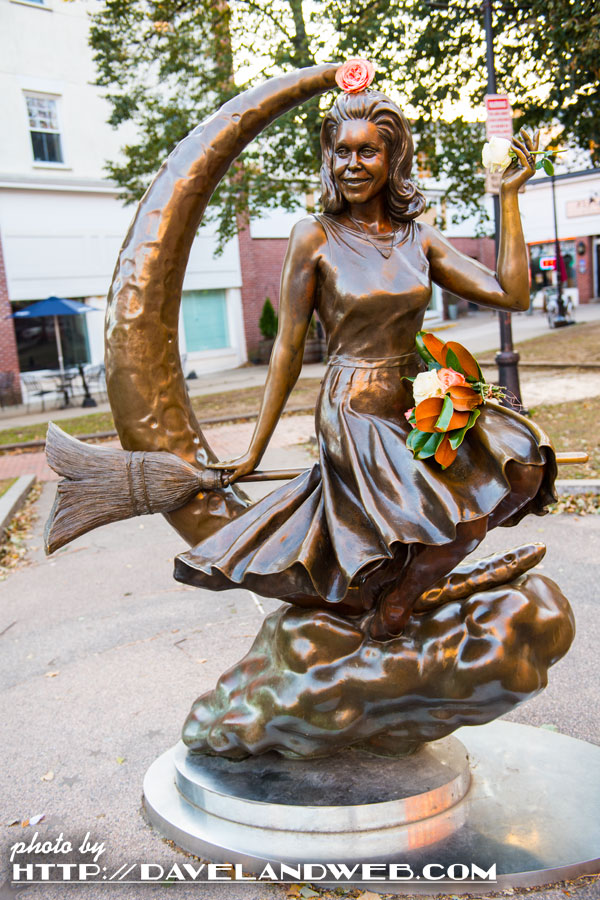
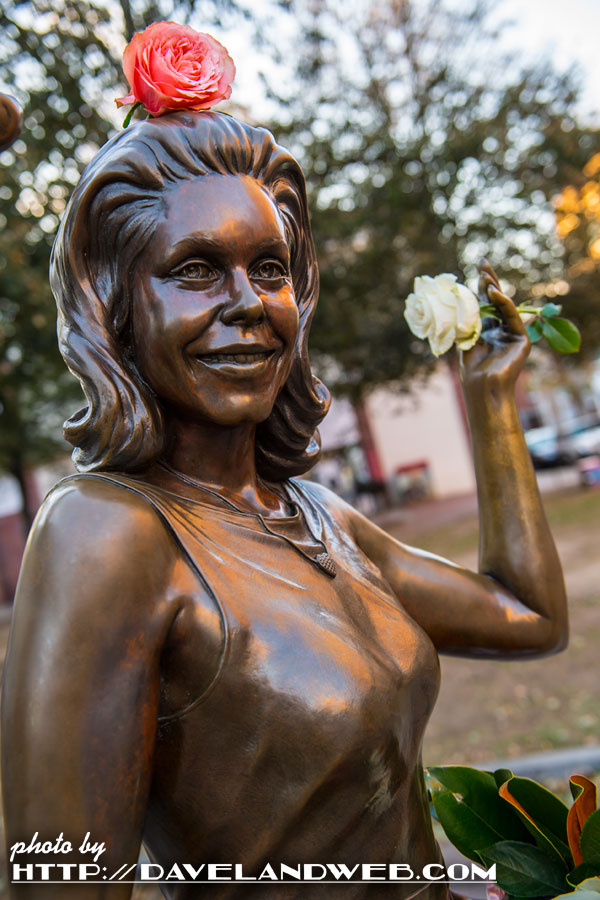
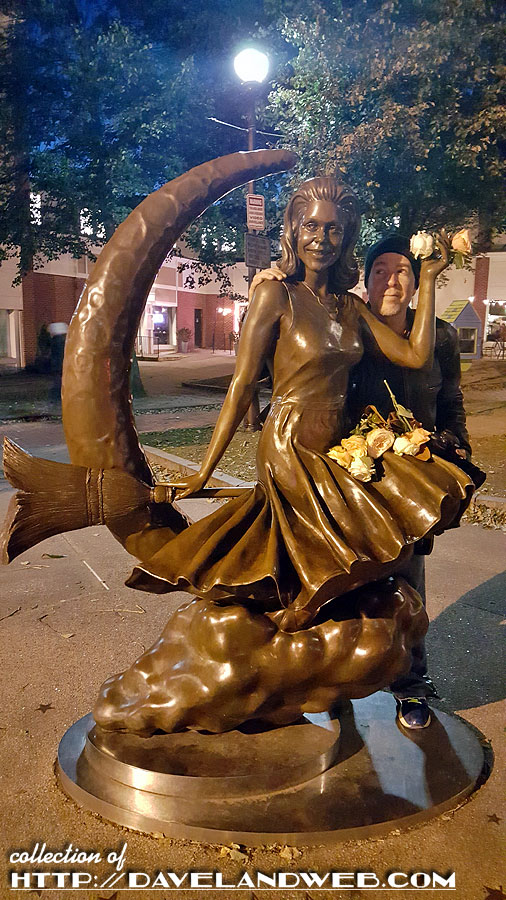
Salem, Massachusetts is probably best known for its infamous witch trials. Tourists flock to the area, especially for Halloween. Most probably don't realize the gravity of what happened here, especially when they are greeted by the smiling face of this statue commemorating Elizabeth Montgomery in "Bewitched."


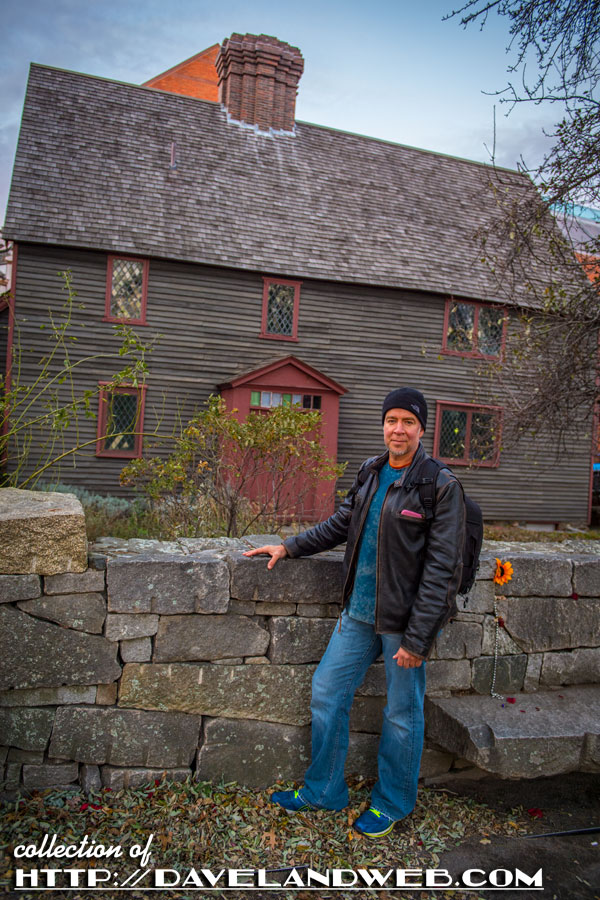
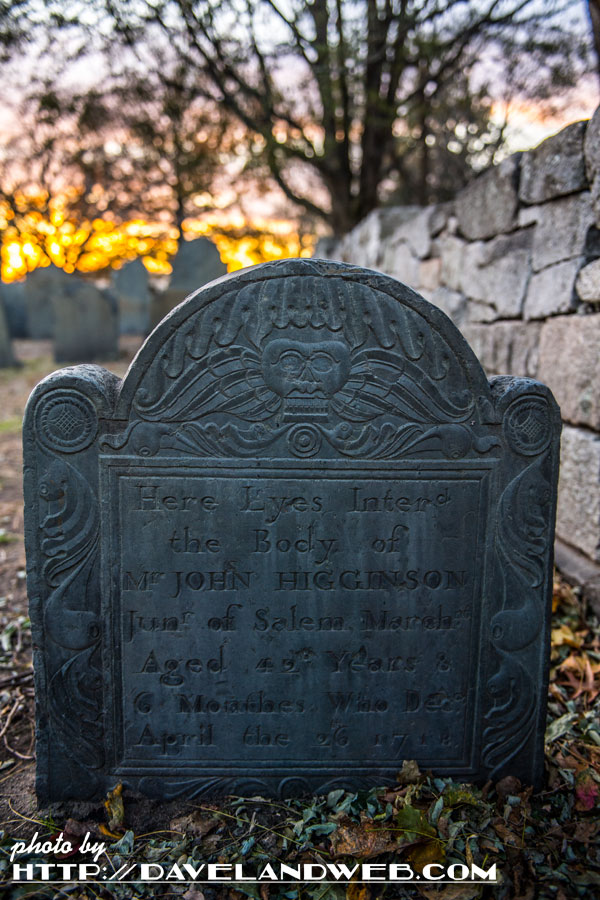
Further into town you can find the historic Pickman House; yes, that's yours truly bundled up for the winter. Built in 1664, it is adjacent to the Witch Memorial dedicated in 1992 on the 300th anniversary of the Salem witch trials and is also next to America's second oldest burying ground, aka Burying Point.


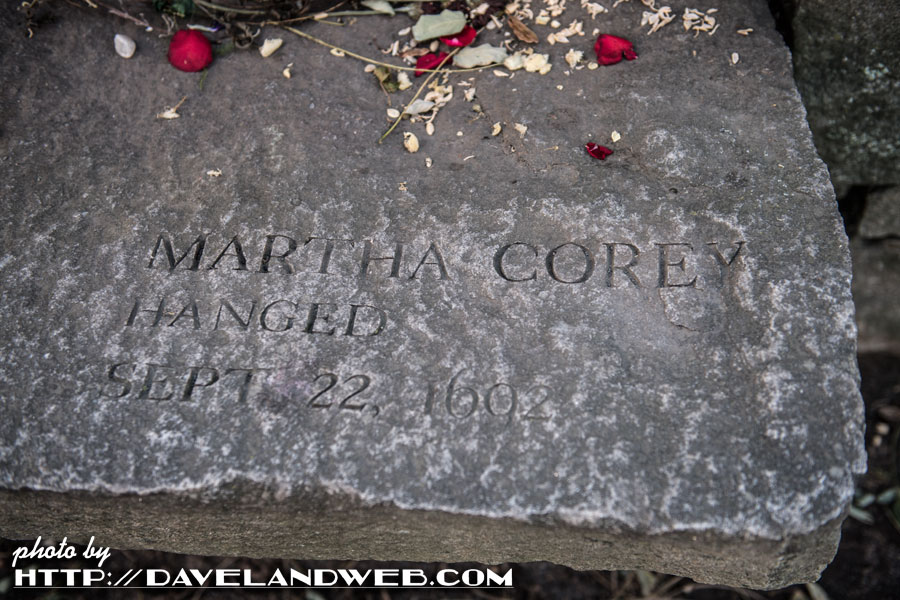
These stone benches commemorate the twenty people who lost their lives during the trials.


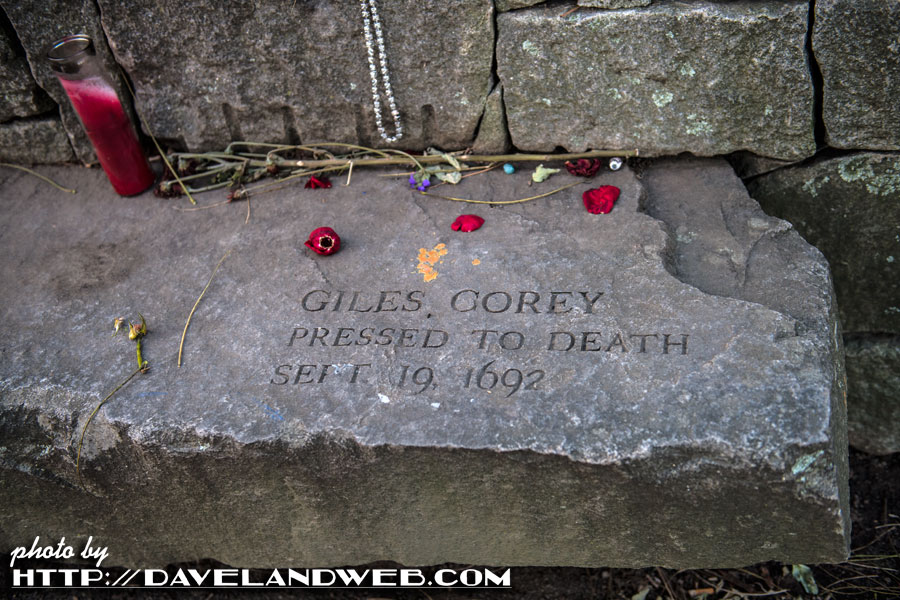
Unlike the others, Giles Corey was not hung. He was "pressed" to death by stones when he refused to testify against other "witches." Stones continued to be added to his body in an effort to get him to divulge information until he finally died after three days of this insane torture.


When I first saw these sentences inscribed in the stones on the ground, I thought that they had been stupidly covered up on the right side by the wall. Paleontologist and expert tour guide Bretton Rocks explained to me that these words were the final ones uttered by the supposed witches, just before they were hung. The cut-off sentences at right were uttered at the point of death, just as you would read them. Wow.


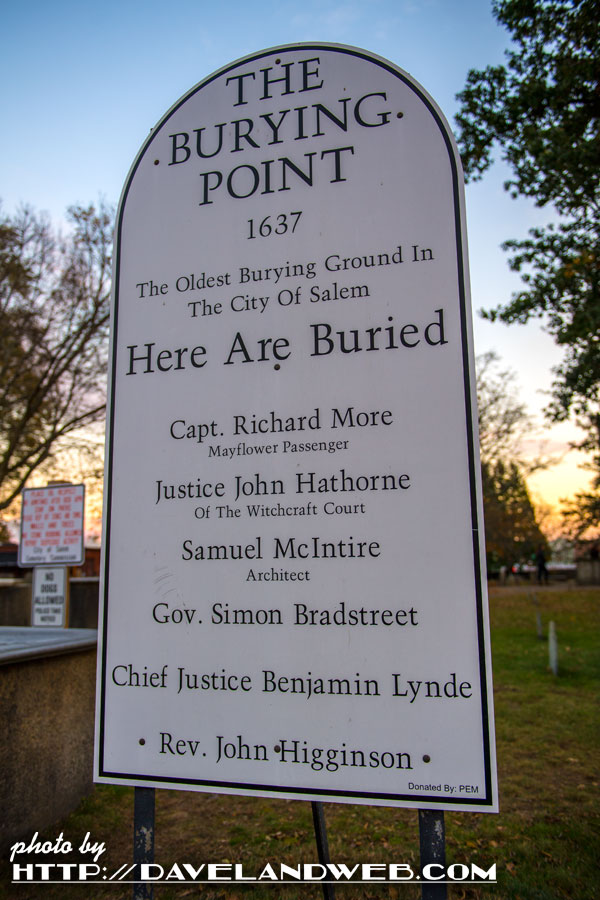
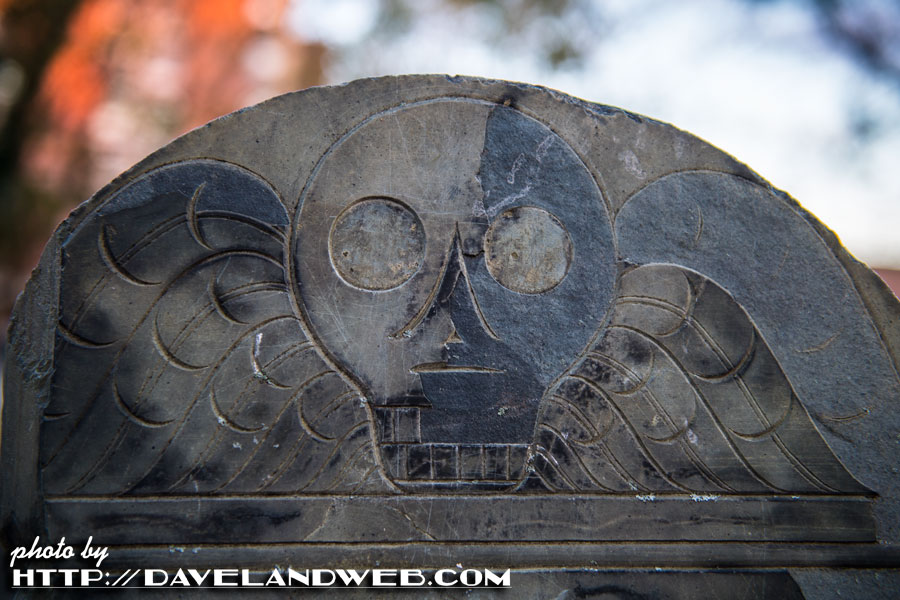
Steps away is Burying Point, Salem's oldest cemetery.


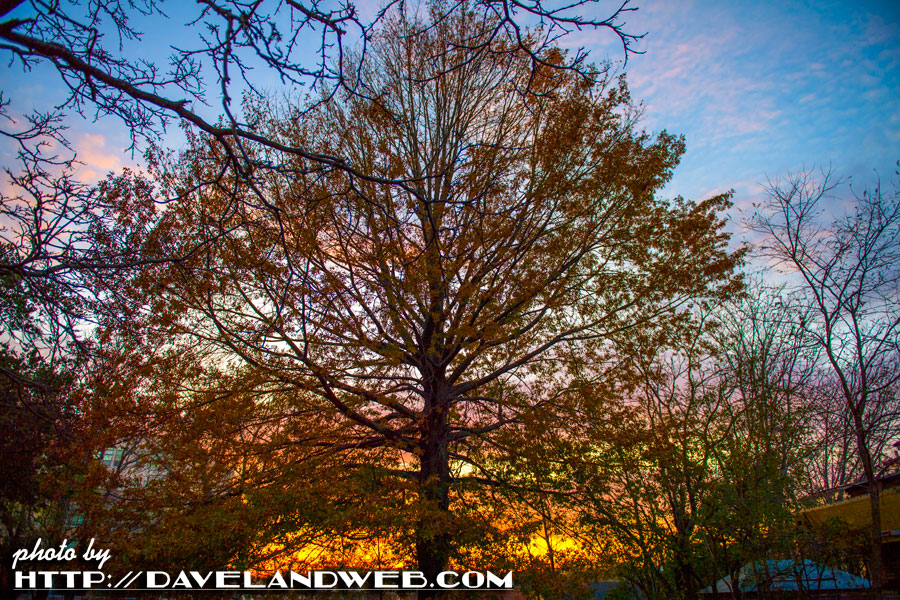
The sunset framed this area of mourning perfectly.


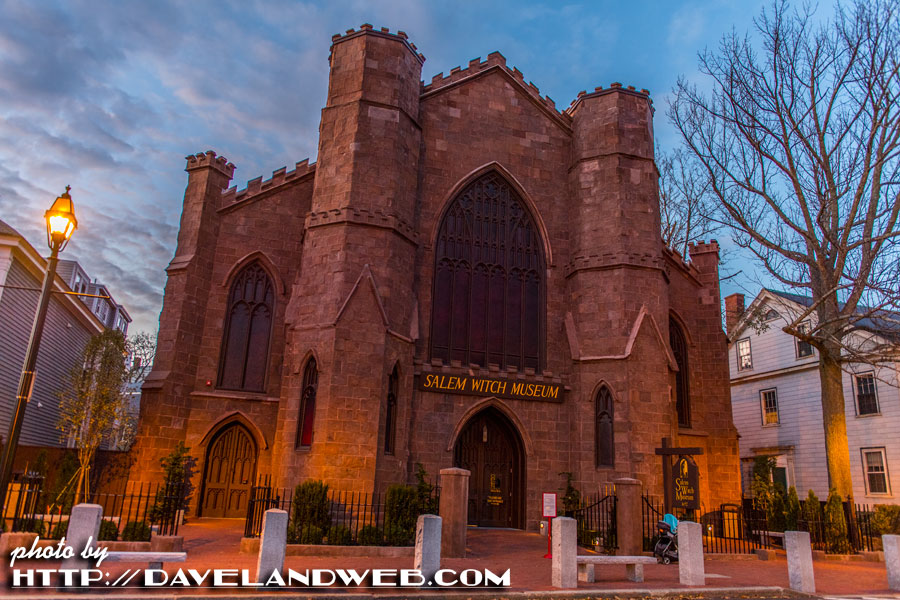
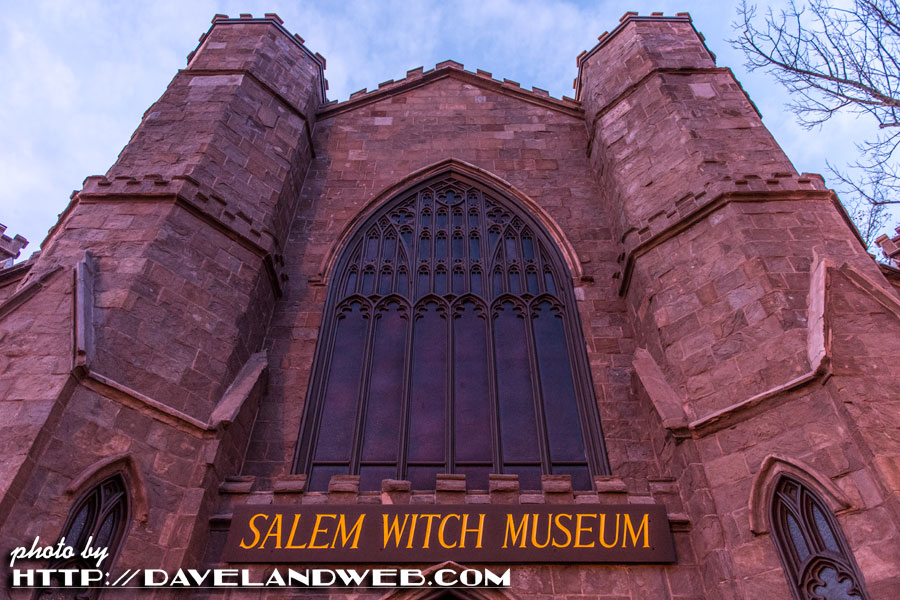
The Salem Witch Museum was closed, unfortunately. And that damn stroller in front; almost felt like I was at Disneyland.


Looks like I will need to return to explore the museum.


As I left town, I had to have Bretton take a shot of me with Samantha. Yes, even I can be a tourist.


See more Salem photos at my main website.
Thursday, November 23, 2017

Plymouth for Thanksgiving


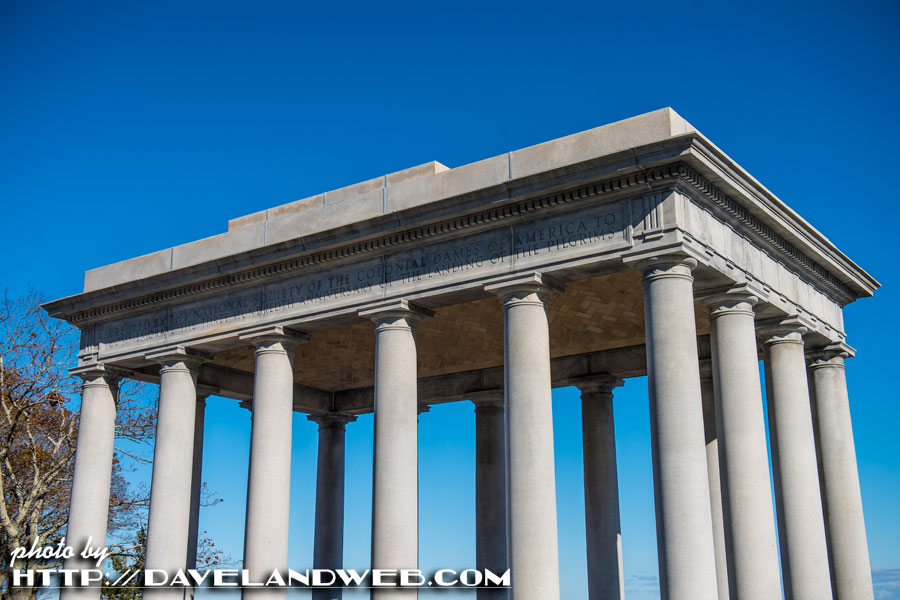
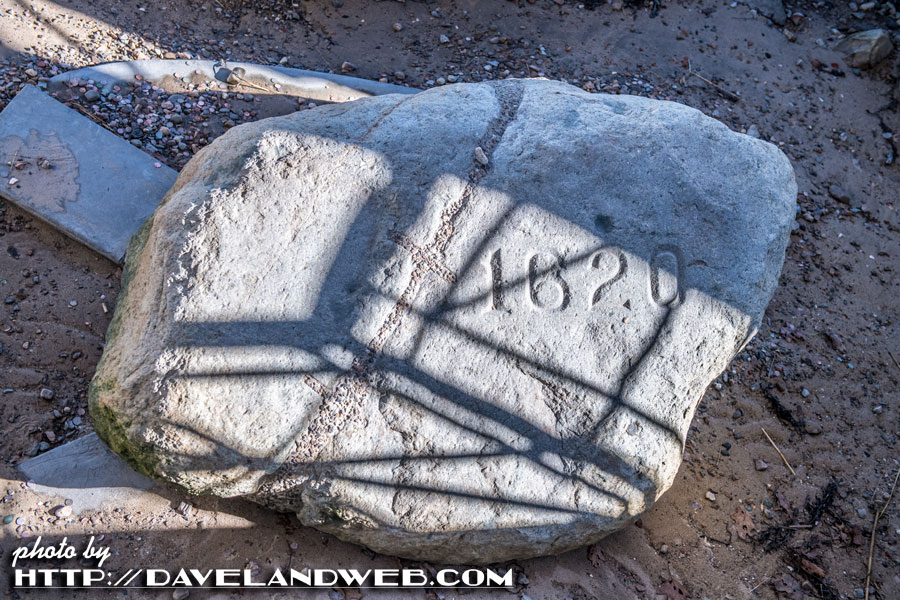
Originally known as Plimouth, the town of Plymouth, Massachusetts is viewed as the home of the first Thanksgiving feast. It is also well known for Plymouth rock, the traditional site of where William Bradford and the Mayflower Pilgrims landed when they founded Plymouth Colony in 1620. The rock is housed inside a large granite columned structure. When you see the rock itself, you'll be amazed at how small it is. Once known as "The Great Rock," it looks more like a lawn decoration from Home Depot. What happened?!? Back in 1774, it was removed from its original spot to put it on display in the town square, at which point it broke in half. Over the years, pieces of it were sold for profit and what you see now is all that remains. Yes, people paid to get a "piece of the rock."


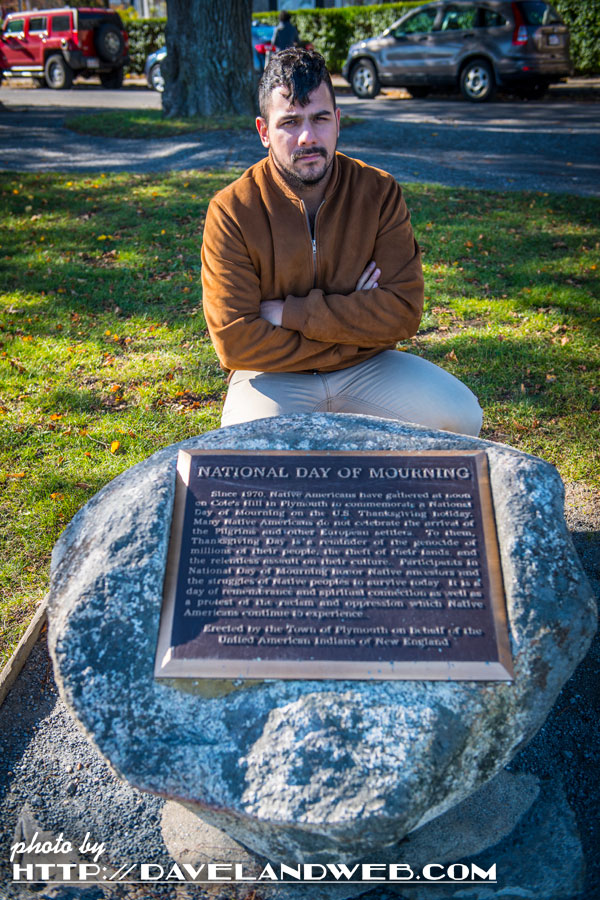
While Plymouth Rock "tells" the traditional story of Thanksgiving, another nearby rock on Cole's Hill tells the story of "National Day of Mourning." Every year since 1970, thousands of Native Americans have gathered in the area as a reminder to all that their people lost: their culture, their land, and especially the millions of lives at the hands of those who traveled by ship to settle here. It was an eye opening experience to see this small reminder of what actually occurred here. It wasn't all turkey, stuffing, and pumpkin pie. My friend Brett of Bretton Rocks, who is a descendant of the Wampanoag Tribe, gave me a tour of Plymouth and a Reader's Digest version of its true history.


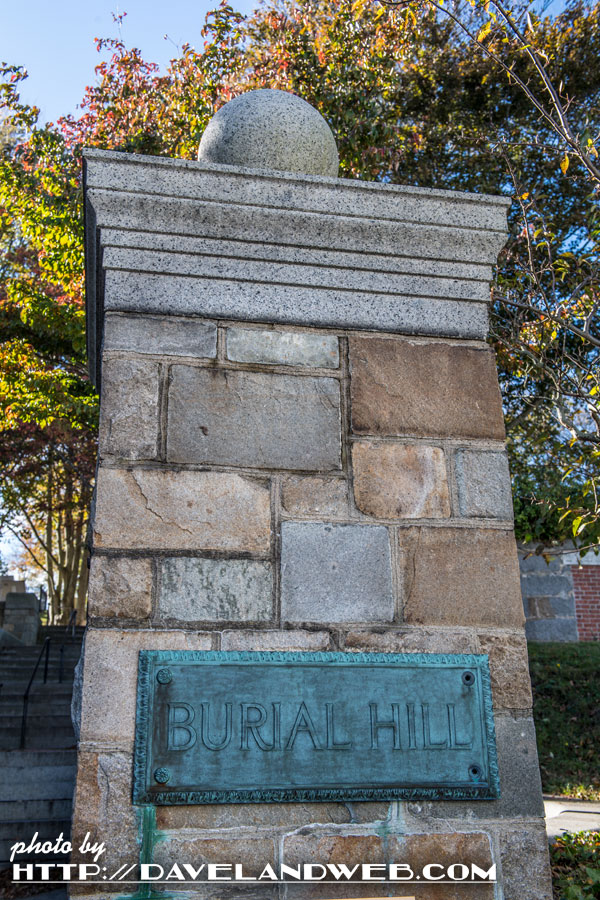
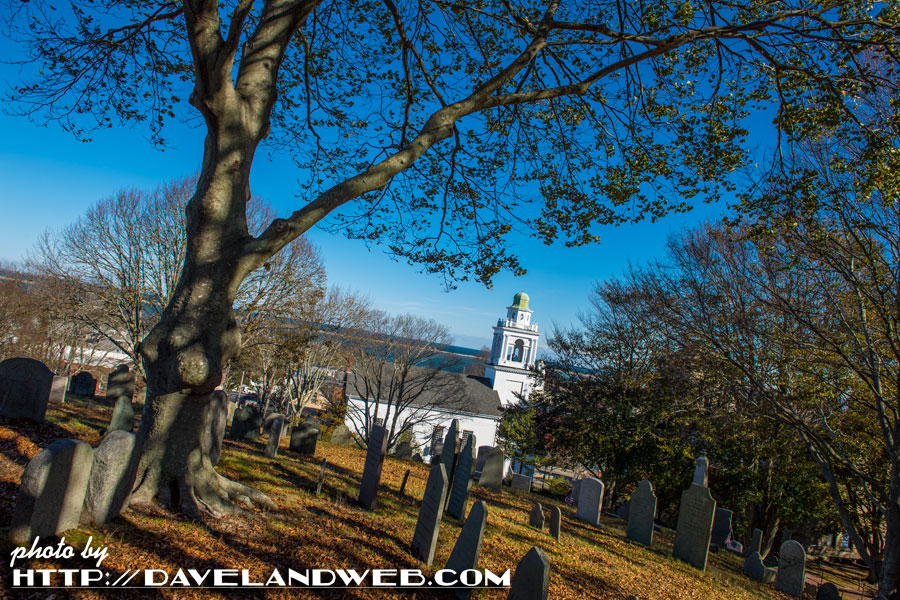
The first Pilgrim burial ground, known as Burial Hill, was established on Cole's Hill in 1620.


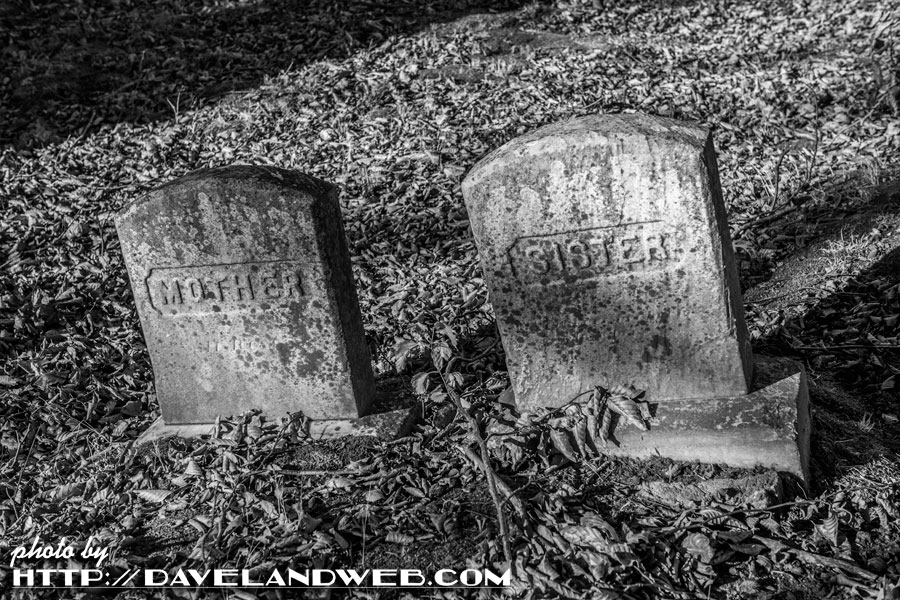
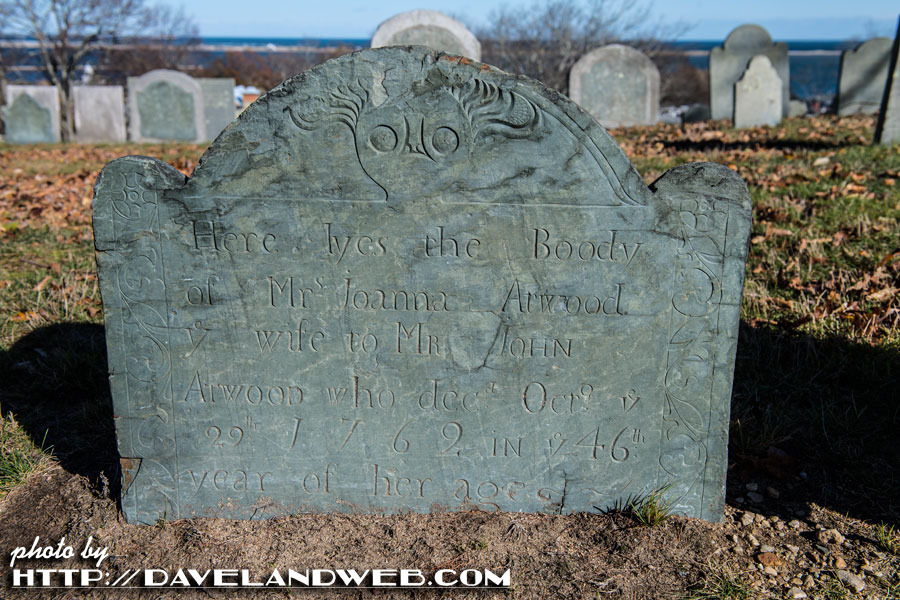
Some of the tombstones had very simple inscriptions:


while others had interesting carved details. I love this stuff!


The view of Plymouth from the cemetery was spectacular:


See more photos of Plymouth at my main website.