Showing posts with label poor little rich girl. Show all posts

Wednesday, April 29, 2026

Wasn’t I a dish?


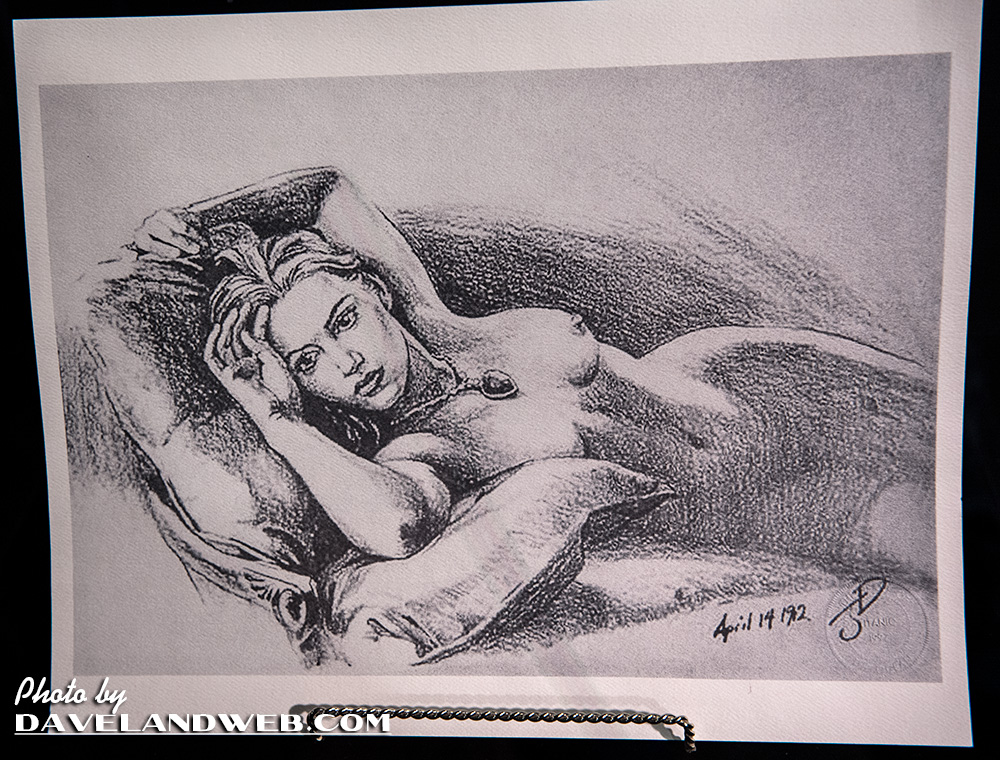
In the 1997 blockbuster, “Titanic,” Gloria Stuart portrayed Rose, a centenarian who survived the sinking disaster of the luxury liner in the title of the film. Stuart was 86 when she filmed the role. As her character looks at a sketch that was drawn of her aboard the ship, she exclaims, “Wasn’t I a dish?”


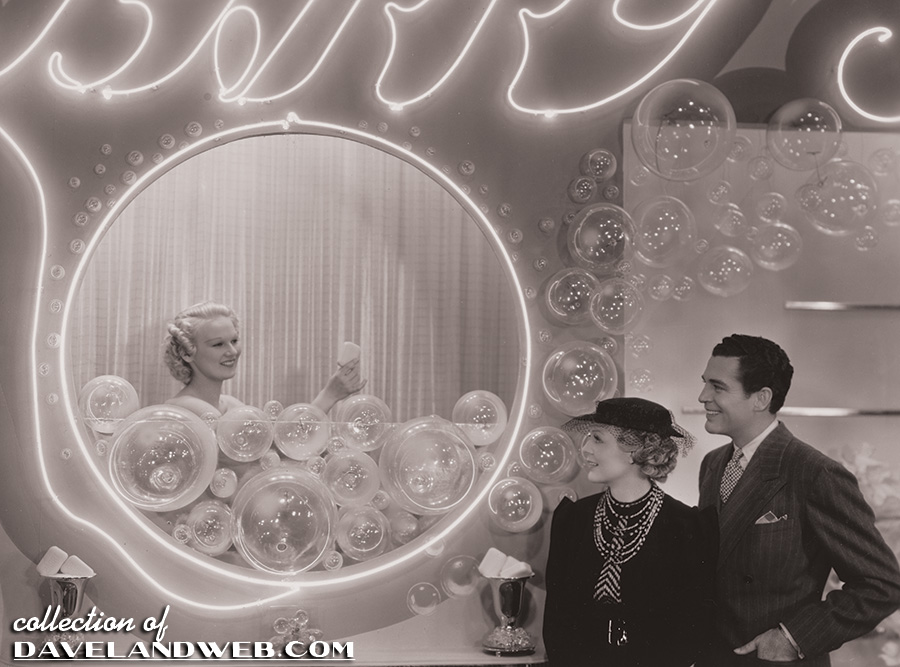
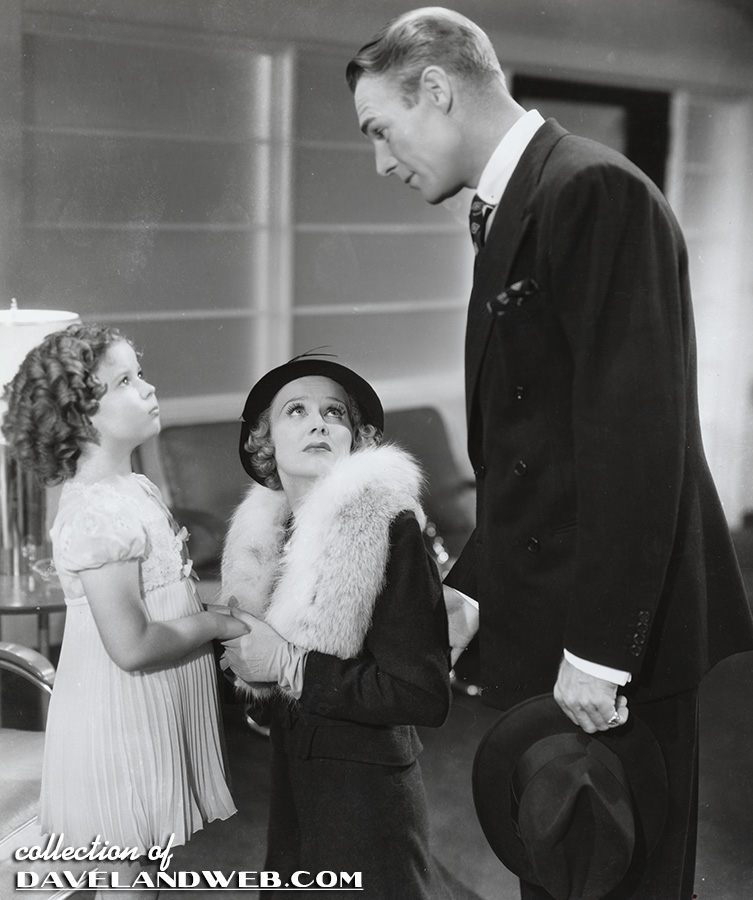
Why yes, Gloria; you really were! In the 1936 film “Poor Little Rich Girl,” Stuart was given the thankless task of playing the romantic lead in this Shirley Temple musical. She wasn’t given much to do except look pretty in the few scenes that she had.


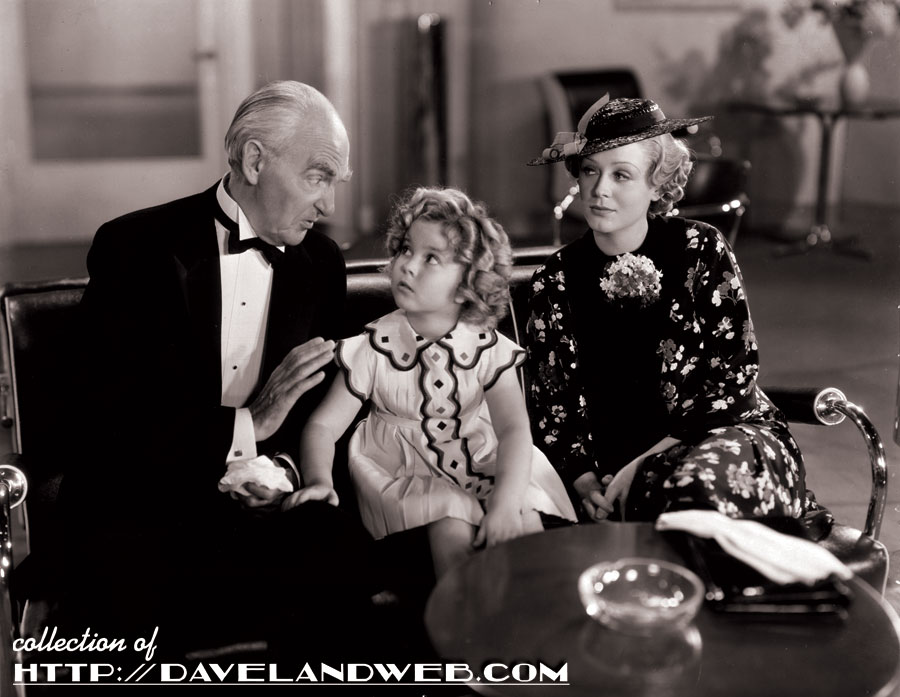
Above she is shown with Michael Whalen, who portrayed Shirley’s father in the film. Below, with Claude Gillingwater and Shirley.


In a 1996 interview Gloria had this to say about working with Shirley:

“My agent called me one day and said, ‘You’re going to make a Shirley Temple film!’ I said, ‘Oh no!’ He said, ‘Gloria, it’s wonderful!’ I said ‘What’s wonderful about it?’ W.C. Fields said never be in a movie or on the stage with dogs or children. It’s a losing battle. So I asked to see Darryl Zanuck and I said, ‘Mr. Zanuck, I’m a dramatic actress. It’s not for me.’ He said, ‘Gloria, you could be in film for the next ten years or on the stage and nobody would ever see you or hear about you, but if you’re in a Shirley Temple film, millions of people will see you.’ She was really a get-away girl. You watched her and she was so completely composed and happy and talented and up up up. She was a real tonic. She was a miracle. Indescribable. It’s impossible that one child was all those wonderful things but she was.”


Stuart reconnected with Shirley sixty years later at the 1998 Academy Awards ceremony. “I was sitting at the banquet afterwards and she came up and put her arms around me,” Stuart recalled. “I was the only one left that she worked with.”


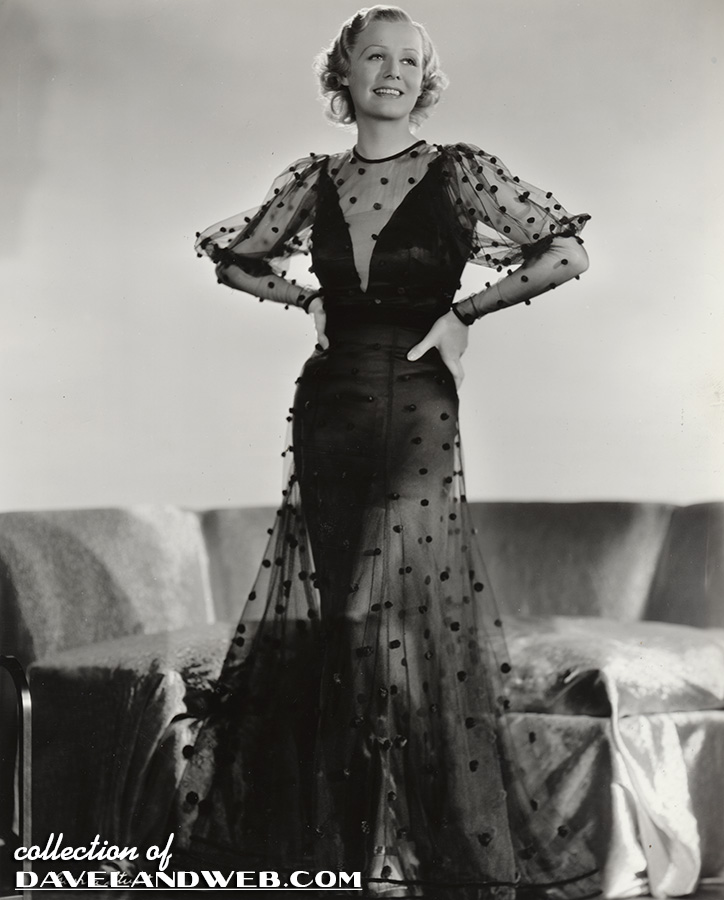
Perhaps in a nod to her less-than-enthusiastic response to playing alongside Temple, studio head Darryl Zanuck had the publicity machine crank out some fashion shots of Stuart. This caption accompanied the below image:

Three high fashion notes of the spring season, a strictly tailored suit, men’s wear fabric, and the newly favored shade of grey striped in chalk white, are incorporated in this costume worn by Gloria Stuart playing in “The Poor Little Rich Girl” for 20th Century-Fox. Horizontal bands of the material finish the seams of the skirt and the slot pockets, evidence of the meticulous tailoring of this suit. The blouse of white pique has a pleated frill for collar and closing. A grey felt hat and grey suede accessories complete the outfit.


Neither one of these outfits were visible in the final film.


Stuart co-starred with Temple again in 1938’s “Rebecca of Sunnybrook Farm” alongside Randolph Scott. At least she was given more to do in this film and a number of comic zingers which she delivered perfectly.


Yes Gloria - you were a dish!

See more photos at my main website.

Tuesday, December 10, 2024

Temple Tuesday: Shirley Reads!


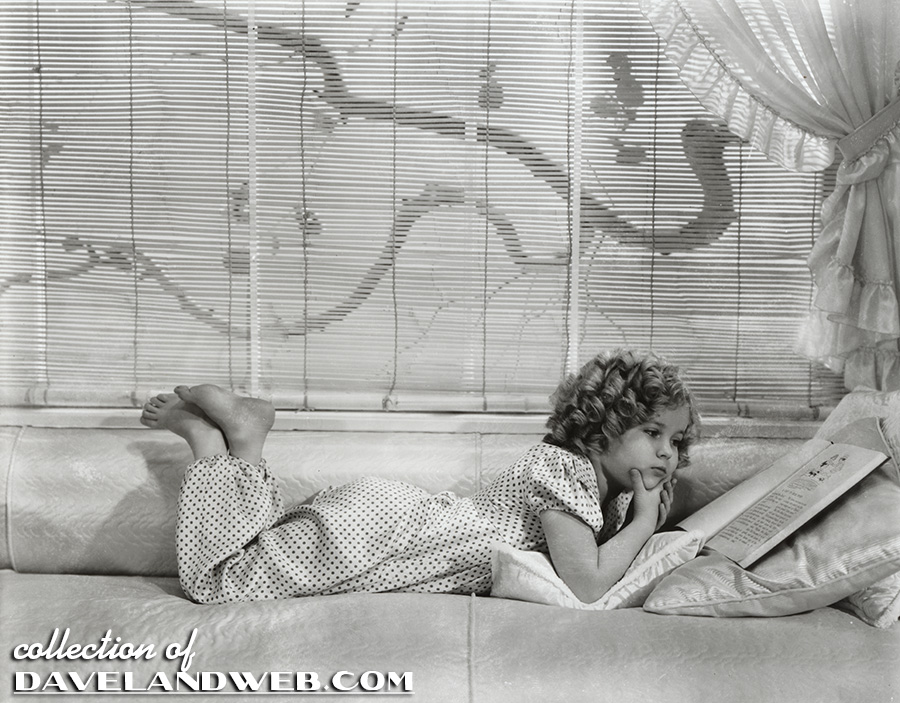
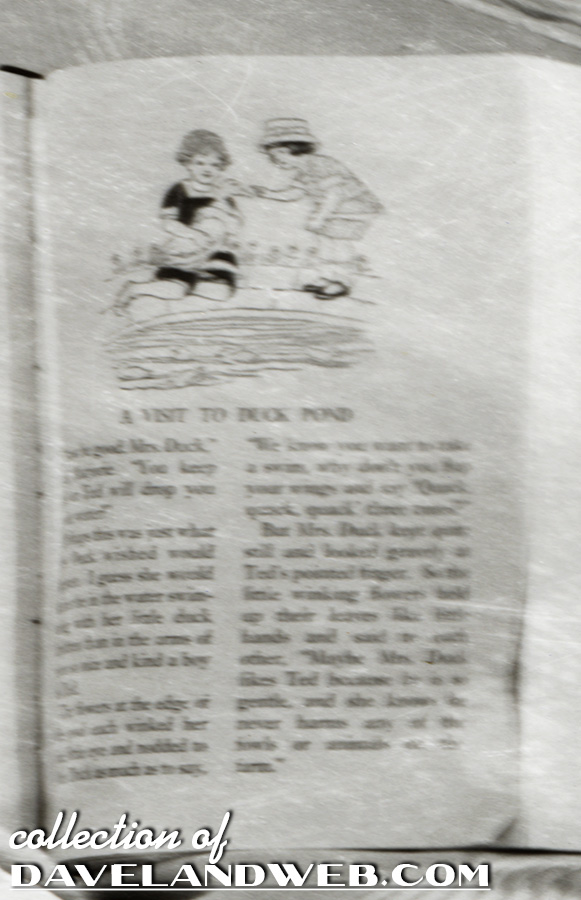
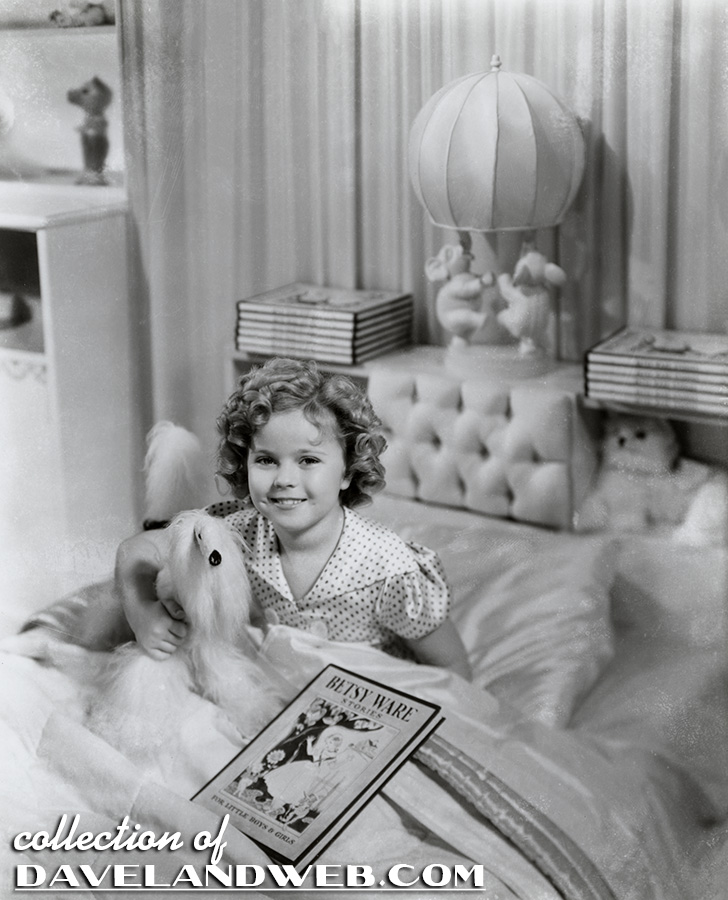
In the 1936 film, “Poor Little Rich Girl,” Shirley plays Barbara Barry, a lonely motherless child who is left in the care of her nanny, nurse, and butler, while her father is off making millions at his soap company. The above publicity still shows Shirley’s character reading a large book. One of the initial plot points is that Barbara is fascinated with the Betsy Ware book series, detailing the fictional girl’s adventures. This is what inspires Barbara to “run away” from her strict nanny (Sara Haden) while assuming Betsy’s identity, which leads to her own adventures. Zooming in, we can see the chapter Shirley/Barbara is looking at is called “A Visit to Duck Pond,” and includes the characters of Ted and Mrs. Duck. Is this from a real book?


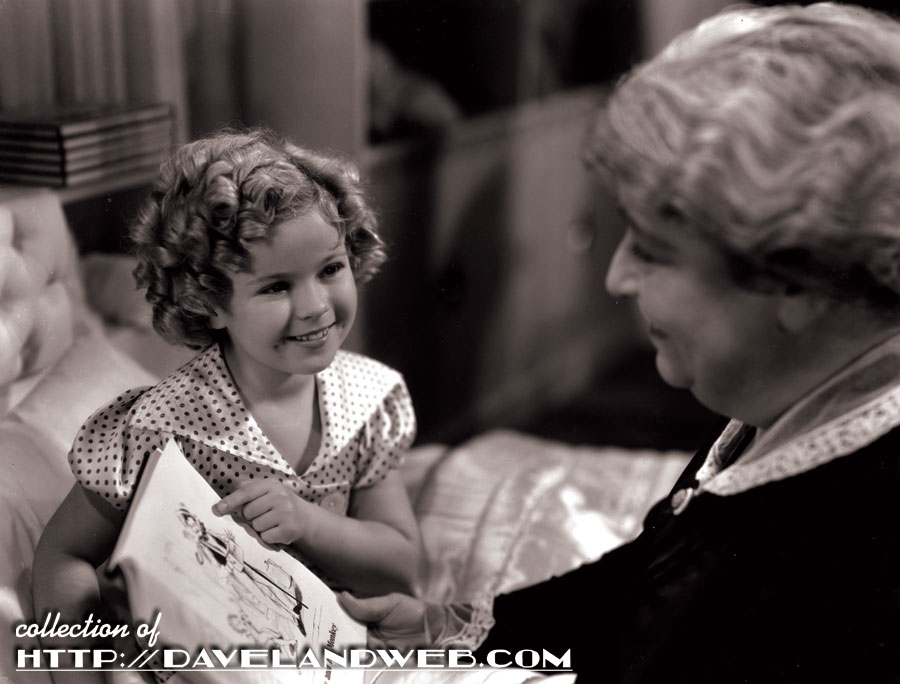
Jane Darwell plays Shirley’s nurse. This publicity still shows her character reading to Barbara from the same book.


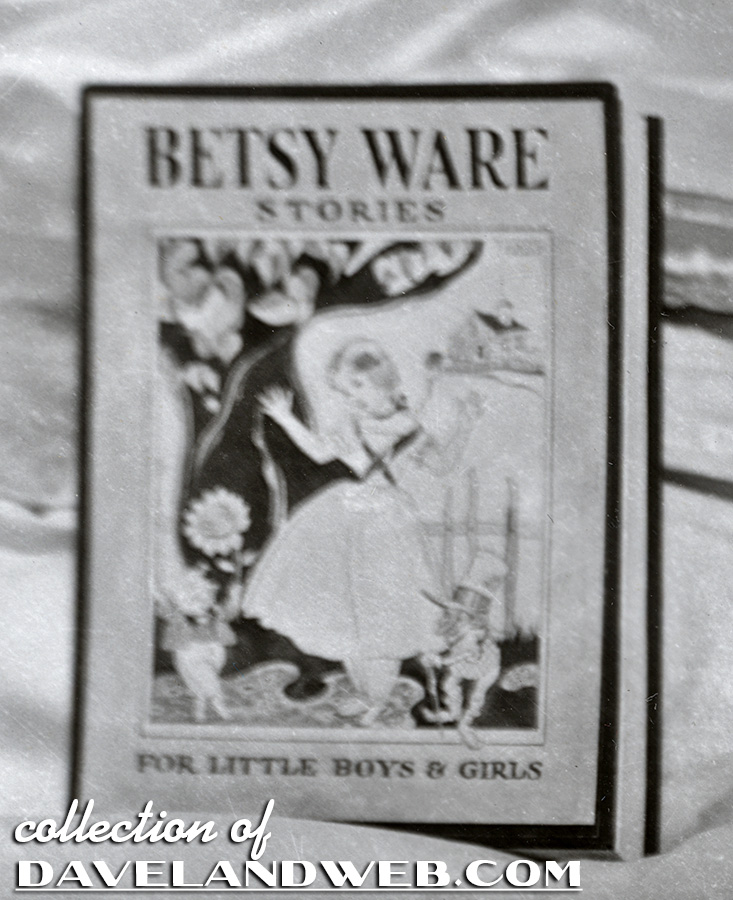
This recently acquired still gives a good clear view of the book cover, along with what look like multiple copies of the same book piled on the little girl’s headboard. Just in case the book gets dirty, I guess.


The cover:


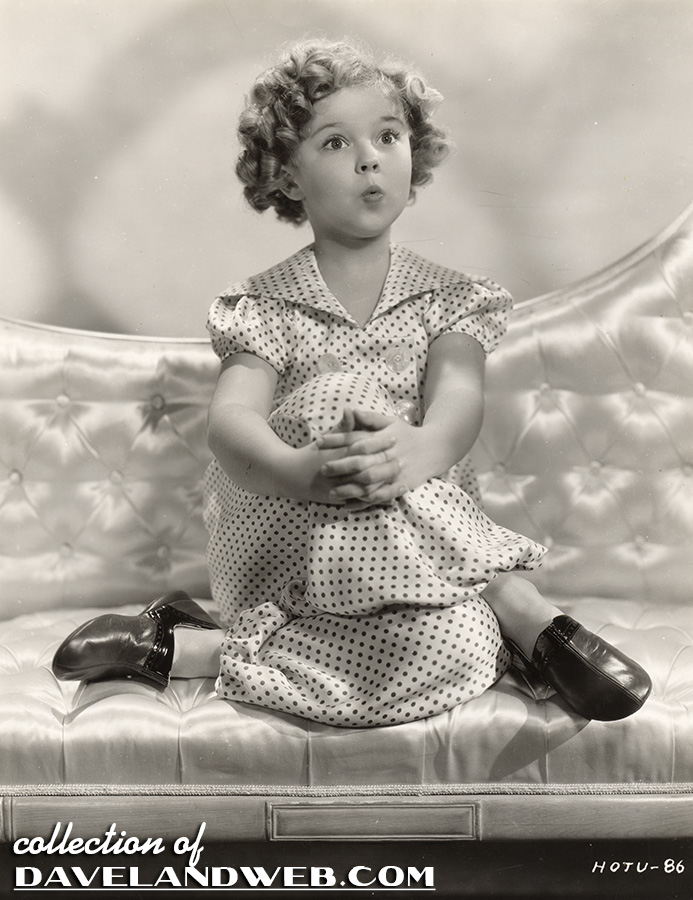
I did my usual internet search but turned up nothing. My assumption is that this cover was just a prop, created for the film, especially since no author information is shown on the cover. The chapter shown in the first photo…that could be from an actual book that was wrapped in the prop cover. All assumptions…until someone proves me wrong! In the meantime, if you like the pajamas Shirley is wearing, if you had a time machine, you could have visited your local department store and bought a pair with the slippers she is modeling below:


The pajamas were manufactured by Kaufman Brothers and the slippers by Restful.

See more “Poor Little Rich Girl” photos at my main website.

Thursday, August 08, 2024

Harlow & Faye


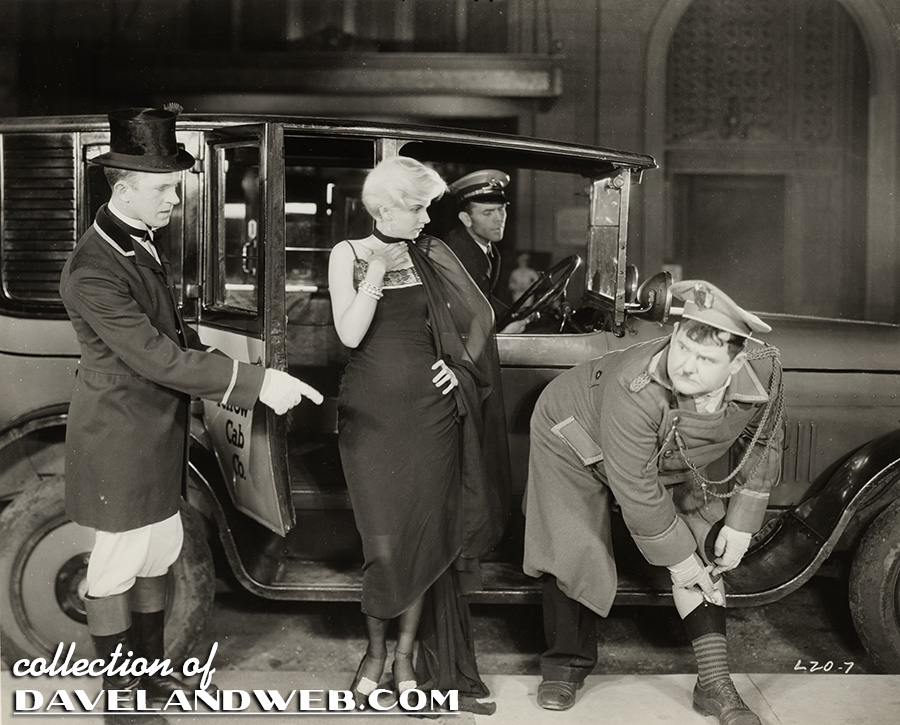
Today’s blog post refers to the two leading platinum blondes of the 1930s: Jean Harlow and Alice Faye. Harlow’s film career first began with supporting roles in silent comedies such as “Double Whoopee” (1929) with Stan Laurel and Oliver Hardy.


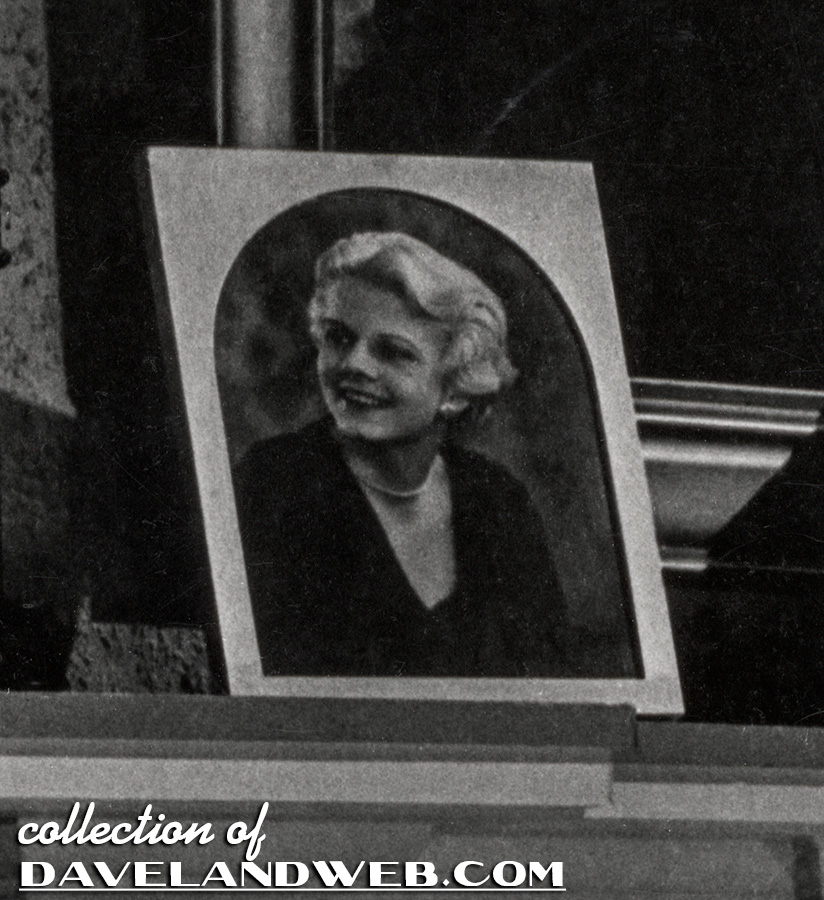
In “Brats” (1930), Harlow can be spotted briefly if you look closely at the photo on the mantle. Producer Hal Roach apparently quipped that he got Harlow to appear “for nothing” in this comedy short as well as in 1931’s “Beau Hunks.”
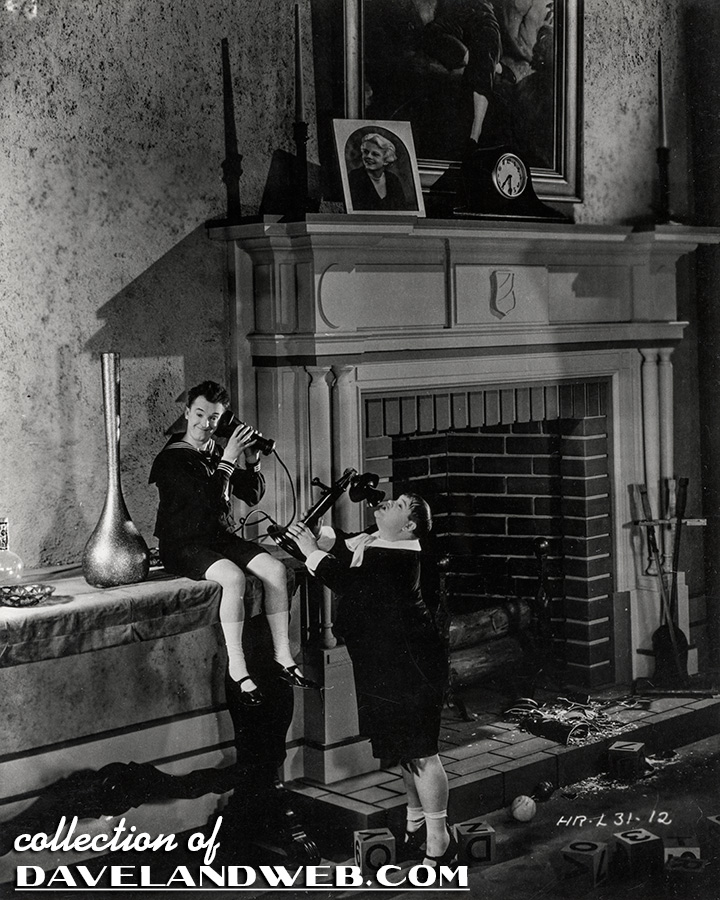


Zooming in:


Harlow’s breakthrough role came in the 1930 war film, “Hell’s Angels.” By 1932, MGM put her under contract and she became a box office favorite with hits like “Red-Headed Woman” (1932), “Red Dust” (1932), and “Dinner at Eight” (1933).
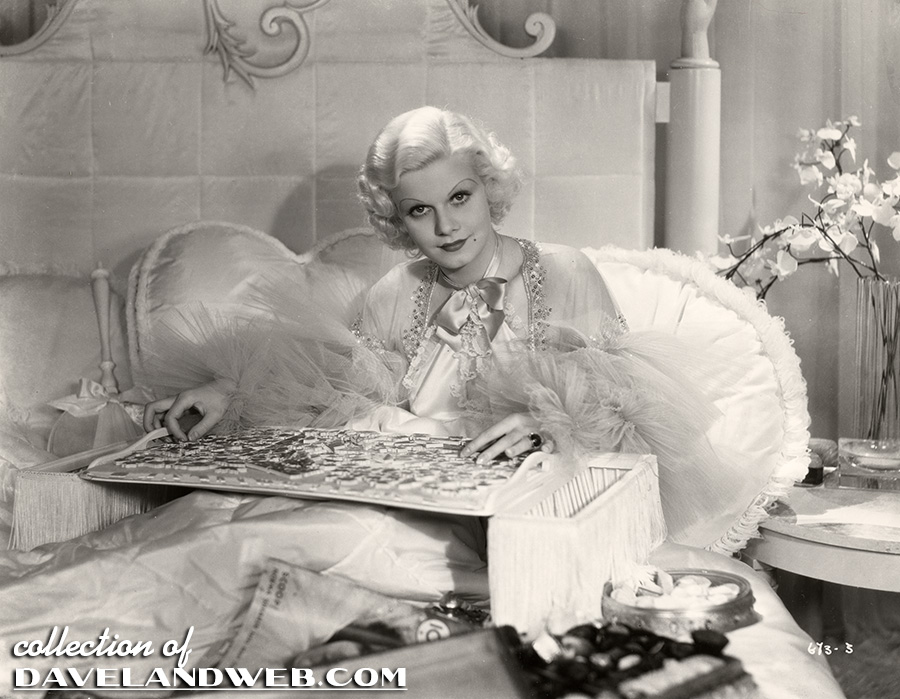


The pencil thin eyebrows, the platinum hair, and the sarcastic wit were all part of her manufactured persona.
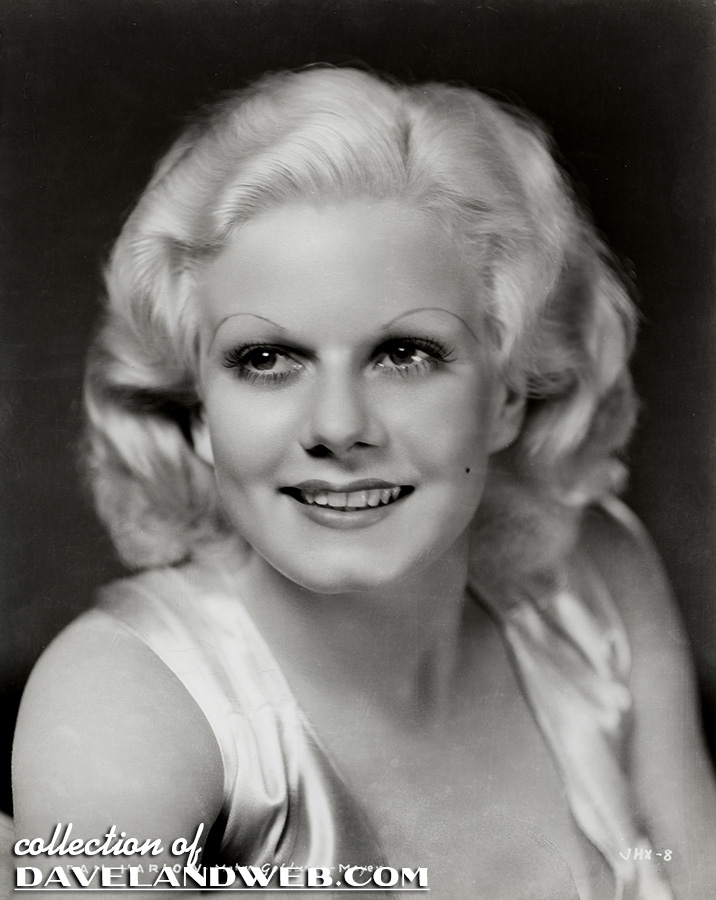


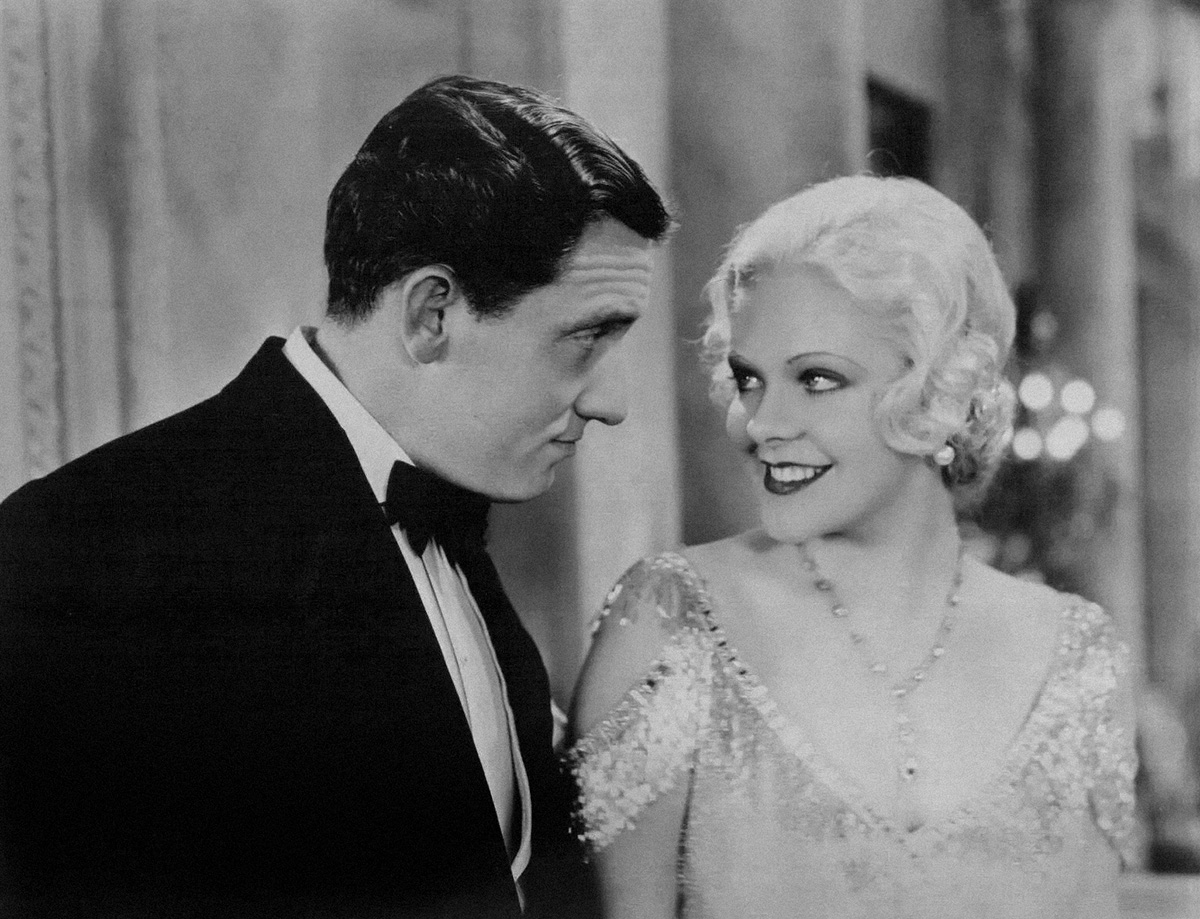
Enter Alice Faye (approximately four years younger than Harlow), Fox Studio’s “answer” to Harlow over at MGM. Today, portraits of the two are often confused. Faye was given the same platinum hairdo as well as the hardened makeup that Harlow had been sporting in her early career, as seen in “Now I’ll Tell” (1934), where Faye played the “other woman” opposite Spencer Tracy.


Below, a Gene Kornman publicity shot of Faye for “Poor Little Rich Girl” with Shirley Temple (1936) with this caption:

After she’s through with the day’s dancing sequences in “The Poor Little Rich Girl,” Alice Faye curls up in her favorite chair, clad in her favorite pajamas of black silk velvet lavishly trimmed in white marabou. In this 20th Century-Fox production, starring Shirley Temple, Alice finds herself teamed with Jack Haley, who does pretty well as a dancer himself!
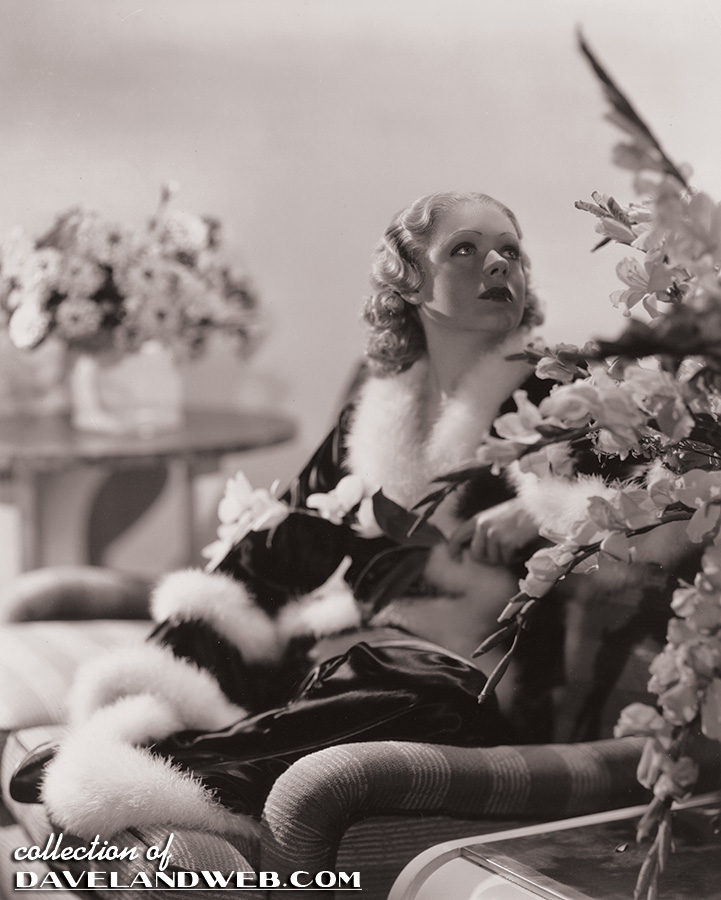


In this, her first Temple film, Faye played the wisecracking wife who nags husband Jack Haley all day long. Faye’s characters up to this point lacked the innocence and vulnerability that made Harlow so appealing underneath the sarcasm. Still, Faye had one thing Harlow didn’t: a gorgeous contralto voice! 20th Century-Fox Studio head Darryl Zanuck saw the potential in Faye and by the time she made her second Shirley Temple film, “Stowaway” (also in 1936), she was almost unrecognizable. In the following publicity still, Alice had graduated from silk velvet and marabou to an outfit that any typical woman of the day might have worn. The accompanying caption:

Attired as comfortably as possible, Alice Faye takes a stroll for the sake of fresh air before reporting for preparation at 20th Century-Fox for her role with Shirley Temple in “Stowaway.”
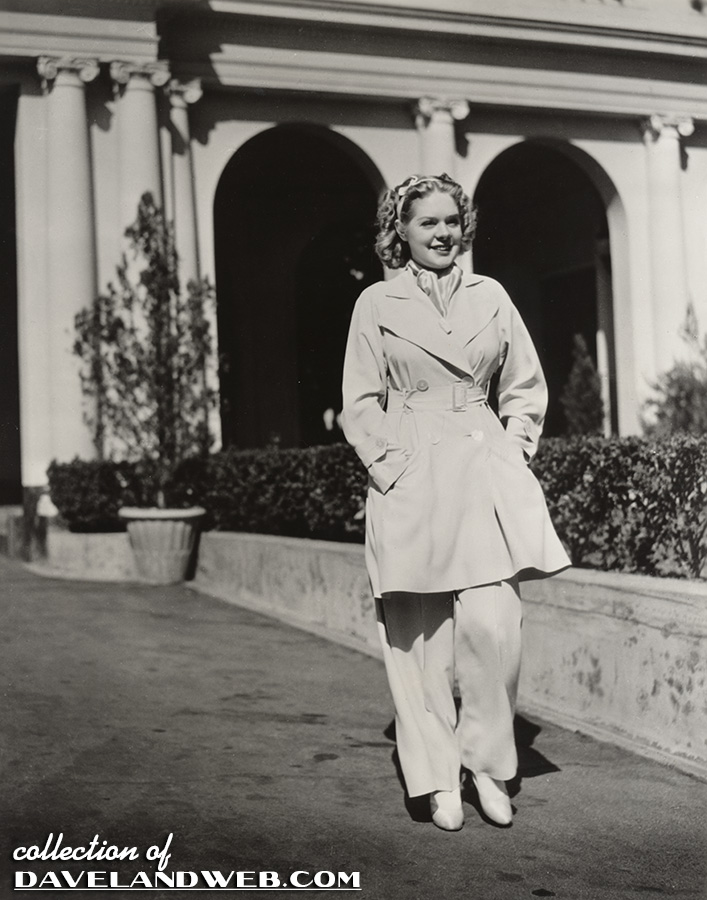


Zanuck saw the value in making Alice Faye more approachable to both sexes by softening the edges and putting the vocal talents front and center, much to the chagrin of little Shirley who would later recall:

I retired to bed singing “Good Night My Love,” a delectable ballad by Mack Gordon with Harry Revel with lyrics about Dutch dolls, teddy bears, and my dead daddy. Faye then reprised my song outside, under a romantic full moon, using mature lyrics sung in her own silky style. Instantly I knew her rendition had finessed mine. Hers was deeper-throated, more resonant, and her facial expressions insinuated much that I sensed was important without knowing why. Yet my proprietary feeling could not so easily be quenched. It was my song. I had sung it first. Why did I lose when she won?…Perhaps the problem was not my deficiency but her skill. She was older, I brooded, and had beautiful cow eyes to boot.
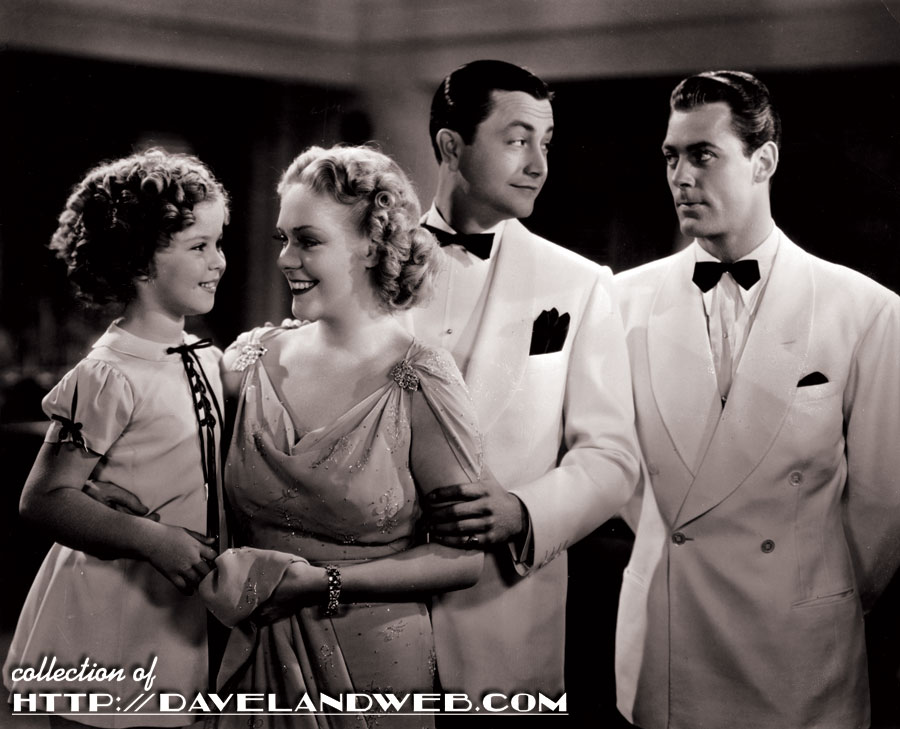


At the same time, MGM was working hard to soften Harlow’s image, realizing (just like Zanuck) that her appeal would be greater if they moved away from the one-dimensional platinum bombshell approach.

One of the oft-told legends of Hollywood was that MGM wanted so badly to borrow Shirley Temple for “The Wizard of Oz,” that they offered Clark Gable and Jean Harlow for Fox’s production of “In Old Chicago.” Shirley herself even repeated this myth in her autobiography, Child Star. It doesn’t take much digging to figure out that this was a fabrication, although portions of the story are true. When Alice Faye was interviewed by Joe Franklin in her later years, he asked, “Did you get that part [In Old Chicago] when Jean Harlow was about to die?” “That's what I read,” replied Alice. “I read that, but I’m not sure.” “I never believed it,” responded Joe. “I never did either. I wouldn’t mind following Harlow,” Faye said with a smile. “She was pretty dishy!” This speaks to the fact that back in the 1930s and 1940s, the studio bigwigs made trades and deals but the stars themselves were the last to know. They were under contract with the understanding that they would follow along with executive orders without complaint. Shirley Temple herself would not have had any firsthand knowledge about any of this, either. Here’s what we know:

“In Old Chicago” went into production mid-June of 1937, shortly after Jean Harlow’s untimely June 7th death. Thanks to some sleuthing by Melissa (aka “The Colonel”), we know that on May 27, 1937, the L.A. Times was still reporting that Harlow…

…is pretty certain as one feminine lead in that picture, incidentally.

One day later, the Times changed its tune:

With no chance of getting either Jean Harlow or Helen Hayes for “In Old Chicago,” Twentieth Century-Fox is to set about popularizing two of its own feminie players in this banner picture. And that’s not a bad idea either, particularly as one of the young ladies is Virginia Field.

On June 1st, the Evening Courier reported:

I don’t know what would have happened if Darryl Zanuck couldn’t have borrowed Jean Harlow for “In Old Chicago.” He had his heart set on her, but for a few weeks it looked as if M-G-M would have to refuse. In order to swing the deal, Darryl had to promise Tyrone Power in exchange. So it’s set that he will play the boy in “Madame X.” First of course, he co-stars with Jean in the Chicago epic, with Don Ameche in an important part and Virginia Field and Phyllis Brooks in supporting roles. Henry King directs.

Other than Harlow and Virginia Field, the rest of the report panned out. MGM made “Madame X” without Tyrone Power, using Warren William instead. “Madame X” began production mid-July 1937 and was released on October 1. And what about Shirley? Where does she fit into all of this? Based on contemporary accounts, Shirley Temple had zilcho to do with the “In Old Chicago” / “Madame X” swap. MGM didn’t even own “The Wizard of Oz” at the time all of these shenanigans were going on. While the bean counters at MGM wanted the box office stability of Shirley for “Oz” when they did purchase it, the production and creative team all wanted Judy Garland and the story was purchased specifically for her. MGM vocal coach/composer/arranger Roger Edens was sent to Fox for an informal audition of Temple and reported back that her “vocal limitations were insurmountable” for “Oz.” And that was that. 

What would “In Old Chicago” have been like with Harlow? What would “The Wizard of Oz” have been like with Temple? To quote Alice Faye, “You’ll Never Know”!



See more Alice Faye photos at my main website.

Tuesday, June 13, 2023

Temple Tuesday: Shirley & The Living Dolls


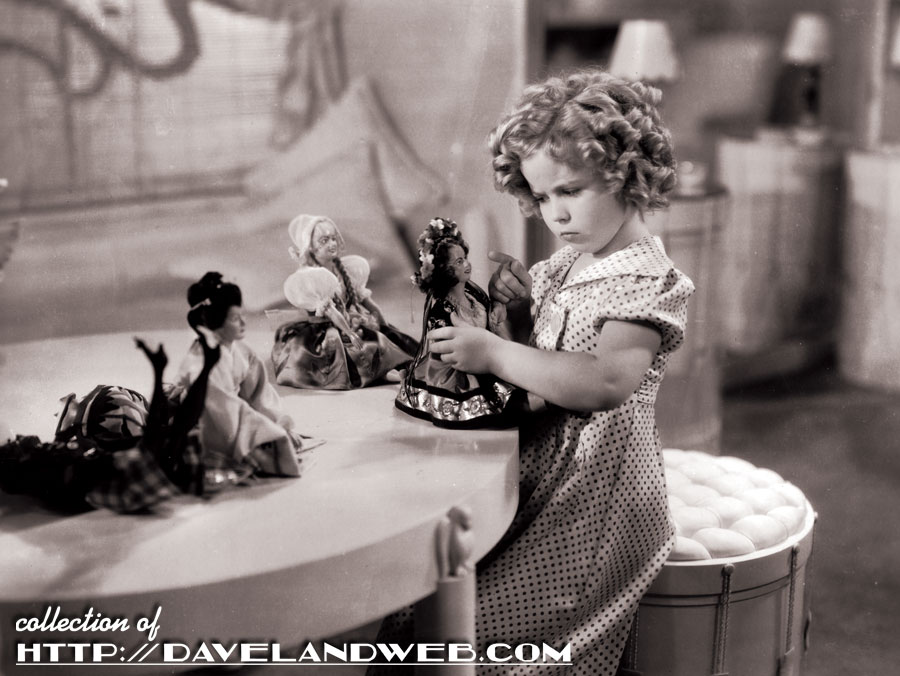
In the 1936 Shirley Temple star vehicle, “Poor Little Rich Girl,” she plays a motherless child (albeit a wealthy one!) who only has her  dolls to play with. Shirley sings the Mack Gordon & Harry Revel song, “Oh, My Goodness” to them while she explains her lonely plight. Side note: the two also collaborated on “Rebecca of Sunnybrook Farm” (1938), parting ways in 1939. 20th Century-Fox paired Gordon up with composer Harry Warren for 1940’s “Young People.” I guess you could say Mack was just wild about Harry…


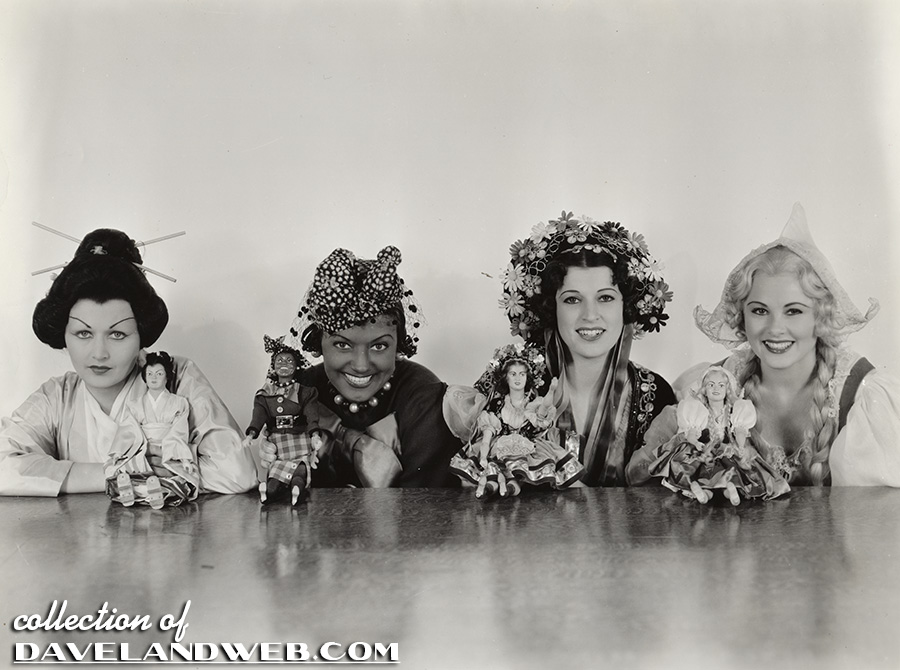
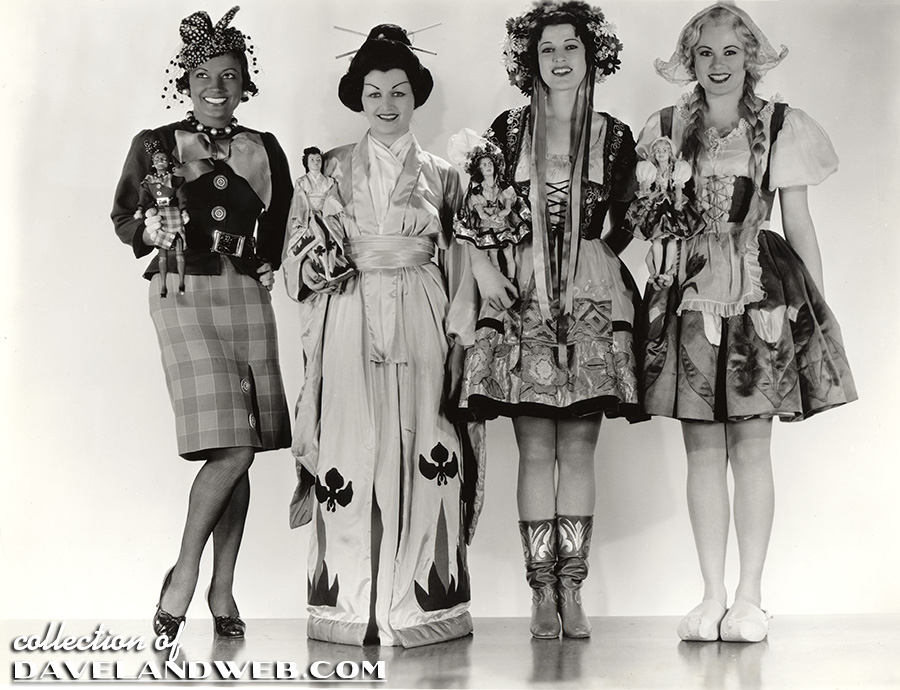
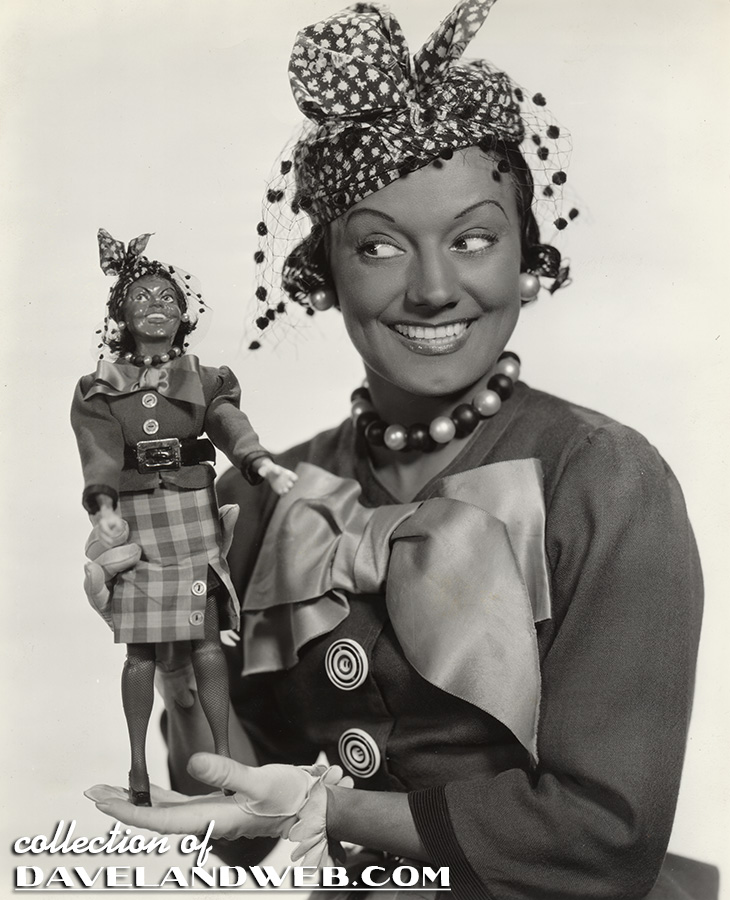
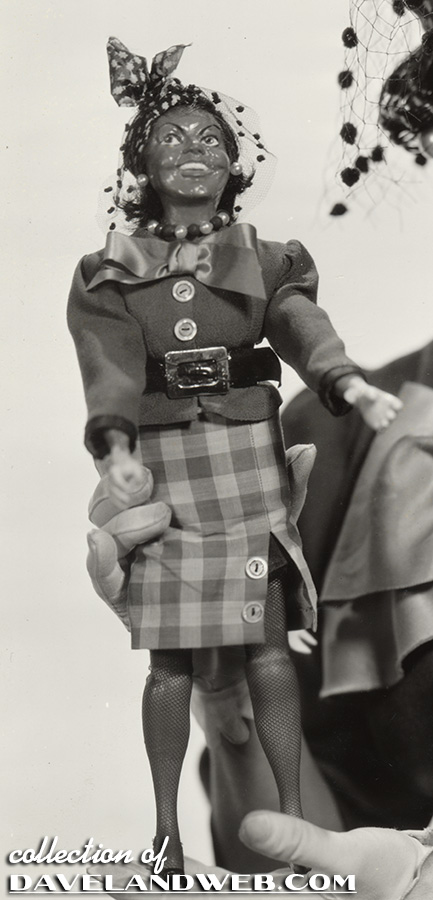
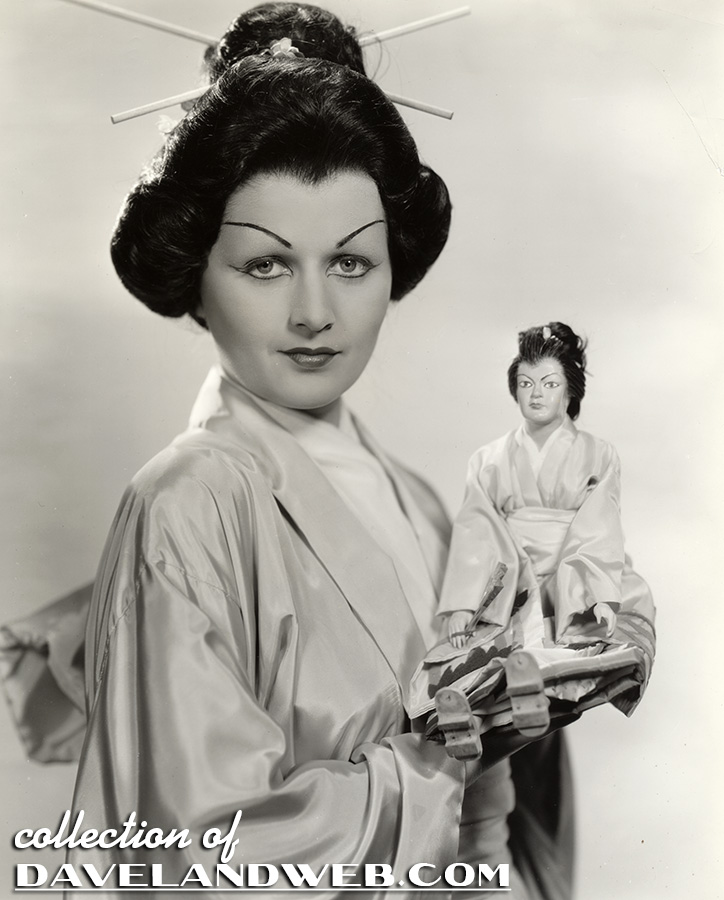
Back to the main story…Shirley’s four dolls come to life and dance for her. This screen magic was accomplished by having four “live” actresses perform the choreography for Shirley via split screen effect. In these publicity shots, you can see the actresses paired with their corresponding dolls: Julie Cabanne (Japan), Geneva Sawyer (American Jazz/Soul), Lucille Miller (Russia), and Esther Brodelet (The Netherlands) .


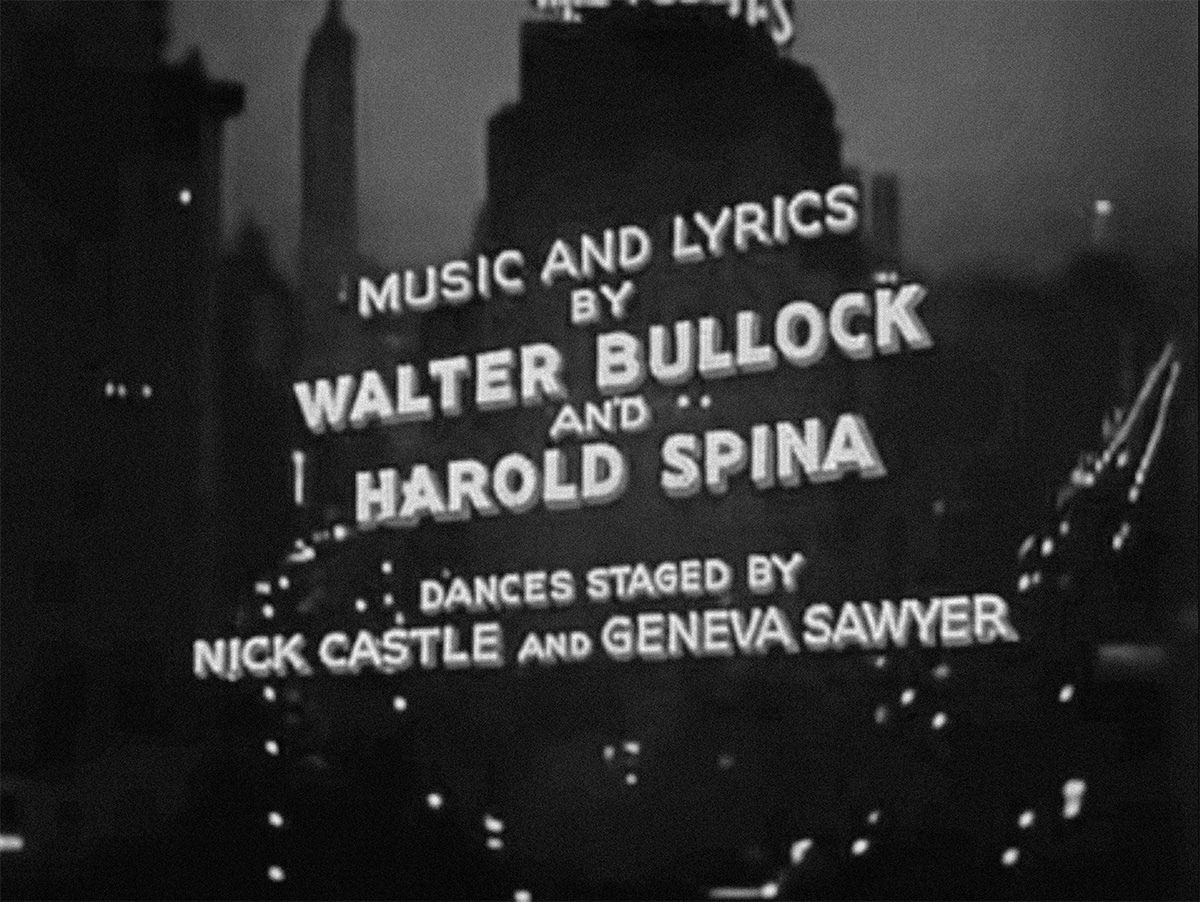
Choreography for the film is credited to Ralph Cooper and Jack Haskell. Were they needed for this number? Probably not.


Geneva Sawyer had been a vaudeville dancer before coming to Hollywood. She was signed to a Fox Studio stock contract after her work in “Stand Up and Cheer” (1934), the film that catapulted Shirley to stardom with the song, “Baby, Take A Bow.” Geneva’s work on “Poor Little Rich Girl” caught the attention of Shirley’s beloved dancing costar, Bill Robinson. Fate stepped in as Robinson happened to be on set when the number was filmed; he was so impressed with her work and ability to quickly learn routines that he requested she be made his (uncredited) assistant dance director for “Dimples,” Shirley’s next film.


Thanks to Robinson’s praise, Fox studio chief Darryl Zanuck gave Geneva the assignment of assistant dance director, making her the only female in Hollywood at that time to have this position. She worked with choreographer Nick Castle on all of Shirley’s 1938-1940 films (except “Susannah of the Mounties” where there was little need for dancing). She also garnered a screen credit for each of those films (other than “Just Around the Corner”). In 1941, Sawyer became a full-fledged dance director at Fox, working on such films as “Blood and Sand” (1941), “Jitterbugs” (1943), and “In the Meantime, Darling”(1944).


Little is known about her private life, however this January 1936 shot of Geneva with her sister Francis spills the beans on her recent divorce from Los Angeles businessman James J. Warrick:

Her husband kissed the maid [note: on New Year’s Eve, no less!], Mrs. Geneva Warrick, left, complained in winning her divorce suit yesterday. Francis Sawyer, her sister, shown with her, corroborated the charge.


Don’t mess with Geneva! To see her and Robinson dancing together, you can see this ultimately deleted clip from “Cafe Metropole” (1937) for which the footage still survives:


Here’s a closeup of the doll that Geneva represented. It is incredible the amount of detail that went into creating all four of these dolls for a sequence that lasted only a few minutes.


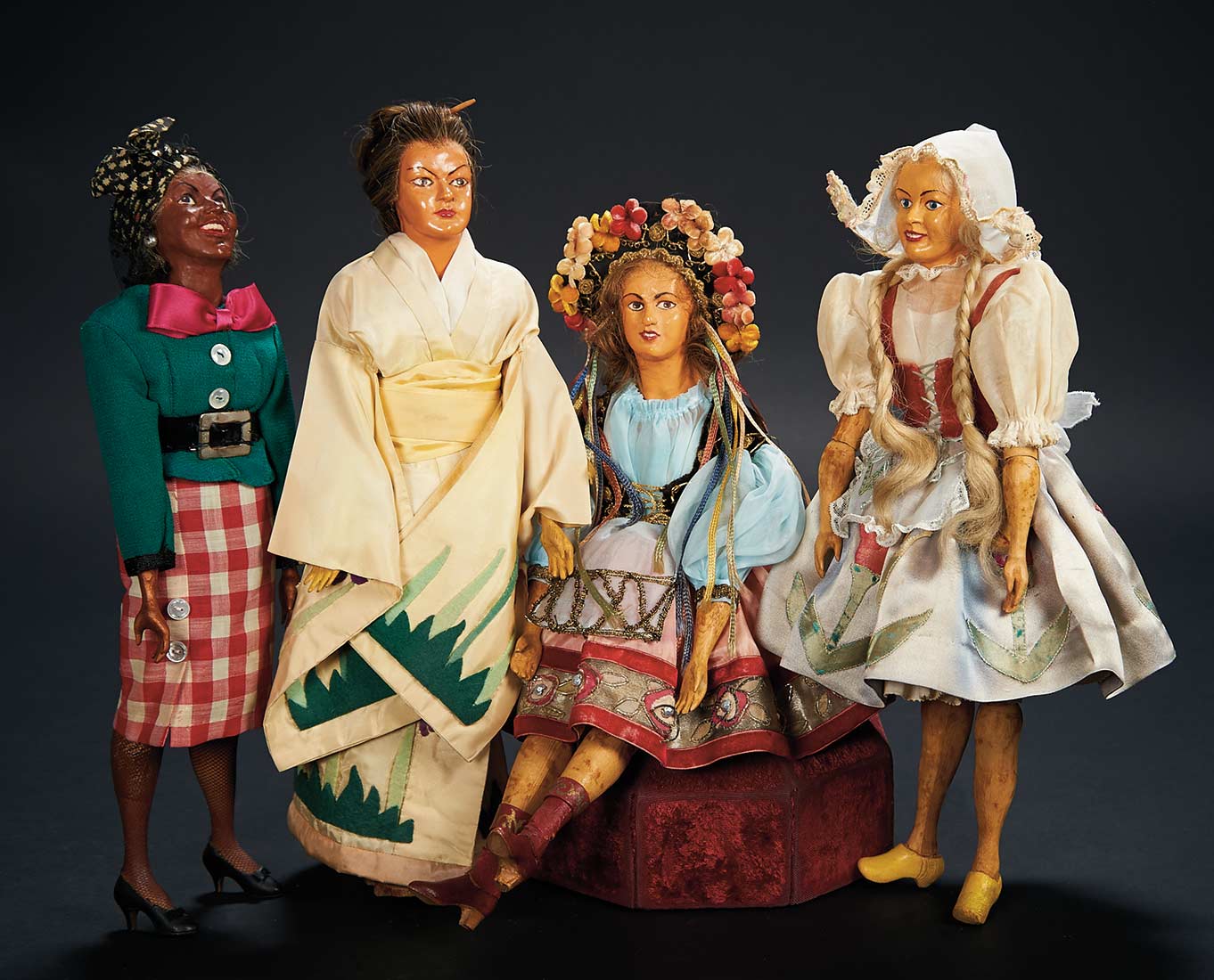
Shirley kept all four dolls and added them to her personal collection. They were auctioned off by Theriault’s in 2015. From the catalog description:

FOUR ONE-OF-A-KIND DOLLS FEATURED IN THE 1936 FILM "POOR LITTLE RICH GIRL" Lot Number: 291 15" (38 cm.) Each depicts a grown lady, with sculpted paper mache shoulder head with painted complexion and facial features, muslin body with carved wooden loosely hinged limbs, and wig in appropriate style to match the costume. Each is wearing original costume as it appeared in the film, including Dutch girl, German girl, stylish black soul singer, and Japanese lady. Generally excellent condition. Realized Price: $8,000 Presale Estimate: 1000+


The daughter of silent movie director Christy Cabanne and vaudeville actress/costume designer Vivien Lyle Montrose, Julie Cabanne is shown below in matching makeup and costume to her doll-sized counterpart:


Julie’s career never really took off; her last role (uncredited as a chorine) was in Fox’s “In Old Chicago” (1938), which starred Tyrone Power, Alice Faye, and Don Ameche. She “retired” when she married Carlyle Blackwell, raising their son (Garrett) and daughter (Pamela Ann) in Los Angeles.

Shirley’s silk pajamas were auctioned off in 2015, too. From the catalog description:

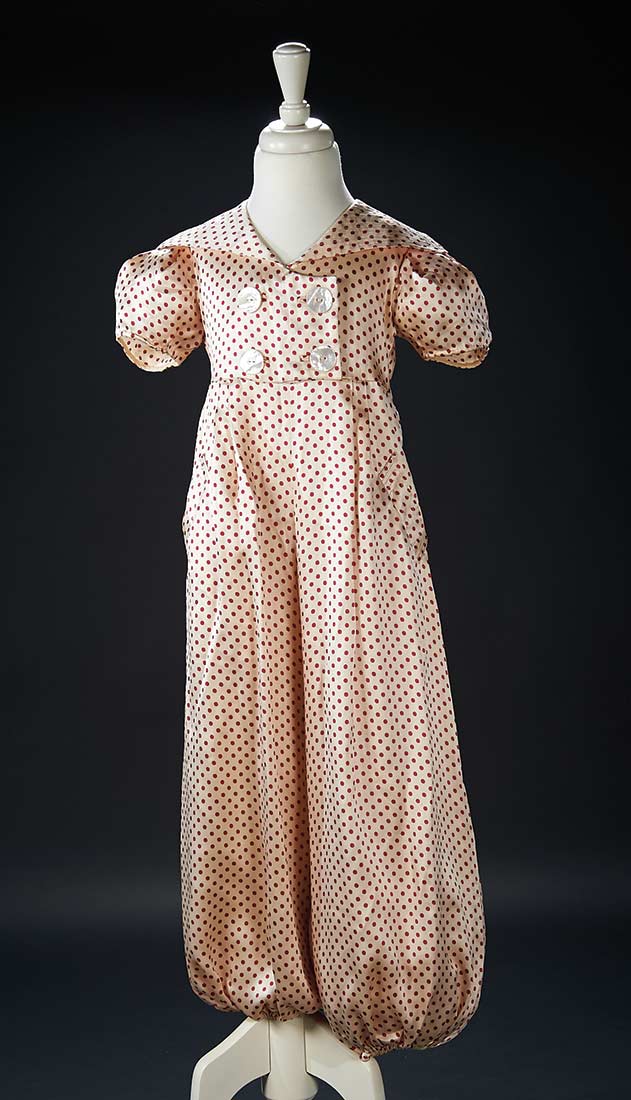
SILK POLKA DOT PAJAMAS WORN BY SHIRLEY TEMPLE IN THE 1936 FILM "POOR LITTLE RICH GIRL" Lot Number: 290 The ivory silk satin one-piece pajamas with cheerful red polka dot pattern features a double-breasted top with large pearlized buttons, puffed sleeves, and full-length bloomer-style pants with elasticized ankles. Generally excellent. Included is a vintage photograph of Shirley wearing the costume. The costume was worn in early scenes of the 1936 film "Poor Little Rich Girl" as she sang "Oh Me, Oh My" and then wistfully sang to her four dolls that "You're the Only Friends I've Ever Had". Realized Price: $8,000 Presale Estimate: 1500+


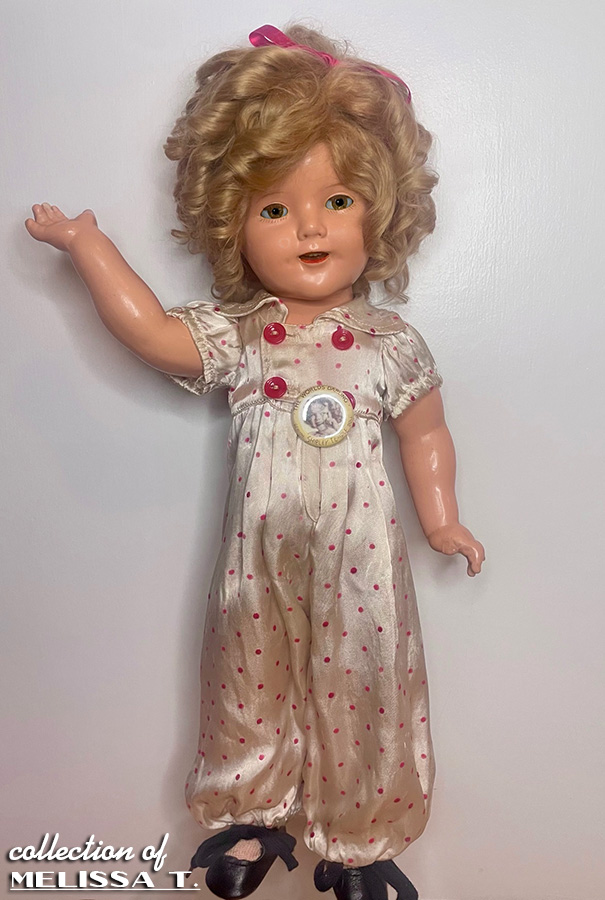
Melissa (aka “The Colonel”) sent a shot of the original 1930’s composition doll that she owns, wearing the pajama set modeled after the one Shirley wore in “Poor Little Rich Girl”:


Finally, here’s a poor quality colorized clip showing Shirley performing the number:


This film has yet to have a proper DVD/Blu ray release and has only been made available on VHS and Laserdisc. Considering Disney owns the Shirley Temple Fox catalog now and that they tend to “hide” titles that might cause backlash, it is doubtful that this one will see the light of day, especially because of this very sequence which could be seen as cultural misappropriation. Just a few days ago, there was an outrage over the alleged Disney censorship of the Fox movie, “The French Connection” (1971), winner of five Academy Awards including Best Picture. It has still not been determined if Disney or Criterion made the cuts. Education and explanatory text…yes. Censorship and destruction…no.

See more Shirley Temple photos at my main website.

Tuesday, April 18, 2023

Temple Tuesday: Art & Shirley


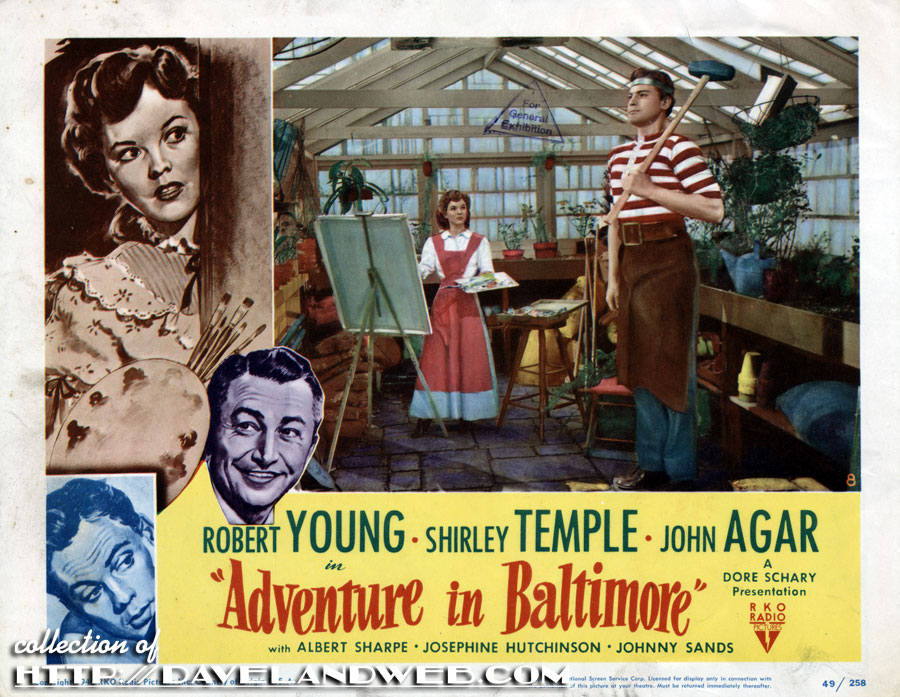
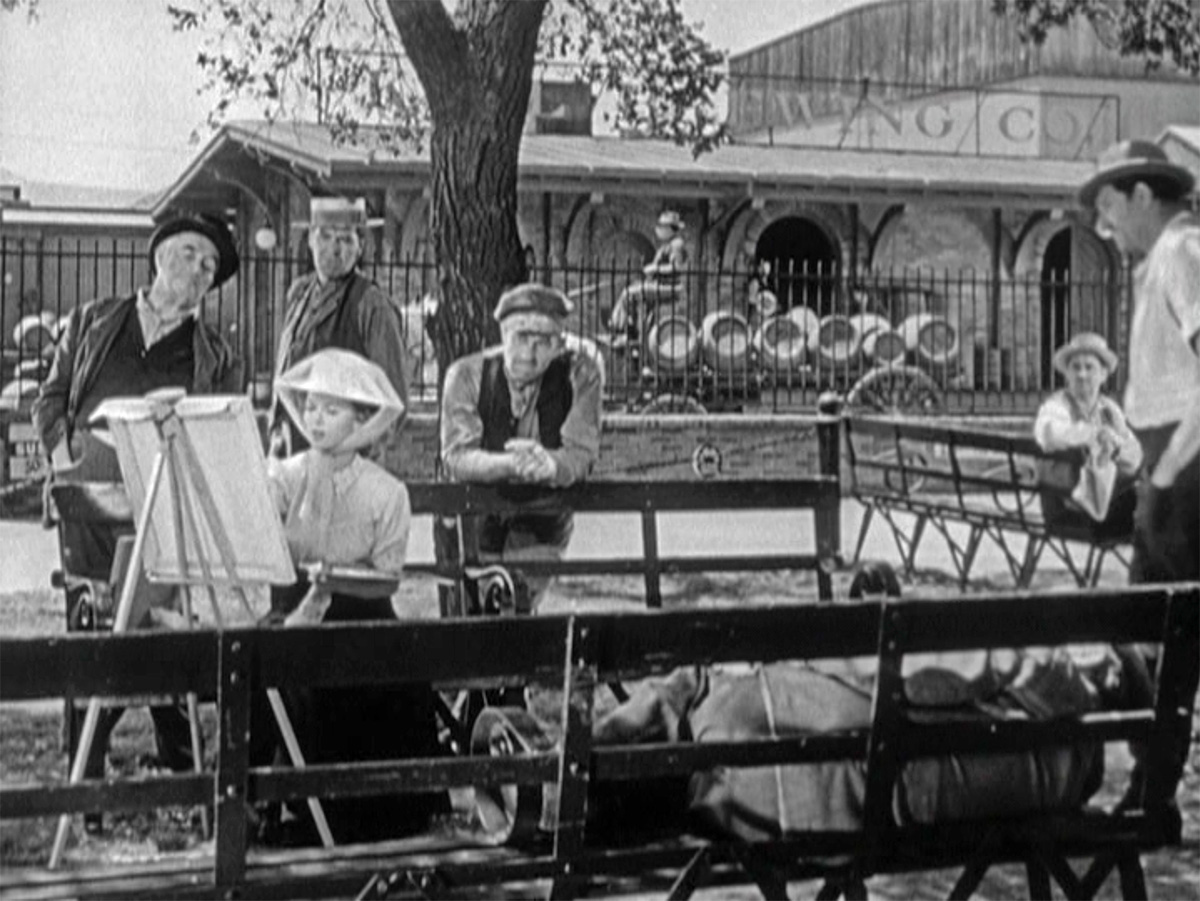
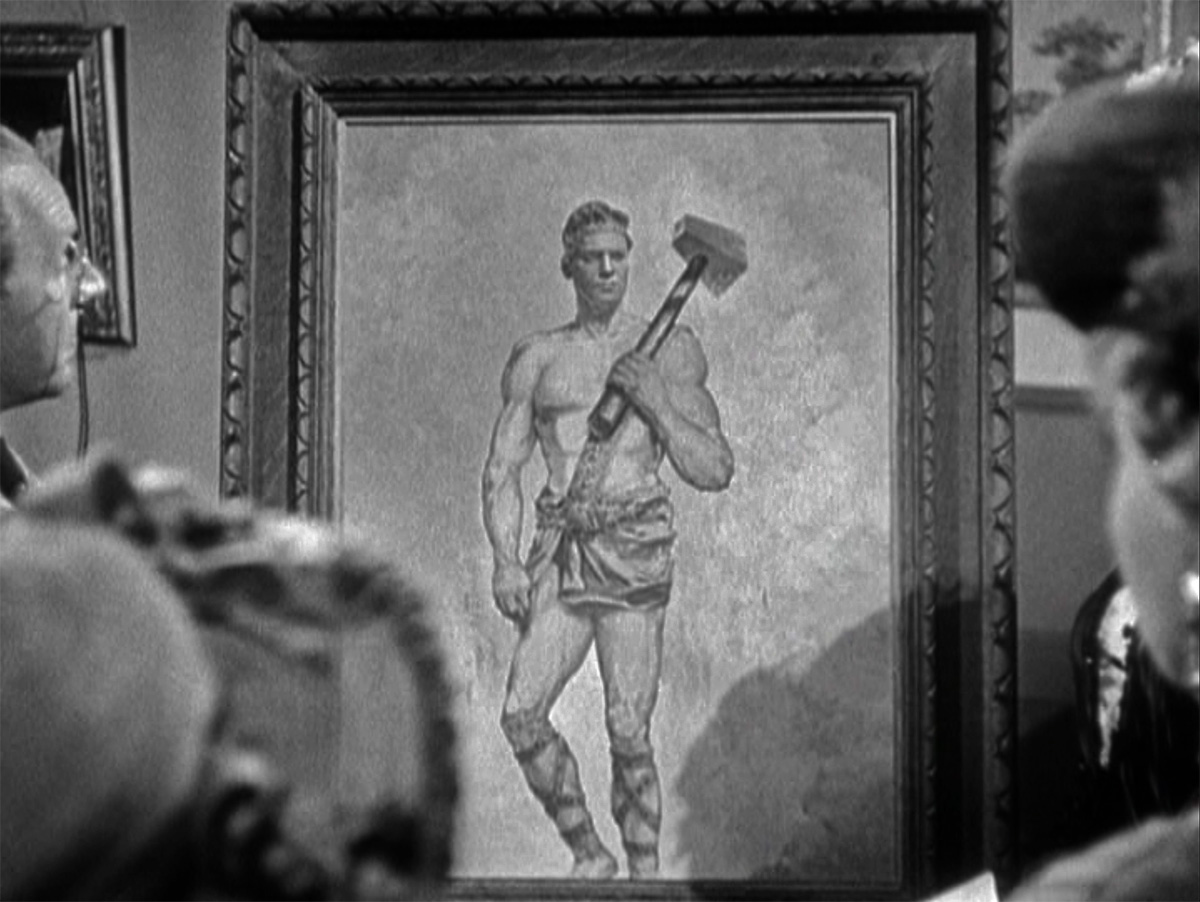
In the 1949 film “Adventure in Baltimore,” Shirley Temple lays Dinah Sheldon, a young artist who goes against the conventions of the day by seeking equality, wearing 2 petticoats instead of 5, and wanting to paint nudes. Below, she paints a man sleeping on a bench while a group of onlookers critique her work.


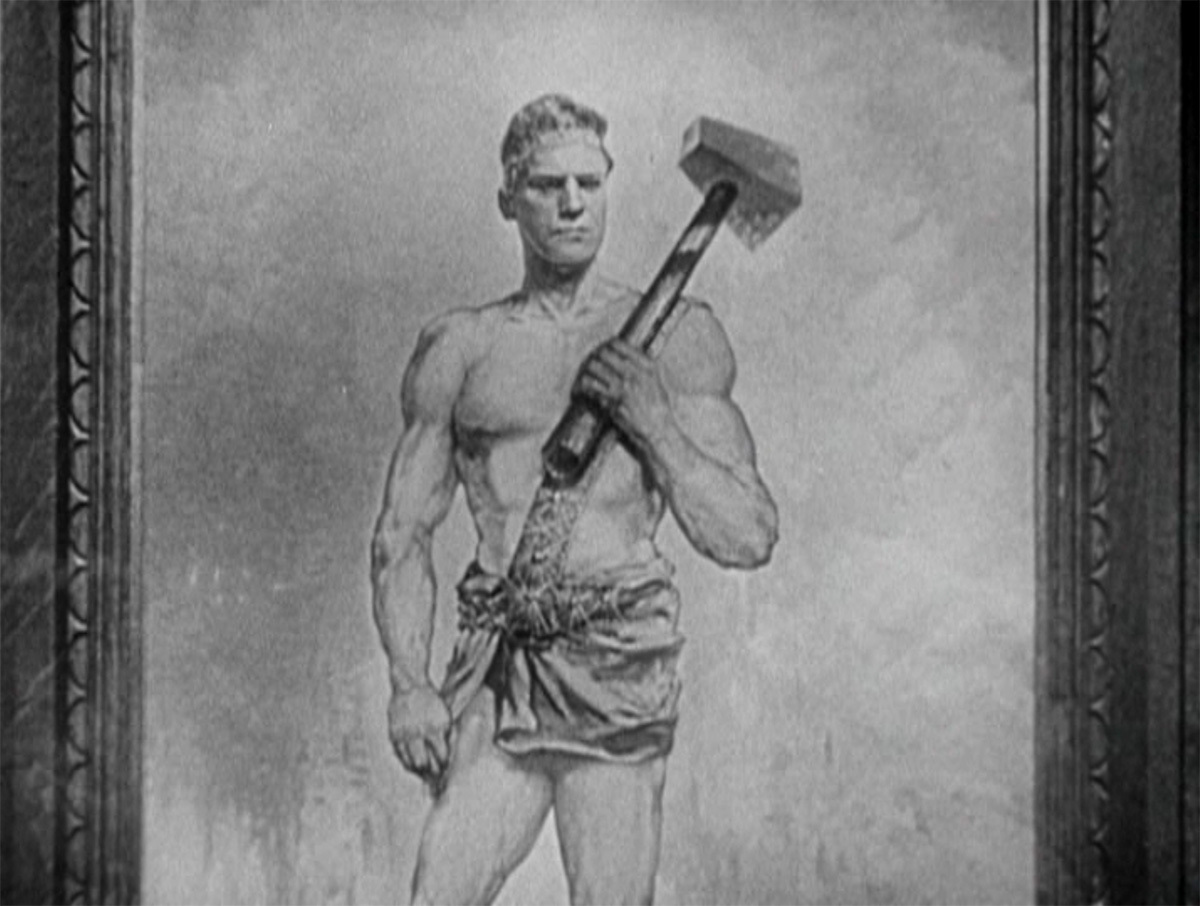
Dinah gets into trouble for doing a painting of “The Spirit of Labor,” which portrays a scantily clad local young man, looking “half angel, half Hercules.”


As close as we get to the painting:


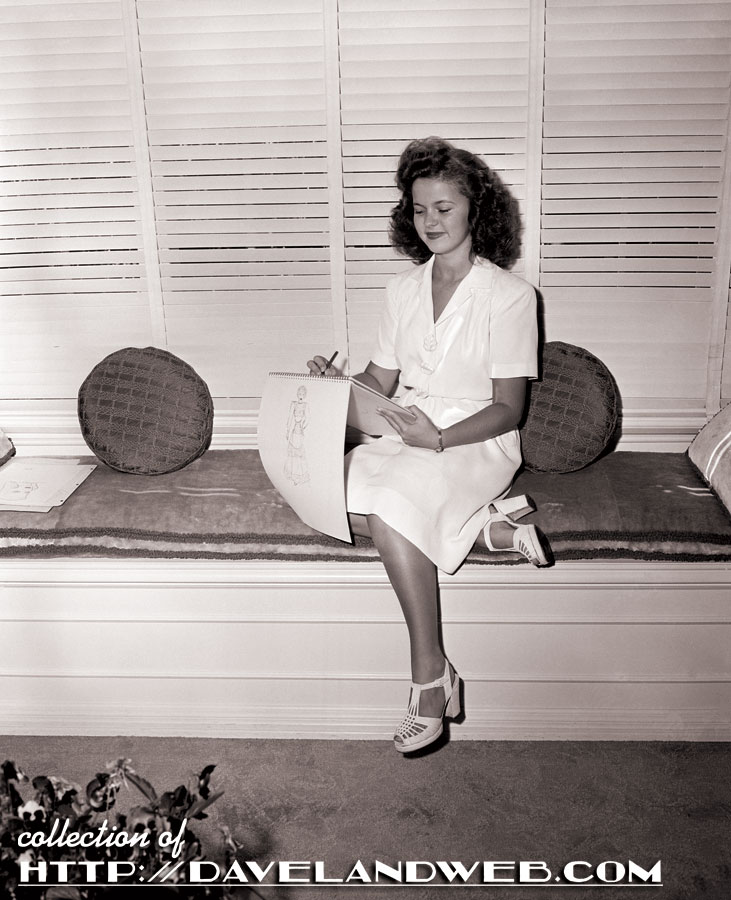
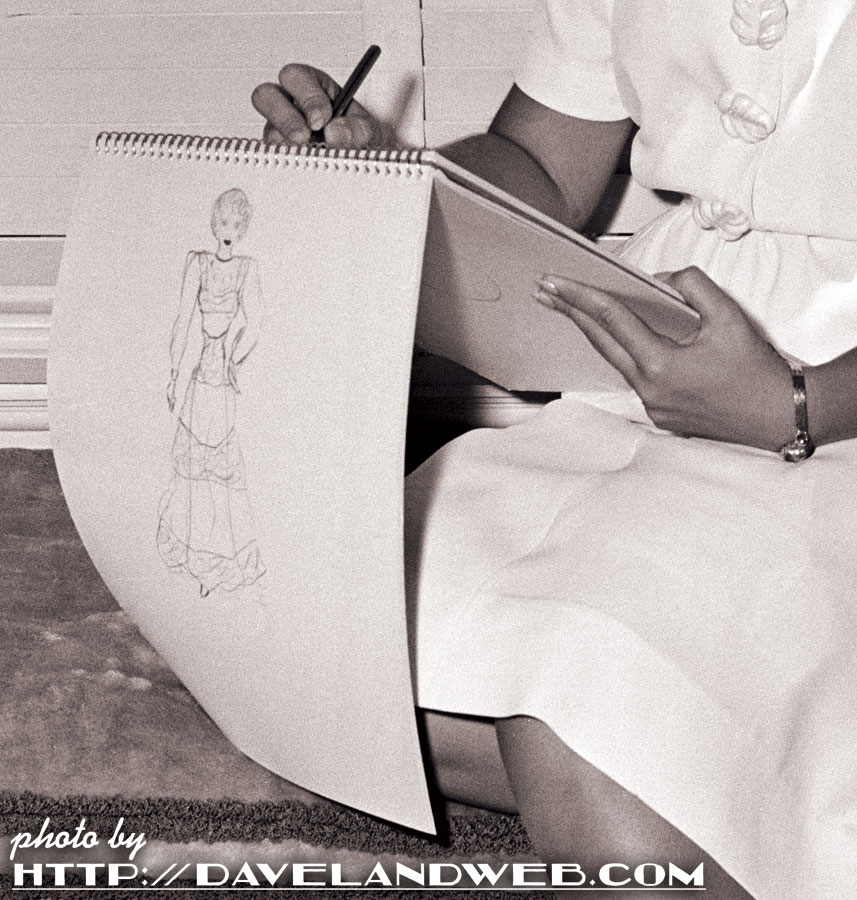
The Los Angeles Examiner reported that the portrait of “Tom” (Shirley’s then husband, John Agar) seen in the film was painted by artist James Korn, who also coached Temple for her painting scenes. Shirley herself dabbled in the arts. Below you can see her at home doing some fashion sketches:


Would you purchase a Temple original?


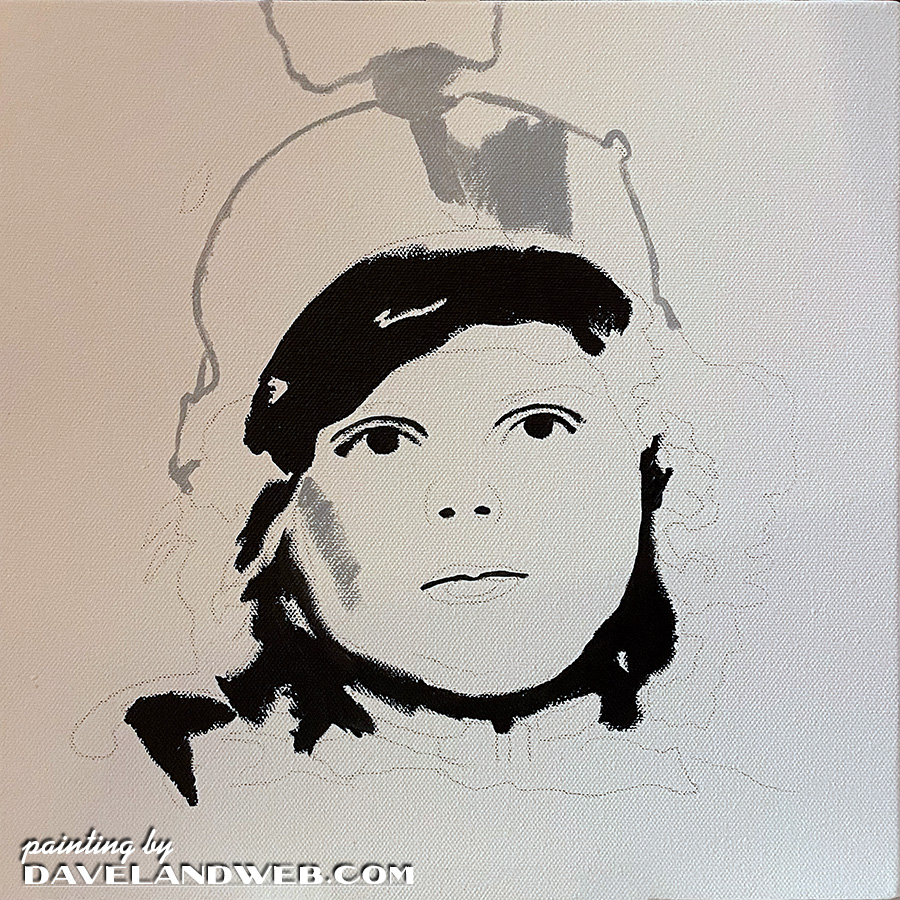
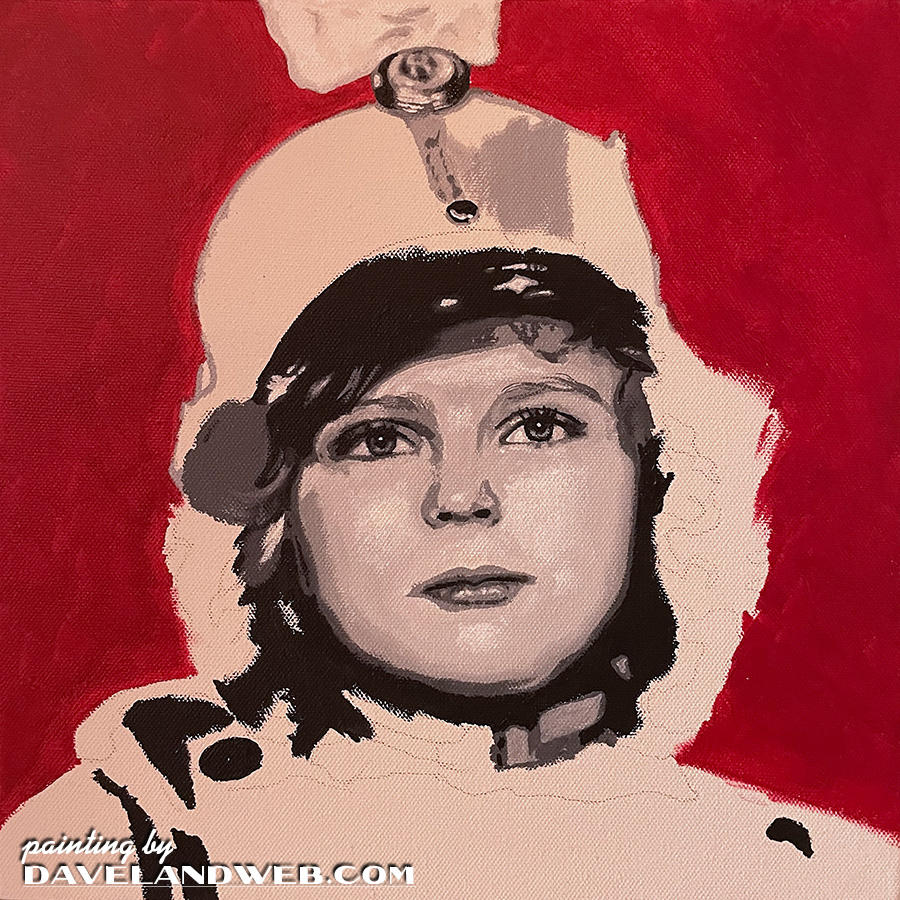
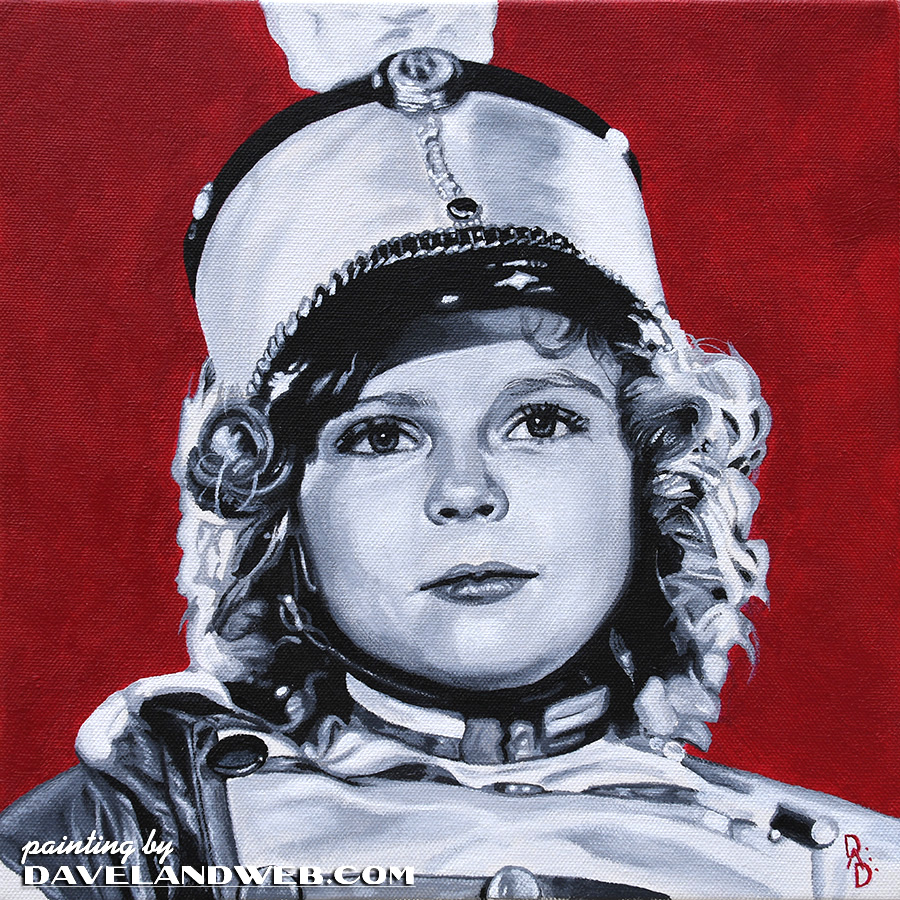
Since it’s been over 2 years since I last worked on a canvas, I decided it was high time to remedy that. Who would be my subject? Shirley, of course!


I picked a pose from “Poor Little Rich Girl” (1936) in her costume from one of my favorite dance routines of all time, “Military Man.” My first step in painting is to do a rough sketch with a gray colored pencil on the canvas as my guide (this one is 12" x 12"). I was originally going to do a posterized look, thinking it would be easier. Unsatisfied with how it looked, I decided to go full tilt and make it as realistic as possible.


I was a little bit rusty, but it didn’t take long for me to remember my number one passion. I was very pleased with the result.


I don’t plan on letting another two years go by before my next one!

See more of my paintings at my main website.
Tuesday, May 31, 2022

Temple Tuesday: Shirley Hits Her Mark


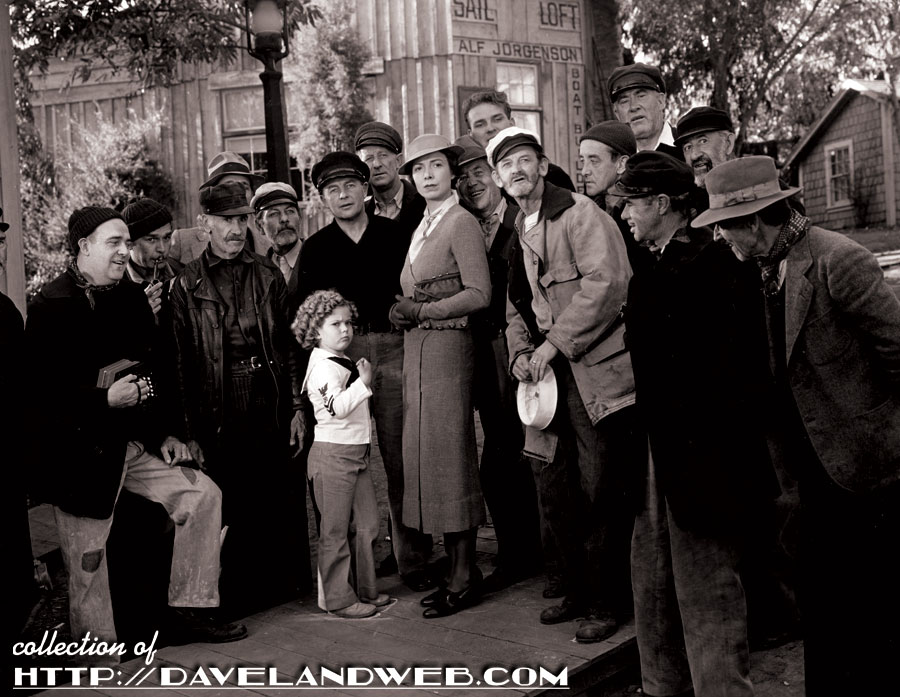
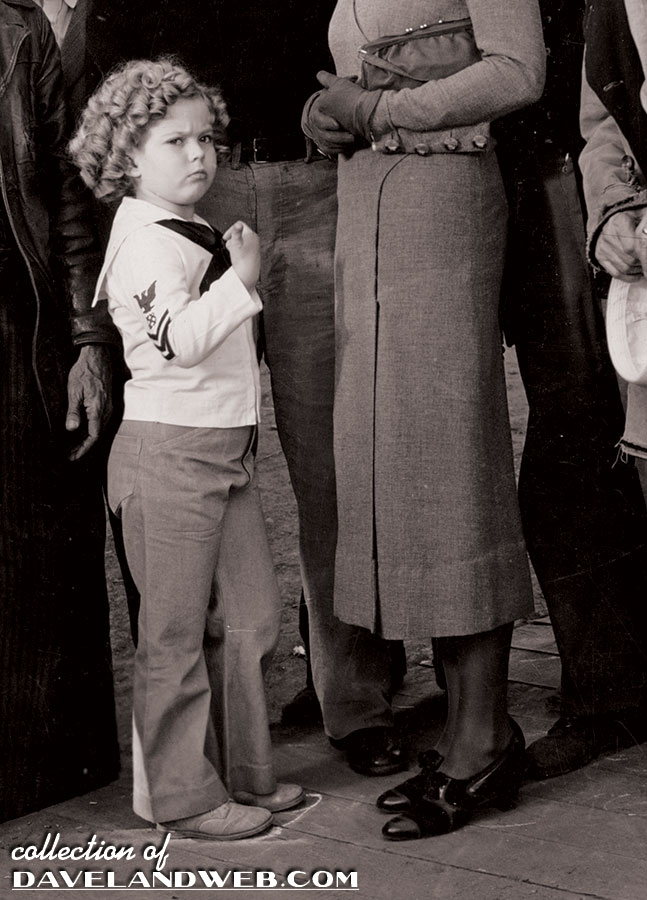
One of the requirements of being a good actor is “hitting your marks.” If one doesn’t land where they’re supposed to during the shooting of a film, they run the risk of being out of the camera frame. For years, it has been typical for marks being put on the floor so that actors know where to stop and stand. This little trick is effective, but causes the actor to have to look down at the floor when walking, thus giving away the illusion of perfection. I noticed in this still from “Captain January” (1936) that you can see the chalk marks made for Shirley Temple, who is standing next to Sara Haden.


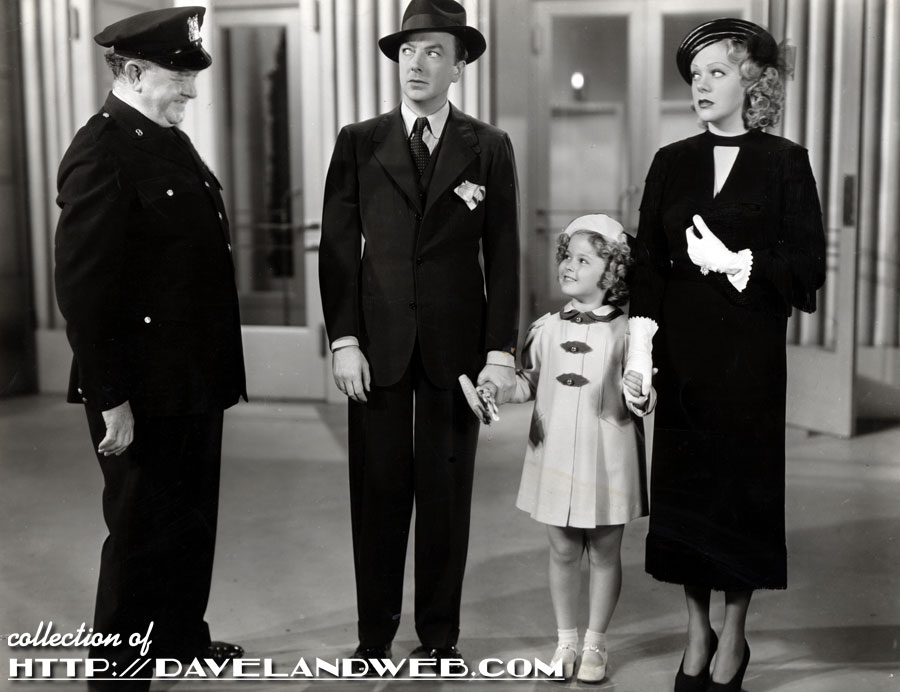
These marks weren’t just for children, though. Even veteran performers like Jack Haley and Alice Faye, shown here in “Poor Little Rich Girl” (1936), required the same assistance.


You can clearly see the marks for Haley AND Shirley; Faye’s are out of frame, but I guarantee that she had them, too.


Many years later, Shirley told talk show host Larry King that she really didn’t need the chalk marks. Instead, she used the same trick that Joan Crawford did; she used the heat of the overhead lights to let her know that she’d hit her mark. “I had to learn to hit my marks without looking at the floor, the little piece of tape.…I could do it by the feeling of heat on my face. If the light hit here and it hit my shoulder and it felt warm, I would know that I was in the right place. If it was cool, I’d say I’m not in the right place.” Even at age 6, Shirley showed a remarkable intelligence regarding her profession. See the entire interview here:


See more Shirley Temple photos at my main website.