Oscar winning actor Lionel Barrymore costarred with Shirley Temple in the 1935 film, “The Little Colonel.” Unlike Frank Morgan, who attempted to steal scenes from the child star in “Dimples” (1936), Barrymore worked with Temple and the chemistry between the two created some of the most touching and comical scenes of Shirley’s films. The behind-the-scenes story of the two is just as entertaining and heartwarming. “The Little Colonel” director, David Butler (shown above and below), spilled the tea in his autobiography.
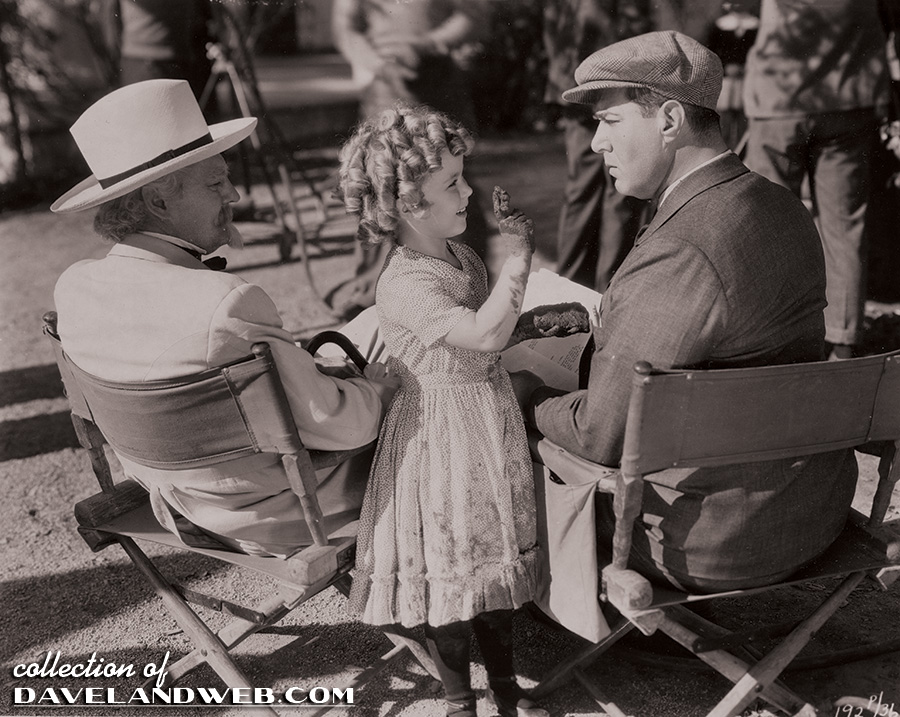
We wanted to get Lionel Barrymore to play the grandfather in the South, but we couldn’t get him. Buddy [DeSylva] said, “You go over and see him. You know him well.” I did know him well. We used to have dinner with him and his wife. So I went over to Metro to see him, sat in his dressing room, and I said, ‘You’ve done everything that you can do. We want you to do ‘The Little Colonel.’ He said, ‘No, I’ve heard about it, but I don’t want to work with children.’ ‘Lionel, you owe this to yourself. You’ve done everything in the theatre, everything you can do in the pictures, and you’re one of the best actors in the world. I think you owe it to yourself to work with this little girl because she’s marvelous and you’ll love it.’ I finally talked him into it.
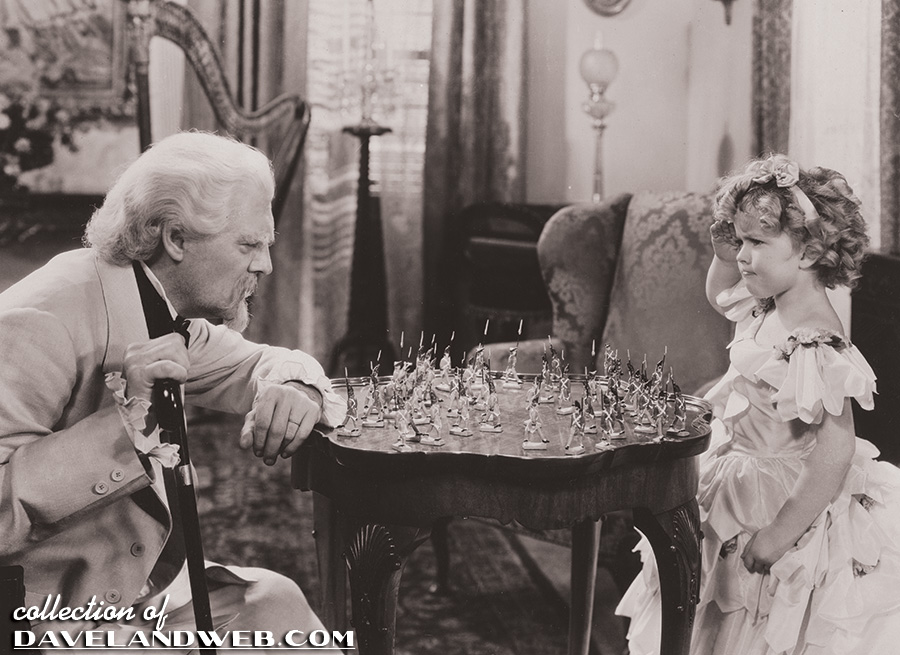
Everything went swimmingly until they were playing a game which we kind of created, like checkers, only on one side we had Northern soldiers and on the other side Southern ones. Lionel said, “If I were doing that, I’d move right over here and put my man here.” Shirley said, “If you did that, I’d jump you here, and I’d jump you here.” Then he had a speech to her. Lionel stopped, and he said, ‘What are the lines?’ Shirley said, ‘Oh, Uncle Lionel, you have to say —’ and she gave him his line. He jumped out of that chair! It was the worst thing that could have happened because he didn’t like a kid telling him the lines. But we straightened it out.
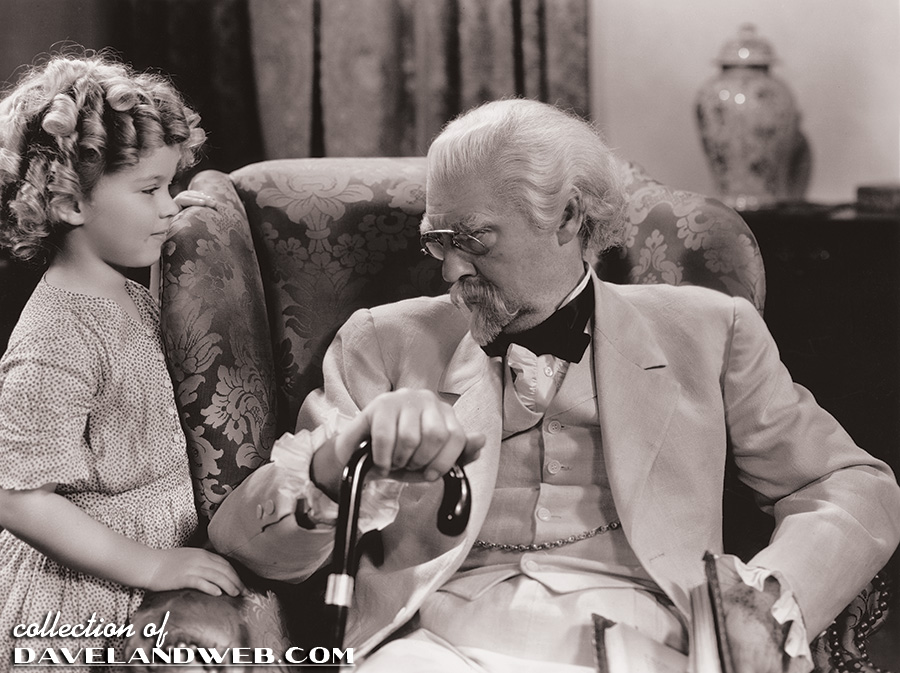
Shirley herself gave an expanded version of what happened with Barrymore in her autobiography, Child Star:
At the outset director David Butler took me over to meet our southern colonel, Lionel Barrymore. It wasn’t really a meeting. Barrymore didn’t take my extended hand, and with one brief downward glance, he turned to speak with someone else. There is a big difference between being seen and being acknowledged. During out first rehearsals a large blackboard was wheeled onstage and all Barrymore’s cues and lines chalked up. I asked Mother why he couldn’t learn his lines at home like everyone else, but she hushed me, explaining that he was a famous stage actor and would be hurt if he heard such comments. Our first scene together went well enough, but noticed his breath had a rich, fruity aroma vaguely remindful of the alcohol rub Mother gave me when I had a fever. “It’s because he’s in pain,” she explained later. “You must learn to be more sympathetic.” From the start Barrymore seemed weak on his lines, stumbling a lot over phrasing, and arguing with Butler over small points of emphasis. I mistakenly considered us both confederates acting in concert, not building up to our own civil war. One time, having as usual learned everyone’s lines, I prompted him. “Dammit!” he exploded. “I’m thirty years in this business!”… “Everyone take a break,” said Butler, shaking his head.…Returning shortly, [Butler] took both Mother and me aside. “Bad news,” he said. “He’s complaining she made him look ridiculous. He told me to get somebody else to do the picture.”…Finally Butler and Mother gave me their opinion. I must go alone and make up with him. I had no option. When I rapped on Barrymore’s dressing-room door, he let me in without a word and closed the door behind us..…“Uncle Lionel,” I said, addressing him that way for the first time. “I know you’re the best actor in the world.” He shot me an incredulous glance, but I kept on. “May I have your autograph?” He shrugged his shoulders, sighed once, and then sat down at his table. “To my favorite niece,” he wrote. “Your Uncle Lionel.”…Having caused a problem, I had to work out of it. But in addition there was an underlying reason for my backhanded apology, a powerful sense of community purpose. Stuck together we would succeed; pried apart, we failed.
Back to Butler’s version:
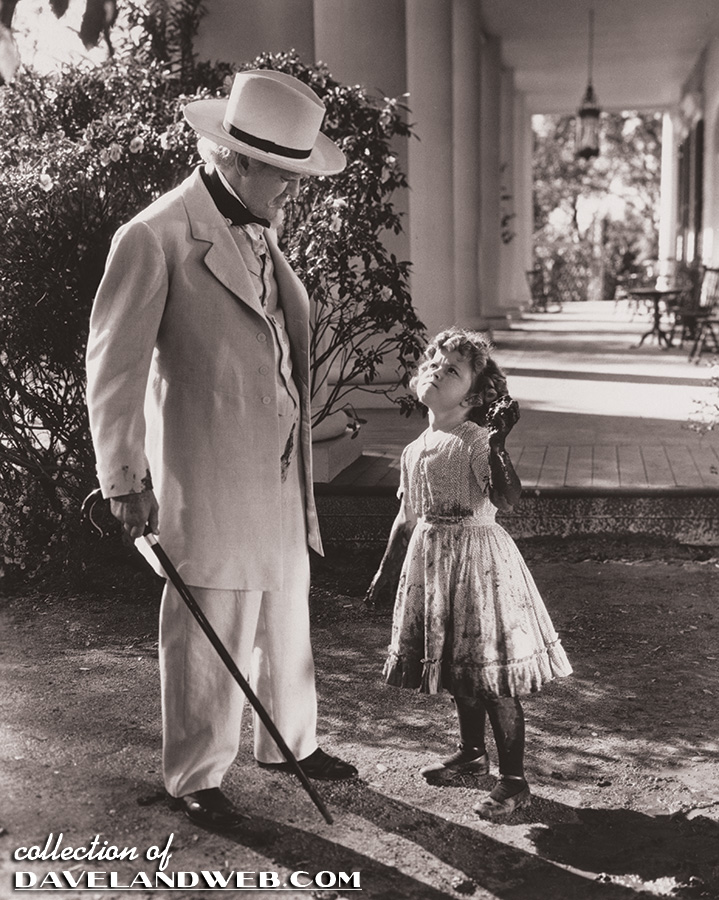
The end of the picture we did out on location. After we finished the shot, I said, ‘That’s it. We’ve finished the picture.’ Lionel Barrymore always made up himself, so they had a little stand there for him. He went over to the stand and started to take his makeup off. I went to talk to him and there was a little tug at his sleeve. He didn’t pay any attention to it. It got a little bit stronger. He turned around, and in back of him was Shirley with an autograph book.

She said to him, ‘Uncle Lionel, can I have your autograph?’ The tears just welled in his eyes and poured down his cheeks. He grabbed hold of her and kissed her, and it was just great. He cried like a baby, after going through it with this kid. Then, when she went away, he said, ‘You were right, David. That was a great experience. I wouldn’t have missed it for the world.’
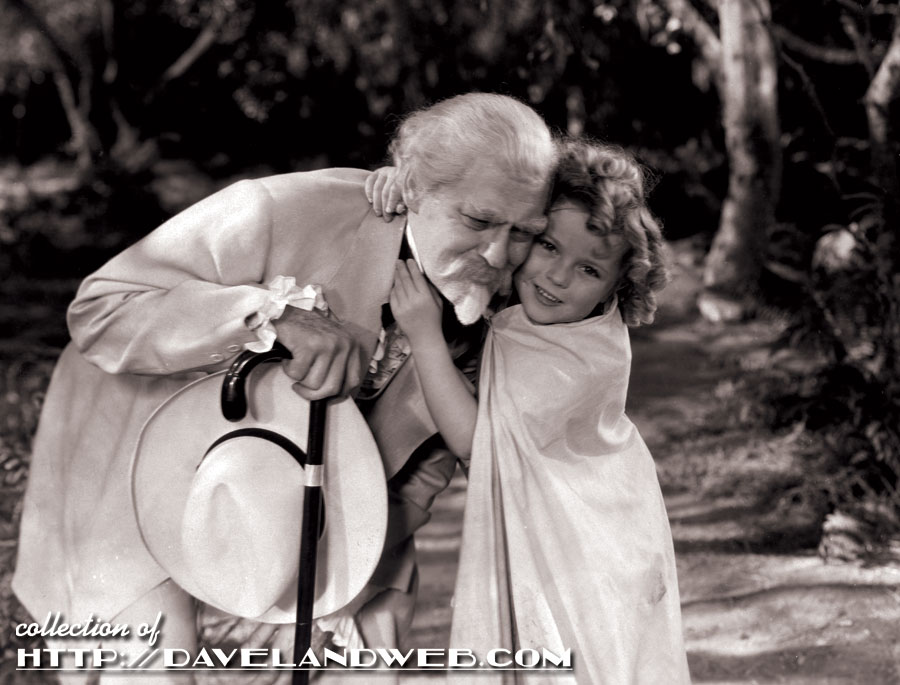
Shirley recalls getting the autograph in Barrymore’s dressing room; Butler recalls it happening at the end of the shoot, followed by tears. Butler’s own home movie (now in the collection of Shirley expert supreme, Rita Dubas) captured the autograph signing, which occurred outdoors without the crying but does display a fondness between the two, as seen below in a screen grab.

Another amusing anecdote from Butler describes the difficulty in filming the baptism sequence:
We had the scene where Shirley had to baptize this little colored boy. We had an audition for colored boys, and this kid named Junior [Nyanza Potts] was so cute that we took him. But Junior didn’t know anything about taking direction or listening to anybody. He was a wild man. We had an awful time even keeping him in a scene, to walk down a set. He’d be looking all around or fooling with his pants. But we managed to get by with it after working quite hard. So now we come to the baptism, where Shirley has to dunk him in the water and say, “Are you saved?” He has to say no, and she dunks him again. We’d get him all set, and the cameras ready, and Shirley would dunk him down under. “Are you saved?” He’d come up and shake his head. Then he’d grab Shirley and duck her under. Well, I want to tell you that I was ready to kill that kid. We changed Shirley’s clothes and fixed her makeup at least five times. Every time, he’d shove her in the water. Finally his mother told him she was going to give him a good spanking if he did it again, and we got the scene. But this was after changing Shirley five times. He’d grab her and duck her and hold her under, and the whole crew would jump in to save Shirley. When we finished, I told his mother, “I’ll tell you something about Junior. He’s going to be fine in the picture, but he caused me a lot of trouble. I’ll bet you he winds up a porter on the train.” Twenty years elapsed, and I’m going to New York on the Chief. I got in my compartment, and in comes a porter. He says, “Mr. Butler, you don’t remember me, do you?” I said no. It was Junior. He did wind up a porter. It was so funny.
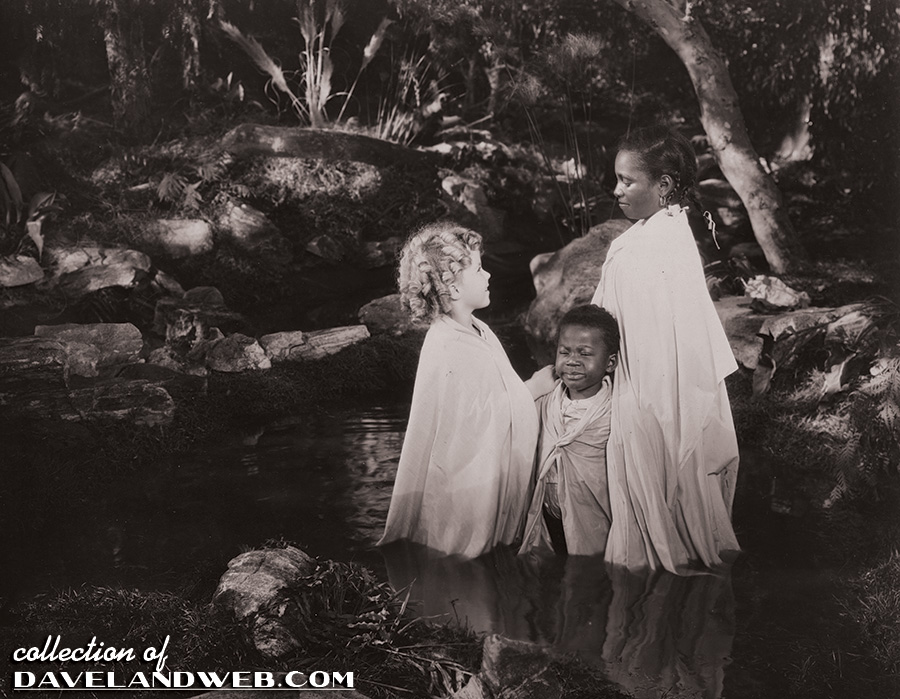
Shirley didn’t mention Nyanza nearly drowning her during filming, but she did talk about how he had some difficulty with this scene:
In the spluttering and commotion of filming he missed his cues and was speechless. The more the director cajoled and the more we dunked him, the more flustered he became, a pitiful figure, dripping and bedraggled. Making little progress, the director called a break and scolded Nyanza sharply. Mother, however, sensed the problem. Someone had gotten him tongue-tied at the prospect of acting with a name star, so she suggested I help him. Taking his small hand in mine, I led him into a corner to rehearse. He really knew his lines, and the more we talked as two children do, the more self-assured he became. convince he finally had it, we dressed in dry sheets and waded back down into the stream. Nyanza said his lines with a falter. We dunked him. Surfacing, he said some more. Again he got dunked. The director seemed happy. “Was I perfect?” Nyanza asked as we splashed up out of the stream. “Sure,” I answered, glad to have helped but unwilling to give him all the credit. “We all were! We did it together!

Butler’s behind-the-scenes footage also includes these fun candid moments - Lionel with lit cig and Shirley on a horse, waiting for the cameras to roll:

Barrymore removing the white wig he wears during the movie, once again lighting up a cig. He looks like his brother John in “Dr. Jekyll and Mr. Hyde”!

…and Nyanza, wildly dancing around, also carrying a cig!

You can see the entire movie at Rita’s YouTube channel:
Barrymore and Temple joined forces again in 1941 for the December 19th Shirley Temple Time radio broadcast titled, “Christmas for Two.”

Looks like somebody had a sore throat. I would guess it was Barrymore!

You can listen to the broadcast a the Great Detectives website.
Both Shirley and Barrymore were in the 1944 Selznick production, “Since You Went Away.” Although they were in the same scene, it is somewhat doubtful that they were on set at the same time.
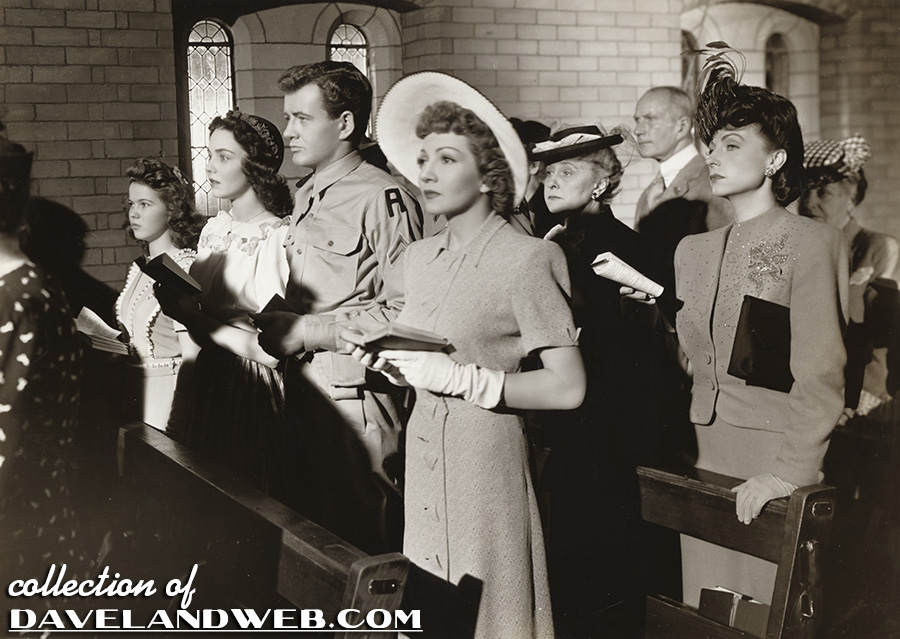
Barrymore had a short but memorable cameo preaching a Sunday sermon.

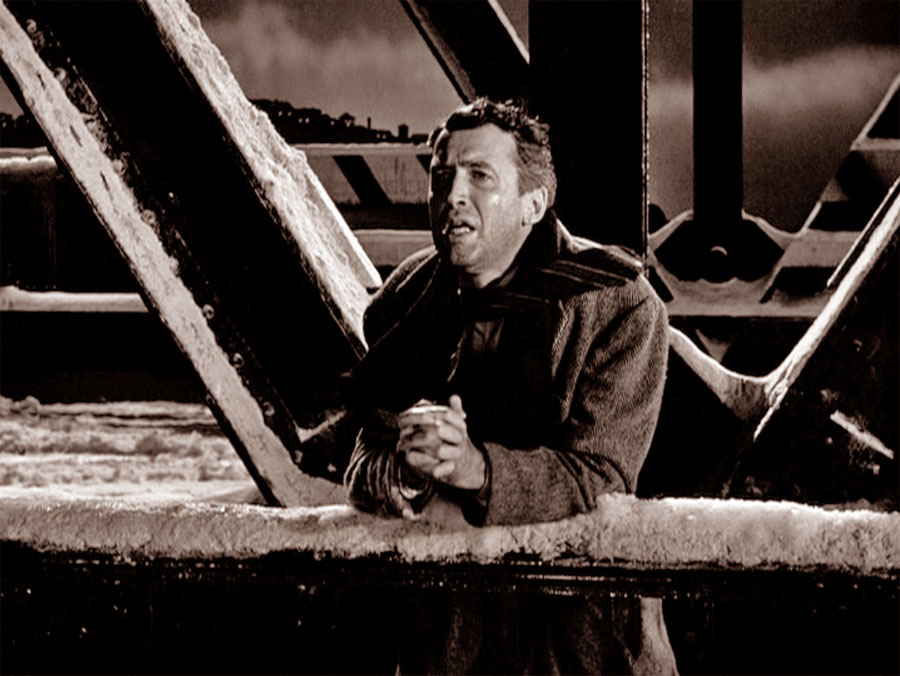
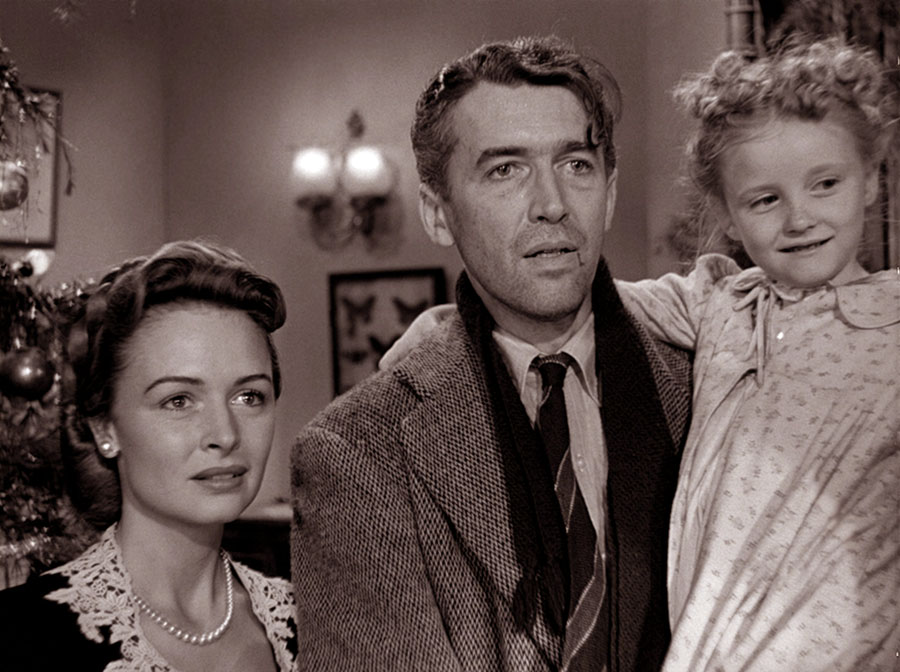
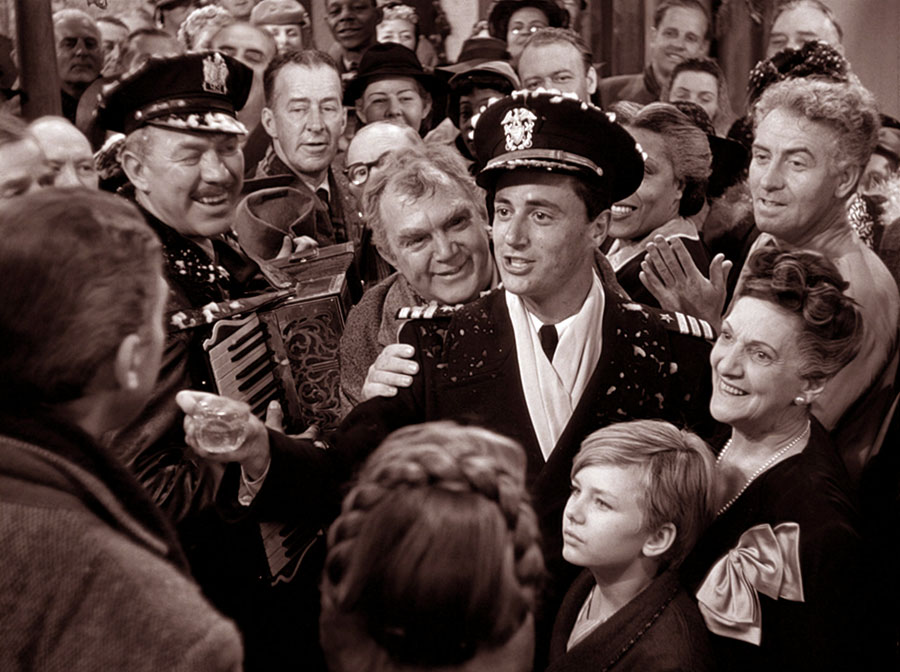
One of Barrymore’s most famous roles was as the villain, Henry Potter, in “It’s A Wonderful Life” (1946). Unlike his “Little Colonel” part, this character never thawed out!

Caption for the above photo, shot on set of “It’s a Wonderful Life”:
Barrymore-Stewart, Post-War Reunion
Hollywood, Cal…Back on the movie set after gallant war service, during which he rose to the rank of Colonel, James Stewart stops to chat with veteran Lionel Barrymore, who last week celebrated his 68th birthday by working on a new movie, “It’s a Wonderful Life,” directed by Frank Capra, center. Photo by Dave Cicero.
Interestingly enough, while the name Barrymore is synonymous with three of the greatest actors AND siblings (Lionel, Ethel, and John), their birth name was actually Blyth. Just doesn’t have the same ring, does it?
See more Shirley Temple photos at my main website.