Showing posts with label franklin pangborn. Show all posts

Tuesday, August 25, 2026

Temple Tuesday: Rebecca Restored!


Very quietly, it was revealed that Shirley Temple’s 1938 musical comedy, “Rebecca of Sunnybrook Farm” has been restored. Those that live near the Orinda Theatre can view it on the “big” screen on September 5 at 1pm, according to the theatre’s website:

A new chapter unfolds for cinema enthusiasts: We have secured an extraordinary partnership to showcase a Disney Restorations Series. Starting in 2026, the first Saturday of each month will bring an amazing opportunity to experience some of cinema's most treasured classics on the big screen, right here at the Historic Orinda Theatre. This series celebrates a milestone in film preservation, with the Walt Disney Studios Motion Pictures' Restoration and Library Management Department sharing their remarkable work, including restored classics from Disney, Selznick International, 20th Century-Fox, Fox Film Corp., and 20th Century Pictures. Many of these cinematic gems have been absent from theaters for years, making this year-long showcase a groundbreaking event for Northern California, with numerous premiere presentations of these restored masterpieces. We will be opening the series with the 1950 Animated Classic, Cinderella! Hosted by Film Critic, Matias Bombal

The Orinda, just under seventeen miles outside of San Francisco, was designed by architect Alexander Aimwell Cantin, are right up my alley. If only it were closer! Photos below were found online:


From the exterior signage:

The Orinda Theatre opened its doors in 1941 and is the city’s most prominent visual landmark with its signature dorsal fin marquee. It is a textbook example of Streamlined Moderne Architecture, a late type of Art Deco design inspired by structures built for the 1939-40 Golden Gate International Exposition on Treasure Island. The building includes Carrara glass and stainless steel finishes, with the interior theatre walls and foyer ceiling painted in classic murals.

Back to Shirley…I was curious what “restoration” meant in this case. No information was given as to whether the efforts sourced the original negative, a vintage print, or…? Due to “vault fires” and the natural aging of nitrate film, many of Shirley’s early films don’t look so good. “Rebecca” has always looked pretty decent in its VHS and DVD releases, so for this one to be the first chosen for a restoration effort seems like Disney (who now owns her childhood catalog) was seeking some low hanging fruit, or perhaps because it is one of Shirley’s least controversial movies. Whatever the reasoning is, I am very happy that Disney is actually doing something positive with Shirley, who has been buried since they took over the 20th Century-Fox classic catalog of films. Below, Shirley helps “Titanic” dish Gloria Stuart bake some cookies in “Rebecca”:


Kevin Schaeffer, the current Director of Restoration & Library Management for the Walt Disney Corporation, posted this on his LinkedIn account:

Incredibly proud and excited that our restoration of the Shirley Temple classic "Rebecca of Sunnybrook Farm" (1938) is premiering at the Venice International Film Festival today. Congratulations to our Restoration Manager Nikki Jee, Natalie Altounian, our partners at The Film Foundation, and the artists at Cineric Inc and Audio Mechanics for their great work.

When using AI to find more information, I learned just how faulty it can be. It apparently mixed up information for the Mary Pickford version, and also freely takes information about negative restoration and haphazardly paired it with “Rebecca.” One should ALWAYS check the sources for AI and follow-up with more questions. Below, Shirley’s “Rebecca” costars Randolph Scott and Jack Haley (best known as the Tin Man in “The Wizard of Oz”) have a discussion:


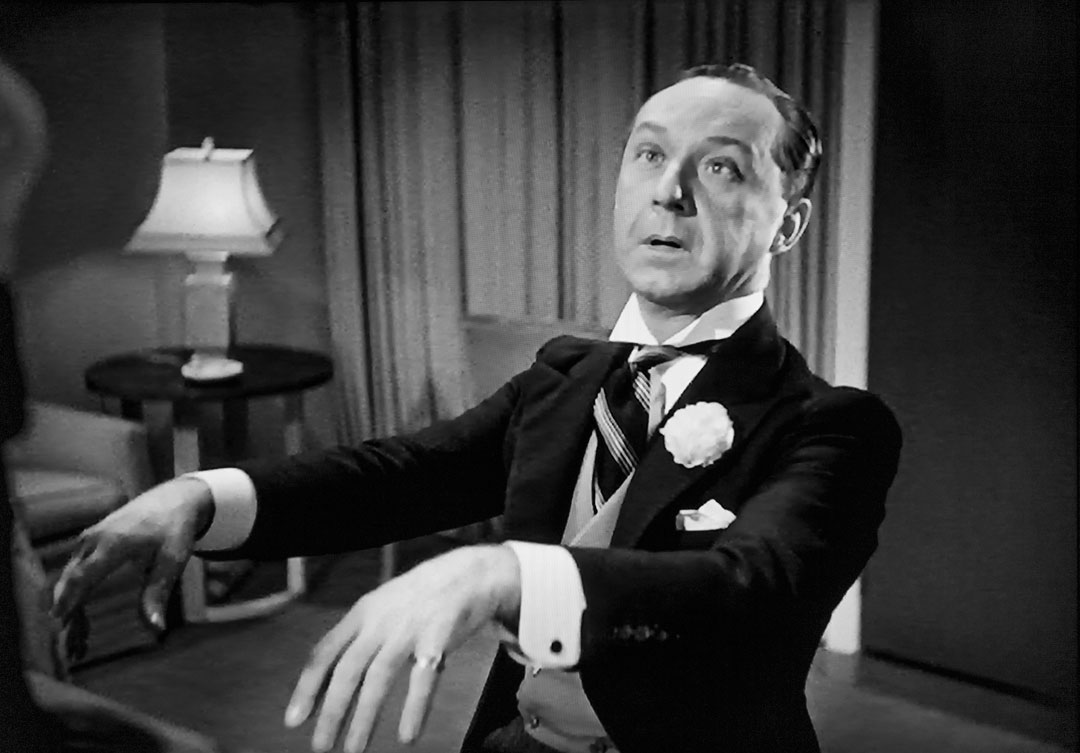
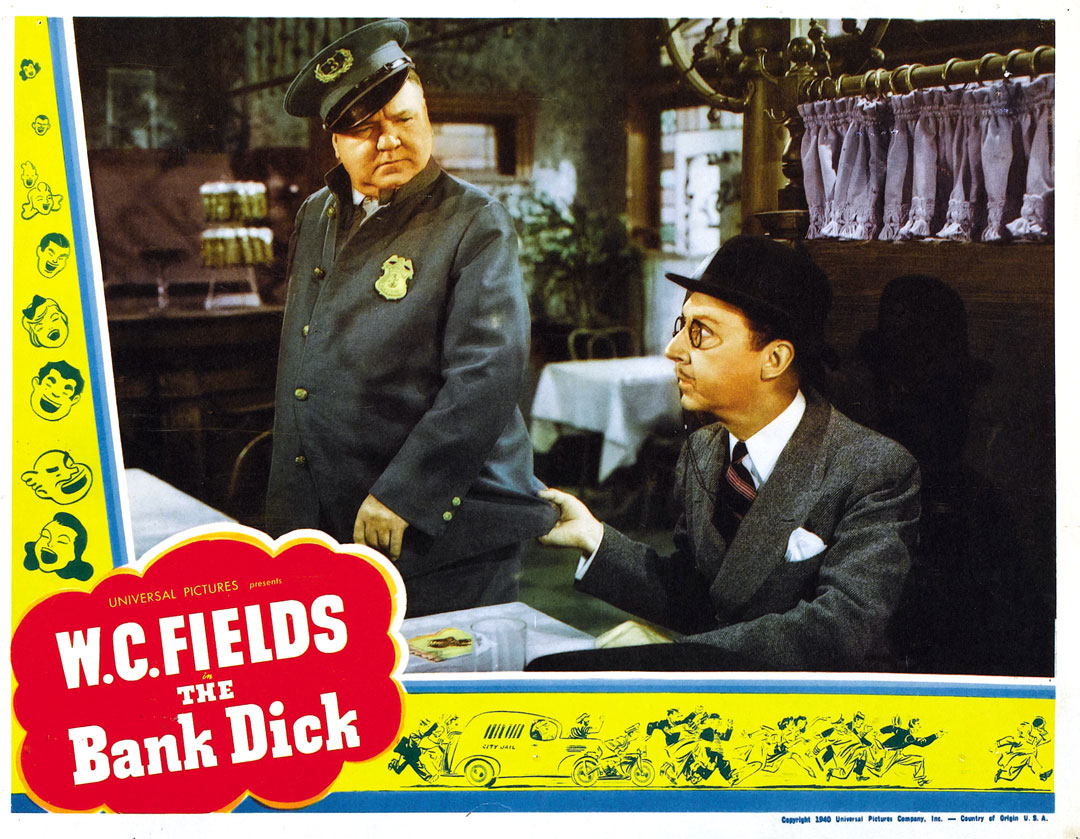
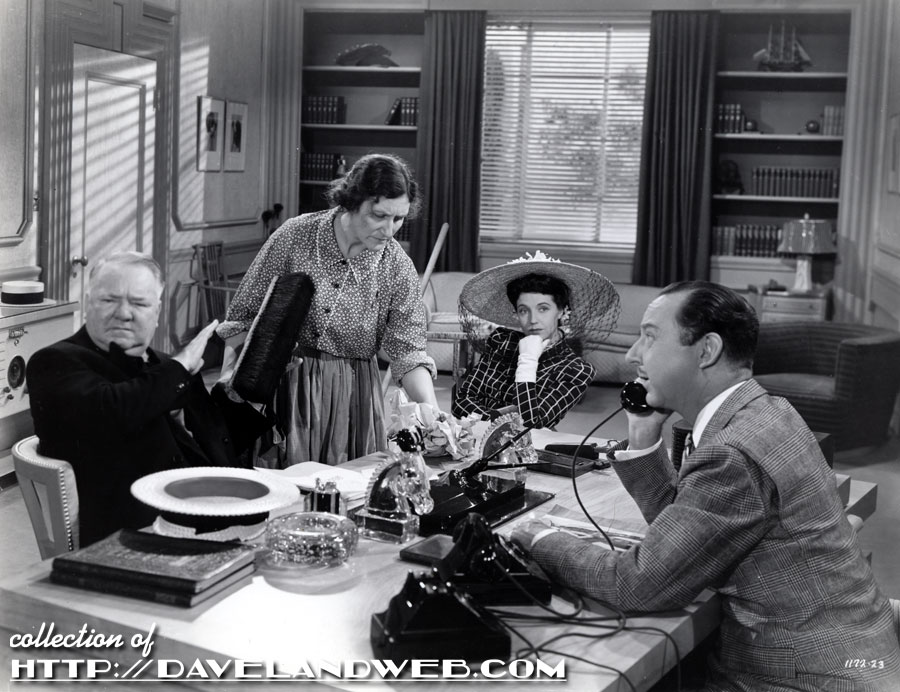
Franklin Pangborn (below) has a memorable bit towards the end of the film. Few played the prissy/fussy comedic characters like he did; he was often a foil for W. C. Fields (“International House,” “The Bank Dick,” and “Never Give a Sucker an Even Break”).


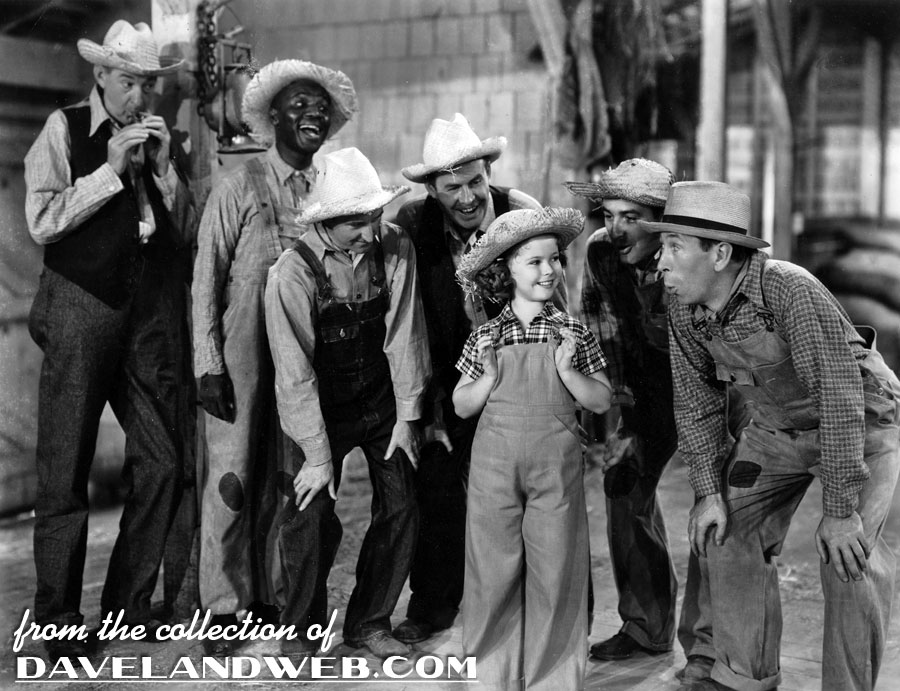
Below is a still from a deleted musical number with Shirley, Slim Summerville, Bill Robinson, and some of the other fieldhands from Sunnybrook Farm. If only this sequence survived!


In other Shirley news, it appears that the rest of her autobiography might finally see the light of day. Hollywood gossipy Deadline, quietly broke this story last October (which was briefly regurgitated this March on the official Shirley Temple website):

Marty Tudor has been working with the family estate of Shirley Temple and will have access to the rights of the child actress-turned Ghana and Czechoslovakia ambassador across streaming, film, stage and more. There are also two unpublished autobiographies by Temple which Tudor is helping the estate get published. Tudor is an industry vet, who managed the careers of Paula Abdul and Jon Cryer, and of late has been behind a series of Hologram concert shows starting in 2018 with performances by the late Maria Callas, Roy Orbison, and Whitney Houston. His Orbison-Buddy Holly hologram tour was booked for 58 dates while Houston’s was a 36-date tour in Europe. Tudor’s credits include the Cryer movie Hiding Out, the 1995 TV movie Sahara, the 2004 TV special Carol Burnett: Let’s Bump Up the Lights, and the 2005 Disney TV movie, Once Upon a Mattress starring Burnett, Zooey Deschanel and Tracey Ullman. “There’s so much more to American icon Shirley Temple’s life that people aren’t aware of. She was the U.S. delegate in the United Nations, a female Ambassador to Ghana and Czechslovakia, she was a breast cancer survivor, she fought sexism as the first female U.S. Chief of Protocol. What appeals to me, as a father of a daughter, is that Shirley continues to be an amazing inspiration and role model for young girls. We see a lot of kid actors who go the wrong way, she did not. There’s an amazing human being here with a big story who gave back as opposed to a pop star in it for the glory,” Tudor tells Deadline. The Temple Black family tells Deadline in a statement: “As the 100th anniversary of our Mom’s birthday approaches, we are so pleased at the idea of sharing with the world the lesser-known second half of her incredible life story. She often observed that ‘the Little Girl opened the door’, but then our Mom stepped through it, confident, courageous, authentic – all grown up.”

This is a curious story as Disney/Fox owns the rights to most of Shirley’s well-known childhood titles. Most likely the movies the story refers to are her Baby Burlesks and the 1950s/1960s Storybook anthology television series. Below, a 32 year old Shirley plays a little girl magically transformed into a boy in “The Land of Oz” (1960) segment of “The Shirley Temple Show.” She is shown with Jonathan Winters:


A brave Shirley even tackled the role of “The Little Mermaid” on her series. In a bad blonde wig, Shirley was very miscast in this part. Below, Shirley and costar Torin Thatcher: 


The one comment left on the Deadline story was hilarious:

They’re gonna AI Shirley age 10.

A hologram concert with Shirley? Oh my…

See more photos at my main website.

Tuesday, January 07, 2025

Temple Tuesday: Evolution of a Pin


For the design of the annual Shirley’s Army pin, Melissa (aka “The Colonel”) settled on the March of Dimes (MOD) as the charity of choice for this year’s fundraiser. A crappy micro-sized photo of Shirley promoting the MOD accompanied her request for me to design the pin. When I asked if she had something other than her download from Worth(less)point, she replied, “Any photo of her wearing that coat from ‘Little Miss Broadway’ will do.” She must have been tipsy or drowsy, as she knows very well that for someone with OCD for accuracy, “any photo” for reference just wouldn’t do. As it happens, in my vast collection of Shirley photos, I had a November 21, 1938 shot of Shirley receiving roses and a ribbon in honor of being named the Grand Marshal for the upcoming 1939 Tournament of Roses parade. Another shot, taken at the same time, shows her holding up what I “assumed” to be a ring commemorating the same thing.


Never assume…we all know what happens when you do that. Looking for answers, I reached out to Shirley expert supreme, Rita Dubas. Her kindness and generosity in the Shirley world are unmatched. It wasn’t long before I had a plethora of photos AND (accurate) information! It appears Shirley did publicity shots for the Rose Parade AND March of Dimes on the same day, outside her 20th Century-Fox Bungalow. Note the pack of Camels littering the ground. I’m sure Shirley picked the box up and disposed of it properly after this shot was taken!


There was the photo from my collection, used in a vintage ad encouraging people to donate to MOD, with a picture of the button they would receive as a result:


Rita found a vintage MOD button on Worth(less)point; here’s my cleaned up version:


A vintage cartoon of Shirley promoting MOD:


A vintage Mercury dime from the time period (FDR did not grace the dime until after his 1945 death):


Rita also sent these great shots of Robert Ripley (of “Believe it or not” fame) exchanging his dime for a button, in between takes of “The Little Princess.” The two are standing outside her portable studio trailer.


A closeup of the exchange:


Ripley is a proud wearer of his March of Dimes button!


The corresponding close-up:


This vintage interview with Shirley’s mother provides some background on the very real fears that existed as a result of infantile paralysis at the time:

Child Star’s Mother Backs Infantile Paralysis Drive

All mothers of children, rich or poor, famous or unknown, feel the same about infantile paralysis — helpless to ward off its attack, anxious to help those who are unfortunate enough to fall under its blighting shadow. This is the belief of Mrs. Gertrude Temple, mother of the most celebrated little girl in the United States today: Shirley Temple. Mrs. Temple, writing to Keith Morgan, New York City, chairman of the committee for the celebration of the President’s birthday, through whom the 1939 campaign for funds for the National Foundation for Infantile Paralysis will be launched on January 16, declared:

“To every parent infantile paralysis is a constant fear, for we never know when it may lay its dreaded hand upon our own homes. For that reason,” Mrs. Temple continued, “I have always felt a personal interest in the infantile paralysis drive. I believe that every parent and grown-up should be made to feel how vitally important it is to do everything possible to help the success of the infantile paralysis campaign.”

When the campaign opens January 16, Shirley Temple will be one of the first to wear the March of Dimes button signifying participation in the campaign, as the little motion picture star is an ardent solicitor for all good causes.


The one last piece of research I wanted to do was to figure out what dress Shirley was wearing underneath her coat. Since I typically design the Shirley’s Army pins in color, I wanted to be accurate! I first “assumed” from glancing at the source photo that Shirley was wearing this green smocked dress from “Just Around the Corner.”


The first proof I sent to Melissa to make sure I was on the right track:


A resounding “yes” followed! The next proof:


Although I was happy overall, I felt the mercury dime in the background made the pin a bit busy looking. I consulted Rita and as per usual, her design advice was spot-on. She also pointed out that the outfit Shirley was wearing under the coat was THIS one from “Just Around the Corner”:


I enlarged the photo from my collection and used it for a guide:


Two more proofs followed; the first one was way too busy…


but the second one was JUUUUUUUST right!


Rita created this video on Shirley and her MOD efforts — it’s a must-watch!


Here’s MY request: purchase a Shirley’s Army pin today by emailing Melissa for details!

See more Shirley Temple photos at my main website.

Tuesday, February 18, 2020

Temple Tuesday: Six Degrees of Fields, Pt. 2


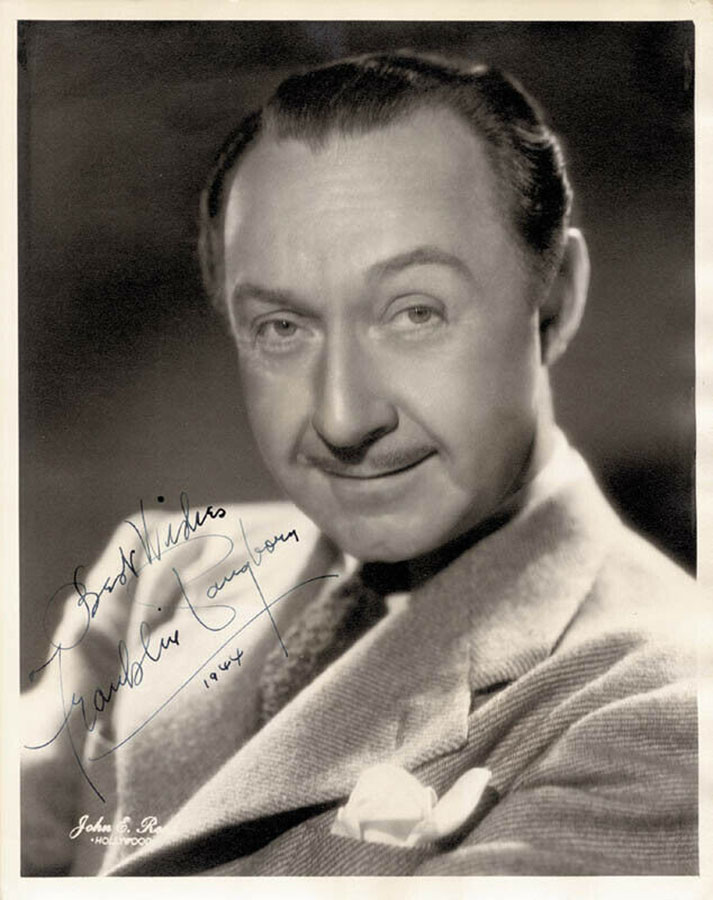
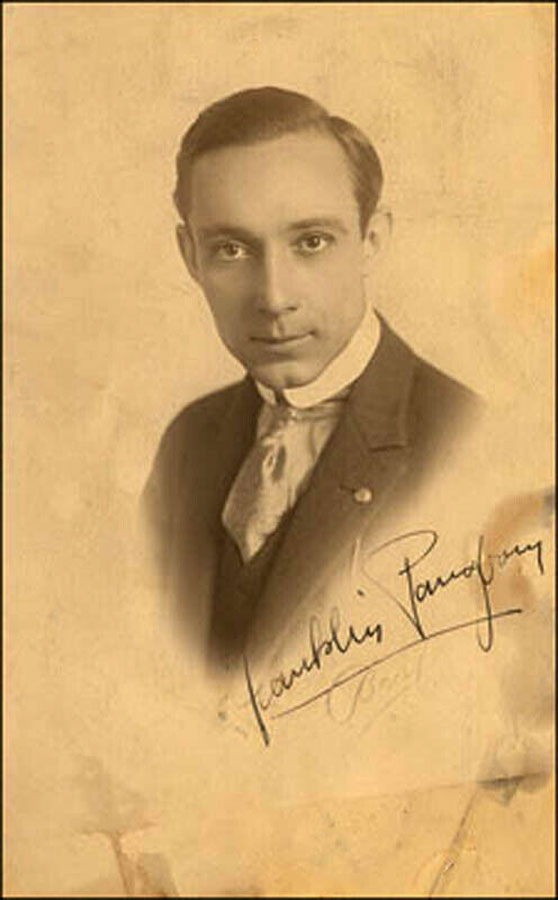
Back before it was hip for an actor to play the gay neighbor/coworker/comic relief role, Franklin Pangborn made a career of it. He didn’t necessarily get to say the punch line, but with his comic expressions and timing, he was able to make the most stale lines (and situations) seem funny. From a May 1939 article in the Boston Globe, he was described as:

Darling and Dandy Of Screen Colony

As raconteur and laugh-maker he’s unique. From flying coattails to raised eyebrow, he puts his all into telling a story—or a joke. And such is his comical personality, just to look at him is to laugh!…His earliest ambition was to “wring tears from people’s eyes,” but not from laughter. Born in Newark, N.J., Franklin started work for a life insurance company. But his hear wasn’t in it. “I always wanted to be an actor,” he told me. “A Shakespearean actor. I studied plays all the time, and I also studied music. Mother wanted me to be an organist.


One day I met at a party in New York the stage star, Mildred Holland. I was 17. I can see myself now, sitting in a Japanese chair—the room was filled with gorgeous antiques—telling the actress all about my ambitions. ‘I want to do plays,’ I said, ‘Sad Plays…I do hope I can bring tears to people’s eyes.’ She didn’t laugh at me. Instead, she decided to give the kid a chance. She asked me if I wanted to spend my two weeks vacation as an extra boy in her company…at $12 a week. That was more than I was making in the insurance business and so when the company went on tour and she offered me the job of the boy in the company to run errands and speak a few lines, I jumped at the chance to learn the acting business.…I got a gorgeous part in a George M. Cohan musical. My very first exit, they laughed at me so hard that I—not thinking I was comical—felt awful. After the show that night, they said: ‘Franklin, from now on, you are going to play comedy.’”


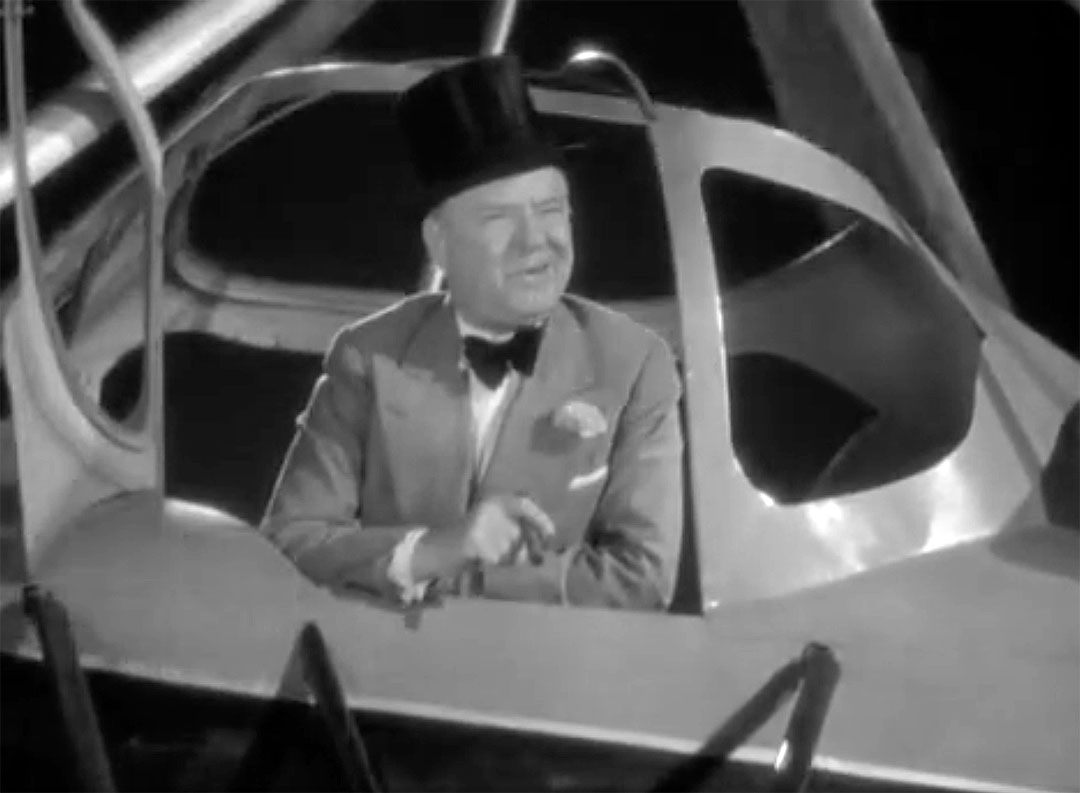
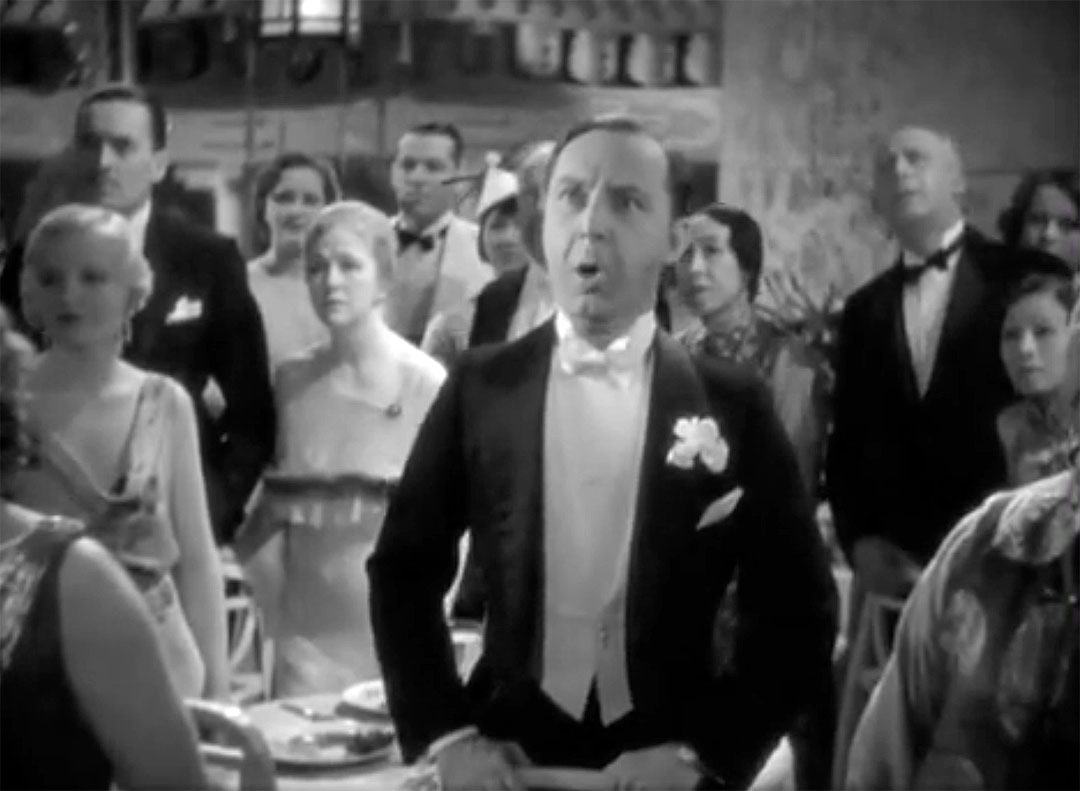
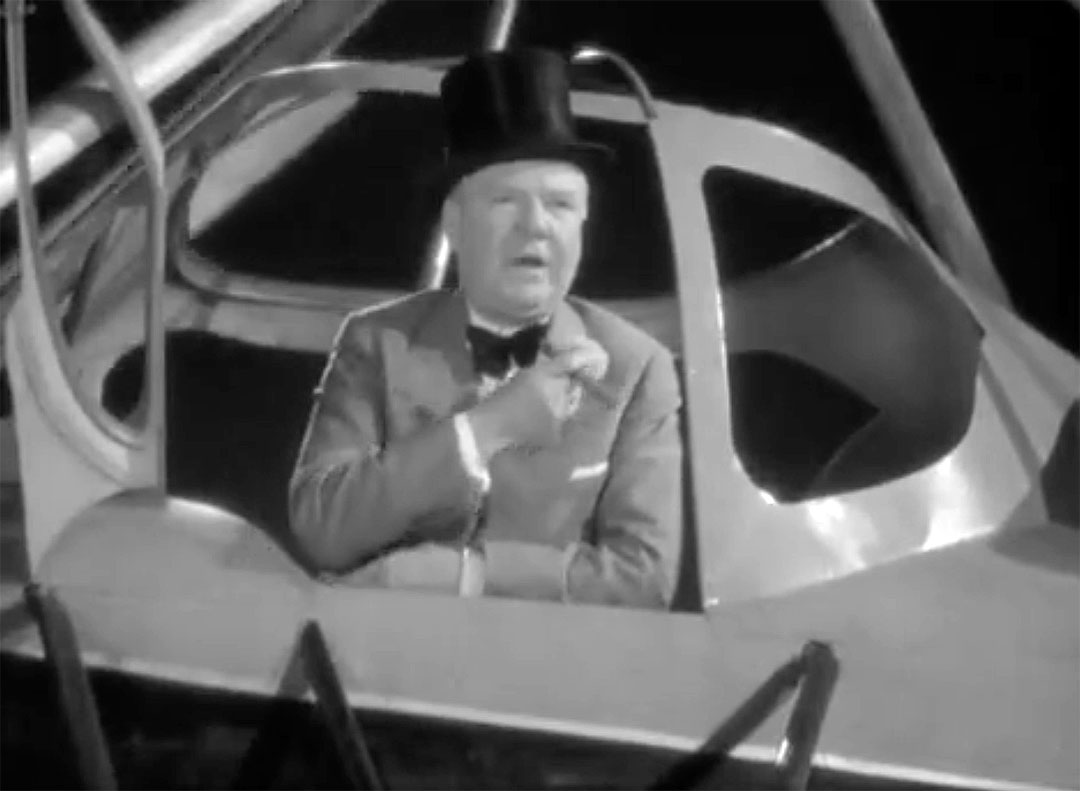
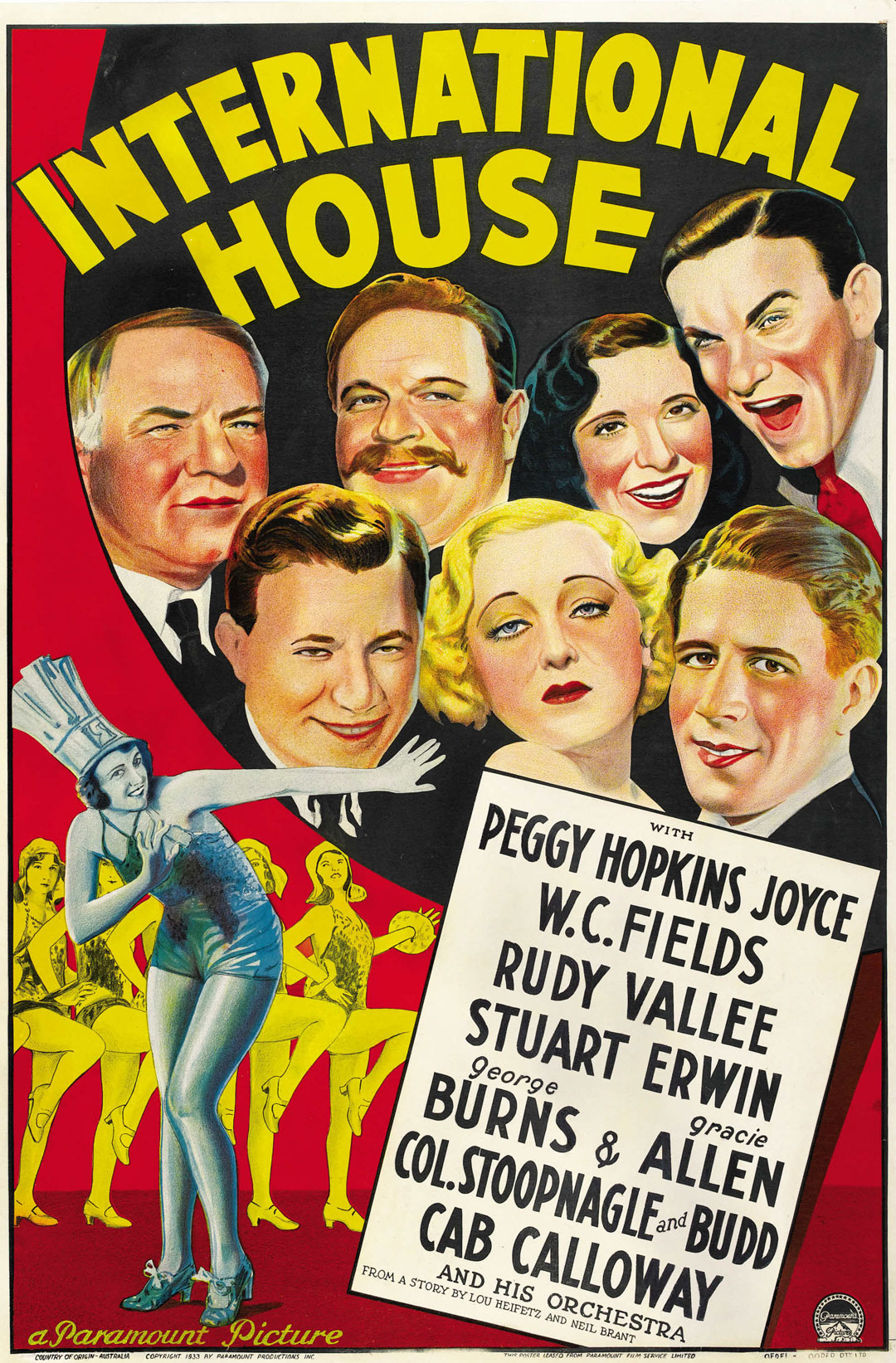
He played supporting roles in three films with W.C. Fields and two with Shirley. His first with Fields was in the pre-code “International House.” He played (not surprisingly) the “fussy” Hotel Manager. “Fussy” was code for gay back in the day, along with “prissy.” When the obnoxious and daffy Professor Quail (Fields) enters the hotel from his autogyro, he tries to figure out where he has landed.


Professor Quail: Hey! Where am I?

Peggy Hopkins Joyce: Wu-Hu.

Professor Quail: Woo-Hoo to you, sweetheart. Hey Charlie, where am I?


Hotel Manager (Pangborn): WU-HU!

[Professor Quail removes the flower from his lapel]


Professor Quail: Don't let the posey fool you!

This thinly veiled reference to a homosexual flirtation would not have been allowed after the production code began to be strictly enforced in 1934. Despite having a sizable role, Pangborn isn’t even listed on the movie’s advertising poster.


Pangborn had a small role in Shirley’s 1938 hit, “Rebecca of Sunnybrook Farm.” He played the nervous Hamilton Montmarcy, the backup organ player (no pun intended I’m sure) who only got to play if someone got sick.


Rebecca (Shirley) feigns illness to get out of her radio contract and Montmarcy is called into action. He promptly faints right before he gets his big chance. Pangborn’s poor mother never got her wish!


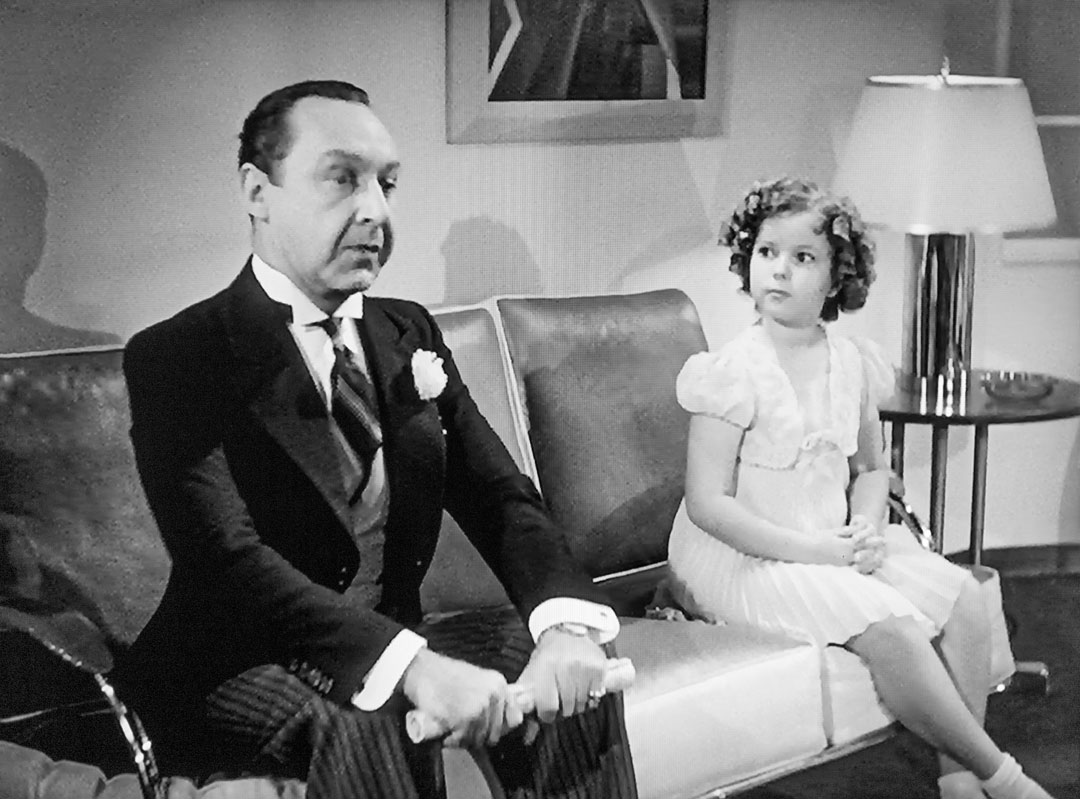
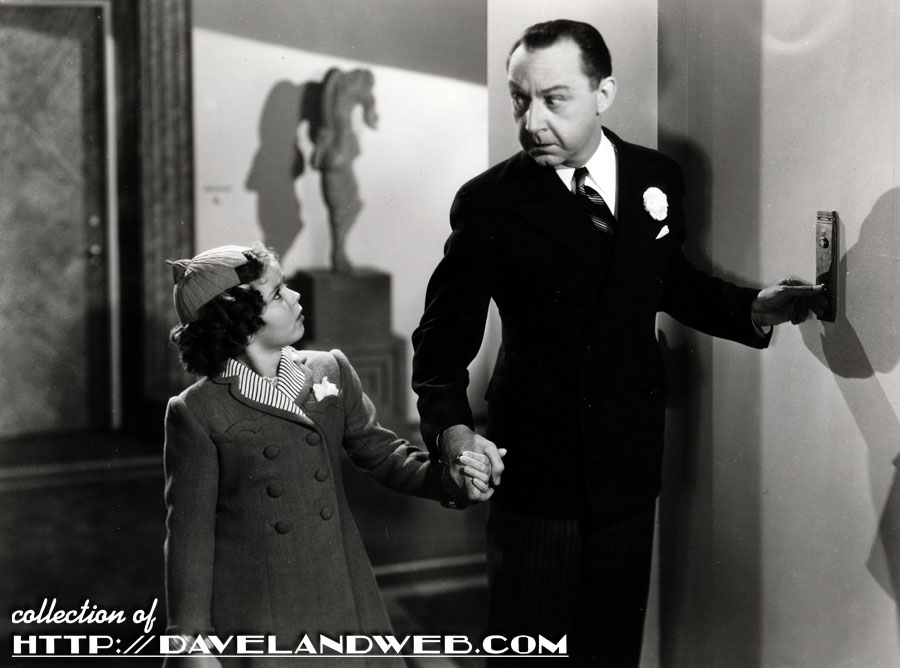
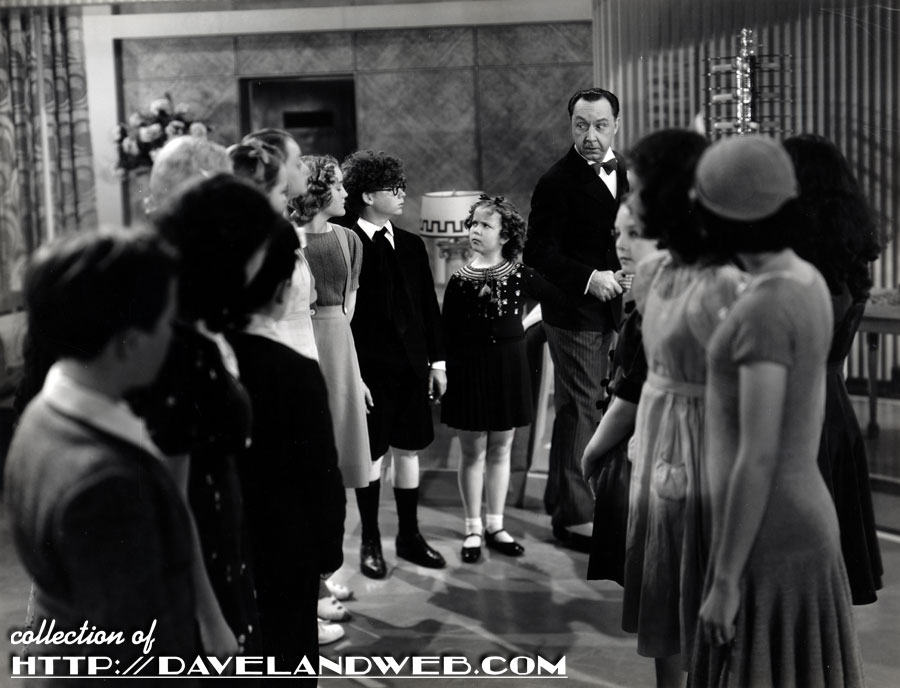
Pangborn got an even larger role in Shirley’s “Just Around the Corner,” also 1938. As yet another building manager, Pangborn (Mr. Waters) was Penny’s (Shirley) nemesis throughout the film. Making sure that she stayed in her (social) place as the engineer’s daughter, he constantly had to remove Penny from situations that caused embarrassment for the rich snobs at his apartment building.


He even kicked Penny out of the playroom, despite her having been invited by Milton (Bennie Bartlett), the boy who lived in the building’s penthouse.


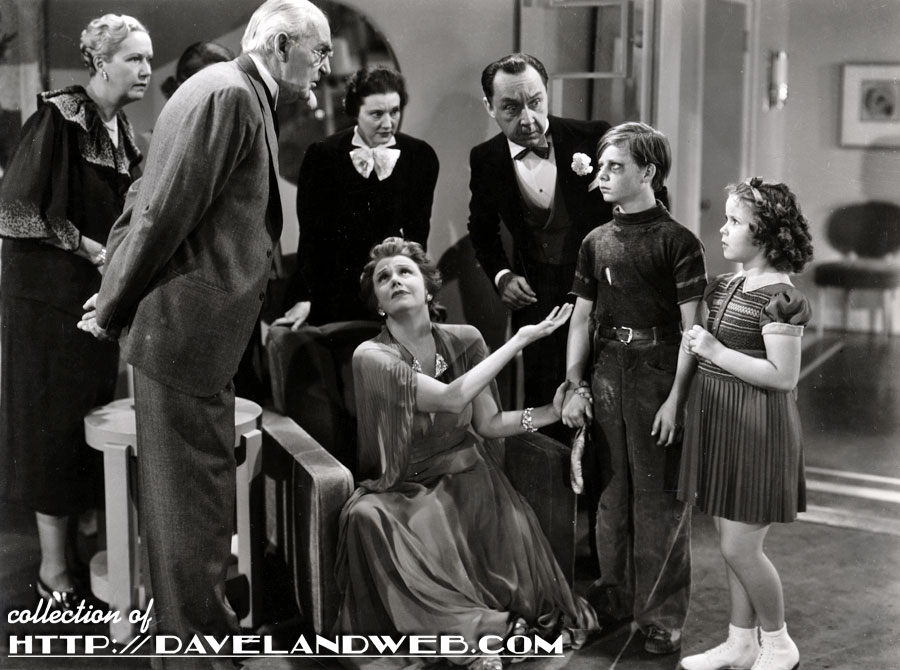
Penny ruined an evening of bridge at the penthouse when she brought Milton home with a black eye. Pangborn was on hand to give plenty of scowls at the curly-haired moppet who had ruined his opportunity to hang out with the elite.


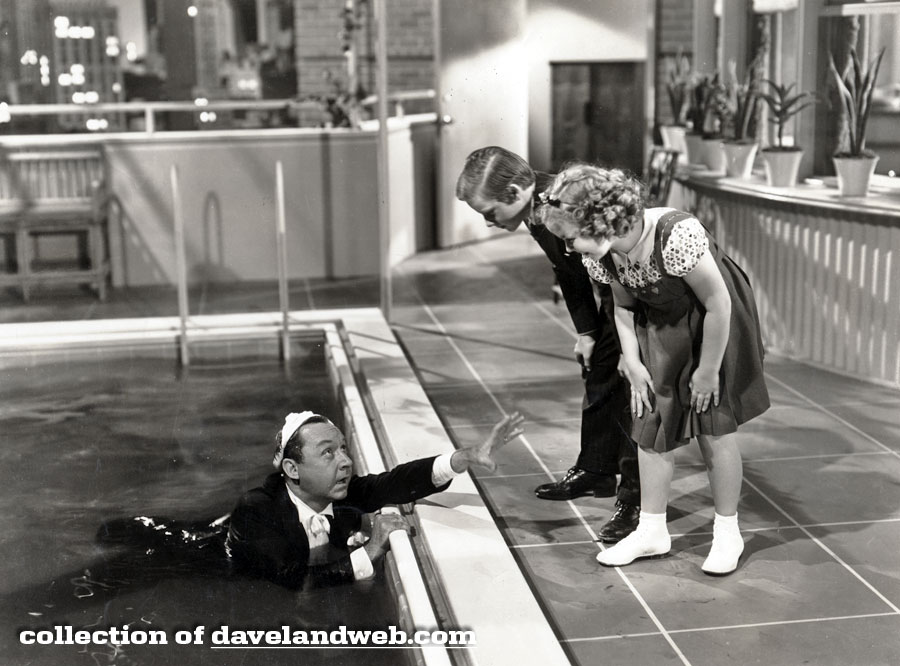
Mr. Waters ended up in the pool when the two kids conspired to pay him back for his meddling. Pangborn was a master of physical comedy, and this scene is a delight to watch, as he slips and slides around the pool. According to the earlier quoted Boston Globe article:

Shirley Temple took a shine to Franklin Pangborn when he played with her in “Just Around the Corner.” She liked the way he took continual ducking in a pool without kicking and complimented him when he snagged his leg on a camera dolly track one day, and went on working without letting any one know. “You’re a good sport,” Shirley told Pangie, “and a sweet guy!”


Pangborn went back to Fields after two Temple films, beginning with “The Bank Dick” (1940), playing bank examiner J. Pinkerton Snoopington. Egbert SousĂ© (Fields) tries to get Snoopington drunk to delay the audit that would reveal his future son-in-law had “borrowed” some funds from the bank. The name of the bar? The Black Pussy Cat CafĂ©.


“Never Give a Sucker an Even Break” (1941) followed with Pangborn playing the Producer who can’t stand Fields’ character, but puts up with him because of his talented niece, played by Gloria Jean. Fields’ mistress, Carlotta Monti, played Pangborn’s receptionist. The original script (written by Fields) went through a number of revisions. The Hays office objected to references to Pangborn’s character as a "pansy."


His last film role was in “The Story of Mankind” (1957) as the Marquis de Varennes. It was also the final film that all three Marx brothers appeared (although not in the same scenes). Pangborn’s final performance was on The Red Skelton Show in the April 22, 1958 episode. He lived in Laguna Beach with his mother. He died in Santa Monica on July 20, 1958, one day after undergoing surgery.

See more Shirley Temple photos at my main website.

Tuesday, September 24, 2019

Temple Tuesday: Details and Deletions


In the 1938 Shirley Temple movie “Just Around the Corner,” her character (Penny Hale) holds a benefit to help save Uncle Sam. The “Programme” lists an opening number by Lottie and Letty (Barbara and Gloria Brewster):


The Brewster Twins also had a bit part in Shirley’s “Little Miss Broadway”. They were born Naomi and Ruth Stevenson in Tucson in 1918 and were under contract to Fox from the late 1930’s to the early 1940’s, making nine films. They were known as the “Most Beautiful Twins in America.” No arguments here! Back to Shirley…

Rehearsal sheet music from “Just Around the Corner” was auctioned off in 2015 and included the songs “London Bridge is Falling Down” and “I Feel Like the Blossoms in the Spring.” This sheet music was written when the movie was still being called “Lucky Penny.”


Neither of the songs made it into the final cut of the movie. It is believed that “Blossoms” was the song that Penny and her gang were to sing at the benefit. This recently acquired image shows what I believe to be the “Penny and her Gang” musical number, which does not show up in the finished film. Something tells me that this number of Shirley singing with the neighborhood toughs may not have been all that spectacular. If only the footage still survived!


The rest of the “Programme” continues as advertised, with a rousing tap number by Bill Robinson and friends, “Brass Buttons and Epaulettes.”


According to an early script, “London Bridge” was being played by the snobby little children in the Riverview’s swanky playroom on the piano. Bennie Bartlett (who played Shirley’s new friend Milton) takes over at the piano and plays a swing version of the classic tune, with Shirley doing the big apple dance to it. It was at this point that Mr. Waters (Franklin Pangborn) was supposed to walk in and catch this disruption in the normally staid playroom. In reality, Bartlett was a bit of a child prodigy himself. At age four he played trumpet, directed and sang with his own dance orchestra, and was featured on the radio. He appeared in a 1935 RKO musical, “Millions in the Air” playing the piano. The next year he appeared in a short for Paramount, performing a composition he had written at the age of nine. I always wondered why his musical talents were not paired with Shirley’s. It would appear that the original intention was to do just that. Below, Milton’s black eye is revealed to his disapproving mother (Cora Witherspoon) and his approving Uncle Sam (Claude Gillingwater).


The cast of the film concerned Mrs. Temple, which she felt consisted of too many has-beens. For the first time, she went directly to Darryl Zanuck to express her concerns about the movie and the overall typecasting of Shirley. She wanted to see some changes in the types of roles that Shirley would play so that audiences wouldn't get sick of her. Zanuck disagreed; he felt that the more stars stayed the same, the more audiences would come to see them. At the point they tired of that star, it was basically time for Zanuck to release a new one for the public to enjoy. Oops. Not a good answer for Mrs. Temple, who could see that Zanuck would have been quite fine to let Shirley get pushed aside if another personality came along to replace her. The next move Mrs. Temple made caused a permanent rift between her and Zanuck: she went over his head to plead her case to his boss, Joseph M. Schenck. Unfortunately for the Temples, Schenck sided with Zanuck. Oops again.


Farrell was one of the "has-beens” that Mrs. Temple was referring to. Even though he had the largest supporting role, he was billed below Shirley and Joan Davis in the film credits. Director Irving Cummings went to Palm Springs to fetch Farrell out of retirement, promising a come-back. Instead, he only made two more films: 1939’s “Tail-Spin” (once again billed below Joan Davis!) and 1941’s “The Deadly Game.” Farrell is shown above with Rock Hudson in Palm Springs, circa 1955.

GOOF DEPARTMENT: When Penny first enters the basement apartment where her father (Farrell) has been demoted to, the door says “HOUSE ELECTRICIAN”:


A little later in the movie, after her father and his girlfriend break-up (temporarily of course!), it says “MR. HALE”:


Phew. That’s a lot of info!

See more Shirley Temple photos at my main website.

Saturday, December 06, 2014

Just Around The Corner


As Shirley Temple got older, the previously successful formula for her blockbuster movies was fine-tuned. In 1938's "Just Around the Corner," Shirley is given a male co-star that gives the first ever-so-slight hint of a romantic pairing. At the tender age of 10, anything more than that would not have been appropriate! Benny Bartlett was given the role of Milton Ramsby, who starts off as a snooty coddled rich kid but eventually morphs into more of a Mickey Rooney type. Shirley helps this metamorphosis by trimming off the curls on his head that his aunt adores.


In the photo above, Bartlett & Temple are shown with Franklin Pangborn, whose character gets duped by the two kids and ends up in the pool. Pangborn was known in the 30's and 40's as supporting comic relief, typically playing roles that would fit the prissy gay stereotype that at the time could only be hinted at but not directly labeled.


Like so many other child actors, Bartlett's career slipped when he hit puberty, so he joined the military during World War II. Afterwards he returned to the silver screen and was cast as a member of the gang in "The Bowery Boys" comedies (seen above on the far right). He left the series in 1955 and then permanently retired from films.

"Just Around the Corner" marked the last on-screen pairing of Temple with frequent dance partner Bill Robinson.


See more Daveland Shirley Temple Black photos at my main website.