Showing posts with label fatty arbuckle. Show all posts

Monday, May 20, 2024

Monday Main Street Marquee Medley


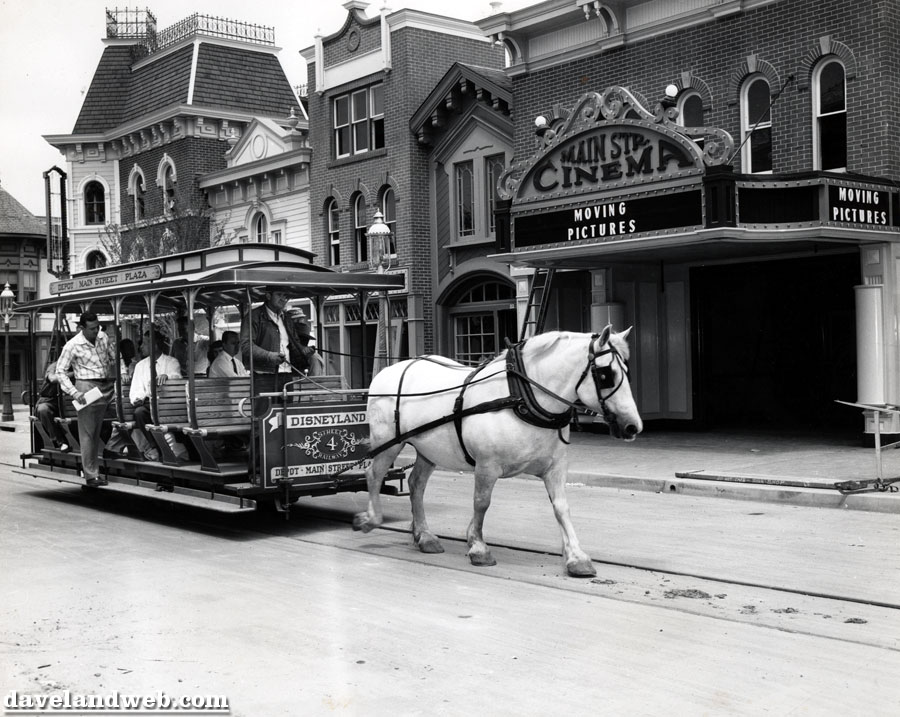
In the first few decades of Disneyland, the Main Street Marquee was changed as much as (if not more than) the Main Street Train Station population numbers. Before the Park opened, the marquee simply said, “Moving Pictures.” By Summer 1955, it heralded a Wm. S. Hart Western and the Keystone Kops:
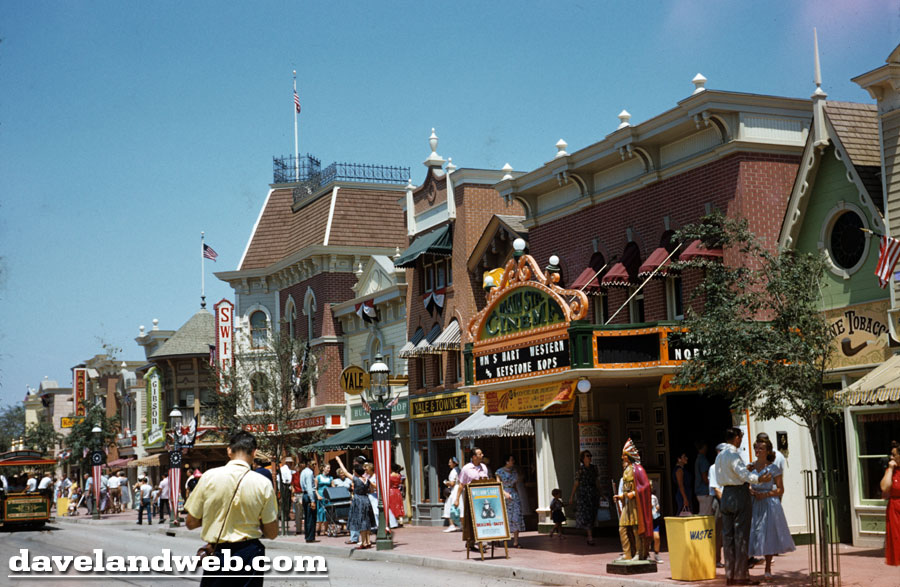


Actress Gloria Swanson’s name on the left let guests know there was more than just one movie playing inside:


and Mabel Normand on the right:


1956, Rudolph Valentino and Vilma Banky:
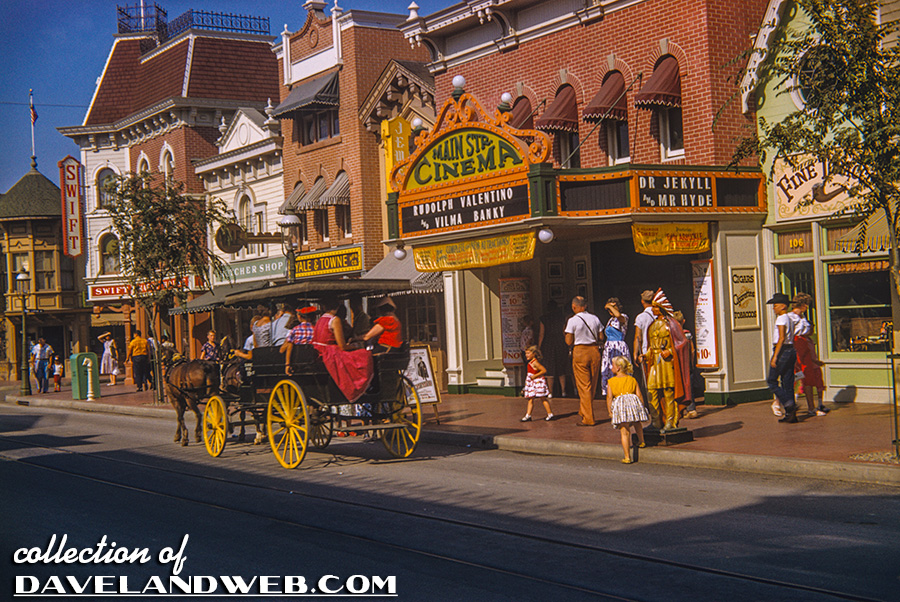


The A-Frame at left shows an ad for “The Eagle,” which starred Banky and Valentino.


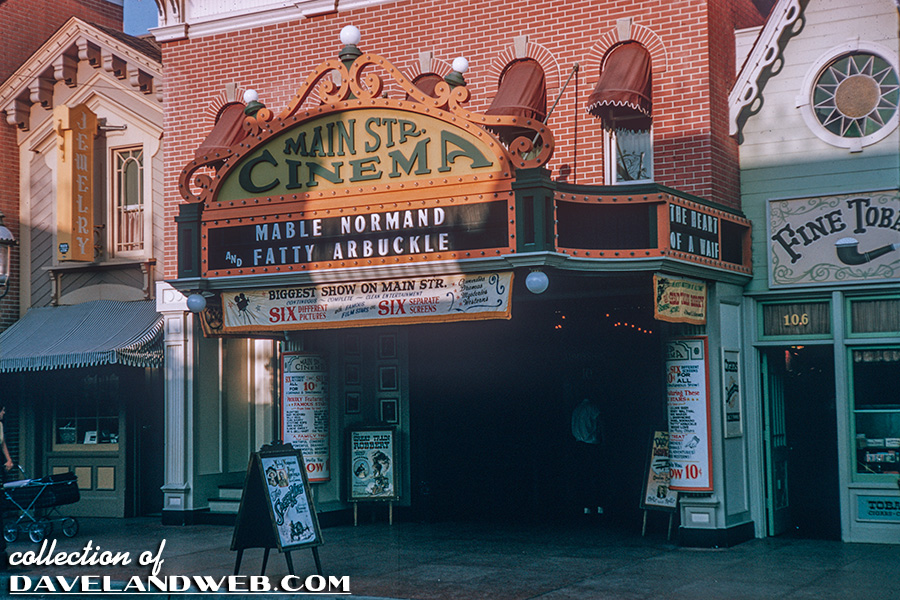
1957/58, with Mable (sp!) Normand and Fatty Arbuckle. On the right it advertises “The Heart of a Waif,” a 1915 silent film with Edith Peters and John Sturgeon.
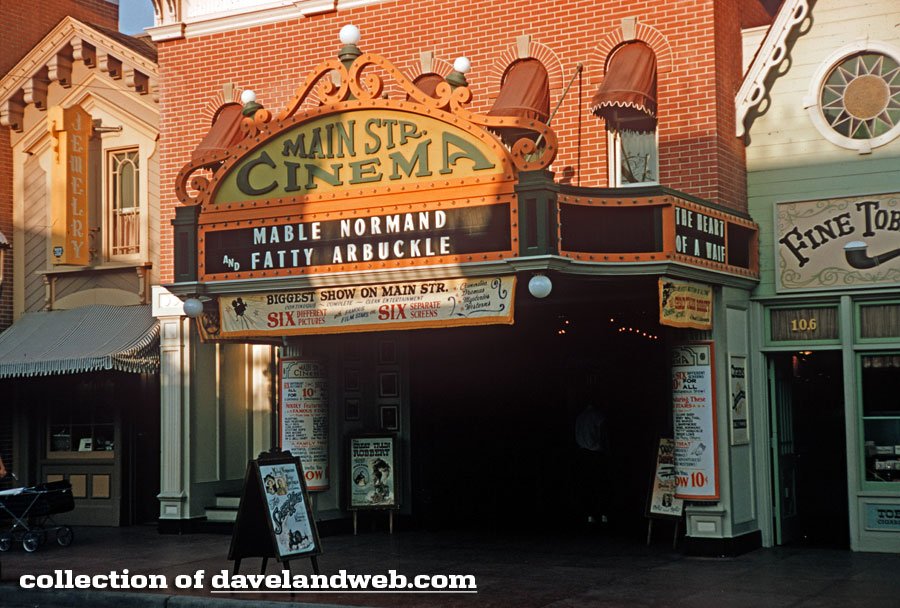


From the same time period, Clare Booth’s name is on the left side of the marquee:


June 1958, we can just barely see Ronald Coleman in “Lady Windermere’s Fan,” a 1925 Ernst Lubitsch comedy/drama:
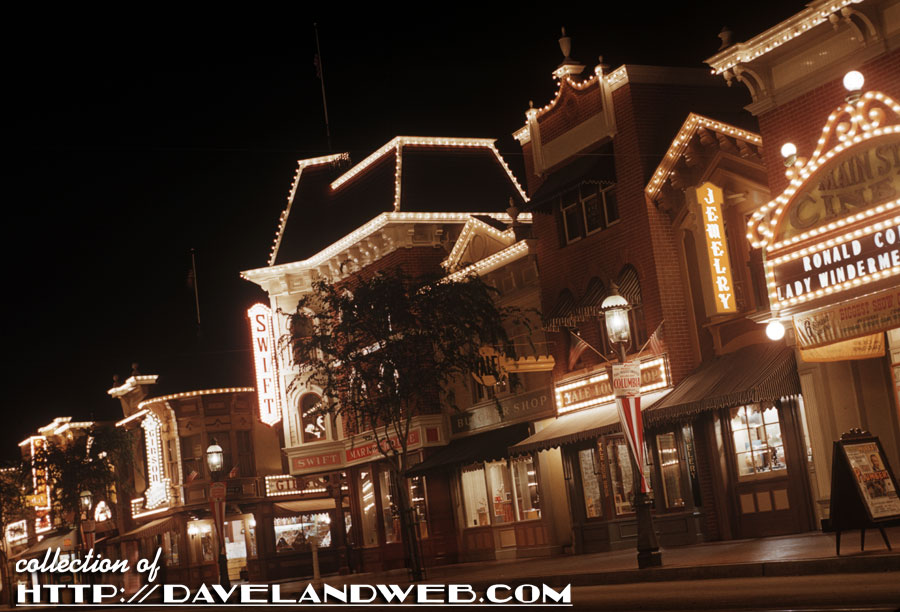


You can watch it here:


December 1959, D.W. Griffith’s “A Girl and her Trust” from 1912:


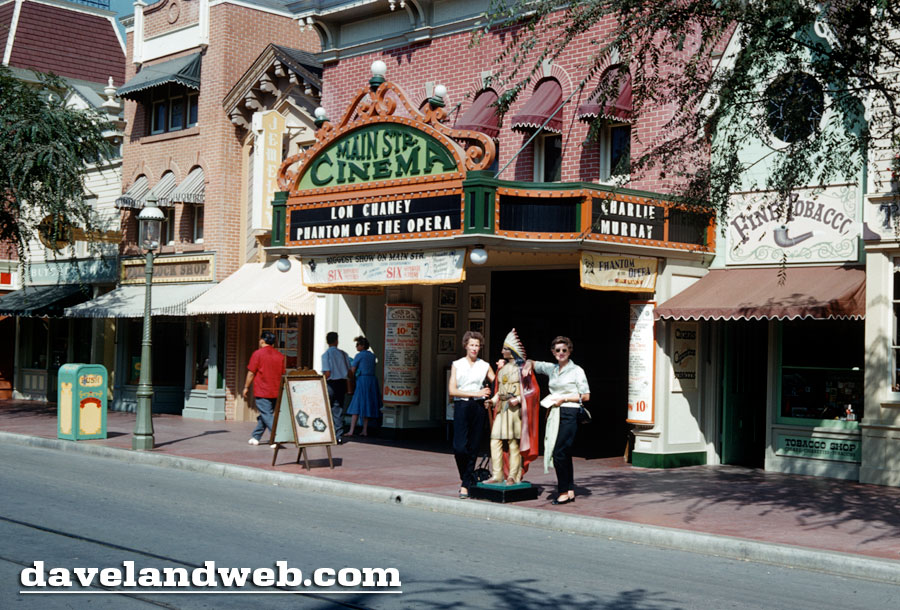
September 1960 had Lon Chaney in “Phantom of the Opera,” just in time for Halloween:


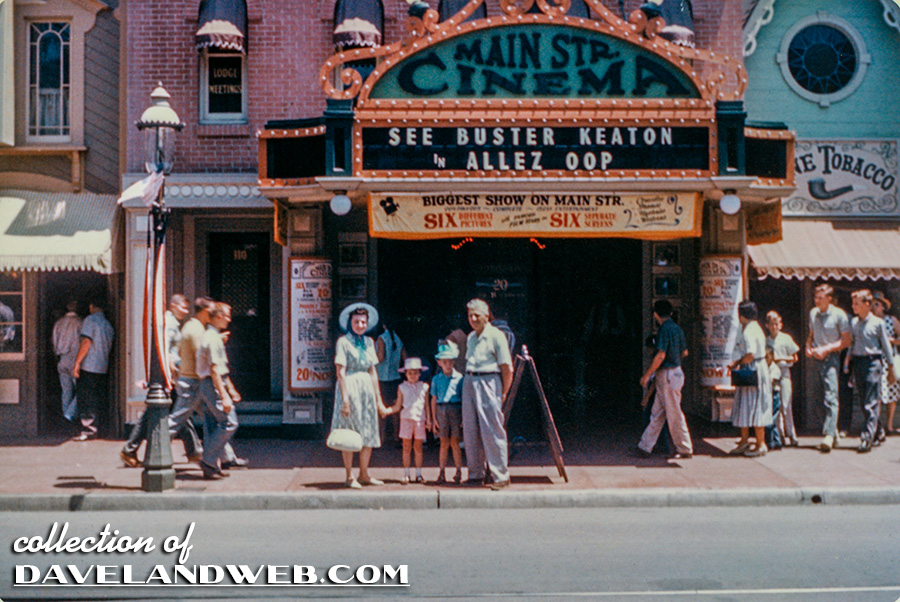
July 1961 had comedian Buster Keaton in “Allez Oop,” which was actually a talking picture from 1934:


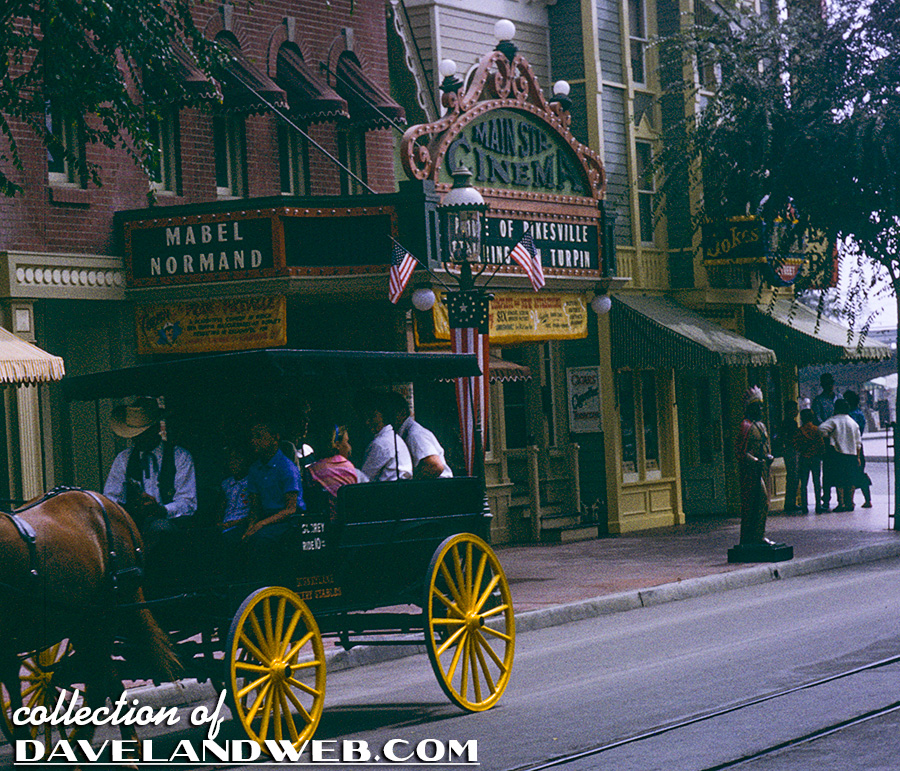
October 1962 has “The Pride of Pikesville” (1927), starring Ben Turpin:


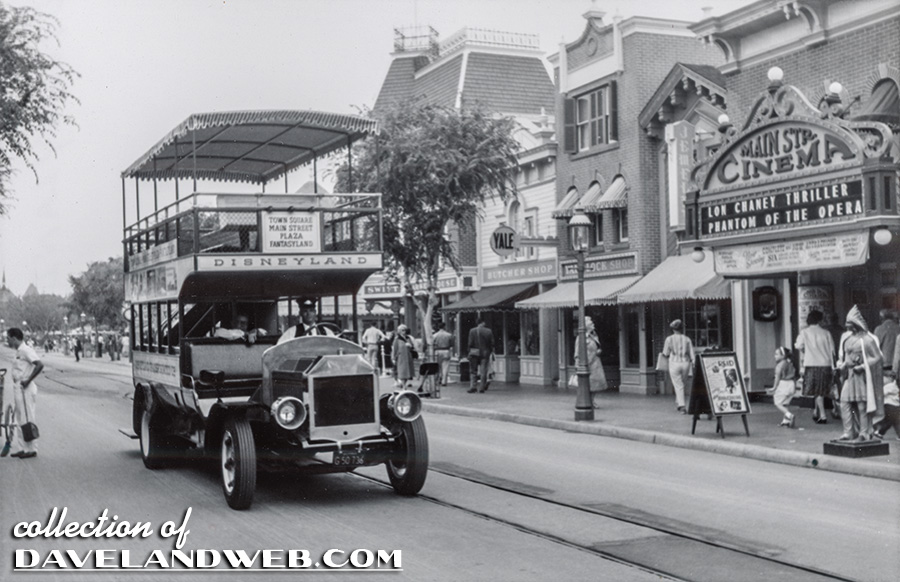
May 31, 1963 it’s back to Lon in “Phantom”:


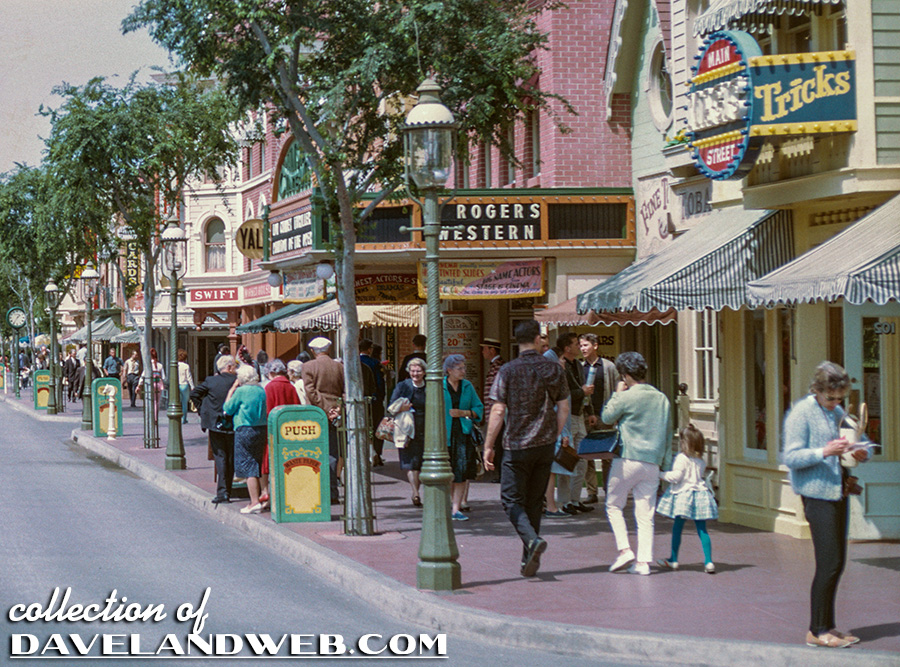
From May 1964 you can just barely see that the Cinema is still showing a Lon Chaney thriller, “Phantom of the Opera” and a Will Rogers Western:


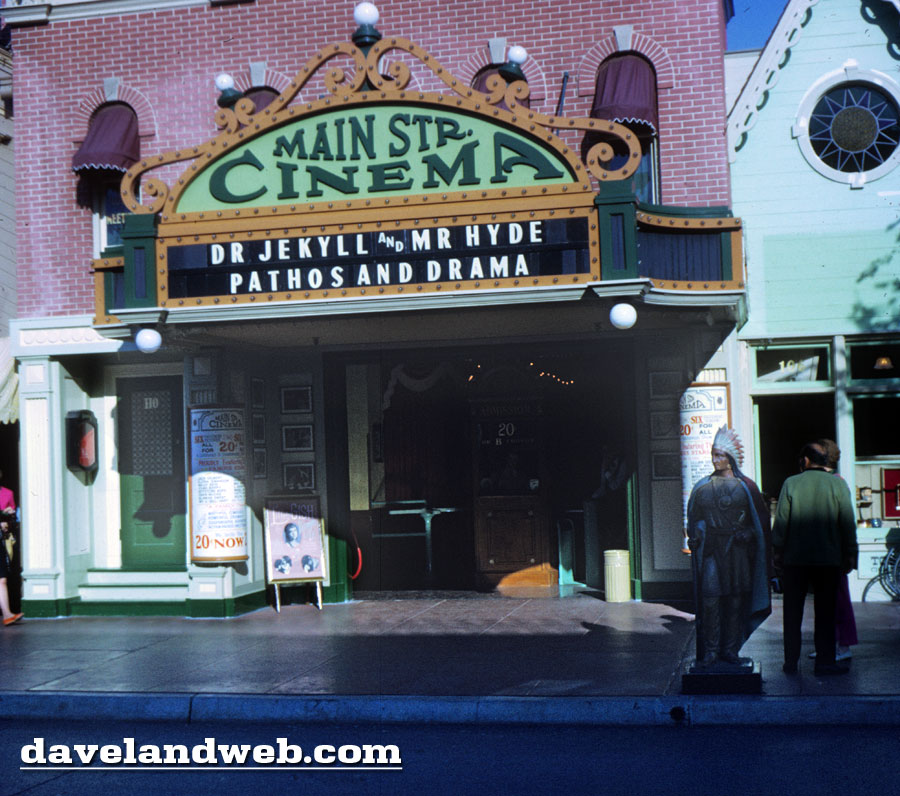
September 1964 proclaims “Dr. Jekyll and Mr. Hyde” from MGM, which was not a silent film, but rather from 1941 with Spencer Tracy, Lana Turner, and Ingrid Bergman. The silent version from 1920 was released by Paramount and starred John Barrymore. Could be a marquee screwup. Another possibility is that back in the day, Blackhawk Films released 8mm and Super8mm BW silent versions of both silent AND talkie films; if they were the source company for prints for Disneyland this could account for why some of these “talkies” were being marketed as silent films.


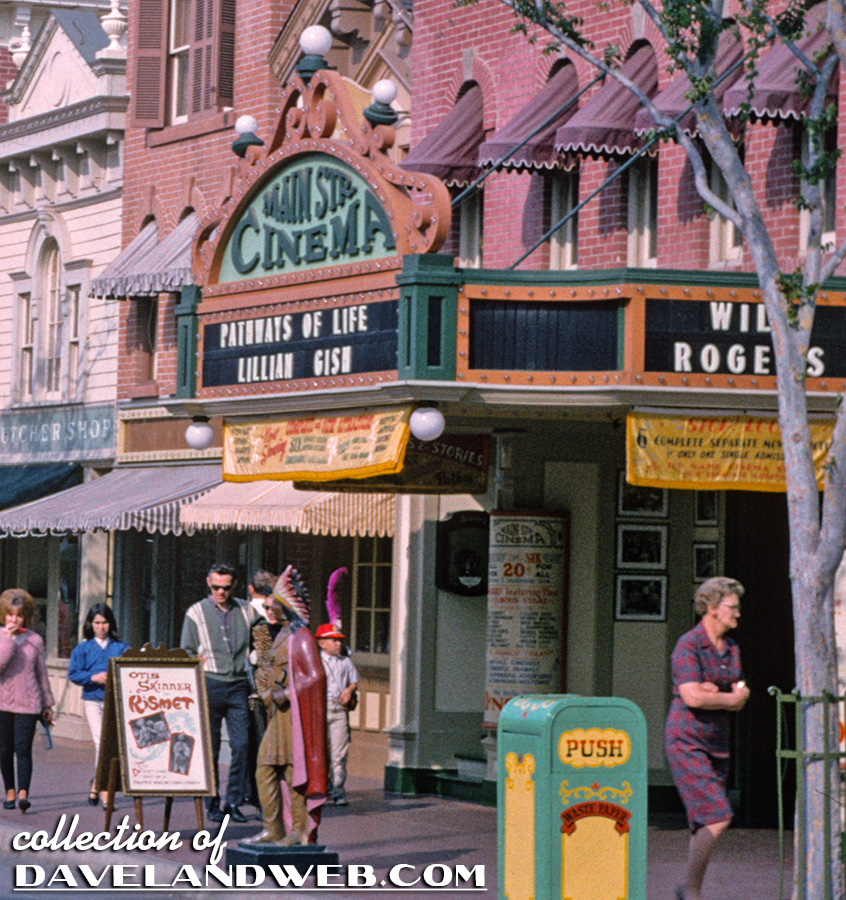
March 1965, “Pathways of Life” with Lillian Gish, from 1916:


September 1965, “The Great Train Robbery” from 1903:


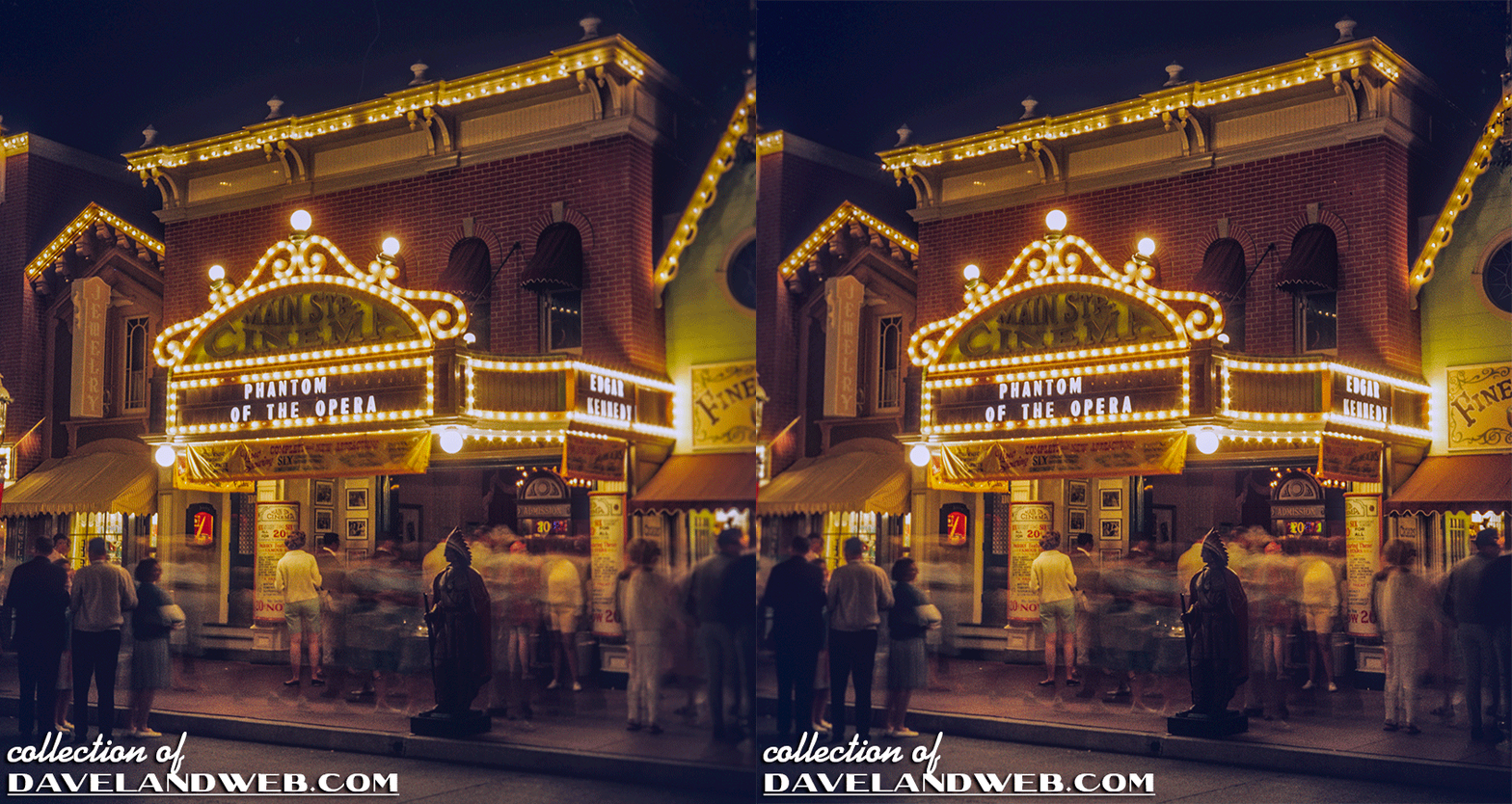
June 26, 1966, “Phantom of the Opera”:


1968, “Dr. Jekyll and Mr. Hyde,” with no credit to Louis B. Mayer!


February 1971, “The Great Train Robbery” returns:
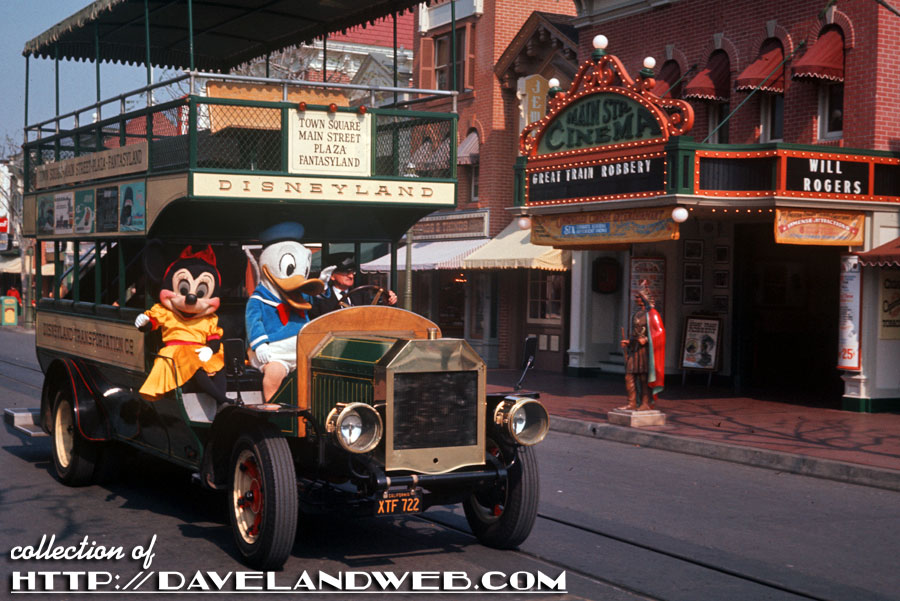


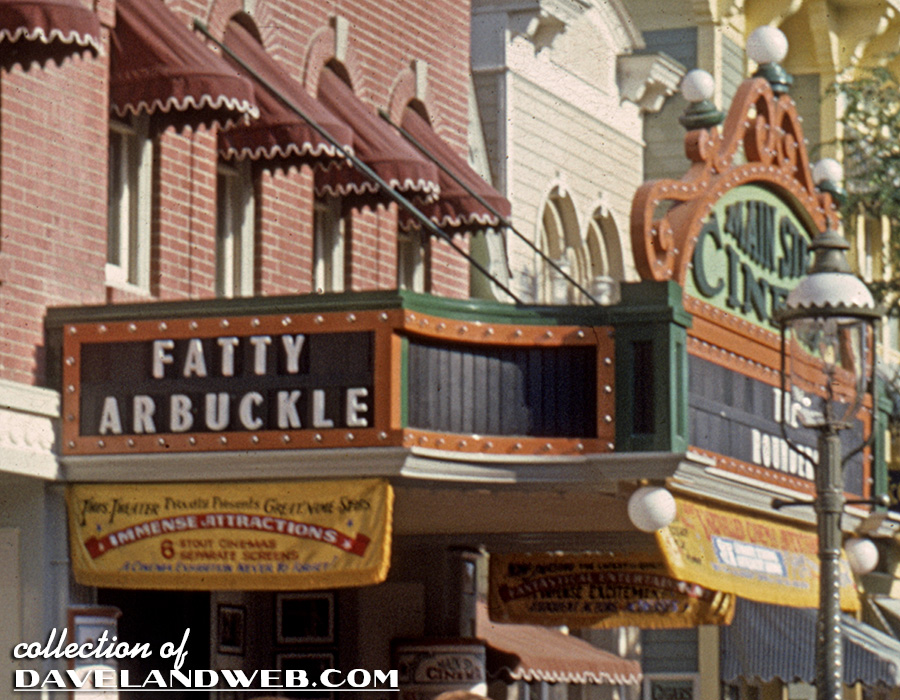
May 1974, “The Rounders,” a 1914 comedy with Fatty Arbuckle and Charlie Chaplin:
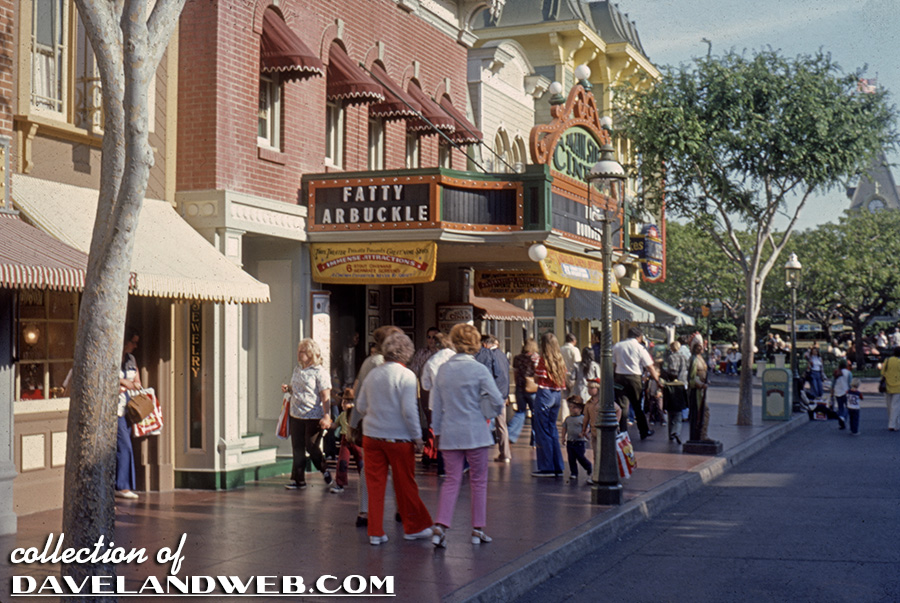


And then my collection goes dark until February 2006, when I captured “Steamboat Willie” on the marquee with “Traffic Trouble” on the right. The film’s actual title was “Traffic Troubles.” Somebody was too lazy to add the “s” on the end to this 1931 sound short. The worst part of this photo is that bleeping stroller blocking the entrance to the theater.
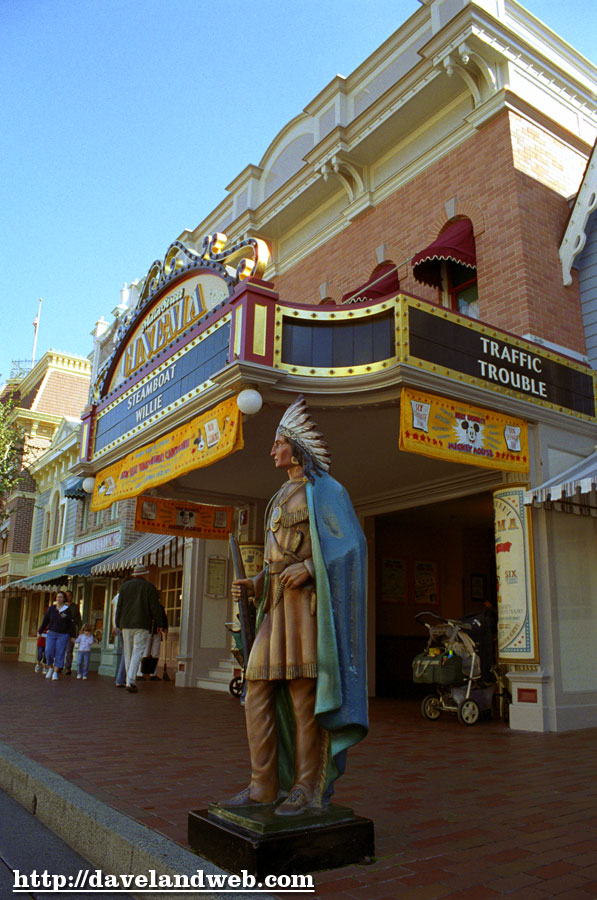


July 2006 we see “Mickey’s Polo Team” on the right. Not only was this movie originally a sound cartoon, it was also shot in Technicolor. By this time, the “movies” were being shown on TV screens and typically featured black and white versions of Mickey Mouse cartoons that were not necessarily silent.
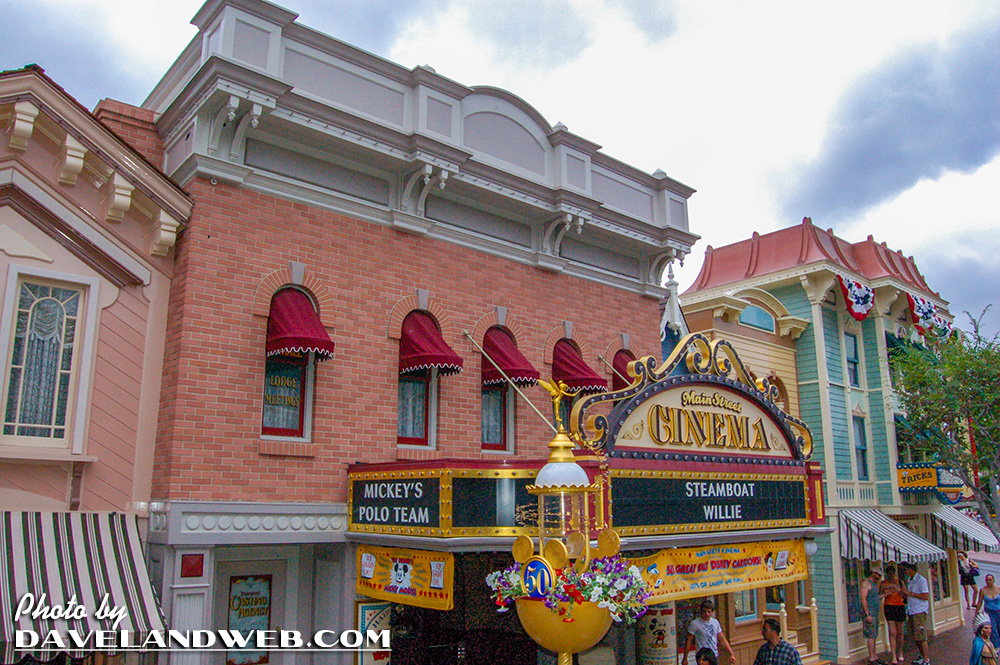


No changes in my collection from 2006 to March 2010:
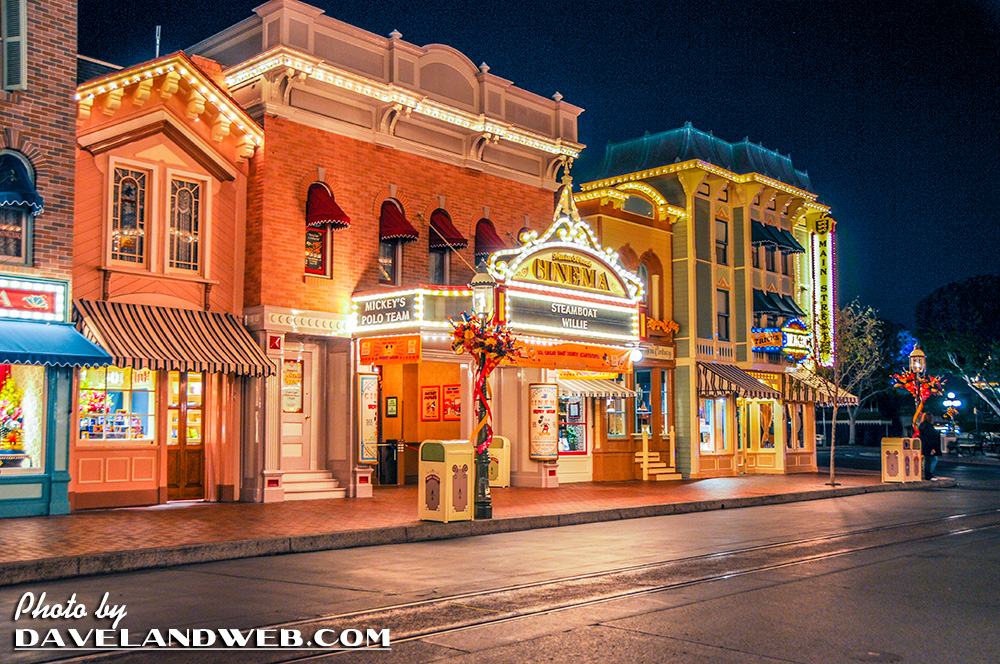


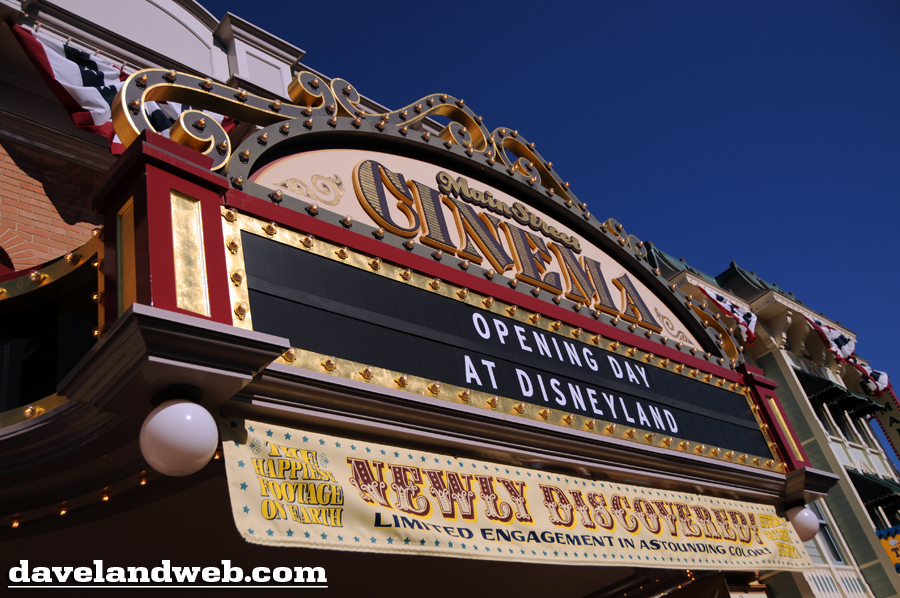
In August 2010, the cinema was featuring “Opening Day at Disneyland,” with footage from July 17, 1955:


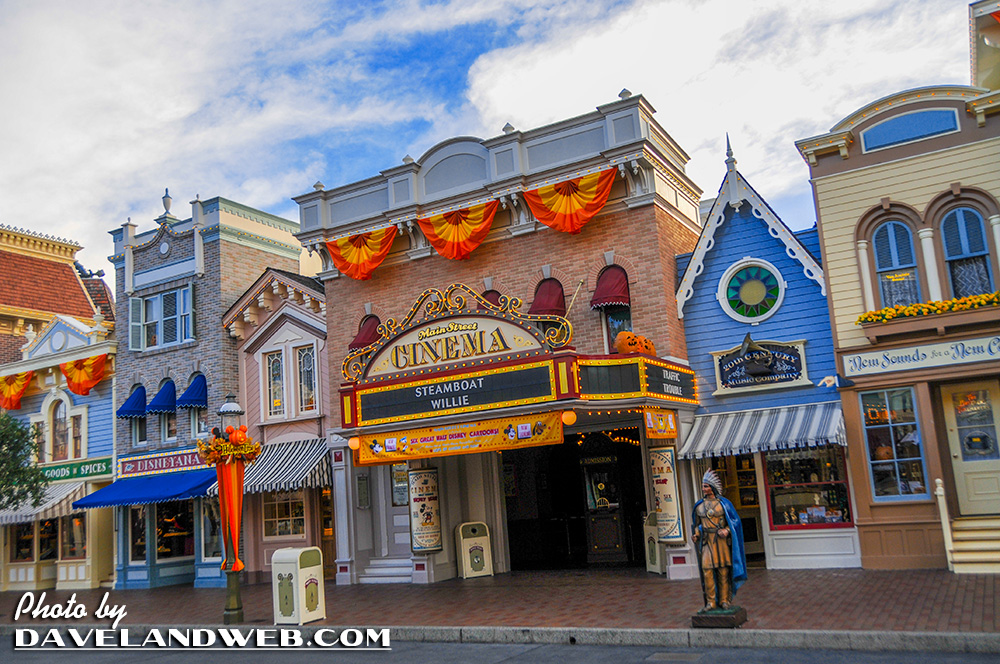
By October though, “Steamboat Willie” was back:


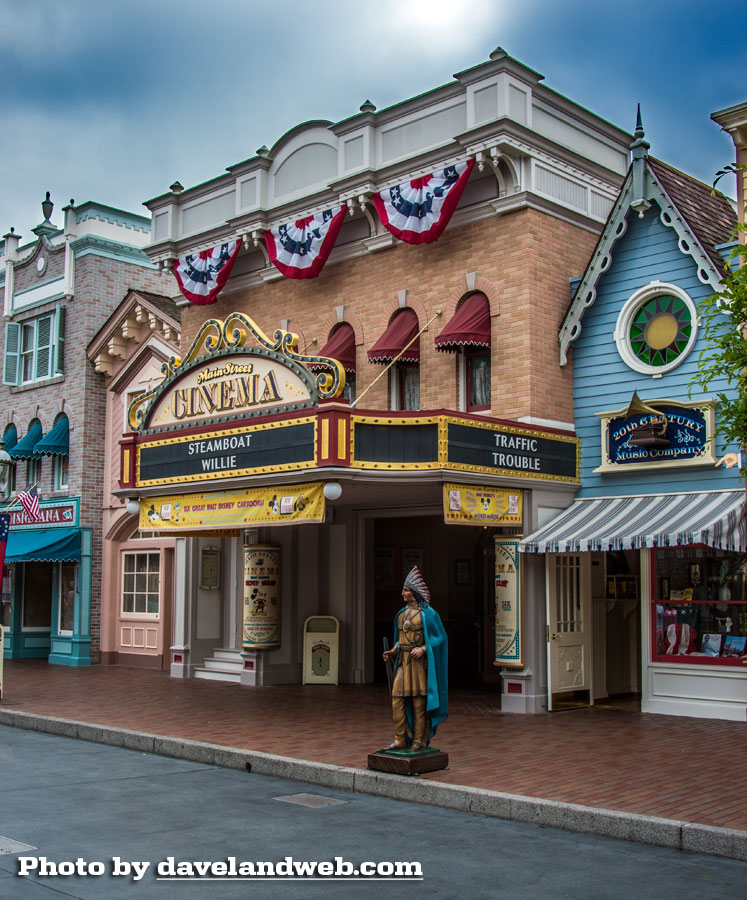
The last marquee shot I took was in June 2013:


I hope you enjoyed this chronological documentation of the diverse offerings that once made the Main Street Cinema a very lively place to visit!

See more Disneyland Main Street Cinema photos at my main website.

Friday, June 09, 2017

Vintage Disneyland: The Harry Pollack Collection Pt. 3


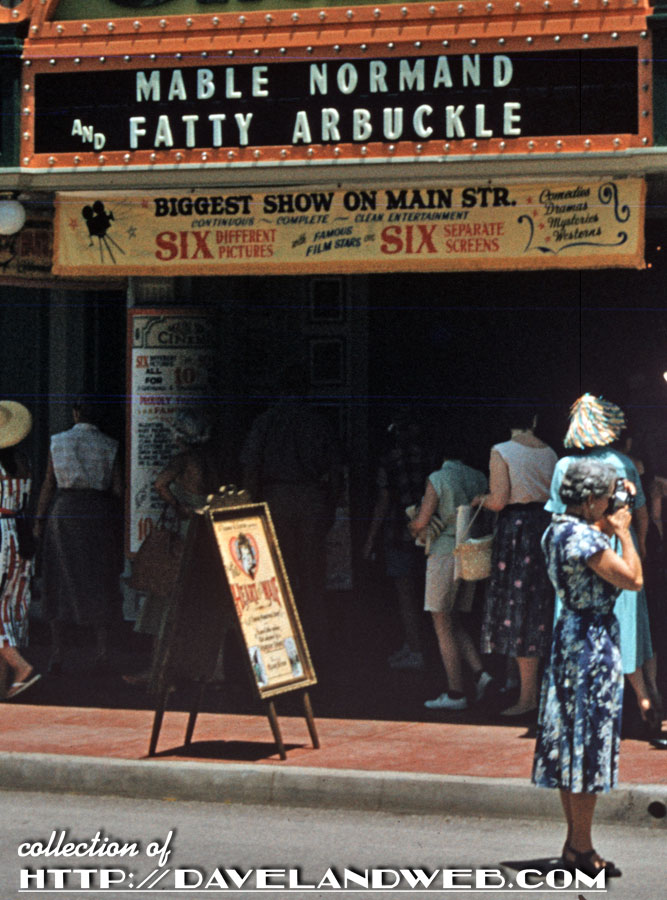
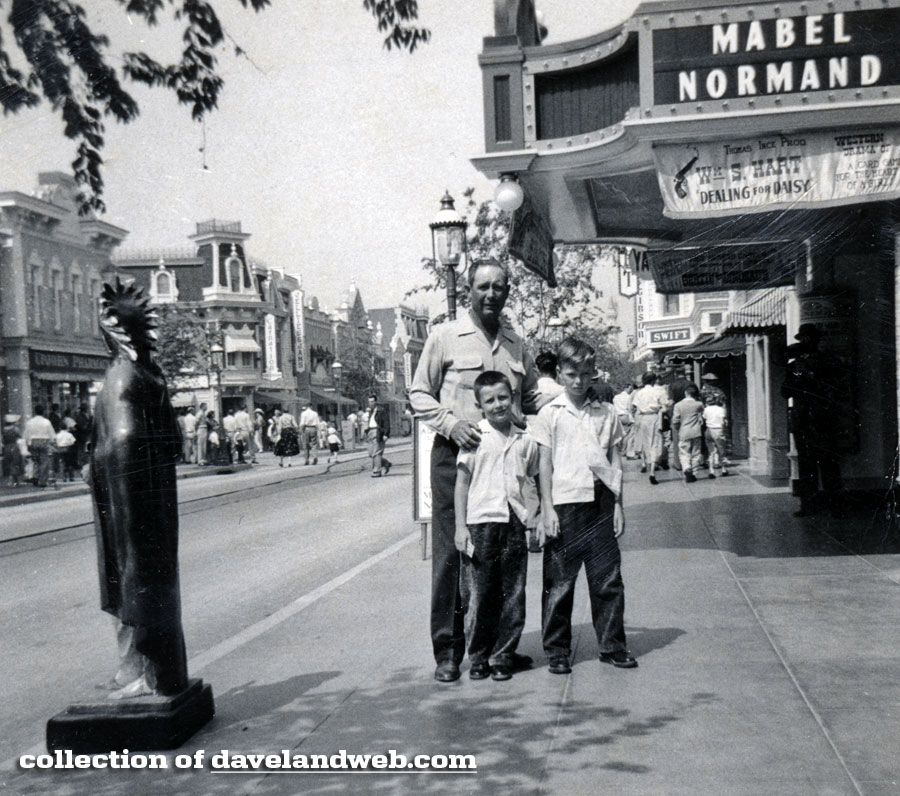
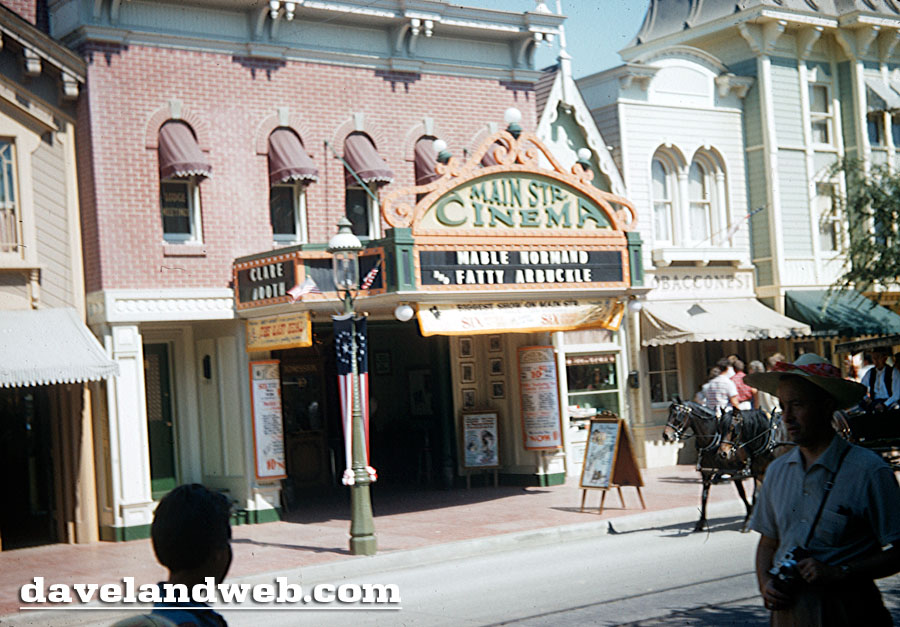
Just one image today from Harry Pollack's collection and it features a (gasp!) typo on the Main Street Cinema marquee. Mabel Normand is the recipient of the error. Wouldn't you like to see the photos that the lady on the right is shooting?


More vintage Disneyland at my main website.

Friday, September 05, 2014

1950's Disneyland Gems, Pt. 3


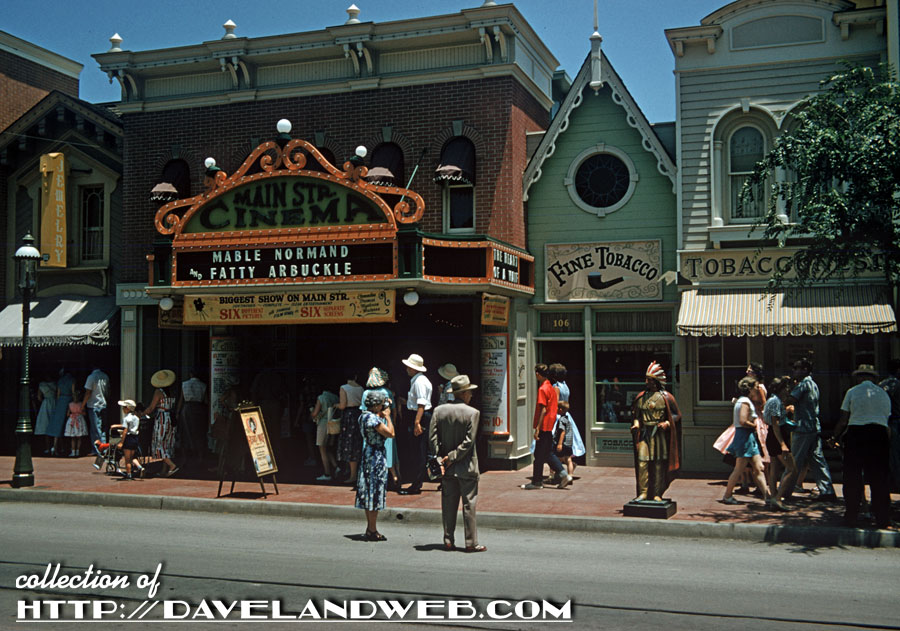
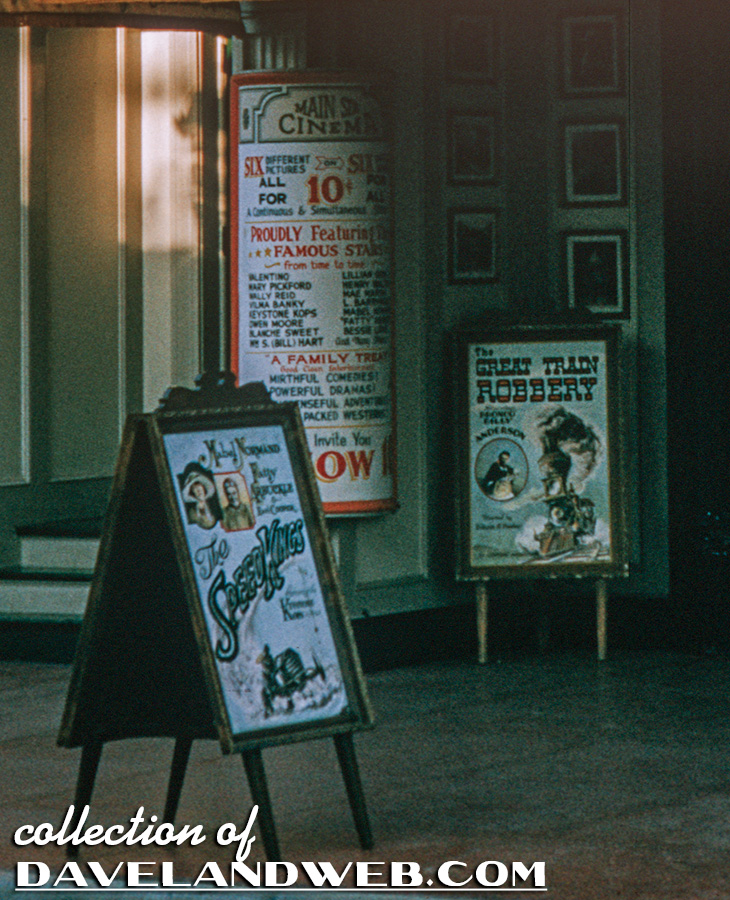
Traveling down Main Street, U.S.A. at Disneyland we come to the Silent Screen Cinema, with headliners Mabel Normand and Fatty Arbuckle.


The two featured shorts are "The Speed Kings," a 1913 Mack Sennett comedy starring Fatty Arbuckle and Mabel Normand:


and "The Great Train Robbery," the 1903 Edwin S. Porter ten minute short that is considered a milestone in filmmaking for its cross cutting, composite editing, hand tinting, and location shooting.


Today, memories of Normand and Arbuckle are tainted by the scandals that they were involved in. Normand had an addiction to drugs and was also a suspect (later cleared) in the still unsolved murder of director William Desmond Taylor. Arbuckle was accused of raping a young girl in a San Francisco hotel. Although he was cleared of all charges, his career never recovered from the headlines.

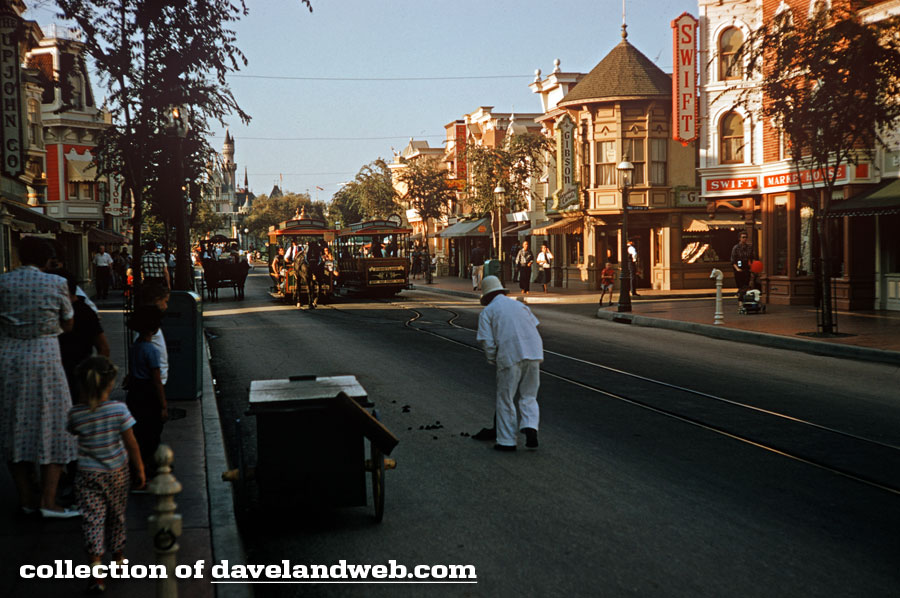
A little further down Main Street, we see a White Wing sweeping up the horse poop. Not an enviable job, but somebody's got to do it.


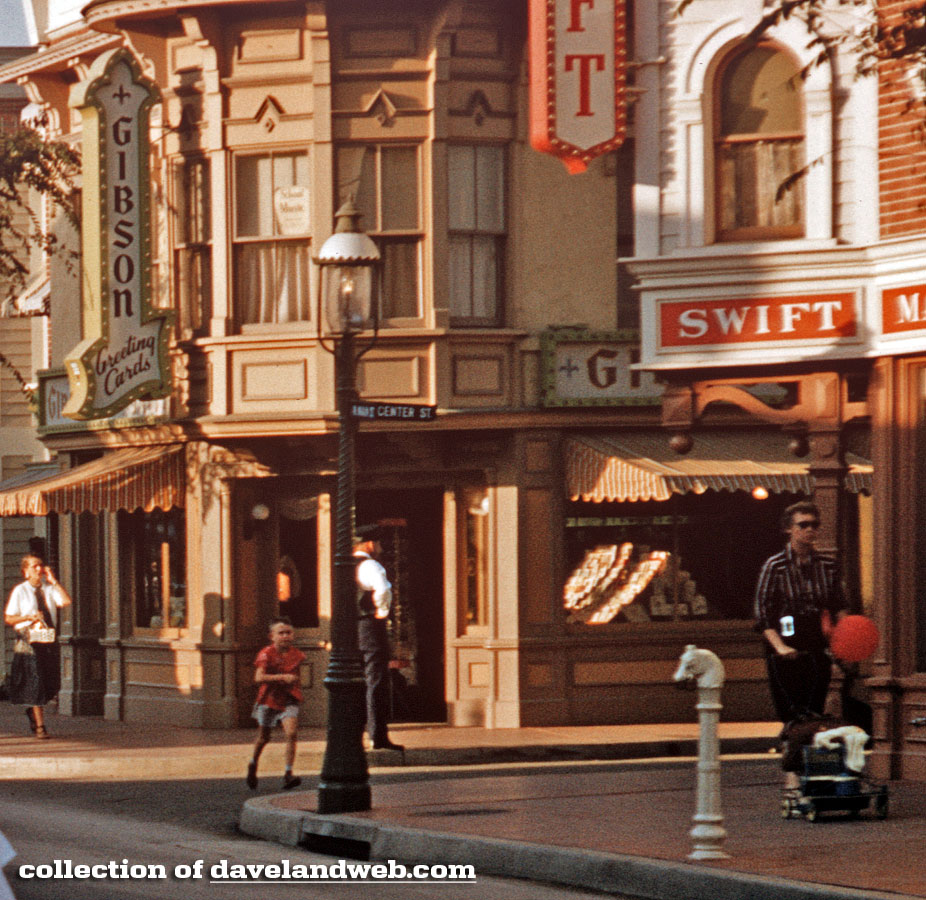
Zooming in for a closer look at East Center Street, with the Gibson Greeting Card Shop on the corner.


Yesterday, I received this sad email from Daveland reader Peter B.:

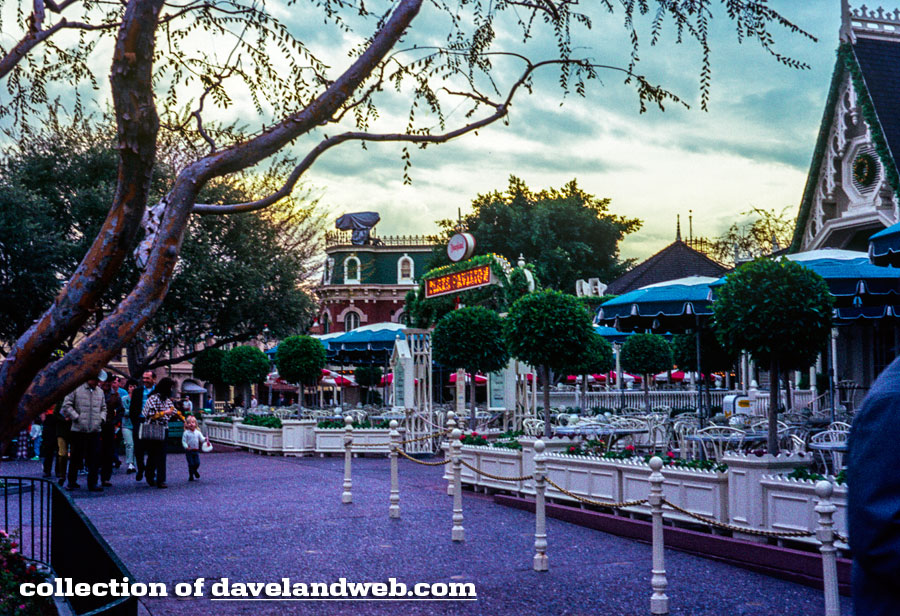
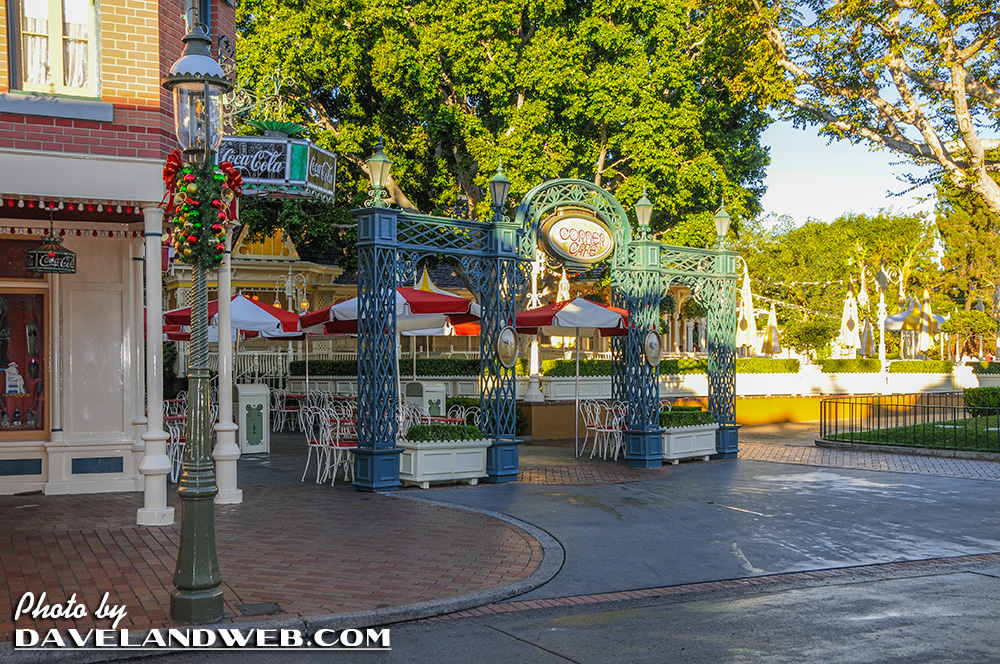
Last night I was informed that Disneyland removed the large tree that has been sitting on the Plaza Pavilion/Coke Corner for must be 50 plus years.

You can see the tree in this December 1968 image:


And how it looked recently, providing lots of shade to this little area of the park:


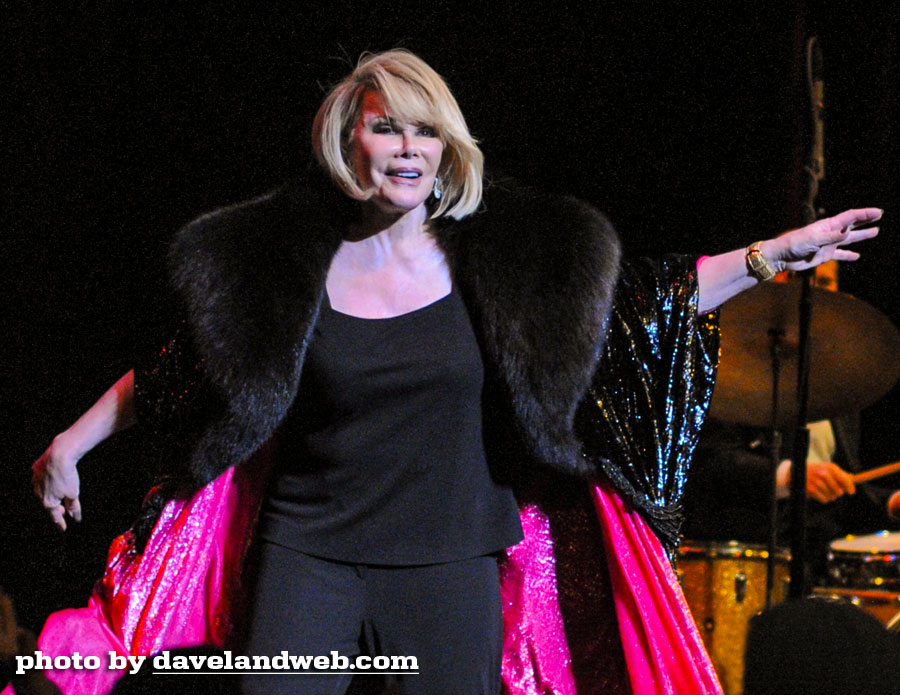
Last bit for today is on yesterday's news of the passing of comedienne Joan Rivers.


I discovered her back in the 80's when my dad took me to see her at the Valley Forge Music Fair. I thought she was one of the funniest people I had ever seen. She was brutal to a number of celebrities (Elizabeth Taylor, the Royal Family,…) but most of all, her humor poked fun at herself. Her timing and delivery were impeccable. I wore out my vinyl version of “What Becomes a Semi-Legend Most” until I could practically recite the whole album myself. She rarely (if ever) apologized for her somewhat offensive jokes which touched on such subjects as weight, religion, and the Holocaust. As she stated herself, "I've learned to have absolutely no regrets about any jokes I've ever done ... You can tune me out, you can click me off, it's OK. I am not going to bow to political correctness. But you do have to learn, if you want to be a satirist, you can't be part of the party."

Whether you liked her or not, you could never say the woman was lazy. Even at the age of 81, she worked endlessly, rarely turning down a gig no matter where it was. RIP, Joan. You were a true trailblazer.

See more Daveland Disneyland Main Street, U.S.A. photos at my main website.
Saturday, March 30, 2013

Hollywood meets San Francisco at The St. Francis


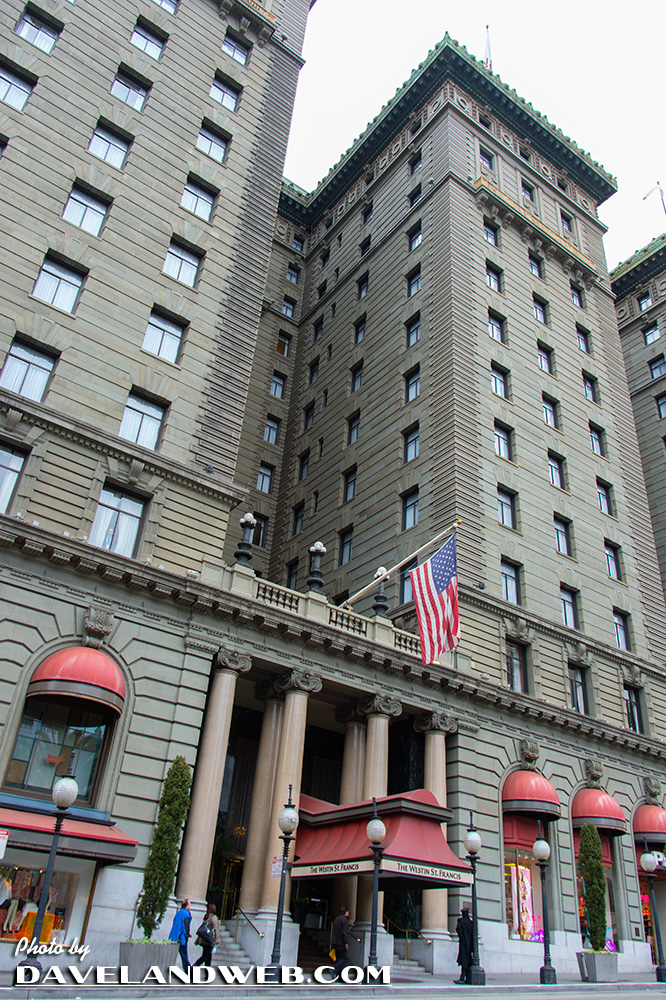
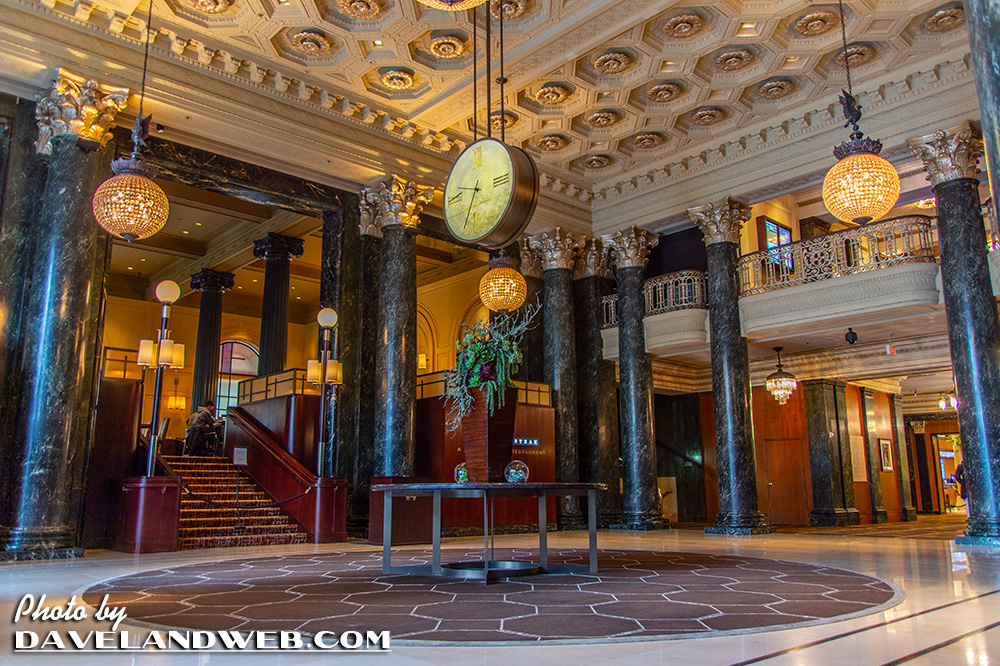
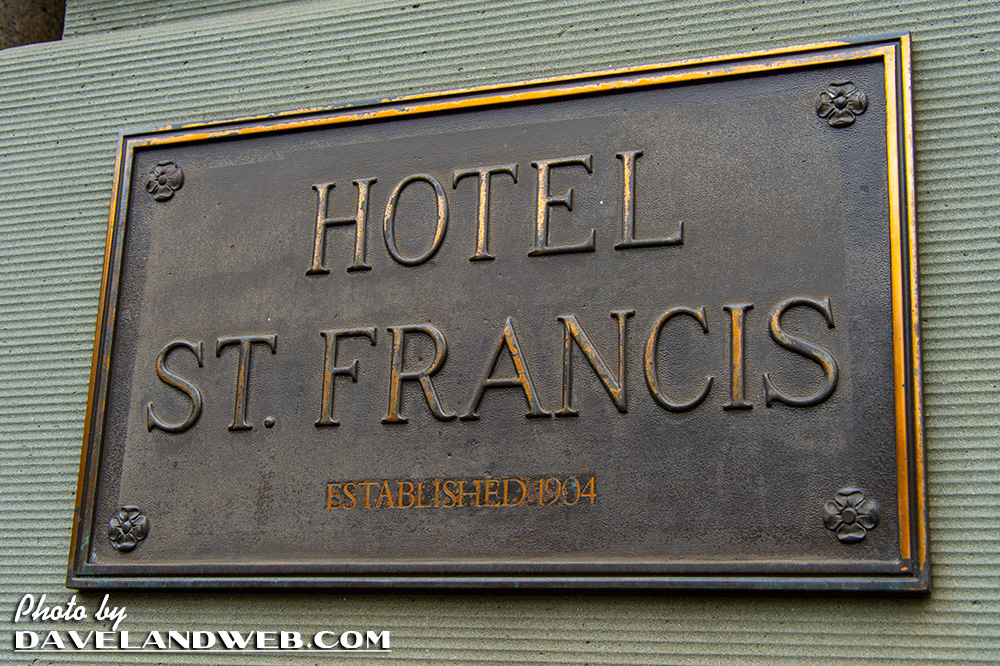
Typically when I travel, if I'm able to splurge on a nice hotel, I will pick a smaller boutique hotel, preferably one that is historic. The St. Francis in San Francisco, built in 1904, is a bit large for my tastes, but it is still a well-maintained facility that pays homage to its history and classic sense of style.


The expansive lobby gives an impressive "welcome" to guests as they walk in.


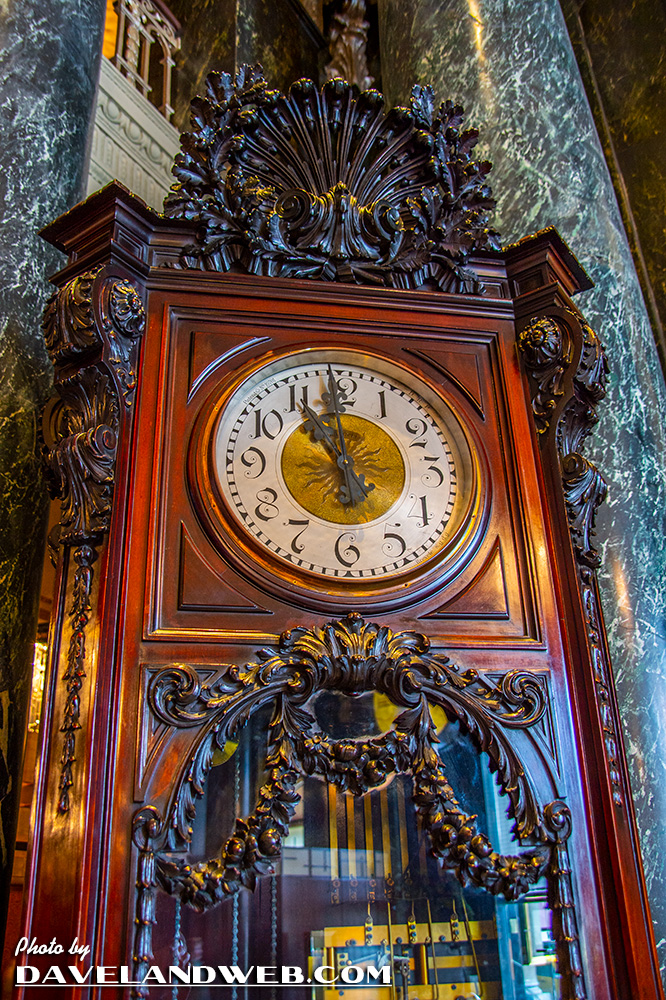
The hotel is distinctive for its historic Magneta Grandfather Clock, located in the lobby. It was the first master clock (controlling all the other clocks in the hotel) brought to the west and has served as a meeting place for San Franciscans since 1907, inspiring the phrase "Meet me under the clock!"


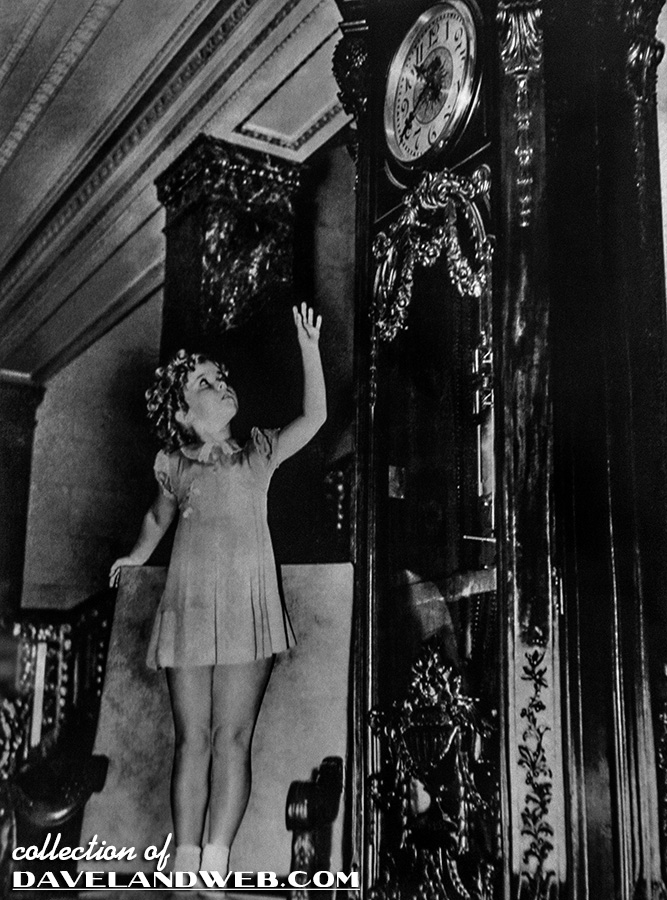
This vintage photo showing Shirley Temple at the St. Francis hangs near the lobby.


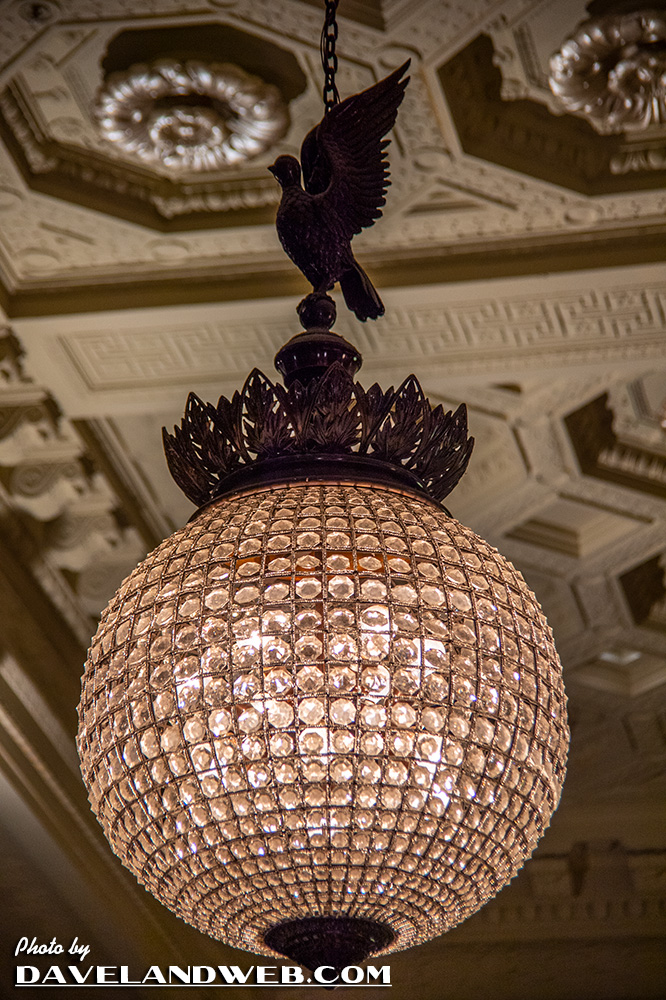
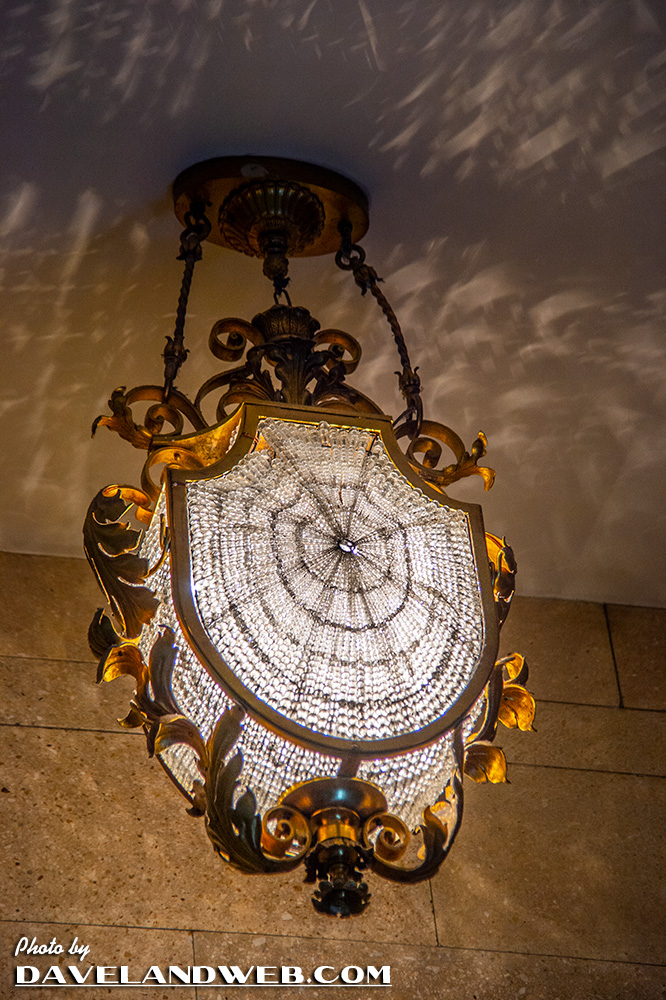
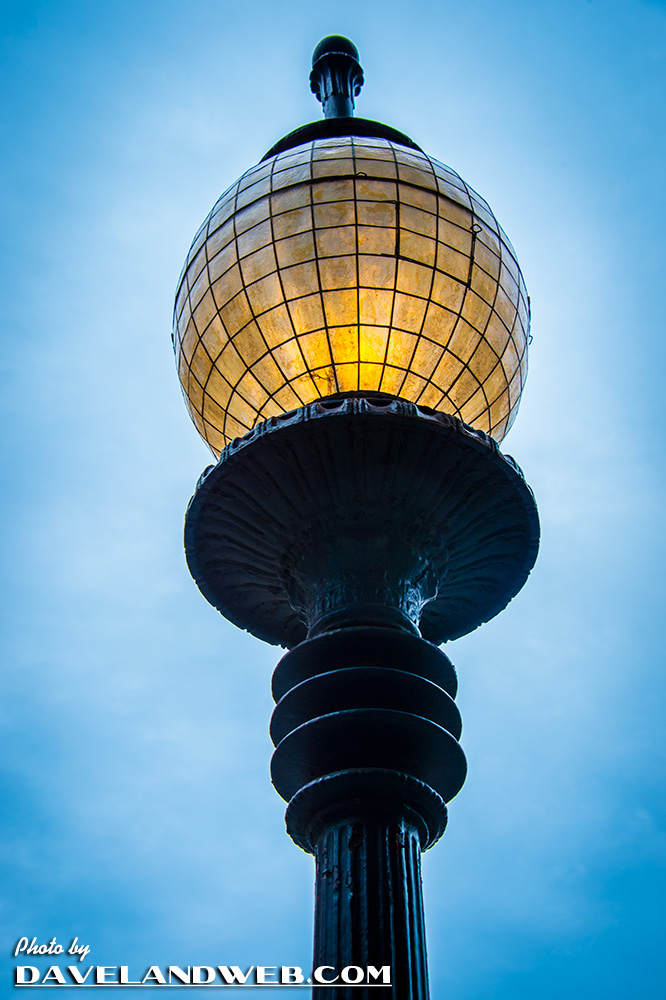
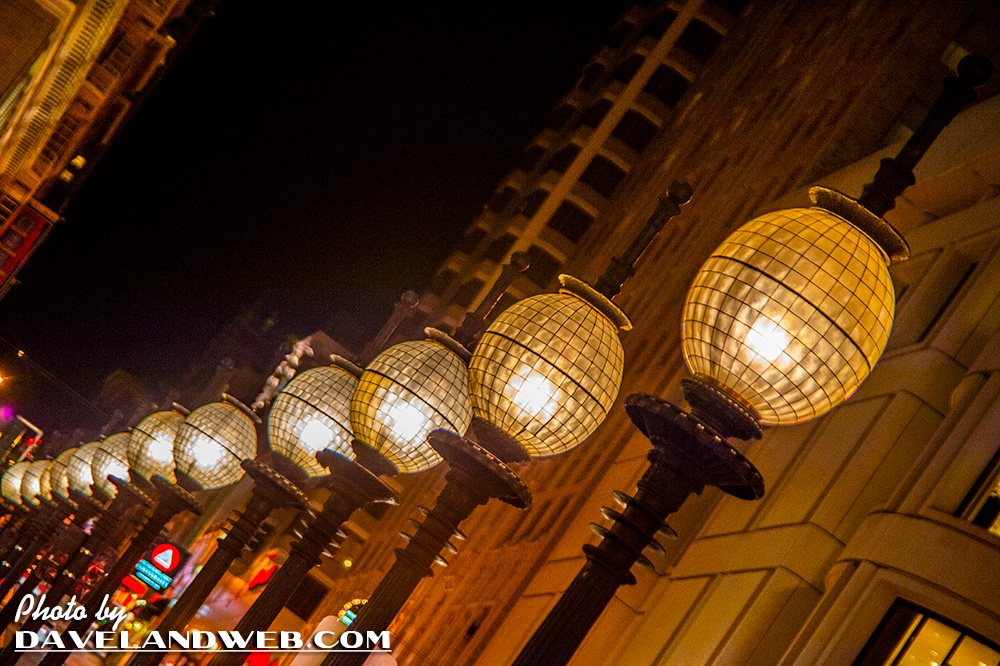
Plenty of cool light fixtures (both indoor and outdoor) for me to obsess over:


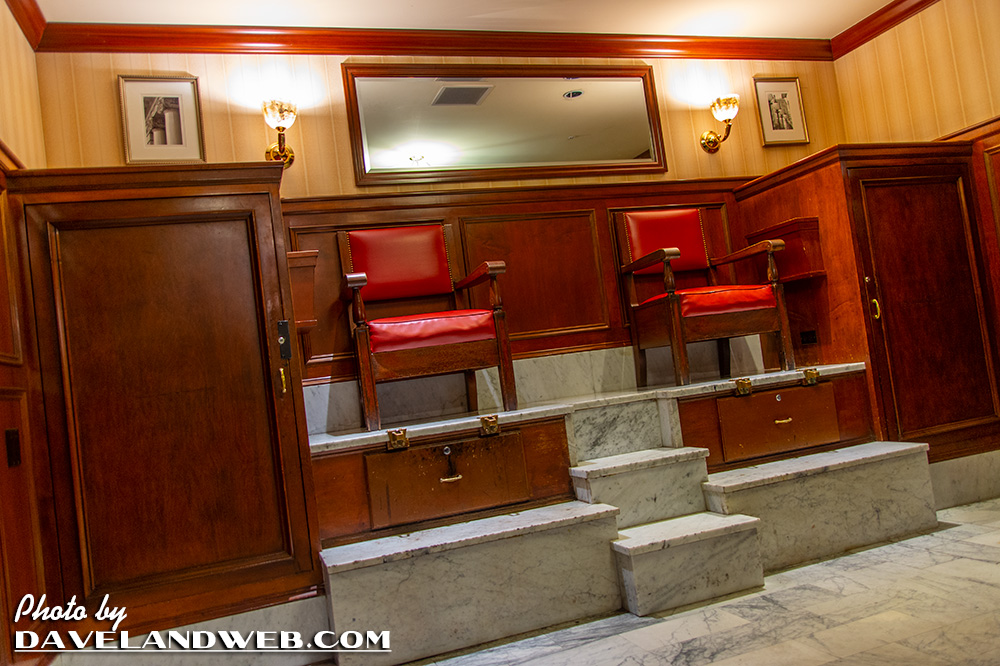
EVERY classic hotel has a shoeshine stand; the St. Francis is no exception.


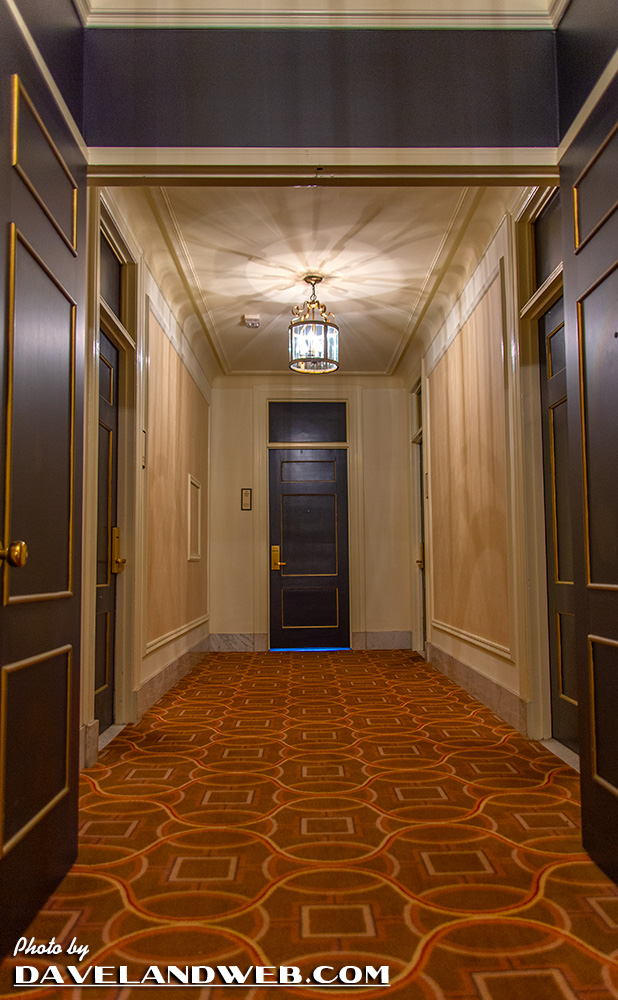
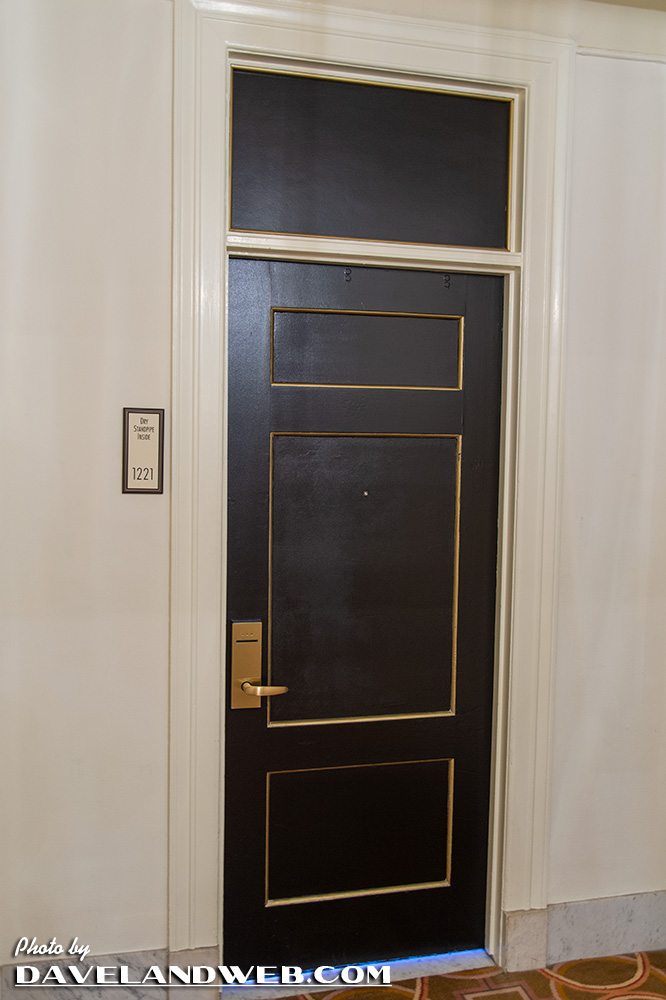
This hallway leads to room 1221, one of the most infamous rooms in the hotel.


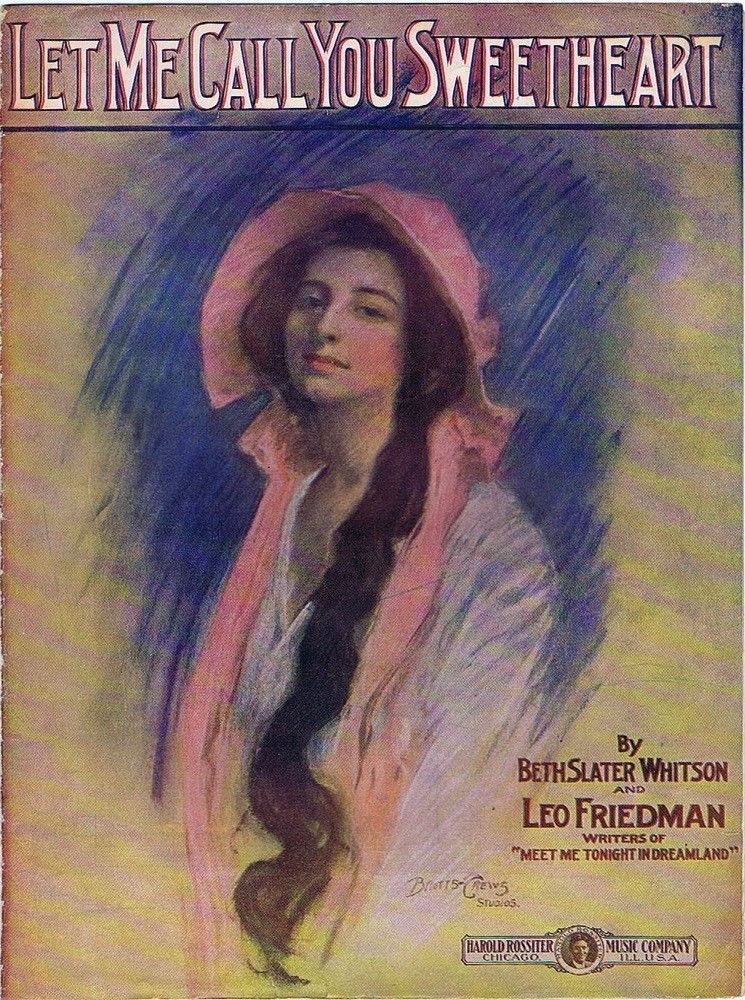
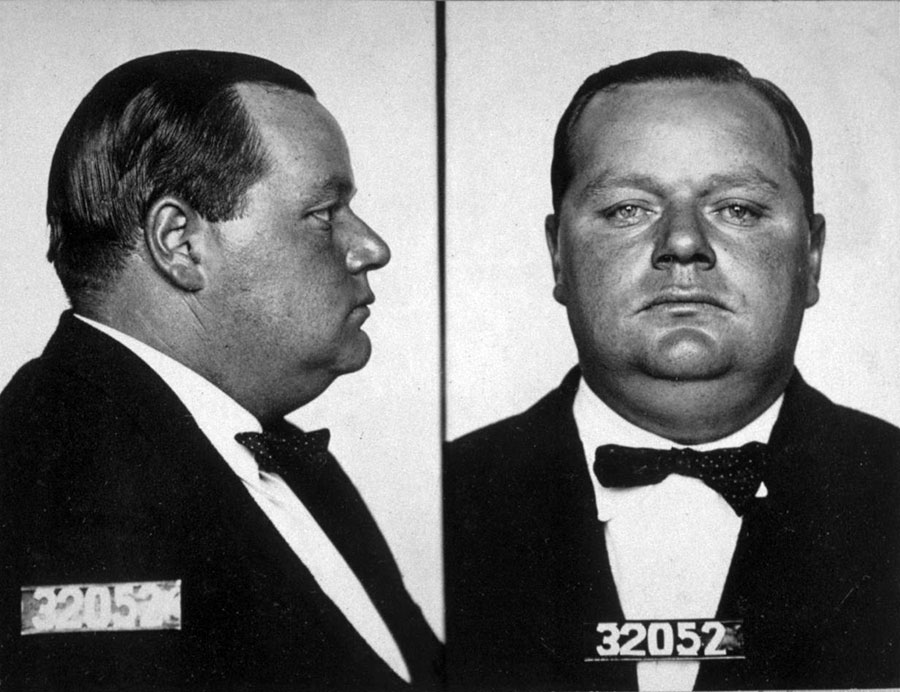
On September 5, 1921, silent screen comedian Fatty Arbuckle held a Labor Day party in suites 1219, 1220, and 1221, with friends and acquaintances from Hollywood. One guest was a young actress from Hollywood named Virginia Rappe, 26, a model and bit-part actress, whose greatest claim to fame was that her portrait graced the cover of the sheet music for “Let Me Call You Sweetheart.”


Virginia Rappe already suffered from chronic cystitis, a condition that flared up whenever she drank (which was often). She developed a reputation for getting drunk at parties and tearing at her clothes from the resulting physical pain. She had also undergone several poorly-done abortions and was preparing to undergo another as a result of being impregnated by her boyfriend, director Henry Lehrman.

In mid-afternoon Arbuckle summoned a house doctor and reported that Rappe was sick. She was taken to another room and put to bed, with Arbuckle returning to Hollywood the next day.


A few days later Arbuckle learned that Rappe had been taken to the hospital and had died, and that her friend Maude Delmont, who had been at the party, told police that Arbuckle had assaulted and raped her. Delmont's testimony was later regarded as unreliable by the police when it was discovered that she had a lengthy prior record of extortion. There was also a telegram she had sent to friends that read, “We have Roscoe Arbuckle in a hole here. Chance to make some money out of him.” The doctor who examined Rappe found no evidence of rape, either. Regardless of the facts, the story blazed across the country with scandalous newspaper headlines.


Arbuckle was brought to trial for manslaughter in November 1921. Arbuckle's lawyers argued in two trials that Virginia Rappe had died of natural causes, caused by too much alcohol; both trials ended with hung juries. Arbuckle was finally found not guilty in the third trial that ended on April 12, 1922, when a jury decided (in five minutes) that Arbuckle was not guilty. “Acquittal is not enough for Roscoe Arbuckle. We feel that a great injustice has been done to him... there was not the slightest proof adduced to connect him in any way with the commission of a crime. He was manly throughout the case and told a straightforward story which we all believe. We wish him success and hope that the American people will take the judgement of fourteen men and women that Roscoe Arbuckle is entirely innocent and free from all blame,” the jury foreman told the court.

Arbuckle was free, but his career was ruined. His films were withdrawn by Will H. Hays, the President of the Motion Picture Producers and Distributors of America. To escape being blacklisted, Arbuckle directed a few films under an assumed name, William Goodrich. In 1932 Arbuckle signed a contract with Warner Bros. to star under his own name in a series of two-reel comedies. These six shorts are the only recordings of his voice. The films were very successful in America and led to him signing a contract on June 29, 1933 at Warner Bros. to make a feature-length film. He supposedly said, "This is the best day of my life." Sadly, he suffered a heart attack later that night and died in his sleep at the age of 46.

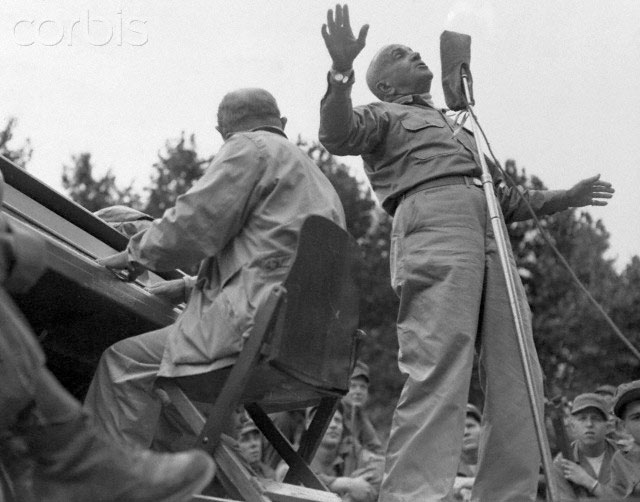
Entertainer Al Jolson ("The Jazz Singer") collapsed and died of a massive heart attack while playing poker in his St. Francis suite (the same one from the Arbuckle scandal) on October 23, 1950; he had just returned from entertaining the troops in Korea. This photo was taken September 17, 1950:


From the New York Times:

Al Jolson, “The Jazz Singer,” died at the St. Francis Hotel here tonight. He had recently returned from Korea after entertaining troops there.

Death came just after 10:30 P.M. (PST) as Mr. Jolson was playing cards in his room with friends. He was in San Francisco to be the guest star on the Bing Crosby radio program scheduled to be recorded Tuesday night.

Mr. Jolson checked in at the St. Francis today. He was playing gin rummy with Martin Fried, his arranger and accompanist, and Harry Akst, songwriter and long-time friend.


His last words were said to be "Boys, I'm going." The Al Jolson Society held a séance in the suite, but there were no signs of Jolson. Still, there are staff members who insist that Jolson, Arbuckle, and Barrymore haunt Suite 1221.

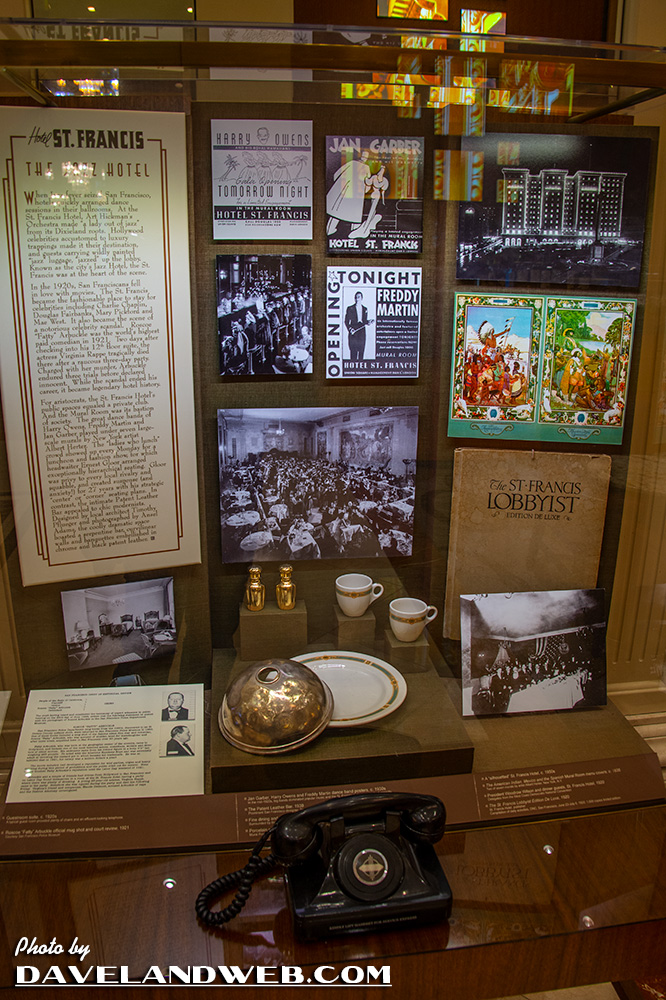
There are a number of displays throughout the hotel filled with memorabilia documenting the hotel's history:


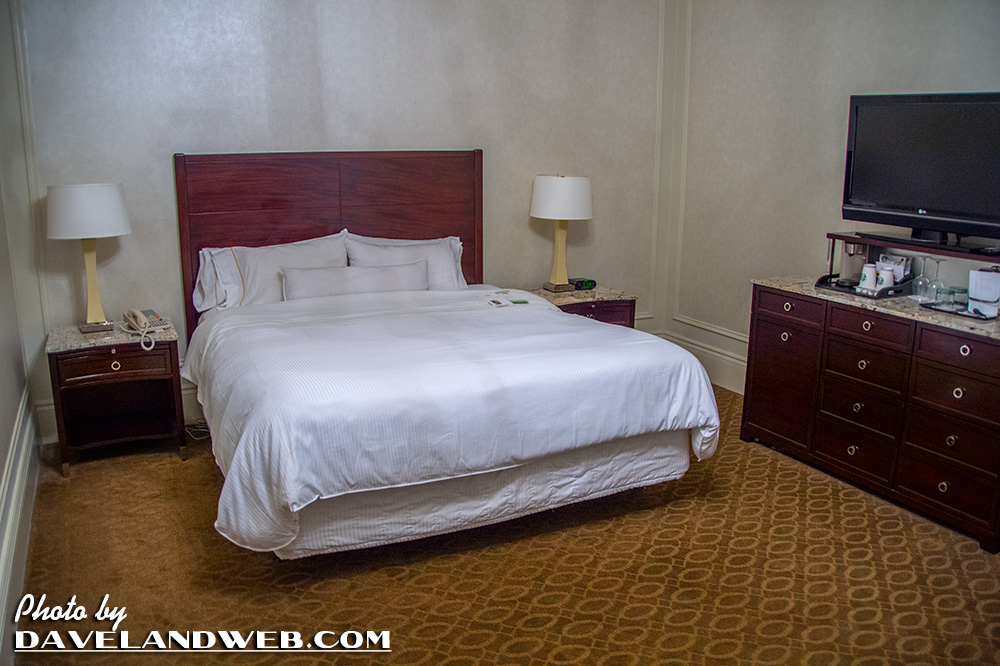
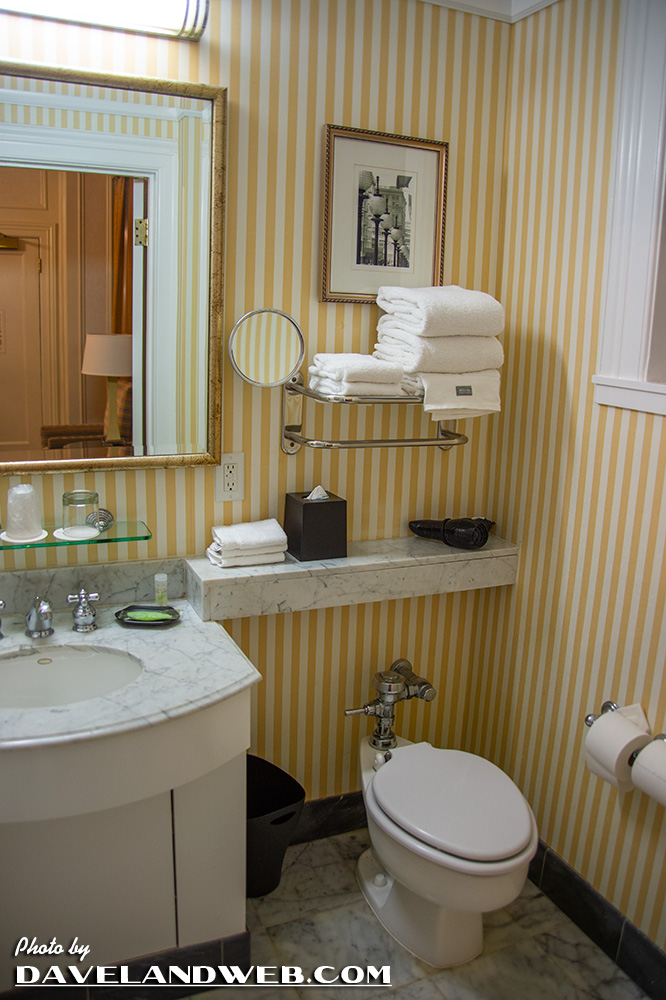
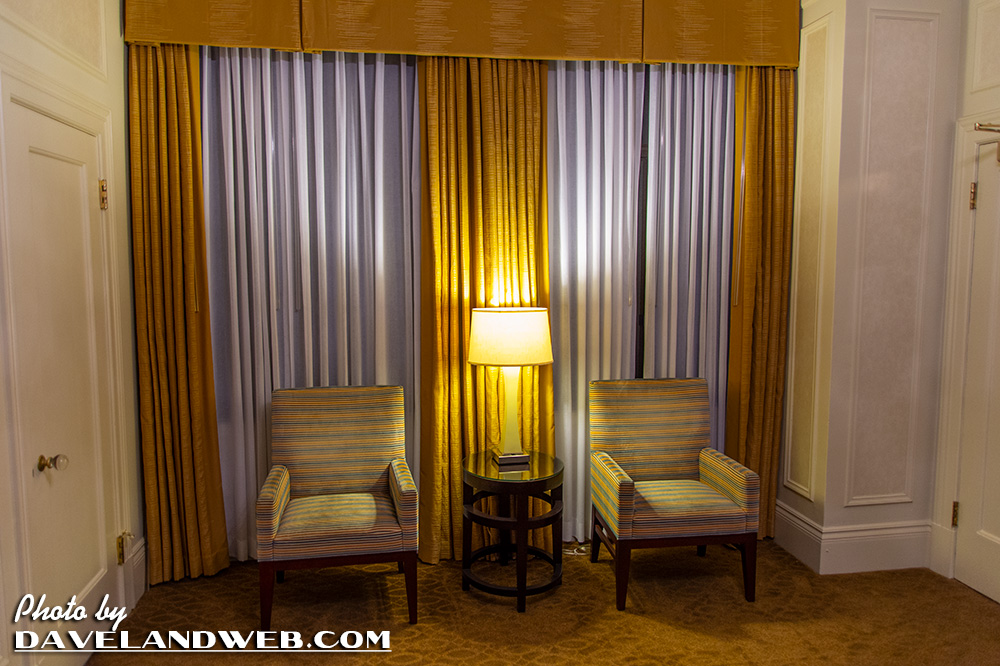
The rooms are large, but seem a bit lacking in warmth and personality.


Still, you can't beat the location and service...and the history.

See more Westin St. Francis Hotel photos on my St. Francis Hotel web page.