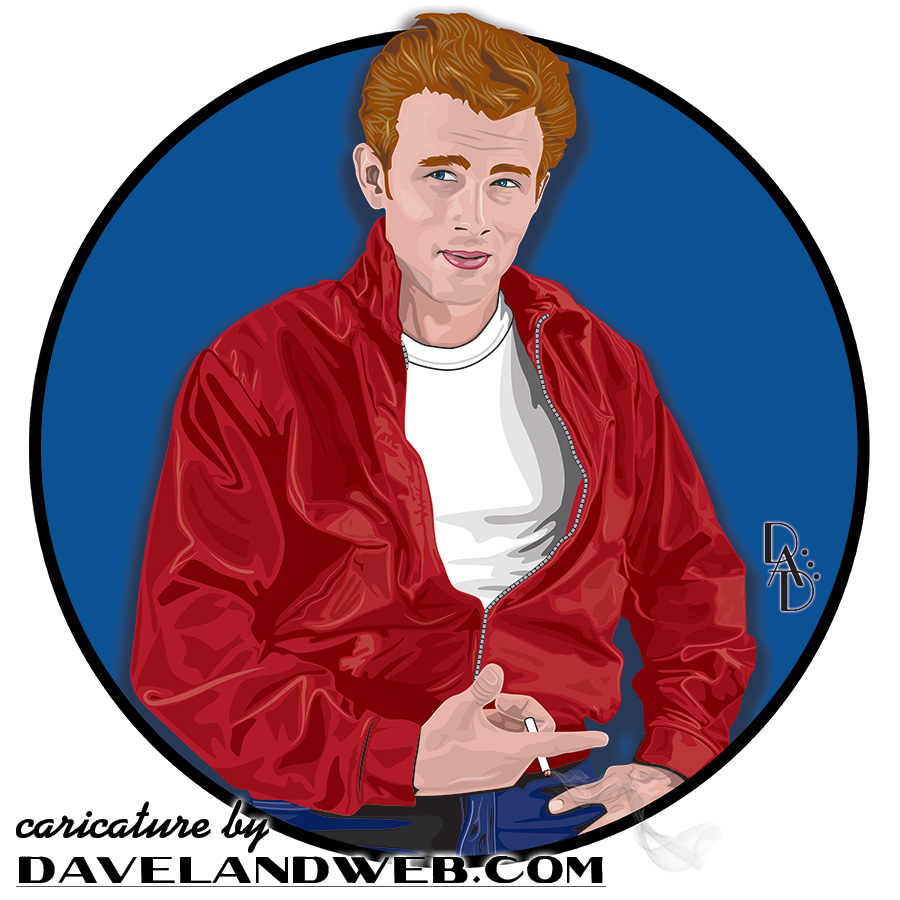
Showing posts with label caricature. Show all posts

Monday, September 30, 2024

James Dean: 30 Years Ago…


Thirty years ago, because of my frequent trips to James Dean country, aka Fairmount, Indiana, local publication The Bloomington Voice asked me to write an article for their September 28, 1994 issue timed for the 49th anniversary of Dean’s tragic young death. The cover of the magazine had a photo of Dean with the headline, “The GIANT who didn’t get all old and fat” emblazoned over it. Inside was my article, with the much tamer title “The DEAN Appeal.” Below is the complete article.

Last fall, the choice seemed simple—a “Wizard of Oz” festival in Chesterton, Indiana (over three hours away from Bloomington) or the James Dean Festival in Fairmount (just two hours). Even though I’m an Oz fan, a weekend of munchkins and show tunes didn’t sound good to me at the time, so I made my first of many pilgrimages to Fairmount, Indiana.
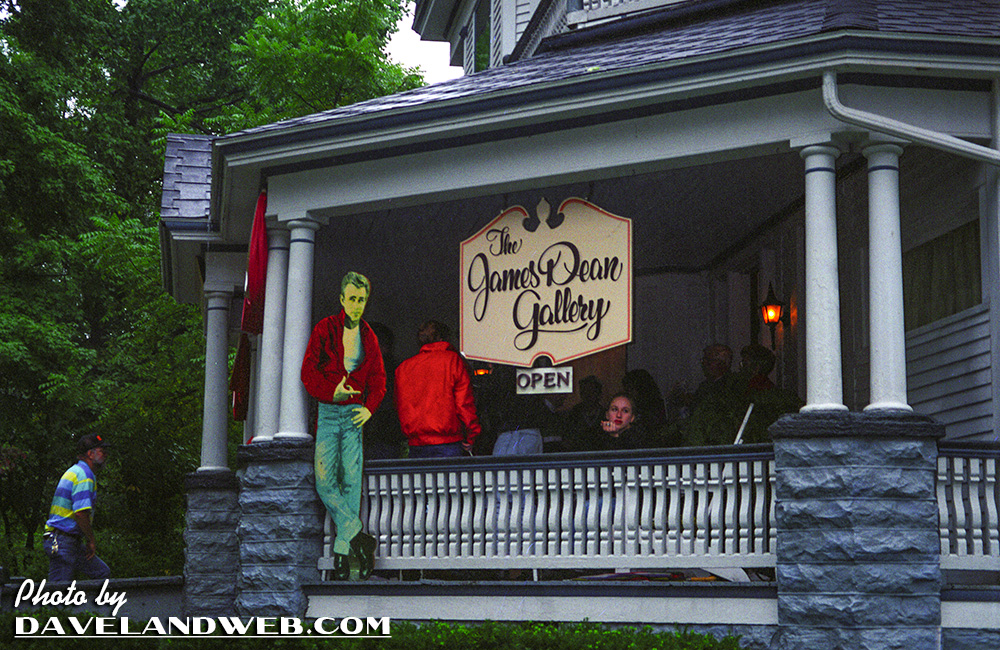


My initial stop was the James Dean Gallery, which was swarming with activity both inside and out. The porch had a congregation of people mingling with Dean look-a-likes. The Gallery houses many rooms of Deanabilia, displayed with flair. One small, dark room has a constant video of rare film clips running; another is dedicated to Kenneth Kendall, an artist who knew Dean personally. His work is amazing—excellent likenesses, slightly stylized and overflowing with colors that seem reminiscent of the cinema’s Technicolor hues of the 30s and 40s. Most of this visit was spent on the Gallery porch, observing people from both coasts and soaking up the atmosphere while grabbing bits of conversation.

Fairmount was much quieter and slower during my second trip. Gone was the swarm of 30,000 tourists invading this sleepy never-never land. I talked to Dave Loehr, the owner of the Gallery [pictured below]. His interest in Dean began after he’d read The Mutant King, a biography by David Dalton, which I bought and quickly devoured. Full of insights, it gave me a greater appreciation of his first movie, “East of Eden,” which often paralleled Jimmy’s own life. His character embarks on a search for his mother in an attempt to learn about himself and also tries to win his unaccepting father’s love. The latter made his performance all the more poignant, considering that Dean went through the same emotional rollercoaster with his own father.


Dave invited me back to the Gallery and I’ve been going back ever since. Weekends usually include dinner in the kitchen above the Gallery with a multitude of characters I now call friends. Steven, a fan from England, gave me a tour of the high school Dean attended. It’s been closed for almost ten years and is in a sad state of disrepair—peeling paint, rotted floors, and layers of bird crap. I saw the stage where Dean acted in school plays, and the location of the Sweetheart’s Dance [below], where Jimmy triumphantly returned to Fairmount when he was on the verge of stardom. Walking through this eerily still building was thrilling — the fact that it was boarded up and not easily accessible made it even better.

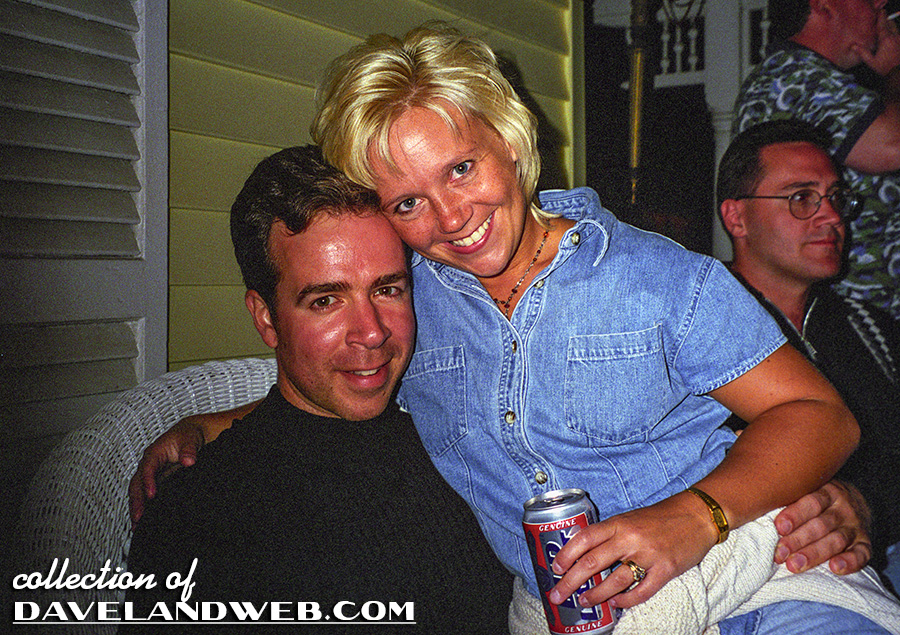


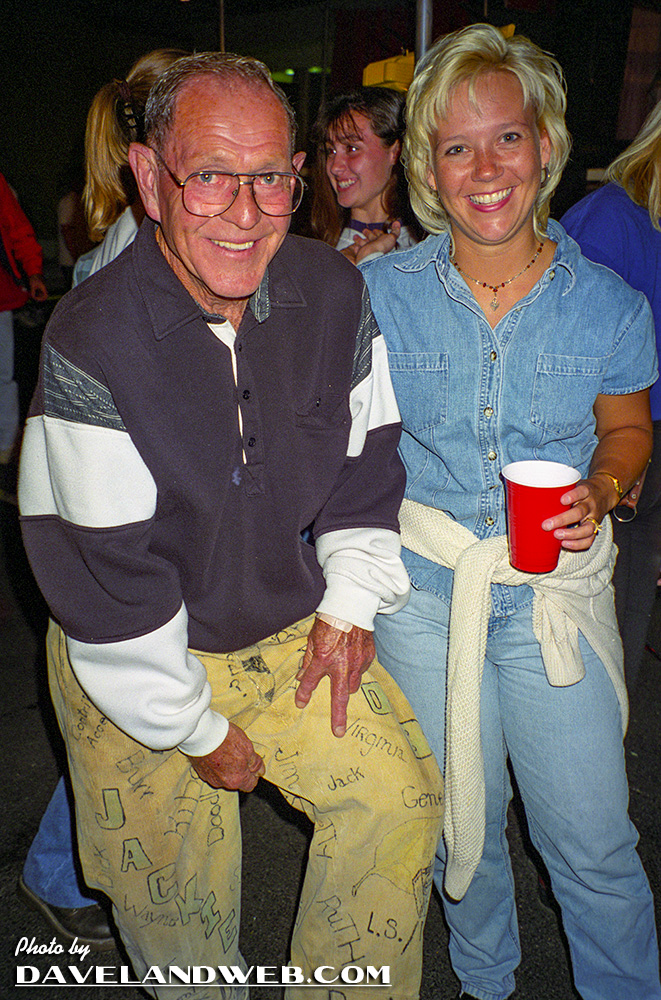
Christy [above] is another friend I’ve made through the Dean channels. Often introduced as Bob Pulley’s (a high school friend of Dean’s) daughter, Christy stands out on her own. [Below is a shot of Christy and her dad, who is modeling his senior pants, complete with Dean’s signature] She jokingly refers to herself as BPD (Bob Pulley’s Daughter, for all of you with short memories). Christy works at the Convention & Visitors Bureau and usually takes care of foreigners left at the bus station who’ve flown to Indiana to see Dean’s origins but have no clue where to go and don’t know enough of the language to find out.


Luke [pictured below], another overseas fan, is from Australia. We went to Los Angeles last summer and saw Kenneth Kendall, who opened his home and art studio to us for many hours. It was a once-in-a-lifetime opportunity talking with someone who lived in the middle of Hollywood during its heyday and knew the stars. Like the other Dean fans, Kendall eagerly shared not only his memories but his hospitality. After dinner at the classic El Coyote restaurant, we drove to Griffith Observatory where the knife fight and climactic ending scene from “Rebel without a Cause” were filmed. Luke knew every scene by heart and proceeded to act them out in their appropriate places with his thick Aussie accent.
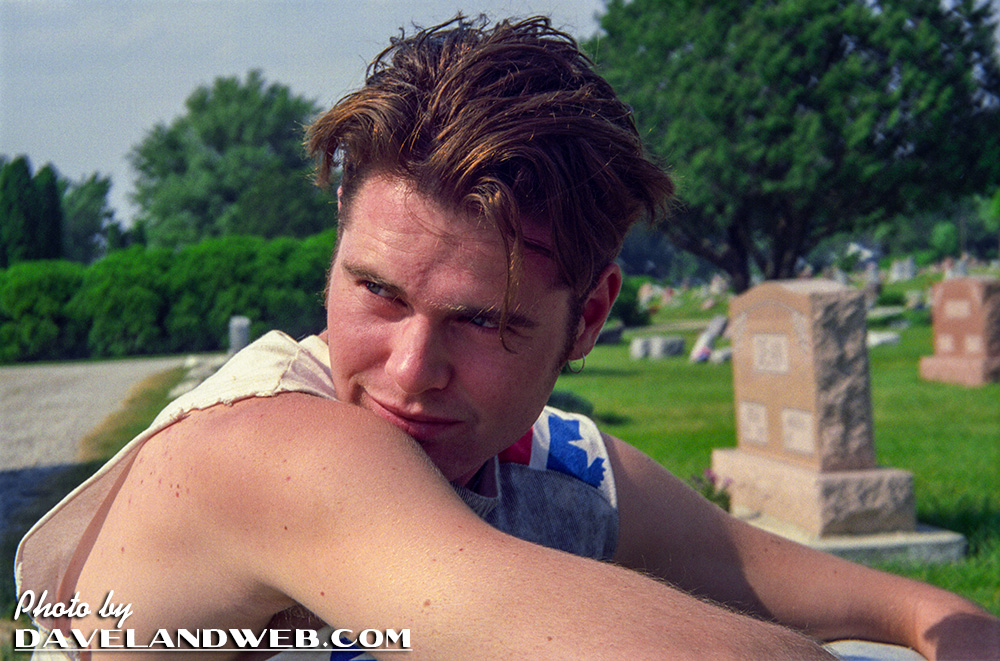


Jim [photo above, right] is a bank teller from Fort Wayne who won the look-a-like contest two years ago. Despite an offer from a Hollywood agent after winning [side note: this was during the “Beverly Hills 90210” era and Jim’s look was perfect for that show], he chose a life of anonymity; just another instance of opportunity that has opened for each and every one of us at one time or another because of Dean.

Behind the Gallery are Dave, who runs the James Dean exhibit, and Lenny, whose shop in the Gallery’s lower level houses “Rebel, Rebel,” a huge vintage garage sale. Both of them have opened the Gallery up to the may who wander into town on Dean pilgrimages. They provide a central location where everyone can be themselves and kick back, relaxing at a much slower pace. The juxtaposition of these two New Yorkers situated in this small town makes the Gallery that much more interesting.
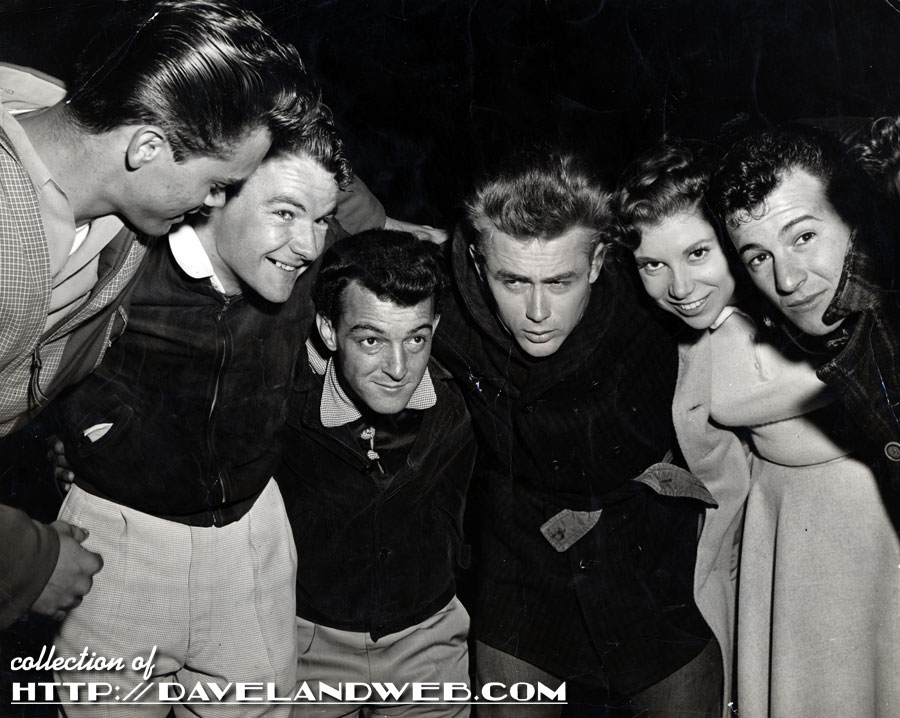


What is the attraction to Dean and Fairmount? Jimmy died young, and was eternally frozen in the beauty of his youth. Unlike Brando or Elvis, we’ll never see him lose his talent or become an obese caricature of himself. His roles represent a voice for teens wanting to be listened to and accepted by adults. In life, Dean was a chameleon who borrowed bits and pieces of personality from those he encountered along the way. He made each person in his life feel special, yet could be so obnoxious as to repel them in disgust. It’s this inner struggle of trying to find himself and dying in the midst of it that sealed Dean’s fate as a cult idol.
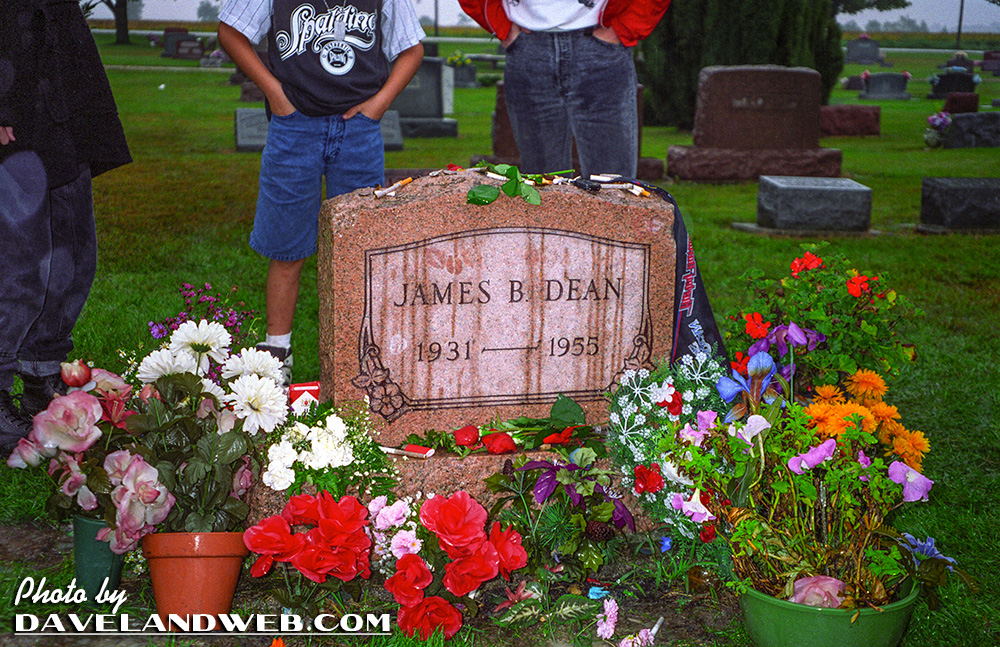


Seeing the museums and the gravesite were the original drawing cards that got us to Fairmount, but it’s this odd sense of a chose family that binds us all together. We originally came to find pieces of James Dean, and left with strong friendships that continually draw us back.


 Would James Dean laugh at this? He might laugh at some of the fans who shell out hundreds or thousands on souvenirs and memorabilia, but the sight of us having a good time drinking a brew at The Palace Bar [above], dancing our butts off at Rockabilly, eating a greasy meal at The Outpost, or especially just rapping on the Gallery porch would probably put a smile on his face. Who knows — he probably would’ve joined us.

See more James Dean photos at my main website.

Monday, September 21, 2020

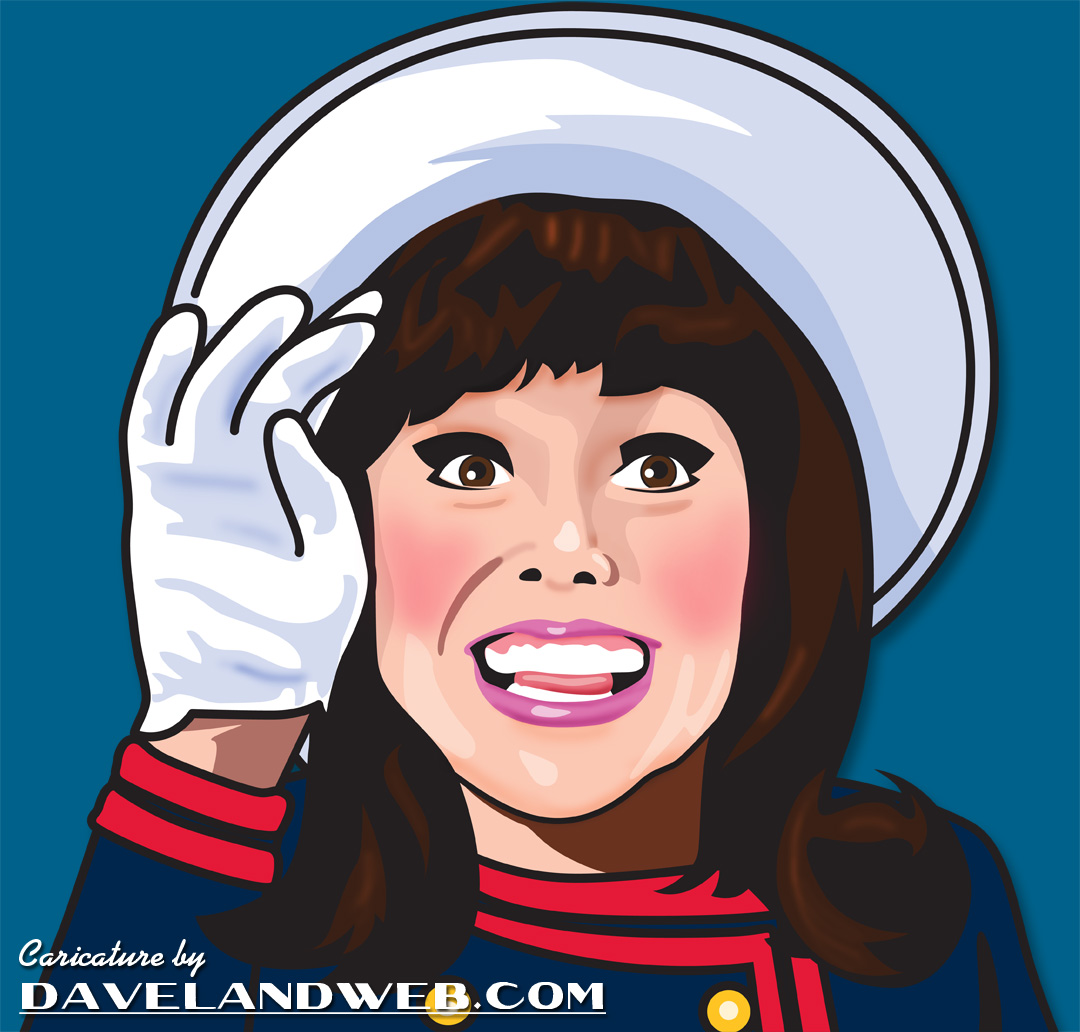
Marlo Monday: That Girl!


Although Marlo Thomas’ 1965 “Two’s Company” sitcom pilot flopped, the ABC network realized they had a future star on their hands and promised her a series of her own. Thomas pitched the idea of a young woman who wants to become an actress and struggles to find success in New York City. Not only was the concept of a single working girl being the focus of a show new territory for television, so was Thomas (a female) being the producer (only Lucille Ball preceded her). The resulting sitcom “That Girl” ran from 1966-1971. Despite pressure from the network and sponsor, Thomas stuck to her guns and refused to allow her character, Ann Marie, to get married. She did not want to send a message to women that marriage was the only option for happiness.

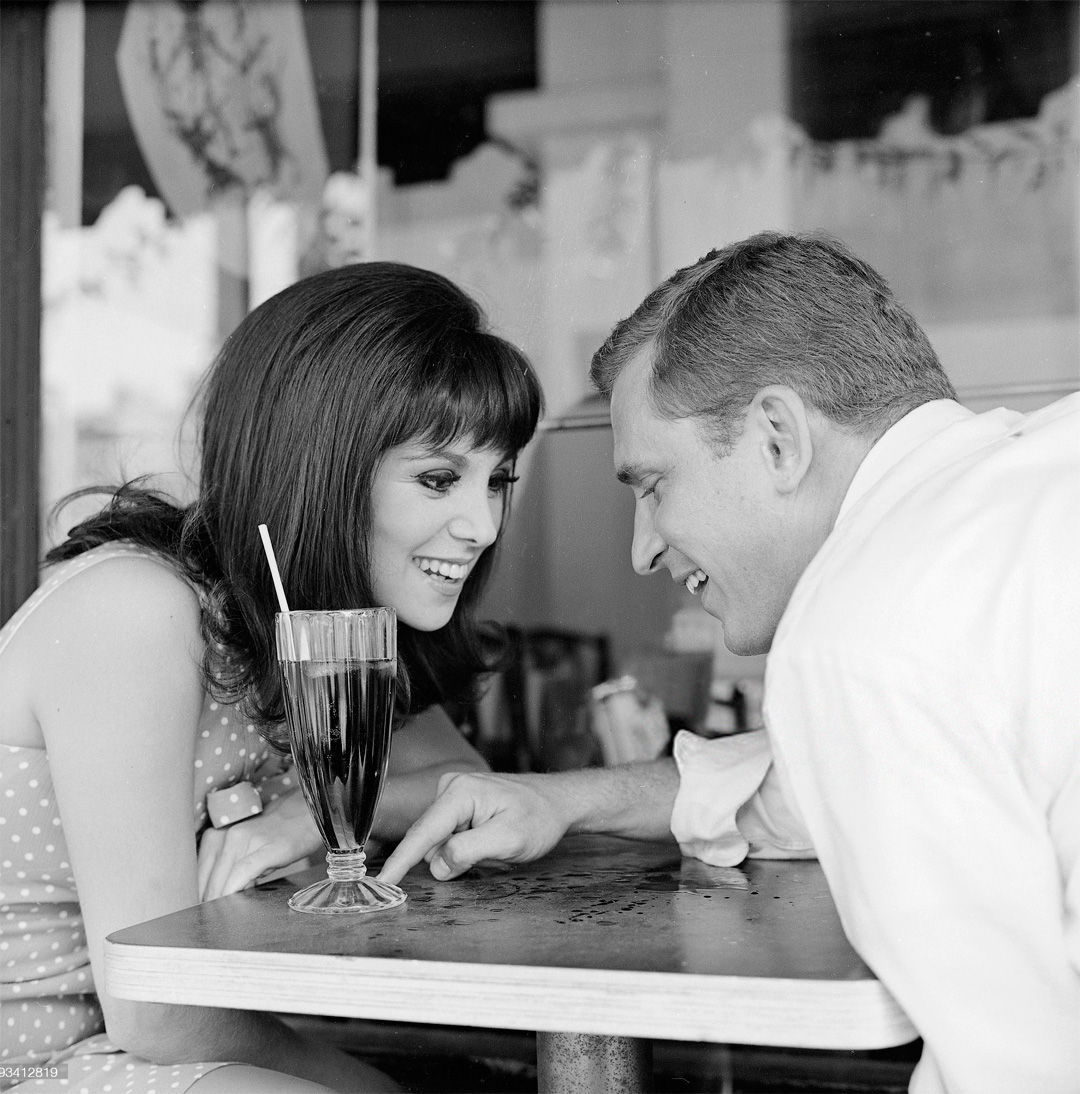
The chemistry between Ann Marie and her boyfriend Donald Hollinger (DONALD!!!!) was key to the success of the show. His love for her was evident, but the twist was that he also trusted her enough to let her pursue her dream of an acting career without trying to pigeonhole her into what had traditionally been the role of women on TV: a housewife. Ted Bessell played Hollinger who also functioned as Ann’s agent in the pilot. Audiences did not care for Bessell, but Thomas fought to keep him, knowing their chemistry was magic. She sensed that what audiences really didn’t like was that Hollinger was profiting from his girlfriend. The agent became a separate character and the rest is television casting history.


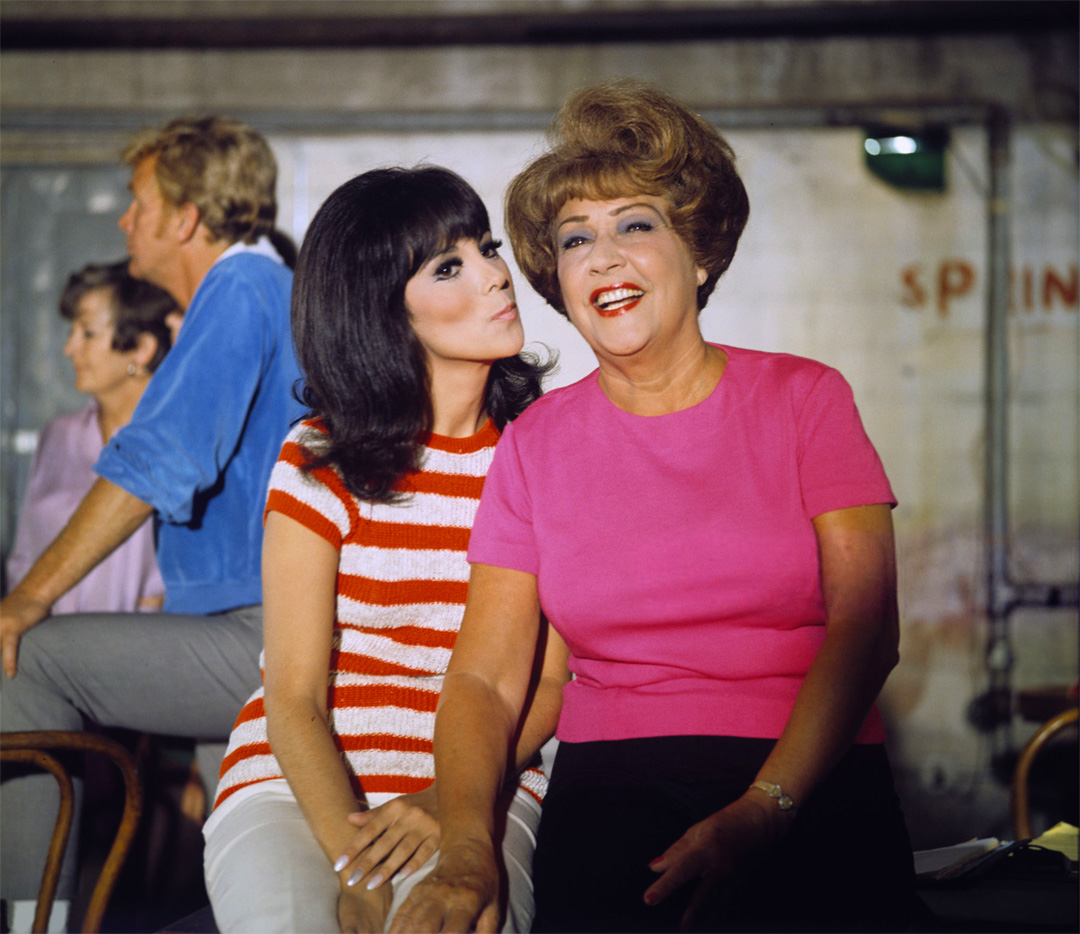
One of my favorite (and typically charming) episodes is “Pass the Potatoes, ” which starred Ethel Merman and aired on September 7, 1967. “The Merm” plays herself, and Ann gets a bit part in her Broadway show. Nervous beyond belief about being in the presence of a legend, Ann Marie tip-toes around Ethel, fearful of disturbing her.


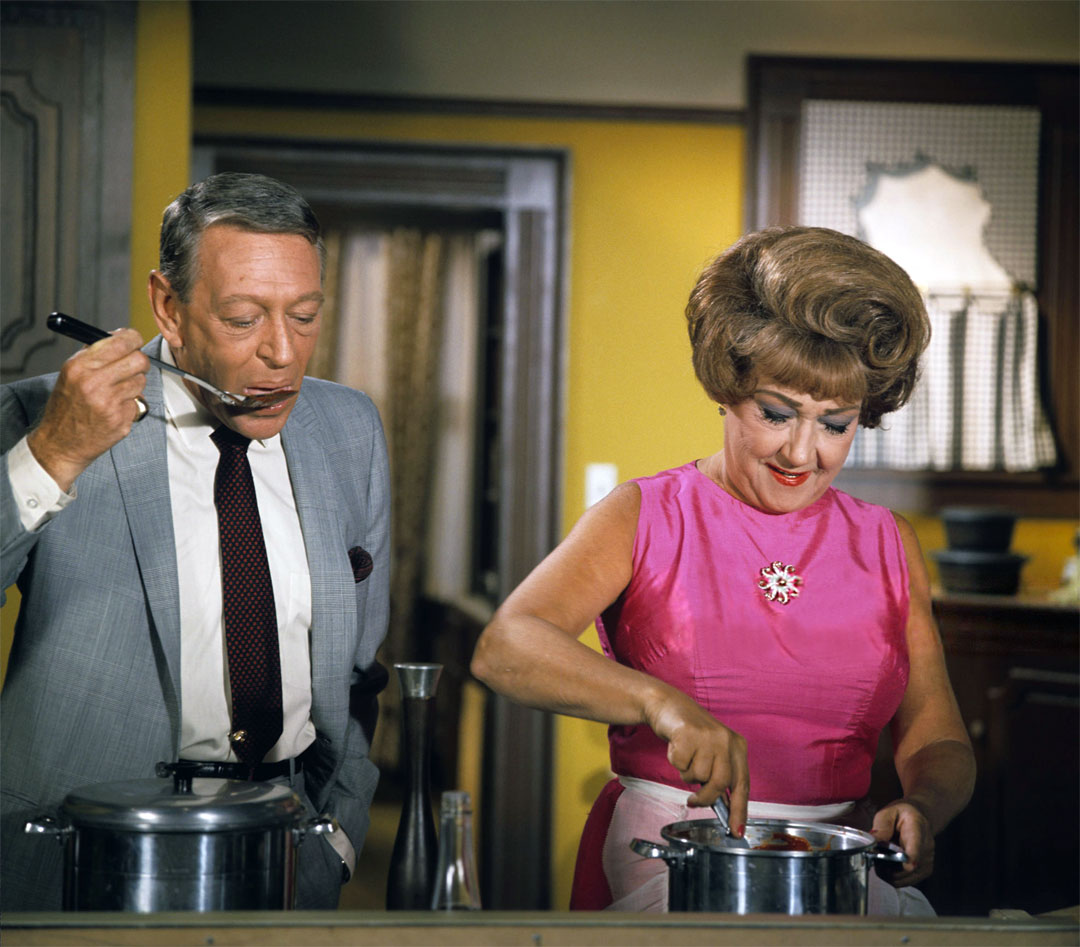
It doesn’t take long for Ann to realize that “The Merm” is just as normal as everyone else, thanks to Donald’s calming influence and Ethel’s own reassurances. In fact, “The Merm” invites herself over to Ann’s apartment to cook a dinner of her specialty (stuffed cabbage) for the young couple. Ann and Donald leave her alone for a bit to gather some other ingredients for the meal; meanwhile, Ann’s father, the abrasively protective but loving restaurateur Lew Marie (played by Lew Parker), drops in and begins to tell the strange lady in his daughter’s kitchen that she’s putting too much pepper in the cabbage. Ann comes back just in the nick of time to diffuse the tension and explain to her father who Ethel is!


The highlight of the episode is a quiet moment in the kitchen between Ethel and Ann when the Broadway legend bolsters up Ann’s confidence by telling her how to reach out and grab the audience and really shake ’em up! To see this moment between the two actresses is perfection. Thomas shines here and steals the show from “The Merm” when she shakes her hips and flashes her signature smile.


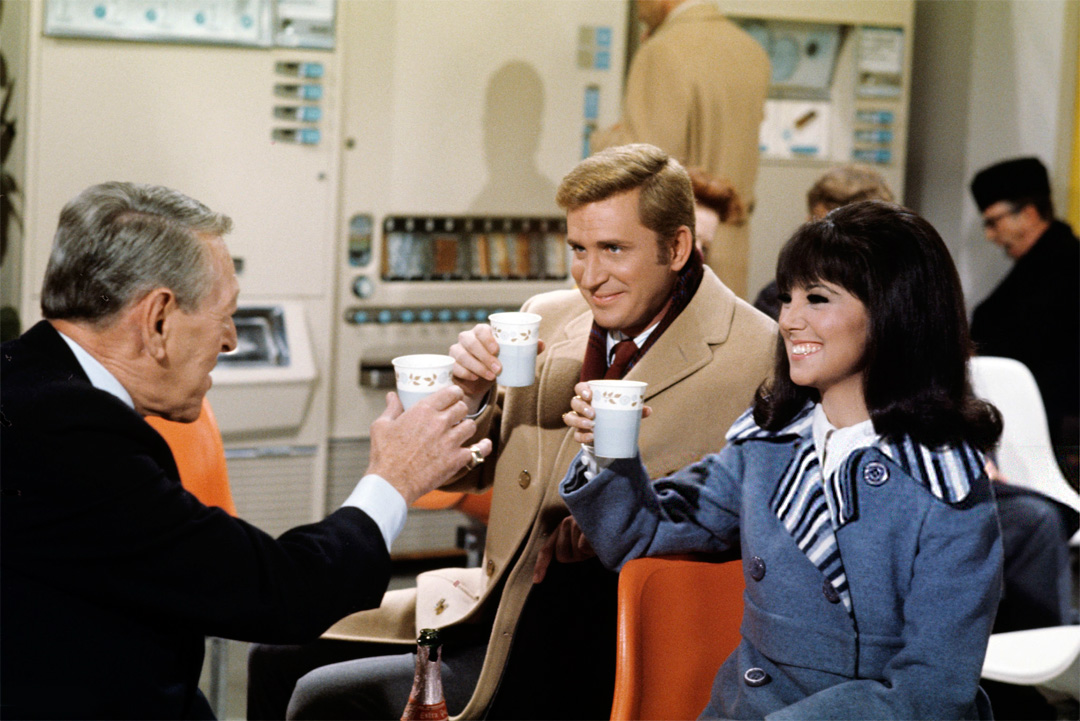
Another favorite episode is “The Snow Must Go On,” which aired October 30, 1969. Ann is trapped at JFK airport because of a blizzard and is in danger of missing her audition for a Broadway play. How she creatively solves her problem is yet another showcase for Thomas’ charms and completely natural acting style.


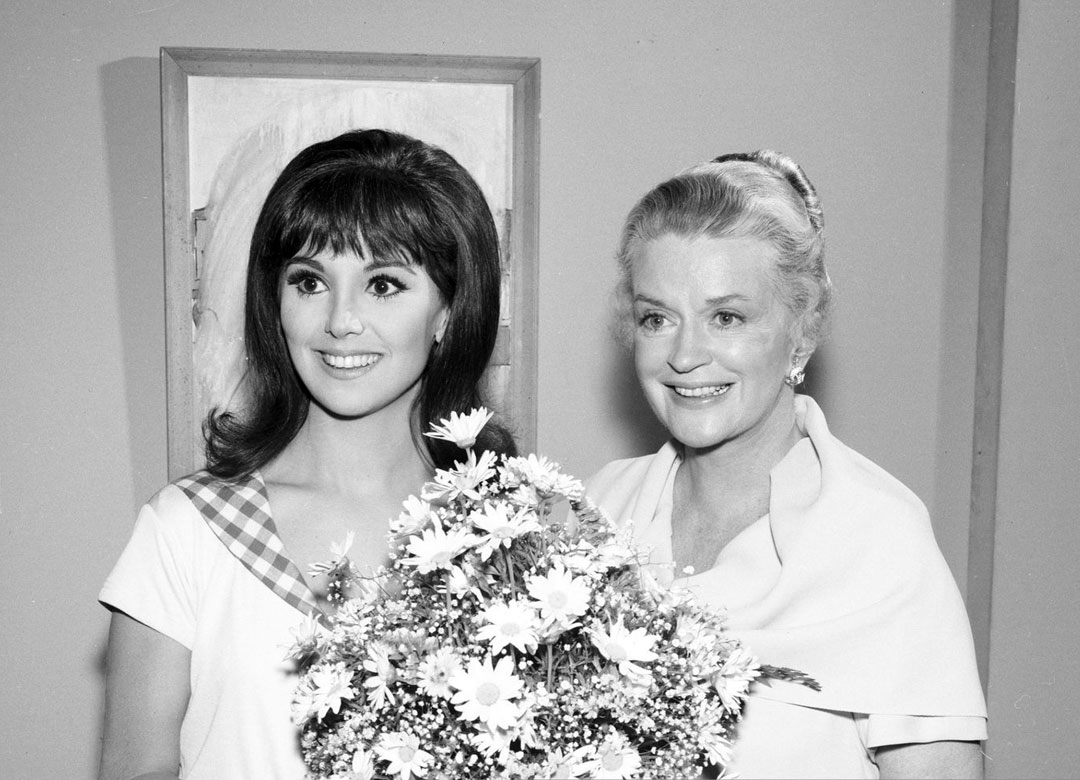
Rosemary DeCamp played in quite a few episodes as Ann’s mother. You might also recognize her as mother to Shirley Partridge (“The Partridge Family”) and Buck Rogers (“Buck Rogers in the 25th Century”). Although the role of Mrs. Marie was very much the traditional housewife, she would often be the one who calmed her husband down when he felt his daughter was straying too far into territory that wasn’t appropriate for a single young female.


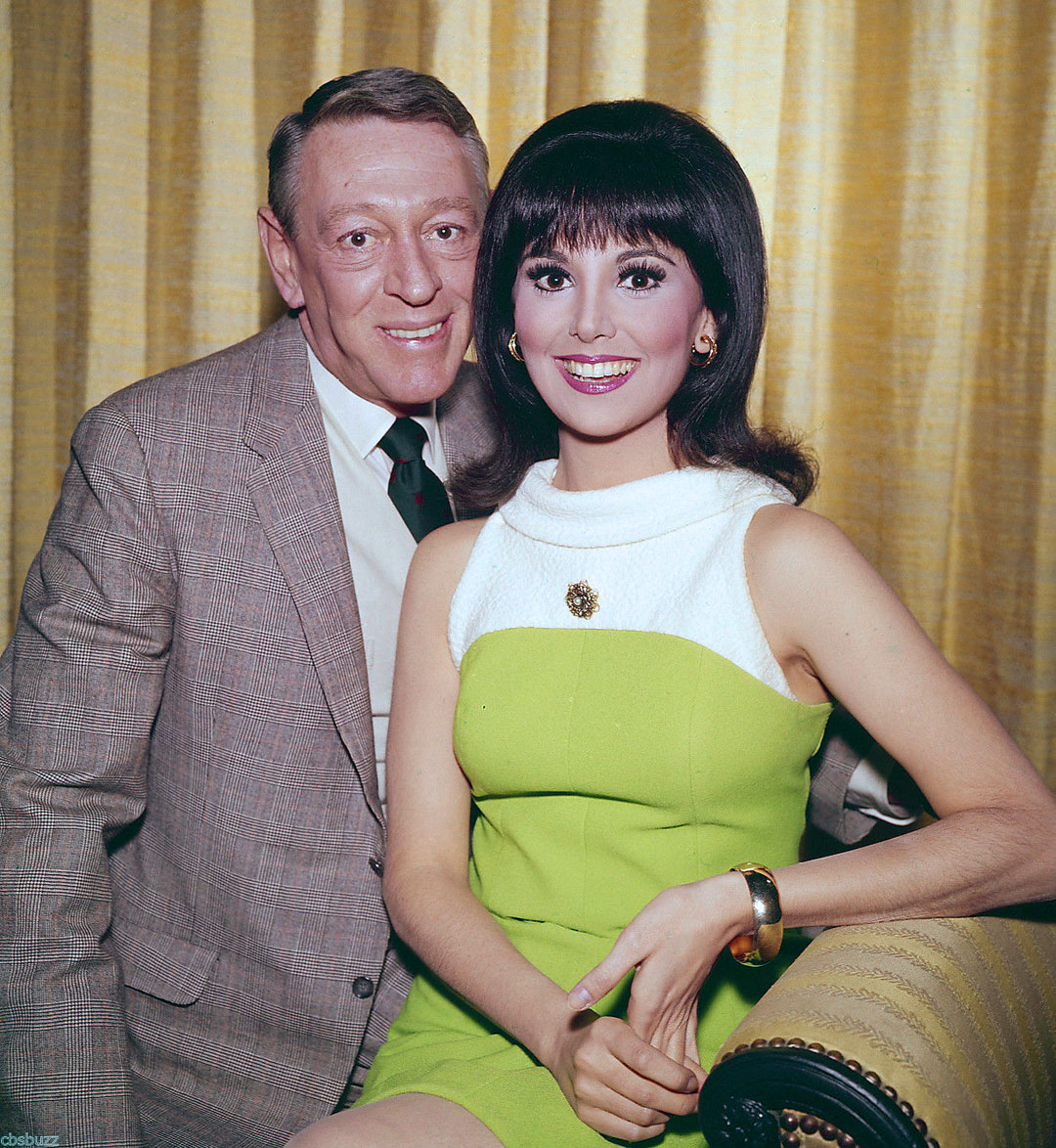
Lew Parker, who played Ann’s father, Lew Marie, appeared in Charlie Chaplin’s “The Kid” (1921) as an extra and also in one episode of “Gidget” (1966) as Mr. Socrates, the crusty (but caring) owner of The Shaggy Dog, a teenage hangout. Thomas speaks fondly of her real-life relationship with Parker which she believes gave him the child he never had. Some of the best moments in the show are the quiet moments when Lew Marie against type lets his daughter know how much he loves and supports her. Harold Gould was cast as Lew Marie in the pilot, but according to Thomas, test audiences felt he was too “ethnic” and not modern enough. More importantly, I feel Gould’s performance lacked the warmth and genuine love of Parker’s interpretation. Parker died of cancer at the age of 66 in 1972, just one year after “That Girl” ended.


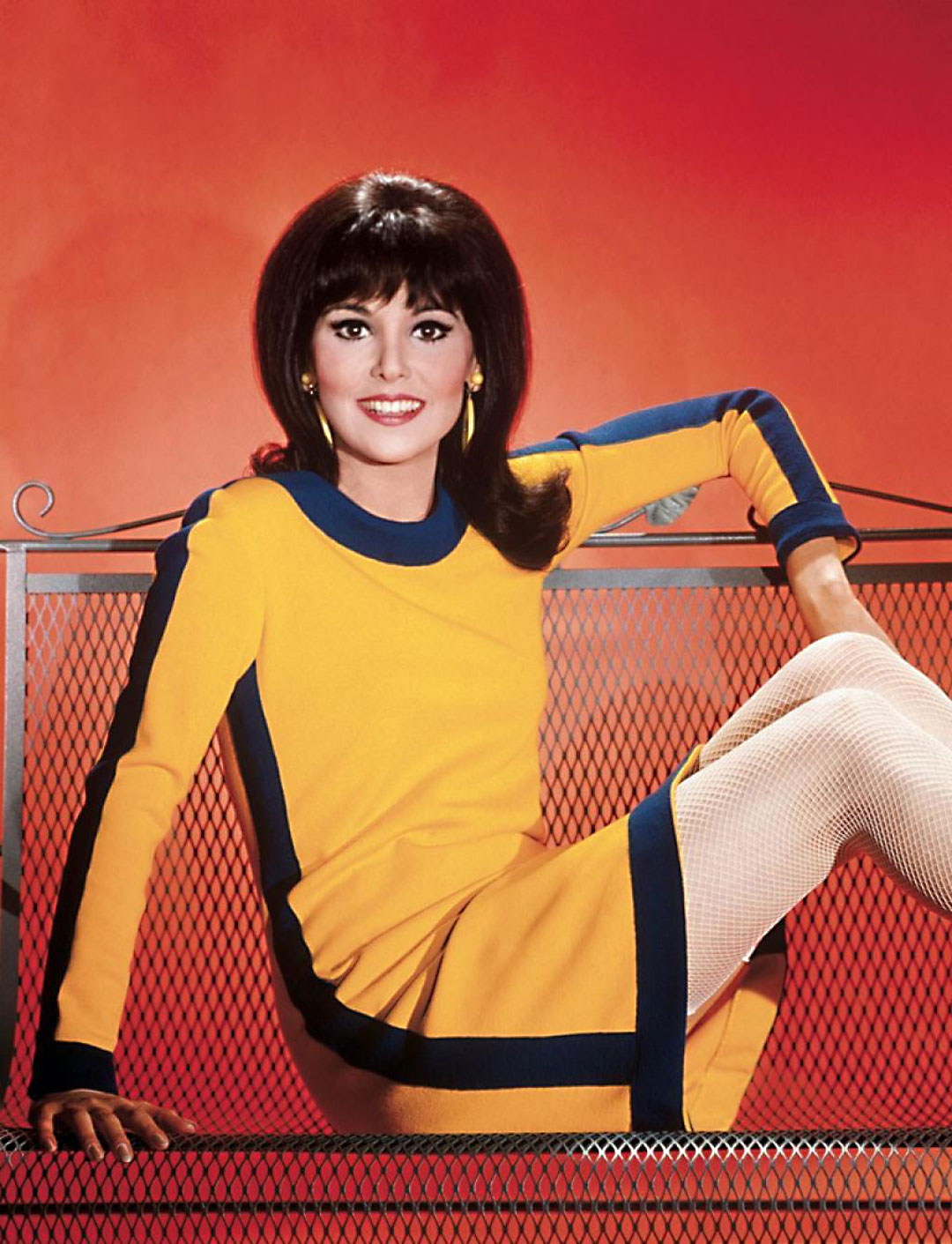
Thomas propelled the name Cardinali onto the fashion scene by wearing their trend-setting clothes in each episode (designer Daniel WerlĂ© on Rodeo Drive in Beverly Hills was replaced by Cardinali after season one). While it was obvious that Ann Marie in no way could afford the multitude of stylish outfits that she wore, Thomas’ signature look became an important part of the show. Audiences expected to see her with bangs, a double-set of false eyelashes, and eye-popping colorful mod fashions that looked as if they came off the runway with Twiggy.


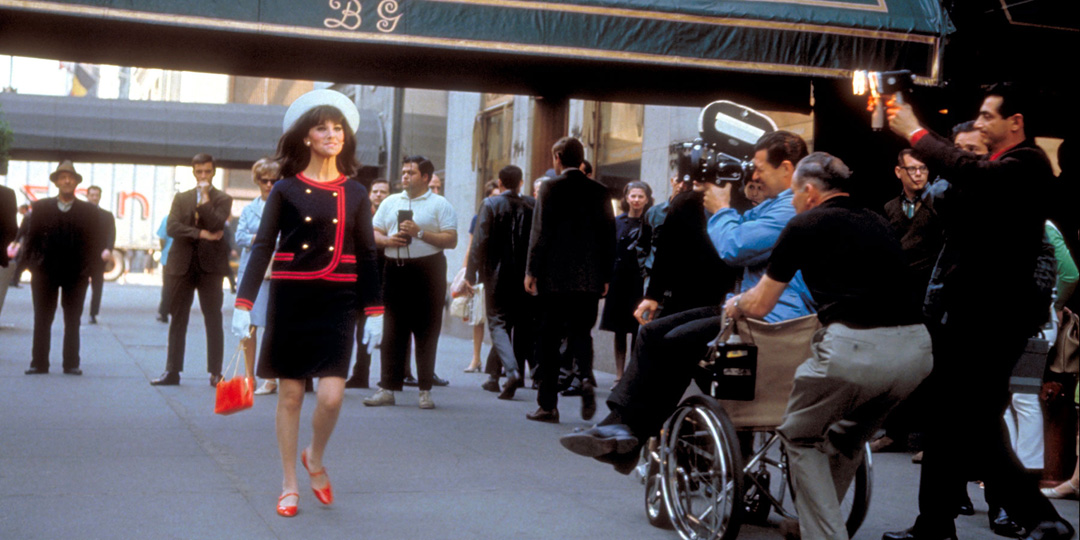
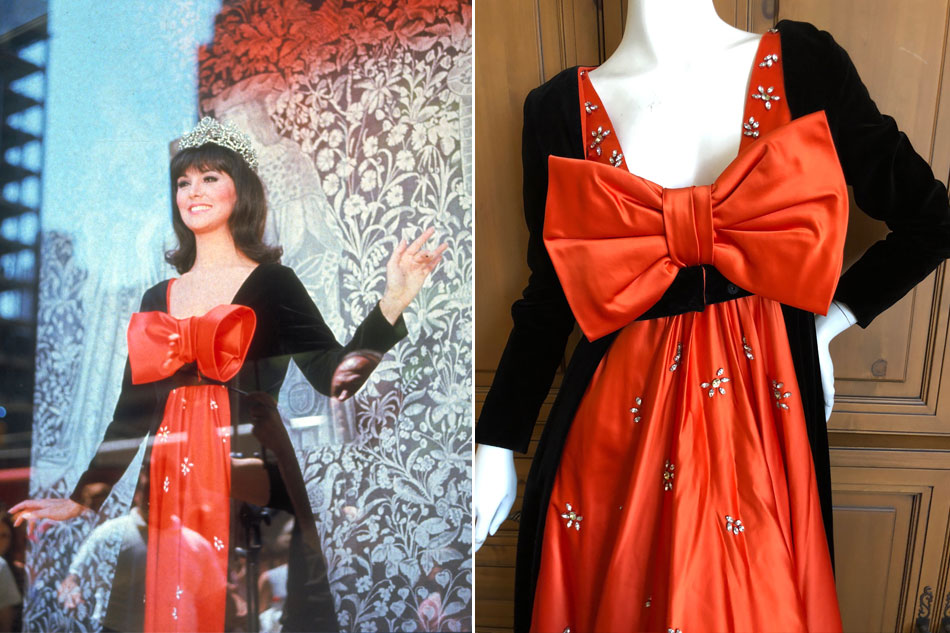
With Season Two, the opening credits featured the classic theme song and a colorful tour of New York City with Marlo Thomas displaying all the youthful enthusiasm of a small-town girl who has fallen in love with the Big Apple. I could (and have) watched those opening credits over and over again. Below is a shot of Thomas from the opening credits, posing in the window of Bergdorf Goodman department store on the left; the iconic dress that she wore shown at right:


How many of you from my generation remember seeing “Miss THOMAS’ Fashions by Cardinali” flash on the screen just as the trumpets began to blare during the closing credits of each episode? Marilyn Lewis was a self-taught fashion designer who went by the name Cardinali as an homage to her Italian grandmother. Her clients included Dyan Cannon, Nancy Reagan, Dionne Warwick, and of course Marlo Thomas, who personally signed Lewis up to design her improbable wardrobe for “That Girl.” Although Thomas definitely looks sexy in her Cardinali fashions, you will also note that she rarely shows much skin. Marilyn Lewis’ fashions were simple, bold, elegant, and timeless. She gave up fashion in 1977 to focus on her marriage to Harry L. Lewis, with whom she cofounded Hamburger Hamlet, a Sunset Boulevard restaurant that eventually expanded to 24 locations before closing in 2014.


While some of Ann Marie’s neurotic whinings tend to grate at times, “That Girl” still stands the test of time and is definitely worth a re-visit. Like “Gidget,” it is a glimpse into a still mostly innocent world that brings a smile to your face and a tinge of sadness at just how jaded we have all become. Can you imagine a sitcom today that could revolve around the scandal of a parent finding a pair of men’s pants in their single daughter’s closet? Not a chance, but in “That Girl,” thanks to good writing and the chemistry of a great cast, it works.


See more Daveland caricatures and paintings at my main website.

Monday, August 06, 2007

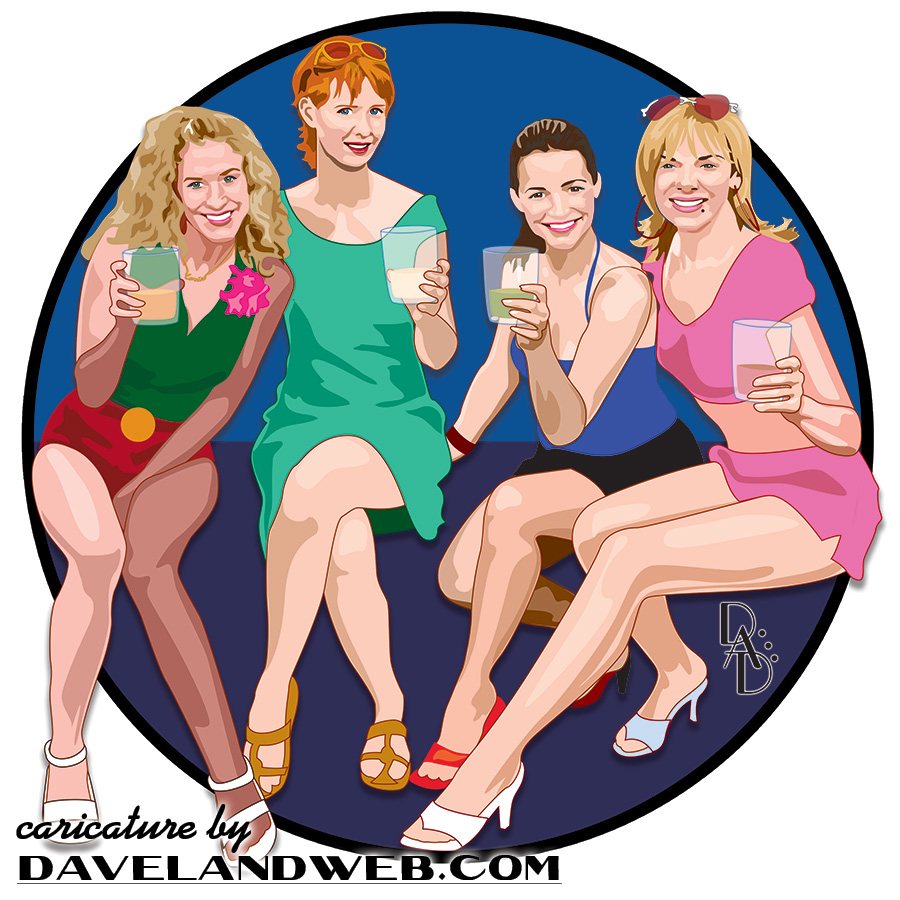
Sex and the City caricature


One of the benefits of drawing on a computer is you can redo and redo without the “paper” getting ruined. Often I do caricatures, and a few years ago, I did my Xmas card littered with all my fave celebrities. I especially liked this one from my favorite TV show, “Sex and the City.”

See more of my art at my main website.