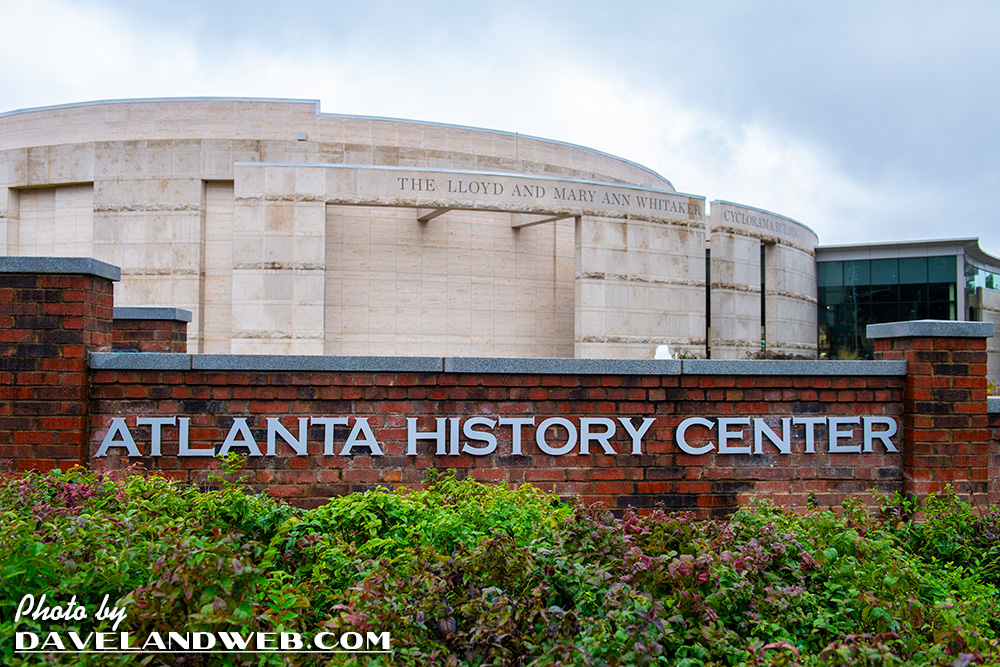
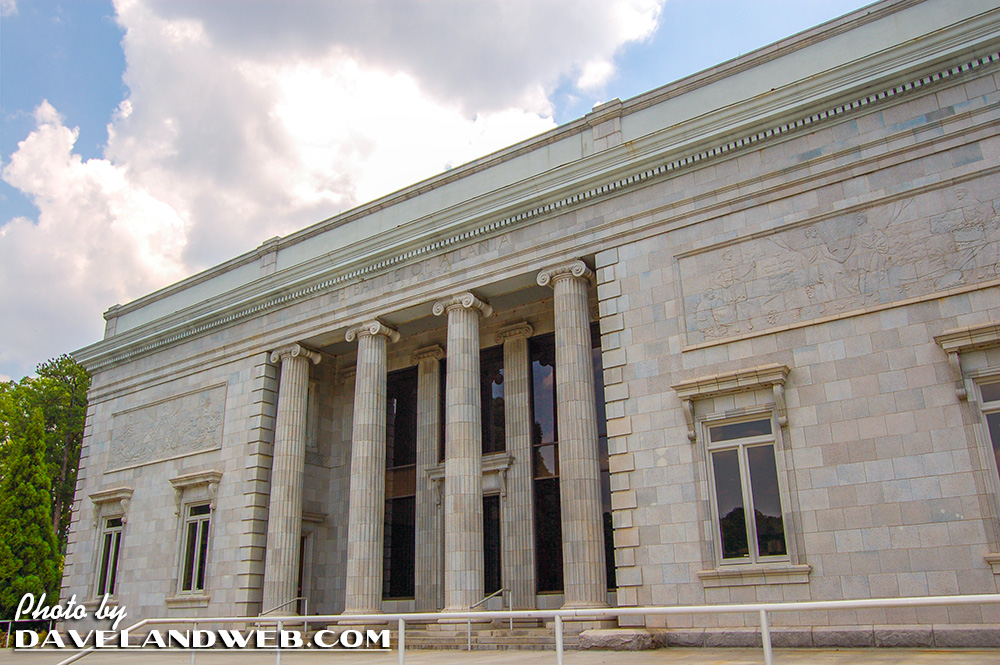
One of the things I was most excited to see in Atlanta was the Civil War Cyclorama located in the History Center. During my 2007 visit, it was located in Grant Park (see photo below).
The Atlanta History Center offered a rich diversity of exhibits, from the expected to the unexpected. A vintage Coca-Cola bottle definitely fits into the former category.
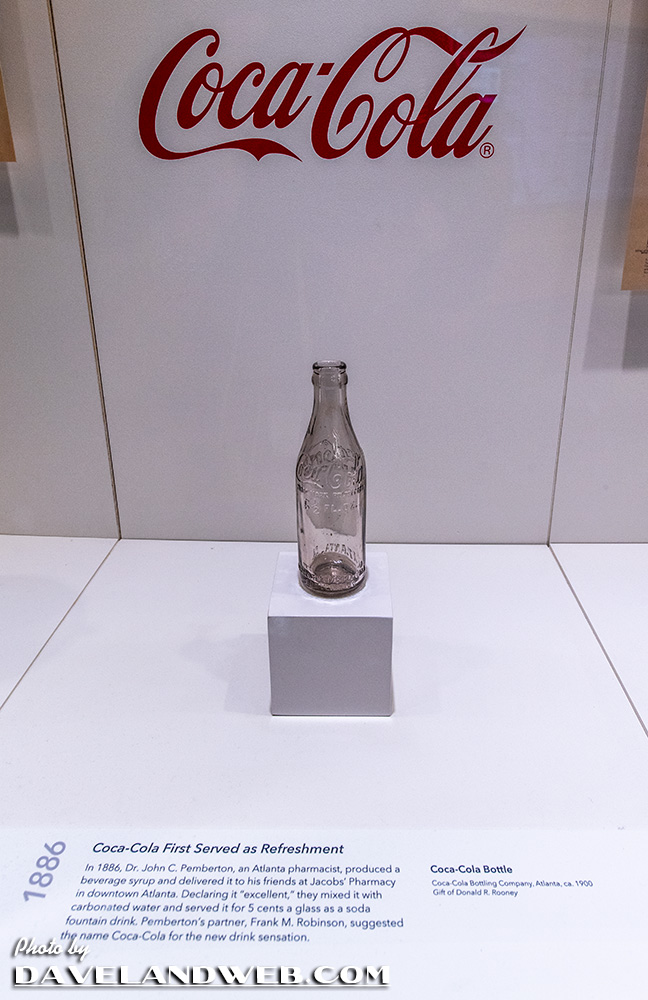
The display has the originator listed as Dr. John C. Pemberton; Wikipedia has him as John Stith Pemberton. It was pointed out by one of the Conference speakers that Pemberton invented Coca-Cola in Columbus, Georgia, and then brought it to Atlanta. It would appear that the AHC goofed; there is also a John Clifford Pemberton who fought in the Civil War, but he had nothing to do with Coca-Cola. Oops.
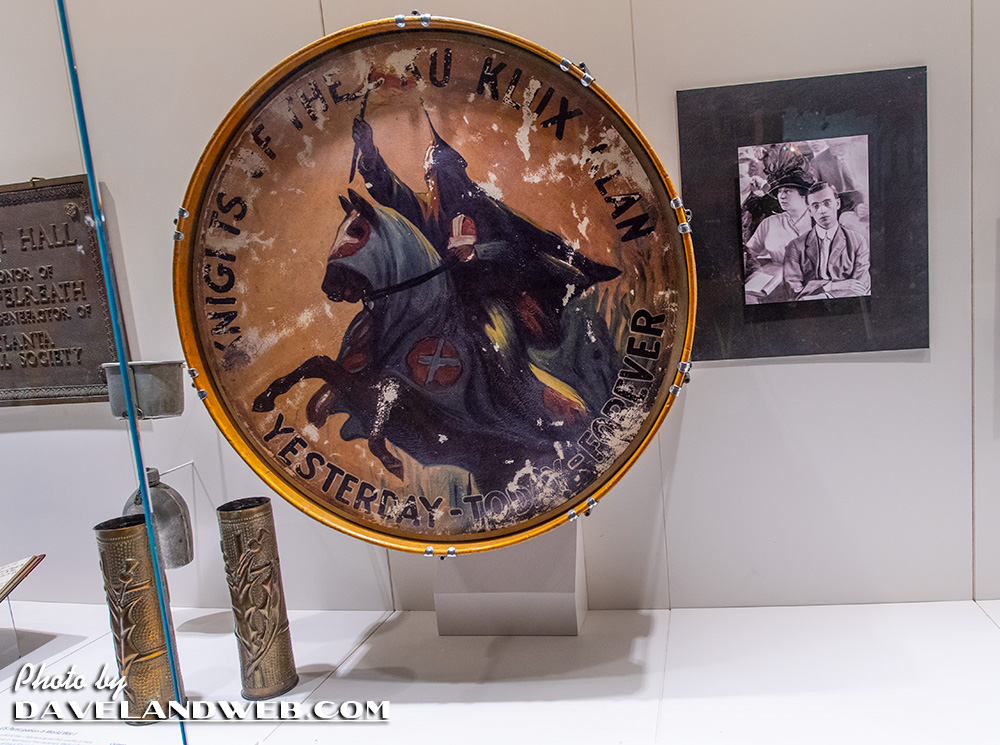
Below: Ku Klux Klan Drumhead, circa 1915. From the accompanying display blurb:
The popular film, “The Birth of a Nation,” and the Leo Frank trial inspired Atlantan William J. Simmons to re-establish the Ku Klux Klan. Although the white supremacist group existed in several forms since Reconstruction, the revived Klan was also anti-Semitic, anti-Catholic, and anti-immigrant. On Thanksgiving night, Simmons and 16 other men climbed Stone Mountain and lit a cross proclaiming the Klan’s rebirth. Klan members routinely rallied at Stone Mountain throughout the 20th century.
Leo Frank was convicted in 1913 of the murder of 13-year-old Mary Phagan, in Atlanta. Frank's trial, conviction, and appeals garnered national attention. He was kidnapped from prison and lynched two years later, in response to the commutation of his death sentence. The new governor vowed to punish the lynchers, but nobody was charged. After Frank's lynching, around half of Georgia's 3,000 Jews left the state. Modern researchers generally agree that Frank was wrongly convicted and Jim Conley was likely the actual murderer. He was posthumously granted a pardon in 1986.
(Below) A reproduction of an original seat from the Fox Theatre, circa 1992.
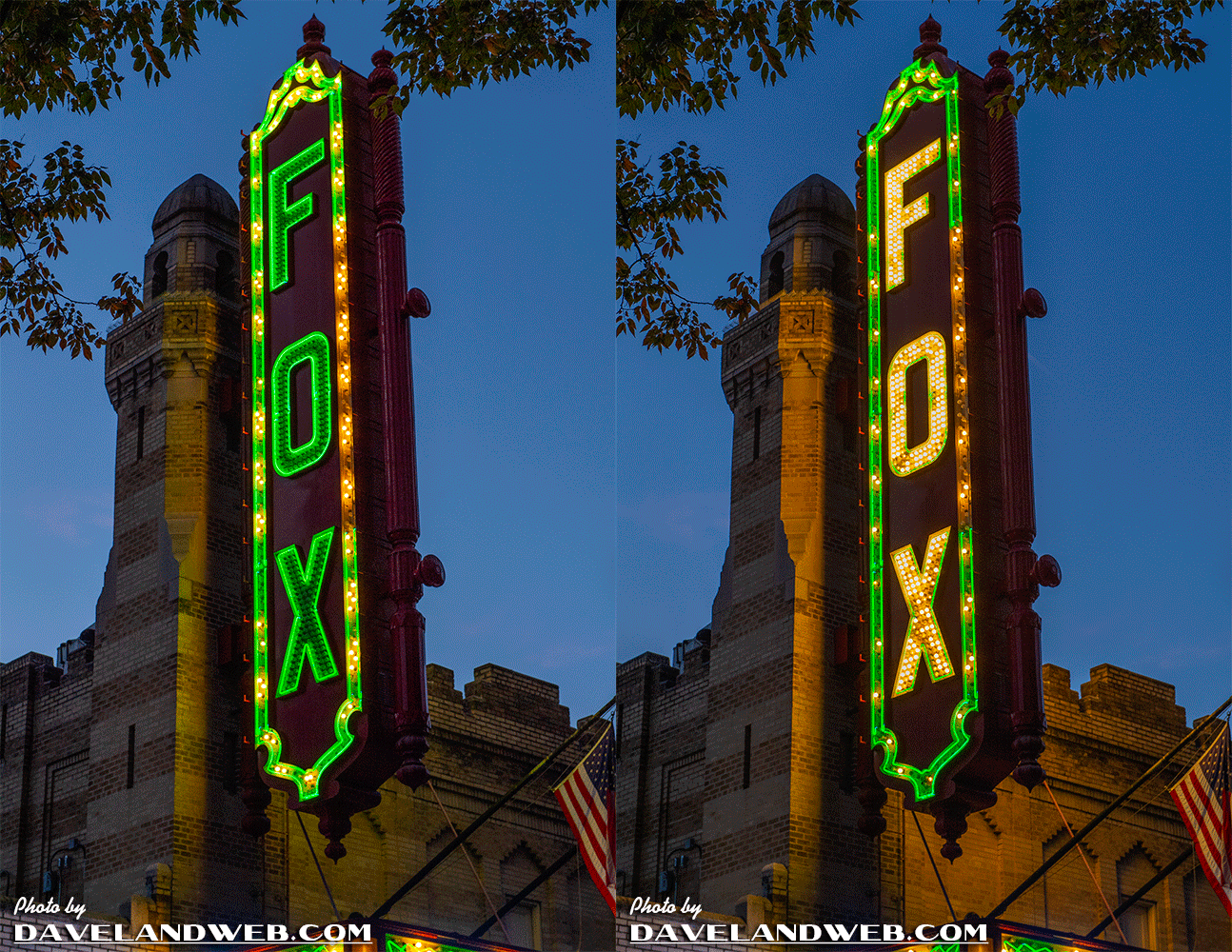
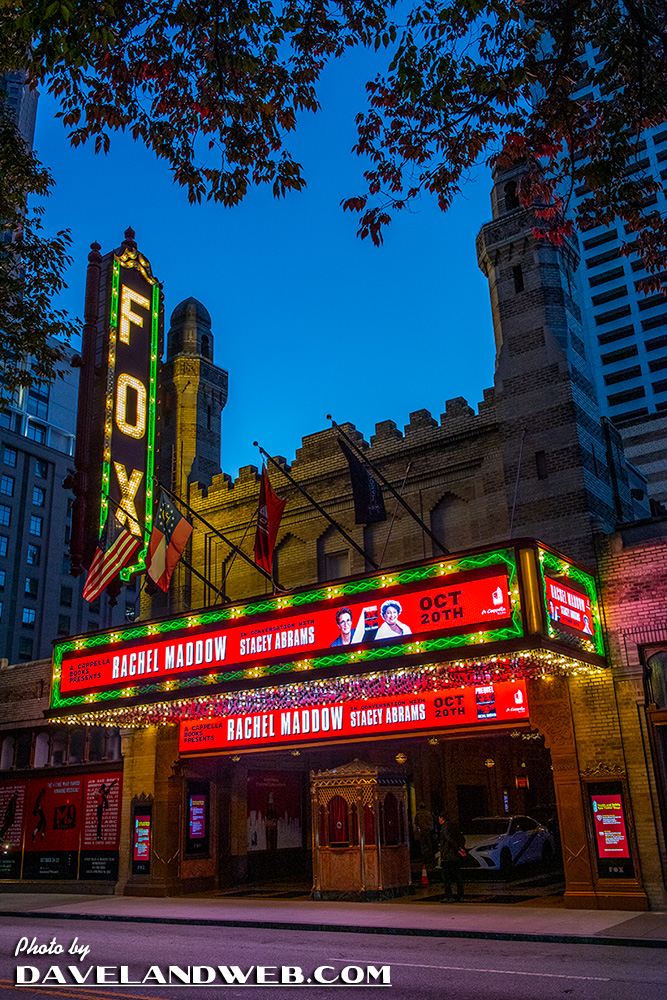
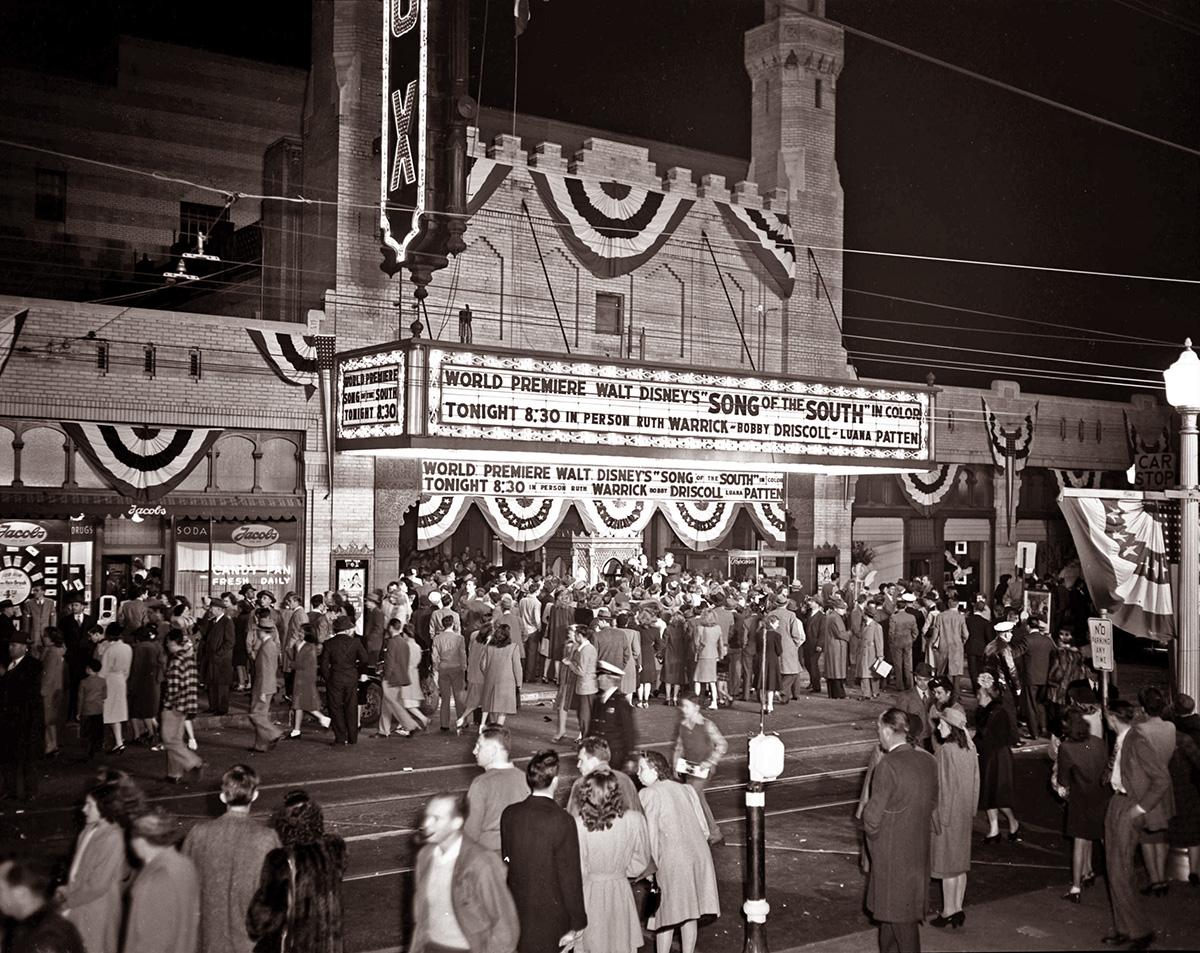
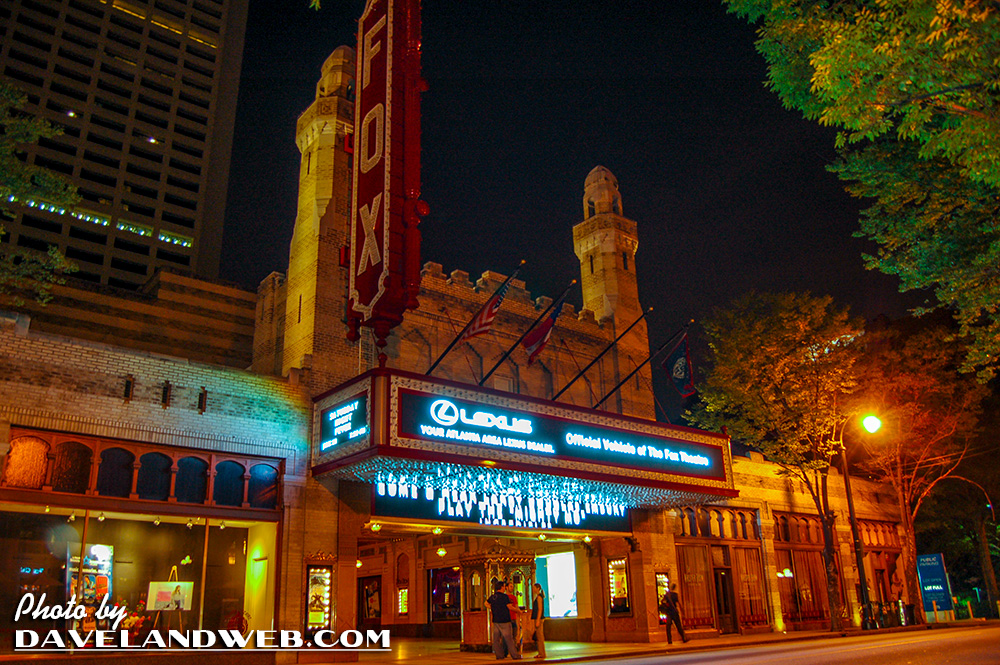
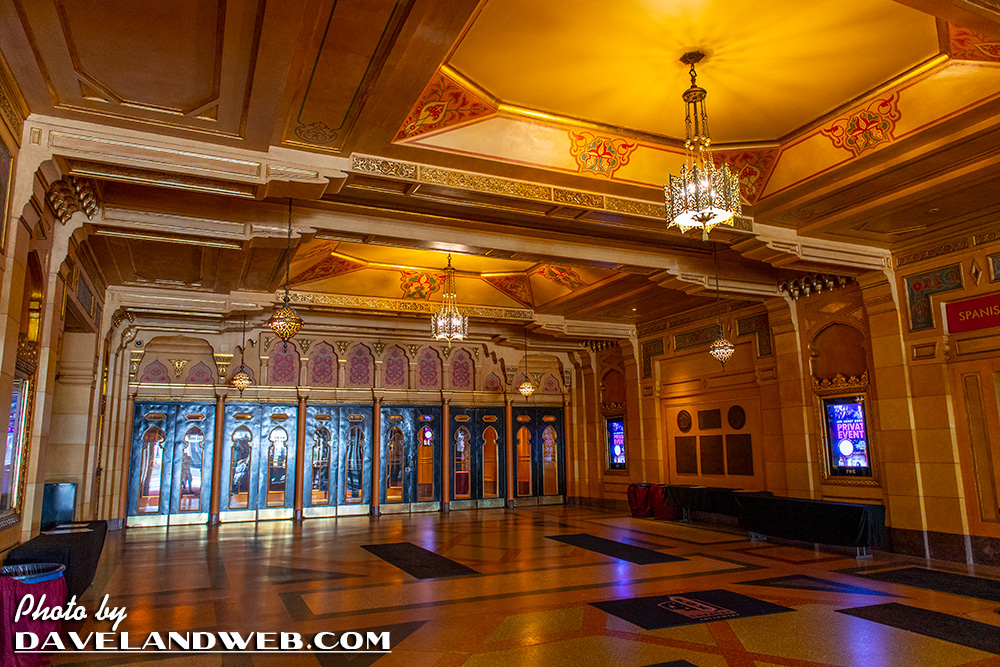
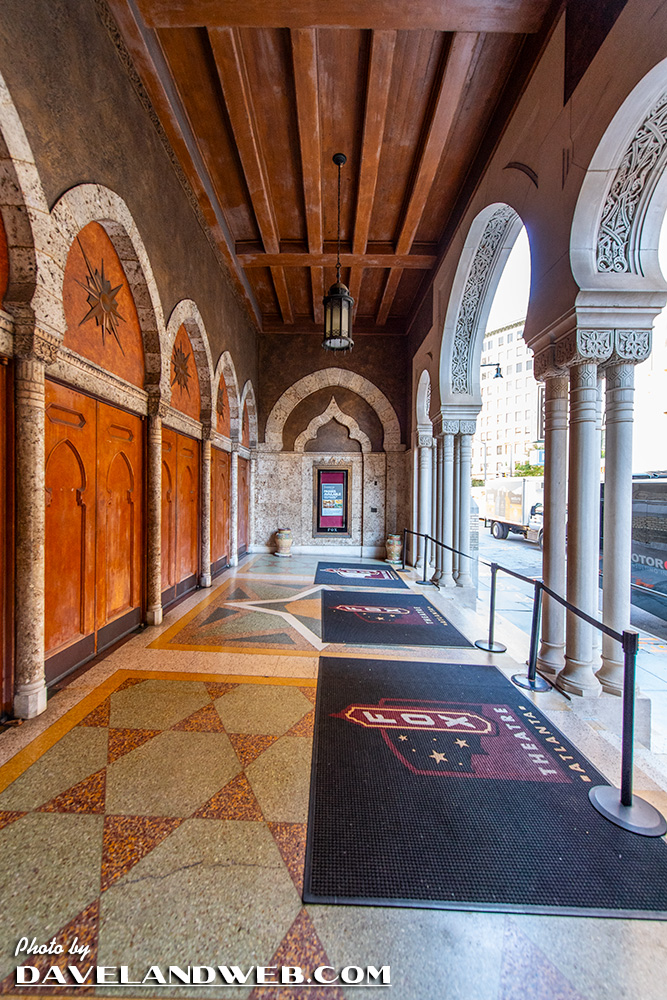
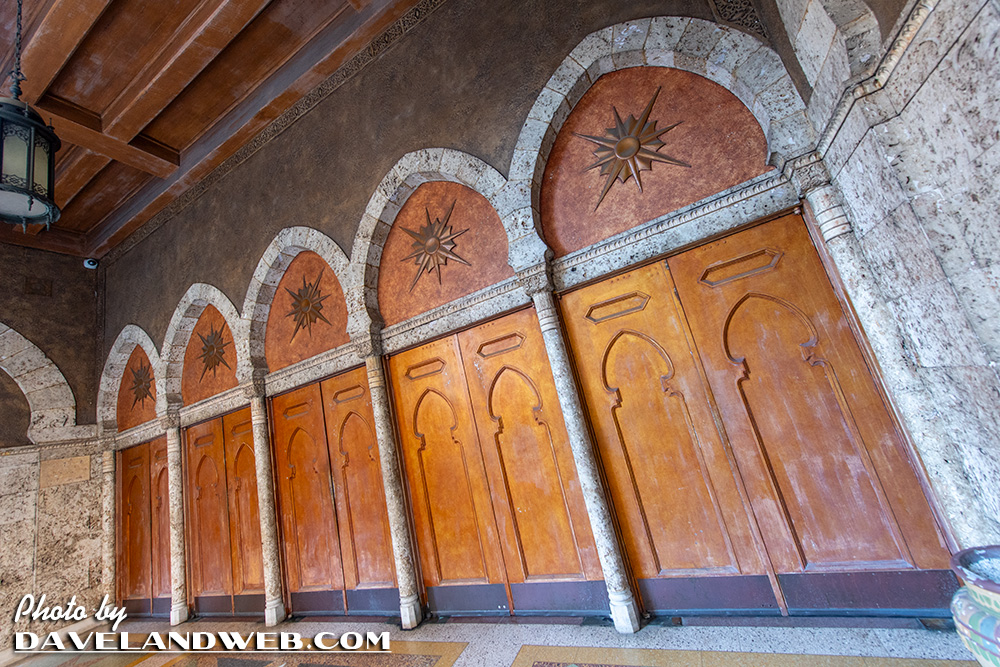
On December 25, 1929, Atlanta opened a new Christmas present, The Fox Theatre. The ornate building was designed as headquarters for the Yaarab Temple, the local organization of the Ancient Arabic Order of the Nobles of the Mystic Shrine, commonly known as the Shriners. Soon after construction began, the Shriners realized the project exceeded their budget. They negotiated a deal with movie magnate William Fox, who leased the auditorium as a motion picture theater and named it for himself.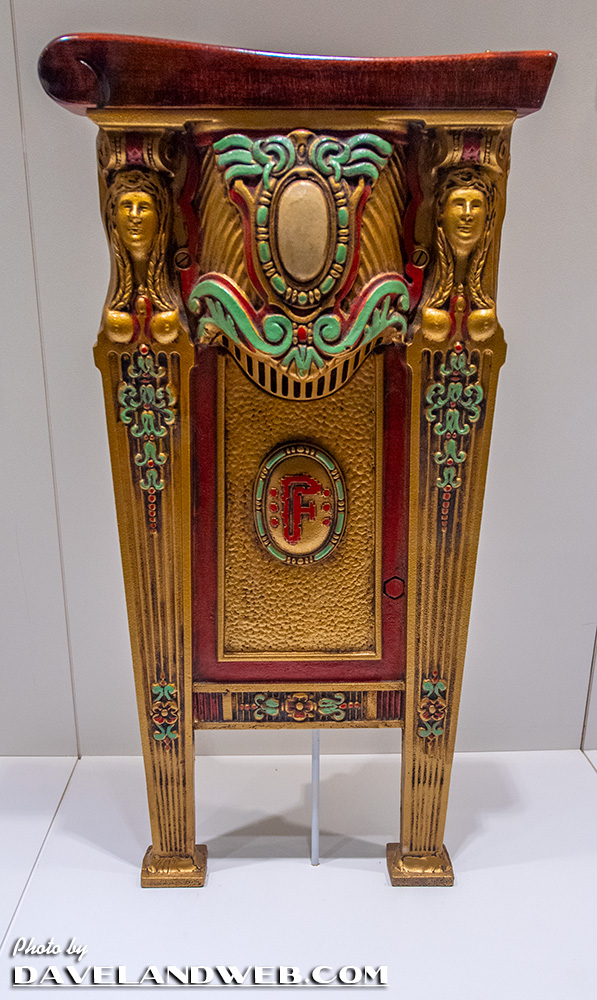
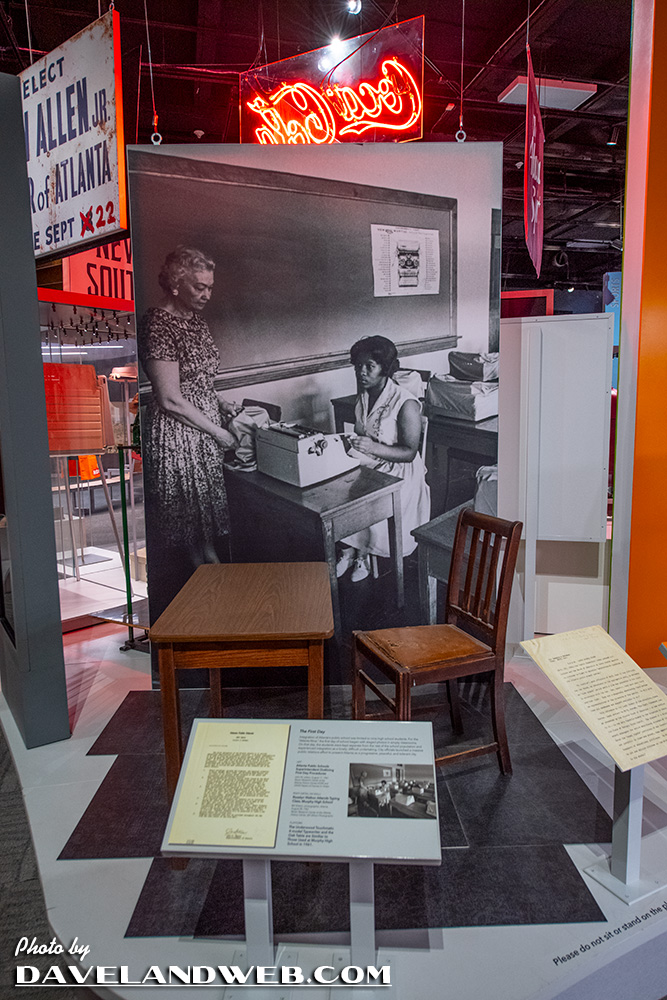
The photo below shows a display about the 1961 integration of African American students in Atlanta. From
Atlanta Magazine:
On the morning of August 30, 1961, nine African American students headed for the first day of classes at four all-white Atlanta high schools. They were shadowed by hundreds of reporters, dozens of police officers, and crowds of parents, politicians, and onlookers. At the end of the day, unlike scenes in other Southern cities that resisted desegregation, Atlanta was peaceful. Like so much of Atlanta’s carefully burnished image, the good PR was the result of pragmatic behind-the-scenes efforts. Although the 1961 APS integration did not result in the violence of Little Rock or chaos of New Orleans, it arrived a full seven years after the Brown v. Board ruling, and only because of a court order (Georgia segregationists tried to shut down public schools entirely rather than integrate). The peaceful integration was the result of months of planning by OASIS (Organizations Assisting Schools in September), a biracial coalition of four dozen community groups. OASIS volunteers organized “house meetings” in which facilitators fielded questions from parents, using workbooks covering topics that ranged from the obvious (“must Atlanta desegregate?”) to the offensive (“will desegregation result in increased health problems?”) to the racially phobic (“will school desegregation lead to intermarriage?”). The real heroes of the day were the nine teenagers who entered the hostile territory of those four high schools, and their bravery was largely greeted with silence. Mary McMullen Francis, who integrated Grady High School, told Atlanta magazine four decades later that no one asked her how her day went, and no one talked about her experience. “Even in my own community, it was as if it never happened. The city made it known that nobody wanted you to talk about it.”
Not only does the photo look extremely staged, but the sad look on the student’s face betrays the positive press that the event generated.
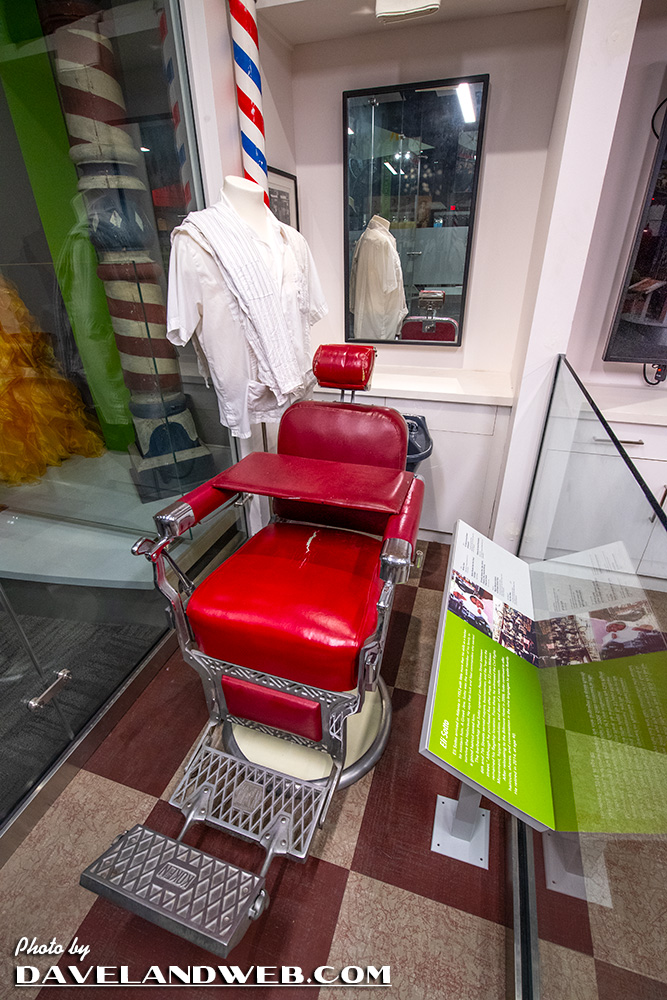
Although I didn’t get my hair cut at the History Center, I did visit its Barbershop display.
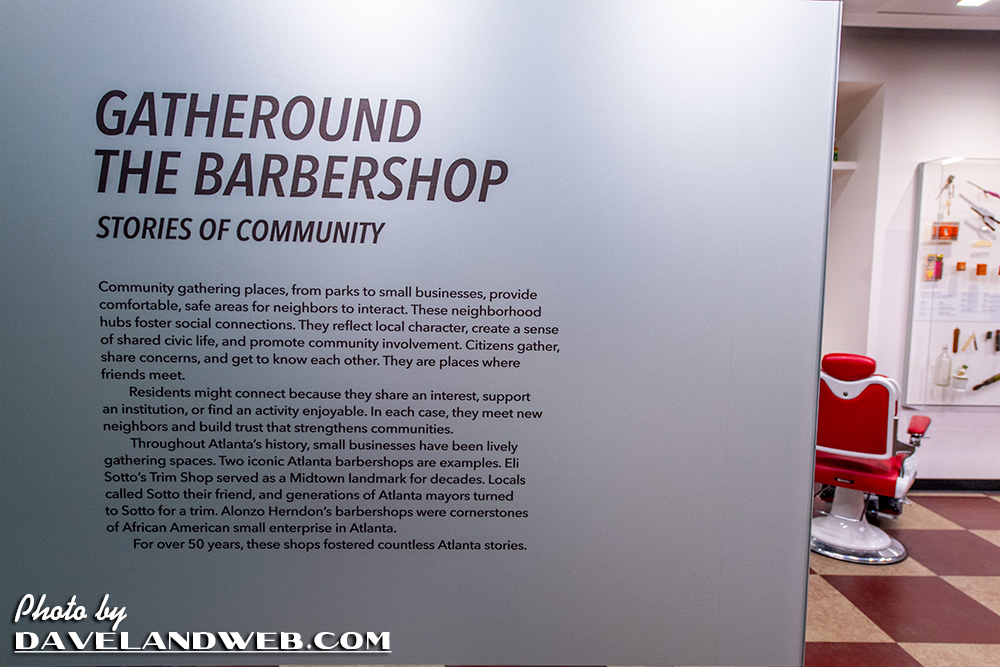 Eli Sotto arrived in Atlanta in 1953 with little more than his skills as a barber…A Greek Jew, Sotto was the sole member of his family to survive the Holocaust. He says that luck and Nazi commanders who wanted a good haircut saved him. The barbershop that Sotto opened on Peachtree Street…served mayors, businessmen, and the “man on the street.”…He retired in 2014, at age 90.
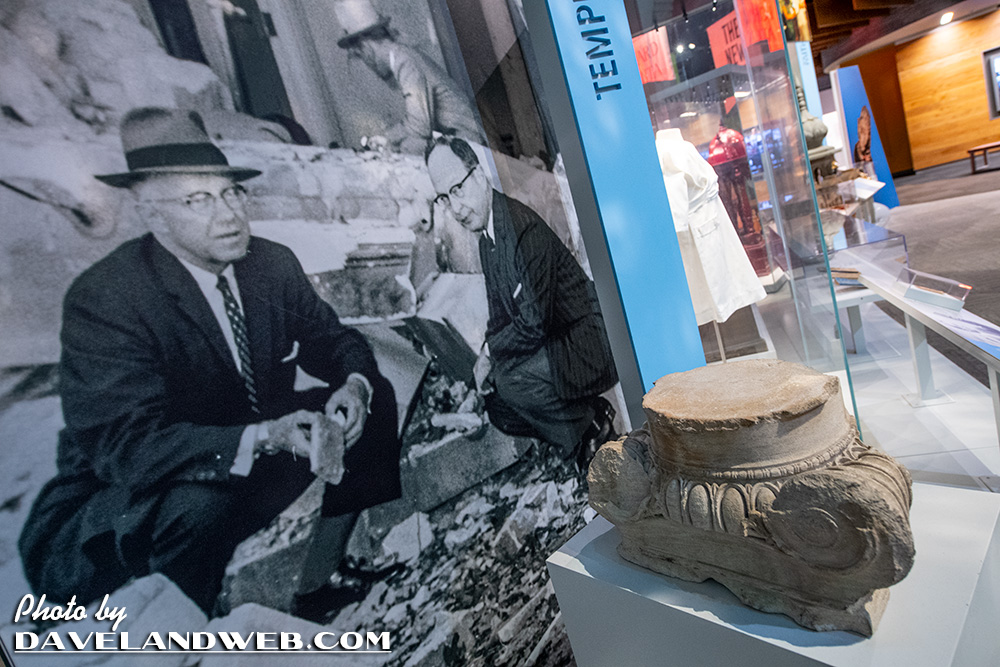
Below: Hebrew Benevolent Congregation Temple Fragment.
On October 12, 1958, an explosion rocked the Hebrew Benevolent Congregation, Atlanta’s oldest synagogue. Memories of the Leo Frank lynching over 40 years before resurfaced. The city’s progressive image faced a severe threat. The first bombing suspect who was tried belonged to the Confederate Underground, a white supremacist group. Despite considerable evidence, he was acquitted. Though authorities dropped charges against four other defendants, thousands sent letters and telegrams expressing solidarity with the Jewish community. When Mayor William B. Hartsfield stood in the rubble beside Rabbi Jacob Rothschild to condemn the attack, the Jewish Atlantans felt that the city had made considerable progress since the Frank case.
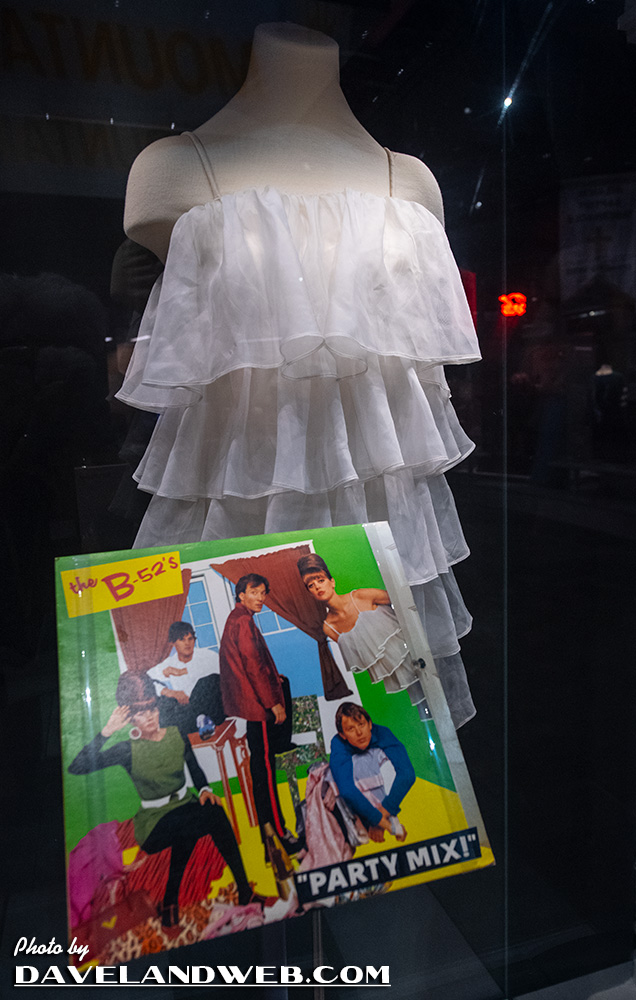
Below: White Ruffle Dress worn by Cindy Wilson of the B-52’s, who were formed in Athens, Georgia in 1976.
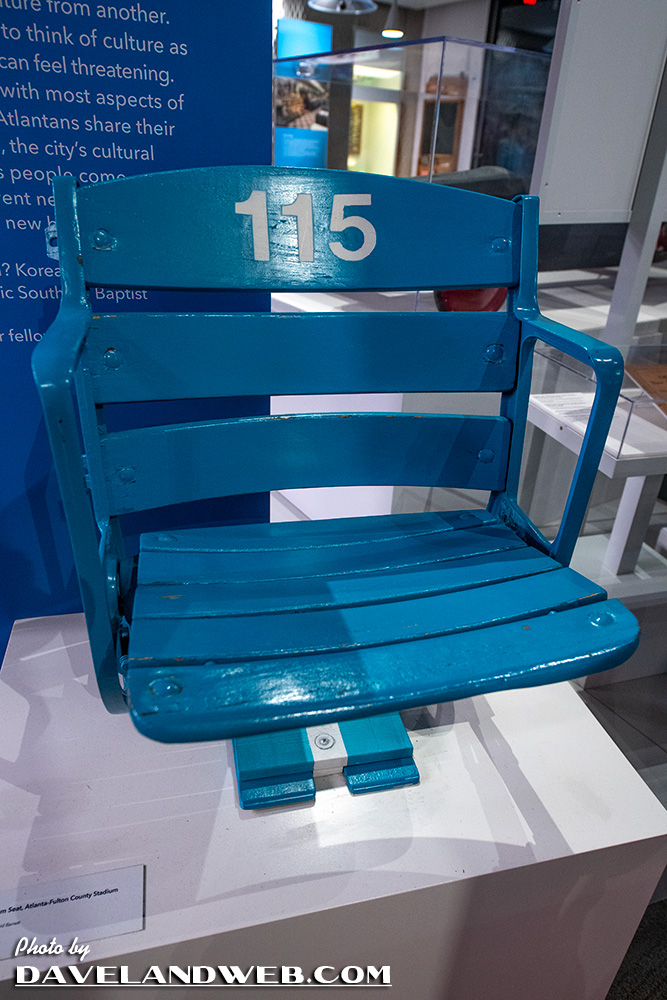
Below: Stadium Seat, Atlanta-Fulton County Stadium, 1970.
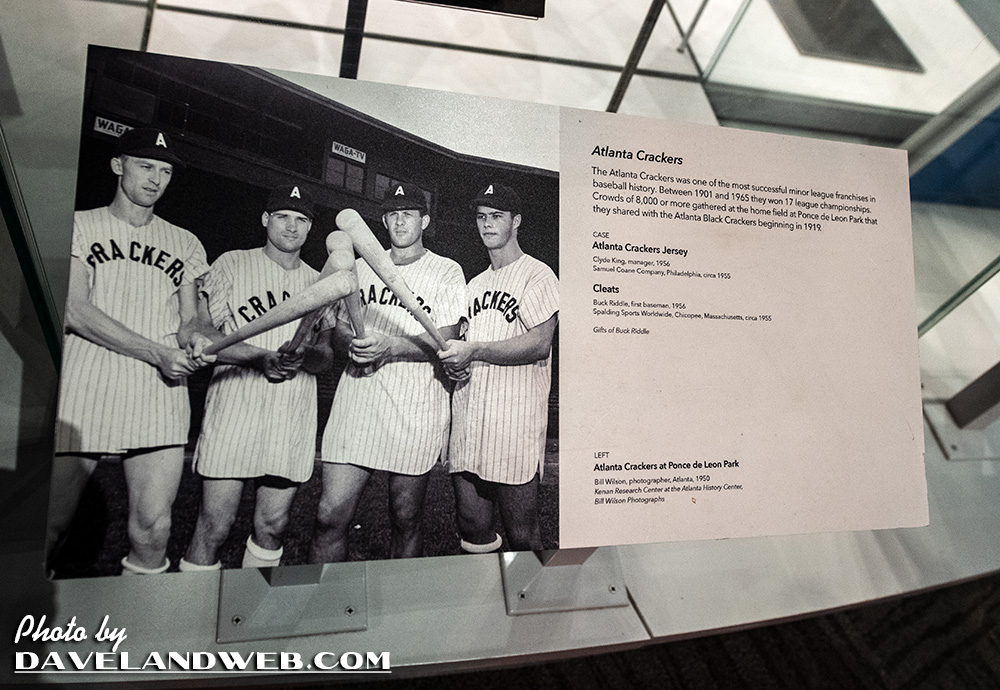
Below: The Atlanta Crackers, one of the most successful minor league franchises in baseball history. Photo is from 1950.
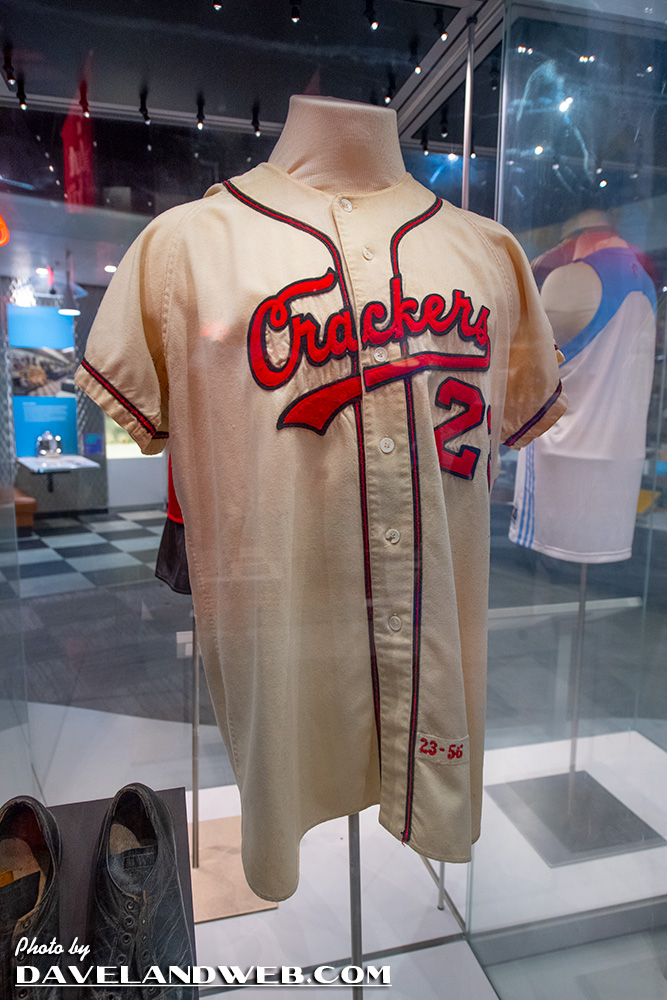
A Crackers Jersey, circa 1956, along with a pair of Buck Riddle’s (first baseman) cleats.
Still more to see from the History Center!
See more Atlanta History Center photos at my
main website.