Tuesday, November 17, 2026

Temple Tuesday: Kiss and Tell


For the 1945 Columbia film “Kiss and Tell,” Shirley Temple was cast against type, playing a teenage vamp who had her boyfriend (Jerome Courtland) wrapped around her finger and was typically getting into trouble. From the publicity blurb for the photo above:

Shirley Temple and Jerome Courtland, romantic pair in “Kiss and Tell, are questioned by Director Richard Wallace, left, and co-producer F. Hugh Herbert, right, at Columbia Studio.

Herbert had written the original Broadway play (1943) that the film was based upon. It ran for a total of 956 performances before closing on June 23, 1945. Shirley’s film was released a few months later on October 18. Concurrent to the play, the Corliss Archer (the name of Shirley’s character) radio program ran on CBS from 1943-1952. Priscilla Lyon and Janet Waldo played the radio version of Corliss. Below is another on-set shot of Shirley from this movie, with Richard Wallace in tweed at right.


The prop man put a photo of  Corliss’ boyfriend, Dexter (played by Courtland) on her desk:


Below, Corliss is selling towels at the USO bazaar, and she convinces boyfriend Dexter to buy one. The soldiers nearby mistake her kiss for being part of the sale of the towels. The scene was highly publicized in the movie magazines.


From the San Francisco Chronicle on January 22, 1945:

The filming of Columbia’s “Kiss and Tell” called for her [Shirley] to decide that selling towels at a charity bazaar wasn’t profitable—but that kissing was. So, Friday, she planted her first genuine kiss firmly on the lips of Jerome Courtland, her boy friend in the film. He started to back away bashfully, but Shirley planted her red lips squarely on his. Both blushed. That, however, was only the start. Twenty extras lined up as servicemen and after each had had his throat examinted by a physician Shirley did 20 repeats. First extra to reach the booth was Jerry Shane of Grand Rapids, Mich., formerly a Marine. He and Shirley went into a clinch. He emerged be-lipsticked, but beaming: “Guadalcanal was never like this.”

Jerry Shane locks lips with Shirley below:


Robert Myers for The Daily News had a higher kiss count for Shirley, as their headline screamed “Shirley Temple Kissed 99 Times–and Soundly!”

Shirley Temple got kissed grownup fashion, smack on the mouth, for the first time h er long movie career today, but my personal opinion is that she went into the scene backed by a little previous necking experience. It was just a screen kiss but Shirley, being a young lady of nearly 17, gave every evidence of knowing what it was all about. I asked her, somewhat unexpectedly, if she had practiced a bit, but she said: “Of course not.” She didn’t sound very convincing. “Do you mean to say you never have done any necking?” “Oh, perhaps a kiss or two at a New Year’s party, or something like that.” “I can rely on the honesty of that?” “Well,” she paused and added a doubtful, “maybe.” The kissing scene was attended by almost as much furor as the first time Garbo talked. Columbia Studio executives, writers and scores of others crowded around for the event, highlight of the aptly named film, “Kiss and Tell,” Also present to the surprise of no one, was Shirley’s mother. I asked Mrs. Temple if Shirley had done any training. She laughed pleasantly enough and said, “My goodness, I wouldn’t know. This is a new experience for me, too.” The first of 22 actors who fell in for the bargain counter osculation was an ex-marine from Grand Rapids, Mich., Jerry Shane, now a bit player. “I never felt while I was at Guadalcanal that this would happen to me,” Shane said blushingly. Shirley never winced once during the many take sand at last count each man had collected an average of 4 1/2 kisses —99 at all. Shirley is a kissable young gal. Besides, those kissed were paid $25 for bit work instead of the usual extras pay of $10.50. Imagine getting paid more for work like this!

Myers comes off as a total creep.


Dexter forgives Corliss for kissing all the soldiers once she gives his bowtie a little twirl:


Publicity shots released with the film really played up Shirley’s sex appeal:


See more Shirley Temple “Kiss and Tell” photos at my main website.

Monday, November 16, 2026

East Coast Whirlwind: Hotel Monaco


On my last night in Philly, I decided to stay in the historic area to visit Independence Hall and also to be a bit closer to the Philadelphia airport for my 6:30am flight! My choice for hotel after a bit of research was the Kimpton Hotel Monaco, formerly the Lafayette Building. My criteria for picking a hotel consists (usually) of the building being historic, more of a boutique vs. corporate feeling, and of course location. Oh yeah…and price! The backstory: the estate of banker and philanthropist Stephen Girard commissioned the Lafayette Building in 1907, naming it for the Marquis de Lafayette. John T. Windrim designed the 11-story office building in a classical revival style with Beaux-Arts elements. A historic-tax-credit rehabilitation turned the vacant offices into a Kimpton hotel in 2012, keeping the original rooftop pavilions as part of the rooftop bar. It stands across Chestnut Street from Independence Hall and the Liberty Bell.


Walking into the hotel…


Wow. I was impressed right off.


Like most Kimpton Hotels, there is an eclectic and kitschy mix of decor.


Chess anyone? Loved the chairs that were an homage to stringed instruments. Very cool!


The room was HUUUUUUGE! Unlike the lobby, it didn’t feel cluttered or too busy. It just felt relaxing, which was I wanted.


And oh, that tub…


Did I mention the view? Direct from my room window was Independence Hall:


Unfortunately the rooftop bar does not have very customer friendly hours, and it was closed during my stay, so I didn’t get to explore.


The other negative was the staff/staffing. All seemed a bit slow and of the demeanor that they really didn’t care. They had one speed: slooooooooooooow. That’s if you were able to locate them. They could have been on smoke break outside; they could have been talking to someone on their cellphone; they just didn’t care. Other than that…I would recommend this place! ESPECIALLY for the location…and the tub!

See more Hotel Monaco Philadelphia photos at my main website.

Thursday, November 12, 2026

East Coast Whirlwind, Pt. 6: Betsy's Place


Besides Independence Hall, my recent trip to Philadelphia included a visit to the Betsy Ross House. If I ever went inside, it would have been during school field trip some forty-plus years ago. This time I went armed with my camera! The first thing you might notice is that the house is SMALL! Not only in square footage, but the stairs, hallways, and rooms seem cramped compared to what we are used to today.


While there has been some controversy as to whether Betsy lived here or in the residence next door (since torn down), we certainly know that this is where she ended up. In the courtyard entryway you can see the grave of Betsy and her third husband,  John Claypoole. Betsy outlived all three of her hubbies! Her remains moved around a number of times over the years, with the third move seeming to be the charm, as the saying goes. John Ross is buried over at nearby Christ Church.


From the Historic Philadelphia website:

Enter the Betsy Ross House, and you are whisked back into the life of the 18th century widow/working mother/upholsterer credited with making the first American flag. Nestled in each room are the documents, artifacts and historic details that examine the legend and the life of Betsy Ross. Have a chat with Betsy in person as she plies her trade, stitching reproduction Colonial-era fabrics in her upholstery shop. You’ll meet the History Makers, costumed interpreters who depict the lives of women and men from centuries ago. And you’ll discover the ongoing research that aims to settle the question – did Betsy Ross really make the first Stars and Stripes? Now on display, see Betsy Ross’ sewing table from the 18th century in her bedroom, recently donated by her descendant, Eric Conrad.

Not a word about the controversy as to whether Betsy truly lived here or not. In fact, the website completely leaves out any doubts that have been raised over the years, mainly due to the changing of address numbering and historical records. However, inside the house one of the displays does state that she never owned this house, but rather rented it from landlord Hannah Lithgow, a widow. The aforementioned narrow spiral staircase:


The room that is being shown as Betsy’s:


Why the flag on the floor? As the nearby display explains, in Betsy’s time, no U.S. Flag code existed, so it was decided to display the flag this way to give an accurate representation of what it would be like to stitch a large 10-foot flag, a common size in the 18th century. To comply with the modern Flag Code, there is a cloth underneath the flag keeping it off the floor.


In the large sewing room, there is a lady who portrays Betsy.


She was kind enough to let me snap her pic!


The kitchen Betsy (may or may not have) used:


Want to eat like Betsy? Here you go…


A molinillo is a traditional, hand-turned wooden whisk used in Latin America (especially Mexico) and the Philippines to mix, aerate, and froth hot beverages like Mexican hot chocolate, atole, cacao, and champurrado.

Besides controversy as to whether Betsy actually lived in the house we can tour today, there have also been questions if she truly did make the first American flag. You can read more about it on the Historic Philadelphia website. There is a fair sized amount of evidence pointing to the viewpoint that she did make it, but none of it is definitive. So concludes today’s lesson!

See more Betsy Ross house photos at my main website.

Tuesday, November 10, 2026

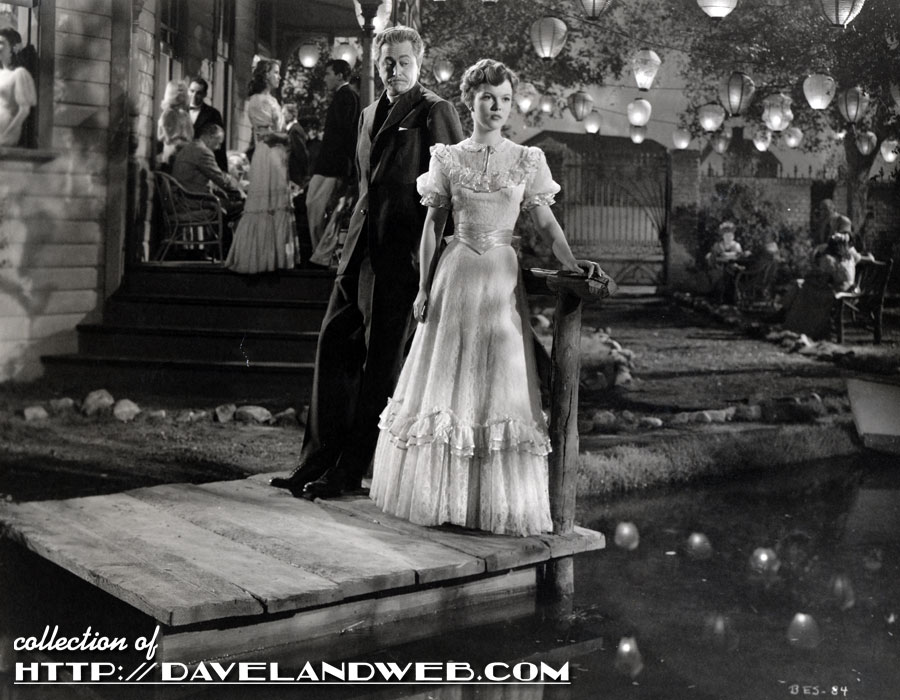
Temple Tuesday: Shirley and the Waltz


Shirley Temple appeared in a full color cover for the February 1949 issue of Screen and Television Guide. Inside was a two-page spread titled Mrs. Agar Struts. The magazine wrote:

The Agars were so popular in “Fort Apache,” fans demanded an encore. Now they’re in “Baltimore Escapade.” Shirley’s a siren in a slicker when she steps into the captivating old-time rhythm of the Charleston. Remember 'way back when Shirley Temple was a little charmer with an amazing ability to master grown up dance routines? When RKO’s “Baltimore Escapade” called for a Charleston, Mrs. John Agar showed director Richard Wallace that she could go into her dance with more grace and charm than ever!


The Charleston dance is part of the opening montage showing girls (all Shirley) through the ages. Although brief, it is utterly delightful to see Shirley dancing with utter carefree abandon, devoid of any of the stiffness she sometimes exhibited in her teenage movies. It is the fulfillment of her childhood promise and makes one wish she had been given the opportunity to do more.


Retitled “Adventure in Baltimore” before its April 1949 release, it is what I would call a pleasant film. Shirley was expected to carry the movie with her star power, as it lacks a compelling story and a good script. The cast is more than competent, but it is obvious they are all doing the best they can with what they have been handed. It’s also a shame that the film wasn’t done in Technicolor; in the end it comes off as the poor stepchild of “Meet Me In St. Louis.” Below is a wardrobe test for Shirley, showing her in the outfit featured on the cover of Screen Guide:


She also wears the period outfit in  this church with costar and then husband John Agar:


The Charleston isn’t the only dance Shirley performs in the film. During a scene where she is fighting with boyfriend (played by Agar), her father (Robert Young) has a heart to heart chat with her.


Afterwards, the two enter the dance contest doing a waltz. Guess who wins?


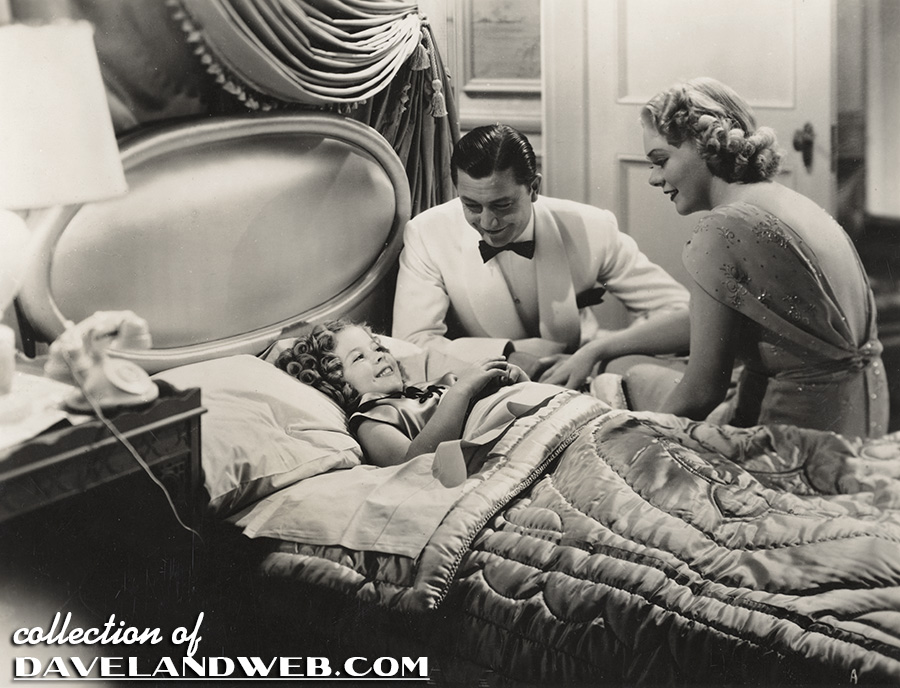
Young had played Shirley’s adopted father thirteen years before in “Stowaway” (1936):


Below are two publicity shots of Shirley working with dance instructor Charles O’Curran for the waltz contest:


From the accompanying publicity blurb:

SPIRITED LESSON - Shirley Temple and Dance Instructor Charles O'Curran rehearse a lively number for RKO Radio’s 1905 period comedy romance, “Baltimore Escapade,” which stars Robert Young, Miss Temple and John Agar.


How the twirl looked in the final film:


This pleasant little film lost $785,000 and was one of the reasons Shirley left Hollywood, frustrated with the bland material forced upon her.

See more photos at my main website.

Monday, November 09, 2026

East Coast Whirlwind, Pt. 5


Family visits typically focus around the food element. Visiting Mom at her retirement community in West Chester, PA for a few days was no exception. As a result of one of her “ladies-who-lunch” groups, I had heard about Arianna’s CafĂ© and got to try it for myself this time. Normally, I would not even look twice at a restaurant in a bland strip mall, but this place was fantastic. Once inside, it felt very homey.


Mom is doing durn well at 94!


I didn’t photograph my lunch (which was fantastic!) but I DID take a picture of the dessert, which was a slice of homemade Peaches & Cream pie. This place is definitely on my “return” list next time I’m in the area.


Since shipping for Leopold’s Ice Cream is cheaper from Savannah to Philly, I had a large supply sent to Mom’s in time for her birthday AND my visit! Pumpkin Spice was one of the DELICIOUS seasonal flavors:


We also tried the Ice Cream Cookie sandwiches. Wow… both the cookie AND the ice cream were off the charts.


Friday night is Bingo night at Mom’s community; I came close a number of times but as the saying goes…no cigar!


My visit also happened to coincide with the memorial service for former Philadelphia Phillies owner Bill Giles.


His wife Nancy was a high school and college friend of my Mom’s, and they both ended up in the Philadelphia area. We saw them on a regular basis for dinners, holidays, and Phillies games (with just about the best seats in the house). Nancy passed away six years ago. The last time I saw both of them was on a visit for my stepfather’s 80th birthday back in 2009. Below are Nancy, my stepfather, Bill, and Mom:


Nancy graciously invited the family to attend a Phillies game the next day at Citizens Bank Park stadium, which had opened five years earlier to replace historic Veterans Stadium.


The Party Suite was named after Giles. As his son admitted at the service, he was not exactly the poster boy for healthy living, and yet he lived to 92!


Inside the suite:


When my Mom remarried in 1977, it was a small wedding at the house with Bill and Nancy, my Aunt and Uncle, and my stepfather’s mother. Bill got a kick out of me playing the Wedding March on the piano that afternoon and never failed to bring it up whenever I’d see him. His autobiography, Pouring Six Beers at a Time is the riveting story of his life in baseball and how he engineered some of the most zany stunts to help fill the seats at Veterans Stadium.


From my treasured autographed copy:


Giles was the mastermind behind the still beloved Phillie Phanatic:


To me, his strength was being able to talk to people from all walks of life with his kind nature and ability to put people at ease. There were no airs or artifice about him. The service was held at the Episcopal Academy in Newtown Square; it was packed.


The service was filled with beautiful (and funny) testaments of Bill, with one of the highlights coming from Phillies legendary third baseman, Mike Schmidt. All three sons spoke of their dad, with eldest son Mike detailing the annual spring training trips by car to Florida that the two shared. I was hoping to get a chance to talk to Giles’ youngest son, Chris, who was close to my age. I probably hadn’t seen him in over forty years, but as kids, we would often play together when our moms would visit. Unfortunately, we didn’t get a chance to connect afterwards.


Mom and I had lunch at LaScala’s Fire afterwards. I’ll just leave it at that… 


On the way home, I spotted the new-to-me Newtown Square Railroad Museum. I had to pull over for this one! It was closed, but I still milled around and got a few photos.


What a cool little gem! Edited from their website:

The Newtown Square Freight station was constructed in 1895, shortly after the Pennsylvania Railroad branch line was built. It was located on the west side of Newtown Street Road (Rt. 252) and what is now Winding Way This was also the site of the lumber and coal yard, plus a feed and grain store. A corral was located in back of the freight station to hold livestock for shipments to and from the farms in the area. Farmers would bring their horses to E.W. Powell, the veterinarian, and after being tended by him they would be shipped out by stock car. A passenger station was next to the freight station. It housed the post office and telegraph station for many years. The freight station was the end of the branch line, the last stop from Philadelphia.


Between 1895 and 1908, as many as thirteen trains a day pulled in and out of the Newtown Square station: the milk train, the mail train, and various freight and passenger trains. The railroad ran its passenger service from 1895 to 1908, but its freight service operated into 1963 - in the later years servicing mostly the lumberyard. There were ten stops on the line - eight of them were “flag stops”, along with the Llanerch and Newtown Square stations.


The freight station is the last vestige of the Newtown Square branch of the P.R.R. freight and passenger line that once rumbled 9.2 miles between Newtown Township and Philadelphia. 


Several years ago, when the Winding Way bypass was to be built, the abandoned freight station was saved from destruction by the Newtown Square Historical Society, who raised money to have it disassembled and relocated to Newtown Township’s Drexel Lodge Park, where it was restored and the Newtown Square Railroad Museum built up around it – which now includes a 1902 passenger car, 1907 box car, 1950 caboose and small steam engine.


Next stop: Independence Hall!

See more Philadelphia photos at my main website.