Showing posts with label vintage los angeles photos. Show all posts

Wednesday, May 28, 2025

Poolside at the Ambassador, 1954


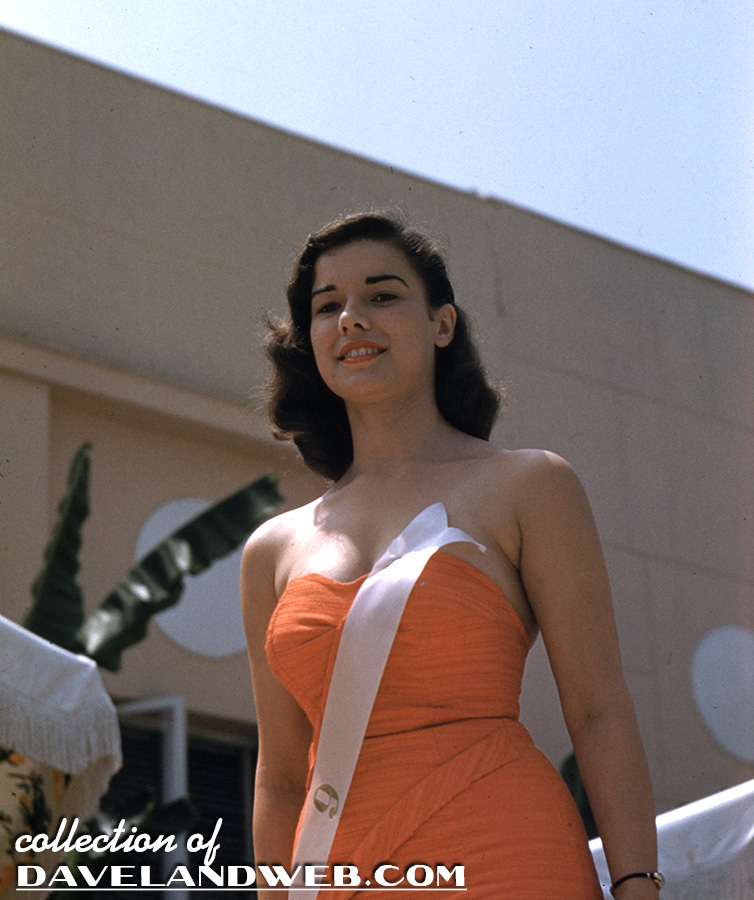
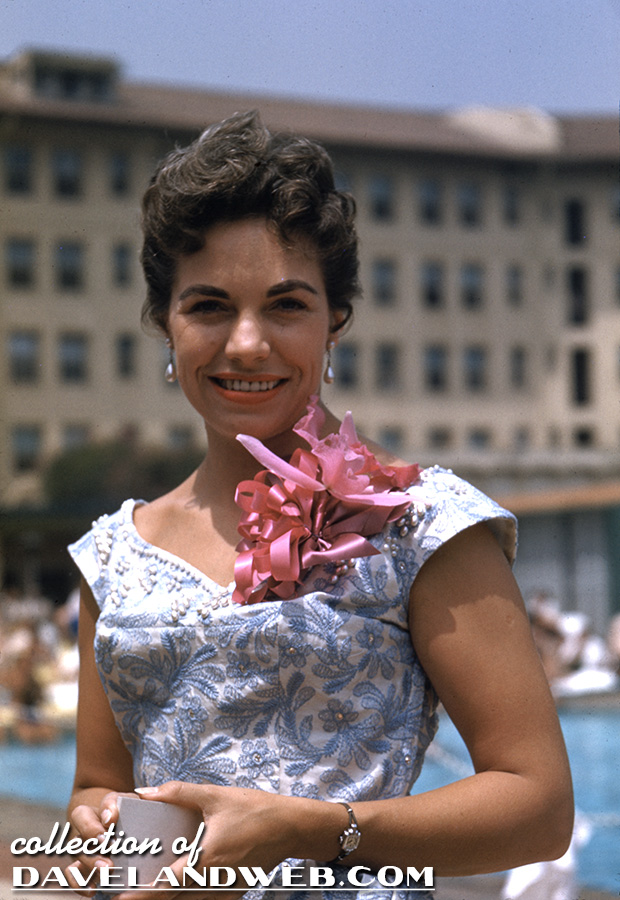
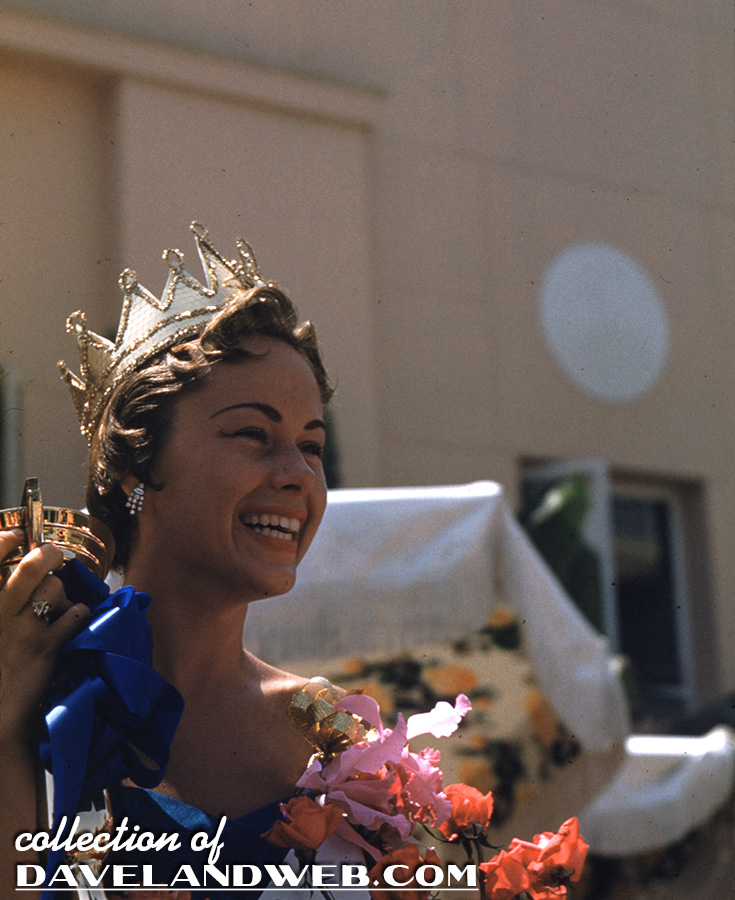
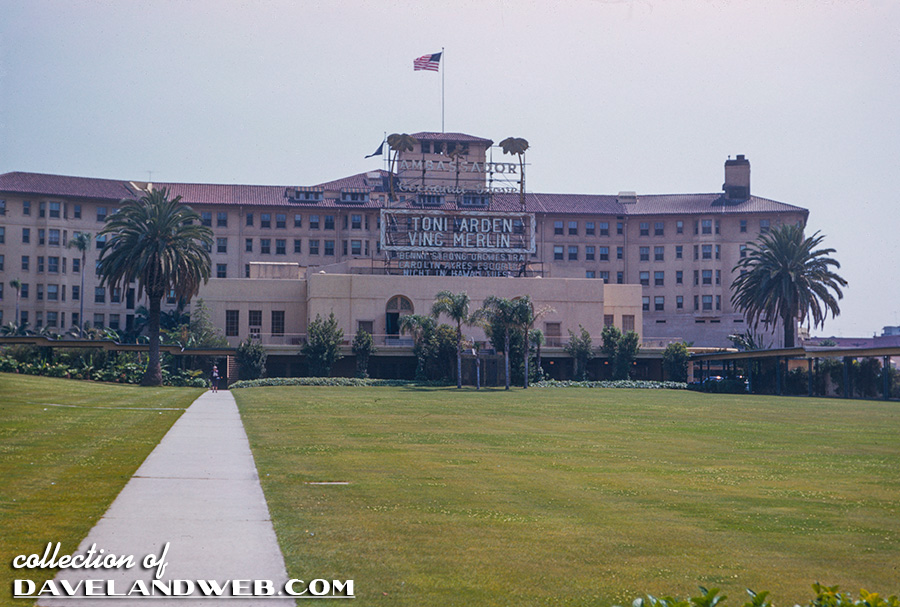
In the batch of slides I received of the El Mirador hotel in Palm Springs were these from the Ambassador Hotel in Los Angeles. It appears that they show the 1954 Miss Ambassador Hotel contest, held at the pool. 


Which lovely lady would you pick?


Some slides had names of the people featured, and some didn’t. No idea who orchid lady is.


This table shows the judges of the contest; again, no names, but the gent with a tie and no jacket looks darn familiar. Nanook?


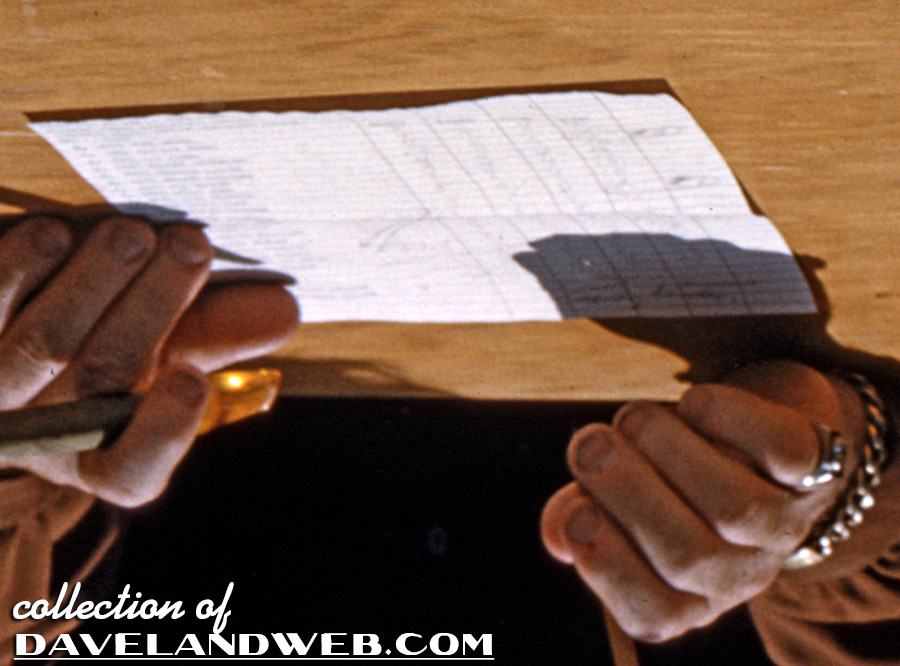
This shot shows comedian Lou Costello:


Here’s a closeup of the score sheet he was keeping for the contest:


This image appears to show the winner; wonder what happened to her?


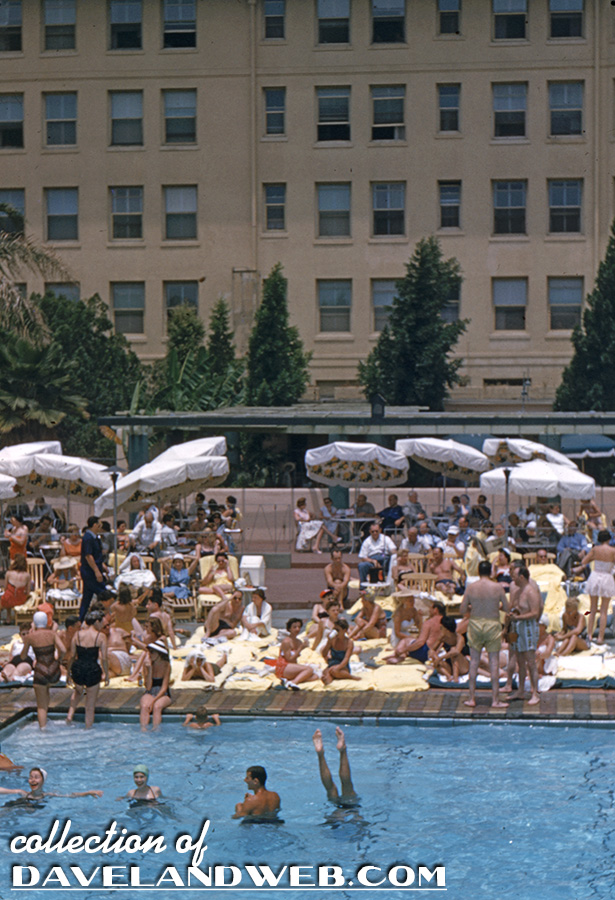
An overall shot of the Ambassador Hotel pool from the same batch:


Looks like it was a fun day!


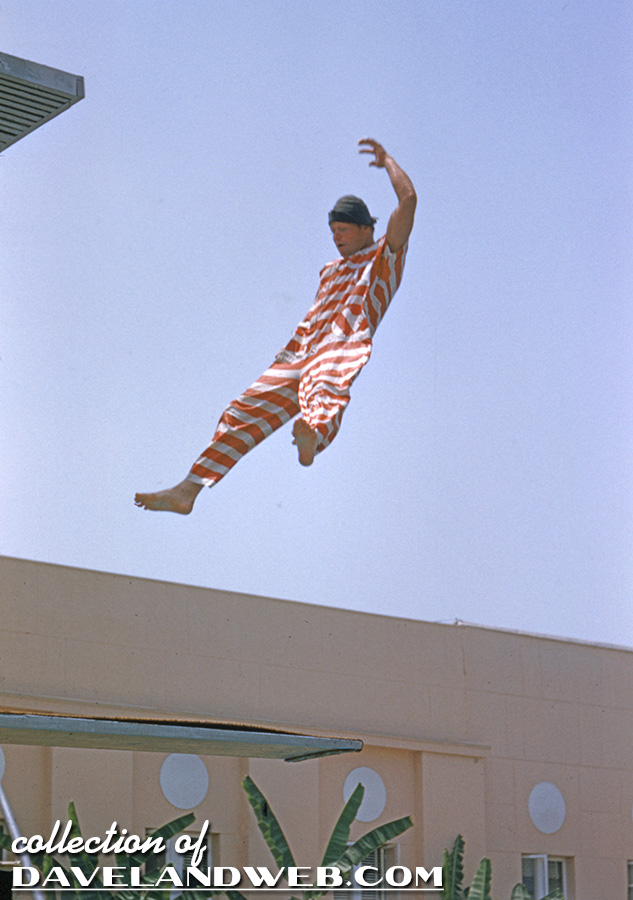
Last shot which I “assume” was part of the Ambassador event (but could have been the El Mirador) shows Rosemarie Bowie. I know her identity because that particular slide was labeled! As it turns out, she married actor Robert Stack in January 1956. They had two children and were together until Stack’s death in 2003. Amazing things do happen in Hollywood!


See more Ambassador Hotel photos at my main website.

Friday, July 05, 2024

Remnants of the Ambassador


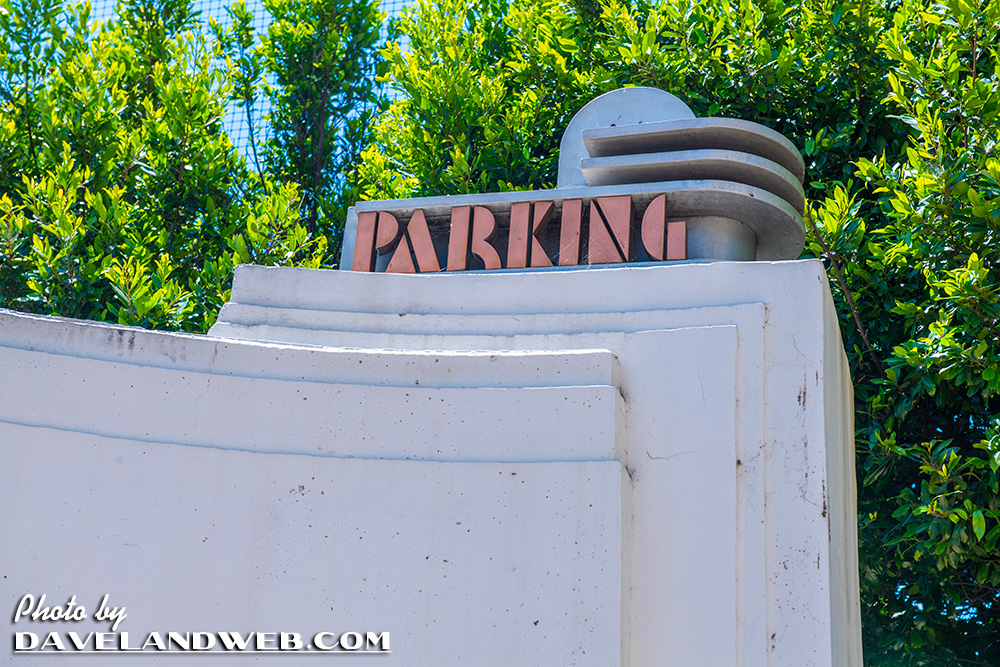
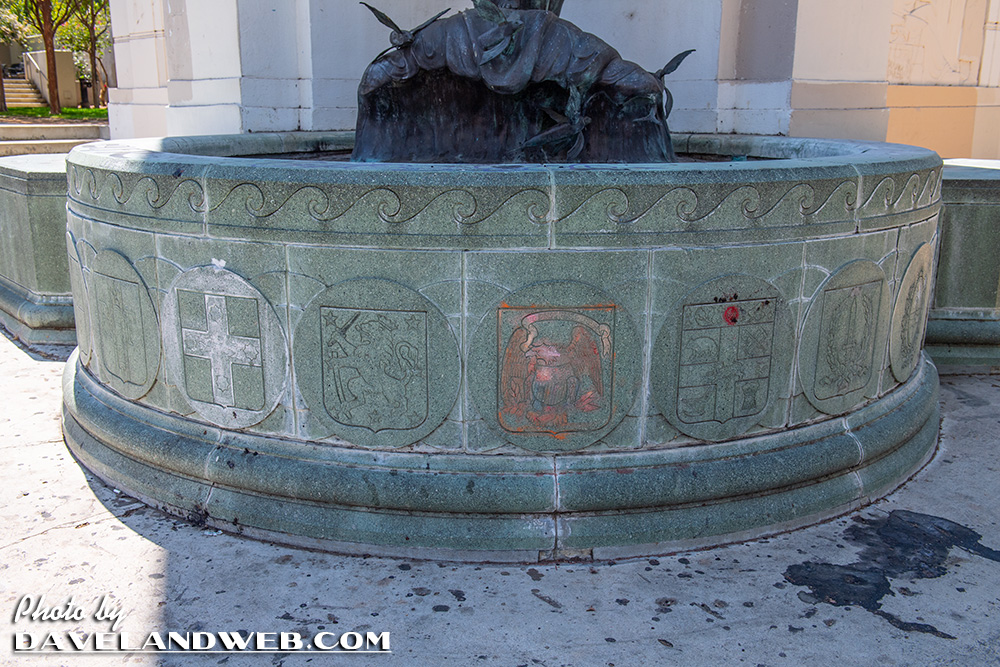
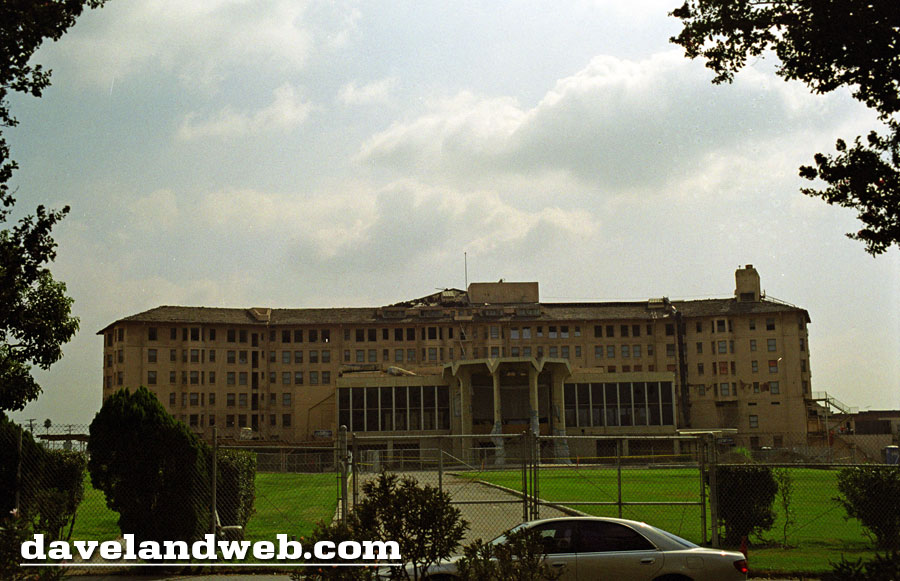
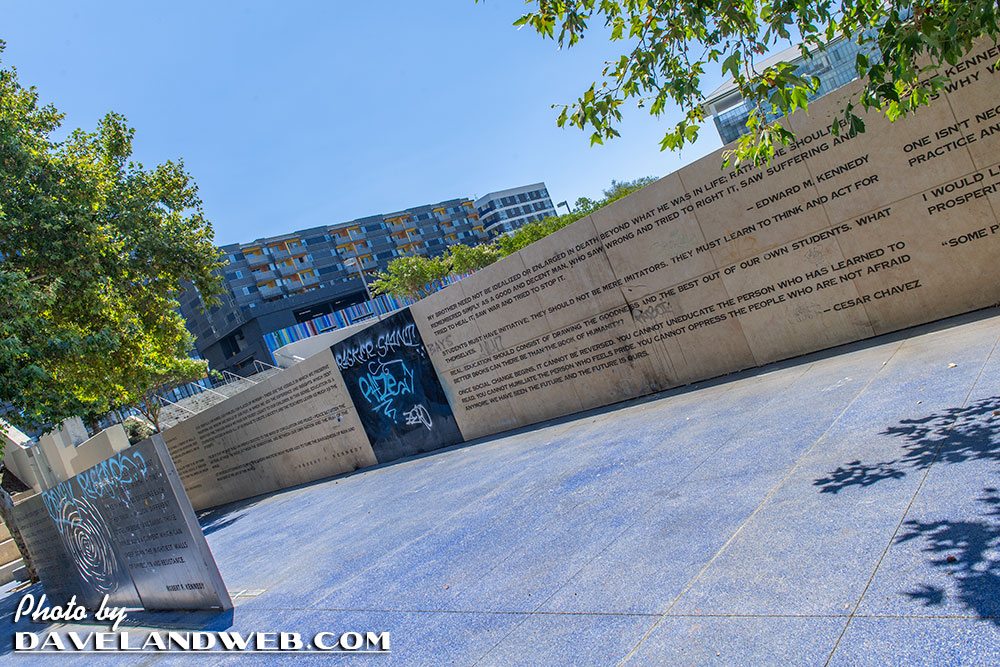
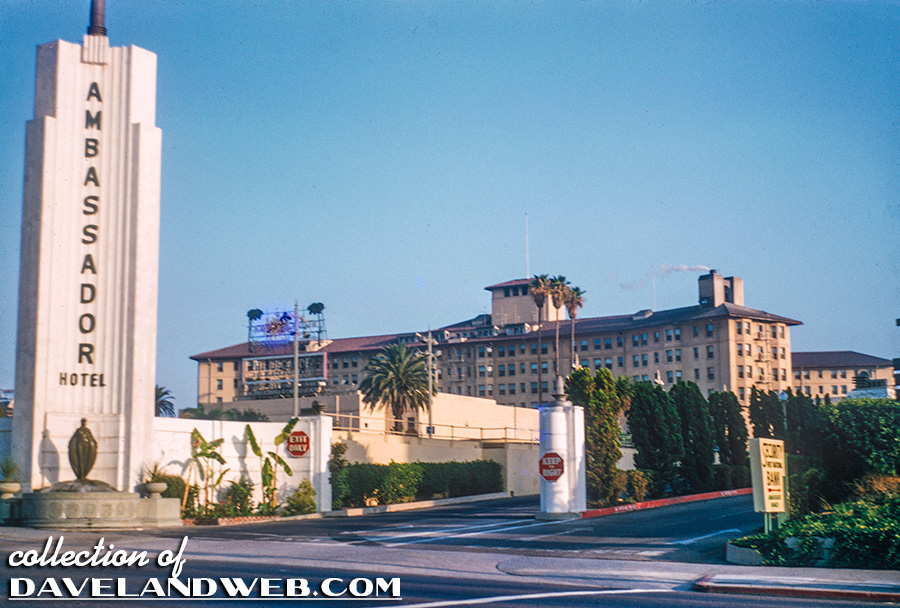
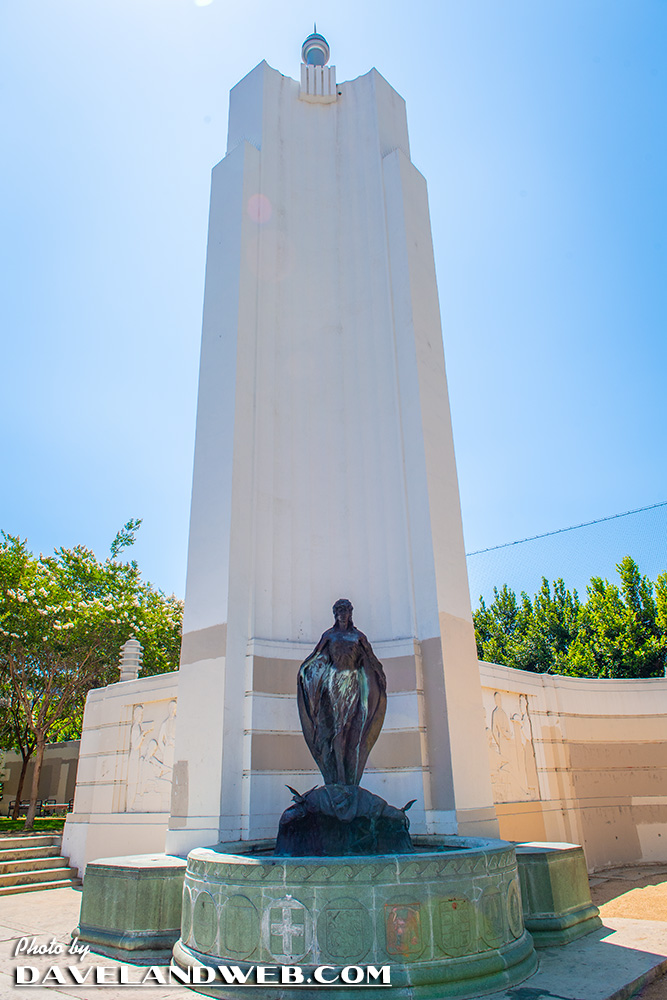
On my recent trip up to Los Angeles, I wanted to get some then and now comparison shots of the Ambassador Hotel. Designed by architect Myron Hunt and located on 24 acres just off Wilshire Boulevard, it opened at midnight on January 1, 1921. That must have been one heck of a New Year’s Eve party! Preservation efforts failed, and the hotel began demolition in 2006 to be replaced with the Robert F. Kennedy Community Schools, a K-8 facility. There are still remnants of the original complex that remain, such as the entrance pillar and fountain, minus the lettering and the water. While it’s nice that these art deco items remain, it’s somewhat sad that they appear to be in a state of disrepair and the area has become an encampment for the homeless.


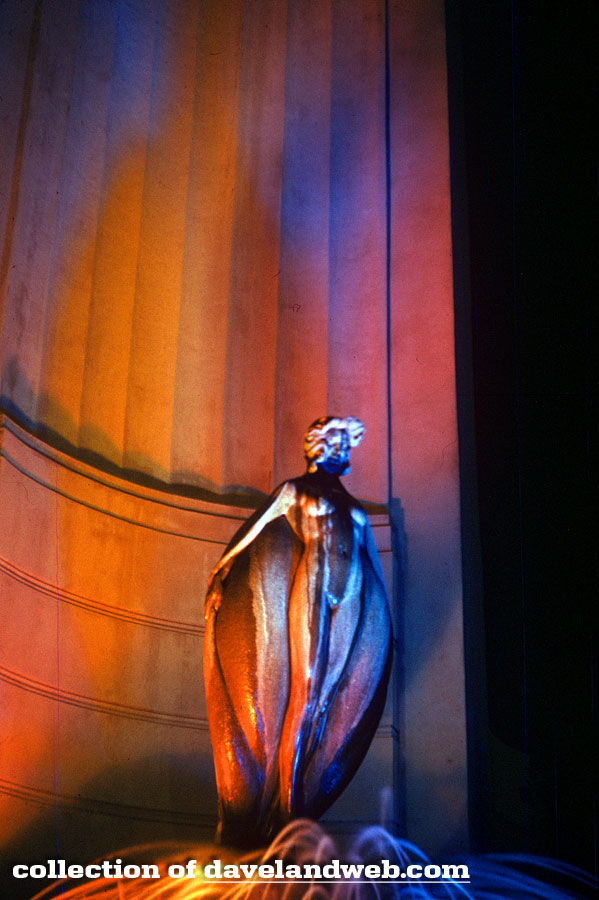
How the statue/fountain looked in the 1950’s:


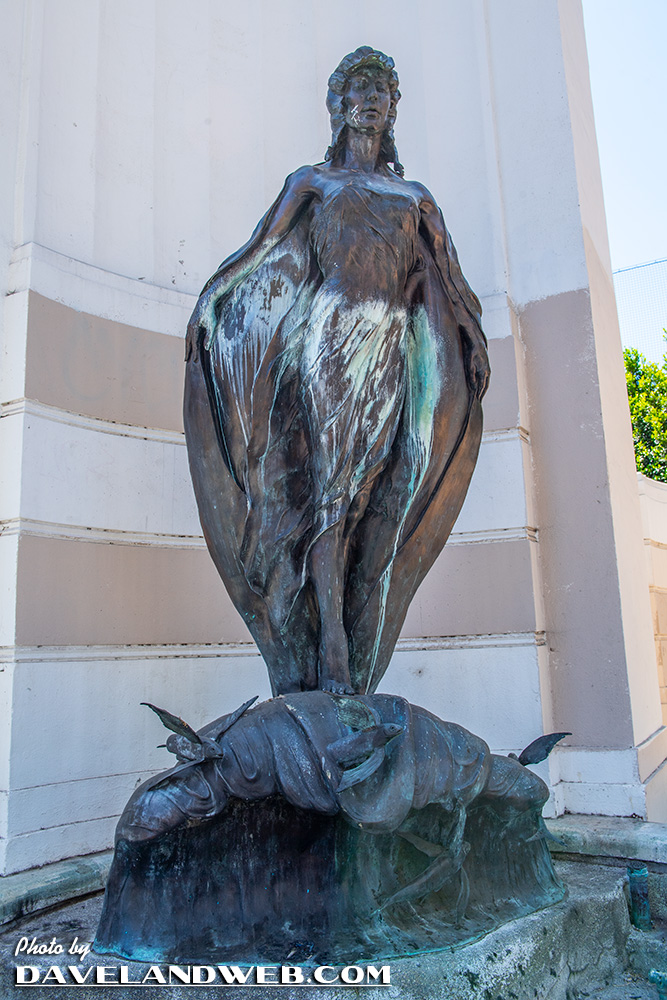
And how it looks now:


In writing this article, I learned that the statue I saw is not even the original one. From calisphere:

An unknown sculptor created the bronze statue in the fountain, which might have been originally named "Gloria." This statue was lost and artist Bobbie Carlyle recreated a replacement version for LAUSD (now titled "Seaswept"), lightly clothed as a concession to the new use by the school district.

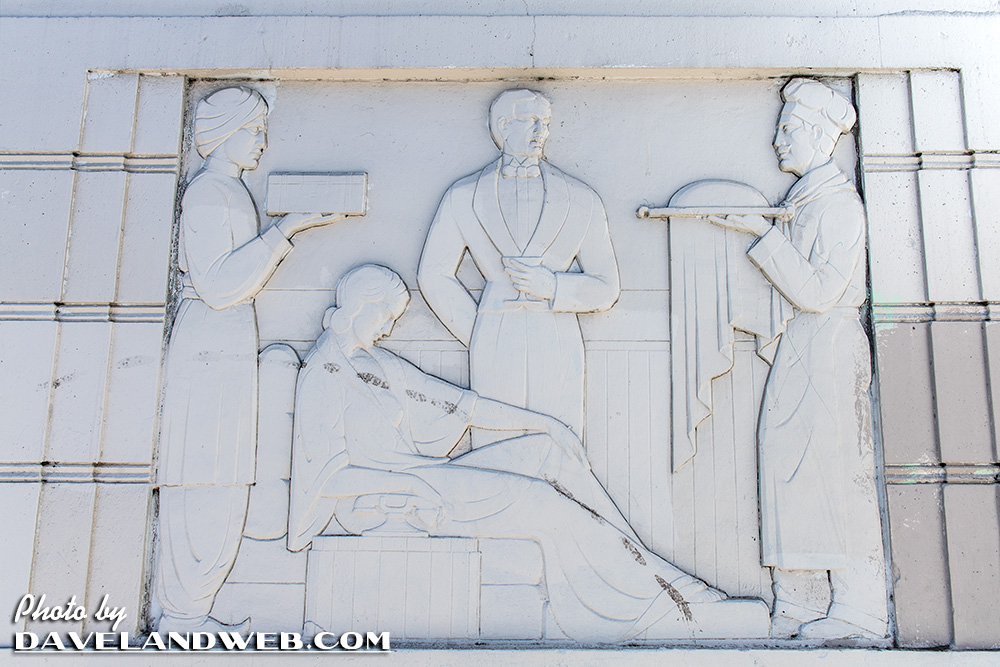
It was wonderful to see this Art Deco bas relief up close, although its context has now been removed. Again, from calisphere:

The bas-relief shows four human figures: a man wearing a turban and holding a box; a woman sitting on a low settee with her arm resting on a telephone; a man standing next to her holding a goblet; and a chef holding a tray and long napkin.


Ah, Futura Black - one of my favorite Art Deco fonts.


Circa 1954:


October 2005, which was the last time I saw the original structure semi-standing:


What it was replaced with, which has a slightly similar look to the Ambassador:


What was retained? Not much. From the Los Angeles Conservancy website:

The porte cochere and one wall of the Cocoanut Grove were retained; the rest is replicated. The campus interprets the site’s history but does not preserve it. We were very mindful of the need to provide a school as soon as possible, which was one of the reasons we chose not to pursue further litigation when it became clear we wouldn’t prevail. Nor was the approved plan part of a compromise between LAUSD and preservationists. We didn’t compromise on the Ambassador Hotel; we lost. Whatever “preservation measures” LAUSD undertook were entirely self-imposed and did not amount to actual preservation.

Yikes. At the front of the complex facing Wilshire is a memorial to Robert F. Kennedy, who was assassinated at the Ambassador in June 1968, a sad event that signaled the demise of the once great hotel.


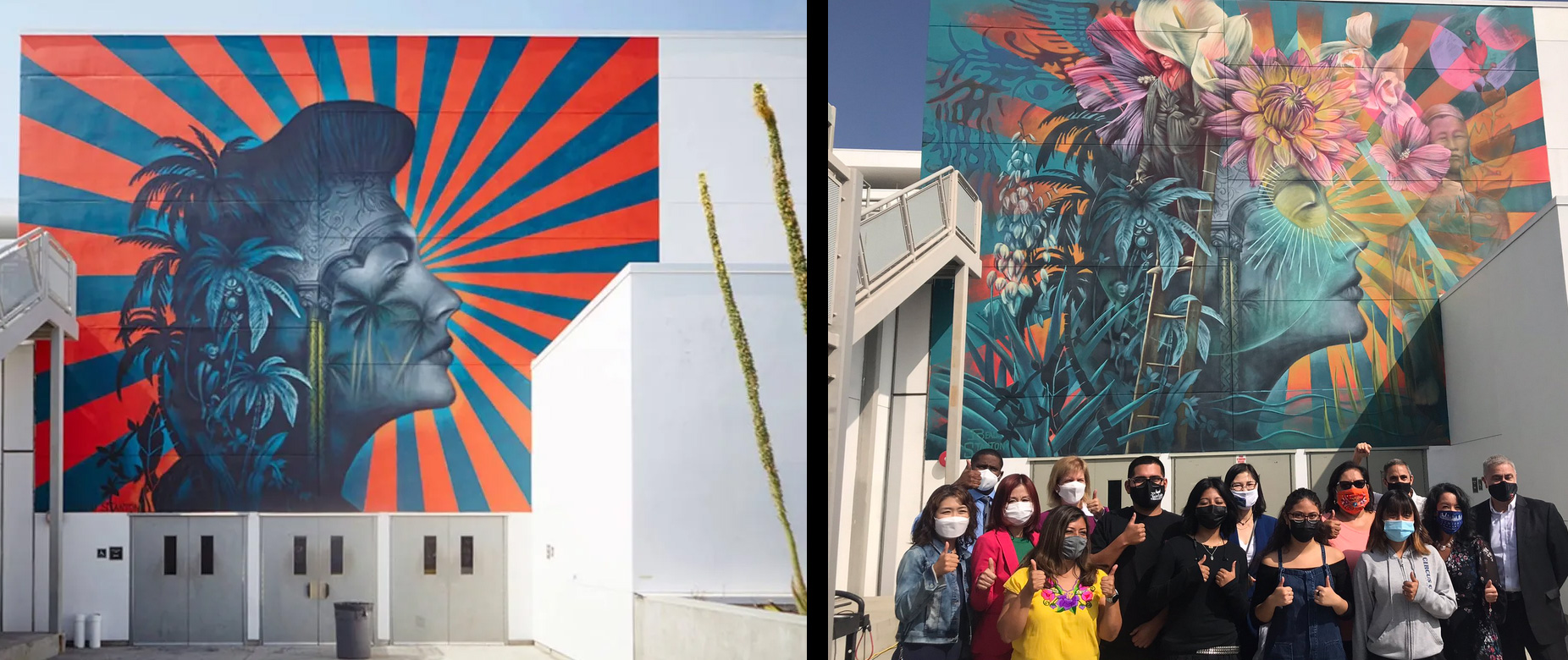
The school came under fire when it opened for being the costliest (approximately $578 million) at a time when nearly 3,000 teachers had been laid off in just two years. Adding to the controversy, a mural depicting actress Ava Gardner (a nod to the hotel’s Cocoanut Grove nightclub) was unveiled in 2016;

Edited from the rafu.com website, a Japanese American newspaper:

In 2018, the sun-ray motif became an issue as some Korean Americans said it was reminiscent of the Imperial Japan battle flag, a reminder of Japan’s decades-long occupation of the Korean Peninsula. The Los Angeles Unified School District initially agreed to the Wilshire Community Coalition’s demand that the mural be removed, then backtracked. [Artist Beau] Stanton pointed out that the orange-red and blue rays are a different color and thickness from the Japanese flag, and are a common motif in his works and those of other artists. Artist Shepard Fairey threatened to have his mural of Robert F. Kennedy, who was assassinated at the Ambassador Hotel, removed in solidarity. Gyopo, a group of Korean American artists and community members, said in a letter to LAUSD that those who think the mural isn’t offensive do not understand the pain and trauma that such imagery elicits for victims of wartime Japanese aggression. While acknowledging that Stanton did not mean to offend anyone, Gyopo said it was troubled by “the lack of community involvement in the mural’s selection process, the mural’s imagery itself and its memorialization of a whites-only club, and the ways in which the media has directed these narratives.” In 2019, Stanton said in a statement, “Over the past several months I have had the opportunity to meet with a diverse cross-section of stakeholders regarding my mural at the Robert F. Kennedy Community Schools, including students, faculty, fellow artists, and members of the Koreatown community. “These interactions have allowed me to synthesize a solution that aims to rise above the original binary conversation of ‘keep or remove the mural’ in order to build upon the original work and create something that speaks to the past, present, and future of the RFK campus. “My proposal involves creating a transformative work utilizing the original mural as a base for layering and weaving additional imagery into the original image much like an urban wall with many historic layers. Parts of the original will remain visible while focusing on themes related to the important conversation that the original work had initiated.  The new mural retains some of the original design, with the addition of images that celebrate Koreatown’s diverse immigrant community. Also, the stripes have been shortened so that they don’t touch the mural’s borders. “A lot of students had decorated their caps and sashes with colors and flag designs that were specific to where their family members had immigrated from – Mexico, Guatemala, El Salvador,” said Stanton, who incorporated those countries’ flowers into a crown on Gardner’s head. To pay tribute to Koreatown’s history, he included a Korean hotel worker and a man working in a Central L.A. citrus grove.

The original mural on the left and the revised one on the right. My eyes hurt it’s so busy.


See more Ambassador Hotel photos at my main website.
Friday, June 14, 2024

The Trouble with Amtrak


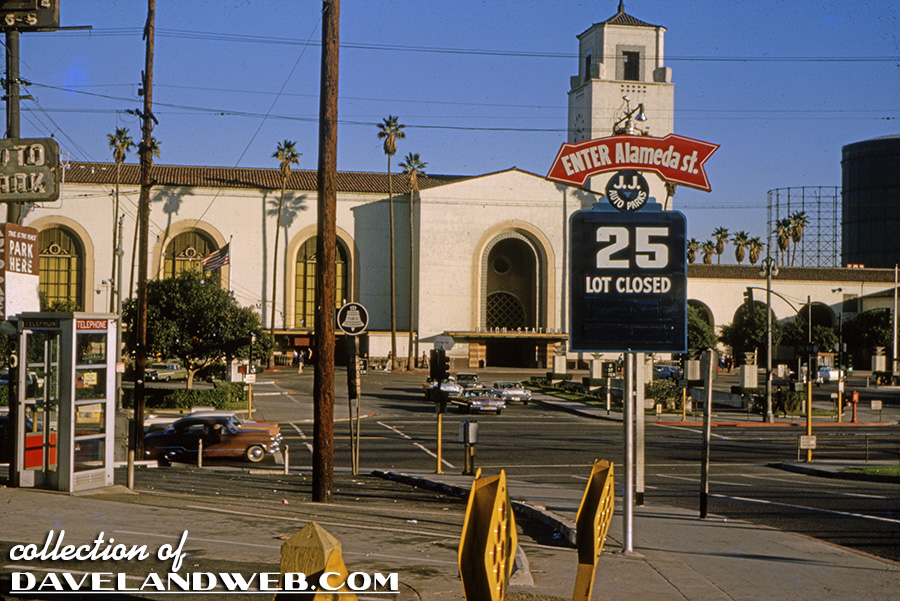
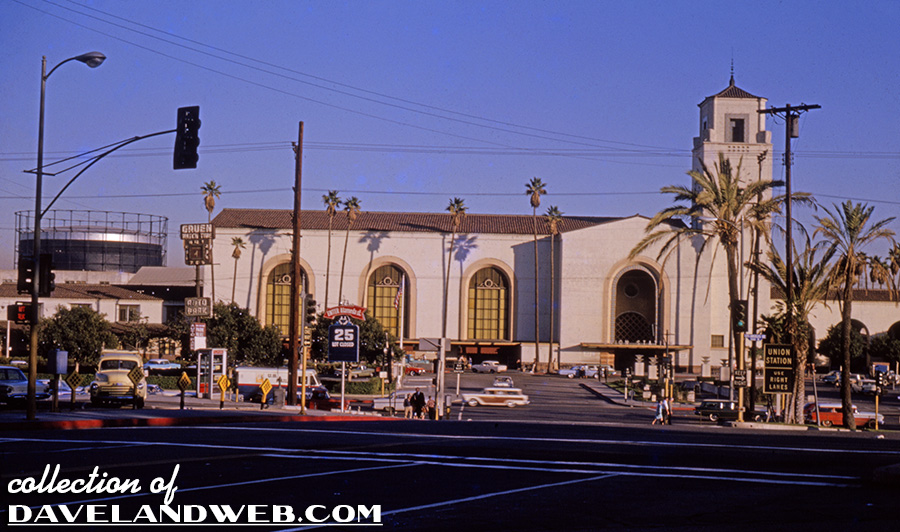
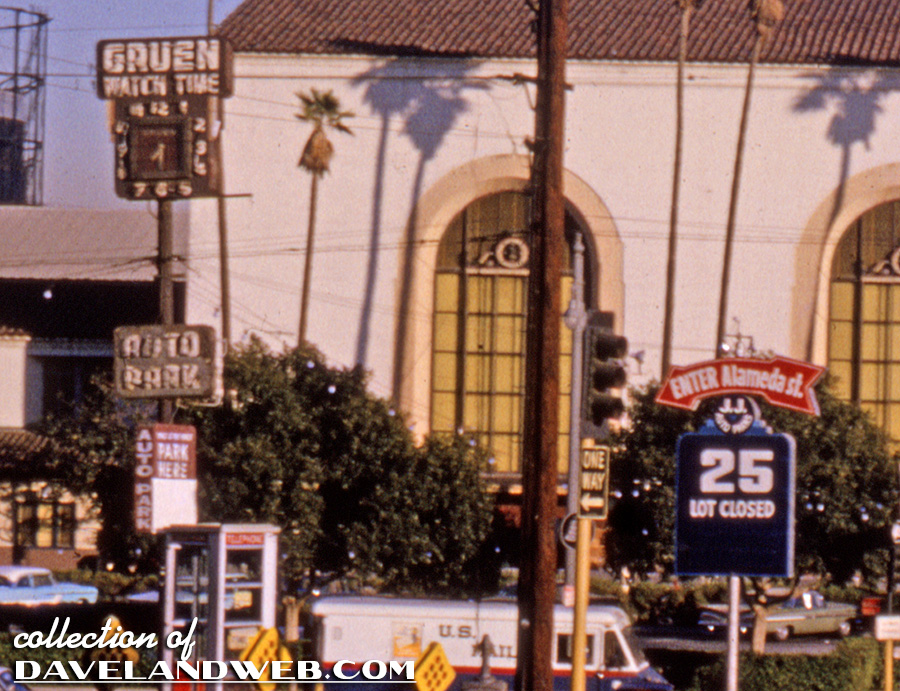
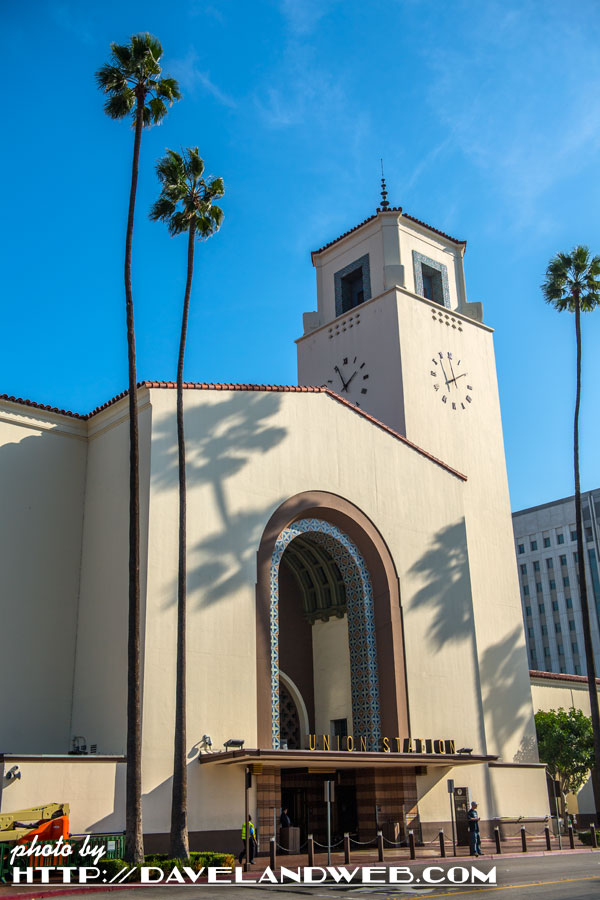
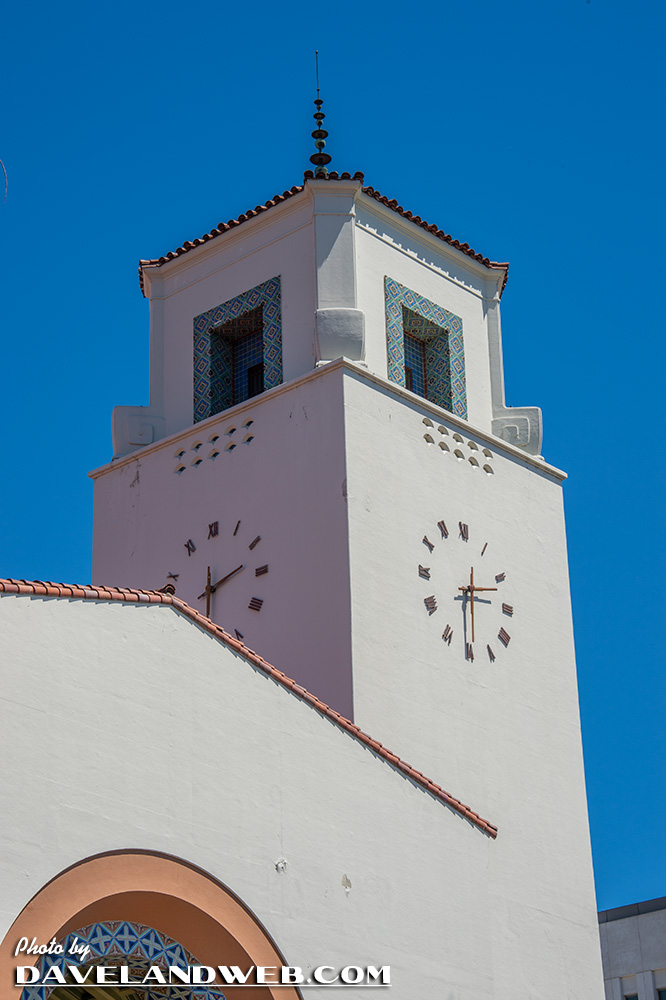
The Los Angeles Union Passenger Terminal (aka LA Union Station) opened in May 1939 and was placed on the National Register of Historic Places in 1980. Here’s how it looked in January 1964.


Oh, to know where that Gruen clock ended up!


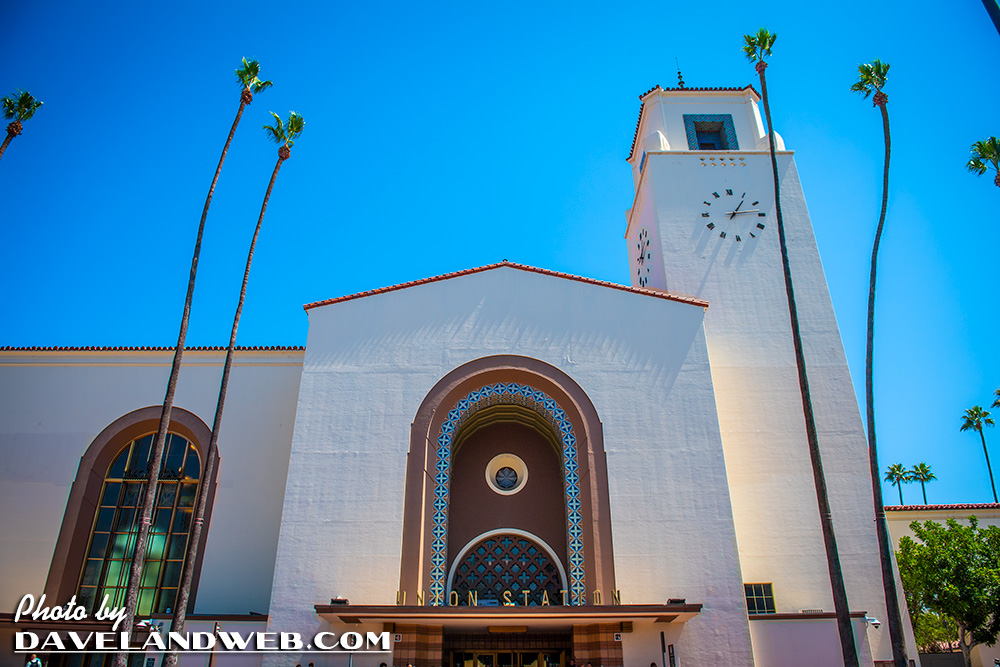
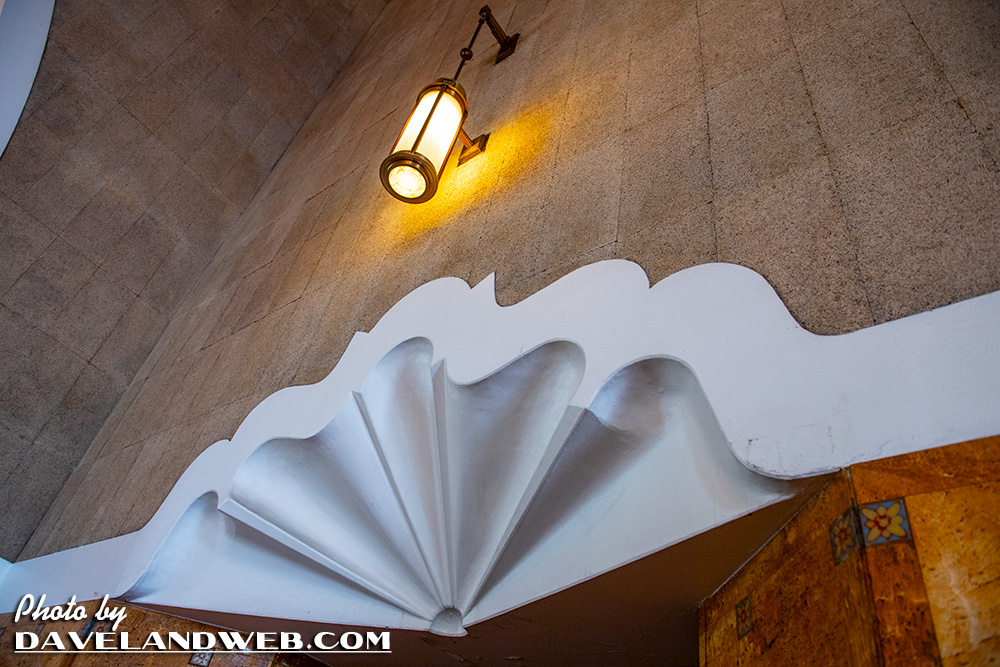
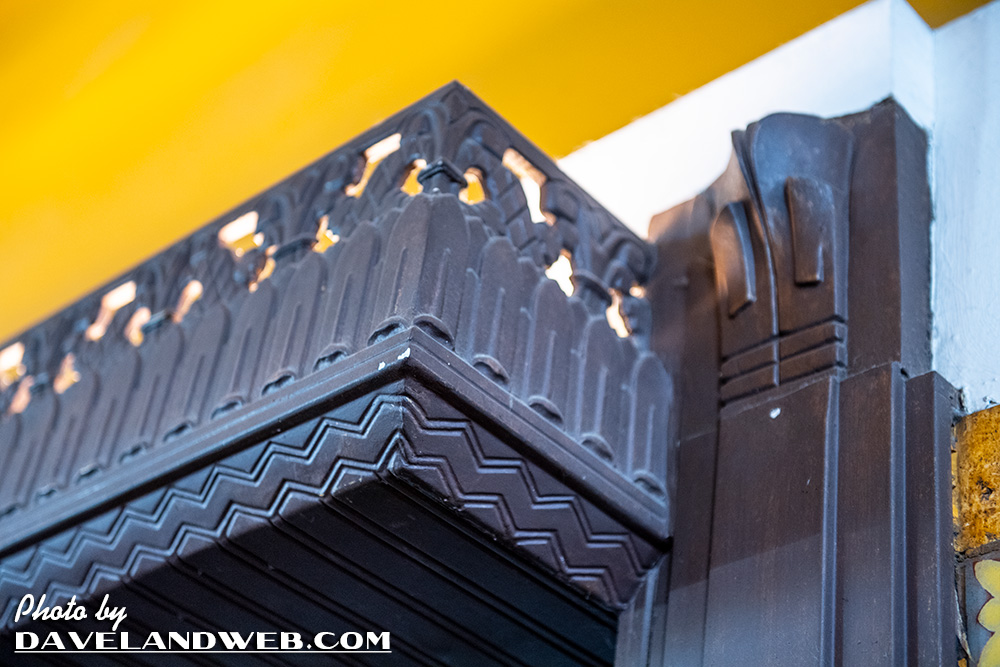
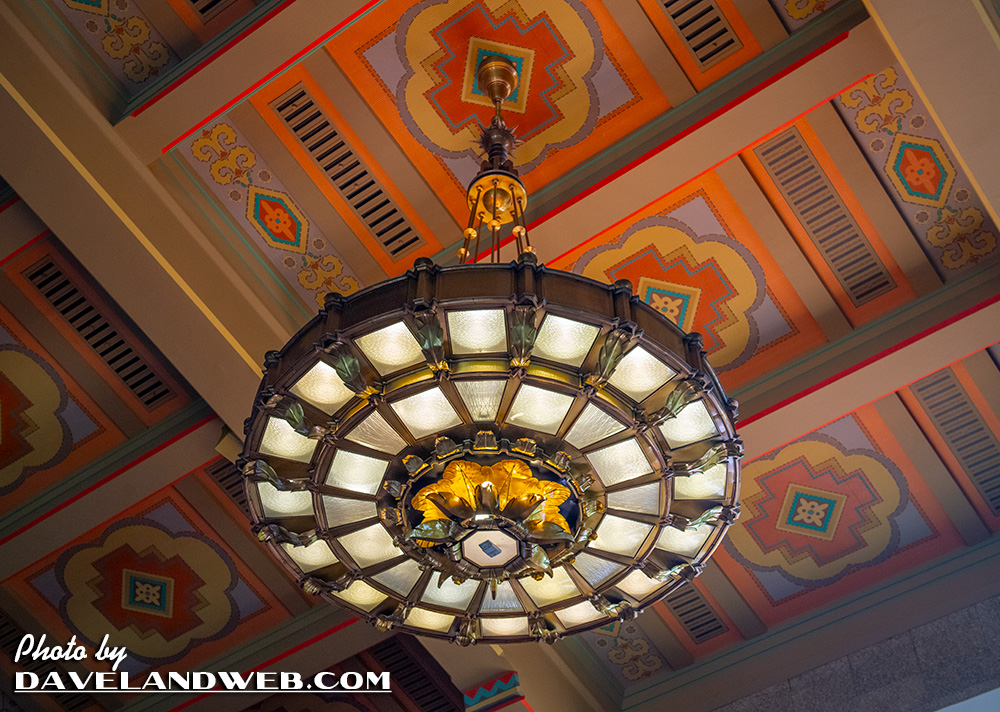
Union Station is still there, still looking good — even though the world around it has changed quite a bit.


Last weekend for my trip to the Hollywood Heritage Museum, I decided to skip the traffic and the headache of driving and travel by train instead. Unfortunately, I can’t say that Amtrak was worth the switch. A round trip from San Diego to LA is $70; even with the price of gas these days, traveling by train is more expensive than driving. But wait…there’s more. 


While taking pretty photos of Union Station was a definite plus for traveling by train, my trip cost had to factor in another $70 for round trip via Lyft from Union Station to the Heritage Museum in Hollywood.


Who knew that sustainability was so much more expensive?


To make matters worse, my train from San Diego to Los Angeles ended up being almost an hour late that day, which cut into my already short amount of time to spend at the museum. AND my time to take photos. You know it’s a bad day when I only take five photos of an architectural treasure!


At least the train home was on schedule, allowing me to make my San Diego photo shoot on time.


What I was able to trade in stress for traffic was replaced by the stress as to whether Amtrak would pull through on time, making the stress factor a wash. Another negative about traveling by Amtrak is the train schedule itself, with trains running approximately every 2 hours. Yes, I understand they are trying to minimize their costs by not having empty trains, but it sure does not add a convenience factor for those trying to avoid twiddling their thumbs in between trains. On the day I traveled, they ended up canceling a few of their scheduled routes, which does not instill confidence that Amtrak is going to perform when they say they are. Although Amtrak’s text to passengers said that they can make up for the lost time, my train did not. Leading to another mystery…how is it that cars in traffic (visible from the train window) are able to go faster than a train that has the track to itself?

C’mon Amtrak; help a brother out! I want to ditch the car but you don’t make it easy.

See more L.A. Union Station photos at my main website.
Friday, March 04, 2022

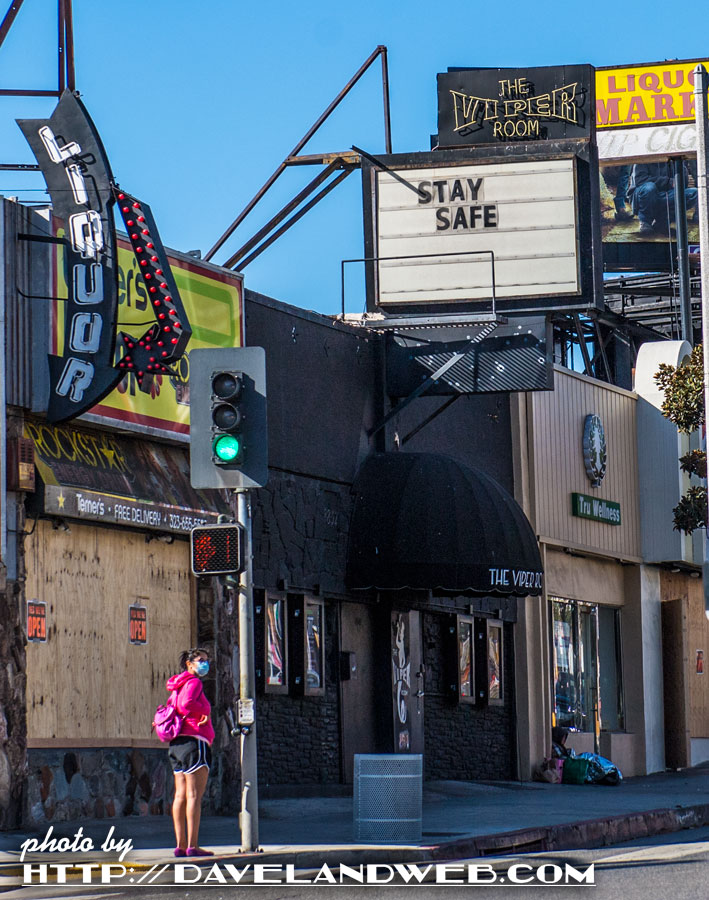
Save The Viper Room!


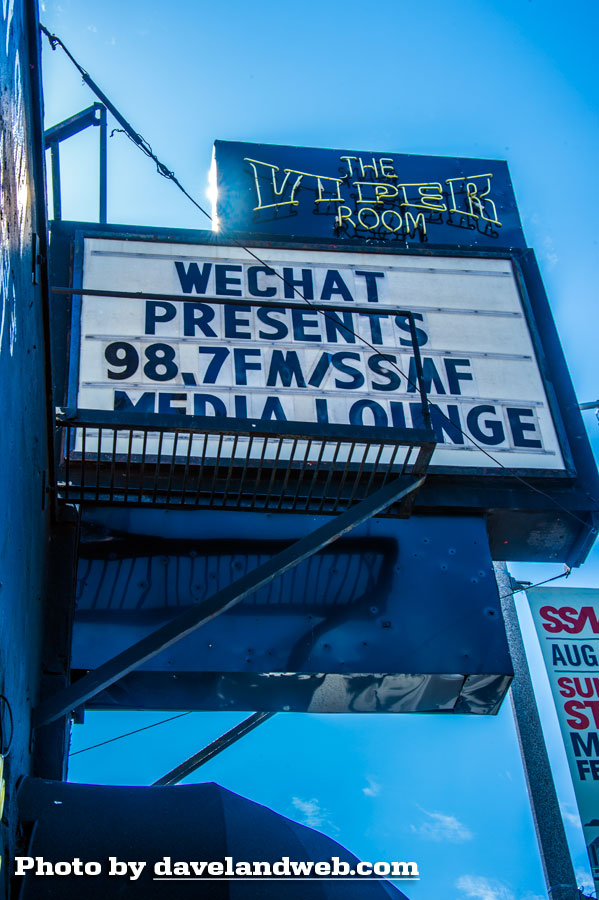
And yet another Hollywood/Los Angeles landmark appears to be poised to bite the dust. The infamous Viper Room on Sunset Boulevard has apparently been slated for the wrecking ball. I learned about this from the IG account of CC Devere. From her Save the Viper Room webpage:

The 101-year-old building started as a grocery store, then began to feature live music in the 1940s. It has been the Cotton Club, the Greenwich Village Inn, the Rue Angel, the Melody Room, Filthy McNasty’s (the façade was recently recreated at the Viper Room for filming of “Daisy Jones and the Six”), the Central, and, since 1993, the Viper Room. 

The club has appeared in music videos (Go-Go’s, “Our Lips Are Sealed”) and on film (“The Doors”, “Valley Girl”). Some of the world’s greatest musicians have played at the Viper Room: Johnny Cash, Tom Petty, Elvis Costello, Iggy Pop, Courtney Love, Lenny Kravitz, Sheryl Crow, Bruce Springsteen, Natalie Cole, Weezer, Pearl Jam, Queens of the Stone Age, and the list goes on…

And yes, it is notorious for Molly Bloom’s poker game (“Molly’s Game”) and for the tragic death of River Phoenix.


The Viper Room is an irreplaceable part of West Hollywood’s history. A reconfigured club in a new building is just not going to be the same - part of the Viper Room experience is in navigating the club’s labyrinthine, two-level layout. The plan for 8850 Sunset has also been linked to possible corruption.

We are asking the property owners and the City of West Hollywood to treat the Viper Room with the respect it has earned - ideally by leaving it alone (the proposed 15-story development will dwarf everything in West Hollywood), or, failing that, by incorporating the existing building into the new one (the Coca-Cola bottling plant was created by combining four older buildings).

The Viper Room is simply too important to lose.


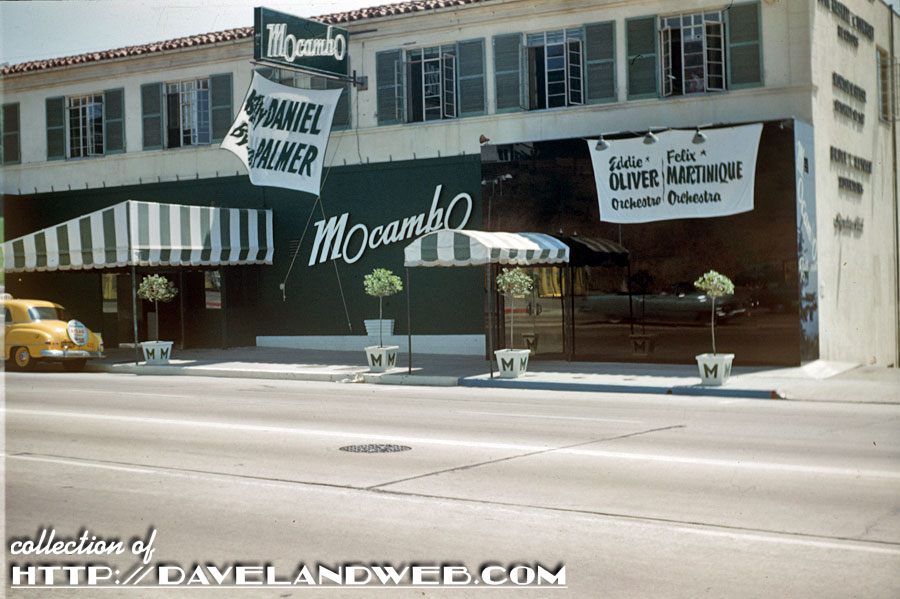
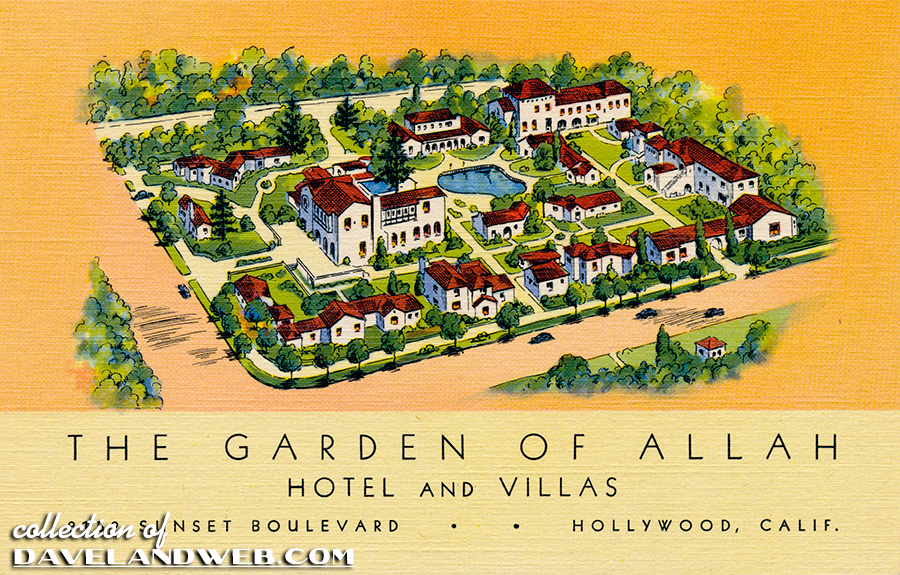
Here’s a short list of some of the other Sunset Boulevard landmarks that have met the wrecking ball. The Mocambo Club:


The Garden of Allah Hotel complex:


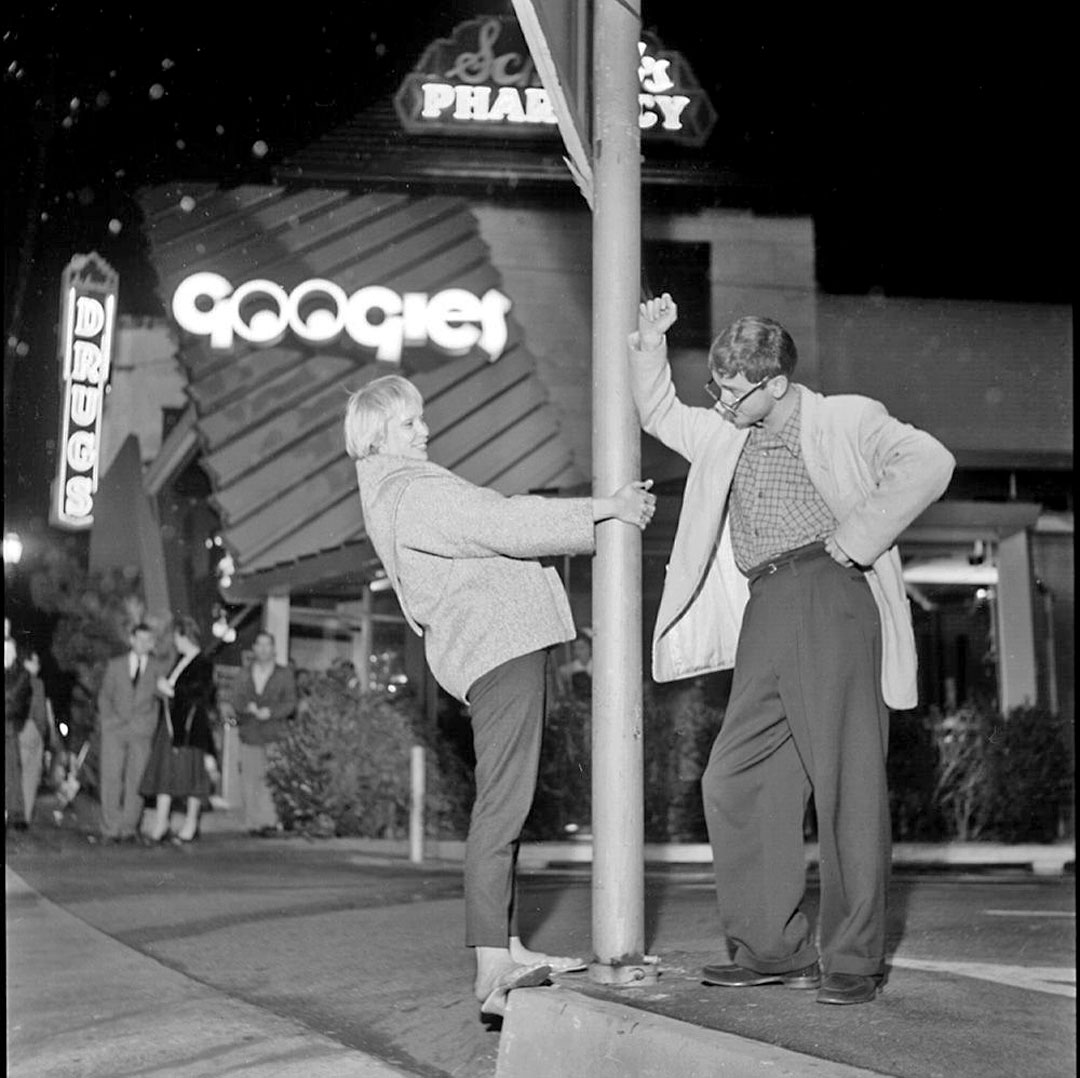
Schwab’s Pharmacy and Googies Diner:


And while it wasn’t on Sunset Boulevard, this L.A. landmark was just as important:


Let’s get real; re-created history is not the same is REAL history! Please be sure to sign the petition to help save the Viper Room!

See more Sunset Boulevard photos at my main website.
Wednesday, February 16, 2022

Union Station 1950: PST


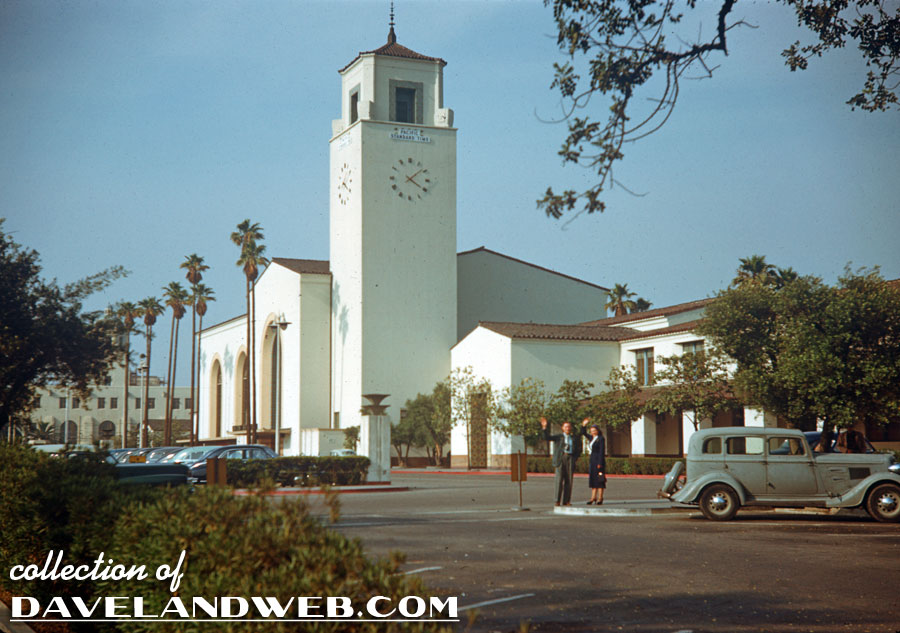
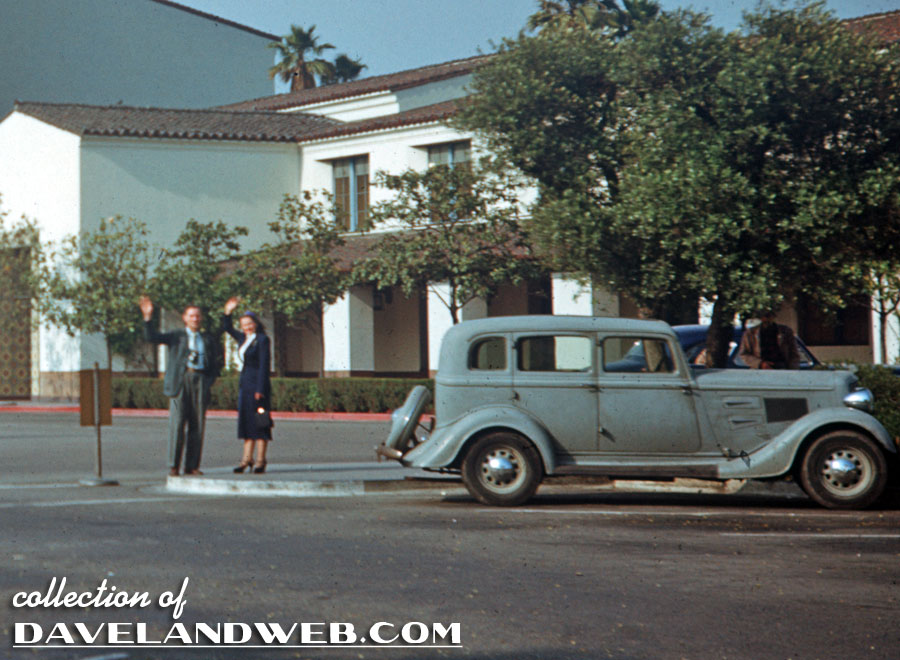
This shot of Union Station in Los Angeles hails from May 19, 1950. I am assuming the couple waving goodbye knew the photographer that took this image that just happens to have one of the coolest vintage autos parked next to them!


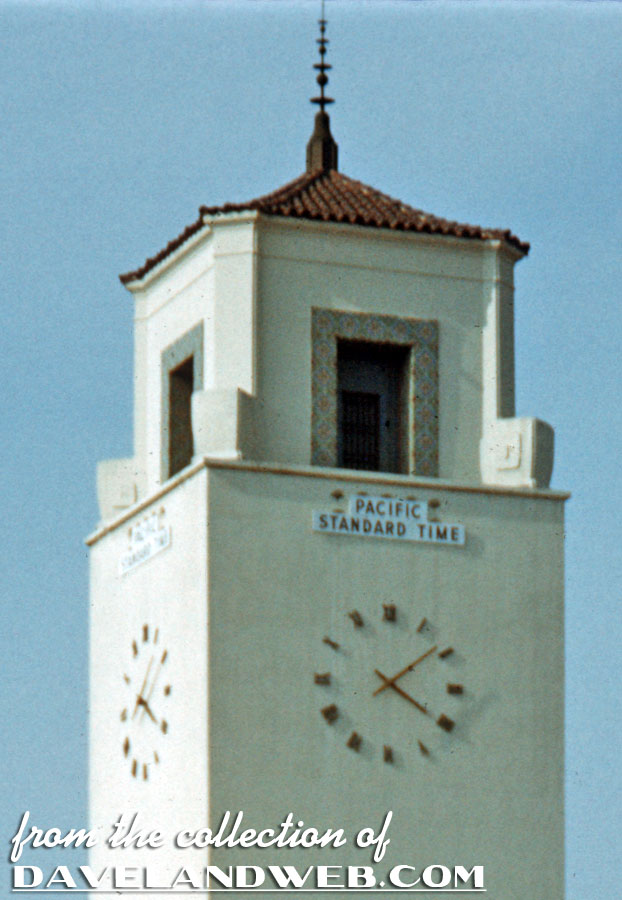
As a courtesy to those travelers from other time zones, the clock tower made it clear that they should set their watches to Pacific Standard Time:


Today, with cell phones and everything being done for us automatically, that notification is now gone.


“You mean you had to actually set the time on your clock/watch, Grandpa?!? Wow, things were tough back in the day!”


Oh to have brains again…

See more Los Angeles Union Station photos at my main website.
Thursday, November 11, 2021

Trip to Hollywood, June 1963


A recent acquisition to my vintage collection was this set of June 1963 images which show tourist sites from Hollywood and Los Angeles. What I love about this set are the vintage handwritten notes on the back that describe little details that I would not have known otherwise. On June 12th, our vintage photographer visited Universal Studios. According to the note on the back, this one is a “Universal International Revue Studio,” and the second car from the right (a Rolls Royce) belongs to Jack Benny.


The image below features the Shanty boat used in “Tammy and the Bachelor,” the 1957 Debbie Reynolds movie.


Next up, they visited the Hollywood Bowl, using this escalator to get to the famed venue.


“Truck working on fountains;  had just turned them off” is the description for this one.


As if that wasn’t enough, they also trekked over to the Farmers Market off Fairfax:


I’d never noticed the weathervane on top before.


Nearby at the CBS Television studio, they got to see Red Skelton’s costumes…but apparently not Red Skelton.


How about this plate for the AMC Rambler; CBS 199. Coincidence? I wonder who it belonged to. Apparently this car was Motor Trends Car of the year!


One shot of the Capitol Records building was not enough. In case you were wondering, it was shot at 100 f/4.


Zooming in we can see the Cleopatra Parking Lot and Du-Par’s Restaurant:


This second shot, slightly blurrier, was shot at 100 f/8.


What trip to Hollywood would be complete without a trek to the famed Hollywood & Vine street corner? The Brown Derby restaurant is visible in the background.


The next day included a trip to Chinatown, where they saw this Wishing Well:


…and the Hong Building, which is still there today:


It would appear that the trip ended on June 15, at (not surprisingly) LAX:


See more Hollywood photos at my main website.