Showing posts with label the hollywood palace. Show all posts

Monday, September 16, 2024

A Tale of Two Capitans


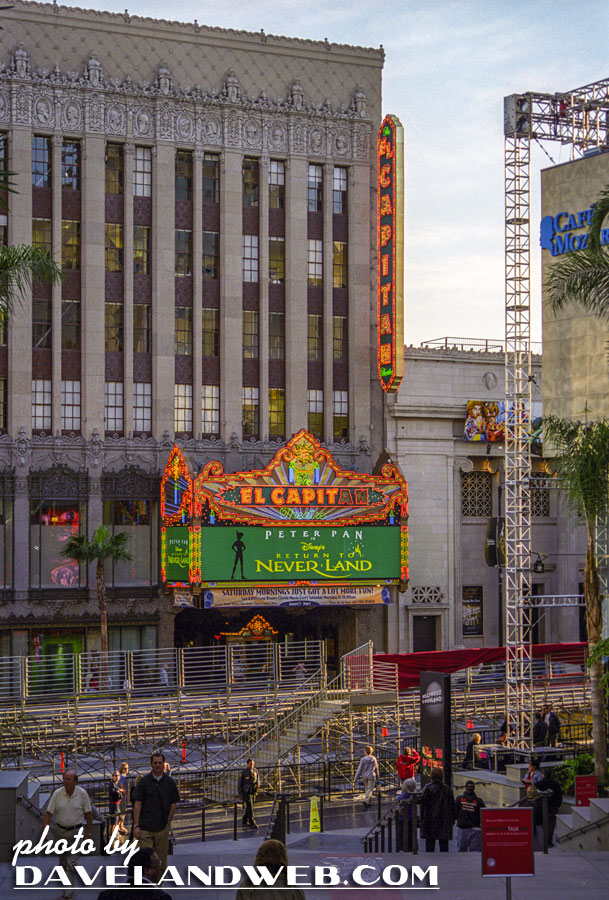
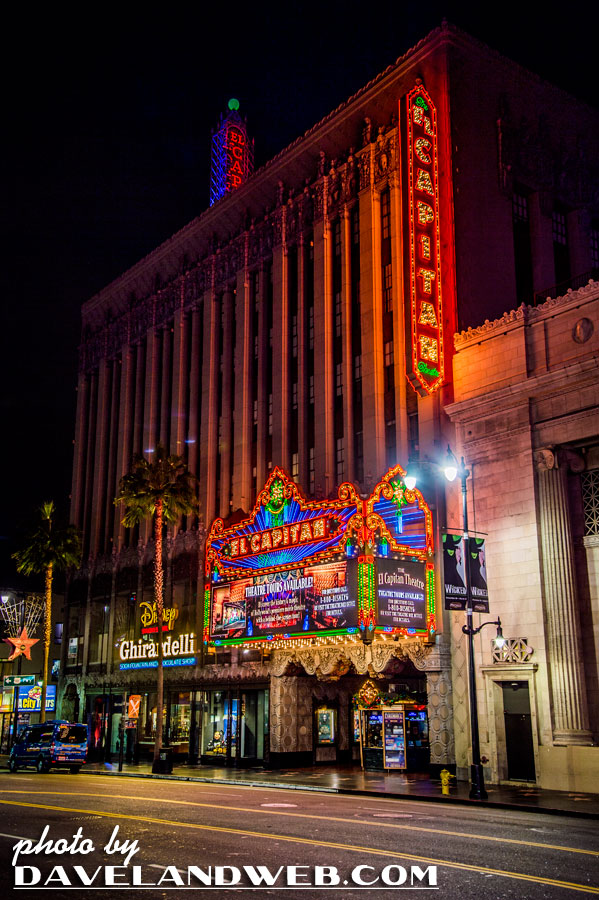
The name “El Capitan” was used at different times for two different theatres at two different locations. It must have been a coveted name to have earned that distinction! In the first photo for today’s post from March 2002, we see what is the commonly known Hollywood Boulevard location. Edited from the El Capitan website:

1926: Dubbed "Hollywood's First Home of Spoken Drama" the El Capitan Theatre made its debut as the largest legitimate theatre in Hollywood on On May 3, 1926. Stars filled the 1,550 seat theatre for the premiere of the fresh-from-Broadway play CHARLOT'S REVUE, starring Jack Buchanan, Gertrude Lawrence and Beatrice Lillie.

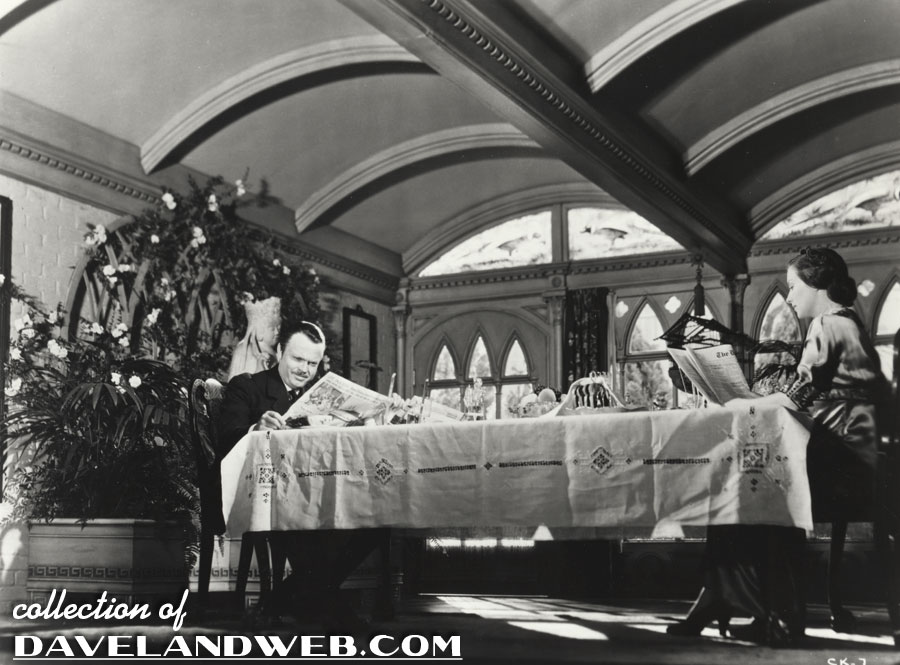
1941: Business was faltering, and the theater then began showing movies. On May 8, 1941, Orson Welles premiered his first feature, and very controversial, film “Citizen Kane,” at the El Capitan Theatre. Welles was unable to locate a theater owner willing to risk screening his film so he turned to the El Capitan.


1942: The theater closed for a two month renovation and reopened in March 1942 as the Hollywood Paramount (it had been purchased by Paramount Pictures), a new, streamlined "art moderne" first run movie house. Its inaugural film presentation was Cecil B. DeMille's “Reap the Wild Wind.”

1989: The Walt Disney Company joined forces with Pacific Theatres and launched a two-year, remodel of the El Capitan Theatre. The remodel was led by renowned theatre designer Joseph J. Musil with the supervision of the National Park Service's Department of the Interior, and guidance from conservator Martin Weil and architect Ed Fields.

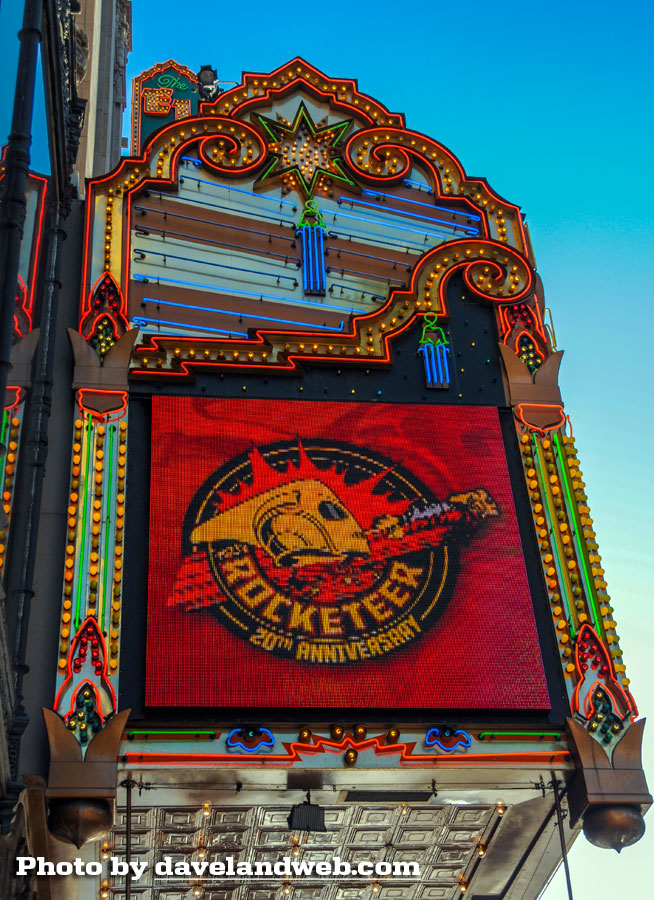
1991: The theatre reopened its doors to the public on June 19, 1991 for the world premiere of Walt Disney Pictures’ THE ROCKETEER.
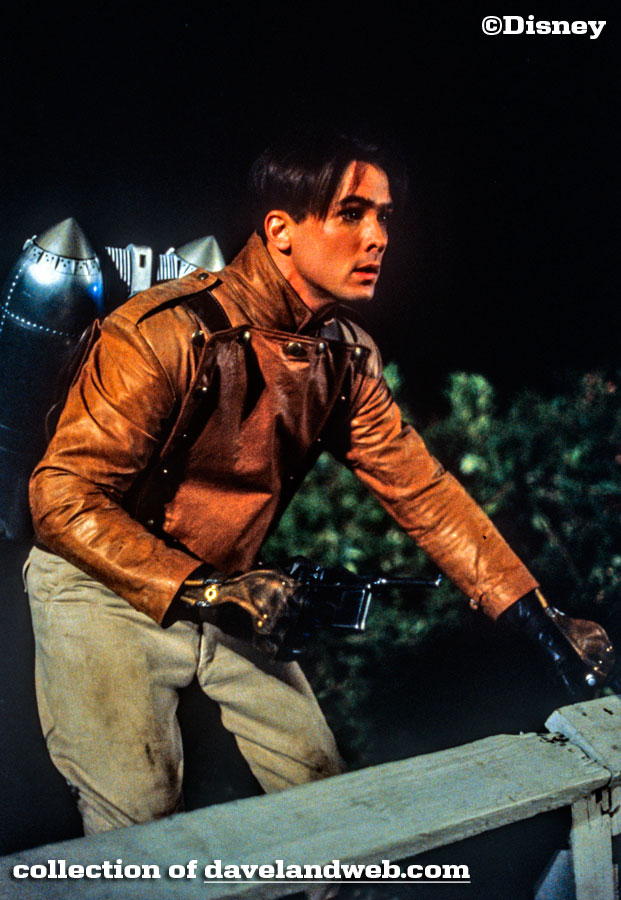


In 2011, the 20th anniversary of the film, “The Rocketeer” was shown again at the El Capitan, with leading man Billy Campbell in attendance. I was there, too.


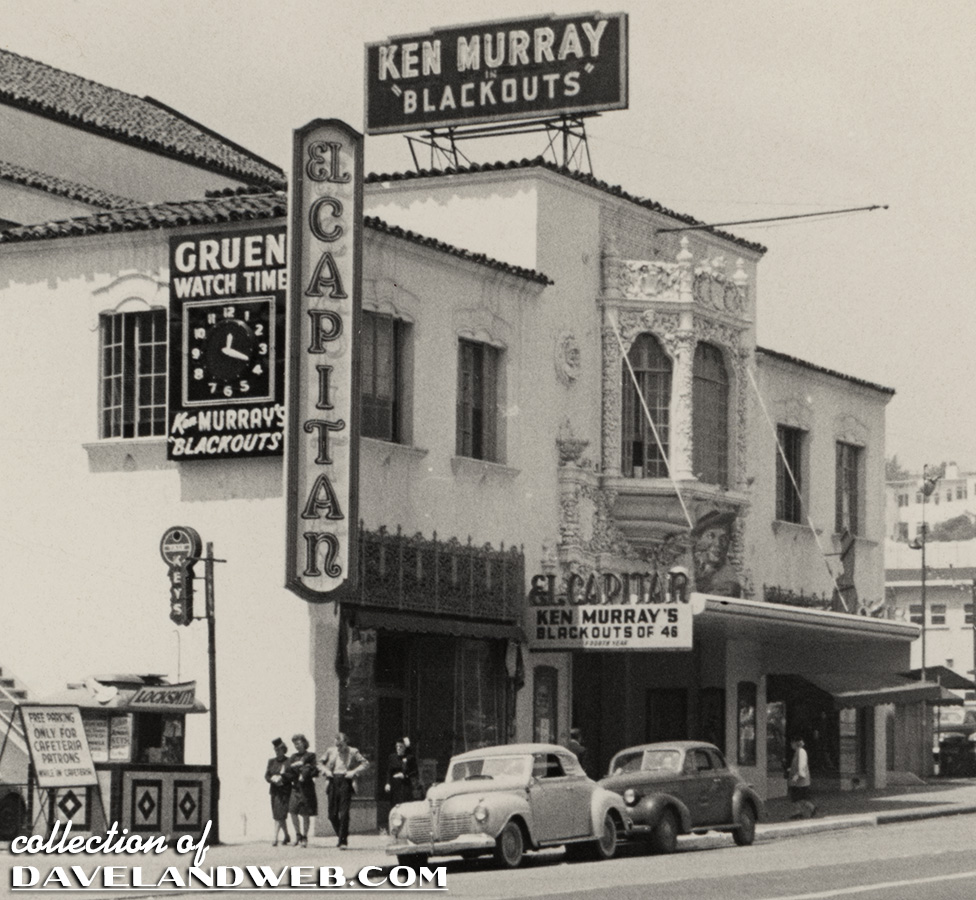
This vintage 1946 shot shows the OTHER El Capitan, just a few blocks away on Vine Street.
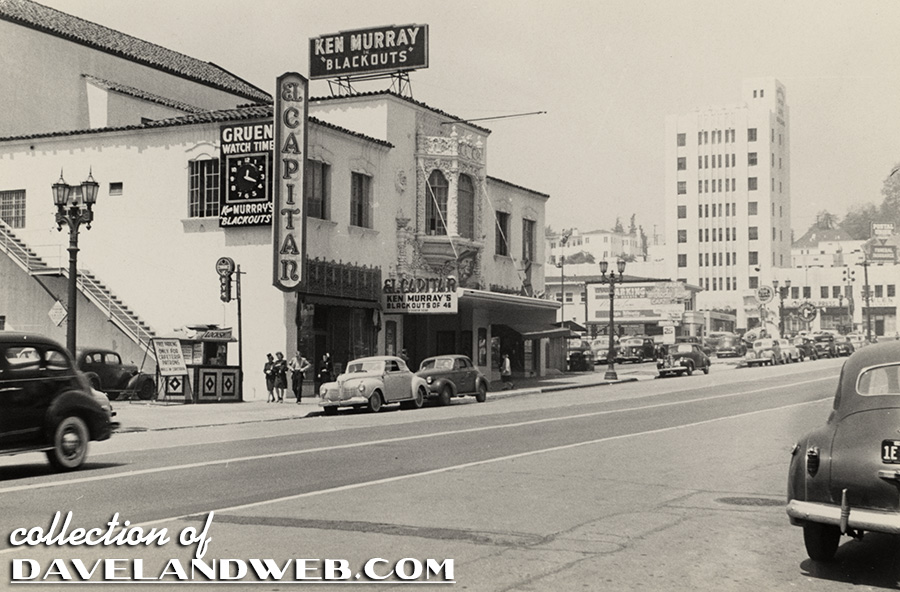


Originally known as The Hollywood Playhouse, it was designed in the Spanish Colonial Revival style by the architectural firm of Gogarty and Weyl. During the Great Depression, the theatre was renamed The WPA Federal Theatre (after the Works Progress Administration), and used for government-sponsored programs. Later, the theatre hosted many CBS Radio Network programs, including Fanny Brice’s “Baby Snooks” show and Lucille Ball’s “My Favorite Husband” program (the precursor to “I Love Lucy”). In the 1940s, it was renamed The El Capitan Theatre, and used for a long-running live burlesque variety show called Ken Murray's Blackouts.


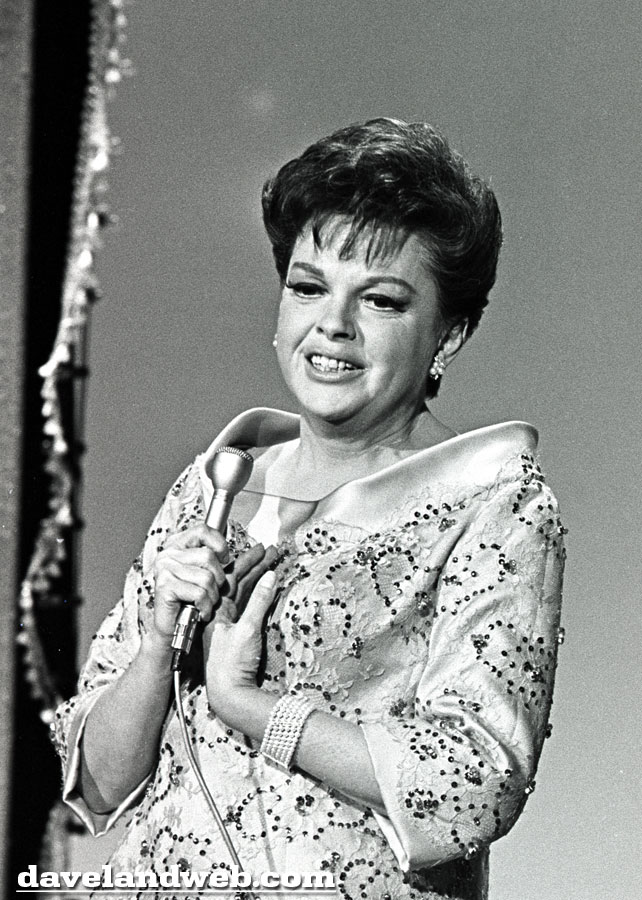
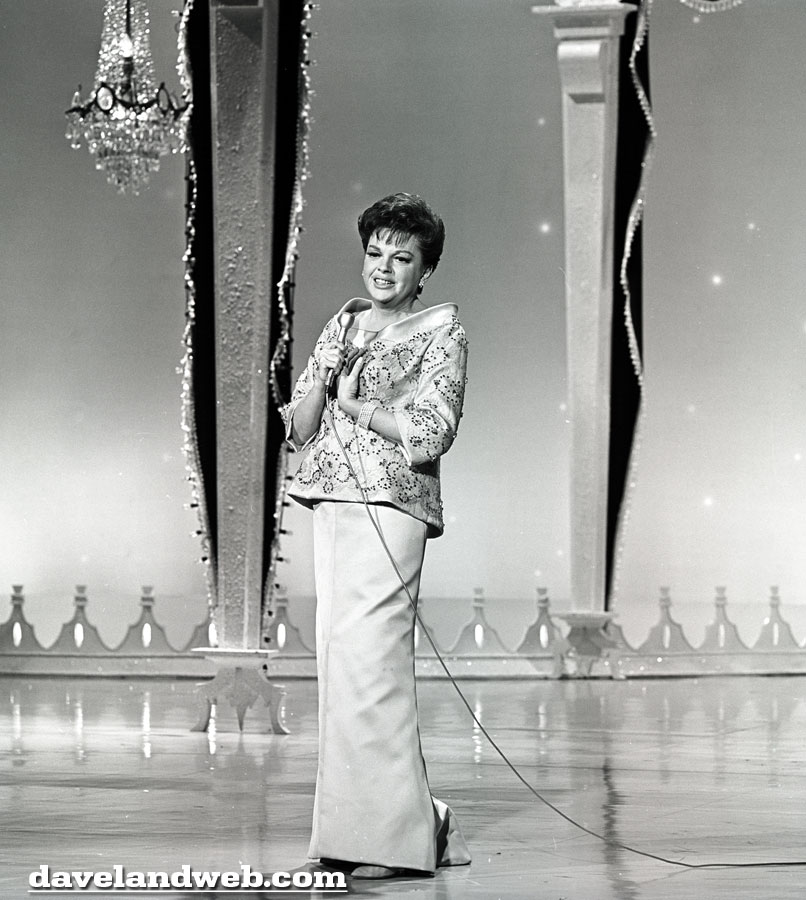
In the 1950s, the theatre became a television studio and it was from a set on its stage that Richard Nixon delivered his famous “Checkers speech” on September 23, 1952. This event is often mistakenly said (especially on the Internet) to have taken place at the other El Capitan. The theater was also home to The Colgate Comedy Hour, the Lawrence Welk Show, and This is Your Life. In 1963, ABC television used the theater for Jerry Lewis’ weekly TV program, and renamed it The Jerry Lewis Theatre. After the cancellation of Lewis’ show, ABC renamed the building the Hollywood Palace and launched The Hollywood Palace, a variety series which had guests such as Judy Garland (below in 1965), Groucho Marx, and Louis Armstrong.


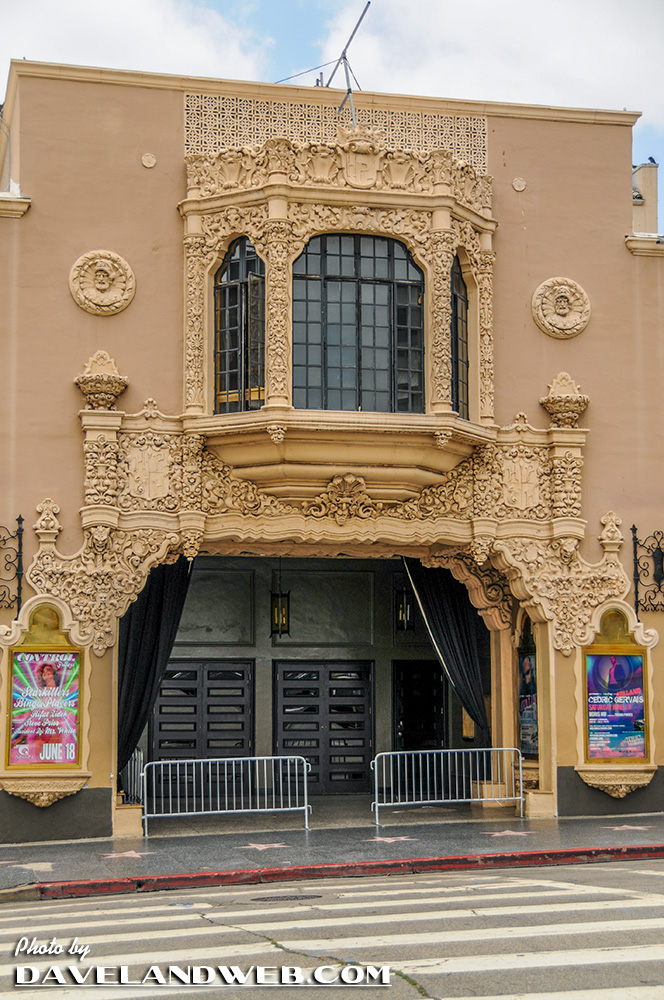
The program was successful and continued for seven years until 1970, after which ABC continued to use the building as a studio for occasional broadcasts. In 1978, ABC sold the theatre to private businessman Dennis Lidtke, who restored it and reopened it four years later with an abridged name, The Palace. It can be seen in the film “Against All Odds.” The punk band The Ramones played their 2263rd and final show here on August 6th 1996. It was recorded for Billboard live for the album We’re Outta Here. The building was purchased by Hollywood Entertainment Partners in September 2002 and renamed The Avalon. Here’s how it currently looks:
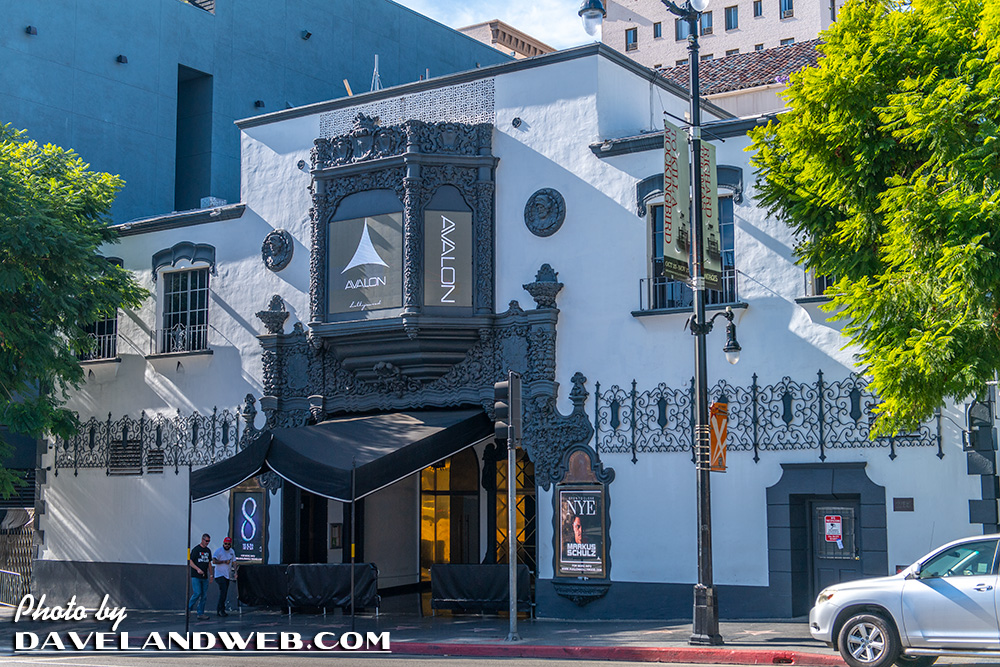


A December 2014 shot of the other El Capitan:


See more vintage and contemporary Hollywood photos at my main website.

Monday, January 02, 2023

Monday with Margaret


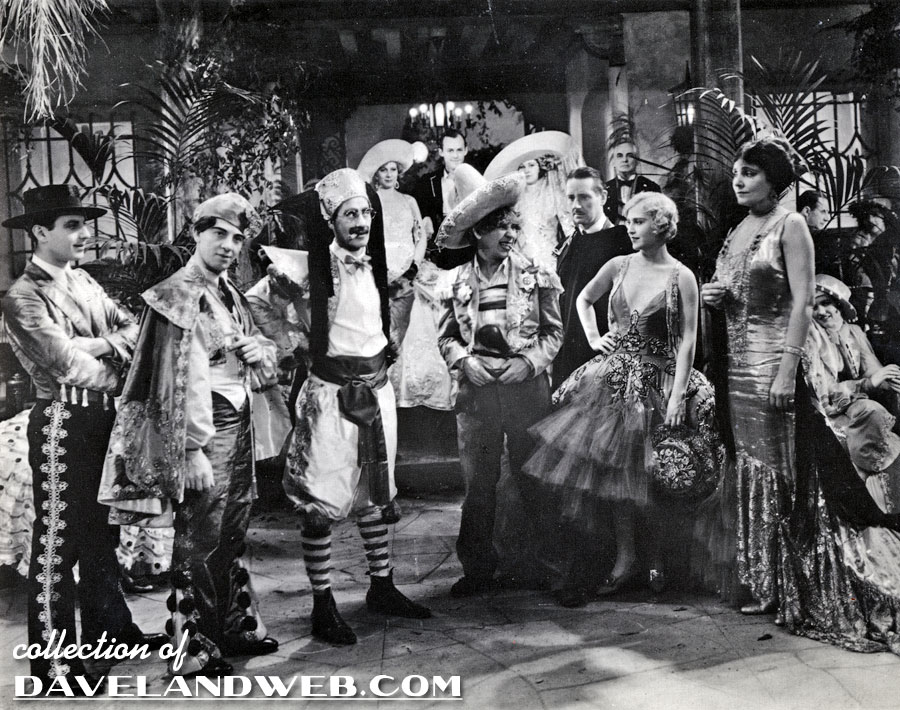
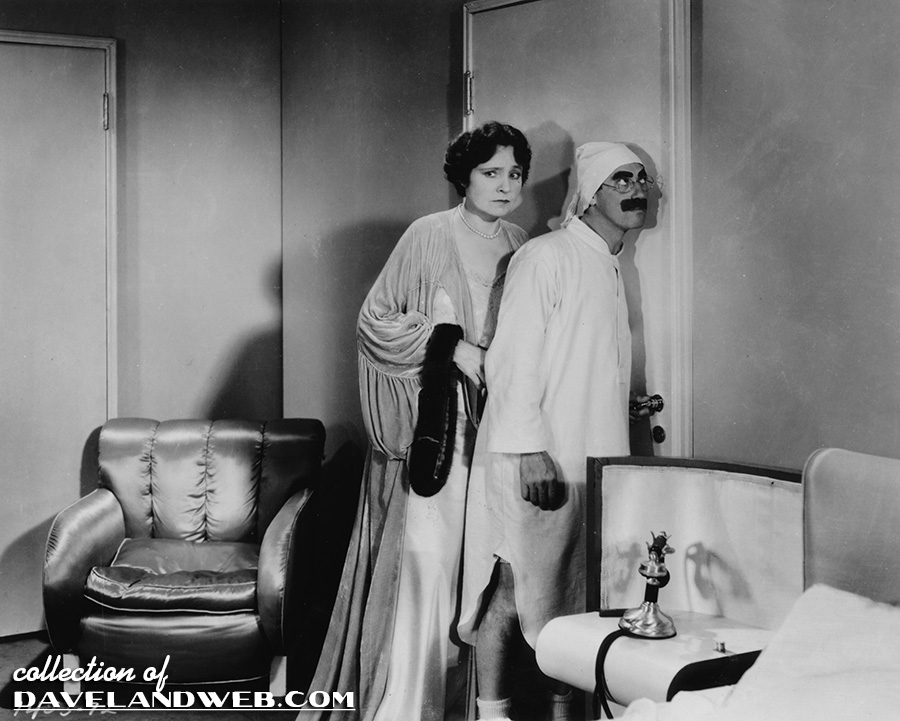
I recently discovered the book Straight Lady (2022), by Chris Enss and Howard Kazanjian. I was so excited to see that a book had been written on Margaret Dumont, one of the greatest straight women in motion pictures and also known as the fifth Marx Brothers. Always the haughty dowager, she lent an air of dignity that provided the perfect counterpart for the zaniness of Groucho and his brothers. Sadly, the book was a supreme disappointment. Other than some brief new information on Margaret’s early (and somewhat scandalous!) life, the book is more about the career of the Marx Brothers than any new info on the comedienne. Fraught with errors, the level of writing rarely progresses beyond that of a high school report. It also appears that the level of research done was low; vintage newspaper articles seem to supply most of the semi-interesting information. Margaret deserved much more. To rectify this situation, today’s post celebrates Margaret Dumont with photos from my collection. From an interview at the time of the release of “A Night at the Opera” (1935):

I was a bit dubious about the Marx Brothers when Sam Harris asked me to play opposite them in “The Cocoanuts” (1929), and I’ll have to admit truthfully that I’m still dubious. Sam told me that the Marx Brothers needed an actress who could learn the art of playing straight, someone with dignity and poise to act as legitimate dramatic balance for their comedy. Naturally I considered Sam’s proposal a compliment and the chance to appear with the Marx Brothers a real opportunity. What Sam didn’t tell me nearly caused me to suffer a nervous breakdown after three weeks as Groucho’s leading lady. He pushed me out of windows, pulled chairs out from under me, broiled steaks in the fireplace of my apartment, put frogs in my bathtub, and made my life miserable in general on the stage and off. I don’t regret a minute of it. Everything the Marx Brothers do comes under the heading of good, clean sport. They are the best friends I have.

A classic scene between Margaret and Groucho from “Duck Soup” (1933):


Margaret bristled whenever she was referred to as a “stooge”:

It has been amusing, as well as profitable, to be associated with the Marx Brothers, but please don’t refer to me as their stooge. Leading lady, yes, but stooge—it’s a terrible word, isn’t it?

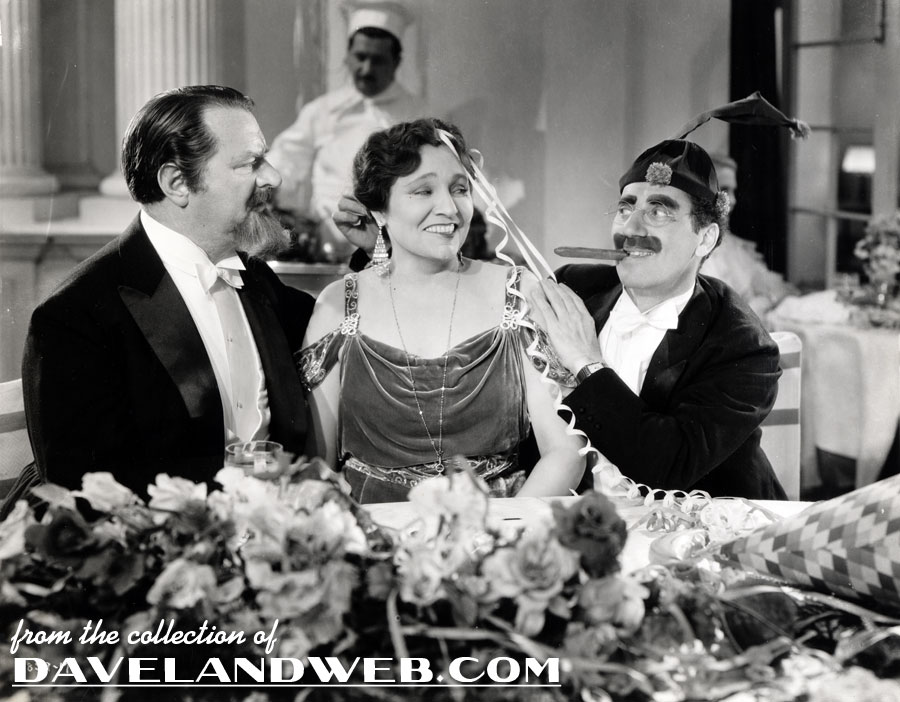
“A Night at the Opera” (1935) was the first MGM film for the Marx Brothers. Both Groucho and Sig Ruman are fighting for the affections (and millions) of Margaret’s widowed character, Mrs. Claypool.


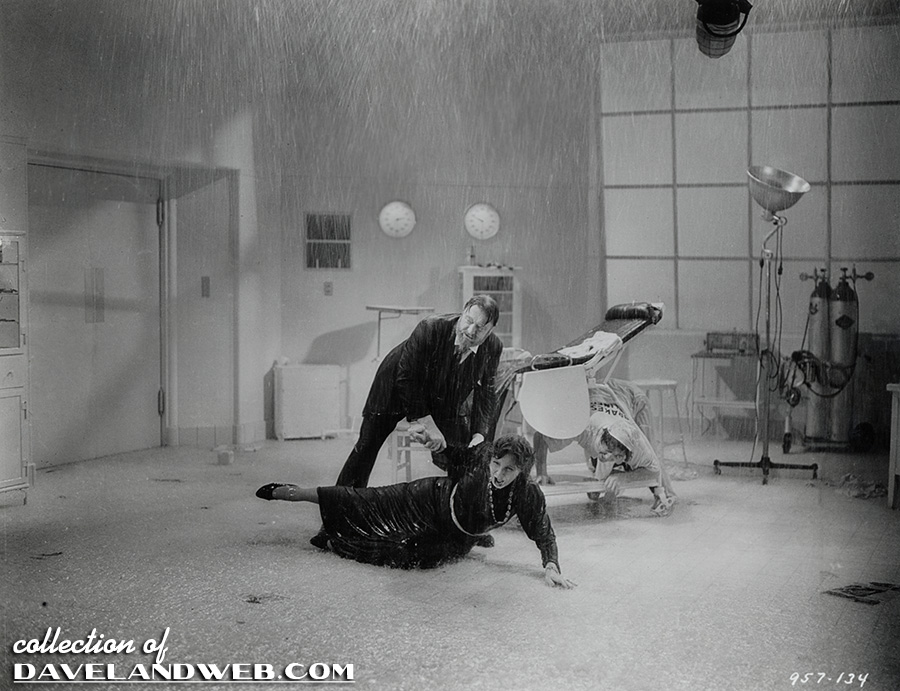
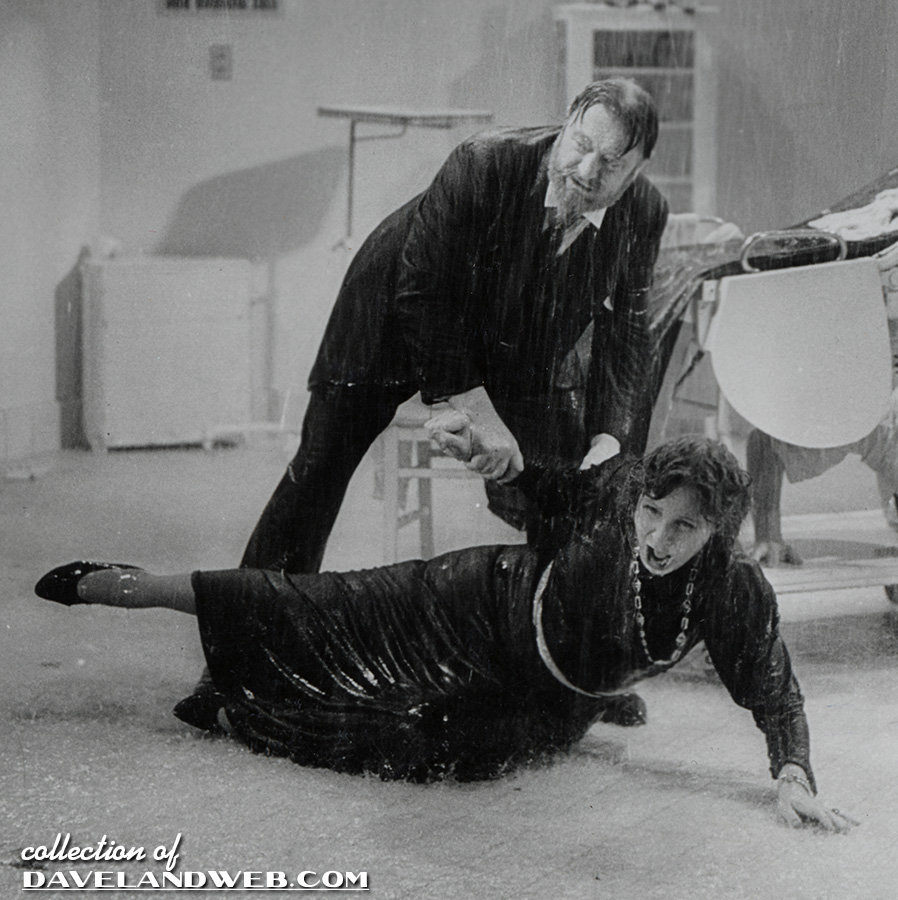
If you aren’t convinced that Margaret was a good sport (both on and off screen with the Marx Brothers), this scene from “A Day at the Races” (1937) is proof.


That’s not a stunt double; that’s Margaret herself. Already in her fifties, she was a great sport and did most of her own stunts. She never knew what the brothers were going to do next; regardless, she kept a straight face and went along with their hijinks.


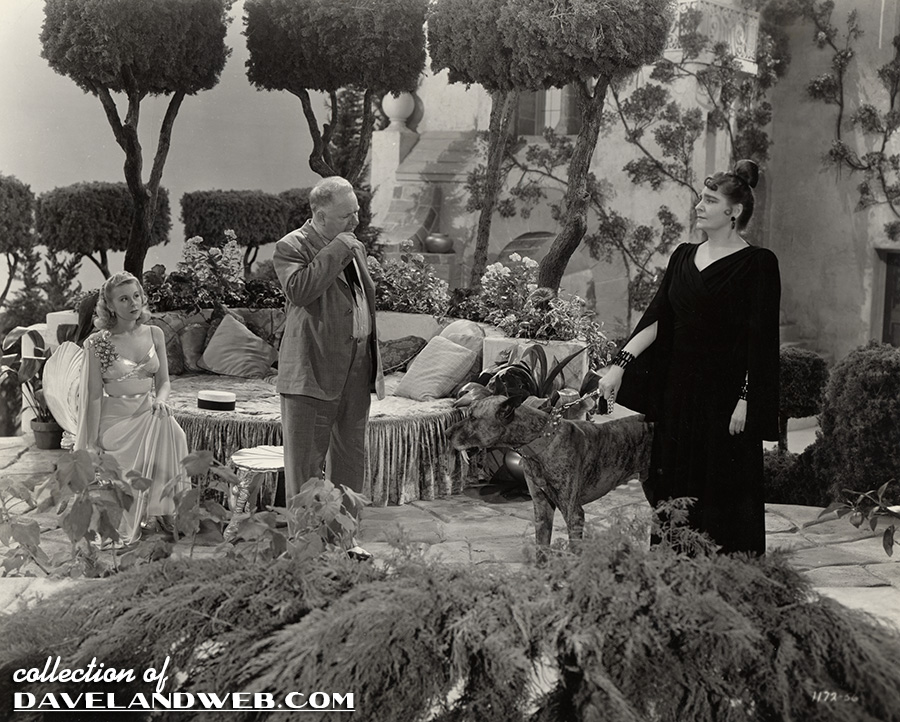
Margaret also worked with W.C. Fields…twice. Her first movie was “Never Give a Sucker and Even Break” (1941). From an interview that she gave at time, she discusses just how much work into being a “straight woman”:

Many a comedian’s lines have been lost on the screen because the laughter overlapped. Script writers build up to a laugh, but they don’t allow any pause for it. That’s where I come in. I ad-lib—it doesn’t matter what I say—just to kill a few seconds so you can enjoy the gag. I have to sense when the big laughs will come and fill in or the audience will drown out the next gag with its own laughter.


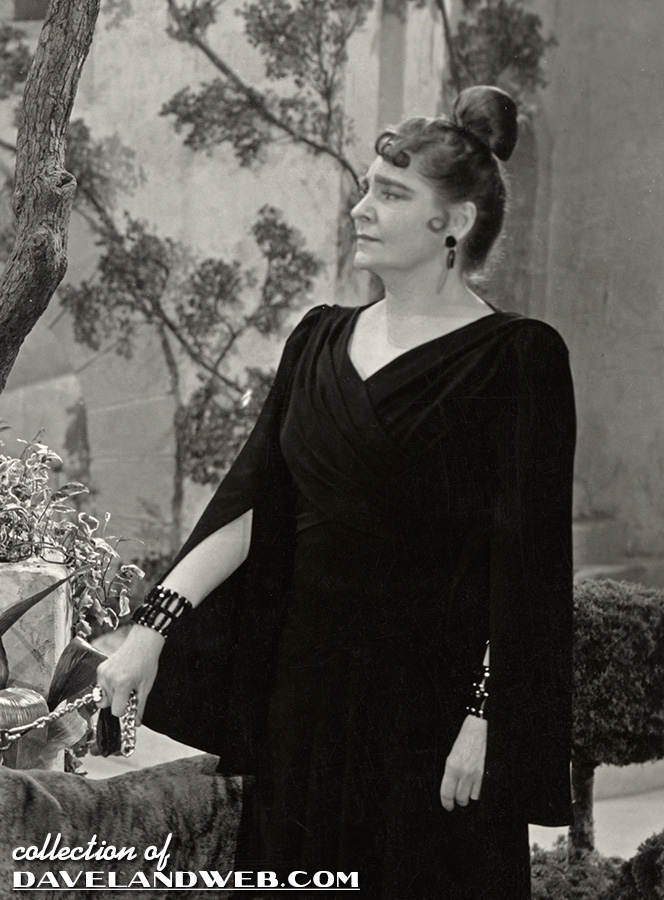
Check out those eyebrows! Her character’s name was Mrs. Hemoglobin, the mother of a very beautiful young girl (Susan Miller). Of course, Mrs. Hemoglobin is very wealthy…but also disgusted with men. As she warns her daughter:

Men. Men. They're all alike. They'll deceive you as your father did me. He kissed a chorus girl and when I found out he said, ‘Oh, I was drunk and didn't know what I was doing.’

Her daughter wonders if Fields drinks, too. To that, Dumont’s character imperiously replies:

He didn't get that nose from playing ping-pong.


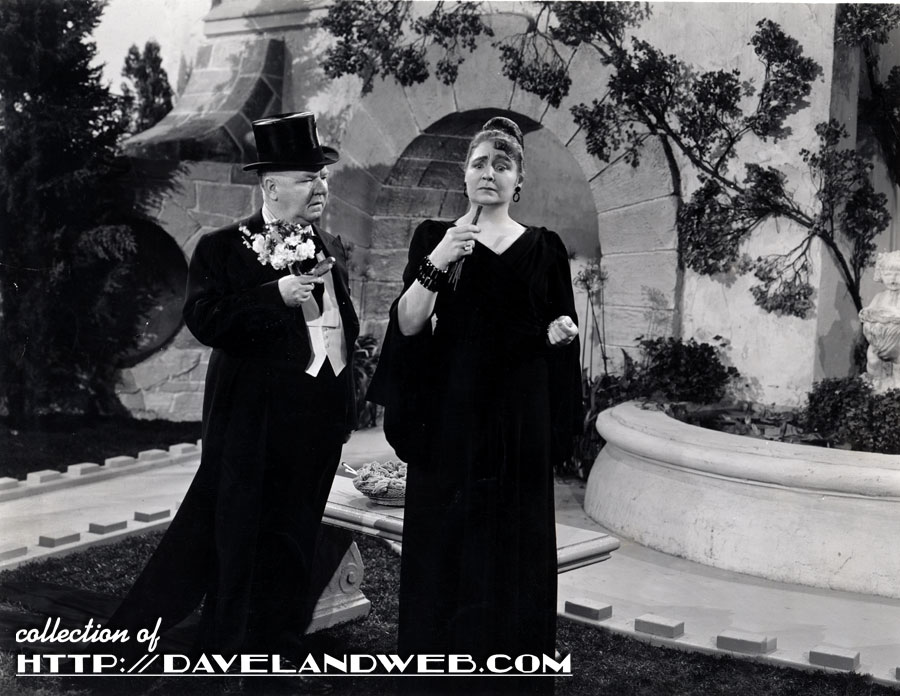
Fields attempts to woo the resistant Mrs. Hemoglobin, but in the end, leaves her alone at the altar.


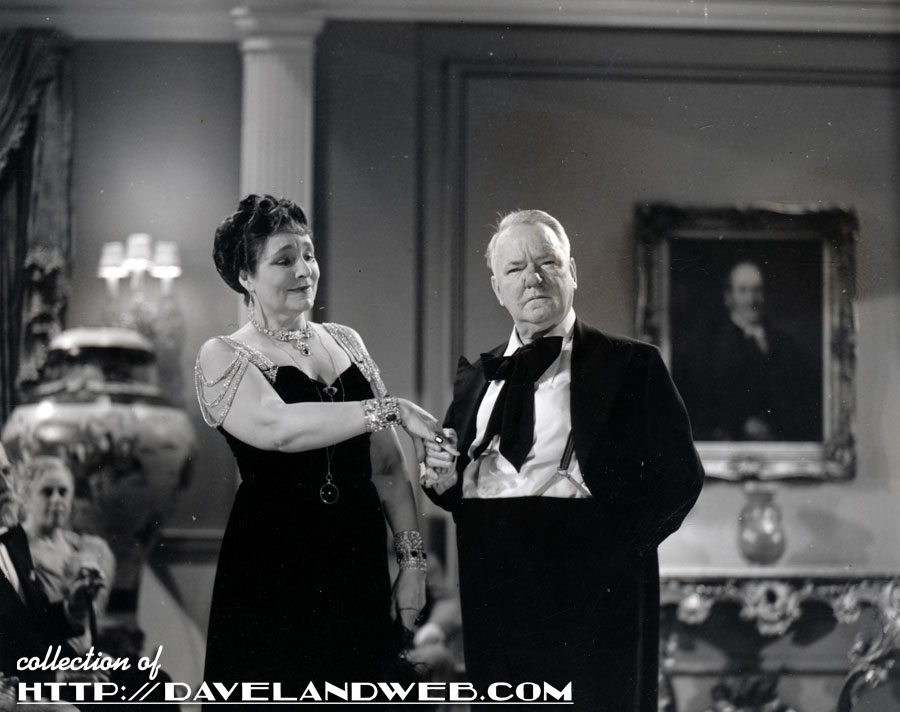
Surprisingly, not a word is written about the deleted sequence Dumont filmed with Fields for “Tales of Manhattan” (1942).


The book does mention Dumont’s “role” in “Auntie Mame” (1958):

In mid-1958, Margaret landed a plum role in the Warner Bros. television version of “Auntie Mame” starring opposite Academy Award-winning actress Rosalind Russell.…The veteran actress would portray an arrogant British noblewoman in the Technirama, technicolor show based on the long-running Broadway stage hit.

“Aunt Mame” was a movie, not a TV show. As for the “plum role,” it was an uncredited part. Unless you know to look for Dumont, there is a good chance you would miss her.

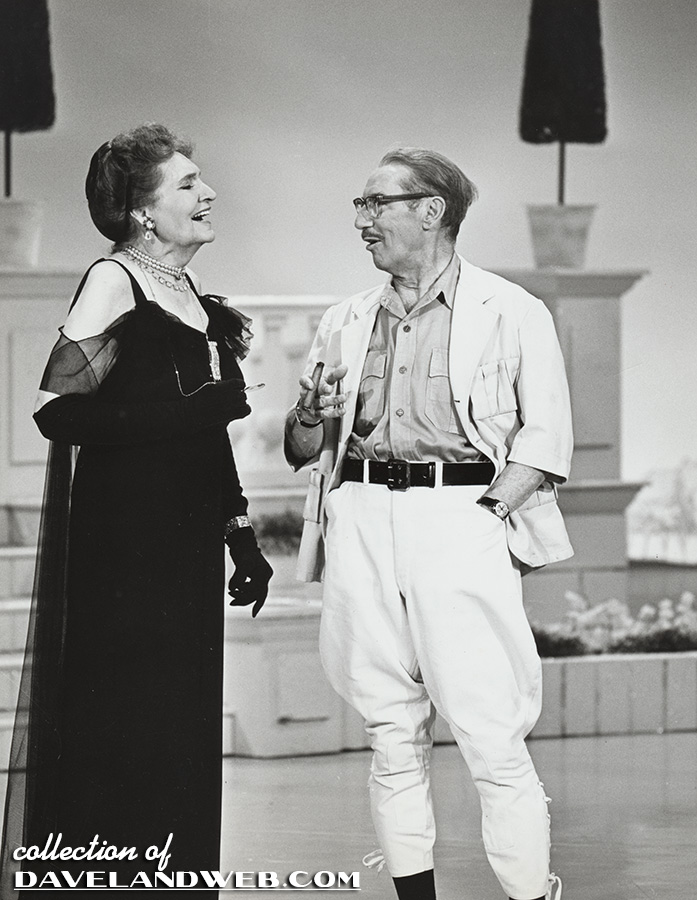
Dumont’s final gig was on The Hollywood Palace, which aired on April 17, 1965. She was reunited with Groucho and the two performed a reprise of the “Hooray for Captain Spaulding” sketch, from their 1930 comedy “Animal Crackers.”


Here is a clip from their sketch:


Groucho paid homage to Dumont at the 1974 Oscars ceremony, but managed to get in an untrue dig that has unfortunately been taken to be the truth:

She was a great straight woman for me, even though she never understood my jokes. 

Dumont understood every one of the gags; there is no way she could have reacted and given pause the way that she did.

Here’s to Margaret and hopes that one day, someone will do a proper bio of her.

See more Margaret Dumont & the Marx Brothers photos at my main website.
Thursday, June 17, 2010

Traveling Thursdays: The Hollywood Palace & Judy Garland


Here’s a shot of Judy Garland, performing on The Hollywood Palace TV Variety Series at the Hollywood Palace Theater, October 15, 1965. The popular variety show aired from 1964 until 1970. For this episode, Judy performed a number of duets with Vic Damone and was in excellent vocal form. The Theater, which opened in 1927 as the Hollywood Playhouse, is located at 1735 N. Vine Street and has been renamed The Avalon.


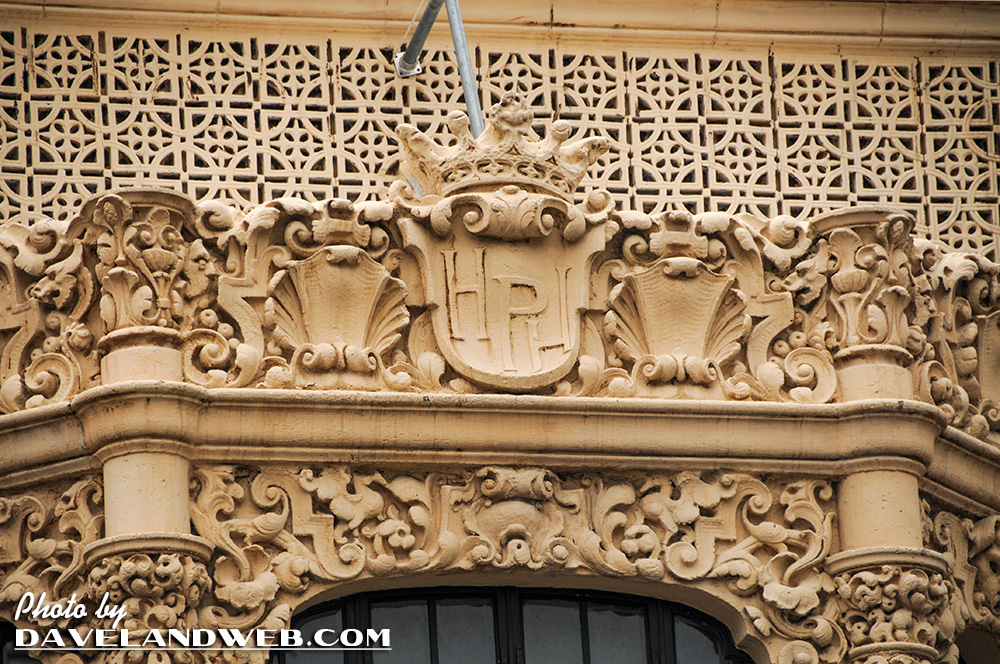
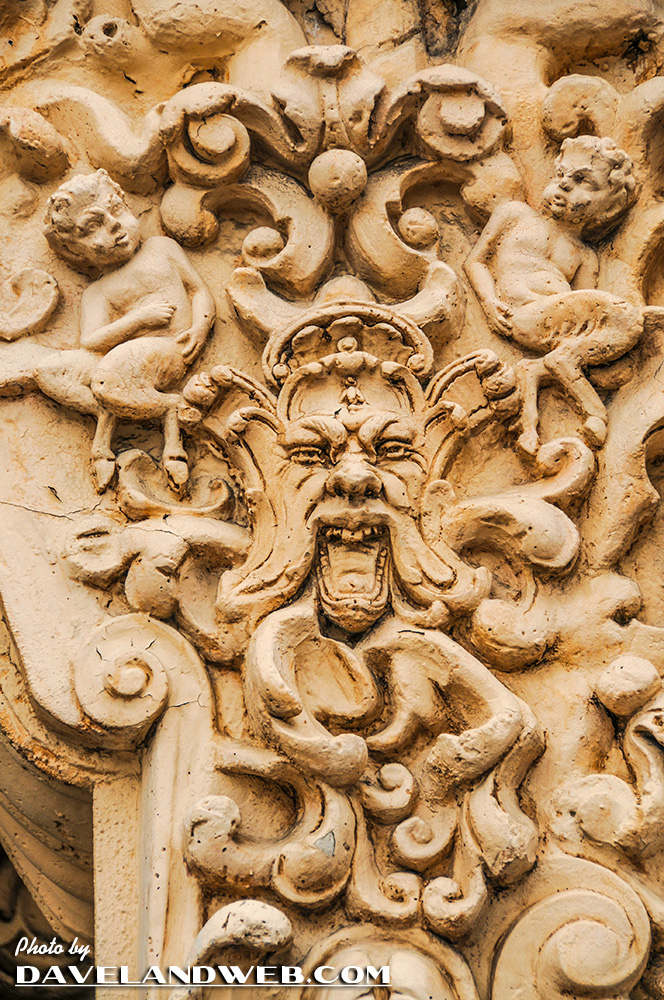
Interestingly enough, this theater was also known as The El Capitan. The venue currently known as The El Capitan was called the Paramount. Very confusing. I know. Have a cup of coffee and process all of this. Here are some recent shots of The Avalon, formerly known as The Hollywood Palace:


A fascinating side note is that this theater is where Richard Nixon delivered his famous "Checkers" speech on September 23, 1952. Many of you are probably too young to remember, but it sure was a good one!

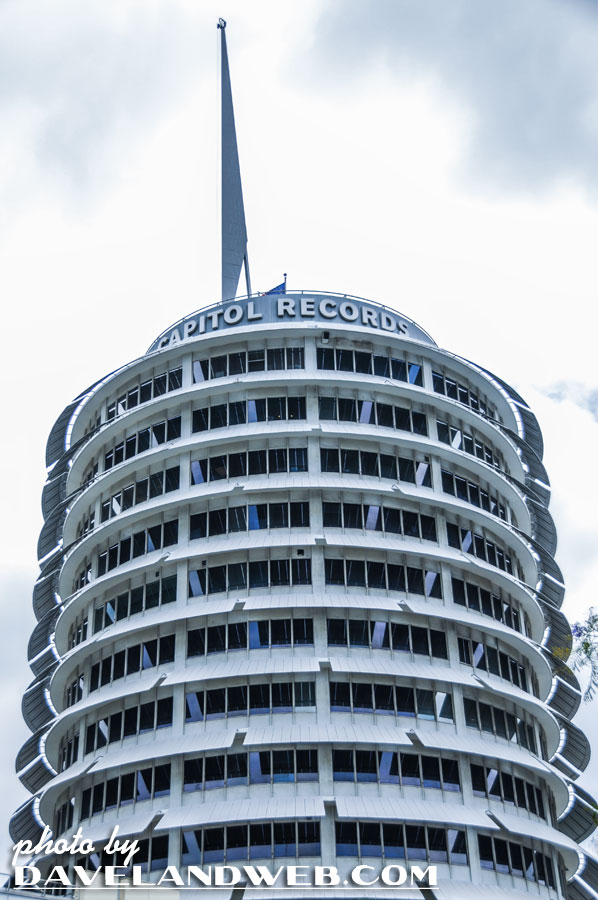
Just up the street on the opposite side is the famous Capitol Records building:


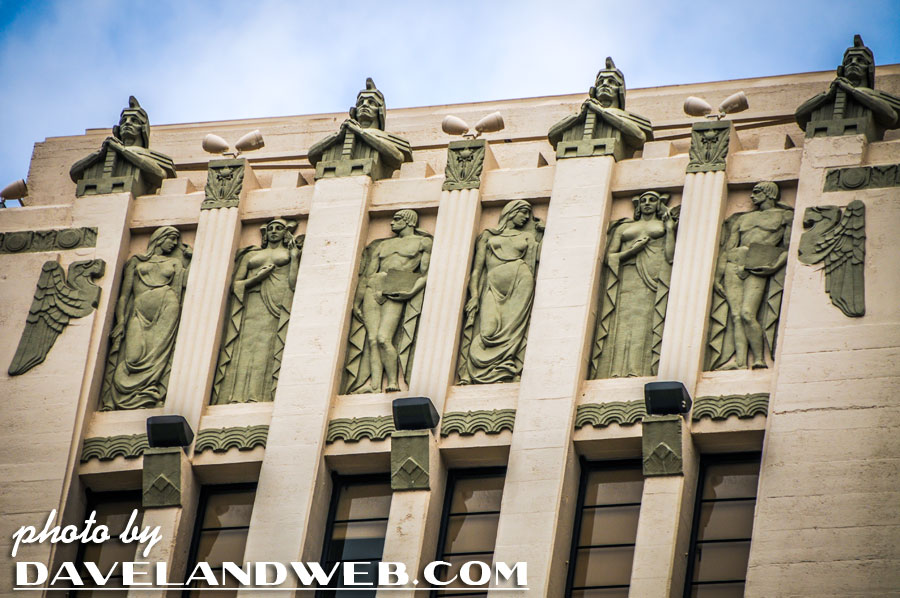
Around the corner is this Art Deco gem:


See more Hollywood Palace photos at my Hollywood web page.