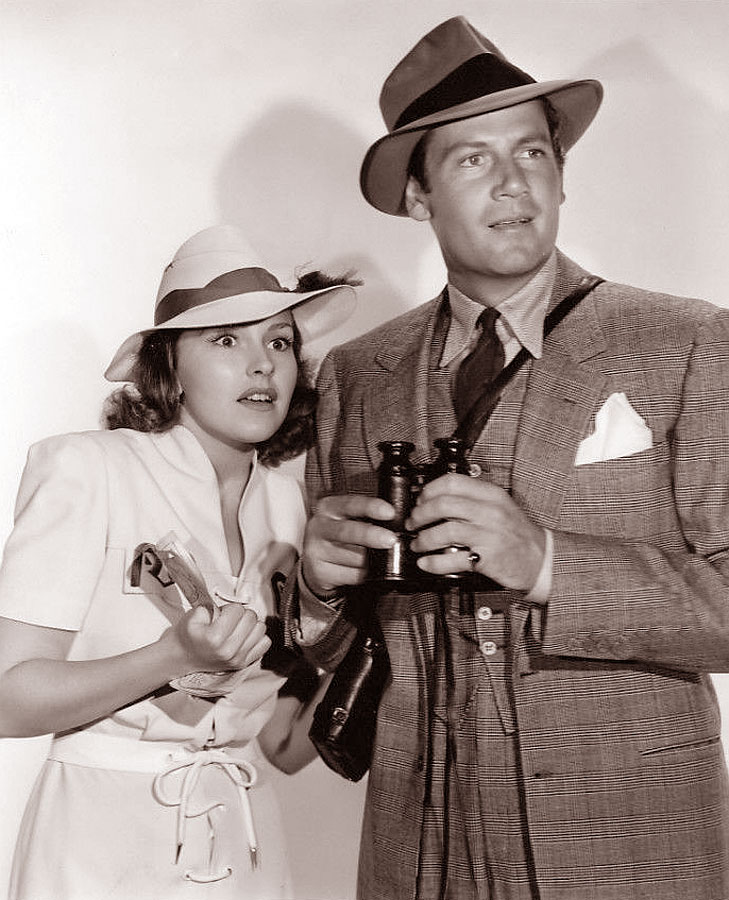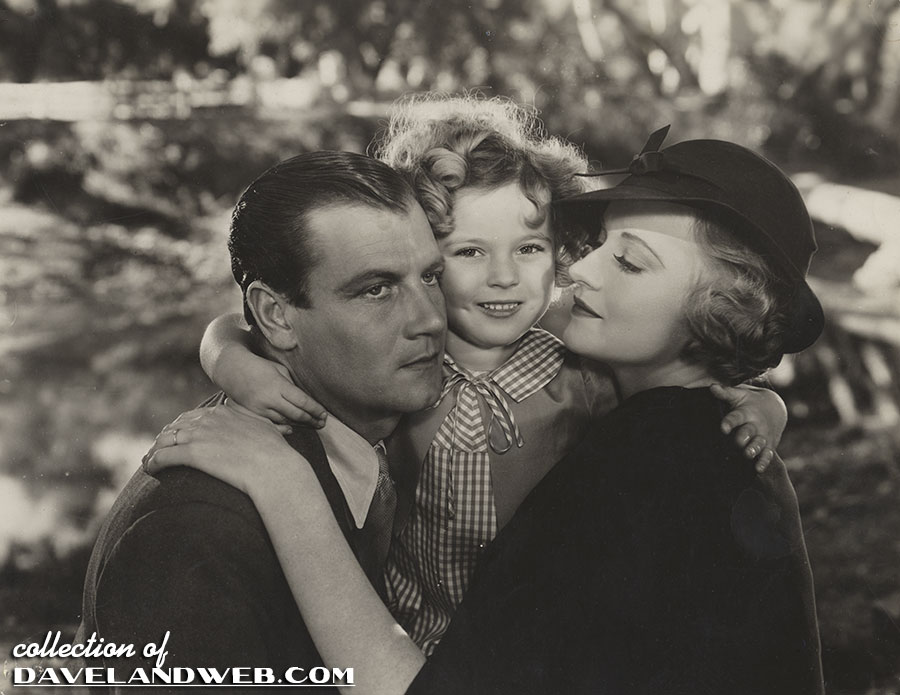
In the 1935 Shirley Temple film “Our Little Girl,” Shirley’s parents were played by Joel McCrea and Rosemary Ames. It is probably one of my least favorite Temple movies as it is an extremely heavy movie, dealing with divorce and how it affects the “little girl.” While his name has faded over the years, Joel McCrea had a solid career from the 1930’s-1950’s working with some of Hollywood’s greatest directors, including Alfred Hitchcock, Preston Sturges, and Cecil B. DeMille.
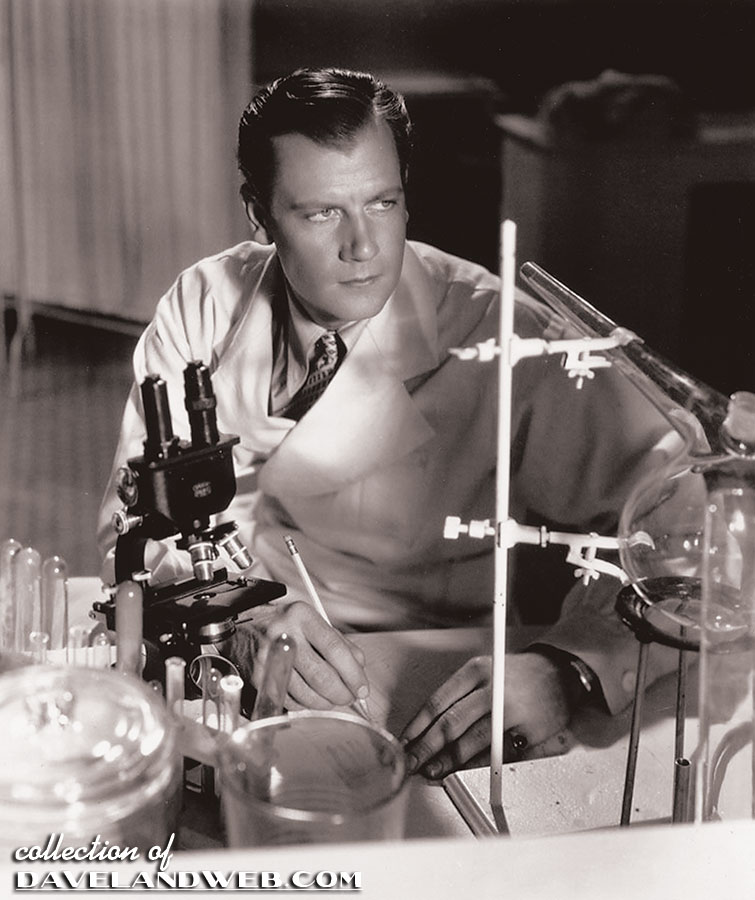
In “Our Little Girl,” McCrea plays the dedicated doctor who gets so caught up in his lab formulas that he begins to neglect his wife and daughter. Eventually, the wife begins to stray, the family falls apart, and a divorce seems imminent. Since this is a Temple movie, you can figure out who single-handedly puts everything back together.
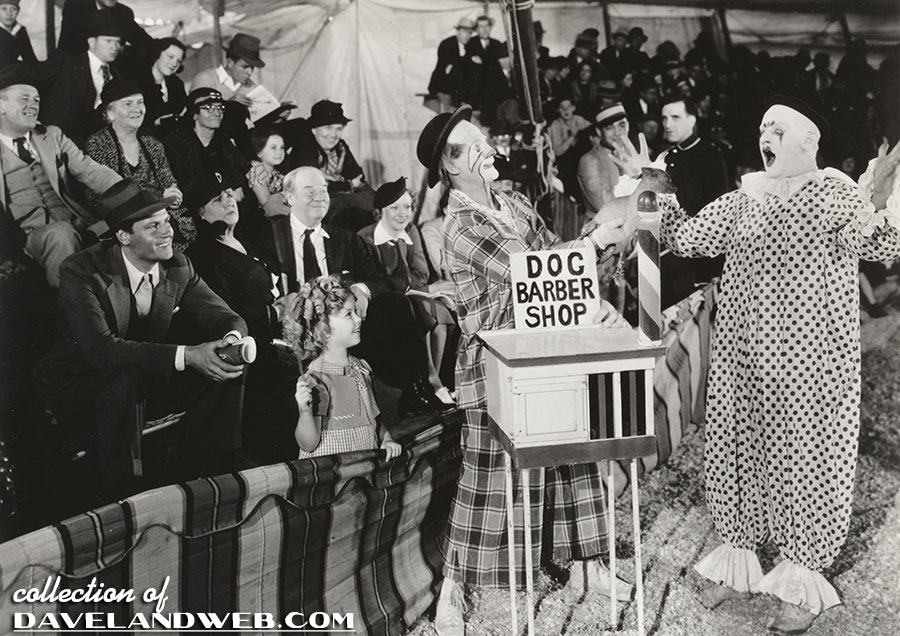
In her autobiography, Child Star, Shirley recalled an embarrassing moment that did not endear her to McCrea:
My puppy, Sniff, and I were examining a grasshopper at close range. Suddenly I sneezed. Two front porcelain dental caps fluttered off into space and disappeared among the dry grass blades. Without them filming could not proceed, so everyone crawled around gently fingering through the stubble to recover my caps, a search in vain. Rather than being charmed, McCrea was annoyed at the delay, particularly when director John Robertson was forced to cancel all filming and sent us home again for my “instant” dentist to practice his magic. En route, I was seated beside McCrea; a loose tooth dislodged itself into my hand. It is hard to carry on a romantic reconciliation with one’s teeth falling out.
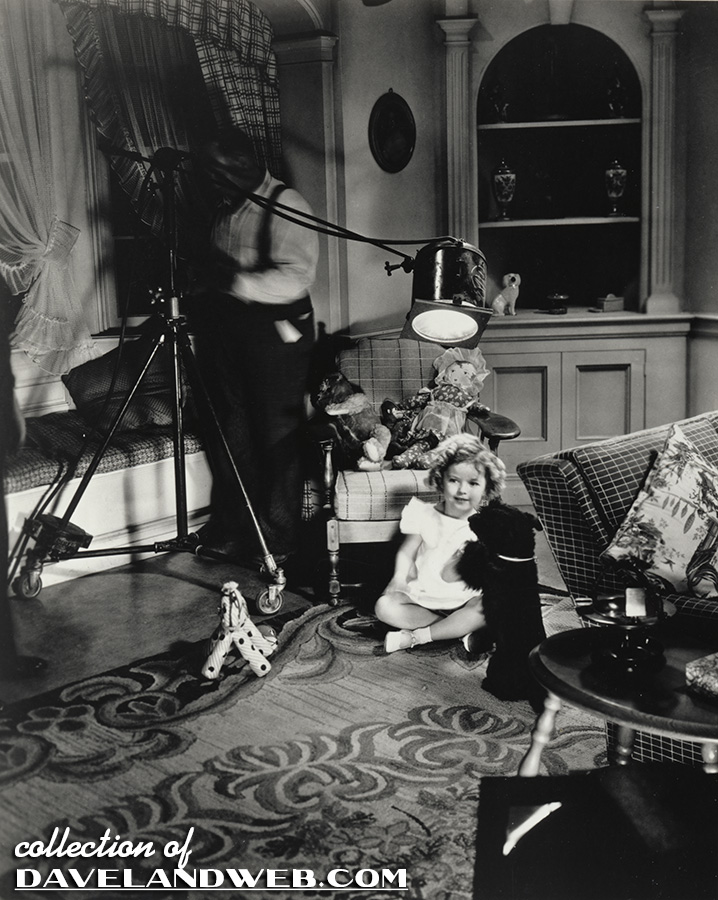
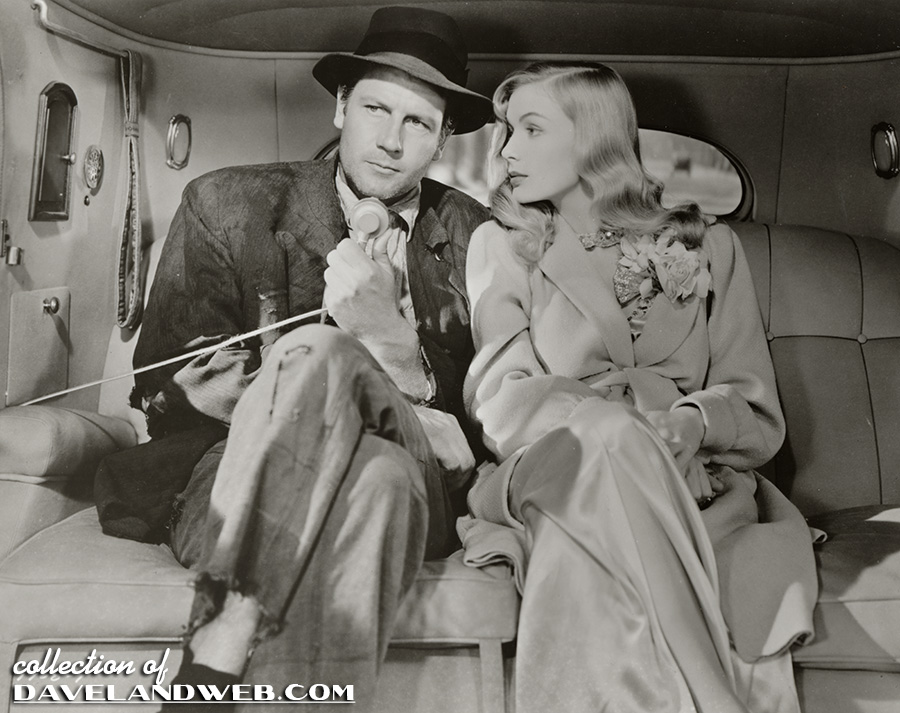
According to the AFI website, McCrea was originally considered as the male lead in the blockbuster “King Kong” (1933) but eventually Bruce Cabot was hired “because he was perceived as better suited to the physical demands of the part.” One of McCrea’s best remembered films is the Preston Sturges off-beat comedy, “Sullivan’s Travels” (1941).
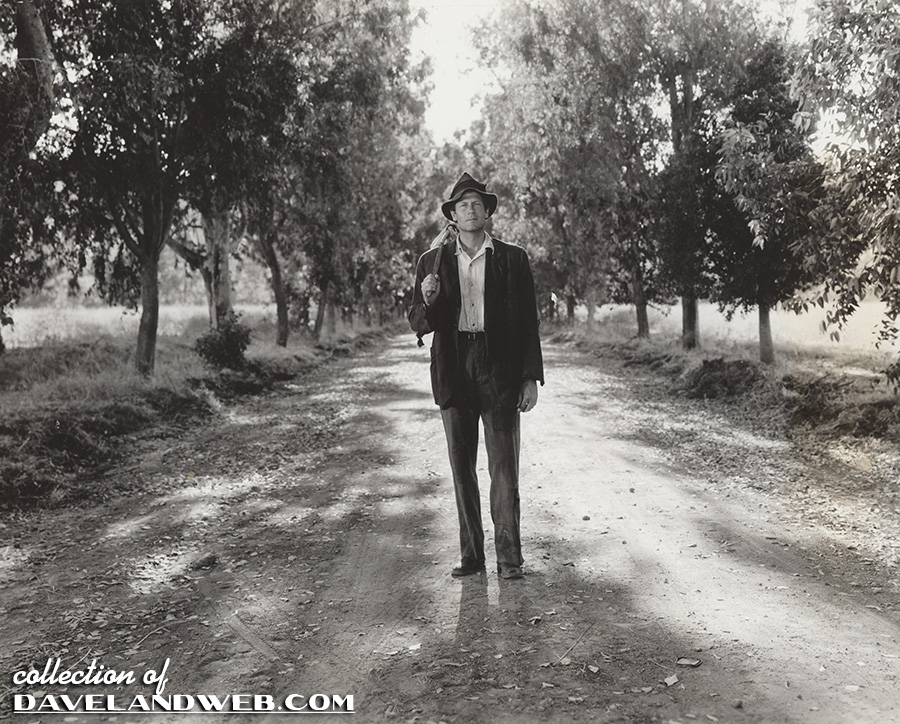
Edited from the Sturges biography, Between Flops by James Curtis:
Sturges wrote Sullivan’s Travels with a specific actor in mind: Joel McCrea. It was a story that demanded the kind of low-key sincerity in which McCrea specialized. Sturges liked the actor’s blank, no-nonsense quality that made him a favorite with top directors. “He knew he could mold me,” McCrea said. “Most of the other male stars bring a certain thing; Cagney, for instance, would always be Cagney. But this guy was John L. Sullivan—he couldn’t be a movie star. He could be Sturges, he could be me.” McCrea and Sturges had known each other casually for nearly a decade. “I first met Preston out at Fox,” he recalled, “where he had just written a script called “The Power and the Glory”…I went over there to see Spence Tracy on the set and I was just sitting there and the script was on the side of the chair so I picked it up and looked at it. It was so good and the dialogue was so good I remarked about it and Preston was there. He was kind of standing in the back and he bowed graciously and said, ‘I’m delighted you think that’s a good script.’ I said, ‘Well, the dialogue is really outstanding.’ It was kind of a nice meeting because I was complimenting him without knowing who he was.” Years later, after lunching with Cecil B. DeMille in the Paramount commissary, McCrea passed Sturges’ table. “I’d like to talk to you,” Sturges told him. “I’ve written a script for you.” The actor was unconvinced. “No one writes a script for me,” he replied. “They write a script for Gary Cooper and if they can’t get him they use me.” Sturges laughed. “He got a kick out of that,” said McCrea. “He said, ‘No, no. This wasn’t written for anyone else. It’s called Sullivan’s Travels and it’s all original with me, it’s not taken from anything. It’s all mine.’ So I said, ‘Well, that’s very interesting.’ So I went over to his office and he gave me a script and we had a nice visit. I liked him right away. He was a very intelligent fellow and I really was interested in it.…He was what you could call ‘intelligently conceited. He knew he was great. He knew what he was doing was good. He didn’t question that what he was doing was going to get great reviews from the very first day he started shooting.”
Like many of Sturges’ films, this one bears repeated viewings to completely appreciate it. A warning should also be attached to it for those who are expecting a knee-slapping laughfest. While considered a comedy, it is unvarnished in its depiction of those who are less fortunate. Sturges didn’t want to make a message movie and intended this one as a satire of all the “serious” moviemakers. Yet, the second part of the movie is a bit heavy-handed and depressing, albeit with an abrupt “happy ending.” Coincidentally, the cameraman on this film was the same one from “Our Little Girl,” John Seitz.
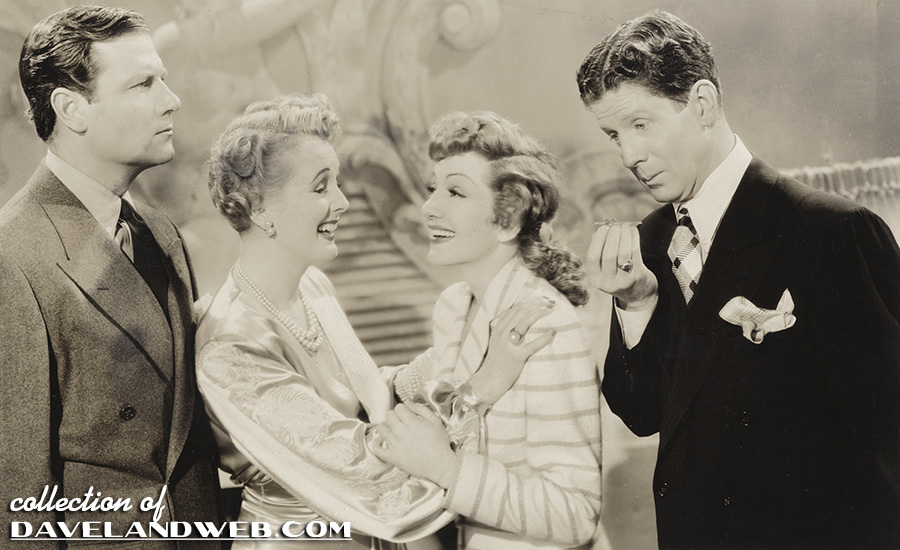
Sturges and McCrea also worked together on “The Palm Beach Story” (1942), a classic screwball comedy starring Claudette Colbert, Mary Astor, and Rudy Vallee. Lighter in tone than “Sullivan’s”, it too lends itself to repeated viewings because of its rapid-fire dialogue and off the wall situations. Colbert is magnificent and so is Mary Astor. McCrea is perfection as the dour husband whose lack of financial success causes his wife (Colbert) to drift.
McCrea was married to actress Frances Dee from 1933 until his death at age 84 in 1990. The two had three sons together. McCrea once listed his job as “rancher” and his hobby as “acting.” He owned a 3,000 acre ranch where he lived, raised cattle, and rode horses.
See more Shirley Temple and Joel McCrea photos at my main website.