Showing posts with label franchot tone. Show all posts

Tuesday, August 18, 2026

Temple Tuesday: Shirley in Color!


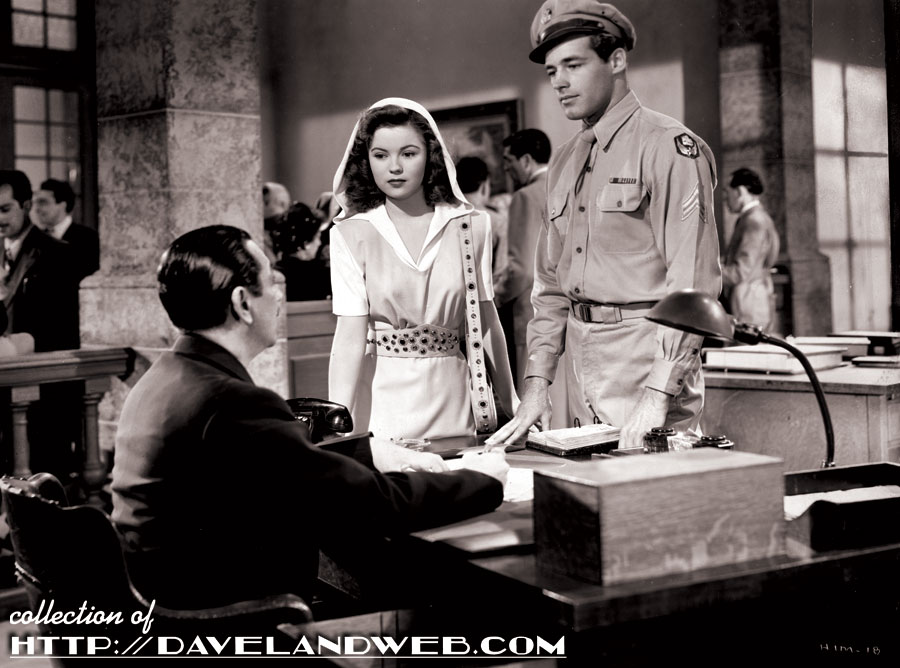
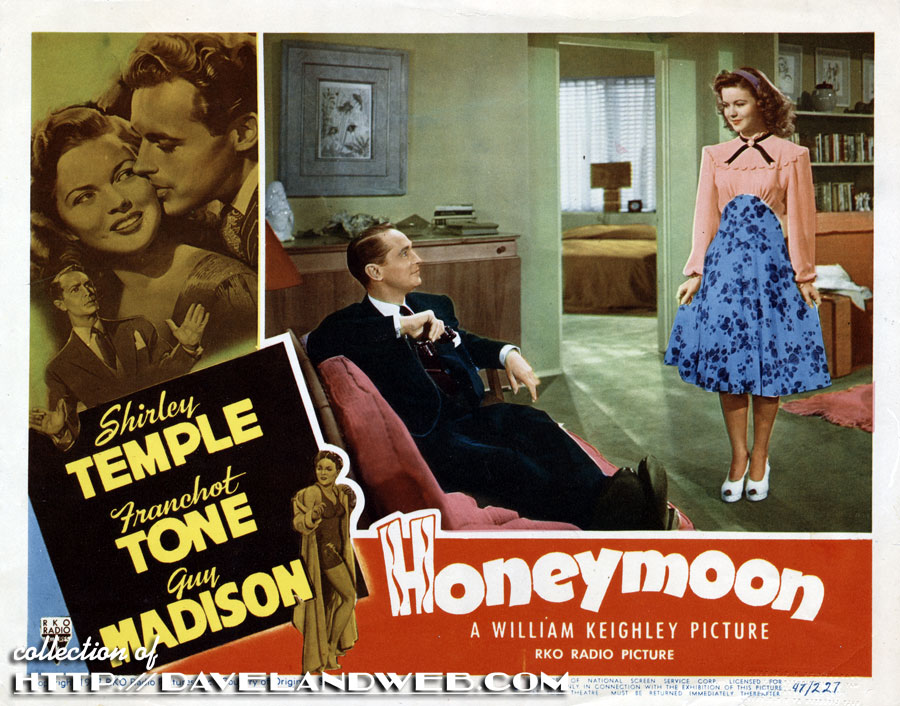
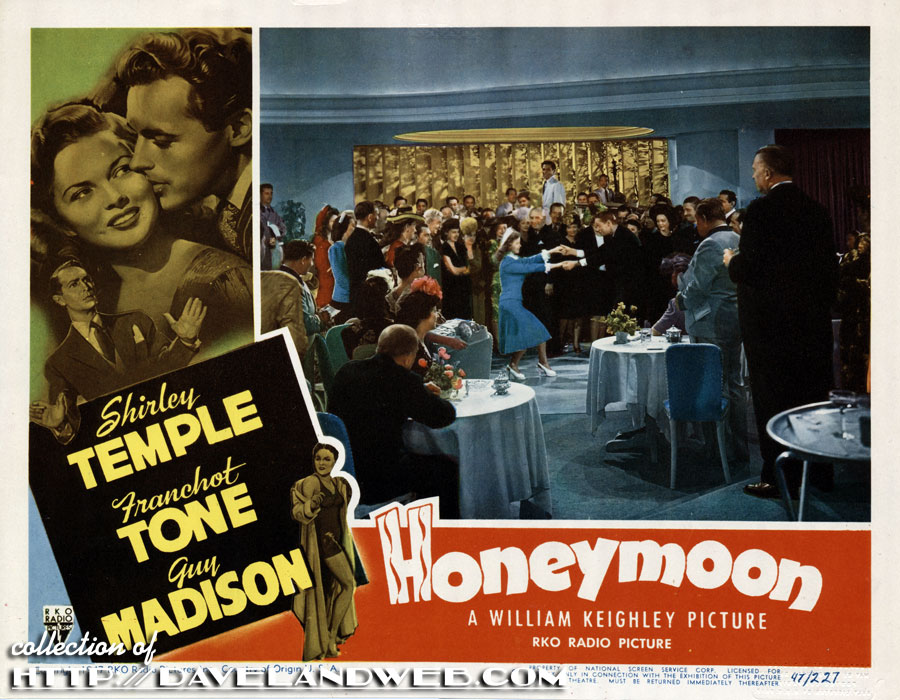
Shirley Temple had very few films that were made in Technicolor; the brief list includes a short sequence at the end of “The Little Colonel” (1935), “The Little Princess” (1939), “The Blue Bird” (1940), and “The Story of Seabiscuit” (1949). Even though color was becoming more of a thing by the 1940s, Shirley’s teen films were typically low budget, relying on her former starpower to bring in the bacon. “Honeymoon” (1947) was an RKO black and white comedy (which is debatable!) that just misses the mark. Joseph Cotten went on suspension for backing out of the production and was replaced by Franchot Tone. Probably the best move of Cotten’s career! While the movie wasn’t filmed in color, the fan magazines were documenting Shirley in all her Technicolor beauty! In attempting to get a marriage license in Mexico, Shirley (with Guy Madison) wore this stylish outfit with a hood designed by Edward Stevenson:


Thanks to this image taken in her dressing room, we can see it and her lovely auburn locks in full color! Yes, she knits! And check out the heels on those slingback shoes!


This simple suit was also designed by Stevenson:


It stayed in Shirley’s personal collection until it was auctioned off in 2015, one year after she died. From the catalog description:

Teal Woolen Suit with Silver Buttons Worn by Shirley Temple in the 1947 Film "Honeymoon"

Description: The two-piece suit includes a silk-lined jacket with dart shaping and long sleeves, ruffled white cuffs and collar, and with 10 silver buttons with chain design; along with matching skirt. The ensemble was worn by Shirley Temple in the 1947 film “Honeymoon.” Sold: $1,100


The September issue of Photoplay magazine deemed it pattern of the month. Those interested in sewing their own could purchase the pattern for just 35¢!


I tried oh so hard to find the pattern itself, even joining a number of vintage pattern groups on Facebook. Alas, to no avail. Here is what the cover of the Advance Pattern #4659 looked like:


In this costume, Shirley’s character states that it’s her boyfriend’s favorite color. That piece of the script is wasted on a black and white movie!


However, thanks to this image from her 18th birthday party held on set, we can see what that color looked like. The burning of the little red school house signified Shirley was now an adult!


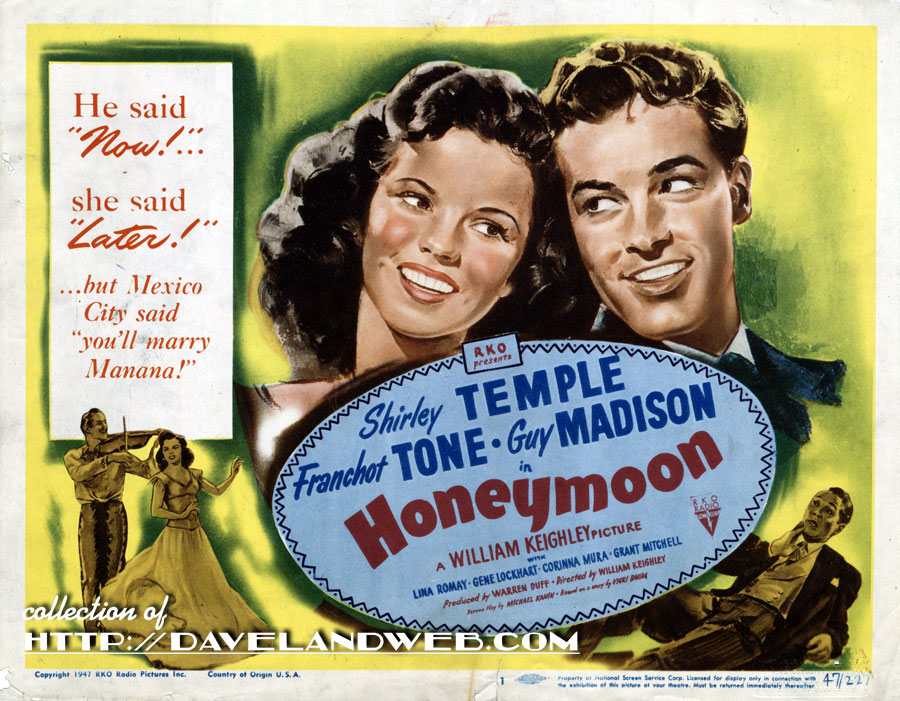
If you think you can reveal the colors of a film by looking at vintage lobby cards and poster art, think again. They are all pretty much colorized by the artists of the day, who used a lot of creativity (?) in assigning colors to the promotional ephemera. Would Guy Madison still like this one if it was pink and blue?


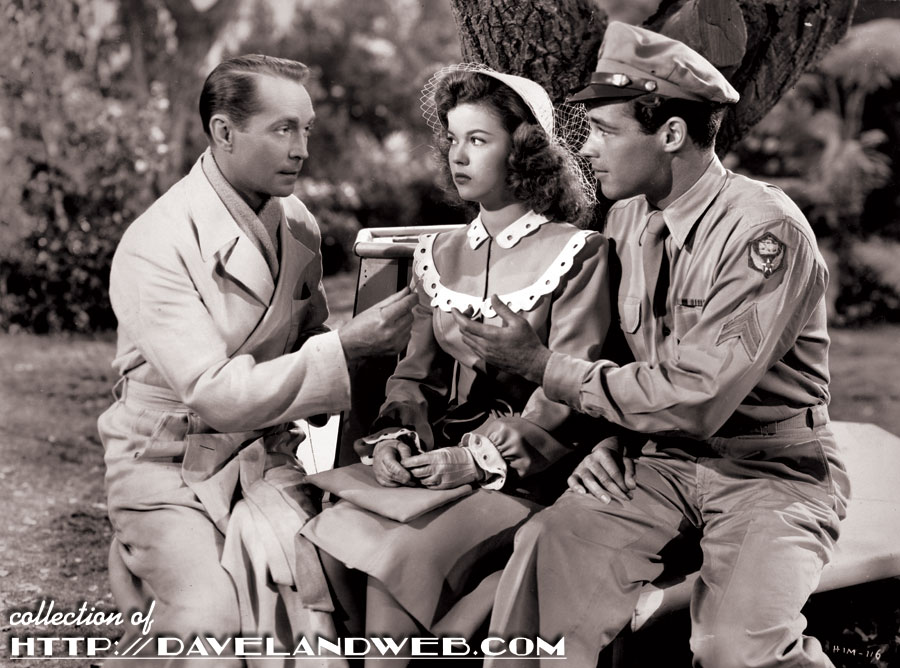
Another simple suit by Stevenson was featured in this scene with Tone and Madison; Shirley is the rose between two thorns:


Once again, a dressing room shot reveals that this one is beige in color; Shirley poses with then-husband, John Agar:


See more Sbirley Temple photos at my main website.

Tuesday, February 11, 2025

Temple Tuesday: No Jitterbug for Shirley


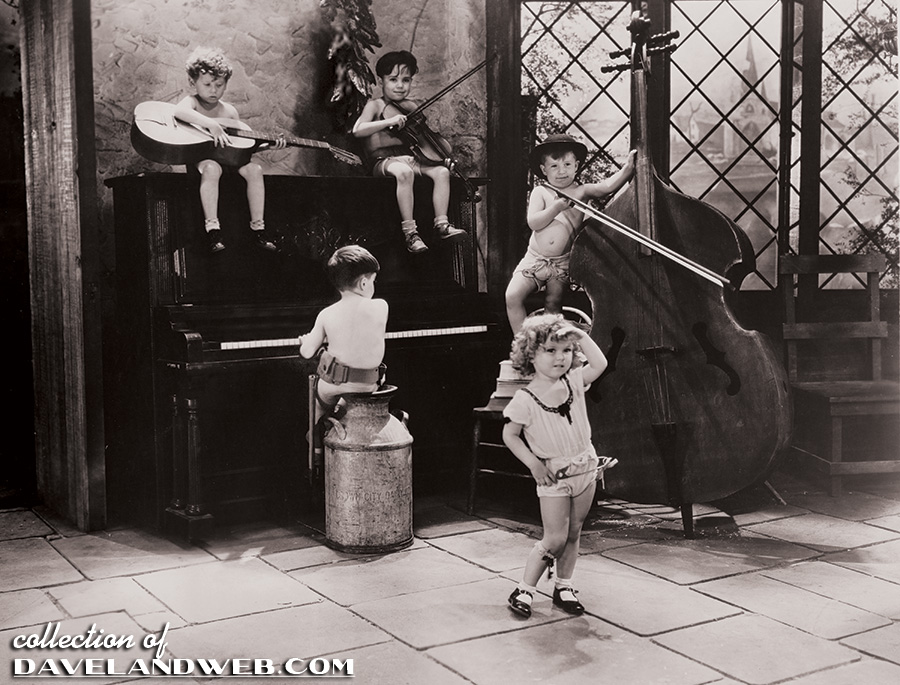
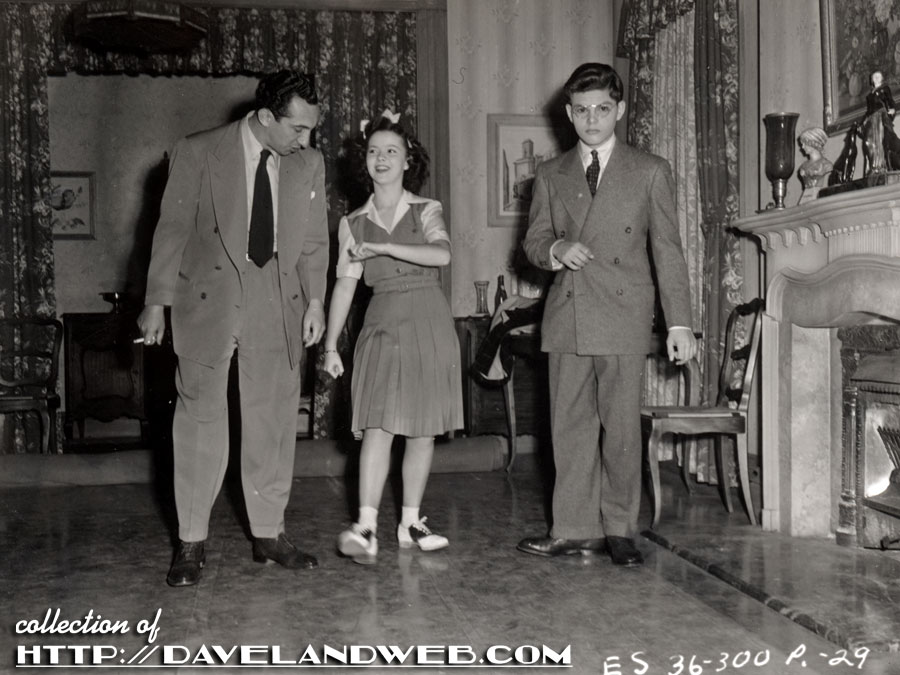
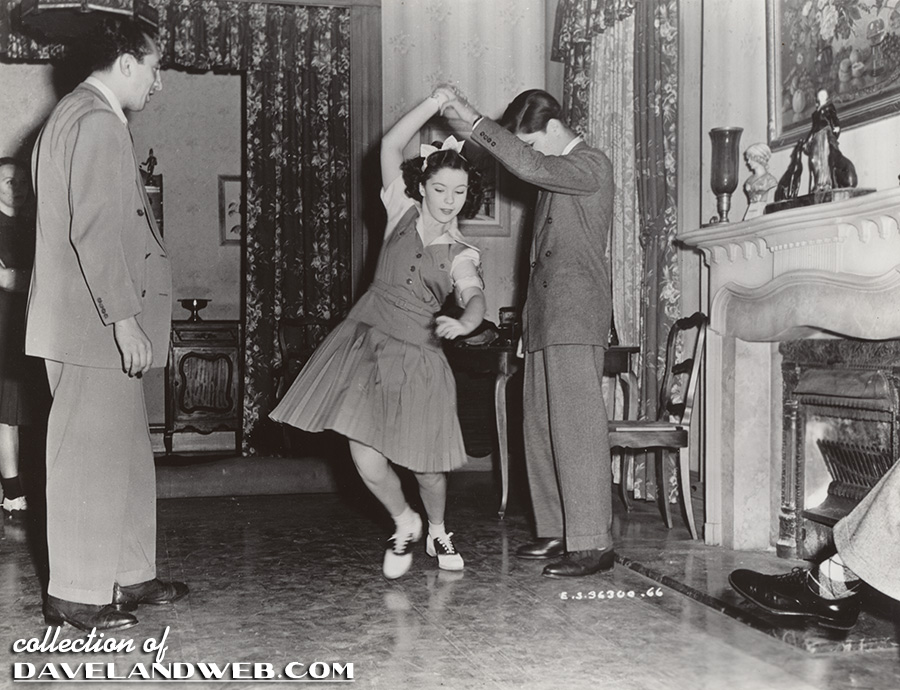
As soon as she hit the silver screen, Shirley Temple was known for both singing and dancing, as seen above in “War Babies” (1932). In “Miss Annie Rooney” (1942), her first teenage romantic role, it was only natural that Shirley’s footwork kept up with the times. Below, she can be seen getting coached by choreographer Nick Castle and costar Dickie Moore.


Fortunately for Dickie, for this jitterbug dance sequence he was able to get by with just standing still while Shirley did all the work.


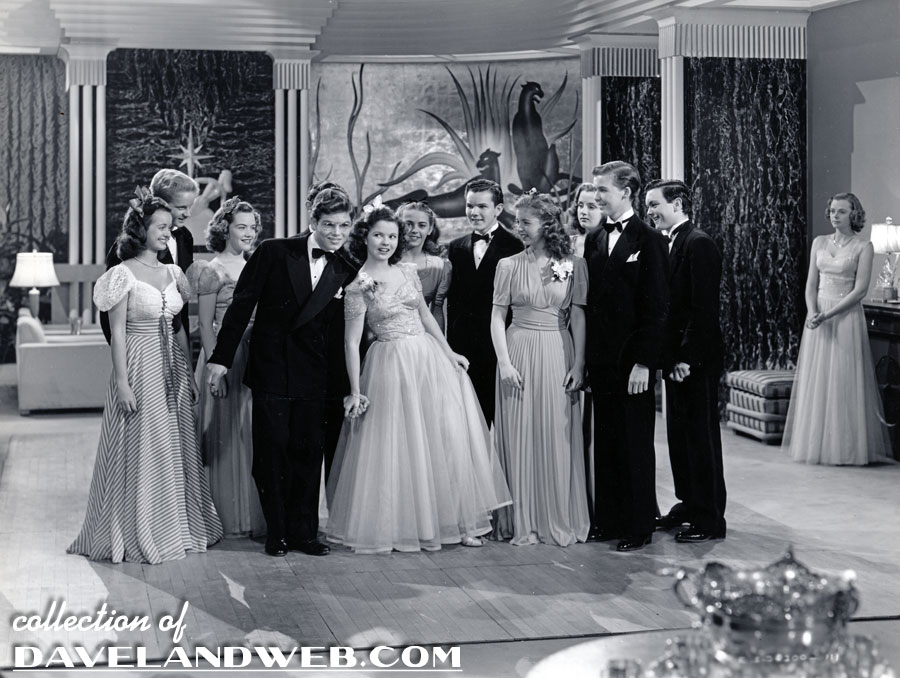
Later in the film, wrong-side-of-the-tracks Annie (Shirley) finds favor with the rich kids by teaching them how to cut a rug. “Drizzlepuss” Stella Bainbridge (June Lockhard) refuses to join the fun and stands off to the right. 


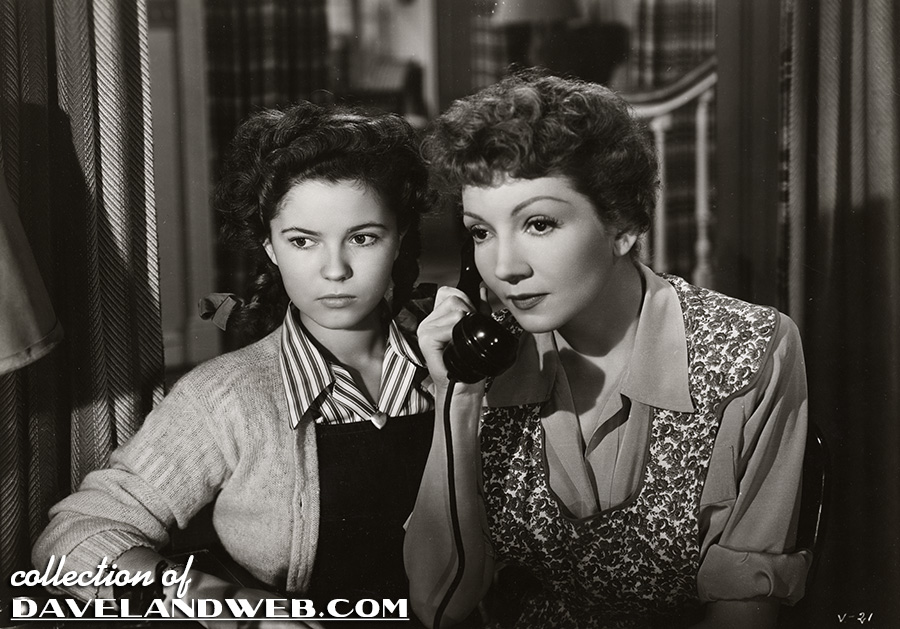
When Shirley returned to the screen a little over a year later in David Selznick’s “Since You Went Away” (1944), the producer was adamant against Shirley doing any singing or dancing. According to publicity of the time, the movie “…definitely is not ‘another Temple picture.’ It is based on a series of letters written by Margaret Buell Wilder, Dayton, Ohio, newspaper-woman and mother of two teenaged daughters, to her husband in the Army. It is the every-day story of their problems and efforts to make ends meet by taking in boarders. And it is definitely not another Temple role. Shirley plays a straight dramatic part. No dancing and no singing.” In one of his famous memos, Selznick wrote, “I’m anxious to get the accent off this as a Temple vehicle and start hammering away at its tremendous cast.” Selznick would even go so far as to admonish Shirley against singing and dancing on her War Bond Tours. What a fink! Below is Shirley with costar Claudette Colbert who played her mother, Anne Hilton.


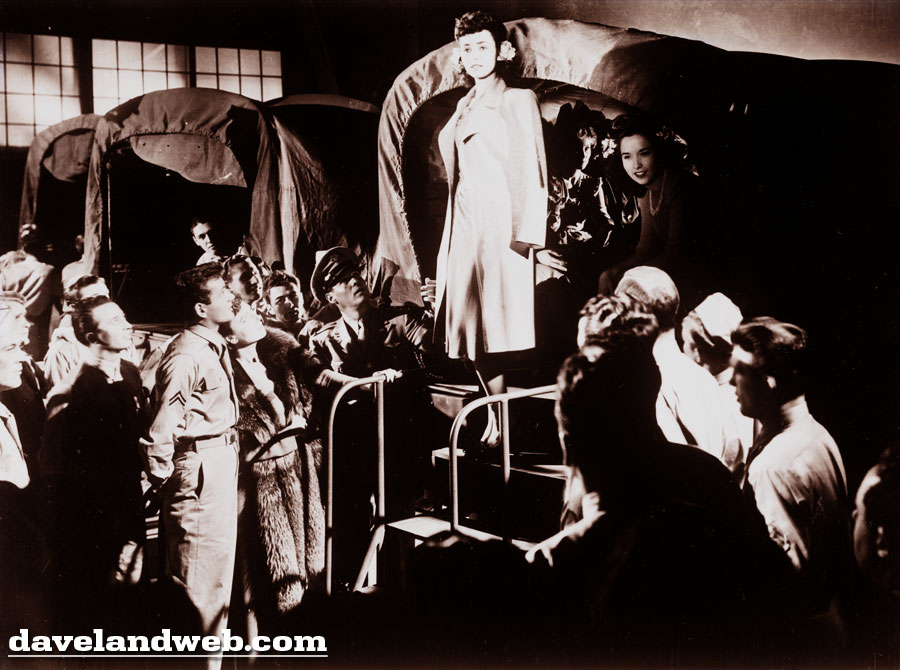
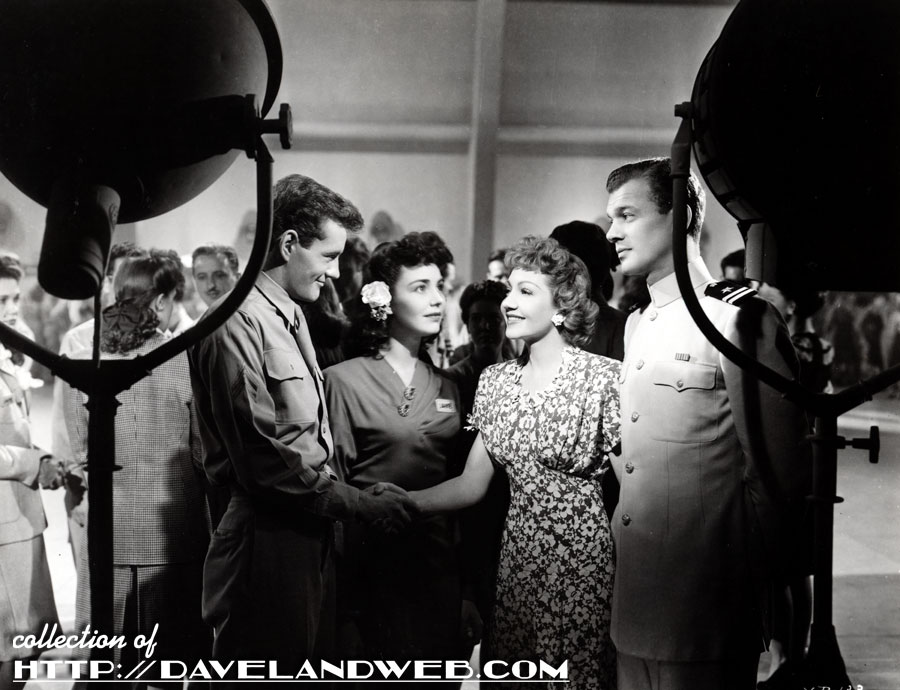
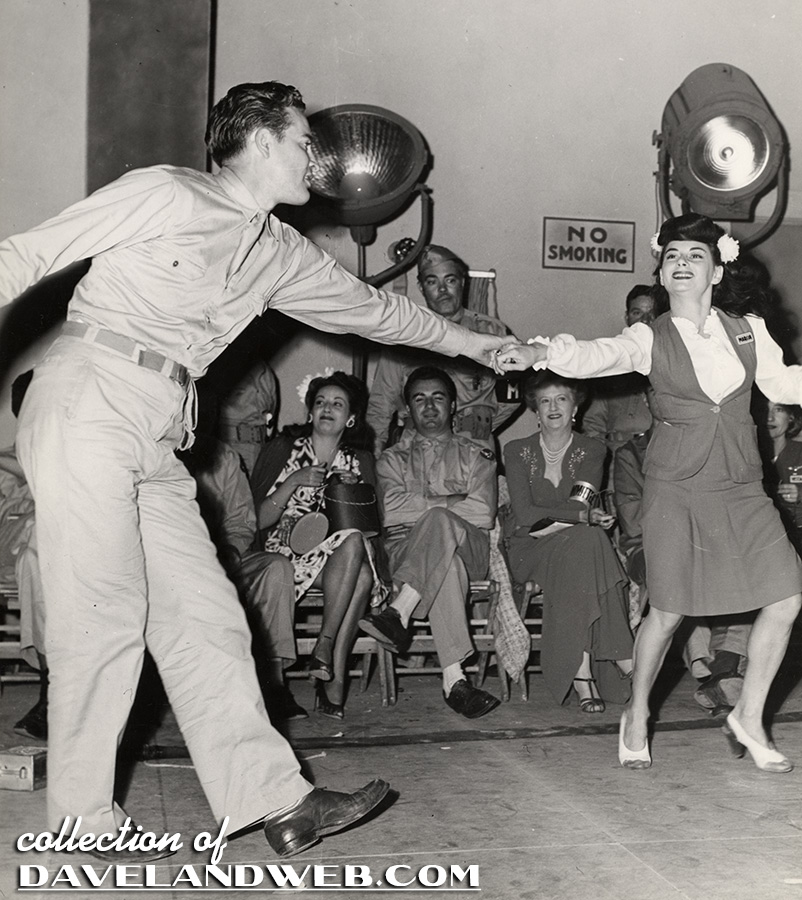
As in Selznick’s “Gone with the Wind,” a military dance plays a central part to the story of the film. Here, Jennifer Jones (playing Shirley’s older sister) arrives to the thrill of the soldiers who get a temporary break from World War II to dance with some pretty girls.


Shirley is not even in this scene at all; instead, the focus is on the romantic leads (Robert Walker and Jones) and their chaperones, Colbert and Joseph Cotten, who plays a close friend of the Hilton family.


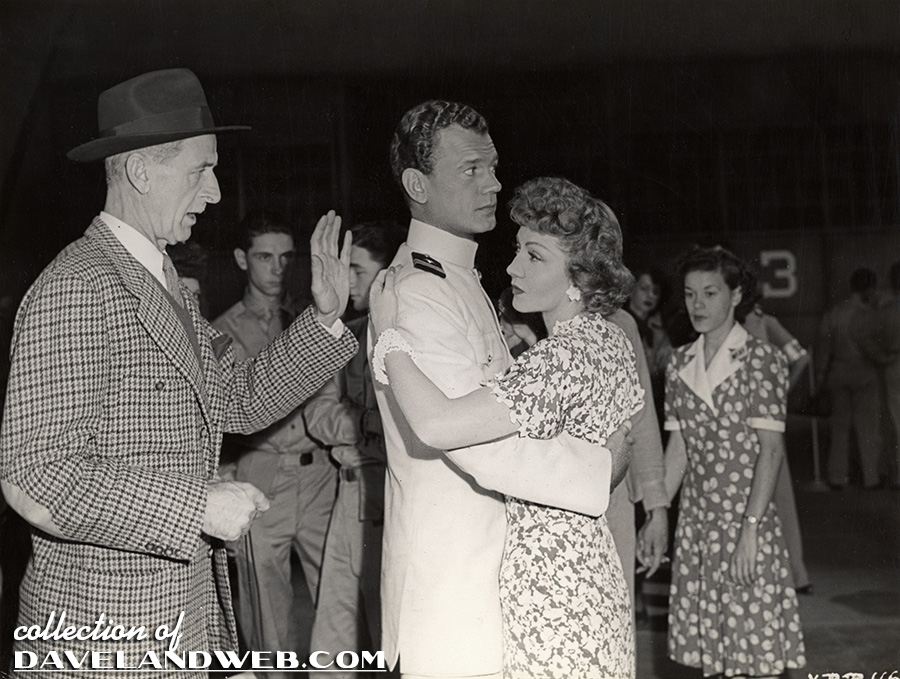
According to the AFI website, the hangar dance was shot in a reproduction of an Army aviation hangar that encompassed two sound stages, over 20,000 sq. ft. of floor space and utilized 100 electricians. Below, director John Cromwell coaches Cotten and Colbert as they dance and recite their dramatic dialogue.


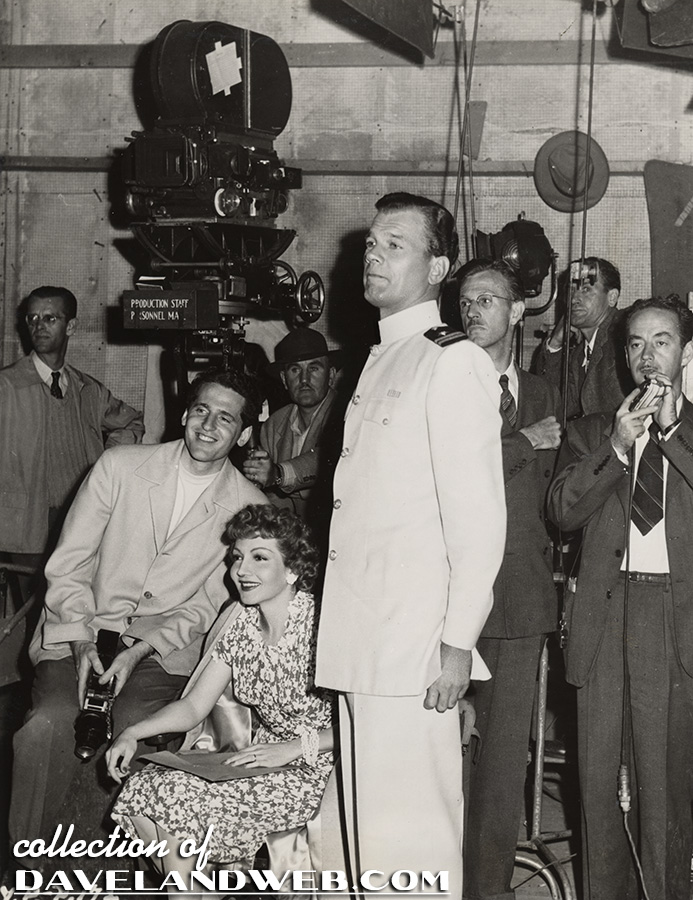
Colbert and Cotten rest between takes:


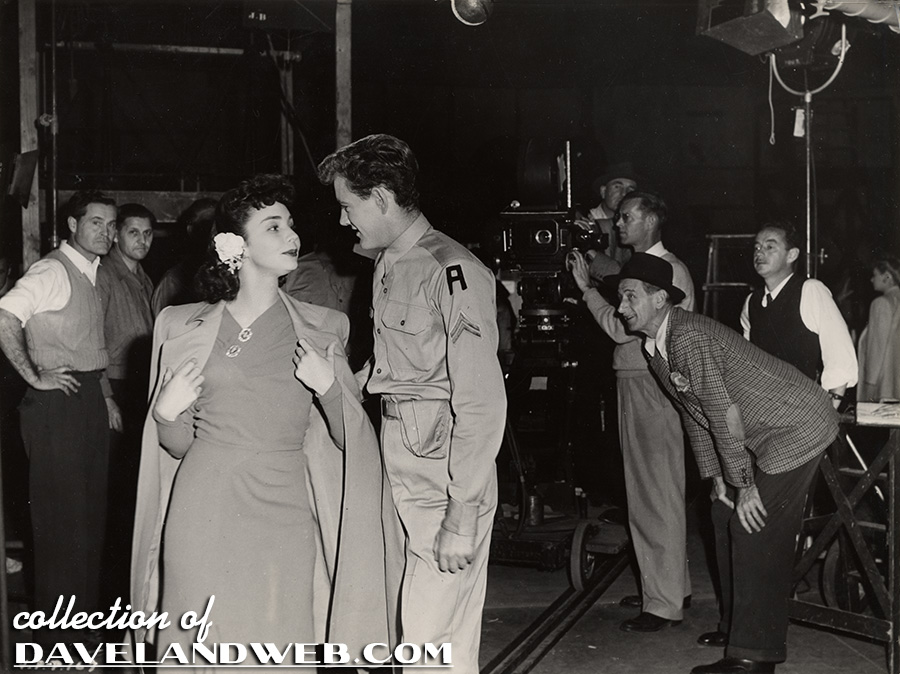
With Cromwell watching at right, Jones and Walker (married at the time the film was being made) perform their scene:


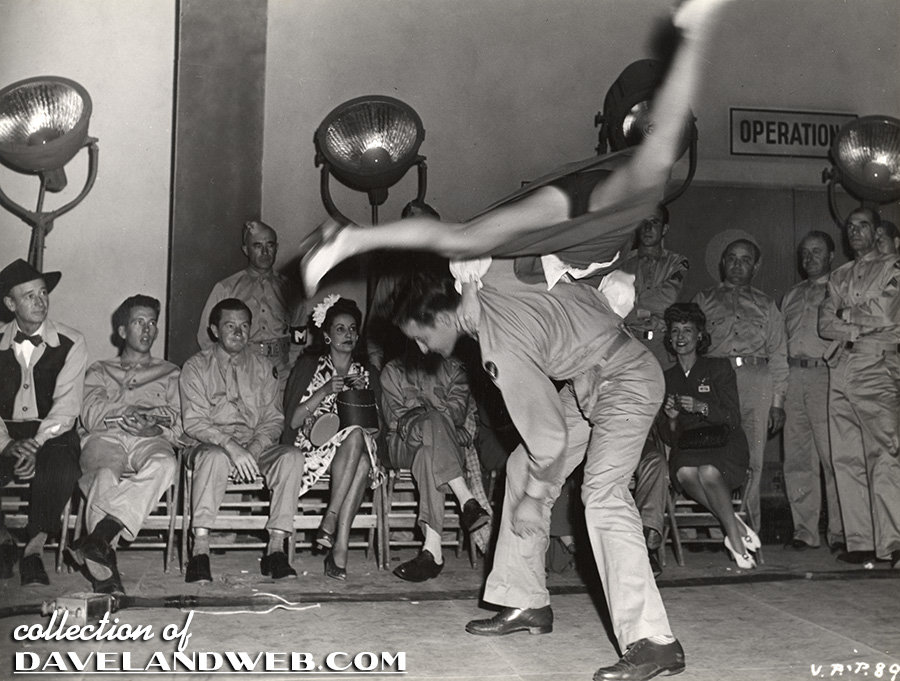
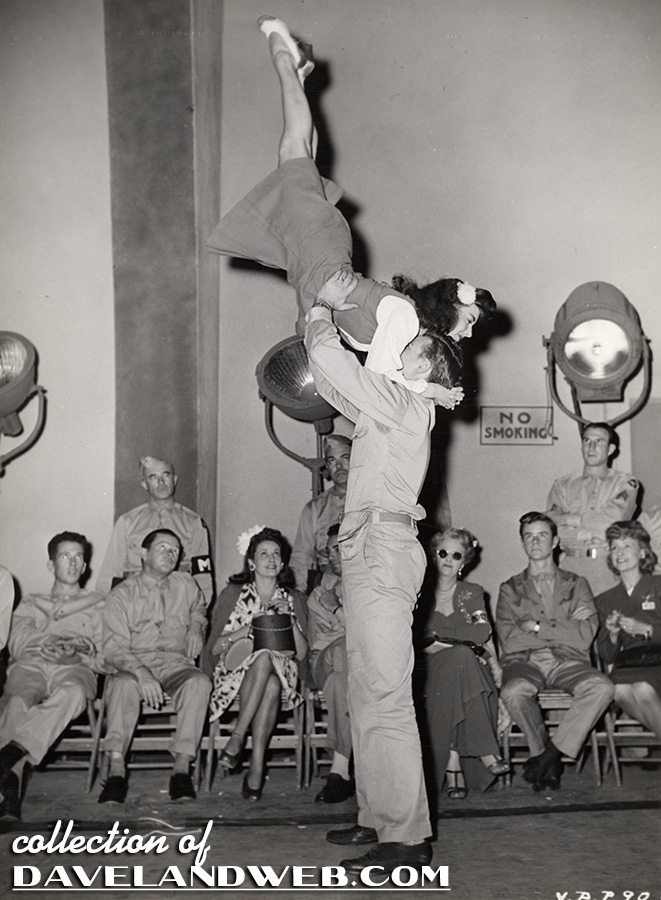
Silver Screen Magazine shot a series of dance photos during filming of the movie. From their publicity blurbs:

Jitterbugs Elsie Peritz and Jack Arkin warm up their motors, so to speak for an aerial take-off in the hangar dance sequence of “Since You Went Away,” first picture made by David O. Selznick since his Academy Award winning “Gone with the Wind” and “Rebecca.”


Peritz also had an uncredited role in the Robert Benchley Paramount Technicolor short, “Boogie Woogie” (1945). Arkin had a few small uncredited roles, including the Judy Garland film, “The Clock” (1945) and “Thirty Seconds Over Tokyo” (1944) where he also danced the Jitterbug.

Below: Jack gives a spin and—oops!—we got something in our eye, so we didn’t see that.


Now Elsie is really getting up in Hollywood. The lady in the background, if she had it to do over again, would never learn how to knit but would concentrate on jitterbugging, as Elsie has, so that she too could be the life of the party.


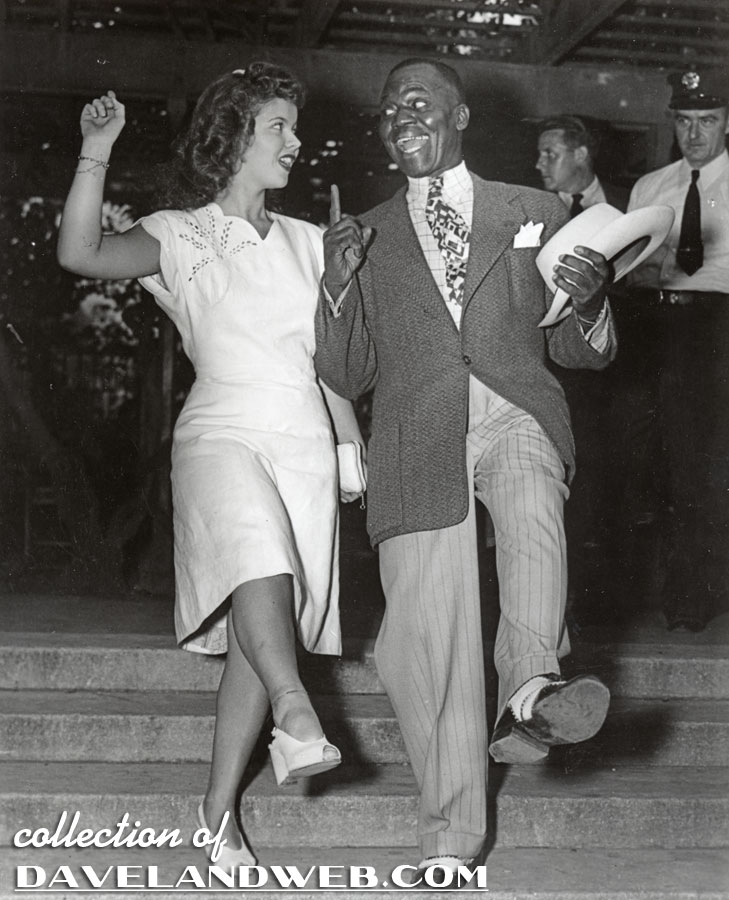
Don’t feel bad for Shirley; she continued to dance for her fans, including in Central Park with former dance partner and close friend, Bill Robinson, Summer 1944:


She gave Franchot Tone Jitterbug lessons in “Honeymoon” (1947):


In the 1970’s, Shirley performed the Jitterbug with talk show host Mike Douglas. I have yet to find a clip of it on YouTube. From what I recall she was magnificent!

See more “Since You Went Away” photos at my main website.

Tuesday, February 21, 2023

Temple Tuesday: Behind the Scenes of "Honeymoon"


After three back-to-back-to hits in her teen career (“Since You Went Away,” “I’ll Be Seeing You,” and “Kiss and Tell”), Shirley Temple was poised for a second round of success in the movies. How unfortunate that David Selznick allowed her to be put in the misguided comedy (and I use that term loosely), “Honeymoon.” Oh Shirley…you should have fought as hard to get out of this turkey!


Apparently, the original intentions were good, as three of the stars from “Since You Went Away” were to be reteamed in this one, according to the New York Times on January 20, 1946: Shirley, Joseph Cotten, and Guy Madison. Cotten would have played the role that eventually went to Franchot Tone, but he wisely turned it down which resulted in his suspension. A smart move on his part, as his next film turned out to be the runaway hit, “The Farmer’s Daughter” with Loretta Young. Poor Shirley…she stayed with the project like a trooper. Guy himself attempted to drum up some excitement with his fan club, giving them some details about his upcoming movie:


The trip to Mexico didn’t happen, thanks to a workers’ strike in the Mexican film industry. The stars stayed in Hollywood, and only the second unit went to Mexico City to shoot a few long shots (with obvious doubles!).

With ad copy like, “She’s His Glamor Girl…He’s Her Guy!”, it’s not wonder this movie was doomed. Oh, I get it…her costar’s name is Guy Madison! Please…stop…no really…please…


At least the movie provided an opportunity for a few behind-the-scenes publicity stills of Shirley, looking gorgeous.


The glow of her own recent wedding and honeymoon are evident. However, I am sure she was thinking here, “Oh, if only Joseph Cotten had stayed on…”


There are a few redeeming parts of the movie, including getting to watch Shirley do a jitterbug dance with Franchot:


The film ended up losing $675,000 at the box office.

See more teenage Shirley Temple photos at my main website.

Tuesday, December 06, 2022

Temple Tuesday: Burnin' down the (school)house!


Shirley Temple’s 18th birthday celebration was held on the set of the lackluster comedy (and I use that term loosely), “Honeymoon.” The caption for the photo above read:

4/23/1946: Shirley called on husband, John Agar, for help in blowing out the 18 candles on her birthday cake. In addition to the cake, RKO provided a soft drink bar and buffet supper for the guests who attend the part on the “Honeymoon” set.

I had to zoom in on the matchbooks that were strewn around the table,


Here is the Lucey’s (circa 1939) that they advertise:


From the Calisphere website:

Lucey's Restaurant, owned by Antonio Luciano, who went by the nickname Tony Lucey (hence the name "Lucey's" Restaurant), first opened its doors in the 1920s as a place to wet your whistle during prohibition. It quickly became a big star hangout catering to movie industry clientele such as Robert Preston, John Wayne, and Ronald Coleman, to name a mere few. In 1945, Luciano sold his restaurant to businessman Nathan Sherry, one of Los Angeles' more important restaurateurs in the Golden Era of the 1940s. At the height of his business Sherry operated almost 12 nightclubs and restaurants, but in 1954 - just nine years after purchasing Lucey's, Sherry died of a heart attack at the age of 65. Lucey's Restaurant continued on, becoming Lucey's New Orleans in August of 1959, and then Casa Lucey's Mexican food in April of 1963. This restaurant was eventually demolished and replaced with Walter's Plants Rentals years later. This is a corner view of Spanish style Lucey's Restaurant, located at 5444 Melrose Avenue and Winsor Street in Hollywood. It shows a white, 2-story round Spanish style structure on the right, and a cupola can be seen peeking up from atop another portion of the restaurant on the left, behind several large shrubs.

A color shot taken during the festivities:


In this shot, Shirley stands over the charred remains of a miniature schoolhouse. Now that she was eighteen, she no longer had to take classes on set in between takes of her movies.


What the little red schoolhouse looked like before it got torched:


Shirley attempts to show costar Guy Madison and former costar Jack Oakie (“Young People”) how to dance on the nightclub set from “Honeymoon”:


A screengrab from the movie showing Shirley teaching Franchot Tone how to dance:


When looking closely at the previous shot from the birthday party I noticed this man who appears to be a deadringer for Douglas Fairbanks Jr. The timing is about right, as he was also working for RKO on “Sinbad the Sailor”:


However, in this view of Shirley and then-husband John Agar dancing, the gentleman in the background looks a bit less Fairbanksian:


The girl itching her scalp appears to be Joyce Agar, Westlake classmate and sister of John Agar:


Here she is at Shirley’s wedding, fourth in from the left:


What a party! Now I’m hungry for cake. See more Shirley Temple photos at my main website.
Tuesday, August 31, 2021

Temple Tuesday: Shirley, James Dean, and Gone with the Wind


I would not have imagined a post where there is a common thread for all three, but here it is! The backstory: when I acquired the first image from today’s post, I realized I also had another shot of Shirley from the same evening. At this point, I had zero context. No date of the shots or anything. So...I reached out to Melissa (aka “The Colonel”). Within minutes, she had figured out through Mr. Google that the photos were from August 10, 1954 when Shirley and husband Charles attended the re-premiere of “Gone with the Wind.” That was all I needed; I was off to the races and falling down a rabbit hole of six degrees of separation.


The photo below was found online with this vintage caption:

Shirley Temple was only 11 years old when she saw first premiere of "Gone With the Wind," 15 years ago. She is shown arriving with husband, Charles Black, for second premiere last night at the Egyptian Theatre. “I know I will enjoy and understand it a little better,” she said.


Although the press crossed Charles out from the published shot, I can assure you that Shirley NEVER crossed her beloved husband out of anything. Don’t they look stunning?

Here’s the backstory on the re-premiere: Selznick liquidated his company in 1942 for tax reasons, and sold his share in “Gone with the Wind” to his business partner, John “Jock” Whitney, for $500,000. In turn, Whitney sold it to MGM for $2.8 million. MGM re-released the film in 1942 and 1947. I THINK the shot below is from the night of the re-premiere; on the left is Kay Gable (Clark’s wife). In the middle I am fairly certain we have “Jock” Whitney, with Herman Hover the owner of Ciro’s on the right (thanks Beachgal for the ID!).


From the 1977 book Scarlett Fever by William Pratt:

In February 1954, fireworks had exploded after a televised tribute to MGM’s Thirtieth Anniversary. It seemed that on “The Ed Sullivan Show,” a film clip of GWTW had been shown along with some other MGM films produced over the previous three decades, and David O. Selznick was enraged by the studio’s taking credit for the production. By August—after apologies all around—the Hollywood “premiere” actually became a personal testimonial to the producer as Oscars representing the film’s Academy Award triumph were on display in the Egyptian’s lobby along with David’s own Thalberg Award for the August 10 grand gala event. MGM publicists informed the press that “the gala event marked the first time in history that any picture ever had been given a second Hollywood premiere.” The 125 stars who held reservations for that big night included most of MGM’s remaining contract players, a selection of the town’s Old Guard (Joan Bennett, Gary Cooper, Joan Crawford, Merle Oberon, Tyrone Power, Edward G. Robinson, Barbara Stanwyck, Norma Shearer, Shirley Temple, and Spencer Tracy) and several surviving members of Gone with the Wind’s cast (Mary Anderson, Jane Darwell, Clark Gable, Cammie King, Thomas Mitchell, and Ona Munson, six months before her suicide). 

How did the film look after 15 years had gone by? The version shown in 1954 was the first time the film had been shown in widescreen. Since the film was not originally shot in that format, MGM cropped the top and bottom to an aspect ratio of 1.75:1. In doing so, a number of shots were optically re-framed. What do I think about that?


More from Scarlett Fever:

While viewers throughout America appreciated the film’s new panoramic scope that year, many wondered why the color had faded so drastically in certain segments. The cause was simple: in projecting the 1939 image onto a wide screen, crucial portions of some scenes were cut off and, to compensate, MGM had actually rephotographed those sequences with a black mask at screen bottom to raise the affected footage. In so doing, the original color was significantly drained from those moments and their new appearance was limited to a near tint-like quality.…The 1954 presentation also offered a novelty that was a distinct advantage for those theatres equipped with the latest sound systems. Despite is original one-channel, optical (or monaural) sound track, MGM technicians did a difficult and splendid job of dividing it onto a new multiple=channel magnetic tape which broadcast the film in “Perspecta stereophonic sound.” The effect was brilliant: conversations were actually divided line by line (only in certain scenes) and the voice of a character out of camera range could be heard over a viewer’s shoulder—from the back of the theatre. This was particularly well used for Ashley’s reminiscences at the lumber mill and in the finale. Stereophonic sound lost its popularity fairly quickly int he following years and this particular divided sound track was never employed again.

Based on the version available on blu ray, somehow the film has been restored back to its original glory. You can fiddle-dee-dee but don’t fiddle with the film, thank you.


As if all this weren’t exciting enough, guess who else was at the re-premiere event? JAMES DEAN! The thought of Shirley actually meeting my other favorite actor truly boggles my mind. Dean attended the event because he was dating actress Pier Angeli, who was under contract to MGM at the time. Note the Oscars behind them from “Gone with the Wind.”


Here they are with Jane Powell and then-husband Patrick Nerney. If Dean looks uncomfortable, you can bet he was. These types of events were not his type of thing, especially having to wear a tuxedo.


I have no idea if Shirley actually met James Dean. But, on the right side of the photo in the background, it looks like it could be Shirley. For the sake of this post, I’m going to say it is. Don’t burst my bubble, please.


Back to Shirley; this is HER post, after all. Let’s zoom in for a closer look at her in all her gala finery:


A closer look at the table tells us the after-party/dinner was held at Ciro’s nightclub on Sunset Boulevard.


In my collection, I just happen to have a shot of the exterior of the Club from 1954:


Franchot Tone and Zsa Zsa Gabor seem to be having a deep conversation at the party:


Parliament cigarettes were apparently the smoke of choice that evening:


Here are Betsy Blair (wife of Gene Kelly at the time) and “Gone with the Wind” star Evelyn Keyes (who played Scarlett’s sister Suellen):


I’m not sure who the gal on the right is, but she has a big old pack of Parliaments, too. Maybe they were a sponsor for the evening.


Other guests that evening included Debbie Reynolds:


…and MGM musical favorites Ann Miller and Vera-Ellen:


Phew…that was a long one! I hope you enjoyed all the six degrees of separation going on here!

See more Shirley Temple photos at my main website.