Showing posts with label charlie chaplin. Show all posts

Friday, November 15, 2024

Keystone Kop Celebration


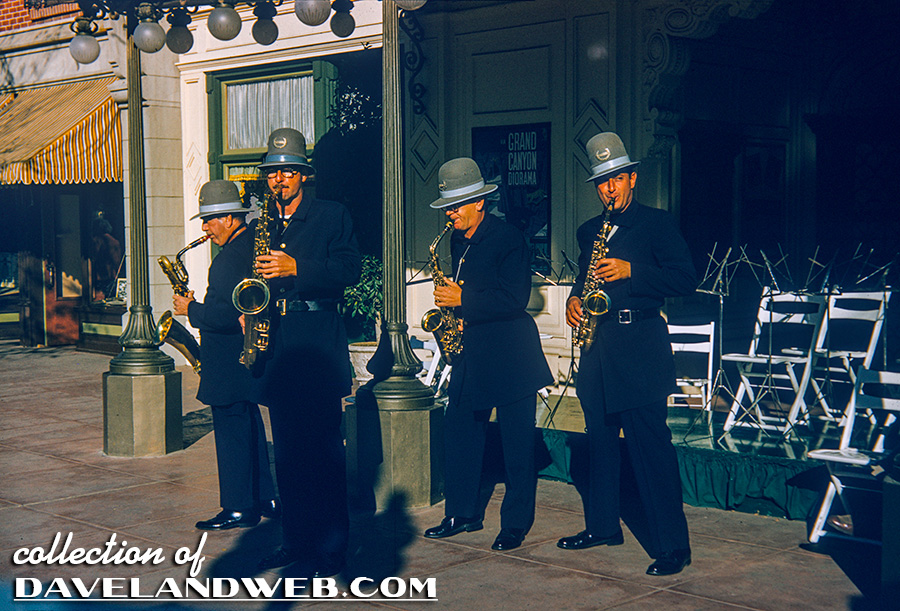
Sometimes all it takes is one “new” slide to spawn an entire retrospective post. This just such an image, featuring the Keystone Kops playing for Disneyland guests on the porch of the China Closet. It is undated, but most likely from the late 1950s. Younger readers probably wonder who The Keystone Kops were. Here you go—

The Keystone Kops/Cops were the brain child of comedian and silent screen star Hank Mann. They were named after slapstick producer Mack Sennett’s Keystone studio, founded in 1912. Their first film was “Hoffmeyer's Legacy” (1912), with Mann as the police chief. Though initially popular, Sennett relegated the Keystone Cops to supporting roles behind Charlie Chaplin and Fatty Arbuckle only a few years later. Sennett stopped using them by the 1920s, but they continued to pop up over the years in various features, cartoons, video games, and yes…Disneyland!


As you can see from this Summer 1955 shot, the Kops were shown daily at the Main Street Cinema.


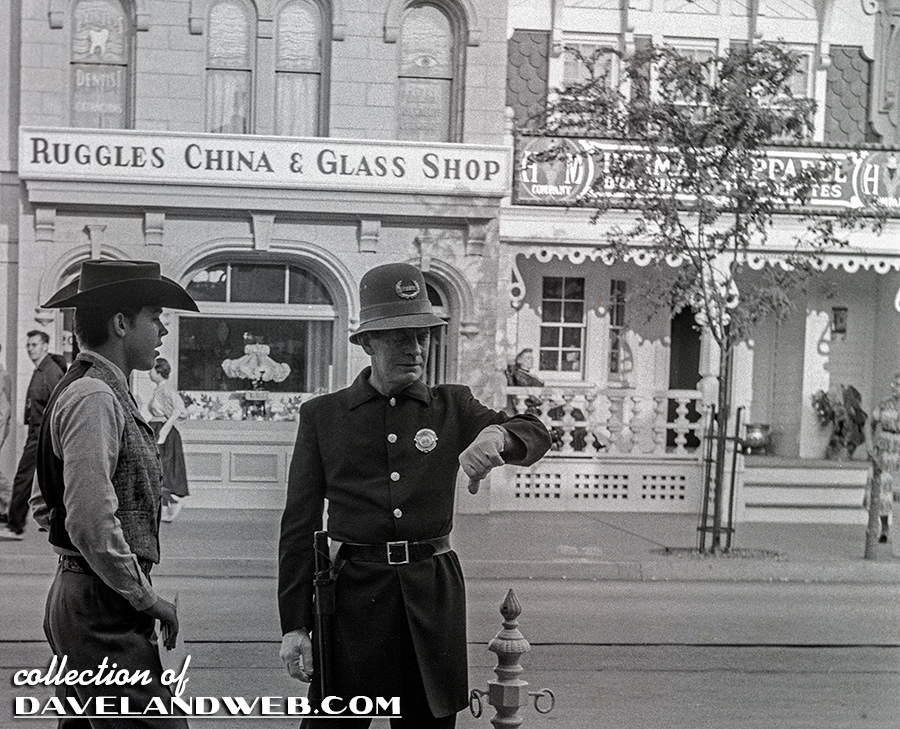
On Disneyland’s Opening Day, these two Kops posed with a young guest outside the Main Street Cinema:
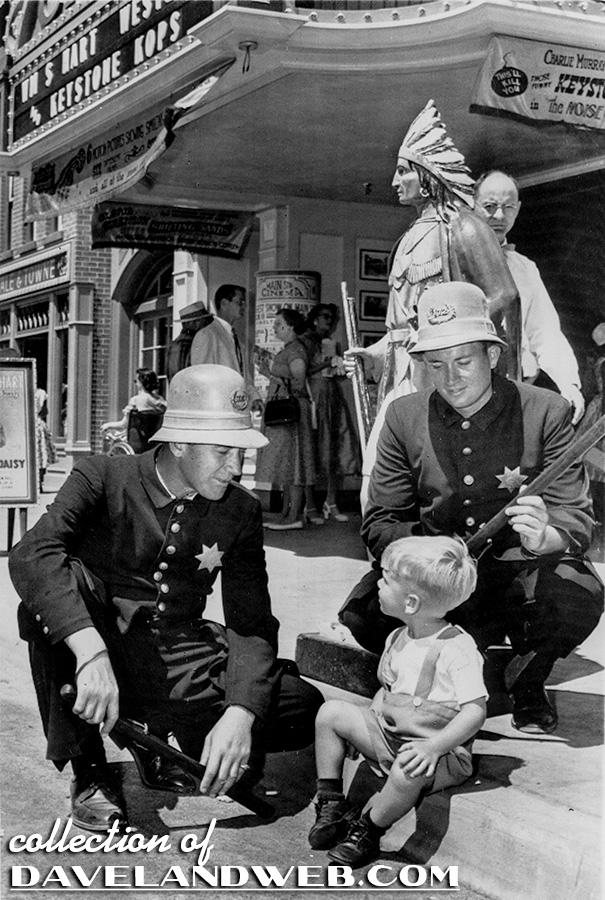


As comic security and a wandering music group, the Kops were a great fit for Main Street, U.S.A.
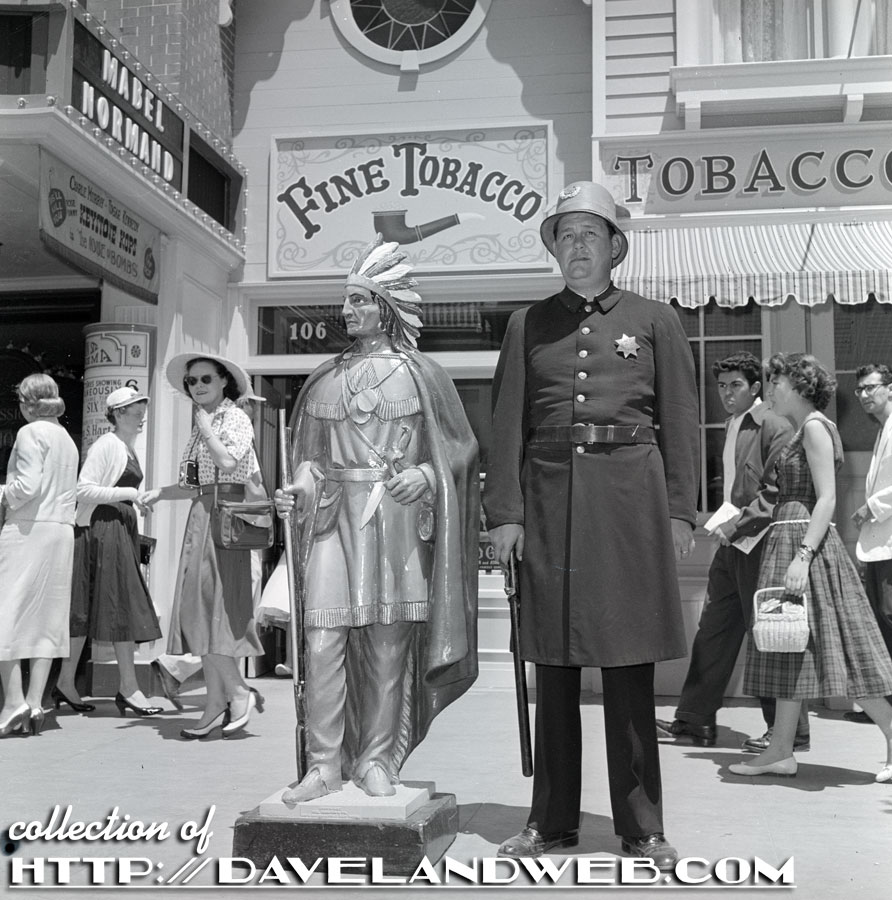


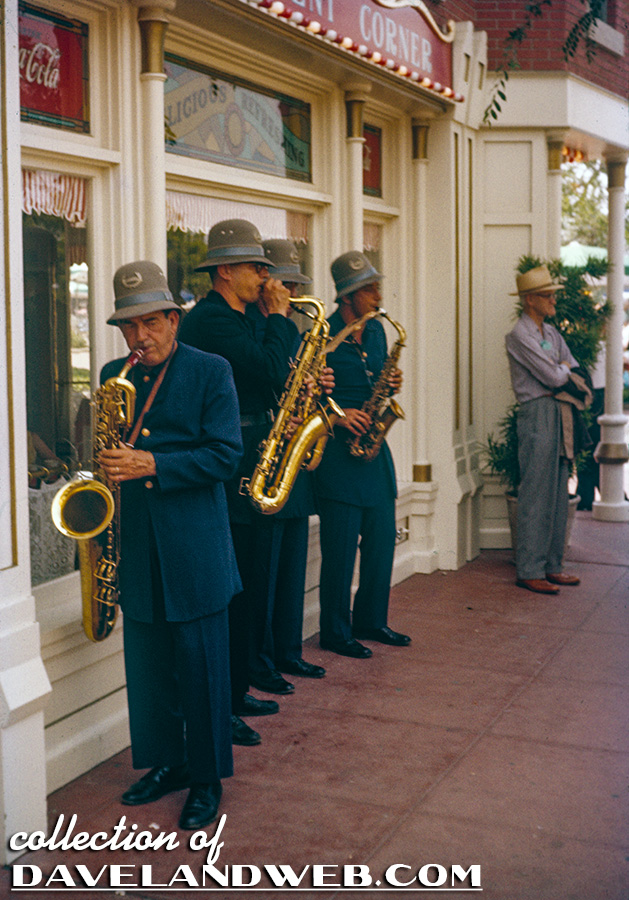
Outside the Coke Corner in 1956:


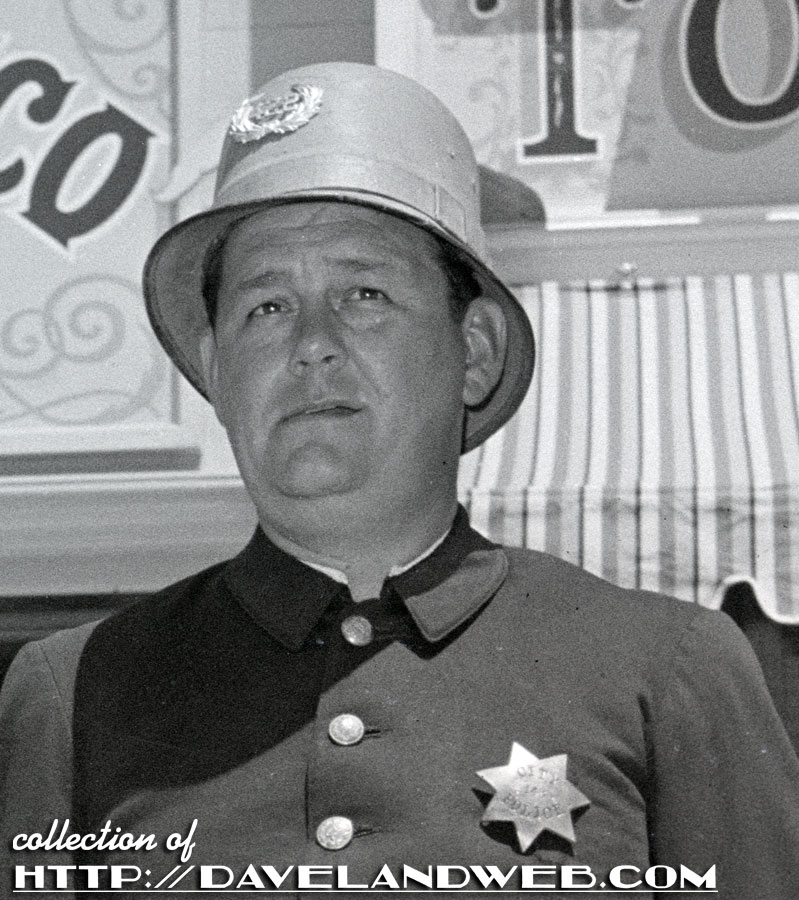
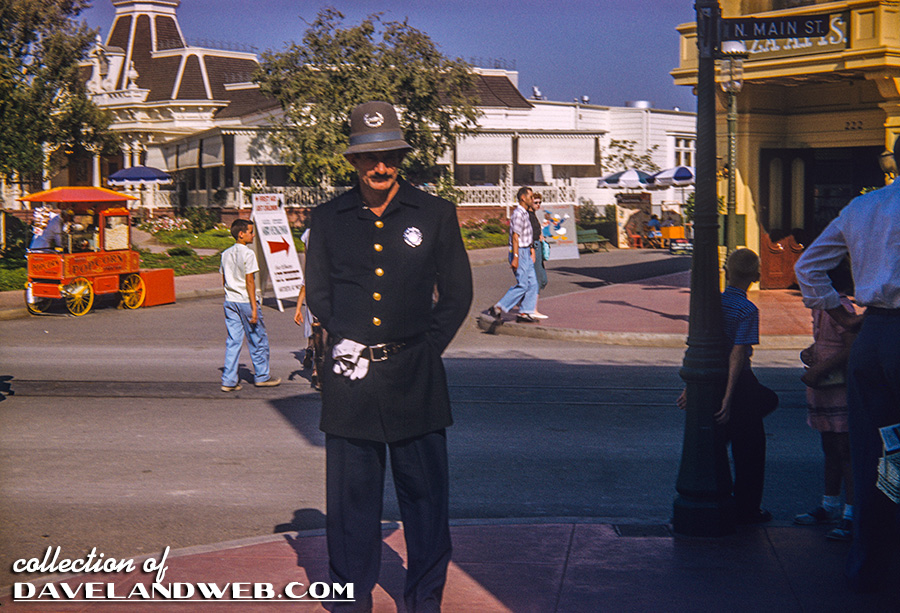
A lone Kop from 1956:


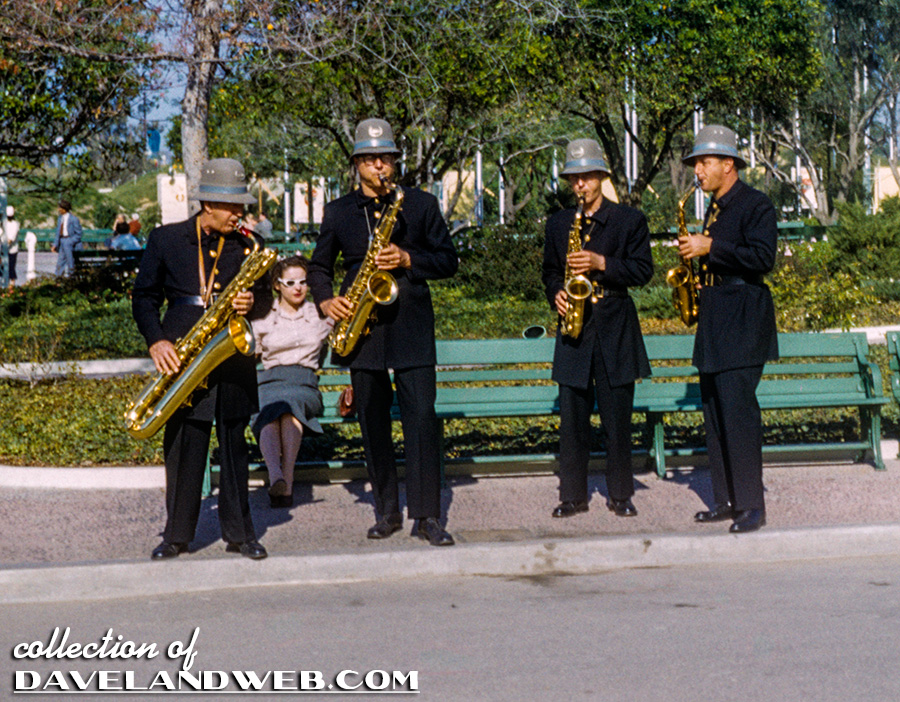
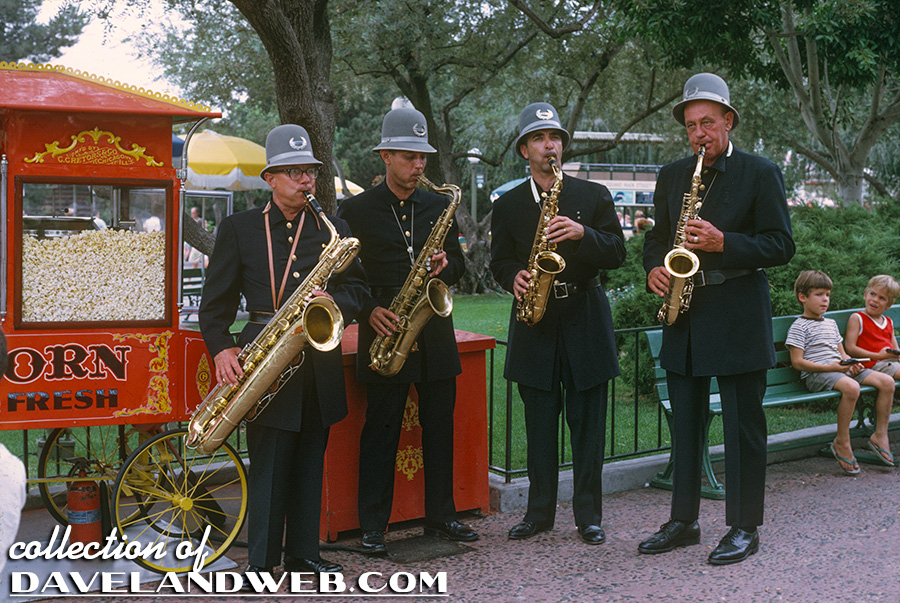
Central Plaza was the place guests would most likely see The Keystone Kops play their vintage melodies. On the right is Bernie Flymen; he played sax & clarinet at Disneyland from 1955–1960 and in Desi Arnaz’s “I Love Lucy” band. Funny how this guest appears to be completely oblivious to them. Maybe it’s the sunglasses.


Outside the Opera House, circa March 1959:


This 1960 publicity shot shows a traffic jam of shorts in Town Square.
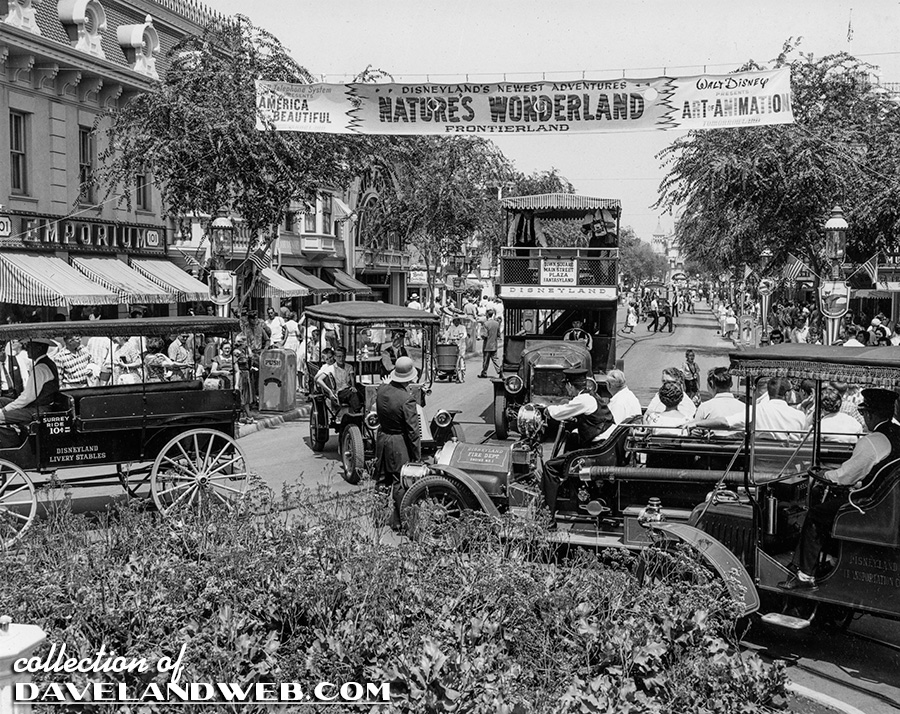


Not sure how much help the Kop is really giving here! Note the White Wing in the background:



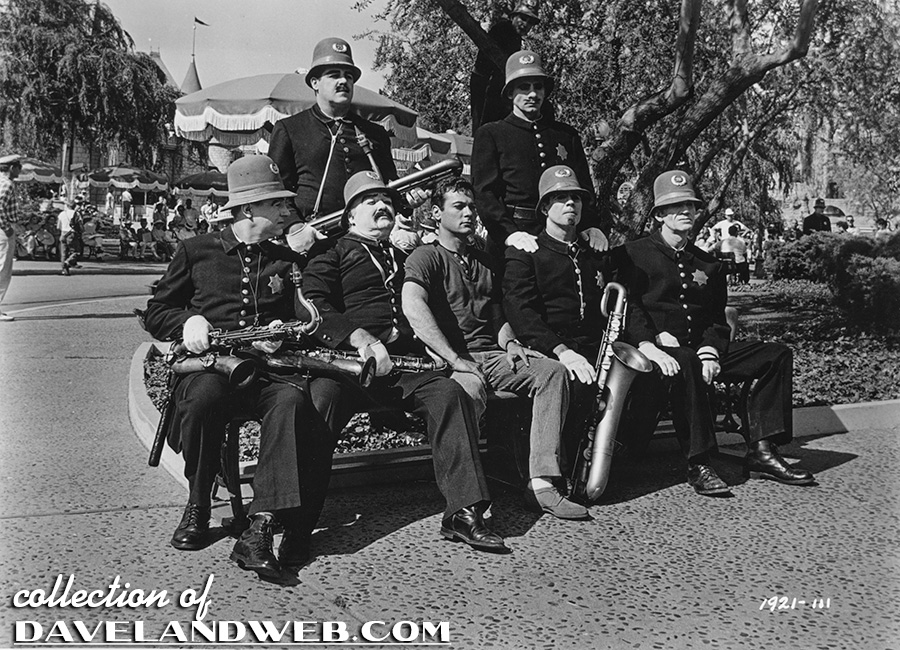
The Keystone Kops were seen in “Forty Pounds of Trouble” with Tony Curtis in 1962 during the Disneyland sequence:


Back to Central Plaza in April 1965:
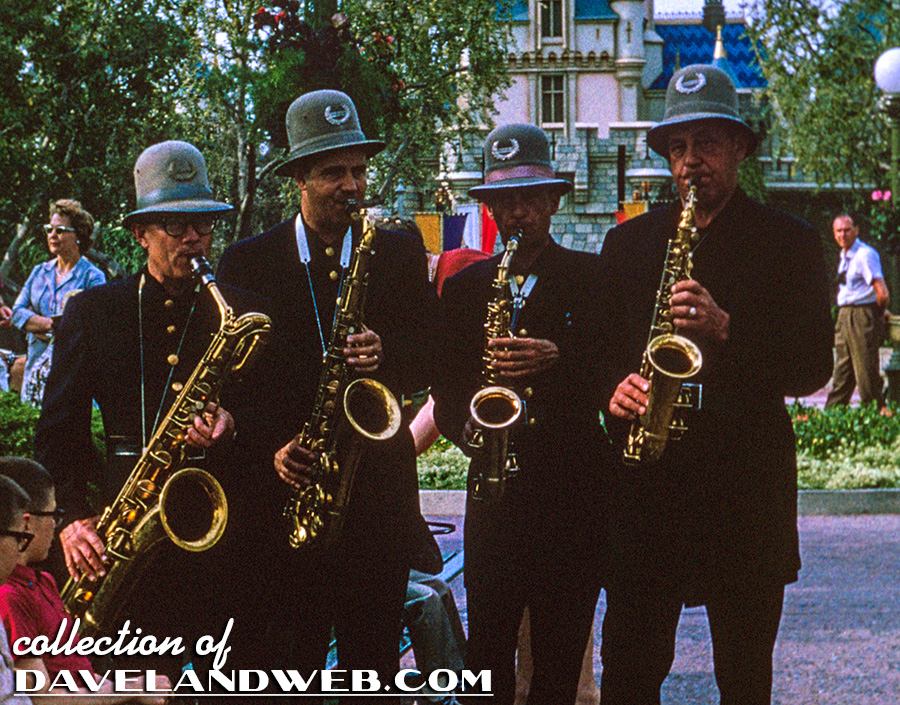


From September 1, 1967, we see the Kops playing in Central Plaza right near the popcorn cart. The two little kids to the right do not seem amused.


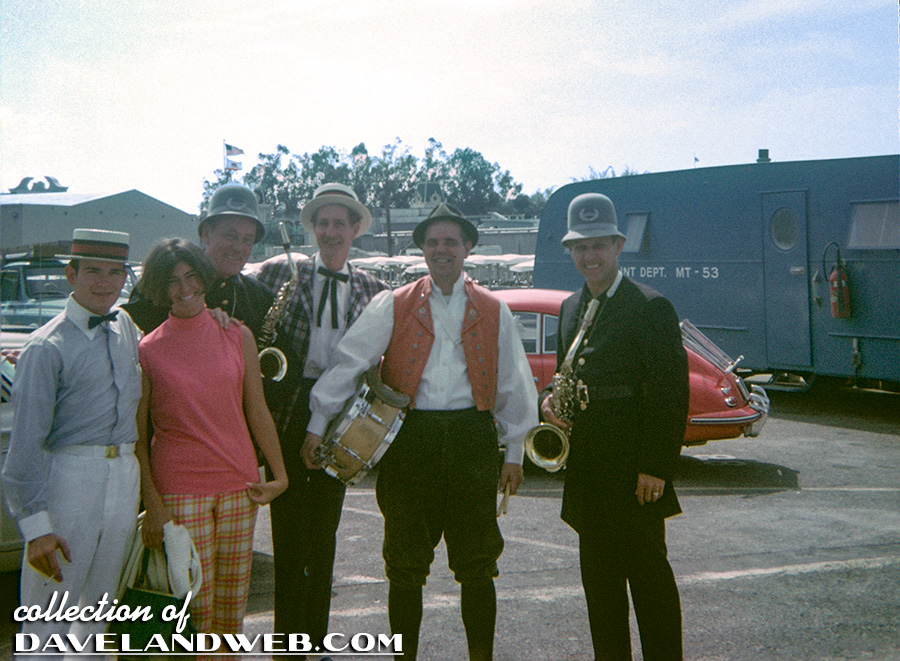
A backstage shot from April 1968:


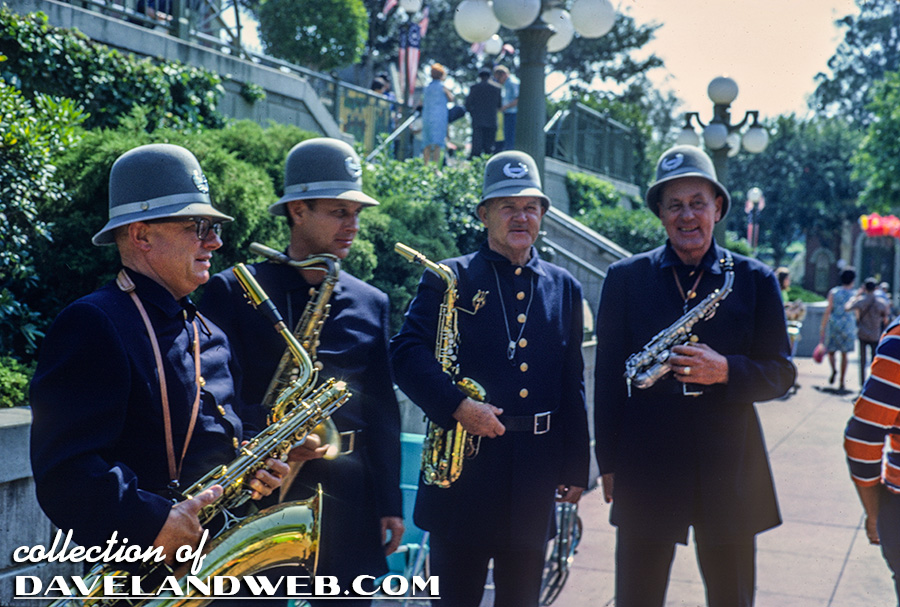
Last one for today is from July 1968. I can only guess that the Kops were discontinued shortly after that. This is what happens when you defund the police.


Want to see the original Keystone Kops in action? Here’s “A Thief Catcher” (1914) which was considered a lost short until 2010 when a print was discovered at a Michigan antique sale. Charlie Chaplin plays one of the Kops.


See more Disneyland East Main Street photos at my main website.

Sunday, September 15, 2024

Stooges Sunday: Micro-Phonies


While their seemingly low-brow physical comedy may not appeal to cinema snobs, The Three Stooges still rank high as a Daveland favorite, especially thanks to the genius of Curly Howard. Today, I pay homage to one of my favorite Stooge shorts, “Micro-Phonies,” released November 15, 1945. Shot in only four days, it was filmed not long after Curly had suffered a stroke.


BEWARE PLOT SPOILERS! The film begins with The Stooges horsing around on the job at a recording studio. Moe hits his head on the radiator and when he comes to, hears “the voice of an angel.” 


The angel is none other than frequent Stooge costar, Christine McIntyre as Alice Andrews. Yes, that is her gorgeous voice trilling away to “Voices of Spring” by Johann Strauss.


She is recording it as a surprise to snag a job without her father knowing. Convoluted, but go with it. Meanwhile, The Stooges get into an altercation with an Italian violin playing grump, Signor Spumoni (Gino Carrado). They escape back into the recording studio and start clowning around at the mic. Larry puts on Alice’s record and Curly begins to lip-sync to it.


Moe and Shemp take the cloth and fruit basket off the piano and adorn Curly while he continues to mime to Alice’s record.


Rich society matron Mrs. Bixby (Symona Boniface, another frequent Stooges costar) “hears” Curly singing and assumes that he/she is the new voice she came to audition for her radio program. She is impressed and whips out the contract for “Senorita Cucaracha” to sign. Mrs. Bixby also invites them to perform at a party she is giving that evening.


Larry and Moe dress up in tuxes, taking on the identities of Signor Mucho and Signor Gusto. In all Stooges comedies, the names of the characters, products, etc. are part of the gag.


Alice and her father (Sam Flint) just happen to be at the same party and she recognizes The Stooges from earlier in the day.


The guests look forward to hearing Senorita Cucaracha. Seated on the couch at left is Bess Flowers, known as the “Queen of the Extras,” who bears the distinction of appearing in the most films nominated for a Best Picture Oscar.


Planning to lip sync again, The Stooges settle on “Sextet from Lucy” (actually Lucia di Lammermoor, by Gaetano Donizetti).


See the guy at the piano?


He’s silent screen comic Chester Conklin, seen below in Charlie Chaplin’s final silent film, “Modern Times” (1936).


Signor Spumoni is also at the party and decides to spoil the fun for The Stooges. He pulls the plug on Mrs. Bixby’s record player.


“What is it,” asks a concerned Mrs. Bixby, “laryngitis?” “No,” replies Moe, “fallen arches.”


Alice confronts the trio and asks them to perform again, but to her voice this time, as she wants to impress her father and Mrs. Bixby without them knowing who it is.


Alice again sings “Voices of Spring” from behind the curtain…


and Senorita Cucaracha lips syncs to the impressed society guests, especially Mrs. Bixby and Alice’s father who bemoans, “If only Alice could sing like that!”


Signor Spumoni figures out what is going on when Alice accidentally hits him through the curtain. He reveals the trickery once again.


Alice ends up getting Mrs. Bixby’s job, but The Stooges get a stack of records tossed at them as they make a hasty retreat. THE END!


Regular readers of my blog will recall the post about Shirley Temple lip syncing to “The Sextet from Lucia di Lammermoor” in “Captain January” nine years before The Stooges did (ably assisted by Guy Kibbee and Slim Summerville). The difference is that Shirley and crew were just having fun; they weren’t attempting to fool anyone.


The ultimate lip-synch gag came in 1952 with “Singin’ in the Rain,” when Kathy Selden (Debbie Reynolds) did the honors for the shrill Lina Lamont (Jean Hagen).


See “Micro-Phonies” for yourself!


See more photos at my main website.

Wednesday, July 12, 2023

Chaplin Speaks!


Comedian Charlie Chaplin is probably best remembered today for his silent movies and unique brand of slapstick comedy. More refined that what you would later see with The Three Stooges, Chaplin’s character of the Little Tramp had just enough nice to balance his naughty side. You always rooted for him. It wasn’t until 1940 that he made his first all-talking picture and ventured outside of the famous Tramp character for which he was known. The role? A parody of Adolph Hitler and his persecution of the Jews. The first thought that might come to mind is how did this idea even get a green light from a movie studio? #1: Chaplin made his own movies, which is why he helped found United Artists. He was not interested in having his artistic visions tampered with by the high powered execs and stockholders. #2: This film took approximately 3-4 years from conception to release. At the time of release, the United States was still a neutral player in what would become Word War II. Not all of what Hitler was doing was fully known to the general public, especially here in the U.S. In his 1964 autobiography, Chaplin stated, “Had I known of the actual horrors of the German concentration camps, I could not have made “The Great Dictator,” I could not have made fun of the homicidal insanity of the Nazis.”


Chaplin doesn’t fully abandon the Little Tramp in this film, but rather plays a dual role: Adenoid Hynkel (dictator of Tomania) and the Jewish Barber (aka the Tramp) who lives in the ghetto where Hynkel’s troops concentrate their persecution efforts. Paulette Goddard portrays Hannah, the Barber’s neighbor and plucky romantic interest who refuses to let the Tomanian troops push her or her friends around.


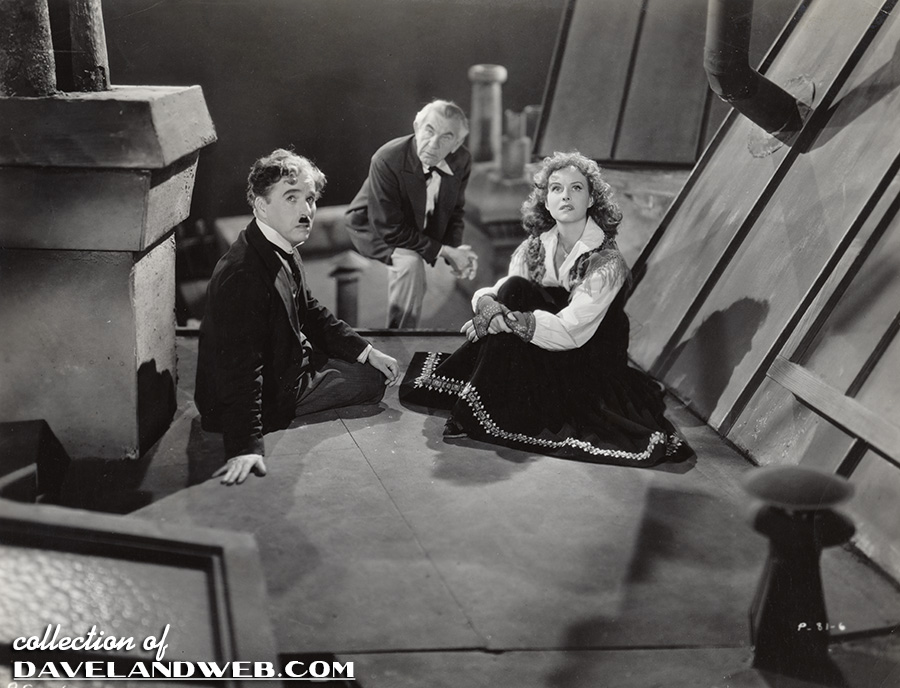
Chaplin had a tendency towards overly sentimental scenes, but Goddard’s performance prevents “The Great  Dictator” from being overwhelmingly so. In this beautiful photo by William Wallace (above), Hannah has just been pelted with tomatoes by the Tomanian troops, ruining the basket of laundry she was about to deliver.  Below, the Barber and Hannah hide on the rooftops as the troops loot and plunder their village. At center is Maurice Moskovich, who portrays the Barber’s landlord and Hannah’s benefactor, Mr. Jaeckel.


The film ends with a rousing speech against hate to the people and troops of Tomania, delivered by the Barber, who is impersonating Hynkel. Expertly delivered by Chaplin, he begins the address in the shyness of his Barber character, but slowly builds and transforms into what we can only assume is the actor himself, giving an impassioned plea to the real world:

To those who can hear me, I say - do not despair.…The hate of men will pass, and dictators die, and the power they took from the people will return to the people.…Dictators free themselves but they enslave the people!…Let us fight to free the world - to do away with national barriers - to do away with greed, with hate and intolerance. Let us fight for a world of reason, a world where science and progress will lead to all men’s happiness. Soldiers! in the name of democracy, let us all unite!

If wars had to be fought by the leaders/dictators themselves, the outcome would be very different.


For Chaplin’s next film, released seven years later,  he portrayed “Monsieur Verdoux,” a French Bluebeard who marries wealthy women then murders them to inherit their fortunes. How could the lovable Tramp play such an evil and unsympathetic character? It is explained two-fold: all of the women he marries are shrews, and the reason he does it is to support his beloved wife and child. Just in case that’s not enough to get you on Verdoux’s side, the camera lingers on the wife’s feet just long enough for it to sink in that she’s an invalid.


Martha Raye plays one of Verdoux’s wives, the indestructible Annabella Bonheur. Her scenes are the comic highlight of this fairly dark comedy. While I do enjoy it, the film does suffer from some of the same things that I feel plague “The Great Dictator.” Unfortunately, they are less subtle here. Slapstick, drama, sentiment, morality, and black comedy must be carefully woven together to create a compelling story that is cohesive. Where “Dictator” navigates those different themes fairly well, “Verdoux” has less success. 


The movie ends at just the right time, as the audience most likely begins to wonder what could the outcome possibly be for a serial killer who murders women? Apparently Verdoux has “lost” his wife and child, although the movie never explains the circumstances. One is left to wonder if he has killed them, too. After a madcap chase that harkens back to the earlier days of the Silent Screen Tramp, Verdoux gives himself up to the authorities and is promptly jailed.


Like “The Great Dictator,” Chaplin ends the film with a monologue. This time, it is directed towards the Judge and jury at his trial, but we all know it is meant for the audience in the darkened theater:

As for being a mass killer, does not the world encourage it? Is it not building weapons of destruction for the sole purpose of mass killing? Has it not blown unsuspecting women and little children to pieces, and done it very scientifically? As a mass killer, I am an amateur by comparison.

While I cannot argue with some of the interesting points that Verdoux/Chaplin makes, the dialogue does not succeed like it did with the preceding film. “Dictator” offered hope; “Verdoux” gives a very dark pessimism. Chaplin’s 1940 monologue is given by a character who only wants to live peacefully and find love; the 1947 speech is delivered by a non-apologetic murderer who is bitter at how fate has unfolded for him. In his personal life, Chaplin had grown weary of the persecution by the tabloids for his persona life as well as the constant jabs by the Government who labeled him a Communist. “Monsieur Verdoux” was definitely a reflection of Chaplin’s feelings towards the U.S.

Despite the flaws mentioned here, both films should be watched by those who love classic cinema. Chaplin’s artistry is evident in both and still runs circles around most of the substandard fare we are subjected to in this day and age.

See more Charlie Chaplin photos at my main website.

Friday, July 02, 2021

Catalina Welcomes You!


It’s 1940, and Charlie Chaplin and Paulette Goddard had just finished filming “The Great Dictator” and vacationed in Catalina to celebrate:

Relaxing at Santa Catalina and letting the world go by are the Chaplins-three. Charlie, Sr., Paulette Goddard and Charlie, Jr. Sidney, the younger son, had to stay at home to make up his studies. Charlie has just completed his long awaited sound picture and is resting at his Santa Catalina hide-away dividing his time between fishing, tennis and strolling around Avalon Town with son Charles and Paulette.

The boat that took them from Los Angeles to Catalina can be seen in the background. The gents below are vacationing there, too, circa May 1958:


A vintage view of the Casion in the background, from September 1960:


This ho-hum Catalina shot from June 1962 got a little more exciting for me when I noticed there was a brochure in the little girl’s hands:


Zooming in and flipping the image 180 degrees I got this:


Which matches this “Catalina Welcomes You” vintage brochure easily found on ebay:


See more Catalina photos at my main website.