Monday, September 23, 2024

Early Disneyland In-Depth: Casey Jr. Circus Train


When Disneyland first opened, the Casey Jr. Circus Train took guests on a sightseeing journey of…dirt. Storybook Land was still almost a year away, and was initially titled both Canal Boats of America and Canal Boats of the World. Whichever it was, the banks of dirt provided zilcho scenery. That’s ok…Casey provided enough hills and thrills of its own. In the below shot from December 26, 1955, guests had to settle on taking pics of Casey and its passengers, as the dirt banks with little tufts of grass did not make for a very pretty photo!


This genuine FauxD© image from 1955 shows just how bare Canal Boats of the [fill-in-the-blank] looked, and how rickety the track for Casey appeared with nothing to surround it! Guests were probably a tad nervous sitting in an open-air vehicle riding over the wooden trestle bridge.


Another 1955 image:


I wouldn’t be pushing on the cage doors too hard!


Regardless of the lack of scenery, guests still lined up for Casey Jr.:


This detailed shot shows the Chicken of the Sea Pirate Ship still had some decorative work to be completed even after the Park first opened:


The flags that decorated the perimeter were the only indication of the “World” theme:


By the summer of 1956, the Storybook theme was installed, which benefitted both attractions.


…and yet, this train appears to be running empty!


This Skyway shot shows off the beautifully landscaped Patchwork Quilt:


A couple of lovebirds practically have the entire train to themselves:


A nice detailed view of Cinderella’s Castle and the French Village below it:


A guest aims his camera at…yet another empty train.


Early Disneyland cast member and Daveland initial contributor, the late “Cox Pilot,” gave this information about the box sitting at the lower center of the above photo (detail view below):

I remember that Bronco was one of the early mower companies (now Troy-Built). If you look real close, squint a little, you can just make out a picture of what looks like a mower (just on the lower left). I would suggest that this box was used for garden stuff, but originally was a parts box for a Bronco "Certified" 250 (you can also just make out "250" on the lower right).


Where are all the guests? Either this was a test run or perhaps guests lost interest once the rickety trestle bridges were gone!


See more Disneyland Casey Jr. Circus Train photos at my main website.

Friday, September 20, 2024

Vintage Spin Down Palm Canyon Drive


Let’s take a spin down Palm Canyon Drive, circa March 1955. What a sporty Pontiac convertible! I believe it’s a 1954 model.


This angle of Palm Canyon shows the Chi Chi Club on the right, which claimed to have Palm Springs’ only hickory broiler!


At the Palm Springs theater, “Untamed” with Tyrone Power and Susan Hayward is playing.


Looks fairly tawdry from the movie poster!


Two other previously posted vintage views of the Chi Chi Club from my collection:


…and a vintage postcard on eBay:


This shot shows the Coral Tree restaurant, located in the Palm Springs Hotel. Both are now gone. Notice the cross up in the mountains; not sure if that’s still there or not. I don’t recall seeing it.


Charging only $1.95 for a full course meal, I can see why they went out of business! I believe this building was replaced with Hyatt Palm Springs.


A vintage menu cover from the Coral Tree:


…and a peek inside at what they served:


See more vintage and contemporary Palm Springs photos at my main website.

Wednesday, September 18, 2024

Midweek on Mackinac


Still on my travel bucket list is Mackinac, the Island with no cars made famous by its appearance in “Somewhere in Time” (1980). Today’s batch of undated 1950s images show the Main Street and the horse-drawn carriage with the hotel’s attendant. In the detailed view below you can see the sign for Selma’s Candies, including her famous fresh fudge! From the Detroit Free Press, Sunday August 27, 1989:

When Selma Dufina, who made candy as a hobby, started a candy and fudge shop in 1948, she couldn’t imagine the fudge business would take off as it has. “May’s was the only shop, and every time another one opened up, I thought business would decrease,” she says now, retired for 11 years. “But it didn’t.” But why Mackinac Island? What was there about this quaint place, where automobiles have been banned for years, that fudge caught on and held tight, like Irish coffees in San Francisco, like beignets in New Orleans, like coney island hot dogs in Detroit ?“Well,” muses Selma, “when you’ve taken a boat trip in the morning and you’ve had an early breakfast, the smell of chocolate on the fresh air would be an incentive to buy.” Thirty years later, Selma Dufina would sell her shop to Kilwin’s. She has not bought a morsel of fudge since.

Dufina died on January 9, 1998 at the age of 83 in Florida, but is buried at Saint Ann’s Cemetery on Mackinac Island.


The image from my collection below shows the same area, circa 1959. Abbey’s Pendleton Shop has become The Scotch House, and Alford's Rexall Drug Store has a new sign!


The Murray Hotel is a constant in both images, and apparently is still in business! From The Murray website:

The historic, 69-room hotel dating back to the late 1800s. Family-owned and managed since 1882, this charming hotel is located in the heart of downtown Mackinac. We encourage our guests to relax in an atmosphere of Victorian-era décor or to step out our double doors onto Main street. Our old-fashioned atmosphere has been preserved, while our facilities have been updated to meet the needs of the modern traveler. All rooms have their own private bathrooms. We at the Murray Hotel continue to impress visitors with the courteous and friendly service that has marked its success for over 140 years. A stay at the Murray Hotel affords our guests an opportunity to blend local hospitality, friendly service, and easy access to all Mackinac Island has to offer.


The image below shows the steps up to the entrance of the Grand Hotel:


The same steps Christopher Reeve walked up and down when he was on the Island to film “Somewhere In Time.” The crew had to get special permission to allow Reeve to use the car in the scene where he arrives at the hotel.


Another angle of the entrance, with a rickety carriage parked haphazardly on the curb!


Below, a parade of non-motorized vehicles return from a trip into town:


See more vintage Mackinac Island photos at my main website.

Tuesday, September 17, 2024

Temple Tuesday: Shirley in San Francisco


On her way to the Pacific Northwest for a vacation, Shirley stopped at the St. Francis Hotel in San Francisco. Like everything else, this little pit stop was covered by the press in great detail!

SHIRLEY’S GROWN UP—SHE HAS A BOY FRIEND NOW

The deep, dark secret of Shirley Temple’s love life came out when Shirley came to San Francisco with her mother and father on a vacation trip. For when Shirley sat down for breakfast upon arrival, up popped Jimmy Sheck, 11, of Hollywood, who had followed the young star to present her with a bundle of “posies.” Jimmy’s father is a prominent former New Jersey attorney, now living in Hollywood. 7-30-1936


A photo of Shirley reaching up to the lobby’s grandfather clock still graces the hotel:


How the clock looked in 2013 when I stayed here:


In 1944, Shirley found herself back in San Francisco. From the accompanying caption:

HELPING NAVY MORALE—Shirley Temple gave hundreds of shows during her hospital tour in Northern California after the completion of her role in Selznick International’s “I’ll Be Seeing You.” She is shown here with the ranking officers of a navy base at which she appeared.


I had to get a closer look at the decorative radishes adorning her top.


Here, Shirley poses after the show with an adoring fan.


“Keep smiling, cutie - you’ll never be as famous as I was!”


A closeup of the couch reveals a used flashbulb that the photographer tossed aside during the shoot. Hope it didn’t leave a burn mark on the leather!


See the art hanging on the wall?


This was one of a series of prints produced and distributed by Coca-Cola during World War II to educate people about the differences between friendly planes and enemy aircraft as preparation for bomb drills. Each was approximately 15" x 13" and painted by William Heaslip. The plate on this one says: 

Vought-Sikorsky “Corasair” F4U Fighter • U.S. Navy, Protecting a landing operation


I found a little more about Heaslip on he Penelope Matallana Pastels website:

My maternal grandfather was born in Toronto, Canada and moved to New York City in the 1920’s. He illustrated aviation subjects for leading magazines after World War I. During World War II he illustrated war scenes for The New York Times Sunday Magazine, Wide World Syndicate and The Associated Press. His greatest commission was for the Coca Cola Company for which he illustrated all American war planes. The prints from these paintings were distributed to soda shops across the nation where they were displayed to educate citizens about our great war time aircraft. (My father, Richard Dexter Studwell, flew in a B-17 bomber as a gunner.) Several of his paintings are in exhibition at the Pentagon and the War College in Washington. He studied at the National Academy of Art and The Art students League in New York City and he was a member of the Salmagundi Club in NYC.


I remember my grandfather best when spending holidays at his 1740 stone barn which he converted into a cozy home. He was a fun loving grandfather who loved to entertain his family and friends and played Santa Clause for the town of Hackettstown, NJ.

So ends today’s rabbit hole!
 
See more Shirley Temple photos at my main website.

Monday, September 16, 2024

A Tale of Two Capitans


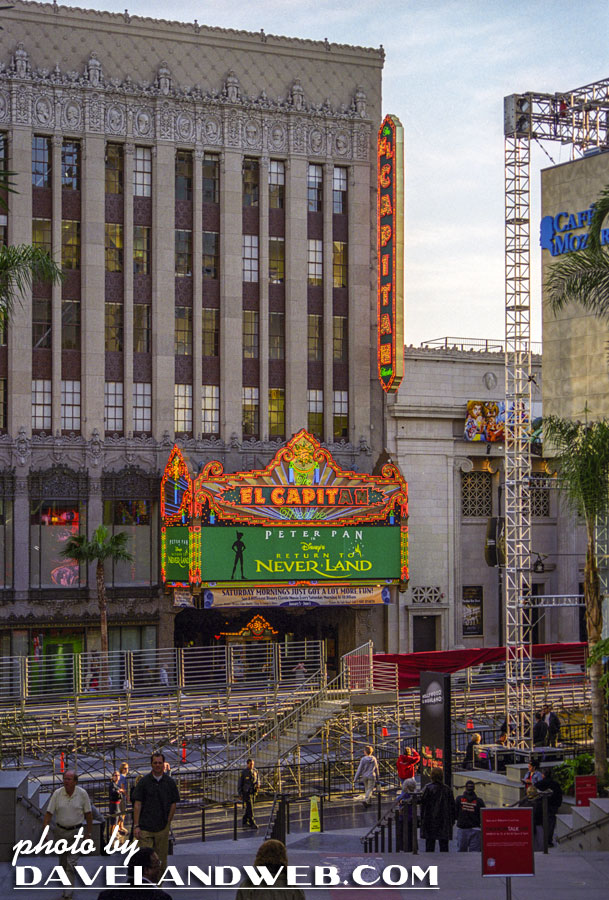
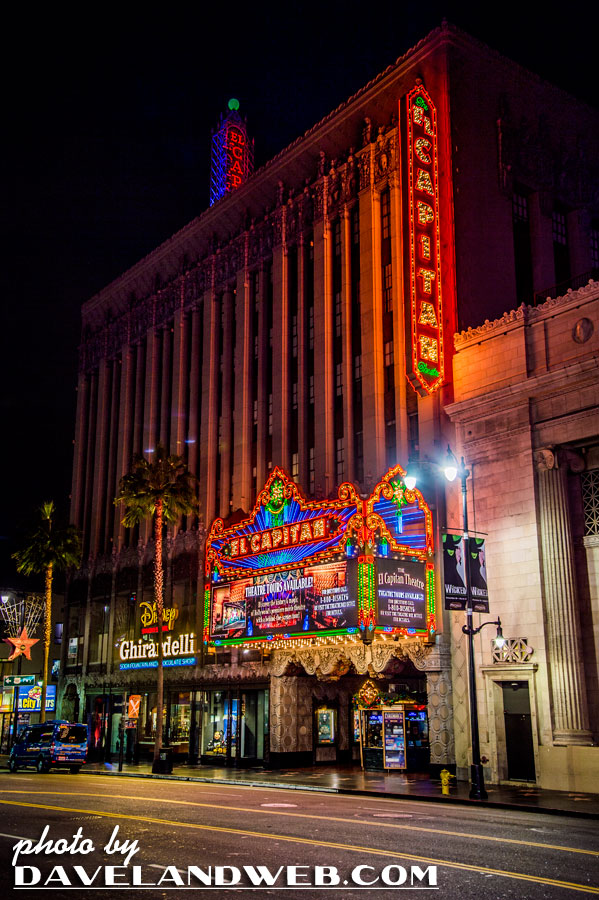
The name “El Capitan” was used at different times for two different theatres at two different locations. It must have been a coveted name to have earned that distinction! In the first photo for today’s post from March 2002, we see what is the commonly known Hollywood Boulevard location. Edited from the El Capitan website:

1926: Dubbed "Hollywood's First Home of Spoken Drama" the El Capitan Theatre made its debut as the largest legitimate theatre in Hollywood on On May 3, 1926. Stars filled the 1,550 seat theatre for the premiere of the fresh-from-Broadway play CHARLOT'S REVUE, starring Jack Buchanan, Gertrude Lawrence and Beatrice Lillie.
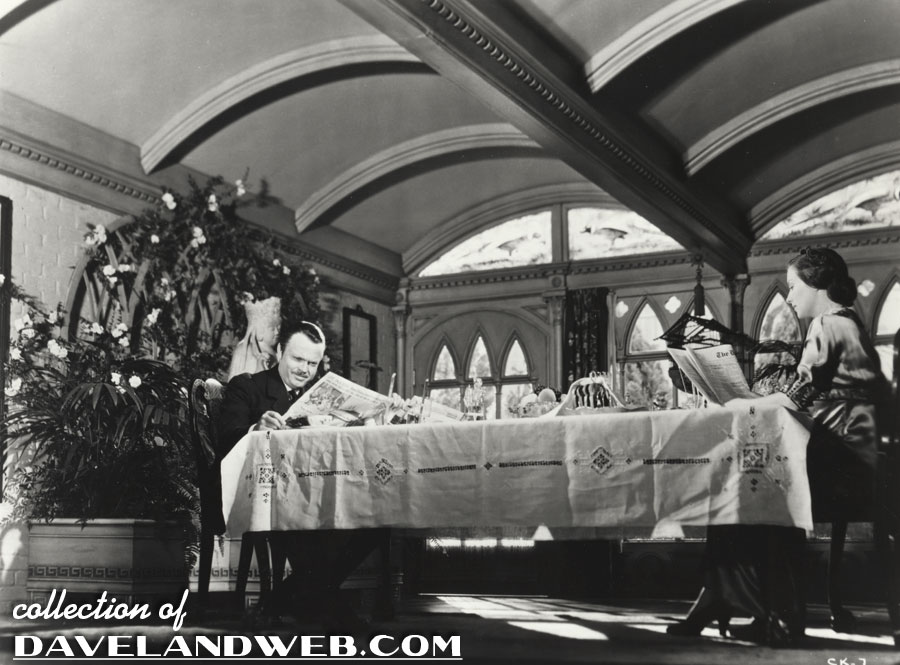
1941: Business was faltering, and the theater then began showing movies. On May 8, 1941, Orson Welles premiered his first feature, and very controversial, film “Citizen Kane,” at the El Capitan Theatre. Welles was unable to locate a theater owner willing to risk screening his film so he turned to the El Capitan.


1942: The theater closed for a two month renovation and reopened in March 1942 as the Hollywood Paramount (it had been purchased by Paramount Pictures), a new, streamlined "art moderne" first run movie house. Its inaugural film presentation was Cecil B. DeMille's “Reap the Wild Wind.”

1989: The Walt Disney Company joined forces with Pacific Theatres and launched a two-year, remodel of the El Capitan Theatre. The remodel was led by renowned theatre designer Joseph J. Musil with the supervision of the National Park Service's Department of the Interior, and guidance from conservator Martin Weil and architect Ed Fields.

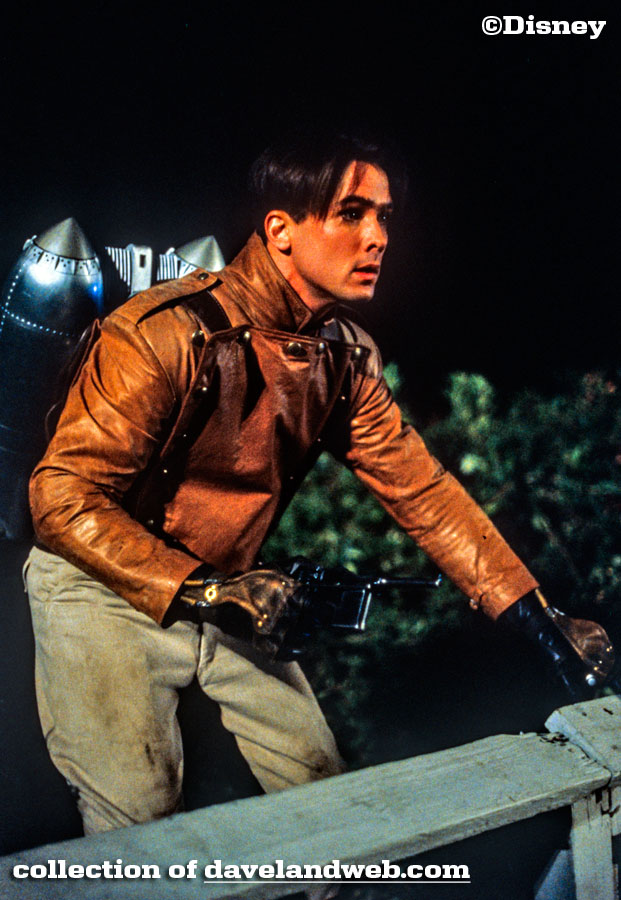
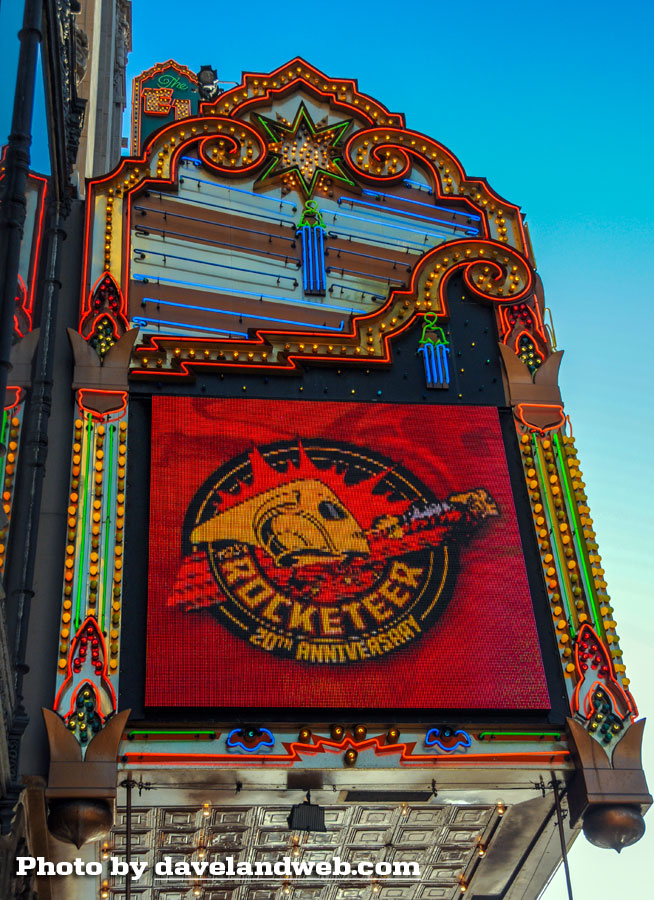
1991: The theatre reopened its doors to the public on June 19, 1991 for the world premiere of Walt Disney Pictures’ THE ROCKETEER.


In 2011, the 20th anniversary of the film, “The Rocketeer” was shown again at the El Capitan, with leading man Billy Campbell in attendance. I was there, too.


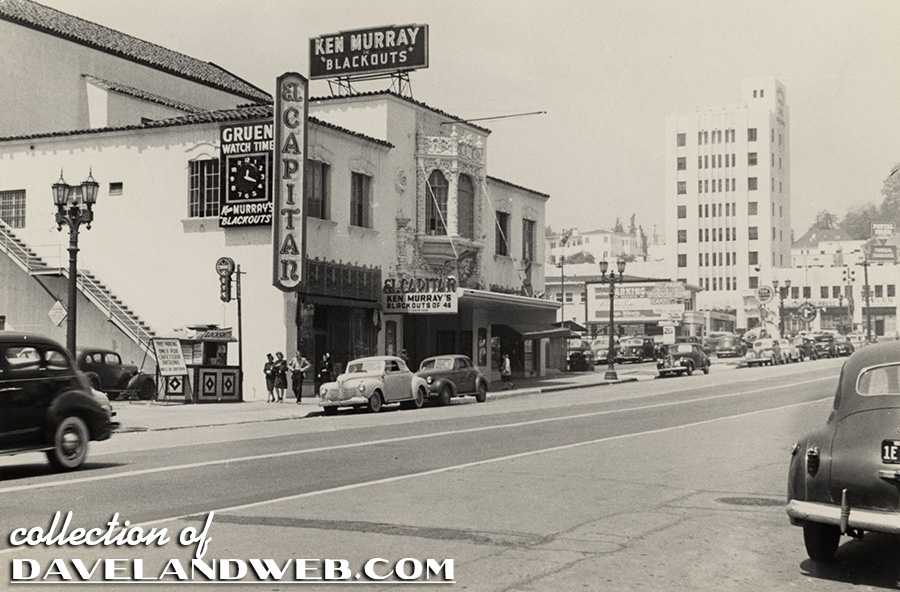
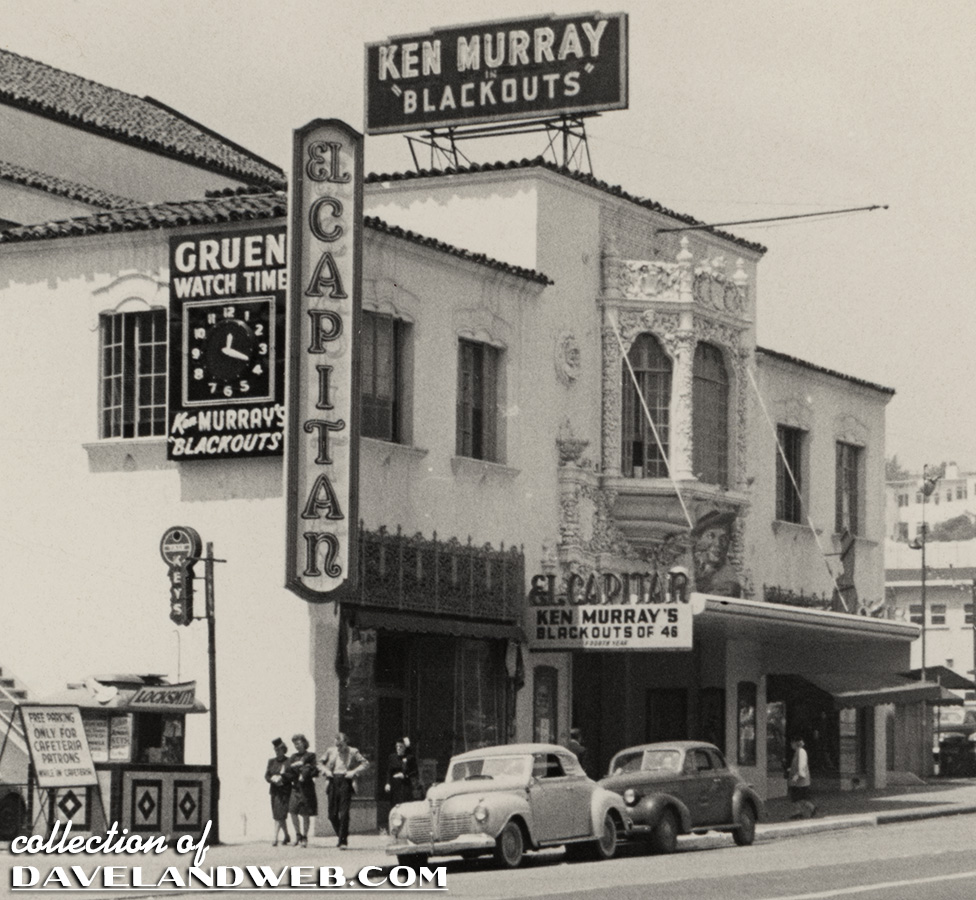
This vintage 1946 shot shows the OTHER El Capitan, just a few blocks away on Vine Street.


Originally known as The Hollywood Playhouse, it was designed in the Spanish Colonial Revival style by the architectural firm of Gogarty and Weyl. During the Great Depression, the theatre was renamed The WPA Federal Theatre (after the Works Progress Administration), and used for government-sponsored programs. Later, the theatre hosted many CBS Radio Network programs, including Fanny Brice’s “Baby Snooks” show and Lucille Ball’s “My Favorite Husband” program (the precursor to “I Love Lucy”). In the 1940s, it was renamed The El Capitan Theatre, and used for a long-running live burlesque variety show called Ken Murray's Blackouts.


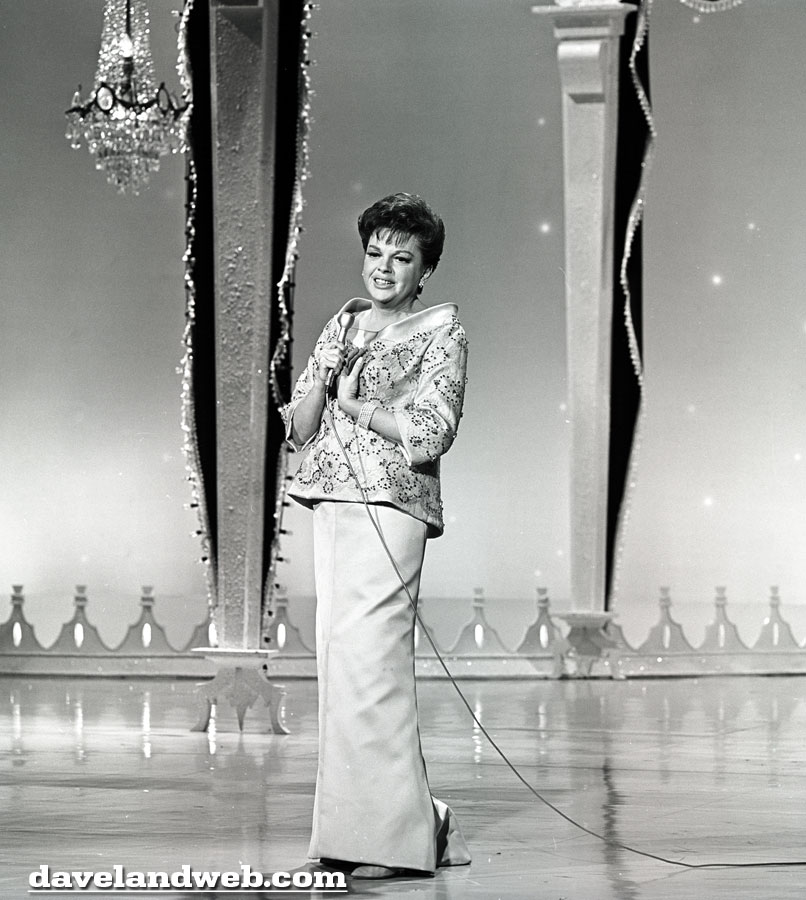
In the 1950s, the theatre became a television studio and it was from a set on its stage that Richard Nixon delivered his famous “Checkers speech” on September 23, 1952. This event is often mistakenly said (especially on the Internet) to have taken place at the other El Capitan. The theater was also home to The Colgate Comedy Hour, the Lawrence Welk Show, and This is Your Life. In 1963, ABC television used the theater for Jerry Lewis’ weekly TV program, and renamed it The Jerry Lewis Theatre. After the cancellation of Lewis’ show, ABC renamed the building the Hollywood Palace and launched The Hollywood Palace, a variety series which had guests such as Judy Garland (below in 1965), Groucho Marx, and Louis Armstrong.


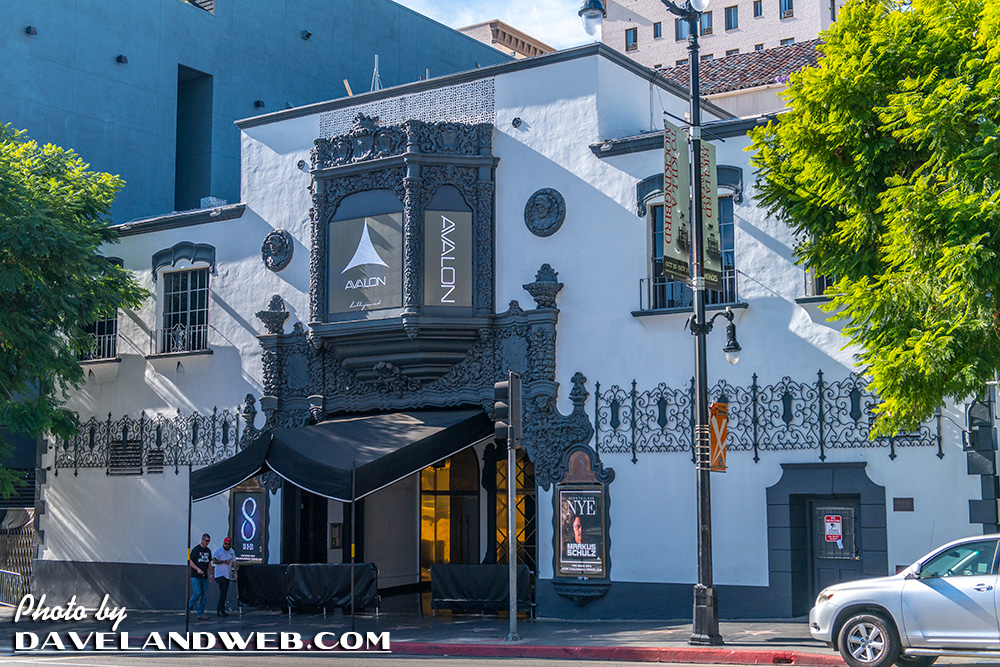
The program was successful and continued for seven years until 1970, after which ABC continued to use the building as a studio for occasional broadcasts. In 1978, ABC sold the theatre to private businessman Dennis Lidtke, who restored it and reopened it four years later with an abridged name, The Palace. It can be seen in the film “Against All Odds.” The punk band The Ramones played their 2263rd and final show here on August 6th 1996. It was recorded for Billboard live for the album We’re Outta Here. The building was purchased by Hollywood Entertainment Partners in September 2002 and renamed The Avalon. Here’s how it currently looks:


A December 2014 shot of the other El Capitan:


See more vintage and contemporary Hollywood photos at my main website.