
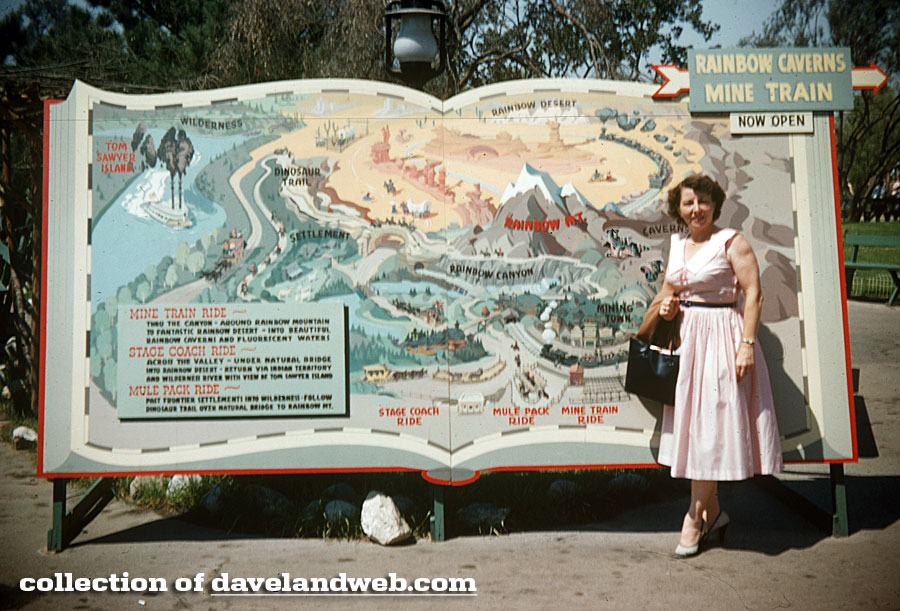
Here begins a series on the transportation reduction at Disneyland, starting with the Frontierland area (dry land only for today!). This is not necessarily about attractions that have been cut, but rather modes of transportation that once took guests from point A to point B, OR those that gave guests a tour or glimpse of the Park. In 1956, gigantic maps were sprinkled throughout Disneyland, highlighting the attractions that could be found. This one was in Frontierland. Zooming in, you can see the various modes of transportation that could be found there.

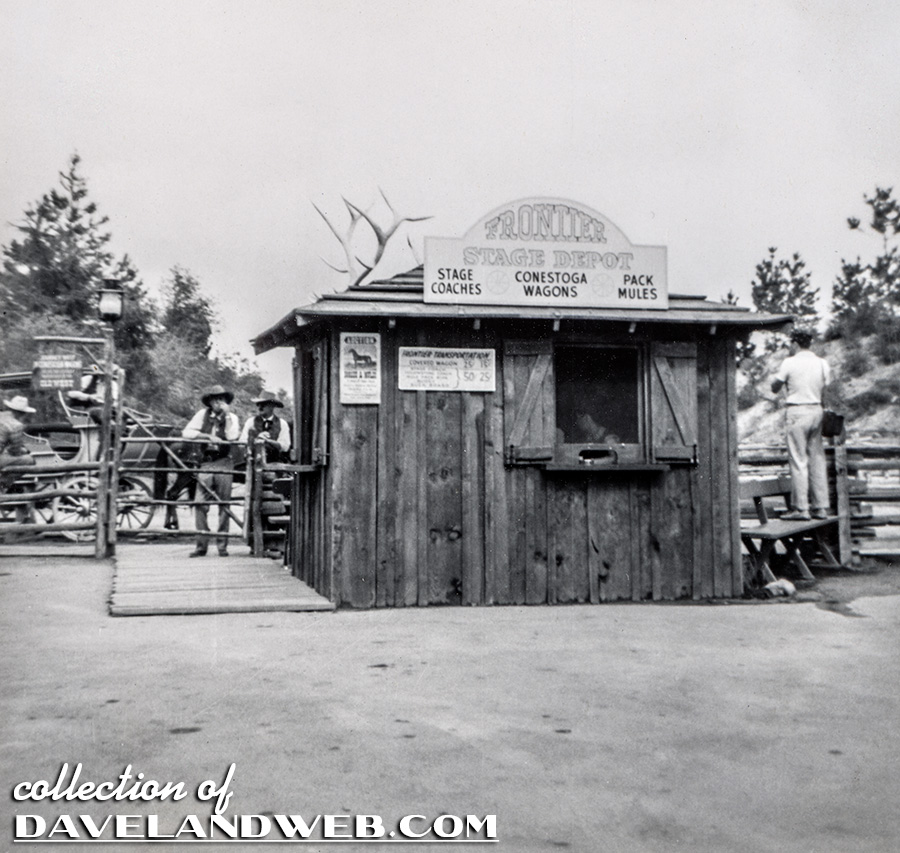
The original entrance for the Stage Coaches/Wagons/Pack Mules, circa September 1955:
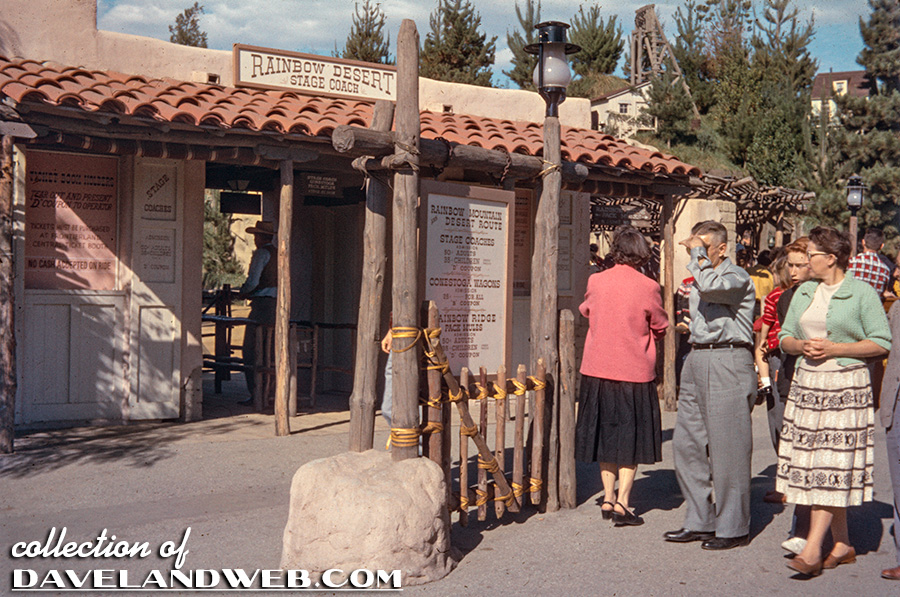
The below image shows the upgraded entrance and ticket window structure for the Rainbow Desert Stage Coaches:

Guests could buy tickets here for Conestoga (covered) Wagons, a Stage Coach (also referred in some Disney publications as “Concord Stagecoach”), and the Pack Mules.

Only 50¢? What a value! Or a ‘B’ ticket if you prefer!

Another view of the entrance area, from February 1959:
A 1956 brochure shows you could choose between buggy rides, buckboard rides, conestoga wagon rides, mule pack ride, stage coach ride, surrey ride, and yellowstone coach ride.
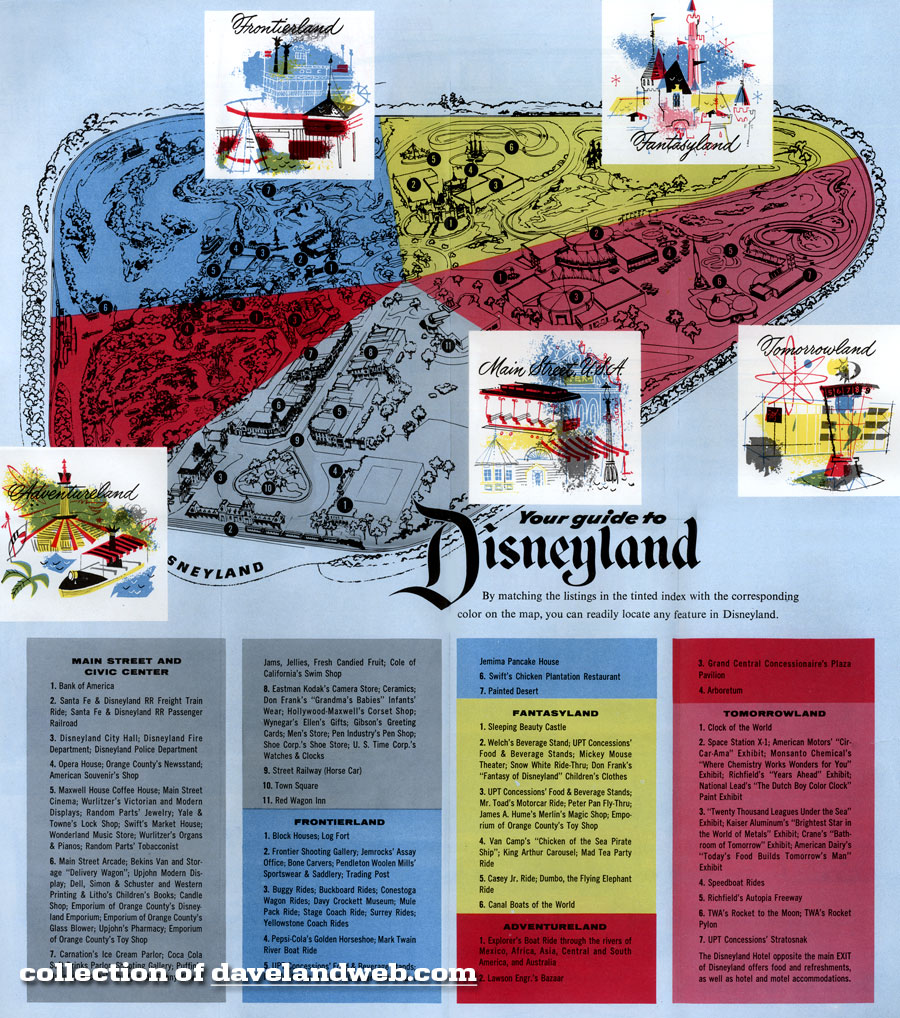
The 1958 guide book only listed Conestoga (Covered Wagon) Ride, Stagecoach Ride, Mine Train, and Mule Pack Rides.

Here are photos that show each of these vehicles in action, beginning with the Stage Coach (or Stagecoach, depending upon which publicity piece you read!):

This is a different style of Stagecoach that was also offered, numbered 4:

Number 5:
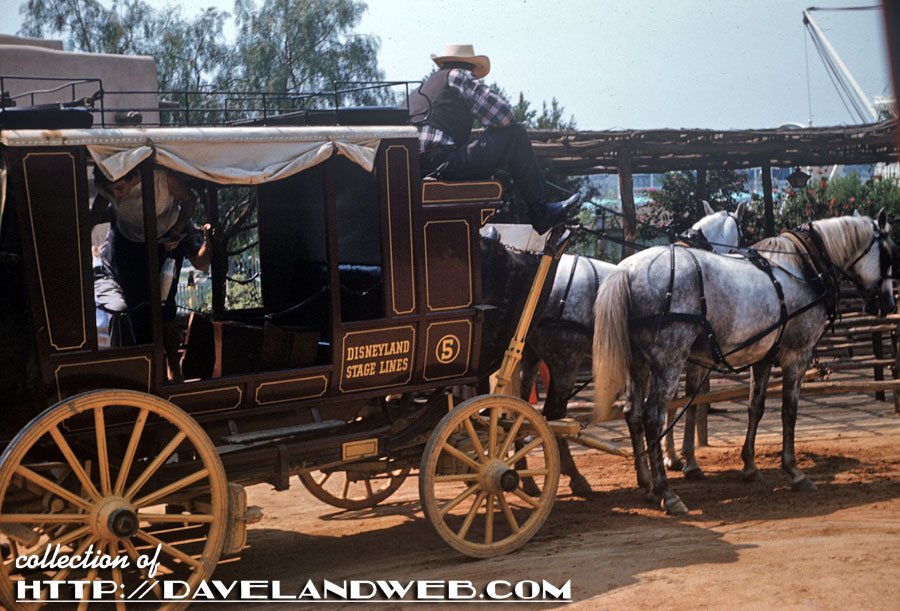
Number 6:

A buckboard:
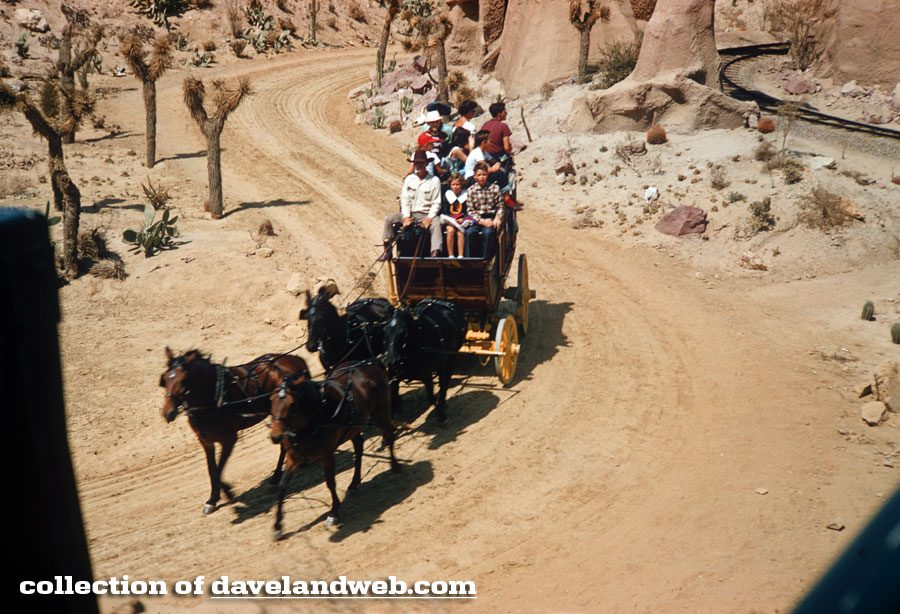
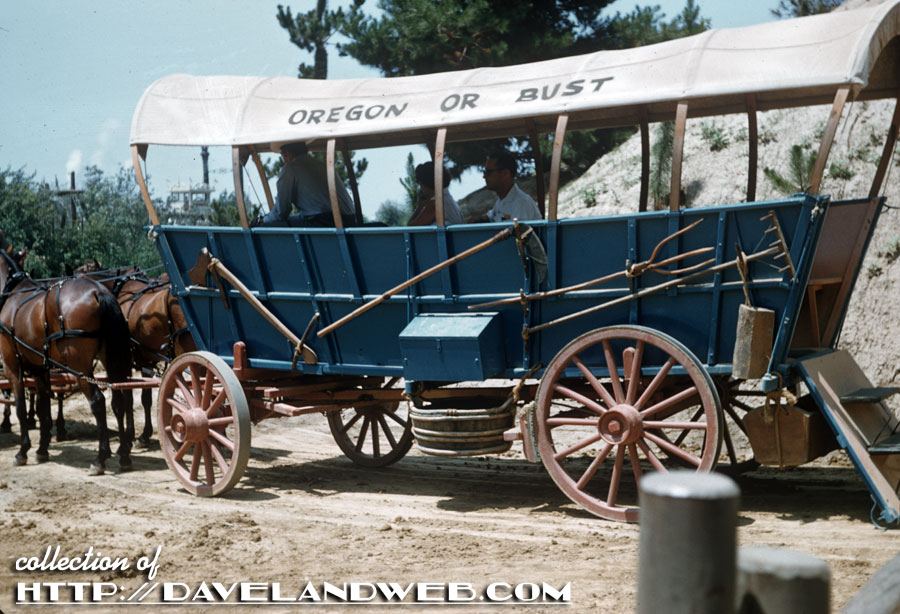
A Conestoga Wagon:
The Yellowstone Coach photo is a pre-opening shot. Perhaps Walt intended these to take guests around Frontierland; instead, they joined the other wagons and coaches on the Nature's Wonderland trail.

A color shot from 1959 of the Yellowstone:

A lineup of the vehicles, July 27, 1955:

Guests could ride either shotgun (on top with the driver) or inside of the coach itself (and learn what a sardine feels like!). Both the Stagecoaches and Wagons shared the same route through Frontierland, which included Coyote Rock, Elephant Rock, Inscription Rock, Horse Thief Canyon, Dead Man’s Spring, Natural Bridge, and Indian Territory. A December 1955 newspaper ad for Frontierland stated:
You will ride the Conestoga Wagon in Frontierland—one of the most picturesque and vital vehicles in history. It was the Conestoga, not the Covered Wagon, that developed the West. The great wagons were first built in the Conestoga Valley of Pennsylvania, with water tight bottoms that permitted safe crossing of rivers. You will also ride authentic stage coaches, pack trains, and buckboards in this remarkable re-creation of the old West.
After new scenic landscaping was added, the Stagecoaches were renamed the Rainbow Mountain Stage Coaches in 1956. Unfortunately, the Stagecoaches were prone to tipping over (which shook up the Pack Mules; talk about a chain reaction!).

Breakaway harnesses didn’t solve the problem; instead they caused guests to sometimes be stranded while the horses proceeded on the journey without them.
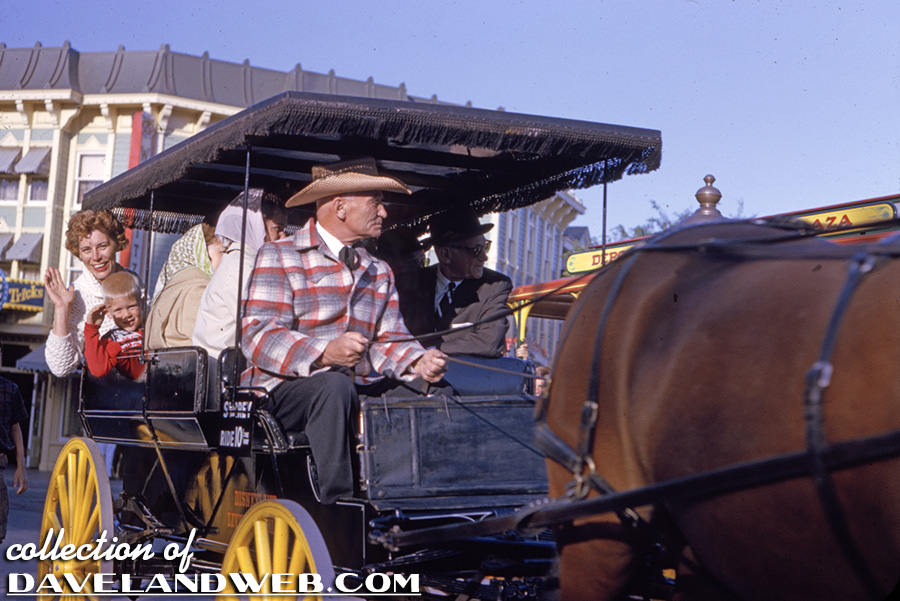
Although apparently intended for Frontierland, the Surreys were found on Main Street instead, as seen in this August 1955 image:

…and March 1956:
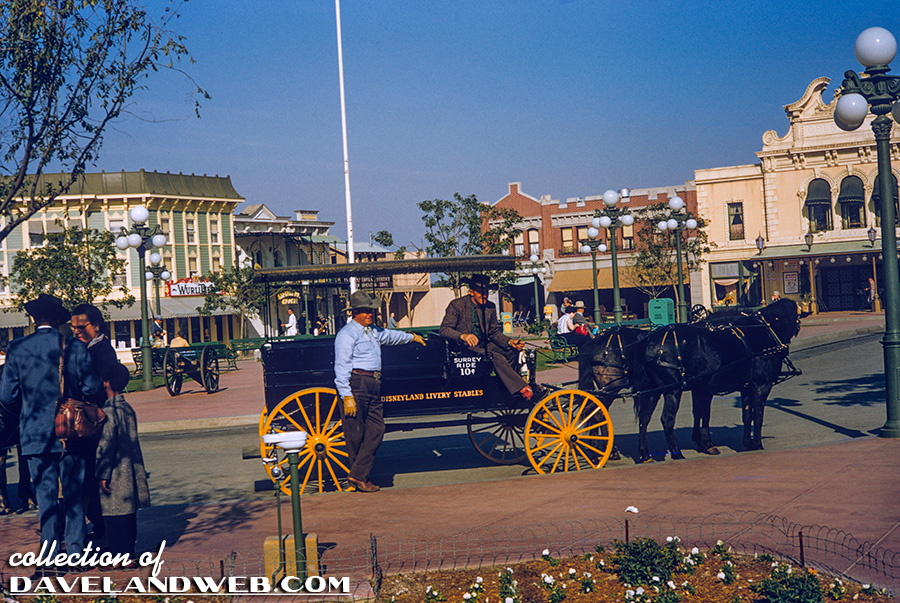
…and April 1963, below. Based on photos in my collection, it seems like they were removed from the rotation of Main Street vehicles after 1965.
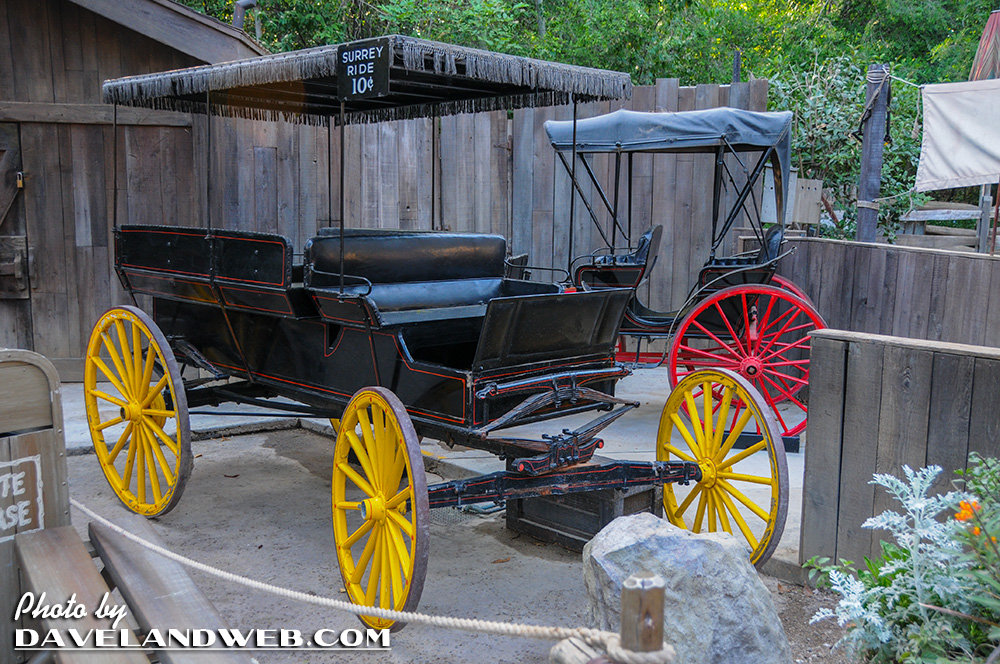
They were on display at the Big Thunder Ranch, but of course disappeared when Star Wars took over that area. Hopefully they are being taken care of behind-the-scenes!
The Pack Mules were a popular attraction, lasting in Frontierland until October 1973. Note the weight limit of 195 pounds. Better skip that extra churro!
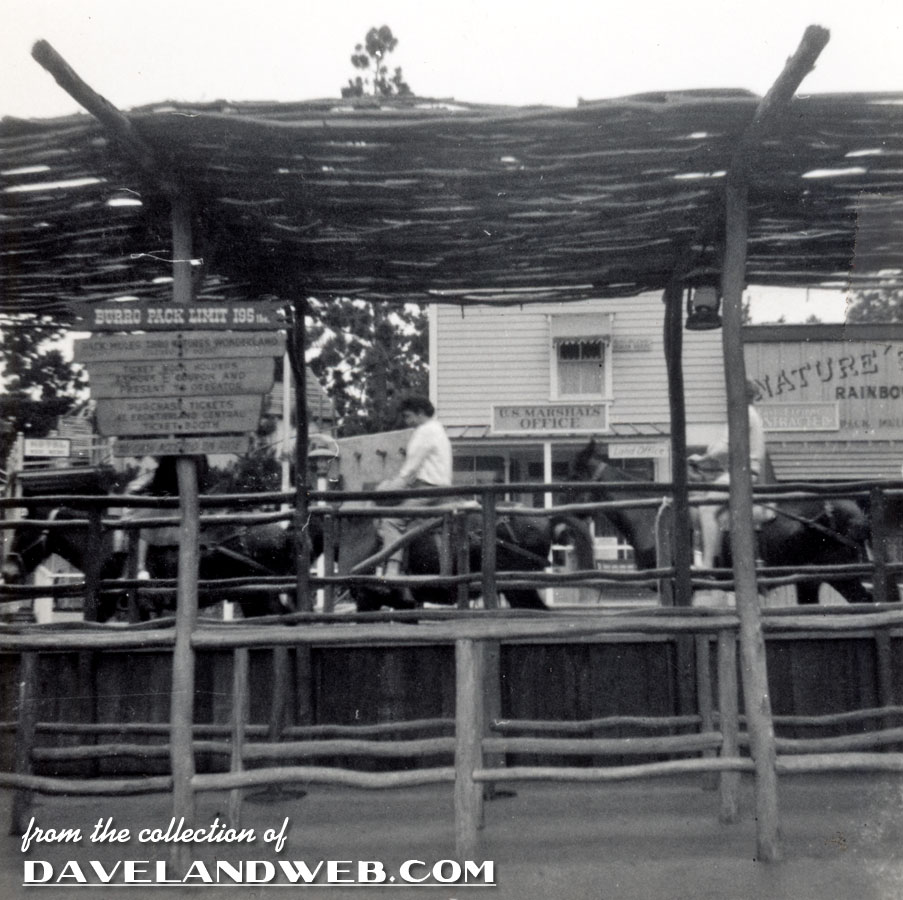

In this image, you can see the mules passing alongside a stagecoach:

Yes, the Mine Train was part of an attraction, Nature's Wonderland, but I would classify it as transportation. It provided guests a grand tour of the sites of Frontierland, as well as the Rivers of America.
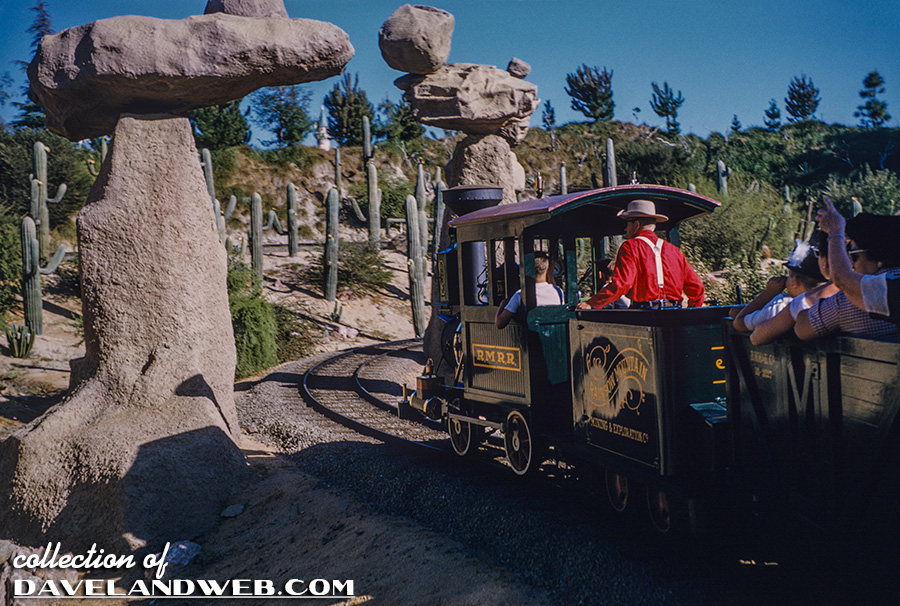
And what’s left of all these amazing transportation modes today? Zip. Zilch. Zero. None of them operate in the Park on a regular basis anymore. At special events, some of the vehicles are trotted out for photo ops, but that’s about it. Big Thunder Mountain replaced Nature’s Wonderland in 1979. Functioning solely as a thrill ride, BTMRR lasts for a fraction of the time that its predecessor did.
Low guest capacity and high overhead were the reasons given for why all the coaches were eliminated. The last journey of the Stagecoach and the Conestoga Wagons is debatable; in the Nickel Tour book, two dates are given: September 13, 1959 and February 10, 1960. The Pack Mules were removed as the times changed, and having to rely on unpredictable animals was something the Disney Corporation did not want to have to deal with.
Frontierland lost its zip when all of these rides were removed, becoming a lot more predictable and bland.
See more Frontierland transportation photos at my main website.


9 comments:
Hold up, 195 pounds? Only one out of ten Disney guests today would qualify for that kind of ride. I never knew those original Surreys were the same ones in Big Thunder Ranch. I guess I always assume those are prop replicas but no, it makes sense they'd repurpose the originals. Look at those well-behaved kids sitting on top of the buckboard. Today they'd be bounding off and running amok through the attraction. ( Adults too ) My congratulations to everyone who visited at this time.
You can get lost in these photos for hours
Just in case anyone was wondering… yes, there *was* a scale at the pack mule entrance for those occasions when a customer appeared, ahem, a bit more “substantial” than they claimed.
Usually, the person in question opted to skip the journey rather than submit to a public weighing!
The operators treated the animals with care and would not allow anyone over the posted weight limit to ride. Sorry, Aunt Sadie! ;)
I'll defend BTM for not looking like a roller coaster. At most parks the big themed coasters will have an elaborately themed boarding and launch area, and then you're outdoors on the usual industrial-looking tracks, often with views of workaday backstage or real world sprawl. And pedestrians inside the park see what looks like unfinished construction looming over whatever themed architecture was there. But yes, Nature's Wonderland was an experience you wouldn't find elsewhere and it was woven into the larger landscape. You could see Frontierland attractions from each other in a way that reinforced the sense of place.
It's something they achieved more recently with Carsland, where the Radiator Springs Racers provides an impressive backdrop to everything, with just enough of the ride visible to support the setting. Hoping they can manage something similar to offset the loss of the river at Magic Kingdom. (MK must be approached over or around a lake, which emotionally mitigates the loss slightly. Disneyland, plunk in the middle of dense development, needs the psychological relief of the big river within the park)
The transportation element is really based on how much space Disneyland is able to commit to an attraction. You cover a lot of real estate on the Jungle Cruise, the Mark Twain, and even the Storybook Canal Boats. You've BEEN somewhere. Also, the railroad and Main Street vehicles (and the late sky buckets) actually deliver you to destinations, offsetting the mostly familiar views.
As a boomer kid my main basis for comparison were the County Fair midway, the Santa Cruz Boardwalk, and the charming but small Frontier Village. Most rides were confined to a small footprint, or a short lap on a themeless track. Others were designed to fold up into a trailer, hidden behind a big flat facade
What a great post. Yep, scales were a mandatory feature of the Mules. Heaver guests were loaded at the rear of the train as those were mules could carry the heavier load. And imagine those who were over the limit who asked the operator to look the other way. Not a chance no matter how much verbal abuse the CM could encounter. Mules were discontinued in the early 70s. And of course the Mine Train for those of us who worked it was one great assignment to spend a 'working' day. Like the rest of Orange County, land became ever more precious and low capacity attractions taking up that much space had to go. It's revenue per square foot. Big Thunder is a fraction of what once was. Mine Train was not a thrill ride...it was an experiential event. Thrills are "in" and experiences now are virtual. Not complaining, things change and the Park has to change with it. KS
Thanks Anonymous and KS for the extra info about the weight scales! Sorry, DBenson, while I agree that BTM is themed nicely and better than most rollercoasters at other theme parks, there's nothing to defend. It barely holds a candle to its predecessor. Walt's concept for his Park was to get away from the "off-the-shelf" type rides you encountered at those County Fairs.
lord I wish I could go back in time to experience all of the best times at the Disney parks.
Thanks DBenson, you managed to put into words what I've been struggling to for years. Most coasters ( especially non-Disney ) look like incomplete construction. They take you on a tour over the backstage as garbage trucks tip dumpsters over their heads. Anything that breaks the immersion has no value to me. I refuse to return to Six Flags Magic Mountain for that very reason; over time they did away with the immersed rides and left only painted steel sticking into the sky. BTMRR did a fine job of putting a hidden coaster that's immersive from all views, but I'm kind of with Dave that given the choice, I'd rather take the Mine Train under the falls of Cascade Peak. Bummer.
Wow, so many incredible photos. I’m flabbergasted!
Post a Comment