Showing posts with label deleted scenes. Show all posts

Tuesday, February 27, 2024

Temple Tuesday: Deleted Broadway


In 1938 Shirley Temple film, ‘Little Miss Broadway,’ there are a few deleted musical numbers that still survive today. Typically, those could be recycled into shorts and were kept in the studio vaults because of that possible re-use. Dramatic numbers usually ended up in the landfill. Thanks to Melissa (aka “The Colonel”), we can get an idea of what was removed. According to a script from February 8, 1938, this is what occurred:

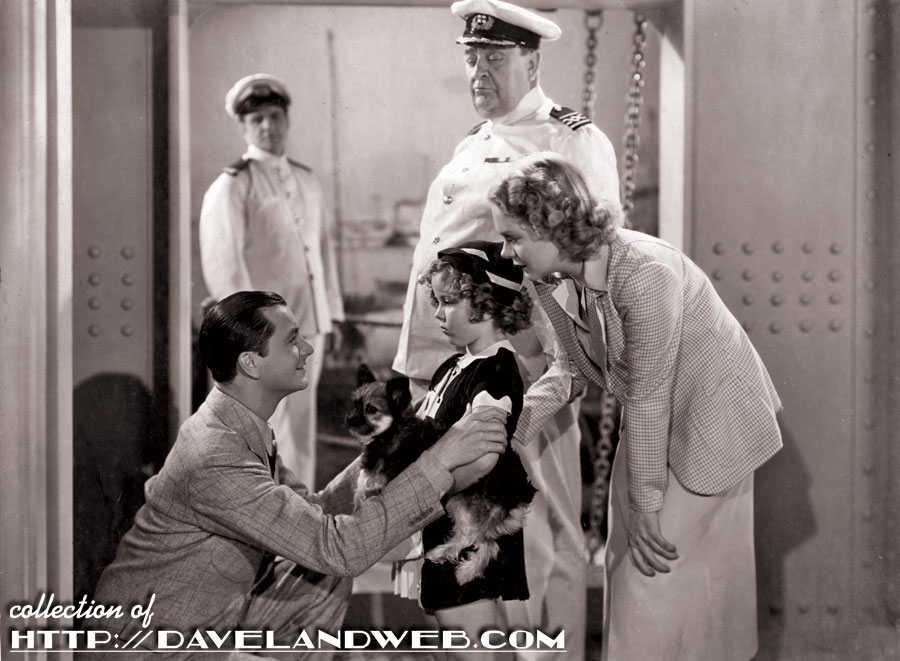
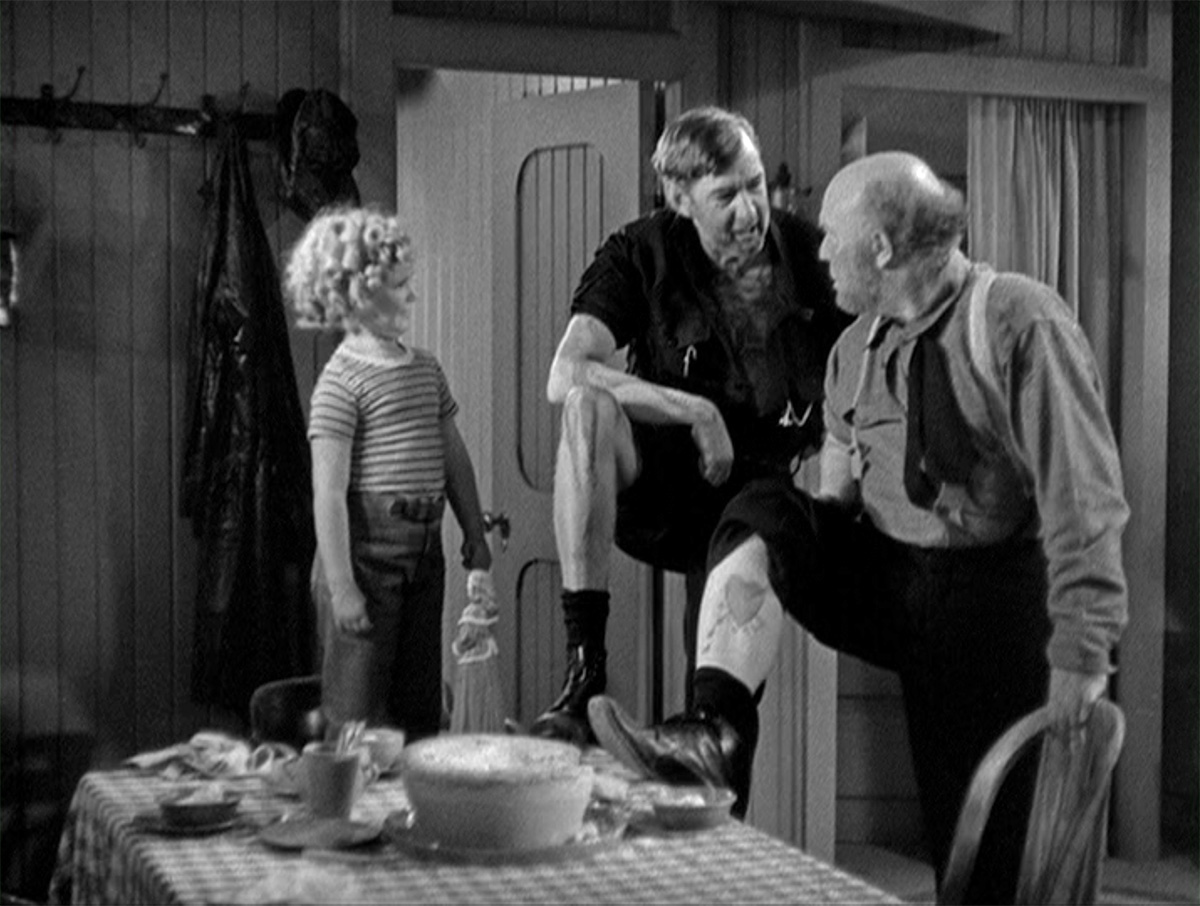
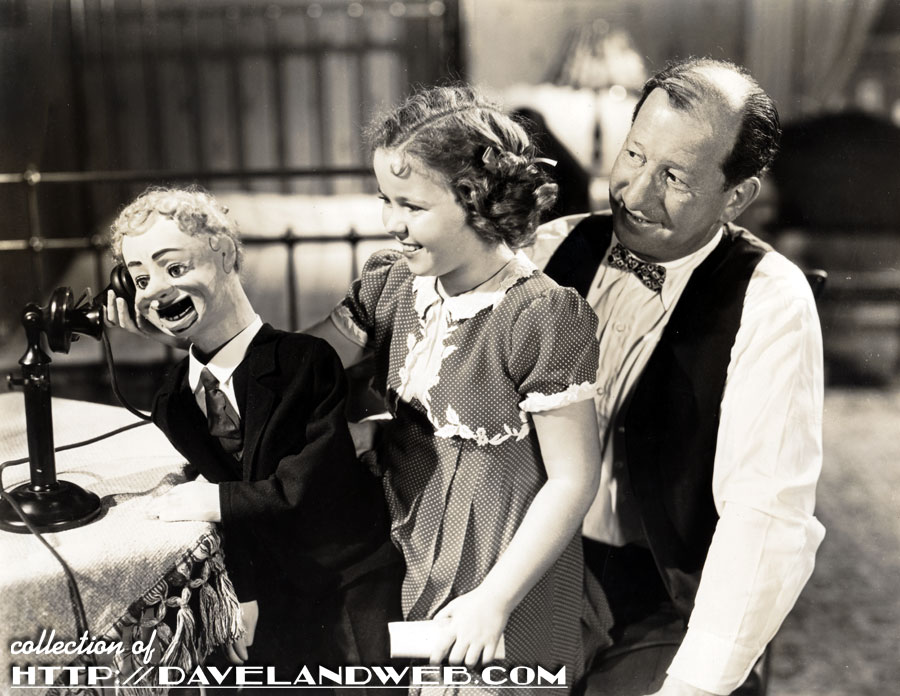
Pop Shea (Edward Ellis) is at the lobby desk of his hotel, The Hotel Variety, looking for his recently adopted daughter, Betsy (Shirley Temple). Flossie the switchboard operator calls upstairs to find Betsy. She calls up to the acrobats’ room, but they haven’t seen her. A man practicing a knife-throwing act gets the call next and says he saw Betsy about 20 minutes ago. Then a call comes to a ballet dancer, and finally to the ventriloquist’s room (photo above). A ventriloquist’s dummy answers the phone. Betsy is holding him on her lap but the ventriloquist is doing the talking. She takes the phone and says she’ll be right down and the dummy says, “Come back and sit on my lap sometime!” As Betsy exits the elevator she’s greeted by a group of performers [photo below]. She stops to talk to a performing dog which jumps over her foot and does a backflip.
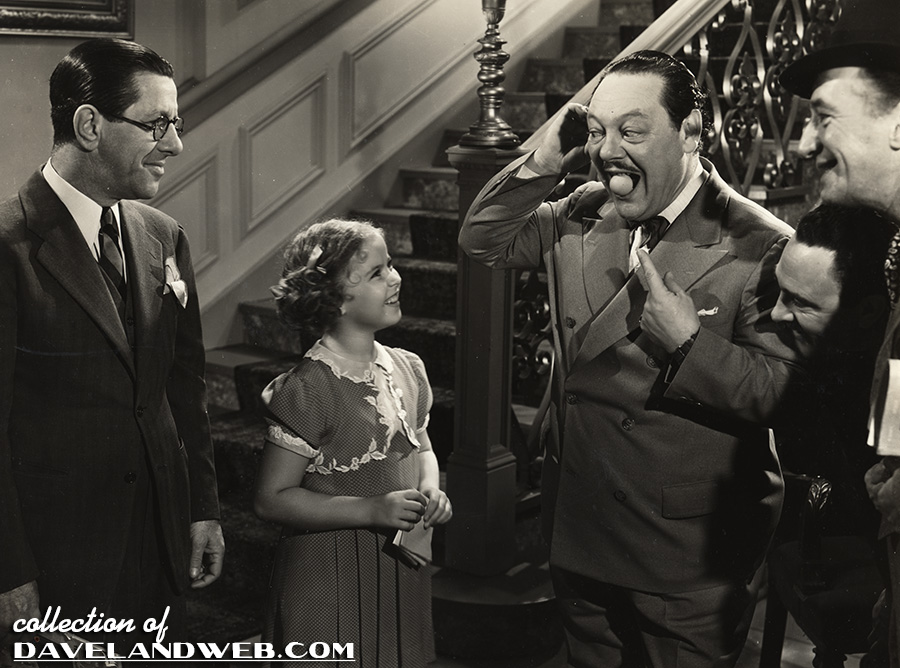


In the final film, Shirley descends the stairs, not the elevator, and most likely the idea of a trained dog was rethought, too.
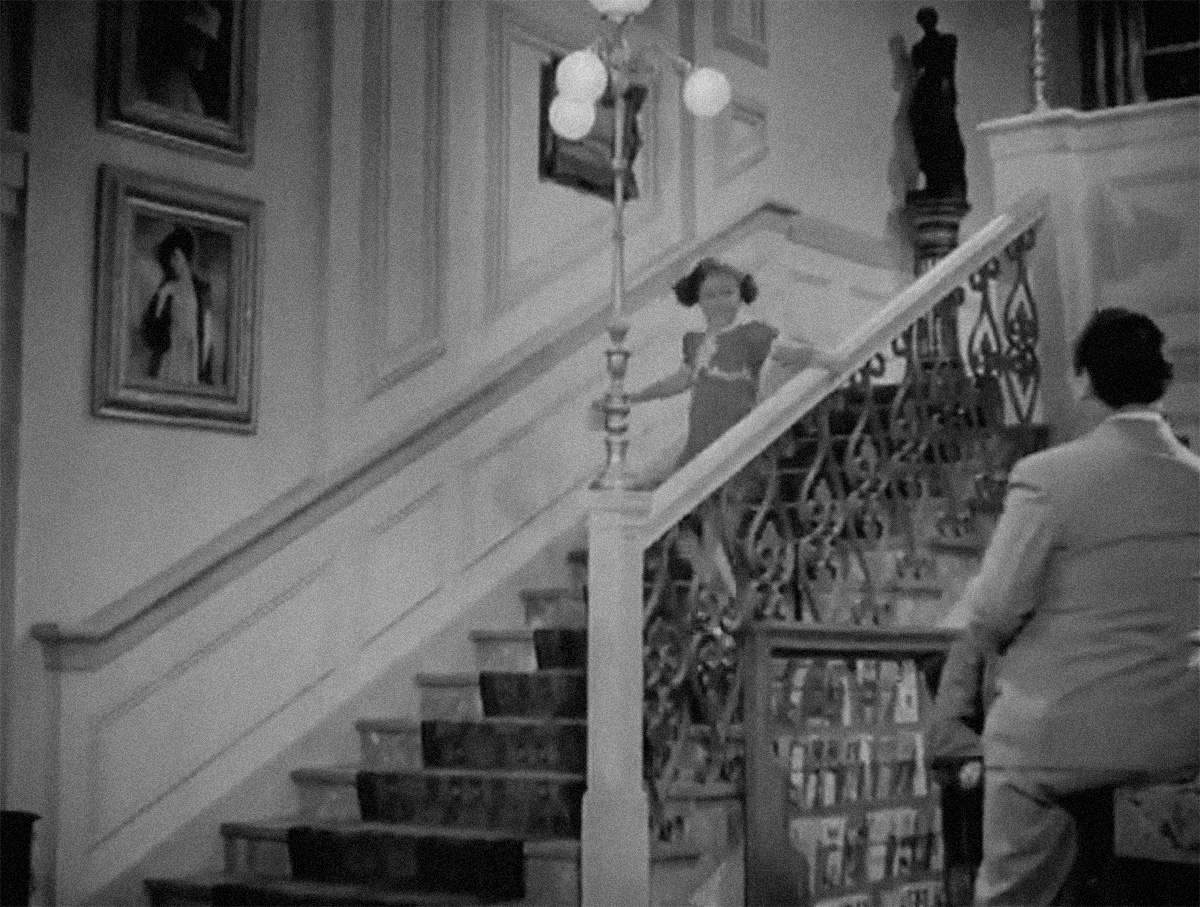


Above is a screenshot that shows Betsy just before the film quickly cuts to her at the lobby desk (below), showing her homework to Pop and his daughter, Barbara (Phyllis Brooks). They have been talking about the overwhelming bills that they owe.
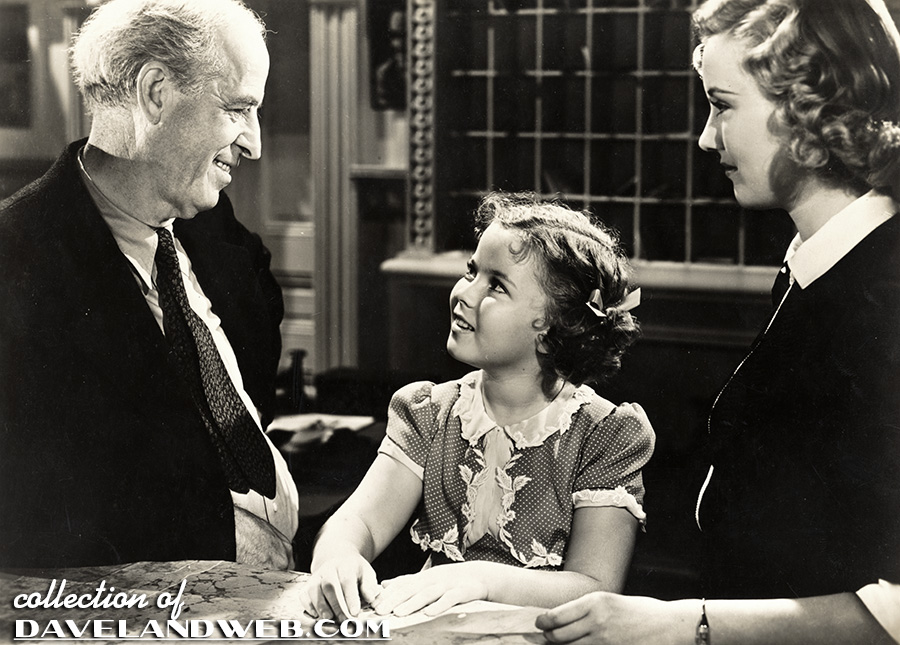


If you ever wondered what color this cute little dress with the embroidered leaves was, don’t rely on this vintage lobby card. These hand-colored promotional items rarely got the color right of the actual costumes and set pieces.
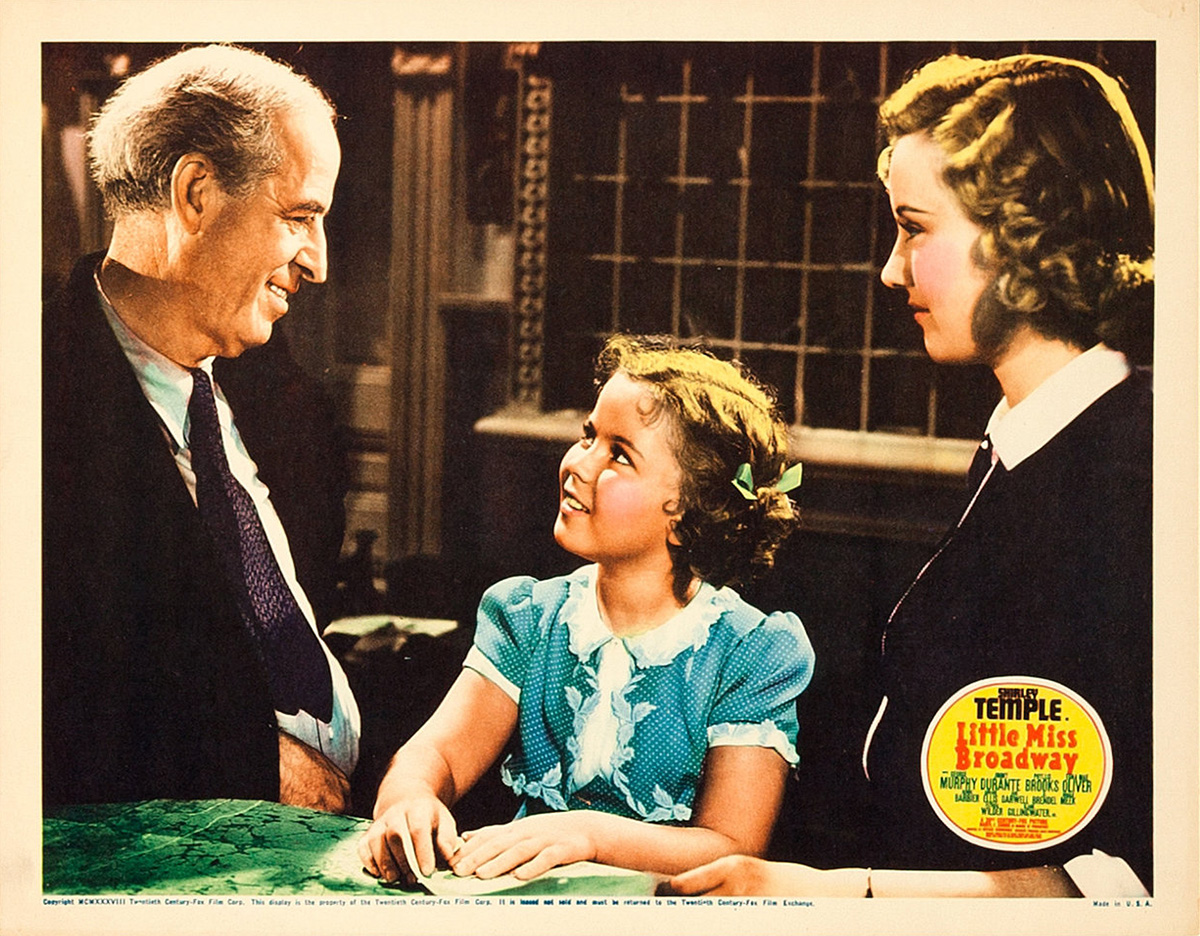


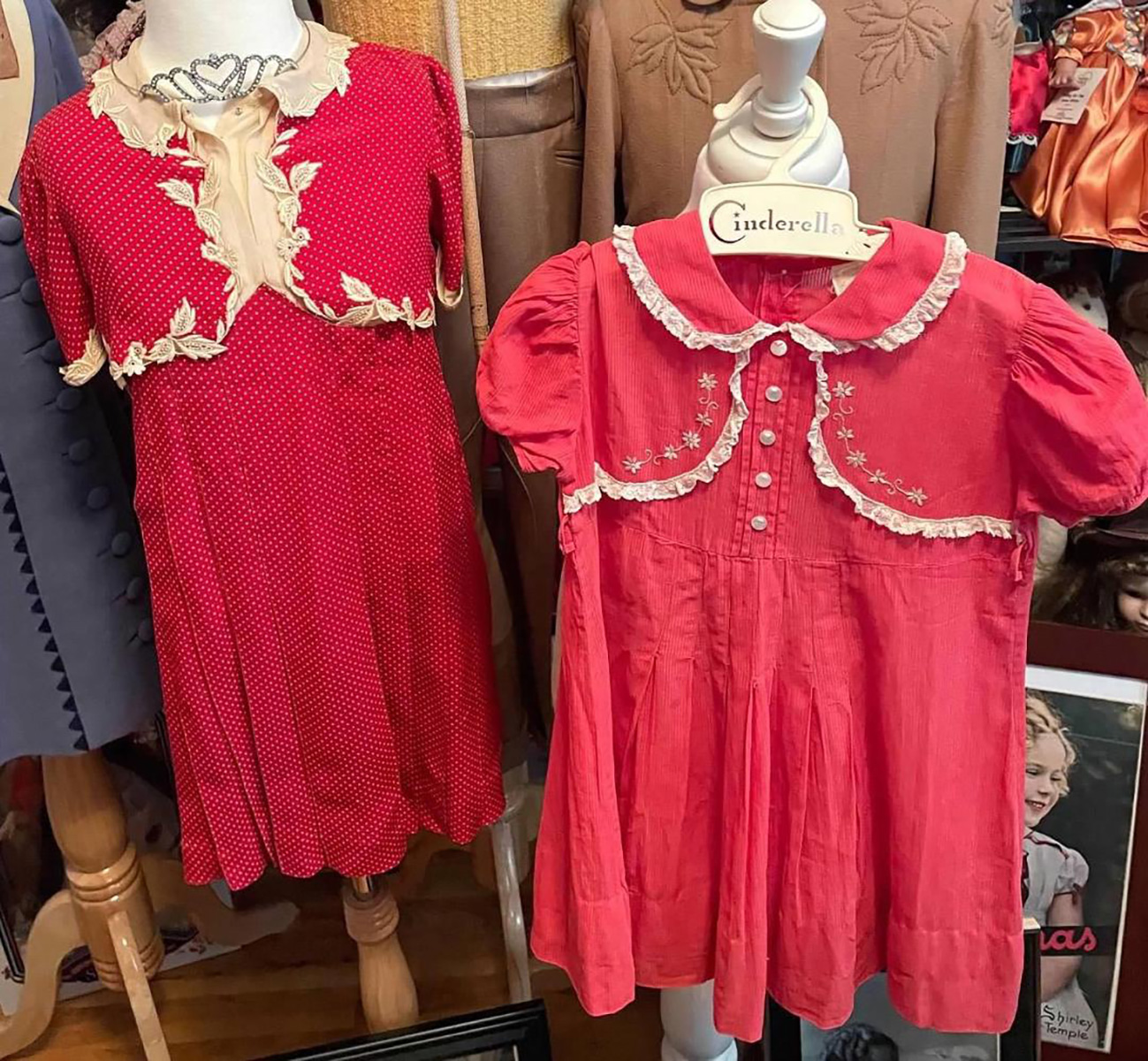
Thanks to the Theriault’s Love, Shirley Temple auction from 2015, we know that the dress was actually red.
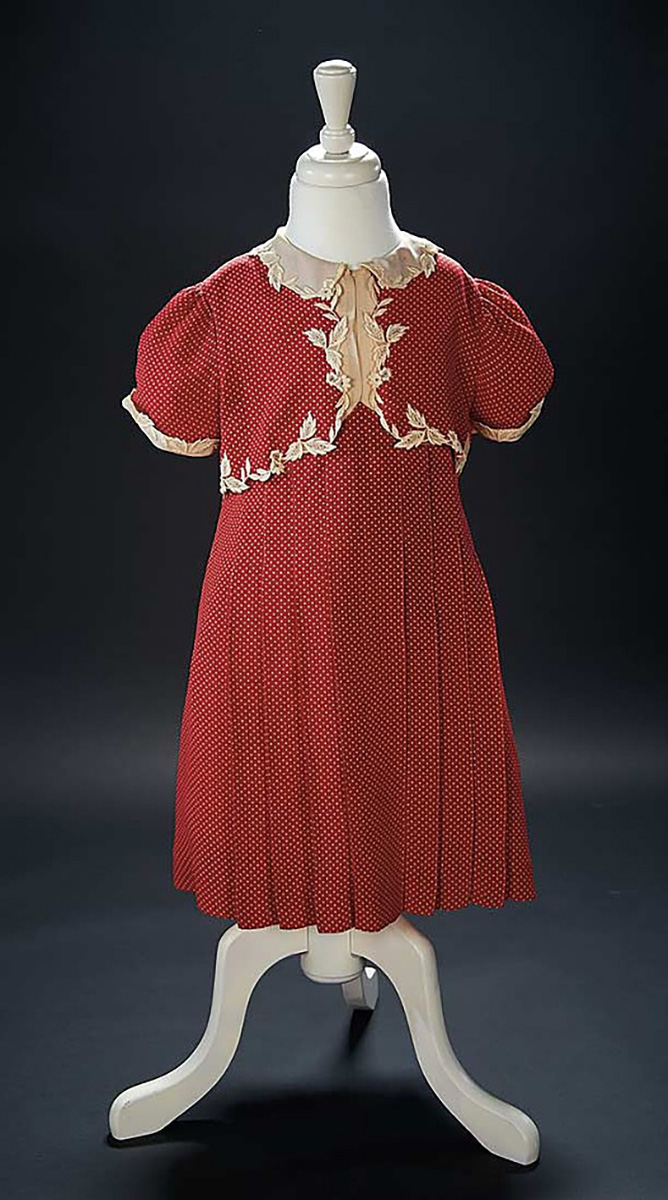


From the catalog description:

Red Silk Polka Dot Dress Worn by Shirley Temple in the 1938 film “Little Miss Broadway.” Of fine red silk, the dress features a high-waisted bodice of cream organza, under a faux jacket with puffed short sleeves and embroidered cream flower and leaf trim. The skirt is of alternating flat panels and pleated panels. Included is a vintage photograph of Shirley Temple wearing the costume. The costume was worn by Betsy (Shirley Temple) in the 1938 film "Little Miss Broadway", notably in the first scene at the Hotel Variety as she bounces down the staircase and proudly shows the (completely incorrect!) arithmetic lesson that Mr. Berdini, the magician, has taught her, while greeting (and thus introducing the movie-goers) to all of the zany entertainers who call the hotel home. Sold for $4,750.
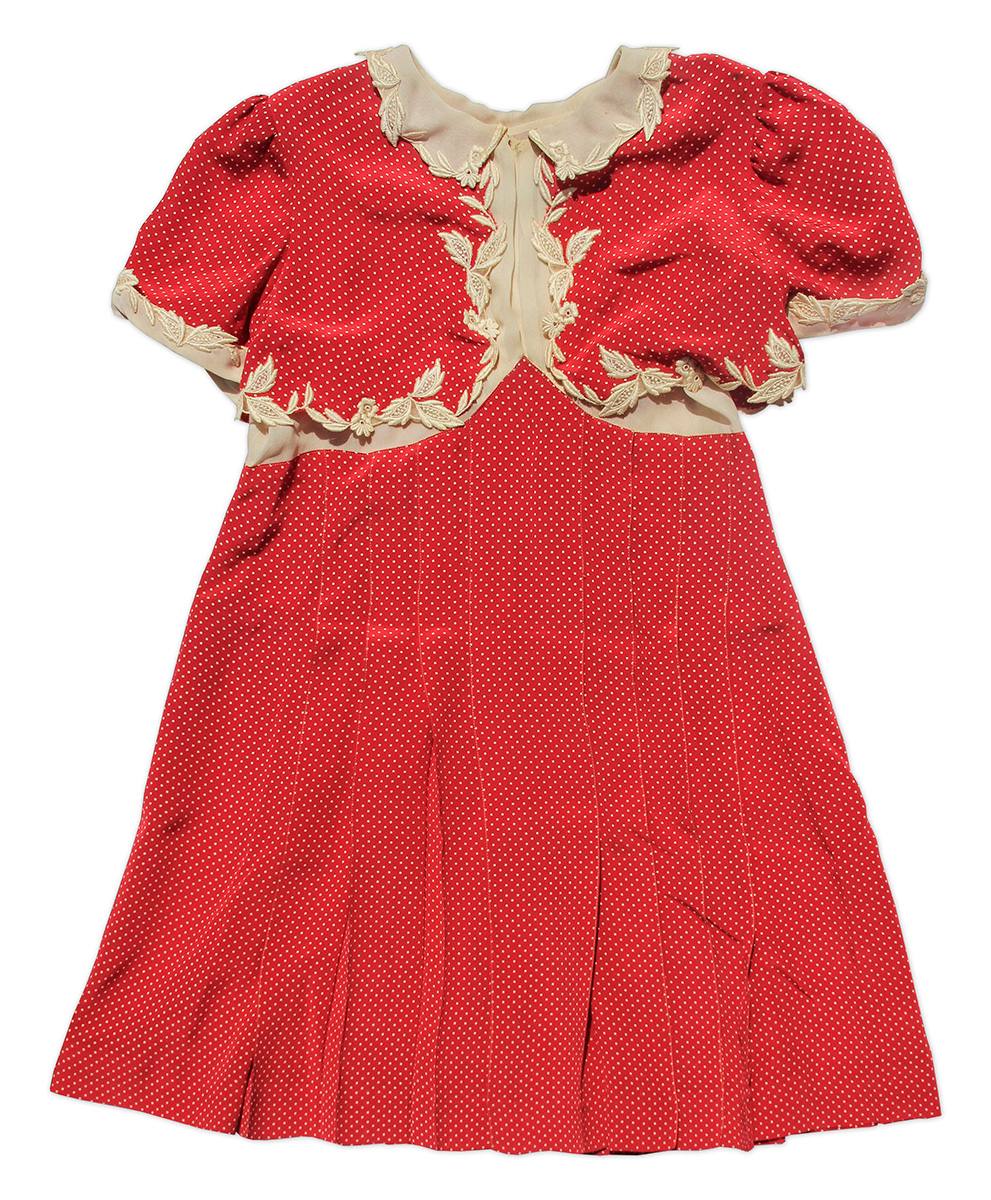
The current owner graciously shared an image of the dress in her collection, along with a vintage Cinderella Frock from the same time period that was most likely inspired by this very costume.


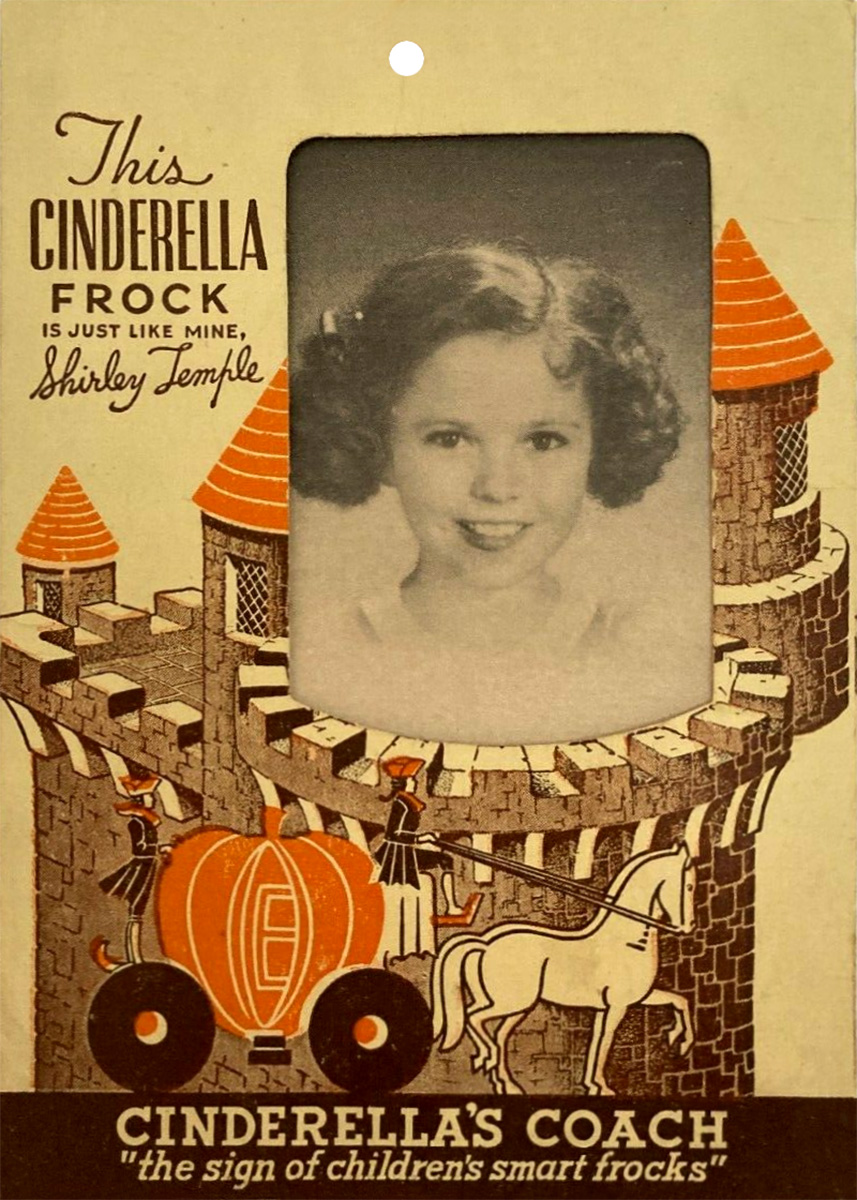
Here’s the tag that would most likely have accompanied one of those Cinderella Frocks:


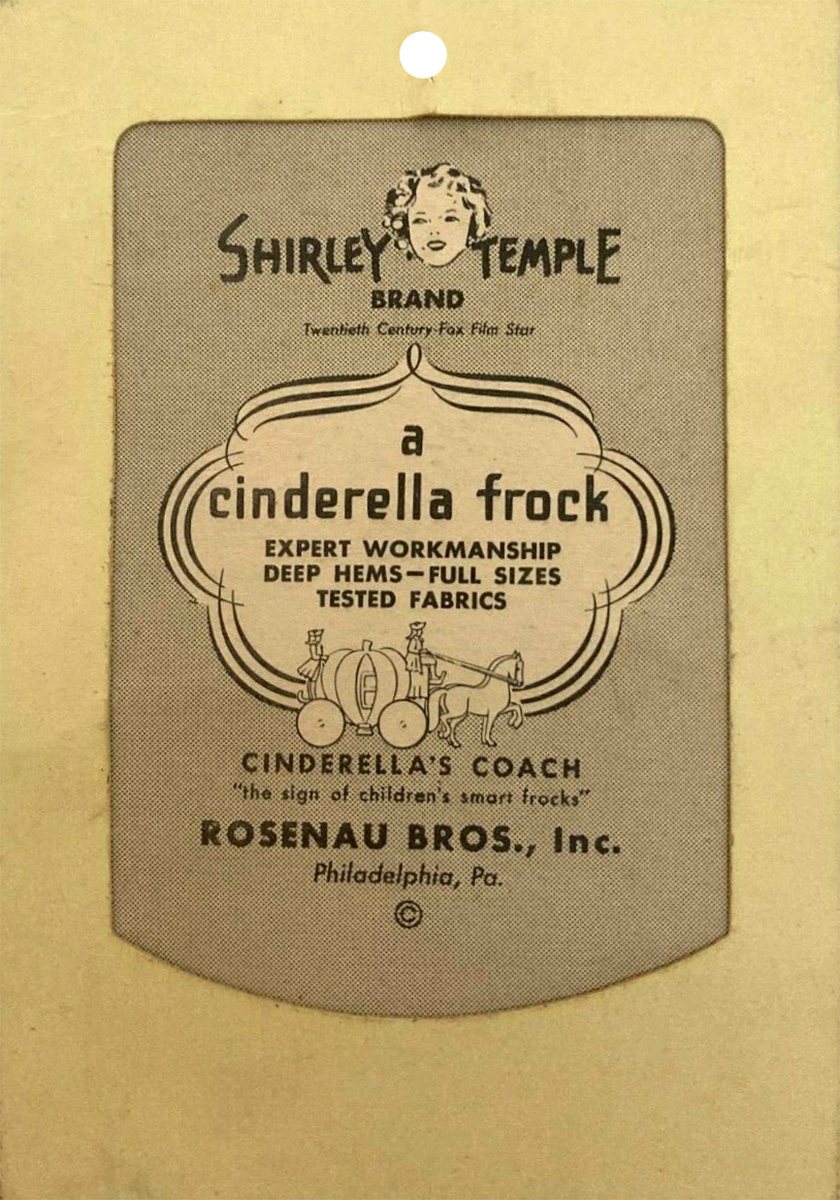
The reverse side:


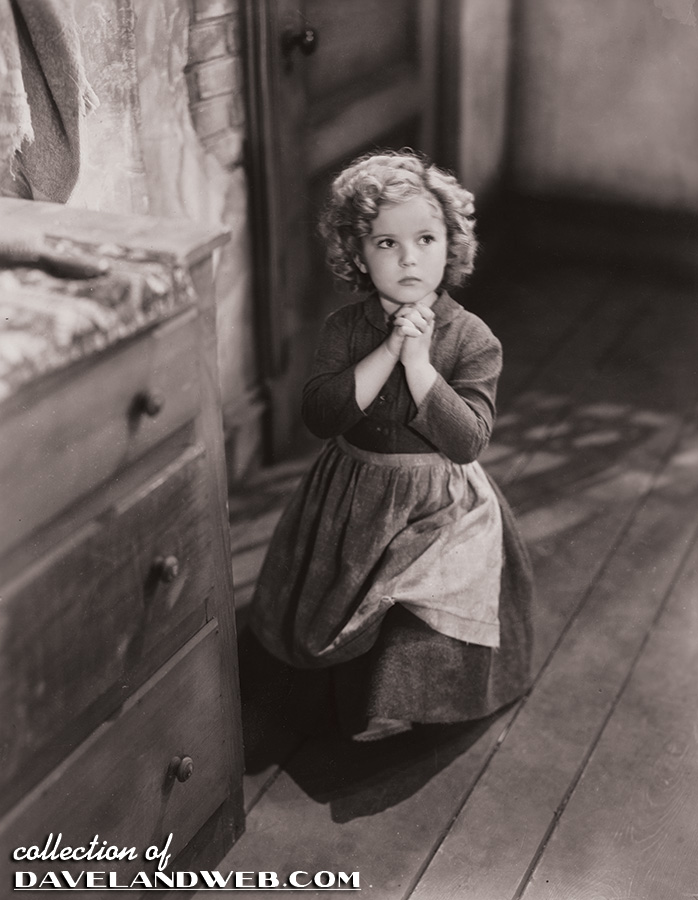
Next time you watch this movie, you can keep your eye out for what’s left of this scene!

See more Shirley Temple photos at my main website.

Tuesday, July 05, 2022

Temple Tuesday: More Deleted Shirley


Last week’s Temple Tuesday post covered a deleted scene of Shirley’s from “Rebecca of Sunnybrook Farm” (1938). That only covered a fraction of what was left on the cutting room floor from Shirley’s movies! Hang on as we cover a few other ones that never made it into the final film.

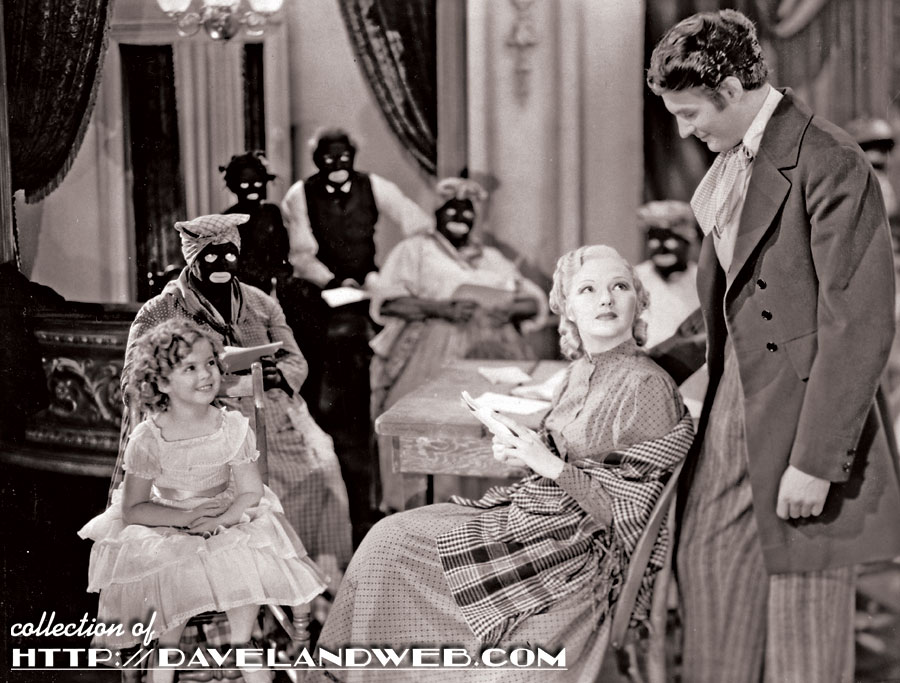
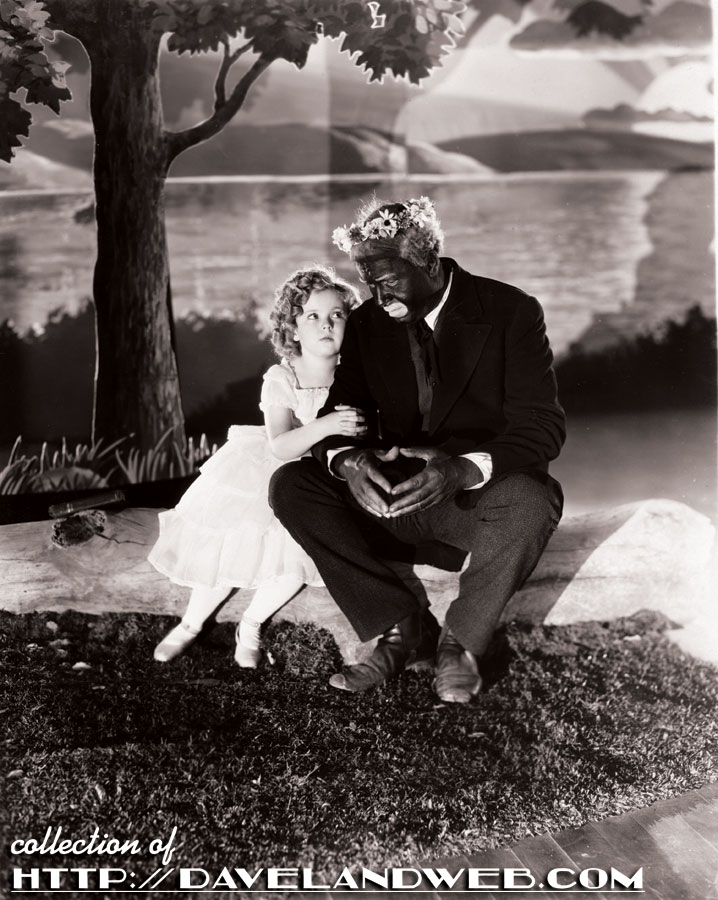
In “Dimples” (1936), Shirley acted out scenes from the play “Uncle Tom’s Cabin” for her friends in the Bowery (photo above). Most likely this little showcase for Shirley’s talents did nothing to move the plot along and was eliminated as a result. A second deleted scene had actress Cleo Marsh (Astrid Allwyn) getting mad at Dimples (Shirley) during a rehearsal, feeling that the little girl’s song would steal the show from her. “Stop it, you little brat!” Cleo yells at the child. “You’ve got too much in this play as it is! This play was put on for my sake! People will come to the theater to see me. They’re not coming to see the antics of a dirty little urchin!” CUT! DELETE! NOBODY talks to Shirley like that and gets away with it!


Below is a shot of a deleted scene from the “Uncle Tom’s Cabin” play that Shirley’s character is performing in. Probably another instance of the story moving too slowly for Producer Darryl Zanuck’s taste.


In “Stowaway” (1936), there is the dramatic scene where Ching Ching (Shirley) is about to be sent to an orphanage, but wealthy playboy Tommy Randall (Robert Young) and already engaged Susan (Alice Faye) decide to marry each other so that they can adopt the little girl themselves...and then get a divorce so that Susan can marry her fiancĂ© and Tommy can keep Ching Ching. Phew…there’s a lot going on there.


In this deleted scene, socialite Kay (Astrid Allwyn again!) agrees to marry Tommy so he can adopt Ching Ching, but then finds out from Tommy’s friend The Colonel (Eugene Pallette) that the wedding must happen immediately. Oops…good thing she didn’t cash that check yet…she had to get her own divorce finalized first! Too messy for a Shirley film…


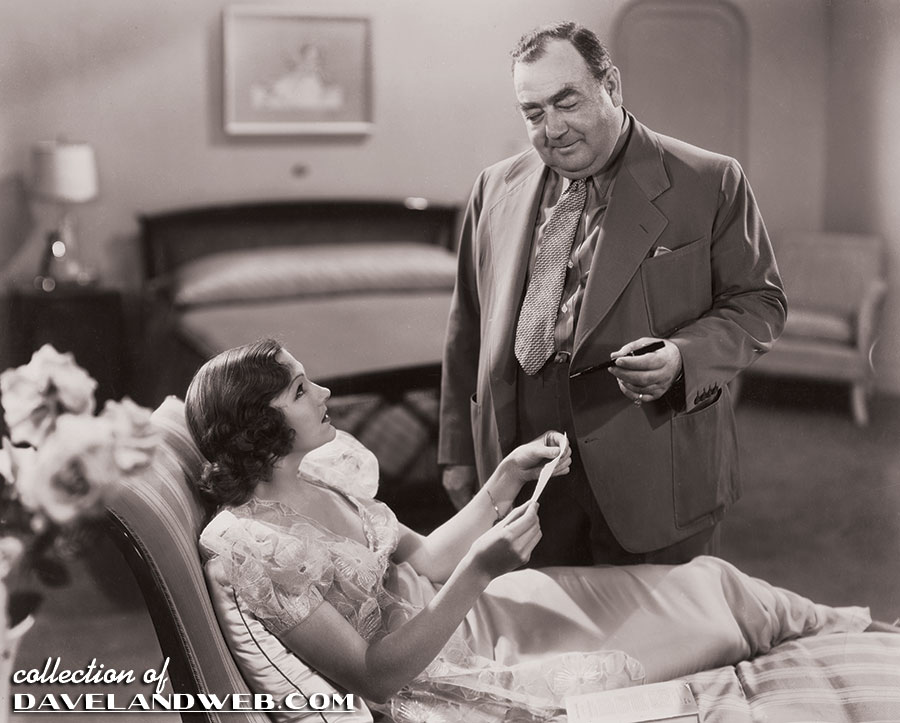
In “Little Miss Broadway” (1938), Betsy’s (Shirley) adopted father, Pop Shea (Edward Ellis) is looking for her to make sure she’s doing her studies. What we don’t get to see was this filmed bit of business showing Betsy with a ventriloquist, which explains why he couldn’t find her at the time. In the finished film, a few lines remain that refer to the deleted scene. Pop’s daughter Barbara (Phyllis Brooks) asks Betsy who helped her with the arithmetic problems, as they are all incorrect. “Mr. Berdini, the magician!” “Six goes into eighteen five times…, seven goes into twenty-one four times!” Barbara replies sarcastically. “He’s a magician alright!”


Later in the film, Betsy escapes the orphanage and tries to get home to help save Pop Shea who is fighting a court battle that could mean the loss of his Hotel. There was originally a sequence between a taxi driver and a policeman over Betsy being unable to pay the fare. CUT! And don’t print that, please!


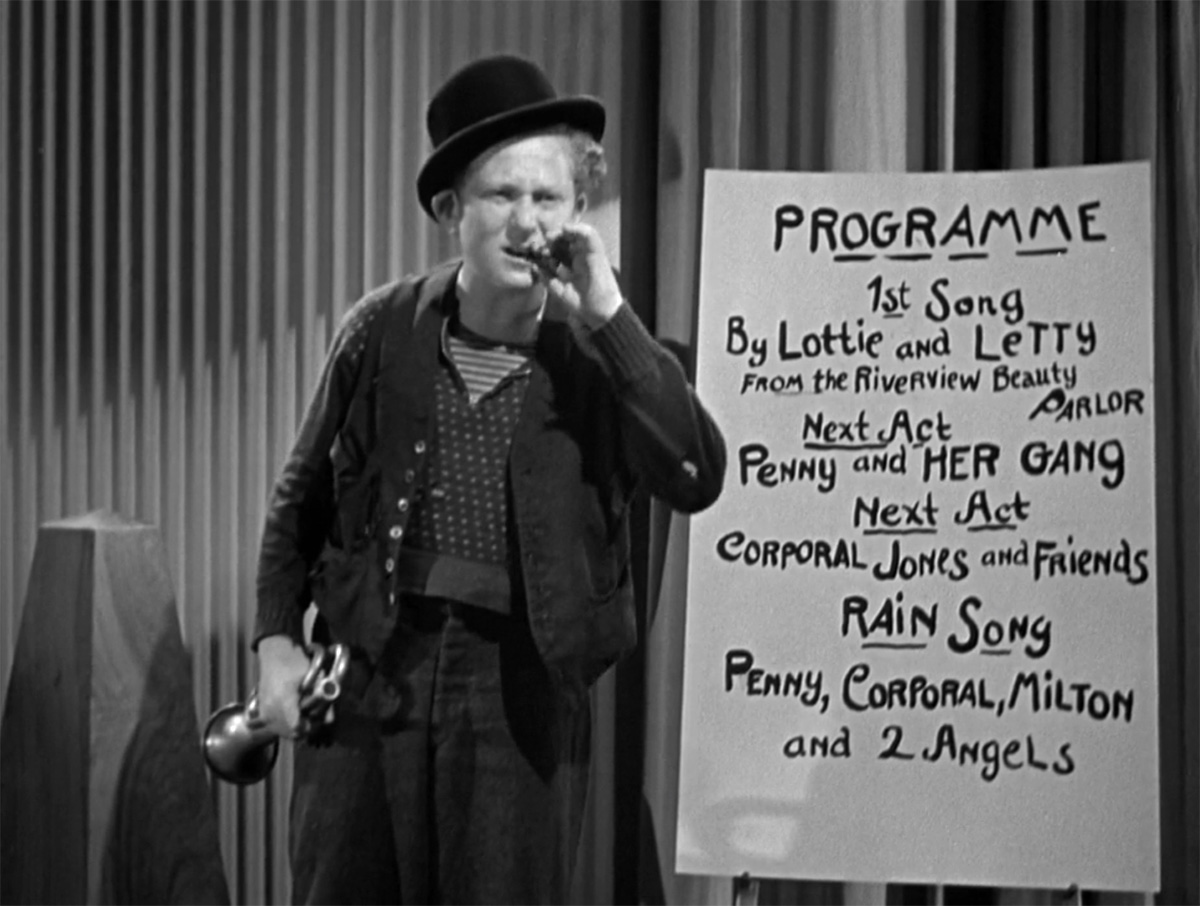
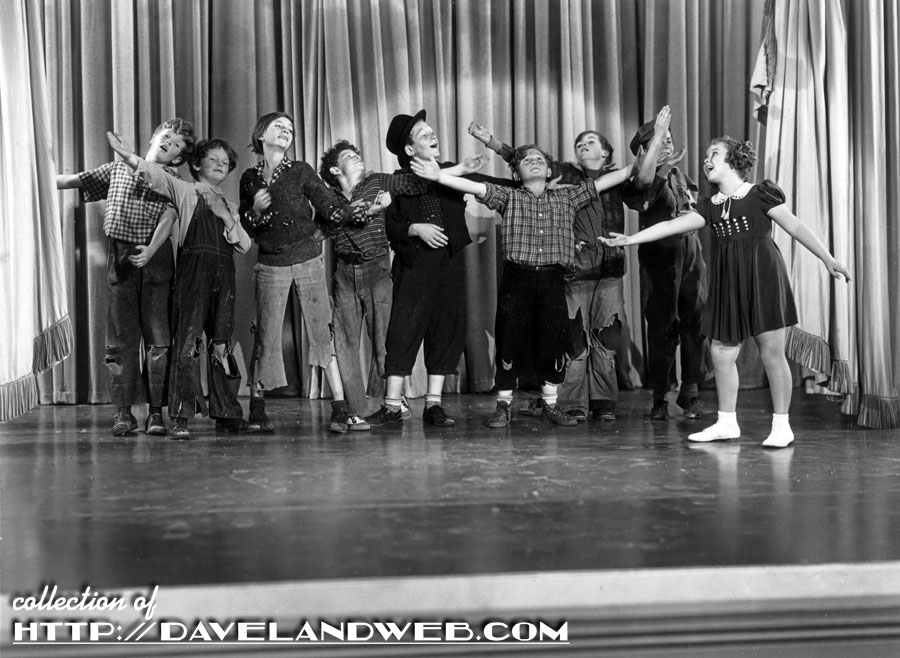
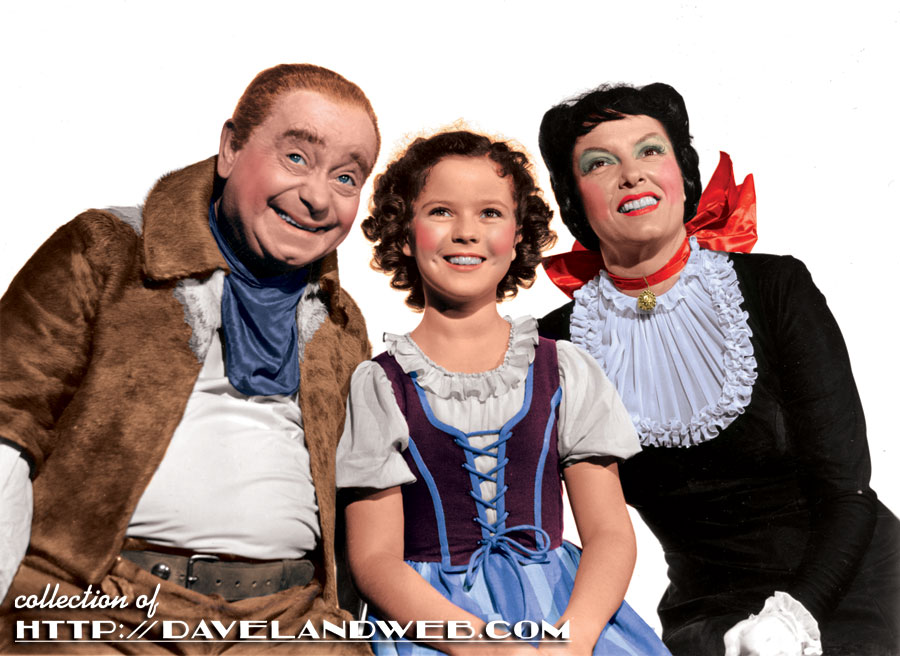
In “Just Around the Corner” (1938), if you look at the “Programme” for the benefit for Uncle Sam, you’ll see a number listed that did not make it into the final film, “Penny and Her Gang.”


The photo below is about all that remains of this deleted musical number.


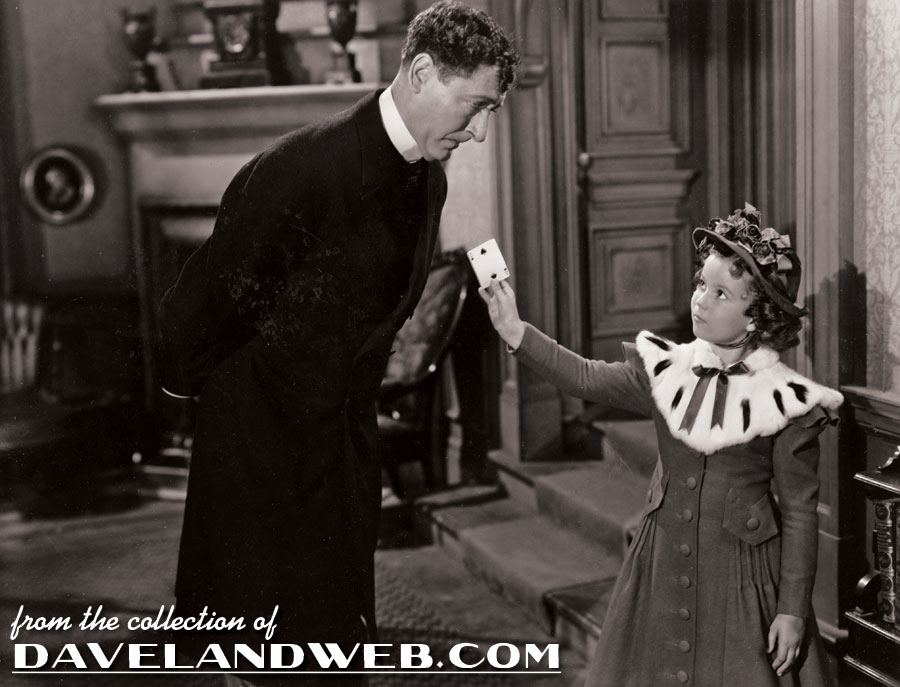
This photograph of Shirley handing Arthur Treacher a playing card in “The Little Princess” (1939) is all that remains from an extended sequence of her arrival at Miss Minchin’s Boarding School. Most likely, it has something to do with Shirley’s character finding out about Treacher’s character’s past as a music hall entertainer.


“The Blue Bird” was Shirley’s second movie filmed entirely in Technicolor, other than the opening segment which was in black and white.


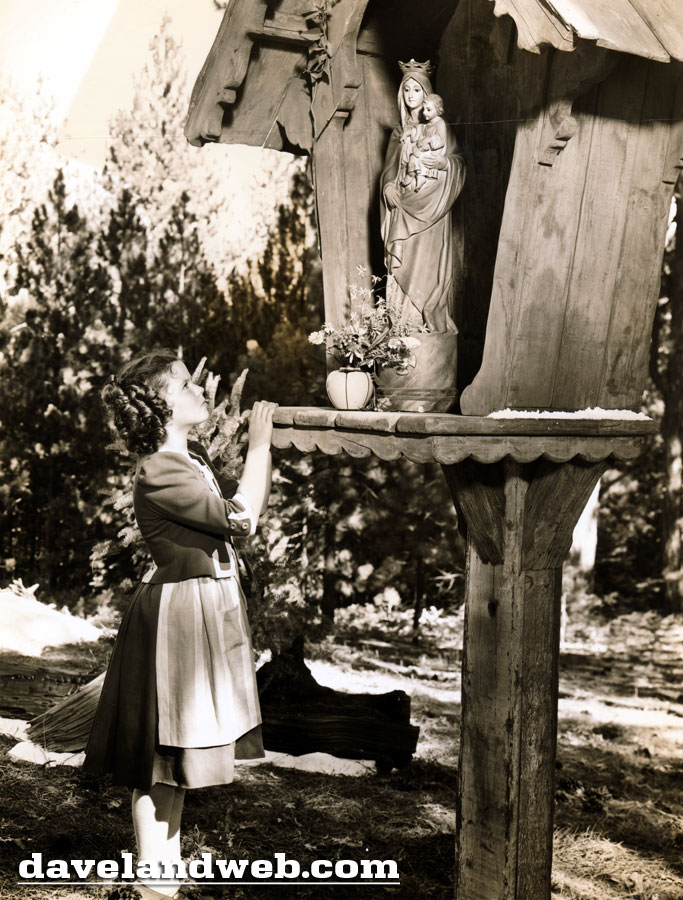
One of the publicity stills from the black and white portion shows Shirley praying to the Virgin Mary.


Was this from a deleted scene or Shirley praying for a hit, which she badly needed at this point in her career!


This deleted scene shows Mytyl (Shirley) playing with all of her newly acquired dolls in the Land of Luxury. Astute at the tender age of 11, Shirley rented out dolls from her personal collection to be used in the film.


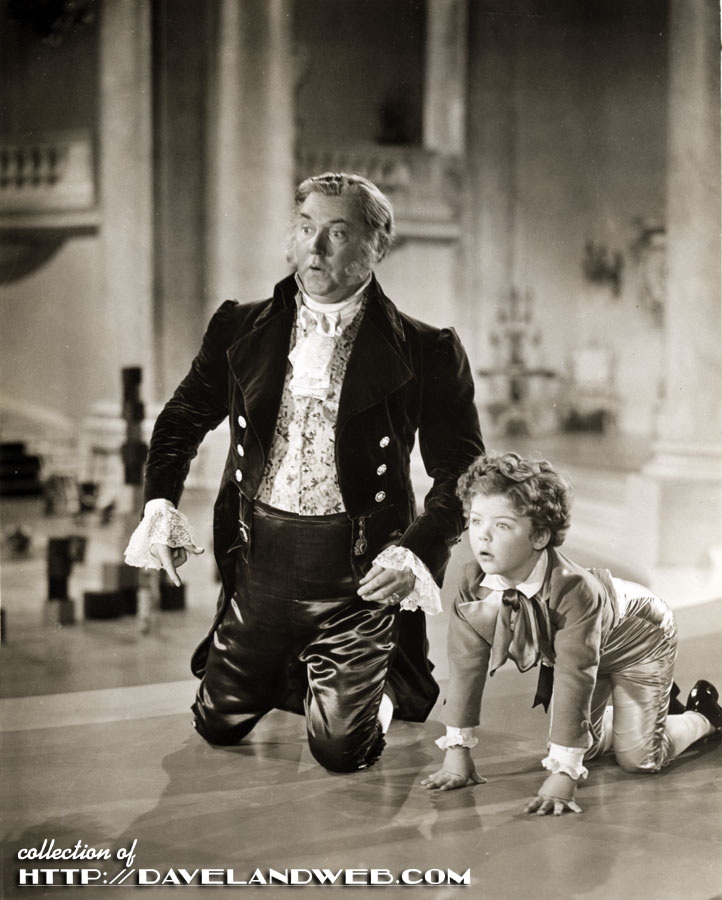
Another deleted segment from the same scene showed Mr. Luxury (Nigel Bruce) cavorting around with Tyltyl (Johnny Russell). CUT!


I wonder if Shirley had to refund her doll earnings to Zanuck when this scene was removed?!?

See more Shirley Temple photos at my main website.

Tuesday, June 28, 2022

Temple Tuesday: Anatomy of a Deleted Scene


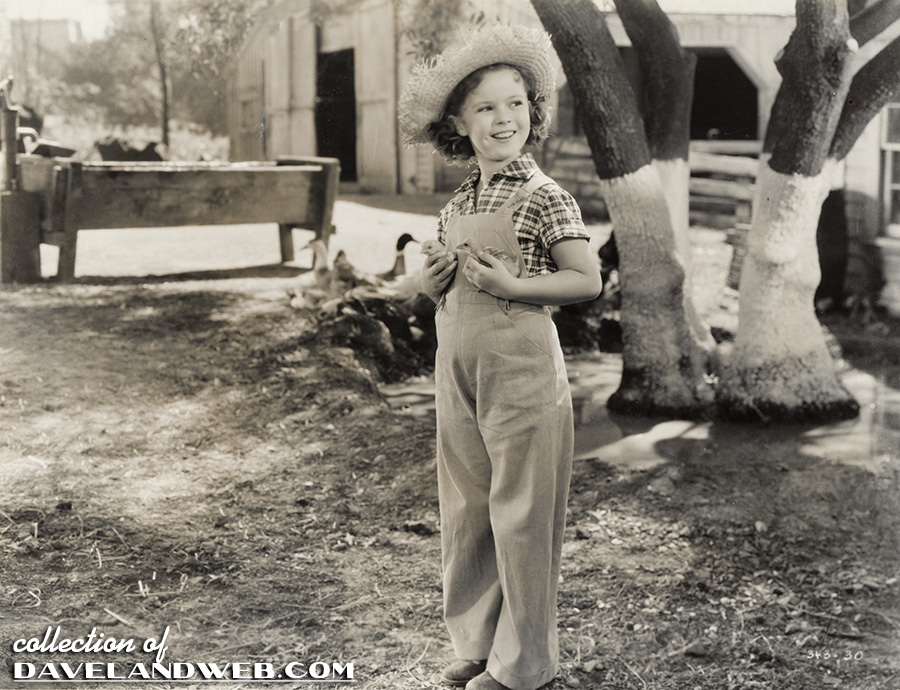
Since the advent of home media, the ability to watch deleted scenes from contemporary movies has become commonplace. Most DVDs/Blu Rays have a few deleted scenes as extras, often with director commentary explaining why it was decided to remove that particular scene before the film’s release. Classic Hollywood enthusiasts classify deleted scenes as some of the most coveted pieces of “lost film,” turning the search for them into something akin to the Holy Grail. While the actual scenes may never be found again (due to the film studios literally trashing them or because of the flammability of nitrate film), it is often easy to find little remnants of these never before seen gems. Today’s post presents an example from Shirley Temple’s 1938 film, “Rebecca of Sunnybrook Farm.” As always, The Colonel (aka Melissa) has done the majority of the legwork in piecing together what this deleted scene may have included. 

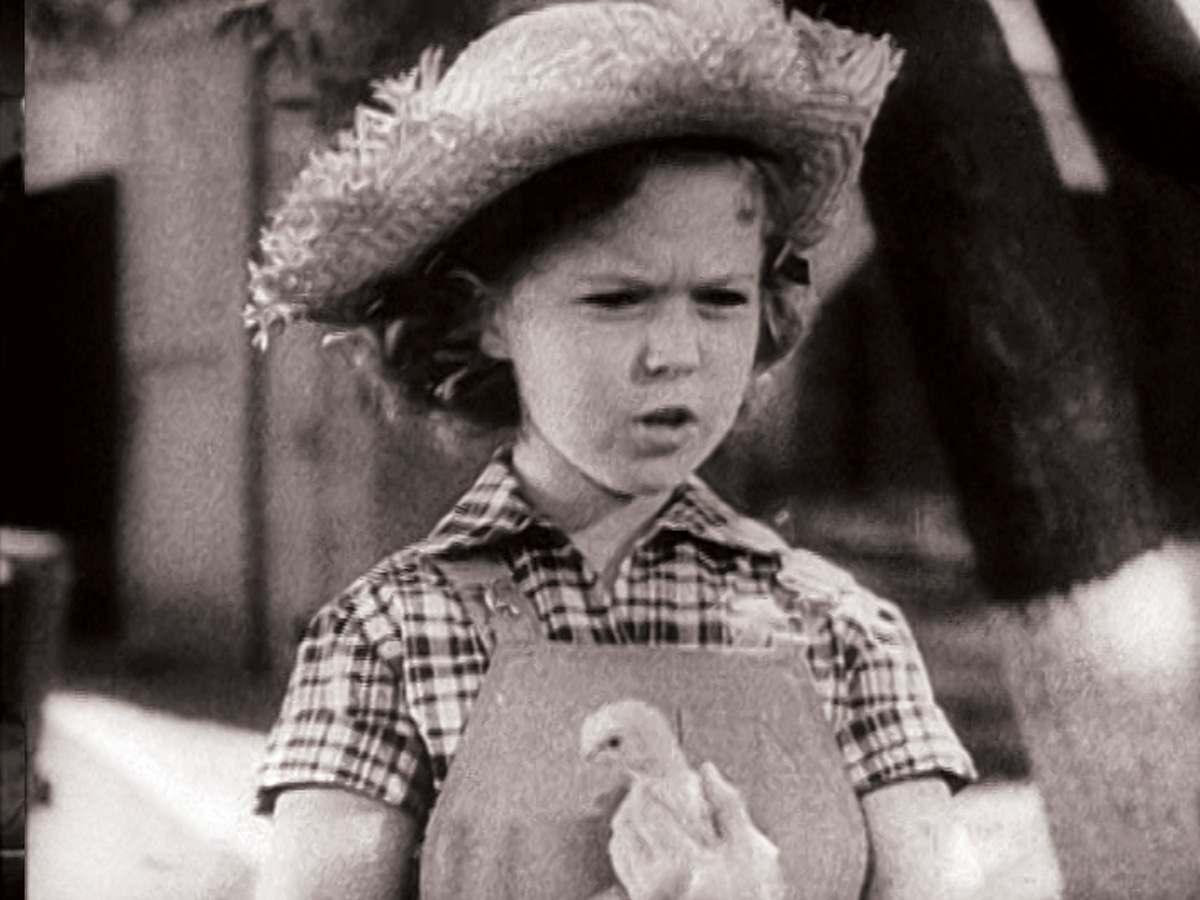
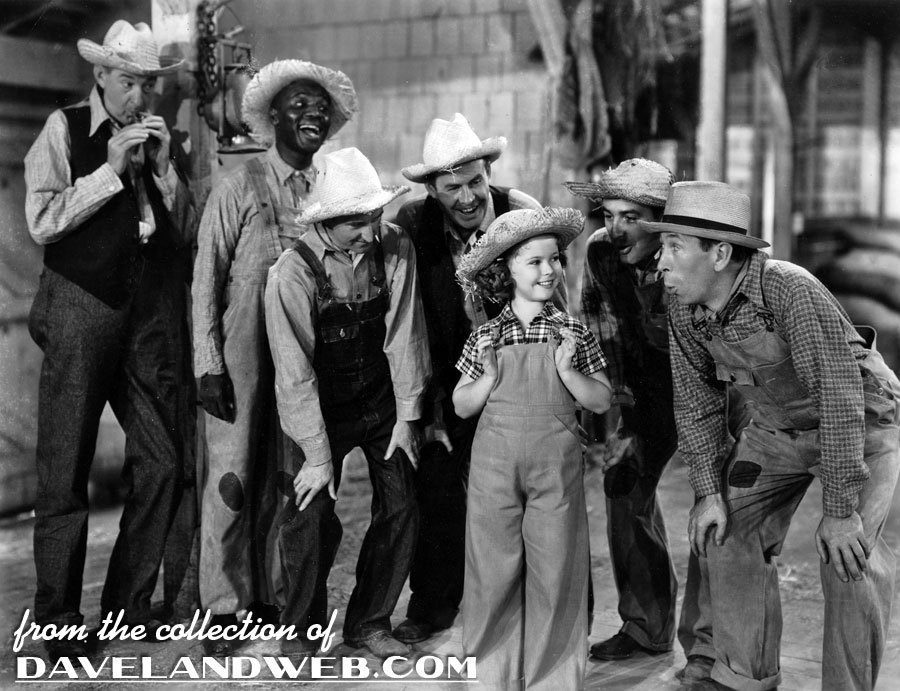
According to the script dated October 2, 1937, the day after she arrives at the farm, Rebecca wanders into the farmyard to explore and spies a hen with her brood. Delighted, she picks up two of the chicks and turns to the mother hen, who is protesting violently. “Don’t worry, Mrs. Hen, I won’t hurt your babies.” She rubs the chicks against her cheek before setting them down on the ground. At that point, she hears a squeal and the script continues with the pig-caught-in-the-fence scene. 

Often, promotional photos taken during the filming of a movie are used even if the scene that they represent was removed before release. The still shown above goes along with the scene Melissa has described. The photo below was taken from the trailer for “Rebecca.” Back in the day, it was commonplace to find little snippets of deleted footage used in those promotional trailers.


Based on the studio numbering of their stills, this shot of Shirley with costar Gloria Stuart would have been next.


Back to the script:

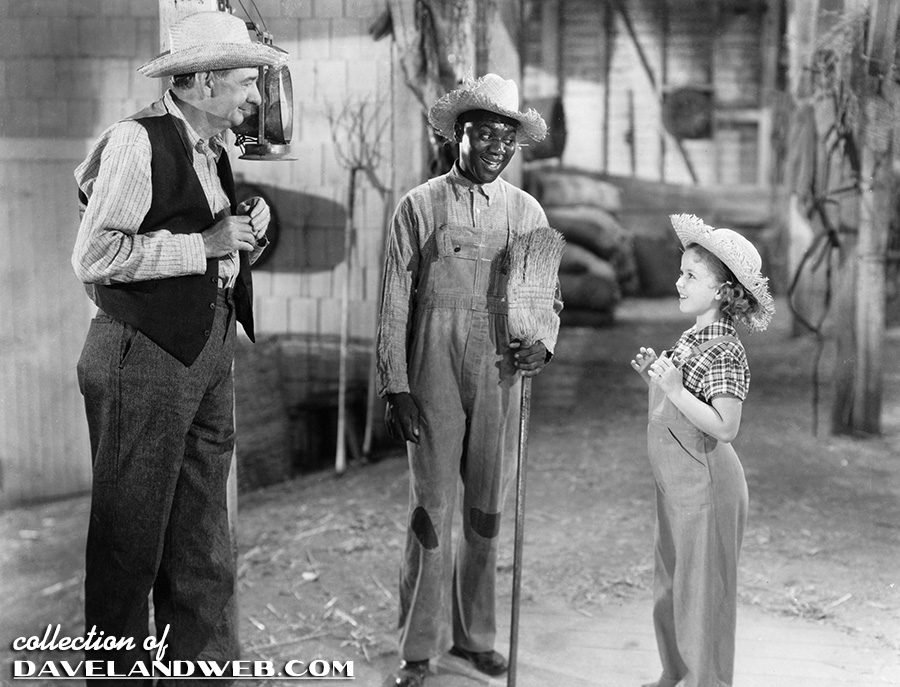
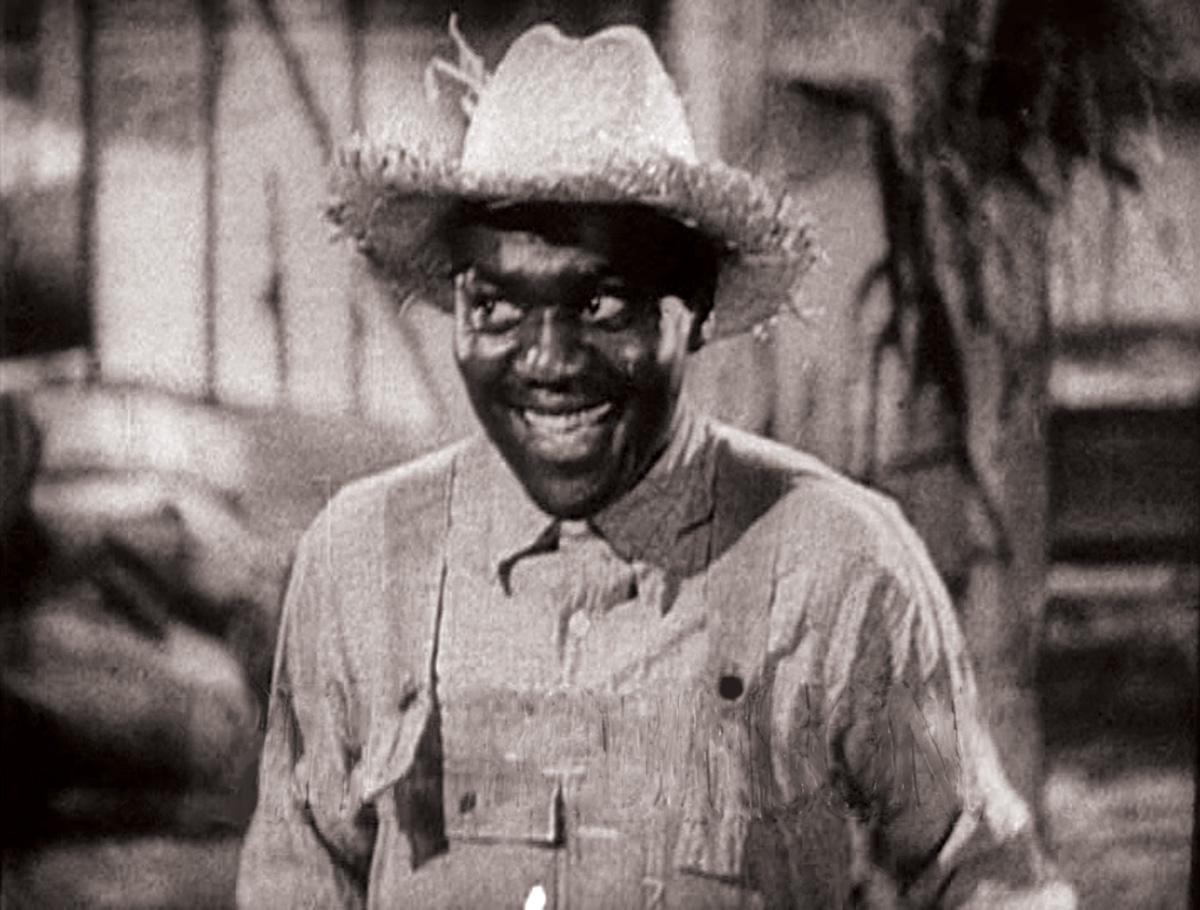
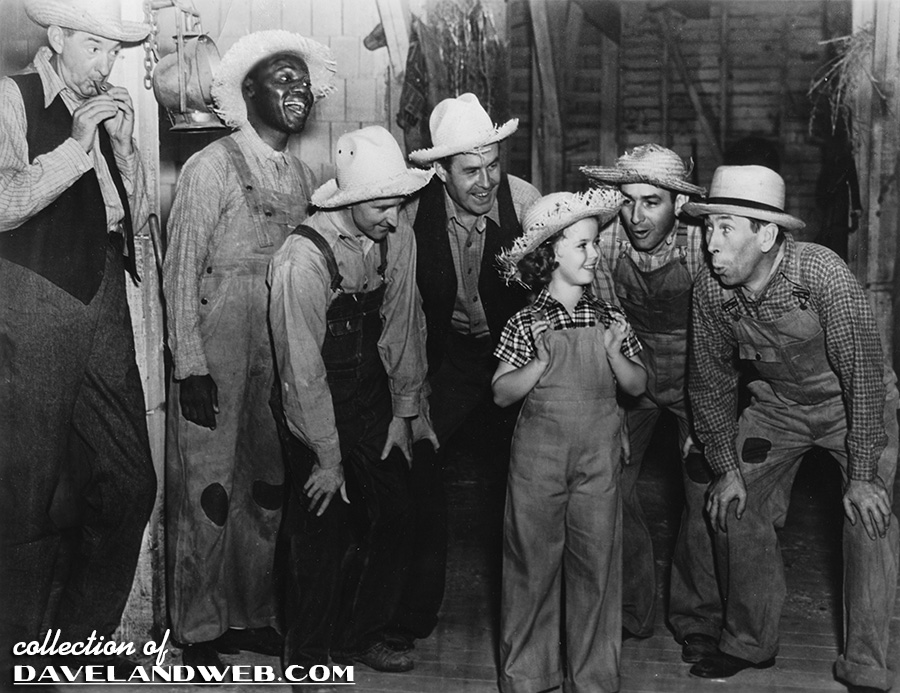
When Rebecca chases after the pig, she encounters Homer and Aloysius dancing together and introduces herself. Homer describes himself as a caretaker and Rebecca isn’t sure what that is. He says he’s practically the boss but he can do a week’s worth of work in one day and then spend the other six resting and playing his kazoo. She asks Aloysius if he’s a caretaker and he says he’s a hired hand but he can dance too. Homer starts playing “Old Straw Hat” on the kazoo and Aloysius starts to dance. 


Here is another frame of film from the trailer showing Bill Robinson from this deleted sequence:


This leads to a production number with twelve scarecrows. They disappear by the end of the number and the three are left to dance alone.

This is a bit of a mystery. For the actual deleted sequence, perhaps the twelve scarecrows were replaced with four farmhands, as seen in the publicity stills shown below:


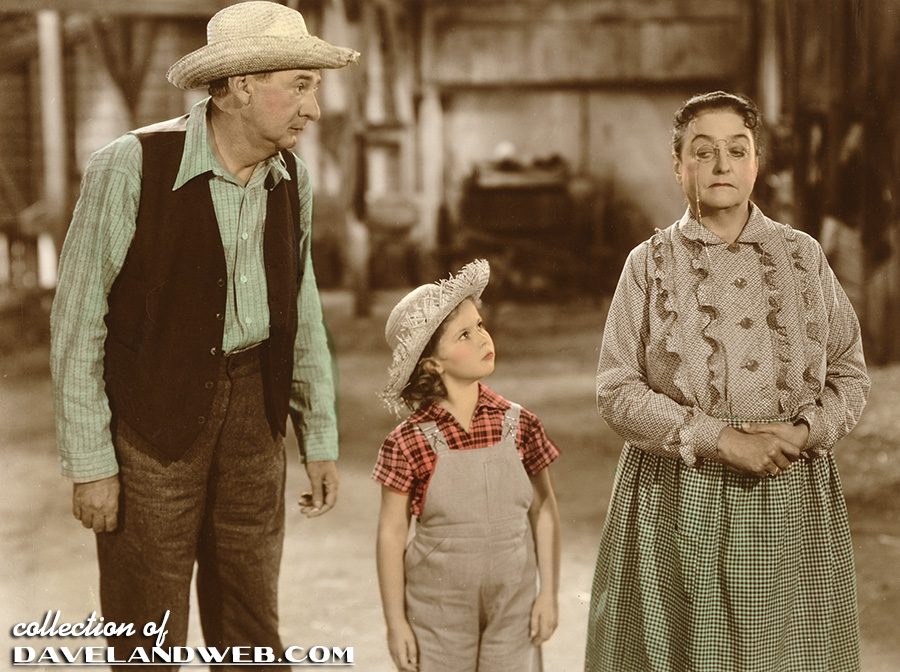
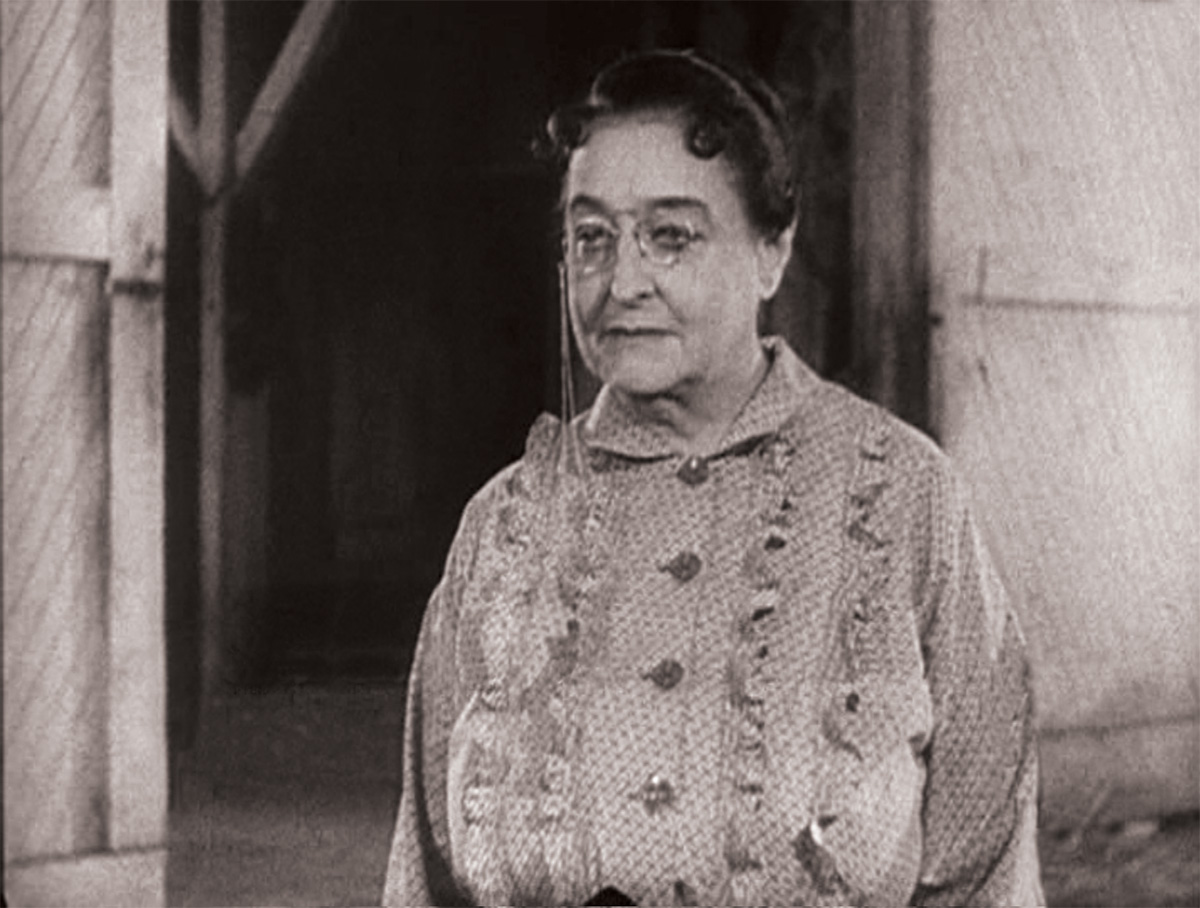
Aunt Miranda comes out and tells Rebecca she should be ashamed of singing “trashy songs.” Homer tells Aunt Miranda that it wasn’t Rebecca’s fault that they were singing. 


Below is another frame from the trailer, illustrating Aunt Miranda’s arrival on the scene:


Fingers crossed that some of these classic gems will reappear one day!

See more Shirley Temple photos at my main website.
Tuesday, June 21, 2022

Temple Tuesday: Shirley (almost) gets a tattoo!


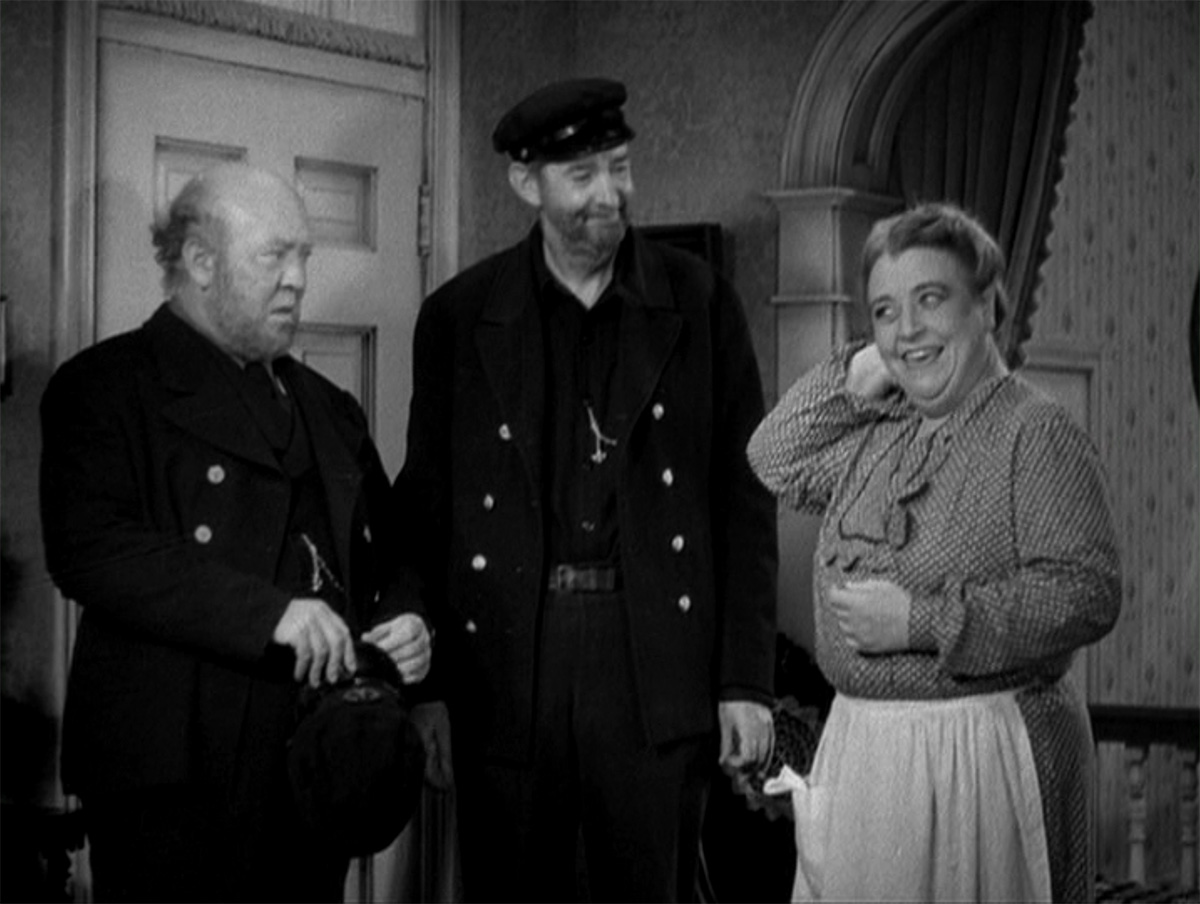
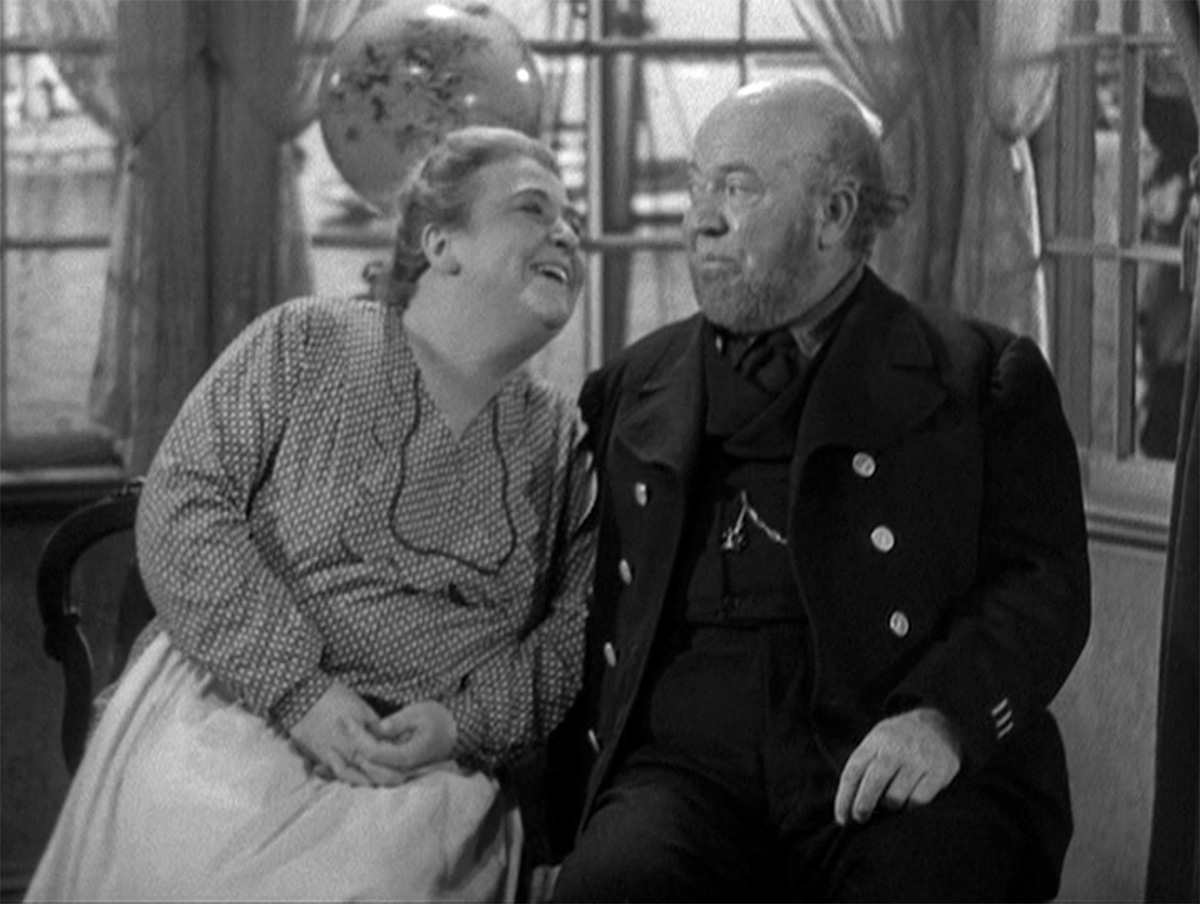
In the 1936 Shirley Temple film, “Captain January,” Shirley ALMOST got a tattoo! Melissa (aka “The Colonel”) summarized the deleted scene for me, which she came across when reading the original script. The scene that ended up on the cutting room floor would have followed the one where Captain January (Guy Kibbee) asks the Widow Croft (Jane Darwell) for a loan (shown above).

At that point, Jan asks Mrs. Croft for the money, and the next scene has Star walking along a side street, where she spies a tattoo shop.


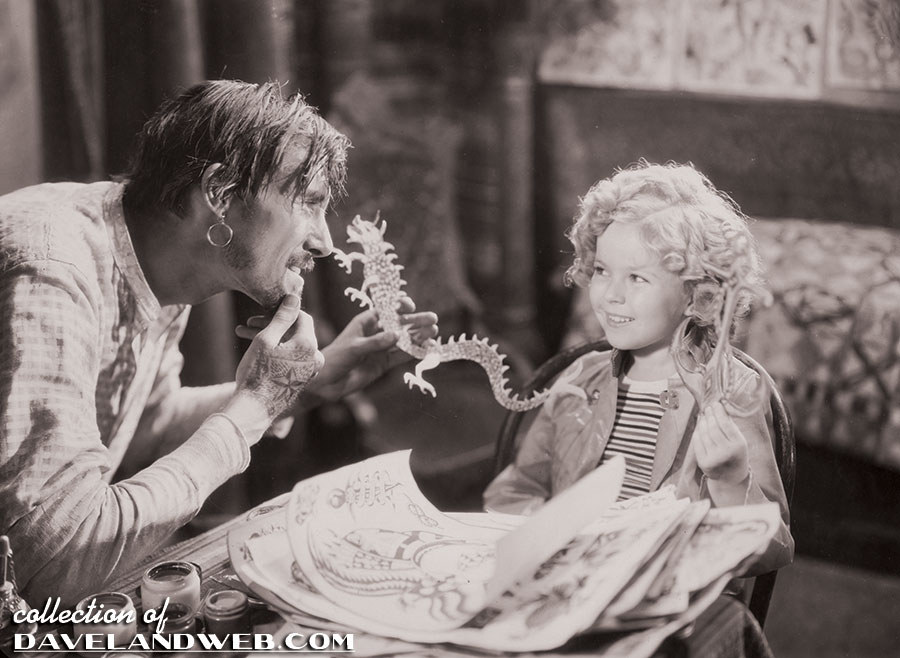
She goes in and the “East Indian” man asks her if she has money. He shows her some tattoo samples, including a sea serpent. She asks “Can I make it wiggle?” and he responds that it would wiggle fine on her back. She decides to get it on her arm, and the man begins heating a needle in a flame.


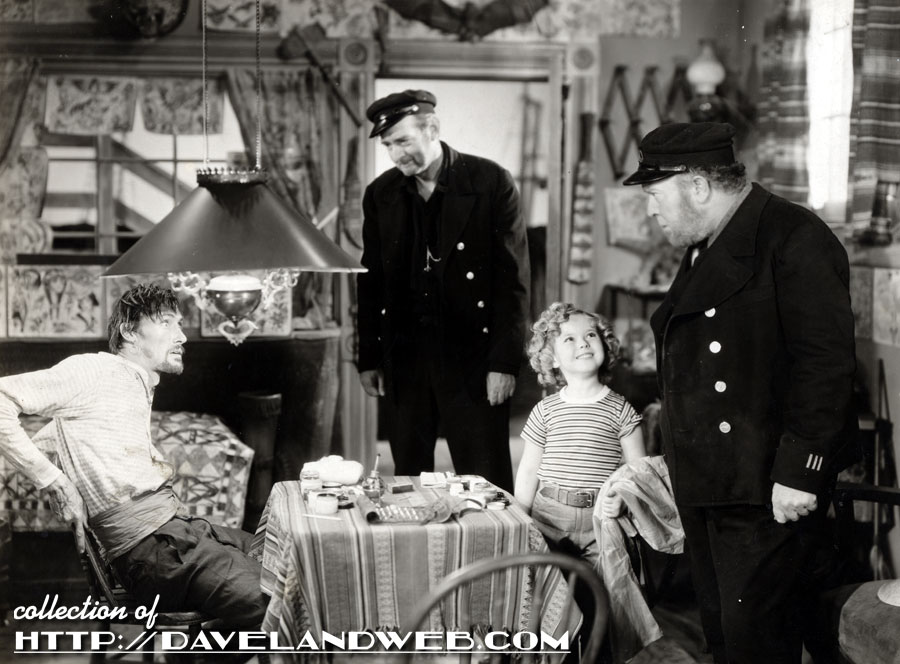
He is just about to begin when Jan and Nazro pass by and burst into the shop. Jan swats Star and sends her home, then slams the basket of lobsters over the tattoo artist’s head. Nazro holds him down while Jan takes the tattoo needle and jabs it into the seat of the “East Indian” man’s pants!


These two publicity stills show that the scene was filmed, but obviously deleted before release. John Carradine was cast as the “East Indian Man” mentioned in the script. I can only surmise that the scene was deleted due to it being slightly unsavory for a Shirley Temple movie!


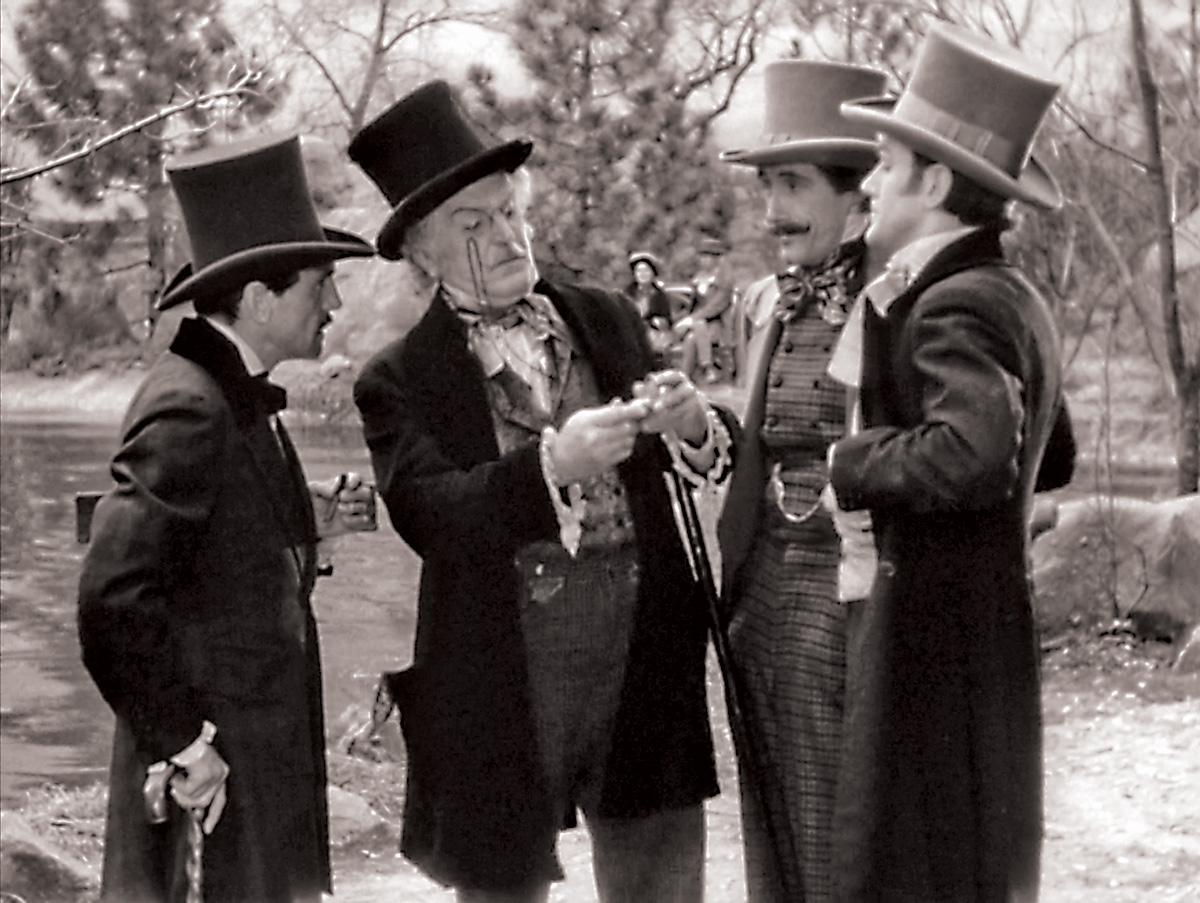
In an earlier sequence that survived the editor’s shears, Shirley watches with delight while January and Nazro (Slim Summerville) show off their tattoos and are able to make them dance and wiggle! This would have been the setup for Shirley’s character wanting to get a tattoo. Poor John Carradine was the loser, as he was completely removed from the film. Instead, he made it into the Temple film “Dimples” playing Richards. His character is one of the con men who get The Professor (Frank Morgan) to buy a cheap pocket watch by convincing him it once belonged to Napoleon Bonaparte.


Con men in a Temple film? No problem. A tattoo artist? No way!

See more Shirley Temple photos at my main website.
Tuesday, September 28, 2021

Temple Tuesday: Shirley and Hattie


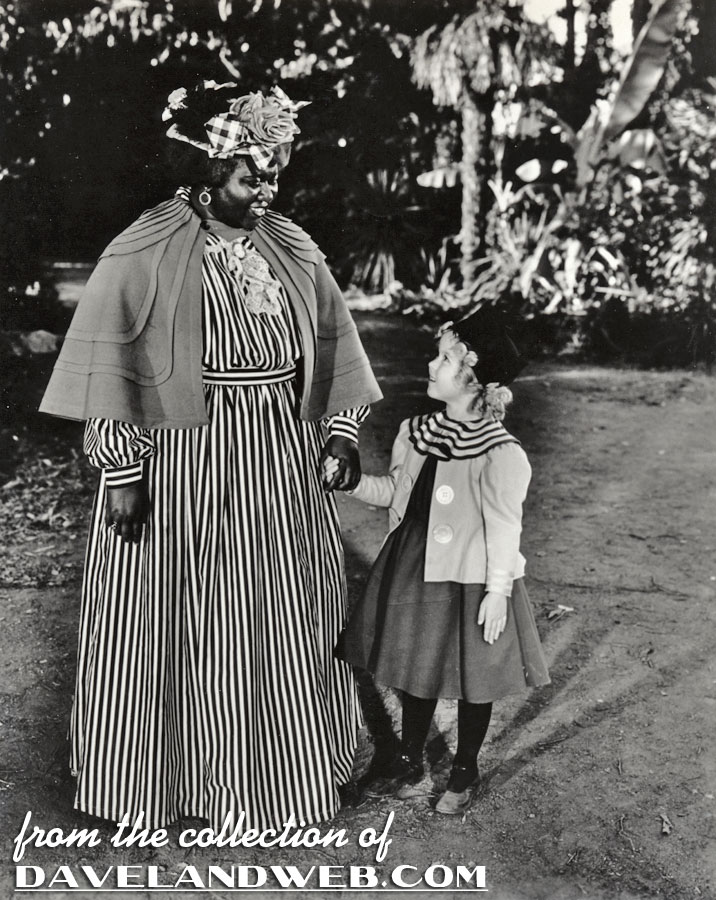
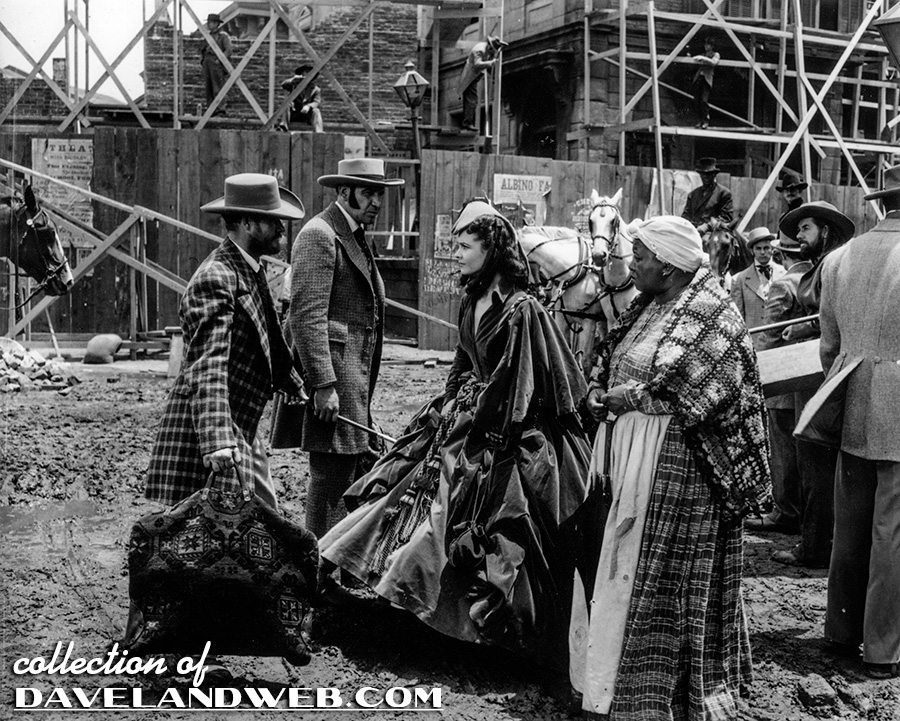
“The Little Colonel” (1935) was the first pairing of Hattie McDaniel and Shirley Temple. In the post-Civil War drama, McDaniel played the cook for Shirley and her mother (Evelyn Venable). There wasn’t much for the actress to do with the role, and it was a definite waste of her talents. Four years later, she would deservedly win the Best Supporting Actress Oscar for the role of Mammy in “Gone with the Wind.” The scenes between her and Vivien Leigh (Scarlett) are some of my favorites, as McDaniel practically steals the spotlight from her.


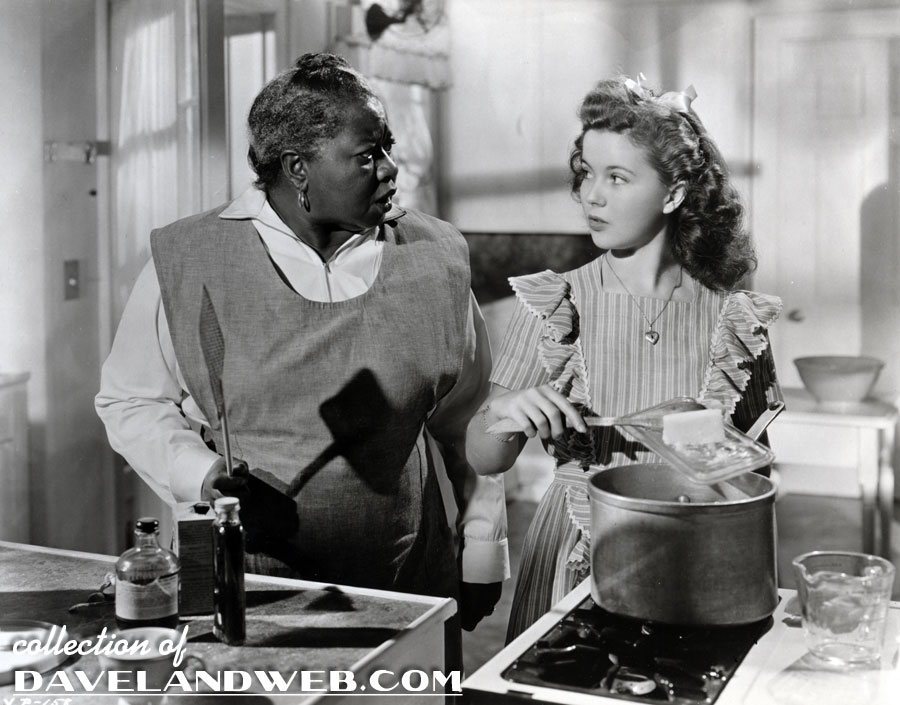
In 1944, Shirley was paired for the second time with McDaniel in another David O. Selznick war drama, “Since You Went Away.” She played Fidelia, the housekeeper for the Hilton family. It doesn’t take long to see that Fidelia is as much a mother figure for the two Hilton girls (Jennifer Jones and Shirley) as their own mother (Claudette Colbert). This photo shows a scene not found in the final film.


From the vintage publicity caption:

SHE KNOWS HOW TO COOK…Shirley Temple prepares some candy that she is planning to send to her father overseas while Hattie McDaniel looks on a bit dubiously at the amount of butter that she is using in a scene from David O. Selznick’s “Since You Went Away.” Included in the stellar cast are Claudette Colbert, Joseph Cotten, Jennifer Jones, Monty Woolley, Lionel Barrymore, and Robert Walker with John Cromwell directing.

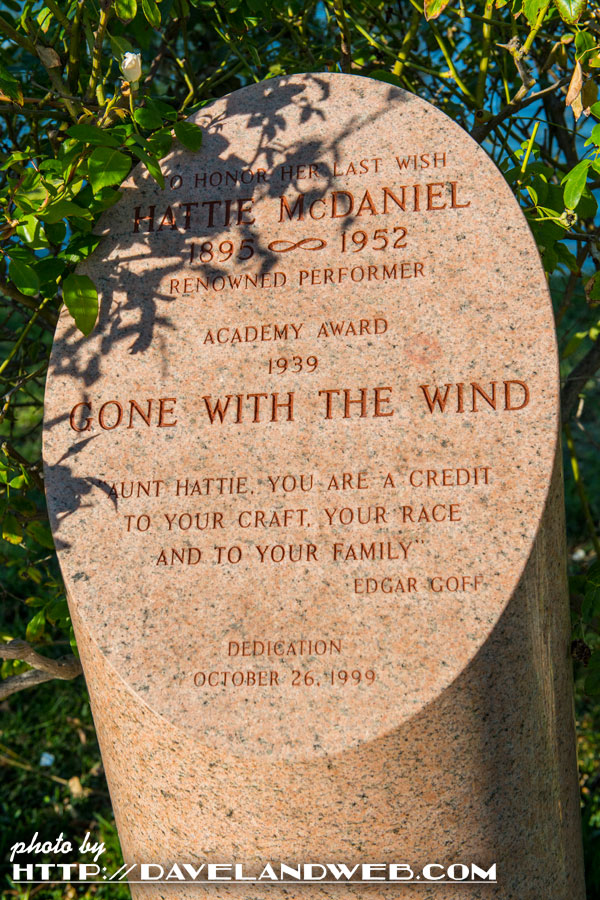
Apparently, McDaniel’s dying wish was to be buried in the Hollywood Cemetery (now called Hollywood Forever) on Hollywood Boulevard. Due to segregation at the time (1952), she was buried at her second choice, Rosedale (now known as Angelus-Rosedale), southwest of downtown Los Angeles. In 1999 the new owner of Hollywood Forever offered to have McDaniel re-interred there. Her family did not wish to disturb her remains and declined. Instead, Hollywood Forever Cemetery built a large cenotaph on the lawn overlooking its lake:


See more Shirley Temple photos at my main website.
Tuesday, April 06, 2021

Temple Tuesday: You Belong To Me


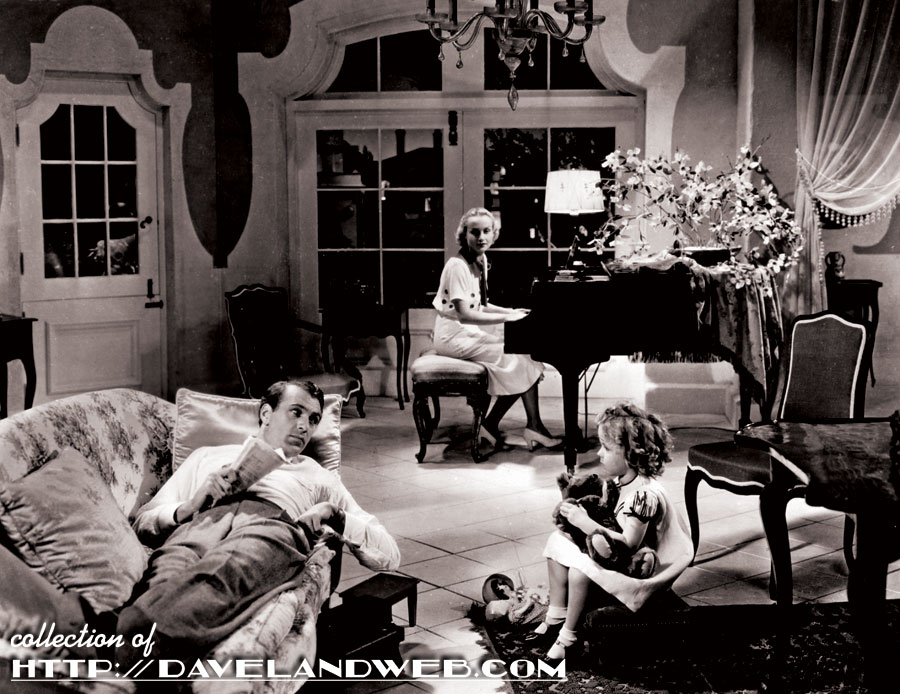
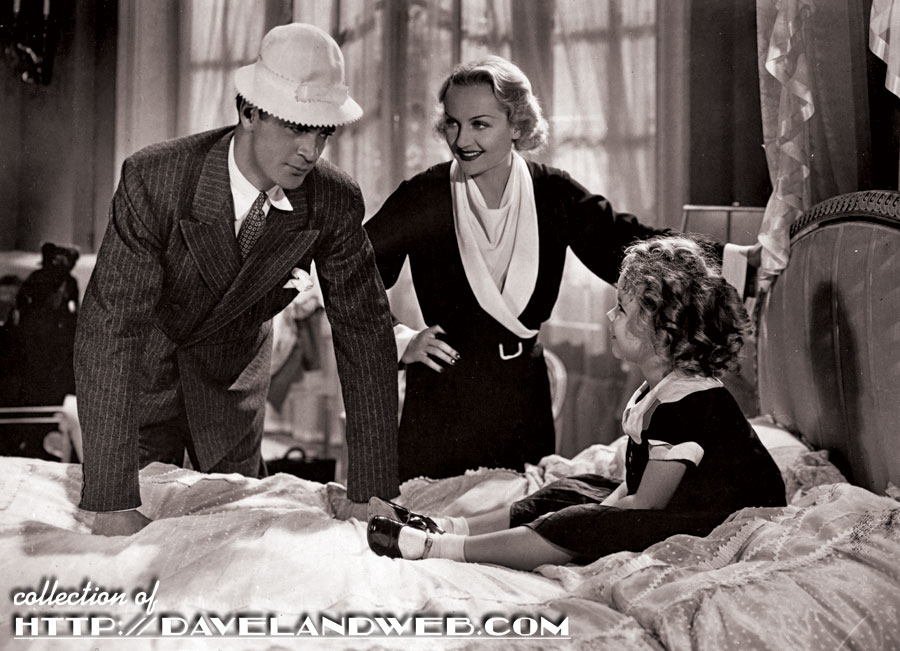
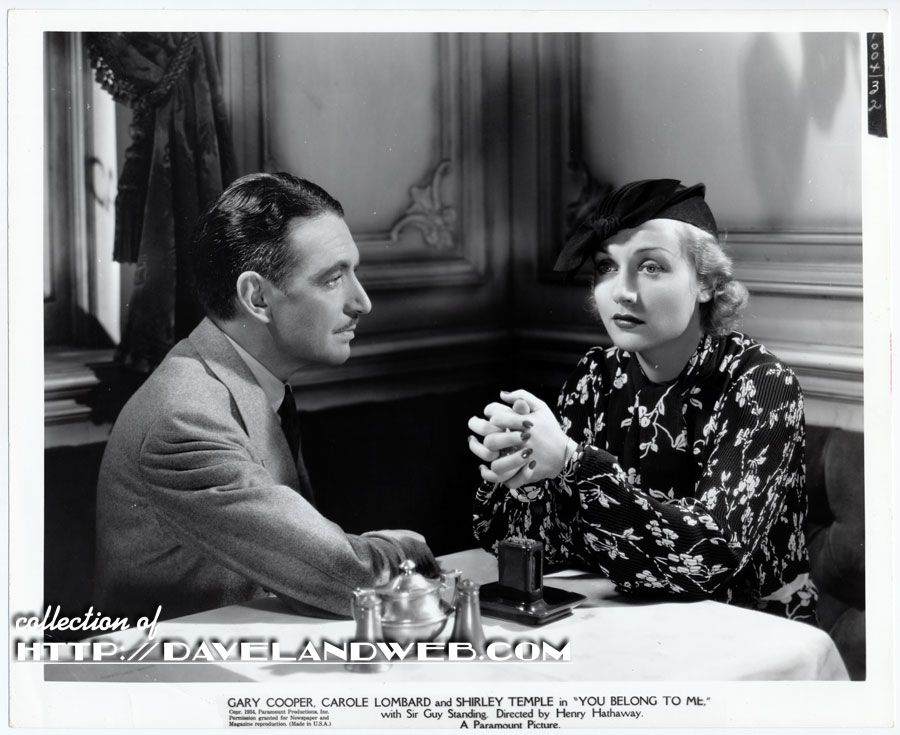
If the title of the Shirley Temple film “You Belong To Me” doesn’t sound familiar, that’s because it was changed before release to “Now and Forever.” Need more proof? How about this vintage still labeled as such:


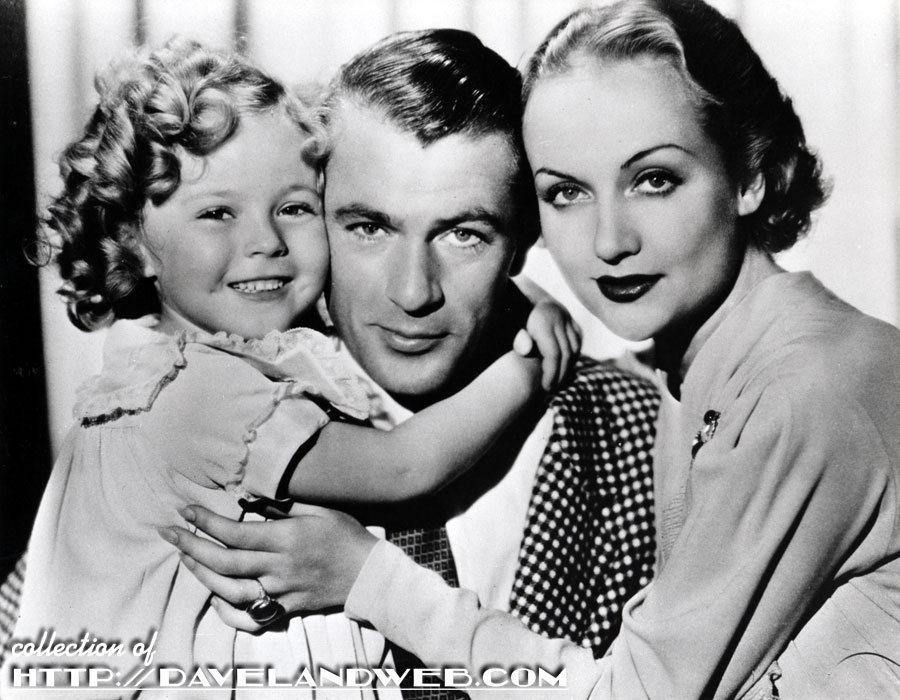
The photo shows a deleted scene set in Paris between Carole Lombard’s character, Toni Day, and her husband, played by English film actor Jameson Thomas (better known as King Westley in “It Happened One Night). If you thought Gary Cooper played her husband, well…you’re kind of right. In the original treatment, which was written just as the Hays Code was being put together, Cooper and Lombard are living in sin and she still has a husband in Paris (Thomas).


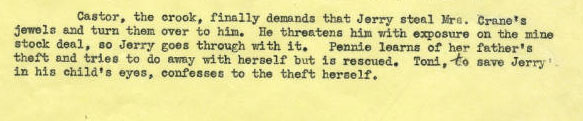
Joseph Breen and company were not crazy about that and pressured Paramount to ditch the hubby and make Cooper and Lombard a respectable married couple. Breen also didn’t like Shirley’s attempt at suicide. What?!? Yup… that was in an outline from February 22, 1934:

That outline also included the original “Thelma and Louise” ending:


What the heck was Paramount thinking?!? This is one instance of where it was probably a good thing that Will Hays and Joseph Breen came along to see what the movie studios were doing. Based on the title and other things that were in the script, it would appear that the main emphasis of the film was to be the unhealthy and co-dependent relationship, between Cooper and Lombard. 


Shirley offing herself?!? Please tell me that wasn’t filmed. 

See more Shirley photos at my main website.