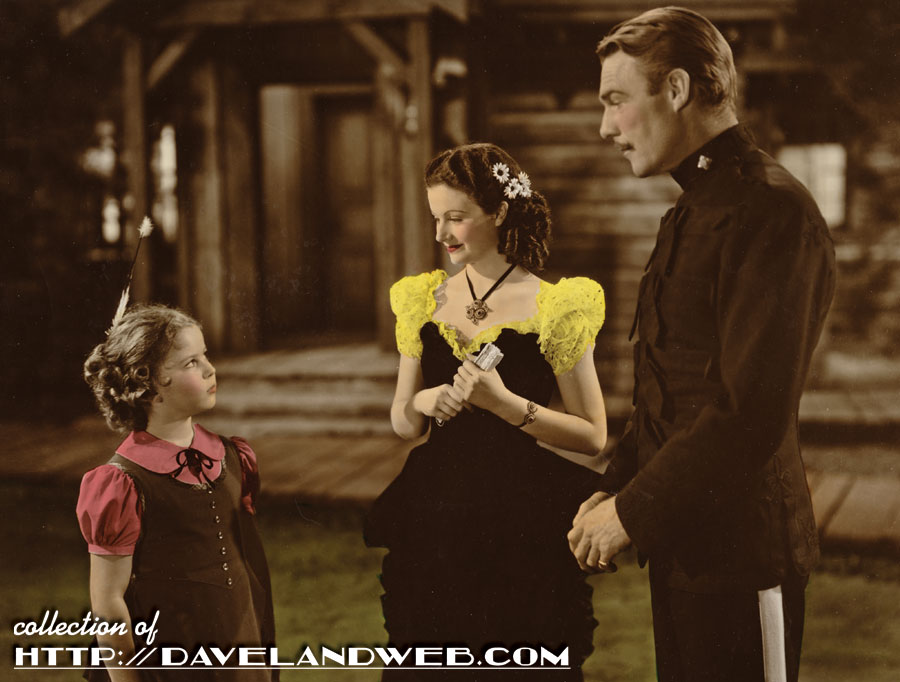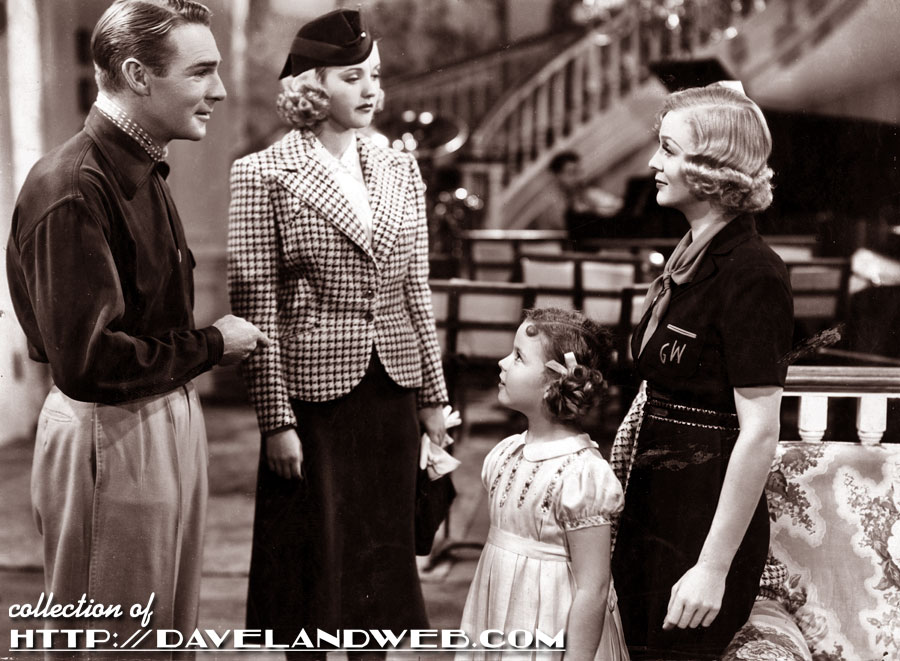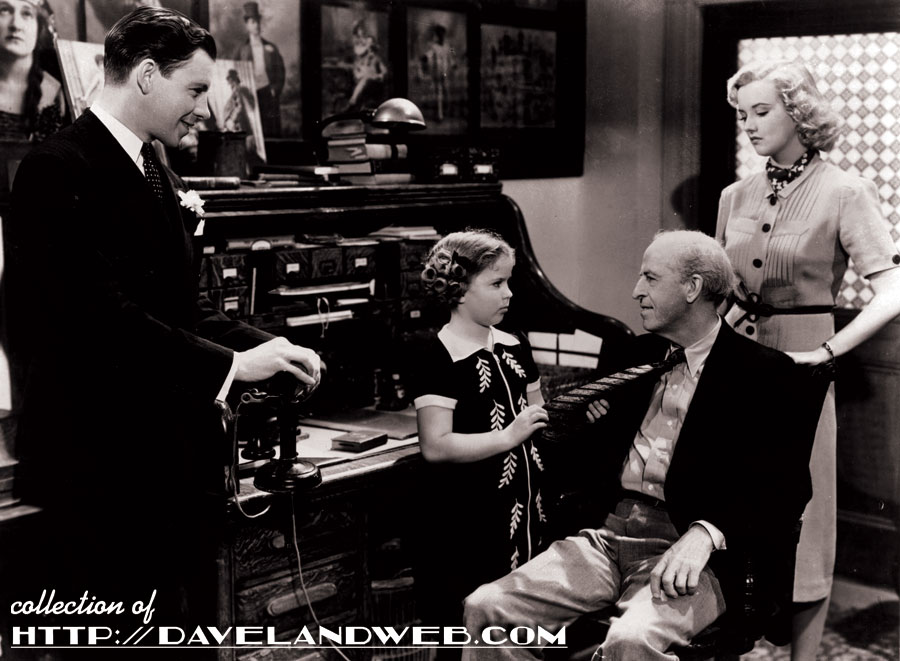
Showing posts with label alice faye. Show all posts

Thursday, August 08, 2024

Harlow & Faye


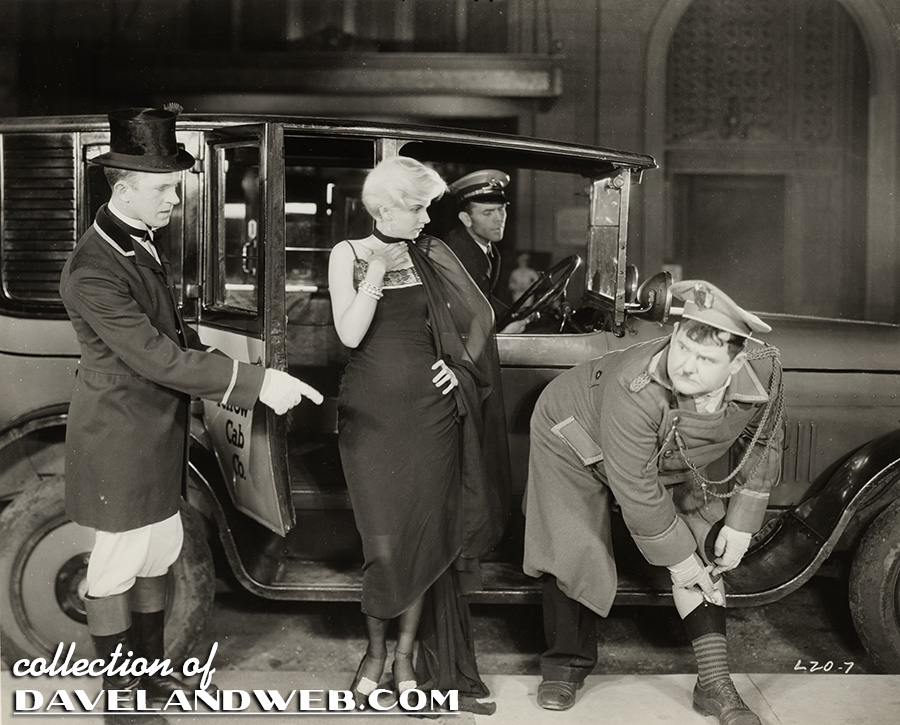
Today’s blog post refers to the two leading platinum blondes of the 1930s: Jean Harlow and Alice Faye. Harlow’s film career first began with supporting roles in silent comedies such as “Double Whoopee” (1929) with Stan Laurel and Oliver Hardy.


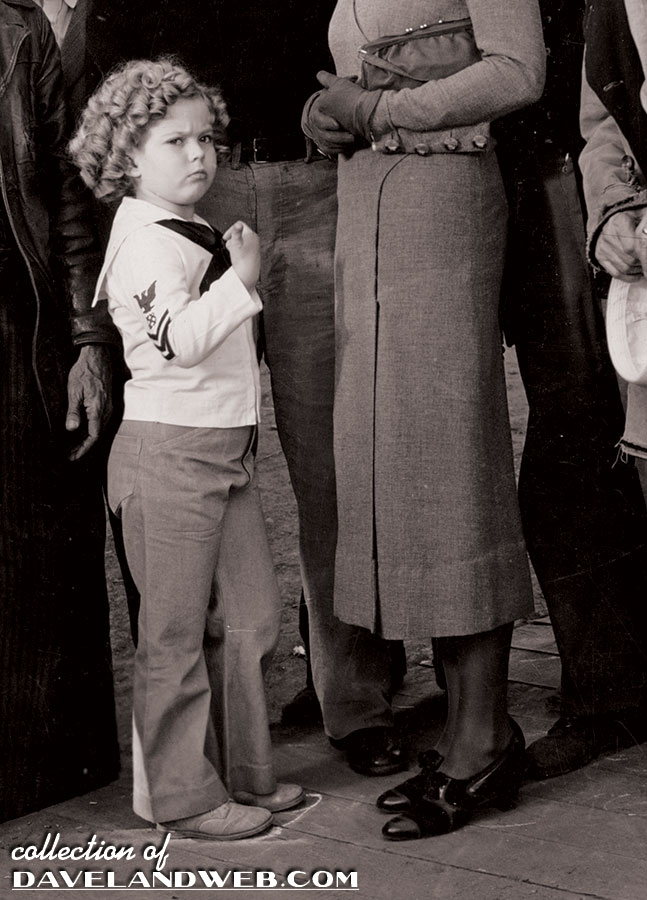
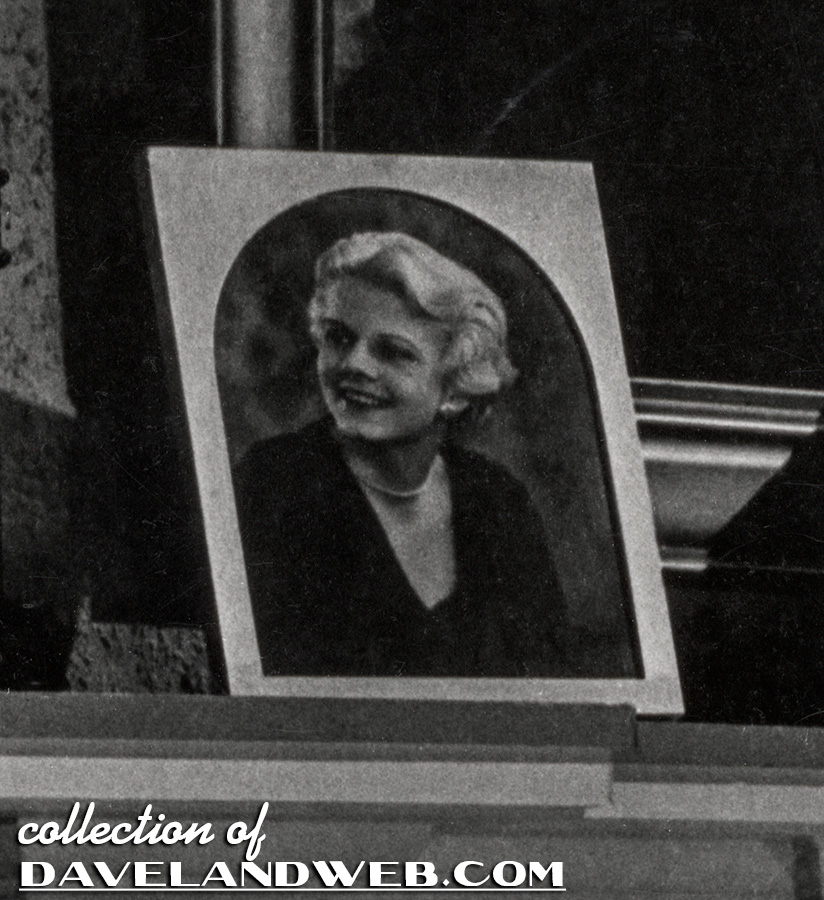
In “Brats” (1930), Harlow can be spotted briefly if you look closely at the photo on the mantle. Producer Hal Roach apparently quipped that he got Harlow to appear “for nothing” in this comedy short as well as in 1931’s “Beau Hunks.”
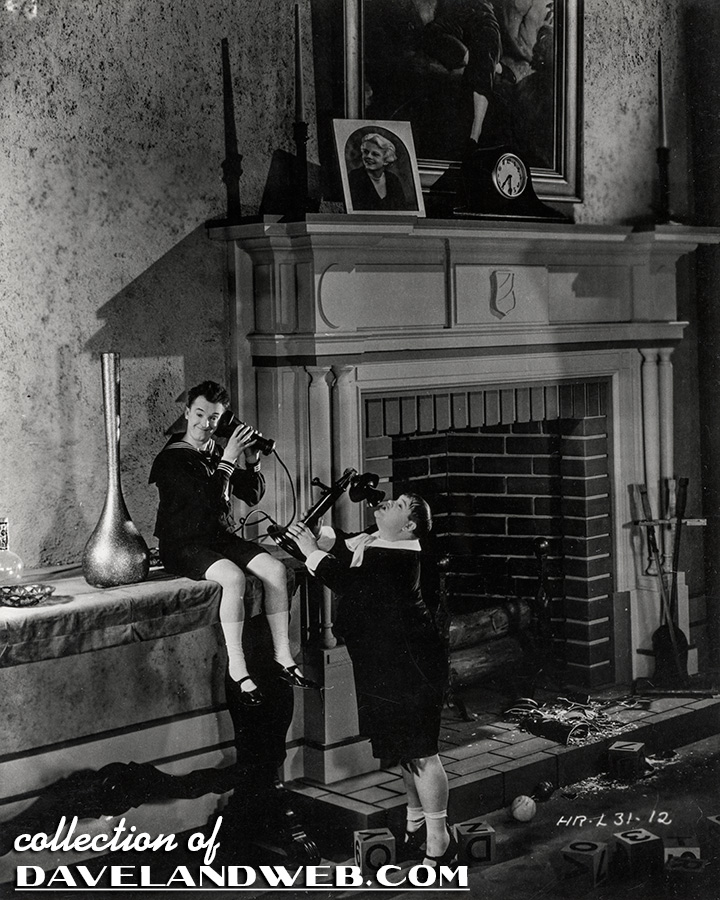


Zooming in:


Harlow’s breakthrough role came in the 1930 war film, “Hell’s Angels.” By 1932, MGM put her under contract and she became a box office favorite with hits like “Red-Headed Woman” (1932), “Red Dust” (1932), and “Dinner at Eight” (1933).
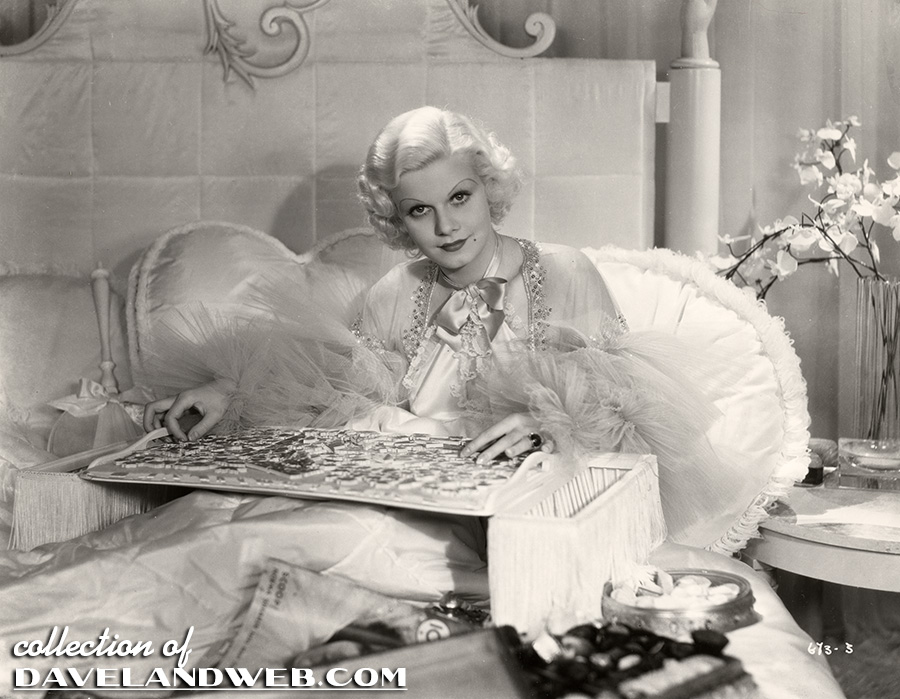


The pencil thin eyebrows, the platinum hair, and the sarcastic wit were all part of her manufactured persona.
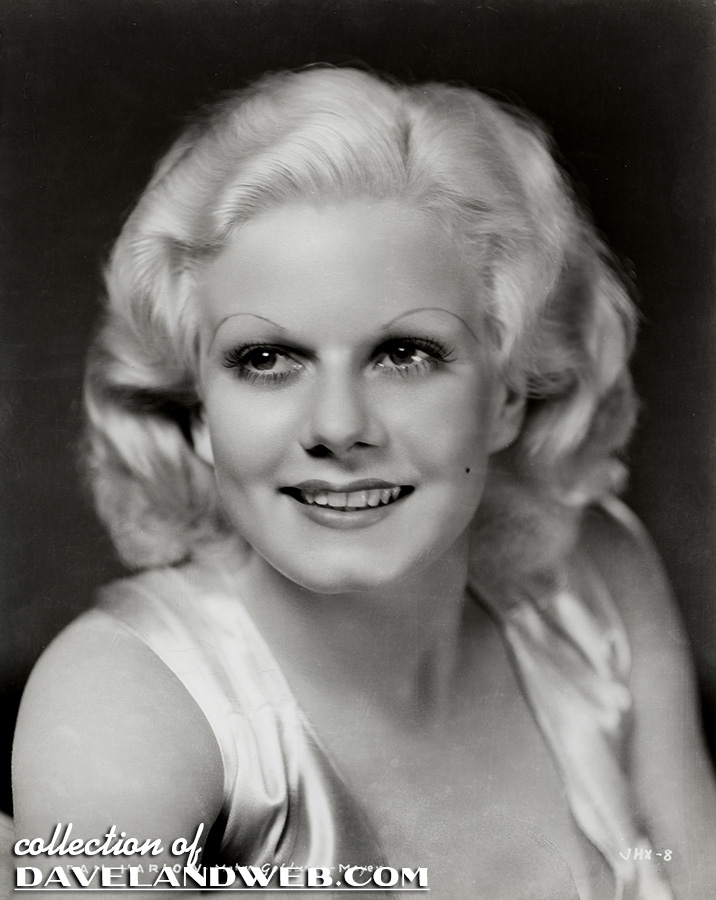


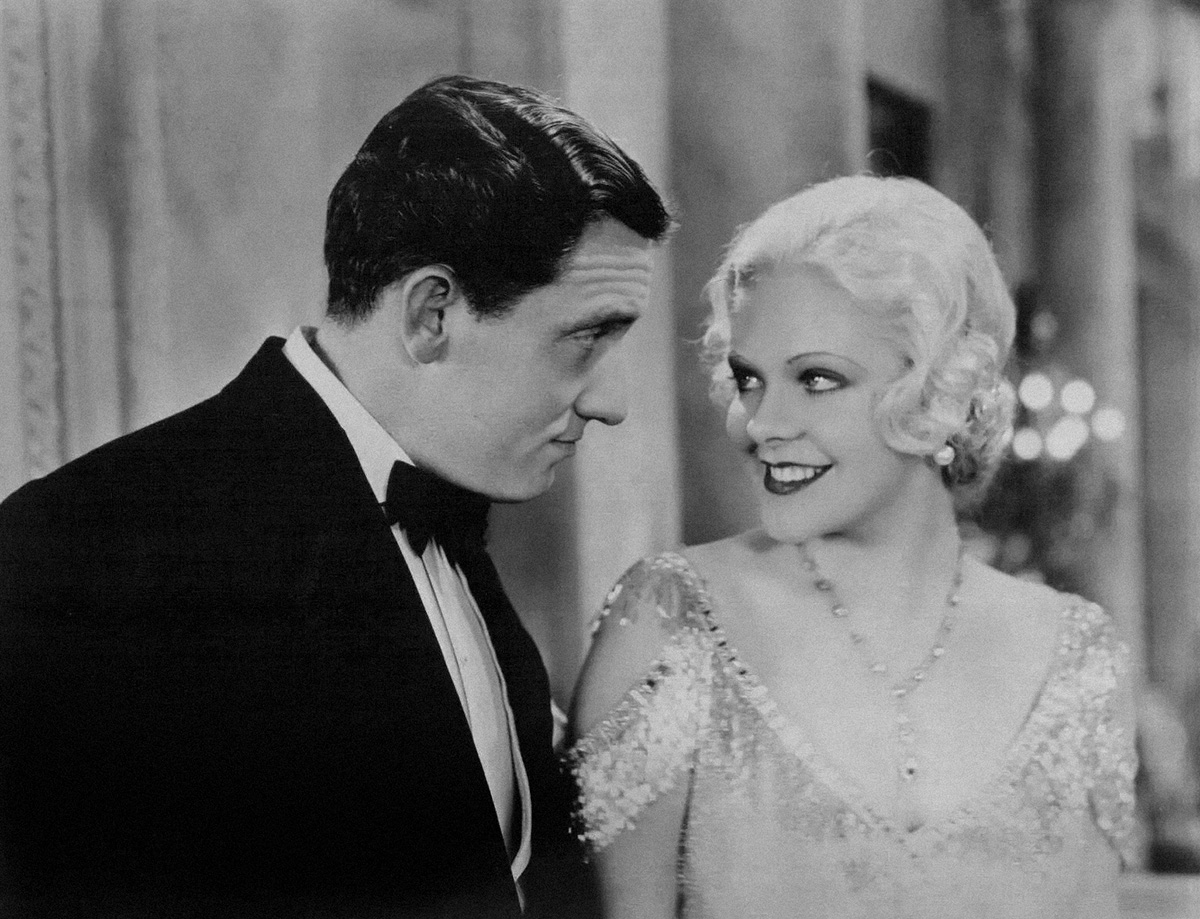
Enter Alice Faye (approximately four years younger than Harlow), Fox Studio’s “answer” to Harlow over at MGM. Today, portraits of the two are often confused. Faye was given the same platinum hairdo as well as the hardened makeup that Harlow had been sporting in her early career, as seen in “Now I’ll Tell” (1934), where Faye played the “other woman” opposite Spencer Tracy.


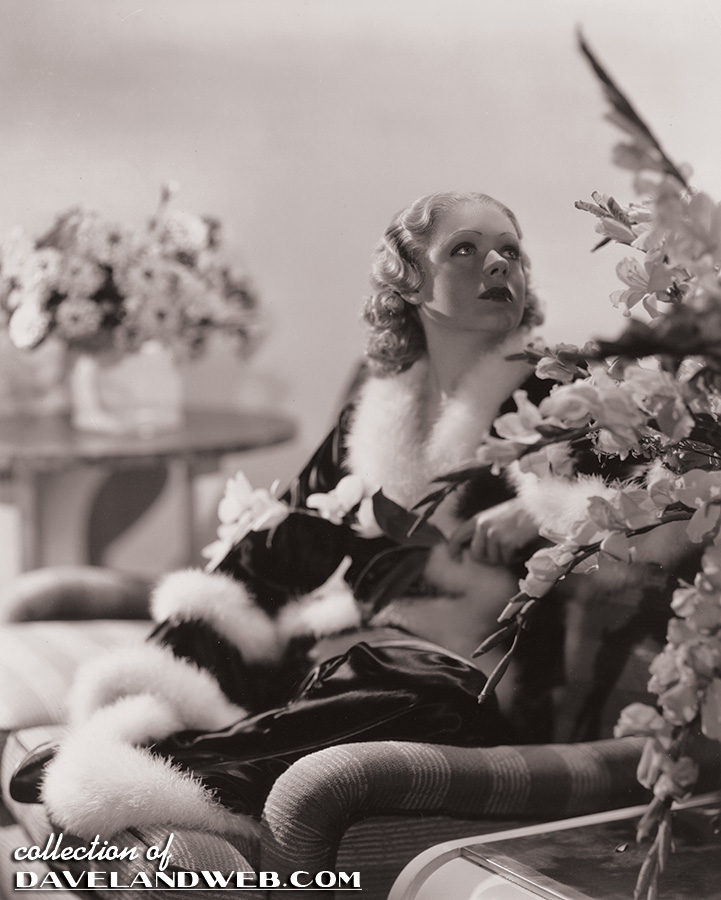
Below, a Gene Kornman publicity shot of Faye for “Poor Little Rich Girl” with Shirley Temple (1936) with this caption:

After she’s through with the day’s dancing sequences in “The Poor Little Rich Girl,” Alice Faye curls up in her favorite chair, clad in her favorite pajamas of black silk velvet lavishly trimmed in white marabou. In this 20th Century-Fox production, starring Shirley Temple, Alice finds herself teamed with Jack Haley, who does pretty well as a dancer himself!


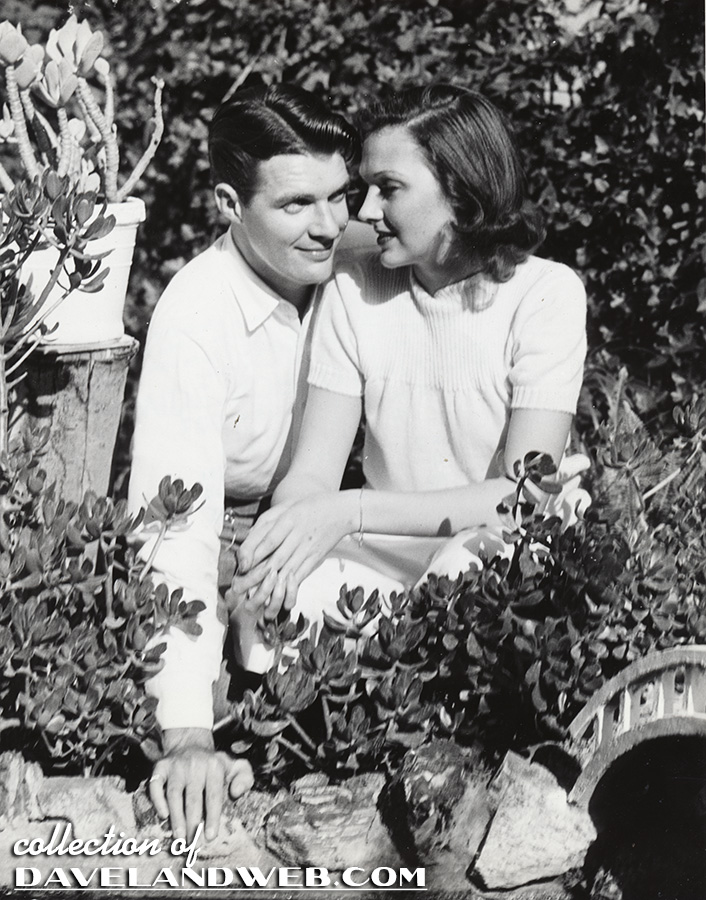
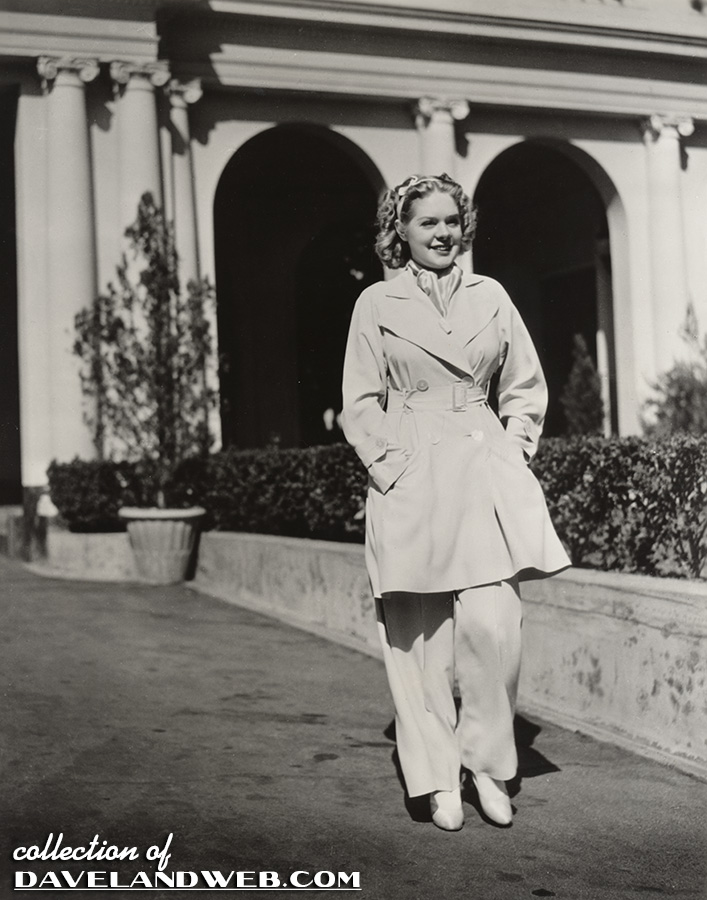
In this, her first Temple film, Faye played the wisecracking wife who nags husband Jack Haley all day long. Faye’s characters up to this point lacked the innocence and vulnerability that made Harlow so appealing underneath the sarcasm. Still, Faye had one thing Harlow didn’t: a gorgeous contralto voice! 20th Century-Fox Studio head Darryl Zanuck saw the potential in Faye and by the time she made her second Shirley Temple film, “Stowaway” (also in 1936), she was almost unrecognizable. In the following publicity still, Alice had graduated from silk velvet and marabou to an outfit that any typical woman of the day might have worn. The accompanying caption:

Attired as comfortably as possible, Alice Faye takes a stroll for the sake of fresh air before reporting for preparation at 20th Century-Fox for her role with Shirley Temple in “Stowaway.”


Zanuck saw the value in making Alice Faye more approachable to both sexes by softening the edges and putting the vocal talents front and center, much to the chagrin of little Shirley who would later recall:

I retired to bed singing “Good Night My Love,” a delectable ballad by Mack Gordon with Harry Revel with lyrics about Dutch dolls, teddy bears, and my dead daddy. Faye then reprised my song outside, under a romantic full moon, using mature lyrics sung in her own silky style. Instantly I knew her rendition had finessed mine. Hers was deeper-throated, more resonant, and her facial expressions insinuated much that I sensed was important without knowing why. Yet my proprietary feeling could not so easily be quenched. It was my song. I had sung it first. Why did I lose when she won?…Perhaps the problem was not my deficiency but her skill. She was older, I brooded, and had beautiful cow eyes to boot.


At the same time, MGM was working hard to soften Harlow’s image, realizing (just like Zanuck) that her appeal would be greater if they moved away from the one-dimensional platinum bombshell approach.

One of the oft-told legends of Hollywood was that MGM wanted so badly to borrow Shirley Temple for “The Wizard of Oz,” that they offered Clark Gable and Jean Harlow for Fox’s production of “In Old Chicago.” Shirley herself even repeated this myth in her autobiography, Child Star. It doesn’t take much digging to figure out that this was a fabrication, although portions of the story are true. When Alice Faye was interviewed by Joe Franklin in her later years, he asked, “Did you get that part [In Old Chicago] when Jean Harlow was about to die?” “That's what I read,” replied Alice. “I read that, but I’m not sure.” “I never believed it,” responded Joe. “I never did either. I wouldn’t mind following Harlow,” Faye said with a smile. “She was pretty dishy!” This speaks to the fact that back in the 1930s and 1940s, the studio bigwigs made trades and deals but the stars themselves were the last to know. They were under contract with the understanding that they would follow along with executive orders without complaint. Shirley Temple herself would not have had any firsthand knowledge about any of this, either. Here’s what we know:

“In Old Chicago” went into production mid-June of 1937, shortly after Jean Harlow’s untimely June 7th death. Thanks to some sleuthing by Melissa (aka “The Colonel”), we know that on May 27, 1937, the L.A. Times was still reporting that Harlow…

…is pretty certain as one feminine lead in that picture, incidentally.

One day later, the Times changed its tune:

With no chance of getting either Jean Harlow or Helen Hayes for “In Old Chicago,” Twentieth Century-Fox is to set about popularizing two of its own feminie players in this banner picture. And that’s not a bad idea either, particularly as one of the young ladies is Virginia Field.

On June 1st, the Evening Courier reported:

I don’t know what would have happened if Darryl Zanuck couldn’t have borrowed Jean Harlow for “In Old Chicago.” He had his heart set on her, but for a few weeks it looked as if M-G-M would have to refuse. In order to swing the deal, Darryl had to promise Tyrone Power in exchange. So it’s set that he will play the boy in “Madame X.” First of course, he co-stars with Jean in the Chicago epic, with Don Ameche in an important part and Virginia Field and Phyllis Brooks in supporting roles. Henry King directs.

Other than Harlow and Virginia Field, the rest of the report panned out. MGM made “Madame X” without Tyrone Power, using Warren William instead. “Madame X” began production mid-July 1937 and was released on October 1. And what about Shirley? Where does she fit into all of this? Based on contemporary accounts, Shirley Temple had zilcho to do with the “In Old Chicago” / “Madame X” swap. MGM didn’t even own “The Wizard of Oz” at the time all of these shenanigans were going on. While the bean counters at MGM wanted the box office stability of Shirley for “Oz” when they did purchase it, the production and creative team all wanted Judy Garland and the story was purchased specifically for her. MGM vocal coach/composer/arranger Roger Edens was sent to Fox for an informal audition of Temple and reported back that her “vocal limitations were insurmountable” for “Oz.” And that was that. 

What would “In Old Chicago” have been like with Harlow? What would “The Wizard of Oz” have been like with Temple? To quote Alice Faye, “You’ll Never Know”!



See more Alice Faye photos at my main website.

Tuesday, March 12, 2024

Temple Tuesday: Dimples and Romance


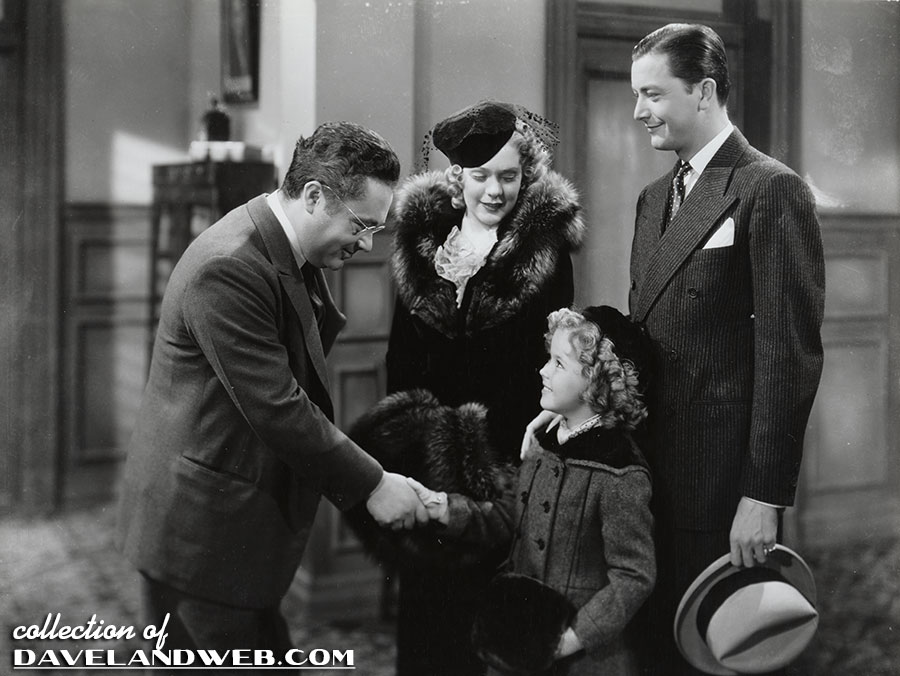
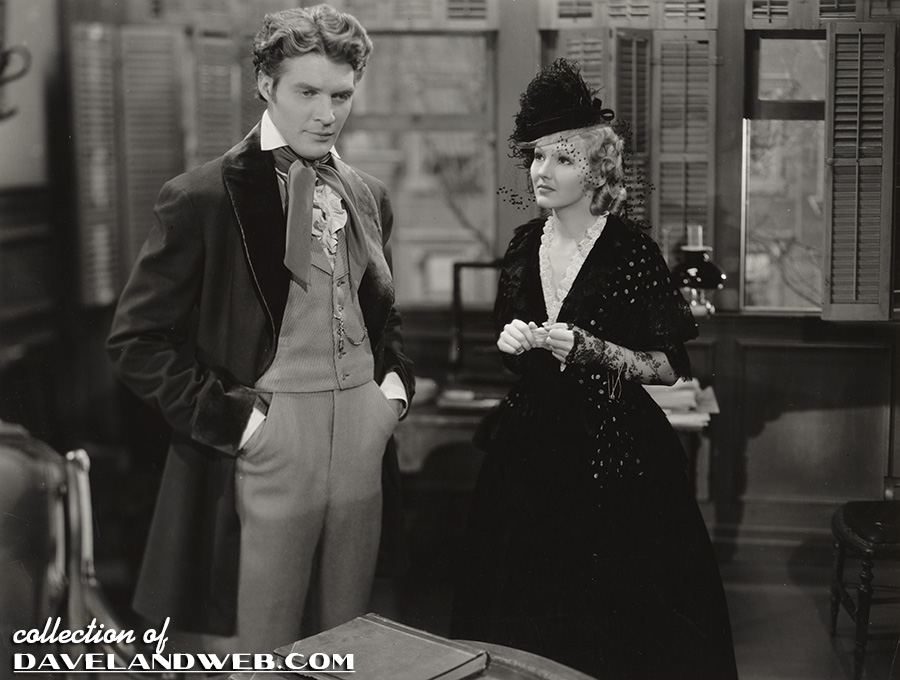
Actress Astrid Allwyn had supporting roles in two back-to-back Shirley Temple films, starting with “Dimples” (released October 16, 1936) and followed by “Stowaway” (released December 25, 1936). Allwyn was born Astrid Christofferson on November 27, 1905 in South Manchester, Connecticut. At age 13, she was offered a scholarship to the Boston Conservatory of Music for her singing, but declined rather than move away from home. After high school graduation, she moved to New York, hoping for a career as a concert singer, but ended up taking classes at a business college and becoming a typist on Wall Street. She studied dancing and dramatics while in New York and later gathered experience by joining a stock company. Allwyn made her Broadway debut in 1929 in Elmer Rice’s “Street Scene,” and on the strength of her second play, “Once in a Lifetime,” was brought to Hollywood in 1932. Her first husband was actor Robert Kent, who also starred in “Dimples.” Although she played the gold-digging “other woman” in “Dimples” (Delma Byron, seen below with Robert Kent and Shirley, played the romantic lead) Allwyn ended up winning the leading man in real life. Ain’t that grand?


Allwyn told the story of how she and Kent fell in love in the November 1937 issue of Hollywood Magazine:

Astrid up and got herself married about six months ago to Robert Kent, 20th Century-Fox star, and a mighty good actor in his own right and a chap who is going places in the picture business before he is through. “Frank Morgan can take credit for the start of our romance,” Astrid reveals. “We were shooting a scene in the Shirley Temple picture “Dimples” where Robert was supposed to kiss me. Whether it was because he was shy or because he scarcely knew me,  he suggested to Bill Seiter, the director, that he merely kiss my hand. Bill had some suggestions of his own—and Robert was told to kiss me the way a boy should kiss a girl. Well, the cameras began to grind and we began to kiss. Frank Morgan was supposed to interrupt the embrace with a bit of dialogue but as he said later ‘I didn’t have the heart’ so we kept it up until Bill finally yelled out. From that time on—thanks to Frank Morgan—we began a friendship that ended where we are now—happily married and deeply in love.”

The marriage took place shortly after “Stowaway” wrapped up production, when the two headed south to Tijuana for the ceremony. They married on January 10, 1937, as announced in the Hanover Evening Sun on January 18, 1937:

Astrid Allwyn and Robert Kent, film players, have disclosed they were married Sunday, January 10 in Tijuana, Mexico. The only attendant was J. Edward Bromberg, screen actor. The couple obtained their marriage licenses under their true names of Astrid Christofferson and Douglas Blackley. Their romance began last spring.


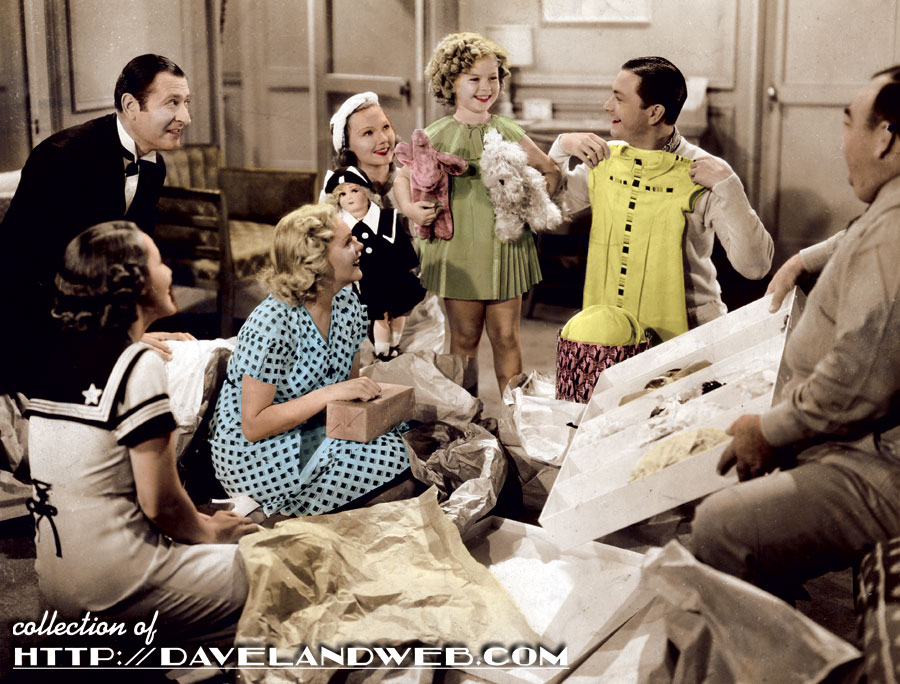
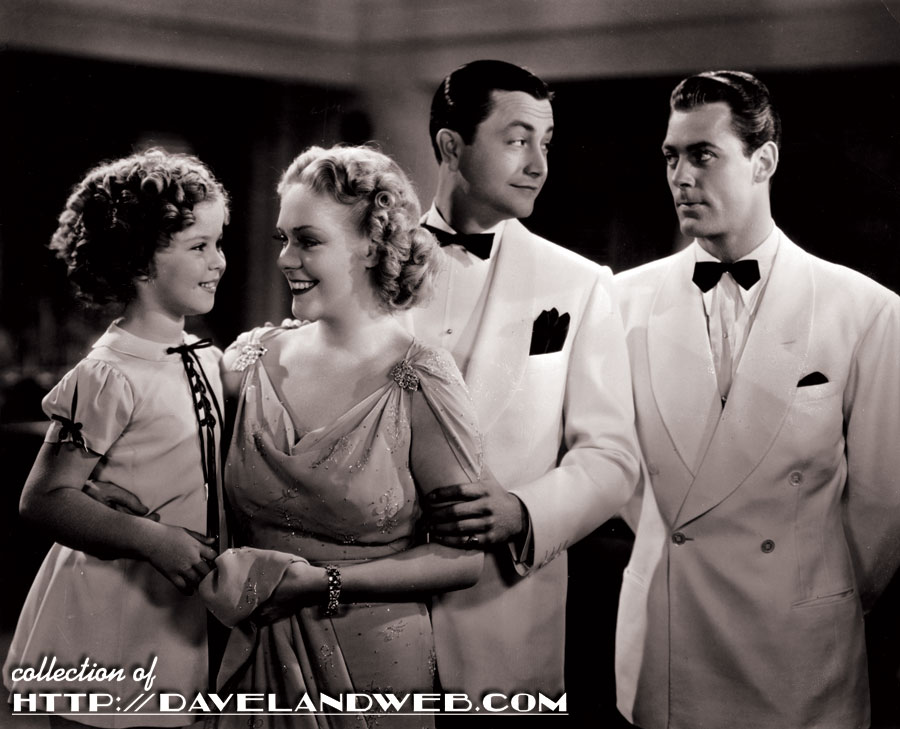
Bromberg also costarred in “Stowaway,” seen at left below with Alice Faye, Temple, and Robert Young.


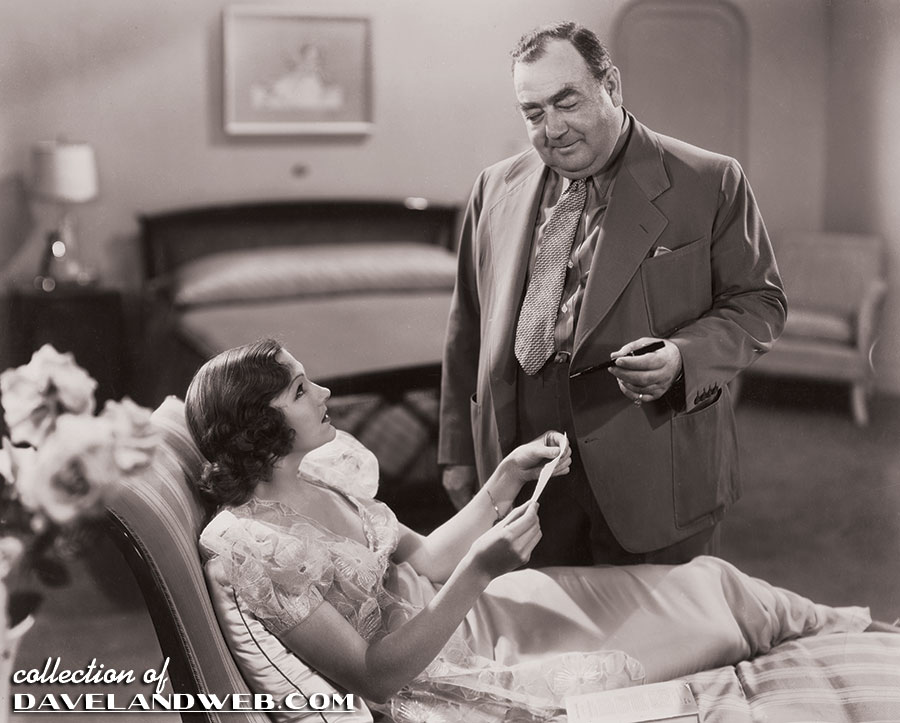
Below are Allwyn and Eugene Pallette in a scene that was ultimately deleted from the final film. Once again, she played a woman with less than desirable morals, about to blackmail Robert Young for some moolah.


The scene below was also deleted from “Stowaway.” Allwyn is barely visible in the final film, hardly earning her onscreen credit.


Despite being “happily married,” Astrid and Robert were divorced in 1941. Allwyn had the distinction of appearing in three Best Picture Oscar nominated films: “The White Parade” (1934), “Love Affair” (1939), and “Mr. Smith Goes to Washington” (1939). She married a second time in 1941 to businessman Charles O. Fee. After filming Hit Parade of 1943 (1943), Astrid made a decision to retire so she could focus on family and raising her children. One of her daughters, Melinda Fee, had a modestly successful career in movies and television. Astrid remained married to Charles until her death in Los Angeles on March 31, 1978 from cancer, at age 72. She is buried in Forest Lawn in Glendale, Court of Freedom, #955.


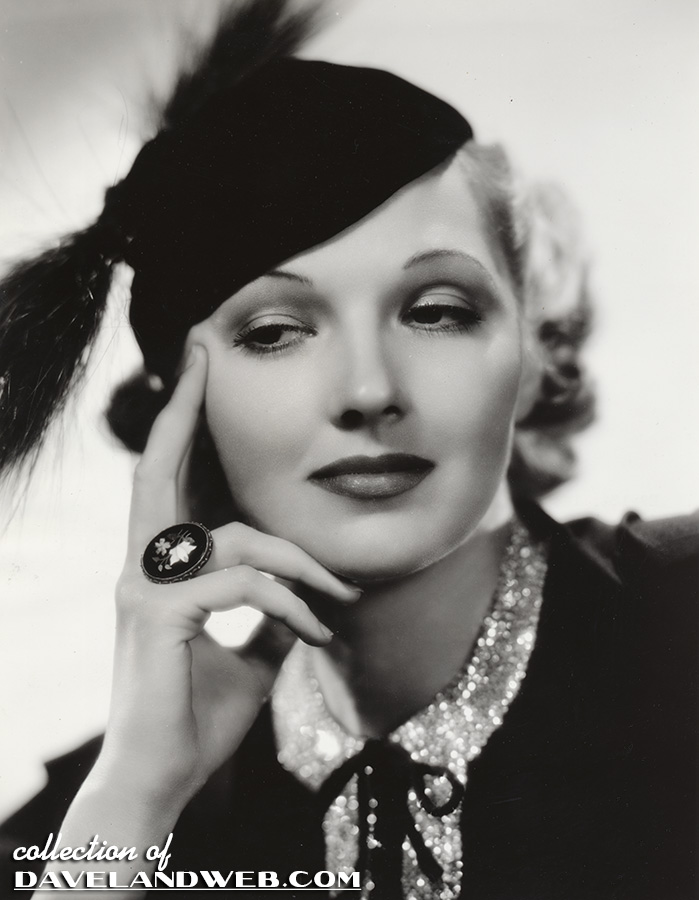
Above is a publicity shot for Fox, shot by Gene Kornman in 1936. The accompanying blurb:

Hollywood continues to smile upon the small hat and triumphantly demonstrates that size imposes no limits in either beauty or variety. Turbans are strong in the mode and imbued with exceptional charm — as witness this black velvet model by William Lambert, 20th Century-Fox stylist, and worn by lovely Astrid Allwyn, featured player of the same studio. The round crown is effectively trimmed with a black cellophane novelty. The ring worn by Miss Allwyn is one of her heirlooms from Sweden — a floral design in mosaic is set in jet and mounted in antique gold.

She may not have had a huge career, but in Shirley-world, Astrid Allwyn was the perfect villainess for “Dimples.”


See more Shirley Temple photos at my main website.
Tuesday, July 05, 2022

Temple Tuesday: More Deleted Shirley


Last week’s Temple Tuesday post covered a deleted scene of Shirley’s from “Rebecca of Sunnybrook Farm” (1938). That only covered a fraction of what was left on the cutting room floor from Shirley’s movies! Hang on as we cover a few other ones that never made it into the final film.

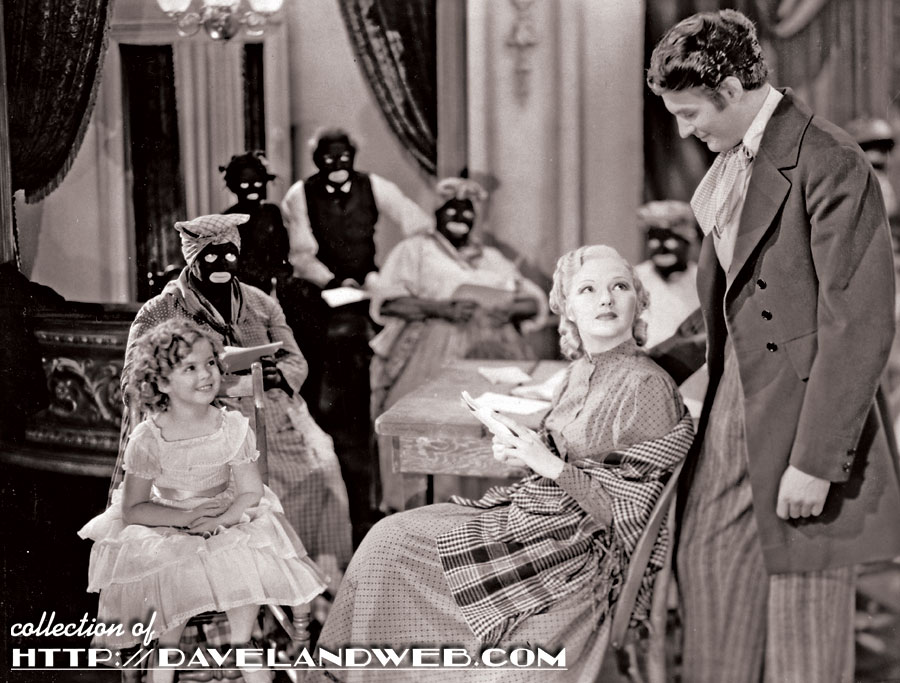
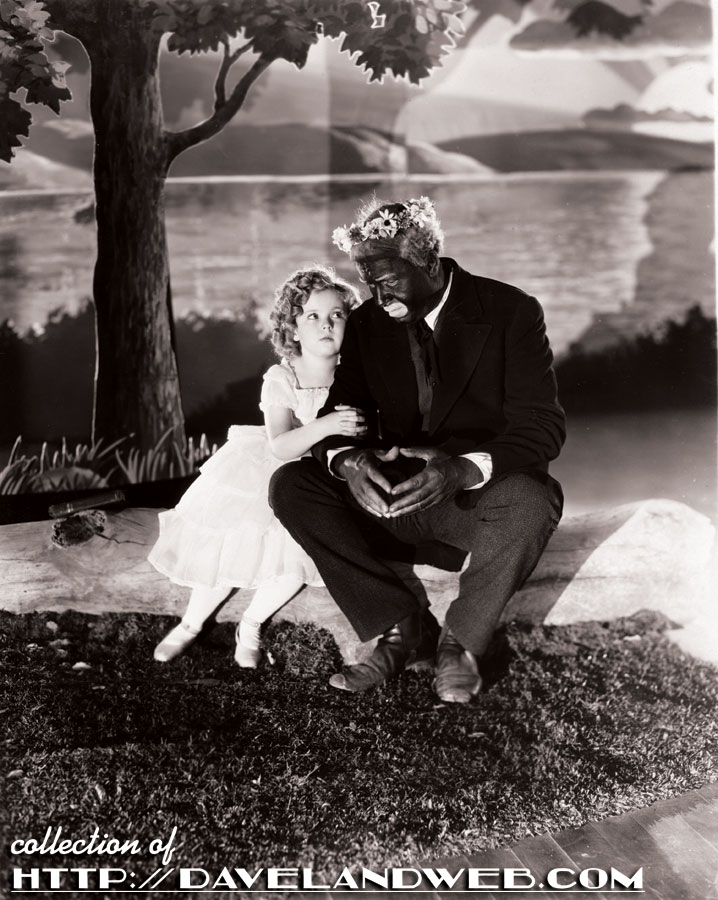
In “Dimples” (1936), Shirley acted out scenes from the play “Uncle Tom’s Cabin” for her friends in the Bowery (photo above). Most likely this little showcase for Shirley’s talents did nothing to move the plot along and was eliminated as a result. A second deleted scene had actress Cleo Marsh (Astrid Allwyn) getting mad at Dimples (Shirley) during a rehearsal, feeling that the little girl’s song would steal the show from her. “Stop it, you little brat!” Cleo yells at the child. “You’ve got too much in this play as it is! This play was put on for my sake! People will come to the theater to see me. They’re not coming to see the antics of a dirty little urchin!” CUT! DELETE! NOBODY talks to Shirley like that and gets away with it!


Below is a shot of a deleted scene from the “Uncle Tom’s Cabin” play that Shirley’s character is performing in. Probably another instance of the story moving too slowly for Producer Darryl Zanuck’s taste.


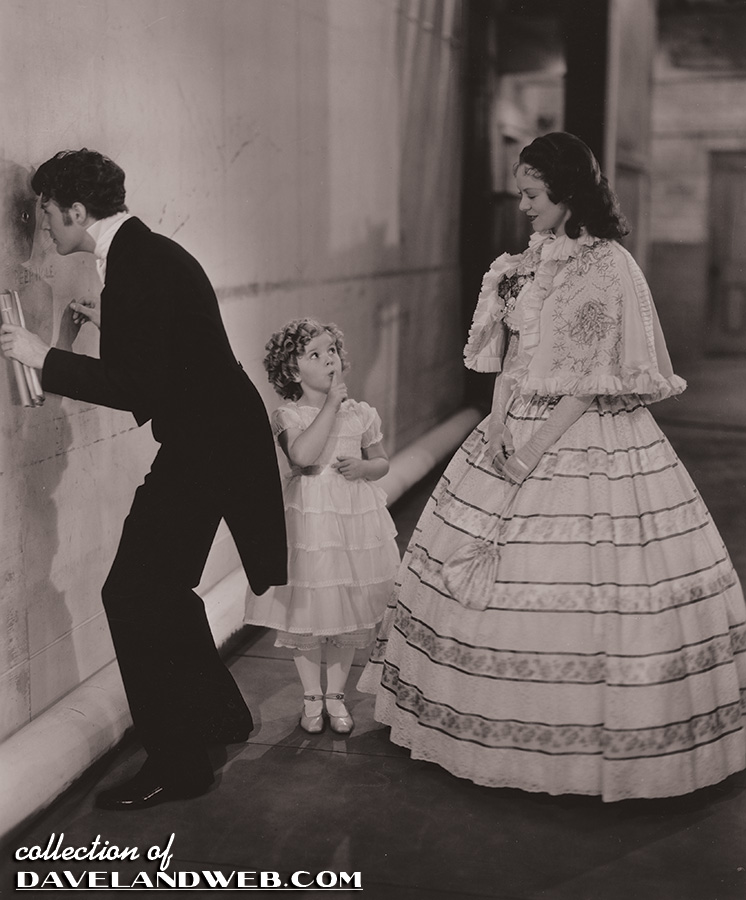
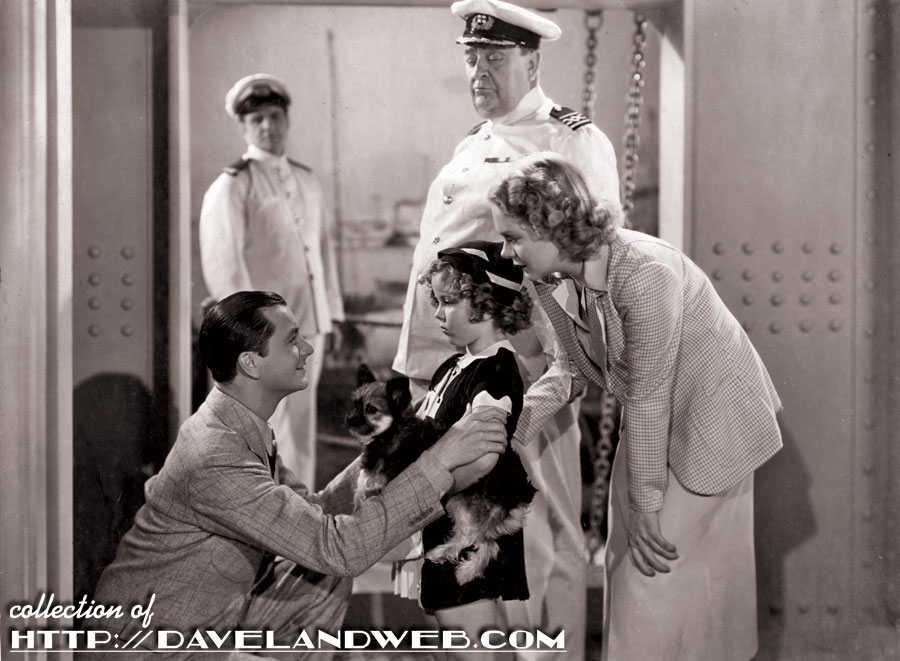
In “Stowaway” (1936), there is the dramatic scene where Ching Ching (Shirley) is about to be sent to an orphanage, but wealthy playboy Tommy Randall (Robert Young) and already engaged Susan (Alice Faye) decide to marry each other so that they can adopt the little girl themselves...and then get a divorce so that Susan can marry her fiancĂ© and Tommy can keep Ching Ching. Phew…there’s a lot going on there.


In this deleted scene, socialite Kay (Astrid Allwyn again!) agrees to marry Tommy so he can adopt Ching Ching, but then finds out from Tommy’s friend The Colonel (Eugene Pallette) that the wedding must happen immediately. Oops…good thing she didn’t cash that check yet…she had to get her own divorce finalized first! Too messy for a Shirley film…


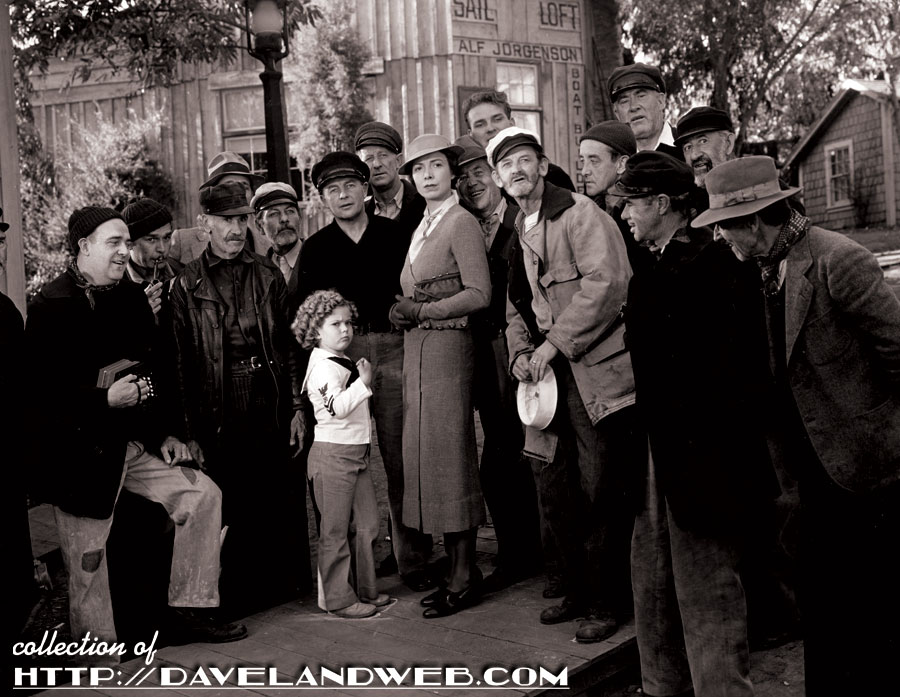
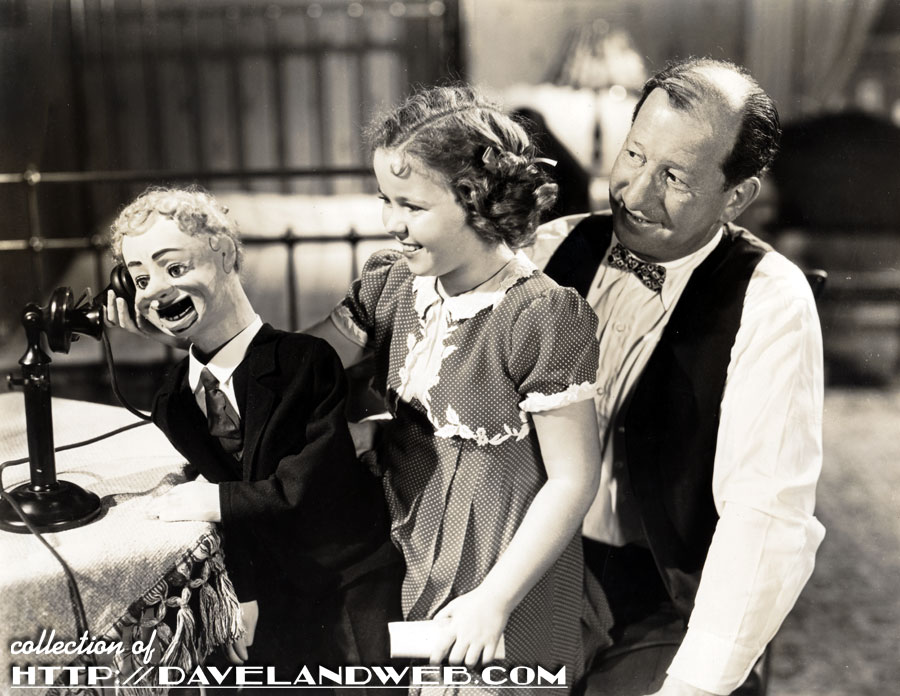
In “Little Miss Broadway” (1938), Betsy’s (Shirley) adopted father, Pop Shea (Edward Ellis) is looking for her to make sure she’s doing her studies. What we don’t get to see was this filmed bit of business showing Betsy with a ventriloquist, which explains why he couldn’t find her at the time. In the finished film, a few lines remain that refer to the deleted scene. Pop’s daughter Barbara (Phyllis Brooks) asks Betsy who helped her with the arithmetic problems, as they are all incorrect. “Mr. Berdini, the magician!” “Six goes into eighteen five times…, seven goes into twenty-one four times!” Barbara replies sarcastically. “He’s a magician alright!”


Later in the film, Betsy escapes the orphanage and tries to get home to help save Pop Shea who is fighting a court battle that could mean the loss of his Hotel. There was originally a sequence between a taxi driver and a policeman over Betsy being unable to pay the fare. CUT! And don’t print that, please!


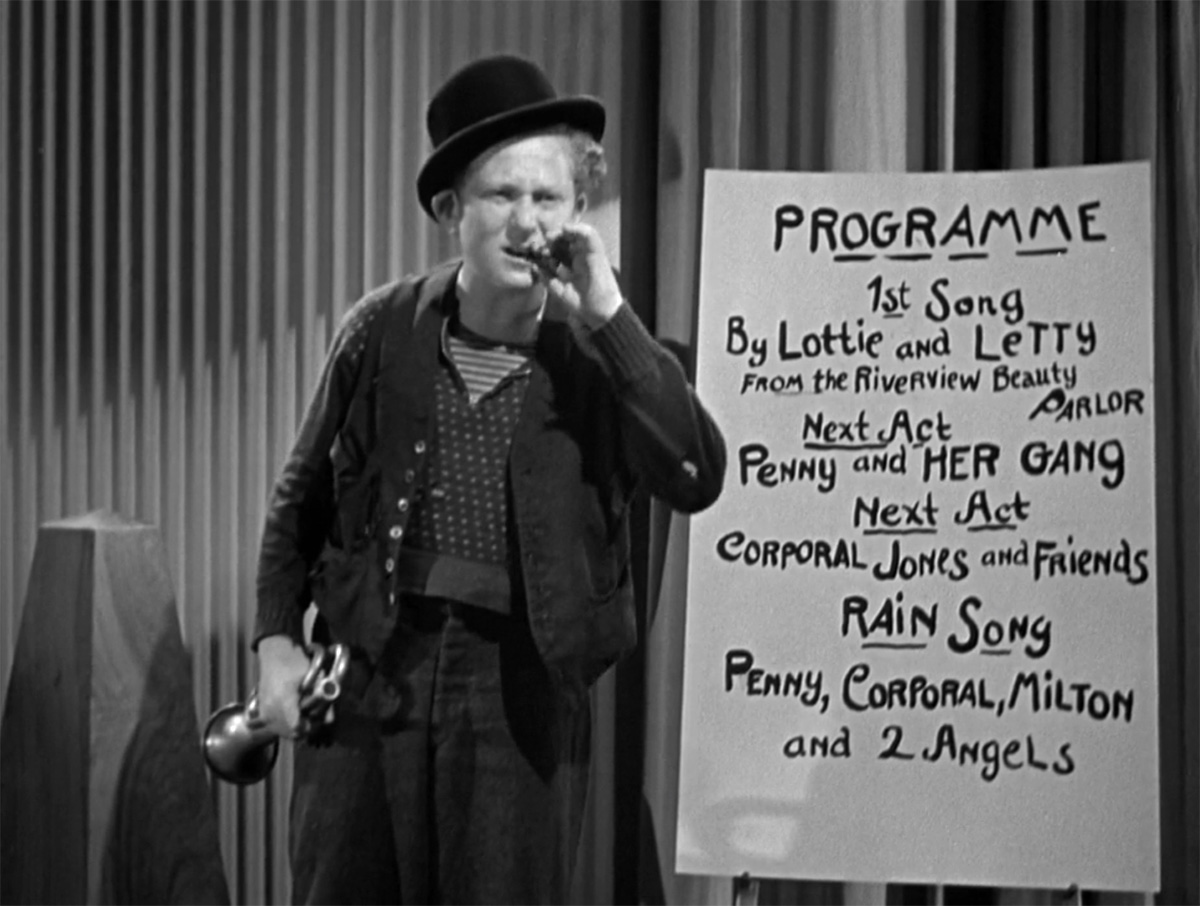
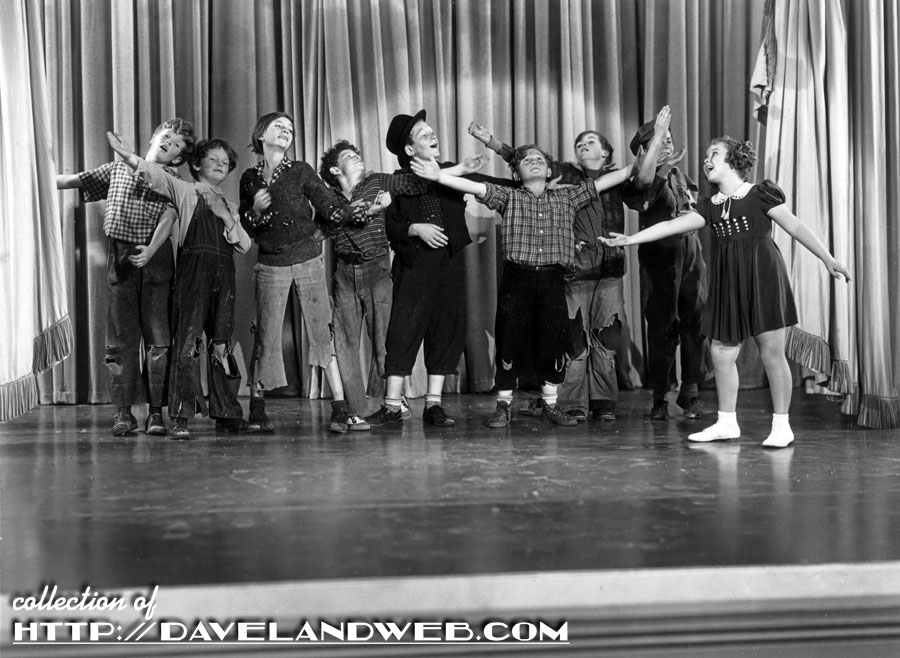
In “Just Around the Corner” (1938), if you look at the “Programme” for the benefit for Uncle Sam, you’ll see a number listed that did not make it into the final film, “Penny and Her Gang.”


The photo below is about all that remains of this deleted musical number.


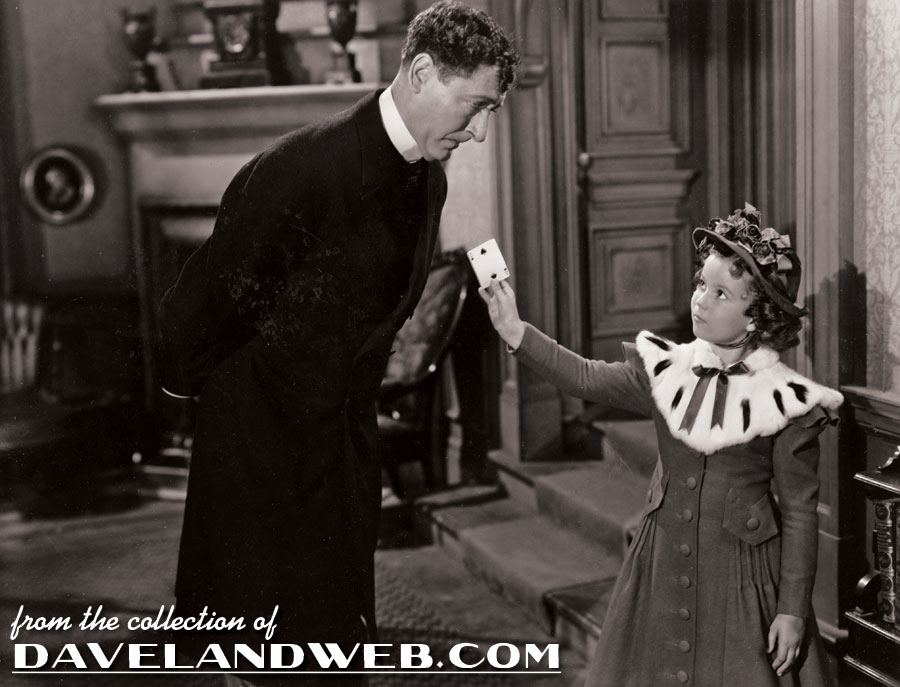
This photograph of Shirley handing Arthur Treacher a playing card in “The Little Princess” (1939) is all that remains from an extended sequence of her arrival at Miss Minchin’s Boarding School. Most likely, it has something to do with Shirley’s character finding out about Treacher’s character’s past as a music hall entertainer.


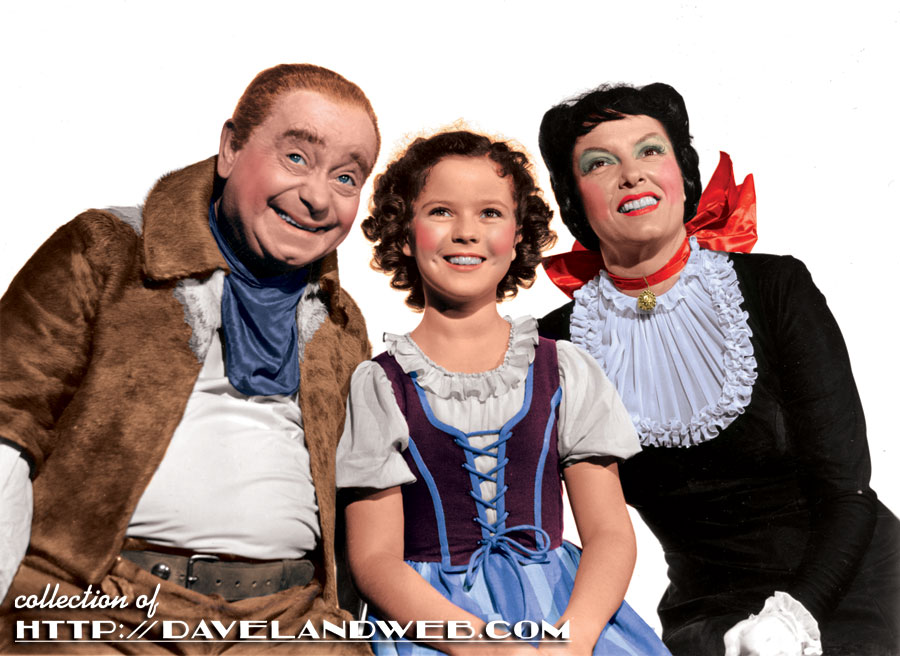
“The Blue Bird” was Shirley’s second movie filmed entirely in Technicolor, other than the opening segment which was in black and white.


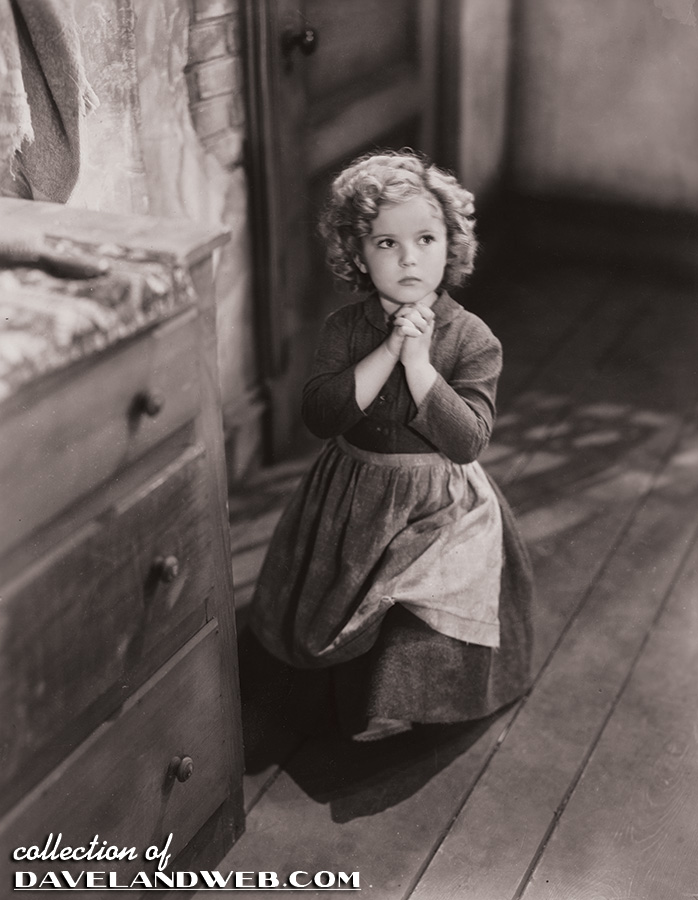
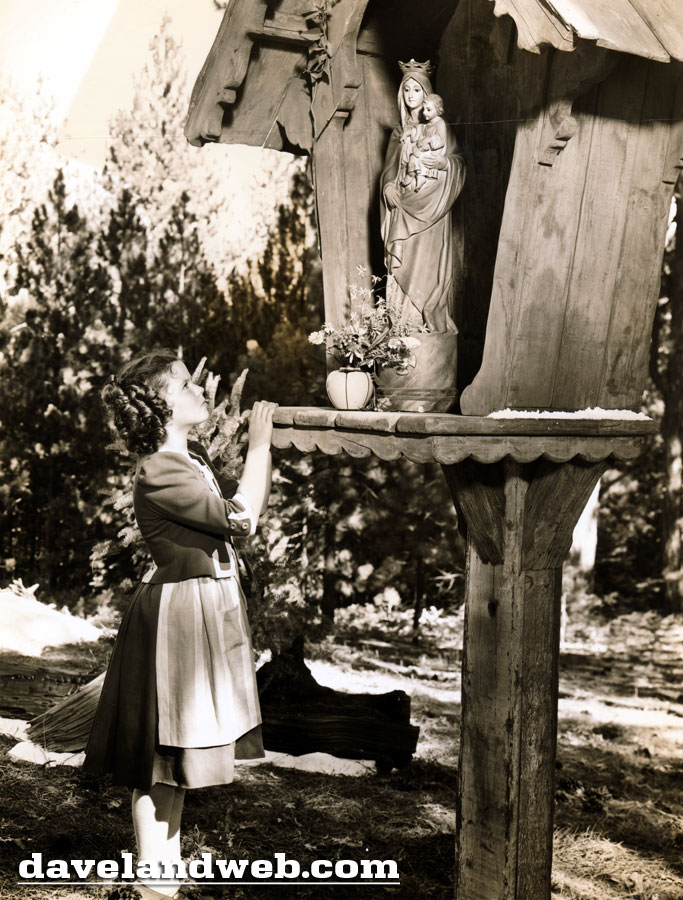
One of the publicity stills from the black and white portion shows Shirley praying to the Virgin Mary.


Was this from a deleted scene or Shirley praying for a hit, which she badly needed at this point in her career!


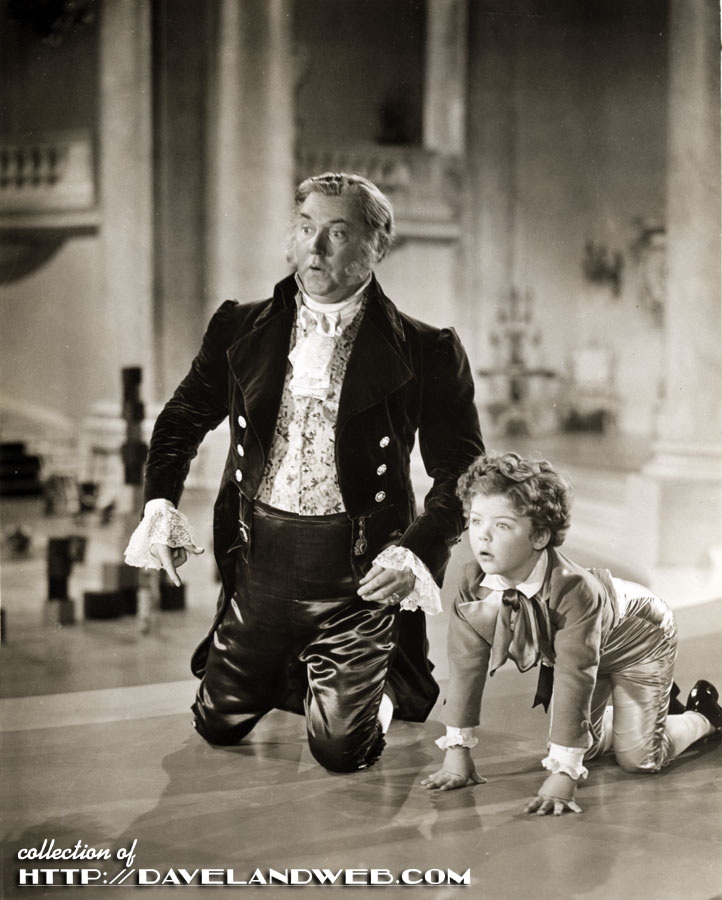
This deleted scene shows Mytyl (Shirley) playing with all of her newly acquired dolls in the Land of Luxury. Astute at the tender age of 11, Shirley rented out dolls from her personal collection to be used in the film.


Another deleted segment from the same scene showed Mr. Luxury (Nigel Bruce) cavorting around with Tyltyl (Johnny Russell). CUT!


I wonder if Shirley had to refund her doll earnings to Zanuck when this scene was removed?!?

See more Shirley Temple photos at my main website.
Tuesday, May 31, 2022

Temple Tuesday: Shirley Hits Her Mark


One of the requirements of being a good actor is “hitting your marks.” If one doesn’t land where they’re supposed to during the shooting of a film, they run the risk of being out of the camera frame. For years, it has been typical for marks being put on the floor so that actors know where to stop and stand. This little trick is effective, but causes the actor to have to look down at the floor when walking, thus giving away the illusion of perfection. I noticed in this still from “Captain January” (1936) that you can see the chalk marks made for Shirley Temple, who is standing next to Sara Haden.


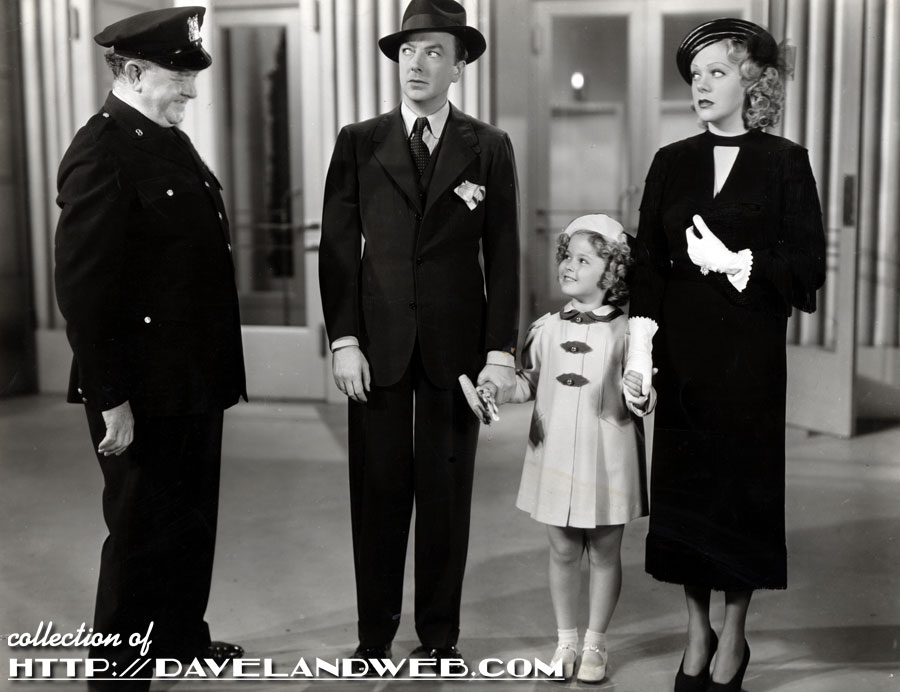
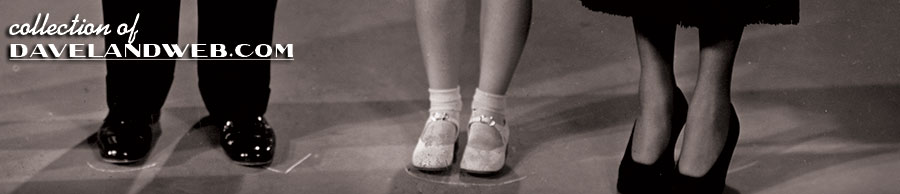
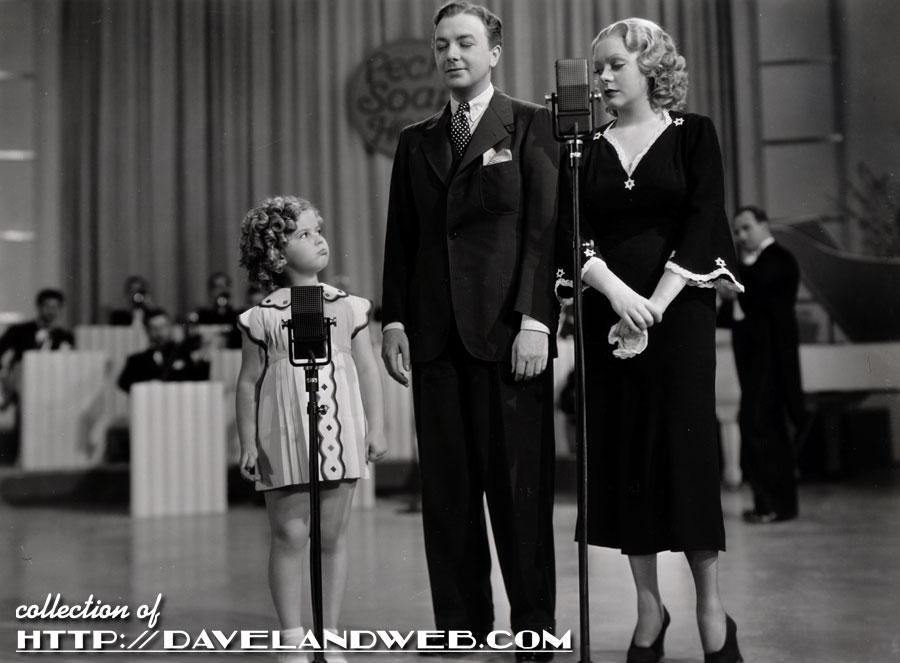
These marks weren’t just for children, though. Even veteran performers like Jack Haley and Alice Faye, shown here in “Poor Little Rich Girl” (1936), required the same assistance.


You can clearly see the marks for Haley AND Shirley; Faye’s are out of frame, but I guarantee that she had them, too.


Many years later, Shirley told talk show host Larry King that she really didn’t need the chalk marks. Instead, she used the same trick that Joan Crawford did; she used the heat of the overhead lights to let her know that she’d hit her mark. “I had to learn to hit my marks without looking at the floor, the little piece of tape.…I could do it by the feeling of heat on my face. If the light hit here and it hit my shoulder and it felt warm, I would know that I was in the right place. If it was cool, I’d say I’m not in the right place.” Even at age 6, Shirley showed a remarkable intelligence regarding her profession. See the entire interview here:


See more Shirley Temple photos at my main website.
Tuesday, September 07, 2021

Temple Tuesday: Once Is Not Enough


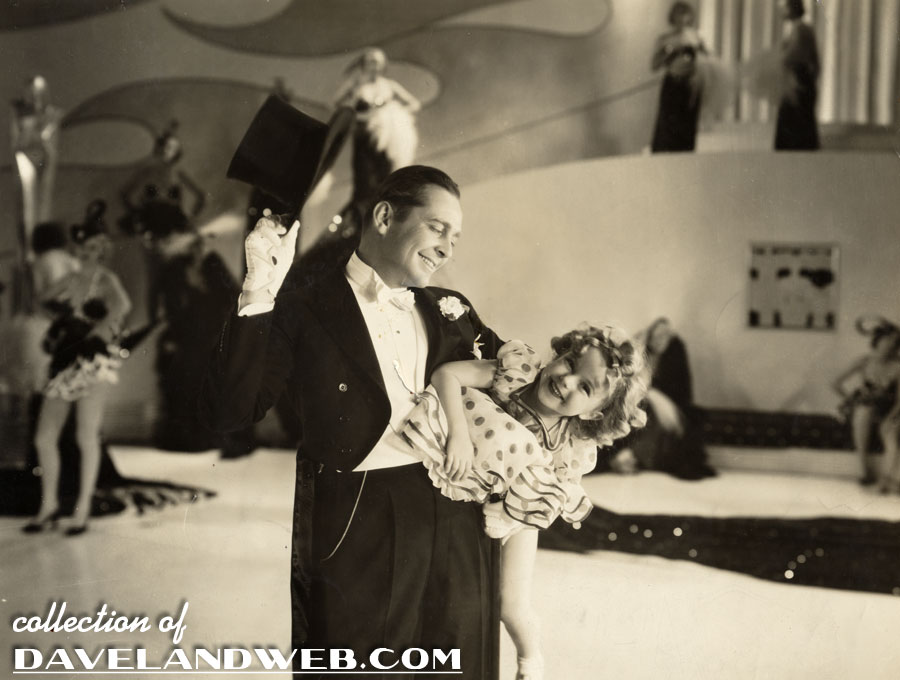
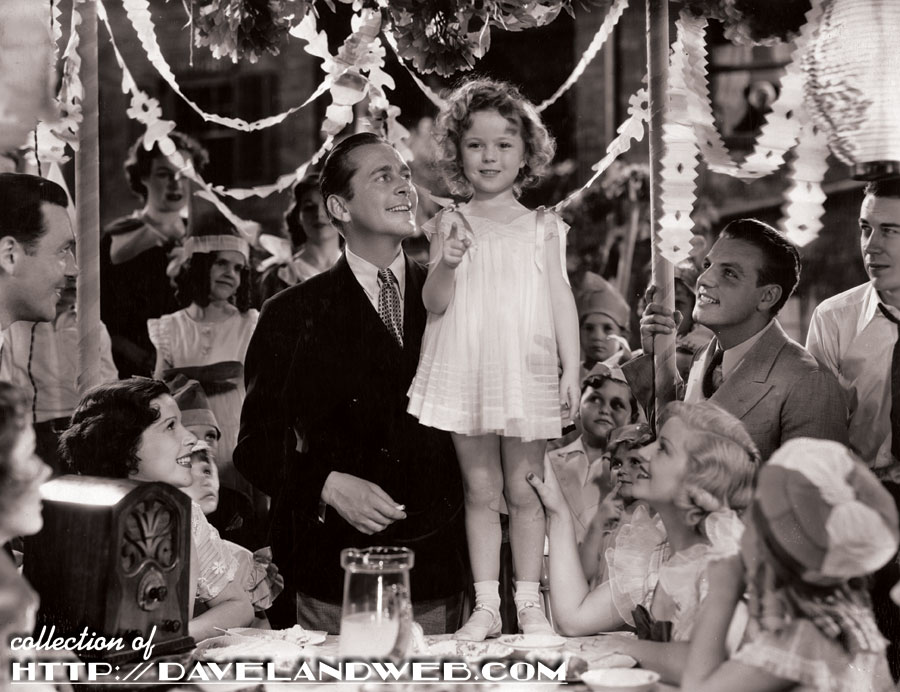
For many of Shirley’s costars, one movie was just not enough! This post just covers the headliners, not the supporting players. That would be a post waaaaaaay too long for how much time I have today to put this together. Let’s begin with James Dunn, who played opposite Shirley in her breakthrough film “Stand Up and Cheer” (1934). The two did so well together that Fox put them together again not just once, but twice! “Baby Take a Bow” (1934):

…and again in “Bright Eyes” (1934):


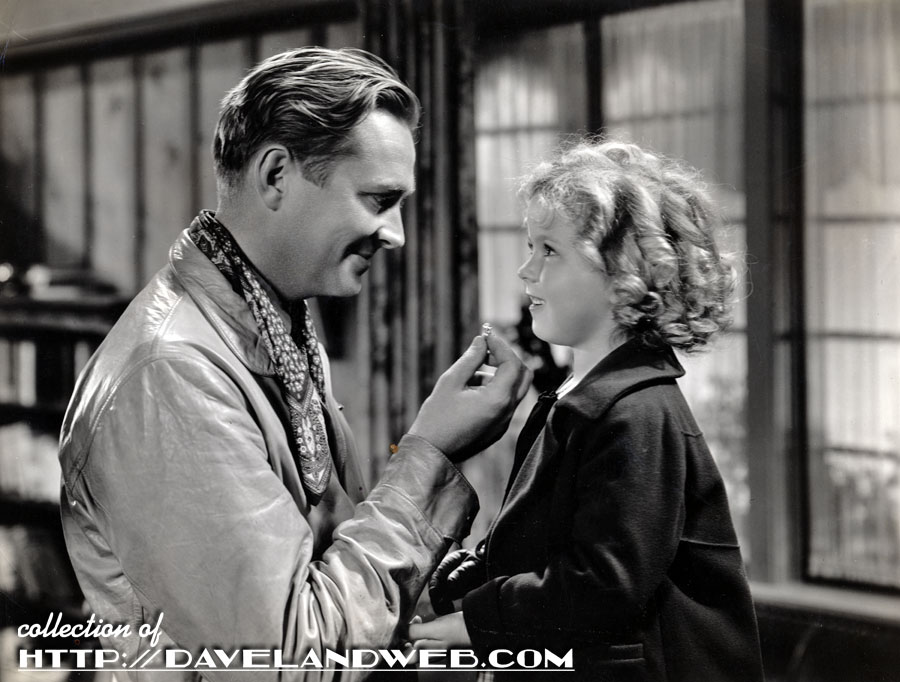
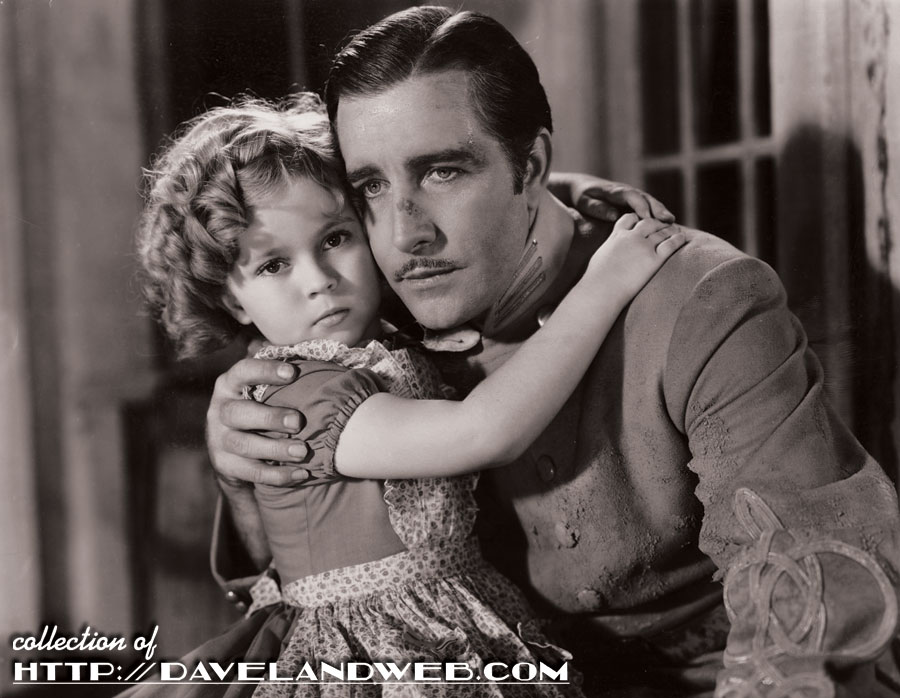
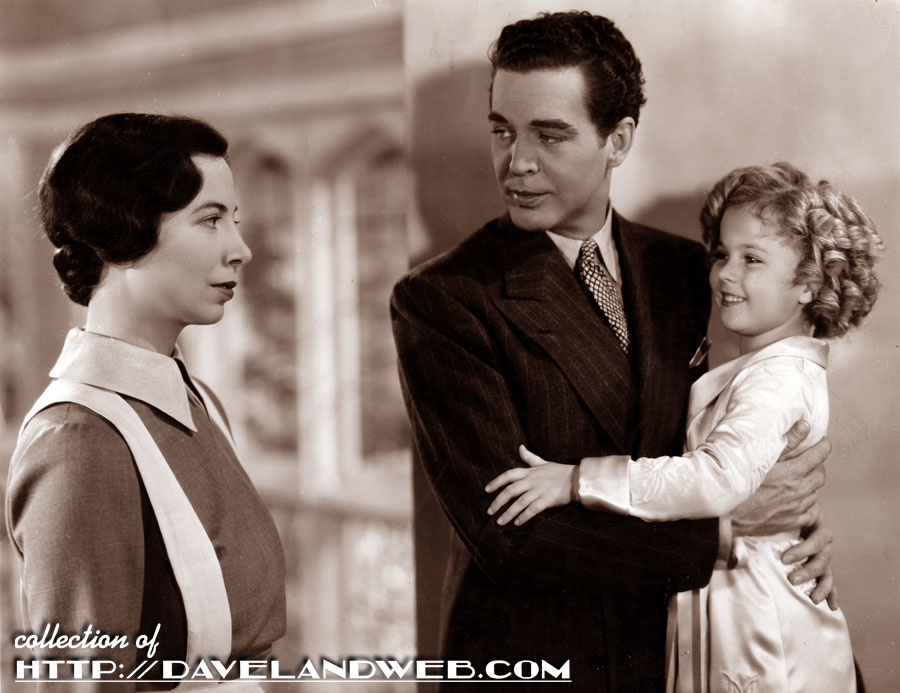
For John Boles, twice was enough, with “Curly Top” (1935):


…and “The Littlest Rebel” (1935):


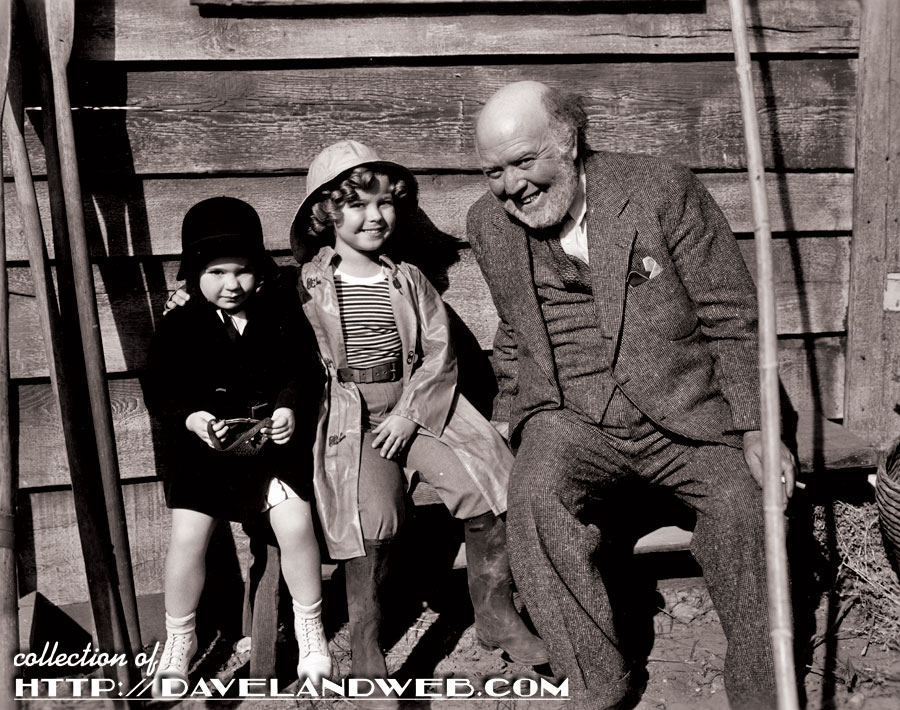
Guy Kibbee was one of the few to span both childhood and teenage films for Shirley, with a whopping three films. “Captain January” (1936); here’s a behind-the-scenes shot with Shirley and Kibbee’s daughter:


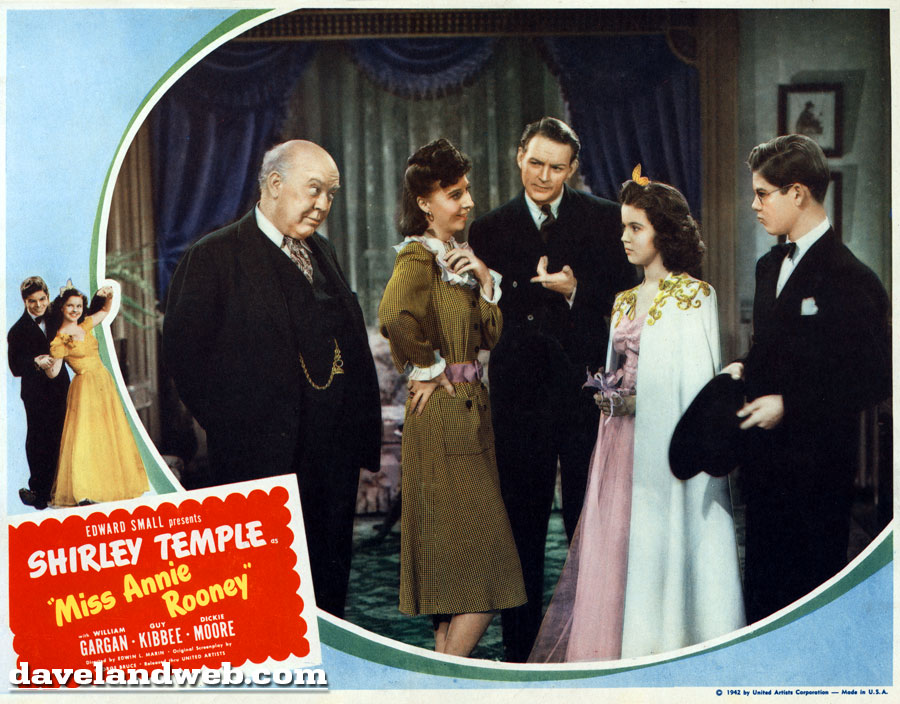
“Miss Annie Rooney” (1942):


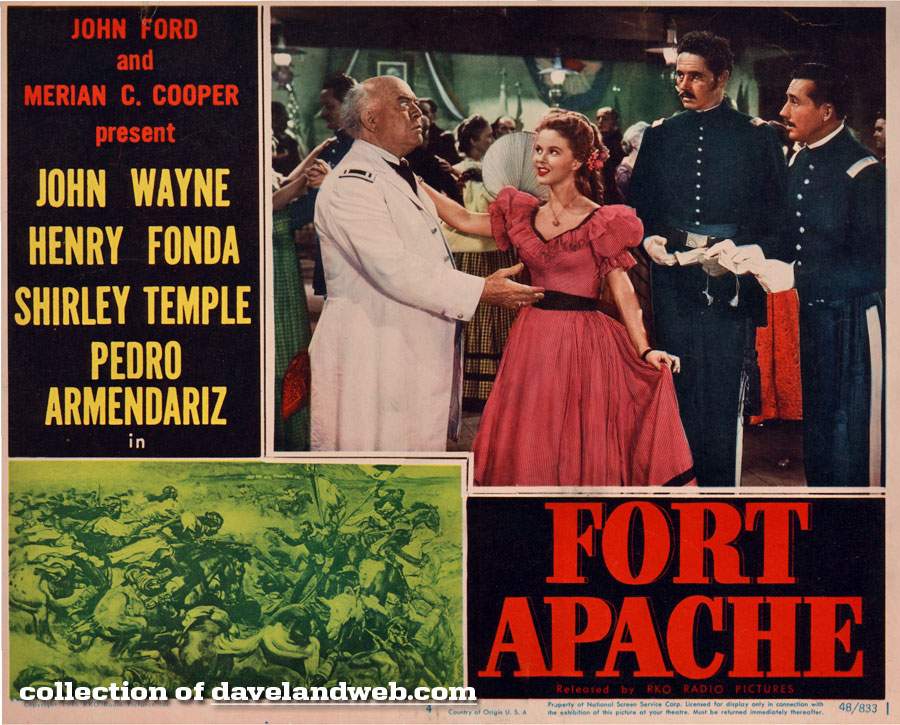
…and “Fort Apache” (1948):


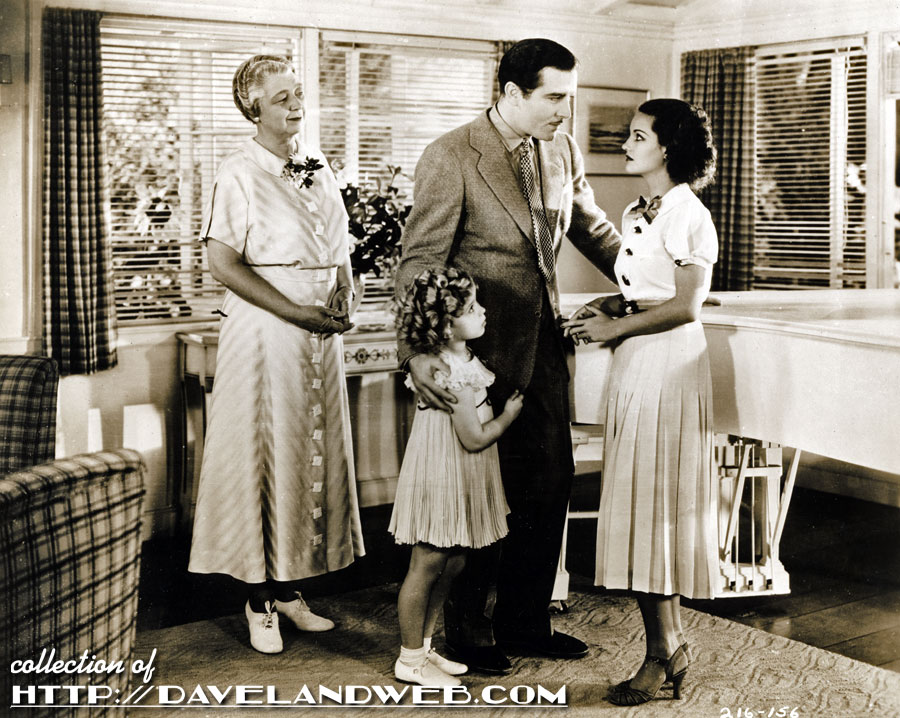
Michael Whalen was apparently satisfied with two; “Poor Little Rich Girl” (1936):


…and “Wee Willie Winkie” (1937):


It wasn’t just the men who were part of the repeat pairing process; songstress Alice Faye was in two of Temple’s hits. “Poor Little Rich Girl” (1936):


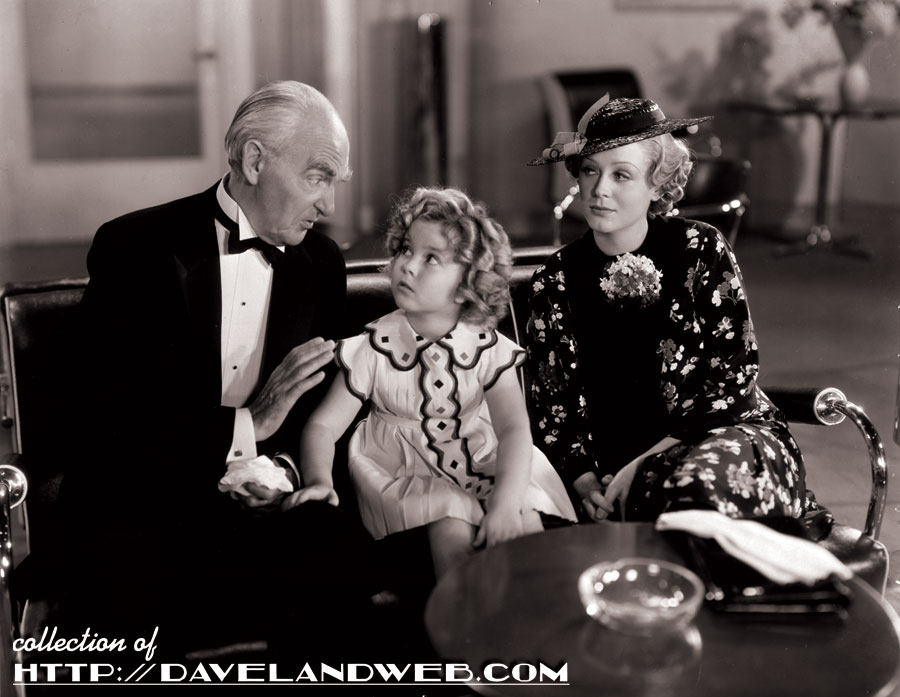
…and the romantic female lead in “Stowaway” (1936), where she came close to stealing the movie away from Shirley:


Gloria Stuart of “Titanic” fame was content with two; she was not happy about being cast in bland roles that supported the curly haired tot until studio chief Darryl Zanuck pointed out that millions would see her, vs. a juicy lead role in a non-Temple film that would most likely be soon forgotten. Here she is in “Poor Little Rich Girl” (1936):


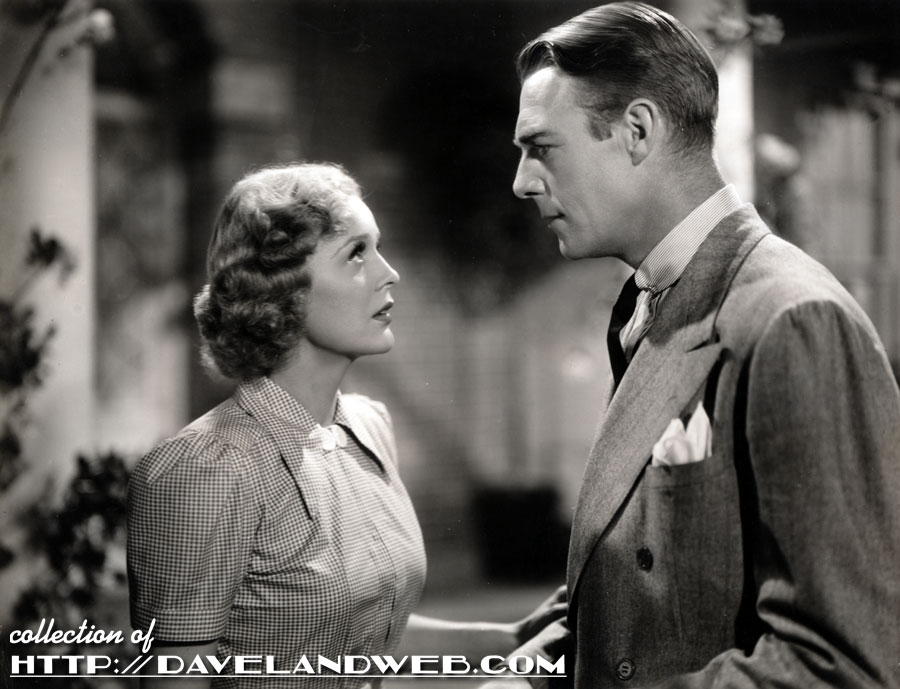
…and “Rebecca of Sunnybrook Farm” (1938), which also starred Randolph Scott:


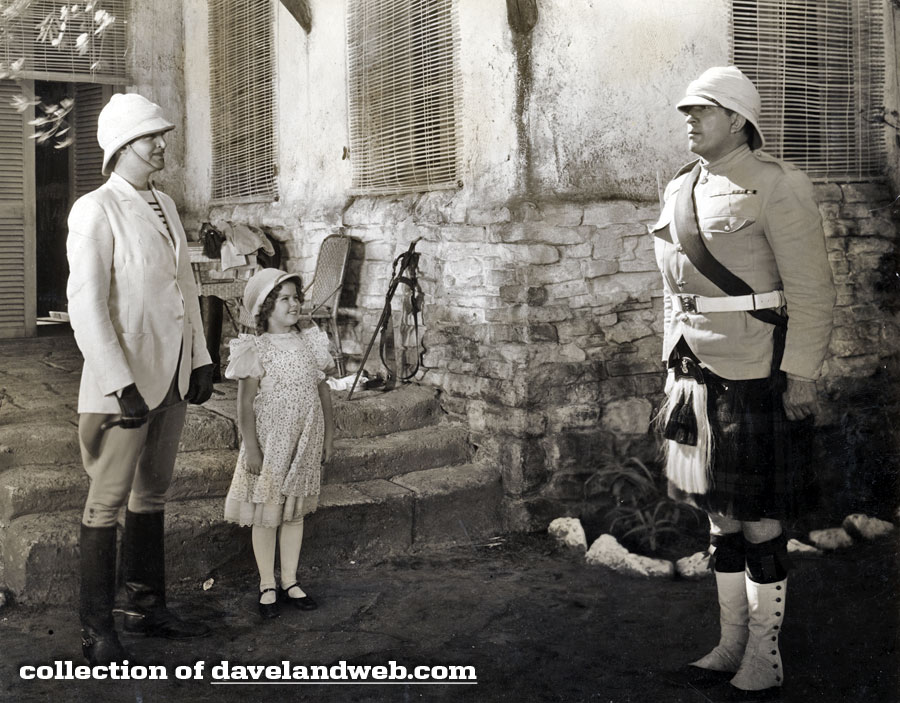
…who played again with Temple in 1939’s “Susannah of the Mounties”:


Last one for today is Phyllis Brooks, who had back-to-back roles with Shirley in “Rebecca of Sunnybrook Farm” (1938):


…and “Little Miss Broadway” (1938):


See more Shirley Temple photos at my main website.