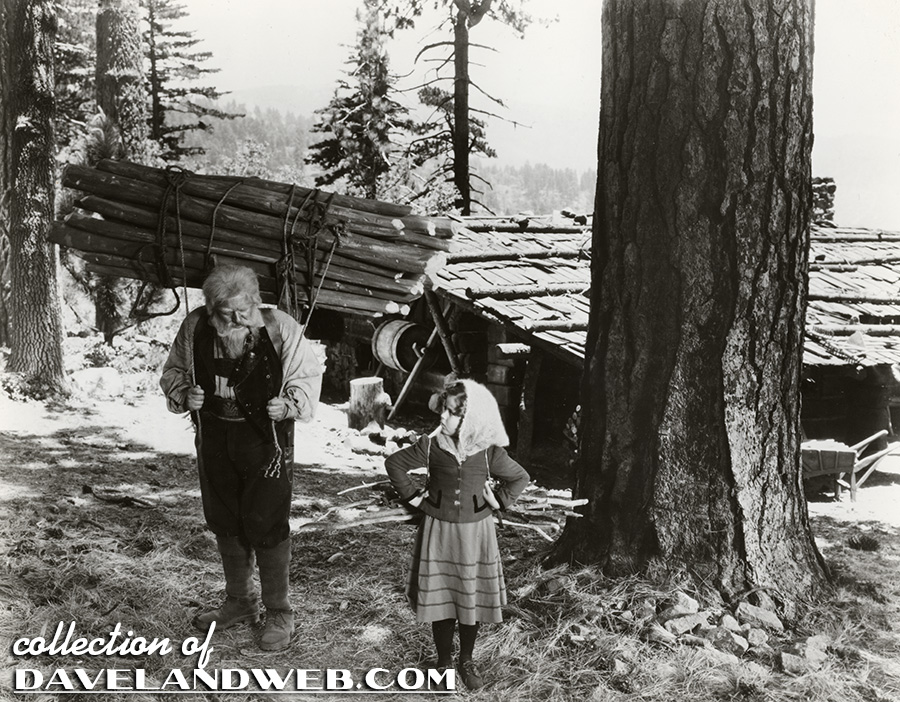
The 1939 Shirley Temple film “Susannah of the Mounties” was set in early 1880s Canada and loosely based on the 1936 Muriel Denison novel. Twelve members of the Blackfeet Indian tribe led by Chief Albert Mad Plume, came from Montana to be in the film. Chief Coward, the only one who spoke English, served as translator. Fox put up a $25,000 bond for their return. The above publicity shot shows their Los Angeles arrival and was accompanied by the below publicity blurb. I’ll just say upfront that many of the accounts from that time are racially insensitive and politically incorrect; I am just sharing the info as it originally appeared.
WILL WHOOP IT UP IN SHIRLEY TEMPLE PICTURE
LOS ANGELES, CALIF., — After giving the city of Seattle, Wash., a thrill by touring the business district, these leading braves of the Blackfeet Indian tribe of Montana descended on Hollywood to start work on their parts in the new 20th Century-Fox picture, “Susannah of the Mounties” starring Shirley Temple. Wearing their traditional colorful costumes, the braves are shown as they arrived by Southern Pacific train today. 2/8/1939.
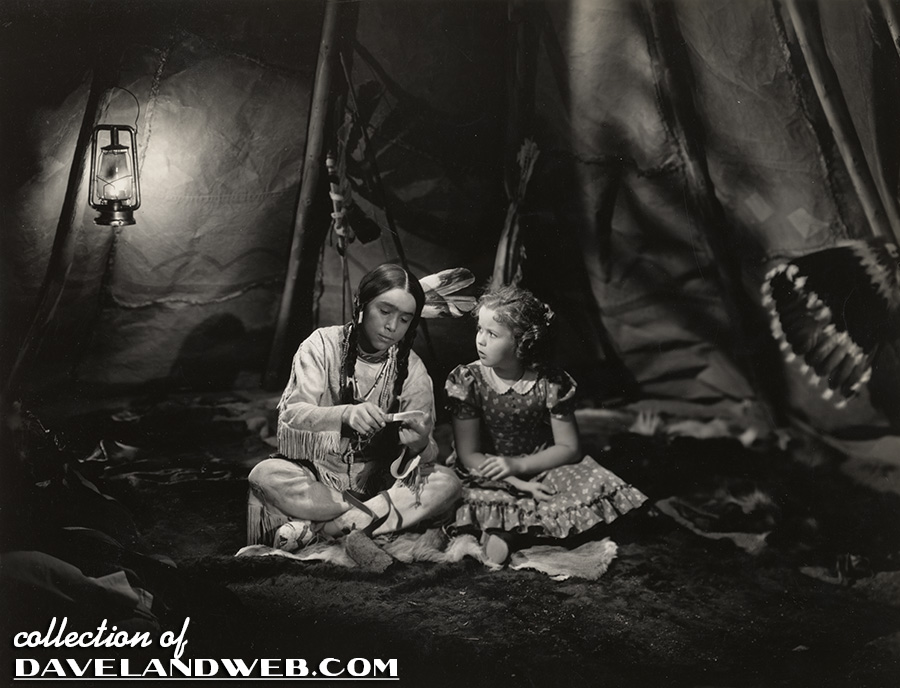
None of the twelve had substantial roles in the film, but were rather seen in the background. The one exception was Martin Good Rider, seen below in Shirley’s bungalow on the Fox lot:
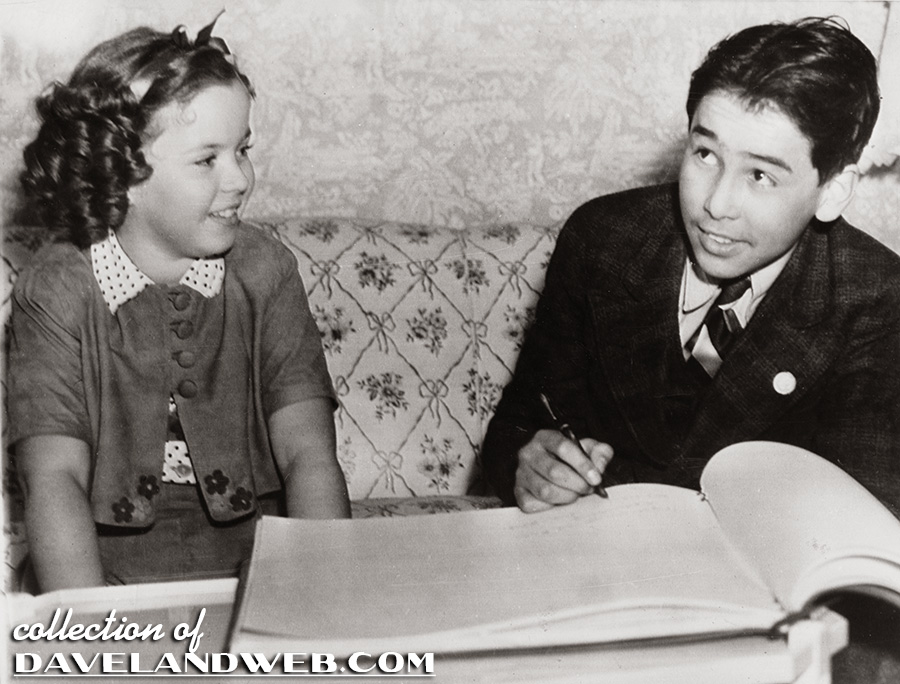
SHIRLEY’S LEADING MAN AN INDIAN
HOLLYWOOD, CALIF.: — Filmland’s First Lady’s First Leading Man is 100 per cent American — A full-blooded Blackfoot Indian. He’s Martin Goodrider, thirteen years of age, who is working with Shirley Temple in “Susannah of the Mounties.” Martin says he doesn’t want to be a movie actor for good. He fully intends, he says, to study “until I’m pretty near 30, so I can be a Jesuit.” 1/26/1939.

The Daily News reported this about Martin on June 30:
On horseback, he is a virtual centaur, hence his name. He swims like a fish, is an expert hockey player, runs like a deer and oddly enough, won his chance at film work by singing an Irish dialect song. Returning from the Eucharistic congress in New Orleans recently, where he represented his school along with several other Indian boys, his picture appeared in a New York newspaper. During his short stay in new York he was visited by a 20th Century-Fox talent scout, who had seen his picture and thought the boy looked like screen material. The boy sang a few Irish songs and several Indian chants for the talent executive and was promptly signed for the role of the Indian lad.
Martin also appeared in Feg Murray’s Seein’ Stars comic feature, which just happened to be on Shirley’s birthday, April 23, 1939:

This December 28, 1938 production schedule from the major studios lists “Susannah” for Fox (still without a director), as well as “Gone with the Wind” at Selznick. Even more interesting is the listing for “Titanic,” to be directed by Alfred Hitchcock. That one never got out of the water. Badumpbump.

Shirley’s previous blockbuster hit, “The Little Princess” (1939), was filmed in Technicolor; “Susannah” was strictly black and white. However, there were a number of color photos taken during filming that were used for publicity and the movie magazines. Of his red uniform, actor Randolph Scott had this to say: “I was cast as a member of the Northwest Mounted, but my uniform looked more like a cross between a beergarden bandmaster’s and a bellhop’s!…Now, my conception of what a Mountie looked like was a little bit different. But Bruce Carruthers, technical expert on the production and ex-Mountie, came to the rescue, and explained that the members of the famous troop dressed in just this fashion back in 1894, the period of the present film. Carruthers pointed out that the bright scarlet uniforms were meant to impress the redskins, who greatly outnumbered the Mounties. However well they may have succeeded in this intention, they had a decided disadvantage, too, for they must have made the boys dead targets for the Indians.”
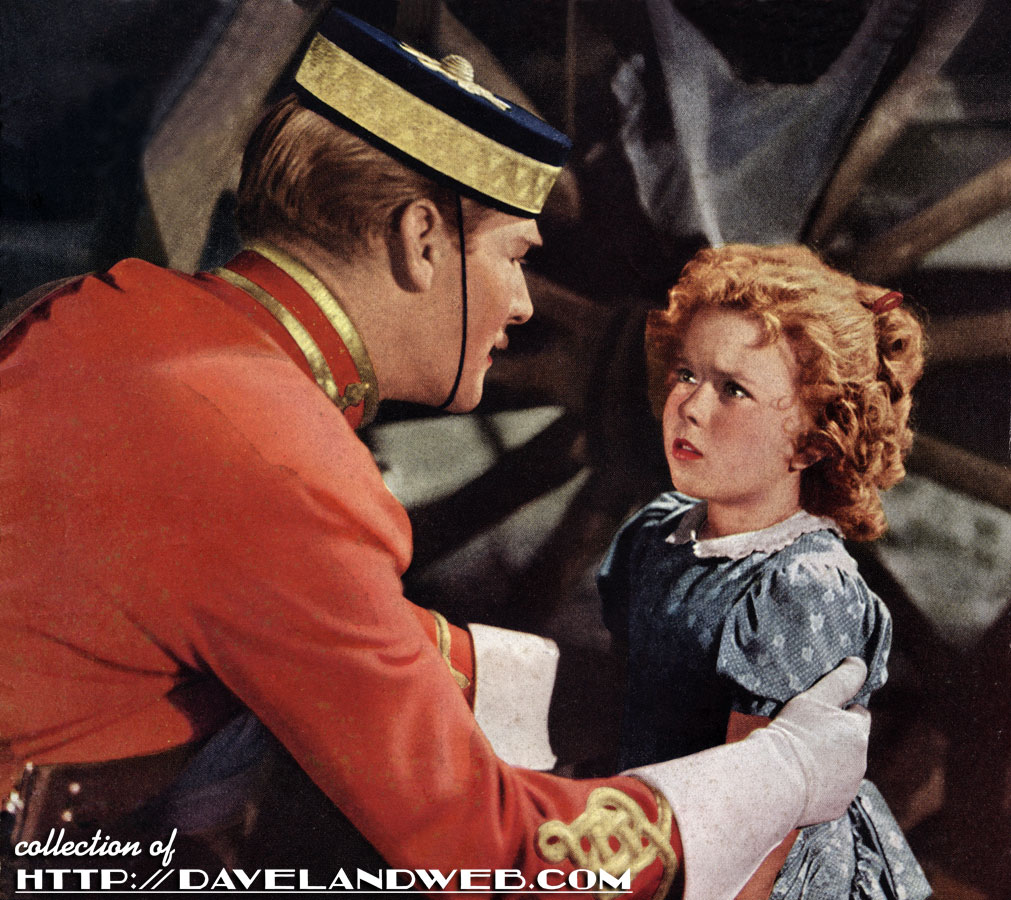
The June 1939 cover of Screen Guide:

For artistic purposes, Shirley’s photo was flipped on the cover. Below is my corrected version. Melissa (aka The Colonel) can now breathe a sigh of relief.
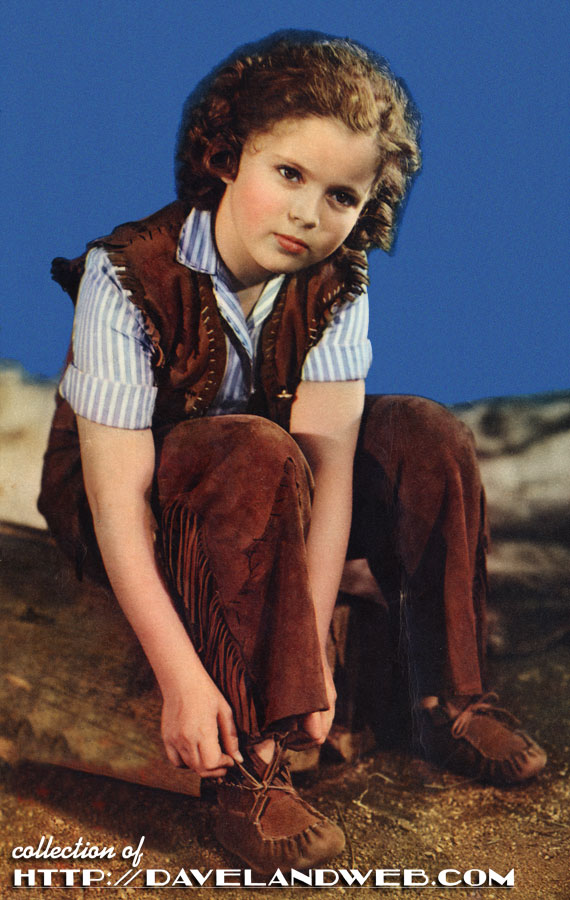
Inside Screen Guide was this feature:

Photoplay included a bit about Shirley and “Susannah” in their May 1939 issue (back to black and white):

From the text of Photoplay:
…we find Shirley Tempe. This time she’s “Susannah of the Mounties,” a waif, winning the hearts of bluff Randy Scott and J. Farrell MacDonald of the Canadian Mounted and getting all mixed up in Indian fights. It’s the Indian angle that has Shirley intrigued. One of the reasons is that the studio sent up to a Blackfoot Indian tribe in Glacier National Park and spirited thirteen-year-old Martin Goodrider down to teach her how to smoke a pipe and play his squaw. Shirley is a little old-fashioned dream in gingham with black cotton stockings, high-button shoes and an enormous feather sticking out of her curls as she trots through a scene with MacDonald. In the scene, MacDonald hands her a little red leather jacket he is supposed to have made for her and Shirley takes it and runs off. They do the scene twice. Each time Shirley frowns. “Excuse me,” she says at last to Director Walter Lang. “I don’t think this is a polite scene.” “Why not, Shirley?” inquires Lang. “Well,” says Shirley, “if anybody gives you anything, you say ‘Thank you.’ But Mr. MacDonald gives me a nice leather coat and I don’t say anything. It’s not polite.” And a little child is getting them told as we leave. The script girl is writing new dialogue in the script—dialogue that Darryl Zanuck will probably never have a chance to okay, and by a scenarist he probably doesn’t know he has on the payroll—Shirley Temple. The new line is, “Thank you, very much.”
Further in the issue, Photoplay reports more about Good Rider and Shirley:
Shirley Temple, for the first time in her career, has a leading man and a right handsome lad he is, too. But blasé? My word. “How do you like playing with Shirley in pictures?” we asked him on a recent visit to the “Susannah of the Mounties” set. He turned and eyed us calmly. “Swell,” he shrugged and went back to his book. Martin Goodrider, thirteen years old, is a Blackfoot Indian from Montana. Swarthy, dark-eyed, black-haired, Martin radiates intelligence, a quiet sense of balance and a delicious sense of humor. For instance, after a scene one day, Martin waved a hand back and forth before Shirley’s face. “What are you doing?” Shirley asked. “I’m putting the Indian sign on you,” Martin said. “Don’t do that,” Shirley cried. “Take it off.” Martin threw back his head and laughed. “Don’t you know that’s only ignorant superstition. There is no such thing as an Indian sign. But, look, you can have a lot of fun if you want to. I’ll show you how to do it.” Shirley now goes about solemnly putting the Indian sign on the cast. Martin was spotted by a casting scout while on a visit to New York with Father Cullens, a teacher in the Jesuit mission school which he attends. He was asked about his ability. “Well,” he said unenthusiastically, “I can sing ‘Paddy O’Reilly’,” and, with an Irish brogue an inch thick, the full-blooded Indian lad sang the song through. Needless to say, he won the role in Shirley’s film. Quick as a flash, he catches the meaning of every line and gesture before a camera, feeding Shirley her lines like a trouper. He’s never appeared before a camera before or ever experienced the slightest desire to act. Right now he wants only one thing—to finish the picture and go home to his father’s three thousand acre ranch. After each scene he’ll wave a hand to Shirley with a typical boyish salute and go off to his lessons, while Shirley goes off to hers. Patiently he’ll stand by while they pin long Indian braids to his short cropped hair. “Well, Martin,” an eager publicist said one day, “we’ll have to get some stories written about you.” “No, please, no,”he said. “They may read those things about me back home and laugh. Please, no.” “But” shrugged the writers, “we think publicity is important.” The lad shook his head and said, quietly, “Well, Indians know better.” And that settled that.
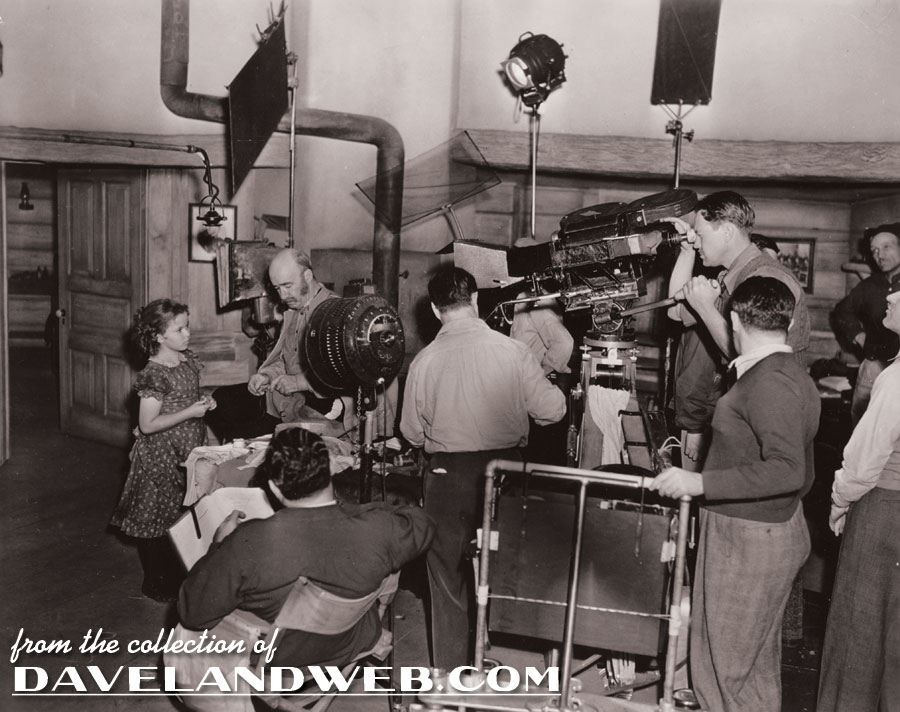
The behind the scenes image below was accompanied by this caption:
FRONTIER SEWING LESSON – J Farrell MacDonald in the role of a hardboiled Mountie in 20th Century-Fox’ “Susannah of the Mounties” makes a brave effort to give Shirley Temple a sewing lesson. It’s only a rehearsal for the camera and Director Walter Lang (seated extreme left), but the number one star evidently has her doubts concerning the veteran actor’s prowess with a needle. Shirley received a sewing basket for Christmas and since had been taking her sewing seriously.
Possibly the sewing basket referred to in the caption is the same one that was auctioned off after Shirley passed in 2014. From the auction listing:
Shirley Temple's Sewing Basket by Lenci, Late 1930s: 11" h. The red-painted woven basket with handle has a colorful red/burgundy/cream checkered drawstring bag that is decorated with a bevy of colorful felt flowers of all varieties. There is a felt decorative strap with painted wooden mushroom cap. The basket was owned and used by Shirley Temple, a favorite accompaniment to her beloved Lenci dolls. Generally excellent, light spotting on one side of bag. Circa 1938. Sold for $600.

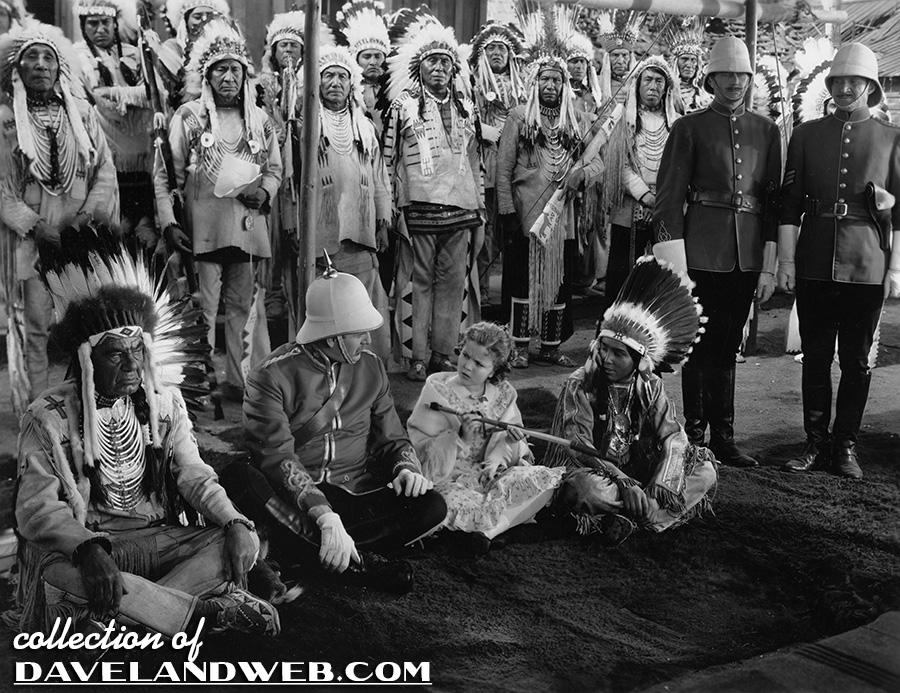
The image below shows a scene from the film featuring the members of the Blackfeet tribe. For the main speaking parts, non-Indian actors were used. For the role of Chief Big Eagle, Russian immigrant Maurice Moscovich was chosen. For the role of the traitorous Wolf Pelt, Victor Jory was selected. He was born in Canada to American parents.
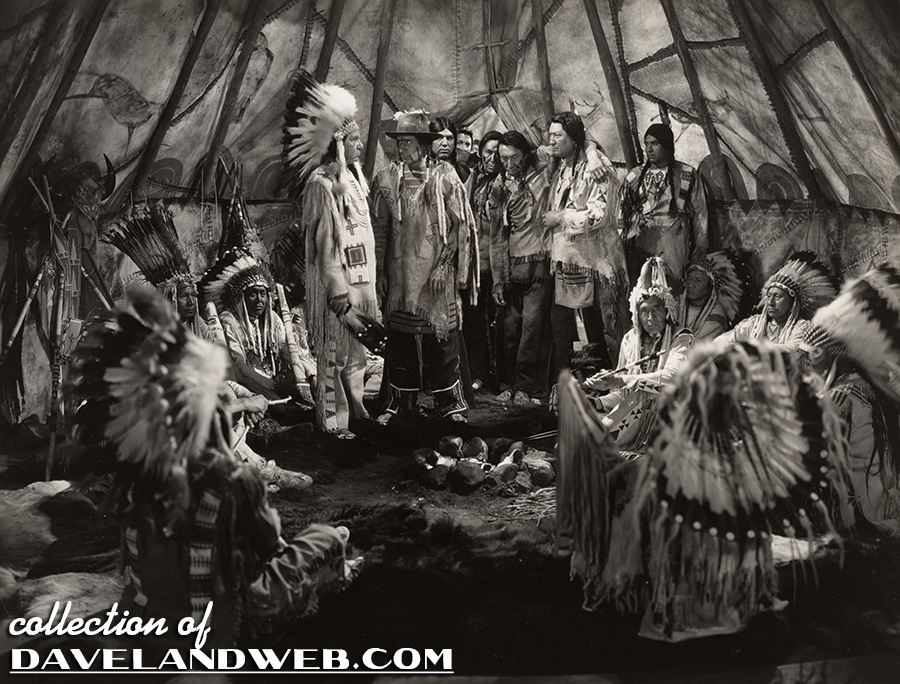
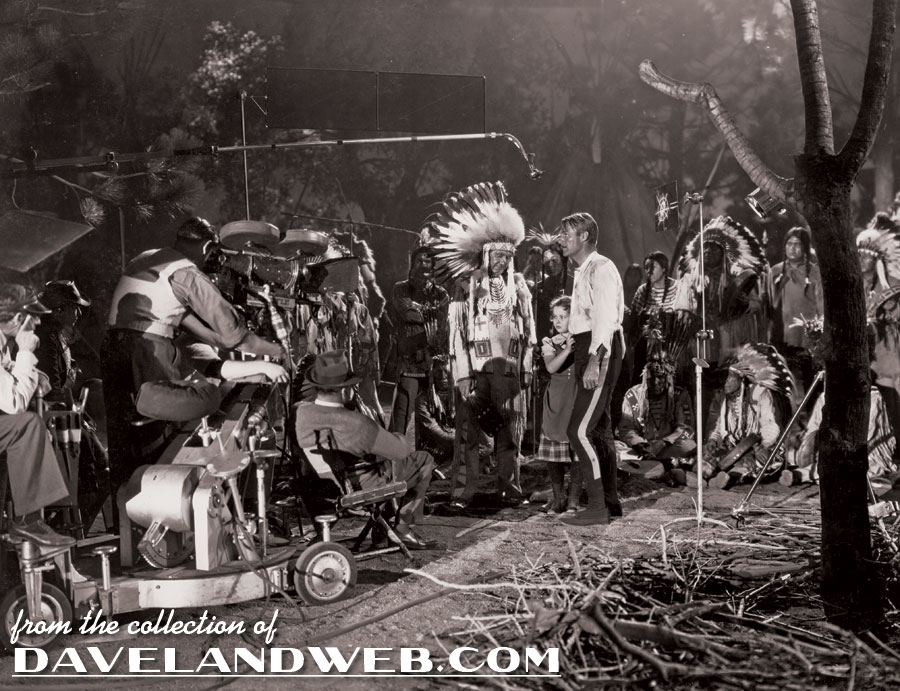
VILLAGE ON STAGE — An entire Blackfeet Indian village was constructed on the Will Rogers Memorial Stage at 20th Century-Fox for one of the important scenes of “Susannah of the Mounties,” Shirley Temple’s latest film.
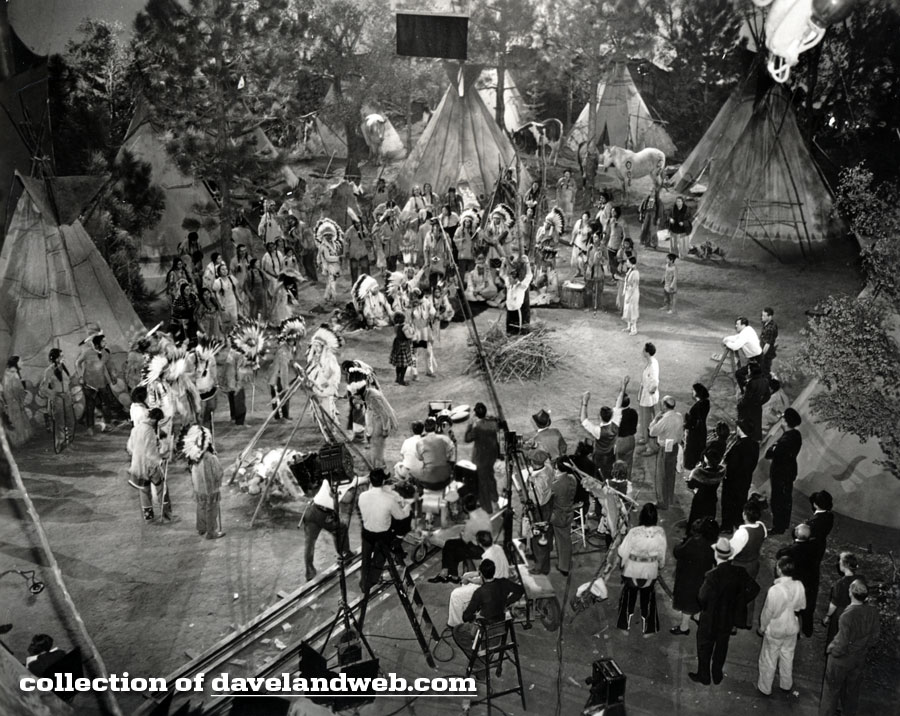
Tied to the stage (center) is Randolph Scott, while (l-center) Shirley argues with Big Beaver, one of the twelve Blackfeet braves brought from Montana for the picture. Just right of the camera is Shirley’s cameraman, Artie Miller, ASC, and on the other side of the microphone boom is director William A. Seiter. Sitting directly behind him is Shirley’s mother, Mrs. George Temple. The little girl directly behind her is Shirley’s standin and best friend, Mary Lou Isleib.

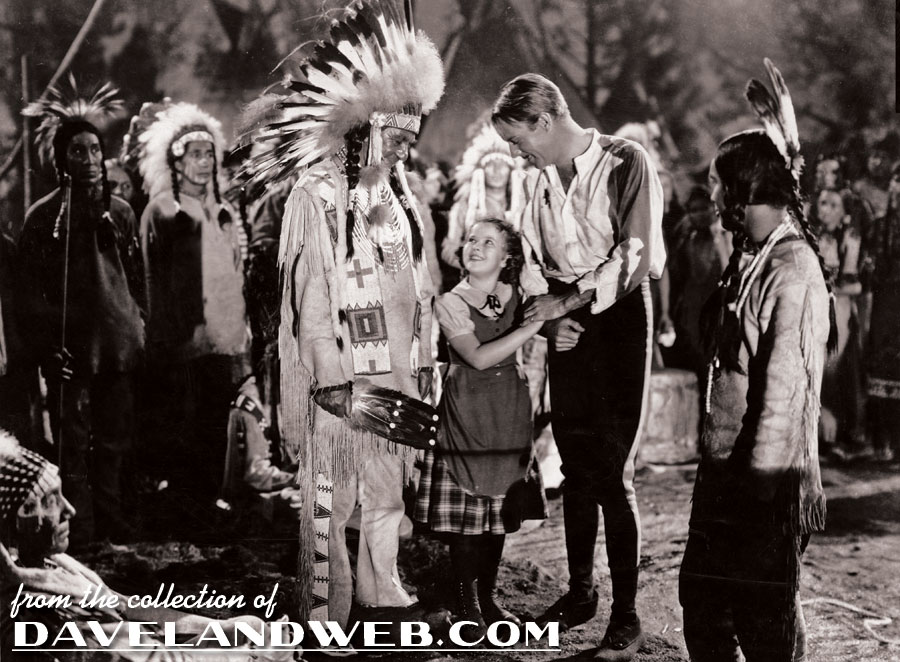
Another behind the scenes still, showing the big reveal of who the true villain in the movie was:
Naturally the reveal is all thanks to Shirley, assisted by Good Rider’s character, Little Chief.
Newspaper accounts of the Blackfeet were extremely rude, such as this tidbit from the LA Examiner on February 13, 1939 which was probably viewed as humorous at the time:
When [Russian-American director/actor] Gregory Ratoff walked into the Fox Studio cafe and spotted the twelve Blackfeet Indians who are working with Shirley Temple in “Susannah of the Mounties,” he told [Russian-American composer] Sam Pokrass: “If I wasn’t so hungry I’d refuse to eat in the same room with all those foreigners.”
Ed Sullivan’s column from the LA Evening Citizen News on February 13 shows the insensitivity and segregation experienced by the Blackfeet:
Blackfeet Indians are working in the Shirley Temple picture, a group of old-timers who look like the heads on the buffalo nickels. Randy Scott says that the appetites of the reservation tribesmen are prodigious. On the reservation, they get only two meals a day. At 20th Century-Fox, they have been getting three meals a day and wading in with both hands. For breakfast yesterday, three of them ordered baked apples, two plates of cereal apiece, and individual sirloin steaks with two poached eggs on each steak. They polished this off with eight cups of coffee apiece. Their appetites demoralized the regular commissary so they were assigned to a smaller lunchroom. They protested bitterly, but finally agreed when it was pointed out that they could get more food there.
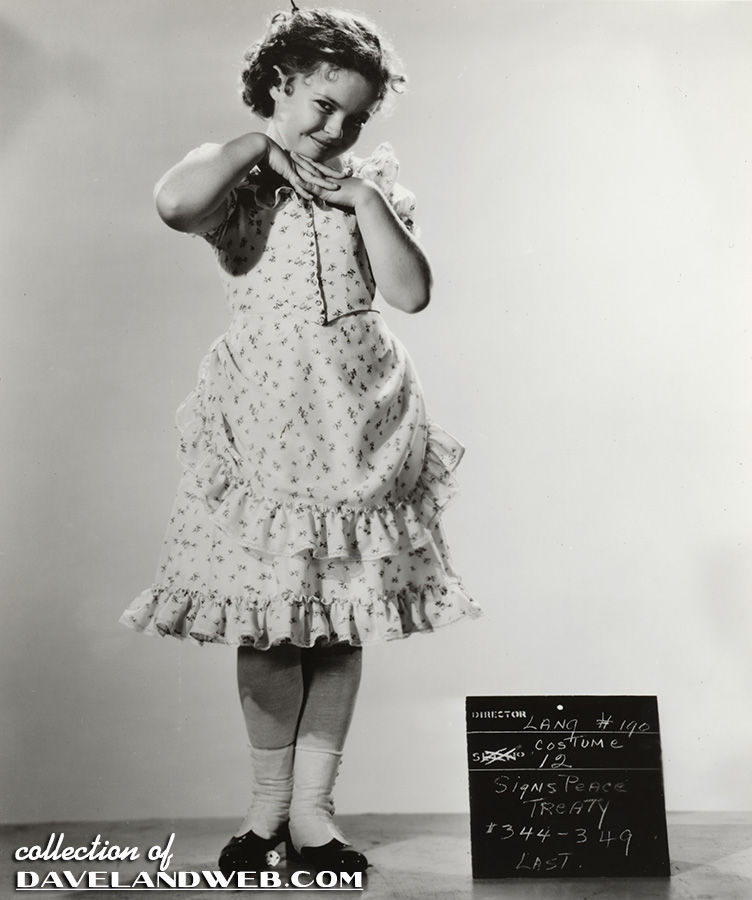
Shirley appears very coy in this wardrobe test, wearing her outfit from the final scene:
A behind the scenes image taken just before the filming of the final sequence, with Shirley wearing the costume from the wardrobe test above:
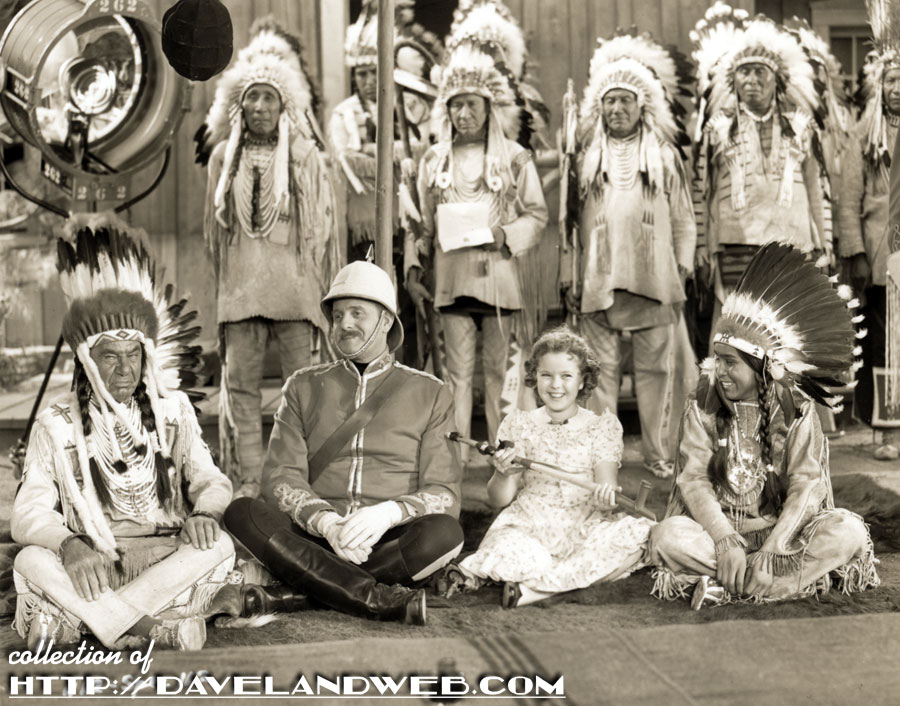
How the scene appeared in the final film. And yes, Shirley smokes the pipe.
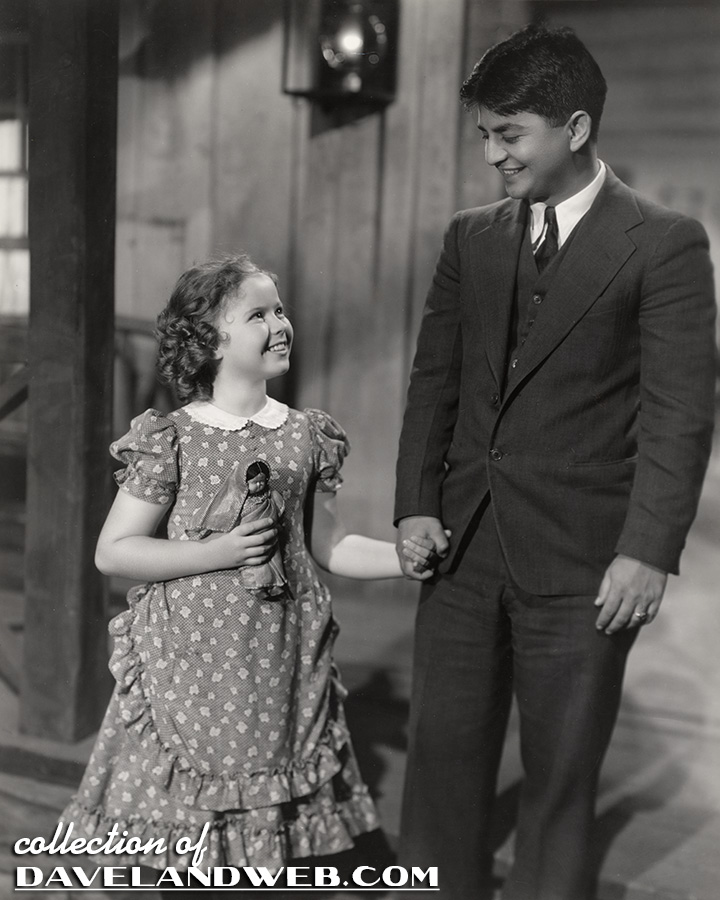
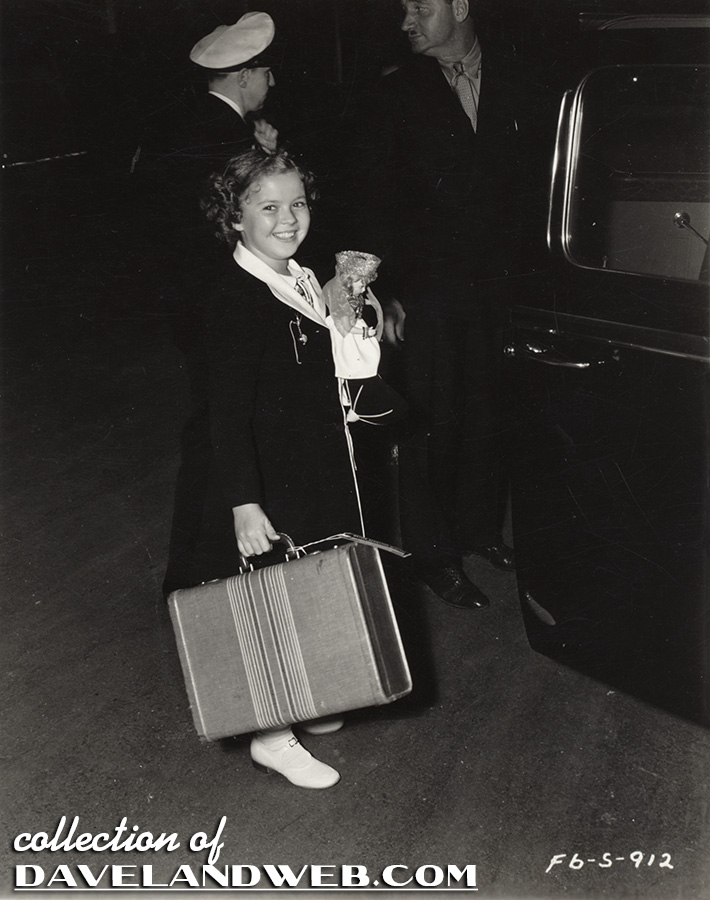
A guest to the set appears to have just given Shirley the doll in her hands, circa February 1939:
Here, NBC sports reporter, Clem McCarthy, pins a badge on Shirley as deputy sheriff of Jackson County, Kansas, where his pal, Jim Williams, was sheriff, March 1939. Shirley first saw McCarthy’s own badge the previous year and made him promise to get her one. This event took place outside her portable Fox trailer.

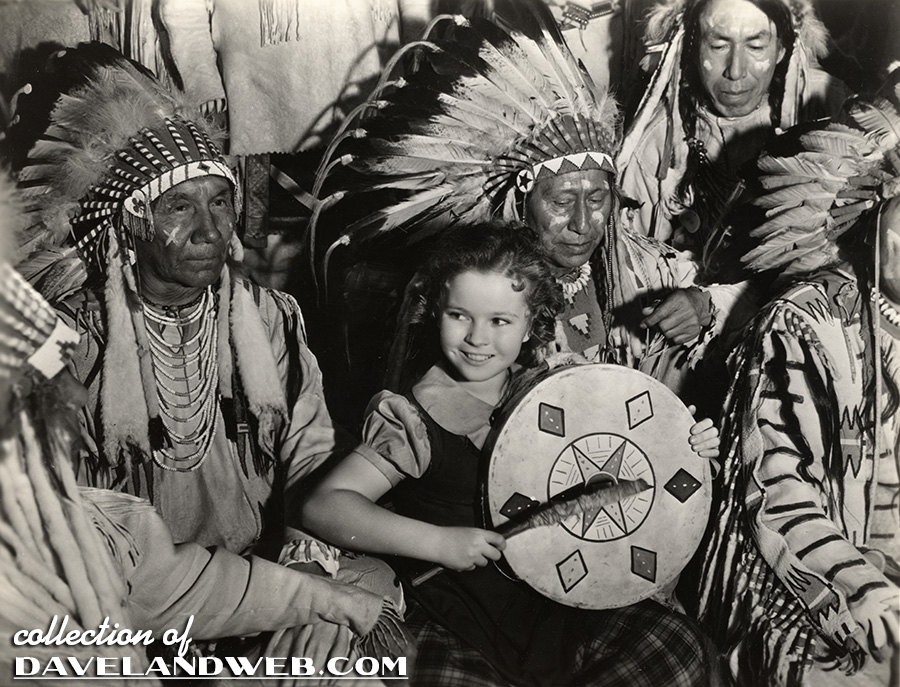
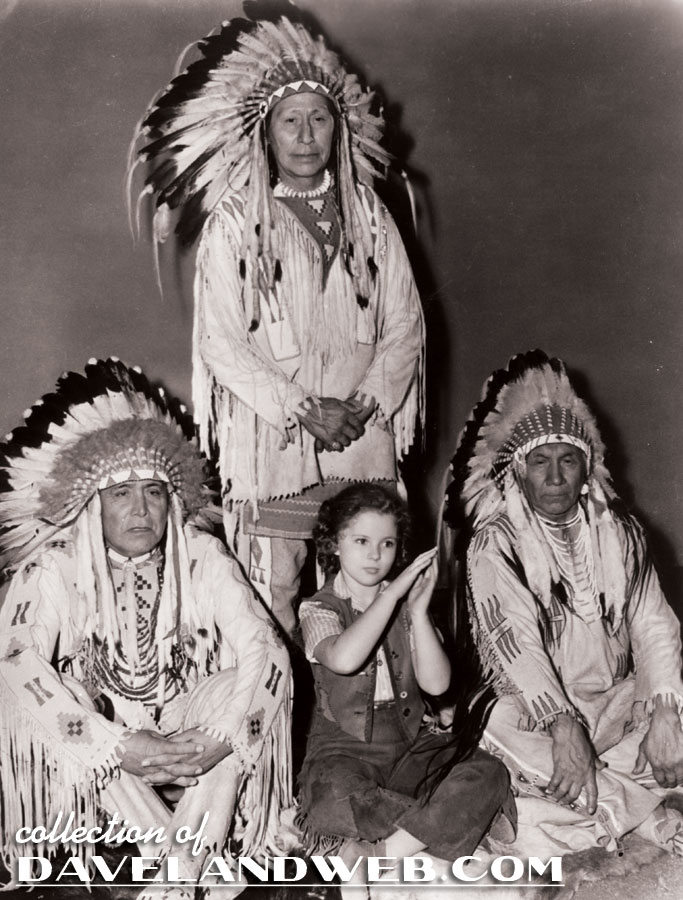
Below, Shirley is surrounded by Yellow Kidney, Spotted Eagle, and Many Guns:

The above plaque was given to Shirley and auctioned off after she died in 2014. Filming for portions of “Susannah” took place in the Lake Arrowhead area. From the Heritage Auction listing:
Shirley Temple - "Blackfoot Indians" Plaque, Signed Photograph, and Ribbon. A plaque bearing the engraved names of twelve actual Blackfoot Native Americans who were featured in Temple's 1939 film, Susannah of the Mounties; names include Chief Mad Plume, Little Blaze, Iron Beast, Jilted Edge and eight others. Measures 7.5" x 4" x 1.5", the metal placard showing some light scratching and oxidation; together with a signed photograph of these individuals plus a blue badge/ribbon measuring 8" in diameter with blue lettering on a gold background reading "Mayor / Lake Arrowhead, Calif" [the Southern California town where Susannah of the Mounties was filmed].
.jpg)
The LA Examiner had a full page spread promoting the film on Sunday June 25, 1939 that read:
To her countless fans she’s still Shirley Temple, but among her fellow Blackfeet tribesmen her name is “Bright Shining Star.” 20th Century-Fox imported full-blooded Indians from Montana to support Shirley in “Susannah of the mounties.” So completely did she captivate the ugh-men they made her a member of their tribe.

Finally, we get to the Gorilla in the title. “Susannah” was double-billed with the Ritz Brothers comedy, “The Gorilla.” It also starred Bela Lugosi and Patsy Kelly.


When the studio held a preview on February 6, 1939 of “Second Fiddle,” an Irving Berlin musical with Tyrone Power and Sonja Henie, “Susannah” got bumped, not “The Gorilla.” Oh, the indignity!

Below, Shirley seems to be consoling Lockwood about her American film career going nowhere after “Susannah,” in this photo from the LA Times, June 26, 1939. Or maybe it was about being bumped for a gorilla. The film made a profit, but was tepid by the typical Temple standards. The Daily News reported on June 28th, “Temple authorities may hold that ‘Susannah of the Mounties’ is not the best of Little Miss Box Office’s films, but after all, she’s young yet.”

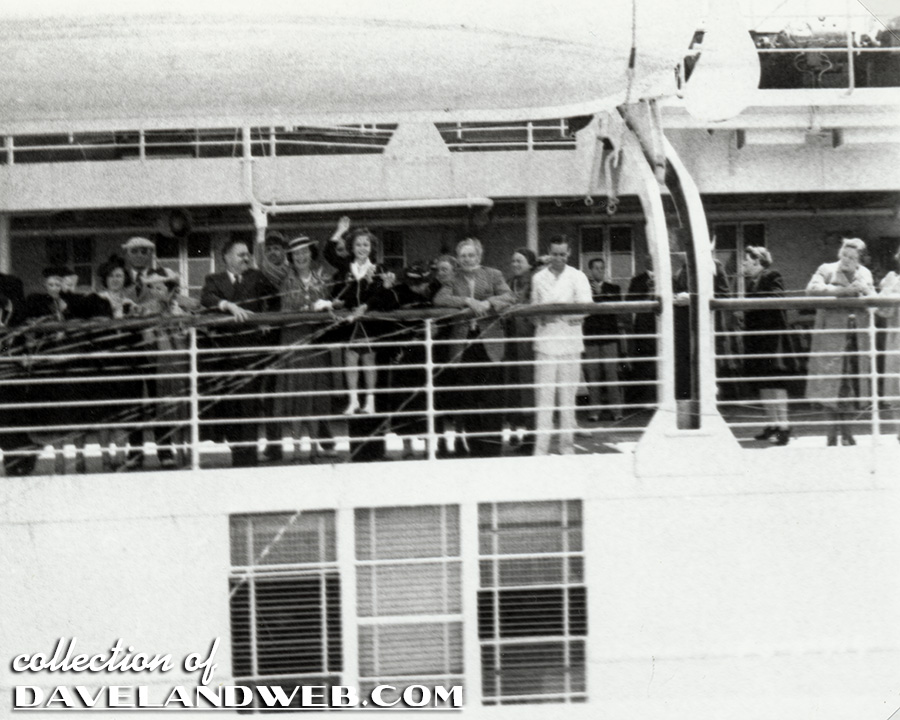
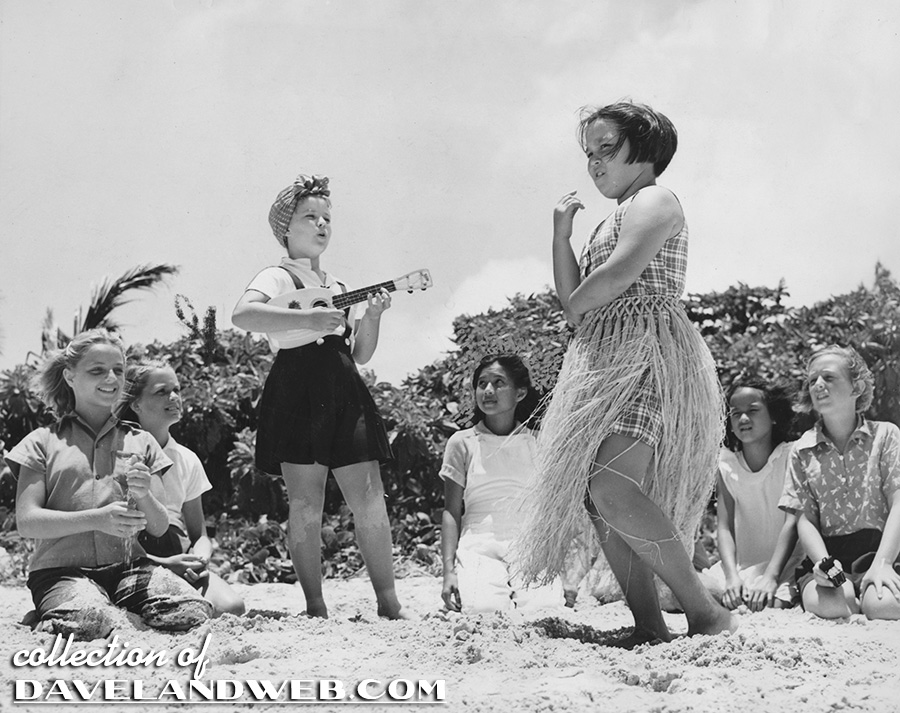
When Shirley completed filming of “Susannah,” she took a much needed vacation to Hawaii.
Waving to fans from the deck of the ship:
Playing the ukulele while on vacation, awaiting word for the start of her next film, “The Blue Bird” (1940):
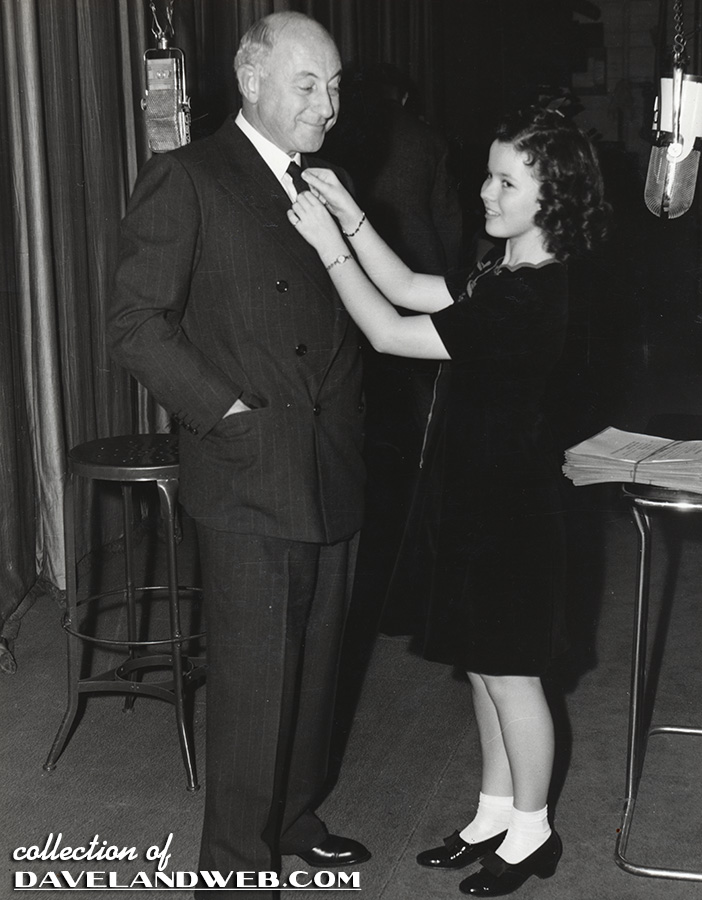
When Shirley returned from her trip, the Daily News reported:
…several letters were waiting at her bungalow on the 20th Century-Fox lot from three Indian children who had played in the film and are now back in school on the Fort Browning, Montana, reservation. The letters, written by Little Blaze, Wolf Cry and Cho-cho Gun, requested that Shirley buy for them in Los Angeles such items as 50 eagle tail feathers, three pounds of multicolored beads, a flashlight with red, green and white bulbs, a bottle of glue and 300 feet of kite string. The studio offered to buy the articles for the little actress, but she declined the offer in favor of a trip to town with her mother on a buying jaunt.
And so concludes another Temple rabbit hole!
See more 1939 Shirley Temple photos at my main website.




.jpg)




.jpg)
.jpg)