Showing posts with label stowaway. Show all posts

Tuesday, November 25, 2025

Temple Tuesday: Turkey in the Desert


In 1936, actress Shirley Temple and her family enjoyed turkey in Palm Springs. From the accompanying caption:

Shirley Temple, spending a brief vacation on the desert here (at Desert Inn) is shown whetting a knife to carve a Thanksgiving turkey. While here the child actress is learning new dance routines, is swimming and getting a sun tan for her next picture. Associated Press Photo 11/24/1936

If you want to know what the Desert Inn looked like in 1936, check out the post card below, stamped December 3, 1936. Perhaps this person crossed paths with Shirley!


Below is an ad from 1936 for the Desert Inn. Sun-lazing sounds faaaaaaaabulous!


Local papers were abuzz reporting about Shirley’s visit. From The Desert Sun, November 27, 1936:

Shirley Temple has been resting at the Desert Inn for a few days, accompanied by her parents, Mr. and Mrs. George Temple. After a few days in the sun Shirley was abloe to start work on several new songs for. her latest picture “Stowaway” which will be released around Christmas time. Gordon and Revel, famous song writers were here to help with the music.


“Stowaway” was filmed from late September 1936 to early December. Most likely, Shirley was working on the “That’s What I Want for Christmas” number which was tacked onto the end of the film at the last minute to coincide with its Christmas day released.


Elsewhere in the paper:

An informal tea was held at the Desert Inn Sunday afternoon [November 22]. Among those in the lounge for the occasion were Mrs. Wm. Warren Card of Paris, France, with her niece, Miss Martha Ann Henderson of Pittsburgh, Pa.; Bert Clark and daughter of Altadena; Mr. and Mrs. Marcus L. Lawrence of Rimrock, Arizona, and Washington, D.C.; Mrs. Albert Allaton, New York City, R. C. Sherriff, author of “Journey’s End,” and his mother from Esher Surrey, England; Mr. Jack Tidball, prominent tennis player; and Shirley Temple with her parents and a party of friends.

The Palo Verde Valley Times reported that Shirley and her mother also attended the 35th annual convention of the Southern Districts’ federation of women’s clubs, held in the Desert Inn. Mrs. Nellie Coffman, proprietor of the Inn, and Palm Springs pioneer, was signally honored at the convention. The paper also carried this ad for the popular Shirley Temple doll, also just in time for the Christmas holiday!


Below is all that’s left to remind Palm Springs tourists of what the Desert Inn once was:



See more Shirley Temple holiday photos at my main website.

Tuesday, August 26, 2025

Temple Tuesday: A Saddle for Shirley


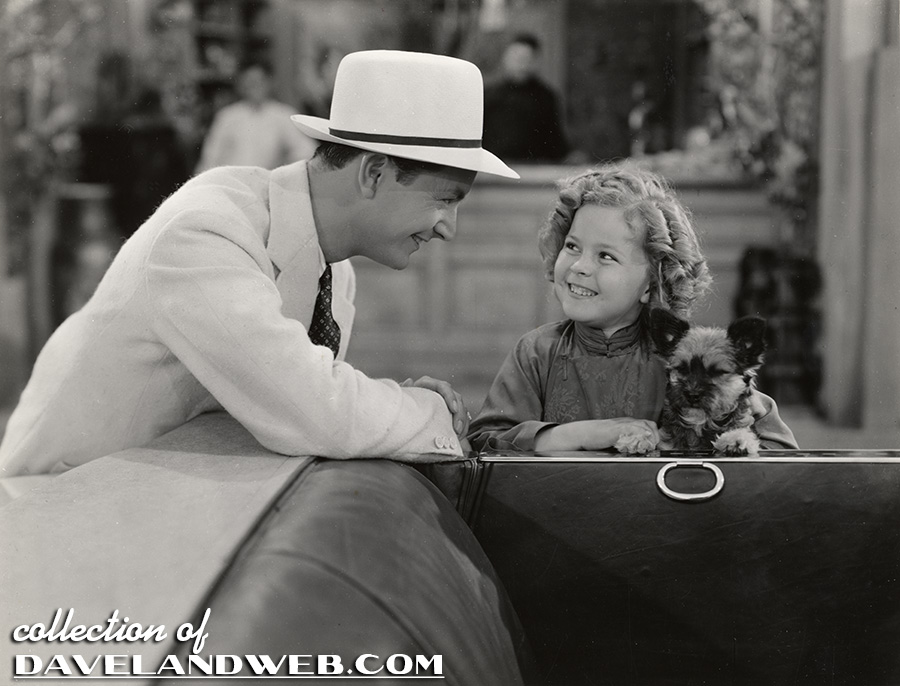
In 1936’s “Stowaway,” Shirley Temple played an orphan stranded in China who eventually gets rescued by a millionaire playboy and his girlfriend (Robert Young and Alice Faye).


In between takes, Shirley posed with one of the many gifts she received during the time that she was probably the most famous person in the world.


Joseph Schenk, Chairman of the Board at Shirley’s studio, 20th Century-Fox, gave her this leather saddle to go with her Shetland pony (another recent gift!). That’s a pretty darn good likeness of Shirley carved into the leather!


This saddle ended up in the 2015 Love, Shirley Temple auction. How it looked when I saw it on display at the Santa Monica History Museum:


Almost looks brand new! Shirley’s mother sure took good care of her daughter’s possessions.


Edited from the Theriault’s catalog description:

#383 Hand-Tooled Leather Saddle Gifted to Shirley Temple by Joseph Schenk

Of superb leather workmanship, the beautifully engraved hand-tooled saddle was custom made for the young actress, featuring Shirley's hand-tooled image with smiling expression and classic curly locks on each fender, her name in raised lasso-style lettering on the seat back, and a silver plaque inscribed "Presented to Shirley Temple by Joseph M. Schenk 1935".


The saddle was custom made by the prestigious Los Angeles leather firm of Lichtenberger-Ferguson. The saddle includes all accessories including the saddle blanket, and is in excellent condition. Provenance: the saddle was gifted to Shirley by Joseph Schenk, Chairman of the Board at 20th Century Fox, on the occasion of another gift to her which was a Shetland pony. The pony was traveling to America aboard the May 1936 maiden voyage of the SS Queen Mary and then by rail to the Los Angeles train station. Shirley Temple wrote of this in her 1988 autobiography "Child Star". "Burdened with a specially-made western saddle with my face tooled into the leather skirts..., [the pony] was introduced to me in the railroad freight yards in downtown Los Angeles. A welcoming flower garland which it promptly tried to eat, was draped around the pony's neck...'Giddap!' I cried. The pony moved ahead but...the saddle started to slip sideways, me with it...A switch engine tooted just as a line of freight cars came screeching along an adjacent track. The pony whinnied, kicked and reared up, while I held on. “I'm going to call him Spunky', I shouted...'He's not afraid of anything.'”

Estimated price  was $6,000-8,000; sold for $3,200. What a value!


A photo of Shirley on the saddle with her pony Spunky at her Brentwood home:


See more Shirley Temple in “Stowaway” photos at my main website.

Thursday, August 08, 2024

Harlow & Faye


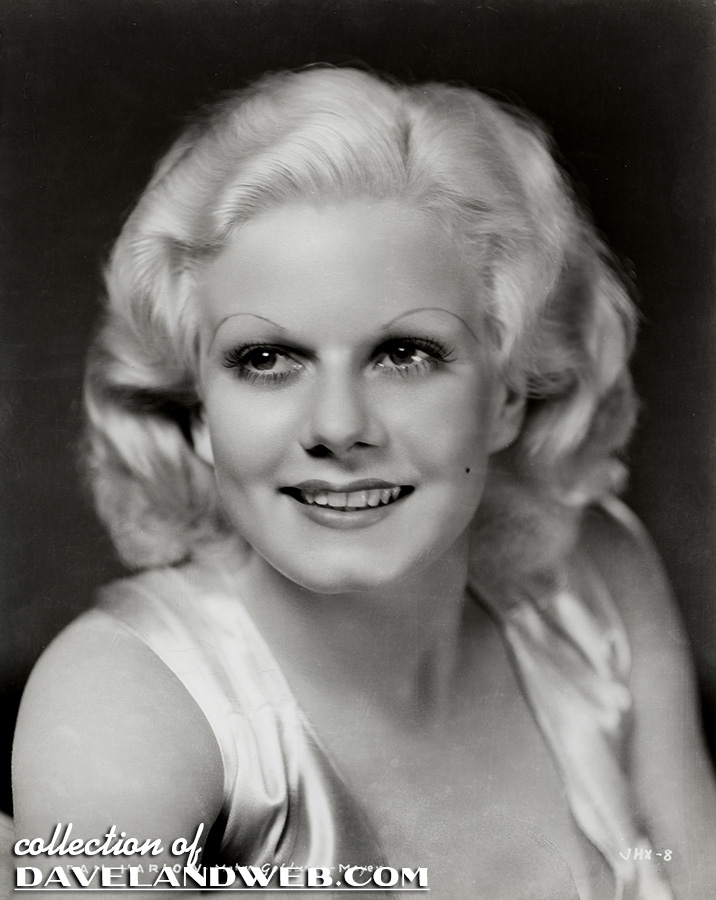
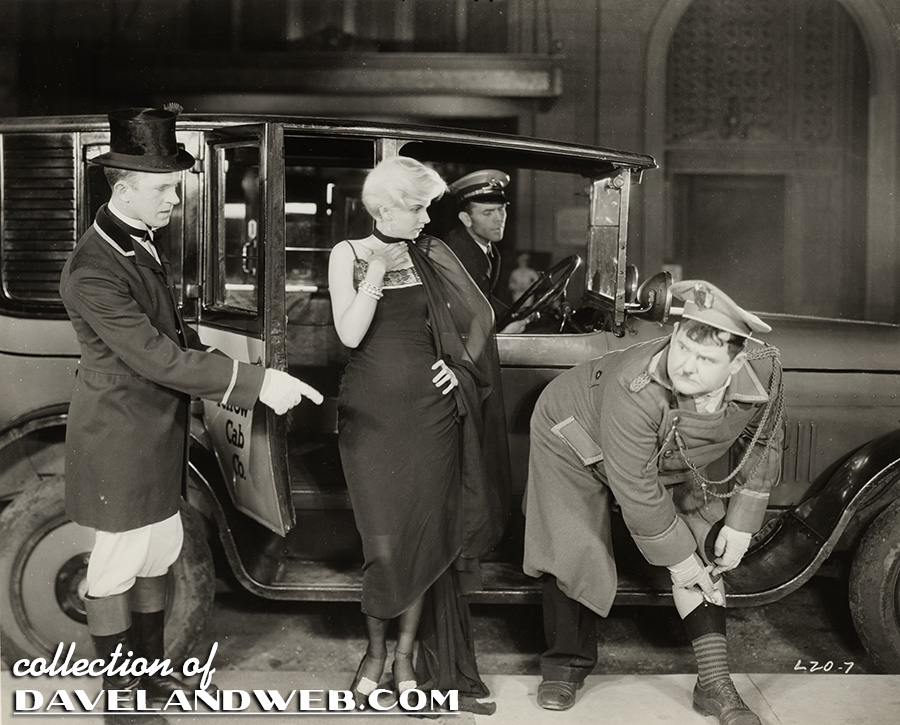
Today’s blog post refers to the two leading platinum blondes of the 1930s: Jean Harlow and Alice Faye. Harlow’s film career first began with supporting roles in silent comedies such as “Double Whoopee” (1929) with Stan Laurel and Oliver Hardy.


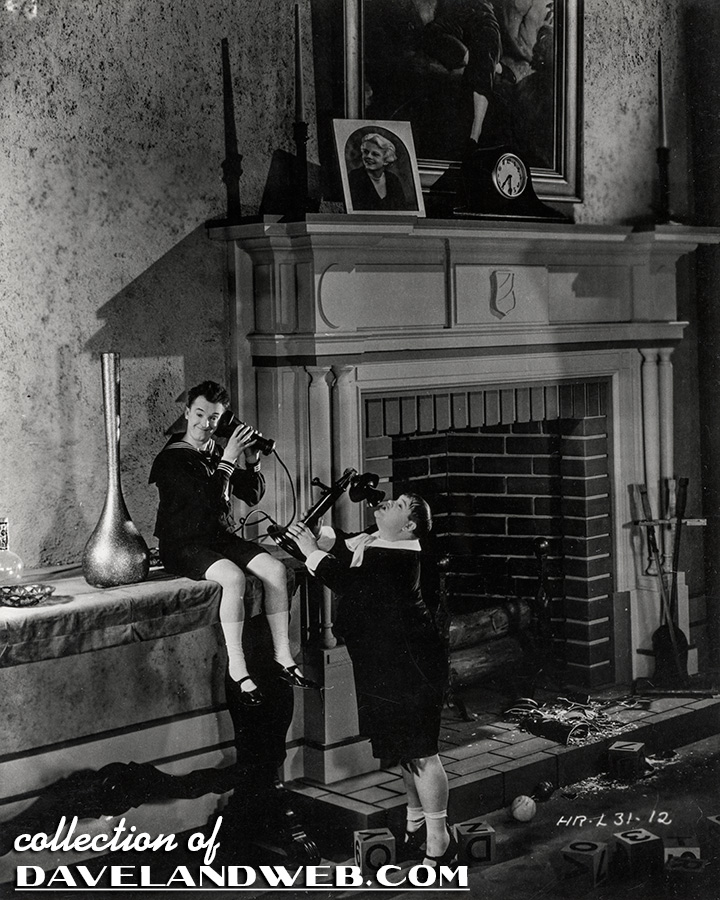
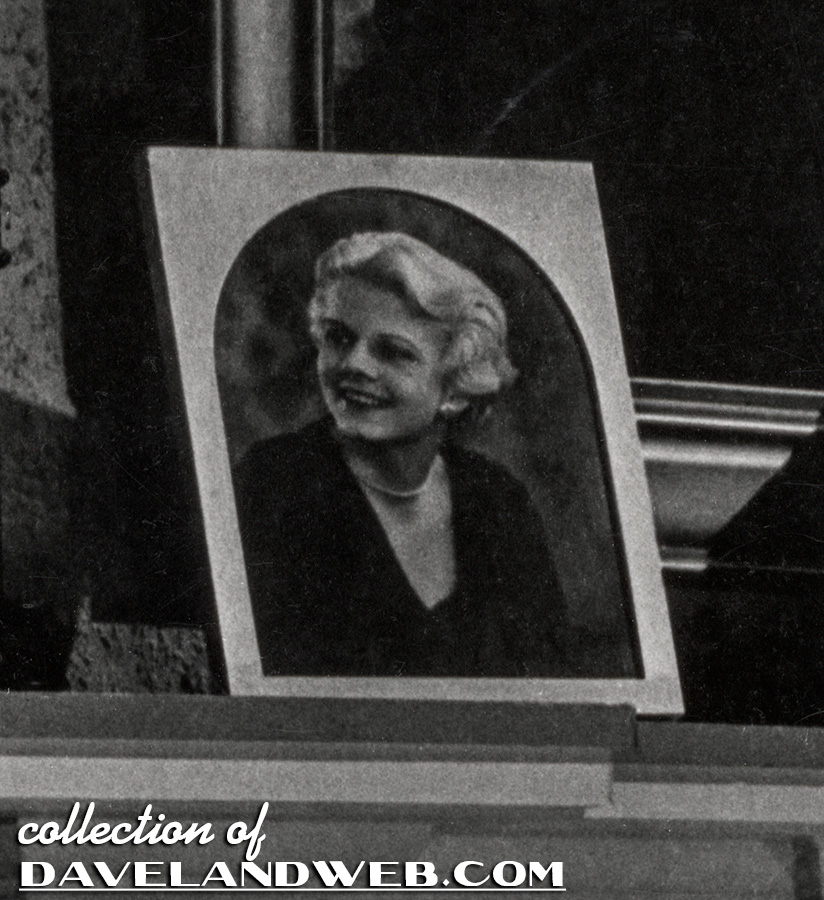
In “Brats” (1930), Harlow can be spotted briefly if you look closely at the photo on the mantle. Producer Hal Roach apparently quipped that he got Harlow to appear “for nothing” in this comedy short as well as in 1931’s “Beau Hunks.”


Zooming in:


Harlow’s breakthrough role came in the 1930 war film, “Hell’s Angels.” By 1932, MGM put her under contract and she became a box office favorite with hits like “Red-Headed Woman” (1932), “Red Dust” (1932), and “Dinner at Eight” (1933).


The pencil thin eyebrows, the platinum hair, and the sarcastic wit were all part of her manufactured persona.


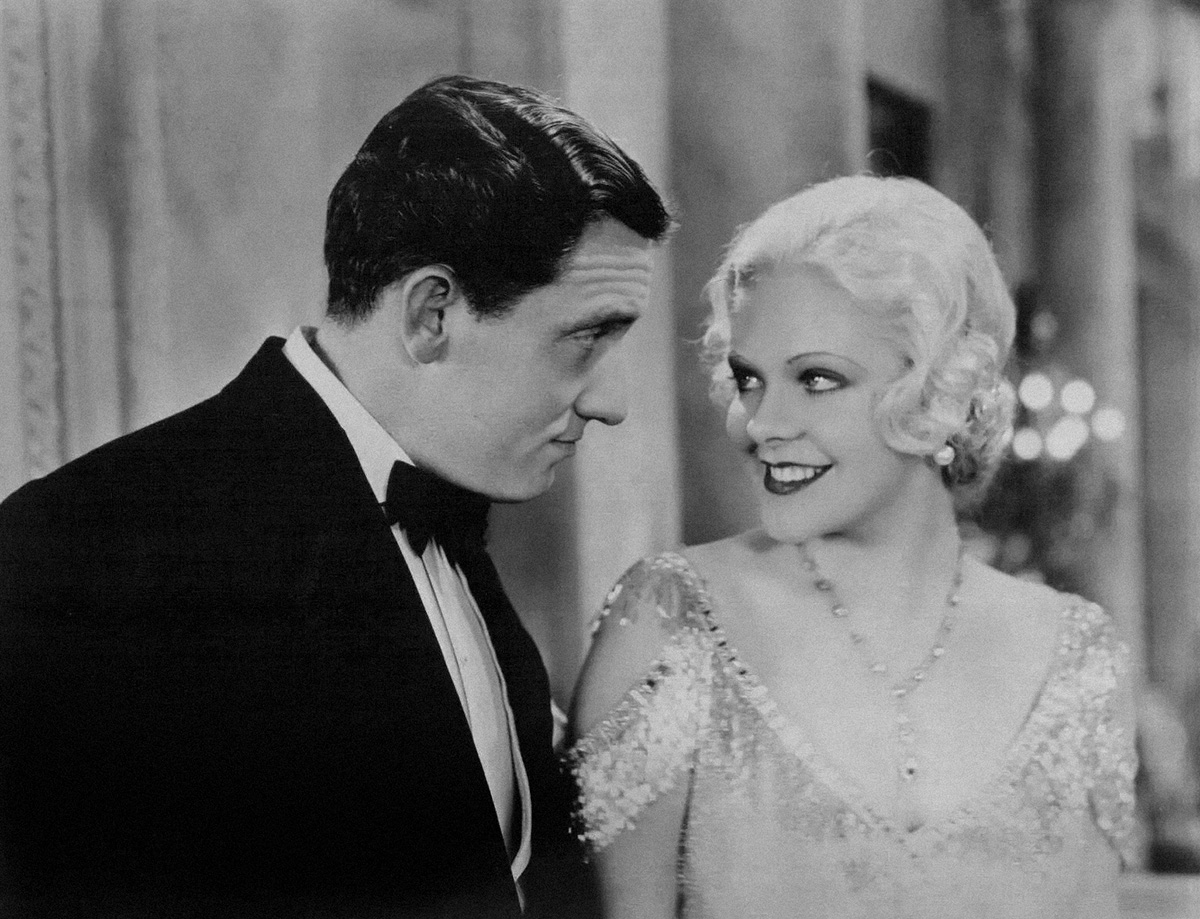
Enter Alice Faye (approximately four years younger than Harlow), Fox Studio’s “answer” to Harlow over at MGM. Today, portraits of the two are often confused. Faye was given the same platinum hairdo as well as the hardened makeup that Harlow had been sporting in her early career, as seen in “Now I’ll Tell” (1934), where Faye played the “other woman” opposite Spencer Tracy.


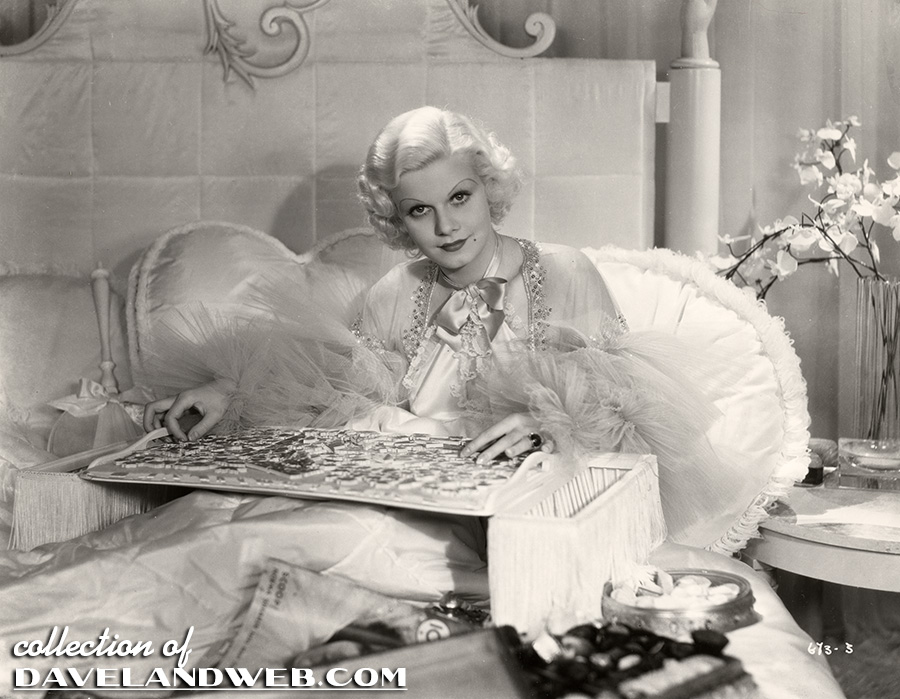
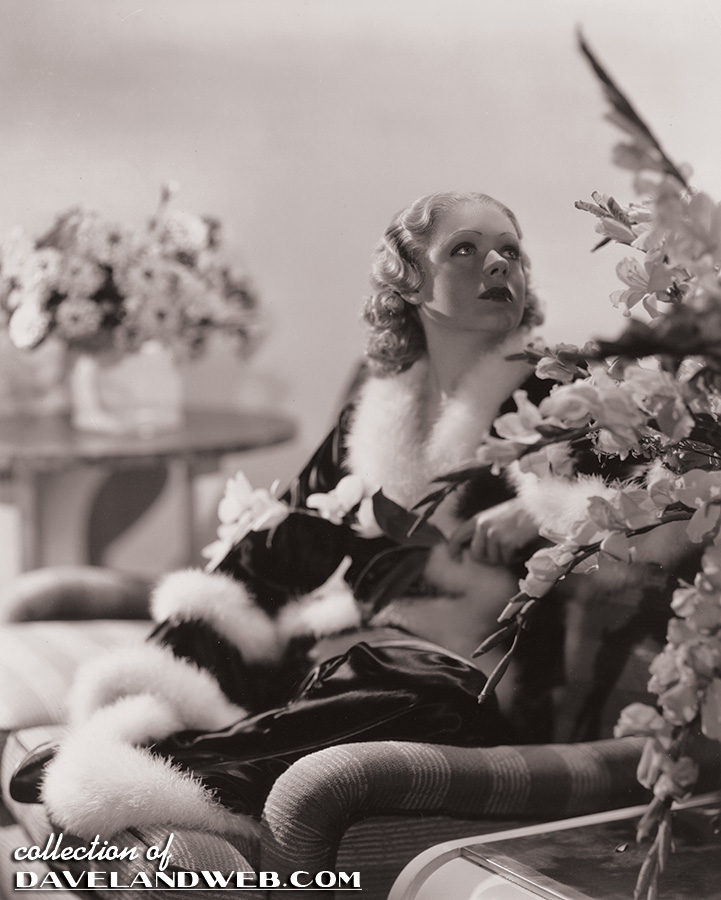
Below, a Gene Kornman publicity shot of Faye for “Poor Little Rich Girl” with Shirley Temple (1936) with this caption:

After she’s through with the day’s dancing sequences in “The Poor Little Rich Girl,” Alice Faye curls up in her favorite chair, clad in her favorite pajamas of black silk velvet lavishly trimmed in white marabou. In this 20th Century-Fox production, starring Shirley Temple, Alice finds herself teamed with Jack Haley, who does pretty well as a dancer himself!


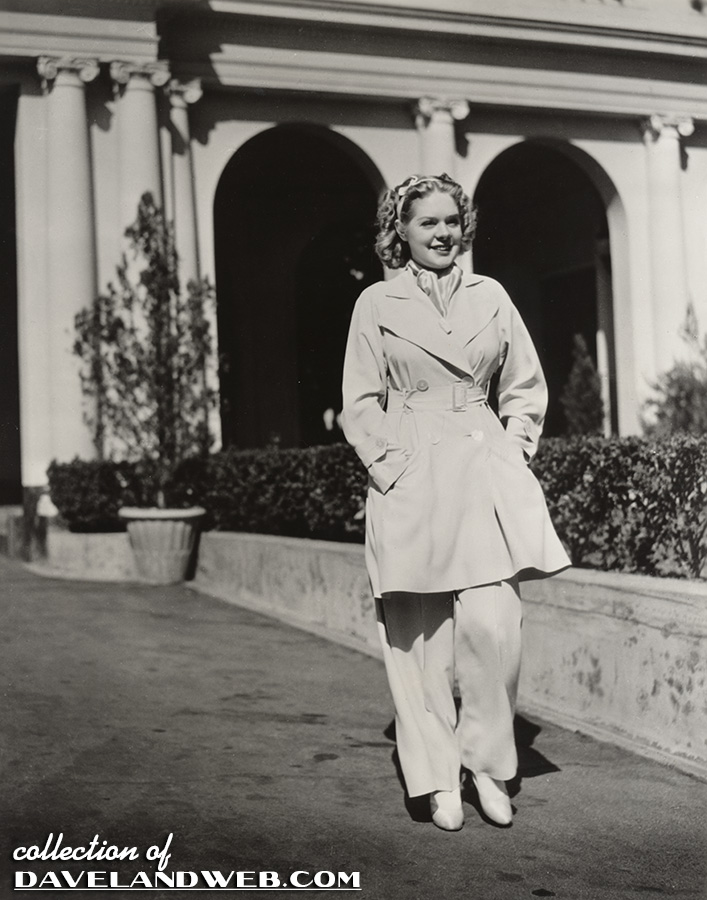
In this, her first Temple film, Faye played the wisecracking wife who nags husband Jack Haley all day long. Faye’s characters up to this point lacked the innocence and vulnerability that made Harlow so appealing underneath the sarcasm. Still, Faye had one thing Harlow didn’t: a gorgeous contralto voice! 20th Century-Fox Studio head Darryl Zanuck saw the potential in Faye and by the time she made her second Shirley Temple film, “Stowaway” (also in 1936), she was almost unrecognizable. In the following publicity still, Alice had graduated from silk velvet and marabou to an outfit that any typical woman of the day might have worn. The accompanying caption:

Attired as comfortably as possible, Alice Faye takes a stroll for the sake of fresh air before reporting for preparation at 20th Century-Fox for her role with Shirley Temple in “Stowaway.”


Zanuck saw the value in making Alice Faye more approachable to both sexes by softening the edges and putting the vocal talents front and center, much to the chagrin of little Shirley who would later recall:

I retired to bed singing “Good Night My Love,” a delectable ballad by Mack Gordon with Harry Revel with lyrics about Dutch dolls, teddy bears, and my dead daddy. Faye then reprised my song outside, under a romantic full moon, using mature lyrics sung in her own silky style. Instantly I knew her rendition had finessed mine. Hers was deeper-throated, more resonant, and her facial expressions insinuated much that I sensed was important without knowing why. Yet my proprietary feeling could not so easily be quenched. It was my song. I had sung it first. Why did I lose when she won?…Perhaps the problem was not my deficiency but her skill. She was older, I brooded, and had beautiful cow eyes to boot.


At the same time, MGM was working hard to soften Harlow’s image, realizing (just like Zanuck) that her appeal would be greater if they moved away from the one-dimensional platinum bombshell approach.

One of the oft-told legends of Hollywood was that MGM wanted so badly to borrow Shirley Temple for “The Wizard of Oz,” that they offered Clark Gable and Jean Harlow for Fox’s production of “In Old Chicago.” Shirley herself even repeated this myth in her autobiography, Child Star. It doesn’t take much digging to figure out that this was a fabrication, although portions of the story are true. When Alice Faye was interviewed by Joe Franklin in her later years, he asked, “Did you get that part [In Old Chicago] when Jean Harlow was about to die?” “That's what I read,” replied Alice. “I read that, but I’m not sure.” “I never believed it,” responded Joe. “I never did either. I wouldn’t mind following Harlow,” Faye said with a smile. “She was pretty dishy!” This speaks to the fact that back in the 1930s and 1940s, the studio bigwigs made trades and deals but the stars themselves were the last to know. They were under contract with the understanding that they would follow along with executive orders without complaint. Shirley Temple herself would not have had any firsthand knowledge about any of this, either. Here’s what we know:

“In Old Chicago” went into production mid-June of 1937, shortly after Jean Harlow’s untimely June 7th death. Thanks to some sleuthing by Melissa (aka “The Colonel”), we know that on May 27, 1937, the L.A. Times was still reporting that Harlow…

…is pretty certain as one feminine lead in that picture, incidentally.

One day later, the Times changed its tune:

With no chance of getting either Jean Harlow or Helen Hayes for “In Old Chicago,” Twentieth Century-Fox is to set about popularizing two of its own feminie players in this banner picture. And that’s not a bad idea either, particularly as one of the young ladies is Virginia Field.

On June 1st, the Evening Courier reported:

I don’t know what would have happened if Darryl Zanuck couldn’t have borrowed Jean Harlow for “In Old Chicago.” He had his heart set on her, but for a few weeks it looked as if M-G-M would have to refuse. In order to swing the deal, Darryl had to promise Tyrone Power in exchange. So it’s set that he will play the boy in “Madame X.” First of course, he co-stars with Jean in the Chicago epic, with Don Ameche in an important part and Virginia Field and Phyllis Brooks in supporting roles. Henry King directs.

Other than Harlow and Virginia Field, the rest of the report panned out. MGM made “Madame X” without Tyrone Power, using Warren William instead. “Madame X” began production mid-July 1937 and was released on October 1. And what about Shirley? Where does she fit into all of this? Based on contemporary accounts, Shirley Temple had zilcho to do with the “In Old Chicago” / “Madame X” swap. MGM didn’t even own “The Wizard of Oz” at the time all of these shenanigans were going on. While the bean counters at MGM wanted the box office stability of Shirley for “Oz” when they did purchase it, the production and creative team all wanted Judy Garland and the story was purchased specifically for her. MGM vocal coach/composer/arranger Roger Edens was sent to Fox for an informal audition of Temple and reported back that her “vocal limitations were insurmountable” for “Oz.” And that was that. 

What would “In Old Chicago” have been like with Harlow? What would “The Wizard of Oz” have been like with Temple? To quote Alice Faye, “You’ll Never Know”!


See more Alice Faye photos at my main website.
Tuesday, March 12, 2024

Temple Tuesday: Dimples and Romance


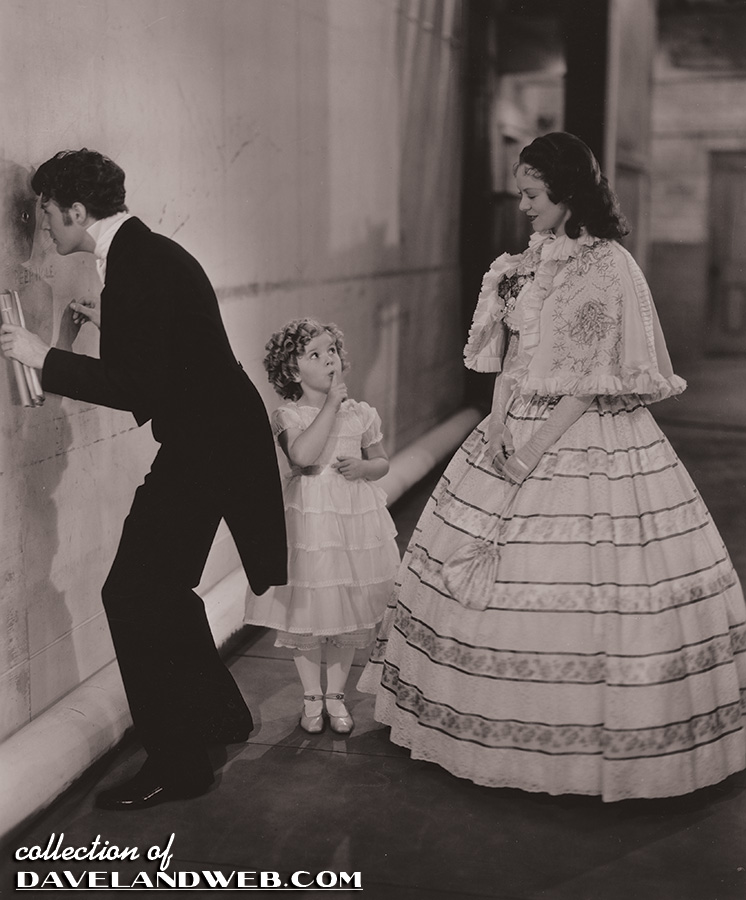
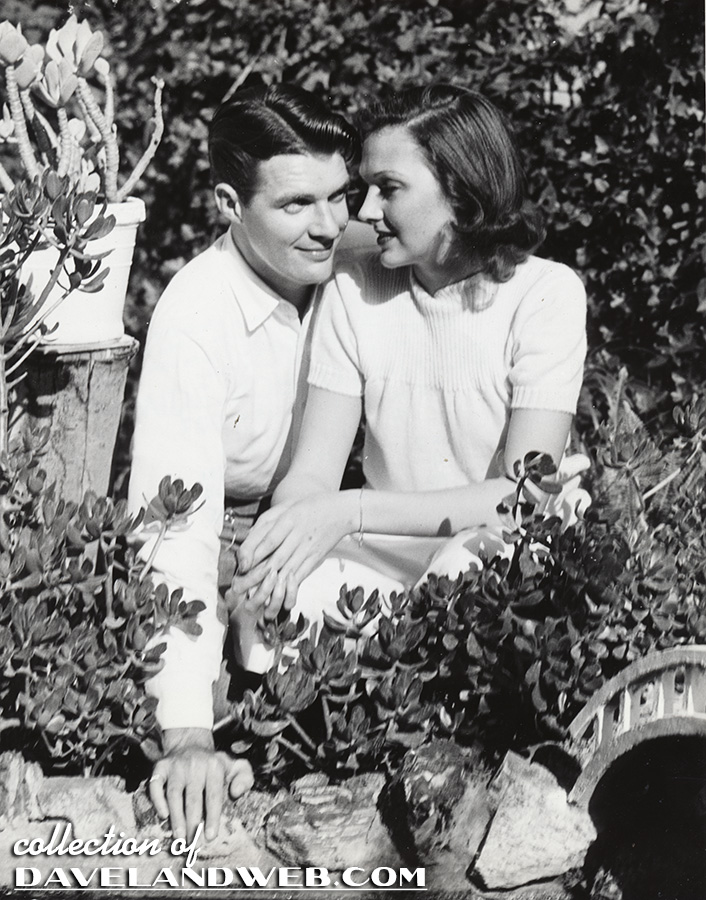
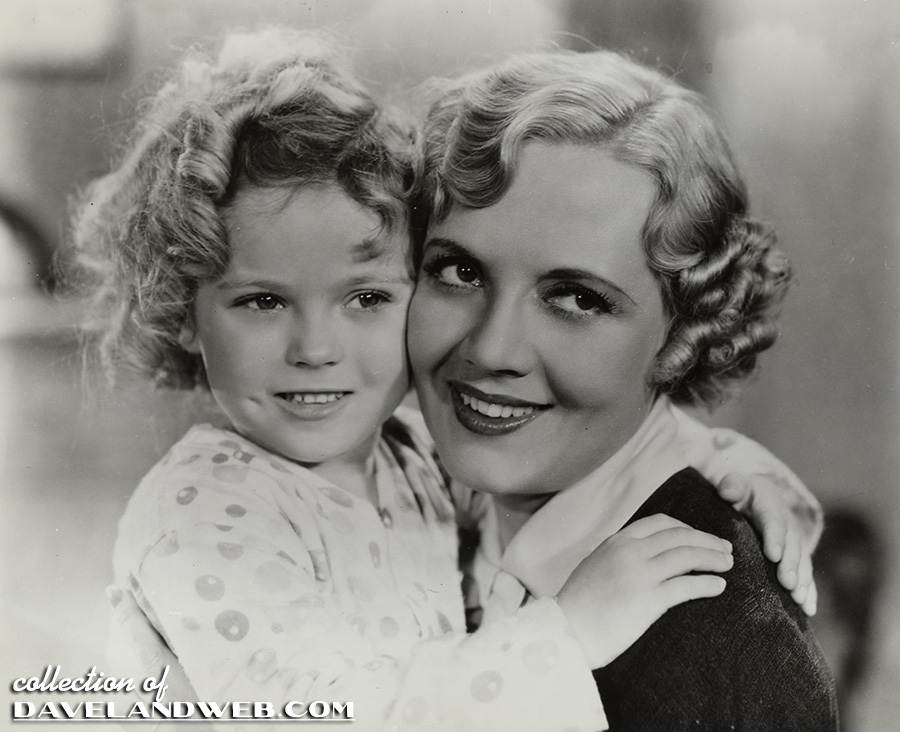
Actress Astrid Allwyn had supporting roles in two back-to-back Shirley Temple films, starting with “Dimples” (released October 16, 1936) and followed by “Stowaway” (released December 25, 1936). Allwyn was born Astrid Christofferson on November 27, 1905 in South Manchester, Connecticut. At age 13, she was offered a scholarship to the Boston Conservatory of Music for her singing, but declined rather than move away from home. After high school graduation, she moved to New York, hoping for a career as a concert singer, but ended up taking classes at a business college and becoming a typist on Wall Street. She studied dancing and dramatics while in New York and later gathered experience by joining a stock company. Allwyn made her Broadway debut in 1929 in Elmer Rice’s “Street Scene,” and on the strength of her second play, “Once in a Lifetime,” was brought to Hollywood in 1932. Her first husband was actor Robert Kent, who also starred in “Dimples.” Although she played the gold-digging “other woman” in “Dimples” (Delma Byron, seen below with Robert Kent and Shirley, played the romantic lead) Allwyn ended up winning the leading man in real life. Ain’t that grand?


Allwyn told the story of how she and Kent fell in love in the November 1937 issue of Hollywood Magazine:

Astrid up and got herself married about six months ago to Robert Kent, 20th Century-Fox star, and a mighty good actor in his own right and a chap who is going places in the picture business before he is through. “Frank Morgan can take credit for the start of our romance,” Astrid reveals. “We were shooting a scene in the Shirley Temple picture “Dimples” where Robert was supposed to kiss me. Whether it was because he was shy or because he scarcely knew me,  he suggested to Bill Seiter, the director, that he merely kiss my hand. Bill had some suggestions of his own—and Robert was told to kiss me the way a boy should kiss a girl. Well, the cameras began to grind and we began to kiss. Frank Morgan was supposed to interrupt the embrace with a bit of dialogue but as he said later ‘I didn’t have the heart’ so we kept it up until Bill finally yelled out. From that time on—thanks to Frank Morgan—we began a friendship that ended where we are now—happily married and deeply in love.”

The marriage took place shortly after “Stowaway” wrapped up production, when the two headed south to Tijuana for the ceremony. They married on January 10, 1937, as announced in the Hanover Evening Sun on January 18, 1937:

Astrid Allwyn and Robert Kent, film players, have disclosed they were married Sunday, January 10 in Tijuana, Mexico. The only attendant was J. Edward Bromberg, screen actor. The couple obtained their marriage licenses under their true names of Astrid Christofferson and Douglas Blackley. Their romance began last spring.


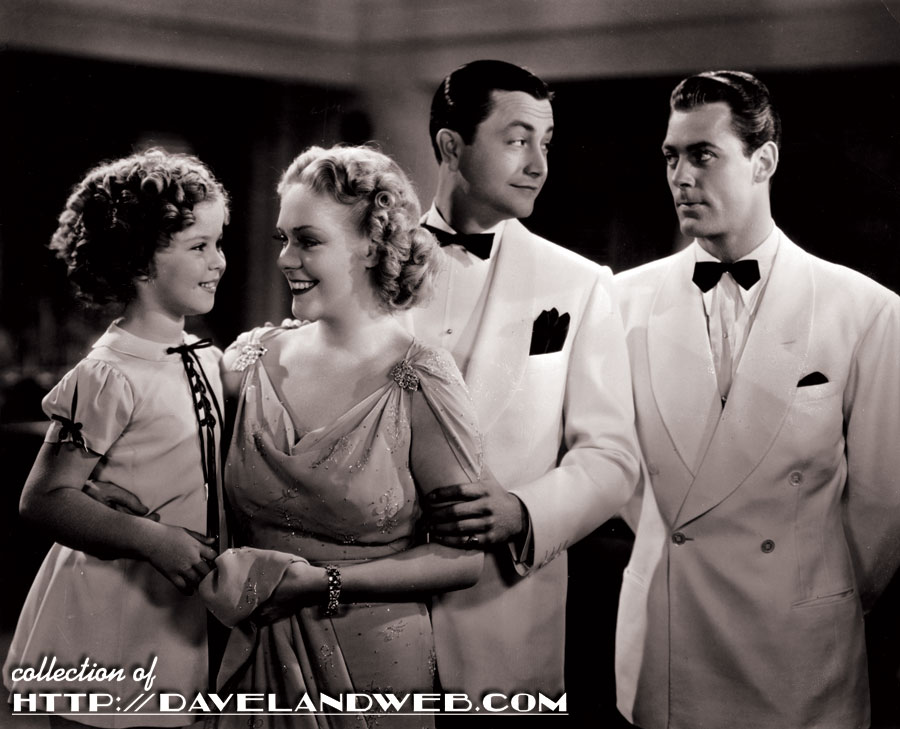
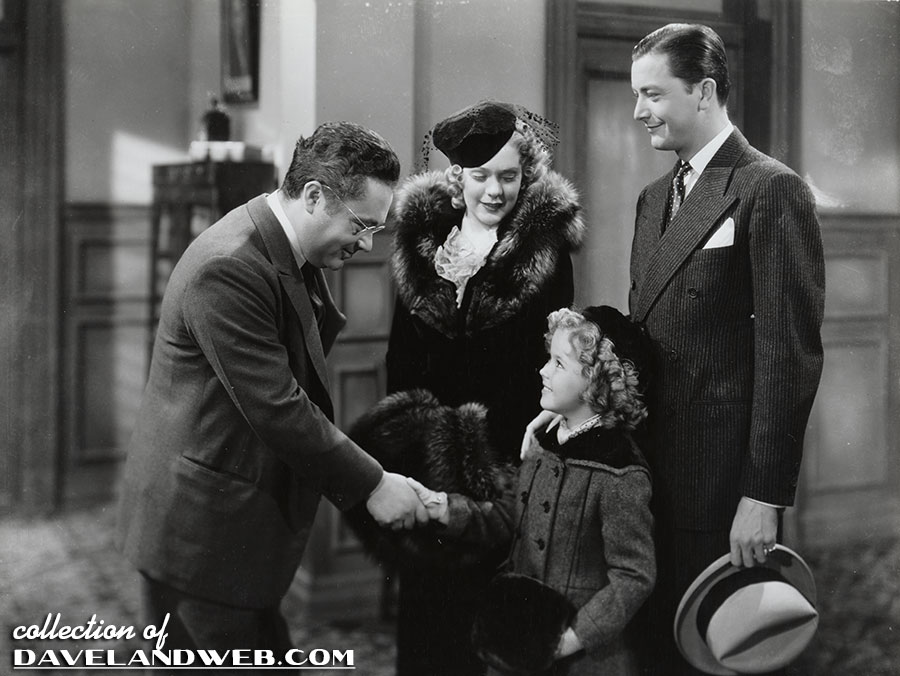
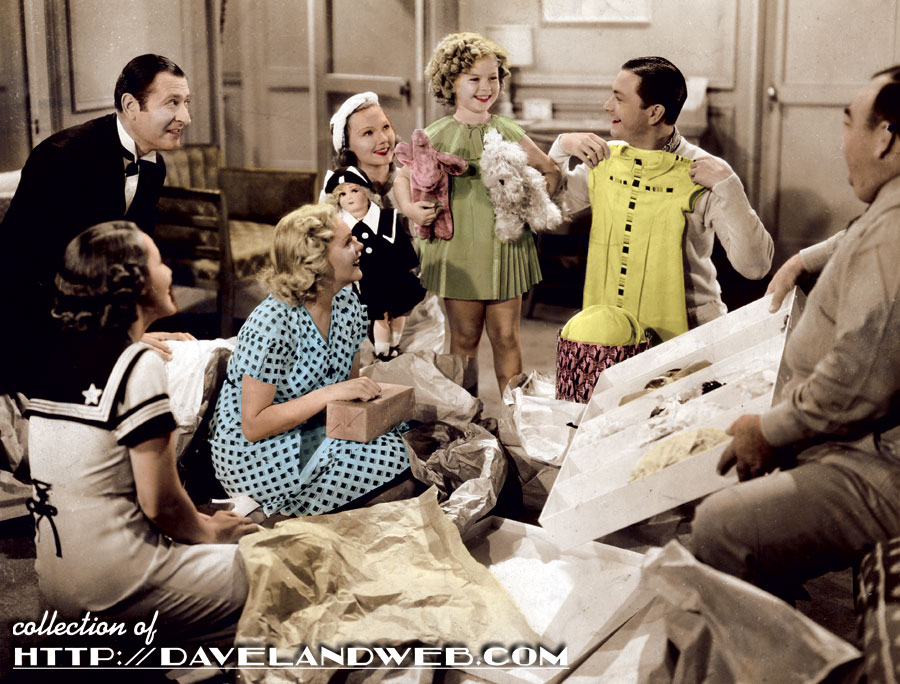
Bromberg also costarred in “Stowaway,” seen at left below with Alice Faye, Temple, and Robert Young.


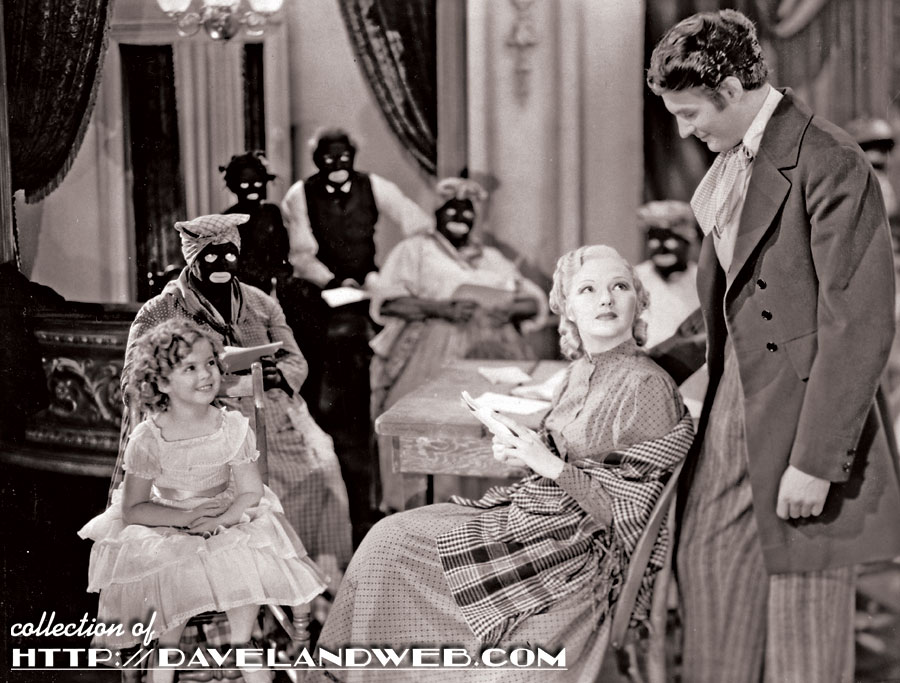
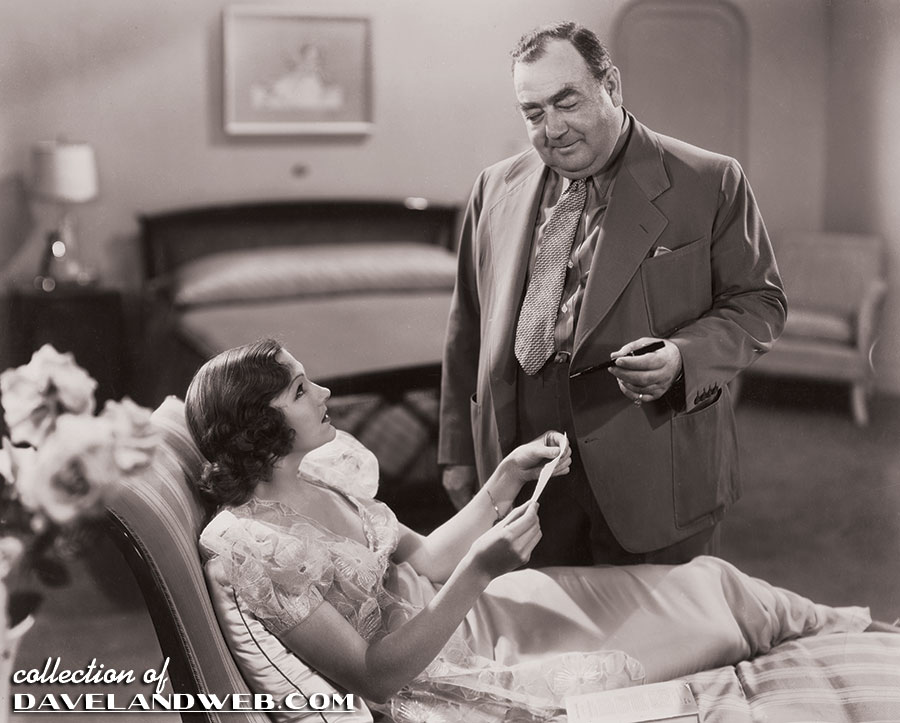
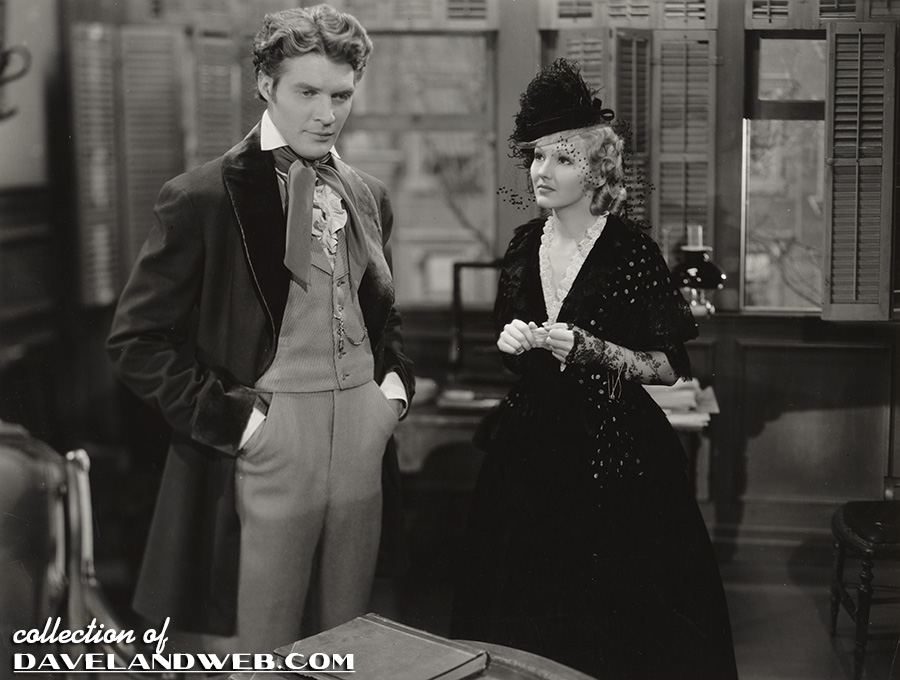
Below are Allwyn and Eugene Pallette in a scene that was ultimately deleted from the final film. Once again, she played a woman with less than desirable morals, about to blackmail Robert Young for some moolah.


The scene below was also deleted from “Stowaway.” Allwyn is barely visible in the final film, hardly earning her onscreen credit.


Despite being “happily married,” Astrid and Robert were divorced in 1941. Allwyn had the distinction of appearing in three Best Picture Oscar nominated films: “The White Parade” (1934), “Love Affair” (1939), and “Mr. Smith Goes to Washington” (1939). She married a second time in 1941 to businessman Charles O. Fee. After filming Hit Parade of 1943 (1943), Astrid made a decision to retire so she could focus on family and raising her children. One of her daughters, Melinda Fee, had a modestly successful career in movies and television. Astrid remained married to Charles until her death in Los Angeles on March 31, 1978 from cancer, at age 72. She is buried in Forest Lawn in Glendale, Court of Freedom, #955.


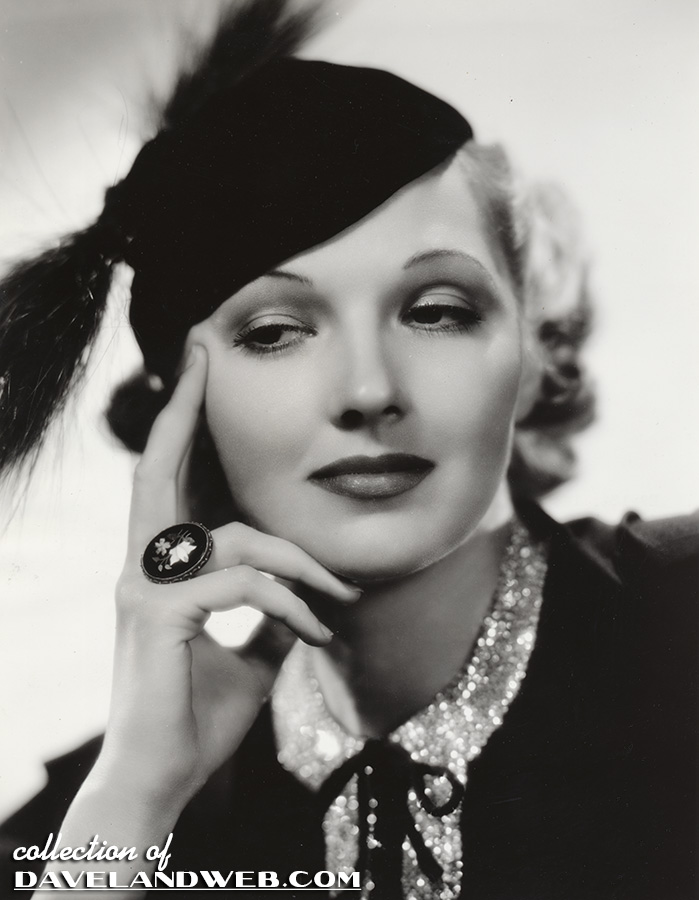
Above is a publicity shot for Fox, shot by Gene Kornman in 1936. The accompanying blurb:

Hollywood continues to smile upon the small hat and triumphantly demonstrates that size imposes no limits in either beauty or variety. Turbans are strong in the mode and imbued with exceptional charm — as witness this black velvet model by William Lambert, 20th Century-Fox stylist, and worn by lovely Astrid Allwyn, featured player of the same studio. The round crown is effectively trimmed with a black cellophane novelty. The ring worn by Miss Allwyn is one of her heirlooms from Sweden — a floral design in mosaic is set in jet and mounted in antique gold.

She may not have had a huge career, but in Shirley-world, Astrid Allwyn was the perfect villainess for “Dimples.”


See more Shirley Temple photos at my main website.
Tuesday, December 19, 2023

Temple Tuesday: Shirley’s Christmas Quintet


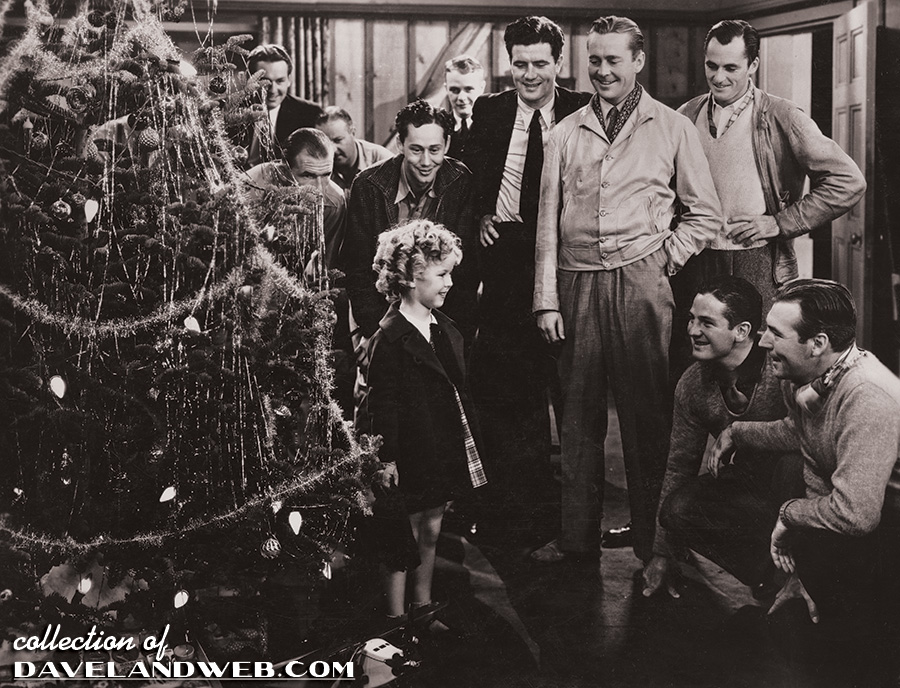
Today for Temple Tuesday we celebrate a quintet of Shirley movies that take place during the Christmas holiday. First up is “Bright Eyes” (1934), one of my favorite Shirley films. There is a very touching Christmas Eve scene where Shirley’s widowed mother (Lois Wilson) confides in her daughter that she misses her husband. The next morning, little Shirley is celebrated by all her aviator friends who used to work with her father before he “cracked up.” She is showered with gifts and love.


Yes, that’s mistletoe in the pilot’s hand. When I attempted to look up the meaning of the branch and berries on Google, this is what it said:

Historically, mistletoe represents romance, fertility, and vitality. Because nothing says love like bird feces and poison. But seriously, the Celtic Druids valued mistletoe for its healing properties and likely were among the first to decorate with it.


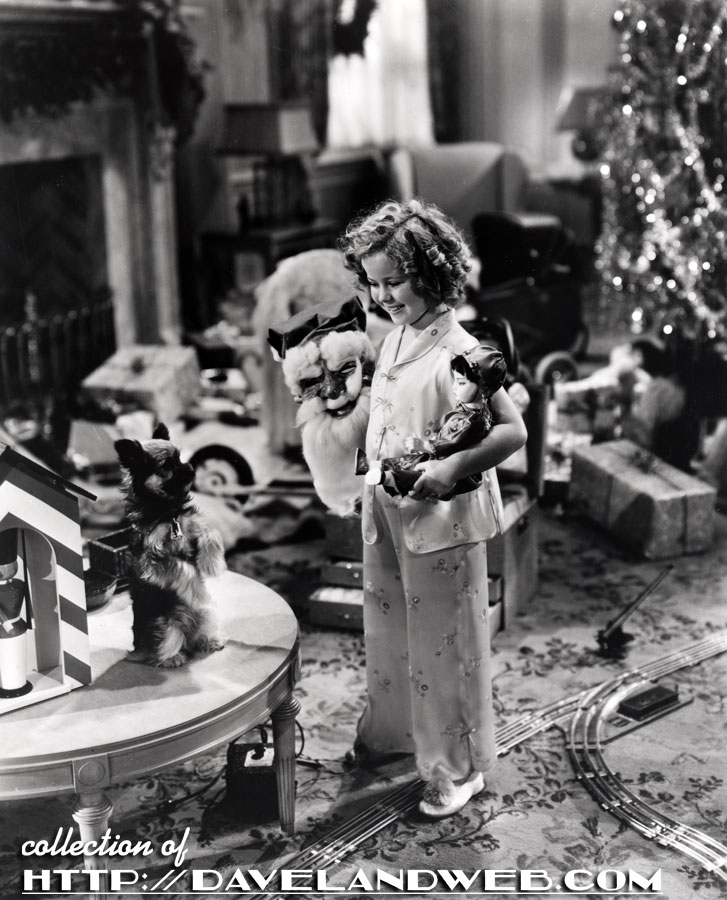
Who knew Google has a sense of humor? In “Stowaway” (1936), Shirley is a little girl who must flee her home to avoid being killed, then gets robbed, stows away on a ship, befriends a rich playboy (Robert Young), runs afoul of Alice Faye’s character’s mother-in-law (Helen Westley), almost gets put in an orphanage, and then has to plea to a judge to keep her “new” parents (Young and Faye) from getting a divorce. Doesn’t sound very Christmas-y, does it? Well, that’s what happy endings are for! The final scene has Shirley singing, “That’s What I Want For Christmas,” and judging by all the toys, dolls, and trains surrounding her, she gets everything on her list.


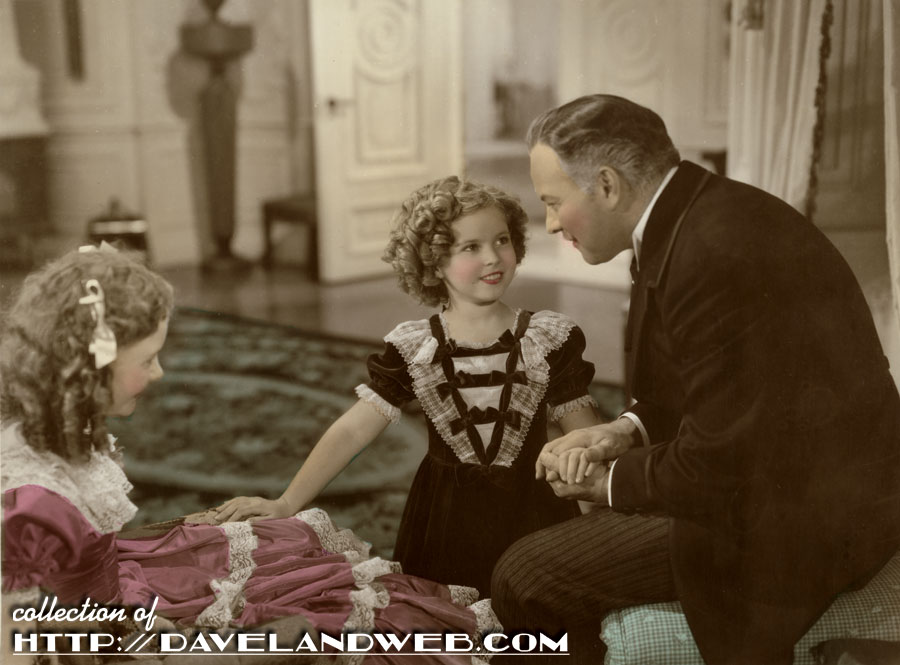
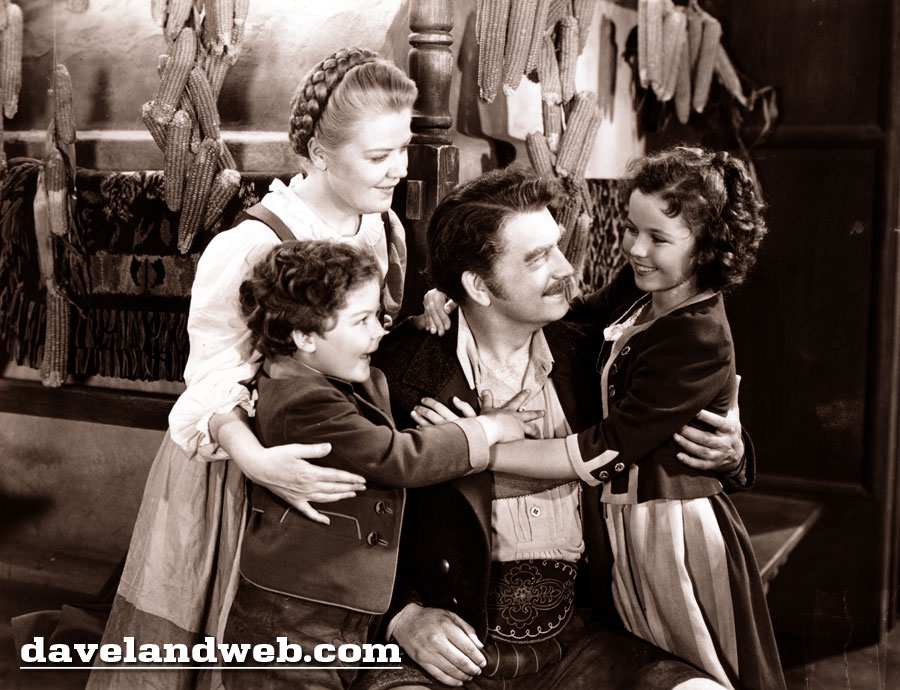
In “Heidi” (1937), Shirley sings “Silent Night” at the Sesemann household with crippled Klara (Marcia Mae Jones), wicked governess Fräulein Rottenmeier (Mary Nash), Herr Sesemann (Sidney Blackmer), and all the household servants.


It is a touching scene as the little girl gazes in wonderment upon the tree, ornaments, and abundance of gifts in the house, followed by a cut to the townspeople, nuns, and law enforcement singing the Christmas carol as well. Pardon the colorization; it was the best clip I could find!


A vintage hand-tinted photo from the same scene in “Heidi”:


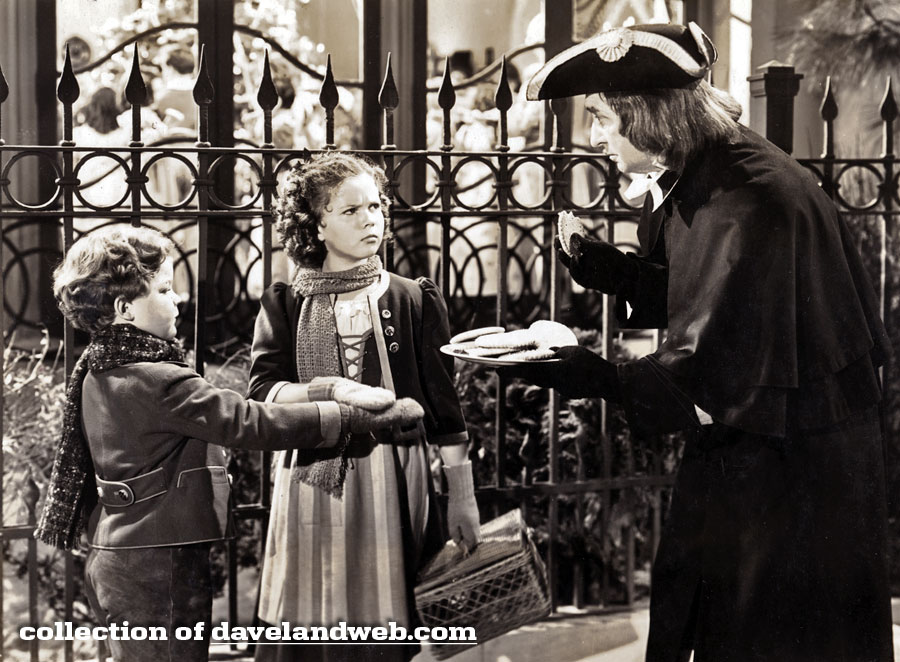
“The Blue Bird” (1940) begins on Christmas Eve, as Mytyl (Shirley) and her little brother (Johnny Russell) rush home for dinner after an afternoon of bird hunting. The merriment inside a mansion causes the poor little girl to stop and gawk, wishing she had all the riches that the people inside did. Regardless, she is too proud to accept cookies from the kind gentlemen who works there.


After a long journey in a dream sequence (or was it?), the children awake on Christmas morning to discover that the war has been called off and they can celebrate the holiday with their parents.


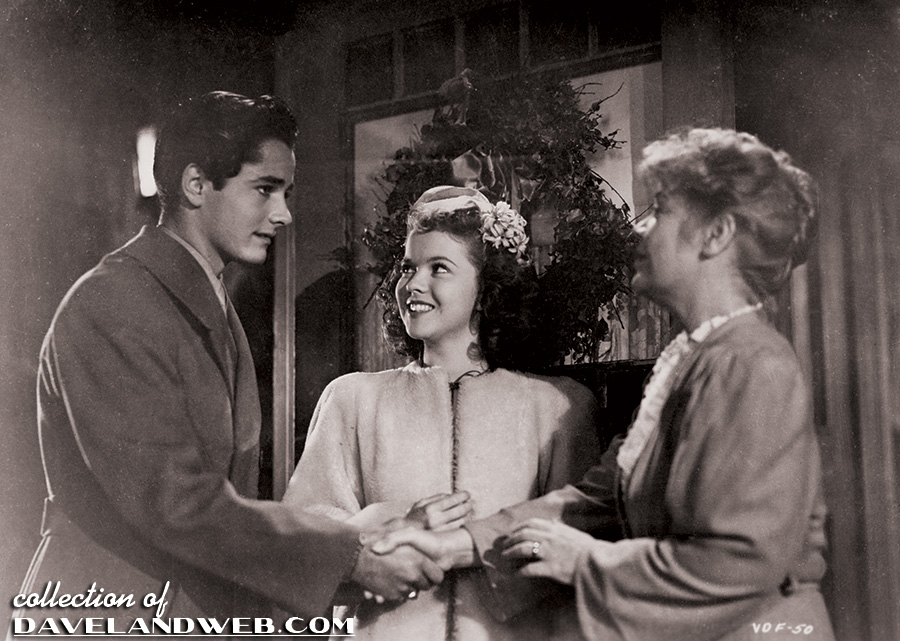
Note the festive garland around the door?


In “I’ll Be Seeing You” (1944), the Morgan family celebrates the Christmas holiday by welcoming their niece Mary (Ginger Rogers) for a visit. Mary meets a handsome Sergeant (Joseph Cotten) on the train there. Sounds like the beginning of a beautiful romance, right? Not so fast, folks. Mary is on parole (for accidentally killing the man who tried to rape her) and Zach is on leave from a military hospital, attempting to adjust to his PTSD. Are they honest with each other? Of course not! However, Barbara Morgan (Shirley) inadvertently spills the beans to Zach about Barbara and…well, you’ll just have to watch it yourself. In this scene from the movie, Barbara is about to go on a date with Lieutenant Bruce, played by John Derek, who put the “Derek” in Bo Derek! You’ll note that in both “The Blue Bird” and “IBSY” Shirley’s mother is played by Spring Byington, who would eventually play Major Nelson’s mother in “I Dream of Jeannie.”


“I’ll Be Seeing You” may not be the happiest of holiday movies, but it is still worth a watch and guaranteed to draw a tear from the driest of ducts! 

Which Christmas Shirley movie will you watch this season?

See more Shirley Temple photos at my main website.
Tuesday, July 04, 2023

Temple Tuesday: Shirley, Marmont, Mae, Raquel, and Myra


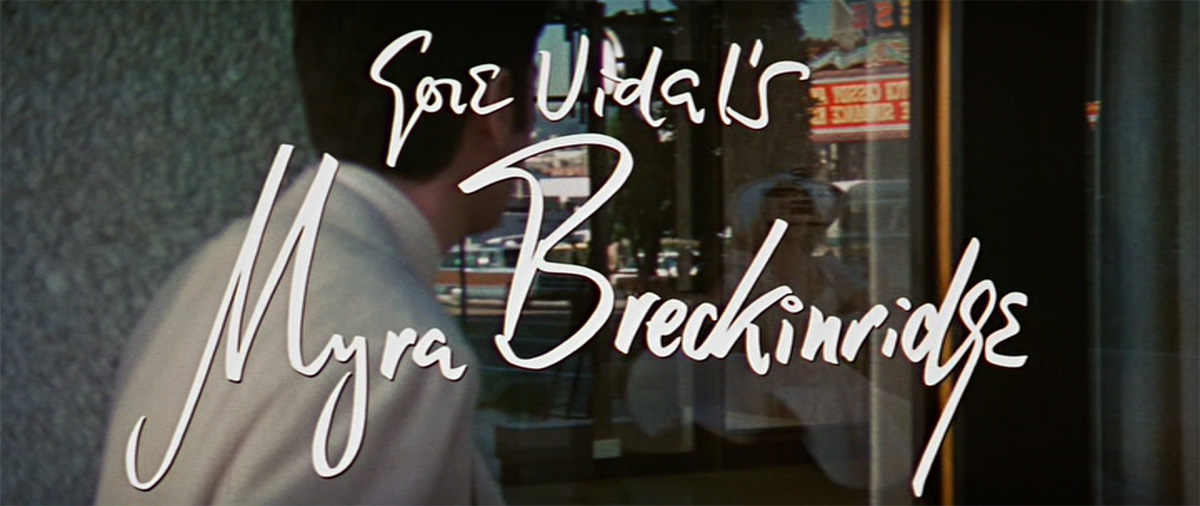
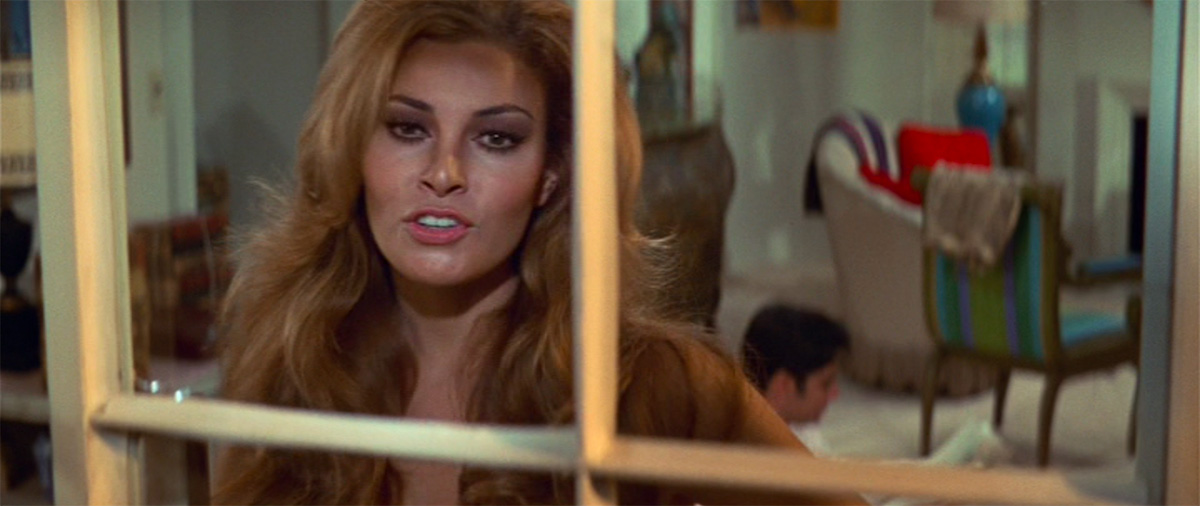
The 1970 20th Century-Fox production of Gore Vidal’s novel, Myra Breckinridge, has become somewhat of a cult classic over the years, despite losing money at the box office during its initial release. The original book was written as a satire and dealt with the gender reassignment of its main character, Myra (formerly Myron). Raquel Welch was eager to play both parts, thinking the acting challenge would propel her into the ranks of a serious actress. She should have thought a little more about that.
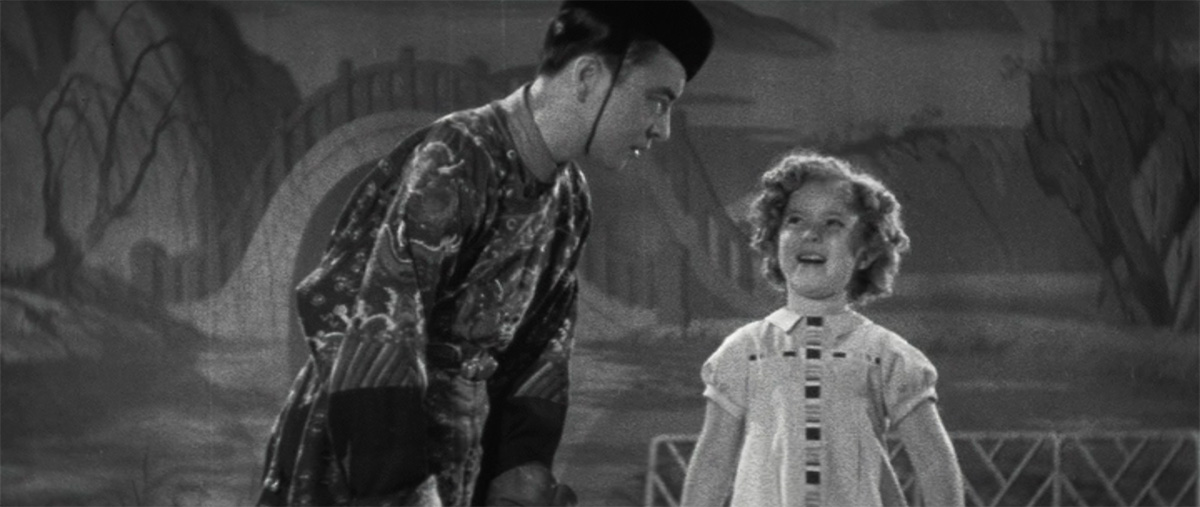
Over the title sequence, the Shirley Temple song “You’ve Got To S-M-I-L-E” from “Stowaway” (1936) is played after being set-up by an actual clip from the movie. Many classic films from the Fox library were used throughout to add extra humor and also as a way to avoid showing the hardcore situations that were occurring in the film’s storyline.


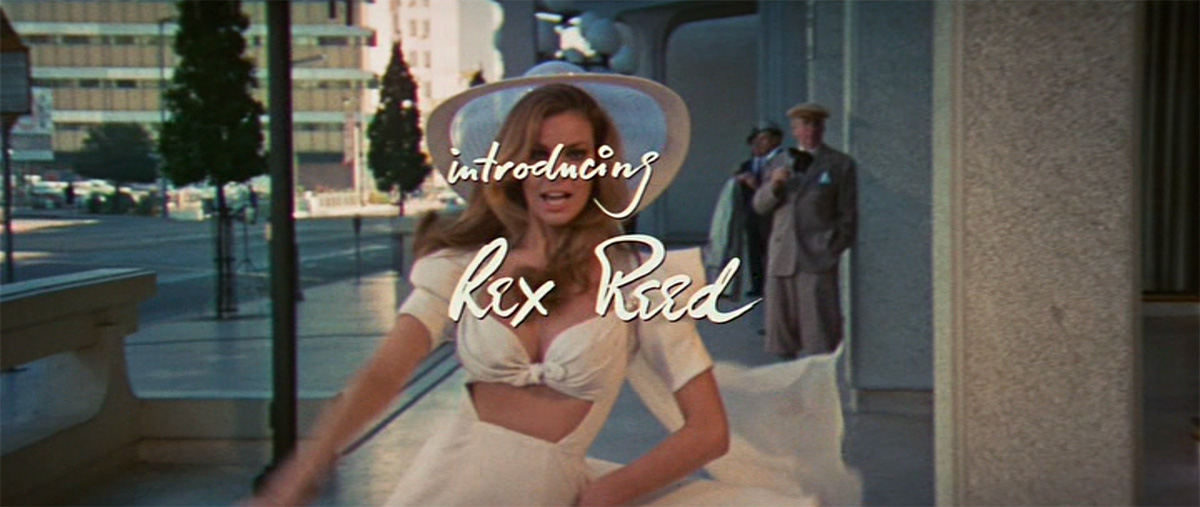
Raquel dances down Hollywood Boulevard to the vocal talents of six-year old Shirley. It boggles the mind.


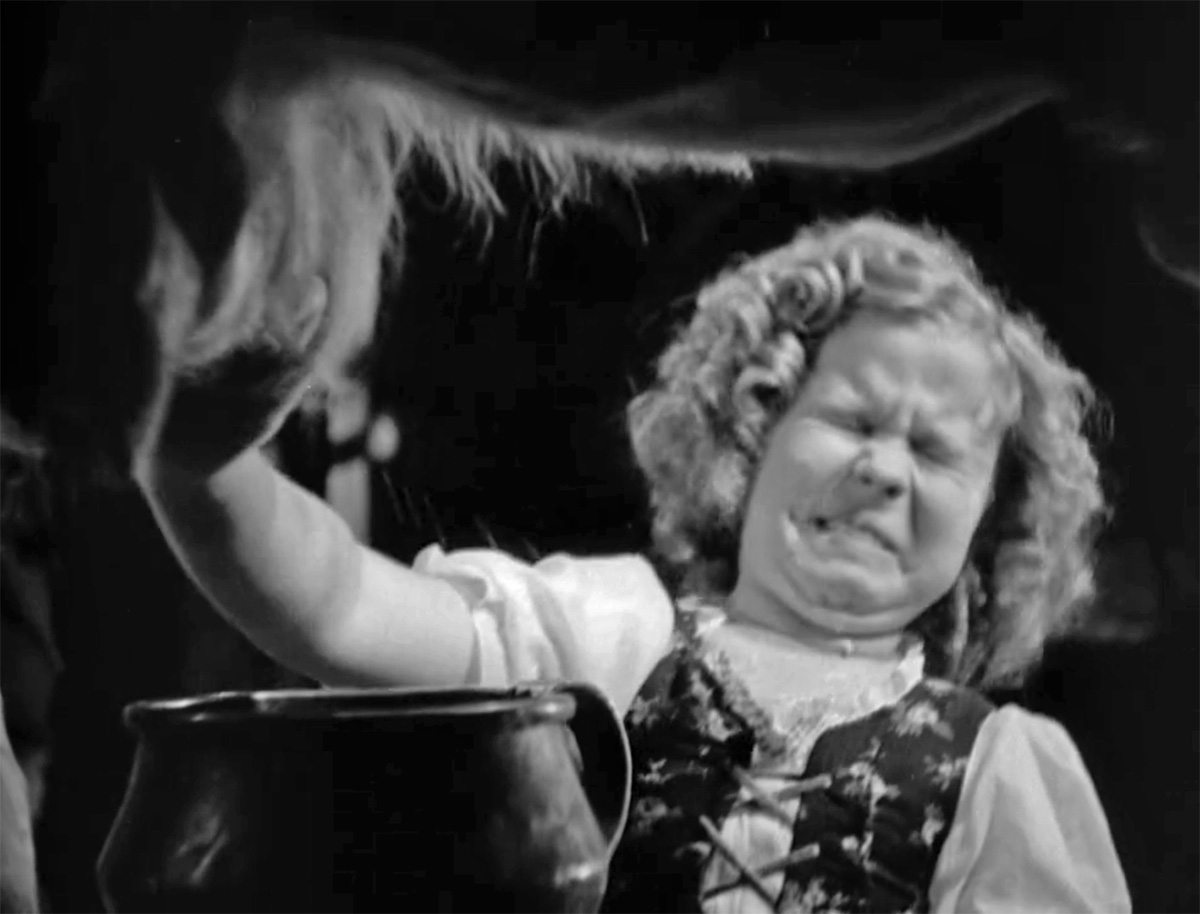
One other Shirley clip was included but did not remain in the film. After the preview in San Francisco, the White House insisted that the footage inserted from “Heidi” (1937) be removed. Shirley, who had just finished her stint as United Nations General Assembly Delegate, had some political clout! While she was probably not happy about the “Stowaway” clip, the one from “Heidi” that showed her getting squirted by a cow was used to suggest…well, you can fill in the blank. The same person who resigned from her position as chair for the San Francisco Film Festival for showing “Night Games” wanted nothing to do with the X-Rated “Myra Breckinridge.” It was one of two films with an X rating to be released by Fox that year, the other being “Beyond the Valley of the Dolls.” Loretta Young successfully sued to have her clip removed. You go, Loretta! It was a slippery slope; 20th Century-Fox owned the classic films, lock, stock, and barrel, so the ability of a star to successfully launch a lawsuit was not a slam-dunk in those days. Laurel & Hardy and Judy Garland weren’t able to protest; they were dead and gone by the time of the film’s release.


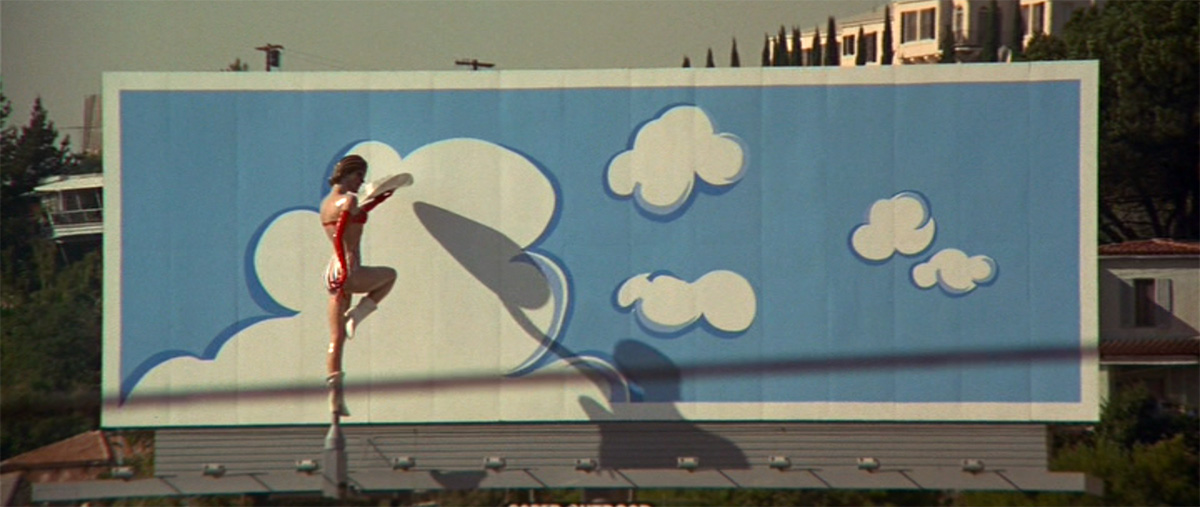
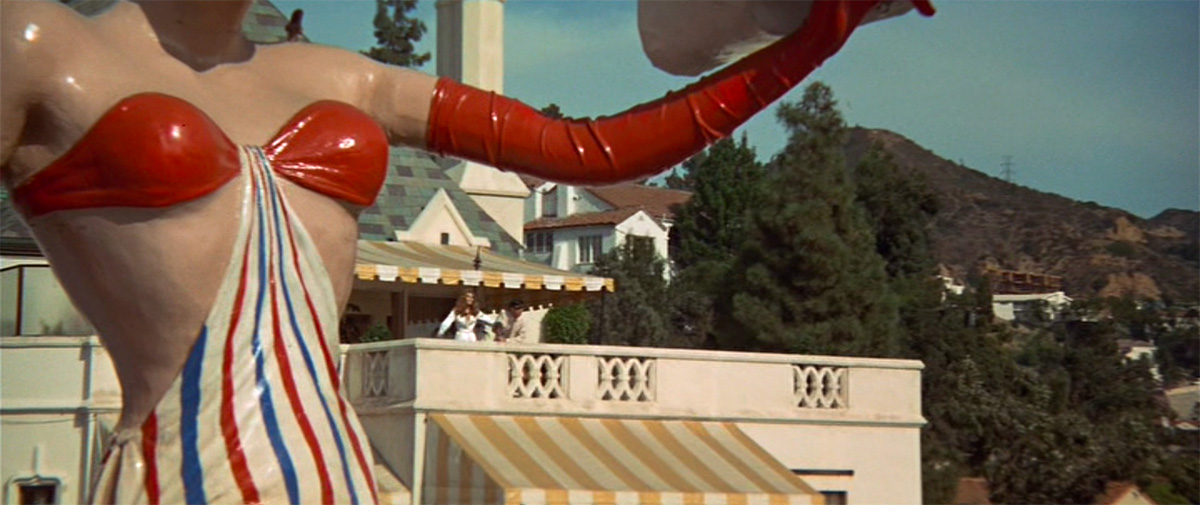
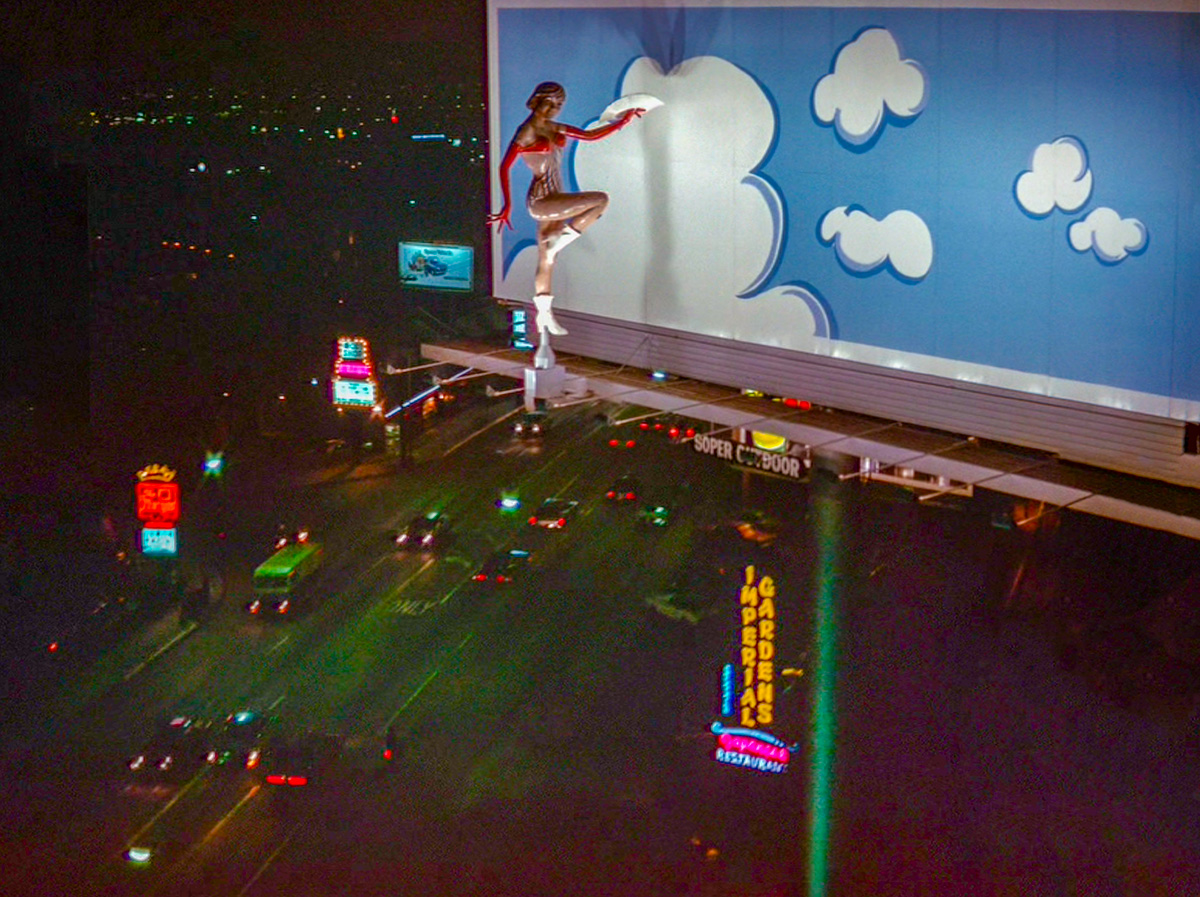
The cover of Vidal’s novel featured the rotating Las Vegas showgirl  from the Sahara Casino that was found on the Sunset Boulevard billboard just outside the Chateau Marmont Hotel in. Hollywood. Another reason this film fascinates me! An early scene in the movie shows the advertisement and then pans to the right to show the hotel.


That’s Raquel Welch and Rex Reed on the Chateau Marmont’s penthouse balcony.


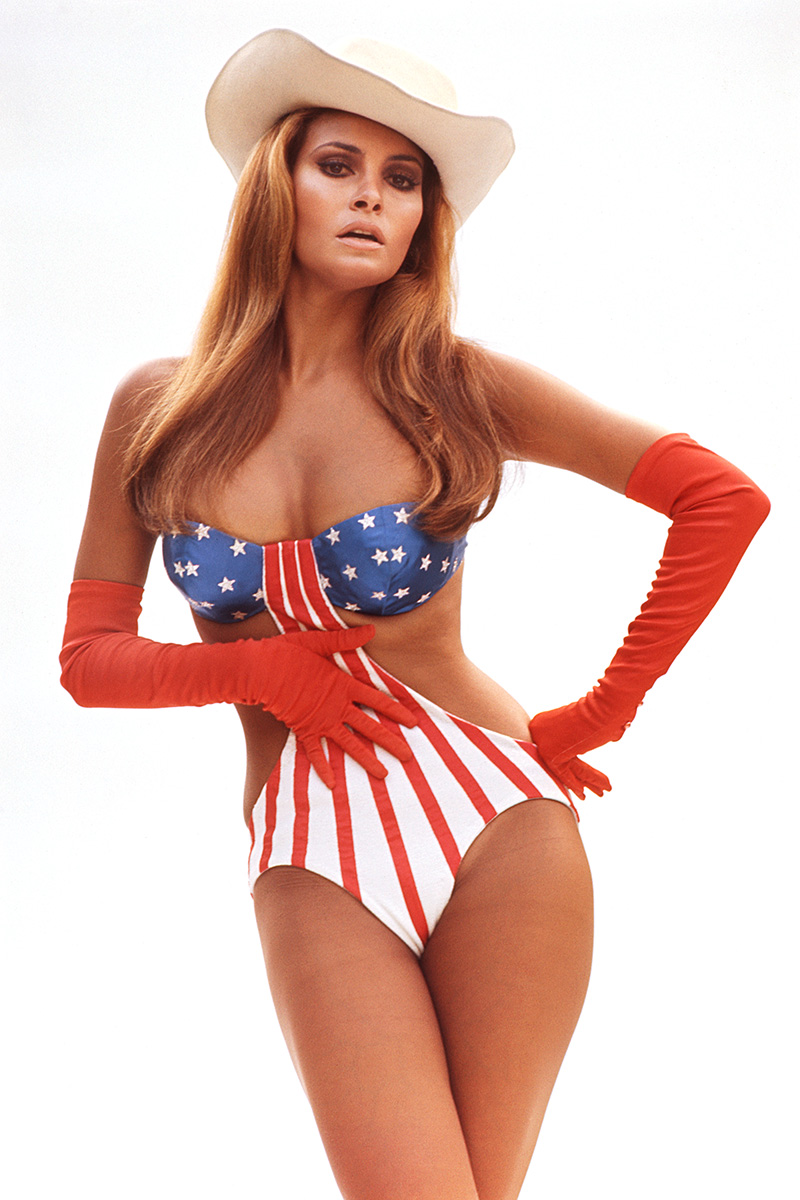
For one horrific scene in the movie and the majority of the publicity, Raquel donned an outfit that resembled that of the showgirl. This was going to get her taken seriously?


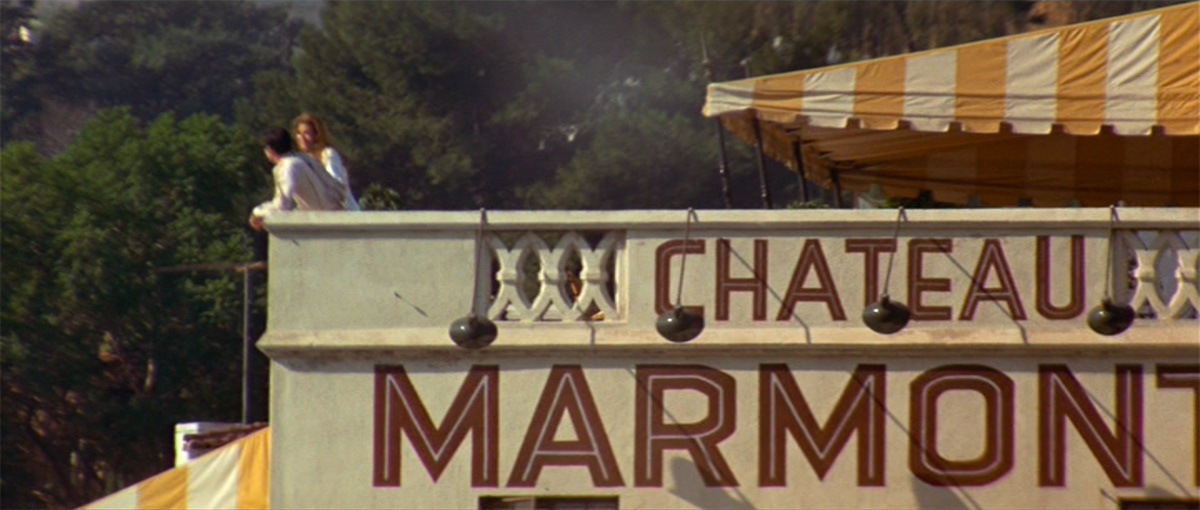
Until I saw this movie, I was not aware that the Chateau had its name painted prominently on the side of the building.


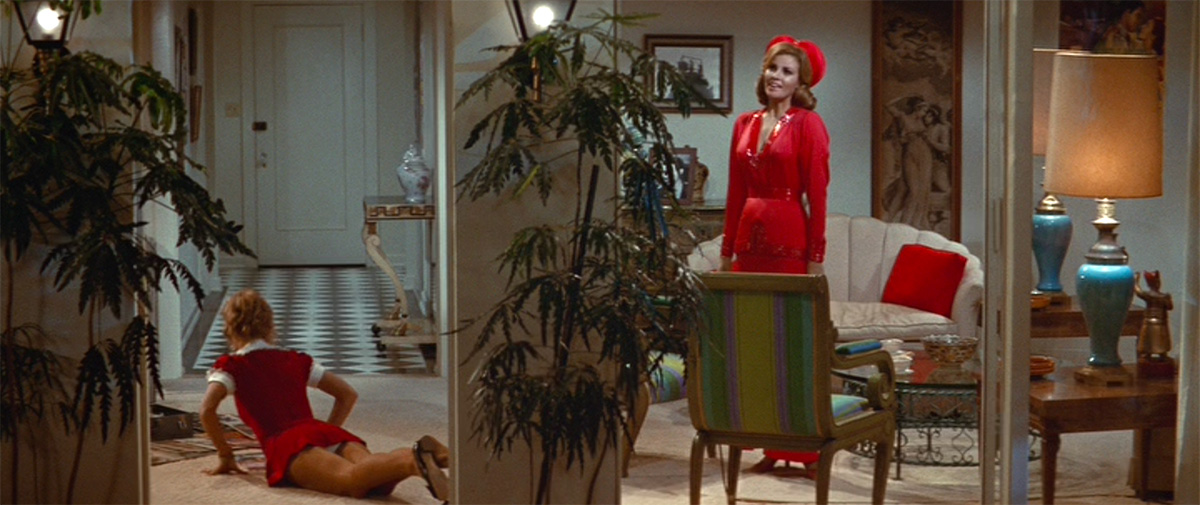
Sadly (for me at least), that’s the last we see of the real hotel. The interiors were shot on a studio soundstage.


They did a good job of capturing the essence of the room.


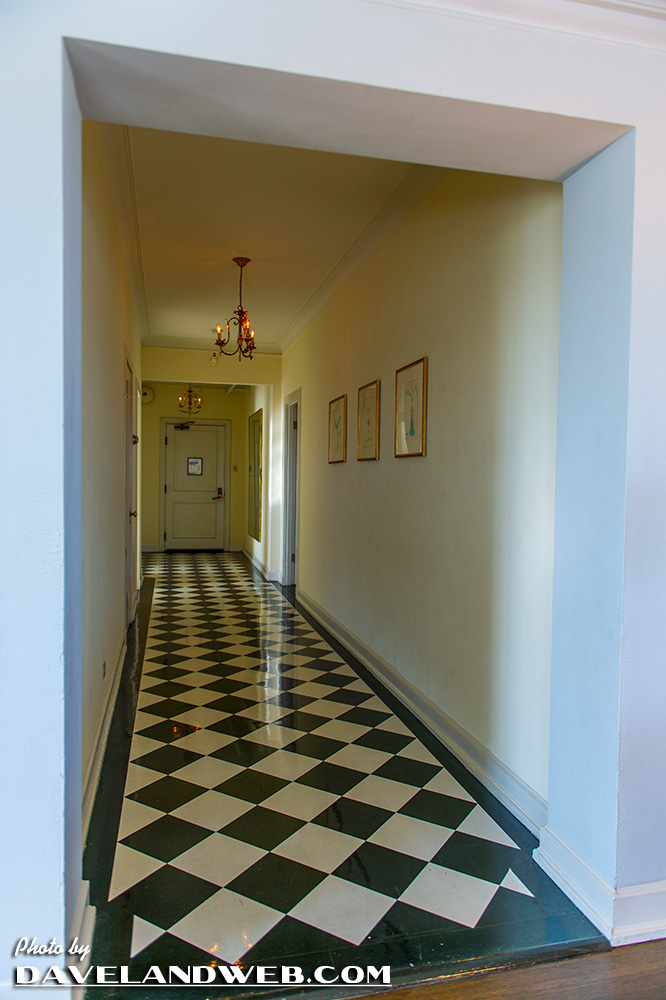
The real penthouse, which shows a much longer entry hallway:


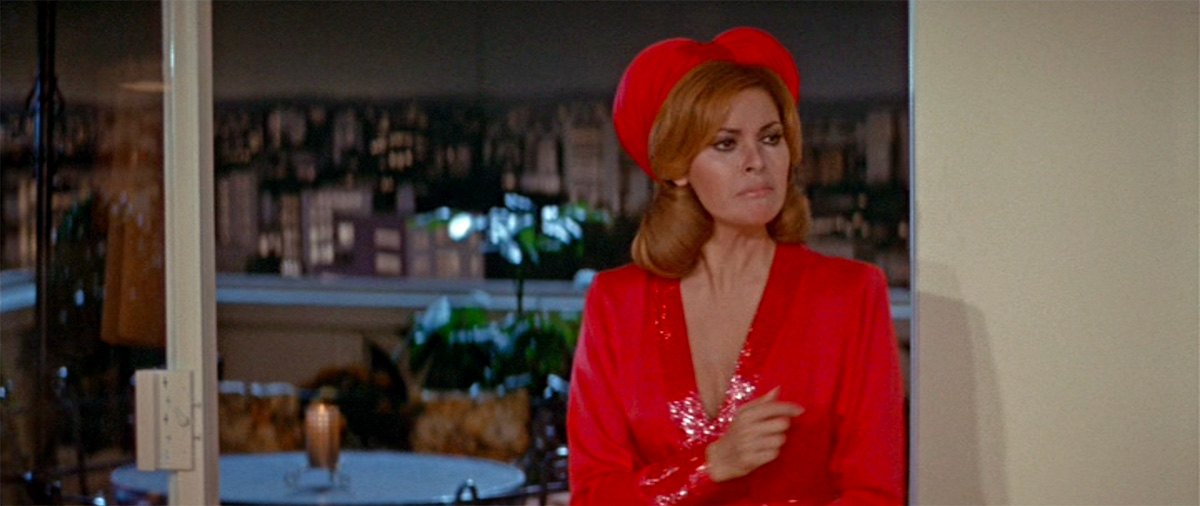
Almost convincing, other than the non-vintage details of the sliding glass door hardware and the very flat-looking backdrop beyond the balcony.


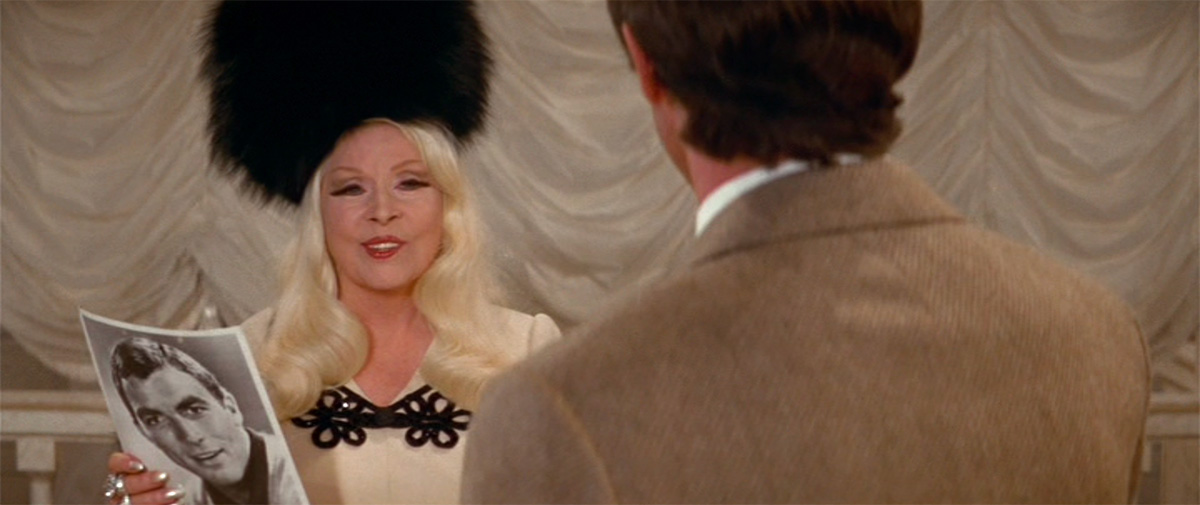
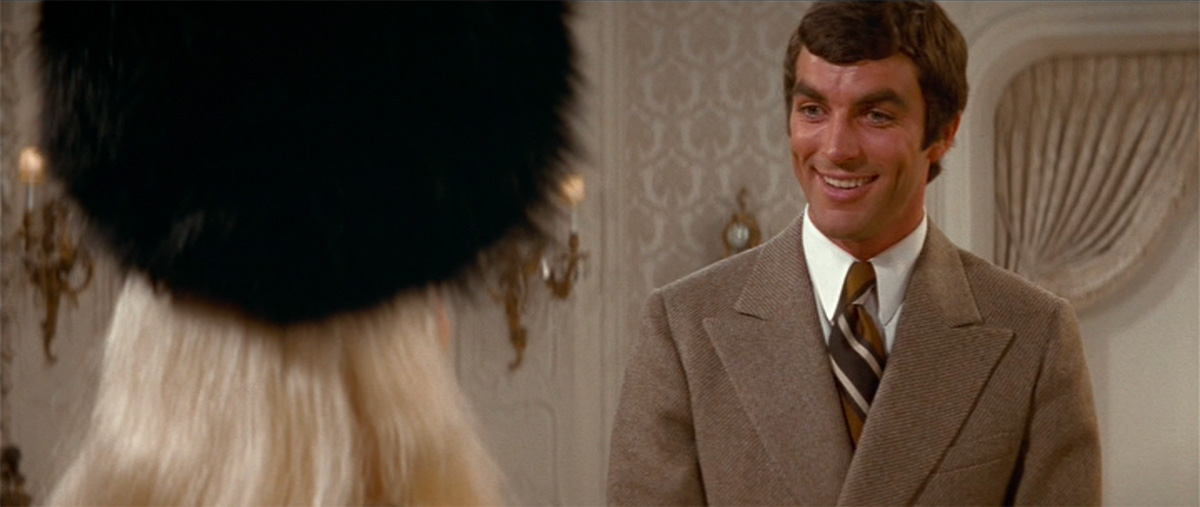
“Myra” is also known for casting a very young Tom Selleck as one of the men Mae West’s character, casting agent Letitia van Allen, is “auditioning.”


Pre-Magnum P.I. mustache, of course.


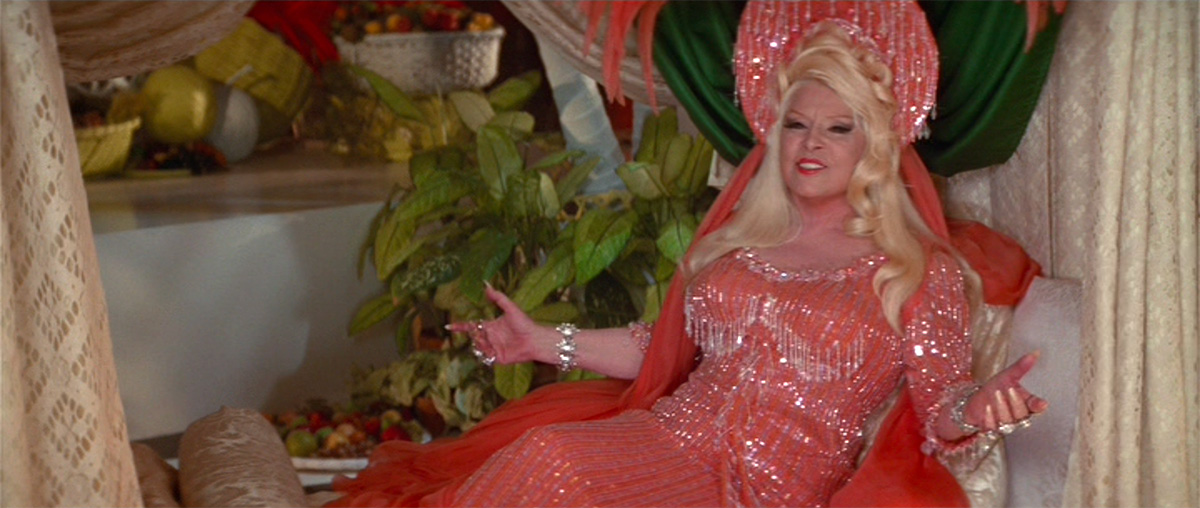
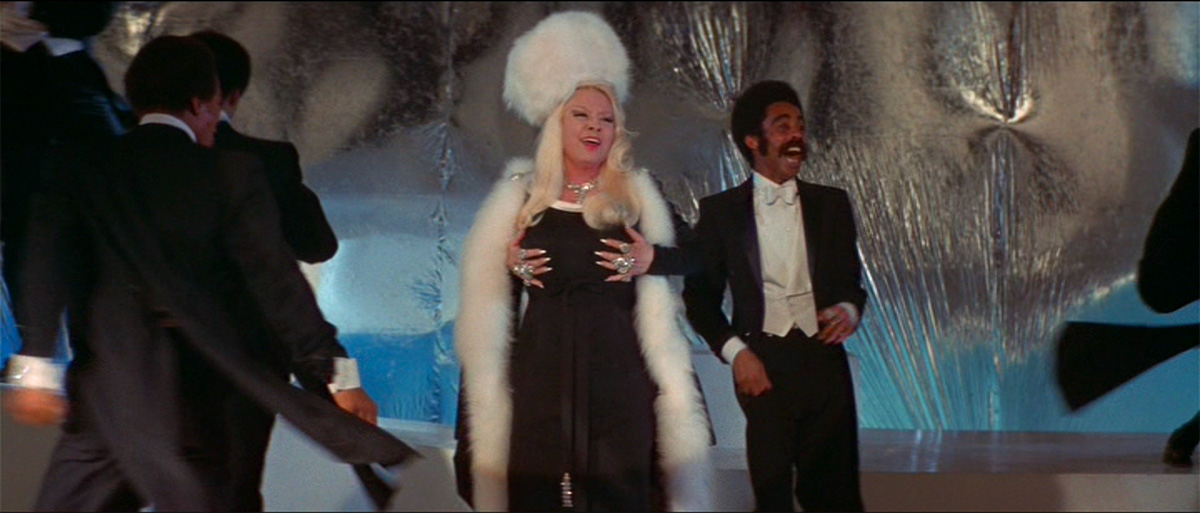
The seventy-seven year old West performs (?) two musical numbers. For the first, “You Gotta Taste All the Fruit,” she is reclined the entire time, showing slight hip and arm movement. Other than that, she appears embalmed.


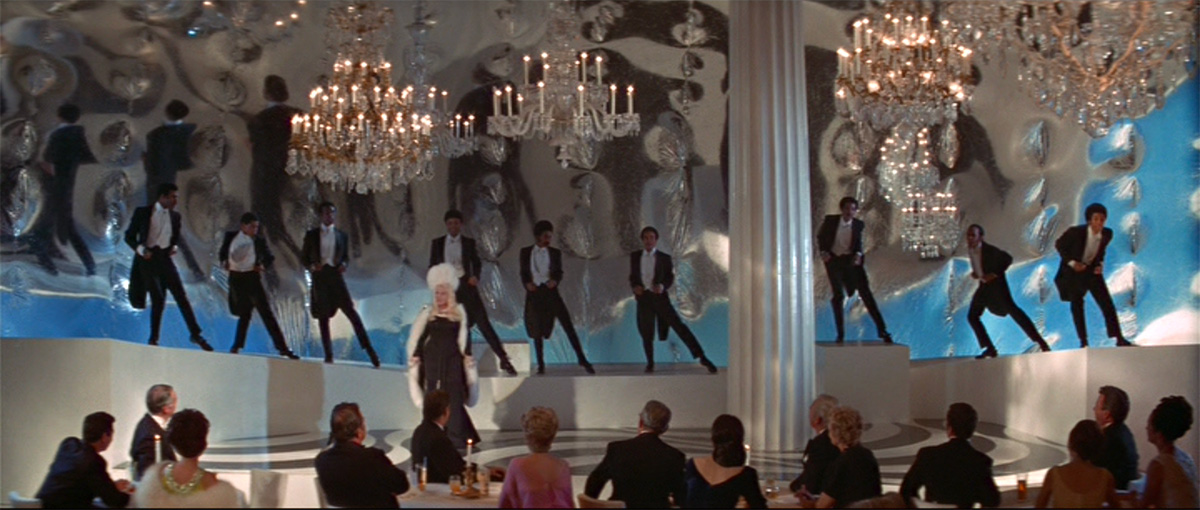
Mae changes costumes and actually stands up for “Hard to Handle,” eventually made more famous by The Black Crowes.


For this one, she suggestively grabs her body and undulates her hips. For the first film she’d made since 1943, West was giving it her all.


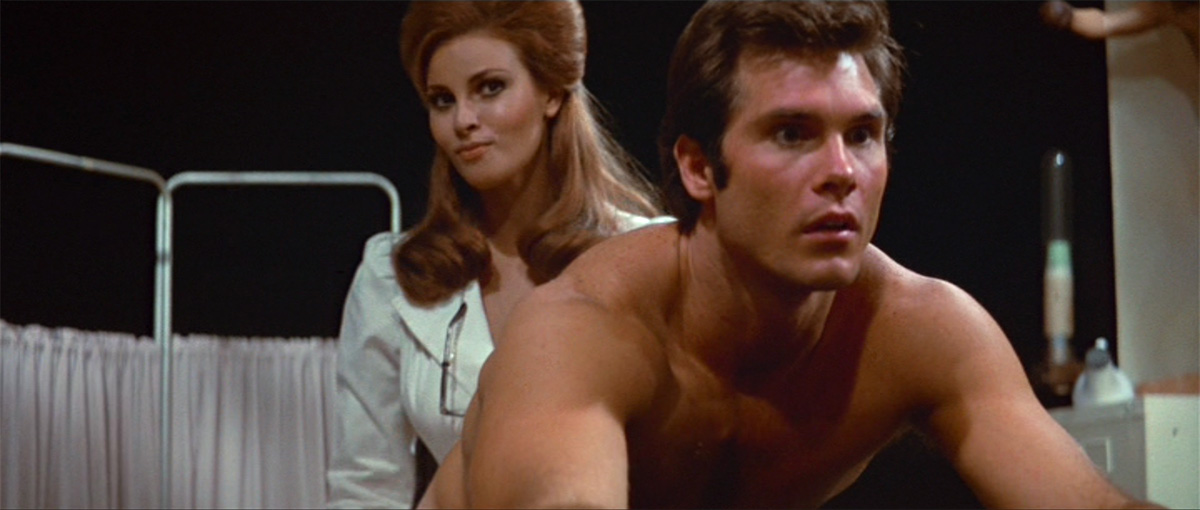
The aforementioned scene that made “Myra” legendary for its bad taste was the rape scene between Myra (Raquel) and her unwilling partner, aspiring actor, Rusty (Roger Herren). I have to ask again: this was the film that was going to get Raquel taken seriously and show her acting chops? As you can tell, I am having a difficult time comprehending what would have lead her to believe that.


Thanks to the miracle of Photoshop, I was able to stitch these two panorama shots from the movie together to yield some vintage views of Sunset Boulevard:


Same view, facing east, circa 2022:


1970:


The Imperial Gardens (neon sign below the billboard) was once The Players, owned by Preston Sturges. Now, it’s a Pink Taco restaurant. Similar view, facing west, circa 2022:


That’s a lot of territory for one post! Thanks for sticking around til the end!

See Classic Movie and TV photos at my main website.