Showing posts with label i'll be seeing you. Show all posts

Tuesday, April 23, 2024

Temple Tuesday: 96th Birthday Bonanza!


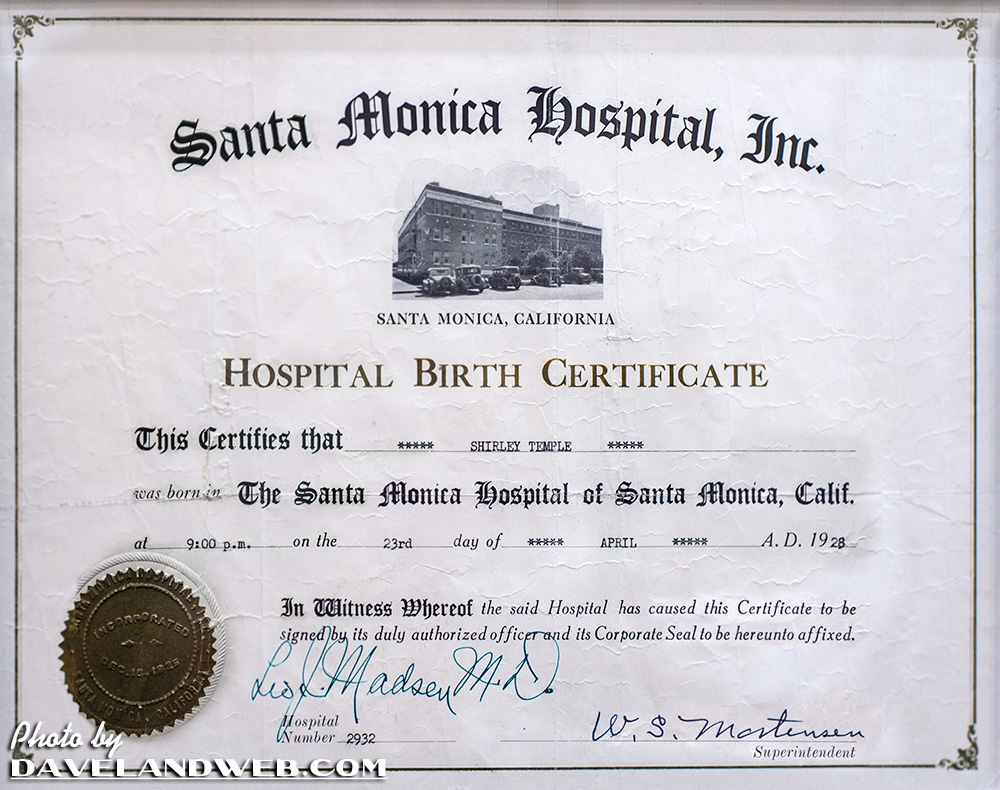
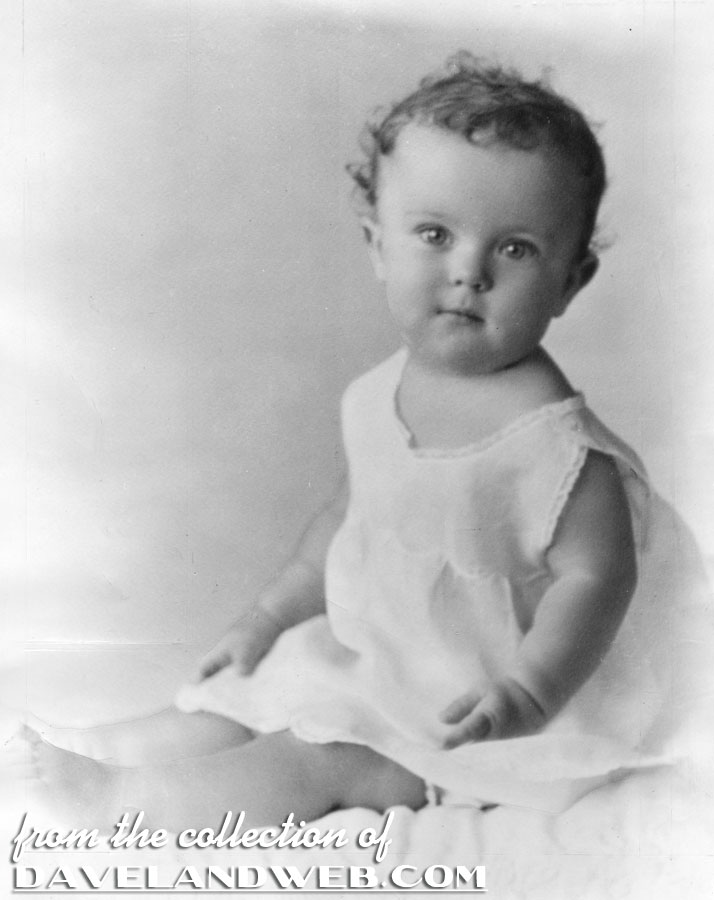
Today marks the 96th “Heavenly Birthday” for Shirley Temple Black, actress, diplomat, wife, mother, and author. One of the most infamous tales about Shirley was how her movie studio, Fox, got her mother to agree to shave a year off of her birthdate to make her antics appear all the more precocious. Above, you can see her original Santa Monica Hospital birth certificate, with the true year of 1928. Below is a shot of Shirley at age one.


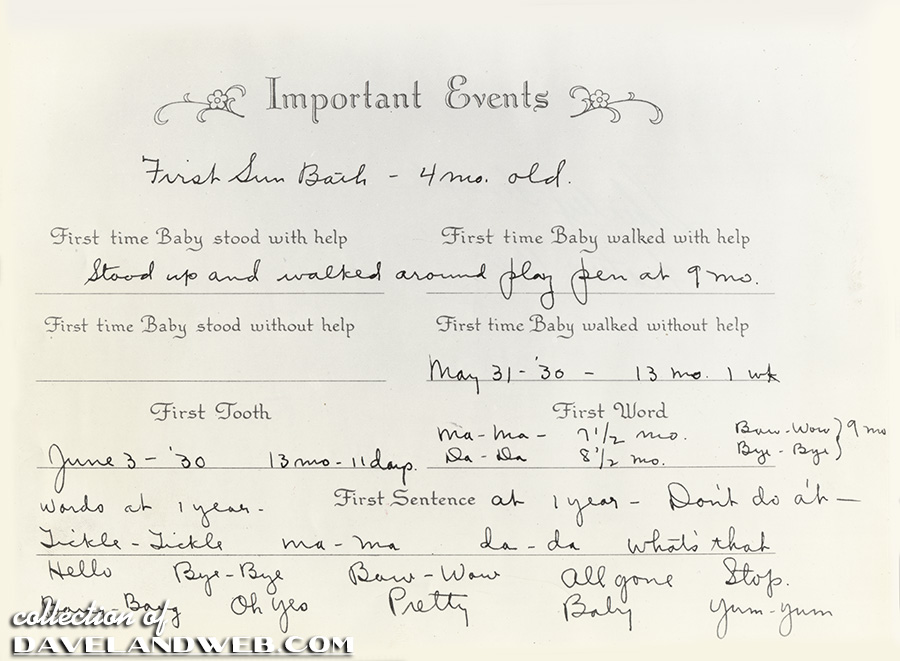
For the earliest deep dark secrets about Shirley, look no further than this Important Event card, diligently recorded by her mother, Gertrude:


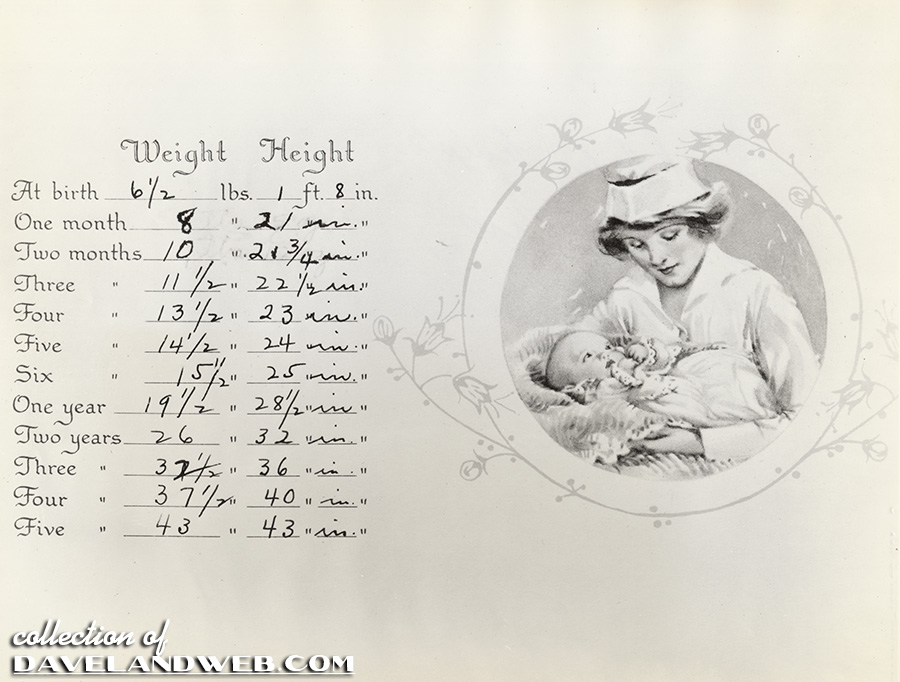
Gertrude also charted Shirley’s growth progress:


Shirley’s studio birthday parties at Fox were legendary. Here’s the first one, from April 1934. Is that little boy on the right actually using a toothpick while the camera is snapping his photo? Such poor manners - bet he wasn’t invited back again!
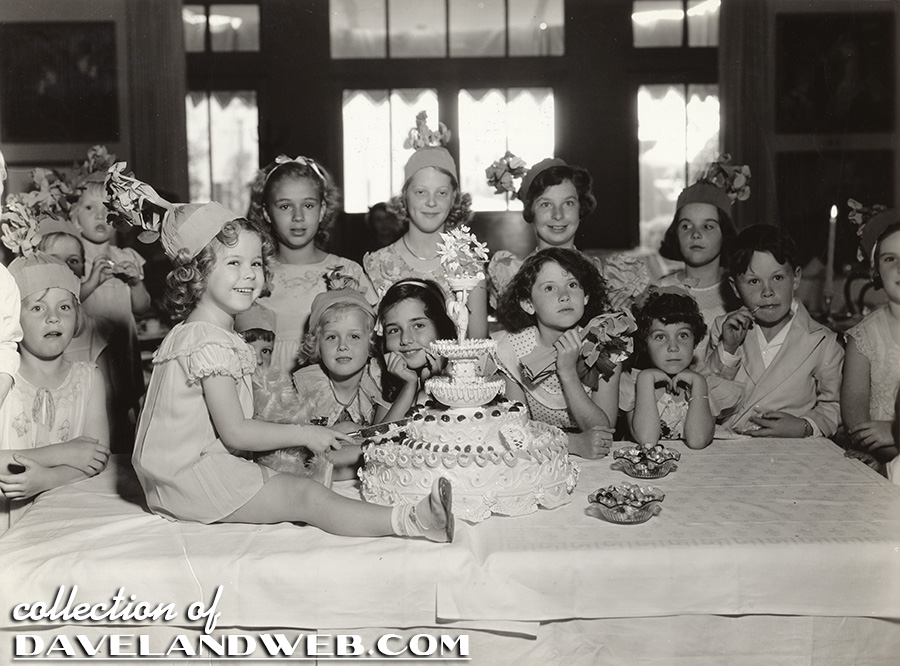


By the time of her 1936 birthday, Shirley looks a little bored with it all, despite the spectacular cake! Shirley would later recall:

Fox would have (a party) for a large number of people I didn’t know, a lot of children I’d never seen in my life and never saw again. And I was hostess. It was kind of strange. I figured it was part of the job. Fox would pay h alf the cost of the parties and my mother and father - or I - would pay the other half. Why I had to pay for the parties at all is a mystery, but that’s how it went. And there’d be two hundred kids, maybe more. I thought those parties were a big bore.
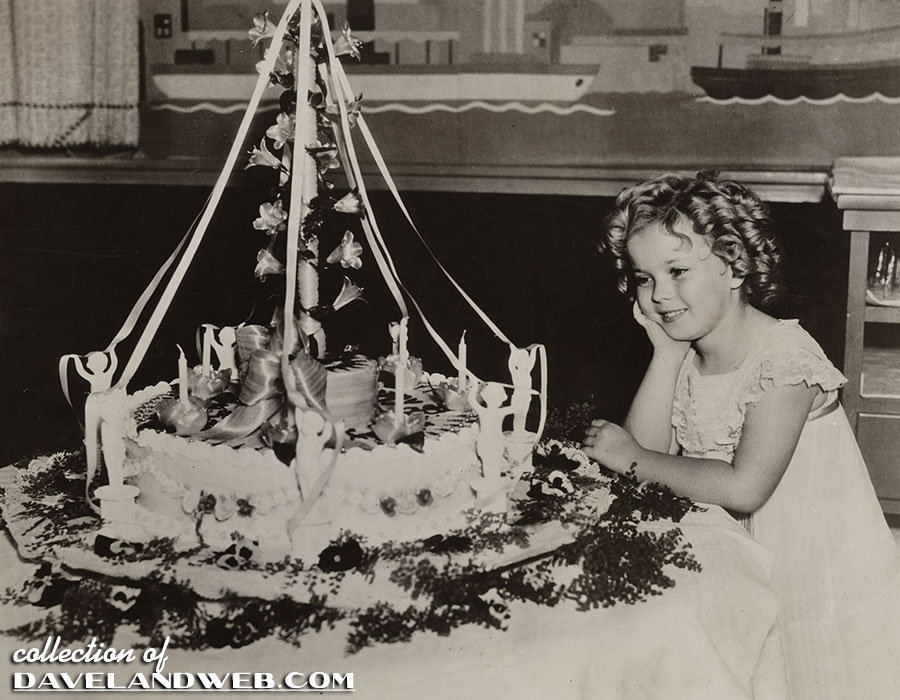


Shirley’s first stand-in, Marilyn Granas, had this recollection about the parties:

They always had lovely food and lovely prizes. Everybody got a favor and I remember one of the favors was a beautiful leather autograph book that Shirley had autographed. I’ve still got mine.

Shirley’s last studio birthday at Fox was held during the filming of “Young People.” Stand-in Mary Lou Isleib is two over from Shirley’s left.
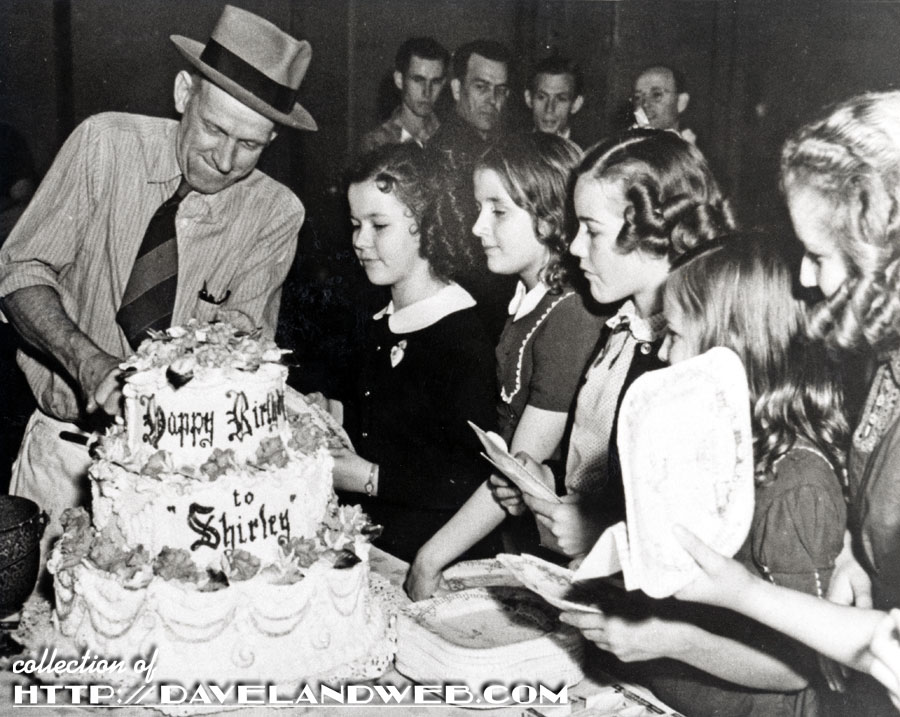


For 1940, Shirley got not one, but TWO incredible birthday cakes! That’s what happens when you’re the most beloved child star of all time. The shot below was from her party at the studio commissary, which had a Dutch theme. Dickie Moore, Shirley’s first on-screen kisser in “Miss Annie Rooney” (1942), recalled this birthday celebration in his autobiography,  Twinkle, Twinkle, Little Star:

The day of Shirley’s party all guests parked their cars in the main parking lot and were met by buses and driven to the commissary. There Shirley stood at the head of a long reception line, gravely shaking hands with all arrivals, telling each of us how glad she was we had come, and thanking us for the presents we had brought, which were passed along to join the growing mountain of unopened packages, most of which were later sent to an orphanage. Everyone ate cake, while mothers tried to get Hymie Fink to take their children’s pictures. There were many party favors, including a pen with a magnifying glass on one end and Shirley’s name inscribed on it.
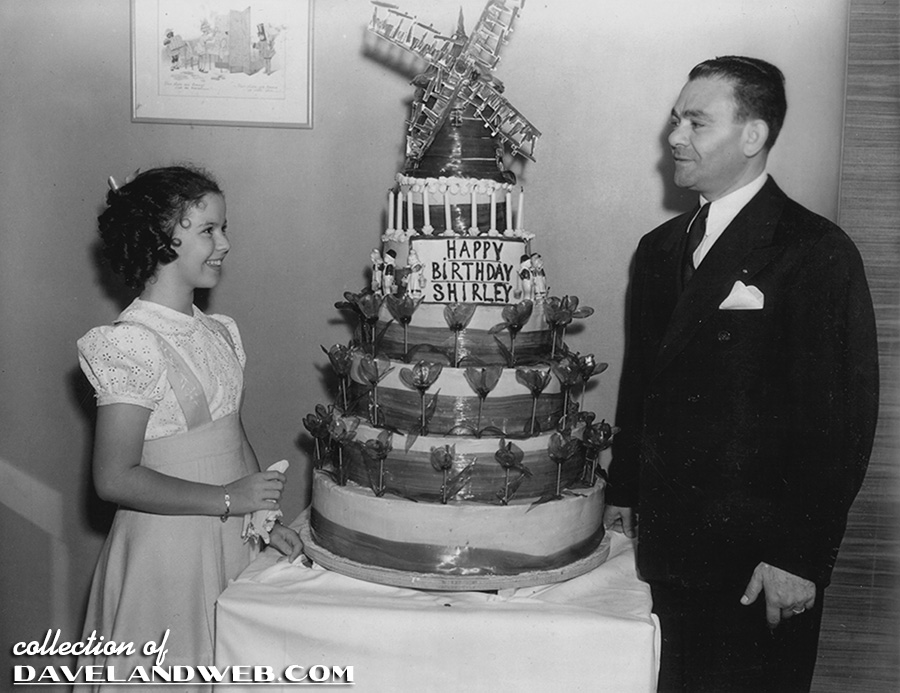


If you’re wondering about the art on the wall, here’s a closeup:


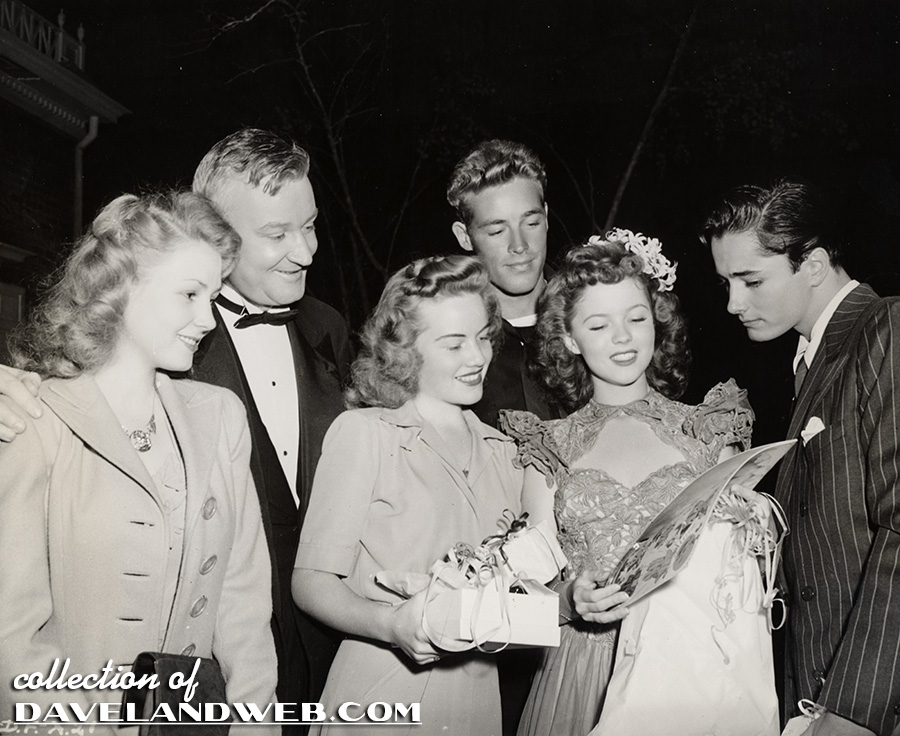
By 1944, Shirley was working for Producer David O. Selznick. Her sweet sixteen birthday party was attended by her costars from “I’ll Be Seeing You.” L-R: Dorothy Mann, Tom Tully, stand-in Mary Lou Isleib, Guy Madison, Shirley, and John Derek.


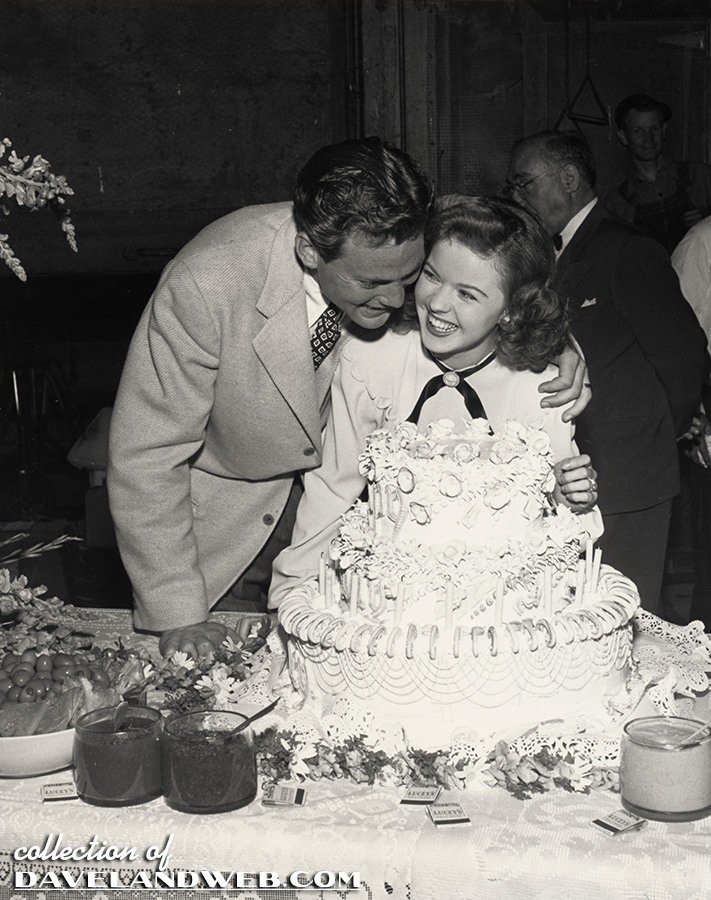
In 1946, Shirley turned eighteen and celebrated the milestone birthday on the set of “Honeymoon” with then husband, John Agar.


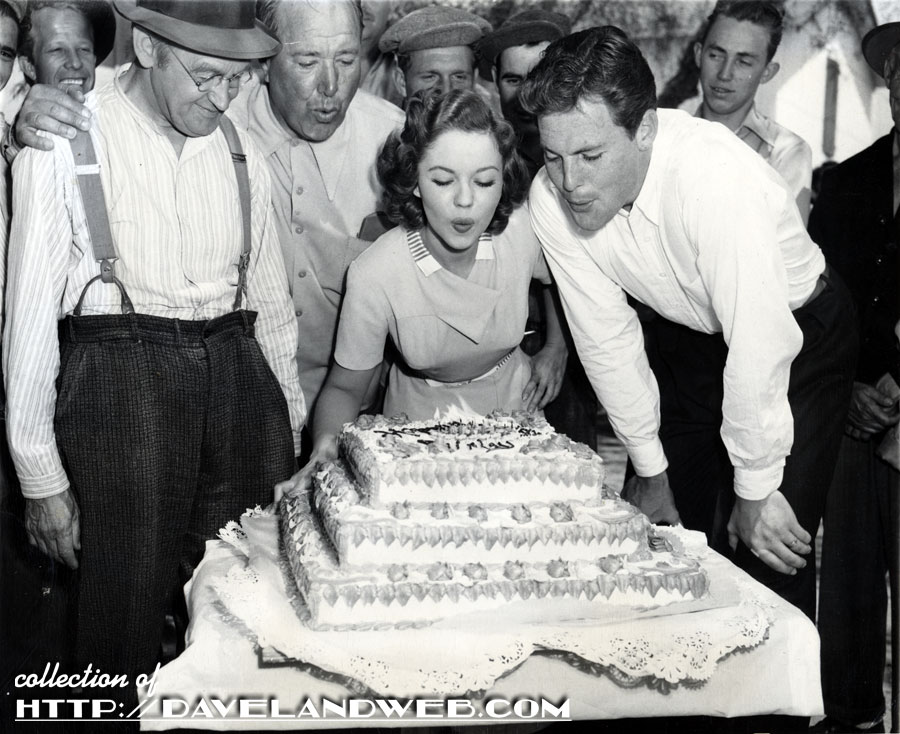
Shirley’s last movie-birthday party was held during the filming of “The Story of Seabiscuit” (1949). At left is co-star Barry Fitzgerald, Director David Butler, Shirley, and John Agar.


See more Shirley Temple photos at my main website.

Tuesday, February 06, 2024

Temple Tuesday: Memos and Letters


Producer David Selznick was known for his prolific memos; a rather large book was published in 1972 filled with his correspondence titled Memo from David O. Selznick. Two of the memos from the compilation include our gal Shirley. In a June 15, 1943 memo the producer wrote to his Director of Advertising and Publicity, Joseph Henry Steele:

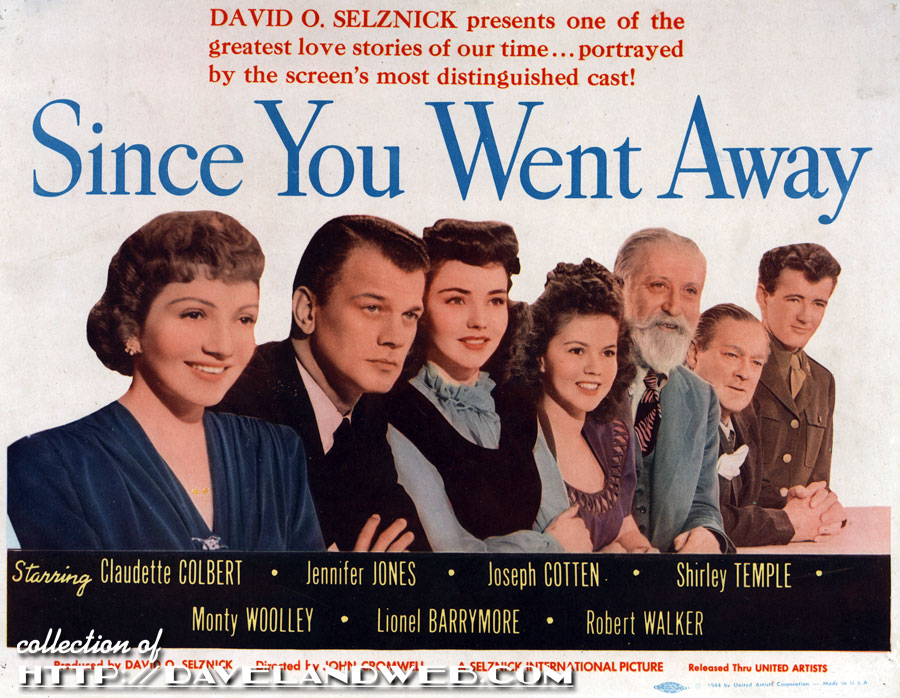
When we’re ready, the story on “Since You Went Away” should be built on the following:

David O. Selznick today announced that…“Since You Went Away” will mark the return to production of Selznick, and be his first picture since “Gone With the Wind” and “Rebecca.” At the same time, Selznick confirmed previously published reports that Claudette Colbert will play the role of the young wife and mother in the film, which is based upon the Whittlesey House and Ladies’ Home Journal story of the same title…

With Claudette Colbert, Jennifer Jones, Monty Woolley, and Shirley Temple, the cast looms as one of the most important of recent years. Selznick also stated that there would be other important players cast shortly, to give the film a cast rivaling that of the producer’s famous production of “Dinner at Eight.”

Rewrite the above as much as you want to, but please be careful to: (a) handle the mother and sister angles almost exactly as above; (b) use the casting in the recapitulation as stated above, i.e., Colbert first, Jones second, Woolley third, and Temple fourth; (c) I’m anxious to get the accent off this as a Temple vehicle and start hammering away at its tremendous cast.…I’m getting tired of being referred to solely as the producer of Gone With the Wind and Rebecca, and would like to get some of the other pictures alluded to as often as possible (I can see my obituary now: ‘Producer of Gone With the Wind dies!’)…


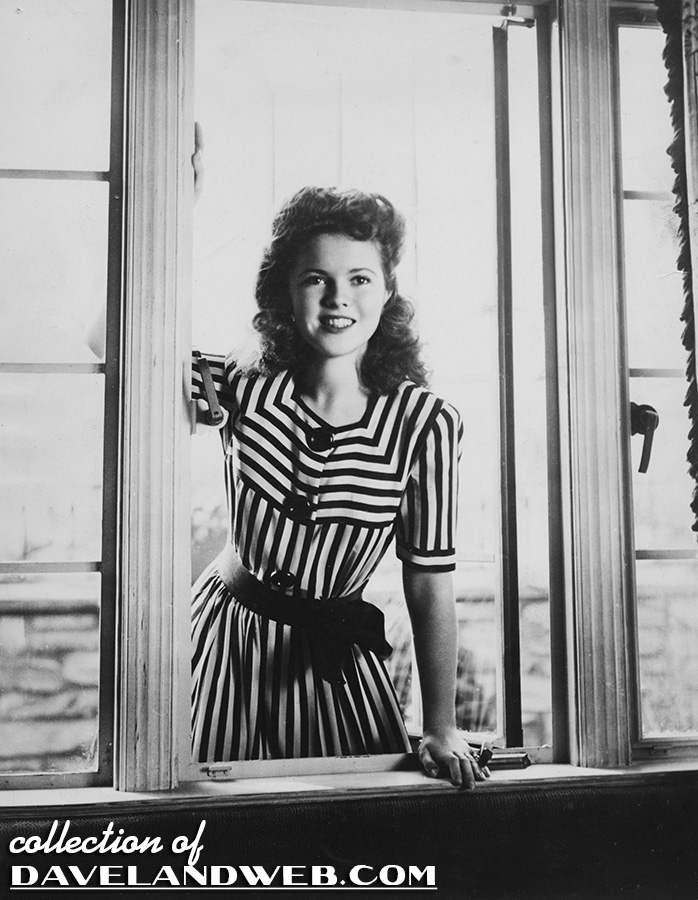
The above shot of Shirley taken in October 1943 was accompanied by this publicity blurb:

Fresh Start for Shirley Temple

Brentwood, Calif. – Now 15 and a typical teen-age girl, Shirley Temple is launching a “second” career. As a child actress, she was at the top as film box office drawing card from 1935 to 1939, under a 20th Century-Fox contract. Since 1941, she has made only two movies, and in 1942 she starred in a radio series, “Junior Miss.” At the same time she gave more attention to her school work at the Westlake School for Girls, and to growing up as a normal girl.


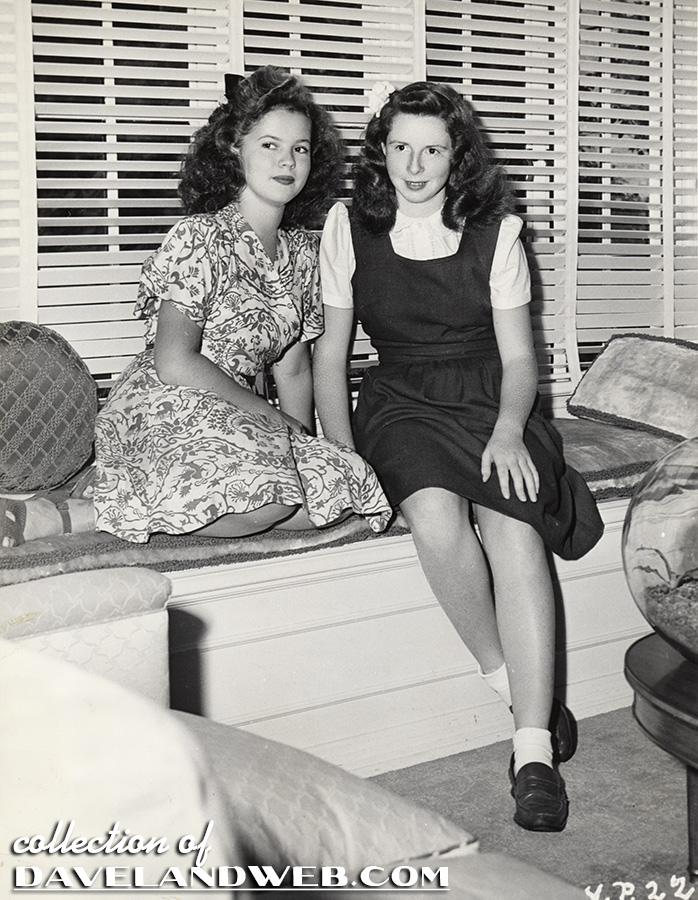
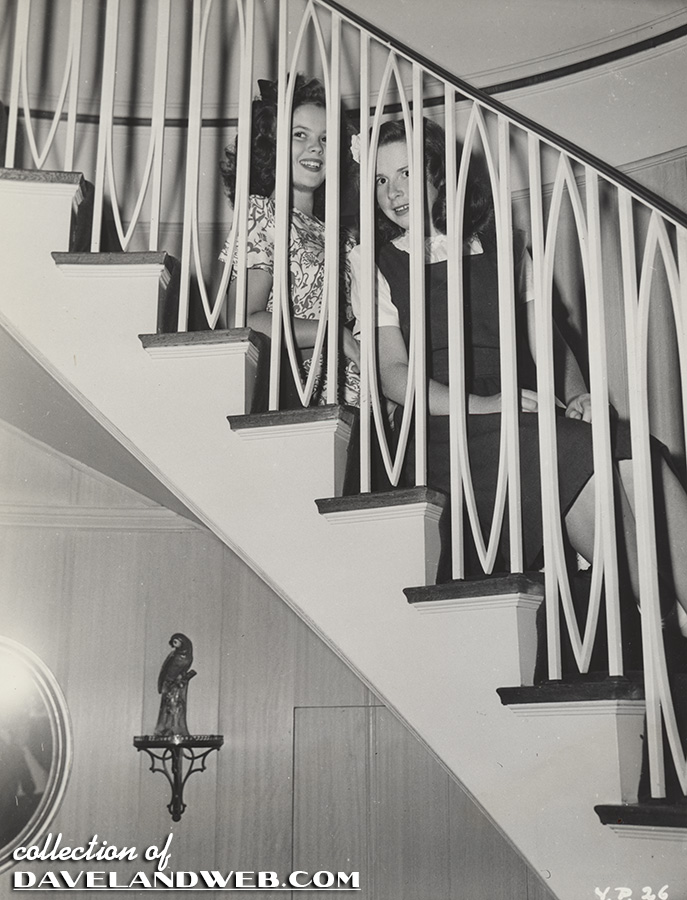
Now, under a new contract with David O. Selznick, a new program is being worked out, with adult stardom as the aim for the future. For the present Shirley will continue her schooling and make occasional pictures in which she will have important roles but not be starred. She is at work now on“Since You Went away,” in which she plays the tomboy daughter. These photos were made at the Temple home here. Shirley is seen with her new friend Abby Wilder, whose mother, Margaret Buell Wilder, wrote the novel “Since You Went away.” Shirley plays Brig Hilton, who in real life is Abby Wilder.

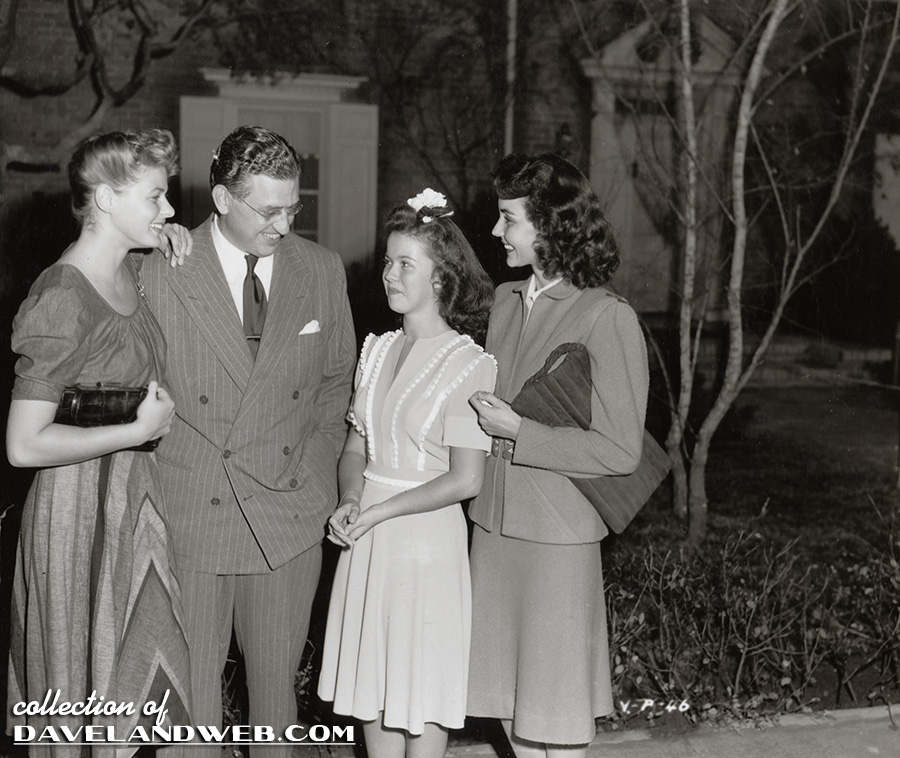
The below image shows Ingrid Bergman visiting Selznick (who she was under contract to at the time), Shirley, and Jennifer Jones on the set of “Since You Went Away.” Selznick may have been looking at Shirley, but his romantic attentions were about to be focused on Jones, who he would eventually marry.


This November 3, 1944 memo from the Producer was to Reeves Espy, a Selznick executive:

Shirley is exceedingly hot at the moment. We can”t commence to fill demands for interviews and other press material on her from newspapers and magazines; and this is, of course, an indication of the interest of the public. At the preview of “I’ll Be Seeing You,” costarring Ginger Rogers, Joseph Cotten, and Shirley Temple, Shirleys name was received with the biggest applause of all three, despite the fact that the Gallup poll shows that Cotten is the great new romantic rage, and that Ginger is one of the top stars of the business.

Shirley’s publicity in the New York press, both in connection with this appearance and in connection with her prior trip East to sell bonds, received more publicity_including, astonishingly, big front-page breaks in the middle of a war—thank I think has been accorded the visit of any motion-picture star to New York in many, many years. Indeed, it is said (and I believe a check would confirm it) that her visit received more space than that of General de Gaulle! She has made a great hit in Since You Went Away; and in her first grown-up part, that in “I’ll Be Seeing You,” is a sensational success. Her fan mail is great than that of any other star on our list—actually exceeding by a wide margin that of Ingrid Bergman, Jennifer Jones, and Joan Fontaine, who are the next three, in that order.


If Shirley was so hot, why didn’t her teen career flourish more? You can probably chalk it up to Selznick’s obsession with promoting Jones. All the choice lead roles for a young woman went to her, as the Producer ended up loaning Temple out to other studios while he focused on building up Jones’ career.


See more teenage Shirley Temple photos at my main website.

Tuesday, December 19, 2023

Temple Tuesday: Shirley’s Christmas Quintet


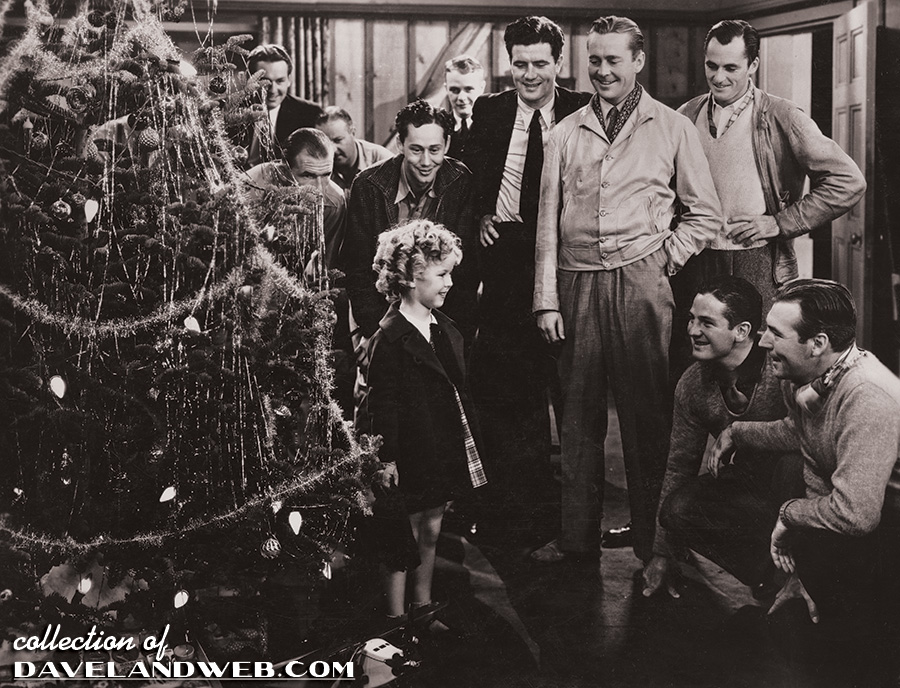
Today for Temple Tuesday we celebrate a quintet of Shirley movies that take place during the Christmas holiday. First up is “Bright Eyes” (1934), one of my favorite Shirley films. There is a very touching Christmas Eve scene where Shirley’s widowed mother (Lois Wilson) confides in her daughter that she misses her husband. The next morning, little Shirley is celebrated by all her aviator friends who used to work with her father before he “cracked up.” She is showered with gifts and love.


Yes, that’s mistletoe in the pilot’s hand. When I attempted to look up the meaning of the branch and berries on Google, this is what it said:

Historically, mistletoe represents romance, fertility, and vitality. Because nothing says love like bird feces and poison. But seriously, the Celtic Druids valued mistletoe for its healing properties and likely were among the first to decorate with it.


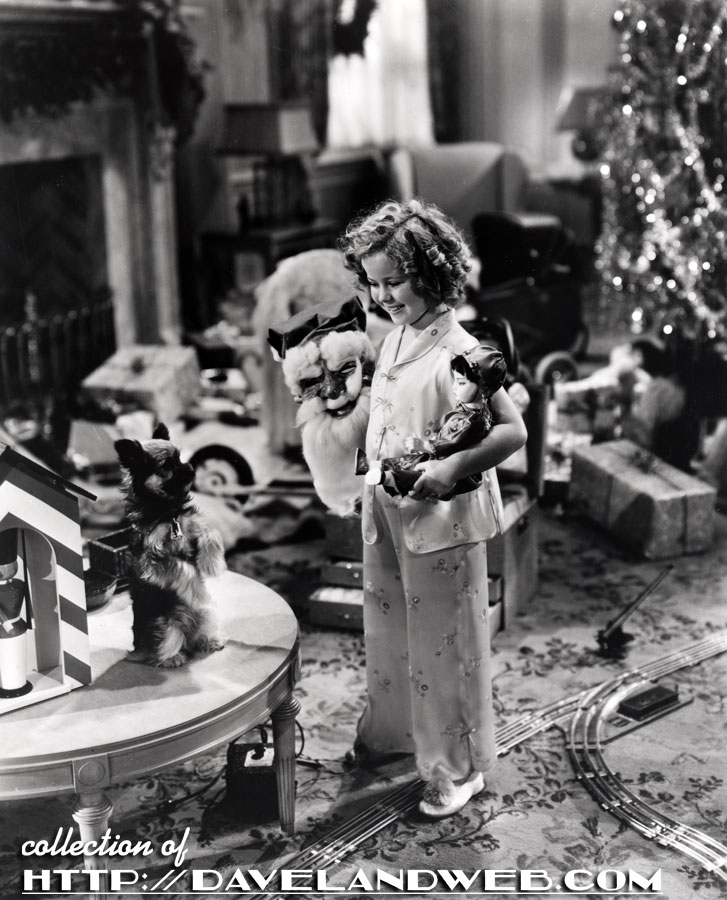
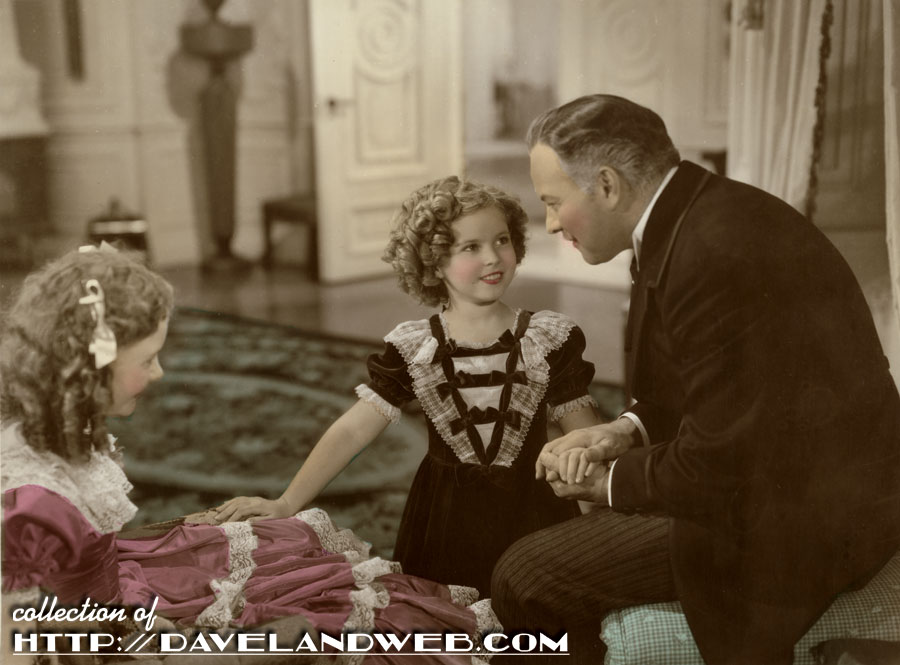
Who knew Google has a sense of humor? In “Stowaway” (1936), Shirley is a little girl who must flee her home to avoid being killed, then gets robbed, stows away on a ship, befriends a rich playboy (Robert Young), runs afoul of Alice Faye’s character’s mother-in-law (Helen Westley), almost gets put in an orphanage, and then has to plea to a judge to keep her “new” parents (Young and Faye) from getting a divorce. Doesn’t sound very Christmas-y, does it? Well, that’s what happy endings are for! The final scene has Shirley singing, “That’s What I Want For Christmas,” and judging by all the toys, dolls, and trains surrounding her, she gets everything on her list.


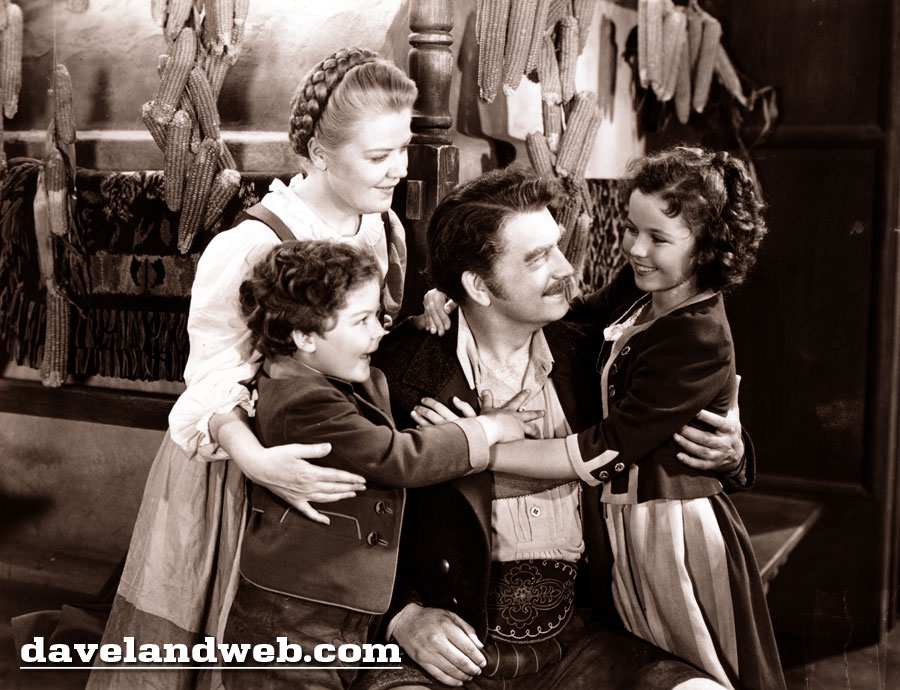
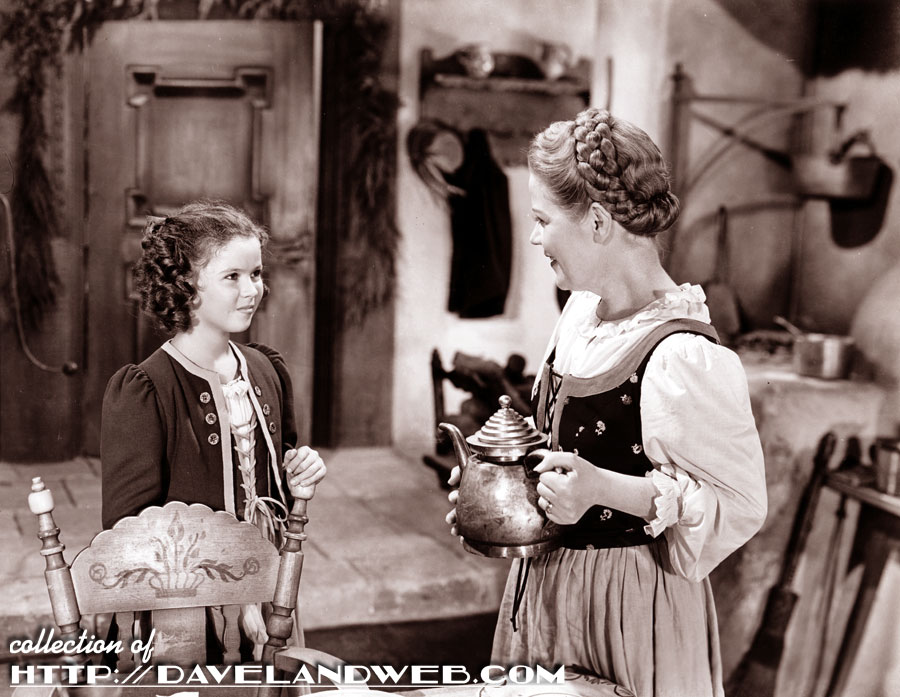
In “Heidi” (1937), Shirley sings “Silent Night” at the Sesemann household with crippled Klara (Marcia Mae Jones), wicked governess Fräulein Rottenmeier (Mary Nash), Herr Sesemann (Sidney Blackmer), and all the household servants.


It is a touching scene as the little girl gazes in wonderment upon the tree, ornaments, and abundance of gifts in the house, followed by a cut to the townspeople, nuns, and law enforcement singing the Christmas carol as well. Pardon the colorization; it was the best clip I could find!


A vintage hand-tinted photo from the same scene in “Heidi”:


“The Blue Bird” (1940) begins on Christmas Eve, as Mytyl (Shirley) and her little brother (Johnny Russell) rush home for dinner after an afternoon of bird hunting. The merriment inside a mansion causes the poor little girl to stop and gawk, wishing she had all the riches that the people inside did. Regardless, she is too proud to accept cookies from the kind gentlemen who works there.


After a long journey in a dream sequence (or was it?), the children awake on Christmas morning to discover that the war has been called off and they can celebrate the holiday with their parents.


Note the festive garland around the door?


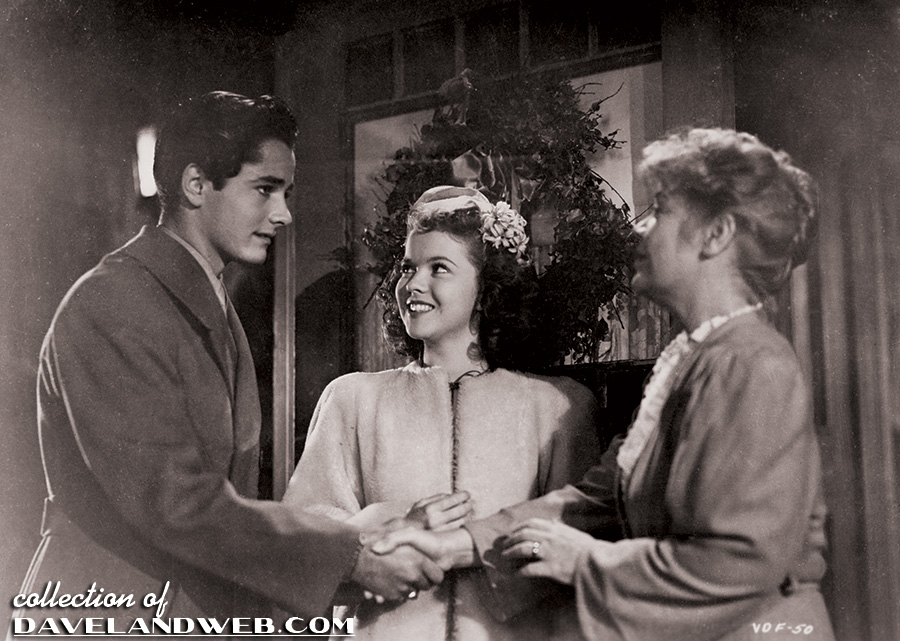
In “I’ll Be Seeing You” (1944), the Morgan family celebrates the Christmas holiday by welcoming their niece Mary (Ginger Rogers) for a visit. Mary meets a handsome Sergeant (Joseph Cotten) on the train there. Sounds like the beginning of a beautiful romance, right? Not so fast, folks. Mary is on parole (for accidentally killing the man who tried to rape her) and Zach is on leave from a military hospital, attempting to adjust to his PTSD. Are they honest with each other? Of course not! However, Barbara Morgan (Shirley) inadvertently spills the beans to Zach about Barbara and…well, you’ll just have to watch it yourself. In this scene from the movie, Barbara is about to go on a date with Lieutenant Bruce, played by John Derek, who put the “Derek” in Bo Derek! You’ll note that in both “The Blue Bird” and “IBSY” Shirley’s mother is played by Spring Byington, who would eventually play Major Nelson’s mother in “I Dream of Jeannie.”


“I’ll Be Seeing You” may not be the happiest of holiday movies, but it is still worth a watch and guaranteed to draw a tear from the driest of ducts! 

Which Christmas Shirley movie will you watch this season?

See more Shirley Temple photos at my main website.
Tuesday, September 26, 2023

Temple Tuesday: Lady in the Dark


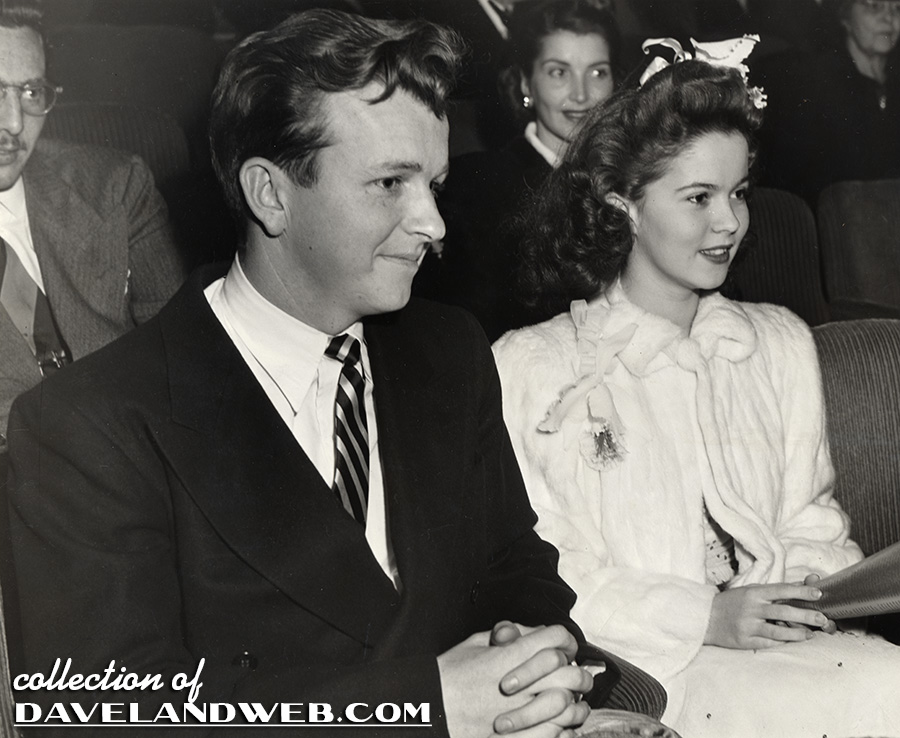
Going to movie premieres was all in a day’s work for a Hollywood star, and Shirley Temple was no exception. From the vintage publicity blurb below:

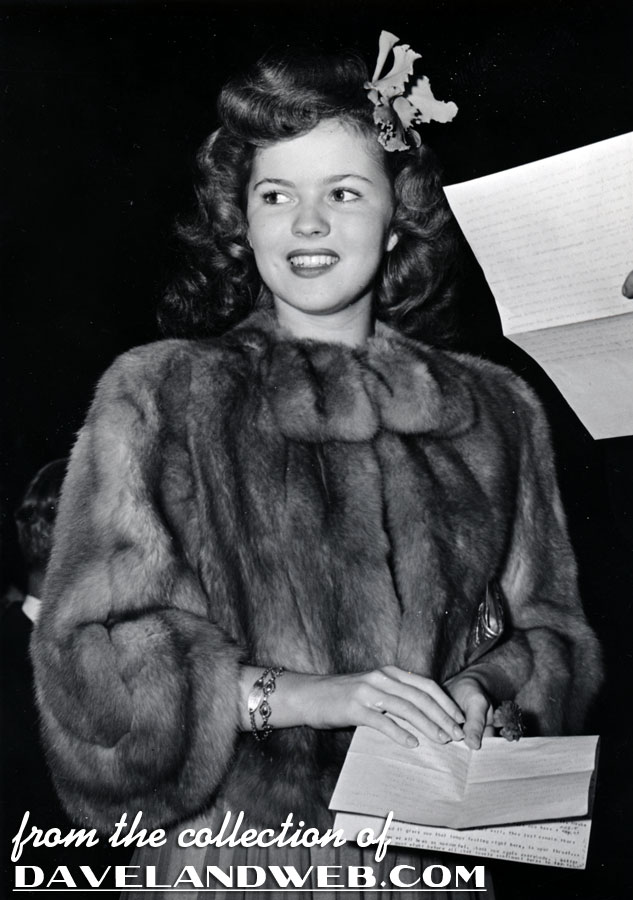
2/12/44 — Younger crowd in the audience at the “Lady in the Dark” premiere was well represented by Shirley Temple and her escort, Craig Flanagan. Shirley looked lovely in a short ermine jacket over a white net gown sprinkled with sequins. She wore an orchid in her hair and a similar corsage on her shoulder. “Since You Went Away” is her current picture, a Selznick production for United Artists release.

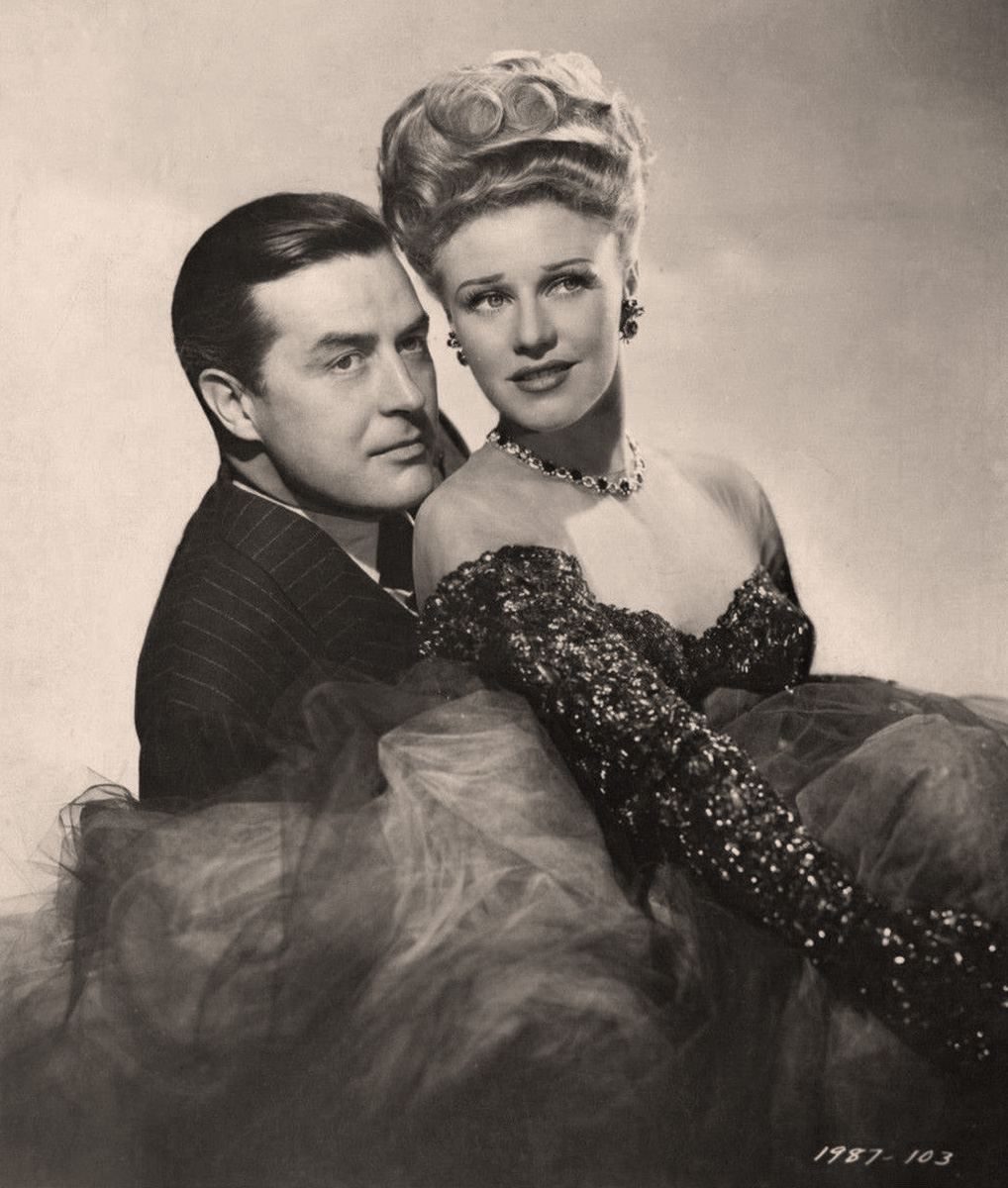
While Shirley looked beautiful in her ermine coat, her outfit did not begin to compare to Ginger Rogers’ onscreen wardrobe from “Lady in the Dark.”


“Lady in the Dark” was based on the 1941 Broadway musical of the same name (book by Moss Hart, words and music by Ira Gershwin and Kurt Weill) about psychoanalysis and career women. Paramount purchased the screen rights in February 1941 for Rogers and Fred Astaire, but negotiations with Rogers’ former dance partner failed, and Ray Milland was cast instead. Released on February 10, 1944, the film was a critical and commercial success, nominated for three Oscars (Best Cinematography, Best Music, and Best Art Direction).


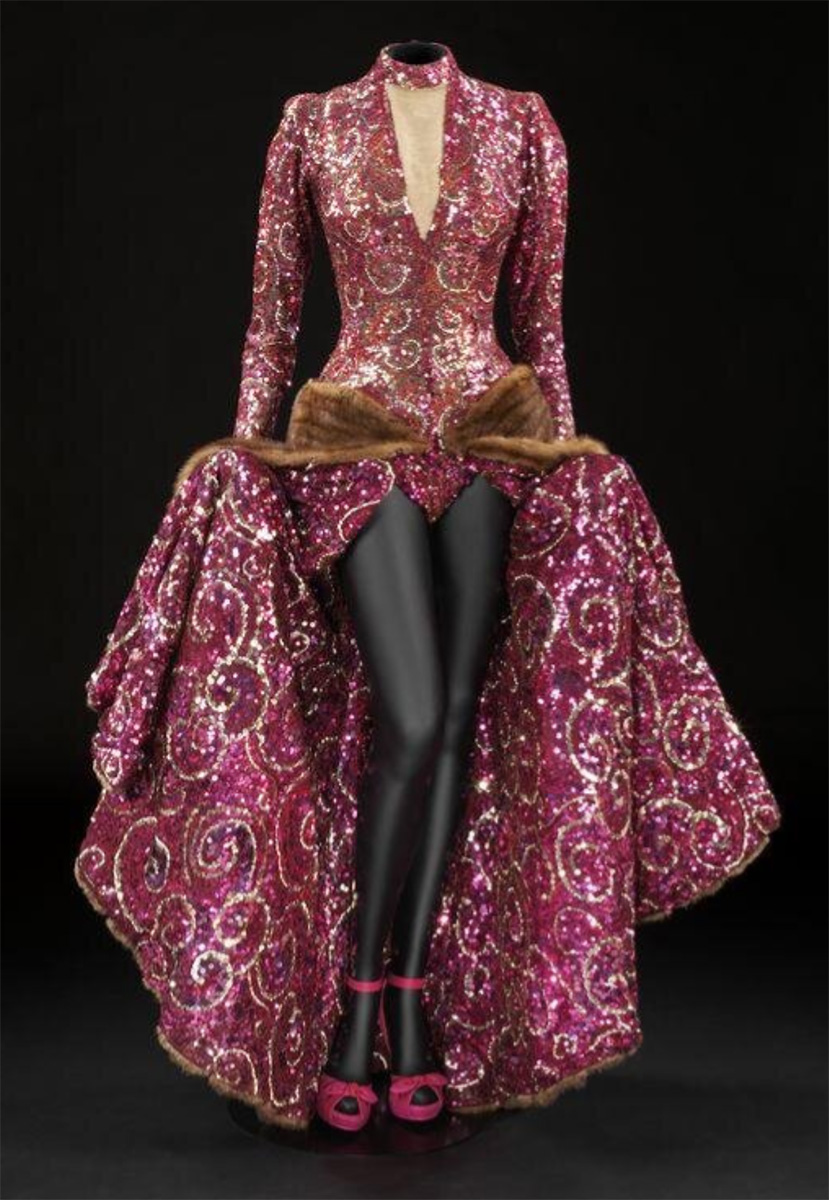
Now about the film’s most infamous costume (shown above). From the Victoria and Albert Museum website:

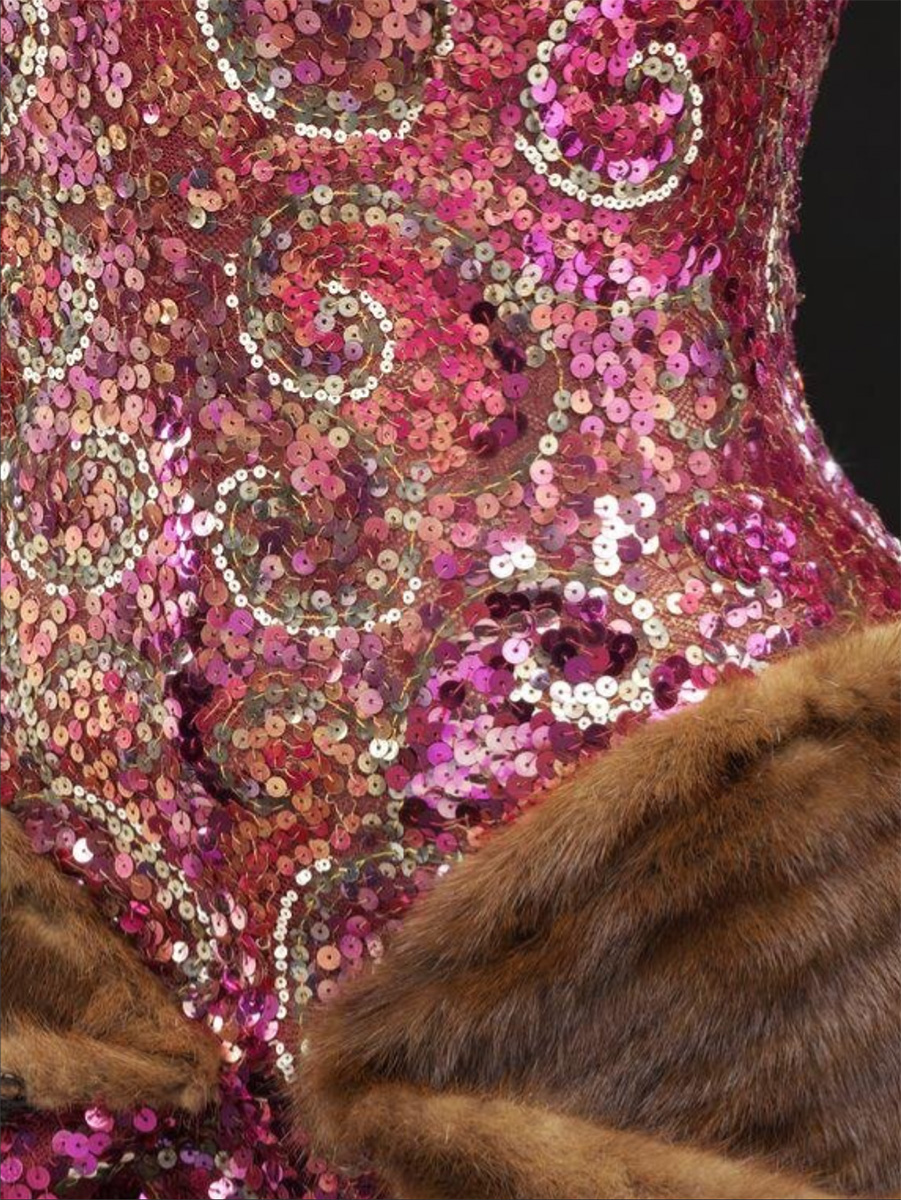
Rogers wore this costume for the ‘The Saga of Jenny’ sequence in the musical, which was staged in a circus. In 1944, this single costume was the most expensive ever produced in Hollywood. Legendary designer Edith Head is credited as the designer, with strong influence and a design concept from Mitchell Leisen, a former costume designer turned film director. Rogers wore two versions of the dress, one for singing and static close-ups and a lighter version for dancing [shown below, the one in the V&A collection].


According to Edith Head in Edith Head’s Hollywood, ‘as Liza Elliott in Lady in the Dark, Ginger was the fashion-editor of the world’s greatest fashion magazine. Her costumes were superlative. She was constantly having daydreams that she was a glamorous sexpot instead of a tailored-editor type and the dreams created a perfect plot excuse for fabulous gowns. It has come to be known as the mink dress, but actually it was a mink over-skirt that was lined with sequins, worn over a matching sequined bodysuit. It cost about thirty-five thousand dollars to make in those days and couldn’t be made today without a limitless wardrobe budget’.


Recently, I acquired Jay Jorgensen’s 2010 Edith Head: The Fifty-Year Career of Hollywood's Greatest Costume Designer coffee table book. There is some interesting information about the original costume that the V&A Museum left out:

Initially, Edith wasn’t even supposed to be working on the project, and Rogers’ clothes were to be designed by the New York couturier Valentina. When Ginger rejected Valentina’s designs, Edith was asked to step in because of her good working relationship with the actress. There is almost no doubt that left to only her own devices, the budget-conscious and conservative Edith would have never come up with the dress that is considered by many to be the most expensive costume ever designed for a film. But Leisen was always asking Edith to push herself creatively, and under his supervision, a gown was designed that was encrusted entirely of faux rubies and emeralds in a paisley design, lined in mink, with a matching jacket, also lined in mink. At the time, it was estimated to cost around $35,000, with $15,000 being spent on the mink alone. When building the dress, Edith covered the floor of her salon with mink skins and she and Leisen selected the most photogenic ones. When Rogers tried the gown on, the faux stones proved to be too heavy for her to dance the routine that had been choreographed…A second gown was created with sequins in the same paisley pattern. Both gowns are seen on screen. The dress with the stones is seen in close-up as Ginger unpacks it and wears it to the nightclub, and the sequined version is seen in the dance number. The gown with the faux stones was later donated to the Smithsonian Institution and kept on display for several years; Edith used the sequined version in her fashion shows that would be developed later.

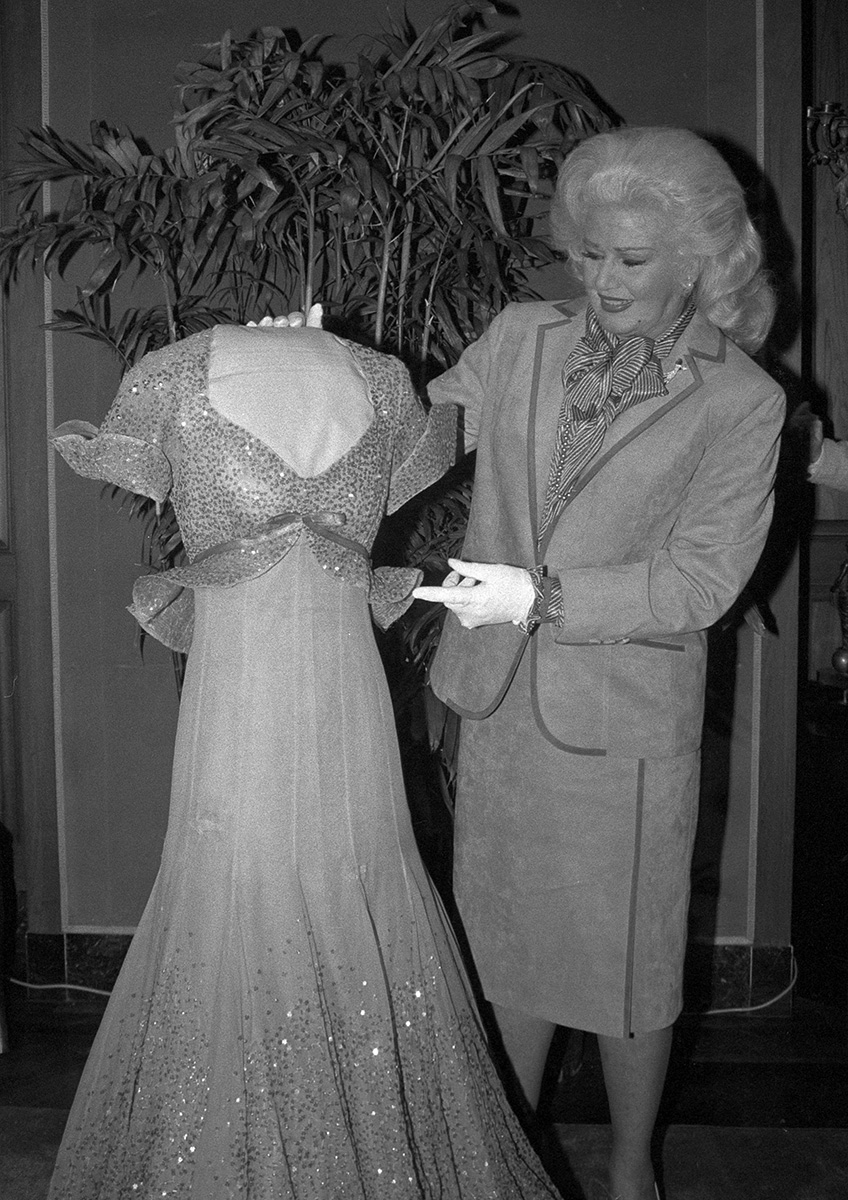
The 1984 photo below shows Ginger Rogers presenting her 'Piccolino' dress from "Top Hat" (1935) with Fred Astaire to the Smithsonian. Whether or not they still have the “Lady in the Dark” mink dress in their possession is unknown.


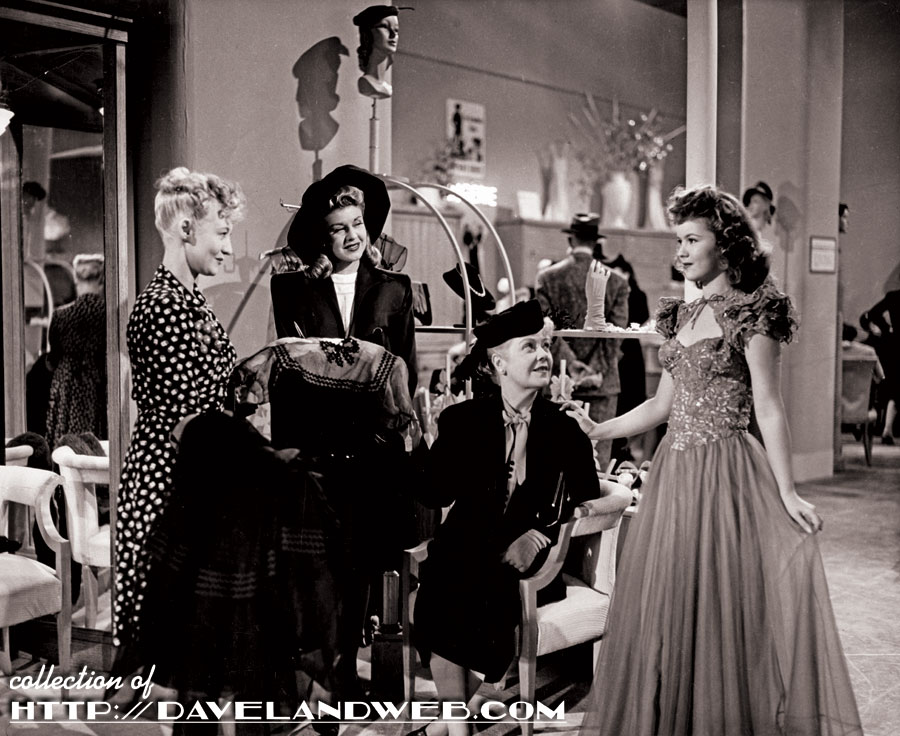
Shirley and Ginger starred together in “I’ll Be Seeing You,” which was her next film assignment after “Lady in the Dark.” This time, since Rogers portrayed a woman on parole, Shirley had the flashier wardrobe!


See more Shirley Temple photos at my main website.
Tuesday, January 11, 2022

Temple Tuesday: Back to Dayton!


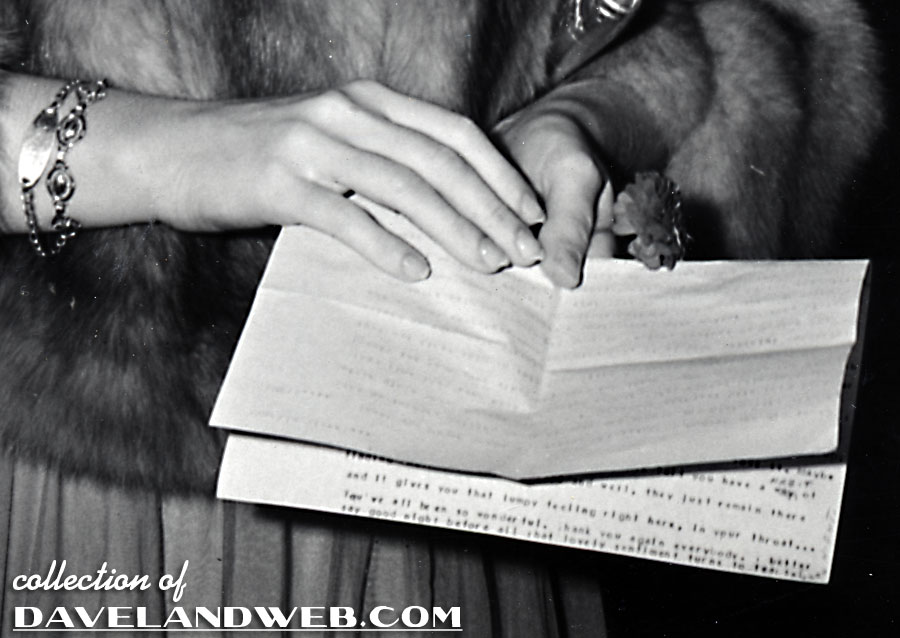
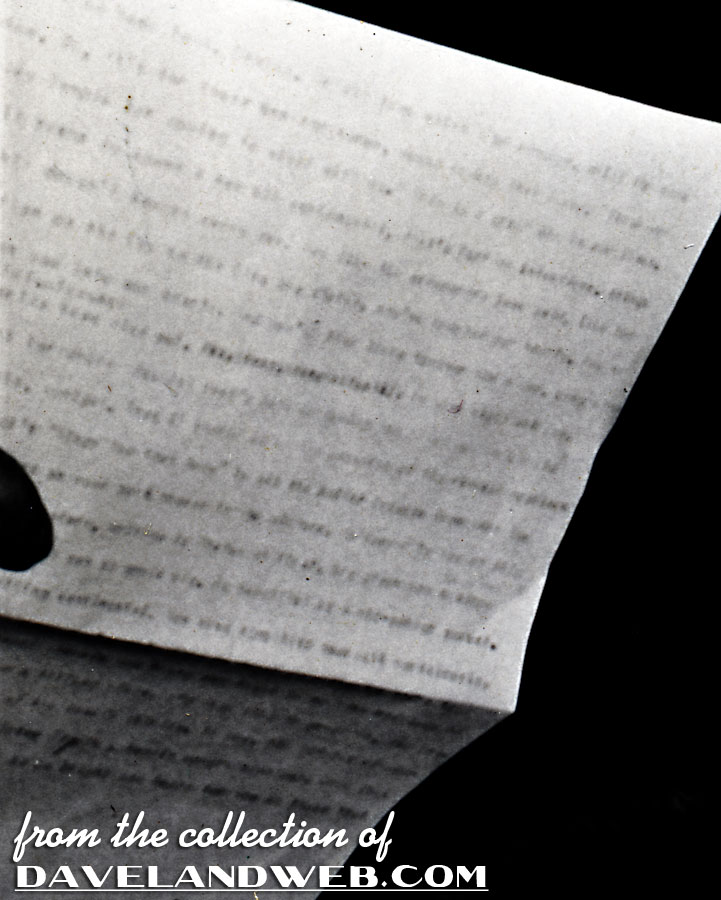
About three years ago, I posted a 1944 shot of Shirley outside a movie theatre in Dayton, Ohio. Recently, I acquired a companion photo taken the same evening. Zooming in, I was able to read a portion of what I assume to be Shirley’s script for the evening as she addressed her fans:

you have a habit of…, they just remain there and it gives you that lump feeling right here, in your throat…You’ve all been so wonderful, thank you again everybody…better say good night before all that lovely sentiment turns to …


On the right side of the photo is another piece of paper; I am assuming it to be the script for the evening’s MC. I tried...but just can’t make out more than a few words. Anybody out there up for the task?


Here is the previously posted shot of Shirley waving to her fans:


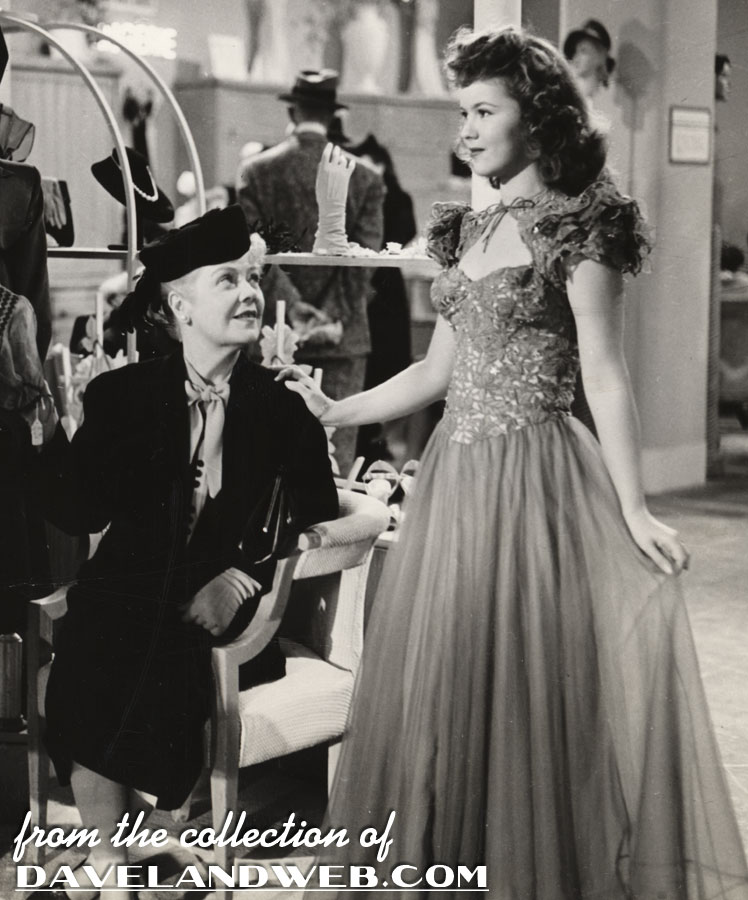
…and the gown she was wearing underneath the fur coat, which Shirley wore in “I’ll Be Seeing You” (with Spring Byington):


See more Shirley Temple photos at my main website.
Tuesday, August 13, 2019

Temple Tuesday: Three Lovely Lasses


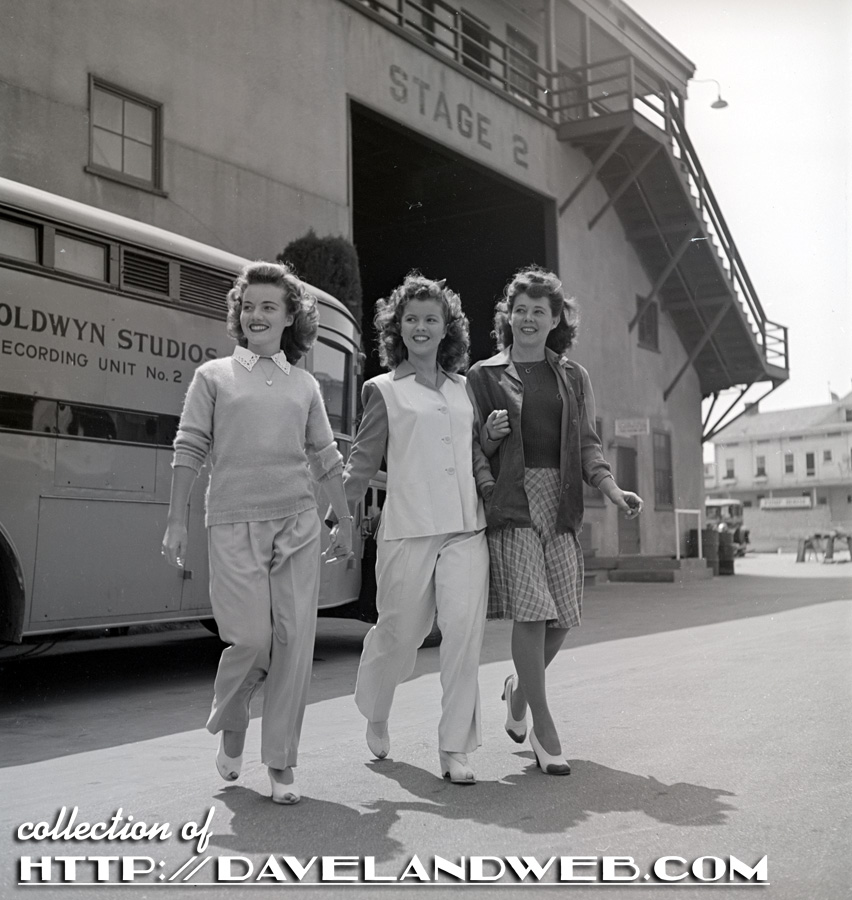
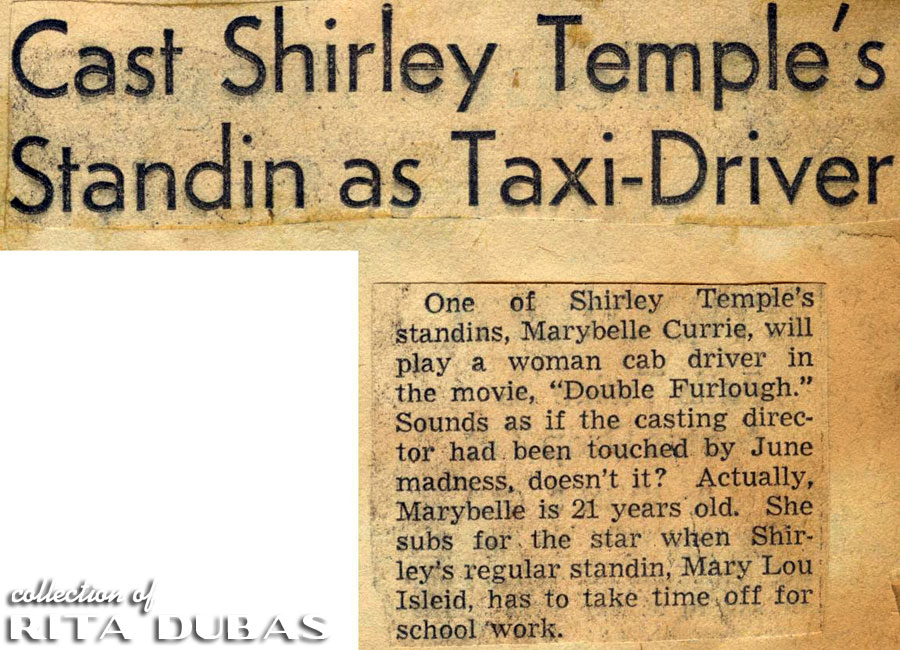
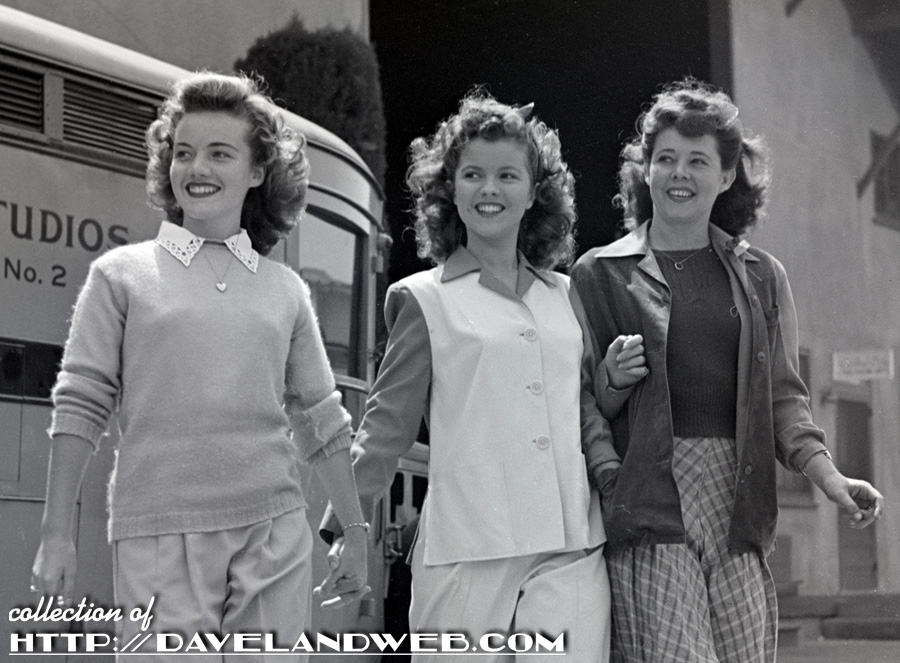
This image from 1944 shows Shirley Temple sandwiched between her stand-in and friend, Mary Lou Isleib, and Marybelle Currie, who subbed for Mary Lou when she attended school. How do I know this? Thanks to Shirley Temple expert SUPREME, Rita Dubas, who graciously sent me this article:


The lovely trio are on the Goldwyn Studio lot for “I’ll Be Seeing You.” Producer David O Selznick used Goldwyn for its sound facilities. Check out the vintage recording unit bus behind them.


Built in 1925, Stage 2 no longer exists; it was demolished when Grant Tinker (of Mary Tyler Moore fame) remodeled the studio.

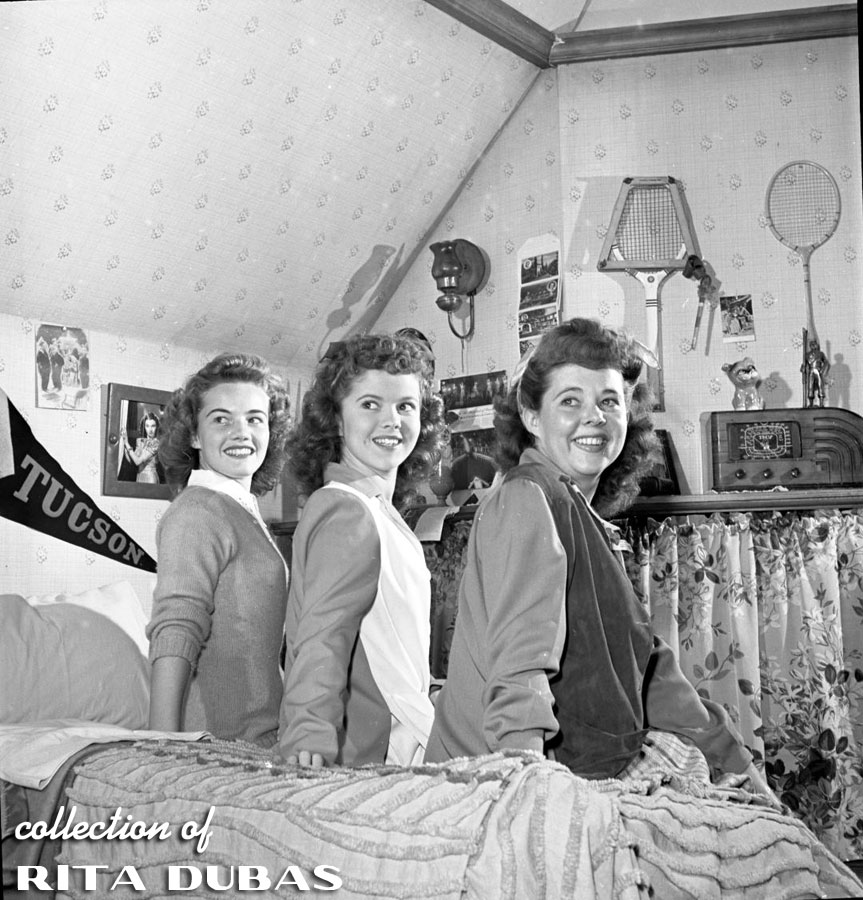
Rita also graciously sent this additional shot of the trio, sitting in the bedroom set of Shirley’s character in the film. Note the photo of actress Vivien Leigh on the wall next to Mary Lou:


See more teen Shirley photos at my main website.
Tuesday, May 21, 2019

Temple Tuesday: Dressed-up in Dayton


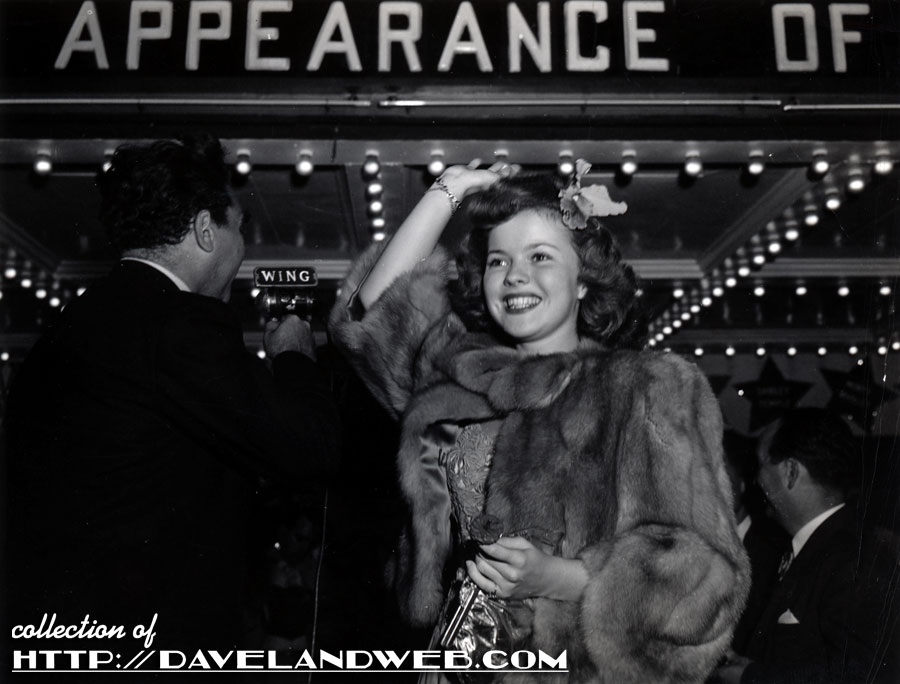
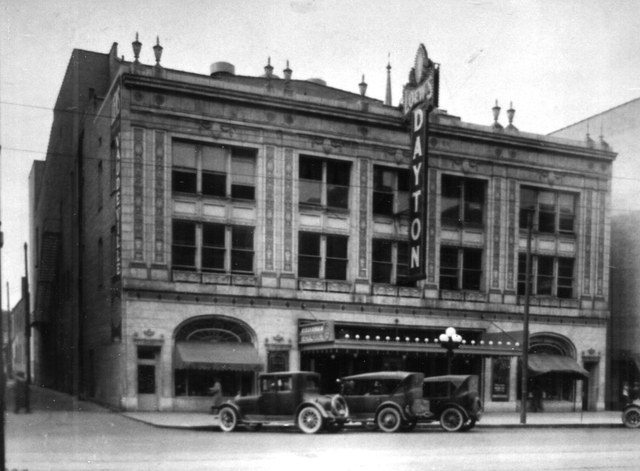
I would never have guessed that Shirley Temple ever went to Dayton, Ohio, but here’s the photographic evidence. Next to her is a mic from radio station WING. Originally licensed as WDBS in 1924, its call letters were changed in 1939 to WING to become synonymous with Dayton's aviation history. At that time, the station was located above the Loews Theater on Main Street in downtown Dayton. As progress would have it, Loews was demolished and is now a GORGEOUS parking lot! I am guessing that Shirley was here for a premiere, standing in front of the theatre. Here’s a pic of the theatre I found on the Cinema Treasures website:


…and during its 1975 demolition:


This dress must have been a favorite of Shirley’s. You can see it in this shot from her Sweet Sixteen party:


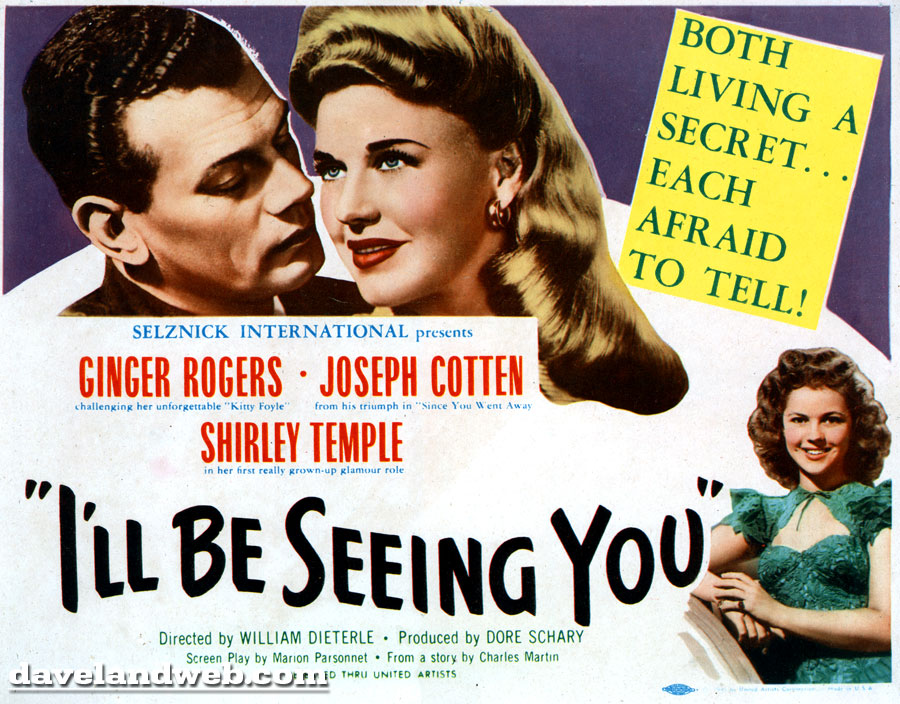
…and in this lobby card for “I’ll Be Seeing You”:


See more Shirley photos at my main website.
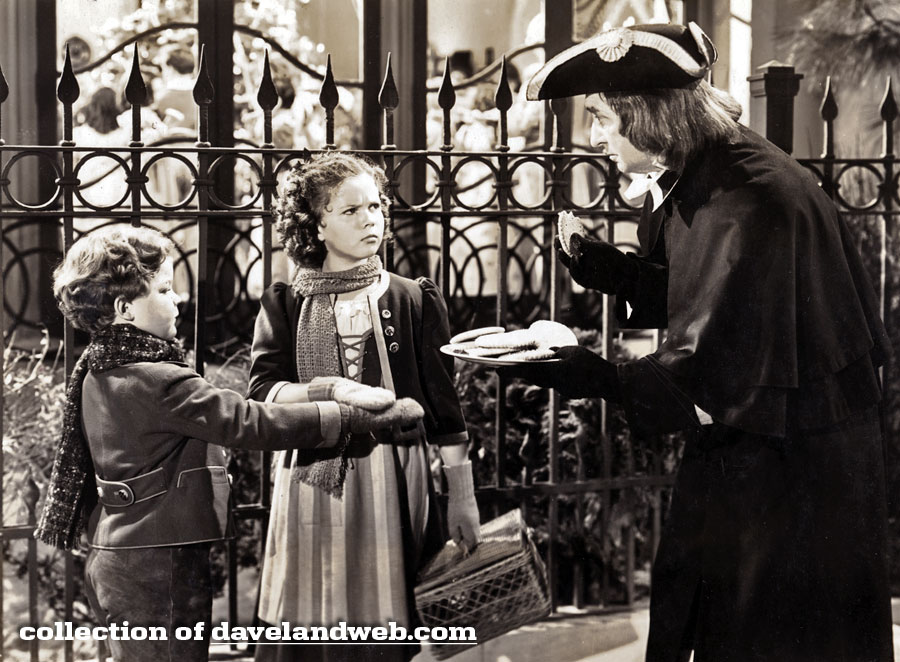
Tuesday, June 12, 2018

Temple Tuesday: Teen Temple


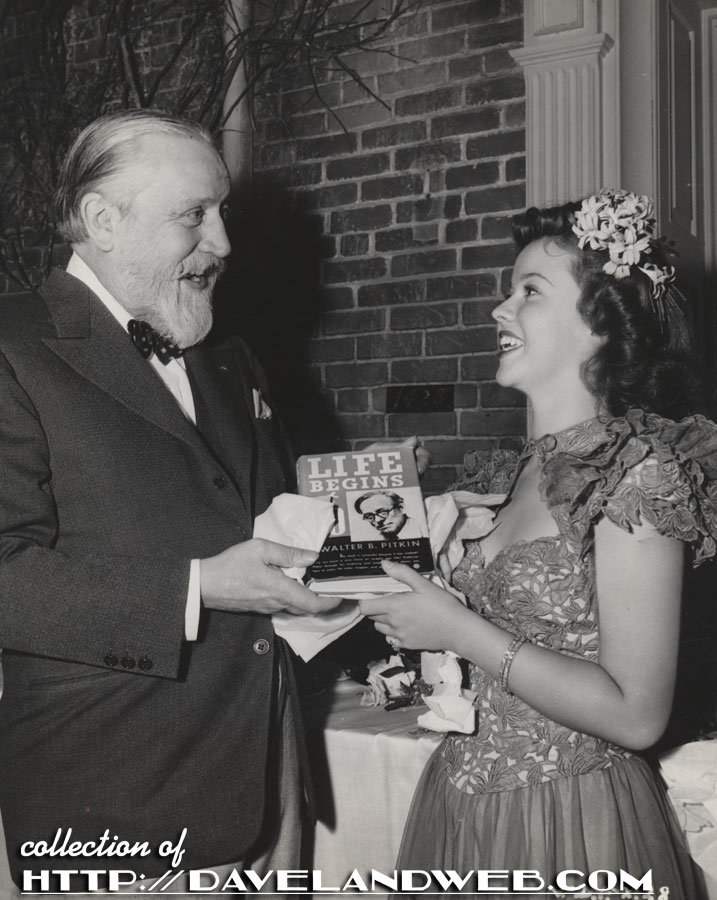
For Shirley's 16th birthday, co-star Monty Woolley decided to give her a gag gift. From the publicity blurb:
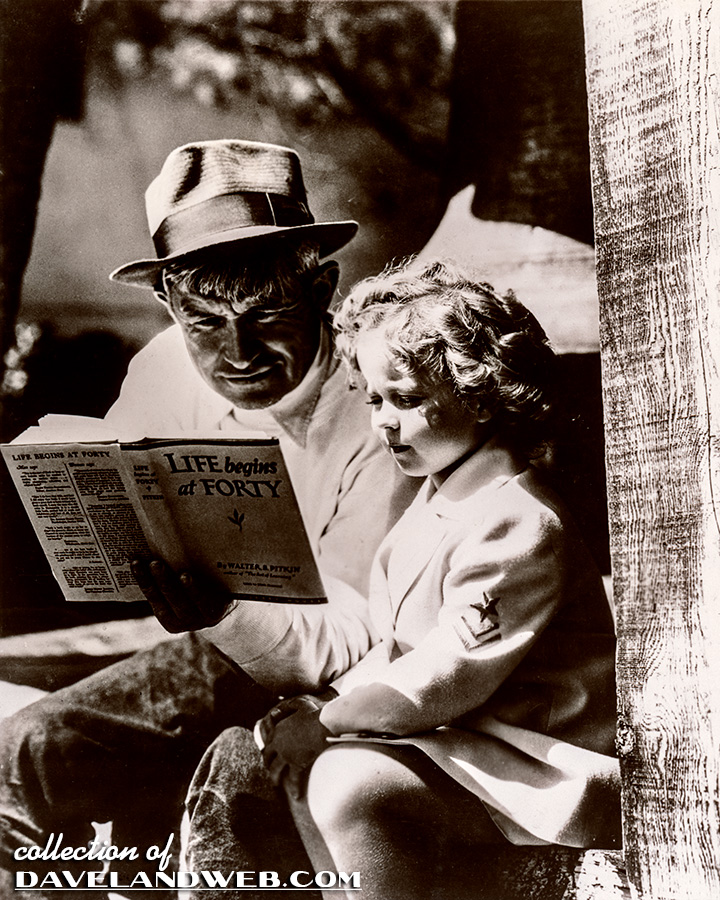
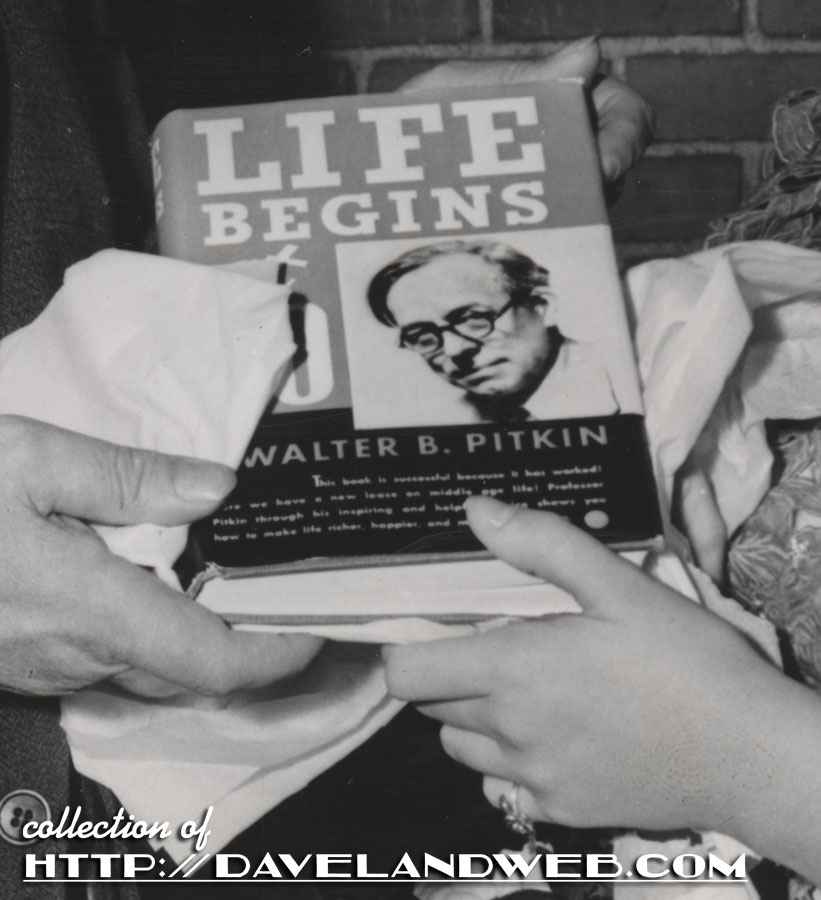
Monty Woolley presented Shirley Temple with this appropriate volume when she celebrated her 16th birthday anniversary on the set of Vanguard's "I'll Be Seeing You." Monty and Shirley recently appeared together in Selznick's "Since You Went Away."


The gag was on Woolley, though. Will Rogers already did so back in 1935:


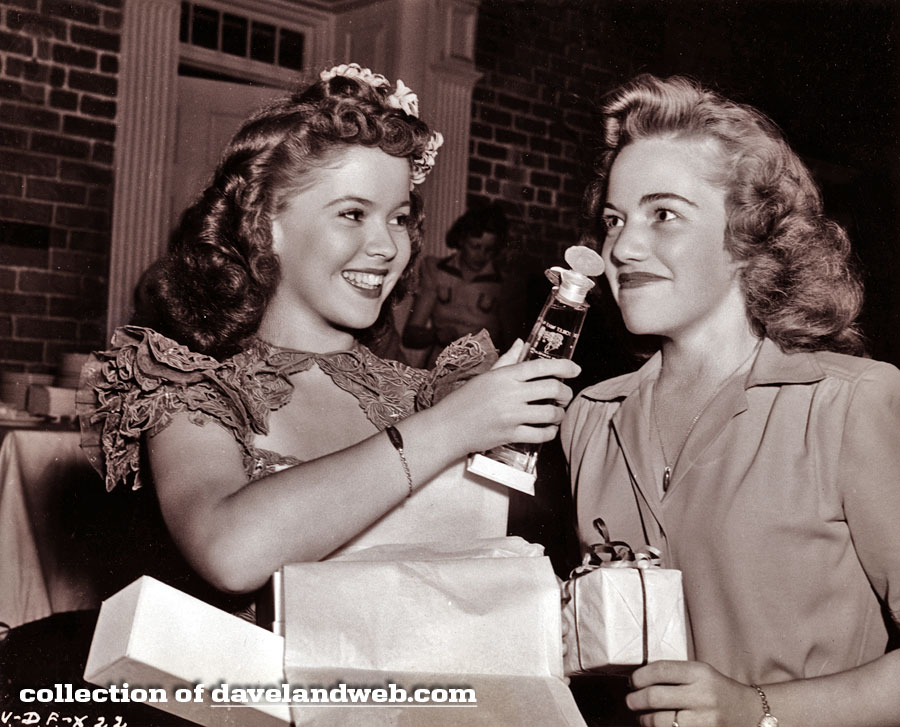
Here's another previously posted shot from Shirley's 16th, as she smells some perfume from her stand-in and friend, Mary Lou Isleib:


See more Shirley Temple photos at my main website.