Showing posts with label spencer tracy. Show all posts

Wednesday, December 31, 2025

New Year’s Eve at the El Mirador


I finally acquired an establishing shot of the long defunct El Mirador Hotel in Palm Springs. This March 1963 image was taken just nine years before the property was converted into the Desert Hospital. Ray Ryan bought ownership of the rundown El Mirador in 1960 from his other investment partners and spent over a million dollars refurbishing the property in an attempt to return it to its former glory.


Not sure why there’s a Hans Cristian Anderson sign on the palm tree. Perhaps it was tied to what appears to be the hotel’s “Copenhagen Smorgasbord” listed on the sign.


Below is a March 1960 shot of the hotel. While the rest of California shivered from low winter temperatures, the smart ones flocked to Palm Springs to enjoy the dry heat.


Back in the day, the El Mirador was a haven for Hollywood celebrities, like Spencer Tracy and John Wayne, as seen in this 1934 photo:


From the accompanying caption:

MOVIE LUMINARIES AT DESERT RESORT

Among the colonists recruited from cinema ranks at El Mirador, Palm Springs, California, Desert Oasis, are Spencer Tracy (left) and Mr. and Mrs. John Wayne, shown as they reposed on the brink of the El Mirador Plunge. Wayne is a star of the “horse operas.”


At the time, Tracy was the bigger star and Wayne was still making westerns on skid row before getting his break in “Stagecoach” (1939).

While Shirley Temple typically stayed at the Desert Inn when she visited Palm Springs with her parents, she does have a connection to the El Mirador.


The following gem of a story is from the Palm Springs Life website as told by Frank Bogert, who created many a publicity stunt for the El Mirador:

“We had Governor Herbert Lehman of New York as a guest at the hotel,” Bogert recalls. “He wanted privacy. No interviews. No photos. But he expressed one wish. He said he'd like to meet Shirley Temple who was staying at the Desert Inn with her mother. I said I'd try to arrange it. And I did. Shirley's mother said she'd like to meet the governor. So they met for lunch beside the pool at El Mirador. I took several pictures and thought I was doing pretty well until little Shirley spoke up and said, 'Look, Mr. Bogert, why don't you stand over there with your camera? The governor can sit where he is and I'll cheat a little toward him. I think that will do much better.' . . . Well, I did what she said and got a picture that went all around the nation. By following the advice of a 7-year-old. But what a 7-year-old!

Below are images from the Temple/Lehman get together at the El Mirador from the Palm Springs Historical Society website:


Temple and Lehman crossed paths again in 1938 in New York when the child star took her famous cross-country vacation.


I hope you enjoyed the final rabbit hole post at Daveland for 2025!

See more Palm Springs photos at my main website.

Monday, November 24, 2025

The Art of Kapralik


For years, I have been obsessed by the art of Jacques Kapralik. Who? Yes, sadly, this genius is virtually unknown by name, but any film buff of the Golden Age of Hollywood has seen his brilliant work. At top is the promo art he did for “Girl Crazy” (1943), featuring stars Judy Garland and Mickey Rooney. His caricatures are brilliant, and perfectly capture the subject with the most simple of lines. On top of that, he made brilliant use of mixed media to create 3D sculptures of sorts that added an extra dimension to the flat art used on posters, flyers, and even on-screen in title credits. Below is the back of the flyer that MGM sent out to promote the Garland-Rooney musical:


Here is his edited bio from the American Heritage Center website:

Kapralik was a commercial artist and caricaturist whose art was used in the promotion of motion pictures throughout Hollywood’s Golden Era of the 1930s-1950s. Born in Romania in 1906, Kapralik first worked for various European newspapers, drawing cartoons and caricatures of famous Europeans and important events. In 1936, Kapralik immigrated to the United States. He first provided celebrity caricatures for various newspaper columns focusing on Hollywood gossip and events. Kapralik was fortunate to work during a time considered the Golden Age of Hollywood and a zenith for celebrity caricatures. Movie studios were putting increased focus and publicity on their stars, attempting to make them household names. Kapralik’s output of celebrity caricatures increased as he left the newspaper world and began working for movie studios such as RKO, Paramount, 20th Century Fox, Universal, and MGM, creating likenesses of Cary Grant, Greta Garbo, and Lucille Ball, among many others. He developed a distinctive and highly recognizable style for his studio publicity work, much of which was shown primarily in press kits and trade magazines such MGM’s Lion’s Roar Magazine, as well as the weekly Pictorial Review newspaper insert.


While heralded as a master of Hollywood caricature by industry insiders of the time, due to the nature of his work, today he remains relatively unknown to the general public. The caricature style Kapralik became most well-known for involved the creation of miniature models from paper and balsa wood. The models were then photographed and used as promotional posters for motion pictures, predominantly MGM films. These 3-D caricature scenes were incredibly elaborate and detailed, taking up to six weeks complete. Kapralik also created title sequences for films in the 1930s-1950s, an early innovator at a time when title sequences were just starting to evolve from simple text. His title sequence work included 20th Century Fox’s The Three Musketeers (1939) with the Ritz Brothers and MGM’S Presenting Lily Mars (1943) with Judy Garland. Aside from movie publicity, Kapralik also did advertising work for companies such as Nutrilite, S&W, and Squirt.

Below is Kapralik at work:


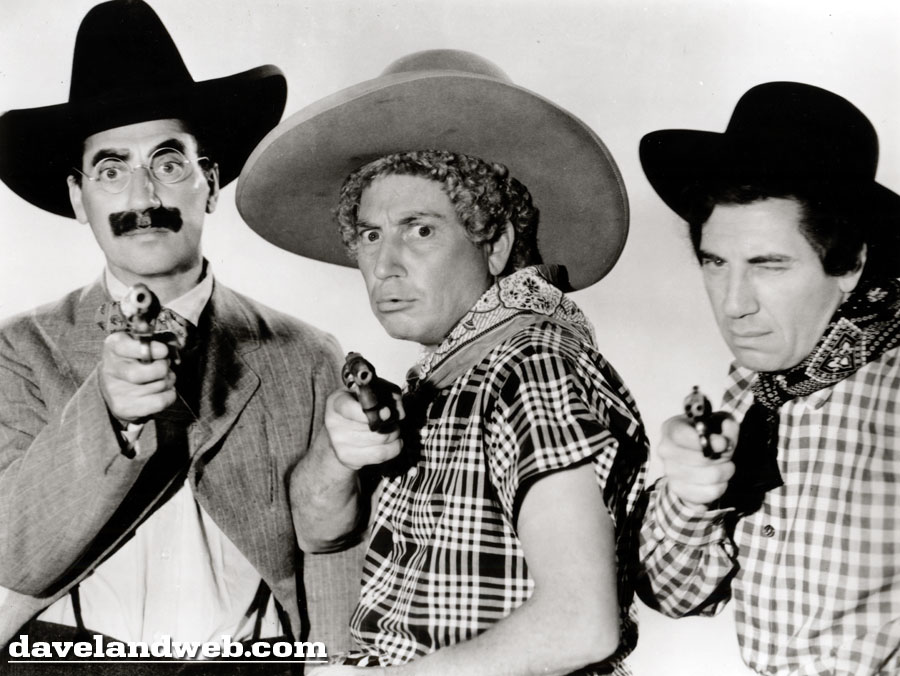
The 1940 MGM film “Go West” starred the zany Marx Brothers.


Kapralik’s innovative style matched perfectly with the Marx Trio:


Thanks to Shirley Temple expert supreme, Rita Dubas, I learned that the cute caricature of Shirley Temple in the title sequence of “Just Around the Corner” (1938) was done by Kapralik:


I did my best to recreate it in color digitally. Yes. I was obsessed with his work.


His work in the title sequence was significant because it captured Shirley’s new hairdo, with her curls pulled to the side of her head.


A few more pieces of Kapralik’s work, including the 1942 Hepburn-Tracy vehicle, “Woman of the Year”, which captures Hepburn’s haughty profile perfectly:


…and 1941’s “Honky Tonk” with Clark Gable and Lana Turner. This is one of the few misses for Kapralik, as this caricature looks nothing like Turner.


Below is a collage of four Judy Garland movies that Kapralik did the art for. Going clockwise from top left: “Andy Hardy Meets Debutante,” “Babes on Broadway,” “Little Nellie Kelly,” and “Presenting Lily Mars.”


Below is a screenshot of the title sequence from “Presenting Lily Mars” side by side with the original art, which I found at the Raphael Geroni website.


Want to see more of Kapralik’s work? Browse his collection at the American Heritage Center website.

See more photos and pop culture at my main website.

Thursday, August 08, 2024

Harlow & Faye


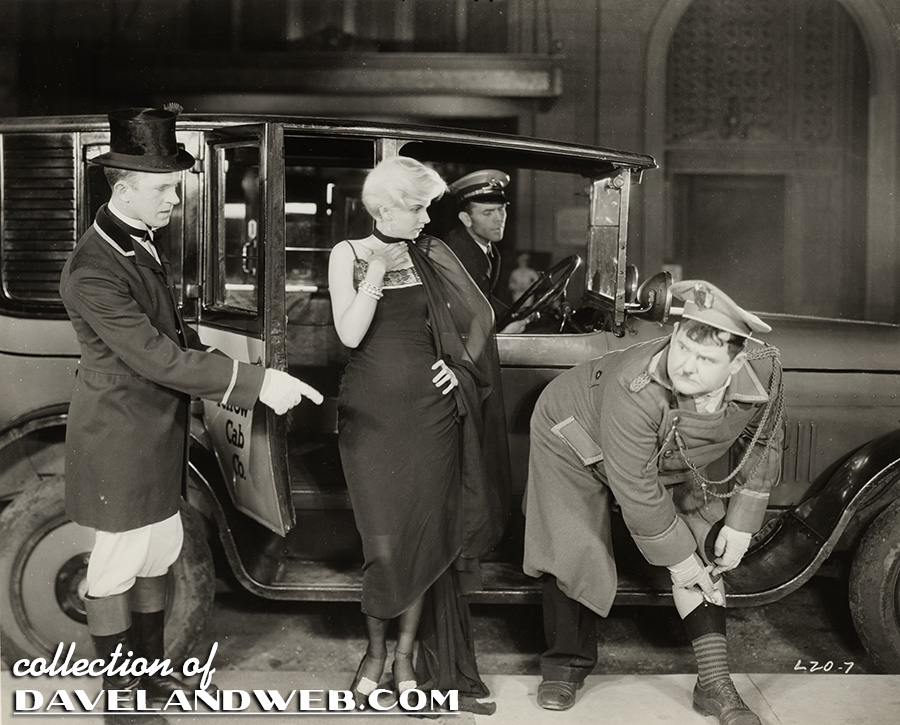
Today’s blog post refers to the two leading platinum blondes of the 1930s: Jean Harlow and Alice Faye. Harlow’s film career first began with supporting roles in silent comedies such as “Double Whoopee” (1929) with Stan Laurel and Oliver Hardy.


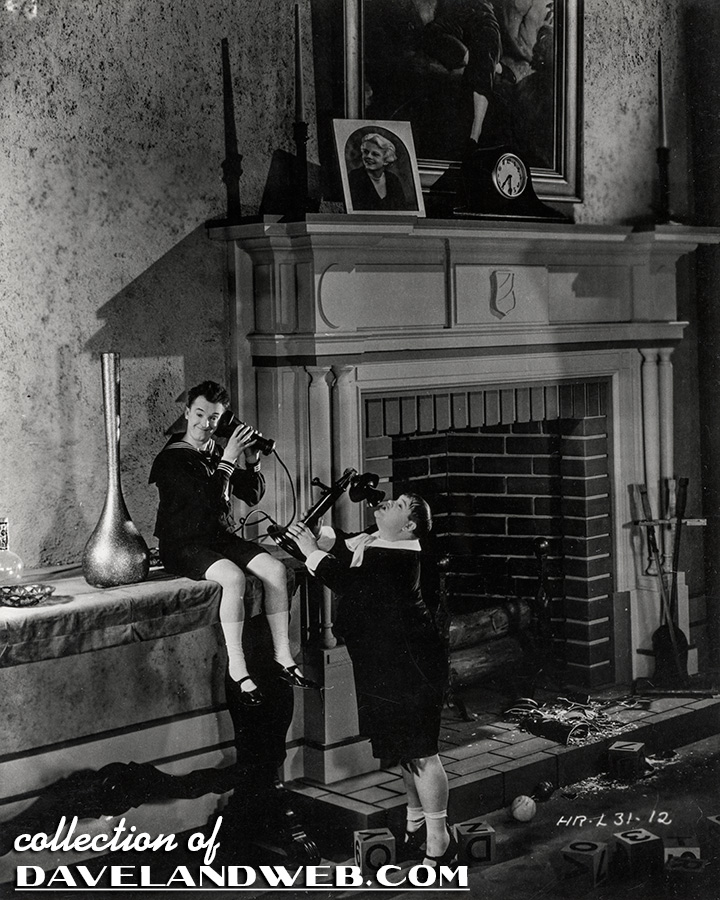
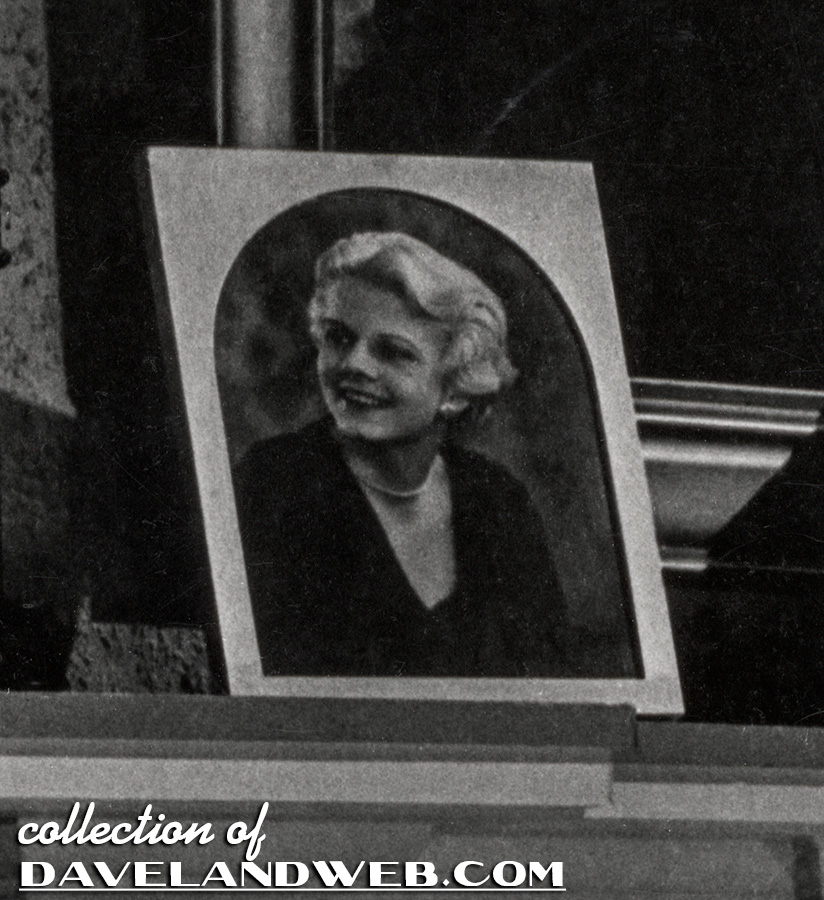
In “Brats” (1930), Harlow can be spotted briefly if you look closely at the photo on the mantle. Producer Hal Roach apparently quipped that he got Harlow to appear “for nothing” in this comedy short as well as in 1931’s “Beau Hunks.”


Zooming in:


Harlow’s breakthrough role came in the 1930 war film, “Hell’s Angels.” By 1932, MGM put her under contract and she became a box office favorite with hits like “Red-Headed Woman” (1932), “Red Dust” (1932), and “Dinner at Eight” (1933).
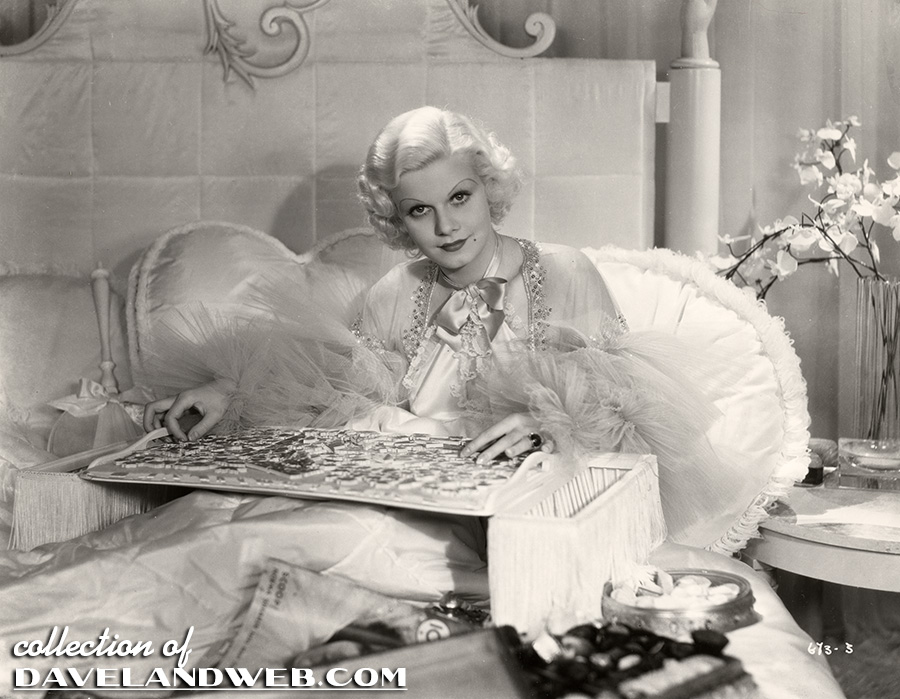


The pencil thin eyebrows, the platinum hair, and the sarcastic wit were all part of her manufactured persona.
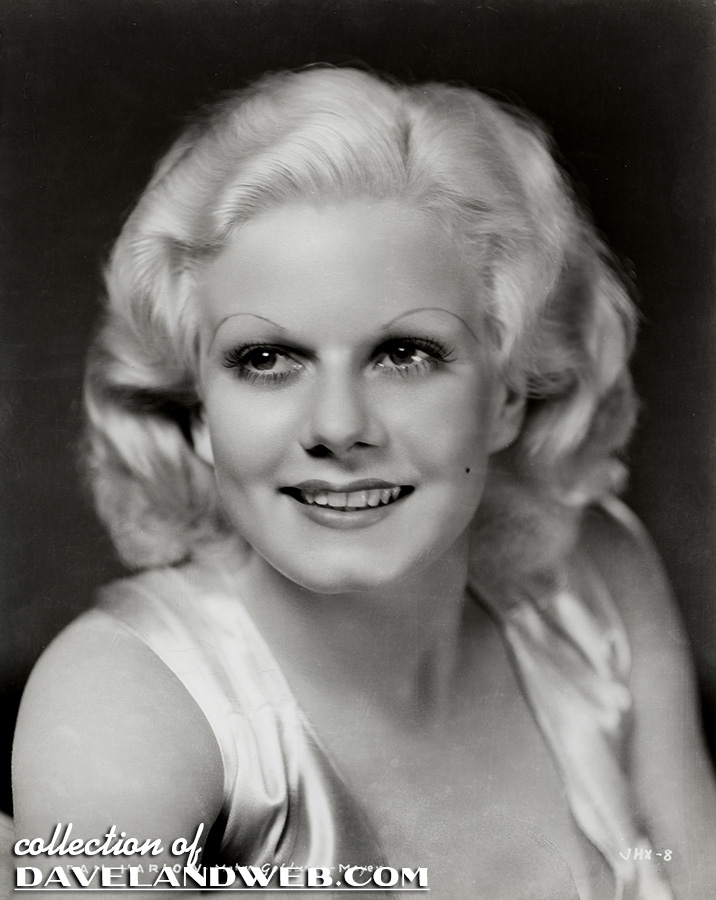


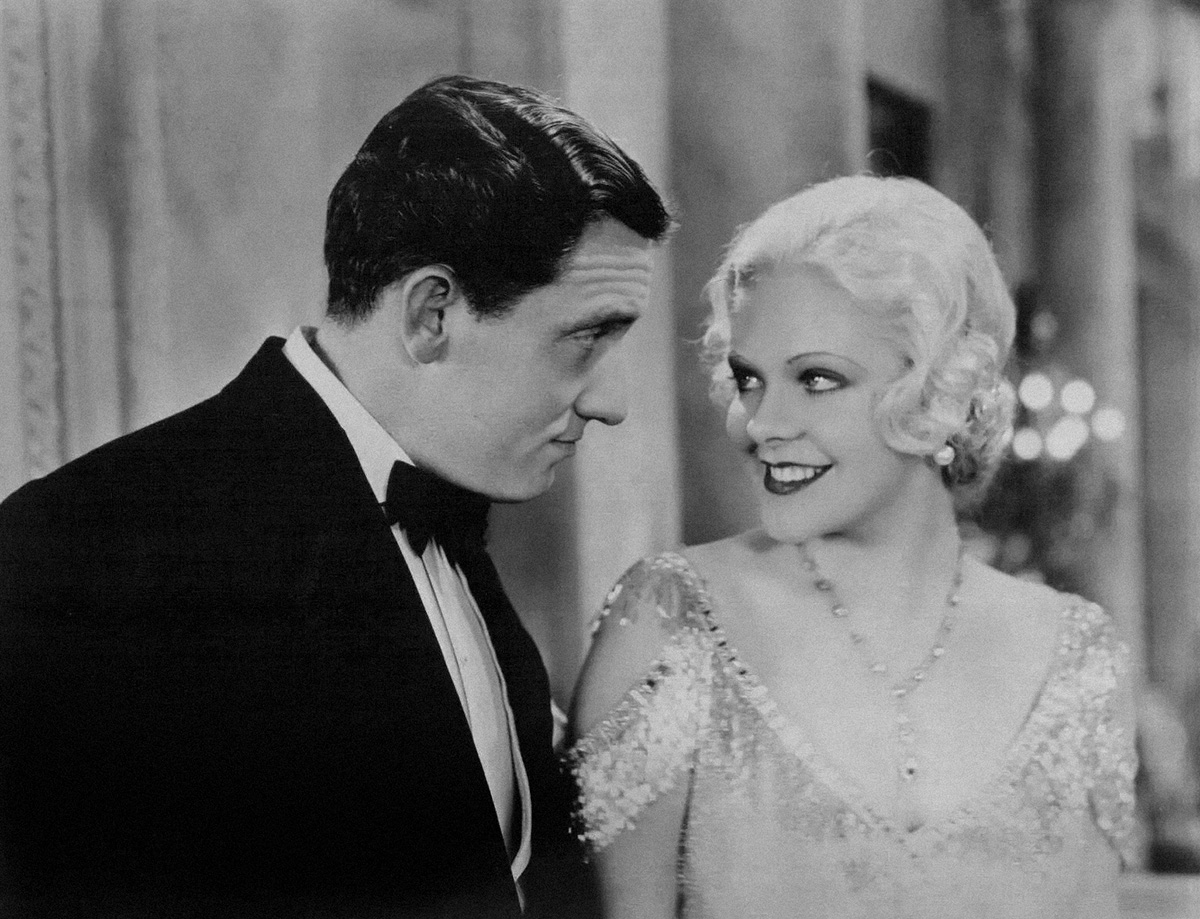
Enter Alice Faye (approximately four years younger than Harlow), Fox Studio’s “answer” to Harlow over at MGM. Today, portraits of the two are often confused. Faye was given the same platinum hairdo as well as the hardened makeup that Harlow had been sporting in her early career, as seen in “Now I’ll Tell” (1934), where Faye played the “other woman” opposite Spencer Tracy.


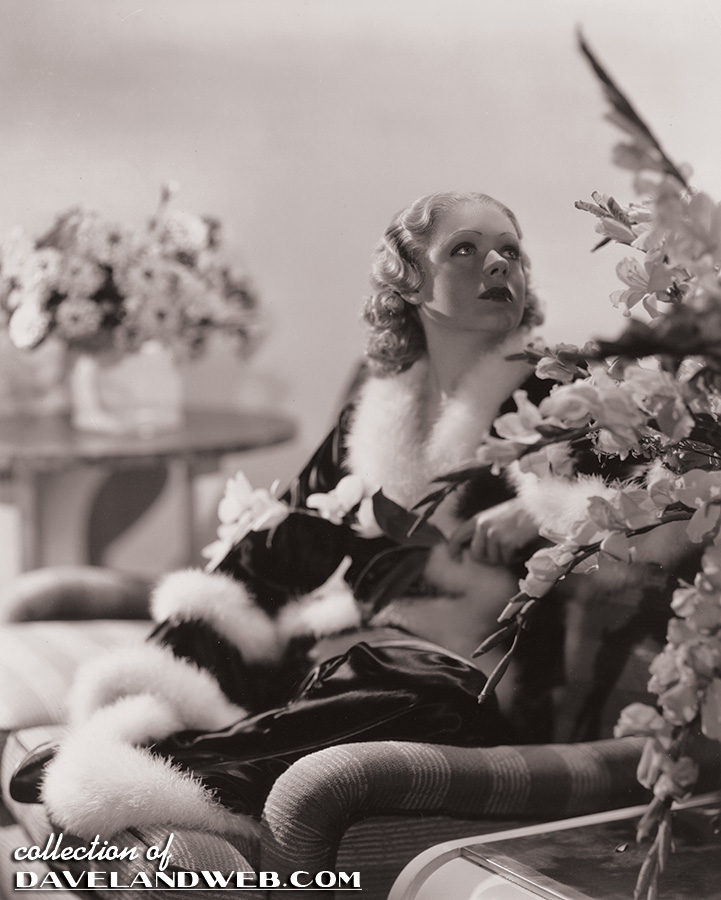
Below, a Gene Kornman publicity shot of Faye for “Poor Little Rich Girl” with Shirley Temple (1936) with this caption:

After she’s through with the day’s dancing sequences in “The Poor Little Rich Girl,” Alice Faye curls up in her favorite chair, clad in her favorite pajamas of black silk velvet lavishly trimmed in white marabou. In this 20th Century-Fox production, starring Shirley Temple, Alice finds herself teamed with Jack Haley, who does pretty well as a dancer himself!


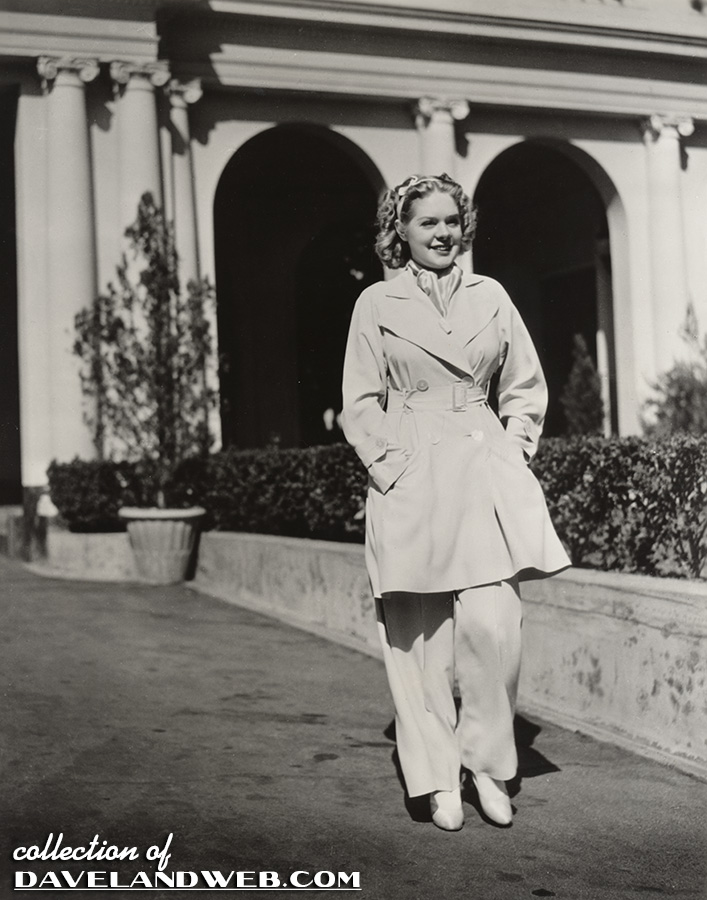
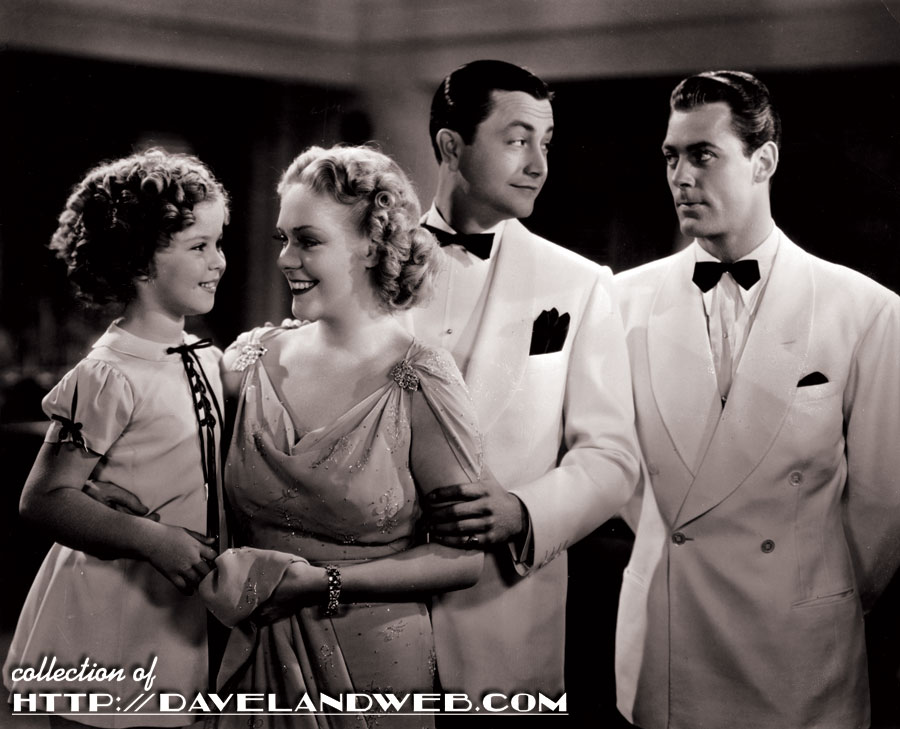
In this, her first Temple film, Faye played the wisecracking wife who nags husband Jack Haley all day long. Faye’s characters up to this point lacked the innocence and vulnerability that made Harlow so appealing underneath the sarcasm. Still, Faye had one thing Harlow didn’t: a gorgeous contralto voice! 20th Century-Fox Studio head Darryl Zanuck saw the potential in Faye and by the time she made her second Shirley Temple film, “Stowaway” (also in 1936), she was almost unrecognizable. In the following publicity still, Alice had graduated from silk velvet and marabou to an outfit that any typical woman of the day might have worn. The accompanying caption:

Attired as comfortably as possible, Alice Faye takes a stroll for the sake of fresh air before reporting for preparation at 20th Century-Fox for her role with Shirley Temple in “Stowaway.”


Zanuck saw the value in making Alice Faye more approachable to both sexes by softening the edges and putting the vocal talents front and center, much to the chagrin of little Shirley who would later recall:

I retired to bed singing “Good Night My Love,” a delectable ballad by Mack Gordon with Harry Revel with lyrics about Dutch dolls, teddy bears, and my dead daddy. Faye then reprised my song outside, under a romantic full moon, using mature lyrics sung in her own silky style. Instantly I knew her rendition had finessed mine. Hers was deeper-throated, more resonant, and her facial expressions insinuated much that I sensed was important without knowing why. Yet my proprietary feeling could not so easily be quenched. It was my song. I had sung it first. Why did I lose when she won?…Perhaps the problem was not my deficiency but her skill. She was older, I brooded, and had beautiful cow eyes to boot.


At the same time, MGM was working hard to soften Harlow’s image, realizing (just like Zanuck) that her appeal would be greater if they moved away from the one-dimensional platinum bombshell approach.

One of the oft-told legends of Hollywood was that MGM wanted so badly to borrow Shirley Temple for “The Wizard of Oz,” that they offered Clark Gable and Jean Harlow for Fox’s production of “In Old Chicago.” Shirley herself even repeated this myth in her autobiography, Child Star. It doesn’t take much digging to figure out that this was a fabrication, although portions of the story are true. When Alice Faye was interviewed by Joe Franklin in her later years, he asked, “Did you get that part [In Old Chicago] when Jean Harlow was about to die?” “That's what I read,” replied Alice. “I read that, but I’m not sure.” “I never believed it,” responded Joe. “I never did either. I wouldn’t mind following Harlow,” Faye said with a smile. “She was pretty dishy!” This speaks to the fact that back in the 1930s and 1940s, the studio bigwigs made trades and deals but the stars themselves were the last to know. They were under contract with the understanding that they would follow along with executive orders without complaint. Shirley Temple herself would not have had any firsthand knowledge about any of this, either. Here’s what we know:

“In Old Chicago” went into production mid-June of 1937, shortly after Jean Harlow’s untimely June 7th death. Thanks to some sleuthing by Melissa (aka “The Colonel”), we know that on May 27, 1937, the L.A. Times was still reporting that Harlow…

…is pretty certain as one feminine lead in that picture, incidentally.

One day later, the Times changed its tune:

With no chance of getting either Jean Harlow or Helen Hayes for “In Old Chicago,” Twentieth Century-Fox is to set about popularizing two of its own feminie players in this banner picture. And that’s not a bad idea either, particularly as one of the young ladies is Virginia Field.

On June 1st, the Evening Courier reported:

I don’t know what would have happened if Darryl Zanuck couldn’t have borrowed Jean Harlow for “In Old Chicago.” He had his heart set on her, but for a few weeks it looked as if M-G-M would have to refuse. In order to swing the deal, Darryl had to promise Tyrone Power in exchange. So it’s set that he will play the boy in “Madame X.” First of course, he co-stars with Jean in the Chicago epic, with Don Ameche in an important part and Virginia Field and Phyllis Brooks in supporting roles. Henry King directs.

Other than Harlow and Virginia Field, the rest of the report panned out. MGM made “Madame X” without Tyrone Power, using Warren William instead. “Madame X” began production mid-July 1937 and was released on October 1. And what about Shirley? Where does she fit into all of this? Based on contemporary accounts, Shirley Temple had zilcho to do with the “In Old Chicago” / “Madame X” swap. MGM didn’t even own “The Wizard of Oz” at the time all of these shenanigans were going on. While the bean counters at MGM wanted the box office stability of Shirley for “Oz” when they did purchase it, the production and creative team all wanted Judy Garland and the story was purchased specifically for her. MGM vocal coach/composer/arranger Roger Edens was sent to Fox for an informal audition of Temple and reported back that her “vocal limitations were insurmountable” for “Oz.” And that was that. 

What would “In Old Chicago” have been like with Harlow? What would “The Wizard of Oz” have been like with Temple? To quote Alice Faye, “You’ll Never Know”!
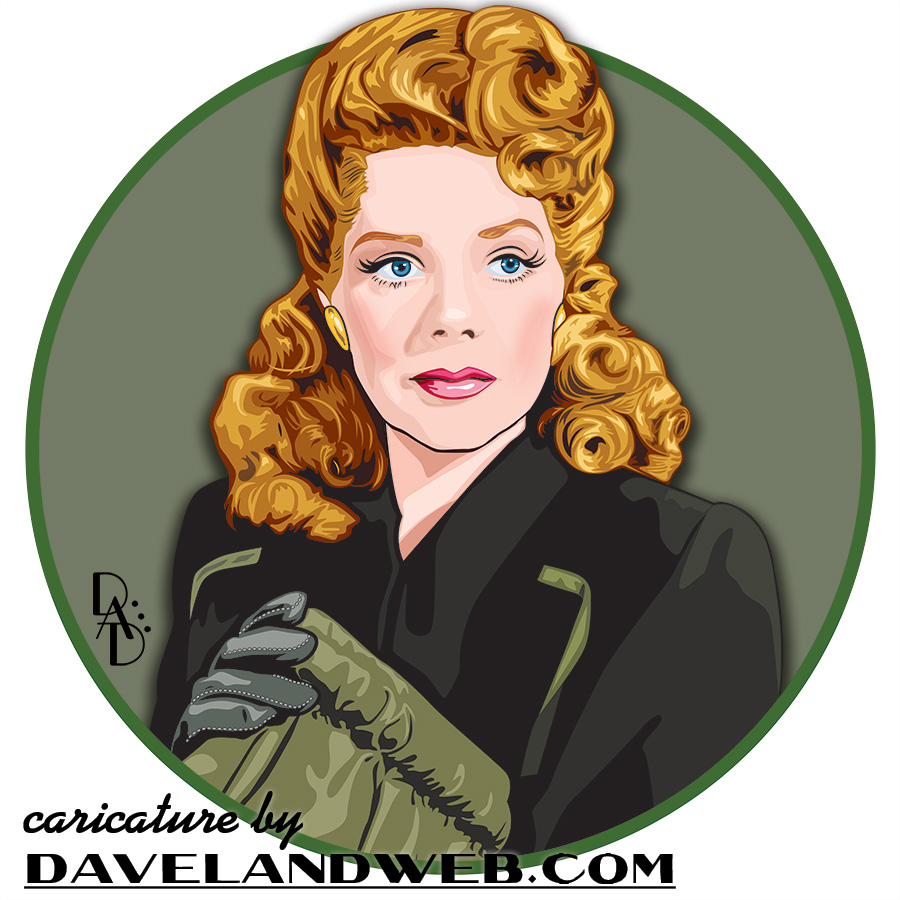


See more Alice Faye photos at my main website.