Showing posts with label gale sondergaard. Show all posts

Tuesday, December 31, 2024

Temple Tuesday: Blue Bird Blowout!


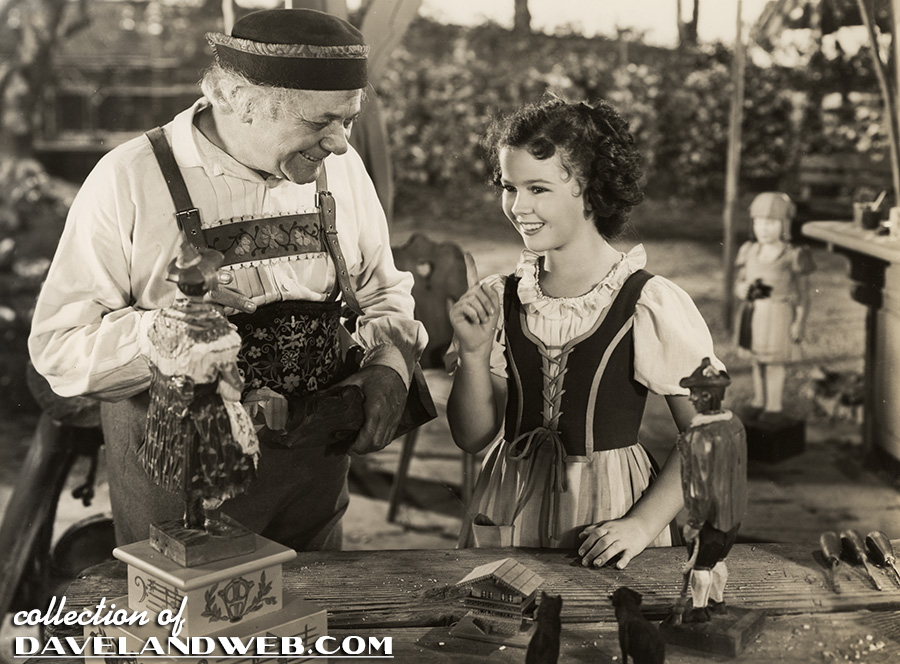
Faithful readers of this blog know that I am somewhat obsessed with the 1940 Shirley Temple film, “The Blue Bird.” While many consider it a poor stepchild to “The Wizard of Oz” (1939), I believe it stands on its own as an artistic triumph that gave Shirley an opportunity to play against type as a brat. In the above publicity still, Shirley is shown with Al Shean, who played her grandfather in the film. Shean was also the uncle to the famous Marx Brothers.

To avoid competition with “Gone with the Wind” which was released on December 15, 1939, 20th Century-Fox studio chief Darryl Zanuck decided to delay the premiere of “The Blue Bird” for another month.


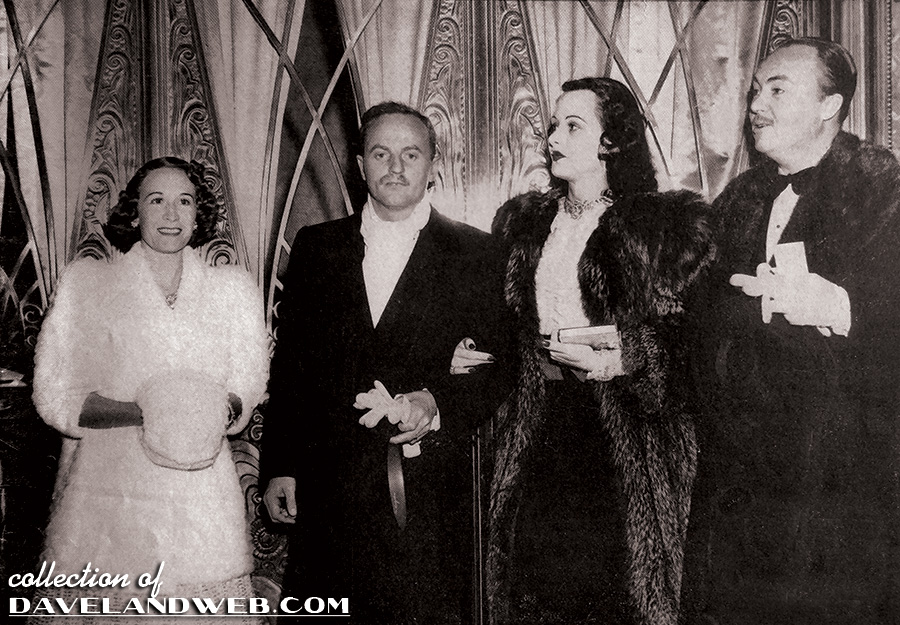
The above photo shows Gene Markey (producer for the movie), Virginia Zanuck (Darryl’s wife), Joseph M. Schenck (Fox chairman of the board), Darryl Zanuck, and Hedy Lamarr (MGM actress and wife of Markey) as they arrived at Grand Central Terminal in New York City, December 19, 1940 for the film’s New York.

From The Motion Picture Herald, December 30, 1939:

The premiere of “The Blue Bird,” starring Shirley Temple, has been advanced to January 19th from January 17th to permit a Friday night opening. “Swanee River” opens December 29th at the Roxy theatre. Darryl F. Zanuck, vice-president in charge of production, will attend the premiere of “The Blue Bird” at the Hollywood theatre and remain in New York for the opening of “The Grapes of Wrath” at the Rivoli January 24th. Al Jolson and Don Ameche will appear in a broadcast of “Swanee River” on December 29th. Charles E. McCarthy, director of advertising and publicity for Twentieth Century-Fox, has put John Goring in charge of the roadshow of “The Blue Bird.”

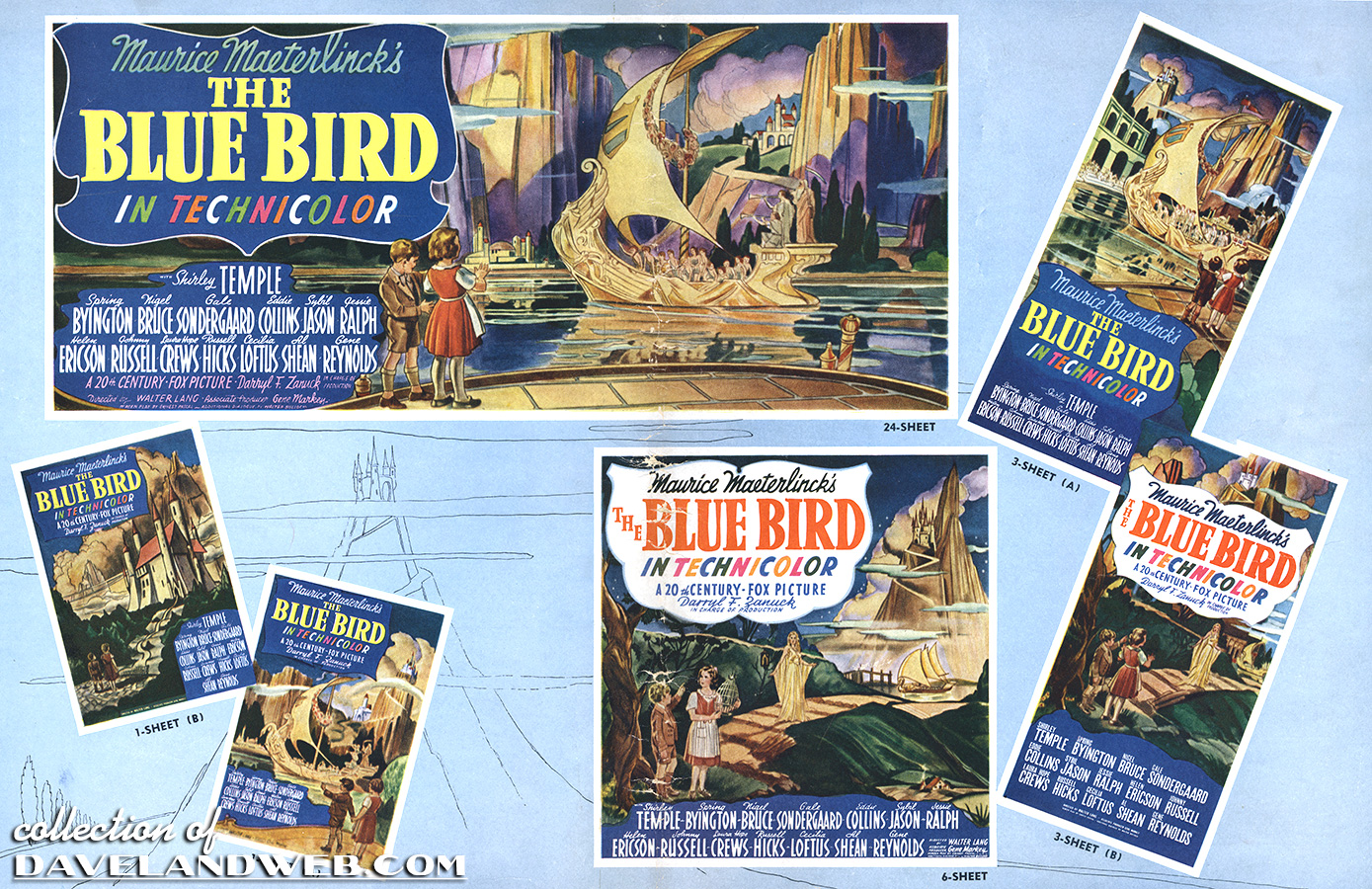
Below is a page from the movie’s pressbook, featuring a variety of posters that theatres could choose from for promotion:


Motion Picture Daily gave their account of the premiere:

‘Blue Bird’ Lures Industry’s Top Executives to Premiere

Undaunted by the severity of the weather last night, 1,500 persons jammed the Hollywood Theatre to capacity to see the world premiere of “The Blue Bird,” 20th Century-Fox color feature. When the 80-minute show ended, the audience, with ovations and exclamatory words of approval, acclaimed the cinematic version of Maurice Maeterlinck’s famous fantasy. Included in the audience were practically all of the leading officials of 20th-Fox, besides executives from other motion picture companies. Notable among those present were the following: Darryl Zanuck, 20th-Fox studio chief; S.R. Kent, president; Joseph M. Schenck, chairman of the board; Will Hays, Jesse Lasky, Ernst Lubitsch, Barney Balaban, Herman Wobber, Spyros Skouras, Charles Skouras, Edwin L. Weisl, Gene Markey, associate producer of “The Blue Bird,” and scores of other industry officials. Other celebrities noticed among the “First Nighters,” most of whom were accompanied by their wives and formally dressed, were William Paley, CBS president; Postmaster General James A. Farley, Conde Nast, Irving Berlin, Jack Cohn, Andre Kostelanetz, Sidney Lanfield and many others. Crowds congregated early in front of the Hollywood where arc lights illuminated the front. Autograph seekers and others eager to see celebrities composed a large portion of the throng. When glamorous Hedy Lamarr arrived, scores struggled to catch a glimpse of her and husband, Markey.
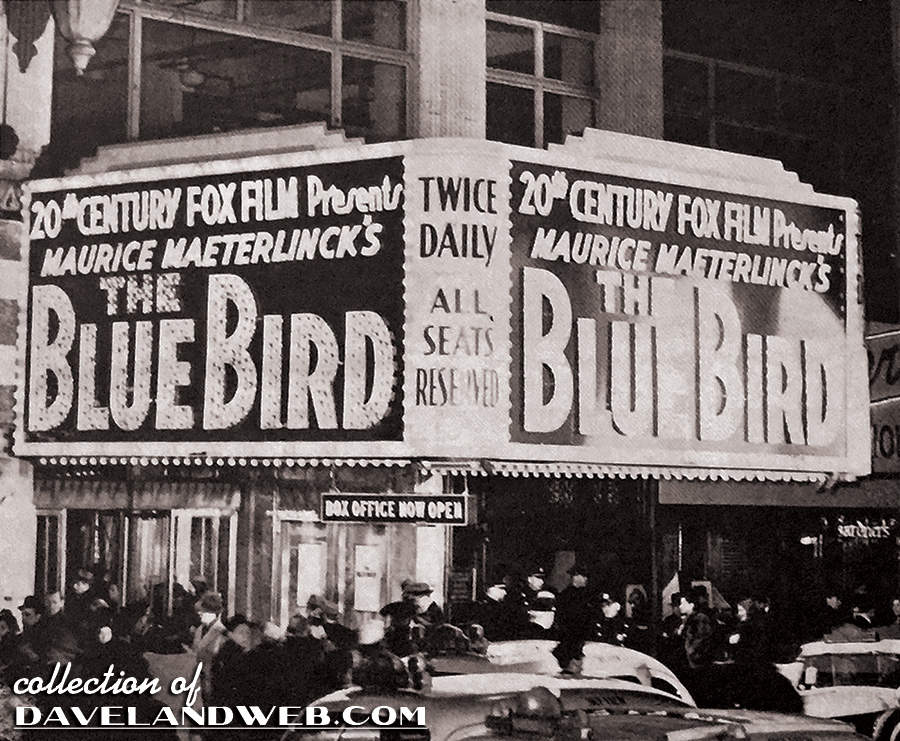


From The New Dynamo, the in-house publication of 20th Century-Fox:

‘THE BLUE BIRD’ FLIES IN TRIUMPH OVER BROADWAY CELEBRITIES BRAVE SUB-ZERO WEATHER TO HAIL ‘BLUE BIRD’

Mr. Zanuck came 3,000 miles to get, first-hand, the reaction of this premiere audience. For more than a year he planned “The Blue Bird.” For months he supervised its production and cutting. And as Philadelphia’s Showman Al Boyd put it: “If its exploitation and presentation is given only one-half the thought this completed picture indicates went into its planning and production, ‘The Blue Bird’ will do the SRO business it certainly deserves to and can do.” And Mr. Boyd is not one of those gentlemen given to making hasty conclusions. He has been too long in the business to speak merely for the sake of being heard.

Schenck is missing from this newspaper photo showing Zanuck and entourage at the premiere:


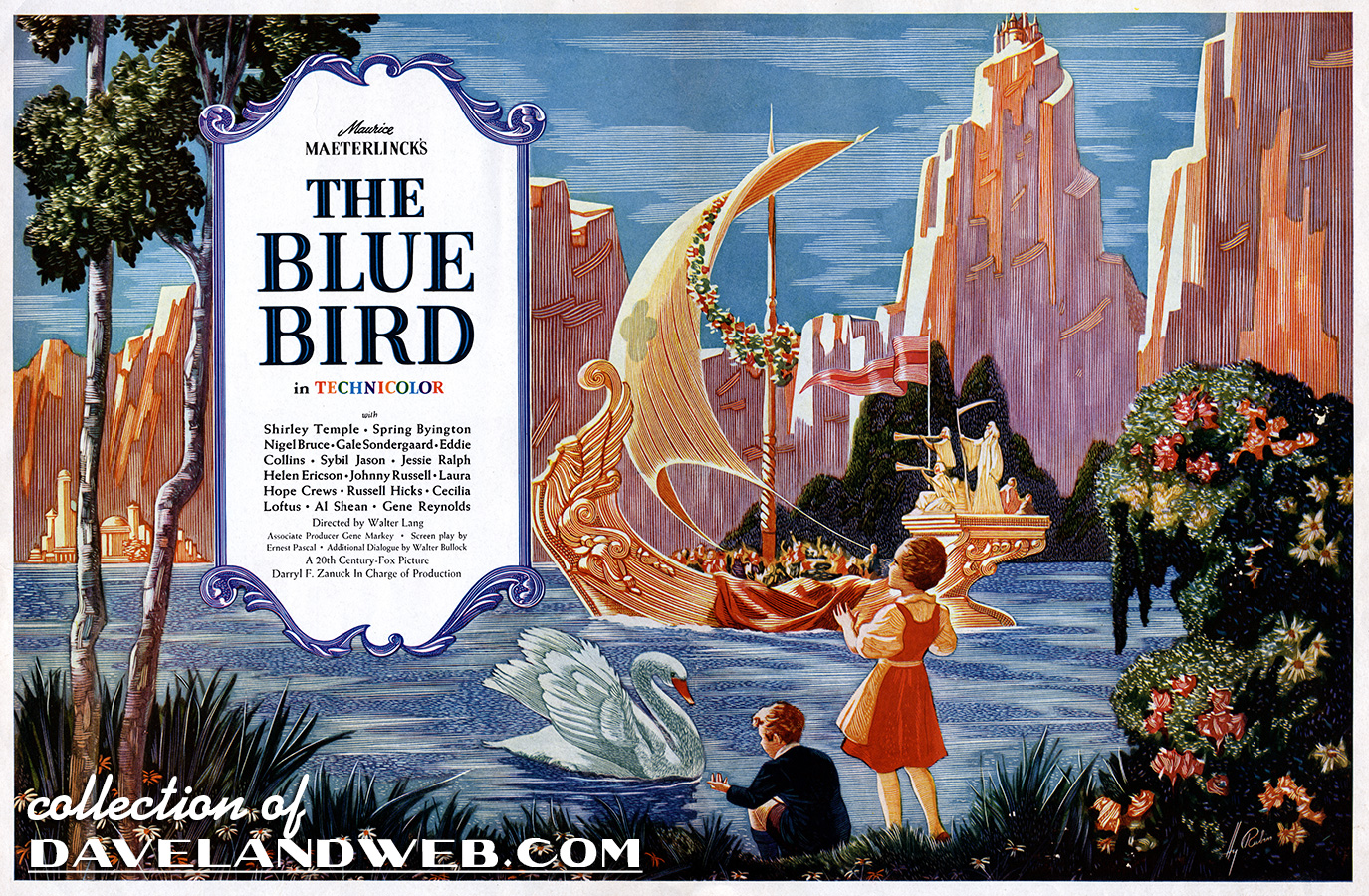
Much of the beautiful and moody expressionistic art for the film was created by Hy Rubin, an American illustrator (1905–1960). His work was published in the Saturday Evening Post and Good Housekeeping magazines. His last studio was located behind the T in the Times Square building in New York City. 


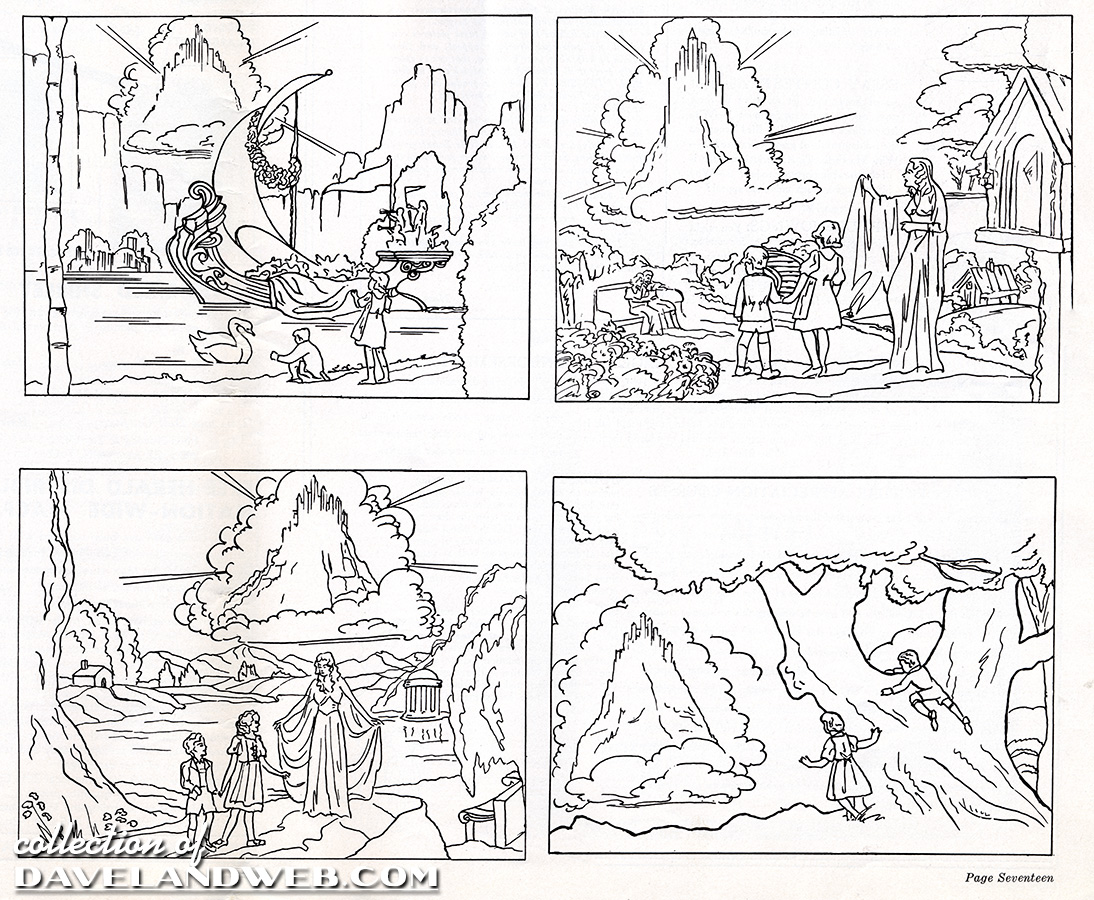
For the artistic, black and white cartoon panels were available to moviegoers for coloring:


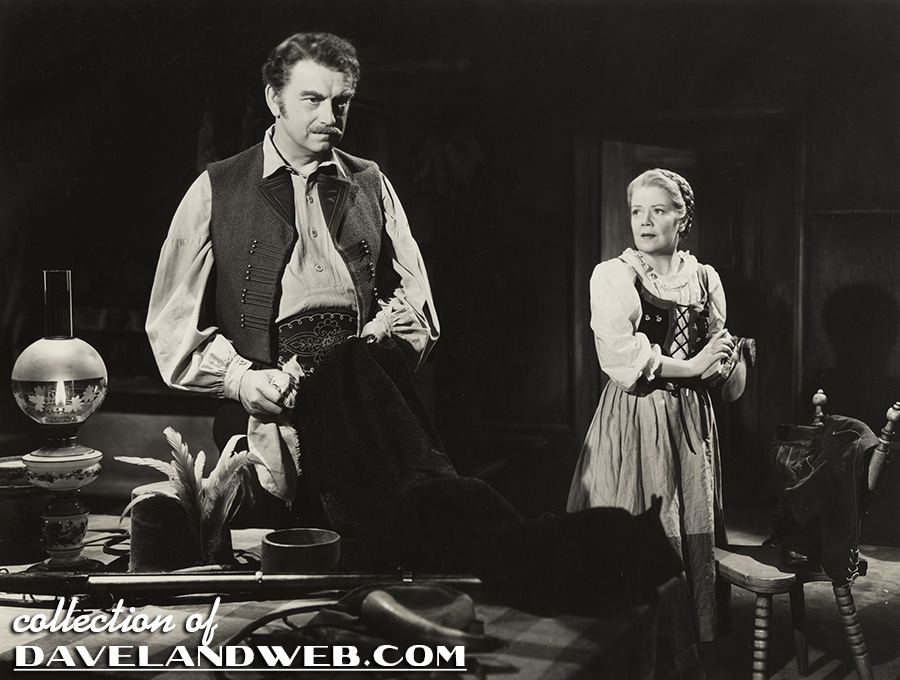
Below is a still from a deleted scene that occurred at the beginning of the movie when Shirley’s character’s father is about to go to war. Russell Hicks played the father and Spring Byington the mother.


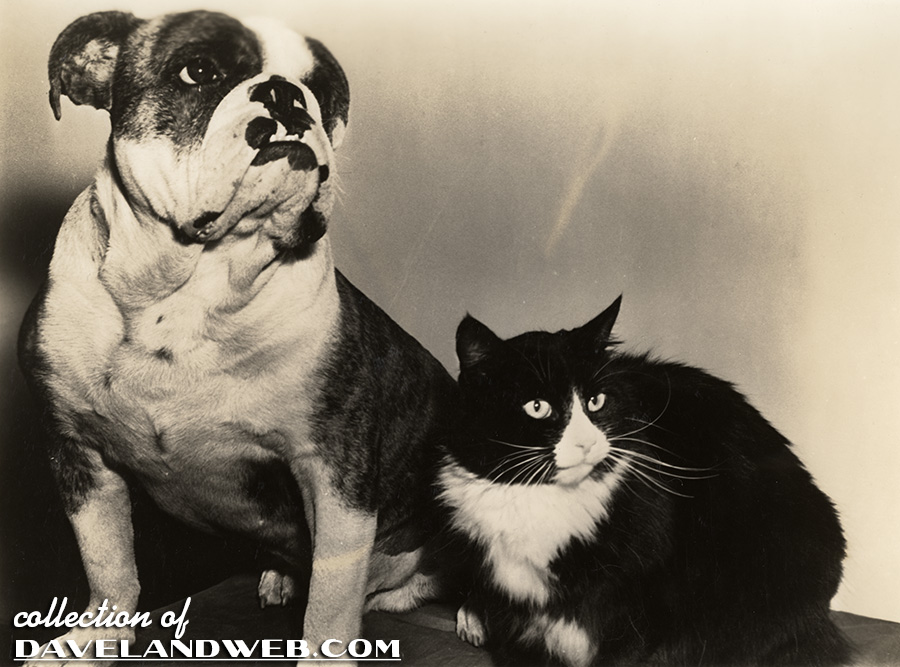
Below are Tylo the dog and Tylette the cat:


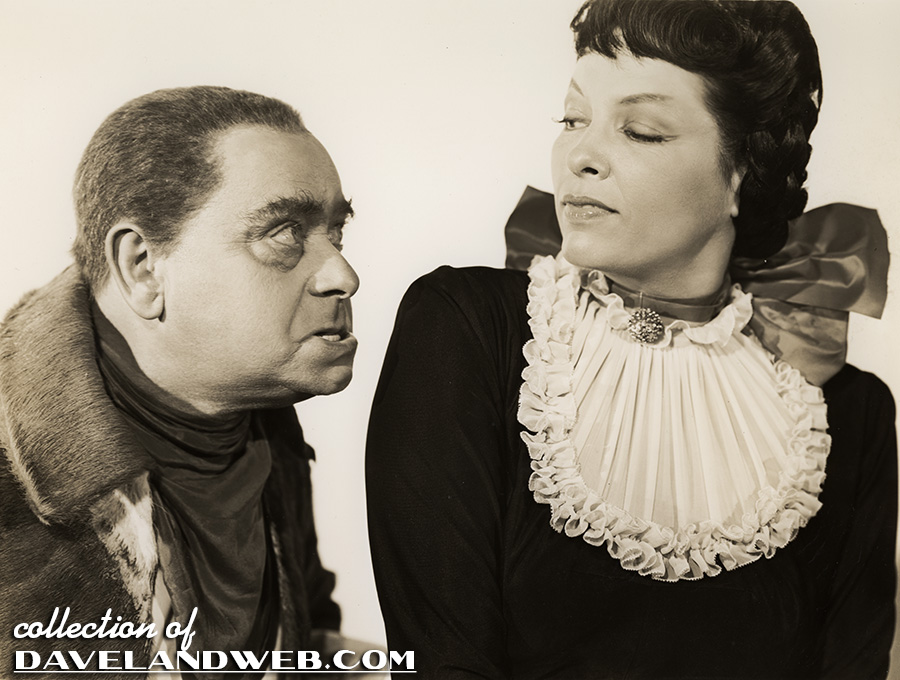
…and Eddie Collins and Gale Sondergaard who played their human counterparts in the movie.


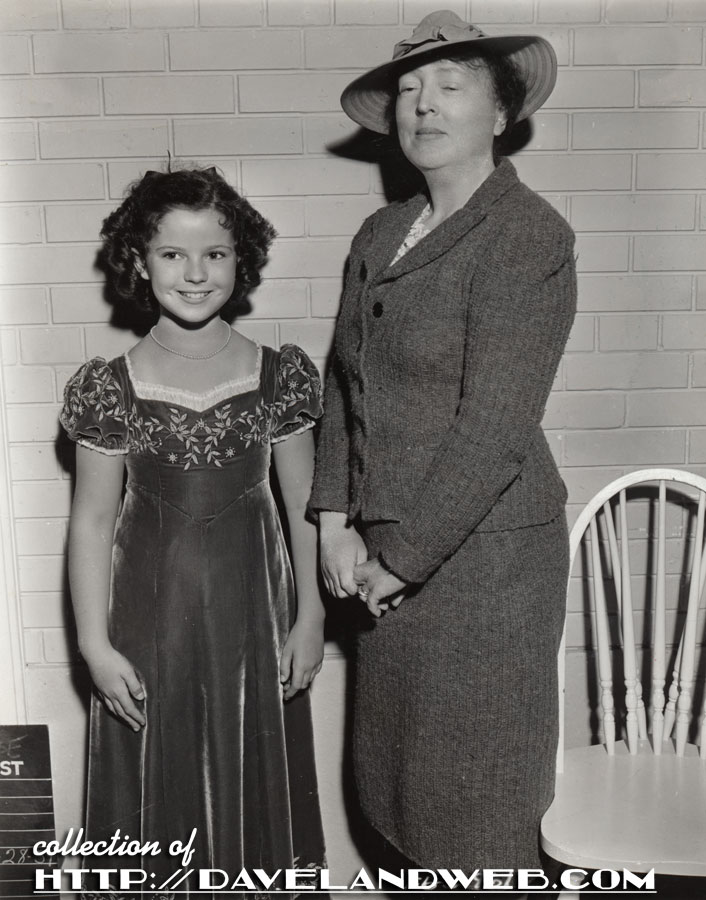
Whenever Shirley made a film, the studio was typically littered with visitors who wanted to meet the famous young actress. “The Blue Bird” was no exception. Note the costume/wardrobe board at the bottom left of the photo.


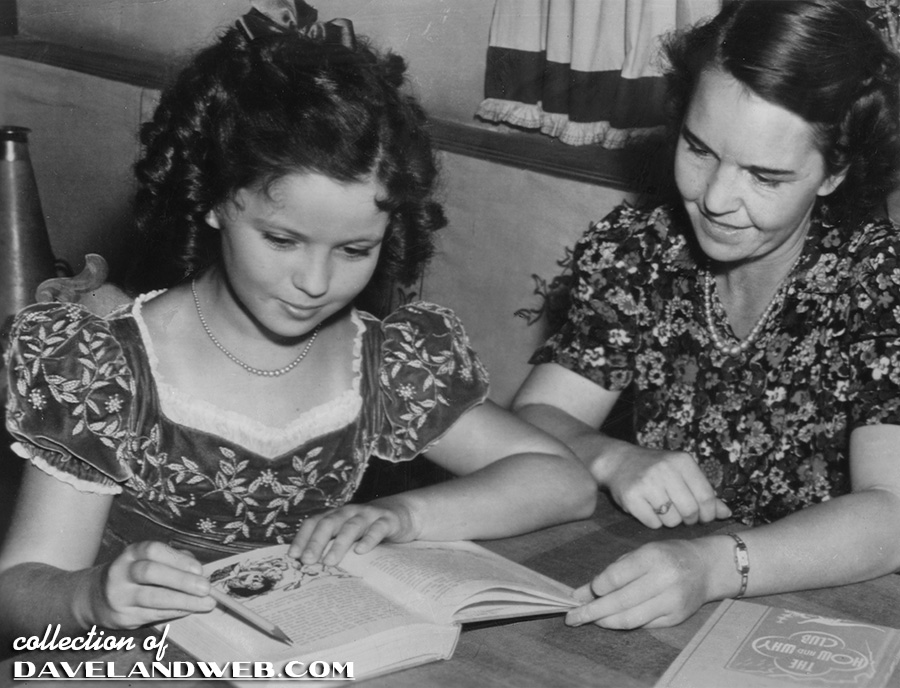
In between takes, Shirley did her schoolwork with studio teacher Frances Klamt.


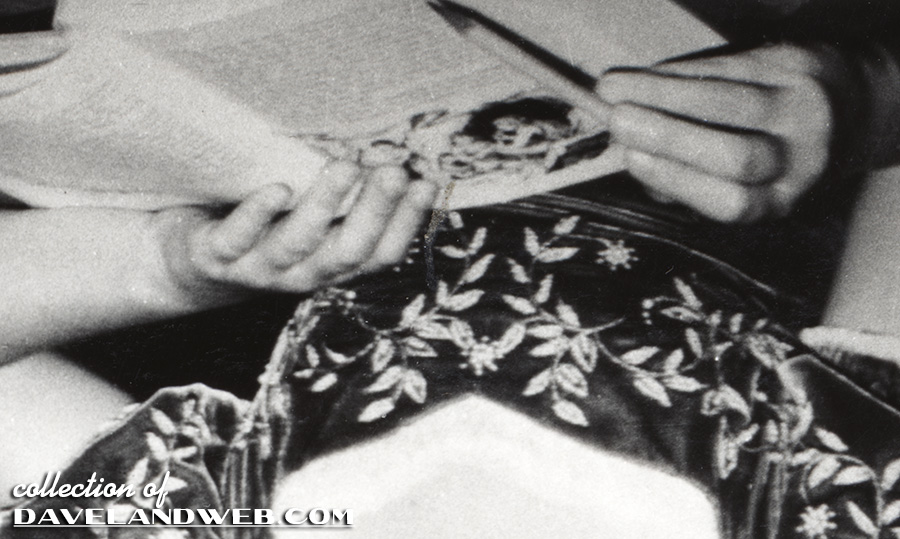
In case you want a glance at the book Shirley is working from:


I hope all of you have a very fun New Year’s Eve - see you in 2025!

See more “The Blue Bird” photos at my main website.

Tuesday, October 29, 2024

Temple Tuesday: Shirley for Halloween!


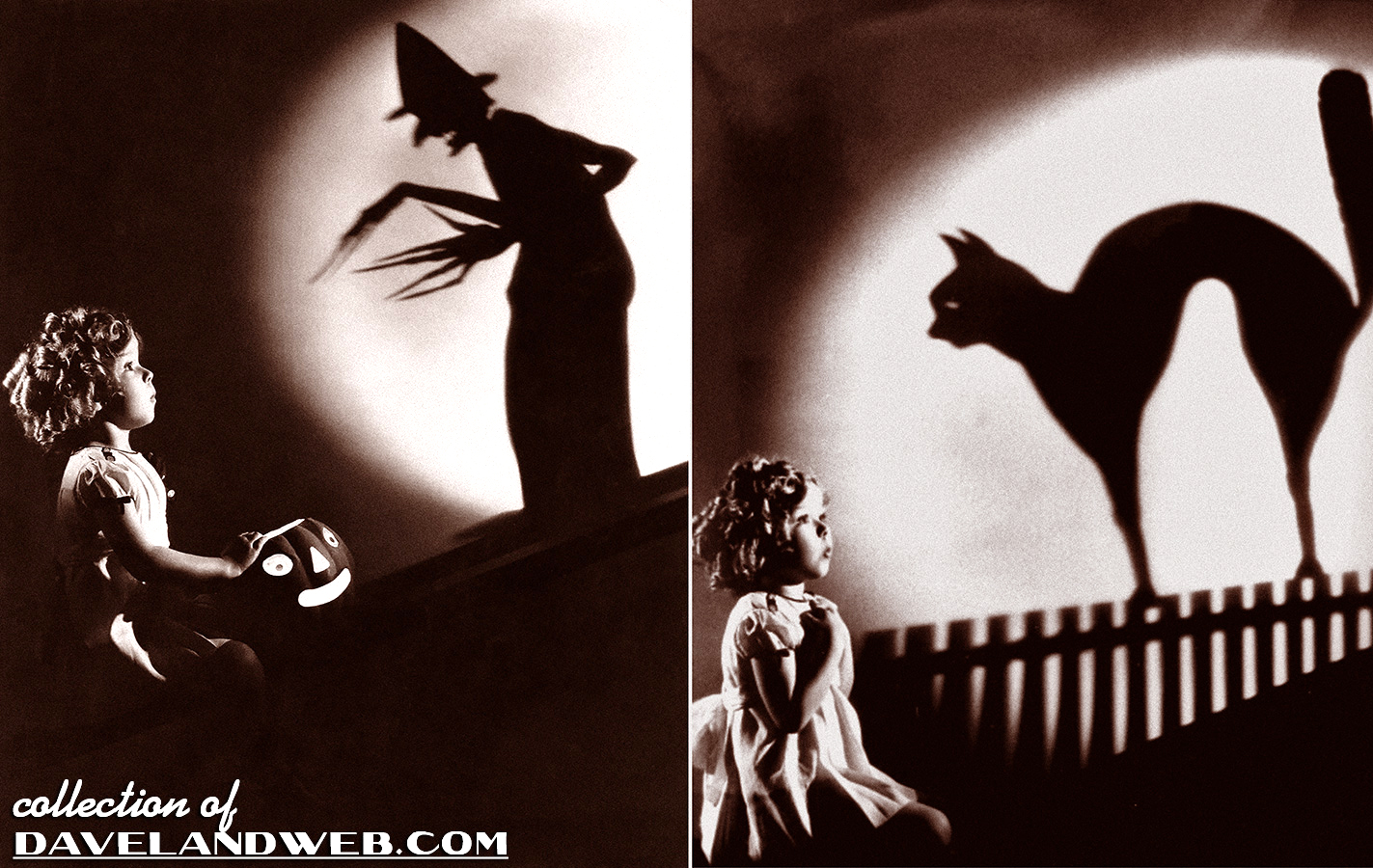
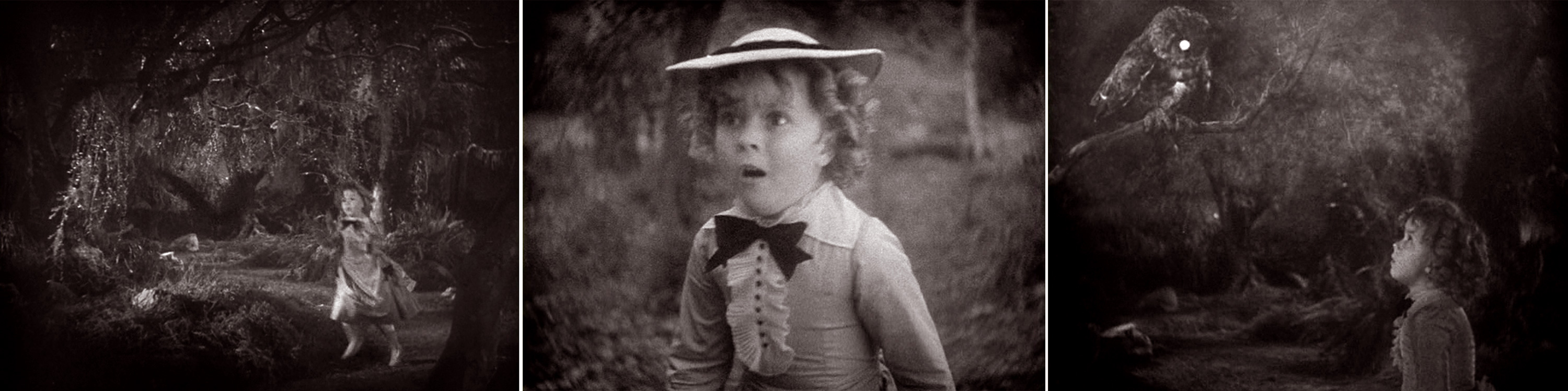
Today’s Temple Tuesday celebrates the upcoming “holiday” of Halloween. Although Shirley is typically associated with all things sugar and spice, nobody liked a good scare better than Miss Temple! While there are no specific Halloween sequences in any of Shirley’s films (that I can recall, at least), she does have a few that could qualify for today’s post. In her early Fox film, “The Little Colonel” (1935), Shirley’s character must reach her grandfather at night to enlist his aid in saving her parents. To get to him, she has a terrifying run through a forest and encounters an owl with glowing eyes. Keep in mind this sequence pre-dated similar ones found in Disney’s “Snow White” (1937) and “The Wizard of Oz” (1939). Shirley was always a trailblazer!


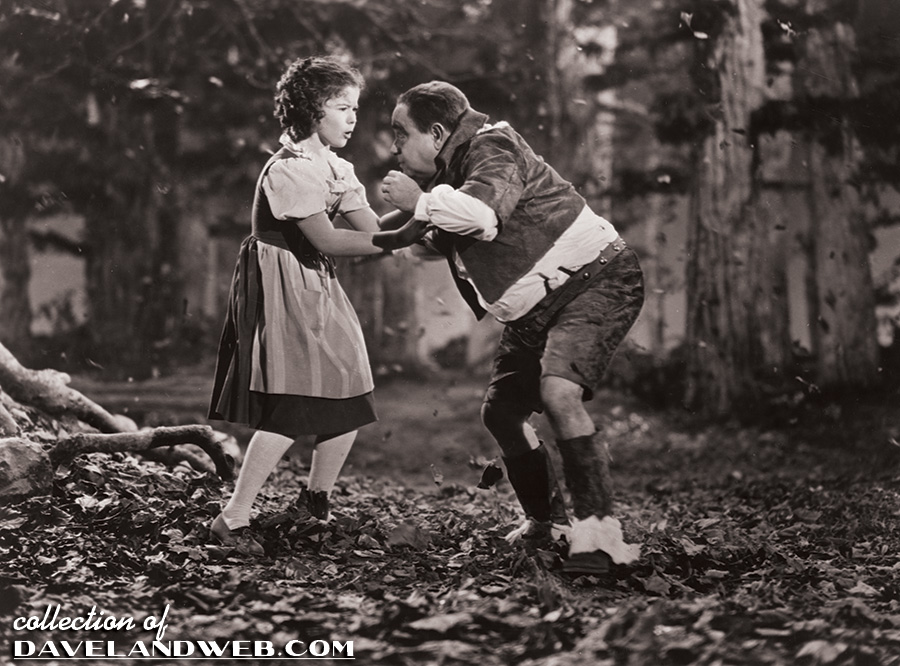
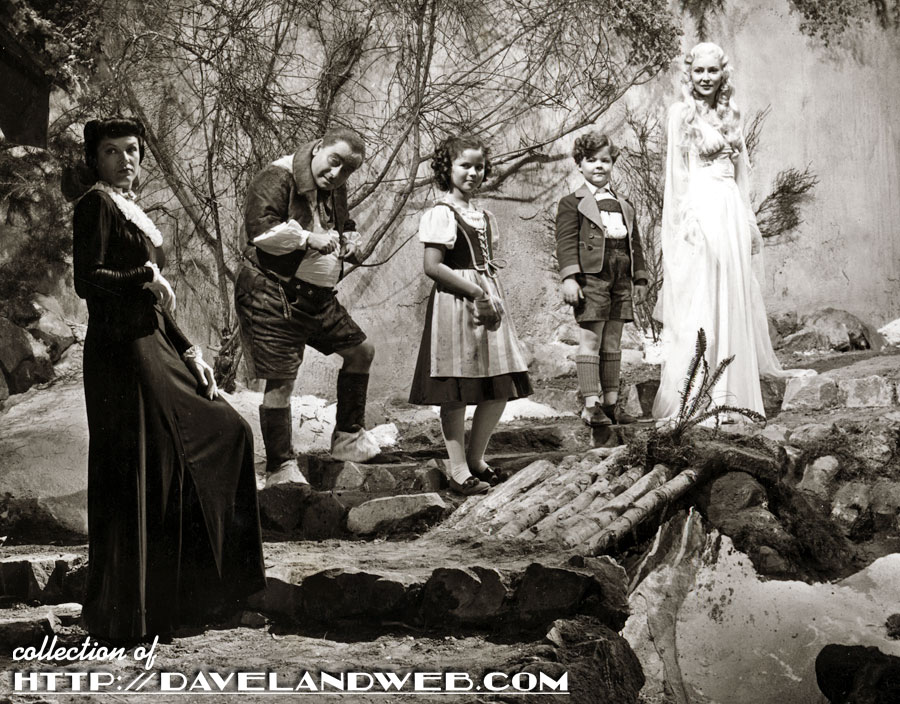
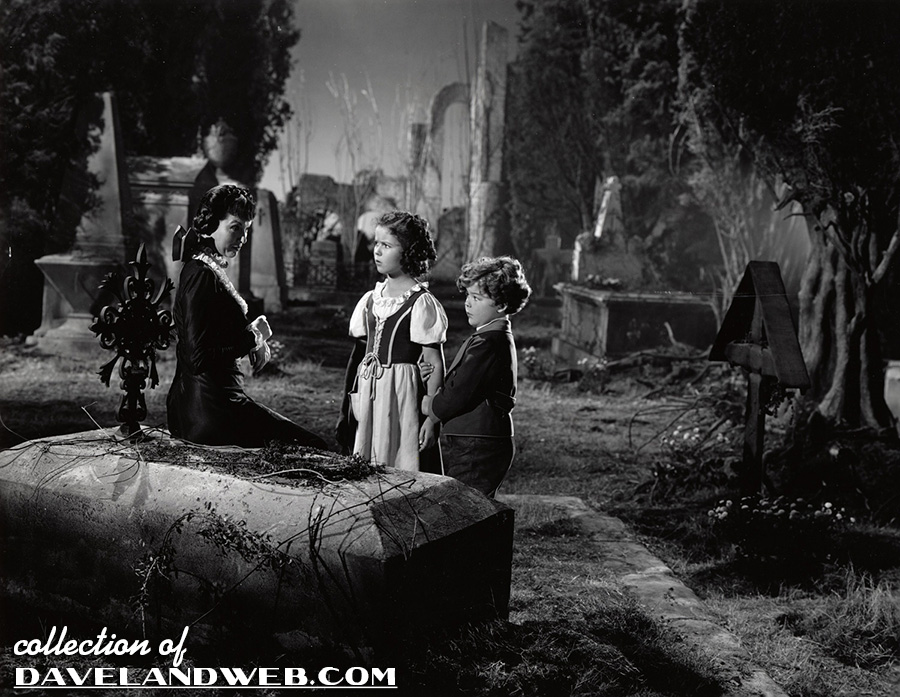
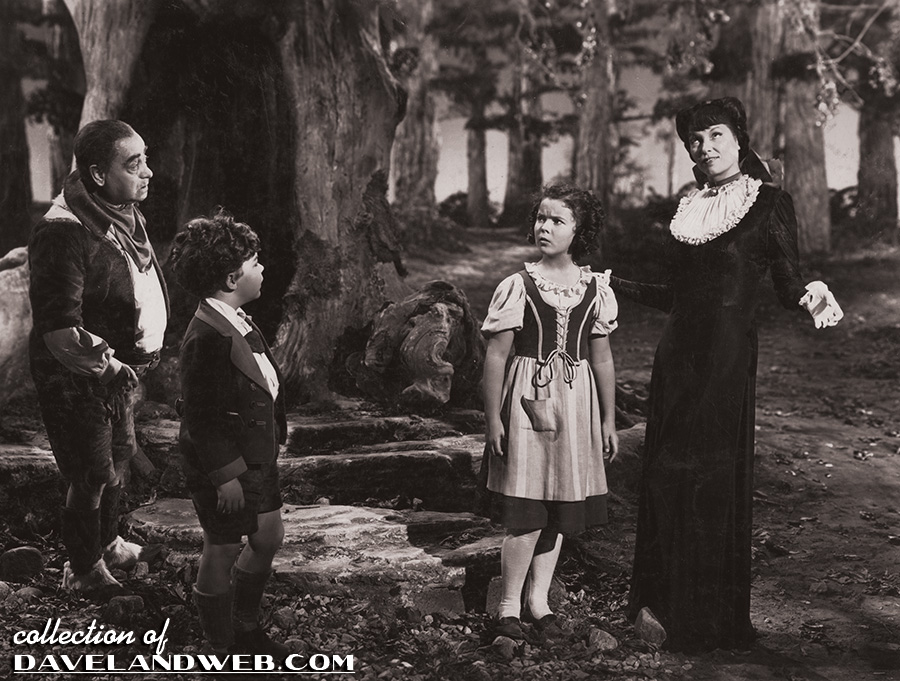
In “The Blue Bird” (1940), siblings Tyltyl and Mytyl (Johnny Russell and Shirley) take a frightening journey through the graveyard with their evil cat, Tylette (Gale Sondergaard), just before the stroke of midnight.


Not wanting to return to her feline form, Tylette attempts to trap the little children in the cemetery… FOREVER!


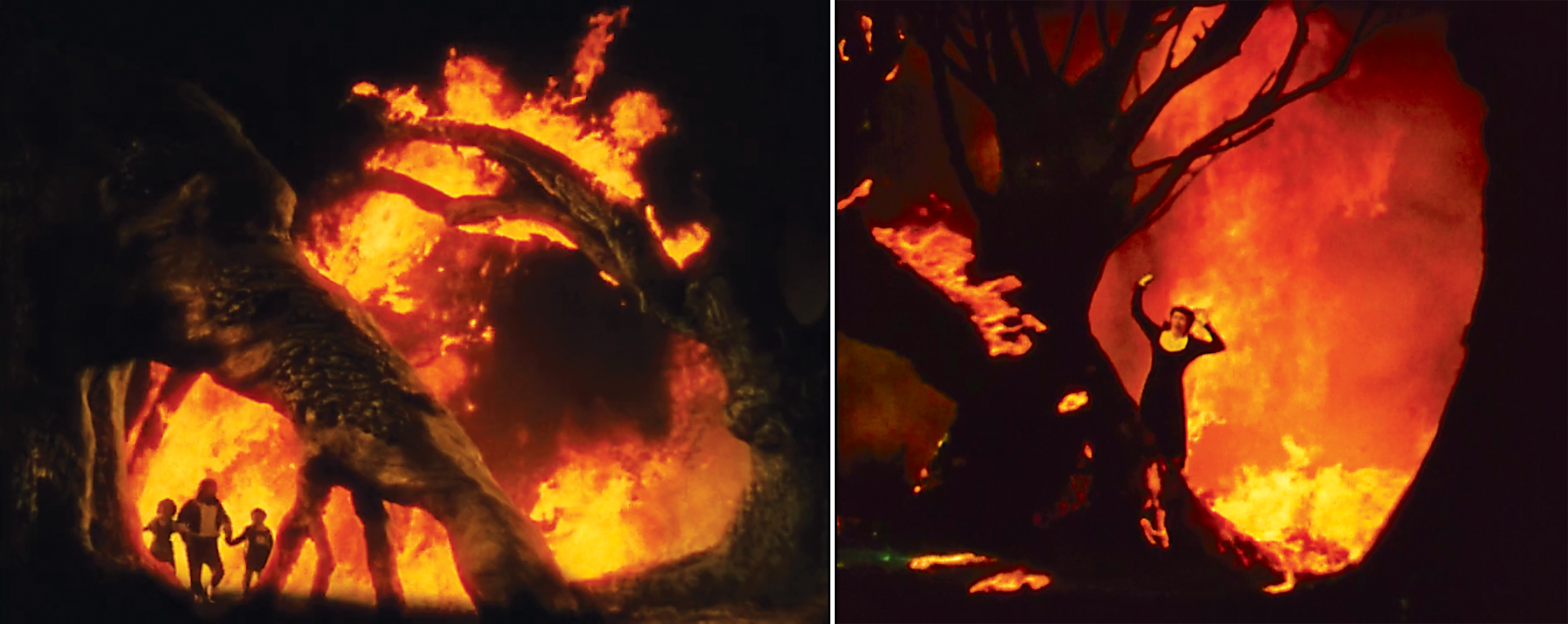
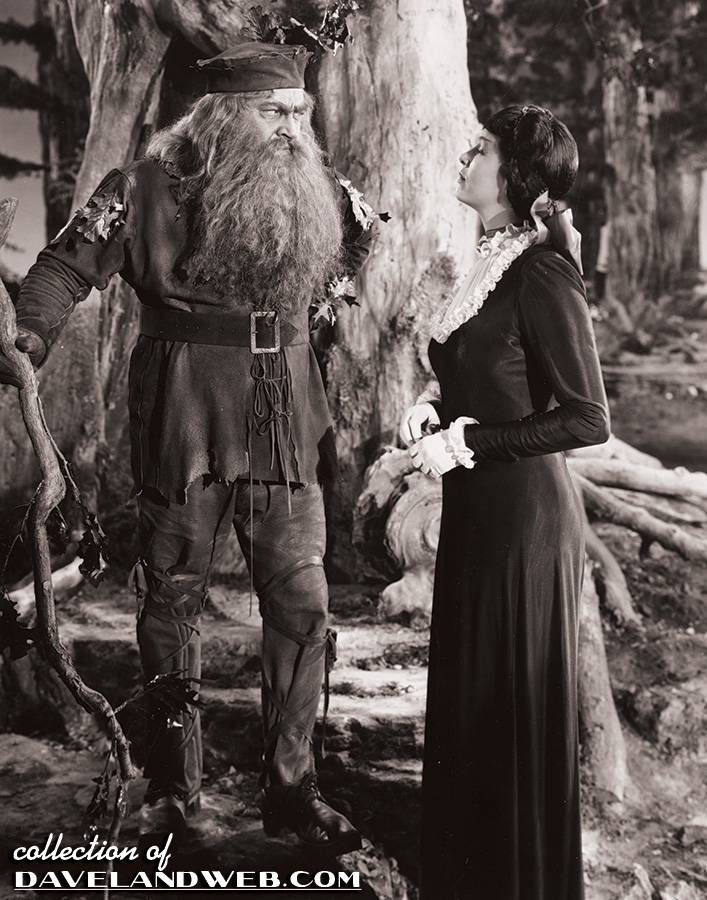
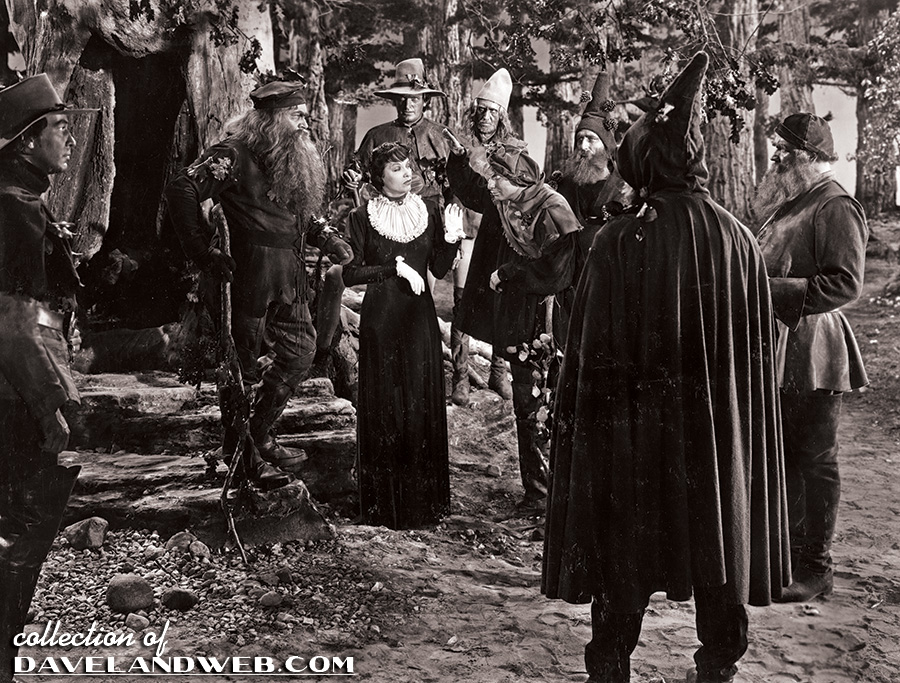
Later in the same movie, Tylette tries to have the children scared off by arranging to have the trees in the forest attack them…


AND THEN BURN THEM! Instead, karma bites Tylette in the ass and she’s the one who gets incinerated. As I often say, don’t mess with Shirley!


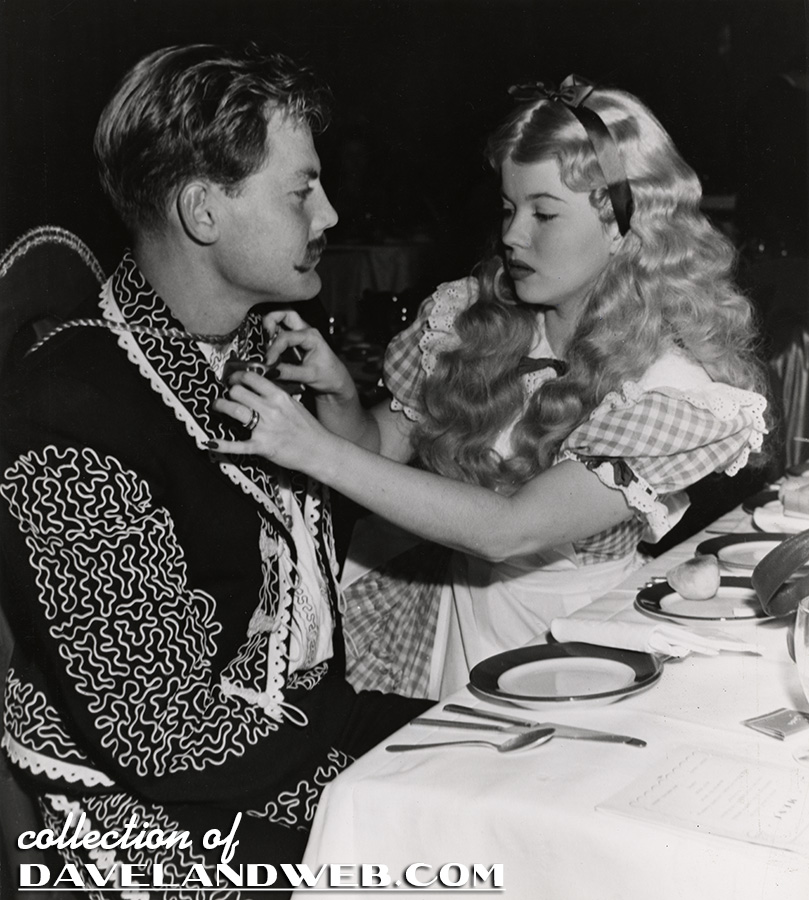
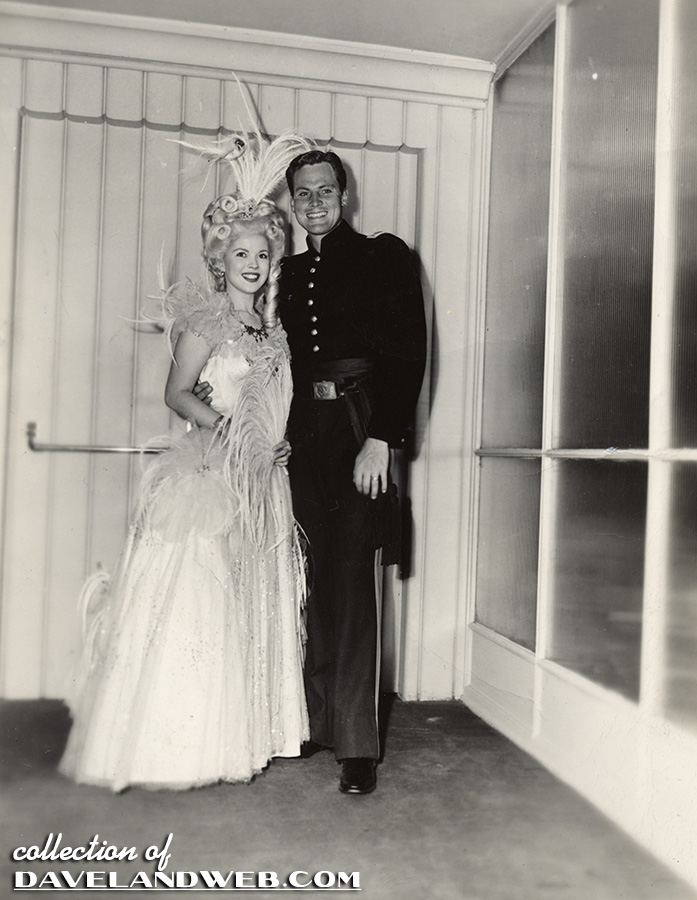
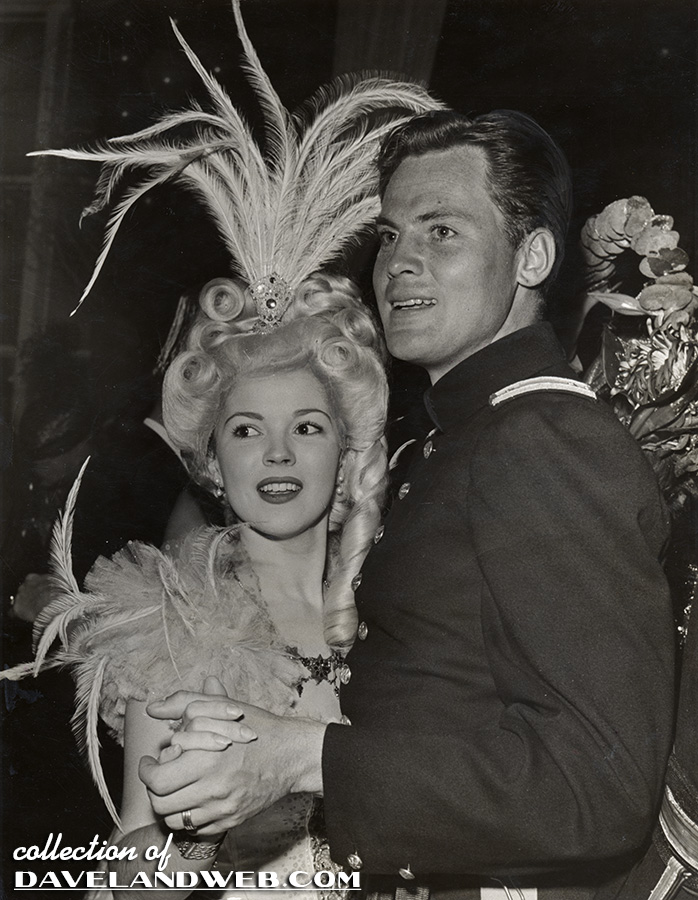
In her private life, Shirley also loved to dress up, such as this costume party at Ciro’s nightclub on Sunset Boulevard, with then husband John Agar. Shirley came as Alice in Wonderland.


For this 1948 party, Shirley recycled a movie costume from seven years before (“Kathleen”), but added a period wig for some Marie Antoinette flair.


Agar most likely borrowed his wardrobe from “Fort Apache.” 


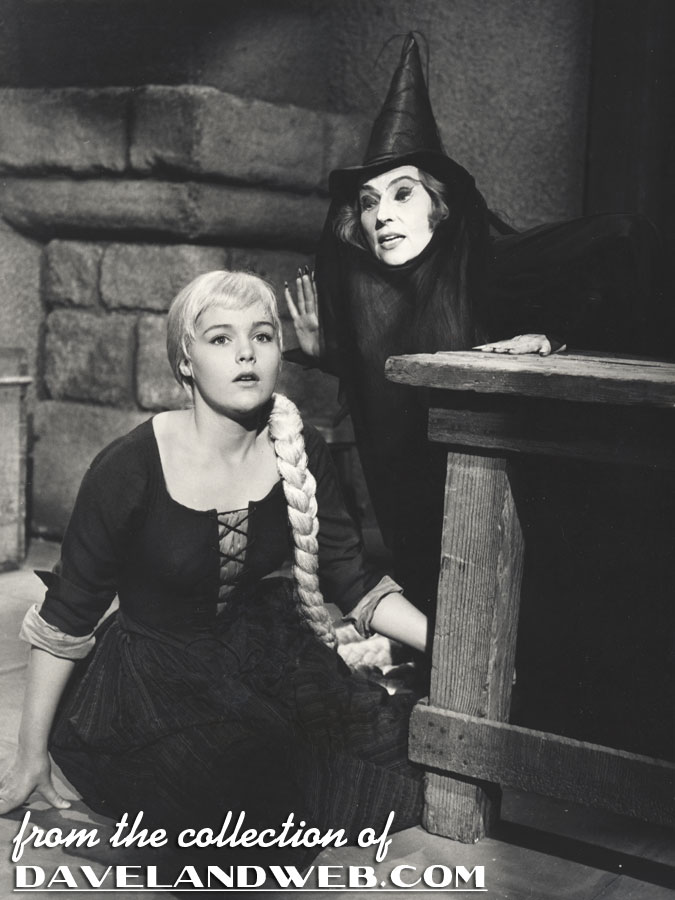
In her 1950’s Fairy Tale Anthology series, “Shirley Temple’s Storybook,” there were plenty of witches, but typically they were portrayed by other actresses. The Halloween episode of “Rapunzel” was first broadcast on October 27, 1958. Carol Lynley played the title role and Agnes Moorehead was the witch. This pre-dated her role of Endora in “Bewitched.”


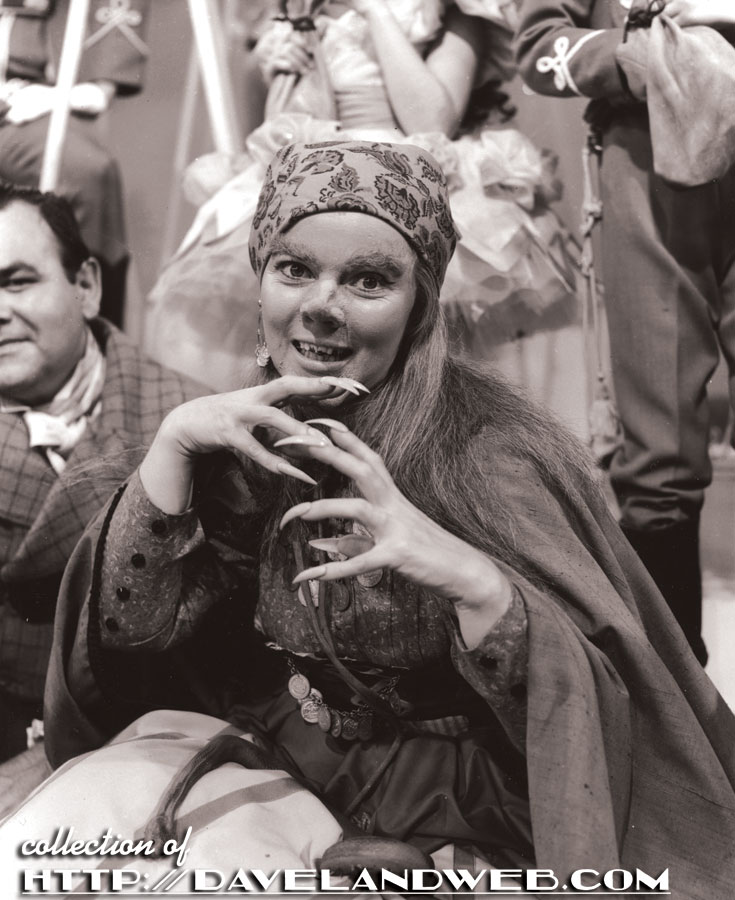
“The Shirley Temple Show” 1960 episode of “Babes in Toyland” allowed Shirley to gleefully play the role of Floretta, the gypsy witch. Shirley relished the opportunity to be almost unrecognizable in her makeup and costume!


I hope you all have a fun Halloween this week!

See more Shirley Temple photos at my main website.

Wednesday, January 16, 2019

Wizard Wednesday, Part 2


Today’s post has more questions/answers from William Stillman, author of The Road to Oz: The Evolution, Creation, and Legacy of a Motion Picture Masterpiece

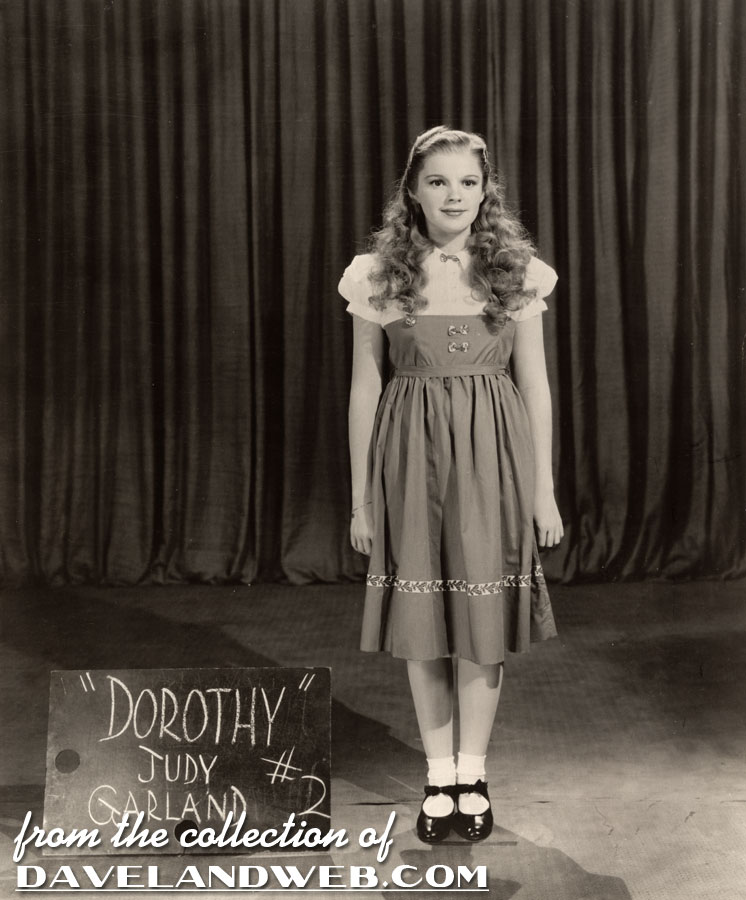
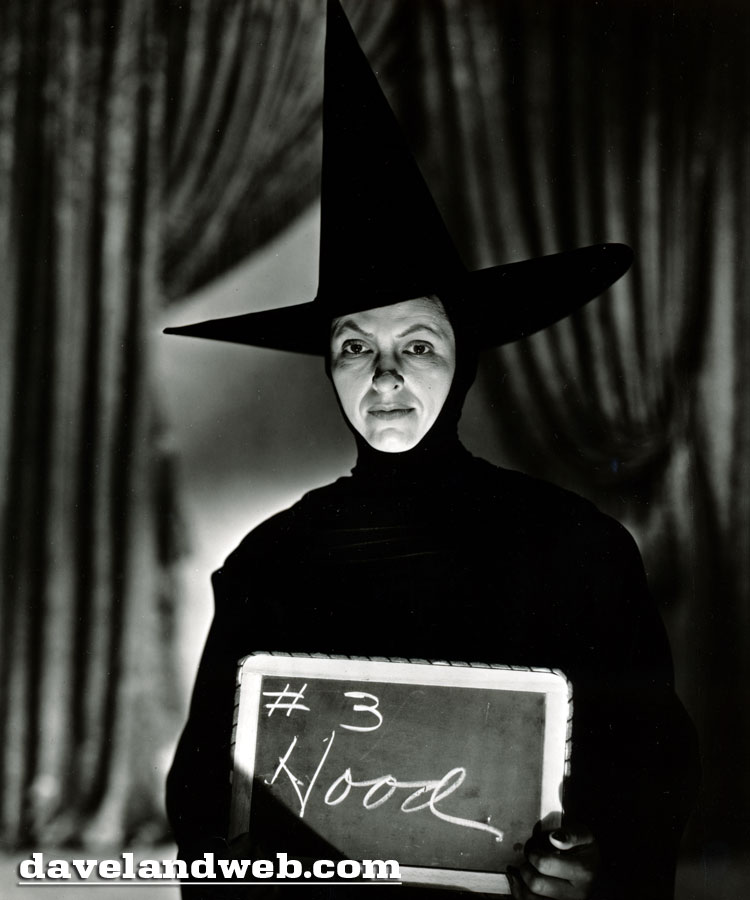
1. Your book covers the multitude of initial cast choices/changes that occurred with the filming of “The Wizard of Oz.” Shown above is the original casting choice for the witch, Gale Sondergaard. What would YOUR ideal backup cast be if you weren't allowed to choose from anyone that ended up in the film: Dorothy, Tinman, Scarecrow, Lion, Wizard, Witch, Glinda, Aunt Em, and Uncle Henry?

A: What an intriguing question! Hmmmm…Well, I’ve always thought Virginia Weidler was a very competent little actress who could have played Dorothy quite well (and would’ve been much closer to the age of the character than Judy Garland). Despite costarring with Garland and Mickey Rooney in “Babes on Broadway,” Weidler was not a prime vocalist, however, and her would-be musical numbers for “Oz” would have to have been dubbed. Fun fact: Weidler starred in 1939’s “Bad Little Angel” with Terry, the Cairn terrier who portrayed Toto, as her pet. In one scene, she even carries the basket used by Judy Garland throughout “The Wizard of Oz”!

For the Tin Man and Scarecrow—from MGM’s roster—I could see Allan Jones (primarily a singer) or George Murphy (an actor/dancer). An interesting choice for the Tin Man might’ve been Nelson Eddy from the perspective of someone who could sing and dance, and was associated with romance in the public eye. For the Cowardly Lion, perhaps Cliff Edwards (aka “Ukulele Ike”), a Broadway comedian and singer then under contract to Metro; Ted Healy; or maybe Eddie Collins who played a similar part with Shirley Temple in “The Blue Bird.”

For the Wizard, I think Mervyn LeRoy’s original selection of Ed Wynn would’ve been an interesting choice for his befuddled schtick. If not Wynn, then maybe Guy Kibbee might’ve filled the role ably.

For the Wicked Witch I could see Renie Riano who, like Margaret Hamilton, was known as a stage and screen comedienne. Both actresses played similar movie roles as sarcastic maids and housekeepers.

Billie Burke brought a sense of quiet wisdom and spiritual tranquility to the part of Glinda, perhaps owing to her maturity—watch carefully how she deals with the Wicked Witch, smiling at her theatrics, dismissing her threats, and being firm when warranted. As is true of an ethereal being, it’s difficult to pinpoint her age. Outside of Burke, probably a starlet on the MGM roster would’ve been chosen to project youth and sweetness, such as Rita Johnson, Virginia Bruce or Virginia Grey.

For Aunt Em and Uncle Henry, how about Jessie Ralph and Lionel Barrymore!


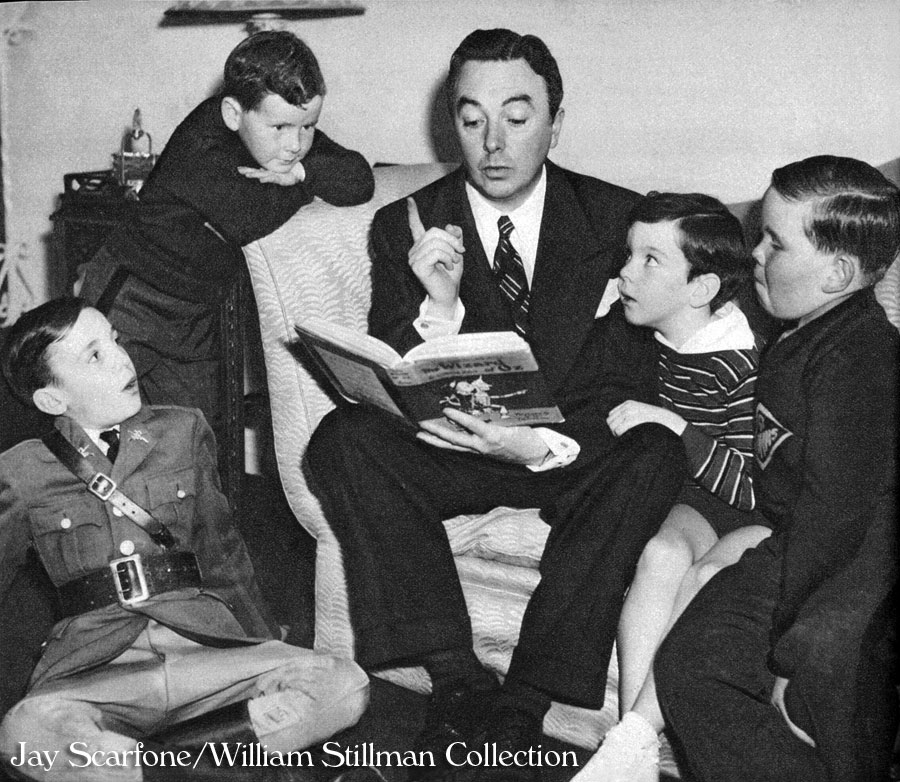
2. You mention Jack Haley's adopted/unadopted child who is pictured above, wearing his uniform from the Black-Foxe Military Institute while Haley reads “The Wizard of Oz.” Looks like there is no information about what happened to him after he left Haley’s guardianship. Seems baffling as to why the adoption occurred in the first place...as if some other piece of information is missing. Any thoughts?

A: Jay Scarfone and I did our darndest to trace the whereabouts of Haley’s adopted son but to no avail. As we intimate in “The Road to Oz,” outside of any insider information between Haley and his wife, it’s possible that the adoption was arranged because it was the trendy, philanthropic thing to do in Hollywood at that time. It doesn’t make sense, though, that Haley would’ve added an historically “unplaceable” child to his brood on top of his taxing professional commitments and, as it happened, the adoption was short-lived.


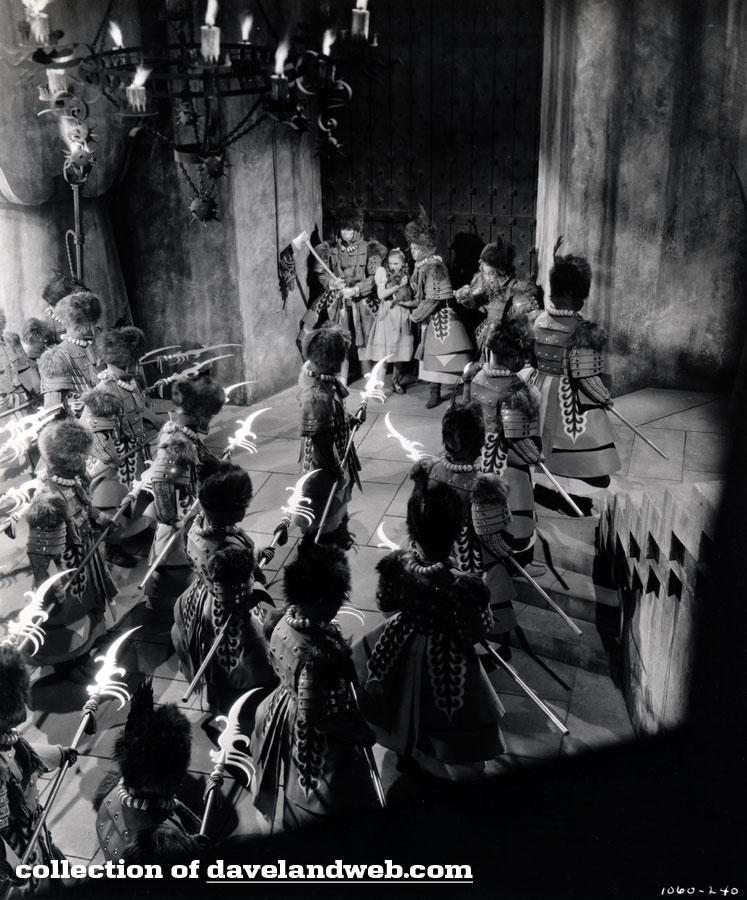
3. Under Richard Thorpe’s direction, Dorothy/Judy was blonde and glamorous. It doesn't appear that the transformation/beauty shop Dorothy at the Wash & Brush up was in the script for that version, or was it? At what point was that added?

A: There was always intended to be a sequence in which Dorothy and her friends are primped and refurbished before their audience with the Wizard. Dorothy’s hair was to be brushed and curled, and she was to change into a green dress as she does in the book, and as she does in the recent Andrew Lloyd Webber stage production of MGM’s “Oz.”


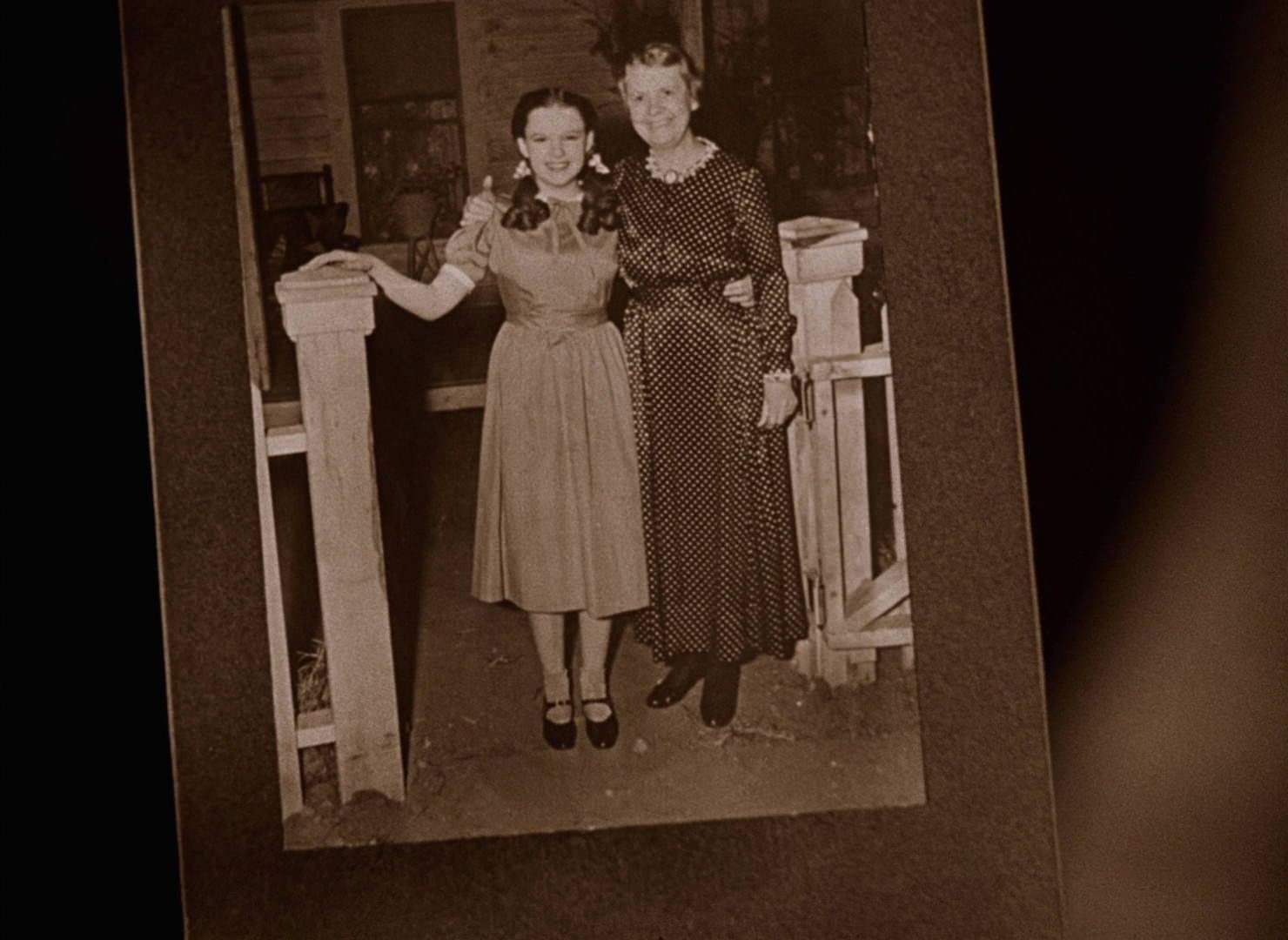
4. In the Professor Marvel trailer, he finds a picture of Dorothy and Aunt Em. It always fascinated me to see Dorothy in a different dress. I also notice that she is wearing Mary Janes. Any idea what happened to that dress? I am also guessing those are the Mary Janes that you mention Judy wearing originally before Cukor changed things.

A: Yes, the patent-leather Mary Jane shoes we see Dorothy wearing in the portrait with Aunt Em are the shoes Judy Garland would have worn in Kansas originally, and did wear in preliminary tests. There’s no telling what became of the dress, and we can only speculate that if it wasn’t worn in other pictures, it was sold during the 1970 liquidation of MGM’s property. Perhaps it was inked with Judy Garland’s name in the lining and is floating around out there to the unawares of its owner. Stranger things have happened!


5. What do you think the fate of the movie would have been if Richard Thorpe had been allowed to complete direction of it?

A: If Richard Thorpe had been the director of record for "The Wizard of Oz," I think its legacy would be similar to that of the 1933 "Alice in Wonderland" or Shirley Temple's "The Blue Bird." That is, it probably would be remembered as a quaint fantasy film very much of its era and primarily recalled by movie buffs and film historians but otherwise considered unremarkable. It might have also been a bit of a career setback for Judy Garland in terms of public popularity but under the old contract system, that would've readily been rectified with her next picture.


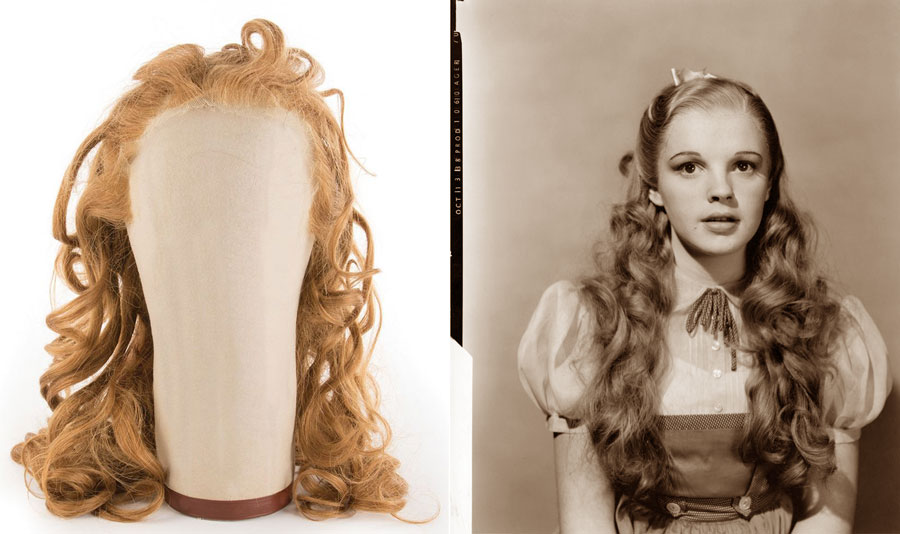
6. You talk about Bobbie Koshay wearing the blonde Thorpe wig in the Rose Parade. In photos, it does have more of a brown color. I also ask because the supposed blonde test wig came up for auction recently. Are these all one and the same?

Koshay wears a blonde wig as we own color footage of the float. There were likely two wigs. They will look light or dark depending upon lighting (as Judy's blonde wig looks dark/light in various Thorpe stills). The float can be seen here:


and here:


7. It seems like both Jitterbug and the bees sequence at the Tinman's cottage were filmed, animated, and completely finished. Have ANY of the animation drawings survived, or any kind of test shot surfaced showing either the jitterbug or the bees?

A: So far we have not heard of or seen any animations for WOZ.

See more “Wizard of Oz” photos at my main website.
Tuesday, April 03, 2018

Temple Tuesday: Follow the Light


I am still woefully behind on life, but starting to see the "Light" at the end of the tunnel. Thus, today's post featuring the first "new" vintage still I have acquire from the Shirley Temple movie "The Blue Bird" in over a year. Tipped off by Shirley's #1 fan (Thanks, Colonel!), this shot is one I had never seen before. At this point in the movie, Shirley and her gang are just beginning their journey to find the Bluebird of Happiness.


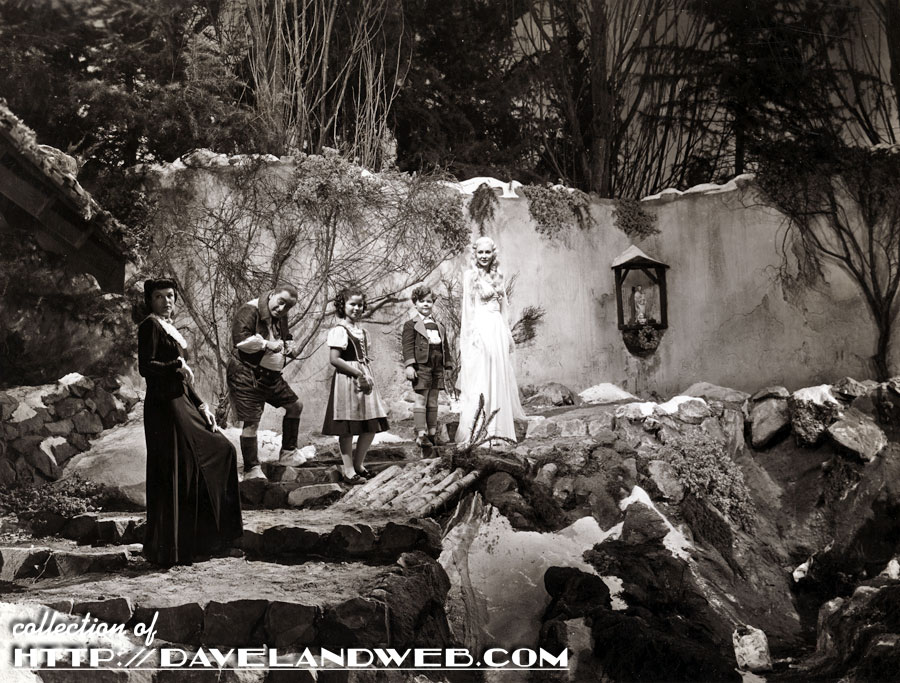
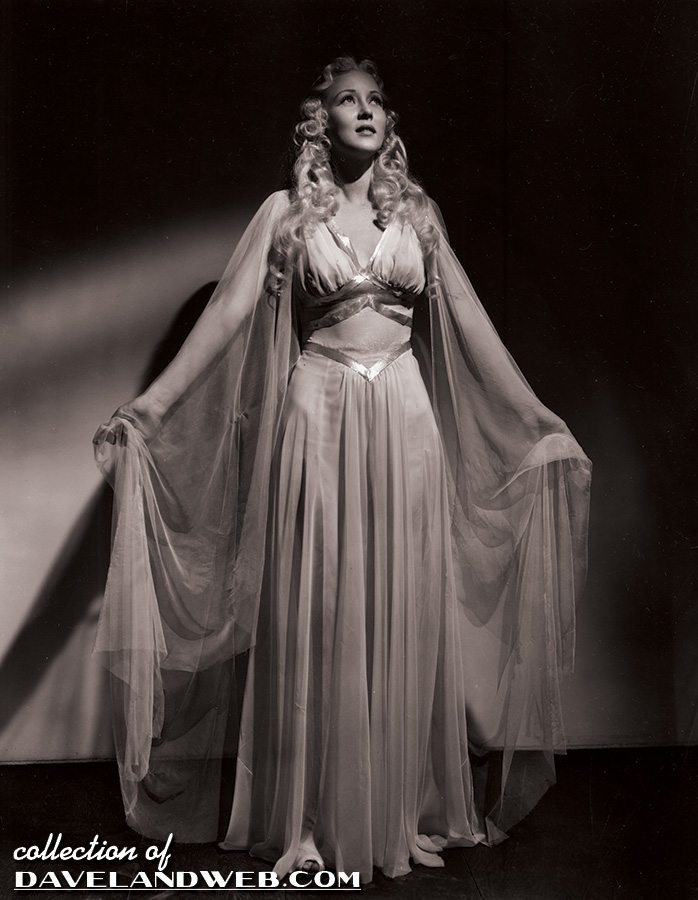
I remember the first time I saw this movie that I was fascinated how the "light" followed the character of "Light," played by Helen Ericson, as she traveled up the steps here. With her diaphanous gown, Ericsson gave the movie a bit of sex appeal for the adults.


See more "The Blue Bird" photos at my main website.
Friday, August 26, 2016

Behind The Scenes on The Blue Bird


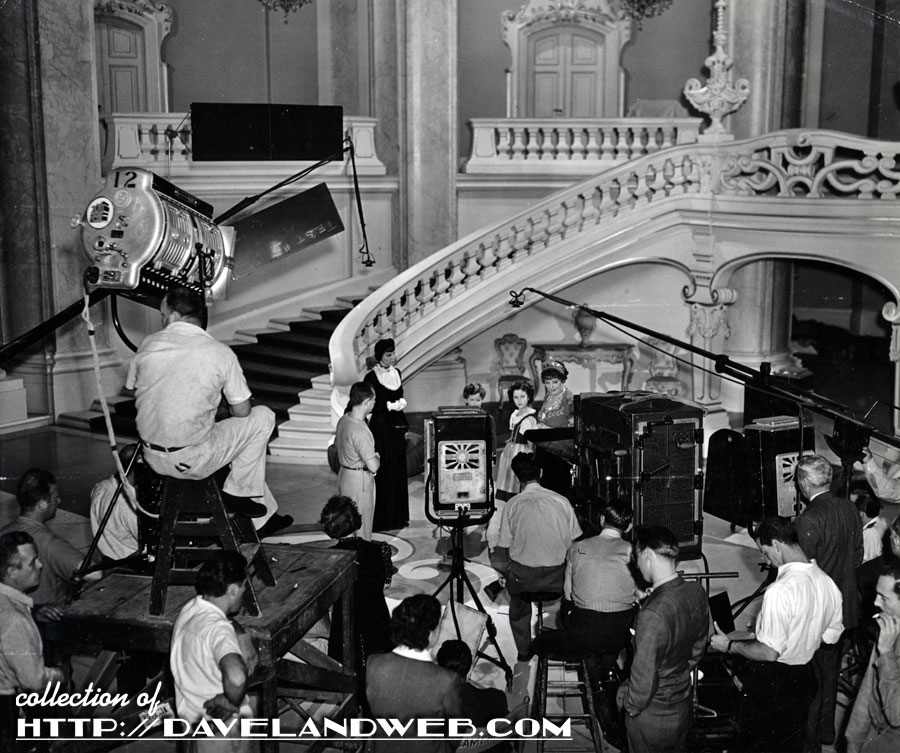
This publicity shot from October 1939 shows filming of "The Blue Bird" with Shirley Temple. Here's the accompanying text from the back of the photo:

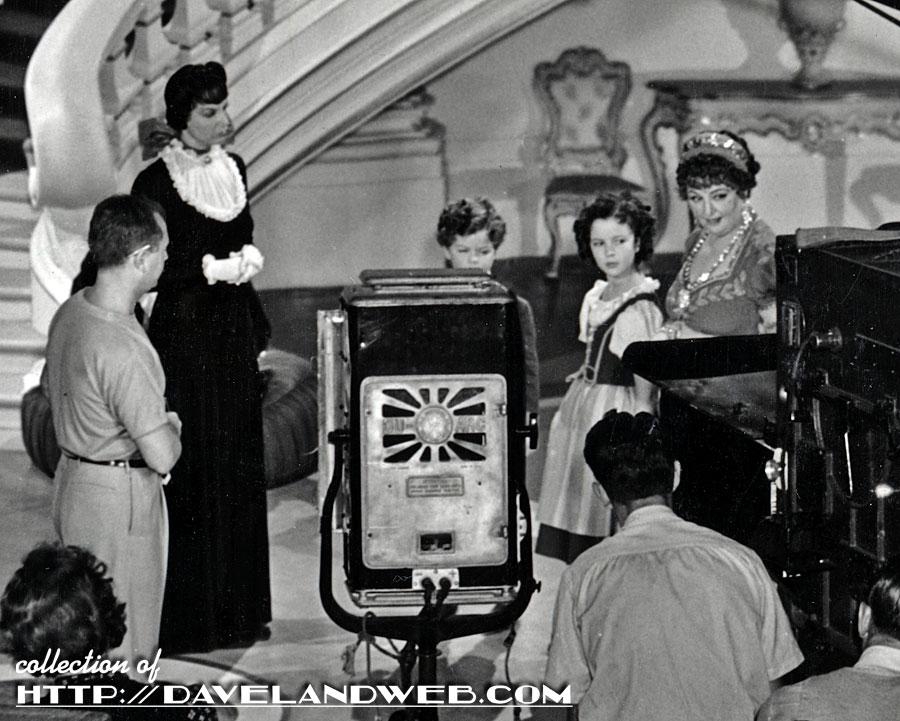
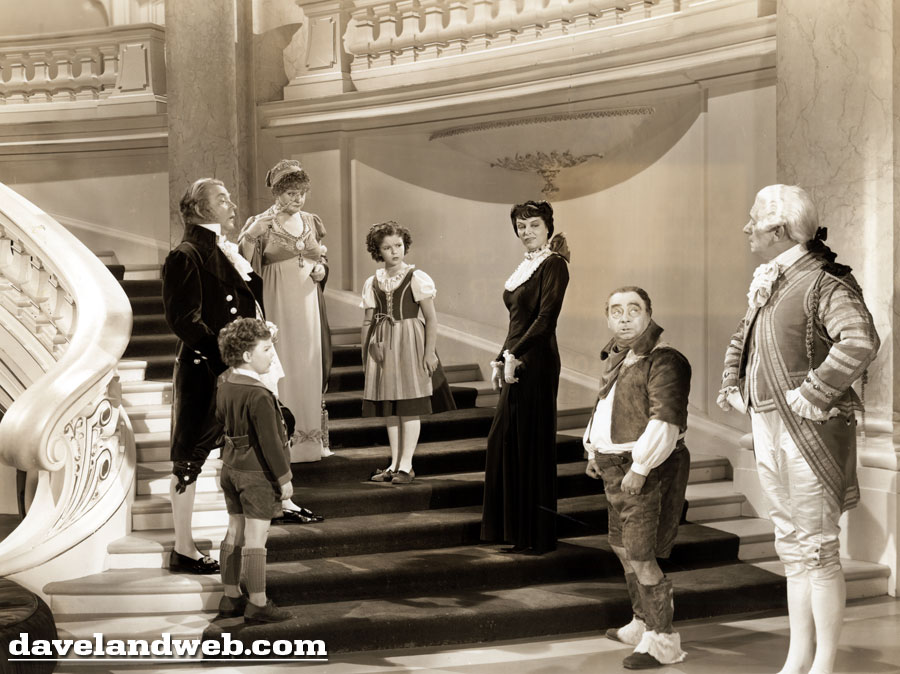
ROYAL SLIDE - For Shirley Temple and Johnny Russell (behind are light, center) one of the high spots of "The Blue Bird", now under production in Technicolor at 20th Century-Fox, came when they got to slide down the impressive balustrades of a baroque palace. Behind Gale Sondergaard (at foot of balustrade) is one of the big satin pillows into which Shirley and Johnny plumped. Even Laura Hope Crews (left of camera) as well as Nigel Bruce (not shown) got the rare privilege of sliding down the banister. The scene is from "The Palace of Luxury", which occupied an entire sound stage at the Westwood studio.


In this still, you can see the aforementioned bannister. However, I am guessing that stunt doubles were used for most (if not all) the actors!


More Shirley Temple in "The Blue Bird" photos at my main website.
Wednesday, April 27, 2016

Shirley Temple and The Blue Bird Diamond


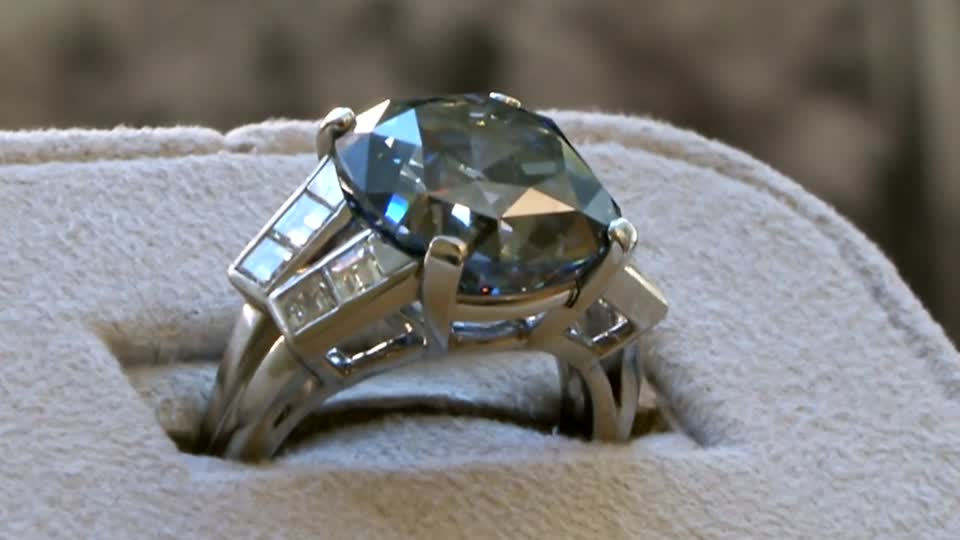
The 1940 Shirley Temple movie "The Blue Bird" may have been a box office dud, but the 9.54 carat blue diamond ring that Shirley's dad bought for her at the time of the film's premiere definitely wasn't. Recently up on the auction block at Sotheby's, the ring was valued between $25-35 million. Not bad for her dad's original purchase price of $7,210! The ring went unsold at the auction, but Sotheby's had this to say: “Unfortunately, tonight wasn’t its night in the salesroom, but we remain fully confident that it will find a buyer.”


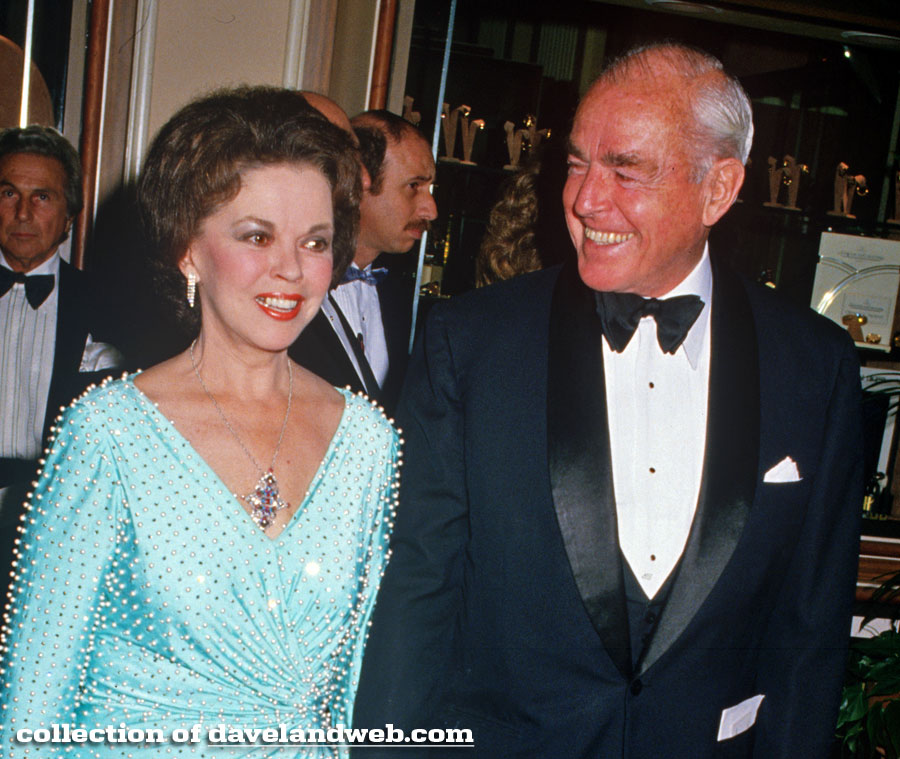
Here's a shot of Shirley and husband Charles Black from the 1980s.


Not sure if the rock on her hands here is the same one, but she continued to wear the 1940 ring throughout her life.


More Shirley photos at my main website.
Saturday, July 05, 2014

Trees Can Be Scary!


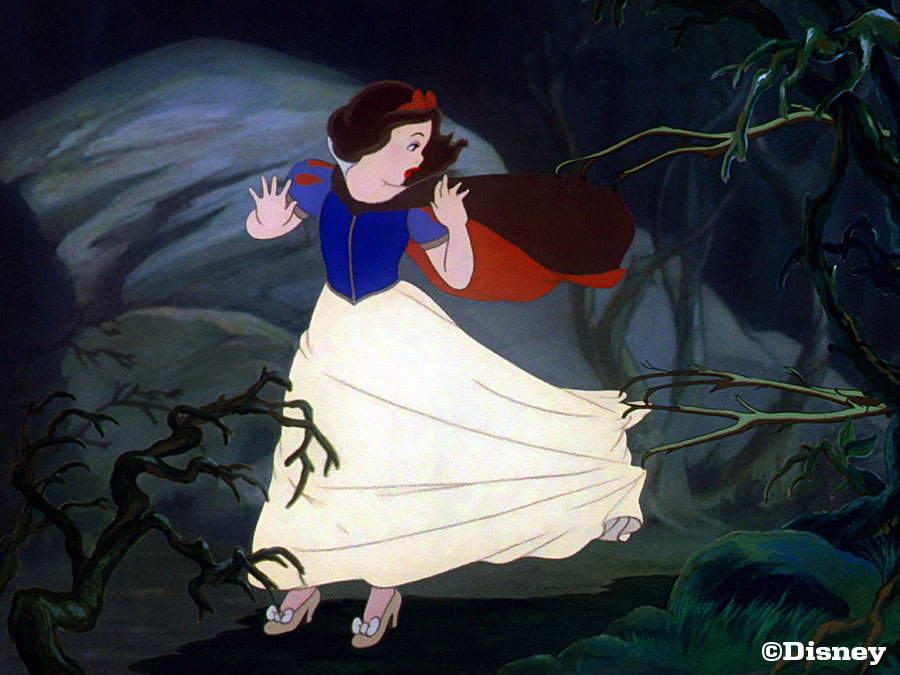
Walt Disney sure had a knack for scaring the crap out of little kids. 77 years later, the scene from "Snow White and the Seven Dwarfs" where Snow White flees for her life through a forest of trees that have come to life still packs a punch that is guaranteed to give the little ones nightmares.

What's so scary about a few branches? Typically, not much, unless you're running from danger and you get stuck on a few. The limbs of the tree literally come to life, holding her back, causing her the worst case of paranoia possible.


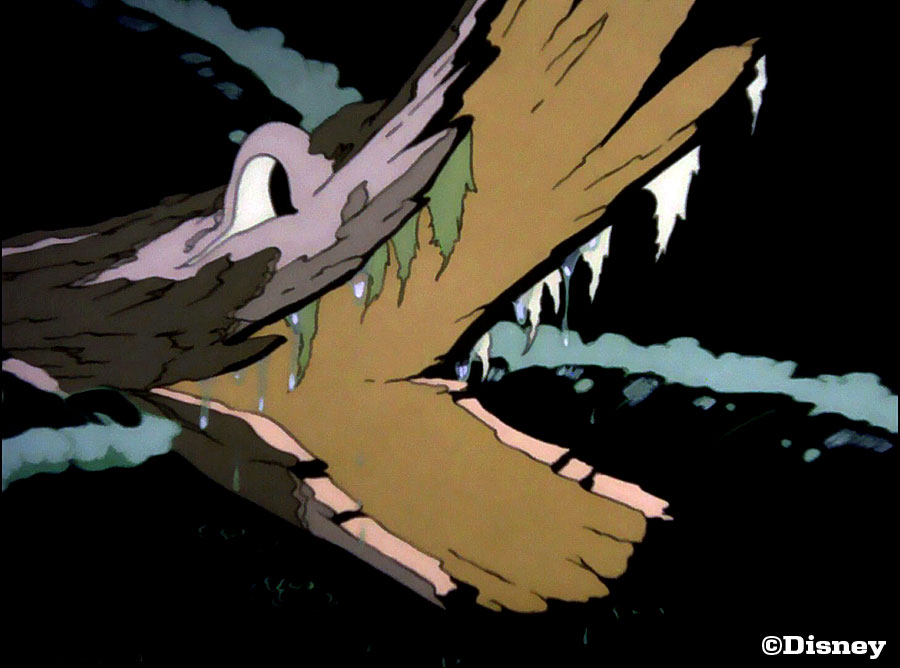
Old logs in a creek come to life as alligators, scaring the poor little lass even more.
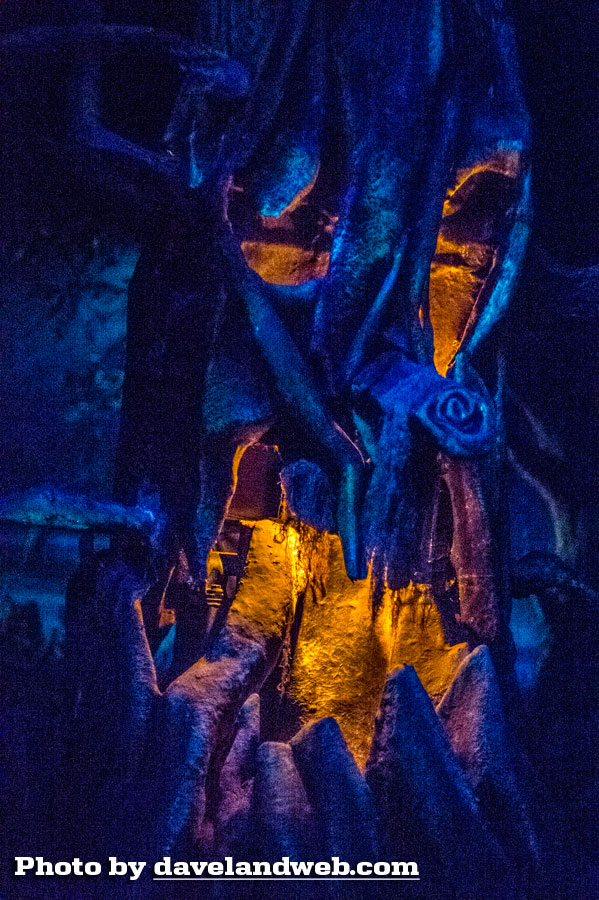


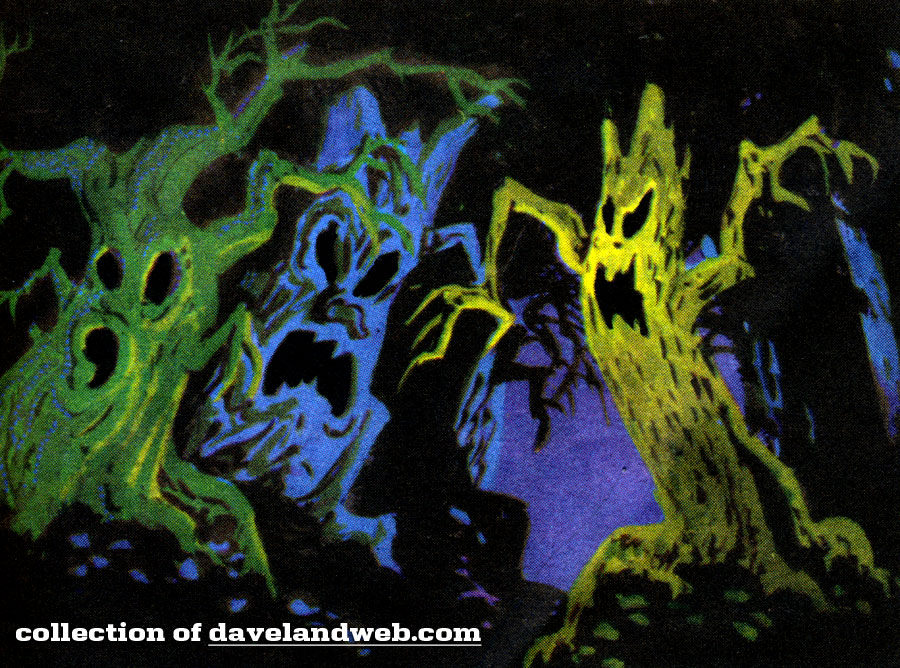
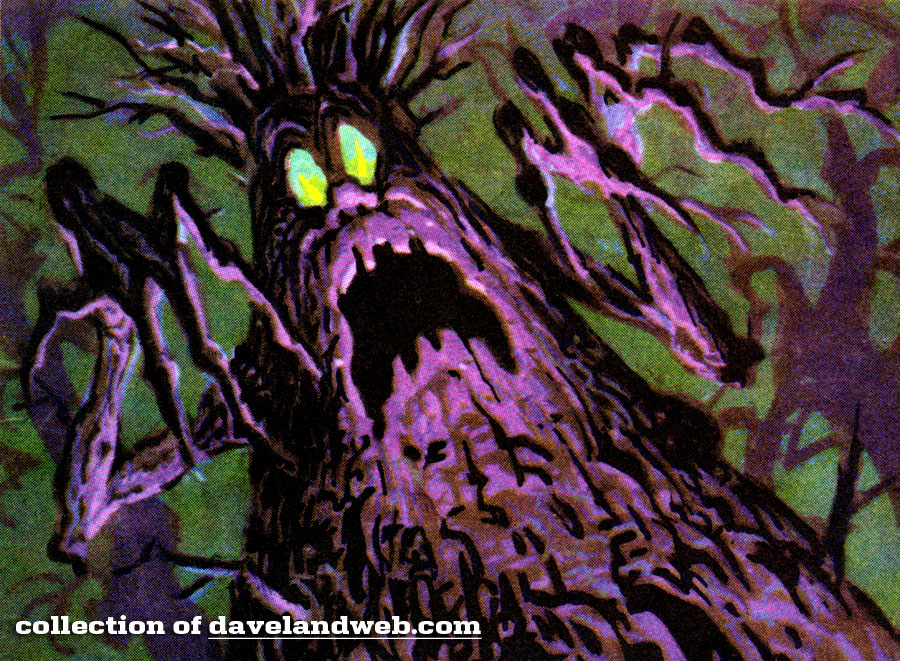
When Disneyland was being built and an attraction created that would allow guests to actually ride through scenes from the movie, naturally the Dark Forest scene had to be included! Although I don't have any shots of what the original attraction was like, this art from the Mickey Mouse Club Magazine gives you an idea of what the intent was:


Kenneth "Ken" Anderson, one of the art directors of the 1937 movie, adapted the script for the ride and led the original design team that included Bill Martin (in charge of the track layout), Herbert Ryman (created several interior backgrounds), and Claude Coats. This is about as close as you can get to the movie's roots.


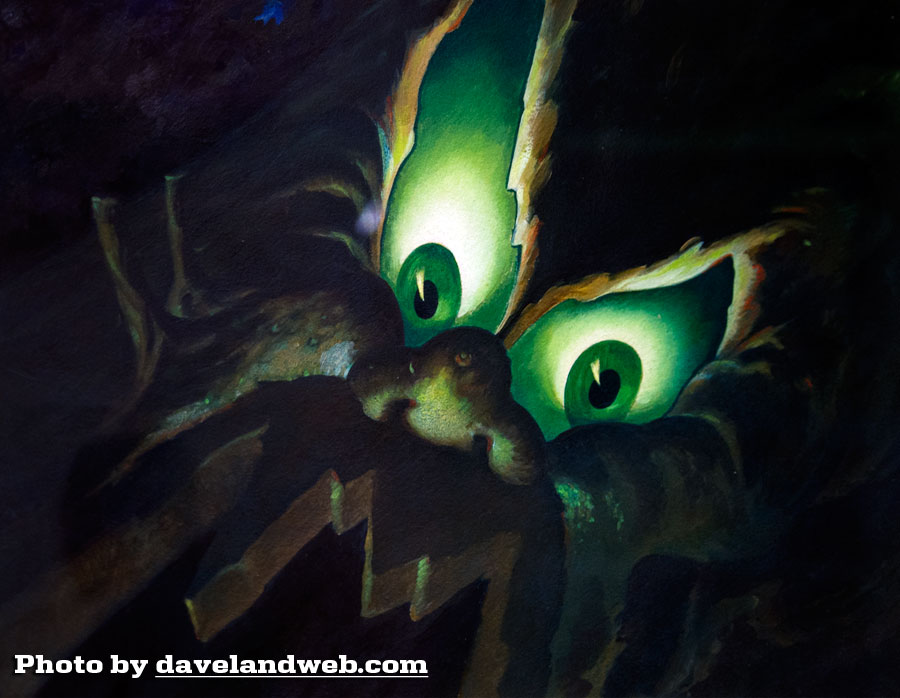
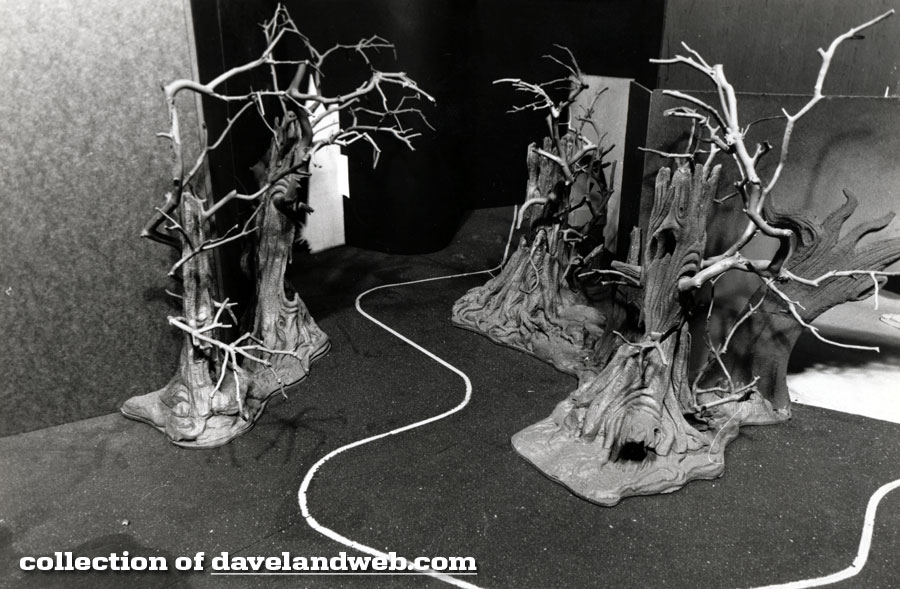
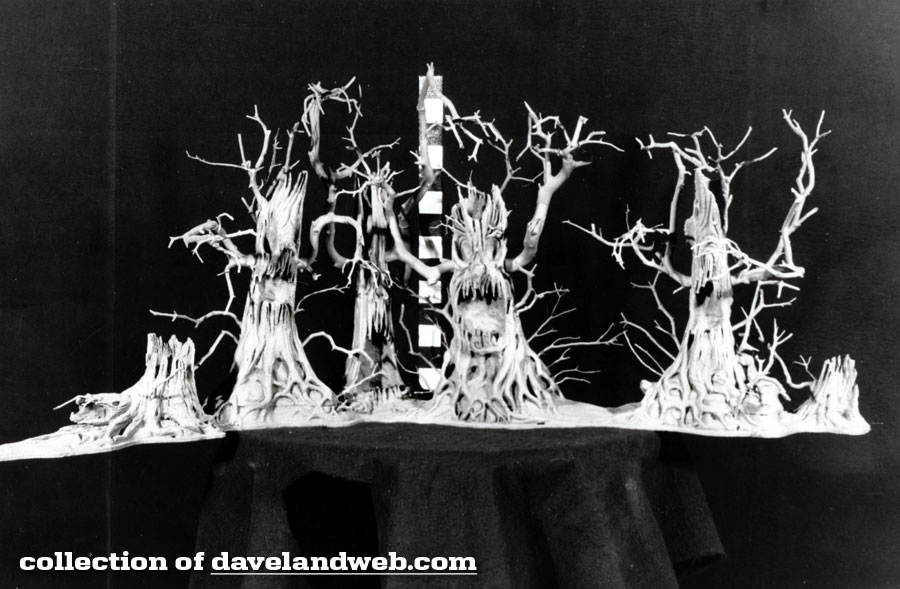
In 1981, the Snow White attraction closed down and went under the knife with the rest of Fantasyland. The Dark Forest returned, but by all accounts, the scariness of the attraction was toned down. Here are two concept model shots of what the trees would look like in the newly revised attraction.


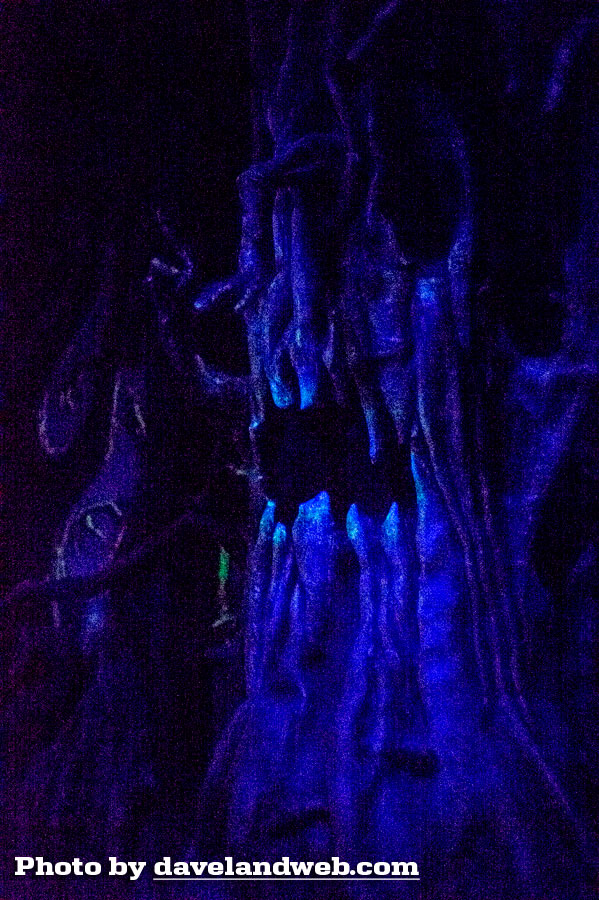
A few shots from the actual attraction, taken by me about 4 cameras ago! Please excuse their amateurish appearance.


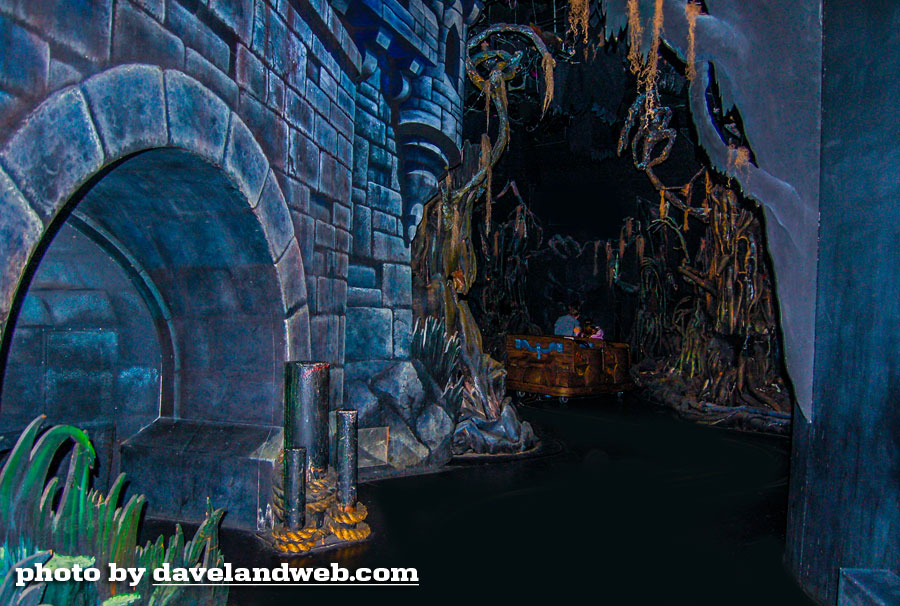
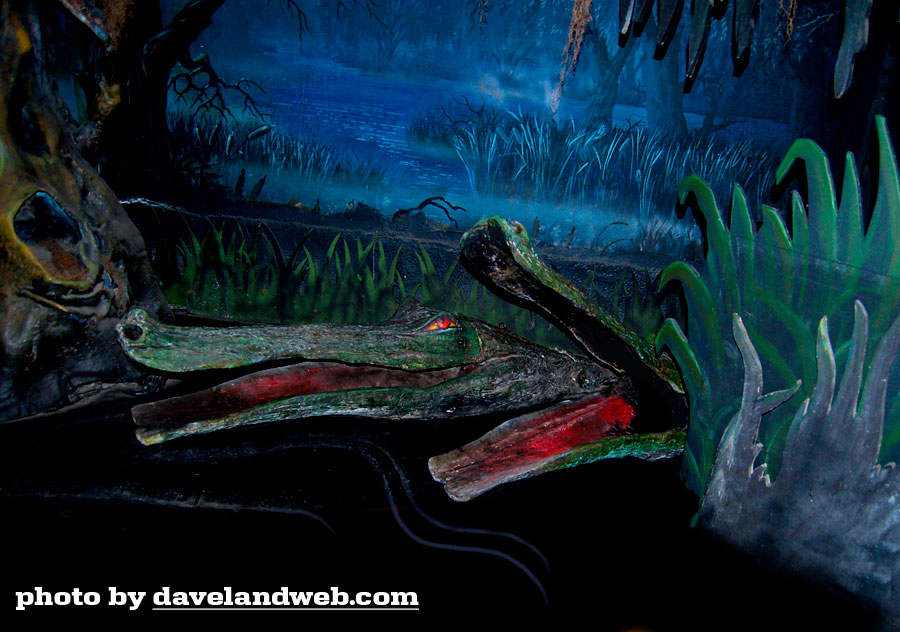
This section of the attraction is so dark and the vehicle moves so quickly that it is difficult to absorb all of the not-so-scary details that are meant to be somewhat scary, like the alligator logs from the movie shown here:


The look of the trees is a bit disturbing, but typically, kids are more scared about this being a dark ride than the actual elements within.


Word on the street is that all of the dark rides will be closing and undergoing a revamp (Alice has already been completed).

My recommendation: Imagineers should go FULL TILT with a totally scary-ass version of Snow White (and the rest of the dark rides) using projections and moving figures. For the bulk of the Park's operating hours, these effects could be turned off, allowing little kids to experience a less scary attraction. For late night, Halloween, or other special adult-only occasions, these scarier effects could be turned on, creating a special event overlay similar to the Haunted Mansion Nightmare Before Xmas and small world Holiday overlays.


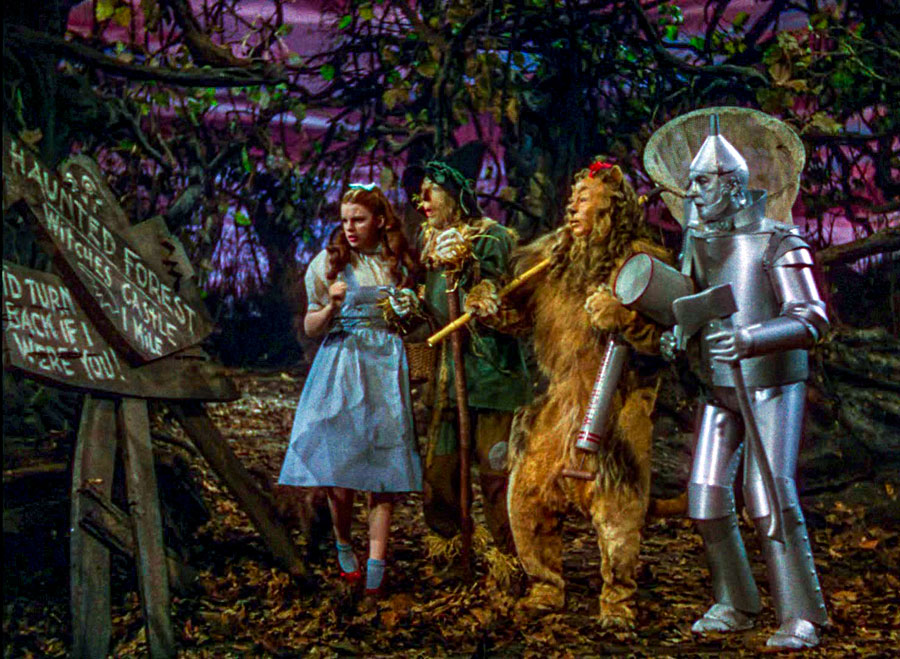
Disney was not alone in seeing the scary potential of a forest. "The Wizard of Oz" also contains sequence guaranteed to make the little ones cringe in their seats. On the way to the Wicked Witch's Castle to capture her broom, our heroic quartet must make their way through the Haunted Forest.


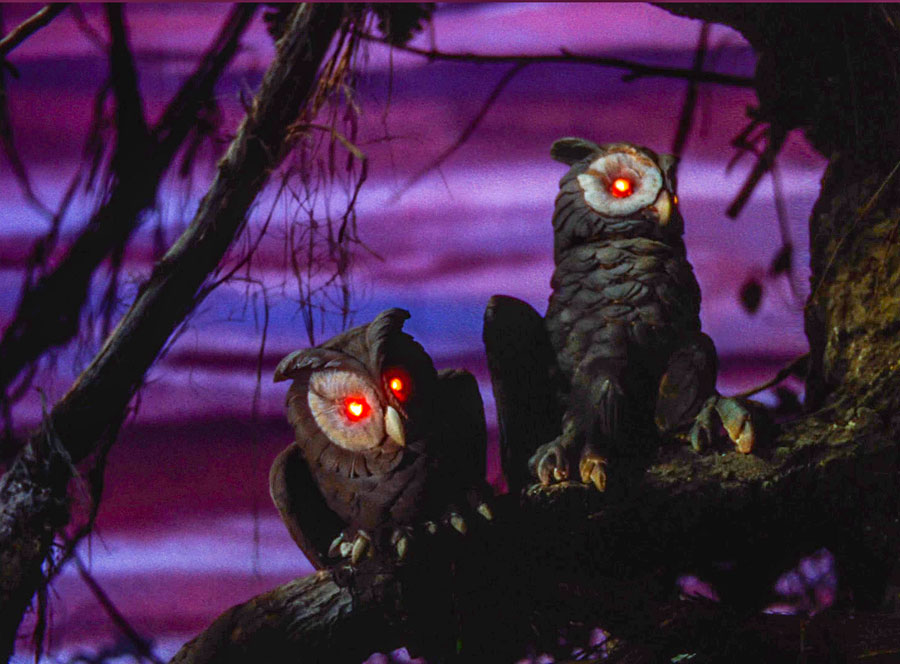
Even the owls in this sequence look demonic!


A year later, "The Blue Bird" showed a terrifying sequence of Shirley Temple and friends running for their lives through a burning forest. Tylette (Gale Sondergaard) wants to stay human forever and she elicits the help of Royal Oak, convincing him and the other trees to scare the hell out of the kids.


The plan goes awry when the trees decide they must kill the children instead. Oops.


One of the group does actually perish, but you'll have to see the movie to find out which one it is.


What scared the hell out of you as a little kid?

See more Daveland Snow White's Scary Adventure photos at my main website.