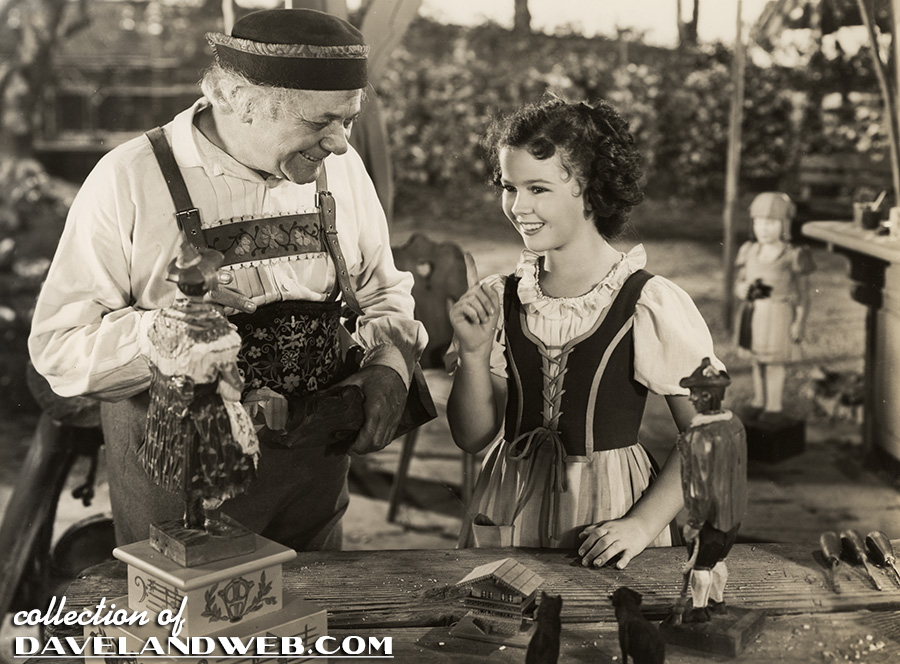
Faithful readers of this blog know that I am somewhat obsessed with the 1940 Shirley Temple film, “The Blue Bird.” While many consider it a poor stepchild to “The Wizard of Oz” (1939), I believe it stands on its own as an artistic triumph that gave Shirley an opportunity to play against type as a brat. In the above publicity still, Shirley is shown with Al Shean, who played her grandfather in the film. Shean was also the uncle to the famous Marx Brothers.
To avoid competition with “Gone with the Wind” which was released on December 15, 1939, 20th Century-Fox studio chief Darryl Zanuck decided to delay the premiere of “The Blue Bird” for another month.

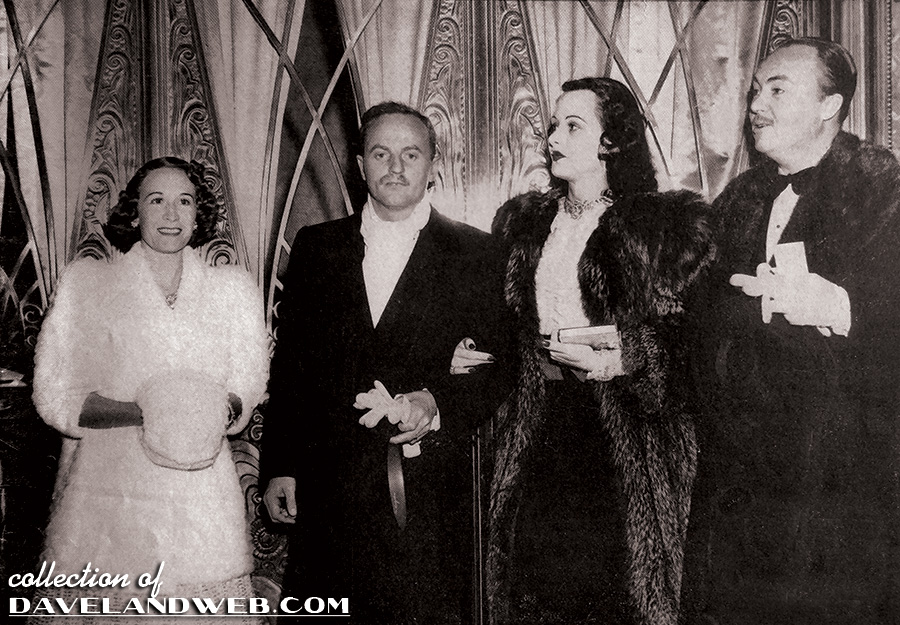
The above photo shows Gene Markey (producer for the movie), Virginia Zanuck (Darryl’s wife), Joseph M. Schenck (Fox chairman of the board), Darryl Zanuck, and Hedy Lamarr (MGM actress and wife of Markey) as they arrived at Grand Central Terminal in New York City, December 19, 1940 for the film’s New York.
From The Motion Picture Herald, December 30, 1939:
The premiere of “The Blue Bird,” starring Shirley Temple, has been advanced to January 19th from January 17th to permit a Friday night opening. “Swanee River” opens December 29th at the Roxy theatre. Darryl F. Zanuck, vice-president in charge of production, will attend the premiere of “The Blue Bird” at the Hollywood theatre and remain in New York for the opening of “The Grapes of Wrath” at the Rivoli January 24th. Al Jolson and Don Ameche will appear in a broadcast of “Swanee River” on December 29th. Charles E. McCarthy, director of advertising and publicity for Twentieth Century-Fox, has put John Goring in charge of the roadshow of “The Blue Bird.”
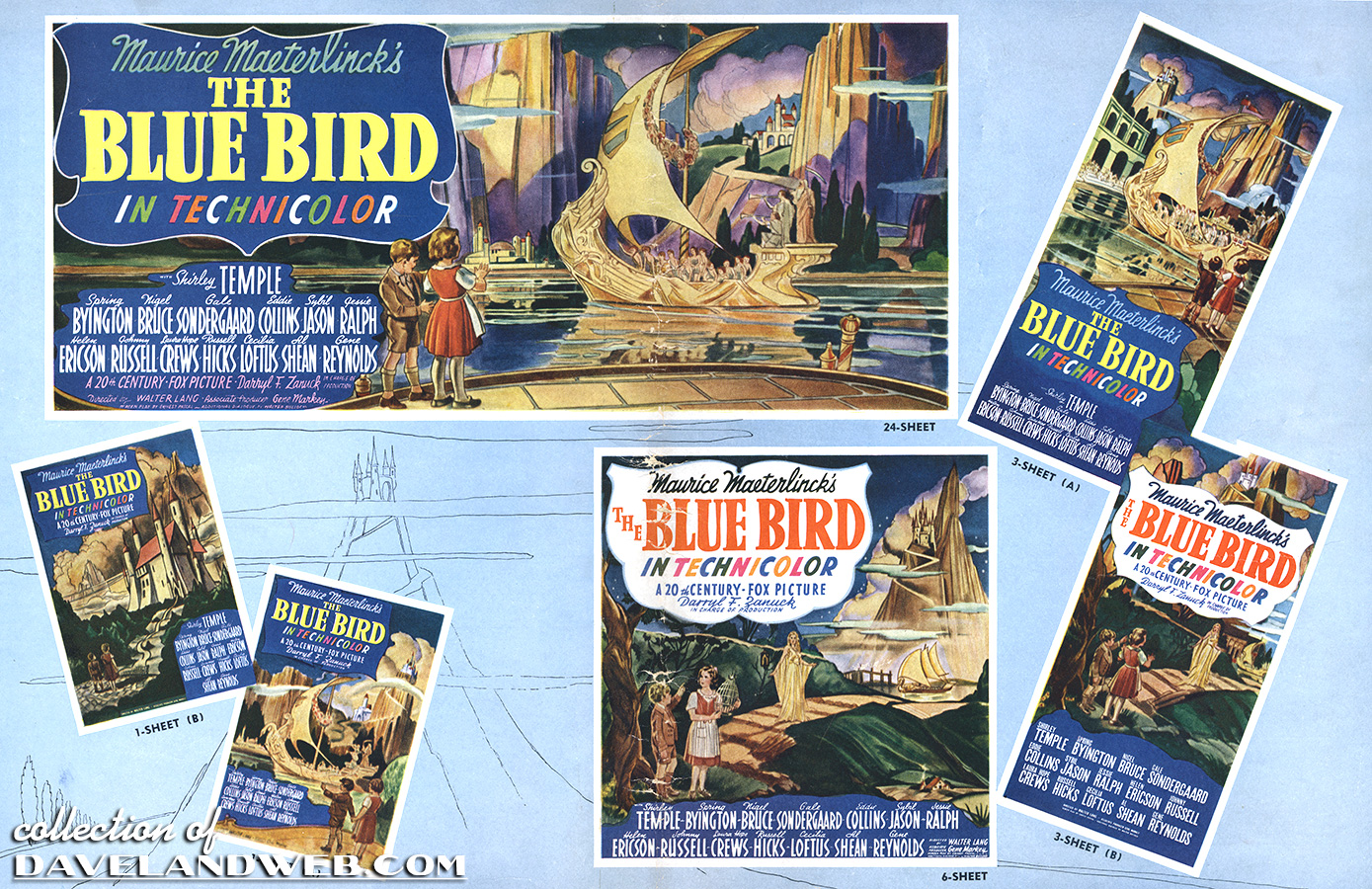
Below is a page from the movie’s pressbook, featuring a variety of posters that theatres could choose from for promotion:
Motion Picture Daily gave their account of the premiere:
‘Blue Bird’ Lures Industry’s Top Executives to Premiere
Undaunted by the severity of the weather last night, 1,500 persons jammed the Hollywood Theatre to capacity to see the world premiere of “The Blue Bird,” 20th Century-Fox color feature. When the 80-minute show ended, the audience, with ovations and exclamatory words of approval, acclaimed the cinematic version of Maurice Maeterlinck’s famous fantasy. Included in the audience were practically all of the leading officials of 20th-Fox, besides executives from other motion picture companies. Notable among those present were the following: Darryl Zanuck, 20th-Fox studio chief; S.R. Kent, president; Joseph M. Schenck, chairman of the board; Will Hays, Jesse Lasky, Ernst Lubitsch, Barney Balaban, Herman Wobber, Spyros Skouras, Charles Skouras, Edwin L. Weisl, Gene Markey, associate producer of “The Blue Bird,” and scores of other industry officials. Other celebrities noticed among the “First Nighters,” most of whom were accompanied by their wives and formally dressed, were William Paley, CBS president; Postmaster General James A. Farley, Conde Nast, Irving Berlin, Jack Cohn, Andre Kostelanetz, Sidney Lanfield and many others. Crowds congregated early in front of the Hollywood where arc lights illuminated the front. Autograph seekers and others eager to see celebrities composed a large portion of the throng. When glamorous Hedy Lamarr arrived, scores struggled to catch a glimpse of her and husband, Markey.
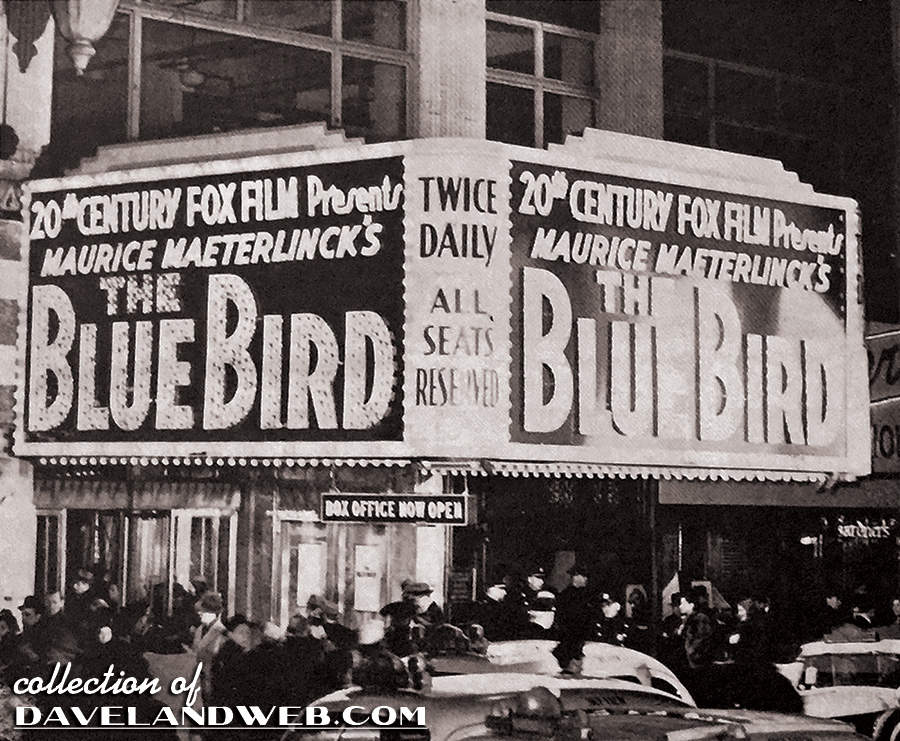
From The New Dynamo, the in-house publication of 20th Century-Fox:
‘THE BLUE BIRD’ FLIES IN TRIUMPH OVER BROADWAY CELEBRITIES BRAVE SUB-ZERO WEATHER TO HAIL ‘BLUE BIRD’
Mr. Zanuck came 3,000 miles to get, first-hand, the reaction of this premiere audience. For more than a year he planned “The Blue Bird.” For months he supervised its production and cutting. And as Philadelphia’s Showman Al Boyd put it: “If its exploitation and presentation is given only one-half the thought this completed picture indicates went into its planning and production, ‘The Blue Bird’ will do the SRO business it certainly deserves to and can do.” And Mr. Boyd is not one of those gentlemen given to making hasty conclusions. He has been too long in the business to speak merely for the sake of being heard.
Schenck is missing from this newspaper photo showing Zanuck and entourage at the premiere:
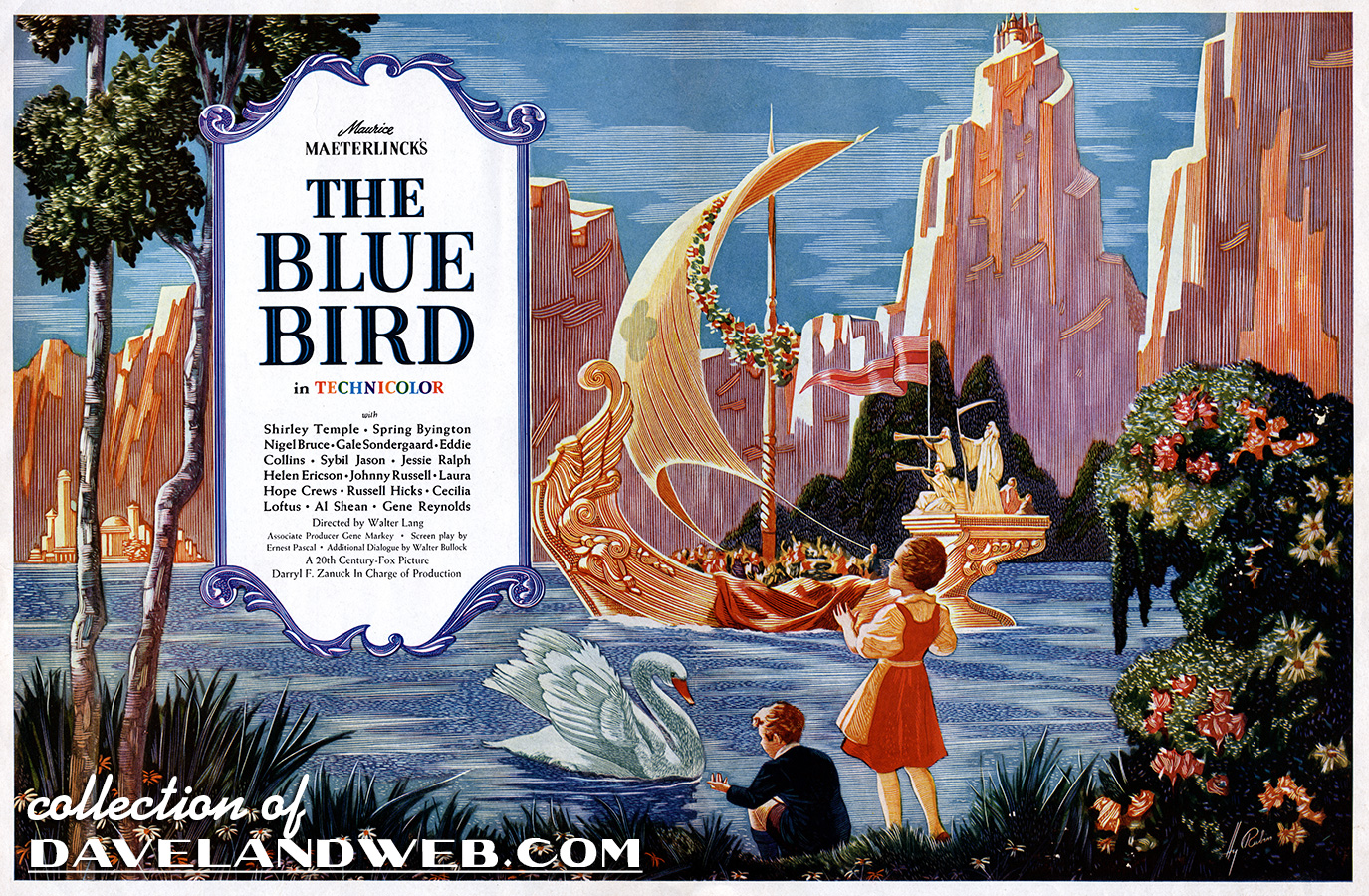
Much of the beautiful and moody expressionistic art for the film was created by Hy Rubin, an American illustrator (1905–1960). His work was published in the Saturday Evening Post and Good Housekeeping magazines. His last studio was located behind the T in the Times Square building in New York City.
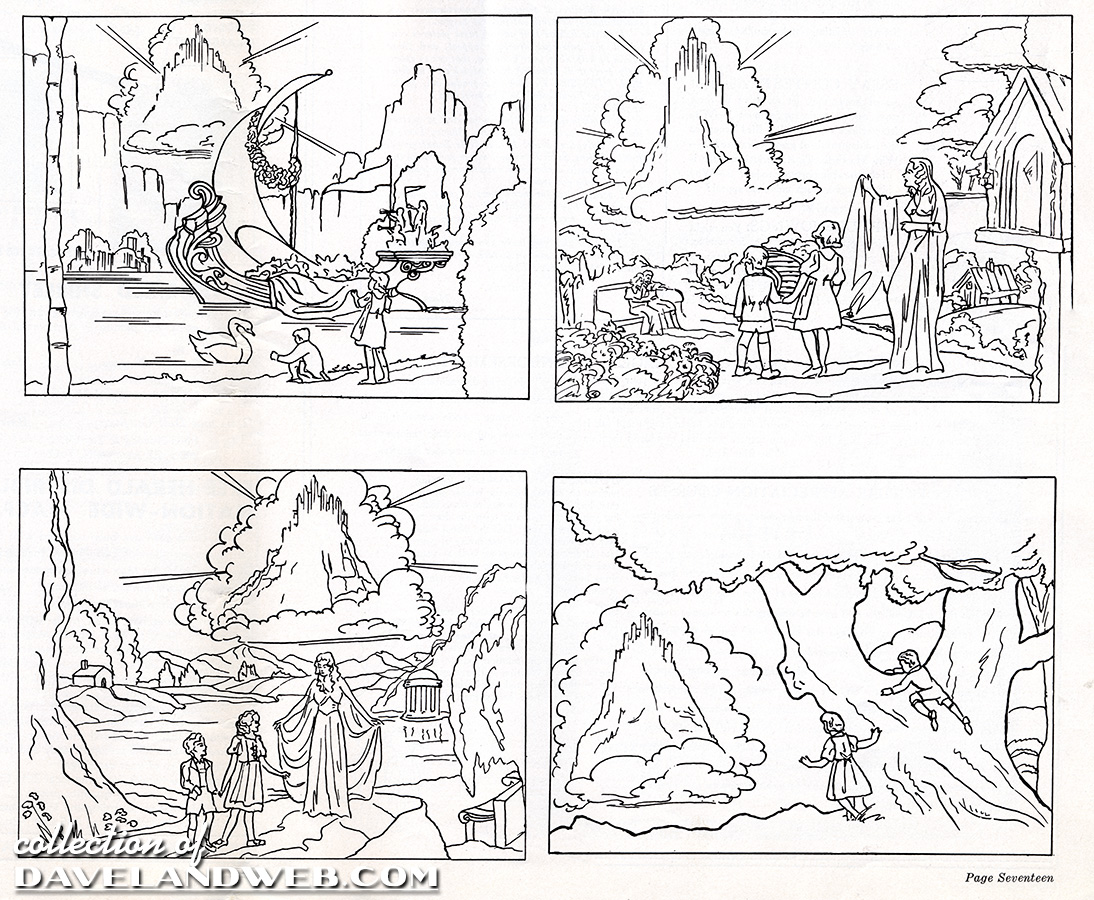
For the artistic, black and white cartoon panels were available to moviegoers for coloring:
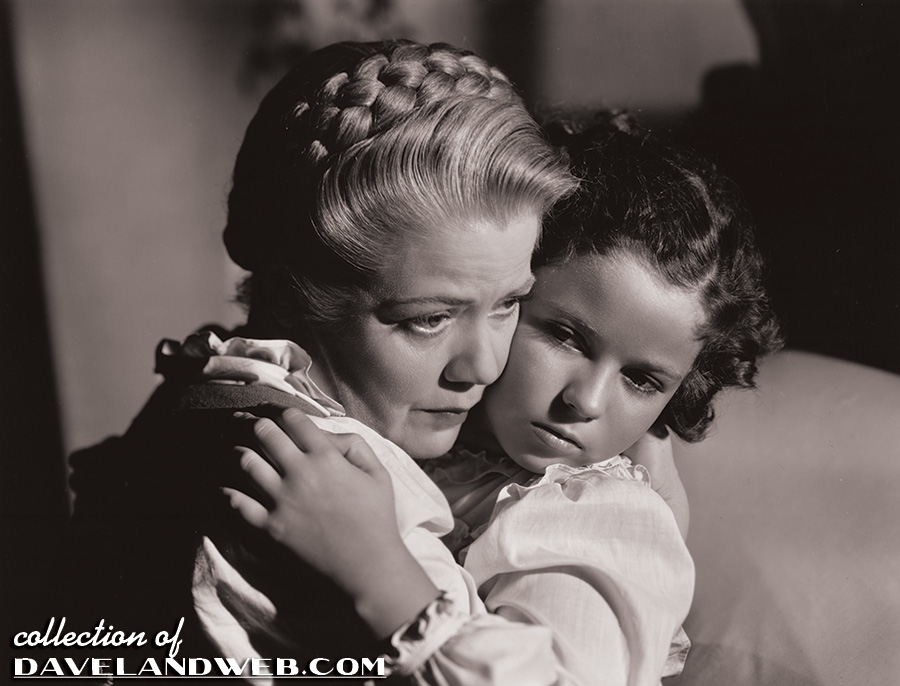
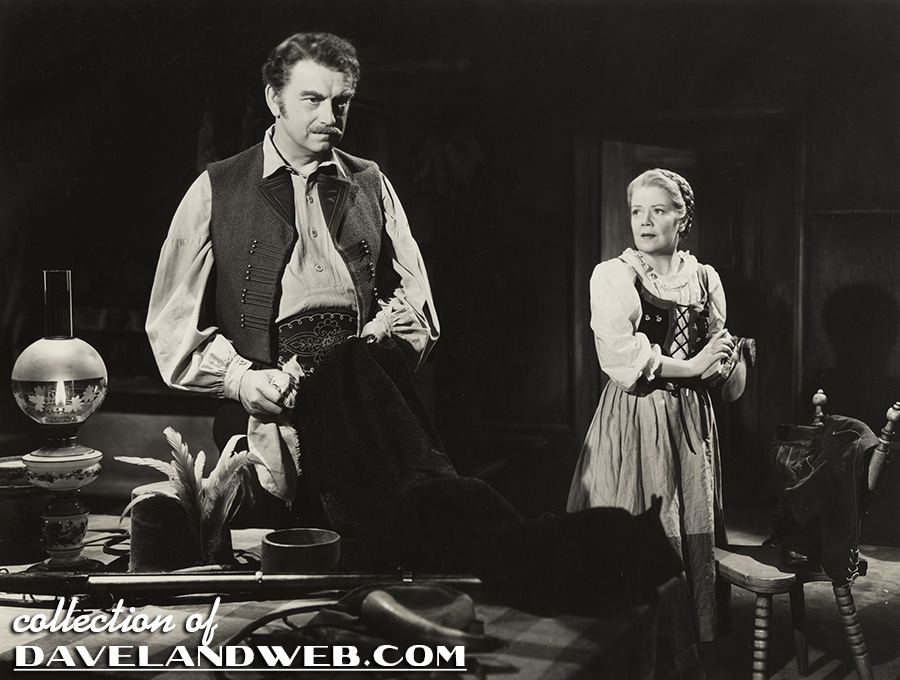
Below is a still from a deleted scene that occurred at the beginning of the movie when Shirley’s character’s father is about to go to war. Russell Hicks played the father and Spring Byington the mother.
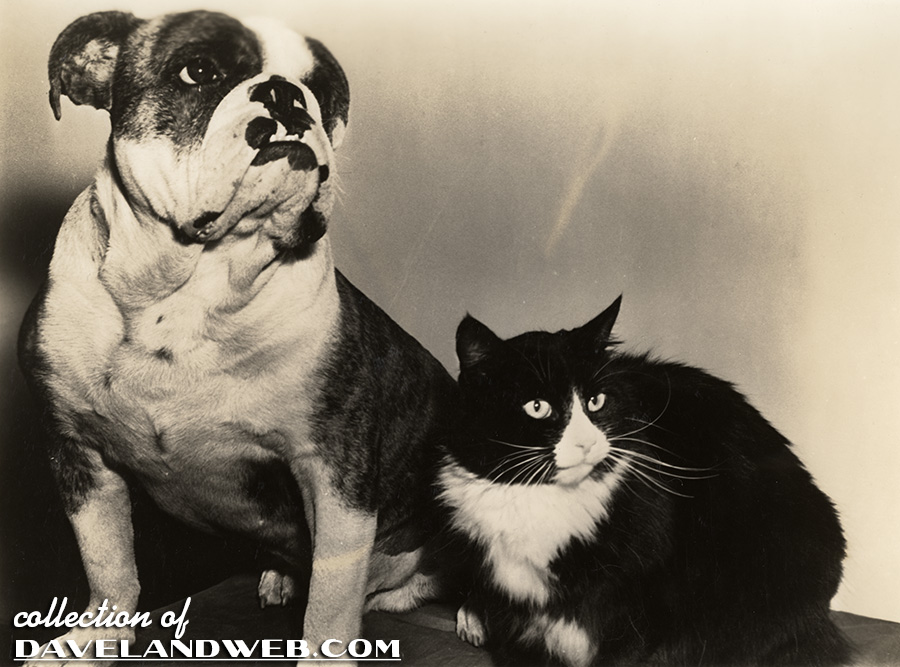
Below are Tylo the dog and Tylette the cat:
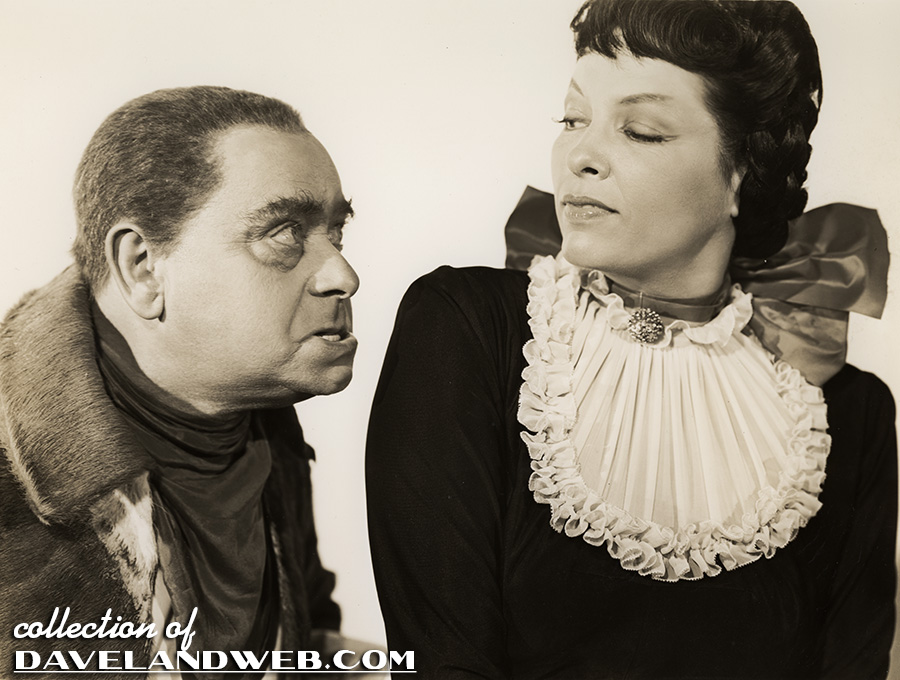
…and Eddie Collins and Gale Sondergaard who played their human counterparts in the movie.
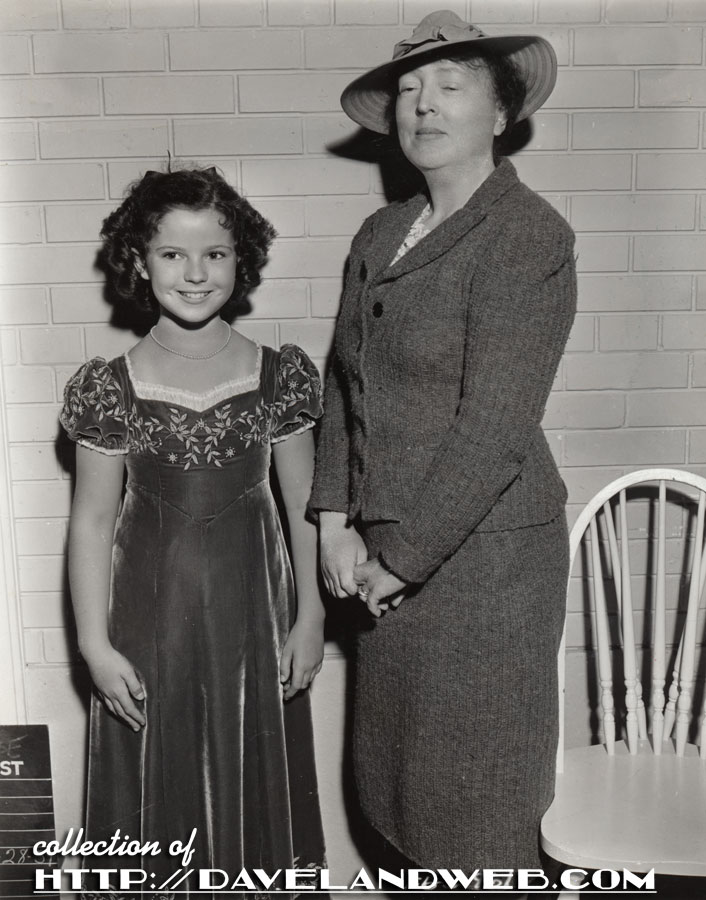
Whenever Shirley made a film, the studio was typically littered with visitors who wanted to meet the famous young actress. “The Blue Bird” was no exception. Note the costume/wardrobe board at the bottom left of the photo.
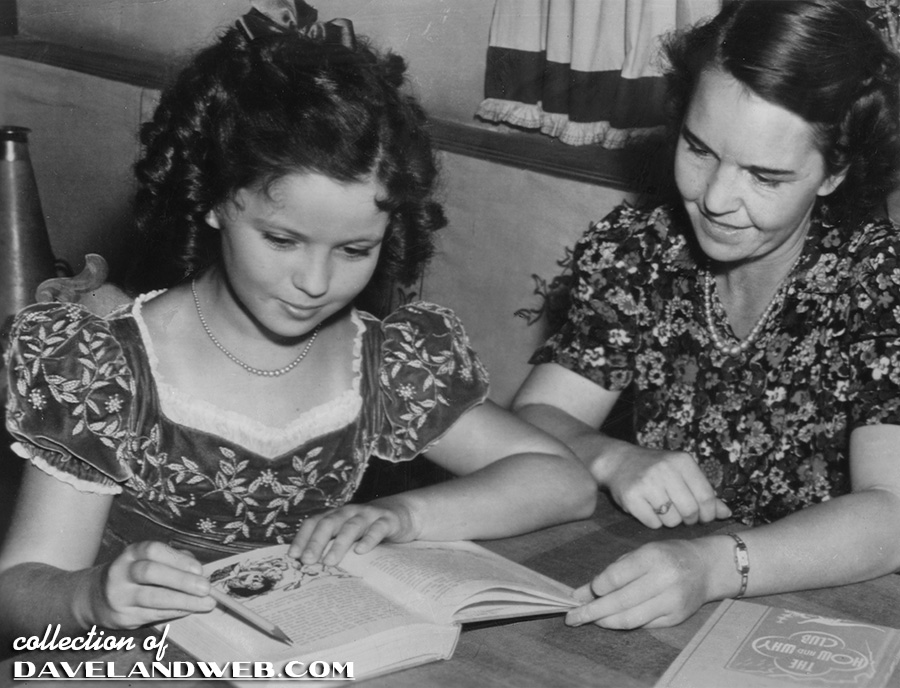
In between takes, Shirley did her schoolwork with studio teacher Frances Klamt.
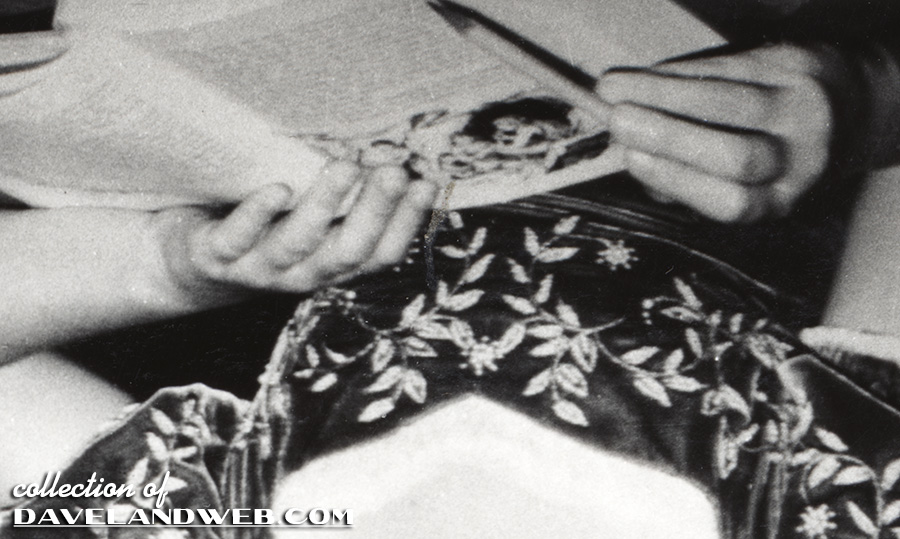
In case you want a glance at the book Shirley is working from:
I hope all of you have a very fun New Year’s Eve - see you in 2025!
See more “The Blue Bird” photos at my main website.