Showing posts with label life magazine. Show all posts

Monday, January 15, 2024

Monday with Monroe, McKay, and Martin


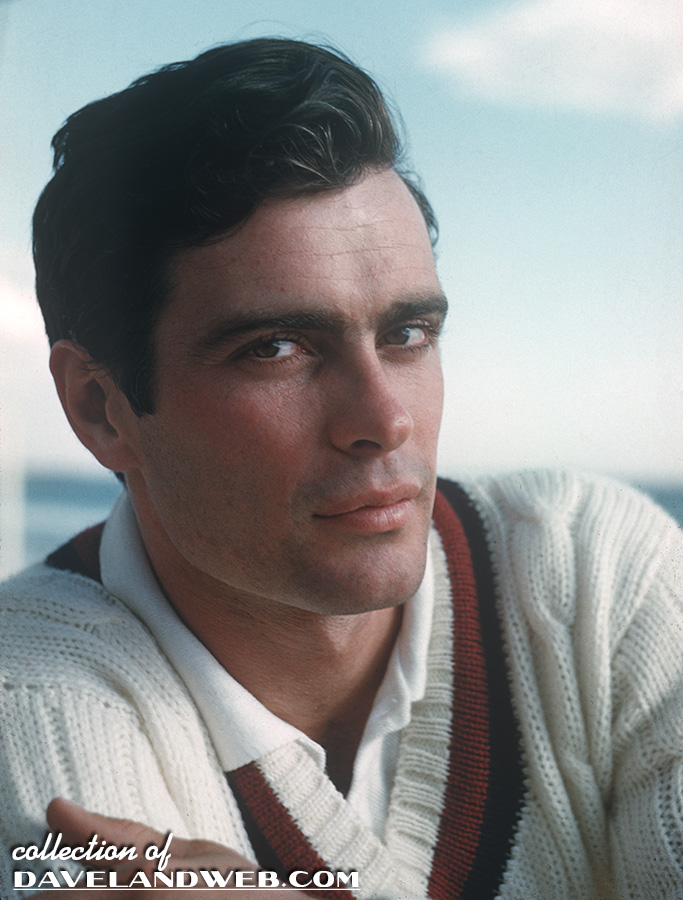
One of my recent rabbit hole excursions involved Gardner McKay. I first heard about him through a book and a documentary on writer Dominick Dunne. McKay was a somewhat lost soul who was picked by Dunne to star in the 1959-1962 TV series, “Adventures in Paradise” for his looks and knowledge about sailing. But mainly the looks. In Dunne’s own words from a 1999 Vanity Fair article:

In 1959, I was the co-executive producer of a television series called Adventures in Paradise, created by the late James Michener and starring the then unknown Gardner McKay as the captain-for-hire of a schooner called the Tiki, which sailed the islands of the South Pacific. There are several versions of how Gardner got the part, but I was there and this is the correct one. We were screen-testing all the best-looking young actors in Hollywood for the coveted part of Captain Adam Troy. Ron Ely, who later played Tarzan on TV, had the inside track on the part, but we were still testing. One day in a coffee shop, I saw, sitting at a nearby table in a languid pose, reading a book of poetry, a startlingly handsome young man with attitude, whom I later described to Martin Manulis, the head of television at Fox, as “a little Gary Cooper, a little Cary Grant, a little Ty Power and a lot of Errol Flynn.” He was at the time, in the parlance of the town, nobody, absolutely nobody, but his attitude declared that he was somebody. I dropped my Fox business card on his table and said, “If you’re interested in discussing a television series, call me.” He did, and we tested him. Gardner’s test was certainly not among the top three or four in the acting department, but as the production staff sat in the projection room, we’d keep going back to it, and one of us would say, “This guy’s got something.” Finally, we gave him the part. 

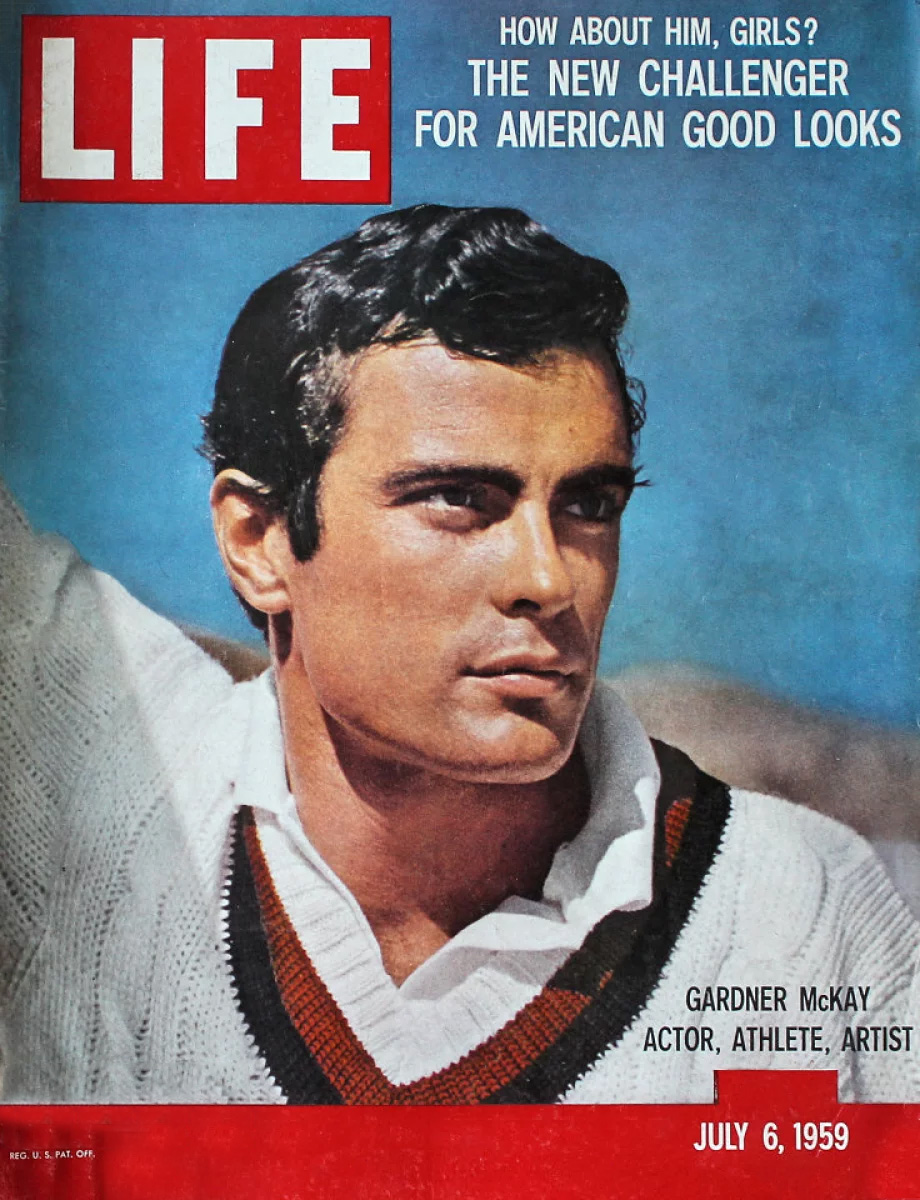
McKay even landed a 1959 LIFE magazine cover before the show was aired:


Dunne would go on to comment about how McKay gave up Hollywood:

The series lasted three years. Then Gardner did a very interesting thing: he ended his acting career ... the very next day he had a call from George Cukor, who ... asked Gardner to play the romantic lead opposite Monroe. It was the dream of an actor’s lifetime — the great George Cukor, the legendary Marilyn Monroe — but it came a day too late. Gardner had made up his mind. He declined the role. Cukor was flabbergasted.
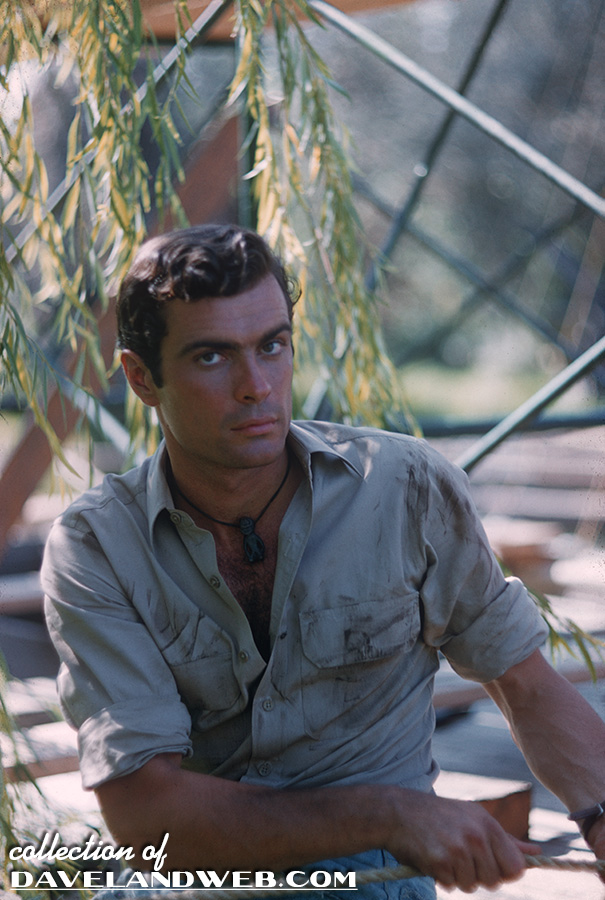


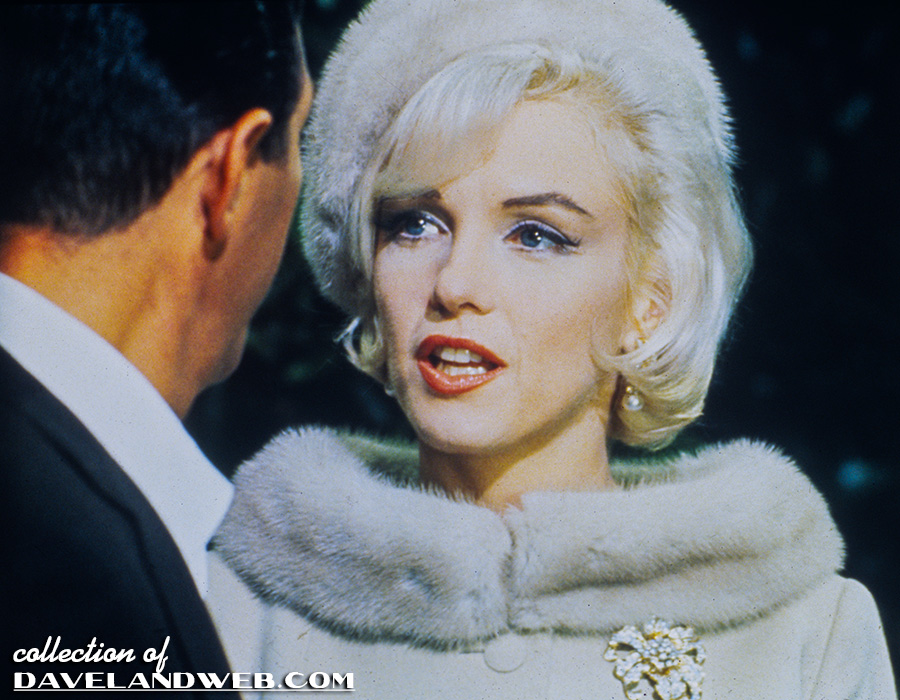
How did I not hear about this? As far as I knew, Dean Martin was the one and only consideration to play opposite Marilyn in her ill-fated/unfinished final film, “Somethings’s Got to Give.” In his autobiography, Journey Without a Map, McKay gives his version:

You have to know when to discard. Stand up and step away from the table. Push away from it. The table will always be there. Marilyn Monroe would call. Not because I was a star but because I didn’t want to be one anymore. I was leaving. I didn’t want to be in Hollywood. And by not wanting to be there, I had turned her down. She would call. She seemed so intelligent. She sounded like a jilted lover, she spoke clearly and well. I was the only one who could play the part. I felt that I had dislodged something balanced in her. But I was leaving. The director George Cukor, legends galore, did not call. But he was livid. He told someone, “McKay doesn’t even know how to walk.” Which meant, I imagine that I was not a proper star, which I wasn’t, and that I shambled which I did. And, anyway, television did not turn down features. After a hundred of these episodes [Adventures in Paradise], when Frank Neill [public relations man at 20th Century-Fox assigned to McKay] found out I was quitting Paradise, he thought it odd. He came to me and told me that because it had been such a hit and had meant so much to so many people and that because I was getting more fan mail at 20th Century-Fox than anyone, including Marilyn Monroe he would tell me, that he could arrange for me to have my name set in brass letters, in terrazzo, bordered by a brass star and placed on the sidewalk of Hollywood Boulevard. On the sidewalk! He said it would cost $640. I don’t know if I was expected to grab the check.

This just didn’t sound right to me. Further digging showed that James Garner had been the original choice by Fox, but he chose a different project. Marilyn’s top choice was always Martin.


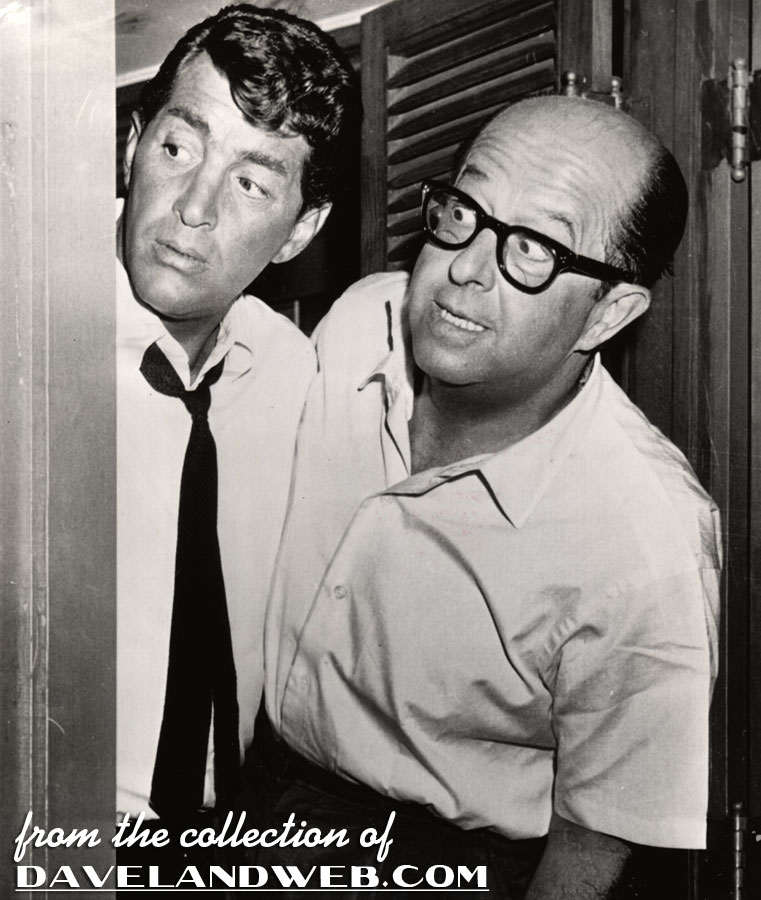
The May 9 publicity blurb that accompanied the below shot:

Funnymen Dean Martin (left) and Phil Silvers pretend to watch the other actors at work as they clowned at the door of Martin’s dressing room between scenes of “Something’s Got to Give,” at Hollywood at 20th Century-Fox studio. Silvers, returning briefly to the studio where he spent eight of his youthful years, is playing a cameo role in the film.


So where did McKay fit in? In the same film, there was a much smaller role of Stephen Burkett, the hunky man who was stranded on a desert island with Marilyn’s character, Ellen Arden. This role was played by Tom Tryon.
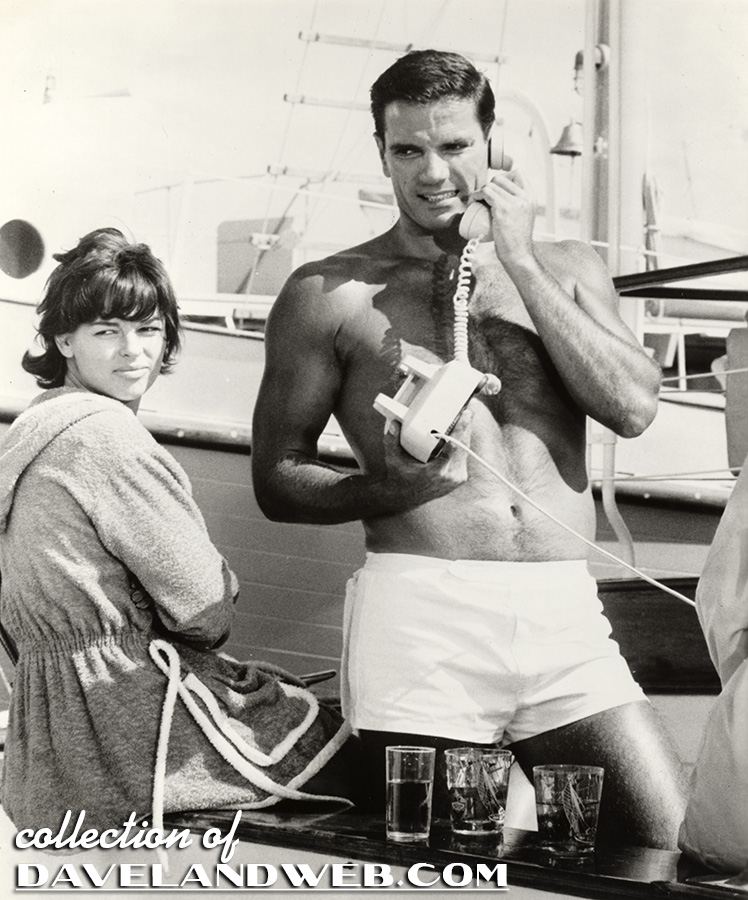


It would be a stretch to call this role the romantic lead, but based on what was required of the character (looking good shirtless), this was most likely the “romantic lead” that McKay and Dunne were referring to.


If you’re considering reading McKay’s book, I can’t say I would recommend it. He comes off as a somewhat self-centered yet un-centered soul who experienced a lot of adventures but rarely had happiness. The memoir is somewhat rambling, which could be explained by the fact that he died before it was published, so that task fell to his widow, Madeleine.

See more classic Movie & TV photos at my main website.

Friday, November 10, 2023

Cyclorama: The Battle of Atlanta


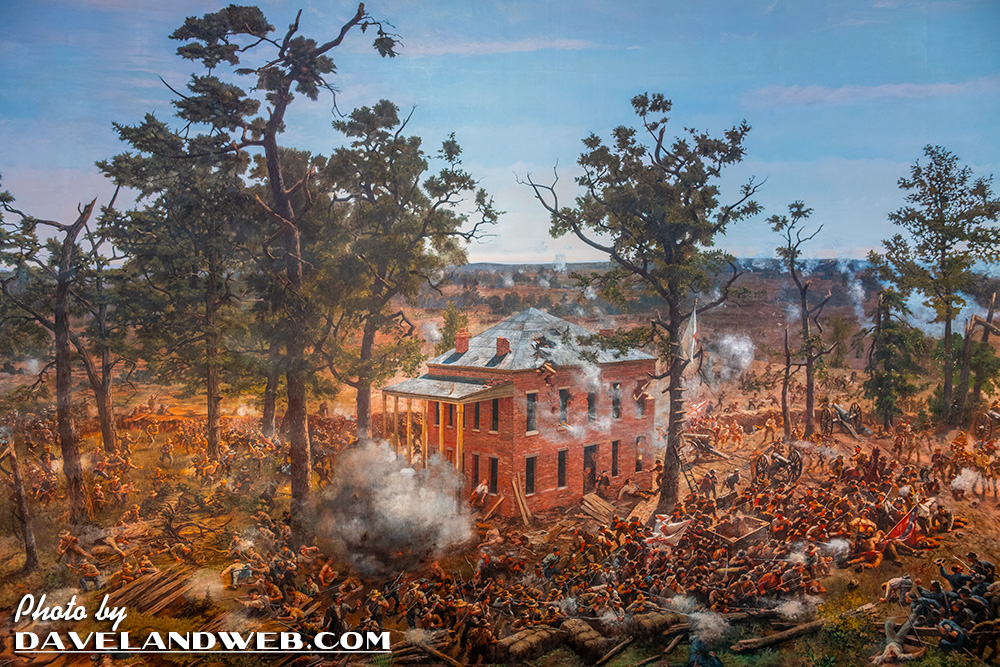
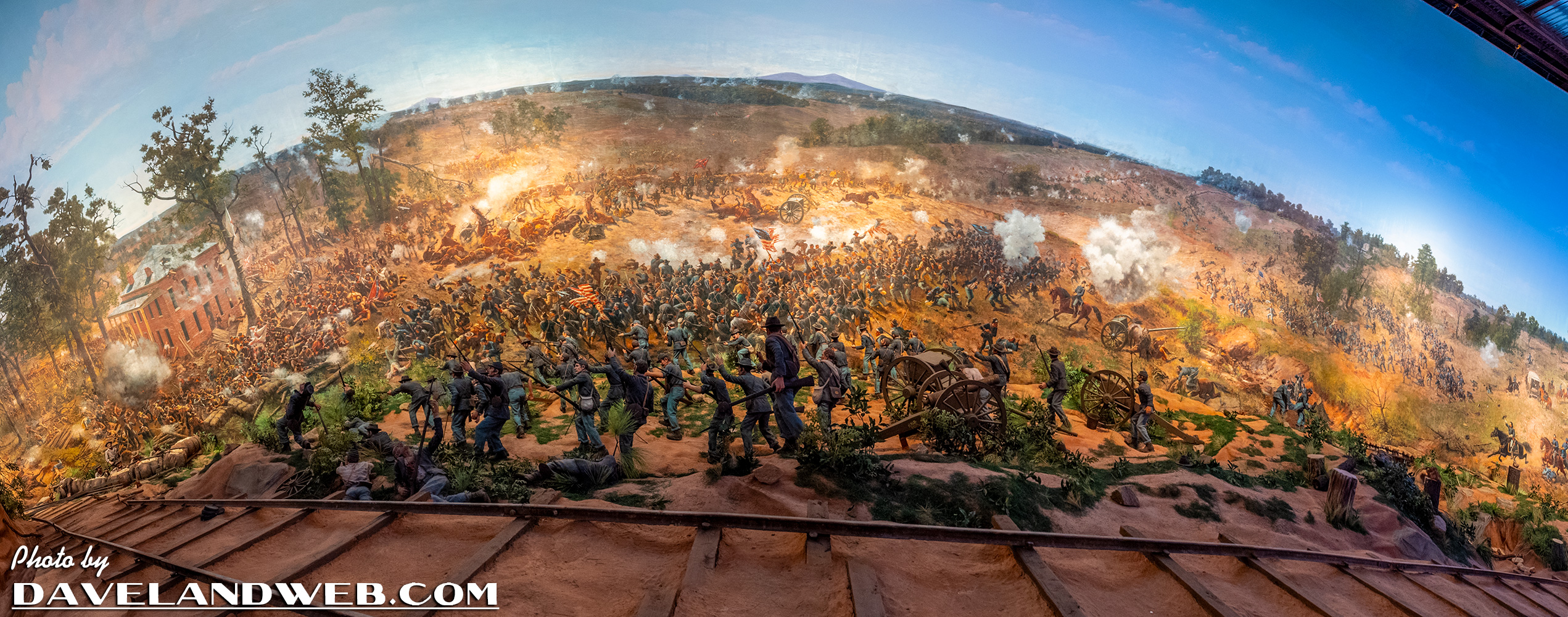
It was quite by accident that I stumbled upon the Civil War Cyclorama exhibit during my 2007 visit to Atlanta (photo above of the original Grant Park location). I had very little time before I had to catch my plane, so my tour of the museum was extremely rushed. Always so much to do with so little time! If you’re not familiar with the Cyclorama, here’s the description from a 1937 brochure:

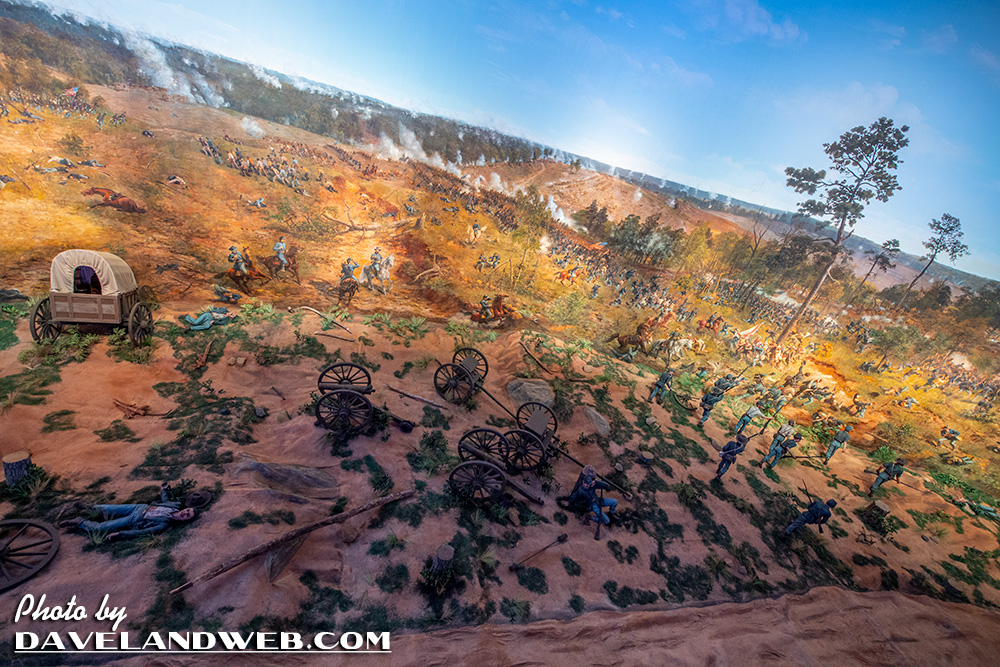
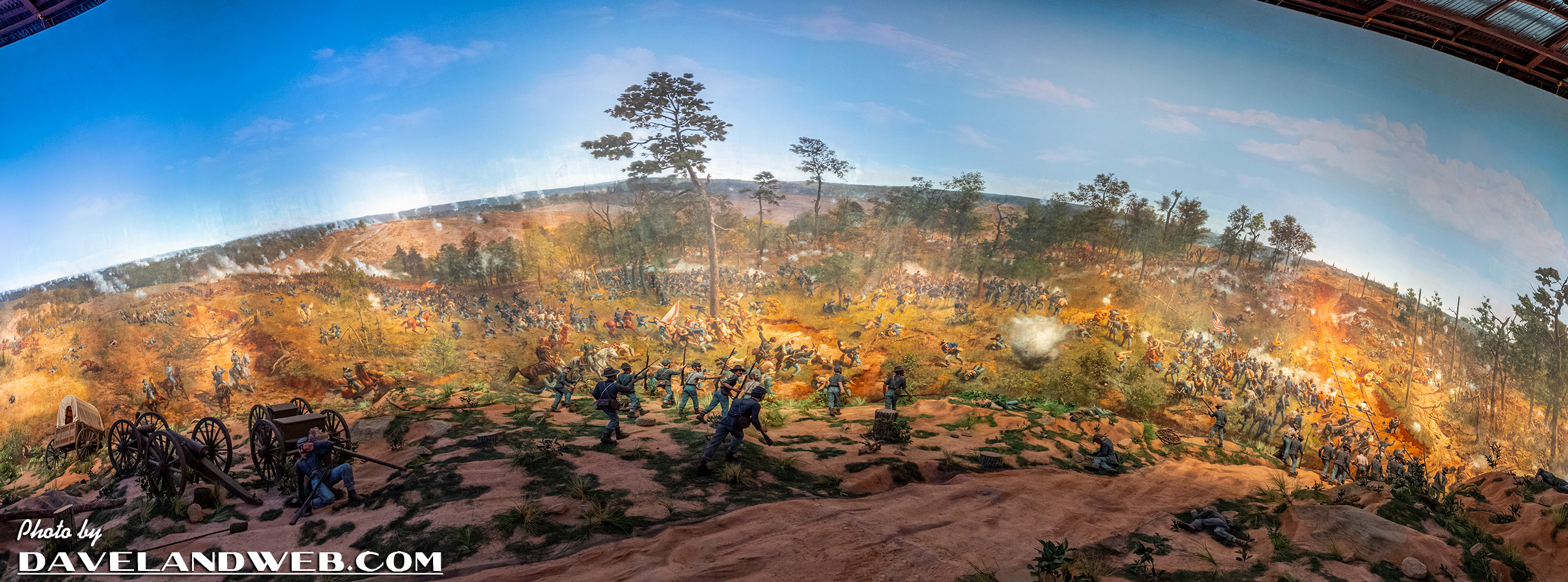
The painting, measuring fifty feet in height, four hundred feet in circumference and weighing eighteen thousand pounds, was painted in 1885 and 1886 in Milwaukee by three German artists, Lohr, Lorenze and Heine. Eight thousand pounds of paint was used in the production of this painting whose landscape, looking in any direction from the reviewers’ platform, covers a radius of twenty-five or thirty miles. So realistic and so unmistakably true is this landscape that one familiar with Atlanta may point out many individual places. Thousands of blasted tree stumps, bushes and shrubbery, shell-torn in effect; hundreds of life-like plastic figures of Confederate and Federal soldiers; torn rails and cross-ties; shells, cannons and other familiar fragments of war have been placed so effectively in the circular area forming the battlefield surrounding the painting that it is difficult in viewing it to determine the ending of the real and the beginning of the illusion.

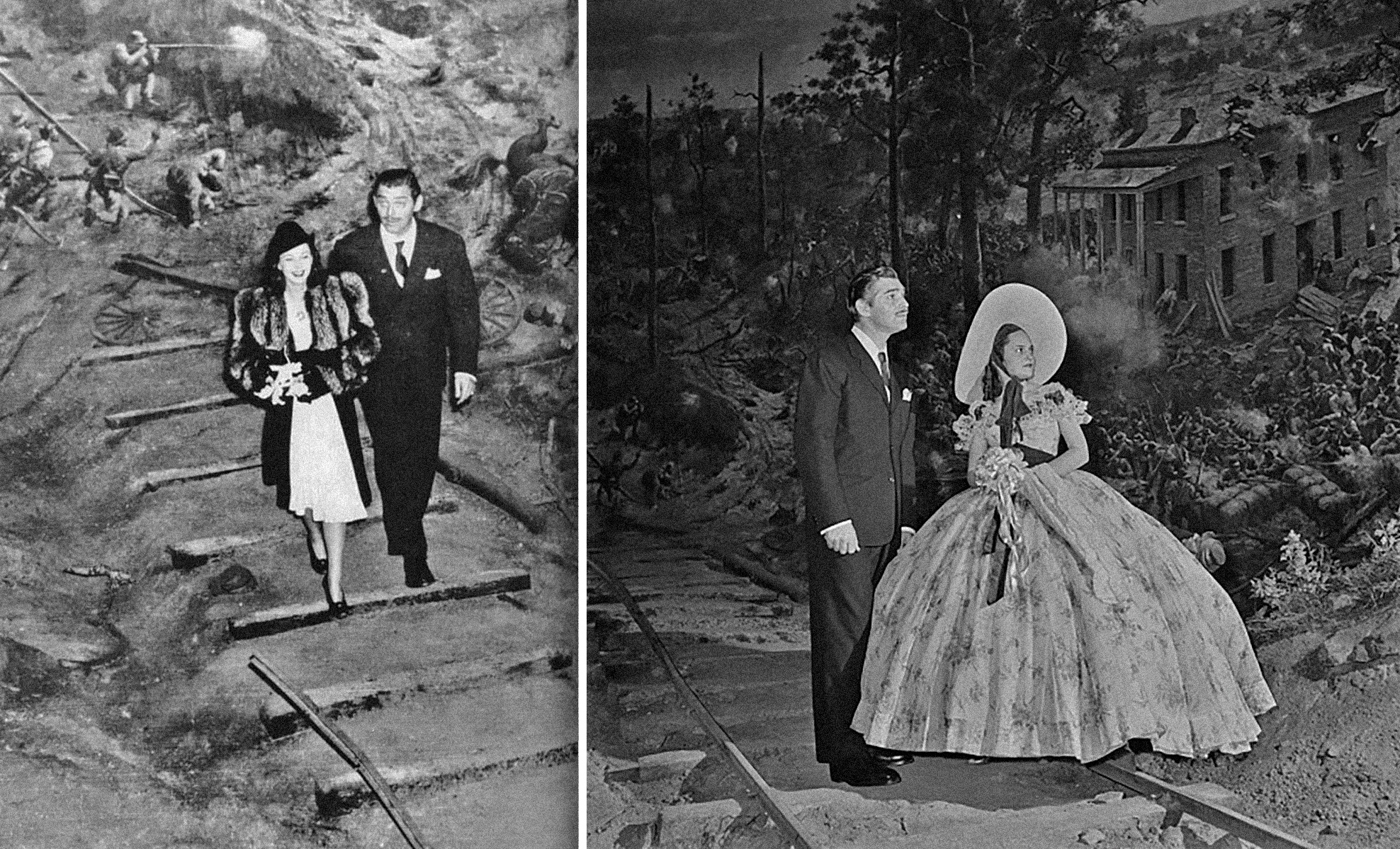
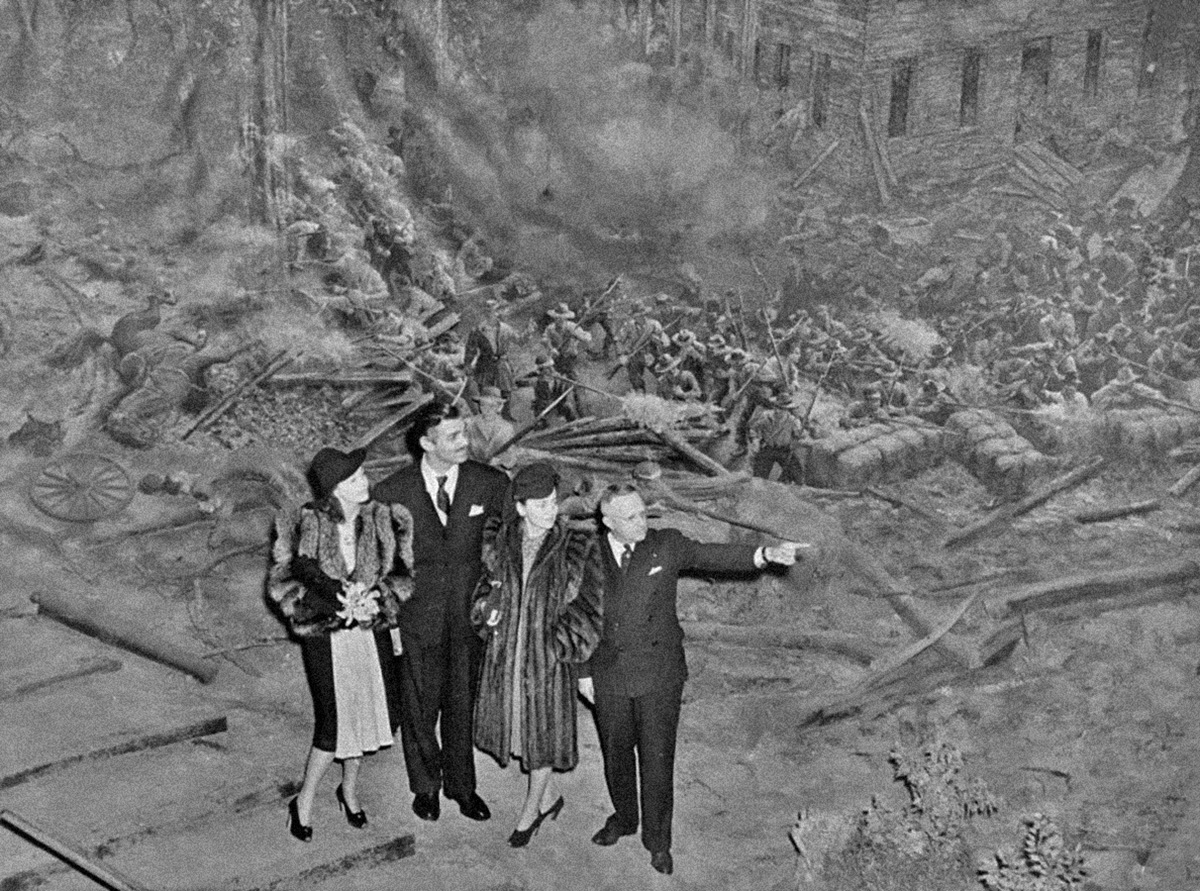
I remembered reading that during the premiere of “Gone with the Wind” in 1939, the stars were allowed to walk through the Cyclorama.


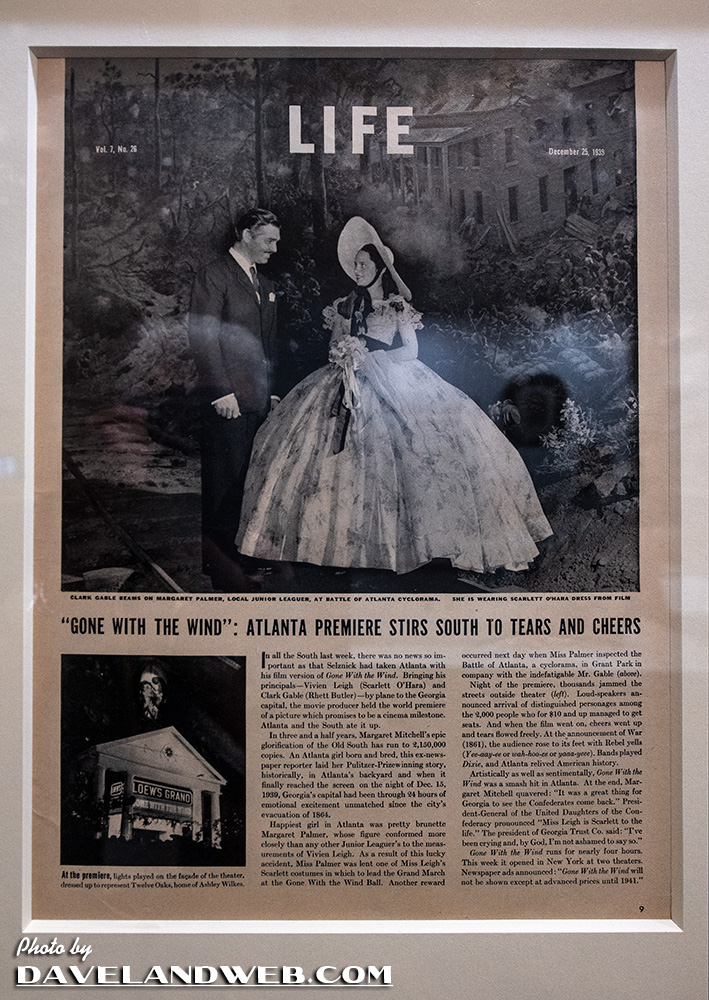
Clark Gable (who played Rhett Butler in the film) was accompanied by Margaret Palmer, a local Atlanta Junior League girl who just happened to fit into Vivien Leigh’s Scarlett O’Hara BBQ costume and was allowed to wear it during the tour. She even made it into LIFE magazine as a result!


The section of the Cyclorama where Gable posed with Palmer:


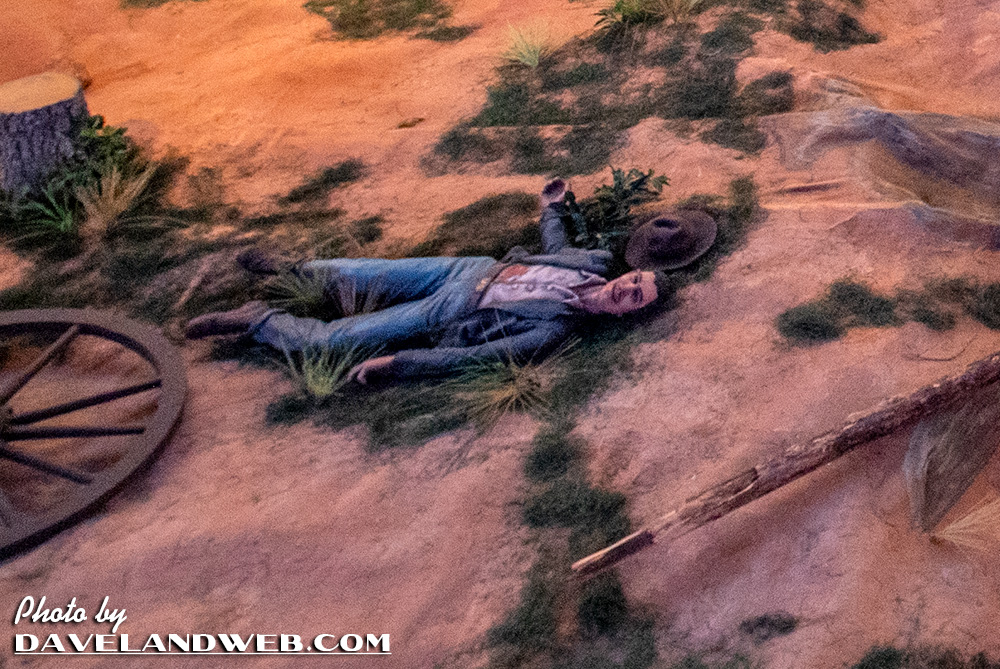
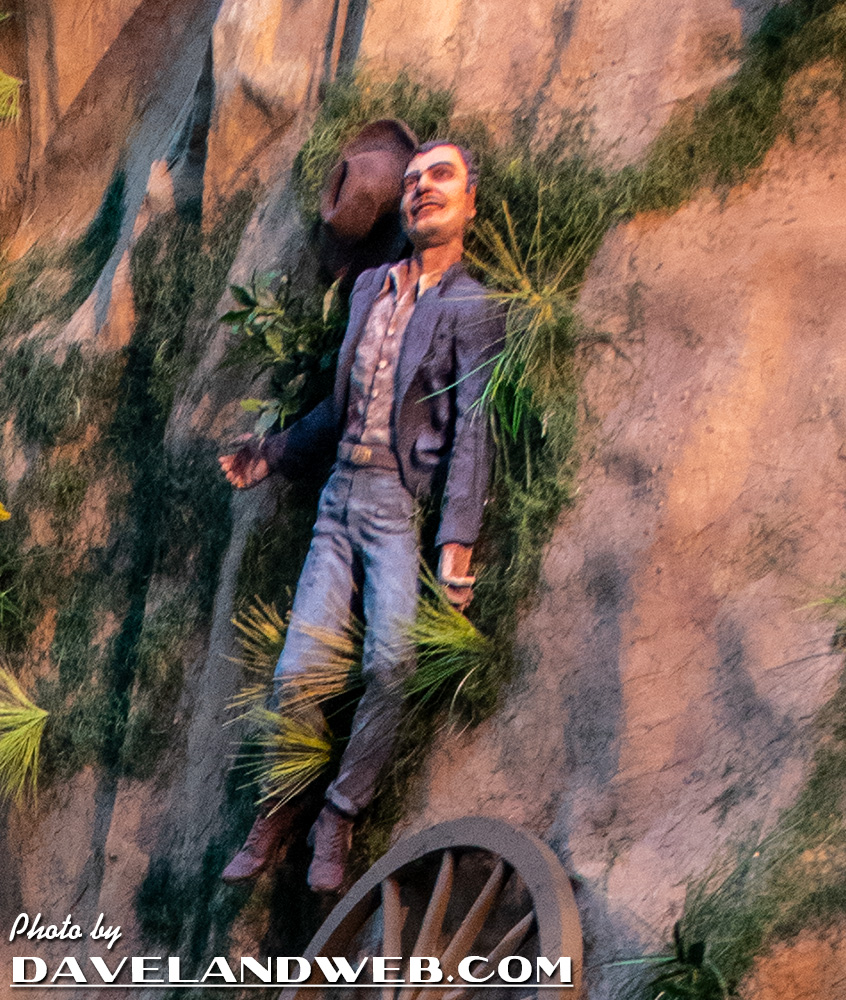
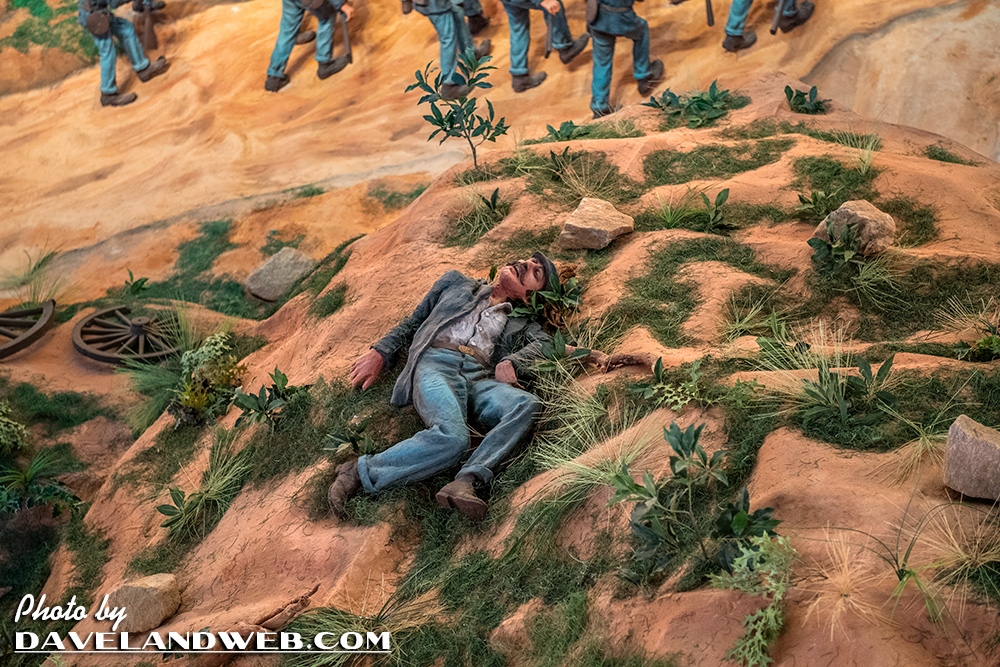
Gable commented that the only thing wrong with the exhibit was that he wasn’t in it. As a result, he was later added in as a dead northern soldier. What would Rhett have thought about that?


Dead Mr. Gable, I am writing this to you…


By 1983, the brochure text for the Cyclorama had been changed a bit:

…it was painted in 1885-6 by a group of German and Polish artists brought to America for this purpose by Mr. William Wehner, owner of the Milwaukee studio where it was set up and completed. First exhibited in Detroit in 1887, the painting traveled all over the United States before coming to its final resting place in the City whose destruction it commemorates.…In 1921 the painting was transferred from an old, wooden structure at a location in Grant Park to its present location in the imposing marble building on a hillside in the central part of the park. In 1936, by means of a WPA grant, the painting was made three-dimensional by the addition of blasted tree stumps, bushes and shrubbery that are shell-torn in effect, broken rails and cross-ties, life-like plaster figures of Confederate and Federal soldiers, and other fragments of war which form the battlefield surrounding the canvas.…The facility was re-opened in 1982 after 2 years of extensive conservation of the painting/diorama and renovation of the building, which now includes a revolving seating platform.

From 2015-2019, the painting was relocated and restored (again) to its present location at the Atlanta History Center in Buckhead where I was able to see it. Sections of the painting that had been chopped out in 1921 were put back in and the panoramic piece of art is now much closer to its original 1886 incarnation. Edited from the current Atlanta History Museum placard:

This painting tells us about a battle in the American Civil War. It also tells us about how people have thought about that war for more than 150 years. German artists painted the panorama 22 years after the battle. it was intended for Northern audiences interested in the U.S. Army victory at the Battle of Atlanta, July 22, 1864. Its creators made it for people who could and would pay to see it. The painting depicts a Union victory with Union heroes. It tells may stories. It does not tell others. Over more than a century, The Battle of Atlanta has been retouched, rebranded, and reinterpreted. People have seen in it stories of the victory of good over evil, a tribute to a reunited nation, and symbol of a mythical “Old South.” For a time, people saw in it the story of a Confederate battlefield victory. That is the opposite of what it was originally meant to be - and is.

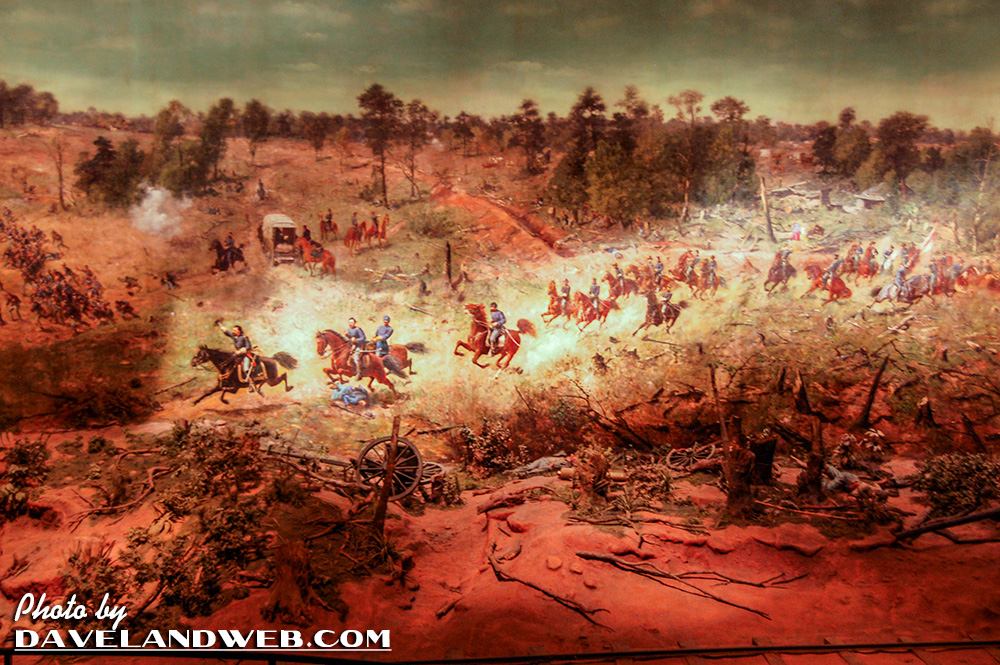
Photos were not allowed in 2007; always the rebel, I managed to capture this one:


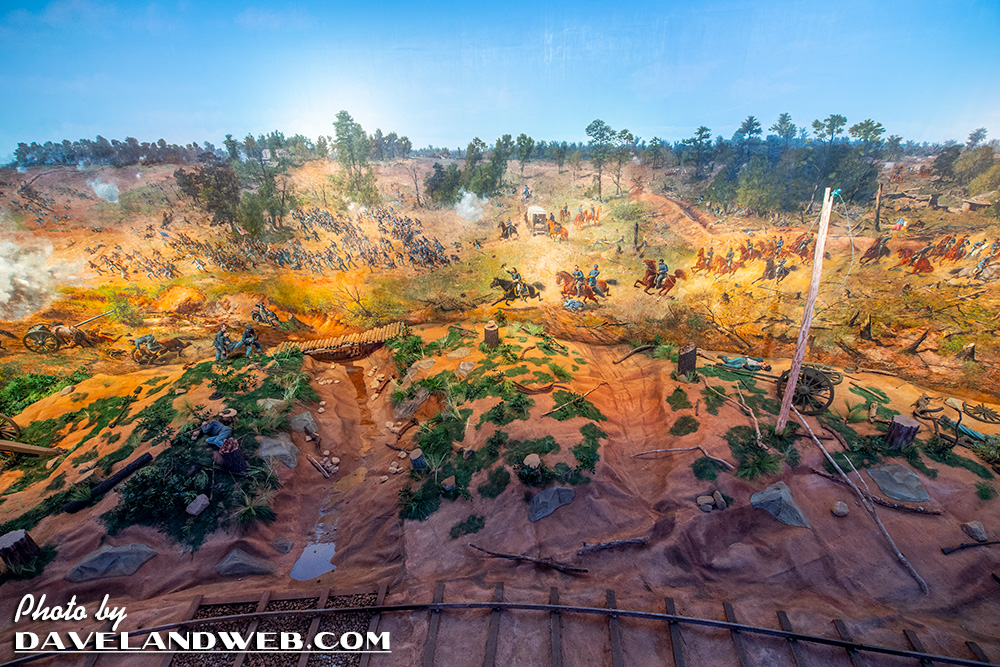
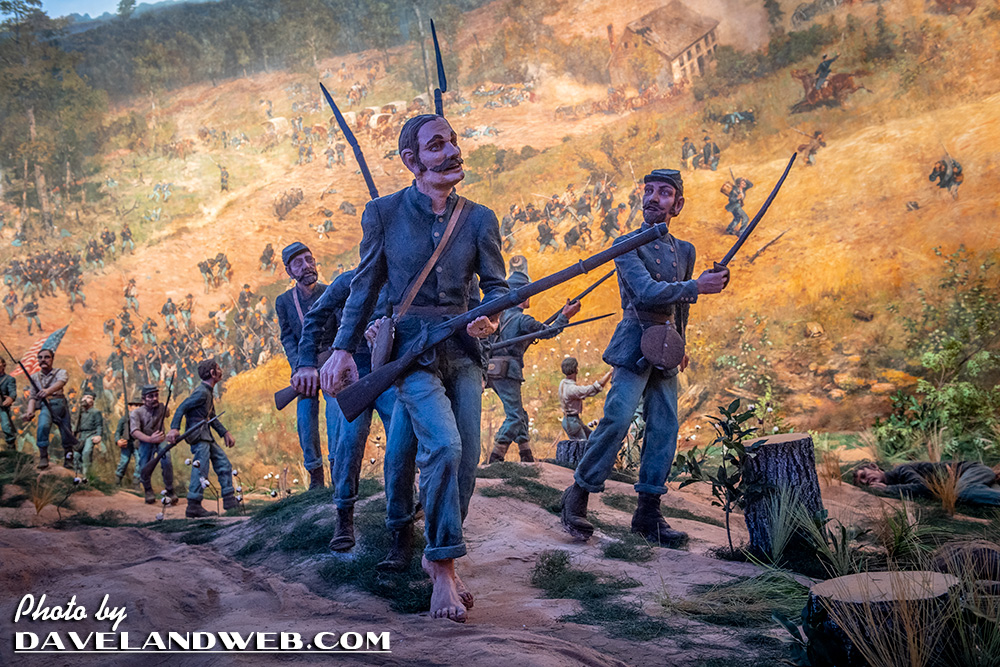
Sixteen years later, the policy was changed. This is approximately the same portion of the Battle of Atlanta Cyclorama painting that I shot before. MUCH better!


When I first saw this incredibly large “painting in the round,” I didn’t pay too much attention to what was depicted in the background painting or the figures/set pieces in the foreground. Being able to read the information in the outer foyer was extremely interesting and speaks volumes to how over the years  “history” can become cloudy, reinterpreted, and used to further personal agendas, rather than be an accurate depiction of what truly happened.


Accurate or not, the Cyclorama is an impressive piece of art that attempts to tell a story.


While some of the scenes depicted may seem disturbing, they are surely no match to the reality of that battle.


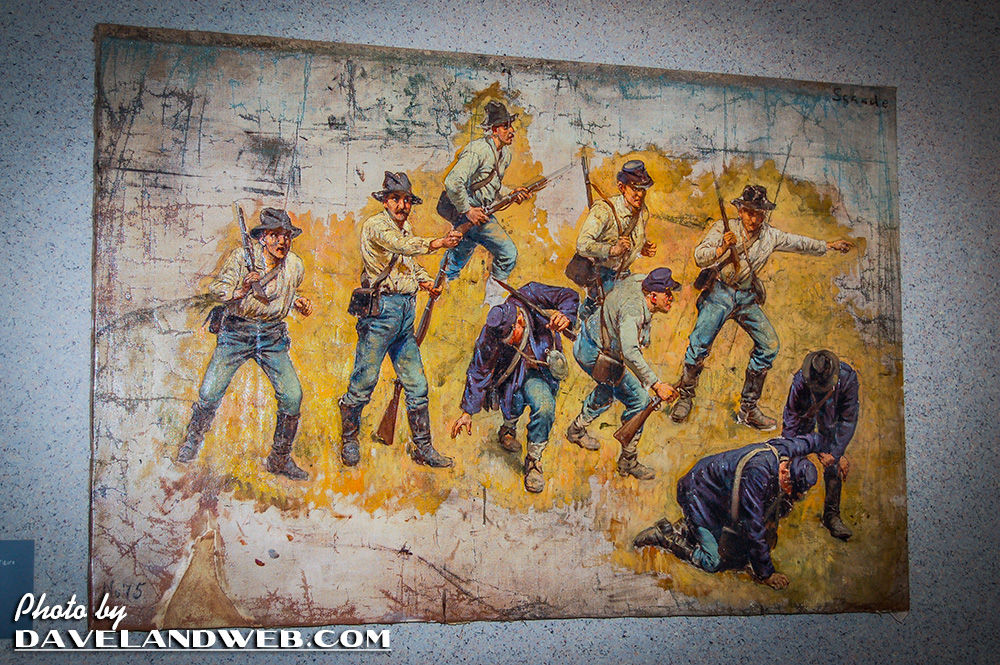
Here is Robert Schade’s oil on canvas figure study for the Cyclorama, painted prior to work beginning on the actual piece. It was painted on the same canvas as the larger painting, and probably was one of several such studies used to position groupings on the Cyclorama. It is the only known surviving study.


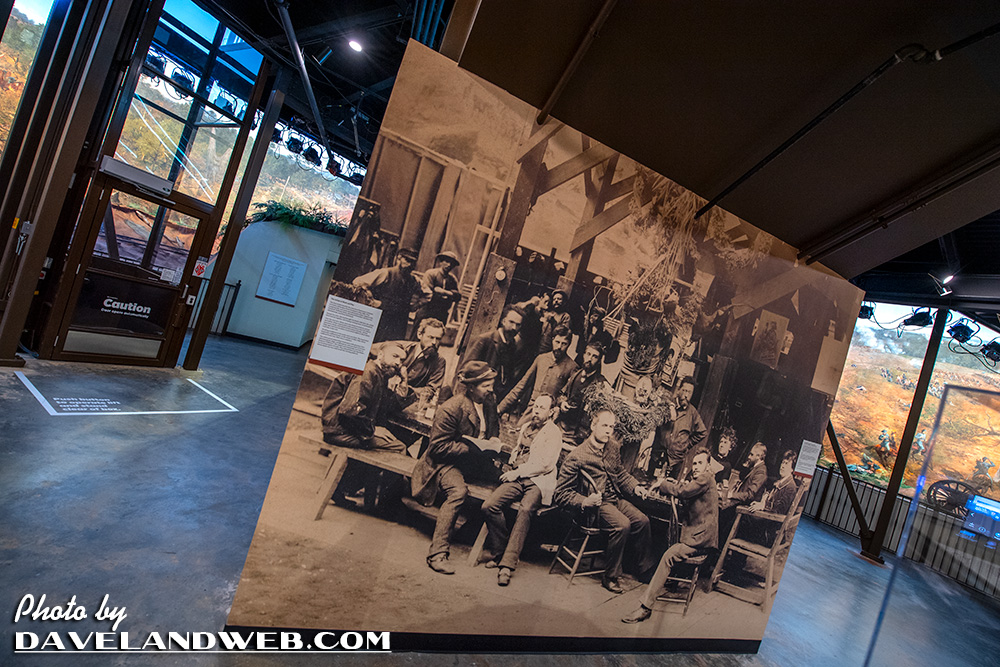
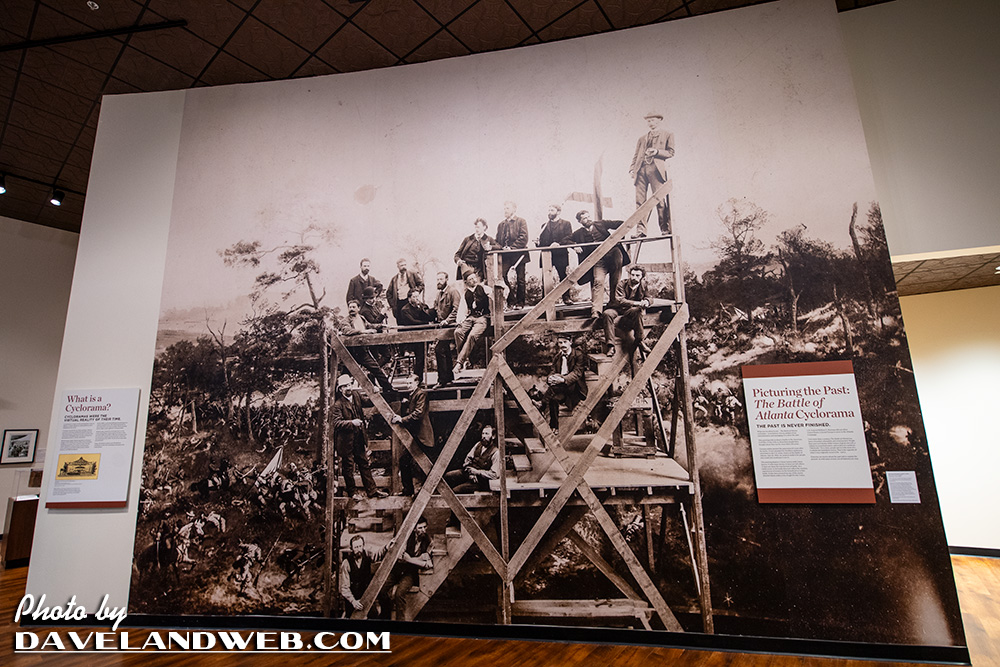
A few shots of the artisans behind the Cyclorama:


Want to see the backside of the Cyclorama?


The one area for improvement for the Cyclorama would be the lighting. The painting is brightly lit, yet the figures in the foreground are extremely dark. Whether this was an intentional decision to throw focus on the painting instead of the plaster figures that were added years later is unknown. Regardless, it detracts from the ability to fully immerse the guest into the illusion of this faux reality.
 
See more Cyclorama/Atlanta History photos at my main website.
Tuesday, March 19, 2019

Temple Tuesday: Shirley at Mount Vernon


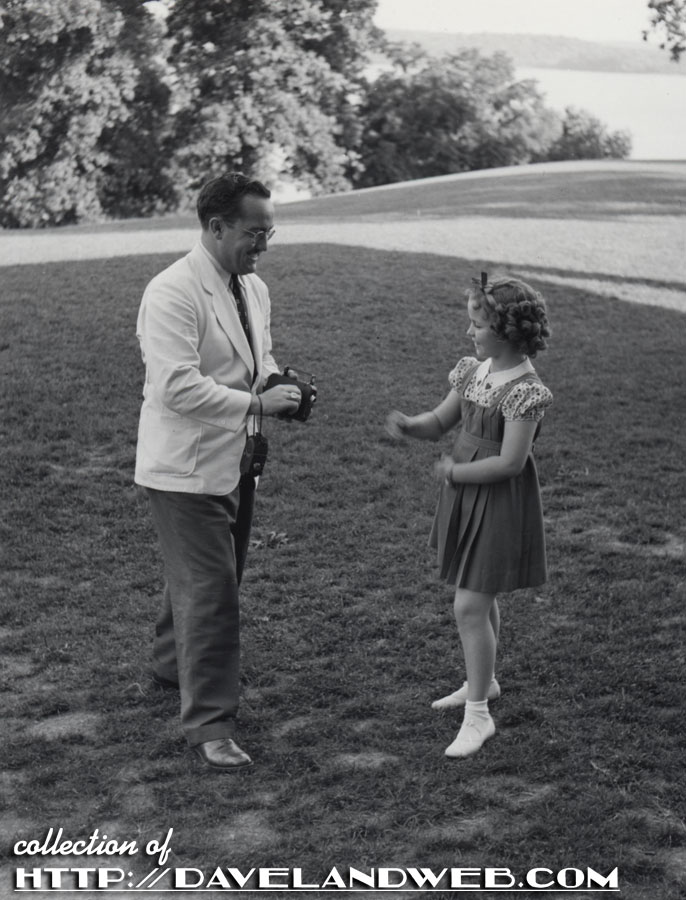
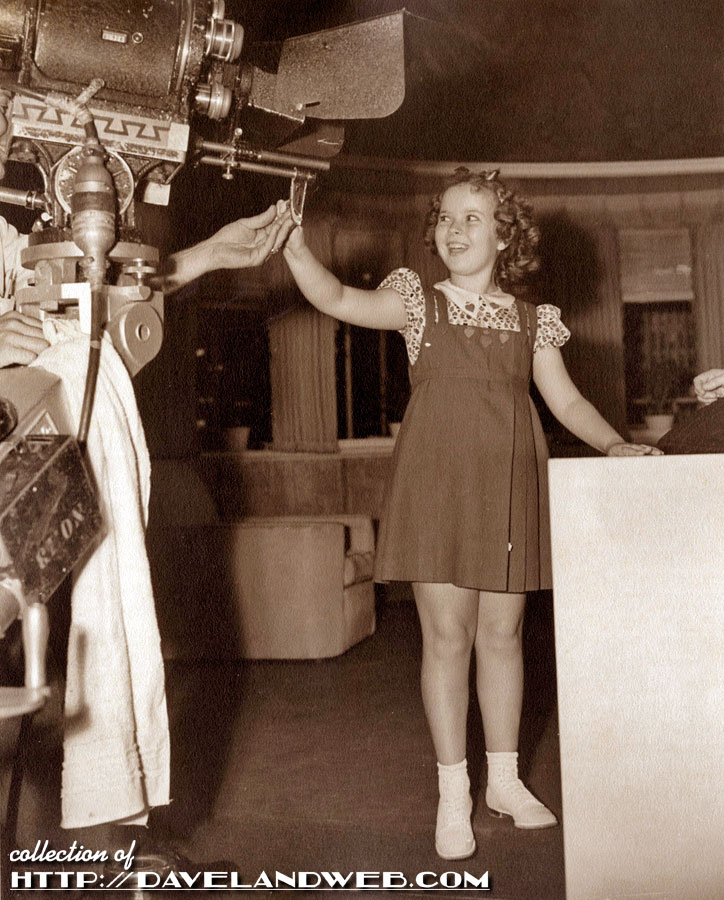
Here’s a 1938 shot of Shirley on the lawn of George Washington’s home Mount Vernon, located in Alexandria, Virginia. Holding the camera at left is her publicity agent, Wendell “Doc” Bishop. As Shirley expert supreme, Rita Dubas, relayed in her book Shirley Temple: A Pictorial History of the World's Greatest Child Star:

[He] acted as press protector, buddy, and often personal assistant. His job was not only to garner media exposure for his star, but to make sure she was content on the set and off—which often meant that he would find himself involved in a game of “Squares,” or acting as Deputy to Shirley’s Texas Ranger.

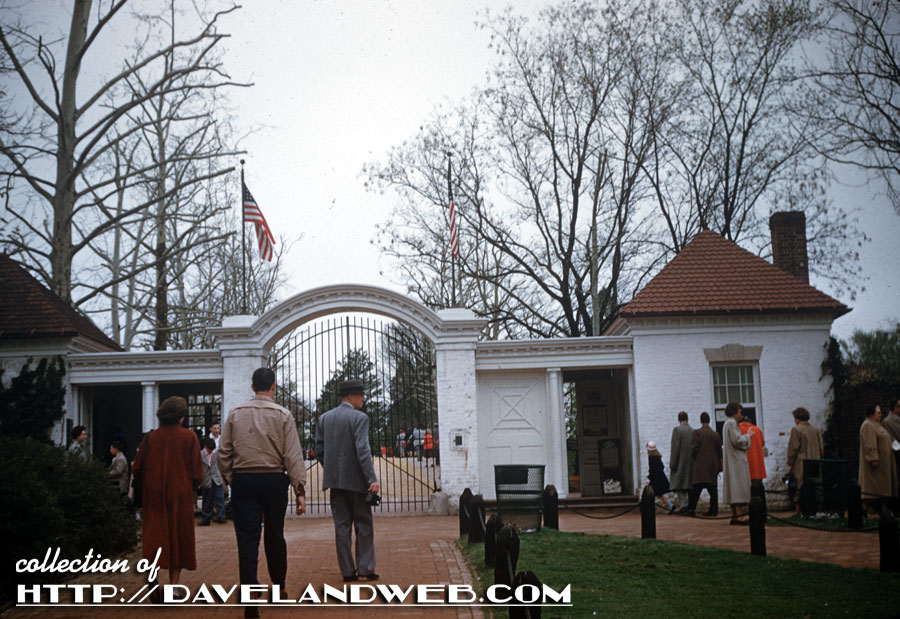
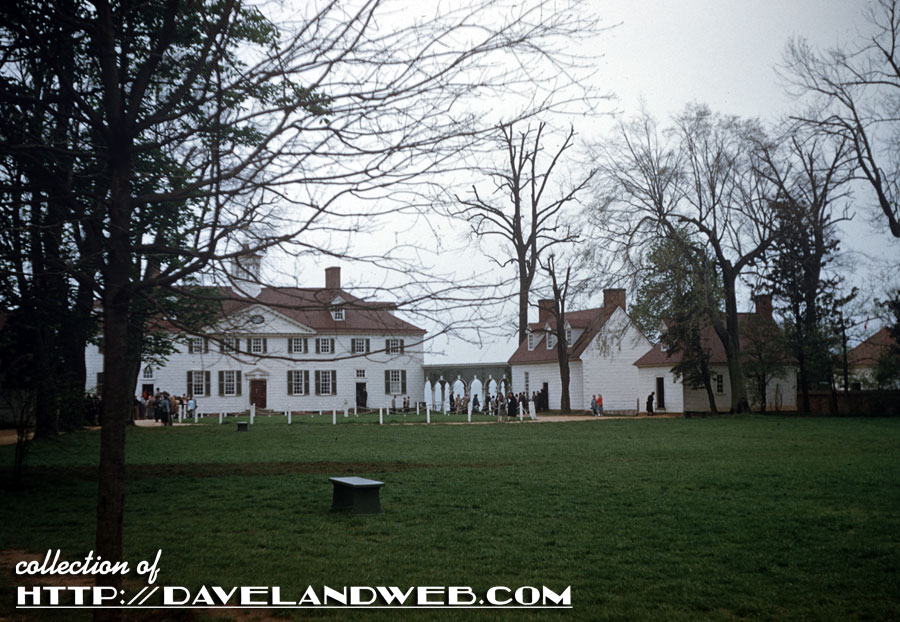
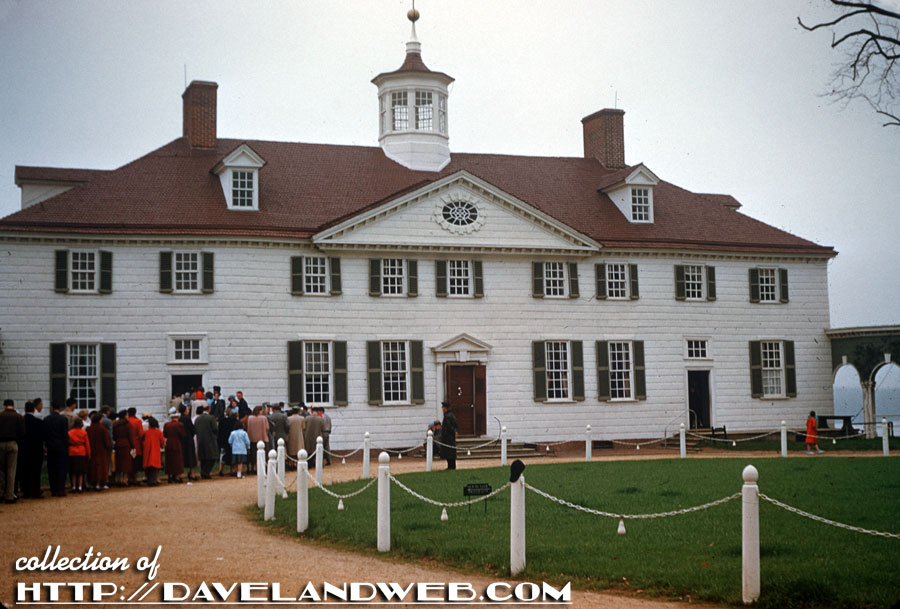
What was Shirley doing at Mount Vernon? She was enjoying a trek across America during her summer vacation. To round out the post, here are a few vintage shots of Mount Vernon from the 1950s:


This photo of Shirley on the set of “Just Around the Corner” shows her wearing the same dress/jumper combo:


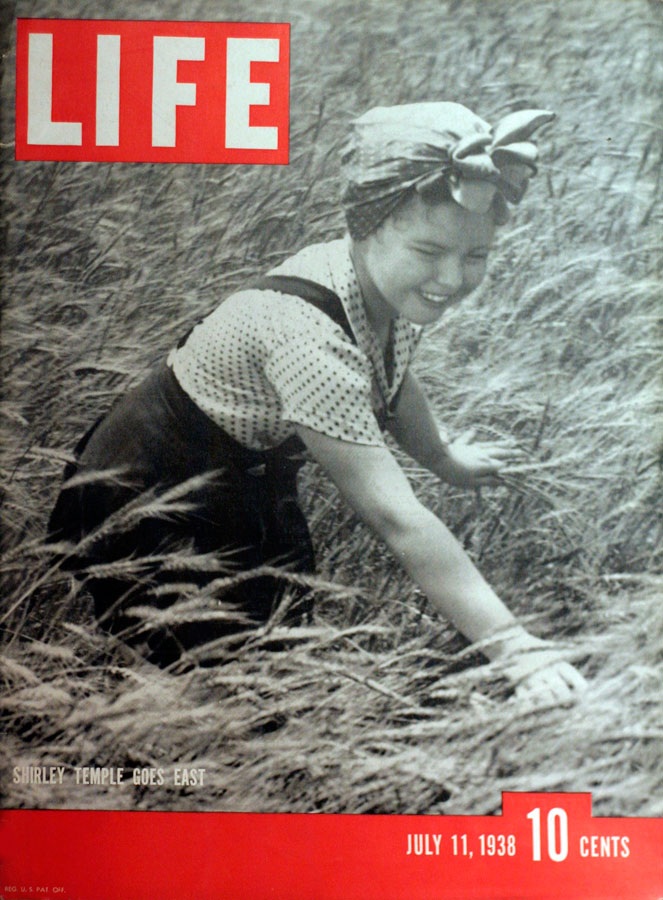
Shirley’s trip was big news; in fact it even made the cover of LIFE magazine!


Here’s the original shot used on the cover, taken at a wheat field in Junction City, Kansas:


See more Mount Vernon photos at my main website.
Saturday, September 20, 2014

Shirley and Gluten


This vintage photo of Shirley Temple was seen by the public when it graced the cover of LIFE magazine in the July 11, 1938 issue. It marked the first of three times that she was featured on the cover. Here's the caption that accompanied the vintage photo in my collection:

SEEING AMERICA WITH SHIRLEY

"My, it looks just like an ocean," exclaimed Shirley Temple as she swished her hands through ripening wheat in a field near Junction City, Kansas, June 14. The young film star is on a motor tour across the United States.

What the actual magazine looked like:


And a version I recreated using my publicity still and redoing the masthead and footer in Illustrator:


See more Daveland Shirley Temple photos at my main website.