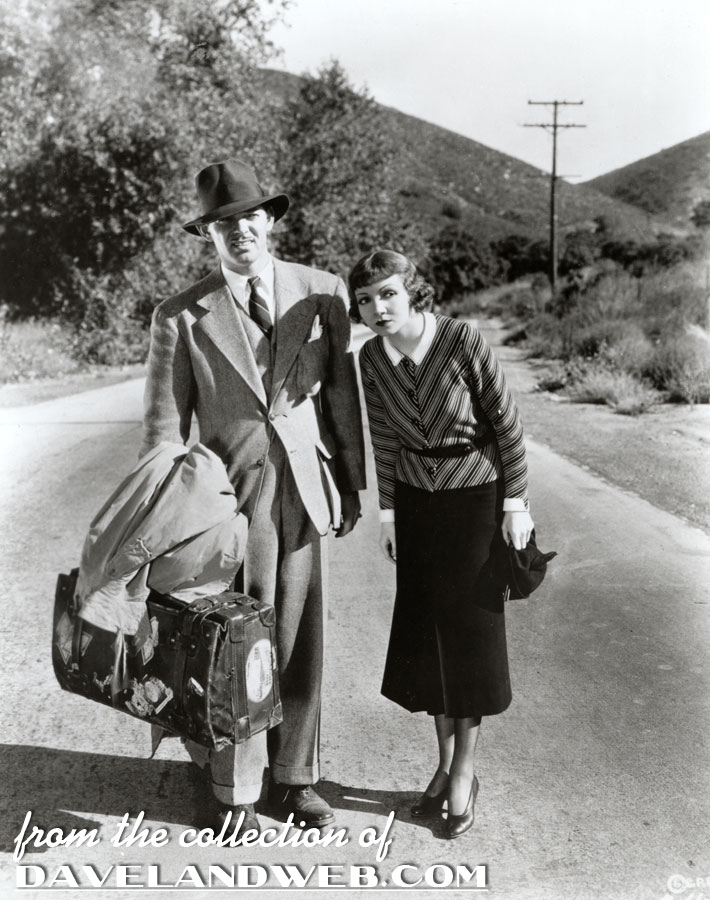
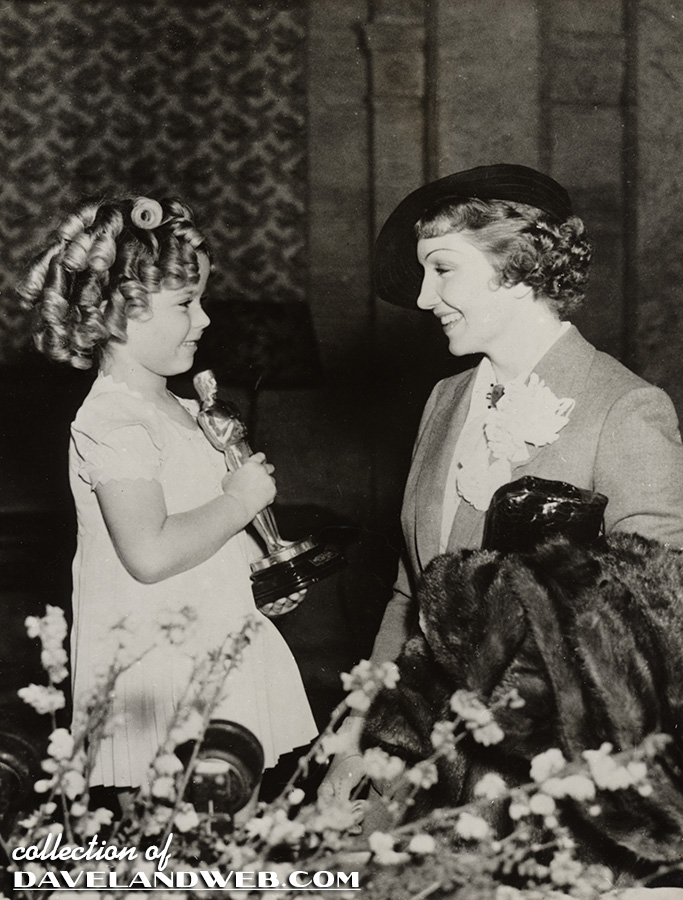
Wishing a heavenly birthday to one of my favorite actresses, Claudette Colbert, shown here in her Oscar winning role from “It Happened One Night” (1934). Below, she accepts her award from Shirley Temple on February 27, 1935. She was told of her win just as she was about to leave for vacation, thus the less-than-formal suit and hat she is wearing.
When Oscars host Irvin S. Cobb announced at the Biltmore Bowl that Colbert had won the best actress Oscar, she was, according to numerous reports, at [Los Angeles] Union Station, already seated in her compartment aboard the luxury Super Chief train, waiting to depart for Chicago and then go on to New York.
With “It Happened One Night”’s sweep progressing, Cohn, anxious for photographs to immortalize the night and publicize his film, reportedly screamed at Columbia publicists, “Find her!” Three of them, accompanied by Academy publicist Leroy Johnston, hopped into a limousine and, with motorcycle escorts, rushed to Union Station a mere 1.7 miles away. There, they located Colbert and told her to come with them. “I’ll miss my train!” she protested, but they had convinced the Super Chief to delay its departure. “I’m not dressed!” she continued, to which Johnston reportedly replied, “It’s the Nobel Prize of motion pictures!” (He apparently also reminded her that it might help with future contract negotiations.) Colbert reluctantly acquiesced, joining them in the limo for a quick trip back to the Biltmore.
Self-conscious about being in a traveling skirt-suit (albeit one designed for her by the great Travis Banton) rather than a gown, she insisted on accessing the podium not through the crowd, but rather via a side entrance, and holding her mink coat up in front of her. Shirley Temple, who was in attendance to receive a special “juvenile award” later in the ceremony, was enlisted to make the presentation, and was plopped up onto a chair to do so.
“I’m afraid I am just going to be very foolish and cry,” Colbert said as she accepted the gold statuette that had only been referred to in print as “Oscar” a year before. Then she posed with Temple for a few photos, before excusing herself and being rushed back to Union Station, where she caught her train.
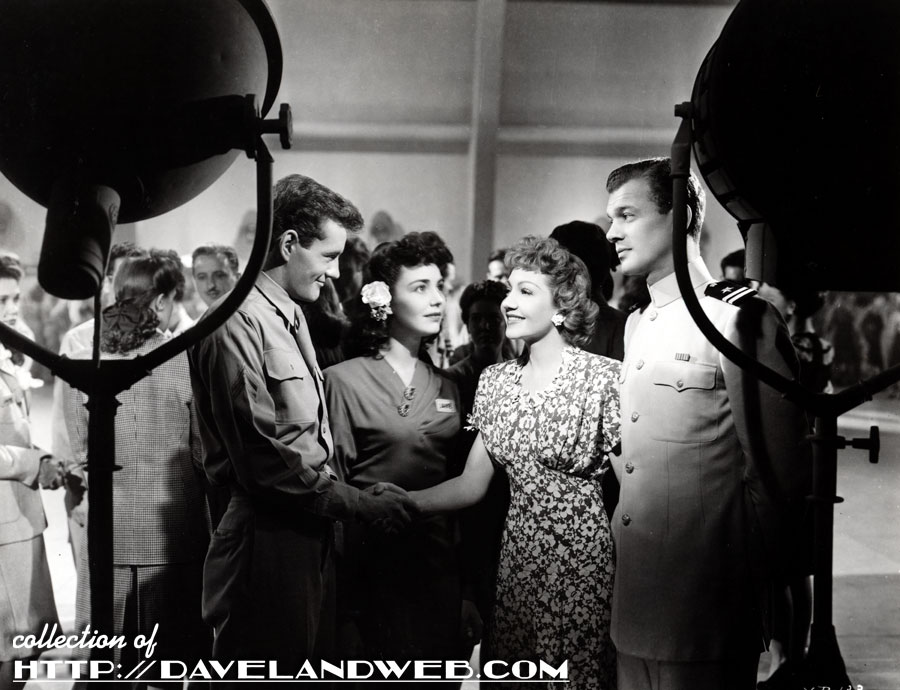
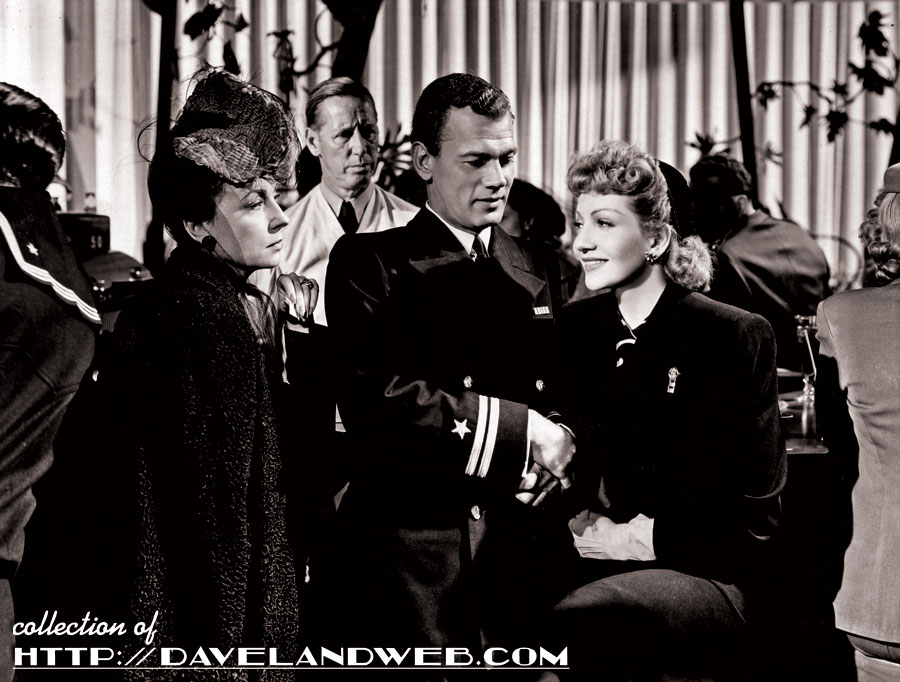
Claudette starred in the David Selznick World War II drama, “Since You Went Away” (1943), with Robert Walker, Jennifer Jones, and Joseph Cotten. Below, she spars with frenemy Agnes Moorehead. In the background is perennial Hollywood bartender Irving Bacon.
A lovely publicity still of the actress from the same movie:
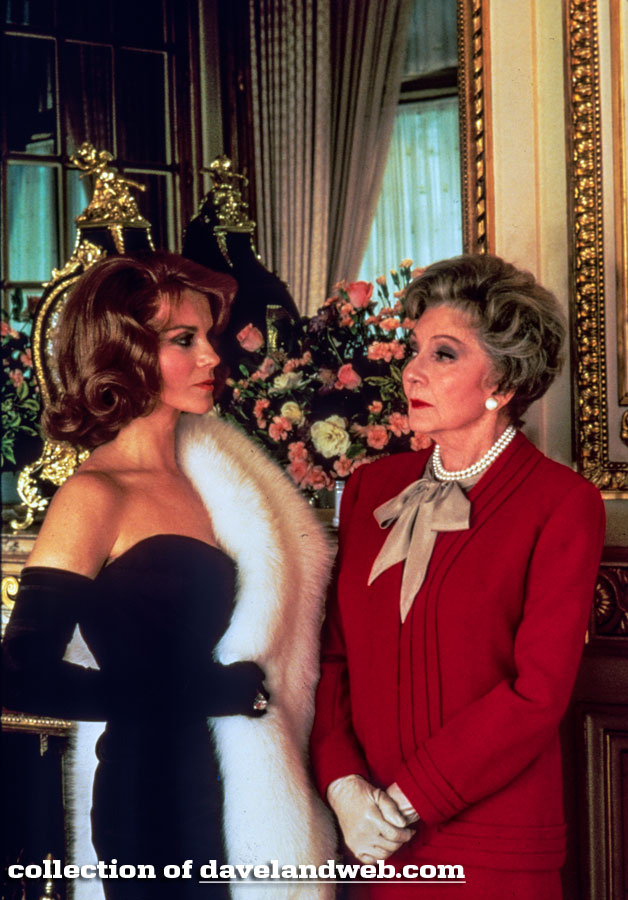
In 1987, she made her final appearance in “The Two Mrs. Grenvilles,” a two-part miniseries on NBC with Ann-Margret.
How did the eighty-four year old Colbert hold up against the auburn-haired Swedish bombshell?
A Golden Globe win and Emmy nomination should tell you!
With one glance in this publicity portrait for “Grenvilles,” Colbert conveys a strength most people a fraction of her age would be incapable of.
See more Classic Movie & TV photos at my main website.
I recently watched the 1934 Oscar winning classic, “It Happened One Night.” Regardless of the film’s age, it still holds up today, with an almost magical quality to its lighting. The sequence captured in today’s first shot still takes my breath away. While the photograph does not quite capture what the actual film does, it still makes a valiant effort of showing the way the lighting hit the haystacks and its stars to their best advantage. Who would have thought a love scene filmed in a rural field could be so dreamlike? The film’s Cinematography was ably handled by Joseph Walker, who was also the Director of Photography for “It’s A Wonderful Life.”
An interesting article I found online talks about this specific scene. Due to a meager budget, Walker was forced to be extra creative on this movie. Balking at his assignment of filming the night love scene during the day (aka Day-For-Night) on location with fake haystacks (straw glued to canvas-covered frames), Walker still pulled through and shot one of those most beautiful love scenes in movie history. Instead of shooting outdoors and battling sunlight, he staged the scene inside of a circus tent. Who knew?
This hand-tinted vintage lobby card was actually shot outdoors, attempting to replicate the mood of the scene shot in the tent:
While it is obviously staged and posed to the hilt, this vintage publicity shot probably captures the visual effect of the scene best, where sunlight and Hollywood lighting stood in for magical moonlight.
Claudette Colbert could not have been more wrong when she made this statement after filming ended:
Most classic movie buffs have heard of the 1934 Frank Capra classic "It Happened One Night."
How neither one of its stars (Clark Gable and Claudette Colbert) was thrilled to be in it; how it swept the five major Oscar categories; and how Claudette Colbert had to be hauled off a train on the way to vacation to accept her award at the ceremony.
What most probably DON'T know is that it was based on a short story by Samuel Hopkins Adams, featured in the August 1933 issue of Cosmopolitan magazine.
The artist for "Night Bus" is one of my favorite illustrators, James Montgomery Flagg, best known for his 1917 depiction of Uncle Sam on a military recruitment poster.
Here are the first few pages of the story, showcasing Flagg's vibrantly vintage illustrations.
More pop culture and vintage goodies at my main website.
Today marks what would have been the 111th birthday of Claudette Colbert, one of the best leading ladies from the Golden Age of Hollywood…or just about any age!
Here she is with Clark Gable in the film that won her an Oscar for 1934, "It Happened One Night."
In 1944, she starred in David Selznick's blockbuster WWII drama, "Since You Went Away." Playing a wife and mother with two daughters, she anchored the film with her believable portrayal of a woman wondering if her husband would return home alive from his service in the war.
Did You Know Dept.: Colbert was the original choice for the Margo Channing role in "All About Eve." Producer Joseph L. Mankiewicz picked her because she best represented the style he envisioned for the part. Plans changed when Colbert severely injured her back, which paved the way for Bette Davis' role of a lifetime. Colbert later quipped, "I just never had the luck to play bitches."
Colbert's last role was as the matriarch in "The Two Mrs Grenvilles."
Colbert won a Golden Globe and received an Emmy nomination. She held her own against the more flashy and eye-catching Ann-Margret, who played her daughter-in-law.
Last tidbits: her nickname was "The Fretting Frog," and she only liked to be photographed on one side. She strongly felt the other was not photogenic!
See more Daveland Classic Movie and TV photos at my main website.
In honor of the Oscars Ceremony tonight, today's post is about a 1934 classic that I happily watched again last week, "It Happened One Night." This Frank Capra screwball comedy may seem a bit dated to today's generation because of its 1930's fashion, cheap sets, and old fashioned situations, but thanks to the leads, Clark Gable and Claudette Colbert, it still remains a comic gem. The irony is that neither one of them was very excited to be in the movie. Capra originally wanted Robert Montgomery, not Gable; Montgomery turned the picture down since he thought there had already been ‘too many bus pictures’. Miriam Hopkins, Myrna Loy, and Margaret Sullavan all turned down the female lead; Colbert only accepted it because she was promised a healthy paycheck and a quick shooting schedule. The story of two opposites falling in love has been told many a time since, but rarely as effectively. It was based on the August 1933 short story "Night Bus" by Samuel Hopkins Adams in Hearst's International-Cosmopolitan.
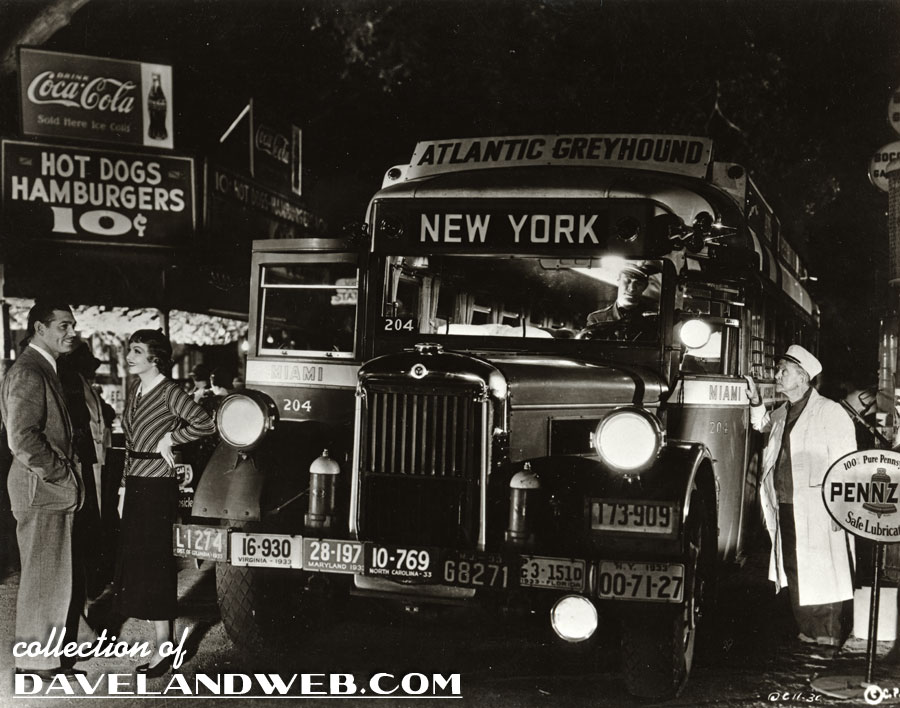
Here's the story in a nutshell: Peter Warne (Gable) is a gruff recently-fired newspaper man who thinks he knows it all; Ellie Andrews (Colbert) is a snooty spoiled heiress on the run from her rich father who refuses to let her marry the man she thinks she loves. The two opposites meet on a bus from Miami to New York City (where her fiancé awaits), and begin their relationship by fighting over a seat on the bus. It isn't long before the gradual disintegration of the animosity begins and the sparks begin to fly.
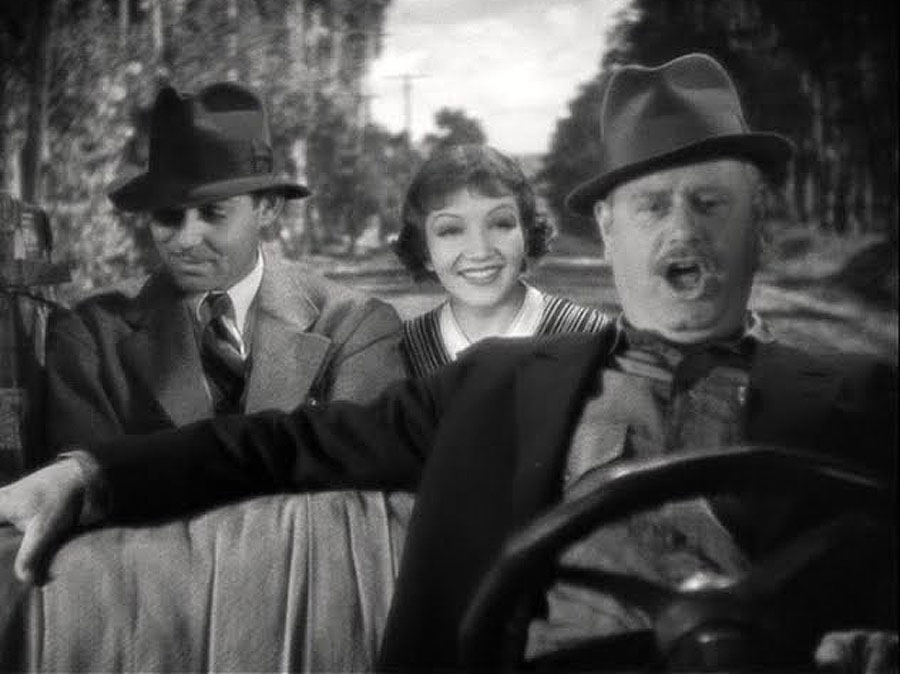
Things to look for: When on the bus, singing "The Flying Trapeze" song, the bus is moving and the driver is moving the wheel as though steering, but throughout the entire song, the scenery outside never moves. In the exterior view of the bus running off the road (after "The Flying Trapeze" song), the driver is a different person and the curtain that is behind him in the interior view is missing.
The scene where the two must sleep in a haystack is one of my favorite; the soft lighting is absolutely beautiful, giving it a magical glow. This photo is extremely posed, and doesn't give a true representation of what the scene is about:
The film is probably most famous for its hitchhiking sequence, where the know-it-all Warne decides to teach Ellie how to hitch a ride. It was filmed at Franklin Canyon Park, near Benedict Canyon at the eastern end of the Santa Monica Mountains. Once again, the posed publicity shot is at odds with what we see on screen:
The actual scene:
After getting picked up by a passing motorist (Alan Hale, the father of Alan Hale, Jr., the Skipper from "Gilligan's Island"), Ellie teases Peter, who she has just shown up with her shapely gams:
Ellie: Aren't you going to give me a little credit?
Peter: What for?
Ellie: I proved once and for all that the limb is mightier than the thumb.
Peter: Why didn't you take off all your clothes? You could have stopped forty cars.
Ellie: Well, ooo, I'll remember that when we need forty cars.
Because it was filmed pre-code, before the censors started clamping down heavily on movies, "It Happened One Night" has some very frank dialogue and situations. A year later, the scene with Gable undressing in front of Colbert, threatening to take off his pants, too, would most likely have been deleted. It has often been stated that Gable undressing to reveal himself barechested with no undershirt adversely effected the sales of undershirts nationwide.
Another classic scene is where Peter attempts to show Ellie how to properly dunk her donuts. It's a very short and simple scene, but effectively shows how the dynamics of the relationship are shifting. Colbert is masterful with her looks at Gable; you can see that she has begun to fall for him.
Peter: Say, where'd you learn to dunk? In finishing school?
Ellie: Aw, now don't you start telling me I shouldn't dunk.
Peter: Of course you shouldn't - you don't know how to do it. Dunking's an art. Don't let it soak so long. A dip and [he stuffs the donut in his mouth] plop, in your mouth. You let it hang there too long, it'll get soft and fall off. It's all a matter of timing. Aw, I oughta write a book about it.
Ellie: [laughs] Thanks, professor.
Peter: Just goes to show you - twenty millions, and you don't know how to dunk.
Ellie: Oh, I'd change places with a plumber's daughter any day.
Things to look for: When Peter is making breakfast for Ellen, as the table is first set, there are six doughnuts on the plate in the lower left corner of the screen, but when they sit and begin eating and discussing what there is to eat, there are only two.
After filming was completed, Colbert complained to her friend, "I just finished the worst picture in the world." Capra's initial trepidation about the film was erased once word of mouth got out. Ticket sales slowly picked up speed and it turned out to be a major (and prestigous) hit for Columbia, previously known as one of the B-Movie Poverty Row studios.
On Oscar night, the film became the first movie to receive what is known as a "clean sweep," taking home Academy Awards for the top 5 categories: Best Picture, Best Director (Capra), Best Actor (Gable), Best Actress (Colbert), and Best Adapted Screenplay (Robert Riskin). Confident that she wouldn't win, Colbert decided not to attend the February 27th ceremony at the Biltmore Hotel in Los Angeles, and instead planned to take her long awaited vacation, a cross-country railroad trip. When she was unexpectedly named the winner, studio chief Harry Cohn sent someone to "drag her off" the train (which fortunately had not yet left the station). Colbert arrived wearing a non-red-carpet-worthy two-piece traveling suit (created by Paramount Pictures costume designer, Travis Banton). A 6-year-old Shirley Temple handed her the statuette, photos were taken, and she promptly left to resume her vacation.
This is the only clip I could find from that night:
Supposedly, Colbert and husband fell victim to the Oscar Curse that supposedly states actresses who win the award for Best Actress and Best Supporting Actress are much more likely to lose their significant other following the big win.
Another interesting tidbit: In a 1975 interview, Warner Bros. animation director Bob Clampett stated that he based Bugs Bunny's characteristic carrot-munching technique on this scene where Gable chomps on a carrot.
See more vintage & current Classic Movie & TV photos on my main website.
I was going to attempt to do a Top Ten List of my favorite movies as a post, but by the time I began listing all of my favorites, it became too unwieldy. Instead, here is the first installment of a series of favorite films from each decade starting with the 1930's.
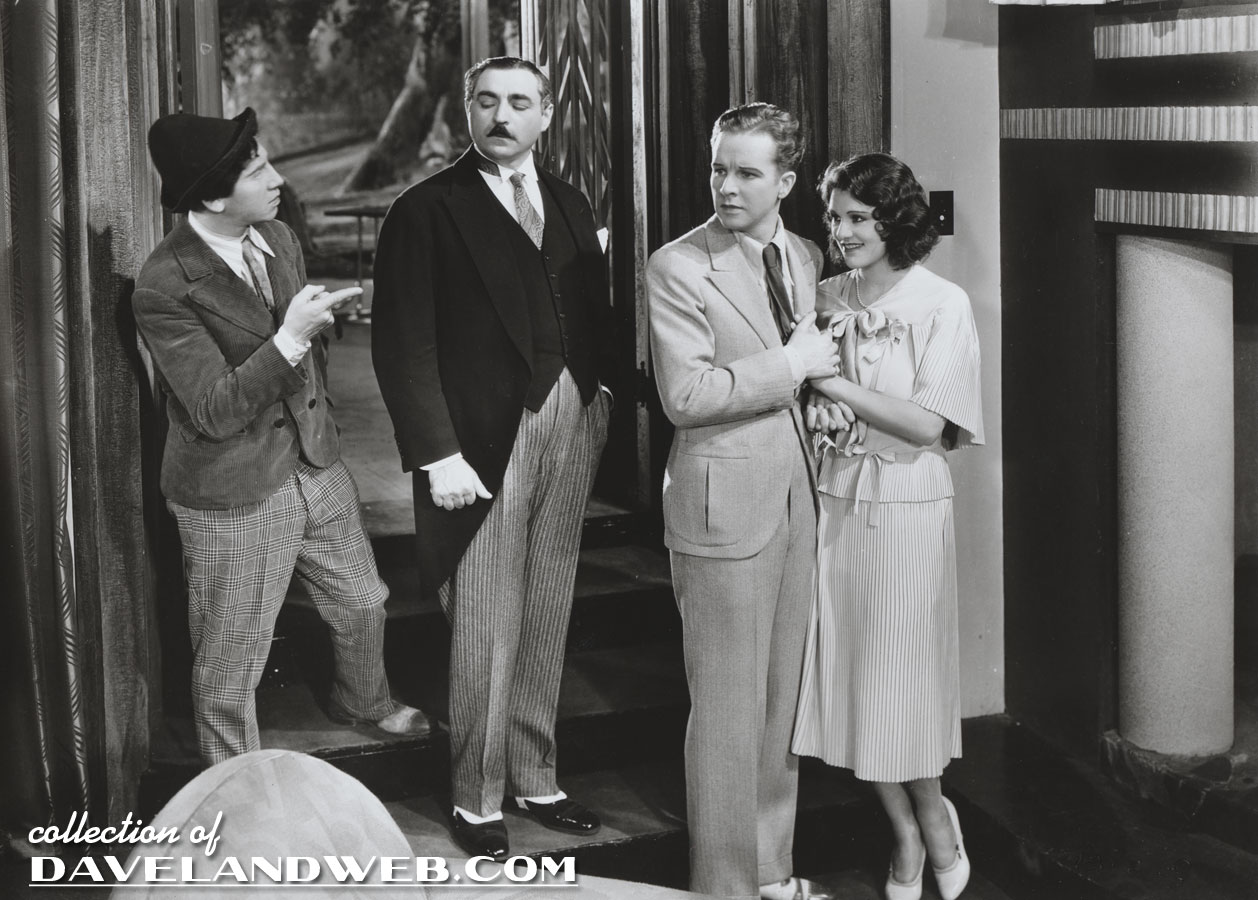
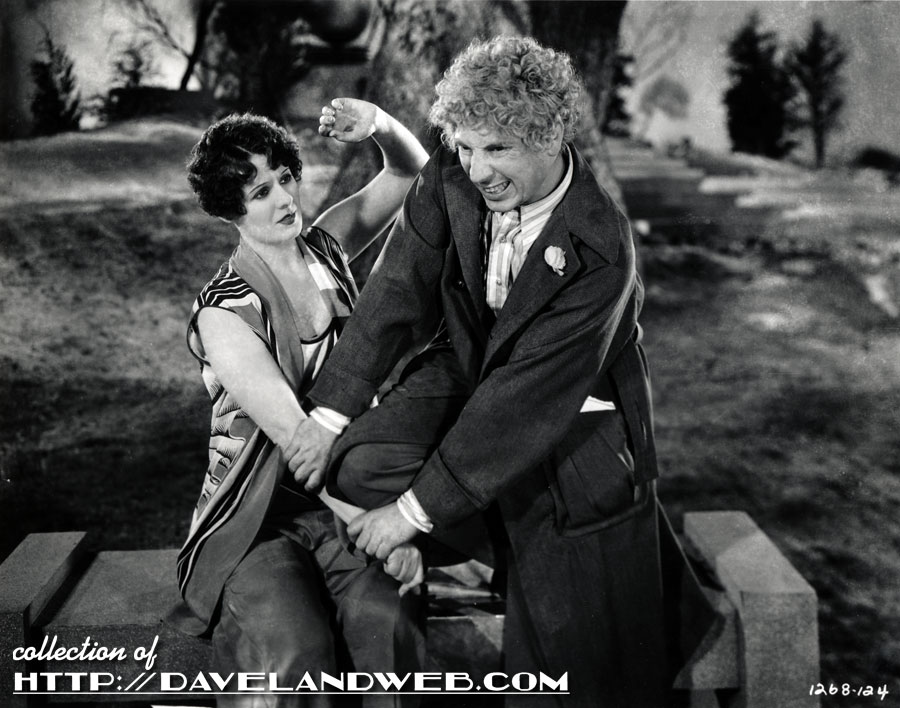
Animal Crackers (1930) with The Marx Brothers.
It's a bit creaky and technically not a very sophisticated movie, but the original comedy of the Marx Brothers still shines through. Originally a 1928 stage production, by the time this film version was made, all the laughs and gags had been perfected. Filmed at the Kaufman Astoria Studios in New York (close to the Broadway theater district), it was the last movie the Marxes made before "going Hollywood." Besides having four Marxes (Groucho, Harpo, Chico, and Zeppo), "Animal Crackers" also boasts Margaret Dumont, my very favorite Marx leading lady. Nobody played the dowager role opposite Groucho with more class or skill for timing. The two of them are silver screen gold. Harpo is my favorite Marx Brother, both for his comedic and musical talents. Once the Brothers went to MGM, the musical numbers became more abundant and lavish; Harpo's interludes were the only ones I enjoyed. Today, they still seem fresh.
"It Happened One Night" (1934) is visually of the 1930's, but the chemistry between Clark Gable and Claudette Colbert still registers. This is one of the first (and best) comedies that shows how the initial tension between two characters can turn to love. The plot consists of a spoiled heiress, Ellen Andrews (Colbert), who runs away from her father in order to marry the man that she loves (who her father can't stand). Peter Warne (Gable) is an out of work streetwise reporter who recognizes Andrews and blackmails her for an exclusive story as long as he protects her anonymity. The growth and maturity of both characters as they travel by bus to their ultimate destination is so well done; this is Frank Capra (the director) at his best.
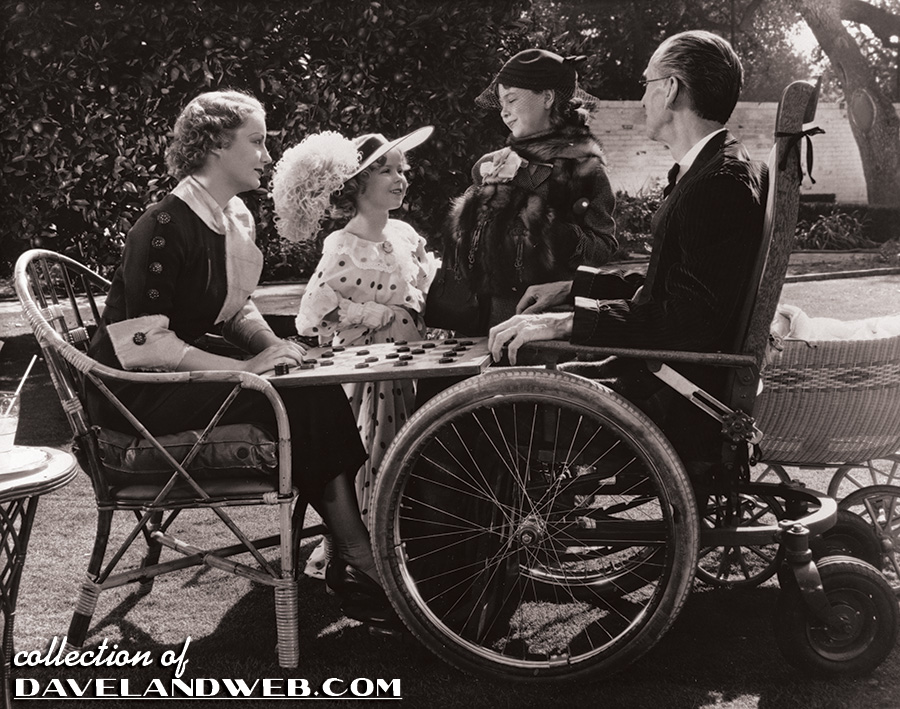
"Bright Eyes" (1934). If you think Shirley Temple movies are too sweet and saccharine, then this is the one for you. Temple is balanced out by the bratty Jane Withers, making Shirley's perfection much easier to take. Her hit song "On The Good Ship Lollipop" was introduced in the movie as well. James Dunn does a great job as her godfather, aviator Loop Merritt; he and Temple worked very well together and it shows on-screen.
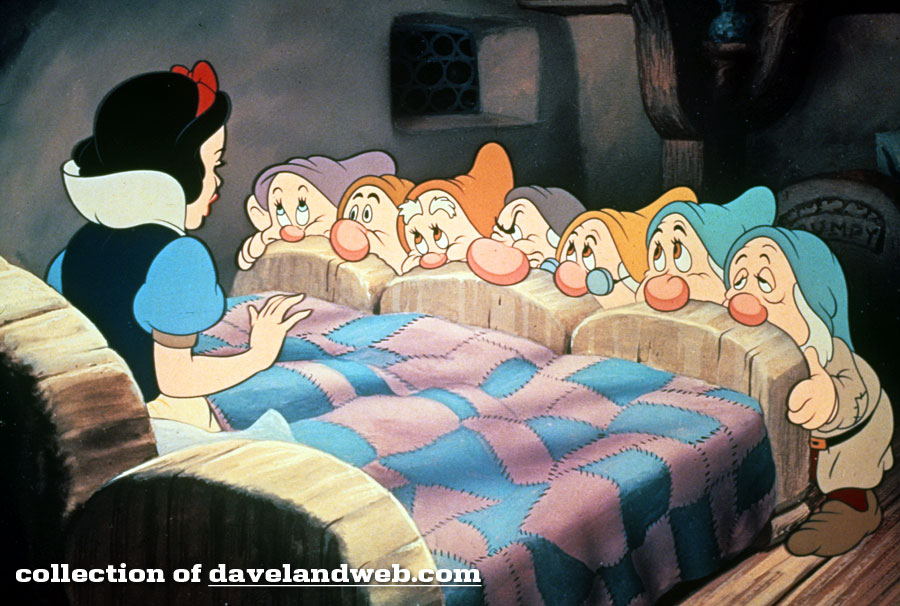
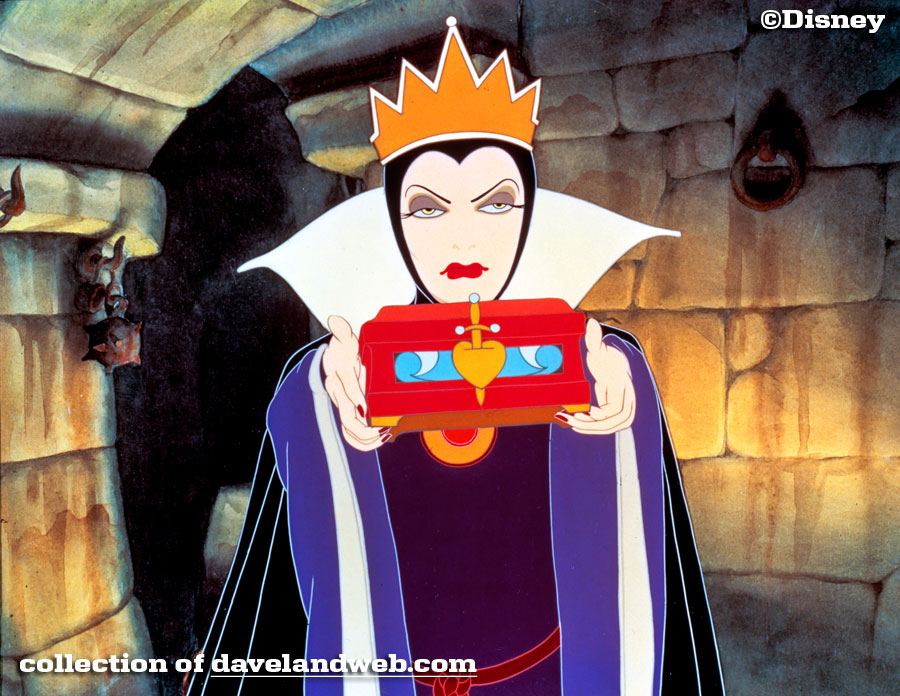
"Snow White and the Seven Dwarfs" (1937)
This one still ranks pretty high on my favorite list of Disney animated films, and you can tell that Walt spent an inordinate amount of time making it perfect. The backgrounds are gorgeous, the animation is fluid, the storytelling is tight, and there is appeal to those of all ages and tastes. With a memorable and timeless score, this classic is for the ages.
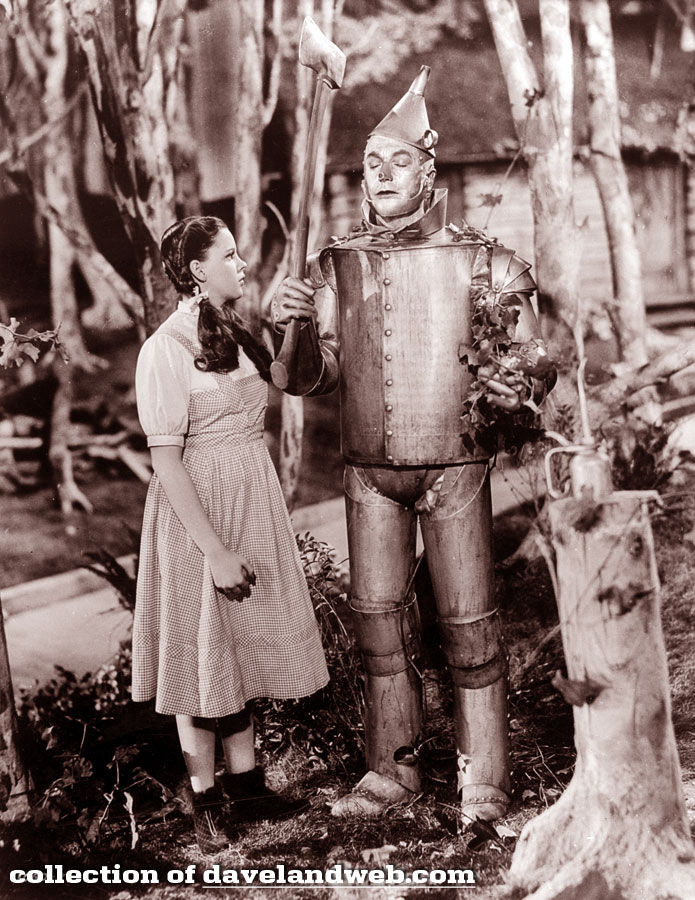
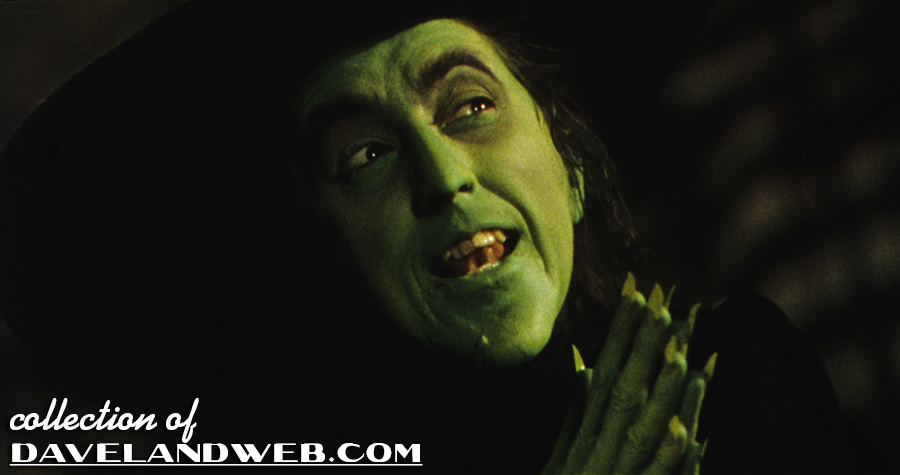
"The Wizard of Oz (1939)"
I would venture to say that this movie is the live-action parallel of "Snow White" if you are looking for cinematic perfection. From the casting, to the music, to the storytelling, to the visuals, this one has it all. Judy Garland comfortably bears the weight of this film on her shoulders both musically and dramatically. In her brief screen time, Margaret Hamilton as Miss Gulch/The Wicked Witch almost steals the picture.
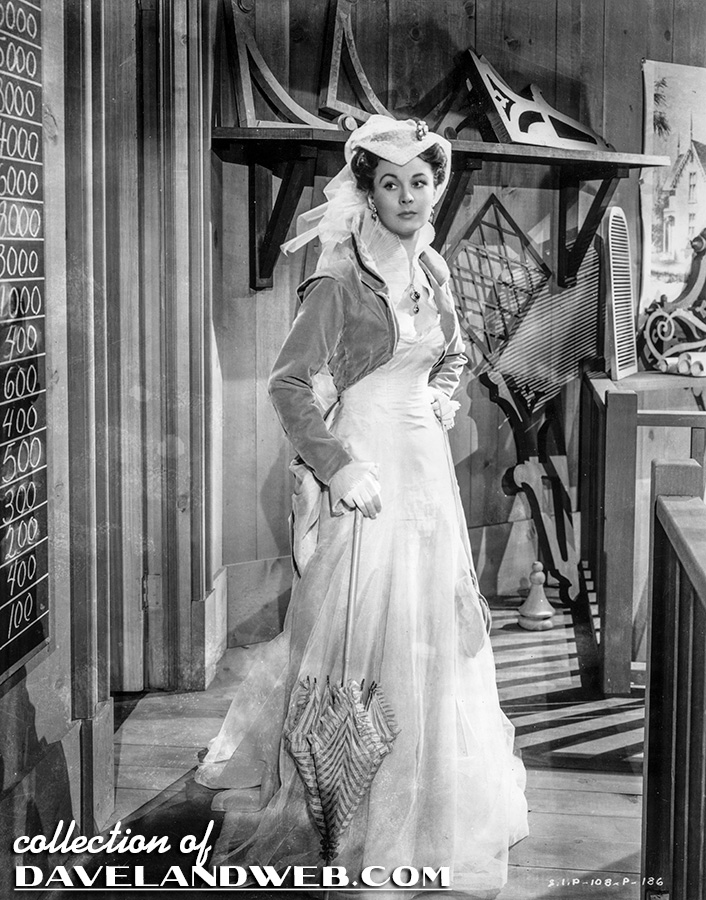
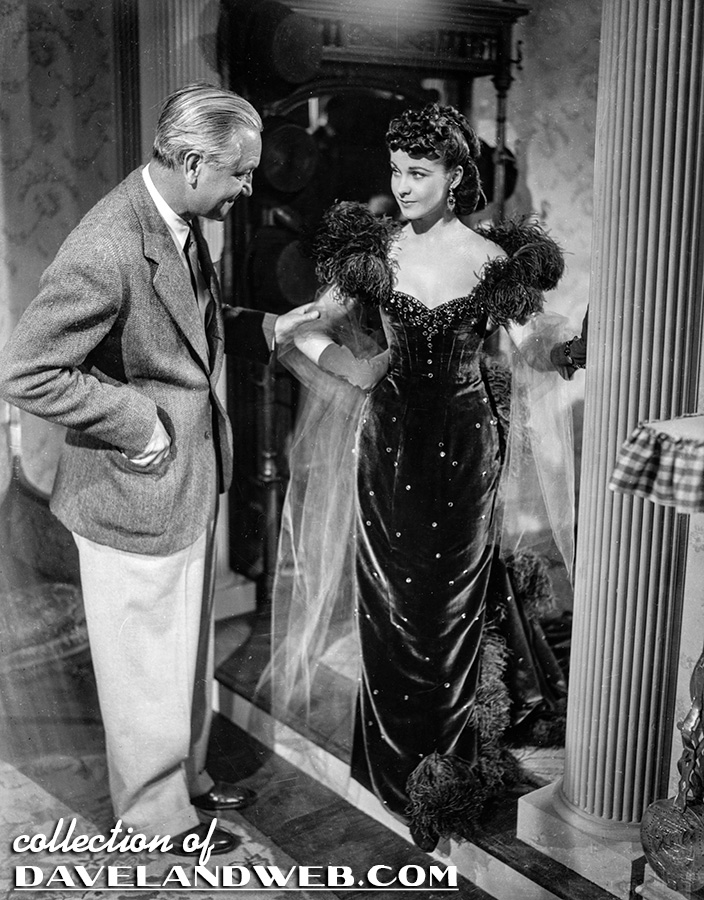
"Gone With The Wind" (1939) is one of my favorite movies, but I do find myself somewhat bored in the first half, which becomes increasingly dated to me whenever I watch it. Selznick's touches of whimsy and comedy seem forced, and the picture doesn't really pick up speed until Scarlett flees Atlanta for the ravages of Tara.
At that point, the movie picks up speed and becomes a tale of survival, as the resourceful Scarlett (so expertly lived by Vivien Leigh) does whatever it takes to regain her fortune. Even today, Leigh's portrayal of Scarlett is fresh, modern, and real. Sadly, the performances of her costars have not held up as well over the years, and appear a tad dated and stale.