Showing posts with label ambassador to ghana. Show all posts

Tuesday, January 14, 2025

Temple Tuesday: RIP, Tyltyl


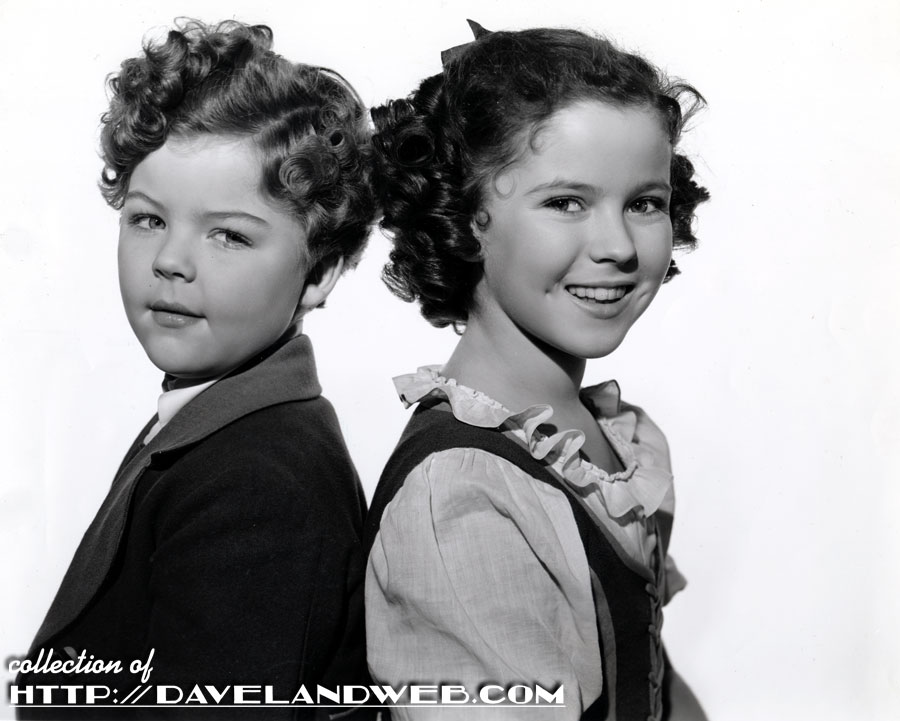
Thanks to Melissa (aka “The Colonel”), I recently learned of the passing of Johnny Russell, who costarred in “The Blue Bird” (1940) with Shirley Temple. The Hollywood Reporter did a short little write-up about Russell, who was born John R. Countryman. Sounds very patriotic! The article contained the usual semi-correct info as well as the outright `myths:

In the biggest role of his brief acting career, Russell portrayed Tyltyl, the younger brother of Temple’s Mytyl, in the fantasy film The Blue Bird (1940), which was Fox’s answer to MGM’s The Wizard of Oz, released a year earlier. In a dream, the two kids set out on on a series of adventures.

While not completely false, Producer Darryl Zanuck’s choice of “The Blue Bird” for Shirley had more to do with Disney’s financially successful “Snow White” than it did with the still unreleased “Wizard of Oz.” Zanuck attempted to buy “Oz” for Shirley but was outbid by MGM. He began negotiations for “The Blue Bird” in February 1939, a good six months before the release of “Oz.” In a touch of irony, the rights to film “The Blue Bird” cost Zanuck $25,000 more than MGM’s winning bid for “Oz.” As Shirley recounted in her autobiography Child Star:

Some thought our film was conceived as a retaliation to MGM’s Wizard of Oz. Zanuck staunchly resisted such innuendo. “Oz is a musical comedy without any drama or sentiment,” he declared. “The Blue Bird is strictly a dramatic fantasy. MGM made extravagant blunders and underwent financial tortures. We do not intend to copy Oz as to theme, or the mistakes that were made.”

During the initial story conference on April 24, 1939, Zanuck continued to weigh in “against ever getting into the type of spectacle of ‘Midsummer Night’s Dream,’ ‘Alice in Wonderland,’ or ‘The Wizard of Oz,’ all of which are flops. This is the human, simple adventure of two little children,” he said. Since “The Wizard of Oz” hadn’t been released yet, he was most likely referring to the 1925 silent film version with Oliver Hardy.


Another tidbit from the Hollywood Reporter obituary:

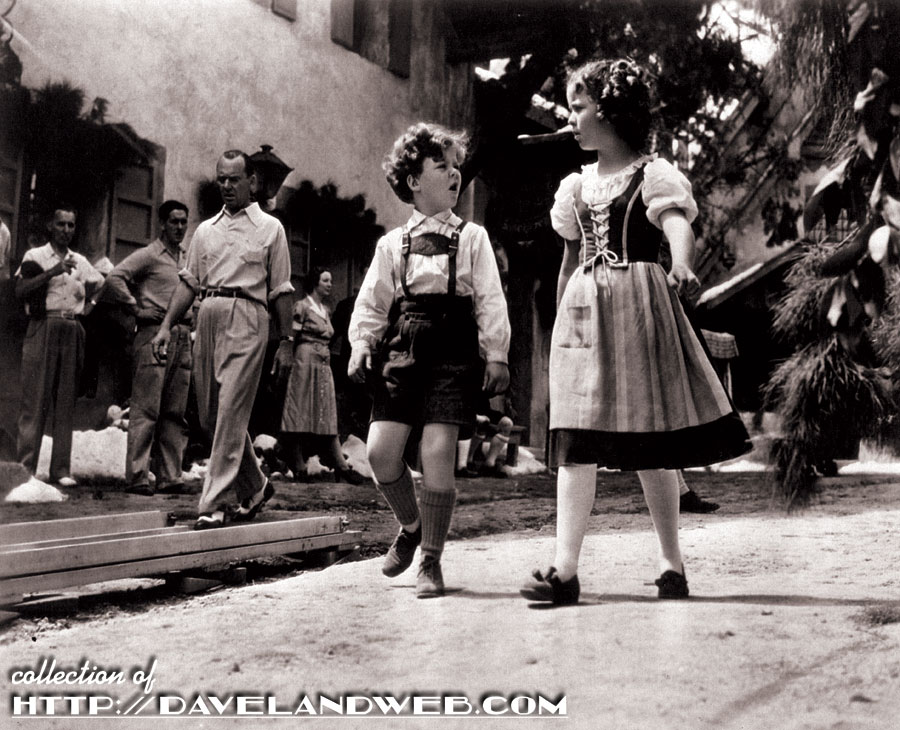
Temple’s mother, Gertrude, was reportedly unhappy that her daughter was sharing so much screen time with the adorable Russell and sought to have him replaced, but producer Darryl F. Zanuck insisted that the youngster remain.


Mrs. Temple had concerns about the script, the size and characterization of Shirley’s role, and her costar, Johnny Russell. As Shirley recounted:

She was critical of Johnny Russell, a boy co-starring in some of my scenes. Although only six years old, he was an extroverted kid with a gift of mimicry…The mimicry annoyed Mother, but I suspect she disliked his casting because Russell was younger and could potentially upstage me on that basis. What I needed was someone my own age she urged Zanuck, again through attorney Wright. “Ridiculous,” responded Zanuck. Two contemporary children meant I could not be the leader, as the story required. “If the boy were the same age, we would have to assume he was mentally incompetent or otherwise deformed if Shirley took the leadership away from him,” Zanuck said in a burst of chauvinism. “A younger brother can cling to her for protection and guidance during the great adventure.”
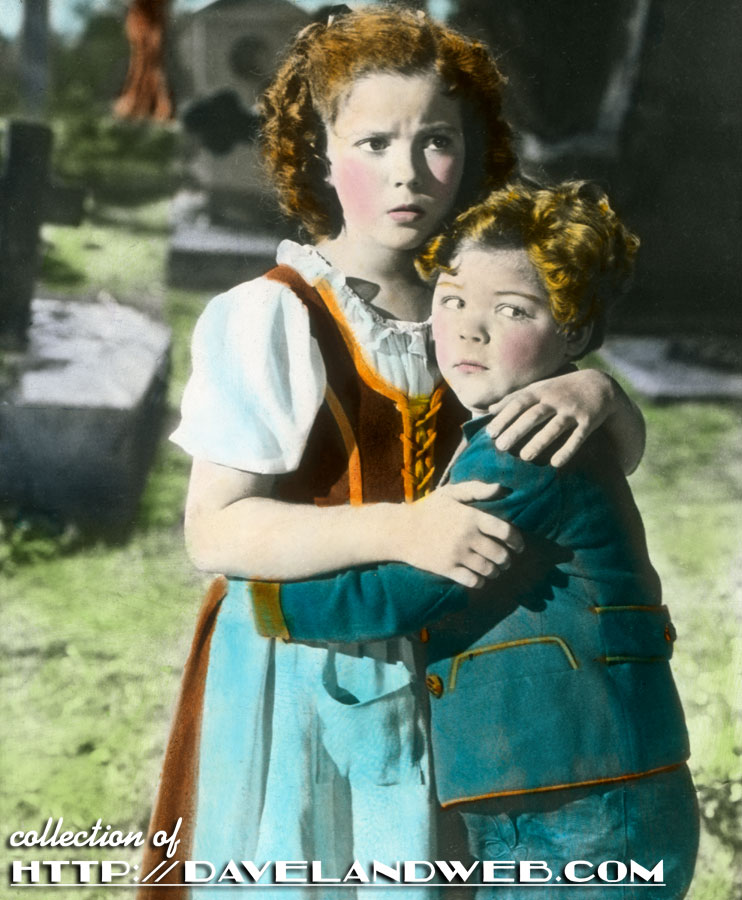


In the play, the brother was older than the sister. It was Zanuck’s decision to flip the ages to benefit Shirley. Zanuck’s original choice for Tyltyl was Bobs Watson (“Boys Town,” 1938), but in the end, Russell was cast, most likely because he was three years younger than Watson.
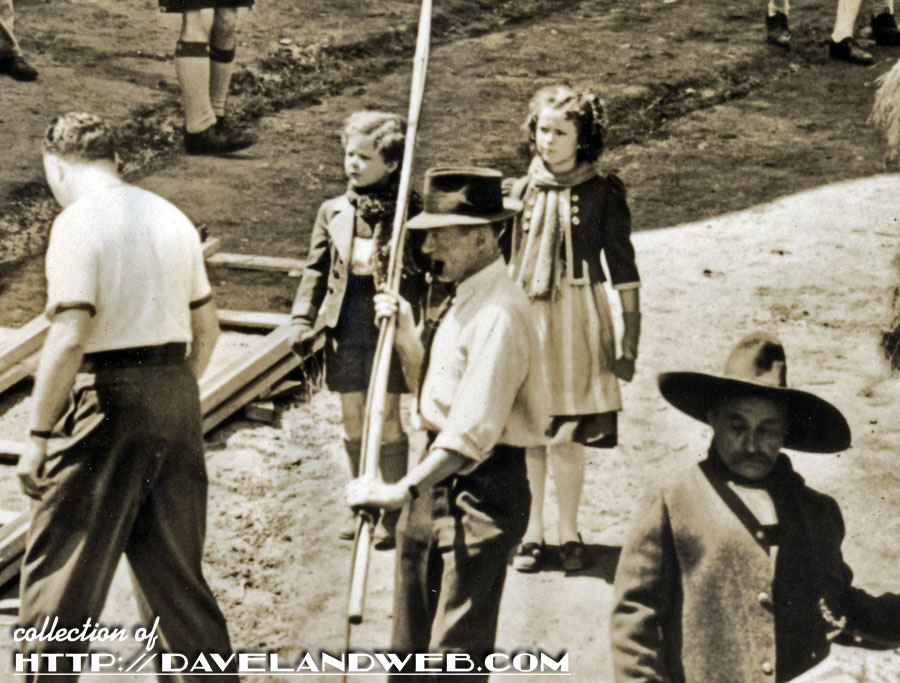


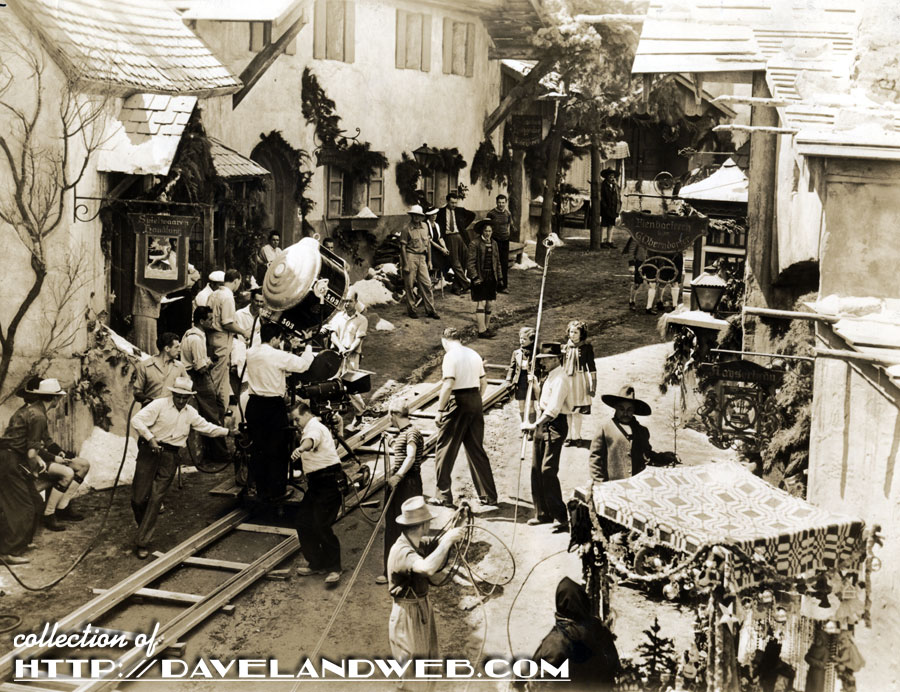
Zanuck also dropped some of the characters in the original story so that the story focused more on Shirley, in an attempt to appease the Temple family, who had become increasingly more vocal about their fears about Shirley’s future at Twentieth Century-Fox. Mrs. Temple had begun to consider other options since Zanuck avoided any direct contact with her, which made her feel that Zanuck’s interest in Shirley was waning and more focused on others in the Fox stables, such as Alice Faye and Sonja Henie. Just in case the project did not meet expectations, Gertrude had checked out the Westlake School for Girls considering it as a possible non-studio school for Shirley. Attending Westlake would enable her daughter to establish friendships with girls from upper-class homes and obtain a well-rounded education. In the detailed shot below, you can see the ever-present Mrs. Temple on the set during filming, with Shirley’s bodyguard, Griff (John Griffiths), standing next to her.
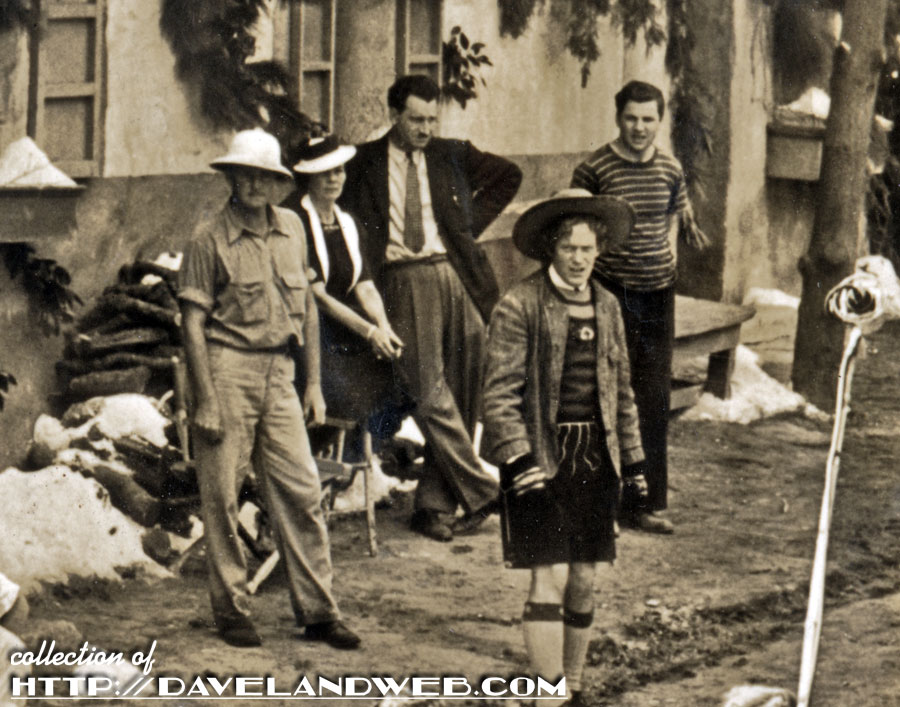


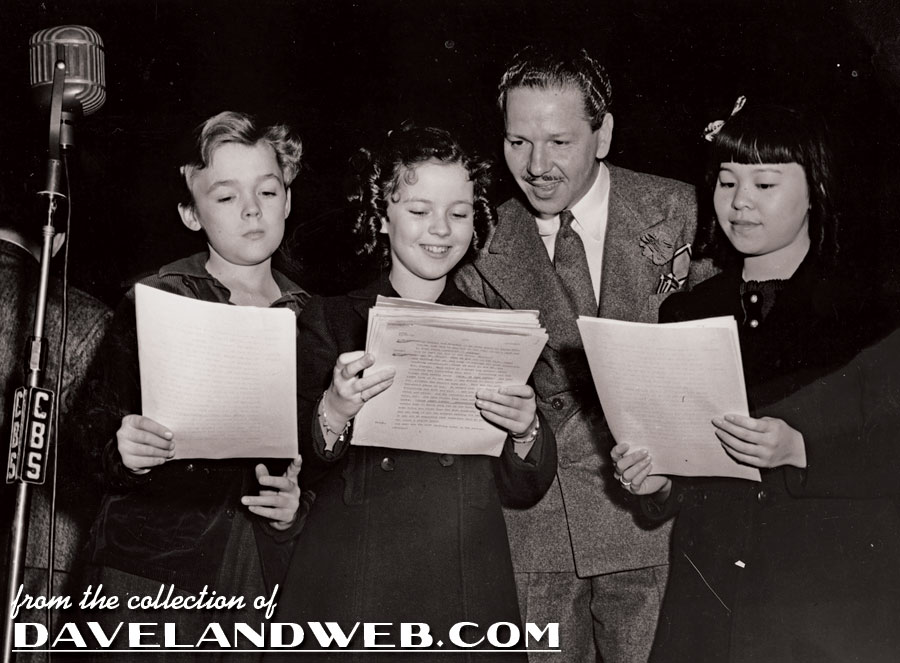
For the Screen Guild Theatre radio broadcast of “The Blue Bird,” which aired December 24, 1939, Russell’s role was replaced. Sorry, Johnny!


Back to the Hollywood Reporter:

Countryman came on active duty in the U.S. Foreign Service in February 1962 and reported to the diplomatic mission in Istanbul about a year later. He would have postings in Saudi Arabia, Libya and Gabon before serving from 1976-78 as deputy director and acting director of Arabian Peninsula Affairs at the U.S. State Department, when he dealt with the Iran hostage crisis. In the mid-1970s, he and Temple reconnected when he was stationed in Gabon and she was the U.S. ambassador to Ghana.
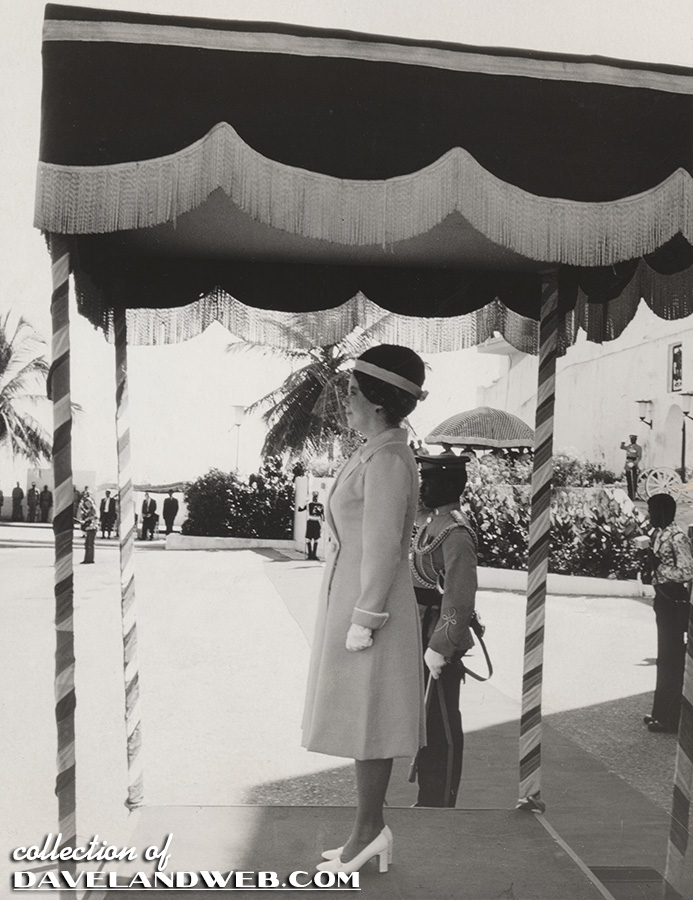


Shirley would later comment proudly about how she continued to “upstage” Russell, even into adulthood: 

Our issue of precedence was not in doubt then nor thirty-five years later in West Africa. By then I was a ranking U.S. ambassador, while Russell was a deputy chief of mission in a nearby national, still my junior by one step.

See more “The Blue Bird” photos at my main website.

Tuesday, November 05, 2024

Temple Tuesday: Shirley Serves!


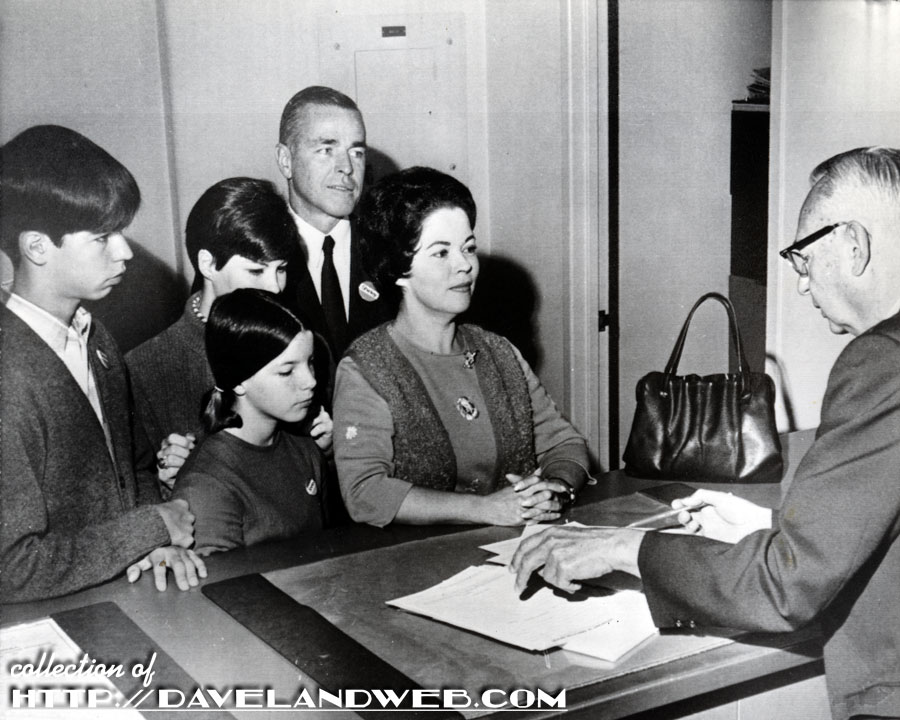
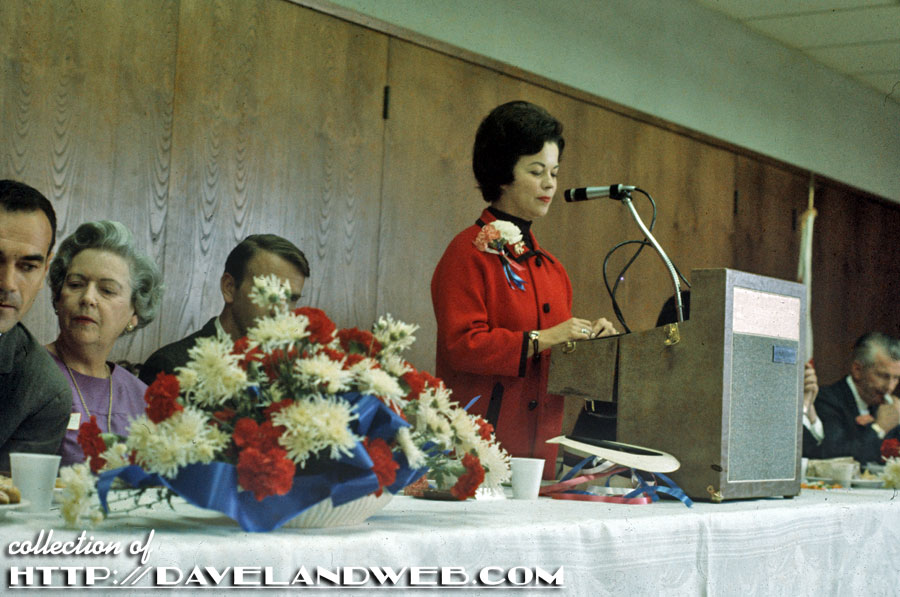
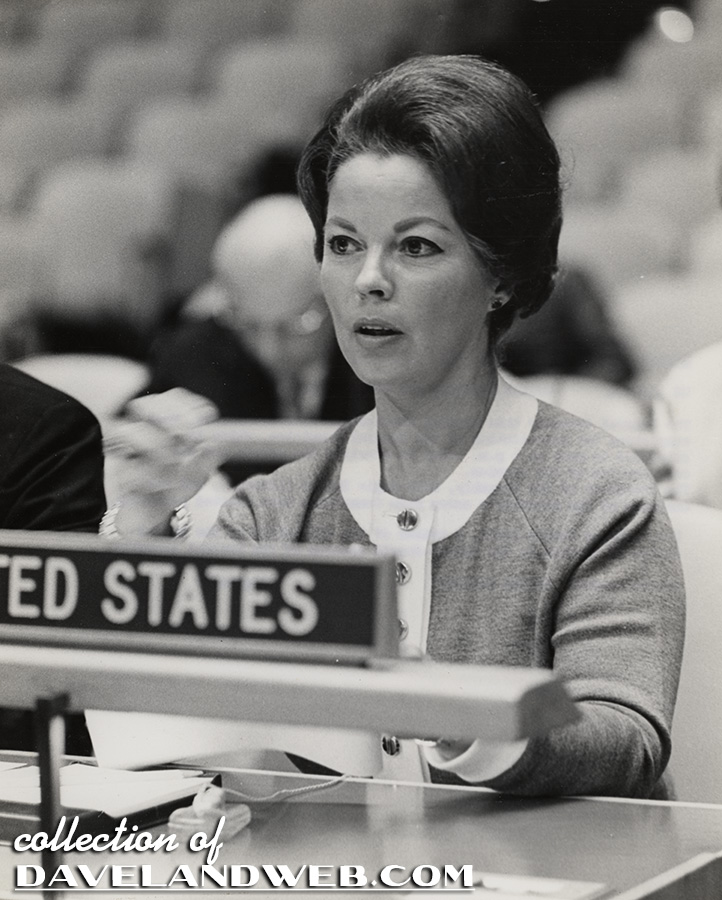
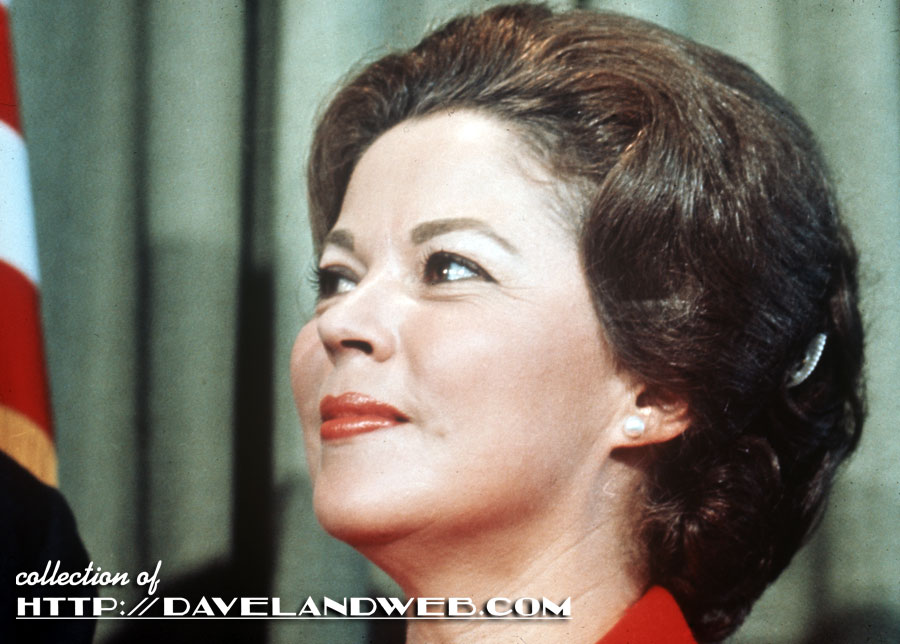
While the country is busy voting and expressing that wonderful opportunity (I hope!), I thought it appropriate to make today’s post about how Shirley Temple Black served her country in a multitude of capacities. Today, when the name “Shirley Temple” is uttered, it often brings up the limited vision of a curly haired child star and/or a sugary soft drink with a splash of grenadine. If that’s all you know about Shirley, that’s barely a fraction of the whole picture. She was a devoted wife, mother, and public servant. Shirley liked reminding those around her that she spent more years in her second career as a diplomat than she did in show business. Here’s a look at her resume of public service: 

In 1967, Shirley got her political feet wet when she ran unsuccessfully in a special election in California's 11th congressional district. Running as a conservative Republican, she came in second in the primary with 22.44% of the vote behind Republican law school professor Pete McCloskey, who placed first with 34.37%.  In the general election, Shirley received 3.53% of the votes as an independent write-in. At this point, she was not taken very seriously because of her child star days and a lack of known experience in government.


In an interesting article on slate.com, Shirley recalls the credit going to Henry Kissinger:

Black said she got her start as a diplomat after an unsuccessful run for Congress in 1967 after Henry Kissinger heard her discussing Namibia at a party and was “surprised that I even knew the word.” Richard Nixon appointed her to the U.S. delegation to the United Nations in 1969, where she focused on refugees and environmental issues.


According to the New York Times, “When she was appointed ambassador to Ghana in 1974, some career diplomats were outraged, but State Department officials later conceded that her performance was outstanding.” “I have no trouble being taken seriously as a woman and a diplomat here,” Black said after arriving in Ghana. “My only problems have been with Americans who, in the beginning, refused to believe I had grown up since my movies.”


After a stint as the White House chief of protocol for Gerald Ford and running a training program for ambassadors, George H.W. Bush appointed her as ambassador to Czechoslovakia in 1989. As the Times wrote at the time, “If Prague were Rome or Paris, it would be easy to see George Bush’s decision to ask her to be Ambassador to Czechoslovakia as simply a political reward for long, loyal service to the conservative Republican cause.” But Prague in 1989, with signs already in place that the communist system was collapsing and the Velvet Revolution just weeks away, wasn’t exactly a vacation posting. Black seemed to have an unlikely ability to be present for key moments in Czech history. She had been in the country in 1968 for a multiple sclerosis conference as Soviet tanks rolled in to crush the Prague Spring. She was ambassador throughout the fall of the communist government, and ended her tenure just as the country was splitting into the Czech Republic and Slovakia in 1992. By all accounts, she acquitted herself well in the role, charming final Communist leader Gustáv Husák,…but also maintained contacts with leading dissidents including Václav Havel, whom she accompanied on his first trip to the United States in 1990. (According to journalist Jack Anderson, she insisted that the license plate on her car feature her initials, just to annoy the Czech government. “STB” was the acronym for the Czech secret police.) According to Black, after the revolution, her work shifted more to economic matters, though she did speak out against proposed laws barring ex-communists from government positions, comparing them to the Hollywood blacklist of the 1950s. Black may not have done anything exceedingly memorable or heroic during her tenure, but by all accounts she represented U.S. interests effectively during an extremely sensitive geopolitical moment, despite being a party loyalist and former movie star rather than an area expert or career foreign service officer. The current backlash against political appointees and fundraisers is understandable—prospective ambassadors should at the very least know the parties in power of the countries where they’re headed in order to avoid public humiliation—but Black’s experience is a reminder that most of the time, even in the tensest moments, political acumen and social skills are more important.


P.S. It doesn’t really fit into this post, but one of my favorite stories of Black’s tenure in Czechoslovakia is the time in 1990 that she just happened to be at the Prague airport at the same time that Frank Zappa—Havel’s favorite rock star and an icon of freedom for the Czech opposition—was arriving for his first visit to the country, met by a crowd of adoring fans. A TV crew there to meet Zappa stopped to ask the ambassador for her opinion on the arriving dignitary. In his book, A Tale of Two Utopias, writer Paul Berman recounts what happened next: From an American point of view, that was a bizarre, at any rate a foreign, moment in the Eastern Bloc Revolution. No right-minded American would dream of asking Shirley Temple about Frank Zappa. Americans know that the United States is a divided country, at war with itself since the mid-1960s or earlier, splintered into culture and counterculture, right and left. Or who can say what the divisions are, except that they persist, like a guerilla war that has festered in the jungle unto the second or third generation? The charming Temple, beloved for “The Good Ship Lollipop” and other entertainments, is not from the same America as the pirate-bearded performer of those classics from 1967 and ’68, “Lumpy Gravy” and “We’re Only in It for the Money.” Not to mention “Alien Orifice” and “Dicky’s Such an Asshole!” No way on earth was Shirley, the sweetheart of the GOP, going to have anything to say about Frank, the Mother of Invention. The TV crew, however, did not consist of right-minded Americans.…They seemed to think that Ambassador Black was going to say, “We in the United States are proud of our contributions to music and blah blah blah… On the occasion of the arrival of such a distinguished…, allow me to express…”As was endlessly recounted to me by every Czech I met in those revolutionary, frightening weeks, Mrs. Black looked horrified, even humiliated. Heads turned away from the camera. Televised mortification! Mr. Zappa’s music loomed like a distant sun that had never once cast a beam on Mrs. Black’s lonely shore. Face reemerged from hands. The ambassador from the United States volunteered that she did know something about Mr. Zappa’s daughter, Moon Unit. Czechoslovakia was aghast. People had no way to account for the United States ambassador’s boorish airport behavior.… Can’t win ‘em all, I guess. 

In a special to the New York Times from September 11, 1989, Craig R. Whitney wrote about Shirley becoming the American Ambassador to Czechoslovakia:

As she says herself, her movie career lasted 19 years, a shorter period than her career in public service, which has now lasted 20. In 1987, George P. Shultz, President Reagan's Secretary of State, made her the first honorary United States Foreign Service officer in the State Department's history. If Prague were Rome or Paris, it would be easy to see George Bush's decision to ask her to be Ambassador to Czechoslovakia as simply a political reward for long, loyal service to the conservative Republican cause. But Prague is a difficult post that has usually been held by career diplomats with a background in Eastern European affairs. Asked what her interest in Czechoslovakia was, Mrs. Black, now 61 years old, said she had been in Prague at the crucial moment - Aug. 21, 1968, when Soviet and Warsaw Pact tanks rolled in and brought to a premature end Alexander Dubcek's effort to remodel the Communist system. She was there as a representative of the International Federation of Multiple Sclerosis Societies. A Meeting With Husak Gustav Husak, the man who replaced Mr. Dubcek, is almost certainly not going to be the one to try to remodel Communism again, but he is still Czechoslovakia's President. It was to Mr. Husak that Ambassador Black presented her credentials on Aug. 23. ''I mentioned that I had been here in 1968,'' she said, declining on diplomatic grounds to report what his reaction had been. When she spoke the formal diplomatic phrases of the accreditation ceremony in Czech, she said, she asked Mr. Husak if she had wounded his ears, and he answered, ''Not very much.'' He had seen her in her old films, Mrs. Black said, and, using the Czech language diminutive, said that his late wife and he had both enjoyed ''Shirleyka.'' The still-proud star of ''Little Miss Marker,'' ''Heidi'' and ''Stowaway'' is aware of the uses, personal and diplomatic, of each one of them. ''Shirley Temple opens doors for Shirley Temple Black,'' she said in an interview in the embassy. On how she got this job, she said, ''I have always told anyone who would listen that I was available for more public service.'' ''President Bush did not know I had been here,'' she said, recalling his telephone call to her in Seattle on Feb. 28 to ask her to take the job. ''I said yes so loudly and quickly that Charlie asked me what it was I had agreed to do,'' she said, referring to her husband of 39 years, a California businessman. ''It means a great deal to me.'' Delegate to United Nations Mrs. Black's diplomatic career began in 1969 when President Richard M. Nixon made her a United States delegate to the United Nations. President Gerald R. Ford made her Ambassador to Ghana in 1974, and later the first woman to hold the position of White House Chief of Protocol. That ended when a Democrat, Jimmy Carter, took over the Presidency in 1977. ''I remember telling President Carter on his first night, when I was escorting people around, that I was interested in continuing public service and that politics didn't matter - but it does, doesn't it?'' she said with a laugh. Mrs. Black brings many surprisingly apposite qualities to the new job. She has, as she described in her 1988 autobiography ''Child Star,'' published by McGraw-Hill, an actor's almost photographic memory, the instinctive feel for the ways of professional diplomats, and the skills of personal diplomacy that put her young Marine guards, who may have heard about her movie career from their grandmothers, if at all, as much at ease as Mr. Husak is with her. What she says she wants to do now is improve United States relations with Czechoslovakia and urge the changes here that are necessary to bring about that improvement - an end to restrictions of human rights, the freedom of speech and assembly. One-Way Ticket to Prague She said she recognized that it would not be easy. Mr. Husak and his colleagues are in power because they clamped down on those rights at Russian insistence in 1968, long before Mikhail S. Gorbachov had allowed the winds of change to blow from Moscow and through Eastern Europe. ''I was in Vienna in August 1968 for a meeting of the International Federation of Multiple Sclerosis Societies, of which I was co-founder, and we wanted a 20th country to join,'' she said. ''They asked for a volunteer to go to Prague to get Czechoslovakia to do it, and my hand always goes up first.'' ''I got a visa and bought a one-way ticket to Prague on the train, and got here on 17 August,'' she went on, remembering how a delegation of journalists and officials escorted her to the Alcron Hotel on Stepanska Street. Things went well, and by Aug. 20 the Czechs were about to join. ''I was having a meeting with the rector of Charles University, and at 4 P.M. a secretary came in and told me, 'Your meeting with Mr. Dubcek in 15 minutes is canceled - he is all tied up.' Those were the exact words.'' Unaware of what was happening, Mrs. Black said, she returned to the hotel, where she gave a news conference that lasted, as those things do in this part of the world, for five hours. By the time she finished, it was too late for dinner and she went to bed. 'We Have Been Invaded' ''At 11 I got a strange phone call from a gentleman speaking mostly Czech,'' she said. ''I understood 'airport' and 'you must come down to lobby,' and of course I didn't. At 10 minutes to midnight, I began hearing shelling, shooting, and I think a bomb, but I thought it was a drill. ''It wasn't until the next day that my guide came back and told me: 'You will not see Mr. Dubcek, and you will not leave from the airport today. We have been invaded.' There were tears in her eyes.'' ''I was hungry, and on the way up to the roof of the hotel to try to see what was happening, I took some of the leftover hard rolls from the breakfast trays people had put outside their rooms,'' she said. ''I looked down and saw tanks all around the hotel, and their guns were pointing up. ''That night, after curfew, in the lobby looking out at the street, I saw a Czech middle-aged woman shaking her fist at the soldiers. She was shot in the stomach and went down. That was a bad sight.'' ''Nothing crushes freedom as substantially as a tank,'' she observed. She was here for the subdued anniversary observances, marked by quiet demonstrations by a few thousand people and the police arrests of 350 of them. ''I wasn't officially accredited yet, so I took a two-and-a-half-hour walk near the park near the residence and told my staff where I could be contacted,'' she said.

As you can see, Shirley was much more than an inspiration for a child’s soft drink!

See more Shirley Temple Black photos at my main website.