Tuesday, September 20, 2022

Temple Tuesday: Back to the Commissary


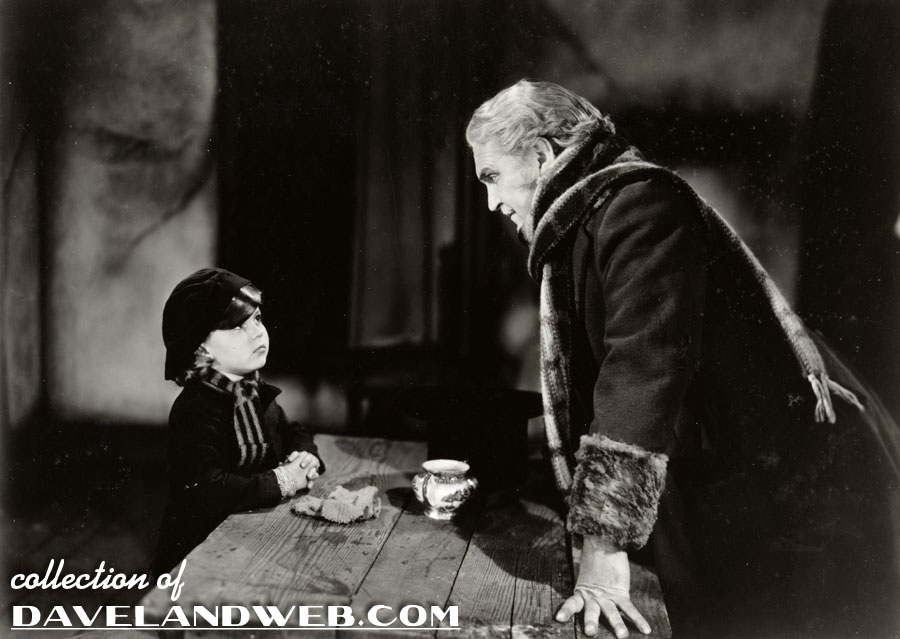
In November 1948, Shirley Temple returned to 20th Century-Fox to make the movie, “Mr. Belvedere Goes to College.” Unsatisfied with the films that Darryl Zanuck was picking for their daughter, Shirley’s parents bought out the rest of her Fox contract in 1940 and left the studio. A “Welcome Back” party was held at the Fox Commissary for Shirley where many of her former coworkers popped up to celebrate. In the first photo on the far left is Frances Klamt, Shirley’s teacher. You can see her much better in this next shot, which also features Shirley’s stand-in, Mary Lou Isleib:


How Shirley and Frances looked in 1938 as they left her Fox Bungalow to commence filming on “Rebecca of Sunnybrook Farm.” Where do the years go?


In ten years, Shirley’s career had seen a few changes. “Belvedere” was all about Clifton Webb’s character, Lynn Belvedere, and Shirley was the supporting character this time around. In this photo from the party, Clifton fiddles while director Elliott Nugent looks somewhat bored smoking his cigarette.


Note the mural behind Nugent:


Still there!


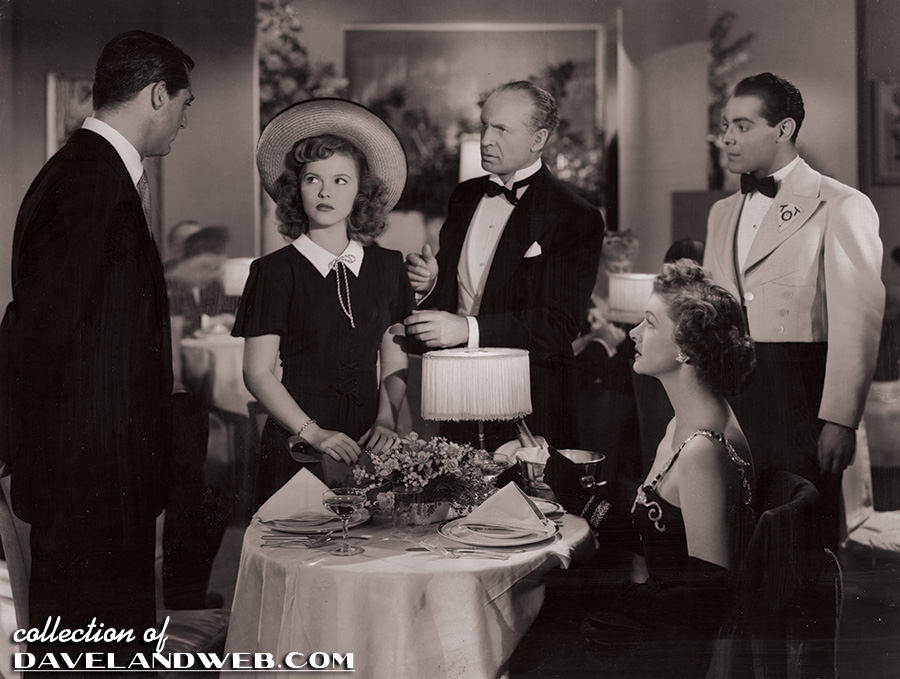
This publicity still for “Belvedere” sums up the situation: Clifton in the lead, Shirley in the background.


See more Shirley Temple photos at my main website.

Monday, September 19, 2022

February 1970 at Disneyland, Pt. 1


Today’s tour of the past begins in Disneyland’s Town Square, circa February 1970. These lucky tots got to see Mickey himself as they entered the Park. Let’s zoom in for a look at the ticket book:


It appears that these kids were EXTRA lucky, as they were part of the Magic Kingdom Club, which ran from 1957—2000. It was an early Annual Passport program to the park that offered memberships free of charge both for companies and their employees, encouraging families to visit the parks by giving them discounts. Meanwhile, get a load of the topper on Mickey’s cane!


In the next shot of the batch, the kids have multiplied. The little girl on the right has a matching purse; it looks big enough to buy out Main Street, U.S.A.


Another closeup of Mickey’s cane:


Next up: it’s a small world!


By this time, the Chicken of the Sea Pirate Ship Restaurant had morphed into Captain Hook’s. Bye-bye outside corporate sponsorship!


For the second shot, Mom is all smiles.


How about a closeup of the vintage Disneyland shopping bag?


And poor Dad; his middle finger is in a splint.


Last one for this batch today drops the families off at the Castle.


Come back for more gems from February 1970!

See more vintage and (semi) contemporary Disneyland photos at my main website.

Friday, September 16, 2022

Transformation Friday!


In the 1961 Disney classic, “The Parent Trap,” Maureen O’Hara begins the movie as a dowdy (well, as dowdy as Maureen O’Hara can be, which is still better than the best for the rest of the competition!) Boston divorcĂ©e who must reunite her twin daughters at the California home of her ex-husband (Brian Keith). He first spots her after she has taken a shower and is wearing his robe:


Having been encouraged by her wily father (Charles Ruggles) to get some new clothes and a less matronly hairdo, she stops in New York City on the way to California for a makeover. After seeing her ex in a robe, she goes upstairs to get cleaned up and makes a grand entrance down the staircase wearing this outfit:


Even in a basic wardrobe test shot, Maureen wows ’em! Note the tape mark on the floor so that the actress knows where to pose?


And please note the perfectly turned heel!


In the final movie, Maureen looks even more ravishing in color, as you can see from this screenshot:


It’s no wonder she got her ex back!


See more “Parent Trap” photos at my main website.

Wednesday, September 14, 2022

1960s Upjohn Pharmacy Interior


The Upjohn Pharmacy was a staple along Disneyland’s Main Street until 1970. The exhibits inside touted the pharmaceutical manufacturing firm that had been founded in 1886 in Hastings, Michigan, by Dr. William E. Upjohn, an 1875 graduate of the University of Michigan medical school. The company was originally formed to make friable pills, which were designed to be easily digested. These could be “reduced to a powder under the thumb,” which was their big selling point. Note the slogan on the clock detail below:


These “friable pills” dissolved in the stomach, releasing the active ingredient into the bloodstream and letting patients feel their effects. The patent was granted in February 1885, which helped the business to grow and made possible the founding of the The Upjohn Pill and Granule Company in 1886 in Kalamazoo. What else did you get to see at the Main Street Upjohn Pharmacy? Leeches. I think I’ll pass on that one.


For this previously posted shot, the accompanying publicity caption was this:

A slightly-scary exhibit makes Cathy Smith's eyes pop as she looks at a jar of leeches, the flat worms once considered very important in medicine. As part of the treatment of a variety of ailments, the creatures were used to draw blood from patients.


This previously posted 1960 image gives another vantage point of the Pharmacy:


…and a better detail of the clock:


Upjohn went defunct in 1995, only to be briefly resurrected in 2015 by its then owner, Pfizer, who used the Upjohn name for the manufacturing of drugs with patents that had expired. The name disappeared again in 2020 when Pfizer merged Upjohn with Mylan and came up with the name Viatris.

See more Disneyland Upjohn Pharmacy photos at my main website.

Tuesday, September 13, 2022

Temple Tuesday: Greek War Relief


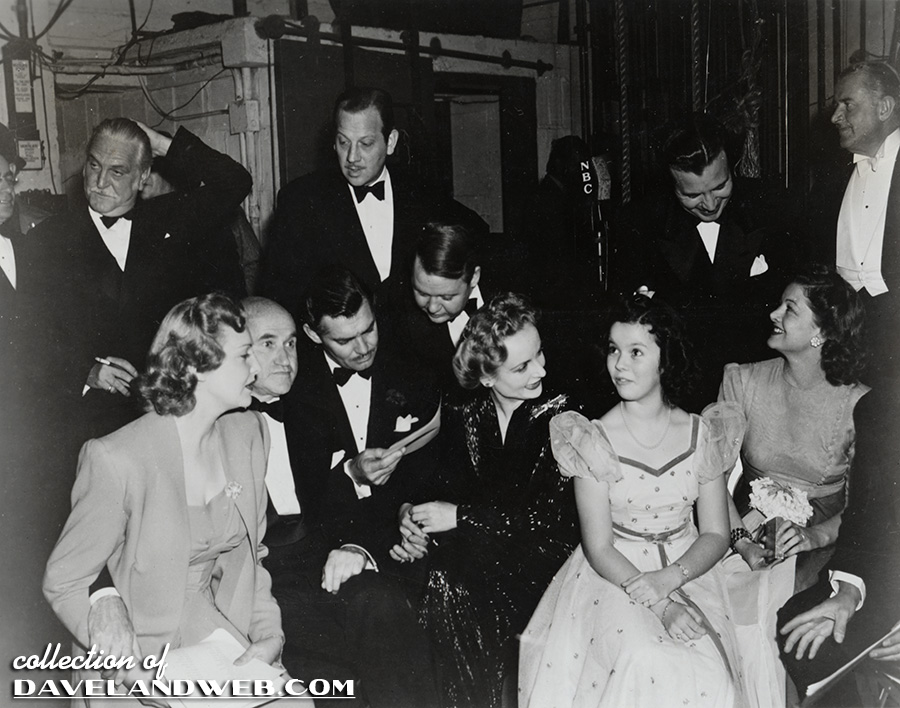
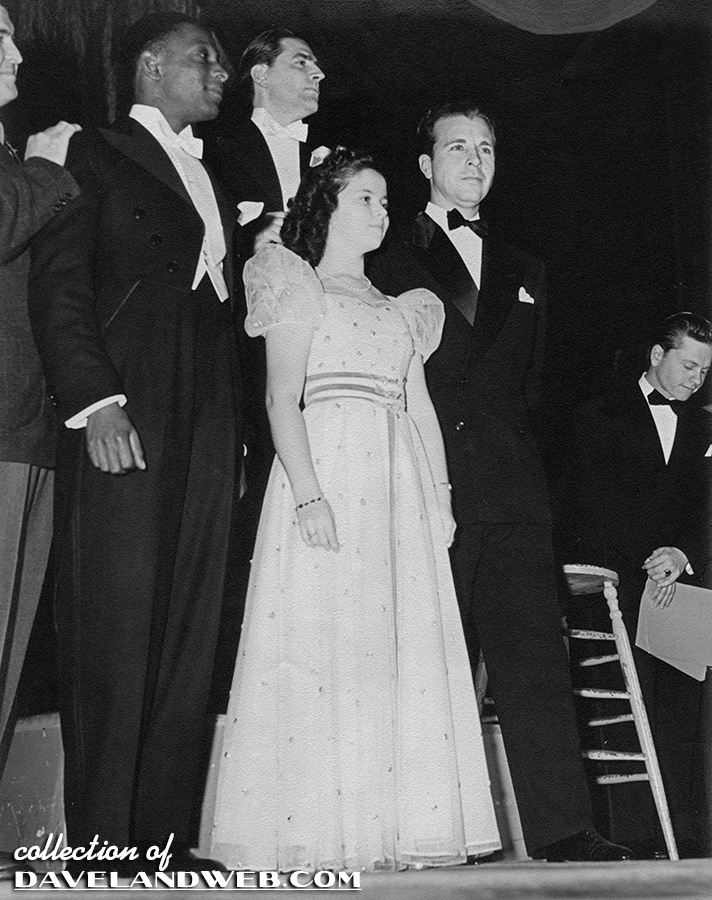
Look at this star-studded photo from 1941! In the back row: Frank Morgan, Melvyn Douglas, Dick Powell, and Reginald Owen. Front row: Madeleine Carroll, Sam Goldwyn, Clark Gable, Charles Laughton, Carole Lombard, Shirley, and Myrna Loy. What was the occasion that brought them all together? From pappaspost.com:

As a result of the Nazi occupation and subsequent naval blockade, famine and despair would overcome Greece both in Athens and throughout the countryside. In response to the turmoil in Greece, Americans began countrywide efforts to provide humanitarian relief for the Greek people. Railroad magnate Harold Vanderbilt and film industry executive Spyros Skouras launched an effort called the Greek War Relief Association no less than 10 days after the October 1940 Italian invasion of Greece to provide food and other forms of aid to Greece.… In Hollywood, countless stars, celebrities, studio heads and industry heavyweights got behind the Greek War Relief movement, making it the single largest humanitarian fundraising campaign in American entertainment industry history, including a single organized fundraising campaign by the Motion Picture Association of America involving 8,000 cinemas. Films like Walt Disney’s “Fantasia” and “Gone With the Wind” held gala premieres and opening nights in cities across the nation with ticket proceeds benefiting the Greek War Relief campaign.… At Grauman’s Chinese Theater in Los Angeles on February 8, 1941…a massive radio telethon, “America Calling,” was broadcast on CBS, NBC, numerous independent stations, and throughout Europe. Jack Benny and Bob Hope were the “co-masters of ceremonies” of the variety show that featured some the biggest names of the time including Shirley Temple,  Groucho Marx, and Clark Gable. The Greek War Relief Association raised $30 million — approximately $500 million today — to provide massive shipments of grain, equipment, livestock and other forms of material support for the Greek people.


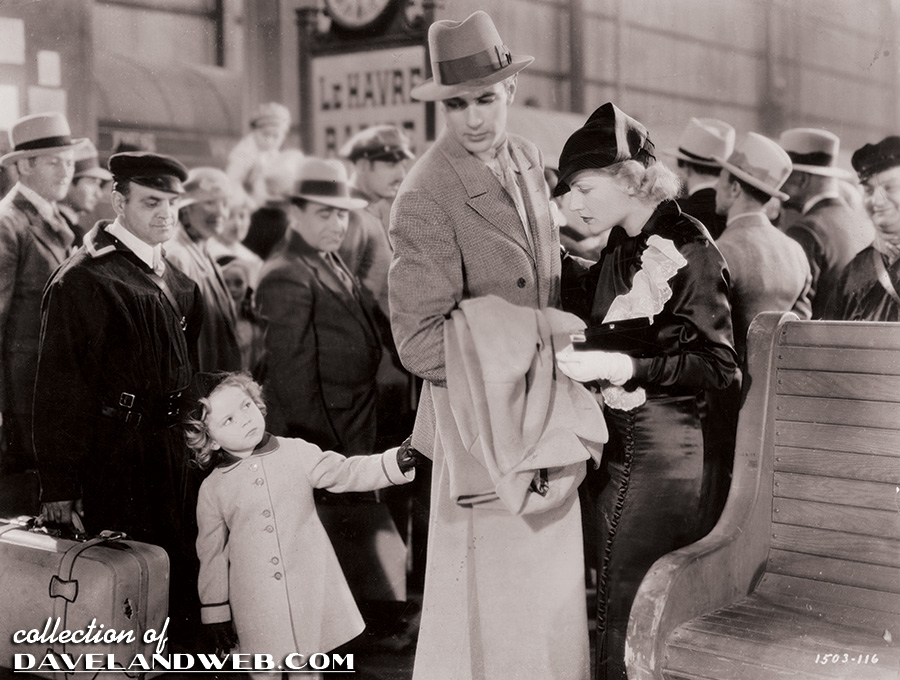
Shirley worked with many of the people who were on the broadcast. Carole Lombard (and Gary Cooper) in “Now and Forever” (1934):


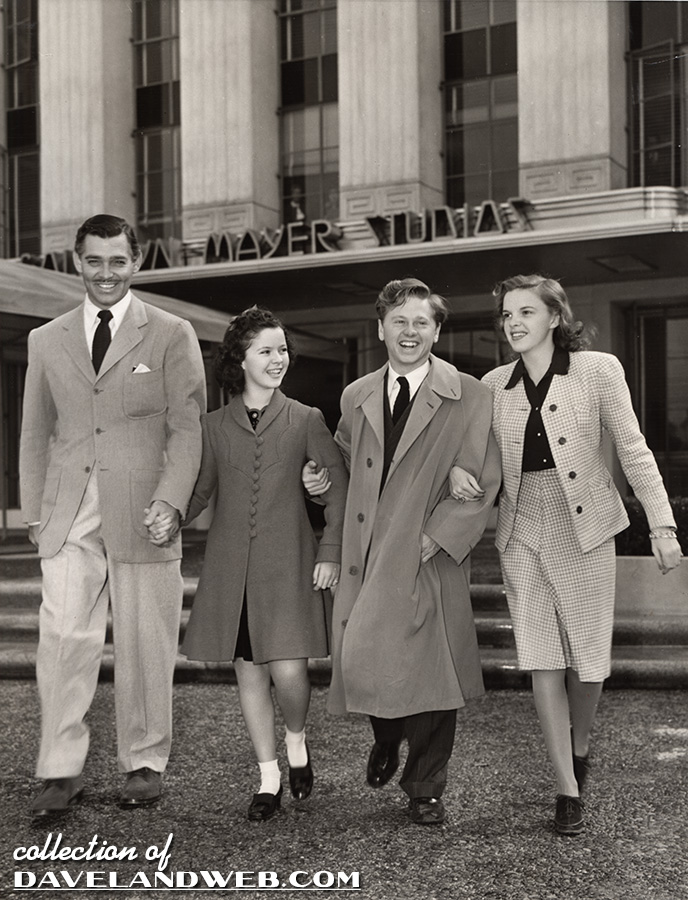
Publicity photos with Clark Gable (and Mickey Rooney and Judy Garland) heralded Shirley signing on with MGM, also in 1941:


Shirley competed with Frank Morgan for scene-stealer of the year in “Dimples” (1936):


Myrna Loy worked with Shirley six years later in “The Bachelor and the Bobby-Soxer” (1947):


Get a huge dose of 1940’s patriotism and hear the original broadcast on thisdaybenny. Shirley appears at 30:59, introduced as “the new and lovely Shirley Temple.” She participates in some comic banter with Jack Benny and Bob Hope. Not surprisingly, Shirley holds her own with the two hams, and then goes on to give a short plea to the audience to donate to the fund.

See more Shirley Temple photos at my main website.

Thursday, September 08, 2022

Gram at the Chateau Marmont


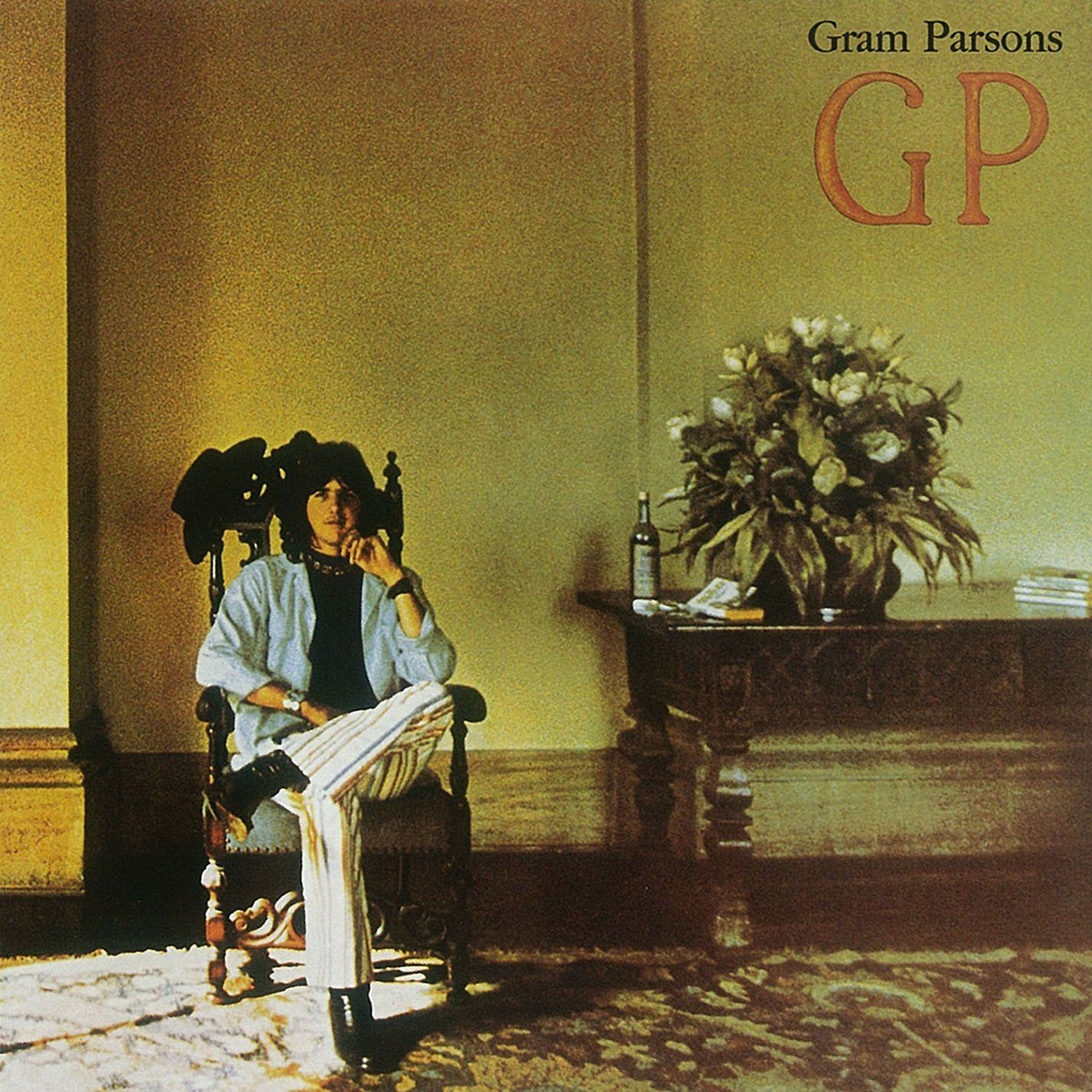
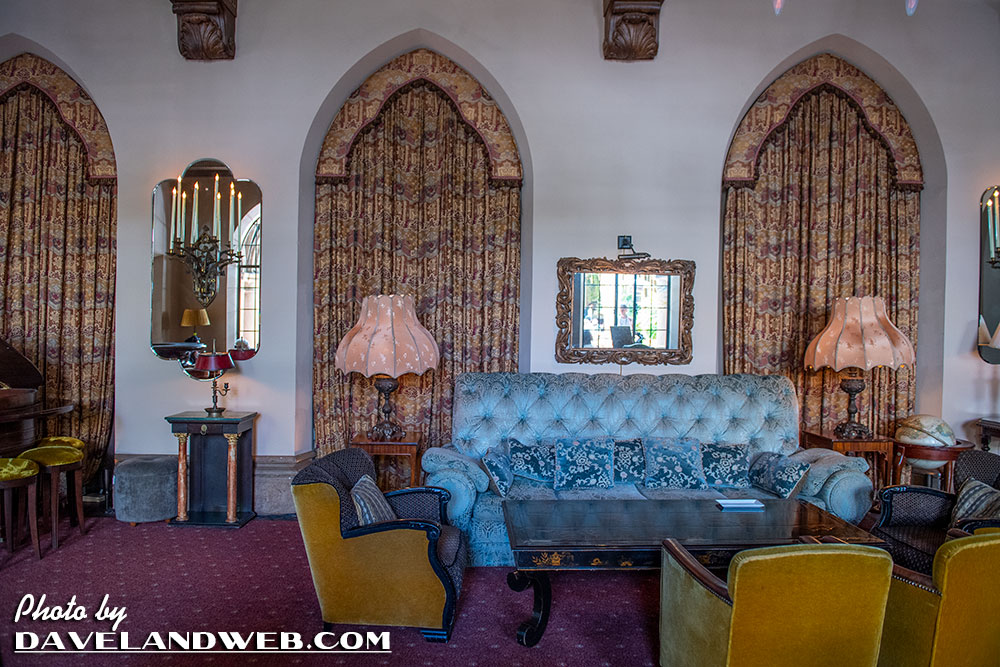
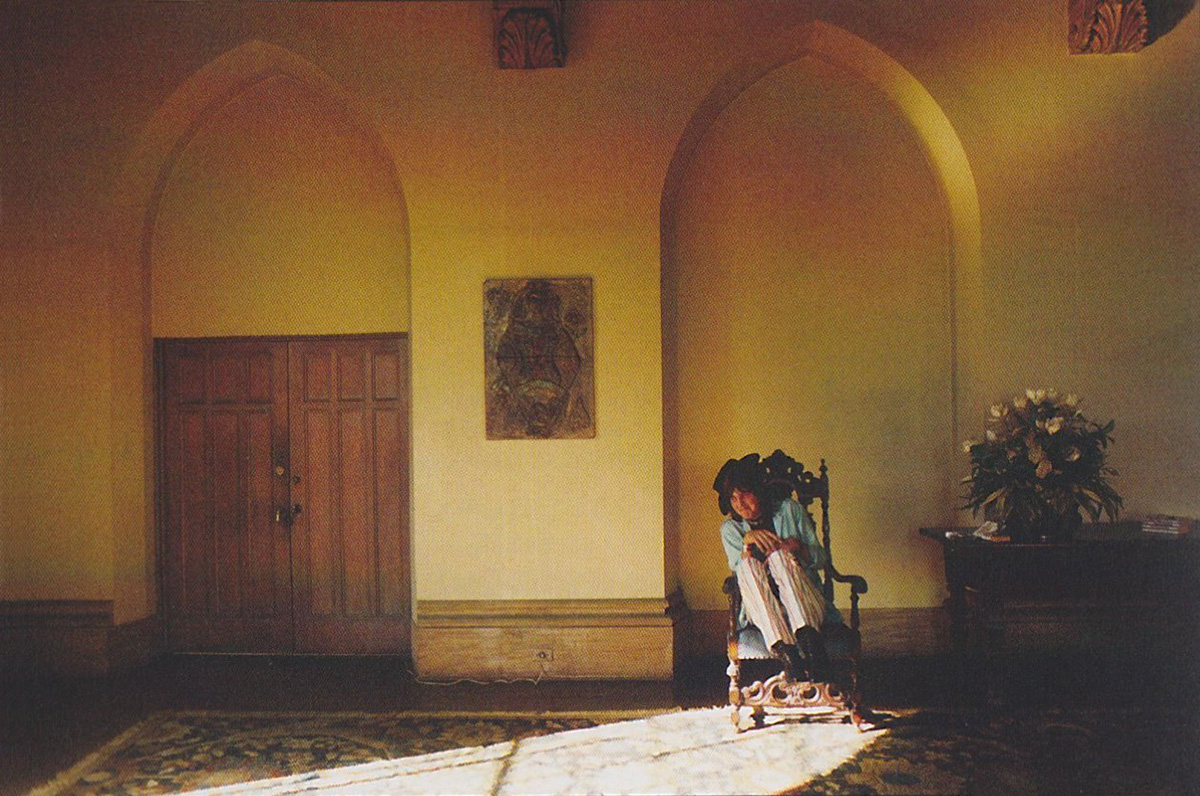
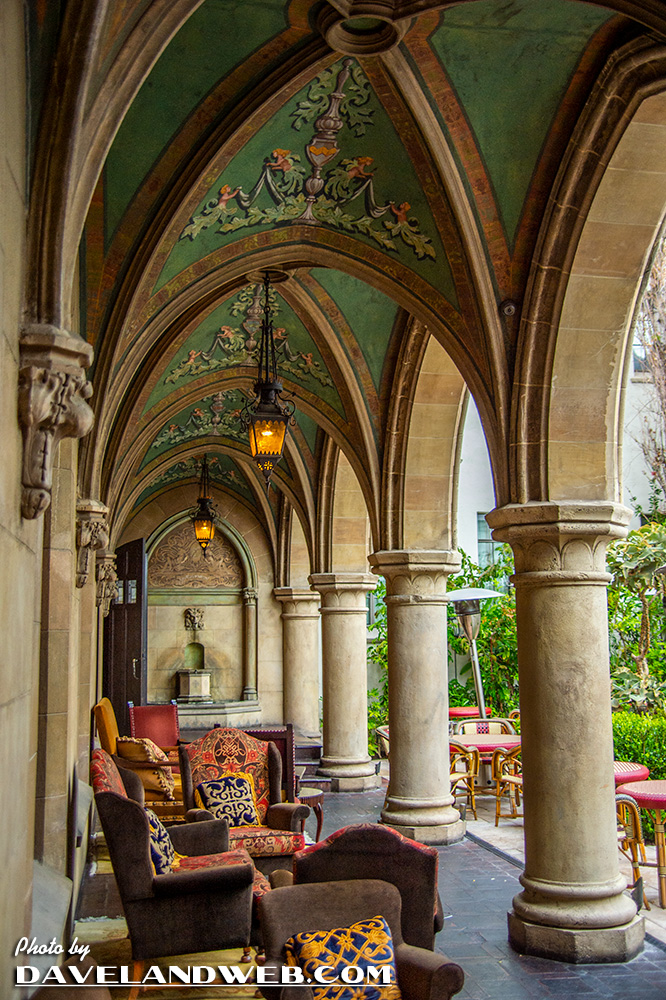
For the cover of his 1973 debut album titled GP, Gram Parsons posed in the foyer of the Chateau Marmont for photographer Barry Feinstein. At the time, he was living there with his wife in Room 47, which is one of the few rooms I haven’t stayed in and also known as the room where writer/critic/satirist Dorothy Parker hit her head on the bathtub in 1948. Parker was quoted as saying at the Chateau front desk when picking up her mail, “Life would be a bed of roses if it weren’t filled with pricks!” But I digress…In the contemporary shot below, you can see that the archways leading to nowhere have been covered with drapes. Wonder where that table ended up?


Another photo from the session shows that one of those archways actually had a doorway leading outside; next visit, I need to pull back the drapes!


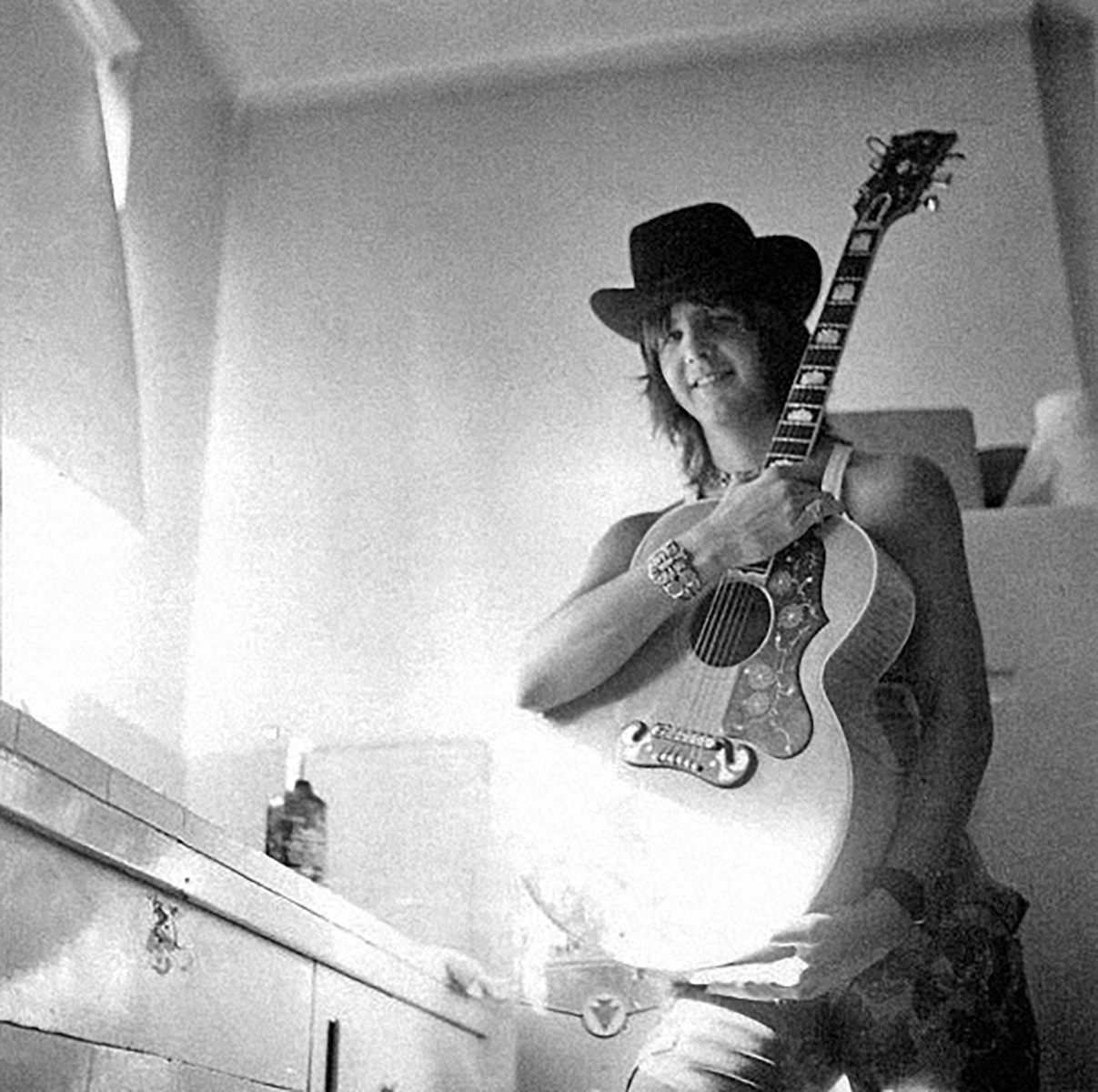
The image below was also supposedly from his room at the Chateau; by the tile on the counter, I am guessing either in the kitchen or the bathroom. I’ll let you know once I’ve seen it!


In the 1987 book Life at the Marmont (still the Bible of Chateau history), Parsons is mentioned in a section about the hotel during the early seventies:

An advertising executive from New York cleaned up the mess when a large chunk of plaster fell from the ceiling in his suite during the night. Myrna Loy and Gram Parsons carried on as though nothing had happened, after lobby chairs collapsed under them.…It is easy to understand why the owners were hesitant to spruce up the place. Why bother when no one complained? With so much plastic and glitz along the Strip, they had every right to believe that part of the Marmont’s attraction was its slightly tarnished splendor. An incoming New Yorker compared the Marmont to a theatrical backdrop. “It’s the stars who are supposed to glitter,” she said, “not the sets.”

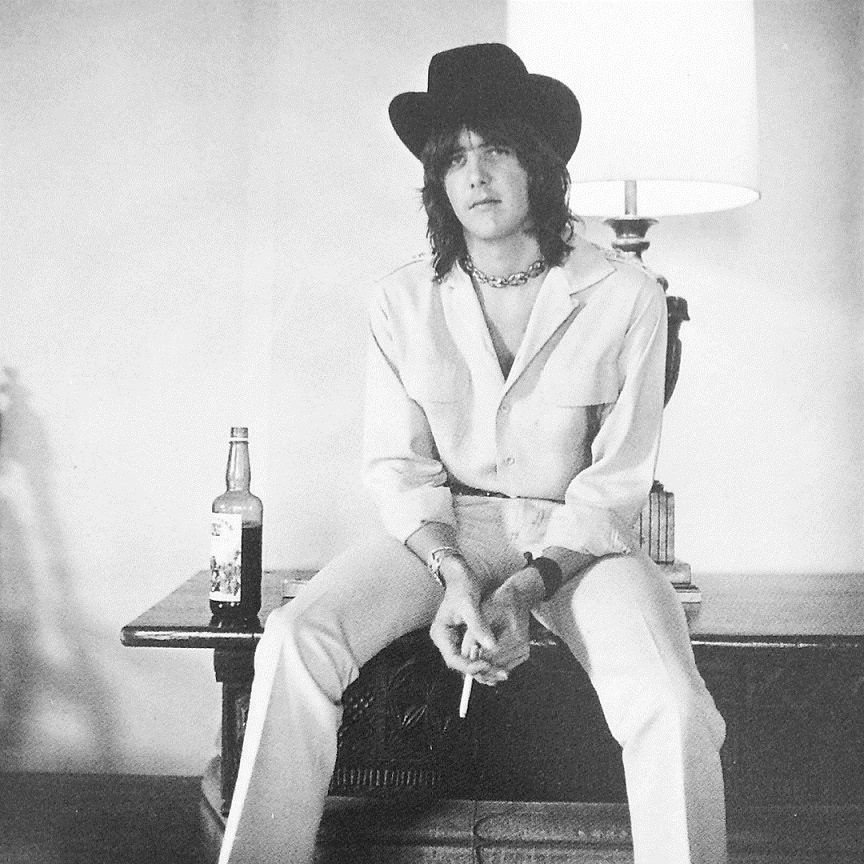
The bottle of booze in this Chateau shot (and on the album cover) is explained by this text from Wikipedia:


The sessions for GP ran from September through October 1972 and were produced by former Blind Faith bassist Ric Grech. Parsons was beside himself with excitement at being surrounded by such stellar musicians but also severely intimidated by their presence; in a February 2013 cover story for Uncut, David Cavanagh recalls the singer’s reticence:

“Rehearsals for GP descended into drug binges. The songs were coming together – ‘Still Feeling Blue’ (a Parsons original), ‘Kiss The Children’ (by Grech), ‘Streets of Baltimore’ (a 1966 composition by Tompall Glaser and Harlan Howard) – but Gram was falling apart at the seams. He was in the grip of alcoholism. He gorged on cocaine. He was bloated and sweaty; friends in Los Angeles estimated he'd put on three stone [42 pounds] since his [Flying] Burrito [Brothers] days, Singer and rhythm guitarist Barry Tashian remembers him being ‘nervously excited’ about the album, but strangely paralyzed by inaction.”

In the 2004 documentary “Gram Parsons: Fallen Angel,” Harris admits, “Gram was drinking a lot during that recording, and so there were times when he was together and times when he wasn't. I hadn't done that much recording in my life but I thought, ‘If this is the way people make records, I just don't get this.’” Realizing he could be blowing his big chance, Parsons cut back on his drinking and finished the sessions.


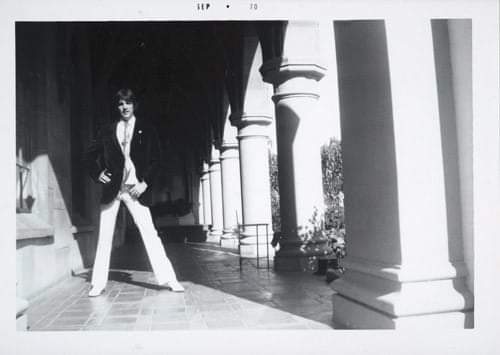
I found the September 1970 photo above on Facebook, where the poster purports it to be of Gram at the Chateau, but based on the comments it may not be. The location is definitely the Chateau, though:


The photo is from the Huntington Library’s recently acquired Eve Babitz collection. Edited from the Huntington website:

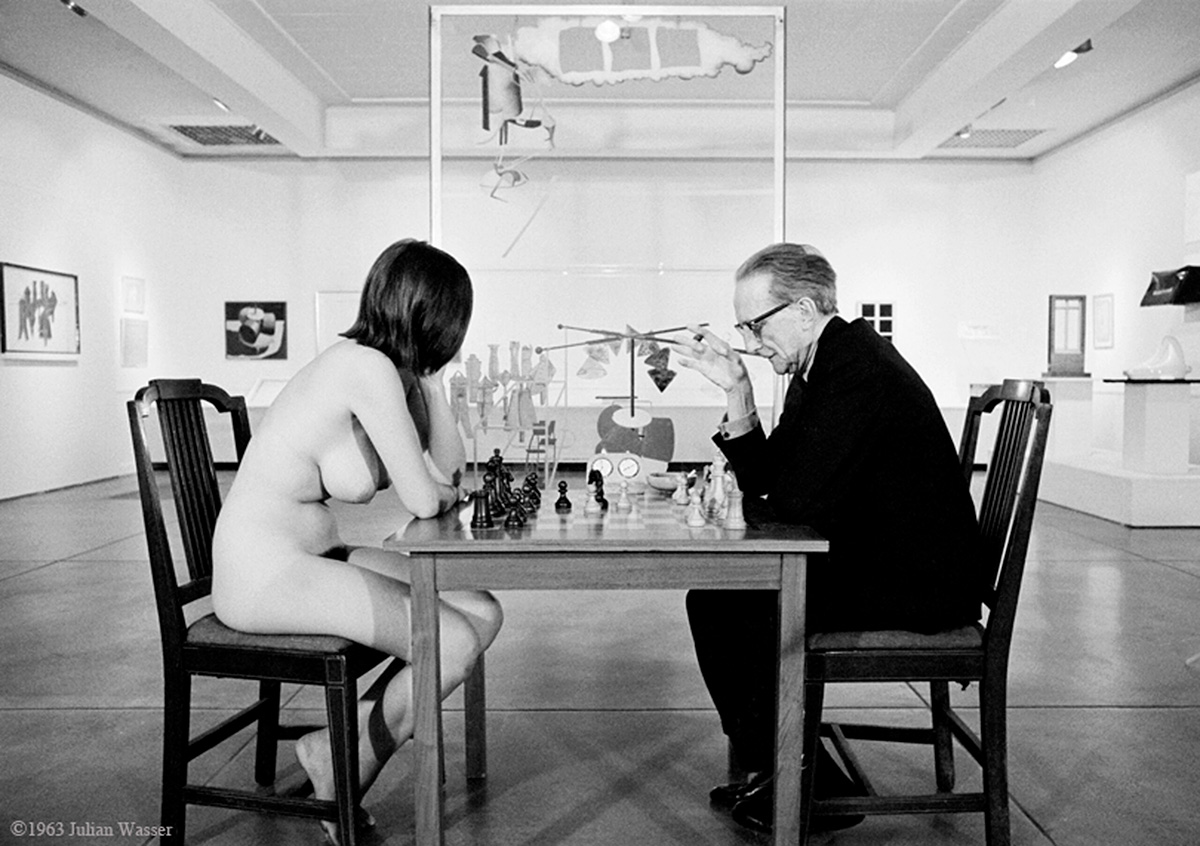
Eve Babitz was born in Los Angeles in 1943. Raised with her sister, Mirandi Babitz, in a world of painters, authors, and composers—her godfather was composer Igor Stravinsky—she attended Le Conte Junior High School and Hollywood High School. Babitz wrote, “In most high schools, you learn social things along with the rest of it. In mine, I learned irrevocably that beauty is power and the usual bastions of power are powerless when confronted by beauty.” Babitz was never shy about leveraging her own attractiveness, famously writing to Joseph Heller, author of Catch-22, “Dear Joseph Heller, I am a stacked 18-year-old blonde on Sunset Boulevard. I am also a writer.” Later that year, she was sitting for a now-iconic photo in which she plays chess in the nude with a fully dressed Marcel Duchamp.


Babitz’s young adulthood was the stuff of Hollywood fantasy: She partied with Jim Morrison, the Eagles, and other rock and rollers who passed through the Chateau Marmont; hobnobbed with the literati at Joan Didion’s house; interviewed Janis Joplin; and was invited to an endless stream of parties surrounded by the bohemian beau monde of her time. Not just a groupie, but an artist among artists, she first pursued collage, and many of her works appeared in magazines and on record albums. But Babitz wanted to be a writer, and after early encouragement from Heller and Didion, she published her first piece, “The Sheik,” in Rolling Stone magazine in 1972. Two years later, she published her first book, Eve’s Hollywood (1974), and followed it with Slow Days, Fast Company (1977), Sex and Rage (1979), L.A. Woman (1982), and Black Swans (1993). In addition to Rolling Stone, Babitz contributed articles to The Village Voice, Vogue, Cosmopolitan, and Esquire, bringing to light an “only in LA” world of rock star lovers and over-the-top parties from the epicenter of cool.

In 1997, Babitz was severely burned when she accidentally dropped a lit match onto her skirt. She soon stopped writing and disappeared from public life. Then, in 2014, Vanity Fair published Lili Anolik’s retrospective on Babitz, “All About Eve—and Then Some.” That article was followed by a stream of others, which—along with the reissuing of most of Babitz’s books—brought about an Eve Babitz renaissance of sorts. Babitz, who died on Dec. 17, 2021, from complications of Huntington’s disease, found a new generation of readers in the last decade of her life. The Los Angeles Times and the New York Times published laudatory obituaries, notable achievements for an author who felt snubbed by the New York literary establishment earlier in her career.

According to Mirandi Babitz, “When I told Eve that The Huntington was very interested in her archive, she said, ‘I would love to be with Blue Boy and Pinkie again, like when we were kids. It’s as classy as the Beverly Hills Hotel so I know I’ll be happy there.’”

The acquisition of the Eve Babitz archive is supported in part by a generous contribution from Steve Martin and Anne Stringfield.


And what happened to Gram? He sadly died of an overdose at the age of 26 on September 19, 1973. From a vintage October 1973 article from Rolling Stone magazine:

The pile of stone [at Joshua Tree] is known as Cap Rock because of the flat, ten-foot, oblong boulder that rests at a slightly cocky angle at the peak of the formation. At the base of its north side, Cap Rock’s light gray coloring is charred black, and visible in a patch of sand are bits and pieces of burnt wood the size of barbecue briquets. The debris is the remains of a coffin that contained the body of Gram Parsons, who died September 19th while vacationing at a Joshua Tree motel. The singer-songwriter-guitarist, a former member of the Byrds and Flying Burrito Brothers, was 26 years old. The San Bernardino County coroner’s office said Parsons apparently died of heart failure due to natural causes, but the exact nature would not be known until after a toxicology report was received.

Although described as a person who “lived hard” – he drank heavily at times; there was talk of heroin use – his death shocked friends and business associates. Even more startling was the series of events culminating in his cremation in the desert on the morning of September 21st. Parsons’ family had planned a New Orleans burial, but his coffin was stolen from Los Angeles International Airport. Friends claimed the cremation near Joshua Tree had been Parsons’ wish. The family – Parsons’ wife, mother and stepfather – went into seclusion.

Initial news reports made reference to a “ritual” at the cremation site, but Los Angeles Detective Sgt. John Hamilton said later the reports were “completely false.” Within a week police arrested Phil Kaufman, 38, Parsons’ road manager, and Michael Martin, 26, reported to have been a roadie with the Byrds during Parsons’ one year with the group. They were booked on suspicion of grand theft and released on $1000 bond. Two days after the cremation, and before the arrests, an anonymous source, in a telephone conversation arranged through a known associate of Parsons, told Rolling Stone: “It was done by people who really loved him . . . .

“They had this old hearse and they thought they’d wear suits and pretend to be hearse drivers, but that didn’t work, so they decided to be off-duty hearse drivers, and they made up this story about how they didn’t really want to go get this body when they had a girl all ready someplace to fuck them out of their minds; so they played that out to the guy –’Come on, we gotta get to this girl, we’re working overtime, let’s get out of here’ – like that, so they signed a name, ‘Jeremy Nobody,’ to the slip and took the body off.

“It was Gram’s request, just something he had told them not too long before he died –’If I go, I want to be in Joshua Tree and I want my ashes scattered here’ – that sort of thing.

“They resented the stepfather [Robert Parsons] who came in and arranged for burial in New Orleans and didn’t even invite the friends . . . .” Yet to be determined is just when, if at all, Parsons made his request. Was it an offhand remark, a moment of melancholy? And if so, why was the request undocumented, leaving friends open to prosecution?


Truth is definitely stranger than fiction. Stay tuned for a report from Room 47 some time in the future [note: that report can be found here: https://davelandblog.blogspot.com/2022/11/dorothy-gram-room-47.html]. Looks like I’ll need to check out the Joshua Tree Inn as well.

See more Chateau Marmont photos at my main website.

Monday, September 05, 2022

Happy Birthday, Raquel!


Today marks the 82nd birthday of actress Raquel Welch. The photos from today’s post show her in the camp classic, “Myra Breckinridge” (1970), which was VERY loosely based on the Gore Vidal book. Her costars included film critic Rex Reed (above)…


and Farrah Fawcett (below). The film is so bad it’s…well, still bad, but Raquel continued with her craft and became a very bankable and capable actress.


She’s also a marvelous raconteur. Her stories about Mae West (also in “Myra”) are much funnier than the film was.


See more movie and pop culture photos at my main website.

Tuesday, August 30, 2022

Temple Tuesday: Shirley, John, John, Allan, Lucy, and Sid


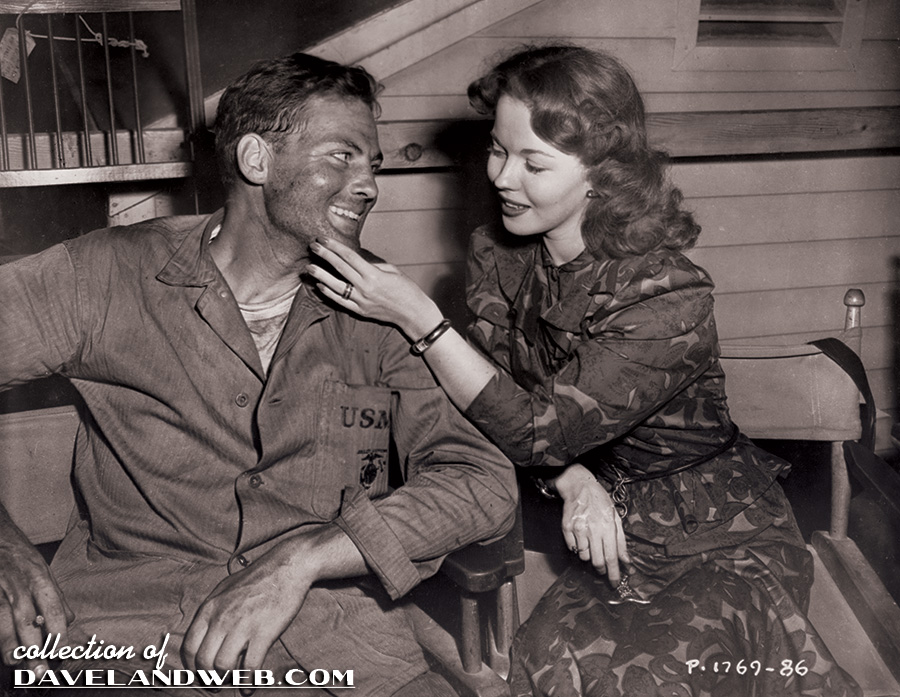
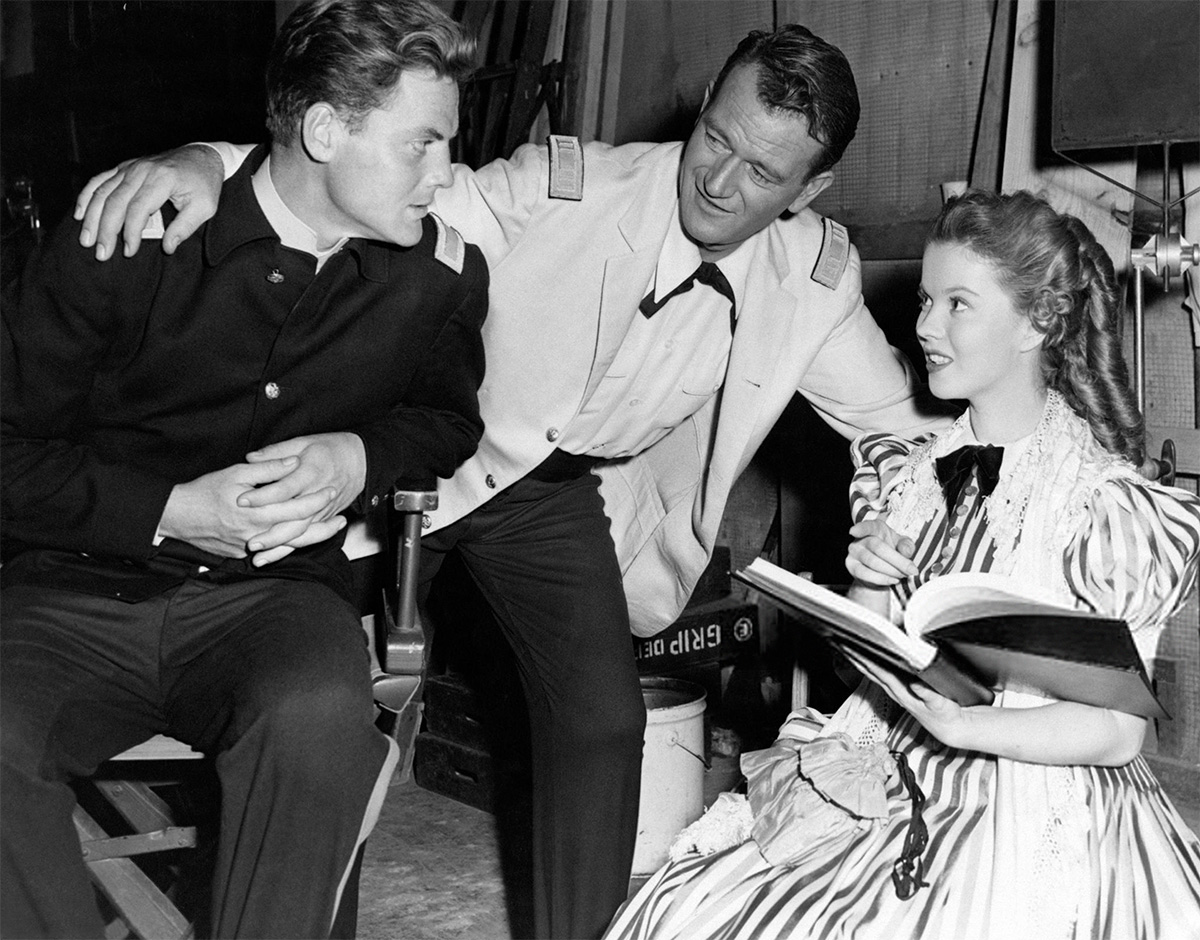
Shirley gently caresses the chin of her then-husband, John Agar, in this 1949 image taken on the set of “The Sands of Iwo Jima,” released by Republic Pictures on December 14, 1949. John Wayne was the star of the film. He had previously costarred with both John and Shirley in “Fort Apache” (1948):


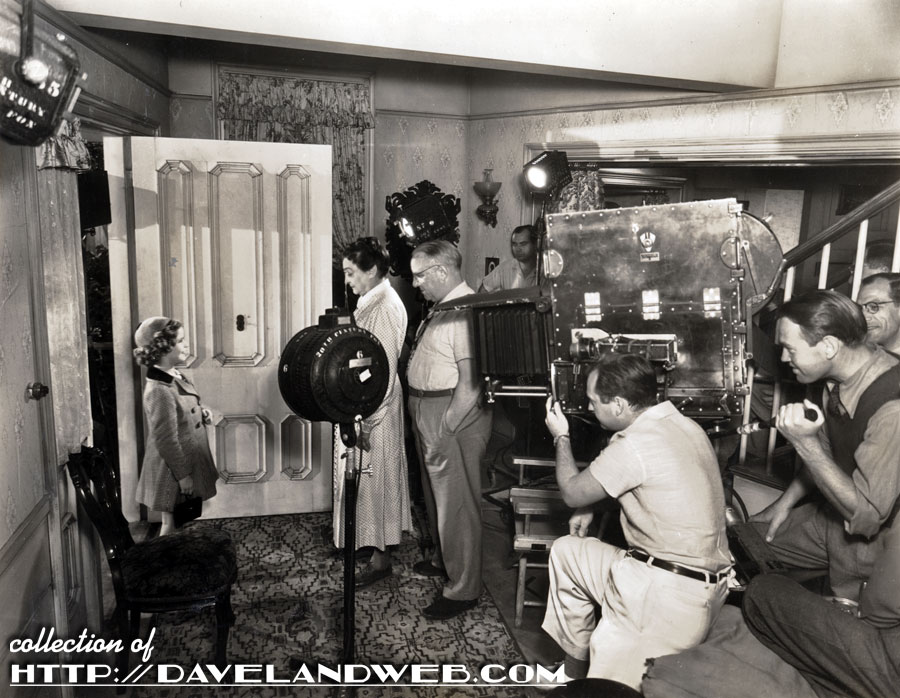
“Iwo Jima” was directed by Allan Dwan, who also directed Shirley in “Heidi” (1937), “Rebecca of Sunnybrook Farm” (1938), and “Young People” (1940). Dwan is seen standing behind actress Helen Westley during the filming of “Rebecca” just out of the view of the camera:


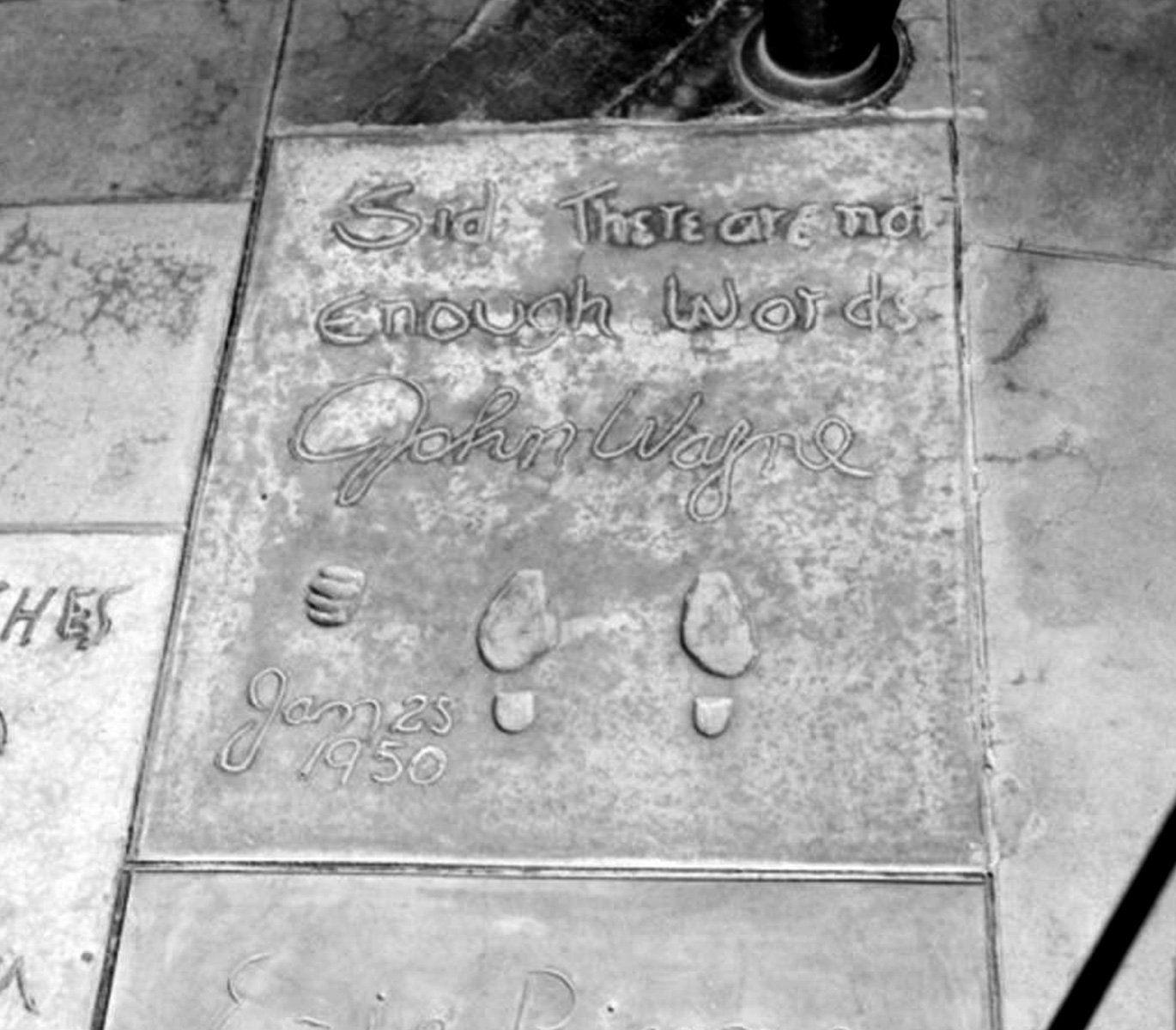
John Wayne received his first Academy Award nomination for Best Actor for “The Sands of Iwo Jima.” Although he lost to Broderick Crawford (“All The King’s Men”), he DID get his footprints and handprints placed at Grauman’s Chinese Theatre in conjunction with the opening of the film there. 
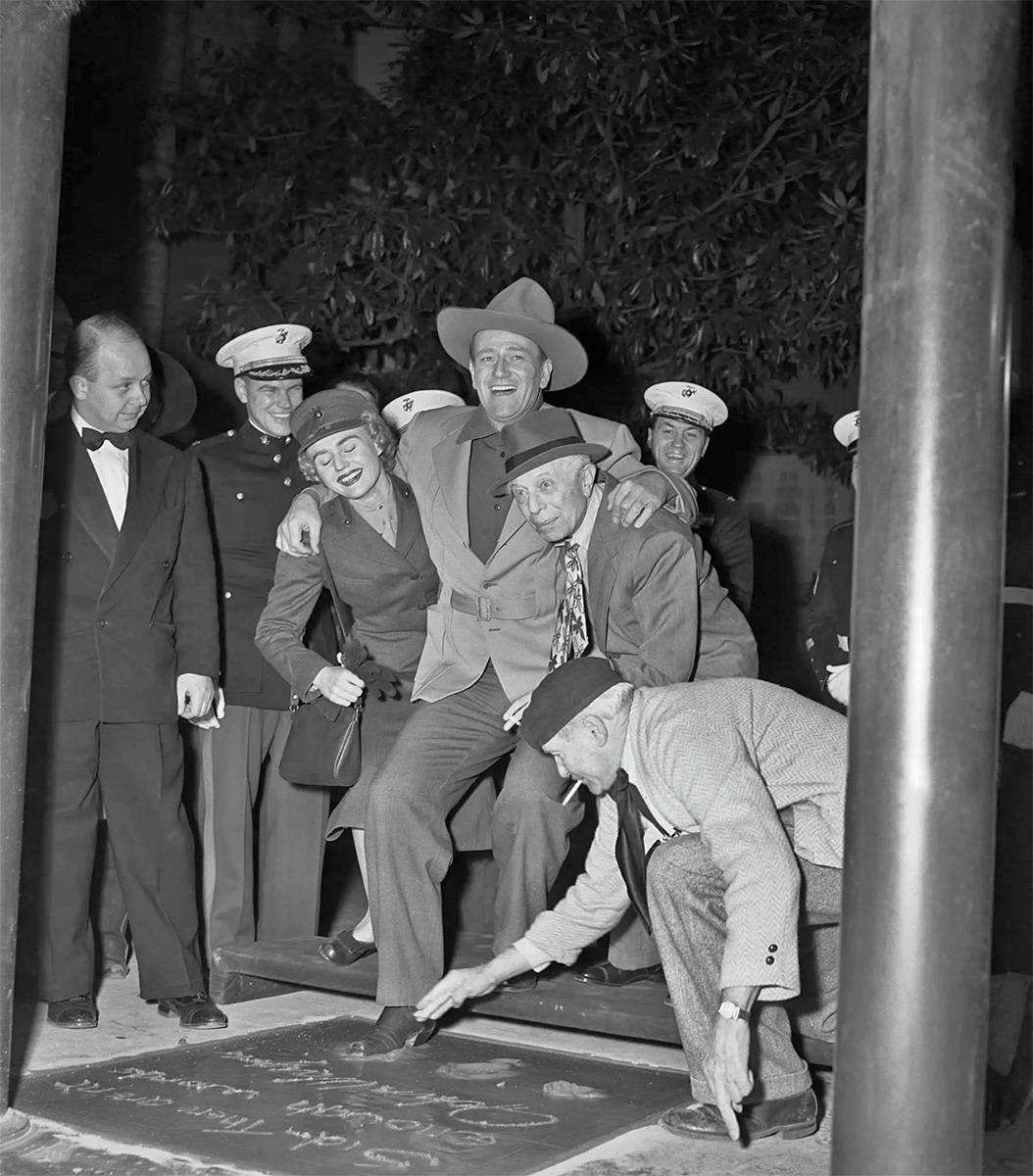


From the John Wayne Facebook page I found the above shot along with this info:

Duke is hoisted up by a Marine to his right and Sid Grauman, owner of TCL Chinese Theatres​ ( Grauman’s Chinese Theatre) as he imprints his foot in the courtyard of the Hollywood landmark #onthisday in 1950 [January 25]. Duke’s performance in Sands of Iwo Jima (1949) earned him this piece of immortality, and the role remains a favorite of fans and critics alike. The cement was mixed with sand from the beaches of Iwo Jima.

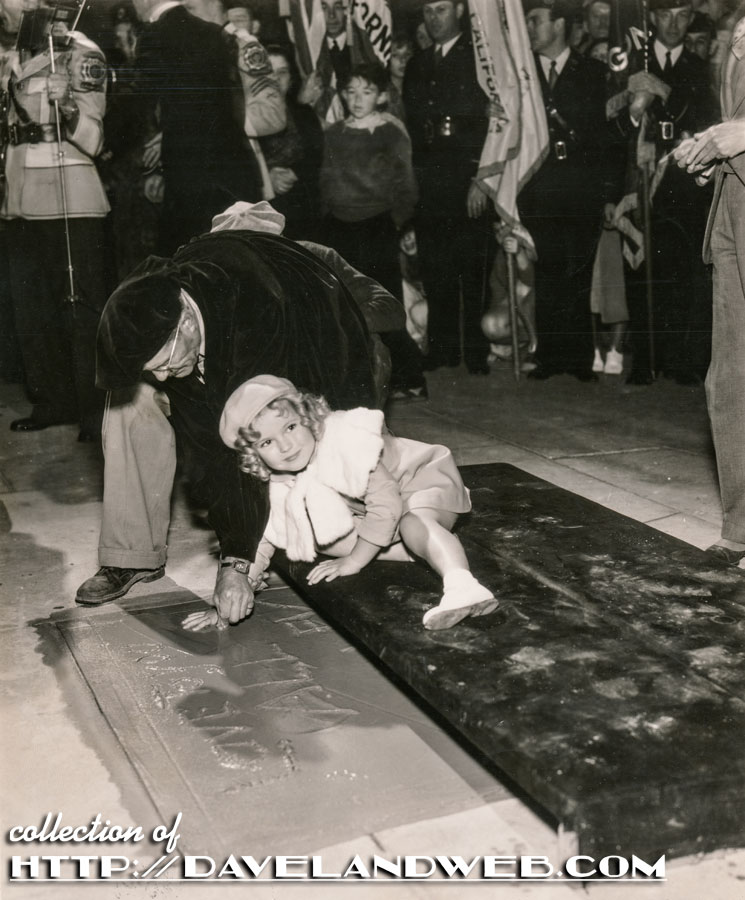
Here’s Shirley getting her own piece of immortality at Grauman’s fifteen years before Wayne:


One of the most famous episodes of “I Love Lucy” dealt with Lucy stealing Wayne’s cement slab from Grauman’s so that she could take it home as a souvenir. In a two-episode arc, it originally aired on October 3, 1955 (“Lucy Visits Grauman’s”) and October 10 (“Lucy & John Wayne”).
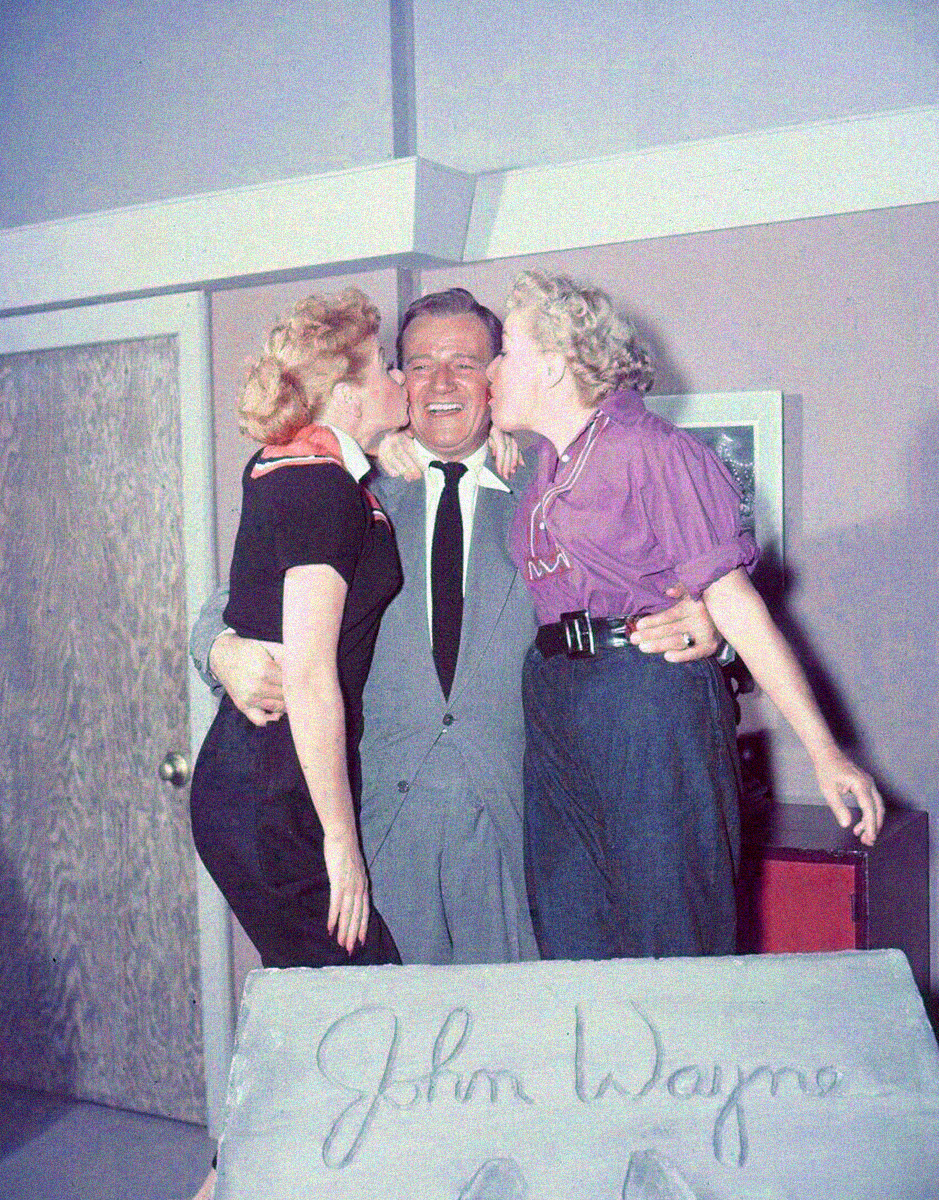
 

Watching the episode, you can tell that a soundstage set stood in for the real Grauman’s, and that a prop was created in place of using the actual cement slab. The prop came up for sale at Heritage Auctions in 2016.
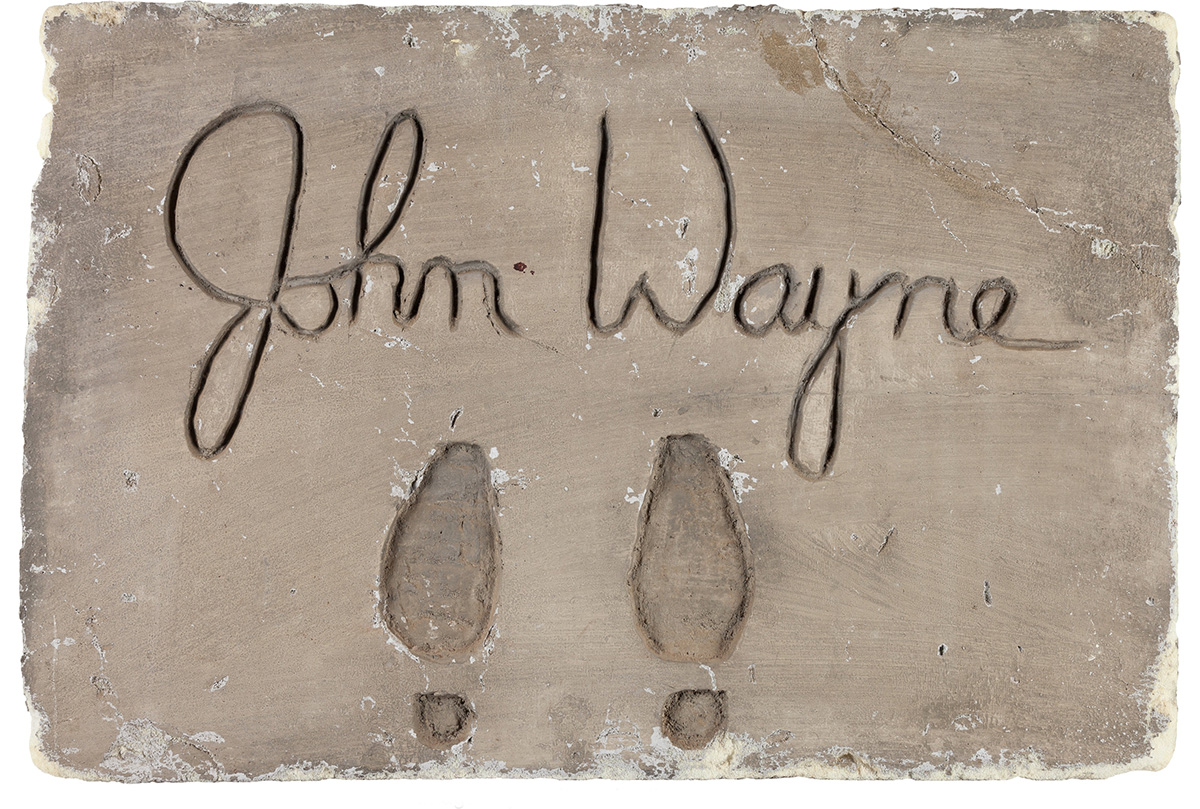


From the auction listing:

A John Wayne Prop 'Grauman's Chinese Theatre' Signature/Footprint Slab from "I Love Lucy." CBS Television, 1951-1957. Made of Styrofoam and fiberglass, painted gray to simulate concrete, with text reading "John Wayne" (though funnily enough, not the star's real signature) above boot footprints, with purposeful distressing on the surface and around all edges, with a cracked upper right corner; used in the hysterical 1st and 2nd Episodes of Season 5 -- titled 'Lucy Visits Grauman's' and 'Lucy & John Wayne,' original air dates October 3 and 10, 1955 -- when the Red Head steals the Duke's footprints from Grauman's only to have wackiness ensue; a number of these props were made for the two-parter, four of which are actually seen at the end of Episode 2 when Wayne walks in to the "Ricardo's" hotel room carrying what appears to be this exact one! (Please note this piece is dirtied and somewhat stained due to age.) 24" x 36".  PROVENANCE: The current owner, Ardis Lichtgarn, obtained this piece directly from Wayne's publicist, Beverly Barnett, who gave it to her at the 1955 wrap party for this two-part episode which took place at Desilu Studios. Barnett had invited Lichtgarn to the party specifically so she could meet Wayne, but the star left early so she missed him. As a consolation, Barnett gave her this prop which he said was meant for Wayne, but because he was gone, she got it instead! Included is a signed letter from Lichtgarn outlining how she obtained this piece 61 years ago. 

The prop sold for $22,500. That’s an expensive piece of styrofoam! Here’s a vintage closeup of the actual cement slab at Grauman’s from the Calisphere site:


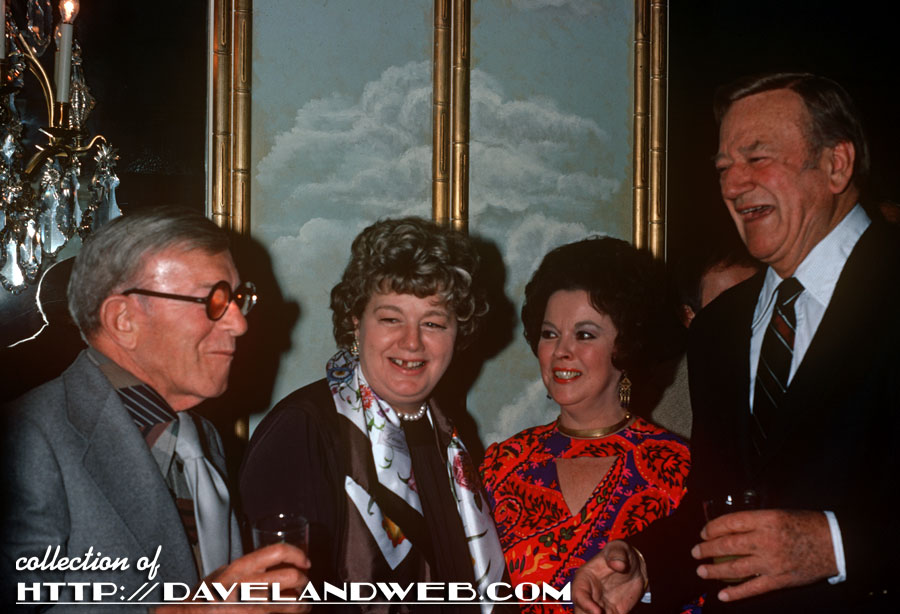
In this previously posted shot, Wayne has a chuckle during this reunion with Shirley in 1976. George Burns and a dentally-challenged Shelley Winters are on the left.


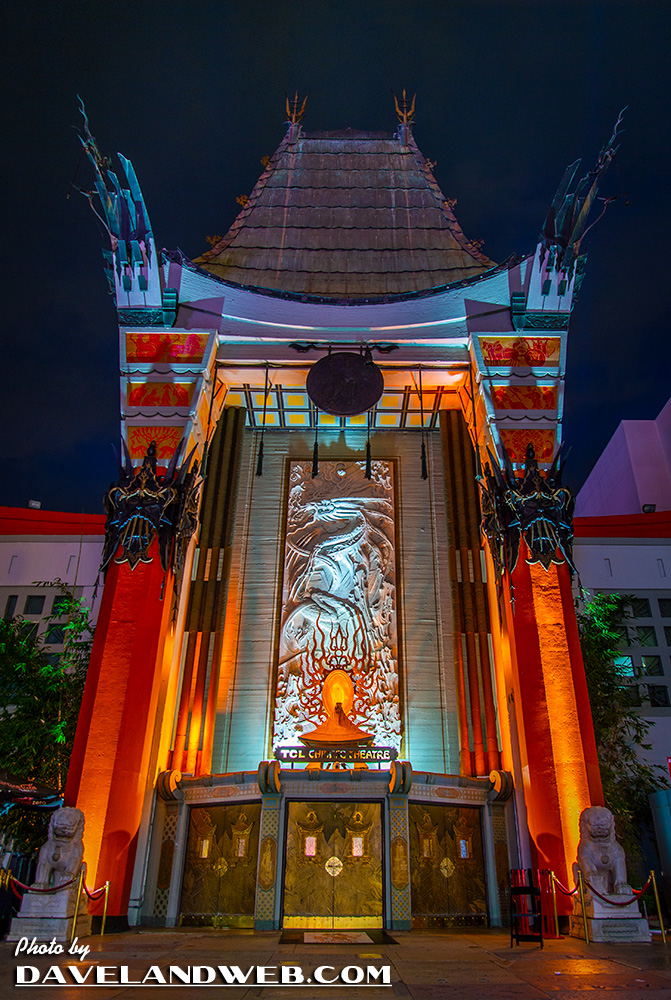
Here’s an image of the Grauman’s entrance that I snapped in 2014:


See more Shirley Temple photos at my main website.