Showing posts with label myrna loy. Show all posts

Tuesday, February 24, 2026

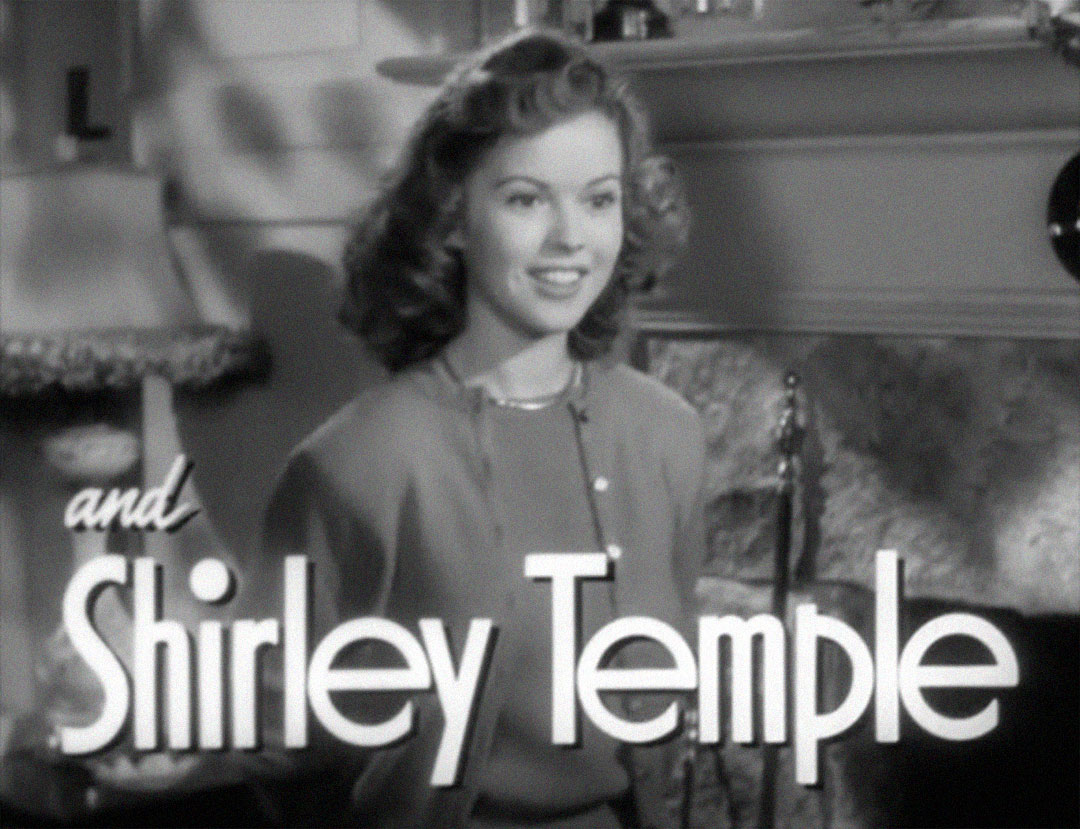
Bachelor and the Bobby-Soxer: Tension on the Set!


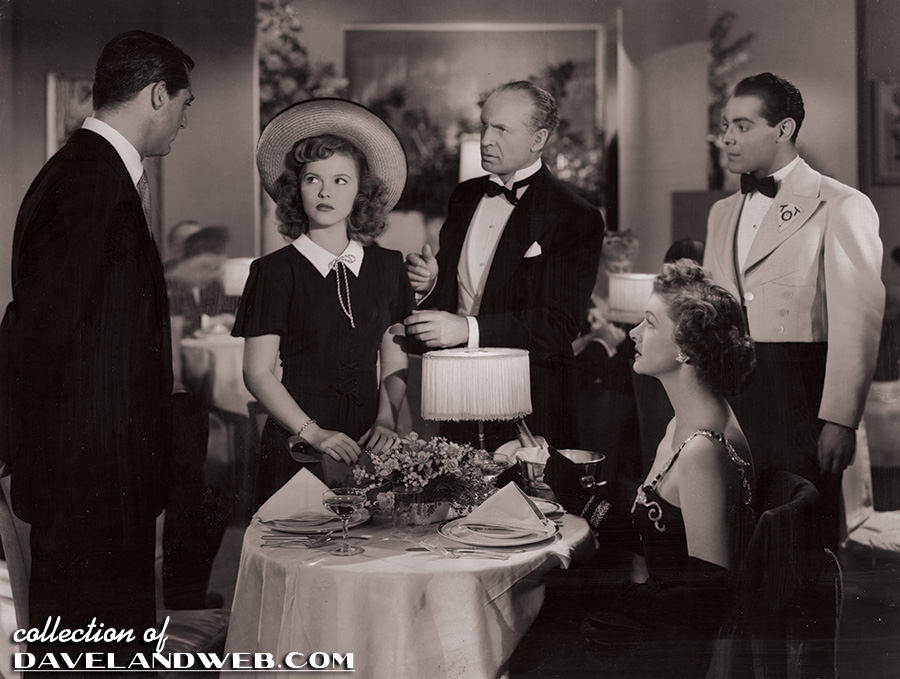
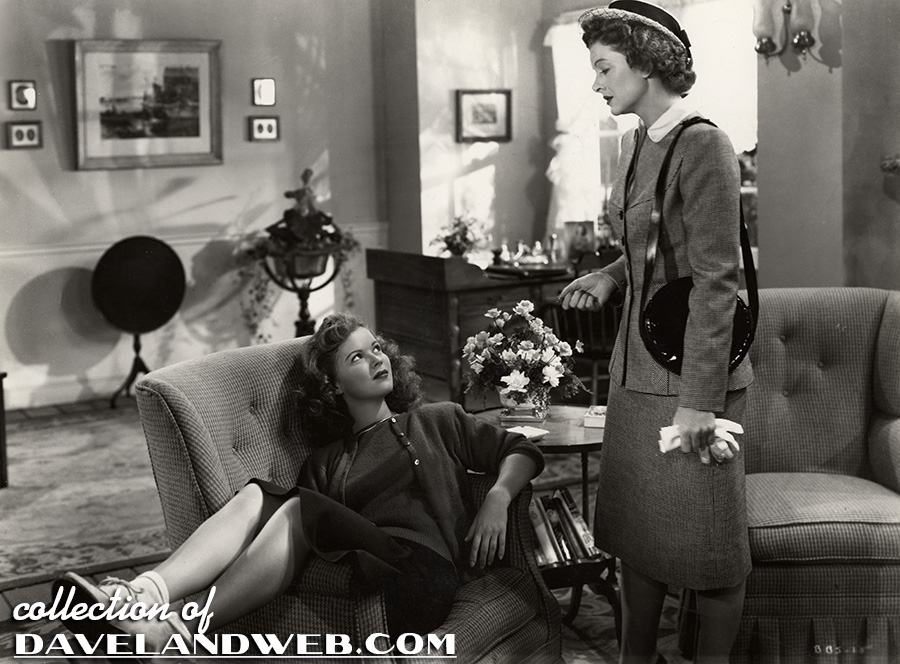
While the Sidney Sheldon penned film “The Bachelor and the Bobby-Soxer” (1947) was a comedy, behind-the-scenes tensions and sometimes boiled over between its lead trio of stars, Cary Grant, Myrna Loy, and Shirley Temple. Loy and Temple played sisters; Grant played the bachelor of the title, an artist who often got himself into trouble because of his charms.


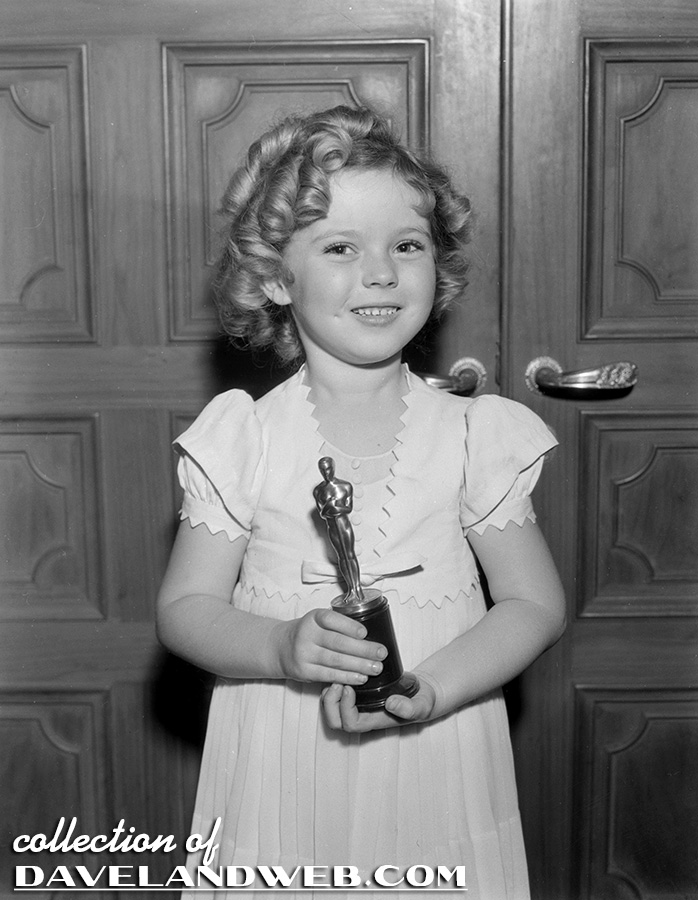
Temple and Loy first crossed paths professionally in 1934 as a result of the Oscar nominations. As Shirley told the story in her autobiography Child Star:

During the 1934 [Oscar] nominations for best actress, a vicious cat fight had erupted. My name was on the nomination list and odds-makers had me an almost certainty to win. Myrna Loy (“The Thin Man”) and Bette Davis (“Of Human Bondage”) had both been ignored in the nominations and write-in campaigns had been threatened. This quarrelsome affair had forced Academy officials to rescind both my nomination and the Academy rules against write-ins and devise a compromise. I would be excluded from the best actress category altogether. A diminutive Oscar would be awarded me in a special-award category, one whose only previous recipients had been Charlie Chaplin in 1927 for “The Circus,” Warner Brothers for revolutionizing movies with sound in “The Jazz Singer,” and Walt Disney for Mickey Mouse.

Shirley getting a best actress Oscar over Loy and Davis? It boggles the mind.


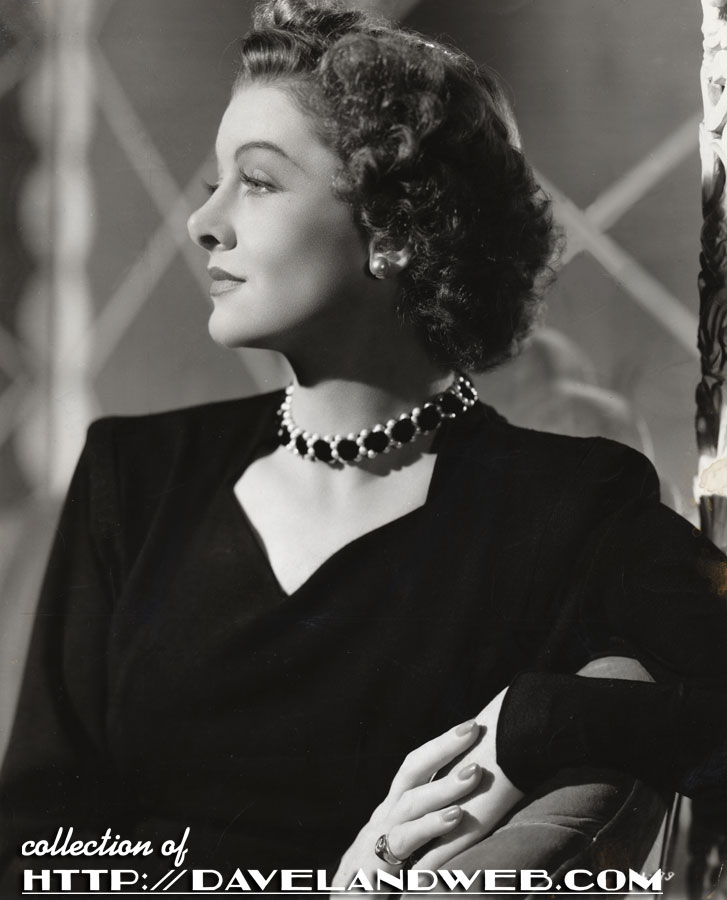
A publicity shot of Loy for “Bachelor,” showing the typical haughty and elegant demeanor of her onscreen character:


Below, Grant and Shirley between takes of the film for a scene where she fantasizes that Grant’s character is her knight in shining armor:
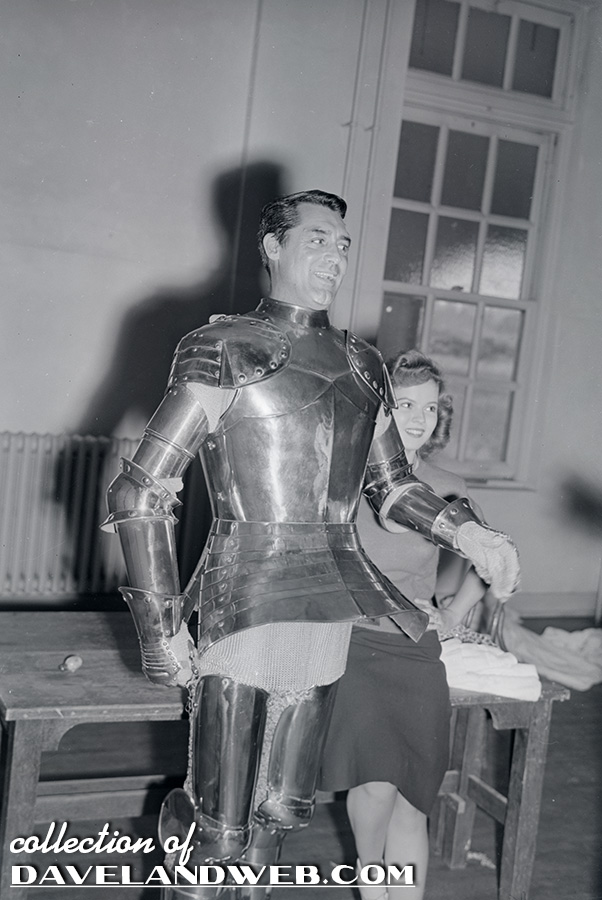


In one scene, Shirley attempts to seduce Grant’s character by dressing to look older. Her upswept hairdo required a form of glue to hold her ears back, as they protruded to far for the taste of the film crew.


As she recalled in Child Star:

Our scene was a close-up, with lights shining comfortably warm on my skin. We were slow getting started while director Irving Reis and Grant bickered about details of delivery and stage position. Their wrangles about words or stage direction were getting commonplace. Much of what Grant proposed was meritorious, mostly ad libs and little routines. However, for every added embellishment, Myrna Loy would excuse herself to the portable dressing room and bring back suggestions to enhance her own role. Grant was known as someone obsessively concerned with nuance and detail, and Loy as someone not easily finessed. In the middle was Reis, unwilling to be superseded by either of the two warring contestants.…In a huff Grant had disappeared into his portable dressing room. Little could be done about the personal animosity, so Reis again shut the set down. For a few minutes we all milled around aimlessly, chatting and drinking coffee, then Reis carefully rolled both his white shirt sleeves to the elbow and rapped sharply on Grant’s dressing-room door, ordering him to return. Grand did pop out at once, but not to work. Off he stormed without a backward glance. Going directly to producer Dore Schary, he threatened to quit unless Reis was fired. Buckling to the pressure, Schary replaced Reis with himself, releasing publicity that Reis had collapsed from physical exhaustion. Several days later Reis seemed to have recovered dramatically, for he hosted a reception for cast and crew members, Grant notably absent. The party was held at his home, one of those aeries clinging to the steep side of a Beverly Hills canyon, and the candlelight disclosed our host quite healthy and philosophical about his replacement.

Below, Reis directs Johnny Sands and Shirley in a scene:
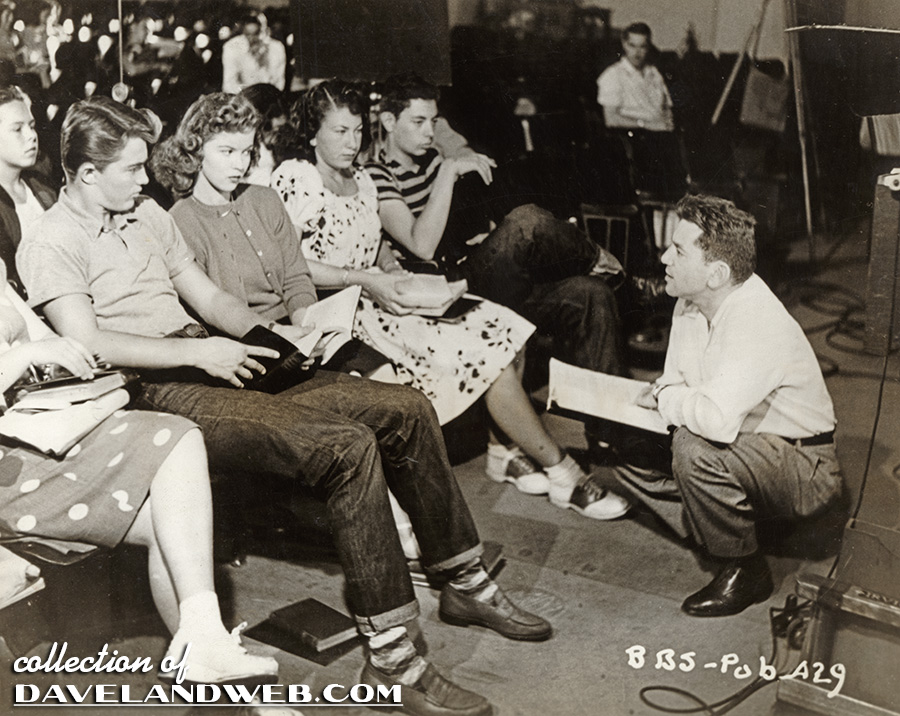


Although some residual disharmony continued to plague the set, Schary coped with Grant’s perfectionist tendencies and tolerated his abrupt absences to count or rewrite lines. As was my custom during such intermissions, I hung around joshing with the crew, far preferring some activity to nothing. That’s how the trouble started. I started to mimic Grant. Egged on by the crew’s applause, I soon was doing an impromptu show. Taking center stage where the lights were ready for our next close-up, I tipped my head, put on a  a quizzical smile, and started a soliloquy in a deep-throated, cockney accent. Swaggering across the set, I executed a typical Grant double-take, careful to point out that I was showing only my right profile, a well-known minor vanity. The crew had been laughing and cheering, but suddenly turned silent as tombstones. Beyond the edge of the lights glare, I detected Grant’s face. I was caught red-handed. Again he stalked away, this time directly to Selznick, who sent word for me to come at once. Grant was quitting the film unless I went, and Selznick was fuming at yet another personality clash on an already troubled set. Mimicry is immature, I was lectured, leaving a clear impression that if anyone left the film, it would be me. Never having been fired, to say I felt chastised would be a yawning understatement. Trembling with apprehension, I made my way back to the set. As had been the case with Lionel Barrymore in “The Little Colonel,” my only salvation lay in a personal apology, one fortunatley accepted by Grant.By the his annoyance level had subsided, and with a grave nod of his head he accepted my remorse, turned, started off, then stoped. “By the way,” he said, cocking his head in an exaggerated version of my mimicry, “it was a pretty good imitation.”


Grant and Schary between takes:
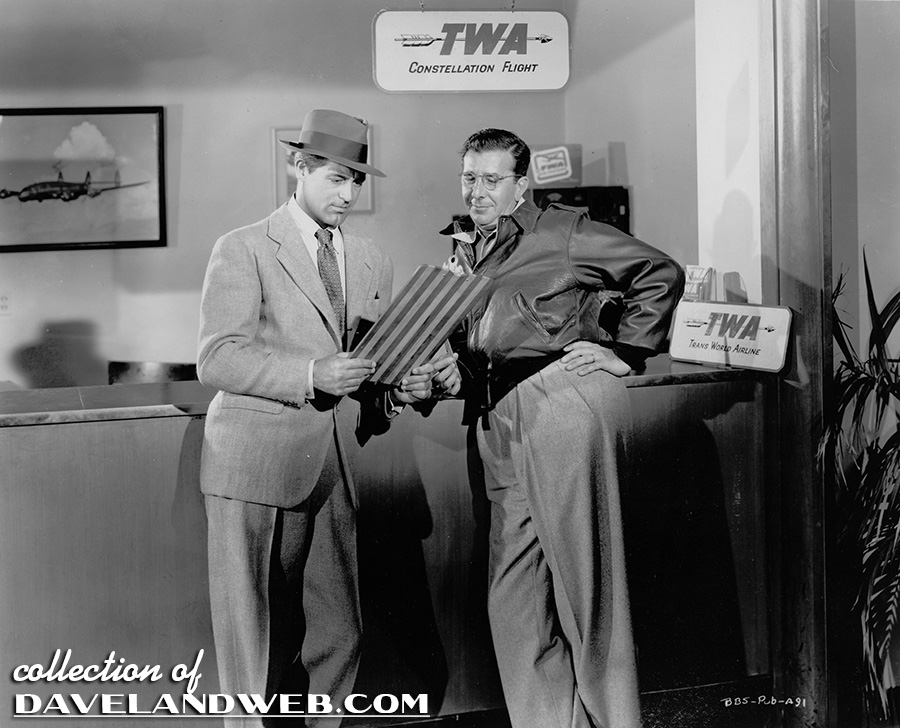


One of the on-set pranks made its way to the press. From the vintage caption that accompanied the photo below:

They say it’s an old Egyptian proverb that he who makes practical jokes one day is victim of ribbing. And so it came to pass recently. Shirley Temple, under cover of that sweet, innocent expression so well-known to thousands of movie goers, has been the instigator of many practical pranks. So it was inevitable that her fellow workers would one day turn the laughter on her. “Buddy” Barasch, production assistant of the film in which Shirley is working put over the gag. Donning Arabian robes and a beard, he posed as a royal visitor and beguiled her. Later when the disguise was removed, Shirley joined in the laughter. The two are shown here. 11/16/46


For the May 10, 1948 Screen Guild Theater radio version of the film, tensions between the three leads are clearly visible in the photo below:


Loy does not feign joy as Shirley points to a detail in the script. Grant at least seems attentive:


For some reason, the film was dramatized a second time, on June 13, 1949, as part of the Lux Radio Theatre series. Temple and Grant participated; Loy did not. Apparently, twice was enough for her.
Frances Robinson took over Loy’s role.

Producer William Keighley opened the program:

Greetings from Hollywood, ladies and gentlemen. Tonight, we welcome back to THE LUX RADIO THEATRE a man whom I consider one of America's truly great screen stars, Cary Grant. With Cary is a young lady who long ago captured the heart of America and has held it ever since, Shirley Temple. Together, they bring us RKO's sparkling romantic comedy "The Bachelor and the Bobby-Soxer," with Cary as the gay man-about-town and Shirley as the adoring bobby-soxer -- the same delightful performances that made the picture a hit. You know, the bobby-soxer has introduced some fascinating additions to the American language and mode of dress, but I understand she's still old-fashioned enough to want a lovely Lux complexion. So she takes a lesson from her mother, and the screen stars, and lets Lux Toilet Soap help out on the beauty front. 

Keighley (seen at left) directed Shirley in her previous film, “Honeymoon”: 
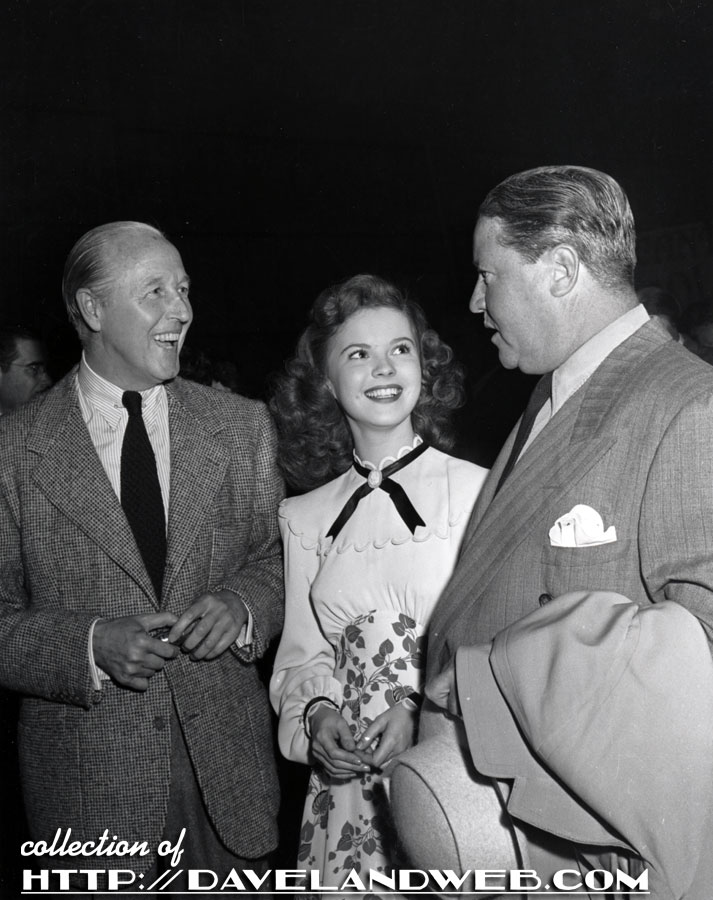


The Lux program’s wrap-up banter:

KEIGHLEY: Tonight's play was enjoyed, I know, by all bachelors, all bobby-soxers, and all the rest of us, too. So here's all our thanks to Cary Grant and Shirley Temple. SOUND: APPLAUSE KEIGHLEY: Cary, when we first tried to reach you about tonight's show, you were in the middle of the Atlantic on a freighter. We're certainly glad you made it. GRANT: Well, thank you, Bill. So am I. I had a wonderful rest. TEMPLE: I suppose after a strenuous picture you need a rest when you're - over twenty-one. GRANT: Uh, Shirley, remember, you can vote now. ... TEMPLE: (LAUGHS) KEIGHLEY: (LAUGHS) I suppose you're pretty bored, Shirley, with people who say (CLICKS TONGUE) "My, how you've grown." TEMPLE: Well, after all, I'm a married woman with a little daughter. GRANT: You know, that's the trouble. Other girls get married; two days later, everybody's forgotten it. Except the groom, of course. TEMPLE: (LAUGHS) GRANT: But when Shirley Temple gets married, the whole world feels twenty years older. ... TEMPLE: Well, I think every girl should be married. GRANT: Ah, every girl should be married. ... I'm glad you brought that up. KEIGHLEY: Yes; you see, Shirley, two weeks from tonight, Cary will be back with us again, starring with Betsy Drake in their recent hit "Every Girl Should Be Married." TEMPLE: Oh, that's wonderful. I loved the picture. And I have a suggestion for every girl who thinks she should be married. Every girl should have a Lux complexion. KEIGHLEY: Yes, I recommend a Lux complexion exactly like yours. TEMPLE: Why, thank you, Mr. Keighley. I've always used Lux Soap. And, don't forget, you promised me one of those "Neptune's Daughter" scatter pins. In fact, I'd like to have two of them to wear on my new suit. KEIGHLEY: Well, it'll be a pleasure, Shirley. The "Neptune's Daughter" pin is sterling silver and something every woman will want. GRANT: Well, what's next week's play, Bill? KEIGHLEY: Well, it's a drama about Hollywood, Cary -- the famous hit of stage and screen, "Merton of the Movies." Starring in it, we'll have the one and only Mickey Rooney. And, with Mickey, lovely Arlene Dahl. There'll be laughs, drama and romance here next Monday with "Merton of the Movies." TEMPLE: We'll all be listening. Good night. GRANT: Good night. KEIGHLEY: Good night and we'll see you in two weeks, Cary.
Want to hear the entire program? Here you go:


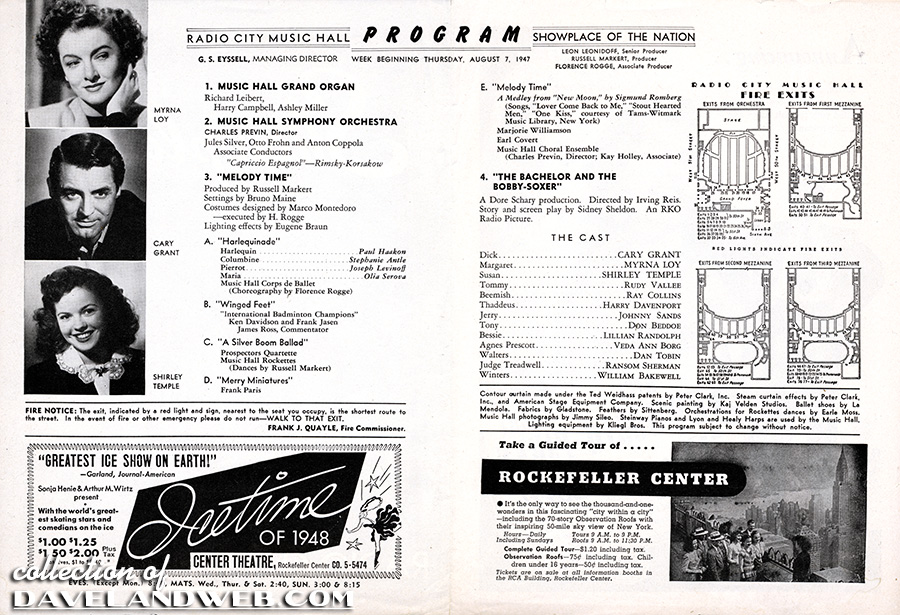
The program for the Radio City Music Hall presentation of “The Bachelor and the Bobby-Soxer”:
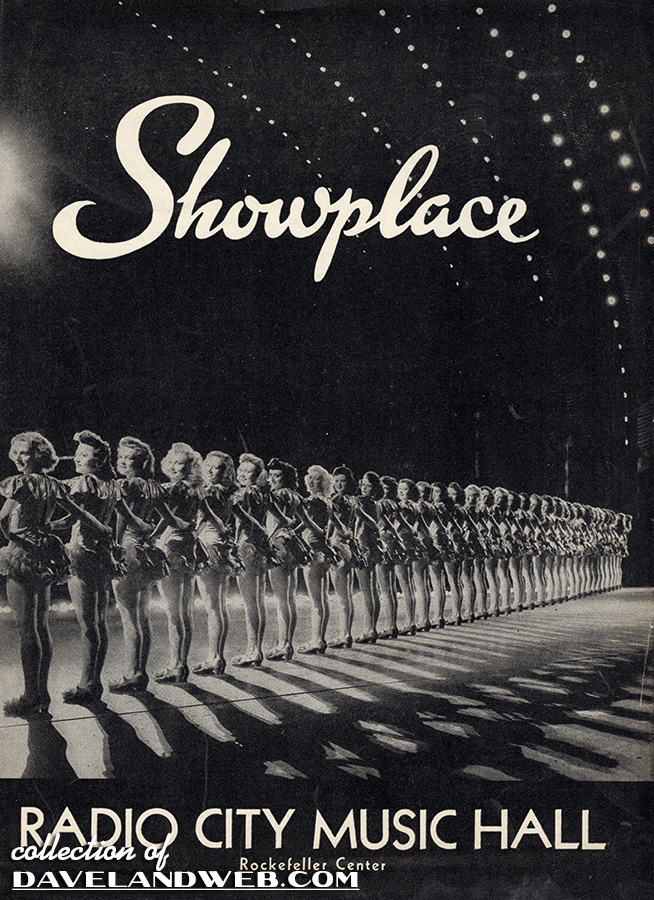


See more “Bachelor and the Bobby-Soxer” photos at my main website.

Tuesday, June 11, 2024

Temple Tuesday: A Lot of Bull


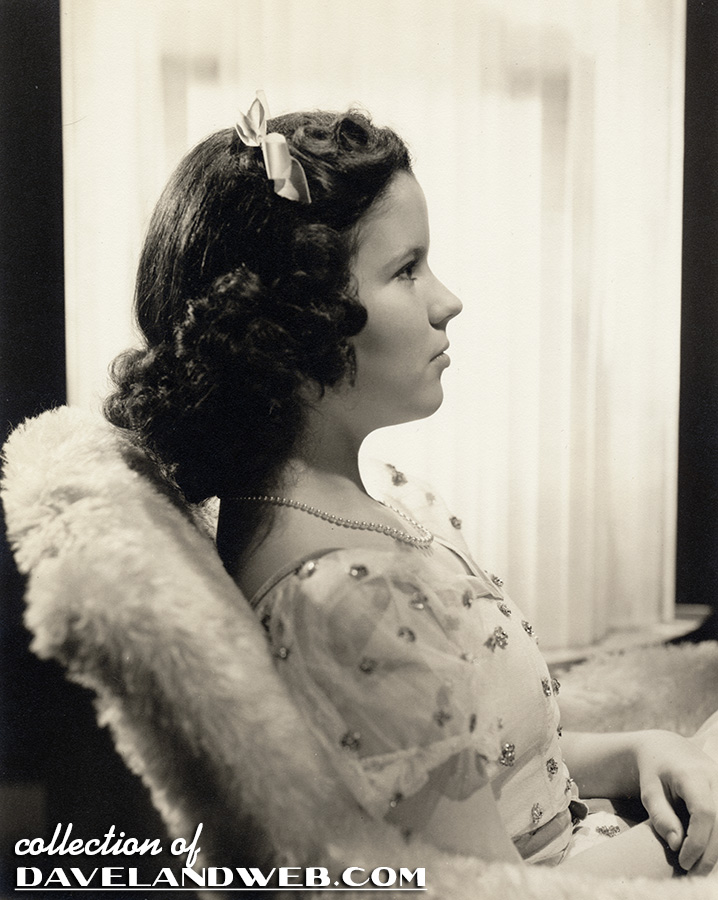
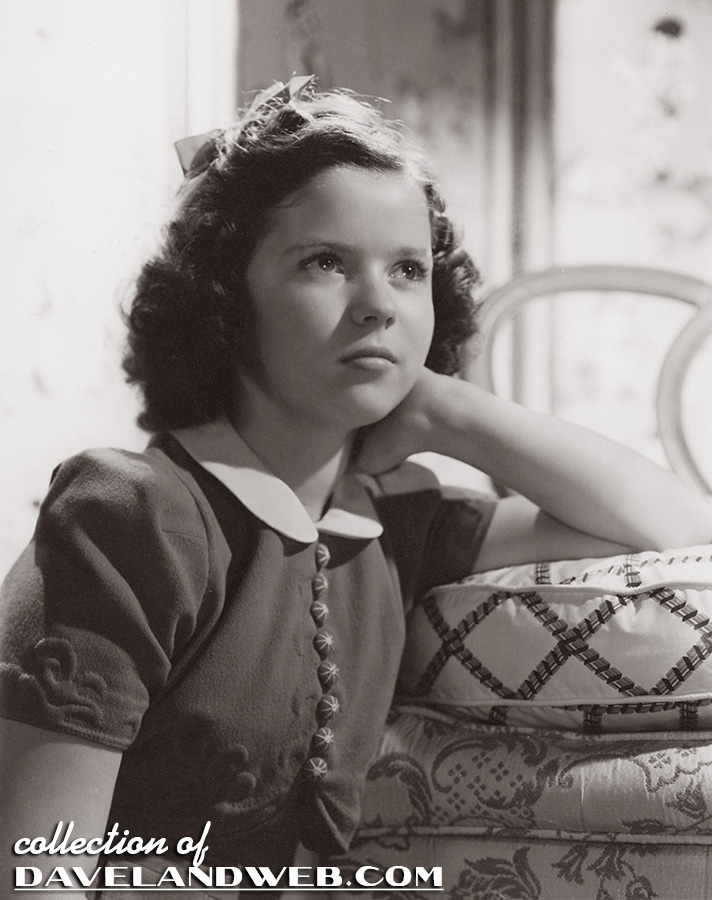
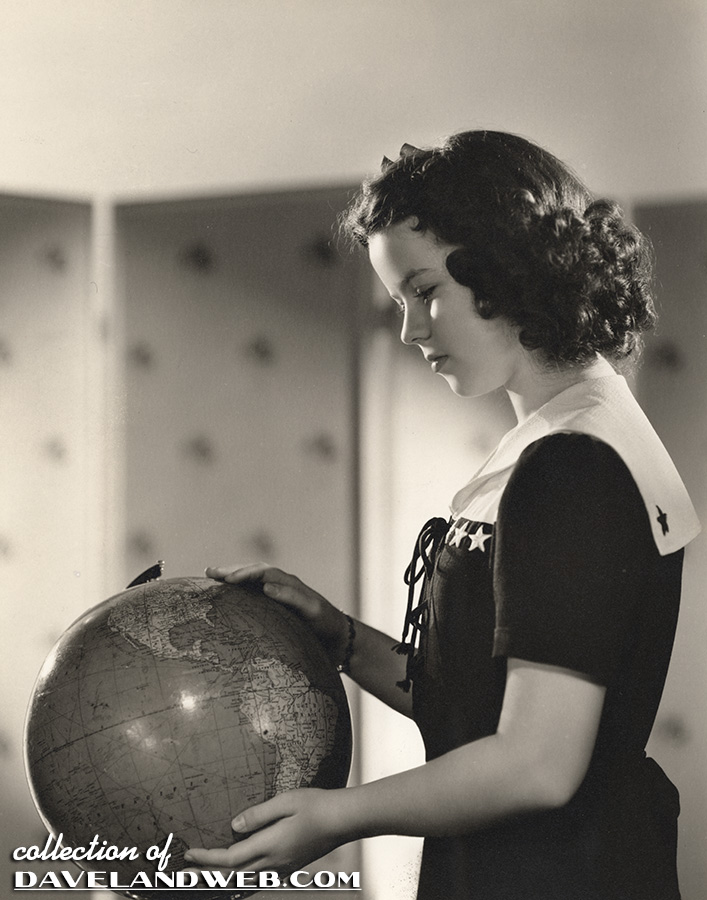
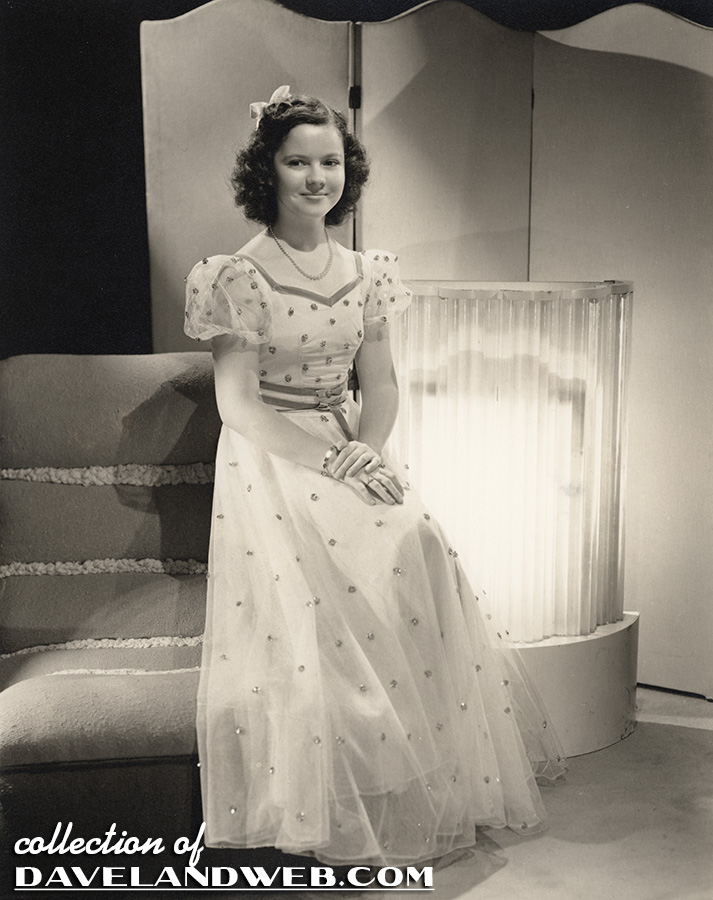
When Shirley Temple signed on at MGM in January 1941, the publicity machine wasted little time in promoting its newest star. None other than Clarence Bull was enlisted to give Shirley the glamour treatment, as seen by the portraits shown here. For a bit more about Bull, here’s an excerpt from the 2008 book Glamour of the Gods by Robert Dance and John Russell Taylor:

Clarence Sinclair Bull’s long association as a photographer with the studio that would become Metro-Goldwyn-Mayer began when producer Samuel Goldwyn hired him in 1919. Managing to survive the commotion of the consolidation of Hollywood in the early and mid-1920s, Bull found himself at the helm of MGM’s stills department when the studio was formed in 1924, and stayed there until retiring in 1961. The enormity of MGM’s output of films in the 1920s—they advertised a new feature every week—saw Bull’s domain grow. He was responsible for managing MGM’s staff of photographers and the large support crew of technicians needed to develop, re-touch, print and collate the hundreds of thousands of prints distributed annually by MGM’s publicity department. At least one photograph from the 1920s shows Bull with twelve stillsmen who juggled the task of shooting photos on as many as a dozen films that might be concurrently in production. At MGM, like the other studios, these men—and it was an almost exclusively male profession—worked six days a week and often long hours each day. Generally one photographer was assigned to a production and, as filming was underway, he would document each scene using an 8 x 10 view camera. These cameras not only had lenses with sharp resolution, but contact prints could be made from the negatives quickly and in enormous quantities. The stills made for each film were numbered sequentially and gathered together for a book. Stills photographers also created the images used for poster art, lobby cards and other forms of advertising conceived by imaginative publicity chiefs and their staffs.

The first photo was numbered 5241; the one below 5245:


5257:


5266:


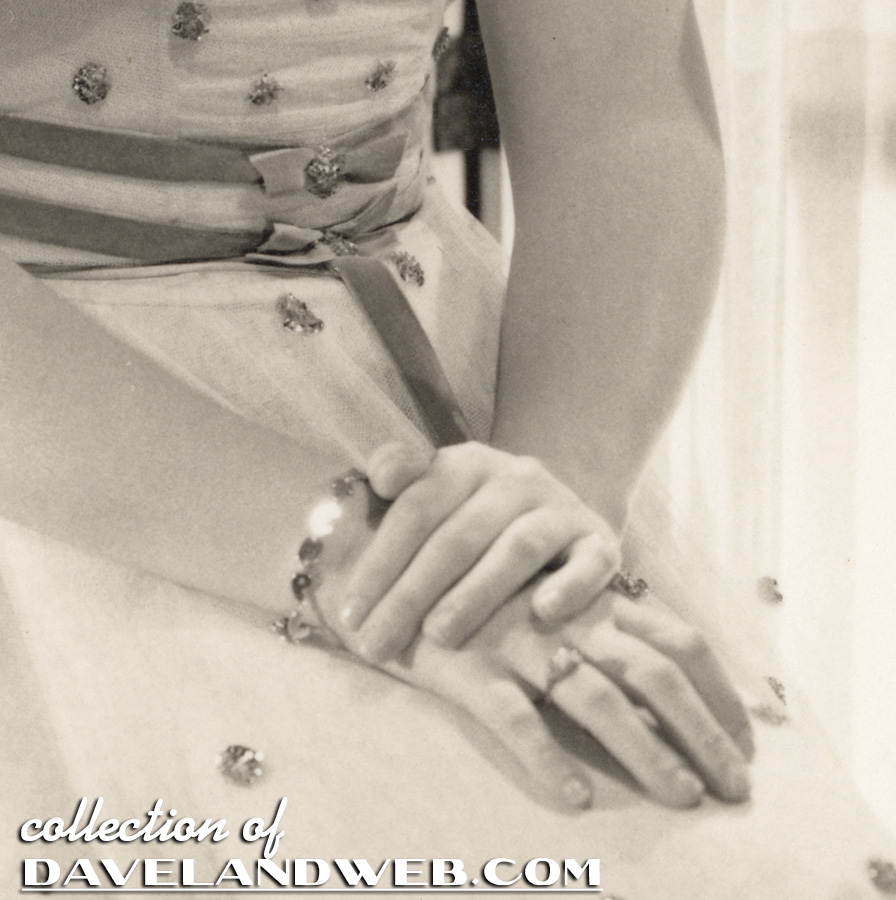
For SJR, I knew you’d want to see this detail:


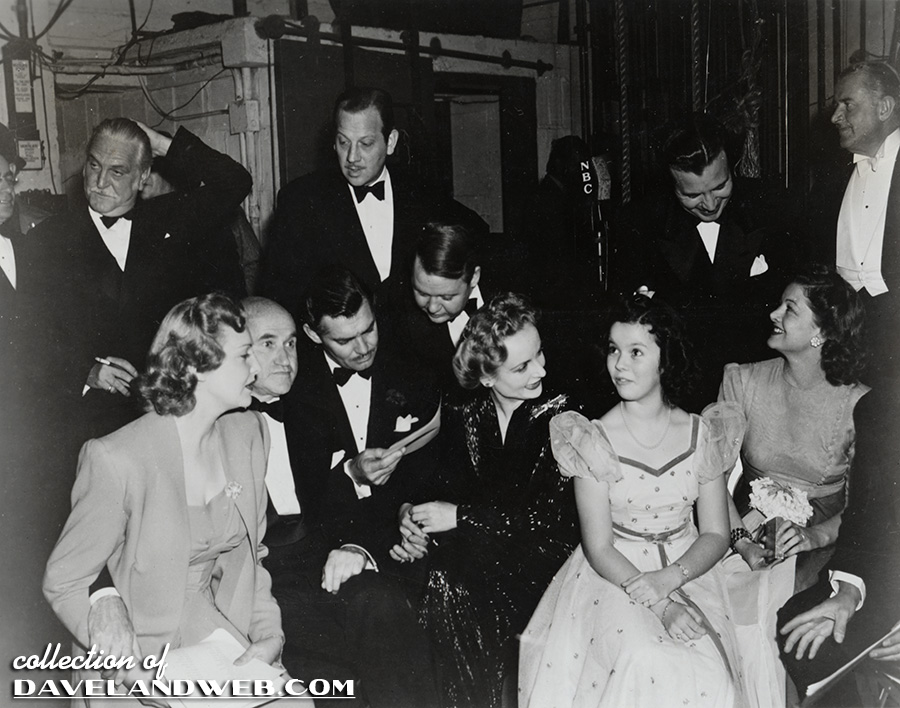
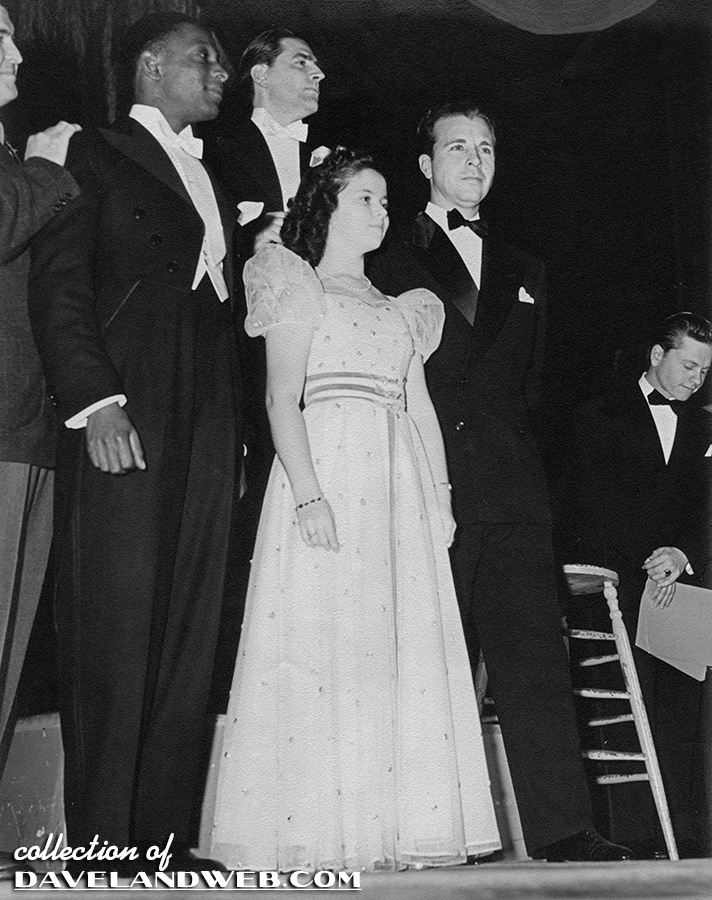
Often, movie studios would allow their stars to wear gowns provided by the costume department when they were to be seen in public at events. This would ensure that the stars looked their best for the paparazzi! Shirley wore the gown seen above to the February 8, 1941 Greek War Relief Benefit at Grauman’s Chinese Theatre. Back row: Frank Morgan, Melvyn Douglas, Charles Laughton, Dick Powell, and Reginald Owen. Seated: Madeleine Carroll, Samuel Goldwyn, Clark Gable, Carole Lombard, Shirley Temple, and Myrna Loy. , 


Back to Bull…the photo below was stamped #5267:


The accompanying caption is extremely interesting:

SHIRLEY TEMPLE…Young veteran of the screen, poses for her first portrait sitting after signing her contract with Metro-Goldwyn-Mayer. The youngster will start work on two pictures for the studio “Barnacle Bill,” with Wallace Beery, and “Babes on Broadway,” with Mickey Rooney and Judy Garland. Here the tiny star wears a many-pleated skirt with a pique-collared jacket.

By the time the photo was released, the plans had been changed! Shirley was removed from both films, most likely because the Temples did not feel Shirley should be relegated to supporting roles. Instead, Shirley was made the lead in a low-budget picture (or at least as low budget as MGM could do!) titled, “Kathleen.” MGM’s frustration can be seen on the back of the photo. The portion of the above caption about her two projects AND the description of the outfit were crossed out; in pencil the following simple replacement was written:

The young star is now working in “Kathleen.”

Despite all the initial excitement and publicity about working at Hollywood’s most elite film studio, Shirley’s contract was canceled after the one movie.
   
See more teenage Shirley Temple photos at my main website.

Wednesday, November 30, 2022

The Return of Myrna


In 2005, I was making one of my frequent trips to L.A. and decided to visit Venice High School, the setting for Rydell High School in “Grease” (1978). There were actually two other Schools used for Rydell, but that’s another story and not the one for today. When watching the movie, I noticed something was missing.


The fountain and statuary in front of the school.


It turns out that the model for the centerpiece of the original statue was none other than Hollywood legend, Myrna Loy.


From the Hometowns Hollywood website:

Loy’s father died on November 7, 1918, of Spanish influenza. Upon his passing, the family permanently relocated to California, where they settled in Culver City. Loy attended the exclusive Westlake School for Girls in Holmby Hills and continued to study dance in Downtown Los Angeles. When her teachers objected to her participating in theatrical arts, her mother transferred her to Venice High School, and at 15, she began appearing in local stage productions. In 1921, Loy posed for Venice High School sculpture teacher Harry Fielding Winebrenner for the central figure “Inspiration” in his allegorical sculpture group Fountain of Education [Two other students posed for the kneeling man and seated woman]. Completed in 1922, the sculpture group was situated in front of the campus outdoor pool in May 1923, where it would stand for decades. A few months later, Loy’s “Inspiration” figure was temporarily removed from the sculpture group and transported aboard the battleship Nevada for a Memorial Day pageant in which “Miss Myrna Williams” participated.


If the buildings behind the Loy statue look different, that’s because they are. On March 10, 1933, the Long Beach Earthquake critically damaged the 1924-built school, and it was subsequently torn down. For two years, classes had to be held in tents until the replacement school was built. On January 22, 1935, ground was broken for the art deco styled buildings that still stand today. 


Back to the Hometowns Hollywood website:

While the statue had miraculously survived the 1933 earthquake, its story took a turn for the worse decades later. Over the years, the statue of Loy outside of Venice High School in Los Angeles became not only a landmark after Loy became famous, but an object of vandalism from neighboring schools, especially University High. It was customary prior to the Venice-Uni football game for students from Uni to throw paint on or otherwise vandalize the statue. When I was a student at Venice, legend had it that one year, a group of students from Uni actually removed the statue and drove it in a truck to Santa Monica pier where they threw it over the side and into the water. Not surprisingly, damage took its toll.

In the above photo, the sign in the pond says, “NOTICE: ANY ONE TAKING PLANTS OR FISH WILL BE PROSECUTED.” What about the statues?!? I believe this lack of attention/respect to Myrna is what caused the events that followed!

In 1978, the sculpture was mutilated by vandals with heads and arms removed. They were restored in 1980 by William Van Orden, a Venice painter and sculptor. However, he reconfigured the arms to make them less accessible to vandals. So sad that this had to be done; what is wrong with people?!?


The caption for the above photo from Calisphere:

Dying Sculptor Races Against Time and Vandals ... The architectural centerpiece of the Venice High School campus is a giant iron cage inside which can be glimpsed an old man clambering laboriously over a temporary scaffold ... The cage, recently built, is a monument to the persistence of the man, William Van Orden, a sculptor who has given the last 10 years of his life to restoring the statue in the cage ... The 7-foot-tall statue of Venus rising from the sea, accompanied by two male figures, was sculptured by a Venice High School teacher, Harry Winebrenner, in the 1920's, and a 16-year-old student, Myrna Williams, was his model"--New York Times, June 12, 1989. William Van Orden, repairing statue in Venice High School. Photograph dated Oct. 17, 1980.

Van Order’s LA Times April 4, 1990 obituary:

William Van Orden, the sculptor known for his meticulous restorations of Venice High School’s statue of actress Myrna Loy after numerous assaults on it by vandals, has died at 67. Van Orden, who completed his 12th restoration of the statue despite ill health and waning strength, died of cancer March 18 at a nursing home. Over the years, Van Orden worked thousands of hours repairing the Loy statue and two other statues at the entrance of the campus that were the target of countless pranks and acts of vandalism. “They call me the Don Quixote of Venice,” he said in a Times article last year. “They don’t realize that I take that as a compliment. Myrna is my windmill.” Van Orden was honored in June by Venice High School students at a dedication ceremony for the newly restored statue, which is now enclosed in a protective iron cage. He was also awarded a proclamation from the city. The Myrna Loy statue first came to Van Orden’s attention after vandals in 1978 used dynamite to blow off its head and arms. A year later, Van Orden drove by and saw the damaged statue and, grabbing a tool box, began making repairs. “I took out my chisel and mallet and started hammering on it when the principal came out and asked me, ‘What are you doing?’ ” he told The Times. “I said, ‘I’m here to fix the statue.’ ” The Venice artist began his most recent restoration about a year ago after vandals battered the heads of all three statues. Van Orden again rushed in to do repairs, but this time, he said, he did not believe he would live to finish the job. Doctors had told the artist that his death was imminent. “I decided not to abandon her,” he said at the time. “I had to return one more time. This is my life’s work, and after I finish this job I feel I can pass the job on to someone else.” But Van Orden managed to complete the restoration of the 7-foot-tall statue of Loy, which is a depiction of the goddess Venus rising from the sea. It was sculpted in the 1920s by Harry Winebrenner, a nationally known sculptor who also taught art at Venice High School. He chose as his model a 16-year-old art student named Myrna Williams, who later gained fame on the screen as Myrna Loy. Van Orden received an outpouring of support and national attention following news reports about his efforts to preserve the statue. “He wanted so much to see it declared a historical landmark so it could be protected and preserved from future damage,” said Rodan Van Orden, the artist’s 19-year-old son. Van Orden said his father never felt he received the recognition he deserved from his work on the statue. “You know he was a fine artist, a good painter.” At Venice High School, officials and students were saddened by Van Orden’s death. “He always had time to sit and talk with the students. He touched a lot of lives here,” said Sharon Gebhart, the school improvement coordinator.

After decades of exposure to the elements and vandalism, the original concrete statue was removed from display in 2002 (which is why it wasn’t there when I visited in 2005). The original statue was replaced in 2010 by a bronze duplicate paid for through an alumni-led fundraising campaign during a highly-publicized ceremony.

And here’s how it looked on my visit last weekend:


Myrna looks great from all angles:


The accompanying plaque:


While I am very glad that Myrna has returned, it seems a bit sad that the fountain and other two figures were lost in the process. The water that originally cascaded down her arms is gone and now she just stands solo. Hopefully one day the rest of the original art installation can be returned, as Myrna seems to be a bit out of context.

See more Venice High School photos at my main website.

Tuesday, September 13, 2022

Temple Tuesday: Greek War Relief


Look at this star-studded photo from 1941! In the back row: Frank Morgan, Melvyn Douglas, Dick Powell, and Reginald Owen. Front row: Madeleine Carroll, Sam Goldwyn, Clark Gable, Charles Laughton, Carole Lombard, Shirley, and Myrna Loy. What was the occasion that brought them all together? From pappaspost.com:

As a result of the Nazi occupation and subsequent naval blockade, famine and despair would overcome Greece both in Athens and throughout the countryside. In response to the turmoil in Greece, Americans began countrywide efforts to provide humanitarian relief for the Greek people. Railroad magnate Harold Vanderbilt and film industry executive Spyros Skouras launched an effort called the Greek War Relief Association no less than 10 days after the October 1940 Italian invasion of Greece to provide food and other forms of aid to Greece.… In Hollywood, countless stars, celebrities, studio heads and industry heavyweights got behind the Greek War Relief movement, making it the single largest humanitarian fundraising campaign in American entertainment industry history, including a single organized fundraising campaign by the Motion Picture Association of America involving 8,000 cinemas. Films like Walt Disney’s “Fantasia” and “Gone With the Wind” held gala premieres and opening nights in cities across the nation with ticket proceeds benefiting the Greek War Relief campaign.… At Grauman’s Chinese Theater in Los Angeles on February 8, 1941…a massive radio telethon, “America Calling,” was broadcast on CBS, NBC, numerous independent stations, and throughout Europe. Jack Benny and Bob Hope were the “co-masters of ceremonies” of the variety show that featured some the biggest names of the time including Shirley Temple,  Groucho Marx, and Clark Gable. The Greek War Relief Association raised $30 million — approximately $500 million today — to provide massive shipments of grain, equipment, livestock and other forms of material support for the Greek people.


Shirley worked with many of the people who were on the broadcast. Carole Lombard (and Gary Cooper) in “Now and Forever” (1934):


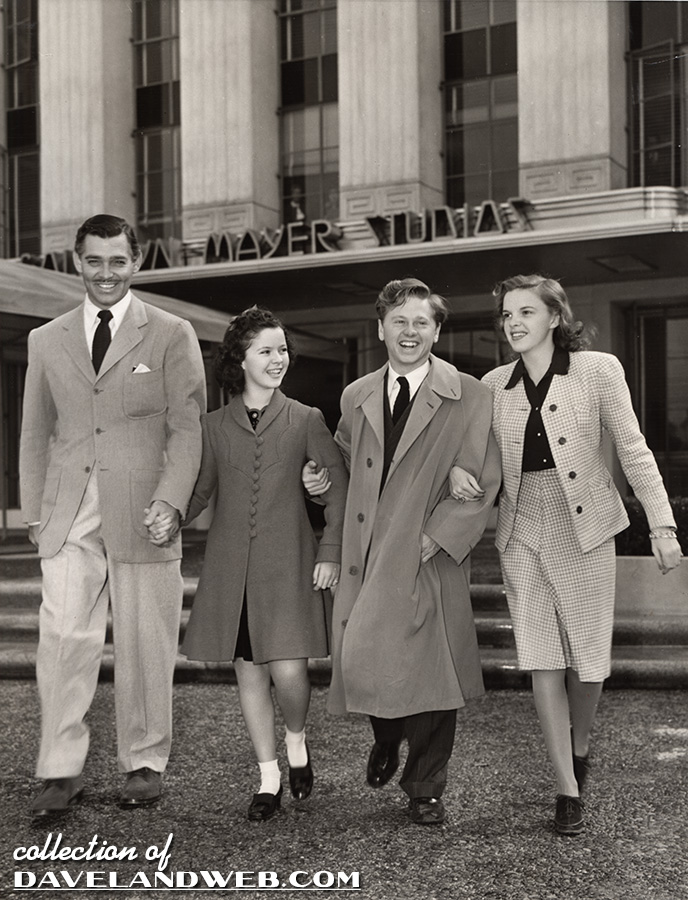
Publicity photos with Clark Gable (and Mickey Rooney and Judy Garland) heralded Shirley signing on with MGM, also in 1941:


Shirley competed with Frank Morgan for scene-stealer of the year in “Dimples” (1936):


Myrna Loy worked with Shirley six years later in “The Bachelor and the Bobby-Soxer” (1947):


Get a huge dose of 1940’s patriotism and hear the original broadcast on thisdaybenny. Shirley appears at 30:59, introduced as “the new and lovely Shirley Temple.” She participates in some comic banter with Jack Benny and Bob Hope. Not surprisingly, Shirley holds her own with the two hams, and then goes on to give a short plea to the audience to donate to the fund.

See more Shirley Temple photos at my main website.

Tuesday, November 10, 2020

Temple Tuesday: Bachelors, Bobby-Soxers, and Buttons


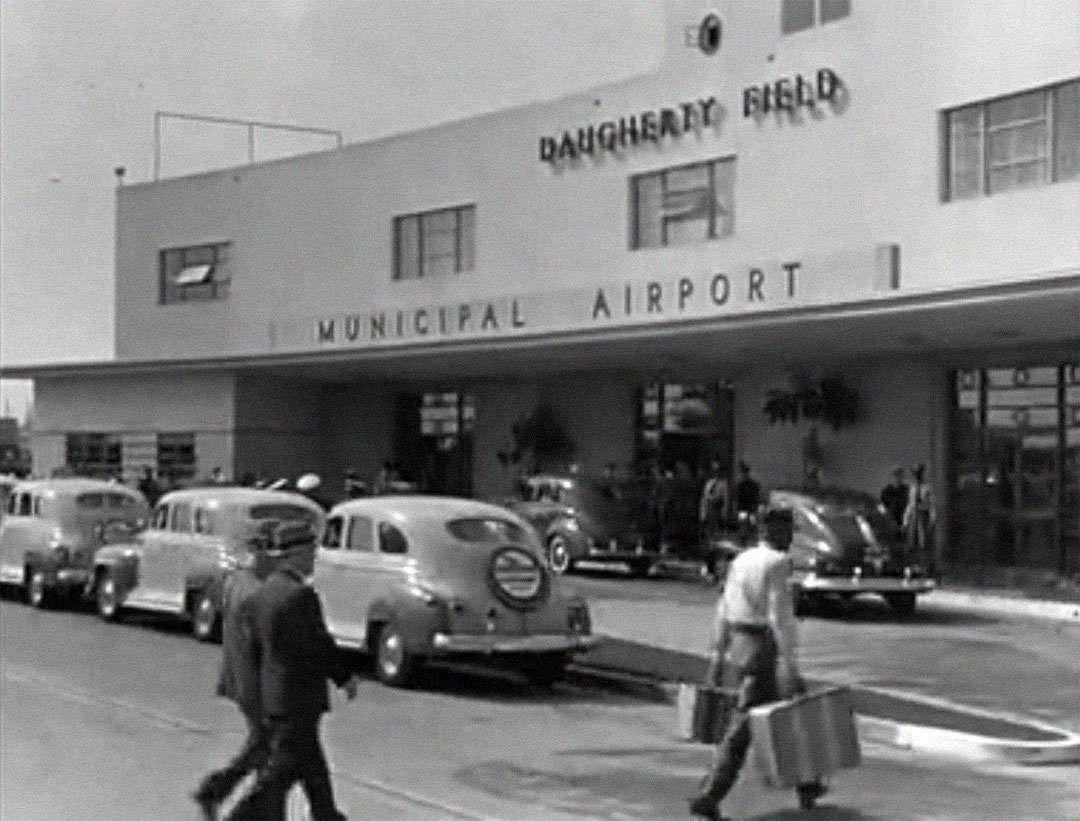
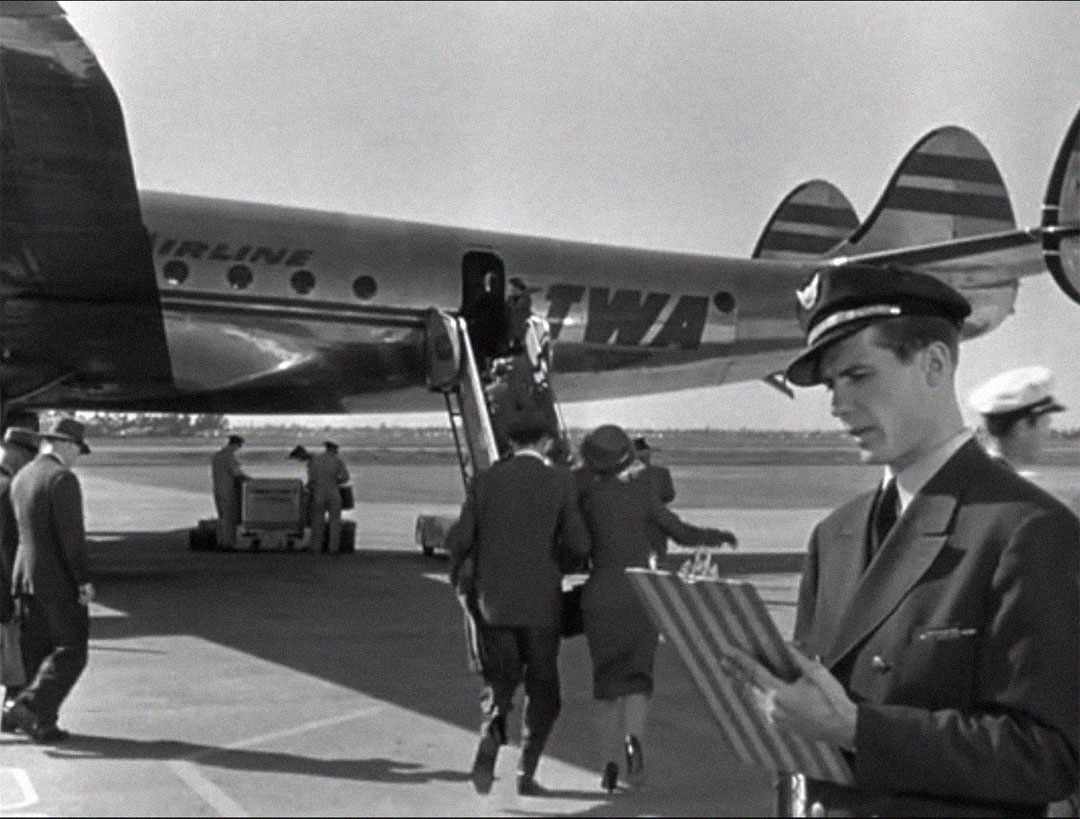
Today we take a step back in time to visit the Long Beach airport which was featured prominently at the climax of Shirley Temple’s 1947 comedy, “The Bachelor and the Bobby-Soxer.”


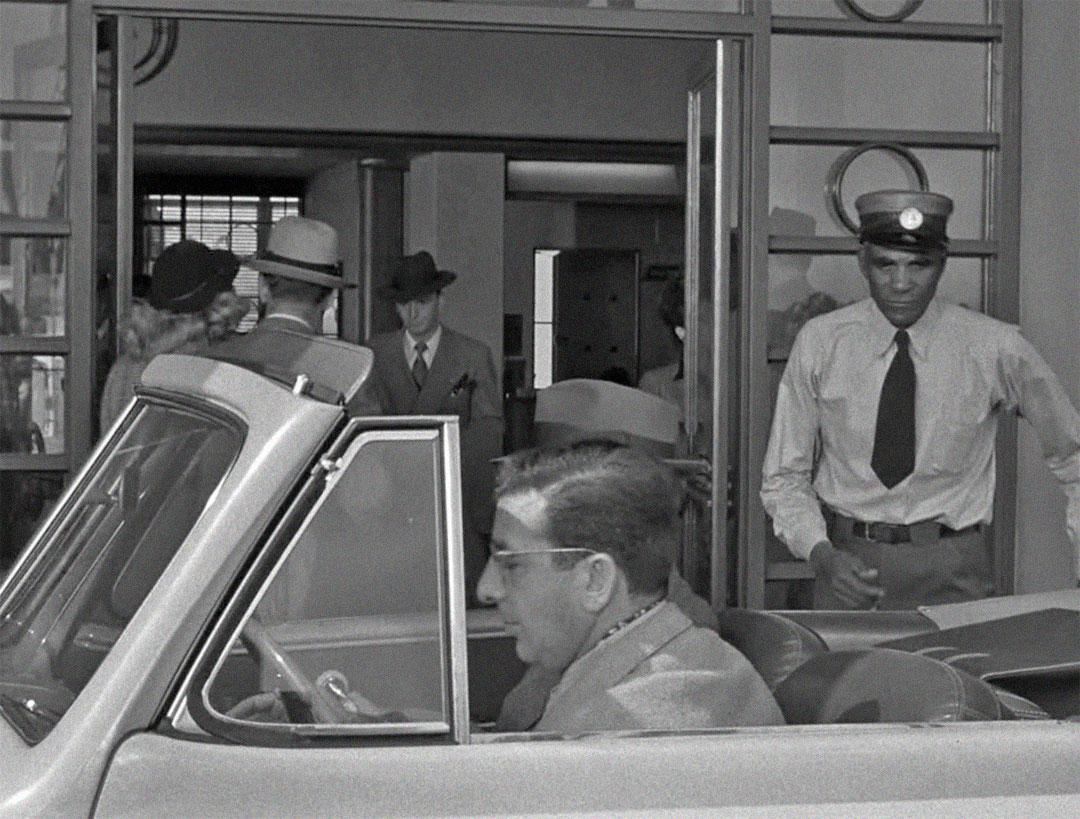
Aviator Earl Daugherty opened a 20 acre field for his flight training school in Long Beach, California on June 6, 1919. A year later, the city contacted Daugherty about developing a 60 acre municipal flying field; the “new” Long Beach Airport (named after Daugherty) was dedicated on December 20, 1924. An additional 255 acres was purchased in 1939 for a new administrative building with the dedication held on June 8, 1941. Architects W. Horace Austin and Kenneth S. Wing. Sr. designed the Streamline Moderne structure which can be seen at the end of the film as Cary Grant’s character pulls up to the airport on his way to Chicago.

 

His driver is none other than Dore Schary, the producer of the film:


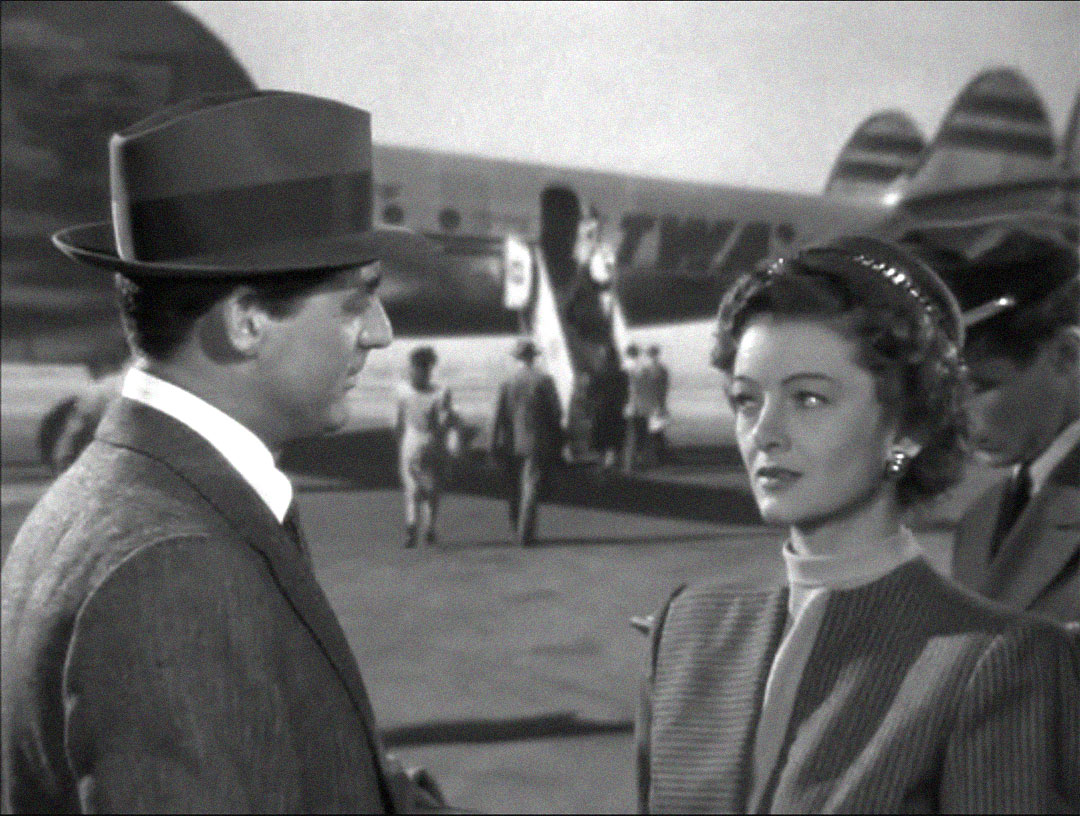
Here, Cary Grant and Myrna Loy exchange a bit of banter before they board the plane and depart to their “happily every after” romantic conclusion:


I love the way the two dash off to the entry stairs:


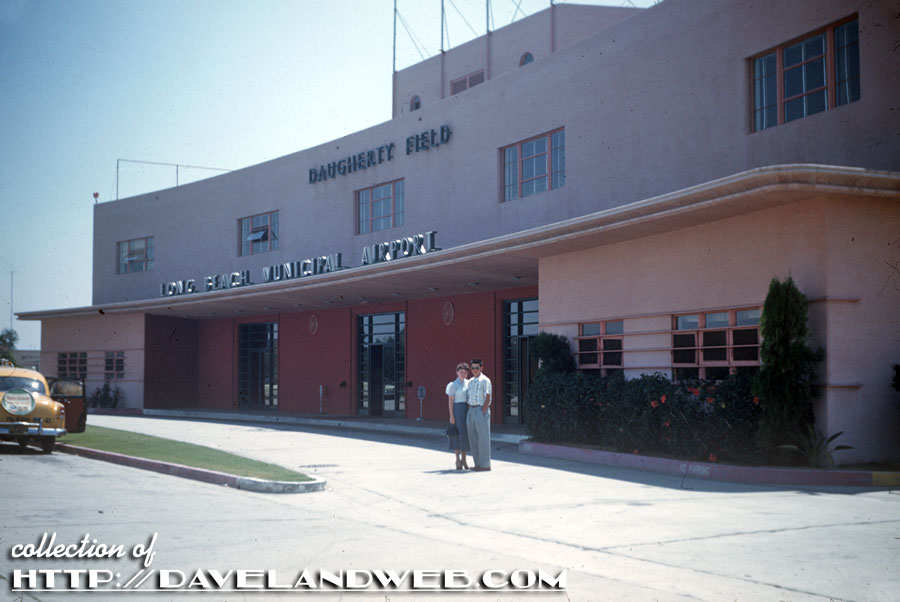
Here’s a vintage shot from the 1950’s showing the airport in color:


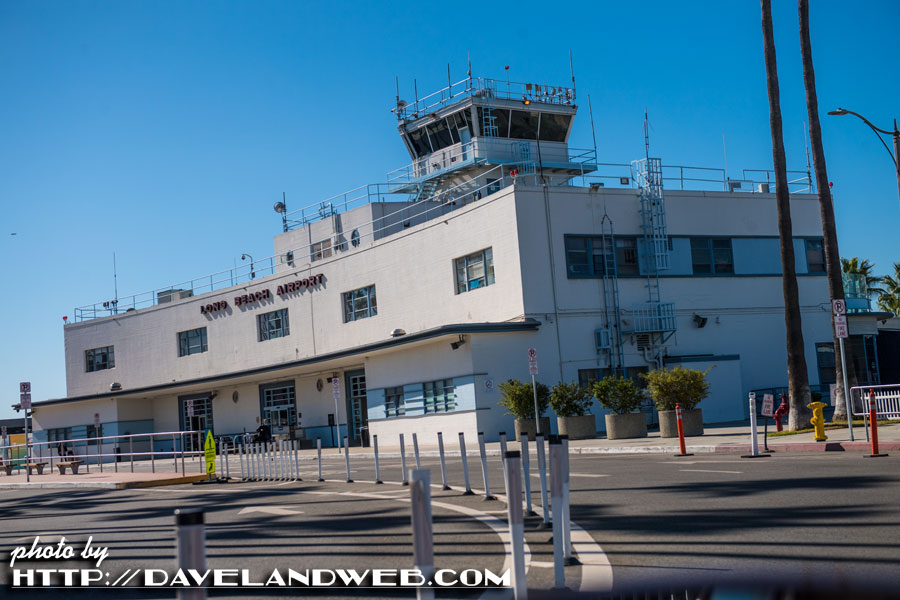
The building was named a City of Long Beach Cultural Heritage Landmark in 1990. At some point, the Daugherty Field name was ditched; I couldn’t find out why during my quick search on the www. Here’s the airport looks now. The sign as you approach the terminal (who put that cotton-picking traffic light in front of the sign?!?):


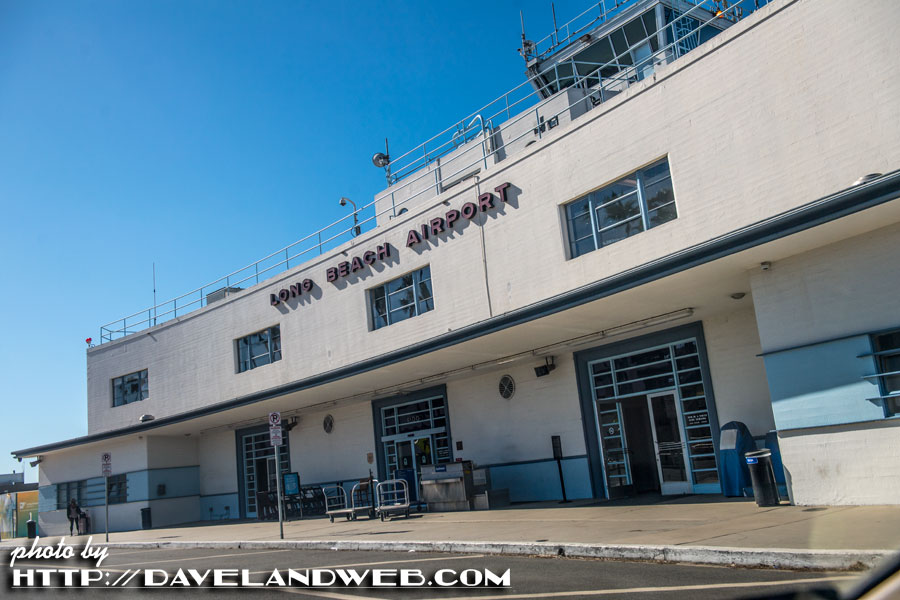
And the terminal building in all its streamline moderne glory:


You almost expect to see Cary and Dory pulling up to the curb:


I’ve never been inside so I don’t know if any of the original WPA tile murals still exist. That will have to be another trip (and post).

In other Shirley news, Melissa (aka “The Colonel”) gave me the opportunity to do the design for the annual Shirley’s Army pin. For the fifth anniversary, I decided to use a portrait of Shirley from her last film at 20th-Century Fox, “Young People” (1940). Here’s the final design:

See more Long Beach, California photos at my main website.